
Senior Phase Grade 9 Today Planning Pack MATHEMATICS
|
|
|
- Ruth Alexander
- 9 years ago
- Views:
Transcription
1 M Senior Phase Grade 9 Today Planning Pack MATHEMATICS Contents: Work Schedule: Page Grade 9 2 Lesson Plans: Grade 9 4 Rubrics: Rubric 1: Recognising, classifying and representing numbers 19 Rubric 2: Applications of numbers to problems..20 Rubric 3: Calculations types involving numbers.21 Rubric 4: Properties of numbers...22 LO2 Rubric 1: Patterns 23 LO2 Rubric 2: Equations.24 LO2 Rubric 3: Graphs..25 LO2 Rubric 4: Equivalent representations 26 LO2 Rubric 5: Algebraic conventions (Grade 8 & 9 only)..27 LO3 Rubric 1: Shapes and objects 28 LO3 Rubric 2: Transformations, congruence and similarity..29 LO3 Rubric 3: Position 30 LO3 Rubric 4: Straight line geometry (Grades 8 & 9 only) LO4 Rubric 1: Measurement..32 LO5 Rubric 1: Collecting and organising data.33 LO5 Rubric 2: Representing and interpreting data.34 LO5 Rubric 3: Probability 35

2 Work schedule for Maths Today Grade 9 Term Week LOs & ASs Chapter Assessment Resources : Numbers, operations and relationships Chapter 1: Real numbers Formal and informal Maths Today Grade 9 Learner's Book and Teacher's Guide Protractor Calculator Use of computer software for LO2: Patterns, functions and algebra LO2: Patterns, functions and algebra LO2: Patterns, functions and algebra LO2: Patterns, functions and algebra LO2: Patterns, functions and algebra LO3: Space and shape LO3: Space and shape LO3: Space and shape Chapter 2: Number patterns Chapter 3: Graphs Chapter 4: Products and factors Chapter 5: Algebraic fractions Chapter 6: Equations Chapter 7: Transformations Chapter 8: Geometric figures Chapter 9: Lines, angles and triangles Formal and informal Formal and informal Formal and informal Formal and informal Formal and informal Formal and informal Formal and informal Test Formal and informal consolidation and extra challenges Maths Today Grade 9 Learner's Book and Teacher's Guide Paper with squares Paper with triangles Colour pencils, highlighters Access to computers for exploring patterns Maths Today Grade 9 Learner's Book and Teacher's Guide Paper with squares, graph paper Measuring cylinders Marbles, golf balls Three rulers per pair of learners Coins Flat buttons of different diameters String, measuring tapes Masking tape Maths Today Grade 9 Learner's Book and Teacher's Guide Maths Today Grade 9 Learner's Book and Teacher's Guide Maths Today Grade 9 Learner's Book and Teacher's Guide Maths Today Grade 9 Learner's Book and Teacher's Guide Pencil and ruler Tracing paper Scissors Pair of compasses Protractor Maths Today Grade 9 Learner's Book and Teacher's Guide Workbooks Pencils, coloured pencils, crayons Felt pens, rulers White and coloured paper, thin card Tracing paper and pin Glue, scissors Compass, protractor Feathers, leaves, flowers Maths Today Grade 9 Learner's Book and Teacher's Guide Workbooks Pair of compasses, protractor, ruler Set square 2

3 3 22 LO3: Space and shape LO 4: Measurement : Numbers, operations and relationships LO5: Data handling LO5: Data Handling Chapter 10: Solids Chapter 11: Measurement Chapter 12: Consumer maths Chapter 13: Statistics Chapter 14: Probability Formal and informal Formal and informal Formal and informal Formal and informal Formal and informal Test Maths Today Grade 9 Learner's Book and Teacher's Guide Workbooks Grid paper, graph paper Scissors, glue, tape, rulers Pencils, erasers Cardboard Matches, toothpicks Plasticine Isometric paper Access to Internet Maths Today Grade 9 Learner's Book and Teacher's Guide Workbooks Protractor Calculator Maths Today Grade 9 Learner's Book and Teacher's Guide Workbooks Graph paper Calculator Sharp pencil, ruler Newspapers Examples of a variety of insurance policy contract copies, claim forms and IRP5 forms Business magazines Copies of school s budget Access to Internet Spokespeople from financial institutions Maths Today Grade 9 Learner's Book and Teacher's Guide Workbooks Atlas Coloured pencils Protractor STATS SA information Internet websites Maths Today Grade 9 Learner's Book and Teacher's Guide Workbooks Four coins Packet of jelly beans Two dice Note: You need to complete 3 formal tasks per term for Maths in Grade 9. This work schedule shows all the opportunities for formal 3

4 LESSON PLANS Grade 9 Chapter 1: Real numbers Learning Areas: Maths Grade: 8 Duration: 15 hours Weeks: 1-3 Learning Outcome Assessment Standards Integration : Numbers, operations and relationships Describes and illustrates the historical development of number systems Recognises, uses and represents rational numbers Solves problems that involve ratio, rate and proportion Estimates and calculates by selecting and using operations Uses a range of techniques and tools Recognises, describes and uses the properties of rational numbers Natural Sciences Economic and Management Sciences LO4 Technology Social Sciences (Geog) Content / Knowledge: Describes and illustrates the historical development of number systems Recognises, uses and represents rational numbers, equivalent forms Solves ratio, rate and proportion problems Estimates, calculates, selects and uses operations, judges reasonableness of results Uses a range of techniques and tools, performs calculations Recognises, describes and uses properties of rational numbers Learning activities Teaching methods/approach Resources Lesson 1: Rational and irrational numbers LB p2 Division by 0 Lesson 2: History of rational and irrational numbers LB p3 Lesson 3: Equivalent forms of rational numbers LB p3 Recurring decimals LB p4 Lesson 4: Converting decimal fractions to common fractions LB p5 Lesson 5: Scientific notation: Write small numbers in scientific notation LB p6 Lesson 6: Calculations with numbers in scientific notation LB p7 Lesson 7: Rational approximations of irrational numbers: Ratio, rate, direct and indirect proportion LB p9 Lesson 8: Rational approximations of irrational numbers: Word problems LB p12 Lesson 9: Activity 1a: (Baseline ) Identify rational and irrational numbers TG p2 Teach and work through examples TG p3 Activity 1b: Find out about the history of numbers TG p4 Teach and work through examples TG p4 Activity 1c: Convert between common fractions and decimal fractions TG p5 Activity 2a: Write numbers in scientific and decimal notation TG p6 Activity 2b: Calculate with numbers in scientific notation TG p6 Teach and work through examples TG p7 Activity 3a: Write rational approximations of irrational numbers TG p8 Activity 3b: Solve problems involving ratio, rate and proportion TG p9 Assessment TG p10 Assessment LB p14 Assessment: Type of : Formal for Lessons 4, 6 and 9 Informal : all other activities can be used for informal Form of : Rubric 3 for Lesson 4; rubric 3 for Lesson 6; memo (TG p10) for Lesson 9 Teacher reflection: Maths Today Grade 9 Learner's Book and Teacher's Guide Protractor Calculator Use of computer software for consolidation and extra challenges Reinforcement: Revise, drill and consolidate with extra examples of new concepts introduced Use of computer software for consolidation and extra challenges Expanded opportunities: Use of computer software for consolidation and extra challenges Exploring old Olympiad papers Solving problems at higher cognitive levels 4

5 LESSON PLANS Grade 9 Chapter 2: Number patterns Learning Areas: Maths Grade: 9 Duration: 15 hours Weeks: 3-5 Learning Outcome Assessment Standards Integration LO2: Numbers, operations and relationships Investigates, in different ways, a variety of numeric and geometric patterns and relationships Represents and uses relationships between variables Constructs mathematical models Solves equations by inspection, trial-and-improvement or algebraic processes Determines, analyses and interprets Natural Sciences Technology LO2 Economic and Management Sciences LO4 Social Sciences(Geog) Content / Knowledge: Investigates numeric and geometric patterns, investigates relationships, represents relationships, generalizes relationships Explains and justifies rules Represents and uses relationships between variables, determines input and/or output values, represents and uses verbal descriptions, flow diagrams, tables, formulae and equations Constructs mathematical models Solves equations by inspection, trial-and-improvement or algebraic processes, checks the solution by substitution Determines, analyses and interprets the equivalence of different descriptions, relationships, rules in, flow diagrams, tables, equations or expressions, by graphs on the Cartesian plane Learning activities Teaching methods/approach Resources Lesson 1: Describing a number pattern LB p17 Lesson 2: Fractals LB p19 Lesson 3: Number patterns around us LB p25 Lesson 4: Assessment LB p29 Activity 1a: (Baseline ) Revising number patterns TG p13 Activity 1b: Investigate patterns using the Sierpinski Carpet TG p14 Activity 2: Calculating income tax TG p18 Assessment TG p20 Assessment: Type of : Formal for Lessons 3 and 4 Informal : all other activities can be used for informal Form of : Rubric TG p17 for Lesson 3; memo (TG p20) for Lesson 4 Teacher reflection: Maths Today Grade 9 Learner's Book and Teacher's Guide Paper with squares Paper with triangles Coloured pencils Highlighters Access to computers for exploring patterns Reinforcement: Extra examples of new concepts introduced Use of computer software for consolidation and extra challenges Expanded opportunities: Use of computer software for consolidation and extra challenges Exploring old Olympiad papers Exploring websites for interesting patterns 5

6 LESSON PLANS Grade 9 Chapter 3: Graphs Learning Areas: Maths Grade: 9 Duration: 15 hours Weeks: 6-8 Learning Outcome Assessment Standards Integration LO2: Numbers, operations and relationships LO3 Space and Shape Constructs mathematical models Draws graphs on the Cartesian plane for given equations Determines, analyses and interprets Uses various representational systems to describe position and movement between positions Natural Sciences LO2 Technology Economic and Management Sciences Life Orientation Content / Knowledge: Constructs mathematical models, describes and provides solutions to problems Draws graphs on the Cartesian plane, determines equations or formulae, uses tables Determines, analyses and interprets the equivalence of different descriptions / relationships / rules Uses representational systems, describes position and movement between positions Learning activities Teaching methods/approach Resources Lesson 1: References can be used to describe position LB p34 Lesson 2: The Cartesian Plane LB p37 Lesson 3: Draw graphs by plotting points LB p39 Lesson 4: Explore straight-line graphs LB p44 Lesson 5: The gradient of a straight-line graph LB p48 Lesson 6: Explore the general properties of straight-line graphs in the context of mathematics LB p51 Lesson 7: Use the properties of straight-line graphs to draw graphs LB p53 Lesson 8: Use the x- and y- intercepts to draw straight-line graphs LB p55 Lesson 9: Assessment TG p44 Assessment LB p57 Assessment: Type of : Formal for Lessons 7 and 9 Informal : all other activities can be used for informal Form of : Rubric 3 LO2 for Lesson 7 Memo (TG p44) for Lesson 9 Teacher reflection: Activity 1a: (Baseline ) Find your position from a street map TG p24 Activity 1b: Plot points on a Cartesian plane TG p25 Activity 2a: Analyse a formula TG p26 Activity 2b: Relate side lengths to area and perimeter TG p27 Activity 3a: Explore the properties of straight-line graphs TG p32 Activity 3b: Reflecting on properties of straight-line graphs TG p34 Activity 4: Determine the gradient of straight-line graphs when the graph is given TG p36 Activity 5: Draw straight-line graphs for given equations TG p37 Activity 6: Draw straight-line graphs by using the y-intercept gradient method TG p39 Activity 7: Draw sketch graphs TG p41 Maths Today Grade 9 Learner's Book and Teacher's Guide Paper with squares Graph paper Measuring cylinders Marbles Golf balls Three rulers per pair of learners Coins Flat buttons of different diameters String Measuring tapes Masking tape Reinforcement: Easier and extra examples of new concepts introduced Use of computer software for consolidation Expanded opportunities: Use of computer software for consolidation and extra challenges Working from a variety of resources Working with complex graphs 6

7 LESSON PLANS Grade 9 Chapter 4: Products and factors Learning Areas: Maths Grade: 9 Duration: 10 hours Weeks: 9-10 Learning Outcome Assessment Standards Integration LO2: Numbers, operations and relationships Uses the laws of exponents to simplify expressions and solve equations Uses the distributive law and manipulative skills developed in Grade 8 Natural Sciences LO2 Technology Economic and Management Sciences Life Orientation Content / Knowledge: Uses the laws of exponents, simplifies expressions, solves equations Uses the distributive law Uses manipulative skills Finds product of two binomials Factorises algebraic expressions Learning activities Teaching methods/approach Resources Lesson 1: Explore the properties and laws of exponents: The first law of exponents LB p62 Lesson 2: The second law of exponents LB p64 Lesson 3: The third law of exponents LB p65 Lesson 4: The fourth law of exponents LB p66 Lesson 5: The product of a monomial and a polynomial LB p67 Lesson 6: The product of two binomials with unlike terms LB p69 Lesson 7: The product of two binomials with like terms LB p70 Lesson 8: The square of a binomial LB p71 Lesson 9: Products of the type (a + b)(a - b) LB p72 Lesson 10: Converting polynomials to product expressions LB p73 Lesson 11: The difference of two squares LB p75 Lesson 12: Assessment LB p76 Assessment: Type of : Formal for Lessons 5, 11 and 12 Informal : all other activities can be used for informal Form of : Rubric 5 LO2 for Lesson 5, Rubric 2 LO3 for Lesson 11, Memo TG p56 for Lesson 12 Teacher reflection: Activity 1: (Baseline ) Use the first law of exponents to simplify expressions TG p47 Activity 2: Investigate the quotient of numbers written in index form TG p48 Activity 3: Use the third law of exponents to simplify expressions TG p48 Activity 4: Use the fourth law of exponents to simplify expressions TG p49 Activity 5: Practice writing the expansions of algebraic expressions TG p49 Activity 6: Find the product of two binomials with unlike terms TG p50 Activity 7: Find the product of two binomials with like terms TG p51 Activity 8: Investigate the squares of binomials TG p52 Activity 9: Investigate the products of the type (a + b)(a - b) TG p53 Activity 10: Find the factors of a polynomial TG p54 Activity 11: Factorise algebraic expressions (Common factors) TG p54 Activity 12: Factorise the difference of two squares TG p55 Assessment TG p56 Maths Today Grade 9 Learner's Book and Teacher's Guide Reinforcement: Easier examples of new concepts Use of computer software for consolidation Expanded opportunities: Use of computer software for consolidation and extra challenges Working with complicated polynomials. 7

8 LESSON PLANS Grade 9 Chapter 5: Algebraic fractions Learning Areas: Maths Grade: 9 Duration: 10 hours Weeks: Learning Outcome Assessment Standards Integration : Numbers, operations and relationships LO2: Patterns, functions and algebra Recognises, uses and represents rational numbers Recognises, describes and uses the properties of rational numbers Uses a range of techniques and tools (including technology) to perform calculations efficiently and to the required degree of accuracy Uses factorisation to simplify algebraic expressions and solve equations Natural Sciences LO2 Technology Life Orientation Economic and Management Sciences Content / Knowledge: Recognises, uses and represents rational numbers, moves flexibly between equivalent forms Recognises, describes and uses the properties of rational number Uses techniques, tools and technology for calculations Uses laws and meanings of exponents Uses factorization, simplifies algebraic expressions, solves equations Learning activities Teaching methods/approach Resources Lesson 1: Simplification of fractions LB p78 Lesson 2: The meaning of a 0 LB p80 Lesson 3: Negative exponents LB p81 Lesson 4: Simplify algebraic fractions LB p82 Lesson 5: Simplify algebraic expressions by factorisation LB p83 Lesson 6: Multiplication and division of fractions LB p84 Lesson 7: Addition and subtraction of fractions LB p85 Lesson 12: Assessment LB p87 Assessment: Type of : Formal for Lessons 4 and 12 Informal : all other activities can be used for informal Form of : Rubric 5 LO2 for Lesson 4 Memo (TG p64) for Lesson 12 Teacher reflection: Activity 1: (Baseline ) To simplify fractions TG p59 Activity 2: Simplify fractions that include numbers written in exponent notation TG p59 Activity 3a: Explore the meaning of zero as an exponent TG p60 Activity 3b: Explore the meaning of negative exponents TG p61 Activity 4: Simplify algebraic fractions TG p61 Activity 5: Simplify algebraic expressions by factorisation TG p62 Activity 6: Multiplication and division of fractions TG p63 Activity 7: Practice addition and subtracting of algebraic fractions TG p63 Assessment TG p64 Maths Today Grade 9 Learner's Book and Teacher's Guide Workbooks Reinforcement: Easier and lots of extra examples of new concepts introduced Use of computer software for consolidation Expanded opportunities: Use of computer software for consolidation and extra challenges Working from a variety of resources Working with complicated polynomials. 8

9 LESSON PLANS Grade 9 Chapter 6: Equations Learning Areas: Maths Grade: 9 Duration: 15 hours Weeks: Learning Outcome Assessment Standards Integration : Numbers, operations and relationships LO2: Patterns, functions and algebra Estimates and calculates by selecting and using operations appropriate to solving problems and judging the reasonableness of results Represents and uses relationships between variables Constructs mathematical models Solves equations Determines, analyses and interprets the equivalence Natural Sciences Technology Economic and Management Sciences LO4 Content / Knowledge: Estimates, calculates, selects and uses operations, solves problems, judges results Represents and uses relationships, determines input and/or output values, uses verbal descriptions, flow diagrams, tables, formulae, equations and expressions Constructs mathematical models Solves equations by inspection, trial-and-improvement or algebraic processes, checks solution by substitution Determines, analyses and interprets the equivalence of different descriptions in order to select the most useful representation for a given situation Learning activities Teaching methods/approach Resources Lesson 1: Inspection and substitution LB p90 Lesson 2: Reverse the calculation procedure to determine the output value LB p92 Lesson 3: The balance algorithm : Solve equations with the unknown (variable) on both sides of the equation LB p94 Lesson 4: The balance algorithm: Solve more complicated equations with variables on both sides of the equation LB p96 Lesson 5: Equations with fractions LB p97 Lesson 6: Equations involving more complicated fractions LB p98 Lesson 7: The difference between simplifying algebraic fractions and solving equations with fractions LB p100 Lesson 8: Construct equations for number problems LB p101 Lesson 9: Use equations as mathematical models to solve problems LB p102 Lesson 10: Activity 1: (Baseline ) Solve equations by inspection TG p67 Activity 2: Solve problems by reversing the calculation procedure TG p68 Activity 3a: Solving equations using the balance algorithm LB p70 Activity 3b: More about the balance algorithm LB p70 Activity 4: Solve simple equations involving fractions TG p71 Activity 5: Solve more complicated equations that involve fractions TG p72 Activity 6: Interpret algebraic expressions and equations TG p73 Activity 7: Translate word problems into algebraic language TG p74 Activity 8: Use equations as mathematical models to solve problems TG p75 Assessment TG p76 Assessment LB p105 Assessment: Type of : Formal for Lessons 5 and 10 Informal all other activities can be used for informal Form of : Rubric 5 LO2 for Lesson 5 Memo (TG p76) for Lesson 10 Teacher reflection: Maths Today Grade 9 Learner's Book and Teacher's Guide Reinforcement: Easier examples of new concepts introduced Use of computer software for consolidation Expanded opportunities: Use of computer software for consolidation and extra challenges Engaging in complicated problem solving 9

10 LESSON PLANS Grade 9 Chapter 7: Transformations Learning Areas: Maths Grade: 9 Duration: 10 hours Weeks: Learning Outcome Assessment Standards Integration LO3: Space and shape Describes the interrelationships of the properties of geometric figures and solids with justification Uses geometry of straight lines and triangles to solve problems Uses transformations, congruence and similarity Uses various representational systems Technology Arts and Culture Content / Knowledge: Describes interrelationships of the properties of geometric figures and solids Describes congruence, describes straight line geometry, describes transformations Uses geometry of straight lines and triangles to solve problems Uses transformations, congruence and similarity to investigate, describe and justify Uses representational systems to describe position and movement between positions Uses ordered grids Uses Cartesian plane Uses compass directions Uses angles of elevation and depression Learning activities Teaching methods/approach Resources Lesson 1: The four kinds of transformations LB p108 Lesson 2: Properties of transformations: Reflection LB p109 Lesson 3: Properties of transformations: Rotation LB p110 Lesson 4: Properties of transformations: Translation LB p111 Lesson 5: Enlargement LB p115 Properties of enlargement LB 116 Find the centre of enlargement LB p116 Calculate the scale factor LB 117 Negative scale factors LB 117 Lesson 6: Combined transformations LB p121 Lesson 7: Assessment LB p125 Assessment: Type of : Formal for Lessons 6 and 7 Informal : all other activities can be used for informal Form of : Rubric 2 LO3 for Lesson 6 Memo (TG p87) for Lesson 7 Teacher reflection: Teach reflection, rotation, translation and enlargement and work through examples TG p78 Teach and work through examples TG p78 Teach and work through examples TG p78 Teach and work through examples TG p79 Teach and work through examples TG p80 Activity 1: (Baseline ) Draw enlargements of a given figure TG p80 Activity 2: Investigate the effect of combined transformations TG p82 Assessment TG p87 Maths Today Grade 9 Learner's Book and Teacher's Guide Pencil and ruler Tracing paper Scissors Pair of compasses Protractor Reinforcement: Easier examples of new concepts introduced Use of computer software for consolidation Expanded opportunities: Use of computer software for consolidation and extra challenges Working from a variety of resources Engaging in complicated transformations 10

11 LESSON PLANS Grade 9 Chapter 8: Geometric figures Learning Areas: Maths Grade: 9 Duration: 15 hours Weeks: Learning Outcome Assessment Standards Integration LO3: Space and shape Recognises, visualises and names geometric figures and solids In contexts describes the interrelationships of the properties Uses geometry of straight lines and triangles to solve problems Draws and/or constructs geometric figures and makes models of solids Uses transformations, congruence and similarity Recognises and describes geometric solids Technology Arts and Culture Natural Sciences LO3 Content / Knowledge: Recognises, visualises and names regular and irregular polygons and polyhedra, spheres, cylinders Describes properties of geometric figures and solids Describes congruence, straight line geometry, transformations Uses geometry of straight lines and triangles Draws and/or constructs geometric figures Makes models of solids, investigates and compares properties and models situations Uses transformations, congruence and similarity Investigates, describes and justifies properties of geometric figures and solids Tests for similarity and congruence of triangles Recognises and describes geometric solids Simple perspective drawing Learning activities Teaching methods/approach Resources Lesson 1: Patterns relating to our culture LB p130 Lesson 2: Patterns used in designs LB 131 In the animal world LB p132 In fish and birds LB p133 Lesson 3: Ideal designs LB p134 Fibonacci sequence LB p136 Lesson 4: More about polygons LB p137 Lesson 5: Angles of regular polygons LB p138 Lesson 6: Constructing regular polygons LB p141 Lesson 7: Use transformations to investigate properties of polygons: Line symmetry LB p144 Rotational symmetry LB p144 Lesson 8: Sides and angles of polygons LB p146 Lesson 9: Congruency and similarity LB p150 Lesson 10: Assessment LB p157 Activity 1a: (Baseline ) Explore patterns used by different cultures TG p92 Activity 1b: Design your own pattern TG p92 Activity 1c: Construct your own golden rectangle TG p93 Teach and work through the example TG p94 Teach and work through examples TG p94 Activity 1d: Determine the sum of the interior angles of a regular pentagon TG p95 Activity 1e: Find the sum of the exterior angles of a polygon TG p97 Activity 1f: Constructing regular polygons TG p99 Activity 2a: Investigate the symmetrical properties of polygons TG p102 Activity 2b: Investigate the properties of quadrilaterals TG p104 Activity 2c: Use the properties of quadrilaterals to identify them TG p105 Activity 3a: Find out if the given geometric figures are congruent TG p108 Activity 3b: Find out if the given geometric figures are similar TG p108 Assessment TG p112 Maths Today Grade 9 Learner's Book and Teacher's Guide Pencils Coloured pencils Crayons Felt pens Rulers White and coloured paper or thin card Tracing paper and pin Glue Scissors Compass Protractor Feathers Leaves Flowers 11

12 Assessment: Type of : Formal for Lessons 7 and 10 Informal : all other activities can be used for informal Form of : Rubric 1 LO3 for Lesson 7 Memo (TG p112) for Lesson 10 Teacher reflection: Reinforcement: Easier examples of new concepts introduced Use of computer software for consolidation Expanded opportunities: Use of computer software for consolidation and extra challenges Working from a variety of resources Engaging in complicated polygons 12

13 LESSON PLANS Grade 9 Chapter 9: Lines, angles and triangles Learning Areas: Maths Grade: 9 Duration: 15 hours Weeks: Learning Outcome Assessment Standards Integration LO3: Space and shape Recognises, visualises and names geometric figures and solids Uses geometry of straight lines and triangles to solve problems Uses transformations, congruence and similarity to investigate, describe and justify relationships Technology Arts and Culture Content / Knowledge: Recognises, visualises and names regular and irregular polygons, polyhedra, spheres, cylinders Uses geometry of straight lines and triangles Solves problems, justifies relationships Uses transformations, congruence and similarity Investigates, describes and justifies properties of geometric figures and solids Tests for similarity and congruence of triangles Learning activities Teaching methods/approach Resources Lesson 1: Calculate the sizes of angles LB p159 Lesson 2: Different types of triangles LB p161 Lesson 3: Parallel lines LB p165 Lesson 4: Similar triangles LB p170 Lesson 5: Calculate missing sides LB p176 Lesson 6: Congruent triangles Use transformations to confirm congruency LB p182 Use congruency to calculate missing values LB p183 Lesson 7: Angles of elevation and depression LB p186 Teach and work through examples TG p115 Lesson 8: Assessment TG p131 Assessment LB p188 Assessment: Type of : Formal for Lessons 4 and 8 Informal : all other activities can be used for informal Form of : Rubric 1 LO3 for Lesson 4 Memo (TG p131) for Lesson 8 Teacher reflection: Activity 1: (Baseline ) Find angle relationships for triangles and lines TG p116 Activity 2: Work with alternate, corresponding and cointerior angles TG p118 Activity 3a: Explore the relation between the two conditions for similarity TG p121 Activity 3b: Identify similar triangles TG p122 Activity 4a: Calculate missing sides and angles TG p123 Activity 4b: Calculate missing sides TG p124 Teach and work through examples TG p126 Teach and work through example TG p Maths Today Grade 9 Learner's Book and Teacher's Guide Pair of compasses Protractor Ruler Set square Reinforcement: Easier examples of new concepts introduced Use of computer software for consolidation Expanded opportunities: Use of computer software for consolidation and extra challenges Working from a variety of resources Working with complicated examples 13

14 LESSON PLANS Grade 9 Chapter 10: Solids Learning Areas: Maths Grade: 9 Duration: 10 hours Week: 22 Learning Outcome Assessment Standards Integration LO3: Space and shape Recognises, visualises and names geometric figures and solids In context describes the interrelationships of the properties Draws and/or constructs geometric figures and makes models of solids Uses transformations, congruence and similarity Recognises and describes geometric solids Technology Arts and Culture Natural Sciences Content / Knowledge: Recognises, visualises and names regular and irregular polygons, polyhedra, spheres, cylinders Describes the interrelationships of the properties of geometric figures and solids, justification with congruence and straight line geometry, transformations Draws and/or constructs geometric figures and makes models of solids, compares their properties, models situations Uses transformations, congruence and similarity to investigate, describe and justify Recognises and describes geometric solids, simple perspective drawing Learning activities Teaching methods/approach Resources Lesson 1: Planes LB p192 Lesson 2: Symmetrical properties of polyhedrons LB p200 Lesson 3: Surface area and volume of polyhedrons LB p202 Lesson 4: Cylinders LB p204 Containers shaped like polyhedrons LB p208 Lesson 5: Isometric shapes: Isometric paper LB p209 Lesson 6: Views of shapes LB p212 Lesson 7: Nets LB p213 Lesson 6: Communicate using drawings LB 216 Projections LB 216 Orthographic drawing LB p216 Lesson 7: Isometric drawing LB p218 Lesson 8: Diagonals of polyhedrons LB p219 Lesson 10: Activity 1a: (Baseline ) Make models of solids TG p135 Activity 1b: Investigate the properties of solids TG 135 Activity 1c: Explore the symmetrical properties of polyhedrons TG p137 Activity 1d: Explore the rotational symmetry of polyhedrons TG p138 Activity 2: Calculate the surface area and the volume of a triangular prism TG p140 Activity 3: Calculate the surface area and the volume of a cylinder TG p141 Teach and work through examples TG p141 Activity 4: Isometric shapes TG p144 Teach and work through examples TG p145 Activity 5a: Explore nets of containers TG p147 Activity 5b: Design your own containers TG p147 Teach and work through examples TG p149 Activity 6a: Do calculations from drawings TG p150 Activity 6b: Exploring projections of 3-D shapes TG p151 Teach and work through examples TG p153 Assessment TG p153 Assessment LB p221 Assessment: Type of : Formal for Lessons 3, 7 and 10 Informal : all other activities can be used for informal Form of : Rubric 2 LO3 for Lesson 3 Rubric 1 LO3 for Lesson 7 Memo (TG p153) for Lesson 10 Teacher reflection: Maths Today Grade 9 Learner's Book and Teacher's Guide Grid paper Graph paper Scissors Glue Tape Rulers Pencils Erasers Cardboard Matches Toothpicks Plasticine Isometric paper Access to Internet Reinforcement: Easier examples of new concepts introduced Use of computer software for consolidation Expanded opportunities: Use of computer software for consolidation and extra challenges Working from a variety of resources Engaging in complicated polyhedrons, isometric drawings, floor plans of buildings 14

15 LESSON PLANS Grade 9 Chapter 11: Measurement Learning Areas: Maths Grade: 9 Duration: 10 hours Weeks: Learning Outcome Assessment Standards Integration LO4: Measurement Solves ratio and rate problems involving time, distance and speed. Solves problems involving known geometric figures and solids Describes and illustrates the development of measuring instruments Uses the Theorem of Pythagoras to solve problems Technology Social Sciences(Geog) LO3 Life Orientation, 4 Economic and Management Sciences LO4 Content / Knowledge: Solves ratio and rate problems Solves time, distance and speed problems Solves problems involving known geometric figures and solids Measures precisely, selects measuring instruments Estimates and calculates with precision, selects and uses appropriate formulae and measurements Describes and illustrates the development of measuring instruments Uses the Theorem of Pythagoras to solve problems Learning activities Teaching methods/approach Resources Lesson 1: Measuring instruments and measuring units LB p223 Length and perimeter LB p224 Lesson 2: Theorem of Pythagoras LB p225 Lesson 3: Area LB p228 Lesson 4: Volume and capacity LB p233 Lesson 5: Ratio and rate problems LB p236 Lesson 6: Convert between imperial and metric units LB p238 Lesson 7: Watering the garden LB p239 How many sprinklers? LB p240 Lesson 8: Measurement in sport LB p241 Anaerobic fitness LB p242 Speed test LB p242 Muscle endurance LB p242 Flexibility test LB p242 Lesson 9: Problems involving time, distance and speed LB p243 Lesson 10: Assessment LB p247 Assessment: Type of : Formal for Lessons 1, 4 and 10 Informal : all other activities can be used for informal Form of : Rubric 1 LO4 for Lesson 1 Rubric 1LO4 for Lesson 4 Memo (TG p167) for Lesson 10 Teacher reflection: Activity 1a: (Baseline ) Measure and calculate with length TG p157 Activity 1b: Apply the Theorem of Pythagoras to calculate missing lengths TG p158 Teach and work through examples TG p159 Activity 2: Construct polygons with given areas TG p160 Activity 3: Calculate the volume of air in a building TG p162 Activity 4a: Calculate the number of calories in a diet TG p163 Activity 4b: Convert between imperial and metric units TG p163 Activity 4c: Calculate the flow rate of a tap TG p164 Activity 4d: Calculate the number of sprinklers in a water line TG p165 Activity 4e: Test your fitness level TG p165 Teach and work through examples TG p166 Activity 4f: Calculations involving time, distance and speed TG p166 Assessment TG p167 Maths Today Grade 9 Learner's Book and Teacher's Guide Protractor Calculator Reinforcement: Easier and extra examples of new concepts introduced Use of computer software for consolidation Expanded opportunities: Use of computer software for consolidation and extra challenges Working from a variety of resources Engaging in complicated calculations 15

16 LESSON PLANS Grade 9 Chapter 12: Consumer Maths Learning Areas: Maths Grade: 9 Duration: 10 hours Weeks: Learning Outcome Assessment Standards Integration : Numbers, operations and relationships LO5: Data handling Solves problems in contexts Draws a variety of graphs by hand/technology to display and interpret data Economic and Management Sciences LO3 Life Orientation LO2, 3 Content / Knowledge: Solves problems in: profit and loss; budgets; accounts; loans; simple and compound interest, hire purchase; exchange rates; commission; rentals and banking contexts Draws a pie chart by hand / technology Displays and interprets data Learning activities Teaching methods/approach Resources Lesson 1: Lending and borrowing money: Simple interest LB p249 Lesson 2: Lending and borrowing money: Compound interest LB p249 Lesson 3: Compound interest LB p253 Using the formula LB p254 Lesson 4: Budgeting LB p255 Government budgets LB p256 Lesson 5: Budgeting LB p255 Lesson 6: Bank charges LB p259 Inflation LB p261 Lesson 7: Taxation LB p261 Lesson 8: More mathematics in everyday living LB p264 Lesson 9: Assessment LB p266 Revising concepts from Grade 8 Activity 1: (Baseline ) Investigate compound interest TG p169 Activity 2: Borrowing large amounts of money TG p170 Activity 3: Find a formula to calculate compound interest TG p171 Activity 4: Thinking about a budget TG p174 Activity 5a: Work with government budgets TG p174 Activity 5b: Different methods of buying TG p175 Teach and work through examples TG p175 Teach and work through examples TG p176 Teach and work through examples TG p177 Assessment TG p178 Assessment: Type of : Formal for Lessons 4 and 9 Informal : all other activities can be used for informal Form of : Rubric 2 LO5 for Lesson 4 Memo (TG p178) for Lesson 9 Teacher reflection: Maths Today Grade 9 Learner's Book and Teacher's Guide Graph paper Calculator Sharp pencil Ruler Calculators Newspapers Examples of a variety of insurance policy contract copies Example of claim forms IRP 5 forms Business magazines Copies of school s budget Access to Internet Spokespeople from financial institutions Reinforcement: Easier examples of new concepts introduced Use of computer software for consolidation Expanded opportunities: Use of computer software for consolidation and extra challenges Working from a variety of resources Engaging in complicated calculations 16

17 LESSON PLANS Grade 9 Chapter 13: Statistics Learning Areas: Maths Grade: 9 Duration: 15 hours Weeks: Learning Outcome Assessment Standards Integration LO5: Data Handling Organises numerical data in different ways in order to summarise Draws a variety of graphs by hand/technology to display and interpret data Critically reads and interprets data with awareness for sources of error, and manipulation to draw conclusions and make predictions Technology, 3 Natural Sciences Economic and Management Sciences LO4 Social Sciences (Geog) LO3 Life Orientation, 2 Content / Knowledge: Organises numerical data in different ways, in order to summarise, determine measures of central tendency / dispersion Draws a variety of graphs by hand / technology Draws bar graphs and double bar graphs, histograms with given and own intervals, pie charts, line and broken line graphs, scatter plots Critically reads and interprets data Learning activities Teaching methods/approach Resources Lesson 1: Measures of central tendency LB p268 Lesson 2: Measures of dispersion LB p271 Lesson 3: Statistical graphs: Bar graphs, double bar graphs and histograms LB p272 Lesson 4: Statistical graphs: Pie charts LB p275 Lesson 5: Statistical graphs: Line and broken-line LB p276 Lesson 6: Scatter plots LB p279 Activity 1: (Baseline ) Calculate the mean, median and mode of data TG p181 Activity 2: Calculate the range and interquartile range TG p182 Activity 3: Interpret data displayed in bar graphs TG p183 Activity 4: Interpret data displayed in a pie chart TG p186 Activity 5: Interpret data displayed in broken-line graphs TG p187 Activity 6: Interpret data displayed in scatter plots TG p190 Maths Today Grade 9 Learner's Book and Teacher's Guide Atlas Coloured pencils Protractor STATS SA information Internet websites Lesson 7: Misleading statistics Activity 7: Critically read and interpret data TG p191 LB p280 Lesson 8: Assessment TG p192 Assessment LB p284 Assessment: Reinforcement: Type of : Easier examples of new concepts introduced Formal for Lesson 3, 7 and 8 Use of computer software for consolidation Informal : all other activities can be used for informal Form of : Rubric 2 LO5 for Lesson 3 Rubric 3 LO 5 for Lesson 7 Memo (TG p192) for Lesson 8 Teacher reflection: Expanded opportunities: Use of computer software for consolidation and extra challenges Working from a variety of resources Engaging in complicated calculations 17

18 LESSON PLANS Grade 9 Chapter 14: Probability Learning Areas: Maths Grade: 9 Duration: 10 hours Weeks: Learning Outcome Assessment Standards Integration LO5: Data handling Considers situations with equally probable outcomes Economic and Management Sciences LO4 Technology, 3 Natural Sciences Life Orientation, 2 Social Sciences (Geog) LO3 Content / Knowledge: Considers probable outcomes, determines probabilities Determines outcomes of events, predicts relative frequency in simple experiments Discusses differences between the probability of outcomes and their relative frequency Learning activities Teaching methods/approach Resources Lesson 1: Relative frequency LB p285 Lesson 2: Probability of an event LB p287 Lesson 3: Table to calculate probability LB p289 Activity 1: (Baseline ) Toss coins to determine relative frequencies TG p195 Activity 2: Count sweets to calculate the probability for outcomes of events TG p196 Activity 3: Use tables to calculate probability TG p197 Lesson 4: Tree diagrams Activity 4: Using tree diagrams to calculate probability LB p290 TG p198 Lesson 5: Assessment TG p192 Assessment LB p292 Assessment: Type of : Formal for Lessons 2 and 5 Informal : all other activities can be used for informal Form of : Rubric 3 LO5 for Lesson 2 Memo (TG p192) for Lesson 5 Piece of paper Colour crayons Koki pens Access to the Internet or library Mathematics today Grade 9 Learner's Book and Teacher's Guide Four coins Packet of jelly beans Two dice Reinforcement: Easier examples of new concepts introduced Use of computer software for consolidation Expanded opportunities: Use of computer software for consolidation and extra challenges Working from a variety of resources Engaging in complicated calculations Teacher reflection: 18

19 RUBRIC 1: MATHEMATICS Learning Outcome 1: Numbers, Operations and Relationships: Recognising, classifying and representing numbers Activity: Name: Date: Grade: Level 7 Level 6 Level 5 Level 4 Level 3 Level 2 Level 1 Can excellently recognise and represent, describe and compare and convert between equivalent forms of numbers in more than one way to a very high level, exceeding expected Can recognise and represent, describe and compare and convert between equivalent forms of numbers meeting all the and working on a good level Can recognise and represent, describe and compare and convert between equivalent forms of numbers meeting most of the Can fairly recognise, represent and compare numbers meeting an adequate portion of Can recognise, represent and compare numbers with low levels of competency Struggles to recognise and/or represent numbers Cannot recognise and/or represent numbers, not met 19

20 RUBRIC 2: MATHEMATICS Learning Outcome 1: Numbers, Operations and Relationships: Application of numbers to problems Activity: Name: Date: Grade: Level 7 Level 6 Level 5 Level 4 Level 3 Level 2 Level 1 Can excellently solve problems involving numbers and is correct almost all of the time, exceeding expected Solves problems involving numbers and is correct most of the time meeting all the and working on a good level Solves problems involving numbers and is correct most of the time meeting most of the A fair achievement meeting an adequate portion of the in solving problems involving numbers and is sometimes correct A moderate achievement partially satisfying the solving problems involving numbers and is sometimes correct Elementary attempts to solve problems involving numbers and is seldom correct Unsatisfactory attempts to solve problems involving numbers and is seldom correct, not met 20

21 RUBRIC 3: MATHEMATICS Learning Outcome 1: Numbers, Operations and Relationships: Calculation types involving numbers Activity: Name: Date: Grade: Level 7 Level 6 Level 5 Level 4 Level 3 Level 2 Level 1 Can excellently estimate and calculate, perform mental calculations, and use a range of techniques as listed in the standards for this grade to perform calculations, checking solutions efficiently and with confidence, exceeding the Can estimate and calculate, perform mental calculations, and use a range of techniques as listed in the standards for this grade to perform calculations, checking solutions with confidence and meeting all the Can estimate and calculate, perform mental calculations, and use a range of techniques as listed in the standards for this grade to perform calculations, checking solutions with confidence and is correct most of the time A fair achievement meeting an adequate portion of the to estimate and calculate, perform mental calculations, and use a range of techniques for some of the standards for this grade to perform calculations, checking solutions and is sometimes correct A moderate achievement partially satisfying the to estimate and calculate, perform mental calculations, and use a range of techniques for some of the standards for this grade to perform calculations, checking solutions and is sometimes correct Elementary attempts to estimate and calculate and perform mental calculations for the standards for this grade and is seldom correct Unsatisfactory attempts to estimate and calculate and perform mental calculations for the standards for this grade and is seldom correct, not met 21
22 RUBRIC 4: MATHEMATICS Learning Outcome 1: Numbers, Operations and Relationships: Properties of number Activity: Name: Date: Grade: Level 7 Level 6 Level 5 Level 4 Level 3 Level 2 Level 1 Can use a range of properties of numbers excellently and with confidence in order to simplify calculations, exceeding expected Can use a range of properties of numbers appropriately, correctly and with confidence in order to simplify calculations, meeting all the and working on a good level Can use a range of properties of numbers appropriately, correctly and with confidence in order to simplify calculations, is correct most of the time, meeting most of the Can fairly use a range of properties of numbers appropriately, correctly and with confidence in order to simplify calculations Attempts to use properties of numbers to simplify calculations with moderate success and only partially satisfy the Makes no attempt to use the properties of numbers to simplify calculations with just elementary attempts Makes no attempt to use the properties of numbers to simplify calculations Requirements not met 22
23 RUBRIC 1: MATHEMATICS Learning Outcome 2: Patterns, Functions and Algebra: Patterns Activity: Name: Date: Grade: Level 7 Level 6 Level 5 Level 4 Level 3 Level 2 Level 1 Can extend patterns excellently and describe, explain and justify relationships within patterns in terms of both consecutive terms and the position of the term in the pattern with deliberate attempts at efficiency, exceeding expected Can extend patterns and describe, explain and justify relationships within patterns in terms of both consecutive terms and the position of the term in the pattern with deliberate attempts at efficiency, meeting all the Can extend patterns and describe, explain and justify relationships within patterns in terms of both consecutive terms and the position of the term in the pattern meeting most of the Can extend patterns fairly and describe, explain and justify relationships within patterns in terms of both consecutive terms and the position of the term in the pattern, meeting an adequate portion of Can extend patterns and describe relationships within patterns in terms of consecutive terms in the pattern, partially satisfying the Can extend elementary patterns, marginally satisfying the Cannot extend patterns, does not meet 23
24 RUBRIC 2: MATHEMATICS Learning Outcome 2: Patterns, Functions and Algebra: Equations Activity: Name: Date: Grade: Level 7 Level 6 Level 5 Level 4 Level 3 Level 2 Level 1 Solves equations (number sentences) excellently using trial and improvement with success almost all of the time and/or describes a problem situation in a variety of ways, exceeding expected Solves equations (number sentences) on a good level using trial and improvement with success almost all of the time and/or describes a problem situation in a variety of ways, meeting all the Good achievement in solving equations (number sentences) using trial and improvement with success most of the time and/or describes a problem situation in a variety of ways, meeting most of the Fair achievement in solving equations (number sentences) using trial and improvement with success most of the time and/or describes a problem situation in a variety of ways, meeting an adequate portion of the Can determine unknowns in input/output contexts and/or can sometimes describe a problem situation using a number sentence, partially satisfying the Elementary attempts to determine output values for given input values Cannot solve equations (number sentences) by trialand-improvement or algebraic process 24
25 RUBRIC 3: MATHEMATICS Learning Outcome 2: Patterns, Functions and Algebra: Graph Activity: Name: Date: Grade: Level 7 Level 6 Level 5 Level 4 Level 3 Level 2 Level 1 Confidently constructs and interprets mathematical models that represent, describe an provide solutions to problems Can construct and interpret mathematical models that represent, describe an provide solutions to problems Can mostly construct and interpret mathematical models that represent, describe an provide solutions to problems A fair achievement in constructing and interpreting mathematical models that represent, describe an provide solutions to problems Correctly answers questions from graphs some of the time and draws graphs. A moderate achievement partially satisfying the Partly answers questions on interpreting mathematical models Unsatisfactory attempts to answer questions on mathematical models that represent, describe and provide solutions to problem situations 25
26 RUBRIC 4: MATHEMATICS Learning Outcome 2: Patterns, Functions and Algebra: Equivalent representations Activity: Name: Date: Grade: Level 7 Level 6 Level 5 Level 4 Level 3 Level 2 Level 1 Can (for the same situation) excellently demonstrate the equivalence of different representations selecting the most useful for a given situation with flexibility, exceeds expected Can (for the same situation) demonstrate the equivalence of different representations selecting the most useful for a given situation with flexibility, meeting all the and working on a good level Can (for the same situation) demonstrate the equivalence of different representations selecting the most useful for a given situation meeting, most of the Can fairly (for the same situation) demonstrate the equivalence of different representations selecting the most useful for a given situation, meeting an adequate portion of the Can (for the same situation) demonstrate the equivalence of representations given in the same form (e.g. two different verbal descriptions, only partially satisfying the Cannot (for the same situation) demonstrate the equivalence of different representations Makes no attempt (for the same situation) to demonstrate the equivalence of different representations. Requirements not met 26
27 RUBRIC 5: MATHEMATICS Learning Outcome 2: Patterns, Functions and Algebra: Algebraic conventions (8 & 9 only) Level 7 Level 6 Level 5 Level 4 Level 3 Level 2 Level 1 Uses conventions of algebra excellently and correctly and is almost always correct while exceeding expected Uses conventions of algebra good and correctly and is almost always correct, Meets all the and working on a good level Uses conventions of algebra correctly most of the time meeting most of the Fairly uses conventions of algebra correctly most of the time Often uses conventions of algebra correctly partially satisfy the Elementary attempts to use conventions of algebra and is seldom correct Makes little attempt to use conventions of algebra and is seldom correct 27
28 RUBRIC 1: MATHEMATICS Learning Outcome 3: Space and Shape: Shapes and objects Activity: Name: Date: Grade: Level 7 Level 6 Level 5 Level 4 Level 3 Level 2 Level 1 Can excellently name, compare and classify 2-D shapes and 3-D objects given in different positions in terms of their properties beyond those specified for this grade, exceeding expected Can name, compare and classify 2-D shapes and 3-D objects given in different positions very good in terms of their properties beyond those specified for this grade meeting all the Can name, compare and classify 2-D shapes and 3-D objects given in different positions in terms of their properties, meeting most of the Can name, compare and classify 2-D shapes and 3-D objects fairly given in different positions in terms of their properties, meets an adequate portion of Can name and compare 2-D shapes and 3-D objects, given in different positions, in terms of their properties, partially satisfying the Can name some 2- D and 3-D and knows some of the properties of 2-D shapes and 3-D objects in a given position in elementary way and little satisfying the Cannot name some 2-D and 3-D shapes and some of the properties of 2-D shapes and 3- D objects in a given position, does not meet 28
29 RUBRIC 2: MATHEMATICS Learning Outcome 3: Space and Shape: Transformations, congruence and similarity Activity: Name: Date: Grade: Level 7 Level 6 Level 5 Level 4 Level 3 Level 2 Level 1 Uses transformations, congruence axioms and similarity appropriately to justify properties of 2-D shapes excellently correct almost all of the time, exceeding expected Uses transformations, congruence axioms and similarity appropriately to justify properties of 2-D shapes correctly almost all of the time Solves equations (number sentences) using trial and improvement with success almost all of the time and/or describes a problem situation in a variety of ways Solves problems involving numbers and is correct most of the time, meeting all the and working on a good level Uses transformations, congruence axioms and similarity appropriately to justify properties of 2-D shapes correctly most of the time Solves equations (number sentences) using trial and improvement with success most of the time and/or describes a problem situation in a variety of ways Solves problems involving numbers and is correct most of the time, meeting most of the Uses transformations, congruence axioms and similarity appropriately to justify properties of 2-D shapes correctly most of the time Solves equations (number sentences) using trial and improvement with success most of the time and/or describes a problem situation in a variety of ways A fair achievement meeting an adequate portion of the in solving problems involving numbers and is sometimes correct Attempts to use transformations and/or congruence axioms and/or similarity to justify properties of 2-D shapes and is sometimes correct Can determine unknowns in input/output contexts and/or can sometimes describe a problem situation using a number sentence A moderate achievement partially satisfying the solving problems involving numbers and is sometimes correct Attempts to use transformations and/or congruence axioms and/or similarity to justify properties of 2-D shapes and is seldom correct Can determine output values for given input values Elementary attempts to solve problems involving numbers and is seldom correct Attempts to use transformations and/or congruence axioms and/or similarity to justify properties of 2-D shapes and is seldom correct Can determine output values for given input values Unsatisfactory attempts to solve problems involving numbers and is seldom correct, not met 29
30 RUBRIC 3: MATHEMATICS Learning Outcome 3: Space and Shape: Position Activity: Name: Date: Grade: Level 7 Level 6 Level 5 Level 4 Level 3 Level 2 Level 1 Can locate position and/or trace a path and/or describe movement between points on various grids in a variety of ways Correctly answers questions with insight about a situation from a graph of a situation and draws excellent and appropriate graphs for a given situation, exceeding the Can locate position and/or trace a path and/or describe movement between points on various grids in a variety of ways. Correctly answers questions with insight about a situation from a graph of a situation and draws very good appropriate graphs for a given situation meeting all the Can locate position and/or trace a path and/or describe movement between points on various grids Correctly answers questions about a situation from a graph of the situation most of the time and draws appropriate graphs for a given situation and with confidence and is correct most of the time Can locate position and/or trace a path and/or describe movement between points on various grids Correctly answers questions about a situation from a graph of the situation some of the time and draws graphs A fair achievement meeting an adequate portion of the Can locate position and/or trace a path on a grid Correctly answers questions about a situation from a graph of the situation some of the time and draws graphs A moderate achievement partially satisfying the Cannot locate position on a grid Struggles to answer questions about a situation from a graph.is seldom correct Cannot locate position on a grid unsatisfactory Requirements not met 30
31 RUBRIC 4: MATHEMATICS Learning Outcome 3: Space and Shape : Straight line geometry (Grades 8 & 9 only) Activity: Name: Date: Grade: Level 7 Level 6 Level 5 Level 4 Level 3 Level 2 Level 1 Excellently uses properties of straight line and triangle geometry and is almost always correct Can (for the same situation) demonstrate the equivalence of different representations selecting the most useful for a given situation with flexibility, exceeding expected Uses properties of straight line and triangle geometry in good way and is almost always correct Can (for the same situation) demonstrate the equivalence of different representations selecting the most useful for a given situation with flexibility, meeting all the and working on a good level Uses properties of straight line and triangle geometry correctly most of the time an (for the same situation) demonstrate the equivalence of different representations selecting the most useful for a given situation, meeting most of the Uses properties of straight line and triangle geometry fairly and correctly most of the time. Can (for the same situation) demonstrate the equivalence of different representations selecting the most useful for a given situation Often uses properties of straight line and triangle geometry correctly Can (for the same situation) demonstrate the equivalence of representations given in the same form (e.g. two different verbal descriptions, only partially satisfy the. Attempts to use properties of straight line and triangle geometry and is seldom correct. Cannot (for the same situation) demonstrate the equivalence of different representations, just elementary attempts Makes no attempt to use properties of straight line and triangle geometry and is seldom correct Cannot (for the same situation) demonstrate the equivalence of different representations, not met 31
32 RUBRIC 1: MATHEMATICS Learning Outcome 4: Measurement: Measurement Activity: Name: Date: Grade: Level 7 Level 6 Level 5 Level 4 Level 3 Level 2 Level 1 Can excellently measure and solve problems requiring and involving: the selection of appropriate formulae; conversion between units; accuracy and precision with greater efficiency, exceeding expected Can measure and solve problems very well requiring and involving: the selection of appropriate formulae; conversion between units; accuracy and precision with greater efficiency, meeting all the Can measure and solve problems requiring and involving: the selection of appropriate formulae; conversion between units; accuracy and precision and is almost always correct, meeting most of the Can measure and solve problems requiring and involving: the selection of appropriate formulae; conversion between units; accuracy and precision and is almost always correct, meets an adequate portion of Can measure and/or solve problems requiring and involving: the selection of appropriate formulae; conversion between units; accuracy and precision and is sometimes correct, only partially satisfying the Can measure and/or solve problems requiring and involving: the selection of appropriate formulae; conversion between units; accuracy and precision and is seldom correct, marginally satisfying the Cannot measure and/or solve problems requiring and involving: the selection of appropriate formulae; conversion between units; accuracy and precision and is seldom correct, does not meet 32
33 RUBRIC 1: MATHEMATICS Learning Outcome 5: Data handling: Collecting and organising data Activity: Name: Date: Grade: Level 7 Level 6 Level 5 Level 4 Level 3 Level 2 Level 1 Can pose questions and identify data sources and/or collect and organise data excellently and accurately selecting and using appropriate techniques beyond those specified for this grade, exceeding expected Can pose good questions and identify data sources and/or collect and organise data very accurately selecting good and using appropriate techniques beyond those specified for this grade, meeting all the Can pose questions and identify data sources and/or collect and organise data accurately selecting and using appropriate techniques, meeting most of the Can pose questions and identify data sources and/or collect and organise data accurately selecting and using appropriate techniques. Can pose questions and/or collect and organise data, meeting an adequate portion of Moderate attempts to pose questions and/or collect and organise data, partially satisfying the Can collect data, marginally satisfying the Cannot collect data Does not meet 33
34 RUBRIC 2: MATHEMATICS Learning Outcome 5: Data handling: Representing and interpreting data Activity: Name: Date: Grade: Level 7 Level 6 Level 5 Level 4 Level 3 Level 2 Level 1 Can draw accurate and excellent graphs giving all relevant information and/or critically answers questions from more than one perspective with justification and makes realistic predictions based on given data, exceeding expected Can draw accurate and good graphs giving all relevant information and/or critically answers questions from more than one perspective with justification and makes realistic predictions based on given data, meeting all the and working on a good level Can draw accurate graphs giving all relevant information and/or critically answers questions with justification and makes realistic predictions based on given data, meeting most of the A fair achievement to draw accurate graphs giving all relevant information and/or critically answers questions with justification and makes realistic predictions based on given data, meeting an adequate portion of the Can draw graphs giving relevant information and/or answers questions and makes predictions based on given data Can determine unknowns in input/output contexts and/or can sometimes describe a problem situation using a number sentence. A moderate achievement partially satisfying the Elementary attempts to draw graphs giving some relevant information and/or answer questions based on given data. Can determine output values for given input values Cannot draw graphs and/or answer questions based on given data. Cannot determine output values for given input values 34
35 RUBRIC 3: MATHEMATICS Learning Outcome 5: Data handling: Probability Activity: Name: Date: Grade: Level 7 Level 6 Level 5 Level 4 Level 3 Level 2 Level 1 Can excellently list all possible outcomes for events and determine the probability of these outcomes and/or determine/predict relative frequencies of outcomes in simple experiments with recognition of the difference between the probability of outcomes and their relative frequency, exceeding the Can list all possible outcomes for events and determine the probability of these outcomes and/or determine/predict relative frequencies of outcomes in simple experiments with recognition of the difference between the probability of outcomes and their relative frequency, meeting all the Can list all possible outcomes for events and determine the probability of these outcomes and/or determine/predict relative frequencies of outcomes in simple experiments, meeting most of the Can fairly list all possible outcomes for events and determine the probability of these outcomes and/or determine/predict relative frequencies of outcomes in simple experiments, meeting an adequate portion of the Can list possible outcomes for and event and/or determine/predict relative frequency of outcomes for simple experiments. A moderate achievement partially satisfying the Makes elementary attempts to list possible outcomes for events and is seldom correct Cannot list possible outcomes for events, Requirements not met 35
Senior Phase Grade 8 Today Planning Pack MATHEMATICS
 M780636110236 Senior Phase Grade 8 Today Planning Pack MATHEMATICS Contents: Work Schedule: Page Grade 8 2 Lesson Plans: Grade 8 4 Rubrics: Rubric 1: Recognising, classifying and representing numbers...22
CAMI Education linked to CAPS: Mathematics
 - 1 - TOPIC 1.1 Whole numbers _CAPS curriculum TERM 1 CONTENT Mental calculations Revise: Multiplication of whole numbers to at least 12 12 Ordering and comparing whole numbers Revise prime numbers to
WORK SCHEDULE: MATHEMATICS 2007
 , K WORK SCHEDULE: MATHEMATICS 00 GRADE MODULE TERM... LO NUMBERS, OPERATIONS AND RELATIONSHIPS able to recognise, represent numbers and their relationships, and to count, estimate, calculate and check
In mathematics, there are four attainment targets: using and applying mathematics; number and algebra; shape, space and measures, and handling data.
 MATHEMATICS: THE LEVEL DESCRIPTIONS In mathematics, there are four attainment targets: using and applying mathematics; number and algebra; shape, space and measures, and handling data. Attainment target
Number Sense and Operations
 Number Sense and Operations representing as they: 6.N.1 6.N.2 6.N.3 6.N.4 6.N.5 6.N.6 6.N.7 6.N.8 6.N.9 6.N.10 6.N.11 6.N.12 6.N.13. 6.N.14 6.N.15 Demonstrate an understanding of positive integer exponents
MATHS LEVEL DESCRIPTORS
 MATHS LEVEL DESCRIPTORS Number Level 3 Understand the place value of numbers up to thousands. Order numbers up to 9999. Round numbers to the nearest 10 or 100. Understand the number line below zero, and
The Australian Curriculum Mathematics
 The Australian Curriculum Mathematics Mathematics ACARA The Australian Curriculum Number Algebra Number place value Fractions decimals Real numbers Foundation Year Year 1 Year 2 Year 3 Year 4 Year 5 Year
Glencoe. correlated to SOUTH CAROLINA MATH CURRICULUM STANDARDS GRADE 6 3-3, 5-8 8-4, 8-7 1-6, 4-9
 Glencoe correlated to SOUTH CAROLINA MATH CURRICULUM STANDARDS GRADE 6 STANDARDS 6-8 Number and Operations (NO) Standard I. Understand numbers, ways of representing numbers, relationships among numbers,
Math 0980 Chapter Objectives. Chapter 1: Introduction to Algebra: The Integers.
 Math 0980 Chapter Objectives Chapter 1: Introduction to Algebra: The Integers. 1. Identify the place value of a digit. 2. Write a number in words or digits. 3. Write positive and negative numbers used
Pre-Algebra 2008. Academic Content Standards Grade Eight Ohio. Number, Number Sense and Operations Standard. Number and Number Systems
 Academic Content Standards Grade Eight Ohio Pre-Algebra 2008 STANDARDS Number, Number Sense and Operations Standard Number and Number Systems 1. Use scientific notation to express large numbers and small
Key Topics What will ALL students learn? What will the most able students learn?
 2013 2014 Scheme of Work Subject MATHS Year 9 Course/ Year Term 1 Key Topics What will ALL students learn? What will the most able students learn? Number Written methods of calculations Decimals Rounding
Current Standard: Mathematical Concepts and Applications Shape, Space, and Measurement- Primary
 Shape, Space, and Measurement- Primary A student shall apply concepts of shape, space, and measurement to solve problems involving two- and three-dimensional shapes by demonstrating an understanding of:
Common Core Unit Summary Grades 6 to 8
 Common Core Unit Summary Grades 6 to 8 Grade 8: Unit 1: Congruence and Similarity- 8G1-8G5 rotations reflections and translations,( RRT=congruence) understand congruence of 2 d figures after RRT Dilations
NEW MEXICO Grade 6 MATHEMATICS STANDARDS
 PROCESS STANDARDS To help New Mexico students achieve the Content Standards enumerated below, teachers are encouraged to base instruction on the following Process Standards: Problem Solving Build new mathematical
ISAT Mathematics Performance Definitions Grade 4
 ISAT Mathematics Performance Definitions Grade 4 EXCEEDS STANDARDS Fourth-grade students whose measured performance exceeds standards are able to identify, read, write, represent, and model whole numbers
Big Ideas in Mathematics
 Big Ideas in Mathematics which are important to all mathematics learning. (Adapted from the NCTM Curriculum Focal Points, 2006) The Mathematics Big Ideas are organized using the PA Mathematics Standards
Illinois State Standards Alignments Grades Three through Eleven
 Illinois State Standards Alignments Grades Three through Eleven Trademark of Renaissance Learning, Inc., and its subsidiaries, registered, common law, or pending registration in the United States and other
Functional Math II. Information CourseTitle. Types of Instruction
 Functional Math II Course Outcome Summary Riverdale School District Information CourseTitle Functional Math II Credits 0 Contact Hours 135 Instructional Area Middle School Instructional Level 8th Grade
GRADES 7, 8, AND 9 BIG IDEAS
 Table 1: Strand A: BIG IDEAS: MATH: NUMBER Introduce perfect squares, square roots, and all applications Introduce rational numbers (positive and negative) Introduce the meaning of negative exponents for
Curriculum Overview YR 9 MATHS. SUPPORT CORE HIGHER Topics Topics Topics Powers of 10 Powers of 10 Significant figures
 Curriculum Overview YR 9 MATHS AUTUMN Thursday 28th August- Friday 19th December SUPPORT CORE HIGHER Topics Topics Topics Powers of 10 Powers of 10 Significant figures Rounding Rounding Upper and lower
MATH 0110 Developmental Math Skills Review, 1 Credit, 3 hours lab
 MATH 0110 Developmental Math Skills Review, 1 Credit, 3 hours lab MATH 0110 is established to accommodate students desiring non-course based remediation in developmental mathematics. This structure will
Tennessee Mathematics Standards 2009-2010 Implementation. Grade Six Mathematics. Standard 1 Mathematical Processes
 Tennessee Mathematics Standards 2009-2010 Implementation Grade Six Mathematics Standard 1 Mathematical Processes GLE 0606.1.1 Use mathematical language, symbols, and definitions while developing mathematical
Algebra 1 2008. Academic Content Standards Grade Eight and Grade Nine Ohio. Grade Eight. Number, Number Sense and Operations Standard
 Academic Content Standards Grade Eight and Grade Nine Ohio Algebra 1 2008 Grade Eight STANDARDS Number, Number Sense and Operations Standard Number and Number Systems 1. Use scientific notation to express
Numeracy and mathematics Experiences and outcomes
 Numeracy and mathematics Experiences and outcomes My learning in mathematics enables me to: develop a secure understanding of the concepts, principles and processes of mathematics and apply these in different
EVERY DAY COUNTS CALENDAR MATH 2005 correlated to
 EVERY DAY COUNTS CALENDAR MATH 2005 correlated to Illinois Mathematics Assessment Framework Grades 3-5 E D U C A T I O N G R O U P A Houghton Mifflin Company YOUR ILLINOIS GREAT SOURCE REPRESENTATIVES:
Prentice Hall Mathematics: Course 1 2008 Correlated to: Arizona Academic Standards for Mathematics (Grades 6)
 PO 1. Express fractions as ratios, comparing two whole numbers (e.g., ¾ is equivalent to 3:4 and 3 to 4). Strand 1: Number Sense and Operations Every student should understand and use all concepts and
Prentice Hall Mathematics Courses 1-3 Common Core Edition 2013
 A Correlation of Prentice Hall Mathematics Courses 1-3 Common Core Edition 2013 to the Topics & Lessons of Pearson A Correlation of Courses 1, 2 and 3, Common Core Introduction This document demonstrates
FOREWORD. Executive Secretary
 FOREWORD The Botswana Examinations Council is pleased to authorise the publication of the revised assessment procedures for the Junior Certificate Examination programme. According to the Revised National
of surface, 569-571, 576-577, 578-581 of triangle, 548 Associative Property of addition, 12, 331 of multiplication, 18, 433
 Absolute Value and arithmetic, 730-733 defined, 730 Acute angle, 477 Acute triangle, 497 Addend, 12 Addition associative property of, (see Commutative Property) carrying in, 11, 92 commutative property
MATHEMATICAL LITERACY LESSON PLANS
 MATHEMATICAL LITERACY LESSON PLANS GRADE 11. LESSON PLAN 1. Lesson Plan: Personal finance Number f Activities : 3 Duration : +/- 13H30 Week : 1-3 Date: Context : Personal finance management, Business context.
Prentice Hall Connected Mathematics 2, 7th Grade Units 2009
 Prentice Hall Connected Mathematics 2, 7th Grade Units 2009 Grade 7 C O R R E L A T E D T O from March 2009 Grade 7 Problem Solving Build new mathematical knowledge through problem solving. Solve problems
Scope and Sequence KA KB 1A 1B 2A 2B 3A 3B 4A 4B 5A 5B 6A 6B
 Scope and Sequence Earlybird Kindergarten, Standards Edition Primary Mathematics, Standards Edition Copyright 2008 [SingaporeMath.com Inc.] The check mark indicates where the topic is first introduced
Charlesworth School Year Group Maths Targets
 Charlesworth School Year Group Maths Targets Year One Maths Target Sheet Key Statement KS1 Maths Targets (Expected) These skills must be secure to move beyond expected. I can compare, describe and solve
Key Stage 3 Mathematics Programme of Study
 Deeloping numerical reasoning Identify processes and connections Represent and communicate Reiew transfer mathematical across the curriculum in a ariety of contexts and eeryday situations select, trial
Mathematics Scope and Sequence, K-8
 Standard 1: Number and Operation Goal 1.1: Understands and uses numbers (number sense) Mathematics Scope and Sequence, K-8 Grade Counting Read, Write, Order, Compare Place Value Money Number Theory K Count
Standards and progression point examples
 Mathematics Progressing towards Foundation Progression Point 0.5 At 0.5, a student progressing towards the standard at Foundation may, for example: connect number names and numerals with sets of up to
Biggar High School Mathematics Department. National 5 Learning Intentions & Success Criteria: Assessing My Progress
 Biggar High School Mathematics Department National 5 Learning Intentions & Success Criteria: Assessing My Progress Expressions & Formulae Topic Learning Intention Success Criteria I understand this Approximation
Welcome to Math 7 Accelerated Courses (Preparation for Algebra in 8 th grade)
 Welcome to Math 7 Accelerated Courses (Preparation for Algebra in 8 th grade) Teacher: School Phone: Email: Kim Schnakenberg 402-443- 3101 [email protected] Course Descriptions: Both Concept and Application
KEANSBURG SCHOOL DISTRICT KEANSBURG HIGH SCHOOL Mathematics Department. HSPA 10 Curriculum. September 2007
 KEANSBURG HIGH SCHOOL Mathematics Department HSPA 10 Curriculum September 2007 Written by: Karen Egan Mathematics Supervisor: Ann Gagliardi 7 days Sample and Display Data (Chapter 1 pp. 4-47) Surveys and
numerical place value additional topics rounding off numbers power of numbers negative numbers addition with materials fundamentals
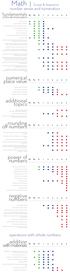 Math Scope & Sequence fundamentals number sense and numeration of the decimal system Count to 10 by units Associate number to numeral (1-10) KN 1 KN 1 KN 2 KN 2 Identify odd and even numbers/numerals and
PROVINCE OF THE EASTERN CAPE EDUCATION
 PROVINCE OF THE EASTERN CAPE EDUCATION DIRECTORATE: CURRICULUM FET PROGRAMMES LESSON PLANS TERM 3 MATHEMATICS GRADE 10 FOREWORD The following Grade 10, 11 and 12 Lesson Plans were developed by Subject
Bridging Documents for Mathematics
 Bridging Documents for Mathematics 5 th /6 th Class, Primary Junior Cycle, Post-Primary Primary Post-Primary Card # Strand(s): Number, Measure Number (Strand 3) 2-5 Strand: Shape and Space Geometry and
Section 1: How will you be tested? This section will give you information about the different types of examination papers that are available.
 REVISION CHECKLIST for IGCSE Mathematics 0580 A guide for students How to use this guide This guide describes what topics and skills you need to know for your IGCSE Mathematics examination. It will help
Anchorage School District/Alaska Sr. High Math Performance Standards Algebra
 Anchorage School District/Alaska Sr. High Math Performance Standards Algebra Algebra 1 2008 STANDARDS PERFORMANCE STANDARDS A1:1 Number Sense.1 Classify numbers as Real, Irrational, Rational, Integer,
with functions, expressions and equations which follow in units 3 and 4.
 Grade 8 Overview View unit yearlong overview here The unit design was created in line with the areas of focus for grade 8 Mathematics as identified by the Common Core State Standards and the PARCC Model
Higher Education Math Placement
 Higher Education Math Placement Placement Assessment Problem Types 1. Whole Numbers, Fractions, and Decimals 1.1 Operations with Whole Numbers Addition with carry Subtraction with borrowing Multiplication
Key Stage 2 Mathematics Programme of Study
 Deeloping numerical reasoning Identify processes and connections Represent and communicate Reiew transfer mathematical to a ariety of contexts and eeryday situations identify the appropriate steps and
Everyday Mathematics CCSS EDITION CCSS EDITION. Content Strand: Number and Numeration
 CCSS EDITION Overview of -6 Grade-Level Goals CCSS EDITION Content Strand: Number and Numeration Program Goal: Understand the Meanings, Uses, and Representations of Numbers Content Thread: Rote Counting
Prentice Hall Algebra 2 2011 Correlated to: Colorado P-12 Academic Standards for High School Mathematics, Adopted 12/2009
 Content Area: Mathematics Grade Level Expectations: High School Standard: Number Sense, Properties, and Operations Understand the structure and properties of our number system. At their most basic level
Everyday Mathematics GOALS
 Copyright Wright Group/McGraw-Hill GOALS The following tables list the Grade-Level Goals organized by Content Strand and Program Goal. Content Strand: NUMBER AND NUMERATION Program Goal: Understand the
Numeracy Targets. I can count at least 20 objects
 Targets 1c I can read numbers up to 10 I can count up to 10 objects I can say the number names in order up to 20 I can write at least 4 numbers up to 10. When someone gives me a small number of objects
Everyday Mathematics. Grade 4 Grade-Level Goals CCSS EDITION. Content Strand: Number and Numeration. Program Goal Content Thread Grade-Level Goal
 Content Strand: Number and Numeration Understand the Meanings, Uses, and Representations of Numbers Understand Equivalent Names for Numbers Understand Common Numerical Relations Place value and notation
Level 1 - Maths Targets TARGETS. With support, I can show my work using objects or pictures 12. I can order numbers to 10 3
 Ma Data Hling: Interpreting Processing representing Ma Shape, space measures: position shape Written Mental method s Operations relationship s between them Fractio ns Number s the Ma1 Using Str Levels
Grade 6 Mathematics Assessment. Eligible Texas Essential Knowledge and Skills
 Grade 6 Mathematics Assessment Eligible Texas Essential Knowledge and Skills STAAR Grade 6 Mathematics Assessment Mathematical Process Standards These student expectations will not be listed under a separate
Prentice Hall: Middle School Math, Course 1 2002 Correlated to: New York Mathematics Learning Standards (Intermediate)
 New York Mathematics Learning Standards (Intermediate) Mathematical Reasoning Key Idea: Students use MATHEMATICAL REASONING to analyze mathematical situations, make conjectures, gather evidence, and construct
Chapter 111. Texas Essential Knowledge and Skills for Mathematics. Subchapter B. Middle School
 Middle School 111.B. Chapter 111. Texas Essential Knowledge and Skills for Mathematics Subchapter B. Middle School Statutory Authority: The provisions of this Subchapter B issued under the Texas Education
MATH 095, College Prep Mathematics: Unit Coverage Pre-algebra topics (arithmetic skills) offered through BSE (Basic Skills Education)
 MATH 095, College Prep Mathematics: Unit Coverage Pre-algebra topics (arithmetic skills) offered through BSE (Basic Skills Education) Accurately add, subtract, multiply, and divide whole numbers, integers,
LESSON 4 Missing Numbers in Multiplication Missing Numbers in Division LESSON 5 Order of Operations, Part 1 LESSON 6 Fractional Parts LESSON 7 Lines,
 Saxon Math 7/6 Class Description: Saxon mathematics is based on the principle of developing math skills incrementally and reviewing past skills daily. It also incorporates regular and cumulative assessments.
Everyday Mathematics. Grade 4 Grade-Level Goals. 3rd Edition. Content Strand: Number and Numeration. Program Goal Content Thread Grade-Level Goals
 Content Strand: Number and Numeration Understand the Meanings, Uses, and Representations of Numbers Understand Equivalent Names for Numbers Understand Common Numerical Relations Place value and notation
NCTM Curriculum Focal Points for Grade 5. Everyday Mathematics, Grade 5
 NCTM Curriculum Focal Points and, Grade 5 NCTM Curriculum Focal Points for Grade 5 Number and Operations and Algebra: Developing an understanding of and fluency with division of whole numbers Students
Intermediate Phase New Day-by-Day Planning Pack MATHEMATICS
 Intermediate Phase Planning Pack MATHEMATICS Contents: Work Schedules: Page Grade 4 2 Grade 5 4 Grade 6 5 Lesson Plans: Grade 4 6 Grade 5 21 Grade 6 36 Milestones: Grade 4... 52 Grade 5 57 Grade 6 62 Rubrics:
Mathematics. GCSE subject content and assessment objectives
 Mathematics GCSE subject content and assessment objectives June 2013 Contents Introduction 3 Subject content 4 Assessment objectives 11 Appendix: Mathematical formulae 12 2 Introduction GCSE subject criteria
Common Core State Standards for Mathematics Accelerated 7th Grade
 A Correlation of 2013 To the to the Introduction This document demonstrates how Mathematics Accelerated Grade 7, 2013, meets the. Correlation references are to the pages within the Student Edition. Meeting
Mathematics. Programme of study for key stage 3 and attainment targets (This is an extract from The National Curriculum 2007)
 Mathematics Programme of study for key stage 3 and attainment targets (This is an extract from The National Curriculum 2007) Crown copyright 2007 Qualifications and Curriculum Authority 2007 Curriculum
10 th Grade Math Special Education Course of Study
 10 th Grade Math Special Education Course of Study Findlay City Schools 2006 Table of Contents 1. Findlay City Schools Mission Statement 2. 10 th Grade Math Curriculum Map 3. 10 th Grade Math Indicators
1A: Understand numbers, ways of representing numbers, relationships among numbers, and number systems.
 NCTM STANDARD 1: Numbers and Operations Kindergarten Grade 2 1A: Understand numbers, ways of representing numbers, relationships among numbers, and number systems. Kindergarten Grade One Grade Two 1. Count
Florida Math 0028. Correlation of the ALEKS course Florida Math 0028 to the Florida Mathematics Competencies - Upper
 Florida Math 0028 Correlation of the ALEKS course Florida Math 0028 to the Florida Mathematics Competencies - Upper Exponents & Polynomials MDECU1: Applies the order of operations to evaluate algebraic
Assessment Anchors and Eligible Content
 M07.A-N The Number System M07.A-N.1 M07.A-N.1.1 DESCRIPTOR Assessment Anchors and Eligible Content Aligned to the Grade 7 Pennsylvania Core Standards Reporting Category Apply and extend previous understandings
MINISTRY OF EDUCATION
 Republic of Namibia MINISTRY OF EDUCATION NAMIBIA SENIOR SECONDARY CERTIFICATE (NSSC) MATHEMATICS SYLLABUS ORDINARY LEVEL SYLLABUS CODE: 4324 GRADES 11-12 FOR IMPLEMENTATION IN 2006 FOR FIRST EXAMINATION
Mathematics K 6 continuum of key ideas
 Mathematics K 6 continuum of key ideas Number and Algebra Count forwards to 30 from a given number Count backwards from a given number in the range 0 to 20 Compare, order, read and represent to at least
CURRICULUM FOR THE COMMON CORE SUBJECT OF MATHEMATICS
 CURRICULUM FOR THE COMMON CORE SUBJECT OF Dette er ei omsetjing av den fastsette læreplanteksten. Læreplanen er fastsett på Nynorsk Established as a Regulation by the Ministry of Education and Research
Florida Math for College Readiness
 Core Florida Math for College Readiness Florida Math for College Readiness provides a fourth-year math curriculum focused on developing the mastery of skills identified as critical to postsecondary readiness
Topic: Unit 1-Variables, Expressions, and Integers
 Grade 7th Topic: Unit 1-Variables, Expressions, and Integers Essential Questions/Enduring CC.7.NS.1 Apply and extend previous understandings of operations with fractions to add, subtract, multiply, and
Mathematics. Mathematical Practices
 Mathematical Practices 1. Make sense of problems and persevere in solving them. 2. Reason abstractly and quantitatively. 3. Construct viable arguments and critique the reasoning of others. 4. Model with
Grade 5 Mathematics Curriculum Guideline Scott Foresman - Addison Wesley 2008. Chapter 1: Place, Value, Adding, and Subtracting
 Grade 5 Math Pacing Guide Page 1 of 9 Grade 5 Mathematics Curriculum Guideline Scott Foresman - Addison Wesley 2008 Test Preparation Timeline Recommendation: September - November Chapters 1-5 December
Pennsylvania System of School Assessment
 Pennsylvania System of School Assessment The Assessment Anchors, as defined by the Eligible Content, are organized into cohesive blueprints, each structured with a common labeling system that can be read
Prentice Hall Mathematics, Algebra 1 2009
 Prentice Hall Mathematics, Algebra 1 2009 Grades 9-12 C O R R E L A T E D T O Grades 9-12 Prentice Hall Mathematics, Algebra 1 Program Organization Prentice Hall Mathematics supports student comprehension
MATHEMATICAL LITERACY LESSON PLANS.
 MATHEMATICAL LITERACY LESSON PLANS. GRADE 10. LESSON PLAN 1. Lesson Plan: Number and operations in context. Number f Activities : 3 Duration : +/- 9H00 Week 1 2 Date: Context : Mathematics in everyday
Georgia Standards of Excellence Curriculum Map. Mathematics. GSE 8 th Grade
 Georgia Standards of Excellence Curriculum Map Mathematics GSE 8 th Grade These materials are for nonprofit educational purposes only. Any other use may constitute copyright infringement. GSE Eighth Grade
MATH 60 NOTEBOOK CERTIFICATIONS
 MATH 60 NOTEBOOK CERTIFICATIONS Chapter #1: Integers and Real Numbers 1.1a 1.1b 1.2 1.3 1.4 1.8 Chapter #2: Algebraic Expressions, Linear Equations, and Applications 2.1a 2.1b 2.1c 2.2 2.3a 2.3b 2.4 2.5
McDougal Littell California:
 McDougal Littell California: Pre-Algebra Algebra 1 correlated to the California Math Content s Grades 7 8 McDougal Littell California Pre-Algebra Components: Pupil Edition (PE), Teacher s Edition (TE),
Consumer Math 15 INDEPENDENT LEAR NING S INC E 1975. Consumer Math
 Consumer Math 15 INDEPENDENT LEAR NING S INC E 1975 Consumer Math Consumer Math ENROLLED STUDENTS ONLY This course is designed for the student who is challenged by abstract forms of higher This math. course
Expression. Variable Equation Polynomial Monomial Add. Area. Volume Surface Space Length Width. Probability. Chance Random Likely Possibility Odds
 Isosceles Triangle Congruent Leg Side Expression Equation Polynomial Monomial Radical Square Root Check Times Itself Function Relation One Domain Range Area Volume Surface Space Length Width Quantitative
Primary Curriculum 2014
 Primary Curriculum 2014 Suggested Key Objectives for Mathematics at Key Stages 1 and 2 Year 1 Maths Key Objectives Taken from the National Curriculum 1 Count to and across 100, forwards and backwards,
The Most Widely Used. Mathematics Textbook Series in Japan is Now in English! Introducing Tokyo Shoseki s. and
 The Most Widely Used Mathematics Textbook Series in Japan is Now in English! Introducing Tokyo Shoseki s Mathematics International (Elementary School, s 1 to 6) and Mathematics International (Lower Secondary
ModuMath Basic Math Basic Math 1.1 - Naming Whole Numbers Basic Math 1.2 - The Number Line Basic Math 1.3 - Addition of Whole Numbers, Part I
 ModuMath Basic Math Basic Math 1.1 - Naming Whole Numbers 1) Read whole numbers. 2) Write whole numbers in words. 3) Change whole numbers stated in words into decimal numeral form. 4) Write numerals in
For example, estimate the population of the United States as 3 times 10⁸ and the
 CCSS: Mathematics The Number System CCSS: Grade 8 8.NS.A. Know that there are numbers that are not rational, and approximate them by rational numbers. 8.NS.A.1. Understand informally that every number
Chapter 111. Texas Essential Knowledge and Skills for Mathematics. Subchapter A. Elementary
 Elementary 111.A. Chapter 111. Texas Essential Knowledge and Skills for Mathematics Subchapter A. Elementary Statutory Authority: The provisions of this Subchapter A issued under the Texas Education Code,
Such As Statements, Kindergarten Grade 8
 Such As Statements, Kindergarten Grade 8 This document contains the such as statements that were included in the review committees final recommendations for revisions to the mathematics Texas Essential
AMSCO S Ann Xavier Gantert
 AMSCO S Integrated ALGEBRA 1 Ann Xavier Gantert AMSCO SCHOOL PUBLICATIONS, INC. 315 HUDSON STREET, NEW YORK, N.Y. 10013 Dedication This book is dedicated to Edward Keenan who left a profound influence
Mathematics standards
 Mathematics standards Grade 6 Summary of students performance by the end of Grade 6 Reasoning and problem solving Students represent and interpret routine and non-routine mathematical problems in a range
Curriculum Map by Block Geometry Mapping for Math Block Testing 2007-2008. August 20 to August 24 Review concepts from previous grades.
 Curriculum Map by Geometry Mapping for Math Testing 2007-2008 Pre- s 1 August 20 to August 24 Review concepts from previous grades. August 27 to September 28 (Assessment to be completed by September 28)
Overview. Essential Questions. Grade 8 Mathematics, Quarter 4, Unit 4.3 Finding Volume of Cones, Cylinders, and Spheres
 Cylinders, and Spheres Number of instruction days: 6 8 Overview Content to Be Learned Evaluate the cube root of small perfect cubes. Simplify problems using the formulas for the volumes of cones, cylinders,
Mathematics. What to expect Resources Study Strategies Helpful Preparation Tips Problem Solving Strategies and Hints Test taking strategies
 Mathematics Before reading this section, make sure you have read the appropriate description of the mathematics section test (computerized or paper) to understand what is expected of you in the mathematics
Academic Standards for Mathematics
 Academic Standards for Grades Pre K High School Pennsylvania Department of Education INTRODUCTION The Pennsylvania Core Standards in in grades PreK 5 lay a solid foundation in whole numbers, addition,
Grade 5 Math Content 1
 Grade 5 Math Content 1 Number and Operations: Whole Numbers Multiplication and Division In Grade 5, students consolidate their understanding of the computational strategies they use for multiplication.
Students will be able to simplify and evaluate numerical and variable expressions using appropriate properties and order of operations.
 Outcome 1: (Introduction to Algebra) Skills/Content 1. Simplify numerical expressions: a). Use order of operations b). Use exponents Students will be able to simplify and evaluate numerical and variable
1. Mathematics Content/Alignment with the Standards Correlation to California Algebra Readiness Standards
 PROGRAM DESCRIPTION The goal of Prentice Hall Connecting to Algebra is to fully prepare students for success in Algebra 1 by thoroughly covering the Algebra Readiness standards outlined by the California
Mathematics Georgia Performance Standards
 Mathematics Georgia Performance Standards K-12 Mathematics Introduction The Georgia Mathematics Curriculum focuses on actively engaging the students in the development of mathematical understanding by
MATH BOOK OF PROBLEMS SERIES. New from Pearson Custom Publishing!
 MATH BOOK OF PROBLEMS SERIES New from Pearson Custom Publishing! The Math Book of Problems Series is a database of math problems for the following courses: Pre-algebra Algebra Pre-calculus Calculus Statistics