
Magnetic Resonance Imaging: Health Effects and Safety
|
|
|
- Leon Payne
- 9 years ago
- Views:
Transcription
1 Magnetic Resonance Imaging: Health Effects and Safety Kwan-Hoong Ng, Azlan C Ahmad, MS Nizam, BJJ Abdullah Department of Radiology University of Malaya Kuala Lumpur Malaysia [email protected] ABSTRACT Magnetic Resonance Imaging (MRI) is one of the most rapidly advancing diagnostic imaging tools today. Hazards intrinsic to the MR environment must be understood, acknowledged and respected. MRI is safe, but if something goes wrong, it can go very wrong. MRI-related accidents do happen, however they were not reported in most countries, including Malaysia. There are several safety issues to be considered by the radiologists, clinicians, radiographers, nurses and medical physicists involving with MRI examinations. These include those related to the magnetic field, gradient magnetic fields, and radiofrequency (RF) magnetic fields. This paper reviews the health effects and current safety issues related to MRI environment for both the patients as well as the staff members. Injuries from MRI accidents are occurring more frequently now and there is an urgent need for MRI facilities to implement safety guidelines. We propose several safety recommendations for implementation by the MRI facilities and the health authority. INTRODUCTION Magnetic resonance imaging (MRI) is one the most rapidly advancing imaging techniques available today. It is normally used to produce detailed sectional images of the body in any imaging plane. Compared to the x-ray based medical diagnostic techniques e.g. general radiography, positron emission tomography (PET) and computed tomography (CT), MRI does not employ ionising radiation but uses radiofrequency (RF) fields. Therefore, the modality is considered to have less health effects than the ionising radiation-based imaging modalities. As a start, let s review your knowledge of MRI health effects and safety. How would you answer the following questions? 1. What advice would you give to a medical doctor about scanning a pregnant woman? 2. Can a pregnant staff member enter the MRI scanning room? 3. What procedures would you advise if a patient suffers from cardiac arrest in the MRI scanning room? If you are uncertain in answering these questions then you are advised to review your understanding of MRI health effects and safety. There are many excellent books and review papers on MRI health effects and safety [1-12]

2 HEALTH EFFECTS The potential benefits of MRI are numerous. However, there are hazards intrinsic to the MR environment which must be understood, acknowledged and respected. In general, during MR diagnostic imaging and spectroscopy, patient being scanned and those individuals in the immediate vicinity of the equipment can be exposed to three types of magnetic fields simultaneously: The static (main) magnetic fields Time-varying magnetic field gradients Radiofrequency (RF) magnetic fields The hazards caused by these fields can affect patients, staff and other persons within the magnetic field environment. Several incidents involving MR have been reported in ECRI Health Device Alerts (HDA), U.S. Food and Drug Administration (FDA) Medical Device Reporting (MDR). Below are some examples from the database: A 6-year-old boy died after undergoing an MRI exam at a New York-area hospital when the machine's powerful magnetic field jerked a metal oxygen tank across the room, crushing the child's head (2001) A patient with an implanted cardiac pacemaker died during or shortly after an MR exam. The coroner determined that the death was due to the interruption of the pacemaker by the MR system (1989) A patient with an implanted intracranial aneurysm clip died as a result of an attempt to scan her. The clip reportedly shifted when exposed to the magnetic field. The staff apparently had obtained information indicating that the material in this clip could be scanned safely (1992) A patient complained of double vision after an MR exam. The MR exam as well as an x-ray revealed the presence of metal near the patient's eye. The patient was sedated at the time of the exam and was not able to inform anyone of this condition (1993) A patient received blistered burns on the finger where a pulse oximeter was attached during MR scanning. A skin graft was required to treat the affected area (1995) MRI is safe, but if something goes wrong, it can go very wrong. MRI-related accidents do happen, however they were not reported in most countries, including Malaysia. Lack of uniform safety rules and negligence in screening of the patients and staff contribute towards this unfortunate situation. Anecdotal accounts abound, only the fatal accidents make it to the mass media and the professional journals

3 Effects of Static Magnetic Field (B o ) The static or main magnetic field is used to align the nuclei in patient s body. This powerful static magnetic field is always present even when the MR scanner is not imaging. The strengths of the static magnetic fields used in clinical and research MR systems for imaging and/or spectroscopy range from T to more than 10 T compared to the 50 mt of the earth magnetic field. According to FDA, clinical basis for safety is for static magnetic field strength of up to 2 T. However, above this level, evidence of safety must be provided by the sponsor or device manufacturer prior to routine clinical use [1]. There are two major safety issues regarding the static magnetic fields used in MR: attraction of ferromagnetic material towards the magnet and biological changes. Devices made from ferromagnetic material such as surgical tools (e.g. aneurism clips scissors and haemostats) and certain components of implantable medical devices (e.g. prostheses, pacemakers and neuro-stimulators) will be attracted to the core of the main magnet and this effect is known as projectiles. Anyone or anything in the direct path of the object may be struck as the object moves toward the magnet. Individuals in or near the MR system could be seriously injured by the effect. In addition, the object, the MR system, or other equipment in the room could be damaged. For some sensitive devices such as physiological monitoring instruments and pacemaker, permanent damage may occur when exposed to certain level of magnetic fields. Furthermore, the implantable device such as pacemaker may experience a torque, which is sufficient to cause displacement in the body. Even devices such as sandbag that might appear safe have become projectile in the MR environment. This is because some sandbag contains ferromagnetic pallet to add weight to the bag without increasing its size. The biological effects of static magnetic fields is one of the most controversial topics in the field of MR safety. It have been reported in several literature that several structures within humans are affected by the static magnetic fields such as the retina, pineal gland, and some cells in the paranasal sinuses. However, the effects are not the same as harmful, or teratogenic/ carcinogenic. [2, 10] Effects of Time-varying Magnetic Field (db/dt) Time-varying magnetic field gradients in MR system functions to provide position dependent variation in magnetic field strength. The gradients are pulsed during and between RF excitation pulses. The faster the sequence of imaging or spectroscopy, the greater the gradient fields change rate. The main safety concerns with the time-varying magnetic field gradients are biological effects and acoustic noise. Subjecting the human body to time-varying magnetic fields leads to induced electric fields and circulating currents in conductive tissues. At any particular location, the currents induced will be determined by the rate of change of the magnetic field and the local distribution of the body impedance, which is primarily resistive at frequencies below about 1 MHz

4 At frequencies above 1 MHz, a reactive element begins to be significant and at frequencies above about 30 MHz, the wavelength begins to influence the electric field and current distribution. The time-varying field gradients employed in MR scanners are of relatively low frequency when compared, for example, to RF fields and microwaves. Time-varying magnetic fields induce electric currents that could be sufficiently large in tissues to interfere with the normal function of nerve cells and muscle fibres. One of example of this is the sensation of flashes of light, caused by induced electric currents stimulating the retina. However, this effect has not been shown to be harmful. A more serious response to electric currents flowing through the body is that of ventricular fibrillation. As the gradient coils are switched on and off during image acquisition, a significant amount of acoustic noise will be generated in the bore of the magnet. This noise occurs during rapid alterations of currents within the gradient coils. These currents, in the presence of a strong magnetic field produce significant forces that act upon gradient coils and produce noise. The noise is manifested as loud tapping, knocking, or chirping sounds. Change in the gradient output (rise time or amplitude) caused by modifying the MR imaging parameters will cause the level of gradient-induced acoustic noise to vary. This noise is enhanced by decreases in section thickness, field of view (FOV), repetition time, and echo time. Temporary hearing loss has been reported using conventional sequences. [3] Effects of Radiofrequency Fields Radiofrequency (RF) pulses are used in MR imaging for the excitation of the nuclei. RF fields may interact with both tissues and foreign bodies, such as metallic implants. During the imaging process, the majority of RF power is transformed into heat within the patient s tissue. Absorption of energy from RF fields by tissues results in generation of heat due to resistive losses. This local heating will be dissipated by the tissues. This ohmic heating of tissue is greatest at the surface and minimal at the centre of the patient s body. The thermal characteristics of different organs and parts of organs are different. Limbs will dissipate thermal energy more rapidly than internal parts of the abdomen. The eyes are an example of an organ that have very little blood flow, therefore, takes time to dissipate thermal energy. The testes which is separated from the main volume of the body is regarded as heat sensitive. A rise of 1 C is generally acceptable to a normal healthy body. The actual temperature rise at any time depends on the balance between the energy absorbed and the energy transferred from the region of the body concerned. The ambient temperature and humidity play a major role in the rate of dissipation. The lower the ambient temperature and the lower the humidity the greater the transfer. The rate of RF deposition is represented in terms of specific absorption ratio (SAR) which is normally measure in W kg -1. The SAR actually is the mass normalized rate at which RF power is coupled to biological tissues. For a given pulse sequence, the SAR is dependent - 4 -

5 upon the radiation, amplitude, and number of RF pulses during each repetition time of the sequence. A pulsed RF field can also induce a current in a coil made from loop of wire. The current could cause localized heating of the wire which may cause patient s skin burns. These burns could be caused by heating of the loop or by conductive effects between loop and the patient s skin. RF field may also cause athermal field-specific changes in biological systems that are produced without increase elevation in temperature. However, these effects are not well understood and have not been studied in association with the use of MR systems [4]. Main Magnetic Fields SAFETY RECOMMENDATIONS There is no adverse effects have been found from whole-body exposure up to 2 T and of the extremities to 5 T. However for the patient scanned with static magnetic field greater than 2 T, the International Radiation Protection Association (IRPA) has suggested that the patients should be monitored for symptoms referable to the nervous system [5]. Although no deleterious biologic effects from the static magnetic fields used in MRI have been definitively associated with MRI s static magnetic fields, there is no conclusive answer yet for this effect. Researches are still continued in this area using various animal models and at various magnetic field strengths. In order to prevent accidents caused by projectile, all equipment brought into the scanning room such as anaesthetic trolleys, wheelchairs, and patient trolleys, must be ensured to be non-ferromagnetic. The installation of a metal detector which everybody has to pass through before entering the MR suite is highly recommended [1]. Some examples of medical devices and materials that could be dangerous in MR environment are as follow: Examples of devices that may contain ferromagnetic materials Aneurism Clips Biopsy Needles, markers, and devices Breast Tissues expanders and implants Bone and spinal fusion stimulators Cardiac pacemakers Cochlear implants Carotid artery vascular clamps ECG electrodes Hearing aids Heart valve prosthesis Dental implants, devices and materials Tattoos and permanent make-up - 5 -

6 The constantly-updated pocket guide by Shellock [6] contains details on devices and their safety status. It is also advisable that all nursing, housekeeping, fire department, emergency and MR personnel be educated to the potential risks and hazards of the static magnetic field. Signs should be posted to prevent possible entry into the scan room with ferromagnetic objects. Constant education of everybody involved is also vital. It is essential that every individuals involve with MR have a thorough understanding of the possibility of danger of the powerful magnetic fields of MRI. Time-varying Magnetic Fields Clinical experience indicates that no adverse effects are to be expected when the rate of change of magnetic flux density does not exceed 6 T s -1. However, patients with changes in the electrocardiogram (ECG) indicative of abnormalities in conduction may particularly susceptible to exposure to magnetic fields. Therefore, an assessment of cardiac function should be made when exposures above 6 T s -1 are contemplated, and the patient s cardiovascular function should be monitored during exposure above 6 T s -1. [5] In order to reduce the acoustic noise caused by the gradient field, the use of earplugs of headphones, ear defenders, or other means of hearing protection is highly recommended. A reduction of acoustic noise levels may also be achieved by decreasing the level of gradient pulsing in an imaging sequence. Recent advances in digital signal processing technology allow efficient active noise control system. The system continuously sampling the sounds in the noise environment so that the gradient magnetic field-induced noise is attenuated. [3] Radiofrequency Fields In MR exposures up to 1 hour, the total body exposure should be limited to a total energy deposition of 120 W min kg -1 in order not to overload the thermoregulatory system. To avoid overheating of any local area, the product of time and local SAR should not exceed: 60 W min kg -1 averaged over the head, or 120 W min kg -1 averaged over the trunk, or 180 W min kg -1 averaged over extremities, provided that the instantaneous SAR does not exceed: 4 W kg -1 averaged over the head, or 8 W kg -1 averaged over the trunk, or 12 W kg -1 averaged over extremities To protect poorly perfused tissues such as the eye, the tissues should not be exposed to a local SAR of more than 10 W kg -1, average over 0.01 kg for more than 10 min

7 For exposures of infants, pregnant women, or persons with cardio-circulatory and/or cerebral vascular impairment, a reduction of these values by a factor of two is recommended. For an RF-emitting surface coil, the average should be taken over the volume affected by the coil. [5] When utilizing surface coils, the operator must be careful to prevent any electrically conductive material (i.e. cable of surface coil) form a "conductive loop" with itself or with the patient. Tissue or clothing could potentially be ignited by uninsulated cables. Coupling of a transmitting coil to a receive coil may also cause severe thermal injury. [4] ANSWERS TO THE QUESTIONS POSED 1. What advice would you give to a medical doctor about scanning a pregnant woman? If it is avoidable, don't scan her in the first trimester. This is precautionary advice only. There is no good evidence that the mammalian embryo or foetus suffers any detrimental effect when subjected to static magnetic fields of the MR scanner. There is some equivocal data that suggest that the developing chick embryo is sensitive to prolonged exposure to weak gradient magnetic fields. There is still the acoustic noise question. The development of hearing in the foetus occurs after 24 weeks and the noise of the scans might pose risk to the development of the hearing of the child. The mothers heart sounds are actually very loud already for the foetus because there is very good propagation of sound from the heart to the womb. These guidelines are currently being reviewed by the MR community. 2. Can a pregnant staff member enter the MRI scanning room? Yes. But they should be given the option to stay out of the inner Controlled Area during the first trimester. It is considered prudent to exclude all pregnant women from the scanning room containing the magnet (Inner Controlled Area) during the first three months of pregnancy. These guidelines are currently being reviewed by the MR community. 3. What procedure would you advise if a patient suffers from cardiac arrest in the MRI scanning room? Begin resuscitation, call the resuscitation team and get the patient out of the inner controlled area as soon as possible. The resuscitation equipment used in the event of cardiac arrest can be extremely dangerous in an MR environment, and should never be taken into the scanning room. In the event of a cardiac arrest, resuscitation should begin immediately, but priority then moves to getting the patient out of the scan room so that resuscitation can occur without risk of further disaster due to unscreened medical personnel or equipment entering the scanning room. An MR - 7 -
![[5] When utilizing surface coils, the operator must be careful to prevent any electrically conductive material (i.e. cable of surface coil) form a "conductive loop" with itself or with the patient.](/docs-images/47/21063563/images/page_7.jpg "Tissue or clothing could potentially be ignited by uninsulated cables. Coupling of a transmitting coil to a receive coil may also cause severe thermal injury. [4] ANSWERS TO THE QUESTIONS POSED 1.")
8 compatible patient trolley should be kept in the scanning room to enable swift evacuation of the patient. OUR RECOMMENDATIONS Several incidents and accidents had already occurred in Malaysia, however these were not documented and reported to the Ministry of Health. A standardised system of incident and accident reporting should be formulated and implemented. The authority must establish MRI safety guidelines for all MRI centres. Written procedures for screening of patients must be available, read and understood by all authorised persons. An example of MR procedure screening form for patients is given in Appendix 1. [11] MRI facilities should have their own set of Local Rules, which must be read by all staff (both medical and supporting personnel) who have access to the department. These guidelines are department-specific information about the controlled areas, the designated Responsible Person, and Authorised Personnel. These should be reviewed and audited periodically. An example of Local Rules is shown in Appendix 2 [10]. Identify a safety officer responsible for ensuring that procedures are in effect and enforced to ensure safety in the MR environment. An easily recognised and standardised warning sign is very important in the MRI environment. However, the information shown on the most signs is out-of-date, erroneous, or not displayed prominently enough. Appendix 3 shows two examples of the new proposed signs. [13] We must not be complacent! Develop a safety culture in MRI. REFERENCES [1] Shellock F.G., Kanal E Magnetic resonance: Bioeffects, safety, and patient management. 2 nd Ed. New York: Lippincott-Raven Press [2] University of Pittsburgh Medical Centre Magnetic Resonance Safety Site [3] McJury M., Shellock F.G Auditory Noise Associated With MR Procedures: A Review. Journal of Magnetic Resonance Imaging 12:37 45 [4] Shellock F.G Radiofrequency Energy-Induced Heating During MR Procedures: A Review, Journal of Magnetic Resonance Imaging 12:

9 [5] IRPA/INIRC Guidelines: Protection of the patient undergoing a Magnetic Resonance Examination Health Physics 61: [6] Shellock F.G Pocket guide to MR Procedures and Metallic objects: Update Philadelphia: Lippincott Williams & Wilkins [7] Kanal E., Borgstede J.P., Barkovich A.J. et al American College of Radiology White Paper on MR Safety, Am Jour Roent: 178: [8] Guidelines for Magnetic Resonance Diagnostic Equipment in Clinical Use with Particular Reference to Safety (2 nd edition) Medical Devices Agency (MDA) [9] Principles for the protection of patients and volunteers during clinical magnetic resonance diagnostic procedures National Radiological Protection Board (NRBP). Documents of the NRPB 2 (1). [10] Martin C.J., Sutton D.G Practical radiation protection in healthcare. Oxford: Oxford Univ. Press [11] Shellock F.G. 2002, Screening patients for MR procedures and individuals for the MR environment. Article excerpted from with permission from Frank G. Shellock, Ph.D. [12] Abdullah B.J.J., Bux S.I., Chien D. 1997, Safety considerations in magnetic resonance imaging (MRI). Medical Journal of Malaysia 52 (4): [13] Shellock F.G Signs to help control access to the magnetic resonance environment. Article excerpted from DiagnosticImaging.com with permission of Frank G. Shellock, Ph.D. American College of Radiology (ACR) Some Useful Websites The Emergency Care Research Institute (ECRI) Food and Drug Administration (FDA)
![American College of Radiology White Paper on MR Safety, Am Jour Roent: 178:1335-1347 [8] Guidelines for Magnetic Resonance Diagnostic Equipment in Clinical Use with Particular Reference to Safety (2](/docs-images/47/21063563/images/page_9.jpg "nd edition) 2002. Medical Devices Agency (MDA) [9] Principles for the protection of patients and volunteers during clinical magnetic resonance diagnostic procedures 1991.")
10 Institute for Magnetic Resonance Safety, Education, and Research (IMRSER) International Commission on Non-Ionizing Radiation Protection (ICNIRP) MRI Safety

11 Appendix 1 MR Procedure Screening Form for Patients [11]

12 - 12 -

13 21 st -23 rd October 2003, Malaysia

14 21 st -23 rd October 2003, Malaysia Appendix 2 Basic Local Rules for Magnetic Resonance [From Martin and Sutton, Ref. 10] In view of the demanding electromagnetic environment associated with MR equipment, such equipment should be located within a designated controlled area where free access is provided only to authorized staff. It is recommended that the 0.5 mt contour is entirely within the controlled area. Access to the controlled area should be through self-closing and self-locking doors. All unauthorized persons must be medically screened and warned of potential hazards (projectile effect, malfunctioning of some devices in the presence of a magnetic field), before entering the controlled area. Unauthorized persons include: support staff (engineering staff, nurses, portering staff, cleaning staff, emergency services staff) who should be aware of the potential hazards and should be appropriately trained patients volunteers for research projects who should be fully informed and have given consent the general public (visitors, patients' relations or friends). Patients, volunteers, and the general public must be supervised by authorized staff at all times within the controlled area. Persons fitted with a heart pacemaker must not enter the controlled area. It is also convenient to define an inner controlled area containing the 3 mt contour. All persons entering this area should remove items such as watches, credit cards, and all ferromagnetic objects from their clothing and deposit them outside the area before entering. No ferromagnetic object (tools, gas cylinders, trolleys, etc.) must be allowed in this inner area. Persons with any metallic implant should be forbidden to enter the inner controlled area until the implant has been declared safe by a suitably qualified person. Persons with intracranial aneurysm clips or intraorbital metallic implants should not enter the inner controlled area. Persons with metallic implants such as artificial joints, surgical clips, or prosthetic cardiac valves need not be excluded from MR procedures but care must be taken and the procedure terminated if discomfort or heating is experienced. A large database regarding MR compatibility and safety of implants has been compiled. It is prudent to exclude women in the first trimester of pregnancy from the inner controlled area. Procedures for dealing with emergency situations such as cardiac arrest should be defined. Resuscitation equipment must not be taken into the inner controlled area and support staff must be fully informed of such procedures. Care should be taken in attaching physiological monitoring equipment to the patient. High-impedance leads should be used and displays/recorders should be outside the 3 mt contour. Loops of cables should be avoided since these can lead to overheating and local burning. Adverse incidents arising from the use of MR equipment should be reported to the Medical Devices Agency

15 21 st -23 rd October 2003, Malaysia Appendix 3 New MR safety warning sign designed to help control access to the MR environment. This sign should be placed on the door to the MR system room. [13] 15

YOUR MRI EXAM: QUESTIONS AND ANSWERS
 YOUR MRI EXAM: QUESTIONS AND ANSWERS What is MRI? MRI is short for Magnetic Resonance Imaging. MRI is an advanced technology that lets your doctor see internal organs, blood vessels, muscles, joints, tumors,
MRI SAFETY JEOPARDY (Technologist Edition) Questions
 MRI SAFETY JEOPARDY (Technologist Edition) Questions For MRI Safety Week, 2009 Provided, Inc. www.mednovus.com PowerPoint MRI Safety Quiz available for free download from http://mrimetaldetector.com/media/proving_grounds/mri_safety_week.html
FDA Guidelines for Magnetic Resonance Equipment Safety
 FDA Guidelines for Magnetic Resonance Equipment Safety Loren A. Zaremba, Ph.D. Center for Devices and Radiological Health Food and Drug Administration Outline I. Introduction II. Static Magnetic Field
Safety Guidelines for Magnetic Resonance Imaging Equipment in Clinical Use
 Safety Guidelines for Magnetic Resonance Imaging Equipment in Clinical Use March 2015 Safety Guidelines for Magnetic Resonance Imaging Equipment in Clinical Use 1/86 Acknowledgements The following are
MRI SAFETY JEOPARDY (NON Technologist Edition) Questions
 MRI SAFETY JEOPARDY (NON Technologist Edition) Questions For MRI Safety Week, 2009 Provided, Inc. www.mednovus.com PowerPoint MRI Safety Quiz available for free download from http://mrimetaldetector.com/media/proving_grounds/mri_safety_week.html
CONSENT FOR MRI SCAN WITH INTRAVENOUS CONTRAST
 CONSENT FOR MRI SCAN WITH INTRAVENOUS CONTRAST Your Doctor has asked that an MRI scan be performed using intravenous contrast. This contrast may give the radiologist additional information that may not
Magnetic Resonance Imaging Environment Safety in Ontario
 Magnetic Resonance Imaging Environment Safety in Ontario April 2006 Healthcare Human Factors Group University Health Network Table of Contents List of Abbreviations 1 List of Units 1 Definitions 2 Executive
A Primer on Medical Device Interactions with Magnetic Resonance Imaging Systems
 This guidance was written prior to the February 27, 1997 implementation of FDA's Good Guidance Practices, GGP's. It does not create or confer rights for or on any person and does not operate to bind FDA
Human Exposure Limits
 Human Exposure Limits Session 3 0 Version December 2014 Learning objectives In this session we will: Learn about the international exposure limits for workers and the public Learn about methods for assessing
Prepublication Requirements
 Issued Prepublication Requirements The Joint Commission has approved the following revisions for prepublication. While revised requirements are published in the semiannual updates to the print manuals
Procedures/risks: Radiology (CT, DXA, MRI, ultrasound, X-ray)
 Procedures/risks: Radiology (CT, DXA, MRI, ultrasound, X-ray) Computerized Axial Tomography (CT): Procedure: A Computerized Axial Tomography (CT) scan [of your heart] involves holding your breath for a
MRI Department Goals. Effective Ways to Improve Patient Cooperation and Safety in MRI Exam. Lecture Topics
 Effective Ways to Improve Patient Cooperation and Safety in MRI Exam [email protected] Lecture Topics MRI patient preparation Department MRI Safety Policies and Procedures MRI patient safety screening
1.5 Tesla and 3 Tesla Magnetic Resonance Imaging (MRI) Guidelines for the Senza System
 1.5 Tesla and 3 Tesla Magnetic Resonance Imaging (MRI) Guidelines for the Senza System NEVRO CORP. All questions or concerns about Nevro products should be forwarded to: Nevro Corp. 1800 Bridge Parkway
X-Rays Benefits and Risks. Techniques that use x-rays
 X-Rays Benefits and Risks X-rays are a form of electromagnetic radiation, just like light waves and radiowaves. Because X-rays have higher energy than light waves, they can pass through the body. X-rays
UC Davis Imaging Research Center. MRI Online Safety
 UC Davis Imaging Research Center MRI Online Safety Who should know MR Safety? All persons that have reason to enter the MR suite area should be trained in MR safety procedures. These include but are not
MRI (Magnetic Resonance Imaging) Arthrogram
 MRI (Magnetic Resonance Imaging) Arthrogram MRI is a safe way for your doctor to take pictures of soft tissues and bones in the body. Using radio waves and a magnet field, the pictures provide information
Policy and Procedure Manual Peter S. Allen MRI Research Centre (Formerly called the In-Vivo NMR Centre) The University of Alberta
 Policy and Procedure Manual Peter S. Allen MRI Research Centre (Formerly called the In-Vivo NMR Centre) The University of Alberta Revised: July 27, 2011 Derek J. Emery M.D., FRCPC 1 Table of Contents 1.
2012 Operating Room Design Manual
 CHAPTER 16 REMOTE AND HAZARDOUS LOCATIONS Lead Author: John Rogoski, DO, Assistant Professor of Clinical Anesthesiology, Ohio State University College of Medicine Checklist: Is the room size large enough
Magnetic Resonance, Functional (fmri) - Brain
 Scan for mobile link. Magnetic Resonance, Functional (fmri) - Brain Functional magnetic resonance imaging (fmri) measures the metabolic changes that occur within the brain. It may be used to examine the
ImageReady MRI Full Body Guidelines for Precision Montage MRI Spinal Cord Stimulator System
 ImageReady MRI Full Body Guidelines for Precision Montage MRI Spinal Cord Stimulator System CAUTION: Federal law restricts this device to sale, distribution and use by or on the order of a physician. 91035972-01
Numerical Modelling of E-M Occupational Exposures associated with MRI
 Numerical Modelling of E-M Occupational Exposures associated with MRI Jeff Hand and Yan Li Imaging Sciences Dept, Imperial College London, Hammersmith Hospital Campus Physical Agents Directive (EMFs) 2004/40/EC
MRI Safety at 3T versus 1.5T
 The Internet Journal of World Health and Societal Politics TM MRI Safety at 3T versus 1.5T Jennifer Jerrolds R.T.(R)(CT)(MR) Shane Keene MBA, RRT-NPS, CPFT, RPSGT Citation: Jennifer Jerrolds & Shane Keene:
MRI of the Breast. What is MRI of the Breast?
 MRI of the Breast What is MRI of the Breast? Magnetic Resonance Imaging (MRI) is a noninvasive, usually painless medical test that helps physicians diagnose and treat medical conditions. MRI uses a powerful
Environmental Health and Safety
 Environmental Health and Safety Standard Operating Guideline RF & Microwave Safety Program 1.0 Purpose and Requirements This guide will present a summary of the basics of radiofrequency (RF) and microwave
First floor, Main Hospital North Services provided 24/7 365 days per year
 First floor, Main Hospital North Services provided 24/7 365 days per year General Radiology (X-ray) Fluoroscopy Ultrasound (Sonography) Nuclear Medicine P.E.T. imaging Computed Tomography (CT scan) Magnetic
Magnetic Resonance Imaging
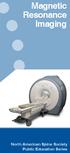 Magnetic Resonance Imaging North American Spine Society Public Education Series What Is Magnetic Resonance Imaging (MRI)? Magnetic resonance imaging (MRI) is a valuable diagnostic study that has been used
COUNCIL RECOMMENDATION of 12 July 1999 on the limitation of exposure of the general public to electromagnetic fields (0 Hz to 300 GHz) (1999/519/EC)
 COUNCIL RECOMMENDATION of 12 July 1999 on the limitation of exposure of the general public to electromagnetic fields (0 Hz to 300 GHz) (1999/519/EC) THE COUNCIL OF THE EUROPEAN UNION, Having regard to
Official Journal of the European Communities. (Acts whose publication is not obligatory) COUNCIL
 30. 7. 1999 EN Official Journal of the European Communities L 199/59 II (Acts whose publication is not obligatory) COUNCIL COUNCIL RECOMMENDATION of 12 July 1999 on the limitation of exposure of the general
What are radio signals?
 Mobile phones and other wireless technologies have become an integral part of everyday life. But does using a mobile phone regularly, or living near a base station, have any implications for our health?
ASSESSMENT OF MAGNETIC RESONANCE IMAGING PROTOCOLS WITH HEALTHY VOLUNTEERS
 SHEFC BRAIN IMAGING RESEARCH CENTRE FOR SCOTLAND Department of Clinical Neurosciences The University of Edinburgh Western General Hospital Crewe Road Edinburgh EH4 2XU Tel: 0131 537 2664 Fax: 0131 537
Invited. Pre-MRI Procedure Screening: Recommendations and Safety Considerations for Biomedical Implants and Devices
 JOURNAL OF MAGNETIC RESONANCE IMAGING 12:92 106 (2000) Review Invited Pre-MRI Procedure Screening: Recommendations and Safety Considerations for Biomedical Implants and Devices Anne M. Sawyer-Glover, RT(R)(MR)
Intensity-Modulated Radiation Therapy (IMRT)
 Scan for mobile link. Intensity-Modulated Radiation Therapy (IMRT) Intensity-modulated radiotherapy (IMRT) uses linear accelerators to safely and painlessly deliver precise radiation doses to a tumor while
An abdominal ultrasound produces a picture of the organs and other structures in the upper abdomen.
 Scan for mobile link. Ultrasound - Abdomen Ultrasound imaging of the abdomen uses sound waves to produce pictures of the structures within the upper abdomen. It is used to help diagnose pain or distention
Technique and Safety of. by Pierluigi Castellone, Electronics Engineer Brain Products General Manager
 Technique and Safety of performing EEG/fMRI measurements by Pierluigi Castellone, Electronics Engineer Brain Products General Manager Contents of the presentation Why recording simultaneous EEG and fmri?
Magnetic Resonance Imaging (MRI) - Knee
 Scan for mobile link. Magnetic Resonance Imaging (MRI) - Knee Magnetic resonance imaging (MRI) of the knee uses a powerful magnetic field, radio waves and a computer to produce detailed pictures of the
Wireless Broadband: Health & Safety Information
 Wireless Broadband: Health & Safety Information Introduction The increasing use of mobile phones and other wireless technology has been accompanied by public debate about possible adverse effects on health.
Who can have an MRI scan?
 i MRI Scan Contents What is an MRI scan? 1 Why am I having an MRI scan? 1 Who can have an MRI scan? 1 What preparation will I need? 2 What happens when I come for the scan? 2 Who will I see when I have
Hello and welcome to the online information session for the Magnetic Resonance Imaging Program at Austin Community College. My name is Teresa Garza
 Hello and welcome to the online information session for the Magnetic Resonance Imaging Program at Austin Community College. My name is Teresa Garza and together with Lisa Ford, we created the MRI program
NeuroStar TMS Therapy Patient Guide for Treating Depression
 NeuroStar TMS Therapy Patient Guide for Treating Depression This NeuroStar TMS Therapy Patient Guide for Treating Depression provides important safety and use information for you to consider about treating
Prior to commencing a research study, the necessary approval must be obtained from:
 CENTRE FOR COGNITIVE NEUROIMAGING MRI SCANNING SUITE PROCEDURES The MRI suite at the Centre for Cognitive Neuroimaging (CCNi), houses a Siemens 3T Tim Trio MRI scanner. Neuroimaging research studies are
How can I be sure it will be performed to a high standard?
 FREQUENTLY ASKED QUESTIONS (About ultrasound scans at Derriford) What is an Ultrasound Scan? How does it work? What are the dangers? What are the advantages? Who will perform my scan? How can I be sure
Types of electrical injuries
 Types of electrical injuries Electrical injury is a term for all injuries caused by contact with electrical energy. Electrical contact can cause a wide variety of injuries involving most organ systems.
ACR WHITE PAPER ON MAGNETIC RESONANCE (MR) SAFETY Combined Papers of 2002 and 2004
 INTRODUCTION There are potential risks in the MR environment, not only for the patient, 1,2 but also for the accompanying family members, attending health care professionals, and others who find themselves
X-ray (Radiography) - Bone
 Scan for mobile link. X-ray (Radiography) - Bone Bone x-ray uses a very small dose of ionizing radiation to produce pictures of any bone in the body. It is commonly used to diagnose fractured bones or
Magnetic Resonance Imaging
 PRIMARY CERTIFICATION DIDACTIC AND CLINICAL COMPETENCY REQUIREMENTS EFFECTIVE JANUARY 2014 Magnetic Resonance Imaging 1. Introduction Candidates for certification and registration are required to meet
X-ray (Radiography) - Abdomen
 Scan for mobile link. X-ray (Radiography) - Abdomen Abdominal x-ray uses a very small dose of ionizing radiation to produce pictures of the inside of the abdominal cavity. It is used to evaluate the stomach,
University College Hospital. Your child is having an MRI scan under sedation. Imaging Department
 University College Hospital Your child is having an MRI scan under sedation Imaging Department If you would like this document in another language or format, or require the services of an interpreter,
Introduction. Planned surgical procedures
 Guidelines for the perioperative management of patients with implantable pacemakers or implantable cardioverter defibrillators, where the use of surgical diathermy/electrocautery is anticipated. Introduction
EMR Exposure Limits & Assessment Methods for Mobile Phone Communications. Lindsay Martin Manager, Non-Ionising Radiation Section
 EMR Exposure Limits & Assessment Methods for Mobile Phone Communications Lindsay Martin Manager, Non-Ionising Radiation Section Introduction How can we use Wireless Communication Safely? Wireless communication
REVEAL LINQ LNQ11. Insertable Cardiac Monitor MRI procedural information. MRI Technical Manual
 REVEAL LINQ LNQ11 Insertable Cardiac Monitor MRI procedural information MRI Technical Manual Caution: Federal law (USA) restricts this device to sale by or on the order of a physician. The following list
Effects of Cell Phone Radiation on the Head. BEE 4530 Computer-Aided Engineering: Applications to Biomedical Processes
 Effects of Cell Phone Radiation on the Head BEE 4530 Computer-Aided Engineering: Applications to Biomedical Processes Group 3 Angela Cai Youjin Cho Mytien Nguyen Praveen Polamraju Table of Contents I.
LOW BACK PAIN: SHOULD I HAVE AN MRI?
 DATE: / / HG SY EH CQ RL AS JZ Name: (Last, First, M.I.) M F DOB: / / Decision Point LOW BACK PAIN: SHOULD I HAVE AN MRI? You may want to have a say in this decision, or you may simply want to follow your
within body bioelectricity is a biofield. It is due to concentration gradient generated across membrane of the cell.
 ABSRACT The thesis entitled A study of effects of electromagnetic radiation (EMR) on health is based on observing influence of electromagnetic fields around us. Electromagnetic radiation may have an effect
IONISING RADIATION. X-rays: benefit and risk
 IONISING RADIATION X-rays: benefit and risk Impress Federal Office for Radiation Protection Postfach 10 01 49 D - 38201 Salzgitter Telephone: + 49 (0) 30 18333-0 Fax: + 49 (0) 30 18333-1885 Website: www.bfs.de
Basic Principles of Magnetic Resonance
 Basic Principles of Magnetic Resonance Contents: Jorge Jovicich [email protected] I) Historical Background II) An MR experiment - Overview - Can we scan the subject? - The subject goes into the magnet -
Positron Emission Tomography - For Patients
 Positron Emission Tomography - For Patients A physician s written order is required for any PET-CT tests. How should I prepare for my PET-CT? PET-CT is more complicated than most other tests you may be
AN OVERVIEW OF STANDARDS AND REGULATION CONCERNING EXPOSURE TO RADIOFREQUENCY FIELDS
 AN OVERVIEW OF STANDARDS AND REGULATION CONCERNING EXPOSURE TO RADIOFREQUENCY FIELDS Annamaria PALJANOS, [email protected] Călin MUNTEANU [email protected] TECHNICAL UNIVERSITY CLUJ NAPOCA,
THE ANSI/IEEE RF SAFETY STANDARD AND ITS RATIONALE. Om P. Gandhi and Gianluca Lazzi Department of Electrical Engineering Salt Lake City, Utah 84112
 Introduction THE ANSI/IEEE RF SAFETY STANDARD AND ITS RATIONALE Om P. Gandhi and Gianluca Lazzi Department of Electrical Engineering Salt Lake City, Utah 84112 In 1960, the American Standards Association
RADIOLOGY HOUSE STAFF MANUAL
 RADIOLOGY HOUSE STAFF MANUAL The Department of Radiology offers a wide range of services/procedures and operates 12 divisions/sections, which are listed separately below. The procedures offered are listed
ELECTROMAGNETIC FIELDS AND PUBLIC HEALTH HEALTH AND SAFETY GUIDELINES #1
 SINGAPORE, 16 AUGUST 2001 HEALTH SCIENCES AUTHORITY PRESS RELEASE ELECTROMAGNETIC FIELDS AND PUBLIC HEALTH HEALTH AND SAFETY GUIDELINES #1 THE EMF HEALTH ISSUE 1 Over the past years a large number of scientific
Why does my child have a hearing loss?
 Introduction This factsheet will tell you about the range of tests that can be carried out to try to find the cause of your child s hearing loss. The process to find out why a child is deaf is sometimes
Northern Illinois University Laser Safety Program
 Northern Illinois University Laser Safety Program Introduction The purpose of this program is to insure the safe use of lasers in Northern Illinois University (NIU) research by identifying hazards, providing
Percutaneous Abscess Drainage
 Scan for mobile link. Percutaneous Abscess Drainage An abscess is an infected fluid collection within the body. Percutaneous abscess drainage uses imaging guidance to place a thin needle through the skin
SC9: NON SURGICAL LASERS / IPLS/ LIGHT
 DEFINITIONS SC9: NON SURGICAL LASERS / IPLS/ LIGHT The conditions in this part refer specifically to Class 3B lasers, Class 4 lasers and Intense Light Source systems (ILS) used for non-surgical cosmetic
Chemistry Department
 Chemistry Department NMR/Instrumentation Facility Users Guide - Rules, safety and system information Prepared by Leila Maurmann The NMR/Instrumentation facility at the Chemistry Department at Kansas State
Magnetic Resonance Imaging (MRI) Scans
 Magnetic Resonance Imaging (MRI) Scans Patient Information Radiology Department Author ID: ST Leaflet Number: Rad 004 Version: 3 Name of Leaflet: MRI Scan Date Produced: March 2015 Review Date: March 2017
Magnetic Resonance Imaging (MRI) - Shoulder
 Scan for mobile link. Magnetic Resonance Imaging (MRI) - Shoulder Magnetic resonance imaging (MRI) of the shoulder uses a powerful magnetic field, radio waves and a computer to produce detailed pictures
Selected Radio Frequency Exposure Limits
 ENVIRONMENT, SAFETY & HEALTH DIVISION Chapter 50: Non-ionizing Radiation Selected Radio Frequency Exposure Limits Product ID: 94 Revision ID: 1736 Date published: 30 June 2015 Date effective: 30 June 2015
Table 11: Pros and Cons of 1.5 T MRI vs. 3.0 T MRI; Safety and Technical Issues, and Clinical Applications
 Safety Issue 3.0 T MRI Pro 3.0 T MRI Con Immediate fringe field surrounding magnet A ferromagnetic object inadvertently brought into the scan room will experience a sharp increase in attraction toward
Injury / Incident Investigation
 Injury / Incident Investigation CAA HSU INFO 5.3 Rev 02: 08/09 Contents Flowcharts Forms Injury/Incident Investigation Injury/Incident Form Investigation Form Serious Harm Notification Form Definitions
Cardiac CT for Calcium Scoring
 Scan for mobile link. Cardiac CT for Calcium Scoring Cardiac computed tomography (CT) for Calcium Scoring uses special x-ray equipment to produce pictures of the coronary arteries to determine if they
What Is an Arteriovenous Malformation (AVM)?
 What Is an Arteriovenous Malformation (AVM)? From the Cerebrovascular Imaging and Intervention Committee of the American Heart Association Cardiovascular Council Randall T. Higashida, M.D., Chair 1 What
Ureteral Stenting and Nephrostomy
 Scan for mobile link. Ureteral Stenting and Nephrostomy Ureteral stenting and nephrostomy help restore urine flow through blocked ureters and return the kidney to normal function. Ureters are long, narrow
Nerve Blocks. What is a Nerve Block? What are some common uses of the procedure?
 Scan for mobile link. Nerve Blocks A nerve block is an injection to decrease inflammation or "turn off" a pain signal along a specific distribution of nerve. Imaging guidance may be used to place the needle
The Existing Public Exposure Standards Cindy Sage, MA Sage Associates, USA
 SECTION 3 _ The Existing Public Exposure Standards Cindy Sage, MA Sage Associates, USA Prepared for the BioInitiative Working Group August 2007 The US Federal Communications Commission (FCC) Exposure Standard
What the experts say: The consensus of scientific opinion
 What the experts say: The consensus of scientific opinion AMTA relies on the expert judgment of independent public health authorities, such as the World Health Organization, for assessments of safety and
Subject: Magnet Safety. Overview: Environmental Health & Safety Policy/Procedure Effective Date: July 29, 2011
 Subject: Magnet Safety Environmental Health & Safety Policy/Procedure Overview: The purpose of this document is to define and clarify policies associated with the use of magnets and magnetic fields at
Cell Phone Safety Recommendations
 DANGER OF USING HANDPHONE - CAUTION!!! Dr. Carlo was hired by the Cellular Telephone Industry Association in 1993 to lead a $28 million, 7-year research program to determine if cell phones were safe. He
Magnetic Resonance Cholangiopancreatography (MRCP)
 Scan for mobile link. Magnetic Resonance Cholangiopancreatography (MRCP) Magnetic resonance cholangiopancreatography or MRCP uses a powerful magnetic field, radio waves and a computer to evaluate the liver,
The Effects of Ultrasonic Sound Generated by Ultrasonic Cleaning Systems on Human Hearing and Physiology
 The Effects of Ultrasonic Sound Generated by Ultrasonic Cleaning Systems on Human Hearing and Physiology Questions about the effects of ultrasonic energy on hearing and other human physiology arise from
Staff Doses & Practical Radiation Protection in DEXA
 Patient Xray X Doses Staff Doses & Practical Radiation Protection in DEXA Una O ConnorO Dept. of Medical Physics & Bioengineering, St. James s s Hospital. Examination Types General XrayX Fluoroscopy /
Magnetic Resonance Imaging (MRI) - Musculoskeletal
 Scan for mobile link. Magnetic Resonance Imaging (MRI) - Musculoskeletal Magnetic resonance imaging (MRI) uses a powerful magnetic field, radio waves and a computer to produce detailed pictures of joints,
Radiation therapy involves using many terms you may have never heard before. Below is a list of words you could hear during your treatment.
 Dictionary Radiation therapy involves using many terms you may have never heard before. Below is a list of words you could hear during your treatment. Applicator A device used to hold a radioactive source
Are you aware. Outline
 Electrical Safety of Medical Equipment Hasan Al-Nashash School of Engineering American University of Sharjah (AUS) 1 Are you aware Electrocutions are the 5th leading cause of accidental death in the U.S.
Living with Your Pacemaker
 Brief Statement Additional Device Information An implantable pacemaker system relieves symptoms of heart rhythm disturbances. They do this by restoring normal heart rates. A normal heart rate provides
Magnetic Resonance Imaging (MRI) - Spine
 Scan for mobile link. Magnetic Resonance Imaging (MRI) - Spine Magnetic resonance imaging (MRI) of the spine uses radio waves, a magnetic field and a computer to produce detailed pictures of the spine
Neural Tube Defects - NTDs
 Neural Tube Defects - NTDs Introduction Neural tube defects are also known as NTDs. They happen when the spine and brain do not fully develop while the fetus is forming in the uterus. Worldwide, there
Transcutaneous Electrical Nerve Stimulation Device LUMI-TENS
 Transcutaneous Electrical Nerve Stimulation Device LUMI-TENS Operation Manual Read Before Using LUMI-TENS-INS-LAB-RevA08 TABLE OF CONTENTS INTRODUCTION TO TENS INDICATIONS AND CONTRAINDICATIONS WARNINGS
Mesenteric Angiography
 Information for patients Mesenteric Angiography Sheffield Vascular Institute Northern General Hospital You have been given this leaflet because you need a procedure known as a Mesenteric Angiogram. This
Subject: Magnetic Resonance Imaging (MRI) Information on Sorin Group Heart Valve Prostheses and Annuloplasty Devices
 Saluggia, 18 December 2013 Subject: Magnetic Resonance Imaging (MRI) Information on Sorin Group Heart Prostheses and Annuloplasty Devices To whom it may concern This letter summarizes the required MRI
EFFECTS OF ELECTROMAGNETIC FIELDS ON ORGANISMS AND PROTECTION PRINCIPLES
 EFFECTS OF ELECTROMAGNETIC FIELDS ON ORGANISMS AND PROTECTION PRINCIPLES HANDAN TUNCEL İstanbul University, Cerrahpaşa Medical Faculty Department of Biophysics [email protected] The electromagnetic
X-ray (Radiography) - Chest
 Scan for mobile link. X-ray (Radiography) - Chest What is a Chest X-ray (Chest Radiography)? The chest x-ray is the most commonly performed diagnostic x-ray examination. A chest x-ray produces images of