
Exploring Big Bang Evidence Grade Nine
|
|
|
- Kelly Briggs
- 9 years ago
- Views:
Transcription
1 Ohio Standards Connection: Earth & Space Sciences Benchmark A Explain how evidence from stars and other celestial objects provide information about the processes that cause changes in the composition and scale of the physical universe. Indicator 2 Describe the current scientific evidence that supports the theory of the explosive expansion of the universe, the Big Bang, over 10 billion years ago. Lesson Summary: Students will examine scientific evidence ontthe Big Bang Theory. This lesson provides inquiry activities for some, but not all, lines of evidence on the Big Bang. Students will apply research guidelines to access scientifically valid evidence via library and/or Internet searches. Students will organize information regarding the background (blackbody) cosmic microwave radiation, Hubble s Law and stellar spectra. Lesson activities include modeling the relationship between color and temperature and investigating relationships between brightness, distance and temperature. Extensions will give students the opportunity to do inquiry activities to fingerprint stellar spectra. Students will create a presentation that links the evidence with the theory. Estimated Duration: Six to eight hours Commentary: This lesson is designed to provide students the opportunity to combine inquiry investigations with inquiry-based research, summarizing and refining their descriptions and explanations of evidence on the Big Bang. This lesson assumes students will have an opportunity to do additional inquiry labs. This lesson was reviewed and field-tested by teachers across Ohio. Some of the teachers comments follow: I liked connecting the hands-on, inquiry-based laboratory component with the inquiry-based student research on scientific lines of evidence. This is a difficult benchmark and indicator for students and the writer has done a credible job. Lesson really gets students to participate. Good preand post-assessment questions, including critical thinking. The success of the lesson was substantiated by great student posters, presentations and above average assessment scores. This lesson provides various resources to have students demonstrate what they are learning including a good rubric, guidelines for student research and information to guide classroom discourse. 1

2 Pre-Assessment: Please see Attachment A, Pre-Assessment. Note that an overview of the topic is provided for the students, but the attachment does not provide specific information needed for students to answer the questions. Scoring Guidelines: Please see that Attachment A also provides key information for the teacher. Adjust the focus of instruction in the lesson, based upon the accuracy and thoroughness of students understanding. This is an informal evaluation and no grading is intended. Post-Assessment: See Attachment D, Post-Assessment. Scoring Guidelines: Please see Attachment C, Sample Rubric, for criteria to guide evaluation of students scientific depth of understanding, evidence of inquiry and communication. Note that Attachment D also provides key information for the teacher to assist in evaluating the accuracy and thoroughness of students understanding. Instructional Procedures: Day One 1. Conduct the pre-assessment. Day Two 2. Use the teacher information provided with the pre-assessment to guide a class discussion of the key ideas related to the first three pre-assessment questions. Conduct the following demonstration to focus student attention on physical evidence of the relationship between temperature and color: a. Have a clear light bulb connected in a complete circuit with a rheostat (dimmer switch) and power source (AC or DC). b. Prior to beginning the demonstration, tell students that they are to write clear, focused descriptions of observed changes. Encourage students to make careful observations and think about detail words to describe their observations. Have two student volunteers ready to make careful observations of the change in temperature in the area around the light bulb (e.g., using the back of their hands, held at a safe distance from the light-bulb, to determine the relative temperature.) c. Slowly adjust the rheostat to allow the current to gradually increase in the circuit over an appropriately extended period of time. Have students observe changes in the filament. End student observations when the bulb reaches maximum brightness. 2

3 3. Have students share their observations during a class discussion. Monitor and refine student use of scientifically precise vocabulary. Ensure that students descriptions focus on three key observable changes in the filament - brightness, color and temperature. Look for students descriptions such as: the filament gets brighter; the filament started to glow with a color; the color changed from deep orange, to orange-yellow, to yellowwhite, to white; the area around the bulb felt like it went from cool (low temperature) to hot (higher temperature). 4. Ask students to write down their prediction for observable changes for the reverse demonstration - the filament starts out fully bright and the rheostat/switch is slowly shut off. 5. Conduct a brief sharing and discussion of students predictions. Ensure that students descriptions are the reverse order, indicating characteristics changing from a hot to cool body. Relate students observations from the demonstration and their predictions to how making astronomical observations can teach us about stars and/or galaxies, from newly forming to middle age to very old stars. 6. Also, ask students to visualize an explosive event (e.g., a burning, popping pine log, an exploding fire-cracker). Using information/ideas from the previous demonstration, ask students to describe what they visualize (e.g., in terms of temperature, brightness and color) for the object as a whole as well as its parts that are shooting in all directions from the explosion. If available, show a video which includes an explosion filmed in slow motion. 7. Ask students to compare their descriptions of the explosive event/object to the light bulb that starts bright and then has the switch slowly shut off. For example, students comparisons may focus on: Similar - both objects change from bright to dim, color changes from white, to orange, to no glowing color, Different - filament is stationary, but the objects in the explosion are moving away from each other; changes in brightness can be partially due to change in temperature and partially to greater distance away/motion of separation from observer. Instructional Tip: Have students create a graphic organizer to show the similarities and differences students described. 8. Using the teacher information provided in the pre-assessment as a guide, discuss the cosmic microwave background radiation (CMBR) evidence for the Big Bang. Focus on how data collected from observing celestial objects can teach us about stars and/or galaxies and the relationship between temperature and color, color and distance, cosmic background radiation, and the great amount of time that must pass to explain the degree of cooling since the time of a big bang. 3

4 Day Three 9. Use the teacher information provided in the pre-assessment to focus students attention on the relationship between distance and apparent brightness of a light source. Organize students into laboratory groups of three to four students. Have students experimentally investigate the relationship briefly outlined below: a. Have appropriate equipment available for students to arrange, including a light meter (e.g., real-time-data probe-ware or photographer s photometer); meter sticks or light benches; light sources. Have the room lights dimmed. b. Prior to beginning the experiment, tell students that they are to write clear, focused descriptions of observed changes. Ask each student to sketch his/her prediction for the shape of a graph line to show how brightness (y-axis) changes with distance (xaxis). (A number of students may say the greater distance means less bright. Some, but not all students may know that the shape of the graph is that of an inverse-square relationship.) c. Have student groups collect distance and brightness data by following repeatable, successive trials in which they vary the distance between light source and detector. Have them organize their data with appropriate units in data tables. Have them create completely labeled graphs of their data on appropriately scaled axes. 10. Have students share their experimental observations during a class discussion. Monitor and refine student use of scientifically precise vocabulary. Ensure that students descriptions focus on: the filament appearing to get brighter as the distance decreases between the filament and the light meter, and vise versa; the graph of the intensity vs. distance data is a curved line; inverse-square relation. By the close of this activity, ensure that students successfully connect the data from their investigation with the scientifically valid graph for the inverse-square relationship. Ensure that students understand differences between relative brightness and actual brightness. 11. Ask students to recall image/description of the explosive object/event (e.g., exploding firecracker). Remind them how the brightness of parts decreases as they cool. Have students briefly discuss other factors that relate to the brightness of a light source. (Students discussion should include the size of the source and how small or great the distance between source and detector.) 12. Have students relate the findings from their investigation to the relationship between the brightness of stars/galaxies, as detected by our space-based and Earth-based detectors. Have students relate their descriptions of the change in apparent brightness of the light bulb over distance to explanations of the variety of brightness data collected from stars/galaxies and background radiation, as this relates to the distances of celestial objects. 13. As homework, have students start Attachment B, Student Research and Reporting Guidelines. Have students select their first, second and third choice of a topic to research for their contribution to a multimedia presentation. Tell the students that they will research and prepare group presentations on their lines of evidence to share with the class. Make sure that students volunteer for different lines of evidence so that there is coverage of a variety of topics in the classroom. 4

5 Day Four 14. Organize research teams of three to four students to research two different lines of scientific evidence for the Big Bang. Assemble teams of students with different skill sets or abilities. 15. Discuss Attachment B and students questions regarding the attachment. Tell students that the bullets at the top of the attachment describe the completeness of their research expectations. Remind students that they will create a multimedia presentation (e.g., poster, tri-fold, software-based presentation) of the results of their research. 16. Tell students that the rubric provided in Attachment C will be used to evaluate the presentations of their research findings. 17. Steer students toward the Internet search strategies and the Web sites found in the General Tips section as a starting point for their investigation. Encourage students to discover their own sources as well, including valid scientific Internet sites, books, and scientifically peer-reviewed journal sources. If Internet access is not available in the classroom, make resources available for students to use from the library. Day Five 18. Have students make short presentations of their research. The presentations for each student should be no longer than 10 minutes and should cover the bulleted points at the top of Attachment B. 19. Instruct students to make notes of others class presentations. The post-assessment will ask them to recall information from the lesson and their notes. Instructional Tip: Have each group create five questions on the highlights/main points of the presentations and give a sample quiz to the rest of the class. 20. Collect the poster boards and/or have students display them on the walls of the classroom. Evaluate the posters using the rubric provided in Attachment C. 21. Conduct a follow-up class discussion regarding the lesson before and after conducting the post-assessment provided in Attachment D. Differentiated Instructional Support: Instruction is differentiated according to learner needs, to help all learners either meet the intent of the specified indicator(s) or, if the indicator is already met, to advance beyond the specified indicator(s). Appropriately partner students for enhancing concept development. Use supplemental multi-media software, oral presentation, computer-generated reports, videos, etc. To complement lesson activities, have rich, visual and concrete resources available to students to support their working toward the indicator. Utilize graphic organizer to record student descriptions of three key observable changes in the light bulb filament: brightness, color and temperature. 5

6 Organize research teams of students working independently, in pairs or heterogeneous groups to research two different lines of scientific evidence for The Big Bang Theory. Have groups assign roles to ensure all students participate. Challenge students to further study the relationship between the brightness of stars/galaxies and background radiation as it relates to the distances of celestial objects. Share conclusions with the class. Extensions: Have students do an inquiry fingerprinting laboratory. Provide star/galaxy spectral fingerprint spectrographs. Have students make spectral image cards for common elements (e.g., helium, hydrogen, sodium, argon, neon) known to be found in stars by doing a spectroscope laboratory and/or using spectral reference guide information. Have students do a fingerprint match to show chemical composition of stars and evidence of Doppler shift. Have students construct a Hertzsprung-Russell Diagram (surface temperature (K) vs. luminosity). Provide students sufficient data (e.g., for stars categories including red giant, white dwarf and main sequence star) and background information to construct their diagrams and identify similarities and differences among stars in their diagrams. Have students relate characteristics of star groups to evidence for The Big Bang Theory. Homework Options and Home Connections: Have students visit a local observatory or university planetarium that is presenting a show on the history and study of the expansive nature of the physical Universe. Based on skills and knowledge learned at the planetarium, have students present a multimedia display to summarize, for example, the information that compare two models on big bang (e.g., balloon model, rubber sheet model). Tell students that the comparisons must include an explanation of the successes and limitations of the two models to: a) describe collected evidence of the expansiveness of the physical Universe and b) predict observable evidence of the expansion of the physical Universe. Have students interview an astronomer at a local university or college or on-line to find out how scientists study evidence of the history of the physical Universe. Interdisciplinary Connections: English Language Arts: Read informational and technical text, conduct research and communicate information. Mathematics: Review and apply mathematics concepts by collecting and graphing data to show relationships between two things. Materials and Resources: The inclusion of a specific resource in any lesson formulated by the Ohio Department of Education should not be interpreted as an endorsement of that particular resource, or any of its contents, by the Ohio Department of Education. The Ohio Department of Education does not endorse any particular resource. The Web addresses listed are for a given site s main 6

7 page, therefore, it may be necessary to search within that site to find the specific information required for a given lesson. Please note that information published on the Internet changes over time, therefore the links provided may no longer contain the specific information related to a given lesson. Teachers are advised to preview all sites before using them with students. For the teacher: Clear light-bulb, materials to make a complete circuit, rheostat (e.g., dimmer switch), source (e.g., AC or DC), real-time-data probe-ware, photographer s photometer; meter sticks or light benches; filament light sources, spectrometers, gas emission spectrum tubes, stellar spectral images, library and Internet access, star/galaxy photographs, posters and data charts. For the students: Real-time-data probe-ware, photographer s photometer; meter sticks or light benches; filament light sources, spectrometers, gas emission spectrum tubes, stellar spectral images, science notebooks, poster sized paper, colored pencils or magic markers, masking tape, library and Internet access, star/galaxy photographs, posters and data charts. Vocabulary: Big Bang Theory Doppler red shift Cosmic Microwave Background Radiation cosmology Hubble s Law galaxy stellar spectrum spectral fingerprint inverse square law dark matter Hertzsprung-Russell Diagram (H-R Diagram) NASA space probes that collect astronomical data Technology Connections: Have students work with the school instructional media center specialist to conduct library and/or Internet research and prepare presentations of students research using: multi-media computer downloads; analog photo copies or scanned digital images. Use calculator-based or personal data processing tools in conjunction with light and thermal probes to collect and plot quantitative data for mathematical analysis of various qualitative data collected in instructional activities. 7

8 Research Connections: Marzano, R. et al. Classroom Instruction that Works: Research-base Strategies for Increasing Student Achievement. Alexandria: Association for Supervision and Curriculum Development, Identifying similarities and differences enhances students understanding of and ability to use knowledge. This process includes comparing, classifying, creating metaphors and analogies and may involve the following: Presenting students with explicit guidance in identifying similarities and differences; Asking students to independently identify similarities and differences; Representing similarities and differences in graphic or symbolic form. Summarizing and note taking are two of the most powerful skills to help students identify and understand the most important aspects of what they are learning. Nonlinguistic representations or imagery mode helps students think about and recall knowledge. This includes the following: Creating graphic representations (organizers); Making physical models; Generating mental pictures; Drawing pictures and pictographs; Engaging in kinesthetic activity. Setting objectives and providing feedback establishes a direction for learning and a way to monitor progress. This provides focus on learning targets and specific information to allow the student to make necessary adjustments during the learning process, resulting in increased student learning. Generating and testing hypotheses engages students in one of the most powerful and analytic of cognitive operations. It deepens students knowledge and understanding. Any of the following structured tasks can guide students through this process: Historical investigation; Invention; Experimental inquiry. Cues, questions, and advanced organizers help students retrieve what they already know about a topic. Activating prior knowledge is critical to learning new concepts. 8

9 General Tips: Plan for this activity in advance so that class time can be used effectively. Consult with your school librarian and/or instructional media center specialist for suggestions of scientifically valid resources related to this lesson. Have photographs, data tables and/or posters on display that show obvious, observable differences in stars/clusters (e.g., color, brightness, distance). Tell students that the focus for this activity is the evidence scientists collect to answer their questions and advance their scientific knowledge and the theory of the explosive expansion of the physical Universe, the Big Bang, over 10 billion years ago. Evidence for the Big Bang comes from many pieces of observational data. Decide whether or not to jump-start student action on their research projects by providing additional information, such as the following: 1. Have students work with the school librarian and/or instruction media center specialist to do an Internet or a library search on ideas such as background radiation, evidence for the Big Bang, cosmic microwave background, cosmic background explorer (COBE), or beginners guide to cosmology. 2. Search the Ohio Resource Center for Mathematics, Science and Reading. ORC provides peer-reviewed, best-practice Web sites for educators to provide ideas for teaching the Ohio Academic Content Standards, including instructional, content and professional resources. The ORC URL is: 3. Other Websites to search include the Wilkinson Microwave Anisotropy Probe Website, which provides teacher resources and background information regarding cosmology, Big Bang theory and evidence and related concepts: and the NASA Jet Propulsion Laboratory Website Attachments: Attachment A, Pre-Assessment Attachment B, Student Research and Reporting Guidelines Attachment C, Sample Rubric Attachment D, Post-Assessment 9

10 Attachment A Pre-Assessment Please read the following general overview of the topic to be studied. Initial Introductory Reading Cosmology examines processes that cause changes in the composition and scale of the physical Universe. Computer simulations play an essential role in comparing the predictions of theories for the content and early development of the Universe with observation and have become the primary method for testing such theories against astronomical data. Remote sensing is a mainstay of observational astronomy. Spectral measurements across the electromagnetic spectrum and the construction of spectral band images acquired by various kinds of telescopes operating in the visible (optical) range and/or with sensors that are tuned to other wavelengths (e.g., radio telescopes; gamma ray telescopes) are the principle data sources used to devise the modern cosmological models. Write complete answers to the following questions: 1. How can light teach us information about the stars and/or about galaxies? 2. How are color and wavelength related? 3. How are temperature and color related? 4. What is cosmic background radiation? 5. How are distance and brightness related? 6 How far away are stars and/or galaxies and do they move? 7. The visible spectrum of hydrogen is four distinct bands of light that are red (656.2nanometers) to blue-green (486.1nanometers) to blue-violet (434.0 nanometers) to violet (410.1nanometers). This spectral fingerprint is well-known. If this fingerprint is compared to the spectrum of a star: a. What is one possible similarity that may be observed? Explain the reason for this similarity. b. What is one possible difference that may be observed? Explain the reason for this difference. 8. What is Hubble s law? 10

11 Attachment A (continued) Pre-Assessment Key Information for the Teacher 1) In addition to using telescopes to study visible light from stars, astronomers use telescopes with detection devices that are sensitive to wavelengths other than visible light. This allows astronomers to study objects that emit radiation, otherwise invisible to us. Computer techniques code the radiation into arbitrary colors that can be seen. For example, the Hubble Space Telescope is able to measure wavelengths from to 2 micrometers, a range that covers more than visible light. These measurements of electromagnetic radiation enable astronomers to determine certain physical characteristics of objects, such as their temperature, composition, and velocity. 2) Short wavelength implies more blue-violet-ultraviolet; longer wavelength implies more yellow-red-infrared. 3) The amount of light produced by an object at each wavelength depends on the temperature of the object producing the light. The higher the temperature of an object becomes, the more the radiant energy it emits is made-up of shorter wavelength electromagnetic energy. Stars hotter than the Sun (over 6,000 degrees Celsius) put out most of their light in the blue and ultraviolet regions of the spectrum. Stars cooler than the Sun (below 5,000 degrees Celsius) put out most of their light in the red and infrared regions of the spectrum. Solid objects heated to 1,000 degrees Celsius appear red, but are putting out far more (invisible) infrared than visible red light. 4) A cosmic background radiation (noise) exists. It is a form of radiating electromagnetic energy. The wavelength is in the microwave region of the electromagnetic spectrum and corresponds to a background temperature of approximately 2.73 Kelvin. 5) Apparent brightness decreases with distances. Apparent brightness (intensity) of a light source is proportional to the inverse of the square of the distance between the source and the detector. 6) The majority of celestial objects, moving in groups, are separate from each other by very great distances. 7) Possible similarity: This comparison of characteristic spectral lines will tell if the fingerprint of hydrogen is in the star s spectrum. Reason: Hydrogen is most likely among the various elements that make up a star. Possible difference: The visible bands of light in the star s spectrum for Hydrogen will likely be shifted in location. Reason: Since the star is in relative motion with respect to an observer on Earth, the spectrum of a specific element appears shifted toward the longer wavelengths (red shift) because Earth, and the star are moving away from one another; or, the spectrum of a specific element appears shifted toward the shorter wavelengths (blue shift) because Earth and the star are moving toward one another. 8) Celestial objects are receding from us. The further away they are from us, the higher the speed with which they are receding. 11

12 Attachment B Student Research and Reporting Guidelines Collect information and respond to the following tasks. Create a multi-media presentation (e.g., poster, tri-fold, computer presentation) of the results of your research. Each research entry for the presentation: 1. Identifies and explains the topic. 2. Describes the physical evidence that is collected. 3. Describes how scientific methods and tools aid in collecting the evidence. 4. Describes where the evidence has been collected and by whom. 5. Explains how the evidence supports the theory of the explosive expansion of the physical universe, the Big Bang, over 10 billion years ago. This includes showing evidence that you, understand how the expansive movement of stars and/or galaxies could have produced the evidence that we see today. Describe the type and source of scientifically valid evidence, if any, on your topic which does not support the explosive expansion of the physical universe, the Big Bang, over 10 billion years ago. Keep the following guidelines in mind while researching and/or conducting interviews related to your research topic. 1. Have the teacher check your topic and question(s). 2. Use the suggested scientifically valid reference source(s) and key ideas(s) for Web search engines provided by teacher. You will also need to find additional, scientifically valid information. 3. Evaluate the usefulness and, whenever possible the credibility, validity and possible bias of data, information and sources (primary and secondary). Your teacher will act in a reviewing capacity during this process. 4. Apply your critical thinking skills to look for potential errors in logical reasoning and/or extrapolation used in the reference source. 5. Where appropriate and available, evaluate contrary information in order to provide an intellectually honest and balanced perspective. 6. Use investigative inquiry methods appropriate to the type of question being researched. 7. Your research should be linked to relevant scientific theory and knowledge, be germane to the topic and on target with the lesson. 8. Use and describe a logical, coherent and explicit line of reasoning. 9. Organize scientifically valid information from various resources. The sources selected should be appropriate to support the central ideas, concepts and themes. 10. Give proper credit for sources used. 12

13 1. Doppler Red-Shift 2. Hubble s Law 3. Cosmic Microwave Background Radiation 4. Dark matter Example Topics for Student Research 5. Hertzsprung-Russell Diagram (H-R Diagram) 6. Brightness vs. distance, temperature vs. luminosity, and color vs. temperature graphs 7. Age of the physical Universe 8. NASA Space Probes that collect evidence of the explosive expansion of the physical Universe 13

14 Attachment C Sample Rubric CATEGORY Level 4 Level 3 Level 2 Level 1 Scientific information and ideas are accurate, Scientific information and Scientific information has Scientific information thoughtfully explained ideas are occasional has major Depth of and accurately linked accurate and inaccuracies or inaccuracies or Understanding to the theory, model or linked to the is simplified. is overly principle. theory, model or principle. simplified. Evidence of Inquiry Communication Evidence and explanations have a clear and logical relationship. Presentation is effectively focused and organized (e.g., using tables, models, texts, figures). Evidence and explanations have a logical relationship. Presentation is focused and organized. Evidence and explanations have an implied relationship. Presentation has some focus and organization. Evidence and explanations have no relationship Presentation lacks focus and organization. 14

15 Attachment D Post-Assessment See the rubric to help focus your response to the post-assessment. Based on information gathered in this lesson, respond to the following questions. 1. Describe ways observable characteristics of the celestial objects are detected in the physical universe. 2. Identify three observations that relate to explosive expansive processes that change the scale of the physical universe. Explain how these observations are used as evidence to support a The Big Bang Theory. 3. Describe how the apparent brightness of the observed night sky compares to the brightness of the night sky five billion years ago and five billion years from now. Use examples of scientific evidence collected from celestial objects to explain your reasoning. 15

16 Attachment D (continued) Post-Assessment Key Information for the Teacher Information for judging the accuracy and thoroughness of students responses includes: 1) In addition to using telescopes to study visible light from stars, astronomers use telescopes with detection devices that are sensitive to wavelengths other than visible light. This allows astronomers to study objects that emit this radiation, otherwise invisible to us. Computer techniques then code the light into arbitrary colors that we can see. For example, the Hubble Space Telescope is able to measure wavelengths from to 2 micrometers, a range that covers more than visible light. These measurements of electromagnetic radiation enable astronomers to determine certain physical characteristics of objects, such as their temperature, composition, and velocity. 2) Slipher: Doppler red shifts (1912). Vesto M. Slipher measured spectra from the nebulae (clouds of gas and dust in space), showing that many were Doppler-shifted, that the frequency of light was affected by speed of the source (just as the frequency of sound alters for a passing train). By 1924, 41 nebulae were measured, and 36 were found to be receding away from us (red shifted). The characteristic spectral lines of the various elements known to make up a star will be visible in the star s spectrum. However, because the star is in relative motion with respect to an observer on Earth, the spectrum of a specific element appears shifted toward the longer wavelengths (red shift) because Earth and the star are moving away from one another; or the spectrum of a specific element appears shifted toward the shorter wavelengths (blue shift) because Earth and the star are moving toward one another. Hubble: Proportionality between velocity and distance ( ). Hubble observed that, regardless of the direction in which we look, galaxies are moving away from us at speeds proportional to their distance from us. The Hubble constant H is one of the most important numbers in cosmology because it may be used to estimate the size and age of the universe. It indicates the rate at which the universe is expanding. The majority of celestial objects, moving in groups, are separate from each other by very great distances. 3) Penzias & Wilson: The cosmic microwave background radiation discovery of the cosmic microwave background radiation; a relic left over from the primordial fireball (1964). The temperature of this blackbody radiation is today measured to be T=2.73 Kelvin (that is, -270 Celsius). The initially high temperature of the microwave radiation from the Big Bang has constantly been cooling, and its wavelength is stretched by the expansion of the universe. Working with a horn antenna at Bell Labs, Arnol A. Penzias & Robert W. Wilson discovered a microwave background noise (electromagnetic radiation detected the same in all directions.) Observers detecting this radiation today see the physical Universe at a very early stage in its formation. Photons in the cosmic microwave background radiation have been traveling towards us since the initial Big Bang, more than 10 billion years ago. 16

Changes in Our Sky Grade Two
 Ohio Standards Connection: Earth and Space Sciences Benchmark A Observe constant and changing patterns of objects in the day and night sky. Indicator 2 Observe and describe how the sun, moon and stars
From lowest energy to highest energy, which of the following correctly orders the different categories of electromagnetic radiation?
 From lowest energy to highest energy, which of the following correctly orders the different categories of electromagnetic radiation? From lowest energy to highest energy, which of the following correctly
STAAR Science Tutorial 30 TEK 8.8C: Electromagnetic Waves
 Name: Teacher: Pd. Date: STAAR Science Tutorial 30 TEK 8.8C: Electromagnetic Waves TEK 8.8C: Explore how different wavelengths of the electromagnetic spectrum such as light and radio waves are used to
Local Government and Leaders Grade Three
 Ohio Standards Connection: Government Benchmark A Identify the responsibilities of the branches of the U.S. government and explain why they are necessary. Indicator 2 Explain the structure of local governments
Systems of Transportation and Communication Grade Three
 1 Ohio Standards Connection: Geography Benchmark D Analyze ways that transportation and communication relate to patterns of settlement and economic activity. Indicator 8 Identify systems of transportation
Modeling the Expanding Universe
 H9 Modeling the Expanding Universe Activity H9 Grade Level: 8 12 Source: This activity is produced by the Universe Forum at NASA s Office of Space Science, along with their Structure and Evolution of the
Unit 1.7: Earth and Space Science The Structure of the Cosmos
 Lesson Summary: This week students will search for evidence provided in passages that lend support about the structure and organization of the Cosmos. Then students will summarize a passage. Materials
Cosmic Journey: Teacher Packet
 Cosmic Journey: Teacher Packet Compiled by: Morehead State University Star Theatre with help from Bethany DeMoss Table of Contents Table of Contents 1 Corresponding Standards 2 Vocabulary 4 Sizing up the
Energy Chains Grade Seven
 Ohio Standards Connection: Physical Science Benchmark D Describe that energy takes many forms, some forms represent kinetic energy and some forms represent potential energy; and during energy transformations
Origins of the Cosmos Summer 2016. Pre-course assessment
 Origins of the Cosmos Summer 2016 Pre-course assessment In order to grant two graduate credits for the workshop, we do require you to spend some hours before arriving at Penn State. We encourage all of
Science Standard 4 Earth in Space Grade Level Expectations
 Science Standard 4 Earth in Space Grade Level Expectations Science Standard 4 Earth in Space Our Solar System is a collection of gravitationally interacting bodies that include Earth and the Moon. Universal
Using Photometric Data to Derive an HR Diagram for a Star Cluster
 Using Photometric Data to Derive an HR Diagram for a Star Cluster In In this Activity, we will investigate: 1. How to use photometric data for an open cluster to derive an H-R Diagram for the stars and
SYLLABUS FORM WESTCHESTER COMMUNITY COLLEGE Valhalla, NY l0595. l. Course #:PHYSC 151 2. NAME OF ORIGINATOR /REVISOR: PAUL ROBINSON
 SYLLABUS FORM WESTCHESTER COMMUNITY COLLEGE Valhalla, NY l0595 l. Course #:PHYSC 151 2. NAME OF ORIGINATOR /REVISOR: PAUL ROBINSON NAME OF COURSE: ASTRONOMY 3. CURRENT DATE: OCTOBER 26, 2011. Please indicate
Lesson Plan G2 The Stars
 Lesson Plan G2 The Stars Introduction We see the stars as tiny points of light in the sky. They may all look the same but they are not. They range in size, color, temperature, power, and life spans. In
Science Rocks Grade Six
 Ohio Standards Connections: Earth and Space Sciences Benchmark D Identify that the lithosphere contains rocks and minerals and that minerals make up rocks. Describe how rocks and minerals are formed and/or
Comparing and Contrasting Grade Three
 Ohio Standards Connection Reading Applications: Literary Text Benchmark A Compare and contrast plot across literary works. Indicator 1 Recognize and describe similarities and differences of plot across
The Expanding Universe
 Stars, Galaxies, Guided Reading and Study This section explains how astronomers think the universe and the solar system formed. Use Target Reading Skills As you read about the evidence that supports the
Your years of toil Said Ryle to Hoyle Are wasted years, believe me. The Steady State Is out of date Unless my eyes deceive me.
 Your years of toil Said Ryle to Hoyle Are wasted years, believe me. The Steady State Is out of date Unless my eyes deceive me. My telescope Has dashed your hope; Your tenets are refuted. Let me be terse:
Elements of a Novel and Narrative Writing Grade 10
 Ohio Standards Connection Literary Text Benchmark B Explain and analyze how the context of setting and the author s choice of point of view impact a literary text. Indicator 2 Analyze the features of setting
Plot Connections Grade Five
 Ohio Standards Connection Reading Applications: Literary Text Benchmark C Identify the elements of plot and establish a connection between an element and a future event. Indicator 3 Identify the main incidents
165 points. Name Date Period. Column B a. Cepheid variables b. luminosity c. RR Lyrae variables d. Sagittarius e. variable stars
 Name Date Period 30 GALAXIES AND THE UNIVERSE SECTION 30.1 The Milky Way Galaxy In your textbook, read about discovering the Milky Way. (20 points) For each item in Column A, write the letter of the matching
The Birth of the Universe Newcomer Academy High School Visualization One
 The Birth of the Universe Newcomer Academy High School Visualization One Chapter Topic Key Points of Discussion Notes & Vocabulary 1 Birth of The Big Bang Theory Activity 4A the How and when did the universe
Main Idea in Informational Text Grade Three
 Ohio Standards Connection Informational, Technical and Persuasive Text Benchmark C Identify the central ideas and supporting details of informational text. Indicator 3 Identify and list the important central
The Origin and Evolution of the Universe
 The Origin and Evolution of the Universe 9.7 People have been wondering about the Universe for a long time. They have asked questions such as Where did the Universe come from? How big is it? What will
Mansa Musa s Pilgrimage Grade Seven
 Ohio Standards Connection: Geography Benchmark A Identify on a map the location of major physical and human features of each continent. Indicator 2 On a map, identify places related to the historical events
Plotting Ordered Pairs on a Four Quadrant Grid Grade Five
 Ohio Standards Connection Geometry and Spatial Sense Benchmark C Specify locations and plot ordered pairs on a coordinate plane. Indicator 6 Extend understanding of coordinate system to include points
Comparing Sets of Data Grade Eight
 Ohio Standards Connection: Data Analysis and Probability Benchmark C Compare the characteristics of the mean, median, and mode for a given set of data, and explain which measure of center best represents
Commutative Property Grade One
 Ohio Standards Connection Patterns, Functions and Algebra Benchmark E Solve open sentences and explain strategies. Indicator 4 Solve open sentences by representing an expression in more than one way using
Urbanization Grade Nine
 Ohio Standards Connection: Geography Benchmark B Analyze geographic changes brought about by human activity using appropriate maps and other geographical data. Indicator 4 Explain the causes and consequences
Big Bang and Steady State Theories - Past exam questions (6 mark)
 Big Bang and Steady State Theories - Past exam questions (6 mark) (1) * Scientists believe that the Universe is expanding. Describe how careful observation of electromagnetic radiation from distant galaxies
Adopt an Ecosystem Project Grade Ten
 Ohio Standards Connection: Life Sciences Benchmark F Explain the structure and function of ecosystems and relate how ecosystems change over time. Indicator 15 Explain how living things interact with abiotic
Big bang, red shift and doppler effect
 Big bang, red shift and doppler effect 73 minutes 73 marks Page of 26 Q. (a) Scientists have observed that the wavelengths of the light from galaxies moving away from the Earth are longer than expected.
ILLUSTRATIVE EXAMPLE: Given: A = 3 and B = 4 if we now want the value of C=? C = 3 + 4 = 9 + 16 = 25 or 2
 Forensic Spectral Anaylysis: Warm up! The study of triangles has been done since ancient times. Many of the early discoveries about triangles are still used today. We will only be concerned with the "right
Science Investigations: Investigating Astronomy Teacher s Guide
 Teacher s Guide Grade Level: 6 12 Curriculum Focus: Astronomy/Space Duration: 7 segments; 66 minutes Program Description This library of videos contains seven segments on celestial bodies and related science.
Earth, Moon, and Sun Inquiry Template Eclipses
 One Stop Shop For Educators The following instructional plan is part of a GaDOE collection of Unit Frameworks, Performance Tasks, examples of Student Work, and Teacher Commentary. Many more GaDOE approved
What is the Sloan Digital Sky Survey?
 What is the Sloan Digital Sky Survey? Simply put, the Sloan Digital Sky Survey is the most ambitious astronomical survey ever undertaken. The survey will map one-quarter of the entire sky in detail, determining
The Doppler Effect & Hubble
 The Doppler Effect & Hubble Objectives Explain the Doppler Effect. Describe Hubble s discoveries. Explain Hubble s Law. The Doppler Effect The Doppler Effect is named after Austrian physicist Christian
Measures of Spread and Their Effects Grade Seven
 Ohio Standards Connection Data Analysis and Probability Benchmark F Determine and use the range, mean, median and mode to analyze and compare data, and explain what each indicates about the data. Indicator
Standards A complete list of the standards covered by this lesson is included in the Appendix at the end of the lesson.
 Lesson 3: Albedo Time: approximately 40-50 minutes, plus 30 minutes for students to paint pop bottles Materials: Text: Albedo (from web site 1 per group) Small thermometers, at least 0ºC to 100ºC range
Light as a Wave. The Nature of Light. EM Radiation Spectrum. EM Radiation Spectrum. Electromagnetic Radiation
 The Nature of Light Light and other forms of radiation carry information to us from distance astronomical objects Visible light is a subset of a huge spectrum of electromagnetic radiation Maxwell pioneered
Astronomy & Physics Resources for Middle & High School Teachers
 Astronomy & Physics Resources for Middle & High School Teachers Gillian Wilson http://www.faculty.ucr.edu/~gillianw/k12 A cosmologist is.... an astronomer who studies the formation and evolution of the
Science Grade 05 Unit 04 Exemplar Lesson 01: Types of Energy
 Grade 05 Unit 04 Exemplar Lesson 01: Types of Energy This lesson is one approach to teaching the State Standards associated with this unit. Districts are encouraged to customize this lesson by supplementing
Beginning of the Universe Classwork 6 th Grade PSI Science
 Beginning of the Universe Classwork Name: 6 th Grade PSI Science 1 4 2 5 6 3 7 Down: 1. Edwin discovered that galaxies are spreading apart. 2. This theory explains how the Universe was flattened. 3. All
Astro 102 Test 5 Review Spring 2016. See Old Test 4 #16-23, Test 5 #1-3, Old Final #1-14
 Astro 102 Test 5 Review Spring 2016 See Old Test 4 #16-23, Test 5 #1-3, Old Final #1-14 Sec 14.5 Expanding Universe Know: Doppler shift, redshift, Hubble s Law, cosmic distance ladder, standard candles,
Classroom Exercise ASTR 390 Selected Topics in Astronomy: Astrobiology A Hertzsprung-Russell Potpourri
 Classroom Exercise ASTR 390 Selected Topics in Astronomy: Astrobiology A Hertzsprung-Russell Potpourri Purpose: 1) To understand the H-R Diagram; 2) To understand how the H-R Diagram can be used to follow
astronomy 2008 1. A planet was viewed from Earth for several hours. The diagrams below represent the appearance of the planet at four different times.
 1. A planet was viewed from Earth for several hours. The diagrams below represent the appearance of the planet at four different times. 5. If the distance between the Earth and the Sun were increased,
Similar Triangles Grade Seven
 Ohio Standards Connection Geometry and Spatial Sense Benchmark E Use proportions to express relationships among corresponding parts of similar figures. Indicator 1 Use proportional reasoning to describe
The facts we know today will be the same tomorrow but today s theories may tomorrow be obsolete.
 The Scale of the Universe Some Introductory Material and Pretty Pictures The facts we know today will be the same tomorrow but today s theories may tomorrow be obsolete. A scientific theory is regarded
Production: Specialization and Division of Labor Grade Three
 Ohio Standards Connection: Economics Benchmark B Explain why entrepreneurship, capital goods, technology, specialization and the division of labor are important in the production of goods and services.
DESCRIPTION ACADEMIC STANDARDS INSTRUCTIONAL GOALS VOCABULARY BEFORE SHOWING. Subject Area: Science
 DESCRIPTION Host Tom Selleck conducts a stellar tour of Jupiter, Saturn, Uranus, Neptune, and Pluto--the outer planets of Earth's solar system. Information from the Voyager space probes plus computer models
Explorations with Shapes Kindergarten
 Ohio Standards Connections Geometry and Spatial Sense Benchmark C Sort and compare twodimensional figures and threedimensional objects according to their characteristics and properties. Indicator 1 Identify
Days of the Week Grade Kindergarten
 History Ohio Standards Connection: Benchmark A Use a calendar to determine the day, week, month and year. Indicator 1 Recite the days of the week. Lesson Summary: The children will participate in a variety
INFRARED ASTRONOMY EDUCATOR GUIDE
 INFRARED ASTRONOMY EDUCATOR GUIDE Connections to Education Standards Next Generation Science Standards: PERFORMANCE EXPECTATIONS 4-PS3-2 MS-PS3-3 MS-PS4-2 MS-ETS1-2 HS-ESS1-2 HS-ETS1-3 Make observations
HR Diagram Student Guide
 Name: HR Diagram Student Guide Background Information Work through the background sections on Spectral Classification, Luminosity, and the Hertzsprung-Russell Diagram. Then complete the following questions
Class 2 Solar System Characteristics Formation Exosolar Planets
 Class 1 Introduction, Background History of Modern Astronomy The Night Sky, Eclipses and the Seasons Kepler's Laws Newtonian Gravity General Relativity Matter and Light Telescopes Class 2 Solar System
Geometric Transformations Grade Four
 Ohio Standards Connection Geometry and Spatial Sense Benchmark I Describe, identify and model reflections, rotations and translations, using physical materials. Indicator 7 Identify, describe and use reflections
ATOMIC SPECTRA. Apparatus: Optical spectrometer, spectral tubes, power supply, incandescent lamp, bottles of dyed water, elevating jack or block.
 1 ATOMIC SPECTRA Objective: To measure the wavelengths of visible light emitted by atomic hydrogen and verify the measured wavelengths against those predicted by quantum theory. To identify an unknown
Science Safety is Elementary Grade Three
 Ohio Standards Connection: Scientific Inquiry Benchmark C Develop, design and safely conduct scientific investigations and communicate the results. Indicator 4 Identify and apply science safety procedures.
Investigating Quadrilaterals Grade Four
 Ohio Standards Connection Geometry and Spatial Sense Benchmark A Provide rationale for groupings and comparisons of two-dimensional figures and three-dimensional objects. Indicator 3 Identify similarities
Music Makers. paper clips
 Fifth Grade Science Design Brief Music Makers Background: We know that sound is a form of energy produced and transmitted by vibrating matter and that pitch is determined by the frequency of a vibrating
Barbie Bungee Jump. High School Physics
 Barbie Bungee Jump High School Physics Kris Bertelsen Augusta Middle/High School Concept: The change in energy storage systems during a bungee jump activity demonstrates how energy can be transferred from
What s My Point? - Grade Six
 Ohio Standards Connection Reading Applications: Informational, Technical and Persuasive Text Benchmark D Identify arguments and persuasive techniques used in persuasive writing. Indicators 6 Identify an
UNIT V. Earth and Space. Earth and the Solar System
 UNIT V Earth and Space Chapter 9 Earth and the Solar System EARTH AND OTHER PLANETS A solar system contains planets, moons, and other objects that orbit around a star or the star system. The solar system
Pretest Ch 20: Origins of the Universe
 Name: _Answer key Pretest: _2_/ 58 Posttest: _58_/ 58 Pretest Ch 20: Origins of the Universe Vocab/Matching: Match the definition on the left with the term on the right by placing the letter of the term
Be Stars. By Carla Morton
 Be Stars By Carla Morton Index 1. Stars 2. Spectral types 3. B Stars 4. Be stars 5. Bibliography How stars are formed Stars are composed of gas Hydrogen is the main component of stars. Stars are formed
Explain the Big Bang Theory and give two pieces of evidence which support it.
 Name: Key OBJECTIVES Correctly define: asteroid, celestial object, comet, constellation, Doppler effect, eccentricity, eclipse, ellipse, focus, Foucault Pendulum, galaxy, geocentric model, heliocentric
Counting Money and Making Change Grade Two
 Ohio Standards Connection Number, Number Sense and Operations Benchmark D Determine the value of a collection of coins and dollar bills. Indicator 4 Represent and write the value of money using the sign
Civil Disobedience During the Civil Rights Movement Grade 10
 Ohio Standards Connection: Citizenship Rights and Responsibilities Benchmark A Analyze ways people achieve governmental change, including political action, social protest and revolution. Indicator 2 Explain
Linear, Square and Cubic Units Grade Five
 Ohio Standards Connection Measurement Benchmark F Analyze and explain what happens to area and perimeter or surface area and volume when the dimensions of an object are changed. Indicator 4 Demonstrate
Blackbody Radiation References INTRODUCTION
 Blackbody Radiation References 1) R.A. Serway, R.J. Beichner: Physics for Scientists and Engineers with Modern Physics, 5 th Edition, Vol. 2, Ch.40, Saunders College Publishing (A Division of Harcourt
Principle of Thermal Imaging
 Section 8 All materials, which are above 0 degrees Kelvin (-273 degrees C), emit infrared energy. The infrared energy emitted from the measured object is converted into an electrical signal by the imaging
The Big Bang A Community in the Classroom Presentation for Grade 5
 The Big Bang A Community in the Classroom Presentation for Grade 5 Richard Cupp Engineer STANARDS CONNECTION Grade 5 Physical Science: Elements and their combinations account for all the varied types of
This Performance Standards include four major components. They are
 Eighth Grade Science Curriculum Approved July 12, 2004 The Georgia Performance Standards are designed to provide students with the knowledge and skills for proficiency in science at the eighth grade level.
Name Date Class ELECTRONS IN ATOMS. Standard Curriculum Core content Extension topics
 13 ELECTRONS IN ATOMS Conceptual Curriculum Concrete concepts More abstract concepts or math/problem-solving Standard Curriculum Core content Extension topics Honors Curriculum Core honors content Options
Einstein s cosmological legacy: From the big bang to black holes
 School of Mathematical and Computing Sciences Te Kura Pangarau, Rorohiko Einstein s cosmological legacy: From the big bang to black holes Matt Visser Overview: 2005 marks 100 years since Einstein discovered
How Landsat Images are Made
 How Landsat Images are Made Presentation by: NASA s Landsat Education and Public Outreach team June 2006 1 More than just a pretty picture Landsat makes pretty weird looking maps, and it isn t always easy
Reflection Lesson Plan
 Lauren Beal Seventh Grade Science AMY-Northwest Middle School Three Days May 2006 (45 minute lessons) 1. GUIDING INFORMATION: Reflection Lesson Plan a. Student and Classroom Characteristics These lessons
5. The Nature of Light. Does Light Travel Infinitely Fast? EMR Travels At Finite Speed. EMR: Electric & Magnetic Waves
 5. The Nature of Light Light travels in vacuum at 3.0. 10 8 m/s Light is one form of electromagnetic radiation Continuous radiation: Based on temperature Wien s Law & the Stefan-Boltzmann Law Light has
Spectra of Lights: An Interactive Demonstration with Diffraction Gratings
 Grades: 4 th 12 th grade Purpose: Students will explore the properties of different types of light bulbs using diffraction grating glasses to reveal the light s unique spectra or fingerprint. The goal
Activity: Multiwavelength Bingo
 ctivity: Multiwavelength background: lmost everything that we know about distant objects in the Universe comes from studying the light that is emitted or reflected by them. The entire range of energies
Related Standards and Background Information
 Related Standards and Background Information Earth Patterns, Cycles and Changes This strand focuses on student understanding of patterns in nature, natural cycles, and changes that occur both quickly and
Exploring the Universe Through the Hubble Space Telescope
 Exploring the Universe Through the Hubble Space Telescope WEEK FIVE: THE HUBBLE DEEP FIELD + LIMITATIONS OF HUBBLE, COLLABORATIONS, AND THE FUTURE OF ASTRONOMY Date: October 14, 2013 Instructor: Robert
Chapter 15 Cosmology: Will the universe end?
 Cosmology: Will the universe end? 1. Who first showed that the Milky Way is not the only galaxy in the universe? a. Kepler b. Copernicus c. Newton d. Hubble e. Galileo Ans: d 2. The big bang theory and
Materials Needed: Choose one of the following methods depending on how familiar your students are with the internet and how to use it.
 Teacher Information Lesson Title: Global Warming, Green House Effect and Climate Changes Lesson Description: This lesson helps students to understand or review their understanding of global warming, the
Science Grade 06 Unit 05 Exemplar Lesson 01: Advantages and Disadvantages of Energy Resources
 Grade 06 Unit 05 Exemplar Lesson 01: Advantages and Disadvantages of Energy Resources This lesson is one approach to teaching the State Standards associated with this unit. Districts are encouraged to
Activity 9: Solar-Electric System PUZZLE
 Section 4 Activities Activity 9: Solar-Electric System Puzzle ACTIVITY TYPE: Worksheet Overview: Introduces the basic components of the Solar 4R Schools (S4RS) solar-electric system and identifies the
Green Heating. Pupil Research Brief. Teachers Notes. Syllabus Coverage Subject Knowledge and Understanding. Route through the Brief UPIL ESEARCHER
 R P UPIL ESEARCHER Green Heating I NITIATIVE Pupil Research Brief Teachers Notes Syllabus Coverage Subject Knowledge and Understanding all types of electromagnetic radiation form a continuous spectrum
Light Telescopes. Grade Level: 5. 2-3 class periods (more if in-depth research occurs)
 Light Telescopes Grade Level: 5 Time Required: Suggested TEKS: Science - 5.4 Suggested SCANS Information. Acquires and evaluates information. National Science and Math Standards Science as Inquiry, Earth
1 Introduction. Name: 1.1 Spectral Classification of Stars. PHYS-1050 Hertzsprung-Russell Diagram Solutions Spring 2013
 Name: 1 Introduction Read through this information before proceeding on with the lab. 1.1 Spectral Classification of Stars 1.1.1 Types of Spectra Astronomers are very interested in spectra graphs of intensity
Experiment #5: Qualitative Absorption Spectroscopy
 Experiment #5: Qualitative Absorption Spectroscopy One of the most important areas in the field of analytical chemistry is that of spectroscopy. In general terms, spectroscopy deals with the interactions
PLAGIARISM. Types of Plagiarism considered here: Type I: Copy & Paste Type II: Word Switch Type III: Style Type IV: Metaphor Type V Idea
 SPECIAL THANKS TO DR. CECILIA BAMBAUM, WHO HAS GRACIOUSLY AGREED TO ALLOW US TO POST THIS DOCUMENT IT WILL BE USED BY SEVERAL TEACHERS DURING THE YEAR TO HELP EXPLAIN PLAGIARISM IN ALL ITS FORMS TO FIRESIDE
Personal Timelines Grade Two
 Ohio Standards Connection Data Analysis and Probability Benchmark C Represent data using objects, picture graphs and bar graphs. Indicators 3. Read and construct simple timelines to sequence events. 5.
Writing Simple Stories Grade One
 Ohio Standards Connections Writing Applications Benchmark A Compose writings that convey a clear message and include well-chosen details. Indicator 1 Write simple stories with a beginning, middle and end
Building your own Spectroscope
 Building your own Spectroscope 0-0.341-0.445-0.606-0.872-1.36 Lyman Balmer Paschen n=4 n=8 n=7 n=6 n=5 n=4 ENERGY/10-19 J -2.42-5.45 E 5 2 E 4 2 E 3 2 E E 5 3 4 3 n=3 n=2 (Many other transitions beyond
TELESCOPE AS TIME MACHINE
 TELESCOPE AS TIME MACHINE Read this article about NASA s latest high-tech space telescope. Then, have fun doing one or both of the word puzzles that use the important words in the article. A TELESCOPE
A long time ago, people looked
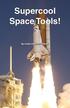 Supercool Space Tools! By Linda Hermans-Killam A long time ago, people looked into the dark night sky and wondered about the stars, meteors, comets and planets they saw. The only tools they had to study
Writing and Presenting a Persuasive Paper Grade Nine
 Ohio Standards Connection Writing Applications Benchmark E Write a persuasive piece that states a clear position, includes relevant information and offers compelling in the form of facts and details. Indicator
Understanding by Design. Title: BIOLOGY/LAB. Established Goal(s) / Content Standard(s): Essential Question(s) Understanding(s):
 Understanding by Design Title: BIOLOGY/LAB Standard: EVOLUTION and BIODIVERSITY Grade(s):9/10/11/12 Established Goal(s) / Content Standard(s): 5. Evolution and Biodiversity Central Concepts: Evolution
Energy Unit: (Approximately 5 weeks)
 The following instructional plan is part of a GaDOE collection of Unit Frameworks, Performance Tasks, examples of Student Work, and Teacher Commentary. Many more GaDOE approved instructional plans are
Narrative Literature Response Letters Grade Three
 Ohio Standards Connection Writing Applications Benchmark A Write narrative accounts that develop character, setting and plot. Indicator: 1 Write stories that sequence events and include descriptive details