
Map reading made easy
|
|
|
- Delphia Newton
- 9 years ago
- Views:
Transcription
1 Map reading made easy

2 What is a map? A map is simply a plan of the ground on paper. The plan is usually drawn as the land would be seen from directly above. A map will normally have the following features: The names of important places and locations. Standard symbols to show the location of key landmarks and features. A key, or a legend, to explain what the symbols on the map mean. A scale and scale bar to allow you to measure distance on the map and convert it to the actual distance on the land. A grid system of lines to allow you to pinpoint your location, orientate your map to the land and quickly estimate distances. Contour lines to show relief (the height of the ground above sea level) and the steepness of the land.

3 Understanding your map 1. The basics There are some basic features that most maps will include: Roads tend to be marked in different colours depending on the type of road depicted. Roads on a map range from thick blue lines, showing motorways, to dashed lines, indicating an unfenced minor road. Footpaths are marked on Ordnance Survey maps in various colours. On a 1: scale OS Explorer Map the public rights of way are marked in green and on a 1: scale OS Landranger Map they are marked in magenta. There are various types of public rights of way and public access, so please check the map key for full information. It is important to be aware that footpaths that are shown in black are not necessarily public rights of way. Woods are shown in green with a coniferous or non-coniferous tree shape printed over the top. Buildings are marked by small black squares. However, some particular buildings have their own special symbols, such as churches and windmills. Any of these buildings can be useful landmarks, helping you to check your position on the map. Rivers and streams are shown as blue lines. The width of the line is representative of the watercourse width (if the width of a river is more than 8 metres it is shown as two blue lines with a light blue area between). Rivers and streams can be extremely useful in determining your position on a map. Scale tells you how much the land has been scaled down to fit on the paper. If the scale of a map is 1: then everything on the map will be times smaller than it is in reality. Your Ordnance Survey map will also contain other features and information that will be explained, along with the features above, in the key of the map.

4 Understanding your map 2. Grid lines explained Ordnance Survey maps are covered in a series of faint blue lines that make up a grid. The lines have numbers accompanying them that allow you to accurately pinpoint your location on a map. Once you have located where you are, the grid system makes it simple to give others (such as mountain rescue) an accurate description of your location. This description, which will be a series of numbers, is known as a grid reference. Grid references Before you begin to look at grid references it is important to be aware that all the numbers going across the face of the map, for example, left to right, are called eastings (this is because they are heading eastward), and similarly, all the numbers going up the face of the map from bottom to top are called northings (again because they are heading in a northward direction). There are two main types of grid reference: 4-figure for example, 1945, this indicates a single kilometre square on an Ordnance Survey map. 6-figure for example, , shows a point within a square. 4-figure map references When giving a 4-figure grid reference you should always give the eastings number first and the northings number second, very much like when giving the reading of a graph in school you must go along the corridor/hallway (horizontal) and then up the stairs (vertical). For example, the number 2 in the diagram opposite is 19 across and 45 up and therefore the 4-figure grid reference is The numbered squares on the diagram above would have the following 4-figure grid references: 1 = = = = 19 44

5 6-figure map references Having worked out the basic 4-figure grid reference, for example, square 3 below, imagine this square is further divided up into tenths. Using the example opposite, the grey box is in the square More accurately it is 7 tenths across and 8 tenths up within the grid square 1844 and therefore has the 6-figure map reference The shapes on the map opposite would have the following 6-figure grid references: = = National Grid lines As well as numbered grid lines, Ordnance Survey maps have codes made of two letters. These two letter codes can be found printed in faint blue capitals on Ordnance Survey maps. The whole of Great Britain is divided into squares of 100 km and each square is given two letters. There will be a diagram within your map s key showing you which areas of your map fall into different squares of the National Grid. When you quote your six-digit grid reference you should put the two letters of the area you are in before the numbers. This means that there is no doubt or confusion about your location. For example, you may be at grid reference in south-west Scotland. The complete grid reference you should quote would be NX (without the letters the numeric reference would be repeated in every 100 km square).

6 Understanding your map 3. Reading contours and relief Understanding the shape of the land by looking at a map is a very useful skill and can be essential if you re going to be walking in mountainous terrain. The height and shape of the land is shown on a map using contour lines. These lines appear as thin orange or brown lines with numbers on them. The number tells you the height above sea level of that line. A contour line is drawn between points of the same height, so any single contour line will be at the same height all the way along its length. The height difference between separate contour lines is normally 5 metres, but it will be 10 metres in very hilly or mountainous areas. The map key will tell you the contour interval used. The picture shown illustrates how a landscape can be converted into contour lines on a map. An easy way to understand and visualise contour lines is to think of them as high tide lines that would be left by the sea. As the water level drops it would leave a line every 10 metres on the landscape. These marks would be contour lines. Being able to visualise the shape of the landscape by looking at the contour lines of a map is a very useful skill that can be developed with practice. It will allow you to choose the best route for your journey. When reading contour lines on a map it s helpful to remember the numbering on them reads uphill. It might be useful to imagine that to read contour line numbers you have to be stood at the bottom of the hill looking up it, otherwise the numbers would be upside down. Other useful things to look out for when reading contour lines are rivers, which usually flow into valleys, or areas with very few contour lines, which will be flat.

7 The picture below shows how contour lines can be used on maps to describe different landscapes. Even though all the lines look similar at first, they are describing very different landscape features. The closer together the contour lines, the steeper the slope of the hill. If a hill is very steep the contour lines might even merge into each other. A spur is a V -shaped hill that juts out. A simple way to tell a valley from a spur when looking at contour lines is to remember that if the V points uphill it s a valley, if it points downhill it s a spur.

8 Understanding your map 4. Orienting your map Now you have the skills and knowledge to read and understand a map, the next step is to learn how to orientate your map to the land so that you can use it to navigate. One of the best ways to orientate your map is with a compass. The picture below shows a compass, explaining its various features. 1 The base plate The mounting of the compass, with a ruler for measuring scale. 2 The compass housing Contains the magnetic needle and has the points of the compass printed on a circular, rotating bezel. 3 The compass needle Floats on liquid so it can rotate freely, the red end should always point to magnetic north. 4 Orienting lines Fixed within the compass housing and designed to be aligned with the eastings on a map. On some compasses half the lines are coloured red to indicate north. 5 Orienting arrow Fixed within the compass housing, aligned to north on the housing. 6 The index line Fixed within the outer edge of the compass housing as an extension of the direction of travel arrow. It marks the bearing you set by rotating the compass housing. 7 The direction of travel arrow Shows the direction that you want to travel along or the bearing you are taking. It is fixed parallel to the sides of the base plate. 8 Compass scale Displayed along the edge of the base plate so you can measure distances on maps.

9 Understanding your map 5. Using your compass Decide on the route of your walk and identify your starting point on the map. Place your compass on the map. Make sure the direction of travel arrow is pointing in the direction of your route across the map. The easiest way to line the arrow is to place the side of the base plate so it crosses your starting point and the next destination of your journey. Carefully holding the compass base plate still, you will need to turn the compass housing so the index line and orientating lines match up with the eastings (the vertical, north south lines) on your map. Holding the map flat and the compass still, you need to rotate your body so that the compass needle settles in line (opposite) with the index line. To fully orientate your map you will need to make some adjustments for magnetic variation. Adjustments for magnetic variation One thing to remember is that your compass does not point to the true north except by coincidence in some areas. The compass needle is attracted by magnetic force, which varies in different parts of the world and is constantly changing. The magnetic variation throughout Great Britain currently ranges from 2º to 6º. The amount of variation changes every year, so check your Ordnance Survey map to work out the most current value. You can properly orientate the map by carefully turning the compass housing 4º clockwise (for example, depending on where you are in Great Britain) and then turning your body again to realign the magnetic needle with the index line. Your map is now oriented to the north.

10 A word of caution Compass readings are also affected by the presence of iron and steel objects, so be sure to look out for and stay away from pocket knives, belt buckles, railroad tracks and so forth when using your compass. Using land features As an alternative to using a compass to orientate your map, you can use your eyesight. This method will only work if you are in an area with visible prominent features or landmarks. First, locate yourself next to a feature or landmark and place your finger on the map at the point where you are standing. Then begin to rotate the map so that other features and landmarks on the map begin to line up with the actual ones you can see. The map is now orientated with the land, although not as accurately as it would be using a compass.

11 And finally... OK, so now you know how to understand and read a map, you re ready to get yourself out and about. But before you put on your boots and pack your rucksack, take the time to read through the following handy tips and safety points to ensure you get the most from your adventures. 1. Pre-plan your route Before you set out, take the time to plot your route mark your chosen route on your map. This will ensure your eyes are immediately drawn to the correct part of the map, otherwise you may find yourself having to spend a considerable amount of time continuously searching for your location. If it s your first expedition with a map and compass, start with a short route in an area you re familiar with. You could identify a new route within this to help you build your map-reading skills remember, don t set yourself unrealistic challenges. 2. Make sure you have the right equipment A map of the area you are exploring, and map case will help to protect your map from bad weather. A compass with a base plate the longer the better; shorter ones may frustrate you when orientating the map and a circular, rotating housing. A pencil, in case you decide to plan and orientate a new route. A watch, to make sure that you can keep track of time, and finish your walk on time. And enough food and water to see you through your journey. Check the weather forecast in advance. This will allow you to plan for changes in weather patterns so you have appropriate clothing with you it may be fair when you set out but could rapidly change to rain or fog. 3. Tell someone where you re going Always remember to tell either a family member or a friend where you re going and when you expect to be back. 4. Abide by the Countryside Code Be safe plan ahead and follow any signs. Leave gates and property as you find them. Protect plants and animals, and take your litter home. Keep your dog under close control. Consider other people. 5. Have fun Getting out and about is all about having fun and enjoying yourself. So go for it!

12 Your passport to town and country 2. The essential map for outdoor activities 3. For touring and local route planning 4. For regional route planning 5. For national route planning Other titles in the series Contact details By [email protected] By phone General enquiries (calls charged at local rate): Map order line: By textphone Deaf and hard of hearing users only please: +44 (0) Website Crown copyright Ordnance Survey, the OS Symbol, Explorer, Landranger and OS are registered trademarks of Ordnance Survey, the national mapping agency of Great Britain. D03863b 1005

WHAT MAPS SHOW US Maps do 4 things:
 WHAT MAPS SHOW US Maps show us a range of features, for example: Landforms: Settlement: Communication: Land Use: Geology: Other Info: - hills - valleys - mountains - isolated dwellings - farms - villages
CONTENTS. Page 3 What is orienteering? Page 4 Activity: orienteering map bingo. Page 5 Activity: know your colours. Page 6 Choosing your compass
 THE RIGHT DIRECTION SCOUT ORIENTEER ACTIVITY BADGE CONTENTS Page What is orienteering? Page 4 Activity: orienteering map bingo Page 5 Activity: know your colours Page 6 Choosing your compass Page 7 Activity:
The Basics of Navigation
 The Basics of Navigation Knowledge of map reading and the use of the compass is an indispensable skill of bushcraft. Without this skill, a walker is a passenger and mere follower on a trip. To become a
PRACTICAL BLOCK COMPASS BASICS. Compass Basics. Introduction. The Silva Compass
 Compass Basics Introduction The first compass was, no doubt, a magnetised ore-bearing rock or stone, that when suspended, would always point the same way. No one knows who first discovered the compass;
3D Drawing. Single Point Perspective with Diminishing Spaces
 3D Drawing Single Point Perspective with Diminishing Spaces The following document helps describe the basic process for generating a 3D representation of a simple 2D plan. For this exercise we will be
3D Drawing. Single Point Perspective with Diminishing Spaces
 3D Drawing Single Point Perspective with Diminishing Spaces The following document helps describe the basic process for generating a 3D representation of a simple 2D plan. For this exercise we will be
Three daily lessons. Year 5
 Unit 6 Perimeter, co-ordinates Three daily lessons Year 4 Autumn term Unit Objectives Year 4 Measure and calculate the perimeter of rectangles and other Page 96 simple shapes using standard units. Suggest
Experiment 5: Magnetic Fields of a Bar Magnet and of the Earth
 MASSACHUSETTS INSTITUTE OF TECHNOLOGY Department of Physics 8.02 Spring 2005 Experiment 5: Magnetic Fields of a Bar Magnet and of the Earth OBJECTIVES 1. To examine the magnetic field associated with a
Create a Poster Using Publisher
 Contents 1. Introduction 1. Starting Publisher 2. Create a Poster Template 5. Aligning your images and text 7. Apply a background 12. Add text to your poster 14. Add pictures to your poster 17. Add graphs
Amendment List Date Amended by Incorporated No Date 1 2 3 4 5 6 7 8 9 10 11 12 13 14 15 16 i
 No Amendment List Date Amended by Date Incorporated 1 2 3 4 5 6 7 8 9 10 11 12 13 14 15 16 i ACP 32 NAVIGATION CONTENTS Volume 1... Map reading Volume 2... Basic Navigation Volume 3... Air Navigation Volume
Birling Gap to Beachy Head
 Birling Gap to Beachy Head A shorter, easier exploration of this iconic coastline, taking in two historic lighthouses and an optional descent to the stony beach below the cliffs Essential Facts Route distance:
HOW TO TAKE A COMPASS READING
 FENG SHUI Chinese Astrology Akashic Records Healing the Planet, One Living Space at a Time TM HOW TO TAKE A COMPASS READING There are five easy steps required to take an accurate compass reading of the
Functional Skills English Assessment Reading Level 2
 Learner name Learner registration number Learner signature Centre Assessment date Functional Skills English Assessment Reading Level 2 NOCN USE ONLY Question Mark 1 2 3 4 5 6 7 8 9 10 Total Instructions
Map Patterns and Finding the Strike and Dip from a Mapped Outcrop of a Planar Surface
 Map Patterns and Finding the Strike and Dip from a Mapped Outcrop of a Planar Surface Topographic maps represent the complex curves of earth s surface with contour lines that represent the intersection
Using Microsoft Word. Working With Objects
 Using Microsoft Word Many Word documents will require elements that were created in programs other than Word, such as the picture to the right. Nontext elements in a document are referred to as Objects
INTRODUCTION TO LAND NAVIGATION
 Section 5 INTRODUCTION TO LAND NAVIGATION Key Points 1 Understanding Azimuths 2 Converting Azimuths 3 Determining Elevation 4 Calculating Distance on a Map Tactics and Techniques Track Introduction to
To start using your phone as a navigation device, tap the TomTom button in the Windows Mobile start menu.
 TomTom NAVIGATOR 1. Before you start... Before you start... Setting up To start using your phone as a navigation device, tap the TomTom button in the Windows Mobile start menu. To set up your navigation
Publisher 2010 Cheat Sheet
 April 20, 2012 Publisher 2010 Cheat Sheet Toolbar customize click on arrow and then check the ones you want a shortcut for File Tab (has new, open save, print, and shows recent documents, and has choices
Guide to Viewing Maps in Google Earth
 Guide to Viewing Maps in Google Earth The BCT made the decision to provide the GIS (Geographic Information System) resources for Bat Groups in the form of Google Earth maps because they do not require
CATIA Functional Tolerancing & Annotation TABLE OF CONTENTS
 TABLE OF CONTENTS Introduction...1 Functional Tolerancing and Annotation...2 Pull-down Menus...3 Insert...3 Functional Tolerancing and Annotation Workbench...4 Bottom Toolbar Changes...5 3D Grid Toolbar...5
How To Read Maps And Aerial Photos
 3 Read Maps and Aerial Photos WRITING SAMPLE (training guide) Stephen X. Arthur, technical writer 2005 www.transcanfilm.com/stephenarthur First draft. Copyright 1996, BC Ministry of Forests / BC Institute
Year 9 mathematics test
 Ma KEY STAGE 3 Year 9 mathematics test Tier 5 7 Paper 1 Calculator not allowed First name Last name Class Date Please read this page, but do not open your booklet until your teacher tells you to start.
compass Encyclopedic Entry
 This website would like to remind you: Your browser (Apple Safari 7) is out of date. Update your browser for more security, comfort and the best experience on this site. Encyclopedic Entry compass For
Maps A Primer for Content & Production of Topographic Base Maps For Design Presented by SurvBase, LLC
 Maps A Primer for Content & Production of Topographic Base Maps For Design Presented by Definition and Purpose of, Map: a representation of the whole or a part of an area. Maps serve a wide range of purposes.
Organizing a class orienteering event
 Organizing a class orienteering event Orienteering is a wonderful teaching tool. It allows the teacher to illustrate many abstract ideas in concrete terms. The sport also appeals to students operating
COOL ART WITH MATH & SCIENCE OPTICAL ILLUSIONS CREATIVE ACTIVITIES THAT MAKE MATH & SCIENCE FUN FOR KIDS! A NDERS HANSON AND ELISSA MANN
 CHECKERBOARD HOW-TO LIBRARY COOL ART WITH MATH & SCIENCE OPTICAL ILLUSIONS CREATIVE ACTIVITIES THAT MAKE MATH & SCIENCE FUN FOR KIDS! A NDERS HANSON AND ELISSA MANN C O O L A R T W I T H M A T H & S C
International Specification for Ski Orienteering Maps ISSkiOM
 International Specification for Ski Orienteering Maps ISSkiOM Rev 12 February 2015 corrected mistake (PMS 345-> PMS 354), page 3 2014 Approved by IOF Ski Orienteering Commission, October 2014 Approved
Cambridge International Examinations Cambridge International General Certificate of Secondary Education
 Cambridge International Examinations Cambridge International General Certificate of Secondary Education *0123456789* GEOGRAPHY 0460/02 Paper 2 Geographical skills For Examination from 2016 SPECIMEN PAPER
GPS 72. Personal Navigator. Read This First! quick start guide
 GPS 72 Personal Navigator Read This First! quick start guide Internal Antenna Quick Start Unit Overview Interface keys MOB ZOOM Battery Compartment MARK External Data/Auxilary Power Port 120 x 160 Four
LONGITUDINAL PROFILE COMPLETION
 LONGITUDINAL PROFILE COMPLETION Course of the trench bottom determine using drawn cross-sections plot (refer to fig. 0630) according to the stationing direction: right-sided... dotted line left-sided...
FUNDAMENTALS OF LANDSCAPE TECHNOLOGY GSD Harvard University Graduate School of Design Department of Landscape Architecture Fall 2006
 FUNDAMENTALS OF LANDSCAPE TECHNOLOGY GSD Harvard University Graduate School of Design Department of Landscape Architecture Fall 2006 6106/ M2 BASICS OF GRADING AND SURVEYING Laura Solano, Lecturer Name
Watershed Delineation
 ooooo Appendix D: Watershed Delineation Department of Environmental Protection Stream Survey Manual 113 Appendix D: Watershed Delineation Imagine a watershed as an enormous bowl. As water falls onto the
Grade 7/8 Math Circles November 3/4, 2015. M.C. Escher and Tessellations
 Faculty of Mathematics Waterloo, Ontario N2L 3G1 Centre for Education in Mathematics and Computing Tiling the Plane Grade 7/8 Math Circles November 3/4, 2015 M.C. Escher and Tessellations Do the following
Freehand Sketching. Sections
 3 Freehand Sketching Sections 3.1 Why Freehand Sketches? 3.2 Freehand Sketching Fundamentals 3.3 Basic Freehand Sketching 3.4 Advanced Freehand Sketching Key Terms Objectives Explain why freehand sketching
INTRODUCTION TO DESKTOP PUBLISHING
 INTRODUCTION TO DESKTOP PUBLISHING Desktop publishing uses page layout software and a personal computer to combine text, type, drawings, and images on a page to create books, newsletters, marketing brochures,
AUTUMN UNIT 3. first half. Perimeter. Centimetres and millimetres. Metres and centimetres. Area. 3D shapes PART 3 MEASURES AND PROPERTIES OF SHAPES
 PART AUTUMN first half MEASURES AND PROPERTIES OF SHAPES SECTION Perimeter SECTION Centimetres and millimetres SECTION Metres and centimetres SECTION Key Stage National Strategy CROWN COPYRIGHT 00 Area
The purposes of this experiment are to test Faraday's Law qualitatively and to test Lenz's Law.
 260 17-1 I. THEORY EXPERIMENT 17 QUALITATIVE STUDY OF INDUCED EMF Along the extended central axis of a bar magnet, the magnetic field vector B r, on the side nearer the North pole, points away from this
CALCULATING THE AREA OF A FLOWER BED AND CALCULATING NUMBER OF PLANTS NEEDED
 This resource has been produced as a result of a grant awarded by LSIS. The grant was made available through the Skills for Life Support Programme in 2010. The resource has been developed by (managers
What are the specific demands of ultra running on trails and mountainous terrain?
 Guide to training for the Montane Lakeland 50 & 100 Many people entering ultra running events will already be accomplished long distance walkers and runners, whilst others may be less experienced. In this
Adobe Acrobat Professional DC Tutorial
 Adobe Acrobat Professional DC Tutorial ADOBE ACROBAT Adobe Acrobat is a software program used to create forms, manuals, online book pages, maps and drafted images, that can be uploaded to a website, and
Topographic Maps Practice Questions and Answers Revised October 2007
 Topographic Maps Practice Questions and Answers Revised October 2007 1. In the illustration shown below what navigational features are represented by A, B, and C? Note that A is a critical city in defining
MD5-26 Stacking Blocks Pages 115 116
 MD5-26 Stacking Blocks Pages 115 116 STANDARDS 5.MD.C.4 Goals Students will find the number of cubes in a rectangular stack and develop the formula length width height for the number of cubes in a stack.
MATHEMATICS Y6 Geometry 6750 Use co-ordinates and extend to 4 quadrants Equipment MathSphere www.mathsphere.co.uk
 MATHEMATICS Y6 Geometry 675 Use co-ordinates and etend to quadrants Paper, pencil, ruler Equipment MathSphere 675 Use co-ordinates and etend to quadrants. Page Concepts Children should be familiar with
Topographic Survey. Topographic Survey. Topographic Survey. Topographic Survey. CIVL 1101 Surveying - Introduction to Topographic Modeling 1/8
 IVL 1 Surveying - Introduction to Topographic Modeling 1/8 Introduction Topography - defined as the shape or configuration or relief or three dimensional quality of a surface Topography maps are very useful
Laser Cutter User Manual
 Laser Cutter User Manual frequently asked questions... the laser is cutting weird! it s cutting a thick line or not cutting through at all! Table Of Contents Section 1: Materials Guide 1.1 Can I Cut this?
Tutorial Creating Vector Graphics
 Tutorial Creating Vector Graphics This tutorial will guide you through the creation of your own vector graphic and show you how best to meet the specific criteria for our print process. We recommend designing
Numeracy and mathematics Experiences and outcomes
 Numeracy and mathematics Experiences and outcomes My learning in mathematics enables me to: develop a secure understanding of the concepts, principles and processes of mathematics and apply these in different
Interaction at a Distance
 Interaction at a Distance Lesson Overview: Students come in contact with and use magnets every day. They often don t consider that there are different types of magnets and that they are made for different
Stop The stop sign, a red octagon with white lettering, means come to a full stop and be sure the way is clear before proceeding.
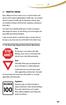 Tr a f f i c S i g n s 7 7. TRAFFIC SIGNS Many collisions and near crashes occur as a result of drivers who ignore or fail to respond appropriately to traffic signs. It is essential that the meaning of
TomTom App for Android Reference Guide
 TomTom App for Android Reference Guide Contents Getting started 5 Start TomTom App for Android... 5 Updating your TomTom App for Android... 5 Map updates... 5 GPS reception... 6 Planning a route 7 Planning
A Beginners Guide to Track Laying.
 A Beginners Guide to Track Laying. I should first say that none of the material below is original. I have made use of many sources of information and have often copied directly from them. All I claim to
Guide To Creating Academic Posters Using Microsoft PowerPoint 2010
 Guide To Creating Academic Posters Using Microsoft PowerPoint 2010 INFORMATION SERVICES Version 3.0 July 2011 Table of Contents Section 1 - Introduction... 1 Section 2 - Initial Preparation... 2 2.1 Overall
1974 Rubik. Rubik and Rubik's are trademarks of Seven Towns ltd., used under license. All rights reserved. Solution Hints booklet
 # # R 1974 Rubik. Rubik and Rubik's are trademarks of Seven Towns ltd., used under license. All rights reserved. Solution Hints booklet The Professor s Cube Solution Hints Booklet The Greatest Challenge
Mathematics Content: Pie Charts; Area as Probability; Probabilities as Percents, Decimals & Fractions
 Title: Using the Area on a Pie Chart to Calculate Probabilities Mathematics Content: Pie Charts; Area as Probability; Probabilities as Percents, Decimals & Fractions Objectives: To calculate probability
Areas of Polygons. Goal. At-Home Help. 1. A hockey team chose this logo for their uniforms.
 -NEM-WBAns-CH // : PM Page Areas of Polygons Estimate and measure the area of polygons.. A hockey team chose this logo for their uniforms. A grid is like an area ruler. Each full square on the grid has
Digital Marketing EasyEditor Guide Dynamic
 Surveys ipad Segmentation Reporting Email Sign up Email marketing that works for you Landing Pages Results Digital Marketing EasyEditor Guide Dynamic Questionnaires QR Codes SMS 43 North View, Westbury
CONSTRUCTING SINGLE-SUBJECT REVERSAL DESIGN GRAPHS USING MICROSOFT WORD : A COMPREHENSIVE TUTORIAL
 CONSTRUCTING SINGLE-SUBJECT REVERSAL DESIGN GRAPHS USING MICROSOFT WORD : A COMPREHENSIVE TUTORIAL PATRICK GREHAN ADELPHI UNIVERSITY DANIEL J. MORAN MIDAMERICAN PSYCHOLOGICAL INSTITUTE This document is
Excel 2007 A Beginners Guide
 Excel 2007 A Beginners Guide Beginner Introduction The aim of this document is to introduce some basic techniques for using Excel to enter data, perform calculations and produce simple charts based on
UNIVERSITY OF CAMBRIDGE INTERNATIONAL EXAMINATIONS International General Certificate of Secondary Education
 *8270368766* UNIVERSITY OF CAMBRIDGE INTERNATIONAL EXAMINATIONS International General Certificate of Secondary Education MATHEMATICS 0580/11 Paper 1 (Core) October/November 2012 Candidates answer on the
Lesson 26: Reflection & Mirror Diagrams
 Lesson 26: Reflection & Mirror Diagrams The Law of Reflection There is nothing really mysterious about reflection, but some people try to make it more difficult than it really is. All EMR will reflect
PLOTTING SURVEYING DATA IN GOOGLE EARTH
 PLOTTING SURVEYING DATA IN GOOGLE EARTH D M STILLMAN Abstract Detail surveys measured with a total station use local coordinate systems. To make the data obtained from such surveys compatible with Google
CREATING SCENERY WITH THE PHOENIX RC CREATOR PROGRAM
 TUTORIAL 1 CREATING SCENERY WITH THE PHOENIX RC CREATOR PROGRAM This document is copyrighted to the author and may only be reproduced or copied with the author s consent. It is free for distribution on
Lincolnshire Walks. Marston & Hougham
 Lincolnshire Walks Marston & Hougham Three circular walks of 4, 8 and 11km (2 ½, 5 and 7 miles) Introduction The villages of Marston and Hougham are situated six miles north of Grantham to the east of
Please describe the proposal accurately and concisely. State the number of storeys proposed and the position of any extensions.
 Householder Application for Planning Permission for Works or Extension to a Dwelling and for Relevant Demolition in a Conservation Area Town and Country Planning Act 1990 1. Applicant Name and Address
Worksheets for Teachers. The Lowry
 Worksheets for Teachers The Lowry Worksheets LS Lowry Worksheets for Primary & Secondary Pupils The following pages contain worksheets for you to use with your class. They can be photocopied for each person
Graphing Motion. Every Picture Tells A Story
 Graphing Motion Every Picture Tells A Story Read and interpret motion graphs Construct and draw motion graphs Determine speed, velocity and accleration from motion graphs If you make a graph by hand it
Chapter 5: Working with contours
 Introduction Contoured topographic maps contain a vast amount of information about the three-dimensional geometry of the land surface and the purpose of this chapter is to consider some of the ways in
Reviewing documents with track changes in Word 2013
 Reviewing documents with track changes in Word 2013 Information Services Reviewing documents with track changes in Word 2013 This note covers how to use Word s reviewing tools to track the changes made
FTC 2015-2016 DIY Mountain Build Guide
 FTC 2015-2016 DIY Mountain Build Guide Assembly Instructions Check out the DIY2015-2016 Prints and BoM for individual part details. Release 1.0 9/10/15 Page 1 This guide and Bill of Materials are for constructing
Excel -- Creating Charts
 Excel -- Creating Charts The saying goes, A picture is worth a thousand words, and so true. Professional looking charts give visual enhancement to your statistics, fiscal reports or presentation. Excel
Numeracy Targets. I can count at least 20 objects
 Targets 1c I can read numbers up to 10 I can count up to 10 objects I can say the number names in order up to 20 I can write at least 4 numbers up to 10. When someone gives me a small number of objects
A simple three dimensional Column bar chart can be produced from the following example spreadsheet. Note that cell A1 is left blank.
 Department of Library Services Creating Charts in Excel 2007 www.library.dmu.ac.uk Using the Microsoft Excel 2007 chart creation system you can quickly produce professional looking charts. This help sheet
Getting Started Guide
 3D Architect Home Designer Getting Started Guide Produced and published in the UK by Eleco Software Limited 2014 Eleco plc. All rights reserved. The software and hardware names and labels used in this
Educator s Guide to Learning about Mexico Using Google Earth
 Educator s Guide to Learning about Mexico Using Google Earth Overview: Students will research the physical features of Mexico using Google Earth to learn about Mexico s oceans, gulfs, bays, lagoons, rivers,
Mathematics. Steps to Success. and. Top Tips. Year 5
 Pownall Green Primary School Mathematics and Year 5 1 Contents Page 1. Multiplication and Division 3 2. Positive and Negative Numbers 4 3. Decimal Notation 4. Reading Decimals 5 5. Fractions Linked to
SCA Calligraphy 101. Marko Evanovich Panfilov September 26th, A.S. 37 (2002)
 SCA Calligraphy 101 Marko Evanovich Panfilov September 26th, A.S. 37 (2002) These tips and guidelines are based purely on personal experience and should not be considered a complete discussion of the subject.
Motion & The Global Positioning System (GPS)
 Grade Level: K - 8 Subject: Motion Prep Time: < 10 minutes Duration: 30 minutes Objective: To learn how to analyze GPS data in order to track an object and derive its velocity from positions and times.
SECOND GRADE 1 WEEK LESSON PLANS AND ACTIVITIES
 SECOND GRADE 1 WEEK LESSON PLANS AND ACTIVITIES UNIVERSE CYCLE OVERVIEW OF SECOND GRADE UNIVERSE WEEK 1. PRE: Discovering stars. LAB: Analyzing the geometric pattern of constellations. POST: Exploring
Unit 8 Angles, 2D and 3D shapes, perimeter and area
 Unit 8 Angles, 2D and 3D shapes, perimeter and area Five daily lessons Year 6 Spring term Recognise and estimate angles. Use a protractor to measure and draw acute and obtuse angles to Page 111 the nearest
Level 1 - Maths Targets TARGETS. With support, I can show my work using objects or pictures 12. I can order numbers to 10 3
 Ma Data Hling: Interpreting Processing representing Ma Shape, space measures: position shape Written Mental method s Operations relationship s between them Fractio ns Number s the Ma1 Using Str Levels
Chapter 4: Representation of relief
 Introduction To this point in our discussion of maps we have been concerned only with their planimetric properties, those relating to the location of features in two-dimensional space. But of course we
Merging Labels, Letters, and Envelopes Word 2013
 Merging Labels, Letters, and Envelopes Word 2013 Merging... 1 Types of Merges... 1 The Merging Process... 2 Labels - A Page of the Same... 2 Labels - A Blank Page... 3 Creating Custom Labels... 3 Merged
Tour of the Pantograph Planner
 (714) 989-6891 Instructions for PANTOGRAPH PLANNER The Pantograph Planner helps to free the quilter from the frustrations of positioning the rows for edge to edge quilting. This document provides step
Microsoft Excel 2010 Charts and Graphs
 Microsoft Excel 2010 Charts and Graphs Email: [email protected] Web Page: http://training.health.ufl.edu Microsoft Excel 2010: Charts and Graphs 2.0 hours Topics include data groupings; creating
Technical Drawing Specifications Resource A guide to support VCE Visual Communication Design study design 2013-17
 A guide to support VCE Visual Communication Design study design 2013-17 1 Contents INTRODUCTION The Australian Standards (AS) Key knowledge and skills THREE-DIMENSIONAL DRAWING PARALINE DRAWING Isometric
CHAPTER 2 TRAFFIC SIGNS AND HIGHWAY MARKINGS
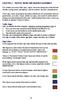 CHAPTER 2 TRAFFIC SIGNS AND HIGHWAY MARKINGS This chapter summarizes traffic signs, signals and road markings that control the flow of traffic, making streets and highways safer for motorists, bicyclists
Excel 2003 A Beginners Guide
 Excel 2003 A Beginners Guide Beginner Introduction The aim of this document is to introduce some basic techniques for using Excel to enter data, perform calculations and produce simple charts based on
Creating a PowerPoint Poster using Windows
 Creating a PowerPoint Poster using Windows Copyright 2001 Michael Dougherty ([email protected]) Purpose The purpose of this tutorial is to illustrate how to create a 3 x 4 ft. poster using PowerPoint. This
Laboratory 6: Topographic Maps
 Name: Laboratory 6: Topographic Maps Part 1: Construct a topographic map of the Egyptian Pyramid of Khafre A topographic map is a two-dimensional representation of a three-dimensional space. Topographic
Explore architectural design and act as architects to create a floor plan of a redesigned classroom.
 ARCHITECTURAL DESIGN AT A GLANCE Explore architectural design and act as architects to create a floor plan of a redesigned classroom. OBJECTIVES: Students will: Use prior knowledge to discuss functions
Snap to It with CorelDRAW 12! By Steve Bain
 Snap to It with CorelDRAW 12! By Steve Bain If you've ever fumbled around trying to align your cursor to something, you can bid this frustrating task farewell. CorelDRAW 12 object snapping has been re-designed
Introduction to Microsoft Excel 2007/2010
 to Microsoft Excel 2007/2010 Abstract: Microsoft Excel is one of the most powerful and widely used spreadsheet applications available today. Excel's functionality and popularity have made it an essential
Math Content by Strand 1
 Patterns, Functions, and Change Math Content by Strand 1 Kindergarten Kindergarten students construct, describe, extend, and determine what comes next in repeating patterns. To identify and construct repeating
LANDWorksCAD for AutoCAD and Bricscad. Professional Landscape Design Software. Reference and User Manual. CAD International
 LANDWorksCAD for AutoCAD and Bricscad Professional Landscape Design Software Reference and User Manual CAD International www.cad.com.au www.cadinternational.com 2006-2012 - All rights reserved This page
TurboCAD Architectural
 TurboCAD Architectural Version 15 Getting Started Guide IMSI/Design LLC, US 100 Rowland Blvd. Novato. CA 94945, USA Tel: +1-415-878-4000 Fax: +1-415-897-2544 Web Site www.imsisoft.com www.turbocad.com
How to Use the Drawing Toolbar in Microsoft Word
 How to Use the Drawing Toolbar in Microsoft Word The drawing toolbar allows you to quickly and easily label pictures (e.g., maps) in a MS Word file. You can add arrows, circle spots, or label with words.
Paper 1. Calculator not allowed. Mathematics test. First name. Last name. School. Remember KEY STAGE 3 TIER 4 6
 Ma KEY STAGE 3 Mathematics test TIER 4 6 Paper 1 Calculator not allowed First name Last name School 2007 Remember The test is 1 hour long. You must not use a calculator for any question in this test. You
Welcome to CorelDRAW, a comprehensive vector-based drawing and graphic-design program for the graphics professional.
 Workspace tour Welcome to CorelDRAW, a comprehensive vector-based drawing and graphic-design program for the graphics professional. In this tutorial, you will become familiar with the terminology and workspace
Experiment 3: Magnetic Fields of a Bar Magnet and Helmholtz Coil
 MASSACHUSETTS INSTITUTE OF TECHNOLOGY Department of Physics 8.02 Spring 2009 Experiment 3: Magnetic Fields of a Bar Magnet and Helmholtz Coil OBJECTIVES 1. To learn how to visualize magnetic field lines