
Early Reading Behaviours. Phonic Awareness and Sight Vocabulary Assessments
|
|
|
- Erika Cook
- 9 years ago
- Views:
Transcription
1 Early Reading Behaviours. Phonic Awareness and Sight Vocabulary Assessments

2 EARLY READING Behaviour Checklist Name: Date:. Date of Birth Year Group:.. Choose a book and bring it to me. Put it here so we can read it together Comments 1. What do you think the story is going to be about? 2. Show me the front/back of the book. 3. Where does the story start? 4. Where do I start reading? 5. Which way will I go? 6. Where shall I go after that? Turn the page 7. Where do I begin reading? 8. Point to the words as I read them. 9. Show me a word.

3 10. a) How many words on this line? b) How many letters in this word? 11. a) Point to the top/bottom of this page. b) Show me the first/last word on this line. c) Show me the first/last letter in this word Point to a lower case letter 12. Can you find another one the same as this? Point to an upper case letter (eg A). 13. This is a capital (A). Can you find a little letter (a)? Point to a lower case letter. 14. Can you find a big (capital) letter like this? 15. Show me a full stop. 16. What is this for? Choose words from the story starting with the same sound, eg bark, bit, big. 17. Listen to these words. They all start with the same sound. Can you say the sound they all start with? 18. Find me a word beginning with. Point to an individual letter 19. What does this say? Work through some individual letter sounds 20. Can you point to..? (choose)

4 PHONIC ASSESSMENT Initial Sounds, Names and Capitals Checklist Name: Date:. Date of Birth Year Group:.. Letter shape shown g Letter sound given by child Letter name given by child Child can match capital letters to lower case Comments o t w j a z r d y c m u h p f k s b i n v l x e q

5 PHONIC ASSESSMENT Letter Sounds/Names/Match Capitals (delete as appropriate) Name: Date:. Date of Birth Year Group:.. g o t w j a z r d y c m u h p f k s b i n v l x e q

6 PHOTOCOPY THE FOLLOWING LETTERS TO MAKE CARDS a b c d e f g h i j k l m n o

7 PHOTOCOPY THE FOLLOWING LETTERS TO MAKE CARDS p q r s t u v w x y z

8 PHOTOCOPY THE FOLLOWING LETTERS TO MAKE CARDS A B C D E F G H I J K L M N O

9 PHOTOCOPY THE FOLLOWING LETTERS TO MAKE CARDS P Q R S T U V W X Y Z

10 PHONIC ASSESSMENT Medial Vowels Name: hat rug sad hit log cat wet kid man jet sun not red pig but vet cut map bag hot Common Initial Consonant Blends Name: blob flap clop trick crab drip plum pram frog glen grab skid smack slug step brick swim snap spot twig

11 Final Consonant Blends Name: went best film hand pump mask kept cost cramp find gift golf gasp ring belt next jump melt bank just Split Digraphs (Magic e Pattern) Name: cake hide sale joke cave tune nose mine wipe flute made wife bone vote late rule rope life tube cute

12 Consonant Digraphs Name: chat bash shed that suck chin lock moth thin punch rich fish Vowel Digraphs Name: rain seat keep goat moon loud gain deaf coil sir jeep hood sail kerb news down deep meet deal say

13 SIGHT VOCABULARY Summary Name: Date of Birth Year Group:.. Date Date Date Date Date in was is I he it a the that to and of are for you had so have said as not they with one we on his at him all but old be up do can me came my new get she here has her will an no or now McNally High Frequency Word List (1 st 50)

14 SIGHT VOCABULARY in was is I he it a the that to and of are for you had so have said as not they with one we on his at him all but old be up do can me came my new get she here has her will an no or now McNally High Frequency Word List (1 st 50)

15 SIGHT VOCABULARY Summary Name: Date of Birth Year Group:.. Date Date Date Date Date did by if go down just out your into our went them well there were big call back been come from only first off over must make more made much look little some like right then their when this two see about could before other which what where who want McNally High Frequency Word List (2 nd 50)

16 SIGHT VOCABULARY did by if go down just out your into our went them well there were big call back been come from only first off over must make more made much look little some like right then their when this two see about could before other which what where who want McNally High Frequency Word List (2 nd 50)

17 The following activities could be used to provide an insight into children s awareness of syllabification, blending and segmenting and rhyming. INSTRUCTIONS 1. Syllable blending Using a toy robot eg Metal Mike explain to the children that you are going to pretend to be a robot who can only say words in a funny way and that you want the children to try and guess what you are saying. Pronounce the word biscuit leaving a 1-second gap between each syllable: Bis-cuit Help the children if they cannot do it. Present another word in the same way eg: Di-no-saur Continue with the following examples noting the children s responses. Correct Response Yes No Win-dow Croc-o-dile Phot-o-graph Tel-e-scope Ad-ven-ture Mer-ry-go-round Total /6

18 2. Phoneme blending When pronouncing phonemes, leave a one-second gap between each. Consonants such as m should be pronounced mmmm not muh. The pronunciation of consonants such as c needs to be short or they become syllables (eg kuh a tuh), rather than phonemes. Explain to the children that this time the robot is going to say some words in his robot speak. Can they understand him. m-u-m Help the children if they cannot do it. Present another word in the same way eg: d-o-g Continue with the following words. What do you think the robot is trying to say now? Note the children s responses Correct Response Yes No E-gg R-ai-n S-ou-p D-i-s-c S-t-e-p S-o-f-t Total /6

19 3. Phoneme segmentation Explain to the children that now it s their turn to talk in robot language. How do you think the robot would say ouch? Help the children if necessary by using two coins. Push a coin forward simultaneously with the pronunciation of each sound. If children are helped by the use of the coins let them continue to use them until they are confident. Ask the children how they think the robot would say the? Help the children if necessary. Continue with the following examples. Correct Response Yes No Pet p-e-t Tick t-i-ck Cost c-o-s-t Slate s-l-a-te Crest c-r-e-s-t Jumps j-u-m-p-s Total /6

20 Phoneme deletion This activity can be developed by asking the children to delete some sounds. Explain that you are going to say a word like cup. Then you will say it again, but without one of its sounds. What would the word cup become without the c sound? What word would you hear? If necessary, help children by first pronouncing cup and then segmenting it into its onset c and rime up. The segmentation part of the process might be done a number of times with increasingly longer gaps between the onset and rime. Continue with the following words: Cup, C -up, C - up, C - up Correct Response Yes g sound from gone? (on) No k sound from fork? (for) s sound from stops? (top) t sound from hurt? (her) s sound from past? (part or pat) w sound from swift? (sift) Total /6

21 4. Rhyme Remind the children of the work they ve been doing on rhyme eg Do you remember we ve been working on rhyme: Do you remember Hickory, dickory dock? Hickory, dickory dock, the mouse ran up the? Dock and clock are different words, but they sound a bit the same. Listen. Dock, clock. or Jack and Jill went up the? Jill and hill are different words but they sound a bit the same don t they? Jill, hill. Can you think of another word that sounds a bit like Jill? Does fill sound a bit like hill? What about pill? Does pill sound a bit like hill? What about did? Does did sound like hill and pill? Explain to the children that you are going to say three words and you want them to tell you the one that sounds different. Pronounce the following with equal emphasis, at one second intervals: Hat, Fat, Man If a child got it wrong say: No Man was the one that sounds different. Listen again. Now try these: Hat, Fat, Man Peg, Hen, Beg If a child got it wrong say: No. Hen was the one that sounds different. Listen again. Peg, Hen, Beg Continue with the following sets of words and before each say: Tell me the word that sounds different. Correct Response Yes No Dog Pot Log Late Mate Fat Bad Cap Mad Bun Hug Mug Hill Pill Dim Net Ten Pen Total /6 Final Section adapted from: Sound Linkage: Test of Phonological Awareness, PJ Hatcher
Phonological Awareness Skills Assessment
 Page 1 Kindergarten Phonological Awareness Skill Assessments Revised 4/4/10 Phonological Awareness Skills Assessment 1. Word Awareness Phonological Awareness Level 1 Tell the student you are going to play
Assessment Directions for Preschool Teachers & Parents:
 Assessment Directions for Preschool Teachers & Parents: Literacy Resources, Inc. created this Phonemic Awareness Assessment, aligned to the Illinois Early Learning and Development Standards to assess a
First Grade Spelling 3-1. First Grade Spelling. 1. an 2. at 3. can 4. cat 5. had 6. man 7. I 8. and 9. the 10. a. Dictation Sentences:
 First Grade Spelling Dear Parents, Beginning this week, the first graders will be starting their spelling program. Each Monday, or the beginning of the week, they will be given a pre-test on 10 words that
Appendix 1: Assessment of early literacy skills
 Appendix 1: Assessment of early literacy skills This subsection includes Introduction Literacy Assessment Pack 84 Appendix 1: Assessment of basic literacy skills Introduction Effective teaching and interventions
First Grade Spelling Words
 First Grade Spelling Words The Hat 1. at 2. hat 3. cat 4. can 5. cap 6. tap 7. map 8. mad 9. a 10. the I tap the can. Sam and the Bag 1. am 2. ham 3. had 4. bad 5. bag 6. rag 7. cap 8. mad 9. up 10. go
Phonemic Awareness. Section III
 Section III Phonemic Awareness Rationale Without knowledge of the separate sounds that make up words, it is difficult for children to hear separate sounds, recognize the sound s position in a word, and
Sample Lesson. Level 4: Short u Lesson. The Hands-on Approach to Phonics and Word Study Grades K 5. tel 800.225.5750 epsbooks.com fax 888.440.
 Sample Lesson The Hands-on Approach to Phonics and Word Study Grades K 5 RTI Level 4: Short u Lesson tel 800.225.5750 epsbooks.com fax 888.440.2665 Lesson 4: Short u Remind students that they have learned
Grade 1 National Reading Vocabulary Developed by TampaReads - ReadingKey.com/TampaReads.com
 Grade 1 National Reading Vocabulary Developed by TampaReads - ReadingKey.com/TampaReads.com The 340 reading vocabulary words in this 1st Grade reading list have been carefully selected as words which Grade
Class 3. Early Reading Assessment
 Class 3. Early Reading Assessment 1. Phonemic Awareness: Initial Sound Segmentation Assess child s phonemic awareness: the knowledge that words are made of sounds put together. Assess ability to identify
miss off will fill hill kiss pass stiff jazz
 Unit #9 Skills: ss, ll, ff, zz Introduce Sounds 1. Display the flash card for each of the following sounds (one at a time): ss, ll, ff, zz 2. Say each sound aloud. Call attention to how each sound is made
Phase 2 Daily Phonics Planning
 Week 1 all children. Week 2 - Set 1: s, a, t, p We are learning a new letter s. Revision from Phase 1. Look at sets of 3 pictures 2 that rhyme and 1 that doesn t. Ask children to find the odd one out.
Phase 2 decodable words for DfES Letters and Sounds programme
 at a sat pat tap sap Ref: p2words Design 2008 Page 1 as it is sit sat pit Ref: p2words Design 2008 Page 2 tip pip sip an in nip Ref: p2words Design 2008 Page 3 pan pin tin tan nap am Ref: p2words Design
Advice for Class Teachers. Moderating pupils reading at P 4 NC Level 1
 Advice for Class Teachers Moderating pupils reading at P 4 NC Level 1 Exemplars of writing at P Scales and into National Curriculum levels. The purpose of this document is to provide guidance for class
CVC 2 (Consonant - Vowel - Consonant) Word Families & Sight Words Flashcards, Worksheets Games, and Sound Sorts
 CVC 2 (Consonant - Vowel - Consonant) Word Families & Sight Words Flashcards, Worksheets Games, and Sound Sorts by Heidi Butkus and Tammi Casamassa General Instructions 1. The worksheets are designed to
WWW.MRSCARRION.WEBS.COM. First Grade High Frequency /Spelling Words
 WWW.MRSCARRION.WEBS.COM Name: First Grade High Frequency /Spelling Words Indicate Words that become decodable and are included in blending lines and word work for that week. 1. can 2. I 3. we 4. like 5.
Kolbe Academy Home School
 GRADE ONE PHONICS A TABLE OF CONTENTS I. Syllabus 2 II. Daily Course Plan A. Quarter 1 4 B. Quarter 2 13 C. Quarter 3 22 D. Quarter 4 31 III. Quarterly Exams A. Quarter 1 B. Quarter 2 C. Quarter 3 D. Quarter
A Note to Parents. 1. As you study the list, vary the order of the words.
 A Note to Parents This Wordbook contains all the sight words we will be studying throughout the year plus some additional enrichment words. Your child should spend some time each week studying this Wordbook
DRA2 Word Analysis. correlated to. Virginia Learning Standards Grade 1
 DRA2 Word Analysis correlated to Virginia Learning Standards Grade 1 Quickly identify and generate words that rhyme with given words. Quickly identify and generate words that begin with the same sound.
Fantastic Phonics Teaching Guide
 Fantastic Phonics Teaching Guide Book 21 - I want a Pie Momentum Multimedia 2004 New Words: pie, die, lie, tie, sign, fly, said, pulled, too, was, splat, buzz Extra Words: cry, dry, fry, try, high, sign,
Picture Sorts for Short- and Long- Vowel Sounds
 Unit I Picture Sorts for Short- and Long- Vowel Sounds NOTES FOR THE TEACHER Background and Objectives These first six picture sorts are designed to focus students attention on the vowel sound in the middle
PUSD High Frequency Word List
 PUSD High Frequency Word List For Reading and Spelling Grades K-5 High Frequency or instant words are important because: 1. You can t read a sentence or a paragraph without knowing at least the most common.
2e. Initial sounds isolate and pronounce in CVC (/c/ in cat) Onsets and rhymes in single
 Kindergarten Common Core ELA Foundational Skills Unit Timeline Trimester 1 Trimester 2 1a. Follow print left to right top to bottom page by page 1b. / 1c.Words recognize letters together in a specific
Assessment Directions for Kindergarten Teachers & Parents:
 Assessment Directions for Kindergarten Teachers & Parents: Literacy Resources, Inc. created this Phonemic Awareness Assessment to align to the Common Core State Standards and to assess a child s progress
Year 1 Parents Literacy Workshop. Please write on a post-it note any specific difficulties you have reading with your child.
 Year 1 Parents Literacy Workshop Please write on a post-it note any specific difficulties you have reading with your child. What are your memories of learning how to read and write? If parents engage with
coat road own grow yellow show snow coach throw toast toe
 Skills: oa, ow, -oe Introduce Concept 1. Display the flash cards for each of the following sounds: oa, ow, oe 2. Say each sound aloud. Note that each vowel team makes the long o sound. The second vowel
English (Literacy) Reading Target Ideas. P Scale 4
 P Scale 4 Pupils listen and respond to familiar rhymes and stories Begin to remember one or two repeated words e.g. names of people or objects, or key words in a repetitive phrase, in a familiar text when
Most Common Words Transfer Card: List 1
 Most Common Words Transfer Card: List 1 the to a and in you that of it not for I is an Meg is in the bed. That is not for you. It is in a bag. I am not mad. Most Common Words Transfer Card: List 2 on with
Helping your child with Reading
 Helping your child with Reading Some ways that you can support. Getting Started Sharing books - We teach phonics to help our children learn to read and write and in order to do this successfully they need
This Sample Copy contains only the first pages from this book. The entire book will be available soon. Phonics Patterns For Beginning Readers
 This Sample Copy contains only the first pages from this book. The entire book will be available soon. Phonics Patterns For Beginning Readers Entire contents 2008 By Kathryn J. Davis 7223 Cedar Lane Drive
Transitional Plan Levels J-M Based on 20-minute lesson each day. Prompts for Guided Reading
 Next Step in Guided Reading K-2 Emergent & Early Plan levels A-I Transitional Plan Levels J-M Based on 20-minute lesson each day Based on 20-minute lesson each day Day 1 Day 2 Day 1 Day 2 Day 3 Sight word
INTEGRATING THE COMMON CORE STANDARDS INTO INTERACTIVE, ONLINE EARLY LITERACY PROGRAMS
 INTEGRATING THE COMMON CORE STANDARDS INTO INTERACTIVE, ONLINE EARLY LITERACY PROGRAMS By Dr. Kay MacPhee President/Founder Ooka Island, Inc. 1 Integrating the Common Core Standards into Interactive, Online
Assessment Directions for 1 st Grade Teachers & Parents:
 Assessment Directions for 1 st Grade Teachers & Parents: Literacy Resources, Inc. created this Phonemic Awareness & Phonics Assessment to align to the Common Core State Standards for 1 st grade and to
Look, listen and note how well children: Preparation. Resources. Plan this into your singing time activities.
 Tuning into Sounds Plan this into your singing time activities. Music tape / DVD with a clear beat to respond to Articulate their tongues and mouths Activity 1: Mouth movements Explore different mouth
AGENDA. Phonological and Phonemic Awareness. (Local Information, Your Name, Date)
 AGENDA Phonological and Phonemic Awareness (Local Information, Your Name, Date) Participant Objectives In this workshop participants will: Gain understanding of phonological and phonemic awareness Acquire
Fry Phrases Set 1. TeacherHelpForParents.com help for all areas of your child s education
 Set 1 The people Write it down By the water Who will make it? You and I What will they do? He called me. We had their dog. What did they say? When would you go? No way A number of people One or two How
Strand: Reading Literature Topics Standard I can statements Vocabulary Key Ideas and Details
 Strand: Reading Literature Key Ideas and Craft and Structure Integration of Knowledge and Ideas RL.K.1. With prompting and support, ask and answer questions about key details in a text RL.K.2. With prompting
Phonics. Phonics is recommended as the first strategy that children should be taught in helping them to read.
 Phonics What is phonics? There has been a huge shift in the last few years in how we teach reading in UK schools. This is having a big impact and helping many children learn to read and spell. Phonics
Interpreting areading Scaled Scores for Instruction
 Interpreting areading Scaled Scores for Instruction Individual scaled scores do not have natural meaning associated to them. The descriptions below provide information for how each scaled score range should
Lowercase Letters Capital Letters Picture Cards
 Lowercase Letters Capital Letters Picture Cards Notes: You may want to cut out the flashcards and mount them on heavier paper for durability and ease of use. Rather than drilling through the cards (boring
Retelling. In the beginning.. Then,... After that,... And then,... Finally,... Do I understand what I read? Does it make sense?
 Retelling Gr 1-3 In the beginning.. Then,... After that,... And then,... Finally,... Do I understand what I read? Does it make sense? Retelling Gr 1-3 Page 1 Grade: Prior Knowledge: What prior knowledge
Theme 4. THEME 4: Friends Together
 Theme 4 112 ENGLISH LANGUAGE DEVELOPMENT LESSONS FOR Friends Together 113 Week 1 Vocabulary friend, name, introduce a friend chart paper a marker self-stick notes LANGUAGE DEVELOPMENT Introducing Friends
Sight words. Alphabet knowledge. Reading at home. Building Language and Literacy at Home. Phonemic Awareness
 + Alphabet knowledge Sight words Phonemic Awareness Reading at home Building Language and Literacy at Home Preschool and Kindergarten Family Night November 3 rd, 2014 + Children s own names and highly
Progression in each phase for Letters & Sounds:
 Burford School Marlow Bottom Marlow Buckinghamshire SL7 3PQ T: 01628 486655 F: 01628 898103 E: [email protected] W: www.burfordschool.co.uk Headteacher: Karol Whittington M.A., B.Ed. Hons Progression
Preschool March Lessons. Dr. Seuss Day. One Day Free Sample
 Preschool March Lessons Dr. Seuss Day One Day Free Sample Kids R Learning Preschool Lesson Plans Letter R - Number 9 Dr. Seuss Day Circle Time: Left & Right Feet Read the story the Foot Book Explain to
Phonemic awareness Alphabet immersion Aa-Zz shapes & sounds Capital letters Long vowels Language development
 Now you can make phonics fast and fun with this FREE sample lesson. It s packed full of teaching ideas and contains everything you need to teach the letter c. What s more, there are FREE songs online too!
1. 2. 3. 4. 5. 6. 7. 8.
 arm horn core oar Pick a word from the box to match each picture. Write the word on the line. artist bark garden roar score short start store stork storm 1. 2. 3. 4. 5. 6. 7. 8. Pick a word that is the
There s a Worm at the Bottom of the Garden
 1 Five Little Ducks Five little ducks Went swimming one day Over the hill and far away Mother duck said "Quack, quack, quack, quack." But only four little ducks came back. Four little ducks Went swimming
California Treasures High-Frequency Words Scope and Sequence K-3
 California Treasures High-Frequency Words Scope and Sequence K-3 Words were selected using the following established frequency lists: (1) Dolch 220 (2) Fry 100 (3) American Heritage Top 150 Words in English
OCPS Curriculum, Instruction, Assessment Alignment
 OCPS Curriculum, Instruction, Assessment Alignment Subject Area: Grade: Strand 1: Standard 1: Reading and Language Arts Kindergarten Reading Process The student demonstrates knowledge of the concept of
Teaching English FAL Grades 1 to 3
 T hing Engliish First A Teach Addittionaal Lan nguaage Gradess 1 3 Teaching English FAL Grades 1 to 3 Strategies for teaching reading and phonics, using the CAPS Contents: 1 Introduction to the Foundation
Tapescript. B Listen and write the words. C Help the baby spider. Draw a red line. D Help the baby frog. Listen and draw a green line.
 Unit 1 Hello! Topics animals, colours, numbers Functions following instructions, spelling and writing Grammar questions (What s? What are? What colour?), demonstratives (this/these), imperatives Vocabulary
Unit 1 Title: Word Work Grade Level: 1 st Grade Timeframe: 6 Weeks
 Unit 1 Title: Grade Level: 1 st Grade Timeframe: 6 Weeks Unit Overview: This unit of word work will focus on the student s ability to distinguish long and short vowel sounds in single syllable Students
Homework Activities for Kindergarten
 Homework Activities for Kindergarten Listed below are several learning activities for your child to complete at home to reinforce skills being taught in school. The sight words are on the last page. Reading
Grade 1. Practice Book O
 Grade 1 Practice Book O A Published by Macmillan/McGraw-Hill, of McGraw-Hill Education, a division of The McGraw-Hill Companies, Inc., Two Penn Plaza, New York, New York 10121. Copyright by Macmillan/McGraw-Hill.
First Grade Reading Street Unit 1.1: Sam, Come Back! - Taken from www.freidalewis.com
 Blend & Segment Phonemes Isolate Final Sounds Identify Position of Sounds Short a and Final ck Character Monitor & Fix Up 1. at 2. can 3. cat 4. back 5. dad 6. am First Grade Reading Street Unit 1.1: Sam,
Kindergarten Workbook 1 & 2 Samples
 Kindergarten Workbook 1 & 2 Samples Special Edition From lessons 1-5, 21-25, 51-55, 101-105, 141-145 McRuffy Press Please note: PDF conversion from the original files may cause some items to view and print
End of Reception Report: July 2013
 End of Reception Report: July 2013 Name: Date: Communication and Language Listening and attention Understanding Speaking Child A is able to listen to instructions and follow them accurately, including
20 Favourite Rhymes and Songs Chosen by the children of Portland Nurseries. Baa, Baa Black Sheep. If you re happy and you know it
 20 Favourite Rhymes and Songs Chosen by the children of Portland Nurseries Baa, Baa Black Sheep Baa, baa black sheet Have you any wool Yes sir, yes sir three bags full One for the master And one for the
January. If You re Happy and You Know It (Tune: If You re Happy and You Know It Is Everybody Happy CD)
 Dr. Jean Feldman January Good Morning Song If You re Happy and You Know It (Tune: If You re Happy and You Know It Is Everybody Happy CD) If you re happy and you know it, clap your hands. (clap-clap) If
Fry s Sight Word Phrases
 The people Write it down By the water Who will make it? You and I What will they do? He called me. We had their dog. What did they say? When would you go? No way A number of people One or two How long
ONLINE SAFETY TEACHER S GUIDE:
 TEACHER S GUIDE: ONLINE SAFETY LEARNING OBJECTIVES Students will learn how to use the Internet safely and effectively. Students will understand that people online are not always who they say they are.
Unit 2 Title: Word Work Grade Level: 1 st Grade Timeframe: 6 Weeks
 Unit 2 Title: Grade Level: 1 st Grade Timeframe: 6 Weeks Unit Overview: This unit of word work will focus on the student s ability to identify and pronounce the initial, medial vowel, and final sounds.
Let s see what is the first sweetie inside my book (open book and point at page).
 The Sweet Science Show INTRODUCTION SLIDE 1: THE SWEET SCIENCE SHOW Hello and welcome to The Sweet Science Show, the show that takes a closer look at your favourite sweetie treats. My name is Professor
I Miss My Pet: A workbook for children about pet loss
 I Miss My Pet. Unpublished workbook, Katie Nurmi 2002 1/30 I Miss My Pet: A workbook for children about pet loss Illustration by Joseph, age 6, The Solid Foundation Association, State College, PA. Developed
Songwords for First Numbers (FIRCD007)
 Songwords for First Numbers (FIRCD007) 2 TRACK LISTING PAGE TITLE 3 Hop on the Numbers Train 4 Thee Little Monkeys 5 One Potato Two Potato 6 Five Little Speckled Frogs 7 Rocket Rocket 8 Five Fat Peas 9
Make maths fun!! Give your child lots of praise and encouragement!
 Make maths fun!! Give your child lots of praise and encouragement! Talk to your child about how you work things out. CALCULATION The maths work your child is doing at school may look very different to
Favorite Multisensory Tips and Tricks For Teaching Phonemic Awareness and Sounding Out Words
 Favorite Multisensory Tips and Tricks For Teaching Phonemic Awareness and Sounding Out Words Presented By Heidi Butkus email: [email protected] The International Dyslexia Association recommends multisensory
Rhyming Words. Name the pictures. Color the ones that rhyme. Name. Practice Master ES 1 1 Week 1. PMES 1 1 Grade K Theme 1: Look At Us!
 Practice Master ES 1 1 Week 1 Rhyming Words the pictures. Color the ones that rhyme. PMES 1 1 Grade K Theme 1: Look At Us! Practice Master ES 1 2 Week 2 Beginning Sounds the pictures. Color the ones whose
Child-speak Reading Level 1 APP AF1 AF2 AF3 AF4 AF5 AF6 AF7 Use a range of strategies, including accurate decoding text, to read for meaning
 Child-speak Reading Level 1 APP In some usually I can break down and blend consonant vowel consonant words e.g. cat (1c) I can recognise some familiar words in the I read. (1c) When aloud, I know the sentences
Kindergarten Common Core State Standards: English Language Arts
 Kindergarten Common Core State Standards: English Language Arts Reading: Foundational Print Concepts RF.K.1. Demonstrate understanding of the organization and basic features of print. o Follow words from
NUMBERS AND THE NUMBER SYSTEM
 NUMBERS AND THE NUMBER SYSTEM Pupils should be taught to: Know the number names and recite them in order, from and back to zero As outcomes, Year 1 pupils should, for example: Join in rhymes like: One,
Types of meaning. KNOWLEDGE: the different types of meaning that items of lexis can have and the terms used to describe these
 Part 1 Lexis What is lexis? Lexis (or vocabulary) refers to single words, or sets of words, that have a specific meaning, for example: car, pick up, in the end. Unit 1 Types of meaning LEARNING OUTCOME
Teaching Rhyme The Second Step in Teaching Phonological Awareness
 Teaching Rhyme The Second Step in Teaching Phonological Awareness 1) Poetry, Songs and Jingles Rhyming poems, songs and jingles that children learn by heart offer special opportunities for rhyme play.
Fast Phrases. - Timed - PHRASES WITH FRY INSTANT WORDS
 Fast Phrases - Timed - PHRASES WITH FRY INSTANT WORDS Fry Instant Words are high-frequency words that occur in reading. By practicing reading these phrases containing these words, students can improve
Reading Readiness Online
 4433 Bissonnet Bellaire, Texas 77401 713.664.7676 f: 713.664.4744 Reading Readiness Online Lesson 1: Introduction Prerequisite Reading Skills What is Reading? Reading is a process in which symbols on paper
Letters and Sounds - Phase 1 Aspect 5 Alliteration Tuning into Sounds Main purpose: To develop understanding of alliteration
 Tuning into Sounds Main purpose: To develop understanding of alliteration Area to enable small group of children to sit comfortably in a circle None required Identify initial sounds of words Reproduce
Macmillan Children's Readers
 Macmillan Children's Readers 1 Level 1 9781405057172 Colin's Colours 700 2 Level 1 9780230469198 Clothes We Wear NEW 700 3 Level 1 9780230010062 Eddie's Exercise 700 4 Level 1 9780230010048 Fantastic Freddy
A a B b C c D d. E e. F f G g H h. I i. J j K k L l. M m. N n O o P p. Q q. R r S s T t. U u. V v W w X x. Y y. Z z. abcd efg hijk lmnop qrs tuv wx yz
 A a B b C c D d E e F f G g H h I i J j K k L l M m N n O o P p Q q R r S s T t U u V v W w X x Y y Z z abcd efg hijk lmnop qrs tuv wx yz 25 Ways to Use Magnetic Letters at Home 1. LETTER PLAY Encourage
There are many reasons why reading can be hard. This handout describes
 Understand the problems a child may be having with reading, and target what you can do to help! Look inside for practical, research-based information for parents and teachers about: Phonological and Phonemic
Storytelling + young learners + limited vocabulary?
 Storytelling + young learners + limited vocabulary? Why not? Warm-up: March bunny (bunny - eek, hunter - bang, vegetarian - yea, wood God father - ohm! ) In a dark, dark wood (story 7) In a dark, dark
ACTIVITY. pbsparents.com/catinthehat/
 Overview The Cat in the Hat Knows a Lot About That! Have you ever noticed how your child explores the world by using all of his senses? You can help him think more about how he sees, hears, smells, feels,
Crossing the Red Sea
 Unit 4: Lesson 3 Please note that these files are subject to copyright, and each Sunday School must own a copy of the Teaching Little Ones: Introducing the Bible CD-ROM in order to use these files. Please
UNIT 4: INFANT COGNITIVE DEVELOPMENT
 UNIT 4: INFANT COGNITIVE DEVELOPMENT 2. Infants learn primarily through their senses (perceptions). This is why they put everything in their mouth. Examples of others, the environment, and how they are
Phonological Awareness and Phonics
 Kindergarten and First Grade Student Center Activities Phonological Awareness and Phonics Produced by the Florida Center for Reading Research Copyright Florida Department of Education 2005 Revised June,
Ali Baba and the Forty Thieves
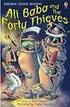 Ali Baba and the Forty Thieves The story Ali Baba, a poor woodcutter, had a rich brother, Kasim, who never shared any of his money with his brother. Instead, he treated Ali Baba, his wife and son badly.
The Winchester School Family Learning Newsletter (FS 2) March 2015
 The Winchester School Family Learning Newsletter (FS 2) March 2015 Area of learning Focus Home activities/how can you help your child at home Useful website Prime Area Personal, Social and Emotional Development
What is the EYFS Framework why do we have one?
 *Publication currently subject to redesign Parents Guide to the Early Years Foundation Stage Framework Exciting times ahead for you and your child What is the Early Years Foundation Stage? Welcome to the
Compliments of Dr. Tim Rasinski and the Reading & Writing Center Kent State University 402 White Hall Kent, OH 44242. My Book of Mother Goose Rhymes
 Compliments of Dr. Tim Rasinski and the Reading & Writing Center Kent State University 402 White Hall Kent, OH 44242 My Book of Mother Goose Rhymes There Was an Old Woman There was an old woman tossed
Objective: God is all Powerful! Bible Memory Verse: Matthew 19:26b With man this is impossible, but with God all things are THEME OVERVIEW
 Jesus the Magnificent Scripture: Luke 8:40-56 and Luke 18:35-43 Objective: God is all Powerful! Bible Memory Verse: Matthew 19:26b With man this is impossible, but with God all things are possible. THEME
THE FORGIVING FATHER
 BOOK 1, PART 3, LESSON 4 THE FORGIVING FATHER THE BIBLE: Luke 15:11-32 THEME: We can discover what Jesus wants us to do and be by hearing the parables Jesus told. PREPARING FOR THE LESSON MAIN IDEA: Jesus
Istation Reading Curriculum Correlated to. South Carolina College- and Career-Ready Standards for English Language Arts Grades K-5
 Istation Reading Curriculum Correlated to South Carolina College- and Career-Ready Standards Grades K-5 Copyright 2015 Istation - All rights reserved Kindergarten Standards Indicators Cycle Activities
BBC Learning English - Talk about English July 18, 2005
 BBC Learning English - July 18, 2005 About this script Please note that this is not a word for word transcript of the programme as broadcast. In the recording and editing process changes may have been
Before administering the Basic Phonics Placement Assessment, please familiarlize yourself with this manual and the assessment.
 Directions The is designed to provide information about appropriate placement in the K12 PhonicsWorks Program. Correct placement ensures that students will master early reading skills efficiently and without
Directions: Reading Skills Practice Tests
 Directions: Reading Skills Practice Tests Two Reading Skills Practice Tests can be found on pages 13-16 of this Teacher s Edition. You can photocopy them and use them all at once, or have students do just
Song Writing. Main Goal: Learn how to define and call functions. OVERVIEW: PREPARATION: VOCABULARY: OBJECTIVE: MATERIALS: LESSON NAME:
 12 LESSON NAME: Song Writing Lesson time: 45 60 Minutes : 5 minutes (With song intros over several days, if possible) Main Goal: Learn how to define and call functions. OVERVIEW: Reading lyrics is a pretty
the Emergent Stages NOTES FOR THE TEACHER ALPHABET ASSESSMENTS Alphabet Recitation and Tracking Alphabet Recognition Uppercase
 Chapter 1 Assessments for the Emergent Stages NOTES FOR THE TEACHER This chapter provides you with a variety of tools to assess your students in the emergent stage. These assessments, which complement
First Grade Reading Street Unit 2.1: A Big Fish for Max - Taken from www.freidalewis.com
 1. Max Ruby s little brother 2. Ruby - Max s big sister who is sometimes a bit bossy 3. Grandma helps Max and Ruby solve their problems Segment and Count Phonemes Digraphs sh, th, and Vowel Sound in ball
Green Eggs and Ham. by Dr. Seuss. overview THE WHEATLEY PORTFOLIO. overview TeXT-DepenDenT questions assessment fluency. Rationale
 TEXT STUDY Green Eggs and Ham by Dr. Seuss map Grade 1 Unit 3 Unit Life Lessons Type Literary Text (Lexile 30L) overview Rationale overview TeXT-DepenDenT questions assessment fluency This text is one
How To Teach Children To Read
 Baby Farm Animals Level 11 Non-fiction Word count: 184 Text type: Report HFW introduced: HFW consolidated: Linking texts: Curriculum link: Phonological awareness: Text summary: called, drinks, fi rst,