
2015 STYLE GUIDELINES
|
|
|
- Beatrice Warner
- 9 years ago
- Views:
Transcription
1 BEER JUDGE CERTIFICATION PROGRAM 2015 STYLE GUIDELINES Mead Style Guidelines Copyright 2015, BJCP, Inc. The BJCP grants the right to make copies for use in BJCP-sanctioned competitions or for educational/judge training purposes. All other rights reserved. Updates available at Edited by Gordon Strong with Kristen England Review and Commentary: Steve Piatz, Michael Fairbrother Final Review: Dennis Mitchell, Agatha Feltus, Michael Wilcox, Brian Eichhorn

2

3 Contents INTRODUCTION TO MEAD GUIDELINES (CATEGORIES M1-M4) Important Attributes Standard Description for Mead Competition Entry Instructions... 2 M1. TRADITIONAL MEAD... 4 M1A. Dry Mead... 4 M1B. Semi-Sweet Mead... 4 M1C. Sweet Mead... 4 M2. FRUIT MEAD... 5 M2A. Cyser... 5 M2B. Pyment... 5 M2C. Berry Mead... 6 M2D. Stone Fruit Mead... 7 M2E. Melomel... 8 M3. SPICED MEAD... 9 M3A. Fruit and Spice Mead... 9 M3B. Spice, Herb or Vegetable Mead M4. SPECIALTY MEAD M4A. Braggot M4B. Historical Mead M4C. Experimental Mead BJCP Mead Style Guidelines 2015 Edition i

4

5 INTRODUCTION TO MEAD GUIDELINES (CATEGORIES M1-M4) The following discussion applies to all the mead styles, except where explicitly superseded in the sub-category guidelines. This introduction identifies common characteristics and descriptions for all types of mead, and should be used as a reference whenever entering or judging mead. 1. Important Attributes Sweetness. A mead may be dry, semi-sweet, or sweet. Sweetness simply refers to the amount of residual sugar in the mead. Sweetness is often confused with fruitiness in a dry mead. Body is related to sweetness, but dry meads can still have some body. Dry meads do not have to be bone dry. Sweet meads should not be cloyingly sweet, and should not have a raw, unfermented honey character. Sweetness is independent of strength. Note that tannin levels can affect the perceived sweetness of mead (more tannin makes a mead seem drier), but acidity is more related to the quality, balance, and enjoyment of the sweetness. The purpose of identifying a sweetness level is primarily to aid in the ordering of a flight. Minor differences from stated sweetness level should not be heavily-penalized or considered a disqualifying fault. Carbonation. A mead may be still, petillant, or sparkling. Still meads do not have to be totally flat; they can have some very light bubbles. Petillant meads are lightly sparkling and can have a moderate, noticeable amount of carbonation. Sparkling meads are not gushing, but may have a character ranging from mouthfilling to an impression akin to Champagne or carbonated water. Minor differences from stated carbonation level should not be heavily-penalized or considered a disqualifying fault. Strength. A mead may be categorized as hydromel, standard, or sack strength. Strength refers to the alcohol content of the mead (and also, therefore, the amount of honey and fermentables used to make the mead). Stronger meads can have a greater honey character and body (as well as alcohol) than weaker meads, although this is not a strict rule. Well-made stronger examples may have difficult-to-detect strength. Minor differences from stated strength level should not be heavily-penalized or considered a disqualifying fault. Honey variety. Some types of honey have a strong varietal character (aroma, flavor, color, acidity). If a honey is unusual, additional information can be provided to judges as to the character to be expected. Note that wildflower isn t a varietal honey; it is specifically a term used to describe a honey derived from an unknown source or from mixed flowers or blossoms. Consider providing a description of the honey if it is not listed in the Mead Exam Study Guide or other BJCP references. Identifying the source (state or region) and season of the honey can be useful information for the judges. Special ingredients. Different styles may include fruit, spice, malt, etc. Judges need to understand the ingredients that provide a unique character in order to properly evaluate the mead. Oak additions do not have to be specified (but may be at the entrant s discretion); oaking is acceptable in every mead style. Excessive oaking is a fault, just as in wine; any use of oak should be balanced and complimentary. A declared use of oak should not be interpreted as requiring the oak to be a primary flavor. 2. Standard Description for Mead When individual mead style descriptions use the phrase Standard Description Applies, refer to the sections below that have the same names as are used in the style descriptions. These descriptions are incorporated by reference into every style where they are mentioned. Statements in the individual style descriptions build on, modify, or supersede the standard descriptions below. Appearance: Clarity may be good to brilliant. Crystal clear, reflective examples with a bright, distinct meniscus are highly desirable. Observable particulates (even in an otherwise clear example) are undesirable. Highly carbonated examples usually have a shortlasting head similar to Champagne or soda pop. Some aspects of bubbles or head formation that may be observed and commented upon include size (large or small), persistence (how long do they continue to form?), quantity (how much are present?), rate (how fast do they form?), and mousse (appearance or quality of foam stand). The components of bubbles (or head) will vary greatly depending on the carbonation level, ingredients and type of mead. In general, smaller bubbles are more desirable and indicative of higher quality than larger bubbles. The color may vary widely depending on honey variety and any optional ingredients (e.g., fruit, malts). Some honey varieties are almost clear, while others can be dark brown. Most are in the straw to gold range. If no honey variety is declared, almost any color is acceptable. If a honey variety is declared, the color should generally be suggestive of the honey used (although a wide range of color variation is still possible). Hue, saturation and purity of color should be considered. Stronger versions (standard and sack) may show signs of body (e.g., legs, meniscus) but higher carbonation levels can interfere with this perception. Aroma: The intensity of the honey aroma will vary based upon the sweetness and strength of the mead. Stronger or sweeter meads may have a stronger honey aroma than drier or weaker versions. Different varieties of honey have different intensities and characters; some (e.g., orange blossom, buckwheat) are more readily recognizable than others (e.g., avocado, palmetto). If honey varieties are declared, the varietal character of the honey should be apparent even if subtle. The aromatics may seem vinous (similar to wine), and may include fruity, floral, or spicy notes. The bouquet (rich, complex aromatics arising from the combination of ingredients, fermentation and aging) should show a pleasant, clean fermentation character, with fresh aromatics being preferred over dirty, muddled, yeasty, or sulfury notes. A multi-faceted bouquet, also known as complexity or depth, is a positive attribute. Phenolic aromatics should not be present. Harsh or chemical BJCP Mead Style Guidelines 2015 Edition 1

6 aromatics should not be present. Oxidation is a big detraction in most mead, and most frequently appears as a strong sherry-like or light molasses-like character. A subtle, sherry-like oxidation character can add complexity in some situations, but not if the oxidation ruins the character of the mead. Alcohol aromatics may be present, but hot, solventy or irritating overtones are a defect. The harmony and balance of the aroma and bouquet should be pleasant and enticing. Flavor: The intensity of the honey flavor will vary based upon the sweetness and strength of the mead. Stronger, sweeter meads will have a stronger honey flavor than drier, weaker versions. Different varieties of honey have different intensities and characters; some (e.g., orange blossom, buckwheat) are more readily recognizable than others (e.g., safflower, palmetto). If honey varieties are declared, the varietal character of the honey should be apparent even if subtle. The residual sweetness level will vary with the sweetness of the mead; dry meads will have no residual sugar, sweet meads will have noticeable to prominent sweetness, semi-sweet meads will have a balanced sweetness. In no case should the residual sweetness be syrupy, cloying or seem like unfermented honey. Any additives, such as acid or tannin, should enhance the honey flavor and lend balance to the overall character of the mead but not be excessively tart or astringent. Tannin can make a mead seem drier than the residual sugar levels might suggest. Artificial, chemical, harsh, phenolic or bitter flavors are defects. Higher carbonation (if present) enhances the acidity and gives a bite to the finish. The aftertaste should be evaluated; longer finishes are generally most desirable. A multi-faceted flavor, also known as complexity or depth, is a positive attribute. Yeast or fermentation characteristics may be none to noticeable, with estery, fresh and clean flavors being most desirable. Alcohol flavors (if present) should be smooth and well-aged, not harsh, hot, or solventy. Very light oxidation may be present, depending on age, but an excessive molasses, sherry-like or papery character should be avoided. Aging and conditioning generally smooth out flavors and create a more elegant, blended, rounded product. All flavors tend to become more subtle over time, and can deteriorate with extended aging. Mouthfeel: Before evaluating, refer to the declared sweetness, strength and carbonation levels, as well as any special ingredients; these can all affect mouthfeel. Well-made examples will often have an elegant winelike character. The body can vary widely, although most are in the medium-light to medium-full range. Body generally increases with stronger and/or sweeter meads, and can sometimes be quite full and heavy. Similarly, body generally decreases with lower gravity and/or drier meads, and can sometimes be quite light. Sensations of body should not be accompanied by an overwhelmingly cloying sweetness (even in sweet meads). A very thin or watery body is likewise undesirable. Some natural acidity is often present (particularly in fruit-based meads). Low levels of astringency are sometimes present (either from specific fruit or spices, or from tea, chemical additives or oakaging). Acidity and tannin help balance the overall honey, sweetness and alcohol presentation. The level of carbonation can vary widely (see definitions above). Still meads may have a very light level of carbonation, lightly carbonated (petillant) meads will have noticeable bubbles, and a highly carbonated (sparkling) mead can range from a mouth-filling carbonation to levels approaching Champagne or soda pop. High carbonation will enhance the acidity and give a bite to the finish. A warming alcohol presence is often present, and this character usually increases with strength (although extended aging can smooth this sensation). Overall Impression: A wide range of results are possible, but well-made examples will have an enjoyable balance of honey flavors, sweetness, acidity, tannins, alcohol. Strength, sweetness and age greatly affect the overall presentation. Any special ingredients should be well-blended with the other ingredients, and lead to a harmonious end product. Ingredients: Mead is made primarily from honey, water and yeast. Some minor adjustments in acidity and tannin can be made with citrus fruits, tea, or chemicals; however, these additives should not be readily discernable in flavor or aroma. Yeast nutrients may be used but should not be detected. Oak aging is allowable in any category as a subtle to noticeable enhancement without causing the mead to be an Experimental Mead; excessive oak is a fault. Vital Statistics: OG: hydromel: standard: sack: ABV: hydromel: % standard: % sack: % FG: dry: semi-sweet: sweet: Note that the perception of sweetness is a function of the percentage of residual sugar, so don t rely only on FG to determine sweetness. Consider the OG, strength, tannin levels, and to a lesser extent, acidity, in assessing sweetness. IBUs: not relevant for anything but braggot, but bittering hops are optional even in this style. SRM: basically irrelevant since honey can be anything from almost clear to dark brown. Cysers are most often golden. Other fruit-based meads and pyments can have orange, red, pink and/or purple hues. Braggots can be yellow to black. In all cases, the color should reflect the ingredients used (type of honey, and fruit and/or malt in some styles). 3. Competition Entry Instructions Mandatory Requirements: o Entrants MUST specify carbonation level (still; petillant or lightly carbonated; sparkling or highly carbonated). o Entrants MUST specify strength level (hydromel or light mead; standard mead; sack or strong mead). o Entrants MUST specify sweetness level (dry; semi-sweet or medium; sweet). Minor differences from stated levels should not be heavily penalized or be considered a disqualifying fault. 2 BJCP Mead Style Guidelines 2015 Edition

7 Optional Requirements: Entrants MAY specify honey varieties used, as well as the source and season of the honey. If honey varieties are declared, judges will look for the varietal character of the honey. Note that the character of a varietal honey will be identifiable as distinct to the source flowers, but may not resemble the source plant, tree, or fruit. For example, orangeblossom honey has the character of orange blossoms, not oranges; blackberry honey is only distantly like blackberries, although it is an identifiable character. If a mead is oak-aged and the oak character is noticeable, the oaking can be specified. Judges should expect to detect oak, but not as a primary flavor. Category-Specific Requirements: Some categories require additional information, particularly in categories other than traditional mead. For example, declaring specific fruit, spices, or special characteristics. Supplemental materials may be provided to judges if an obscure or unusual ingredient or method is used. Defaults: If no attributes are specified, judges should evaluate the mead as a semi-sweet, petillant, standardstrength mead with no varietal honey character and no special ingredients. Competition organizers should make every effort to ensure that judges are provided the full set of attributes of the meads being evaluated. BJCP Mead Style Guidelines 2015 Edition 3

8 M1. TRADITIONAL MEAD See the Introduction to Mead Guidelines for detailed descriptions of standard mead characteristics, an explanation of standard terms, and entering instructions. M1A. Dry Mead Overall Impression: Similar in balance, body, finish and flavor intensity to a dry white wine, with a pleasant mixture of subtle honey character, soft fruity esters, and clean alcohol. Complexity, harmony, and balance of sensory elements are most desirable, with no inconsistencies in color, aroma, flavor or aftertaste. The proper balance of sweetness, acidity, alcohol, and honey character is the essential final measure of any mead. Aroma: Honey aroma may be subtle, although not always identifiable. Sweetness or significant honey aromatics should not be expected. If a honey variety is declared, the variety should be distinctive (if noticeable). Different types of honey have different intensities and characters. Standard description applies for remainder of characteristics. Appearance: Standard description applies. Flavor: Subtle (if any) honey character, and may feature subtle to noticeable varietal character if a varietal honey is declared (different varieties have different intensities). Residual sweetness levels are minimal to none. Dry finish. May have more noticeable acidity due to low sweetness levels. Tannin levels may make a sweeter mead seem dry. Sulfury, harsh or yeasty fermentation characteristics are undesirable. Standard description applies for remainder of characteristics. Mouthfeel: Standard description applies, although the body is generally medium to light (but not watery). Note that stronger meads can have a fuller body. Sensations of body should not be accompanied by noticeable residual sweetness. Ingredients: Standard description applies. Traditional Meads feature the character of a blended honey or a blend of honeys. Varietal meads feature the distinctive character of certain honeys. Show meads feature no additives, but this distinction is usually not obvious to judges. entry requirements. Entrants MUST specify carbonation level and strength. Sweetness is assumed to be DRY in this category. Entrants MAY specify honey varieties. Commercial Examples: White Winter Dry Mead, Sky River Dry Mead, Intermiel Bouquet Printanier M1B. Semi-Sweet Mead Overall Impression: Similar in balance, body, finish and flavor intensity to a semi-sweet (or medium-dry) white wine, with a pleasant mixture of honey character, light sweetness, soft fruity esters, and clean alcohol. Complexity, harmony, and balance of sensory elements are most desirable, with no inconsistencies in color, aroma, flavor or aftertaste. The proper balance of sweetness, acidity, alcohol, and honey character is the essential final measure of any mead. Aroma: Honey aroma should be noticeable, and can have a light sweetness that may express the aroma of flower nectar. If a variety of honey is declared, the aroma might have a subtle to very noticeable varietal character reflective of the honey (different varieties have different intensities and characters). Standard description applies for remainder of characteristics. Appearance: Standard description applies. Flavor: Subtle to moderate honey character, and may feature subtle to noticeable varietal character if a varietal honey is declared (different varieties have different intensities). Residual sweetness levels are subtle to moderate. Medium-dry to lightly sweet finish. Tannin levels may make a sweet mead seem medium-dry. Sulfury, harsh or yeasty fermentation characteristics are undesirable. Standard description applies for remainder of characteristics. Mouthfeel: Standard description applies, although the body is generally medium-light to medium-full. Note that stronger meads can have a fuller body. Sensations of body should not be accompanied by a residual sweetness that is higher than moderate. Ingredients: Standard description applies. Traditional Meads feature the character of a blended honey or a blend of honeys. Varietal meads feature the distinctive character of certain honeys. Show meads feature no additives, but this distinction is usually not obvious to judges. entry requirements. Entrants MUST specify carbonation level and strength. Sweetness is assumed to be SEMI-SWEET in this category. Entrants MAY specify honey varieties. Commercial Examples: Lurgashall English Mead, Redstone Traditional Mountain Honey Wine, Sky River Semi-Sweet Mead, Intermiel Verge d Or and Mélilot M1C. Sweet Mead Overall Impression: Similar in balance, body, finish and flavor intensity to a well-made dessert wine (such as Sauternes), with a pleasant mixture of honey character, residual sweetness, soft fruity esters, and clean alcohol. Complexity, harmony, and balance of sensory elements are most desirable, with no inconsistencies in color, aroma, flavor or aftertaste. The proper balance of sweetness, acidity, alcohol, and honey character is the essential final measure of any mead. Aroma: Honey aroma should dominate, and is often moderately to strongly sweet and usually expresses the aroma of flower nectar. If a variety of honey is declared, the aroma might have a subtle to very noticeable varietal character reflective of the honey (different varieties have different intensities and characters). Standard description applies for remainder of characteristics. Appearance: Standard description applies. Flavor: Moderate to significant honey character, and may feature moderate to prominent varietal character if a varietal honey is declared (different varieties have different intensities). Residual sweetness levels are moderate to high. Sweet and full (but not cloying) finish. Balanced acidity and/or tannin helps keep the sweetness agreeable to the palate without being overwhelming. Sulfury, harsh or yeasty fermentation characteristics are undesirable. Standard description applies for remainder of characteristics. Mouthfeel: Standard description applies, although the body is generally medium-full to full. Note that stronger meads will have a fuller body. Many examples will seem like a dessert wine. Sensations of body should not be accompanied by cloying, raw (unfermented) residual sweetness. Ingredients: Standard description applies. Traditional Meads feature the character of a blended honey or a blend of honeys. Varietal meads feature the distinctive character of certain honeys. Show meads feature no additives, but this distinction is usually not obvious to judges. 4 BJCP Mead Style Guidelines 2015 Edition

9 entry requirements. Entrants MUST specify carbonation level and strength. Sweetness is assumed to be SWEET in this category. Entrants MAY specify honey varieties. Commercial Examples: Moonlight Sensual, Lurgashall Christmas Mead, Chaucer s Mead, Rabbit s Foot Sweet Wildflower Honey Mead, Intermiel Benoîte M2. FRUIT MEAD A mead made with fruit is called a Melomel, although some melomels also have other names (cyser, pyment). We are introducing category names for certain types of melomels based on the variety of fruit used; these are more entry categories than actual styles. We selected different names for the category and subcategories to avoid the confusion of using the same names in different ways. See the Introduction to Mead Guidelines for detailed descriptions of standard mead characteristics, an explanation of standard terms, and entering instructions. Refer to Category M1 descriptions for additional detail on the character to be expected from dry, semi-sweet and sweet meads. Use those guidelines to judge distinctions between the various sweetness levels. Judging meads from dry to sweet is recommended as the primary ordering, with strength being the secondary ordering criterion. M2A. Cyser A Cyser is a melomel made with apples (generally cider). Overall Impression: In well-made examples of the style, the fruit is both distinctive and well-incorporated into the honeysweet-acid-tannin-alcohol balance of the mead. Some of the best strong examples have the taste and aroma of an aged Calvados (apple brandy from northern France), while subtle, dry versions can taste similar to many fine white wines. There should be an appealing blend of the fruit and honey character but not necessarily an even balance. Generally a good tannin-sweetness balance is desired, though very dry and very sweet examples do exist. Aroma: Depending on the sweetness and strength, a subtle to distinctly identifiable honey and apple/cider character (dry and/or hydromel versions will tend to have lower aromatics than sweet and/or sack versions). The apple/cider character should be clean and distinctive; it can express a range of apple-based character ranging from a subtle fruitiness to a single varietal apple character (if declared) to a complex blend of apple aromatics. Some spicy or earthy notes may be present, as may a slightly sulfury character. The honey aroma should be noticeable, and can have a light to significant sweetness that may express the aroma of flower nectar. If a variety of honey is declared, the aroma might have a subtle to very noticeable varietal character reflective of the honey (different varieties have different intensities and characters). The bouquet should show a pleasant fermentation character, with clean and fresh aromatics being preferred. Stronger and/or sweeter versions will have higher alcohol and sweetness in the nose. Slight spicy phenolics from certain apple varieties are acceptable, as is a light diacetyl character from malolactic fermentation (both are optional). Standard description applies for remainder of characteristics. Appearance: Standard description applies, except with regard to color. Color may range from pale straw to deep golden amber (most are yellow to gold), depending on the variety of honey and blend of apples or ciders used. Flavor: The apple and honey flavor intensity may vary from none to high; the residual sweetness may vary from none to high; and the finish may range from dry to sweet, depending on what sweetness level has been declared (dry to sweet) and strength level has been declared (hydromel to sack). Natural acidity and tannin in apples may give some tartness and astringency to balance the sweetness, honey flavor and alcohol. Tannin levels may make a cyser seem drier than the residual sugar levels might suggest. A cyser may have a subtle to strong honey character, and may feature noticeable to prominent varietal character if a varietal honey is declared (different varieties have different intensities). Slight spicy phenolics from certain apple varieties are acceptable, as are a light diacetyl character from malolactic fermentation and a slight sulfur character (all are optional). Standard description applies for remainder of characteristics. Mouthfeel: Standard description applies. Often wine-like. Some natural acidity is usually present (from the blend of apples) and helps balance the overall impression. Some apples can provide natural astringency, but this character should not be excessive. Ingredients: Standard description applies. Cyser is a mead made with the addition of apples or apple juice. Traditionally, cysers are made by the addition of honey to apple juice without additional water. Entrants MAY specify the varieties of apple used; if specified, a varietal character will be expected. Products with a relatively low proportion of honey are better entered as a Specialty Cider. A spiced cyser should be entered as a Fruit and Spice Mead. A cyser with other fruit should be entered as a Melomel. A cyser with additional ingredients should be entered as an Experimental Mead. Commercial Examples: Moonlight Blossom, White Winter Cyser, Rabbit s Foot Apple Cyser M2B. Pyment A Pyment is a melomel made with grapes (generally from juice). Pyments can be red, white, or blush, just as with wine. Overall Impression: In well-made examples of the style, the grape is both distinctively vinous and well-incorporated into the honey-sweet-acid-tannin-alcohol balance of the mead. White and red versions can be quite different, and the overall impression should be characteristic of the type of grapes used and suggestive of a similar variety wine. There should be an appealing blend of the fruit and honey character but not necessarily an even balance. Generally a good tannin-sweetness balance is desired, though very dry and very sweet examples do exist. Aroma: Depending on the sweetness and strength, a subtle to distinctly identifiable honey and grape/wine character (dry and/or hydromel versions will tend to have lower aromatics than sweet and/or sack versions). The grape/wine character should be clean and distinctive; it can express a range of grape-based character ranging from a subtle fruitiness to a single varietal grape character (if declared) to a complex blend of grape or wine aromatics. Some complex, spicy, grassy or earthy notes may be present (as in wine). The honey aroma should be noticeable, and can have a light to significant sweetness that may express the aroma of flower nectar. If a variety of honey is declared, the BJCP Mead Style Guidelines 2015 Edition 5

10 aroma might have a subtle to very noticeable varietal character reflective of the honey (different varieties have different intensities and characters). The bouquet should show a pleasant fermentation character, with clean and fresh aromatics being preferred. Stronger and/or sweeter versions will have higher alcohol and sweetness in the nose. Slight spicy phenolics from certain red grape varieties are acceptable, as is a light diacetyl character from malolactic fermentation in certain white grape varieties (both are optional). Standard description applies for remainder of characteristics. Appearance: Standard description applies, except with regard to color. Color may range from pale straw to deep purple-red, depending on the variety of grapes and honey used. The color should be characteristic of the variety or type of grape used, although white grape varieties may also take on color derived from the honey variety. Flavor: The grape/wine and honey flavor intensity may vary from subtle to high; the residual sweetness may vary from none to high; and the finish may range from dry to sweet, depending on what sweetness level has been declared (dry to sweet) and strength level has been declared (hydromel to sack). Natural acidity and tannin in grapes may give some tartness and astringency to balance the sweetness, honey flavor and alcohol. A pyment may have a subtle to strong honey character, and may feature noticeable to prominent varietal character if a varietal honey is declared (different varieties have different intensities). Depending on the grape variety, some fruity, spicy, grassy, buttery, earthy, minerally, and/or floral flavors may be present. Some versions (particularly red pyments) may be oak-aged, with additional flavor complexity. Tannin levels may make the pyment seem drier than residual sugar levels might suggest. Standard description applies for remainder of characteristics. Mouthfeel: Standard description applies. Wine-like. Some natural acidity is usually present (from grapes) and helps balance the overall impression. Grape tannin and/or grape skins can add body as well as some astringency, although this character should not be excessive. Use of oak can also add this character. Longer aging can smooth out tannin-based astringency. Ingredients: Standard description applies. A pyment is a mead made with the addition of grapes or grape juices. Alternatively, the pyment may be a homemade grape-based wine sweetened with honey, or a mead mixed with homemade grape-based wine after fermentation. Entrants MAY specify the varieties of grape used; if specified, a varietal character will be expected. A spiced pyment (hippocras) should be entered as a Fruit and Spice Mead. A pyment made with other fruit should be entered as a Melomel. A pyment with other ingredients should be entered as an Experimental Mead. Commercial Examples: Celestial Meads Que Syrah, Moonlight Slow Dance, Redstone Pinot Noir and White Pyment Mountain Honey Wines M2C. Berry Mead A Berry Mead is an entry category for melomels made with berries, such as raspberries, blueberries, blackberries, currants (black, red, and white), strawberries, boysenberries, elderberries, marionberries, mulberries, lingonberries, huckleberries, cranberries, etc. Generally any fruit with berry in the name would qualify. Berries can have seeds, but do not have stones/pits; some are aggregates of druplets. Combinations of berries can be entered here. The culinary, not botanical, definition of berry is used here. If you have to justify a fruit using the word technically as part of the description, then that s not what we mean. Overall Impression: In well-made examples of the style, the fruit is both distinctive and well-incorporated into the honeysweet-acid-tannin-alcohol balance of the mead. Different types of fruit can result in widely different characteristics; allow for a variation in the final product. Aroma: Depending on the sweetness and strength, a subtle to distinctly identifiable honey and fruit character (dry and/or hydromel versions will tend to have lower aromatics than sweet and/or sack versions). The fruit character should display distinctive aromatics associated with the particular fruit(s); however, note that some fruit (e.g., raspberries) have stronger aromas and are more distinctive than others (e.g., blueberries, strawberries) allow for a range of fruit character and intensity from subtle to aggressive. The fruit character should be pleasant and supportive, not artificial, raw, and/or inappropriately overpowering (considering the character of the fruit). In a blended berry mead, not all fruit may be individually identifiable or of equal intensity. The honey aroma should be noticeable, and can have a light to significant sweetness that may express the aroma of flower nectar. If a variety of honey is declared, the aroma might have a subtle to very noticeable varietal character reflective of the honey (different varieties have different intensities and characters). The bouquet should show a pleasant fermentation character, with clean and fresh aromatics being preferred. Stronger and/or sweeter versions will have higher alcohol and sweetness in the nose. Some tartness may be present if naturally occurring in the particular fruit(s), but should not be inappropriately intense. Standard description applies for remainder of characteristics. Appearance: Standard description applies, except with regard to color. Color may take on a very wide range of colors, depending on the variety of fruit and/or honey used. For lightercolored meads with fruits that exhibit distinctive colors, the color should be noticeable. Note that the color of fruit in mead is often lighter than the flesh of the fruit itself and may take on slightly different shades. Meads made with lighter color fruits can also take on color from varietal honeys. In meads that produce a head, the head can take on some of the fruit color as well. Flavor: The fruit and honey flavor intensity may vary from subtle to high; the residual sweetness may vary from none to high; and the finish may range from dry to sweet, depending on what sweetness level has been declared (dry to sweet) and strength level has been declared (hydromel to sack). The natural acidity and tannin levels from fruit and fruit skins will vary, and this character is expected to be present in the mead, although in balance with sweetness, honey flavor, and alcohol. Tannin levels may make some meads seem drier than the residual sweetness might suggest. A berry mead may have a subtle to strong honey character, and may feature noticeable to prominent varietal character if a varietal honey is declared (different varieties have different intensities). The distinctive flavor character associated with the particular fruit(s) should be noticeable, and may range in intensity from subtle to aggressive. The balance of fruit with the underlying mead is vital, and the fruit character should not be artificial, raw (unfermented), and/or inappropriately overpowering. In a blended berry mead, not all fruit may be individually identifiable or of equal intensity. Standard description applies for remainder of characteristics. Mouthfeel: Standard description applies. Most will be winelike. Some natural acidity and/or tannin are sometimes present (from certain fruit and/or fruit skin) and helps balance the overall impression. Fruit tannin can add body as well as some astringency. High levels of astringency are undesirable. The 6 BJCP Mead Style Guidelines 2015 Edition

11 acidity and tannin levels should be somewhat reflective of the fruit used. Ingredients: Standard description applies. A berry mead is a mead made with the addition of other berries or berry juices, including a blend of berries. There should be an appealing blend of the fruit and honey character but not necessarily an even balance. Comments: Generally a good tannin-sweetness balance is desired, though very dry and very sweet examples do exist. Some fruits, notably darker ones like blackberries, may contribute a tannin presence similar to a red wine. Entrants MUST specify the varieties of fruit used. A mead made with both berries and non-berry fruit (including apples and grapes) should be entered as a Melomel. A berry mead that is spiced should be entered as a Fruit and Spice Mead. A berry mead containing other ingredients should be entered as an Experimental Mead. Commercial Examples: Moonlight Blissful, Wild, Caress, and Mischief, White Winter Blueberry, Raspberry and Strawberry Melomels, Celestial Meads Miel Noir, Redstone Black Raspberry Nectar, Bees Brothers Raspberry Mead, Intermiel Honey Wine and Raspberries, Honey Wine and Blueberries, and Honey Wine and Blackcurrants, Mountain Meadows Cranberry Mead M2D. Stone Fruit Mead A Stone Fruit Mead is an entry category for melomels made with stone fruit, such as cherries, plums, peaches, apricots, and mangoes. Stone fruit are fleshy fruit with a single large pit or stone. The culinary, not botanical, definition of stone fruit is used here. If you have to justify a fruit using the word technically as part of the description, then that s not what we mean. Combinations of stone fruit can be entered here. Overall Impression: In well-made examples of the style, the fruit is both distinctive and well-incorporated into the honeysweet-acid-tannin-alcohol balance of the mead. Different types of fruit can result in widely different characteristics; allow for a variation in the final product. Aroma: Depending on the sweetness and strength, a subtle to distinctly identifiable honey and fruit character (dry and/or hydromel versions will tend to have lower aromatics than sweet and/or sack versions). The fruit character should display distinctive aromatics associated with the particular fruit(s); however, note that some fruit (e.g., cherries) have stronger aromas and are more distinctive than others (e.g., peaches) allow for a range of fruit character and intensity from subtle to aggressive. The fruit character should be pleasant and supportive, not artificial, raw and/or inappropriately overpowering (considering the character of the fruit). In a blended stone fruit mead, not all the fruits may be individually identifiable or of equal intensity. The honey aroma should be noticeable, and can have a light to significant sweetness that may express the aroma of flower nectar. If a variety of honey is declared, the aroma might have a subtle to very noticeable varietal character reflective of the honey (different varieties have different intensities and characters). The bouquet should show a pleasant fermentation character, with clean and fresh aromatics being preferred. Stronger and/or sweeter versions will have higher alcohol and sweetness in the nose. Some tartness may be present if naturally occurring in the particular fruit(s), but should not be inappropriately intense. Standard description applies for remainder of characteristics. Appearance: Standard description applies, except with regard to color. Color may take on a very wide range of colors, depending on the variety of fruit and/or honey used. For lightercolored meads with fruits that exhibit distinctive colors, the color should be noticeable. Note that the color of fruit in mead is often lighter than the flesh of the fruit itself and may take on slightly different shades. Meads made with lighter color fruits can also take on color from varietal honeys. In meads that produce a head, the head can take on some of the fruit color as well. Flavor: The fruit and honey flavor intensity may vary from subtle to high; the residual sweetness may vary from none to high; and the finish may range from dry to sweet, depending on what sweetness level has been declared (dry to sweet) and strength level has been declared (hydromel to sack). The natural acidity and tannin levels from fruit and fruit skins will vary, and this character is expected to be present in the mead, although in balance with sweetness, honey flavor, and alcohol. Tannin levels may make some meads seem drier than the residual sweetness might suggest. A stone fruit mead may have a subtle to strong honey character, and may feature noticeable to prominent varietal character if a varietal honey is declared (different varieties have different intensities). The distinctive flavor character associated with the particular fruit(s) should be noticeable, and may range in intensity from subtle to aggressive. The balance of fruit with the underlying mead is vital, and the fruit character should not be artificial, raw (unfermented), and/or inappropriately overpowering. In a blended stone fruit mead, not all the fruits may be individually identifiable or of equal intensity. Standard description applies for remainder of characteristics. Mouthfeel: Standard description applies. Most will be winelike. Some natural acidity and/or tannin are sometimes present (from certain fruit and/or fruit skin) and helps balance the overall impression. Fruit tannin can add body as well as some astringency. High levels of astringency are undesirable. The acidity and tannin levels should be somewhat reflective of the fruit used. Ingredients: Standard description applies. A stone fruit mead is a mead made with the addition of other stone fruit or stone fruit juices. There should be an appealing blend of the fruit and honey character but not necessarily an even balance. A stone fruit mead can be made with a blend of stone fruits, but not other fruit not allowable in this category. Comments: Generally a good tannin-sweetness balance is desired, though very dry and very sweet examples do exist. Entrants MUST specify the varieties of fruit used. A stone fruit mead that is spiced should be entered as a Fruit and Spice Mead. A stone fruit mead that contains non-stone fruit should be entered as a Melomel. A stone fruit mead that contains other ingredients should be entered as an Experimental Mead. Commercial Examples: Mountain Meadows Cherry Mead, Moonlight Entice, Sumptuous, Flirt, and Smitten, Redstone Sunshine Nectar BJCP Mead Style Guidelines 2015 Edition 7

12 M2E. Melomel The melomel subcategory is for fruit meads made with any fruit not associated with any other fruit mead subcategory, or with a combination of fruits from multiple fruit mead subcategories (such as grapes and stone fruit). Some examples include citrus fruit, dried fruits (dates, prunes, raisins, etc.), pears, figs, pomegranates, prickly pear, bananas, pineapples, and most other tropical fruit. If in doubt, enter the fruit here judges should be flexible with fruit not explicitly named in other categories. The use of Melomel as a subcategory name does not imply that other meads in the Fruit Mead category are not also melomels; the choice was made to avoid using the same word twice in different contexts. The culinary, not botanical, definition of fruit is used here. If you have to justify a fruit using the word technically as part of the description, then that s not what we mean. Overall Impression: In well-made examples of the style, the fruit is both distinctive and well-incorporated into the honeysweet-acid-tannin-alcohol balance of the mead. Different types of fruit can result in widely different characteristics; allow for a variation in the final product. Aroma: Depending on the sweetness and strength, a subtle to distinctly identifiable honey and fruit character (dry and/or hydromel versions will tend to have lower aromatics than sweet and/or sack versions). The fruit character should display distinctive aromatics associated with the particular fruit(s); however, note that some fruit have stronger aromas and are more distinctive than others allow for a range of fruit character and intensity from subtle to aggressive. The fruit character should be pleasant and supportive, not artificial, raw (unfermented), and/or inappropriately overpowering (considering the character of the fruit). In a blended fruit melomel, not all the fruits may be individually identifiable or of equal intensity. The honey aroma should be noticeable, and can have a light to significant sweetness that may express the aroma of flower nectar. If a variety of honey is declared, the aroma might have a subtle to very noticeable varietal character reflective of the honey (different varieties have different intensities and characters). The bouquet should show a pleasant fermentation character, with clean and fresh aromatics being preferred. Stronger and/or sweeter versions will have higher alcohol and sweetness in the nose. Some tartness may be present if naturally occurring in the particular fruit(s), but should not be inappropriately intense. Standard description applies for remainder of characteristics. Appearance: Standard description applies, except with regard to color. Color may take on a very wide range of colors, depending on the variety of fruit and/or honey used. For lightercolored melomels with fruits that exhibit distinctive colors, the color should be noticeable. Note that the color of fruit in mead is often lighter than the flesh of the fruit itself and may take on slightly different shades. Meads made with lighter color fruits can also take on color from varietal honeys. In meads that produce a head, the head can take on some of the fruit color as well. Flavor: The fruit and honey flavor intensity may vary from subtle to high; the residual sweetness may vary from none to high; and the finish may range from dry to sweet, depending on what sweetness level has been declared (dry to sweet) and strength level has been declared (hydromel to sack). The natural acidity and tannin levels from fruit and fruit skins will vary, and this character is expected to be present in the mead, although in balance with sweetness, honey flavor, and alcohol. Tannin levels may make some meads seem drier than the residual sweetness might suggest. A melomel may have a subtle to strong honey character, and may feature noticeable to prominent varietal character if a varietal honey is declared (different varieties have different intensities). The distinctive flavor character associated with the particular fruit(s) should be noticeable, and may range in intensity from subtle to aggressive. The balance of fruit with the underlying mead is vital, and the fruit character should not be artificial, raw (unfermented), and/or inappropriately overpowering. In a melomel made with a combination of fruits, not all the fruits may be individually identifiable or of equal intensity. Standard description applies for remainder of characteristics. Mouthfeel: Standard description applies. Most will be winelike. Some natural acidity and/or tannin are sometimes present (from certain fruit and/or fruit skin) and helps balance the overall impression. Fruit tannin can add body as well as some astringency. High levels of astringency are undesirable. The acidity and tannin levels should be somewhat reflective of the fruit used. Ingredients: Standard description applies. A melomel is a mead made with the addition of other fruit or fruit juices not specifically reserved for other entry subcategories. There should be an appealing blend of the fruit and honey character but not necessarily an even balance. A melomel can be made with a blend of fruits from multiple Fruit Mead subcategories. Comments: Generally a good tannin-sweetness balance is desired, though very dry and very sweet examples do exist. Entrants MUST specify the varieties of fruit used. A melomel that is spiced should be entered as a Fruit and Spice Mead. A melomel containing other ingredients should be entered as an Experimental Mead. Melomels made with either apples or grapes as the only fruit source should be entered as a Cyser or Pyment, respectively. Melomels with apples or grapes, plus other fruit should be entered in this category, not Experimental Mead. Commercial Examples: Moonlight Desire, Paramour, and Iniquity 8 BJCP Mead Style Guidelines 2015 Edition

13 M3. SPICED MEAD See the Introduction to Mead Guidelines for detailed descriptions of standard mead characteristics, an explanation of standard terms, and entering instructions. Refer to Category M1 descriptions for additional detail on the character to be expected from dry, semi-sweet and sweet meads. Use those guidelines to judge distinctions between the various sweetness levels. Judging meads from dry to sweet is recommended as the primary ordering, with strength being the secondary ordering criterion. M3A. Fruit and Spice Mead A Fruit and Spice Mead is a mead containing one or more fruits and one or more spices. See the definitions of fruit used in the various Fruit Mead subcategories; any ingredient qualifying there meets the fruit requirement here. For purposes of this subcategory, any ingredient qualifying for use in the Spice, Herb, or Vegetable Mead subcategory also meets the spice requirement here. Overall Impression: In well-made examples of the style, the fruits and spices are both distinctive and well-incorporated into the honey-sweet-acid-tannin-alcohol balance of the mead. Different types of fruits and spices can result in widely different characteristics; allow for significant variation in the final product. Aroma: Depending on the sweetness and strength, a subtle to distinctly identifiable honey, fruit, and spice character (dry and/or hydromel versions will tend to have lower aromatics than sweet and/or sack versions). The spice character should display distinctive aromatics associated with the particular spices; however, note that some spices (e.g., ginger, cinnamon) have stronger aromas and are more distinctive than others (e.g., chamomile, lavender) allow for a range of spice character and intensity from subtle to aggressive. The spice character should be pleasant and supportive, not artificial and inappropriately overpowering (considering the character of the spice). The fruit character should display distinctive aromatics associated with the particular fruit; however, note that some fruits (e.g., raspberry, cherry) have stronger aromas and are more distinctive than others (e.g., peach) allow for a range of fruit character and intensity from subtle to aggressive. The fruit character should be pleasant and supportive, not artificial, raw (unfermented) and/or inappropriately overpowering (considering the character of the fruit). In a mead with more than one fruit and/or spice, not all fruits and spices may be individually identifiable or of equal intensity. The honey aroma should be noticeable, and can have a light to significant sweetness that may express the aroma of flower nectar. If a variety of honey is declared, the aroma might have a subtle to very noticeable varietal character reflective of the honey (different varieties have different intensities and characters). The bouquet should show a pleasant fermentation character, with clean and fresh aromatics being preferred. Stronger and/or sweeter versions will have higher alcohol and sweetness in the nose. Some spices may produce spicy or peppery phenolics. Standard description applies for remainder of characteristics. Appearance: Standard description applies, except perhaps to note that the color usually won t be affected by spices (although flowers, petals and peppers may provide subtle colors; tea blends may provide significant colors). The fruit may provide significant color, and is generally evocative of the fruit used (although it may be of a lighter shade than the fruit skin). Flavor: The spice flavor intensity may vary from subtle to high; the fruit flavor intensity may vary from subtle to high; the honey flavor intensity may vary from subtle to high; the residual sweetness may vary from none to high; and the finish may range from dry to sweet, depending on what sweetness level has been declared (dry to sweet) and strength level has been declared (hydromel to sack). The distinctive flavor character associated with the particular spices may range in intensity from subtle to aggressive (although some spices may not be individually recognizable, and can just serve to add a background complexity). Certain spices might add bitter, astringent, phenolic or spicy (hot) flavors; if present, these qualities should be related to the declared ingredients (otherwise, they are faults), and they should balance and blend with the honey, sweetness and alcohol. The distinctive flavor character associated with the particular fruits may range in intensity from subtle to aggressive (although some fruits may not be individually recognizable, and can just serve to add a background complexity). Certain fruits might add acidic, bitter, astringent or flavors; if present, these qualities should be related to the declared ingredients (otherwise, they are faults), and they should balance and blend with the honey, sweetness and alcohol. Meads containing more than one fruit or spice should have a pleasant balance of the different fruits and spices, but this does not mean that all fruits and spices need to be of equal intensity or even individual identifiable. The mead may have a subtle to strong honey character, and may feature noticeable to prominent varietal character if a varietal honey is declared (different varieties have different intensities). Standard description applies for remainder of characteristics. Mouthfeel: Standard description applies. Some fruits and spices may contain tannins that add a bit of body and some astringency, but this character should not be excessive. Ingredients: Standard description applies. See the various Fruit Mead descriptions, as well as the Spice, Herb, or Vegetable Mead description for additional details. Comments: Often, a blend of fruits and spices may give a character greater than the sum of its parts. The better examples of this style often use spices judiciously; when more than one spice are used, they are carefully selected so that they blend harmoniously with the fruit and with each other. Entrants MUST specify the types of spices used, (although wellknown spice blends may be referred to by common name, such as apple pie spices). Entrants MUST specify the types of fruits used. If only combinations of spices are used, enter as a Spice, Herb, or Vegetable Mead. If only combinations of fruits are used, enter as a Melomel. If other types of ingredients are used, enter as an Experimental Mead. Commercial Examples: Moonlight Kurt s Apple Pie, Mojo, Flame, Fling, and Deviant, Celestial Meads Scheherazade, Rabbit s Foot Private Reserve Pear Mead, Intermiel Rosée BJCP Mead Style Guidelines 2015 Edition 9

14 M3B. Spice, Herb or Vegetable Mead A Spice, Herb, or Vegetable Mead contains one or more spices, herbs, or vegetables (in this style definition, these are collectively known as spices ). The culinary, not botanical, definition of spice, herb, or vegetable is used here. If you have to justify a spice, herb, or vegetable using the word technically as part of the description, then that s not what we mean. The same definitions apply to this category as to the similarlynamed beer category. In addition to the more obvious spices, herbs, and vegetables that fit into this subcategory, the following ingredients also are explicitly included: roses, rose hips, ginger, rhubarb, pumpkins, chile peppers, coffee, chocolate, nuts (including coconut), citrus peels/zest, and teas (except those strictly used for increasing tannin levels, not for adding flavor). Overall Impression: In well-made examples of the style, the spices are both distinctive and well-incorporated into the honeysweet-acid-tannin-alcohol balance of the mead. Different types of spices can result in widely different characteristics; allow for a variation in the final product. Aroma: Depending on the sweetness and strength, a subtle to distinctly identifiable honey and spice character (dry and/or hydromel versions will tend to have lower aromatics than sweet and/or sack versions). The spice character should display distinctive aromatics associated with the particular spices; however, note that some spices (e.g., ginger, cinnamon) have stronger aromas and are more distinctive than others (e.g., chamomile, lavender) allow for a range of spice character and intensity from subtle to aggressive. The spice character should be pleasant and supportive, not artificial and inappropriately overpowering (considering the character of the spice). In a blended spice mead, not all spices may be individually identifiable or of equal intensity. The honey aroma should be noticeable, and can have a light to significant sweetness that may express the aroma of flower nectar. If a variety of honey is declared, the aroma might have a subtle to very noticeable varietal character reflective of the honey (different varieties have different intensities and characters). The bouquet should show a pleasant fermentation character, with clean and fresh aromatics being preferred. Stronger and/or sweeter versions will have higher alcohol and sweetness in the nose. Some herbs and spices may produce spicy or peppery phenolics. Standard description applies for remainder of characteristics. Appearance: Standard description applies, except perhaps to note that the color usually won t be affected by spices and herbs (although flowers, petals and peppers may provide subtle colors; tea blends may provide significant colors). Flavor: The spice flavor intensity may vary from subtle to high; the honey flavor intensity may vary from subtle to high; the residual sweetness may vary from none to high; and the finish may range from dry to sweet, depending on what sweetness level has been declared (dry to sweet) and strength level has been declared (hydromel to sack). The distinctive flavor character associated with the particular spices may range in intensity from subtle to aggressive (although some spices may not be individually recognizable, and can just serve to add a background complexity). Certain herbs and spices might add bitter, astringent, phenolic or spicy (hot) flavors; if present, these qualities should be related to the declared ingredients (otherwise, they are faults), and they should balance and blend with the honey, sweetness and alcohol. Meads containing more than one spice should have a good balance among the different spices, though some spices will tend to dominate the flavor profile. The mead may have a subtle to strong honey character, and may feature noticeable to prominent varietal character if a varietal honey is declared (different varieties have different intensities). Standard description applies for remainder of characteristics. Mouthfeel: Standard description applies. Some herbs or spices may contain tannins that add a bit of body and some astringency, but this character should not be excessive. Warming spices and hot peppers/chiles might impart a warming or numbing impression, but this character should not be extreme or make the mead undrinkable. Ingredients: Standard description applies. If spices are used in conjunction with other ingredients such as fruit, cider, or other fruit-based fermentables, then the mead should be entered as a Fruit and Spice Mead. If spices are used in combination with other ingredients, then the mead should be entered as an Experimental Mead. Comments: Often, a blend of spices may give a character greater than the sum of its parts. The better examples of this style use spices subtly; when more than one spice are used, they are carefully selected so that they blend harmoniously. A mead containing only culinary spices or herbs is known as a metheglin. Entrants MUST specify the types of spices used (although wellknown spice blends may be referred to by common name, such as apple pie spices). Commercial Examples: Moonlight Wicked, Breathless, Madagascar, and Seduction, Redstone Vanilla Beans and Cinnamon Sticks Mountain Honey Wine, Bonair Chili Mead, Redstone Juniper Mountain Honey Wine, iqhilika Africa Birds Eye Chili Mead, Mountain Meadows Spice Nectar 10 BJCP Mead Style Guidelines 2015 Edition

15 M4. SPECIALTY MEAD See the Introduction to Mead Guidelines for detailed descriptions of standard mead characteristics, an explanation of standard terms, and entering instructions. Refer to Category M1 descriptions for additional detail on the character to be expected from dry, semi-sweet and sweet meads. Use those guidelines to judge distinctions between the various sweetness levels. Judging meads from dry to sweet is recommended as the primary ordering, with strength being the secondary ordering criterion. M4A. Braggot A Braggot is a mead made with malt. Overall Impression: A harmonious blend of mead and beer, with the distinctive characteristics of both. A wide range of results are possible, depending on the base style of beer, variety of honey and overall sweetness and strength. Beer flavors tend to somewhat mask typical honey flavors found in other meads. Aroma: Depending on the sweetness, strength and base style of beer, a subtle to distinctly identifiable honey and beer character (dry and/or hydromel versions will tend to have lower aromatics than sweet and/or sack versions). The honey and beer/malt character should be complementary and balanced, although not always evenly balanced. If a variety of honey is declared, the aroma might have a subtle to very noticeable varietal character reflective of the honey (different varieties have different intensities and characters). If a base style of beer or type of malt is declared, the aroma might have a subtle to very noticeable character reflective of the beer style (different styles and malts have different intensities and characters). A hop aroma (any variety or intensity) is optional; if present, it should blend harmoniously with the other elements. Standard description applies for remainder of characteristics. Appearance: Standard description does not apply due to beerlike characteristics. Clarity may be good to brilliant, although many braggots are not as clear as other meads. A light to moderate head with some retention is expected if the mead is carbonated. Color may range from light straw to dark brown or black, depending on the variety of malt and honey used. The color should be characteristic of the declared beer style and/or honey used, if a variety is declared. Stronger versions may show signs of body (e.g., legs). Flavor: Displays a balanced character identifiable as both a beer and a mead, although the relative intensity of flavors is greatly affected by the sweetness, strength, base style of beer, and variety of honey used. If a beer style is declared, the braggot should have some character traceable to the style although the flavors will be different due to the presence of honey. If a variety of honey is declared, the braggot should feature a subtle to prominent varietal character (different varieties have different intensities). Stronger and/or sweeter braggots should be expected to have a greater intensity of flavor than drier, lower gravity versions. The finish and aftertaste will vary based on the declared level of sweetness (dry to sweet), and may include both beer and mead components. A wide range of malt characteristics is allowable, from plain base malts to rich caramel and toast flavors to dark chocolate and roast flavors. Hop bitterness and flavor may be present, and may reflect any variety or intensity; however, this optional character should always be both suggestive of the base beer style and well blended with the other flavors. Standard description applies for remainder of characteristics. Mouthfeel: Standard description does not apply due to beerlike characteristics. Smooth mouthfeel without astringency. Body may vary from moderately light to full, depending on sweetness, strength, and the base style of beer. Note that stronger meads will have a fuller body. A very thin or watery body is undesirable, as is a cloying, raw sweetness. A warming sense of well-aged alcohol may be present in stronger examples. Carbonation will vary as described in the standard description. A still braggot will usually have some level of carbonation (like a cask bitter) since a completely flat beer is unappetizing. However, just as an aged barleywine may be still, some braggots can be totally still. Ingredients: A braggot is a mead made with both honey and malt providing flavor and fermentable extract. Originally, and alternatively, a mixture of mead and ale. A braggot can be made with any type of honey, and any type of base beer style. The malt component may be derived from grain or malt extracts. The beer may be hopped or not. If any other ingredients than honey and beer are contained in the braggot, it should be entered as an Experimental Mead. Smoked braggots may be entered in this category if using smoked malt or a smoked beer as the base style; braggots made using other smoked ingredients (e.g., liquid smoke, chipotles) should be entered in the Experimental Mead style. Comments: Sometimes known as bracket or brackett. The fermentable sugars come from a balance of malt or malt extract and honey, although the specific balance is open to creative interpretation by brewers. Entrants MAY specify the base style or beer or types of malt used. Products with a relatively low proportion of honey should be entered as an Alternative Sugar Beer. Commercial Examples: Rabbit s Foot Diabhal and Bière de Miele, Magic Hat Braggot, Brother Adams Braggot Barleywine Ale, White Winter Traditional Brackett M4B. Historical Mead A Historical Mead is a historical or indigenous mead that doesn t fit into another subcategory (e.g., Ethiopian tej, Polish meads). The BJCP welcomes submissions of writeups of historical or indigenous styles that fit into this category. Overall Impression: This mead should exhibit the character of all of the ingredients in varying degrees, and should show a good blending or balance between the various flavor elements. Whatever ingredients are included, the result should be identifiable as a honey-based fermented beverage. Aroma, appearance, flavor, mouthfeel generally follow the standard descriptions, yet note that all the characteristics may vary. Since a wide range of entries are possible, note that the characteristics may reflect combinations of the respective elements of the various sub-categories used in this style. Refer to Category M1 for a detailed description of the character of dry, semi-sweet and sweet mead. If the entered mead is a combination of other existing mead categories, refer to the constituent categories for a detailed description of the character of the component styles. BJCP Mead Style Guidelines 2015 Edition 11

16 Entrants MUST specify the special nature of the mead, providing a description of the mead for judges if no such description is available from the BJCP. Commercial Examples: Jadwiga, Saba Tej M4C. Experimental Mead An Experimental Mead is a mead that does not fit into any other mead subcategory. This could apply to meads that blend multiple mead subcategories (unless the combination fits elsewhere, such as Melomel or Fruit and Spice Mead). Any experimental mead using additional sources of fermentables (e.g., maple syrup, molasses, brown sugar, or agave nectar), additional ingredients (e.g., liquors, smoke, etc.), alternative processes (e.g., icing), fermentation with non-traditional yeasts (e.g., Brettanomyces, Belgian lambic or ale, etc.), or other unusual ingredient, process, or technique would also be appropriate in this category. Oak-aging does not necessarily force a mead into the Experimental Mead style unless the barrel has another characteristic (such as bourbon) in addition to the wood. No mead can be out of style for this category unless it fits into another existing mead category. Overall Impression: This mead should exhibit the character of all of the ingredients in varying degrees, and should show a good blending or balance between the various flavor elements. Whatever ingredients are included, the result should be identifiable as a honey-based fermented beverage. Aroma, appearance, flavor, mouthfeel generally follow the standard descriptions, yet note that all the characteristics may vary. Since a wide range of entries are possible, note that the characteristics may reflect combinations of the respective elements of the various sub-categories used in this style. Refer to Category M1 for a detailed description of the character of dry, semi-sweet and sweet mead. If the entered mead is a combination of other existing mead categories, refer to the constituent categories for a detailed description of the character of the component styles. Entrants MUST specify the special nature of the mead, whether it is a combination of existing styles, an experimental mead, or some other creation. Any special ingredients that impart an identifiable character MAY be declared. Commercial Examples: Moonlight Utopian, Hanssens/Lurgashall Mead the Gueuze, White Winter Cherry Bracket, Mountain Meadows Trickster s Treat Agave Mead 12 BJCP Mead Style Guidelines 2015 Edition

ABCs OF WINE TASTING Worksheet
 Class 1: Module 1 1. The winemaking equation is: Grapes + Yeast = A. (The first letter of the answer is provided) 2. As grapes ripen on the vine, the amount of sugar contained in each berry increases /
ABCS OF WINE TASTING 4s Tasting Method
 ABCS OF WINE TASTING 4s Tasting Method 4S Step SEE Tilt the glass at 45 degree angle against a white background. SNIFF Swirl, then put your nose inside the rim of the glass and take 2-3 sharp sniffs. SIP
Public Catalog. Table of contents: Brewer s Best. Racking & Bottling. Page 1
 Public Catalog Table of contents: Brewer s Best Malt Extracts Yeast & Hops Wine Labels Racking & Bottling Equipment Chemicals Books Miscellaneous Page 1 Brewer s Best Equipment kits / Ingredient kits /
WINE & FOOD PAIRING Tasting Grid
 Tasting Grid Affect on wine: +, -, ~ Tasting Instructions 1. Taste the. a. Circle the important components (,,,, ) for the wine. b. Circle the body for the wine. c. Then fill in the wine s flavors. d.
Belgian Strong Ale by Arlyn Johns
 Style of the Quarter Belgian Strong Ale by Arlyn Johns» I take more of a traditionalist approach to producing these styles.» Mastering these techniques are a great foundation for experimentation.» You
Sensory Attributes of Honey
 Sensory Attributes of oney Developed for the National oney Board by rtech laboratories from Land O Lakes, St. Paul, Minnesota Method Thirteen trained panelists evaluated samples with three replications
LES APÉRITIFS DE BOURGOGNE
 LES APÉRITIFS DE BOURGOGNE CREMANT DE BOURGOGNE BLANC DE NOIRS JOSEPH CARTRON A.O.C. Since 1975, the use of the word 'Crémant has been regulated and is used only for sparkling wines produced according
San Diego International Beer Competition Style Guidelines
 1. American Wheat Ale: A. Light American Wheat Ale With Yeast This beer can be made using either ale or lager yeast. It can be brewed with 30 to 75 percent wheat malt, and hop rates may be low to medium.
Sardegna-Gallura SOLE DI SARDEGNA DOC
 CartadeiVini MONTESPADA Sardegna-Gallura SOLE DI SARDEGNA DOC Vermentino of Sardegna D.O.C. This is a DOC with great ambition, resulting from a grape selection inthe vineyard and a rigorous wine making
Ferraton Père et Fils
 Crozes Hermitage La Matinière 2007 88+ points (no new oak) Deep red. Spicy, sharply focused red berry and mineral aromas are complicated by blood orange and a hint of smoked meat. Very tight on the palate,
Founded in 1975 in Farra d Isonzo, in the province of Gorizia, Borgo Conventi owes its name to the many monasteries that were in the area since
 Founded in 1975 in Farra d Isonzo, in the province of Gorizia, Borgo Conventi owes its name to the many monasteries that were in the area since ancient times. Borgo Conventi, with vineyards in the best
What do I need to know about wine tasting? Here are some general tips for getting the most out of tasting your wine.
 Know your wines In South Africa, wines carry a Wine of Origin Seal which certifies that the wine derives 100% from a particular area of origin, the name of which will be on the body label, together with
Other Fruit Melomels for Experienced Dummies Curt Stock
 Other Fruit Melomels for Experienced Dummies Curt Stock Melomel is mead comprised of honey and fruit. Two varieties of melomels are Cyser (mead with apple cider) and Pyments (mead with wine grapes). This
Ribolla Gialla Sauvignon Friuli DOC Traminer DOC
 Ribolla Gialla Sauvignon Friuli DOC Traminer DOC Grapevariety: 100% Ribolla Gialla Grapegrowing area: Eastern hills of Friuli Color: light yellow color Bouquet: velvet scent Taste: Good body; Cold appetizers
JAMS, HONEYS & SYRUPS
 JAMS, HONEYS & SYRUPS 1 2 3 4 5 6 7 8 9 10 11 12 13 14 15 16 17 18 19 20 JAMS, HONEYS & SYRUPS 1 93512 Honey - Amber Bulk 5 lb 98172 Honey - Amber Bulk 6/5lb 2 93501 Honey - Bear Local 12 oz 3 93502 Honey
Welcome to the New Age of Wine It s not just a wine, it s an experience!
 Welcome to the New Age of Wine It s not just a wine, it s an experience! New Age White New Age Rose New Age Red QUINTESSENTIAL IMPORTER MARKETER DISTRIBUTOR CUTTING EDGE SEXY WINE Slightly Effervescent
ROTHSCHILD RÉSERVES. Réserve Spéciale Bordeaux Rouge. Réserve Spéciale Bordeaux Blanc. Réserve Spéciale Pauillac. Réserve Spéciale Médoc
 ROTHSCHILD RÉSERVES MÉDOC & BORDEAUX, FRANCE As owners of Château Lafite Rothschild for five generations, the Barons de Rothschild (Lafite) are determined to ensure their role as stewards of world-renowned
Improving the Flavor of Fruit Products with Acidulants
 BARTEK Improving the Flavor of Fruit Products with Acidulants by Daniel Sortwell, NutriQuim, S.A. de C.V. and Anne Woo, Bartek Ingredients, Inc. Expotecnoalimentaria 96, March 28, 1996 Mexico City, Mexico
CASTILLA LA MANCHA US TOUR 2014
 CASTILLA US TOUR 2014 06-09 May 2014 Dallas, Phoenix, San Francisco Bodegas Montalvo Wilmot!"! # $%&'()*+,+))*-+. /01!! 11!!23435!"/"617!1/1!!!3 1580843!"167/3/!"83"07160"30! 1/&1!!1'#75! 580713/8"8!6
Shake Recipes revised 9-18.qxp 9/19/2006 4:05 PM Page 1 FOREVER SHAKE IT UP! FOREVER LITE SHAKE RECIPES
 Shake Recipes revised 9-18.qxp 9/19/2006 4:05 PM Page 1 FOREVER SHAKE IT UP! FOREVER LITE SHAKE RECIPES Shake Recipes revised 9-18.qxp 9/19/2006 4:05 PM Page 2 Give your body the nutrients it needs with
Vinho do Porto ~ PortWines
 Copo / Glass 731 Porto Branco 3,40 732 Porto Tinto 3,20 733 Porto 10 Anos/Years 5,00 734 Porto 20 Anos/Years 10,50 735 Taylor's LBV 2004 5,00 Garrafa / Bottle 0,375 l. 736 Taylor s 30 Anos 78,00 737 Taylor
Whiskey. Jack Daniels Tennessee Sour Mash Whiskey. Crown Royal Black Blended Canadian Whiskey. Crown Royal Blended Canadian Whiskey
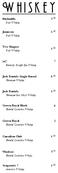 Whiskey Bushmills Irish Whiskey Jameson Irish Whiskey Two Gingers Irish Whiskey (rī) 1 Kentucky Straight Rye Whiskey Jack Daniels Single Barrel Tennessee Whiskey 50 Jack Daniels Tennessee Sour Mash Whiskey
Dry Yeast/Wyeast/White Lab Substitution Chart
 Dry Yeast/Wyeast/White Lab Substitution Chart Dry Yeast Wyeast Liquid White Labs Liquid Safale US-05 1056 WLP-001 Safale S04 1098 WLP-007 Safbrew T-58 3724 WLP-565 Safbrew S-33? WLP-006 Safbrew WB-06 3333
ABCs OF WINE SALES AND SERVICE
 Class 1 Worksheet Class 1: Module 1: What is Wine? 1. The winemaking equation is: Grapes + Yeast = A. (The first letter of the answer is provided) 2. As grapes ripen on the vine, the amount of natural
WINE AND CHEESE* Guided tour of the Vineyard Wine tasting accompanied by local cheeses Signed glass A deposit of 50% is required
 2014 PACKAGES TASTING 4$+tx Presentation of the Domaine de Lavoie Tasting of 4 products TOUR 12$+tx Guided tour of the Vineyard Tasting of 4 products Signed glass A deposit of 20% is required WINE AND
Food Science & Chef School
 Food Science & Chef School I. Introduction Lesson 1: Introduction to Food Science Learn about the course sections Learn why cooking skills are important Lesson 2: Food Science & Chef School Projects Learn
Dall Alta Montagna. Eichengeschmack. Boquete Valley Gourmet Coffees
 Limited Edition Coffees Great coffees that are grandiose by their own stature. The small quantity production makes them be a rare opportunity to enjoy. Their Cup Bouquet, Cup Character, and Cup Tasting
Fermentation and Ester Taints. Anita Oberholster
 Fermentation and Ester Taints Anita Oberholster Introduction: Aroma Compounds Grape derived provide varietal distinction Yeast and fermentation derived Esters Higher alcohols Carbonyls Volatile acids Volatile
The Alcoholic Beverage Menu continued
 The Alcoholic Beverage Menu continued Menu Marketing and Management OH 5-1 Alcoholic Beverages Are Part of the Dining Experience Many customers enjoy an alcoholic beverage with their food. Food and alcoholic
Dialog Wines - Wine Show 2013 Offerings. Note: From one of the World s Most Admired Wine Brands - Drinks International 2012
 Dialog Wines - Wine Show 2013 Offerings Marques de Riscal Limousin 2011 Spain (Rueda) $21.49 3 Bonus Air Miles 100% Verdejo and barrel fermented, Limousin has a pale golden colour, complex and elegant.
PRESS RELEASE Drinktec 2013 11092013
 Döhler at Innovative natural food & beverage ingredients Many new products and product applications Integrated solutions for the food & beverage industry "WE BRING IDEAS TO LIFE." is the central theme
BRUT SOUVERAIN. INTERNATIONAL WINE CHALLENGE - 2014 Complex, developed, creamy, bread and hazelnut aromas. Richness. Lovely NV Champagne.
 Complex, developed, creamy, bread and hazelnut aromas. Richness Lovely NV Champagne. Gold Medal WINE SPECTATOR - October 2013 Drink now through 2023. DECANTER WORLD WINE AWARDS - 2013 Stylish, smoky lemon
California Grape Varieties
 California Grape Varieties The following is a list of California grape varieties that are available each fall starting in September. RED GRAPE VARIETIES ALICANTE BOUSHET Alicante Bouschet is a wine grape
chianti classico gran SELEZIONE
 chianti classico gran SELEZIONE Gran Selezione from 80% to 100% SANGIOVESE up to 20% OTHER GRAPES Canaiolo, Colorino, Cabernet Sauvignon, Merlot Since 1932, the Chianti Classico has been produced in a
Syns Danone Activia Bio Yogurt, Natural, 125g pot
 Danone Activia Bio Yogurt, Natural, 125g pot 1 Activia Bio Yogurt, Natural Low Fat, 500g pot 5 Activia Fat Blueberry Yogurt, Multipack, 100g Activia Fat Cherry Yogurt, Multipack, 100g Activia Fat Forest
Discovering Hops, February 24 th 2007
 Discovering Hops, February 24 th 2007 The compounds in hops that are responsible for bitterness in beer are the alpha acids. They are humulone, cohumulone and adhumulone. All three are bitter, and occur
Composition of Grapes
 Composition of Grapes By Murli Dharmadhikari Grapes are the most important raw material for making wine. A good understanding of grape composition is essential to understanding the process of winemaking
THE LIVELY 2013S AND THE LUSH 2012S 2013 VAUDIEU CHÂTEAUNEUF-DU-PAPE
 CHÂTEAUNEUF DU PAPE THE LIVELY 2013S AND THE LUSH 2012S Josh Raynolds, Vinous Media, April 14 th 2015 2013 VAUDIEU CHÂTEAUNEUF-DU-PAPE (90-) Fresh, mineral-accented red fruits on the nose, along with suggestions
The harvest of grapes is done entirely by hand
 The Domain de Longueroche s vineyards are situated in village of St-Andre de Roquelongue in the very heart of the Corbières region, and more exactly in the land called Fontfroide, land blessed by the gods.
House Wines. Our house wines have been specially selected for their quality and are available by the glass and by the bottle Bottle - 12.
 House Wines Our house wines have been specially selected for their quality and are available by the glass and by the bottle Bottle - 12.95 ------------------------------------------------------------------------------
Food coloring influences taste and flavor perception
 Food coloring influences taste and flavor perception Moa Strandberg ProCivitas Privata Gymnasium, VT 2014 Abstract Research about our senses is essential when understanding our body and our brain. One
Official Journal of the European Communities
 12.1.2002 EN Official Journal of the European Communities L 10/67 COUNCIL DIRECTIVE 2001/113/EC of 20 December 2001 relating to fruit jams, jellies and marmalades and sweetened chestnut purée intended
BULK ROOIBOS PRODUCT DESCRIPTIONS AND PACKAGING SPECIFICATIONS
 BULK ROOIBOS PRODUCT DESCRIPTIONS AND PACKAGING SPECIFICATIONS The product range is available as conventional or organic certified. Superior Short Cut Rooibos Superior Short Cut is our most popular product.
Wine Store Survey. Page One. Hello, my name is XXX and I'm researching whether I should open a fine wine store in XXX.
 Wine Store Survey Page One Hello, my name is XXX and I'm researching whether I should open a fine wine store in XXX. It would be great if I could, but I just don't have enough information to make that
THISIS NOORDINARY. Prices are inclusive of taxes, subject to 10% service charge
 THISIS NOORDINARY Prices are inclusive of taxes, subject to 10% service charge Prices are inclusive of Prices taxes, are subject inclusive to 10% of taxes, service subject chargeto 10% service charge Prices
Harvest 2015. Wine Club Newsletter
 Harvest 2015 Wine Club Newsletter HISTORY OF CABERNET IN SONOMA; WITH SEBASTIANI BEING A LEGACY In 1961, August Sebastiani made a big commitment to this shy bearing varietal. He ripped out an older, Cherry
Taster s Guide. At Home At Work In Your Local Café DOVETAIL COFFEE ROASTERS. www.dovetailcoffee.com Cathy@DovetailCoffee.
 At Home At Work In Your Local Café Taster s Guide DOVETAIL COFFEE ROASTERS www.dovetailcoffee.com [email protected] 503-747-7834 7901 SW Nimbus Avenue Beaverton, Oregon 97008 Dovetail Coffee Roasters
2016 Kanabec County Fair Page 1
 DIVISION - O PANTRY STORES AND COOKING Red Star Yeast will provide RED STAR merchandise items to be given as awards this year. To be eligible to win the Red Star Yeast prizes, contestants must use Red
2015 California Varietal Menu
 2015 California Varietal Menu Red Wines Full Barrel Half Barrel Qtr Barrel Brunello Amador Cty 2,450 1,275 665 This upscale cousin of Sangiovese is grown at higher elevations in California resulting in
Dairy Free Smoothies. Copyright Angela Litzinger - angelaskitchen.com. Recipes by Angela Litzinger of angelaskitchen.com
 Dairy Free Smoothies Recipes by Angela Litzinger of angelaskitchen.com Tips for making great smoothies: Frozen bananas add great creamy texture to non-dairy smoothies. I freeze several bananas at a time
The Ultimate Smoothie Guide 1
 The Ultimate Smoothie Guide 1 HEALTHY & DELICIOUS SMOOTHIE RECIPES smoothie recipes with health benefits Nourishing Smoothie Recipe Detox Smoothie Recipe Weight Loss Smoothie Recipe Anti-Aging Smoothie
Our Whiskys ISLAY. Smokehead. Caol Ila. Caol Ila Cask. Bunnahabhain. As we get it single
 Our Whiskys ISLAY Smokehead Aimed at the modern drinker. The whisky is as traditional as it is possible to get. It is a heavily peated Islay single malt Scotch whisky of the highest quality. Unsurprisingly,
100 VISALUS SHAKES RECIPE IDEAS!!!
 100 VISALUS SHAKES RECIPE IDEAS!!! Any kind of Milk can be used in these shakes. I have chosen Almond milk because it is Lactose free and low calorie. After Glow Smoothie: 4 oz. (1/2 cup) pomegranate juice,
CHÂTEAU LAFITE ROTHSCHILD
 LES DOMAINES BARONS DE ROTHSCHILD (LAFITE) Château Lafite Rothschild is one of only four classified first growths and thus the designation as 1st er Cru. The vintage rankings of the Universal Paris Exposition
Flavor Infused Extra Virgin Olive Oils & Balsamic Vinegars
 Flavor Infused Extra Virgin Olive Oils & Balsamic Vinegars ORGANIC EXTRA VIRGIN OLIVE OILS Made on a small northern California family farm, our California extra virgin olive oil is carefully pressed in
SCAA Protocols Cupping Specialty Coffee
 SCAA Protocols Cupping Specialty Coffee Published by the Specialty Coffee Association of America Revised: December 16, 2015 Pages: Cover + 10 CUPPING_PROTOCOLS VERSION: 16DEC2015 Purpose The Technical
The House in the heart of Reims
 The House in the heart of Reims Introduction Champagne Montaudon is a family house. It joined the group Alliance Champagne last December after 2 years with LVMH / Moet Hennessy. Champagne Montaudon sold
Revised 07/06/2016. International Pale Lager. Aguila 4.0 132 0 11.0 13.3 1.0. German-Style Pilsner. Barmen 5.0 156 0 20.1 12.9 1.9
 Brand Nutritional Data Values are average and approximate and are based on a standard serving size of 12 oz. Our products contain no fat or cholesterol Fat Aguila Barmen Pale 4.0 132 0 11.0 13.3 1.0 5.0
Sierra Nevada Pale $9.5. Pacifico. Bohemia $8.5 $8.5. $9.5 Bilpin Apple Cider $8.5 $9.5
 Dos Equis Lager $7.5 Cristal Lager c r i s p, g o l d e n L a g e r s t y l e beer imported from Mexico $8.5 a light hop taste that refreshes & revitalizes, a proud Cuban tradition Dos Equis Amber $7.5
WELL-KNOWN FLAVORS THE MENU WINTER
 EXCITING WELL-KNOWN FLAVORS CLASSICS THE MENU WINTER IT S FINALLY TIME TO ENJOY THE RIDE THROUGH WINTER WONDERLANDS AND EXPLORE OUR BEER SELECTION, SNACKS, SWEETS AND COCKTAILS AFTER ALL, TIS THE SEASON
DESSERT Apple and cinnamon crumble with custard. 5 11 year olds. www.cwt-chew.org.uk
 DESSERT Apple and cinnamon crumble with custard DESSERT Apple and cinnamon crumble with custard Apple and cinnamon crumble Custard 90g 80g Apple and cinnamon crumble This recipe makes 4 portions of about
Chemistry 101. Chemistry Experiments for the Home Acidity Determination Using Indicators
 Chemistry 101 Chemistry Experiments for the Home Acidity Determination Using Indicators I. Objective: To determine the acidity of a variety of common substances by the use of indicators. To prepare your
1. According to the Food Guide Pyramid, how many daily servings do we need of fruits?
 NAME HOUR VIDEO WORKSHEET 1. According to the Food Guide Pyramid, how many daily servings do we need of fruits? 2. How many daily servings do we need of vegetables according to the Food Guide Pyramid?
Arbonne Protein Shake Recipes
 Arbonne Protein Shake Recipes NUTTY APPLE CINNAMON SHAKE 2 Scoops Arbonne Essentials Vanilla Protein Powder + 1 Scoop Arbonne Daily Fiber Boost + 8 oz. Unsweetened or Vanilla Almond Milk + Ice ¼ Cup unsweetened
Yeast & Grape Pairing A MoreManual! by Shea A.J. Comfort www.morewine.com 1-800-823-0010
 Yeast & Grape Pairing A MoreManual! by Shea A.J. Comfort www.morewine.com 1-800-823-0010 An Introduction to Yeast & Grape Pairing This paper was created to help winemakers make the best, educated decision
Active Dry Wine Yeast* By Dr. Murli Dharmadhikari
 Active Dry Wine Yeast* By Dr. Murli Dharmadhikari Grape juice/must can be fermented by the yeasts present on grapes and in the winery. This kind of fermentation is often called natural or spontaneous fermentation.
Vitality Healthy Schools list of approved and banned drinks
 Vitality Healthy Schools list of approved and banned drinks Any drink with more than ½ teaspoon (2.5g) per 100ml (2.5%) may not be sold in the tuck shop. Drinks that may be sold in the tuck shop Water
SOME NOTES ON WHISKEY FLAVOUR by Dave Quinn, Master of Whiskey Science at Midleton Distillery
 SOME NOTES ON WHISKEY FLAVOUR by Dave Quinn, Master of Whiskey Science at Midleton Distillery Ultimately, it s the wonderful flavour of Single Pot Still whiskey from Midleton Distillery that makes it all
H O T T E A S 20 B R I L L I A N T B R E A K F A S T G R E E N T E A W I T H J A S M I N E F L O W E R T H E O R I G I N A L E A R L G R E Y
 H O T T E A S 20 B R I L L I A N T B R E A K F A S T a bright bold morning tea, perfectly rounded, with body, strength, colour and pungency, the essence of a f ine ceylon tea. G R E E N T E A W I T H J
Basic Wine Training. Introduction: Purpose: Tableside Hospitality Consulting
 Basic Wine Training Introduction: A guest s dining experience is not complete without proper wine service. A server is not maximizing income opportunities without proper wine service skills. A meal is
volume iv : beer styles BEER TYPE iv.49
 volume iv : beer styles BEER TYPE iv.49 beer : a reference guide BEER TYPE iv.50 volume iv : beer styles LAGERS Beer generally falls into one of two categories: it is either a lager (bottom-fermented),
TABLE OF CONTENTS CLEAR JEL -- 2 CANNING APPLE PIE FILLING -- 3 CANNING BLUEBERRY PIE FILLING -- 4 CANNING CHERRY PIE FILLING -- 5
 TABLE OF CONTENTS CLEAR JEL -- 2 CANNING APPLE PIE FILLING -- 3 CANNING BLUEBERRY PIE FILLING -- 4 CANNING CHERRY PIE FILLING -- 5 CANNING FESTIVE MINCEMEAT PIE FILLING -- 6 CANNING GREEN TOMATO PIE FILLING
Tropical and fruity non-alcoholic drink recipes: 20+ appetizing drink recipes.
 Page 1 of 5 # A B C D E F G H I J K L M N O P Q R S T U My Handbook My Cabinet Measurements Random Drink SEARCH RECIPES advanced search Home Search drinks Bartender guide Glossary Drinking games Sitem
Single Malt Whisky Offer
 Single Malt Whisky Offer Vintages and Producers Our Single Malt Whisky special offer includes some of the rarest available and best valued malts on the market. We have five exceptional single malt whisky
UNDERSTANDING DIFFERENT COLOUR SCHEMES MONOCHROMATIC COLOUR
 UNDERSTANDING DIFFERENT COLOUR SCHEMES MONOCHROMATIC COLOUR Monochromatic Colours are all the Colours (tints, tones and shades) of a single hue. Monochromatic colour schemes are derived from a single base
Volour Analysis Report. By Indiana Holley
 Volour Analysis Report By Indiana Holley Colour Analysis Client: Ms Jessica MacDonald Skin: Neutral Light Brown Eyes: Grey Blue Hair: Light to Medium Brown The Colour Homebase Questionnaire In the first
nutrition information
 nutrition information Red Mango is the only all-natural, kosher and certified gluten-free frozen yogurt fortified with Ganeden BC 30TM, a natural probiotic that can help support a healthy immune and digestive
PRODUCT. Since 1921 CATALOGUE
 PRODUCT Since 1921 CATALOGUE Dear customer, Siebrand, a special family company, was founded in 1921. We are proud of the rich history of our company. The Siebrand image is characterized by tradition. Our
PIES made from scratch daily call 608-831-PIES
 A PIES AFTER DINNER MINT Chocolate and mint Bavarian cream layered together with piece of fudgy grasshopper bar as a garnish. APPLE Apples mixed with our favorite spices. Topped with streusel. APPLE BLACKBERRY
Definition of Honey and Honey Products
 Definition of Honey and Honey Products Approved by the National Honey Board June 15, 1996 Updated September 27, 2003 PART A: HONEY I. Definition Honey is the substance made when the nectar and sweet deposits
PICKLES ZESTY BREAD & BUTTER QT PICKLES SWEET GARLIC DILL QTS PICKLES BRINE WHOLE DILL QTS.
 POTATO SALAD AMISH STYLE MACARONI SALAD AMISH STYLE COLE SLAW AMISH STYLE EGGS BEET PICKLED 2 GAL BEETS BABY RED 2 GAL CIDER PEACH CIDER CHERRY CIDER BLACKBERRY CIDER APPLE CIDER BLUEBERRY CIDER RED RASPBERRY
CHÂTEAUNEUF-DU-PAPE THE DIFFICULT 2013 & 2014 VINTAGES
 CHÂTEAUNEUF-DU-PAPE THE DIFFICULT 2013 & 2014 VINTAGES Jeb Dunnuck Wine Advocate #221, October 30, 2015 2014 CLOS ST-JEAN CHÂTEAUNEUF-DU-PAPE VIEILLES VIGNES (-92) The only special cuvée produced in the
Nutritional Information: Cookies
 al Information: Cookies Classic Chocolate Chip Total Fat 17g Sat. Fat 8.5g 26% 43% Total Carb. 39g 13% Dietary fiber 1.2g 5% Sugars 28g Cholest. 35mg 12% Protein 3g 7% Calories 283 Fat Calories 127 Sodium
Questions for Discussion. Introduction. What is ph? Neutralization
 Questions for Discussion Why do leaves change color in autumn? What are acids and bases? How does red cabbage fit in? How are all these things related? Introduction The questions above may not seem related,
Synthesis of Isopentyl Acetate
 Experiment 8 Synthesis of Isopentyl Acetate Objectives To prepare isopentyl acetate from isopentyl alcohol and acetic acid by the Fischer esterification reaction. Introduction Esters are derivatives of
2009, National Food Service Management Institute, The University of Mississippi
 Preparing Fruits National Food Service Management Institute The University of Mississippi 2nd Edition ET80-09 2009 This project has been funded at least in part with Federal funds from the U.S. Department
5-hour open bar: $33.00 per person. 4-hour open bar: $25.00 per person 3-hour open bar: $23.00 per person. 5-hour open bar: $27.
 BEVERAGE PACKAGES 5 hour maximum. State law requires alcoholic beverage service to cease 30 minutes prior to event end time. Ice is customarily included, however certain events may have an additional fee
Directions. 2. Dredge shrimp through flour, followed by egg whites and Samoas Girl Scout Cookies mixture.
 Fried Samoas Shrimp Ingredients Directions Uses box of Samoas Girl Scout Cookies Yields 5 shrimp 5 extra-large shrimp, peeled and de-veined 5 Samoas Girl Scout Cookies, finely chopped 2 cups seasoned bread
Wood Smoking Flavor Chart
 Acacia these trees are in the same family as mesquite. When burned in a smoker, acacia has a flavor similar to mesquite Good with most meats, especially beef and most vegetables. but not quite as heavy.
Important Notes Color
 Important Notes Color Introduction A definition for color (MPI Glossary) The selective reflection of light waves in the visible spectrum. Materials that show specific absorption of light will appear the
My Diabetic Meal Plan during Pregnancy
 My Diabetic Meal Plan during Pregnancy When you have diabetes and are pregnant, you need to eat small meals and snacks throughout the day to help control your blood sugar. This also helps you get in enough
LARGE GROUP PRESENTATION: PRESENTER S NOTES
 LARGE GROUP PRESENTATION: PRESENTER S NOTES Introduce yourself. Welcome! We are so glad you are here to learn about fruits and vegetables. Icebreaker Handout: Fruit or Vegetable: Parts of Many Words Read
High Calorie, High Protein Recipes
 High Calorie, High Protein Recipes High Calorie, High Protein Shakes Using Nutrition Supplements Nutrition supplements are liquid, powder, or solid foods that have extra calories, protein, vitamins, and
OUR WINES FROM OLTREPÒ PAVESE. Azienda Agricola SanMichele ai Pianoni
 OUR WINES FROM OLTREPÒ PAVESE SanMichele ai Pianoni is a boutique winery in the heart of Oltrepò Pavese renowned for its elegant Pinot Noir, for the generous Rosso Riserva, aged in oak barriques for 24