
QUANTITATIVE METHODS IN BUSINESS PROBLEM #2: INTRODUCTION TO SIMULATION
|
|
|
- Chloe Haynes
- 9 years ago
- Views:
Transcription
1 QUANTITATIVE METHODS IN BUSINESS PROBLEM #2: INTRODUCTION TO SIMULATION Dr. Arnold Kleinstein and Dr. Sharon Petrushka Introduction Simulation means imitation of reality. In this problem, we will simulate a random variable that describes the number of sick days taken by an employee during month. version July 27,

2 Mathematics Discrete Random Variable A discrete random variable, X, is a set of numeric outcomes, together with an assignment of probability, p(x), to each outcome of the random variable, X. The values of X can be listed in a table. X outcomes p(x) probability of each outcome Example: The manager of a computer store believes from his study of records that his daily demand for a certain new type of computer will be a discrete random variable. The random variable is defined in the following table. x=demand p(x) Simulating a Discrete Random Variable To better serve his customers, the manager would like to see how sales would go for a typical week. To do this, he simulates the sales of these new computers. Simulation means that for each day, he must pick a number 0, 1, 2, 3, or 4, according to the probabilities in the above table. That is, he must insure for each day, that the number 0 has a 5% change of coming up, the number 1 a 20% change, etc. version July 27,

3 One way to do this is to first create the cumulative frequency distribution for the random variable. x=demand Cumulative probability p(demand < x) Consider the number line interval, [0, 1], as being divided according to the cumulative probability numbers Randomly choose a number, R #, between 0 and 1. There is a 5% change that this number will be between 0 and.05, a 20% chance it will be between.05 and.25, etc. Thus, we can simulate the random variable if we choose the number of computers that will be sold according to the following rule: If R # falls in the interval Then choose x R to be 0 to less than to less than to less than to less than to less than Example: If R # =.32, we determine that the number of computers sold is 2, since since.32 is between.25 and.50. version July 27,

4 Exercise: Simulate 5 days worth of computer sales using the above random variable. Choose the random number using a computer or calculator. Day Random Number Computers Sold version July 27,

5 Excel =RAND function To randomly choose a number between 0 an 1, use the built-in Excel function, =RAND(). Example: Type =RAND() into cell A4. In the cell will appear randomly chosen number between 0 and 1. Table A table in Excel is a rectangular array of cells. To designate this table, use cell address of the top left corner cell of the table : cell address of the bottom right corner. Example: The table has been entered into cells A2 through B6. In Excel, this table is referred to as A2:B6. Cum. Probabilities x-values =VLOOKUP To simulate a discrete random variable in Excel, we use the built-in function =VLOOKUP. The inputs for VLOOKUP are a random number between 0 and 1, and the random variable's cumulative distribution table. =VLOOKUP(R #, cumulative distribution table with columns reversed, column number of X-values) R # R# is a random number between 0 and 1. It is chosen using the =RAND() function. Cumulative Distribution Table with Columns Reversed The cumulative distribution table for VLOOKUP is the cumulative probability table for the random variable, but with the columns reversed. The first column is the vector of version July 27,

6 cumulative probabilities. The second column is the vector of random variable values. This table is entered into the spreadsheet. The address of the table is entered into VLOOKUP. Column Number of X-Values If the X-values are now in the second column, the number 2 is entered here. Example: Suppose a random variable X has the following cumulative probability distribution table: X Cum Pr To obtain the cumulative distribution table in Excel, enter the cumulative probability table in reverse order, with the cumulative probabilities in the first column. The X- values are in the column to the right. To simulate the random variable, enter the table and VLOOKUP as below: The table has been entered into cells A2 through B6, and the random number in cell A10. Cum. Probabilities x-values R# Simulated Value =RAND() =VLOOKUP(A10,A2:B6,2) version July 27,

7 VLOOKUP will choose values for the random variable, X, using the same procedure described in the math section. If random number is Choose X to be: 0 to less than to less than to less than to less than 1 35 Thus, if the random number is , VLOOKUP chooses the value 25 for X, since is in the interval [.1,.5). Cum. Prob x-values R# Simulated Value version July 27,

8 Business Problem Simulate a random variable, X, that describes the number of sick days taken by an employee during the month of November. Solution: First we must construct the random variable. We can do this using historical data and the relative frequency definition of probability Suppose the personnel office has compiled the number of sick days taken by each of 400 employees during the month of November. Let X = the number of sick days taken by an employee. The results are tabulated below. Note that the second column of the table contains the number of employees who took a particular number of sick days, and the third column contains the probability that a randomly selected employee took that number of sick days. This probability is computed using the frequency definition of probability, by dividing the number of employees taking that number of sick days by the total number of employees. X = number of days Number of Employees p(x) = number of employees The cumulative probability distribution records the probability that the random variable lies below certain values. We construct the cumulative distribution for the random variable as follows: x = # of sick days cumulative probability less than less than less than less than less than less than less than less than less than version July 27,

9 Simulate the Random Variable In the spreadsheet we enter the cumulative distribution table into cells A6:B14. The random number generator RAND() is entered in cells B18 through B27. The function VLOOKUP is entered into cells C18 through C27. The entry in cell C18 is:=vlookup(b18,$a$6:$b$14,2) A B C 1 Simulate the Number of Sick Days for Ten Employees 2 3 Cumulative Distribution Table 4 5 cumulative probability X = # of sick days Employee Random Number Number of sick days version July 27,

10 Additional Problems 1. Simulate 10 days worth of air conditioner sales. x=daily demand for air conditioners Cumulative probability p(demand < x) Simulate 10 weeks of refrigerator sales when the historical sales data is as below: X = number of Number of weeks refrigerators sold/week p(x) = number of weeks Total Research problem: Using historical data, simulate some aspect of a business. version July 27,

Chapter 9 Monté Carlo Simulation
 MGS 3100 Business Analysis Chapter 9 Monté Carlo What Is? A model/process used to duplicate or mimic the real system Types of Models Physical simulation Computer simulation When to Use (Computer) Models?
Probability Distributions
 CHAPTER 5 Probability Distributions CHAPTER OUTLINE 5.1 Probability Distribution of a Discrete Random Variable 5.2 Mean and Standard Deviation of a Probability Distribution 5.3 The Binomial Distribution
MATH 140 Lab 4: Probability and the Standard Normal Distribution
 MATH 140 Lab 4: Probability and the Standard Normal Distribution Problem 1. Flipping a Coin Problem In this problem, we want to simualte the process of flipping a fair coin 1000 times. Note that the outcomes
Chapter 3 RANDOM VARIATE GENERATION
 Chapter 3 RANDOM VARIATE GENERATION In order to do a Monte Carlo simulation either by hand or by computer, techniques must be developed for generating values of random variables having known distributions.
Commission Formula. Value If True Parameter Value If False Parameter. Logical Test Parameter
 Excel Review This review uses material and questions from Practice Excel Exam 1 found on the Lab Exam 2 Study Guide webpage. Print out a copy of Practice Excel Exam 1. Download the Practice Excel Exam
Section 6.1 Discrete Random variables Probability Distribution
 Section 6.1 Discrete Random variables Probability Distribution Definitions a) Random variable is a variable whose values are determined by chance. b) Discrete Probability distribution consists of the values
An Introduction to Basic Statistics and Probability
 An Introduction to Basic Statistics and Probability Shenek Heyward NCSU An Introduction to Basic Statistics and Probability p. 1/4 Outline Basic probability concepts Conditional probability Discrete Random
The Newsvendor Model
 The Newsvendor Model Exerpted form The Operations Quadrangle: Business Process Fundamentals Dan Adelman Dawn Barnes-Schuster Don Eisenstein The University of Chicago Graduate School of Business Version
Monte Carlo Simulation. SMG ITS Advanced Excel Workshop
 Advanced Excel Workshop Monte Carlo Simulation Page 1 Contents Monte Carlo Simulation Tutorial... 2 Example 1: New Marketing Campaign... 2 VLOOKUP... 5 Example 2: Revenue Forecast... 6 Pivot Table... 8
Math 202-0 Quizzes Winter 2009
 Quiz : Basic Probability Ten Scrabble tiles are placed in a bag Four of the tiles have the letter printed on them, and there are two tiles each with the letters B, C and D on them (a) Suppose one tile
Department of Civil Engineering-I.I.T. Delhi CEL 899: Environmental Risk Assessment Statistics and Probability Example Part 1
 Department of Civil Engineering-I.I.T. Delhi CEL 899: Environmental Risk Assessment Statistics and Probability Example Part Note: Assume missing data (if any) and mention the same. Q. Suppose X has a normal
TEST 2 STUDY GUIDE. 1. Consider the data shown below.
 2006 by The Arizona Board of Regents for The University of Arizona All rights reserved Business Mathematics I TEST 2 STUDY GUIDE 1 Consider the data shown below (a) Fill in the Frequency and Relative Frequency
MBA 611 STATISTICS AND QUANTITATIVE METHODS
 MBA 611 STATISTICS AND QUANTITATIVE METHODS Part I. Review of Basic Statistics (Chapters 1-11) A. Introduction (Chapter 1) Uncertainty: Decisions are often based on incomplete information from uncertain
AP Statistics Solutions to Packet 2
 AP Statistics Solutions to Packet 2 The Normal Distributions Density Curves and the Normal Distribution Standard Normal Calculations HW #9 1, 2, 4, 6-8 2.1 DENSITY CURVES (a) Sketch a density curve that
Probability Distributions
 Learning Objectives Probability Distributions Section 1: How Can We Summarize Possible Outcomes and Their Probabilities? 1. Random variable 2. Probability distributions for discrete random variables 3.
A simple analysis of the TV game WHO WANTS TO BE A MILLIONAIRE? R
 A simple analysis of the TV game WHO WANTS TO BE A MILLIONAIRE? R Federico Perea Justo Puerto MaMaEuSch Management Mathematics for European Schools 94342 - CP - 1-2001 - DE - COMENIUS - C21 University
Is it possible to beat the lottery system?
 Is it possible to beat the lottery system? Michael Lydeamore The University of Adelaide Postgraduate Seminar, 2014 The story One day, while sitting at home (working hard)... The story Michael Lydeamore
Lesson 3: Calculating Conditional Probabilities and Evaluating Independence Using Two-Way Tables
 Calculating Conditional Probabilities and Evaluating Independence Using Two-Way Tables Classwork Example 1 Students at Rufus King High School were discussing some of the challenges of finding space for
6.2 Normal distribution. Standard Normal Distribution:
 6.2 Normal distribution Slide Heights of Adult Men and Women Slide 2 Area= Mean = µ Standard Deviation = σ Donation: X ~ N(µ,σ 2 ) Standard Normal Distribution: Slide 3 Slide 4 a normal probability distribution
Probability. Distribution. Outline
 7 The Normal Probability Distribution Outline 7.1 Properties of the Normal Distribution 7.2 The Standard Normal Distribution 7.3 Applications of the Normal Distribution 7.4 Assessing Normality 7.5 The
3 Some Integer Functions
 3 Some Integer Functions A Pair of Fundamental Integer Functions The integer function that is the heart of this section is the modulo function. However, before getting to it, let us look at some very simple
Example: Find the expected value of the random variable X. X 2 4 6 7 P(X) 0.3 0.2 0.1 0.4
 MATH 110 Test Three Outline of Test Material EXPECTED VALUE (8.5) Super easy ones (when the PDF is already given to you as a table and all you need to do is multiply down the columns and add across) Example:
Lecture 5 : The Poisson Distribution
 Lecture 5 : The Poisson Distribution Jonathan Marchini November 10, 2008 1 Introduction Many experimental situations occur in which we observe the counts of events within a set unit of time, area, volume,
Math 728 Lesson Plan
 Math 728 Lesson Plan Tatsiana Maskalevich January 27, 2011 Topic: Probability involving sampling without replacement and dependent trials. Grade Level: 8-12 Objective: Compute the probability of winning
The normal approximation to the binomial
 The normal approximation to the binomial The binomial probability function is not useful for calculating probabilities when the number of trials n is large, as it involves multiplying a potentially very
ST 371 (IV): Discrete Random Variables
 ST 371 (IV): Discrete Random Variables 1 Random Variables A random variable (rv) is a function that is defined on the sample space of the experiment and that assigns a numerical variable to each possible
Lecture 6: Discrete & Continuous Probability and Random Variables
 Lecture 6: Discrete & Continuous Probability and Random Variables D. Alex Hughes Math Camp September 17, 2015 D. Alex Hughes (Math Camp) Lecture 6: Discrete & Continuous Probability and Random September
Binomial Random Variables
 Binomial Random Variables Dr Tom Ilvento Department of Food and Resource Economics Overview A special case of a Discrete Random Variable is the Binomial This happens when the result of the eperiment is
4. How many integers between 2004 and 4002 are perfect squares?
 5 is 0% of what number? What is the value of + 3 4 + 99 00? (alternating signs) 3 A frog is at the bottom of a well 0 feet deep It climbs up 3 feet every day, but slides back feet each night If it started
Chi-square test Fisher s Exact test
 Lesson 1 Chi-square test Fisher s Exact test McNemar s Test Lesson 1 Overview Lesson 11 covered two inference methods for categorical data from groups Confidence Intervals for the difference of two proportions
CONTINGENCY TABLES ARE NOT ALL THE SAME David C. Howell University of Vermont
 CONTINGENCY TABLES ARE NOT ALL THE SAME David C. Howell University of Vermont To most people studying statistics a contingency table is a contingency table. We tend to forget, if we ever knew, that contingency
One-Minute Spotlight. The Crystal Ball Forecast Chart
 The Crystal Ball Forecast Chart Once you have run a simulation with Oracle s Crystal Ball, you can view several charts to help you visualize, understand, and communicate the simulation results. This Spotlight
Commonly Used Excel Functions. Supplement to Excel for Budget Analysts
 Supplement to Excel for Budget Analysts Version 1.0: February 2016 Table of Contents Introduction... 4 Formulas and Functions... 4 Math and Trigonometry Functions... 5 ABS... 5 ROUND, ROUNDUP, and ROUNDDOWN...
TEACHING SIMULATION WITH SPREADSHEETS
 TEACHING SIMULATION WITH SPREADSHEETS Jelena Pecherska and Yuri Merkuryev Deptartment of Modelling and Simulation Riga Technical University 1, Kalku Street, LV-1658 Riga, Latvia E-mail: [email protected],
6.4 Normal Distribution
 Contents 6.4 Normal Distribution....................... 381 6.4.1 Characteristics of the Normal Distribution....... 381 6.4.2 The Standardized Normal Distribution......... 385 6.4.3 Meaning of Areas under
5. Continuous Random Variables
 5. Continuous Random Variables Continuous random variables can take any value in an interval. They are used to model physical characteristics such as time, length, position, etc. Examples (i) Let X be
Introduction to Simulation
 ancmat03.qxd 11/16/06 3:28 PM Page C1 SUPPLEMENT Introduction to Simulation C LEARNING OBJECTIVES After completing this supplement you should be able to 1 2 3 4 5 Explain why simulation is a valuable tool
Chapter 4. Probability and Probability Distributions
 Chapter 4. robability and robability Distributions Importance of Knowing robability To know whether a sample is not identical to the population from which it was selected, it is necessary to assess the
ECON 459 Game Theory. Lecture Notes Auctions. Luca Anderlini Spring 2015
 ECON 459 Game Theory Lecture Notes Auctions Luca Anderlini Spring 2015 These notes have been used before. If you can still spot any errors or have any suggestions for improvement, please let me know. 1
Lecture 7: Continuous Random Variables
 Lecture 7: Continuous Random Variables 21 September 2005 1 Our First Continuous Random Variable The back of the lecture hall is roughly 10 meters across. Suppose it were exactly 10 meters, and consider
a b c d e You have two hours to do this exam. Please write your name on this page, and at the top of page three. GOOD LUCK! 3. a b c d e 12.
 MA123 Elem. Calculus Fall 2015 Exam 2 2015-10-22 Name: Sec.: Do not remove this answer page you will turn in the entire exam. No books or notes may be used. You may use an ACT-approved calculator during
Notes on Continuous Random Variables
 Notes on Continuous Random Variables Continuous random variables are random quantities that are measured on a continuous scale. They can usually take on any value over some interval, which distinguishes
CA200 Quantitative Analysis for Business Decisions. File name: CA200_Section_04A_StatisticsIntroduction
 CA200 Quantitative Analysis for Business Decisions File name: CA200_Section_04A_StatisticsIntroduction Table of Contents 4. Introduction to Statistics... 1 4.1 Overview... 3 4.2 Discrete or continuous
Performing Simple Calculations Using the Status Bar
 Excel Formulas Performing Simple Calculations Using the Status Bar If you need to see a simple calculation, such as a total, but do not need it to be a part of your spreadsheet, all you need is your Status
Utilizing Microsoft Excel for Human Resources Management By Palani Murugappan
 Utilizing Microsoft Excel for Human Resources Management By Palani Murugappan Employee driven organization Far sighted employers will definitely agree that employees are the greatest asset of an organization.
CORPORATE FINANCE # 2: INTERNAL RATE OF RETURN
 CORPORATE FINANCE # 2: INTERNAL RATE OF RETURN Professor Ethel Silverstein Mathematics by Dr. Sharon Petrushka Introduction How do you compare investments with different initial costs ( such as $50,000
Math 201: Statistics November 30, 2006
 Math 201: Statistics November 30, 2006 Fall 2006 MidTerm #2 Closed book & notes; only an A4-size formula sheet and a calculator allowed; 90 mins. No questions accepted! Instructions: There are eleven pages
Density Curve. A density curve is the graph of a continuous probability distribution. It must satisfy the following properties:
 Density Curve A density curve is the graph of a continuous probability distribution. It must satisfy the following properties: 1. The total area under the curve must equal 1. 2. Every point on the curve
Calculator Notes for the TI-Nspire and TI-Nspire CAS
 CHAPTER 11 Calculator Notes for the Note 11A: Entering e In any application, press u to display the value e. Press. after you press u to display the value of e without an exponent. Note 11B: Normal Graphs
Section 6.1 Joint Distribution Functions
 Section 6.1 Joint Distribution Functions We often care about more than one random variable at a time. DEFINITION: For any two random variables X and Y the joint cumulative probability distribution function
Multiple Choice: 2 points each
 MID TERM MSF 503 Modeling 1 Name: Answers go here! NEATNESS COUNTS!!! Multiple Choice: 2 points each 1. In Excel, the VLOOKUP function does what? Searches the first row of a range of cells, and then returns
Matrix Multiplication
 Matrix Multiplication CPS343 Parallel and High Performance Computing Spring 2016 CPS343 (Parallel and HPC) Matrix Multiplication Spring 2016 1 / 32 Outline 1 Matrix operations Importance Dense and sparse
In-Depth Guide Advanced Spreadsheet Techniques
 In-Depth Guide Advanced Spreadsheet Techniques Learning Objectives By reading and completing the activities in this chapter, you will be able to: Create PivotTables using Microsoft Excel Create scenarios
Probability Distributions
 CHAPTER 6 Probability Distributions Calculator Note 6A: Computing Expected Value, Variance, and Standard Deviation from a Probability Distribution Table Using Lists to Compute Expected Value, Variance,
MULTIPLE CHOICE. Choose the one alternative that best completes the statement or answers the question. A) 0.4987 B) 0.9987 C) 0.0010 D) 0.
 Ch. 5 Normal Probability Distributions 5.1 Introduction to Normal Distributions and the Standard Normal Distribution 1 Find Areas Under the Standard Normal Curve 1) Find the area under the standard normal
The Normal distribution
 The Normal distribution The normal probability distribution is the most common model for relative frequencies of a quantitative variable. Bell-shaped and described by the function f(y) = 1 2σ π e{ 1 2σ
Point and Interval Estimates
 Point and Interval Estimates Suppose we want to estimate a parameter, such as p or µ, based on a finite sample of data. There are two main methods: 1. Point estimate: Summarize the sample by a single number
Using Formulas, Functions, and Data Analysis Tools Excel 2010 Tutorial
 Using Formulas, Functions, and Data Analysis Tools Excel 2010 Tutorial Excel file for use with this tutorial Tutor1Data.xlsx File Location http://faculty.ung.edu/kmelton/data/tutor1data.xlsx Introduction:
Construction Administrators Work Smart with Excel Programming and Functions. OTEC 2014 Session 78 Robert Henry
 Construction Administrators Work Smart with Excel Programming and Functions OTEC 2014 Session 78 Robert Henry Cell References C O P Y Clicking into the Formula Bar or the Active Cell will cause color coded
SPREADSHEET SIMULATION IN ACCOUNTING WITHOUT ADD-INS
 SPREADSHEET SIMULATION IN ACCOUNTING WITHOUT ADD-INS V. Reddy Dondeti, Ph.D. Professor Norfolk State University 700 Park Avenue Norfolk, VA 23504 E-mail: [email protected] Johnnie A. Mapp, Ph.D. Professor
EXPONENTIAL FUNCTIONS 8.1.1 8.1.6
 EXPONENTIAL FUNCTIONS 8.1.1 8.1.6 In these sections, students generalize what they have learned about geometric sequences to investigate exponential functions. Students study exponential functions of the
The Binomial Probability Distribution
 The Binomial Probability Distribution MATH 130, Elements of Statistics I J. Robert Buchanan Department of Mathematics Fall 2015 Objectives After this lesson we will be able to: determine whether a probability
How to set the main menu of STATA to default factory settings standards
 University of Pretoria Data analysis for evaluation studies Examples in STATA version 11 List of data sets b1.dta (To be created by students in class) fp1.xls (To be provided to students) fp1.txt (To be
For additional information, see the Math Notes boxes in Lesson B.1.3 and B.2.3.
 EXPONENTIAL FUNCTIONS B.1.1 B.1.6 In these sections, students generalize what they have learned about geometric sequences to investigate exponential functions. Students study exponential functions of the
Kenken For Teachers. Tom Davis [email protected] http://www.geometer.org/mathcircles June 27, 2010. Abstract
 Kenken For Teachers Tom Davis [email protected] http://www.geometer.org/mathcircles June 7, 00 Abstract Kenken is a puzzle whose solution requires a combination of logic and simple arithmetic skills.
16. THE NORMAL APPROXIMATION TO THE BINOMIAL DISTRIBUTION
 6. THE NORMAL APPROXIMATION TO THE BINOMIAL DISTRIBUTION It is sometimes difficult to directly compute probabilities for a binomial (n, p) random variable, X. We need a different table for each value of
Chapter 1: Looking at Data Section 1.1: Displaying Distributions with Graphs
 Types of Variables Chapter 1: Looking at Data Section 1.1: Displaying Distributions with Graphs Quantitative (numerical)variables: take numerical values for which arithmetic operations make sense (addition/averaging)
Probability And Counting Problems with the TI-83
 Probability And Counting Problems with the TI-83 By Bill Gallagher Grade 9/10 - Math A 5 day lesson plan TI-83 + Silver Graphing Calculator 1 Objectives for this unit - To create a better understanding
Normal Probability Distribution
 Normal Probability Distribution The Normal Distribution functions: #1: normalpdf pdf = Probability Density Function This function returns the probability of a single value of the random variable x. Use
Simulating Chi-Square Test Using Excel
 Simulating Chi-Square Test Using Excel Leslie Chandrakantha John Jay College of Criminal Justice of CUNY Mathematics and Computer Science Department 524 West 59 th Street, New York, NY 10019 [email protected]
Sampling and Sampling Distributions
 Sampling and Sampling Distributions Random Sampling A sample is a group of objects or readings taken from a population for counting or measurement. We shall distinguish between two kinds of populations
Chapter 13. Chi-Square. Crosstabs and Nonparametric Tests. Specifically, we demonstrate procedures for running two separate
 1 Chapter 13 Chi-Square This section covers the steps for running and interpreting chi-square analyses using the SPSS Crosstabs and Nonparametric Tests. Specifically, we demonstrate procedures for running
Two-sample inference: Continuous data
 Two-sample inference: Continuous data Patrick Breheny April 5 Patrick Breheny STA 580: Biostatistics I 1/32 Introduction Our next two lectures will deal with two-sample inference for continuous data As
CONTINGENCY (CROSS- TABULATION) TABLES
 CONTINGENCY (CROSS- TABULATION) TABLES Presents counts of two or more variables A 1 A 2 Total B 1 a b a+b B 2 c d c+d Total a+c b+d n = a+b+c+d 1 Joint, Marginal, and Conditional Probability We study methods
12.5: CHI-SQUARE GOODNESS OF FIT TESTS
 125: Chi-Square Goodness of Fit Tests CD12-1 125: CHI-SQUARE GOODNESS OF FIT TESTS In this section, the χ 2 distribution is used for testing the goodness of fit of a set of data to a specific probability
A floor is a flat surface that extends in all directions. So, it models a plane. 1-1 Points, Lines, and Planes
 1-1 Points, Lines, and Planes Use the figure to name each of the following. 1. a line containing point X 5. a floor A floor is a flat surface that extends in all directions. So, it models a plane. Draw
MULTIPLE CHOICE. Choose the one alternative that best completes the statement or answers the question.
 STATISTICS/GRACEY PRACTICE TEST/EXAM 2 MULTIPLE CHOICE. Choose the one alternative that best completes the statement or answers the question. Identify the given random variable as being discrete or continuous.
Lab 11. Simulations. The Concept
 Lab 11 Simulations In this lab you ll learn how to create simulations to provide approximate answers to probability questions. We ll make use of a particular kind of structure, called a box model, that
Experimental Design. Power and Sample Size Determination. Proportions. Proportions. Confidence Interval for p. The Binomial Test
 Experimental Design Power and Sample Size Determination Bret Hanlon and Bret Larget Department of Statistics University of Wisconsin Madison November 3 8, 2011 To this point in the semester, we have largely
It is remarkable that a science, which began with the consideration of games of chance, should be elevated to the rank of the most important
 PROBABILLITY 271 PROBABILITY CHAPTER 15 It is remarkable that a science, which began with the consideration of games of chance, should be elevated to the rank of the most important subject of human knowledge.
Lottery Combinatorics
 Published by the Applied Probability Trust Applied Probability Trust 2009 110 Lottery Combinatorics IAN MCPHERSON and DEREK HODSON The chance of landing the National Lottery jackpot (or a share of it)
Here are some examples of combining elements and the operations used:
 MATRIX OPERATIONS Summary of article: What is an operation? Addition of two matrices. Multiplication of a Matrix by a scalar. Subtraction of two matrices: two ways to do it. Combinations of Addition, Subtraction,
Chapter 3. Cartesian Products and Relations. 3.1 Cartesian Products
 Chapter 3 Cartesian Products and Relations The material in this chapter is the first real encounter with abstraction. Relations are very general thing they are a special type of subset. After introducing
STT315 Chapter 4 Random Variables & Probability Distributions KM. Chapter 4.5, 6, 8 Probability Distributions for Continuous Random Variables
 Chapter 4.5, 6, 8 Probability Distributions for Continuous Random Variables Discrete vs. continuous random variables Examples of continuous distributions o Uniform o Exponential o Normal Recall: A random
We can express this in decimal notation (in contrast to the underline notation we have been using) as follows: 9081 + 900b + 90c = 9001 + 100c + 10b
 In this session, we ll learn how to solve problems related to place value. This is one of the fundamental concepts in arithmetic, something every elementary and middle school mathematics teacher should
Risk Analysis and Quantification
 Risk Analysis and Quantification 1 What is Risk Analysis? 2. Risk Analysis Methods 3. The Monte Carlo Method 4. Risk Model 5. What steps must be taken for the development of a Risk Model? 1.What is Risk
Unit 9 Describing Relationships in Scatter Plots and Line Graphs
 Unit 9 Describing Relationships in Scatter Plots and Line Graphs Objectives: To construct and interpret a scatter plot or line graph for two quantitative variables To recognize linear relationships, non-linear
Mathematics (Project Maths)
 2010. M128 Coimisiún na Scrúduithe Stáit State Examinations Commission Leaving Certificate Examination Mathematics (Project Maths) Paper 2 Ordinary Level Monday 14 June Morning 9:30 12:00 300 marks Examination
A Procedure for Classifying New Respondents into Existing Segments Using Maximum Difference Scaling
 A Procedure for Classifying New Respondents into Existing Segments Using Maximum Difference Scaling Background Bryan Orme and Rich Johnson, Sawtooth Software March, 2009 Market segmentation is pervasive
Week 4: Standard Error and Confidence Intervals
 Health Sciences M.Sc. Programme Applied Biostatistics Week 4: Standard Error and Confidence Intervals Sampling Most research data come from subjects we think of as samples drawn from a larger population.
3.4. The Binomial Probability Distribution. Copyright Cengage Learning. All rights reserved.
 3.4 The Binomial Probability Distribution Copyright Cengage Learning. All rights reserved. The Binomial Probability Distribution There are many experiments that conform either exactly or approximately
WEEK #22: PDFs and CDFs, Measures of Center and Spread
 WEEK #22: PDFs and CDFs, Measures of Center and Spread Goals: Explore the effect of independent events in probability calculations. Present a number of ways to represent probability distributions. Textbook
Stats on the TI 83 and TI 84 Calculator
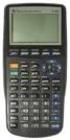 Stats on the TI 83 and TI 84 Calculator Entering the sample values STAT button Left bracket { Right bracket } Store (STO) List L1 Comma Enter Example: Sample data are {5, 10, 15, 20} 1. Press 2 ND and
5) The table below describes the smoking habits of a group of asthma sufferers. two way table ( ( cell cell ) (cell cell) (cell cell) )
 MULTIPLE CHOICE. Choose the one alternative that best completes the statement or answers the question. Determine which score corresponds to the higher relative position. 1) Which score has a better relative
5/31/2013. 6.1 Normal Distributions. Normal Distributions. Chapter 6. Distribution. The Normal Distribution. Outline. Objectives.
 The Normal Distribution C H 6A P T E R The Normal Distribution Outline 6 1 6 2 Applications of the Normal Distribution 6 3 The Central Limit Theorem 6 4 The Normal Approximation to the Binomial Distribution
Statistics 100 Sample Final Questions (Note: These are mostly multiple choice, for extra practice. Your Final Exam will NOT have any multiple choice!
 Statistics 100 Sample Final Questions (Note: These are mostly multiple choice, for extra practice. Your Final Exam will NOT have any multiple choice!) Part A - Multiple Choice Indicate the best choice
Market Size Forecasting Using the Monte Carlo Method. Multivariate Solutions
 Market Size Forecasting Using the Monte Carlo Method Multivariate Solutions Applications and Goals The Monte Carlo market size forecast model is used primarily to determine the approximate size of product(s)
Excel Basics By Tom Peters & Laura Spielman
 Excel Basics By Tom Peters & Laura Spielman What is Excel? Microsoft Excel is a software program with spreadsheet format enabling the user to organize raw data, make tables and charts, graph and model
Pulling a Random Sample from a MAXQDA Dataset
 In this guide you will learn how to pull a random sample from a MAXQDA dataset, using the random cell function in Excel. In this process you will learn how to export and re-import variables from MAXQDA.