
Mule and Black-tailed Deer
|
|
|
- Meredith Short
- 9 years ago
- Views:
Transcription
1 Mule and Black-tailed Deer IN BRITISH COLUMBIA Ecology, Conservation and Management Ministry of Environment, Lands and Parks

2 Due to a long history of isolation along the Pacific Slope, the blacktail has differentiated from Mule Deer to the extent that it has been called a species in the making INTRODUCTION Mule and Black-tailed deer are both members of the same species, Odocoileus hemionus, yet they are very different from one another. In British Columbia, these two subspecies or races are the TAXONOMY Order Artiodactyla (Even-toed ungulates) Family Cervidae (Moose, Elk, Caribou, Deer) Genus Odocoileus Species hemionus Subspecies columbianus (Columbian Black-tailed Deer) hemionus (Mule Deer) sitkensis (Sitka Blacktailed Deer) most widespread members of the deer family (Cervidae) and probably the most familiar. Although they are at home in remote valleys and wilderness areas, they become quite tame in parks and residential areas where there is no hunting and few large predators. At different seasons, these deer inhabit every kind of ecological zone, from alpine to valley bottom. They have adapted to climates as varied as the benign Gulf Islands and the frigid winters of the Peace River district, and to ecologies as different as dense coastal rainforests and dry interior rangelands. EVOLUTION AND APPEARANCE Black-tailed Deer have been around in North America for over two million years. Mule Deer may have appeared later as a hybrid of Black-tailed and White-tailed deer. Since then, at least seven races or subspecies of Mule and Black-tailed deer have developed. When ice covered British Columbia 18,000 years ago, deer stayed within the southern refugium in the United States. As the ice sheets retreated 15,000 to 10,000 years ago, the Columbian Black-tailed Deer (Odocoileus hemionus columbianus) spread northward from Washington State to Vancouver Island and along the coast to southeast Alaska. Mule Deer (Odocoileus hemionus hemionus) moved north into the interior. The third subspecies in the province, the Sitka blacktail of the north coast (Odocoileus hemionus sitkensis), is similar to the Columbia blacktail. Mule Deer are relatively large animals 90 to 95 cm high at the shoulder. Adult males, or bucks, weigh 68 to 113 kg, but bucks in peak physical condition may weigh up to 180 kg. Females, or does, weigh 50 to 75 kg. Mule Deer have a reddish brown coat that changes from tawny brown in summer to dark or grizzled brown in winter. They have a dark brown forehead, a whitish face with a black muzzle, and a white throat patch. Their ears are large about two-thirds the length of the head with black borders and white hair on the inside, and they have a large white rump patch with a narrow blacktipped tail. Each year male Mule Deer grow and shed a set of antlers. Their antlers have two main beams, each of which forks again into two beams (dichotomous branching). Blacktails are smaller than Mule The large white rump patch of Mule Deer, narrow black-tipped tail, and large ears (about two-thirds length of the head) are very distinctive. MULE DEER ARE MOST COMMONLY FOUND IN THE DRY VALLEYS AND PLATEAUS OF THE SOUTHERN INTERIOR. David F. Fraser

3 Deer and slightly darker in color, with a small rump patch and a tail that is dark brown or black for most of its length, rather than just at the tip. Adult males in good condition weigh about 48 to 90 kg, females 40 to 65 kg. Sitka blacktails tend to be smaller and darker than Columbia blacktails. The number of antler points is not a reliable way to determine the age of these deer, but in general, yearling blacktails almost always have unbranched spikes. Two-year-olds mostly have small two-point antlers, but they may also have spikes. Bucks threeyears-old and older may have two, three, or four points on each antler. In Mule Deer, most yearlings have two points on each side, and two-year-olds grow large forks or three points. Older bucks have four, five, or more points and a small tine or eye-guard near the base of the antlers. Sitka Black-tailed-Deer DISTRIBUTION AND ABUNDANCE Mule and Black-tailed deer are found only in North America, where they are as typical of the western mountains as whitetails are of the Great Plains and eastern deciduous forests. However, Mule Deer range extends onto the plains in areas of rough terrain such as river breaks and sandhills. Mule and Black-tailed deer occur from northern Mexico to southeast Alaska and southern Yukon and from the Pacific coast to western Manitoba, Kansas, and northwest Texas. Since 1950, the number of Mule Deer in North America has varied from about two to three million (all subspecies) and blacktails from about one to two million (Columbia and Sitka). Black-tailed Deer occur along the entire coast of British Columbia, west of the summit of the Coast and Cascade ranges, and on most coastal islands km Mule Deer HOOF PRINTS PLENTIFUL MODERATE FEW ABSENT Blacktails are excellent swimmers and inhabit most islands except the more far-flung Queen Charlottes and Dundas group and a few smaller islands closer in. Sitka blacktails were introduced into the Queen Charlotte Islands in the early 1900s and have flourished there because of the lack of predators, except Black Bears, and the mild winters. Black-tailed Deer numbers vary greatly depending on habitat conditions, the severity of the winters, and the number of predators. However, hunter harvests and other counts indicate that the population in British Columbia has fluctuated between 150,000 and 250,000 in recent decades. Blacktails are abundant in southern areas where the climate is favourable Vancouver Island, islands in Georgia Strait, and the Sechelt Peninsula. Their numbers decline northward along the mainland coast due to increasing snow depths, except for the Queen Charlotte Islands, where deer densities are high. The interior of the province has about 165,000 Mule Deer. Most prefer the dry valleys and plateaus of the southern interior, but they are also common in the south-central interior. About 20,000 to 25,000 occupy northern ranges. In British Columbia, the Coast Range largely separates the ranges of Black-tailed and Mule deer, particularly in winter. Where their ranges meet, these two subspecies will interbreed. As a result, deer in some intermediate valleys have hybrid characteristics. The ranges of Black-tailed and Mule deer in British Columbia, particularly in winter, are almost entirely separated by the Coast Range. LIFE HISTORY During most of the year Black-tailed and Mule deer travel alone or in small groups, but Mule Deer sometimes form larger groups. The social system consists of clans of females that are related to each other by maternal descent and bucks that are not related. Bucks assert their dominance by taking various threat postures and flailing their front hooves. Also, bucks of unequal size, particularly yearlings and two-yearolds, often engage in protracted sparring matches during which they push their antlers together and twist their heads. These engagements are not fights and actually result in social bonding. Deer communicate with the aid of scents or pheromones that come from several glands. The most important are the metatarsal (outside of lower leg), tarsal (inside of hock), and interdigital (between the Columbia Black-tailed Deer

4 Typically, does toes). The metatarsal gland produces an alarm scent, the tarsal serves for mutual recognition, and the interdigital glands leave a scent trail when deer travel. In the weeks leading up to the late-autumn mating (rutting) period, bucks increase their displays of dominance and indirect threats. A dominant buck typically circles a rival with deliberate steps, back arched, head low, and tail flicking. The subordinate buck frequently bolts away. Bucks also display dominance by violently thrashing the bushes with their antlers. During the rutting season in November and early December, mature bucks of equal size engage in serious head-to-head fights. Bucks are capable of breeding as yearlings, but older, dominant bucks do most of the mating. Most does breed as yearlings and drop their first fawn on about their second birthday. Females advertise their receptiveness and tend to cluster around the largest bucks. Courtship consists of a tending bond in which a buck keeps other bucks away from the does until they mate or until another buck displaces him. Following the rut, bucks have lost weight and some have wounds or broken antlers, and they tend to hide and rest. They drop their antlers from January to March in British Columbia, and the older bucks shed their antlers first. Bucks regrow their antlers from April through August. After a gestation period of six to seven months, fawns are born from late-may through June. At this time, the does drive away their offspring of the previous year and seek a secluded place to give birth. The white-spotted fawn relies on its colouration, lack of scent, and silence for protection. Does leave fawns hidden while they forage in the vicinity, returning produce fawns throughout life, with over 90% of them producing offspring each year. occasionally to nurse them. Twin fawns are the rule, though young does often have only one, and triplets occur once in a while. At birth, fawns weigh 2.7 to 4 kg. Typically, does produce offspring throughout life, and more than 90 percent of them give birth every year. This is a prolific species which can double its population in a few years under favourable conditions. Normally, 45 to 70 percent of the fawns die, and few Black-tailed and Mule deer live more than eight to ten years. Predation, starvation, and hunting are the main causes of death. ECOLOGICAL RELATIONSHIPS Mule and Black-tailed deer have difficulty moving through snow deeper than 30 cm, so they cannot survive in British Columbia s extensive alpine and subalpine zones in winter. In Mule and Black- summer, most deer migrate to higher elevations to take advantage of nutritious new... can increase growth, but some remain at low elevations all year. Old-growth forests form a key part of the winter range for coastal Black-tailed Deer in British Columbia and are critical for their survival. They provide shelter, intercept snow so that it is shallower, and provide forage in the form of broken branches and the lichens that grow on them. On the southeast coast of Vancouver Island and the islands in Georgia Strait, old-growth cover is not critical because snowfall is usually shallow and brief. But northward and at higher elevations, it becomes increasingly important. Here, steep, south- to west-facing sites provide the best winter range. In the interior, the Mule Deer s traditional winter ranges consist of shrublands in the dry forest zone and on steep south- and west-facing sites with broken terrain. They often remain at high elevations until December, then migrate to lower ranges with shallower snow. In summer, they usually leave the dry, valleyside ranges and move to moister, higher elevations. In winter and early spring, coastal Black-tailed Deer feed on Douglas-fir, western redcedar, red huckleberry, salal, deer fern, and lichens that grow on trees. From late spring to fall, they eat a much wider variety of plants, including grasses, trailing blackberry, fireweed, pearly everlasting, and many other herbaceous plants (forbs), as well as the leaves of willows, salmonberry, tailed deer numbers greatly where forest fires, logging or other disturbances create openings where food plants are abundant. THE FAWN RELIES ON ITS CONCEALING COLOURATION, LACK OF SCENT, AND SILENCE FOR PROTECTION Sean Sharpe

5 salal, maple, and other shrubs or trees. The Mule Deer's key winter foods include shrubs like big sagebrush, pasture sage, bitterbrush, rabbitbrush, snowbrush, saskatoon, rose, and serviceberry, as well as the foliage of Douglas-fir trees and a variety of grasses and herbs. In spring and summer, Mule Deer prefer various grasses, along with herbs like balsamroot, clover, wild strawberry, fireweed, and the leaves of many kinds of shrubs. Black-tailed Deer share their winter ranges with Roosevelt Elk on the coast. Mule Deer share their ranges with Rocky Mountain Elk, White-tailed Deer, and in the interior, with domestic cattle. Competition with wildlife usually doesn t cause food shortages for Black-tailed Deer, but Mule Deer may face competition from excessive cattle grazing on their winter-spring ranges. Mule and Black-tailed deer are vital components of their ecosystems and provide food for several predators. The Cougar depends on both species for its survival in British Columbia. Wolf populations in several areas, including Vancouver Island, also rely heavily on deer. Bears, Bobcats, and Coyotes supplement their diets by killing deer when the opportunity arises or by scavenging on carcasses left by Cougars or wolves. Other scavengers include Wolverines, Ravens, and Magpies. For the most part, Mule and Black-tailed deer live amicably with a number of parasites and disease organisms. These kill deer only when the deer are starving. Epidemic diseases have not caused large die-offs in deer in British Columbia. VALUES AND USES In many parts of western North America, native people relied heavily on Black-tailed and Mule deer for food and other products. They used a variety of methods to capture them, including stalking, nets, snares, and driving them into pits or corrals. Archaeological sites in the Gulf of Georgia region contain many tools such as awls, scrapers, wedges, and harpoons made of Blacktailed Deer bone or antler. First Nations people in the interior used Mule Deer extensively, particularly when salmon were scarce. Early explorers in British Columbia depended on deer for survival. They killed many in order to provision trading posts and also exported deer Thousands of casual contacts between people and deer have considerable intangible value. BLACK-TAILED DEER OCCUR ALONG THE ENTIRE COAST OF BC AND MAKE FREQUENT USE OF LOGGED HABITATS DURING SPRING AND SUMMER. BC Gov. hides with other furs. In the late 1800s, market hunters supplied mining camps with deer meat, and many settlers relied on deer for food. Deer meat is still important in the diet of many rural people, including First Nations, but deer are more important today for their recreational and aesthetic value. Since World War II, recreational hunting of Mule and Black-tailed deer in British Columbia has been worth millions of dollars. Deer hunting peaked in the late 1960s, when hunters harvested about 75,000 deer, mostly Mule and Black-tailed. Since that time, harvests have fallen to about 20,000 a year. Over-hunting is not the problem. There are fewer deer harvested now for a number of reasons, including loss of habitat and predation, but also fewer people are hunting, and this trend is likely to continue into the new millennium. Most British Columbia residents are used to seeing Mule and Black-tailed deer in rural subdivisions, along highways, and in parks. These casual contacts have considerable intangible value, and large groups of Mule Deer on winter-spring ranges are a spectacular sight. The best time for viewing Mule Deer is April, when they move to low-elevation, south-facing grassy slopes in search of the first hints of green vegetation. These locations include slopes along the Fraser River between Lillooet and Williams Lake, the Dewdrop Range near Kamloops, the Gilpin Range between Grand Forks and Christina Lake, and Premier Ridge and other sites along the southern Rocky Mountain Trench.

6 Black-tailed and Mule deer cause damage to alfalfa fields, landscaping, gardens, and orchards, as well as damage to cars that collide with deer on highways. All these problems are the result of human activities encroaching into former deer habitat. CONSERVATION Mule and Black-tailed deer have done fairly well in the face of expanding civilization and are not species at-risk in British Columbia. However, some deer habitat has disappeared permanently because of residential development, particularly on southern Vancouver Island and in the Greater Vancouver area and the Okanagan Valley. Surface mining, hydro reservoirs, highways, and agricultural land development have caused additional habitat loss. As the population of southern British Columbia continues to increase, habitat will go on disappearing slowly but steadily. Some Black-tailed and Mule deer habitats are safe within provincial parks, wildlife management areas, and other reserved lands. Some of these reserves involve land purchases made possible by the Habitat Conservation Trust Fund and the Nature Trust of British Columbia. Other key winter ranges need to be protected or at least managed for the benefit of deer. Assessing the effect of proposed land developments on deer ranges will help to minimize the damage to deer habitat. Much of the deer range in British Columbia is on Crown lands where forestry and livestock grazing are important land uses. Forestry and deer can co-exist, however, especially if Forest Practices Code regulations succeed in maintaining the old-growth stands deer need for winter range. Initiatives such as handbooks on coordinating timber and deer management on winter ranges in the Cariboo Region and on the south coast should help to reduce the harmful effects of logging on Mule and Black-tailed deer. Heavy livestock grazing has had detrimental effects on some winter-spring Mule Deer ranges, but many cattle ranges in the southern interior are now covered by coordinated range management plans. However, many spring deer ranges are on private lands that have become less suitable for deer because of heavy grazing by cattle. In these areas, it could be beneficial to provide land owners with more information about the role their lands play in the survival of Mule and Black-tailed deer. Several thousand Mule and Black-tailed deer die each year on British Columbia roads and highways, and deaths will undoubtedly increase with increased traffic and new highways. This is a serious problem, MAINTAINING BOTH WINTER AND SPRING RANGE IS CRITICAL TO THE LONG TERM CONSERVATION OF MULE AND BLACK TAILED DEER IN BRITISH COLUMBIA. Dennis Demarchi especially where highways cross major winter ranges. Ministry of Transportation and Highways initiatives such as putting up fences with strategically located structures to allow deer to pass through have shown promise on routes such as the Okanagan Connector, and this approach might offer solutions in other problem areas as well. BROCHURE FUNDING PROVIDED BY This project was funded by the Habitat Conservation Trust Fund that was created by an act of the legislature to preserve, restore, enhance and acquire key areas of habitat for fish and wildlife throughout British Columbia. Hunters, anglers, trappers and guides contribute to the Trust Fund enhancement projects through license surcharges. Tax deductible donations to assist in the work of the Trust Fund are welcomed. PROJECT COORDINATION: IAN HATTER, GAIL HARCOMBE, LIZ STANLAKE, ARLENE BETHUNE ORIGINAL TEXT: DONALD A. BLOOD ARTWORK: MICHAEL HAMES DESIGN: ARIFIN GRAHAM, ALARIS DESIGN DISTRIBUTION MAPS: ADAPTED FROM RBCM HANDBOOK BY ALARIS DESIGN PROVINCE OF BRITISH COLUMBIA 2000 MELP

Past and Current Research on Natural Resource Issues in the Blue Mountains
 Past and Current Research on Natural Resource Issues in the Blue Mountains Recreation, Hunting, Access Livestock Production (and Wild Ungulate Ecology) Restoration Timber Harvest, Production Biodiversity,
STANDARDS FOR RANGELAND HEALTH ASSESSMENT FOR SAGEHEN ALLOTMENT #0208
 STANDARDS FOR RANGELAND HEALTH ASSESSMENT FOR SAGEHEN ALLOTMENT #0208 RANGELAND HEALTH STANDARDS - ASSESSMENT SAGEHEN ALLOTMENT #0208 STANDARD 1 - UPLAND WATERSHED This standard is being met on the allotment.
LESSON 2 Carrying Capacity: What is a Viable Population? A Lesson on Numbers and Space
 Ï MATH LESSON 2 Carrying Capacity: What is a Viable Population? A Lesson on Numbers and Space Objectives: Students will: list at least 3 components which determine the carrying capacity of an area for
2016 Outlook and Management -Pre-season outlook / expectations and early indications - General overview of in-season management approach
 Salmon Briefing 2016 Outlook and Management -Pre-season outlook / expectations and early indications - General overview of in-season management approach Pacific Salmon Species Size and age at return varies
All members of the puma species carry their kittens the same way domestic cats do, and they can purr like housecats too.
 Florida Panther In spite of many, many attempts, I have not been able to discover let alone photograph a majestic Florida panther in the wild. The tawny cat is an endangered species. The panthers I have
Maryland s White-tail Hunting: Region A - Western Maryland
 Maryland s White-tail Hunting: Region A - Western Maryland By E. W. Grimes, Director/President, Maryland State Chapter of the Quality Deer Management Association A Series of Articles Written in an Effort
Lesson Overview. Biodiversity. Lesson Overview. 6.3 Biodiversity
 Lesson Overview 6.3 6.3 Objectives Define biodiversity and explain its value. Identify current threats to biodiversity. Describe how biodiversity can be preserved. THINK ABOUT IT From multicolored coral
1. About dairy cows. Breed of dairy cows
 1. About dairy cows Breed of dairy cows Holstein Holstein is a typical dairy cow, and 99% of dairy cows in Japan are Holsteins. They are originally from the Netherlands and Holstein region of Germany.
Although greatly MOUNTAINS AND SEA BRITISH COLUMBIA S AWIDE RANGE OF. Environment. Old Forests. Plants. Animals
 BRITISH COLUMBIA is Canada s westernmost province. From island-dotted Pacific coast to spectacular Rocky Mountain peak, and from hot dry grassland to moist and majestic coastal forest, British Columbia
Population Growth Activity Date Per
 Population Growth Activity Name Date Per Objectives: You will graph the population growth of different populations and use it to predict future growth. You will identify factors that affect population
Non-consumptive use of wildlife. Non-consumptive Use. Non-consumptive Use
 Non-consumptive use of wildlife Non-consumptive Use Any non-hunting or non-extractive use Examples: wildlife feeding & photography, bird watching, whale watching Non-consumptive Use Sources of information
Climate, Vegetation, and Landforms
 Climate, Vegetation, and Landforms Definitions Climate is the average weather of a place over many years Geographers discuss five broad types of climates Moderate, dry, tropical, continental, polar Vegetation:
FORESTED VEGETATION. forests by restoring forests at lower. Prevent invasive plants from establishing after disturbances
 FORESTED VEGETATION Type of strategy Protect General cold adaptation upland and approach subalpine forests by restoring forests at lower Specific adaptation action Thin dry forests to densities low enough
Town of Richmond Hill Beaver Management Policy Summary
 Town of Richmond Hill Beaver Management Policy Summary Above Left: Tree damage from beaver. Above Right: Beaver dam in stream - notice the water level above and below the dam! Below: Beaver swimming. Town
Key Idea 2: Ecosystems
 Key Idea 2: Ecosystems Ecosystems An ecosystem is a living community of plants and animals sharing an environment with non-living elements such as climate and soil. An example of a small scale ecosystem
THE ECOSYSTEM - Biomes
 Biomes The Ecosystem - Biomes Side 2 THE ECOSYSTEM - Biomes By the end of this topic you should be able to:- SYLLABUS STATEMENT ASSESSMENT STATEMENT CHECK NOTES 2.4 BIOMES 2.4.1 Define the term biome.
Pandas in Peril. Game created by Amber Neilson, Education Coordinator Sequoia Park Zoo; SequoiaParkZoo.net
 Pandas in Peril Game created by Amber Neilson, Education Coordinator Sequoia Park Zoo; SequoiaParkZoo.net Goal: To introduce players to the many challenges of the lives of Red pandas. Grades: 2+ (reading
MAINTAINING BIOLOGICAL DIVERSITY
 APPROACHES TO MAINTAINING BIOLOGICAL DIVERSITY IN BRITISH COLUMBIA S FORESTS An Introduction for Resource Managers The Centre for Applied Conservation Biology University of British Columbia Province of
Deer Talk. A Field Guide to Whitetail Communication
 Deer Talk A Field Guide to Whitetail Communication Deer Communicate with their whole bodies. Tails, ears, eyes, and postures tell other deer about potential dangers and communicate family relationships.
MANAGEMENT DIRECTION STATEMENT May, 1999
 Kootenay District AAGEET DIRECTIO STATEET ay, 1999 for Akamina-Kishenina Provincial Park inistry of Environment Lands and Parks BC Parks Division Table of Contents I. Introduction A. Setting and Context...1
How To Understand Wolves
 SOME THINGS YOUR STUDENTS WILL WANT TO KNOW ABOUT WOLVES - AND WON T BE AFRAID TO ASK 1. Are wolves dangerous to people? Wild wolves avoid people. The myths about wolves attacking and eating people are
China The Giant Panda
 China The Giant Panda China The Giant Panda Deep in a forest, a black-and-white bear sits peacefully. It chews the green leaves of a plant. The bear is alone, but there are others not too far away. Later,
Deciduous Forest. Courtesy of Wayne Herron and Cindy Brady, U.S. Department of Agriculture Forest Service
 Deciduous Forest INTRODUCTION Temperate deciduous forests are found in middle latitudes with temperate climates. Deciduous means that the trees in this forest change with the seasons. In fall, the leaves
6. NATURAL AREAS FIRE MANAGEMENT
 6. NATURAL AREAS FIRE MANAGEMENT 6-1 Wildfire management is an important component of managing and maintaining County natural areas. The natural areas are woven into the community fabric and are a part
West Kootenay Elk Composition Surveys:
 : January and February 2012 Prepared By: Patrick Stent Ministry of Natural Resource Operations Nelson BC March 2012 Executive Summary The Ministry of Forests, Lands and Natural Resource Operations (FLNRO)
WESTERN STATES AND PROV1IVCES DEER AND ELK WORKSHOP 5:23-29
 A NOTE ABOUT THE EFFECTS OF INTRODUCED WOLVES ON TRE OPERATIONS OF ELK FEEDGROUNDS IN WESTERN WYOMING RON DEAN.' Wyoming Game and Fish Department, P.O. Box 3488, Alpine, WY 83128, USA SCOTT WERBELOW, Wyoming
Presented By: Scott Silvestri Fisheries Biologist Region 1 Ministry of Environment, Fisheries Branch
 Small Lakes Management on Vancouver Island Presented By: Scott Silvestri Fisheries Biologist Region 1 Ministry of Environment, Fisheries Branch 2010 BCLSS Community Forum Presentation Agenda 1. Provincial
Wildlife Accident Reporting System (WARS) 1983-2002 Integrating Data into Transportation Planning
 Wildlife Accident Reporting System (WARS) 1983-2002 Integrating Data into Transportation Planning Leonard Sielecki, M.Sc., R.P.Bio, MCIP British Columbia Ministry of Transportation Rockies Wildlife Crossing
Woodland caribou (Rangifer tarandus caribou) in the Far North of Ontario: Background information in support of land use planning
 Woodland caribou (Rangifer tarandus caribou) in the Far North of Ontario: Background information in support of land use planning The Far North Caribou Project (FNCP) was initiated in 2008 to support land
Marchand Provincial Park. Draft Management Plan
 Marchand Provincial Park Draft Management Plan Marchand Provincial Park Draft Management Plan Table of Contents 1. Introduction... 3 2. Park History... 3 3. Park Attributes... 4 3.1 Natural... 4 3.2 Recreational...
www.irishseedsavers.ie Natural surface water on earth includes lakes, ponds, streams, rivers, estuaries, seas and oceans.
 www.irishseedsavers.ie POND LIFE FACT SHEET Natural surface water on earth includes lakes, ponds, streams, rivers, estuaries, seas and oceans. A pond is a small body of fresh water shallow enough for sunlight
Ecosystem Restoration in British Columbia An Overview. Greg Anderson Provincial Ecosystem Restoration Manager 2009
 Ecosystem Restoration in British Columbia An Overview Greg Anderson Provincial Ecosystem Restoration Manager 2009 Presentation Topics Where are we at & how did we get here? Understanding Ecosystem Restoration
DESCRIBING DESERT, TAIGA, AND TUNDRA BIOMES
 Lesson B5 1 DESCRIBING DESERT, TAIGA, AND TUNDRA BIOMES Unit B. Science and Technology in Wildlife Management Problem Area 5. Desert, Taiga, and Tundra Biomes National Academic Standard. NS.9-12.1 Science
CATS and WILDLIFE HOW YOU CAN PROTECT BOTH
 CATS and WILDLIFE HOW YOU CAN PROTECT BOTH Where is your cat right now? Could it be harming native wildlife? Is it roaming in your neighbour s yard? Is it crossing a busy road? Could it be returned to
CHAPTER 20 COMMUNITY ECOLOGY
 CHAPTER 20 COMMUNITY ECOLOGY MULTIPLE CHOICE 1. The relationship between a predator and its prey is best illustrated by a. a snake eating a bird. c. a lion eating a zebra. b. a fox eating a mouse. d. a
ENDANGERED AND THREATENED
 ENDANGERED AND THREATENED Understand how species in the Sonoran Desert Region may become endangered or threatened and what is being done to protect them. ARIZONA SCIENCE STANDARDS SC03-S4C3-03&04, SC08-S1C3-07,
Living with Foxes and Skunks Goose Hunting: CWS
 Ministry of Natural Resources and Forestry Living with Foxes and Skunks Goose Hunting: CWS November 19 th, 2015 Town of Tecumseh Kathryn Markham, A/Management Biologist Steven Rowswell, A/Wildlife Technician
4. Which choice below lists the biomes in order from lowest precipitation amounts to highest precipitation amounts?
 Ecosystems and Biomes 1. All of the living organisms in a forest plus their environment is an example of A. a biome. B. a community. C. a population. D. an ecosystem. 2. Which of the following best describes
6. Evolution and Domestication of Wolves
 6. Evolution and Domestication of Wolves Wolf Evolution Scientists are not absolutely certain how and where the wolf evolved. By examining fossil bones, especially skulls, of animals that lived millions
Grade Level Content Expectations addressed: Activities: Schedule of Field Trip Activities at the Detroit Zoo 8:15 am Board Bus at School
 Title: Comparing and Contrasting Ecosystem Biodiversity Submitted by: Tracy Ortiz Email: [email protected] School: Coffey K-8 Educational Learning Community Date: May 12, 2010 Target Grade: 6 Duration:
Lesson 1. Objectives: ocus: Subjects:
 Lesson 1 The Web of Life Objectives: 1. Understand the concept of an ecosystem. 2. Understand the interdependence of members of an ecosystem. Subjects: 1. Ecology 2. Language 3. Art MATERIALS: Copies of
Got ELK? Hunting Prices and Dates Also Current discounted pricing on Over the Counter Rifle seasons.
 Hunt ID: CO-ElkMDeerFishAll-Durango-DBARG-DIY Got ELK? We sure do too many Elk. So many we are offering a DIY drop camp hunt for a limited number of hunters in prime Southwestern Colorado Elk Country!
KNOW THE BEAR FACTS FOR KIDS
 KNOW THE BEAR FACTS FOR KIDS New Jersey Department of Environmental Protection Black Bears in New Jersey Activity Guide Black bears live in New Jersey. They were here long before people were. About 100
NATURAL REGIONS OF KENTUCKY
 NATURAL WONDERS As you travel around Kentucky taking pictures, you are excited by what you see. Kentucky offers diverse and amazing sights. The Six Regions In the West, you see the Mississippi River, the
ECOSYSTEM RESPONSES. reflect
 reflect There is a saying, No man is an island, which means that people need one another in order to survive. Everyone on Earth is interconnected in some way. This is not only true of human beings, but
Desert Communities Third Grade Core: Standard 2 Objective 2 Describe the interactions between living and nonliving things in a small environment.
 Desert Communities Third Grade Core: Standard 2 Objective 2 Describe the interactions between living and nonliving things in a small environment. (Discovering Deserts NatureScope: page 40, 43, 44) Objective:
Technical Study and GIS Model for Migratory Deer Range Habitat. Butte County, California
 Technical Study and GIS Model for Migratory Deer Range Habitat, California Prepared for: Design, Community & Environment And Prepared by: Please Cite this Document as: Gallaway Consulting, Inc. Sevier,
The interface between wild boar and extensive pig production:
 The interface between wild boar and extensive pig production: implications for the spread of ASF in Eastern Europe Sergei Khomenko, PhD Disease ecology & wildlife Specialist, FAO HQ Epidemiological cycle
High Conservation Value Forests 3.1. Old Growth Forests. Management & Monitoring Framework
 High Conservation Value Forests 3.1 Old Growth Forests Management & Monitoring Framework HCV 3: Forest areas that are in or contain rare, threatened or endangered ecosystems. HCVF 3.1 Old Growth Areas
Ecology 1 Star. 1. Missing from the diagram of this ecosystem are the
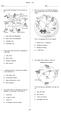 Name: ate: 1. Missing from the diagram of this ecosystem are the 5. ase your answer(s) to the following question(s) on the diagram below and on your knowledge of biology.. biotic factors and decomposers.
Grade 5 Standard 5 Unit Test Heredity. 1. In what way will a kitten always be like its parents? The kitten will...
 Grade 5 Standard 5 Unit Test Heredity Multiple Choice 1. In what way will a kitten always be like its parents? The kitten will... A. be the same color. B. learn the same things. C. have the same body structures.
A STUDY OF BIOMES. In this module the students will research and illustrate the different biomes of the world.
 A STUDY OF BIOMES http://bellnetweb.brc.tamus.edu/res_grid/biomes.htm A HIGH SCHOOL BIOLOGY / ECOLOGY MODULE Summary: In this module the students will research and illustrate the different biomes of the
Fayette County Appraisal District
 Fayette County Appraisal District Agricultural Guidelines July 7, 2010 A SUPPLEMENT TO THE STATE OF TEXAS PROPERTY TAX MANUAL FOR THE APPRAISAL OF AGRICULTUAL LAND AND WILDLIFE MANAGEMENT ACTIVITIES AND
Increasing water availability through juniper control.
 Tim Deboodt, OSU Crook County Extension Agent 498 SE Lynn Blvd. Prineville, OR 97754 541-447-6228 [email protected] Increasing water availability through juniper control. Throughout the region
Fishing, Hunting & Gathering The Rights and Responsibilities of First Nations People in Manitoba
 Fishing, Hunting & Gathering The Rights and Responsibilities of First Nations People in Manitoba First Nations people have always had a special relationship with the natural life forms that the land provides
Lesson 3: Fish Life Cycle
 Lesson 3: Fish Life Cycle Activity: Diagram fish life cycle. Grade level: 4-8 Subjects: Science, social studies Setting: Classroom Duration: 50 minutes Key Terms: Fry, life cycle, life history, spawn,
Resources, Publications, Tools, Input from AWCC
 A comprehensive review of Farm Bill contributions to wildlife conservation A comprehensive review was made of scientific literature to determine wildlife responses to conservation programs undertake as
How To Plan A Buffer Zone
 Backyard Buffers Protecting Habitat and Water Quality What is a buffer? A buffer (also called a riparian buffer area or zone) is the strip of natural vegetation along the bank of a stream, lake or other
Antlered a white-tailed deer, mule deer, moose or elk having an antler exceeding 10.2 cm (4 in.) in length.
 GENERAL HUNTING REGULATIONS The following are brief summaries of some of the hunting regulations that apply to the purchase and use of licences obtained through a draw. A more comprehensive summary is
Controlling Invasive Plants and Animals in our Community
 Controlling Invasive Plants and Animals in our Community PROVIDED BY THE WILDLIFE COMMITTEE What makes a plant or animal invasive? When a plant or animal from another region of the world (usually Europe
Sample Unit Plan. Ecology Explorers
 Appendix G.04 Appendix G: Seeing Reason Tool Resources Sample Unit Plan Ecology Explorers Classroom Information Subject Area Science, Language Arts Grade Level(s) 6 8 Unit Summary In this project, students
CALCULATING AVAILABLE FORAGE
 CALCULATING AVAILABLE FORAGE Mindy Pratt and G. Allen Rasmussen Range Management Fact Sheet May 2001 NR/RM/03 An important part of calculating Stocking Rate is knowing the amount of available forage you
Managing Fire Dependent Wildlife Habitat without Fire. A Land Management Practice That: 100 Years of Fire Suppression in Ponderosa pine ecosystems
 Managing Fire Dependent Wildlife Habitat without Fire Dale Swedberg Chairman North Central Washington Prescribed Fire Council Land Management Practices used to Manage Wildlife Habitat A Land Management
The Nature Conservancy Offering Protected Lands for Sale in the Adirondacks Sustainable Forestry to Continue
 News release For immediate release August 21, 2008 Contact: Connie Prickett, (518) 576-2082 x162, [email protected] The Nature Conservancy Offering Protected Lands for Sale in the Adirondacks Sustainable
Using Aerial Photography to Measure Habitat Changes. Method
 Then and Now Using Aerial Photography to Measure Habitat Changes Method Subject Areas: environmental education, science, social studies Conceptual Framework Topic References: HIIIB, HIIIB1, HIIIB2, HIIIB3,
TERMS OF REFERENCE RIVERSIDE FOREST PRODUCTS LIMITED SUSTAINABLE TOTAL RESOURCE MANAGEMENT PROJECT
 TERMS OF REFERENCE RIVERSIDE FOREST PRODUCTS LIMITED SUSTAINABLE TOTAL RESOURCE MANAGEMENT PROJECT 1. PURPOSE The purpose of the Riverside Forest Products Limited (Riverside) Project (the Project) is to
Population Ecology. Life History Traits as Evolutionary Adaptations
 Population Ecology An Overview of Population Ecology Population ecology is the study of factors that affect population: Density Growth A population is a group of individuals of a single species that occupy
A Most Colorful Mammal by Guy Belleranti
 Name: In the tropical rainforests of western Africa lives a mammal with a most colorful face and rump. This mammal is the mandrill, the world's largest monkey. The skin on a male mandrill's face has a
(Seattle, WA, More than 500,001, Green Seattle Partnership)
 (Seattle, WA, More than 500,001, Green Seattle Partnership) Project Summary The Green Seattle Partnership is a collaboration between the City of Seattle, Cascade Land Conservancy and our residents to restore
Off-road Vehicle Regulation. discussion paper
 Off-road Vehicle Regulation discussion paper Yukon is developing a set of regulations to assist in creating the process and tools that will enable us to manage potential environmental damage caused by
A Method of Population Estimation: Mark & Recapture
 Biology 103 A Method of Population Estimation: Mark & Recapture Objectives: 1. Learn one method used by wildlife biologists to estimate population size of wild animals. 2. Learn how sampling size effects
Wolf? Wolf? A L A. Whatever Happened. Term. The word alpha applied to wolves. to the
 Whatever Happened to the Term A L A P H Wolf? The word alpha applied to wolves has had a long history. For many years books and articles about wolves have mentioned the alpha male and alpha female or the
ENVIRONMENTAL CHANGES
 reflect How do you respond to environmental changes? Maybe you wear different types of clothes in different seasons. Maybe you only ride your bike during certain times of the year. What if you moved to
SP-472 AUGUST 2012. Feral Hog Population Growth, Density and Harvest in Texas
 SP-472 AUGUST 2012 Feral Hog Population Growth, Density and Harvest in Texas Photo courtesy Jared Timmons, Texas AgriLife Extension Service Feral hogs (Sus scrofa) are non-native, highly adaptable, and
How to make a Solitary Bee Box
 How to make a Solitary Bee Box **Note: The following instructions include the use of tools that may be dangerous. Ensure there is adult supervision with children. Time: 1 hour People: 1-2+ Materials: Wood
Growth & Feeding Puppies Karen Hedberg BVSc 2007. Growth
 Growth & Feeding Puppies Karen Hedberg BVSc 2007 Size and End Weight : Growth Dogs come in all sizes and shapes and have enormous variation in their final body weights. Dogs generally can be fed a very
Finance, Mining & Sustainability. The Gamsberg Zinc Project South Africa
 Finance, Mining & Sustainability The Gamsberg Zinc Project South Africa Project Summary Discovered in 1971 Anglo American purchased 33% interest in 1974 and increased interest to 100% in 1998 Feasibility
3.1. Succession, Recovery, and Renewal in Natural Communities. A35 Starting Point. What Happens to a Vacant Lot?
 3.1 Succession, Recovery, and Renewal in Natural Communities Here is a summary of what you will learn in this section: Ecosystems change in predictable ways known as succession. Ecosystems can establish
Fire, Forest History, and Ecological Restoration of Ponderosa Pine Forests at Mount Rushmore, South Dakota
 Fire, Forest History, and Ecological Restoration of Ponderosa Pine Forests at Mount Rushmore, South Dakota Restoration uses the past not as a goal but as a reference point for the future...it is not to
Invasive Reptiles and Amphibians of Florida!
 1 Invasive Reptiles and Amphibians of Florida! 2 Created by: Thompson Antony Lauren Diaz Sean McKnight Alana Palau JoAnna Platzer Illustrated by Lauren Diaz Invasive Ecology of Reptiles and Amphibians
Animals and Adaptation
 Animals and Adaptation From: http://www.learninghaven.com/science/articles/animals_and_adaptation.htm In order for animals to survive, they need to be able to adapt. In this lesson we will look at the
Biology Keystone (PA Core) Quiz Ecology - (BIO.B.4.1.1 ) Ecological Organization, (BIO.B.4.1.2 ) Ecosystem Characteristics, (BIO.B.4.2.
 Biology Keystone (PA Core) Quiz Ecology - (BIO.B.4.1.1 ) Ecological Organization, (BIO.B.4.1.2 ) Ecosystem Characteristics, (BIO.B.4.2.1 ) Energy Flow 1) Student Name: Teacher Name: Jared George Date:
How Did These Ocean Features and Continental Margins Form?
 298 10.14 INVESTIGATION How Did These Ocean Features and Continental Margins Form? The terrain below contains various features on the seafloor, as well as parts of three continents. Some general observations
Principles of Ecology
 2 Principles of Ecology section 1 Organisms and Their Relationships Before You Read On the lines below, list the organisms that you have encountered today. You share the same environment with these organisms.
Ecology - scientific study of how individuals interact with their environment 34.1
 Biology 1407 Exam 4 Notes - Ecology Ch.35-36 Ecology - scientific study of how individuals interact with their environment 34.1 - organisms have adapted to - evolved in - a particular set of conditions;
14.1. Every organism has a habitat and a niche. A habitat differs from a niche. Interactions in Ecosystems CHAPTER 14.
 SECTION 14.1 HABITAT AND NICHE Study Guide KEY CONCEPT Every organism has a habitat and a niche. VOCABULARY habitat ecological niche competitive exclusion ecological equivalent A habitat differs from a
Wild About... Frogs and Frogspawn
 a Wild About... Rutland County Council Nature notes Frogs belong to a group of animals called amphibians, which also includes newts and toads. Amphibians live both on land and in water. Water is needed