
Sudden Oak Death: Host plants in forest ecosystems in California and Oregon
|
|
|
- Megan Johnson
- 9 years ago
- Views:
Transcription
1 Rizzo, D. M Sudden Oak Death: Host plants in forest ecosystems in California and Oregon. Sudden Oak Death Online Symposium. (website of The American Phytopathological Society). doi: /sod-2003-dr Sudden Oak Death: Host plants in forest ecosystems in California and Oregon D. M. Rizzo Department of Plant Pathology, One Shields Ave., University of California, Davis, CA The symptoms that define Sudden Oak Death were first recognized in Over the next few years, SOD reached epidemic proportions in oak forests along approximately 300 km of the central California coast. The main hosts included tanoak (Lithocarpus densiflora), coast live oak (Quercus agrifolia), California black oak (Q. kelloggii) and Shreve's oak (Quercus parvulavar. shrevei) (Rizzo et al. 2002). Research into the pathogen soon revealed that P. ramorum could infect plant species other than oak and rhododendron (Werres et al., 2001; Rizzo et al, 2002b). Over the past year and a half, an additional 20 plant species from 12 families have been added as hosts for P. ramorum throughout its range in California and Oregon forests (Table 1). Additional hosts are likely because many other plant species have been found to be susceptible to infection in laboratory inoculations. Phytophthora ramorum appears to infect only aboveground plant parts (i.e., leaves, branches, and/or stems). Across the range of hosts, two different types of diseases can be distinguished: nonlethal foliar and twig infections and lethal branch or stem infections (Table 1, Fig. 1). P. ramorum causes large cankers on the main stem of oaks and tanoak and may cause tree death. The disease is called 'Sudden Oak Death' because the whole crown of many affected trees appears to die rapidly with the foliage turning from a healthy green to brown over several weeks. However, time from initial infection by P. ramorum to tree death may range from several months to several years. A slow decline of infected trees has also been noted, with dieback and reduced size of leaves. Tanoak appears to be the most susceptible species. All size classes of tanoak from seedlings to mature trees may be infected and killed (Rizzo et al. 2002a). Infections on tanoak occur on stems, branches, and leaves. However, on oaks, P. ramorum does not appear to infect small branches or leaves as on tanoak; therefore infection and mortality appear to be more commonly associated with larger trees rather than seedlings and saplings. A number of opportunistic organisms are commonly observed on oak and tanoak trees with advanced P. ramorum infections including ambrosia beetles (Monarthrum scutellare and M. dentiger), bark beetles (Pseudopityophthorus pubipennis), and a sapwood rotting fungus, Hypoxylon thouarsianum. These organisms may hasten the death of P. ramorum-infected trees.

2 Table 1. Known hosts and plant part infected by Phytophthora ramorum in. Host Common name Plant part infected and impact Quercus agrifolia Coast live oak Stem cankers; death of large trees Q. kelloggii California black oak Stem cankers; death of large trees Q. parvula var. shrevei Shreve s oak Stem cankers; death of large trees Q. chrysolepsis Canyon live oak Branch and stem cankers; death of large trees? Lithocarpus densiflora Arbutus menziesii (Ericaceae) Vaccinium ovatum (Ericaceae) Arctostaphylos spp. 1 (Ericaceae) Rhododendron spp. 2 (Ericaceae) Umbellularia californica (Lauraceae) Acer macrophyllum (Aceraceae) Heteromeles arbutifolia (Rosaceae) Rubus spectabilis (Rosaceae) Tanoak Madrone Evergreen huckleberry Manzanita Ornamental rhododendron Bay laurel, Oregon myrtle Bigleaf maple Toyon Salmon berry foliar lesions; death of large trees, saplings, and regeneration Branch cankers, foliar lesions; death of regeneration and possibly large trees foliar lesions; dieback of canes and possible death of plants foliar lesions; dieback of branches, long-term impact on individual plants foliar lesions; dieback and death of plants Branch cankers, foliar lesions; branch dieback, long-term Aesculus californica California buckeye (Hippocastanaceae) Rhamnus Coffeeberry californica (Rhamnaceae) Rhamnus cascara purshiana (Rhamnaceae) Corylus cornuta California

3 (Betulaceae) hazelnut Lonicera hispidula (Caprifoliaceae) Honeysuckle Viburnum spp. 3 Viburnum Basal stem lesions leading to wilting and death of entire plants Toxicodendron Poison oak Stem cankers diversilobum (Anacardiaceae) Trientalis latifolia (Primulaceae) Western starflower impact Sequoia sempervirens (Taxodiaceae) Pseudotsuga menziesii (Pinaceae) Coast redwood Branch cankers, foliar lesions; death of sprouts, long-term impact on saplings and trees Douglas-fir Branch cankers, foliar lesions; death of new shoots and small branches, long-term impact on saplings and trees 1 Probably multiple species infected. Known definitively from A. manzanita. 2 Multiple species infected including R. macrophyllum and R. catawbiense. 3 Multiple species infected including V. bodnantense, V. fragans, V. plicatum, and V. tinus. This host only known from Europe. Despite the wide host range of P. ramorum, oaks in the subgenus Quercus (i.e., the white oaks) still appear to be unaffected by P. ramorum in the field (Rizzo et al., 2002a). Blue oak (Q. douglasii) and valley oak (Q. lobata), the major oak species of the inner coastal ranges, central valley, and Sierra Nevada foothills of California, fall into the white oak group as does Oregon white oak (Q. garryana). Not enough is known yet about disease progression and the extent of damage on individual plants of most non-oak hosts. On several species in the rhododendron family, P. ramorum has been found to cause significant leaf blight and branch dieback (Table 1, Fig. 2). Death of madrone saplings in less than 4 months has been observed in the field, and it is suspected that the pathogen can kill mature madrone trees. Death of mature native rhododendrons has been observed in Oregon (Goheen et al., 2002). Dieback has also been noted on redwood sprouts and Douglas-fir saplings (Davidson et al., 2002; Maloney et al., 2002). On other hosts, such as California bay laurel and bigleaf maple, P. ramorum appears to be primarily a leaf pathogen, infecting very few stems (Table 1). Foliar infections of non-oak hosts may play a key role in the epidemiology of P. ramorum at the local scale by serving as a source of inoculum, which is then spread aerially through rainsplash (Davidson et al., 2002a). The most likely dispersal propagules of P. ramorum, sporangia and chlamydospores, are readily produced on foliage (particularly bay laurel and

4 rhododendron), but they have yet to be reported from infected oak bark (Davidson et al., 2002a). It is hypothesized that P. ramorum may need to build inoculum on these associated hosts to serve as a springboard to oak species. Even hosts with relatively small lesions may be important in the transmission biology of P. ramorum because such lesions do not kill leaves and may support abundant sporulation. Thus, forests with a diversity of plant hosts may be more susceptible to invasion by P. ramorum. Two recent studies in California found a significant association between the presence of bay laurel trees and P. ramorum infection on oak (Kelly and Meentemeyer, 2002; Swiecki and Bernhardt, 2002). Preliminary studies have found that foliar host infection may precede infection of oak and tanoak on individual sites. Over its range in coastal California and Oregon, P. ramorum is associated with several different forest types at elevations ranging from sea level to over 800 meters (Rizzo et al. 2002). Oaks and tanoak occur in closed-canopy, mixed evergreen forests that can be divided into those with and without a significant component of Douglas-fir. Other major hardwood associates in these mixed evergreen forests include California bay laurel and madrone. In coast redwood forests, an understory of tanoak mixes with a number of shrub species such as rhododendron and evergreen. Nearly all of the woody plant species in these forest types are now confirmed as potential hosts for P. ramorum. Hosts for P. ramorum include canopy trees, understory shrubs, and at least one herbaceous plant. The long-term consequences in terms of mortality for non-oak hosts are at this time. Sub-lethal infections of non-oak hosts may allow P. ramorum to persist indefinitely in infested forests and affect the success of future regeneration and restoration efforts. Genetic resistance in host populations will also affect spread of the disease. Preliminary studies (Dodd and Garbelotto, unpublished) indicate that individuals of both bay laurel and coast live oak display different levels of resistance to the disease. Determining how this resistance is distributed among populations across the geographic range of these hosts may allow predictions on the spread of the disease. Of great concern is the potential for the establishment of P. ramorum in forests outside of the West Coast. Laboratory inoculations have found that two eastern North American oaks, northern red oak (Q. rubra) and pin oak (Q. palustris) are susceptible to infection by P. ramorum (Rizzo et al. 2002b). Extrapolation of results from seedling experiments to the potential effects on mature trees must be done cautiously. However, because lesion sizes in red oak and pin oak seedlings were much larger than in coast live oak seedlings (a species in which the adults are very susceptible), we suggest that it is likely that mature trees of northern red oak and pin oak will be susceptible to infection by P. ramorum. Rhododendron catawbiense, native to the eastern United States, has been found to be infected by P. ramorum in nurseries and gardens in Germany (Werres et al. 2001). Because of limited knowledge of the ecology of P.

5 ramorum, the ultimate impact of this pathogen if it became established in new geographic locations is difficult to predict. References Davidson, J. M., Garbelotto, M., Koike, S.T. and Rizzo, D. M a. First report of Phytophthora ramorum on Douglas-fir in California. Plant Disease 86:1274. Davidson, J. M., Rizzo, D.M., and Garbelotto, M. 2002c. Phytophthora ramorum and Sudden Oak Death in California: II. Pathogen transmission and survival. In: Standiford, R. and McCreary, D., eds. 5th Symposium on California Oak Woodlands. USDA Forest Service, Gen. Tech. Rep. PSW-GTR-184: Goheen E. M., Hansen, E.M., Kanaskie, A.,. McWilliams, M.G., Osterbauer, N., and Sutton, W. 2002a. Sudden oak death caused by Phytophthora ramorum in Oregon. Plant Disease 86: 441. Kelly, N. M., and Meentemeyer, R Landscape dynamics of the spread of Sudden Oak Death. Photo. Eng. Rem. Sens. 68: Maloney, P. E., Rizzo, D.M., Koike, S.T., Harnik, T.Y., and Garbelotto, M First report of Phytophthora ramorum on coast redwood in California. Plant Disease 86:1274. Murphy, S. K., and Rizzo, D.M First report of Phytophthora ramorum on canyon live oak in California. Plant Disease (in press). Rizzo, D. M., Garbelotto, M., Davidson, J. M., Slaughter, G. W. and Koike, S. 2002a. Phytophthora ramorum as the cause of extensive mortality of Quercus spp. and Lithocarpus densiflorus in California. Plant Disease. 86: Rizzo, D. M., Garbelotto, M., Davidson, J.M., Slaughter,G.W. and Koike, S.T. 2002b. Phytophthora ramorum and Sudden Oak Death in California: I. Host Relationships. In: Standiford, R., and McCreary, D., eds. 5th Symposium on California Oak Woodlands. USDA Forest Service, Gen. Tech. Rep. PSW-GTR-184: Swiecki, T. J., and Bernhardt, E Evaluation of stem water potential and other tree and stand variables as risk factors for Phytophthora ramorum canker development in coast live oak. In: Standiford, R., and McCreary, D., eds. 5th Symposium on

6 California Oak Woodlands. USDA Forest Service, Gen. Tech. Rep. PSW-GTR-184: Werres, S., Marwitz, R., Man In'T Veld, W. A., De Cock, A. W. A. M., Bonants, P. J. M., De Weerdt, M., Themann, K., Ilieva, E., and Baayen, R. P Phytophthora ramorum sp. nov., a new pathogen on Rhododendron and Viburnum. Mycol. Res. 105:

Strawberry Anthracnose
 Strawberry Anthracnose Bill Turechek and Cathy Heidenreich Introduction - The term anthracnose is a general term used to describe plant diseases. Strawberry anthracnose refers to several diseases of strawberry
Tree Integrated Pest Management. Dan Nortman Virginia Cooperative Extension, York County
 Tree Integrated Pest Management Dan Nortman Virginia Cooperative Extension, York County IPM Refresher Definition: The use of a combination of appropriate pest control tactics to reduce pest population
DEVELOPMENT GUIDELINES OAK TREES CARE AND MAINTENANCE
 DEVELOPMENT GUIDELINES OAK TREES CARE AND MAINTENANCE This guide will offer basic information for the preservation and maintenance of oak trees as a part of an overall landscape use. Unfortunately, oak
Division of Forestry
 Guidelines for Managing Sites with Ash To Address the Threat of Emerald Ash Borer On Forestry-Administered Lands BACKGROUND The ash genus (Fraxinus) in Minnesota comprises some 900 million trees and is
Symptoms Include: Stippled, bronzed or bleached appearance of leaves
 Common Tree Pests & Diseases Of Central Texas Lara Schuman City of Austin Urban Forestry Program Stress and Trees City life can be stressful, and trees feel stress too. Common urban tree issues include:
The Basics of Tree Pruning
 The Basics of Tree Pruning By John Ball, Forest Health Specialist and Aaron Kiesz, Urban and Community Forestry Specialist Until the end of the 19 th century, trees were not a common sight in many parts
APHIS List of Regulated Hosts and Plants Proven or Associated with Phytophthora ramorum. August 2013
 APHIS List of Regulated Hosts and Plants Proven or Associated with Phytophthora ramorum August 2013 Scientific Name Common Name(s) Notes Acer macrophyllum Bigleaf maple Acer pseudoplatanus* Adiantum aleuticum
TREE NOTES. CALIFORNIA DEPARTMENT OF FORESTRY AND FIRE PROTECTION Arnold Schwarzenegger Governor State of California. Dale T.
 TREE NOTES CALIFORNIA DEPARTMENT OF FORESTRY AND FIRE PROTECTION Arnold Schwarzenegger Governor State of California Dale T. Geldert Director NUMBER: 30 February 2005 Mike Chrisman Secretary for Resources
Post-Wildfire Clean-Up and Response in Houston Toad Habitat Best Management Practices
 Post-Wildfire Clean-Up and Response in Houston Toad Habitat Best Management Practices Purpose The purpose of this document is to provide guidance and recommendations for minimizing potential impacts to
Diagnosing Disorders of Trees
 148 Appendix A Diagnosing Disorders of Trees Diagnosing tree problems can be difficult. Symptoms and signs can be subtle or only visible using special techniques, important information can be missing,
APPENDIX A PEST AND DISEASE PHOTO CHART
 APPENDIX A PEST AND DISEASE PHOTO CHART This photographic appendix is designed to ease identification of disease and insect pest problems. Two photographs are provided for each pest, which are grouped
Oaks represent the major shade trees of Texas and are also important components of
 GARDENING FACT SHEET Harris County Cooperative Extension 3033 Bear Creek Drive, Houston, Texas 77084 281.855.5600 http://harris-tx.tamu.edu/hort Major Oak Diseases and their Control by Jerral D. Johnson
Report to Lake Shastina Property Owners Association on Dead and Dying Trees Around Zen Mountain
 Report to Lake Shastina Property Owners Association on Dead and Dying Trees Around Zen Mountain by John Kessler, CA Registered Professional Forester #2494 Issue of Concern Residents of Lake Shastina have
How to Identify and Manage Oak Wilt in Texas 1
 How to Identify and Manage Oak Wilt in Texas 1 Introduction Oak wilt, one of the most destructive tree diseases in the United States, is killing oak trees in central Texas at epidemic proportions (fig.
Summary of Pre- and Post-Project Vegetation Survey Results
 3921 East Bayshore Road Palo Alto CA 94303-4326 tel 650.962.9876 fax 650.962.8234 www.acterra.org [email protected] Introduction Summary of Pre- and Post-Project Vegetation Survey Results Acterra Stewardship
FORESTED VEGETATION. forests by restoring forests at lower. Prevent invasive plants from establishing after disturbances
 FORESTED VEGETATION Type of strategy Protect General cold adaptation upland and approach subalpine forests by restoring forests at lower Specific adaptation action Thin dry forests to densities low enough
Strawberry Leaf Spot
 Strawberry Leaf Spot Cathy Heidenreich and Bill Turechek Introduction - Leaf spot is one of the most common and widespread diseases of strawberry. Mycosphaerella fragariae is also the cause of black seed
Tree Assessment Report Prepared for: Dr. Peter Giarrizzo 18 Franklin Place Pelham NY 10803
 Pelham Board of Education Tree Assessment Report Prepared for: Dr. Peter Giarrizzo 18 Franklin Place Pelham NY 10803 Prepared by: Ken Almstead, Certified Arborist NY 0335 Tree Risk Assessor Qualification
Cherokee Chief Plena Rubra Fragrant Cloud
 INTRODUCTION The natural range of dogwoods extends from Maine to the Gulf of Mexico. The trees color cities and countrysides white with dazzling displays in the early spring. Although they are most spectacular
Pruning Mature Trees. Reasons for Pruning
 Pruning Mature Trees Pruning is the most common tree maintenance procedure. Although forest trees grow quite well with only nature's pruning, landscape trees require a higher level of care to maintain
Deer Exclusion Effects on Understory Development Following Partial Cutting in a Pennsylvania Oak Stand
 Deer Exclusion Effects on Understory Development Following Partial Cutting in a Pennsylvania Oak Stand Larry H. McCormick 1/, John W. Groninger 2/, Kathy A. Penrod 1/, and Todd E. Ristau 1/ Abstract: Forty
Since early 1994, The Northern Sacramento Valley Sustainable Landscapes
 Using Population Distribution Forecasts and GIS Technology to Assess Potential Hardwood Loss in the Northern Sacramento Valley 1 Charles W. Nelson 2 Mark Radabaugh 3 Abstract: Since its inception, The
Alaska Forest Pest Control Supplemental Information. Category Twelve
 Alaska Forest Pest Control Supplemental Information Category Twelve In general, applicators who apply pesticides to property other than their own, or act as a pesticide consultant must obtain certification
Oak Wilt Identification and Management
 Oak Wilt Identification and Management Introduction Oak wilt, the most damaging disease of oak trees in lowa, has killed many forest and landscape oaks in the Eastern and Central United States. Oak wilt
Fire, Forest History, and Ecological Restoration of Ponderosa Pine Forests at Mount Rushmore, South Dakota
 Fire, Forest History, and Ecological Restoration of Ponderosa Pine Forests at Mount Rushmore, South Dakota Restoration uses the past not as a goal but as a reference point for the future...it is not to
Ecological Survey of the Vegetation of the Yurok Research Natural Area, California. Dean Wm. Taylor, Ph.D. December, 1982.
 Ecological Survey of the Vegetation of the Yurok Research Natural Area, California Dean Wm. Taylor, Ph.D. December, 1982 Report to: U.S. Forest Service Pacific Southwest Forest & Range Experiment Station
A DISCOVERY REGARDING THE DEATH OF ASH TREES IN THE PLYMOUTH AREA
 A DISCOVERY REGARDING THE DEATH OF ASH TREES IN THE PLYMOUTH AREA As you are probably aware, we have seen a significant amount of dying ash trees in the Plymouth, Canton, Northville area. This prompted
What you need to know about the management of. the Emerald Ash. Borer (EAB) Guidelines for hiring tree care services to manage urban trees
 What you need to know about the management of the Emerald Ash Borer (EAB) Guidelines for hiring tree care services to manage urban trees What is an Emerald Ash Borer? This booklet has been designed for
Tree and forest restoration following wildfire
 Peter F. Kolb (PhD) MSU Extension Forestry Specialist Adj. Assistant Professor Forest Ecology School of Forestry, University of Montana, Missoula, MT 59808 Tel. (406) 243-4705, e-mail: [email protected]
Integrated Weed Management in Portland Parks
 Urban Pest Management Course February 6, 2013 Integrated Weed Management in Portland Parks Commissioner Nick Fish www.portlandparks.org Director Mike Abbaté Commissioner www.portlandparks.org Jim Francecsconi
www.defra.gov.uk Phytophthora ramorum A Practical Guide for Established Parks & Gardens, Amenity Landscape and Woodland Areas
 www.defra.gov.uk Phytophthora ramorum A Practical Guide for Established Parks & Gardens, Amenity Landscape and Woodland Areas Department for Environment, Food and Rural Affairs Nobel House 17 Smith Square
Wildfire Damage Assessment for the 2011 Southeast Complex Fires
 Wildfire Damage Assessment for the 2011 Southeast Complex Fires Chip Bates & Mark McClure, Forest Health Management Background: On March 24, 2011, multiple wildfires began across southeast Georgia. Strong,
Life Cycle Of A Plant Population
 Life Cycle Of A Plant Population Seed Rain n=3 Growth And Mortality n=7 Seedling Cohort n=22 Environmental Sieve Seed Bank n=5 Copyright G. Bonan 22 Suvivorship Of Seedlings In A Northern Hardwood Forest
18 voting members 44 stakeholders 114 email list. Senators: Wyden & Merkley Representative DeFazio
 18 voting members 44 stakeholders 114 email list Senators: Wyden & Merkley Representative DeFazio State Representative Krieger State Senators: Roblan, Johnson, and Kruse Governor Brown s office County
King Fire Restoration Project, Eldorado National Forest, Placer and El Dorado Counties, Notice of intent to prepare an environmental impact statement.
 This document is scheduled to be published in the Federal Register on 12/24/2014 and available online at http://federalregister.gov/a/2014-30158, and on FDsys.gov [3410-11- P] DEPARTMENT OF AGRICULTURE
Dieback, Twig blight or Canker (Colletotrichum gloeosporioides- asexual stage, Glomerella cingulata.)
 Camellia Camellia spp. Propagation Camellias are usually propagated by cuttings of new growth taken just as the stem is changing from green to brown. Wound the stem, use 3000-8000 ppm IBA-talc and grow
Population Ecology. Life History Traits as Evolutionary Adaptations
 Population Ecology An Overview of Population Ecology Population ecology is the study of factors that affect population: Density Growth A population is a group of individuals of a single species that occupy
Tree factsheet images at pages 3, 4, 5
 Forest Ecology and Forest Management Group Tree factsheet images at pages 3, 4, 5 Prunus serotina Ehrh. taxonomy author, year Ehrhart 1783 synonym - Family Rosaceae Eng. Name Black Cherry, Wild Cherry
Forest Management Public Summary. for. Mark Andre (CA RPF#2391), Resource Manager
 Forest Management Public Summary for Mark Andre (CA RPF#2391), Resource Manager Certification Code: SW-FM/COC-072 Date of Certification: May 15, 1999 Date of Public Summary: July 2004 This document was
Chapter 1b - Priority Map Development
 North Carolina s Forest Resources Assessment A statewide analysis of the past, current and projected future conditions of North Carolina s forest resources 2010 Chapter 1b - Priority Map Development This
Cotinus coggygria. Cotoneaster sp. Shrubs
 Cotinus coggygria Common Name: Smoke Bush Family: Anacardiaceae Characteristics of plant: A large shrub/small tree which grows to 15 with bluish-green foliage that turns red in fall. Flowers appear as
Managing Black Walnut
 Managing Black Walnut Mel Baughman Professor Emeritus University of Minnesota Lenny Farlee Extension Forester Purdue University Why Grow Black Walnut? Wood Products Rich, brown color Novelty items Lumber
Restoration of Fire-adapted Ecosystems in the Central and Southern Appalachians
 Restoration of Fire-adapted Ecosystems in the Central and Southern Appalachians Marek Smith The Nature Conservancy 12181-A Courthouse Hill Road Warm Springs, VA 24484 [email protected] Sam Lindblom The
Southern California Insect related Tree Mortality. GIS Master Plan September 2003
 Southern California Insect related Tree Mortality GIS Master Plan September 2003 Abstract Consecutive years of below-average precipitation from 1998 to 2003 resulted in large-scale insect outbreaks in
Objectives. EAB Symptoms 8/18/14. Emerald Ash Borer: A Threat to Colorado s Community Forests. 1- to 2-Year Life Cycle.
 8/18/14 Emerald Ash Borer: A Threat to Colorado s Community Forests Objectives Introduce EAB Pest origins and biology Current impacts Threat to Colorado Keith Wood Community Forestry Program Manager Colorado
Portland State University. Campus Tree Care Plan
 Portland State University Campus Tree Care Plan 1. Purpose Portland State University (PSU) resides in a densely populated urban setting in downtown Portland, Oregon. With green space in short supply, maintaining
OAK TREE DISEASES Anthracnose Oak Leaf Blister Actinopelte Leafspot Spot Anthracnose
 OAK TREE DISEASES Anthracnose (fungus Gloeosporium sp.): Anthracnose is more common on white oak group (Bur Oak, Over Cup Oak, White Oak and Post Oak) than on the other more common oaks. The disease is
BSPM 365 INTEGRATED TREE HEALTH MANAGEMENT Fall 2013
 BSPM 365 INTEGRATED TREE HEALTH MANAGEMENT Fall 2013 4 credits-----3 lectures/week------1-3-hour lab/week-------prerequisite: One class in basic Biology Instructors: Dan West, Bioagricultural Sci. and
Bradgate Park Landscape Tree Survey. Tree Schedule, Group Schedule, Woodland Schedule & Key to Schedule
 Bradgate Park Landscape Tree Survey Tree Schedule, Group Schedule, Woodland Schedule & Key to Schedule Appendix A of the Landscape Tree Survey Report On Behalf of The Bradgate Park Trust Bradgate Park
Regional Parks Botanic Garden Plant Adaptations to Habitat Tour: Selected Plant Adaptations by Garden Section
 INTRO Regional Parks Botanic Garden Plant Adaptations to Habitat Tour: Selected Plant Adaptations by Garden Section Tools (optional, but nice to use): -Discovery Scope -Spray bottle of water--from the
Common Name: AMERICAN BARBERRY. Scientific Name: Berberis canadensis Miller. Other Commonly Used Names: none. Previously Used Scientific Names: none
 Common Name: AMERICAN BARBERRY Scientific Name: Berberis canadensis Miller Other Commonly Used Names: none Previously Used Scientific Names: none Family: Berberidaceae (barberry) Rarity Ranks: G3/S1 State
Tomato Disease Management in Greenhouses
 Purdue Extension publication BP-197-W University of Kentucky Cooperative Extension publication ID-233 Vegetable Diseases Tomato Disease Management in Greenhouses Photos by the authors Authors Daniel S.
Protecting Your Forest Asset
 Multiage forests offer many options for improving forest health and reducing risk. Protecting Your Forest Asset MANAGING RISKS IN CHANGING TIMES REGIONAL PEER-REVIEWED PUBLICATION SREF-FM-0018 Private
LOW LEVEL ROAD RE-ALIGNMENT PACIFIC YEW TREE ASSESSMENT ENKON File No. 1590-001
 April 11, 2012 Port Metro Vancouver 100 The Pointe, 999 Canada Place Vancouver, BC V6C 3T4 Attention: RE: Carolina Eliasson, Environmental Specialist LOW LEVEL ROAD RE-ALIGNMENT PACIFIC YEW TREE ASSESSMENT
Oak Trees BASIC GROWING REQUIREMENTS FOR YOUR
 They are beautiful in their peace, They are wise in their silence. They will stand after we are dust. They teach us, and we tend them. G.A. MacDunelmor BASIC GROWING REQUIREMENTS FOR YOUR Oak Trees The
Effects of landscape-level fuel treatments on carbon emissions and storage over a 50 yr time cycle
 Effects of landscape-level fuel treatments on carbon emissions and storage over a 50 yr time cycle Kevin Osborne A, Christopher Dicus A F, Clint Isbell B, Alan Ager C, David Weise D, Micheal Landram E
Pruning Trees. Center for Landscape and Urban Horticulture. University of California Cooperative Extension Central Coast & South Region
 University of California Cooperative Extension Central Coast & South Region Center for Landscape and Urban Horticulture Pruning Trees Pruning Trees at Planting Landscape trees should not be pruned at planting
Ligustrum, Privet Ligustrum japonicum
 Ligustrum, Privet Ligustrum japonicum http://edis.ifas.ufl.edu/mg022 Propagation L. japonicum Ligustrum are propagated by softwood cuttings taken in spring, or 5 10 cm semihardwood cuttings with a heel
(Seattle, WA, More than 500,001, Green Seattle Partnership)
 (Seattle, WA, More than 500,001, Green Seattle Partnership) Project Summary The Green Seattle Partnership is a collaboration between the City of Seattle, Cascade Land Conservancy and our residents to restore
Cost-benefit analysis of area-wide management of Laurel wilt disease in Florida commercial avocado production area
 Cost-benefit analysis of area-wide management of Laurel wilt disease in Florida commercial avocado production area E. A. Evans 1, J. H. Crane 1, R. C. Ploetz 1, F. H. Ballen 1 1. University of Florida,
Tree Guidance Notes. Guidance Note 1: Guidance for Works to Trees
 Guidance Note 1: Guidance for Works to Trees Guidance Note 1: Guidance for Works to Trees A TREE STRATEGY FOR HUNTINGDONSHIRE 1 Purpose of the guide The aim of this guide is to provide information and
Guide to Healthy Trees
 Guide to Healthy Trees Al and Bri Seaton Front cover image: This magnifi cent tree is located on our property in Mansfi eld, Victoria. A few years ago it was suffering severely from drought, erosion and
Forest Resources of the Manti-La Sal National Forest
 United States Department of Agriculture Forest Service Rocky Mountain Research Station December 1998 Forest Resources of the Manti-La Sal National Forest Renee A. O Brien Sharon W. Woudenberg Manti-La
DIRECT TESTIMONY OF RONALD MATRANGA SAN DIEGO GAS & ELECTRIC COMPANY (RICE FIRE)
 Proceeding No.: Exhibit No.: Witness: I.0--00 Ronald Matranga DIRECT TESTIMONY OF RONALD MATRANGA SAN DIEGO GAS & ELECTRIC COMPANY (RICE FIRE) BEFORE THE PUBLIC UTILITIES COMMISSION OF THE STATE OF CALIFORNIA
TREE STRUCTURE AND BIOLOGY
 TREE STRUCTURE AND BIOLOGY Introduction. Sarasota County lies along a transient tension zone line. In this region, climate cycles cause periods of warmer weather, when normally tropical trees find their
Will climate changedisturbance. interactions perturb northern Rocky Mountain ecosystems past the point of no return?
 Photo: Craig Allen, USGS Will climate changedisturbance interactions perturb northern Rocky Mountain ecosystems past the point of no return? Rachel Loehman Research Landscape Ecologist USGS Alaska Science
Myoporum thrips by Robert Muraoka M.S., B.S.
 Myoporum thrips by Robert Muraoka M.S., B.S. If you own a Myoporum hedge, shrub or tree, then you have seen the curling galled-up foliage shown in the photo on the left. It is caused by an invasive species
Let s Learn About Plants and Animals!
 Grade Two Pre-Visit Activities Let s Learn About Plants and Animals! i. Teacher Introduction ii. Standards Addressed iii. Pre-Visit Activities 1. Identifying Parts of a Plant 2. Plant a Seed 3. Life Cycles
Why Fruit Trees Die D. B. Meador, Extension Specialist (retired) University of Illinois
 Why Fruit Trees Die D. B. Meador, Extension Specialist (retired) University of Illinois Occasionally, fruit trees decline and often die. Diseases affecting the leaves, fruit, and twigs of fruit trees usually
What Are Those Plants Worth?
 Agricultural Extension Service The University of Tennessee What Are Those Plants Worth? SP614 Stephen Garton Assistant Professor Plant Sciences Larry Tankersley Extension Associate Forestry, Wildlife &
Impact of Human Settlement on Forest Composition and Structure
 JOE R. McBRIDE Environmental Science, Policy, and Management University of California Berkeley, California 46 WILLIAM RUSSELL Environmental Science, Policy, and Management University of California Berkeley,
Urban and Community Forestry Agriculture & Natural Resources TIMELY INFORMATION Post Storm Tree Assessment; Guide to evaluating trees
 Urban and Community Forestry Agriculture & Natural Resources TIMELY INFORMATION Post Storm Tree Assessment; Guide to evaluating trees Post Storm Assessment: To assess trees in the aftermath of storms it
Citrus: Should We Still Plant Them? The Question of the Hour.
 Citrus: Should We Still Plant Them? The Question of the Hour. J.D. Burrow, M.M. Dewdney, and M. Rogers University of Florida, IFAS, Citrus Research and Education Center Outline Florida Citrus History Citrus
JAPANESE KNOTWEED. What is Japanese Knotweed?
 JAPANESE KNOTWEED What is Japanese Knotweed? Japanese Knotweed (botanical name Fallopia japonica) was introduced into Britain from Japan in the early 1800 s. It was originally grown as an ornamental plant,
Chapter 8: Diseases. Rust
 Chapter 8: Diseases Historically, fusarium wilt and rust have been considered major limiting factors in flax production in Western Canada. However, these two diseases have been effectively managed by multigenic
Identification and Prevention of Frost or Freeze Damage By Linda Reddick, Kingman Area Master Gardener
 KINGMAN IS GROWING! COLUMN Identification and Prevention of Frost or Freeze Damage By Linda Reddick, Kingman Area Master Gardener Again this year we have been experiencing some very cold weather, with
Evergreen Carbon Capture - 2
 Motivated by our mission to conserve and restore the lands in our region, Forterra s Evergreen Carbon Capture program (ECC) helps companies, organizations and individuals do their part to improve the long-term
Borough of Doylestown Shade Tree Commission Meeting Minutes
 Meeting Date: Wednesday June 17, 2015 Borough of Doylestown Shade Tree Commission Meeting Minutes Location and Time: Borough Hall Conference Room 7:30 PM Meeting Attendance: Shade Tree Commission: Chris
A Visual Guide to Detecting Emerald Ash Borer Damage
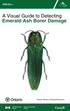 cfs.nrcan.gc.ca A Visual Guide to Detecting Emerald Ash Borer Damage Ontario Ministry of Natural Resources Library and Archives Canada Cataloguing in Publication A visual guide to detecting emerald ash
Wilt diseases of tomatoes can be caused
 A l a b a m a A & M a n d A u b u r n U n i v e r s i t i e s Wilt Diseases of Tomatoes ANR-0797 Wilt diseases of tomatoes can be caused by fungal, bacterial, viral, and nematode pathogens, as well as