
OAK TREE DISEASES Anthracnose Oak Leaf Blister Actinopelte Leafspot Spot Anthracnose
|
|
|
- Alicia Blake
- 9 years ago
- Views:
Transcription
1 OAK TREE DISEASES Anthracnose (fungus Gloeosporium sp.): Anthracnose is more common on white oak group (Bur Oak, Over Cup Oak, White Oak and Post Oak) than on the other more common oaks. The disease is first observed in early summer, causing irregular, brown spots. These will most often be adjoining veins and midribs of the leaves. They may cover most of the leaf area. The blotches and spots are irregular, distortion of leaves, and papery texture are diagnostic characteristics. Late in the growing season dark pustules, formed by the fungus, can be seen on the veins and midribs of infected leaves. The fungus develops at its optimum rate under warm, moist conditions during the spring months. Maximum growth occurs at 83 degrees F and a relative humidity of 97 percent. The fungus overwinters on dead twigs. To control anthracnose, destroy the diseased foliage, remove all dead twigs from the tree, and spray with a copper fungicide. Make first application when leaves are half grown and repeat in two weeks. The fertility program should also be increased to offset the weakening effect of continued defoliation. Oak Leaf Blister (fungus Taphrina caerulescens): Leaf blister is one of the major foliage diseases of oak trees in Texas. It is particularly damaging on red oaks and also attacks members of the white oak group. Leaves infected by leaf blister have discrete round, bulges in the leaf tissue with some cupping and twisting. The fungus overwinters on the bud scales. Infection will occur if the weather is cool and rainy during leaf emergence. The initial flush of leaves during extended periods of dry weather and above normal spring temperature are the only ones subject to infection by this organism. A copper fungicide just prior to bud opening is effective. Actinopelte Leafspot (fungus Actinopelte dryina): This disease is most severe on members of the red oak group but white oaks are also infected. The spots are small (2 to 5 mm in diameter), round and reddish brown in color. The disease is most severe in late summer and early fall. Severe defoliation can occur. Actinopelte leafspot is a primary leafspot but can be found associated with other fungi. Infected leaves should be destroyed and trees which are severely defoliated by the fungus should be fertilized slightly more than normal to stimulate growth. Check foliage for possible minor element deficiency. Damage is sometimes associated with low levels of iron. Newly planted trees (first 3 years) are more subject to attack by this disease than well established trees. Spot Anthracnose (fungus Elsinoie quercus): Infection by this fungus can cause small spots on the foliage of red oaks. The spots are only on the upper surface of the leaf and are blackishbrown. The centers of spots are lighter in color and are generally 1 mm in diameter. Symptoms are first visible in early June and increase in number until the middle of August. By that time the foliage is severely damaged and the tree is a pale yellow. Defoliation occurs when infection is severe. Sanitation is important in the prevention and control of this problem. Remove all diseased leaves. Spraying is seldom required. Trees which have been severely damaged by the disease should be given additional fertilizer to stimulate new growth.

2 Powdery Mildew (fungi Microsphaera alni and Phyllactinia guttata): Powdery mildew occurs on all groups of oaks. Infected leaves have a faint indistinct spot on the upper leaf surface and a white to off white powdery growth on the lower side. The fungus will most often be found along the veins and midribs of the leaf. It is normally observed in late fall. Infected leaves will be slightly disfigured in severe cases. Powdery mildew is seldom a problem on large individual trees. Damage can occur in nurseries and on low sucker limbs but rarely is disease sufficient to require spraying. Limb removal improves air circulation and will help reduce the occurrence of this disease. Rust (fungus Cronartium strobilinum): C. strobilinum (Southern cone rust) infects pines in midwinter. The telial stage is only produced on an evergreen oak. They are thus closely associated with live oaks. Infected oak leaves have yellow to orange pustules on the lower sides of the leaves. Severe infection may rarely cause defoliation. This most often occurs in late spring and early summer. The disease cycle is broken if the alternate host is removed; however, the spores can drift long distances between the oaks and pines. No control is normally required. Hypoxylon Canker (fungus Hypoxylon atropunctatum and other Hypoxylon spp.): The disease is first evident as a dieback of one or more branches. The foliage of the diseased limbs turns yellow and dries. This dieback continues from branch to branch through the stem until eventually the tree dies. This may require 1 or more years depending upon the environment and amount of stress experienced by the tree. Near death or shortly after tree death the outer bark sloughs off and exposes large masses of brown, dusty one celled spores (conidia). These spores are gone within a few weeks and a grayish surface is visible. This is covered with numerous black fruiting structures. Mature fruiting structures (perithecia) can forcibly discharge sexual spores (ascospores) for distances of 60 mm. They are then blown to surrounding trees where infection occurs again. Entry appears to be through injured surfaces on limbs or trunk. The fungus grows best at 86 degrees F but can grow at 50 and 100 degrees F. Hypoxylon canker causes a dark brown discoloration of the sapwood. With age the infected wood is lighter in color and has black zones or patterns in the wood when observed in cross section. Hypoxylon canker occurs primarily on trees which are or have been in stressed conditions. Trees which have been damaged by excessive fill soil are often attacked by this organism. It is also suspected to be a fungus that can invade on oak wilt infected trees. Control is achieved by maintaining the trees in a healthy condition. Avoid injury to the trunk and limbs and never apply fill soil around the trees. Chemical treatments would not be effective because the fungus is located within the tree.

3 Physalospora Twig Blight (fungus Physalospora glandicola): Affected trees look like they have been attacked by cicada. Dead shoots with attached brown leaves are found on the tree. The fungus enters through twig wounds. It eventually kills the twigs and branches. Although it causes noticeable damage to the tree, it seldom causes economic losses. The fungus overwinters in cankers on twigs. Infected limbs should be removed and burned or destroyed during the summer. Make cuts 6 inches below the diseased area. Fertilization, watering and pruning should be practiced to encourage tree vigor. Endothia Canker (fungi Endothia parasitica, Endothia gyrosa): Post oaks and red oaks are particularly susceptible. It has been associated with pruning cuts or limb breakage. Removal of cankers by pruning and increased tree vigor helps reduce losses. Canker Rots (fungi Irpex mollis, Polyporus hispidus and Poria spiculosa): Infection by these organisms tend to cause circular cankers which have a depressed center rather than a conk or mushroom. The center of the canker is a brown punk. They will quite often form after a limb has been damaged or broken off. To reduce canker rots, remove any dead limbs or limb stubs in a tree. Prevent any injury to trees that might serve as an infection site. Burls (fungus Phomopsis sp.): Large swellings on the limbs and trunk are caused by a species of Phomopsis. Burls can occur on both oaks and hickories. There are some swellings which occur on white oaks that aren't caused by a fungus but rather by the wood naturally growing over young buds and forming a gall or swelling. True burls can be removed by pruning or in some cases by surgery. They do little or no damage to trees. Oak Wilt (fungus Certocystis fagacearum): This is an important disease of all oaks. Members of the white oak group die very slowly after infection occurs and can carry the fungus in the vascular system without showing any symptoms. Red oaks die rapidly after infection occurs. Symptoms show up on red oaks in early May as a bronzing of the leaves. On live oak, the leaf symptom is variable. The most common symptom is brown necrosis of the leaf veins. The remainder of the leaf may remain green or turn slightly yellow. Severe leaf drop occurs while the leaves are still green. Cuts made through the wood may show discoloration in the last annual ring. Symptom development usually begins on one limb or branch and in time spreads rapidly to the remainder of the tree. Further information is available. The fungus may be carried from tree to tree by various insects and through root grafts. Sap feeding beetles are important in the short range spread. Red oaks which wilt in the late summer or early fall develop spore mats under their bark during the next spring. As the mats develop, the bark sloughs off or ruptures exposing the fungus. Insects are attracted to the mats.

4 If the insects move from mats to healthy trees which have open wounds the fungus can then enter the healthy tree and move into the water conducting tissue. Control is obtained by destroying diseased trees immediately. Remove or burn stumps. To prevent spread between trees, cut a ditch two to three feet deep around an infected tree. Vapam can also be used for this purpose. To apply the vapam, drill holes six to eight inches apart and 15 to 24 inches deep. The Vapam is diluted one part to four parts water and one cup of the mixture is applied to each hole. As soon as the hole is filled, it should be plugged with soil. Before using the Vapam treatment or making a ditch, the presence of Oak Wilt should be confirmed by a professional pathologist. This is a severe treatment and can result in plant damage if not done properly. Oak trees should never be pruned during late March, April, May and early June. Oak Decline (fungus Cephalosporium diospyri): Live oak decline is a weak vascular pathogen of trees in Texas. Plants affected by the fungus first show signs of thinning out in the top of the tree which when first noticed, twigs in the upper portion of the tree show signs of dieback. The dieback will generally increase each year. As the dieback reaches the larger limbs which comprise the main canopy, sucker growth becomes evident on the main scaffold limbs. As the disease continues to progress, only the main scaffold limbs remain alive yet they also eventually die. This may take from five to ten years on Live Oaks, but less on other oaks after the first visual symptoms are observed. Root grafting is suspected as one means of spreading the fungus. Recently, bark beetles have been associated with the spread of Oak Decline. The fungus has been isolated from the body of the suspect insects. If insects are involved this would explain the spread of the disease across areas too great for root grafting. Live Oak, Post Oak, Water Oak, Texas Red Oak, Willow Oak, Sycamore, persimmon, Winged Elm, Hackberry, American Elm and Western Soapberry are reported to be hosts for Oak Decline. A simple, easy method of identifying Oak Decline is not now available. Laboratory isolations are not always satisfactory; this can lead to considerable difficulty in making any type of a reliable recommendation for control. For the most part, recommendations are based on positive identification of the problem. Mechanical injury to the roots can cause symptoms easily confused with disease caused by fungi. In newly built areas, the damage most often observed is from root injury. Steps to Reduce Live Oak Decline Losses: 1. Identify the problem. 2. Reduce the stress conditions that weaken trees. 3. Optimize fertilizer and water applications to tree. 4. Remove dead limbs on tree.

5 5. Do not import wood from Oak Decline infected areas as it could be a source of the disease spread into a previously disease free area. 6. Use trees not known to be a host of Oak Decline. Cotton Wood Pine Baldcypress Arizona Cypress Willow Walnut Hickory Magnolia Cedar Pear (Bradford) Osage orange Sweetgum Mimosa Crab Apples Mesquite Hercules Club Redbud Honey locust Dogwood Chinaberry Boxelder Palms Mountain Laurel Catalpa Chinese Tallow Oriental Oaks Quercus ilex Chinese Holly Quercus acutisimon This is a list of trees not currently known to be hosts for Oak Decline. In selecting trees, you should contact the County Extension Agent in your county for those trees that do well. Wetwood (bacterium Erwinia nimipressuralis): Affected trees exhibit a sapflow from crotches. The bark below the crotch has a watersoaked appearance. The sap flow is the result of bacterial by products producing abnormally high pressures within the vascular system. For more information on wetwood and its control, refer to the section on elms. Ball Moss: (See section on "Plants That Grow on Other Plants") Lichens: (See section on "Plants That Grow on Other Plants") Tar Spot: (fungus Morenoella quercina): Black spots up to 1/4 inch in diameter occur on shaded live oak branches. Prune low hanging branches to improve air circulation. Raking and destroying fallen leaves may reduce the problem.

Oaks represent the major shade trees of Texas and are also important components of
 GARDENING FACT SHEET Harris County Cooperative Extension 3033 Bear Creek Drive, Houston, Texas 77084 281.855.5600 http://harris-tx.tamu.edu/hort Major Oak Diseases and their Control by Jerral D. Johnson
Symptoms Include: Stippled, bronzed or bleached appearance of leaves
 Common Tree Pests & Diseases Of Central Texas Lara Schuman City of Austin Urban Forestry Program Stress and Trees City life can be stressful, and trees feel stress too. Common urban tree issues include:
The Basics of Tree Pruning
 The Basics of Tree Pruning By John Ball, Forest Health Specialist and Aaron Kiesz, Urban and Community Forestry Specialist Until the end of the 19 th century, trees were not a common sight in many parts
Why Fruit Trees Die D. B. Meador, Extension Specialist (retired) University of Illinois
 Why Fruit Trees Die D. B. Meador, Extension Specialist (retired) University of Illinois Occasionally, fruit trees decline and often die. Diseases affecting the leaves, fruit, and twigs of fruit trees usually
Strawberry Anthracnose
 Strawberry Anthracnose Bill Turechek and Cathy Heidenreich Introduction - The term anthracnose is a general term used to describe plant diseases. Strawberry anthracnose refers to several diseases of strawberry
Diagnosing Disorders of Trees
 148 Appendix A Diagnosing Disorders of Trees Diagnosing tree problems can be difficult. Symptoms and signs can be subtle or only visible using special techniques, important information can be missing,
Care of Mature Backyard Apple Trees
 Education Center and Info Line practical solutions to everyday questions Toll free Info Line 1-877-398-4769 M-F 9 AM - 2 PM Care of Mature Backyard Apple Trees Introduction Backyard apple trees can be
Tree Integrated Pest Management. Dan Nortman Virginia Cooperative Extension, York County
 Tree Integrated Pest Management Dan Nortman Virginia Cooperative Extension, York County IPM Refresher Definition: The use of a combination of appropriate pest control tactics to reduce pest population
Proper Pruning Basic Techniques and Tips. 2012 ECCFC Rocky Ford, CO
 Proper Pruning Basic Techniques and Tips 2012 ECCFC Rocky Ford, CO 1 The Pro-Active Pruner! Plan BEFORE Planting Select the Right Tree For the Right Place Begin pruning trees while they are young Common
Strawberry Leaf Spot
 Strawberry Leaf Spot Cathy Heidenreich and Bill Turechek Introduction - Leaf spot is one of the most common and widespread diseases of strawberry. Mycosphaerella fragariae is also the cause of black seed
Two Main Precautions Before You Begin Working
 Pruning Mango Trees Roy Beckford, Ag/Natural Resources Agent, UF/IFAS Lee County Two Main Precautions Before You Begin Working 1. Mango peel and sap contain urushiol, the chemical in poison ivy and poison
GLOSSARY OF TREE TERMS
 GLOSSARY OF TREE TERMS Aeration providing air to the soil to alleviate compaction and improve structure. Arboriculture the practice and study of the care of trees and other woody plants. Arborist a professional
Part 1: Knowing how to identify the problem. Author: Damon Polta, Friendly Aquaponics Farm Manager. For free distribution.
 Diseases, Deficiencies, and Toxicities in Plants Part 1: Knowing how to identify the problem. Author: Damon Polta, Friendly Aquaponics Farm Manager. For free distribution. Diseases Beet Western Yellow
III. Hazard Tree Summary
 III. Hazard Tree Summary Methodology The sheer numbers of trees as well as the difficulty in determining precise tree ownerships has hampered hazard tree identification on the SVCA property. We did identify
Oak Wilt Identification and Management
 Oak Wilt Identification and Management Introduction Oak wilt, the most damaging disease of oak trees in lowa, has killed many forest and landscape oaks in the Eastern and Central United States. Oak wilt
Tree Maintenance Practices
 OUTLINE. I. Pruning Methods a. Crown Raising.3 b. Structural Pruning...3 c. Thinning 4 d. Crown Reduction (drop crotch).4 e. Restoration...5 II. Pruning Cuts a. Types of Pruning Cuts.5-8 b. Principles,
Proper Pruning For Tree Health and Defensible Space
 Proper Pruning For Tree Health and Defensible Space NFP Training for Lone Peak Conservation Center, May 4, 2005 Maggie Shao, Community Forestry Program Coordinator Reasons for Pruning Safety - involves
Cherokee Chief Plena Rubra Fragrant Cloud
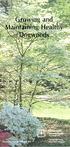 INTRODUCTION The natural range of dogwoods extends from Maine to the Gulf of Mexico. The trees color cities and countrysides white with dazzling displays in the early spring. Although they are most spectacular
A DISCOVERY REGARDING THE DEATH OF ASH TREES IN THE PLYMOUTH AREA
 A DISCOVERY REGARDING THE DEATH OF ASH TREES IN THE PLYMOUTH AREA As you are probably aware, we have seen a significant amount of dying ash trees in the Plymouth, Canton, Northville area. This prompted
runing & Orchard Renewal
 P runing & Orchard Renewal Richard G. St-Pierre, Ph.D. (January 2006) The Basics Of Pruning & Orchard Renewal Pruning is defined as the art and science of cutting away a portion of a plant to improve its
CITRUS PRUNING. control, fruit production and size control
 CITRUS PRUNING Pruning techniques for tree health pest Pruning techniques for tree health, pest control, fruit production and size control Tree Shapes Citrus trees are generally pruned to a central leader
Pruning Fruit Trees. Develop strong tree structure. This should begin when trees are planted and continue each year thereafter.
 Agriculture and Natural Resources Pruning Fruit Trees Extension Horticulture Arkansas Is Our Campus Visit our web site at: http://www.uaex.edu Fruit trees should be pruned every year to maintain their
How To Prune Coniferous Evergreen Trees
 Bulletin No. 644 How To Prune Coniferous Evergreen Trees D. W. McConnell R. L. Mahoney W. M. Colt A. D. Partridge Cooperative Extension System 1 How To Prune Coniferous Evergreen Trees D. W. McConnell,
How to Identify and Manage Oak Wilt in Texas 1
 How to Identify and Manage Oak Wilt in Texas 1 Introduction Oak wilt, one of the most destructive tree diseases in the United States, is killing oak trees in central Texas at epidemic proportions (fig.
Rose Diseases and Insects in the Bradenton-Sarasota Area
 Rose Diseases and Insects in the Bradenton-Sarasota Area By: Philip Paul, CR The 10 bad actors in our area are the fungi and pests that some days slow down our enjoyment of our rose gardens. This issue
After the Storm: Caring for Your Trees
 Montana State University Extension Service Peter Kolb (PhD) MSU Extension Forestry Specialist School of Forestry, University of Montana,Missoula, MT 59812 Tel. (406) 243-4705; e-mail: [email protected]
Identification and Prevention of Frost or Freeze Damage By Linda Reddick, Kingman Area Master Gardener
 KINGMAN IS GROWING! COLUMN Identification and Prevention of Frost or Freeze Damage By Linda Reddick, Kingman Area Master Gardener Again this year we have been experiencing some very cold weather, with
NUTRIENT DISORDERS IN TREE FRUITS
 PNW 121E NUTRIENT DISORDERS IN TREE FRUITS A Pacific Northwest Extension Publication Washington Idaho Oregon NUTRIENT DISORDERS IN TREE FRUITS By Nels R. Benson, Soil Scientist and Horticulturist (retired),
Diagnosing Problems of Roses in the Landscape
 ARIZONA COOP E R AT I V E E TENSION AZ1528 September 2010 Diagnosing Problems of Roses in the Landscape Desert Southwest gardeners are fortunate to have fewer insect and disease problems on roses than
Pruning Mature Trees. Reasons for Pruning
 Pruning Mature Trees Pruning is the most common tree maintenance procedure. Although forest trees grow quite well with only nature's pruning, landscape trees require a higher level of care to maintain
Pruning and Care of Young and Mature Trees
 Pruning and Care of Young and Mature Trees How to Make a Proper Pruning Cut Safety & Visibility Tips for Hiring An Arborist Common Tree Diseases Portland Parks & Recreation City Nature Urban Forestry 10910
GENERAL WATERING & CARE GUIDE
 GENERAL WATERING & CARE GUIDE Between 30-60 percent of water applied to lawns and gardens is never absorbed by the plants. Water is often wasted because it is applied too quickly and runs off, evaporates
Helping Trees Recover From Stress
 Helping Trees Recover From Stress INTRODUCTION Trees are the dominant component in the natural and managed landscape in New England. For the most part, trees in forests thrive and, typically, live more
Tree Care Guide. W.A. Industries: 3655 N. Southport Ave., Chicago, IL 60613 (888) 333-9352 www.megagro.com
 Tree Care Guide Think of the tree you just purchased as a lifetime investment and considering many tree species live for many decades, they are a wonderful legacy. How well your tree, and investment, grows
Construction Damage to Trees
 Construction Damage to Trees When a building site is cleared, several large, well-established trees are often left to enhance the aesthetic value of the property. However, within about 2-8 years after
Guide to Healthy Trees
 Guide to Healthy Trees Al and Bri Seaton Front cover image: This magnifi cent tree is located on our property in Mansfi eld, Victoria. A few years ago it was suffering severely from drought, erosion and
Cloud Mountain Farm Center 6906 Goodwin Rd., Everson, WA 98247 (360)966-5859 voice, (360)966-0921 fax, www.cloudmountainfarmcenter.
 Disease and Pest Management in the Home Orchard Fruit trees have been grown in home orchards for centuries. The goal of many gardeners today is to have fresh fruit from their own trees with a minimum of
Oak Trees BASIC GROWING REQUIREMENTS FOR YOUR
 They are beautiful in their peace, They are wise in their silence. They will stand after we are dust. They teach us, and we tend them. G.A. MacDunelmor BASIC GROWING REQUIREMENTS FOR YOUR Oak Trees The
Tree and forest restoration following wildfire
 Peter F. Kolb (PhD) MSU Extension Forestry Specialist Adj. Assistant Professor Forest Ecology School of Forestry, University of Montana, Missoula, MT 59808 Tel. (406) 243-4705, e-mail: [email protected]
WHAT IS WRONG WITH MY LAWN?
 WHAT IS WRONG WITH MY LAWN? Lawn problems can occur in small areas or larger patches and entire lawns can be affected. Sometimes the problems are due to poor growing conditions, improper lawn care practices,
Wildfire Damage Assessment for the 2011 Southeast Complex Fires
 Wildfire Damage Assessment for the 2011 Southeast Complex Fires Chip Bates & Mark McClure, Forest Health Management Background: On March 24, 2011, multiple wildfires began across southeast Georgia. Strong,
Pruning Trees. Center for Landscape and Urban Horticulture. University of California Cooperative Extension Central Coast & South Region
 University of California Cooperative Extension Central Coast & South Region Center for Landscape and Urban Horticulture Pruning Trees Pruning Trees at Planting Landscape trees should not be pruned at planting
Picture Tour: Dry Beans Diseases
 Picture Tour: Dry Beans Diseases Saginaw Valley Research and Extension Center agbioresearch.msu.edu 1 Images of: Blight Root rot White mold Common Mosaic virus Leaf spot Rust Anthracnose BLIGHT Common
When you buy a high-quality tree, plant it correctly, and treat it properly, you and your tree will benefit greatly in many ways for many years.
 Buying High-Quality Trees When you buy a high-quality tree, plant it correctly, and treat it properly, you and your tree will benefit greatly in many ways for many years. When you buy a low-quality tree,
Report to Lake Shastina Property Owners Association on Dead and Dying Trees Around Zen Mountain
 Report to Lake Shastina Property Owners Association on Dead and Dying Trees Around Zen Mountain by John Kessler, CA Registered Professional Forester #2494 Issue of Concern Residents of Lake Shastina have
Growing Balaton - Horticultural Considerations
 Growing Balaton - Horticultural Considerations Amy Iezzoni Dept. of Horticulture Michigan State University Jim Nugent District Horticulturist MSU Extension The fruit industry in Michigan has generations
Trees and Reliable Electric Service. Answers to Questions About Tree Pruning and Electric Power. We re connected to you by more than power lines.
 Trees and Reliable Electric Service Answers to Questions About Tree Pruning and Electric Power We re connected to you by more than power lines. How is Line Clearance Done? Pepco s tree contractor will
DISEASES OF THE AVOCADO
 California Avocado Association 1931 Yearbook 16: 102-106 DISEASES OF THE AVOCADO C. W. Carpenter Associate Pathologist Experiment Station, H. S. P. A., Honolulu, T. H. The diseases of the avocado in Hawaii
SPECIAL REPORT FROM STIHL STIHL PRUNING GUIDE BROUGHT TO YOU BY STIHL INC. 2010
 SPECIAL REPORT FROM STIHL STIHL PRUNING GUIDE BROUGHT TO YOU BY STIHL INC. 2010 STIHL Pruning Guide Introduction Watching a professional prune a tree or shrub can cause confusion in a layperson. It makes
Tree Removal. City of Bunker Hill Village
 Tree Removal City of Bunker Hill Village Important Permit Considerations... 2 Tree Ordinance... 3 Zoning Map... 12 Types of Allowable Tree Protection... 13 Working Hours (English)... 14 Working Hours (Spanish)...
DEVELOPMENT GUIDELINES OAK TREES CARE AND MAINTENANCE
 DEVELOPMENT GUIDELINES OAK TREES CARE AND MAINTENANCE This guide will offer basic information for the preservation and maintenance of oak trees as a part of an overall landscape use. Unfortunately, oak
Tree Talk. Customer Care. www.lipower.org
 Customer Care Tree Talk Did you know that trees can help improve your safety and electric reliability? This booklet will help you select the best trees for your home, and provide tips about their maintenance
Custard apple information kit
 information kit Reprint information current in 1998 REPRINT INFORMATION PLEASE READ! For updated information please call 13 25 23 or visit the website www.deedi.qld.gov.au This publication has been reprinted
Ligustrum, Privet Ligustrum japonicum
 Ligustrum, Privet Ligustrum japonicum http://edis.ifas.ufl.edu/mg022 Propagation L. japonicum Ligustrum are propagated by softwood cuttings taken in spring, or 5 10 cm semihardwood cuttings with a heel
PICTORIAL DIAGNOSTIC GUIDE Compiled by Gaye Hammond, Past President, Houston Rose Society [email protected], 281/458-6116
 The following photographs in Section 1 identify symptoms in roses which have common causes and can sometimes be caused by Rose Rosette Disease (a/k/a Rose Rosette Virus). Just because you see a symptom
Why hire an arborist?
 Why hire an arborist? Spring is fast approaching and that means gardens to attend and flowers to plant, but what about your trees? Now is the best time to hire an arborist to maintain your trees before
Dieback, Twig blight or Canker (Colletotrichum gloeosporioides- asexual stage, Glomerella cingulata.)
 Camellia Camellia spp. Propagation Camellias are usually propagated by cuttings of new growth taken just as the stem is changing from green to brown. Wound the stem, use 3000-8000 ppm IBA-talc and grow
Pruning Deciduous Trees
 Pruning Deciduous Trees By Robert S. Logan, Extension Forestry Specialist, and Steven B. Laursen, former Natural Resources Specialist MontGuide Nearly any question the homeowner may have about trees, especially
Prune Your Trees. Prune early, prune often, prune for safety
 Prune Your Trees 9 Prune early, prune often, prune for safety Why should I prune? Safety, tree health, aesthetics, and value are the primary reasons for pruning trees. A single pruning can accomplish more
restoring trees after a hurricane
 CHAPTER restoring trees after a hurricane PUBLICATION Nº ENH 1054 edward f. gilman t r a c i pa r t i n Introduction Contents The step-by-step outline provided in this document summarizes the process for
General Guidelines on Tree Pruning
 1 General Guidelines on Tree Pruning Tree pruning is the removal of unwanted branches from a tree such as those shown on Fig. (1) either for reducing risk and inconvenience to the public, maintaining or
Pecan Disease Management Mark Black, Texas AgriLife Extension Service, Uvalde
 T. A. Lee Pecan Disease Management Mark Black, Texas AgriLife Extension Service, Uvalde Scab Downy spot Powdery mildew Pecan diseases Crown gall Cotton root rot Root knot Kernel decay & contamination Kernel
DO's and DON'Ts in Pruning
 DO's and DON'Ts in Pruning Introduction "Pruning is one of the best things an arborist can do for a tree but one of the worst things we can do to a tree" -Alex Shigo Pruning is the most common tree maintenance
Post-Wildfire Clean-Up and Response in Houston Toad Habitat Best Management Practices
 Post-Wildfire Clean-Up and Response in Houston Toad Habitat Best Management Practices Purpose The purpose of this document is to provide guidance and recommendations for minimizing potential impacts to
Tree Landscape Planting
 City of Pierre Tree Landscape Planting The value of Woody Plant Landscaping Locally Adapted Species List Tips for Successful Planting Pierre Ordinances Public Needs to Know Community Tree Statistics: Trees
AGFACTS. Strawberry disease control guide MAJOR DISEASES OF STRAWBERRIES
 AGFACTS AGFACTS AGFACTS www.agric.nsw.gov.au Strawberry disease control guide Agfact H3.3.1 third edition, May 2004 Lawrence Ullio, District Horticulturist Elizabeth Macarthur Agricultural Institute Camden
Onion & Leek Planting Guide
 Onion & Leek Planting Guide Important Remove plants from box immediately. Do not put in soil or water before planting. Keep cool and dry until you can plant. Follow the instructions inside for best results.
What Are Those Plants Worth?
 Agricultural Extension Service The University of Tennessee What Are Those Plants Worth? SP614 Stephen Garton Assistant Professor Plant Sciences Larry Tankersley Extension Associate Forestry, Wildlife &
Chapter 8: Diseases. Rust
 Chapter 8: Diseases Historically, fusarium wilt and rust have been considered major limiting factors in flax production in Western Canada. However, these two diseases have been effectively managed by multigenic
City of Bellingham Tree Planting Guide
 City of Bellingham Tree Planting Guide This guide provides you with resources for planting trees in the city. Using the right tree in the right place, and maintaining it correctly will provide healthy,
Wilt diseases of tomatoes can be caused
 A l a b a m a A & M a n d A u b u r n U n i v e r s i t i e s Wilt Diseases of Tomatoes ANR-0797 Wilt diseases of tomatoes can be caused by fungal, bacterial, viral, and nematode pathogens, as well as
Tree Trimming Tips and Tricks
 Tree Trimming Tips and Tricks Start with Professionals Mistakes can be costly for you and your tree. Professionals who know about trees can help you get started with the right tree in the right place.
TREE NOTES. CALIFORNIA DEPARTMENT OF FORESTRY AND FIRE PROTECTION Arnold Schwarzenegger Governor State of California. Dale T.
 TREE NOTES CALIFORNIA DEPARTMENT OF FORESTRY AND FIRE PROTECTION Arnold Schwarzenegger Governor State of California Dale T. Geldert Director NUMBER: 30 February 2005 Mike Chrisman Secretary for Resources
PINE BONSAI FOLIAGE CONTROL
 PINE BONSAI FOLIAGE CONTROL By Julian R. Adams Foliage is one of the major elements used in the design of a bonsai. The size and location of foliage on the limbs is of great importance in creating the
How To Diagnose Plant Problems
 FS-10-72 PALM PROBLEMS THAT AREN T M. L. Robinson, Area Extension Specialist, Environmental Horticulture Angela O Callaghan, Area Extension Specialist, Social Horticulture When trying to diagnose problems
Managing Black Walnut
 Managing Black Walnut Mel Baughman Professor Emeritus University of Minnesota Lenny Farlee Extension Forester Purdue University Why Grow Black Walnut? Wood Products Rich, brown color Novelty items Lumber
A Visual Guide to Detecting Emerald Ash Borer Damage
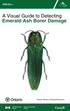 cfs.nrcan.gc.ca A Visual Guide to Detecting Emerald Ash Borer Damage Ontario Ministry of Natural Resources Library and Archives Canada Cataloguing in Publication A visual guide to detecting emerald ash
Ten Easy Ways to Kill a Tree
 DIVISION OF AGRICULTURE RESEARCH & EXTENSION University of Arkansas System Agriculture and Natural Resources FSA5011 Ten Easy Ways to Kill a Tree (And How to Avoid Them) H. Christoph Stuhlinger University
A REVIEW OF PEST CONTROL IN AVOCADOS
 California Avocado Society 1979 Yearbook 63: 58-65 A REVIEW OF PEST CONTROL IN AVOCADOS C. Don Gustafson Farm Advisor, Cooperative Extension Service, University of California, San Diego County. Introduction
Bradgate Park Landscape Tree Survey. Tree Schedule, Group Schedule, Woodland Schedule & Key to Schedule
 Bradgate Park Landscape Tree Survey Tree Schedule, Group Schedule, Woodland Schedule & Key to Schedule Appendix A of the Landscape Tree Survey Report On Behalf of The Bradgate Park Trust Bradgate Park
Spruce problem diagnosis for yard trees
 Spruce problem diagnosis for yard trees KEY Effect on tree Kills tree Other damage No damage Size of tree Seedling Sapling to pole Pole and larger By Jana Albers and Mike Albers, DNR-Forestry URL = http://files.dnr.state.mn.us/assistance/backyard/treecare/forest_health/whitesprucediagnosis.pdf
RIPPLE Africa Step by Step Fruit Tree planting Guide
 RIPPLE Africa Step by Step Fruit Tree planting Guide NOTES ON FRUIT PRODUCTION Aim and Objective The aim and objective of RIPPLE Africa as an organisation is to make Nkhata Bay District one of the leading
Vegetation Management. for Distribution Lines
 Vegetation Management for Distribution Lines Working Hand in Hand with Nature Trees contacting power lines and other electric facilities are the major cause of electric service interruptions, especially
Wheat Disease Identification
 Wheat Disease Identification Fusarium root, crown, and foot rots Stripe rust Tan spot Leaf rust Cephalosporium stripe Stagonospora nodorum blotch Contents Diseases affecting heads and grain Black chaff...
Public Utility District #1 of Jefferson County Vegetation Clearance Policy And Specifications
 Jefferson County PUD Company Policy Policy No. Date: Public Utility District #1 of Jefferson County Vegetation Clearance Policy And Specifications Purpose The purpose of this policy statement and these
Urban and Community Forestry Agriculture & Natural Resources TIMELY INFORMATION Post Storm Tree Assessment; Guide to evaluating trees
 Urban and Community Forestry Agriculture & Natural Resources TIMELY INFORMATION Post Storm Tree Assessment; Guide to evaluating trees Post Storm Assessment: To assess trees in the aftermath of storms it
Hydroseed Care Guide
 Hydroseed Care Guide Please read carefully and sign the invoice in the space provided to show us that you have received the Instructional Care Guide and acknowledge your responsibility to read and implement
Planting and Tree Care for Roxborough Park. Keith Worley, Forester ISA Certified Arborist
 Planting and Tree Care for Roxborough Park Keith Worley, Forester ISA Certified Arborist Where We Live: High elevation at the edge of Mountains and Plains. Harsh climates with: High winds. Drought periods
Susan Donaldson, Water Quality Education Specialist Steven J. Seybold, Research Biochemist
 FACT SHEET 98-40 Susan Donaldson, Water Quality Education Specialist Steven J. Seybold, Research Biochemist Introduction Trees in the Lake Tahoe Basin and the Sierra Nevada are turning brown and dying.
Fertilizer, Weed Control, Grubs, and General Application Questions
 Lawn Care FAQ s Fertilizer, Weed Control, Grubs, and General Application Questions Why do we have so many weeds? Dandelions in particular, weeds in general, do not seem concerned about how long lawn has
Jeremiah K.S. Dung Hermiston Agricultural Research and Extension Center Oregon State University
 Jeremiah K.S. Dung Hermiston Agricultural Research and Extension Center Oregon State University Species of Pectobacterium and Dickeya Formerly known as soft rot Erwinias P. carotovorum subspecies P. atrosepticum