
The Education for All Fast Track Initiative
|
|
|
- Roger Walton
- 9 years ago
- Views:
Transcription
1 The Education for All Fast Track Initiative Desmond Bermingham Introduction The Education for All Fast Track Initiative (FTI) is a global partnership to help low income countries to achieve the education Millennium Development Goal (MDG) of ensuring that every child receives a good quality primary education. The FTI is supported by over 30 bilateral and multilateral donor agencies and has provided support to over 60 countries around the world, including many from the Commonwealth. Table 1 lists the countries which have already become full FTI partners or are expected to join over the next two years. FTI a global partnership The FTI is built on a compact between donors and the developing countries they support. Countries prepare their plans for the expansion of the education sector. These plans should take account of budget and other resource constraints and should be prepared in consultation with local stakeholders including parents, teachers and non government organisations (NGOs) supporting the education sector. In some countries, even the children themselves are involved in the development of the plans. The education plans should also be linked to broader national policies to reduce poverty, build basic infrastructure and promote economic growth. On their side of the compact, donors commit to provide long term and predictable aid to support the implementation of the plan. Donors also agree to work together and reduce the costs of providing aid for the education sector, for example by holding joint review missions, aligning their support with the government s own plans and minimising additional reporting requirements. In almost all cases, the majority of financing for the education sector is provided from domestic resources so it is particularly important that donor financing is provided in line with national budget systems. 1 First phase: impact summary The FTI was launched in 2002 and, in its first four years, has already had a significant impact on education in the countries it has supported. A recent impact assessment carried out by the World Bank found that FTI helped to achieve significant progress in the first eleven countries to join the initiative: primary enrolments have increased in ten out of the eleven countries, in some cases by over 50%; completion rates have improved in most countries; and there has been a significant reduction in the gender gap at the primary level. 2 Table 2 provides a summary of impact in the first phase of FTI. As well as the progress on education indicators, the FTI has also begun to have a positive impact on the effectiveness of aid to the education sector. Donor collaboration has increased and donors have begun to align themselves more consistently behind the country s own development plan. All of the FTI countries examined in the progress report noted an increase in joint planning and greater use of the education sector plan as the framework for support to the sector. In the long run, this is likely to have a lasting impact on the effectiveness of donor support for education and possibly beyond. FTI has been widely recognised as one of the most advanced examples of the enactment of principles of donor harmonisation and alignment set out in the Paris Declaration on Aid Effectiveness. 3 FTI: not just about financing The four gaps While much of the emphasis of the FTI has focused on the need to mobilise additional resources for the education sector, the FTI partners have stressed from the outset that the FTI must be about more than financing. The FTI was designed to help partner countries address all of the constraints which prevent them from achieving the education MDGs. The FTI documents talk about the four gaps : the policy gap; the data gap; the capacity gap and of course, the financing gap. 4 The policy gap is broadly defined as the absence of effective policies to improve the quality and efficiency of education systems in each country. For example, policies to deal with the particular challenges of educating children in rural communities; policies to encourage girls to attend school; or policies to improve the quality of education and to strengthen the assessment systems. The FTI partners have established a special fund the Education Programme Development Fund or EPDF to assist countries in the development of their plans and to help to share knowledge and experience on policies that work. The EPDF has already supported a wide range of activities involving Commonwealth countries (among others) such as the 2006 Association for the 132 Commonwealth Education Partnerships 2007

2 The Education for All Fast Track Initiative Table 1 FTI partner countries Initial FTI countries Additional countries Countries pending Countries pending Countries with no (end of 2002) (7) as of July 15, 2006 (13) for 2006 (12) for 2007 (12) specific entry date (15) Burkina Faso Djibouti Albania Angola Bolivia Guinea Ethiopia Benin Bangladesh Central African Republic Guyana Gambia, The Bhutan Chad Democratic Republic of Congo Honduras Ghana Burundi Congo, Republic of Eritrea Mauritania Kenya Cambodia Georgia India Nicaragua Lesotho Cameroon Guinea-Bissau Indonesia Niger Madagascar Mali Haiti Lao PDR Moldova Mongolia Kiribati Liberia Mozambique Rwanda Kyrgyz Republic Malawi Tajikistan Sao Tome and Principe Solomon Islands Nigeria Timor Leste Senegal Vanuatu Pakistan Vietnam Sierra Leone Zambia Sri Lanka Yemen, Republic of Togo Uganda United Republic of Tanzania Source: FTI Progress Report (World Bank, 2006) Table 2 Progress in FTI partner countries a,b Pupils enrolled Gross intake ratio (%) Primary completion rate (%) % increase Girls Boys Girls Boys 2004/5 from / / / /5 Benchmark n.a Burkina Faso 1,321, Gambia, The 174, Guinea 1,207, Guyana 114, Honduras 1,257, Mauritania 434, Mozambique 3,569, Nicaragua 941, Niger 1,064, Vietnam 8,350, Yemen, Republic of 3,220, Source: FTI Progress Report (World Bank, 2006) a b The Report reviewed progress in the first eleven countries to join the FTI partnership where there was sufficient data available to assess the impact of the initiative. The report stresses the need to avoid attributing progress solely to the FTI as many of these countries had launched important reforms before joining the initiative. The FTI s contribution is in supporting and complementing the country s own efforts. The decline in gross enrolment in Vietnam is probably due to improvements in efficiency of the system and the reduction in numbers of over-age children in primary schools. Commonwealth Education Partnerships

3 Part 3 Resourcing Development of Education in Africa biennale meeting and the recent visit of African education ministers to Singapore and Vietnam to share experiences from the Asia context. 5 FTI partners also recognised at an early stage, the importance of helping countries collect good quality data on all aspects of the education system. In this area, FTI works closely with agencies such as the UNESCO Institute of Statistics and the Education for All (EFA) Global Monitoring Report team, based in UNESCO headquarters in Paris. The FTI aims to add value to the work of these partners by helping to increase the global demand for good quality data in the education sector, as well providing additional data on the financing of the sector. This will be a key area for more intensive work for the FTI over the coming years. The final gap the capacity gap is possibly also the most important. The limited human resources at all levels represent a major constraint for countries wishing to move ahead quickly in the expansion of their education systems. Training and recruiting more teachers, education managers and public sector workers is a major challenge. The preliminary findings of the FTI capacity development task team indicate that this is a neglected area in many of the education sector plans so far submitted. Germany has indicated that it intends to make this a priority area for attention during its period as co-chair of the FTI in How does FTI work? Qualifying for FTI FTI is designed to support and strengthen the dialogue between governments and their development partners at the country level. Decisions are made in country with the FTI Secretariat playing a supporting role and assisting with communication to the broader FTI partnership. To be eligible for FTI support, a country must have a Poverty Reduction Strategy (or equivalent) in place and it must have an education sector plan which includes a focus on primary education and achieving gender parity. 6 The FTI does not require countries to prepare separate plans; instead it uses the country s own education sector plan. The appraisal of these plans is done jointly in-country by the government and local donor group. The FTI Secretariat is responsible for assuring the quality of the process and keeping the partnership informed of developments at the country level. Once the appraisal has been completed, the donors (and in some cases NGO partners) sign a joint endorsement letter confirming that, in their view, the education plan is credible and pledging to provide support. The country is then considered to be a full FTI partner and eligible for further financial and technical support when needed. Role of FTI The FTI emphasises that the first option for support should be the bilateral and multilateral donor programmes already existing in country. If the local donors are able to meet the financing needs identified in the plan, they are encouraged to do so directly as this is likely to be the most efficient mechanism for scaling up aid. This may include budget support as well as government resources available, for example, as a result of debt relief. If the government and in country donors are unable to meet the full financing needs, there are also funds available directly from the FTI, through the FTI Catalytic Fund. This fund was originally designed as short term support for up to three years to bridge the gap while other donors prepared their plans to provide longer term financing support. However, experience has shown that donors are reluctant to fill the gap particularly when this involves establishing new country programmes. In response to this, the donors supporting the Catalytic Fund have proposed an extension to allow support from the Fund to continue after the initial three year period, subject to good performance and a continuing financing need. 7 By September 2006, the Catalytic Fund had disbursed just over $100 million to 14 countries. As Figure 1 shows, the Catalytic Fund currently has commitments of some $250 million per year over the next 2 years. This will represent nearly 10% of aid for basic education in low income countries and will make the Fund an important additional source of financing for the education sector, although it should always be viewed as a complement to, not a substitution for bilateral and multilateral financing for the sector. During the past year, the Catalytic Fund has proved particularly successful in disbursing financing quickly to countries once they had completed the endorsement process. For example, Kenya received its first Catalytic Fund allocation of $24 million just over six months after the first application. In several cases, this has allowed the country to move ahead with the implementation of its plan and has helped to maintain the momentum while other donors are finalising the arrangements for their longer term financing. How is FTI managed? Three levels The management and governance structure of FTI comprises three principal levels. 8 i. The full FTI Partnership of donors, developing country partners and NGOs. This partnership meets once every year, usually linked to the UNESCO EFA High Level Group meeting. The first such linked meeting was in Brasilia in 2004, followed by Beijing in 2005 and Cairo in November ii. The FTI Steering Committee led by the two co-chairs (currently Russia and the EC); the outgoing co-chair (currently Belgium); a minister of education from a developing country (Madagascar); a representative from the NGO community (Global Campaign for Education); plus the World Bank, UNESCO and UNICEF as the principal multilateral agencies involved in education. iii.the FTI Secretariat is housed in the World Bank but is accountable, through the Steering Committee, to the FTI Partnership as a whole. The Secretariat is responsible for managing the day-to-day implementation of the FTI and providing support to the steering committee and the partnership meetings. 134 Commonwealth Education Partnerships 2007

4 The Education for All Fast Track Initiative Role of the World Bank The World Bank was a key protagonist in the early stages of the FTI and continues to have a leading role in the implementation of the programme. But the FTI is a global partnership in the full sense of the term and decisions on policy and implementation can only be made by the Steering Committee representing the broader FTI Partnership. The FTI derives substantial benefit from its close relationship with the World Bank, in particular drawing on its legal, financial and technical expertise and thereby removing the need to create separate administrative structures. The day to day operations of the Fast Track Initiative, including the FTI trust funds, are managed by the Secretariat and the implementation of the programmes is mostly done through World Bank projects, in consultation with the local donor group. Allocation decisions for the FTI trust funds are made by a strategy committee, chaired by the Vice President of the World Bank, following recommendations on financing needs from the incountry donor group. FTI: achievements to date The FTI has helped many countries to make significant advances towards the education MDGs. It is difficult and probably not very fruitful to determine the extent to which progress in these countries can be directly attributed to the initiative. In any case, the credit for the success should go to the parents, teachers, education managers and the ministers themselves as the people struggling on a day to day basis, often in extremely difficult circumstances, to achieve such remarkable progress. The FTI aims to provide a framework to deliver the support they need, more effectively and with greater impact. Table 3 provides some examples of the achievements of FTI Commonwealth countries over the past four years. and the challenges ahead Challenges The FTI Progress Report notes that the initiative has had a significant positive impact in its short life span but stresses that it faces many challenges as it expands over the next few years. These challenges include the need to respond to the demands of the larger population countries, most of which are currently not considered a part of the Fast Track. The progress report recommends that FTI partnership should include such countries in the next stage of the expansion. This may involve operating at the sub-national level in federal countries such as Nigeria and Pakistan where financing for the basic education sector is a state or provincial responsibility. (World Bank, 2006) Figure 1 The FTI catalytic fund: pledges and commitments 300 Receipts Pending pledges 250 Millions (US$) The graph shows commitments and pledges received by August It does not include a recent pledge of an additional 100 million euros made by the Netherlands government. Table 3 Achievements in FTI Commonwealth countries The Gambia Ghana Guyana Kenya achieved a 13% enrolled almost increased the number of disbursed over US$24 million over less increase in the number 400,000 more children teachers by 35%, with a than 6 months, to allow every primary of pupils enrolled over 4 years particular focus on the interior school in the country to purchase remote regions of the country books and materials Commonwealth Education Partnerships

5 Part 3 Resourcing Expansion Expansion to the larger countries will bring even greater urgency to the need to address the second challenge identified by the progress report: the absence of sufficient long term and predictable financing to enable developing countries to implement their education plans. The UNESCO estimate is that up to $7 billion in aid will be required in order to help countries achieve the goal of universal primary education (UPE). 9 Aid for basic education has more than doubled over the past four years but at least a further doubling will be required over the next four years if this target is to be reached. This is a challenge which the FTI alone cannot achieve but, working with its donor partners, it can certainly make a significant contribution towards doing so. Lastly, as the recent evaluation report of the World Bank s education programme 10 noted, there is a widely held view that the FTI needs to work with its developing country partners to improve not just the quantity but also the quality of education provision. The importance of this issue has been recognised from the outset by the FTI partners 11 and many countries have taken steps to reduce class size, increase the numbers of trained teachers and improve access to books and materials. However, there are still obviously many challenges ahead. The increased emphasis on improving learning outcomes is welcome as this should be the principal object of all efforts in the education sector. But providing a good quality education for all children requires resources. If countries are to recruit and train teachers they need to have access to adequate and predictable financing both from domestic resources and external aid. Promises are no longer enough action is required on all sides. Conclusion The FTI has demonstrated that it has put in place a mechanism to deliver effective assistance for the education sector not just financial, but also technical and capacity building support in an efficient way which supports the country s own plans to expand the education sector. The foundations are now firmly in place. The challenge over the next few years will be to deliver on the huge potential of this important initiative. Disclaimer The views expressed in this article are those of the author and do not represent the official policies of either the FTI or the World Bank. Endnotes 1 A recent synthesis report on the education plans for some 15 African countries involved in the Abuja process indicated that African countries would commit a total of over $50 billion of domestic financing for the education sector over the period (Financing for Development: Abuja Update : Synthesis Report) 2 World Bank (2006) Progress Report on FTI to the Development Committee. 3 OECD DAC (2005): Paris Declaration on Aid Effectiveness. 4 FTI Framework document: FTI Further details of EPDF supported activities can be found on the FTI website: 6 Some FTI partners are also examining possible interim measures that would allow FTI to provide support in fragile states or conflict affected countries that do not have a PRS process in place. 7 This proposal is subject to final approval by the Catalytic Fund Strategy Committee. (FTI Catalytic Fund Expansion concept note November 2005.) 8 The governance structure is currently described in broad terms in the FTI framework document. A more formal FTI Charter will be presented to the FTI Partnership meeting in November Education For All Global Monitoring Report 2006 (UNESCO, Paris. 2006) 10 From Schooling Access to Learning Outcomes : An Unfinished Agenda. Independent Evaluation Group report. World Bank, For example the FTI framework document states that the objective of the Initiative is: Accelerating Progress Towards a Quality Primary Education for All. (Emphasis added.) Biographical notes Desmond Bermingham has recently taken over as the Head of the FTI Secretariat, based in the World Bank in Washington. Prior to that, he was Head of Profession for the education group in the UK Department for International Development (DFID) in London. Desmond has worked in education and development for over 15 years, providing advice on programmes in Africa, Asia, Latin America and in the Caribbean. He has a particular interest in aid effectiveness in the education sector and education in conflict-affected countries. 136 Commonwealth Education Partnerships 2007

The Effective Vaccine Management Initiative Past, Present and Future
 EVM setting a standard for the vaccine supply chain The Effective Vaccine Management Initiative Past, Present and Future Paul Colrain TechNet meeting Dakar, Senegal, February 2013 February 2013 TechNet
Summary of GAVI Alliance Investments in Immunization Coverage Data Quality
 Summary of GAVI Alliance Investments in Immunization Coverage Data Quality The GAVI Alliance strategy and business plan for 2013-2014 includes a range of activities related to the assessment and improvement
Eligibility List 2015
 The Global Fund adopted an allocation-based approach for funding programs against HIV/AIDS, TB and malaria in 2013. The Global Fund policy states that countries can receive allocation only if their components
Countries Ranked by Per Capita Income A. IBRD Only 1 Category iv (over $7,185)
 Page 1 of 5 Note: This OP 3.10, Annex C replaces the version dated September 2013. The revised terms are effective for all loans that are approved on or after July 1, 2014. Countries Ranked by Per Capita
Proforma Cost for international UN Volunteers for UN Partner Agencies for 2016. International UN Volunteers (12 months)
 Proforma Cost for international UN Volunteers for UN Partner Agencies for 2016 Country Of Assignment International UN Volunteers (12 months) International UN Youth Volunteers (12 months) University Volunteers
This note provides additional information to understand the Debt Relief statistics reported in the GPEX Tables.
 Technical Note 3 Debt Relief This note provides additional information to understand the Debt Relief statistics reported in the GPEX Tables. Introduction 1. Debt is a major development issue. There is
MDRI HIPC. heavily indebted poor countries initiative. To provide additional support to HIPCs to reach the MDGs.
 Goal To ensure deep, broad and fast debt relief and thereby contribute toward growth, poverty reduction, and debt sustainability in the poorest, most heavily indebted countries. HIPC heavily indebted poor
HIPC MDRI MULTILATERAL DEBT RELIEF INITIATIVE HEAVILY INDEBTED POOR COUNTRIES INITIATIVE GOAL GOAL
 GOAL To ensure deep, broad and fast debt relief and thereby contribute toward growth, poverty reduction, and debt sustainability in the poorest, most heavily indebted countries. HIPC HEAVILY INDEBTED POOR
Financing Education for All in Sub Saharan Africa: Progress and Prospects
 Financing Education for All in Sub Saharan Africa: Progress and Prospects Albert Motivans Education for All Working Group Paris, 3 February 211 1 Improving the coverage and quality of education finance
A TEACHER FOR EVERY CHILD: Projecting Global Teacher Needs from 2015 to 2030
 A TEACHER FOR EVERY CHILD: Projecting Global Teacher Needs from 2015 to 2030 UIS FACT SHEET OCTOBER 2013, No.27 According to new global projections from the UNESCO Institute for Statistics, chronic shortages
Policy Paper 12. Education for All Global Monitoring Report. Increasing tax revenues to bridge the education financing gap
 Education for All Global Monitoring Report Policy Paper 12 March 2014 Increasing tax revenues to bridge the education financing gap Sustained economic growth has increased the resources that many of the
Bangladesh Visa fees for foreign nationals
 Bangladesh Visa fees for foreign nationals No. All fees in US $ 1. Afghanistan 5.00 5.00 10.00 2. Albania 2.00 2.00 3.00 3. Algeria 1.00 1.00 2.00 4. Angola 11.00 11.00 22.00 5. Argentina 21.00 21.00 42.00
MINISTERIAL MEETING ON ENHANCING THE MOBILIZATION OF FINANCIAL RESOURCES FOR LEAST DEVELOPED COUNTRIES DEVELOPMENT LISBON, 2-3 OCTOBER 2010
 MINISTERIAL MEETING ON ENHANCING THE MOBILIZATION OF FINANCIAL RESOURCES FOR LEAST DEVELOPED COUNTRIES DEVELOPMENT LISBON, 2-3 OCTOBER 2010 Background Paper ADDRESSING THE DEBT PROBLEMS OF THE LEAST DEVELOPED
Appendix A. Crisis Indicators and Infrastructure Lending
 Appendix A. Crisis Indicators and Infrastructure Lending APPENDIX A Table A.1. Crisis Indicators (Case Study Countries) Country % as Share of GDP Share of in Bank Crisis Severity Score (principal factor
Expression of Interest in Research Grant Applications
 INTERNATIONAL CENTRE FOR GENETIC ENGINEERING AND BIOTECHNOLOGY THE ACADEMY OF SCIENCES FOR THE DEVELOPING WORLD UNITED NATIONS EDUCATIONAL, SCIENTIFIC AND CULTURAL ORGANIZATION ICGEB-TWAS-UNESCO/IBSP Joint
DEMOGRAPHIC AND SOCIOECONOMIC DETERMINANTS OF SCHOOL ATTENDANCE: AN ANALYSIS OF HOUSEHOLD SURVEY DATA
 BACKGROUND PAPER FOR FIXING THE BROKEN PROMISE OF EDUCATION FOR ALL DEMOGRAPHIC AND SOCIOECONOMIC DETERMINANTS OF SCHOOL ATTENDANCE: AN ANALYSIS OF HOUSEHOLD SURVEY DATA By Hiroyuki Hattori, UNICEF This
AAAS/ASPB 2009 Mass Media Science & Engineering Fellows Program
 AAAS/ASPB 2009 Mass Media Science & Engineering Fellows Program CALL FOR PAPERS Plant Physiology Focus Issue on Plant Interactions with Bacterial Pathogens Are you interested in science writing? Deadline
OFFICIAL NAMES OF THE UNITED NATIONS MEMBERSHIP
 OFFICIAL NAMES OF THE UNITED NATIONS MEMBERSHIP Islamic Republic of Afghanistan Republic of Albania People s Democratic Republic of Algeria Principality of Andorra Republic of Angola Antigua and Barbuda
DEFINITION OF THE CHILD: THE INTERNATIONAL/REGIONAL LEGAL FRAMEWORK. The African Charter on the Rights and Welfare of the Child, 1990
 DEFINITION OF THE CHILD: THE INTERNATIONAL/REGIONAL LEGAL FRAMEWORK Article 2: Definition of a Child The African Charter on the Rights and Welfare of the Child, 1990 For tile purposes of this Charter.
Country Briefing: Jordan Multidimensional Poverty Index (MPI) At a Glance
 Oxford and Human Development Initiative (OPHI) www.ophi.org.uk Oxford Dept of International Development, Queen Elizabeth House, University of Oxford Country Briefing: Jordan Multidimensional Index (MPI)
SUN Movement Meeting of the Network of SUN Countries: Report of the 17 th Meeting- 26 th January to 2 nd February 2015
 SUN Movement Meeting of the Network of SUN Countries: Report of the 17 th Meeting- 26 th January to 2 nd February 2015 The 17 th meeting of the SUN Movement Network of SUN countries took place from January
INSTRUCTIONS FOR COMPLETING THE USAID/TDA DEFENSE BASE ACT (DBA) APPLICATION
 INSTRUCTIONS FOR COMPLETING THE USAID/TDA DEFENSE BASE ACT (DBA) APPLICATION Full Name of Insured or Company and Complete Mailing Address: This is whoever has the contract with USAID. Generally, it is
מדינת ישראל. Tourist Visa Table
 Updated 22/06/2016 מדינת ישראל Tourist Visa Table Tourist visa exemption is applied to national and official passports only, and not to other travel documents. Exe = exempted Req = required Press the first
Action required The Committee is requested to take note of the position of 2010 11 income and expenditure as of 30 September 2010.
 INTERNATIONAL LABOUR OFFICE Governing Body 309th Session, Geneva, November 2010 Programme, Financial and Administrative Committee GB.309/PFA/1 PFA FOR INFORMATION FIRST ITEM ON THE AGENDA Programme and
UNHCR, United Nations High Commissioner for Refugees
 Belgium 22 Jul 1953 r 08 Apr 1969 a Belize 27 Jun 1990 a 27 Jun 1990 a Benin 04 Apr 1962 s 06 Jul 1970 a Bolivia 09 Feb 1982 a 09 Feb 1982 a Bosnia and Herzegovina 01 Sep 1993 s 01 Sep 1993 s Botswana
COMMISSION IMPLEMENTING DECISION. of 24.5.2016
 EUROPEAN COMMISSION Brussels, 24.5.2016 C(2016) 3040 final COMMISSION IMPLEMENTING DECISION of 24.5.2016 amending Commission Implementing Decision C(2015) 8936 of 15.12.2015 on the financing of humanitarian
Guidelines for DBA Coverage for Direct and Host Country Contracts
 Guidelines for DBA Coverage for Direct and Host Country Contracts An Additional Help document for ADS Chapter 302 New Reference: 06/14/2007 Responsible Office: OAA/P File Name: 302sap_061407_cd48 BACKGROUND:
International Fuel Prices 2012/2013
 International Fuel Prices 212/213 8 th Edition Published by International Fuel Prices 212/213 8 th Edition Disclaimer Findings, interpretation and conclusions expressed in this document are based on the
country profiles WHO regions
 country profiles WHO regions AFR AMR EMR EUR SEAR WPR Algeria Total population: 37 63 aged years and older (+): 73% in urban areas: 66% Income group (World Bank): Upper middle income 196 196 197 197 198
LIST OF PAYMENT FOR VISA AND SECURITY BOND PAYMENT FOR VISA ( RM )
 LIST OF AND COUNTRY FOR Afghanistan 20 2000 Albania 20 2000 Algeria 20 2000 Angola 20 1500 Antigua and Bermuda - 2000 Argentina 20 2700 Armenia 20 2000 Australia - 1500 Austria ( Vienna ) 20 1500 Azerbaijan*
States Parties to the 1951 Convention relating to the Status of Refugees and the 1967 Protocol
 States Parties to the 1951 Convention relating to the Status of Refugees and the 1967 Protocol Date of entry into force: 22 April 1954 (Convention) 4 October 1967 (Protocol) As of 1 October 2008 Total
Poorest Countries of the World: Projections upto 2018
 Poorest Countries of the World: Projections upto 2018 By Dunya News http://www.dunyanews.tv Author: Anis uddin Shiekh ([email protected]) December 2013 Copyright Dunya News 1 Introduction Poverty
Citizens of the following nationalities are exempted from holding a visa when crossing the external borders of the SCHENGEN area:
 WEB SUMMIT BULLETIN VISA The VISA requirement to cross the external borders of the SCHENGEN area it is one of the most important procedural steps for all those participants in the next Web Summit that
Education for All An Achievable Vision
 Education for All An Achievable Vision Education for All Education is a fundamental human right. It provides children, youth and adults with the power to reflect, make choices and enjoy a better life.
UNAIDS 2013 AIDS by the numbers
 UNAIDS 2013 AIDS by the numbers 33 % decrease in new HIV infections since 2001 29 % decrease in AIDS-related deaths (adults and children) since 2005 52 % decrease in new HIV infections in children since
INDEX FOR RISK MANAGEMENT
 INDEX FOR RISK MANAGEMENT RESULTS 2016 WELCOME Welcome to the INFORM (Index for Risk Management) 2016 global results report. INFORM is a way to understand and measure the risk of humanitarian crises and
H1N1 Vaccine Deployment and Vaccination update
 H1N1 Vaccine Deployment and Vaccination update Outline Donor Commitments Vaccine Prequalification Country Preparedness Vaccine Deliveries Vaccine utilization and coverage Some lessons learned 2 H1N1 Pandemic
India, The World Bank, and the International Development Architecture
 India, The World Bank, and the International Development Architecture Ravi Kanbur www.kanbur.dyson.cornell.edu Presentation at Center for Global Development, May 15, 2013 Outline IDA Graduation India,
Entrance Visas in Brazil (Updated on July 08, 2014)
 Ministry of External Relations Immigration Division Padip Holders of diplomatic passports Pasof Holders of official or service passports Entrance Visas in Brazil (Updated on July 08, 2014) Caption Vitem
Corporate Overview Creating Business Advantage
 Corporate Overview Creating Business Advantage 14 April 2013 Agenda The power of the group Our achievements Quick facts African regulatory environment Portfolio of offerings Creating value in Africa African
Per Minute Rate Unlimited North America
 AT&T U-verse Calling Calling Rates Rates do not include taxes, fees, surcharges. Call destinations and rates are subject to change. An additional per minute rate for international calls terminating on
Entrance Visas in Brazil (Updated on November, 24, 2015)
 Ministry of External Relations Immigration Division Padip Holders of diplomatic passports Pasof Holders of official or service passports Entrance Visas in Brazil (Updated on November, 24, 2015) Caption
(b) the details of those who have been given asylum of other country, country-wise during the last three years
 Annexure Table indicating country-wise data on asylum seekers (LS Starred Q No. 232 for answer on 5.8.2015 on Political Asylum ) S.No. Name of Country (a) the total number of Indians who have sought political
What Can I Do With the Data?
 Profile of GMAT Testing: Report Five-Year Summary, TY2011 TY2015 November 2015 Globally, nearly 1.3 million Graduate Management Admission Test (GMAT ) exams have been taken over the past five years by
Population below the poverty line Rural % Population below $1 a day % Urban % Urban % Survey year. National %
 2.7 International the the Afghanistan.................... Albania 2002 29.6 19.8 25.4...... 2002 a
FDI performance and potential rankings. Astrit Sulstarova Division on Investment and Enterprise UNCTAD
 FDI performance and potential rankings Astrit Sulstarova Division on Investment and Enterprise UNCTAD FDI perfomance index The Inward FDI Performance Index ranks countries by the FDI they receive relative
Time Warner Cable Date: 03/03/2014. Phone Product Management. BCP Standard International Rates
 Afghanistan $1.070 $1.100 Afghanistan Albania $1.040 $1.230 Albania Algeria $0.490 $0.560 Algeria Andorra $0.460 $0.750 Andorra Angola $1.440 $1.520 Angola Anguilla $0.570 $0.690 Anguilla Antarctica $3.010
WHO Global Health Expenditure Atlas
 WHO Global Health Expenditure Atlas September 214 WHO Library Cataloguing-in-Publication Data WHO global health expenditure atlas. 1.Health expenditures statistics and numerical data. 2.Health systems
1.1 LIST OF DAILY MAXIMUM AMOUNT PER COUNTRY WHICH IS DEEMED TO BEEN EXPENDED
 1 SUBSISTENCE ALLOWANCE FOREIGN TRAVEL 1.1 LIST OF DAILY MAXIMUM AMOUNT PER COUNTRY WHICH IS DEEMED TO BEEN EXPENDED Albania Euro 97 Algeria Euro 112 Angola US $ 322 Antigua and Barbuda US $ 220 Argentina
INDEX FOR RISK MANAGEMENT RESULTS 2015
 INDEX FOR RISK MANAGEMENT RESULTS 2015 INFORM 2015 INFORM MEASURES THE RISK OF HUMANITARIAN CRISES AND DISASTERS IN 191 COUNTRIES COUNTRY RISK 3 YR TREND Afghanistan 7.88 æ Albania 2.61 à Algeria 4.64
THE WORLD FOOD PROGRAMME IN FACTS AND FIGURES
 THE WORLD FOOD PROGRAMME IN 2014 FACTS AND FIGURES WFP S KEY ACHIEVEMENTS 80 MILLION PEOPLE reached with food assistance in 82 COUNTRIES WFP S KEY ACHIEVEMENTS Children remained the primary focus of WFP
Total merchandise trade
 Total merchandise trade October 214 213 213-13 212 213 Total exports f.o.b. 18 3 64 1 1 8 2 Total imports c.i.f. 18 49 1 1 7 1 an Union (28) 6 76 41 4 33 - extra-eu (28) exports 2 31 16 13 13 7 7 China
How To Calculate The Lorenz Curve
 FACT SHEET 1. Overview 1.1 Developed by an Italian statistician Corrado in the 1910s, is commonly used to indicate income inequality in a society. is a number which has a value between zero and one. As
Education is the key to lasting development
 Education is the key to lasting development As world leaders prepare to meet in New York later this month to discuss progress on the Millennium Development Goals, UNESCO s Education for All Global Monitoring
UIS INFORMATION PAPER JUNE 2013. ADULT AND YOUTH LITERACY National, regional and global trends, 1985-2015
 UIS INFORMATION PAPER JUNE 213 ADULT AND YOUTH LITERACY National, regional and global trends, 1985-215 UNESCO The constitution of the United Nations Educational, Scientific and Cultural Organization (UNESCO)
AFR EUR MENA NAC SACA SEA WP
 250000 200000 Millions (USD) 150000 100000 50000 0 AFR EUR MENA NAC SACA SEA WP India China USA Russian Federation Brazil Germany Pakistan Japan Indonesia Mexico Bangladesh Egypt France Italy Turkey Thailand
KYOTO PROTOCOL STATUS OF RATIFICATION
 KYOTO PROTOCOL STATUS OF RATIFICATION Notes: R = Ratification At = Acceptance Ap = Approval Ac = Accession 1. ALBANIA ----- 01/04/05 (Ac) 30/06/05 2. ALGERIA ---- 16/02/05 (Ac) 17/05/05 3. ANTIGUA AND
TWC Phone Service International Rate Table Comparison
 Afghanistan $0.35 $0.35 Included* Included* $1.07 $1.10 Albania $0.15 $0.24 $1.04 $1.23 $1.04 $1.23 Algeria $0.17 $0.36 $0.49 $0.56 $0.49 $0.56 Andorra $0.05 $0.22 $0.46 $0.75 $0.46 $0.75 Angola $0.18
New Technologies and services - Cable Television
 New Technologies and services - Cable Television WORLD: AFRICA provide service Angola Benin Botswana Burkina Faso Burundi applications. Cameroon The relevant licence must be obtained. Cape Verde Central
GLOBAL. 2014 Country Well-Being Rankings. D Social (% thriving) E Financial (% thriving) F Community (% thriving) G Physical (% thriving)
 0 0 GLOBAL 0 Country Rankings 0 0 0 0 0 0 0 0 0 0 0 0 0 0 0 0 0 : >0.0% 0.% 0.0% 0.% 0.0% 0.% 0.0% 0.0% A Country s global rank B in three or more elements of well-being C (% thriving) D (% thriving) E
Lebara Unlimited Plan
 AFGHANISTAN $0.05 $0.19 ALBANIA $0.35 $0.43 ALGERIA $0.28 $0.38 AMERICAN SAMOA $0.15 $0.15 ANDORRA $0.07 $0.44 ANGOLA $0.25 $0.35 ANGUILLA $0.33 $0.33 ANTARCTICA $1.39 $0.00 ANTIGUA AND BARBUDA $0.25 $0.25
VISA REQUIREMENTS FOR ALL COUNTRIES
 COUNTRY VISA REQUIRED REMARKS Afghanistan Islamic State of Afghanistan Albania Republic of Albania Business/Vacation Yes Visa not required for visits of up to thirty (30) days. Algeria Democratic and Popular
Supporting Governments in Improving Access through Health Financing: Policy Perspectives of GIZ & the Framework of Providing for Health (P4H)
 Supporting Governments in Improving Access through Health Financing: Policy Perspectives of GIZ & the Framework of Providing for Health (P4H) Jenni Kehler GIZ Deutsche Gesellschaft für Internationale Zusammenarbeit
Outsource International Ltd
 Providing global technology solutions for: Carriers Systems Integrators Resellers Outsource Manufacturers International Ltd Government agencies Financial sector Global Technology Solutions Providing global
EMERGENCIES 911 ABROAD
 EMERGENCIES 911 ABROAD If you re in an emergency situation abroad, you ll need to know how to contact the police, an ambulance, or even the fire department. Not every county uses 911 as its emergency contact
Criteria rules. FTSE4Good Inclusion Criteria for the Marketing of Breast Milk Substitutes
 Criteria rules FTSE4Good Inclusion Criteria for the Marketing of Breast Milk Substitutes ftserussell.com Original January 2015; rebranded December 2015 Contents 1.0 Criteria... 3 2.0 Risk Categories...
KIGALI DECLARATION ON THE DEVELOPMENT OF AN EQUITABLE INFORMATION SOCIETY IN AFRICA
 KIGALI DECLARATION ON THE DEVELOPMENT OF AN EQUITABLE INFORMATION SOCIETY IN AFRICA We, the Representatives of the African Parliaments to the Kigali International Conference Recalling the commitment of
FAO E-learning Center
 FAO E-learning Center FAO, Partnerships Advocacy and Capacity Development Division Cristina Petracchi Elearning Team Leader Rome, 23 March, 2016 The FAO E-learning Center Education for all Anytime Anywhere
Migration and Remittances: Top Countries
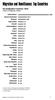 Migration and Remittances: Top Countries Top Immigration Countries a, 010 number of immigrants, millions United States b Russian Federation b Germany b Saudi Arabia b Canada b United Kingdom b Spain b
PROCEEDINGS KIGALI 3-4 NOVEMBRE,
 PROCEEDINGS KIGALI 3-4 NOVEMBRE, 2005 The 7 th Conference of Ministers Responsible for Animal Resources was held in the conference room of Intercontinental hotel - Kigali (Rwanda) from 3 rd to 4 th November
New Zealand =============================== Standard Courier NZD$5.00 Rural Delivery Courier NZD $5.00 + $4.50 = $9.50. Australia (Zona A)
 New Zealand =============================== Standard Courier NZD$5.00 Rural Delivery Courier NZD $5.00 + $4.50 = $9.50 Australia (Zona A) Option 1: Airmail economy - 2-6 working days, no tracking NZD $11.50
JSPS RONPAKU (DISSERTATION PhD) PROGRAM APPLICATION GUIDELINES FOR FY 2015
 JSPS RONPAKU (DISSERTATION PhD) PROGRAM APPLICATION GUIDELINES FOR FY 2015 April, 2014 Japan Society for the Promotion of Science 1. Outline of JSPS RONPAKU Program The Japan Society for the Promotion
Ensure that the HRTWS is included in the Declaration of the Post-2015 Development Agenda
 Ensure that the HRTWS is included in the Declaration of the Post-2015 Development Agenda SOCIAL MEDIA STRATEGY SHEET Join us for a weeklong Twitter campaign (Monday 27 April- Friday 1 May) Campaign background:
CONVENTION ON INTERNATIONAL CIVIL AVIATION SIGNED AT CHICAGO ON 7 DECEMBER 1944
 State CONVENTION ON INTERNATIONAL CIVIL AVIATION SIGNED AT CHICAGO ON 7 DECEMBER 1944 Entry into force: The Convention entered into force on 4 April 1947. Status: 191 parties. This list is based on information
UNFCCC initiatives: CDM and DNA Help Desks, the CDM Loan Scheme, Regional Collaboration Centres
 UNFCCC initiatives: CDM and DNA Help Desks, the CDM Loan Scheme, Regional Collaboration Centres Africa Carbon Forum 03 July 2013 - Abidjan, Côte d Ivoire Ms. Flordeliza Andres Programme Officer, UNFCCC
Fiscal Rules and Fiscal Responsibility Frameworks for Growth in Emerging and Low-Income Countries
 Fiscal Affairs Department Effects of Good Government, by Ambrogio Lorenzetti, Siena, Italy, 1338-39 Fiscal Rules and Fiscal Responsibility Frameworks for Growth in Emerging and Low-Income Countries Martine
LOCAL: INTRALATA RATES: COLLECT: PER CALL SERVICE CHARGE: $.75; PER MINUTE CHARGE: $.07 DEBIT: PER CALL SERVICE CHARGE: $.60; PER MINUTE CHARGE: $.
 RATE INFORMATION SHEET LOCAL: (COLLECT: PER CALL SERVICE CHARGE: $.75; CALL RATE $.25 unlimited (~otal $1.00) DEBIT: $.80 INTRALATA RATES: COLLECT: PER CALL SERVICE CHARGE: $.75; PER MINUTE CHARGE: $.07
Adobe Creative Cloud Availability
 Adobe Availability Countries/Regions for teams for teams United States Afghanistan Albania Algeria Andorra Angola Anguilla Antigua & Barbuda Argentina Armenia Aruba Australia Austria Azerbaijan Bahamas
Libreville Declaration on Health and Environment in Africa
 Libreville Declaration on Health and Environment in Africa Libreville, 29 August 2008 REPUBLIQUE GABONAISE World Health Organization Regional Office for Africa Libreville Declaration on Health and Environment
Joint Initiative. International Partnerships for Sustainable Societies (IPaSS) Description
 Joint Initiative International Partnerships for Sustainable Societies (IPaSS) Description The International Partnerships for Sustainable Societies (IPaSS) are jointly funded by the International Development
Secured Transactions and Collateral Registries: A Global Perspective Access to Finance, IFC
 Secured Transactions and Collateral Registries: A Global Perspective Access to Finance, IFC 5 th Financial Infrastructure and Risk Management Training, Rabat, Morocco, September 2014 Alejandro Alvarez
JAMAICAN IMMIGRATION DEPARTMENT VISA REQUIREMENTS FOR JAMAICANS TRAVELLING OVERSEAS AND FOREIGNERS COMING TO JAMAICA
 JAMAICAN IMMIGRATION DEPARTMENT VISA REQUIREMENTS FOR JAMAICANS TRAVELLING OVERSEAS AND FOREIGNERS COMING TO JAMAICA COUNTRY ENTRY VISA Foreigners coming to Jamaica AFGHANISTAN Prior to arrival (pta) ALBANIA
SPRINT CALL HOME PREPAID CALLING CARD
 Domestic Dial-1 Calling Dollar Increments Price Per Unit $10 and $20 $0.59 The same per minute rates apply when the card is refreshed. International Calling The cost per call is based on a $0.59 cost per
World Health Organization (WHO) estimates of tuberculosis incidence by country, 2014
 World Health Organization (WHO) estimates of tuberculosis incidence by country, 2014 Definition of high incidence With reference to the National Institute for Health and Clinical Excellence (NICE) recommendations
by Ms. Lilia Razlog Senior Debt Specialist Macroeconomics and Fiscal Management Global Practice World Bank
 Geneva, 23 th 25 th November 2015 Managing the Debt: Competencies in Debt Management by Ms. Lilia Razlog Senior Debt Specialist Macroeconomics and Fiscal Management Global Practice World Bank The views
SCALES OF ASSESSMENTS AND CURRENCY OF MEMBER STATES CONTRIBUTIONS FOR 2016-2017 OUTLINE
 38th Session, Paris, 2015 38 C 38 C/37 26 August 2015 Original: English Item 9.3 of the provisional agenda SCALES OF ASSESSMENTS AND CURRENCY OF MEMBER STATES CONTRIBUTIONS FOR 2016-2017 OUTLINE Source:
On-Net to On-Net Per. * Billed in 60 second increments. 1 Formerly found in Section 30.7.4
 1 The international usage rates below apply to Dial-1 calls from the U.S. Mainland, Hawaii, Puerto Rico, and the U.S. Virgin Islands. FONCARD international service is available from the U.S. Mainland,
Inequality undermining education opportunities for millions of children
 Inequality undermining education opportunities for millions of children UNESCO Press release No.2008-115 Paris, 25 November The failure of governments across the world to tackle deep and persistent inequalities
Quote Reference. Underwriting Terms. Premium Currency USD. Payment Frequency. Quotation Validity BUPA AFRICA PROPOSAL.
 Quote Reference Family Quote 2013 Underwriting Terms BUPA AFRICA PROPOSAL Full Medical Underwriting and/or Continuous PreviousMedical Exclusions Premium Currency USD Payment Frequency One annual payment
Manufacturing & Reproducing Magnetic & Optical Media Africa Report
 Brochure More information from http://www.researchandmarkets.com/reports/3520587/ Manufacturing & Reproducing Magnetic & Optical Media Africa Report Description: MANUFACTURING & REPRODUCING MAGNETIC &
INFORMATION ABOUT ADMISSION REQUIREMENTS AND APPLICATION PROCEDURES INTERNATIONAL APPLICANTS MSC IN LOGISTICS
 INFORMATION ABOUT ADMISSION REQUIREMENTS AND APPLICATION PROCEDURES INTERNATIONAL APPLICANTS MSC IN LOGISTICS Application deadline: 1 February 2014 1 2 Content 1. Introduction... 4 2. Program description