
CAPACITOR SWITCHING TRANSIENT MODELING AND ANALYSIS ON AN ELECTRICAL UTILITY DISTRIBUTION SYSTEM USING SIMULINK SOFTWARE
|
|
|
- Adela Cobb
- 9 years ago
- Views:
Transcription
1 University of Kentucky UKnowledge University of Kentucky Master's Theses Graduate School 2011 CAPACITOR SWITCHING TRANSIENT MODELING AND ANALYSIS ON AN ELECTRICAL UTILITY DISTRIBUTION SYSTEM USING SIMULINK SOFTWARE Durga Bhavani Mupparty University of Kentucky, Recommended Citation Mupparty, Durga Bhavani, "CAPACITOR SWITCHING TRANSIENT MODELING AND ANALYSIS ON AN ELECTRICAL UTILITY DISTRIBUTION SYSTEM USING SIMULINK SOFTWARE" (2011). University of Kentucky Master's Theses. Paper This Thesis is brought to you for free and open access by the Graduate School at UKnowledge. It has been accepted for inclusion in University of Kentucky Master's Theses by an authorized administrator of UKnowledge. For more information, please contact

2 ABSTRACT OF THESIS CAPACITOR SWITCHING TRANSIENT MODELING AND ANALYSIS ON AN ELECTRICAL UTILITY DISTRIBUTION SYSTEM USING SIMULINK SOFTWARE The quality of electric power has been a constant topic of study, mainly because inherent problems to it can bring great economic losses in industrial processes. Among the factors that affect power quality, those related to transients originated from capacitor bank switching in the primary distribution systems must be highlighted. In this thesis, the characteristics of the transients resulting from the switching of utility capacitor banks are analyzed, as well as factors that influence there intensities. A practical application of synchronous closing to reduce capacitor bank switching transients is presented. A model that represents a real distribution system 12.47kV from Shelbyville sub-station was built and simulated using MATLAB/SIMULINK software for purposes of this study. A spectral analysis of voltage and current waves is made to extract the acceptable capacitor switching times by observing the transient over-voltages and, harmonic components. An algorithm is developed for practical implementation of zero-crossing technique by taking the results obtained from the SIMULINK model. KEYWORDS: Power Quality, Transients, Capacitor Switching, Zero-Crossing, Modeling and Simulations. Durga Bhavani Mupparty January 25, 2011

3 CAPACITOR SWITCHING TRANSIENT ANALYSIS AND MODELING OF AN ELECTRICAL UTILITY DISTRIBUTION SYSTEM USING MATLAB/SIMULINK SOFTWARE By Durga Bhavani Mupparty Dr. Paul Dolloff Director of Thesis Dr. Stephen D. Gedney Director of Graduate Studies (01/25/2011)

4 RULES FOR THE USE OF THESIS Unpublished thesis submitted for the Master s degree and deposited in the University of Kentucky Library are as a rule open for inspection, but are to be used only with due regard to the rights of the authors. Bibliographical references may be noted, but quotations or summaries of parts may be published only with the permission of the author, and with the usual scholarly acknowledgements. Extensive copying or publication of the dissertation in whole or in part also requires the consent of the Dean of the Graduate School of the University of Kentucky. A library that borrows this dissertation for use by its patrons is expected to secure the signature of each user. Name Date

5 THESIS Durga Bhavani Mupparty The Graduate School University of Kentucky 2011

6 CAPACITOR SWITCHING TRANSIENT MODELING AND ANALYSIS ON AN ELECTRICAL UTILITY DISTRIBUTION SYSTEM USING SIMULINK SOFTWARE THESIS A thesis submitted in the partial fulfillment of the requirements for the degree of Master of Science in Electrical Engineering in the College of Engineering at the University of Kentucky By Durga Bhavani Mupparty Lexington, Kentucky Director: Dr. Paul Dolloff, Adjunct Professor of Electrical Engineering Lexington, Kentucky 2011 Copyright Durga Bhavani Mupparty 2011

7 DEDICATION To my extraordinary parents And All my friends at the University of Kentucky

8 ACKNOWLEDGEMENTS I sincerely thank my academic advisor and thesis Director, Dr. Paul Dolloff from the bottom of my heart for his guidance and support throughout my thesis. I am very thankful to Dr. Yuan Liao for allowing me to work in his lab and helping me with my thesis. I would also like to acknowledge Dr. Vijay Singh for his willingness to serve on my thesis committee. I would like to thank my mom, dad and brother for their emotional support and belief in me. Finally, I would like to thank my friends Praveen Nalavolu, Harikrishnan Unnikrishnan, Vamsi Nallamothu, and Sai Manohar Guduru, at the University of Kentucky who have encouraged me during my work at this university. iii

9 TABLE OF CONTENTS ACKNOWLEDGEMENTS... iii LIST OF TABLES... vii LIST OF FIGURES... viii Chapter 1 Introduction Growth of Power Systems Electric Power Definition Power in Single-Phase AC Circuits Power in Balanced Three-Phase Circuits Complex Power, Apparent Power, and Power Triangle Power Factor Benefits of Improving Power Factor Capacitor Banks Capacitor Size and Location Fixed and Switched Capacitor Banks Power Quality Problem Transient Over-Voltages Harmonics Organization of the Thesis Chapter 2 Currently Available Capacitor Bank Switching Equipment Pre-Insertion Impedance: Circuit Breakers with Pre-Insertion Resistors Circuit-Switchers with Pre-Insertion Inductors Vacuum Switches iv

10 2.3 CapSwitcher Switching Control Sentinel Chapter 3 Implementation of the Technique Adopted Synchronous Closing/Zero-Voltage Crossing/ Controlled Closing Modeling of an Electrical Utility System Using Simulink Software Chapter 4 Results Transient observed when the capacitor bank is switched at the voltage peak (Worst case scenario) Response of transient at the capacitor bank Response of the transient near the load Transient observed when the capacitor bank is switched at the voltage zero (Best case scenario) Response of transient at the capacitor bank Response of transient near the load Sensitivity Analysis (130% of steady state value) Response of the transient near the capacitor bank Transient response near the load Sensitivity Analysis (110% of steady state value) Response of transient near capacitor bank Transient response observed near load Chapter 5 Switching Time Control Technique Introduction Switching time control of a Capacitor bank Results v

11 5.3.1 Considering 8 samples per cycle Considering 12 samples per cycle Considering16 samples per cycle Chapter 6 Conclusion and Future Work Appendix: References Vita vi

12 LIST OF TABLES Table 3-1: Transient Magnitudes Observed for Different Capacitor Bank Sizes when Switched at Different Time intervals Table 3-2: Current Magnitudes Observed During Switching at Different Intervals and for Different Capacitor Bank Sizes Table 3-3: Total Harmonic Distortion Present in the Voltage Waveform Table 3-4: Total Harmonic Distortion Present in the Current Waveform during Energization Table 4-1: Peak Values Observed Table 4-2: Harmonic Content Present in Phase A Voltage Table 4-3: Peak Magnitudes Observed Near the Load Table 4-4: Harmonic Content Present in Phase A Voltage Table 4-5: Results Obtained Near the Capacitor Bank Table 4-6: Harmonic Content Present in Voltage Table 4-7: Results Obtained Near Load Table 4-8: Harmonic content present in voltage Table 4-9: Peak Magnitudes Observed Table 4-10: Harmonic Content Present in Voltage Table 4-11: Results Obtained Near the Load Table 4-12: Harmonic Content Present in Voltage Table 4-13: Resultant Peaks Observed Near Capacitor Bank Table 4-14: Harmonic Content Present in Voltage Table 4-15: Results Obtained Near Load Table 4-16: Harmonic Content Present in Voltage Table 4-17: Acceptable Time Range where the Transient can be Minimum vii

13 LIST OF FIGURES Figure 1.1: Voltage, Current and Power Waveforms... 2 Figure 1.2: Three-Phase of an Electrical System... 4 Figure 1.3: Phasor Representation of Three -Phase Voltage... 4 Figure 1.4: Power Triangle... 6 Figure 1.5: Daily kvar Load Curve... 9 Figure 1.6: Types of Power Disturbances Figure 1.7: Switching Transient Figure 1.8: DC-Bus Voltage of Adjustable-Speed Drive During a Capacitor-Switching Transient [15] Figure 2.1: Southern States CSH & CSH-B Horizontal Interrupter Circuit Switcher 38kV kv Figure 2.2: Southern States CSV Vertical Interrupter Circuit Switcher 38kV kV.. 20 Figure 2.3: ABB Vaccum Switch PS15 for 15.5kV 27kV Figure 2.4: ABB Vaccum Switch PS25 for 25kV 43kV Figure 2.5: Southern States Capacitor switching device 15kV - 38kV Figure 2.6: ABB Switching Control Sentinel Figure 3.1: Voltage Corresponding to No-Synchronous Closing in a Capacitor Bank [22] 26 Figure 3.2: Voltage Corresponding to Synchronous Closing in a Capacitor Bank [22] Figure 3.3: Simulink Model of the Sub-Station Figure 3.4: Transient Observed Near the Capacitor Bank Figure 3.5: Inrush Current Observed Near the Capacitor Bank Figure 3.6: Inrush Current near the Load Figure 3.7: Voltage-Zero Switching Response of Voltage Waveform Figure 3.8: Voltage-Zero Response of Current Waveform Figure 3.9: 15% Transient Observed Near the Capacitor Bank Figure 3.10: Voltage Transient which is 130% of its Normal Steady State Value Figure 4.1: Transient Response of the Voltage Waveform Figure 4.2: Transient Response of the Current Waveform Figure 4.3: Transient Response of Phase A Voltage Waveform viii
![8: DC-Bus Voltage of Adjustable-Speed Drive During a Capacitor-Switching Transient [15]... 14 Figure 2.1: Southern States CSH & CSH-B Horizontal Interrupter Circuit Switcher 38kV - 170 kv.](/docs-images/44/19592704/images/page_13.jpg ".. 19 Figure 2.2: Southern States CSV Vertical Interrupter Circuit Switcher 38kV - 72.5kV.. 20 Figure 2.3: ABB Vaccum Switch PS15 for 15.5kV 27kV... 21 Figure 2.")
14 Figure 4.4: Transient response of Phase A current waveform Figure 4.5: Harmonic Content Present in the Voltage Waveform Figure 4.6: Transient Response of Phase A Figure 4.7: Transient Response of Phase A Current Waveform near Load Figure 4.8: FFT Analysis of Voltage Waveform near Load Figure 4.9: Transient Response of Phase A Figure 4.10: Transient Response of Current Waveform Figure 4.11: FFT Analysis of Phase A Voltage Waveform Figure 4.12: Transient Response of Voltage Waveform Figure 4.13: Transient Response of Current Waveform Figure 4.14: FFT Analysis of Phase A Voltage Waveform Figure 4.15: Response of Voltage Waveform Near Capacitor Bank Figure 4.16: Response of Current Waveform Near Capacitor Bank Figure 4.17: FFT Analysis of 30% Tolerable Limit Transient Disturbance of Voltage near Capbank Figure 4.18: Transient Response of Voltage Waveform near Load Figure 4.19: Transient Response of Current Waveform near Load Figure 4.20: FFT Analysis of 30% Tolerable Limit Transient Disturbance of Voltage near Load Figure 4.21: Response of Phase A Voltage Waveform near Capbank Figure 4.22: Transient at Current Waveform near the Capacitor Bank Figure 4.23: FFT Analysis of Transient Disturbance of Voltage Waveform near Capbank Figure 4.24: Transient Response of Voltage Waveform near Load Figure 4.25: Transient Response of Voltage Waveform near Load Figure 4.26: FFT Analysis of Transient Disturbance of Voltage Waveform near Load.. 53 Figure 5.1: Representation of a Distribution System with the Control Module Figure 5.2: Representation of a Distribution System with an RTU placed on the Pole Figure 5.3: Representation of a Field RTU with a PLC in it Figure 5.4: Flowchart Representation of the Algorithm Figure 5.5: Feeder 3 of the Distribution System Model ix

15 Figure 5.6: Response of the Switching Transient when the Closing Time is not Monitored Figure 5.7: Response of the Transient when the losing Time is Monitored Figure 5.8: Time Output of S-Function Figure 5.9: Response of the Switching Transient when the Closing Time is not Monitored Figure 5.10: Response of the Switching Transient when the Closing Time is Monitored 62 Figure 5.11: Time Response of S-Function Figure 5.12: Response of the Switching Transient when the Closing Time is not Monitored Figure 5.13: Response of the Switching Transient when the Closing Time is Monitored 63 Figure 5.14: Time Response of S-Function x

16 Chapter 1 Introduction 1.1 Growth of Power Systems One of the first commercial Electric Distribution System came into existence when the Edison Electric Illuminating Company of New York inaugurated the Pearl Street Station in Edison s system used a 110-V dc underground distribution network with copper conductors insulated with a jute wrapping. The low voltage of the circuits limited the service area and, consequently, central stations proliferated throughout metropolitan areas [1]. The development of ac systems began in United States in 1885, when George Westinghouse bought the American patents covering the ac transmission system developed by L. Gaulard and J. D. Gibbs of Paris. The first American single-phase ac system was installed in Oregon in 1889, and the energy was consumed primarily for lightning. The advantages of poly-phase motors were apparent when Nikola Tesla presented a paper describing two-phase induction and synchronous motors. Thereafter, the transmission of electrical energy by alternating current, especially three-phase alternating current replaced dc systems. The Southern California Edison Company established the first three-phase 2.3kV system in 1893 [1].One reason for the early acceptance of ac systems was the transformer, which makes possible the transmission of electric energy at a voltage higher than the voltage of generation or utilization with the advantage of greater transmission capability [2]. The growth in size of power plants and in the higher voltage equipment has divided an electric power system into three principal divisions: Generating stations, the power delivery system and the load. The power delivery system is divided into two divisions: High voltage transmission and low voltage distribution system. Transmission lines are used for transporting energy from generating stations to distribution systems. A distribution system connects all the individual loads to the transmission lines. 1

17 1.2 Electric Power Definition Power (P) is defined as the rate of change of energy, with respect to time in terms of voltage (v) and current (i) as given in Eq. (1.1). The unit of power is a watt (W). [3]. (1.1) Power in Single-Phase AC Circuits A sinusoidal voltage, V m, applied across an impedance,, establishes a current, I m, where is the angle by which the current lags or leads the voltage as shown in Fig. (1.1). Figure 1.1: Voltage, Current and Power Waveforms The instantaneous power delivered to the impedance at time t is given by, 2

18 cos cos cos ωt φ 2 cos 1 cos 2 2 sin sin 2 (1.2) When rms values of voltage and current are substituted in Eq. (1.2) the instantaneous power is given as [2] shown in Eq. (1.3) 2 2 cos 1 cos 2 2 (1.3) The first term of Eq. (1.3) pulsates around the same average power but never goes negative. This is called the average power or the real power P which physically means the useful power being transmitted and its unit is kw. P is given as in Eq. (1.4). (1.4) The second term of Eq. (1.3) contains a sin Φ operator, which is negative for capacitive load and positive for inductive load. This term is alternatively negative and positive and has an average value of zero. It is called the reactive power as it travels back and forth without doing any useful work. Its units are kvar. Reactive power is given as Eq. (1.5). (1.5) Power in Balanced Three-Phase Circuits Three-phase circuits contain three sinusoidal voltages of the same frequency but with a 120 phase-shift with respect to each other. The three phases are normally represented by different colors following the standards of the respective country or named as phase A, phase B and, phase C as shown in Fig. (1.2). When a three-phase system is said to be 3

19 balanced when the amplitudes of the three phases are equal and three phases are exactly 120 apart as shown in Fig. (1.3). Figure 1.2: Three-Phase of an Electrical System The magnitude and angle of the phase voltages and currents can be plotted and are referred to as phasor representations as shown in Fig. (1.3). The phasors rotate at the angular frequency ω in the anti-clockwise direction. Figure 1.3: Phasor Representation of Three -Phase Voltage 4

20 With reference to Fig. (1.3), V ab, V bc, V ca are called line voltages and V an, V bn, V cn are the phase voltages with respect to neutral or ground. For a balanced system, each phase voltage has the same magnitude as shown in Eq. (1.6). (1.6) Where, denotes the effective magnitude of the phase voltage. Line voltages are given as Eq. (1.7), (1.8), (1.9). = 3 30 (1.7) = 3 90 (1.8) = (1.9) In a balanced system, the magnitude of the line voltages is 3 times the phase voltages as shown in Eq. (1.10). = 3 (1.10) 1.3 Complex Power, Apparent Power, and Power Triangle Complex power is given by S and is defined as the product of the voltage times the conjugate of the current as shown in Eq. (1.11), (1.11).. (1.12) The magnitude of S is termed as apparent power and has a unit of kilo-volt-amperes (kva) as shown in Eq. (1.13). 5

21 (1.13) The Power triangle given in Fig. scalar quantities S, P, Q. (1.4) illustrates the relationship between the three Figure 1.4: Power Triangle 1.4 Power Factor Power factor is the ratio of real power and reactive power as shown in Eq. (1.14), Ɵ (1.14) Generally, electrical systems are made up of three basic types of load: Resistors, inductors, and capacitors. The industrial loads of the electrical system are highly inductive, which means that they require an electromagnetic field to operate. For inductive loads to operatee requires real and reactive power. Reactive power is required to provide the electromagnetic field necessary to operate an induction motor. Power factor is related to power flow in electrical systems and measuress how effectively an electrical power system is being used. In order to efficiently use a power system we want power factor to be as close to 1..0 as possible, which implies that the flow of reactive power should be as kept to a minimum. Maintaining a high power factor is a key to obtaining the best possible economic advantage for both utilities and industrial end users. [4, 5] 6
22 Operating a power system at a low power factor is a concern for both the electrical utility and the industry. The major cause of a poor power factor in a system is due to motors, which are inductive loads. Reduced system voltages often result when an electrical utility distribution system operates at a lower (poor) power-factor. Low-voltage results in dimming of lights and sluggish motor operation. In addition, it increases the current flow in the system, which may damage or reduce the life of the equipment. It is in the best interest of both the electrical utility and industrial customers to maintain a high powerfactor. Operating the power system at a higher power factor allows the system to maximize the capacity of the system by maximizing the delivery of real power. Commercial and industrial customers avoid utility charges by operating at an acceptable power factor Benefits of Improving Power Factor By improving the power factor: Industrial and commercial customers avoid power factor penalty charges. Reduced currents results in reduced losses (I 2 R) The efficiency of the power system is increased because real power flow is maximized and reactive power flow is minimized. Voltage drop will be minimized. Voltages below equipment ratings cause reduced efficiency, increased current, and reduced starting torque in motors. [4] 1.5 Capacitor Banks Installation of capacitor banks close to the load center will reduce the magnitude of reactive power drawn by the load from the utility distribution system. The most common method in practice today for improving power factor (correct to near unity) is the installation of capacitor banks. Capacitor banks are very economical and generally trouble free. Installing capacitors will decrease the magnitude of reactive power supplied to the inductive loads by the utility distribution system thereby improving the power factor of the electrical system. Supply of reactive power from the utility power system is now reduced. 7
23 1.5.1 Capacitor Size and Location Capacitors are rated in VArs, which indicates how much reactive power is supplied by the capacitor. When dealing with a large scale distribution system containing several feeders and laterals, deciding on the size and installation location becomes an optimization problem. The placement of the capacitor bank should be such that it minimizes the reactive power drawn from the utility power system. Neagle and Samson (1956) developed a capacitor placement approach for uniformly distributed lines and showed that the optimal capacitor location is the point on the circuit where the reactive power flow equals half of the capacitor VAr rating. From this, they developed the 2/3 rule for selecting capacitor size and placement to optimally reduce losses. For a uniformly distributed load, the bank kvar size should be two-thirds of the kvar as measured at the substation, and the bank should be located two-thirds the length of the feeder from the substation. For this optimal placement of a uniformly distributed load, the substation source provides reactive energy for the first 1/3 of the circuit, and the capacitor provides reactive energy for the last 2/3 of the circuit. [6] A generalization of the 2/3 rule for applying n capacitors on a feeder is given in Eq. (1.15), (1.16) and (1.17), (1.15) (1.16) (1.17) Where, L is the total length of the feeder. In general, the location that provides the maximum benefits of power factor correction is near the load. It is common to distribute capacitors throughout an industrial plant. 8
24 Depending on the size of the motors, it may be more economical to place the capacitors in larger banks at, or near, the motor control centers. Fig. (1.5) below shows how reactive energy requirement that has to be supplied by the system. As can be seen during peak load periods, the source is delivering approximately one-half of the reactive energy it [4, 7, 8] would have had to supply if the capacitor banks had not been added. Figure 1.5: Daily kvar Load Curve In the case of concentrated industrial loads, there should be a capacitor bank, sized to almost equal the reactive load requirement, located as close to each load as practical. On a uniformly loaded feeder, greater savings can be achieved by using a number of banks distributed along the feeder so that the reactive load is compensated before travelling through much feeder conductor. With more banks on the feeder, the total capacitance can more closely equal the total reactive load. Capacitors are intended to operate at or below their rated voltage and frequency and are suited for continuous operation at 135% of rated reactive power. Capacitors can operate continuously only when the following limitations are not exceeded. 110% of rated rms voltage 9
25 120% of rated crest voltage 135% of nominal rms current based on rated voltage and rated kvar, including fundamental currents and harmonic currents. 135% of rated kva. [4] Fixed and Switched Capacitor Banks There are two types of capacitor bank installations utilized today: Fixed and switched capacitor banks. Fixed capacitor bank installations are those that are continuously energized. Fixed capacitor banks are connected to the system through a disconnecting device that is capable of interrupting the capacitor current, allowing removal of the capacitors for maintenance purposes. Fixed capacitor banks are applied to provide reactive energy to the system, which results in a boost in the voltage. Caution must be used, however, to ensure that the power factor does not go leading, which can happen particularly during light load conditions. The amount of fixed capacitance to add to the system is determined by minimum reactive demand on a 24-hr basis as shown in Fig. (1.5). The curve represents the reactive energy requirement by the system on a 24-hr period. Note that the system draws 310kVr for every hour of the day. A fixed capacitor of 310kVAr can be installed to provide the required reactive energy by the system. Switched capacitors on the other hand are those that are not connected all of the time. Switched capacitors give added flexibility in the control of power factor correction, losses, and system voltage because they may be switched on and off several times during a day. Switched capacitor banks are applied with an automatic switch control, which senses a particular condition. If the condition is within a preset level, the control s output level will initiate a trip or close signal to the switches that will either connect or disconnect the capacitor bank from the power system. Capacitor controls can be chosen to switch capacitors in and out of the system depending upon the desired control quantity, which are: Voltage: Control or improvement of voltage regulation Current: Current magnitude 10
26 Time Switch: VAr demand has a high degree of regularity with respect to time Reactive current controls: VAr demand. Temperature: Increase in VAr demand is closely related to temperature change. [4] Capacitor bank switching is not based on power factor because both the voltage and current would have to be monitored and a microprocessor is required to calculate the power factor. 1.6 Power Quality Problem A power quality problem can be defined as: "Any power problem manifested in voltage, current, or frequency deviations that result in the failure or mis-operation of customer equipment." [9] The quality of electric power has been a constant topic of study, mainly because poor power quality can lead to economic losses, especially in industrial processes, due to loss production. Due to increasing installations of power electronics based equipment, the power system disturbances depicted in Fig. (1.6) has become a common phenomenon. Figure 1.6: Types of Power Disturbances Despite the significant benefits that can be realized using capacitors for power factor correction, there are a number of power quality related concerns that should be considered before capacitors are installed. A well designed capacitor bank application should not have an adverse effect on end-user equipment or on power quality. One of the more common power quality problems for consumers are transient voltages in the system 11
27 that result from capacitor bank switching and, to a lesser extent, harmonic distortion once the capacitor is energized. The energizing transient, a power quality issue, is important because it is one of the most frequent system switching operations and is the phenomenon that this thesis addresses. These switching transients have the ability to adversely affect industrial customers power electronic and non-linear loads Transient Over-Voltages A transient is defined in IEEE as: A sub-cycle disturbance in the AC waveform that is evidenced by a sharp, brief discontinuity of the waveform. A transient is an outward manifestation of a sudden change in the system conditions, as when a switch opens and closes or when there is a fault condition in the system. [10] Transients can be caused by a number of power system switching events or faults such as lightning strikes, short circuits, or equipment failure. Utility capacitor switching receives special attention when it negatively impacts customer equipment. These transients may originate when a capacitor bank is switched in or out of the system. Capacitor switching is considered to be a normal event on a utility system and the transients associated with these operations are generally not a problem for utility equipment, since peak magnitudes are just below the level at which utility surge protection, such as arresters, begins to operate (1.8pu or above). [11] A transient, from its point of origin, will propagate in either direction on the distribution feeder and may be transferred through transformer capacitive/inductive couplings to other voltage levels. Secondary over-voltages can cause voltage magnification and these can be quite severe as the energy associated with these events can damage power electronic motor drives. More commonly, nuisance tripping of adjustable-speed drives often occurs. Prior to switching on a capacitor, the voltage across the terminals is zero. Because capacitor voltage cannot change instantaneously, energizing a capacitor bank results in an immediate drop in system voltage toward zero, followed by a fast voltage recovery 12
28 (overshoot) and finally an oscillating transient voltage superimposed on the 60 Hz fundamental waveform as illustrated below in Fig. (1.7). Figure 1.7: Switching Transient The peak voltage magnitude of the transient depends on the instantaneous system voltage at the moment of energizing, and under worst-case conditions this can be 2.0 times greater than the normal system peak voltage. But the magnitude is usually less than this because of system loads and damping phenomenon due to resistive elements in the system. [11] Typical distribution system overvoltage levels range from 1.1 to 1.6pu. [9] In addition, to the transient over-voltage phenomenon, application of shunt capacitors can lead to the following side effects: Increased transient inrush current of power transformers, and prolonged decay rate of the transient [12]. Severe harmonic distortion, and resonance with load-generated harmonics and capacitors can be stressed due to switching transients. [13] In addition, adjustable-speed drives (ASD) are extensively used in industrial applications for improved motor speed control, energy efficiency, minimal space requirement, reduced noise levels, and reliability. Since ASDs are often applied in critical process control environments, nuisance tripping can be very disruptive with potentially high downtime cost implications [14]. Nuisance tripping refers to the undesired shutdown of an ASD s (or other power electronic devices) due to the transient overvoltage on the 13
29 device s DC bus. Fig. (1.8) shows an example of a capacitor-switching transient causing the DC bus to exceed the overvoltage trip point. Figure 1.8: DC-Bus Voltage of Adjustable-Speed Drive During a Capacitor-Switching Transient [15] Without high-speed monitoring equipment, it can be difficult to be certain that the cause of an ASD trip was due to a capacitor-switching transient. However, there are two characteristics that can be clues that an ASD has tripped due to a capacitor switching transient. The first clue is that the ASD controls indicate that the drive tripped due to an overvoltage. The second clue is that an ASD has tripped due to a capacitor-switching transient is that a pattern of tripping has been noticed [15]. Since utility capacitors are typically switched daily, any resulting nuisance tripping can potentially cause frequent disruptions at the same time every-day. The potential for nuisance tripping is primarily dependent on the switched capacitor bank size and location. It is important to note that nuisance tripping can occur even if the customer does not have power factor correction capacitors Harmonics The benefits realized by installing capacitor banks include the reduction of reactive power flow on the power system. Therefore, the capacitor bank should be placed as close to load as possible for optimum results. However, this may not be the best engineering 14
30 solution or the most economical solution due to interaction of harmonics and capacitors. [4] Harmonic distortion of the voltage and current in an industrial facility is caused by the operation of nonlinear loads and devices on the power system. Harmonic distortion can be transferred to the utility power system where its disturbance of the sinusoidal waveform is commonly referred to as noise. Power electronics is the major source of harmonic distortion. However, apart from power electronic devices there are other sources of harmonic distortion such as arcing devices and equipment with saturable ferromagnetic cores [16]. These loads draw non-sinusoidal currents, which in turn react with system impedance and produce voltage distortion. Application of capacitor banks can create series or parallel resonance, which magnifies the problem of harmonic distortion. If the resonant frequency is near one of the harmonic currents produced by the non-linear loads, a high-voltage distortion can take place. The total harmonic distortion (THD) of the current varies from some 200% at some load terminals to a few percent at transmission level. The total harmonic distortion THD of the voltage varies from 10% at some distribution transformers to about 1% at transmission level. [17] Overheating of transformers is another problem associated with harmonic currents. ANSI/IEEE Standard C57 states that a transformer can only be expected to carry its rated current if the current distortion is less than 5%. If the current distortion exceeds this value, then some amount of de-rating is required. Another effect of harmonic currents on the power system is the overheating of neutral wires in wye-connected circuits. This effect occurs because the third harmonic and any multiples thereof do not cancel in the neutral as do the other harmonic currents. The result is a large 180-Hz current in the neutral conductor if there are significant nonlinear loads connected to the wye source. Usually the higher multiples of the third harmonic are of small magnitude. The increase in the RMS value of current, however, can cause excessive heating in the neutral wire. This potential for overheating can be addressed by over-sizing neutral conductors or reducing nonlinear currents with filters. [15] 15
31 Most utilities impose limits on the amount of harmonic current that can be injected onto the utility system. This is done to ensure that relatively harmonic-free voltage is supplied to all customers on the distribution line. IEEE Standard recommends limits for harmonics for both utilities and customers. At the point of common coupling between the utility and the utility customer, limits are recommended for individual harmonics as well as the total harmonic distortion of the current. The recommended levels vary depending on the size of the load with respect to the size of the power system, and also upon the voltage at the point of common coupling. The standard also recommends limits on the voltage harmonics supplied by the utility. [15] 1.7 Organization of the Thesis In Chapter 2, provides information on all the current available capacitor switching equipment available in market today. Chapter 3, discusses about synchronous closing technique and was implemented using a simulink model. Chapter 4, presents and discusses the results obtained during the analysis of the model. Chapter 5, implements an efficient algorithm by testing it digitally to obtain zero closing and checks with the results obtained in Chapter 4. Chapter 6, concludes the thesis and provides scope for the future work. 16
32 Chapter 2 Currently Available Capacitor Bank Switching Equipment Devices currently available for transient over-voltage control either attempt to minimize the transient over-voltage (or over-current) at the point of application or limit the overvoltage at remote locations. Some of the techniques employed at the utility s switched capacitor bank include [14] ; pre-insertion resistors [9], pre-insertion inductors [9], fixed inductors [18], MOV arresters [9], series inrush-current-limiting reactors, dividing the capacitor bank [19] into smaller size banks, and avoiding the application [11] of capacitors at multi-voltage levels to eliminate the possibilities of secondary resonance. Another approach to reducing energizing transients is to time the switching device to close at the best possible time (when voltage across the switch is zero) rather than altering the circuit parameters. 2.1 Pre-Insertion Impedance: Circuit Breakers with Pre-Insertion Resistors Transients associated with the energization of capacitor banks can be reduced by the application of pre-insertion resistors into the capacitor-energizing circuit 10 to 15 milliseconds through the closing of an additional set of contacts prior to the closing of the main contacts. The insertion of the resistor is a two-step process. The initial circuit is made through the pre-insertion resistor in an SF 6 environment. The resistor is then shunted as the main contacts close. Synchronization is required between the resistor and main contacts and is usually achieved by connecting the resistor contact rod directly to the main contact control rod [14]. The insertion transient typically lasts for less than one cycle of the system frequency. The performance of pre-insertion impedance is evaluated using both the insertion and bypass transient magnitudes, as well as the capability to dissipate the energy associated with the event, and repeat the event on a regular basis. Pre-insertion resistors are one of the most effective means for controlling capacitor energizing transients; however, reliability issues have often caused utilities to select other means. For similar levels of transient suppression, the pre-insertion resistor can be physically smaller than the equivalent pre-insertion inductor. Various values of preinsertion resistors are available. Pre-insertion resistors have been used in combination 17
33 with circuit breakers and circuit switchers, as well as in a new device called CapSwitcher designed specifically for switching capacitors. Worst-case transients occur when the initial switch closing occurs at a voltage peak and when the bypassing of the inserted device occurs at a current peak Circuit-Switchers with Pre-Insertion Inductors For limiting the effects of voltage magnification, highly damped pre-insertion inductors, with high inherent resistance, are inserted into the capacitor-energizing circuit for 7 to 12 cycles of the power frequency during closing of the high-speed disconnect blade. Insertion is effected through a sliding contact between the blade and the inductor on each pole of the switch; no additional switches are required [9, 14, 20]. Pre-insertion inductors, which are primarily used for over-current control for back-to-back applications, also provide some level of transient overvoltage reduction. Inductors are more economical than resistors and less sensitive to thermal considerations (resistor failure mode) [9]. S & C Electric Company and Southern States are the two leading suppliers of circuitswitchers in market today. Mark V and Mark VI are two types of switches in market today by S&C Electric Company. Mark V Circuit-Switchers are especially suited shunt capacitor banks switching purpose. They can be fitted with optional pre-insertion inductors to minimize capacitor-bank switching transients. Mark VI Circuit-Switcher offers the latest in interrupter technology. It features a 31.5-kA fault-interrupting rating and 3-cycle interrupting time, with simultaneity of less than 1/4 cycle. No shunt-trip device is needed. Mark VI is significantly lighter than the Mark V Circuit-Switcher, as it requires less maintenance, easy to install, and there is no need of a separate structure for the CTs which act as a sensor for the capacitor bank control device. S & C Electric Company s Series 2000 circuit switches benefits include: A wide variety of mounting configurations. There s a model to suit every substation layout and profile. 18
34 Pre-engineered modular construction plus complete factory-assembly and testing, dramatically reduces installation time. No costly, time-consuming field adjustments are needed. Superior reliability and economy. Series 2000 Circuit-Switcher s simple, straightforward design means fewer parts and lower initial and operating costs. Hermetically sealed, no-maintenance SF6-gas-filled interrupters. Single-gap puffer-type interrupters provide 25-kA interrupting performance through 138 kv, maintain dielectric ratings when open. Optional remote-gas-density monitor. Includes dual-level low-gas-density alarms and system status contact. Southern States provides 2 different products: Horizontal circuit/line switcher, and vertical circuit switcher as shown in Fig. 2.1 and Fig. 2.2 respectively. Southern States Types CSH and CSH-B Horizontal Circuit Switchers provide an economical, versatile, space saving solution for fault protection and switching applications that do not require rapid reclosing of the circuit. Circuit switcher design combines SF6 puffer interruption and optional air break isolation functions into a single compact unit with a 20 ka interrupting capacity. The horizontal circuit switcher can be mounted in most any orientation including horizontal upright, vertical, and under-hung positions. Figure 2.1: Southern States CSH & CSH-B Horizontal Interrupter Circuit Switcher 38kV kv 19
35 Figure 2.2: Southern States CSV Vertical Interrupter Circuit Switcher 38kV kV Two versions of the Southern States horizontal circuit switcher are available: The Type CSH non-blade model is an end rotating insulator circuit switcher that mounts independent of an air disconnect switch. The Type CSH-B blade model is a center rotating insulator circuit switcher that mounts in series with an integral vertical break air disconnect switch. Both models are offered at voltage ratings of 38 kv through 245 kv and continuous current ratings of 1200, 1600, and 2000 amperes. Circuit switchers have following disadvantages: No fault close or fault interrupting capability Limited Inductor and Resistance ratings Relatively high cost Increased maintenance caused by arcing in air during closing operation Do not mitigate current transients or voltage transients Require series reactors to limit inrush 20
36 2.2 Vacuum Switches Vacuum switches and breakers are general purpose devices that have been used for shunt capacitor switching at medium voltage for many years. A vacuum is an ideal switching medium as it provides the high dielectric strength needed for capacitor switching and an environmentally friendly insulating medium. ABB manufactures the PS15 and PS25 capacitor vacuum switches. The switches have been specifically designed and tested in accordance with ANSI C37.66 for heavy-duty operation in capacitor-switching applications for the harshest climatic conditions. Fig. 2.3 shows the ABB vacuum switch PS15. Figure 2.3: ABB Vaccum Switch PS15 for 15.5kV 27kV The PS15 is a solid dielectric single-phase vacuum switch suitable for use in distribution systems up to 15.5kV ungrounded (27kV grounded), whereas the PS25 is suitable for use in distribution systems up to 25kV ungrounded (and 43kV grounded). Fig. 2.4 shows the ABB vacuum switch PS25. 21
37 Figure 2.4: ABB Vaccum Switch PS25 for 25kV 43kV The vacuum breaker or switcher used as a capacitor switching device has the following advantages: Full interrupter ratings (breaker only) Bushing mounted current transformers (breaker only) Lowest First Cost Capable of a high number of operations Vacuum Switch can mount in the rack at 38 kv and below They also have the following disadvantages: Do not mitigate current and voltage transients. Require series reactors to limit inrush Use of series reactors creates need for capacitors or arrestors to protect contacts Typically limited to medium voltage applications 22
38 Inrush currents likely to damage interrupter contacts over time causing pre-mature failure or increased maintenance 2.3 CapSwitcher The Southern States CapSwitcher high voltage capacitor switching device has been specifically developed to mitigate transients associated with capacitor bank switching. Eliminates the need of reactors previously used to limit the inrush currents. The CapSwitcher is an application-specific SF6 capacitor switching device equipped with pre-insertion resistors designed specifically for capacitor switching duty. The closing resistors are in the circuit for 5-15ms. The main contacts then shunt the current by the resistor. Its closing resistors provide transient suppression to minimize the detrimental effects of voltage transients on sensitive equipment such as computers, CNC machines, and variable speed drives and to minimize the detrimental effects of current transients on utility equipment such as circuit breaker contacts, power transformer cores and coils, etc. A key feature of the design of the CapSwitcher is that it can be used to energize a capacitor bank at any point on the voltage wave and still provide the transient suppression required. The device eliminates the need for inrush current reactors that are used with breakers and other devices. Fig. 2.1 shows Southern States Capswitcher. Figure 2.5: Southern States Capacitor switching device 15kV - 38kV 23
39 2.4 Switching Control Sentinel ABB, manufactured the Switching Control Sentinel (SCS) device for high-voltage circuit breakers. SCS is a microprocessor-based control device, which enables synchronized closing or opening of independent pole operated (IPO) circuit breakers. The SCS continuously acquires the phase voltage waveforms. When a trip command is received the unit determines at what point in time the contacts would open if the trip coils were immediately energized. The SCS then calculates the time from this point until the target point. This is the delay time that has to be inserted to make the contacts separate at the target time. The SCS delays the trip command by exactly that time and then energizes the trip coil. Figure 2.6: ABB Switching Control Sentinel All the above mentioned techniques which are in the market today are designed specifically for mitigating switching transients associated with high-voltage or medium voltage transmission systems. Adapting these techniques in the distribution system is cost effective. 24
40 Chapter 3 Implementation of the Technique Adopted This thesis address the growing prevalence of the problems faced with the switching of distribution system capacitor banks. The problem has been studied using synchronous closing technique. A model has been built using MATLAB/Simulink software and, by energizing the capacitor bank, transient effect had been studied. Quantities such as peak transient voltages, currents, and frequencies are provided for each case. 3.1 Synchronous Closing/Zero-Voltage Crossing/ Controlled Closing Zero-crossing switching, also called synchronous switching, represents a relatively new technology and a best means [21] of reducing capacitor switching transients. Synchronous switching, times the closing of each phase to correspond with the zero crossing of the phase voltage, thereby preventing the generation of switching transients. In order to control the closing of the breaker/switch, alternatively simple algorithm is required to utilize all of the available information to predict when the signal to close should be given to insure a zero-voltage close operation. To accomplish closing at or near a voltage zero it is necessary that the breaker/switch consists of a zero detection module, a delay-time calculation module and a power module. The proposed control unit receives the close command and sends a modified close signal to the switch close coil or open coil. It should be noted that the dielectric strength of the switch should be sufficient to withstand system voltages until its contacts touch. Closing the switch at or near voltage zero is not difficult to achieve and closing consistency of ±0.5 milliseconds should be possible. The success of a synchronous closing scheme is often determined by the ability to repeat the process under various system and climatic conditions. Uncharged capacitors energized at zero volts should produce virtually no transients. The synchronous closing technique will lower peak transient voltages to about 1.1p.u. As a result, synchronous closing helps to increase equipment life, reduce ground transients and minimize capacitor inrush. 25
41 A comparison of the voltage transient for a non-synchronous closing and synchronous closing of a capacitor bank is shown in Fig. 3.1 and Fig Figure 3.1: Voltage Corresponding to No-Synchronous Closing in a Capacitor Bank [22] Figure 3.2: Voltage Corresponding to Synchronous Closing in a Capacitor Bank [22] 3.2 Modeling of an Electrical Utility System Using Simulink Software The power system under study is New Castle substation under Shelby Energy Cooperative. It is connected to 69kV on the high voltage side and is stepped down to 12.47kV on the distribution side. The distribution system has 3 feeders and 4 capacitor banks placed on all the feeders. 26
42 Figure 3.3: Simulink Model of the Sub-Station The distribution feeders are named feeder 1, feeder 2, and feeder 3 accordingly. Feeder 3 has an industrial customer, Safety Kleen, which is 4.3 miles away from the source. Due to the heavy inductive loads present, the industry runs with a low power factor of
43 To avoid the penalty charge imposed by the electric utilities a switched capacitor bank of 300kVAr has been placed 5.0miles away from the source to provide the required reactive power consumption of the load. As the load is an industrial customer having its peak consumption of reactive energy during the day, the capacitor bank is switched according to the time of the day. As this particular industrial customer is facing problem due to the transient associated with the switching of capacitor bank analysis has been made on this particular capacitor bank to observe the transients by closing the switch at different time intervals. The study has been conducted only on phase A, and presents the results obtained particularly at, 1. Peak value of voltage which is the worst case scenario 2. Voltage zero condition which is the best case scenario and, 3. Near voltage zero where the sensitivity analysis has been studied. The controlled capacitor bank is switched into the feeder to evaluate its effect on the feeder. The peak transient voltages, harmonics, and the high frequency inrush currents that originated as a result of this switching operation near the capacitor bank and near the load are concentrated. The controlled capacitor bank switch was closed at 5.4ms where the voltage of phase A reaches its peak value. Fig. 3.4 shows the transient response of the three-phase voltages near the capacitor bank before and after the switching operation. Figure 3.4: Transient Observed Near the Capacitor Bank 28
44 The peak of phase A voltage reached almost 160% of its steady state. Theoretically, the transient should reach 200% of its steady value. In this case it reached only 160% due to the damping caused by impedance present in the system. The current is zero until the switch is closed, and then an inrush transient current from the fixed capacitor bank charged the controlled bank at the frequency established by the inductances of the conductors between the banks and the capacitances of the capacitor banks. The inrush currents observed during the time of capacitor energization can be seen in Fig Figure 3.5: Inrush Current Observed Near the Capacitor Bank Neglecting the system resistance, the inrush current into the capacitor can be given as Eq. (3.1). 0 (3.1) Where, = and and 0, is the difference between the source voltage and the initial voltage of the capacitor at the instant of energization. Fig. 3.6 shows the magnitude of inrush currents near the load. 29
45 Figure 3.6: Inrush Current near the Load In order to completely eliminate the over-voltages and the inrush current produced by energizing a capacitor bank, it is required that there be a zero voltage difference across the contacts of the capacitor bank switch when the contacts meet. Fig. 3.7 and Fig. 3.8 give the voltage and current waveforms when closing the switch at voltage zero (t=0.05s). The magnitudes and the period of oscillation of the transient voltages and currents in the circuit are reduced considerably and their peak values are closed to steady state values. Figure 3.7: Voltage-Zero Switching Response of Voltage Waveform Figure 3.8: Voltage-Zero Response of Current Waveform 30
46 Closing the switch at voltage-zero is possible only when there is a control which can sense that particular condition. Sensitivity analysis has been conducted to provide the tolerable limits of switching times where a minimum transient can be observed. Varying the switching time of the capacitor bank, several simulations have been carried out and the results obtained are determined to calculate the tolerance limits. Any transient under 130% of the steady state voltage magnitude will not show much impact on the power quality. Fig. 3.9 shows a voltage transient that reaches 115% and Fig shows a transient which is 130% of the normal steady state value. Figure 3.9: 15% Transient Observed Near the Capacitor Bank Figure 3.10: Voltage Transient which is 130% of its Normal Steady State Value Simulating the model at different time intervals and analyzing the results, showed that closing the capacitor bank at zero-crossing of voltage wave would mitigate the transients completely from the system. As closing the switch precisely at voltage zero cannot be obtained, the study recommends closing the switch approximately 2.5 before or after the zero-crossing is acceptable for a minimum transient. Being highly dependent upon equipment, system impedances and weather conditions closing times will vary for each capacitor bank installation. 31
47 Detailed analysis of the switching transient behavior has been done taking into account sizing of capacitor bank and timing of the switch on the feeder. The magnitude of the peak transient voltages and inrush currents has been observed for different time intervals as shown in Table 3.1 and 3.2. Table 3-1: Transient Magnitudes Observed for Different Capacitor Bank Sizes when Switched at Different Time intervals Closing timings 150kVAr 300kVAr 600kVAr 1200kVAr capacitor bank capacitor bank capacitor bank capacitor bank Zero-crossing No transient No transient No transient No transient observed observed observed observed 2 1.1p.u 1.13p.u 1.16p.u 1.228p.u p.u 1.279p.u 1.322p.u 1.353p.u Peak voltage 1.612p.u 1.561p.u 1.509p.u 1.51p.u Table 3-2: Current Magnitudes Observed During Switching at Different Intervals and for Different Capacitor Bank Sizes Closing timings 150kVAr 300kVAr 600kVAr 1200kVAr capacitor bank capacitor bank capacitor bank capacitor bank Zero-crossing No transient observed 40.18A 73.78A 136.1A A 163.9A 223.7A 308.9A A 193.5A 260.8A 352.5A Peak voltage 178.9A 238.5A 310.5A 410A 32
48 The acceptable levels to close the capacitor bank switch have been determined on a 300kVAr bank. When these timings are applied to study the transient behavior of a different size capacitor banks, it can be noticed that the peak voltages are slightly higher or lower than the 300kVAr capacitor bank. Acceptable transient behavior can be achieved by decreasing the proposed time interval slightly. The magnitude of inrush current increases with the increase in capacitor bank size as can be observed in Table 3.2. Analysis has been done to determine the harmonic content present in the system. Tables 3.3 and 3.4 show the total harmonic distortion (THD) in the voltage and current waveform, obtained for different size capacitor banks. From Table 3.4, it can be stated that the THD increases with the increase in the size of capacitor bank. Results obtained from this study indicate that the distribution system is not affected with harmonics. Table 3-3: Total Harmonic Distortion Present in the Voltage Waveform. Switch closing time 150kVAr 300kVAr 600kVAr 1200kVAr Zero-crossing 0.37% 0.47% 0.71% 1.00% % 2.75% 3.38% 3.42% % 3.32% 4.07% 4.10% Voltage peak 4.12% 4.29% 5.25% 5.25% 33
49 Table 3-4: Total Harmonic Distortion Present in the Current Waveform during Energization Switch closing time 150kVAr 300kVAr 600kVAr 1200kVAr Zero-crossing 2.41% 4.12% 7.93% 10.60% % 32.96% 34.69% 33.59% % 26.73% 41.87% 40.21% Voltage peak 25.29% 34.46% 54.11% 52.44% 34
50 Chapter 4 Results Several switching time intervals of capacitor bank have been simulated using MATLAB/SIMULINK software to study the response of the transient over-voltages and currents and, the harmonic content present. The study has been performed on 150kVAr, 300kVAr, 600kVAr, 1200kVAr capacitor banks. This chapter presents the results obtained on a 300kVAr bank. After the model was built, simulation results were recorded. Simulation of the model has been done to analyze the response of the transients by switching the capacitor bank on at different time intervals, taking phase A in control. FFT analysis has been carried out by using the SIMULINK software to find the total harmonic distortion in the system. 4.1 Transient observed when the capacitor bank is switched at the voltage peak (Worst case scenario) Response of transient at the capacitor bank. Fig. 4.1 and Fig. 4.2 show the transient disturbance of the 3-phase voltage and current waveforms of all 3 phases. As the transient is characterized by a surge of current having a high magnitude and a frequency as high as several hundred Hertz, it can be noticed from the results that the voltage reaches 60% of its normal per-unit value and the current value reaches 200% its normal value when the switch is closed. Figure 4.1: Transient Response of the Voltage Waveform 35
51 Figure 4.2: Transient Response of the Current Waveform Fig. 4.3, 4.4 displays the disturbance created in phase A of the voltage and current waveforms. Table 4.1 lists the magnitude of peak values obtained by the voltage and current waveforms near the capacitor bank during the time of closing the switch. Figure 4.3: Transient Response of Phase A Voltage Waveform Figure 4.4: Transient response of Phase A current waveform 36
52 Table 4-1: Peak Values Observed Maximum peak observed near the capacitor bank when switched at t=peak Voltage (phase A) Current (phase A) p.u A Table 4.2 gives harmonic content present in the voltage near the capacitor bank. Fig. 4.5 gives the histogram representation of the harmonic content present in the voltage waveform with respect to the magnitude (% of fundamental). Table 4-2: Harmonic Content Present in Phase A Voltage Harmonic Order (n) Magnitude (% of fundamental) 1 100% % % % % % % % % % % % % THD 4.29% 37
53 Magnitude (%of fundamental) 2.50% 2.00% 1.50% 1.00% 0.50% 0.00% THD = 4.29% 0.84% 0.11% 0.16%0.21%0.27%0.34% 0.24% 0.35% 0.54% 1.47% 2.36% 1.72% Harmonic Order Figure 4.5: Harmonic Content Present in the Voltage Waveform Response of the transient near the load Fig. 4.6 and Fig. 4.7 depict the transient disturbance observed during the simulation of all phases A voltage and current waveforms. It can be noticed that the transient over-voltage remains almost the same. Table 4.3 gives the magnitude of peak values obtained by the voltage and current waveforms near the load center during the time of closing the switch. Figure 4.6: Transient Response of Phase A Figure 4.7: Transient Response of Phase A Current Waveform near Load 38
54 Table 4-3: Peak Magnitudes Observed Near the Load Maximum peak observed near the load when switched at t=peak Voltage (phase A) Current (phase A) 1.54 p.u A Table 4.4 provides amount of harmonic content and total harmonic distortion present in the phase A voltage and Fig. 4.8 illustrates the graphical representation of the data. Table 4-4: Harmonic Content Present in Phase A Voltage Harmonic Order (n) Magnitude (% of fundamental) 1 100% % % % % % % % % % % % % THD 4.20% 39
55 Magnitude(%of fundamental) 2.50% 2.00% 1.50% 1.00% 0.50% 0.00% 2.31% THD = 4.20% 1.68% 1.44% 0.82% 0.11%0.16%0.21% 0.27%0.33% 0.23% 0.34%0.52% Harmonic Order Figure 4.8: FFT Analysis of Voltage Waveform near Load 4.2 Transient observed when the capacitor bank is switched at the voltage zero (Best case scenario) Response of transient at the capacitor bank When the capacitor bank is switched at the zero-crossing of the voltage waveform the following transient disturbances are observed near the capacitor bank. It can be noticed that switching at the zero-crossing of the voltage waveform would result in transient free operation of the system. Fig. 4.9, 4.10 displays disturbance on phase A voltage and current waveforms. Table 4.5 lists the magnitude of transient observed. Figure 4.9: Transient Response of Phase A 40
56 Figure 4.10: Transient Response of Current Waveform Table 4-5: Results Obtained Near the Capacitor Bank Maximum peak observed near the load when switched at t=zero-crossing Voltage (phase A) No transient observed Current (phase A) 40.16A Table 4.6 gives the harmonic content and total harmonic distortion present in the phase A voltage waveform, and Fig is the graphical representation of Table 4.6. Table 4-6: Harmonic Content Present in Voltage Harmonic Order (n) 41 Magnitude (% of fundamental) 1 100% % % % % % % % %
57 Harmonic Order (n) Magnitude (% of fundamental) % % % % THD 0.47% Magnitude (%of fundamental) 0.30% 0.25% 0.20% 0.15% 0.10% 0.05% 0.00% 0.27% THD = 0.47% 0.18% 0.18% 0.05%0.05% 0.06%0.06%0.07% 0.05%0.05% 0.08%0.11% Harmonic Order Figure 4.11: FFT Analysis of Phase A Voltage Waveform Response of transient near the load The following data is obtained near the load when the capacitor bank is switched at zerocrossing of the voltage. Fig and Fig are the voltage and current waveforms obtained near the load. Table 4.7 provides the magnitude of the peak voltage and current noticed. Figure 4.12: Transient Response of Voltage Waveform 42
58 Figure 4.13: Transient Response of Current Waveform Table 4-7: Results Obtained Near Load Maximum peak observed near the load when switched at t=zero-crossing Voltage (phase A) Current (phase A) No transient observed 74.4 A Table 4.8 lists all the harmonic content present and it is represented graphically in Fig Table 4-8: Harmonic content present in voltage Harmonic Order (n) Magnitude (% of fundamental) 1 100% % % % % % % % % 43
59 Harmonic Order (n) Magnitude (% of fundamental) % % % % THD 0.46% 0.30% 0.25% THD = 0.46% 0.26% Magnitude (% of fundamental) 0.20% 0.15% 0.10% 0.05% 0.00% 0.11% 0.05% 0.05% 0.06% 0.05%0.07% 0.06% 0.05% 0.05% 0.17% 0.18% Harmonic Order Figure 4.14: FFT Analysis of Phase A Voltage Waveform 4.3 Sensitivity Analysis (130% of steady state value) Response of the transient near the capacitor bank Fig. 4.15, 4.16 represent the transient disturbance in phase A voltage and current waveforms. It can be observed from the simulation that the transient observed is in the acceptable level. Table 4.9 gives the maximum peaks of voltage and current observed during the impact of switching. 44
60 Figure 4.15: Response of Voltage Waveform Near Capacitor Bank Figure 4.16: Response of Current Waveform Near Capacitor Bank Table 4-9: Peak Magnitudes Observed Maximum peak observed near the load when switched acceptable limits (130%) Voltage (phase A) Current (phase A) p.u A Table 4.10 gives the harmonic content and total harmonic distortion present in the voltage waveform and is shown graphically in Fig
61 Table 4-10: Harmonic Content Present in Voltage Harmonic Order (n) Magnitude (% of fundamental) 1 100% % % % % % % % % % % % % THD 3.87% Magnitude (%of fundamental) 1.20% 1.00% 0.80% 0.60% 0.40% 0.20% 0.00% THD = 3.87% 0.52% 0.33% 0.05% 0.08%0.11%0.16%0.21% 0.15% 0.21% 0.92% 1.09% 0.74% Harmonic Order Figure 4.17: FFT Analysis of 30% Tolerable Limit Transient Disturbance of Voltage near Capbank 46
62 4.3.2 Transient response near the load Fig and 4.26 show the transient response of the voltage and current waveforms. Table 4.11 lists the peak magnitudes observed. Figure 4.18: Transient Response of Voltage Waveform near Load Figure 4.19: Transient Response of Current Waveform near Load Table 4-11: Results Obtained Near the Load Maximum peak observed near the load when switched at acceptable limits (130%) Voltage (phase A) Current (phase A) p.u 79.5 A 47
63 Table 4.12 gives the harmonic content and Fig shows the graphical representation of the data. Table 4-12: Harmonic Content Present in Voltage Harmonic Order (n) Magnitude (% of fundamental) 1 100% % % % % % % % % % % % % THD 3.78% Magnitude (%of fundamental 2.50% 2.00% 1.50% 1.00% 0.50% 0.00% THD = 3.78% 0.82% 0.11% 0.16%0.21% 0.27% 0.33% 0.23% 0.34%0.52% 1.44% 2.31% 1.68% Harmonic Order Figure 4.20: FFT Analysis of 30% Tolerable Limit Transient Disturbance of Voltage near Load 48
64 4.4 Sensitivity Analysis (110% of steady state value) Response of transient near capacitor bank Fig and 4.22 shows the transient levels of the voltage and current waveforms near the capacitor bank. Table 4.13 gives the values obtained during the impact of switching. Figure 4.21: Response of Phase A Voltage Waveform near Capbank Figure 4.22: Transient at Current Waveform near the Capacitor Bank 49
65 Table 4-13: Resultant Peaks Observed Near Capacitor Bank Maximum peak observed near the load when switched at acceptable limits (110%) Voltage (phase A) Current (phase A) 1.15 p.u A Fig gives the histogram of the data presented in table Table 4-14: Harmonic Content Present in Voltage Harmonic Order (n) Magnitude (% of fundamental) 1 100% % % % % % % % % % % % % THD 2.75% 50
66 Magnitude (%of fundamental) 1.20% 1.00% 0.80% 0.60% 0.40% 0.20% 0.00% 0.33% 0.05% 0.08%0.11%0.16%0.21% 0.15% 0.21% 1.09% THD = 2.75% 0.92% 0.52% 0.74% Harmonic Order Figure 4.23: FFT Analysis of Transient Disturbance of Voltage Waveform near Capbank Transient response observed near load Fig and 4.25 show the response of phase A voltage and current waveforms near the capacitor bank. Figure 4.24: Transient Response of Voltage Waveform near Load Figure 4.25: Transient Response of Voltage Waveform near Load 51
67 Table 4-15: Results Obtained Near Load Maximum peak observed near the load when switched at acceptable limits (110%) Voltage (phase A) Current (phase A) p.u A Fig gives the histogram of the data presented in table Table 4-16: Harmonic Content Present in Voltage Harmonic Order (n) Magnitude (% of fundamental) 1 100% % % % % % % % % % % % % THD 2.69% 52
68 Magnitude (%of fundamental) 1.20% 1.00% 0.80% 0.60% 0.40% 0.20% 0.00% THD = 2.69% 0.33% 0.16% 0.21%0.15% 0.21% 0.08% 0.11% 0.05% 0.52% 0.92% 1.09% 0.74% Harmonic Order Figure 4.26: FFT Analysis of Transient Disturbance of Voltage Waveform near Load Table 4.17 gives the acceptable timings of a switching to occur where a minimum transient can be observed. Table 4-17: Acceptable Time Range where the Transient can be Minimum 130% of the steady state voltage % of the steady state voltage 2 53
69 Chapter 5 Switching Time Control Technique Chapter 4 discussed the behavior of system transients resulting from the closing of a capacitor bank at different time intervals over the sinusoidal voltage signal. This chapter presents a Matlab based algorithm, which controls the switching time of the capacitor bank. Section 5.1 provides a brief description of the practical systems used to connect capacitor banks to a distribution system. Section 5.1 also underlines the logic behind a practical system that reduces capacitor bank switching transients. Section 5.2 explains the Matlab/Simulink based algorithm to control the switching time of the capacitor bank. Section 5.3 presents the results obtained using the algorithm. 5.1 Introduction In present day distribution systems, the trip signal that is sent from the utility dispatch center to close/open the capacitor bank is directly given to the vacuum switch via a RTU without any time correction. Since this particularr method does not check for voltage zero condition there is a probability of transients to be observed. Fig 5.1 shows a typical distribution feeder along with a capacitor bank, pole, vacuum switch, potential transformer and a control module. Figure 5..1: Representation of a Distribution System with the Control Module 54
70 The trip signal required to close/open a capacitor bank is most often generated by a control module which senses a particular system parameter to determinee when to open or close the capacitor bank. This control module is for remote capacitor automation, where the control module is placed on the capacitor bank pole as shown in Fig 5.1. Capacitor bank controllers can be set to control the switching based on conditions like: Voltage Control Mode: The control will make its open or close switch decisions based on measured line voltage conditions. Automatic VAr Control Mode Option: The control will make its OPEN and CLOSE switching decision based on measured line VAr conditions. Automatic Current Control Mode Option: The control will make its switching decision based on measured line current conditions. Temperaturee Control Mode: The control will make its given time conditions. switching decision based on Fig 5.2 replaces the control module with a Remote Terminal Unit (RTU). The purpose of the RTU is to receive the signal from the utility dispatch center and then send a trip signal to the vacuum switch. In the present day distribution systems RTU s find a major application in the field open/close the vacuum switch. But, these RTU s do not have any application within them to monitor for voltage zero condition. Figure 5.2: Representat tion of a Distribution System with an RTU placed on the Pole 55
71 Fig. 5.3 represents the model that is suggested by the author to minimize the transients by embedding a Programmable Logical Controller (PLC) into the RTU, such that the developed code can be programmed into the PLC. When the RTU receives an open/ /close signal, it activates the PLC to check for voltage zero condition. When this condition is met, it then, sends a trip signal to the vacuum switch thereby minimizing the effect of switching transients. Figure 5.3: Representation of a Field RTU with a PLC in it Voltage control mode can be used to control the switching time of the capacitor bank, based on the measured line voltage. Closing the switch at low voltages, results in minimized switching transients. A brief description of the algorithm that senses the voltage zero, can be explained from the flowchart representation as shown in Fig
72 Figure 5.4: Flowchart Representation of the Algorithm STEP 1: Receive a trip command from the utility dispatch center. STEP 2: Start monitoring the feeder voltage obtained from the potential transformer. STEP 3: Check for voltage-zero condition. STEP 4: If the condition is matched, send a trip signal to vacuum switch to open/close the capacitor bank. STEP 5: Record the magnitude of the transient voltage after the switch is closed. 57
73 STEP 6: Cross-check if the voltage transient is within the acceptable range, and if necessary adjust close time accordingly. 5.2 Switching time control of a Capacitor bank Chapter 3 presented the Simulink model of a distribution system. The capacitor bank is connected to the distribution system via a three-phase circuit breaker. The switching time of the vacuum switch is a user control and the switch is closed instantaneously at the user specified time. The effect of closing the switch at various points over the voltage waveform has been analyzed in the previous chapters. Closing the switch at high voltages has resulted in significant transients in the system, which is detrimental to the performance of connected electrical components. A Matlab program is developed to control the switching time of the vacuum switch. The program is integrated with the Simulink based distribution system using Level-2 M file S-function. The program takes a user specified switching time and closes the three-phase circuit breaker near zero voltage. A Simulink model of a feeder of the distribution system with integrated S-function block is shown in Figure A single feeder is considered to focus on the added blocks in the system. Figure 5.5: Feeder 3 of the Distribution System Model 58
74 The input for the S-function block is the voltage waveform from the three-phase V-I measurements block. The user specified switching time is passed to the program using the parameters field of the S-function block. Output of the S-function block is a series of logic bits which drives the COM port of the three-phase circuit breaker. To allow external control of three-phase circuit breaker, External control of switching times block is checked in the three-phase circuit breaker parameters. The Matlab program inside the S-function block continuously monitors the voltage of the system. The program uses a counter to keep track of present time ( prestime ). The program reads the user specified switching time and outputs a zero signal as long as present time is less than user specified switching time. Once present time is equal to user specified switching time the program checks if the magnitude at that particular sample is less than a predefined constant value. If, the condition is not satisfied the S-function block still outputs a zero. Once the above condition is satisfied the S-function block outputs a one, which closes the vacuum switch and there by connects the capacitor bank to the distribution system. The MATLAB code written for implementing the algorithm is presented in the appendix. 5.3 Results The algorithm is implemented in the three-phase distribution system presented in Chapter.3. In the real world distribution system, the voltage waveform consists of very few samples per cycle and hence to validate the code, it has been tested at several different sampling rates and the results obtained are compared to the results obtained using instantaneous closing of the circuit breaker Considering 8 samples per cycle Fig 5.6 shows the system voltage when the closing time of circuit breaker is not controlled. The switch is closed at sec when voltage is very high. The resulting transients in the system can be clearly observed in the Fig
75 Figure 5.6: Response of the Switching Transient when the Closing Time is not Monitored Fig 5.7 shows the system voltage when the closing time of circuit breaker is controlled, using the algorithm specified in section 5.2. Similar to the previous case the user switching time is considered as sec. The algorithm monitors the system voltage at that time and since the voltage is very high the switch is not closed at sec. The switch is closed near zero crossing at sec. The resulting transients in the system are significantly reduced when compared to Fig 5.6. The switch is not closed at the exact zero crossing because of a large sampling time. Figure 5.7: Response of the Transient when the losing Time is Monitored The time output of the S-Function is shown below in Fig 5.8. The switch is open when the com input is 0 and closed when the com input is 1. As shown in the graph below the switch changes from 0 to 1 at s. 60
76 Figure 5.8: Time Output of S-Function Considering 12 samples per cycle Fig 5.9 shows the system voltage when the closing time of circuit breaker is not controlled. The switch is closed at sec when voltage is very high. The resulting transients in the system can be clearly observed in the figure. Figure 5.9: Response of the Switching Transient when the Closing Time is not Monitored Fig 5.10 shows the system voltage when the closing time of circuit breaker is controlled. Similar to the previous case the user switching time is considered as sec. The algorithm monitors the system voltage at that time and since the voltage is very high the switch is not closed at sec. The switch is closed near zero crossing at sec. 61
77 The resulting transients in the system are significantly reduced when compared to Fig The switch is not closed at the exact zero crossing because of a large sampling time. Figure 5.10: Response of the Switching Transient when the Closing Time is Monitored The time output of the S-Function is shown below in Fig As shown in the graph below the switch changes from 0 to 1 at s. Figure 5.11: Time Response of S-Function Considering16 samples per cycle Fig 5.12 shows the system voltage when the closing time of circuit breaker is not controlled. The switch is closed at sec when voltage is very high. The resulting transients in the system can be clearly observed in the figure. 62
78 Figure 5.12: Response of the Switching Transient when the Closing Time is not Monitored Fig 5.13 shows the system voltage when the closing time of circuit breaker is controlled. The algorithm monitors the system voltage at that time and since the voltage is very high the switch is not closed at sec. The switch is closed near zero crossing at sec. The resulting transients in the system are significantly reduced when compared to Fig The switch is not closed at the exact zero crossing because of a large sampling time. Figure 5.13: Response of the Switching Transient when the Closing Time is Monitored 63
79 The time output of the S-Function is shown below in Fig The switch is open when the com input is 0 and closed when the com input is 1. As shown in the graph below the switch changes from 0 to 1 at s. Figure 5.14: Time Response of S-Function Comparing the results obtained it can be noted that, controlling the switching time of the three-phase circuit breaker has resulted in significantly less transients in the system. Also, increasing the sample rate has shifted the switch closing time closer to zero and there by reduces the switching transients. 64
80 Chapter 6 Conclusion and Future Work This thesis has discussed the importance of voltage zero-closing technique to mitigate the transients associated with the switching of capacitor banks. Sensitivity analysis is performed on the Simulink model of the distribution system to find the acceptable time range where the transients are acceptable. FFT analysis is carried out to check the harmonic distortion present in the Simulink model and the results obtain indicate that the model is free from harmonics. A MATLAB code is developed such that the vacuum switch interactively closes at voltage zero irrespective of the time given by the user. All of this analysis has done taking into account a real substation and modeling it using Simulink software. The code has been tested digitally with several different sampling times to observe the closing time of the switch does not cross the acceptable time limit that is obtained by the sensitivity analysis conducted on the model. The resulting waveforms are compared with the signals that are not monitored for voltage zero. As the three phases are equally displaced by an angle 120, synchronous closing can be obtained when the vacuum switch closes at 120 out of time with respect to each phase. As for the follow up, the future research will be focused on developing the algorithm and practically implementing in the field, taking into consideration the repetitive capability of the switching mechanism, condition of the interrupting medium and the contacts, the control voltage, and the ambient temperature at the time of operation. It should be noted that the switch is a mechanical device and wears out with time. Closing the switch at voltage-zero is practically possible only when all the above mentioned factors are taken into consideration. The switching tolerance times that are obtained by the sensitivity analysis can be used to adjust the closing time of the switch accordingly. 65
81 Appendix: Table I: Transient Response of Voltage observed near the capacitor bank when the capacitor bank is switched at different time intervals. Timing of the Voltage Transients Voltage transients Voltage transients capacitor bank observed on observed on observed on switch closed in 300kVAr bank in 600kVAr bank in 1200kVAr bank in Seconds p.u p.u p.u 0.05 (Zero- Crossing) (120% of steady state value observed) (130% of steady state value observed) (peak transient observed)
82 Timing of the Voltage Transients Voltage transients Voltage transients capacitor bank observed on observed on observed on switch closed in 300kVAr bank in 600kVAr bank in 1200kVAr bank in Seconds p.u p.u p.u (130% of the steady state value) (130% of steady state value) (110% of the steady state value) (110% of steady state value) (120% of steady state value) , (130% of steady state value) 67
83 Timing of the Voltage Transients Voltage transients Voltage transients capacitor bank observed on observed on observed on switch closed in 300kVAr bank in 600kVAr bank in 1200kVAr bank in Seconds p.u p.u p.u (120% of steady state value) (130% of steady state value) (peak transient observed) (peak transient observed) (peak transient observed) (130% of steady state value) (120% of the steady state value) (110% steady state value) (110% of steady state value)
84 Timing of the Voltage Transients Voltage transients Voltage transients capacitor bank observed on observed on observed on switch closed in 300kVAr bank in 600kVAr bank in 1200kVAr bank in Seconds p.u p.u p.u
85 MATLAB Code function zerocrossdet(block) setup(block); %endfunction function setup(block) % Register parameters block.numdialogprms = 3; % Register number of ports block.numinputports = 1; block.numoutputports = 1; % Setup port properties to be inherited or dynamic block.setprecompinpportinfotodynamic; block.setprecompoutportinfotodynamic; block.inputport(1).dimensions = 1; block.inputport(1).directfeedthrough = false; block.outputport(1).dimensions = 1; block.sampletimes = [ ]; %block.inputport(1).sampletime = [ ]; %block.outputport(1).sampletime = [ ]; %% Register block methods (through MATLAB function handles) %% DoPostPropSetup function DoPostPropSetup(block) %% Setup Dwork block.numdworks = 4; % The first work vector stores the close time specified by user block.dwork(1).name = 'user_closetime'; 70
86 block.dwork(1).dimensions = 1; block.dwork(1).datatypeid = 0; block.dwork(1).complexity = 'Real'; block.dwork(1).usedasdiscstate = true; % The first work vector stores the current time block.dwork(2).name = 'prestime'; block.dwork(2).dimensions = 1; block.dwork(2).datatypeid = 0; block.dwork(2).complexity = 'Real'; block.dwork(2).usedasdiscstate = true; block.dwork(3).name = 'flag1'; block.dwork(3).dimensions = 1; block.dwork(3).datatypeid = 0; block.dwork(3).complexity = 'Real'; block.dwork(3).usedasdiscstate = true; % The first work vector stores the output control signal sent to the % switch block.dwork(4).name = 'com'; block.dwork(4).dimensions = 1; block.dwork(4).datatypeid = 0; block.dwork(4).complexity = 'Real'; block.dwork(4).usedasdiscstate = true; %endfunction %% Start function Start(block) % Populate the Dwork vectors block.dwork(1).data = block.dialogprm(1).data; block.dwork(2).data = (block.dialogprm(2).data); block.dwork(3).data = (block.dialogprm(3).data); % end function %% Output function Output(block) block.outputport(1).data = block.dwork(4).data; disp('output control data'); disp(block.outputport(1).data); %% Update 71
87 function Update(block) % if time is < user switching time control switch is open if block.dwork(2).data < block.dwork(1).data block.dwork(4).data = 0; block.dwork(2).data = block.dwork(2).data ; % if time is >= user switching time control switch can be closed else % if flag is set i.e if switch is already closed control signal is 1 if block.dwork(3).data == 1 block.dwork(4).data = 1; block.dwork(2).data = block.dwork(2).data ; elseif (abs(block.inputport(1).data) < 0.05)&& block.dwork(3).data == 0 % let say 0.05 block.dwork(4).data = 1; block.dwork(2).data = block.dwork(2).data ; block.dwork(3).data = 1; else block.dwork(4).data = 0; block.dwork(2).data = block.dwork(2).data ; end end 72
88 References [1] El-Hawary, M.E., "Introduction to Electrical Power Systems", L. Hanzo, Editor. 2008, John Wiley & Sons Inc: New Jersey. [2] William D. Stevenson, J., "Elements of Power System Analysis". 4 ed, ed. F.J. Cerra. 1982: McGraw-Hill Book Company [3] Nahvi, M. and J.A. Edminister, "Theory and Problems of Electric Circuits". 2003, McGraw Hill: New York. [4] GREBE, T.E., "Customer Power Factor Correction, Capacitor Application Guide" p [5] Program, W.S.U.C.E.E. and N.E.E. Alliance. (2003) "Energy Efficiency fact Sheet". Energy Ideas Clearing House, 4. [6] Willis, H.L., " Power Distribution Planning Reference Book". 2004, Marcel Dekker Inc. [7] Burke, J.J., "Power Distribution Engineering Applications and Fundamentals". Electrical Engineering and Electronics, ed. M.O. Thurston and W. Middendorf. 1994, New York: Marcel Dekker, Inc [8] Concepts., E., "Industrial Power Factor Analysis Guidebook" 1995: Portland. p [9] Grebe, T.E., "Application of Distribution System Capacitor Banks and their Impact on Power Quality". IEEE Transactions on Industry Applications, (3): p [10] Greenwood, A., "Electrical Transients in Power Systems". 1991, John Wiley & Sons. [11] McGranaghan, M.F., et al., "Impact of Utility Switched Capacitors on Customer Systems-Magnification at Low Voltage Capacitors". IEEE Transactions on Power Delivery, 1991: p [12] Witte, J.F., F.P. DeCesaro, and S. R. Mendis, "Damaging Long-Term Overvoltages on Industrial Capacitor Banks due to Transformer Energization Inrush Currents". IEEE Transactions on Industry Applications, (4): p
89 [13] Das, J.C., "Analysis and Control of Large-Shunt-Capacitor-Bank Switching Transients". IEEE Transactions on Industry Applications, (6): p [14] Bellei, T.A., R.P. O'Leary, and E.H. Camm, "Evaluating capacitor-switching devices for preventing nuisance tripping of adjustable-speed drives due to voltage magnification". IEEE Transactions on Power Delivery, (3): p [15] Commission, C.E., "Power Quality Solutions for Industrial Customers" [16] Girgis, A.A., et al., "Harmonics and Transient Overvoltages Due to Capacitor Switching". IEEE Transactions on Industry Applications, (6): p [17] Lundquist, J. and M.H.J. Bollen, "Harmonic Active Power Flow in Low and Medium Voltage Distribution Systems". IEEE Power Engineering Society Winter Meeeting, 2000, : p [18] Duran-Gomez, J.L. and P.N. Enjeti, "A new approach to mitigate nuisance tripping of PWM ASDs due to utility capacitor switching transients (CSTs)". IEEE Transactions on Power Electronics, (5): p [19] Cipcigan, L., et al., "Mitigation of Capacitor Bank Energization Harmonic Transients". IEEE/PES Transmission and Distribution Conference and Exposition, 2006: p. 1-5 [20] Grebe, T.E., "Application of the EMTP for analysis of utility capacitor switching mitigation techniques". IEEE International Conference on Harmonics and Quality of power, : p [21] ALEXANDER, R.W., " Synchronous closing control for shunt capacitors". IEEE transactions on Power Apparatus and Systems, PAS-104(9): p [22] Iizarry-Silvestrini, M.F. and T.E. Vélez-Sepúlveda, "Mitigation of Back-to-Back Capacitor Switching Transients on Distribution Circuits", in Department of Electrical and Computer Engineering. 2006, University of Puerto Rico. 74
90 Vita Durga Bhavani Mupparty Born: May 16 th, 1986 Hyderabad, Andhra Pradesh, India Education The author received his Bachelor of Technology (B. Tech.) degree in Electrical and Electronics Engineering from Jawaharlal Nehru Technological University, Hyderabad, India in the year
Product Data Bulletin
 Product Data Bulletin Power System Harmonics Causes and Effects of Variable Frequency Drives Relative to the IEEE 519-1992 Standard Raleigh, NC, U.S.A. INTRODUCTION This document describes power system
Typical Data Requirements Data Required for Power System Evaluation
 Summary 66 Carey Road Queensbury, NY 12804 Ph: (518) 792-4776 Fax: (518) 792-5767 www.nepsi.com [email protected] Harmonic Filter & Power Capacitor Bank Application Studies This document describes NEPSI
Three phase circuits
 Three phase circuits THREE PHASE CIRCUITS THREE-PHASE ADVANTAGES 1. The horsepower rating of three-phase motors and the kva rating of three-phase transformers are 150% greater than single-phase motors
Power Factor Correction for Power Systems First Semester Report Spring Semester 2007
 Power Factor Correction for Power Systems First Semester Report Spring Semester 2007 by Pamela Ackerman Prepared to partially fulfill the requirements for EE401 Department of Electrical and Computer Engineering
Power Quality Issues, Impacts, and Mitigation for Industrial Customers
 Power Quality Issues, Impacts, and Mitigation for Industrial Customers By Kevin Olikara, Power and Energy Management Products Rockwell Automation, Inc. Now, more than ever, electronic equipment and computing
UNDERSTANDING POWER FACTOR AND INPUT CURRENT HARMONICS IN SWITCHED MODE POWER SUPPLIES
 UNDERSTANDING POWER FACTOR AND INPUT CURRENT HARMONICS IN SWITCHED MODE POWER SUPPLIES WHITE PAPER: TW0062 36 Newburgh Road Hackettstown, NJ 07840 Feb 2009 Alan Gobbi About the Author Alan Gobbi Alan Gobbi
Introduction. Harmonics and IEEE 519 Page 1 of 19
 Introduction In an ideal power system, the voltage supplied to customer equipment, and the resulting load current are perfect sine waves. In practice, however, conditions are never ideal, so these waveforms
EDEXCEL NATIONAL CERTIFICATE/DIPLOMA UNIT 5 - ELECTRICAL AND ELECTRONIC PRINCIPLES NQF LEVEL 3 OUTCOME 4 - ALTERNATING CURRENT
 EDEXCEL NATIONAL CERTIFICATE/DIPLOMA UNIT 5 - ELECTRICAL AND ELECTRONIC PRINCIPLES NQF LEVEL 3 OUTCOME 4 - ALTERNATING CURRENT 4 Understand single-phase alternating current (ac) theory Single phase AC
Shunt Capacitor Bank Fundamentals and Protection
 2003 Conference for Protective Relay Engineers - Texas A&M University April 8-10, 2003, College Station (TX) Shunt Capacitor Bank Fundamentals and Protection Gustavo Brunello, M.Eng, P.Eng Dr. Bogdan Kasztenny
Considering the effects of UPS operation with leading power factor loads
 Considering the effects of UPS operation with leading power factor loads Over the past five years, a new generation of data processing and communications equipment has become prevalent in modern data centers
Power Quality Standards for Electric Service
 Power Quality Standards for Electric Service Effective June 1, 2008 A transition period will exist from June 1 through December 31, 2008 in which installations may be approved and connected as long as
Line Reactors and AC Drives
 Line Reactors and AC Drives Rockwell Automation Mequon Wisconsin Quite often, line and load reactors are installed on AC drives without a solid understanding of why or what the positive and negative consequences
Three-phase AC circuits
 Three-phase AC circuits This worksheet and all related files are licensed under the Creative Commons Attribution License, version 1.0. To view a copy of this license, visit http://creativecommons.org/licenses/by/1.0/,
Power System Harmonics
 Pacific Gas and Electric Company Power System Harmonics What are power system harmonics? Ideally, voltage and current waveforms are perfect sinusoids. However, because of the increased popularity of electronic
HARMONIC DISTORTION IN THE ELECTRIC SUPPLY SYSTEM
 Technical Note No.3 March 2000 HARMONIC DISTORTION IN THE ELECTRIC SUPPLY SYSTEM This Technical Note discusses harmonic distortion, its causes and adverse effects, what levels are unacceptable and how
Harmonics and Noise in Photovoltaic (PV) Inverter and the Mitigation Strategies
 Soonwook Hong, Ph. D. Michael Zuercher Martinson Harmonics and Noise in Photovoltaic (PV) Inverter and the Mitigation Strategies 1. Introduction PV inverters use semiconductor devices to transform the
S&C Circuit-Switchers Mark VI
 S&C Circuit-Switchers Mark VI Outdoor Transmission (69 kv through 138 kv) Mark VI Circuit-Switcher with Pre-insertion Inductors... the most reliable way to switch and protect substation capacitor banks
SYNCHRONOUS MACHINES
 SYNCHRONOUS MACHINES The geometry of a synchronous machine is quite similar to that of the induction machine. The stator core and windings of a three-phase synchronous machine are practically identical
S&C BankGuard PLUS Control
 S&C BankGuard PLUS Control For Substation Capacitor Banks and Shunt Reactors Application S&C s BankGuard PLUS Control utilizes flexible, reliable microprocessor technology to: Protect substation shunt
EXTENDING THE LIFE OF POWER FACTOR CAPACITORS
 by John Houdek, President, Allied Industrial Marketing, Inc., and Cesar Chavez, Engineering Manager, ARTECHE / Inelap Abstract: The addition of power factor improvement capacitors to individual motors
Harmonics in your electrical system
 Harmonics in your electrical system What they are, how they can be harmful, and what to do about them Abstract Harmonic currents, generated by non-linear electronic loads, increase power system heat losses
How To Understand And Understand The Theory Of Electricity
 DIRECT CURRENT AND ALTERNATING CURRENT SYSTEMS N. Rajkumar, Research Fellow, Energy Systems Group, City University Northampton Square, London EC1V 0HB, UK Keywords: Electrical energy, direct current, alternating
7. Reactive energy compensation
 593 7. Reactive energy compensation 594 7. REACTIVE ENERGY COMPENSATION Reactive energy compensation is an important element for reducing the electricity bill and improving the quality of the electrical
Measurement, Modeling and Simulation of Capacitor Bank Switching Transients
 Measurement, Modeling and Simulation of Capacitor Bank Switching Transients Mirza Softić*, Amir Tokić**, Ivo Uglešić*** *Kreka - Dubrave e, Dubrave, Bosnia and Herzegovina (e-mail: [email protected]).
POWER SYSTEM HARMONICS. A Reference Guide to Causes, Effects and Corrective Measures AN ALLEN-BRADLEY SERIES OF ISSUES AND ANSWERS
 A Reference Guide to Causes, Effects and Corrective Measures AN ALLEN-BRADLEY SERIES OF ISSUES AND ANSWERS By: Robert G. Ellis, P. Eng., Rockwell Automation Medium Voltage Business CONTENTS INTRODUCTION...
13 ELECTRIC MOTORS. 13.1 Basic Relations
 13 ELECTRIC MOTORS Modern underwater vehicles and surface vessels are making increased use of electrical actuators, for all range of tasks including weaponry, control surfaces, and main propulsion. This
Power Quality Paper #3
 The Effect of Voltage Dips On Induction Motors by: M D McCulloch 1. INTRODUCTION Voltage depressions caused by faults on the system affect the performance of induction motors, in terms of the production
Understanding Power Factor and How it Affects Your Electric Bill. Presented by Scott Peele PE
 Understanding Power Factor and How it Affects Your Electric Bill Presented by Scott Peele PE Understanding Power Factor Definitions kva, kvar, kw, Apparent Power vs. True Power Calculations Measurements
Power measurement in balanced 3 phase circuits and power factor improvement. 1 Power in Single Phase Circuits. Experiment no 1
 Experiment no 1 Power measurement in balanced 3 phase circuits and power factor improvement 1 Power in Single Phase Circuits Let v = m cos(ωt) = cos(ωt) is the voltage applied to a R-L circuit and i =
CHAPTER 5 PHOTOVOLTAIC SYSTEM DESIGN
 CHAPTER 5 PHOTOVOLTAIC SYSTEM DESIGN 5.1 Introduction So far in the development of this research, the focus has been to estimate the available insolation at a particular location on the earth s surface
Current and Temperature Ratings
 Document 361-1 Current and Temperature Ratings Introduction This application note describes: How to interpret Coilcraft inductor current and temperature ratings Our current ratings measurement method and
System Grounding and Ground-Fault Protection Methods for UPS-Supplied Power Systems
 System Grounding and Ground-Fault Protection Methods for -Supplied Power Systems Bill Brown, P.E., Square D Critical Power Competency Center 1. INTRODUCTION The use of solid grounding for -supplied power
Digital Energy ITI. Instrument Transformer Basic Technical Information and Application
 g Digital Energy ITI Instrument Transformer Basic Technical Information and Application Table of Contents DEFINITIONS AND FUNCTIONS CONSTRUCTION FEATURES MAGNETIC CIRCUITS RATING AND RATIO CURRENT TRANSFORMER
The design and performance of Static Var Compensators for particle accelerators
 CERN-ACC-2015-0104 [email protected] The design and performance of Static Var Compensators for particle accelerators Karsten Kahle, Francisco R. Blánquez, Charles-Mathieu Genton CERN, Geneva, Switzerland,
Basic Electrical Technology Dr. L. Umanand Department of Electrical Engineering Indian Institute of Science, Bangalore. Lecture - 33 3 phase System 4
 Basic Electrical Technology Dr. L. Umanand Department of Electrical Engineering Indian Institute of Science, Bangalore Lecture - 33 3 phase System 4 Hello everybody. So, in the last class we have been
100% Stator Ground Fault Detection Implementation at Hibbard Renewable Energy Center. 598 N. Buth Rd 3215 Arrowhead Rd
 100% Stator Ground Fault Detection Implementation at Hibbard Renewable Energy Center Introduction Roger Hedding Steven Schoenherr, P.E. ABB Inc. Minnesota Power 598 N. Buth Rd 3215 Arrowhead Rd Dousman,
Variable Frequency Drives - a Comparison of VSI versus LCI Systems
 Variable Frequency Drives - a Comparison of VSI versus LCI Systems Introduction TMEIC is a leader in the innovative design and manufacture of large ac variable f requency drive systems. TMEIC has been
DIMENSIONING OF CURRENT TRANSFORMERS FOR PROTECTON APPLICATION
 ÿþ üûúùø öõöôùóùõò CT Dimensioning DIMENSIONING OF CURRENT TRANSFORMERS FOR PROTECTON APPLICATION Application note GER3973 1 CT Dimensioning ÿþ üûúùø öõöôùóùõò GER-3973 Application note ÿþ üûúùø öõöôùóùõò
The Facts About Harmonics and Power Factor. Power Quality: Harmonics & Power Factor Correction
 The Facts About Harmonics and Power Factor Power Quality: Harmonics & Power Factor Correction 1 Agenda I. Harmonic Basics II. Harmonic Mitigation Methods III. Active Harmonic Filters IV. Applications V.
Electronic Trip Circuit Breaker Basics Circuit Breaker Application Guide Class 0600
 Electronic Trip Circuit Breaker Basics Circuit Breaker Application Guide Class 0600 Data Bulletin 0600DB1104 03/2012 Retain for future use. Electronic Trip Circuit Breaker Basics 0600DB1104 Table of Contents
POWER FACTOR CORRECTION
 [CATALOGUE PFC-SFC] POWER FACTOR CORRECTION INDUSTRIAL SWITCHGEAR & AUTOMATION SPECIALISTS A component of nhp s green star solution... www.nhp.com.au Power Factor - What does it mean? Where open electricity
LIMITING SHORT-CIRCUIT CURRENTS IN MEDIUM-VOLTAGE APPLICATIONS
 LIMITING SHORT-CIRCUIT CURRENTS IN MEDIUM-VOLTAGE APPLICATIONS Terence Hazel Senior Member IEEE Schneider Electric 38050 Grenoble France Abstract The power requirements for large industrial sites is increasing.
VOLTAGE REGULATOR AND PARALLEL OPERATION
 VOLTAGE REGULATOR AND PARALLEL OPERATION Generator sets are operated in parallel to improve fuel economy and reliability of the power supply. Economy is improved with multiple paralleled generators by
ABB PSPS Erich Steinmann; Generator control-2013
 ABB PSPS Erich Steinmann; Generator control-2013 GENERATOR CONTROL THE MODULAR SOLUTION FOR GENERATORS To make sure that power is efficiently converted into electric energy, it is necessary to supervise
2. A conductor of length 2m moves at 4m/s at 30 to a uniform magnetic field of 0.1T. Which one of the following gives the e.m.f. generated?
 Extra Questions - 2 1. A straight length of wire moves through a uniform magnetic field. The e.m.f. produced across the ends of the wire will be maximum if it moves: a) along the lines of magnetic flux
DC TRANSMISSION BASED ON VOLTAGE SOURCE CONVERTERS
 DC TRANSMISSION BASED ON VOLTAGE SOURCE CONVERTERS by Gunnar Asplund, Kjell Eriksson, Hongbo Jiang, Johan Lindberg, Rolf Pålsson, Kjell Svensson ABB Power Systems AB Sweden SUMMARY Voltage Source Converters
Line to Ground Voltage Monitoring on Ungrounded and Impedance Grounded Power Systems
 Line to Ground Voltage Monitoring on Ungrounded and Impedance Grounded Power Systems by Reza Tajali, P.E. Square D Company, Power Systems Engineering Group 295 Tech Park Drive LaVergne, Tennessee 37086
3-Phase AC Calculations Revisited
 AN110 Dataforth Corporation Page 1 of 6 DID YOU KNOW? Nikola Tesla (1856-1943) came to the United States in 1884 from Yugosiavia. He arrived during the battle of the currents between Thomas Edison, who
SCADA Controlled Multi-Step Automatic Controlled Capacitor Banks & Filter Banks
 SCADA Controlled Multi-Step Automatic Controlled Capacitor Banks & Filter Banks Introduction SCADA (Supervisory Controlled and Data Acquisition) controlled multi-step metalenclosed automatic capacitor
Power System review W I L L I A M V. T O R R E A P R I L 1 0, 2 0 1 3
 Power System review W I L L I A M V. T O R R E A P R I L 1 0, 2 0 1 3 Basics of Power systems Network topology Transmission and Distribution Load and Resource Balance Economic Dispatch Steady State System
Power Quality. Voltage Sag Ride-through Mitigation in Sequence by Increasing Cost
 Power Quality Voltage Sag Ride-through Mitigation in Sequence by Increasing Cost A voltage sag is defined as a decrease in voltage magnitude below 90% of nominal, but not a complete interruption. The typical
Transformerless UPS systems and the 9900 By: John Steele, EIT Engineering Manager
 Transformerless UPS systems and the 9900 By: John Steele, EIT Engineering Manager Introduction There is a growing trend in the UPS industry to create a highly efficient, more lightweight and smaller UPS
Table of Contents. TransformerIQ FAQs 1
 [12/12] FAQs Table of Contents FAQ 1. What size transformer will TransformerIQ monitor?... 2 FAQ 2. Are there different TransformerIQ versions?... 2 FAQ 3. How are the units powered?... 2 FAQ 4. What is
Coordination of Telecommunications Surge Protective Devices in Countries with Unstable AC Power
 App Notes ~ Outdoor Power System Design and Cost Considerations 1 Authors Peter Nystrom President TSi Power Corp. Coordination of Telecommunications Surge Protective Devices in Countries with Unstable
Lecture - 4 Diode Rectifier Circuits
 Basic Electronics (Module 1 Semiconductor Diodes) Dr. Chitralekha Mahanta Department of Electronics and Communication Engineering Indian Institute of Technology, Guwahati Lecture - 4 Diode Rectifier Circuits
WINDING RESISTANCE TESTING
 WINDING RESISTANCE TESTING WINDING RESISTANCE TEST SET, MODEL WRT-100 ADWEL INTERNATIONAL LTD. 60 Ironside Crescent, Unit 9 Scarborough, Ontario, Canada M1X 1G4 Telephone: (416) 321-1988 Fax: (416) 321-1991
Modelling, Simulation and Performance Analysis of A Variable Frequency Drive in Speed Control Of Induction Motor
 International Journal of Engineering Inventions e-issn: 78-7461, p-issn: 319-6491 Volume 3, Issue 5 (December 013) PP: 36-41 Modelling, Simulation and Performance Analysis of A Variable Frequency Drive
COMPARISON OF THE FACTS EQUIPMENT OPERATION IN TRANSMISSION AND DISTRIBUTION SYSTEMS
 COMPARISON OF THE FACTS EQUIPMENT OPERATION IN TRANSMISSION AND DISTRIBUTION SYSTEMS Afshin LASHKAR ARA Azad University of Dezfoul - Iran [email protected] Seyed Ali NABAVI NIAKI University of Mazandaran
Distribution Operations with High-penetration of Beyond the Meter Intermittent Renewables. Bob Yinger Southern California Edison April 15, 2014
 1 Distribution Operations with High-penetration of Beyond the Meter Intermittent Renewables Bob Yinger Southern California Edison April 15, 2014 Southern California Edison SCE provides power to: Nearly
CIRCUIT BREAKER INTERRUPTING CAPACITY AND SHORT-TIME CURRENT RATINGS
 CIRCUIT BREAKER INTERRUPTING CAPACITY AND SHORT-TIME CURRENT RATINGS David D. Roybal, P.E. Senior Member, IEEE Eaton Electrical 3697 Mount Diablo Boulevard Lafayette, CA 94549 Abstract Low-voltage circuit
EMTP STUDIES PERFORMED TO INSERT LONG AC CABLES IN THE FRENCH GRID
 Tension (kv) Impedance (Ohms) EMTP STUDIES PERFORMED TO INSERT LONG AC CABLES IN THE FRENCH GRID frequency (Hz) Simon DESCHANVRES Yannick VERNAY RTE, CNER, Substations Department t (ms) EMTP-RV Users Group
Basics of Electricity
 Basics of Electricity Generator Theory PJM State & Member Training Dept. PJM 2014 8/6/2013 Objectives The student will be able to: Describe the process of electromagnetic induction Identify the major components
Critical thin-film processes such as deposition and etching take place in a vacuum
 WHITEPAPER INTRODUCING POWER SUPPLIES AND PLASMA Critical thin-film processes such as deposition and etching take place in a vacuum SYSTEMS chamber in the presence of a plasma. A plasma is an electrically
Application Note AN- 1095
 Application Note AN- 1095 Design of the Inverter Output Filter for Motor Drives with IRAMS Power Modules Cesare Bocchiola Table of Contents Page Section 1: Introduction...2 Section 2 : Output Filter Design
FACTS. Solutions to optimise network performance GRID
 Solutions to optimise network performance GRID Solutions to optimise your network Our worldwide presence: Better solutions for your network all around the world Tampere Philadelphia Stafford Konstanz Beijing
Fundamentals of Modern Electrical Substations Part 1: Mission of Electrical Substations and their Main Components
 Fundamentals of Modern Electrical Substations Part 1: Mission of Electrical Substations and their Main Components Course No: E02-010 Credit: 2 PDH Boris Shvartsberg, Ph.D., P.E., P.M.P. Continuing Education
Step Voltage Regulators
 Step Voltage Regulators Don Wareham Field Application Engineer Today s Agenda Introduction Voltage Regulator theory Voltage Regulator application considerations Installation and proper bypassing Wrap-up/questions
AC Power. by Prof. Dr. Osman SEVAİOĞLU Electrical and Electronics Engineering Department
 by Prof. Dr. Osman SEVAİOĞLU Electrical and Electronics Engineering Department EE 209 Fundamentals of Electrical and Electronics Engineering, Prof. Dr. O. SEVAİOĞLU, Page 1 Voltage Waveform Consider the
FREQUENCY CONTROLLED AC MOTOR DRIVE
 FREQUENCY CONTROLLED AC MOTOR DRIVE 1.0 Features of Standard AC Motors The squirrel cage induction motor is the electrical motor motor type most widely used in industry. This leading position results mainly
21 st Century Facilities
 Electrical Testing 21 st Century Facilities Facility Owners face tough challenges 24 X 7 reliability needed Non linear loads cause harmonics VFD Computers Switching transients disrupt operations Less customer
Impact of Leading Power Factor on Data Center Generator Systems
 Impact of Leading Power Factor on Data Center Generator Systems White Paper 200 Revision 0 by Neil Rasmussen Executive summary IT devices may exhibit electrical input current with a characteristic called
2012 San Francisco Colloquium
 2012 San Francisco Colloquium http : //www.cigre.org HVDC and Power Electronic Systems for Overhead Line and Insulated Cable Applications B4-8 Trans Bay Cable A Breakthrough of VSC Multilevel Converters
Circuits with inductors and alternating currents. Chapter 20 #45, 46, 47, 49
 Circuits with inductors and alternating currents Chapter 20 #45, 46, 47, 49 RL circuits Ch. 20 (last section) Symbol for inductor looks like a spring. An inductor is a circuit element that has a large
The Importance of the X/R Ratio in Low-Voltage Short Circuit Studies
 The Importance of the X/R Ratio in Low-Voltage Short Circuit Studies DATE: November 17, 1999 REVISION: AUTHOR: John Merrell Introduction In some short circuit studies, the X/R ratio is ignored when comparing
Speed Control Methods of Various Types of Speed Control Motors. Kazuya SHIRAHATA
 Speed Control Methods of Various Types of Speed Control Motors Kazuya SHIRAHATA Oriental Motor Co., Ltd. offers a wide variety of speed control motors. Our speed control motor packages include the motor,
Inrush Current. Although the concepts stated are universal, this application note was written specifically for Interpoint products.
 INTERPOINT Although the concepts stated are universal, this application note was written specifically for Interpoint products. In today s applications, high surge currents coming from the dc bus are a
ATTACHMENT F. Electric Utility Contact Information Utility Name. For Office Use Only
 ATTACHMENT F CATEGORY 2 GENERATOR INTERCONNECTION APPLICATION FOR ALL PROJECTS WITH AGGREGATE GENERATOR OUTPUT OF MORE THAN 20 KW BUT LESS THAN OR EQUAL TO 150 KW Also Serves as Application for Category
www.siemens.com/energy High Voltage Circuit Breakers 3AP Type 72.5 kv to 800 kv Answers for energy.
 s www.siemens.com/energy High Voltage Circuit Breakers AP Type 7.5 kv to 800 kv Answers for energy. The AP High Voltage Circuit Breakers Available up to 800 kv Decades of our experience in high voltage
Power surges can also be generated by equipment in your facility such as:
 Power Quality Surge Suppressors What is Surge Protection A surge suppressor can be the first and best defense against the instant or gradual destruction of electrical equipment. Compared to the replacement
ABB ! CAUTION. Type COQ Negative Sequence Generator Relay. (50/60 Hertz) 41-161J. Instruction Leaflet
 ABB Instruction Leaflet 41-161J Effective: May 1997 Supersedes I.L. 41-161H Dated July 1984 ( ) Denotes Change Since Previous Issue Type COQ Negative Sequence Generator Relay (50/60 Hertz)! CAUTION Before
3) What is the difference between "Insulating", "Isolating", and "Shielded Winding" transformers?
 Tyco Electronics Corporation Crompton Instruments 1610 Cobb International Parkway, Unit #4 Kennesaw, GA 30152 Tel. 770-425-8903 Fax. 770-423-7194 1) What is a transformer and how does it work? A transformer
Pulse Width Modulated (PWM) Drives. AC Drives Using PWM Techniques
 Drives AC Drives Using PWM Techniques Power Conversion Unit The block diagram below shows the power conversion unit in Pulse Width Modulated (PWM) drives. In this type of drive, a diode bridge rectifier
Lecture Notes ELE A6
 ecture Notes EE A6 Ramadan El-Shatshat Three Phase circuits 9/12/2006 EE A6 Three-phase Circuits 1 Three-phase Circuits 9/12/2006 EE A6 Three-phase Circuits 2 Advantages of Three-phase Circuits Smooth
WHITE PAPER GROUND FAULT. Lowering the Limits for Ground Fault Detection
 WHITE PAPER GROUND FAULT Lowering the Limits for Ground Fault Detection Current flowing to ground has only two paths it can flow to ground through a ground fault, or it can flow to ground through distributed
Triplen Harmonics Mitigation 3 Phase Four-Wire Electrical Distribution System Using Wye- Zig-Zag Transformers
 Journal Journal of of Emerging Emerging Trends Trends in in Engineering Engineering and and Applied Applied Sciences Sciences (JETEAS) (JETEAS) 1 1 (1): (1): 72-78 72-78 Scholarlink Research Institute
HARMONICS AND HOW THEY RELATE TO POWER FACTOR. W. Mack Grady The University of Texas at Austin Austin, Texas 78712
 Abstract HARMONICS AND HOW THEY RELATE TO POWER FACTOR W. Mack Grady The University of Texas at Austin Austin, Texas 787 Robert J. Gilleskie San Diego Gas & Electric San Diego, California 93 We are all
Chapter 3 AUTOMATIC VOLTAGE CONTROL
 Chapter 3 AUTOMATIC VOLTAGE CONTROL . INTRODUCTION TO EXCITATION SYSTEM The basic function of an excitation system is to provide necessary direct current to the field winding of the synchronous generator.
AC Generators. Basic Generator
 AC Generators Basic Generator A basic generator consists of a magnetic field, an armature, slip rings, brushes and a resistive load. The magnetic field is usually an electromagnet. An armature is any number
Improvements of Reliability of Micro Hydro Power Plants in Sri Lanka
 Improvements of Reliability of Micro Hydro Power Plants in Sri Lanka S S B Udugampala, V Vijayarajah, N T L W Vithanawasam, W M S C Weerasinghe, Supervised by: Eng J Karunanayake, Dr. K T M U Hemapala
PROTECTION TECHNIQUE FOR TRANSIENT OVERVOLTAGE DUE TO CAPACITOR BANK SWITCHING IN DISTRIBUTION SYSTEMS USING HIGH PASS FILTER
 VO. 1, NO., DEEMBER 15 SSN 1819-668 6-15 Asian Research Publishing Network (ARPN). All rights reserved. PROTETON TEHNQUE FOR TRANSENT OVERVOTAGE DUE TO APATOR BANK SWTHNG N DSTRBUTON SYSTEMS USNG HGH PASS
ELECTRONIC POWER SYSTEMS
 ELECTRONIC POWER SYSTEMS TRADEOFFS BETWEEN SINGLE-PHASE & THREE-PHASE POWER WHITE PAPER: TW0057 1 Executive Summary Modern Electronic Systems are quite often powered from a three-phase power source. While
Equipment: Power Supply, DAI, Variable resistance (8311), Variable inductance (8321)
 Lab 4: 3-phase circuits. Objective: to study voltage-current relationships in 3-phase circuits; to learn to make delta and Y connections; to calculate and measure real, apparent, and reactive powers. Equipment:
VARIABLE FREQUENCY DRIVE OPERATION AND APPLICATION OF VARIABLE FREQUENCY DRIVE (VFD) TECHNOLOGY
 VARIABLE FREQUENCY DRIVE OPERATION AND APPLICATION OF VARIABLE FREQUENCY DRIVE (VFD) TECHNOLOGY Carrier Corporation Syracuse, New York October 2005 TABLE OF CONTENTS INTRODUCTION..........................2
Type SA-1 Generator Differential Relay
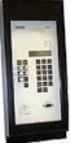 ABB Automation Inc. Substation Automation and Protection Division Coral Springs, FL 33065 Instruction Leaflet 41-348.11C Effective: November 1999 Supersedes I.L. 41-348.11B, Dated August 1986 ( ) Denotes
Equipment: Power Supply, DAI, Synchronous motor (8241), Electrodynamometer (8960), Tachometer, Timing belt.
 Lab 9: Synchronous motor. Objective: to examine the design of a 3-phase synchronous motor; to learn how to connect it; to obtain its starting characteristic; to determine the full-load characteristic of
The following table shows approximate percentage wise the
 SHORT-CIRCUIT CALCULATION INTRODUCTION Designing an electrical system is easy and simple, if only the normal operation of the network is taken into consideration. However, abnormal conditions which are
Specifying a Variable Frequency Drive s
 Specifying a Variable Frequency Drive s Put on by Bruce Reeves and Jeremy Gonzales Dykman Electrical Covering the Western US For all of your VFD and Soft Start and Motor Needs How To Specify a Variable
Reactive Power and Importance to Bulk Power System OAK RIDGE NATIONAL LABORATORY ENGINEERING SCIENCE & TECHNOLOGY DIVISION
 Reactive Power and Importance to Bulk Power System OAK RIDGE NATIONAL LABORATORY ENGINEERING SCIENCE & TECHNOLOGY DIVISION Outline What is Reactive Power and where does it come from? Why is it important?
RC NETWORKS SALES GUIDE
 SALES GUIDE INTRODUCTION TO Recent developments in electronic equipment have shown the following trends: Increasing demands for numerical control machines, robotics and technically advanced appliances
Cahier technique no. 196
 Collection Technique... Cahier technique no. 196 Integration of local power generation in industrial sites and commercial buildings T. Hazel "Cahiers Techniques" is a collection of documents intended for