
15. GRIMMIACEAE Arnott
|
|
|
- Theresa Lane
- 9 years ago
- Views:
Transcription
1 15. GRIMMIACEAE Arnott Roxanne I. Hastings Ryszard Ochyra Plants acrocarpous or cladocarpous, small to large, usually olivaceous to blackish green, growing in rigid cushions, tufts, mats or patches. Stems erect, ascending, or prostrate, dichotomously to irregularly branched. Leaves erect and tightly appressed to crisped when dry, erect-spreading to patent when wet, lanceolate to ovate-lanceolate, less often ovate, oblong-ovate, linear, or lingulate, keeled, canaliculate, to broadly concave, smooth or sometimes longitudinally plicate, rarely with adaxial lamellae (Indusiella), margins plane, incurved, or variously recurved or revolute, mostly entire, 1- to multistratose, acuminate, acute to rounded-obtuse, typically with a hyaline awn, sometimes muticous, costa single, rarely spurred or forked distally (Codriophorus and Niphotrichum), usually strong, percurrent to excurrent, rarely subpercurrent, typically with one stereid band, distal lamina 1 2( 4)-stratose; basal cells quadrate to elongate, rarely oblate, straight, sinuose, or nodulose, basal juxtacostal and marginal regions usually differentiated, alar cells undifferentiated or hyaline; mid leaf cells quadrate to elongate, commonly sinuose or sinuose-nodulose, usually thick-walled. Perichaetia terminal on tips of stems or lateral branches; perichaetial leaves differentiated or not. Seta short to long, smooth or rarely papillose. Capsule usually erect, usually ovoid, obloid, cylindrical or cupulate, symmetric or rarely strongly ventricose at the base and gibbous, smooth or sulcate; annulus present or absent, often compound, deciduous or persistent; operculum mammillate to long-rostrate, sometimes attached to the columella after dehiscence (most Schistidium); peristome present, seldom rudimentary or absent, consisting of 16 teeth, lanceolate to linear, entire, perforated or cribrose, variously split into 2 or 3 unequal prongs or divided nearly to the base into two filiform somewhat paired segments, smooth or variously ornamented. Calyptra small to large, covering only the operculum to half or more of the capsule, cucullate, mitrate, or mitrate-campanulate, smooth or plicate, naked, sometimes papillose, slightly to distinctly lacerated or deeply lobed at the base. Spores globose, smooth or papillose. Genera ca. 11, species ca. 325 (9 genera, 109 species in the flora): worldwide. Most species in the Grimmiaceae are xerophytic and colonizers of bare, usually dry and exposed rocks and stones, forming predominantly dark green to blackish cushions or tufts. However, some species occur on wet or damp rocks along watercourses and lakes or in seepage sites. They rarely inhabit soil and only a few species are epiphytes. 204

2 GRIMMIACEAE 205 The Grimmiaceae is classically distinguished by quadrate to short-rectangular mid leaf cells typically sinuose to nodulose and thick-walled, and leaves usually awned, often with the awns long and toothed or papillose. There is a wide range of variation. While awns are present in most species, length varies from a short, translucent apiculus to exceeding the length of the lamina. Awns can be flat or terete, smooth or denticulate, spinose or papillose, and longdecurrent or not. Similarly, mid leaf cells range from oblate to long-rectangular and sinuose to almost straight. The range of variation in these characters makes it difficult to describe this family in simple and unequivocal terms. The generic classification within the Grimmiaceae has long been a subject of controversy. In traditional treatments the family is considered to include the two largest genera, Grimmia and Racomitrium, with several peripheral, mostly mono- or oligotypic genera, including Aligrimmia R. S. Williams, Coscinodon, Coscinodontella R. S. Williams, Indusiella, Jaffueliobryum, and Leucoperichaetium Magill. A number of segregates have been split from the large and heterogeneous Grimmia, namely Dryptodon Bridel,. Guembelia Hampe, Hydrogrimmia (I. Hagen) Loeske, Orthogrimmia (Schimper) Ochyra & Zarnoweic, Schistidium, and Streptocolea I. Hagen. In this treatment, only Schistidium is accepted. Racomitrium has been divided into four sharply delimited genera and the group is recognized at the subfamily level. R. Ochyra et al. (2003) used two peristome types to divide Grimmiaceae into two subfamilies, Grimmioideae and Racomitrioideae. The Schistidium-type peristome defines the Grimmioideae. This peristome has lanceolate teeth that are entire or perforate and distally usually split into two or three unequal prongs that are smooth to ornamented. They have a distinctly thick and trabeculate abaxial side and a thin adaxial side. There is no basal membrane. In the Racomitrium-type peristome, which defines the Racomitrioideae, the teeth are linear and divided nearly to the base into two filiform branches. The teeth are equally thickened and less prominently trabeculate on both adaxial and abaxial sides. They usually arise from a low, basal membrane and often have a prostome. SELECTED REFERENCES Churchill, S. P A phylogenetic analysis, classification and synopsis of the genera of the Grimmiaceae (Musci). Advances Cladist. 1: Jones, G. N Grimmiaceae. In: A. J. Grout. Moss Flora of North America, North of Mexico. 3 vols. in 12 parts. Newfane, Vt. and New York. Vol. 2, pp Acrocarpous; stems erect to ascending, with or without central strand; basal cells of lamina without spiral thickenings, insertion concolorous with distal cells or hyaline; costa in transverse section with 2 or occasionally with 3 6 adaxial cells near base, usually not markedly larger than abaxial cells; autoicous or dioicous; peristome teeth without basal membrane, entire or divided distally; epidermal cells of vaginula with straight walls a. Grimmiaceae subfam. Grimmioideae, p Cladocarpous or rarely acrocarpous; stems often prostrate, without central strand; basal cells of lamina often with spiral thickenings, forming a colored strip along the insertion; costa in transverse section with (2 )3 15 adaxial cells near base, much larger than abaxial cells; dioicous; peristome teeth mostly with basal membrane, cleft into 2 3 filiform branches at least to middle or irregularly divided in distal portion; epidermal cells of vaginula with sinuose-nodulose walls b. Grimmiaceae subfam. Racomitrioideae, p a. GRIMMIACEAE Arnott subfam. GRIMMIOIDEAE Brotherus in H. G. A. Engler and K. Prantl, Nat. Pflanzenfam. 215(I,3): (as Grimmieae) Plants acrocarpous. Stems erect, central strand present or absent. Leaves erect or distally curved, rarely crisped, broadly oblong ovate, ovate-lanceolate, or narrowly lanceolate; margins plane, incurved or recurved, entire to occasionally denticulate distally, costa entire distally, percurrent

3 206 GRIMMIACEAE to excurrent, smooth, in transverse section semi-terete, occasionally terete, elliptical or reniform, with 2 or occasionally with 3 6 adaxial cells near base, usually not markedly larger than abaxial cells, often excurrent as a long awn, awn smooth to toothed but not papillose; laminal cells smooth, mammillose, or papillose; basal cells quadrate to elongate, straight to sometimes sinuous, rarely sinuose-nodulose, thin- to thick-walled, without spiral thickenings, hyaline along insertion or concolorous with more distal basal cells; mid leaf cells mainly quadrate, to short rectangular, often sinuose but not sinuose-nodulose. Specialized asexual reproduction absent or occasionally present as gemmae borne in axils of distal leaves or on leaf tips. Sexual condition autoicous or dioicous. Seta short to long, straight, arcuate, or sigmoid, smooth, one per perichaetium; vaginula with straight epidermal cells. Capsule usually erect, rarely pendent, immersed to longexserted, symmetric to ventricose, ovoid, obloid or cylindrical, sometimes globose, smooth or distinctly striate; stomata present or absent; annulus persistent or deciduous; operculum mammillate to long-rostrate; peristome absent basal membrane, distinctly thicker and trabeculate on the abaxial side, entire or split distally. Calyptra cucullate, mitrate, or mitrate-campanulate, smooth or plicate, not papillose, covering operculum to entire capsule. Genera ca. 8, species ca. 250 (5 genera, 81 species in the flora): worldwide. Species of Grimmioideae are separated from those of the Racomitrioideae by features of the peristome, leaf cells that are straight to sinuose, and awns that are smooth to toothed. The Racomitrioideae have leaf cells that are strongly sinuose-nodulose, and awns that are sometimes smooth but are often papillose. The leaf attachments of the Racomitrioideae are brightly colored whereas those of Grimmioideae are hyaline or concolorous with the rest of the lamina (except Grimmia leibergii and G. attenuata which are yellow or orange). All Racomitrioideae have a straight or slightly arcuate seta that can be either smooth or papillose. Their capsules are smooth or almost so. In Grimmioideae the seta can be straight, arcuate, or sigmoid and are always smooth; capsules range from smooth to deeply plicate. SELECTED REFERENCE Deguchi, H A revision of the genera Grimmia, Schistidium, and Coscinodon (Musci) in Japan. J. Sci. Hiroshima Univ., Ser. B, Div. 2, Bot. 16: Columella usually attached to operculum and deciduous with it; calyptra small, covering only operculum, mitrate or cucullate, smooth; capsule immersed to emergent; seta straight; leaf margins plane to recurved Schistidium, p Columella not attached to operculum; calyptra small to large, mitrate, cucullate or erose, smooth or plicate; capsule exserted, occasionally immersed; seta straight, sigmoid or arcuate; leaf margins plane, recurved, or incurved. 2. Entire lamina beyond the base spirally inrolled; leaves muticous or with a hyaline apiculus of one or two cells, cucullate; known only from Alaska Indusiella, p Laminal margins beyond the base plane, recurved or incurved but never inrolled; leaves usually awned, rarely muticous, rarely cucullate; widely distributed. 3. Calyptra less than 1 /2 length of capsule, cucullate or mitrate, smooth; awns on distal leaves usually shorter than lamina; perichaetial leaves enlarged or not Grimmia, p Calyptra large, covering at least 1 /2 of capsule, campanulate-mitrate, plicate; awns on distal leaves typically longer than lamina; perichaetial leaves enlarged. 4. Stem leaves oval to ovate-lanceolate, keeled distally, plicate or not; distal lamina 1- or 2-stratose; plants olivaceous to blackish green; acidophilic Coscinodon, p Stem leaves ovate to obovate, concave or only somewhat keeled distally, not plicate; distal lamina 1-stratose; plants yellow-green to dark olivaceous; calciphilic Jaffueliobryum, p. 262

4 Schistidium GRIMMIACEAE SCHISTIDIUM Bruch & Schimper, Bryol. Europ. 3: , name conserved [Greek schistos, split or divided, and -idium, diminutive, alluding to peristome] Terry T. McIntosh Plants (3 )10 40( 180) mm, in dense cushions to loose mats, olivaceous, green, brown, or black, often with yellow, orange, or red tones. Leaves ovate-lanceolate, occasionally ovate-triangular, less commonly lanceolate to linear-lanceolate or elliptical to ligulate, keeled or concave proximally, sharply keeled or nearly flat distally, margins recurved, rarely plane or incurved, distal lamina usually 1-stratose or 2-stratose in striae or patches, rarely 2-stratose, specialized laminal and marginal chlorophyllose structures absent, muticous to long-awned, sometimes ending in a fleshy, multistratose apiculus; basal cells rectangular, with straight or sinuose and thin to thick cell walls; mid leaf and distal cells quadrate, rectangular, or ovate, rarely subtriangular, smooth or papillose, usually sinuose and thick-walled. Gemmae absent. Sexual condition autoicous, rarely dioicous; perichaetial leaves usually enlarged. Seta short, straight. Capsule erect, immersed, symmetric, cylindric or campanulate; annulus rudimentary or absent; operculum rostrate or rarely mamillate, usually falling attached to columella (except S. trichodon). Calyptra cucullate or mitrate, not erose, not fully covering operculum, smooth. Species ca. 120 (30 in the flora): North America, Mexico, Central America, South America, Eurasia, Africa, Atlantic Islands, Pacific Islands, Australia, Antarctica. The genus Schistidium has consistently fascinated yet confounded bryologists across North America. Treatments vary from region to region, and names applied to specimens at both the species and varietal levels have been as inconsistent as the characters used to differentiate the taxa. The treatment of the S. apocarpum complex by H. H. Blom (1996) and a survey of Nordic species of Schistidium (Blom 1998) assist in a better understanding of the taxonomy of this complex genus in North America, but many problems of taxonomic interpretation remain. Although Schistidium offers a great number of both gametophytic and sporophytic characters for study, some traits are not well understood and further detailed field and laboratory research is needed. This treatment follows H. Deguchi (1979) and H. H. Blom (1996, 1998), with reservations. For example, North American specimens identified as Schistidium recurvum H. H. Blom seem to differ from the type in significant character states (Blom, pers. comm.), so this species has been omitted. Schistidium lancifolium H. H. Blom and S. umbrosum (J. E. Zetterstedt) H. H. Blom have been included within S. apocarpum. Although S. ambiguum Sullivant has been reported from North America and may be present, all of the North American collections named S. ambiguum that were examined have proved to be another species. When examining a specimen of Schistidium certain steps are helpful. It is important to examine the leaves proximal to the perichaetial region. Transverse-sections from the distal region to mid leaf of multiple leaves are also critical in most cases. The necessity of numerous transversesections is apparent when studying S. papillosum or S. boreale, for example, as some leaves can be slightly papillose and unless numerous sections are made the papillae may be missed. Mature, empty capsules that are not overly degraded, although not always available, should be used. Transverse-sections of the capsules assist in the easier examination of the exothecial cells and peristome teeth. It is also useful to examine more than one capsule if available, as there can be some variation in exothecial cell makeup. As H. H. Blom (1996) pointed out, mixed

5 208 GRIMMIACEAE Schistidium populations are present in some sites, especially in more humid areas, so care must be taken to ensure that all species in a collection are separated. Blom also provided a great amount of supplementary detail about many of the species treated here. SELECTED REFERENCES Allen, B Maine Mosses: Sphagnaceae Timmiaceae. Mem. New York Bot. Gard. 91. Blom, H. H A revision of the Schistidium apocarpum complex in Norway and Sweden. Bryophyt. Biblioth. 49. Blom, H. H Schistidium. In: E. Nyholm Illustrated Flora of Nordic Mosses. 4+ fasc. Lund. Fasc. 4, pp Bremer, B A taxonomic revision of Schistidium (Grimmiaceae, Bryophyta) Lindbergia 6: 1 16, Bremer, B A taxonomic revision of Schistidium (Grimmiaceae, Bryophyta) 3. Lindbergia 7: Leaf costa with one to two well-developed stereid bands; restricted to coastal areas, often within or near the spray zone Schistidium maritimum 1. Leaf costa stereid bands absent; sometimes found in coastal areas, but rarely within or near the spray zone. 2. Plants usually in extensive open tufts or mats over soil, litter, and amongst plant bases in arctic fens and tundra, often along drainage channels Schistidium holmenianum 2. Plants usually on rock. 3. Costa excurrent as a fleshy, multistratose apiculus, rarely tipped with a tiny denticulate awn. 4. Leaves ovate-lanceolate, mostly erect or erect-incurved when dry, keeled throughout; fleshy apiculus short and indistinct; dioicous, sporophytes rare Schistidium crassithecium 4. Leaves linear-lanceolate to ovate-lanceolate, usually curved to falcate, or falcatesecund when dry, weakly keeled distally or concave throughout; fleshy apiculus prominent on most leaves; autoicous, sporophytes common. 5. Lamina mostly 2-stratose distally, with 2-stratose strips extending to the leaf base adjacent to the costa Schistidium cinclidodonteum 5. Lamina mostly 1-stratose Schistidium occidentale 3. Costa sub-percurrent or excurrent as an awn, never as a fleshy, multistratose apiculus. 6. Dioicous, sporophytes rare; leaves erect and usually imbricate when dry; distal lamina evenly to irregularly 2-stratose; long awns present on most leaves; plants usually fragile, with individual stems easily separated. 7. Leaves usually ovate-lanceolate, mostly greater than 1.5 mm; distal lamina evenly 2-stratose; margins plane to incurved, awns usually straight Schistidium heterophyllum 7. Leaves usually ovate-triangular, mostly less than 1.5 mm; distal lamina unevenly 2-stratose; margins recurved; awns usually flexuose Schistidium tenerum 6. Autoicous, sporophytes usually present; leaves often curved and somewhat spreading, occasionally imbricate when dry; distal lamina 1- or 2-stratose; awns present or absent; plants not fragile. 8. Distal laminal cells papillose, mainly on abaxial surface. 9. Awns coarsely spinulose, often strongly decurrent; laminal cells usually strongly papillose with tall, thick papillae often on both abaxial and adaxial surfaces; Arctic species Schistidium frisvollianum 9. Awns finely and distantly spinulose or nearly smooth, weakly decurrent or non-decurrent; laminal cells weakly papillose with short papillae mainly on abaxial surface; widespread or more southern species. 10. Plants usually red-brown (rusty), rarely black or olivaceous; leaves ± imbricate proximal to the stem apex when dry; capsule usually cupulate Schistidium strictum 10. Plants olivaceous, sometimes partially reddish brown or dull black; leaves not imbricate proximal to the apex when dry; capsule usually cylindric.

6 Schistidium GRIMMIACEAE Plants usually dull black, usually purplish when wet; leaf cells with reddish or orange walls; capsule narrowed towards the mouth Schistidium boreale 11. Plants usually olivaceous, sometimes with reddish tones, rarely nearly black, not purplish when wet; leaf cells with hyaline walls; capsule rarely contracted towards the mouth Schistidium papillosum [8. Shifted to left margin. Ed.] 8. Distal laminal cells smooth (note: distal abaxial costal cells and leaf margins near awn sometimes papillose). 12. Plants usually along water courses and lakes, often submerged or in splash zones, sometimes along seasonally irrigated ledges or cliffs; costa usually sub-percurrent or percurrent, sometimes excurrent as a hyaline cell, awns rare; capsule often campanulate; spores large, usually greater than 15 µm. 13. Leaves linear-lanceolate to ligulate, usually nearly flat distally; margins plane or weakly recurved, usually 1-stratose, smooth or weakly crenulate at apex Schistidium agassizii 13. Leaves ovate-lanceolate to ovate-triangular, keeled distally; margins recurved to revolute, usually 2-stratose, denticulate or smooth distally. 14. Capsule often campanulate, never narrowed towards the mouth; stems often greater than 5 mm; leaves mm Schistidium rivulare 14. Capsule short-cylindric or ovoid, never campanulate, usually slightly narrowed towards the mouth; stems rarely greater than 2 mm; leaves mm Schistidium subjulaceum (in part) 12. Plants usually in drier habitats; costa percurrent or excurrent as an awn; capsule cylindric or cupulate, rarely campanulate; spores small, usually less than 15 µm. 15. Leaves ovate-ligulate to ovate-lanceolate, often with rounded apices, mostly less than 0.7 mm; awns usually absent; capsule short, usually less than 0.6 mm Schistidium atrichum 15. Leaves mostly ovate-lanceolate, apices usually acute, usually greater than 1 mm; awns present in most species, sometimes absent; capsule usually greater than 0.7 mm. 16. Peristome absent, rudimentary, or very short (less than 100 µm). 17. Leaves partially or completely 2-stratose distally; leaves moderately keeled distally; found only on calcareous rock Schistidium atrofuscum 17. Leaf lamina 1-stratose, rarely with a few 2-stratose striae; leaves strongly keeled distally; not restricted to calcareous rock. 18. Capsule usually campanulate; operculum rostrate; arctic species Schistidium cryptocarpum 18. Capsule cupulate; operculum mamillate; central North American species Schistidium flaccidum 16. Peristome well-developed (greater than 200 µm). 19. Peristome teeth long, to 700 µm, sometimes forming a dome; columella persistent in capsule, not falling with operculum Schistidium trichodon 19. Peristome teeth usually much shorter, never forming a dome; columella falling with operculum. 20. Plants small, often forming flattish cushions or tufts; awns very short to absent; capsule less than 1 mm, if taller then distinctly striate (S. dupretii). 21. Basal marginal cells often elongate-rectangular; some central basal cells usually much lighter than adjacent cells, often hyaline; exothecial cells mostly oblate or isodiametric Schistidium frigidum (in part) 21. Basal marginal cells quadrate or short-rectangular; basal cells evenly colored; many exothecial cells elongate.
![............................................. 22. Schistidium papillosum [8. Shifted to left margin. Ed.] 8.](/docs-images/48/19131058/images/page_6.jpg "Distal laminal cells smooth (note: distal abaxial costal cells and leaf margins near awn sometimes papillose). 12.")
7 210 GRIMMIACEAE Schistidium 22. Capsule ovoid or cupulate, rarely campanulate, rarely striate; basal marginal cells quadrate or short-rectangular, transverse walls usually thicker than longitudinal walls; plants compact, usually olivaceous Schistidium confertum 22. Capsule short-cylindrical, usually finely striate when empty; most basal marginal cells oblate, cell walls evenly thickened; plants open, usually brownish Schistidium dupretii [20. Shifted to left margin. Ed.] 20. Plants small to large, usually forming rounded cushions, tufts, or mats; awns well developed, occasionally absent; capsules usually greater than 1 mm. 23. The majority of exothecial cells of capsule wall elongate, sometimes mixed with isodiametric and, rarely, oblate cells. 24. Leaves ovate-triangular, occasionally ovate-lanceolate, mostly well under 1.7 mm. 25. Distal lamina 1-stratose, occasionally with 2-stratose striae or patches; awns usually absent; capsule light (yellow-) brown, usually narrowed towards the mouth Schistidium subjulaceum (in part) 25. Distal lamina with 2-stratose patches or 2-stratose; awns usually present; capsule red-brown, not narrowed towards the mouth Schistidium venetum 24. Leaves ovate-lanceolate, mostly greater than 2 mm. 26. Leaf margins recurved to well below apex; distal lamina with 2-stratose patches or occasionally 2-stratose; distal laminal cells mostly rounded or shortrectangular, weakly sinuose; basal marginal cells longitudinally short-rectangular or quadrate Schistidium crassipilum 26. Leaf margins recurved to near apex; distal lamina 1-stratose, rarely with 2- stratose striae; distal laminal cells mostly short-rectangular, strongly sinuose; many basal marginal cells oblate Schistidium robustum 23. The majority of exothecial cells more or less isodiametric, often mixed with oblate cells, elongate cells few or absent. 27. Capsule mm; awns long, spinulose-denticulate; basal marginal cells with transverse walls thicker than longitudinal walls Schistidium liliputanum 27. Capsule usually 0.8 mm to 1.3 mm; awns short to long, weakly spinulose or nearly smooth; transverse basal marginal cells walls same thickness as longitudinal walls. 28. Leaves small, most well under 2 mm; costa smooth; some basal marginal cells elongate-rectangular; some basal cells usually much lighter than adjacent cells, often hyaline Schistidium frigidum (in part) 28. Leaves larger, usually greater than 2 mm; distal abaxial costa sometimes papillose; basal marginal cells quadrate or short-rectangular; basal cells the same color. 29. Distal leaf cells µm wide; spores µm; Arctic Schistidium grandirete 29. Distal leaf cells 8 10 µm wide; spores µm, rarely larger; widespread. 30. Awns bright white, usually strongly decurrent; distal laminal cells variable in shape and size, strongly trigonous, often guttulate, occasionally, with stellate lumina, especially at mid leaf Schistidium pulchrum 30. Awns dull and hyaline, strongly or non-decurrent; distal laminal cells more-or-less even in size and shape, trigones weak or absent, not guttulate or stellate. 31. Leaves ovate-lanceolate, erect or curved, rarely (falcate-)secund when dry, often greater than 2.4 mm; distal leaf margins usually denticulate; abaxial surface of costa usually papillose Schistidium apocarpum 31. Leaves narrowly ovate-lanceolate, usually curved, often falcatesecund when dry, less than 2.4 mm; distal leaf margins and costa smooth Schistidium flexipile

8 Schistidium GRIMMIACEAE Schistidium agassizii Sullivant & Lesquereux, Musc. Hepat. U.S., Grimmia agassizii (Sullivant & Lesquereux) Jaeger & Sauerbeck; G. alpicola Hedwig Plants in open, rarely compact tufts or mats, dark olivaceous, sometimes brownish or black. Stems (0.9 ) ( 5) cm, central strand absent or indistinct. Leaves erect or curved, often toward stem, sometimes contorted when dry, linearlanceolate to ligulate, sometimes oblong-lanceolate, weakly keeled or concave proximally, usually nearly flat distally, sometimes concave or rarely weakly keeled, mm, 1-stratose; margins plane or weakly recurved proximally, plane, rarely incurved distally, smooth or weakly crenulate, sometimes eroded distally, usually 1- stratose, occasionally partly 2-stratose; apices obtuse or acute, sometimes ending in a hyaline cell; costa subpercurrent or percurrent, awn absent, smooth; basal marginal cells short-rectangular or quadrate; distal laminal cells quadrate or short-rectangular, often rounded, (7 )9 12 µm wide, smooth, weakly sinuose. Sexual condition autoicous. Capsule light brown, rarely almost black, campanulate, rarely cupulate, ( 1.5) mm; exothecial cells isodiametric or slightly elongate, often round or irregularly angular, walls thick, often somewhat curved, trigonous; rim darker than capsule wall, sometimes red; stomata absent; peristome squarrose to revolute, µm, red or orange-red, finely papillose, moderately to strongly perforated. Spores 10 18( 25) µm, smooth or granulose. Capsules mature late spring to early summer. Wet or dry rocks in or along water courses and lakes; low to high elevations ( m); Greenland; Alta., B.C., N.B., N.S., Ont., Yukon; Alaska, Calif., Colo., Idaho, Maine, Md., Mass., Mich., Minn., Mont., N.Y., Oreg., Utah, Wash., Wyo.; Eurasia. Schistidium agassizii is sometimes confused with S. rivulare, another dark species found along watercourses. It differs in having linear-lanceolate, almost straight-sided, and distally nearly flat leaves, with plane or weakly recurved margins. The leaves of S. rivulare are often lighter in color, ovate-lanceolate to ovate-triangular, and always distally keeled with recurved margins. Also, S. rivulare usually forms much larger patches than does S. agassizii. New leaves of S. agassizii are often yellowgreen or brownish, somewhat concave-keeled distally, and are somewhat julaceous, forming finger-like projections at the tips of stems. Schistidium subjulaceum is another similar species that grows along watercourses but is distinguished from S. agassizii by the same vegetative characters that separate the latter from S. rivulare, as well as by its smaller, often lighter colored, and shortcylindrical or ovoid capsules. 2. Schistidium apocarpum (Hedwig) Bruch & Schimper, Bryol. Europ. 3: Grimmia apocarpa Hedwig, Sp. Musc. Frond., ; Schistidium lancifolium H. H. Blom; S. umbrosum (J. E. Zetterstedt) H. H. Blom Plants in open tufts or mats, olivaceous to brownish (black), sometimes with yellowish tones. Stems cm, central strand weak or absent. Leaves erect or curved, rarely (falcate-) secund when dry, ovate-lanceolate, sharply keeled distally, (1.3 ) ( 3.2) mm, 1-stratose or rarely 2-stratose in striae distally; margins usually recurved throughout or to just before the apex, usually denticulate distally, 1 or 2-stratose; apices acute or subobtuse; costa percurrent or excurrent as a smooth or weakly denticulate, occasionally decurrent awn, abaxial surface often papillose; basal marginal cells usually quadrate; distal laminal cells mostly short-rectangular, 8 10 µm wide, smooth, sinuose. Sexual condition autoicous. Capsule dark red or brown, short-cylindric, mm; exothecial cells usually quadrate, sometimes mixed with short-elongate or oblate cells, thin-walled, usually trigonous; stomata present; peristome patent or erect, often twisted, ( 700) µm, red, densely papillose, usually perforated. Spores 11 14( 19) µm, granulose or smooth. Capsules mature late spring to early summer. Rocks in somewhat shaded habitats; low to moderate elevations ( m); Greenland; Alta., B.C., N.B., Nfld. and Labr. (Nfld.), N.S., Ont., Que.; Alaska, Mich., N.Y., Vt., Wash., Wis.; Eurasia. Although H. H. Blom (1996) considered Schistidium apocarpum to be restricted in the flora area to the eastern portions of North America, it is more widespread and scattered across the continent. The denticulate leaf margins, papillose abaxial costal surface, short-cylindrical capsules, and the thin-walled, often evenly quadrate exothecial cells are distinguishing characters. The long peristome teeth are also useful in identifying S. apocarpum. In good condition the peristome can only be confused with that of S. trichodon, which differs in the darker, often black color of its plants, the peristome teeth often forming a dome, and the cylindrical capsules that retain the columella.

9 212 GRIMMIACEAE Schistidium SCHISTIDIUM 3. Schistidium atrichum (Müller Hal. & Kindberg) W. A. Weber, Phytologia 33: Grimmia atricha Müller Hal. & Kindberg in J. Macoun and N. C. Kindberg, Cat. Canad. Pl., Musci, Plants in compact, often flat cushions or tufts, olivaceous, brown, or black. Stems ( 1.5) cm, central strand absent. Leaves erect, often curved towards stem when dry, ovate-ligulate to ovate-lanceolate, usually concave proximally, moderately keeled distally, ( 0.8) mm, 1-stratose, sometimes with a few 2-stratose striae distally; margins plane or recurved to just before the apex, smooth, 1-stratose or 2-stratose, rarely 3- stratose; apices rounded or sub-acute; costa subpercurrent or percurrent, rarely excurrent as a tiny, weakly papillose awn, smooth; basal marginal cells quadrate or short-rectangular; distal laminal cells ovate or short-rectangular, 7 9 µm wide, smooth, sinuose. Sexual condition autoicous. Capsule dark red-brown or light brown, short-cylindric or cupulate, rarely slightly wider at the mouth, ( 0.8) mm, occasionally finely ribbed when dry; exothecial cells of various shapes, mainly elongate or isodiametric, walls thin or unevenly thickened, straight or curved, sometimes trigonous; stomata absent; peristome erect or patent, µm, red-brown or red, papillose, weakly perforated. Spores 8 11 µm, smooth. Capsules mature late spring to early summer. Dry, often shaded mainly limestone rocks; usually high elevations; Alta., B.C.; Alaska, Calif., Colo., Idaho, Mont., Oreg., Utah, Wash. Schistidium atrichum is the smallest North American species in the genus. Along with the small size of its leaves, stems, and capsules, the usual lack of awns on vegetative leaves and its habit of forming small, often flat cushions help to distinguish it. S. Flowers (1973) noted strong similarities between S. atrichum and S. dupretii, but the larger size and the consistently ribbed capsules separate S. dupretii.

10 Schistidium GRIMMIACEAE Schistidium atrofuscum (Schimper) Limpricht, Laubm. Deutschl. 1: Grimmia atrofusca Schimper, Syn. Musc. Eur. ed. 2, Plants in compact cushions or tufts, dark brown(-olivaceous) or near black. Stems cm, central strand distinct. Leaves usually erect, occasionally slightly curved, sometimes towards stem when dry, ovate-triangular to ovate-lanceolate, moderately keeled distally, mm, with 2-stratose patches or striae or 2-stratose distally; margins weakly recurved to just before the apex, distal half often plane, proximally often more broadly recurved on one side of leaf, 2- or 3-stratose; apices obtuse or subacute; costa sub-percurrent or percurrent, rarely excurrent as a tiny awn, smooth; basal marginal cells quadrate with transverse walls sometimes thicker than longitudinal walls; distal laminal cells usually rounded or shortrectangular, 6 9 µm wide, smooth, weakly sinuose. Sexual condition autoicous. Capsule orange- or redbrown, often yellowish, short cylindric or cupulate, mm; exothecial cells primarily elongate mixed with patches of irregularly angular isodiametric cells, walls sometimes unevenly thickened and curved; stomata absent; peristome patent, very short, µm, or rudimentary, orange or orange-red, densely papillose, strongly perforated and unevenly margined. Spores 11 15( 19) µm, granulose or smooth. Capsules mature late spring to early summer. Open to somewhat shaded limestone; moderate to high elevations ( m); Alta., N.Mex.; Eurasia. Schistidium atrofuscum may be the rarest North American species of the genus. It is characterized by its dark brown or nearly black, compact cushions or tufts, mostly erect, moderately keeled leaves, often 2-stratose distal lamina, and the short or rudimentary, strongly perforated peristome. G. N. Jones (1933) listed this species from Tennessee, but that has not been confirmed. 5. Schistidium boreale Poelt, Svensk Bot. Tidskr. 47: 256, fig. 1b, e Plants in open tufts or mats, dull black, often yellowish green distally, usually purplish when wet, especially in older portions of stems. Stems cm, central strand absent or indistinct. Leaves erect proximally, usually slightly curved distally, rarely somewhat secund when dry, ovate-lanceolate, sharply keeled distally, mm, 1-stratose; margins usually recurved throughout, denticulate distally, 1- or 2-stratose; apices acute; costa percurrent or excurrent as a denticulate, occasionally weakly decurrent awn, abaxial surface papillose; basal marginal cells quadrate or oblate, often trigonous; distal laminal cells mostly shortrectangular or quadrate, 8 10 µm wide, papillose, strongly sinuose with reddish or orange walls. Sexual condition autoicous. Capsule red-brown, sometimes orange-brown, ovoid-cylindric, narrowed to the mouth, mm, rarely striate when old; exothecial cells mostly isodiametric, mainly more or less quadrate, usually mixed with a few short-elongate or oblate cells, thinwalled, with small trigones; stomata present; peristome patent or erect, dark-red or red, µm, densely papillose, entire or slightly perforated. Spores µm, granulose. Capsules mature late spring to early summer. Somewhat shaded granite or limestone ledges; low to high elevations ( m); Alta., B.C., N.W.T., Ont., Que., Sask.; Alaska, Colo.; Eurasia. Schistidium boreale is one of the five species of the genus in North America with papillose distal laminal cells. The combination of its dull black color, usually turning purplish when wet, reddish or orange laminal cell walls, and ovoid-cylindrical capsules that are narrowed at the mouth separates this species from the other papillose taxa. Schistidium papillosum is usually olivaceous and lacks colored cell walls; S. strictum is usually a dull red-brown, has cupulate capsules, and appears to be restricted to northwestern, coastal areas, and S. frisvollianum, an arctic species, is more strongly ornamented. None of these three taxa turns purple when wet. Schistidium maritimum occasionally has papillose distal laminal cells. That species, however, is restricted to coastal areas, its leaves are ovate-lanceolate to linear-lanceolate with 2- stratose distal laminae, and its costa has one or two welldeveloped stereid bands, which are absent in all other North American species of the genus.

Common Name: AMERICAN BARBERRY. Scientific Name: Berberis canadensis Miller. Other Commonly Used Names: none. Previously Used Scientific Names: none
 Common Name: AMERICAN BARBERRY Scientific Name: Berberis canadensis Miller Other Commonly Used Names: none Previously Used Scientific Names: none Family: Berberidaceae (barberry) Rarity Ranks: G3/S1 State
PICTURES TO HELP WITH IDENTIFICATION OF FUCUS SPECIES FROM THE BRITISH ISLES
 PICTURES TO HELP WITH IDENTIFICATION OF FUCUS SPECIES FROM THE BRITISH ISLES Compiled by HOLLY BROWN and MARTIN WILKINSON, School of Life Sciences, Heriot-Watt University, Edinburgh, Scotland Although
A NEW LARGE-FLOWERED ODONTOGLOSSUM (ORCHIDACEAE: ONCIDIINAE) FROM THE CUSCO REGION IN PERU
 LANKESTERIANA 13(3): 395 399. 2014. A NEW LARGE-FLOWERED ODONTOGLOSSUM (ORCHIDACEAE: ONCIDIINAE) FROM THE CUSCO REGION IN PERU Stig Dalström 1,3 & Saul Ruíz Pérez 2 1 2304 Ringling Boulevard, unit 119,
A Morphological Study On Endemic Malabaila lasiocarpa Boiss. (Apiaceae) From Bingol (Turkey)
 Araştırma Makalesi/Research Article A Morphological Study On Endemic Malabaila lasiocarpa Boiss. (Apiaceae) From Bingol (Turkey) Ömer KILIÇ 1 Abstract- In this study morphological characters of Malabaila
THE GENUS BRYUM (BRYACEAE, MUSCI) IN HUNGARY
 Studia bot. hung. 44, pp. 5 192, 2013 THE GENUS BRYUM (BRYACEAE, MUSCI) IN HUNGARY P. Erzberger 1 and W. Schröder 2 1 Belziger Str. 37, D 10823 Berlin, Germany; [email protected] 2 Ludwigsstädter
Geraniaceae geranium family
 Geraniaceae geranium family Long-known for the prized ornamentals and house plants obtained from South African species. Nova Scotia hosts two genera and a half-dozen species. Most are herbs with lobed
Strawberry Leaf Spot
 Strawberry Leaf Spot Cathy Heidenreich and Bill Turechek Introduction - Leaf spot is one of the most common and widespread diseases of strawberry. Mycosphaerella fragariae is also the cause of black seed
Laboratory Broadleaf Weed Identification
 1 Tips for Identifying Broadleaf Weeds Laboratory Broadleaf Weed Identification The cotyledon is an important identifying characteristic for broadleaf weeds. Shape and position of leaves, presence of pubescence
Trees help us experience connections with our natural heritage and with our most deeply held spiritual and cultural values.
 REASONS FOR PLANTING TREES Shade from trees cools hot streets and parking lots and drive ways. Cities are "heat islands" that are 5-9 degrees hotter than surrounding areas. Trees and shrubs add beauty
Flowers; Seeds enclosed in fruit
 Name Class Date Chapter 22 Plant Diversity Section Review 22-1 Reviewing Key Concepts Short Answer On the lines provided, answer the following questions. 1. Describe the main characteristics of plants.
Dry Bean Types and Development Stages
 Dry Bean Types and Development Stages Two basic plant growth habits are found in dry edible bean: determinate (bush) or indeterminate (vining or trailing). Cultivars may be classified according to plant
Two new species of Mahonia (Berberidaceae) from Yunnan, China
 Ann. Bot. Fennici 46: 469 473 ISSN 0003-3847 (print) ISSN 1797-2442 (online) Helsinki 30 October 2009 Finnish Zoological and Botanical Publishing Board 2009 Two new species of Mahonia (Berberidaceae) from
Invasive Tree Species
 Invasive Tree Species A Contents Invasive Tree Species................. 1 Removal Permit Process.............. 2 Mitigation......................... 3 Identification Guide: Norway maple - Acer platanoides............
10B Plant Systems Guided Practice
 10B Plant Systems Guided Practice Reproduction Station 1 1. Observe Plant A. Locate the following parts of the flower: stamen, stigma, style, ovary. 2. Draw and label the parts of a flower (listed above)
BRYOPHYTES OF THE SANTA MONICA MOUNTAINS. Tarja Sagar 1,2 and Paul Wilson 1
 Flora and Ecology of the Santa Monica Mountains Edited by D.A. Knapp. 2007. Southern California Botanists, Fullerton, CA. 63 BRYOPHYTES OF THE SANTA MONICA MOUNTAINS Tarja Sagar 1,2 and Paul Wilson 1 1
BIOL 1030 TOPIC 5 LECTURE NOTES TOPIC 5: SEEDLESS VASCULAR PLANTS (CH. 29)
 TOPIC 5: SEEDLESS VASCULAR PLANTS (CH. 29) I. Vascular Plants (overview) plants with xylem and phloem 7 or 9 living phyla, depending on who you talk to able to dominate most terrestrial habitats because
Insect identification sheet
 information leaflet Insect identification sheet To enable you to identify the insect you have in your home, we have provided some identification sheets. These depict the most common pest species that you
INTERNATIONAL UNION FOR THE PROTECTION OF NEW VARIETIES OF PLANTS
 TGP/14/2 ORIGINAL: English DATE: October 24, 2013 INTERNATIONAL UNION FOR THE PROTECTION OF NEW VARIETIES OF PLANTS Geneva E Associated Document to the General Introduction to the Examination of Distinctness,
Cercis Ruby Falls. www.planthaven.com. Origin: Redbud breeding program at NCSU Species: Cercis canadensis Protection Status: US PPAF
 Cercis Ruby Falls Origin: Redbud breeding program at NCSU Protection Status: US PPAF Key Features Unique weeping habit. Full crown of foliage at the top. Large heart shaped purple leaves. Attractive reddish-purple
Grade 4 Title: My Name is Magnolia Whittney McCray
 Grade 4 Title: My Name is Magnolia Whittney McCray Student Learning Objective(s): The students will understand why Magnolias are a type of evergreen. The students will create a story based on the information
TerraColor White Paper
 TerraColor White Paper TerraColor is a simulated true color digital earth imagery product developed by Earthstar Geographics LLC. This product was built from imagery captured by the US Landsat 7 (ETM+)
Figure 1: Seagrass structural detail. Differences in leaf shapes, leaf sheaths etc. are characteristics for taxonomic distinction.
 Marine Angiosperms There are a wide variety of marine angiosperms some, such an the mangals, saltmarsh grasses and seagrasses that will either partly or entirely submerged (or submerged dependent on the
Museum Victoria http://museumvictoria.com.au/ CRC National Plant Biosecurity http://www.crcplantbiosecurity.com.au/
 1. PaDIL Species Factsheet Scientific Name: Fusarium oxysporum f.sp. cubense (E.F. Sm.) W.C. Snyder & H.N. Hansen Anamorphic fungi (Ascomycetes) Common Name Panama disease of banana Live link: http://www.padil.gov.au:80/pests-and-diseases/pest/main/136609
PINE BONSAI FOLIAGE CONTROL
 PINE BONSAI FOLIAGE CONTROL By Julian R. Adams Foliage is one of the major elements used in the design of a bonsai. The size and location of foliage on the limbs is of great importance in creating the
Climate, Vegetation, and Landforms
 Climate, Vegetation, and Landforms Definitions Climate is the average weather of a place over many years Geographers discuss five broad types of climates Moderate, dry, tropical, continental, polar Vegetation:
SPECIES DESCRIPTION Picture
 SPECIES DESCRIPTION Picture German Cockroach Cockroach egg case & nymphs 12-15mm (Adult Stage)Mid to dark brown body. Lighter area with 2 dark bars behind head. Wings. Very long antennae. Young are smaller
Pruning Trees. Center for Landscape and Urban Horticulture. University of California Cooperative Extension Central Coast & South Region
 University of California Cooperative Extension Central Coast & South Region Center for Landscape and Urban Horticulture Pruning Trees Pruning Trees at Planting Landscape trees should not be pruned at planting
Deserts, Wind Erosion and Deposition
 Deserts, Wind Erosion and Deposition By definition, a desert has less than 10 in (25 cm) of precipitation per year. Deserts occur at 30 o and 60 o in regions of descending air. Deserts can be hot or cold.
DESCRIBING DESERT, TAIGA, AND TUNDRA BIOMES
 Lesson B5 1 DESCRIBING DESERT, TAIGA, AND TUNDRA BIOMES Unit B. Science and Technology in Wildlife Management Problem Area 5. Desert, Taiga, and Tundra Biomes National Academic Standard. NS.9-12.1 Science
Deficiency Symptoms in Vegetable Plants (Corrective Treatments Per 30ʼ-long Row)
 Deficiency Symptoms in Vegetable Plants (Corrective Treatments Per 30ʼ-long Row) BORON (1-2 ounces Borax) General Symptoms Rosette Crown terminal buds; Death of terminal buds; leaves are an off-green color;
Apricot Tree Prunus armeniaca
 Apricot Tree Prunus armeniaca Up to 25-30 tall x 15-20 wide or partial shade 10 degrees F. General: The Apricot Tree is a subspecies of the peach and dates back 3,000 years to northeastern China. Apricots
Lecture 7: Plant Structure and Function. I. Background
 Lecture 7: Plant Structure and Function I. Background A. Challenges for terrestrial plants 1. Habitat is divided a. Air is the source of CO2 for photosynthesis i. Sunlight cannot penetrate soil b. Soil
Strawberry Anthracnose
 Strawberry Anthracnose Bill Turechek and Cathy Heidenreich Introduction - The term anthracnose is a general term used to describe plant diseases. Strawberry anthracnose refers to several diseases of strawberry
DEVELOPMENT GUIDELINES OAK TREES CARE AND MAINTENANCE
 DEVELOPMENT GUIDELINES OAK TREES CARE AND MAINTENANCE This guide will offer basic information for the preservation and maintenance of oak trees as a part of an overall landscape use. Unfortunately, oak
CHAPTER 2-6 BRYOPHYTA - ANDREAEOPSIDA, ANDREAEOBRYOPSIDA, POLYTRICHOPSIDA
 Glime, J. M. 2013. Bryophyta - Andreaeopsida, Andreaeobryopsida, Polytrichopsida. Chapt. 2-6. In: Glime, J. M. Bryophyte Ecology. 2-6-1 Volume 1. Physiological Ecology. Ebook sponsored by Michigan Technological
The Nonvascular Plants & Seedless Vascular Plants
 The Nonvascular Plants & Seedless Vascular Plants Laboratory 4 Introduction Members of kingdom Plantae are all multicellular organisms exhibiting cellulose cell walls, an alternation of generations life
April s Featured Plants
 Genus: Geum (Avens) Genus of about 50 perennials, mostly with dense clusters of hairy leaves Geum chiloense Species originating from Island of Chiloe, Chile which enjoys a cold, wet climate. These plants
CHAPTER 10 RESTS AND PREPARATIONS. 4. Serve as a reference point for evaluating the fit of the framework to the teeth.
 CHAPTER 10 RESTS AND DEFINITIONS A REST is any rigid part of an RPD framework which contacts a properly prepared surface of a tooth. A REST PREPARATION or REST SEAT is any portion of a tooth or restoration
AMAZING AEONIUMS. Donna Kuroda 16 October 2011
 AMAZING AEONIUMS Donna Kuroda 16 October 2011 A Journey to Travel the Wide World of Aeoniums Why are they a separate genus? Where to did come from? How does their origin influence their lives today? What
CHEM 107. Hair handout. Basic Structure of Hair. 3-22-05 and 3-24-05
 CHEM 107 Hair handout. 3-22-05 and 3-24-05 Basic Structure of Hair A hair can be defined as a slender, thread-like outgrowth from a follicle in the skin of mammals. Composed mainly of keratin, it has three
Welded Mesh Gabions and Mattresses River Protection Design Guide HY-TEN GABION SOLUTIONS Dunstall Hill Trading Estate, Gorsebrook Road,
 Welded Mesh Gabions and Mattresses River Protection Design Guide HY-TEN GABION SOLUTIONS Dunstall Hill Trading Estate, Gorsebrook Road, Wolverhampton, WV6 0PJ Tel 01902 712200 Fax 01902 714096 e-mail [email protected]
Succulents. Structure & Function. Jace Artichoker
 Succulents Structure & Function Jace Artichoker What are Succulents? The term succulents covers a broad range of plants. With the definition of a succulent varying between communities, it makes sense there
EDUCATIONAL COMMENTARY - GRANULOCYTE FORMATION AND CHRONIC MYELOCYTIC LEUKEMIA
 LEUKEMIA Educational commentary is provided through our affiliation with the American Society for Clinical Pathology (ASCP). To obtain FREE CME/CMLE credits click on Earn CE Credits under Continuing Education
Light in the Greenhouse: How Much is Enough?
 Light in the Greenhouse: How Much is Enough? by: James W. Brown http://www.cropking.com/articlelghe Most of us know that green plants need light for photosynthesis, growth, and development. As important
Munsell Soil Color. Munsell Gradient No. Code
 Munsell Gradient No. Munsell Soil Color Code Munsell Soil Color Description 10.0 10R 2.5/1 Reddish Black 10.0 10R 2.5/2 Very Dusky Red 10.0 10R 3/1 Dark Reddish 10.0 10R 3/2 Dusky Red 10.0 10R 3/3 Dusky
OBJECTIVES PROCEDURE. Lab 2- Bio 160. Name:
 Lab 2- Bio 160 Name: Prokaryotic and Eukaryotic Cells OBJECTIVES To explore cell structure and morphology in prokaryotes and eukaryotes. To gain more experience using the microscope. To obtain a better
Dichotomous Keys for the Arboretum Walk. Plant List
 1 Dichotomous Keys for the Arboretum Walk Plant List Common name 1. Pin oak 2. Sweet gum 3. Red maple 4. Bur oak 5. River birch 6. Black cherry 7. Tulip poplar 8. Kentucky coffeetree 9. Catalpa 10. Honeylocust
Prokaryotic and Eukaryotic Cells
 Lab 2- Bio 201 Prokaryotic and Eukaryotic Cells Name: OBJECTIVES To explore cell structure and morphology in prokaryotes and eukaryotes. To gain more experience using the microscope, and in particular,
Glass & Soil (Unit 3)
 13 Glass & Soil (Unit 3) Glass Fractures Glass bends in response to any force that is exerted on any one of its surfaces. When the limit of its elasticity is reached, the glass will fracture. Frequently,
make a model Roman Villa Supported by bbc.co.uk/history
 make a model Roman Villa Make a model Roman villa with under-floor heating! Supported by 4 hours This activity is great for an extended holiday project for children or the whole family. You can each take
ELEMENTARY-LEVEL SCIENCE TEST
 4THE UNIVERSITY OF THE STATE OF NEW YORK SPRING 2008 GRADE 4 ELEMENTARY-LEVEL SCIENCE TEST WRITTEN TEST Student Name School Name Print your name and the name of your school on the lines above. The test
Making and using keys Teacher Guidance
 Teacher Guidance Activities in earlier sections should have laid foundations that lead children to these more complex activities, in which they apply their observation and sorting skills to the practical
Table 3. List of descritors for maize
 Table 3. List of descritors for maize Descriptor Descriptor Descriptor state Recording stage Remarks number 1 Accession number 2 Total no. of leaves Record the total number of At flowering leaves per plant
The Basics of Tree Pruning
 The Basics of Tree Pruning By John Ball, Forest Health Specialist and Aaron Kiesz, Urban and Community Forestry Specialist Until the end of the 19 th century, trees were not a common sight in many parts
2.3 Spatial Resolution, Pixel Size, and Scale
 Section 2.3 Spatial Resolution, Pixel Size, and Scale Page 39 2.3 Spatial Resolution, Pixel Size, and Scale For some remote sensing instruments, the distance between the target being imaged and the platform,
IDENTIFICATION OF ADULT CORIXIDS 25
 IDENTIFICATION OF ADULT CORIXIDS 25 THE IDENTIFICATION OF BRITISH ADULT SPECIMENS OF SIGARA LATERALIS (LEACH), SIGARA CONCINNA (FIEBER), CALLICORIXA PRAEUSTA (FIEBER) AND CALLICORIXA WOLLASTONI (DOUGLAS
Aspen Seed Collection and Cleaning
 Technical Note April 2013 Aspen Seed Collection and Cleaning Ann Smreciu, Simon Landhäusser, Eckehart Marenholtz, Jean-Marie Sobze, Kim Gould, Florence Niemi, Amanda Schoonmaker Introduction Production
KINGMAN IS GROWING! COLUMN
 KINGMAN IS GROWING! COLUMN THE INTRIGUING AGAVE BY LINDA REDDICK, KINGMAN AREA MASTER GARDENER An Agave is a tough, easy-care succulent that can add style to your garden, tolerate less than ideal conditions
GENERAL WATERING & CARE GUIDE
 GENERAL WATERING & CARE GUIDE Between 30-60 percent of water applied to lawns and gardens is never absorbed by the plants. Water is often wasted because it is applied too quickly and runs off, evaporates
Using and Constructing a Dichotomous Key
 Name Class Date Chapter 18 Classification Using and Constructing a Dichotomous Key You may want to refer students to Chapter 18 in the textbook for a discussion of the classification system used in biology.
Part 1: Knowing how to identify the problem. Author: Damon Polta, Friendly Aquaponics Farm Manager. For free distribution.
 Diseases, Deficiencies, and Toxicities in Plants Part 1: Knowing how to identify the problem. Author: Damon Polta, Friendly Aquaponics Farm Manager. For free distribution. Diseases Beet Western Yellow
OBSERVATIONS ON FOSSIL PLANTS FROM THE DEVONIAN OF EASTERN NORTH AMERICA
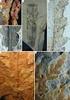 CONTRIBUTIONS FROM THE MUSEUM OF PALEONTOLOGY (Contindion of CdiOnS from the Muaeum of Q*) UNIVERSITY OF MICHIGAN VOL. V, No. 3, pp. 49-56 (1 pl.) Jay 31,1936 OBSERVATIONS ON FOSSIL PLANTS FROM THE DEVONIAN
WEATHERING, EROSION, and DEPOSITION REVIEW
 WEATHERING, EROSION, and DEPOSITION REVIEW Weathering: The breaking up of rock from large particles to smaller particles. a) This Increases surface area of the rock which speeds the rate of chemical weathering.
What is a Terrarium? Supplies Choosing your container Choosing your plants Building Your Terrarium
 What is a Terrarium? A terrarium is a collection of small plants growing in a transparent, sealed container. A terrarium is a closed environment, and can actually be used to illustrate how an ecosystem
Chapter 3 Communities, Biomes, and Ecosystems
 Communities, Biomes, and Ecosystems Section 1: Community Ecology Section 2: Terrestrial Biomes Section 3: Aquatic Ecosystems Click on a lesson name to select. 3.1 Community Ecology Communities A biological
Geography affects climate.
 KEY CONCEPT Climate is a long-term weather pattern. BEFORE, you learned The Sun s energy heats Earth s surface unevenly The atmosphere s temperature changes with altitude Oceans affect wind flow NOW, you
Colored Pencil art 101. An excerpt from The Ultimate Guide To Colored Pencil by Gary Greene
 Colored Pencil art 101 An excerpt from The Ultimate Guide To Colored Pencil by Gary Greene Colored Pencil 101 Before discussing specific techniques, there are several pointers you should know that are
Writing a Dichotomous Key to Wildflowers
 Writing a Dichotomous Key to Wildflowers Objectives: 1. Understand how to use and make dichotomous keys. 2. Understand common terminology of plant morphology. 3. Learn to recognize some fall wildflowers.
Great Crested Newt Habitat Suitability Index
 Great Crested Newt Habitat Suitability Index Background The Habitat Suitability Index (H) for the great crested newt was developed by Oldham et al. (2000). H scoring systems were originally developed by
Making a Terrarium. fairchild tropical botanic garden 1
 Making a Terrarium What is a Terrarium? A terrarium is a collection of small plants growing in a transparent, sealed container. A terrarium is a closed environment, and can actually be used to illustrate
CAPPARACEAE. 山 柑 科 shan gan ke
 CAPPARACEAE 山 柑 科 shan gan ke Zhang Mingli ( 张 明 理 ) 1 ; Gordon C. Tucker 2 Shrubs, trees, or woody vines, evergreen (deciduous in some Crateva), with branched or simple trichomes. Stipules spinelike,
A Morphological Study on Nepeta fissa C.A.Mey. (Lamiaceae) from Bingöl (Turkey)
 Araştırma Makalesi/Research Article A Morphological Study on Nepeta fissa C.A.Mey. (Lamiaceae) from Bingöl (Turkey) Ömer KILIÇ 1 Abstract- In this study morphological characters of Nepeta fissa C.A.Mey.
United States Standards for Grades of Lettuce
 United States Department of Agriculture Agricultural Marketing Service Fruit and Vegetable Division United States Standards for Grades of Lettuce Fresh Products Branch Effective December 1, 1975 (Reprinted
FIELD RECOGNITION OF THE LARVAE OF NATIVE COCCINELLIDAE, COMMON TO THE POTATO FIELDS OF AROOSTOOK COUNTY
 FIELD RECOGNITION OF THE LARVAE OF NATIVE COCCINELLIDAE, COMMON TO THE POTATO FIELDS OF AROOSTOOK COUNTY R. H. Storch Department of Entomolgy, University of Maine TECHNICAL BULLETIN 43 MAINE AGRICULTURAL
Ruby River Grayling - Gravel Spawning Beds Monitoring Report January 2008
 Ruby River Grayling - Gravel Spawning Beds Monitoring Report January 2008 In partnership with Montana Department of Fish, Wildlife, and Parks (FWP), American Wildlands, and Wildlife Forever, the Madison
At the core of this relationship there are the three primary pigment colours RED, YELLOW and BLUE, which cannot be mixed from other colour elements.
 The Colour Wheel The colour wheel is designed so that virtually any colours you pick from it will look good together. Over the years, many variations of the basic design have been made, but the most common
Exercise V. Bacterial Cultural Characteristics or Morphology
 Exercise V Bacterial Cultural Characteristics or Morphology When a single bacterial cell is deposited on a solid or in a liquid medium, it begins to divide. One cell produces two, two produce four, four
Selecting the appropriate band combination for an RGB image using Landsat imagery
 Selecting the appropriate band combination for an RGB image using Landsat imagery Ned Horning Version: 1.0 Creation Date: 2004-01-01 Revision Date: 2004-01-01 License: This document is licensed under a
OREGON GRAPE FOR HOMOEOPATHIC PREPARATIONS BERBERIS AQUIFOLIUM FOR HOMOEOPATHIC PREPARATIONS
 OREGON GRAPE FOR HOMOEOPATHIC PREPARATIONS BERBERIS AQUIFOLIUM FOR HOMOEOPATHIC PREPARATIONS Berberis aquifolium ad praeparationes homoeopathicas Other Latin name used in homoeopathy : Mahonia aquifolium
GARDEN FACTS. When are apples ripe?
 A3743-E GARDEN FACTS U n i v e r s i t y o f W i s c o n s i n E x t e n s i o n When are apples ripe? Teryl R. Roper DIFFERENT APPLE CULTIVARS RIPEN over a long season. In Wisconsin, apples ripen from
NUTRIENT DISORDERS IN TREE FRUITS
 PNW 121E NUTRIENT DISORDERS IN TREE FRUITS A Pacific Northwest Extension Publication Washington Idaho Oregon NUTRIENT DISORDERS IN TREE FRUITS By Nels R. Benson, Soil Scientist and Horticulturist (retired),
Plant Structure, Growth, and Development. Chapter 35
 Plant Structure, Growth, and Development Chapter 35 PLANTS developmental plasticity = ability of plant to alter form to respond to environment Biological heirarchy Cell basic unit of life Tissue group
CHAPTER 5 OPEN CHANNEL HYDROLOGY
 5.4 Uniform Flow Calculations 5.4.1 Design Charts CHAPTER 5 OPEN CHANNEL HYDROLOGY Following is a discussion of the equations that can be used for the design and analysis of open channel flow. The Federal
Listing Statement for Caladenia tonellii (robust fingers) robust fingers
 Caladenia tonellii Listing Statement for Caladenia tonellii (robust fingers) robust fingers T A S M A N I A N T H R E A T E N E D S P E C I E S L I S T I N G S T A T E M E N T Image by Mark Wapstra Scientific
Night Microphysics RGB Nephanalysis in night time
 Copyright, JMA Night Microphysics RGB Nephanalysis in night time Meteorological Satellite Center, JMA What s Night Microphysics RGB? R : B15(I2 12.3)-B13(IR 10.4) Range : -4 2 [K] Gamma : 1.0 G : B13(IR
A. DEVELOPMENT OF THE DENTAL ORGAN (ENAMEL ORGAN):
 A. DEVELOPMENT OF THE DENTAL ORGAN (ENAMEL ORGAN): AS EARLY AS THE SECOND MONTH OF FETAL LIFE, THE DEVELOPMENT OF THE DECIDUOUS TEETH MAY FIRST BECOME EVIDENT. 1. Dental lamina and Bud stage At about six
Handbook of European Sphagna
 I : I I :.. '.P).. - 4. 1- t It_ 111.... e 0.., ERRATUM Plate 3. Caption should read "S. palustre var. centrale (Dierssen)" Figure 83. Caption should read "Sphagnum compactum" Figure 85. Caption should
Exhibit Inquiry. Rainforest. Aug 11
 Exhibit Inquiry Exhibit Inquiry Have students look for the following exhibits related to living things during their visit to the Ontario Science Centre: Where to go: (Level 6) What it's about: Tropical
What is Soil Survey?
 What is Soil Survey? Soil Survey is a systematic examination, description, classification, and mapping of the soils in a given area. Brady and Weil. 1996 Who Produces Soil Survey Cooperative effort between
Natural Resources and Landscape Survey
 Landscape Info Property Name Address Information Contact Person Relationship to Landscape Email address Phone / Fax Website Address Landscape Type (private/muni/resort, etc.) Former Land Use (if known)
Plants, like all other living organisms have basic needs: a source of nutrition (food),
 LEARNING FROM LEAVES: A LOOK AT LEAF SIZE Grades 3 6 I. Introduction Plants, like all other living organisms have basic needs: a source of nutrition (food), water, space in which to live, air, and optimal
** Rocks are aggregates of one or more minerals ** 3. Hardness: A measure of resistance to scratching. On the Mohs Scale, it ranges from 1 to 10.
 Lab 2: Mineral Lab notes. Minerals are inorganic, solid, naturally occurring substances that have a characteristic chemical compositions, distinctive physical properties, and crystalline structures. Chemical
A new species of Myrmarachne from Kenya (Araneae: Salticidae)
 Genus Vol. 13 (3): 409-415 Wroc³aw, 30 IX 2002 A new species of Myrmarachne from Kenya (Araneae: Salticidae) WANDA WESO OWSKA 1 and KATHRYN SALM 2 1 Zoological Institute, Wroc³aw University, Sienkiewicza
Fireline Rehabilitation on Donnelly Flats fire (B222) Summary: 7/1/99 R.R. Jandt
 Fireline Rehabilitation on Donnelly Flats fire (B222) Summary: 7/1/99 R.R. Jandt Assessment- During the suppression effort approximately 20-25 miles of bladed fireline was built using D-8-equivalent dozers.
ON A NEW SPECIES OF DENISONIA (REPTILIA, SERPENTES) FROM NEW GUINEA
 ON A NEW SPECIES OF DENISONIA (REPTILIA, SERPENTES) FROM NEW GUINEA by L. D. BRONGERSMA and M. S. KNAAP-VAN MEEUWEN Until now the Elapid genus Denisonia had not been recorded from New Guinea, and this
Pink & White Gel Tip Overlay Rules, Judges Instructions & Criteria Student Division Competition Rules
 Competition Rules 1. Total time allowed 3 hours (180 minutes) 2. These are traditional square style competition nails. 3. The nails must be applied with Tips and Gel overlay 4. The competitor must apply