
Standard Operating Procedure for: X-MET3000TXS+ Handheld XRF Analyzer (XRF.doc) Missouri State University. and
|
|
|
- Jennifer Norman
- 9 years ago
- Views:
Transcription
1 Standard Operating Procedure for: X-MET3000TXS+ Handheld XRF Analyzer (XRF.doc) Missouri State University and Ozarks Environmental and Water Resources Institute (OEWRI) Prepared by: OEWRI Quality Assurance Manager Date: Approved by: OEWRI Director Date:

2 Page 2 of 32 Table of Contents 1 Identification of the test method Applicable matrix or matrices Detection Limit Scope of the test method Summary of test method Definitions Interferences Health and safety Personnel qualifications Equipment and supplies Reagents and standards Sample collection, preservation, shipment and storage Quality control Calibration and standardization Procedure Data acquisition, calculations, and reporting Computer hardware and software Method performance Pollution prevention Data assessment and acceptable criteria for quality control measures Corrective actions for out-of-control or unacceptable data Waste management References Tables, diagrams, flowcharts and validation data...28

3 Page 3 of 32 1 Identification of the test method Operation of the X-MET3000TXS+ handheld elemental analyzer for heavy metal screening and measurement of contaminated soil. The instrument is classified as a portable hand-held open-beam X-ray tube based analytical X-ray device. 2 Applicable matrix or matrices This instrument can be used for natural soil samples. 3 Detection Limit The detection limits for this instrument are: Antimony = 19ppm, Arsenic = 7ppm, Barium = 60ppm, Cadmium = 23ppm, Cobalt = 18ppm, Copper = 15ppm, Chromium = 40ppm, Gold = 16ppm, Lead = 15ppm, Mercury = 13ppm, Nickel = 16ppm, Selenium = 4ppm, and Zinc = 8ppm. 4 Scope of the test method 4.1 This procedure will be used as a field and laboratory reference guide for the collection of heavy metal data from soil samples. 4.2 The instrument measures antimony, arsenic, barium, cadmium, cobalt, copper, chromium, gold, lead, mercury, nickel, selenium, and zinc concentrations in natural soil sediments from cutbank profiles, soil cores, or prepared samples in a laboratory setting. 4.3 The procedures described here present principal components of the instrument, pre-operating instruction, actual sample analyses, instrument settings, safety components associated with ionizing radiation, and reporting procedures. The user should review the instrument manuals for further information about the instrument. 5 Summary of test method 5.1 The X-MET3000TXS+ handheld elemental analyzer is based on energy dispersive X-ray fluorescence technology and uses an X-ray tube as the source of X-rays. The X-ray tube has a Ru target, 40kV HV supply and a high resolution high count-rate PentaPIN SiPIN detector system which allows for fast and accurate soil analyses. The instrument is operated by a HP ipaq PDA with a Windows Mobil 5.0 operating system. 5.2 X-rays produced by the instrument, bombard the atoms of the target sample. Photons collide with electron shells and electrons move. The movement of the electrons decreases the atom s energy and an X-ray photon is emitted. The energy of the photon being emitted is approximately equal to the decrease in the atom s energy and the X-rays fluoresce. Each element produces uniquely defined energy changes and the quantities of electrons in various shells are proportional to the number of atoms of the element in the sample. The detector system measures the fluorescent X-rays and the energies that are produced from each X- ray. The net intensities of the X-rays are converted into element concentrations using empirical coefficients and linear and polynomial multi-parameter regressions derived from calibration standards.

4 Page 4 of The instrument comes pre-calibrated from the manufacturer. The Universal Soils Fundamental Parameters calibration for assay of 24 common alloying elements was used. This calibration was based on Certified Reference Materials and Reference Materials as defined in ISO 30:1981 standard. 5.4 All technicians using the X-MET3000TXS+ must have read this SOP, have been trained in the appropriate use of the instrument by the responsible party or other designated authority, have signed an acknowledgement form indicating that they have read and understand the SOP, and must provide necessary information for record keeping associated with use of this instrument. 5.5 Charged batteries are inserted into the instrument or the instrument is plugged into an outlet, the PDA is locked into position, the power key is turned to the ON position to activate the instrument, the yellow indicator light comes on, the peltier cooler and X-ray tube stabilize, the PDA is turned on, and the software is used to set up sample data storage information and to operate the instrument. 5.6 Timed Assay s are used to increase accuracy and precision of soil analyses. The instrument is activated by a single press of the trigger and measures the sample for a preprogrammed time which decreases error associated with analysis duration. 5.7 In the field soil profiles are screened in-situ by creating a divet in the soil that encompasses the entire analysis window, covering the soil divot with premeasured plastic film, positioning the analysis window into the divot, ensuring a correct measurement angle of 90, activating the trigger, and performing a timed assay. Soil samples screened and collected in the field are dried, ground, and sieved and placed in plastic freezer bags in the laboratory. The instrument is positioned in the bench top stand to ensure a correct measurement angel of 90 and is plugged into an outlet to reduce wear on battery supply. The soil samples are analyzed in the laboratory by placing the entire bag of sample in the sample bag holder, closing the door of the holder, activating the trigger, and performing a timed assay. 5.8 The sample analysis spectra and results are stored on the PDA, the software program is exited, the PDA is powered off, the power key is turned to the OFF position to deactivate the instrument, and analysis spectra and results are downloaded to a PC for further processing. 6 Definitions 6.1 Acute Dose: A large amount of radiation received in a short period of time that results in physical reactions due to massive cell damage. 6.2 Analytical batch: The set of samples processed at the same time. 6.3 Blank: The plastic film used to cover the sample analysis divet during field determinations or the exact brand of plastic freezer bag containing the samples during laboratory analysis. Only the plastic film or plastic bag is measured to

5 Page 5 of 32 determine additions or interferences present from field procedures, storage procedures, apparatus, or the laboratory environment. 6.4 Backscattering: Deflection of radiation in a scattering process through an angle greater than 90. X-rays that reflect back to the detector and scatter in the direction of the instrument operator. 6.5 Bremsstrahlung: X-rays or braking radiation produced by the deceleration of electrons. X-ray tubes produce bremsstrahlung as accelerated electrons interact with the target material. 6.6 Chain of Custody (COC): Used to describe the written record of the collection, possession and handling of samples. Chain of custody forms should be completed as described in the Chain of Custody SOP # 1030R01. Chain of custody (COC) forms are located on a board in Temple Hall Characteristic X-rays: A form of electromagnetic radiation with a wavelength in the range of 10 to 0.01 nanometers, corresponding to frequencies in the range 30 PHz to 30 Ehz. X-rays are a form of ionizing radiation, have no mass or electrical charge, and are emitted from electrons during electron shell transfers. X-rays can travel several hundred feet in air, have the highest penetrating power of the types of ionizing radiation, and are best shielded by using concrete, lead, or steel. 6.8 Check Standard: Standard sediment sample of known concentration and purity that produce consistent concentrations of analytes. These standards are used to check instrument performance. 6.9 Chronic Dose: A small amount of radiation received continually over a long period of time which can be from natural background sources Controlled Area: An area where access, occupancy, and working conditions are monitored by the responsible person to control radiation exposure to personnel Fundamental Parameters (FP): An Assay & Grade method used for analyses performed using this SOP that measures the elemental concentrations of unknown samples. Specifically, Soil FP will be used for analyzing heavy element concentrations in soil Ion: An atom that has lost or gained an electron Ionizing Radiation: Energy in the form of waves or moving subatomic particles that has enough energy to remove electrons from neutral atoms or molecules. Ionizing radiation has the potential to alter the chemical structure of living cells Laboratory Duplicate (LD): Two samples taken at the same time and placed under identical circumstances and that are treated identically throughout field and laboratory procedures. Analysis of laboratory duplicates indicates the precision associated with sample collection, preservation, and storage as well as laboratory procedures.

6 Page 6 of Method detection limit (MDL): The lowest level at which an analyte can be detected with 99 percent confidence that the analyte concentration is greater than zero. a. To calculate the MDL: b. Prepare triplicates of two sediment samples with low organic matter. The laboratory director or supervisor will choose appropriate samples to use to determine MDL. c. Analyze all samples. d. Include all sample processing steps in the determination. e. Calculate the standard deviation (s). f. From a table of the one-sided t distribution select the value of t for 7 1 = 6 degrees of freedom at the 99% level. This value is 3.14 g. The product 3.14 times s is the desired MDL Minimum Quantification Interval: The lowest level that can be quantitated accurately and is generally defined as four times the method detection limit = 4(MDL) Primary Beam: Ionizing radiation from an X-ray tube that is directed through an aperture in the radiation source housing for use in conducting X-ray fluorescence measurements Radiation: Energy in the form of waves or moving subatomic particles that is classified as non-ionizing and ionizing Relative Percent Difference (RPD): calculated as the difference between a sample and duplicate results, divided by the average of the sample and duplicate results, multiplied by 100% Sievert (Sv): Current unit of measure for radiation and the SI unit for dose equivalence that takes into account the energy absorbed (dose), the quality of radiation, and the biological effect of different types of radiation in the body. 1Sv = 100rem System Barrier: The portion of an area that clearly defines the transition from a controlled area to a radiation area an that provides the necessary shielding to limit the dose rate in the controlled area during normal operation. 7 Interferences 7.1 Window distance from the sample and angle of measurement are important aspects of these analyses. In field determinations the analysis window will be placed directly on the plastic film that is placed directly on the soil sample. The appropriate measurement angle of 90 and timed assays will be used. 7.2 Penetration depth is important for some elemental determinations. Precise determination of cadmium requires at least 6mm of soil depth.

7 Page 7 of The sample should be as smooth and clean as possible. Rust, oil, and dust buildup in and around the analysis window will interfere with element analyses. 7.4 The sand fraction of a sample can affect its homogeneity which can alter elemental determinations. To determine the homogeneity of the sample, it should be dried and measured at least three times and each element should be averaged. Particles with diameter >2mm should be removed from the sample and the samples should be re-analyzed at least three times and each element should be averaged. If the average of the 2 sets of measurements differ <20% the sample is considered homogeneous and semi-quantitative. If the average of the 2 sets of measurements differ >20% the sample is considered heterogeneous and particle size is affecting elemental determination. Additional sieving should take place and will be dictated by the project manager as well as the laboratory supervisor. 7.5 Soil moisture can interfere with elemental determinations. Sample moisture should not be higher than 10-20%. Field determinations will produce less accurate analyses if moist samples are analyzed. All determinations in the laboratory will be performed using oven-dried sediments. 7.6 X-ray spectra can be very close in energy and can interfere by giving overlapping peaks. Standards used during manufacturer calibration enhance the isolation of the specific peak of each element. In addition, Oxford Instruments has a unique spectrum analysis algorithm that corrects for interfering absorption coefficients and their effects on calculated concentrations by monitoring the X-ray intensity from the interfering elements and applying correction factors derived during calibration. 7.7 Compton or back scattering peaks can interfere with a peak of an element. The sample bag holder will be used in the laboratory and the background plate should be used when ever possible in the field to minimize interference. 8 Health and safety 8.1 Researchers, faculty members, staff members, and students will use X-ray producing equipment in accordance with their departments established procedures and the requirements of this standard practice. Only trained personnel are allowed to operate this instrument. 8.2 The responsible person for this instrument is the director of the Ozarks Environmental and Water Resources Institute. 8.3 The manufacturer, Oxford Instruments, designed the X-MET3000TXS+ to conform to ANSI N and the 21CFR safety requirements for cabinet X- ray systems with the exception of using a totally enclosed beam. Switches, required keys, indicator lights, and an infrared beam safety sensor were designed to prevent operators from being exposed to an open X-ray beam. The instrument was tested by TUV Rheinland against safety requirement of IE , Safety Requirements for Electrical Equipment for measurement, Control, and Laboratory

8 Page 8 of 32 use, Part 1 General Requirements. The instrument passes the ionizing radiation leakage requirements in IEC , section of <1 µsv/hour at 100mm. 8.4 Ionizing radiation can damage chromosomes of a cell and incomplete repair of that cell may result in the development of cancerous cells. A red LED indicates that the instrument is producing X-rays. The instrument s X-ray beam is collimated through an aperture that is approximately 0.14 inch in diameter. 8.5 The instrument s safety system consists of a key lock, three lights, a trigger to activate X-rays, and an infrared sensor. The key lock controls power to all components and must be turned on before any actions can take place. The yellow light indicates that the HV supply is energized when illuminated. The trigger must be activated for the instrument to produce X-rays. The infrared beam interrupter sensor must be covered with a sample for the instrument to produce X-rays. The red light indicates that X-rays are being generated when illuminated. 8.6 The X-ray tube and high voltage power supply are sealed in a fluid filled subassembly. The X-ray tube is shielded by a variety of materials to minimize any stray X-ray radiation. The X-ray tube and shielding material are mounted in the instrument housing and the housing is closed using tamper-proof fasteners. 8.7 Radiation dose form an x-ray device must not exceed 20mSv per year averaged over five years as developed by the International Commission of Radiological Protection (ICRP-1990), the Biological Effects of Ionizing Radiation (BEIR) Committee, the US Environmental Protection Agency (EPA), and the National Council of Radiation Protection (NCRP). 8.8 All technicians will practice As Low As Reasonably Achievable (ALARA) program guidelines that were designed to prevent unnecessary exposures to humans or the environment. Technicians will limit the amount of time spent in a radioactive area because the less time that a person is exposed the smaller dose is received. Technicians will maintain the maximum possible distance from the radiation source because as distance increases exposure rate decreases. Technicians will follow all precautions to shield themselves from exposure. All persons not directly involved in operating the instrument will remain three feet away from the instrument during analyses. The sample bag holder attachment shields others in the laboratory and beyond the walls of the laboratory from exposure which is why samples will only be analyzed using the sample bag holder while in the laboratory. Walls and partitions are not safe shields. Radiation does bounce off surfaces and extends around corners. The beam of radiation, when looking at the instrument from the top, exits the instrument at approximately 45 to the left. Never point the instrument at any person when the probe is activated or otherwise.

9 Page 9 of 32 Figure 1. Incorrect Procedure: All persons not directly involved in operating the instrument will remain three feet away from the instrument during analyses. 8.9 Small sample volume that do not allow the entire measurement window to be covered present additional risk because part of the primary radiation could go through the sample un-attenuated. The safety shield for small samples will be used during analyses of samples that do not cover the entire measurement window The figure below illustrates the radiation profile of the instrument that was obtained by measuring doses from backscattering using a low scintillation probe [NaI(Tl)]. No sample was in place and an artificial instrument condition was used that did not contain the safety interlocks.

10 Page 10 of 32 Figure 2. Background Radiation Measurements: These measurements indicate that the air kerma rate at 5cm form any accessible surface was lower than 4.38 µgy/hr The bone in the finger will absorb radiation about 3-5 times more than soft tissue, so DO NOT HOLD A SAMPLE IN FRONT OF THE MEASUREMENT WINDOW WITH THE FINGERS IN THE DIRECT BEAM OR DIRECT THE BEAM AT ANY PART OF THE HUMAN BODY. Always use the background plate.

11 Page 11 of 32 Figure 3. Incorrect Procedure: Do not hold a sample in front of the measurement window with the fingers in the direct beam or point the beam at any part of the body Always place the instrument in contact with the sample to minimize excess backscatter. Never hold the instrument away from the sample. Figure 4. Incorrect Procedure: Never hold the instrument away from the sample The infrared beam safety sensor located at the aperture and detector end of the instrument (nosepiece) will not permit X-rays to be generated unless the infrared beam is covered by a solid object. Never defeat the IR sensor, defeating this safety feature could result in over-exposure of the operator.

12 Page 12 of 32 Figure 5. Incorrect Procedure: Never defeat the IR sensor, defeating this safety feature could result in over-exposure of the operator The appropriate measurement angle of 90 will be used at all times to prevent additional risk associated with primary beam angle and backscattering. Figure 6. Correct Procedure: Use of the appropriate 90 angle of measurement A beryllium window is used in the radiation detector inside the instrument. Corrosion of beryllium may occur if it is exposed to moisture, particularly when ions such as chlorine, sulphates, copper, or iron are present. Do not store the instrument in high humidity areas or in circumstances where atmospheric condensation may occur. Beryllium and its compounds are toxic, but the solid form of beryllium which is used in the detector window of this instrument, poses no health hazard The instrument will be tested every six months to ensure that the ON/OFF mechanism is working properly. If the instrument fails, an OIA representative will be contacted immediately for instructions Instrument use and instrument service records will be maintained for two years or until the ownership of the instrument is transferred or the instrument is decommissioned. If the instrument is transferred to non-msu persons, that transfer must be reported to regulatory agencies and the OIA representative. The QA/QC manager will maintain records and report necessary information regarding the instrument.

13 Page 13 of Any damage to shielding will be immediately recorded and that information will be given to the QA/QC manager NEVER REMOVE LABELS FROM THE INSTRUMENT. Removal of labels will void all warranties Never attempt to override any safety feature The battery can be pulled from the instrument during an emergency to terminate power Timed Assay measurements will be used for all sample analyses. These measurements allow the user to activate the trigger by pressing the trigger once verus keeping the trigger pressed during the entire measurement window. The instrument measures the sample for a specified time each time and increases precision and safety Dosimetry is available to any student using the instrument or in the laboratory while the instrument is being operated The primary operator is responsible for the instrument and should always be in the operators possession either in direct sight or in a secure area. NEVER LEAVE THE KEY IN AN UNATTENDED ANALYZER. Notify the QA/QC manager at if the instrument is stolen or lost. The QA/QC manager will contact the police and appropriate regulatory agencies The instrument will be stored in a locked cabinet in the laboratory. The key will be stored by the QA/QC manager and in a separate location to avoid unauthorized usage. 9 Emergency Procedures and Call List 9.1 The first action to take in the event of an accident involving the instrument is to stop all X-ray production by turning the instrument off and removing the battery pack or unplugging the instrument. 9.2 If any hardware item is damaged, even if the instrument remains operable, contact the Oxford Radiation Safety Officer (RSO) at Use of a damaged instrument may lead to unnecessary radiation exposure and inaccurate analyses. 9.3 Questions and additional instruction should be directed to the QA/QC manager at The QA/QC manager will contact university emergency personnel or off-campus contacts as necessary.

14 Page 14 of Personnel qualifications Soil parameters will be collected by Missouri State University (MSU) graduate assistants who have received appropriate training, prior coursework, and field experience regarding the collection of soil parameter data, and who are familiar with all of MSU s sample handling and labeling procedures. All operators of the X-MET3000TXS+ will be trained and will know all safety and operation procedures before using the instrument. 11 Equipment and supplies 10.1 X-MET3000TXS+ Handheld Elemental Analyzer, Oxford Instruments, 945 Busse Road, Elk Grove Village, IL, 60007, Telephone: , in shipping case 10.2 Power Supply: Field - all three batteries charged as indicated by a green status light while plugged into the charger Laboratory - power cord, PDA AC adapter and plug 10.3 Charged PDA (as indicated by a solid amber light when the PDA is plugged into the charger) with Stylus and protection cover 10.4 Sample Holder: Field sample film and bags Laboratory sample bag holder accessory, safety shield for small samples 10.5 Background Plate 10.6 Soil Check Sample 2 A1 Oxford Instruments 10.7 Power Key and PDA lock key 10.8 Field or Laboratory Book, Pen 10.9 Instrument Use Record 12 Reagents and standards 11.1 Soil Check Sample 2 A1 Oxford Instruments 11.2 Blank: Sample Film or Sample Bag 11.3 Background Plate 13 Sample collection, preservation, shipment and storage The analyses are conducted in situ and only samples containing a predetermined level of contaminants will be collected and transferred to the laboratory. Samples will be placed into plastic bags and labeled. There are no special provisions for shipment.

15 Page 15 of 32 Sample bags should be opened and placed into 60º C oven immediately upon return to laboratory. 14 Quality control 14.1 Quality control program: The minimum requirements of the quality control program for this analysis consist of an initial demonstration of laboratory capability and the periodic analysis of blanks and standard check samples as a continuing check on performance. The laboratory must maintain performance records that define the quality of the data that are generated. a. Analyses of laboratory blanks are required to demonstrate freedom from contamination. b. The laboratory shall, on an ongoing basis, demonstrate through calibration verification and analysis of the ongoing precision and recovery sample that the analysis system is in control. c. The laboratory should maintain records to define the quality of data that is generated Initial demonstration of performance. The following must be satisfied before the analytical procedure may be used for samples and before a new analyst may analyze samples. a. Method Detection Limit (MDL) To establish the ability to detect the analyte, the analyst shall determine the MDL by carrying through 7 or more blanks (sample bags and plastic film) through the analytical procedures. The average value, X, and the standard deviation of the values, s, shall be calculated. The MDL is equal to 3s (3 x standard deviation). MDL s will vary with element and batch. b. Initial Precision and Recovery To establish the ability to generate acceptably precise and accurate results, the manufacturer performed an extensive calibration of the instrument using various masses of solids which illustrate the instrument s response to analyte concentration. The instrument calibration should remain stable for the life of the instrument Soil Check Standard 2A1 and blank will be measured at the start of the analytical cycle and after every twenty samples or at least twice during a batch analysis. A laboratory duplicate (LD) will be analyzed after every twenty samples or will be analyzed at least twice during a batch analysis. The criteria for these checks are noted in Table 1. Table 1. Quality control samples and acceptance criteria. Check Blank MD Soil Check Stnd Acceptance Criteria MDL ± 20% of each element ± 20% of each element

16 Page 16 of Calibration and standardization 15.1 Errors are inherent in the measurement of X-rays due to the nature of radioactive disintegration of the ray source Randomness of the emission of X-rays form the sample is random but predictable Calibration was completed by the manufacturer, Oxford Instruments. The calibration certificate is kept with original operating and safety manuals in the OEWRI office The background plate will be used to minimize accuracy errors and reduce backscattering Any damage to the instrument will be reported to the QA/QC manager. The instrument will be maintained as defined in the user manual The detection limits for this instrument are: Antimony = 19ppm, Arsenic = 7ppm, Barium = 60ppm, Cadmium = 23ppm, Cobalt = 18ppm, Copper = 15ppm, Chromium = 40ppm, Gold = 16ppm, Lead = 15ppm, Mercury = 13ppm, Nickel = 16ppm, Selenium = 4ppm, and Zinc = 8ppm. 16 Procedure Field 16.1 All three batteries for the XRF should be recharged prior to field deployment. Plug each battery into the charger located in Temple 125. Each battery could take up to 2 hours to fully recharge. Each fully charged battery will operate the instrument for approximately 4 hours The instrument will be reserved and signed out by the primary operator for field activities for that day. The reservation sheet is located on the cabinet where the instrument is stored in the OEWRI office. When reserving the instrument, the primary user will provide their name and the date of use. When the primary operator actually removes the instrument from the cabinet, they must list a secondary operator if applicable, field team members, and the date and time that the instrument was removed from the cabinet. The primary operator is responsible for the instrument for the entire time that it is out of the cabinet. See Section 8.23 for additional security information Seat and lock the PDA into the instrument: a. Remove the stylus from the PDA computer. b. On the right side of the XRF, unlock the PDA computer lock with the key. Slide the PDA computer into the cradle and take care to seat it on the connector correctly.

17 Page 17 of 32 c. Lock the PDA computer into place and remove key. Store key in the key container in the case Insert a fully charged battery into the instrument by pushing it into the handle of the instrument until it clicks into place. Place the other 2 fully charged batteries into the performed area in the case that is specifically for the batteries Place the instrument into the XRF case. Arrange all attachments, instrument safety and power keys, and supplemental materials in the case in a manner that ensures that they stay in place during transport. Close the case and lock it making sure that the key for the outside lock is outside of the XRF case. The instrument will be stored in a cool, dry location within the case during transport to and from the field. The instrument should never be left unattended and should be in direct sight of the primary operator for the field activities or in a secure area as designated by the primary operator. See Section 8.23 for additional security information Once on location in the field, unlock the case and secure the lock and key within the case. Insert the instrument power key and turn it to the ON position. The yellow indicator light will illuminate. Wait 1-2 minutes for the peltier cooler and X- ray tube to stabilize Push the PDA power switch ON. It is located in the upper right corner just above the screen To adjust the backlight on the PDA use the stylus to tap the on the small circular slider below the light bulb icon located on the right side of the screen and move it back and forth. When plugged in, the PDA draws power from the battery in the XRF, so the brighter the backlight, the more power it pulls from the XRF battery Activate the software by tapping on the Start menu and then on X-MET. The X-MET3000 screen will appear and will contain a Waiting for Connection message. A screen with a white background will appear shortly thereafter. If the software is started before the instrument power is turned on the program cannot communicate with the instrument. If this occurs, refer to Section 24 for troubleshooting instructions Fundamental Parameters (FP), shown as [soil_fp] in the upper left corner of the screen, is the method used. This XRF is only set to use the FP method, do not change the method. If [soil_fp] is not on the screen, contact the Laboratory Director The active results format is illustrated to the right of [soil_fp]. For OEWRI field work, this should read: [OWERI-field] Tap anywhere within the white background to bring up the X-MET 3000 Main Menu. The only menus that can be accessed by users are: Name Sample, Set Measurement Time, Result Format, and Display Spectra (that follows

18 Page 18 of 32 measurements, if desired). Do not change any settings in Select Method or Settings menus Tap anywhere outside of the menu and within the white space to exit the menu Tap Output Settings to define the data storage file. All field data collected must be saved in the FieldData folder located in My Documents on the Storage Card. Do not save the data files anywhere else The Results Format menu chooses the output configuration for the measured data. Select [OWERI-field]. Result formats can vary and will only be modified by the project manager and the Laboratory Director prior to field deployment Naming the samples and additional information: a. Tap Name Sample and input the sample name which should be a combination of location and site number using the keyboard displayed on the screen. If the name consists of a continuous phrase, a space then a number (example: Site 1 ), the number is automatically increased after every measurement (Site 2, Site 3, etc.). Samples cannot be named after it has been measured, so input sample name prior to sample measurement. b. Tap OK to proceed to the next screen Additional Information and input any other descriptive information such as the project title. c. The maximum number of characters for the sample name is 20. The maximum for the additional information is 80 characters The time span in which the sample is measured is based on project requirements and will be set by the project manager. Tap the button labeled Set Measurement Time: to change the measurement time span. The minimum measurement time for [OEWRI-field] is set to 5 seconds. When screening in the field, a minimum of 20 seconds is suggested. This measurement time provides relative elemental concentration peaks, not exact values, which is adequate for screening samples in the field All samples will be analyzed by using the Timed Assay trigger operating mode which the instrument is set to use. The timed assay allows the operator to push the trigger once and release versus applying pressure to the trigger for the entire measurement time span Carefully place the standard in the safety shield. The safety shield is the small metal box stored in the upper left corner of the XRF case. The standard should be positioned with the plastic wrap side up taking care to not tear or damage the plastic wrap on the top of it. Input the sample name as Standard. Press the trigger on the instrument handle to analyze the standard for the set measurement time span. The red x-ray indicator light will turn on indicating that radiation is being emitted and the instrument is working properly. The standard has been analyzed and it is safe to remove the standard when the red x-ray indicator light is
![15 The Results Format menu chooses the output configuration for the measured data. Select [OWERI-field].](/docs-images/48/19063986/images/page_18.jpg "Result formats can vary and will only be modified by the project manager and the Laboratory Director prior to field deployment. 16.16 Naming the samples and additional information: a.")
19 Page 19 of 32 not illuminated. The results of the measurement will be shown on the white background in table form. Return the standard to its case and place it back into the XRF case. The standard will be the first analysis for each field outing Remove the background plate from the XRF case. Place an empty sample bag on the background plate. Input the sample name as Bag Blank. Press the trigger on the instrument handle to analyze the sample bag for the set measurement time span. The red x-ray indicator light will turn on indicating that radiation is being emitted and the instrument is working properly. The analysis is complete and it is safe to remove the standard when the red x-ray indicator light is not illuminated. The results of the measurement will be shown on the white background in table form. The empty sample bag, or Bag Blank will be the second analysis for each field outing Before analyzing samples during screening processes or from the bag, remove any leaves, grass, or stones from the measurement surface area When screening samples in situ, cover the measurement surface area with a sample bag to protect the measurement window When screening bagged samples, place the background plate underneath the sample to prevent interference from materials behind the sample and to reduce x- ray scattering. The background plate may be used when analyzing soil cores as dictated by field conditions and project management. Field notes should indicate whether a background plate was used or not Place the instrument measurement window directly over the sample and hold the instrument perpendicular to the sample surface during the entire length of the measurement. Ensure that the thickness of material being sampled is at least 1 cm for best results Press the trigger once to start the analysis and measure elements for the set measuring time. The red x-ray indicator light will turn on indicating that radiation is being emitted and the instrument is working properly The results of the measurement will be shown on the white background in table form Continue analyzing samples either in situ, from cores, or in sample bags, inputting appropriate sample names. In addition to the PDA, a field notebook should record sample analyses and their locations. Global positioning points should be recorded in the field notebook or incorporated into the sample name if various locations are being analyzed for the project The XRF can be left on between analyses or while moving to different sites. Turn the PDA off to save battery power. To begin analyzing again, press the power button in the upper right corner on the PDA.

20 Page 20 of When all analyses are complete, select Exit from the Main Menu to exit the program. The program will prompt for a confirmation in case you mistakenly tap the Exit button Push the PDA power switch OFF Turn the instrument power key to the OFF position and remove the key Return the XRF back to the case provided for transport. Make sure to verify that the PDA lock and instrument power keys, standard, and background plate are in the case. Close the case and lock it making sure that the key for the outside lock is outside of the XRF case Upon returning to the University, the primary operator will: a. Return the batteries to the bench top and plug one in to charge. b. Remove the PDA from the instrument and place it in the PDA cradle for charging and data extraction. c. Secure the instrument within the locked cabinet located in the OEWRI office. d. Sign the instrument reservation sheet providing the time and date of return and verifying that that instrument was returned complete and clean Return the instrument case lock key and the instrument use record to the QA/QC manager. Laboratory The instrument will be reserved and signed out by the primary operator for laboratory activities for that day. The reservation sheet is located on the cabinet where the instrument is stored in the OEWRI office. When reserving the instrument, the primary user will provide their name and the date of use. When the primary operator actually removes the instrument from the cabinet, they must list a secondary operator if applicable, others in the laboratory during analyses, and the date and time that the instrument was removed from the cabinet. The primary operator is responsible for the instrument for the entire time that it is out of the cabinet. See Section 8.23 for additional security information Position the instrument in the bench top stand as shown below. Ensure that the grooves on the side of the XRF main body and handle are lined up with the stand. Slip the black rubber band attached to the peg below the handle over the end of the handle to ensure proper instrument stability.

21 Page 21 of 32 Figure 7. Instrument position in bench top stand Attach the auxiliary power cord to the instrument by removing the battery and plugging the cord into the bottom of the handle. The outlet is located to the right of the work station and the auxiliary power supply cord should not be removed from the bench at any time Connect the PDA to the instrument with the remote extension cable using the port on the front of the instrument. Ensure that the red mark on the round end of the cable is pointing downward when inserting it into the instrument. The opposite end of the cord plugs into the bottom of the PDA only one correct way. Do NOT force the cord into the PDA Place the sample bag holder (large metal box) on the instrument and tighten it to the instrument. It is a snug fit so be sure that it is fully set on the instrument before tightening the black knobs. Never analyze any sample in the laboratory without using the sample bag holder Insert the instrument power key and turn it to the ON position. The yellow indicator will illuminate. Wait 1-2 minutes for the peltier cooler and X-ray tube to stabilize Push the PDA power switch ON. It is located in the upper right corner just above the screen To adjust the backlight on the PDA use the stylus to tap the on the small circular slider below the light bulb icon located on the right side of the screen and move it back and forth Activate the software by tapping on the Start menu and then on X-MET. The X-MET3000 screen will appear and will contain a Waiting for Connection message. A screen with a white background will appear shortly thereafter. If the software is started before the instrument power is turned on the program cannot communicate with the instrument. If this occurs, refer to Section 24 for troubleshooting instructions.
22 Page 22 of Fundamental Parameters (FP), shown as [soil_fp] in the upper left corner of the screen, is the method used. This XRF is only set to use the FP method, do not change the method. If [soil_fp] is not on the screen, contact the Laboratory Director The active results format is illustrated to the right of [soil_fp]. For OEWRI laboratory work, this should read: [OWERI-lab] Tap anywhere within the white background to bring up the X-MET 3000 Main Menu. The only menus that can be accessed by users are: Name Sample, Set Measurement Time, Result Format, and Display Spectra (that follows measurements, if desired). Do not change any settings in Select Method or Settings menus Tap anywhere outside of the menu and within the white space to exit the menu Tap Output Settings to define the data storage file. All laboratory data collected must be saved in the LabData folder located in My Documents on the Storage Card. Do not save the data files anywhere else The Results Format menu chooses the output configuration for the measured data. Select [OWERI-lab]. Result formats can vary and will only be modified by the project manager and the Laboratory Director prior to field deployment Naming the samples and additional information: a. Tap Name Sample and input the sample name which should be a combination of location and site number using the keyboard displayed on the screen. If the name consists of a continuous phrase, a space then a number (example: Site 1 ), the number is automatically increased after every measurement (Site 2, Site 3, etc.). Samples cannot be named after it has been measured, so input sample name prior to sample measurement. b. Tap OK to proceed to the next screen Additional Information and input any other descriptive information such as the project title. c. The maximum number of characters for the sample name is 20. The maximum for the additional information is 80 characters The time span in which the sample is measured is based on project requirements and will be set by the project manager. Tap the button labeled Set Measurement Time: to change the measurement time span. The minimum measurement time for [OEWRI-lab] is set to 90 seconds All samples will be analyzed by using the Timed Assay trigger operating mode which the instrument is set to use. The timed assay allows the operator to push the trigger once and release versus applying pressure to the trigger for the entire measurement time span.
23 Page 23 of Carefully place the standard in the sample bag holder over the sampling window. Place a small piece of paper over the proximity sensor that is located left of the measurement window. The standard should be positioned with the plastic wrap side down taking care to not tear or damage the plastic wrap on the top of it. Input the sample name as Standard. Press the trigger on the instrument handle to analyze the standard for the set measurement time span. The red x-ray indicator light will turn on indicating that radiation is being emitted and the instrument is working properly. The standard has been analyzed and it is safe to remove the standard when the red x-ray indicator light is not illuminated. The results of the measurement will be shown on the white background in table form. Return the standard to its case and place it back into the XRF case. The standard will be the first analysis for each laboratory batch Place an empty sample bag into the sample bag holder. Input the sample name as Bag Blank. Press the trigger on the instrument handle to analyze the sample bag for the set measurement time span. The red x-ray indicator light will turn on indicating that radiation is being emitted and the instrument is working properly. The analysis is complete and it is safe to remove the standard when the red x-ray indicator light is not illuminated. The results of the measurement will be shown on the white background in table form. The empty sample bag, or Bag Blank, will be the second analysis for each laboratory batch Before analyzing samples, remove any leaves, grass, or stones from the measurement surface area Organize the project sample bags to minimize confusion when preparing samples and to ensure that sample information is entered into the database correctly Insert each sample bag into the sample bag holder directly over the measurement window. The thickness of material being sampled should be at least 1 cm, if it is not, note the approximate thickness in the laboratory notes or incorporate the information into the sample name Press the trigger on the instrument handle to analyze the sample bag for the set measurement time span. The red x-ray indicator light will turn on indicating that radiation is being emitted and the instrument is working properly. The analysis is complete and it is safe to remove the standard when the red x-ray indicator light is not illuminated. The results of the measurement will be shown on the white background in table form Continue analyzing each sample Include a laboratory duplicate for every 20 samples analyzed. Input the sample name as the original sample name adding -LD at the end of the sample name. Laboratory duplicates for this method are a re-analysis of a sample. Analyze the sample initially, remove the sample bag, shake it, and reanalyze it. There must be 2 LD s for each batch analyzed.
24 Page 24 of Reanalyze the standard after every 20 samples and at the end of the batch analysis. Input the sample name as Check Standard. Reanalyze an empty sample bag after every 20 samples and at the end of the batch analysis. Input the sample name as Bag Blank The XRF can be left on between analyses When all analyses are complete, select Exit from the Main Menu to exit the program. The program will prompt for a confirmation in case you mistakenly tap the Exit button Push the PDA power switch OFF Turn the instrument power key to the OFF position and remove the key Return the XRF back to the case. Make sure to verify that the PDA lock and instrument power keys, standard, and background plate are in the case. Close the case and lock it making sure that the key for the outside lock is outside of the XRF case Remove the PDA from the instrument and place it in the PDA cradle for charging and data extraction Secure the instrument within the locked cabinet located in the OEWRI office Sign the instrument reservation sheet providing the time and date of return and verifying that that instrument was returned complete and clean Return the instrument case lock key and instrument use record to the QA/QC manager. 17 Data acquisition, calculations, and reporting 17.1 To down load data from the instrument to a computer: a. Ensure that the Microsoft ActiveSync software is installed on the destination computer. b. Insert the PDA into the PDA cradle and plug the USB cord into the computer. c. Navigate to Tools>Explore Pocket PC on the toolbar of the ActiveSync window that opens. A new Windows Explorer window will open. d. Navigate to: Mobile Device> My Windows Mobile-Based Device> Storage Card> My Documents. If the Storage Card is not visible, turn off the PDA, gently remove the storage card in the back and reinsert it carefully. Turn the PDA back on and try to navigate to the destination again. e. Choose the data location: FieldData or LabData and then copy and paste the *.log.txt files to any folder on a different drive (local, network, etc.). All
25 Page 25 of 32 OEWRI raw data files must be copied to the appropriate project removable drive. It is recommended that an additional copy the file be saved to another location for backup. f. Open the pasted files to ensure they were properly copied. g. Delete all files that were copied from the source folder (FieldData or LabData) on the PDA. All OEWRI raw data files must be copied to the appropriate project removable drive before deleting data files from the PDA. h. *.log.txt files can be opened using Microsoft Excel. Save the *.log.txt files as Workbooks using the Save As option in Microsoft Excel Files will be removed from the PDA regularly. All data should be downloaded immediately upon returning from the field The X-ray intensity which is measured from the size of the spectrum peaks is directly proportional to the concentration of the elements in the sample. I = N/t = (k)(lo)(t)(c) H Where: I = X-ray Intensity (counts per second) N = Net count (minus background and overlap) t = Measurement time (seconds) k = Geometrical constant (sensor-sample geometry) lo = Source strength (photons per second/steradian) T = Excitation cross section for the element in question C = Weight fraction of the element H = Matrix absorption coefficient Reporting results: Results should be reported to 0.1 mg TN/L precision Relative percent difference (RPD): (A-B) AVERAGE(A,B) 100 A = original sample concentration B = duplicate sample concentration 17.6 Standard Deviation: The evaluation of MDL and precision require calculation of standard deviation. Standard deviations should be calculated as in equation 2. x 2 [ ( x) 2 /n)] s = { } ½ n - 1
26 Where: n = number of samples, x = concentration in each sample. ID: XRF Page 26 of 32 Note: This is the sample standard deviation calculated by the STDEV function in Microsoft Excel Coefficient of Variation (Cv%): The evaluation of accuracy require the calculation of coefficient of variation which is the standard deviation of the multiple sample measurements divided by the mean of those measurements. Cv% = (s/ x ) Computer hardware and software 18.1 X-Met software on PDA provided for the instrument by Oxford Instruments This document is created using Microsoft Word. The Word file name for this SOP is: XRF.doc 18.3 Microsoft Excel is used for recording and reviewing the final data from the instrument. 19 Method performance 19.1 The desired performance criteria for this measurement are: a. Detection limit: varies by element and batch, but the instrument detection limits are: Antimony = 19ppm, Arsenic = 7ppm, Barium = 60ppm, Cadmium = 23ppm, Cobalt = 18ppm, Copper = 15ppm, Chromium = 40ppm, Gold = 16ppm, Lead = 15ppm, Mercury = 13ppm, Nickel = 16ppm, Selenium = 4ppm, and Zinc = 8ppm. b. Precision: ± 20%, precision data will be reported as relative percent difference and project managers will determine what data is used. c. Accuracy: ± 20%, accuracy data will be reported as relative percent difference and project managers will determine what data is used. d. Minimum Quantification Interval: 1.0 ppm 19.2 Zinc, iron, chromium, and calcium concentrations are routinely found in blanks during batch analysis due to materials used to manufacture the sample holder. 20 Pollution prevention All wastes from these procedures shall be collected and disposed of according to existing waste policies within the MSU College of Natural and Applied Sciences. 21 Data assessment and acceptable criteria for quality control measures 21.1 The analyst should review all data for correctness Relative percent difference (RPD) should be calculated for pairs of duplicate analyses to determine precision. The desired precision is ± 20%. Laboratory duplicate (LD) measurements will be randomly selected from each set of 20 samples in the batch and analyzed. There must be at least two LD analyses
27 Page 27 of 32 during each batch analysis. Precision data will be reported as relative percent difference and project managers will determine what data is used The soil check standard will be used to determine accuracy associated with each batch. The soil check standard is measured after each set of 20 samples or at least twice during each batch analysis. The RPD between the average of the measurements of the check standard for each batch and the initial soil check standard report will be determined for each element and recorded with each laboratory report. The soil check standard report is included in Section 26. The desired accuracy is ± 20%. Accuracy data will be reported as relative percent difference and project managers will determine what data is used The completed Excel spreadsheet is reviewed by the analyst s supervisor or the OEWRI QA officer. 22 Corrective actions for out-of-control or unacceptable data 22.1 The results for precision and accuracy are compared to the acceptable value of ± 20% for this analysis for all analytes. The initial soil check standard (2A1) report contains the concentrations of each element within the soil check standard and is included in Section Zinc, iron, chromium, and calcium concentrations are routinely found in blanks during batch analysis due to materials used to manufacture the sample holder If data are unacceptable for any reason, the analyst should review their analytical technique prior to conducting this analysis again When measurement time is increased the signal, N, increases. The time of analysis can be increased to increase precision and accuracy. The count rate should be increased by a factor of four to reduce the standard deviation by onehalf If the sensor is not against the sample at a direct and consistent angle, the geometrical constant (k) will vary. Maintain direct and consistent angle of measurement The excitation cross section, T, varies with atomic number of the element and with source energy. The closer the element s absorption energy is to the source energy, the higher the excitation cross section. Certain elemental energies may further away from the source energy and will result in lower excitation efficiency The instrument may require trouble shooting techniques if the data are unacceptable. All instrument maintenance will be conducted by the QA/QC manager or sent to the manufacturer. 23 Waste management There are no wastes generated using this method. All samples remain is sample bags and no other consumables are used.
28 Page 28 of Troubleshooting 24.1 If the software program is started before the instrument power is turned on, the program cannot communicate with the instrument. If this occurs, follow the steps below to reset the PDA. a. Exit the software program and turn off power to the instrument. b. Remove the PDA from the instrument and use the stylus to press the reset button on the bottom left corner of the PDA. The loading screen will appear, turn the PDA off. c. Remount the PDA onto the instrument. d. Switch the instrument power ON, turn the PDA on, and start the software program If the instrument will not perform an analysis of a sample, first, make sure that the instrument was powered on before the software program was started. If that does not initiate analyses, follow the steps below. a. Make sure that the infrared sensor is covered completely with sample. The safety sensor must be activated before analyses can begin. b. Make sure that the yellow power light is on. If the yellow light is dim or is blinking, change the battery or connect the instrument to the AC adaptor. c. If the instrument was powered before the software program and the PDA has been reset and the PDA is still not communicating with the instrument, make sure that the PDA is seated properly on the instrument. Exit the software, remove the PDA, reseat the PDA, and restart the software program. d. If the sample surface is too darkly colored to reflect light, the infrared sensor may not activate. If the sample is clearly dark and the instrument will not perform an analysis, insert a piece of white paper between the sample and the infrared sensor If the X-MET software locks up, PDA memory may be the cause. Close all other programs by tapping on Start, then Settings, then System tab, then Memory, then Running Programs, then Stop All If the PDA touchscreen completely freezes and the reset button did not fix the problem, perform a hard reset by following the steps below. a. Take the memory card out of the PDA. b. Press and hold down the left and right function buttons at the bottom of the front panel and simultaneously press the reset button at the bottom of the PDA until the display turns dark. c. Use the stylus to press the reset button on the bottom left corner of the PDA. d. Follow screen instructions to realign the PDA screen and set the time and date settings. e. If this does not fix the problem, recharge the PDA and perform a hard reset. If recharging the PDA does fix the problem, contact the QA/QC manager.
29 Page 29 of References CSR 20, Radiation Protection, Missouri Department of Health and Senior Services CFR Part 1910, Occupational Safety and Health Administration N , Radiation Safety for X-ray Diffraction and Fluorescence Analysis Equipment, American National Standard Institute (ANSI)/Health Physics Society (HPS) Missouri Statutes Section , Radiation Control, Department of Health and Senior Services US EPA Method 6200, ITRV: XRF Technologies for Measuring Soil and Sediment (Niton XLt 700 Series XRF), EPA publication EPA/540/R-06/004, February User s Manual Eureka Environmental Engineering, Austin Texas Safety Manual Eureka Environmental Engineering, Austin Texas. 26 Appendices Figure 8. Soil Check Standard (2A1) Report.
30 Page 30 of 32 XRF SOP ACKNOWLEDMENT FORM Name SS # Address Street/Box City State Zip Phone (local): (permanent) Name of Guardian: Guardian s Address Phone: ACTIVITY INFORMATION Type of Activity: Operation of the X-MET3000TXS+ handheld elemental analyzer for heavy metal screening and measurement of contaminated soil. ACKNOWLEDMENT I, the undersigned participant, being the age of 18 or above, desire to participate in the Activity described above, which includes transportation to and from Springfield. The Activity is potentially hazardous and I have read and understand the standard operating procedures (SOP) associated with this instrument. I should not engage in the Activity unless I am alert and observant, which I represent myself to be. I assume any and all risks associated with the Activity including but not limited to, fall, personal injury, collision with other persons, the effects of weather, including high heat and humidity and motor vehicle transportation, all such risks being known and appreciated by me. I attest that I am sufficiently physically fit to participate in this Activity. Knowing the risks, and in consideration of being permitted to participate in the Activity described above, I for myself and my personal representatives, heirs, and assigns, do hereby hold harmless and release, waive discharge and covenant not to sue the board of Governors of Missouri State University from any and all claims or liability on account of death or injury to person or property of the undersigned of any kind of nature whatsoever arising out of or in any way connected with, the undersigned s participation in the Activity and transportation activities, even though the claim or liability may arise out of the negligence or carelessness on the part of Missouri State University, or any third person, whether foreseen or unforeseen, known or unknown. The undersigned hereby expressly agrees that this release and waiver is intended to be as broad and inclusive as permitted by the laws of the State of Missouri and that if any portion hereof is held invalid, it is agreed that the balance, notwithstanding, continues in full legal force and effect.
31 Page 31 of 32 The undersigned further states that he/she has carefully read the foregoing Release and Waiver of Liability, knows the contents thereof, and has agreed to sign this Release and Waiver of Liability as his/her own free act and deed. I also declare that I will take all necessary and/or recommended precautions to insure my own person against physical and/or mental injury and property loss or damage. This includes, but is not limited to, following printed or verbal instruction given by the activity leader(s). I further declare that I assume responsibility for my actions or behaviors that may conflict with accepted standards. University requirements for participants, common sense or the instructions, I receive from Activity leader(s) either before or during the activity. I do hereby affirm that I am covered under my guardian s medical policy or otherwise have adequate medical insurance. I have read the above release and agree to the provisions contained herein. I have also informed my Guardian of this trip. For the participant: If 18 years of age: Participant s Signature Date Guardian s Signature Date This form should be returned to the QA/QC manager in Temple Hall Room 326.
32 Page 32 of 32
Production of X-rays. Radiation Safety Training for Analytical X-Ray Devices Module 9
 Module 9 This module presents information on what X-rays are and how they are produced. Introduction Module 9, Page 2 X-rays are a type of electromagnetic radiation. Other types of electromagnetic radiation
Ch. 227 ANALYTICAL X-RAY EQUIPMENT 25
 Ch. 227 ANALYTICAL X-RAY EQUIPMENT 25 CHAPTER 227. RADIATION SAFETY REQUIREMENTS FOR ANALYTICAL X-RAY EQUIPMENT, X-RAY GAUGING EQUIPMENT, ELECTRON MICROSCOPES AND X-RAY CALIBRATION SYSTEMS Sec. 227.1.
RL HW / RL HW+ / RL HGW / RL HV / RL HVPW/RL HVPW-G
 Auto-Levelling Rotary Laser Level RL HW / RL HW+ / RL HGW / RL HV / RL HVPW/RL HVPW-G 77-496 / 77-429 / 77-439 / 77-497 / 77-427/ 77-441 Please read these instructions before operating the product Auto-Levelling
Contents Contents Contents Overview Charging your headset Wearing the headset Powering on the headset Connecting your headset for dictation
 1 Contents Contents Contents 2 Overview 3 Charging your headset 4 Wearing the headset 4 Powering on the headset 4 Connecting your headset for dictation 5 The adapter 5 Adjusting your computer's audio settings
8001782 Owner s Manual
 8001782 Digital Infrared Thermometer Owner s Manual Introduction This instrument is a portable, easy to use compact-size digital thermometer with laser sighting designed for one hand operation. The meter
Key. ➍ Micro USB Port ➎ Operating System Toggle Keys ➏ Foam Screen Protectors. ➊ On/Off switch ➋ Bluetooth Connect Button (flashes when searching)
 INSTRUCTION MANUAL ➏ ➋ ➊ Product Features ➎ ➍ ➌ Built-in wireless Bluetooth 3.0 keyboard Compatible across ios, Android, and Windows, enabling you to mix and match with devices Ultra-thin, lightweight
The photoionization detector (PID) utilizes ultraviolet
 Chapter 6 Photoionization Detectors The photoionization detector (PID) utilizes ultraviolet light to ionize gas molecules, and is commonly employed in the detection of volatile organic compounds (VOCs).
Wide Range InfraRed (IR) Thermometer with Type K input and Laser Pointer
 User Manual Wide Range InfraRed (IR) Thermometer with Type K input and Laser Pointer MODEL 42515 Introduction Congratulations on your purchase of the Model 42515 IR Thermometer. The Model 42515 IR thermometer
Microwave Meter. Instruction Manual
 Microwave Meter 840046 Instruction Manual Microwave Meter 840046 Copyright 2009 by Sper Scientific ALL RIGHTS RESERVED Printed in the USA The contents of this manual may not be reproduced or transmitted
XRS-4 X-RAY SOURCE OPERATOR S MANUAL
 XRS-4 X-RAY SOURCE OPERATOR S MANUAL CONTENTS ITEM PAGE 1.0 INTRODUCTION... 2 2.0 WARNINGS... 2 DUTY CYCLE. 2 3.0 PHYSICAL DESCRIPTION... 3 HIGH VOLTAGE PULSER/TUBEHEAD..... 3 BASE... 3 BATTERY PACK...
Hygro-Thermometer + InfraRed Thermometer Model RH101
 User's Guide Hygro-Thermometer + InfraRed Thermometer Model RH101 Introduction Congratulations on your purchase of the Extech Hygro-Thermometer plus InfraRed Thermometer. This device measures relative
1 Quality Assurance and Quality Control Project Plan
 1 Quality Assurance and Quality Control Project Plan The purpose of this section is to describe the quality assurance/quality control program that will be used during the system specific field testing
METHOD 9075 TEST METHOD FOR TOTAL CHLORINE IN NEW AND USED PETROLEUM PRODUCTS BY X-RAY FLUORESCENCE SPECTROMETRY (XRF)
 METHOD 9075 TEST METHOD FOR TOTAL CHLORINE IN NEW AND USED PETROLEUM PRODUCTS BY X-RAY FLUORESCENCE SPECTROMETRY (XRF) 1.0 SCOPE AND APPLICATION 1.1 This test method covers the determination of total chlorine
High Temperature InfraRed Thermometer with Laser Pointer
 User s Manual High Temperature InfraRed Thermometer with Laser Pointer MODEL 42540A 6 42540 6 Introduction Congratulations on your purchase of the Model 42540A IR Thermometer. The 42540A is capable of
Innovative Technology Verification Report
 United States Office of Research and EPA/600-R-03/149 Environmental Protection Development May 2004 Agency Washington DC 20460 Innovative Technology Verification Report Field Measurement Technology for
Analysis of Soil Samples Using a Portable X-Ray Fluorescence Spectrometry (XRF)
 Auckland Wellington Christchurch PATTLE DELAMORE PARTNERS LTD Analysis of Soil Samples Using a Portable X-Ray Fluorescence Spectrometry (XRF) Marlborough District Council solutions for your environment
EASIDEW PORTABLE HYGROMETER INSTALLATION, OPERATION AND MAINTENANCE MANUAL
 EASIDEW PORTABLE HYGROMETER INSTALLATION, OPERATION AND MAINTENANCE MANUAL Issue February 2004 2 TABLE OF CONTENTS SECTION PAGE 1. INTRODUCTION 3 1.1 General 3 1.2 Ceramic Sensing Element 3 1.3 Calibration
Radiation Safety Committee College of William and Mary
 Radiation Safety Committee College of William and Mary Policy for the operation of Analytical X-ray Equipment The following rules govern the use of analytical X-ray equipment at the College of William
TEMPLE UNIVERSITY ENVIRONMENTAL HEALTH AND RADIATION SAFETY
 Page 1 of 7 ISSUED: 5/00 REVISED: 08/06 1. Potential Releases of Radioactive Materials to Unrestricted Areas The Environmental Health and Safety Department (EHRS) must be notified immediately if an emergency
Infrared / K Thermometer Remote Temperature Measurement ( Non-Contact ) 1327K INSTRUCTION MANUAL
 RS Infrared / K Thermometer Remote Temperature Measurement ( Non-Contact ) 1327K INSTRUCTION MANUAL TABLE OF CONTENTS TITLE PAGE INTRODUCTION...1. SAFETY INFORMATION...2. FEATURES...4. SPECIFICATIONS...4.
GETTING TO KNOW YOUR TELSTRA PRE-PAID 3G USB + WI-FI
 FOR MORE INFORMATION CALL 125 8880 or FROM A NON-TELSTRA PHONE, CALL 13 2200 AND SAY PRE-PAID VISIT telstra.com/ppmbb VISIT A TELSTRA STORE OR PARTNER GETTING TO KNOW YOUR TELSTRA PRE-PAID 3G USB + WI-FI
GSM Alarm System User Manual
 GSM Alarm System User Manual For a better understanding of this product, please read this user manual thoroughly before using it. Quick Guider After getting this alarm system, you need to do the following
user s manual Battery Case model #: SPB3200 Battery Case Charger for Samsung Galaxy S 4
 user s manual model #: SPB3200 Charger for Samsung Galaxy S 4 What s Included Unpack the battery case and make sure all accessories are put aside so they will not be lost. hello. USB to Micro USB Cable
Using the Spectrophotometer
 Using the Spectrophotometer Introduction In this exercise, you will learn the basic principals of spectrophotometry and and serial dilution and their practical application. You will need these skills to
EDGE 800. quick start manual TOUCHSCREEN GPS-ENABLED BIKE COMPUTER
 EDGE 800 quick start manual TOUCHSCREEN GPS-ENABLED BIKE COMPUTER 2010 Garmin Ltd. or its subsidiaries All rights reserved. Except as expressly provided herein, no part of this manual may be reproduced,
Table of Contents. Use. Troubleshooting. Setup. Welcome. 11 How to arm/disarm system/camera(s) 19 Sync Module setup issues. 3 Installing the Blink app
 User Guide Table of Contents Welcome Setup Use Troubleshooting 2 What s in the box 2 What you need 3 Installing the Blink app 4 Setting up the Sync Module 5 Connecting the Sync Module to Your Wi-Fi 7 Adding
Instruction Manual. T3111 T3111L T3111P T3111Ex
 www.cometsystem.cz Instruction Manual T3111 T3111L T3111P T3111Ex Programmable transmitter of temperature, relative humidity and other calculated humidity values with external probe and 4-20 ma outputs
QUANTITATIVE INFRARED SPECTROSCOPY. Willard et. al. Instrumental Methods of Analysis, 7th edition, Wadsworth Publishing Co., Belmont, CA 1988, Ch 11.
 QUANTITATIVE INFRARED SPECTROSCOPY Objective: The objectives of this experiment are: (1) to learn proper sample handling procedures for acquiring infrared spectra. (2) to determine the percentage composition
Atomic and Nuclear Physics Laboratory (Physics 4780)
 Gamma Ray Spectroscopy Week of September 27, 2010 Atomic and Nuclear Physics Laboratory (Physics 4780) The University of Toledo Instructor: Randy Ellingson Gamma Ray Production: Co 60 60 60 27Co28Ni *
The Analytical Balance
 Chemistry 119: Experiment 1 The Analytical Balance Operation of the Single-Pan Analytical Balance Receive instruction from your teaching assistant concerning the proper operation of the Sartorius BP 210S
Dual Laser InfraRed (IR) Thermometer with Color Alert
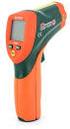 User Manual Dual Laser InfraRed (IR) Thermometer with Color Alert MODEL 42509 Introduction Congratulations on your purchase of the Model 42509 IR Thermometer with Color Alert. This Infrared thermometer
Cary 100 Bio UV-Vis Operating Instructions 09/25/2012 S.V.
 1234 Hach Hall 515-294-5805 www.cif.iastate.edu Cary 100 Bio UV-Vis Operating Instructions 09/25/2012 S.V. Location: Contact: 1240 Hach Hall Steve Veysey, 1234 Hach Hall Safety All researchers working
Dual Laser InfraRed (IR) Thermometer
 User s Manual Dual Laser InfraRed (IR) Thermometer MODEL 42511 Introduction Congratulations on your purchase of the Model 42511 IR Thermometer. This Infrared thermometer measures and displays non-contact
MVS - Mini Video Speaker
 MVS - Mini Video Speaker Mini Clock Radio Night Vision Hidden Camera User Manual Spy Tec www.spytecinc.com GETTING STARTED Components Features Powering Up the Device Micro SD Memory Card for Data Storage
TRIMBLE TX5 3D LASER SCANNER QUICK START GUIDE
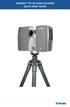 TRIMBLE TX5 3D LASER SCANNER QUICK START GUIDE Equipment 1 8 9 5 6 7 4 3 2 The TX5 laser scanner ships with the following equipment: 1 Scanner transport and carry case 6 USB memory card reader 2 AC power
The Determination of an Equilibrium Constant
 The Determination of an Equilibrium Constant Computer 10 Chemical reactions occur to reach a state of equilibrium. The equilibrium state can be characterized by quantitatively defining its equilibrium
Validation and Calibration. Definitions and Terminology
 Validation and Calibration Definitions and Terminology ACCEPTANCE CRITERIA: The specifications and acceptance/rejection criteria, such as acceptable quality level and unacceptable quality level, with an
PA500II Enterprise Mobile Computer
 PA500II Enterprise Mobile Computer - PA500II - Quick Reference Guide 400891G Version 1.0 PA500II Product Introduction & Accessory Kit After opening the box, ensure the following accessories for the PA500II
Lead Testing and On Site Calibration for Water Testing Detection Range: 2 100ppb
 Document: AND Lead 100 7 2013 Lead Testing and On Site Calibration for Water Testing Detection Range: 2 100ppb July, 2013 Edition 1 ANDalyze, Inc., 2012. All rights reserved. Printed in USA. Table of Contents
Safety and Radiation Protection Office Working with X-Ray Equipment
 Safety and Radiation Protection Office Working with X-Ray Equipment Radiation Safety Rules May 2016 Radiation Safety Rules X-Ray Equipment General Rules for the protection of persons exposed to ionising
4.3-inch Back-Up Camera
 TM 4.-inch Back-Up Camera Model No.: PKC0BU4 Owner s Manual and Warranty Information Read these instructions completely before using this product. Retain this Owner s Manual for future reference. INTRODUCTION
FCC COMPLIANCE STATEMENT FOR AMERICAN USERS
 FCC COMPLIANCE STATEMENT FOR AMERICAN USERS This equipment has been tested and found to comply with the limits for a CLASS A digital device, pursuant to Part 15 of the FCC Rules. These limits are designed
Portable Air Conditioner
 Portable Air Conditioner Owner's Manual Model:3 in 1 12,000 Btu/h Series 3 Please read this owner s manual carefully before operation and retain it for future reference. CONTENTS 1. SUMMARY...1 2. PORTABLE
OPERATOR S MANUAL 18 VOLT, 1 HOUR CHARGER
 OPERATOR S MANUAL 18 VOLT, 1 HOUR CHARGER P110 Your battery charger has been engineered and manufactured to Ryobi s high standard for dependability, ease of operation, and operator safety. When properly
Lecture 2 Macroscopic Interactions. 22.106 Neutron Interactions and Applications Spring 2010
 Lecture 2 Macroscopic Interactions 22.106 Neutron Interactions and Applications Spring 2010 Objectives Macroscopic Interactions Atom Density Mean Free Path Moderation in Bulk Matter Neutron Shielding Effective
Periodic Verification System Model 775PVS
 Periodic Verification System Model 775PVS Instruction Manual Contents 1 Description... 1 775PVS System... 1 Model 775 Fieldmeter... 2 Model 775C Charger... 2 Model 775P Plate Assembly... 3 2 Operation...
Lenovo Miix 2 8. User Guide. Read the safety notices and important tips in the included manuals before using your computer.
 Lenovo Miix 2 8 User Guide Read the safety notices and important tips in the included manuals before using your computer. Notes Before using the product, be sure to read Lenovo Safety and General Information
Environmental Water Testing: Surface Water, Groundwater, Hard Water, Wastewater, & Seawater
 Document: AND Sol Env 08 2013 Environmental Water Testing: Surface Water, Groundwater, Hard Water, Wastewater, & Seawater Matrix specific sample preparation and testing methods for environmental waters
User's Guide. Integrating Sound Level Datalogger. Model 407780. Introduction
 User's Guide 99 Washington Street Melrose, MA 02176 Phone 781-665-1400 Toll Free 1-800-517-8431 Visit us at www.testequipmentdepot.com Back to the Extech 407780 Product Page Integrating Sound Level Datalogger
Remote Control Repeater
 Remote Control Repeater Model: 40430 Operation Manual Ver.1.0 Operation Manual Remote Control Repeater Model: 40430 Thank you for purchasing Remote Control Repeater. We recommend that you read this manual
Instruction Manual HI 96800 Refractometer for Refractive Index and Brix Measurements
 Instruction Manual HI 96800 Refractometer for Refractive Index and Brix Measurements www.hannainst.com 1 Dear Customer, Thank you for choosing a Hanna Instruments product. Please read this instruction
WHAT S THIS AND HOW DOES IT WORK? POCKET PC TIPS
 WHAT S THIS AND HOW DOES IT WORK? POCKET PC TIPS This page is designed to provide basic tips on how to use PDA s running Pocket PC 2002. These tips are for the Dell Axim X5 and the HP ipaq. If you have
Name Date Class ELECTRONS IN ATOMS. Standard Curriculum Core content Extension topics
 13 ELECTRONS IN ATOMS Conceptual Curriculum Concrete concepts More abstract concepts or math/problem-solving Standard Curriculum Core content Extension topics Honors Curriculum Core honors content Options
XRS-3 X-RAY SOURCE OPERATOR S MANUAL
 XRS-3 X-RAY SOURCE OPERATOR S MANUAL CONTENTS ITEM PAGE 1.0 INTRODUCTION... 2 2.0 WARNINGS... 2 EXCLUSION ZONE DIAGRAM. 4 3.0 PHYSICAL DESCRIPTION... 5 3.1 HIGH VOLTAGE PULSER/TUBEHEAD... 5 3.2 BASE...
Name Class Date Laboratory Investigation 4B Chapter 4: Cell Structure
 Name Class Date Laboratory Investigation 4B Chapter 4: Cell Structure The Microscope: A Tool of the Scientist You may refer to pages 66-67, 72-73 in your textbook for a general discussion of microscopes.
The Limitations of Hand-held XRF Analyzers as a Quantitative Tool for Measuring Heavy Metal Pesticides on Art Objects. By Özge Gençay Üstün
 N.B. A shorter version of this article was published in the ICOM-CC Ethnographic Conservation Newsletter, Number 30, January 2009, pp. 5-8. The Limitations of Hand-held XRF Analyzers as a Quantitative
Table of Contents Function Keys of Your RF Remote Control Quick Setup Guide Advanced Features Setup Troubleshooting
 Congratulations on your purchase of the AT&T U-verse TV Point Anywhere RF Remote Control. This product has been designed to provide many unique and convenient features to enhance your AT&T U-verse experience.
Introduction 1 The system 1 The meter 2 The display 3 The mode 3 The measurement 4 Coding the meter 4 How to obtain a drop of blood 6 Application of
 Introduction 1 The system 1 The meter 2 The display 3 The mode 3 The measurement 4 Coding the meter 4 How to obtain a drop of blood 6 Application of the blood 7 Procedure to test glucose 7 Procedure to
User Guide Microsoft Screen Sharing for Lumia Phones (HD-10)
 User Guide Microsoft Screen Sharing for Lumia Phones (HD-10) Issue 1.1 EN-US User Guide Microsoft Screen Sharing for Lumia Phones (HD-10) Contents Safety 3 About your accessory 4 Keys and parts 5 Connect
floater imports DF169 ECO AIR COOLER EVAPORATIVE AIR COOLER WITH IONIZER USER S MANUAL
 floater imports DF169 ECO AIR COOLER EVAPORATIVE AIR COOLER WITH IONIZER USER S MANUAL WHAT IS AN ECO AIR COOLER? The ECO AIR COOLER uses evaporative cooling to provide an airflow that is cooler than the
XR200 X-RAY SOURCE OPERATOR S MANUAL
 XR200 X-RAY SOURCE OPERATOR S MANUAL CONTENTS ITEM PAGE 1.0 INTRODUCTION... 2 2.0 WARNINGS... 2 EXCLUSION ZONE DIAGRAM... 4 3.0 PHYSICAL DESCRIPTION... 5 3.1 HIGH VOLTAGE PULSER/TUBEHEAD... 5 3.2 BASE...
INSTALLATION GUIDE ConnectLine TV Adapter Getting started
 INSTALLATION GUIDE ConnectLine TV Adapter Getting started PURPOSE OF THIS GUIDE READ THIS FIRST Before your hearing instruments can receive sound from the TV, the adapter must be connected to the TV and
Application Note. ipix A Gamma imager to support various applications
 Application Note ipix A Gamma imager to support various applications Introduction ipix is a unique gamma imager that quickly locates low level radioactive sources from a distance and estimates the dose
Operating Manual Color Changing Fountains
 Operating Manual Color Changing Fountains 1-877-80-PONDS www.atlanticwatergardens.com Introduction Thank you for purchasing Atlantic s Color Changing Fountains overflowing features that glow from within.
National- Spencer Inc.
 9-27-2010 National- Spencer Inc. 19.2V HEAVY DUTY GREASE GUN PRODUCT SPECIFICATION Charger Input Power 110 VAC Battery Output Power 19.2V Battery Capacity 1500 MAH Battery Pack Charge Time 1 Hour Maximum
Experiment #5: Qualitative Absorption Spectroscopy
 Experiment #5: Qualitative Absorption Spectroscopy One of the most important areas in the field of analytical chemistry is that of spectroscopy. In general terms, spectroscopy deals with the interactions
SP AF 300mm F/2.8 LD [IF] for Canon (Model 360EE)
![SP AF 300mm F/2.8 LD [IF] for Canon (Model 360EE)](/thumbs/40/21493790.jpg "SP AF 300mm F/2.8 LD [IF] for Canon (Model 360EE)") SP AF 300mm F/2.8 LD [IF] for Canon (Model 360EE) We greatly appreciate your purchase of this Tamron lens. The Tamron SP AF 300mm F/2.8 LD [IF] is a fast telephoto lens developed for Canon AF single-reflex
SP AF 300mm F/2.8 LD [IF] for Canon (Model 360EE) We greatly appreciate your purchase of this Tamron lens. The Tamron SP AF 300mm F/2.8 LD [IF] is a fast telephoto lens developed for Canon AF single-reflex
ST-80 MICROSCOPE With Electronic Eyepiece #6810. User Guide
 ST-80 MICROSCOPE With Electronic Eyepiece #6810 User Guide The ST-80 Microscope Thank you for purchasing your student microscope from ioptron. The ST-80 Microscope is both versatile and easy to use with
User Manual HomeGrid 3000 Solar Generator
 User Manual HomeGrid 3000 Solar Generator For more information and instruction videos visit: www.pointzeroenergy.com/learn/videos/ HomeGrid 3000 Solar Generator Congratulations on purchasing Point Zero
Taurus Super-S3 LCM. Dual-Bay RAID Storage Enclosure for two 3.5-inch Serial ATA Hard Drives. User Manual March 31, 2014 v1.2 www.akitio.
 Dual-Bay RAID Storage Enclosure for two 3.5-inch Serial ATA Hard Drives User Manual March 31, 2014 v1.2 www.akitio.com EN Table of Contents Table of Contents 1 Introduction... 1 1.1 Technical Specifications...
FOR MORE INFORMATION. 125 8880 or from a non-telstra phone 13 2200 and say pre-paid telstra.com/ppmbb visit a telstra store or partner
 FOR MORE INFORMATION 125 8880 or from a non-telstra phone 13 2200 and say pre-paid telstra.com/ppmbb visit a telstra store or partner getting to know your telstra pre-paid 4G WI-FI (760S) LET S GET THIS
SYMBOL MC9060 HAND HELD TERMINAL USER MANUAL
 SYMBOL MC9060 HAND HELD TERMINAL USER MANUAL CORPORATE VERSION FEBRUARY 2007 TABLE OF CONTENTS Welcome... 3 Getting Started... 3 Equipment Setup... 3 Battery Installation... 4 About the Stylus... 5 Aligning
ST. CLOUD TECHNICAL AND COMMUNITY COLLEGE HAZARDOUS WASTE PROCEDURE
 APPLICABILITY This procedure is applicable to all St. Cloud Technical & Community College faculty, staff and students. GENERAL Federal, state and local governments impose strict regulations concerning
OASIS-PLUS 120V READ ALL INSTRUCTIONS BEFORE OPERATING READ ALL INSTRUCTIONS BEFORE OPERATING OZONE IS A POWERFUL OXIDIZER AND MUST BE USED WITH CARE
 OASIS-PLUS 120V INFORMATION & OPERATING INSTRUCTIONS READ ALL INSTRUCTIONS BEFORE OPERATING READ ALL INSTRUCTIONS BEFORE OPERATING OZONE IS A POWERFUL OXIDIZER AND MUST BE USED WITH CARE 56041852 WARNING:
Hitachi U-4100 UV-vis-NIR spectrophotometer (341-F)
 Hitachi U-4100 UV-vis-NIR spectrophotometer (341-F) Please contact Dr. Amanda Young for training requests and assistance: 979-862-6845, [email protected] Hardware Our spectrophotometer is made up of
MANUAL TR-110 TR-110
 MANUAL TR-110 TR-110 CONTENTS 1. GENERAL INTRODUCTION 2 2. WORK PRINCIPLE 3 3. STANDARD DELIVERY 4 4. NAME OF EACH PART 5 5. OPERATION 6 5.1 Preparation before operation 6 5.2 Switch on, Switch off and
MAINTENANCE & TROUBLESHOOTING
 MAINTENANCE & TROUBLESHOOTING This section describes how to: clean the lens clean the fan intake filter replace the projection lamp replace the batteries in the remote control use the Kensington lock feature
Wireless Optical Mouse
 Wireless Optical Mouse User s Manual Model PD950P FCC STATEMENT PD950P This device complies with part 15 of FCC Rules. Operation is subject to the following two conditions: (1) this device may not cause
Getting to Know Xsight... 3. Home Screen and Everyday Use... 9. Settings... 11. PC Setup... 17. 2 www.oneforall.com
 User Manual English English Getting to Know Xsight........................................ 3 Unpacking and Setting Up Xsight............................................................. 3 Using Xsight
DSM155 Digital LED Light Meter User s Manual DSM155
 DSM155 Digital LED Light Meter User s Manual DSM155 CONTENTS TABLE OF CONTENTS......3 LIMITED WARRANTY AND LIMITATION OF LIABILITY......3 Out of Box....3 Accessories....3 Safety Information....3 Certification....5
MAVO-MONITOR / MAVO-SPOT Instrument Set for Contact or Distant Measurements of Luminances
 Operating Instructions MAVO-MONITOR / MAVO-SPOT Instrument Set for Contact or Distant Measurements of Luminances 15043 1/1.00 10 9 8 1 7 6 1 Display 2 Slider switch cd/m² segment test 3 ON/OFF switch 4
The University of Southern Maine. XRF X-Ray Radiation Protection Program
 The University of Southern Maine XRF X-Ray Radiation Protection Program 1 University of Southern Maine Department of Environmental Sciences 105 Bailey Gorham Hand Held XRF Analyzer X-Ray Radiation Protection
We reserve the right to make technical changes.
 User Guide External Hard Disk with USB 1.1/2.0 and IEEE 1394 connection Copyright 2003 All rights reserved. This manual is protected by Copyright. The Copyright is owned by Medion. Trademarks: MS-DOS and
Waves: Recording Sound Waves and Sound Wave Interference (Teacher s Guide)
 Waves: Recording Sound Waves and Sound Wave Interference (Teacher s Guide) OVERVIEW Students will measure a sound wave by placing the Ward s DataHub microphone near one tuning fork A440 (f=440hz). Then
NewAir AC-10000E, AC-10000H Portable Air Conditioner Owner s Manual PLEASE READ AND SAVE THESE INSTRUCTIONS
 NewAir AC-10000E, AC-10000H Portable Air Conditioner Owner s Manual PLEASE READ AND SAVE THESE INSTRUCTIONS BEFORE USE GENERAL SAFETY INSTRUCTIONS: ALWAYS OPERATE THE UNIT IN AN UPRIGHT POSITION AND PLACE
Study the Quality Assurance of Conventional X-ray Machines Using Non Invasive KV meter
 Study the Quality Assurance of Conventional X-ray Machines Using Non Invasive KV meter T.M.Taha Radiation Protection Department, Nuclear Research Center, Atomic Energy Authority, Cairo.P.O.13759 Egypt.
Table Of Contents 6 6 6 7 7 8 8 9-11 12 12-13 14 15 16 17 18 19 20-21 22 22 23 24 24 24
 USER S GUIDE Table Of Contents Package Contents Accessories: Sold Separately Product Specifications Intended Use Compatibility ResMed Device Warning Battery Pack Run Times Power Backup Usage Getting Started
User Manual. NETGEAR, Inc. 350 East Plumeria Drive San Jose, CA 95134, USA. December 2014 202-11380-01
 User Manual December 2014 202-11380-01 NETGEAR, Inc. 350 East Plumeria Drive San Jose, CA 95134, USA Support For product updates and web support, visit http://support.arlo.com. Trademarks NETGEAR, Inc.
GETTING TO KNOW YOUR 4G USB
 GETTING TO KNOW YOUR Telstra Pre-paid 4G USB LET S GET THIS SHOW ON THE ROAD WHAT S INSIDE Your Telstra Pre-Paid 4G USB has been tested to the highest standards to deliver you the best possible coverage
Analytical X-ray Safety Refresh Training. Radiation Safety Officer Department of Environmental Health and Safety
 Analytical X-ray Safety Refresh Training Radiation Safety Officer Department of Environmental Health and Safety TWO TYPES OF X-RAYS Man-made X-rays Electrons are accelerated from the cathode by high voltage,
GenStore Archive Cabinet
 GenStore Archive Cabinet Setup and Maintenance Manual Version A April 2014 Two GenStore Archives shown mounted on optional table stand. 2 Contents Getting Started... 4 Using this Manual...4 Safety Precautions...4
Operating instructions Platform/floor scales
 KERN & Sohn GmbH Ziegelei 1 D-72336 Balingen email: [email protected] Phone: +49-[0]7433-9933-0 Fax: +49-[0]7433-9933-149 Internet: www.kern-sohn.com Operating instructions Platform/floor scales KERN
OPERATION MANUAL INFRARED THERMOMETER
 OPERATION MANUAL INFRARED THERMOMETER Features: Precise non-contact measurements Built-in laser pointer Automatic selection range and Resolution to 0.1ºor 1º / switchable button Automatic Data Hold & Auto
Application and Instruction Manual Motion Activated Solar Powered LED Security Light with Camera MODEL: XP-2H38WC
 Application and Instruction Manual Motion Activated Solar Powered LED Security Light with Camera MODEL: XP-2H38WC Please do not return this item to the store. If you have any questions, please contact
Comfort Contego User Manual
 Comfort Contego User Manual Please read the User Manual before using this product. Comfort Contego T900 Transmitter English Comfort Contego R900 Receiver DO NOT USE the COMFORT CONTEGO if you have a PACEMAKER
Original Assembly Guide
 TCT Multipurpose Single Bevel Sliding Compound Mitre Saw Original Assembly Guide Read instructions before assembling this tool. Table of Contents GB Assembly Guide Read instructions before assembling this
MAINTENANCE & TROUBLESHOOTING
 MAINTENANCE & TROUBLESHOOTING This section describes how to: clean the lens replace the projection lamp replace the batteries in the remote use the security lock feature troubleshoot the projector Cleaning
Production of X-rays and Interactions of X-rays with Matter
 Production of X-rays and Interactions of X-rays with Matter Goaz and Pharoah. Pages 11-20. Neill Serman Electrons traveling from the filament ( cathode) to the target (anode) convert a small percentage
GETTING TO KNOW YOUR PRE-PAID TELSTRA WI-FI 4G
 GETTING TO KNOW YOUR PRE-PAID TELSTRA WI-FI 4G LET S GET THIS SHOW ON THE ROAD You must be excited about your brand new Pre-Paid Telstra Wi-Fi 4G. This guide will help you get connected as quickly and
OMCL Network of the Council of Europe QUALITY MANAGEMENT DOCUMENT
 OMCL Network of the Council of Europe QUALITY MANAGEMENT DOCUMENT PA/PH/OMCL (12) 77 7R QUALIFICATION OF EQUIPMENT ANNEX 8: QUALIFICATION OF BALANCES Full document title and reference Document type Qualification