
ENVIRONMENTAL SCIENCE CURRICULUM for CLASS IX to X
|
|
|
- Wendy Jackson
- 9 years ago
- Views:
Transcription
1 ENVIRONMENTAL SCIENCE CURRICULUM for CLASS IX to X The Royal Society for Protection of Nature (RSPN) in collaboration with Department of Curriculum Research & Development (DCRD) of Ministry of Education is developing Environmental Science curriculum as an optional subject for classes IX to X in the formal education system. Interested writers with required qualification and experience to write Environmental Science text book on the broad themes of i) Physical World; ii) Biological World; iii) Environment & Society; iv) Working Scientifically; can submit your Expression of Interest to RSPN office latest by 10 October 2013 along with your CV and copy of publications. For more information, please visit RSPN website Note: Please note that RSPN doesn t encourage one or two writers to write the whole book but rather experts in different fields to write specific topics. The Environmental Science curriculum for classes IX to X will be based on the four broad strands, its key Stage and their learning outcomes and objectives. Strand 1: Physical World The environment in which we live is complex constituted by components such as plants, animals, weather, climatic condition and natural forces that govern the functioning of the universe. The abiotic factors and natural forces generally constitute the physical worlds that are crucial in the dynamics of the universe. Through the strand, Physical world, learners develop understanding of the constituents of the physical and their interactions; and how they affect the biological world and the society. Through exploration and investigation, learners understand the elements of physical world, how human actions affect the physical world and the consequences entailed. Strand 2: Biological World All the living things plants and animals constitute the biological world. The inter relationship amongst them is represented by ecosystem. The flow of energy in the system supports the survival and sustenance of each of these components. The dynamic of the biological world is crucial to humanity on this Earth. Therefore, the understanding of plant diversity and resources has never been more important than at this present time. As we face the unprecedented challenges of climate change and environmental degradation, effective environmental monitoring and conservation depend upon detailed knowledge of plants and animals and their habitats. In this strand, learners develop the knowledge and understanding of different forms of life; their interaction and interdependence; and how the physical world affects the health of the biological world. Learners continuously engage in experimentation, investigation, and project works to

2 develop coherent knowledge and understanding about, and of the biological world.. Strand 3: Environment and Society The study of environment and society is a cornerstone to examine the diverse processes related to interactions between human society and the biophysical environment, ranging from the mostly physical to the mostly social. Natural disasters are not necessarily natural. Physical processes such as climate change, the weather, and hydrology cause these events. Social processes such as land-use decisions, poverty, and political decision-making can transform a large storm into a disaster. Therefore, the social and environmental problems are deeply intertwined. Understanding the reciprocal relationships between social and environmental processes is the foundation of the study of Environment & Society (E&S). This strand emphasizes that the human relationship to the environment can be biological, economic, political, physical, cultural, chemical and social. Students become familiar with relevant theories in human and physical geography, appropriate methods of inquiry, and case studies of environmental challenges. The strand also introduces students to the main approaches and theory for environmental social sciences, including how social science tools can be applied to environmental problems, and how social science theories contribute to understanding the environmental problems. Through project works and practical activities, learners develop understanding of the sustainable use of natural resources as well Strand 4: Working Scientifically The strand, working scientifically, is a process strand embedded in the three content strands. Working scientifically in environmental science involves the processes of science, including understanding the sorts of questions that are the province of science; the design of experiments; reasoning and arguing with scientific evidence; and analyzing and interpreting data. Working scientifically also involves particular forms of reasoning with evidence that is different in detail from reasoning in other areas. Working scientifically emphasizes techniques of focused observation, the recognition of a scientific question that can be investigated; the need for repeated measurements and skills in devising measurement processes; ways of recording data (these can vary considerably); and representing data for analysis; different experimental designs and associated principles (e.g. understanding sample size in making observations in the field), and reporting. Key Stage 4: Classes IX - X At this key stage, learners demonstrate significant developments in terms of logical and abstract thinking; and are able to comprehend complex situations. For older children, education is for understanding for mastering disciplines and for apprenticeship.

3 During Key Stage 4 (Classes IX and X), the learners develop basic knowledge and understanding of the concepts of Physical world, Biological world, Environment and Society, and the fundamental skills needed for the use of these in new and changing situations. The learners discover a wider range of scientific ideas that support the environmental science, and consider them in greater depth, laying the foundations, if appropriate, for further study in the subject and apply these ideas in new contexts to solve problems. They explore how developmental activities are related to the degradation of environment. They consider the power and limitations of science and technology in addressing social, industrial, ethical and environmental issues; and how different groups in the community and beyond may have different views about the role of environment. They make informed judgments on statements and debates that have environmental basis, and use their learning for planning positive action for the welfare of themselves, others in their community and the environment. When they carry out investigations, working either on their own or with others, they draw on increasingly diverse and complex sources of information which they select taking into accounts the issues of reliability and validity to plan their investigation or inquiry. They use a wider range of techniques to carry out their plans and investigations, which will be quantitative in nature. They evaluate critically all the evidence collected to draw conclusions. In drawing these conclusions, they compare, contrast, analyze, synthesize, question and critique the information from different sources. They communicate their ideas clearly and precisely in a variety of ways including the use of ICT. Standard K4.1: Understand the elements of ecosystem and relate the significance of abiotic and biotic world in daily lives and to the sustainable development in Bhutan. Standard K4.2: Evaluate the roles of beliefs, cultural and traditional values in towards environment. Standard K4.3: Apply the concepts of environmental science in everyday experiences, decision making and management of environment. Standard K4.4: Develop the ability to pose critical questions on environment; formulate hypothesis, collect, collate, analyze and interpret data; and draw conclusions and propose solutions. Standard K4.5: Develop the ability to communicate environmental information and ideas logically and concisely in a variety of forms. Learning Outcomes Strand 1: Physical World K4S1.1. Enlist the natural resources and environmental factors that contribute to the benefit of human being. K4S1.2. Discuss the ways of sustaining natural resources. Strand 2: Biological World K4S2.1. Explain elementary ecological concepts and principles.

4 K4S2.2. Identify and explain the interactions between biotic and abiotic components of environment. Strand 3: Environment and Society K4S3.1. Explain the relationships between people and environment and discuss the effect of human activities on environment. K4S3.2. Assess and propose ways of using the natural resources sustainably. K4S3.3. Identify and describe environmental issues, and consider the roles of beliefs, culture and traditional values towards environment. K4S3.4. Describe application of concepts of environmental science in daily lives in decision making and management of environment, and creating awareness. Strand 4: Working Scientifically K4S4.1. Pose critical questions on environment; formulate hypothesis, collect, collate, analyze and interpret data; and draw conclusions and propose solutions in carrying out research works. K4S4.2. Communicate environmental information and ideas logically and concisely through drawings, flowcharts, ICT, graphs, write-ups. Learning Objectives: Strand 1: Physical World I. Natural Resources 1. Define natural resources and explain their importance. 9s1 2. Define and classify renewable and non-renewable resources. 9s1 3. Explain watershed and its importance. 9s1 4. Explain the ways of managing watershed. 10s1 5. Investigate the health of catchment area.10s1 6. Explain water harvesting.9s1 7. List down different kinds of mineral found in Bhutan. 10s1 8. Discuss the uses of minerals. 10s1 9. Discuss the over extraction of minerals in our country. 10s1 10. Suggest ways to sustain minerals 11. Name common forest products of Bhutan 12. Discuss the impact of over exploitation of forest product such as wood and fungi 13. Define deforestation 14. Suggest ways to protect forest 15. List the impact of hydropower construction on environment II. Climate Change 1. Define greenhouse effect. 2. Describe how greenhouse effect works. 3. Define ozone layer. 4. Define ozone depletion.

5 5. Discuss how CFCs create ozone hole. 6. List ways to control ozone hole. 7. List the causes of increase in the amount of greenhouse gases. Strand 2: Biological World I. Fundamental of ecology 1. Define ecosystem 2. Differentiate between key ecological terms and concepts (Ecology: species, population, community, ecosystem, biosphere, atmosphere, hydrosphere, lithosphere, habitat, niche, biome) 3. Name biotic and abiotic component of ecosystem 4. Explain the interactions between biotic and abiotic components of environment. 5. Define food web and food chain 6. Give examples of habitat and niche 7. Explain the relationship between living organisms and their environment 8. Identify different trophic levels 9. Explain ecological pyramids 10. Explain the role of green plant in ecosystem 11. Explain the role of consumers in the ecosystem 12. Explain the role of decomposers in the ecosystem 13. Describe intra-specific and inter-specific competition with examples 14. Define with examples mutualism, scavenging, predation and parasitism. 15. Define ecological succession 16. Discuss the significance of ecological succession 17. Differentiate between primary and secondary succession 18. determine population size of plants using appropriate sampling quadrats and transects methods 19. Discuss habitat destruction by human 20. Analyze the relationship between species diversity and ecosystem stability 21. identify factors affecting population growth in a natural ecosystem; 22. explain the concept of carrying capacity 23. evaluate human interactions within natural ecosystems 24. investigate at least two ecosystems in their territory 25. Present and interpret data using appropriate charts, table, and graphs. 26. Discuss the sources of introduced species. 27. Discuss the environmental and economic impact of invasive species. 28. List invasive species recorded in Bhutan and their impact 29. Suggest quarantine measures to prevent introduction of new species II. Biodiversity 1. Define biodiversity 2. Evaluate the species richness in Bhutan 3. Discuss the geographical distribution of flora and fauna in Bhutan 4. Define biodiversity hot spot in Bhutan considering National Parks as example.

6 5. Discuss Protected System in Bhutan and biological corridors in Bhutan 6. Write the function of Protected area and Biological corridors 7. Discuss the advantages of having greater biodiversity 8. Describe the impact of biodiversity on i. agriculture ii. human health iii. business and industry iv. leisure, cultural and aesthetic value v. ecological services 9. List the Endangered and Endemic species of Bhutan such as Tiger, Snow leopard, Elephant, Red Panda and Himalayan Black Bear. 10. Discuss ways to protect endangered species. 11. Discuss the habitat destruction and its threat on species population. 12. Define invasive species. 13. Define Ecotourism 14. List the benefits of Ecotourism Strand 3: Environment and Society I. Pollution and environment 1. Define demography, natality, fatality, population density and population explosion. 2. Discuss the factors which regulate population size. 3. Give an overview of human population in Bhutan 4. Discuss the trend in rural urban migration in Bhutan. 5. Discuss the impact of increase in population on the environment. 6. Discuss the environmental impacts of mining. 7. Explain how mining leads to deforestation, soil erosion, land slide and air pollution 8. List down the causes of soil erosion in Bhutan 9. Explain the ways to prevent the soil erosion in Bhutan 10. Explain the effect of mining on water resources 11. Define the terms pollutions and pollutant 12. List the types of pollutions (Air, water, land, noise) 13. Outline the general sources of pollution 14. Investigate on land and water pollution in their community. 15. Design posters, slogans and organize campaign to create awareness on different types of pollutions 16. List different kinds of waste produced by human beings. 17. Define solid waste. 18. Describe the different sources of solid waste. 19. Discuss impact of waste on environment. 20. Analyze municipal waste management systems.

7 II. Sustainable development 1. Name the different sources of energy 2. Write the advantages and disadvantages of i. Wind Energy ii. Water Energy (hydro power) iii. Solar Energy iv. Coal v. Bio Energy (Bio Gas, Fossil fuels and wood) 3. Discuss the ways harnessing and use of solar energy. 4. Evaluate the use of renewable energy 5. Discuss factors affecting electricity generating capacity and demand 6. Outline the impact of various forms of energy in the environment i. Global warming ii. Pollution impact iii. Habitat destruction iv. Health issues 7. Explain sustainable resource consumption. 8. Explain how equity in resource distribution and consumption promote sustainable development. 9. Discuss the traditional agricultural practices in Bhutan i. Use of pasture land ii. Shifting cultivation iii. Nomadic pastoralism 10. Discuss the problem of overgrazing in Bhutan. 11. Explain organic and inorganic farming 12. Write the advantages and disadvantage of organic and inorganic farming 13. Explain how chemical pesticides and fertilizers used in agriculture cause water pollution (leeching and eutrophication) 14. Suggest ways to prevent pesticides pollution 15. Define bio-concentration with examples 16. Work out strategies for sustainable agriculture.

Environmental Science
 Environmental Science UNIT I: Introduction to Environmental Science The student will demonstrate the ability to use scientific skills necessary to identify and analyze environmental issues. a. Define environmental
2015 2016 Environmental Science Scope & Sequence
 2015 2016 Environmental Science Scope & Sequence The suggested time frames in this document are for a year long environmental science class with approximately 45 minute class periods. All of the material
RUTHERFORD HIGH SCHOOL Rutherford, New Jersey COURSE OUTLINE ENVIRONMENTAL SCIENCE
 RUTHERFORD HIGH SCHOOL Rutherford, New Jersey COURSE OUTLINE ENVIRONMENTAL SCIENCE I. INTRODUCTION Environmental Science introduces students to a broad view of the biosphere and the physical parameters
A CONTENT STANDARD IS NOT MET UNLESS APPLICABLE CHARACTERISTICS OF SCIENCE ARE ALSO ADDRESSED AT THE SAME TIME.
 Environmental Science Curriculum The Georgia Performance Standards are designed to provide students with the knowledge and skills for proficiency in science. The Project 2061 s Benchmarks for Science Literacy
Environmental Science Overview
 Overview The standards establish the scientific inquiry skills and core content for all courses in DoDEA schools. The course of study provides students with a basic knowledge of the natural world that
A Correlation of Environmental Science Your World, Your Turn 2011
 A Correlation of Your World, Your Turn 2011 To Ohio s New Learning Standards for Science, 2011, High School Science Inquiry and Application Course Content INTRODUCTION This document demonstrates how Pearson,
Amherst County Public Schools. AP Environmental Science Curriculum Pacing Guide. College Board AP Environmental Science Site
 Amherst County Public Schools AP Environmental Science Curriculum Pacing Guide College Board AP Environmental Science Site REV: 8/12 1 st 9 weeks AP Objectives Energy Resources and Consumption A. Energy
STATE UNIVERSITY OF NEW YORK COLLEGE OF TECHNOLOGY CANTON, NEW YORK COURSE OUTLINE ESCI 101 - INTRODUCTION TO ENVIRONMENTAL SCIENCE
 STATE UNIVERSITY OF NEW YORK COLLEGE OF TECHNOLOGY CANTON, NEW YORK COURSE OUTLINE ESCI 101 - INTRODUCTION TO ENVIRONMENTAL SCIENCE Prepared By: Rajiv Narula, Ph.D. SCHOOL OF SCIENCE, HEALTH, AND CRIMINAL
SALEM COMMUNITY COLLEGE Course Syllabus. Course Title: Environmental Science I. Course Code: BIO103. Lecture Hours: 2 Laboratory Hours: 4 Credits: 4
 SALEM COMMUNITY COLLEGE Course Syllabus Course Title: Environmental Science I Course Code: BIO103 Lecture Hours: 2 Laboratory Hours: 4 Credits: 4 Course Description: Environmental Science I is the first
Science Standards of Learning for Virginia Public Schools Correlation with National Science Standards
 Standards of Learning for Virginia Public Schools Correlation with National Standards Key P = Pre-activity E = Extension activity C = Core activity S = Supplemental activity Standard Strands Finding Common
Environmental Science Science Curriculum Framework. Revised 2005
 Environmental Science Science Curriculum Framework Revised 2005 Course Title: Environmental Science Course/Unit Credit: 1 Course Number: 424020 Teacher Licensure: Please refer to the Course Code Management
Ecology Module B, Anchor 4
 Ecology Module B, Anchor 4 Key Concepts: - The biological influences on organisms are called biotic factors. The physical components of an ecosystem are called abiotic factors. - Primary producers are
Climate Change: A Local Focus on a Global Issue Newfoundland and Labrador Curriculum Links 2010-2011
 Climate Change: A Local Focus on a Global Issue Newfoundland and Labrador Curriculum Links 2010-2011 HEALTH Kindergarten: Grade 1: Grade 2: Know that litter can spoil the environment. Grade 3: Grade 4:
Broken Arrow Public Schools AP Environmental Science Objectives Revised 11-19-08
 1 st six weeks 1 Identify questions and problems that can be answered through scientific investigation. 2 Design and conduct scientific investigations to answer questions about the world by creating hypotheses;
Chapter 1 Key Themes in Environmental Science
 Key Themes in Environmental Science Case Study: Shrimp, Mangroves, and Pickup Trucks This case study highlights the plight of a small farmer in Thailand in the shrimp farming business. He makes his living
Essential Study Partner/ ESP: http://highered.mcgraw-hill.com/sites/0072970480/student_view0/essential_study_partner.html
 Course: Environmental Science Course Number: 2001340 Title: Environmental Science: A Study of Interrelationships, 10 th edition Authors: Enger, Smith Publisher: Glencoe/McGraw-Hill Copyright: 2006 Online
PRESENTATION 2 MAJOR ENVIRONMENTAL PROBLEMS
 UNEP GLOBAL JUDGES PROGRAMME APPLICATION OF ENVIRONMENTAL LAW BY NATIONAL COURTS AND TRIBUNALS PRESENTATION 2 MAJOR ENVIRONMENTAL PROBLEMS OUTLINE OF PRESENTATION A) Major environmental issues B) Responses
PRESIDENCY UNIVERSITY CORE MODULE SYLLABUS FOR ENVIRONMENTAL STUDIES FOR UNDER GRADUATE COURSES OF ALL BRANCHES OF HIGHER EDUCATION
 PRESIDENCY UNIVERSITY CORE MODULE SYLLABUS FOR ENVIRONMENTAL STUDIES FOR UNDER GRADUATE COURSES OF ALL BRANCHES OF HIGHER EDUCATION Unit 1 : Multidisciplinary nature of environmental studies Definition,
Ecology 1 Star. 1. Missing from the diagram of this ecosystem are the
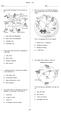 Name: ate: 1. Missing from the diagram of this ecosystem are the 5. ase your answer(s) to the following question(s) on the diagram below and on your knowledge of biology.. biotic factors and decomposers.
First Cycle (Undergraduate) Degree Programme in Environmental Science, Cl. L-32
 First Cycle (Undergraduate) Degree Programme in Environmental Science, Cl. L-32 DURATION 3 years 180 CAMPUS Udine ADMISSION REQUIREMENTS High school graduate students are allowed to be admitted to the
Biodiversity Concepts
 Biodiversity Concepts WHAT IS BIODIVERSITY? Biodiversity is the variety of life on Earth. For any kind of animal or plant each individual is not exactly the same as any other; nor are species or ecosystems.
Matter and Energy in Ecosystems
 Matter and Energy in Ecosystems The interactions that take place among biotic and abiotic factors lead to transfers of energy and matter. Every species has a particular role, or niche, in an ecosystem.
Lesson Overview. Biodiversity. Lesson Overview. 6.3 Biodiversity
 Lesson Overview 6.3 6.3 Objectives Define biodiversity and explain its value. Identify current threats to biodiversity. Describe how biodiversity can be preserved. THINK ABOUT IT From multicolored coral
Earth Science & Environmental Science SOL
 Earth Science & Environmental Science SOL THE SOL FOR GRADE 6 The Virginia Science SOL for Grades K 6 are organized according to a set of strands, with the SOL in each strand developed progressively through
12.5: Generating Current Electricity pg. 518
 12.5: Generating Current Electricity pg. 518 Key Concepts: 1. Electrical energy is produced by energy transformations. 2. Electrical energy is produced from renewable and non-renewable resources. 4. Electrical
National Environment Awareness Campaign(NEAC) 2014-2015. Theme
 National Environment Awareness Campaign(NEAC) 2014-2015. Theme COMBATING DESERTIFICATION, LAND DEGRADATION AND DROUGHT Background Note Desertification is about land degradation: the loss of the land s
Use this diagram of a food web to answer questions 1 through 5.
 North arolina Testing Program EO iology Sample Items Goal 4 Use this diagram of a food web to answer questions 1 through 5. coyotes 3. If these organisms were arranged in a food pyramid, which organism
East Baton Rouge Parish Schools Environmental Science YID 2015-2016. Table of Contents. Unit 1: Science and the Environment...2
 East Baton Rouge Parish Schools Environmental Science YID 2015-2016 Table of Contents Unit 1: Science and the Environment...2 Unit 2: Study of the Earth...5 Unit 3: Ecosystem Development, Biomes, and Biodiversity...7
Reef Magic Education and Research Field trips. Links to the Australian Curriculum v6.0 Science
 Reef Magic Education and Research Field trips. Links to the Australian Curriculum v6.0 Science Year Level Biological Science Description Foundation Living things have basic needs including food and water.
AP Environmental Science Syllabus
 Course Overview The following AP Environmental Science Syllabus will comply with all of the requirements and specifications provided by College Board aimed at preparing students for the AP exam given in
ENVIRONMENTAL SCIENCE (877)
 ENVIRONMENTAL SCIENCE (877) Aims: 1. To help the student appreciate man's place in the natural systems. 2. To provide a wide understanding of knowledge resources relevant to environment protection and
Birmingham City University / Students Union Aspects and Impacts Register. Waste. Impacts description
 Birmingham City University / Students Union and Impacts Register Waste Production of non - hazardous waste Production of hazardous waste Storage of non - hazardous waste Potential for waste to be disposed
DEPARTMENT OF FORESTRY DRAFT REVISED NATIONAL FOREST POLICY OF MALAWI
 DEPARTMENT OF FORESTRY DRAFT REVISED NATIONAL FOREST POLICY OF MALAWI July, 2013 1. Foreword 2. Preface 3. Introduction 4. Policy linkages 5. Broad Policy Direction 6. Policy Priority Areas Provides the
Geography. Curriculum Glance Cards
 Geography Curriculum Glance Cards A fundamental principle of the curriculum is that children s current understanding and knowledge should form the basis for new learning. The curriculum is designed to
MADISON PUBLIC SCHOOLS ENVIRONMENTAL SCIENCE
 MADISON PUBLIC SCHOOLS ENVIRONMENTAL SCIENCE Authored by: Sue Monkemeier Reviewed by: Mr. Lee S. Nittel Director of Curriculum and Instruction Mr. Tom Paterson K12 Supervisor of Science and Technology
Answer Keys to Unit Tests
 Reading Geography Series Answer Keys to Unit Tests Unit 1 The Five Themes of Geography Unit 2 Patterns in Physical Geography Unit 3 Natural Resources 7 Portage & Main Press Unit Test for The Five Themes
GRADE 6 SCIENCE. Demonstrate a respect for all forms of life and a growing appreciation for the beauty and diversity of God s world.
 GRADE 6 SCIENCE STRAND A Value and Attitudes Catholic Schools exist so that curriculum may be taught in the light of Gospel teachings. Teachers must reinforce Gospel truths and values so that students
SOKOINE UNIVERSITY OF AGRICULTURE
 SOKOINE UNIVERSITY OF AGRICULTURE FACULTY OF FORESTRY AND NATURE CONSERVATION CURRICULUM FOR MSc. (MNRSA) DEGREE PROGRAMME May 2009 MASTER OF SCIENCE IN MANAGEMENT OF NATURAL RESOURCES AND SUSTAINABLE
PROVINCE OF THE EASTERN CAPE EDUCATION
 PROVINCE OF THE EASTERN CAPE EDUCATION DIRECTORATE: FET CURRICULUM FET PROGRAMMES LESSON PLANS TERM 4 LIFE SCIENCES GRADE 11 FOREWORD The following Grade 11 Lesson Plans were developed by Subject Advisors
Stage 4. Geography. Blackline Masters. By Karen Devine
 1 Devine Educational Consultancy Services Stage 4 Geography Blackline Masters By Karen Devine Updated January 2010 2 This book is intended for the exclusive use in NSW Secondary Schools. It is meant to
Bozeman Public Schools Science Curriculum 6 th Grade
 Bozeman Public Schools Science Curriculum 6 th Grade Essential Question(s): What is science and why is it important? What does learning, practicing, understanding and applying science mean to you and the
RENEWABLE RESOURCES. Kinds of renewable resources. 1. Solar energy
 RENEWABLE RESOURCES Natural resources (also called land or raw materials) occur naturally within environments that exist relatively undisturbed by mankind, in a natural form. Natural resources are derived
Critical Thinking ANALOGIES. Skills Worksheet
 Skills Worksheet Critical Thinking ANALOGIES In the space provided, write the letter of the pair of terms or phrases that best complete the analogy shown. An analogy is a relationship between two pairs
The Bachelor of Science program in Environmental Science is a broad, science-based
 The Bachelor of Science program in Environmental Science is a broad, science-based curriculum designed to prepare students for a variety of environmentally-related technical careers, as well as for graduate
Global Ecology and Wildlife Conservation
 Vaughan Centre for Lifelong Learning Part-Time Certificate of Higher Education in Global Ecology and Wildlife Conservation Delivered via Distance Learning FAQs What are the aims of the course? This course
Office of Climate Change, Energy Efficiency and Emissions Trading. Business Plan
 Office of Climate Change, Energy Efficiency and Emissions Trading Business Plan April 1, 2011 - March 31, 2014 Table of Contents Message from the Premier...3 1.0 OVERVIEW...4 2.0 MANDATE...5 3.0 LINES
Sample Unit Plan. Ecology Explorers
 Appendix G.04 Appendix G: Seeing Reason Tool Resources Sample Unit Plan Ecology Explorers Classroom Information Subject Area Science, Language Arts Grade Level(s) 6 8 Unit Summary In this project, students
3. Which relationship can correctly be inferred from the data presented in the graphs below?
 1. Recent evidence indicates that lakes in large areas of New York State are being affected by acid rain. The major effect of acid rain in the lakes is (1) an increase in game fish population levels (3)
NATURAL RESOURCES DEGREES AND CERTIFICATES. Environmental Conservation A.S. Degree (formerly Natural Resources)
 Area: Science and Engineering Dean: Dr. Rina Roy Phone: (916) 484-8107 Counseling: (916) 484-8572 DEGREES AND CERTIFICATES Environmental Conservation A.S. Degree (formerly Natural Resources) Environmental
How Humans Impact the Environment. Jonathan M. Links, PhD Johns Hopkins University
 This work is licensed under a Creative Commons Attribution-NonCommercial-ShareAlike License. Your use of this material constitutes acceptance of that license and the conditions of use of materials on this
Energy Flow in the Pond Teacher s Guide February 2011
 Energy Flow in the Pond Teacher s Guide February 2011 Grades: 6, 7 & 8 Time: 3 hours With the pond as a model, students explore how energy that originates from the sun keeps changing shape and form as
Garfield Public Schools Environmental Science Curriculum Grade Nine
 Garfield Public Schools Environmental Science Curriculum Grade Nine Revision Committee: Ms. Suvarna Shah Ms. Ludivina Manalo Final Revision Date: August 31, 2011 Garfield Board of Education Dr. Kenneth
FUTURE CHALLENGES OF PROVIDING HIGH-QUALITY WATER - Vol. II - Environmental Impact of Food Production and Consumption - Palaniappa Krishnan
 ENVIRONMENTAL IMPACT OF FOOD PRODUCTION AND CONSUMPTION Palaniappa Krishnan Bioresources Engineering Department, University of Delaware, USA Keywords: Soil organisms, soil fertility, water quality, solar
Biology Keystone (PA Core) Quiz Ecology - (BIO.B.4.1.1 ) Ecological Organization, (BIO.B.4.1.2 ) Ecosystem Characteristics, (BIO.B.4.2.
 Biology Keystone (PA Core) Quiz Ecology - (BIO.B.4.1.1 ) Ecological Organization, (BIO.B.4.1.2 ) Ecosystem Characteristics, (BIO.B.4.2.1 ) Energy Flow 1) Student Name: Teacher Name: Jared George Date:
Differences Between 1997 Illinois Learning Standards and 2014 Illinois Learning Standards (NGSS)
 Differences Between 1997 Illinois Learning Standards and 2014 Illinois Learning Standards (NGSS) 1997 Illinois Learning Standards in Science 2014 Illinois Learning Standards (NGSS) Grouped by grade spans:
ADVANCED ENVIRONMENTAL SCIENCE COURSE SYLLABUS
 ADVANCED ENVIRONMENTAL SCIENCE COURSE SYLLABUS OVERVIEW OF THE COURSE: The Advanced Environmental Science course is the equivalent of a one-semester introductory college course in environmental science
CURRICULUM AND ASSESSMENT OutLINE ASSESSMENT ACTIVITY Year 8
 Section 1: Summary Background information Brief Description of Assessment Activity Context summary Make a poster that shows the sources of electricity. Explain the differences between renewable and non-renewable
Biological Diversity and Tourism: Development of Guidelines for Sustainable Tourism in Vulnerable Ecosystems
 Biological Diversity and Tourism: Development of Guidelines for Sustainable Tourism in Vulnerable Ecosystems Secretariat of the Convention on Biological Diversity Foreword The rapid and often uncontrolled
It s hard to avoid the word green these days.
 Going green : Environmental jobs for scientists and engineers Alice Ramey Alice Ramey is an economist in the Office of Occupational Statistics and Employment Projections, BLS. She is available at (202)
13.1. Principles of Ecology CHAPTER 13. Ecology is the study of the relationships among organisms and their environment.
 SECTION 13.1 KEY CONCEPT ECOLOGISTS STUDY RELATIONSHIPS Study Guide Ecology is the study of the relationships among organisms and their environment. VOCABULARY ecology community MAIN IDEA: Ecologists study
Environmental Science : Definition, Scope and Importance
 CHAPTER 1 Environmental Science : Definition, Scope and Importance INTRODUCTION The science of Environment studies is a multi-disciplinary science because it comprises various branches of studies like
G u i d e l i n e s f o r K12 Global C l i m a t e Change Education
 G u i d e l i n e s f o r K12 Global C l i m a t e Change Education Adapted by: by the National Wildlife Federation from the Environmental Education Guidelines for Excellence of the North American Association
Georgia Performance Standards for Science Grade 6. This Performance Standards document includes four major components. They are
 Sixth Grade Science Curriculum One Stop Shop For Educators The Georgia Performance Standards are designed to provide students with the knowledge and skills for proficiency in science at the sixth grade
Ecosystems. The two main ecosystem processes: Energy flow and Chemical cycling
 Ecosystems THE REALM OF ECOLOGY Biosphere An island ecosystem A desert spring ecosystem Biosphere Ecosystem Ecology: Interactions between the species in a given habitat and their physical environment.
NCSS Standards 1. d. compare ways in which people from different cultures think about and deal with their physical environment and social conditions;
 NCSS Standards 1 National Council for the Social Studies (NCSS) Curriculum Standards for Social Studies Standard I. Culture study of culture and cultural diversity, so that the learner can a. explore and
HUMANPOPULATIONGROWTHANDNATURAL RESOURCES Study Guide. As the human population grows, the demand for Earth s resources increases.
 SECTION 16.1 HUMANPOPULATIONGROWTHANDNATURAL RESOURCES Study Guide KEY CONCEPT As the human population grows, the demand for Earth s resources increases. VOCABULARY nonrenewable resource renewable resource
Importance of Wildlife
 Importance of Wildlife The wildlife comprises all living organism (plants, animals, microorganisms) in their natural habitats which are neither cultivated or domesticated nor tamed. But in its strictest
CHAPTER 3. A is a certain number of individuals that make up an interbreeding, reproducing group within a given area.
 Review Question-1 Answer CHAPTER 3 Basic Needs of Living Things A is a certain number of individuals that make up an interbreeding, reproducing group within a given area. a. species b. population c. organism
A CONTENT STANDARD IS NOT MET UNLESS APPLICABLE CHARACTERISTICS OF SCIENCE ARE ALSO ADDRESSED AT THE SAME TIME.
 Biology Curriculum The Georgia Performance Standards are designed to provide students with the knowledge and skills for proficiency in science. The Project 2061 s Benchmarks for Science Literacy is used
ARIMNet 2 Call 2014-15
 Coordination of the Agricultural Research In the Mediterranean Area Call i text ARIMNet 2 Call 2014-15 SUBMISSION Pre-proposal by December 1 st, 2014 Full Proposal by May 11 th 2015 on http://arimnet-call.eu/
Madagascar: Makira REDD+
 project focus Madagascar: Makira REDD+ Madagascar is considered to be one of the top five biodiversity hotspots in the world due to more than 75% of all animal and plant species being endemic while less
Ecosystems and Food Webs
 Ecosystems and Food Webs How do AIS affect our lakes? Background Information All things on the planet both living and nonliving interact. An Ecosystem is defined as the set of elements, living and nonliving,
Seventh Grade Science Content Standards and Objectives
 Seventh Grade Science Content Standards and Objectives Standard 2: Nature of Science Students will demonstrate an understanding of the history of science and the evolvement of scientific knowledge. SC.S.7.1
Indicators of Sustainable Development Principles and Practices
 Indicators of Sustainable Development Principles and Practices Division for Sustainable Development United Nations Department of Economic and Social Affairs Policy demand for SD indicators (UNCED) Chapter
Kindergarten to Grade 4 Manitoba Foundations for Scientific Literacy
 Kindergarten to Grade 4 Manitoba Foundations for Scientific Literacy The Five Foundations Manitoba Foundations for Scientific Literacy To develop scientifically literate students, science learning experiences
Can resource depletion be omitted from environmental impact assessments? 1
 Can resource depletion be omitted from environmental impact assessments? 1 Bo P. Weidema, 2.-0 LCA consultants, http://www.lca.dk INTRODUCTION: The nature of the resource problem The main problem involved
Science 7 th Grade. Core Concepts:
 Core Concepts: 1) All living things share common characteristics and are classified based upon similarities and differences of major physical characteristics. 2) The Earth itself and the life forms on
Alternative Sources of Energy
 Amy Dewees MISEP Chohort 1 Capstone: Pedagogy Section Alternative Sources of Energy Unit Description and Rational: This is a unit designed using Understanding by Design, an approach developed by Wiggins
Biodiversity and Ecosystem Services: Arguments for our Future Environment
 Biodiversity and Ecosystem Services: Arguments for our Future Environment How have we advanced our understanding of the links between biodiversity, ecosystem functions and ecosystem services? The issue
MIDLAND ISD ADVANCED PLACEMENT CURRICULUM STANDARDS AP ENVIRONMENTAL SCIENCE
 Science Practices Standard SP.1: Scientific Questions and Predictions Asking scientific questions that can be tested empirically and structuring these questions in the form of testable predictions SP.1.1
Creating Green Jobs within the Environment and Culture sector.
 Creating Green Jobs within the Environment and Culture sector. Matilda Skosana Environmental Programmes (ILO Definition): 1. DEFINITION OF GREEN JOB. Jobs are green when they help reduce negative environmental
12 ENERGY. 12.1 Introduction
 12 Energy 12.1 Introduction Otago is a hydro-electric power producing region and a major exporter of electricity in New Zealand today. The two large existing hydro-electric schemes in the region, Roxburgh
Environmental Science
 OFFICE OF CURRICULUM & INSTRUCTION Environmental Grades 11-12 Prerequisite: Successful completion of any 2 years of high school science class offerings Credits: 5 ABSTRACT Environmental is the study of
7th Framework Programme Theme 6 Environment (including climate change)
 7th Framework Programme Theme 6 Environment (including climate change) «Environnement» et «Énergie» Programme D. Deybe DG RTD Environment Directorate 1 Cooperation Collaborative Research Ten themes 1.
Living & Working Managing Natural Resources and Waste
 Living & Working Managing Natural Resources and Waste 5.13 Managing Natural Resources and Waste Background 5.13.1 This chapter focuses on how we manage resources within the AONB. It includes renewable
II. INSTRUCTIONAL MATERIALS A. Required Textbook: As noted in CTC Instructional Materials website, http://www.ctcd.edu/im/im_main.
 CENTRAL TEXAS COLLEGE SYLLABUS FOR ENVR 1401 ENVIRONMENTAL SCIENCE Fall II Term (Oct 20 13 Dec 2014) Semester Hours Credit: 4 Instructor: David P. Jones Course Hours: T/Th 5:15-7:45 Location: Rm 231, Bldg
Grade Level Expectations for the Sunshine State Standards
 for the Sunshine State Standards FLORIDA DEPARTMENT OF EDUCATION http://www.myfloridaeducation.com/ The seventh grade student: The Nature of Matter uses a variety of measurements to describe the physical
Prentice Hall Interactive Science Series 2011 Correlated to: Arizona Science Standards, Strands 1-6 (Grade 7)
 Strand 1: Inquiry Process Inquiry Process establishes the basis for students learning in science. Students use scientific processes: questioning, planning and conducting investigations, using appropriate
Central High School DC Angelo State University Biology 2406 Environmental Science Fall 2015/Spring 2016
 Central High School DC Angelo State University Biology 2406 Environmental Science Fall 2015/Spring 2016 Instructor: Shamone Minzenmayer Office Location: Central High School, Tucker 117 Office phone: 325-659-3434
Nurture Our Planet. Nourish Our People. Recommendations from the High Level Roundtable on Food and Nutrition Security and Sustainable Agriculture
 Recommendations from the High Level Roundtable on Food and Nutrition Security and Sustainable Agriculture 15 16 March 2012, New York Nourish Our People Nurture Our Planet Women in Ethiopia showing cabbage
Worksheet A Environmental Problems
 Worksheet A Environmental Problems Vocabulary Can you talk about Environmental issues in English? With a partner, try to explain the terms in the diagram below. Why are the words divided into two groups
How do abiotic factors and physical processes impact life in the ocean?
 This website would like to remind you: Your browser (Apple Safari 7) is out of date. Update your browser for more security, comfort and the best experience on this site. Activitydevelop Ocean Abiotic Factors
Facts on biodiversity
 Facts on biodiversity What is biodiversity? Biological diversity (biodiversity) comprises diversity of species and habitats as well as the genetic diversity within the individual species of fauna and flora.
The Next Generation Science Standards (NGSS) Correlation to. EarthComm, Second Edition. Project-Based Space and Earth System Science
 The Next Generation Science Standards (NGSS) Achieve, Inc. on behalf of the twenty-six states and partners that collaborated on the NGSS Copyright 2013 Achieve, Inc. All rights reserved. Correlation to,
Physical Environment. There are economic reasons for countries to cut down their rainforests.
 Tropical Rainforests Reasons for their Destruction Tropical Rainforests are found in the Amazon Basin of South America, (e.g. Brazil) Central Africa (e.g. Congo) and South East Asia (e.g. Indonesia). There
RARITAN VALLEY COMMUNITY COLLEGE ACADEMIC COURSE OUTLINE. ENVI-102: Environmental Science and Sustainability
 I. Basic Course Information RARITAN VALLEY COMMUNITY COLLEGE ACADEMIC COURSE OUTLINE ENVI-102: Environmental Science and Sustainability A. Course Number and Title: ENVI-102: Environmental Science and Sustainability