
REMOTE-MICROPHONE TECHNOLOGY!!
|
|
|
- Millicent Melton
- 9 years ago
- Views:
Transcription
1 FITTING AND VERIFICATION OF REMOTE- MICROPHONE TECHNOLOGY IN CHILDREN WITH NORMAL HEARING, HEARING AIDS, AND COCHLEAR IMPLANTS Erin C. Schafer, Ph.D. University of North Texas Dept. of Speech & Hearing Sciences REMOTE-MICROPHONE TECHNOLOGY!! 1. Cochlear implants 2. Hearing aids 3. Normal Hearing with auditory disorders Data from 5 studies: 1. Speech-in-noise thresholds 14 Cochlear Freedom Users Compared CI alone to CI plus Oticon Arc 2. Speech-in-noise thresholds: 9 users: Nucleus 5, Harmony, & OPUS Compared: CI alone, Oticon R2, and Oticon Arc 3. Electroacoustic testing with CIs 4. Adaptive digital wireless systems 5. Remote mic streaming accessory 1

2 14 Cochlear Freedom Users with Oticon Arc SNR at 5% Correct (db) db improvement with Arc Significant effect of FM No FM FM No significant effect of session -1 Session 1 Session 2 Test Session Schafer et al., AJA, users of various sound processors 1 5 BKB-SIN SNR WHY??? No FM Arc R2-2 Condition 1 Both FM better than no FM Arc better than R2 Schafer et al., JAAA, 213a Measurement Steps 75 Hz 1 Hz 2 Hz 1. Processor in Test Box: 65 db SPL Speech-Std1 2. Transmitter Microphone in Test Box: 65 db SPL Speech-Std1 Difference Between Two Conditions Average of Difference Scores (should be + 3 db) Adjusted FM gain to most closely simulate processor output Schafer et al, 213b, JAAA 2

3 Step 1: Measure the output of the CI through the monitor earphones using speech input Nucleus 5 in test box Coupler & earphone out Nucleus 5 Earphone & HA-1 Coupler Schafer et al., 213b, JAAA Transmitter Microphone Earphone & HA-1 Coupler Nucleus 5 Oticon T3 Transmitter Oticon R2 FM Receiver plugged into earphone cord Schafer et al., 213b, JAAA Nucleus 5 with earphone cord Oticon Arc Transmitter Microphone Oticon T3 Transmitter 3

4 WHY THE DIFFERENCE BETWEEN FM IN STUDY 3?? We want transparency: Same output = same inputs to CI and FM mics But..When we compared the measurements from the CI alone, R2, and Arc, we got. 9 Output (db SPL) Hz 1 Hz 2 Hz Frequency (Hz) CI Alone Arc FM +8 1 R2 FM R2 FM +8 3 Schafer et al., JAAA, 213b STUDY 3: ELECTROACOUSTIC RESULTS COCHLEAR & MED-EL Schafer et al., 213b, JAAA BUT DOES THIS APPROACH RESULT IN GOOD BEHAVIORAL RESULTS?? Speech recognition with 2 list-pairs of BKB-SIN: speech at ; Babble at 18 degrees Loudness ratings (in parenthesis below) Subject: CI CI Alone R2 Arc 1: Nucleus 5 1. (2.7) -11. (4.3) (3.7) 2: Nucleus (3.3) (4.) (3.7) Schafer et al., 213b, JAAA 4

5 Evaluated speech recognition in quiet and in noise with speech (HINT) at 64 db at participant (85 dba at transmitter )and classroom noise at 5, 55, 6, 65, 7, 75, 8 dba Evaluated 3 RF remote microphone systems in Advanced Bionics and Cochlear users: Fixed-gain FM MLxS Adaptive FM MLxi Digital RF Roger STUDY 4 RESULTS: AB (N = 16) Adults with normal hearing score 95% correct here! Wolfe et al., 213, JAAA STUDY 4 RESULTS: COCHLEAR (N = 21) Wolfe et al., 213, JAAA 5

6 STUDY 4: SUMMARY Adaptive Digital technology significantly better than fixed-gain and adaptive FM at 7, 75, and 8 dba Adaptive FM technology better than fixed gain FM at 7, 75, and 8 dba noise levels No differences were found between CI manufacturers. STUDY 5: WIRELESS AUDIO STREAMING FOR COCHLEAR IMPLANTS Partnered with GN Resound to provide wireless audio streaming via proprietary digital radio frequency transmission (2.4 GHz) STUDY 5: EQUIPMENT HAT Research at Hearts for Hearing: Jace Wolfe, Mila Duke, & Sara Neumann 6

7 STUDY 5: COCHLEAR MINI MIC 16 Adults: ages 16 to 81 with unilateral or bilateral Nucleus CIs with ACE Evaluated AzBio sentence recognition in quiet and in noise Used participants everyday MAPs with default 2:1 accessory mixing ratio 6 db attenuation of Nucleus 6 microphone Cochlear Mini Mic left at default setting STUDY 5: AZBIO IN QUIET Percent Correct Sentence Recognition % In press, JAAA Nucleus 6 Alone 91% Significant Improvement n = 16 Nucleus 6/Mini Mic STUDY 5: AZBIO IN NOISE Percent Correct Sentence Recognition Significant Improvements +5 db SNR dba Nucleus 6 Alone Nucleus 6/Mini Mic In press, JAAA n = Speech at 65 db 7

8 HEARING AID STUDIES HEARING AIDS Data from 3 studies: 1. FM vs. streaming 2. VoicePriorityi 3. Personal FM vs. Soundfield FM STUDY 1: RM VS STREAMING Phonak Bolero Resound Verso Phonak Roger X Resound Unite Mic Phonak Roger Pen Evaluated sentence recognition in 17 adults with hearing loss with and without wireless technology 8

9 STUDY 1: PROGRAMMING Fitted Resound and Phonak aids to DSL v5. target for adults SII within 2 points for the two hearing instruments Disabled all NR technologies and NLFC; FB cancellation enabled Ensured transparency for each remote mic condition STUDY 1: RESULTS 1 8 Resound Verso Phonak Bolero 9 Resound Verso with Unite Mic Phonak Bolero 9 with Roger Quiet 55 dba 65 db 75 dba 8 dba n = 17 STUDY 2: VOICE PRIORITY (VP I ) Participants: 2 children with hearing loss, ages 5-18 years Methods: All fit with bilateral Oticon Sensei Pro BTEs or RITEs & FM Used FM system with VPi: 4-week trial Parent & participant questionnaires Tested in lab: speech recognition in noise & ANL 9

10 Parent Ratings Quiet Media Social Noise Distance C.H.I.L.D. Listening Situations Personal HA Study HA Study HA+FM C D C D Speech Recognition C D C D FM FM Speech C D Speech a. Diffuse noise b. Localized noise Traditional FM & FM with VPi: 1. S65/N55 2. S7/N63 3. S74/N7 C D 12 1 % Correct Traditional FM Voice Priority FM Loc 65/55 Loc 7/63 Loc 74/7 Dif 65/55 Dif 7/63 Loudspeaker Arrangement & SNR Dif 74/7 1

11 STUDY 2 RESULTS: ANL Intensity in dbhl MCL BNL ANL Listening Condition Study HA Traditional FM Voice Priority FM STUDY 3: PERSONAL VS. SOUNDFIELD FM Participants: 15 children with mild to severe SNHL, ages 6-13 years, all using bilateral hearing aids Tested speech recognition: No FM Phonak Dynamic Soundfield Audio Enhancement Soundfield Phonak Dynamic Soundfield + Personal FM Audio Enhancement Soundfield + Personal FM Personal FM STUDY 3: RESULTS 11

12 STUDY 3: RESULTS NORMAL HEARING WITH AUDITORY DISORDERS APD, ASD, ADHD, Language Disorders, & Dyslexia AUDITORY PROCESSING DISORDERS (APD) Johnston, John, Kreisman, Hall & Crandall (29) 1 children with APD 13 children in control group Test measures: Speech recognition in quiet & noise: HINT-C Academic Performance: SIFTER & LIFE 12

13 APD: SPEECH RECOGNITION Quiet (db) Noise (db SNR) APD: ACADEMIC PERFORMANCE-- SIFTER ASD: PREVALENCE 1 in 68 children in the US have ASD (CDC, 21) Prevalence increasing: 2: 1 in 15 26: 1 in 11 28: 1 in 88 5 times more common in boys than girls 8% require special education support 13

14 ASD: REASONS FOR AUDITORY DEFICITS 1. Abnormal physiological encoding of auditory stimuli in quiet and noise from brainstem to the cortex (Barry et al, 22; Russo et al., 29) P1 correlates to mental, verbal, and receptive language abilities ASD: REASONS FOR AUDITORY DEFICITS Russo et al, 29 Similar P1 and N1 Latencies ASD: REASONS FOR AUDITORY DEFICITS 2. 1 gene mutations linked to ASD 3. As a result, abnormalities in dendritic spines 14

15 REASONS FOR AUDITORY DEFICITS Tang et al., 214 owhy do we care? opostmortem temporal lobes: children ASD oincreased dendrites in ASD result in increased excitation olikely causes difficulty separating signal from noise Dendritic spine density STUDY MEASURES Behavioral Measures with and without RM Technology: 1. Speech recognition: BKB-SIN with speech at and noise at 18 degrees 2. Listening Comprehension: Ross Information Processing Assessment Primary (RIPA-P) Subjective Measures: 1. Parent: Children s Home Inventory for Listening Difficulties (CHILD); Short Sensory Profile (SSP) 2. Teacher: Listening Inventory for Education-Revised (LIFE); Children s Auditory Performance Scale (CHAPS) 3. Participant: Listening Inventory for Education-Revised (LIFE) SPEECH RECOGNITION BKB-SIN: Speech at & Noise at 18 Speech in Noise Threshold (db SNR) n = No Device RM Technology Listening Condition Significant average improvement: 5.9 db 15

16 RIPA-P QUESTIONS Immediate Memory Recent Memory LISTENING COMPREHENSION: RIPA-P 1 8 No Device RM Technology Significant Improvements RIPA-P Scores Immediate Memory Recent Memory n = 7 PARTICIPANT LIFE n = 9 TEACHER LIFE Listening & Learning Challenge Listening & Learning Challenge Less Challenge & Significant Improvement 44 No Device 34 Evidence of Listening Challenges No Device 59 RM Technology 44 Significant Improvement RM Technology 16

17 TEACHER: CHAPS Level of Difficulty Significantly Less Difficulty No Device RM Tech -3 Noise Quiet Ideal Mult. InputsAud. Mem. Seq. Listening Condition Aud. Atten. Span PARENT: AUDITORY SECTIONS-SSP We assigned values ranging to 5 (always) to 1 (never) and summed each area SSP PARENT RATING: LEVEL OF DIFFICULTY 3 Level of Difficulty Significant Improvement SSPs from 4 parents: auditory filtering greatest predictor of educational success No Device 12 RM Technology 9 Significant Improvement Auditory Filtering Auditory/Visual Sensitivity SSP Area n = 9 17

18 PARENT: CHILD Level of Difficulty Significant Improvements No Device RM Technology Quiet Noise Distance Social Media Listening Situation n = 8 REAL-WORLD EXPERIENCES Parent #1: #2: I've They just are finished doing so using well with the devices them. The for the teachers first time are today, giving and some my great daughter feedback. and I just had a 3-minute conversation about cocoa. She made eye-contact consistently while we talked We actually back-and-fourth, tried them Sunday and she when responded we went quickly grocery as I've never shopping seen at her Target, do before. and it Afterwards, literally brought we continued me to tears with our cause conversation it's the first some time in more. years we've all been able to go and they listened. I would talk to them and remind them Usually, how we behave a conversation while we with were her in there, requires and a having lot of work my with repeated voice talk requests, them throughout, questions, they etc. (as actually many helped as ten put times) to get things her in to the respond, cart. I'm and just keeping very thankful her engaged we are in able having to be an a ongoing part of this conversation study. with her is taxing. However, the conversation that I had with her just now was super easy. Because of that, I'm so amazed and excited!! ASD & ADHD Schafer, Mathews, Mehta, Hill, Munoz, Bishop, & Moloney (212) 11 children with ASD: 7 had ASD: APD (2), anxiety disorder (1), ADHD (2) 4 had ADHD: APD (1), SLI (1) 11 age-matched peers Test measures with and w/o FM systems: Speech recognition in noise Classroom Observations Teacher questionnaires 18

19 ASD & ADHD: SPEECH RECOGNITION IN NOISE LOWER SCORES ARE BETTER! BKB-SIN Threshold in db SNR p <.1 p >.5 No FM: ASD & ADHD No FM: Typical FM: ASD & ADHD Condition: Group Significantly poorer than typical peers Same as peers when using FM ASD & ADHD: ON-TASK BEHAVIORS Percentage of On-Task Behaviors 1% 9% 8% 7% 6% 5% 4% 3% 2% 1% % 84.4% 71.1% 63.8% 62.9% FM Off 1 FM On 1 FM Off 2 FM On 2 Experimental Phase Significantly more on-task behaviors with FM during both trial periods Both FM conditions significantly better than both no-fm conditions DYSLEXIA Hornickel et al. (212) 38 normal hearing children, ages 8-14 years, with dyslexia 19 used FM system for 1 year 19 wore no device (cntl grp) Test Measures: Reading Ability Phonological Awareness Auditory Brainstem Response to Speech (cabr) Significant improvement in FM grp; no change for control grp Significant Improvement; no change for control group Significant difference relative to control group 19

20 Ba Da Ga Hornickel et al. (212) stimuli II. NEW FM RESEARCH DYSLEXIA Hornickel et al. (212) Subset of participants showed even greater improvements on phonological awareness Coined the learners LANGUAGE DISORDERS (LD) Will discuss LD after the following section on fitting procedures 2

21 FITTING HAT ON CHILDREN WITH NORMAL HEARING FITTING HAT: NH Schafer et al., 214 Examined validity of AAA protocol & clearly define procedures for fitting ear-level, open ear, FM-only devices to 26 NH children Meet prescribed targets: DSL Measure RESR We also evaluated REOR to determine potential changes in REUR due to receiver placement DSL TARGETS VS. OUTPUT db SPL No significant effect of output type Significant interaction effect Target Output 2-3 db lower than target Output 21
22 MPO VS. UCL db SPL MPO output significantly lower than estimated UCL UCL Output Frequency (Hz) REOR VS. REUR db SPL Significant difference: = 3 db isense FM Unaided Frequency (Hz) BEHAVIORAL VALIDATION: SPEECH RECOGNITION IN NOISE Percent Correct Speech Recognition Left FM Right FM Bilateral FM No FM Listening Condition 5-8 yrs 9-12 yrs 22
23 7 Uncomfortably Loud BEHAVIORAL VALIDATION: LOUDNESS RATINGS 6 Loud, but okay IN NOISE Comfortable, But Slightly Loud Loudness Rating Comfortable 3 Comfortable, but Slightly Soft 2 Soft Left FM Right FM Bilateral FM No FM 1 Very Soft Listening Condition 5-8 yrs 9-12 yrs LANGUAGE DISORDERS & VARIOUS DISABILITIES Table 1. Overview of Subject Demographics and Frequency Modulation (FM) System Volume Subject # Age Disorder FM Volume: FM Volume: Left Right 1 8; 1 APD ; 7 APD ; Listening problems ; 11 ADHD, LD ; 6 ASD, SLI ; 3 ASD, APD, SLI ; 5 ASD, APD, SLI ; 5 ASD, ID, ADHD, SLI 2 9 8; 11 SLI 1 6; 4 SLI, APD, ADHD ; 2 SLI ; 3 SLI 6 6 LD & OTHER DISABILITIES Test Measures: Same procedure as the previous fitting study Same speech recognition measures Listening Comprehension Test 2 (recorded in noise) Trial period: child, parent, & teacher questionnaires Participant and parent C.H.I.L.D. and participant and teacher L.I.F.E.-R 23
24 LD: FITTING RESULTS 85 8 Output (db SPL) DSL output was met or slightly exceeded (3 db) for all 24 ears Targret FM Output Frequency (Hz) LD: SPEECH RECOGNITION RESULTS N=1 Speech Recognition Score (%) FM Left FM Right Bilateral FM Unaided Condition All loudness ratings Comfortable or Loud, but OK We recommend bilateral FM/DM! LD: LISTENING COMPREHENSION N=8 Listening Test Score Main Idea Details Reasoning Vocabulary Underst. Messages Subtest Unaided FM 24
25 LD: PARTICIPANT C.H.I.L.D. (N=7) 4 Subject C.H.I.L.D. Rating Quiet Noise Distance Social Media Listening Condition Baseline With FM LD: PARENT C.H.I.L.D. (N=1) Parent C.H.I.L.D. Rating All Conditions Better with FM! Quiet Noise Distance Social Media Listening Condition Baseline With FM REMOTE-MIC SUMMARY 1. Cochlear implants Neckloop systems are beneficial Optimal settings FM/DM systems may vary Streaming accessories are beneficial 2. Hearing aids RM better than streaming devices, but they do help Voice priority i works Personal FM is better than soundfield 3. Normal Hearing with Auditory Dis. Open ear, digital RM and FM technology is extremely beneficial! 25
26 Thank you for listening! QUESTIONS?? net/profile/erin_schafer 26
Evaluation of Digital Remote Microphone Wireless Systems. Jace Wolfe
 Evaluation of Digital Remote Microphone Wireless Systems Jace Wolfe The Hearts for Hearing Team Audiologists Additional Team Members Jace Wolfe, Ph.D., CCC-A Kris Hopper Kerri Brumley Pati Burns Krystal
Evaluation of Wireless, Digital, Audio-Streaming Accessories Designed for the Cochlear Nucleus 6 Sound Processor
 Evaluation of Wireless, Digital, Audio-Streaming Accessories Designed for the Cochlear Nucleus 6 Sound Processor Jace Wolfe, Mila Morais Duke, and Erin Schafer Cochlear Ltd. and the GN Resound hearing
Evaluation of Classroom Audio Distribution and Personal FM Systems. Jace Wolfe
 Evaluation of Classroom Audio Distribution and Personal FM Systems Jace Wolfe The Hearts for Hearing Team Audiologists Additional Team Members Jace Wolfe, Ph.D., CCC-A Kris Hopper Kerri Brumley Pati Burns
Expanding Performance Leadership in Cochlear Implants. Hansjuerg Emch President, Advanced Bionics AG GVP, Sonova Medical
 Expanding Performance Leadership in Cochlear Implants Hansjuerg Emch President, Advanced Bionics AG GVP, Sonova Medical Normal Acoustic Hearing High Freq Low Freq Acoustic Input via External Ear Canal
FM Solutions for Cochlear Implants. Including Dynamic FM!
 FM Solutions for Cochlear Implants Including Dynamic FM! 2 Table of Contents 4 Dynamic FM 30 FAQ 5 Dynamic FM Transmitters 31 Programming a receiver with FM SuccessWare 6 FM receivers 6 MLxi/MLxi Baha
Unilateral (Hearing Loss in One Ear) Hearing Loss Guidance
 Unilateral (Hearing Loss in One Ear) Hearing Loss Guidance Indiana s Early Hearing Detection and Intervention Program Before universal newborn hearing screening, most children with unilateral hearing loss
Does premium listening require premium hearing aids?
 Does premium listening require premium hearing aids? Effectiveness of basic and premium hearing aids on speech understanding and listening effort outcomes. Jani Johnson, Jingjing Xu, Robyn Cox Presented
What you need to know about student s hearing technology for classroom listening
 What you need to know about student s hearing technology for classroom listening? Presentation developed by: Gwen Severance, AuD & Patty Klein, AuD September, 2012 There s A LOT to cover! Types of Equipment
Pediatric Fitting Guide
 Pediatric Fitting Guide October 2013 / Phonak Target 3.2 This guide aims to provide a detailed introduction to Phonak Target Junior Mode for hearing care professionals who fit children of all ages. Introduction...
Testing FM Systems on the FP35 Hearing Aid Analyzer -1-
 Testing FM Systems on the FP35 Hearing Aid Analyzer -1- Testing FM Systems on the FP35 Hearing Aid Analyzer Introduction This workbook describes how to test FM systems with the FP35 Hearing Aid Analyzer
Using LACE (Listening and Communication Enhancement) Software with CAPD Patients
 Using LACE (Listening and Communication Enhancement) Software with CAPD Patients Malisha Martukovich, CAPT, USAF Wilford Hall Medical Center Lackland AFB, TX Overview Introduction to LACE Role of LACE
Case Study THE IMPORTANCE OF ACCURATE BEHAVIOURAL TESTING IN INFANT HEARING AID FITTINGS
 Case Study THE IMPORTANCE OF ACCURATE BEHAVIOURAL TESTING IN INFANT HEARING AID FITTINGS Andrea Kelly, PhD, MNZAS Auckland District Health Board Suzanne Purdy, PhD, MNZAS University of Auckland Asymmetrical
Boost the performance of your hearing aids. Phonak wireless accessories
 Boost the performance of your hearing aids Phonak wireless accessories Phonak hearing aids are high performance solutions aimed at reconnecting people to the beauty of sound. Although new technologies
Introduction Bone Anchored Implants (BAI), Candidacy and Pre-Operative Testing for Adult Patients
 Introduction Bone Anchored Implants (BAI), Candidacy and Pre-Operative Testing for Adult Patients Developed by Hakanssonand his colleagues in Sweden in the late 1970s 3 Components Sound Processor (#1)
Phonak Wireless Communication Portfolio
 Phonak Wireless Communication Portfolio Product information The accessories of the Phonak Wireless Communication Portfolio offer great benefits in difficult listening situations and unparalleled speech
Audiological Equipment and Services Bid # 2014-052
 Bid Request Number Title Close Date 2014-052 Audiological Equipment and Services 8/12/2014 Award Info Line Items Line 1 Phonak Roger Inspiro FM transmitter, includes ilapel or EasyBoom mic, power supply,
Harmony Sound Processor Product Guide
 Tools for Schools Harmony Sound Processor Product Guide For Educators, Therapists, and Families Harmony Sound Processor The Harmony Sound Processor is uniquely designed to provide the latest in sound-processing
Questions and Answers for Parents
 Questions and Answers for Parents There are simple, inexpensive tests available to detect hearing impairment in infants during the first days of life. In the past, most hearing deficits in children were
SPEECH AUDIOMETRY. @ Biswajeet Sarangi, B.Sc.(Audiology & speech Language pathology)
 1 SPEECH AUDIOMETRY Pure tone Audiometry provides only a partial picture of the patient s auditory sensitivity. Because it doesn t give any information about it s ability to hear and understand speech.
Phonak Naída Q. Product information
 Phonak Naída Q Product information Phonak Naída Q is the most complete, water resistant power portfolio covering moderate to profound hearing losses. It includes three models, available in four performance
Psychological and Social Aspects of Hearing Loss 404.591.1884. www.childrensent.com
 Psychological and Social Aspects of Hearing Loss 404.591.1884 www.childrensent.com Adjusting to your Child s Diagnosis of Hearing Loss When you learn your child has a hearing loss you may feel grief, shock,
Early vs. Late Onset Hearing Loss: How Children Differ from Adults. Andrea Pittman, PhD Arizona State University
 Early vs. Late Onset Hearing Loss: How Children Differ from Adults Andrea Pittman, PhD Arizona State University Heterogeneity of Children with Hearing Loss Chronological age Age at onset Age at identification
Boost the performance of your hearing aids. Phonak wireless add-ons
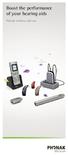 Boost the performance of your hearing aids Phonak wireless add-ons Modern hearing aid technology makes hearing and understanding in most situations enjoyable. But when you re on the phone, watching TV
Radio Aid Systems. 12 School &
 Radio Aid Systems Radio Aid Systems from Connevans For children and young people with a hearing loss, listening in noisy and poor acoustic environments is particularly challenging. It is difficult, tiring
Nucleus CP810 Sound Processor and Nucleus CR110 Remote Assistant Troubleshooting Guide
 Nucleus CP810 Sound Processor and Nucleus CR110 Remote Assistant Troubleshooting Guide Symbols Contents Note Important information or advice. Can save inconvenience. Tip Time saving hint or saves inconvenience.
Understanding Hearing Loss 404.591.1884. www.childrensent.com
 Understanding Hearing Loss 404.591.1884 www.childrensent.com You just found out your child has a hearing loss. You know what the Audiologist explained to you, but it is hard to keep track of all the new
Prescriptive Fitting Algorithms: New and Improved! Michelle Mattingly, Au.D. and Lisa Perhacs, Au.D.
 1 Prescriptive Fitting Algorithms: New and Improved! Michelle Mattingly, Au.D. and Lisa Perhacs, Au.D. TM 2 What is the goal of a prescriptive algorithm? Optimize audibility Optimize speech intelligibility
Hear Better With FM. Get more from everyday situations. Life is on. www.phonak.com
 Hear Better With FM Get more from everyday situations Life is on We are sensitive to the needs of everyone who depends on our knowledge, ideas and care. And by creatively challenging the limits of technology,
Learning Objective. To learn about current technological interventions that allow children with hearing loss to access auditory information
 Learning Objective To learn about current technological interventions that allow children with hearing loss to access auditory information in the educational environment. Module Outline Goal: To improve
HEARING SCREENING FOR CHILDREN
 PURPOSE Audiologic (hearing) screening identifies those persons who are likely to have hearing impairments or disorders that may interfere with body function/structure and/or activity/participation as
TV & Assistive Listening Devices
 10 TV & Assistive Listening Devices TV & Assistive Listening Devices l Relaxing at the end of the day watching TV l Enjoying listening to music l Catching up with family & friends at a restaurant l Developing
Advanced Speech-Audio Processing in Mobile Phones and Hearing Aids
 Advanced Speech-Audio Processing in Mobile Phones and Hearing Aids Synergies and Distinctions Peter Vary RWTH Aachen University Institute of Communication Systems WASPAA, October 23, 2013 Mohonk Mountain
Children Hear Better with FM. A starter guide for parents and teachers
 Children Hear Better with FM A starter guide for parents and teachers 2 Children hear better with FM This guide explains how and when FM can help Many children who wear hearing aids still have difficulty
Evaluating Real-World Hearing Aid Performance in a Laboratory
 Evaluating Real-World Hearing Aid Performance in a Laboratory Mead C. Killion principal investigator* Lawrence J. Revit research assistant and presenter** Ruth A. Bentler research audiologist Mary Meskan
GSI AUDIOSTAR PRO CLINICAL TWO-CHANNEL AUDIOMETER. Setting The Clinical Standard
 GSI AUDIOSTAR PRO CLINICAL TWO-CHANNEL AUDIOMETER Setting The Clinical Standard GSI AUDIOSTAR PRO CLINICAL TWO-CHANNEL AUDIOMETER Tradition of Excellence The GSI AudioStar Pro continues the tradition of
TOOLS for DEVELOPING Communication PLANS
 TOOLS for DEVELOPING Communication PLANS Students with disabilities, like all students, must have the opportunity to fully participate in all aspects of their education. Being able to effectively communicate
Classroom Audio Technology has been used effectively to
 The Benefits of Classroom Audio Technology White Paper by Bruce Bebb, Marketing Communications Director, Lightspeed Technologies Classroom Audio Technology has been used effectively to enhance listening
The Role of the Educational Audiologist 2014. Introduction:
 The Role of the Educational Audiologist 2014. Introduction: As the current CHAIR of the BAEA I felt that it was time for the Role of the Educational Audiologist to be updated. There has been a period of
Integrating best practice in hearing care
 Integrating best practice in hearing care Accurate fi t t i n g, easy verification True DSL Targets for accurate target transparency SPLogram view for easy fit-to-target verification EasyRECD for adjusting
Hearing Tests And Your Child
 HOW EARLY CAN A CHILD S HEARING BE TESTED? Most parents can remember the moment they first realized that their child could not hear. Louise Tracy has often told other parents of the time she went onto
Curriculum Policy for Audiology Primary and Secondary
 ELMFIELD SCHOOL FOR DEAF CHILDREN Curriculum Policy for Audiology Primary and Secondary - 2 - Throughout this document the terms deaf and deafness are used to denote all type and degrees of hearing loss.
Fundamental Components of Hearing Aid Fitting for Infants. Josephine Marriage PhD
 Fundamental Components of Hearing Aid Fitting for Infants Josephine Marriage PhD Neonatal Hearing Screening Screening efforts have far out stripped our habilitation efforts, leaving parents with diagnosis
PURE TONE AUDIOMETRY Andrew P. McGrath, AuD
 PURE TONE AUDIOMETRY Andrew P. McGrath, AuD Pure tone audiometry is the standard behavioral assessment of an individual s hearing. The results of pure tone audiometry are recorded on a chart or form called
The NAL Percentage Loss of Hearing Scale
 The NAL Percentage Loss of Hearing Scale Anne Greville Audiology Adviser, ACC February, 2010 The NAL Percentage Loss of Hearing (PLH) Scale was developed by John Macrae of the Australian National Acoustic
MA33 & MA55. PC Based Audiometers. The ideal choice for health care professionals on the go. www.maico-diagnostics.com. by Maico Diagnostics
 PC Based Audiometers by Maico Diagnostics MA33 & MA55 The ideal choice for health care professionals on the go 6 4 MA33 Pictured www.maico-diagnostics.com Portable - PC Based Audiometers Our PC based Audiometers
Vibrant Soundbridge Implantable Hearing System
 Vibrant Soundbridge Implantable Hearing System Kristin M. Avitabile, MS, CCC-A Clinical Manager, Southeastern U.S. MED-EL Corporation Hearing Technology Hearing Aids Mild to severe HL Problems with feedback
instruction guide Version 2.2 Table of contents
 instruction guide Version 2.2 Table of contents Programming in Unitron TrueFit software................................. 2 Main menu........................................................... 3 Tool bar
Classroom Amplification Technology has been used effectively to
 LightSPEED Technologies The Benefits of Classroom Amplification Technology White Paper by Bruce Bebb, Marketing Communications Director, LightSPEED Technologies Classroom Amplification Technology has been
Intermediate School District 917 CLASSIFICATION DESCRIPTION Educational Audiologist Department: Special Education
 Title of Immediate Supervisor: Assistant Director of Special Education Intermediate School District 917 Department: Special Education FLSA Status: Exempt Accountable For (Job Titles): None Pay Grade Assignment:
Hearing Tests And Your Child
 How Early Can A Child s Hearing Be Tested? Most parents can remember the moment they first realized that their child could not hear. Louise Tracy has often told other parents of the time she went onto
DIAGNOSTIC TESTING GUIDELINES for Audiology
 DIAGNOSTIC TESTING GUIDELINES for Audiology In 1999, the Illinois legislature passed the Hearing Screening for Newborns Act. By December 31, 2002, hospitals delivering babies were required to provide hearing
Everybody has the right to
 Everybody has the right to good hearing The Guide TO Hearing satisfaction for more people Beltone was founded on the act of helping a friend to enjoy life more. Since 19, we have provided knowledge, tools,
4.2. Desktop Fitting Guide. Content. August 2015
 4.2 August 2015 Desktop Fitting Guide This guide provides you with a detailed introduction to latest hearing instrument fitting with Phonak Target. www.phonakpro.com/target_guide Please also find the [News]
TecEar s Top Ten ALD Picks
 Assistive listening devices compliment the capabilities of digital hearing aids and cochlear implants, significantly enhancing the user's ability to use phones, cell phones, TV/DVD, and audio devices such
Samuel R. Atcherson, Ph.D.
 Beyond Hearing Aids and Cochlear Implants: Helping Families Make the Most of Assistive Technology Samuel R. Atcherson, Ph.D. Assistant Professor, Clinical Audiologist, Person w/ Hearing Loss University
Speech as input for technical measures
 Speech as input for technical measures Carsten Daugaard DELTA, Edisonvej 24, 5000 Odense C, Denmark, [email protected] Ellen Raben Pedersen Institute of Technology and Innovation, University of Southern Denmark,
Listening Therapy for Central Auditory Processing Disorders
 Listening Therapy for Central Auditory Processing Disorders Susan Eichert, AuD, CCC A March 21, 2015 Presentation Abstract This presentation will review the need for deficit-specific treatment of central
Hearing Devices Policy and Administration Manual
 Hearing Devices Policy and Administration Manual Assistive Devices Program, Ministry of Health and Long-Term Care Table of Amendments This page will list all substantive changes to policies and procedures
Safe Listening! How I Enjoy My Music and Avoid a Silent Future (ITU and WHO) Brian Copsey
 Safe Listening! How I Enjoy My Music and Avoid a Silent Future (ITU and WHO) Brian Copsey Safe Listening! How I Enjoy My Music and Avoid a Silent Future (ITU and WHO) This presentation focuses on those
PERCENTAGE ARTICULATION LOSS OF CONSONANTS IN THE ELEMENTARY SCHOOL CLASSROOMS
 The 21 st International Congress on Sound and Vibration 13-17 July, 2014, Beijing/China PERCENTAGE ARTICULATION LOSS OF CONSONANTS IN THE ELEMENTARY SCHOOL CLASSROOMS Dan Wang, Nanjie Yan and Jianxin Peng*
How To Fit A Super Power Hearing Instrument
 Max Powered by Era Hearing matters Meet Max Max is a new Super Power hearing instrument from Unitron. Max believes in fighting over-amplification and protecting long term hearing health. Max believes that
Educational Audiology Services in the Los Angeles Public Schools
 Educational Audiology Services in the Los Angeles Public Schools Gwen Severance, AuD, Educational Audiologist LAUSD Melissa Garafalo, AuD, Educational Audiologist LACOE Margaret Moretti, MA, Educational
Nucleus Fitting Software 1.2. User Guide
 Nucleus Fitting Software 1.2 User Guide Contents Get started... 4 Symbols used in this guide... 4 Introduction... 5 System requirements... 6 Connect a sound processor... 6 Connect a remote assistant...
Functional Communication for Soft or Inaudible Voices: A New Paradigm
 The following technical paper has been accepted for presentation at the 2005 annual conference of the Rehabilitation Engineering and Assistive Technology Society of North America. RESNA is an interdisciplinary
Cochlear Implant and Associated Technologies for Hearing
 Cochlear Implant and Associated Technologies for Hearing Mada Assistive Technology Center Tel: 00 974 44594050 Fax: 00 974 44594051 Email: [email protected] What is a cochlear implant? Cochlear implants
Demonstration of the presentation and access technology in classrooms, conference rooms and labs at NTID
 Demonstration of the presentation and access technology in classrooms, conference rooms and labs at NTID Chas Johnstone Technology and Information Services department National Technical Institute for the
Realtime Remote Online Captioning: An Effective Accommodation for Rural Schools and Colleges. June 27, 2001
 Realtime Remote Online Captioning 1 Realtime Remote Online Captioning: An Effective Accommodation for Rural Schools and Colleges June 27, 2001 M. Bryce Fifield, Ph.D. North Dakota Center for Persons with
FM-CI Cochlear Implant Adaptor Instructions for Use
 FM-CI Cochlear Implant Adaptor Instructions for Use Contents FM-CI adaptor features 4 Amigo receiver features 5 Adaptor cords 6-7 System setup 8-9 Inserting batteries 10 Wearing instructions 11-14 FM system
Using Your Fitting Software This guide provides comprehensive, task-based information about all the fitting software features.
 Gravity Fitting Software User's Manual part #: S0273-01 Rev A Using Your Fitting Software This guide provides comprehensive, task-based information about all the fitting software features. You may access
Exclusionary Criteria Team Approach and the Diagnosing Professional APD Test Battery
 Auditory Processing Disorders Assessment and Intervention: Best Practices Task Force on Auditory Processing Disorders, Minnesota Speech Language Hearing Assoc. Introduction The Minnesota Speech Language
ASU Speech & Hearing Clinic Hearing Aid Services
 ASU Speech & Hearing Clinic Hearing Aid Services Thank you for considering the ASU Speech & Hearing Clinic for your hearing healthcare needs. The purchase and fitting of hearing instruments is a very important
ARTICLE. Sound in surveillance Adding audio to your IP video solution
 ARTICLE Sound in surveillance Adding audio to your IP video solution Table of contents 1. First things first 4 2. Sound advice 4 3. Get closer 5 4. Back and forth 6 5. Get to it 7 Introduction Using audio
Using Your Cell Phone as an ALD
 Using Your Cell Phone as an ALD Our August HLAA KY Home meeting focused on cell phone Apps that are designed to assist the deaf and hard of hearing. The following is adapted from a Presentation at the
5th Congress of Alps-Adria Acoustics Association NOISE-INDUCED HEARING LOSS
 5th Congress of Alps-Adria Acoustics Association 12-14 September 2012, Petrčane, Croatia NOISE-INDUCED HEARING LOSS Davor Šušković, mag. ing. el. techn. inf. [email protected] Abstract: One of
The Disability Tax Credit Certificate Tip sheet for Audiologists
 The Disability Tax Credit Certificate Tip sheet for Audiologists Developed by: The Canadian Academy of Audiology (CAA) & Speech- Language and Audiology Canada (SAC) Purpose of This Document The Canada
GRF-3300 RF Training Kits
 RF Training Kits Presenter : Cooper Liu, Engineer Department : Marketing & Service Division Date : Aug. 20, 2008 Educational challenges coped in RF circuits training Short of proper training tools The
How To Teach A Deaf Person
 Appendix F. New Hampshire Certification Requirements for Educational Interpreters/Transliterators and for Special Education Teachers in the Area of Deaf and Hearing Disabilities Educational Interpreter/Transliterator
Central Auditory System
 Auditory Processing Disorder Sarah (King) Zlomke, Au.D., CCC-A September 16, 2011 Kansas Speech-Language-Hearing Association Conference Auditory processing is not only what we hear, it is how we process
GUIDELINES ON THE ACOUSTICS OF SOUND FIELD AUDIOMETRY IN CLINICAL AUDIOLOGICAL APPLICATIONS
 NOTE Although care has been taken in preparing the information supplied by the British Society of Audiology, the BSA does not and cannot guarantee the interpretation and application of it. The BSA cannot
A Microphone Array for Hearing Aids
 A Microphone Array for Hearing Aids by Bernard Widrow 1531-636X/06/$10.00 2001IEEE 0.00 26 Abstract A directional acoustic receiving system is constructed in the form of a necklace including an array of
Alberta Health. AADL Approved Products List Hearing Aids, Bone Anchored Hearing Devices and Cochlear Implants Pricing effective April 1, 2016
 Alberta Health Approved Products List Hearing Aids, Bone Anchored Hearing Devices and Cochlear Implants Pricing effective Cost Share Seniors and Adult Dependents of Seniors... APL H-1 Cost Share Exempt
Paediatric Hearing Assessment
 Information for parents Paediatric Hearing Assessment Hearing assessment of infants is limited by their ability to respond to sounds. This is determined by both the development of the hearing system and
The Audiology and Vocational Rehabilitation partnership
 Audiology on the Job The Audiology and Vocational Rehabilitation partnership Nancy Mascia, Au.D.,CCC-A Alabama Dept of Rehabilitation Dr. Nancy Mascia is an employee of the above organization that provides
FOR MORE INFORMATION CONTACT [email protected]
 FOR MORE INFORMATION CONTACT [email protected] PRESENTED BY: Brad Dodson Business Development & Training Manager TOPIC: Tools for Better Hearing on a Multi line line Business Telephone OVERVIEW:
Wireless. with Personal Mix Control and EP3 Dynamic Earphones
 Wireless In-Ear Monitor Systems with Personal Mix Control and EP3 Dynamic Earphones Why In-Ear Monitors? Clarity is first among the many reasons to make the switch from traditional floor monitors to wireless
ACOUSTICAL CONSIDERATIONS FOR EFFECTIVE EMERGENCY ALARM SYSTEMS IN AN INDUSTRIAL SETTING
 ACOUSTICAL CONSIDERATIONS FOR EFFECTIVE EMERGENCY ALARM SYSTEMS IN AN INDUSTRIAL SETTING Dennis P. Driscoll, P.E. and David C. Byrne, CCC-A Associates in Acoustics, Inc. Evergreen, Colorado Telephone (303)
Getting Started Kei Te Timata
 Getting Started Kei Te Timata AN INTRODUCTION FOR THE FAMILIES AND WHANAU OF CHILDREN DIAGNOSED WITH A HEARING LOSS. THIS IS A JOINT PROJECT BY DEAF EDUCATION AOTEAROA NEW ZEALAND AND THE NATIONAL AUDIOLOGY
Predicting Speech Intelligibility With a Multiple Speech Subsystems Approach in Children With Cerebral Palsy
 Predicting Speech Intelligibility With a Multiple Speech Subsystems Approach in Children With Cerebral Palsy Jimin Lee, Katherine C. Hustad, & Gary Weismer Journal of Speech, Language and Hearing Research
Summary Table Voluntary Product Accessibility Template
 PLANTRONICS VPAT 8 Product: Call Center Polaris Headsets (Non-HAC) Over the Head Noise Canceling: P101N, P61N Over the Head Voice Tube: P101, P61 Over the Ear Voice Tube: P41 In the Ear Noise Canceling:
FREQUENTLY ASKED QUESTIONS
 FREQUENTLY ASKED QUESTIONS TABLE OF CONTENTS Section 1 Section 2 Section 3 Section 4 Section 5 Section 6 Section 7 Section 8 Section 9 Section 10 Wireless Connectivity...2 Ear-to-Ear...3 Streaming...4
Confirmation of Diagnosis of Disability (To determine eligibility under section 18(2)(b) of the Income Tax Act, 1962 (as amended))
 Confirmation of Diagnosis of Disability (To determine eligibility under section 18(2)(b) of the Income Tax Act, 1962 (as amended)) ITR-DD This certificate must not be submitted with your tax return but
Phone calls made easy with Roger Guidebook
 Phone calls made easy with Roger Guidebook Making phone calls is still one of the major challenges for people with a severe to profound hearing loss. Roger products from Phonak provide an easy way to send