
Questions and Answers for Parents
|
|
|
- Warren Miles
- 10 years ago
- Views:
Transcription
1 Questions and Answers for Parents There are simple, inexpensive tests available to detect hearing impairment in infants during the first days of life. In the past, most hearing deficits in children were not identified until the age of 2 or 3 years. It is no longer necessary to wait until a child is old enough for a hearing test. Infants who are diagnosed with hearing loss early and have treatment started by the age of 6 months have markedly better outcomes than children who are diagnosed later in infancy or childhood. Why is it important to screen my baby s hearing? Approximately one to three babies out of 1,000 will be born with permanent hearing loss. Babies start to learn language and speech very early. By their first birthday, they are already learning what words mean and babble many of the sounds they hear. If a hearing loss is not detected early, a baby will miss a very critical period for speech and language development. Delays in speech and language can lead to other problems when the child goes to school. Finding hearing loss and getting treatment early can help prevent these delays. Hospitals screen for several things when babies are born, such as PKU (this is an abbreviation for Phenylketonuria, a disorder in which children are not able to metabolize part of protein in food). Hearing loss occurs more often in babies than any of the other things that are screened for at birth. Hospitals in North Carolina screen all babies for hearing loss before discharge. How does newborn hearing screening work? There are two tests which may be used to screen a baby s hearing. Both are comfortable and pose no risk for babies. Auditory Brainstem Response Soft clicking sounds are played through earphones into the baby s ears. Band-aid like sensors placed on the baby s head measure the brain s response to these soft sounds. The machine compares the response from the baby being tested to a normal response for babies. If there is a good match, the baby passes the screening. If the match is not close enough, the baby refers on the screening. Otoacoustic Emissions Soft beeping or clicking sounds are played into the baby s ear through a small earphone which also has a microphone in it. If the baby passes the OAE, the microphone measures a response in the ear canal like an echo. When a baby has hearing loss, no echo is measured and the result is a refer. These tests may be used alone or in combination. Both tests are accurate and reliable. Both tests are accurate and reliable. Some hospitals use a 2-step process. Babies are first screened with OAE, and those who do not pass the OAE are then given the ABR 1

2 test. Each hospital has chosen a screening method based on the hospital s resources, available personnel, costs, and number of babies born in that hospital. Will the screening hurt my baby? No. The screening is easy and painless. Most babies sleep through the test. The screening can take as little as one minute, or as long as 30 minutes, depending on how quiet the baby remains during the test. What if I don t want my baby s hearing screened? Though it is recommended all babies have this screening, you may choose not to have your baby screened. If you do not want your baby s hearing to be screened, please tell your nurse. You will be asked to sign a non-consent form stating that you were offered the screening and chose not to have the test done. You will be contacted later on by public health staff and offered another opportunity for your baby s hearing to be checked. What does it mean if my baby passes the screening? This means that on the day of the screening, your baby s hearing was good enough for speech/language development. No further testing is necessary at this time. Hearing loss can develop at any age, so it s important for you to watch your child s hearing health and speech/language development by using the Hearing Health Checklist. If you have any concerns regarding your child s hearing, speech, or language you should talk to your child s doctor. Can a baby pass the screening and still have hearing loss? Sometimes, though it doesn t happen very often. Some mild hearing losses or hearing loss that affects only some pitches of sound will not be picked up by the screening test. Hearing loss can develop at any age. The infant may not have hearing loss at birth, but develop a hearing loss after the newborn period. There are several risk indicators for hearing loss. If your child has any of these risk factors or you have concerns about your child s responses to sounds or speech/language, you should talk to your child s doctor. What does it mean if my baby REFERS (does not pass) the screening? It means that the screening needs to be repeated within 30 days. Nationwide, 2 percent to 20 percent of babies will refer on the first screening. Less than 1 percent will actually have permanent hearing loss. 2

3 You may ask why would a baby with normal hearing refer on the newborn hearing screening. There are several common reasons: fluid in the middle ear, vernix in the ear canal, too much movement/crying during the test, etc. Even though most babies will pass the repeat screening, it is VERY important to take your baby for this testing. It s the best way for you to be sure about your baby s hearing. What do I need to do next if my baby refers (does not pass) on the screening? The first step is to take your baby for a repeat screening within 2 to 4 weeks. You may also want to discuss the results with your baby s doctor. What if my baby refers (does not pass) on the repeat screening? Your baby needs to have a diagnostic audiology evaluation to determine how much, if any, hearing loss is present in each of your baby s ears. This diagnostic evaluation should happen before your child is 3 months old. Your doctor should refer you to a pediatric audiologist for this evaluation. Can my child s hearing be tested at any age? Yes. There are safe, accurate, and effective ways to determine how well your child hears at any age. Pediatric audiologists are trained to test hearing on children of all ages. When should a diagnostic audiological evaluation be performed? Infants should be referred for diagnostic audiological evaluation following a refer result on two hearing screenings (i.e. initial newborn hearing screening and one follow-up rescreening), which should occur before the age of 1 month. The diagnostic audiological evaluation should be completed by the age of 3 months. Diagnostic audiology evaluations are appropriate at any age, if concerns about hearing arise. It is important that the diagnostic evaluation be completed as soon as possible following a refer result on a hearing screening. Who should complete the diagnostic audiological evaluation? The diagnostic audiological evaluation should be completed by a pediatric audiologist. A pediatric audiologist is trained, has the technical expertise, and desire to work with the infant population. The pediatric audiologist is well-versed in developmentally appropriate test techniques, general child development, and parent counseling. In the absence of a specialized certification for pediatric audiology, practitioners are expected to follow their professional code of ethics regarding their capability to provide 3

4 such services. If the practitioner does not have the expertise and equipment to follow recommended protocols, the infant and family should be referred to a professional equipped for and qualified in infant audiologic assessment. Audiologists who provide the audiologic assessment must hold a current license in Audiology issued by the North Carolina Board of Examiners for Speech and Language Pathologists and Audiologists. Where should the diagnostic audiological evaluation be provided? The diagnostic audiological evaluation should be completed in an audiology setting where audiologic and otologic (ENT) services are well coordinated. Sedation or anesthesia may be required to complete the diagnostic audiological evaluation, especially if your child is over 2 months of age. When sedation (or anesthesia) is required, the evaluation should take place in a setting with appropriate medical support. It may be possible to conduct the diagnostic audiological evaluation in conjunction with other procedures where the child will be sedated (i.e. surgery, CT scan, MRI, etc.). Why would sedation be needed? Part of the test needs to be completed while your baby is sleeping. The test can take 1 to 2 hours. Children older than 2 months are not likely to sleep naturally long enough for the testing to be completed. What kinds of tests should be included in the diagnostic audiology evaluation? Your baby s entire auditory (ear) system should be evaluated. This includes the outer, middle, and inner ear as well as the auditory nerve. A complete diagnostic audiology evaluation for an infant/child should include: For all ages: Otoscopy The audiologist will view your baby s ear, ear canal, and eardrum with an otoscope Tympanometry This is used to determine middle ear function. The test places a small earphone in the baby s ear canal, gently changes the air pressure in the ear, and measures how much the eardrum moves. It is helpful in finding the presence of fluid and/or infection in the middle ear. Middle Ear Muscle Reflex There is a tiny muscle in the middle ear that will jump in response to loud sound in normal hearing ears. This is similar to when your doctor taps you on your knee and the knee jerks. This gives more information about type of hearing loss. 4

5 Diagnostic Otoacoustic Emissions (OAEs) - Soft beeping or clicking sounds are played into the baby s ear through a small earphone which also has a microphone in it. The microphone measures a response in the ear canal like an echo. This information can help define the type of hearing loss. AND For birth to 6 months: Auditory Brainstem Response (ABR) This is similar to the screening ABR, but gives much more information about the degree and type of hearing loss across different frequencies (pitches) in each ear. Your baby will need to sleep for this test. Click below to see an example of a normal ABR. For Infants and Toddlers (6 months-24 months): Visual Reinforcement Audiometry Sound is presented either through earphones or through a loudspeaker. The child is trained to turn his/her head in response to sound by the use of an animated toy or video. It is important that each ear be tested. This gives information about what your child hears in each ear for many different frequencies (pitches). For Young Children and Preschoolers: Conditioned Play Audiometry This is like playing a game. Your child will wear earphones and will hear sounds through the earphones. They will be asked to do a specific task, like dropping a block in a bucket, every time they hear a sound. It is important that each ear be tested. This gives information about what your child hears in each ear for many different frequencies (pitches). Does insurance cover the cost of the diagnostic audiological evaluation? Many insurance companies do cover this evaluation, providing you get the appropriate referral from your primary care physician. However, you will need to consult your insurance carrier for this information. When should an infant be fitted with amplification? It is recommended that infants with confirmed hearing loss be fitted with amplification and enrolled in appropriate early intervention services as soon as possible, but no later than the age of 6 months. In cases where the hearing loss does not present until after 6 months (i.e. late onset hearing loss), amplification should be fitted and enrollment in early intervention services should take place as soon as possible. 5

6 Who should complete the fitting of amplification for infants? An audiologist is the professional singularly qualified to select and fit all forms of amplification for children (personal hearing aids, FM systems, cochlear implants, and other assistive listening devices). Audiologists working with young children must have experience with amplification and management of infants and children with hearing loss and have the test equipment necessary to complete all described testing for hearing aid selection and evaluation procedures. If the practitioner does not have the expertise and equipment to follow recommended protocols, the infant and family should be referred to a professional equipped for and qualified in infant hearing aid (amplification) fitting. When does a child need amplification? Amplification should be considered for children who have: (1) confirmed permanent bilateral hearing loss of any degree (sensorineural, conductive, or mixed); or (2) confirmed permanent unilateral hearing loss in a portion of the frequency range critical for speech understanding with measurable hearing in the affected ear as measured by ABR and behavioral testing, taking into account the special considerations listed below; and (3) received written medical clearance for amplification use from an otologist, pediatric otolaryngologist, or a general otolaryngologist. What are special considerations in determining candidacy for amplification? 1) Middle ear conditions 2) Other health concerns 3) Unilateral hearing loss (American Academy of Audiology, 2004) Use of hearing aid amplification is indicated for some children with unilateral hearing losses. The decision to fit a child with a unilateral hearing loss should be made on an individual basis, taking into consideration the child s or family s preference as well as audiologic, developmental, communication, and educational factors. Amplification options such as personal FM systems also should be considered. Use of communication strategies (noise reduction, positioning, etc.) may prove to be beneficial and easily accomplished for the infant or toddler with unilateral hearing impairment. The use of 6

7 Contralateral Routing of Signal (CROS) amplification requires particular care. Its design is to overcome the problem caused by the head shadow effect. This could be especially helpful in a quiet environment and when the signal of interest originates from the direction of the non-functioning ear. However, one recent study indicated that CROS amplification may not be beneficial for children in a classroom setting, because of the introduction of additional noise to the normal-hearing ear. 4) Minimal-mild hearing loss (American Academy of Audiology, 2004) Current evidence suggests that children with minimal and mild hearing losses are at high risk for experiencing academic difficulty. As such, children with minimal and mild hearing loss should be considered candidates for amplification and/or personal FM system or soundfield systems (FM) for use in school. 5) Profound hearing loss (American Academy of Audiology, 2004) A finding of no response by ABR should not exclude a child from hearing aid candidacy, as residual hearing may exist at intensity levels greater than those capable of eliciting a standard ABR response. Children with confirmed profound hearing loss still may experience benefit from hearing aid amplification. An infant or child with severe to profound hearing loss is a cochlear implant candidate. 6) Normal peripheral hearing sensitivity (American Academy of Audiology, 2004) In some cases, children with normal peripheral hearing sensitivity may benefit from amplification. These cases may include children with auditory processing disorders (APD), auditory neuropathy (AN) or dysynchrony, and children with unilateral hearing impairment when an FM system is coupled to the normal-hearing ear. In such cases, close audiologic monitoring of hearing sensitivity, and careful control of the output of the amplification is required. How is a hearing aid fitted and evaluated on an infant or young child? The process for fitting hearing aids on infants/young children is very different than it is for adults. It is necessary for a qualified pediatric audiologist to complete hearing aid fittings on infants/young children. Because a child s early years are critical to speech/language development, it is important to find the best hearing aids for each child. Hearing aids must be fit individually for each child using the test results obtained during the diagnostic audiological evaluation. Infants cannot tell us how well the hearing aids are working, so it is vital that we have accurate test results when fitting hearing aids to these tiny ears. Sound is much louder in small spaces than in large spaces. So, sound coming from the hearing aid will be louder for your infant than it would be for an adult. It is important to know how much sound is present in your child s ear. A special probe microphone measure, called the Real-Ear-to-Coupler-Difference (RECD), can be used. The audiologist will combine the RECD with the response of the hearing aid in a special test box to find the best hearing aid and settings for your child. The most important goal when fitting hearing aids to young children is to make speech loud enough for the child to hear. 7

8 Does insurance pay for hearing aids? This depends on your insurance. Please contact your insurance company to find out what coverage you may have. You may also contact the CSHS Helpline at for more information. In North Carolina, there is funding available for the initial hearing aids for any child under the age of 3 years through a program called EHDI Initial Hearing Aids. There are no income requirements to receive this funding. If you have other insurance, that insurance must be contacted first. What type of hearing aid should my child have? For many reasons, behind-the-ear hearing aids are preferred for young children. However, there are other considerations you will need to discuss with your audiologist. There are several features available and you will need to work with your audiologist to find the best combination for you and your child. 8

Unilateral (Hearing Loss in One Ear) Hearing Loss Guidance
 Unilateral (Hearing Loss in One Ear) Hearing Loss Guidance Indiana s Early Hearing Detection and Intervention Program Before universal newborn hearing screening, most children with unilateral hearing loss
Understanding Hearing Loss 404.591.1884. www.childrensent.com
 Understanding Hearing Loss 404.591.1884 www.childrensent.com You just found out your child has a hearing loss. You know what the Audiologist explained to you, but it is hard to keep track of all the new
Hearing Tests And Your Child
 HOW EARLY CAN A CHILD S HEARING BE TESTED? Most parents can remember the moment they first realized that their child could not hear. Louise Tracy has often told other parents of the time she went onto
Hearing Tests And Your Child
 How Early Can A Child s Hearing Be Tested? Most parents can remember the moment they first realized that their child could not hear. Louise Tracy has often told other parents of the time she went onto
Once your baby has good head control and can turn towards something interesting, a more advanced behavioural procedure can be used.
 How do we test the hearing of babies and children? An audiologist will select from a range of different tests to evaluate your child s hearing. The choice of test depends on the information that is needed
DIAGNOSTIC TESTING GUIDELINES for Audiology
 DIAGNOSTIC TESTING GUIDELINES for Audiology In 1999, the Illinois legislature passed the Hearing Screening for Newborns Act. By December 31, 2002, hospitals delivering babies were required to provide hearing
Hearing Tests for Children with Multiple or Developmental Disabilities by Susan Agrawal
 www.complexchild.com Hearing Tests for Children with Multiple or Developmental Disabilities by Susan Agrawal Hearing impairment is a common problem in children with developmental disabilities or who have
EXECUTIVE SUMMARY OF JOINT COMMITTEE ON INFANT HEARING YEAR 2007 POSITION STATEMENT. Intervention Programs
 EXECUTIVE SUMMARY OF JOINT COMMITTEE ON INFANT HEARING YEAR 2007 POSITION STATEMENT Principles and Guidelines for Early Hearing Detection and Intervention Programs The Joint Committee on Infant Hearing
My child has a hearing loss
 My child has a hearing loss A guide for parents Content You are not alone 3 Hearing impairment 5 Methods of testing hearing 6 Audiogram 7 Types and causes of hearing loss 8 Degree of hearing loss 10 Where
Infant hearing screening will not hurt your baby, and will only take between 5 and 20 minutes. Ideally it is done whilst baby is asleep or settled.
 Early diagnosis of hearing loss will make a difference to your baby s life. Significant hearing loss is the most common condition present at birth. In the private sector, 3 in every 1000 babies are born
The Role of the Educational Audiologist 2014. Introduction:
 The Role of the Educational Audiologist 2014. Introduction: As the current CHAIR of the BAEA I felt that it was time for the Role of the Educational Audiologist to be updated. There has been a period of
Getting Started Kei Te Timata
 Getting Started Kei Te Timata AN INTRODUCTION FOR THE FAMILIES AND WHANAU OF CHILDREN DIAGNOSED WITH A HEARING LOSS. THIS IS A JOINT PROJECT BY DEAF EDUCATION AOTEAROA NEW ZEALAND AND THE NATIONAL AUDIOLOGY
Paediatric Hearing Assessment
 Information for parents Paediatric Hearing Assessment Hearing assessment of infants is limited by their ability to respond to sounds. This is determined by both the development of the hearing system and
CALIFORNIA CHILDREN S SERVICES MANUAL OF PROCEDURES 3.42 STANDARDS FOR INFANT HEARING SCREENING SERVICES
 3.42 STANDARDS FOR 3.42.1 INPATIENT INFANT HEARING SCREENING PROVIDER A. Definition An Inpatient Infant Hearing Screening Provider shall be a general acute care hospital with licensed perinatal services
Section 4. Hearing loss and hearing tests
 Section 4 Hearing loss and hearing tests How we hear Outer Ear Middle Ear Inner Ear 4. 7. 8. 1. 3. 6. 2. 5. 1. 2. 3. 4. 5. 6. 7. 8. Ear canal Ear drum Middle ear cavity Middle ear bones the malleus, incus,
Why does my child have a hearing loss?
 Introduction This factsheet will tell you about the range of tests that can be carried out to try to find the cause of your child s hearing loss. The process to find out why a child is deaf is sometimes
Guide for families of infants and children with hearing loss
 With early detection, Early Intervention can begin! Guide for families of infants and children with hearing loss Birth to 3 2008 Cover photograph Geneva Marie Durgin was born January 20, 2007. She lives
Case Study THE IMPORTANCE OF ACCURATE BEHAVIOURAL TESTING IN INFANT HEARING AID FITTINGS
 Case Study THE IMPORTANCE OF ACCURATE BEHAVIOURAL TESTING IN INFANT HEARING AID FITTINGS Andrea Kelly, PhD, MNZAS Auckland District Health Board Suzanne Purdy, PhD, MNZAS University of Auckland Asymmetrical
Intermediate School District 917 CLASSIFICATION DESCRIPTION Educational Audiologist Department: Special Education
 Title of Immediate Supervisor: Assistant Director of Special Education Intermediate School District 917 Department: Special Education FLSA Status: Exempt Accountable For (Job Titles): None Pay Grade Assignment:
Pediatric Hearing Assessment
 Pediatric Hearing Assessment Stanton Jones Key Points This chapter outlines the methods of hearing assessment that are appropriate for children from birth to adolescence. The importance of timely referral
COCHLEAR NERVE APLASIA : THE AUDIOLOGIC PERSPECTIVE A CASE REPORT. Eva Orzan, MD Pediatric Audiology University Hospital of Padova, Italy
 COCHLEAR NERVE APLASIA : THE AUDIOLOGIC PERSPECTIVE A CASE REPORT Eva Orzan, MD Pediatric Audiology University Hospital of Padova, Italy Congenital absence or underdevelopment of the cochlear nerve has
Pure Tone Hearing Screening in Schools: Revised Notes on Main Video. IMPORTANT: A hearing screening does not diagnose a hearing loss.
 Pure Tone Hearing Screening in Schools: Revised Notes on Main Video (Notes are also available for Video segments: Common Mistakes and FAQs) IMPORTANT: A hearing screening does not diagnose a hearing loss.
HEARING SCREENING: PURE TONE AUDIOMETRY
 HEARING SCREENING: PURE TONE AUDIOMETRY QUALIFIED SCREENERS 7-005.01 For the purposes of the school officials verifying that a qualified screener is carrying out the required screening activity, the qualified
8.Audiological Evaluation
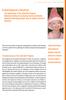 8. A U D I O L O G I C A L E V A L U A T I O N 8.Audiological Evaluation The external ear of the child with Progeria Behavioral testing for assessing hearing thresholds Objective electrophysiologic tests
EARLY INTERVENTION: COMMUNICATION AND LANGUAGE SERVICES FOR FAMILIES OF DEAF AND HARD-OF-HEARING CHILDREN
 EARLY INTERVENTION: COMMUNICATION AND LANGUAGE SERVICES FOR FAMILIES OF DEAF AND HARD-OF-HEARING CHILDREN Our child has a hearing loss. What happens next? What is early intervention? What can we do to
Audiology Services. Carolyn Dando Audiology Services Manager South Warwickshire NHS
 Audiology Services Carolyn Dando Audiology Services Manager South Warwickshire NHS What are we going to cover today? General overview of the ear Hearing loss Hearing assessments, results Hearing aids Paediatric
EARLY HEARING DETECTION & INTERVENTION PROGRAM
 Commissioner J. Robert Galvin, MD, MPH, MBA EARLY HEARING DETECTION & INTERVENTION PROGRAM Guidelines For Infant Hearing Screening Revised 2008 Early Hearing Detection & Intervention TABLE OF CONTENTS
Audiologist and Hearing Aid Dispenser. Provider Manual
 Audiologist and Hearing Aid Provider Manual Provider 1 TABLE OF CONTENTS Chapter I. General Program Policies Chapter II. Member Eligibility Chapter IV. Billing Iowa Medicaid Appendix III. Provider-Specific
PURE TONE AUDIOMETRY Andrew P. McGrath, AuD
 PURE TONE AUDIOMETRY Andrew P. McGrath, AuD Pure tone audiometry is the standard behavioral assessment of an individual s hearing. The results of pure tone audiometry are recorded on a chart or form called
DURATION OF HEARING LOSS
 When your child is diagnosed with a hearing loss, it may be very overwhelming. This may be a difficult time for you and your family. However, gaining a greater knowledge in this area is crucial in helping
OAE hearing screening at your fingertips OAE+
 OAE hearing screening at your fingertips OAE+ Periodic hearing screening leads to early detection of hearing loss 6-7 per 1000 children will be identified with permanent hearing loss in early childhood.
Statewide Infant Screening - Hearing (SWISH) Program
 Guideline Department of Health, NSW 73 Miller Street North Sydney NSW 2060 Locked Mail Bag 961 North Sydney NSW 2059 Telephone (02) 9391 9000 Fax (02) 9391 9101 http://www.health.nsw.gov.au/policies/ Statewide
Official CPT Description
 s CPT 69210 Removal impacted cerumen (separate procedure), one or both ears 92507 Treatment of speech, language, voice, communication, and/or auditory processing disorder; individual 92516 Facial nerve
Hearing Screening Coding Fact Sheet for Primary Care Pediatricians
 Hearing Screening Coding Fact Sheet for Primary Care Pediatricians While coding for hearing screening is relatively straightforward, ensuring that appropriate payment is received for such services is a
Treatment Guide Understanding Hearing Loss. Cleveland Clinic Hearing Specialists. Choosing Care for Hearing Loss
 Treatment Guide Understanding Hearing Loss Good hearing is part of a full and active life. Let us help you achieve a world of better hearing and improve your quality of life. Choosing Care for Hearing
North Carolina Infant Diagnostic Audiologic Evaluation Sites Updated May 12, 2015
 North Carolina Infant Diagnostic Audiologic Evaluation Sites NC Location Name of Facility Address Telephone Medical Affiliation Ahoskie 500 S. Academy Street Terry Crudup Roanoke Chowan Ahoskie, NC 27910
Audiology (0341) Test at a Glance. About This Test. Test Code 0341. Number of Questions 120 Multiple-choice questions. Approximate Number of Questions
 Test at a Glance Test Name Audiology Test Code 0341 Time 2 hours Number of Questions 120 Format Multiple-choice questions Content Categories Approximate Number of Questions Approximate Percentage of Examination
Florida Resource Guide for Families of Young Children with Hearing Loss
 inf screen_res guide cvr.qxp_inf screen bro 07 4/6/15 4:28 PM Page 1 Florida Resource Guide for Families of Young Children with Hearing Loss April 2015 Edition Florida Department of Health Children s Medical
Scope of Practice in Audiology
 Ad Hoc Committee on in Audiology Reference this material as: American Speech-Language-Hearing Association. (2004). in Audiology []. Available from www.asha.org/policy. Index terms: scope of practice doi:10.1044/policy.sp2004-00192
Audiology (0340) Test at a Glance. About this test. Test Guide Available. See Inside Back Cover. Test Code 0340
 Audiology (0340) Test Guide Available See Inside Back Cover Test at a Glance Test Name Audiology Test Code 0340 Time 2 hours Number of Questions 150 Format Multiple-choice questions Approximate Approximate
Coding Fact Sheet for Primary Care Pediatricians
 1/1/2015 Hearing Testing Coding Fact Sheet Coding Fact Sheet for Primary Care Pediatricians While coding for hearing screening is relatively straightforward, ensuring that appropriate payment is received
So, how do we hear? outer middle ear inner ear
 The ability to hear is critical to understanding the world around us. The human ear is a fully developed part of our bodies at birth and responds to sounds that are very faint as well as sounds that are
HEARING SCREENING FOR CHILDREN
 PURPOSE Audiologic (hearing) screening identifies those persons who are likely to have hearing impairments or disorders that may interfere with body function/structure and/or activity/participation as
A Guide to Otoacoustic Emissions (OAEs) for Physicians
 A Guide to Otoacoustic Emissions (OAEs) for Physicians Introduction Hearing loss is not uncommon in children and adults. According to recent estimates, 31.5 million people in the United States report difficulty
Fundamental Components of Hearing Aid Fitting for Infants. Josephine Marriage PhD
 Fundamental Components of Hearing Aid Fitting for Infants Josephine Marriage PhD Neonatal Hearing Screening Screening efforts have far out stripped our habilitation efforts, leaving parents with diagnosis
A PROFESSIONAL PRACTICE PROFILE
 A PROFESSIONAL PRACTICE PROFILE FOR HEARING HEALTH PROFESSIONALS The International Hearing Society has adopted the following practice profile as a comprehensive declaration of dispensing characteristics
SPEECH, LANGUAGE, HEARING BENEFITS
 MAKING SENSE OF YOUR HEALTH INSURANCE PLAN SPEECH, LANGUAGE, HEARING BENEFITS Did you know? Hearing loss is the number one birth defect in the United States. Two out of every 10 children will have some
UKAS Technical/Peer Assessor Keyword List AUDIOLOGY
 For UKAS use only (Assessor Ref. Number) United Kingdom Accreditation Service 21-47 High Street Feltham, Middlesex TW13 4UN UKAS Technical/Peer Assessor Keyword List Name of applicant Applicant assessors
AUDIOLOGICAL EVALUATIONS, FINDINGS AND RECOMMENDATIONS: A PARENT S GUIDE
 AUDIOLOGICAL EVALUATIONS, FINDINGS AND RECOMMENDATIONS: A PARENT S GUIDE Nicole Raia, ScD, CCC-A, FAAA Clinical Audiologist University Hospital Newark, NJ AGENDA Anatomy of the Ear Types of Audiological
Roles, Knowledge, and Skills: Audiologists Providing Clinical Services to Infants and Young Children Birth to 5 Years of Age
 Roles, Knowledge, and Skills: Audiologists Providing Clinical Services to Infants and Young Children Birth to 5 Reference this material as: American Speech-Language-Hearing Association. (2006). Roles,
Learners Who are Deaf or Hard of Hearing Kalie Carlisle, Lauren Nash, and Allison Gallahan
 Learners Who are Deaf or Hard of Hearing Kalie Carlisle, Lauren Nash, and Allison Gallahan Definition Deaf A deaf person is one whose hearing disability precludes successful processing of linguistic information
Hearing Aids - Adult HEARING AIDS - ADULT HS-159. Policy Number: HS-159. Original Effective Date: 3/18/2010. Revised Date(s): 3/18/2011; 3/1/2012
 Harmony Behavioral Health, Inc. Harmony Behavioral Health of Florida, Inc. Harmony Health Plan of Illinois, Inc. HealthEase of Florida, Inc. Ohana Health Plan, a plan offered by WellCare Health Insurance
HEARING LOSS AND LANGUAGE DELAY IN LITTLE CHILDREN. Prepared by Jane H. LeBlanc, M.S., M.S.P. Audiologist, CCC-A Speech Language Pathologist, CCC-SLP
 HEARING LOSS AND LANGUAGE DELAY IN LITTLE CHILDREN Prepared by Jane H. LeBlanc, M.S., M.S.P. Audiologist, CCC-A Speech Language Pathologist, CCC-SLP This is being written to provide information to concerned
Infant & Toddler Connections of Virginia DRAFT Provider Qualifications 1 Table
 Infant & Toddler Connections of Virginia DRAFT Provider Qualifications 1 Table Audiologist Master s degree plus state licensure Specialist Associate Assistant Screening Audiology, Certified Therapeutic
10/23/09 NewProgram-AuD-2009
 AUDIOLOGY Type of program you would like to see: Describe. We are proposing a clinical doctorate program in audiology that meets the 2007 certification standards of both the American Speech-Language and
Harold C. Pillsbury III, MD, FACS
 Harold C. Pillsbury III, MD, FACS University of North Carolina Ear & Hearing Center Department of Otolaryngology / Head & Neck Surgery, University of North Carolina Chapel Hill, USA Audiologists: Erika
Early Intervention Service Procedure Codes, Limits and Rates
 BABIES INFORMATION AND BILLING SYSTEM Early Intervention Service Procedure Codes, Limits and Rates Georgia Department of Public Health Office of Maternal and Child Health Children and Youth with Special
Down s syndrome and childhood deafness
 Information for families Down s syndrome and childhood deafness D O W N S SYNDROME ASSOCIATION Our vision is of a world without barriers for every deaf child. Down s syndrome and childhood deafness Information
Patient Information. for Childhood
 Patient Information Genetic Testing for Childhood Hearing Loss Introduction This document describes the most common genetic cause of childhood hearing loss and explains the role of genetic testing. Childhood
Position Paper on Cochlear Implants in Children
 Position Paper on Cochlear Implants in Children Position: The Canadian Association of Speech-Language Pathologists and Audiologists (CASLPA) supports cochlear implantation in children where appropriate
Cochlear Implant Program
 Cochlear Implant Program Medical Center East, South Tower 1215 21 st Avenue South, Room 9302 Nashville, TN 37232-8025 (615) 936-8623 (615) 875-1410 (fax) Thank you for your interest in the Vanderbilt Bill
ASU Speech & Hearing Clinic Hearing Aid Services
 ASU Speech & Hearing Clinic Hearing Aid Services Thank you for considering the ASU Speech & Hearing Clinic for your hearing healthcare needs. The purchase and fitting of hearing instruments is a very important
Hearing Devices Policy and Administration Manual
 Hearing Devices Policy and Administration Manual Assistive Devices Program, Ministry of Health and Long-Term Care Table of Amendments This page will list all substantive changes to policies and procedures
PROFESSIONAL BOARD FOR SPEECH, LANGUAGE AND HEARING PROFESSIONS STANDARDS OF PRACTICE IN AUDIOLOGY
 The Health Professions Council of South Africa PROFESSIONAL BOARD FOR SPEECH, LANGUAGE AND HEARING PROFESSIONS STANDARDS OF PRACTICE IN AUDIOLOGY December 2002 The following are considered to be standard
CONVENTIONAL AND DIGITAL HEARING AIDS
 CONVENTIONAL AND DIGITAL HEARING AIDS Coverage for services, procedures, medical devices and drugs are dependent upon benefit eligibility as outlined in the member's specific benefit plan. This Medical
Table of Contents Introduction... 2
 IOWA FAMILY RESOURCE GUIDE FOR PARENTS OF CHILDREN WHO ARE DEAF AND HARD OF HEARING Table of Contents Introduction... 2 Section 1: Families Make All the Difference What to do when you learn your child
children who are in a system of care for hearing loss as early as possible, the Mississippi
 PROJECT NARRATIVE BACKGROUND AND NEED Screening, diagnosing, and early intervention for hearing loss as early as possible is crucial to a child s development. The first year of life is a critical period
A British Columbia Initiative for Early Hearing Detection and Intervention
 HEARING SCREENING FOR EVERY BABY A Sound Start: A British Columbia Initiative for Early Hearing Detection and Intervention Prepared by The Early Hearing Detection and Intervention BC (EHDI-BC) Steering
Guidance on professional practice for Hearing Aid Audiologists
 Guidance on professional practice for Hearing Aid Audiologists Assuring High Quality Professional Hearing Care Introduction This booklet is intended to be guidance on good professional practices for Registered
PRACTICE STANDARDS AND GUIDELINES FOR HEARING ASSESSMENT OF CHILDREN BY AUDIOLOGISTS
 PRACTICE STANDARDS AND GUIDELINES FOR HEARING ASSESSMENT OF CHILDREN BY AUDIOLOGISTS 5060-3080 Yonge Street, Box 71 Toronto, Ontario M4N 3N1 416-975-5347 1-800-993-9459 www.caslpo.com Approved: March 2008
A Professional Practice Profile for Hearing Health Professionals
 A Professional Practice Profile for Hearing Health Professionals Hearing instrument dispensing includes several professions that overlap. There are traditional hearing aid dispensers, board certified hearing
The Victorian Infant Hearing Screening Program: Update
 The Victorian Infant Hearing Screening Program: Update Dr Melinda Barker Co-director, Victorian Infant Hearing Screening Program Royal Children s Hospital October 2014 VIHSP a brief history 1992 Victorian
Veterans UK Leaflet 10. Notes about War Pension claims for deafness
 Veterans UK Leaflet 10 Notes about War Pension claims for deafness 1 About this leaflet About this leaflet This leaflet tells you how claims for deafness are decided and gives you some information about
HEARING SCREENING (May 2006)
 HEARING SCREENING (May 2006) Definition Procedures for Hearing Screening Student with hearing loss School Nurse Role Referral Criteria Resources Definition: Hearing is the perception of sound. The normal
How babies' senses develop
 B2 There is much growth and change that must occur in your baby s body. For babies born full-term (37-40 weeks), this growth and change occurred within the warm, dark, watery womb. For the premature baby,
STATE OF AL ASK A. Hearing Screening Guidelines for the Pre-school/School Population
 STATE OF AL ASK A Hearing Screening Guidelines for the Pre-school/School Population DIVISION OF PUBLIC HEALTH APRIL, 2016 ACKNOWLEDGEMENTS Prepared by: Mary Bell, BSN, RN, NCSN Mindy Galyon, MA, CCC-A
School-based Audiology Advocacy Series School-based Audiology Services
 (Approved by the Board of Directors of the Educational Audiology Association September 2009) School-based Audiology Services Classrooms are primarily auditory-verbal environments where listening is the
Stanton Jones. Resume
 Stanton Jones Resume Introduction Audiologist with 18 years of experience in clinical and rehabilitative audiology in private practice and hospital settings, focusing on clinical Audiology. Skilled in
Education Adjustment Program (EAP) Handbook
 Education Adjustment Program (EAP) Handbook Current as at September 2015 The State of Queensland (2015) This document is licensed under CC-BY 4.0, with the exception of the government coat of arms, logos