
A Kinematic Model of the Human Spine and Torso
|
|
|
- Cleopatra Kelly
- 9 years ago
- Views:
Transcription
1 University of Pennsylvania ScholarlyCommons Technical Reports (CIS) Department of Computer & Information Science A Kinematic Model of the Human Spine and Torso Gary Monheit University of Pennsylvania Norman I. Badler University of Pennsylvania, [email protected] Follow this and additional works at: Part of the Computer Engineering Commons Recommended Citation Gary Monheit and Norman I. Badler, "A Kinematic Model of the Human Spine and Torso",. August University of Pennsylvania Department of Computer and Information Science Technical Report No. MS-CIS This paper is posted at ScholarlyCommons. For more information, please contact [email protected].

2 A Kinematic Model of the Human Spine and Torso Abstract In order to advance current human figure motion models, a more realistic model of the body must include a flexible torso and spine. The spinal column is a series of interdependent joints with three degrees of rotational freedom. A study of anatomical architecture supports the model's principal ideas, and indicates the parameters for spinal movement. By defining a database of spine attributes (obtained from medical data), and a small set of input parameters, inverse kinematic control of the spine may be achieved. Disciplines Computer Engineering Comments University of Pennsylvania Department of Computer and Information Science Technical Report No. MS- CIS This technical report is available at ScholarlyCommons:

3 A Kinematic Model of the Human Spine and Torso MS-CIS GRAPHICS LAB 35 Gary Monheit Norman I. Badler Department of Computer and Informat ion Science School of Engineering and Applied Science University of Pennsylvania Philadelphia, PA October 1990

4 A Kinematic Model of the Human Spine and Torso Gary Monheit Norman I. Badler Department of Computer and Information Science University of Pennsylvania Philadelphia, PA * August 29, 1990 Abstract In order to advance current human figure motion models, a more realistic model of the body must include a flexible torso and spine. The spinal column is a series of interdependent joints with three degrees of rotational freedom. A study of anatomical architecture supports the model's principal ideas, and indicates the parameters for spinal movement. By defining a database of spine attributes (obtained from medical data), and a small set of input parameters, inverse kinematic control of the spine may be achieved. 1 Introduction Human figure models have been studied in computer graphics almost since the introduction of the medium [I]. Through the last dozen years or so, the structure, flexibility, and fidelity of human models has increased dramatically: from the wireframe stick figure, through simple polyhedral models, to curved surfaces, and even finite element models (e.g. [2, 3, 4, 51). Computer graphics modelers have tried to 'This research is partially supported by Lockheed Engineering and Management Services (NASA Johnson Space Center), NASA Ames Grant NAG-2-426, FMC Corporation, hiartin- Marietta Denver Aerospace, NSF CISE Grant CDA , and ARO Grant DAAL03-89-C including participation by the U.S. Army Human Engineering Laboratory.

5 maximize detail and realism while maintaining a reasonable overall display cost. The same issue pertains to control: improving motion realism requires a great number of degrees of freedom in the body linkage, and such redundancy strains effective and intuitively useful control methods. We can either simplify control by simplying the model, thereby risking unrealistic movements; or complicate control with a complex model and hope the resulting motions appear more natural. The recent history of computer animation of human figures is focused on the quest to move the technology from the former situation towards the latter while simultaneously forcing the control complexity into algorithms rather than skilled manual manipulation. This point of view motivates our efforts in human figure modeling and animation, as well as those of several other groups. In particular, notable algorithms for greater animation power have addressed kinematics [6], dynamics [7, 8, 91, inverse kinematics [lo, 11, 12, 131, available torque [14], global optimization [15, 161, locomotion [lo, 171, deformation [IS, 5,191 and gestural and directional control [20,21]. Throughout this range of studies, however, the human models themselves tended to be rather simplified versions of real human flexibility. In the early 1980's we warned that increased realism in the models would demand ever more accurate and complicated motion control; now that the control regimes are improving, it is time to return to the human models and ask if we must re-evaluate their structure to take advantage of algorithmic improvements. When we considered this question, we determined that a more accurate model of the human spine and torso would be essential to further realism in human motion. Although many models have appeared to have a flexible torso, they have been computer constructions of the surface shape manipulated by skilled animators [22]. We needed a torso that was suitable for animation, but also satisfied our research project requirements for anthropometric scalability [23, 241. Thus a single model of fixed proportions could not be acceptable when vast differences among human body types would potentially need to be modeled. A similar type of flexible figure is found in snakes 125, 261, but the anthropometry issues do not arise. Miller's animation approach is dynamics-based; humans do not need to locomote with their torsos and so a kinematics model was deemed adequate. On the other hand, Zeltzer and Stredney's "George" skeleton model had a detailed vertebral column, but it was not articulated nor was it bent during kinematic animation [6]. Limited neck vertebral motion in the saggital plane was simulated by Willmert [27].

6 The default polyhedral figures used in Jack (the software system developed at the University of Pennsylvania for human figure modeling and manipulation [28]) lacked much detail in the human torsos. The graphically displayed bodies appeared to be impersonating robots with stiff backs, bending only from the waist. A five-segment torso was created a year ago with more possiblities of articulation. But the back was modeled without any curves, contrary to what exists in actual human anatomy. If the spine were realistically modeled, then the torso, a vessel connected and totally dependent on the spine, could then be viewed and manipulated interactively. So one of us (Monheit) undertook the development of a far more satisfactory and highly flexible vertebral model of the spine and its associated torso shape. The conceptual model of the spinal column is derived from medical data and heuristics related to human kinesiology. The spine is a collection of vertebrae connected by ligaments, small muscles, vertebral joints (called processes), and intervertebral discs [29]. Nature has designed the spine for 130, 311: 1. support of the body's weight 2. stability of the torso 3. flexibility of motion 4. protection of the spinal cord. The spine moves as a series of vertebrae connected by dependent joints [32], meaning that it is impossible to isolate movement of one vertebral joint from the surrounding vertebrae. Muscle groups of the head, neck, abdomen and back initiate the movement of the spine, and the interconnecting ligaments allow the movement of neighboring vertebrae [29, 331. The following sections describe both the model and the representation of the model within Jack. Motion of the Spine The model of the spinal motion is based on: The anatomy of the physical vertebrae and discs.

7 The range of movement of each vertebra. The effect of the surrounding ligaments and muscles. 2.1 Anatomy of the vertebrae and disc The spinal column consists of 33 vertebrae organized into 5 regions [29]: Cervical Thoracic Lumbar Sacral Coccyx The vertebrae are labeled by medical convention: C1 - C7, TI - T12, L1 - L5, and S1 - S5. The regions listed above are in vertical descending order. Which regions should be considered part of the torso? The cervical spine lies within the neck. Also, the sacrum and coccyx contain vertebrae that are fixed through fusion [30]. So, the mobile part of the torso includes the 12 thoracic and 5 lumbar vertebrae. Therefore 17 vertebrae and 18 joints of movement are included in the torso model. Each vertebra is uniquely sized and shaped, but all vertebrae contain a columnar body and an arch. The body is relatively large and cylindrical, supporting most of the weight of the entire spine. The vertebral bodies increase gradually in size from the cervical to the lumbar region [30]. The arch supports seven processes: four articular, two transverse, and one spinous [30]. The processes are bony protrusions on the vertebra that aid and limit the vertebral motion. The transverse and spinous processes serve as levers for both muscles and ligaments [29]. The articular processes provide a joint facet for the joint between successive vertebral arches. These processes, due to their geometry, cause the vertebrae to rotate with 3 degrees of freedom. Ligaments and small muscles span successive vertebral processes. They give the spinal column its stability. Because of this strong interconnectivity, spinal movement is modeled as interdependent movement of neighboring joints. Vertebrae are each separated by intervertebral discs. The disc has 3 parts [32]:

8 nucleus pulposus - the sphere in the center, consisting of 85% water annulus fibrosus - the fibers running as concentric cylinders around the nucleus cartilaginous plates - a thin wall separating the disc from the vertebral body. The disc changes shape as the neighboring vertebrae bend. But, since the nucleus is 85% water, there is very little compression. The disc can bulge out spherically, as force is applied to the columnar body above or below. Therefore, overall the disc does not function as a spring, but as a deformable cylindrical separation between vertebrae, supporting the theory that the vertebrae do not slide, but rotate around an axis [32]. 2.2 Range of movement of each vertebra Vertebral movement is limited by the relative size of the disks, the attached ligaments, and the shape and slant of the processes and facet joints. Statistics for joint limits between each sucessive vertebra have been recorded and compiled [32]. Also, the spine has a natural shape at rest position. The initial joint position of each vertebra is input to the model. The range of movement of each region of the spine is different. For instance. the optimum movement of the lumbar region is flexion or extension. The thoracic area easily moves laterally, while flexion/extension in the sagittal plane is limited. The cervical area is very flexible for both axial twisting and lateral bending. The joint limits for each region affect how much that joint is able to participate in any given movement. The posture of the torso is a result of the specialization of the spinal regions [34]. 2.3 Effect of the surrounding ligaments and muscles The vertebrae are interconnected by a complex web of ligaments and muscles. If the force initiated by a muscle group is applied at one joint, the joint moves and the neighboring joints also move to a lesser degree. Some joints farther away might not be affected by the initiator joint's movement.

9 It is possible to deactivate joints that are not initiating the movement. This action is achieved by simultaneous contractions of extensor and flexor muscles around the spinal column [34]. Depending on the force of these resisting muscles, the joints on or near the joint closest to the resistor will move less than they would if the resisting force had not been applied. The final position of the spine is a function of the initiator force, the resisting muscle, and the amount of resistance. 3 Input Parameters The spine is modeled as a black box with an initial state, input parameters, and an output state. To initiate movement of the spine, several input parameters are introduced. These parameters are: joint range FROM and TO: Within the total number of joints in the spine, any non-empty contiguous subset of vertebral joints may be specified by two joint indices. These joints indicate which part of the spine is active in movement. For example, the user specifies movement in the range between T5 and T10. All other joints are frozen in the movement. initiator joint: est motion. The joint where movement begins, usually the joint with great- resistor joint: The joint that resists the movement. This may be equated to a muscle that contracts and tries to keep part of the spine immobile. resistance: The amount of resistance provided by the resistor joint. spine target position: This is a 3D vector describing the target position after rotation around the x, y, and z axis. The target position is the sum of all joint position vectors in the spine after movement succeeds. zero interpolation: A value of "yes" indicates that movement is interpolated through the joint rest position. A value of "no" indicates that only the joint limits are used to interpolate movement.

10 4 Spine target position The joint between each vertebra has three degrees of rotation. The spine will move toward the target position by rotating around the three possible axes [32]: flexion/extension axial rotation - 1 lateral bending I Side bending ROTATION OF THE SPINE 1 Forward and backward bending Rotation around the x axis Twistine: Rotation around the v axis I Rotation around the z axis I The position of the flexion rotational axis for each vertebral joint has been measured from cadavers, and is not equidistant to the two adjacent vertebrae. but is closer to the bottom vertebra [32]. The origin of the axis of movement determines how the vertebrae move. When the torso is modeled on the spine, the axis also directly determines how the torso changes shape. Elongation and compression are absent from the model. The hydrophilic intervertebral disc, when submitted to prolonged compression induces a slight decrease in height due to fluid leakage. Conversely, after a long period of rest or zero-gravity, the spine elongates by maximum filling of the nucleus pulposus (at the center of the disc) [32]. Dehydration during a day's activity can result in a loss of height of 2 cm in an adult person. In any short duration of movement the disc is essentially incompressible, and therefore elongation is imperceptible [35]. Shearing or sliding (translational movements) of the vertebrae would lead to variation in the intervertebral separation. This would not be allowed by the mechanics of the intervertebral disc [32]. Therefore, the assumption is made that for normal activities the three degrees of rotational movement a,re the only ones possible for each vertebral joint. 5 Spine database Any human figure can have a wide variety of torso shapes. Also, each person has a different degree of flexibility and range of movement. In order to model the position and shape changes of an individual's spine, a database has been designed

11 for creating a unique set of features for the spine and torso. Medical data is the source of the database elements of an average person [32]. Database elements: Size of vertebra - x,y,z dimension. Intervertebral disc size - separation between vertebrae. Joint limits - 3 rotations, 2 limits per rotation. Joint rest position - The initial joint position of the spine. 6 Application of the motion model Consider a stationary spine and its attributes. Each vertebra has a current position defined by the joint position between each vertebra for each of the three degrees of rotation. Also defined in the spinal database are joint rest positions and 6 joint limits for every joint. If each attribute is summed up for all joints, then 3D vectors are defined for current position, joint rest position, and two joint limits for the global spine. The target position - the 3D vector sum of final joint positions - is supplied as an input parameter. Movement towards the target position is either bending or unbending, meaning either towards the joint limits or towards the spine's rest position. Motion is defined as an interpolation between the current position and either the spine's position of maximum limit, or the spine's rest position. Three rotations are calculated independently and then merged into one. For example, a 3D orientation vector (e.g. bend forward 45 degrees, twist 20 degrees left, and side bend 15 degrees right) can be accomplished in one function with 3 loop iterations. It is assumed for the model that the maximum vertebral joint limit in one dimension will not affect the joint limits of another dimension. The spine's rest position is included in the model, because it is a position of highest comfort and stability. If the spine is unbending in one dimension of movement, it will move towards that position of highest comfort in that rotational dimension. What determines how much each vertebra bends as the spine moves? First, consider one dimensional rotation, then apply the principles to the 3D model. Within one dimension there are several factors:

12 r The current position. r The target position. r Direction of movement: Unbending or bending. r The position of the vertebra. The initiator joint. r The resistor joint. r The amount of resistance. r Is this joint frozen, or is it participating? r Is the position calculated past the joint limit? If so, set the position to the joint limit. 6.1 Participation of the spine A participation vector is derived from the spine's current position, target position, and maximum position. This global participation represents a 3D vector of the ratio of spine movement to the maximum range of movement. Participation is used to calculate the joint weights. The following formulas are defined in each of three degrees of freedom: let Target = spine target position Current = spine current position Max = spine sum of joint limits Rest = spine sum of joint rest positions P = participation then if spine is bending Target - Current P= Max - Current

13 else if spine is unbending Target - Current P = Rest - Current * 6.2 Calculation of joint weights The joint positions of the entire spine must sum up to the target position. To determine how much the joint participates, a set of weights is calculated for each joint. The participation weight is a function of the joint number, the initiator joint, and global participation derived above. Also, a resistance weight is based on the resistor joint, degree of resistance, and global participation. To calculate the weight for a given joint: let i = joint number j = joint position limit = the joint limit rest = the joint's rest position w = weight p = participation weight r = resistance weight then if spine is bending w; = pi. r;. (limit; - j;) else if spine is unbending w; = p; ri - (rest; - j;).

14 The range of weights is from 0 to 1. A weight of 1 specifies that the movement will go 100% of the differentia1 between the current position and either the joint limit (for bending) or the joint rest position (for unbending). A weight of 0 means that the joint will move 0% of the differential (none at all). The weights are a function of the input parameters and global participation. 6.3 Resistance To understand resistance, divide the spine into two regions split at the resistor joint. The region of higher activity contains the initiator. Label these regions, active and resistive. The effect of resistance is that joints in the resistive region will resist participating in the movement specified by the parameter degree of resistance. Also, joints inbetween the initiator and resistor will have less activity depending on the degree of resistance. Resistance does not freeze any of the joints. Even at 100% resistance, the active region will move until all joints reach their joint limits. Then, if there is no other way to satisfy the target position, the resistive region then begins to participate. 6.4 Calculation of joint positions If the desired movement is from the current position to one of two maximally bent positions, then the weights calculated should be 1.0 for each joint participating. The algorithm interpolates correctly to either maximally bent position. It also interpolates correctly to the position of highest comfort. To calculate the position of each joint after movement succeeds: let j = joint position j* = new joint position Target = spine target position Current = spine current position

15 M = Target - Current = incremental movement of the spine then Prove C jf = Target :. Mwi j,? =ji + -. C wi C wi Mw, Cw* Current +M* W; u. = Current + M = Target. 6.5 Bendspine function Given inputs: Initiator joint Rotational movement vector Resistor joint Resistance and a database of joint positions and joint limits, the bendspine function outputs the new position of each vertebra after movement takes place. 6.6 Movespine function This function is the driver for spinal movement. It captures the joint limits and positions and, after prompting for input parameters, calls bendspine. Upon returning the new joint positions, Jack sets the joint angles and redraws the window.

16 6.7 Design for a new torso First, a torso was created using 17 segments corresponding with 18 vertebral joints. Each segment is (arbitrarily) a hexagonal slice, with sites (points of attachment) located at the posterior side of the torso. These sites correspond to the spinal vertebral joints. This torso serves as an approximation of the anatomy in order to display movement efficiently. Next, more detailed human models based on biostereometrically scanned real (and hence anatomically-correct) subjects1 were converted to bodies with 17 contoured slices replacing the original one segment torso. These slices were designed to overlap one another, preventing gaps from showing up as the torso bends. Each slice was then tiled and tested in the movespine and bendspine functions. The final result is a realistic torso that moves according to the kinematic properties of the spine. Examples The following examples show a range of postures and motion sequences involving a bendable torso and spine. The acid test of the model is real-time and video animation. We are continuing our efforts in the direction of realistic human performance. Figures 1-6: These human models are based on the 95th percentile height male of a sample of biostereometrically-scanned real subjects. The torsos are displayed in the Jack software system and bent using the interactive functions movespine and bendspine. The target state (x,y,z) indicates the sum of joint positions in three degrees of freedom for the 18-joint spine. Figures 7-12: Setting the zero interpolation flag to "no", the spine is rolled forward and backward around its local x-axis. Note the figure-eight path drawn by the site at the top of the head. Three other vertebral joints are traced through the space while rolling the spine. Figures 13-14: While tracing three vertebral joints, the spine is circled by lthe original subject data was supplied by Kathleen Robinette of the Armstrong Aerospace Medical Research Laboratory at Wright-Patterson Air Force Base.

17 varying all three degrees of freedom in coordination. The knees and ankles bend as the spine moves backwards. Figure 15: As the body breathes, there is an extension of the upper torso while flexion of the lower torso. The pattern reverses on exhalation. On a 5.0 second breath cycle, the green outline indicates positions at 0.0 sec, red at 1.6 sec, and yellow at 4.0 sec. 8 Future work The movespine function will be used to generate a vocabulary of torso gestures, postures, and choreography. Several new torsos will be designed and incorporated into Jack. Body linkages will include a flexible neck with seven cervical vertebrae. The model and software can discriminate each cervical joint without any coding changes. In fact, any number of vertebral joints may be input to the system. Motion involving interactive reach [13] will be redefined to include the spine model. Joint limits of one rotational degree of freedom should be affected by position within other degrees of freedom. In addition, the model should be enhanced to indicate the interdependence of lateral inclination and axial rotation due to the obliquity of the posterior articular facets [32]. Overall, the model of movement should not be oversimplified. The experiments so far, however, have justified the effort put into the model and appear to have added considerably to realistic human figure animation. References [I] William Fetter. A progression of human figures simulated by computer graphics. IEEE Computer Graphics and Applications, 2(9):9-13, Nov [2] Norman I. Badler and Stephen W. Smoliar. Digital representations of human movement. ACM Computing Surveys, 11(1):19-38, March [3] Marianne Dooley. Anthropometric modeling programs - a survey. IEEE Computer Graphics and Applications, 2(9):17-25, Nov

18 [4] D. Herbison-Evans. Real-time animation of human figure drawings with hidden lines omitted. IEEE Computer Graphics and Applications, 2(9):27-34, [5] Jean-Paul Gourret, Nadia Magnenat-Thalmann, and Daniel Thalmann. Simulation of object and human skin deformations in a grasping task. Computer Graphics, 23(3):21-30, [6] David Zeltzer. Motor control techniques for figure animation. IEEE Computer Graphics and Applications, 2(9):53-59, Nov [7] Jane 5Vilhelms and Brian A. Barsky. Using dynamics for the animation of articulated bodies such as humans and robots. In Proc. Graphics Interface '85, pages , Montreal, [8] William Armstrong, Mark Green, and R. Lake. Near-real-time control of human figure models. IEEE Computer Graphics and Applications, 7(6):52-61, June [9] A. Witkins and W. Welch. Fast animation and control of nonrigid structures. SIGGRAPH '90 Conference Proceedings, , [lo] h~f. Girard. Interactive design of 3D computer-animated legged animal motion. IEEE Computer Graphics and Applications, 7(6) :39-5 1, June [ll] N. I. Badler, I<. Manoochehri, and G. Walters. Articulated figure positioning by multiple constraints. IEEE Computer Graphics and Applications, 7(6):2S- 38, June [12] Cary Phillips, Jianmin Zhao, and Norman I. Badler. Interactive real-time articulated figure manipulation using multiple kinematic constraints. Computer Graphics, 24(2): , [13] Jianmin Zhao and Norman I. Badler. Real Time Inverse Kinematics with Joint Limits and Spatial Constraints. Technical Report MS-CIS-89-09, Dept. of Computer and Information Science, Univ. of Pennsylvania, Philadelphia. PA, 1989.
![Motor control techniques for figure animation. IEEE Computer Graphics and Applications, 2(9):53-59, Nov. 1982. [7] Jane 5Vilhelms and Brian A. Barsky.](/docs-images/44/17593156/images/page_18.jpg "Using dynamics for the animation of articulated bodies such as humans and robots. In Proc. Graphics Interface '85, pages 97-104, Montreal, 1985. [8] William Armstrong, Mark Green, and R. Lake.")
19 [14] P. Lee, S. Wei, J. Zhao, and N. I. Badler. Strength guided motion. SIG- GRAPH '90 Conference Proceedings, , [15] Andrew Witkin and M. Kass. Spacetime constraints. Computer Graphics, 22(4): , (161 L. S. Brotman and A. N. Netravali. Motion interpolation by optimal control. Computer Graphics, 22(4): , [17] A. Bruderlin and T. W. Calvert. Goal-directed, dynamic animation of human walking. Computer Graphics, 23(3): , [18] John E. Chadwick, David R. Haumann, and Richard E. Parent. Layered construction for deformable animated characters. Computer Graphics. 23(3): , [I91 Nadia Magnenat-Thalmann and Daniel Thalmann. Human body deformations using joint-dependent local operators and finite-element theory. In N. Badler, B. Barsky, and D. Zeltzer, editors, Making Them Move: Mechanics, Control, and Animation of Articulated Figures, pages , Morgan- Kaufmann, [20] G. Ridsdale, S. Hewitt, and T. W. Calvert. The interactive specification of human animation. In Proc. Graphics Interface '86, pages , Vancouver, ['I] Tom Calvert. Composition of realistic animation sequences for multiple human figures. In N. Badler, B. Barsky, and D. Zeltzer, editors, il4aking Them h4ove: Mechanics, Control, and Animation of Articulated Figures? pages 35-50, h4organ-kaufmann, [22] Arielle Emmett. Digital portfolio: Tony de Peltrie. Computer Graphics World, 8(10):72-77, October [23] Marc Grosso, Richard Quach, and Norman I. Badler. Anthropometry for computer animated human figures. In N. Magnenat-Thalmann and D. Thalmann, editors, State-of-the Art in Computer Animation, pages S3-96. Springer-Verlag, 1989.
![Goal-directed, dynamic animation of human walking. Computer Graphics, 23(3):233-242, 1989. [18] John E. Chadwick, David R. Haumann, and Richard E. Parent.](/docs-images/44/17593156/images/page_19.jpg "Layered construction for deformable animated characters. Computer Graphics. 23(3):243-252, 1989. [I91 Nadia Magnenat-Thalmann and Daniel Thalmann.")
20 [24] N. I. Badler. Artificial intelligence, natural language, and simulation for human animation. In N. Magnenat-Thalmann and D. Thalmann, editors, State-of-the Art in Computer Animation, pages 19-31, Springer-Verlag (New York), [25] Gavin Miller. The motion dynamics of snakes and worms. Computer Graphics, 22(4): , [26] Gavin Miller. Goal-directed animation of tubular articulated figures or how snakes play golf. In N. Badler, B. Barsky, and D. Zeltzer, editors, Making Them Moue: Mechanics, Control, and Animation of Articulated Figures, pages , Morgan-Kaufmann, [27] I<. D. kvillmert. Visualizing human body motion simulations. IEEE Computer Graphics and Applications, 2(9):35-38, Nov [28] Cary Phillips and Norman I. Badler. Jack: a toolkit for manipulating articulated figures. In ACM SIGGRAPH Symposium on User Interface Software, pages , ACM, New York, Banff, Canada, [29] P. G. Bullough and 0. Boachie-Adjei. iltlas of Spinal Diseases. Lippincott, Philadelphia, [30] B. Anson and C. McVay. Surgical Anatomy. Saunders, Philadelphia, [31] IV. H. Hollinshead. Anatomy for Surgeons. Harper & Row, Philadelphia, [32] R. Louis. Surgery of the Spine. Springer-Verlag, Berlin, New York, [33] I<. Wells. Kinesiology, the Scientific Basis of Human Action. Saunders, Philadelphia, [34] editor F. IVilson. The Musculoskeletal System. Lippincott, Philadelphia? [35] \V. H. Hollinshead. Functional Anatomy of the Limbs and Back. Saunders. Philadelphia, 1981.
![Computer Graphics, 22(4):169-178, 1988. [26] Gavin Miller. Goal-directed animation of tubular articulated figures or how snakes play golf. In N. Badler, B. Barsky, and D.](/docs-images/44/17593156/images/page_20.jpg "Zeltzer, editors, Making Them Moue: Mechanics, Control, and Animation of Articulated Figures, pages 209-233, Morgan-Kaufmann, 1990. [27] I<. D. kvillmert. Visualizing human body motion simulations.")
21
22
23
24
25
26
27 , Figure 7 Figures i Wireframe polygonal body with visible spine move through a rolling sequence. Fero interpolation flag is set to "no". s
28
29
30
31
32
33 Figure 13 Figures 1d-14. Wireframe polygonal body performs circular +-.
34
35 Figure 15. Breathing torso indicates movement over a 5.0 sec breath cycle. Green sec, red sec, yellow sec.
Vertebral anatomy study guide. Human Structure Summer 2015. Prepared by Daniel Schmitt, Angel Zeininger, and Karyne Rabey.
 Vertebral anatomy study guide. Human Structure Summer 2015 Prepared by Daniel Schmitt, Angel Zeininger, and Karyne Rabey. 1. Plan of Action: In this guide you will learn to identify these structures: Cervical
Spine Anatomy and Spine General The purpose of the spine is to help us stand and sit straight, move, and provide protection to the spinal cord.
 Spine Anatomy and Spine General The purpose of the spine is to help us stand and sit straight, move, and provide protection to the spinal cord. Normal List Kyphosis The human spine has 7 Cervical vertebra
Thoracic Spine Anatomy
 A Patient s Guide to Thoracic Spine Anatomy 228 West Main, Suite C Missoula, MT 59802 Phone: [email protected] DISCLAIMER: The information in this booklet is compiled from a variety of sources.
This week. CENG 732 Computer Animation. Challenges in Human Modeling. Basic Arm Model
 CENG 732 Computer Animation Spring 2006-2007 Week 8 Modeling and Animating Articulated Figures: Modeling the Arm, Walking, Facial Animation This week Modeling the arm Different joint structures Walking
Lumbar Spine Anatomy. eorthopod.com 228 West Main St., Suite D Missoula, MT 59802-4345 Phone: 406-721-3072 Fax: 406-721-2619 info@eorthopod.
 A Patient s Guide to Lumbar Spine Anatomy 228 West Main St., Suite D Missoula, MT 59802-4345 Phone: 406-721-3072 Fax: 406-721-2619 [email protected] DISCLAIMER: The information in this booklet is compiled
Human Anatomy & Physiology
 PowerPoint Lecture Slides prepared by Barbara Heard, Atlantic Cape Community College Ninth Edition Human Anatomy & Physiology C H A P T E R 7 The Skeleton: Part B Annie Leibovitz/Contact Press Images Vertebral
Biomechanical Analysis of the Deadlift (aka Spinal Mechanics for Lifters) Tony Leyland
 Biomechanical Analysis of the Deadlift (aka Spinal Mechanics for Lifters) Tony Leyland Mechanical terminology The three directions in which forces are applied to human tissues are compression, tension,
Anatomy and Terminology of the Spine. Bones of the Spine (Vertebrae)
 Anatomy and Terminology of the Spine The spine, also called the spinal column, vertebral column or backbone, consists of bones, intervertebral discs, ligaments, and joints. In addition, the spine serves
Lectures of Human Anatomy
 Lectures of Human Anatomy Vertebral Column-I By DR. ABDEL-MONEM AWAD HEGAZY M.B. with honor 1983, Dipl."Gynecology and Obstetrics "1989, Master "Anatomy and Embryology" 1994, M.D. "Anatomy and Embryology"
Spinal Anatomy. * MedX research contends that the lumbar region really starts at T-11, based upon the attributes of the vertebra.
 Spinal Anatomy Overview Neck and back pain, especially pain in the lower back, is one of the most common health problems in adults. Fortunately, most back and neck pain is temporary, resulting from short-term
THE LUMBAR SPINE (BACK)
 THE LUMBAR SPINE (BACK) At a glance Chronic back pain, especially in the area of the lumbar spine (lower back), is a widespread condition. It can be assumed that 75 % of all people have it sometimes or
Supporting the Spine When Seated
 L Supporting the Spine When Seated The science and research behind the Mirra chair By Studio 7.5: Burkhard Schmitz, Claudia Plikat, Roland Zwick, Carola Zwick, Nicolai Neubert; Bill Dowell; and Gretchen
Stability of the spine modelled as an arch
 Loughborough University Institutional Repository Stability of the spine modelled as an arch This item was submitted to Loughborough University's Institutional Repository by the/an author. Citation: XIAO,
Professor Alan Hedge, Cornell University, August 2013
 Lifting and Back Stress DEA3250/6510 Professor Alan Hedge Low Back Pain Low back pain occurs in 80% of adults at some point in their lives Low back pain is second only to upper respiratory infections as
If you or a loved one have suffered because of a negligent error during spinal surgery, you will be going through a difficult time.
 If you or a loved one have suffered because of a negligent error during spinal surgery, you will be going through a difficult time. You may be worried about your future, both in respect of finances and
Chapter 1. Introduction. 1.1 The Challenge of Computer Generated Postures
 Chapter 1 Introduction 1.1 The Challenge of Computer Generated Postures With advances in hardware technology, more powerful computers become available for the majority of users. A few years ago, computer
CATIA V5 Tutorials. Mechanism Design & Animation. Release 18. Nader G. Zamani. University of Windsor. Jonathan M. Weaver. University of Detroit Mercy
 CATIA V5 Tutorials Mechanism Design & Animation Release 18 Nader G. Zamani University of Windsor Jonathan M. Weaver University of Detroit Mercy SDC PUBLICATIONS Schroff Development Corporation www.schroff.com
Determining the Posture, Shape and Mobility of the Spine
 Determining the Posture, Shape and Mobility of the Spine The World of Biomechanics Assessment of the Mobility Function Using a special Triple Cervical marker set comprising miniature ultrasound transmitters,
Skeletal System. Axial Skeleton: Vertebral Column and Ribs
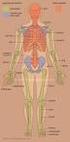 Skeletal System Axial Skeleton: Vertebral Column and Ribs Functions Regions Cervical Thoracic Lumbar Sacral Primary & secondary curvatures There are three major functions of the vertebral column. First,
A Patient s Guide to Artificial Cervical Disc Replacement
 A Patient s Guide to Artificial Cervical Disc Replacement Each year, hundreds of thousands of adults are diagnosed with Cervical Disc Degeneration, an upper spine condition that can cause pain and numbness
.org. Fractures of the Thoracic and Lumbar Spine. Cause. Description
 Fractures of the Thoracic and Lumbar Spine Page ( 1 ) Spinal fractures can vary widely in severity. While some fractures are very serious injuries that require emergency treatment, other fractures can
MATERIALS AND METHODS
 REDISTRIBUTION OF LOAD OF INJURED LOWER CERVICAL SPINE UNDER AXIAL COMPRESSION USING FEM E. C. Teo 1 and H. W. Ng 1 1 School of Mechanical and Production Engineering, Nanyang Technological University,
SPINE ANATOMY AND PROCEDURES. Tulsa Spine & Specialty Hospital 6901 S. Olympia Avenue Tulsa, Oklahoma 74132
 SPINE ANATOMY AND PROCEDURES Tulsa Spine & Specialty Hospital 6901 S. Olympia Avenue Tulsa, Oklahoma 74132 SPINE ANATOMY The spine consists of 33 bones called vertebrae. The top 7 are cervical, or neck
Biomechanics of the Lumbar Spine
 Biomechanics of the Lumbar Spine Biomechanics of the Spine 6 degrees of freedom Extension & Flexion Translation Rotation Compression & Distraction The disc/annulus/all/pll complex is the major restraint
CHAPTER 3: BACK & ABDOMINAL STRETCHES. Standing Quad Stretch Athletic Edge - www.athleticedge.biz - (650) 815-6552
 CHAPTER : BACK & ABDOMINAL STRETCHES Standing Quad Stretch ) Stand and grasp right ankle with same hand, use a wall or chair to Lower maintain Back balance with left hand. Maintain an upright Stretches
Patient Information. Anterior Cervical Discectomy and Fusion Surgery (ACDF).
 Patient Information. Anterior Cervical Discectomy and Fusion Surgery (ACDF). Understanding your spine Disc Between each pair of vertebrae there is a disc that acts as a cushion to protect the vertebra,
Anatomy of the Spine. Figure 1. (left) The spine has three natural curves that form an S-shape; strong muscles keep our spine in alignment.
 1 2 Anatomy of the Spine Overview The spine is made of 33 individual bony vertebrae stacked one on top of the other. This spinal column provides the main support for your body, allowing you to stand upright,
Orthopaedic Spine Center. Anterior Cervical Discectomy and Fusion (ACDF) Normal Discs
 Orthopaedic Spine Center Graham Calvert MD James Woodall MD PhD Anterior Cervical Discectomy and Fusion (ACDF) Normal Discs The cervical spine consists of the bony vertebrae, discs, nerves and other structures.
Patient Information. Lateral Lumbar Interbody Fusion Surgery (LLIF).
 Patient Information. Lateral Lumbar Interbody Fusion Surgery (LLIF). Understanding your spine Disc Between each pair of vertebrae there is a disc that acts as a cushion to protect the vertebra, allows
Divisions of the Skeletal System
 OpenStax-CNX module: m46344 1 Divisions of the Skeletal System OpenStax College This work is produced by OpenStax-CNX and licensed under the Creative Commons Attribution License 3.0 By the end of this
An Anatomical Comparison of the Human and Bovine Thoracolumbar Spine
 Journal of Orthopaedic Research 4:298-303, Raven Press, New York 0 1986 Orthopaedic Research Society An Anatomical Comparison of the Human and Bovine Thoracolumbar Spine Paul C. Cotterill, J. P. Kostuik,
ANTERIOR CERVICAL DISCECTOMY AND FUSION. Basic Anatomical Landmarks: Anterior Cervical Spine
 Anterior In the human anatomy, referring to the front surface of the body or position of one structure relative to another Cervical Relating to the neck, in the spine relating to the first seven vertebrae
1 REVISOR 5223.0070. (4) Pain associated with rigidity (loss of motion or postural abnormality) or
 1 REVISOR 5223.0070 5223.0070 MUSCULOSKELETAL SCHEDULE; BACK. Subpart 1. Lumbar spine. The spine rating is inclusive of leg symptoms except for gross motor weakness, bladder or bowel dysfunction, or sexual
Biomechanics of Lifting and Lower Back Pain S.N. Robinovitch
 Biomechanics of Lifting and Lower Back Pain S.N. Robinovitch Outline Epidemiology of lower back pain Strength of spinal segments Lifting models: muscle and intervertebral joint forces (compression and
Interactive Computer Graphics
 Interactive Computer Graphics Lecture 18 Kinematics and Animation Interactive Graphics Lecture 18: Slide 1 Animation of 3D models In the early days physical models were altered frame by frame to create
Information for the Patient About Surgical
 Information for the Patient About Surgical Decompression and Stabilization of the Spine Aging and the Spine Daily wear and tear, along with disc degeneration due to aging and injury, are common causes
Abdominal model. BRep : Spine. www.anybody.aau.dk
 Abdominal model Segments in abdominal model Five disks each attached to a vertebra using a spherical joint Disk 1 Disk 2 Disk 3 Disk 4 Disk 5 Buckle segment Kinematics of a disk vertical movement One of
Spine Biomechanics, Intervertebral Disc &LBP
 Spine Biomechanics, Intervertebral Disc &LBP Spine Cervical Spine Seven vertebrae C 1-71 More flexible Supports the head Wide range of motion Rotation to left and right Flexion Up and down Peripheral
A Patient s Guide to Diffuse Idiopathic Skeletal Hyperostosis (DISH)
 A Patient s Guide to Diffuse Idiopathic Skeletal Hyperostosis (DISH) Introduction Diffuse Idiopathic Skeletal Hyperostosis (DISH) is a phenomenon that more commonly affects older males. It is associated
Options for Cervical Disc Degeneration A Guide to the Fusion Arm of the M6 -C Artificial Disc Study
 Options for Cervical Disc Degeneration A Guide to the Fusion Arm of the M6 -C Artificial Disc Study Each year, hundreds of thousands of adults are diagnosed with Cervical Disc Degeneration, an upper spine
Safe Lifting/Back Safety Training. Presented by Rita Gagnon Occupational Health Outreach Coordinator Benefis Health Systems 406-731-8328
 Safe Lifting/Back Safety Training Presented by Rita Gagnon Occupational Health Outreach Coordinator Benefis Health Systems 406-731-8328 Risk Factors Involved with Manual Handling Tasks: Bending at Trunk
Mechanics of Balance
 Maureen McHugh Number 1 Notes on Applied Anatomy Feldenkrais Practitioner Mechanics of Balance July 2009 Balance on one foot How does the ballet dancer balance on one foot? In looking at the photo at right,
Human Skeletal and Muscle Deformation Animation Using Motion Capture Data
 Human Skeletal and Muscle Deformation Animation Using Motion Capture Data Ali Orkan Bayer Department of Computer Engineering, Middle East Technical University 06531 Ankara, Turkey [email protected]
Each year, hundreds of thousands of adults are diagnosed with Cervical Disc Degeneration, The Cervical Spine. What is the Cervical Spine?
 Each year, hundreds of thousands of adults are diagnosed with Cervical Disc Degeneration, an upper spine condition that can cause pain and numbness in the neck, shoulders, arms, and even hands. This patient
Range of Motion. A guide for you after spinal cord injury. Spinal Cord Injury Rehabilitation Program
 Range of Motion A guide for you after spinal cord injury Spinal Cord Injury Rehabilitation Program This booklet has been written by the health care providers who provide care to people who have a spinal
X-Plain Neck Exercises Reference Summary
 X-Plain Neck Exercises Reference Summary Introduction Exercising your neck can make it stronger, more flexible and reduce neck pain that is caused by stress and fatigue. This reference summary describes
Avoid The Dreaded Back Injury by Proper Lifting Techniques
 Avoid The Dreaded Back Injury by Proper Lifting Techniques If you ve ever strained your back while lifting something, you ll know the importance of lifting safely. Agenda Introduction About the Back The
Info. from the nurses of the Medical Service. LOWER BACK PAIN Exercise guide
 Info. from the nurses of the Medical Service LOWER BACK PAIN Exercise guide GS/ME 03/2009 EXERCISE GUIDE One of the core messages for people suffering with lower back pain is to REMAIN ACTIVE. This leaflet
The Petrylaw Lawsuits Settlements and Injury Settlement Report
 The Petrylaw Lawsuits Settlements and Injury Settlement Report BACK INJURIES How Minnesota Juries Decide the Value of Pain and Suffering in Back Injury Cases The Petrylaw Lawsuits Settlements and Injury
C O M P U C O M P T U T E R G R A E R G R P A H I C P S Computer Animation Guoying Zhao 1 / 66 /
 Computer Animation Guoying Zhao 1 / 66 Basic Elements of Computer Graphics Modeling construct the 3D model of the scene Rendering Render the 3D model, compute the color of each pixel. The color is related
Study on Structural Behaviour of Human Vertebral Column Using Staad.Pro
 Study on Structural Behaviour of Human Vertebral Column Using Staad.Pro Healtheephan alexis. S Post graduate student, Government College of Technology, Coimbatore 641 013 [email protected] ABSTRACT
he American Physical Therapy Association would like to share a secret with you. It can help you do more with less effort breathe easier feel great.
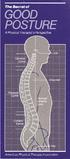 The Secret... T he American Physical Therapy Association would like to share a secret with you. It can help you do more with less effort breathe easier feel great. The secret is about good posture, which
Movement in the human body occurs at joint
 Biomechanics of The Spine Richard A. Banton, DPT, OCS, CMPT, ATC Movement in the human body occurs at joint surfaces; movement occurs with bones; movement of muscles moves the bones; coordinated movements
Aesculap Spine activ L
 Aesculap Spine activ L Lumbar artificial disc Generation: activ Rotation + translation = mobilization Generation: activ Discover the innovative power of our latest development I N N O V Discover: Rotation
Shoulders (free weights)
 Dumbbell Shoulder Raise Dumbbell Shoulder Raise 1) Lie back onto an incline bench (45 or less) with a DB in each hand. (You may rest each DB on the corresponding thigh.) 2) Start position: Bring the DB
Computer Animation in Future Technologies
 Computer Animation in Future Technologies Nadia Magnenat Thalmann MIRALab, University of Geneva Daniel Thalmann Computer Graphics Lab, Swiss Federal Institute of Technology Abstract In this introductory
Options for Cervical Disc Degeneration A Guide to the M6-C. clinical study
 Options for Cervical Disc Degeneration A Guide to the M6-C clinical study Each year, hundreds of thousands of adults are diagnosed with Cervical Disc Degeneration, an upper spine condition that can cause
Lumbar Spinal Stenosis
 Copyright 2009 American Academy of Orthopaedic Surgeons Lumbar Spinal Stenosis Almost everyone will experience low back pain at some point in their lives. A common cause of low back pain is lumbar spinal
General Guidelines. Neck Stretch: Side. Neck Stretch: Forward. Shoulder Rolls. Side Stretch
 Stretching Exercises General Guidelines Perform stretching exercises at least 2 3 days per week and preferably more Hold each stretch for 15 20 seconds Relax and breathe normally Stretching is most effective
Virtual 3D Model of the Lumbar Spine
 LSNA Virtual 3D Model of the Lumbar Spine Alberto Prats-Galino 1, Miguel Angel Reina 2, Marija Mavar Haramija 1, Anna Puigdellivol-Sánchez 1, Joan San Molina 3 and José Antonio De Andrés 4. 1 Laboratory
Problems. Knowing. back of the
 Introduction Welcome to BodyZone Physiotherapy patient resource about Cervical Spine Problems. Knowing the main parts of your neck and how these parts work is important as you learn to care for your neck
ME 24-688 Week 11 Introduction to Dynamic Simulation
 The purpose of this introduction to dynamic simulation project is to explorer the dynamic simulation environment of Autodesk Inventor Professional. This environment allows you to perform rigid body dynamic
ACTIVE SEATING FOR PEOPLE WITH A KYPHOTIC SPINE. - backrest cushion for the kyphotic spine
 ACTIVE SEATING FOR PEOPLE WITH A KYPHOTIC SPINE - backrest cushion for the kyphotic spine Netti Kyphotic is designed for users who require optimum stabilization of their spinal curvature. The upholstery
Biomechanics of Joints, Ligaments and Tendons.
 Hippocrates (460-377 B.C.) Biomechanics of Joints, s and Tendons. Course Text: Hamill & Knutzen (some in chapter 2 and 3, but ligament and tendon mechanics is not well covered in the text) Nordin & Frankel
Mike s Top Ten Tips for Reducing Back Pain
 Mike s Top Ten Tips for Reducing Back Pain The following article explains ways of preventing, reducing or eliminating back pain. I have found them to be very useful to myself, my clients and my patients.
Computer Animation. Lecture 2. Basics of Character Animation
 Computer Animation Lecture 2. Basics of Character Animation Taku Komura Overview Character Animation Posture representation Hierarchical structure of the body Joint types Translational, hinge, universal,
Chapter 12 The Trunk and Spinal Column
 Chapter 12 The Trunk and Spinal Column Manual of Structural Kinesiology R.T. Floyd, EdD, ATC, CSCS Vertebral Abdominal 24 31 most column complex some intricate & complex articulating vertebrae do pairs
LUMBAR LAMINECTOMY AND DISCECTOMY. Basic Anatomical Landmarks: Posterior View Lumbar Spine
 Lumbar Relating to the loins or the section of the back and sides between the ribs and the pelvis. In the spinal column, the last five vertebrae (from superior to inferior, L1-L5) Laminectomy Surgical
SKELETON AND JOINTS G.C.S.E. PHYSICAL EDUCATION. Unit 1. Factors Affecting Participation and Performance. G.C.S.E. P.E. Teacher:.
 G.C.S.E. PHYSICAL EDUCATION Unit 1 Factors Affecting Participation and Performance SKELETON AND JOINTS Name: G.C.S.E. P.E. Teacher:. By the end of this booklet you should be able to: Understand what the
BODY BODY PEDICLE PEDICLE TRANSVERSE TRANSVERSE PROCESS PROCESS
 Learning Objective Radiology Anatomy of the Spine and Upper Extremity Identify anatomic structures of the spine and upper extremities on standard radiographic and cross-sectional images Timothy J. Mosher,
CE801: Intelligent Systems and Robotics Lecture 3: Actuators and Localisation. Prof. Dr. Hani Hagras
 1 CE801: Intelligent Systems and Robotics Lecture 3: Actuators and Localisation Prof. Dr. Hani Hagras Robot Locomotion Robots might want to move in water, in the air, on land, in space.. 2 Most of the
On Predicting Lower Leg Injuries. for the EuroNCAP Front Crash
 On Predicting Lower Leg Injuries for the EuroNCAP Front Crash Thomas Hofer, Altair Engineering GmbH Peter Karlsson, Saab Automobile AB Niclas Brännberg, Altair Engineering AB Lars Fredriksson, Altair Engineering
Lab 5 Overview of the Skeleton: Classification and Structure of Bones and Cartilages Exercise 9 The Axial Skeleton Exercise 10
 Lab 5 Overview of the Skeleton: Classification and Structure of Bones and Cartilages Exercise 9 The Axial Skeleton Exercise 10 Overview of the Skeleton Locate the important cartilages in the human skeleton
Non-Surgical Multi-Purpose Therapeutic Device. ExtenTrac Elite. M3D [Multi-Directional Disc Decompression]
![Non-Surgical Multi-Purpose Therapeutic Device. ExtenTrac Elite. M3D [Multi-Directional Disc Decompression]](/thumbs/27/11142437.jpg "Non-Surgical Multi-Purpose Therapeutic Device. ExtenTrac Elite. M3D [Multi-Directional Disc Decompression]") Non-Surgical Multi-Purpose Therapeutic Device ExtenTrac Elite M3D [Multi-Directional Disc Decompression] The World s Most Versatile Multi-Functional 3D Therapeutic Device Extentrac Elite is a patented,
Non-Surgical Multi-Purpose Therapeutic Device ExtenTrac Elite M3D [Multi-Directional Disc Decompression] The World s Most Versatile Multi-Functional 3D Therapeutic Device Extentrac Elite is a patented,
CS 4204 Computer Graphics
 CS 4204 Computer Graphics Computer Animation Adapted from notes by Yong Cao Virginia Tech 1 Outline Principles of Animation Keyframe Animation Additional challenges in animation 2 Classic animation Luxo
Understand the Sketcher workbench of CATIA V5.
 Chapter 1 Drawing Sketches in Learning Objectives the Sketcher Workbench-I After completing this chapter you will be able to: Understand the Sketcher workbench of CATIA V5. Start a new file in the Part
CSE511 Brain & Memory Modeling. Lect04: Brain & Spine Neuroanatomy
 CSE511 Brain & Memory Modeling CSE511 Brain & Memory Modeling Lect02: BOSS Discrete Event Simulator Lect04: Brain & Spine Neuroanatomy Appendix of Purves et al., 4e Larry Wittie Computer Science, StonyBrook
Maya 2014 Basic Animation & The Graph Editor
 Maya 2014 Basic Animation & The Graph Editor When you set a Keyframe (or Key), you assign a value to an object s attribute (for example, translate, rotate, scale, color) at a specific time. Most animation
A review of spinal problems
 Dr Ulrich R Hähnle MD, FCS Orthopaedic Surgeon, Wits Facharzt für Orthopädie, Berlin Phone: +27 11 485 3236 Fax: +27 11 485 2446 Suite 102, Medical Centre, Linksfield Park Clinic P.O. Box 949, Johannesburg
Nervous System: Spinal Cord and Spinal Nerves (Chapter 13) Lecture Materials for Amy Warenda Czura, Ph.D. Suffolk County Community College
 Nervous System: Spinal Cord and Spinal Nerves (Chapter 13) Lecture Materials for Amy Warenda Czura, Ph.D. Suffolk County Community College Primary Sources for figures and content: Eastern Campus Marieb,
SAMPLE WORKOUT Full Body
 SAMPLE WORKOUT Full Body Perform each exercise: 30 secs each x 2 rounds or 2-3 sets of 8-12 reps Monday & Wednesday or Tuesday & Thursday Standing Squat Muscles: glutes (butt), quadriceps (thigh) Stand
9/3/2013 JOINTS. Joints. Axial Skeleton STRUCTURE AND FUNCTION:
 STRUCTURE AND FUNCTION: JOINTS Joints A connection between 2 or more bones A pivot point for bony motion The features of the joint help determine The ROM freedom Functional potential of the joint Axial
Lower Back Pain An Educational Guide
 Lower Back Pain An Educational Guide A publication from the Center of Pain Medicine and Physiatric Rehabilitation 2002 Medical Parkway Ste 150 1630 Main St Ste 215 Annapolis, MD 21401 Chester, MD 21619
Structure and Function of the Hip
 Structure and Function of the Hip Objectives Identify the bones and bony landmarks of the hip and pelvis Identify and describe the supporting structures of the hip joint Describe the kinematics of the
Spine University s Guide to Kinetic MRIs Detect Disc Herniations
 Spine University s Guide to Kinetic MRIs Detect Disc Herniations 2 Introduction Traditionally, doctors use a procedure called magnetic resonance imaging (MRI) to diagnose disc injuries. Kinetic magnetic
Industrial Robotics. Training Objective
 Training Objective After watching the program and reviewing this printed material, the viewer will learn the basics of industrial robot technology and how robots are used in a variety of manufacturing
No Equipment Agility/Core/Strength Program for Full Body No Equip Trainer: Rick Coe
 No Equipment Agility/Core/Strength Program for Full Body No Equip Trainer: Rick Coe Introduction Program designed to be performed in a circuit. Perform exercises in sequence without rest 2-3 times. Increase
by Ellen Saltonstall and Dr. Loren Fishman
 10 Yoga Poses for Low Back Pain Prevention by Ellen Saltonstall and Dr. Loren Fishman Introduction This series of poses is designed to prevent future back pain and also to relieve back pain that you may
Solving Simultaneous Equations and Matrices
 Solving Simultaneous Equations and Matrices The following represents a systematic investigation for the steps used to solve two simultaneous linear equations in two unknowns. The motivation for considering
Original Kinesiology Tape
 Original Kinesiology Tape Recommended by the German Olympic Sports Confederation (DOSB) Recommended by the German Academy of Applied Sports Medicine(DAASM) irst in Korea Introduce and distribute Kinesiology
LIFTING AND BACK SAFETY TRAINING LESSON PLAN
 LIFTING AND BACK SAFETY TRAINING LESSON PLAN Topic: Back Safety and Proper Lifting Techniques This presentation is designed to assist trainers conducting Lifting and Back Safety training for workers. Back
Mesh Moving Techniques for Fluid-Structure Interactions With Large Displacements
 K. Stein Department of Physics, Bethel College, St. Paul, MN 55112 T. Tezduyar Mechanical Engineering, Rice University, MS 321, Houston, TX 77005 R. Benney Natick Soldier Center, Natick, MA 01760 Mesh
Animation. Persistence of vision: Visual closure:
 Animation Persistence of vision: The visual system smoothes in time. This means that images presented to the eye are perceived by the visual system for a short time after they are presented. In turn, this