
A Scotch Whisky Primer
|
|
|
- Baldwin Carson
- 9 years ago
- Views:
Transcription
1 This article was originally published online at ARDBEG Voted World s Best Whisky 2008 & 2009 by Jim Murray s Whisky Bible. A Scotch Whisky Primer What is Scotch Whisky? Today, Scotch whisky is one of the world s leading spirit drinks and also regarded by many as the world s most noble spirit. It is exported to about 200 different markets and frequently outsells every other spirit category. Made from the most elemental of ingredients, water and barley, it has become inextricably woven into the fabric of Scotland s history, culture and customs. Indeed, there are few products which are so closely related to the land of their birth than Scotch. For Scots, it is the drink of welcome and of farewell, and much in between. With a dram babies are ushered into the world and guests to the house. In the days when distances were traveled only with difficulty, a jug of whisky was left out for any tradesmen who might call. Business deals were sealed with a dram. All manner of small ailments have been eased with whisky - from children s teething, to colds and flu. Departing guests were offered a deoch an doruis, the dram at the door - in modern terms one for the road. The dead-departed are remembered and wished Godspeed with large quantities of whisky. As Charles Shields puts it:...without an appreciation of whisky, I think a visitor to Scotland misses the true beauty of the country; whisky and Scotland are inseparably intertwined. The word whisky originates from the Scots Gaelic word Uisge Beatha meaning the water of life, Anglicised over time to Whiskybae until finally being shorten to Whisky. Uisge Beathe (or Usquebaugh in the Scots English spelling) itself is believed to be a Celtic translation of the ancient Latin acqua vitae (also water of life). Regardless of what you call it, before Scotch Whisky of any type can be called as such, it must fulfill three main criteria which are defined by law: * 1. It must be distilled and matured in Scotland; * 2. Matured for a minimum of three years in oak casks; and * 3. Be bottled at a minimum strength of 40% ABV (alcohol by volume). 1 A Scotch Whisky Primer
2 There are two kinds of Scotch Whisky: Malt Whisky which is made by the Pot Still process and Grain Whisky which is almost always made by the Continuous Still (or Coffey Still) process. Malt Whisky is made from malted barley only, while Grain Whisky can be made from malted barley together with unmalted barley and other cereals like wheat or corn. Malt Whiskies, which differ considerably in flavour according to the distillery and region from which they come, have a more pronounced bouquet and flavour than the Grain Whiskies. Malt whiskies are predominantly single distillery, made by the one distiller in the one location and so known as a Single Malts. They can, however, be made from a combination of distilleries, then known as Pure Malts or Vatted Malts. This article was originally published online at This article may not be circulated or reproduced with out the above statement being prominently acknowledged. The same distinction also applies to Grain Whisky. However, the production of Grain Whisky is not so influenced by geographical factors and it may be distilled anywhere in Scotland. There are about eight operating grain distilleries in Scotland, the majority being in central Scotland with the exception of Invergordon in the northern Highlands and Girvan in the far south. A third category, Blended Scotch Whisky may contain a combination of whiskies from over 10 or 50 different malt and grain distilleries. While blended whiskies dominate sales world-wide, it is the Single Malts that attract the most serious attention, largely because each has its own story to tell, and each has its own stamp of individuality. Malt whiskies evoke the romance of Scotland in a way no blend can, reflecting the history and mystique of the spirit, its unique warmth and comfort, a constant and friendly companion in a land of long, bitterly cold winters. Whisky: With an e or Without? Whisky may mean Scotch whisky to most of the world s population, but it is often wrongly substituted by the spelling whiskey, or even mis-spelt: wiskey, wisky. Much of this misunderstanding originates from the fact that there are a number of countries that distil their own whiskies (or whiskeys). Scotch whisky is by far and away the largest selling and most renowned; however, local spirits distilled in Ireland, Japan, Canada, America, Australia and India are also known as whiskey (whisky). Two contrasting images of Scotch Whisky from early advertisements, defining the spirit as at once bold and steadfast in style, but not without its gentler side. Scotch Whisky is always spelt without an e, be it Single Malt Whisky or Blended Scotch Whisky On occasions, particularly in the United States, Blended Scotch Whiskies will be shortened and asked for as Scotch. Japanese Whisky, Canadian Whisky and Indian Whisky are also spelt without an e. It is believed that Japanese Whisky is spelt this way as a result of Japan s first whisky distillers learning their trade in Scotland, in the early 1920 s, thereafter adopting the Scottish convention. Canadian and Indian Whiskies, it is thought, in a similar vein embraced the spelling when they were part of the British Empire. Historically, Irish Whiskey distillers inserted an e to their spelling to differentiate their product from Scotch Whisky. American Whiskeys, both Bourbon and Rye, have in general taken-up the insertion of an e. Though, as you would expect in this vast country with much Scottish ancestry, there are some distillers whom prefer to adopt the Scottish practice. Today, personalities from all walks of life are employed in the promotion of whisky. In this example, actor George Clooney promotes Lancelot to the Koreans, Asia being one of Scotch Whiskies most lucrative markets. 2 A Scotch Whisky Primer
3 ADVERTORIAL Stop Press! Ardbeg nominated The Best Whisky in the World (2 years in a row) by World Whisky writer, Jim Murray. Perched on a wave washed, rocky headland on the island of Islay, Ardbeg has had a chequered history and was recently closed for several years. The Glenmorangie Company acquired Ardbeg in 1997 and set about restoring the distillery to its former glory. Two new releases are a clear testament to their success. Ardbeg 10 Years Old has been awarded World Whisky of the Year for 2008 The accolade was granted by internationally acclaimed Whisky writer, Jim Murray. In his 2008 Whisky Bible, Murray says of Ardbeg, To me Ardbeg is - and always has been - the most complex malt on earth... I have long regarded this the finest distillery in the world... It is simply that magnificent. In a remarkable follow up, Ardbeg Uigeadail (named after the loch from which all Ardbeg water flows) has been awarded World Whisky of the Year for First launched in 2003, Uigeadail is a cask strength, heavily peated style produced from a mix of bourbon casks and older sherry casks. The combination gives this whisky a velvety texture, with a sweet and smokey finish. A great collection of Ardbeg bottlings are available online at We recommend... Jim Murray s Whisky Bible. Jim Murray. Jim Murray s Whisky Bible is arguably the most comprehensive and thoroughly researched guide to the world s whiskies ever written. No more than you would expect from the world s most famous whisky evangelist. Honest, forthright, passionate and proudly independent, Jim Murray tastes and rates around 3500 whiskies from around the world in each edition. The Bible is prized amongst whisky lovers for its purely independent, hard-hitting and often witty views. It is also the only book to give marks out of 25 for nose, taste, finish and balance leading to an overall score out of 100. An invaluable and instant source of reference to the consumer, the whisky industry and drinks trade alike. Buy online at ADVERTORIAL A Scotch Whisky Primer 3
4 A Brief History of Scotch Whisky Few would venture to assert the precise moment at which Scotch Whisky was first distilled. The exact origins of distilling itself are obscure, and it is unclear precisely when the techniques first reached Britain s shores. What is certain is that the Ancient Celts practised the art of distilling, and over the years, the Scots have perfected the art, using elements so generously provided for them by nature. The earliest documented record of distilling in Scotland occurs as long ago as 1494, when an entry in the Exchequer Rolls listed Eight bolls of malt to Friar John Cor wherewith to make aqua vitae (water of life). This was sufficient to produce almost 1500 bottles, and it becomes clear that distilling was already a well-established practice. The primitive equipment used at the time and the lack of scientific expertise means the spirit produced in those days was probably potent, and occasionally even harmful. However, distillation methods soon improved, and in the 16th and 17th centuries considerable advances were made. The dissolution of the monasteries contributed to this since many of the monks, driven from their sanctuaries, had no choice but to put their skills to use. The knowledge of distilling then quickly spread to others. Initially whisky was lauded for its medicinal qualities, being prescribed for the preservation of health, the prolongation of life, and for the relief of colic, palsy and even smallpox. It became an intrinsic part of Scottish life - a reviver and stimulant during the long, cold winters, and a constant feature of social life, a welcome to be offered to guests upon arrival. This increasing popularity eventually attracted the attention of the Scottish parliament, which introduced the first taxes on malt and the end product in the latter part of the 17th century. Ever increasing rates of taxation were applied following The Act of Union with England in 1707, when England set out to tame the rebellious clans of Scotland. The distillers were driven underground. A primitive still. Early illegal stills were described as bothies, a roughly built dwelling often in the mountains. Landseer s painting The Highland Whisky Still (c.1820) captures the scene perfectly. A long and often bloody battle arose between the excisemen, or gaugers as they were known, and the illicit distillers, for whom the excise laws were alien in both their language and their inhibiting intent. Smuggling became standard practice for some 150 years and there was no moral stigma attached to it. Ministers of the Kirk made storage space available under the pulpit, and the illicit spirit was, on occasion, transported by coffin - in fact, any effective means was used to escape the watchful eyes of the excisemen. 4 A Scotch Whisky Primer
5 Clandestine stills (such as the primitive one illustrated) were cleverly organised and hidden in nooks and crannies of the heather-clad hills, and smugglers organised signalling systems from one hilltop to another whenever excise officers were seen to arrive in the vicinity. By the 1820s, despite the fact that as many as 14,000 illicit stills were being confiscated every year, more than half the whisky consumed in Scotland was being swallowed painlessly and with pleasure, without contributing a penny in duty. This flouting of the law eventually prompted the Duke of Gordon, on whose extensive acres some of the finest illicit whisky in Scotland was being produced, to propose in the House of Lords that the Government should make it profitable to produce whisky legally. An early advertisement for Springbank Distillery emphasising the pot still process. In 1823 the Excise Act was passed, which sanctioned the distilling of whisky in return for a licence fee of 10, and a set payment per gallon of proof spirit. Smuggling died out almost completely over the next ten years and, in fact, a great many of the present day distilleries stand on sites used by smugglers of old. The Excise Act laid the foundations for the Scotch Whisky industry as we know it today. However, two further developments put Scotch Whisky on firmly on the world map. Until now, we have been talking about what we now know as Malt Whisky. But, in 1831 Aeneas Coffey invented the Coffey or Patent Still (right) which enabled a continuous process of distillation to take place. This led to the production of Grain Whisky, a different, less intense spirit than the Malt Whisky produced in the distinctive copper pot stills. The lighter flavoured Grain Whisky, when blended with the more fiery malts, extended the appeal of Scotch Whisky to a considerably wider market. An 1870 illustration showing the inner workings of the Coffey Still. The basic design has changed little over the decades. The second major helping hand came unwittingly from France. By the 1880s, the phylloxera beetle had devastated French vineyards, and within a few years, wine and brandy had virtually disappeared from cellars everywhere. The Scots were quick to take advantage of the calamity, and by the time the French industry recovered, Scotch Whisky had replaced Cognac as the preferred spirit of choice. Since then Scotch Whisky, in particular blended whisky, has gone from strength to strength. It has survived US prohibition, wars and revolutions, economic depressions and recessions, to maintain its position today as the premier international spirit of choice, extending its reach to more than 200 countries throughout the world - not to mention that it s also Scotland s biggest indigenous industry supporting many local communities. A Scotch Whisky Primer 5
6 6 A Scotch Whisky Primer
7 The Regions & their Distilleries Single Malt Whiskies are divided into groups according to the geographical location of the distilleries in which they are made. Each group has its own characteristics, ranging from the lighter Lowland Malt Whiskies to those distilled on the island of Islay which are generally regarded as the heaviest Malt whiskies. The production of Grain Whisky is not so influenced by geographical factors and it can be distilled anywhere in Scotland, though the majority are produced in central Scotland. 1. Lowland Malt Whiskies Lowland Malt Whiskies are made south of an imaginary line drawn from Dundee in the east to Greenock in the west. Relatively few in number, and diminishing even further in recent years, the Lowland Malts do not match the robust Highland Malts in their force and flavour, tending to have a grassy softness without the heatheriness, coastal seaweed and brine. 2. Highland Malt Whiskies Highland Malt Whiskies are made north of the imaginary line drawn from Dundee in the east to Greenock in the west. This is by far the biggest of the regions and incorporates within it large variations in character and flavour between different distillers. The western part of the Highlands has a small number of scattered distilleries with noticeable variations to their character due to differences in coastal exposure and altitude. If they are to be characterised together they share a firm, dry character with slight peatiness and saltiness. The northern area of the Highlands tends to produces whiskies of a more spicy character. The Eastern area, which is more sheltered from the coastal winds, and into the Midlands, produce whiskies of a more fruity character. 3. Speyside Malt Whiskies From the valley of the River Spey. Although these whiskies come from within the area designated as Highland Malt Whiskies, the concentration of distilleries and the specific climatic conditions produce a whisky of an identifiable character and require a separate classification. The region has unique topography of granite mountains flowing down into the heathery moorlands and valley that is the watershed of a system of rivers. The whiskies are noted for their elegance, exhibiting flowery, heathery-honey notes and a sometimes restrained, fragrant peatiness. 4. Islay Malt Whiskies From the island of Islay, this region is renowned for its medicinal peat smoke and maritime flavours, which are potent expressions of the local peat and exposed sea-side conditions. The whiskies are the heaviest of all malts, with a peat driven strength and firmness and complexity. Note: These maps indicate the locations of both working and closed distilleries. A closed distillery (labelled in italics) is one which has been permanently closed down, probably because it was uneconomical to run at the time of closure. When closure happens, normally the equipment is dismantled and sold off, so it s very unlikely that the distillery could re-open in its usual form. One can only hope that benchmark producers like Rosebank and Port Ellen will one day, in the future, be revived. Thankfully, there are often still rare stocks of whisky from such distilleries maturing in bond which are bottled and later sold, usually by independent bottlers and at premium prices. A Scotch Whisky Primer 7
8 Other regions... Other areas of Scotland which are generally accepted as regions in their own right include: Campbeltown, in the south west which produces a whisky somewhere in between the Islay and Speyside style, incorporating characteristic flavours from both districts. Campbeltown is situated on the mull of Kintyre some 240 km from Glasgow, south of Islay. Due to the exposed, coastal location of the town, Campbeltown whiskies have their own distinct character defined particularly by an oily, briny quality. There are only three distilleries in the region with one of the highlights being Springbank. Isle of Skye. A spectacularly beautiful island of wild moorlands and dramatic mountain peaks known as the Cuillins. Although only one distillery produces malt whisky on the island, it must rate as a classic malt expression and a must try. The whisky is Talisker. The island also produces a world famous whisky liqueur. Orkney Islands. The extreme northern archipelago of mostly uninhabited islands around Orkney is in every sense isolated. It is not known when the first distillery was established in Orkney, but there were almost certainly local producers by the middle of the eighteenth century. Above Orkney s capital, Kirkwall, is a rise with fine views out to the northern isles traditionally known as the High Park. It is here that Highland Park distillery was said to have been founded in The distillery remains one of the legends of the whisky world. There are several expressions available with the 18 year old being the standout. Other Islands also producing excellent whiskies include the Isle of Mull, Isle of Arran and Isle of Jura. Three examples of Highland Single Malt Whisky, each bottled at a different age. Many consider years in barrel to be the optimum period before bottling Scotch, however the mysteries of oak maturation can yield stunning results well passed 20 years of age, though they re probably more the exception than the rule. 8 A Scotch Whisky Primer
9 The Raw Materials of Scotch Whisky Scotch Whisky is made from only three ingredients, BARLEY, WATER and YEAST. All of these ingredients are used in their purest, unadulterated, natural form. However, two of the most important flavouring influences are OAK CASKS that are used for maturation of the new spirit, and PEAT which is (traditionally) used to fire the kilns that dry the barley, where it also imparts distinctive flavours. We ll consider each of these materials below. Barley is a cereal crop of the genus Horndeum, a grass-type crop which yields starchy seeds rich in carbohydrates and suitable for food. It is arguably, the easiest of all cereals to grow, hence its popularity from the earliest times and thankfully for the Scots, varieties which thrive in the cold and wet have been cultivated for thousands of years. Subsequent developments in farming have led to new varieties and strains of barley such as Puffin, Pipkin, Camargue, Prisma and Golden Promise, which give higher yields in the field, tougher and shorter straw for better harvesting, improved malting capabilities and subsequently higher yields in the distillery. More importantly, barley is the reason why malt whisky tends to taste better than other kinds of whisky: quite simply, it contributes more flavour than other cereals. If you ve ever tasted a grain whisky (made mainly from maize or some other grain like wheat), you ll have noticed they re much lighter flavour. As to whether the type of barley used effects whisky (as it does in beer production), there is little agreement within the whisky industry at present though Macallan, who almost exclusively use Golden Promise barley to make their single malts, have long believed it contributes to a superior product. It s been said that while brewing beer requires around ten litres of water for every litre of ale, to get the same volume of whisky requires closer to 100 litres of water. Not surprisingly, distilleries usually have their own water supplies, often a loch or spring to which they own exclusive rights. The available water often dictates the siting of a distillery at the outset, and it s common for all distilleries to claim that their water is the best in the whole of Scotland. It s certainly true that Highland water is very pure as there is no heavy industry or intensive farming to contaminate so it s usually used at the distillery untreated save for basic filtering to remove foreign matter. Water is involved in every stage of the production process: To steep the barley prior to malting and for mashing the grist in the mash tun; to cool the condensers (or worm tubs) and finally, if desired, to reduce the finished product to a standard alcohol strength prior to bottling. Yeast is a fungus or mould, a single-cell organism containing enzymes, biochemical catalysts which cause certain chemical reactions to take place. The obvious reaction which interests brewers and distillers is that which converts sugars into alcohol. Yeast is usually inactive in its stored state. In distilling, it is activated by the temperature of the wort in the washback. The yeast multiplies at a phenomenal rate during the fermentation, feeding on the sugars in the wort, and it is eventually killed by the very alcohol it produces. Distillers commonly use two types of yeast, Brewer s Yeast which is produced as a by-product in the brewing industry with a comparatively short shelf-life and Cultured Yeast which is grown on suitable nutrients under laboratory conditions with a far higher viability. The second important requirement of yeast is its contribution to flavour which, as in wine production, tends to be strain dependent. Barley contributes more in way of flavour than any of the other cereals and the best flavoured grain spirits are those which use the highest percentage of barley in their mash. Barley starting to germinate, now known as green malt. The grain stores its energy as starch which it converts to sugar as it begins to grow. The green malt must be turned regularly to keep it cool and prevent the rootlets from becoming matted. Very few distilleries today carry out this practice with most malting carried out in large automated factories. A pile of freshly dug peat. Peat is an organic fuel formed by the decomposition of plant remains in waterlogged areas such as bogs or swamps. It is a relic of the Carboniferous period some 300 million years ago when much of what is now Britain was swampland. As giant trees and ferns dried they fell into the stagnant water and partially decomposed, but did not rot away entirely. Depending on their degree of decomposition, they became brown and spongy, or black and compact, and as the sea advanced and withdrew, it laid down new sediments over the deposits. Had the process advanced further, these would have become coal. Despite its relative inefficiency, due to the lack of alternative heat sources, for a long time Highlanders employed peat as their only fuel. Coal was simply too expensive for most. But without a proper furnace, peat tends to smoke rather than create much heat. The greatest contribution to whisky s flavour comes from oak casks. A Scotch Whisky Primer 9
10 In his excellent guide titled Appreciating Whisky, Phillip Hills, founder of the Scotch Malt Whisky Society notes that: When, some time in the last millennium, people began to make whisky, they would naturally use peat to dry the malt and heat the still. It is therefore to be expected that the original Scotch Whiskies would have been heavily peated...i have found no reference to smoky taste in any contemporary sources, but this could be accounted for by the fact of its being universal and therefore unworthy of mention. Also, at the end of the eighteenth century, most whisky was highly flavoured by botanical additives, which would have disguised a peaty taste. Today, the peat-smoke derived flavours in whiskies are highly sought after. Thankfully, Scotland is in large parts covered by a meter-thick layer of peat. Different types of plant life, in the different regions and districts, have created different types of peat which impart, in turn, different flavours and character to the finished whisky via the peat reek from the burning of dried cut peat to dry the malted barley. It is often suggested that peat flavours are also derived via the use of water which flows naturally over and/or through uncut peat beds. However, research indicates peat water contains only a few ppm (parts by million) of peat, which while enough to colour the water brown, contributes little or nothing to whisky flavour. The chemical processes behind maturation of spirits in oak barrels are at least as complex as they are for wine, but even more fundamental to the end result. Phillip Hills comments [Barrel] maturation is easily the most important part of the [Scotch] whisky production process as regards flavour. A malt whisky acquires more than half of its flavour during maturation; some would say as much as 80 per cent of the final flavour of the spirit comes from the cask. Historically, a wide variety of casks were purchased for Scotch Whisky production including former Sauternes, Sherry, Madeira, Bordeaux, Port, Moscatel and Burgundy barrels. Nowadays, barrels which have previously contained Sherry or Bourbon are typically used, though Bourbon barrels are now more common: Firstly because they re cheaper, and secondly because x-bourbon barrels have all of the harsh tannin removed, resulting in a smoother spirit. Glenmorangie s Dr. Bill Lumsden makes an interesting distinction: The first time such barrels are filled with Scotch whisky, they tend to impart toffee, caramel and creme brulee characteristics, whereas second fill casks are where floral and citrus flavours emerge. He also insists that by the time the second fill is matured, the barrel is no longer suitable for whisky production. By changing the ratio of first to second fill wood, a range of flavour profiles can be achieved. There are other variables: Low char new oak contributes sizzling warmth & European oloroso sherry oak casks contribute buttery/vanilla notes. For some time now, Glenmorangie have been pioneering new research into the why and how of spirit maturation with huge dollars devoted to research and development to find the right wood source for casks. Other distilleries are now waking up to this and are becoming more conscientious about oak selection. The optimum period for the barrel maturation of spirits is to some extent a matter of taste and type, however, for Scotch whiskies, the consensus seems to be around 12 to 18 years. At greater ages many whiskies (and other spirits) fall out of balance and become unpleasantly woody, yet others can go on to reach fifty years or more and remain undiminished. Because some whiskies mature faster than others depending upon a host of variables, it is only sensible that distillers and blenders concern themselves more with balance and maturity than age for the sake of age. Three examples of smokey style whiskies, made using varying degrees of peat. Laphroaig often posseses a slight medicinal character. Ardbeg in the centre, also from the island of Islay is renowned for its full throttle peat experience that tends to polarise whisky lovers, while Ledaig is an unusual expression from the Isle of Mull, made at the Tobermory Distillery. 10 A Scotch Whisky Primer
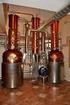
11 Making Malt Whisky The Pot Still process by which Malt Whisky is made may be divided into four main stages: Malting, Mashing, Fermentation and Distillation. Malting Harvested barley is first screened to remove any foreign matter and then soaked for two or three days in tanks of water known as steeps. It s then spread out on a concrete floor known as the malting floor and allowed to germinate. Germination may take from 8 to 12 days depending on the season of the year, the quality of the barley used and other factors. During germination, barley secretes the enzyme diastase which makes the starch in the barley soluble, thus preparing it for conversion into sugar. Throughout this period the barley must be turned at regular intervals to control the temperature and rate of germination. Mashing the Grist. The dry malt, once out of the kiln is ready to be put through a mill which grinds it into a rough powder. At the appropriate moment germination is stopped, otherwise the seed would continue to grow until all the sugars where consumed. This is achieved by drying the malted barley or green malt in a malt kiln. More usually nowadays malting is carried out in Saladin boxes or in drum maltings, in both of which the process is controlled mechanically. Instead of germinating on the distillery floor, the grain is contained in large rectangular boxes (Saladin) or in large cylindrical drums. Temperature is controlled by blowing air at selected temperatures upwards through the germinating grain, which is turned mechanically. A recent development caused by the rapid expansion of the Scotch Whisky industry is for distilleries to obtain their malt from centralised maltings which supply a number of distilleries, thereby enabling the malting process to be carried out more economically. More traditional distilleries will still use a clean coke fire to dry the barley with the peat burnt on top of the coke to give whatever degree of smokiness is desired. When peat is burnt, chemical compounds in it adhere to the malted barley and remain throughout the life of the whisky, diminished only by extended periods of oak maturation. Traditional wooden washbacks. Mashing Dried malt from the kiln is crunchy and pleasantly sweet. In this state, it s easily ground in a mill with the resulting grist, as it s now called, then mixed with hot water in a large circular vessel called a mash tun, usually made out of cast iron or stainless steel. The soluble starch is thus converted into a sugary liquid known as wort. This is drawn off from the mash tun and the solids remaining are removed for use as cattle food. Importantly, the degree of filtration of the mash can effect the flavour of the whisky, and the presence of some solid material in the wort has been found to be beneficial. Fermentation After cooling, the wort is passed into large vessels known as washbacks, holding anything from 9,000 to 45,000 litres of liquid where it is fermented by the addition of yeast. The living yeast attacks the sugar in the wort and converts it into crude alcohol. Fermentation takes about 48 hours and produces a liquid known as wash, containing alcohol of low strength (essentially beer), some unfermentable matter and certain by-products of fermentation such as esters, fatty acids and aldehydes amongst many other compounds believed to be significant to a whisky s final flavour. Some distillers consider wooden washbacks to be superior to stainless steel (and vice versa) though both seem to result in good whisky. Distillation takes place in large copper pot stills. Distillation Malt Whisky is distilled twice in large copper Pot Stills in which the liquid wash is heated to a point at which the alcohol becomes vapour. This rises up the still and is passed into the cooling plant where it is condensed into liquid state. The cooling plant frequently takes the form of a coiled copper tube or worm that is kept in continuously running cold water. The first distillation takes place in large wash stills, A Scotch Whisky Primer 11
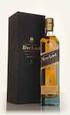
12 and separates the 99% of the alcohol from the fermented liquid and eliminates the residue of the yeast and unfermentable matter. Now much reduced in volume, the resulting liquid, known as low wines (approx 21% Alc./Vol.), is ready to be passed into another still to be distilled a second time. The first runnings from this second distillation (known as foreshots or heads ) are not considered potable, and by experience a distiller learns to re-direct these back into the low wines receiver to be distilled again. It is the middle part of the distillation (often referred to as the heart) when the spirit reaches an acceptable standard that it s collected in the spirit receiver. Towards the end of the batch, again, the spirit begins to fall off in strength and quality. Known as the tail or aftershots It is no longer collected as spirit but drawn off and kept, together with the first running, for redistillation with the next low wines. Consequently, pot still distillation is a batch process. (Some distilleries re-heat the middle cut to further exclude all but the purest ethanol from the new middle cut - this is a triple distillation). The heart of the distillation is destined to become whisky, but before extended maturation in oak, this new make spirit is more like a high proof vodka or tequila - crystal clear, usually with subtle fruity, flowery aromas and a sweet, spicy flavour profile. Smelling or tasting fresh whisky distillate serves to illustrate the profound impact that wood maturation has on whisky flavour. Blending Whisky Over the last few decades, a growing number of distilleries have begun marketing a portion of the whisky they distill for consumption as Single Malt whisky. But by far the greater part of their production remains reserved for the world famous blended Scotch whiskies. By definition, a blended whisky contains both Single Malt and Grain whisky in varying proportions and ages from different distilleries. For example, a typical blend might contain between 15 and 40 different Single Malt whiskies as well as Grain whiskies. Even the cheapest blended whiskies usually contain at least 5% of Single Malt although more commonly Malt content will range from anywhere between 10% - 40%. Blending whisky, (which in no sense equates to dilution), is a considerable art acquired only after years of experience. Because every distillery s Single Malt whisky has a character of its own and, just as people of different temperaments are often incompatible, so some whiskies will not happily marry. The Malts and Grain whiskies must therefore be chosen to complement and enhance their respective flavours. In the blending process, Grain whiskies can be thought of as the neutral canvas background, while the Single Malts are the colour s in the blender s palate: The world famous Johnnie Walker Black Label Blended Whisky, for example, is made up of of forty malts and grain whiskies. Island and Islay malts deliver spice, richness and lingering peat. Speyside malts make an important contribution to the depth of taste, bringing smoky malt, fruitiness, apple freshness and rich sherry characters; While at the heart of the blend lies Cardhu 12 Year Old, an outstanding malt from Speyside, which imparts silkiness. If the primary aim of the blender is to produce a whisky of a definite and recognisable character, the second challenge is to achieve consistency. That is to say, the blend shouldn t vary from a standard which followers of the brand will have come to expect over the years. In order to achieve this consistency, the blender must firstly decide when the different Single Malt whiskies are ready to be used in the blend. Some will be ready at five years of age, others may require twelve or fifteen years in barrel. Before placing an order, a blender also needs to estimate the volume demand for the blend for some time into the future. Once purchased, the malt whiskies are brought from the warehouse where they have been maturing to the blending establishment, where they re mixed together in a blending vat. They re usually returned to cask and left to marry for a period of months to improve flavour before bottling. Some companies prefer to vat their Malts and Grains separately and only bring the two together before bottling. This process of combining Malt with Malt or Grain with Grain is known as vatting. At every stage of the process, the blender s role is to re-evaluate and monitor the quality of every component destined for the blend. When was blending introduced? Blending was pioneered by Andrew Usher in Edinburgh in the early 1860 s, so it s still a relatively recent practice. It was only after it became common that a taste for Scotch Whisky spread first to England and then throughout the world. The reason for its success was that Pot Still Single Malt Whisky was inclined to be too strongly flavoured for everyday drinking, especially by people in sedentary occupations and warm climates. By combining Malt Whisky with Grain Whisky, the demand for a whisky that is milder in flavour and more suited to a broad international customer base was met. The Cutty Sark blend was one of the originators of this new style, specifically created to suit the American palate which prefers a lighter taste. The most notable influence in Cutty Sark is from the inclusion of young Speyside malts. The whisky is clean and fresh on the palate with hints of sweetness and a clean, crisp finish. 12 A Scotch Whisky Primer
13 What is the percentage of Malt and Grain Whiskies in blended Scotch Whisky? No brand owner is willing to reveal the proportions of the different whiskies used in their blends. What smore, there are no fixed rules, rather, the blender determines the proportion according to the character he or she is seeking for the brand as described above. Some brands such as The Famous Grouse have capitalised on the surging popularity of Single Malts by marketing their house blends as containing a considerably higher proportion of Single Malt than others on the market. What is a deluxe blended Scotch Whisky? No formal rules have been laid down as to what constitutes a deluxe Scotch - how old it should be overall or how much malt it should contain. Generally speaking, a deluxe Scotch is a blend which contains a higher proportion of carefully selected older and, therefore, more expensive whiskies. Some blenders see the putting together of a deluxe blend as the supreme expression of their skills. What does the age statement mean on a blended Scotch Whisky? When there is an age statement on a bottle of blended whisky, it does not refer to the average age of the whiskies in that blend. Rather, the law requires that when the age is declared on a label, it must refer to the youngest whisky in the blend. For example, if a blend is described as an eight year old, the youngest whisky in that blend must have been matured for at least eight years even though there might be a significant amount of much older material in the bottle. Although demand for Single Malt Scotch continues to increase, most of the Scotch Whisky sold in the world is still Blended Scotch. Three famous brands are pictured left. Whisky produced by mixing together two or more malt whiskies (usually up to a maximum of six) from two or more different distilleries is known as Vatted Malt Whisky. These days Vatted Malts like those pictured right are being marketed with some rather quirky labels, but in the hands of master blender, the results can be as exciting as any good Single Malt. Pig s nose in the centre actually contains a small proportion of grain whisky from Invergordon, so technically it s classified as a Blended Scotch. A Note on Liqueur Whisky... Some blenders used to describe their products as liqueur whisky, intending to convey a sense of sophistication and giving a digestif quality to the product. This term now has no real meaning and is falling out of use. Whisky Liqueur has an altogether different meaning. Deriving from the French liquor,the word now refers to a flavoured spirit, usually sweet, which can be based on any grain alcohol, though we only look at liqueurs which are based on whisky. The flavouring agent in the drink, which can be herbs, flowers, fruit, seeds or roots, is introduced to the spirit base by re-distillation, infusion or maceration. By implication, a liqueur is of high quality, to be savoured rather than hastily gulped. Scotland, Ireland and The United States all produce whiskybased liqueurs, a number of which are internationally known by their names and the romantic stories attached to their creation. Famous Scotch Liqueur Whiskies include Drambuie, Glayva, Lochan-Ora & Glenfiddich s Malt Whisky Liqueur. A Scotch Whisky Primer 13
14 An Approach to Tasting Scotch Whisky During the interaction between ourselves and whisky, the impression we form involves a synthesis of information from at least four different senses: Smell, taste, touch (or mouth-feel) and sight. However, by dividing the activity of whisky tasting and focusing on its component parts, it is easy to forget that sensations from these parts must at some stage become unified then re-presented, and it is the brain which provides us with the final, unified tasting experience. Therefore, perception, persuasion, education and past experience also contribute to our overall impression of whisky. This doesn t mean that tasting is a completely subjective enterprise. On the contrary, one of the joys of whisky is our sharing of experience through a common culture of appreciation that enables a degree of calibration of perceptual representations to occur. In particular, we develop a language for sensory terms. With a little practice one can soon learn to break flavours down and identify constituent parts. Some of the most common and easily identifiable whisky aromas and flavours are outlined below, along side a more comprehensive list in the form of a Whisky Flavour Wheel, as developed by the Scotch Whisky Research Institute. Tasting Whisky Whisky tasting is done principally with the nose - a far more acute organ than the tongue. Aromatic volatiles are detected by a small fleshy bulb called the olfactory epithelium, located at the back of our noses which has a direct link to the brain. While there are at least five primary tastes, there are many more primary smells and probably infinite combinations. Both smell and taste interrelate when the sample is in the mouth to create a flavour profile, via the transformation of chemical and tactile information into electrical signals to the brain. The tongue and mouth also detect what are sometimes termed mouthfeel flavours - not flavours actually, rather they refer to the temperature, viscosity and texture of the fluid we are swallowing - as well as that essential dimension in spirit evaluation, oral pain, which can also be registered by the nose. In whisky tasting, this is usually experienced as pungency, prickle or heat, particularly in very strong spirit, which may sting your nose and tongue and induce temporary anaesthesia. One has to be careful when nosing whiskies that have been bottled at natural cask strength (i.e. undiluted prior to bottling). Sniffing a glass of water on the side can help to refresh the nose. When pouring your whisky, firstly make sure your glassware is clean and free of any detergent smells. Measure about 30ml or a generous finger s breadth. Hold the glass to the light, or against a white napkin, and observe the whisky s colour, depth and clarity. New spirit is waterlike while twenty years in a cask that s previously held sherry may turn The best glass for tasting Whisky is a matter of debate (and personal preference). Most professionals find the one pictured in the centre, or something similar, to be ideal. It s a relatively small glass, not unlike a traditional Spanish Sherry glass or XL5 wine taster. The hat on top of the glass is designed to intensify the aromas, but it s certainly not essential. 6 Basic Whisky Aromas & Flavours Fruity: apples, pears, bananas. Floral: heather, rose, geraniums. Smoky: peaty, phenolic, medicinal. Cereals: hay, grass, porridge. Vanilla: toffee, vanilla pods. Sulphury: rubber, drains. 14 A Scotch Whisky Primer
15 Whisky Flavour Wheel as devised by the Scotch Whisky Research Institute. the whisky the colour of treacle. Between these poles is a spectrum of hues. Since the colour comes from the wood, a whisky s appearance should be a guide to how it has been matured, and for how long. Or should it? In fact, distillers are allowed to add small amounts of colouring (in the form of caramel) in order to ensure that each batch looks the same as the next. (Most claim this is tasteless but it s actually quite bitter, and whisky writers like Jim Murray have long been crusading against it). To further complicate the matter, unless you re drinking whisky which has been drawn from a single cask, a number of different casks (from three to three hundred) containing whiskies of varying colour will have been vatted together. So while a whisky s colour may be a very general indicator of age, unlike wine, its colour or appearance has little bearing on whisky quality. Even visual faults that would be negatives in wine evaluation can actually be positives in whisky. For example, many whiskies are chill-filtered prior to bottling, whereby the spirit s temperature is reduced close to freezing, in which state a number of impurities can be filtered out. The main reason for this is that these impurities cause the whisky to go very slightly cloudy when water (and especially ice) is added. Unfortunately, the impurities are also flavour elements, and would sometimes be better left in. A very coarse filtration may leave unattractive particulate matter in the bottle or make the whisky appear slightly opaque, but enhance a whisky s overall flavour. It should be noted that filtering per se is not always a bad thing. It can be a distiller s last opportunity to ameliorate a slightly imperfect distillate before bottling. A Scotch Whisky Primer 15
16 Many professional noses don t taste at all. They get all the information they need from sniffing. To maximise the aroma, briefly cover the top of the glass with one hand then sniff it. Warming the glass with the palm of your hands can also help release aroma molecules. Different whiskies cause slightly different physical effects, especially when they are at cask strength: experts refer to sensations such as nose prickle, or nose drying, or even nose burn. The cardinal, characteristic aromas of the particular whisky will be present - you should note them down, if you can identify them - but they may well be subdued, spirity and vapourous. In tasting room conditions, professional tasters typically reduce the spirit to around 20% alcohol by adding still water (the purer the water the better). Be very careful, however, with very old (over 20 years, say) or very sherried whiskies. They can be damaged by too much water; the aromas break up and the flavour becomes flat. In ordinary circumstances such whiskies are likely to be drunk as digestifs, and often, like fine Cognac, no water is added: in effect, your saliva acts as the dilutant. Peaty and very spirity whiskies can take a lot more water. The answer is to experiment: add a little water - take a couple of deep sniffs of fresh air, then plunge in again until you feel the whisky is giving its best aromatically. Take further notes - as whacky as you like: it can be very difficult to put words to smells, but great fun when you let go. You ll find that when you come up with an accurate descriptor, the rest of the company will respond immediately and enthusiastically! Rest from time to time: with continued sniffing, the intensity of the aromas you perceive will fade quickly - so it s pointless to nose a single sample for too long. When tasting whisky, take a large enough sip to fill your mouth, then roll it over your tongue - even chew it. First you want to register the texture of the whisky. It may be smooth and silky and viscous, spirity or astringent and dry. Then you want to identify the primary tastes - the immediate flavours your tongue collects - sweet, salty, sour, bitter or umami. Most whiskies will present a mixture of one or more of these flavours, sometimes beautifully balanced, sometimes less so. What other flavours can you detect? Are they consistent with the whisky s aroma, or have new elements appeared? As with wine, you can sometimes encounter whiskies which have a wonderful nose, but a rather insipid palate - or vice versa. Note your impressions. Over the course of tasting, you might also notice that the flavours change for better or worse - and sometimes quite dramatically. A truly great whisky, like a great wine can seem to be endlessly complex. Aromas and flavours dazzle the senses defying simplistic descriptions. Once swallowed or spat out, the length of aftertaste is another defining characteristic of a great whisky. Is there any after-taste at all, is it pleasant or unpleasant? Does the flavour linger in your mouth like a northern sunset, or does it fade rapidly like a shooting star? Are there any echoes of former tastes or aromas? If you are being really analytical you could measure the intensity of these sensations on a numerical scale. It s usually difficult to appreciate more than a half dozen whiskies in one session before nose and palate fatigue set in. Remember to take your time and keep plenty of water on hand to refresh your senses. Cask Strength Bottlings: Pros & Cons Cask Strength Single Malts are a blend of whiskies of the same age, from the same distillery, bottled undiluted at the whisky s natural strength. As Whisky matures the proof reduces from around 70% Alc./Vol. following distillation to 50-60% after 15 years of maturation in barrel. This is because alcohol evaporates at a lower temperature than water. Pros: Cask strength whiskies give you the option of tasting whisky at it s natural strength, arguably a more authentic experience, or diluting to your preferred strength. They re also generally bottled with minimal filtration, which can add an extra intensity of flavour. Depending on the alcohol content and price, Cask Strengths can represent great value for money when compared to bottlings diluted to 40%. Cons: With the extra intensity of flavour, one must take the good with the bad. The extreme alcohol can anaesthetise the mouth, resulting in a less pleasurable experience. These bottlings can also be excessively pricey, usually due to the high tax/alcohol ratio. Single Cask Bottlings Single Cask Single Malt is malt whisky taken from just one individual cask, the product of just one distillation run from just one distillery. It s also usually sold at cask strength. The information on the label is typically extended to include the cask number, date of distillation, date of bottling and even the number of bottles produced from that cask. A very coarse filtration before bottling ensures the flavour is not compromised. When evaluating a Single Cask Whisky it s important to remember that almost everything that turns a whisky into the drink we recognise as whisky happens in the barrel. Every barrel is slightly different in the same way that no two trees are the same! As such, growth rings are different, porosity is different, therefore not even whisky from two barrels filled on the same day from the same still and stored side by side will taste the same. Some of the most exciting and memorable whisky experiences to be had are from Single Cask Whiskies. They offer a unique and never to be repeated glimpse into Scotch whisky in its most elemental state. Independent Single Cask bottlings from companies like Cadenheads, Adelphi and Mackillop s Choice are all available online. 16 A Scotch Whisky Primer
17 An Afternoon with a Whisky Legend: Bill Lumsden & Glenmorangie. Glenmorangie is one of the most famous names in Single Malt Scotch Whisky today and the man behind the brand is the ubiquitous Dr Bill Lumsden. Since joining the company as distillery manager in 1995, Lumsden s job description (and time abroad) have expanded considerably after he took on the role as Head of Distilling and Whisky Creation in 1998, in addition to this, Lumsden travels the world as a Glenmorangie Ambassador. It used to be that the ambassador would be a dedicated ambassador with no real ties to production, but as whisky drinkers and audiences become more sophisticated and knowledgeable, they want to speak to the people who actually make the whisky. So for most of the master distillers, a key part of their role now is to travel out into the market, to speak to the people and conduct whisky tastings, explains Lumsden. Bill Lumsden. Given our preoccupation with whisky at Nicks Wine Merchants, it s no surprise that when we were given the opportunity, we jumped at the chance to meet Lumsden. Our resident whisky enthusiast, Ryan Marshman, flew up to Sydney with a select group of press, retailers, bar managers and whisky lovers to talk all things Scotch and taste the latest Glenmorangie releases. (See below). Lumsden s enthusiasm is infectious, but at the same time, he s a straight shooting fellow who s not afraid to speak his mind, even if it means not towing the corporate line. In fact, his ongoing presence at Glenmorangie (presently owned by Moet Hennessey) has surprised some in the industry who thought his independent temper might have sabotaged his position. When we met him, it was clear he was looking forward to returning to Scotland where Glenmorangie is presently increasing production from 4 million litres to 6 million litres through expansion of its existing facilities. Even when moving to or building new premises might make more economic sense, they consider the existing site as significant in maintaining the brand s integrity, not to mention preserving the aesthetics of Glenmorangie s still room, said to be one of the finest in Scotland. The existing 8 stills (4 wash, 4 spirit) will be expanded to 12 stills (6 wash, 6 spirit). When Lumsden returns in April, firing up the remodelled distillery will be one of his first jobs. We ll know if the new stills are producing the same quality spirit within a week! says Lumsden. In between tasting a selection of whiskies, (including the newest additions to the Glenmorangie family - the extra-matured Lasanta, Quinta Ruban and Nectar D Or - we didn t hesitate to fire several questions Lumsden s way, after all, it s not everyday one meets a distiller, let alone one of the masters of the craft from whisky s traditional heartland. The distinctive swan neck stills at Glenmorangie which are amongst the tallest in Scotland. We d heard it said that oak barrels contributed up to 80% of flavour in whisky production. Just how essential was oak to his philosophy? This turned out to be one of Lumsden s key values - quite simply - oak was everything. For some time now, Glenmorangie have been pioneering new research into the why and how of spirit maturation. Huge dollars are devoted to research and development to find the right wood source for casks. Other distilleries are now waking up to this and are becoming more conscientious about oak selection, but Lumsden is arguably at the forefront, and with the financial backing to get real results (barrels cost around 700 pounds each - around AU$1500 dollars.) Recently, he s been sourcing year old oak from Ozark Mountains in Missouri, USA. These barrels have had a lengthened curing time from three months or kiln-style drying, to upto four full years air seasoning. Toasting time has also changed from two minutes to thirty seconds to ensure that wood sugars in the new barrels are not burnt, imparting a bitter taste to the whisky. These barrels are first filled with new spirit and matured for three years at the Jack Daniel s Distillery, then emptied and shipped to Scotland whole to preserve their integrity, rather than being broken down which is the general practice. Currently under Lumsden s watchful eye, Bluegrass Cooperage, in Louisville, Kentucky are conducting experiments using infrared instead of traditional flame to toast barrels. It s said that the infrared burns at a lower temperature, and provides a more even toasting essential for the production of consistently high quality whisky. A Scotch Whisky Primer 17
18 Lumsden concedes that oak probably contributes around 60% to a whisky s flavour. He makes an interesting distinction: First fill barrels tend to impart toffee, caramel and creme brulee characteristics, whereas second fill casks is where floral and citrus flavours emerge. He also insists that by the time the second fill is matured, the barrel is no longer suitable for Glenmoranige. By changing the ratio of first to second fill wood, a range of flavour profiles can be achieved. For example, Glenmorangie s Traditional 10 Year Old is a 50/50 blend of first and second fill casks. There are other variables: Low char new oak contributes sizzling warmth & European oloroso sherry oak casks contribute buttery/vanilla notes. There s about a four year turnaround from felling a tree to its being first filled says Lumsden. The staves require around two to four years of open air seasoning. Kilns are never used as air seasoning tends to break down tannin more consistently and efficiently. Slow growth oak with 8-12 growth rings per inch is ideal. The grain is exceptionally tight, yet it s also more porous because of its peculiar molecular structure. This aids the infusion of oak derived flavours to the spirit. After the second fill, casks are sold to be used as planters, sometimes to be broken down and re coopered. When he s not tracking through remote forests or touring the world s wine regions in search of the best wood, Lumsden prefers the barrels of Brown-Forman, the same used by Jack Daniels and Woodfords amongst other American whiskey producers. Bourbon Whisky is aged first in barrels prior to being shipped whole to Scotland. He finds their very light char desirable. However sometimes Brown Forman can t keep up with our demand in which case others are used, such as: Makers Mark, Wild Turkey and Jim Beam. The other key ingredient in Scotch whisky production is of course barley, and we d often discussed amongst ourselves, as is the case with wine from vintage to vintage, if the quality of barley differed significantly from year to year? Would this effect whisky flavour? Lumsden couldn t give a definite answer here, but considered it a very good question - in fact, the subject was yet another avenue of research that he was pursuing. Water is probably the second most contentious issue surrounding whisky production. Extensive research has been carried out into the impact on the water source on whisky flavour. At Glenmorangie, the waters used are sourced from Tarlowie Loch - they re hard and have a very high mineral salt content and a very chalky mouthfeel. Water sources are jealously guarded in the industry - Anyone who goes near Tarlowie Loch gets shot says Lumsden jokingly, (but you can t help half believing him). Prior to the expansion of the distilling room, a study was conducted into the impact on the water levels of the Tarlowie Loch, Thankfully, the expanded production is sustainable. Stills at Glenmorangie are some of the tallest in Scotland. The rationale is that only the finest, lightest spirits make it to the top - which prompted another question regarding the quality of base spirit: What are the sensory attributes one looks for in a colourless, freshly distilled spirit? Lumsden was concise, saying chiefly it s balance and fruitiness. Once he s got that, he s sure he can make a decent whisky. The style of the base spirit becomes less significant as barrel maturation progresses. Amongst the unexpected flavours we d come across tasting whisky - one which seems the most mysterious is the distinct salty tang that s particularly evident in Campeltown whiskies like Springbank and Glen Scotia, and in the Highland Coastal, Clynelish. Where did this flavour emanate from? The common explanation has been that it s derived from the salty sea air around distilleries where maturation halls are close to the sea. It s well known that oak casks literally breath their environment, so a gaseous exchange and flavour uptake would seem logical. Lumsden remains unconvinced about this. Peat derived phenols probably have more to do with it, he believes. Recently, we had an opportunity to pose this same question to visiting independent bottler Alex Bruce, of Adelphi distillers. Clynelish replaced their traditional, cast iron spirit receiver with stainless steel some time ago, only to find that the saltiness that s the trademark of the style had vanished. They quickly had a new cast iron version re built! he says. The science remains uncertain on the point, but it s probably due to a combination of factors. Maybe all the whisky was having an effect, but the audience seemed to be getting a bit restless. Too many questions! Fortunately, Lumsden is not only incredibly knowledgeable (he holds a PhD in biochemistry), he s also a consummate gentlemen. He s offered to respond with any further inquiries we might have via . We ll keep you posted, or if you have any cryptic whisky questions, let us know. 18 A Scotch Whisky Primer
19 Recommended Tastings... Nicks Wine Merchants continue to stock the largest range of Whiskies in Australia. When it comes to Scotch, visitors from Scotland are even surprised by our collection! But with literally hundreds of whiskies on offer it can be difficult to know where to begin. Here are some short lists we ve compiled to get you started. Remember, you can come in any time and taste a selection of whiskies at our Armadale Store. See for tasting notes, pricing and availability of all products, or Freecall Our Top 10 Single Malts under $100 / bottle. 1. Glenmorangie Astar 2. Aberlour A bunadh Cask Strength 3. Glenfarclas 15 Year Old 4. Glengoyne 10 Year Old 5. Dalmore 12 Year Old 6. Dalwhinnie 15 Year Old 7. Talisker 10 Year Old 8. Ardbeg 10 Year Old 9. Glenlivet Nadurra 16 Year Old Cask Strength 10. Highland Park 12 Year Old Super Smokey Vertical Tasting 1. Laphroaig Quarter Cask 2. Black Bottle Vatted Islay Malt 3. Benromach Peat Smoke 4. Ardbeg 10 Year Old 5. Ledaig 6 Single Malts to Try Before You Die. 1. Talisker 18 Year Old 2. Highland Park 18 Year Old 3. Rosebank 12 Year Old Ardbeg Airigh Nam Beist 5. Edradour 10 Year Old Straight From the Cask 6. Lagavulin Distiller s Edition Pedro Ximenez Wood Finish Introduction to Scotch Whisky Regional Styles 1. Glenkinchie 12 Year Old (LOWLAND) 2. Clynelish 14 Year Old (NORTH COASTAL) 3. Bowmore 12 Year Old (ISLAY) 4. Springbank 10 Year Old (CAMPBELTOWN) 5. Tobermory 10 Year Old (ISLE OF MULL) 6. Royal Lochnagar 12 Year Old (HIGHLANDS) 7. Aberlour 10 Year Old (SPEYSIDE) Weird & Wonderful 1. Sheep Dip Vatted Malt 2. Longrow 7 Year Old Gaja Barolo Wood Finish 3. Glenmorangie Signet 4. Ardbeg Blasda 5. Cadenhead s Authentic Collection North British 21 Year Old Cask Strength Single Grain Independent Cask Strength Bottlings Mackillop s Choice Dalmore Cask Strength Adelphi Selection Clynelish 3. Cadenhead s Authentic Collection Lochside 24 Year Old Cask Strength Whisky Links... There are many excellent whisky sites on the web, however, during our research we found the following to be amongst the most useful The Tasmanian Whisky Appreciation Society. A Scotch Whisky Primer 19
20 Learn more about the World s Great Whiskies free online... If your love of whisky extends beyond Scotland, Nicks Wine Merchants also stock an exotic range of whiskies from America, Canada, Ireland, Wales, Australia and Japan. See for tasting notes, pricing and availability of all products, or Freecall You can also find more free articles on whisky, liqueurs and wine at including the following: Irish Whiskey - The Spirit of the Emerald Isles. The Irish claim (with some justification), to have actually invented whiskey. Certainly, the Scots most likely learned about distilling from the Irish (though they are loath to admit it). While the production of Irish whiskies is broadly similar to that of Scotch, there are important differences that bring about its famous silky mouthfeel & lightness. This article also outlines the troubled history behind Ireland s too often neglected spirit. Bourbon & Rye Whiskey - Spirit of the Wild West. Bourbon holds a special place in American culture. Its origins are linked to the beginnings of the country. In the late 1700 s, Scotch-Irish settlers streamed westward taking their household arts with them, including the art of distilling. From the mid-west emerged not one but several styles of North American Whiskey which we now generically refer to as Bourbon. This article includes an introduction to these various styles as well as covering the history and production techniques of America s favourite whiskey. This article was originally published online at This article may not be circulated or reproduced with out the above statement being prominently acknowledged. In compiling this primer, general information has also been sourced from the following: Appreciating Whisky, Phillip Hills, Harper Collins A Scotch Whisky Primer
An Introduction to Whisky English (B1 B2)
 An Introduction to Whisky English (B1 B2) www.celangue.com Barley, water & a whole lot of goodness The words highlighted in red are very important for your whisky vocabulary. If you look at any bottle
Scotch Whisky Training Seminar
 Scotch Whisky Training Seminar Legal Definition of Scotch Distilled and aged in Scotland for a minimum of three years, in oak barrels and bottled at a minimum of 40% alcohol Single Malt must also be bottled
History of Whisky Production. By: Lyric Kilpatrick
 History of Whisky Production By: Lyric Kilpatrick Whiskey and Whisky Whisky is known to be called the water of life because they believed it was a cure and medicine from the herbs it had been made out
Questions & Answers. www.scotch-whisky.org.uk
 Questions & Answers www.scotch-whisky.org.uk The World of Scotch Whisky Contents Introduction 2-3 The World s Leading Drink 4-7 The History of Scotch Whisky 8-9 Making Scotch Whisky 10-15 The Importance
Contents. 03 Who we are 04 What we do 07 Product 10 Quality 13 Innovation 14 Global reach
 Private Label Contents 03 Who we are 04 What we do 07 Product 10 Quality 13 Innovation 14 Global reach Who we are Welcome to the Private Label division of the Whyte & Mackay Group. The Whyte & Mackay Group,
Top tips for running the perfect Single Malt Whisky evening
 Top tips for running the perfect Single Malt Whisky evening Share your whisky passion Here at the Classic Malts, we believe that Single Malt Scotch Whisky is something to be shared amongst Friends. Whether
A guide to Scotch Whisky
 A guide to Scotch Whisky Legal Definition of Scotch Distilled and aged in Scotland for a minimum of three years, in oak barrels and bottled at a minimum of 40% alcohol Single Malt must also be bottled
SOME NOTES ON WHISKEY FLAVOUR by Dave Quinn, Master of Whiskey Science at Midleton Distillery
 SOME NOTES ON WHISKEY FLAVOUR by Dave Quinn, Master of Whiskey Science at Midleton Distillery Ultimately, it s the wonderful flavour of Single Pot Still whiskey from Midleton Distillery that makes it all
Adding water to Single Malt Whisky
 Adding water to Single Malt Whisky Single Malt Scotch Whisky is a truly unique spirit. Its infinite complexity of flavours and aromas deserve to be appreciated. Speyside Professional tasters and whisky
Waldviertler Roggenhof is Austria's First Whisky Distillery (established in 1995).
 Whisky-Erlebniswelt 1. Austrian whiskydistillery Waldviertler Roggenhof is Austria's First Whisky Distillery (established in 1995). In 1990, Johann Haider III took over farming operations from his parents.
BOX DISTILLERY ÅDALEN SWEDEN NORDIC PASSION FOR THE ART OF WHISKY
 BOX DISTILLERY ÅDALEN SWEDEN NORDIC PASSION FOR THE ART OF WHISKY A POETIC MEETING IN THE WORLD OF WHISKY OUR STORY BEGINS HERE LIKE EVERY GOOD STORY, ours begins in a place far, far away. More precisely
David Wishart Research Fellow School of Management University of St Andrews
 The New Scotch Whisky Regulations Case Study for Feni Thursday September 24 th, 2009 David Wishart Research Fellow School of Management University of St Andrews The Scotch Whisky Association sends Warmest
A guide to one of life s little joys: Scotch whisky
 A guide to one of life s little joys: Scotch whisky Picture the scene: a few months ago I m at Soho House eating a sandwich with the crusts expertly sliced off, wearing an ill-fitting and un-ironed shirt,
WHISKY, WHISKEY & BOURBON. whisky. noun noun: whiskey 1.a spirit distilled from malted grain, especially barley or rye.
 WHISKY, WHISKEY & BOURBON whisky noun noun: whiskey 1.a spirit distilled from malted grain, especially barley or rye. 1 Page 3- Scotland- History Page 4- Scotland- History Continued & Selection Page 5-
Single Malt Whisky Offer
 Single Malt Whisky Offer Vintages and Producers Our Single Malt Whisky special offer includes some of the rarest available and best valued malts on the market. We have five exceptional single malt whisky
MATURED IN OAK BEER CASKS THAT ARE UP TO 120 YEARS OLD
 MATURED IN OAK BEER CASKS THAT ARE UP TO 120 YEARS OLD Special products have a unique history. Whisky from over 120-year-old oak casks. The Locher brewery is steeped in history and tradition, and has been
Whiskey from Moldova. Too much of anything is bad, but too much good whiskey is barely enough. Mark Twain
 Whiskey from Moldova Too much of anything is bad, but too much good whiskey is barely enough. Mark Twain About us Joint Stock Company "ENTEH" formed in 1994, but on the market of alcoholic beverages it
NATIONAL AGENCY FOR FOOD AND DRUG ADMINISTRATION AND CONTROL ACT 1993 (AS AMENDED) Spirit Drinks Regulations 2005. Commencement:
 S. I. of 2005 NATIONAL AGENCY FOR FOOD AND DRUG ADMINISTRATION AND CONTROL ACT 1993 (AS AMENDED) Spirit Drinks Regulations 2005 Commencement: In exercise of the powers conferred on the Governing Council
Single Malt Scotch. Single Malt Scotch is made in Scotland and
 Single Malt Scotch Single Malt Scotch is made in Scotland and sometimes s in America, c, Canada and Ireland. It is produced only from 100% malted barley, which has been aged a minimum of three years. Single
TECHNICAL FILE SETTING OUT THE SPECIFICATIONS WITH WHICH IRISH WHISKEY/UISCE BEATHA EIREANNACH/IRISH WHISKY MUST COMPLY
 TECHNICAL FILE SETTING OUT THE SPECIFICATIONS WITH WHICH IRISH WHISKEY/UISCE BEATHA EIREANNACH/IRISH WHISKY MUST COMPLY Food Industry Development Division Department of Agriculture, Food and the Marine
Highland. Sweet and balanced on the smooth, fruity palate, with honey, malt and a very subtle note of peat. The medium length finish dries elegantly.
 Whisky list Highland Balblair, Vintage 2000 Toasted marshmallows with time. Relatively light-bodied, sweet, with lively spice, ginger and youthful oak on the palate. Fudge in the finish, and a contrasting
Maturation casks where up to 16 years of chemistry takes place. Chemistry World December 2008 41. www.chemistryworld.org MACDUFF EVERTON / CORBIS
 A whisky tour Is this the most chemically complicated drink in the world? Victoria Gill attempts to unlock some of the mysteries of Scotch malt whisky JUPITER IMAGES 40 Chemistry World December 2008 When
Irish Whiskies. Tullamore Dew: Blended to produce 80 proof. Medium amber hue with a fruity nose. Light on the tongue and a medium long finish.
 Irish Whiskies Irish Whisky is made with a mixture of malted and unmalted barley and in some cases oats, wheat and rye may be added. They are distilled 3 times and do not use any peat. The aging is the
Welcome to Lark distillery
 Welcome to Lark distillery W It occurred to Bill and Lyn Lark in the mid 1980s that Tasmania was ideally situated to make malt whisky, and yet no one was doing it. Tasmania grows some of the world s best
Resource efficiency in the UK whisky sector
 Case Study: UK Drinks Sector Resource efficiency in the UK whisky sector Reducing water, material and packaging use in the whisky sector. Resource efficiency in the UK whisky sector 2 WRAP s vision is
The Bushmills distillery was gutted in 1885 in a fire, BuT was rebuilt soon.
 Did you know that Irish monks were known to have brought distilling to the country as far back as 1000 AD! Step into the Bushmills distillery, Northern Ireland, the oldest distillery in the world. Text
Questions & Answers. www.scotch-whisky.org.uk
 Questions & Answers www.scotch-whisky.org.uk SWA Q+A Booklet.indd 1 30/09/2013 10:05 The World of Scotch Whisky SPEYSIDE HIGHLAND ISLAY LOWLAND CAMPBELTOWN SWA Q+A Booklet.indd 2 30/09/2013 10:05 Contents
What do I need to know about wine tasting? Here are some general tips for getting the most out of tasting your wine.
 Know your wines In South Africa, wines carry a Wine of Origin Seal which certifies that the wine derives 100% from a particular area of origin, the name of which will be on the body label, together with
Public Catalog. Table of contents: Brewer s Best. Racking & Bottling. Page 1
 Public Catalog Table of contents: Brewer s Best Malt Extracts Yeast & Hops Wine Labels Racking & Bottling Equipment Chemicals Books Miscellaneous Page 1 Brewer s Best Equipment kits / Ingredient kits /
A Beginner's Guide to Beer Making
 A Beginner's Guide to Beer Making By the Staff of Maryland Home Brew, Inc. You may share this document for non-commercial purposes, provided you cite the source as A Beginner s Guide to Beer Making 2010
Founded in 1824, The Macallan was one of the first distilleries in Scotland to be legally licensed. Since then, The Macallan has built a reputation
 Founded in 1824, The Macallan was one of the first distilleries in Scotland to be legally licensed. Since then, The Macallan has built a reputation as one of the world's truly great single malt whiskies.
(Refill Bourbon Hogshead)
 Aberlour (Bourbon- / Sherry-casks) Brennerei 10 y 40,0 % 0,05 l 4,50 Speyside 90,00 Amrut peated Amrut o.a. 46,0 % 0,05 l 5,00 Indien 100,00 Amrut peated & cask strength Amrut o.a. 62,8 % 0,05 l 6,50 Indien
ABCs OF WINE TASTING Worksheet
 Class 1: Module 1 1. The winemaking equation is: Grapes + Yeast = A. (The first letter of the answer is provided) 2. As grapes ripen on the vine, the amount of sugar contained in each berry increases /
Beer Styles for the Novice Your Brew Day Sanitation
 Concepts for Novice Brewers Curtis Eulberg 4/2013 Beer Beer is a fermented beverage made most commonly from water, malted barley, hops, and yeast. These items when skillfully combined with proper time
ROTHSCHILD RÉSERVES. Réserve Spéciale Bordeaux Rouge. Réserve Spéciale Bordeaux Blanc. Réserve Spéciale Pauillac. Réserve Spéciale Médoc
 ROTHSCHILD RÉSERVES MÉDOC & BORDEAUX, FRANCE As owners of Château Lafite Rothschild for five generations, the Barons de Rothschild (Lafite) are determined to ensure their role as stewards of world-renowned
Making Scotch: Engineering, Chemistry, and Education JR Collier 1, SA Morton III 1, 2, TB Rogers 1, 4, BJ Collier 3, J McEwan 5, M.
 1 Making Scotch: Engineering, Chemistry, and Education JR Collier 1, SA Morton III 1, 2, TB Rogers 1, 4, BJ Collier 3, J McEwan 5, M. Reynier 5 1 Chemical Engineering Department 3 Materials Science and
CLASSIC MALTS SELECTION CAOL ILA 12-YEAR-OLD
 [email protected] CAOL ILA 12-YEAR-OLD Caol Ila is the Gaelic name for the Sound of Islay, which separates the island from Jura, one of the most remote and beautiful parts of Scotland's West Coast. The
LES APÉRITIFS DE BOURGOGNE
 LES APÉRITIFS DE BOURGOGNE CREMANT DE BOURGOGNE BLANC DE NOIRS JOSEPH CARTRON A.O.C. Since 1975, the use of the word 'Crémant has been regulated and is used only for sparkling wines produced according
HOW TO RUN A WHISKY TASTING
 HOW TO RUN A WHISKY TASTING Welcome to our whisky tasting tutorial, Glen Grant style. Whether you intend conducting a tasting with a large group or one or two friends or family, always remember it is a
CASTILLA LA MANCHA US TOUR 2014
 CASTILLA US TOUR 2014 06-09 May 2014 Dallas, Phoenix, San Francisco Bodegas Montalvo Wilmot!"! # $%&'()*+,+))*-+. /01!! 11!!23435!"/"617!1/1!!!3 1580843!"167/3/!"83"07160"30! 1/&1!!1'#75! 580713/8"8!6
.scotch-whisky.org.uk
 www.scotch-whisky.org.uk Questions & Answers H The World of Scotch Whisky ORKNEY Kirkwall S D E Thurso John o'groats R I LEWIS Stornoway E B Lochinver Wick E R Ullapool Brora O U T SOUTH UIST NORTH UIST
ALL- GRAIN WHEAT- MASH VODKA
 ALL- GRAIN WHEAT- MASH VODKA Most home distillers make vodka from sugar and water fermented with turbo yeast. However, the majority of commercial vodka distilleries make their finest vodkas from Winter
Distilling: How Spirits are Made
 Distilling: How Spirits are Made Aims and learning outcomes This chapter aims to provide the knowledge and skills to understand how distilled spirits are made. On completion the learner should be able
Whisky Menu. Islay Drams. Tel: 01496 300109 email:[email protected] www.theislayhotel.com
 Whisky Menu Islay Drams Tel: 01496 300109 email:[email protected] www.theislayhotel.com The Islay Hotel 18 Charlotte Street Port Ellen Isle of Islay PA42 7DF All whiskies are served at our standard
Founded in 1975 in Farra d Isonzo, in the province of Gorizia, Borgo Conventi owes its name to the many monasteries that were in the area since
 Founded in 1975 in Farra d Isonzo, in the province of Gorizia, Borgo Conventi owes its name to the many monasteries that were in the area since ancient times. Borgo Conventi, with vineyards in the best
CHAPTER 1 MANDATORY LABEL INFORMATION
 CHAPTER 1 MANDATORY LABEL INFORMATION 1. BRAND NAME GENERAL FEATURES Usually, the most prominent piece of on the label Name under which a distilled spirits or line of distilled spirits is marketed NOTE:
Taster s Guide. At Home At Work In Your Local Café DOVETAIL COFFEE ROASTERS. www.dovetailcoffee.com Cathy@DovetailCoffee.
 At Home At Work In Your Local Café Taster s Guide DOVETAIL COFFEE ROASTERS www.dovetailcoffee.com [email protected] 503-747-7834 7901 SW Nimbus Avenue Beaverton, Oregon 97008 Dovetail Coffee Roasters
The Alcoholic Beverage Menu continued
 The Alcoholic Beverage Menu continued Menu Marketing and Management OH 5-1 Alcoholic Beverages Are Part of the Dining Experience Many customers enjoy an alcoholic beverage with their food. Food and alcoholic
ABCs OF WINE SALES AND SERVICE
 Class 1 Worksheet Class 1: Module 1: What is Wine? 1. The winemaking equation is: Grapes + Yeast = A. (The first letter of the answer is provided) 2. As grapes ripen on the vine, the amount of natural
GILLMAN PROFESSIONAL CORPORATION
 GILLMAN PROFESSIONAL CORPORATION Canadian Barristers & Solicitors Special Regulatory Report: Canadian Whisky, Its History, Taste, Legal Regulation Introduction Gary M. Gillman* What is Canadian whisky?
EMBARK ON A JOURNEY OF CULINARY DISCOVERY AND UNCOVER THE SECRETS OF THE WORLD S MOST POPULAR CUISINES.
 CULINARY SCHOOL EMBARK ON A JOURNEY OF CULINARY DISCOVERY AND UNCOVER THE SECRETS OF THE WORLD S MOST POPULAR CUISINES. Explore the creative depths of your selected cuisine style as you prepare exquisite
HAZARDS AND RELATED ISSUES IN THE WHISKY DISTILLATION INDUSTRY
 HAZARDS AND RELATED ISSUES IN THE WHISKY DISTILLATION INDUSTRY Clive Timms Strathayr, Rhu-Na-Haven Road, Aboyne, Aberdeenshire, AB34 5JB; e-mail: [email protected] The very traditional methods
You re One in Seven Billion!
 You re One in Seven Billion! We ve all heard the expression, You re one in a million!. With the ever-growing number of people on the planet, it might be more accurate to say, You re one in seven billion!
D E F O N T E L E P O R U M
 D E F O N T E L E P O R U M ( T H E F O U N T A I N O F D E L I G H T S ) O R S o m e N o t e s To w a r d s a n U n d e r s t a n d i n g o f T H E S U B L I M E M Y S T E RY O F as enjoyed since time
CHILL FILTRATION AND CLOUD FORMATION IN WHISKY
 Malt Maniacs E-pistle #2011-06 By Matthew Fergusson-Stewart, Singapore This article is brought to you by 'Malt Maniacs'; an international collective of more than two dozen fiercely independent malt whisky
COMPANY HISTORY. The Bitter Truth was established by passionate bartenders Stephan Berg and Alexander Hauck in idyllic Bavaria in 2006.
 COMPANY HISTORY The Bitter Truth was established by passionate bartenders Stephan Berg and Alexander Hauck in idyllic Bavaria in 2006. Their intention was to supply bar aficionados with cocktail bitters
Clynelish 14yo 46% This oak matured malt brings floral fragrances with a spicy palate
 Under the influence of quercus alba American white oak - whiskies that exude character, style & varying degrees of vanilla, coconut & spice... Glenkinchie yo 43% One of only 3 distilleries left in the
A comparative analysis of the language used on labels of Champagne and Sparkling Water bottles.
 This research essay focuses on the language used on labels of five Champagne and five The two products are related, both being sparkling beverages, but also have obvious differences, primarily that one
Recrystallization II 23
 Recrystallization II 23 Chem 355 Jasperse RECRYSTALLIZATIN-Week 2 1. Mixed Recrystallization of Acetanilide 2. Mixed Recrystallization of Dibenzylacetone 3. Recrystallization of an Unknown Background Review:
Provningsförteckning 2002 2007 Maltes Mältiga Mannar
 Provningsförteckning 2002 2007 Maltes Mältiga Mannar Skottland 2002 2002 2003 2003 2004 2004 2005 2005 2006 2006 2007 2007 Kivik Dalby Vanneb. Lomma Hagest. Sandby Kivik Dalby Vanneb. Stiand. Hagest. Sandby
MAKING & FERMENTING THE MASH
 MAKING & FERMENTING THE MASH Contents 1. Table of Ingredients for the Mash 2. About Myths 3. Making and Fermenting Mash from Whole Corn or Directly from Corn Meal 4. For Starters in Distillation 5. Sugar
ONE DOLLAR AND EIGHTY-SEVEN CENTS.
 T h e G i f t o f t h e M a g i p T h e G i f t o f t h e M a g i ONE DOLLAR AND EIGHTY-SEVEN CENTS. That was all. She had put it aside, one cent and then another and then another, in her careful buying
3/97 Food And Agricultural Industry 9.12.3-1
 9.12.3 Distilled Spirits 9.12.3.1 General 1-2 The distilled spirits industry includes the production of whisky, gin, vodka, rum, and brandy. The production of brandy is discussed in AP-42 Section 9.12.2,
Our Whiskys ISLAY. Smokehead. Caol Ila. Caol Ila Cask. Bunnahabhain. As we get it single
 Our Whiskys ISLAY Smokehead Aimed at the modern drinker. The whisky is as traditional as it is possible to get. It is a heavily peated Islay single malt Scotch whisky of the highest quality. Unsurprisingly,
SECOND GRADE 1 WEEK LESSON PLANS AND ACTIVITIES
 SECOND GRADE 1 WEEK LESSON PLANS AND ACTIVITIES WATER CYCLE OVERVIEW OF SECOND GRADE WATER WEEK 1. PRE: Exploring the properties of water. LAB: Experimenting with different soap mixtures. POST: Analyzing
EC 691 January 1996 HACCP AND MICROBREWERIES PRACTICAL GUIDELINES OF FOOD SAFETY FOR MICROBREWERIES, BREWPUBS AND THE BEER INDUSTRY
 EC 691 January 1996 HACCP AND MICROBREWERIES PRACTICAL GUIDELINES OF FOOD SAFETY FOR MICROBREWERIES, BREWPUBS AND THE BEER INDUSTRY TABLE OF CONTENTS I. Purpose of this publication... 3 II. Introduction...
San Diego International Beer Competition Style Guidelines
 1. American Wheat Ale: A. Light American Wheat Ale With Yeast This beer can be made using either ale or lager yeast. It can be brewed with 30 to 75 percent wheat malt, and hop rates may be low to medium.
Department for Environment, Food and Rural Affairs TECHNICAL FILE FOR SCOTCH WHISKY
 Department for Environment, Food and Rural Affairs TECHNICAL FILE FOR SCOTCH WHISKY Date of receipt (DD/MM/YYYY): [to be completed by the Commission] Number of pages (including this page): 26 Language
Cask Type Approximate Capacity Price
 Cask Offer 2015 The Distillery The Isle of Arran Distillery opened in 1995 at Lochranza, on the north-west tip of the island, where the perfect elements for making single malt were discovered. Although
office beans & coffee machines
 office beans & coffee machines We bring the office coffee to you... Office Fruit Group specialises in providing reputable coffee machines and coffee beans blended to perfection to suit all of your office
THERE IS ONE DAY THAT IS OURS. THERE IS ONE
 p T w o T h a n k s g i v i n g D a y G e n t l e m e n THERE IS ONE DAY THAT IS OURS. THERE IS ONE day when all Americans go back to the old home and eat a big dinner. Bless the day. The President gives
coffee machine GUIDE office-coffee.co.uk
 coffee machine GUIDE office-coffee.co.uk 1 AT A GLANCE 3 introduction 4 cafetières 5 filter machines 6 bulk brew filter machines 7 instant coffee machines 8 pod and cartridge systems 9 bean-to-cup machines
SCOTCH WHISKIES GLENLIVET
 SCOTCH WHISKIES JOHNNY 6.25 WALKER RED JOHNNY 7.25 WALKER BLACK JOHNNY WALKER 13.00 DOUBLE BLACK JOHNNY 16.00 WALKER GOLD JOHNNY 18.00 WALKER PLATINUM JOHNNY 25.00 WALKER BLUE CHIVAS REGAL 6.25 DEWAR S
RODENBACH GRAND CRU RODENBACH GRAND CRU NAME BREWERY ADDRESS CONTACT VISITS. Rodenbach Grand Cru. Brouwerij Rodenbach
 NAME Rodenbach Grand Cru BREWERY Brouwerij Rodenbach ADDRESS Spanjestraat 133 141 8800 Roeselare Belgium CONTACT T: +32 (0)51 27 27 00 [email protected] www.rodenbach.be VISITS Visits can be booked via
Necessary equipment. - Food grade fermenter or bucket with airtight lid - Airlock - Syphon tube - Bottles or a pressure barrel (keg) with S30 valve
 Necessary equipment - Food grade fermenter or bucket with airtight lid - Airlock - Syphon tube - Bottles or a pressure barrel (keg) with S30 valve A fermenter/bucket with lots of headspace is best, 27L
Chief O Neill s Whisk(e)y List
 Chief O Neill s Whisk(e)y List Irish Whiskey The original whiskey, uisce beatha ( water of life ) in Ireland dates back as far as the 6 th century, when monks would distil beer. At one time there were
The senses and food British Nutrition Foundation 2010
 The senses and food Learning objectives To appreciate the different senses that are involved in eating food. To name the senses that are used in tasting food and drink. To recognise the 5 basic tastes.
Discovering Hops, February 24 th 2007
 Discovering Hops, February 24 th 2007 The compounds in hops that are responsible for bitterness in beer are the alpha acids. They are humulone, cohumulone and adhumulone. All three are bitter, and occur
Session of 2015. HOUSE BILL No. 2332. By Committee on Federal and State Affairs 2-12
 Session of 0 HOUSE BILL No. By Committee on Federal and State Affairs - 0 0 AN ACT concerning alcoholic beverages; relating to microbreweries; permitting the manufacture and sale of hard cider and mead;
Sardegna-Gallura SOLE DI SARDEGNA DOC
 CartadeiVini MONTESPADA Sardegna-Gallura SOLE DI SARDEGNA DOC Vermentino of Sardegna D.O.C. This is a DOC with great ambition, resulting from a grape selection inthe vineyard and a rigorous wine making
experiment5 Understanding and applying the concept of limiting reagents. Learning how to perform a vacuum filtration.
 81 experiment5 LECTURE AND LAB SKILLS EMPHASIZED Synthesizing an organic substance. Understanding and applying the concept of limiting reagents. Determining percent yield. Learning how to perform a vacuum
The Water of Life. For queries please contact your Executive Edge Travel & Events consultant (61) 3 9519 7777
 Edinburgh city skyline The Water of Life A luxury chauffeur driven trip, taken over 8 days showcasing the spectacular scenery of Scotland with visits to our Classic Collection of Distilleries. Designed
I've got a quick question for you
 I've got a quick question for you If you've been trying to learn to read Tarot, does any of the following sound familiar? "I can't seem to commit the Tarot card meanings to memory. I try, but memorising
The Scotch Whisky Regulations 2009
 Scotch Whisky Association The Scotch Whisky Regulations 2009 2/12/2009 Guidance for Producers and Bottlers The Scotch Whisky Regulations 2009 (SWR) came into force on 23 November 2009*. They replaced the
Product Catalogue. Behind every great organization is strong, ethical leadership, great staff and a substantial amount of strong coffee.
 fair trade foods Product Catalogue Jan 11 V1.0 Behind every great organization is strong, ethical leadership, great staff and a substantial amount of strong coffee. Enquiry line 1300 780 201 2 & Fair Trade
Acquisition of Glen Grant. Conference call Milan, 23 December 2005
 Acquisition of Glen Grant Conference call Milan, 23 December 2005 Deal terms > Campari announces the signing of an agreement for the purchase of the whisky brands Glen Grant, Old Smuggler and Braemar from
THE STORY OF HAIR COLOUR
 THE STORY OF HAIR COLOUR 24 PERMANENT HAIR COLOURS 120 ML. Carton made from 100% recycled board See-through sleeve made from corn husks; Contains no petrochemicals and decomposes within 60 days Sleeve
Premium Spirit & Whisky Menu
 Premium Spirit & Whisky Menu Gin Gordons 3.30 Bombay Sapphire 3.40 Hendricks 3.40 Rock Rose 3.75 Botanist 4.00 Caorunn 4.00 Crossbill 4.00 Glen Wyvis 4.00 Gordon Castle 4.00 Shetland Reel 4.00 Strathearn
o d Propagation and Moon Planting Fact Sheet
 o d Propagation and Moon Planting Fact Sheet Propagation Propagation is actually quite simple and requires very little effort on your part. Most seeds are ready to go, complete with all the nutrients and
David O. Ahrens, Commercial Marine Manager Caterpillar Engine Products Division
 Caterpillar Inc. Cat Marine Power Diesel fuel feature story 187-P-2-004-98 Special to Seaway Review HEADLINE: BYLINE: Fuel for Thought David O. Ahrens, Commercial Marine Manager Caterpillar Engine Products
FIVE SIMPLE STEPS TO BREWING GREAT COFFEE
 FIVE SIMPLE STEPS TO BREWING GREAT COFFEE INCREASE PROFITS IN YOUR COFFEE PROGRAM You ll find it always pays to have the best coffee and the best coffee equipment. Use this chart to find the BUNN coffee
Wine Store Survey. Page One. Hello, my name is XXX and I'm researching whether I should open a fine wine store in XXX.
 Wine Store Survey Page One Hello, my name is XXX and I'm researching whether I should open a fine wine store in XXX. It would be great if I could, but I just don't have enough information to make that
BREWERY MICRO BREW KIT INSTRUCTIONS
 BREWERY MICRO BREW KIT INSTRUCTIONS Congratulations on purchasing your own Coopers Brewery Micro-Brew Kit! You will now be able to brew your own high quality, completely natural, great tasting beers in
SCAA Protocols Cupping Specialty Coffee
 SCAA Protocols Cupping Specialty Coffee Published by the Specialty Coffee Association of America Revised: December 16, 2015 Pages: Cover + 10 CUPPING_PROTOCOLS VERSION: 16DEC2015 Purpose The Technical
Investing in shares became all the rage during the late 1990s. Everyone
 In This Chapter Knowing the essentials Doing your own research Recognising winners Exploring investment strategies Chapter 1 Exploring the Basics Investing in shares became all the rage during the late
The Basic Humic Acid Products
 The Basic Humic Acid Products Over at least twelve years of actual field experience with an ample variety of humic acid formulations (some of them developed many years before) have given us a singular
2016 International Whisky Competition. Official Results. Awards, Scores and Winners. International Whisky Competition Committee
 2016 International Whisky Competition Official Results Awards, Scores and Winners International Whisky Competition Committee Chicago, IL USA Monday, May 16, 2016 www.whiskycompetition.com 2016 Highlights