
Investigating Lunar Phases
|
|
|
- Hannah Wilkinson
- 9 years ago
- Views:
Transcription
1 LESSON 5 Investigating Lunar Phases INTRODUCTION At certain times of the month, the Moon seems to rise over the horizon right before the Sun appears. When this apparent chase begins, the Moon usually looks like a sliver of light in the early morning sky. This waning crescent, as it is called, is just one of many phases the Moon goes through as it journeys around Earth. What causes the Moon s different phases, and what do these phases tell us about the Sun-Earth- Moon system? In this lesson, you will investigate how these three bodies interact to create lunar phases. You will model the phases of the Moon as it makes its way around Earth and examine the factors that affect these phase changes. OBJECTIVES FOR THIS LESSON Demonstrate that the Moon reflects the Sun s light as it orbits Earth. The waning crescent Moon shines down on the landscape as the Sun begins to rise. CORBIS/ROYALTY-FREE Track, model, and illustrate the phases of the Moon as seen from Earth. Create working definitions of the terms waxing and waning. Make predictions about the Moon s appearance on the basis of observed patterns. 62 STC/MS E ARTH IN S PACE

2 Getting Started Go over your homework from Lesson 2 with your class. Discuss any patterns that you observed in the Moon s rising and setting times and in its appearance. Why do the rising and setting times and appearance of the Moon change over time? Share your ideas with the class. Your teacher will set up a lamp in the center of your classroom. When do objects reflect light? When are objects in their own shadows? Test your ideas with your class. MATERIALS FOR LESSON 5 For you 1 copy of Student Sheet 5.1: Investigating the Moon s Reflected Light 1 copy of Student Sheet 5.2: Modeling Phases of the Moon 1 copy of Student Sheet 5: Recording Lunar Phases Over Time For your group 1 copy of Inquiry Master 5: Assessment: Identifying Lunar Phases 1 Sun-Earth-Moon Board 1 set of 8 rods, labeled #1 #8 1 rod labeled E 1 globe of Earth, 12 cm 1 Mini Maglite 2 AA batteries 1 large black-andwhite sphere, 7.5 cm 1 white sphere, 3.5 cm 1 set of wide-tipped markers 1 sheet of newsprint 1 fine-point black marker 1 pair of scissors Glue 1 foam sleeve (optional) STC/MS E ARTH IN S PACE 63

3 Inquiry 5.1 Investigating the Moon s Reflected Light PROCEDURE Look at one set of materials. How can you use the Sun-Earth-Moon (SEM) Board and a Mini Maglite to investigate how much of the Moon is illuminated by the Sun at any one time as the Moon orbits Earth? Discuss your ideas with your group. Then discuss the procedures of the inquiry with your teacher. Set up Side B of your SEM Board as shown in Figure 5.1. Make sure that you match the number on each rod with the numbered holes on the board. Attach the globe of Earth to the center rod labeled E. Each numbered rod represents a different position of the Moon along its orbit around Earth. Push the smaller sphere onto rod #1 through the predrilled hole. If your sphere Figure 5.1 Set up Side B of the Sun-Earth-Moon Board as shown. Push each rod into its corresponding hole. Attach the globe of Earth to the center rod labeled E. Attach the 3.5-cm sphere to the rod labeled 1. (Note that this model is not to scale and that the tilt of the Moon s orbit is exaggerated for the purposes of the inquiry.) 4. does not have a hole, make one with your pen tip. This sphere will represent the Moon in its orbit around Earth. Reexamine the illustration in Figure 5.2, which is from Lesson 2. What do you notice about Earth, the Moon s orbital plane, and the Sun? Discuss your ideas with your group. Moon s revolution Earth Moon Sun 5 Earth s revolution Figure 5.2 Geometry of the Sun-Earth-Moon system showing the Moon s rotation and revolution (orbit). Note that the Moon s orbit is tilted approximately 5 degrees to Earth s orbital plane. This means that in most cases (except for two times each month), the Moon is either higher or lower than Earth, not level with it, as Earth orbits the Sun. 64 STC/MS E ARTH IN S PACE

4 SIDE B LESSON 5 I NVESTIGATING L UNAR P HASES 5. Now compare Figure 5.2 to your SEM Board. What do you think the rods on your board represent? Why are the rods different heights? Why does the rod go through the globe at an angle? Discuss your ideas with your group Shine the Mini Maglite directly on the sphere on rod #1. Keep the Mini Maglite steady. Look at the sphere from all directions as if you are looking down at the Moon from space. How much of the sphere reflects light at any one time? Discuss your observations with your group. Color circle #1 on Student Sheet 5.1 to show how much of the Moon is dark and how much of it reflects light. Make sure that the student sheet is facing the same direction as your SEM Board Move the sphere to rod #2. Shine the Mini Maglite directly on your white sphere as you did with rod #1 (see Figure 5.3). Discuss your observations with your group. Record what you see in circle #2 on Student Sheet Repeat Step 7 with rods #3 #8. Record your observations on Student Sheet 5.1 each time. Figure 5.3 Try to shine the light directly on the sphere each time you move the sphere. STC/MS E ARTH IN S PACE 65

5 REFLECTING ON WHAT YOU VE DONE 1. Answer the following questions in your science notebook, and then discuss them with your class: A. As seen from space, how much of the Moon is illuminated by the Sun at each position as the Moon orbits Earth? B. Given your results from Inquiry 5.1, why do you think the Moon appears to change its shape when viewed from Earth? 2. Draw a 360-degree circle that connects all eight of your completed Moons on Student Sheet 5.1. Then cut along that circle (see Figure 5.4). Analyze the circle that you have cut out. 3. What part of the Moon s lighted side can we see from Earth at each position in the Moon s orbit around Earth? On the back of your circle, write a paragraph summarizing your observations from this inquiry. Figure 5.4 Draw a circle to connect the eight Moons. Cut out the circle. 66 STC/MS E ARTH IN S PACE

6 Inquiry 5.2 Modeling Lunar Phases PROCEDURE Place the large black-and-white sphere on the end of a pencil. This will represent the Moon. Face the cloth Sun. Hold the Moon out in front of you so that the white half of the Moon is facing the Sun, as shown in Figure 5.5. Your head represents Earth. What part of the Moon can you see from Earth? Orbit the Moon around you. Stop at each of its 8 positions along its orbit. Remember to keep the white half of the Moon facing the cloth Sun at all times. How does the Moon look from Earth during each phase as it orbits Earth? Record your observations on Student Sheet 5.2. Make sure that the Sun on your sheet is facing the same direction as the cloth Sun in your lab setup. Switch roles within your group. Have another student hold the Moon, and repeat Steps 2 4. Do this until everyone has had a turn. Figure 5.5 If your head represents Earth, what part of the Moon s illuminated side can you see when the Moon is in this position? REFLECTING ON WHAT YOU VE DONE Share your results from Student Sheet 5.2 with the class. Answer these questions in your science notebook, and then discuss them with the class: A. As seen from Earth, what causes the Moon to change its apparent shape throughout the month? B. Approximately how long does it take for the Moon to go through one set of phases? How many days does each phase last? C. Is the Moon visible only in the nighttime sky? Why or why not? (Think about what you saw when you were facing the Sun which represents daytime on Earth.) D. Does everyone on Earth see the same phase of the Moon on any given day? Why or why not? Is the same side of the Moon always dark? Discuss your ideas with the class. Use Inquiry Master 5: Assessment: Identifying Lunar Phases to create a poster that shows the lunar phases in the correct order around Earth. Use Table 5.1: Lunar Phases to label each lunar phase on your poster. Share your completed poster with the class. Create working definitions of the terms waxing and waning. With your class, return to the Question C folder (from Lesson 1) and its accompanying photo card. Review the self-stick responses from Lesson 1 about why the Moon appears to change its shape. As a class, work together to remove any notes that now seem incorrect. Add any new ideas you have to the folder. STC/MS E ARTH IN S PACE 67

7 Table 5.1 Lunar Phases Visibility, Location, Photo Phase name Description and Time New Moon Cannot be seen Waxing crescent A narrow strip of the Moon s lighted hemisphere is visible from Earth. Shaped like a crescent. The light is on the right. Visible late afternoon and just after sunset in the southwestern sky. First quarter Half of the lighted hemisphere is visible from Earth. Shaped like a semicircle. The light is on the right. Visible afternoon and evening, until it sets about midnight. Waxing gibbous Three-quarters of the lighted hemisphere is visible from Earth. Shaped like an upended football. The light is on the right. Visible in the eastern portion of the sky in the late afternoon. After sunset, the Moon moves across the southern part of the sky and sets sometime after midnight. (continued) 68 STC/MS E ARTH IN S PACE

8 Table 5.1 Lunar Phases (continued) Visibility, Location, Photo Phase name Description and Time Full Moon The Moon s entire lighted hemisphere is visible from Earth. Shaped like a full circle. The full moon rises when the Sun sets, is up all night, and sets when the Sun rises. Waning gibbous Three-quarters of the Moon s lighted hemisphere is visible from Earth. Shaped like an upended football. The light is on the left. In this phase, the Moon wanes, or turns away from Earth. Rises after sunset (as much as 5 or 6 hours later). Best seen in the southwest sky during the morning after sunrise. Third (or last) quarter Half of the Moon s lighted hemisphere is visible from Earth. Shaped like a semicircle. The light is on the left. Rises at midnight, sets at noon, much like the waning gibbous Moon. Waning crescent A narrow strip of the Moon s lighted hemisphere is visible from Earth. Shaped like a crescent. The light is on the left. Can only be seen in the early morning. STC/MS E ARTH IN S PACE 69

9 Apollo 11 Lands On the Moon: A NASA Log On July 20, 1969, a very famous day in American history, Apollo 11 and two of its three crew members landed on the Moon. Michael Collins piloted the Command Module as it continued to orbit the Moon. Shortly thereafter, Neil Armstrong and Edwin (Buzz) Aldrin descended from the Lunar Module and explored the Moon s surface for more than two hours. People from around the world watched the Moon landing on TV. The three crew members were instant heroes. The following account traces some highlights of this famous journey, based primarily on a log from NASA. July 16 Around 1100 Universal Time Coordinated (UTC), or 7 A.M. Eastern Daylight Time (EDT), the crew arrive at Launch Pad 39A at Kennedy Space Center in Florida. The weather is clear and calm a good day for a liftoff. The Saturn V rocket, which will send the crew and spacecraft toward the Moon, is ready to go. It is 111 meters high and produces more than 3.4 million kilograms of thrust at liftoff. It is the largest, most powerful rocket ever flown. The crew of three includes Mission Commander Neil Armstrong; Michael Collins, pilot of Apollo; and Edwin (Buzz) Aldrin, who will pilot Eagle, the Moon landing craft. Hundreds of kilometers west at the Johnson Space Center in Houston, the staff of Mission Control prepare to monitor the space trip. Flight Director Clifford E. Charlesworth is in charge. At 9:32 A.M. EDT, Apollo lifts off successfully. By noon, Apollo is in the middle of its second orbit around Earth. The astronauts fire the engine that puts Apollo out of Earth s orbit and head toward the Moon. Its speed is around 39,000 kilometers per hour. NATIONAL AERONAUTICS AND SPACE ADMINISTRATION/JOHNSON SPACE CENTER The crew of Apollo 11 (left to right): Commander Neil A. Armstrong, Command Module pilot Michael Collins, and Lunar Module pilot Edwin E. Buzz Aldrin 70 STC/MS E ARTH IN S PACE

10 July 19 After three days of travel, Apollo 11 passes behind the Moon. It is out of radio contact with Mission Control for the first time. While the spacecraft is behind the Moon, the crew fires the thrust engine to slow the spacecraft enough that lunar gravity can capture it. The crew sends photos of their landing site back to Earth. The site they have chosen is called Mare Tranquillitas. Although this name means the Sea of Tranquility, it is not really a sea. It is a large, dark plain on the Moon s surface, called maria. It was chosen as a landing spot because it is flat and relatively free of large craters. July 20 Astronauts Armstrong and Aldrin board the mooncraft Eagle to prepare it for landing. As they hover about 101 kilometers above the Moon s surface, the Eagle unlocks from the Columbia. Michael Collins, now alone in the Columbia, continues to orbit the Moon. Soon the Eagle begins its descent. Collins looks out his window at the Eagle: I think you ve got a finelooking machine, he radios to his fellow crew members, despite the fact you re upside-down. When the Eagle is about 16 kilometers from the Moon, some computer alarms go off. The astronauts realize it s just a minor problem and will not affect the spacecraft. There is one problem, though: The Eagle overshoots its original landing site. Aldrin has to find a new place to land. At 2018 UTC (or 4:18 P.M. EDT), with only 40 seconds of fuel remaining, the Eagle touches the surface of the Moon. Armstrong radios Mission Control with the long-awaited news: The Eagle has landed. Aldrin describes the scenery as magnificent desolation. Aldrin and Armstrong spend a few hours preparing to leave the Eagle and explore the Moon. Their spacesuits are well padded to protect them from the jagged rocks and high-speed micrometeoroids that constantly bombard the Moon s surface. The suits weigh 83 kilograms on Earth. Because the Moon s gravity is much less than that of Earth, however, the suits feel as if they weigh only about 14 kilograms. Armstrong, as commander, is the first to descend. He makes a footprint on the powdery soil. That s one small step for a man, one giant leap for mankind, he radios to Earth. The mooncraft Eagle hovers above the lunar surface as Earth shines in the background. First footprint on the Moon left by Commander Neil Armstrong in the Sea of Tranquility. This footprint (barring any meteorite impacts) will probably last on the lunar surface for millions of years. NATIONAL AERONAUTICS AND SPACE ADMINISTRATION/JOHNSON SPACE CENTER NATIONAL AERONAUTICS AND SPACE ADMINISTRATION STC/MS E ARTH IN S PACE 71

11 I N V E S T I G AT I N G L U N A R P H A S E S NATIONAL AERONAUTICS AND SPACE ADMINISTRATION LESSON 5 The astronauts plant a United States flag in the lunar soil. Aldrin climbs down the Eagle s ladder. Now I want to back up and partially close the hatch making sure not to lock it on my way out, he jokes. The next two hours are busy ones. Aldrin sets up a solar wind experiment to catch particles from the Sun on a sheet of aluminum foil. He sets up a seismometer to record moonquakes and mirrors to reflect laser beams from Earth. These beams will enable astronomers on Earth to more precisely measure the distance between the Earth and Moon. Using tongs and a scoop, Armstrong collects rocks and soil samples. 72 STC/MS E A R T H IN S PA C E The astronauts also plant a United States flag in the lunar soil. They take time for an important phone call from President Richard Nixon. He tells them that he hopes that the mission will bring peace and tranquility to all of Earth. About two hours and fifteen minutes after they first stepped on the Moon, the two men climb back into the Eagle. After a much-needed nap, they start the engine and begin their vertical ascent. Within a few hours, they redock with Columbia. The astronauts abandon Eagle, which crashes into the Moon.

12 LESSON 5 I N V E S T I G AT I N G L U N A R P H A S E S NATIONAL AERONAUTICS AND SPACE ADMINISTRATION On July 24, 1969, the Columbia splashed down about 812 nautical miles southwest of Hawaii, returning the three crew members safely to Earth. Here they are shown in a life raft with a Navy frogman. July 24 After several days of testing and observation, the crew heads home. On July 24, 1969, at 1650 UTC (12:50 P.M. EDT), they splash down in the Pacific Ocean approximately 195 hours (eight days and three hours) after liftoff. They are retrieved by a helicopter and welcomed aboard the recovery ship, USS Hornet. QUESTIONS 1. When did the Apollo 11 crew land on the Moon? 2. Where on the Moon did the Eagle land, and why was this spot selected? 3. What did Neil Armstrong say when he set foot on the Moon? What do you think he meant by this? 4. What experiments did the astronauts conduct while on the Moon? Why is it important to conduct experiments such as these? STC/MS E A R T H IN S PA C E 73

Video Transcript for Archival Research Catalog (ARC) Identifier 45017
 The Eagle Has Landed 1969 Ed Aldrin: Contact light. Okay. Engine stop. ACA out of detent. Mode control both auto. Descent engine command override off. Engine alarm off. 413 is in. Capsule Communicator
Activities: The Moon is lit and unlit too
 Activities: The Moon is lit and unlit too Key objectives: This activity aims to help student to: Identify the different phases of the Moon Know that the Moon does not produce its own light, but reflects
Produced by Billy Hix and Terry Sue Fanning. As part of the TeachSpace Program. For more ideas and an image of the current phase of the moon, visit:
 The Moon Phase Book Produced by Billy Hix and Terry Sue Fanning As part of the TeachSpace Program For more ideas and an image of the current phase of the moon, visit: www.teachspace.us Printing Date: 10/29/2010
The changing phases of the Moon originally inspired the concept of the month
 The changing phases of the Moon originally inspired the concept of the month Motions of the Moon The Moon is in orbit around the Earth, outside the atmosphere. The Moon `shines via reflected light (12%)
Moon Phases & Eclipses Notes
 Moon Phases & Eclipses Notes Melka 2014-2015 The Moon The Moon is Earth s one natural satellite. Due to its smaller size and slower speed of rotation, the Moon s gravity is 1/6 of the Earth s gravitational
Relationship Between the Earth, Moon and Sun
 Relationship Between the Earth, Moon and Sun Rotation A body turning on its axis The Earth rotates once every 24 hours in a counterclockwise direction. Revolution A body traveling around another The Earth
Another Giant Leap. for Mankind. Lesson Development
 Lesson Development Apollo capsule (Image: NASA) Earth (Image: NASA) Instructional Objectives Students will decompose a geometric shape into smaller parts; apply the appropriate formulas for various geometric
Exploring the Phases of the Moon
 Exploring the Phases of the Moon Activity UCIObs 5 Grade Level: 3 5 Source: Copyright (2009) by Tammy Smecker-Hane. Contact [email protected] with questions. Standards: This activity addresses these California
Exam # 1 Thu 10/06/2010 Astronomy 100/190Y Exploring the Universe Fall 11 Instructor: Daniela Calzetti
 Exam # 1 Thu 10/06/2010 Astronomy 100/190Y Exploring the Universe Fall 11 Instructor: Daniela Calzetti INSTRUCTIONS: Please, use the `bubble sheet and a pencil # 2 to answer the exam questions, by marking
Rising and Setting of the Moon
 Rising and Setting of the Moon Activity UCIObs 6 Grade Level: 3 5 Source: Copyright (2009) by Tammy Smecker-Hane. Contact [email protected] with questions. Standards: This activity addresses these California
Phases of the Moon. Objective. Materials. Procedure. Name Date Score /20
 Name Date Score /20 Phases of the Moon Objective Working with models for the Earth-Moon-Sun system, the student will simulate the phases the Moon passes through each month. Upon completion of this exercise,
Cycles in the Sky. Teacher Guide: Cycles in the Sky Page 1 of 8 2008 Discovery Communications, LLC
 Cycles in the Sky What is a Fun damental? Each Fun damental is designed to introduce your younger students to some of the basic ideas about one particular area of science. The activities in the Fun damental
2- The Top and bottom of the leaf is covered by thin layer of cells called epidermis that allow sunlight to easily pass into the middle of the leaf.
 Final exam summary sheet Topic 5, lesson 2 How leaf is adapted to carry on photosynthesis? 1- Waxy layer called the cuticle cover the leaf slow the water loss. 2- The Top and bottom of the leaf is covered
Activity 3: Observing the Moon
 Activity 3: Observing the Moon Print Name: Signature: 1.) KEY. 2.). 3.). 4.). Activity: Since the dawn of time, our closest neighbor the moon has fascinated humans. In this activity we will explore the
Phases of the Moon. The next phase, at about day 10, we can see roughly three quarters of the moon. This is called the waxing gibbous phase.
 Phases of the Moon Though we can see the moon s size change throughout the month, it is really always the same size. Yet we see these different sizes or moon phases at regular intervals every month. How
26A Phases of the Moon
 Phases of the Moon Investigation 26A 26A Phases of the Moon What causes the lunar cycle? Why does the Moon appear to change shape over the course of a month? In this investigation you will model the lunar
CELESTIAL MOTIONS. In Charlottesville we see Polaris 38 0 above the Northern horizon. Earth. Starry Vault
 CELESTIAL MOTIONS Stars appear to move counterclockwise on the surface of a huge sphere the Starry Vault, in their daily motions about Earth Polaris remains stationary. In Charlottesville we see Polaris
First Grade, Exploring Our Solar System 2004 Colorado Unit Writing Project 1
 Exploring Our Solar System Grade Level or Special Area: First Grade Written by: Kelly Schettler, Platte River Academy, Highlands Ranch, Colorado Length of Unit: 10 lessons (approximately 10 days; one day
It is 1969 and three Apollo 11
 The Man Who Went to the Far Side of the Moon by Bea Uusma Schyffert Reading Level (Lexile) 850L Format/Length Biography, 80 pages Picture Support Photos, diagrams, and illustrations Language Register Middle
Seasons on Earth LESSON
 LESSON 4 Seasons on Earth On Earth, orange and red autumn leaves stand out against the blue sky. NATIONAL OCEANIC AND ATMOSPHERIC ADMINISTRATION (NOAA) PHOTO LIBRARY/NOAA CENTRAL LIBRARY INTRODUCTION Nearly
The following questions refer to Chapter 19, (PAGES 259 278 IN YOUR MANUAL, 7 th ed.)
 GEOLOGY 306 Laboratory Instructor: TERRY J. BOROUGHS NAME: Locating the Planets (Chapter 19) and the Moon and Sun (Chapter 21) For this assignment you will require: a calculator, colored pencils, a metric
Astrock, t he A stronomical Clock
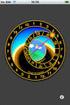 Astrock, t he A stronomical Clock The astronomical clock is unlike any other clock. At first glance you ll find it has similar functions of a standard clock, however the astronomical clock can offer much
Motion of a Fan Car LESSON
 18 LESSON Motion of a Fan Car INTRODUCTION You will now begin the first of four lessons in which you will investigate the relationship of force, motion, and energy. In this lesson, you will study the motion
Lesson 1: Phases of the Moon
 Lesson 1: Phases of the Moon The moon takes 29.5 days to revolve around the earth. During this time, the moon you see in the sky appears to change shape. These apparent changes, which are called phases,
Saturn V Straw Rocket
 Saturn V Straw Rocket Saturn V Rocket Activity Background Information As part of our NASA Tram Tour, you have the opportunity to view a Saturn V Rocket at our Rocket Park. This particular rocket was slated
FIRST GRADE 1 WEEK LESSON PLANS AND ACTIVITIES
 FIRST GRADE 1 WEEK LESSON PLANS AND ACTIVITIES UNIVERSE CYCLE OVERVIEW OF FIRST GRADE UNIVERSE WEEK 1. PRE: Describing the Universe. LAB: Comparing and contrasting bodies that reflect light. POST: Exploring
The Reasons for the Seasons
 The Reasons for the Seasons (The Active Learning Approach) Materials: 4 Globes, One light on stand with soft white bulb, 4 flashlights, Four sets of "Seasons" Cards, Four laminated black cards with 1 inch
Changes in Our Sky Grade Two
 Ohio Standards Connection: Earth and Space Sciences Benchmark A Observe constant and changing patterns of objects in the day and night sky. Indicator 2 Observe and describe how the sun, moon and stars
Which month has larger and smaller day time?
 ACTIVITY-1 Which month has larger and smaller day time? Problem: Which month has larger and smaller day time? Aim: Finding out which month has larger and smaller duration of day in the Year 2006. Format
The Lunar Phase Wheel
 The Lunar Phase Wheel A lunar phase wheel is a simple device to help you to visualize the positions of the Earth, Moon, and Sun at various times of the day or month, and then predict the phases and the
Shadows, Angles, and the Seasons
 Shadows, Angles, and the Seasons If it's cold in winter, why is Earth closer to the Sun? This activity shows the relationship between Earth-Sun positions and the seasons. From The WSU Fairmount Center
Phases of the Moon. Preliminaries:
 Phases of the Moon Sometimes when we look at the Moon in the sky we see a small crescent. At other times it appears as a full circle. Sometimes it appears in the daylight against a bright blue background.
Outdoor Exploration Guide. A Journey Through Our Solar System. A Journey Through Our Solar System
 Outdoor Exploration Guide A Journey Through Our Solar System A Journey Through Our Solar System The Solar System Imagine that you are an explorer investigating the solar system. It s a big job, but in
Today. Solstices & Equinoxes Precession Phases of the Moon Eclipses. Ancient Astronomy. Lunar, Solar FIRST HOMEWORK DUE NEXT TIME
 Today Solstices & Equinoxes Precession Phases of the Moon Eclipses Lunar, Solar Ancient Astronomy FIRST HOMEWORK DUE NEXT TIME The Reason for Seasons Hypothesis check: How would seasons in the northern
Lunar Phase Simulator Student Guide
 Name: Lunar Phase Simulator Student Guide Part I: Background Material Answer the following questions after reviewing the background pages for the simulator. Page 1 Introduction to Moon Phases Is there
Moon Phases and Tides in the Planning the D-Day Invasion Part I: The Phases of the Moon
 The Science and Technology of WWII Moon Phases and Tides in the Planning the D-Day Invasion Part I: The Phases of the Moon Objectives: 1. Students will determine what causes the moon to go through a cycle
Earth, Moon, and Sun Inquiry Template Eclipses
 One Stop Shop For Educators The following instructional plan is part of a GaDOE collection of Unit Frameworks, Performance Tasks, examples of Student Work, and Teacher Commentary. Many more GaDOE approved
Earth in the Solar System
 Copyright 2011 Study Island - All rights reserved. Directions: Challenge yourself! Print out the quiz or get a pen/pencil and paper and record your answers to the questions below. Check your answers with
Building Models to Scale
 Day Laboratory - 1 Building Models to Scale Introduction Can you picture the dimensions of the solar system? Probably not. The sizes and distances involved are so great that the mind tends to give up,
Lab Activity on the Causes of the Seasons
 Lab Activity on the Causes of the Seasons 2002 Ann Bykerk-Kauffman, Dept. of Geological and Environmental Sciences, California State University, Chico * Objectives When you have completed this lab you
Moon Watch. Observing the Lunar Phases with a Model. marker, Sharpie
 Middle Grades Science Moon Watch Observing the Lunar Phases with a Model MATERIALS AND RESOURCES EACH GROUP adhesive, reusable copy of Lunar Layout sheet (laminated) ping pong ball protractor, with hole
Essential Question. Enduring Understanding
 Earth In Space Unit Diagnostic Assessment: Students complete a questionnaire answering questions about their ideas concerning a day, year, the seasons and moon phases: My Ideas About A Day, Year, Seasons
Light Energy. Countdown: Experiment 1: 1 tomato paste can (without top or bottom) table lamp white poster board, 7 x 9
 Light Energy Grade Level: 5 Time Required: 1-2 class periods Suggested TEKS: Science - 5.8 Suggested SCANS: Information. Acquires and evaluates information. National Science and Math Standards Science
Today FIRST HOMEWORK DUE NEXT TIME. Seasons/Precession Recap. Phases of the Moon. Eclipses. Lunar, Solar. Ancient Astronomy
 Today FIRST HOMEWORK DUE NEXT TIME Seasons/Precession Recap Phases of the Moon Eclipses Lunar, Solar Ancient Astronomy How do we mark the progression of the seasons? We define four special points: summer
The Moon. Nicola Loaring, SAAO
 The Moon Nicola Loaring, SAAO Vital Statistics Mean distance from Earth Orbital Period Rotational Period Diameter 384,400 km 27.322 days 27.322 days 3476 km (0.272 x Earth) Mass 7.3477 10 22 kg (0.0123
1. Soaring Through Our Solar System By Laura G. Smith
 1. Soaring Through Our Solar System By Laura G. Smith 1 Five, four, three, two, one... BLAST OFF! Come along as we explore our solar system! If we were flying high above the Earth, what would you see?
Project-Based Learning Unit Earth/Moon/Sun Systems Marcie Owen Pilot Elementary
 Project-Based Learning Unit Earth/Moon/Sun Systems Marcie Owen Pilot Elementary Grade Level:3 Essential Question: How do the Earth, Moon, and Sun Interact? Subquestions: 1. Does the moon change shape?
Exploring Solar Energy Variations on Earth: Changes in the Length of Day and Solar Insolation Through the Year
 Exploring Solar Energy Variations on Earth: Changes in the Length of Day and Solar Insolation Through the Year Purpose To help students understand how solar radiation varies (duration and intensity) during
Night Sky III Planetary Motion Lunar Phases
 Night Sky III Planetary Motion Lunar Phases Astronomy 1 Elementary Astronomy LA Mission College Spring F2015 Quotes & Cartoon of the Day Everything has a natural explanation. The moon is not a god, but
Seasonal & Daily Temperatures. Seasons & Sun's Distance. Solstice & Equinox. Seasons & Solar Intensity
 Seasonal & Daily Temperatures Seasons & Sun's Distance The role of Earth's tilt, revolution, & rotation in causing spatial, seasonal, & daily temperature variations Please read Chapter 3 in Ahrens Figure
Earth In Space Chapter 3
 Earth In Space Chapter 3 Shape of the Earth Ancient Greeks Earth casts a circular shadow on the moon during a lunar eclipse Shape of the Earth Ancient Greeks Ships were observed to disappear below the
Appropriate space vocabulary for Primary School
 Appropriate space vocabulary for Primary School Stuff Looks like Gas Dust Rock Liquid Fatter (moon) Thinner (moon) Faster Slower Hot Cold Material Shape Straight at (an object) Direct (light) Indirect
Name Period 4 th Six Weeks Notes 2015 Weather
 Name Period 4 th Six Weeks Notes 2015 Weather Radiation Convection Currents Winds Jet Streams Energy from the Sun reaches Earth as electromagnetic waves This energy fuels all life on Earth including the
1. In the diagram below, the direct rays of the Sun are striking the Earth's surface at 23 º N. What is the date shown in the diagram?
 1. In the diagram below, the direct rays of the Sun are striking the Earth's surface at 23 º N. What is the date shown in the diagram? 5. During how many days of a calendar year is the Sun directly overhead
Overarching questions
 Moon phases Eclipses (Section. in textbook) Overarching questions What are the names of the Moon s phases? What causes these phases? What causes eclipses? What does the Moon look like during eclipses?
CONTENTS PAGE: 1. EU-UNAWE Mission Statement 3 2. CAPS Life Skills Programme of Assessment 4 5-6
 CONTENTS PAGE: 1. EU-UNAWE Mission Statement 3 2. CAPS Life Skills Programme of Assessment 4 5-6 3. Core Knowledge & Content - CAPS Curriculum Life Skills Foundation Phase 4. Learning Outcomes & Definition
Motions of the Earth. Stuff everyone should know
 Motions of the Earth Stuff everyone should know Earth Motions E W N W Noon E Why is there day and night? OR Why do the Sun and stars appear to move through the sky? Because the Earth rotates around its
Star of the Solar System-The Sun
 Star of the Solar System-The Sun Lesson Concept Link The solar system is comprised of the Sun, our closest star, and eight planets. The sun is at the center and is the primary energy source for Earth.
PART2Machines. Measuring Work on a Cart on an. Inclined Plane 102. Inclined Plane 104. Inquiry 12.1 Using Pulleys To Do Work 112
 TERRY G. MCCREA/SMITHSONIAN INSTITUTION PART2Machines LESSON 11 The Inclined Plane 100 Inquiry 11.1 Inquiry 11.2 Measuring Forces on a Cart on an Inclined Plane 102 Measuring Work on a Cart on an Inclined
Science Standard 4 Earth in Space Grade Level Expectations
 Science Standard 4 Earth in Space Grade Level Expectations Science Standard 4 Earth in Space Our Solar System is a collection of gravitationally interacting bodies that include Earth and the Moon. Universal
8.5 Motions of Earth, the Moon, and Planets
 8.5 Motions of, the, and Planets axis axis North Pole South Pole rotation Figure 1 s axis is an imaginary line that goes through the planet from pole-to-pole. orbital radius the average distance between
Science in the Elementary and Middle School
 15-0 Science in the Elementary and Middle School Naturally Occurring Inquiry Process, Which Can Be Made More Effective With Experience Uses Observable Data Science Search for Regularity Involves Information
Earth, Sun and Moon is a set of interactives designed to support the teaching of the QCA primary science scheme of work 5e - 'Earth, Sun and Moon'.
 is a set of interactives designed to support the teaching of the QCA primary science scheme of work 5e - ''. Learning Connections Primary Science Interactives are teaching tools which have been created
The following words and their definitions should be addressed before completion of the reading:
 Seasons Vocabulary: The following words and their definitions should be addressed before completion of the reading: sphere any round object that has a surface that is the same distance from its center
Reasons for Seasons. Question: TRUE OR FALSE. Question: TRUE OR FALSE? What causes the seasons? What causes the seasons?
 Reasons for Seasons Question: TRUE OR FALSE? Earth is closer to the Sun in summer and farther from the Sun in winter. Question: TRUE OR FALSE? Earth is closer to the Sun in summer and farther from the
Name: Earth 110 Exploration of the Solar System Assignment 1: Celestial Motions and Forces Due in class Tuesday, Jan. 20, 2015
 Name: Earth 110 Exploration of the Solar System Assignment 1: Celestial Motions and Forces Due in class Tuesday, Jan. 20, 2015 Why are celestial motions and forces important? They explain the world around
Douglas Adams The Hitchhikers Guide to the Galaxy
 There is a theory which states that if ever anybody discovers exactly what the Universe is for and why it is here, it will instantly disappear and be replaced by something even more bizarre and inexplicable.
Content Area: Earth Science Grade(s) 4. Essential Question(s) and Enduring Understandings
 Content Area: Earth Science Grade(s) 4 Unit Plan Title: Objects in the Universe Overview of Unit Students will make observations and record data to understand patterns of movement and relationships among
Answers for the Study Guide: Sun, Earth and Moon Relationship Test
 Answers for the Study Guide: Sun, Earth and Moon Relationship Test 1) It takes one day for the Earth to make one complete on its axis. a. Rotation 2) It takes one year for the Earth to make one around
Gravity. in the Solar System. Beyond the Book. FOCUS Book
 FOCUS Book Design a test to find out whether Earth s gravity always pulls straight down. A pendulum is a weight that hangs from a string or rod that can swing back and forth. Use string and metal washers
Lesson Plan. Skills: Describe, model Knowledge: position, size, motion, earth, moon, sun, day, night, solar eclipse, lunar eclipse, phases, moon
 Gallmeyer 1 Lesson Plan Lesson: Rotation of the Earth Length: 45 minutes Age or Grade Level Intended: 4 th Academic Standard(s): Science: Earth and Space: 6.2.1 Describe and model how the position, size
1-2. What is the name given to the path of the Sun as seen from Earth? a.) Equinox b.) Celestial equator c.) Solstice d.
 Chapter 1 1-1. How long does it take the Earth to orbit the Sun? a.) one sidereal day b.) one month c.) one year X d.) one hour 1-2. What is the name given to the path of the Sun as seen from Earth? a.)
CELESTIAL EVENTS CALENDAR APRIL 2014 TO MARCH 2015
 CELESTIAL EVENTS CALENDAR APRIL 2014 TO MARCH 2015 *** Must See Event 2014 ***April 8 - Mars at Opposition. The red planet will be at its closest approach to Earth and its face will be fully illuminated
The Light of the BY BOB BERMAN. The captivating crescent may be the Moon s most fascinating phase.
 The Light of the The captivating crescent may be the Moon s most fascinating phase. BY BOB BERMAN When first sighted each month, hovering in twilight, the Moon s slender crescent is mesmerizing. Early
The Apollo Program. PTYS 395 October 9, 2008 Sarah Mattson
 The Apollo Program PTYS 395 October 9, 2008 Sarah Mattson May 25, 1961 President Kennedy announces the Apollo Program. The goal was to put a man on the Moon, and return him safely to Earth, by the end
Educator Guide to S LAR SYSTEM. 1875 El Prado, San Diego CA 92101 (619) 238-1233 www.rhfleet.org
 Educator Guide to S LAR SYSTEM 1875 El Prado, San Diego CA 92101 (619) 238-1233 www.rhfleet.org Pre-Visit Activity: Orbital Paths Materials: Plastic Plate Marble Scissors To Do: 1. Put the plate on a flat
Look at Our Galaxy. by Eve Beck. Space and Technology. Scott Foresman Reading Street 2.1.2
 Suggested levels for Guided Reading, DRA, Lexile, and Reading Recovery are provided in the Pearson Scott Foresman Leveling Guide. Space and Technology Look at Our Galaxy Genre Expository nonfiction Comprehension
The Earth, Sun, and Moon
 reflect The Sun and Moon are Earth s constant companions. We bask in the Sun s heat and light. It provides Earth s energy, and life could not exist without it. We rely on the Moon to light dark nights.
On July 20, 1969, a machine with legs like a spider detached
 9 BECOMING LUCID In forming a bridge between body and mind, dreams may be used as a springboard from which man can leap to new realms of experience lying outside his normal state of consciousness. - Ann
Homework Assignment #7: The Moon
 Name Homework Assignment #7: The Moon 2008 Ann Bykerk-Kauffman, Dept. of Geological and Environmental Sciences, California State University, Chico * Chapter 21 Origins of Modern Astronomy Motions of the
Misconceptions in Astronomy in WA High School students (in preparation)
 Misconceptions in Astronomy in WA High School students (in preparation) Michael Todd Department of Imaging and Applied Physics, Curtin University of Technology The purpose of this study was to examine
Solar energy and the Earth s seasons
 Solar energy and the Earth s seasons Name: Tilt of the Earth s axis and the seasons We now understand that the tilt of Earth s axis makes it possible for different parts of the Earth to experience different
Geography affects climate.
 KEY CONCEPT Climate is a long-term weather pattern. BEFORE, you learned The Sun s energy heats Earth s surface unevenly The atmosphere s temperature changes with altitude Oceans affect wind flow NOW, you
MULTI-LEVEL LESSON PLAN GUIDE Earth, Moon, and Beyond
 1 MULTI-LEVEL LESSON PLAN GUIDE Earth, Moon, and Beyond Jeni Gonzales e-mail: [email protected] SED 5600 Dr. Michael Peterson December 18, 2001 1 2 Unit Plan: Multi-level- Earth, Moon, and Beyond Theme:
What's Gravity Got To Do With It?
 Monday, December 16 What's Gravity Got To Do With It? By Erin Horner When you woke up this morning did you fly up to the ceiling? Of course not! When you woke up this morning you put both feet on the floor
Science Benchmark: 06 : 01 Standard 01: THE MYSTICAL MOON axis of rotation,
 Science Benchmark: 06 : 01 The appearance of the lighted portion of the moon changes in a predictable cycle as a result of the relative positions of Earth, the moon, and the sun. Standard 01: Students
engineering is out of this world
 Light but Strong A Lesson in Engineering EP-2013-09-107-MSFC engineering is out of this world National Aeronautics and Space Administration Light but Strong teacher notes Next Generation Science Standards:
5- Minute Refresher: Daily Observable Patterns in the Sky
 5- Minute Refresher: Daily Observable Patterns in the Sky Key Ideas Daily Observable Patterns in the Sky include the occurrence of day and night, the appearance of the moon, the location of shadows and
Asteroids. Earth. Asteroids. Earth Distance from sun: 149,600,000 kilometers (92,960,000 miles) Diameter: 12,756 kilometers (7,926 miles) dotted line
 Image taken by NASA Asteroids About 6,000 asteroids have been discovered; several hundred more are found each year. There are likely hundreds of thousands more that are too small to be seen from Earth.
NASA Explorer Schools Pre-Algebra Unit Lesson 2 Student Workbook. Solar System Math. Comparing Mass, Gravity, Composition, & Density
 National Aeronautics and Space Administration NASA Explorer Schools Pre-Algebra Unit Lesson 2 Student Workbook Solar System Math Comparing Mass, Gravity, Composition, & Density What interval of values
Why Is the Moon Upside Down?
 CONNECTED, LEVEL 3 2013, Food for Thought Why Is the Moon Upside Down? by Trish Puharich Overview This article explore how three friends made observations of the phases of the Moon from different locations.
Space Poems For Preschool Children
 Space Poems Hey Diddle Diddle Hey diddle diddle, The cat and the fiddle, The cow jumped over the moon. The little dog laughed To see such sport, And the dish ran away With the spoon. Twinkle, Twinkle Little
The Earth, Sun & Moon. The Universe. The Earth, Sun & Moon. The Universe
 Football Review- Earth, Moon, Sun 1. During a total solar eclipse, when almost all of the Sun's light traveling to the Earth is blocked by the Moon, what is the order of the Earth, Sun, and Moon? A. Moon,
Moon Motion. Grade 3. Title of Lesson: Essential Question:
 Grade 3 Title of Lesson: Moon Motion Conceptual Statement: Earth and its moon move in predictable patterns that can be noted by regular observation. Essential Question: How does the appearance of Earth
For further information, and additional background on the American Meteorological Society s Education Program, please contact:
 Project ATMOSPHERE This guide is one of a series produced by Project ATMOSPHERE, an initiative of the American Meteorological Society. Project ATMOSPHERE has created and trained a network of resource agents
Solar System. 1. The diagram below represents a simple geocentric model. Which object is represented by the letter X?
 Solar System 1. The diagram below represents a simple geocentric model. Which object is represented by the letter X? A) Earth B) Sun C) Moon D) Polaris 2. Which object orbits Earth in both the Earth-centered