
Freight Car Brake Rigging Arrangements
|
|
|
- Dayna Rice
- 10 years ago
- Views:
Transcription
1 Student Workbook Freight Car Brake Rigging Arrangements

2 Disclaimer Thank you for making Wabtec Corporation your choice for educational material. All our training publications are designed as teaching tools for a specific area of railway equipment instruction. As with any training literature, it will eventually become out of date. For this reason, it is important that only the current edition of this training package be used. To ensure you have the current edition please contact your Wabtec representative. Wabtec Corporation produces a line of instructional pamphlets and brochures for each of the components that Wabtec manufactures to help augment the training process. This publication is under copyright to the Wabtec Corporation. Any reproduction in whole or in part without written consent from an officer of Wabtec Corporation is strictly prohibited. This book may contain information covering some products manufactured by companies other than Wabtec. This is done to give you, the user, an opportunity to utilize one manual for the majority of your training requirements. Information covering products not supplied by Wabtec Corporation is provided as a general guide as to how these products should perform. Wabtec Corporation accepts no responsibility for the operation of products supplied by others, nor the information stated herein as to design or intended dimensional limits of such products. Technical questions on the equipment shown in this booklet should be directed to the original manufacturer. If there are any discrepancies between this book and the original manufacturer standards, the original manufacturer instructions take precedence. Wabtec Corporation accepts no responsibility for injury or damage to personnel or equipment resulting from either direct or indirect use of this manual. For Technical Support contact your local Wabtec Corporation representative or Wabtec Training in Wilmerding, Pennsylvania, USA at Michael Zenert (Michael Zenert) Manager - Air Brake Training Wabtec Corporation 2003 Wabtec Corporation 1

3 Contents Introduction... 3 Part 1: Freight Car Locations... 3 Part 2: Freight Brake Rigging... 4 A. Foundation Brake Rigging Push Rod 2. Brake Levers 3. Dead Lever Guide 4. Truck Lever Connections 5. Brake Rods & Pins 6. Brake Beams 7. Brake Shoes 8. Automatic Slack Adjusters 9. Brake Levers & Rod Carrier Supports 10. Brake Badge Plate 11. Truck Brake Rigging B. Hand Brake Arrangements Body Mounted Brake Arrangement 2. Truck Mounted Brake Arrangement 3. Bell Cranks and Sheave Wheels C. Special Brake Arrangements Part 3: Brake Rigging Adjustments Lever Angularity 2. Piston Travel Review Exercise 2

4 Introduction Understanding the operation of the brake rigging provides a carman with the ablility to make repairs that will ensure the rigging components function as designed, proper braking forces are acheived and there is reduced possiblity of personal injury or property damage while working on the equipment. Body mounted or conventional brake rigging on freight cars uses a body mounted brake cylinder located approximately in the center of the car. The majority of coal cars (open top hoppers or gondolas) are equipped with body mounted brake assemblies mounted on the end of the car. This design has the brake cylinder in close proximity to the control valve and other brake devices. Early conventional rigging arrangements used rods and levers attached to the underside body of the car with a manual type slack adjuster. To ensure there was minimal slack in the brake rigging and the piston travel stayed consistant, the carman or inspector had to adjust the rigging though moving the manual adjuster on the brake rigging assembly. Conventional rigging today uses automatic or self adjusting slack adjusters to do the same job of manually adjusting the brake rigging. Other car designs use truck mounted brake arrangements. This design eliminates a lot of the rigging necessary for conventional rigging by having the brake cylinder attached directly to the truck rigging assembly. In this manual the various types of brake rigging is covered showing the relationship of the levers, rods, pins, brake cylinders, slack adjusters and handbrakes have on the overall operation of a typical rail car. 3

5 Part 1: Freight Car Locations A-End Understanding the locations on a freight car is basic to identifying and repairing items requiring attention or finding defects on the car. The basic locations are generally the same on all freight cars. This diagram shows how locations are identified on a typical freight car. The end of the car with the handbrake is the B end. The opposite end of the car is the A end. When standing at the B end facing the car, everything on the right is the R or right side, everything on the left is the L or left side. Multiple component parts such as wheels and axles are numbered consecutively starting at the B- end. The car is also divided into quarters using the end and side location as a reference (i.e. AR is A- end, right side. BL is B-end, left side. ). AL L-Side 4 3 Brake Cylinder AR R-Side 2 BL BR 1 Handbrake B-End Conventional brake rigging may have the brake cylinder under the car body. In such cases, the brake cylinder piston push rod points to the B-end. This provides a more direct connection of the handbrake to the brake cylinder and rigging assembly. On cars with more than one handbrake, check the brake cylinder to indicate the B-end of the car. Cars with multiple handbrakes and brake cylinders generally have the locations stenciled on the side of the car. See AAR Field Manual Rule 83 for more information. 4

6 Part 2: Freight Brake Rigging Arrangements The freight car brake rigging is the metal components assembled together to transmitt a brake application directed by either the handbrake or the air activation of the brake cylinder(s). Brake rigging can be in the form of a body mounted brake assembly with foundation brake rigging or truck mounted brake assemblies. A. Conventional or Foundation Brake Rigging This is an example of foundation brake rigging. Various cars may be slightly different depending on the car body design. The main components covered in the following pages have the same function on all cars. 5

7 1. Push Rod The brake cylinder push rod is a solid rod with a jaw formed on one end. A brake pin is inserted into the jaw end to make the connection to the brake rigging. The push rod transmits the force caused by the push of air entering the brake cylinder or by the pull of the hand brake, through levers and rods to the brake shoes. The push rod is not connected to the piston. The push rod end fits loosely in the tube of the piston hollow rod. At one time, push rods were of different lengths; however, most present day push rods used for 10 x 12 brake cylinders are a standard length of 26-1/4 from the ball end to the center line of the hole in the jaw. The push rod is designed to provide adequate movement of the jaw end without binding in the piston-hollow rod. When performing a Single Car Test in accordance with AAR S-486, one of the requirements is to make sure the push rod will go all the way back into the hollow rod assembly of the piston. This check is done to ensure the movement of rods and levers is not binding or fouling. Brake Cylinder Push Rod 6

8 2. Brake Levers Brake levers are used throughout the brake system to transmit, increase, or decrease braking force. They are also used to transfer or change direction of force. Levers are named for the various conditions and positions that they serve in the system. There are body levers, such as the cylinder lever and fulcrum lever. There are truck levers, such as the live lever, dead lever, and horizontal truck lever. Minimum thickness for levers is 1, with minimum 1-1/8 diameter pin holes. 3. Brake Connecting Rods The brake connecting rods are used to connect the body levers with the truck levers. The center top rod (shown here) connects two body levers joining one end of the brake rigging to the other. The levers and rods are connected together by brake pins. It is very important that these connecting rods and pins in the brake rigging be of proper length and size. Improper lengths may cause binding or fouling. Check the car badge plate for the correct length when replacing connecting rods. Wear limitation for connecting rods is in accordance with AAR Field Manual Rule 11. The AAR has designated that rod diameters must not be less than ¾ and pin diameters must not be less than 1-3/32. Top Connecting Rod Brake Cylinder Brake Lever Push Rod Chain Connection To Handbrake 7

9 4. Brake Levers Brake levers are mounted as part of the brake rigging under the car body and as part of the truck brake assembly. The levers are used to transmit the pulling or pushing forces exerted by the connecting rods. Each brake lever is a specific size designed to amplify or reduce the brake force. This is determined by the distance between the pin connections. Check the badge plate for the proper distance between the holes for each lever. When the holes in the lever become elongated or show excessive wear they do not provide correct braking force. Check AAR Field Manual Rule 11 for wear limits. 5. Dead Lever Guide The dead lever guide and bracket are used to fulcrum one end of the truck dead lever to the truck bolster or to the car body. This provides an anchor for the brake arrangement. A multi-hole dead lever guide is attached to the dead lever bracket. Some dead lever brackets may be anchored to the truck bolster or the center sill of the car. The dead lever guide allows for manual adjustment of the brake rigging. A onehole dead lever guide, attached to the truck bolster, is used with all doubleacting automatic slack adjusters to prevent the manual adjustment of brakes. A dead lever anchor serves the same purpose as the one-hole dead lever guide, the difference being the dead lever anchor is attached to the car body. 6. Truck Lever Connections Dead Lever Guide Dead Lever Guide Brake Lever Dead Lever Bracket Truck lever connections are sometimes called bottom rods. There are two types of bottom rods, one that passes through the truck bolster and one that passes under the truck bolster. The purpose of this rod is to transfer the force from the truck live lever to the truck dead lever. The truck lever connections are furnished in various lengths with two or three holes in each end. The purpose of these holes is to provide adjustment required to maintain good truck lever angularity when different diameter wheels are applied; i.e., two wear wheels machined to a one wear tread contour. 8

10 7. Brake Beams Brake beams are used to transfer the force from the truck levers to the brake shoes. They are of truss construction consisting primarily of tension and compression members attached at the ends where the brake heads are located and separated at the middle by a strut, at which point the truck lever is attached. Brake beams are designated according to the capacity. For example, an A.A.R. Number 24 beam has an 24,000 pound design capacity. The size of the brake beam to be used is determined by the braking forces required for the car. Most brake beams today are sliding or unit type. Unitized brake beams are equipped with an extension on each end of the bream. This extension fits into a slot in the truck side frame, it will align the beam to move or slide at the correct angle for the brake shoes to make contact with the wheels. There are several types of sliding or unitized beams that are designed for specific applications. WABCOPA C/NYCOPA C brake beams are much larger and heavier than the one pictured here. They have a brake cylinder mounted on each beam. On Wabtec TMX Truck Mounted brake equipment, the brake beams are designed with the center area bent down. This is to allow for the brake cylinder connecting rod and the automatic slack adjuster passing through the openings in the bolster. See the section on truck mounted brake equipment in this manual for more information. 9

11 Brake Beam Orientation Brake beams are either left or right hand according to the angled direction of the brake lever slot in the brake beam strut. This provides for proper lever angularity of the brake rigging. To determine the correct slot direction, the beam must be sitting with the AAR printing on the top side or the word TOP showing on the beam. Stand on the back end of the beam and check the direction the slot opens, to your right hand or left hand. If the brake beam opens to the right, it is a right hand beam. Left hand beams are orientated the same way. (see picture below of left hand beam) The brake beam heads located at each end of the beam are designed to accept or reject either cast metal or composition type brake shoes.the brake shoes are set up with rejection lugs designed to fit the correct type of brake head. The car brake configuration will determine the type of brake shoes standard to the car. 10

12 8. Brake Shoes Brake shoes transmit the braking force to the wheels providing a retarding motion on the car. Brake shoes are designated by type and thickness to fit the proper brake heads. There are two general types of brake shoes: cast metal ( cast iron) and composition. Cast Iron brake shoes were used on older cars. New cars are designed with composition shoes. High Friction Composition shoes have approximately twice the stopping ability of cast metal shoes. For this reason cast iron brake shoes are not interchangeable with composition brake shoes. As shown below the brake head is designed for only one type of brake shoe. Cast Iron Composition a. Cast Iron Brake Shoes Cast Iron brake shoes were the original shoe used for railroad brake equipment. Typically used on cars with hanger type brake beams, body mounted brake equipment and AB control valves. They require higher braking force to stop or slow a car/locomotive than high friction composition shoes. Drawbacks with the cast iron shoes include sparking and uneven wheel wear. Note: AAR Circular Letter c-9736 adds to AAR Field Manual Rule 12 The application of cast iron brake shoes is prohibited effective on 1/1/05. Converting a car from cast iron to High Friction Composition shoes, the brake equipment of the freight car must be adjusted in one of several ways. 1. Change brake lever ratios - cast iron requires more braking force than high friction. Simply changing the shoes will result in excessive brake force on the wheel with brake related wheel defects. 2. Change brake cylinder size - Having a smaller brake cylinder will result in less force of the shoe on the wheel providing that the full service brake application equalization pressure remains within AAR limits. 3. Use a modulating valve - A modulating valve will divert some of the air from the brake cylinder to a separate volume. Note: Conversion of a locomotive from cast iron to High Friction Composition shoes requires changing the J type relay valve or as a simpler alternative switch to Low Friction Composition shoes. 11

13 b. Low Friction Composition Modulating Valve Applied to Brake Cylinder The COBRA LF low friction composition brake shoes are designed as a cost effective alternative to cast iron shoes. Introduced in 1997, the low friction shoe was designed for use on locomotives equipped with cast iron shoes as a direct replacement for the cast shoes. The benefits of using the LF shoe is longer life, lighter weight and less maintenance. Low friction composition shoes are also used on freight equipment. COBRA LF shoes will fit into the brake heads designed to accept cast iron shoes, but the rejection lugs will not permit the shoes to be applied to the brake heads designed for high friction composition shoes. Every new COBRA LF Composition shoe is painted bright yellow for immediate identification. This will alert the installer as to the type of replacement shoe required even before the old shoe is renewed. The new COBRA LF Composition Brake Shoe has a cast iron insert in the center of the shoe. The insert conditions the wheel tread, thereby reducing the potential for wheel damage. Insert COBRA LF Composition Brake Shoe with insert 12

14 c. Hi-Friction Composition High Friction Composition brake shoes were designed as an alternative to the cast iron brake shoe. The HF composition shoe has a higher coefficient of friction that provides better brake control with less brake head force than the cast iron shoe. COBRA AP Advanced Performance High Friction Composition Brake Shoes are designed to better adjust to the curvature of the wheel. d. TreadGuard Shoes Tread damage, such as shells and spalls, can create major expenses in maintenance. The COBRA TG Brake shoe is designed to reduce wheel tread damage. Designed with the same tapered shape as the COBRA AP Brake Shoes, the COBRA TG Brake Shoes have added value built into them. The shoes have a metal insert molded into the friction material in the center of the shoes that works in two ways. First, it slightly roughens the tread surface to improve wheel adhesion, thereby decreasing the likelihood of wheel slides. Second, because the insert is more abrasive than the base composition material, it works continuously to remove minor tread damage and improve the condition of the tread. COBRA TG Brake shoes are painted red for immediate identification. If changing brake shoes due to wear, ensure that the correct replacement shoe is applied. When removing a TreadGuard Shoe they should be replaced in kind in accordance with the car owners specifications. The TreadGuard Brake Shoe also has a decal applied to the inside portion of the shoe for identification. COBRA High Friction Composition Brake Shoe insert COBRA TreadGuard (TG) High Friction Composition Brake Shoe 13

15 9. Automatic Slack Adjusters Brake Rigging Arrangements Mechanical automatic slack adjusters are designed to compensate for slack caused by wear, that occurs to the brake shoes, wheels, and other components in the brake rigging. By controlling this slack, the air brake piston travel is maintained at the correct length to ensure maximum efficiency in the brake system. Most automatic slack adjusters are double jawed and designed for application on; 1. Conventional or Foundation brake rigging 2. Truck mounted brake assemblies. The main difference in the two designs is the size and operation. Body mounted automatic slack adjuster used for foundation brake rigging are designed for center rod or top rod application.body mounted slack adjusters take up slack as the components wear down. Truck mounted slack adjusters have the same function however they operate to extend as the brake shoes wear down. Truck mounted slack adjusters are also much smaller than body mounted adjusters. They are attached in place of a bottom rod connection on the truck assembly. a. Body Mounted Slack Adjuster The body mounted slack adjuster operates as an adjustable rod that automatically shortens as the wear occurs or extends as new brake shoes or new wheels are applied. The total length of a body mounted slack adjuster fully extended is 84. The installed length on a new car is nominally 81, measured from center to center of the pin holes located in the adjuster jaws. This dimension will vary on a car in service according to the amount of brake shoe and wheel wear. The Group E or double jaw model slack adjusters, along with their designed control mechanism, are interchangeable with each other. The body mounted automatic slack adjuster is equipped with a actuator control rod that is connected to the body of the slack adjuster by a control collar Actuating Control Rod Slack Adjuster Control Collar and Adjusting Screw with an adjusting screw. The actuator control rod is pinned to the top rod end of the cylinder lever and fulcrumed at the control lever fulcrum bracket. The purpose of the control lever (drilled in proportion to the cylinder lever hole drilling) is to activate the slack adjuster. It does not transfer or regulate the braking force on the car. The actuator control rod collar is moved depending upon the piston travel adjustment required. Once the piston travel has been adjusted to the correct length, the adjusting screw is secured. To ensure the adjustment does not change the collar on the actuator control rod must be welded in place in accordance with AAR Field Manual Rule 4. Universal Model 2300 DJ (body mounted) 14

16 b. Truck Mounted Adjusters Truck mounted slack adjusters work the opposite of body mounted slack adjusters. As the brake shoes wear down, because of their location on the truck assembly, the slack adjuster gets longer. They maintain the correct slack through the use of an actuator control rod or a control lever (see the following types). Universal Model 5D - Used on Thrall/Davis truck mounted brake assembly - Has a 5 let out capacity - Is the replacement for the Model 7D Model 5D Universal Model 85 - AAR approved, used to upgrade WABCOPAC truck mounted brake arrangement to WABCOPAC II - 8-1/2 let out capacity Universal Model 85 Universal Model 5 - Used on TTX truck mounted brake assembly - 5 let out capacity - Replacement for the Model 7 - Jaws painted orange for identification Model 5 15

17 Universal Model C AAR approved, used in TMX truck mounted brake system - 9-3/4 let out capacity Universal Model C-1000 * Note; the Model 5, 5D and Model C-1000 are equipped with a Trigger Pin/Locking Bolt assembly designed to prevent slack adjuster extension until the Universal compression slack adjuster is properly installed. 10. Brake Levers and Rod Carrier Supports Trigger Pin/Locking Bolt Brake lever and rod carrier supports are applied to the car at various locations to support the levers and rods in their respective positions. Importance is stressed on the size and location of the carriers because of the movements of the levers as the brakes are applied and released and as the shoe and wheel wear changes. Care should be given in application of these carriers to prevent any binding in the brake rigging. 11. Brake Badge Plate The brake badge plate is a metal plate designed to provide brake rigging dimensions that may not be readily available. The information on a badge plate may include brake leverdrilling dimensions, handbrake chain length, piston travel, length of top connecting rods, bottom connecting rod length, etc.the badge plate is especially usefull for repairs to the brake rigging or to verify the correct piston travel or to check proper lever dimensions. The badge plate is generally located near the air brake cylinder or control valves. 16

18 12. Truck Brake Rigging The freight car trucks not only support the car but also assist in stopping or holding the car through the use of the air brake or hand brake forces exerted through the brake shoes to the wheels. Freight car trucks are designated by the truck lever arrangements. Truck mounted brake cylinder, lever arrangements generally use less component parts to provide the same braking effectiveness as body mounted brakes. Handbrake Applied to Boxcar Handbrake Wheel Part 3: Handbrake Arrangements 1. Body Mounted Brakes Body mounted brake equipment has the bottom connecting rod running through the opening in the bolster or the bottom rod under the truck bolster. The picture below shows a rod-through design. Notice the truck lever connection passing through the truck bolster is pinned to the center hole of each truck levers. The bottom holes of the truck levers are pinned to the brake beams. The top rod, which is pinned to Bell Crank the top of the live lever, must pass over the truck bolster to connect to a body lever. The top end of the dead lever is usually fulcrumed to the truck bolster by the dead lever guide. The truck levers usually have a 2 to 1 ratio so the forces exerted at the brake shoes are twice that of the top rod force. Conversely, the top rod movement is 4 times the movement of the brake beam. When the handbrake is applied, the levers and rods move in direct relationship to the movement of the body lever. The body lever is connected to the piston push rod. In this way the brake shoes are force against the wheel on an application of the brakes whether the application is directed by the handbrake or the force of the brake cylinder piston as shown in the diagram handbrake. Note the dead lever bracket and guide are used as an anchor to maintain the correct force applied at the shoes. 17

19 Truck assemblies with the bottom connecting rod under the truck bolster function in a similar manner with a couple of exceptions. The bottom rod or connecting rod being under the bolster is pinned to the bottom hole of each truck lever. The center holes of the truck levers are connected to the brake beams and the top lever holes are for the top connecting rod and dead lever guide. AAR Rule 11 provides for inspection and wear limitation on this type of connection. 2. Truck Mounted Handbrake Arrangement The operation of truck mounted handbrake assemblies is similar to body mounted handbrake arrangements except there are less components. In the diagram below is a typical WABCOPAC. Note the handbrake is connected to the brake beam through levers and connecting rods. This will ensure there is a direct brake application similar to what is provided by the air activated brake cylinder. New truck mounted brake equipment and changes to car design has resulted in more types of truck mounted brake assemblies available. Some common types of truck mounted handbrake arrangements in use are on Cardwell/WABCO TMX, Ellcon National TMB, Thrall Davis TMB and TTX TMB and NYAB has several types available. Each of these designs has the brake cylinder(s) mounted on the brake beam or applied directly to the truck bolster. The cylinder force acts directly on the brake beams without intermediate levers and rods to push the brake shoes against the wheels. The forces exerted at the brake shoes are the actual output force of the cylinders. Each of these types of truck mounted brake arrangements is discussed in the Single Car Test Workbook and Booklet (WAB/SCT-1, 2). The WABCOPAC shown here uses two brake cylinders per truck. In 1966, it became a manditory requirement to apply automatic slack adjusters on all new cars. Since 1968 this also applied to all rebuilt cars. However there still are many cars equipped with WABCOPAC and NYCOPAC truck mounted brakes. 18

20 3. Bell Cranks and Sheave Wheels Handbrakes are designed to provide a brake force of the shoes against the wheel by indirect pull of the rods and levers on the truck assembly. The bell crank is common on older style cars where a lot of new cars use sheave wheels. In both cases they are used to change the vertical pull of the handbrake to a horizontal pull on the rigging. When performing a Single Car Test per AAR S-486, the carman must check the position of the bell crank with the brakes applied. This si because the bell crank has fixed positioning. When the handbrake is applied the pull of the handbrake will cause the fulcrum of the handbrake to rise pulling the horizontal chain. If the bell crank rises too high, there will not be enough force on the shoes to hold the car in position. On cars with an automatic slack adjuster, as the shoes wear down the bell crank should stay in the correct position. On cars without an automatic slack adjuster (WABCOPAC/NYCOPAC) as the brake shoes wear down the positioning of the bell crank will change. The inspector must consider this when checking the positioning of the bell crank during the air test. The use of either device depends upon the design of the car. Both handbrake designs shown in the previous pages use a bell crank. Sheave wheels are used extensively on cars carrying intermodal and automobile traffic. 4. Special Brake Arrangements Speicalized cars such as depressed center flat cars and other cars of higher capacity may have trucks equipped with six, eight, ten or twelve-wheel sets. These cars may also have more than one handbrake, typically one at each end. The brake arrangement of each car will vary according to the brake shoe forces that are applicable to the car design and the car weight on the rail. The braking arrangement will normally employ many of the items identified in this booklet. 19

21 Bell Crank Sheave Wheel 20
22 Part 4: Foundation Brake Rigging Adjustments To ensure the proper braking forces are exerted by the shoe against the wheel, the brake rigging must be in good condition and applied correctly to the car. Wear, improper applications and damaged brake rigging components have a detrimental effect on the braking efficiency and must be corrected to ensure adequate braking for that car. Even though most cars are now equipped with automatic slack adjusters, the truck levers may occasionally be out of adjustment. This section of the booklet will deal with some adjustments that can be made to the body mounted brake rigging to ensure that braking forces are sufficient to effectively stop a freight car. Before performing any adjustments to the brake rigging, ensure that the car brakes are released and there is no air in the brake system. This is done to prevent unintentional brake applications while someone is working on the brake equipment. 1. Lever Angularity Angularity is the angle relationship of levers within the brake rigging assembly. If the angularity of the car brake rigging is incorrect, the rods and levers may bind or foul on other car and/or brake rigging components. This conditions would provide ineffective braking forces on that car. Truck Lever Angularity Truck lever angularity changes when brake shoes and wheels wear. The automatic slack adjuster will compensate for the wear of the shoes and wheels in normal applications. When wheels are changed, it may effect the lever angularity. Therefore as common practice, the brake lever angularity should be checked each time wheels are changed. For this reason, the lever angularity could be different on each truck of the same car. Correct truck lever angularity is when the live truck lever is perpendicular to the top rod, when the brakes are fully applied. Application of new wheels and brake shoes improper application of brake rigging components, and wear to rigging components can cause poor truck lever angularity. If the truck lever angularity is incorrect, adjustment should be made to maintain correct brake shoe pressure on the wheel for each brake application. Correct Truck Lever Angularity 21
23 The common location for adjustment of truck lever angularity is at the bottom rods (truck lever connections). Bottom rods may have more than one set of holes at each end of the rod. Any brake shoes that are worn beyond AAR limits should be changed before making adjustments to the truck levers and rod connections. The dead lever guide can also provide a location for lever angularity adjustment. To correct the incorrect truck lever angularity shown below: 1. Cut-out the car s air brake 2. Disconnect the brake rigging to the automatic slack adjuster or manual slack adjuster 3. Remove the brake pin from the bottom rod/live lever connection 4. Move the live lever to line up the bottom rod next outside hole 5. Apply the brake pin. 6. Physically move the lever by hand to apply the shoes to the wheel to check adjustment 7. If the lever angularity requires more adjustment repeat steps 4, 5 and 6 until correct angularity is obtained. 8. Movement of the bottom rod must not set up a situation where the live lever rests on the axle. If this happens adjustment of the dead lever guide may be necessary. Note that movement of the dead lever has a more dramatic effect on the live levers than movement of the bottom rod connection. Poor Truck Lever Angularity 22
24 Body Lever Angularity The movement of the truck levers will affect the body lever angularity. If a car is equipped with brake rods and levers of the proper length, correct truck lever angularity will produce correct body lever angularity. Correct body lever angularity is when the levers are perpendicular to the brake rods when the brake shoes and wheels are onehalf worn. Correct Body Lever Angularity Incorrect brake rod lengths and lever lengths will produce incorrect body lever angularity. Incorrect Body Lever Angularity If the body lever angularity is incorrect, first measure the levers and rods and ensure the measurements on the rods and levers correspond to the badge plate dimensions. If they do not match the badge plate corrective action is necessary before changing angularity. With correct truck lever angularity and correct body lever dimensions, body lever angularity can only be adjusted by changing rod length. 23
25 2. Piston Travel Piston travel is the distance the brake cylinder piston moves from the brakes released position to the brakes applied position. Of the various types of brake cylinders, each design has a specific piston travel allowed by design to provide maximum braking force required to control and stop that particular car. Body mounted brake cylinders are designated by size. A 10 X 12 brake cylinder has a 10 diamenter and a 12 stroke. Body Mounted Brake Cylinder Brakes Released Brakes Applied Piston travel on a car with a standard body mounted brake cylinder is initially set at 8 inches for equalization purposes per AAR S-401. Piston travel must be set to proper length in accordance with AAR S-486 before car is allowed into service. Piston travel with body mounted brake rigging and an automatic slack adjuster is normally set at seven and one-half (7 1/2) inches. When testing cars in accordance with the AAR S-486, allowable piston travel for this type of brake cylinder is seven to nine (7-9) inches. Piston travel of less than seven inches or more than nine inches must be adjusted to a nominal seven and one-half inches. Piston travel on a standard body mounted brake cylinder is measured from the face of the brake cylinder non-pressure head to the grease line near the piston collar. This grease line has been established by the AAR as the measuring point for the brake cylinder piston shown. Measuring Piston Travel Piston Travel Non-Pressure Head Grease Line 24
26 Piston travel for other types of brake cylinders as identified in the AAR Field Manual Rule 3. FREIGHT EQUIPMENT PISTON TRAVEL Brake Cylinder Type Proper +/- Air Test Maximum Travel Allowance Travel *Body Mounted 10" x 12" 7 1 /2" 1 /4" 6" to 9" 10 1 /2" *Body Mounted 8 1 /2" x 12" 7 1 /2" 1 /4" 6" to 9" 10 1 /2" *Body Mounted 7 1 /2" x 12" 7 1 /2" 1 /4" 7" to 9" 10 1 /2" *Body Mounted 12" x 10" 5 1 /2" 1 /4" 5" - 7" 8 1 /2" *7 5 /8" x 12"x 9" UC 5 1 /2" 1 /4" 5" - 6" 7 1 /2" * Triax-II 1 3 /4" 1 /8" 1 1 /2" - 3" 3 1 /4" WABCOPAC/NYCOPAC 1 1 /4" 1 /4" 3 /4" to 3" 4" WABCOPAC II 2 1 /4" 1 /4" 1-3 /4" to 3" 3 1 /4" WABCO TMX 2" 1 /4" 1 1 /2" to 3" 3 1 /4" NYCOPAC IIA N/A N/A N/A 2 1 /4" Ellcon National 2 3 /4" 1 /4" 2 1 /4" to 3-3 /4" 4" Thrall Davis 3 1 /4" 1 /4" 2 3 /4 to 4 1 /4" 4 1 /2" TTX TMB (Misner) 8" 1 /8" 7 1 /2-10" 10 1 /4" * Not shown in this booklet, see AAR Field Manual Rule 3 * For piston travel not shown or identified in the AAR Field Manual, contact the car owner. 25
27 Review Exercise Brake Rigging Arrangements 1. By AAR designation the top connecting rods must be a minimum of. 2. The handbrake end of the car is generally designated as the. 3. Body mounted slack adjusters generally use an to maintain the proper piston travel. 4. Brake Lever dimensions may be found on the which is usually located close to the brake valves. 5. The Universal are equipped with a Trigger Pin/Locking Bolt for safety. 26
28 Part 4: Truck Mounted Brake Equipment A. TMX Truck Mounted Brake Equipment Safety Procedures & Warnings Regular yard and shop safety procedures MUST BE followed when working on this assembly. When performing any test or work on devices or equipment while they are on the vehicle (on car test, etc.) special precautions must be taken to insure that vehicle movement will not occur which could result in injury to personnel and/or damage to equipment. The use of an air jet, which must be less than 30 p.s.i.g., to blow parts clean or to blow them dry after being cleaned with a solvent will cause particles of dirt and/or droplets of the cleaning solvent to be airborne. Wire brushing may also cause particles of dirt, rust, and scale to become airborne. These conditions may cause skin and/or eye irritation. Personal eye protection and gloves must be worn when performing any work on this device or its components parts to avoid personal injury. Assembly may be under a spring load. Exercise caution during disassembly so that no parts Fly Out and cause bodily injury. All air supply to this device and/or to any components part must be cut-off before this device and/or any component part is removed from the equipment arrangement. Brake Cylinder and Slack Adjuster assemblies are under spring load. Extreme caution must be taken when working around or removing the slack adjuster since inadvertent operation of the trigger mechanism may cause severe bodily harm. Care must be taken during disassembly of both brake cylinders and slack adjuster to prevent personal injury from parts that may fly out. When applying and releasing air pressure to this assembly, all personal must stand clear to minimize the potential for bodily injury from moving parts. Prior to removing any of the TMX components, all air must be depleted to guard against personal injury from inadvertent movement of any of the parts. After any work is performed on this assembly an operational test must be performed to insure the unit on the truck and the total car brake system operates as intended before the car is released for service. 27
29 1. Checking & Adjusting Piston Travel Brake Rigging Arrangements Refer to the car badge plate and the piston travel indictor decal to determine the proper operating range for the piston. Apply air to the brake cylinder and measure piston travel (See Figure 1). If the correct piston travel is not obtained, (see Figure 1) readjustment must be done as follows: Figure 1 1. Deplete air from brake cylinder. 2. If the piston travel is too long, unlock the 1 / 2 locknut (3) on the slack adjuster control rod (5) and turn the spherical flanged sleeved nut (4) clockwise. 3. If the piston travel is too short, unlock the 1 / 2 locknut (3) on the slack adjuster control rod (5) and turn the spherical flanged sleeved nut (4) counterclockwise. 4. Reapply air to brake cylinder. 5. When the required piston travel is met and repeatable, turn 1 / 2 locknut (3) clockwise against the spherical flanged sleeved nut (4) and torque against each other to 55 ft. lbs (75 Nm). The TMX brake assembly must be adjusted per badge plate shown on the car. 6. If the piston travel is still outside the operating range after adjustment of the spherical flanged sleeved nut (4), it is recommended that you perform a slack adjuster test is to be performed to determine if the device is in accordance with that outlined in AAR Pamphlet No. SAM-C
30 7. The car is not to be released for service until the piston travel is within the specified range. 2. Brake Cylinder Removal Make sure all air is depleted in the brake system to preclude personal injury. Refer to Figure 2 for this procedure. 1. Remove brake cylinder hose from the brake cylinder air flange face and protect all exposed piping from dust and contaminates. Remove the truck from under the car, if possible. Figure 2 WARNING: DO NOT BUMP THE SLACK ADJUSTER TRIGGER! IF BUMPED, THE SLACK ADJUSTER COULD ACTIVATE AND SUDDEN LET-OUT OF THE RACK EXTENSION COULD OCCUR AT THE REAR JAW. PERSONAL INJURY MAY RESULT. 2. Deactivate the slack adjuster by loosening the 1 / 2 locknut (3) from the spherical flanged sleeved nut (4) and remove both nuts from the slack adjuster control rod (5). Also, screw in a 5 / 8 X 2 bolt (10D) in the threaded hole in the slack adjuster housing weldment (10). 29
31 3. Remove the cotter pin connection (1) from the slack adjuster control rod pin (2) and remove the control rod pin. 4. Remove cotter pin connection (10B) from the slack adjuster trigger pin (10A). Remove the slack adjuster trigger pin (10A) from the slack adjuster (10). For hand braked trucks only remove the cotter pin (12) from the transfer link pin (13) and remove the transfer link pin (13) from the handbrake lever (14) and the handbrake transfer link (30). Lift the handbrake lever out of the handbrake strut bracket (17). 5. Remove cotter pin connections (19, 27) from the transfer pin (20) and the center strut pin (28). WARNING: PROTECTION SHOULD BE TAKEN AGAINST HEAT DAMAGE TO THE CYLINDER DUST BOOT. 6. Remove the transfer pin (20), and the center strut pin (28) from the transfer lever (29). 7. Remove the spring pin (18) from the cylinder (25) and return push rod assembly (33). 8. Remove the 1 / 2 locknut (21) on the topside of the cylinder bracket from the 1 / 2 T-Head bolt (22). Then, from the underside of the compression member, remove the two 5 / 8 hex bolts (24). Remove the cylinder (25) from the brake beam (37). NOTE: The transfer lever (29), slack adjuster (10), handbrake link (30) and slack adjuster control rod (5) may be slid to the side of the bolster window in order to gain easier access for removal of the cylinder. 2.9 The TMX Brake Cylinder should betaken to a designated repair facility to be dismantled, cleaned, necessary parts replaced, oiled and tested per WABCO Operation and Maintenance Publication No The brake cylinder must pass the stated operational test before being placed back into service. 3. Installation of Brake Cylinder 3.1Position the cylinder (25) to the brake beam (37). Insert the non-clevised end of the push rod assembly (33) into the rear of the cylinder (25). Insure that the rubber anti rattler ring (38) is inside the cylinder body (25). 3.2 Align the three mounting holes of the cylinder with the holes on the compression member of the brake beam (37) and the hole in the strut pad. From the topside, install two 5 / 8 hex bolts (24) and secure with 5 / 8 locknuts (23) from the underside. Do not tighten at this time. 3.3Install 1 / 2 T-Head bolt (22) from the underside of the strut and secure with the 1 / 2 locknut (21). Tighten and torque the two 5 / 8 locknuts to 110 ft. lbs (150 Nm) and the 1 / 2 locknut to 85 ft. lbs (115 Nm). 30
32 NOTE: For the 12 (304.8 mm) cylinders, please install the 1 / 2 T-Head Bolt (22) from the top of the cylinder bracket and secure with the 1 / 2 locknut (21). NOTE: For the installation of brake beams, proceed to Section 7.0, the control rod pin (2) will be inserted at a later step. 3.4 Reconnect the transfer lever (29) to the strut and cylinder (25) by installing the transfer pin (20), PT indicator arrow (11), the control rod pin (2) and the center strut pin (28). NOTE: It may be necessary to overcome some slight cylinder bail or angularity to insert the center strut pin. For hand braked trucks only Place the hand brake lever (14) into the hand brake strut bracket (17) and secure the handbrake transfer link (30) to the hand brake lever (14) with Transfer pin (13). 3.5 Install new cotter pins (1, 12, 19, 27) respectively into the control rod pin (2) the hand brake transfer pin (13), the push rod transfer pin (20), and the center strut pin (28). 3.6When installing the brake cylinder only proceed back to Section 8.0 to set up piston travel and the slack adjuster rack extension. 4. Slack Adjuster Removal Extreme caution must be taken when working on the slack adjuster since it is under heavy spring load. WARNING: DO NOT BUMP THE SLACK ADJUSTER TRIGGER! IF BUMPED, THE SLACK ADJUSTER COULD ACTIVATE AND SUDDEN LET-OUT OF THE RACK EXTENSION COULD OCCUR AT THE REAR JAW. PERSONAL INJURY MAY RESULT. 1. Install a 5 / 16 X 2 long locking bolt in the threaded hole on the slack adjuster housing weldment. 2. Deactivate the slack adjuster by loosening the 1 / 2 locknut (3) from the spherical flanged sleeved nut (4) and remove both nuts from the slack adjuster control rod (5). 3. Remove the cotter pin connection (1) from the slack adjuster control rod pin (2) and remove the control rod pin. 4. Remove the cotter pin connections (6, 8, 10B) from the transfer pin (7, 9) slack adjuster trigger pin (10A). 5. Remove slack adjuster trigger pin (10A) from the slack adjuster (10). 6. Remove transfer pin (7) from the cylinder transfer lever (29). 31
33 7. Slide the trigger end jaw of the slack adjuster (10) away from the cylinder transfer lever (29) so that the trigger (10C) is free of the control rod (5) and slide the control rod (5) off the cylinder transfer lever (29). 8. From the cylinder side of the slack adjuster (10), remove the trigger (10C) from the trigger end jaw. 9. Remove the transfer pin (9) from the non-cylinder transfer lever (36). NOTE: The return push rod assembly (33) and the non-cylinder transfer lever (36) may be slid to the side of the bolster window in order for easier removal of the slack adjuster (10). 10. Carefully remove the slack adjuster (10) entirely through the bolster window for service or replacement. NOTE: Slack adjuster service must be performed at an AAR certified repair facility. Appropiate repairs and test must be made before reapplying slack adjuster brake rigging. 5. Installation of Slack Adjuster 1. Carefully insert the slack adjuster (10) through the bolster window with the trigger end jaw of the slack adjuster toward the cylinder brake beam. Cut the plastic shipping strap from the slack adjuster front jaw. 2. Align the non-cylinder transfer lever (36) with the proper slack adjuster rack end jaw hole and pin with a transfer pin (9). NOTE: Please refer to the proper TMX installation or assembly drawing or ask your air brake supervisor for the correct pinning of the non-cylinder (36) to the inner or outer hole of the slack adjuster rear jaw (See Figure 2). Insert the trigger (10C) into the trigger end jaw slot of the slack adjuster (10) from the cylinder side, then slide the slack adjuster control rod (5) into the trigger (10C). Both the slack adjuster (10) and the control rod (5) should be set onto the cylinder transfer lever (36) simultaneously. Insert the trigger pin (10A) through the trigger pin hole on the slack adjuster (10). 3. Secure the slack adjuster (10) to the cylinder transfer lever (29) with transfer pin (7). Insert the control rod pin (2) through the control rod clevis and the small hole of the cylinder transfer lever. Turn the spherical flanged, sleeved nut (4) clockwise onto the control rod (5) with the sleeved side toward the trigger of the slack adjuster. Turn the nut clockwise until a 1 / 4 gap is left between the nut and the trigger. NOTE: For the installation of brake beams proceed to Item Remove the slack adjuster locking bolt (10D). (See Figure 3 ) IMPORTANT: Failure to the slack adjuster may occur if the locking bolt is not completely removed. WARNING: DO NOT BUMP THE SLACK ADJUSTER TRIGGER! IF BUMPED, THE SLACK ADJUSTER COULD ACTIVATE AND SUDDEN LET-OUT OF THE RACK EXTENSION COULD OCCUR AT THE REAR JAW. PERSONAL INJURY MAY RESULT. 32
34 5. Install new cotter pins (1, 6, 8, 10B) to the control rod pin (2), transfer pins (7, 9) and the trigger pin (10A). 6. For slack adjuster installation, proceed to Section 8.0 to Set-Up Piston Travel and Slack Adjuster Rack Extension. 6. Brake Beam Removal 1. Return to Sections 2.1 through 2.8 for Brake Cylinder Removal and Sections 4.4 to 4.9 for Slack Adjuster Removal. 2. Remove cotter pin connection (31) from the transfer lever pin (32) and remove the transfer lever pin (32) from the push rod assembly (33). 3. Slide the push rod assembly (33) and the anti-rattler ring (38) through the bolster window. 4. Remove the transfer levers (29, 36) from the brake beams (37). 5. For hand braked trucks only - Remove handbrake transfer link (30) from the cylinder side transfer lever. 6. The brake beams should be removed using normal shop practices. NOTE: If the brake beam - handbrake side is to be replaced, it will be necessary to remove the handbrake strut bracket (17) from the brake beam (37) by loosening the 1 / 2 locknuts (15) from the 1 / 2 T-Head bolts (16). The handbrake strut bracket must be reapplied to the replacement brake beam (37). Check brake beam assembly for wear, cracks or distortion. If damaged, replace immediately. NOTE: Check the brake heads on the brake beams for cracks, distortion, wear in the pin hole or in the brake shoe mounting surface. If damaged, brake head must be replaced before returning brake beam to service. For replacement brake heads, it is recommended that the brake beams be returned to Cardwell Westinghouse for reconditioning. Brake heads are furnished for 12, 14 or 18 end guide angles. 7. Installation of the Brake Beams 1. The brake beam should be installed using normal shop practices. NOTE: Make sure brake beam wear on end guides and brake heads are within specified limits before applying to truck. For hand braked trucks only - position the handbrake transfer link (30) into the notch of the transfer lever (29). Position the lever with the notch side towards the cylinder. 2. Insert the transfer lever (29) and the handbrake link (30) (if applicable) through the slot in the brake beams (37). 3. Install brake cylinders as noted earlier. 33
35 4. Install slack adjuster as noted earlier. 5. Insert the non-cylinder transfer lever (36) into the brake beam (37) from the return push rod side of the strut. Refer to the car badge plate, ask your air brake supervisor or look at the installation drawings to determine which side of the non-cylinder transfer lever is located towards the slack adjuster. 6. Secure the slack adjuster (10) and return push rod (33) to the lever with the transfer pins (9, 32). NOTE: Please refer to the proper TMX installation or assembly drawing or ask your air brake supervisor for the correct pinning of the non-cylinder transfer lever (36) to the inner or outer hole of the slack adjuster rear jaw (See Figure 3). 7.7Secure all pins with respective cotter pins (8, 31, 34). 7.8Secure the slack adjuster control rod (5) to the transfer lever (29) with the slack adjuster control rod pin (2). 7.9 Install the trigger pin (10A) through the slack adjuster (10C) and trigger (39). Pin the cotter pin connection (10B) to the slack adjuster trigger pin (10A). Secure the pins with respective cotter pins (1 & 10B) Screw the spherical flanged sleeved nut (4) onto the control rod with the spherical side towards the trigger of the slack adjuster until it is 1 / 4 away from the trigger. Install the 1 / 2 locknut (3) Install 2 high friction composition brake shoes Proceed to Section 8.0 setup piston travel and slack adjuster rack extension. 8.0 INITIAL SETUP OF PISTON TRAVEL AND SLACK ADJUSTER RACK EXTENSION Refer to Figure 3 8.1With the car de-trucked, it is necessary to shim between the side frame and roller bearing to prevent outward axle and wheel movement. WARNING: DO NOT BUMP THE SLACK ADJUSTER TRIGGER! IF BUMPED, THE SLACK ADJUSTER COULD ACTIVATE AND SUDDEN LET-OUT OF THE RACK EXTENSION COULD OCCUR AT THE REAR JAW. PERSONAL INJURY MAY RESULT. 34
36 8.2 Install the thimble-type strainer and attach a regulated air supply to the cylinder air flange and slowly apply 50 psi (3.45 bar) to the cylinder. Release and reapply several times. With 50 psi (3.45 bar) applied, measure and record piston travel then release and adjust if necessary. 8.3If the piston travel is too long, turn the spherical flanged sleeved nut (4) clockwise onto the control rod (5). If the piston travel is too short, turn the nut counterclockwise. Measurement should be 3 ± 1 / 4 (76 ± 6 mm). This will achieve actual piston travel of 2 ± 1 / 4 (51 ± 6 mm) (See Figure 1). 8.4 When the required piston travel is met and is repeatable, secure the spherical flanged sleeved nut (4) with 1 / 2 locknut (3). NOTE: To measure the slack adjuster rack, the brake system should be applied several times. Rack extension readings must be taken with air applied. 8.5With 50 psi (3.45 bar) applied, measure and record the slack adjuster rack, which is the space between the rear jaw and the rear of the housing of the slack adjuster. The slack adjuster rack extension should be 1 1 / 4 (32 mm) to 1 3 / 4 (44 mm) (if measured from the inside of the cap to the rear jaw) or 1 / 4 (6 mm) to 3 / 4 (19 mm) (if measured from the end of the cap to the rear jaw). (See Figure 3 and the Service Bulletin for details.) If the slack adjuster rack is too short, release the brake assembly and shorten the return push rod (39) by turning it counterclockwise if facing the back of the cylinder. If the rack is too long, lengthen the return push rod (39) by turning it clockwise if facing the back of the cylinder. The return push rod (39) can be lengthened or shortened to achieve the proper rack extension. There is approximately a 1 to 1 adjustment ratio. 8.6Secure the return push rod assembly (33) to the cylinder by inserting the spring pin (18) through the hole in the cylinder (25) and push rod. Insure that the anti-rattler ring (38) is contained in the cylinder by the pin. 8.7When the required slack adjuster rack is met and repeatable, tighten the hex jam nut (40) until the lock washer (41) is closed. For hand braked trucks only With the air applied insert the handbrake lever (14) into the pocket of the handbrake strut bracket (17). Align the handbrake lever center hole with the hole in the handbrake transfer link (30) and insert the transfer pin (13) and secure with the cotter pin. 8.8Remove the shims from the outboard side of all the journals. 8.9 Check all the brake pin connections to insure proper cottering and position the trucks under the car body. Attach the handbrake chain and cylinder hose. With 50 psi (3.45 bar) in the cylinder, verify that the piston travel and slack adjuster rack are correct or make any necessary adjustments. 35
37 8.10 On a car equipped with 2W wheels, it becomes necessary to make a manual adjustment in the TMX Truck Mounted Brake rigging to ensure that the automatic slack adjuster will be capable of compensating for additional wear. When replacing a worn or damaged wheel set with a turned down two wear wheel set, the return push rod must be lengthened one inch as follows: Measure and record the length of the push rod from the spring pin (18) to the centerline of the transfer pin (32). Then loosen the hex nut and remove the spring pin so that the push rod can be turned by hand out of the push rod adjuster (42). Turn the push rod counterclockwise (out of the adjuster) until the rod has been lengthened one inch. If two turned down wheels are applied, the push rod must be lengthened two inches or to the maximum length of the push rod (See the note below). Reapply the spring pin (18) and retighten the nut (40). In reverse when a new 36 wheel set is installed to replace a turned down worn two wear wheel, the push rod must again be shortened by one inch per wheel set. NOTE: THE MAXIMUM LENGTH OF THE RETURN PUSH ROD MUST NOT EXCEED 35 FOR THE STANDARD RETURN PUSH ROD PART NUMBER THE NONSTANDARD PUSHRODS W ILL VARY IN THE MAXIMUM LENGTH. NONSTANDARD RETURN PUSH RODS ARE DESIGNATED BY XXXX. IMPORTANT: After the complete TMX Truck Mounted Brake Assembly is appropiately secured on the truck and the trucks are placed under the car body,, a brake test is to be made to insure the TMX Assembly functions properly on the total vehicle brake systems, including both air and hand brake operations. B. UBX Truck Mounted Brake Assembly 1. INSTALLATION INSTRUCTIONS 1. Please refer to your UBX assembly or installation drawings to determine which UBX equipment combination is being applied. 2. The UBX brake beams (8) are to be installed during truck assembly normal to your existing shop practice. It is optional to mount the brake actuator (19) to the brake beam prior to the truck assembly. 3. Mount the brake actuator (19) to the brake beam (8). Align the two rear mounting holes of the brake actuator (19) with the two corresponding holes on the brake beam (8). Align the one side-mounting hole of the brake actuator (19) to the one corresponding hole on the strut side-pad. The brake actuator will be facing outboard from the bolster. Using two 5/8 hex bolts (18) through the topside of the compression member, fasten the rear-mounting portion of the brake actuator (19) with the two 5/8 hex locknuts (17); do not tighten at this 36
38 time. Using a ½ T-head bolt (16) from the underside of the center strut pad, fasten the side mounting with a ½ hex locknut (15). Tighten and torque the two 5/8 hex locknuts (17) to 110 ft-lbs. (150 N-m) and the ½ hex locknut (15) to 85 ft-lbs (115 N-m). CAUTION: When tightening or applying torque to any UBX fastener, always use a mechanical mean; adjustable wrench, box end wrench, socket, etc. To avoid personal injury, DO NOT MANUALLY HOLD FASTENERS! 4. Install transfer lever (6) to the brake actuator brake beam. For hand-braked trucks, install handbrake/cylinder transfer lever (1) to the brake actuator brake beam. Insert lever (6 or 1) through the slot in the brake beam strut from the brake actuator side. Secure lever (6 or 1) with transfer pin (14) through the brake actuator push rod clevis. For hand-braked trucks, install the washer (12) between the topside of lever (1) and the strut lever slot opening. Secure lever (6 or 1) to the brake beam strut with the center strut pin (23). NOTE: It may be necessary to overcome some slight actuator bail or angularity to insert the center strut pin. 5. Insert the slack adjuster (10) through the bolster window with the trigger end jaw of the slack adjuster toward the actuator brake beam. Cut the plastic shipping strap from the slack adjuster front jaw. 6. Install transfer lever (29) to the non-actuator brake beam. The transfer lever (29) will determine your lever ratio. Refer to the car badge plate, ask your air brake supervisor, or look at the installation drawings to determine which side of the transfer lever (29) is located toward the slack adjuster (10). Insert transfer lever (29) through the slot in the brake beam strut from the return push rod side. Align the center hole of transfer lever (29) with the strut hole and pin to the strut with the center strut pin (28). UBX INSTALLATION INSTRUCTIONS 7. Slide the rubber anti-rattler ring (25) onto the non-clevis end of the return push rod assembly (27). Position the anti-rattler ring (25) between the spring pinhole and the end of the return push rod (24). Insert this end of the return push rod assembly (27) through the bolster window and into the rear of the brake actuator (19). Ensure that the anti-rattler ring is between the spring pinhole and the actuator body. (See Figure 2). Line up the pinhole on the return push rod assembly (27) with the spring pinhole on the brake actuator bracket. Align the return push rod clevis hole to the transfer lever (29) hole and secure with transfer pin (26). 8. Align transfer lever (29) with the proper slack adjuster rack end jaw hole and secure with a transfer pin (9). NOTE: Please refer to the proper UBX installation or assembly drawing or ask your air brake supervisor for the correct pinning of transfer lever (29) to the inner or outer hole of the slack adjuster rear jaw. (See Figure 2) 37
39 Insert trigger (10C) into the trigger end jaw slot of the slack adjuster (10) from the brake actuator side. Next, slide the slack adjuster control rod (5) into the trigger (10C). Both the slack adjuster (10) and the control rod (5) should be set onto the transfer lever (6 or 1) simultaneously. Insert the trigger pin (10A) through the trigger pinhole on the slack adjuster (10). Secure the slack adjuster (10) to transfer lever (6 or 1) with transfer pin (7). Insert the control rod pin (2) through the control rod clevis and the small hole of transfer lever (6 or 1). Turn the spherical flanged sleeved nut (4) clockwise onto the control rod (5) with the sleeved side toward the trigger of the slack adjuster until a ¼ gap is left between the nut and the trigger. 9. Remove the slack adjuster locking bolt (10B). (See Figure 1 and the Service Bulletin ) CAUTION: Do not bump the slack adjuster trigger (10C). If bumped, the slack adjuster could activate and sudden let-out of the rack extension could occur at the rear jaw. 10.Install the 2 brake shoes and shim the outboard side of all journal bearings using 1/8 shims to prevent outward wheel and axle movement. 11. Attach a regulated air supply to the brake actuator inlet flange and slowly apply 50 psi (3.45 bar) to the brake actuator. CAUTION: This will activate the truck mounted brake assembly. All personnel must be clear of the slack adjuster, brake beams, brake shoes, transfer levers, and all other parts of the assembly. UBX INSTALLATION INSTRUCTIONS 12.Release the brake assembly and re-apply 50 psi (3.45 bar) to the brake actuator. Reapply 54 psi (3.72 bar) to the brake actuator for European applications. For short piston travel applications, a measurement of 3-3/4 ± ¼ (95 ± 6mm) should be taken to achieve the desired piston travel. For long piston travel applications, a measurement of 4-1/2 ± ¼ (114 ± 6mm) should be taken to achieve the desired piston travel. (Measurements illustrated in Figure 2). Refer to the car badge plate, ask your air brake supervisor, or look at the installation drawings to determine the proper piston travel application. If piston travel is long, turn the spherical flanged sleeved nut (4) clockwise. If piston travel is short, turn the spherical flanged sleeved nut (4) counter-clockwise. There is a 1 to 2 adjustment ratio from spherical flanged sleeved nut travel to piston travel. When the required piston travel is met and repeatable, turn the ½ locknut (3) clockwise against the spherical flanged sleeved nut (4) and torque against each other to 55 ft-lbs. (75 N-m). 38
40 13. With air applied, measure and record the slack adjuster rack, the distance between the rear jaw of the slack adjuster and the rear of the housing. (See Figure 2). The slack adjuster rack should be 1-¼ (32mm) to 1-¾ (44mm) (if measured from the inside of the cap to the rear jaw) or ¼ (6mm) to ¾ (19mm) (if measured from the edge of the cap to the rear jaw). See Figure 2 and Service Bulletin for details. If the rack is too short, release the brake assembly and turn the return push rod (24) counter-clockwise if facing the back of the brake actuator. If the rack is too long, release the brake assembly and turn the return push rod (24) clockwise if facing the back of the brake actuator. There is approximately a 1 to 1 adjustment ratio from return push rod clevis travel to slack adjuster rack extension. When the required slack adjuster rack is met and repeatable, align the hole in the return push rod (24) with the hole in the brake actuator bracket and insert the spring pin (21). Tighten the hex jam nut (22) on the return push rod (24) until the lock washer (13) is closed against the return push rod clevis (11). 14.Remove the shims from the outside of all the journal bearings. 15.Using cotter pins (30 thru 37), cotter all 8 remaining brake pin connections and verify the actuator piston travel and slack adjuster rack with trucks installed under the car body. Make any necessary adjustments. Ensure that the thimble type strainer (20) is installed in the brake actuator air inlet flange prior to attaching the car brake cylinder hose. 39
41 40
42 41
43 Review Exercise Answers 1. By AAR designation the top connecting rods must be a minimum of 3/4 Diameter 2. The handbrake end of the car is generally designated as the B-End. 3. Body mounted slack adjusters generally use an actuator control rod to mantain the proper piston travel. 4. Brake Lever dimensions may be found on the badge plate which is usually located close to the brake valves. 5. The Universal Models 5, 5D and C-1000 are equipped with a Trigger Pin/ Locking Bolt for safety. 42
Rail Vehicle Systems IP-241. Rev 07 3/9/2016 - en. Installation and Maintenance Guide. Slack Adjuster Model KRD-482-E and KRD-482-R P/N 783901, 790196
 Rail Vehicle Systems IP-241 Rev 07 3/9/2016 - en Installation and Maintenance Guide Slack Adjuster Model KRD-482-E and KRD-482-R P/N 783901, 790196 Contact Address New York Air Brake 748 Starbuck Avenue
REPAIR TRACK MAINTENANCE OF DB-60 TYPE FREIGHT BRAKE EQUIPMENT
 Instruction Pamphlet September 18, 2013 IP-175 ISSUE NO. 6 (Supersedes S-4014) REPAIR TRACK MAINTENANCE OF DB-60 TYPE FREIGHT BRAKE EQUIPMENT 748 Starbuck Ave. Watertown, NY 13601 Phone: +1-315-786-5200
SECTION G2: CABLE PROCESSOR MODULE MAINTENANCE
 SECTION G2: CABLE PROCESSOR MODULE MAINTENANCE Cable Processor Module overview WARNING! When tipping the Cable Processor Module back, (after removing the toggle arm pin), use extreme caution not to drop
Front brakes (FN- 3), servicing
 j a t Front brakes (FN- 3), servicing 46-1 Front brakes, servicing Note: Install complete repair kit. After replacing brake pads and before moving vehicle, depress brake pedal several times firmly to properly
Rear wheel brakes, servicing. Стр. 1 из 45. Note:
 Volkswagen Touareg - Rear wheel brakes, servicing Стр. 1 из 45 46-2 Rear wheel brakes, servicing Rear brakes, FN 44 brake caliper, servicing Note: After replacing brake pads, depress brake pedal firmly
Front axle components, overview
 just a test. Front axle components, overview 40-1 General Information Load bearing components and parts of the suspension must not be welded or straightened. Vehicles without drive axle must not be moved,
Volkswagen Jetta, Golf, GTI 1999, 2000 Brake System 46 Brakes - Mechanical Components (Page GR-46)
 46 Brakes - Mechanical Components (Page GR-46) Front brakes Brake pads, removing and installing Brake pads, removing and installing FN 3 brake caliper, servicing FS III brake caliper, servicing Rear wheel
SELF-STEERING AXLE TABLE OF CONTENTS
 SELF-STEERING AXLE TABLE OF CONTENTS Section 1 - Introduction Section 2 - Pre-Installation Check List Section 3 - Ride Height Adjustments Section 4 - Suspension Mount Section 5 - Axle Mount Section 6 -
DYNA RIDER FOOTBOARD KIT
 -J0 REV. 0-0-0 DYNA RIDER FOOTBOARD KIT GENERAL Kit Number 000 Models For model fitment information, see the P&A Retail Catalog or the Parts and Accessories section of www.harley-davidson.com (English
Section 6 Brake Drum Failure Analysis. Brake Drum Wear Conditions. What is Normal Wear? What is Deep or Excessive Wear? WARNING. Deep, Uniform Wear
 Section Brake Drum 6 Failure Analysis WARNING To prevent serious eye injury, always wear safe eye protection when you perform vehicle maintenance or service. Figure 6.1 ASBESTOS AND NON-ASBESTOS FIBERS
Drive shaft, servicing
 Volkswagen Passat B6 - Drive shaft, servicing Стр. 1 из 41 40-7 Drive shaft, servicing Drive shafts, overview I - Assembly overview: Drive axle with CV joint VL100 40-7, Drive axle with CV joint VL100,
DiscPlus DX195 and DX225 Air Disc Brakes
 Revised 11-04 Technical Bulletin Revised 1 Technical 11-04 Bulletin DiscPlus DX195 and DX225 Air Disc Brakes Inspection, Installation and Diagnostics Air Disc Brake Inspection Intervals and Procedures
HYDRAULIC TABLE CART 500-LB.
 HYDRAULIC TABLE CART 500-LB. OWNER S MANUAL WARNING: Read carefully and understand all MACHINE ADJUSTMENT AND OPERATION INSTRUCTIONS before operating. Failure to follow the safety rules and other basic
Volkswagen B3 Passat Manual Transmission 02A 34 Manual Transmission - Controls, Assembly (Page GR-34) 02A 5-speed. Gearshift cable/lever installing
 34 Manual Transmission - Controls, Assembly (Page GR-34) 02A 5-speed Gearshift cable/lever installing Gearshift housing repairing Gearshift lever repairing lever/relay lever, installing Gearshift mechanism
16 April 2012 1032011-F 1994-2002 Dodge Adjustable Track bar with Relocation Bracket 1
 16 April 2012 1032011-F 1994-2002 Dodge Adjustable Track bar with Relocation Bracket 1 BD Adjustable Track Bar w/bracket Dodge 2500-3500 4WD Models 1994-2002 Dodge 1500 4WD Model 1994-2001 P/N# 1032011-F
Unit: mm(in) Item Standard value Service limit Axle shaft run out - 0.2(0.008)
 Rear Wheel/Brake/Suspension 13. Rear Wheel/Brake/Suspension Service Information 13-1 Troubleshooting 13-2 Rear Wheel 13-3 Rear Cushion 13-4 Rear Swing Arm 13-7 Service Information General Safety If the
Char-Lynn Hydraulic Motor. Repair Information. 10 000 Series. October, 1997
 Char-Lynn Hydraulic Motor October, 1997 Repair Information Geroler Motor Two Speed 001 27 Retainer inside bore of valve plate bearingless motors only 4 15 16 3 6 35 Parts Drawing 25 2 2 1 19 17 36 40 47
TECHNICAL BULLETIN. Meritor WABCO Cab Leveling Valves and Chassis Leveling Valves. How the Cab Leveling and Chassis Leveling Valves Work
 Revised 02-00 TECHNICAL BULLETIN Meritor WABCO Cab Leveling Valves and Chassis Leveling Valves This technical bulletin covers both cab and chassis leveling valves manufactured by Meritor WABCO. While the
Steering column, steering column tube and steering wheel, servicing
 48-1 Steering column, steering column tube and steering wheel, servicing Airbag functional check and airbag On Board Diagnostic (OBD) program Repair Manual, Body-Exterior, Body- Interior, Repair Group
Railway Freight Car Inspection and Safety Rules
 Railway Freight Car Inspection and Safety Rules December 24, 2012 PART I GENERAL... 3 1. SHORT TITLE... 3 2. SCOPE... 3 3. DEFINITIONS... 3 4. SAFETY INSPECTIONS... 5 5. PRE-DEPARTURE INSPECTION... 6 6.
MKV Golf GTI Rear Brake Service - Replace Pads and Rotors
 Page 1 Installation Procedures MKV Golf GTI Rear Brake Service - This tutorial is provided as a courtesy by ECS Tuning. Proper service and repair procedures are vital to the safe, reliable operation of
Table of Contents. Overview 1. Pump Disassembly 2. Control Disassembly / Reassembly 7. Pump Reassembly 13. Adjustment Procedures DR Control 19
 Table of Contents Overview 1 Pump Disassembly 2 Control Disassembly / Reassembly 7 Pump Reassembly 13 Adjustment Procedures DR Control 19 Adjustment Procedures DRG Control 20 Adjustment Procedures DFR
INTRODUCTION KINGPIN REPLACEMENT
 KINGPIN REPLACEMENT Author: Randy Baumann All information, illustrations and specifications are based on the best information available at the time of publication. The author cannot guarantee the accuracy
Webinar Series. Committee. Disc Brake Wheels Off Inspection and Reline. Presents
 1 APTA Bus Webinar Technical Series Maintenance Committee Webinar Series Presents Disc Brake Wheels Off Inspection and Reline January 21, 2015 2 Introduction Welcome to today s webinar in which we will
The hydraulically damped overrun control device is made up of six main elements that control and operate the braking system.
 THE OVERRUN PRINCIPLE The hydraulically damped overrun control device is made up of six main elements that control and operate the braking system. 1. The Housing 2. The Drawtube 3. The Overrun Lever of
PALLET JACK - 2.5 TON
 PALLET JACK - 2.5 TON 39939 SET UP AND OPERATING INSTRUCTIONS Visit our website at: http://www.harborfreight.com Read this material before using this product. Failure to do so can result in serious injury.
Fuel Injection Pump, Rotary (005-014)
 Fuel Injection Pump, Rotary View Related Topic Page 1 of 30 Fuel Injection Pump, Rotary (005-014) Table of Contents Summary General Information Preparatory Steps Remove Front Gear Train Rear Gear Train
SLACK PERFORMANCE KARTS
 SLACK PERFORMANCE KARTS SET UP GUIDE Thank you for purchasing a 2013 Slack Axiom Chassis. Performance Mfg. strives to provide you with the very best chassis and components on the market today. Your satisfaction
TABLE OF CONTENTS. I. TROUBLESHOOTING... 2 - Section 1.01: Common Problems/Solutions... 2
 BAL Accu-Slide System I. Table of Contents TABLE OF CONTENTS I. TROUBLESHOOTING... 2 - Section 1.01: Common Problems/Solutions... 2 II. GETTING STARTED... 5 - Section 2.01: Tools You Will Need... 5 - Section
Owner s Manual Read and keep this manual. Patents World Wide
 Owner s Manual Read and keep this manual. Patents World Wide S & S Industries, Inc., Sarasota, FL, USA www.trail-gator.com Copyright 2008 All Rights Reserved The following manual is provided to assist
Pallet Jack. OWNER S MANUAL Model MH1230. Important Safety Instructions Assembly Instructions Parts and Hardware Identification
 OWNER S MANUAL Model MH1230 Important Safety Instructions Assembly Instructions Parts and Hardware Identification Pallet Jack CAUTION: Read, understand and follow ALL instructions before using this product
How Do I Replacing My Rear Brake Pads and Rotors?
 How Do I Replacing My Rear Brake Pads and Rotors? WARNING! Always have the vehicle under inspection on level ground, in park with the emergency brake on. Always wear protective eyewear, gloves and necessary
MGB Chrome Bumper Conversion
 MGB Chrome Bumper Conversion Installation Instructions For 1974 1/2-1980 MGB This kit requires cutting, welding, and painting. Professional installation recommended. Note: Every MGB body is slightly different
Model No: VS4815 1. SAFETY INSTRUCTIONS VS4800 2. INTRODUCTION & APPLICATIONS VS4815 3. CONTENTS. 2.1 Introduction. 2.
 Instructions for: Petrol Engine Twin Camshaft Setting / Locking Tool Kit - (incorporating Vanos Alignment) - BMW N42 & N46 Engines Model No: VS4800 Associated kit: Camshaft/Carrier Bracket Remover & Installer
Rating when used as a weight carrying hitch without spring bars:
 BOLT-TOGETHER WEIGHT DISTRIBUTING HITCH SYSTEM Rating when used as a weight distributing hitch with spring bars: Part Number 48051 4805 48053 48054 Max Tongue Weight 550 Ibs. 750 Ibs. 1000 Ibs. 1400 lbs.
1000-LB. TRAILER JACK OWNER S MANUAL
 1000-LB. TRAILER JACK OWNER S MANUAL WARNING: Read carefully and understand all INSTRUCTIONS before operating. Failure to follow the safety rules and other basic safety precautions may result in serious
Mini Pallet Jack OWNER S MANUAL
 Mini Pallet Jack OWNER S MANUAL WARNING: Read carefully and understand all ASSEMBLY AND OPERATION INSTRUCTIONS before operating. Failure to follow the safety rules and other basic safety precautions may
DIAMOND Retractable Rodding Robot Model SPRAYROD-R
 2004-12-21 2 1 (23) DIAMOND Retractable Rodding Robot Model SPRAYROD-R 2004-12-21 2 2 (23) Table of contents 1 TECHNICAL DESCRIPTION...4 1.1 MAIN DETAILS...5 1.2 COMPONENTS DESCRIPTION...5 1.2.1 Pneumatic
Rebuild Instructions for 70001 and 70010 Transmission
 Rebuild Instructions for 70001 and 70010 Transmission Brinn, Incorporated 1615 Tech Drive Bay City, MI 48706 Telephone 989.686.8920 Fax 989.686.6520 www.brinninc.com Notice Read all instructions before
Elo Touch Solutions Wall-mounting Kit for the 5501L IDS Touchmonitors
 Installation Manual Elo Touch Solutions Wall-mounting Kit for the 5501L IDS Touchmonitors SW602206 Rev B Table of Contents Chapter 1: Safety Warning... 3 Chapter 2: Kit Contents... 4 Included in Kit...
Operating Instructions Parts List Manual Scissor Lift Pallet Truck
 Operating Instructions Parts List Manual Scissor Lift Pallet Truck Note: Operator MUST read and understand this operating instructions before use this Hand Scissor Lift. Thank you for using this hand scissors
2003 Audi A4. AUDI' '3.0L V6 - AVK Engine - A4 & A6
 Installation (A4) CAUTION: Before installation, ensure camshafts are aligned, crankshaft is locked in place and camshaft gear bolts are loose as described in removal procedures. When turning camshaft,
BRAKE DRUM AND ROTOR SERVICE INFORMATION
 SERVICE INFORMATION To achieve maximum drum life and optimum performance, proper brake maintenance and brake balance are essential. Consult your truck or trailer manufacturer s maintenance manual for proper
758 Heavy-duty Ratchet Guy Wire Cutter
 INSTRUCTION MANUAL 758 Heavy-duty Ratchet Guy Wire Cutter Read and understand all of the instructions and safety information in this manual before operating or servicing this tool. Register this product
M113 VEHICLE FAMILY RUBBER TRACK INSTALLATION INSTRUCTIONS SOUCY TRACK SYSTEM 04-M113-1ENS (SPLIT IDLER) Litho d in Canada 1 04-M113-1ENS
 M113 VEHICLE FAMILY RUBBER TRACK INSTALLATION INSTRUCTIONS (SPLIT IDLER) 1 # TABLE OF CONTENTS List of parts and tools................................................3 Installation of complete kit...................................................5
1993 SUSPENSION Volkswagen Front. EuroVan
 Article Text ARTICLE BEGINNING 1993 SUSPENSION Volkswagen Front EuroVan DESCRIPTION FWD independent suspension is an double-wishbone type with torsion bars mounted on upper control arm. Wheel is supported
DANA 30 MANUAL HUB CONVERSION KIT
 DANA 30 MANUAL HUB CONVERSION KIT 12194 PLEASE READ AND UNDERSTAND ALL INSTRUCTIONS BEFORE YOU BEGIN Your safety and the safety of other motorists is very important. Your Jeep is an off road capable vehicle
S-Cam Air Brakes. Braking Systems - Air. Operation
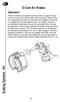 Operation S-Cam Air Brakes Trailer air brakes are operated by the tractor air supply through a series of relay and check valves. When braking is desired, the air is supplied to the axle air chamber which
2007 Hummer H3. 2007 BRAKES Disc Brakes - H3. Fastener Tightening Specifications Specification Application
 2007 BRAKES Disc Brakes - H3 SPECIFICATIONS FASTENER TIGHTENING SPECIFICATIONS Fastener Tightening Specifications Specification Application Metric English Backing Plate Bolts 135 N.m 100 lb ft Brake Hose
Operating Instructions
 587W Clinical Care Recliner Operating Instructions 587W-INS-LAB Graham-Field Health Products 2005 IMPORTANT: READ THIS MANUAL BEFORE OPERATING YOUR ORTHO-BIOTIC CLINICAL CARE RECLINER WARNINGS Warning:
Installation Guide for the TJ LCG PRO Suspension System (Low Center of Gravity) Available 4 or 5
 INSTALLATION GUIDE Installation Guide for the TJ LCG PRO Suspension System (Low Center of Gravity) Available 4 or 5 Take every precaution to make this installation a safe procedure. Make safety the number
HYDRAULIC LIFT TABLE CART 2200-LB.
 HYDRAULIC LIFT TABLE CART 2200-LB. OWNER S MANUAL WARNING: Read carefully and understand all MACHINE ADJUSTMENT AND OPERATION INSTRUCTIONS before operating. Failure to follow the safety rules and other
2008 ACCORD - Front Knuckle/Hub/Wheel Bearing Replacement (page 18-13)
 2008 ACCORD - Front Knuckle/Hub/Wheel Bearing Replacement (page 18-13) Exploded View Special Tools Required Ball joint remover, 28 mm 07MAC-SL0A202 Hub dis/assembly tool 07GAF-SD40100 Bearing driver attachment,
CAM-03, Camshaft Assembly Oil Seal Replacement
 CAM-03, Camshaft Assembly Oil Seal Replacement Tools Jack stands Floor Jack Metric Socket set Metric Wrench set Porsche Timing Belt Tension tool (P9201) Flywheel Lock (P9206) Balance Shaft Pin Spanner
Operation of the overrun braking system.
 Operation of the overrun braking system. Fig 1 The overrun device can be described as the control device of the overrun brake system. A draw-bar force is produced at the coupling point by reducing the
FOR ANY QUESTIONS, PLEASE CALL US @ 727.347.9915 M-F 8:00a.m.-8:00p.m. EST. REAR BRAKES 1 AEROSPACE COMPONENTS 727.347.9915
 REAR BRAKES 1 AEROSPACE COMPONENTS 727.347.9915 REAR BRAKES Before getting started, remove all stock braking components. Pre-assembly of parts: Clean the bolts and the threads in the hat with acetone.
AXLE SHAFTS - FRONT. 1998 Pontiac Bonneville MODEL IDENTIFICATION DESCRIPTION & OPERATION TROUBLE SHOOTING REMOVAL & INSTALLATION
 AXLE SHAFTS - FRONT 1998 Pontiac Bonneville 1998-99 DRIVE AXLES FWD Axle Shafts - Cars - "C", "G" & "H" Bodies GM Aurora, Bonneville, Eighty Eight, LeSabre, LSS, Park Avenue, Regency, Riviera MODEL IDENTIFICATION
REPAIR INSTRUCTIONS UNDER BODY CYLINDER (UM, UL)
 Table of contents 1. Introduction... 3 1.1. Scope of use... 3 1.2. General remarks... 3 1.3. Contact Hyva... 3 1.4. Precautions... 4 1.5. Spare parts... 4 1.5.1. Prior to use... 4 1.6. Recycling and Reuse
Volkswagen Jetta, Golf, GTI 1999, 2000 Brake System 47 Brakes - Hydraulic Components (Page GR-47)
 47 Brakes - Hydraulic Components (Page GR-47) FS III front brake calipers, servicing Front brake caliper piston, removing and installing FN 3 front brake calipers, servicing Front caliper piston, removing
LIFT-505. BMF Lift Kit. Yamaha Drive Gas or Electric. Installation Instructions
 LIFT-505 BMF Lift Kit Yamaha Drive Gas or Electric Installation Instructions Contents of LIFT-505 Yamaha Drive BMF Lift Kit: a (1 ea.) BMF A-Arm Assembly b (1 ea.) Driver Side Shock Tower c (1 ea.) Passenger
MEASURING WHEEL ALIGNMENT
 MEASURING WHEEL ALIGNMENT 2003-04 WHEEL ALIGNMENT Specifications & Procedures - Hummer - H2 Steering and vibration complaints are not always the result of improper alignment. One possible cause is wheel
Service Manual Rol-Lift
 R 2000 Service Manual Rol-Lift Series: T and E Developed by Generic Parts Service This manual is intended for basic service and maintenance of the Rol-Lift pallet jack. The pallet jacks you are servicing
Slide the new steering column shaft through the steering column from the driver compartment.
 Slide the new steering column shaft through the steering column from the driver compartment. Push the column shaft through the steering column until the machined end is out past the column lower bushing.
1 Ton Telescoping Gantry Crane
 1 Ton Telescoping Gantry Crane 41188 Gantry Crane Read this material before using this product. Failure to do so can result in serious injury. SAVE THIS MANUAL. When unpacking, make sure that the product
13. REAR WHEEL/BRAKE/SUSPENSION
 13. REAR WHEEL/BRAKE/SUSPENSION 13 3.5~4.5kg-m 8.0~10.0kg-m 0.8~1.2kg-m 3.0~4.0kg-m 2.4~3.0kg-m 3.5~4.5kg-m 6.0~8.0kg-m 13-0 13. REAR WHEEL/BRAKE/SUSPENSION 13 REAR WHEEL/BRAKE/SUSPENSION SERVICE INFORMATION...
P7100 PUMP INSTALLATION INSTRUCTIONS Diesel Care & Performance Inc
 P7100 PUMP INSTALLATION INSTRUCTIONS Diesel Care & Performance Inc Installation Timing Pin Location CAUTION: Before installing the injection pump, be sure that number 1 cylinder is at the Top Dead Center
Rollator Cane and Brake Replacement SAFETY SUMMARY (CONTINUED)
 Rollator Cane and Replacement Assembly, Installation and Operating Instructions SAVE THESE INSTRUCTIONS NOTE: Check ALL parts for shipping damage. If shipping damage is noted, DO NOT use. Contact Carrier/Dealer
INSTALLATION INSTRUCTIONS for Bifold Doors (JII103)
 Thank you for selecting JELD-WEN products. Attached are JELD-WEN s recommended installation instructions for premium composite, hollow and solid core molded Bifold Doors. Bifolds are designed for fast
2005-2007 Ford Focus Front Brake Rotors
 2005-2007 Ford Focus Front Brake Rotors Replacement Replacing the rotors in 2005-2007 Ford Focus models with rear drum brakes. Written By: David Hodson INTRODUCTION The steps in this guide are used to
ASSEMBLY DIAGRAM AND ASSEMBLY REFERENCE ULTIMA OLD SCHOOL 2 EVO & TC BELT DRIVE UNITS
 ASSEMBLY DIAGRAM AND ASSEMBLY REFERENCE ULTIMA OLD SCHOOL 2 EVO & TC BELT DRIVE UNITS BELT DRIVE ASSEMBLIES Part# 58-850 2 Old School Belt Drive Assembly - Polished Part# 58-851 2 Old School Belt Drive
BETTIS CONVERSION INSTRUCTIONS TO CONVERT HD SERIES ACTUATORS TO HD-M3, HD-SR-M3 HD-M3HW OR HD-SR-M3HW SERIES PNEUMATIC ACTUATORS
 BETTIS CONVERSION INSTRUCTIONS TO CONVERT HD SERIES ACTUATORS TO HD-M3, HD-SR-M3 HD-M3HW OR HD-SR-M3HW SERIES PNEUMATIC ACTUATORS PART NUMBER: 132581 REVISION: A RELEASE DATE: 24 March 2000 Page 1 of 10
Instructions and precautions. Fork Height. Visit our website at: http://www.harborfreight.com
 Pallet Jack Item 68760 / 68761 Instructions and precautions Specifications Capacity Control Lever Fork Height Fork Length Fork Width Maximum Minimum Width over Forks Steering Wheel Dia. 2-1/2 Ton (5,000
OPERATING INSTRUCTIONS FOR THE MODEL 210B-2 SRA
 OPERATING INSTRUCTIONS FOR THE MODEL 210B-2 SRA SAFETY PRECAUTIONS FOR THE MODEL 210B-2 SRA System Under Pressure: Shut off air supply and disconnect air hose before disassembling or disconnecting parts.
Step-by-step instructions:
 Spark plug thread repair for Ford Triton cylinder heads Step-by-step instructions: Identification Installation Verification Specifically designed and tested for 4.6L, 5.4L, and 6.8L 2 and 4 valve heads,
STEERING HANDLEBAR/FRONT WHEEL/ FRONT SHOCK ABSORBER
 14 14 STEERING HANDLEBAR/FRONT WHEEL/ SCHEMATIC DRAWING ------------------------------------------------- 14-1 SERVICE INFORMATION------------------------------------------------ 14-2 TROUBLESHOOTING-----------------------------------------------------
Auxiliary Rams USERS MANUAL
 Auxiliary Rams 2007 Chief Automotive Technologies, Inc. Chief s Limited One-Year Warranty & Liability CHIEF'S LIMITED ONE-YEAR WARRANTY & LIABILITY Chief Automotive Technologies, Inc. warrants for one
One and Two-piece Torque Rods and Replacement Bushings LIT NO: 45745-148
 One and Two-piece Torque Rods and Replacement Bushings LIT NO: 45745-148 DATE: January 2008 REVISION: B HENDRICKSON ULTRA ROD PLUS Torque Rod Bonded Bushing Provides Longer Life Bonding makes a better
INSTALLATION INSTRUCTIONS. 6111 Air Spring Kit 2011+ Ford F250/F-350 Single Wheel 2WD 2011+ Ford F350 Dually 2WD IMPORTANT NOTES
 INSTALLATION INSTRUCTIONS 6111 Air Spring Kit 2011+ Ford F250/F-350 Single Wheel 2WD 2011+ Ford F350 Dually 2WD Thank you for purchasing a quality Hellwig Product. PLEASE READ THIS INSTRUCTION SHEET COMPLETELY
PTO OWNER S MANUAL ALLISON FAMILY CODE. pag.1
 PTO OWNER S MANUAL FAMILY CODE ALLISON pag.1 CONTENTS GENERAL INFORMATION Safety information...3 OMFB P.T.O. Safety Label Instructions...6 Foreword...7 INSTALLATION INSTRUCTIONS Mounting the PTO on the
MODEL E-AF. Drain Cleaning Machine. Operator s Manual
 MODEL E-AF Drain Cleaning Machine Operator s Manual!!!! FOR YOUR SAFETY Before you operate or maintenance this equipment, READ this manual carefully and completely! Purchase Date: Serial Number: ELECTRIC
3/4 PIPE CLAMP WITH STAND
 3/4 PIPE CLAMP WITH STAND Model 94053 ASSEMBLY AND OPERATING INSTRUCTIONS (3/4 DIAMETER PIPE NOT INCLUDED.) 3491 Mission Oaks Blvd., Camarillo, CA 93011 Visit our Web site at: http://www.harborfreight.com
STEADYfast Stabilizer Installation Notes Fifth Wheel and Travel Trailers 11/23/13
 STEADYfast Stabilizer Installation Notes Fifth Wheel and Travel Trailers 11/23/13 (See Supplemental Instructions for trailers with heavy duty round footplates and/or Power Leveling Systems) PHONE SUPPORT
INSTRUCTIONS AND PARTS LIST FOR MODEL 70H & 75H HAND-OPERATED HYDRAULIC PRESS
 INSTRUCTIONS AND PARTS LIST FOR MODEL 70H & 75H HAND-OPERATED HYDRAULIC PRESS SETTING UP THE PRESS FOR OPERATION For shipping convenience, the gauge, pump handle, hoist crank, screw nose and base angles
STEERING SYSTEM - POWER
 STEERING SYSTEM - POWER 1990 Nissan 240SX 1990 STEERING Nissan - Power Rack & Pinion Axxess, Maxima, Pulsar NX, Sentra, Stanza, 240SX, 300ZX DESCRIPTION The power steering system consists of a rack and
Windshield Wiper System
 Volkswagen Golf 5 - Windshield Wiper System Volkswagen Technical Site: http://volkswagen.msk.ru http://vwts.info Page 1 / 15 92-1 Windshield Wiper System General information The windshield wiper system
DANGER DANGER. General Information. Safety Is Your Responsibility. Ordering Parts. Contact Information
 Safety Safety Is Your Responsibility DANGER To avoid personal injury or death, carefully read and understand all instructions pertaining to the Anthony Liftgates product. Do not attempt to install, operate,
I BEAM TRACK INSTALLATION
 PDQ 0/700 FESTOON SYSTEM INSTALLATION AND MAINTENANCE INSTRUCTIONS INTRODUCTION The PDQ Festoon System was designed to run on one of three sizes of I-beams: S x., S8 x 8. and S x.. System trolleys must
This is the civilian transfer case with the cooling loop only found in the driven gear half of the front case.
 INTRODUCTION The Transfer case used in the AMG Hummer is a New Venture Gear, model 242. This case has been in use for the H-1/Hummer since the early 1990 s. There have been modifications to the internal
Overview PARTS LIST. B. Lever mounting base C. Flush handle assembly D. Grey/Blue float stop E. Grey float (Full Flush) F. Flush valve washer
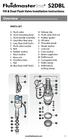 Overview READ ENTIRE INSTRUCTIONS BEFORE STARTING INSTALLATION PARTS LIST A. Flush valve B. Lever mounting base C. Flush handle assembly D. Grey/Blue float stop E. Grey float (Full Flush) F. Flush valve
Railgates By THIEMAN IMPORTANT! KEEP IN VEHICLE! PLEASE READ AND UNDERSTAND THE CONTENTS OF THIS MANUAL BEFORE OPERATING THE EQUIPMENT.
 TVL SERIES Railgates By THIEMAN TVL 20, TVL 30, TVL 20A, TVL 30A OWNERS MANUAL/PARTS LIST! IMPORTANT! KEEP IN VEHICLE! PLEASE READ AND UNDERSTAND THE CONTENTS OF THIS MANUAL BEFORE OPERATING THE EQUIPMENT.
INSTRUCTIONS AND PARTS LIST SINGLE GIRDER UNDERHUNG CRANE BRIDGE KITS 1/2 THRU 10 TON HAND GEARED AND MOTOR DRIVEN
 INSTRUCTIONS AND PARTS LIST SINGLE GIRDER UNDERHUNG CRANE BRIDGE KITS 1/2 THRU 10 TON HAND GEARED AND MOTOR DRIVEN JUNE, 1999 COPYRIGHT 1999, Columbus Mckinnon Corporation PART NO. 113533-71 Page 1 COLUMBUS
Operating Instructions Drill rig DRU160
 Operating Instructions Drill rig DRU160 Index 000 / 001 Original operating instructions 10988825 en / 20.10.2009 Congratulations! With a Hydrostress unit from TYROLIT you have chosen a tried and tested
TRANS-05, Torque Tube Removal, Rebuilding, and Installation
 TRANS-05, Torque Tube Removal, Rebuilding, and Installation Tools Metric Wrench Set Metric Socket Set Jack Stands (6 minimum) Floor Jack 8mm Cheesehead socket (also referred to as 12 point internal socket
Manual piston sampler...m 11
 SAMPLING Manual piston sampler...m 11 Screw sampler...prec 22...PREC 100 Slide sampler...pr 55 Rotative screw sampler...prv Piston sampler...p 11 Sampler on belt conveyor...pba Rotating cup sampler...pgr
POWERS Controls No. 4 Pneumatic Damper Actuator
 POWERS Controls No. 4 Pneumatic Damper Actuator Technical Instructions Document No. 155-032P25 AP 331-2 Actuator Assembly 331-2929 Typical Actuator Assembly 331-2904 Typical Actuator Assembly 331-3000
Fisher 1052 Size 20 Diaphragm Rotary Actuator with F and G Mounting Adaptation
 Instruction Manual 1052 Size 20 Actuator (F & G) Fisher 1052 Size 20 Diaphragm Rotary Actuator with F and G Mounting Adaptation Contents Introduction... 1 Scope of manual... 1 Description... 1 Specifications...
EZ-Steer Assisted Steering System
 EZ-Steer Assisted Steering System Installation Instructions Platform Kit P/N 53059-54 Case IH CVX 1135 CVX 1145 CVX 1155 CVX 1170 CVX 1190 CVX 1195 CVX 135 CVX 145 CVX 155 CVX 175 CVX 195 New Holland TVT
6 inch A-Arm Lift Kit WARNING: 16-018/16-019. installation instructions. will fit CLUB CAR DS. included:
 Revised May 205 6-08/6-09 6 inch A-Arm Lift Kit will fit CLUB CAR DS installation instructions included: Rear Lift Blocks Main Suspension Assembly Spindles A-Arms Rear Shock Mounting Plates U-Bolts WARNING:
HYDRAULIC TABLE CART
 Owner s Manual & Safety Instructions Save This Manual Keep this manual for the safety warnings and precautions, assembly, operating, inspection, maintenance and cleaning procedures. Write the product s