
Standard Test Method for Measuring the Thermal Insulation of Clothing Using a Heated Manikin 1
|
|
|
- Henry Stewart
- 10 years ago
- Views:
Transcription
1 Designation: F Standard Test Method for Measuring the Thermal Insulation of Clothing Using a Heated Manikin 1 This standard is issued under the fixed designation F 1291; the number immediately following the designation indicates the year of original adoption or, in the case of revision, the year of last revision. A number in parentheses indicates the year of last reapproval. A superscript epsilon (e) indicates an editorial change since the last revision or reapproval. INTRODUCTION The type of clothing worn by people directly affects the heat exchange between the human body and the environment. The heat transfer is both sensible (conduction, convection, and radiation) and latent (evaporation). The insulation provided by a clothing ensemble is dependent upon the designs and materials used in the component garments, the amount of body surface area covered by clothing, distribution of the fabric layers over the body, looseness or tightness of fit, and the increased surface area for heat loss. Insulation measurements made on fabrics alone do not take these factors into account. Measurements of the resistance to dry heat loss provided by clothing can be used to determine the thermal comfort or stress of people in cold to comfortable environments. However, the moisture permeability of clothing is more important in environmental conditions where heat balance can only be achieved by the evaporation of sweat. 1. Scope 1.1 This test method covers the determination of the insulation value of clothing ensembles. It describes the measurement of the resistance to dry heat transfer from a heated manikin to a relatively calm, cool environment This is a static test that provides a baseline clothing measurement on a standing manikin The effects of body position and movement are not addressed in this test method. 1.2 The insulation values obtained apply only to the particular ensembles evaluated and for the specified environmental conditions of each test, particularly with respect to air movement. 1.3 The values stated in either clo or SI units are to be regarded separately as standard. Within the text, the SI units are shown in brackets. The values stated in each system are not exact equivalents; therefore, each system shall be used independently of the other. 1.4 The evaporative resistance of a clothing ensemble can be measured in accordance with Test Method F This standard does not purport to address all of the safety concerns, if any, associated with its use. It is the responsibility of the user of this standard to consult and 1 This test method is under the jurisdiction of ASTM Committee F23 on Protective Clothing and is the direct responsibility of Subcommittee F23.60 on Human Factors. Current edition approved December 1, Published December Originally approved in Last previous edition approved in 1999 as F establish appropriate safety and health practices and determine the applicability of regulatory limitations prior to use. 2. Referenced Documents 2.1 ASTM Standards: 2 D 1518 Test Method for Thermal Transmittance of Textile Material F 1494 Terminology Relating to Protective Clothing F 2370 Test Method for Measuring the Evaporative Resistance of Clothing Using a Sweating Manikin 2.2 ASHRAE Standards: 3 ASHRAE Thermal Environmental Conditions for Human Occupancy Handbook of Fundamentals, Chapter 8 on Physiological Principles, Comfort and Health 2.3 ISO Standards: 4 ISO Moderate Thermal Environments Determination of the PMV and PPD Indices and Specification of the Conditions for Thermal Comfort ISO Ergonomics of the Thermal Environment 2 For referenced ASTM standards, visit the ASTM website, or contact ASTM Customer Service at [email protected]. For Annual Book of ASTM Standards volume information, refer to the standard s Document Summary page on the ASTM website. 3 Available from American Society of Heating, Refrigerating, and Air- Conditioning Engineers, Inc. (ASHRAE), 1791 Tullie Circle, NE, Atlanta, GA Available from American National Standards Institute (ANSI), 25 W. 43rd St., 4th Floor, New York, NY Copyright ASTM International, 100 Barr Harbor Drive, PO Box C700, West Conshohocken, PA , United States. 1

2 Estimation of the Thermal Insulation and Evaporation Resistance of a Clothing Ensemble 3. Terminology 3.1 Definitions: clo, n unit of thermal resistance defined as the insulation required to keep a resting man (producing heat at the rate of 58 W/m 2 ) comfortable in an environment at 21 C, air movement 0.1 m/s, or roughly the insulation value of a heavy business suit. Numerically, one clo is equal to K m 2 /W clothing ensemble, n a group of garments worn together on the body at the same time thermal insulation, n the resistance to dry heat transfer by way of conduction, convection, and radiation Discussion the following insulation values can be determined in this method using SI units: R a R t R cl I a I t I cl = thermal resistance (insulation) of the air layer on the surface of the nude manikin. = total thermal resistance (insulation) of the clothing and surface air layer around the manikin. = intrinsic thermal resistance (insulation) of the clothing. When the measurements are expressed in clo units, the symbol I is used instead of R. = thermal resistance (insulation) of the air layer on the surface of the nude manikin. = total thermal resistance (insulation) of the clothing and surface air layer around the manikin. = intrinsic thermal resistance (insulation) of the clothing. Total insulation values are measured directly with a manikin. They can be used to compare different clothing ensembles as long as each test is conducted using the same experimental procedures and test conditions. Intrinsic clothing insulation values are determined by subtracting the air layer resistance around the clothed manikin from the total insulation value for the ensemble. Intrinsic clothing insulation values are used in several thermal comfort and clothing standards (see 2.2 and 2.3). 4. Significance and Use 4.1 This test method can be used to quantify and compare the insulation provided by different clothing systems. For example, variations in the design and fabric used in component garments can be evaluated. The effects of garment layering, closure, and fit can be measured for clothing ensembles. The insulation values for ensembles can be used in models that predict the physiological responses of people in different environmental conditions. 4.2 The measurement of the insulation provided by clothing is complex and dependent on the apparatus and techniques used. It is not practical in a test method of this scope to establish details sufficient to cover all contingencies. Departures from the instructions in this test method have the potential to lead to significantly different test results. Technical knowledge concerning the theory of heat transfer, temperature, and air motion measurement, and testing practices is needed to evaluate which departures from the instructions given in this test method are significant. Standardization of the method reduces, but does not eliminate, the need for such technical knowledge. Report any departures with the results. 4.3 Report the insulation values in SI units or clo units as standard procedure. Conversion factors to other units are given in Test Method D Apparatus 5.1 Manikin 5 A standing manikin shall be used that is formed in the shape and size of an adult male or female and heated to a constant, average skin temperature Size and Shape The manikin shall be constructed to simulate the body of a human being; that is, it shall consist of a head, chest/back, abdomen/buttocks, arms, hands (preferably with fingers extended to allow gloves to be worn), legs, and feet. Total surface area shall be m 2, and height shall be cm. The manikin s dimensions shall correspond to those required for standard sizes of garments because deviations in fit will affect the results Surface Temperature The manikin shall be constructed so as to maintain a constant temperature distribution over the nude body surface, with no local hot or cold spots. The mean skin temperature of the manikin shall be 35 C. Local deviations from the mean skin temperature shall not exceed 60.3 C. Temperature uniformity of the nude manikin shall be evaluated at least once annually using an infrared thermal imaging system or equivalent method. This procedure shall also be repeated after repairs or alterations are completed that could affect temperature uniformity, for example, replacement of a heating element. 5.2 Power-Measuring Instruments Power to the manikin shall be measured so as to give an average over the period of a test. If time proportioning or phase proportioning is used for power control, then devices that are capable of averaging over the control cycle are required. Integrating devices (watt-hour meters) are preferred over instantaneous devices (watt meters). Overall accuracy of the power monitoring equipment must be within 62 % of the reading for the average power for the test period. Since there are a variety of devices and techniques used for power measurement, no specified calibration procedures shall be given. However, an appropriate power calibration procedure is to be developed and documented. 5.3 Equipment for Measuring the Manikin s Skin Temperature The mean skin temperature shall be measured with point sensors or distributed temperature sensors Point Sensors Point sensors shall be thermocouples, resistance temperature devices (RTD s), thermistors, or equivalent sensors. They shall be no more than 2 mm thick and shall be well bonded, both mechanically and thermally, to the manikin s surface. Lead wires shall be bonded to the surface or pass through the interior of the manikin, or both. Each sensor temperature shall be area-weighted when calculating the mean skin temperature for the body. A minimum of 15 point sensors 5 Information on laboratories with thermal manikins can be obtained from the Institute for Environmental Research, Kansas State University, Manhattan, KS

3 are required. At least one sensor shall be placed on the head, chest, back, abdomen, buttocks, and both the right and left upper arm, lower arm, hand, thigh, calf, and foot. These sensors must be placed in the same position for each test, and the placement of the sensors shall be given in the report Distributed Sensors If distributed sensors are used (for example, resistance wire), then the sensors must be distributed over the surface so that all areas are equally weighted. If several such sensors are used to measure the temperature of different parts of the body, then their respective temperatures shall be area-weighted when calculating the mean skin temperature. Distributed sensors must be small in diameter (that is, less than 1 mm) and firmly bonded to the manikin surface at all points. 5.4 Controlled Environmental Chamber The manikin shall be placed in a chamber at least 1.5 by 1.5 by 2.5 m in dimension that can provide uniform conditions, both spatially and temporally Spatial Variations Spatial variations shall not exceed the following: air temperature 61.0 C, relative humidity 65 %, and air velocity 650 % of the mean value. In addition, the mean radiant temperature shall not be more than 1.0 C different from the mean air temperature. The spatial uniformity shall be verified at least annually or after any significant modifications are made to the chamber. Spatial uniformity shall be verified by recording values for the conditions stated above at heights of 0.1, 0.6, 1.1, 1.4, and 1.7 m above the floor at the location occupied by the manikin. Sensing devices specified below shall be used when measuring the environmental conditions Temporal Variations Temporal variations shall not exceed the following: air temperature 60.5 C, mean radiant temperature 60.5 C, relative humidity 65 %, air velocity 620 % of the mean value for data averaged over 5 min. (see 5.4.5) Relative Humidity Measuring Equipment Any humidity sensing device with an accuracy of 65 % relative humidity and a repeatability of 63 % is acceptable (for example, wet bulb/dry bulb, dew point hygrometer). Only one location needs to be monitored during a test to ensure that the temporal uniformity requirements are met Air Temperature Sensors Shielded air temperature sensors shall be used. Any sensor with an overall accuracy of C is acceptable (for example, RTD, thermocouple, thermistor). The sensor shall have a time constant not exceeding 1 min. The sensor(s) shall be 0.5 m from the manikin. If a single sensor is used it shall be 1.0 m above the floor. If multiple sensors are used, they shall be spaced at equal height intervals and their readings averaged Air Velocity Indicator An omni-directional anemometer with m/s accuracy shall be used. Measurements shall be averaged for at least 1 min at each location. If it is demonstrated that velocity does not vary temporally by more than m/s, then it is not necessary to monitor air velocity during a test. The value of the mean air velocity must be reported, however. If air velocity is monitored, then measurement location requirements are the same as for temperature. 6. Sampling, Test Specimens, and Test Units 6.1 Sampling It is desirable to test three identical ensembles to reflect sample variability. However, if only one ensemble is available (that is often the case with prototype garments), replicate measurements can be made on one ensemble. 6.2 Specimen Size and Fit Select the size of garments that will fit the manikin appropriately (that is, the way the manufacturer designed them to be worn on the human body during their intended end use). For example, some knitted garments are designed to fit the body relatively tightly. Others are designed to fit loosely to accommodate a wider range of body dimensions or to allow other garments to be worn underneath. In a stationary manikin test, large air layers in the clothing system will contribute to a higher insulation value than small air layers. Therefore, garments that do not have the appropriate fit on the manikin (that is, are too tight or too loose), will cause errors in measurement When manikin measurements are used to compare materials used in certain garments, those garments must be made from the same pattern so that design and fit variables are held constant. In addition, they must be tested with the same companion garments in the ensemble (for example, underwear, footwear, etc.) When manikin measurements are used to compare a variety of garments, the same size garments of a given type shall be tested as indicated by the size label in the garments (for example, large). However, if it is determined that the fit of a garment is inappropriate, another size may be used and stated in the report. 6.3 Specimen Preparation Garments shall be tested in the as-received condition or after dry cleaning or laundering in accordance with the manufacturer s instructions. The cleaning procedures and number of processings shall be stated in the report. 6.4 Conditioning Allow the clothing components to come to equilibrium with the atmosphere in the test chamber by conditioning them in the chamber for at least 12 hours. 7. Calibration of Thermal Manikin 7.1 Calibration Calibrate the manikin using the procedures in Section The intrinsic clothing insulation value of the calibration ensemble (R cl ) is ( C m 2 /W) 610 %, assuming the f cl value is Calibration Clothing Ensemble The garments required for use in this calibration ensemble are: Protective Nomex III Shirt 203 g/m 2 (6.0 oz/yd 2 ) plain weave Nomex IIIA button up long sleeve shirt (##SND6NV), with two chest pockets. 6 6 The sole source of supply of the apparatus known to the committee at this time is Bulwark Protective Apparel, 545 Marriott Drive, Nashville, TN 37214; Phone: If you are aware of alternative suppliers, please provide this information to ASTM International Headquarters. Your comments will receive careful consideration at a meeting of the responsible technical committee 1, which you may attend. 3

4 7.2.2 Protective Nomex III Pants 203 g/m 2 (6.0 oz/yd 2 ) plain weave Nomex IIIA pants (#PNW3NV), with two side pockets and two back pockets Men s Underwear Briefs 100 % cotton jersey knit; jockey style that fits snugly at the waist and legs Men s T-Shirt 100 % cotton jersey knit Men s Anklet Socks Basic knit sock that covers foot and ankle but does not extend up to the calf. Socks must be composed of at least 75 % cotton Athletic Shoes Fabric/soft leather and soft sole. 7.3 The total insulation value (R t ) provided by this ensemble shall be measured periodically, for example, at the beginning of each series of tests. 8. Procedure 8.1 Environmental Test Conditions The test conditions given below shall be standard for all tests Air Temperature The air temperature shall be at least 12 C lower than the manikin s mean temperature (that is, 23 C) during a test. When ensembles with high insulation values are tested (for example, cold weather clothing), the air temperature shall be lowered so that a minimum heat flux of 20 W/m 2 from the manikin s segments is maintained Air Velocity The air velocity shall be m/s during a test Relative Humidity Select a level between 30 and 70 % relative humidity 65 %, preferably 50 %. The relative humidity has no effect on measurements of insulation under steady-state conditions If it is necessary to test the clothing ensembles in different environmental conditions (air temperature, air velocity, or relative humidity), the conditions must be clearly defined and reported. 8.2 Mean Skin Temperature of Manikin The mean skin temperature shall be maintained at C during a 30 min test. 8.3 Dress the standing manikin in the garments to be tested. Record a description of the garments and the dressing procedures. For example, is the shirt tail tucked in the pants or is it left hanging out? Are any buttons left unfastened? Position the manikin so that it is standing with its arms hanging straight at its sides. Take a photograph of the ensemble on the manikin Bring the dressed manikin to the selected skin temperature and allow the system to reach steady-state (that is, the mean skin temperature of the manikin and the power input remain constant 63 %) After the ensemble reaches equilibrium conditions, record the manikin s skin temperatures and the air temperature every 1 min. The average of these measurements taken over a period of 30 min will be sufficient to determine the insulation value. Heater wattage (power) shall be measured every 1 min or continuously over the test period also. 8.4 Replication of Tests Three independent replications of the clothing test shall be conducted. If only one set of garments is being tested, remove them and put them back on the manikin for another test. In this way, normal variations in dressing and instrumentation will be taken into account. 8.5 Nude Test Measure the insulation (R a ) provided by the air layer surrounding the nude manikin by conducting a test in the same environmental conditions used for the clothing tests. The nude manikin shall be tested at the beginning of each series of clothing tests. 9. Calculations 9.1 The parallel method of calculating the total thermal resistance (insulation) shall be used, where the area-weighted temperatures of all body segments are summed and averaged, the power levels to all body segments are summed, and the areas are summed before the total resistance is calculated. Calculate the total thermal insulation of the clothing system, including the air layer resistance (R t ), using Eq 1: R t 5 ~T s 2 T a!a / H (1) where: R t = total thermal resistance (insulation) of the clothing ensemble and surface air layer ( C m 2 /W), A = area of the manikin s surface (m 2 ), T s = temperature at the manikin surface ( C), T a = temperature in the air flowing over the clothing ( C), and H = power required to heat manikin (W). 9.2 Determine the average total insulation value (R t )ofthe sample by averaging the values from the three replications of the test. If the results for any of the three replications vary more than 10 % from the average of all three, then repeat the test on the specimen(s) lying outside the 610 % limit. If the retest produces a value(s) within the 610 % limit, then use the new value(s) instead. If the retest remains outside the 610 % limit, then test an additional three specimens. 9.3 Convert the average R t in SI units to I t in clo units by multiplying R t by Determine the average intrinsic insulation value of the clothing alone (R cl ) using the mean R t value and Eq 2: R cl 5 R t R a f cl (2) where: R cl = intrinsic clothing insulation ( C m 2 /W), R t = total thermal resistance (insulation) of the clothing ensemble and surface air layer ( C m 2 /W), R a = thermal resistance of the air layer on the surface of the nude manikin ( C m 2 /W), f cl = clothing area factor (dimensionless) Estimate the f cl by using values in Table 1 or ISO 9920 or measure them using a photographic method Convert the average R cl in SI units to I cl in clo units by multiplying R cl by Report 10.1 State that the specimens were tested as directed in (F 1291) Report the following information: Report number and placement of temperature point sensors Report which procedure was used. 7 McCullough, E. A., Jones, B. W., and Huck, J., ASHRAE Transactions, Vol 91, Part 2, 1985, pp

5 TABLE 1 Clothing Area Factors (f cl ) for Typical Protective Clothing Ensemble Description f cl 1. Warm Weather Indoor Clothing (Base ensemble) Short-sleeve shirt, Men s underwear briefs, Khaki pants, Belt, Socks, 1.17 Athletic shoes 2. Cold Weather (Outdoor) Clothing Base ensemble, Knit hat, Fiberfill jacket, Knit mittens Chemical Protective Level B Ensemble Base ensemble, Chemical protective hood, Chemical protective 1.60 jacket, Chemical protective gloves, Belt, Chemical protective pants 4. Surgical Ensemble Bouffant cap, Surgical mask, Scrub shirt, Scrub pants, Surgical 1.36 gown, Surgical gloves, Socks, Athletic shoes, Shoe Covers 5. Cold Weather Expedition Ensemble Thermal underwear (top and bottom), Cold Weather Expedition Suit, 1.48 Fiberfill mittens, Men s underwear briefs, Socks, Work boots 6. Flame Resistant Protective Clothing (calibration ensemble) Flame resistant long sleeve shirt, Men s underwear briefs, Flame 1.22 resistant pants, Socks, Athletic shoes 7. Tyvek Coverall Ensemble T-shirt, Men s underwear briefs, Socks, Athletic shoes, Tyvek 1.21 coverall (no hood) 8. Fire Fighter Turnout Gear Fire fighter helmet, T-shirt, Fire fighter turnout jacket, Green leather 1.48 gloves, Men s underwear briefs, Fire fighter turnout pants, Socks, Work boots 9. Chemical Protective Level A Ensemble Level A one-piece suit, Respirator, Socks, Athletic shoes Describe the garments used in the ensembles (for example, fiber content, design features, fabric structure) Report the average total insulation value (R t )or(i t ) of the clothing ensemble Report the average intrinsic insulation value (R cl )or (I cl ) of the clothing ensemble Report the insulation value of the air layer around the nude manikin (R a )or(i a ) Specify the environmental test conditions Explain any departures from the specified apparatus or procedure. 11. Precision and Bias 11.1 Precision In comparing three independent observations of the thermal insulation value (R t ), the variation should not exceed 610 % of the average of the three measurements when the measurements are taken by the same well-trained operator using the same testing equipment. Otherwise, additional replications must be conducted until this criterion is met Bias The procedure in this test method for determining total thermal insulation has no bias because the value can be defined only in terms of a test method. 12. Keywords 12.1 clothing insulation; protective clothing; thermal insulation; thermal manikin ASTM International takes no position respecting the validity of any patent rights asserted in connection with any item mentioned in this standard. Users of this standard are expressly advised that determination of the validity of any such patent rights, and the risk of infringement of such rights, are entirely their own responsibility. This standard is subject to revision at any time by the responsible technical committee and must be reviewed every five years and if not revised, either reapproved or withdrawn. Your comments are invited either for revision of this standard or for additional standards and should be addressed to ASTM International Headquarters. Your comments will receive careful consideration at a meeting of the responsible technical committee, which you may attend. If you feel that your comments have not received a fair hearing you should make your views known to the ASTM Committee on Standards, at the address shown below. This standard is copyrighted by ASTM International, 100 Barr Harbor Drive, PO Box C700, West Conshohocken, PA , United States. Individual reprints (single or multiple copies) of this standard may be obtained by contacting ASTM at the above address or at (phone), (fax), or [email protected] ( ); or through the ASTM website ( 5

EVALUATION OF PERSONAL COOLING SYSTEMS FOR SOLDIERS Elizabeth A. McCullough and Steve Eckels
 EVALUATION OF PERSONAL COOLING SYSTEMS FOR SOLDIERS Elizabeth A. McCullough and Steve Eckels Institute for Environmental Research, Kansas State University, Manhattan, KS 66506 USA INTRODUCTION Contact
Standard Test Method for Consistency of Paints Measuring Krebs Unit (KU) Viscosity Using a Stormer-Type Viscometer 1
 Designation: D562 01 (Reapproved 2005) Standard Test Method for Consistency of Paints Measuring Krebs Unit () Viscosity Using a Stormer-Type Viscometer 1 This standard is issued under the fixed designation
EVALUATION OF THE PMV THERMAL COMFORT INDEX IN OUTDOOR WEATHER CONDITIONS JuYoun Kwon and Ken Parsons
 EVALUATION OF THE THERMAL COMFORT INDEX IN OUTDOOR WEATHER CONDITIONS JuYoun Kwon and Ken Parsons Environmental Ergonomics Research Centre, Loughborough University, Loughborough, Leicestershire, U.K. LE11
Thermal Manikin Measurements Exact or Not?
 International Journal of Occupational THERMAL Safety and MANIKIN Ergonomics MEASUREMENTS EXACT (JOSE) 2004, Vol. 10, OR No. NOT? 3, 291 300 Thermal Manikin Measurements Exact or Not? Hannu Anttonen Juhani
Standard Test Method for Classification of Film Systems for Industrial Radiography 1
 Designation: E 1815 96 (Reapproved 2001) Standard Test Method for Classification of Film Systems for Industrial Radiography 1 This standard is issued under the fixed designation E 1815; the number immediately
Standard Practice for Evaluating Response Robot Capabilities: Logistics: Packaging for Urban Search and Rescue Task Force Equipment Caches 1
 Designation: E2592 16 Standard Practice for Evaluating Response Robot Capabilities: Logistics: Packaging for Urban Search and Rescue Task Force Equipment Caches 1 This standard is issued under the fixed
ASHRAE STANDARD. Thermal Environmental Conditions for Human Occupancy. BSR/ASHRAE Standard 55P -1992R. Proposed American National Standard
 BSR/ASHRAE Standard 55P -1992R This draft standard will be submitted to the American National Standards Institute Board of Standards Review (BSR) for approval. ASHRAE STANDARD Proposed American National
Testing Cold Protection According to EN ISO 20344: Is There Any Professional Footwear that Does Not Pass?
 Ann. Occup. Hyg., pp. 1 6 Ó The Author 2008. Published by Oxford University Press on behalf of the British Occupational Hygiene Society doi:10.1093/annhyg/men074 Testing Cold Protection According to EN
Wildland firefighters produce a lot of body heat
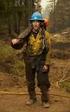 Fire United States Department of Agriculture Forest Service Technology & Development Program December 2008 5100 0851 2348P MTDC Tests of Undergarments Exposed to Fire Tony Petrilli, MTDC Project Leader
Data Mining for Prediction of Clothing Insulation
 Vol.2, Issue.2, Mar-Apr 2012 pp-001-005 ISSN: 2249-6645 Data Mining for Prediction of Clothing Insulation M.Martin Jeyasingh 1, Kumaravel Appavoo 2, P.Sakthivel 3 1 Research Scholar, 2 Dean& Professor,
Cold Weather Camping
 Cold Weather Camping Cold weather camping is defined as "camping in weather where the average daily temperature is below 10 degrees Celsius and conditions are cold, wet or windy." The most important thing
The Influence of Sweating on the Heat Transmission Properties of Cold Protective Clothing Studied With a Sweating Thermal Manikin
 International Journal of Occupational Safety and SWEATING Ergonomics IN COLD (JOSE) PROTECTIVE 2004, Vol. 10, CLOTHING No. 3, 263 269 The Influence of Sweating on the Heat Transmission Properties of Cold
Winter Survival Clothing System
 Winter Survival Clothing System How to clothe yourself for successful wilderness survival The most workable outdoor clothing method ever devised is known as the 3-layer system. Used by mountaineers, wilderness
Standard Practice for Quality Control Systems for Nondestructive Testing Agencies 1
 Designation: E 1212 99 AMERICAN SOCIETY FOR TESTING AND MATERIALS 100 Barr Harbor Dr., West Conshohocken, PA 19428 Reprinted from the Annual Book of ASTM Standards. Copyright ASTM Standard Practice for
Standard Test Method for Water in Petroleum Products and Bituminous Materials by Distillation 1
 Designation: D 95 99 e1 An American National Standard American Association State Highway Transportation Standard AASHTO No. T55 Designation: Manual of Petroleum Measurement Standards (MPMS), Chapter 10.5
Standard Test Methods for Viscosity of Adhesives 1
 Designation: D 1084 97 Standard Test Methods for Viscosity of Adhesives 1 This standard is issued under the fixed designation D 1084; the number immediately following the designation indicates the year
Standard Specification for Polyvinyl Chloride (PVC) and Other Organic Polymer-Coated Steel Chain-Link Fence Fabric 1
 Designation: F 668 07 Standard Specification for Polyvinyl Chloride (PVC) and Other Organic Polymer-Coated Steel Chain-Link Fence Fabric 1 This standard is issued under the fixed designation F 668; the
INTERNATIONAL ASSOCIATION OF CLASSIFICATION SOCIETIES. Interpretations of the FTP
 INTERNATIONAL ASSOCIATION OF CLASSIFICATION SOCIETIES Interpretations of the FTP CONTENTS FTP1 Adhesives used in A or B class divisions (FTP Code 3.1, Res A.754 para. 3.2.3) June 2000 FTP2 Pipe and duct
Standard Specification for Chromium and Chromium-Nickel Stainless Steel Plate, Sheet, and Strip for Pressure Vessels and for General Applications 1
 Designation: A 2/A 2M 04a e1 Standard Specification for Chromium and Chromium-Nickel Stainless Steel Plate, Sheet, and Strip for Pressure Vessels and for General Applications 1 This standard is issued
FLAME-RESISTANT APPAREL ELECTRIC UTILITY GENERAL INDUSTRIES ARC FLASH PROTECTION OIL & GAS
 20 15 FLAME-RESISTANT APPAREL ELECTRIC UTILITY GENERAL INDUSTRIES ARC FLASH PROTECTION OIL & GAS THE BULWARK ADVANTAGE WORLD S LARGEST MANUFACTURER OF FLAME-RESISTANT APPAREL INDUSTRY LEADER IN FLAME-RESISTANT
Wenaas Offshore. A new and innovative collection redefining the standard for flame retardant workwear
 Wenaas Offshore A new and innovative collection redefining the standard for flame retardant workwear WE HELP OIL AND GAS COMPANIES DO THEIR JOB In 1931, Lars Wenaas started up a small garment factory in
OFFICE OF THE NATIONAL COMMANDER CIVIL AIR PATROL UNITED STATES AIR FORCE AUXILIARY MAXWELL AIR FORCE BASE, ALABAMA 36112-5937
 OFFICE OF THE NATIONAL COMMANDER CIVIL AIR PATROL UNITED STATES AIR FORCE AUXILIARY MAXWELL AIR FORCE BASE, ALABAMA 36112-5937 4 May 2016 MEMORANDUM FOR ALL CAP MEMBERS FROM: CAP/CC SUBJECT: CAP Transition
for Rubber property Durometer hardness
 ICS 97.200/97.190/97.200.40 Jamaican Standard Test Method for Rubber property Durometer hardness 6 Winchester Road P.O. Box 113 Kingston 10 Jamaica W. I. Tel: (876) 926-3140-5, (876) 632-4275, (876) 618-1534
Thermal environments. www.swema.com [email protected] Tel. +46 8 94 00 90
 ISO 7730 Moderate Thermal Environments Thermal environments Swema equipment for the measurement of Moderate Thermal Environments is designed to comply with the standards: ISO7726 - Thermal environments
ARC FLASH CLOTHING - Spentex NG2 by Encon
 - Spentex NG2 by Encon More Protection In heat and stress tests (NFPA 2112/ ASTM 1930), Spentex NG2 by Encon FR outperforms traditional FR fabrics. Higher Durability Setting the new standard in FR wear
Heat Stress Check List
 Heat Stress Check List This check list is only to be used when conducting a heat stress risk assessment it should not be used for the purposes of a thermal comfort risk assessment. Risk Assessment Work
Standard Specification for Stainless Steel Bars and Shapes 1
 Designation: A 276 06 Standard Specification for Stainless Steel Bars and Shapes 1 This standard is issued under the fixed designation A 276; the number immediately following the designation indicates
EUROPEAN STANDARDS PERSONAL PROTECTIVE CLOTHING FOR FLAME RESISTANT. Alexander Gstettner, Lenzing AG Austria
 EUROPEAN STANDARDS FOR FLAME RESISTANT PERSONAL PROTECTIVE CLOTHING Alexander Gstettner, Lenzing AG Austria W a t e r How are the standards organized? A 1 Testing Methods Standards specifiying performance
HVAC Calculations and Duct Sizing
 PDH Course M199 HVAC Calculations and Duct Sizing Gary D. Beckfeld, M.S.E., P.E. 2007 PDH Center 2410 Dakota Lakes Drive Herndon, VA 20171-2995 Phone: 703-478-6833 Fax: 703-481-9535 www.pdhcenter.com An
Industrial Flash Fire and Burn Injury Fundamentals with an Instrumented Manikin Demonstration of Protective Clothing Performance
 Abstract Industrial Flash Fire and Burn Injury Fundamentals with an Instrumented Manikin Demonstration of Protective Clothing Performance Susan L. Lovasic Thomas E. Neal, Ph.D. NFPA 2112 and 2113 are the
(1) For Basic Course (MS I-II) the ROTC insignia will be centered on the left curtain 1 inch from the crease.
 ROTC Class A Uniform a. Class A uniform consists of the following: (1) Male - Garrison cap, Army green coat and trousers, AG-415 green shirt (short or long sleeve), a black four-in hand necktie, black
FISD ATHLETIC DEPARTMENT COLD WEATHER GUIDELINES
 FISD ATHLETIC DEPARTMENT COLD WEATHER GUIDELINES Cold exposure can be uncomfortable, impair performance and even become life threatening. Conditions created by cold exposure include frostbite and hypothermia.
PERSONAL PROTECTIVE EQUIPMENT (PPE) a short guide for wildland firefighters
 PERSONAL PROTECTIVE EQUIPMENT (PPE) a short guide for wildland firefighters Fighting fire is not only physically demanding work, but can be physically punishing as well. Fighting fire without exposing
Software Development for Cooling Load Estimation by CLTD Method
 IOSR Journal of Mechanical and Civil Engineering (IOSR-JMCE) ISSN: 2278-1684Volume 3, Issue 6 (Nov. - Dec. 2012), PP 01-06 Software Development for Cooling Load Estimation by CLTD Method Tousif Ahmed Department
TENCEL HIGH PERFORMANCE SPORTSWEAR
 TENCEL HIGH PERFORMANCE SPORTSWEAR Heinrich Firgo, Friedrich Suchomel, Tom Burrow Textile Innovation, Lenzing AG, Austria Hydrophilic natural fibers like cotton and wool and the man made cellulosic fibers
Standard Test Method for Mechanical Cone Penetration Tests of Soil 1
 Designation: D 3441 98 AMERICAN SOCIETY FOR TESTING AND MATERIALS 100 Barr Harbor Dr., West Conshohocken, PA 19428 Reprinted from the Annual Book of ASTM Standards. Copyright ASTM Standard Test Method
FIRE DEPARTMENT UNIFORMS
 Page 1 of 9 01/08//2015 08/25/2010, 10/21/2009, 04/01/2008, 10/01/2007, Administrative Purpose: To promote an excellent public image, members of the fire department shall wear uniforms and accessories
International Fellowship of Chaplains
 International Fellowship of Chaplains ADM-08.0 PERSONAL APPEARANCE AND UNIFORM REGULATIONS Date of Issue General Order Number April 20, 2008 Effective Date Section Code MAY 01,2008 ADM-08 ADM-08.1 PURPOSE:
Effect of Thermal Barrier on Thermal Protective Performance of Firefighter Garments
 Journal of Fiber Bioengineering & Informatics 4:3 (2011) 245 252 http://www.jfbi.org doi:10.3993/jfbi09201104 Effect of Thermal Barrier on Thermal Protective Performance of Firefighter Garments Lu Jin
Winter Clothing. Below you will find items for each layer, starting with Layer 5.
 Winter Clothing Because the area around you may get cold during the winter you must have good winter clothing and gear. Having clothing and gear that will not stand up to the weather conditions could cause
Protecting Yourself from. Heat Stress
 Fast Facts Heat stress, from exertion or hot environments, places workers at risk for illnesses such as heat stroke, heat exhaustion, or heat cramps. Heat Stroke A condition that occurs when the body becomes
Standard Test Methods for Density and Specific Gravity (Relative Density) of Plastics by Displacement 1
 Designation: D 792 08 Standard Test Methods for Density and Specific Gravity (Relative Density) of Plastics by Displacement 1 This standard is issued under the fixed designation D 792; the number immediately
TEXTILE FABRICS AS THERMAL INSULATORS
 TEXTILE FABRICS AS THERMAL INSULATORS Zeinab S. Abdel-Rehim 1, M. M. Saad 2, M. El-Shakankery 2 and I. Hanafy 3 1 Mechanical Engineering Department of the National Research Center, Dokki, Giza, Egypt 2
GEORGIA INSTITUTE OF TECHNOLOGY ENVIRONMENTAL HEALTH AND SAFETY PERSONAL PROTECTIVE EQUIPMENT
 PURPOSE To protect the health and welfare of GEORGIA TECH employees in areas where there may be a risk of injury or exposure to hazardous substances or conditions employees who work in areas where physical
Technical Specification for Model RSK2503 (Z)-06A IR Belt Solar Cell Firing Furnace
 Technical Specification for Model RSK2503 (Z)-06A IR Belt Solar Cell Firing Furnace TECHNICAL SPECIFICATION Model RSK 2503(Z)-06A IR Belt Solar Cell Firing Furnace Temperature Range 1. Max Temperature.
Thermal Environmental Conditions for Human Occupancy
 ANSI/ASHRAE Standard 55-2004 (Supersedes ANSI/ASHRAE Standard 55-1992) Thermal Environmental Conditions for Human Occupancy Approved by the ASHRAE Standards Committee on January 24, 2004; by the ASHRAE
Safe Operating Procedure
 Safe Operating Procedure (Revised 11/15) PERSONAL PROTECTIVE EQUIPMENT (PPE) - FOOT PROTECTION EVALUATION AND CHECKLIST Protective footwear is necessary when there is risk of injury due to: A heavy object
DuPont Personal Protection TECHNICAL BULLETIN NUCLEAR RISKS
 DuPont Personal Protection TECHNICAL BULLETIN NUCLEAR RISKS Specific questions have arisen related to the recent disaster which has occurred in Japan. A question frequently asked relates to protection
Girls. White (short/long sleeve) Peter Pan Blouse (to wear with navy or plaid jumper).
 2013-2014 OFFICIAL SCHOOL UNIFORM REQUIREMENTS Additional Guidelines for dress code and appearance may be listed in the Student Handbooks. Girls GENERAL UNIFORM GUIDELINES Shirts and blouses will remain
VALCREST INTERNATIONAL
 VALCREST INTERNATIONAL Where myths are put to rest and new legends are born. ValCrest International P. O. Box 1531, Santa Clarita, CA 91386-1531 661-775-0563 Fax: 661-775-0564 Email: [email protected]
6 Thermal Comfort. i. The total metabolic rate for this person is determined by multiplying the specific metabolic rate by the body surface area (A)
 6 Thermal Comfort 6.1 A person working in a factory (heavy machine work, 2.4 met), wearing a light working suit (0.75 clo). Assume a body work Efficiency 1"]=15%; Determine the heat loss and the muscle
Designation: Manual of Petroleum Measurement Standards (MPMS), Chapter 9.1
 Designation: D 1298 99 e2 An American National Standard Designation: Manual of Petroleum Measurement Standards (MPMS), Chapter 9.1 Designation: 160/99 Standard Test Method for Density, Relative Density
Heat Stress: Defining, Evaluating and Preventing. Glenn E. Lamson CIH OSHA Health Response Team 2012 OSHA Oil & Gas Safety Conference
 Heat Stress: Defining, Evaluating and Preventing Glenn E. Lamson CIH OSHA Health Response Team 2012 OSHA Oil & Gas Safety Conference Defining Heat Stress The net heat load that a worker is exposed to from
COMPARISON OF THE THERMAL ENVIRONMENT IN ROOMS WITH CHILLED BEAM AND RADIANT PANEL SYSTEMS
 COMPARISON OF THE THERMAL ENVIRONMENT IN ROOMS WITH CHILLED BEAM AND RADIANT PANEL SYSTEMS Risto Kosonen, Panu Mustakallio Arsen Melikov 2, Marcin Duszyk 2 Oy Halton Group Ltd., Helsinki, Finland. 2 International
FIRE DEPARTMENT UNIFORMS
 Page 1 of 8 04/01//2011 08/25/2010, 10/21/2009, 04/01/2008, 10/01/2007, Administrative Purpose: To promote an excellent public image, members of the fire department shall wear uniforms and accessories
Comparing Air Cooler Ratings Part 1: Not All Rating Methods are Created Equal
 Technical Bulletin By Bruce I. Nelson, P.E., President, Colmac Coil Manufacturing, Inc. Comparing Air Cooler Ratings Part 1: Not All Rating Methods are Created Equal SUMMARY Refrigeration air coolers (evaporators)
There is no difference for the game of Sevens, Tens or Fifteens; illegal is illegal
 Rugby is expanding quickly at all ages and with that comes more cross- over from other sports and activities. Players and coaches are bringing new techniques and skills from these other sports but with
EUROPEAN STANDARDS AND MARKINGS FOR HAND AND ARM PROTECTION
 APPENDIX 5 EUROPEAN STANDARDS AND MARKINGS FOR HAND AND ARM PROTECTION ISSUE 8: January 2013 This information is extracted from British Standards with the permission of BSI under licence number PD\1998
PERSONAL PROTECTIVE EQUIPMENT (PPE)
 Page 1 of 6 (PPE) Personal protective equipment (PPE) is used to protect an individual from hazards associated with their work tasks or environment. Specific types of personal protective equipment include
IMPORTANT! KEEP INSTRUCTIONS FOR FUTURE USE.
 Flip Front2Back Carrier Owners Manual Instructions IMPORTANT! KEEP INSTRUCTIONS FOR FUTURE USE. Read all instructions before assembling and using your carrier. Failure to follow each instruction can result
CHAPTER 3. BUILDING THERMAL LOAD ESTIMATION
 CHAPTER 3. BUILDING THERMAL LOAD ESTIMATION 3.1 Purpose of Thermal Load Estimation 3.2 Heating Load versus Cooling Load 3.3 Critical Conditions for Design 3.4 Manual versus Computer Calculations 3.5 Heating
APPROVED UNIFORM VENDORS (vendors who sell plaid skirt, skort, jumper & tie, logo embroidery & heat press)
 TMSA Dress Code & Uniform Policy All students must come to school wearing the approved uniform. The uniform policy will be strictly enforced beginning the first day of school. Students who violate the
Green Building Handbook for South Africa Chapter: Heating, Ventilation and Cooling Luke Osburn CSIR Built Environment
 Green Building Handbook for South Africa Chapter: Heating, Ventilation and Cooling Luke Osburn CSIR Built Environment The heating, ventilation and cooling loads of typical commercial office space can range
School Uniform Policy
 THE LATYMER SCHOOL Founded 1624 School Uniform Policy Policy produced by Mr Simon Pashley Assistant Head- Guidance, Care and Support Policy adopted Full Governors' Meeting June 2016 GIRLS' UNIFORM: YEARS
DEPARTMENT OF THE NAVY
 DEPARTMENT OF THE NAVY COMMANDANT OF MIDSHIPMEN U.S. NAVAL ACADEMY 101 BUCHANAN ROAD ANNAPOLIS, MARYLAND 21402-5100 COMDTMIDNINST 1020.3B CH-1 MIDN Uniform Board COMMANDANT OF MIDSHIPMEN INSTRUCTION 1020.3B
OPERATIONAL POLICY. Students who are not wearing the uniform correctly will be required to make the necessary adjustments.
 Uniform Policy Expectations 1. All students are to wear the College uniform in a manner that reflects the vision and values of Fremantle Christian College. 2. The manner in which the uniform is to be worn
Fact Sheet: Working in hot temperatures
 Fact Sheet: Working in hot temperatures Why is working in the heat bad for your health? Human beings need to maintain a constant body temperature if they are to stay healthy. Working in high temperatures
DEVELOPMENT OF HIGH SPEED RESPONSE LAMINAR FLOW METER FOR AIR CONDITIONING
 DEVELOPMENT OF HIGH SPEED RESPONSE LAMINAR FLOW METER FOR AIR CONDITIONING Toshiharu Kagawa 1, Yukako Saisu 2, Riki Nishimura 3 and Chongho Youn 4 ABSTRACT In this paper, we developed a new laminar flow
ELIMINATING AIR CONDITIONERS IN NEW SOUTHERN CALIFORNIA HOUSING
 ELIMINATING AIR CONDITIONERS IN NEW SOUTHERN CALIFORNIA HOUSING Murray Milne, Research Professor Department of Architecture and Urban Design UCLA Los Angeles, CA 90095 [email protected] Tim Kohut, Project
P.E. Strip All ECEC students - good quality athletic running shoes (non-marking soles)
 EARLY CHILDHOOD EDUCATION CENTER UNIFORM Malcolm tartan jumper* red SMS short sleeve or long sleeve polo shirt* navy or black dance/bike shorts (available from Dudley s and worn only with jumper/knee socks
Integrated Solar Radiant Systems
 Integrated Solar Radiant Systems William Shady PE President Topics Radiant heating Indoor air quality Radiant Cooling Project Photos Questions and answers The goal for our clients Healthy Comfort Why Radiant
FLAME RESISTANT (FR) NFPA 70E NESC OSHA 1910.269 ASTM F1506. CSA Z462 (Canada) Secondary Protection from Electric Flash fire hazards
 FLAME RESISTANT (FR) CLOTHING featuring: NFPA 70E NESC OSHA 1910.269 ASTM F1506 CSA Z462 (Canada) Secondary Protection from Electric Flash fire hazards NFPA 2112 (Select Styles) NION MADE IN THE USA 31
PLUS: IDEAL FIT FOR EVERYBODY
 PLUS is not a simple basic line, in fact, it consists of articles boasting no equals in their category. Despite featuring traditional lines, they stand out in terms of unexceptional craftsmanship care,
UNIFORMS AND EQUIPMENT
 CHAPTER 29 May 15, 2000 UNIFORMS AND EQUIPMENT 29.1 QUARTERMASTER 29.1.1 The Quartermaster is responsible for the distribution of uniforms and equipment in accordance with procedures established by the
Integration of a fin experiment into the undergraduate heat transfer laboratory
 Integration of a fin experiment into the undergraduate heat transfer laboratory H. I. Abu-Mulaweh Mechanical Engineering Department, Purdue University at Fort Wayne, Fort Wayne, IN 46805, USA E-mail: [email protected]
Dew Point Tester. Instruction Manual. CVS Regular Chiller Model A-2. CVS Regular Chiller Model A-2
 Instruction Manual Dew Point Tester The CVS Dew Point Tester is a chilled mirror apparatus, which operates by attaining the conditions necessary by the definition of dew point. When a gas is cooled out
CONSIDERATIONS FOR OUTDOOR LEARNING
 CONSIDERATIONS FOR OUTDOOR LEARNING The following considerations are designed to keep the students safe and comfortable while allowing them the freedom to explore and interact with the environment around
MBA Student Clothing Guidelines
 MBA Student Clothing Guidelines MBA Clothing Guidelines The Flores MBA Program is a professional business program; therefore, an image of professionalism and leadership is as important within the program
Specifications, Product Testing and Terminology
 Specifications, Product Testing and Terminology The following synopsis provides a review of various material and final product testing, which is performed on our products, as well as, many of our competitors.
KWIK SEW 'S SEWING ROOM SERIES
 KWIK SEW 'S SEWING ROOM SERIES MEASURING & BASIC ALTERATIONS Use the expertise behind KWIK SEW patterns to help achieve a perfect fit! Measuring the body and choosing the correct size pattern. A PERFECT
THE PSYCHROMETRIC CHART AND ITS USE
 Service Application Manual SAM Chapter 630-16 Section 3A THE PSYCHROMETRIC CHART AND ITS USE Psychrometry is an impressive word which is defined as the measurement of the moisture content of air. In broader
Cracking The Care Label Code. October 2013
 Cracking The Care Label Code October 2013 Care Labeling US Regulation Requirements All wearing apparel sold in the US must contain a label containing the following: Washing method and temperature Washing
(Issued 1 Dec. 1965) CRD-C 45-65 METHOD OF TEST FOR THERMAL CONDUCTIVITY OF LIGHTWEIGHT INSULATING CONCRETE 1
 CRD-C 45-65 METHOD OF TEST FOR THERMAL CONDUCTIVITY OF LIGHTWEIGHT INSULATING CONCRETE 1 Scope 1. This method of test covers a procedure for measuring the thermal conductivity of lightweight concrete of
Effect of Lycra Extension Percent on Single Jersey Knitted Fabric Properties
 Effect of Lycra Extension Percent on Single Jersey Knitted Fabric Properties R. Sadek, A. M. El-Hossini, A. S. Eldeeb, A.A. Yassen Mansoura University, Textile Engineering Department, Mansoura, EGYPT Correspondence
BOARD POLICY MANUAL 709 Adopted: June 2, 2010 Revised: 02/15/11 Revised: 04/18/12 Revised: 07/23/13 Revised: 09/17/13
 UNIFORMITY OF DRESS Purpose BOARD POLICY MANUAL 709 Adopted: June 2, 2010 Revised: 02/15/11 Revised: 04/18/12 Revised: 07/23/13 Revised: 09/17/13 STUDENTS The Board of Education of Freeport School District
COMMERCIAL ITEM DESCRIPTION CUSHIONING MATERIAL, PACKAGING, CLOSED CELL FOAM PLANK
 [METRIC] A-A-59136 28 OCTOBER 1997 SUPERSEDING PPP-C-1752D(3) 1 FEBRUARY 1993 COMMERCIAL ITEM DESCRIPTION CUSHIONING MATERIAL, PACKAGING, CLOSED CELL FOAM PLANK The General Services Administration has
Project 1.3.4 Renewable Insulation Example Teacher Notes
 Project 1.3.4 Renewable Insulation Example Teacher Notes Sample Data and Teacher Notes This guide is designed to provide sample calculations, background, and tips for the teachers performing this project
PERSONAL PROTECTIVE EQUIPMENT POLICY & GUIDANCE
 Health and Safety Policy PERSONAL PROTECTIVE EQUIPMENT POLICY & GUIDANCE ROYAL FREE HOSPITAL NHS TRUST & SCHOOL OF MEDICINE CONTENTS 1. SUMMARY OF THE REGULATIONS 2. INTRODUCTION 3. DEFINITION OF PERSONAL
CAN DEMAND CONTROLLED VENTILATION REPLACE SPACE HEATING IN OFFICE BUILDINGS WITH LOW HEATING DEMAND?
 Topic B3: Control of indoor environment CAN DEMAND CONTROLLED VENTILATION REPLACE SPACE HEATING IN OFFICE BUILDINGS WITH LOW HEATING DEMAND? Axel CABLE 1,*, Mads MYSEN 1,2, Kari THUNSHELLE 1 1 SINTEF,
4 Installation Requirements
 4 Installation Requirements 9 4.1 Code Reference The authority having jurisdiction should be referenced to determine what law, ordinance or code shall apply in the use of flexible duct. Ducts conforming
Oakgrove School. Essential information regarding school PE kit. Year 7 Students. Replacing PE Kit (Years 8-11)
 Oakgrove School Essential information regarding school PE kit Navy Blue Polo Shirt To be purchased from Sportswear International Reversible Games Jersey To be purchased from Sportswear International Year
American Society of Agricultural and Biological Engineers
 ASAE S580.1 NOV2013 Testing and Reporting Solar Cooker Performance American Society of Agricultural and Biological Engineers ASABE is a professional and technical organization, of members worldwide, who
Radiology Dress Guidelines. To establish minimal acceptable standards of dress for employees of Radiology
 Radiology Dress Guidelines Purpose: To establish minimal acceptable standards of dress for employees of Radiology Policy: 1. University Health identification badges must be worn while on duty, displayed
Experience the allure of Sensational Warm Massage from the comfort of your own home EP-MA70
 Experience the allure of Sensational Warm Massage from the comfort of your own home NEW EP-MA70 Indulge in the sensational warm massage from the comfort of your own home. Experience the allure of Massage
Radiant Heating and Cooling Systems BY KWANG WOO KIM, ARCH.D., MEMBER ASHRAE; BJARNE W. OLESEN, PH.D., FELLOW ASHRAE
 TECHNICAL FEATURE Fundamentals at Work This article was published in ASHRAE Journal, February 2015. Copyright 2015 ASHRAE. Posted at www.ashrae.org. This article may not be copied and/or distributed electronically
Calculation of Liquefied Natural Gas (LNG) Burning Rates
 Calculation of Liquefied Natural Gas (LNG) Burning Rates Carolina Herrera, R. Mentzer, M. Sam Mannan, and S. Waldram Mary Kay O Connor Process Safety Center Artie McFerrin Department of Chemical Engineering