
Drug List. Drug Adult Pediatric
|
|
|
- Everett Jones
- 10 years ago
- Views:
Transcription

1 Acetaminophen (Tylenol) 8-Fever 10-Pain Control-Adult 11-Pain Control-Pediatric 47-Pediatric Seizure 1000 mg po 10 mg/kg po Indicated for pain and fever control Avoid in patients with severe liver disease Adenosine (Adenocard) 32-Supraventricular Tachycardia 48-Pediatric Supraventricular Tachycardia Specifically for treatment or diagnosis of Supraventricular Tachycardia Albuterol Beta-Agonist 30-Respiratory Distress 46-Pediatric Respiratory Distress 52-Drowning Beta-Agonist nebulized treatment for use in respiratory distress with bronchospasm 6 mg IV push over 1-3 seconds. If no effect after 1-2 minutes, Repeat with 12 mg IV push over 1-3 seconds. Repeat once if necessary (use stopcock and 20 ml Normal Saline flush with each dose) mg (3cc) in nebulizer continuously x 3 doses, if no history of cardiac disease and Heart Rate < mg/kg IV (Max 6 mg) push over 1-3 seconds. If no effect after 1-2 minutes, Repeat with 0.2 mg/kg IV (Max 12 mg) push over 1-3 seconds. Repeat once if necessary (use stopcock and Normal Saline flush with each dose) 2.5mg (3cc) in nebulizer continuously x 3 doses, if no history of cardiac disease and Heart Rate <
2 Amiodarone (Cordarone) 35-Ventricular Fibrillation 36-Ventricular Tachycardia 45-Pediatric Pulseless Arrest Antiarrhythmic used in ventricular Fibrillation. Avoid in patients with heart block or profound bradycardia. Aspirin 21-Chest Pain and STEMI An antiplatelet drug for use in cardiac chest pain Atropine 18-Asystole 19-Bradycardia 26-Overdose/Toxic Ingestion 29-Pulseless Electrical Activity 41-Pediatric Bradycardia 58-WMD Nerve Agent Anticholinergic drug used in bradycardias or asystole. (For Endotracheal Tube use of this drug, double the dose) In Organophosphate toxicity, large doses may be required (>10 mg) V-fib / pulseless V-tach 300 mg IV push Repeat dose of 150 mg IV push for recurrent episodes V-tach with a pulse 150 mg in 100cc D5W over 10 min 81 mg chewable (baby) Aspirin Give 4 tablets to equal usual adult dose. Asystole 1 mg IV. Repeat in 3-5 minutes up to 3 mg. Bradycardia mg IV every 3-5 minutes up to 3 mg. (If endotracheal -- max 6 mg) Organophosphate 1-2 mg IM or IV otherwise as per medical control V-fib / pulseless V-tach 5 mg/kg IV push over 5 minutes for SVT V-tach with a pulse 5 mg/kg IV push over 5 minutes Avoid in Length Tape Color Pink Asystole 0.02 mg/kg IV, IO (Max 1.0 mg per dose) (Min 0.1 mg) per dose May repeat in 3-5 minutes Bradycardia As Asystole Organophosphate 0.02 mg/kg IV or IO otherwise as per medical control 2 21
3 Atropine and Pralidoxime Auto- Injector Nerve Agent Kit 26 Overdose/Toxic Ingestion 58-WMD Nerve Agent One auto-injector then per medical control One pediatric auto-injector then as per medical control Antidote for Nerve Agents or Organophosphate Overdose Calcium Chloride 19-Bradycardia 29-Pulseless Electrical Activity 41-Pediatric Bradycardia One amp (10 ml) or 1 gm IV Avoid use if pt is taking digoxin 20 mg/kg IV or IO slowly Indicated for severe hyperkalemia Charcoal 26-Overdose/Toxic Ingestion 50 gms po or NG Tube 1 gm/kg PO (Max 25 gms) Binds, or absorbs, various chemical agents and drugs from the GI tract Combined with Sorbitol to promote GI motility Cimetidine (Tagamet) Histamine-2 Blocker 16-Allergic Reaction Medication used to control stomach acid and to assist in severe allergic reactions 300 mg IV/IM/PO 3 21
4 Dextrose 10% Glucose solutions 7-Behavioral 13-Universal Patient Protocol 17-Altered Mental Status 37-Vomiting and Diarrhea 39-Newly Born 40-Obstetrical Emergencies 41-Pediatric Bradycardia 42-Pediatric Head Trauma 43-Pediatric Hypotension 45-Pediatric Pulseless Arrest 47-Pediatric Seizure 56-Hypothermia 2-10 ml/kg IV or IO starting at low dose Repeat based on blood glucose results Use in unconscious or hypoglycemic states Dextrose 50% Glucose Solutions 7-Behavioral 13-Universal Patient Protocol 17-Altered Mental Status 29-Pulseless Electrical Activity 31-Seizure 33-Suspected Stroke 34-Syncope 37-Vomiting and Diarrhea 40-Obstetrical Emergencies 54-Adult Head Trauma 56-Hypothermia Use in unconscious or hypoglycemic states One amp or 25 gm IV bolus Repeat based on blood glucose results 4 21
5 Diazepam (Valium) Benzodiazepene 1-Airway Adult 3-Airway Drug Assisted Intubation 4-Airway Pediatric 7-Behavioral 28-Pulmonary Edema 31-Seizure 32-Supraventricular Tachycardia 36-Ventricular Tachycardia 40-Obstetrical Emergencies 47-Pediatric Seizure 48-Pediatric Supraventricular Tachycardia 58-WMD Nerve Agent 4 mg IV initially then 2 mg IV every 3-5 minutes up to 10 mg max unless med control dictates Do not administer IM. The drug is not absorbed. 10 mg Rectally if unable to obtain an IV mg/kg IV/IO (Max dose 4 mg IV, IO) O.5 mg/kg rectally (Dia-Stat) (Max dose 10 mg rectally) Repeat as directed by medical control. Seizure control Mild Sedation Dilaudid (Hydromorphone) Narcotic Analgesic 10-Pain Control Adult 11-Pain Control Pediatric 21-Chest Pain and STEMI 28-Pulmonary Edema Narcotic pain relief Antianxiety Possible beneficial effect in pulmonary edema Avoid use if BP < mg IM/IV/IO bolus then 1 mg IM/IV/IO every minutes until a maximum of 5 mg or clinical improvement mg/kg IM/IV/IO single bolus only (Max 2 mg) Minimum Age = 5 years or 20 kg) 5 21
6 Diltiazem (Cardizem) Calcium Channel Blocker 32-Supraventricular Tachycardia 0.25 mg/kg IV over 2 minutes Calcium channel blocker used to treat narrow complex SVT Diphenhydramine (Benadryl) 16-Allergic Reaction 50 mg IV/IM/PO 1 mg/kg IV/IO/IM Do not give in infants < 3 mo (Max dose 25 mg) Antihistamine for control of allergic reactions Dopamine 19-Bradycardia 25-Hypotension 27-Post Resuscitation 29-Pulseless Electrical Activity 43-Pediatric Hypotension A vasopressor used in shock or hypotensive states Epinephrine 1:1, Allergic Reaction 30-Respiratory Distress 46-Pediatric Respiratory Distress Vasopressor used in allergic reactions or anaphylaxis 2-20 micrograms/kg/min titrate to BP systolic of 90 mmhg 0.3 mg IM (if age < 50 yrs) 0.15 mg IM (if age > 50 yrs) Nebulized Epinephrine 2 mg (2 ml) mixed with 1 ml of Normal Saline 2-20 micrograms/kg/min IV or IO, titrate to BP systolic appropriate for age 0.01 mg/kg IM (Max dose 0.3 mg) Nebulized Epinephrine 2 mg (2 ml) mixed with 1 ml of Normal Saline 6 21
7 Epinephrine 1:10, Allergic Reaction 18-Asystole 29-Pulseless Electrical Activity 30-Respiratory Distress 35-Ventricular Fibrillation 41-Pediatric Bradycardia 45-Pediatric Pulseless Arrest 46-Pediatric Respiratory Distress Vasopressor used in cardiac arrest. Etomidate (Amidate) 3-Airway Drug Assisted Intubation 1.0 mg IV Repeat every 3-5 minutes until observe response (May be given by Endotracheal tube in double the IV dose) Epinephrine Drip: Mix 1 mg in 250 cc Normal Saline or D5W (Yield 4 mcg/ml) Administer 1-10 mcg/min ml/min 0.25 ml/min 0.50 ml/min 0.75 ml/min 1.00 ml/min 1.25 ml/min 1.50 ml/min 1.75 ml/min 2.00 ml/min 2.25 ml/min 2.50 ml/min Dose 1 mcg/min 2 mcg/min 3 mcg/min 4 mcg/min 5 mcg/min 6 mcg/min 7 mcg/min 8 mcg/min 9 mcg/min 10 mcg/min 0.3 mg/kg IV Usual adult dose = 20 mg ml/hr 15 ml/hr 30 ml/hr 45 ml/hr 60 ml/hr 75 ml/hr 90 ml/hr 105 ml/hr 120 ml/hr 135 ml/hr 150 ml/hr 0.01 mg/kg IV or IO (Max dose 0.5 mg) Repeat every 3-5 minutes until observe response (May be given by Endotracheal tube in double the IV dose) Hypnotic used in Drug Assisted Intubation Famotidine (Pepcid) Histamine-2 Blocker 16-Allergic Reaction Medication used to control stomach acid and to assist in severe allergic reactions 20 mg IV mg PO 7 21
8 Fentanyl (Sublimaze) Narcotic Analgesic 10-Pain Control Adult 11-Pain Control Pediatric 21-Chest Pain and STEMI 28-Pulmonary Edema mcg IM/IV/IO bolus then 25 mcg IM/IV/IO every minutes until a maximum of 200 mcg or clinical improvement 1 mcg/kg IM/IV/IO single bolus only (Max 50 mcg) Narcotic pain relief Antianxiety Possible beneficial effect in pulmonary edema Avoid use if BP < 110 Furosemide (Lasix) 28-Pulmonary Edema Diuretic for pulmonary edema or CHF but no proven benefit in prehospital care Requires Medical Control Order 20 mg IV or dose to equal patient s normal single home PO dose (Maximum dose = 160 mg) Requires Medical Control Order 1 mg/kg IV 8 21
9 Glucagon 7-Behavioral 13-Universal Patient Protocol 17-Altered Mental Status 19-Bradycardia 29-Pulseless Electrical Activity 31-Seizure 33-Suspected Stroke 34-Syncope 37-Vomiting and Diarrhea 40-Obstetrical Emergencies 41-Pediatric Bradycardia 42-Pediatric Head Trauma 43-Pediatric Hypotension 47-Pediatric Seizure 54-Adult Head Trauma 56-Hypothermia 1-2 mg IM Follow blood glucose in 15 minutes, if < 60 repeat. 0.1 mg/kg IM Follow blood glucose in 15 minutes, if < 60 repeat. Age > 3 years Drug acting to release glucose into blood stream by glycogen breakdown Use in patients with no IV access Glucose Oral Glucose Solutions 7-Behavioral 13-Universal Patient Protocol 17-Altered Mental Status Use in conscious hypoglycemic states One tube or packet Repeat based on blood glucose results One Tube or packet Repeat based on blood glucose result Minimal Age = 3 years 9 21
10 Haloperidol (Haldol) Phenothiazine Preparation 7-Behavioral 5-10 mg IV/IM May repeat as per Medical Control Medication to assist with sedation of agitated patients Ibuprofen (Motrin) Non-steroidal Antiinflammatory Drug mg po 10 mg/kg po 8-Fever 10-Pain Control Adult 11-Pain Control Pediatric 47-Pediatric Seizure A nonsteroidal anti-inflammatory drug (NSAID) used for pain and fever control. Not to be used in patients with history of GI Bleeding (ulcers) or renal insufficiency. Not to be used in patients with allergies to aspirin or other NSAID drugs Avoid in patients currently taking anticoagulants, such as coumadin
11 Ipratropium (Atrovent) 30-Respiratory Distress 46-Pediatric Respiratory Distress Medication used in addition to albuterol to assist in patients with asthma and COPD Ketorolac (Toradol) Non-steroidal Antiinflammatory Drug 10-Pain Control Adult A nonsteroidal anti-inflammatory drug used for pain control. Not to be used in patients with history of GI bleeding (ulcers), renal insufficiency, or in patients who may need immediate surgical intervention (i.e. obvious fractures). Not to be used in patients with allergies to aspirin or other NSAID drugs such as motrin Avoid in patients currently taking anticoagulants such as coumadin 2 puffs per dose of MDI (18 mcg/spray) --- OR mcg per nebulizer treatment 30 mg IV or IM Use in Pediatrics as a combined Therapy with a Beta Agonist such as Albuterol 2 puffs per dose of MDI (18 mcg/spray) --- OR mcg per nebulizer treatment 11 21
12 Levalbuterol (Xopenex) Beta-Agonist 30-Respiratory Distress 46-Pediatric Respiratory Distress 52-Drowning mg (3cc) in nebulizer continuously x 3 doses, if no history of cardiac disease and Heart Rate < mg (3cc) in nebulizer continuously x 3 doses, if no history of cardiac disease and Heart Rate < 200. Beta-Agonist nebulized treatment for use in respiratory distress with bronchospasm Lidocaine 3-Airway Drug Assisted Intubation 35-Ventricular Fibrillation 36-Ventricular Tachycardia 45-Pediatric Pulseless Arrest 54-Adult Head Trauma Antiarrhythmic used for control of ventricular dysrrythmias Anesthetic used during intubation to prevent elevated intracranial pressures during intubation 1.5 mg/kg IV bolus (ETT dose = 2 x IV dose) Initial Dose 0.75 mg/kg in patients > 60 years of age. Repeat 1/2 initial dose in 10 minutes. No Drip Administration 1 mg/kg IV, IO bolus. Repeat 1/2 initial bolus in 10 minutes No Drip Administration 12 21
13 Lorazepam (Ativan) Benzodiazepene 1-Airway Adult 3-Airway Drug Assisted Intubation 4-Airway Pediatric 7-Behavioral 28-Pulmonary Edema 31-Seizure 32-Supraventricular Tachycardia 36-Ventricular Tachycardia 40-Obstetrical Emergencies 47-Pediatric Seizure 48-Pediatric Supraventricular Tachycardia 58-WMD Nerve Agent 2-4 mg IV/IM May repeat q 5-10 minutes if seizures not controlled mg/kg IV/IM (max 2 mg/dose) May repeat q 5-10 minutes (Maximum of 3 doses) if seizures not controlled Benzodiazepine used to control seizures and sedation Magnesium Sulfate 40-Obstetrical Emergencies Elemental electrolyte used to treat eclampsia during the third trimester of pregnancy. A smooth muscle relaxor used in refractory respiratory distress resistent to beta-agonists 2 g slow IV push dose may be repeated once Per Medical Control Order 40 mg/kg slow IV over 30 minutes (Max 2 gms) dose may be repeated once 13 21
14 Methylprednisolone (Solu-medrol) Steroid Preparation 16-Allergic Reaction 30-Respiratory Distress 46-Pediatric Respiratory Distress 125 mg IV 2 mg/kg IV (Max 125 mg) Steroid used in respiratory distress to reverse inflammatory and allergic reactions Metoclopramide (Reglan) Anti-emetic 15-Abdominal Pain 21-Chest Pain and STEMI 37-Vomiting and Diarrhea Anti-Emetic used to control Nausea and/or Vomiting Ondansetron (Zofrin) is the recommended Anti-emetic for EMS use since it is associated with significantly less side effects and sedation. Metoprolol (Lopressor) Beta-Blockers 32-Supraventricular Tachycardia Medication used for rate control in the setting of atrial fibrillation with rapid ventricular response and occassionally in the setting of acute myocardial ischemia mg IM or IV (If > 60 yrs. old dose 5 mg IV) 5 mg IV over 1 minute. Repeat in 5 minutes up to 15 mg 14 21
15 Midazolam (Versed) Benzodiazepine 1-Airway Adult 3-Airway Drug Assisted Intubation 4-Airway Pediatric 7-Behavioral 28-Pulmonary Edema 31-Seizure 32-Supraventricular Tachycardia 36-Ventricular Tachycardia 40-Obstetrical Emergencies 47-Pediatric Seizure 48-Pediatric Supraventricular Tachycardia 58-WMD Nerve Agent mg IV slowly over 2-3 minutes. May slowly titrate dose up to 5 mg total if needed. Usual total dose: mg 1 2 mg Nasally via Atomizer. Usual total dose: 2-5 mg. IM dosage: 5 mg mg/kg IV or IO slowly over 2 3 minutes (Max 2 mg) 0.2 mg/kg Nasally via Atomizer (Max 2 mg) Benzodiazepine used to control seizures and sedation Quick acting Benzodiazepine Preferred over Valium for IM use Use with caution if BP < 110 Morphine Sulfate Narcotic Analgesic 10-Pain Control Adult 11-Pain Control Pediatric 21-Chest Pain and STEMI 28-Pulmonary Edema Narcotic pain relief Antianxiety Possible beneficial effect in pulmonary edema Avoid use if BP < mg IM/IV/IO bolus then 2 mg IM/IV/IO every 5-10 minutes until a maximum of 10 mg or clinical improvement 0.1 mg/kg IV or IO single bolus only (Max 5 mg) 15 21
16 Naloxone (Narcan) Narcotic Antagonoist 17-Altered Mental Status 26-Overdose/Toxic Ingestion 29-Pulseless Electrical Activity 39-Newly Born 41-Pediatric Bradycardia 54-Adult Head Trauma 56-Hypothermia mg IV bolus titrated to patient s respiratory response 1-2 mg Nasally via Atomizer May be given IM if unable to establish IV or administer Nasally in a known narcotic overdose 0.1 mg/kg IV, IO, or Nasally via Atomizer (Max 2 mg) May repeat in 5 minutes if no effect. Narcotic antagonist Normal Saline Crystalloid Solutions 6-Back Pain 8-Fever 15-Abdominal Pain 17-Altered Mental Status 19-Bradycardia 21-Chest Pain and STEMI 22-Dental Problems 23-Epistaxis 25-Hypotension 27-Post Resuscitation 29-Pulseless Electrical Activity 30-Respiratory Distress 37-Vomiting and Diarrhea 39-Newly Born 40-Obstetrical Emergencies 41-Pediatric Bradycardia 43-Pediatric Hypotension 44-Pediatric Multiple Trauma 50-Burns-Thermal 51-Burns-Chemical and Electrical 55-Hyperthermia 57-Multiple Trauma The IV fluid of choice for access or volume infusion KVO for IV access Bolus in ml for cardiac Bolus in 500 to 1000 ml amount for volume Bolus in 1000 ml amount for burns or electrical injuries. See Burn Protocol or Reference Materials for IV rates. KVO for IV or IO access Bolus in 20ml/kg for volume (May be repeated x 3) See Burn Protocol or Reference Materials for IV rates
17 Nitroglycerin 21-Chest Pain and STEMI 24-Hypertension 28-Pulmonary Edema Vasodilator used in anginal syndromes, CHF and Hypertension. Nitrous Oxide 10-Pain Control Adult 11-Pain Control Pediatric Chest Pain 1 spray/tablet SL every 5 minutes until painfree or 3 doses If SBP < 100, contact medical control 1" paste after pain free or 3 doses Pulmonary Edema 1 spray/tablet SL every 1-2 minutes if BP >110 Systolic Mean Arterial Blood Pressure should not be decreased more than 30% Hypertension 1 spray/tablet SL every 1-2 minutes until BP <110 Diastolic Mean Arterial Blood Pressure should not be decreased more than 30% Inhaled gas to effect per local protocol with 50/50 mix Inhaled gas to effect per local protocol with 50/50 mix Medication used to assist with control of pain Ondansetron (Zofran) Anti-emetic 4 mg IM or IV 0.15 mg/kg IV (Max 4 mg) 0.2 mg/kg PO (Max 4 mg) 15-Abdominal Pain 21-Chest Pain and STEMI 37-Vomiting and Diarrhea Anti-Emetic used to control Nausea and/or Vomiting Ondansetron (Zofrin) is the recommended Anti-emetic for EMS use since it is associated with significantly less side effects and sedation
18 Oxygen 1-Airway Adult 2-Airway Adult Failed 3-Airway Drug Assisted Intubation 13-Universal Patient Protocol 27-Post Resuscitation 39-Newly Born 1-4 liters/min via nasal cannula 6-15 liters/min via NRB mask 15 liters via BVM 1-4 liters/min via nasal cannula 6-15 liters/min via NRB mask 15 liters via BVM Useful in any condition with cardiac work load, respiratory distress, or illness or injury resulting in altered ventilation and/or perfusion. Required for pre-oxygenation whenever possible prior to intubation. Oxymetazoline (Afrin or Otrivin) Nasal Decongestant Spray 2 sprays in affected nostril 1-2 sprays in affected nostril 23-Epistaxis Vasoconstrictor used with nasal intubation and epistaxis Relative Contraindication is significant hypertension Pralidoxime (2-PAM) 600 mg IM or IV per Medical Control only 26-Overdose/Toxic Ingestion 58-WMD Nerve Agent Antidote for Nerve Agents or Organophosphate Overdose Administered with Atropine 18 21
19 Prednisone 16-Allergic Reaction 30-Respiratory Distress 46-Pediatric Respiratory Distress mg PO 1-2 mg/kg PO Steroid used in respiratory distress to reverse inflammatory and allergic reactions Procainamide (Pronestyl) 36-Ventricular Tachycardia 45-Pediatric Pulseless Arrest Anti-dysrhythmic medication. Monitor for QRS widening and hypotension Promethazine (Phenergan) Anti-emetic 15-Abdominal Pain 21-Chest Pain and STEMI 37-Vomiting and Diarrhea Anti-Emetic used to control Nausea and/or Vomiting Ondansetron (Zofrin) is the recommended Anti-emetic for EMS use since it is associated with significantly less side effects and sedation. IV Promethazine (Phenergan) should be given IV only with great caution. Extravasation of this drug can result in significant local tissue damage. 100 mg IV load May repeat q 10 minutes per medical control order mg/min IV infusion mg IM or IV (If > 60 yrs. old dose 12.5 mg IV) 19 21
20 Ranitadine (Zantac) Histamine-2 Blocker 16-Allergic Reaction 50 mg IV 150 mg PO Medication used to control stomach acid and to assist in severe allergic reactions Sodium Bicarbonate 26-Overdose/Toxic Ingestion 29-Pulseless Electrical Activity A buffer used in acidosis to increase the ph in Cardiac Arrest or Tricyclic Overdose. Succinylcholine Paralytic Agent 3-Airway Drug Assisted Intubation Paralytic Agent used as a component of Drug Assisted Intubation (Rapid Sequence Intubation) Avoid in patients with burns >24 hours old, chronic neuromuscular disease (e.g., muscular dystrophy), ESRD, or other situation in which hyperkalemia is likely. 1 amp (50 meq) IV initially, then 1/2 amp IV every 10 minutes as needed In TCA (tricyclic), 1 amp (50 meq) bolus, then 2 amps in 1 liter of NS for infusion at 200 ml/hr. 1.5 mg/kg IV. If inadequate relaxation after 3 minutes, may repeat dose. Consider atropine to avoid bradycardia associated with repeat dosing. 1.5 mg/kg IM (onset of action is variable and may be substantially delayed) 1 meq/kg IV, IO initally, then 1/2 meq/kg IV every 10 minutes as needed. TCA (trycyclic) overdose per medical control. 1-2 mg/kg IV, IO 1-2 mg/kg IM (onset of action is variable and may be substantially delayed) Consider atropine (appropriate per color coded list) for any pediatric patient due to likelihood of bradycardia associated with succinylcholine administration) 20 21
21 Vasopressin (Pitressin) 18-Asystole 29-Pulseless Electrical Activity 35-Ventricular Fibrillation 40 units IV X 1 Medication used in place of and/or in addition to epinephrine in the setting of ventricular fibrillation/pulsesless ventricular tachycardia Vecuronium Paralytic Agent 3-Airway Drug Assisted Intubation Paralytic Avoid in patients with chronic neuromuscular disease (e.g., muscular dystrophy). Ziprasidone (Geodon) 7-Behavioral Treatment of Schizophrenia, Bipolar Disorder, and Manic Disorders Treatment of Agitation an Agitated Delirium May precipitate dysrhythmias with Prolonged QT Intervals 0.1 mg/kg IV. If inadequate relaxation after 5 minutes, may repeat dose. 10 to 20 mg IM 0.25 mg/kg IV, IO Avoid in Broselow Pink 21 21
Drug List. Medication Adult Dosing Pediatric Dosing. V-fib / pulseless V-tach 300 mg IV push Repeat dose of 150 mg IV push for recurrent episodes
 Acetaminophen (Tylenol) 7-Pain Control-Adult 46-Pain Control-Pediatric 72-Fever 1000 mg po 15 mg/kg po Indicated for pain and fever control Avoid in patients with severe liver disease Adenosine (Adenocard)
Union EMS Local Formulary July 18, 2014
 July 18, 2014 Forward The intent of the Union EMS Local Formulary is to provide guidance during the implementation and use of the 2012 NCCEP Protocols, Policies and Procedures to the ALS and BLS Professionals
table of contents drug reference
 table of contents drug reference ADULT DRUG REFERENCE...155 161 PEDIATRIC DRUG REFERENCE...162 164 PEDIATRIC WEIGHT-BASED DOSING CHARTS...165 180 Adenosine...165 Amiodarone...166 Atropine...167 Defibrillation...168
Adult Drug Reference. Dopamine Drip Chart. Pediatric Drug Reference. Pediatric Drug Dosage Charts DRUG REFERENCES
 Adult Drug Reference Dopamine Drip Chart Pediatric Drug Reference Pediatric Drug Dosage Charts DRUG REFERENCES ADULT DRUG REFERENCE Drug Indication Adult Dosage Precautions / Comments ADENOSINE Paroxysmal
ACLS PHARMACOLOGY 2011 Guidelines
 ACLS PHARMACOLOGY 2011 Guidelines ADENOSINE Narrow complex tachycardias or wide complex tachycardias that may be supraventricular in nature. It is effective in treating 90% of the reentry arrhythmias.
Alabama Medications. Christopher J. Colvin January 2010
 Alabama Medications Christopher J. Colvin p January 2010 Activated Charcoal Used to absorb toxins ingested before they can be absorbed in the GI system. Contraindicated in AMS patients who cannot control
ACLS Cardiac Arrest Algorithm Neumar, R. W. et al. Circulation 2010;122:S729-S767
 ACLS Cardiac Arrest Algorithm Neumar, R. W. et al. Circulation 2010;122:S729-S767 Copyright 2010 American Heart Association ACLS Cardiac Arrest Circular Algorithm Neumar, R. W. et al. Circulation 2010;122:S729-S767
Community Ambulance Service of Minot ALS Standing Orders Legend
 Legend Indicates General Information and Guidelines Indicates Procedures Indicates Medication Administration Indicates Referral to Other Protocol Indicates Referral to Online Medical Direction Pediatric
ADENOSINE (Adenocard) Intermediate- CALL IN Paramedic. ALBUTEROL SULFATE Basic-CALL IN Intermediate-CALL IN Paramedic
 ADENOSINE (Adenocard) - CALL IN ALBUTEROL SULFATE Basic-CALL IN AMIODARONE (Cordarone) - CALL IN except in cardiac arrest- call while ASPIRIN Basic ATROPINE SULFATE - CALL IN except in cardiac arrest-
ACLS PRE-TEST ANNOTATED ANSWER KEY
 ACLS PRE-TEST ANNOTATED ANSWER KEY June, 2011 Question 1: Question 2: There is no pulse with this rhythm. Question 3: Question 4: Question 5: Question 6: Question 7: Question 8: Question 9: Question 10:
Paramedic Pediatric Medical Math Test
 Paramedic Pediatric Medical Math Test Name: Date: Problem 1 Your 4 year old pediatric patient weighs 40 pounds. She is febrile. You need to administer acetaminophen (Tylenol) 15mg/kg. How many mg will
Crash Cart Drugs Drugs used in CPR. Dr. Layla Borham Professor of Clinical Pharmacology Umm Al Qura University
 Crash Cart Drugs Drugs used in CPR Dr. Layla Borham Professor of Clinical Pharmacology Umm Al Qura University Introduction A list of the drugs kept in the crash carts. This list has been approved by the
THE REGIONAL EMERGENCY MEDICAL ADVISORY COMMITTEE NEW YORK CITY PREHOSPITAL TREATMENT PROTOCOLS ADVANCED LIFE SUPPORT (PARAMEDIC) PROTOCOLS
 THE REGIONAL EMERGENCY MEDICAL ADVISORY COMMITTEE NEW YORK CITY PREHOSPITAL TREATMENT PROTOCOLS ADVANCED LIFE SUPPORT (PARAMEDIC) PROTOCOLS July 2012 Version 07012012 The Regional Emergency Medical Services
If you do not wish to print the entire pre-test you may print Page 2 only to write your answers, score your test, and turn in to your instructor.
 This is a SAMPLE of the pretest you can access with your AHA PALS Course Manual at Heart.org/Eccstudent using your personal code that comes with your PALS Course Manual The American Heart Association strongly
Allergy Emergency Treatment Protocol
 Allergy Emergency Treatment Protocol I. Initial evaluation of possible allergic reaction a. Cease administration of allergenic extracts b. Notify physician c. Record vital signs: blood pressure, pulse,
American Heart Association ACLS Pre-Course Self Assessment Dec., 2006. ECG Analysis. Name the following rhythms from the list below:
 American Heart Association ACLS Pre-Course Self Assessment Dec., 2006 ECG Analysis This pre-test is exactly the same as the pretest on the ACLS Provider manual CD. This paper version can be completed in
Critical Care/ Emergency Department Medication Competency Exam
 Employee name: Score: / = % Critical Care/ Emergency Department Medication Competency Exam Please circle or write in (where applicable) the correct answer for each question below. There is only 1 correct
ANNE ARUNDEL MEDICAL CENTER CRITICAL CARE MEDICATION MANUAL DEPARTMENT OF NURSING AND PHARMACY. Guidelines for Use of Intravenous Isoproterenol
 ANNE ARUNDEL MEDICAL CENTER CRITICAL CARE MEDICATION MANUAL DEPARTMENT OF NURSING AND PHARMACY Guidelines for Use of Intravenous Isoproterenol Major Indications Status Asthmaticus As a last resort for
Cardiac Arrest VF/Pulseless VT Learning Station Checklist
 Cardiac Arrest VF/Pulseless VT Learning Station Checklist VF/VT 00 American Heart Association Adult Cardiac Arrest Shout for Help/Activate Emergency Response Epinephrine every - min Amiodarone Start CPR
Summary of State Emergency Medical Control Committee (SEMCC) Approved Protocol Revisions September 1, 2015 NALOXONE
 October 22, 2015 Summary of State Emergency Medical Control Committee (SEMCC) Approved Protocol Revisions September 1, 2015 NALOXONE Summary: Expand Naloxone down to the Emergency Medical Technician (EMT)
Here is a drug list that you need to know before taking the NREMT-P exam!! Taken from the book EMS NOTES.com
 Here is a drug list that you need to know before taking the NREMT-P exam!! Taken from the book EMS NOTES.com Special thanks to the number #1 internet training site id44.com and also to (NOTE) Please remember
Stimulates HR, BP, CO, and vasoconstriction. Stimulates renal, venous, mesenteric arterial. basic chart below) (alpha receptors) vasoconstriction
 Bolus Alternate Range Drip ACLS Drugs and Drips Amiodarone / Cordarone Lidocaine Procainamide / Pronestyl Dopamine / Intropin CARDIAC ARREST PULSELESS VT/VF Arrest Kit: (300mg bolus) Amiodarone 6 Vial
PROFESSIONAL BOARD FOR EMERGENCY CARE
 PROFESSIONAL BOARD FOR EMERGENCY CARE IMPORTANT NOTICE TO ALL EMERGENCY CARE PRACTITIONERS INTRODUCTION OF NEW SCOPE OF PRACTICE FOR REGISTERED EMERGENCY CARE PRACTITIONERS NOVEMBER 2009 Herewith the July
Emergency Medical Programs. Common Drugs - Indications & Administration
 - Indications & Administration Table of Contents ACTIVATED CHARCOAL 3 ADENOSINE (Adenocard) 4 ALBUTEROL (Proventil, Ventolin) 5 AMIODARONE (Cordarone) 6 ASPIRIN 7 ATROPINE (Atropine, Component of Mark
It is recommended that the reader review each medical directive presented in this presentation along with the actual PCP Core medical directive.
 It is recommended that the reader review each medical directive presented in this presentation along with the actual PCP Core medical directive. This presentation will highlight the changes and any new
Intravenous Push (IVP) Drug List Approved for RN Administration
 Acute Care 1111Page Floor Nurses 1 of 8 Guide: Bumetanide (Bumex) - Diuretic/Acute Pulmonary Edema, CHF, and Renal disease 0.5-2 mg over 1-2 RATE 10 mg/day 0.25 mg/ml 2 mg over 2 Pain at injection Site
PRE-HOSPITAL CARE MEDICAL CONTROL PROTOCOLS AND PROCEDURES
 EMS Services PRE-HOSPITAL CARE MEDICAL CONTROL PROTOCOLS AND PROCEDURES TABLE OF CONTENTS 10. Appendix: pages Pharmacology Review / Medications 1-2 Adenosine (Adenocard) 3 Albuterol (Proventil / Ventolin)
MEDICATIONS USED IN ADULT CODE BLUE EMERGENCIES. Source: ACLS Provider Manual. American Heart Association. 2001, 2002. Updated 2003.
 MEDICATIONS USED IN ADULT CODE BLUE EMERGENCIES Source: ACLS Provider Manual. American Heart Association. 2001, 2002. Updated 2003. 1 ET Administration Atropine o First drug for symptomatic sinus bradycardia
Upstate University Health System Medication Exam - Version A
 Upstate University Health System Medication Exam - Version A Name: ID Number: Date: Unit: Directions: Please read each question below. Choose the best response for each of the Multiple Choice and Medication
Wilson County Emergency Management Agency Protocol Manual Protocols
 Asystole No pulse or respirations Confirm cardiac rhythm with combo pads or electrodes Record in two leads to confirm Asystole and to rule out fine V-Fib. Basic assessment and management (up to your scope
SMO: Anaphylaxis and Allergic Reactions
 REGION I EMERGENCY MEDICAL SERVICES STANDING MEDICAL ORDERS EMT Basic SMO: Anaphylaxis and Allergic Reactions Overview: Allergic reactions can vary in severity from a mild reaction consisting of hives
NOTICES. Approved and Required Medications Lists for Emergency Medical Services Agencies and Emergency Medical Services Providers
 NOTICES Approved and Required Medications Lists for Emergency Medical Services Agencies and Emergency Medical Services Providers [45 Pa.B. 5451] [Saturday, August 29, 2015] Under 28 Pa. Code 1027.3(c)
E C C. American Heart Association. Advanced Cardiovascular Life Support. Written Precourse Self-Assessment. May 2011. 2011 American Heart Association
 E C C American Heart Association Advanced Cardiovascular Life Support Written Precourse Self-Assessment May 2011 2011 American Heart Association 2011 ACLS Written Precourse Self-Assessment 1. Ten minutes
Authorized Procedure List
 Agency Name: Authorized Procedure List Agency Director Signature: Medical Director Signature: Airway Airway Assessment Oxygen Therapy--Nasal Cannula Oxygen Therapy--Non Rebreather Mask Oxygen Therapy-Partial
EMS Branch / Office of the Medical Director. Active Seziures (d) Yes Yes Yes Yes. Yes Yes No No. Agitation (f) No Yes Yes No.
 M07 Medications 2015-07-15 All ages EMS Branch / Office of the Medical Director Benzodiazepines Primary Intermediate Advanced Critical INDICATIONS Diazepam (c) Lorazepam (c) Midazolam (c) Intranasal Midazolam
!!! BOLUS DOSE IV. Use 5-10 mcg IV boluses STD ADRENALINE INFUSION. Use IM adrenaline in advance of IV dosing!
 ADRENALINE IVI BOLUS IV Open a vial of 1:1000 ADRENALINE 1 mg /ml Add 1 ml to 9 ml N/Saline = 1mg adrenaline in 10 ml (or 100 mcg/ml) Add 1 ml 1:10,000 to 9 ml N/Saline = 100 mcg adrenaline in 10 ml (or
SOUTH PLAINS EMERGENCY MEDICAL SERVICE
 SOUTH PLAINS EMERGENCY MEDICAL SERVICE PROTOCOL SUPPLEMENT 2013 Contents: 12 Lead EKG Placement Charts Drug Index Adult Drug Charts Pediatric Drug Charts IV Drip Rate Formulas & Examples SUPPLEMENT TABLE
North Carolina Medical Board Approved Medications for Credentialed EMS Personnel
 North Carolina Medical Board Approved Medications for Credentialed EMS Personnel EMS personnel at any level who administer medications must do so within an EMS system that provides medical oversight. Personnel
ARTICLE 4.03 AMBULANCE SERVICE* Division 1. Generally
 ARTICLE 4.03 AMBULANCE SERVICE* Division 1. Generally Sec. 4.03.001 Penalty for violation Any person violating the provisions of this article shall be punished as provided in section 1.01.009. Sec. 4.03.002
Cardiac Arrest Pediatric Ventricular Fibrillation / Pulseless Ventricular Tachycardia Protocol revised October 2008
 Cardiac Arrest Pediatric Ventricular Fibrillation / Pulseless Ventricular Tachycardia Protocol revised October 2008 Preamble In contrast to cardiac arrest in adults, cardiopulmonary arrest in pediatric
Neonatal Reference Guide
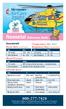 Operated by REACH Air Medical Services Assessment Heart Rate (beats/min.) Age Rate
Gates County EMS Treatment Protocols
 Gates County EMS Treatment Protocols Medical Protocols 3. Abdominal Pain 4. Allergic Reaction 5. Altered Mental Status Unknown Etiology 6. Dental Problems 7. Epistaxis / Nosebleed 8. Hyper / Hypoglycemia
And the. Two types of orders:
 1 PHARMACOLOGY And the EMT-B 2 MEDICAL DIRECTION Must have Dr. s orders to administer any drug to a Pt Local medical director can override any state set protocols Two types of orders: On-line : verbal
The patient s response to therapy within the first hour in the Emergency Room is one of the most reliable ways to predict need for hospitalization.
 Emergency Room Asthma Management Algorithm The Emergency Room Asthma Management Algorithm is to be used for any patient seen in the Emergency Room with the diagnosis of asthma. (The initial history should
PEDIATRIC GUIDELINES
 PEDIATRIC GUIDELINES Southwest CT EMS,coord. Rev. 4/07 5-01 Guidelines For Pediatric Care Page 1 of 1 5-01 GUIDELINES FOR PEDIATRIC CARE I. Cardiac arrest in children is not a sudden event. It is almost
Official Online ACLS Exam
 \ Official Online ACLS Exam Please fill out this form before you take the exam. Name : Email : Phone : 1. Hypovolemia initially produces which arrhythmia? A. PEA B. Sinus tachycardia C. Symptomatic bradyarrhythmia
TABLE OF CONTENTS 4/20/2012 1
 TABLE OF CONTENTS EMERGENCY MEDICATIONS... 2 ACTIVATED CHARCOAL... 3 ADENOSINE... 4 ALBUTEROL... 5 AMIODARONE... 6 AMYL NITRITE... 7 ACETYLSALICYLIC ACID, Aspirin... 8 ATIVAN (Lorazepam)... 9 ATROPINE
July 1, 2015. Regional EMS Guidelines
 July 1, 2015 Regional EMS Guidelines This Guideline format is based on that of New Britain EMS. Many thanks to them for allowing us to use it. These Guidelines replace all previous versions, including
MEDICATION REFERENCES
 MEDICATION REFERENCES NAME: ADENOSINE TRADE NAMES: Adenocard CLASS: Antidysrhythmic THERAPUTIC ACTION: Slows impulse formation in the SA node, slows conduction time through the AV node. Also depresses
Orange County EMS System Medical Treatment Protocols
 Medical Treatment Protocols Copyright 2013 Orange County, Florida Government, all rights reserved. Overview The Orange County EMS System Protocols are intended to provide uniform treatment for all patients
Cardiac Arrest - Ventricular Fibrillation / Pulseless Ventricular Tachycardia Protocol revised October 2008
 Cardiac Arrest - Ventricular Fibrillation / Pulseless Ventricular Tachycardia Protocol revised October 2008 Preamble Survival from cardiorespiratory arrest for patients who present with ventricular fibrillation
Emergency Medical Services Advanced Level Competency Checklist
 Emergency Services Advanced Level Competency Checklist EMS Service: Current License in State of Nebraska: # (Copy of license kept in file at station) Date of joining EMS Service: EMS Service Member Name:
Pediatric Pharmacotherapy A Monthly Newsletter for Health Care Professionals Children s Medical Center at the University of Virginia
 Pediatric Pharmacotherapy A Monthly Newsletter for Health Care Professionals Children s Medical Center at the University of Virginia Volume 2 Number 12 December 1996 Medications for Neonatal and Pediatric
Protocol in depth Asthma/COPD. [email protected]
 Protocol in depth Asthma/COPD [email protected] Asthma/COPD Narrowing of airways (an H4 histamine response causing inflammation and mucous production), leading to wheezing on inspiration and exhalation.
Present : PGY 王 淳 峻 Supervisor: F1 王 德 皓 991109
 Present : PGY 王 淳 峻 Supervisor: F1 王 德 皓 991109 Interventions to prevent cardiac arrest + Airway management + Ventilation support + Treatment of bradyarrhythmias & Tachyarrhythmias Treat cardiac arrest
The Phoenix Document An Evolution from National Standard Curriculum to the Virginia EMS Education Standards
 The Phoenix Document An Evolution from National Standard Curriculum to the Virginia EMS Education Standards Training Levels Included: Emergency Medical Responder (EMR) Last Revised: January 19, 2011 Page
PREPARATIONS: Adrenaline 1mg in 1ml (1:1000) Adrenaline 100micrograms in 1ml (1:10,000)
 ADRENALINE Acute hypotension Via a CENTRAL venous line Initially 100-300 nanograms/kg/minute 0.1-0.3 microgram/kg/minute adjusted according to response up to a maximum of 1.5 micrograms/kg/minute. Increase
CARROLL COUNTY AMBULANCE
 Introduction The purpose of protocols in the out-of-hospital setting is to assure safe and effective intervention during the out-of-hospital phase of patient care. In consideration of the unique resources,
EMERGENCY MEDICAL SERVICES PRE-HOSPITAL TREATMENT PROTOCOLS
 EMERGENCY MEDICAL SERVICES PRE-HOSPITAL TREATMENT PROTOCOLS COMPLETE TEXT Eighth Edition Official Version # 8.03 Effective 3/1/2010 MASSACHUSETTS DEPARTMENT OF PUBLIC HEALTH OFFICE OF EMERGENCY MEDICAL
Advanced Life Support Protocol Manual Advanced Life Support Appendix D Medication Formulary
 Advanced Life Support Appendix D Medication Formulary APPENDIX D 1 Critical Care & Paramedic Medication Formulary Appendix D Does not include Haz-Mat Protocol medications Revised: 6/02/2015 Approved: 6/03/2015
Update on Small Animal Cardiopulmonary Resuscitation (CPR)- is anything new?
 Update on Small Animal Cardiopulmonary Resuscitation (CPR)- is anything new? DVM, DACVA Objective: Update on the new Small animal guidelines for CPR and a discussion of the 2012 Reassessment Campaign on
ACTIVATED CHARCOAL. Classification: Absorbent. Binds and absorbs ingested toxins. Action:. Indications:. Poisoning. Contraindications: None
 ACTIVATED CHARCOAL Absorbent Action:. Binds and absorbs ingested toxins. Poisoning Contraindications: None Nausea,vomiting,abdominal cramping & bloating, constipation 19ram/kg Altered mental status Ingestion
COUNTY OF SAN DIEGO EMERGENCY MEDICAL SERVICES No. P-117a POLICY/PROCEDURE/PROTOCOL Page 1 of 6
 POLICY/PROCEDURE/PROTOCOL Page 1 of 6 GREY/PINK Kg range: < 8 kg Approx Kg: 5 kg 1 st 2 nd 3 rd Approximate LBS: 10 lbs Defib: 10 J 20 J 20 J ET uncuffed tube size: 3.5 Cardiovert: 5 J 10 J 10 J ET cuffed
NOTICES DEPARTMENT OF HEALTH
 NOTICES DEPARTMENT OF HEALTH Approved Drugs for ALS Ambulance Services [43 Pa.B. 3060] [Saturday, June 1, 2013] Under 28 Pa. Code 1005.11 (relating to drug use, control and security), the following drugs
Inotropes/Vasoactive Agents Hina N. Patel, Pharm.D., BCPS Cathy Lawson, Pharm.D., BCPS
 Inotropes/Vasoactive Agents Hina N. Patel, Pharm.D., BCPS Cathy Lawson, Pharm.D., BCPS 1. Definition -an agent that affects the contractility of the heart -may be positive (increases contractility) or
Atrial & Junctional Dysrhythmias
 Atrial & Junctional Dysrhythmias Atrial & Junctional Dysrhythmias Atrial Premature Atrial Complex Wandering Atrial Pacemaker Atrial Tachycardia (ectopic) Multifocal Atrial Tachycardia Atrial Flutter Atrial
Emergency Medications Approved for Use at VAPAHCS
 Table 1: Medications (PAD GM&S) Emergency Medications Approved for Use at VAPAHCS PAD GM&S (See HCSM 11-12-35 Attachment A CPR Committee Atropine 1mg/10ml syringe X 3 Normal saline 1000ml bag X 2 Sodium
Pharmacology for the EMT
 Pharmacology for the EMT Presented by Wade Scoles RRT, NREMT Pharmacodynamics Everybody reacts to drugs differently Factors altering drug responses Age Body mass Sex Pathologic state Genetic factors Psychological
Neonatal Reference Guide
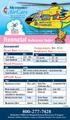 Operated by REACH Air Medical Services Assessment Heart Rate (beats/min.) Rate
Medical Direction and Practices Board WHITE PAPER
 Medical Direction and Practices Board WHITE PAPER Use of Pressors in Pre-Hospital Medicine: Proper Indication and State of the Science Regarding Proper Choice of Pressor BACKGROUND Shock is caused by a
TENNESSEE EMERGENCY MEDICAL SERVICES PROTOCOL GUIDELINES. Index
 Introduction Definitions Index Cardiac Emergency (Adult & Pediatric) 101 Automatic External Defibrillator 102 New Onset Atrial Fibrillation and Flutter 103 Bradycardia 104 Acute Coronary Syndrome/STEMI
PRE-HOSPITAL PATIENT CARE PROTOCOL MEDICATION REFERENCE Section VI
 PRE-HOSPITAL PATIENT CARE PROTOCOL MEDICATION REFERENCE Section VI Rappahannock EMS Council 435 Hunter Street Fredericksburg, VA 22401 BASIC LIFE SUPPORT/ADVANCED LIFE SUPPORT MEDICATIONS REFERENCE PROTOCOL
DIPHENHYDRAMINE (Benadryl)
 DIPHENHYDRAMINE (Benadryl) Classification: Antihistamine (H1 blocker) Antihistamine; appear to compete with histamine for cell receptor sites on effector cells. Therapeutic Relieves effects of histamine
Quiz 4 Arrhythmias summary statistics and question answers
 1 Quiz 4 Arrhythmias summary statistics and question answers The correct answers to questions are indicated by *. All students were awarded 2 points for question #2 due to no appropriate responses for
Appendix 9 Protocols for Emergencies. Respiratory
 Appendix 9 Protocols for Emergencies For all emergencies Stop the procedure Continue to monitor vital signs Consider calling 911 early All complications should be handled in an organized manner following
IU Health ACLS Study Guide
 IU Health ACLS Study Guide Preparing for your upcoming ACLS Class REVISED SEPTEMBER 2011 ON APRIL 1, 2011 WE BEGAN TEACHING THE 2010 AHA GUIDELINES. WE HIGHLY RECOMMEND REVIEWING THE NEW ALGORYHMS FOUND
New Jersey EMS Response to an Opiate Overdose Naloxone (Narcan ) Program **Updated March 26, 2015**
 New Jersey EMS Response to an Opiate Overdose Naloxone (Narcan ) Program **Updated March 26, 2015** Disclaimer This presentation was created to assist in the education of EMTs in Naloxone administration.
ROC CONTINUOUS CHEST COMPRESSIONS STUDY (CCC): MEDICAL CARDIAC ARREST MEDICAL DIRECTIVE
 ROC CONTINUOUS CHEST COMPRESSIONS STUDY (CCC): MEDICAL CARDIAC ARREST MEDICAL DIRECTIVE An Advanced Care Paramedic will provide the treatment based on the randomization scheme and as prescribed in this
www.cprtrainingfast.com
 ADVANCED CARDIAC LIFE SUPPORT (ACLS) RECERTIFICATION EXAMINATION 1. Ten minutes after an 85 year old woman collapses, paramedics arrive and start CPR for the first time. The monitor shows fine (low amplitude)
Utah Valley University Paramedic ALS Guide
 Utah Valley University Paramedic ALS Guide Contraindication: Pediatric Dose: Max: Acetaminophen Within 30 minutes Half-life 2.8 hours (range 2-4 hours) Tylenol Non-narcotic Analgesic, Antipyretic Antipyretic
New resuscitation science and American Heart Association treatment guidelines were released October 28, 2010!
 ACLS Study Guide 2010 Bulletin: New resuscitation science and American Heart Association treatment guidelines were released October 28, 2010! The new AHA Handbook of Emergency Cardiac Care (ECC) contains
PRE-HOSPITAL PATIENT CARE PROTOCOLS BASIC LIFE SUPPORT/ADVANCED LIFE SUPPORT
 PRE-HOSPITAL PATIENT CARE PROTOCOLS BASIC LIFE SUPPORT/ADVANCED LIFE SUPPORT Board Approved June 2007 Revised December 2009 Rappahannock EMS Council 435 Hunter Street Fredericksburg, VA 22401 PRE-HOSPITAL
PEDIATRIC TREATMENT GUIDELINES
 P1 Pediatric Patient Care P2 Cardiac Arrest Initial Care and CPR P3 Neonatal Resuscitation P4 Ventricular Fibrillation / Ventricular Tachycardia P5 PEA / Asystole P6 Symptomatic Bradycardia P7 Tachycardia
MILD TO MODERATE NOTE Medication is listed in increasing order of strength. Ascriptin (Aspirin) (P1-B1,2) - Pain reliever, anti-inflammatory
 Page 1 of 6 pages Contact Surgeon before giving any medication marked with an asterisk. In an emergency or during Loss of Signal, begin appropriate treatment; then call Surgeon as soon as possible. MILD
PALS Interim Study Guide
 PALS Interim Study Guide 2006 Bulletin: New resuscitation science and American Heart Association treatment guidelines were released November 28, 2005! The new AHA Handbook of Emergency Cardiac Care (ECC)
Arrest. What s a Nurse to do?
 Benzo s, Blockers, Coma & Cardiac Arrest What s a Nurse to do? Objectives Review of ACLS Algorithms for Cardiac Arrest Management Discuss the toxicology of Beta Blocker Poisoning Describe the clinical
State of Delaware Paramedic Standing Orders. Pharmacology Manual
 Paramedic Standing Orders Manual Edition: 2008 TABLE OF CONTENTS General Information 2 Anaphylactic Precautions 2 Infiltration Precautions 3 Adenosine 4 Albuterol Sulfate 5 Amiodarone 6 Amyl Nitrate 7
ACLS PROTOCOLS. Chest Pain / Acute Coronary Syndrome... 4-2
 ACLS PROTOCOLS CHEST PAIN / ACLS Chest Pain / Acute Coronary Syndrome... 4-2 ARRHYTHMIAS / ACLS Sinus Bradycardia... 4-4 Narrow - Complex Tachycardia... 4-6 Wide - Complex Tachycardia... 4-8 CARDIAC ARREST
Scope of Practice Approved by State Board of Emergency Medical, Fire and Transportation Services Division of EMS, Ohio Department of Public Safety
 Scope of Practice Approved by State Board of Emergency Medical, Fire and Transportation Services Division of EMS, Ohio Department of Public Safety This document offers an at-a-glance view of the Scope
The Phoenix Document An Evolution from National Standard Curriculum to the Virginia EMS Education Standards
 An Evolution from National Standard Curriculum to the Virginia EMS Education Standards Training Levels Included: Emergency Medical Technician (EMT) Introduction: This document identifies the differences
SUFFOLK COUNTY COMMUNITY COLLEGE NURSING DEPARTMENT MEDICATION ADMINISTRATION TEST NR 40 Practice test questions READ INSTRUCTIONS CAREFULLY
 NR40 MEDICATION MATH TEST Practice questions page 1 SUFFOLK COUNTY COMMUNITY COLLEGE NURSING DEPARTMENT MEDICATION ADMINISTRATION TEST NR 40 Practice test questions READ INSTRUCTIONS CAREFULLY Students
EMS Course Requirements
 EMS Course Requirements The following outlines should be followed when creating your course syllabi. The minimum course hours must be met, but they can be exceeded depending on the needs of your class.
Ground Vehicle Supply Requirements for EMR Quick Response Units.
 Ground Vehicle Supply Requirements for EMR Quick Response Units. Ring cutters 2 Blood pressure cuffs, one adult, one pediatric 2 Stethoscopes, one adult and one pediatric or combination 2 Heavy duty shears
American Heart Association. Pediatric Advanced Life Support. Written Precourse Self-Assessment. Questions and Answer Key for Students.
 E C C American Heart Association Pediatric Advanced Life Support Written Precourse Self-Assessment Questions and Answer Key for Students January 2012 PALS Written 2011 Precourse Self-Assessment ECG Rhythm
PEDIATRIC SURGE POCKET GUIDE. Clinical checklists, guides, and just-in-time references to manage a surge of pediatric patients.
 PEDIATRIC SURGE POCKET GUIDE Clinical checklists, guides, and just-in-time references to manage a surge of pediatric patients. Sections Normal Values Triage and Assessment Treatment and Medications Equipment
ANZCOR Guideline 12.4 Medications and Fluids in Paediatric Advanced Life Support
 ANZCOR Guideline 12. Medications and Fluids in Paediatric Advanced Life Support Who does this guideline apply to? This guideline applies to infants and children. Summary Who is the audience for this guideline?