
|
|
|
- Barry Rose
- 10 years ago
- Views:
Transcription
1 Presented by Jonathan Lewis 2007 all rights reserved worldwide You are free to distribute this ebook to as many people as you wish You may print this ebook You MAY NOT sell this ebook 1

2 Thank You Thank you for downloading this book. I hope it will help you to understand better how the English language works. If you speak French and have some difficulties understanding this all-english version, you can find more explanations in French and practise exercises at: If you have any further questions, or need clarification of something you have not understood, please feel free to contact me: You can also visit the anglais-facile.com chat room to discuss learning English: 2

3 Introduction There is a big difference between understanding the grammar of a language and being able to speak that language well. You don t need to understand how a car engine works in order to drive a car. And you don t need to understand grammar to speak a language. Knowing grammar will, however, perhaps give you more confidence to speak, as you will be less afraid of making mistakes. Almost every grammar rule has an exception, so the best way to improve your English is to practise as much as you can. 3

4 About anglais-facile.com was created to help French speakers learn English for free. You will find explanations of the grammar presented in this book in French as well as lots of good advice on how to learn a foreign language. About Jonathan Lewis Jonathan Lewis has taught English in France for six years, and has worked for the French ministry of education (Education Nationale) as teacher and examiner. In his native England, he used to train young people in sales and business administration. He doesn t like the traditional grammar-based approach to language learning, but prefers to teach communicatively, that is, by getting to students to talk in class, while monitoring their use of language. Visit his blog (in English) at: 4

5 Table of contents Unit 1. I am You are (to be) 2. I am doing (present progressive) 3. I like/do/go (present simple) 4. Have/Have got (possession) 5. I was/you were (be simple past) 6. I did/worked/went (simple past) 7. I was doing (past progressive) 8. I have done (present perfect) 9. Is done/was done (passive voice) 10. Used to (finished actions) 11. Get/be used to (changing situations) 12. Will do (future) 13. Going to (planned future) 14. Had done (past perfect) 15. a/some (articles, quantities) 16. Some/any (quantities) 17. Much/many/a lot (quantities) 18. Can/could (ability/permission) 19. Must/have to (obligation/prohibition) 20. Big/small/beautiful (adjectives) 21. Big/bigger/biggest (comparatives and superlatives) 22. Should (advice, recommendations) 23. I/me/my/mine (pronouns, possessive adjectives) 24. What/when/where (questions 1) 25. How much/many (questions 2) 26. On/it/at (time prepositions) 5

6 Unit 1 I am (I m) I m John I m American I m thirty-five I m a salesman I m interested in politics I m single This is John. He s American, he s thirty-five, he s a salesman. Positive I am (I m) You are (you re) He is (he s) She is (she s) We are (we re) They are (they re) Negative I am not (I m not) You are not (you re not) He is not (he s not) She is not (she s not) We are not (we re not) They are not (they re not) 6

7 You are are you? To make questions, change the verb and the subject: Positive He is French You are late They are nurses Question Is he French? Are you late? Are they nurses? Am/is/are are the present forms of the verb to be. We call this verb a state verb. State Age: I am thirty Nationality: I am French Status: I am single/married/divorced Profession: I am a teacher/secretary/manager Physical state: I am tired/hungry/cold Emotional state: I am happy/sad/excited Tip Make a mind map about your life, using I am. do this exercise to be sure you've understood: We re hungry! 7

8 Unit 2 I am doing He is reading a book They are running The sun is shining The verb to be can be used as an auxiliary verb before other verbs. The verb that follows always has the ending -ing. to be represents a present state, so when it s followed by a verb (-ing) it refers to a present activity. I m a teacher, but I m not teaching now, I m preparing a lesson Susan is wearing a pretty dress today Take an umbrella, it s raining 8

9 Spelling Note the following spelling changes: write writing come coming dance dancing run running swim swimming sit sitting lie lying Negative Place not after the auxiliary: I m not sleeping They re not working -or - they aren t working She s not reading - or - she isn t reading Questions Change the order of words: Are you sleeping? Is he playing? more information here: 9

10 Unit 3 I like/do/go The Present Simple Positive I like You like He likes She likes We like They like Negative I don t like You don t like He doesn t like She doesn t like We don t like They don t like The present simple is used for things in general, and things that happen sometimes or always: The sun rises in the east I work from nine till five I like chocolate I go to the cinema on Saturdays To indicate frequency, we use these adverbs: always usually often sometimes never 100% 0% 10

11 I always go shopping on Fridays I usually have coffee with my breakfast, but sometimes I have tea I never watch American movies I often buy a newspaper on my way to work Present simple spelling Note the following spelling changes: I watch she watches I kiss he kisses I wash she washes I judges he judges I study she studies I try he tries I do she does I go he goes 11

12 Present simple questions We use the verb do as an auxiliary when we ask questions: Do you read a lot? Do they live here? Does she like her job? Do you always arrive early? What do you usually do in your free time? 12

13 Unit 4 have/have got She has blue eyes and black hair She s got blue eyes and black hair (has got) = For possession, have and have got are the same I ve got a cold and a high temperature Have got in questions Have you got the time? Has she got a car? Have got in negatives I haven t got a car He hasn t got a job 13

14 Unit 5 I was/you were The simple past Present: am/is past: was Present: are - past: were Positive I was You were He was She was We were They were Negative I wasn t (n t = not) You weren t He wasn t She wasn t We weren t They weren t Question Was I? Were you? Was he? Was she? Were we? Were they? Yesterday, I was sick She lived in London when she was young Were you on time for the meeting? No, I wasn t I was five minutes late 14

15 Unit 6 I did/worked/went Past simple They watch television (present simple) Yesterday, they watched television (past simple) Past Present Future I went I worked I stopped English verbs can be divided into two groups regular and irregular. In the past simple, regular verbs end in ed ; they do not change according to the subject: I worked You worked He worked She worked We worked They worked 15

16 Irregular Verbs These verbs are called irregular because they do not end in ed like regular verbs. You must learn these verbs by heart. Examples of irregular verbs: Begin began Break broke Buy bought Come came Do did Drink drank Eat ate Find found Get got Give gave Go went Have had Know knew Leave left Make made Pay paid Put put Read read (pronounced red ) Ring rang Say said Think thought you will find a list of irregular verbs here: more about past simple here: 16

17 Negative and Questions Use the auxiliary did for questions and negatives in the past: Positive Negative Question I went I didn t go did you go? I worked I didn t work did you work? I had I didn t have did you have? Ago We use ago for things in the past. Giovanni moved to Rome in 1999 Giovanni moved to Rome 9 years ago Did you meet The Queen? Yes, but that was a long time ago

18 Past progressive Unit 7 I was doing 4:00 today: they are watching television 4:00 yesterday: they were jogging Positive I was doing You were doing He/she/it was doing We were doing They were doing Negative I wasn t doing You weren t doing He/she/it wasn t doing We weren t doing They weren t doing Question was I doing? were You doing? was He/she/it doing? were We doing? were They doing?

19 Timelines 9:00am 12:00pm I started Working I stopped working I was working We use the past progressive when we are more interested in the action itself than the time it started or stopped. Compare the past simple with the past progressive: 11:00pm I was sleeping 7:00am 12:00am I went to bed the telephone I woke up rang = I was sleeping when the telephone rang time I was going to the office It was raining I stopped to buy a newspaper I met an old friend She told me something I ll never forget

20 Unit 8 I have done Present Perfect Johan has gone out = Johan is not here NOW The cook has made some pizzas. The pizzas are ready NOW The present perfect is used to show the present result of something that has happened. Present perfect: auxiliary have + past participle (gone/done/been etc)

21 Compare the present perfect with the simple past: Yesterday, I lost my keys. I found them this morning. I ve lost my keys (I can t find my keys now) I bought this book last week, but I haven t read it. Positive Negative Question I have done You have done He/she/it has done We have done They have done I haven t done You haven t done He/she/it hasn t done We haven t done They haven t done have I done? have you done? has he/she/it done? have we done? have they done? We can use the present perfect with already, just, yet: I don t want to watch this film, I ve already seen it Are you hungry? No, I ve just eaten I m waiting for Sean, he hasn t arrived yet present perfect or simple past? do this exercise here:
22 How long have you? Ivan moved to London in He lives in London now. How long has Ivan lived in London? - Ivan has lived in London for five years This is Juan. Juan is married to Jeanne They have been married since 1999 Juan s best friend is Ian. Juan has known Ian for ten years Juan likes playing tennis He has played tennis since he was a child Juan works for Macroloft corporation. He has worked for Macroloft for five years Juan is learning Spanish (present progressive) He has been learning Spanish for six months (present perfect progressive) more explanations here:
23 Have you ever? Have you ever been to Italy? Yes, I have Have you ever been to China? No, I haven t. I ve never been to China We can use the present perfect to talk about our experiences in life. If you want to know when something happened, use the simple past. Have you ever played poker? Yes I have. When did you play poker? I played when I was on holiday in Las Vegas Been When we say have you ever been to Italy? been is the past participle of the verb to go. Been then, is like a return trip. I went to Italy I came back from Italy = I ve been to Italy (at sometime in my life)
24 For and Since Compare these sentences: I ve lived in New York for ten years I ve lived in New York since 1998 Since is used for a specific time: I ve had this car since August I ve known Jean since 1980 I ve had this headache since this morning For is used for a duration of time I ve had this car for six months I ve known Jean for 27 years I ve had this headache for several hours practise! do this exercise on 'for' 'since' and 'ago':
25 Unit 9 is done/was done The passive voice. People make cars in Birmingham Cars are made in Birmingham (active) (passive) We are not interested in who made the cars (people, somebody, the workers etc). We are only interested in which city they are made. This is the passive voice: To be: am/is/are was were etc + past participle done made washed built Note: The passive voice is NOT a tense, it does not relate to time. You can change the time by changing the verb to be. The house was damaged in the storm Many people have been taken prisoner Five people were killed in the accident My car is being repaired today More energy will be imported from Russia in the future more information about passives here:
26 Unit 10 used to A few years ago, I lived in a big city Today, I live in the countryside. I used to live in a big city. Used to + verb (infinitive) something I did in the past but don t do today. I stopped smoking last year. I used to smoke twenty cigarettes a day. I used to like her a lot, but then she changed. I don t like her very much now. Before we had children, we used to travel a lot, but now we don t travel any more. You play the piano, don t you? I used to, but I don t have much time these days. more about 'used to' here: 'used to' in questions and negatives :
27 Unit 11 get used to In Europe, people drive on the right. In England, people drive on the left. When I came to England for the first time, it was difficult to get used to driving on the left. Get used to + verb (-ing) Something that was difficult at first, but becomes normal with time or practice. When you go to live in a foreign country, it takes time to get used to living there. be used to If you have got used to doing something, you can say that you are used to doing it My job was hard at the beginning, but I m used to it now I m used to getting up early, but I didn t like it when I started France is very different from England, but I m used to living here now
28 Unit 12 I will do Future 1 I have a shower every day. This morning I had a shower. Tomorrow, I will have a shower. I You He she it We they will ( ll) will not (won t) go say do be..etc. Questions Will I you he she it we they go? say? do? be?..etc
29 Will is used for the future: Tomorrow, I will be in Manchester on business Don t call tonight, I won t be at home It will be a hard match, but I m sure we ll win Will often shows we are not sure I think it will rain this afternoon I don t know what to do maybe I ll ask Jan about it Will can mean a spontaneous decision The phone s ringing I ll answer it If you don t have a pen I ll lend you one Shall Shall is the same as will when used with I and we: I shall be late / I will be late We shall buy some souvenirs / we will buy some souvenirs This is not an absolute rule as the following examples show: You shall go to the ball, Cinderella You shall be taken and hanged by your neck until you are dead She shall have music wherever she goes
30 Unit 13 going to Planned/certain future (2) Tonight there is a football match on television. I like football. Hi Jane, do you have plans for tonight? Hi Jeanne, I m going to watch the football match on television. Past Present Future I decide I m going I do it to do to do it something
31 I am You are She is We are They are (not) going to do walk go make etc If you have planned something for the future, you can say I m going to I m going to cook Indian food tonight I m going to talk to Ian about his attitude We often use the present progressive to talk about future events: What are you doing tonight? I m playing footballl more information about 'going to' here:
32 Unit 14 I had done Past Progressive My train left at 8:00 I was late, I arrived at 8:10 When I arrived at the station, my train had left Past perfect = had + past participle Past Present Action 1 Action 2 The past progressive is used to show that action 1 happened before action 2. I didn t go to the meeting because it had been cancelled Action 2 (simple past) Action 1 (past perfect) The streets were wet, so I knew it had been raining more information here:
33 Unit 15 a/some Nouns can be either countable or uncountable. We cannot make plurals with uncountable nouns. We use some before uncountable nouns. Countable Uncountable Chairs, tables, sofas Euros, dollars, pounds Jobs, professions Clouds, temperatures, winds Loaves, baguettes Articles, reports, stories furniture money work weather bread news An apple, an orange, a banana, a pear= Some fruit A dollar Some money
34 Unit 16 some/any Siobhan has some money Yann doesn t have any money We usually use some in positive sentences, and any in negative sentences and questions. John: Ian: Sean: I have some friends in Chicago Really, do you have any friends in Chicago, Sean? I haven t got any friends. It is different when we offer something: Would you like some tea? more information here : understood? do this exercise!
35 Unit 17 much/many/a lot We use much with uncountable nouns, in negative sentences and questions How much money have you got? I don t have much time A lot of luggage / a lot of bags We use many with plural nouns Did you see many people? I don t have many CD s I ve been to many countries A lot of can be used everywhere! Not much luggage / not many bags I have a lot of money I don t have a lot of friends Do you have a lot of furniture? I ve got a lot of ideas
36 Unit 18 can/could Can is used to express ability: I can play the guitar Joan can swim very well Ivan hasn t got a car because he can t drive Can you cook? We also use can for permission (giving and asking for) Can I sit here? Yes, you can It s OK, you can go home now When asking for things, it s more polite to use could: Could you open the window? Could you give me your name, please? Could is also the past of can. We use it to talk about things we were able to before: I could skate very well when I was young Jane could walk before she was one year old more information about 'can' here 'can I?' or 'may I?' what difference?
37 Unit 19 must/have to Obligation We use must when we believe something is necessary: It s a great book, you must read it I must call my parents tonight You must come over for dinner We use have to when we are obliged to do something, even if we don t want to do it. I have to get up early for work tomorrow I have to complete my tax return before Friday Do I have to? Prohibition When something is not permitted, we use mustn t: You mustn t smoke here, it s forbidden It s a secret, you mustn t tell anyone
38 Don t have to Don t have to is not the same as mustn t Is it allowed? YES You can go Permission NO You mustn t go Prohibition Is it necessary? YES You must go You have to go Obligation NO You DON T HAVE TO go No Obligation
39 Unit 20 big/small/beautiful adjectives In English, the adjective is before the noun: An interesting book A difficult project He s got blue eyes and brown hair I just love Indian food This lovely red dress is not expensive Adjectives always remain the same, they do not change according to the subject: o A tall woman o A tall man o Some tall people
40 Unit 21 big/bigger/biggest comparatives and superlatives Bigger than/ Smaller than Box A is bigger than box B and box C Box B is smaller than box A, but bigger than box C Box C is smaller than box A and B The biggest/the smallest Box A is the biggest. = it s bigger than all the others. Box C is the smallest. =it s smaller than all the others
41 With small adjectives, we add er to make comparatives: small smaller large larger quick quicker slow slower We add a consonant to adjectives that have one consonant at the end: big bigger thin thinner fat fatter Adjectives that end in y change to i: funny funnier happy happier easy easier Long adjectives are different. We cannot add er, instead we use more before the adjective: A Ferrari is more expensive than a BMW Korean films are more interesting than American ones Paris is more beautiful than London more on comparatives here:
42 Superlatives Small adjectives take the +-est to make superlatives: The tallest mountain in the world is Everest. The longest river in the world is the Amazon. The richest man in the world is Bill Gates. We put the most before long adjectives: Blah, blah, blah The most beautiful woman in the world is probably Monica Bellucci. The most difficult thing about English is the pronunciation. The most expensive city in the world is Tokyo. There are three exceptions: good better the best bad worse the worst far further the furthest The weather is better today than it was yesterday. After the war, the situation became worse than before. Sydney is further than Kuala Lumpur
43 Unit 22 you should You should stop smoking We use should when something is a good idea; it is a good thing to do. To be polite, you can say, I think you should I think you shouldn t eat so much. I think you should talk to her about it. I think you should reconsider our offer. I don t think he should attend the conference. Ought to Ought to is the same as should, but generally used only in positive sentences: I think you ought to eat less. Perhaps you ought to talk to her about it. You ought to think about reconsidering. more information here:
44 Expectation and probability We can also use should and ought to to talk about something we expect will happen, or something that is likely to happen: Where s Giovanni? He should be here by now. My train is late, but I should arrive around 10pmg. I ve studied hard, so I ought to pass the exam
45 Unit 23 I/me/my/mine She told her the whole story. Subject Object I I like Jane Me Jane likes me You You like Jane You Jane likes you He He likes Jane Him Jane likes him She She likes Jane Her Jane likes her We We like Jane Us Jane likes us They They like Jane Them Jane likes them Those are nice trousers. I like them very much. I don t need this bag. You can have it. Answer the phone, it can t be for me. We re going to the beach, do you want to come with us?
46 Possession This is my girlfriend. She s mine! I m her boyfriend. I m hers! I Me My Mine You You Your Yours He Him His His She Her Her Hers We Us Our Ours They Them Their Theirs This is my book. It s mine! Our car didn t start, so I took yours No, that s not our luggage, ours is over there Their dog is bigger than his Her bag is more expensive than mine
47 Unit 24 questions People who? Who switched off the television? I did, the film was boring. Who did you see at the party? I saw lots of interesting people. Who are going with? I m going with Johan. Things what? What s that? It s my new computer. What are you doing tonight? I m playing tennis. What did you do last night? I played tennis
48 Places where? Where did you go on holiday? We went to St.jean de Luz. Where is Iain? He s at home in bed. Time when? When did you last go on holiday? In When is your birthday? On the eleventh of June Reason why? Why did you do that? Because it was fun. Why do you like American films? Because they have a lot of action. Why is London so expensive? Because everyone wants to live there? Way, Manner of doing something How? How do you turn on this computer? There s a red button, press it. How can I get to Manchester from here? Take a train from Kings Cross Station
49 Unit 25 how much/many We use how + adjective to ask some questions: How old are you? I m 18 years old How tall are you? I m 1 metre 75 How big is the box? It s pretty big! Note that we usually use the superior adjective to ask questions: Noun Adjectives Question Age old/young How old? Weight heavy/light How heavy? Quantity much/a little How much? Quantity many/a few How many? Length Long/short How long? Time long/short How long? Distance far/near How far? Height high/low How high? Height tall/short How tall? Width wide/narrow How wide? Depth deep/shallow How deep? Size big/small How big? more information here:
50 Unit 26 on Friday/in June Time prepositions On Monday, Tuesday The weekend The first The second In January The morning The afternoon The evening The week Spring At The weekend Night 10 O clock I ve got an appointment on Friday at 3 O clock I always feel sleepy in the afternoon In the summer there are too many people on the beach I always watch the news in the evening I was born on the eighteenth of April more prepositions! take this test:
51 Internet links: For more lessons and explanations, visit: Prepositions Infinitives and gerunds (-ing) The verb get summary of tenses and aspects
Young Learners English
 University of Cambridge ESOL Examinations Young Learners English Movers Information for Candidates Information for candidates YLE Movers Dear Parent Thank you for encouraging your child to learn English
Choose the correct alternative to complete the sentences.
 Testi_Kang_09.qxp 19-04-2009 20:00 Pagina 16 Kangourou Italia - British Institutes Gara dell 11 marzo 2009 Categoria Per studenti della classe seconda della Scuola Secondaria di Secondo Grado Choose the
Hi-tech. Language focus. First conditional. Second conditional. eat. 'd give / wouldn t
 9 Hi-tech Language focus First conditional 1a Complete the sentences with the correct form of the verb in brackets. Use the Present Simple or will + infinitive. eat 1 If you (eat) cheese late at night,
Placement Test. It is designed to enable us to place you in a class at the right level for you.
 Placement Test Date / / Name Nationality This placement test contains 50 multiple-choice questions for you to answer, and 3 writing questions. Please write a few sentences for each writing question. It
Conditional Sentences Third Condition (Past Time - Unreal/ Contrary to Fact)
 Conditional Sentences Third Condition (Past Time - Unreal/ Contrary to Fact) Complete the following sentences using the correct form of the verbs provided. Ex. Annie failed her history test, but if she
How to form the Present Perfect
 The present perfect verb tense is a little difficult in English it is used in several different ways, and there are lots of rules to remember. This lesson will teach you everything you ever wanted to know
Kangourou Italia - British Institutes Gara del 2 marzo 2010 Categoria Wallaby Per studenti della classe terza della Scuola Secondaria di Primo Grado
 Testi_Kang_10ENG.qxp 8-01-2010 22:38 Pagina 10 Kangourou Italia - British Institutes Gara del 2 marzo 2010 Categoria Per studenti della classe terza della Scuola Secondaria di Primo Grado Choose the correct
B.A. ENGLISH ENTRANCE TEST
 B.A. ENGLISH ENTRANCE TEST Time allowed: 60 min Total marks for the test: 100 Marking scheme: 1 mark for each correct answer In each multiple choice question, only one of the four answers is correct. Choose
FILE 1 FILE 2. english file PRE-INTERMEDIATE third edition Entry Checker answer key. a 1 Our 2 My 3 your 4 its 5 your 6 My 7 our 8 His 9 their 10 her
 English File Pre-Intermediate third edition Entry Checker answer key FILE 1 1A a 1 are 2 am 3 are 4 is 5 are 6 is 7 are 8 are 9 is 10 am b 1 I m 2 You re 3 It s 4 They re c 1 We re 2 It s 3 He s 4 You
Estudios de Asia y Africa Idiomas Modernas I What you should have learnt from Face2Face
 Estudios de Asia y Africa Idiomas Modernas I What you should have learnt from Face2Face 1A Question Forms 1.1 Yes-No Questions 1. If the first verb is an auxiliary verb, just move it in front of the Subject:
ENGLISH GRAMMAR Elementary
 ENGLISH GRAMMAR Elementary A cura di NADIA TOSI Centro IDA ITE Enrico Tosi Busto Arsizio CONTENTS DEFINITE ARTICLES 3 INDEFINITE ARTICLES 3 PERSONAL PRONOUNS SUBJECTS 4 PLURALS. 5 POSSESSIVE ADJECTIVES
CEFR Level A1 Level A1 Global Listening Reading Spoken Interaction Spoken Production Writing
 CEFR Level A1 Level A1 is the lowest level of generative language use - the point at which the learner can interact in a simple way, ask and answer simple questions about themselves, where they live, people
Handouts for Conversation Partners: Grammar
 Handouts for Conversation Partners: Grammar Contents A Cheat Sheet on the Tenses in English... 2 Conditionals... 3 Past Participles... 5 Present Perfect Tense... 6 Present Perfect Continuous... 6 Past
KEY ENGLISH TEST for Schools
 KEY ENGLISH TEST for Schools PAPER 1 Reading and Writing Sample Paper Time 1 hour 10 minutes INSTRUCTIONS TO CANDIDATES Do not open this question paper until you are told to do so. Write your name, Centre
Language at work To be Possessives
 Unit 1 Language at work To be Possessives To be Positive: I am / m a receptionist. You / We / They are / re Polish. He / She / It is / s from Brazil. Negative: I am not / m not a team leader. You / We
1 Time. 5 Answer the questions about yourself. Lesson 1: Time in your life. Listening 1
 Time Listening Lesson : Time in your life. Listen to the information about Linda and Huseyin. Are the sentences true or false? True False Linda likes the early morning. She usually checks her emails when
ENGLISH DIAGNOSTIC TEST
 ENGLISH DIAGNOSTIC TEST Please answer the following questions without spending too long considering your answers. The test multiple choice based and is there for diagnostic purposes to assess your present
Nombre: SIMPLE PRESENT AFFIRMATIVE. Subjet + verb (3 sing +s, or es) NEGATIVE. Subjet + do/does + not+ verb INTERROGATIVE. Do /Does + Subjet + verb?
 SIMPLE PRESENT Affirmative Negative Interrogative I play. You eat. He reads. She sleeps. It runs. We speak. You work. They study. I don t play. You don t eat. He doesn t read. She doesn t sleep. It doesn
[elo'quia. S 1 / 6. Please mark the correct answer with a X. Example: I must my homework this evening. X. Duration: 45 minutes.
 [elo'quia. English test ] Duration: 45 minutes Family name First name Date Please mark the correct answer with a X. Example: I must my homework this evening. X do to make to do make 1] What do you do?
Articles Definite Article: the Pronunciation(!): the chair, the apple
 Articles Definite Article: the Pronunciation(!): the chair, the apple Indefinite Article: a, an a chair, an apple Some special rules of using articles: 1. Names of streets, squares, etc. do not have articles:
1 I... swim well when I was very young. A can B could C knew. 3 What... on Sundays? A does Mary usually do B does Mary usually
 Test 2A 1 I... swim well when I was very young. A can B could C knew 2 When I got... I had a bath. A home B at home C to home 3 What... on Sundays? A does Mary usually do B does Mary usually C usually
Pre-associate Degree ENGL2003EF Foundations in English (2010/S1A) Re-do Coursework Name: Student No.: Class: Total marks: /100
 Pre-associate Degree ENGL2003EF Foundations in English (2010/S1A) Re-do Coursework Name: Student No.: Class: Total marks: /100 ** Due 18-March-2011, Friday 1pm to 4pm at OCLC Level 3 (submit to Zoe MAK)
Wallaby Choose the correct answer (Scegli la risposta giusta)
 Baby_Kang_07.qxp 16-04-2007 12:17 Pagina 10 Kangourou Italia - British Institutes Gara del 20 marzo 2007 Categoria Per studenti della classe terza della Scuola Secondaria di Primo Grado Choose the correct
Present Perfect Progressive (Present Perfect Continuous)
 (Present Perfect Continuous) Read the situations below and write a sentence using the present perfect progressive tense to say how long the situation has been happening. For & Since Ex. The baby is crying.
Kangourou Italia - British Institutes Gara del 2 marzo 2010 Categoria Joey Per studenti della classe quinta della Scuola Primaria
 Testi_Kang_10ENG.qxp 8-01-2010 22:38 Pagina 5 Kangourou Italia - British Institutes Gara del 2 marzo 2010 Categoria Per studenti della classe quinta della Scuola Primaria Choose the correct alternative
ENGELSKA NIVÅTEST (1) Medel Sid 1(7)
 Medel Sid 1(7) Namn: Poäng: Nivå : Adress: Tel: Complete each sentence with one item from those given below. Use each item once only. Note: Each question has One mark. You must have all words in the correct
ENGLISH FILE. New. Level Tests. Grammar, vocabulary
 Grammar, vocabulary New ENGLISH FILE Level Tests This Test Booklet contains: Level Tests, in A and B versions, for New English File Elementary, New English File Pre-Intermediate, and English File Intermediate
Simple Present, Simple Past and Present Perfect Tenses
 Simple Present, Simple Past and Present Perfect Tenses This is a list of. I will read the base form, the simple past tense and the past participle of the verb. Then, I will read the verb in three sentences,
Reading. Re d on Power up. Skill. Sum up. Spe k up 4 D. You use a digital camera.
 03 We school Reading Re d on Power up 1 music 3 Match the school subjects with the photos. computer studies geography history maths science A B Read the article on page 27 about a school in Northern Ireland.
English Grammar Passive Voice and Other Items
 English Grammar Passive Voice and Other Items In this unit we will finish our look at English grammar. Please be aware that you will have only covered the essential basic grammar that is commonly taught
9 sets de dúas fichas 1 set de tres fichas
 EXPRESIÓN ORAL 9 sets de dúas fichas 1 set de tres fichas 1 SPEAKING SET 1 CANDIDATE A TASK 1 (MONOLOGUE): FILMS You are a Spanish student living in London and you meet a Polish friend for coffee. You
Nombre: I am not playing. You are not (you aren t) eating. He is not (He isn t) reading. She is not (She isn t) sleeping.
 PRESENT CONTINUOUS Affirmative Negative Interrogative I am (I m) playing. You are (you re) eating He is (He s) reading. She is (She s) sleeping. It is (It s) running. We are (we re) speaking. You are (you
- ENGLISH TEST - ELEMENTARY 100 QUESTIONS
 Exercise 1: Tick (P) the suitable answer. - ENGLISH TEST - 1. My brother... a flat in London. A have B has C haves 2.... you live with your boyfriend? A Do B Does C Is 3. Elizabeth is.... A Philip's wife
1. What do they do? Write the sentences from the box into the correct columns.
 Present simple positive 1. What do they do? Write the sentences from the box into the correct columns. He wears a uniform. She works in a clothes shop. He gets up very early and goes to the market. She
IN A SMALL PART OF THE CITY WEST OF
 p T h e L a s t L e a f IN A SMALL PART OF THE CITY WEST OF Washington Square, the streets have gone wild. They turn in different directions. They are broken into small pieces called places. One street
Simple Present Tense. Simple Present Tense in the Negative. Grammar Practice Worksheets
 Simple Present Tense Choose the correct verb from the list below to complete the following sentences. Use the correct form of the simple present tense. fix stand speak drink eat do wear have wash make
A test based on the grammar-grade one
 A test based on the grammar-grade one Choose the correct option for these comparative and superlative adjective sentences. 1. I am my brother. a) taller than b) the tallest 2. She is student in her class.
Unit 18: Present Perfect Tense vs. Past Tense
 Unit 18: Present Perfect Tense vs. Past Tense THE PROBLEMS She has lived there last year. They didn t call yet. Exercise 1: 1) Circle the verbs (auxiliary verbs, main verbs and past participles). 2) Write
Young Learners English
 University of Cambridge ESOL Examinations Young Learners English Flyers Information for Candidates Information for candidates YLE Flyers Dear Parent Thank you for encouraging your child to learn English
SALE TODAY All toys half price
 Name: Class: Date: KET Practice PET TestPractice Reading Test and Reading Writing KET PET Part 1 Questions 1 5 Which notice (A H) says this (1 5)? For Questions 1 5 mark the correct letter A H on your
Straightforward Pre-intermediate Practice Online
 Macmillan Practice Online is the easy way to get all the benefits of online learning and with over 100 courses to choose from, covering all competence levels and ranging from business English to exam practice
1. The more idioms you know how to use correctly, the more natural your speech will sound
 What are idioms? Idioms are words, phrases, or expressions which are often grammatically strange and are not meant to be understood literally. Idioms are a very important part of any language, so learning
A) Complete the sentences with SIMPLE PRESENT or PRESENT CONTINUOUS.
 ŠESTI RAZRED A) Complete the sentences with SIMPLE PRESENT or PRESENT CONTINUOUS. 1. Susan usually. (go) to school by bus, but now she.. (go) to school by train. 2. Mary often.. (read) in bed, but today
DIDAKIS- ENGLISH ASSESSMENT TEST
 1. Where you from? a) is b) are c) am d) have 2. This is my friend. name is Peter. a) Her b) Our c) Yours d) His 3. Mike is. a) A friend of mine b) A my friend c) Friend my d) Mine friend 4. My brother
Roteiro de Estudos para Avaliação Trimestral English. Teachers: Karla and Luana Student:
 Roteiro de Estudos para Avaliação Trimestral English 9th grade Date: Teachers: Karla and Luana Student: Roteiro de Estudos para Avaliação Trimestral Here are the contents for the 2nd Term test: Unit 4
銘 傳 大 學 九 十 一 學 年 度 轉 學 生 招 生 考 試 八 月 四 日 第 四 節 應 英 轉 三 英 文 聽 力 試 題
 銘 傳 大 學 九 十 一 學 年 度 轉 學 生 招 生 考 試 八 月 四 日 第 四 節 應 英 轉 三 英 文 聽 力 試 題 Part A Medium Dialogue Dialogue 1. 1. a. in the night market b. in a supermarket c. in a 7-11 d. in an electronics store 2. a. She is
Choose the correct answers. Grey Kangaroo. 1. My father a job at the moment. A) don t have B) isn t having C) doesn t have D) doesn t got
 Testi_Kang_08.qxp 28-05-2008 21:39 Pagina 16 Kangourou Italia - British Institutes Gara del 14 marzo 2008 Categoria Per studenti della classe seconda della Scuola Secondaria di Secondo Grado Choose the
ADJECTIVES (6) Comparatives and Superlatives (03)
 ADJECTIVES (6) Comparatives and Superlatives (03) In context 3 min What is the comparative? What is the superlative? The chicken is bigger than the frog. The cow is the biggest. 1 Comparatives and Superlatives
How To Understand Your Job In A Unit 5
 UNIT 5 ON THE JOB IN THIS UNIT YOU learn language to talk about jobs, workplaces and schedules, and to tell the time read an article about different people s jobs learn to get someone s attention, for
CONCURSO ESPECIAL DE ACESSO E INGRESSO DO ESTUDANTE INTERNACIONAL NOS CURSOS DO 1º CICLO DE ESTUDOS E MESTRADO INTEGRADO
 CONCURSO ESPECIAL DE ACESSO E INGRESSO DO ESTUDANTE INTERNACIONAL NOS CURSOS DO 1º CICLO DE ESTUDOS E MESTRADO INTEGRADO PROVA ESPECÍFICA MODELO DE INGLÊS (NÍVEL A.2.2) WRITTEN TEST Questions 1 5 PART
2014-2015 SUPPLEMENTARY MATERIAL (New Language Leader Elementary Unit 5) B / C LEVEL TEACHERS COPY
 GRAMMAR A. Complete the table. Use the comparative form of the adjectives in the box. busy bad big famous wet tall ugly good wide rich short heavy important slow hot nice safe large small expensive +er
Fry Phrases Set 1. TeacherHelpForParents.com help for all areas of your child s education
 Set 1 The people Write it down By the water Who will make it? You and I What will they do? He called me. We had their dog. What did they say? When would you go? No way A number of people One or two How
Name ID number: Date:
 UNIVERSIDAD AUTÓNOMA DE NUEVO LEÓN Escuela Industrial y Prepa Técnica Pablo Livas Laboratorio de 3ra y 5ta op. de Inglés 2 Academia de inglés centro Semestre agosto-diciembre 2016 Name ID number: Date:
ESSENTIAL GRAMMAR GUIDE FOR YOUR TEFL CLASSES
 ESSENTIAL GRAMMAR GUIDE FOR YOUR TEFL CLASSES Your invaluable classroom guide for teaching English grammar to a TEFL class. Check your understanding of grammar and look at ways in which the topics can
REPORTED SPEECH. Reported speech is used to retell or report what other person has actually said. It is a very usual function in everyday language.
 REPORTED SPEECH USE Reported speech is used to retell or report what other person has actually said. It is a very usual function in everyday language. STRUCTURE Formal aspects We can find different ways
Cambridge ESOL Entry 1 Certificate in ESOL Skills for Life
 Centre Number Candidate Number Candidate Name UNIVERSITY OF CAMBRIDGE ESOL EXAMINATIONS English for Speakers of Other Languages Cambridge ESOL Entry 1 Certificate in ESOL Skills for Life [Reading] 0781
ARQUIDIOCESIS DE CALI FUNDACIÓN EDUCATIVA SANTA ISABEL DE HUNGRIA FUNDACIÓN EDUCATIVA ALBERTO URIBE URDANETA COORDINACIÓN AREA DE INGLÉS
 ARQUIDIOCESIS DE CALI FUNDACIÓN EDUCATIVA SANTA ISABEL DE HUNGRIA FUNDACIÓN EDUCATIVA ALBERTO URIBE URDANETA COORDINACIÓN AREA DE INGLÉS FUNDACIONES EDUCATIVAS ARQUIDIOCESANAS CALI, EQUIPO COORDINACIÓN
TEST PLASUJĄCY Z JĘZYKA ANGIELSKIEGO pozwalający na ocenę poziomu zaawansowania znajomości języka
 STUDIUM JĘZYKÓW OBCYCH Krakowskiej Akademii im. Andrzeja Frycza Modrzewskiego ul. Herlinga-Grudzińskiego 1 tel./ fax.: 25-24-570, -572 TEST PLASUJĄCY Z JĘZYKA ANGIELSKIEGO pozwalający na ocenę poziomu
Entry Exam 2016 in English
 Entry Exam 2016 in English Family Name: First Name: Present School: Duration: 50 minutes Your are not allowed to use pencil. Use a pen! You may leave early. (When finished, turn your test upside down and
Read this newspaper article and complete the tasks below.
 CHAPTER 6 The Present Perfect FORM 1 Examining Form Read this newspaper article and complete the tasks below. county: a geographical and political division within a state in the U.S. 1. There are five
Getting together. Present simple 1. New Year in Vietnam. Reading: Everybody s birthday. Word focus: Special occasions
 2 A Present simple 1 B Present simple: questions C Communication strategies Showing interest D Interaction Are you a people person? Getting together Present simple 1 Word focus: Special occasions 1 Work
GMAT.cz www.gmat.cz [email protected]. GMAT.cz KET (Key English Test) Preparating Course Syllabus
 Lesson Overview of Lesson Plan Numbers 1&2 Introduction to Cambridge KET Handing Over of GMAT.cz KET General Preparation Package Introduce Methodology for Vocabulary Log Introduce Methodology for Grammar
Contents: 2008 www.perfect-english-grammar.com May be freely copied for personal or classroom use.
 2 Contents: Grammar of phrasal verbs 2 Deal with 3 Come across 5 Get on with 7 Look after 9 Pick up 11 Review 1 13 Put on 14 Take off 16 Look into 18 Turn down 20 Look forward to 22 Review 2 23 Answers
PHRASAL VERBS INTRODUCTION. The Òsmall wordsó in phrasal verbs are important, because they completely change the meaning.
 PHRASAL VERBS INTRODUCTION Phrasal verbs have two parts: a verb (e.g.: put, take, get, give, go, etc) and one or sometimes two "small words" (e.g.: on, up, out, in, etc) which go with the verb. Compare:
Nouns are naming words - they are used to name a person, place or thing.
 Adjectives Adjectives are describing words - they tell you more about nouns. Nouns are naming words - they are used to name a person, place or thing. Adjectives tell you more about the noun. Using adjectives
Grammar & exercises NA englishpage.com
 FORM [has/have + been + present participle] * You have been waiting here for two hours. * Have you been waiting here for two hours? * You have not been waiting here for two hours. USE 1 Duration from the
ENGLISH FILE. End-of-course Test. New. Beginner. 1 Complete the sentences with one word.
 End-of-course Test GRAMMAR 1 Complete the sentences with one word. Example: A Are you Simon? B Yes, I am. 1 A Where Sally from? B She s from Ireland. 2 A Are they French? B No, they. They re Italian. 3
TALKING ABOUT THE FUTURE
 UNIT 3 TALKING ABOUT THE FUTURE Be Going To and Will UNIT GOALS Form statements and questions about the future using be going to and will Know the uses of be going to and will Choose between be going to
Refer to: Present & future If-clause Main clause. ZERO Present + Present. If you can meet me at the car, that s easiest for me.
 1 CONDITIONALS Refer to: Present & future If-clause Main clause ZERO Present + Present If you press this button, the engine stops. If you can meet me at the car, that s easiest for me. Present + If you
ONE DOLLAR AND EIGHTY-SEVEN CENTS.
 T h e G i f t o f t h e M a g i p T h e G i f t o f t h e M a g i ONE DOLLAR AND EIGHTY-SEVEN CENTS. That was all. She had put it aside, one cent and then another and then another, in her careful buying
1. The landlord just rented the apartment when I got there.
 1. Mehmet already left when you arrived. a. be b. had c. just d was 1. I working until you came. a. am b. will be c. had been d. won t 1. The landlord just rented the apartment when I got there. a. almost
Entry test B1. Grammar Vocabulary Communication. Test di ingresso - classe III. Nome e cognome... Classe... Data...
 Test di ingresso - classe III Entry test B1 Grammar Vocabulary Communication Nome e cognome... Classe.........................................................................................................................................................................................
5.7 Nominative Case and Objective Case Pronouns
 Chapter 5 Usage of Verbs, Pronouns, & Modifiers 171 5.7 Nominative Case and Objective Case Pronouns Personal pronouns have three cases: nominative, objective, and possessive (See lesson 1.4). The way a
LINGUA INGLESE 2010/2011 B1 ENGLISH GRAMMAR LEXIS MORPHOLOGY WELFARE SERVICES. Dott.ssa C. Cawthra
 LINGUA INGLESE 2010/2011 B1 ENGLISH GRAMMAR LEXIS MORPHOLOGY WELFARE SERVICES Dott.ssa C. Cawthra 1 Entrance Test Choose the correct answer. 1. (a) What time do you usually get up? (b) What time usually
1. When Dan got home yesterday, he found that somebody into his house. a. broke b. had broken c. has broken d. was broken
 DIAGNOSTICO DE NIVEL : SELECCIONA LAS OPCIONES QUE CREAS SEAN CORRECTAS. SI DUDAS O DESCONOCES LA RESPUESTA, TAN SOLO DEJALA EN BLANCO, ASI SABREMOS TU NIVEL REAL.RECUERDA QUE ESTE NO ES UN EXAMEN, SINO,UN
3a Order the words to make questions. b Check your answers. c Practise saying the questions.
 3 Home sweet home Language focus there is / there are Jane is looking for a new flat. Look at her list of things in the area and complete the sentences with there s, there isn t, there are or there aren
Today, it is spoken in some offices. He's going to study English hard. and talk with a lot of people in the future.
 Good. How are you? You re welcome. How are you? Oh, no. You mustn t help him. OK. I ll ask him. Why did you finish the report? You can t buy a dictionary. No, thank you. How are you? It s cloudy. How are
- ENGLISH TEST - PRE-INTERMEDIATE 100 QUESTIONS
 Exercise 1: Tick (P) the suitable answer. 1. What's... job? A your B yours C you 2. The traffic is... than it was many years ago. A badder B more bad C worse 3. I've... washed the floor. It's wet. A already
PUSD High Frequency Word List
 PUSD High Frequency Word List For Reading and Spelling Grades K-5 High Frequency or instant words are important because: 1. You can t read a sentence or a paragraph without knowing at least the most common.
BBC LEARNING ENGLISH 6 Minute Grammar Future perfect continuous
 BBC LEARNING ENGLISH 6 Minute Grammar Future perfect continuous This is not a word-for-word transcript Hello and welcome to 6 Minute Grammar with me,. And me,. Today s programme is all about the future
Grades 5 & 6 (B1): choosing a Topic
 GESE language exam preparation Grades 5 & 6 (B1) - Lesson Plan 1 Grades 5 & 6 (B1): choosing a Topic Level: GESE Grades 5 & 6 (CEFR B1) Time: 3 x 45 minutes Aims: To understand which topics are suitable
Chapter. The Weekend
 Chapter 3 The Weekend T he weekend begins on Friday night and ends on Sunday night. Our weekend lives are usually different from our weekday lives. We may relax and have fun. We may also work at weekend
Explanations Comparative with adjectives bad, further further. elder Superlatives Comparatives of adverbs
 Explanations Comparative Comparatives with -er adjectives One-syllable adjectives, and two-syllable adjectives ending in -y, generally add -er to make the comparative form (with y changing to i). Adjectives
Name Total Listening / 100 Total Grammar Part 2 / 50 Total Grammar Part 1 / 50 Grand total / 200
 OXFORD PLACEMENT TEST 2 GRAMMAR TEST PART 1 Name Total Listening / 100 Total Grammar Part 2 / 50 Total Grammar Part 1 / 50 Grand total / 200 Look at these examples. The correct answer is indicated in bold.
Kaufmännische Berufsmatura im Kanton Zürich Aufnahmeprüfung 2009 Englisch Serie 2 K E Y - K E Y - K E Y 100 MARKS
 K E Y - K E Y - K E Y 100 MARKS TASK 1 ( Jamaica appoints whizz kid to top job ) (two marks) T F DS T F DS T F DS 1. 0 0 5. 0 0 9. 0 0 2. 0 0 6. 0 0 10. 0 0 3. 0 0 7. 0 0 4. 0 0 8. 0 0 20 marks TASK 2
栄 東 中 学 校 帰 国 生 入 試 英 語 模 擬 問 題
 栄 東 中 学 校 帰 国 生 入 試 英 語 模 擬 問 題 A) Choose the underlined part of the sentence that is incorrect. Write the answer on your answer sheet. 1) Let s not take the car if we can go to beach on foot. 2) From
That spring, the sun shone every day. I was lonely at first in
 1 Tom and Daisy That spring, the sun shone every day. I was lonely at first in the East. But I felt that this was the real beginning of my life. I walked in the fresh air. I bought books. I worked hard.
Simple present/present continuous
 Grammar explanations PROGRESS 4 Unit 1 Simple present/present continuous Here are some more ways we use the simple present: 1 To give instructions/directions First, you boil some water and then you add
Proficiency Evaluation Test Intermediate to Advanced
 Proficiency Evaluation Test Intermediate to Advanced Name I. Grammar / Vocabulary II. Reading Comprehension III. Writing Sample IV. Conversation / Interview Directions for the Tutor: Allow the participant
Dictionary words: Some words in this book are dark black. Find them in your dictionary or try to understand them with no dictionary first.
 Brown Eyes A man is pretending to be me, I said. Why? Every year, Peter and Susan Reed go to Lea-on- Sea for their holiday; every year they stay at the Hotel Vista. This year things start to go wrong.
GESE Elementary steps. Guide for teachers, Grades 4 6
 GESE Elementary steps Guide for teachers, Grades 4 6 What is Trinity College London? Trinity College London is an independent international exams board, fully accredited in England as an awarding body.
2 Complete the crossword. B O 6 R A 7. 4 You do ballet here. 1 You study chemistry 5 You borrow books and biology here. from here.
 Module 1 Schools Ge Ready Vocabulary: School Facilities 1 Find the missing words and complete the sentences. 1 2 3 roomlaboratorystudioroompitchcourtspool I love painting and drawing, so I m always in
TALLER No 1 INGLES 4
 TALLER No 1 INGLES 4 CHAPTER 10 TOO MUCH TOO MANY too many people, classes, books too much money, work, wine A. Fill in the blanks with too much or too many. 1. Don t drink too much vodka! 2. There were
EKOLA Junior High School Bilingual Programme Entrance Test (1h15) Sample Paper. Result:
 EKOLA Junior High School Bilingual Programme Entrance Test (1h15) Sample Paper Name: Result: Task 1 Which notice says what? For questions 1 5, match the correct letter A H. 1. You do not have to pay extra
Preliminary English Test
 Preliminary English Test Placement Test Time allowed: 2 hours QUESTION PAPER DO NOT write on this paper Instructions: Please answer all questions DO NOT USE a dictionary Write all answers on the separate
NIVEL A - ACTIVIDADES DE LECTO-COMPRENSION
 NIVEL A - ACTIVIDADES DE LECTO-COMPRENSION A1 Read the text below: Michael Carrick is twenty-eight years old. He is from Manchester, in England. He is a football player for Manchester United. His hobbies
Fry s Sight Word Phrases
 The people Write it down By the water Who will make it? You and I What will they do? He called me. We had their dog. What did they say? When would you go? No way A number of people One or two How long
THERE IS ONE DAY THAT IS OURS. THERE IS ONE
 p T w o T h a n k s g i v i n g D a y G e n t l e m e n THERE IS ONE DAY THAT IS OURS. THERE IS ONE day when all Americans go back to the old home and eat a big dinner. Bless the day. The President gives
English Grammar in Use A reference
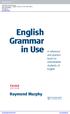 English Grammar in Use A reference and practice book for intermediate students of English THIRD EDITION cambridge university press Cambridge, New York, Melbourne, Madrid, Cape Town, Singapore, São Paulo
Student s full name... PART A - GRAMMAR I. Put the verbs in the sentences below into either Present Simple, Present Continuous, Past
 Egzamin z języka angielskiego Poziom: PRE-INTERMEDIATE Student s full name...... Group... GRAMMAR VOCABULARY TOTAL MAXIMUM SCORE 50 50 SCORE OBTAINED GRADE PART A - GRAMMAR I. Put the verbs in the sentences