
A Training Program in Community- Directed Intervention to Improve Access to Essential Health Services. Training Guide
|
|
|
- Bruno Chandler
- 10 years ago
- Views:
Transcription
1 A Training Program in Community- Directed Intervention to Improve Access to Essential Health Services Training Guide June

2 Contents ABBREVIATIONS AND ACRONYMS... 4 ABBREVIATIONS AND ACRONYMS... 4 ACKNOWLEDGMENTS... 5 INTRODUCTION... 6 WORKSHOP OVERVIEW... 6 Competency-Based Training Approach... 6 WORKSHOP SYLLABUS... 7 Workshop Goals... 7 Expected Outcomes... 7 Learning Objectives... 7 Training Contents... 8 Sample Course Schedule... 9 Training/Learning Methods and Materials... 9 Recommended Reading WORKSHOP LOGISTICS Learner Selection Workshop Duration Suggested CDI Team Workshop Composition ROLES OF COMMUNITY PARTNERS AND OTHER STAKEHOLDERS IN SUPPORTING CDDs Roles of Community Partners Roles of the Local Government (District) Roles of the State/Regional Ministry Role of the National Malaria Control Program HOW TO USE THIS GUIDE MODULE 1: OVERVIEW OF iccm STRATEGY THROUGH COMMUNITY-DIRECTED INTERVENTION MODULE 2: THE CDI PROCESS MODULE 3: THE VALUE OF COMMUNITY INVOLVEMENT MODULE 4: MAPPING COMMUNITY STRUCTURE, NETWORKS, AND ORGANIZATION MODULE 5: COMMUNITY-DIRECTED INTERVENTIONS TO DELIVER MALARIA PLUS PACKAGES MODULE 6: APPLYING CDI TO HOME MANAGEMENT OF MALARIA MODULE 7: CDI IN LLIN DISTRIBUTION AND USE MODULE 8: APPLYING CDI TO INTERMITTENT PREVENTIVE TREATMENT IN PREGNANCY

3 MODULE 9: ROLE OF THE CDI FOCAL PERSON MODULE 10: A REVIEW OF EFFECTIVE TRAINING SKILLS MODULE 11: SAMPLE CDD MODULE ON COMMUNITY CASE MANAGEMENT MODULE 12: INTRODUCTION TO HEALTH SERVICES SUPERVISION MODULE 13: BASIC M&E CONCEPTS FOR INTEGRATED COMMUNITY CASE MANAGEMENT OF MALARIA MODULE 14: SUPPLY CHAIN MANAGEMENT FOR CDI MODULE 15: ROLES OF LOCAL GOVERNMENT AREA CDI TEAM MEMBERS MODULE 16: RAPID DIAGNOSTIC TEST TRAINING MODULE 17: COMMUNITY MANAGEMENT OF PNEUMONIA MODULE 18: COMMUNITY MANAGEMENT OF DIARRHEA MODULE 19: BEHAVIOR CHANGE COMMUNICATION EVALUATION Overview of Evaluation Post-Training Follow-up and Action Post-Training Tasks for CDI Team Members Post-Training Jobs/Tasks for CDDs Pre- and Post-Tests Workshop Evaluation Appendix 1: Sample Performance Checklist Appendix 2: Sample Annual Action Plan

4 ABBREVIATIONS AND ACRONYMS ACT BCC CDD CDI CSO iccm IEC IPTp ITN LGA LLIN M&E ORS PME PMV RDT SP artemisinin-based combination therapy behavior change communication community-directed distributors community-directed intervention civil society organization integrated community case management information, education, and communication intermittent preventive treatment in pregnancy insecticide-treated net local government area long-lasting insecticide-treated net monitoring and evaluation oral rehydration solution participatory monitoring and evaluation patent medicine vendors rapid diagnostic test sulfadoxine-pyrimethamine 4

5 ACKNOWLEDGMENTS This training program was developed in stages over a period of five years. In 2007 Jhpiego received a grant from the ExxonMobil Foundation to provide community-directed malaria in pregnancy interventions in several local government areas (districts) in the highly malaria-endemic area of coastal Akwa Ibom, Nigeria. The original modules focused on the provision of intermittent preventive treatment of pregnant women, acquisition and use of insecticide-treated bed nets, and malaria case management. Later, with additional support from Ellicott Dredges, a Baltimore-based company, the training curriculum was expanded to include integrated community case management of common and febrile illnesses, including malaria, pneumonia, and diarrhea. Based on this experience, Jhpiego was asked by the World Bank Malaria Booster Program to assist the National Malaria Control Program in Nigeria to train teams in seven focal states on the principles and processes of community-directed intervention as a means of delivering integrated community case management. The basic technical modules were thereby expanded to include more information on the process of establishing and sustaining community-directed interventions. Finally, the Target States High Impact Project, USAID s MCH/Reproductive Health bilateral project, asked Jhpiego to provide technical assistance and training in rolling out community-directed interventions in the local governments in its focal states. 5

6 INTRODUCTION Integrated community case management (iccm) is the provision of basic prevention, diagnosis, treatment, and counseling for common illnesses such as malaria, pneumonia, and diarrhea within and by the community itself. iccm is implemented by training community health volunteers to provide these basic services within the community. Community-directed intervention (CDI) is an approach that enables communities to organize and direct health service delivery, including the distribution of health commodities, for the community, with the guidance of the government health service. The CDI approach was first used by the African Program for Onchocerciasis Control. When the approach was found to be successful, other programs adopted it for the delivery of other health interventions, including guinea worm control, distribution of insecticide-treated nets (ITNs), vitamin A distribution, immunization programs, and scale-up activities for the control of tuberculosis. The CDI approach gives ownership for planning and decision making about the whole service delivery process in order to achieve sustainability. This training program shows how to use a CDI approach for iccm interventions that strengthen essential health services. WORKSHOP OVERVIEW Competency-Based Training Approach Competency-based training is learning by doing. It focuses on the specific knowledge, attitudes, and skills needed to carry out a procedure or activity. The emphasis is on the learner s acquisition of knowledge, attitudes, and skills, rather than just on learning information. Competency in the new skill or activity is assessed objectively through evaluation of the learner s performance. For competency-based training to be successful, the clinical skill or activity being taught must be broken down into its essential steps. Each step is then analyzed to determine the most efficient and safe way to perform and learn it. This process is called standardization. Once a procedure such as conducting a focused antenatal care visit has been standardized, competency-based learning guides and evaluation checklists can be developed to make learning the necessary steps or tasks easier and evaluating the learner s performance more objective. An essential component of competency-based training is coaching. The classroom or clinical facilitator first explains a skill or activity and then demonstrates it using an anatomic model or other training aid. Once the procedure has been demonstrated and discussed, the facilitator observes and interacts with learners to guide them in learning the skill or activity, monitoring their progress and helping them acquire the necessary skills. The coaching process ensures that the learner receives feedback at various points in the learning process: Before practice The facilitator and learners meet briefly before each practice session to review the skill/activity, including the steps/tasks that will be emphasized during the session. 6

7 During practice The facilitator observes, coaches, and provides feedback to the learner as s/he performs the steps/tasks outlined in the learning guide. After practice Immediately after practice, the facilitator uses the learning guide to discuss the strengths of the learner s performance and offer specific suggestions for improvement. The CDI approach stresses building competency not only of individual community volunteers but of the community itself in managing its health programs. Therefore, it is important to envision learning for CDI as something that starts with the first contact health workers have with the community, through the selection and training of volunteers on to follow-up supportive supervision and community problem solving. WORKSHOP SYLLABUS This workshop and the related materials are intended to be used in a cascade fashion. Members of national CDI training teams can use the workshop curriculum to train regional and state trainers and facilitators, who in turn can use the materials when they conduct training for district and local government teams. Once the local training teams have learned the CDI approach, they will use the workshop curriculum to train and guide health facility staff and facility-level CDI focal persons, who can then adapt the materials for community-level training activities. Workshop Goals The goal of the workshop is to give CDI training teams, CDI focal persons, and community-directed distributors (CDDs) the knowledge, skills, and attitudes they need to effectively provide services at the community level using the CDI approach and to train a critical mass of lower-level implementers. Expected Outcomes Action plans illustrating how the learners will strengthen essential health services using the CDI approach (see Appendix 2: Sample Annual Action Plan) A strategy development document A cadre of core lower-level CDI implementers with the most up-to-date knowledge, skills, and attitudes for using CDI Learning Objectives The learners in this workshop are CDI training teams at the national, regional/state, district, and health facility levels. Some of the modules will help the learners understand the process of setting up CDI for integrated community case management (iccm). Other modules are geared to the technical content that they will pass on to CDDs. By the end of the workshop, the learners will be able to: 1. Define community participation; 2. Explain the value and benefit of community involvement in health programs; 3. Identify and define community structures (e.g., kin groups, hamlets); 4. Identify the various volunteer community health agents and their roles; 7

8 5. Describe the community social and economic factors that affect health; 6. List community resource persons who can be involved in control of malaria, pneumonia, and diarrhea; 7. Describe community-level prevention methods; 8. Demonstrate accurate diagnosing skills, drug prescription, and illness treatment; 9. Demonstrate recording and reporting skills for community data; and 10. Describe storage methods for drugs and commodities at the community level. General Objectives for Training CDDs After learning to organize CDI, the CDI training teams will help communities recruit CDDs for training. The trainers will then organize CDD training sessions in which they train CDDs to: 1. Mobilize their communities to use the interventions at their antenatal care clinic and other related services at their health facilities; 2. Provide information about malaria, pneumonia, and diarrhea prevention and control activities to women, men, and caregivers in their communities; 3. Conduct home visits and provide selected services during the visits; 4. Refer clients for treatment of malaria and other illnesses at the health facilities within their communities; 5. Keep records on prevention and control activities in the communities; and 6. Manage commodities supplied for use in their communities. Training Contents Session/ Topic Module Registration and Pre-Test 1 Overview of iccm Strategy through Community-Directed Intervention 2 The CDI Process 3 The Value of Community Involvement 4 Mapping Community Structure, Networks, and Organization 5 Community-Directed Interventions to Deliver Malaria Plus Packages 6 Applying CDI to Home Management of Malaria 7 CDI in LLIN Distribution and Use 8 Applying CDI to Intermittent Preventive Treatment in Pregnancy 9 Role of the CDI Focal Person 10 A Review of Effective Training Skills 11 Sample Module for CDDs on Community Case Management 12 Introduction to Health Services Supervision 13 Basic M&E Concepts for Integrated Community Case Management of Malaria 14 Supply Chain Management for CDI 8

9 15 Roles of Local Government Area CDI Team Members 16 Rapid Diagnosis Test Training 17 Community Management of Pneumonia 18 Community Management of Diarrhea 19 Behavior Change Communication Review/Evaluation, Post-Test, Certificates Sample Course Schedule Day/Time Monday Tuesday Wednesday Thursday Friday Morning 1 ~09:00 Introduction Modules 1 Review Module 6 Review Module 10 Review Module 14 Review Module 18 10:30 and 2 Break Morning 2 ~11:00 Module 3 Module 7 Module 11 Module 15 Module 19 1:00 Lunch Afternoon 1 ~2:00 3:30 Break Afternoon 2 ~4:00 5:00 Module 4 Module 8 Module 12 Module 16 Team work & planning meetings Module 5 Module 9 Module 13 Module 17 Closing Training/Learning Methods and Materials Learning Methods The following learning methods are used for this workshop: Illustrated lectures Large and small group discussions Case studies Role plays Group activities Learning Materials The following workshop learning materials are used along with this guide: 9

10 National guidelines for integrated community case management, if available Modules, in the form of PowerPoint presentations, which should be adapted to the country setting (available on the Jhpiego website, at Handouts the facilitators can make from the PowerPoint slide modules after they have adapted the slides Sample materials for demonstration and practice exercises Materials, including long-lasting insecticide-treated nets (LLINs) and insecticide-treated nets (ITNs) and hanging kits; rapid diagnostic tests; bowls, bottles, spoons for oral rehydration solution (ORS); soap for hand washing Samples of medicines such as artemisinin-based combination therapies (ACTs) in different age packs, ORS packets, amoxicillin/cotrimoxazole Recommended Reading Please download the following from the Jhpiego Malaria Resources Website: Community-Directed Interventions for Priority Health Problems in Africa: Results of a Multicountry Study Establishing Integrated Community Management of Malaria, Pneumonia and Diarrhea in Two Selected Local Government Areas, Akwa Ibom State, Nigeria Improving Quality Performance among Community Health Workers Providing Integrated Community Management of Febrile Illnesses in Nigeria Preventing Malaria in Pregnancy through Community-Directed Interventions: Evidence from Akwa Ibom State, Nigeria WORKSHOP LOGISTICS Learner Selection Training Teams and Focal Persons State/regional training teams should be interdisciplinary, involving staff from maternal health, child health, malaria control and other health agencies, pharmacy, monitoring and evaluation, and other relevant sections of ministries of health. The teams can also include representatives of nongovernmental organizations and donor agencies. Teams may consist of people. Later they will divide up the districts in their area and provide training on a rotational basis at that level. District CDI teams also should reflect the multiple disciplines involved in running an iccm intervention. District teams are responsible for training staff from the health facilities in their areas. The training team initially trains most or all of the staff on the technical updates needed to manage health issues covered under iccm. After this general training, the team may ask facilities to nominate one or two staff members for additional training to serve as CDI focal persons and be responsible for rolling out CDI in their surrounding communities. 10

11 CDDs CDDs are selected by their communities. Communities should be encouraged to develop selection criteria that will ensure that they select people they can rely on and respect. Communities might consider factors such as age, gender mix, duration of residence, ability to read and write in the local language, quality of character (e.g., trustworthiness), and other issues. Communities should select the number of CDDs that will meet their needs. For example, they may decide that they need a female CDD to deliver malaria in pregnancy interventions or child illness case management, while a male could distribute bed nets or other supplies. If training is held close to the villages where CDDs live, the costs of training will be similar, regardless of the number of CDDs trained. The workshop curriculum is designed to ensure that CDI focal persons guide CDDs in the implementation of their community tasks. Workshop Duration Five to seven days of training will be needed for the training teams at various levels, including the CDI focal persons. The training can be divided into a CDI organizational workshop and an iccm technical update workshop, if this makes the training more convenient for the learners. CDD training can be spread out over time for the convenience of both trainers and CDDs (e.g., by offering a series of CDD training sessions at weekly markets). Suggested CDI Team Workshop Composition learners 2 4 facilitators Depending on the number of districts in a region or facilities in a district, the training team may need to hold more than one workshop to accommodate all learners. Larger workshops provide less opportunity for trainee participation. ROLES OF COMMUNITY PARTNERS AND OTHER STAKEHOLDERS IN SUPPORTING CDDs The community partners and stakeholders for iccm using a CDI approach include communitybased organizations, faith-based organizations, civil society organizations (CSOs), and other nongovernmental organizations and agencies operating at the community level. These organizations and agencies have important roles to play in community prevention and management of malaria. Their activities may be coordinated by the national association of civil society organizations, which may have membership on the country s Country Coordinating Mechanism (a body that helps prepare proposals for the Global Fund to Fight AIDS, 11

12 Tuberculosis and Malaria). There may also be CSO coordinating bodies at the state/regional and district levels that could be engaged to help roll out CDI for iccm. Roles of Community Partners Participating in establishing and facilitating community-based health development committees in support of the CDDs Encouraging community ownership of iccm Creating awareness by sensitizing communities to the rationale and implementation process of the iccm strategy Ensuring that CDDs carry out iccm in accordance with national guidelines Ensuring that CDDs prepare good quality data with approved data capture tools and submit it to the health facilities Designing behavior change communication (BCC) materials (or adapting existing materials) with the input of the communities Training CDDs on follow-up and referral services Networking with other CSOs in the community or LGA to strengthen the iccm strategy Identifying barriers to the implementation of iccm and sharing them with the community to proffer solutions Roles of the Local Government (District) Distribute and disseminate to the village health committee and health facilities a strategy document for implementation of iccm Advocate for support and ownership of the program to traditional and religious leaders Using the supervisory checklist, conduct on-the-job supportive supervision of CDDs Coordinate all activities related to implementation of iccm, including activities of CSOs in the LGA Report to the ministry of health on the implementation of iccm Ensure sustained availability of commodities for communities and health facilities Monitor training and supply of commodities for CDDs Ensure proper storage of commodities supplied Roles of the State/Regional Ministry Distribute and disseminate to LGAs and health facilities a strategy document for implementation of iccm Adopt for implementation the national strategy document for iccm Advocate for support and ownership of the program by policymakers Using the supervisory checklist, conduct on-the-job supportive supervision of CDDs 12

13 Coordinate all activities related to implementation of iccm, including activities of CSOs in the state Report to district, regional, and national health authorities, including specific programs (e.g., malaria, child health), as appropriate Ensure sustained availability of commodities for LGAs and health facilities Monitor training and supply of commodities for CDDs Ensure quality assurance of commodities supplied Write terms of reference for the facilitation team at the LGAs Role of the National Malaria Control Program Advocate for support and ownership of the program by policymakers Develop and print strategy document for implementation Distribute and disseminate strategy document for implementation Coordinate all activities related to implementation of iccm, including review of policies to support implementation Using the supervisory checklist, conduct on-the-job supportive supervision Ensure sustained availability of commodities to states and LGAs Monitor training of CDDs and health workers Monitor supply and distribution of commodities to states and LGAs Ensure quality assurance of commodities supplied HOW TO USE THIS GUIDE This training guide should be used in conjunction with the 19 training modules that comprise the CDI training curriculum. The modules may be downloaded from the Jhpiego website at: The curriculum was created for use in a five- to six-day workshop. The 19 sections in this guide give facilitators guidance and instructions for planning and conducting each of the workshop modules. Before facilitating a CDI workshop, we recommend that facilitators read through the PowerPoint presentation for each module. The modules may be adapted to the local/national context, as needed. 13

14 MODULE 1: OVERVIEW OF iccm STRATEGY THROUGH COMMUNITY- DIRECTED INTERVENTION SESSION/Module TOPIC TIME 1 Overview of iccm strategy through community-directed intervention SESSION OBJECTIVES 45 minutes By the end of this module, learners will: Get to know each other List the workshop and learning objectives, course schedule, and materials List expected outcomes of the workshop Identify skills they wish to share with others Decide on the workshop norms METHODS AND ACTIVITIES MATERIALS/RESOURCES Illustrated presentation/discussions: Course overview Be sure to cover all of the following topics: Background and purpose of the workshop Introduction of learners Learners expectations Course structure and modules Session, workshop, and learning objectives Target audience for the course Workshop materials Workshop norms Learner certification Workshop outcomes (strategy development document and action plan) Workshop outlines Reasons for using a CDI approach for iccm High-impact malaria interventions Template for action plan (see Appendix 2) Summarize key points Multimedia equipment PowerPoint presentation Course introduction Flip chart board and papers Markers 14

15 MODULE 2: THE CDI PROCESS Module/ SESSION TOPIC TIME SESSION OBJECTIVES 2 The CDI process 60 minutes By the end of this module, learners will: Define the CDI approach Describe program coverage benefits of using CDI Outline the steps to establish CDI List key approaches in gaining community commitment for a CDI program Describe the steps in selecting and training community distributors Explain how CDI can be adapted for use in controlling malaria METHODS AND ACTIVITIES MATERIALS/RESOURCES Illustrated presentation/discussions: Community-directed interventions and key steps Role play: Divide the class into four or five groups. Each group will perform a role play about approaching a community to introduce a CDI program for malaria control: The first and second groups will perform a role play about the first meeting with the community gatekeepers. The third and fourth groups will perform a role play about holding the second community meeting. Be sure to cover all of the following topics: What is community-directed intervention? CDI and onchocerciasis Benefits of CDI Expanding beyond ivermectin Lessons learned in a CDI approach Start-up components of a CDI approach Approaching the health service Roles for the health service Training health care providers for their roles Approaching the community Roles for the community Discussing and gaining commitment to community roles Training community distributors Major interventions for malaria in pregnancy Delivery of community health education on malaria Summarize key points Multimedia equipment PowerPoint presentation Flip chart board and papers Markers Role play instructions 15

16 MODULE 3: THE VALUE OF COMMUNITY INVOLVEMENT SESSION/ Module TOPIC TIME 3 The value of community involvement and its role in community and home management of malaria SESSION OBJECTIVES 45 minutes By the end of this module, learners will: Identify and define community structures Define community participation Explain the value and benefit of community participation and involvement in health programs Identify the various volunteer community health agents and their roles Describe the community social and economic factors that affect health List community resource people who can be involved in malaria control METHODS AND ACTIVITIES MATERIALS/RESOURCES Illustrated presentation/discussions: The value of community involvement: Roles in home management of malaria Be sure to cover all of the following topics: Module objectives Definition of community Why community involvement is important (brainstorm) What constitutes a participatory approach Community role in participation Examples of community participation Community problem-solving Rationale and scientific basis for home management of malaria Community involvement and access gaps Community management and agents Factors that affect malaria control What communities can do Local resources to support program implementation Summarize key points Multimedia equipment PowerPoint presentation Flip chart board and papers Markers 16

17 MODULE 4: MAPPING COMMUNITY STRUCTURE, NETWORKS, AND ORGANIZATION SESSION/Module TOPIC TIME 4 Community structure, networks, and organization SESSION OBJECTIVES By the end of this module, learners will: 60 minutes State the definition of community used in to roll out community-directed interventions Describe the purpose of community mapping in building support and solving problems Explain the value of involving community members in mapping their own community List the steps and activities needed to map the organizations and resources in a community METHODS AND ACTIVITIES Illustrated presentation/discussions: Community structure, networks, organization, mapping, and headcounts Be sure to cover all of the following topics: Community mapping Components of mapping Resource and social mapping Why social mapping is important Using social mapping information Factors that influence what community looks like Rural and urban communities Charting the mapping results MATERIALS/RESOURCES Multimedia equipment PowerPoint presentation Flip chart board and papers Markers Summarize key points 17

18 MODULE 5: COMMUNITY-DIRECTED INTERVENTIONS TO DELIVER MALARIA PLUS PACKAGES SESSION/Module TOPIC TIME SESSION OBJECTIVES 5 Using CDI to deliver Malaria Plus Packages By the end of this module, learners will: 90 minutes Name the components of a Malaria Plus Package Describe key household and community practices that affect child growth promotion and development List steps and activities for disease prevention at the home/community to reduce illnesses and deaths Explain home management of malaria-related diseases such as diarrhea, chest infection, malnutrition, and anemia List activities to promote care-seeking and compliance with healthy practices METHODS AND ACTIVITIES Illustrated presentation/discussions: Using CDI to deliver Malaria Plus Packages Be sure to cover all of the following topics: Session objective Background and purpose Why Malaria Plus Packages? Household and community practices Growth promotion and development Disease prevention Prompt and appropriate home management of illnesses Care seeking and compliance MATERIALS/RESOURCES Multimedia equipment PowerPoint presentation Flip chart board and papers Markers CDD kits Community counseling card Summarize key points 18

19 MODULE 6: APPLYING CDI TO HOME MANAGEMENT OF MALARIA SESSION/Module TOPIC TIME SESSION OBJECTIVES 6 Applying CDI to home management of malaria By the end of this module, learners will: Outline the three components of malaria case management 80 minutes Describe the processes of case management with children and with pregnant women METHODS AND ACTIVITIES Illustrated presentation/discussions: Home management of malaria Small group work: Use of case studies Practice session: Basic management of cases and referral Be sure to cover all of the following topics: Session objective Essential components of malaria case management Diagnosis of malaria and benefits o Rapid diagnostic test kits o Microscopy Types of malaria Recognizing malaria in pregnant women o Uncomplicated malaria o Severe malaria Treatment of malaria o Malaria in pregnancy o Malaria in children What to do when convulsions occur Referral MATERIALS/RESOURCES Multimedia equipment PowerPoint presentation Flip chart board and papers Markers Rapid diagnostic test kits ACTs Community counseling card Summarize key points 19

20 MODULE 7: CDI IN LLIN DISTRIBUTION AND USE SESSION TOPIC TIME SESSION OBJECTIVES 7 Applying CDI to the distribution and use of LLINs 60 minutes By the end of this module, learners will: Explain how to obtain and safely maintain stocks of LLINs Estimate LLIN needs based on community census Discuss the need to educate community members on the importance of sleeping under LLINs every night (especially children and pregnant women) Discuss the need to encourage pregnant women to collect and use LLINs as soon as they realize they are pregnant Outline the process of teaching community members how to use the nets Outline follow-up procedures for facility staff and CDDs to encourage continued LLIN use Discuss the importance of making sure that all women of reproductive age have and use an LLIN so that they will be protected at the beginning of their next pregnancy METHODS AND ACTIVITIES MATERIALS/RESOURCES Illustrated presentation/discussion: Supplies, storage, and distribution of LLINs/ITNs at the community level Demonstration: Demonstrate hanging a net over a sleeping area, and allow learners to practice net hanging Be sure to cover all of the following topics: Obtaining and safely maintaining stocks of ITNs based on community census estimates Educating community members on hanging nets and use of nets Educating community members on the value of nets What information on causes of malaria to share Benefits of ITNs and net maintenance Comparison of treated and untreated nets Encouraging net use early in pregnancy Making home visits Ensuring net use Other ways to prevent malaria Summarize key points Multimedia equipment PowerPoint presentation Flip chart board and papers Markers A bed and mattress An ITN Net hangers/ropes Nails and hammers Nail removers 20

21 MODULE 8: APPLYING CDI TO INTERMITTENT PREVENTIVE TREATMENT IN PREGNANCY SESSION/Module TOPIC TIME SESSION OBJECTIVES 8 Applying CDI to IPTp 90 minutes By the end of this module, learners will: State their country s specific malaria data Identify IPTp special target groups Describe the basis for IPTp and the use of SP for IPTp State the difference between chemoprophylaxis and IPTp Decide who should be given IPTp Decide who should not be given IPTp Describe how to give IPTp Describe the benefits of IPTp METHODS AND ACTIVITIES Illustrated presentation/discussions: Malaria control during pregnancy Role play: Demonstrate the steps in giving IPTp Practice session: Learners practice administering IPTp in a role play Be sure to cover all of the following topics: Session objective Overview of malaria illness in Nigeria Why is malaria education important during pregnancy? Special target groups for control of malaria in pregnancy World Health Organization s IPTp recommendation The use of SP for IPTp The difference between chemoprophylaxis and IPTp Delivering IPTp through CDI Deciding who should receive IPTp Deciding who should not receive IPTp How to give IPTp Benefits of IPTp Health education on IPTp MATERIALS/RESOURCES Multimedia equipment PowerPoint presentation Flip chart board and papers Markers CDD kits Doses of SP Clean water and cups Community counseling card Summarize key points 21
22 MODULE 9: ROLE OF THE CDI FOCAL PERSON SESSION/Module TOPIC TIME 9 Role of CDI focal person 90 minutes SESSION OBJECTIVES By the end of this module, learners will: Determine who is a CDI focal person Describe the role of the CDI focal person Explain how the health facility as a whole supports the CDI focal person and CDI activities METHODS AND ACTIVITIES Illustrated presentation/discussions: Role of a CDI focal person Small group discussion: Why do we need a CDI focal person? MATERIALS/RESOURCES Multimedia equipment PowerPoint presentation/handouts Flip chart board and papers Markers Practice session: List the duties of a CDI focal person Be sure to cover all of the following topics: Session objective Why do we need a CDI focal person? Who is a CDI focal person? Key duties of a CDI focal person Mobilizing the community Training the CDDs Supervising preparation Supervising CDDs Coordinating supplies Coordinating partners Monitoring and evaluation Role of health facility Summarize key points 22
23 MODULE 10: A REVIEW OF EFFECTIVE TRAINING SKILLS SESSION/Module TOPIC TIME 10 Review of effective training skills 90 minutes SESSION OBJECTIVES By the end of this module, learners will: List principles and approaches of adult education for training health workers Describe a conducive learning environment that enables active skills practice and learning Identify locally appropriate learning aids Provide examples of training methods and experiences that are interactive Explain the need to monitor, evaluate, and revise training METHODS AND ACTIVITIES MATERIALS/RESOURCES Illustrated presentation/discussions: Effective training skills Brainstorming session: How can we make the environment conducive to learning and enable active skills practice? Questions and answers Multimedia equipment PowerPoint presentation/handouts Flip chart board and papers Markers Practice session: If time permits, allow learners to develop training topics and present/facilitate individually for 5 minutes. Be sure to cover all of the following topics: Session objective Time to practice Components of effective training Foundations for educating health providers How to develop objectives for learning Planning for teaching Preparing the learning environment Preparing and using teaching aids Using locally available materials Delivering an interactive session How to facilitate group learning Monitoring and revising instructions How to facilitate the development of health care delivery skills Managing clinical practice How to prepare and use knowledge assessments Summarize key points 23
24 MODULE 11: SAMPLE CDD MODULE ON COMMUNITY CASE MANAGEMENT SESSION/Module TOPIC TIME 11 Sample CDD module on community case 2 hours management SESSION OBJECTIVES By the end of this module, learners will: List the basic local resources needed to carry out CDD training Describe the basic malaria content that is appropriate for community-level volunteers Outline training methods that are appropriate for community volunteers Explain how community volunteer training can be evaluated METHODS AND ACTIVITIES Illustrated presentation/discussions: Sample CDD module on community case management Role play: Counseling on drug adherence and adverse reactions; compose songs to reinforce learning Practice session: Checking for actual body temperature, pallor of conjunctiva, finger nail beds, sunken fontanel, and other signs of dehydration Be sure to cover all of the following topics: Session objective Overview of session on community case management for CDDs Objectives for training session on malaria case management for CDDs How to recognize malaria How to check for fever The need for rapid diagnostic test Malaria treatment and appropriate antimalarial medicines, including dosage and regimen Treatment scenarios (use case studies) Counseling for treatment using drug pack and job aids Recordkeeping and reporting Follow-up activities to ensure drug adherence Referral and practical tips to ensure effective referral Evaluation of the session Summarize key points MATERIALS/RESOURCES Multimedia equipment PowerPoint presentation/handouts Flip chart board and papers/chalk and chalkboard Markers Samples of appropriate antimalarial medicines Treatment recording forms Job aids Information, education, and communication materials (e.g., counseling card) Quiet, well-ventilated room near the community 24
25 MODULE 12: INTRODUCTION TO HEALTH SERVICES SUPERVISION SESSION/Module TOPIC TIME 12 Introduction to health services supervision 90 minutes SESSION OBJECTIVES By the end of this module, learners will: Differentiate between traditional and supportive supervision Define supervision Describe who is a supervisor and the supervisor s responsibilities Describe the skills and personal characteristics expected of a supervisor Define desired standard performance State the relationship between training and supervision Describe the use of checklists during supervision and assessment for quality improvement (see Appendix 1: Sample Performance Checklist) Describe the process of root cause analysis and selection of problem-solving interventions METHODS AND ACTIVITIES MATERIALS/RESOURCES Illustrated presentation/discussions: Introduction to health services supervision Brainstorm: Discuss who is a traditional and supportive supervisor Question and answers: In your own words, what do you understand by supervision? Practice session: Use of supervision checklist (see Appendix 1: Sample Performance Checklist) Be sure to cover all of the following topics: Session objective Traditional versus supportive supervision Supervision The two levels of CDI supervision Who is a supervisor? Internal versus external supervision Responsibilities of a supervisor Skills required for supportive supervision Supervisors personal characteristics Role of supervision for quality improvement of performance standards Performance improvement framework Desired performance (using the framework to discuss) Relationship between training and supervision How to assess performance Supervisory tools (show example of checklist and how to use it) Multimedia equipment PowerPoint presentation/handouts Flip chart board and papers Markers Supervision checklists 25
26 How to conduct root cause analysis to identify performance gaps How to select appropriate intervention(s) to address identified performance gaps Monitoring and evaluation Summarize key points 26
27 MODULE 13: BASIC M&E CONCEPTS FOR INTEGRATED COMMUNITY CASE MANAGEMENT OF MALARIA SESSION/Module TOPIC TIME 13 Basic monitoring and evaluation concepts for integrated community case management of malaria 2 hours SESSION OBJECTIVES By the end of this module, learners will: Describe participatory monitoring and evaluation (PME) State the roles of beneficiaries in PME Define a community-based information system and state why it is important Explain the meaning of recordkeeping and state why it is important Describe reporting and state why it is important Define basic monitoring and evaluation (M&E) concepts and state the differences between monitoring and evaluation State why M&E is important in programming Differentiate between data and information Describe data and identify qualities of good data Identify sources of data Demonstrate how to fill out the register for home management of malaria and the referral form METHODS AND ACTIVITIES MATERIALS/RESOURCES Illustrative exercises: On feedback mechanism Illustrated presentation/discussion Be sure to cover all of the following topics: Differences between monitoring and evaluation using the when, what, who, and how approach Why monitoring and evaluation are important in programming Things that can be monitored and things that can be evaluated The meaning of key M&E questions Requirements for institutionalizing M&E The PME approach Principles of PME and its role in CDI PME methods and tools Types and levels of indicators Community-based management information systems and different types of information that can be generated at community level Multimedia equipment PowerPoint presentation Flip chart board and papers Markers Home management of malaria/community daily case register Summary forms Referral forms Exercises and assignment materials 27
28 Different actors and their differing information needs at the community level Recordkeeping and reporting: why they are important Requirements for setting up a user-friendly recordkeeping system What is data? The difference between data and information Sources of data Summarize Key Points 28
29 MODULE 14: SUPPLY CHAIN MANAGEMENT FOR CDI SESSION TOPIC TIME 14 Supply chain management for CDI 50 minutes SESSION OBJECTIVES By the end of this module, learners will: Describe the process of antimalarial drug procurement and storage Explain how to estimate their community s commodity needs Outline the stock recording method and reporting format Describe the distribution process for antimalarial medicines and other malaria commodities (e.g., long-lasting insecticide-treated nets and rapid diagnostic tests) State how to monitor and report adverse drug reactions Discuss the role of patent medicine vendors in malaria commodity management METHODS AND ACTIVITIES Illustrated presentation/discussions: Supply chain management for CDI Be sure to cover all of the following topics: Session objective Forecasting and estimation of antimalarial commodities Procurement and supply LGA/district supply chain Introduction of forms to account for antimalarial drugs The distribution process Maintaining stocks and storage facility Community preparation Monitoring of medicine safety MATERIALS/RESOURCES Multimedia equipment PowerPoint presentation Flip chart board and papers Markers CDD kits Community counseling card Summarize key points 29
30 MODULE 15: ROLES OF LOCAL GOVERNMENT AREA CDI TEAM MEMBERS SESSION/Module TOPIC TIME 15 Roles of local government area CDI team 90 minutes members SESSION OBJECTIVES By the end of this module, learners will: Describe LGA/district core team members and their roles Explain division of labor among various core team members Define a program coordinator and a facilitator (who they are and what they do) Describe components of an action plan and the process for developing action plans (see Appendix 2) METHODS AND ACTIVITIES MATERIALS/RESOURCES Illustrated presentation/discussions: Role of local government areas Small group discussion: Divide into groups and discuss the following: Tasks for program coordinator Tasks for BCC and mobilization Procurement, logistics, or supplies office Facilitator M&E Be sure to cover all of the following topics: Session objective Identification of people who could constitute state/lga/municipal core teams Training for state/lga/municipal core teams How to involve all trained LGA/district members Division of labor among team members The coordinator s tasks Tasks for BCC and mobilization Tasks for procurement, logistics, and supplies The facilitator s tasks Tasks for M&E and documentation How to develop action plan using the sample template (see Appendix 2) Summarize key points Multimedia equipment PowerPoint presentation/handouts Flip chart board and papers Markers 30
31 MODULE 16: RAPID DIAGNOSTIC TEST TRAINING SESSION/Module TOPIC TIME 16 Use of rapid diagnostic tests (RDTs) as a component of home 2.5 hours management of malaria SESSION OBJECTIVES By the end of this module, learners will: Explain why the malaria control program has elected to use RDTs in the country/district Describe an RDT Name appropriate actions for positive, negative, and invalid RDT results Describe the steps in performing a malaria RDT Demonstrate the correct and appropriate skills for drawing blood safely and effectively with a finger prick State the universal precautions Correctly interpret different RDT outcomes Demonstrate the skills for performing RDT safely and effectively, using the job aid as a guide State appropriate treatment based on RDT results METHODS AND ACTIVITIES MATERIALS/RESOURCES Illustrated presentation/discussions Practice session: Divide the class into groups and ask each group to perform a rapid diagnostic test. Each member of the group will conduct the test on a colleague. This continues until each group member has practiced use of RDTs. Demonstration and return demonstration: Trainer demonstrates malaria diagnosis using RDTs; learners pair up and take turns conducting RDT tests on one another Be sure to cover all of the following topics: Session objective Background and purpose The overall steps for CDDs RDT materials and the purpose for each item The role of desiccant, how to dispose of it, and why The test cassette and functions of its parts Proper identification of clients Use of hand gloves, and universal precautions Blood collection devices and procedure: Capillary tube Straw Loop Multimedia equipment PowerPoint presentation/handouts Flip chart board and papers Markers RDT job aids RDT test kit: one RDT kit for each learner (the RDT kit usually contains a new and unopened alcohol swab, a new and unopened blood lancet, and a buffer) A wrist watch or clock A new pair of hand gloves A pencil A sharps disposal container A non-sharps disposal bin 31
32 Pipette Other Method of disposal of used materials, including sharps and non-sharps RDT results and interpretations: Positive Negative Invalid Basic issues in the use of RDTs Summarize key points 32
33 MODULE 17: COMMUNITY MANAGEMENT OF PNEUMONIA SESSION/Module TOPIC TIME 17 Community management of pneumonia 90 minutes SESSION OBJECTIVES By the end of this module, learners will: Describe the global burden of pneumonia and reasons it cannot be neglected Describe the signs and symptoms of pneumonia and its relationship to other acute respiratory infections Define pneumonia Describe methods for prevention and treatment of pneumonia METHODS AND ACTIVITIES MATERIALS/RESOURCES Illustrated presentation/discussions: Community management of pneumonia Small group discussion: Why we cannot ignore pneumonia in efforts to control malaria Practice session: Steps for examining chest indrawing, cough, fast breathing, and timing; and referral Multimedia equipment PowerPoint presentation/handouts Flip chart board and papers Markers Community counseling cards CDD kit Antibiotics (Cotri tablets) Basin Methylated spirits Be sure to cover all of the following topics: Session objective Why we cannot ignore pneumonia in efforts to control malaria The relationship between pneumonia and other acute respiratory infections Global/annual pneumonia burden Classifications of pneumonia Recognition of pneumonia Signs and symptoms of pneumonia Causes and prevention of pneumonia Appropriate examination techniques for chest in-drawing, cough, fast breathing, and timing Treatment of mild pneumonia (antibiotics) Preventing HIV in children Identification of danger signs and when to refer Summarize key points 33
34 MODULE 18: COMMUNITY MANAGEMENT OF DIARRHEA Session/Module TOPIC TIME 18 Community management of diarrhea 45 minutes SESSION OBJECTIVES By the end of this module, learners will: State the burden of diarrheal illnesses Define types of diarrheal diseases Describe steps in recognizing and classifying diarrhea List causes of diarrhea and ways to prevent diarrhea Describe management of diarrhea METHODS AND ACTIVITIES MATERIALS/RESOURCES Illustrated presentation/discussions: Applying CDI to management of diarrhea Small group discussion: Why we cannot ignore diarrhea in efforts to control malaria Practice session 1: Appropriate handwashing and air drying; preparation of oral rehydration solution Practice session 2: Steps in conducting examination for sunken eyes and fontanel, inelastic skin, and other signs of dehydration Be sure to cover all of the following topics: Session objective Why we cannot ignore diarrhea in efforts to control malaria Global/annual diarrhea burden The classifications of diarrhea Recognition of diarrhea Signs and symptoms of diarrhea Causes and prevention of diarrhea Appropriate handwashing and drying process Breastfeeding and proper nutrition for infants Treatment of diarrhea (ORS preparation and zinc requirement) Danger signs of dehydration and when to refer Summarize key points Multimedia equipment PowerPoint presentation/handouts Flip chart board and papers Markers Community counseling cards CDD kit ORS sachets Soap for handwashing Provision for running water (container with tap) Basin Methylated spirits 34
35 MODULE 19: BEHAVIOR CHANGE COMMUNICATION Session/Module TOPIC TIME 19 Behavior change communication 45 minutes SESSION OBJECTIVES At the end of this session, learners will be able to: Define behavior change communication Differentiate between BCC and information, communication, and education (IEC) Identify reasons why people change or do not change behavior easily Discuss basic issues and concepts in BCC State key BCC-centered messages to promote acceptance of iccm by policymakers, frontline health care providers, and community members Identify basic methods of communicating BCC-centered messages to target audience METHODS AND ACTIVITIES Illustrated presentation/discussions: Behavior change communication Small group discussion: How people can avoid getting malaria and why they are not behaving in those ways Practice session 1: Songs to promote the use of malaria commodities MATERIALS/RESOURCES Multimedia equipment PowerPoint presentation/handouts Flip chart board and papers Markers Community counseling cards CDD kits Practice session 2: Telling stories to facilitate understanding of dangers of malaria Be sure to cover all of the following topics: Session objective Basic BCC concepts, messages, and methods Reasons people do not change behaviors Definition of IEC Definition of BCC The difference between IEC and BCC The role of BCC in malaria prevention and control How to differentiate between common fever causes The role of RDTs and acceptability among providers and community members Why RDT is elected for malaria treatment The use of visual aids, community counseling cards, songs, and storytelling in BCC Summarize key points 35
36 EVALUATION Several evaluation mechanisms can be used with this training program. Here we review evaluation activities and offer a sample pre-/post-test of simple knowledge items. We also identify some tools that can be used to assess satisfaction and learning during the workshop. Overview of Evaluation Community-directed intervention includes a coaching process to ensure that learners receive feedback regarding their performance. Coaching can be provided at the following times and in the following ways: Before training/practice: The facilitator administers questions to learners before the training/practice session to review the knowledge and skill/activity, including the steps/tasks that will be emphasized during the session. During training/practice: The facilitator observes, asks questions included in the slides or developed ahead of the session, and provides feedback to the learner as s/he performs the steps/tasks outlined in the learning guide. After training: Immediately after training/practice, the facilitator uses the learning guide/ set of questions to discuss the strengths of the learner s performance and offer specific suggestions for improvement. Follow-up: Facilitators follow up learners with a checklist to measure their performance as they move out to the field to practice. Follow-up visits can be made every two to three months or as learners come to the facility to replenish stocks. A sample checklist is included in Appendix 1. Learners assess facilitators: At the end of the training, learners use questionnaires to provide feedback to the facilitators on their performance. EVALUATION METHODS AND ACTIVITIES To accomplish the set objectives, the following methods of evaluation are suggested: Use of pre- and post-test questions to assess knowledge, skills, and competence before and after training/practice Use of questions and answers during training and practice sessions to provide feedback Use of questionnaires to assess facilitators performance and organization and to provide feedback Use of checklists to assess performance standard such as retention of knowledge and skills. Each level of assessment is used to provide feedback to ensure that learners improve at the next level. EVALUATION MATERIALS/RESOURCES Pre- and post-test questionnaires Checklists Questionnaire to assess facilitators/organization of the training Sample questionnaires and checklists are included in the module(s) 36
37 Post-Training Follow-up and Action Post-Training Tasks for CDI Team Members 1. Establish an iccm commodity stocking system in the district/facility. 2. Map the villages in the facility catchment areas. 3. Conduct outreach to villages to explain CDI and facilitate selection of CDDs. 4. Help villages/communities conduct a census for commodity estimation. 5. Organize CDD training that is accessible and convenient for all. 6. Set up a monitoring and evaluation system to guarantee smooth and accurate data flow and reporting from village to facility to district. 7. Organize regular CDD meetings at the health facility for continuing education, reporting, and restocking. 8. Conduct village supportive supervision meetings. Post-Training Jobs/Tasks for CDDs 1. Conduct home visits and referrals a. Identify and visit pregnant women and encourage them to register for and attend antenatal care and to deliver at the facility. b. Encourage women who have delivered outside of the health facility to go to the postnatal clinic so that they and their babies can receive proper care (ask their reasons for delivering outside the facility and report the reasons to the focal person). c. Check to see if child immunization records are up-to-date and encourage families to receive immunizations. 2. Provide home-based services a. Distribute ITNs/LLINs, assist household members with hanging bed nets and/or ensure that they have hung the nets correctly, and ensure that they know to sleep under the nets every night. b. Provide intermittent preventive treatment (IPTp) doses to pregnant women starting at 16 weeks. c. Ask family members about current illnesses. d. Administer rapid diagnostic tests (RDTs) for people who complain of fever. e. Treat people with positive RDTs with artemisinin-based combination therapy (ACT). 37
38 f. Determine through signs and symptoms (e.g., fast breathing) whether a child has diarrhea or pneumonia. g. Treat diarrhea with ORS and zinc; treat pneumonia with amoxicillin or cotrimoxazole as per national policy. h. Demonstrate hand washing. 3. Recordkeeping a. Keep records of all women and households visited and all services delivered. b. Record all diagnostic tests performed and treatments provided to children and pregnant women. c. Keep and regularly update the community registers with new pregnancies, deliveries, and entrants. d. Submit monthly reports to the focal persons at their supervising health facilities. e. Attend monthly meetings with the focal person to provide feedback from the community and to share challenges and success stories. 4. Hold community meetings (or orient community leaders to hold meetings) a. Provide community health education to promote antenatal and postnatal care, malaria prevention during pregnancy, health facility deliveries, immunizations, and other health services. b. Encourage community members to ensure that pregnant women and their families sleep under ITNs/LLINs every night. c. Collect feedback from the community about the health facilities services (to give to the facilities). 5. Collect and safely maintain health commodities and supplies a. Collect all health commodities and supplies (ITNs/LLINs, sulfadoxine-pyrimethamine [SP], ACT) from the supervising health facility. b. Report availability of the collected commodities to the community elders. c. Keep custody of commodities and supplies for use by community members. d. Submit monthly accounts to the focal person at the supervising health facility for all the health commodities and supplies collected and dispensed. 38
39 Pre- and Post-Tests SAMPLE PRE- AND POST-TEST QUESTIONS FOR APPLYING CDI TO MALARIA CONTROL Part A: Multiple Choice Instruction: Circle the appropriate answer to each question. 1. What is CDI? a. Community drug initiative b. Community-directed intervention c. Community does it d. All of the above e. None of the above 2. CDI happens when: a. Communities are given a health program b. Communities take charge of distributing health commodities themselves, with guidance from the health service c. Communities are directed on how to distribute health commodities d. All of the above e. None of the above 3. All of the following are recognized signs and symptoms of mild malaria, except one. Can you identify the incorrect one? a. Hotness of the body b. Weakness of the joints c. Bitterness of the tongue d. Lack of consciousness e. Body pains 4. What is the best treatment for diarrhea? a. Drinking plenty of fluids b. Drip c. Continuous breastfeeding d. Giving oral rehydration solution e. None of the above 5. What is the correct meaning of RDT? a. Rapid direct treatment b. Response=directed therapy c. Rapid diagnostic test d. Requiring direct treatment e. None of the above 39
40 Part B: True or False Instructions: In the space provided, print a capital T if the statement is true and a capital F if the statement is false. 6. Recording of services provided by the CDDs should be done when you are less busy. 7. Pregnant women should be given the first dose of SP only when the baby has started kicking in the womb. 8. If a baby vomits within 30 minutes of taking antimalarial drugs, the dose should be repeated immediately. 9. Insecticide-treated nets reduce the number of mosquitoes in the house, both inside and outside the net. 10. Children who are taking malaria medicines should discontinue treatment if they feel better within two days of starting treatment. When planning your workshop schedule, be sure to allot time for the pre- and post-tests. Pre-tests may be taken as part of registration. Post-tests should be administered near the end of the workshop but before learners depart. For example, facilitators might give the test just before lunch on the final day of the workshop and score them during lunch, so that they can be handed back to the learners before the end of the workshop. 40
41 Workshop Evaluation CDI WORKSHOP EVALUATION (To be completed by learners) Please rate the course components using the following scale: 5- Strongly Agree 4- Agree 3-No Opinion 2-Disagree 1-Strongly Disagree COURSE COMPONENT RATING 1. The pre-test questionnaire helped me to study more effectively. 2. The trainers used a variety of training methods (lectures, case studies, role plays, group discussions, games, and so on). 3. The small group activities, case studies, role plays, and games contributed significantly to my learning about applying CDI to malaria control. 4. The trainers clearly stated the learning objectives. 5. The trainers communicated clearly and effectively. 6. The trainers asked questions and involved me in the sessions. 7. The trainers used a variety of audiovisual materials (flipchart, LCD projector, print handouts, and so on). 8. There was sufficient time scheduled for practicing, hands-on experience, exercises, and skills. 9. The information presented in the course was mostly new to me. 10. The sessions were well organized. 11. The course has made me feel more competent or skillful at my work. 12. I feel confident that I have learned enough to train others to provide malaria prevention and treatment in the community. ADDITIONAL COMMENTS (use reverse side if needed) 1. What are the three major things you learned in this workshop? 2. What topics, if any, should be added (and why) to improve the course? 3. What topics, if any, should be omitted (and why) to improve the course? 4. The course length was (circle one): (1) Too long (2) Too short (3) Just right 41
42 Typically, course evaluation involves administering questionnaires to learners at the end of the workshop. However, one can also use ongoing evaluation measures such as the following: Wishes and Pluses: At the beginning of each day, conduct a brainstorming session in which learners list what they wish had been done better and what they believe was a plus about the previous day. The training committee can review these regularly and make improvements. Focus Group Discussion: Conduct one or two concurrent focus group discussions with about five or six learners each to elicit their feedback on both the workshop content and methods. This feedback will be especially important if the trainers will be repeating the training in additional districts. Brief Questionnaire: At the end of each day distribute a one-page form that simply asks learners to (1) list two to three main new ideas they learned that day, (2) say what they liked about the workshop, and (3) mention what could be improved the next day. 42
43 Appendix 1: Sample Performance Checklist This sample checklist from Nigeria can be modified and used during training and also in the field for follow-up supervision. Adapt this to the actual tasks that the trainees will perform in your country. 43
44 Appendix 2: Sample Annual Action Plan Team Member Names: Name of State: Date: Based on what you learned during this workshop, please develop a plan that you can use to roll out CDI training and implementation over the next year. Use the instructions and template below and the example that follows to guide you in developing your own plan. Instructions for completing an action plan First, identify goals for the plan. Some sample goals are listed below. You may have others that are relevant to your setting. Sample Goal No. 1: Mobilize support for CDI implementation among Roll Back Malaria partners at state level within the SMOH and beyond Sample Goal No. 2: Design and implement CDI training and planning skills to LGAs Sample Goal No. 3: Design, develop, and facilitate training for LGAs to implement CDI within their health facility catchment areas Sample Goal No. 4: Design, develop, and facilitate training for front-line health facilities to implement CDI in the communities within their health facility catchment areas Add the goals to your plan, leaving ample space for listing the activities and other information related to each goal. Activity Targets Inputs, Resources Goal 1: Quarters of Year MOV* VI** Responsible Q1 Q2 Q3 Q4 Person(s) Cost Goal 2: Goal 3: *MOV = Means of verification **VI = Verifiable indicator 44
45 After identifying and listing your goals, add the following information in the corresponding column under each goal: 1. Activity: State the activity that will be undertaken to convert input to output. (Examples: train facility-based CDI focal persons on case management of malaria; counseling on drug adherence and adverse reactions; supportive supervision at facility level; mentoring (one on one) at health facility) 2. Targets: State the target population or cadre of providers, or other activity beneficiary. (Using the first example above, the target population will be facility-based CDI focal persons.) 3. Inputs/resources: State the space, time, materials, equipment, finances, etc., that will be put into the project (e.g., stationery for printing training manuals, flip chart papers and board, etc., hall rental, participants daily subsistence allowance (DSA), hotel accommodations and transportation, and so on). 4. Quarters of the year: State your expected target dates for completion of the task, indicate the quarter in which each milestone will be completed, and be careful because completion of one might affect the other. 5. Means of verifications (MOV): State the means that will be used to verify whether the project activity has been completed. The source of this information should be identified before the activity is implemented. (In the example above, the MOV would include an attendance list and a report on training.) 6. Verifiable indicator (VI): State a parameter for measuring performance of the activity. (Using the example above, verifiable indicators would include (1) the number of trainings conducted and (2) the number of CDI focal persons trained on case management of malaria, counseling and adverse reactions, and so on.) 7. Responsible person: Indicate who is responsible to drive or accomplish the task otherwise and/or who is accountable for the completion of the task/activity (for example, the government agency responsible for malaria control and the implementation partner). 8. Cost: State the estimated or actual cost of the activity after taking into account all sub-costs of the activity. An example of a completed plan for achieving a single program goal is included on the next page. 45
46 Sample Action Plan Sample Program Goal 1: Provide training and skills at district/local government, health facility, and community levels Activity Targets Inputs/ Quarters of Year Description/ Indicator Responsible Resources Q1 Q2 Q3 Q4 MOV Person(s) Train facility CDI Facilitybased DSA, per x x Attendance No. of Govt. agency focal persons on CDI diems/travel list trainings for malaria case management focal funds, Report of conducted control/ of malaria, persons logistics training No. of CDI implementing counseling on drug focal persons agency adherence and trained on adverse reactions, case supportive management supervision at of malaria, facility level, counseling, mentoring (one on and adverse one) at health reaction facility, on-the-job training to address challenges, coordinate community meetings and referrals Train CDDs on identification of eligible target groups, case management of malaria, drug adherence counseling, use of LLINs, supportive supervision, mentoring (one on CDDs DSA, per diems/travel funds, logistics x x x Attendance list Report of training No. of trainings conducted No. of CDDs trained on case management of malaria, counseling, and adverse reaction Govt. agency for malaria control/ implementing agency Cost N30,000,000 N35,000,000 46
47 Activity one) at community level, on-the-job training, and community meetings Targets Inputs/ Resources Quarters of Year Q1 Q2 Q3 Q4 Description/ MOV Indicator Responsible Person(s) Cost Train patent medicine vendors (PMVs) on case management of malaria, drug adherence counseling, supportive supervision, mentoring, on-thejob training, community meetings and referrals * Biannual training of journalists on malaria intervention strategies (to upgrade knowledge, skills, and practice of journalists on malaria message PMVs Journalist DSA, per diems/travel funds, logistics DSA, per diems/travel funds, logistics Attendance list Report of training x x Attendance list Report of training No. of trainings held No. of PMVs trained No. of trainings held No. of journalists trained Govt. agency for malaria control/ implementing agency Govt. agency for malaria control/ implementing agency N25,000,000 N6,000,000 * Note that some iccm programs include work with medicine vendors and shops. 47
48 production and communicating) Conduct training on M&E for CDI health facility focal persons and CDDs and PMVs Facilitybased CDI focal persons, CDDs, and PMVs DSA, per diems/travel funds, logistics x x Attendance list Report of training No of trainings conducted No. of CDI focal persons trained No. of CDDs trained No. of PMVs trained Govt. agency for malaria control/ implementing agency N8,000,000 Biannual training of advocacy and mobilization committee members Advocacy and mobilization committee members DSA, per diems/travel funds x x Attendance lists Reports and documenta tion No. of trainings conducted No. of mobilization committee members trained Govt. agency for malaria control/ implementing agency N2,000,000 48
UNICEF Perspectives on Integrated Community Case Mangement (iccm) scale up across Africa
 UNICEF Perspectives on Integrated Community Case Mangement (iccm) scale up across Africa Valentina Buj, Malaria Health Specialist, UNICEF MMV Access Meeting, Dar Es Salaam 03 June 2011 Integrated Community
U.S. President s Malaria Initiative (PMI) Approach to Health Systems Strengthening
 U.S. President s Malaria Initiative (PMI) Approach to Health Systems Strengthening What is Health System Strengthening? Strengthening health systems means supporting equitable and efficient delivery of
C-IMCI Program Guidance. Community-based Integrated Management of Childhood Illness
 C-IMCI Program Guidance Community-based Integrated Management of Childhood Illness January 2009 Summary This document provides an overview of the Community-based Integrated Management of Childhood Illnesses
Interpersonal Communication Skills for Differential Diagnosis of Fever in Children
 Interpersonal Communication Skills for Differential Diagnosis of Fever in Children National Master Trainer TOT Guide for training District Trainers Uganda July, 2013 TOT Guide Page 2 About this TOT Guide
Malaria programmatic gap analysis : Guidance notes. Introduction
 Malaria programmatic gap analysis : Guidance notes Introduction A comprehensive programmatic gap analysis outlines the complete programmatic requirement needed to fully implement the strategic plan of
ExxonMobil s Contribution to the Fight Against Malaria
 ExxonMobil s Contribution to the Fight Against Malaria This presentation includes forward-looking statements. Actual future conditions (including economic conditions, energy demand, and energy supply)
performance and quality improvement to strengthen skilled attendance
 An affiliate of Johns Hopkins University using performance and quality improvement to strengthen skilled attendance United States Agency for International Development The Maternal and Neonatal Health (MNH)
MALARIA A MAJOR CAUSE OF CHILD DEATH AND POVERTY IN AFRICA
 MALARIA A MAJOR CAUSE OF CHILD DEATH AND POVERTY IN AFRICA CONTROLLING THE MALARIA BURDEN IN AFRICA KEY ACTIONS FOR UNICEF Strengthen UNICEF input to evidence-based antenatal services Forge partnership
TB CARE EARLY DETECTION AND PREVENTION OF TUBERCULOSIS (TB) IN CHILDREN. Risk factors in children acquiring TB:
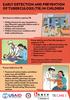 EARLY DETECTION AND PREVENTION OF TUBERCULOSIS (TB) IN CHILDREN Risk factors in children acquiring TB: Children living in the same household as a lung TB patient (especially children under 5) Children
SOCIAL MARKETING EVIDENCE BASE Methodology and Findings
 SOCIAL MARKETING EVIDENCE BASE Methodology and Findings Overview PSI and several other global health organizations use social marketing to encourage healthy behaviors, increase health impact, and make
U.S. President s Malaria Initiative (PMI) Approach and Steps to Counter Theft and Diversion of Medicines
 U.S. President s Malaria Initiative (PMI) Approach and Steps to Counter Theft and Diversion of Medicines We are working with national governments, medical stores and local institutions to strengthen oversight
Instructional Design Skills for Reproductive Health Professionals. Course Handbook for Participants
 Instructional Design Skills for Reproductive Health Professionals Course Handbook for Participants Presentation graphics summarizing the key points related to this topic are now available on ReproLine
Malaria: Global Fund proposal development
 Global Malaria Programme Malaria: Global Fund proposal development (Round 11) A compilation of WHO reference documents July 2011 CONTENTS I. CASE MANAGEMENT...1 II. SUPPLY CHAIN MANAGEMENT...1 III. COMMUNITY
Instructional Design Skills for Reproductive Health Professionals. Course Notebook for Trainers
 Instructional Design Skills for Reproductive Health Professionals Course Notebook for Trainers Presentation graphics summarizing the key points related to this topic are now available on ReproLine at www.reproline.jhu.edu.
Patient Education CONTENTS. Introduction... 12.2
 CONTENTS Introduction... 12.2 Purpose... 12.2 General Guidelines... 12.3 Language and Comprehension Barriers... 12.4 Education Topics... 12.5 Medical Diagnosis... 12.5 Contact Investigation... 12.6 Isolation...
Capacity Assessment Indicator. Means of Measurement. Instructions. Score As an As a training. As a research institution organisation (0-5) (0-5) (0-5)
 Assessing an Organization s in Health Communication: A Six Cs Approach [11/12 Version] Name & location of organization: Date: Scoring: 0 = no capacity, 5 = full capacity Category Assessment Indicator As
COUNTRY PROFILE: TANZANIA TANZANIA COMMUNITY HEALTH PROGRAMS DECEMBER 2013
 COUNTRY PROFILE: TANZANIA DECEMBER 2013 Advancing Partners & Communities Advancing Partners & Communities (APC) is a five-year cooperative agreement funded by the U.S. Agency for International Development
How To Teach Human Resources Management
 Human Resources Management Training Curriculum Technical Assistance to the New Partners Initiative (TA-NPI) New Partners Initiative Technical Assistance Project (NuPITA) The New Partners Initiative Technical
Management Sciences for Health Rational Pharmaceutical Management Plus Program (RPM Plus) Work Plan
 Management Sciences for Health Rational Pharmaceutical Management Plus Program (RPM Plus) Support to Malaria Control in Angola US President s Malaria Initiative Work Plan Revision: September 2006 1 Background
WHO/UNICEF JOINT STATEMENT
 WHO/UNICEF JOINT STATEMENT Integrated Community Case Management (iccm) An equity-focused strategy to improve access to essential treatment services for children This statement presents the latest evidence
The Integrated Management of Paediatric AIDS Care and Treatment (IMPACT) Approach in Zimbabwe
 The Integrated Management of Paediatric AIDS Care and Treatment (IMPACT) Approach in Zimbabwe Working to Improve ART Access for Zimbabwe s Children Dr. Farai Charasika Director of Programs World Education,
Home Health Education Programme Thatta - Pakistan
 Home Health Education Programme Thatta - Pakistan Programme Update July 2014-April 2015 Supported by: Association of Medical Doctors of Asia (AMDA) Funded by: Chigasaki -Chuo Rotary Club (CCRC)-Japan Implemented
Pre-service and In-service Capacity Building: Lessons Learned from Integrated Management of Childhood Illness (IMCI)
 Pre-service and In-service Capacity Building: Lessons Learned from Integrated Management of Childhood Illness (IMCI) Dr Wilson Were Medical Officer Child Health Services 1 IAEA International Symposium
International Service Program 2010-2012
 International Service Program 2010-2012 Prevention of Mother-to-Child Transmission of HIV and Gender-Based Violence in Rwanda UNICEF USA$500,000 Project Description THE GOAL To prevent mother-to-child
Cholera Prevention and Control: Introduction and Community Engagement. Module 1
 Cholera Prevention and Control: Introduction and Community Engagement Module 1 Introduction This guide instructs how to prevent cholera illnesses and deaths in your communities. These slides and modules
Technical guidance note for Global Fund HIV proposals in Round 11
 Technical guidance note for Global Fund HIV proposals in Round 11 UNAIDS I World Health Organization I August 2011 Rationale for including the development of a system in the proposal With the global momentum
cambodia Maternal, Newborn AND Child Health and Nutrition
 cambodia Maternal, Newborn AND Child Health and Nutrition situation Between 2000 and 2010, Cambodia has made significant progress in improving the health of its children. The infant mortality rate has
A MANUAL FOR STRENGTHENING HMIS DATA QUALITY
 Ministry of Health A MANUAL FOR STRENGTHENING HMIS DATA QUALITY Self Monitoring Information Use Feedback Mechanism This report was made possible by the generous support of the American people through the
Service Availability and Readiness Assessment (SARA)
 Service Availability and Readiness Assessment () A methodology for measuring health systems strengthening 1 Why Measuring health services availability and readiness: More demand for accountability and
GUIDELINES FOR TUBERCULOSIS PREVENTIVE THERAPY AMONG HIV INFECTED INDIVIDUALS IN SOUTH AFRICA
 GUIDELINES FOR TUBERCULOSIS PREVENTIVE THERAPY AMONG HIV INFECTED INDIVIDUALS IN SOUTH AFRICA 2010 1 TB prophylaxis GUIDELINES FOR TUBERCULOSIS PREVENTIVE THERAPY AMONG HIV INFECTED INDIVIDUALS Background
NO MORE MISSED MDG4 OPPORTUNITIES: OPTIMIZING EXISTING HEALTH PLATFORMS FOR CHILD SURVIVAL. Polio Campaigns
 NO MORE MISSED MDG4 OPPORTUNITIES: OPTIMIZING EXISTING HEALTH PLATFORMS FOR CHILD SURVIVAL Polio Campaigns With fewer than 600 days remaining to the Millennium Development Goal (MDG) deadline, new strategies
SCHOOL HEALTH MINIMUM PACKAGE
 REPUBLIC OF RWANDA MINISTRY OF EDUCATION SCHOOL HEALTH MINIMUM PACKAGE REPUBLIC OF RWANDA MINISTRY OF EDUCATION SCHOOL HEALTH MINIMUM PACKAGE May, 2014 CONTENTS 1. INTRODUCTION... 7 2. TYPES OF SCHOOLS...
EmONC Training Curricula Comparison
 EmONC Training Curricula Comparison The purpose of this guide is to provide a quick resource for trainers and course administrators to decide which EmONC curriculum is most applicable to their training
How To Use a Rapid Diagnostic Test (RDT)
 How To Use a Rapid Diagnostic Test (RDT) MALARIA Rapid Diagnostic Test for P. falciparum & non-falciparum malaria Device Pf-Pan A guide for training at a village and clinic level Modified for training
Referral Guidelines for TB/HIV co-management. (First Edition)
 Referral Guidelines for TB/HIV co-management (First Edition) Government of Lesotho April 2011 1 REFERRAL GUIDELINES FOR TB/HIV CO-MANAGEMENT INTRODUCTION Many TB patients are infected with HIV. Many people
Frequently asked questions about whooping cough (pertussis)
 Frequently asked questions about whooping cough (pertussis) About whooping cough What is whooping cough? Whooping cough is a highly contagious illness caused by bacteria. It mainly affects the respiratory
NATIONAL DRUG POLICY ON MALARIA (2013)
 203 - 2 - NATIONAL DRUG POLICY ON MALARIA (203) Preamble Malaria is one of the major public health problems of the country. Around.5 million laboratory confirmed cases of malaria are annually reported
CALL FOR PROPOSALS. Provision of Health Service Delivery Activities in Kismayo, Somalia. Migration Health Division (MHD)
 CALL FOR PROPOSALS Provision of Health Service Delivery Activities in Kismayo, Somalia Migration Health Division (MHD) Date: 26 th August 2015 Closing Date: 6 th September 2015 Eligible Parties: Eligible
Changing hygiene behavior in schools and communities
 Changing hygiene behavior in schools and communities Successes and lessons learned from Nasirnagar, Bangladesh, March 2009 BACKGROUND In 2006, Save the Children conducted formative research into hygiene
USAID/BENIN: INTEGRATED COMMUNITY CASE MANAGEMENT PERFORMANCE EVALUATION
 USAID/BENIN: INTEGRATED COMMUNITY CASE MANAGEMENT PERFORMANCE EVALUATION JULY 2012 This publication was produced for review by the United States Agency for International Development. It was prepared by
WHO/UNICEF JOINT STATEMENT
 WHO/UNICEF JOINT STATEMENT CLINICAL MANAGEMENT OF ACUTE DIARRHOEA Two recent advances in managing diarrhoeal disease newly formulated oral rehydration salts (ORS) containing lower concentrations of glucose
Preventive Health Care for Children in a Medical Home
 INSTRUCTOR S GUIDE Preventive Health Care for Children in a Medical Home First Edition, 2006 California Childcare Health Program Administered by the University of California, San Francisco School of Nursing,
Central African Republic Country brief and funding request February 2015
 PEOPLE AFFECTED 2 700 000 affected with 2,000,000 target by Humanitarian response 1 472 000 of those in need, targeted for health service support by WHO 430 000 internally displaced 426 000 refugees HEALTH
GHAIN SUPPORT TO HIV-RELATED PHARMACEUTICAL SERVICES IN NIGERIA
 GHAIN SUPPORT TO HIV-RELATED PHARMACEUTICAL SERVICES IN NIGERIA END OF PROJECT MONOGRAPH GHAIN SUPPORT TO HIV-RELATED PHARMACEUTICAL SERVICES IN NIGERIA END OF PROJECT MONOGRAPH GLOBAL HIV/AIDS INITIATIVE
IV. Counseling Cue Cards. ICAP International Center for AIDS Care and Treatment Mailman School of Public Health Columbia University
 IV. Counseling Cue Cards ICAP International Center for AIDS Care and Treatment Mailman School of Public Health Columbia University How to Use These Counseling Cue Cards ABOUT THE CUE CARDS This set of
Integrated Community Case Management: Findings from Senegal, the Democratic Republic of the Congo, and Malawi A Synthesis Report
 Integrated Community Case Management: Findings from Senegal, the Democratic Republic of the Congo, and Malawi A Synthesis Report September 2013 Contributors: Eric Starbuck, Serge Raharison, Kerry Ross,
- % of participation - % of compliance. % trained Number of identified personnel per intervention
 Fighting Disease, Fighting Poverty, Giving Hope KEY OBJECTIVE 1 : HUMAN RESOURCE MANAGEMENT KEY RESULT AREA : HUMAN RESOURCE ACTIVITIES OUTPUT KEY ACTIVITIES INDICATOR TARGET RESOURCE/ENABLERS Have adequate
HIV/AIDS: General Information & Testing in the Emergency Department
 What Is HIV? HIV/AIDS: General Information & Testing in the Emergency Department HIV is the common name for the Human Immunodeficiency Virus. HIV is a retrovirus. This means it can enter the body s own
SVN/MM040 Open to Internal and External Candidates
 SVN/MM040 Open to Internal and External Candidates Position Title : Medical Doctor (HIV) Duty Station : Mawlamyine Township, Mon State, Myanmar Classification : Field Service Staff, FS- 6 Type of Appointment
Botswana s Integration of Data Quality Assurance Into Standard Operating Procedures
 Botswana s Integration of Data Quality Assurance Into Standard Operating Procedures ADAPTATION OF THE ROUTINE DATA QUALITY ASSESSMENT TOOL MEASURE Evaluation SPECIAL REPORT Botswana s Integration of Data
Drug Supply Management
 Health Centre Management (HCM 02) Drug Supply Management The ACT PRIME Study Infectious Disease Research Collaboration, Uganda. ACT Consortium, London School of Hygiene & Tropical Medicine, UK. 1 Infectious
Monitoring and Evaluation Framework and Strategy. GAVI Alliance 2011-2015
 Monitoring and Evaluation Framework and Strategy GAVI Alliance 2011-2015 NOTE TO READERS The 2011-2015 Monitoring and Evaluation Framework and Strategy will continue to be used through the end of 2016.
Improving Clinical Management of Newborns at Hospitals to Reduce Neonatal Deaths
 Improving Clinical Management of Newborns at Hospitals to Reduce Neonatal Deaths Bridging the Research-Policy Divide Australian National University (ANU) Canberra BUN Sreng Department of Communicable Disease
INTEGRATED MANAGEMENT OF CHILDHOOD ILLNESS (IMCI) Planning, Implementing and Evaluating Pre-Service Training
 INTEGRATED MANAGEMENT OF CHILDHOOD ILLNESS (IMCI) Planning, Implementing and Evaluating Pre-Service Training WORKING DRAFT: AUGUST 2001 Department of Child and Adolescent Health and Development (CAH) Family
Country Case Study E T H I O P I A S H U M A N R E S O U R C E S F O R H E A L T H P R O G R A M M E
 Country Case Study E T H I O P I A S H U M A N R E S O U R C E S F O R H E A L T H P R O G R A M M E GHWA Task Force on Scaling Up Education and Training for Health Workers S U M M A R Y Ethiopia suffers
Improving mental health care through ehealth-grand Challenges Canada Grant
 Improving mental health care for young adults in Badakshan Province of Afghanistan using ehealth Survey Questionnaire for Facility based Health Providers To be conducted with Health Providers in both Intervention
The Challenge of Appropriate Pneumonia Case Management and the Impact for Child Health
 The Challenge of Appropriate Pneumonia Case Management and the Impact for Child Health Dr. Shamim Qazi Department of Maternal, Newborn, Child and Adolescent Health 1 ASTMH New Orleans November 2014 Major
This Malaria Operational Plan has been approved by the U.S. Global Malaria Coordinator and reflects collaborative discussions with the national
 This Malaria Operational Plan has been approved by the U.S. Global Malaria Coordinator and reflects collaborative discussions with the national malaria control programs and partners in country. The final
Summary and Key Points
 Summary and Key Points The World Malaria Report 2011 summarizes information received from 106 malaria-endemic countries and other sources and updates the analyses presented in the 2010 report. It highlights
Scaling up diagnostic testing, treatment and surveillance for malaria
 Scaling up diagnostic testing, treatment and surveillance for malaria World Health Organization 2012 All rights reserved. This health information product is intended for a restricted audience only. It
Yes, Tuberculosis is a serious problem all over the world. Between 6 and 10 million in South Africa are infected by the TB germ.
 What is TB? Do many people get tuberculosis (TB)? Yes, Tuberculosis is a serious problem all over the world. Between 6 and 10 million in South Africa are infected by the TB germ. It is infectious, so it
Testimony of Henry B. Perry, MD, PhD, MPH Senior Associate, Department of International Health, Johns Hopkins Bloomberg School of Public Health
 Testimony of Henry B. Perry, MD, PhD, MPH Senior Associate, Department of International Health, Johns Hopkins Bloomberg School of Public Health Congressional Hearing: The First One Thousand Days of Life
GLOBAL GRANT MONITORING AND EVALUATION PLAN SUPPLEMENT
 ENGLISH (EN) GLOBAL GRANT MONITORING AND EVALUATION PLAN SUPPLEMENT Global grant sponsors for humanitarian projects and vocational training teams must incorporate monitoring and evaluation measures within
PUBLIC HEALTH AND NUTRITION SECTOR OVERVIEW AND STRATEGIC APPROACH
 PUBLIC HEALTH AND NUTRITION SECTOR OVERVIEW AND STRATEGIC APPROACH Niger Cassandra Nelson/Mercy Corps An Overview The current state of global health presents a unique challenge. While there are many advances
Streptococcal Infections
 Streptococcal Infections Introduction Streptococcal, or strep, infections cause a variety of health problems. These infections can cause a mild skin infection or sore throat. But they can also cause severe,
Frequently Asked Questions (FAQs)
 Frequently Asked Questions (FAQs) Research Rationale 1. What does PrEP stand for? There is scientific evidence that antiretroviral (anti-hiv) medications may be able to play an important role in reducing
SCHOOL IMPROVEMENT GRANT (SIG) PRACTICE:
 SCHOOL IMPROVEMENT GRANT (SIG) PRACTICE: JOB-EMBEDDED PROFESSIONAL DEVELOPMENT CRIM OPEN CAMPUS HIGH SCHOOL ATLANTA PUBLIC SCHOOLS ATLANTA, GEORGIA Crim Open Campus High School (Crim) 1 faced an ongoing
Supervision of Community Health Workers. Lauren Crigler, Jessica Gergen, and Henry Perry
 Supervision of Community Health Workers Lauren Crigler, Jessica Gergen, and Henry Perry 24 September 2013 Key Points Supervision for community health workers (CHWs) is one of the most challenging program
*Note: Screen magnification settings may affect document appearance.
 Good afternoon and welcome to today s Coffee Break presented by the Evaluation and Program Effectiveness Team in the Division for Heart Disease and Stroke Prevention at the CDC. We are very fortunate today
Section 7. Terms of Reference
 APPENDIX-A TERMS OF REFERENCE UNION-LEVEL TECHNICAL ASSISTANCE TO PROVIDE INSTITUTIONAL SUPPORT TO THE MYANMAR NATIONAL COMMUNITY DRIVEN DEVELOPMENT PROJECT I. INTRODUCTION IDA GRANT H814MM FY 2013-16
PHARMACY TECHNICIAN CCAPP Accredited Program Provisional Status
 PHARMACY TECHNICIAN CCAPP Accredited Program Provisional Status Program Overview As a result of pharmacists taking a more active role in clinical drug therapy and the counselling of their patients, the
GLOBAL HEALTH ESSENTIAL CORE COMPETENCIES
 GLOBAL HEALTH ESSENTIAL CORE COMPETENCIES All medical graduates should understand the major factors that influence the health of individuals and populations worldwide. They should have a basic understanding
Healthy Children Iniative
 Healthy Children Iniative Introduction The Departments of Education, Culture and Employment and Health and Social Services are working together to achieve a vision where: Healthy children of healthy parents
Guidelines on Counseling. Approved by PEIPB
 Guidelines on Counseling Approved by PEIPB November 2005 1 Patient Counseling Patient counseling is a key competency element of the Pharmaceutical Care process. Given the advertising for medication in
PART III COUNSELING ON TB
 PART III COUNSELING ON TB Objectives: By the end of Part III of the training, the participants will: Understand the Cough-to-Cure Pathway and be able to successfully apply the three phases of counseling
GUIDANCE FOR COMPLETION OF THE ENHANCED FINANCIAL REPORTING TEMPLATE
 GUIDANCE FOR COMPLETION OF THE ENHANCED FINANCIAL REPORTING TEMPLATE Version: November 2007 TABLE OF CONTENTS INTRODUCTION...3 REPORTING ON THE GRANT AS A WHOLE...4 REPORTING PERIODS AND TIMELINES...7
USING OPEN AND DISTANCE LEARNING FOR TEACHER PROFESSIONAL DEVELOPMENT IN THE CONTEXT OF EFA AND THE MDG GOALS: CASE OF THE PEDAGOGIC DRUM IN CAMEROON
 USING OPEN AND DISTANCE LEARNING FOR TEACHER PROFESSIONAL DEVELOPMENT IN THE CONTEXT OF EFA AND THE MDG GOALS: CASE OF THE PEDAGOGIC DRUM IN CAMEROON Michael Nkwenti Ndongfack, Ministry of Basic Education,
Rapid Assessment of Sexual and Reproductive Health
 MOROCCO Rapid Assessment of Sexual and Reproductive Health and HIV Linkages This summary highlights the experiences, results and actions from the implementation of the Rapid Assessment Tool for Sexual
Nutrition Promotion. Present Status, Activities and Interventions. 1. Control of Protein Energy Malnutrition (PEM)
 Nutrition Promotion The National Nutrition Centre (NNC) of the Department of Health has implemented Nutrition program area under National Health Plan covers two broad areas namely: Nutrition and Household
Medical Clinical Assistant
 Medical Clinical Assistant Pennsylvania CIP 51.0801 This document describes the correlation between curriculum, supplied by Applied Educational Systems, and the Medical Clinical Assistant standard, published
Support to Malaria Control in Malawi US President s Malaria Initiative. Work Plan FY 2007
 Management Sciences for Health Rational Pharmaceutical Management Plus Program (RPM Plus) Support to Malaria Control in Malawi US President s Malaria Initiative Work Plan FY 2007 March 2007 Background
Pediatric Latent TB Diagnosis and Treatment
 Date Updated: April 2015 Guidelines Reviewed: 1. CDC Latent TB Guidelines 2. Harborview Pediatric Clinic Latent TB Management, 2010 3. Pediatric Associates Latent TB Guidelines, 2013 4. Seattle Children
Ghana Fight Against Epilepsy Initiative
 Ghana Fight Against Epilepsy Initiative Providing Sustainable Mental Health Care in Ghana Dr Cynthia Sottie Ghana Health Service Project overview WHO Programme on Reducing the Epilepsy Treatment Gap 4
How To Treat A Substance Abuse Problem
 SAMHSA Model Programs Brief Strategic Family Therapy Brief Description Recognition Program IOM Intervention Type Content Focus Interventions by Domain Key Program Approaches Outcomes Evaluation Design
Positive Deviance/Hearth Consultant s Guide. Guidance for the Effective Use of Consultants to Start up PD/Hearth Initiatives.
 Positive Deviance/Hearth Consultant s Guide Guidance for the Effective Use of Consultants to Start up PD/Hearth Initiatives. The Child Survival Collaborations and Resource Group Nutrition Working Group
REPUBLIC OF KENYA MINISTRY OF HEALTH NATIONAL POLICY ON INJECTION SAFETY AND MEDICAL WASTE MANAGEMENT
 REPUBLIC OF KENYA MINISTRY OF HEALTH NATIONAL POLICY ON INJECTION SAFETY AND MEDICAL WASTE MANAGEMENT MINISTRY OF HEALTH NATIONAL POLICY INJECTION SAFETY AND MEDICAL WASTE MANAGEMENT FEBRUARY 2007 National
Remove this cover sheet before redistributing and replace it with your own. Please ensure that DPHHS is included on your HAN distribution list.
 State of Montana Health Alert Network DPHHS HAN ADVISORY Cover Sheet DATE: May 15, 2012 SUBJECT: Pertussis INSTRUCTIONS: DISTRIBUTE to your local HAN contacts. This HAN is intended for general sharing
CHECKLIST OF KEY ACTIONS FOR THE USE OF LIQUID MEDIA FOR CULTURE AND DRUG SUSCEPTIBILITY TESTING (DST)
 CHECKLIST OF FOR THE USE OF LIQUID MEDIA FOR CULTURE AND DRUG SUSCEPTIBILITY TESTING (DST) Rationale for liquid culture systems Laboratory diagnosis of tuberculosis (TB) relies on the direct microscopic
Developing a Monitoring and Evaluation Work Plan
 CORE MODULE 3: Developing a Monitoring and Evaluation Work Plan Monitoring HIV/AIDS Programs A FACILITATOR S TRAINING GUIDE A USAID RESOURCE FOR PREVENTION, CARE AND TREATMENT In July 2011, FHI became
How To Learn To Be A Health Centre Consultant
 Health Centre Management (HCM 03) Information Management Trainer Manual - HCM 03 The ACT PRIME Study Infectious Disease Research Collaboration, Uganda. ACT Consortium, London School of Hygiene & Tropical
9 million people get sick with TB.
 Every year 9 million people get sick with TB. 3 MILLION DON T GET THE CARE THEY NEED. HELP US TO REACH THEM. World TB Day 2015 WORLD TB DAY 24 MARCH 2015 2 the missed three million TB is curable, but our
6.63.2.1 ISSUING AGENCY:
 TITLE 6 PRIMARY AND SECONDARY EDUCATION CHAPTER 63 SCHOOL PERSONNEL - LICENSURE REQUIREMENTS FOR ANCILLARY AND SUPPORT PERSONNEL PART 2 LICENSURE FOR SCHOOL NURSES, GRADES PRE K-12 6.63.2.1 ISSUING AGENCY:
Information Management
 Health Centre Management (HCM 03) Information Management Learner Manual - HCM 03 The ACT PRIME Study Infectious Disease Research Collaboration, Uganda. ACT Consortium, London School of Hygiene & Tropical
FREQUENTLY ASKED QUESTIONS ABOUT PERTUSSIS (WHOOPING COUGH)
 FREQUENTLY ASKED QUESTIONS ABOUT PERTUSSIS (WHOOPING COUGH) What is pertussis? General Questions About Pertussis Pertussis, or whooping cough, is a contagious illness that is spread when an infected person