
arxiv:math/ v1 [math.pr] 1 Feb 2007
|
|
|
- Sharleen Watson
- 10 years ago
- Views:
Transcription
1 arxiv:math/ v1 [math.pr] 1 Feb 2007 GRAPHS WITH SPECIFIED DEGREE DISTRIBUTIONS, SIMPLE EPIDEMICS AND LOCAL VACCINATION STRATEGIES TOM BRITTON, SVANTE JANSON AND ANDERS MARTIN-LÖF Abstract. Consider a random graph, having a pre-specified degree distribution F but other than that being uniformly distributed, describing the social structure (friendship) in a large community. Suppose one individual in the community is externally infected by an infectious disease and that the disease has its course by assuming that infected individuals infect their not yet infected friends independently with probability p. For this situation the paper determines R 0 and τ 0, the basic reproduction number and the asymptotic final size in case of a major outbreak. Further, the paper looks at some different local vaccination strategies where individuals are chosen randomly and vaccinated, or friends of the selected individuals are vaccinated, prior to the introduction of the disease. For the studied vaccination strategies the paper determines R v: the reproduction number, and τ v: the asymptotic final proportion infected in case of a major outbreak, after vaccinating a fraction v. 1. Introduction Simple undirected random graphs can be used to describe the social network in a large community (e.g. [19]), vertices corresponding to individuals and edges to some type of social relation, from now on denoted friendship. Given such a graph, a model for the spread of the disease may be defined, where individuals at first are susceptible but may then become infected by a friend. An infected individual has the potential to spread the disease to its not yet infected friends before it recovers and becomes immune. The final outbreak, both its size and who gets infected, depends on properties of the social graph as well as on properties of disease transmission. In order to prevent an outbreak it is possible to vaccinate, or immunize in some other way, individuals prior to arrival of the disease. Who and how many that are to be vaccinated specifies the vaccination strategy. The present paper studies questions arising from such modeling. In particular, we consider random graphs where the degree distribution (the number of friends) follows some pre-specified distribution F, typically having heavy tails, but where the random graph G is otherwise uniformly distributed. The Date: January 25, Mathematics Subject Classification. 60C05; 05C80; 92D30. Key words and phrases. Degree distribution, epidemic model, final size, limit theorem, networks, random graphs, vaccination. 1

2 2 TOM BRITTON, SVANTE JANSON AND ANDERS MARTIN-LÖF epidemic model is the simplest possible model for a susceptible-infectiousremoved (SIR) disease (e.g. [2]). One randomly selected individual is initially externally infected. Any individual who becomes infected infects each of his/her not yet infected friends independently with probability p, and after that the individual recovers and becomes immune, a state called removed. For this graph and epidemic model we study different vaccination strategies: the uniform strategy and the acquaintance strategy [7]. In both strategies individuals are chosen randomly from the community. In the uniform strategy the selected individuals are vaccinated and in the acquaintance strategy a randomly chosen friend of the selected individual is vaccinated. Both vaccination strategies are local in the sense that the global social network need not be known in order to perform the strategy. We also study a vaccination strategy where, instead of selecting individuals at random, friendships are selected and one or two of the corresponding friends get vaccinated. As the population size n tends to infinity, we prove that the initial phase of the epidemic may be approximated by a suitable branching process. The largest eigenvalue of the branching process, often denoted R 0 and called the basic reproduction number when applied to epidemics [2], determines whether a major outbreak can occur or not: if R 0 1 only minor outbreaks can occur whereas if R 0 > 1 outbreaks of order O(n) can also occur with positive probability. In case of a major outbreak the total number of individuals infected during the outbreak, the final size, is shown to satisfy a law of large number. The corresponding (random) proportion is shown to converge in probability to a deterministic limit τ 0. Similar results are obtained when a vaccination strategy with vaccination coverage v has been performed prior to disease introduction. In this situation the strategy-specific reproduction number R v, and the major outbreak size τ v, are determined. From this it is possible to determine the (strategy-specific) critical vaccination coverage v c which determines the necessary proportion to vaccinate in order to surely prevent a major outbreak, so v c = inf v {v;r v 1}. Stochastic epidemic models on networks with pre-specified degree distributios have mainly been studied in the physics literature (e.g. [16], [18], [7]), Andersson [1] being one exception. Some of the problems studied in the present paper have been analysed before whereas others have not, in particular the final size proportion τ v as a function of v. Beside contributing with some new results another aim of the paper is to give formal proofs to results which have previously only been obtained heuristically. The rest of the paper is structured as follows. In Section 2 we define the models for the random graph, the epidemic and the vaccination strategies. In Section 3 we present the main results, motivate them with some heuristics and give some examples and illustrations. The proofs are given in Sections 4 and Models

3 GRAPHS, EPIDEMICS AND VACCINATION STRATEGIES Graphs. Let G denote a random multigraph, allowing for multiple edges and loops, and let n = G denote the number of vertices of G, i.e. the population size. Later we shall consider limits as n. We define our random multigraph as follows. Let n N and let (d i ) n 1 = (d(n) i ) n 1 be a sequence of non-negative integers such that n i=1 d i is even. We define a random multigraph with given degree sequence (d i ) n 1, denoted by G (n,(d i ) n 1 ), by the configuration model (see e.g. [4]): take a set of d i half-edges for each vertex i, and combine the half-edges into pairs by a uniformly random matching of the set of all half-edges. Note that G (n,(d i ) n 1 ) does not have exactly the uniform distribution over all multigraphs with the given degree sequence; there is a weight with a factor 1/j! for every edge of multiplicity j, and a factor 1/2 for every loop, see [10, 1]. However, conditioned on the multigraph being a (simple) graph, we obtain a uniformly distributed random graph with the given degree sequence, which we denote by G(n,(d i ) n 1 ). It is also worth mentioning that the distribution of G (n,(d i ) n 1 ) is the same as the one obtained by sampling the edges as ordered pairs of vertices uniformly with replacement, and then conditioning on the vertex degrees being correct. Let us write 2m := n i=1 d i, so that m = m(n) is the number of edges in the multigraph G (n,(d i ) n 1 ). We assume that we are given (d i) n 1 satisfying the following regularity conditions, cf. Molloy and Reed [14, 15]. Condition 2.1. For each n, (d i ) n 1 = (d(n) i ) n 1 is a sequence of non-negative integers such that n i=1 d i is even and, for some probability distribution (p j ) j=0 independent of n, and with n j := #{i : d i = j}, (i) n j /n p j for every j 0 as n ; (ii) µ := j jp j (0, ); (iii) 2m/n µ as n. (iv) p 2 < 1. Remark 2.2. Note that 2m = i d i = j jn j. Thus, Condition 2.1 implies that the sum j jn j/n converges uniformly for n 1, i.e. lim sup jn j /n = 0. (2.1) J n j>j Conversely, (2.1) together with (i) and (ii) implies (iii). (This follows from, e.g., [8, Theorem 5.5.4], taking X n to be the degree of a random vertex.) Note that our condition is slightly weaker than the one in Molloy and Reed [14, 15]; they also assume (in an equivalent formulation) that if j j2 p j <, then the sums j j2 n j /n converge uniformly; moreover they assume that j 2 n j /n j 2 p j uniformly. Condition 2.1 is all we need to study the random multigraph G (n,(d i ) n 1 ). In order to treat the random simple graph G(n,(d i ) n 1 ), which is our main model, we need an additional assumption.
![We define a random multigraph with given degree sequence (d i ) n 1, denoted by G (n,(d i ) n 1 ), by the configuration model (see e.g. [4]): take a set of d i half-edges for each vertex i, and combine the half-edges into pairs by a uniformly random matching of the set of all half-edges.](/docs-images/50/14915859/images/page_3.jpg "Note that G (n,(d i ) n 1 ) does not have exactly the uniform distribution over all multigraphs with the given degree sequence; there is a weight with a factor 1/j!")
4 4 TOM BRITTON, SVANTE JANSON AND ANDERS MARTIN-LÖF Condition 2.3. i d2 i = O(n). Note that i d2 i = j j2 n j, so Conditions 2.1 and 2.3 imply, by Fatou s lemma, that j j2 p j < ; in other words, the asymptotic degree distribution has finite variance. When Conditions 2.1 and 2.3 hold, the probability that G (n,(d i ) n 1 ) is a simple graph is bounded away from 0, see Subsection 5.2 for details, and thus all results that can be stated in terms of convergence in probability for G (n,(d i ) n 1 ) transfer to the random simple graph G(n,(d i) n 1 ) too Alternative graph models. We will in the remainder of the paper consider G(n,(d i ) n 1 ) as our underlying graph model, but we believe that similar results hold for other random graph models too, and that they could be proved by suitable modifications of the branching process arguments below. Good candidates are the classical random graphs G(n, p) and G(n, m), with p = µ/n and m = nµ/2 (rounded to an integer), respectively, and random graphs of the general type G(n,κ) defined in [5]. We will not pursue this here, and leave such attempts to modify the proofs to the interested reader, but we will discuss one interesting case (including G(n, p)) where the result easily follow from the results proved below for G(n,(d i ) n 1 ). This example is a random graph defined by Britton, Deijfen and Martin- Löf [6, Section 3], see also [5, Subsection 16.4], as follows. Let W be a non-negative random variable with finite expectation µ W := E W. We first assign random weights W i, i = 1,...,n to the vertices; these weights are i.i.d. with the same distribution as W. Secondly, given {W i } n 1, we draw an edge between vertices i and j with probability p ij := W iw j n + W i W j ; (2.2) this is done independently (conditioned on {W i }) for all pairs {i,j} with 1 i < j n. We denote this random graph by G W (n). It is easily seen [6] that (2.2) implies that all graphs with a given degree sequence (d i ) n 1 have the same probability. Hence, if we denote the (random) vertex degrees by D 1,...,D n, then conditioned on D i = d i, i = 1,...,n, we have a random graph G(n,(d i ) n 1 ). Moreover, it is not difficult to verify that Condition 2.1 holds in probability, with (p j ) 0 the mixed Poisson distribution Po(µ W W) and µ = µ 2 W, see [6, Theorem 3.1] and [5, Theorem 3.13]; in other words, n j /n p p j and 2m/n = n 1 i d p i µ. Assume from now on that E W 2 < ; it may then be shown by similar arguments that n 1 i d2 p i µ 2 w(e W 2 + 1). Using the Skorohod coupling theorem, see e.g. [12, Theorem 4.30]), we can assume that these limits hold a.s.; hence Conditions 2.1 and 2.3 hold a.s. Consequently, by conditioning on (D 1,...,D n ), we can apply the results proved in the present paper for G(n,(d i ) n 1 ), and it follows that the theorems below hold for the random graph G W (n) too, with (p j ) and µ as above.

5 GRAPHS, EPIDEMICS AND VACCINATION STRATEGIES 5 With suitable couplings, using for example (1+n 1/2 )W i for upper bounds, it is easy to see that this remains true if (2.2) is modified to ( Wi W ) j p ij := min n,1. (2.3) Random graphs defined by this definition and minor variations of it have been studied by several authors, see [5, Subsection 16.4] and the references given there. Note that the special (deterministic) case W = µ for a constant µ > 0 gives the classical random graph G(n,µ/n). The results in this paper thus holds for G(n,µ/n) too, with (p j ) a Po(µ) distribution; in other words, with D defined in Section 3, D Po(µ) Epidemic model. We consider an infectious disease that spreads along the edges of a graph G. We will in this paper assume that G = G(n,(d i ) n 1 ) is the random graph defined above, where we condition the graph G (n,(d i ) n 1 ) on being simple. The vertices of G are the individuals in the population, and the edges represent friendships through which infection might spread. The disease has its course in the following way. Initially, one randomly chosen individual (vertex) is infected from the outside. This individual then spreads the disease to each of its friends independently and with the same probability p. Those who get infected make out the first generation infected in the epidemic. These individuals then do the same thing to their not yet infected friends thus infecting a second generation, and so forth. Note that an individual can only get infected once we then consider such an individual either recovered and immune (or dead). This epidemic continues until there are no new infections in a generation, when it stops. Since the population is finite this happens after a finite number of generations ( n, where n = G is the size of the population). The individuals who get infected during the course of the epidemic make up the total outbreak, and the number of such individuals is called the final size of the epidemic. Note that each edge is a possible path of infection at most once, namely when the first of its endpoints has been infected. Hence we may just as well determine in advance for every edge in G whether it will spread the disease or not, provided that one of the endpoints gets infected. Equivalently, we may consider the graph G p obtained by randomly deleting edges from G, with each edge kept with probability p, independently of the others. The final size of the epidemic is thus the size of the component of G p containing the initially infected individual Vaccination strategies. Assume now that a perfect vaccine is available. By this we mean that an individual who is vaccinated is completely protected from (i.e., immune to) the disease and is not able to spread the disease further. We assume that a part of the population is vaccinated before the epidemic starts, or as soon as the first individual is infected. The epidemic progresses as defined above, with the only difference that infected individuals can only infect unvaccinated friends.
![4] and the references given there. Note that the special (deterministic) case W = µ for a constant µ > 0 gives the classical random graph G(n,µ/n).](/docs-images/50/14915859/images/page_5.jpg "The results in this paper thus holds for G(n,µ/n) too, with (p j ) a Po(µ) distribution; in other words, with D defined in Section 3, D Po(µ). 2.3. Epidemic model.")
6 6 TOM BRITTON, SVANTE JANSON AND ANDERS MARTIN-LÖF Note that for the study of the epidemic in the vaccinated population, we may simply remove all vaccinated individuals from G (and edges connected to these individuals). If we let G v denote the remaining graph, and we assume that the initially infected individual x is not vaccinated, the final size of the epidemic is thus the size of the component of G v;p := (G v ) p that contains x. We thus have to study the combined effect on G of vertex deletion by the vaccination and edge deletion by the randomness of infection. The goal is to contain the disease, so that the final size of the epidemic is small, and it is preferable to do this with a rather small number of vaccinations. For this we look at different local vaccination strategies. The first two strategies are local in the sense that they require no global knowledge of the social network G (which is rarely available in applications, [17, Section 8.2]) and the latter two selects friendhsips rather than individuals at random which may also be thought of needing only local information. We let V denote the (usually random) number of vaccinations. Uniform vaccination. Let us assume that we sample a fraction c [0,1] chosen uniformly in the population without replacement and that this fraction is immunized, so the fraction v being immunized satisfies v = c. This vaccination strategy is the most commonly studied vaccination strategy due to its simplicity [17, Section 8.2]. More precisely, for convenience, we assume that each individual is vaccinated with a given probability v, independently of each other. The number V of vaccinations is thus Bi(n,v), and V/n p v as n (with v fixed). We denote the remaining graph of unvaccinated individuals by G U v ; this is thus obtained from G by random vertex deletions. Remember that our main concern is with the graph G U v;p = (G U v ) p ; this is obtained from G by random vertex and edge deletions, independently for all vertices and edges. (In this case, it does not matter whether we delete edges or vertices first.) Acquaintance vaccination. It is intuitively clear that a better vaccination strategy would be to vaccinate the individuals with highest degrees (most friends) since this would reduce potential spread the most. However, for this targeted vaccination strategy to be achievable the whole social graph (or at least the degrees of all individuals) would have to be known, and this is rarely the case [17, Section 8.2]. A different strategy aiming at vaccinating individuals with high degree, but still only using local graph-knowledge from selected individuals, proposed by Cohen et al. [7], goes under the name acquaintance vaccination. In this vaccination strategy a fraction c of individuals are sampled, and for each sampled individual one of its friends, chosen randomly among all friends, is vaccinated. Of course it may happen that some individuals are chosen more than once for immunization (being selected as friends of more than one individual) so the fraction v = v(c) actually immunized is smaller than c. This vaccination strategy has two slightly different variants depending on whether the fraction c is chosen

7 GRAPHS, EPIDEMICS AND VACCINATION STRATEGIES 7 with or without replacement. We will use the version with replacement. For this case the fraction c may in fact exceed 1 without having everyone vaccinated (individuals who are selected more than once are asked for friends independently each time and friends not yet immunized are vaccinated). To be precise, we let the number of individuals sampled be Poisson distributed Po(cn), with c [0, ). Equivalently, each individual is sampled Po(c) times, and each time reports a randomly chosen friend. Again, for simplicity, we assume that each individual does this with replacement. Consequently, an individual with degree d will report each of its friends Po(c/d) times, and these random numbers are all independent. (An individual that is sampled but has no friends is ignored. An individual is only vaccinated once, even if he or she is reported several times.) For any initial graph G and 0 c <, we denote the remaining graph of unvaccinated individuals by G A c. We further write GA c;p = (GA c ) p for the graph obtained by additional edge deletions. (For acquaintance vaccination, the order of the deletions is important, since the vaccination strategy uses all edges, without knowing whether they may be selected to transmit the disease or not.) Edgewise vaccination. In some situations it may be possible to observe, or at least sample, the edges representing friendships. If this is the case, another reasonable vaccination strategy is to sample a number of the edges and then either vaccinate both endpoints or one (randomly selected) endpoint; we denote these two versions by E1 and E2. For E2, we assume that we sample each edge with probability 1 α, where α (0, 1] is a fixed number. (Equivalently, we sample Po(cm) edges with replacement, with α = e c.) For E1, we assume for simplicity that we sample Po(2cm) edges with replacement; thus each end of each edge is sampled with probability 1 α = 1 e c, independently of all other edge ends. Hence, for both versions, a vertex with degree d is unvaccinated with probability α d, and for E1, this is independent of all other vertices. For an initial graph G and 0 < α 1, we denote the remaining graph of unvaccinated individuals by G E1 α and G E2 α, for the two versions. We further write, for j = 1,2, G Ej α;p = (GEj α ) p for the graph obtained by additional edge deletions. 3. Main results We now state our main results together with heuristic motivations. We assume that the underlying graph is the random graph G(n,(d i ) n 1 ) and that Conditions 2.1 and 2.3 hold. Complete proofs are given in Section Original epidemic model. Assume that n, the number of nodes, is large. The regularity assumption on the degrees of the graph (Condition 2.1) implies that no separate node will contain a large fraction of all edges, see

8 8 TOM BRITTON, SVANTE JANSON AND ANDERS MARTIN-LÖF (2.1). This in turn implies that self loops, multiple edges and short cycles will be rare. The epidemic starts by a randomly selected individual being infected from outside, so this individual has (approximately) the degree distribution (p j ) j=0. The friends of this individual, or of any individual, have the size biased degree distribution ( p j ) j=0, where p j = jp j / k kp k. (3.1) Let D and D be random variables having these degree distributions respectively. Then, given that D = d, the number of individuals that the initially infected infects is Bi(d, p), and the unconditional distribution is hence mixed binomial MixBi(D, p). Those then infected, as well as infecteds in the following generations, have degree distribution ( p j ) j=0. Given that D = d, the number of individuals an infected individual infects in the next generation has distribution Bi( d 1,p). This follows because the infected was infected by one of his friends (which cannot get reinfected) and, since short cycles are rare, it is very unlikely that any of the remaining d 1 friends have already been infected. Unconditionally, the number infected in the next generation is hence MixBi( D 1,p). Further, the property that short cycles are unlikely implies that the number of infections caused by different individuals are (approximately) independent random variables. The above paragraph motivates why the early stages of the epidemic may be approximated by a branching process (e.g. [3]), as is common for epidemic models (e.g. [2]), and where giving birth corresponds to infecting someone. The branching process is a simple Galton Watson process starting with one ancestor having off-spring distribution X MixBi(D, p) and the following generations have off-spring distribution X MixBi( D 1,p). The mean of this latter off-spring distribution plays an important role in branching process theory and also in in epidemic theory where it is denoted R 0 and denoted the basic reproduction number. We get the following, using (3.1), R 0 = E( X) = p E( D 1) = p ( j j2 p j 1 µ ) ( = p µ + Var(D) µ ), µ (3.2) where µ = E(D) = k kp k and Var(D) = j j2 p j µ 2 (a very related expression is obtained in [1]). The branching process is subcritical, critical or supercritical depending on whether R 0 < 1, R 0 = 1 or R 0 > 1. For the epidemic, this means a major outbreak infecting a non-negligible fraction of the community, is possible if and only if R 0 > 1. Note that, for fixed µ, R 0 is increasing in Var(D), so the more variance in the degree distribution, the higher R 0, and if the degree distribution has infinite variance then R 0 = (a case not treated in the present manuscript due to Condition 2.3).

9 GRAPHS, EPIDEMICS AND VACCINATION STRATEGIES 9 The probability π that the branching process dies out is derived in the standard way as follows. First, we derive the probability π that a branching process with all individuals having off-spring distribution X dies out. This is obtained by conditioning on the number of individuals born in the first generation: for the branching process to die out, all branching processes initiated by the individuals of the first generation must die out, i.e. π = π k P( X = k). k=0 Let f X( ) denote the probability generating function for X, and f D ( ) the probability generating function of the original degree distribution D. Then we see that π is a solution to the equation f X(t) = t, and it is known from branching process theory (e.g. [3, Theorem I.5.1]) that it is the smallest non-negative such solution. The fact that X is MixBi( D 1,p) implies that f X(t) = E(t X) = E(E(t X D)) = E((pt + 1 p) D 1 ) = E((1 p(1 t)) D 1 ). Further, E(a D 1 ) = k a k 1kp k µ = d da k a k p k µ = d f D (a) = f D (a) = f D (a) da µ µ f D (1). In terms of f D ( ) the probability π that the branching process dies out is hence the smallest non-negative solution to f D (1 p(1 π)) f D (1) = π. (3.3) The probability π that the branching process, in which the ancestor has different off-spring distribution X, dies out, is obtained from π by conditioning on the number of off-spring of the ancestor: π = π k P(X = k) = E( π X ) = E(E( π X D)) = E((p π + 1 p) D ) k = f D (1 p(1 π)). (3.4) We now look at the final size of the epidemic in case it takes off, corresponding to the case that the branching process grows beyond all limits. We do this by considering the epidemic from a graph representation. The social structure was represented by a random graph G. If this graph is thinned by removing each edge independently with probability 1 p we get a thinned graph denoted G p. Edges in G p represent potential spread of infection: if one of the nodes get infected from elsewhere, its neighbour will get infected. As a consequence, the final outbreak of the epidemic will consist of all nodes in G p that are connected to the initially infected. From random graph theory it is known that if R 0 > 1 there will be exactly one connected component of order n, the giant component, and all remaining connected components will be of smaller order. If R 0 1 there will be no giant component. The initially infected was chosen uniformly in the community so it will belong

10 10 TOM BRITTON, SVANTE JANSON AND ANDERS MARTIN-LÖF to the giant component with a probability that equals the relative size of the giant component. On the other hand, the initially infected belongs to the giant component if and only if its branching process of new infections grows beyond all limits, and we know from before that this happens with probability 1 π defined in equation (3.4). From this it follows that the asymptotic final proportion infected, τ, equals 1 π. So, τ is both the probability of a major outbreak, and the relative size of the outbreak in case a major outbreak occurs. The above arguments motivate the following theorem, which is proven in Section 5, and where Z n denotes the final number infected in the epidemic. Theorem 3.1. If R 0 1 then Z n /n p 0. If R 0 > 1, then Z n /n converges to a two-point distribution Z for which P(Z = 0) = π and P(Z = τ) = τ, where π is defined by (3.3) and (3.4) and τ = 1 π Uniform vaccination. Prior to arrival of the infectious disease, each individual is vaccinated independently and with the same probability v which implies that the total number of vaccinated V is Bi(n,v), and from the law of large number the random proportion vaccinated V/n p v. Vaccinated individuals, and edges connecting to them, can be removed from the graph since there will be no spreading between these individuals and their friends in either direction. As a consequence, an individual who originally had d friends now has Bi(d,1 v) unvaccinated friends. If an individual gets infected during the early stages of the epidemic he will infect each of his unvaccinated friends independently with probability p. Given that the initially infected has degree d he will hence infect Bi(d,p(1 v)) friends, so without the conditioning he will infect a mixed binomial number X v MixBi(D,p(1 v)). Similarly, during the early stages an infected individual with degree d will infect Bi(d 1,p(1 v)), and unconditionally an individual has degree distribution { p k }, so the unconditional number he will infect X v will be MixBi( D 1,p(1 v)). It is seen that we have the same type of distributions as in the case without vaccination. As a consequence, all results for the case with uniform vaccination can be obtained from the case without vaccination simply by replacing p by p(1 v). We hence have that the reproduction number Rv;p U after vaccinating a fraction v chosen uniformly satisfies ( Rv;p U = E( X v ) = (1 v)r 0 = p(1 v) µ + Var(D) µ ). (3.5) µ The probability π v;p U that the epidemic never takes off, assuming the initially infected has X v unvaccinated friends, is the smallest solution to f D ( 1 p(1 v)(1 π U v;p ) ) f D (1) = π v;p. U (3.6)

11 GRAPHS, EPIDEMICS AND VACCINATION STRATEGIES 11 The probability πv;p U that the epidemic never takes off if the initially infected is selected randomly among the unvaccinated is given by π U v;p = f D( 1 p(1 v)(1 π U v;p )) ), (3.7) where π v;p U is the smallest solution to (3.6). Finally, the final size is determined from the probability of a major outbreak as before. This means that the final proportion infected (among the unvaccinated!) will converge to 1 πv;p U in case of a major outbreak. We have the following corollary, where Zn U (v) denotes the final number infected in the epidemic where each individual was vaccinated independently with probability v (0 v < 1) prior to the outbreak, and where the initially infected was chosen randomly among the unvaccinated. Theorem 3.2. If Rv;p U 1, then ZU n (v)/((1 v)n) p 0. If Rv;p U > 1, then Zn U(v)/((1 v)n) converges to a two-point distribution ZU v;p for which P(Zv;p U = 0) = πv;p U and P(Zv;p U = τv;p) U = τv;p, U where πv;p U is defined by (3.6) and (3.7) and τv;p U = 1 πv;p. U 3.3. Acquaintance vaccination. Recall that each individual is sampled, independently, a Po(c) number of times, where 0 c <, so in total Po(nc) individuals are sampled. Each time an individual is sampled a randomly chosen friend of the individual is selected and vaccinated (unless it already was vaccinated). The effect of this strategy is that vaccinated individuals have the size biased degree distribution ( p j ) j=0, where p j = jp j / k kp k rather than the original degree distribution {p k } for uniformly selected individuals. The proportion vaccinated v = v(c) is obtained as follows. An individual avoids being vaccinated if he is not vaccinated through any of its friends. The friends of the individual have independent degree distributions ( p j ) j=0, and the probability of not being vaccinated through an individual with degree k is e c/k. It follows that the probability to avoid being vaccinated from one friend equals α = α(c) = e c/k p k = e c/k kp k µ. (3.8) k=1 (Note that α has the same interpretation as for α introduced for the edgewise strategies, but it is a different function of c.) If the individual in question has j friends it hence avoids being vaccinated with probability α j. The proportion 1 v(c) not being vaccinated equals the probability that a randomly selected individual is not vaccinated, which hence equals 1 v(c) = α j p j = f D (α), (3.9) j=0 where as before f D ( ) is the probability generating function of a random variable D having distribution (p j ) j=0. k=1

12 12 TOM BRITTON, SVANTE JANSON AND ANDERS MARTIN-LÖF Note that in this model, given the graph, individuals are vaccinated independently of each other (although with different probabilities). It follows easily that the actual (random) number V of vaccinated persons satisfy V/n p v(c) as n. (3.10) Hence we will ignore the randomness in V and regard v(c) given by (3.9) as the proportion of vaccinated persons. We now approximate the initial stages of an epidemic, occurring in a community having been vaccinated according to the acquaintance strategy, with a suitable branching process. To find the right branching process approximation is harder for the acquaintance strategy because the vaccination status of an individual depends on the degrees of its friends. We therefore introduce some convenient terminology. We say that transmission may take place through an edge, and through its two half-edges, if it is one of the edges in G p, i.e., one of the randomly selected edges which will spread the disease if one of its endpoints is infected. (Recall that we may assume this random selection to take place before the start of the infection.) Further, there is a natural correspondence between half-edges and directed edges, with a half-edge corresponding to the edge it is part of, directed so that the it begins with this half-edge. We say that a directed edge, or the corresponding half-edge, is used for vaccination, if the person at the start of the edge is selected and names the person at the end of the edge, who thus gets vaccinated. It turns out that a suitable individual in the branching process is an unvaccinated person together with a directed edge from this person such that transmission may take place through the edge but it is not used for vaccination. It is worth noting that a person may be part of several individuals in the branching process (if the person was not vaccinated and has several friends such that the connecting edges satisfy the conditions above). See Figure 1 for an illustration of an individual (a) and situations where the individual gives birth to one (b) and 0 (c) individuals. In order to analyse the corresponding branching process we have to determine the distribution of how many new individuals one individual will infect during the early stages of the epidemic assuming a large population (large n). We know that the individual contains an unvaccinated person, so the edge in the individual has not been used for vaccination backwards, i.e. in the opposite direction. As a consequence, we have to condition on this, and then the node at the other end of the edge has degree K = k with probability p k e c/k P(K = k) = j=1 p je c/j = p ke c/k, k = 1,2,..., (3.11) α i.e. the size biased degree distribution conditional on not having vaccinated backwards. In order for this friend to create new individuals, it must not have been vaccinated by any of his other k 1 friends (by assumption it was

13 GRAPHS, EPIDEMICS AND VACCINATION STRATEGIES 13 no transm no vacc no transm no vacc un vacc transm no vacc un vacc transm no vacc un vacc transm no vacc un vacc transm no vacc vacc transm no vacc transm vacc transm vacc a b c Figure 1. a) An illustration of an individual in the branching process. In b) the left individual has one offspring (the up-going edge constitutes no individual since there is no transmission and the down-going no individual since the friend was sampled and named the individual below for vaccintation. In c) no individual is born since the friend was vaccinated (being named by some other friend). not vaccinated from our original individual). This happens with probability α k 1. Each of the friend s remaining k 1 edges will be open (i.e., transmission may take place but it is not used for vaccination) independently, each open with probability pe c/k. The number of open edges (equal to the number of new individuals ) is hence Bi(k 1,pe c/k ). If the friend is vaccinated (probability 1 α k 1 ) no new individuals are born. The unconditional number Y of new individuals an individual gives birth to, i.e. the off-spring distribution of the approximating branching process, can be obtained by conditioning on the number of friends our friend has and recalling that 0 individuals are born whenever the friend is vaccinated or if the binomial variable equals 0: P(Y = 0) = P(Y = j) = ((1 α k 1 ) + α k 1 (1 pe c/k ) k 1) p k e c/k, α ( k 1 α )(pe k 1 c/k ) j (1 pe c/k ) k 1 j p ke c/k, j 1. j α k=1 k=j+1 (3.12) This off-spring distribution determines both R A c;p, the probability of a major outbreak, and the final size in case of a major outbreak. For instance, the reproduction number is the mean of this distribution, and this mean is obtained by first conditioning on the degree of the node in question. Given that the degree equals k, the average number of off-spring equals

14 14 TOM BRITTON, SVANTE JANSON AND ANDERS MARTIN-LÖF α k 1 (k 1)pe c/k, which gives the following reproduction number: Rc;p A = E(Y ) = α k 1 (k 1)pe c/k p ke c/k = p 1)α α k 1 k 1(k k 2 e 2c/k p k (3.13) (cf. [7]). Let f Y (a) = E(a Y ) be the probability generating function of this off-spring distribution. If the epidemic starts by one individual, i.e. one person with one open directed edge, then the probability π c;p A that the epidemic never takes off is the smallest solution to the equation π c;p A = f Y ( π c;p A ). (3.14) If we start with one infected person that is unvaccinated and has degree j, then each of its j half-edges is open with probability pe c/j, and the probability that a given half-edge does not start a large epidemic is 1 pe c/j + pe c/j π c;p A, so the probability that the epidemic never takes off equals (1 pe c/j (1 π c;p)) A j, for j 1, and 1 for j = 0. If instead the initially infected is chosen randomly among the unvaccinated as we assume, then the probability that it has degree j is p j α j / j p jα j, cf. (3.9), and thus the probability that the epidemic never takes off equals π A c;p = p 0 + j 1 p jα j( 1 pe c/j (1 π A c;p) ) j j p jα j. (3.15) Finally, using the same reasoning as before, the limiting proportion infected in case of a major outbreak equals τ A c;p = 1 π A c;p. We summarize our results in the following theorem, proved in Section 5, where Z A n (c) denotes the final number infected in the epidemic where vaccination is done prior to the outbreak according to the acquaintance vaccination strategy. Recall that 0 c < and that v(c), the proportion of the population vaccinated, is given by (3.9) with α = α(c) given by (3.8). Theorem 3.3. Z A n (c)/ ( (1 v(c))n ) p 0 if R A c;p 1, where R A c;p is defined by (3.13). If R A c;p > 1, then Z A n (c)/ ( (1 v(c))n ) converges to a two-point distribution Z A c;p for which P ( Z A c;p = 0 ) = π A c;p and P ( Z A c;p = τ A c;p) = τ A c;p, where π A c;p is defined by (3.14) and (3.15), and τa c;p = 1 πa c;p Edgewise vaccination. Recall that, for both E1 and E2, a person with d friends is unvaccinated with probability α d (here α has the same meaning in the previous subsection, but it can be treated as a free parameter). Thus, E V = n p d (1 α d ) + o(n) d and a simple variance estimate shows that the vaccinated proportion V/n p v(α) := p d (1 α d ), (3.16) d just as for acquaintance vaccination, see (3.9) and (3.10).

15 GRAPHS, EPIDEMICS AND VACCINATION STRATEGIES 15 We define open (directed) edges as for acquaintance vaccination, and argue as there with the following modifications. The other endpoint of an open edge has just the size-biased distribution ( p k ). If this vertex, y say, has degree k, it is unvaccinated with probability α k 1, and in that case, the number of new open edges originating at y is Bi(k 1,pα) for E1 and Bi(k 1,p) for E2. The difference between the two versions is because we already know that these edges do not vaccinate y, and for E2, this implies that they do not vaccinate their other endpoint either, while for E1 that is an independent event with probability α. We thus have the offspring distributions for E1 and E2, cf. (3.12), P(Y 1 = j) = P(Y 2 = j) = k=j+1 k=j+1 ( ) k 1 p k α k 1 (pα) j (1 pα) k 1 j, j j 1, ( ) k 1 p k α k 1 p j (1 p) k 1 j, j j 1; we leave the formulas for P(Y 1 = 0) and P(Y 2 = 0) to the reader. This gives the reproduction numbers R E1 α;p = E(Y 1) = p k α k 1 (k 1)pα = p k 1 k R E2 α;p = E(Y 2 ) = p k α k 1 (k 1)p = p k 1 k (k 1) p k α k, (k 1) p k α k 1. (3.17) Note that R E1 α;p = αre2 α;p < RE2 α;p, which shows that, with the same number of vaccinations, E1 is a better strategy than E2. In particular, the critical critical vaccination coverage v c is smaller for E1 than for E2. An intuitive explanation to why E2 is not as efficient as E1 is that in E2 both individuals of selected friendships are vaccinated, and since an individual is partly protected by friends getting vaccinated the second vaccination is less efficient. We let π E1 α;p and π E2 α;p be the probabilities that the Galton Watson processes with offspring distributions Y 1 and Y 2, respectively, starting with one individual, die out; they are thus the smallest positive solutions to t = f Y1 (t) and t = f Y2 (t), where f Y1 and f Y2 are the corresponding probability generating functions. If we start with one unvaccinated person x with degree d, the number of open edges from x is Bi(d,pα) for E1 and Bi(d,p) for E2, for the same reason as for the number of new edges above. The probability that the epidemic never takes off is thus (1 pα + pα π E1 α;p )d for E1 and (1 p + p π E2 α;p )d for E2.

16 16 TOM BRITTON, SVANTE JANSON AND ANDERS MARTIN-LÖF If the initially infected is chosen randomly among the unvaccinated, we thus find the probabilities that the epidemic never takes off π E1 α;p = j pjαj( 1 pα(1 π E1 α;p )) j j p jα j = f ( ( E1 D α 1 pα(1 π α;p ))), f D (α) j π E2 α;p = p jα j( 1 p(1 π α;p) ) E2 j j p jα j = f ( ( E2 D α 1 p(1 π α;p) )) (3.18). f D (α) We summarize our results as before, letting Zn E1 (α) and Zn E2 (α) denote the final numbers infected in the epidemic for the two strategies. Recall that v(α) is given by (3.16). Theorem 3.4. For j = 1,2, Zn Ej (α)/ ( (1 v(α))n ) p Ej 0 if R α;p 1, where R Ej α;p is defined by (3.17). If R Ej α;p > 1, then Zn Ej (α)/ ( (1 v(α))n ) converges to a two-point distribution Z Ej α;p for which P( Z Ej α;p = 0) = π Ej α;p and P( Z Ej α;p = τ Ej α;p ) Ej = τ, where πej α;p α;p is defined by (3.18), and τ Ej α;p = 1 πej α;p Examples. We now compare the performance of the different vaccination strategies on two examples. In the first example we have chosen the degree distribution to be Poisson distributed with mean λ = 6, and the transmission probability to equal p = 0.5. Using (3.2) we conclude that this implies that R 0 = 3. The assumption of Poisson distributed degree means that this applies to the simple G(n,p = 6/n) graph with transmission probability p = 0.5; in the epidemic literature this model is knowns as the Reed-Frost model (e.g. [2]). In Figure 2 we show τ, the final proportion infected among unvaccinated in case of a major outbreak, as a function of the vaccination coverage v, for the 4 different vaccination strategies treated. It is seen that the acquaintance and edgewise E1 strategies perform best in the sense that, for a fixed proportion vaccinated, the proportion τ getting infected in case of a major outbreak is smallest for these two strategies. As a consequence, the critical vaccination coverage, v c = inf v {v;r v 1}, is also smallest for these two strategies. There is no unique ordering of the two strategies the acquaintance strategy is slightly better for small vaccination coverages and E1 is slightly better for higher vaccination coverages and hence also has slightly smaller v c. The edgewise strategy E2 is not as good as these two strategies but still better than the uniform vaccination coverage. (Indeed, E2 is always less efficient than E1, see above.) Acquaintance, E1 and E2 all perform better than the uniform strategy, the reason being that they tend to find individuals with high degrees. For the parameter choices of this example, the critical vaccination coverages equal v c 0.56 for the acquaintence and E1 strategies, v c 0.61 for E2 and v c 0.67 for the uniform vaccination strategy. In the second example (illustrated in Figure 3) we chose a more heavy tailed degree distribution having p d d 3.5 (in the computations it was truncated at d = 200). The initial values were modified such that E(D) 6

17 GRAPHS, EPIDEMICS AND VACCINATION STRATEGIES tau v Figure 2. Final proportion infected τ as a function of the vaccination coverage v for four vaccination strategies: uniform ( ), acquaintance ( ), E1 (- - -) and E2 ( ). The degree distribution is Po(6) and transmission probability p = 0.5. to make it more comparable to the previous example, with a resulting variance equal to The transmission parameters was set p = 0.5 as before. Using (3.2) we hence see that R In the figure we see the same type of pattern as in the previous example. However, the difference between the strategies is more pronounced with v c 0.50 for the acquaintence and E1 strategies, v c 0.55 for E2 and v c 0.75 for the uniform vaccination strategy. In other words, if the uniform strategy is applied in these two examples we have to vaccinate more individuals if the degree distribution is heavy-tailed, but if any of the other strategies is performed, the heavy-tailed degree distribution require less vaccinations to surely prevent an outbreak. Another minor difference from the previous example is that, for the present heavy-tailed distribution, the acquaintance strategy is (slightly) better than E1 for all vaccination coverages and hence also has a smaller critical vaccination coverage. However, the difference between the two strategies is negligible.

18 18 TOM BRITTON, SVANTE JANSON AND ANDERS MARTIN-LÖF tau v Figure 3. Final proportion infected as a function of the vaccination coverage for four vaccination strategies: uniform ( ), acquaintance ( ), E1 (- - -) and E2 (.) The degree distribution is heavy-tailed (p d d 3.5 ) with mean E(D) 6 and p = 0.5. Note that all τ s in both examples denote the proportion of infected among the unvaccinated (in case of an outbreak) and can hence be thought of as an indirect protection from those getting vaccinated. Of course, by assumption, all vaccinated are also protected from getting infected. 4. Preliminaries on branching processes As said above, our method is based on comparison with branching processes, more precisely Galton Watson processes, see e.g. [3] for definitions and basic facts. If X is a Galton Watson process started with 1 initial particle, we let X d denote the same branching process with d initial particles, i.e. the union of d independent copies of X. Further, for any Galton Watson process X, we let X denote its total progeny, i.e. the total number of particles in all generations, and we let ρ(x) be the survival probability of X, i.e. ρ(x) := P( X = ). Note that if X starts with 1 particle, then ρ(x d ) = 1 ( 1 ρ(x) ) d, (4.1)

19 GRAPHS, EPIDEMICS AND VACCINATION STRATEGIES 19 since X d dies out if and only if all d copies of X in it do. We will need the following simple continuity result, which presumably is well known although we have failed to find a reference. Lemma 4.1. Let X ν and X be non-negative integer-valued random variables, and let X d ν and Xd be the corresponding Galton Watson processes with offspring distributions X ν and X, starting with d particles. If X ν d X as n, and P(X = 1) < 1, then ρ(x d ν) ρ(x d ), for every fixed d 0. Proof. By (4.1), it suffices to show this for d = 1, and we then drop the superscript 1. Consider the probability generating functions f X (t) := Et X and f Xν (t) := Et Xν for 0 t 1. It is well-known, see e.g. [3, Theorem I.5.1], that the extinction probability q := 1 ρ(x) is the smallest root in [0,1] of f X (q) = q. It follows easily, since we have excluded the possibility f X (t) t, that if 0 t < q, then f X (t) > t, and if q < t < 1, then f X (t) < t. d Since X ν X, we have fxν (t) f X (t) for every t [0,1]. Hence, if 0 t < q, then f Xν (t) > t for large n, and thus q ν := 1 ρ(x ν ) > t. Similarly, if q < t < 1, then, for large n, f Xν (t) < t and thus q ν < t. It follows that q ν q as n. Remark 4.2. The case P(X = 1) = 1, i.e. X = 1 a.s., really is an exception. If we let X ν Be(1 ν 1 ), we have X ν d X = 1, but ρ(xν ) = 0 for every ν while ρ(x) = The giant component Our ultimate goal is to describe the large component(s) of G (n,(d i ) n 1 ) v;p and G(n,(d i ) n 1 ) v;p, where v is one of the vaccination strategies defined above. The basic strategy will be to relate the neighbourhoods of a vertex to a branching process. We do this for G (n,(d i ) n 1 ), which is technically easier to handle; as explained in Subsection 5.2, the results then transfer to G(n,(d i ) n 1 ) too, provided Condition 2.3 holds. We first do the argument in detail in the simplest case, viz. G (n,(d i ) n 1 ) without edge deletion (i.e. p = 1) or vaccination and prove our main results concerning the existence, size and uniqueness of the giant component. We use and adapt the method in Bollobás, Janson and Riordan [5] (for a different random graph model). This will provide a new proof of the results by Molloy and Reed [14, 15] (under our slightly weaker condition). We will then describe the modifications needed to make the results valid also when there is edge deletion or vaccination. We say that an event holds with high probability (whp), if it holds with probability tending to 1 as n. We shall use o p in the standard way (see e.g. Janson, Luczak and Ruciński [11]); for example, if (X n ) is a sequence p of random variables, then X n = o p (1) means that X n 0. We shall often p use the basic fact that, if a R, then X n a if and only if, for every ε > 0,

20 20 TOM BRITTON, SVANTE JANSON AND ANDERS MARTIN-LÖF the relations X n > a ε and X n < a + ε hold whp. All unspecified limits are taken as n, while p and the vaccination parameters v or c are kept fixed. We denote the orders of the components of a graph G by C 1 (G) C 2 (G)..., with C j (G) = 0 if G has fewer than j components. We let N k (G) denote the total number of vertices in components of order k, and write N k (G) for j k N j(g), the number of vertices in components of order at least k. Similarly, we let N k,d (G) and N k,d (G) denote the number of such vertices that have degree d. Remark 5.1. Our results are typically of the form C 1 (G n ) = τn+o p (n) and C 2 (G n ) = o p (n) for some number τ 0 (or, equivalently, C 1 (G n )/n p τ and C 2 (G n )/n p 0). Hence, if τ > 0, then there is exactly one giant component, and all other components are much smaller. In our epidemic setting, this means that if τ = 0, then every epidemic will be small, i.e. o(n), while if τ > 0, then the epidemic is large with probability τ (allowing the case that the initially infected person is vaccinated and thus never becomes ill), and in that case, a fraction τ of the population will be infected. (τ thus has a double role.) 5.1. G (n,(d i ) n 1 ), with p = 1 and no vaccination. As said above, we will use a branching process approximation. The particles in the branching process correspond to free (not yet paired) half-edges. Note that there are jn j half-edges belonging to vertices of degree j. Hence, a random half-edge shares a vertex with j 1 other half-edges with probability jn j / k kn k. By Condition 2.1, jn j / k kn k jp j /µ, and recall the definition of p j = jp j /µ defined in (3.1). Let X be the Galton Watson branching process starting with one particle and with the offsping distribution ( p j+1 ) j=0. (This is the distribution (p j ) j size-biased and shifted one step.) In other words, the offspring distribution is D 1, with D as in Section 3. We let ρ = ρ(x) denote the survival probability of X, and define ( τ := p d 1 (1 ρ) d ) ; (5.1) d=1 this is the survival probability for the branching process X started with a random number of particles having the distribution (p d ) d=0. Consider a vertex x of degree d in G (n,(d i ) n 1 ). We explore the component containing x by a breadth-first search. We concentrate on the half-edges, so we begin by taking the d half-edges at x, and label them as active. We then process the active half-edges one by one as follows. We take an active half-edge, relabel it as used, and find the half-edge that it connects to and the corresponding vertex; this partner is chosen uniformly among all halfedges that are not yet used. We then label the partner as used and all other half-edges at the same vertex as active, provided that they are not already used (which would mean that we have found a cycle or a multiple edge).

21 GRAPHS, EPIDEMICS AND VACCINATION STRATEGIES 21 The active half-edges will behave essentially as a Galton Watson process (where we reveal the children of the particles one by one), but the probability distribution of the children will vary slightly; it will depend on the numbers of vertices of different degrees that we already have found. Nevertheless, it is obvious that at each step in the beginning, the probability of j 1 new half-edges is close to jn j / k kn k p j. To be more precise, first, let k be a fixed number, and consider the event that x belongs to a component with at least k vertices. This is almost the same as the probability that we will find at least k 1 active half-edges in the process just described. (This is not exact, because if we stop when we have found k 1 half-edges, some of these may connect back to vertices already found; the probability of this tends to 0, however, as n.) The complementary event, that the process finds less than k 1 active half-edges, consists of a finite number of cases, where each case describes the sequence of new active half-edges found at each step. It is obvious that the probability of each of these cases converges, as n, to the corresponding probability in X d, and thus we find, for a vertex x of degree d, with C(x) denoting the corresponding component of G (n,(d i ) n 1 ), P( C(x) k) = P( X d k 1) + o(1). (5.2) Recall that N k is the number of vertices of degree d belonging to a component of size at least k. The expectation E N k,d equals n d times the probability that a given vertex x of degree d satisfies C(x) k, and thus, by (5.2) and Condition 2.1(i), for every fixed d 0 and k 1, E(N k,d /n) p d P( X d k 1). (5.3) We next want to let k here. We thus, for the remainder of this section, assume that ω(n) is a function such that ω(n) but ω(n)/n 0 as n. We regard components as big if they contain at least ω(n) vertices, and small otherwise. (The flexibility in the choice of ω(n) is useful, but we will see that it does not matter much; the asymptotics we find do not depend on ω.) Lemma 5.2. If ω(n) and ω(n)/n 0, then, and, for every fixed d 0, E(N ω(n) /n) τ (5.4) E(N ω(n),d /n) p d P( X d = ) = p d ( 1 (1 ρ) d ). (5.5) Proof. We begin with an upper bound in (5.5). For any fixed k, we have ω(n) > k for large n, and thus N ω(n),d N k,d. Consequently, (5.3) yields lim sup n E(N ω(n),d /n) lim sup E(N k,d /n) = p d P( X d k 1). (5.6) n As k, the right hand side converges to p d P( X d = ), and we find lim sup E(N ω(n),d /n) p d P( X d = ). (5.7) n
22 22 TOM BRITTON, SVANTE JANSON AND ANDERS MARTIN-LÖF For a lower bound, let ν 1 be fixed and let X ν be a random variable taking values in {0,1,...,ν} with P(X ν = j) = (1 ν 1 ) p j+1 for 1 j ν (and a suitable value for P(X ν = 0) so that the sum becomes 1). Consider the breadth-first exploration process described above. As long as we have found less than ω(n) vertices, the number of new active half-edges at each step stochastically dominates X ν, provided n is large enough, since the remaining number of vertices of degree j +1 is n j+1 o(n) = p j+1 n o(n) (1 ν 1 )p j+1 n for n large. (If p j+1 = 0, the result is trivial.) Consequently, letting X d ν be the Galton Watson process with d initial particles and the number of children distributed as X ν, if n is large enough, we can couple the exploration process and X d ν such that as long as we have found less than ω(n) vertices, the number of active half-edges is at least the number of active particles in X d ν (i.e., the particles whose children have not yet been revealed.) In particular, if the exploration process stops before ω(n) vertices are found, then X d ν stops, and thus the probability that a vertex x of degree d satisfies C(x) < ω(n) is at most P( X d ν < ). Consequently, for large n, and thus E N ω(n),d n d P( X d ν = ) (5.8) lim inf E(N ω(n),d/n) p d P( X d n ν = ). (5.9) Now let ν. Then X ν d X, where X has the distribution P(X = j) = p j+1, and thus, by Lemma 4.1, P( X d ν = ) P( X d = ). Consequently, lim inf n E(N ω(n),d/n) p d P( X d = ), which together with (5.7) and (4.1) yields (5.5). Finally, noting that N ω(n),d n d, it follows easily from the uniform summability in (2.1) that we can sum (5.5) over d and take the limit outside the sum, i.e. E(N ω(n) /n) = d E(N ω(n),d /n) d p d ( 1 (1 ρ) d ) = τ. Note that the limits do not depend on the choice of ω(n). Hence, it follows that the expected number of vertices belonging to components of size between, say, log n and n 0.99 is o(n). We next show that we have convergence not only of the expectations but also of the random variables in (5.4) and (5.5), i.e. that these random variables are concentrated close to their expectations. Lemma 5.3. If ω(n) and ω(n)/n 0, then, and, for every fixed d 0, N ω(n) /n p τ (5.10) N ω(n),d /n p p d ( 1 (1 ρ) d ). (5.11)
23 GRAPHS, EPIDEMICS AND VACCINATION STRATEGIES 23 Proof. Start with two distinct vertices x and y of the same degree d and explore their components as above. We can repeat the arguments above, and find and thus, using (5.2), P ( C(x) < k, C(y) < k ) = P( X d < k 1) 2 + o(1) P ( C(x) k, C(y) k ) = P( X d k 1) 2 + o(1). Multiplying with the number n d (n d 1) of pairs (x,y) of the same degree d, and noting that the number of such pairs where both x and y belong to components of size k (the same or not) is N k,d (N k,d 1), we find E(N 2 k,d /n2 ) = E(N k,d (N k,d 1)/n 2 ) + O(1/n) p 2 d P( Xd k 1) 2. Hence, lim sup n E(N ω(n),d 2 /n2 ) p 2 d P( Xd k 1) 2 for every k, and thus lim sup E(N ω(n),d 2 /n2 ) p 2 d P( Xd = ) 2. n Since, by the Cauchy Schwarz inequality and (5.5), further it follows that E(N 2 ω(n),d /n2 ) (E(N ω(n),d /n)) 2 p 2 d P( Xd = ) 2, This and (5.5) show that and thus E(N 2 ω(n),d /n2 ) p 2 d P( Xd ν = ) 2. Var ( N ω(n),d /n ) 0, ( N ω(n),d E(N ω(n),d ) ) /n p 0, which by (5.5) implies (5.11). Finally, again we can sum over d because of (2.1); this yields (5.10). Theorem 5.4. Assume that Condition 2.1 holds. Then C 1 (G (n,(d i ) n 1)) = τn + o p (n), C 2 (G (n,(d i ) n 1)) = o p (n). Proof. We have already shown that roughly τn vertices lie in big components. It remains to show that most of them belong to the same component. We write G n = G (n,(d i ) n 1 ). First, if C 1 (G n ) ω(n), then N ω(n) (G n ) C 1 (G n ). Thus, for every ε > 0 and n so large that ω(n) < εn, we have by Lemma 5.3 P ( C 1 (G n ) > τn + εn ) P ( N ω(n) (G n ) > τn + εn ) 0. (5.12) This completes the proof if τ = 0. In the sequel we assume τ > 0 and show a corresponding estimate from below. First, if p d = 0 for every d 2, then p j+1 = 0 for all j 1, so X dies immediately and ρ = 0 and τ = 0. Hence p d > 0 for some d 2. We fix
24 24 TOM BRITTON, SVANTE JANSON AND ANDERS MARTIN-LÖF such a d for the remainder of the proof, and fix δ with 0 < δ < 1/2. Further, take (rather arbitrarily) ω(n) = n 0.9. We assume in the sequel that n is so large that n d > n 1 δ. We then split the n 1 δ first of the vertices of degree d in G n into d vertices of degree 1 each; we colour these dn 1 δ new vertices red. (To be precise, we should round n 1 δ to an integer.) We denote the resulting graph by G n ; note that G n is a random multigraph G (n,(d i )) where n j, the number of vertices of degree j, is given by n d = n d n 1 δ, n 1 = n 1 + dn 1 δ, and n j = n j for j 1,d. Note that the total number of vertices in G n is n := n + (d 1)n 1 δ = n + o(n), and that (d i ) satisfies Condition 2.1 with the same (p j) (except that n is replaced by n, which only makes a notational difference). Consequently, our results above apply to G n too. By symmetry, we may assume that the dn 1 δ red vertices in G n are chosen at random among all vertices of degree 1, and that G n is obtained by partitioning the red vertices at random into groups with d vertices and then coalescing each group into one vertex. During the exploration of the component C (x) in G n containing a vertex x, in each step, the active half-edge is paired with the single half-edge leading to a red vertex with probability at least c 1 n δ, for some c 1 > 0, unless at least n 1 δ red vertices already have been found. Consequently, if the component C (x) has at least ω(n) vertices, the number of red vertices stochastically dominates min ( n 1 δ,bi(ω(n) 1,c 1 n δ ) ). A Chernoff bound, see e.g. [11, Corollary 2.3], shows that the probability that C (x) has at least ω(n) vertices but less than c 2 n δ ω(n) = c 2 n 0.9 δ red vertices is at most exp( c 3 n 0.9 δ ) = o(n 1 ), for c 2 = c 1 /2 and some c 3 > 0. Summing over all x, we see that whp, every big component of G n contains at least c 2n 0.9 δ red vertices. Assume that this holds, and consider two big components K 1 and K 2 in G n. We can construct the random partition of the red vertices by taking first the red vertices in K 1 one by one, unless already used, and randomly selecting d 1 partners. We thus do this at least m := c 2 n 0.9 δ /d times, and each time the probability of not including a red vertex in K 2 is at most 1 c 2 n 0.9 δ /(dn 1 δ ) = 1 c 4 n 0.1, with c 4 = c 2 /d. Consequently, the probability of not joining K 1 and K 2 in the coalescing phase is at most exp( mc 2 n 0.1 ) = exp( c 2 4 n0.8 δ ) = o(n 2 ). Since there are at most (n ) 2 = O(n 2 ) such pairs K 1 and K 2, we see that whp all big components in G n are connected in G n. Hence, if B is the union of all big components in G n, and B is the corresponding set of vertices in G n, we see that whp B is connected in G n, and, using Lemma 5.3 for G n, C 1 (G n ) B B (d 1)n 1 δ = τn + o p (n) = τn + o p (n). (5.13) Combining (5.13) and (5.12) we obtain C 1 (G n ) = τn + o p (n).
25 GRAPHS, EPIDEMICS AND VACCINATION STRATEGIES 25 Finally, we observe that if C 2 (G n ) ω(n), then N ω(n) (G n ) C 1 (G n ) + C 2 (G n ), and thus, by (5.10) and (5.13), C 2 (G n ) max ( ω(n),n ω(n) (G n ) C 1 (G n ) ) = o p (n) The simple random graph G(n,(d i ) n 1 ). We transfer the results to the simple random graph G(n,(d i ) n 1 ) by the following result proved in [9]; see also e.g. Bollobás [4] and McKay [13] for earlier versions. Lemma 5.5. If Conditions 2.1 and 2.3 hold, then lim inf n P( G (n,(d i ) n 1) is a simple graph ) > 0. All results for G (n,(d i ) n 1 ) that can be stated in terms of convergence in probability, as our results in this section, thus hold also if we condition on the graph being simple. In other words, the results proved for G (n,(d i ) n 1 ) hold for G(n,(d i ) n 1 ) too. Thus, Theorem 5.4 has the following version for G(n,(d i ) n 1 ). Theorem 5.6. Assume that Conditions 2.1 and 2.3 hold. Then C 1 (G(n,(d i ) n 1 )) = τn + o p(n), C 2 (G(n,(d i ) n 1 )) = o p(n) Uniform vaccination. We now extend Theorem 5.4 to the graph G (n,(d i ) n 1 )U v;p where 0 v < 1 and 0 < p 1, see Section 2. Recall that we obtain this graph from G (n,(d i ) n 1 ) by randomly and independently deleting edges with probability 1 p (non-transmission) and vertices with probability v (vaccination). The branching process approximation arguments above still work, with the difference that each new individual found is kept with probability p(1 v), and otherwise discarded. Hence the offspring distribution is changed from D 1 to X v MixBi( D 1,p(1 v)), and the branching process corresponding to an unvaccinated person with d friends starts with Bi(d,p(1 v)) individuals. Let now X d denote the branching process with this offspring distribution, starting with d individuals. The probability generating function of Xv is, as shown in Subsections 3.1 and 3.2, given by E t X v = f D ( ) 1 p(1 v)(1 t) f D (1). Hence, the extinction probability of X 1 is π v;p U given by (3.6). If we start the branching process with D Bi(d,p(1 v)) individuals, the extinction probability is thus, writing p = p(1 v), π (d) := ( ) d p k (1 p) d k ( π v;p U k )k = ( 1 p + p π U d. v;p) k The arguments in the proofs of Lemmas 5.2 and 5.3 show, recalling that each vertex has probability 1 v of being unvaccinated, that (5.11) holds in the form N ω(n),d /n p p d (1 v) ( 1 π (d)),
26 26 TOM BRITTON, SVANTE JANSON AND ANDERS MARTIN-LÖF for every fixed d 0, assuming ω(n) and ω(n)/n 0. Hence, N ω(n) /(n(1 v)) p d p d (1 π (d) ) = 1 d p d π (d) = 1 f D (1 p+ p π U v;p). This limit equals τv;p U := 1 πu v;p with πu v;p given by (3.7). To extend Theorem 5.4, it remains to show that there is only one very large component. More precisely, we show again that, with ω(n) = n 0.9, there is whp only one big component. We argue as for Theorem 5.4, splitting some vertices of degree d in G n = G (n,(d i ) n 1 ) into d red vertices of degree 1, calling the resulting graph G n. We vaccinate the vertices in G n with probability v each, independently; we then recombine the red vertices to vertices of degree d in G n and consider each such vertex as vaccinated if at least one of its red parts in G n is. This means that some vertices in G n are vaccinated with probability larger than v, but this does not hurt since the aim of the argument is to provide a lower bound for C 1, the size of the largest component, and any extra vaccinations can only decrease C 1. By a Chernoff bound, there are whp at least (1 v)n 1 δ unvaccinated red vertices, and it follows as before that whp every big component of (G n )U v;p contains at least c 2 n 0.9 δ red vertices (although the value of c 2 may change). Given two big components K 1 and K 2 it follows similarly as before that with probability 1 o(n 2 ) there exists a vertex in G n that is split into d red vertices, of which at least one is in K 1, at least one in K 2, and all are unvaccinated. The proof is completed as before. Consequently, using also Lemma 5.5, we have the following theorem. Theorems 3.2 and 3.1 (the special case v = 0) are immediate consequences. Theorem 5.7. Assume Condition 2.1, and let 0 < p 1, 0 v < 1. Then, C 1 ( G (n,(d i ) n 1 )U v;p) = τ U v;p n(1 v) + o p (n), C 2 ( G (n,(d i ) n 1) U v;p) = op (n), where τv;p U = 1 πu v;p with πu v;p given by (3.7). If also Condition 2.3 holds, then the same results hold for G(n,(d i ) n 1 )U v;p too Acquaintance vaccination. As explaind in Subsection 3.3, in order to obtain (asymptotically) a Galton Watson branching process, with the right independence properties, we consider directed edges, or equivalently half-edges, that are open, i.e. transmission may take place but the edge is not used for vaccination. Moreover, we consider only open edges originating at an unvaccinated person. Let x be a given vertex with degree d in G (n,(d i ) n 1 ), and let us explore the component of x in G (n,(d i ) n 1 )A c;p, conditioned on x being unvaccinated (otherwise x does not belong to G (n,(d i ) n 1 )A c;p). In order to be kept in G (n,(d i ) n 1 )A c;p, an edge has to be open, but not all edges are kept since some may lead to vertices that are vaccinated, see Figure 1c). Nevertheless,
27 GRAPHS, EPIDEMICS AND VACCINATION STRATEGIES 27 we consider all open edges found during the exploration. We declare the open edges starting at x to be active. We then investigate the active edges. If an active edge leads to a person that is unvaccinated, we declare the open edges going from that person, except the one going back to where we just came from, to be new active edges. We continue until no more active edges are found; we then have found the component containg x (plus some extra open edges leading to vaccinated persons). We investigate this process probabilistically, revealing the structure of G (n,(d i ) n 1 ) by combining half-edges at random as we proceed the exploration. We consider asymptotics as n, and some of the statements below are only approximatively correct for finite n. Note first that each of the d edges leading from x is open with probability pe c/d, independently of each other, so we start with Bi(d,pe c/d ) open edges. The vertex x has d friends; in G (n,(d i ) n 1 ) they are chosen by randomly choosing d half-edges and their degrees have the size-biased distribution ( p j ), independently of each other. Conditioning on x being unvaccinated means that we condition on none of the d edges being used for vaccination in the opposite direction. Since the probability that a friend with degree j does not name x is e c/j, this preserves the independence of the degrees of the friends, but shifts their distribution to, as asserted in (3.11), ( p j e c/j /α) j, where α = α(c) = j p je c/j as in (3.8) is the probability of not being named by a random friend. Now suppose that an open edge goes from x to a friend y of degree k. In order for this to define an edge in G (n,(d i ) n 1 )A c;p, y must not be vaccinated through another of its friends; this has the probability α k 1. In this case, y has k 1 further edges, and each of them is open with probability pe c/k. It follows that the number of new open edges at y has a distribution that is the mixture (1 α k 1 )δ 0 + α k 1 Bi(k 1,pe c/k ). Using the distribution (3.11) for the degree of y, we finally see that the distribution of the number Y of new active edges found when exploring a single active edge is given by (3.12). Hence, observing obvious independence properties, the process of active edges is (asymptotically) a Galton-Watson branching process with offspring distribution Y, starting with Bi(d,pe c/d ) active edges. Denote his branching process by X (d). Let, as in Subsection 3.3, π c;p A by the probability that a branching proess with this offspring distribution Y and starting with a single individual dies out. Then, the extinction probability of X (d) is π (d) := P( X (d) < ) = d j=0 = (1 pe c/d + pe c/d π A c;p )d. ( ) d (pe c/d ) j (1 pe c/d ) d j ( π A j c;p) j
28 28 TOM BRITTON, SVANTE JANSON AND ANDERS MARTIN-LÖF A minor complication is that the branching process approximation counts open edges and, as remarked above, not all open edges lead to vertices in G (n,(d i ) n 1 )A c;p. Thus (5.2) does not extend directly. However, we still have the inequality P( C(x) k) P( X (d) k 1) + o(1). Furthermore, a vertex of degree d in G (n,(d i ) n 1 ) is unvaccinated with probabilty α d, and thus E(N k,d ) n d α p( P( X (d) k 1) + o(1) ), which arguing as in (5.6) and (5.7) leads to lim sup E(N ω(n),d /n) p d α p P( X (d) = ) = p d α p (1 π (d) ). (5.14) n For a lower bound, we note that an open edge creates new open edges in the exploration process only if it leads to an unvaccinated person. Hence, if f(x (d) ) denotes the number of individuals in the branching process X (d) with at least one child, we have, for every k 1, P( C(x) k) P(f(X (d) ) k 1) + o(1). In order to replace the fixed k by ω(n), we do as in the proof of Lemma 5.2 and define a Galton Watson process X ν (d), now starting with Bi(d,pe c/d (1 ν 1 )) individuals and with an offspring distribution Y ν on {0,...,ν} with P(Y ν = j) = (1 ν 1 ) P(Y = j) for j = 1,...,ν. For each ν and each fixed A <, we can for large n couple the exploration process and X ν (d) as in the proof of Lemma 5.2 as long as we have found at most Aω(n) open edges. Hence, if C(x) < ω(n), then either f(x ν (d) ) < ω(n) or the process X ν (d) reaches more than Aω(n) individuals while less than ω(n) of them, plus the root, have had children. The probability of the latter event is at most, since the root has at most d children, ( ω(n) P 1 + d + Yν,i ), > Aω(n) i=1 where Yν,i are independent random variables with the distribution L(Y Y > 0), and thus this probability tends to 0 by the law of large numbers provided we have chosen A > E(Y Y > 0). Consequently, P ( C(x) < ω(n) ) P ( f(x (d) ν ) < ω(n) ) + o(1) P ( f(x (d) ν ) < ) + o(1). Using again that a person with degree d is unvaccinated with probability α d, it follows that and thus EN ω(n),d n d α p( 1 P( X ν (d) < ) + o(1)) lim inf n E(N ω(n),d/n) p d α p P( X (d) ν = ).
29 GRAPHS, EPIDEMICS AND VACCINATION STRATEGIES 29 We let ν and obtain by Lemma 4.1 lim inf n E(N ω(n),d/n) p d α p P( X (d) = ) = p d α p (1 π (d) ), which together with (5.14) yields E(N ω(n),d /n) p d α p (1 π (d) ). Arguing as in the proof of Lemma 5.3, we find also and, recalling (3.15) and (3.9), N ω(n) /n p d N ω(n),d /n p p d α p (1 π (d) ) p d α p (1 π (d) ) = d with τ A c;p = 1 π A c;p. In particular, p d α p (1 π A c;p ) = (1 v(c))τa c;p, C 1 (G (n,(d i ) n 1 )A c;p ) ω(n) + N ω(n) (1 v(c))τ A c;p n + o p(n). Finally, we argue again as in the proof of Theorem 5.4 to show that most vertices in large components belong to a single component. We split some of the vertices in G n = G (n,(d i ) n 1 ) as above and perform acquaintance vaccination on the resulting graph G n. This corresponds to acquaintance vaccination on G n, except that the vertices that are split now are asked to name a friend Po(dc) times instead of Po(c). We perform thus some extra vaccinations, but this can only decrease C 1 and we obtain as in (5.13) the lower bound C 1 (G (n,(d i ) n 1) A c;p) (1 v(c))τ A c;pn + o p (n). Summing up, and using Lemma 5.5, we have shown he following theorem. Theorem 3.3 is an immediate consequence. Theorem 5.8. Assume Condition 2.1, and let 0 < p 1, 0 c <. Then, C 1 ( G (n,(d i ) n 1) A c;p) = τ A c;p n(1 v(c)) + o p (n), C 2 ( G (n,(d i ) n 1 )A c;p) = op (n), where τc;p A = 1 πa c;p with πa c;p given by (3.15). If also Condition 2.3 holds, then the same results hold for G(n,(d i ) n 1 )A c;p too Edgewise vaccination. We argue as for acquaintance vaccination with the modifications (simplifications) explained in Subsection 3.4. There are no new complications, and we obtain the following. Theorem 3.4 is an immediate consequence. Theorem 5.9. Assume Condition 2.1, and let 0 < p 1, 0 < α 1. Then, for j = 1,2, ( C 1 G (n,(d i ) n ) 1) Ej Ej α;p = τ α;pn(1 v(α)) + o p (n), ( C 2 G (n,(d i ) n 1 α;p) )Ej = op (n),
30 30 TOM BRITTON, SVANTE JANSON AND ANDERS MARTIN-LÖF where τ Ej α;p = 1 πej α;p with πej α;p given by (3.18). If also Condition 2.3 holds, then the same results hold for G(n,(d i ) n 1 )Ej α;p too. Acknowledgements We thank Mathias Lindholm for help in producing the figures. T.B. gratefully acknowledges financial support from the Swedish Research Council. References [1] H. Andersson, Epidemic models and social networks. Math. Scientist 24 (1999), [2] H. Andersson and T. Britton, Stochastic Epidemic Models and their Statistical Analysis. Springer Lecture Notes in Statistics, 151, Springer, New York, [3] K.B. Athreya and P.E. Ney, Branching Processes. Springer, Berlin, [4] B. Bollobás, Random Graphs. 2nd ed., Cambridge Univ. Press, Cambridge, [5] B. Bollobás, S. Janson and O. Riordan, The phase transition in inhomogeneous random graphs. Random Struct. Alg., to appear. [6] T. Britton, M. Deijfen and A. Martin-Löf, Generating simple random graphs with prescribed degree distribution, J. Statist. Phys., to appear. [7] R. Cohen, S. Havlin and D. ben-avrahan, Efficient immunization strategies for computer networks and populations. Phys. Rev. Let. 91 (2003), [8] A. Gut, Probability: A Graduate Course. Springer, New York, [9] S. Janson, The probability that a random multigraph is simple. [10] S. Janson, D. Knuth, T. Luczak and B. Pittel, The birth of the giant component. Random Struct. Alg. 4 (1994), [11] S. Janson, T. Luczak and A. Ruciński, Random Graphs. Wiley, New York, [12] O. Kallenberg, Foundations of Modern Probability, 2nd ed., Springer, New York, [13] B. D. McKay, Asymptotics for symmetric 0-1 matrices with prescribed row sums, Ars Combin. 19 A (1985), [14] M. Molloy and B. Reed, A critical point for random graphs with a given degree sequence. Random Struct. Alg. 6 (1995), [15] M. Molloy and B. Reed, The size of the giant component of a random graph with a given degree sequence. Combin. Probab. Comput. 7 (1998), [16] C. Moore and M.E.J. Newman, Epidemics and percolation in small world networks. Phys. Rev. E 61 (2000), [17] M.E.J. Newman, The structure and function of complex networks. SIAM Rev. 45 (2003), [18] M.E.J. Newman, S.H. Strogatz and J. Watts, Random graphs with arbitrary degree distributions and their applications. Phys. Rev. E 64 (2001), [19] J. Scott, Social Network Analysis, A Handbook. 2nd ed., Sage, London, Tom Britton, Department of Mathematics, Stockholm University, SE Stockholm, Sweden. address: [email protected] Svante Janson, Department of Mathematics, Uppsala University, P.O. Box 480, SE Uppsala, Sweden. address: [email protected]
31 GRAPHS, EPIDEMICS AND VACCINATION STRATEGIES 31 Anders Martin-Löf, Department of Mathematics, Stockholm University, SE Stockholm, Sweden. address:
ON PERCOLATION IN RANDOM GRAPHS WITH GIVEN VERTEX DEGREES
 ON PERCOLATION IN RANDOM GRAPHS WITH GIVEN VERTEX DEGREES SVANTE JANSON Abstract. We study the random graph obtained by random deletion of vertices or edges from a random graph with given vertex degrees.
Stationary random graphs on Z with prescribed iid degrees and finite mean connections
 Stationary random graphs on Z with prescribed iid degrees and finite mean connections Maria Deijfen Johan Jonasson February 2006 Abstract Let F be a probability distribution with support on the non-negative
INDISTINGUISHABILITY OF ABSOLUTELY CONTINUOUS AND SINGULAR DISTRIBUTIONS
 INDISTINGUISHABILITY OF ABSOLUTELY CONTINUOUS AND SINGULAR DISTRIBUTIONS STEVEN P. LALLEY AND ANDREW NOBEL Abstract. It is shown that there are no consistent decision rules for the hypothesis testing problem
THE DYING FIBONACCI TREE. 1. Introduction. Consider a tree with two types of nodes, say A and B, and the following properties:
 THE DYING FIBONACCI TREE BERNHARD GITTENBERGER 1. Introduction Consider a tree with two types of nodes, say A and B, and the following properties: 1. Let the root be of type A.. Each node of type A produces
WHERE DOES THE 10% CONDITION COME FROM?
 1 WHERE DOES THE 10% CONDITION COME FROM? The text has mentioned The 10% Condition (at least) twice so far: p. 407 Bernoulli trials must be independent. If that assumption is violated, it is still okay
Triangle deletion. Ernie Croot. February 3, 2010
 Triangle deletion Ernie Croot February 3, 2010 1 Introduction The purpose of this note is to give an intuitive outline of the triangle deletion theorem of Ruzsa and Szemerédi, which says that if G = (V,
1. (First passage/hitting times/gambler s ruin problem:) Suppose that X has a discrete state space and let i be a fixed state. Let
 Copyright c 2009 by Karl Sigman 1 Stopping Times 1.1 Stopping Times: Definition Given a stochastic process X = {X n : n 0}, a random time τ is a discrete random variable on the same probability space as
Gambling Systems and Multiplication-Invariant Measures
 Gambling Systems and Multiplication-Invariant Measures by Jeffrey S. Rosenthal* and Peter O. Schwartz** (May 28, 997.. Introduction. This short paper describes a surprising connection between two previously
arxiv:1112.0829v1 [math.pr] 5 Dec 2011
![arxiv:1112.0829v1 [math.pr] 5 Dec 2011](/thumbs/39/18839218.jpg "arxiv:1112.0829v1 [math.pr] 5 Dec 2011") How Not to Win a Million Dollars: A Counterexample to a Conjecture of L. Breiman Thomas P. Hayes arxiv:1112.0829v1 [math.pr] 5 Dec 2011 Abstract Consider a gambling game in which we are allowed to repeatedly
How Not to Win a Million Dollars: A Counterexample to a Conjecture of L. Breiman Thomas P. Hayes arxiv:1112.0829v1 [math.pr] 5 Dec 2011 Abstract Consider a gambling game in which we are allowed to repeatedly
A Uniform Asymptotic Estimate for Discounted Aggregate Claims with Subexponential Tails
 12th International Congress on Insurance: Mathematics and Economics July 16-18, 2008 A Uniform Asymptotic Estimate for Discounted Aggregate Claims with Subexponential Tails XUEMIAO HAO (Based on a joint
Continued Fractions and the Euclidean Algorithm
 Continued Fractions and the Euclidean Algorithm Lecture notes prepared for MATH 326, Spring 997 Department of Mathematics and Statistics University at Albany William F Hammond Table of Contents Introduction
Lecture 4: BK inequality 27th August and 6th September, 2007
 CSL866: Percolation and Random Graphs IIT Delhi Amitabha Bagchi Scribe: Arindam Pal Lecture 4: BK inequality 27th August and 6th September, 2007 4. Preliminaries The FKG inequality allows us to lower bound
Supplement to Call Centers with Delay Information: Models and Insights
 Supplement to Call Centers with Delay Information: Models and Insights Oualid Jouini 1 Zeynep Akşin 2 Yves Dallery 1 1 Laboratoire Genie Industriel, Ecole Centrale Paris, Grande Voie des Vignes, 92290
SHARP BOUNDS FOR THE SUM OF THE SQUARES OF THE DEGREES OF A GRAPH
 31 Kragujevac J. Math. 25 (2003) 31 49. SHARP BOUNDS FOR THE SUM OF THE SQUARES OF THE DEGREES OF A GRAPH Kinkar Ch. Das Department of Mathematics, Indian Institute of Technology, Kharagpur 721302, W.B.,
Chapter 4 Lecture Notes
 Chapter 4 Lecture Notes Random Variables October 27, 2015 1 Section 4.1 Random Variables A random variable is typically a real-valued function defined on the sample space of some experiment. For instance,
VERTICES OF GIVEN DEGREE IN SERIES-PARALLEL GRAPHS
 VERTICES OF GIVEN DEGREE IN SERIES-PARALLEL GRAPHS MICHAEL DRMOTA, OMER GIMENEZ, AND MARC NOY Abstract. We show that the number of vertices of a given degree k in several kinds of series-parallel labelled
Some Polynomial Theorems. John Kennedy Mathematics Department Santa Monica College 1900 Pico Blvd. Santa Monica, CA 90405 [email protected].
 Some Polynomial Theorems by John Kennedy Mathematics Department Santa Monica College 1900 Pico Blvd. Santa Monica, CA 90405 [email protected] This paper contains a collection of 31 theorems, lemmas,
THE NUMBER OF GRAPHS AND A RANDOM GRAPH WITH A GIVEN DEGREE SEQUENCE. Alexander Barvinok
 THE NUMBER OF GRAPHS AND A RANDOM GRAPH WITH A GIVEN DEGREE SEQUENCE Alexer Barvinok Papers are available at http://www.math.lsa.umich.edu/ barvinok/papers.html This is a joint work with J.A. Hartigan
A REMARK ON ALMOST MOORE DIGRAPHS OF DEGREE THREE. 1. Introduction and Preliminaries
 Acta Math. Univ. Comenianae Vol. LXVI, 2(1997), pp. 285 291 285 A REMARK ON ALMOST MOORE DIGRAPHS OF DEGREE THREE E. T. BASKORO, M. MILLER and J. ŠIRÁŇ Abstract. It is well known that Moore digraphs do
IEOR 6711: Stochastic Models I Fall 2012, Professor Whitt, Tuesday, September 11 Normal Approximations and the Central Limit Theorem
 IEOR 6711: Stochastic Models I Fall 2012, Professor Whitt, Tuesday, September 11 Normal Approximations and the Central Limit Theorem Time on my hands: Coin tosses. Problem Formulation: Suppose that I have
1 Portfolio mean and variance
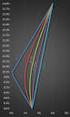 Copyright c 2005 by Karl Sigman Portfolio mean and variance Here we study the performance of a one-period investment X 0 > 0 (dollars) shared among several different assets. Our criterion for measuring
Approximation Algorithms
 Approximation Algorithms or: How I Learned to Stop Worrying and Deal with NP-Completeness Ong Jit Sheng, Jonathan (A0073924B) March, 2012 Overview Key Results (I) General techniques: Greedy algorithms
Labeling outerplanar graphs with maximum degree three
 Labeling outerplanar graphs with maximum degree three Xiangwen Li 1 and Sanming Zhou 2 1 Department of Mathematics Huazhong Normal University, Wuhan 430079, China 2 Department of Mathematics and Statistics
Probability Generating Functions
 page 39 Chapter 3 Probability Generating Functions 3 Preamble: Generating Functions Generating functions are widely used in mathematics, and play an important role in probability theory Consider a sequence
MASSACHUSETTS INSTITUTE OF TECHNOLOGY 6.436J/15.085J Fall 2008 Lecture 5 9/17/2008 RANDOM VARIABLES
 MASSACHUSETTS INSTITUTE OF TECHNOLOGY 6.436J/15.085J Fall 2008 Lecture 5 9/17/2008 RANDOM VARIABLES Contents 1. Random variables and measurable functions 2. Cumulative distribution functions 3. Discrete
Zeros of a Polynomial Function
 Zeros of a Polynomial Function An important consequence of the Factor Theorem is that finding the zeros of a polynomial is really the same thing as factoring it into linear factors. In this section we
1 Approximating Set Cover
 CS 05: Algorithms (Grad) Feb 2-24, 2005 Approximating Set Cover. Definition An Instance (X, F ) of the set-covering problem consists of a finite set X and a family F of subset of X, such that every elemennt
Asymptotics for ruin probabilities in a discrete-time risk model with dependent financial and insurance risks
 1 Asymptotics for ruin probabilities in a discrete-time risk model with dependent financial and insurance risks Yang Yang School of Mathematics and Statistics, Nanjing Audit University School of Economics
School Timetabling in Theory and Practice
 School Timetabling in Theory and Practice Irving van Heuven van Staereling VU University, Amsterdam Faculty of Sciences December 24, 2012 Preface At almost every secondary school and university, some
Single item inventory control under periodic review and a minimum order quantity
 Single item inventory control under periodic review and a minimum order quantity G. P. Kiesmüller, A.G. de Kok, S. Dabia Faculty of Technology Management, Technische Universiteit Eindhoven, P.O. Box 513,
Lecture 1: Course overview, circuits, and formulas
 Lecture 1: Course overview, circuits, and formulas Topics in Complexity Theory and Pseudorandomness (Spring 2013) Rutgers University Swastik Kopparty Scribes: John Kim, Ben Lund 1 Course Information Swastik
The Union-Find Problem Kruskal s algorithm for finding an MST presented us with a problem in data-structure design. As we looked at each edge,
 The Union-Find Problem Kruskal s algorithm for finding an MST presented us with a problem in data-structure design. As we looked at each edge, cheapest first, we had to determine whether its two endpoints
Lectures 5-6: Taylor Series
 Math 1d Instructor: Padraic Bartlett Lectures 5-: Taylor Series Weeks 5- Caltech 213 1 Taylor Polynomials and Series As we saw in week 4, power series are remarkably nice objects to work with. In particular,
Generating Functions
 Chapter 10 Generating Functions 10.1 Generating Functions for Discrete Distributions So far we have considered in detail only the two most important attributes of a random variable, namely, the mean and
CHAPTER II THE LIMIT OF A SEQUENCE OF NUMBERS DEFINITION OF THE NUMBER e.
 CHAPTER II THE LIMIT OF A SEQUENCE OF NUMBERS DEFINITION OF THE NUMBER e. This chapter contains the beginnings of the most important, and probably the most subtle, notion in mathematical analysis, i.e.,
Online Appendix to Stochastic Imitative Game Dynamics with Committed Agents
 Online Appendix to Stochastic Imitative Game Dynamics with Committed Agents William H. Sandholm January 6, 22 O.. Imitative protocols, mean dynamics, and equilibrium selection In this section, we consider
Notes on Continuous Random Variables
 Notes on Continuous Random Variables Continuous random variables are random quantities that are measured on a continuous scale. They can usually take on any value over some interval, which distinguishes
FACTORING POLYNOMIALS IN THE RING OF FORMAL POWER SERIES OVER Z
 FACTORING POLYNOMIALS IN THE RING OF FORMAL POWER SERIES OVER Z DANIEL BIRMAJER, JUAN B GIL, AND MICHAEL WEINER Abstract We consider polynomials with integer coefficients and discuss their factorization
The Goldberg Rao Algorithm for the Maximum Flow Problem
 The Goldberg Rao Algorithm for the Maximum Flow Problem COS 528 class notes October 18, 2006 Scribe: Dávid Papp Main idea: use of the blocking flow paradigm to achieve essentially O(min{m 2/3, n 1/2 }
FIRST YEAR CALCULUS. Chapter 7 CONTINUITY. It is a parabola, and we can draw this parabola without lifting our pencil from the paper.
 FIRST YEAR CALCULUS WWLCHENW L c WWWL W L Chen, 1982, 2008. 2006. This chapter originates from material used by the author at Imperial College, University of London, between 1981 and 1990. It It is is
SEQUENCES OF MAXIMAL DEGREE VERTICES IN GRAPHS. Nickolay Khadzhiivanov, Nedyalko Nenov
 Serdica Math. J. 30 (2004), 95 102 SEQUENCES OF MAXIMAL DEGREE VERTICES IN GRAPHS Nickolay Khadzhiivanov, Nedyalko Nenov Communicated by V. Drensky Abstract. Let Γ(M) where M V (G) be the set of all vertices
Modern Optimization Methods for Big Data Problems MATH11146 The University of Edinburgh
 Modern Optimization Methods for Big Data Problems MATH11146 The University of Edinburgh Peter Richtárik Week 3 Randomized Coordinate Descent With Arbitrary Sampling January 27, 2016 1 / 30 The Problem
Graphs without proper subgraphs of minimum degree 3 and short cycles
 Graphs without proper subgraphs of minimum degree 3 and short cycles Lothar Narins, Alexey Pokrovskiy, Tibor Szabó Department of Mathematics, Freie Universität, Berlin, Germany. August 22, 2014 Abstract
The Exponential Distribution
 21 The Exponential Distribution From Discrete-Time to Continuous-Time: In Chapter 6 of the text we will be considering Markov processes in continuous time. In a sense, we already have a very good understanding
No: 10 04. Bilkent University. Monotonic Extension. Farhad Husseinov. Discussion Papers. Department of Economics
 No: 10 04 Bilkent University Monotonic Extension Farhad Husseinov Discussion Papers Department of Economics The Discussion Papers of the Department of Economics are intended to make the initial results
9.2 Summation Notation
 9. Summation Notation 66 9. Summation Notation In the previous section, we introduced sequences and now we shall present notation and theorems concerning the sum of terms of a sequence. We begin with a
Fairness in Routing and Load Balancing
 Fairness in Routing and Load Balancing Jon Kleinberg Yuval Rabani Éva Tardos Abstract We consider the issue of network routing subject to explicit fairness conditions. The optimization of fairness criteria
136 CHAPTER 4. INDUCTION, GRAPHS AND TREES
 136 TER 4. INDUCTION, GRHS ND TREES 4.3 Graphs In this chapter we introduce a fundamental structural idea of discrete mathematics, that of a graph. Many situations in the applications of discrete mathematics
1 Sufficient statistics
 1 Sufficient statistics A statistic is a function T = rx 1, X 2,, X n of the random sample X 1, X 2,, X n. Examples are X n = 1 n s 2 = = X i, 1 n 1 the sample mean X i X n 2, the sample variance T 1 =
Stochastic Inventory Control
 Chapter 3 Stochastic Inventory Control 1 In this chapter, we consider in much greater details certain dynamic inventory control problems of the type already encountered in section 1.3. In addition to the
On an anti-ramsey type result
 On an anti-ramsey type result Noga Alon, Hanno Lefmann and Vojtĕch Rödl Abstract We consider anti-ramsey type results. For a given coloring of the k-element subsets of an n-element set X, where two k-element
Message-passing sequential detection of multiple change points in networks
 Message-passing sequential detection of multiple change points in networks Long Nguyen, Arash Amini Ram Rajagopal University of Michigan Stanford University ISIT, Boston, July 2012 Nguyen/Amini/Rajagopal
A simple criterion on degree sequences of graphs
 Discrete Applied Mathematics 156 (2008) 3513 3517 Contents lists available at ScienceDirect Discrete Applied Mathematics journal homepage: www.elsevier.com/locate/dam Note A simple criterion on degree
ALGORITHMIC TRADING WITH MARKOV CHAINS
 June 16, 2010 ALGORITHMIC TRADING WITH MARKOV CHAINS HENRIK HULT AND JONAS KIESSLING Abstract. An order book consists of a list of all buy and sell offers, represented by price and quantity, available
Disease Transmission Networks
 Dynamics of Disease Transmission Networks Winfried Just Ohio University Presented at the workshop Teaching Discrete and Algebraic Mathematical Biology to Undergraduates MBI, Columbus, OH, July 31, 2013
COMBINATORIAL PROPERTIES OF THE HIGMAN-SIMS GRAPH. 1. Introduction
 COMBINATORIAL PROPERTIES OF THE HIGMAN-SIMS GRAPH ZACHARY ABEL 1. Introduction In this survey we discuss properties of the Higman-Sims graph, which has 100 vertices, 1100 edges, and is 22 regular. In fact
Lecture 13: Martingales
 Lecture 13: Martingales 1. Definition of a Martingale 1.1 Filtrations 1.2 Definition of a martingale and its basic properties 1.3 Sums of independent random variables and related models 1.4 Products of
LECTURE 4. Last time: Lecture outline
 LECTURE 4 Last time: Types of convergence Weak Law of Large Numbers Strong Law of Large Numbers Asymptotic Equipartition Property Lecture outline Stochastic processes Markov chains Entropy rate Random
Linear Risk Management and Optimal Selection of a Limited Number
 How to build a probability-free casino Adam Chalcraft CCR La Jolla [email protected] Chris Freiling Cal State San Bernardino [email protected] Randall Dougherty CCR La Jolla [email protected] Jason
Metric Spaces. Chapter 1
 Chapter 1 Metric Spaces Many of the arguments you have seen in several variable calculus are almost identical to the corresponding arguments in one variable calculus, especially arguments concerning convergence
Factoring & Primality
 Factoring & Primality Lecturer: Dimitris Papadopoulos In this lecture we will discuss the problem of integer factorization and primality testing, two problems that have been the focus of a great amount
Introduction to Hypothesis Testing
 I. Terms, Concepts. Introduction to Hypothesis Testing A. In general, we do not know the true value of population parameters - they must be estimated. However, we do have hypotheses about what the true
Estimating the Degree of Activity of jumps in High Frequency Financial Data. joint with Yacine Aït-Sahalia
 Estimating the Degree of Activity of jumps in High Frequency Financial Data joint with Yacine Aït-Sahalia Aim and setting An underlying process X = (X t ) t 0, observed at equally spaced discrete times
Normal distribution. ) 2 /2σ. 2π σ
 Normal distribution The normal distribution is the most widely known and used of all distributions. Because the normal distribution approximates many natural phenomena so well, it has developed into a
4. Continuous Random Variables, the Pareto and Normal Distributions
 4. Continuous Random Variables, the Pareto and Normal Distributions A continuous random variable X can take any value in a given range (e.g. height, weight, age). The distribution of a continuous random
CONTINUED FRACTIONS AND PELL S EQUATION. Contents 1. Continued Fractions 1 2. Solution to Pell s Equation 9 References 12
 CONTINUED FRACTIONS AND PELL S EQUATION SEUNG HYUN YANG Abstract. In this REU paper, I will use some important characteristics of continued fractions to give the complete set of solutions to Pell s equation.
6.3 Conditional Probability and Independence
 222 CHAPTER 6. PROBABILITY 6.3 Conditional Probability and Independence Conditional Probability Two cubical dice each have a triangle painted on one side, a circle painted on two sides and a square painted
k, then n = p2α 1 1 pα k
 Powers of Integers An integer n is a perfect square if n = m for some integer m. Taking into account the prime factorization, if m = p α 1 1 pα k k, then n = pα 1 1 p α k k. That is, n is a perfect square
n k=1 k=0 1/k! = e. Example 6.4. The series 1/k 2 converges in R. Indeed, if s n = n then k=1 1/k, then s 2n s n = 1 n + 1 +...
 6 Series We call a normed space (X, ) a Banach space provided that every Cauchy sequence (x n ) in X converges. For example, R with the norm = is an example of Banach space. Now let (x n ) be a sequence
5 Directed acyclic graphs
 5 Directed acyclic graphs (5.1) Introduction In many statistical studies we have prior knowledge about a temporal or causal ordering of the variables. In this chapter we will use directed graphs to incorporate
ST 371 (IV): Discrete Random Variables
 ST 371 (IV): Discrete Random Variables 1 Random Variables A random variable (rv) is a function that is defined on the sample space of the experiment and that assigns a numerical variable to each possible
Just the Factors, Ma am
 1 Introduction Just the Factors, Ma am The purpose of this note is to find and study a method for determining and counting all the positive integer divisors of a positive integer Let N be a given positive
Cost Model: Work, Span and Parallelism. 1 The RAM model for sequential computation:
 CSE341T 08/31/2015 Lecture 3 Cost Model: Work, Span and Parallelism In this lecture, we will look at how one analyze a parallel program written using Cilk Plus. When we analyze the cost of an algorithm
2.3 Convex Constrained Optimization Problems
 42 CHAPTER 2. FUNDAMENTAL CONCEPTS IN CONVEX OPTIMIZATION Theorem 15 Let f : R n R and h : R R. Consider g(x) = h(f(x)) for all x R n. The function g is convex if either of the following two conditions
Random access protocols for channel access. Markov chains and their stability. Laurent Massoulié.
 Random access protocols for channel access Markov chains and their stability [email protected] Aloha: the first random access protocol for channel access [Abramson, Hawaii 70] Goal: allow machines
The Open University s repository of research publications and other research outputs
 Open Research Online The Open University s repository of research publications and other research outputs The degree-diameter problem for circulant graphs of degree 8 and 9 Journal Article How to cite:
SCORE SETS IN ORIENTED GRAPHS
 Applicable Analysis and Discrete Mathematics, 2 (2008), 107 113. Available electronically at http://pefmath.etf.bg.ac.yu SCORE SETS IN ORIENTED GRAPHS S. Pirzada, T. A. Naikoo The score of a vertex v in
THE CENTRAL LIMIT THEOREM TORONTO
 THE CENTRAL LIMIT THEOREM DANIEL RÜDT UNIVERSITY OF TORONTO MARCH, 2010 Contents 1 Introduction 1 2 Mathematical Background 3 3 The Central Limit Theorem 4 4 Examples 4 4.1 Roulette......................................
Zachary Monaco Georgia College Olympic Coloring: Go For The Gold
 Zachary Monaco Georgia College Olympic Coloring: Go For The Gold Coloring the vertices or edges of a graph leads to a variety of interesting applications in graph theory These applications include various
Random graphs with a given degree sequence
 Sourav Chatterjee (NYU) Persi Diaconis (Stanford) Allan Sly (Microsoft) Let G be an undirected simple graph on n vertices. Let d 1,..., d n be the degrees of the vertices of G arranged in descending order.
On the k-path cover problem for cacti
 On the k-path cover problem for cacti Zemin Jin and Xueliang Li Center for Combinatorics and LPMC Nankai University Tianjin 300071, P.R. China [email protected], [email protected] Abstract In this paper we
ECON20310 LECTURE SYNOPSIS REAL BUSINESS CYCLE
 ECON20310 LECTURE SYNOPSIS REAL BUSINESS CYCLE YUAN TIAN This synopsis is designed merely for keep a record of the materials covered in lectures. Please refer to your own lecture notes for all proofs.
Multi-state transition models with actuarial applications c
 Multi-state transition models with actuarial applications c by James W. Daniel c Copyright 2004 by James W. Daniel Reprinted by the Casualty Actuarial Society and the Society of Actuaries by permission
Prime power degree representations of the symmetric and alternating groups
 Prime power degree representations of the symmetric and alternating groups Antal Balog, Christine Bessenrodt, Jørn B. Olsson, Ken Ono Appearing in the Journal of the London Mathematical Society 1 Introduction
6 Scalar, Stochastic, Discrete Dynamic Systems
 47 6 Scalar, Stochastic, Discrete Dynamic Systems Consider modeling a population of sand-hill cranes in year n by the first-order, deterministic recurrence equation y(n + 1) = Ry(n) where R = 1 + r = 1
t := maxγ ν subject to ν {0,1,2,...} and f(x c +γ ν d) f(x c )+cγ ν f (x c ;d).
 1. Line Search Methods Let f : R n R be given and suppose that x c is our current best estimate of a solution to P min x R nf(x). A standard method for improving the estimate x c is to choose a direction
LECTURE 15: AMERICAN OPTIONS
 LECTURE 15: AMERICAN OPTIONS 1. Introduction All of the options that we have considered thus far have been of the European variety: exercise is permitted only at the termination of the contract. These
SPARE PARTS INVENTORY SYSTEMS UNDER AN INCREASING FAILURE RATE DEMAND INTERVAL DISTRIBUTION
 SPARE PARS INVENORY SYSEMS UNDER AN INCREASING FAILURE RAE DEMAND INERVAL DISRIBUION Safa Saidane 1, M. Zied Babai 2, M. Salah Aguir 3, Ouajdi Korbaa 4 1 National School of Computer Sciences (unisia),
Performance Analysis of a Telephone System with both Patient and Impatient Customers
 Performance Analysis of a Telephone System with both Patient and Impatient Customers Yiqiang Quennel Zhao Department of Mathematics and Statistics University of Winnipeg Winnipeg, Manitoba Canada R3B 2E9
Game Chromatic Index of Graphs with Given Restrictions on Degrees
 Game Chromatic Index of Graphs with Given Restrictions on Degrees Andrew Beveridge Department of Mathematics and Computer Science Macalester College St. Paul, MN 55105 Tom Bohman, Alan Frieze, and Oleg
Lecture 15 An Arithmetic Circuit Lowerbound and Flows in Graphs
 CSE599s: Extremal Combinatorics November 21, 2011 Lecture 15 An Arithmetic Circuit Lowerbound and Flows in Graphs Lecturer: Anup Rao 1 An Arithmetic Circuit Lower Bound An arithmetic circuit is just like
arxiv:math/0202219v1 [math.co] 21 Feb 2002
![arxiv:math/0202219v1 [math.co] 21 Feb 2002](/thumbs/40/21425666.jpg "arxiv:math/0202219v1 [math.co] 21 Feb 2002") RESTRICTED PERMUTATIONS BY PATTERNS OF TYPE (2, 1) arxiv:math/0202219v1 [math.co] 21 Feb 2002 TOUFIK MANSOUR LaBRI (UMR 5800), Université Bordeaux 1, 351 cours de la Libération, 33405 Talence Cedex, France
RESTRICTED PERMUTATIONS BY PATTERNS OF TYPE (2, 1) arxiv:math/0202219v1 [math.co] 21 Feb 2002 TOUFIK MANSOUR LaBRI (UMR 5800), Université Bordeaux 1, 351 cours de la Libération, 33405 Talence Cedex, France
The sample space for a pair of die rolls is the set. The sample space for a random number between 0 and 1 is the interval [0, 1].
![The sample space for a pair of die rolls is the set. The sample space for a random number between 0 and 1 is the interval [0, 1].](/thumbs/40/21161256.jpg "The sample space for a pair of die rolls is the set. The sample space for a random number between 0 and 1 is the interval [0, 1].") Probability Theory Probability Spaces and Events Consider a random experiment with several possible outcomes. For example, we might roll a pair of dice, flip a coin three times, or choose a random real
Probability Theory Probability Spaces and Events Consider a random experiment with several possible outcomes. For example, we might roll a pair of dice, flip a coin three times, or choose a random real