
Clinical and Forensic APPLICATIONS MANUAL
|
|
|
- Shanna Snow
- 10 years ago
- Views:
Transcription
1 CLINICAL Clinical and Forensic APPLICATIONS MANUAL FORENSICS

2 Table of Contents Introduction Application Hints Extraction Hints How to Prepare Solutions and Buffers Why is SELECTRAZYME -Glucuronidase derived from red abalone (Haliotis rufescens) needed in everyday sample prep? Why We Derivatize Good HPLC Practices Screening Methods Acidic/Neutral/Basic Analytes in Blood, Plasma/Serum, Urine, or Tissue by LC-MS/MS or GC-MS CLEAN SCREEN DAU Acidic/Neutral/Basic Analytes in Blood, Plasma/Serum, Urine, or Tissue by LC-MS/MS or GC-MS CLEAN SCREEN XCEL I Acid / Neutral Drugs Barbiturates in Blood, Plasma/Serum, Urine, Tissue by LC-MS/MS or GC-MS CLEAN SCREEN DAU Caffeine, Theophylline and Theobromine in Blood, Plasma/Serum, and Urine using: 200 mg CLEAN SCREEN Carisoprodol and Meprobamate in Blood, Plasma/Serum, Urine, Tissue by LC-MS/MS or GC-MS CLEAN SCREEN DAU EtG/EtS in Urine by LC-MS/MS using: 500 mg CLEAN-UP QAX LC/MS method for extracting Ethyl Glucuronides from Urine using: 200 mg CLEAN SCREEN Methylmalonic Acid from Serum or Plasma for GC/MS Analysis using: 500 mg CLEAN-UP QAX Warfarin in Whole Blood: Manual method For GC-MS or LC Confirmations using: 200 mg CLEAN-UP C

3 Basic Drugs Antidepressants in Blood, Plasma/Serum, Urine, Tissue by LC-MS/MS or GC-MS CLEAN SCREEN DAU Basic Analytes in Blood, Plasma/Serum, Urine, Tissue by LC-MS/MS or GC-MS CLEAN SCREEN DAU Basic Analytes in Blood/Urine/Serum by LC-MS/MS or GC-MS CLEAN SCREEN XCEL I 96 Wellplate Basic Analytes in Blood, Plasma/Serum, Urine, Tissue By LC-MS/MS or GC-MS CLEAN SCREEN XCEL I Beta Blockers in Blood, Urine for GC/MS Confirmations using: 200 mg CLEAN SCREEN Buprenorphine and Norbuprenorphine in Blood, Plasma/Serum, Urine, Tissue by LC-MS/MS or GC-MS CLEAN SCREEN DAU Clozapine and Metabolites in Whole Blood, Serum/Plasma and Urine using 200 mg CLEAN-UP Extraction Column and LC-MS/MS or HPLC-UV Analysis Gabapentin/Pregabalin/Baclofen in Blood, Plasma/Serum by LC-MS/MS or GC-MS 200 mg CLEAN SCREEN DAU Nicotine, Cotinine, and Anabasine in Blood, Plasma/Serum, Urine, or Tissue by LC-MS/MS or GC-MS CLEAN SCREEN DAU Paroxetine In Blood, Plasma/ Serum and Urine. LC-MS/MS Confirmations using 200 mg CLEAN SCREEN DAU Quetiapine in Blood, Plasma/Serum, Urine and Tissue using: 200 mg CLEAN SCREEN

4 Drugs of Abuse Cocaine and Benzoylecgonine in Blood, Plasma/Serum, Urine, Tissue by LC-MS/MS or GC-MS CLEAN SCREEN DAU Cocaine and Benzoylecgonine from Meconium by LC-MS/MS or GC-MS CLEAN SCREEN DAU Cocaine and Benzoylecgonine in Urine by LC-MS/MS or GC-MS STRYE SCREEN DBX Cocaine and Benzoylecgonine in Blood, Plasma/Serum, Urine, Tissue by LC-MS/MS or GC-MS CLEAN SCREEN XCEL I Cocaine and Metabolites in Blood, Plasma/ Serum, Urine and Tissue by GC/MS XtrackT Extraction Column Duloxetine in Blood and Urine By LC-MS/MS* A Solid Phase Method for Gamma-Hydroxybutyrate (GHB) in Blood, Urine, Vitreous or Tissue without Conversion to Gamma-Butrylactone (GBL) Ghb in Urineand Blood without Conversion to Gamma-Butrylactone (GBL) by LC-MS/MS or GC-MS CLEAN SCREEN GHB Ghb in Urine without Conversion to Gammabutrylactone (GBL) by LC-MS/MS or GC-MS CLEAN-UP QAX LSD and Metabolites in Blood, Plasma/Serum, Urine, Tissue by LC-MS/MS or GC-MS CLEAN SCREEN DAU Narcotics/Metabolites Panel in Blood, Plasma/Serum, Urine, Tissue by LC-MS/MS OR GC-MS CLEAN SCREEN DAU Paroxetine in Blood, Plasma/Serum, Urine, Tissue by LC-MS/MS or GC-MS CLEAN SCREEN DAU Phencyclidine in Blood, Plasma/Serum, Urine, Tissue by LC-MS/MS OR GC-MS STYRE SCREEN DBX Psilocin in Blood, Plasma/Serum, Urine, or Tissue by LC-MS/MS STYRE SCREEN DBX Psilocin and Psilocybin in Urine By LC/MS/MS CLEAN SCREEN

5 Amphetamines Amphetamines in Blood, Plasma/Serum, Urine, or Tissue by LC-MS/MS OR GC-MS CLEAN SCREEN DAU Amphetamines in Blood, Plasma/Serum, Urine, or Tissue by LC-MS/MS OR GC-MS STYRE SCREEN DBX Amphetamines in Blood, Plasma/Serum, Urine, or Tissue by LC-MS/MS OR GC-MS CLEAN SCREEN XCEL Bath Salts in Blood, Plasma/Serum, Urine, or Tissue by LC-MS/MS or GC-MS CLEAN SCREEN DAU Bath Salts in Blood, Plasma/Serum, Urine, or Tissue by LC-MS/MS or GC-MS CLEAN SCREEN XCEL I Sympathomimetic Amines in Blood, Plasma/Serum, and Urine by LC-MS/MS OR GC-MS CLEAN SCREEN DAU Benzodiazepines Benzodiazepines in Blood, Plasma/Serum, Tissue by LC-MS/MS or GC-MS CLEAN SCREEN BNZ Benzodiazepines in Blood, Plasma/Serum, Tissue by LC-MS/MS or GC-MS CLEAN SCREEN DAU Benzodiazepines in Blood, Plasma/Serum, Tissue by LC-MS/MS or GC-MS CLEAN SCREEN XCEL I Benzodiazepines in Urine by LC-MS/MS or GC-MS CLEAN SCREEN DAU Benzodiazepines in Urine by LC-MS/MS or GC-MS CLEAN SCREEN XCEL I Benzodiazepines in Blood, Plasma/Serum, Urine by LC-MS/MS or GC-MS CLEAN SCREEN XCEL I 96 Wellplate

6 Cannabinoids Carboxy-THC in Urine by LC-MS/MS or GC-MS using: CLEAN SCREEN DAU Carboxy-THC in Urine by LC-MS/MS or GC-MS using: 30mg STYRE SCREEN DBX Carboxy-THC in Urine by LC-MS/MS or GC-MS using: CLEAN SCREEN XCEL II THC, THC-OH, and THC-COOH in Whole Blood by LC-MS/MS or GC-MS using: CLEAN SCREEN THC THC, THC-OH, AND THC-COOH Confirmations in Whole Blood by LC-MS/MS or GC-MS using: 100 mg STYRE SCREEN SSTHC Synthetic Cannabinoids Spice Drugs in Blood, Plasma/Serum, Urine, Tissue by LC-MS/MS or GC-MS CLEAN SCREEN THC AM2201 Metabolites in Urine by LC-MS/MS or GC-MS CLEAN SCREEN THC Opiates Extraction of Opiates from Blood/Plasma/Serum/Urine or Tissue using: CLEAN SCREEN XCEL I Opiates in Blood, Plasma/Serum, Urine, or Tissue by LC-MS/MS or GC-MS CLEAN SCREEN DAU Opiates in Blood, Plasma/Serum, Urine, or Tissue by LC-MS/MS or GC-MS STYRE SCREEN DBX Steroids Anabolic Steroids in Urine by LC-MS/MS or GC-MS CLEAN SCREEN DAU Hair Benzodiazepines in Hair by LC-MS/MS or GC-MS CLEAN SCREEN DAU Carboxy-THC in Hair by LC-MS/MS or GC-MS using: CLEAN SCREEN THC Determination of Gamma Hydroxybutyrate (GHB) In Hair using Solid Phase Exraction and LC-MS/MS or GC-MS CLEAN-UP QAX EtG/EtS in Hair by LC-MS/MS using: 200 Mg CLEAN SCREEN ETG

7 Oral Fluids Amphetamines in Oral Fluid using an Oral Fluid Sampling Device by LC-MS/MS or GC-MS CLEAN SCREEN DAU Cocaine and Benzoylecgonine in Oral Fluid by LC-MS/MS or GC-MS 50 mg CLEAN SCREEN DAU Fentanyl/ Norfentanyl on Oral Swabs by LC-MS/MS or GC-MS CLEAN SCREEN DAU THC and THC-COOH from Oral Fluid by LC-MS/MS or GC-MS STYRE-SCREEN Polymeric QAX THC and THC-COOH from Oral Fluids by LC-MS/MS or GC-MS using CLEAN SCREEN XCEL II THC-COOH from Oral Fluids by LC-MS/MS or GC-MS CLEAN SCREEN DAU FASt Basic Drugs in Urine CLEAN SCREEN FASt Benzodiazepines in Urine CLEAN SCREEN FASt Opiates in Urine CLEAN SCREEN FASt THC-COOH in Urine CLEAN SCREEN FASt THC Veterinary and Racing 3-Hydroxy Lidocaine, 4-Hydroxy Guanabenz, 4-Hvdroxv Mepivicane, 4-Hydroxy Xylazine, Detomidine, and O-Desmethyl Tramadol in Equine Urine by LC/MS Abused Drugs in Canine or Equine Urine using 500 Mg XtrackT Extraction Column Barbiturates in Equine Urine for GC/MS Confirmations Benzodiazepines in Equine or Canine Urine for GC/MS Confirmations Buprenorphine and Norbuprenorphine in Equine Urine for GC/MS Confirmations Carisoprodol and Meprobamate in Equine Urine for GC/MS Confirmations Clenbuterol And Salbutamol in Equine Urine for GC/MS Confirmations THC, THC-OH, and Carboxy-THC in Equine Urine for GC/MS Confirmations Glycopyrrolate (Robinul) from Equine Urine by LC-MSMS using: 500 mg CLEAN-UP CCX

8 CLINICAL FORENSICS Introduction and Application Hints

9 Extraction Hints Verify sample application ph. Analytes that are not in their proper form (i.e., neutral or charged), will not effectively bind to the sorbent and may result in low or erratic recoveries. The ph of deionized water cannot be correctly determined using ph paper. Use of a calibrated ph meter is necessary. Always pre-rinse the cartridge with the strongest solution the cartridge will see to ensure the cleanest extraction of your eluate. Do not allow the sorbent to completely dry out between conditioning steps or before sample application. To ensure properly solvated cartridges, apply each solvent immediately after the previous solvent. Improperly conditioned cartridges may lead to erratic recoveries. Prior to elution, fully dried cartridges will ensure optimal analyte recovery. To confirm cartridge dryness, touch the sides of the cartridge at the sorbent level at full vacuum. Cartridges should feel about room temperature but not cool. If the cartridge feels cool, water is probably present and still evaporating. Continue drying the cartridge unless otherwise specified in the application note. Elution rates and soak times specified in the applications are critical for acceptable and consistent recoveries. Hint: When in doubt, slower is always better. 1 ml to 2 ml per minutes is a good general guideline for the sample addition and analyte extraction steps. This recommendation is required for suitable ion exchange extractions. Always use fresh ammonium hydroxide (NH 4 OH) for elutions. NH 4 OH rapidly loses its effectiveness when exposed to air. Weak NH 4 OH solutions may lead to erratic recoveries. NH 4 OH is more soluble in IPA than CH 2 Cl 2. To ensure complete mixing of eluate solvents, add NH 4 OH to IPA, then add CH 2 Cl 2. Addition of 1% HCl in MeOH assists in reducing volatility of certain analytes especially sympathomimetic amines. Certain compounds are slightly volatile. Closely monitor eluate concentration to prevent loss of analyte. Hint: Higher water bath temperatures and lower nitrogen flow rates usually provide optimal results. However, do not exceed 40 C. Optimal evaporation temp ranges from C. Optimal Nitrogen flow rates are from 5-15 psi. Solvent quantities for methods are suggested and might be further reduced to meet particular laboratory sample size needs. 9

10 Solvents Acetone; HPLC Grade Acetonitrile (ACN)(CH 3 CN); HPLC Grade Chloroform (CHCl 3 ); HPLC Grade Distilled or/ Deionized H 2 O (D.I. H 2 O, 5 < ph < 7) Ethyl Acetate (EtAc); HPLC Grade Hexane; HPLC Grade Isopropyl Alcohol (IPA); HPLC Grade Methanol (CH 3 OH): HPLC Grade Dichloromethane (CH 2 Cl 2 ): HPLC Grade Solvent mixtures Acetone / Hexane (1:99) Acetonitrile / D.I. H 2 O (20:80) Ethyl Acetate / IPA (75:25) Ethyl Acetate / Hexane (50:50), (75:25) Methanol / D.I. H 2 O (80:20) Methanol / D.I. H 2 O (70:30) Methanol / D.I. H 2 O (10:90) Use of non-chlorinated elution solvents In response to environmental concerns over the use of chlorinated compounds in the laboratory, UCT offers these suggested non-chlorinated elution solvents. The recommended parameters have been used successfully on UCT columns by our customers throughout the world and may be routinely used as an alternative to chlorinated elution solvents. You may however see subtle differences on certain compounds due to solubility effects. Assay Chlorinated Non-chlorinated Opiates CH 2 Cl 2 / IPA/NH 4 OH(78:20:2) EtAc / IPA/NH 4 OH (90:6:4) Propoxyphene CH 2 Cl 2 / IPA/NH 4 OH(78:20:2) EtAc / IPA/NH 4 OH (90:6:4) Cocaine / BE CH 2 Cl 2 / IPA/NH 4 OH(78:20:2) EtAc / CH 3 OH/NH 4 OH(68:28:4) Amphetamines CH 2 Cl 2 / IPA/NH 4 OH(78:20:2) EtAc / IPA/NH 4 OH (90:6:4) UCT would like to thank Dr. Leon Glass for his efforts in developing these non chlorinated mixtures. Reagents Acetic Acid, Glacial (CH 3 COOH):17.4 M Ammonium Hydroxide (NH 4 OH): concentrated (14.8 M) ß-Glucuronidase: abalone derived Dimethylformamide (DMF): silylation grade Hydrochloric Acid (HCI): concentrated (12.1 M) N, O-bis(trimethylsilyl)trifluoroacetamide (BSTFA) with 1% trimethylchlorosilane (TMCS) Pentafluoropropionic Acid Anhydride (PFAA or PFPA) Phosphoric Acid (H 3 PO 4 ): concentrated (14.7 M) Sodium Acetate Trihydrate (NaCH 3 COO-3 H 2 O): F.W Sodium Borate Decahydrate (Na 2 B 4 O 7-10 H 2 O): F.W Sodium Hydroxide, (NaOH): F.W Sodium Phosphate Dibasic, Anhydrous (Na 2 HPO 4 ): F.W Sodium Phosphate Monobasic, Monohydrate (NaH 2 PO 4 H 2 O): F.W Notes: Storage of organics in some plastic containers may lead to plasticizer contamination of the solvent or solvent mixture, this may interfere with analyte quantitation. Good laboratory practice dictates all who handle or are potentially exposed to reagents, solvents and solutions used or stored in the laboratory should familiarize themselves with manufacturer s recommendations for chemical storage, use and handling, and should also familiarize themselves with an appropriate Material Safety Data Sheet (MSDS). 10

11 How to Prepare Solutions and Buffers 1.0 M Acetic Acid: To 400 ml D.I. H 2 O add 28.6 ml glacial acetic acid. Dilute to 500 ml with D.I. H 2 O. Storage: 25 C in glass or plastic. Stability: 6 months 100 mm Acetic Acid: Dilute 40 ml 1.0 M acetic acid to 400 ml with D.I. H 2 O. Mix. Storage: 25 C in glass or plastic. Stability: 6 months 100 mm Acetate Buffer (ph 4.5): Dissolve 2.93 g sodium acetate trihydrate in 400 ml D.I. H 2 O; add 1.62 ml glacial acetic acid. Dilute to 500 ml with D.I. H 2 O. Mix. Adjust ph to 4.5 ± 0.1 with 100 mm sodium acetate or 100 mm acetic acid. Storage: 25 C in glass or plastic. Stability: 6 months; Inspect daily for contamination. 1.0 M Acetate Buffer (ph 5.0): Dissolve 42.9 g sodium acetate trihydrate in 400 ml D.I. H 2 O; Add 10.4 ml glacial acetic acid. Dilute to 500 ml with D.I. H 2 O. Mix. Adjust ph to 5.0 ± 0.1 with 1.0 M sodium acetate or 1.0 M acetic acid. Storage: 25 C in glass or plastic. Stability: 6 months; Inspect daily for contamination. 100 mm Acetate Buffer (ph 5.0): Dilute 40 ml 1.0 M acetate buffer to 400 ml with D.I. H 2 O. Mix. Storage: 25 C in glass or plastic. Stability: 6 months 7.4 M Ammonium Hydroxide: To 50 ml D.I. H 2 O add 50 ml concentrated NH 4 OH. Mix. Storage: 25 C in glass or fluoropolymer plastic. Stability: Storage condition dependent. 100 mm Hydrochloric Acid: To 400 ml D.I. H 2 O add 4.2 ml concentrated HCI. Dilute to 500 ml with D.I. H 2 O. Mix. Storage: 25 C in glass or plastic. Stability: 6 months Methanol /Ammonium Hydroxide (98:2): To 98 ml CH 3 OH add 2 ml concentrated NH 4 OH. Mix. Storage: 25 C in glass or fluoropolymer plastic. Stability: 1 day M Sodium Periodate: Add 37.5 g sodium periodate to a 500 ml volumetric flask, dilute to volume with D.I. H 2 O. Mix. Stability: 2 mos. at room temperature. CH 2 Cl 2 / IPA / NH 4 OH (78:20:2): To 20 ml IPA, add 2 ml concentrated NH 4 OH. Mix. Add 78 ml CH 2 Cl 2. Mix. Storage: 25 C in glass or fluoropolymer plastic. Stability: 1 day 11

12 100 mm Phosphate Buffer (ph 6.0): Dissolve 1.70 g Na 2 HPO 4 and g NaH 2 P0 4 H 2 O in 800 ml D.I. H 2 O. Dilute to 1000 ml using D.I. H 2 O. Mix. Adjust ph to 6.0 ± 0.1 with 100 mm monobasic sodium phosphate (lowers ph) or 100 mm dibasic sodium phosphate (raises ph). Storage: 5 C in glass. Stability: 1 month; Inspect daily for contamination. 500 mm Phosphoric Acid: To 400 ml D.I. H 2 O add 17.0 ml concentrated phosphoric acid. Dilute to 500 ml with D.I. H 2 O. Mix. Storage: 25 C in glass or plastic. Stability: 6 months 1.0 M Sodium Acetate: Dissolve 13.6 g sodium acetate trihydrate in 90 ml D.I. H 2 O. Dilute to 100 ml with D.I. H 2 O. Mix. Storage: 25 C in glass or plastic. Stability: 6 months 100 mm Sodium Acetate: Dilute 10 ml 1.0 M sodium acetate to 100 ml with D.I. H 2 O. Mix. Storage: 25 C in glass or plastic. Stability: 6 months 100 mm Sodium Borate: Dissolve 3.81 g Na2B4O7 10 H 2 O in 90 ml D.I. H 2 O. Dilute to 100 ml with D.I. H 2 O. Mix. Storage: 25 C in glass or plastic. Stability: 6 months. 100 mm Sodium Phosphate Dibasic: Dissolve 2.84 g Na 2 HPO 4 in 160 ml D.I. H 2 O. Dilute to 200 ml using D.I. H 2 O. Mix. Storage: 5 C in glass. Stability: 1 month; Inspect daily for contamination. 100 mm Sodium Phosphate, Monobasic: Dissolve 2.76 g NaH 2 PO 4 -H 2 O in 160 ml D.I. H 2 O. Dilute to 200 ml with D.I. H 2 O. Mix. Storage: 5 C in glass. Stability: 1 month. Inspect daily for contamination. 100 mm Sulfuric Acid: To 400 ml D.I. H 2 O add 2.7 ml concentrated H 2 SO 4. Dilute to 500 ml with D.I. H 2 O. Mix. Storage: 25 C in glass or plastic. Stability: 6 months 12

13 Why is Selectrazyme Glucuronidase derived from red abalone (Haliotis rufescens) needed in everyday sample prep? In the body s attempt to eliminate xenobiotics, glucuronidation occurs, where the drug is conjugated with glucuronic acid by the human UDP-glucuronosyltransferase family of enzymes. Similar conjugation reactions occur with isoforms of sulfotransferases yielding the sulfate conjugate. The glucuronides formed are more polar (water soluble) than the parent compound (original drug) and are generally excreted via the kidney into urine. For proper detection of the parent compound and phase 1 metabolites, hydrolysis may be required. This technique is therefore frequently applied to biological fluids, primarily urine. Selectrazyme -Glucuronidase catalyzes hydrolysis of -D-glucuronic acid allowing for the determination of total drug concentration versus solely free drug concentration(s). Benefits to Hydrolyzing with Selectrazyme -Glucuronidase 1. Cleaner extracts 2. Stability of analytes due to mild hydrolysis conditions 3. Minimum artifacts present in extracts 13

14 Comparing Efficiency of Various Sources of Enzyme Journal of Analytical Toxicology, Vol. 19, May/June 1995 Hydrolysis using Selectrazyme -Glucuronidase results in a sample solution containing a significant amount of solubilized enzyme. If not effectively eliminated, this material can accumulate on the head of a guard or analytical column; significantly increasing column backpressure and reducing column lifetime. Strongly consider using SPE prior to analytical injection to not only prolong the life of your HPLC column, but also to produce the cleanest, most accurate results. 14

15 Why We Derivatize: 1. To reduce the polarity and enhance the volatility of high molecular weight polar drugs making them more suitable for analysis via GC-MS (Figure 1). 2. To increase the molecular weight of very volatile drugs, thereby resulting in a more complex mass spectrum that improves the selectivity for that particular drug. An important consideration in derivatizing drugs for GC/MS analysis is that the spectrum of the resulting compounds should contain at least three ions that are unique to that analyte and not a result of the matrix. Figure 1. Trimethylsilyl derivative of benzoylecgonine. The underivatized compound has a carboxyl group and is too polar to pass through a GC column. How to choose a derivatizing agent Common derivatizing agents for drugs are trifluoroacetic anhydride (TFAA), pentafluoroacetic anhydride (PFAA), and N,O-bis(trimethylsilyl)- trifluoroacetamide (BSTFA, MTBSTFA). TFAA and PFAA react with alcohols, phenols and amines to form floroacyl esters and amides. The main disadvantage of the acid anhydrides is that they are extremely corrosive and can damage the capillary column of the instrument. Excess derivatization reagent must be removed by evaporation prior to injection and the derivatized analytes must be dissolved in a volatile solvent. For most drugs, conversion to the trimethylsilyl (TMS) ethers, esters and amides, using BSTFA (or MTBSTFA) is found to be very simple and effective. When preparing these derivatives, it is necessary to evaporate the drug extracts to complete dryness prior to derivatization. There is no need to remove any excess BSTFA (MTBSTFA) prior to injection like what is required with agents such as HFAA and PFAA because it does not pose a risk to instrumentation. Another advantage of BSTFA (or MTBSTFA) is that it boils at 145 C at atmospheric pressure; therefore the solvent is not likely to evaporate when stored, increasing its shelf-life. Derivatizing agents are usually stored at room temperature or in a dessicator. Refrigeration should be avoided due to humid conditions shortening the life and effectiveness of the product. Common compounds found in a forensic/clinical setting along with their targeted functional groups and derivatizatizing agent of choice for are listed in Table1. 15

16 Drug Derivatized Functional Group Derivative (BSTFA unless other specified) amphetamine -N 2 H Spectrum of BSTFA derivative not definitive; therefore prepare the 4- carbethoxyhexafluorobutyryl amide (4-CB) methamphetamine -NH 2 Spectrum of BSTFA derivative not definitive; therefore prepare the 4- carbethoxyhexafluorobutyryl amide (4-CB) phentermine -NH 2 Spectrum of BSTFA derivative not definitive; therefore prepare the 4- carbethoxyhexafluorobutyryl amide (4-CB) cocaine none benzoylecgonine -CO 2 H TMS ester morphine -OH (two) di-tms ether codeine -OH mono-tms ether 6-monoacetylmorphine -OH mono-tms ether dihydrocodeine -OH mono-tms ether hydrocodone enol OH formed from =O mono-tms ether di-tms ether oxycodone norcodeine -OH enol OH formed from =O -OH -NH 2 TMS ether di-tms ether One peak: TMS ether and TMS amide hydromorphone oxymorphone phencylidine (PCP) 9-carboxy-11-nor- 9 - tetrahydrocannabinol -OH enol OH formed from =O -OH (two) enol OH formed from =O none -OH -CO 2 H mono-tms ether di-tms ether mono-tms ether di-tms ether tri-tms ether One peak: mono-tms ether and mono-tms ester 16

17 Classification of Derivatizing Agents Silylation Silylation is the most popular derivatization procedure for GC sample analysis. Silylation reagents are easy to use and readily form derivatives. In silylation, an active hydrogen such as that found in acids, alcohols, thiols, amines, amides, enolizable ketones and aldehydes is replaced by trimethylsilyl (TMS) or t-butyldimethylsilyl (t-bdms). Compared to their parent compounds, silyl derivatives are more volatile, less polar, and more thermally stable. As a result, GC separation is improved and detection is enhanced. Acylation Acylation reagents are typically available as acid anhydrides, acyl derivatives, or acyl halides. Acylation reagents offer similar advantages to silylation reagents. They create less polar, more volatile derivatives. As opposed to silylating reagents, acylating reagents target highly polar, multi-functional compounds, such as carbohydrates and amino acids. Acylating reagents also introduce electroncapturing groups to the derivatized sample; enhancing analytical detection. Acyl halides and acyl derivatives are highly reactive. Typically they are used where steric hindrance may be an issue. Due to the acidic nature of these reagents any excess material or byproducts must be removed prior to sample analysis to prevent GC inlet or column degradation. Alkylation Alkylation reagents replace active hydrogens with an alkyl group. These reagents are used to modify compounds having acidic hydrogens, such as carboxylic acids and phenols. Alkylation reagents can be used alone to form esters, ethers, and amides or they can be used in combination with acylation or silylation reagents. Esterification is the most popular method of alkylation. Alkyl esters are stable and form quickly and quantitatively. Alteration of the length of the substituted alkyl group can be used to alter the GC retention times of derivatives. 17

18 Good HPLC Practices Technical Tip #1: HPLC Column Care: Based upon decades of HPLC Technical Service experience, the number one mistake, made by experienced and novice chromatographers alike, is the improper changing of mobile phase solvents, such as in the two scenarios below. Incorrect washing procedures often lead to precipitated buffer in the column that can cause changes in retention and high back pressure. Don t Do: Scenario 1: An analyst stores his column in high percent organic solvent. He places the column on the HPLC and begins to equilibrate the column with a buffered mobile phase. Do: Wash the column with > 50 percent D.I. H 2 O before beginning the equilibration with buffer. Don t Do: Scenario 2: An analyst finishes his method development project that used a buffered mobile phase. He begins pumping a high percent organic through the column to store it in that solvent. Do: Wash the column with > 50 percent D.I. H 2 O before beginning the high percent organic wash. Technical Tip #2: To obtain the highest efficiency and greatest sensitivity, use HPLC flow rates that provide the optimum linear velocity (OLV) for the particular column employed. This is more important when using larger particle size packings (e.g., 5μm and larger), and less of an issue when using smaller particle packings (e.g., 3μm and smaller), or core-shell particles. The OLV is related to the optimum flow rate (OFR), and is dependent on the internal diameter (i.d.) of the HPLC column: Column i.d. (mm) Typical OFR (ml/min)

19 III. Technical Tip #3: Running HPLC chromatograms at elevated temperatures can provide several advantages: Lowers mobile phase solvent viscosity and column/system backpressure Enhances peak efficiency and sensitivity Helps to prevent perturbations in baseline due to room temperature fluctuations Provides somewhat faster elution times Helps to provide more reproducible chromatographic results However, when performing chiral separations, a lower column temperature is often advantageous in obtaining greater resolution between enantiomers. IV. Technical Tip #4: The standard operating ph range for most silica-based HPLC columns is ph 2 to 8. However, some C18 phases (e.g., UCT Selectra C18) contain high carbon loading (19% C) that enables the analyst to run methods at an elevated ph (ph 10 or even ph 12) for an extended period of time, if necessary. The higher carbon load is thought to partially shield the silica backbone from alkaline hydrolysis. V. Technical Tip #5: Particularly in performing LC-MS method development work, try using Hydrophilic Interaction Liquid Chromatography (HILIC) instead of Reversed Phase Mode (RP) chromatography. The HILIC Mode uses higher concentrations of organic in the mobile phase that allows more efficient desolvation in the mass spectrum instrument. This typically results in increased sensitivity. There are a variety of columns available that can perform HILIC separations, such as the Selectra PFPP and Selectra Mixed-Mode I phases. V1. Technical Tip #6: When a mass spectrometer is used as the LC detector (LC-MS), the mobile phase must be volatile in order for the LC-MS interface to adequately vaporize it. If you utilize a buffer that is non- volatile, such as phosphate or citrate, a large quantity of it could pass into ESI or APCI, initiating a large amount of salt formation in the MS. This build up has been known to quench ionization in electrospray LC-MS, leading to lower sensitivity of analytes. Buffers ph Range LC-MS Compatible Phosphate (pk 1 ) X Phosphate (pk 2 ) X Phosphate (pk 3 ) X Acetate* YES Citrate (pk 1 ) X Citrate (pk 2 ) X Citrate (pk 3 ) X Trifluoroacetic acid (0.1%) 2.0 YES Phosphoric acid (0.1%) 2.0 X Formic acid (0.1%) 2.7 YES Ammonium formate YES Ammonium bicarbonate YES Borate YES *suitable for LC-MS as ammonium acetate 19

20 CLINICAL FORENSICS Screening Methods

21 ACIDIC/NEUTRAL/BASIC ANALYTES IN BLOOD, PLASMA/SERUM, URINE, OR TISSUE BY LC-MS/MS OR GC-MS CLEAN SCREEN XCEL I EXTRACTION COLUMN Part #: CSXCE106 CLEAN SCREEN XCEL I 130 mg, 6 ml Tube BETA-GLUC-10 SELECTRAZYME Beta-glucuronidase SLDA50ID21-5UM Selectra DA HPLC Column 50 x 2.1 mm, 5μm 1. PREPARE SAMPLE: To 1 ml of 100 mm phosphate buffer ( ph 6.0 ) add internal standards Add 1-2 ml of blood, plasma/ serum, urine, or 1 g ( 1:4 ) tissue homogenate Mix/vortex and let stand for 5 minutes Add 2 ml of 100 mm phosphate buffer ( ph 6.0 ). Mix/vortex Sample ph should be 6.0 ± 0.5. Adjust ph accordingly with 100 mm monobasic or dibasic sodium phosphate. Centrifuge for 10 minutes at 2000 rpm and discard pellet NOTE: See Hydrolysis step if required Hydrolysis: To 1-2 ml of urine sample, add 1 ml of acetate buffer (ph 5.0) containing 5,000 units/ml Selectrazyme -glucuronidase. Optionally, add 1 ml of acetate buffer and L of concentrated -glucuronidase. Vortex and heat for 1-2 hours at 65 C. (Hydroxylamine can be added to sample here if oxime derivative is preferred.) Allow sample to cool 2. APPLY SAMPLE: Load sample directly to column without any preconditioning Pull sample through at a rate of 1-2 ml/ minute Dry column thoroughly under full vacuum or positive pressure for 1 minute 3. WASH 1 (ACIDIC/ NEUTRAL FRACTION 1): 1 x 1 ml of 0.1M Acetic Acid - Apply pressure to column for ~1minute(vacuum (10mm Hg) or positive pressure(~ psi) to make certain the entire sample and any residual is pulled through to waste 1 x 2 ml Hexane to remove residual aqueous phase - Dry column (5 minutes at full vacuum or pressure) 4. ELUTION 1 (ACIDIC/ NEUTRAL COMPOUNDS FRACTION 1): 1 x 1 ml Ethyl Acetate: Hexane (50:50) Collect eluate at 1 to 2 ml/minute 5. DRY ELUTE: Evaporate fraction to complete dryness under stream of dry air or nitrogen at ~ 35 C Reconstitute with 100 μl of Ethyl Acetate or Mobile Phase 6. WASH 2 (BASIC COMPOUNDS-FRACTION 2): 1 x 1 ml of 2% Acetic Acid/98% Methanol Dry column 5 minutes at full vacuum (10mm Hg) or positive pressure (~ psi) 21
22 7. ELUTION 2 (BASIC COMPOUNDS-FRACTION 2): 1 x 1 ml of CH 2 Cl 2 / IPA/ Ammonium Hydroxide (78/20/2). 8. DRY ELUTE: Evaporate fraction to complete dryness under stream of dry air or nitrogen at ~ 35 C. Take care not to overheat or over evaporate. Certain compounds are heat labile, such as the amphetamines and phencyclidine. Reconstitute with 100 μl of Ethyl Acetate or Mobile Phase Notes: (1) Fraction 1 (Acid Neutrals) and Fraction 2 (Bases) can be combined together if need be. The Acid/ Neutral fraction tends to be dirtier than the Basic one, so for more effective results, keep fractions separate. (2) A keeper solvent such as DMF can be used to prevent the volatilization of amphetamines and phencyclidine.use L of high purity DMF in the sample (Fraction 2) before evaporation. (3) A 1% HCl in CH 3 OH solution has been used to prevent volatization by the formation of the hydrochloric salt of the drugs. Add 1 drop of the solution prior to evaporating than continue to dryness. (4) The hexane wash step can be removed if user is looking to analyze for Parent THC (5) To extract the benzodiazepine group at higher recovery, following the elution of the Acidic/Neutral drugs, a second elution can be done prior to moving on to the second wash phase. The second elution solvent would consist of 98% Ethyl Acetate/ 2% Ammonium Hydroxide. INSTRUMENT CONDITIONS (LC-MS/MS): CHROMATOGRAMS Basic Panel Analyte MRM Transitions Relative Retention Time Q1 Q3 (minutes) 1. Tapentadol Tramadol Benzoylecgonine Meperidine Cocaine Fentanyl Buprenorphine
23 Basic Panel 2 Analyte MRM Transitions Relative Retention Q1 Q3 Time (minutes) 1. Clonidine Ketamine Mirtazepine Clozapine Citalopram Norfluoxetine PARAMETERS Mobile Phase A: 0.1% Formic Acid in D.I. H 2 O Mobile Phase B: 0.1% Formic Acid in Methanol Flow Rate: 0.5 ml/minute Polarity: Positive Injection Volume: 20 L LC Column: Selectra DA HPLC Column 50 x 2.1mm 5 μm Instrument: API 3200 Qtrap MS/MS with Shimadzu Prominence UFLC Gradient: Time %A %B STOP 23
24 Barbiturates Analyte MRM Transitions Relative Retention Q1 Q3 Time (minutes) 1. Phenobarbital Butalbital Amobarbital Pentobarbital Secobarbital D Secobarbital PARAMETERS Mobile Phase A: 0.1% Formic Acid in D.I. H 2 O Mobile Phase B: 0.1% Formic Acid in Methanol Flow Rate: 0.6 ml/minute Polarity: Positive Reconstitute: 100 L Injection Volume: 10 L LC Column: Selectra DA HPLC Column 50 x 2.1 mm 5 μm Instrument: API 3200 Qtrap MS/MS with Shimadzu Prominence UFLC Gradient: Time %A %B STOP REPRESENTATIVE ANALYTES EXTRACTED AMPH/METHAMP MDMA/MDA/MDEA OPIATES(12) METHADONE/EDDP SYMPATHOMIMETICS MEPERIDINE/NORMEPERIDINE COCAINE/BE/EME TCA S(7) BARBITURATES FENTANYL/NORFENTANYL CARBEMAZEPINE IBUPROFEN CARISOPRODAL/MEPROBAMATE 24
25 ACIDIC/NEUTRAL/BASIC ANALYTES IN BLOOD, PLASMA/SERUM, URINE, OR TISSUE BY LC-MS/MS OR GC-MS CLEAN SCREEN DAU EXTRACTION COLUMN Part #: CSDAU CLEAN SCREEN DAU BETA-GLUC-10 Selectrazyme Beta-glucuronidase SLDA50ID21-5UM Selectra DA HPLC Column 50 x 2.1 mm, 5 μm 1. PREPARE SAMPLE: To 1 ml of 100 mm phosphate buffer ( ph 6.0 ) add internal standards Add 1-2 ml of blood, plasma/ serum, urine, or 1 g ( 1:4 ) tissue homogenate Mix/vortex and let stand for 5 minutes Add 2 ml of 100 mm phosphate buffer ( ph 6.0 ). Mix/vortex Sample ph should be 6.0 ± 0.5. Adjust ph accordingly with 100 mm monobasic or dibasic sodium phosphate. Centrifuge for 10 minutes at 2000 rpm and discard pellet Note: See Hydrolysis step if required Hydrolysis: To 1-2 ml of urine sample, add 1 ml of acetate buffer (ph 5.0) containing 5,000 units/ml Selectrazyme -glucuronidase. Optionally, add 1 ml of acetate buffer and L of concentrated -glucuronidase. Vortex and heat for 1-2 hours at 65 C. (Hydroxylamine can be added to sample here if oxime derivative is preferred.) Allow sample to cool 2. CONDITION CLEAN SCREEN EXTRACTION COLUMN: 1 x 3 ml CH 3 OH 1 x 3 ml D.I. H 2 O 1 x 3 ml 100 mm phosphate buffer (ph 6.0) NOTE: Aspirate at full vacuum or pressure 3. APPLY SAMPLE: Load at 1 to 2 ml/minute 4. WASH COLUMN: 1 x 3 ml D.I. H 2 O 1 x 1 ml 100 mm acetic acid Dry column (10 minutes at full vacuum or pressure) 1 x 2 ml hexane to remove residual aqueous phase 5. ELUTE ACIDIC AND NEUTRAL DRUGS (FRACTION 1): 1 x 3 ml Hexane: Ethyl Acetate (50:50) Collect eluate at 1 to 2 ml/minute 6. DRY ELUATE: Evaporate to dryness at < 40 C Reconstitute with 100 μl of Ethyl Acetate or Mobile Phase 7. WASH COLUMN: 1 x 3 ml CH 3 OH Dry column (5 minutes at full vacuum or pressure) 25
26 8. ELUTE BASIC ANALYTES: 1 x 3 ml CH 2 Cl 2 /IPA/NH 4 OH (78:20:2) Collect eluate at 1 to 2 ml/minute NOTE: Prepare elution solvent daily Add IPA/NH 4 OH, mix, then add CH 2 Cl 2 (ph 11-12) 9. DRY ELUATE: Evaporate to dryness at < 40 C. Take care not to overheat or over evaporate. Certain compounds are heat labile, such as the amphetamines and phencyclidine. Reconstitute with 100 L Ethyl Acetate or Mobile Phase Notes: (1) Fraction 1 (Acid Neutrals) and Fraction 2 (Bases) can be combined together if need be. The Acid/ Neutral fraction tends to be dirtier than the Basic one, so for more effective results, keep fractions separate. (2) A keeper solvent such as DMF can be used to prevent the volatilization of amphetamines and phencyclidine.use L of high purity DMF in the sample (Fraction 2) before evaporation. (3) A 1% HCl in CH 3 OH solution has been used to prevent volatization by the formation of the hydrochloric salt of the drugs. Add 1 drop of the solution prior to evaporating than continue to dryness. (4) The hexane wash step can be removed if user is looking to analyze for Parent THC (5) To extract the benzodiazepine group at higher recovery, following the elution of the acidic/neutral drugs, a second elution can be done prior to moving on to the second wash phase. The second elution solvent would consist of 98% Ethyl Acetate/ 2% Ammonium Hydroxide. INSTRUMENT CONDITIONS (LC-MS/MS): CHROMATOGRAMS Basic Panel Analyte MRM Transitions Relative Retention Time Q1 Q3 (minutes) 1. Tapentadol Tramadol Benzoylecgonine Meperidine Cocaine Fentanyl Buprenorphine
27 Basic Panel Analyte MRM Transitions Relative Retention Time Q1 Q3 (minutes) 1. Clonidine Ketamine Mirtazepine Clozapine Citalopram Norfluoxetine PARAMETERS Mobile Phase A: 0.1% Formic Acid in D.I. H 2 O Mobile Phase B: 0.1% Formic Acid in Methanol Flow Rate: 0.5 ml/minute Polarity: Positive Injection Volume: 20 L LC Column: Selectra DA HPLC Column 50 x 2.1 mm 5 μm Instrument: API 3200 Qtrap MS/MS with Shimadzu Prominence UFLC Gradient: Time %A %B STOP 27
28 Barbiturates Analyte MRM Transitions Relative Retention Time Q1 Q3 (minutes) 1. Phenobarbital Butalbital Amobarbital Pentobarbital Secobarbital D Secobarbital PARAMETERS Mobile Phase A: 0.1% Formic Acid in D.I. H 2 O Mobile Phase B: 0.1% Formic Acid in Methanol Flow Rate: 0.6 ml/minute Polarity: Positive Reconstitute: 100 L Injection Volume: 10 L LC Column: Selectra DA HPLC Column 50 x 2.1 mm 5 μm Instrument: API 3200 Qtrap MS/MS with Shimadzu Prominence UFLC Gradient: Time %A %B STOP 28
29 CLEAN SCREEN DAU Forensic Applications Data Provided By: City of Philadelphia, Department of Public Health Office of the Medical Examiner 321 University Avenue Philadelphia, Pennsylvania The following are some of the many compounds that have been extracted from forensic samples with the CLEAN SCREEN DAU bonded silica extraction cartridge (Part #: CSDAU303): I. ACIDIC / NEUTRAL DRUG FRACTION (A) Acetaminophen Clonazepam Nordiazepam Barbiturates Cotinine Phenytoin Benzoic acid Diazepam Primidone Caffeine Glutethimide and metabolite Salicylic acid Carbamazepine Ibuprofen Theophylline Carisoprodol Meprobamate Thiopental Chlorpropamide Methyl salicylate II. BASIC DRUG FRACTION (B) Amantadine Dihydrocodeine Methylphenidate Amitriptyline and metabolite Dihehydramine Methyprylon and metabolites Amphetamine Doxepin and metabolite Morphine Benzocaine Ephedrine Nicotine Benzoylecgonine Fluoxetine Oxycodone Benztropine Imipramine and metabolite Pentazocine Bromodiphenhydramine Ketamine Phencyclidine Chlordiazepoxide Lidapine Phenethylamine Chloroquine Loxapine Phentermine Chlorpheniramine Meperidine Phenylpropanolamine Chlorpromazine Methadone and metabolite Procaine Cocaine and metabolite Methamphetamine Propoxyphene and metabolite Codeine Methyl -aminobenzoate Propylparaben Cresol Methyl benzoate Tranylcypromine Dextromethorphan Methyl ecgonine Trifluoperazine Dextrorphan Methylparaben Trimipramine Thioridazine Trazodone 29
30 CLINICAL FORENSICS Acid & Neutral Drugs
31 BARBITURATES IN BLOOD, PLASMA/SERUM, URINE, TISSUE BY LC-MS/MS OR GC-MS CLEAN SCREEN DAU EXTRACTION COLUMN Part # ZSDAU020 CLEAN SCREEN DAU 200 mg, 10 ml Tube STMPAH-0-1 SELECTRA-SIL TMPAH SLDA50ID21-5UM Selectra DA HPLC Column, 50 x 2.1 mm, 5 μm 1. PREPARE SAMPLE: To 1 ml of 100 mm phosphate buffer ( ph 6.0 ) add internal standards Add 1-2 ml of blood, plasma/ serum, urine, or 1 g ( 1:4 ) tissue homogenate Mix/vortex and let stand for 5 minutes Add 2 ml of 100 mm phosphate buffer ( ph 6.0 ). Mix/vortex Sample ph should be 6.0 ± 0.5. Adjust ph accordingly with 100 mm monobasic or dibasic sodium phosphate. Centrifuge for 10 minutes at 2000 rpm and discard pellet 2. CONDITION CLEAN SCREEN EXTRACTION COLUMN: 1 x 3 ml CH 3 OH 1 x 3 ml D.I. H 2 O 1 x 3 ml 100 mm phosphate buffer (ph 6.0) NOTE: Aspirate at full vacuum or pressure 3. APPLY SAMPLE: Load at 1 to 2 ml/minute 4. WASH COLUMN: 1 x 3 ml D.I. H 2 O 1 x 1 ml 100 mm Acetic Acid Dry column (5 minutes at full vacuum or pressure) 1 x 2 ml hexane 5. ELUTE BARBITURATES: 1 x 3 ml Ethyl Acetate: Hexane (50:50) collect eluate at 1 to 2 ml/minute 6. DRY ELUATE: Evaporate to dryness at < 40 C 7. RECONSTITUTE / DERIVATIZE: LC-MS/MS: Reconstitute sample in 100 L of mobile phase Inject 10 L. GC-MS: Dissolve residue in 100 L of Ethyl Acetate Alternate Derivatization Add 25 L of 0.2 M TMPAH Reaction occurs in injection port 31
32 INSTRUMENT CONDITIONS (LC-MS/MS): CHROMATOGRAM Analyte MRM Transitions Relative Retention Q1 Q3 Time (min) 1. Phenobarbital Butalbital Amobarbital Pentobarbital Secobarbital D Secobarbital PARAMETERS Mobile Phase A: 0.1% Formic Acid in D.I. H 2 O Mobile Phase B: 0.1% Formic Acid in Methanol Flow Rate: 0.6 ml/minute Polarity: Positive Reconstitute: 100 L Injection Volume: 10 L LC Column: Selectra DA HPLC Column 50 x 2.1 mm 5 μm Instrument: API 3200 Qtrap MS/MS with Shimadzu Prominence UFLC Gradient: Time %A %B STOP 32
33 INSTRUMENT CONDITIONS (GC-MS): CHROMATOGRAM 1 (UNDERIVATIZED) Analyte Quantify Ion Qualifier Ion 1 Qualifier Ion 2 Relative Retention Time (min) 1.Butabarbital Amobarbital Pentobarbital Hexobarbital* Phenobarbital *Suggested internal standard for GC/MS 33
34 CHROMATOGRAM 2 (TMPAH) Analyte Quantify Ion Qualifier Ion 1 Qualifier Ion 2 Relative Retention Time (min) 1.Butabarbital Amobarbital Pentobarbital Hexobarbital Phenobarbital Phenobarbital D PARAMETERS GC/MS: Thermo ISQ Trace 1300 GC capillary column: 30m x 0.25mm (0.25m) TG-1MS Injector: 1 μl Splitless, 250 C Oven temperature program: 70 C (0.5) to 320 C (25 C/minute): hold (2 minutes) Carrier gas: Helium (1.2 ml/minute) MSD condition: Aux temperature: 280 ºC, MS Source: 350 ºC, MS Quad: 150 C 34
35 CAFFEINE, THEOPHYLLINE AND THEOBROMINE IN BLOOD, PLASMA/SERUM, AND URINE USING: 200 mg CLEAN SCREEN EXTRACTION COLUMN Part #: ZSDAU020 LC-PDA 1. PREPARE SAMPLE: To 1 ml of 100 mm acetic acid add internal standard.* Add 1 ml Blood, Serum/ Plasma, or Urine. Add 2 ml of 100 mm acetic acid. Vortex and centrifuge as appropriate. 2. CONDITION CLEAN SCREEN COLUMN: 1 x 3 ml CH 3 OH 1 x 3 ml D.I. H 2 O 1 x 1 ml 100 mm acetic acid. Note: aspirate at < 3 inches Hg to prevent sorbent drying out 3. APPLY SAMPLE: Load sample at 1-2 ml / minute. 4. WASH COLUMN: 1 x 3 ml D.I. H 2 O 1 x 3 ml 100 mm acetic acid. Dry column (5 minutes at > 10 inches Hg). 5. ELUTE CAFFEINE/THEOBROMINE/THEOPHYLLINE: 1 x 3 ml Ethyl Acetate : Methanol (90:10) Collect eluate at 1-2 ml / minute. 6. EVAPORATION: Combine eluates Evaporate eluates under a gentle stream of nitrogen < 40 C. 7. RECONSITITUE: sample in 1000 L of 0.1 % Formic Acid (aq). Inject 20 L. INSTRUMENT CONDITIONS: Column: 150 x 2.1 mm (3 m) Gold C 18 (Thermofisher) Mobile phase: Acetonitrile: 0.1% Formic Acid aqueous (10:90). Flowrate: 0.1 ml/ minute Column Temperature: ambient Detector: Diode Array ( nm) 35
36 CHROMATOGRAM OF SHOWING: Compound Theobromine: Theophylline: Caffeine: *8-Chlorotheophylline: 7.5 minutes 9.5 minutes 14.5 minutes 18.0 minutes TWC of DAD Spectral Data: from Sample 13 (xanthine) of jan wiff Max. 4.8e4 mau. 4.8e4 4.6e e4 4.2e4 4.0e4 3.8e4 3.6e e4 3.2e4 3.0e4 2.8e4 Absorbance, mau 2.6e4 2.4e4 2.2e4 2.0e4 1.8e4 1.6e e4 1.2e4 1.0e Time, min 36
37 CARISOPRODOL AND MEPROBAMATE IN BLOOD, PLASMA/SERUM, URINE, TISSUE BY LC-MS/MS OR GC-MS CLEAN SCREEN DAU EXTRACTION COLUMN Part # CSDAU CLEAN SCREEN DAU SLDA50ID21-5UM Selectra DA HPLC Column, 50 x 2.1 mm, 5 μm or SLC-18100ID21-3UM Selectra C18 HPLC Column, 100 x 2.1 mm, 3 μm 1. PREPARE SAMPLE: To 1 ml of 100 mm phosphate buffer ( ph 6.0 ) add internal standards Add 1-2 ml of blood, plasma/ serum, urine, or 1 g ( 1:4 ) tissue homogenate Mix/vortex and let stand for 5 minutes Add 2 ml of 100 mm phosphate buffer ( ph 6.0 ). Mix/vortex Sample ph should be 6.0 ± 0.5. Adjust ph accordingly with 100 mm monobasic or dibasic sodium phosphate. Centrifuge for 10 minutes at 2000 rpm and discard pellet 2. CONDITION CLEAN SCREEN EXTRACTION COLUMN: 1 x 3 ml CH 3 OH 1 x 3 ml D.I. H 2 O 1 x 3 ml 100 mm phosphate buffer (ph 6.0) NOTE: Aspirate at full vacuum or pressure 3. APPLY SAMPLE: Load at 1 to 2 ml/minute 4. WASH COLUMN: 1 x 3 ml D.I. H 2 O 1 x 3 ml 100 mm hydrochloric acid Dry column (10 minutes at full vacuum or pressure) 1 x 3 ml Hexane 5. ELUTE CARISOPRODOL/MEPROBAMATE: 1 x 3 Ethyl Acetate:Hexane (50:50) Collect eluate at 1 to 2 ml/minute 6. DRY ELUATE: Evaporate to dryness at < 40 C 7. RECONSTITUTE / DERIVATIZE: LC-MS/MS: Reconstitute sample in 100 L of mobile phase Inject L. GC-MS: Dissolve residue in 100 L of Ethyl Acetate 37
38 INSTRUMENT CONDITIONS (LC-MS/MS): CHROMATOGRAM 1 SELECTRA DA HPLC COLUMN Analyte MRM Transitions Relative Retention Q1 Q3 Time (min) 1.MEPROBAMATE D MEPROBAMATE CARISOPRODOL D CARISOPRODOL PARAMETERS Mobile Phase A: 0.1% Formic Acid in D.I. H 2 O Mobile Phase B: 0.1% Formic Acid in Methanol Flow Rate: 0.8 ml/minute Polarity: Positive Reconstitute: 100 L Injection Volume: 15 L LC Column: Selectra DA HPLC Column 50 x 2.1 mm 5 μm Instrument: API 3200 Qtrap MS/MS with Shimadzu Prominence UFLC Gradient: Time %A %B STOP 38
39 INSTRUMENT CONDITIONS (LC-MS/MS): CHROMATOGRAM 2 SELECTRA C18 HPLC COLUMN 1 2 Analyte MRM Transitions Relative Retention Q1 Q3 Time (min) 1.MEPROBAMATE MEPROBAMATE D CARISOPRODOL CARISOPRODOL D PARAMETERS Mobile Phase A: 0.1% Formic Acid in D.I. H 2 O Mobile Phase B: 0.1% Formic Acid in Methanol Flow Rate: 0.3 ml/minute Polarity: Positive Reconstitute: 100 L Injection Volume: 10 L LC Column: Selectra C18 HPLC Column 100 x 2.1 mm 3 μm Instrument: API 4000 Qtrap MS/MS with Agilent 1200 Binary Pump SL Isocratic: Time %A %B STOP 39
40 INSTRUMENT CONDITIONS (GC-MS): CHROMATOGRAM 1 2 Analyte Quantify Ion Qualifier Ion 1 Qualifier Ion 2 Relative Retention Time (min) 1. MEPROBAMATE MEPROBAMATE D CARISOPRODOL PARAMETERS GC/MS: Thermo ISQ Trace 1300 GC capillary column: 30m x 0.25mm (0.25m) TG-1MS Injector: 1 μl Splitless, 250 C Oven temperature program: 70 C (0.5) to 320 C (25 C/minute): hold ( 2 minutes) Carrier gas: Carrier Gas: Helium (1.2mL/minute) MSD condition: Aux temperature: 280 ºC, MS Source: 350 ºC, MS Quad: 150 ºC 40
41 EtG/EtS IN URINE BY LC-MS/MS USING 500 MG CLEAN-UP QAX EXTRACTION COLUMN Part # CUQAX156 CLEAN-UP QAX 500 mg, 6 ml Tube 1. PREPARE SAMPLE: To 0.5 ml of urine containing deuterated analogues of EtG/EtS Add 4 ml of D.I. H 2 O Mix/vortex 2. CONDITION CLEAN-UP EXTRACTION COLUMN: 1 x 3 ml CH 3 OH 1 x 3 ml D.I. H 2 O NOTE: Aspirate at full vacuum or pressure 3. APPLY SAMPLE: Load at 1 to 2 ml/minute 4. WASH COLUMN: 1 x 3 ml D.I. H 2 O 1 x 3 ml Methanol Dry column (10 minutes at full vacuum or pressure) 5. ELUTE EtG/EtS ANALYTES: 2 x 3 ml 6% Acetic Acid/94% Methanol Collect eluate at 1 to 2 ml/minute 6. DRY ELUATE: Evaporate to dryness at < 40 C 7. RECONSTITUTE: with μl of Mobile Phase 41
42 INSTRUMENT CONDITIONS (LC-MS/MS): CHROMATOGRAMS Analyte MRM Transitions Relative Retention Q1 Q3 Time (min) 1. EtS EtG EtS D EtG D PARAMETERS Mobile Phase A: 0.1% Formic Acid in D.I. H 2 O Mobile Phase B: 0.1% Formic Acid in ACN Flow Rate: 0.35 ml/minute Polarity: Negative Injection Volume: 20 L LC Column: Diamond Hydride LC Column 100 x 2.1 mm (4 μm) Instrument: API 3200 Qtrap MS/MS with Shimadzu Prominence UFLC Isocratic: Time %A %B
43 LC/MS METHOD FOR EXTRACTING ETHYL GLUCURONIDES FROM URINE USING: 200 mg CLEAN SCREEN EXTRACTION COLUMN Part #: CSETG203 CLEAN SCREEN ETG 200 mg, 3 ml Tube 1. PREPARE SAMPLE: Add 50 μl of Formic Acid to 1 ml of urine. (Internal standard EtG d5 at 200 ng/ml.) Centrifuge for 10 minutes at 3000 rpm. Decant solution onto SPE cartridge previously conditioned with 2 ml of 1% Formic Acid. Wash sample column with 2 ml D.I. H2O and dry at 10 mm Hg for 10 minutes. Elute the EtG with 2 ml of 1% Formic Acid/ Methanol solution. Evaporate to dryness under stream of nitrogen. Reconstitute with 1 ml of Methanol. The solution should be filtered through a 0.2 μm filter for LC/MS analysis. 2. SUGGESTED LC/MS PROCEDURE: Prepare 1.0 M ammonium acetate buffer by weighing 3.8 g ammonium acetate and dilute to 5L. (Option: 0.77 g diluted to 1L D.I. H2O). This solution should be filtered through 0.2 μm filer for LC use. LC Mobile Phase Ammonium Acetate: Acetonitrile (10: 90) at a flow rate of 0.2 ml/minute. Injection Volume 10 ml. Detection Limit 10 ng/ml 3. SUGGESTED LC/MS/MS PARAMETERS: Tuning the MS: Tune MS using PPG Tune MS using 500 ng/ml EtG, mobile phase 0.2 ml/min, EtG solution 1 μl/min. Optimize ion source and mass analyzer to signal 221 m/z. Determine the collision voltage for ion 75 m/z and reference ions 85 and 113 m/z. Tune file uses scan rate of 0.3 s; acquisition time 6 minutes. Quantifier ion is 75 and qualifier ions are 85 and 113. Collision voltage 75(16), 85(16) / and 113 (14.5). NOTES: The prepared buffer should be filtered minutes (equilibrated) before analysis for constant results. After sample elution from the column, the LC must be programmed to flush the column using an Acetonitrile / DI water gradient (50/50 to 90/10) to avoid carryover from previous specimen. 43
44 ETHYL GLUCURONIDES Chromatogram 44
45 METHYLMALONIC ACID FROM SERUM OR PLASMA FOR GC/MS ANALYSIS USING: 500 mg CLEAN-UP QAX EXTRACTION COLUMN Part #: CUQAX15Z CLEAN-UP QAX 500 mg, 10mL Tube SMSTFA-1-1 SELETRA-SIL MSTFA w/ 1% TMCS 1. PREPARE SAMPLE: Add 100 μl of internal standard D3-MMA and 1 ml of acetonitrile to 1 ml of plasma or serum. Vortex for 20 sec. Centrifuge for 5 min at 2000 rpm. 2. CONDITION CLEAN-UP EXTRACTION COLUMN: 1 x 3 ml CH 3 OH. 1 x 3 ml D.I. H 2 O. 3. APPLY SAMPLE: Decant supernatant onto SPE column. 4. WASH COLUMN: 1 x 10 ml of D.I. H 2 O. Dry with vacuum for 3 min. 1 x 5 ml of CH 3 OH. Dry with vacuum for 3 min. 1 x 2 ml of methyl-tert-butyl ether (MTBE). Dry with vacuum for 3 min. 5. ELUTE METHYLMALONIC ACID: 1 x 5 ml of 3% Formic Acid in MTBE; collect at 1 to 2 ml/min. 6. DRY ELUATE: Dry under a stream of nitrogen at < 35 C. 7. DERIVATIZE: Reconstitute with 25 μl of MSTFA + 1% TMCS and 25 μl Ethyl Acetate. Heat for 20 min at 60 C. 8. QUANTITATE: Inject 1 to 2 μl onto gas chromatograph. 45
46 INSTRUMENT CONDITIONS (GC-MS): CHROMATOGRAM Analyte Quantify Ion Qualifier Ion Relative Retention Time (minutes) 1. Methylmalonic Acid Methylmalonic Acid-D PARAMETERS GC/MS: HP 5890 w/ 5970 MS Detector with 7673 ALS System GC capillary column: RtxR-200 MS 20m x 0.18mm, 0.4μm Injector: 1μL Split 1: C Oven temperature program: 100 C for 0.5min; 18 C/min to 160 C; 50 C/min to 300 C for 2.50minutes Carrier gas: Helium MSD condition: Aux temperature: 280 ºC, MS Source: 250 ºC, MS Quad: 150 ºC Compliments of Mark M. Kusmin and Gabor Kormaromy-Hiller ARUP LABORATORIES 46
47 WARFARIN IN WHOLE BLOOD: MANUAL METHOD FOR GC-MS OR LC CONFIRMATIONS USING: 200 mg CLEAN-UP C-30 EXTRACTION COLUMN Part #: CEC30203 CLEAN-UP C mg, 3 ml Tube STMPAH-0-1 SELECTRA-SIL TMPAH 1. PREPARE SAMPLE: To 9 ml of 100 mm phosphate buffer (ph 6.0.0) add internal standard. Add 1mL of whole blood) and Mix/vortex. Sample ph should be Adjust ph accordingly with 0.1 M monobasic or dibasic sodium phosphate. Centrifuge as appropriate 2. CONDITION CLEAN-UP COLUMN: 1 x 3 ml CH 3OH 1 x 3 ml D.I. H 2 O 1 x 3 ml 100 mm phosphate buffer, (ph 6.0) aspirate. NOTE: Aspirate at < 3 inches. Hg to prevent sorbent drying. 3. APPLY SAMPLE: Load at 1-2 ml/min. 4. WASH COLUMN: Add 1 x 3 ml of phosphate buffer (0.1 M ph 6) Dry under full vacuum for 10 mins Add 1 x 3 ml of Hexane Dry under full vacuum for 10 mins 5. ELUTE WARFARIN: Add 2 x 3 ml of Methanol: Ethyl Acetate (12:88) Note: Prepare elution solvent daily. 6. Collect eluates at approx 1-2 ml/minute 7. Dry samples: Evaporate to dryness at <40 C Add 50 μl of Ethyl Acetate. Add 50 L of TMAH, and vortex. React at for 1 hour at 70 C. Cool and inject 1-2 L onto GC-MS Monitor the following ions: Compound Primary Secondary Tertiary Warfarin p-chlorowarfarin (internal standard)
48 WARFARIN CHROMATOGRAM GC-MS (methylation) pchlorowarfarin Warfarin 48
49 CLINICAL FORENSICS Basic Drugs
50 ANTIDEPRESSANTS IN BLOOD, PLASMA/SERUM, URINE, TISSUE BY LC-MS/MS OR GC-MS CLEAN SCREEN DAU EXTRACTION COLUMN Part # CSDAU CLEAN SCREEN DAU SLDA50ID21-5UM Selectra DA HPLC Column, 50 x 2.1 mm, 5 μm 1. PREPARE SAMPLE: To 1 ml of 100 mm phosphate buffer ( ph 6.0 ) add internal standards Add 1-2 ml of blood, plasma/ serum, urine, or 1 g ( 1:4 ) tissue homogenate Mix/vortex and let stand for 5 minutes Add 2 ml of 100 mm phosphate buffer ( ph 6.0 ). Mix/vortex Sample ph should be 6.0 ± 0.5. Adjust ph accordingly with 100 mm monobasic or dibasic sodium phosphate. Centrifuge for 10 minutes at 2000 rpm and discard pellet 2. CONDITION CLEAN SCREEN EXTRACTION COLUMN: 1 x 3 ml CH 3 OH 1 x 3 ml D.I. H 2 O 1 x 3 ml 100 mm phosphate buffer (ph 6.0) NOTE: Aspirate at full vacuum or pressure 3. APPLY SAMPLE: Load at 1 to 2 ml/minute 4. WASH COLUMN: 1 x 3 ml D.I. H 2 O 1 x 3 ml 100 mm acetic acid 1 x 3 ml CH 3 OH Dry column (5 minutes at full vacuum or pressure) 5. ELUTE ANTIDEPRESSANTS: 1 x 3 ml CH 2 Cl 2 /IPA/NH 4 OH (78:20:2 v/v) Collect eluate at 1 to 2 ml/minute or 1 x 3 ml Ethyl Acetate/ IPA/ NH 4 OH (78:20:2 v/v) NOTE: Prepare elution solvent daily Add IPA/ NH 4 OH, mix, then add Ethyl Acetate (ph 11-12) 6. DRY ELUATE: Evaporate to dryness at < 40 C 7. RECONSTITUTE / DERIVATIZE: LC-MS/MS: Reconstitute sample in 100 L of mobile phase Inject 20 L. GC-MS: Dissolve residue in 100 L of Ethyl Acetate Alternate Derivatization Dissolve residue in 50 L of Ethyl Acetate and 50 L of derivatizing reagent and react at 70 C for 30 minutes; Cool and inject 1-2 L 50
51 INSTRUMENT CONDITIONS (LC-MS/MS): CHROMATOGRAM Antidepressant Panel Analyte MRM Transitions Relative Retention Q1 Q3 Time (min) 1.Venlafaxaine Zolpidem Trazadone PCP Quintiapine Imipiramine Amitriptyline Sertraline PARAMETERS Mobile Phase A: 0.1% Formic Acid in D.I. H 2 O Mobile Phase B: 0.1% Formic Acid in Methanol Flow Rate: 0.5 ml/minute Polarity: Positive Injection Volume: 20 L LC Column: Selectra DA HPLC Column 50 x 2.1 mm 5 μm Instrument: API 3200 Qtrap MS/MS with Shimadzu Prominence UFLC Gradient: Time %A %B STOP 51
52 INSTRUMENT CONDITIONS (GC-MS): CHROMATOGRAM Analyte Quantify Ion Qualifier Ion 1 Qualifier Ion 2 Relative Retention Time minutes 1. Fluoxetine Venlafaxine Amitriptyline Nortryptyline Imipramine Sertraline Citalopram PARAMETERS GC/MS: Thermo ISQ Trace 1300 GC capillary column: 30m x 0.25mm (0.25m) TG-1MS Injector: 1 μl Splitless, 250 C Oven temperature program: 70 C (0.5) to 320 C (25 C/minute): hold (2 minutes) Carrier gas: Carrier Gas: Helium (1.2 ml/minute) MSD condition: Aux temperature: 280 ºC, MS Source: 350 ºC, MS Quad: 150 ºC 52
53 BASIC ANALYTES IN BLOOD, PLASMA/SERUM, URINE, TISSUE BY LC-MS/MS OR GC-MS CLEAN SCREEN DAU EXTRACTION COLUMN Part # CSDAU - CLEAN SCREEN DAU SPE cartridge BETA-GLUC-10 Selectrazyme Beta-glucuronidase SLDA50ID21-5UM Selectra DA HPLC Column, 50x2.1 mm, 5 μm 1. PREPARE SAMPLE: To 1 ml of 100 mm phosphate buffer ( ph 6.0 ) add internal standards Add 1-2 ml of blood, plasma/ serum, urine, or 1 g ( 1:4 ) tissue homogenate Mix/vortex and let stand for 5 minutes Add 2 ml of 100 mm phosphate buffer ( ph 6.0 ). Mix/vortex Sample ph should be 6.0 ± 0.5. Adjust ph accordingly with 100 mm monobasic or dibasic sodium phosphate. Centrifuge for 10 minutes at 2000 rpm and discard pellet NOTE: See Hydrolysis step if required Hydrolysis: To 1-2 ml of urine sample, add 1 ml of acetate buffer (ph 5.0) containing 5,000 units/ml Selectrazyme -glucuronidase. Optionally, add 1 ml of acetate buffer and L of concentrated -glucuronidase. Vortex and heat for 1-2 hours at 65 C. (Hydroxylamine can be added to sample here if oxime derivative is preferred.) Allow sample to cool 2. CONDITION CLEAN SCREEN EXTRACTION COLUMN: 1 x 3 ml CH 3 OH 1 x 3 ml D.I. H 2 O 1 x 3 ml 100 mm phosphate buffer (ph 6.0) NOTE: Aspirate at full vacuum or pressure 3. APPLY SAMPLE: Load at 1 to 2 ml/minute 4. WASH COLUMN: 1 x 3 ml D.I. H 2 O 1 x 3 ml 100 mm acetic acid 1 x 3 ml CH 3 OH Dry column (5 minutes at full vacuum or pressure) 5. ELUTE BASIC ANALYTES: 1 x 3 ml CH 2 Cl 2: / IPA/ NH 4 OH (78:20:2) Collect eluate at 1 to 2 ml/minute NOTE: Prepare elution solvent daily Add IPA/NH 4 OH, mix, then add CH 2 Cl 2 (ph 11-12) 6. DRY ELUATE: Evaporate to dryness at < 40 C 53
54 7. RECONSTITUTE / DERIVATIZE: LC-MS/MS: Reconstitute sample in 100 L of mobile phase Inject 20 L. GC-MS: Dissolve residue in 100 L of Ethyl Acetate Alternate Derivatization Dissolve residue in 50 L of Ethyl Acetate and 50 L of derivatizing reagent and react at 70 C for 30 minutes; Cool and inject 1-2 L INSTRUMENT CONDITIONS (LC-MS/MS): CHROMATOGRAMS Basic Panel Analyte MRM Transitions Relative Retention Q1 Q3 Time (min) 1.Tapentadol Tramadol Benzoylecgonine Meperidine Cocaine Fentanyl Buprenorphine
55 Basic Panel 2 Analyte MRM Transitions Relative Retention Q1 Q3 Time (min) 1. Clonidine Ketamine Mirtazepine Clozapine Citalopram Norfluoxetine
56 Antidepressant Panel Analyte MRM Transitions Relative Retention Q1 Q3 Time (min) 1. Venlafaxaine Zolpidem Trazadone PCP Quintiapine Imipiramine Amitriptyline Sertraline
57 Amphetamine Panel Analyte MRM Transitions Relative Retention Q1 Q3 Time (min) 1. Amphetamine Methamphetamine MDA MDMA PARAMETERS Mobile Phase A: 0.1% Formic Acid in D.I. H 2 O Mobile Phase B: 0.1% Formic Acid in Methanol Flow Rate: 0.5 ml/minute Polarity: Positive Injection Volume: 20 L L Column: Selectra DA HPLC Column 50 x 2.1 mm 5 μm Instrument: API 3200 Qtrap MS/MS with Shimadzu Prominence UFLC Gradient: Time %A %B STOP REPRESENTATIVE ANALYTES EXTRACTED AMPH/METHAMP MDMA/MDA/MDEA OPIATES(7) METHADONE/EDDP SYMPATHOMIMETICS MEPERIDINE/NORMEPERIDINE PCP COCAINE/BZE TCA S(7) CYCLOBENZAPRINE FENTANYL/NORFENTANYL SERTRALINE TRAMADOL/NORTRAM DIPHENHYDRAMINE CITALOPRAM CLONIDINE 57
58 BASIC ANALYTES IN BLOOD/URINE/SERUM BY LC-MS/MS OR GC-MS CLEAN SCREEN XCEL I 96 WELLPLATE Part # WSH96EXE11 CLEAN SCREEN XCEL I 130 mg, 96 well plate BETA-GLUC-10 Selectrazyme Beta-Glucuronidase SLDA50ID21-5UM Selectra DA HPLC Column, 50 x 2.1 mm, 5 μm 1. PREPARE SAMPLE: To 1-2 ml whole blood, plasma/ serum or urine add 500 L 100mM phosphate buffer (ph 6.0) Add appropriate volume and concentration of internal standard. Note: See Hydrolysis step if required Hydrolysis: To 1-2 ml of urine sample, add 500 L of acetate buffer (ph 5.0) containing 5,000 units/ml Selectrazyme -glucuronidase. Optionally, add 500 L of acetate buffer and 25 L of concentrated -glucuronidase. Vortex and heat for 1-2 hours at 65 C. (Hydroxylamine can be added to sample here if oxime derivative is preferred.) Allow sample to cool Do not adjust ph~ sample is ready to be added to the extraction plate. 2. APPLY SAMPLE Load sample directly to column without any preconditioning. Pull sample through at a rate of 1-2 ml/ minute. Dry column thoroughly under full vacuum or positive pressure for 1 minute. 3. WASH 1 x 1 ml 98% Methanol: 2% Acetic Acid Dry column thoroughly under full vacuum or positive pressure for a minimum of 5 minutes. 4. ELUTION 1 x 1 ml CH 2 Cl 2 / IPA/ NH 4 OH (78:20:2) Collect eluate at 1 to 2 ml/minute. NOTE: Prepare elution solvent daily. Add IPA/ NH 4 OH, mix, then add CH 2 Cl 2 (ph 11-12). 5. DRY ELUTE Evaporate fraction to complete dryness under stream of dry air or nitrogen at ~ 35 C. 6. RECONSTITUTE / DERIVATIZE LC-MS/MS: Reconstitute sample in 100 L of mobile phase Inject 20 L. GC-MS: Dissolve residue in 100 L of Ethyl Acetate Alternate Derivatization Dissolve residue in 50 L of Ethyl Acetate and 50 L of derivatizing reagent and react at 70 C for 30 minutes; Cool and inject 1-2 L 58
59 NOTES (It is important to dry the column thoroughly to achieve the highest recovery of all compounds. Any residual moisture will slow down the drying of the elution solvents prior to derivatization for GC/MS analysis, if being used. Also, any residual moisture could reduce the reactivity of the derivatization agent resulting in low GC/MS sensitivity. INSTRUMENT CONDITIONS (LC-MS/MS): CHROMATOGRAMS Basic Panel Analyte MRM Transitions Relative Retention Q1 Q3 Time (min) 1. Tapentadol Tramadol Benzoylecgonine Meperidine Cocaine Fentanyl Buprenorphine
60 Basic Panel 2 Analyte MRM Transitions Relative Retention Q1 Q3 Time (min) 1. Clonidine Ketamine Mirtazepine Clozapine Citalopram Norfluoxetine
61 Antidepressant Panel Analyte MRM Transitions Relative Retention Q1 Q3 Time (min) 1. Venlafaxaine Zolpidem Trazadone PCP Quintiapine Imipiramine Amitriptyline Sertraline
62 Amphetamine Panel Analyte MRM Transitions Relative Retention Q1 Q3 Time (min) 1. Amphetamine Methamphetamine MDA MDMA PARAMETERS Mobile Phase A: 0.1% Formic Acid in D.I. H 2 O Mobile Phase B: 0.1% Formic Acid in Methanol Flow Rate: 0.5 ml/minute Polarity: Positive Injection Volume: 20 L LC Column: Selectra DA HPLC Column 50 x 2.1 mm 5 μm Instrument: API 3200 Qtrap MS/MS with Shimadzu Prominence UFLC Gradient: Time %A %B STOP REPRESENTATIVE ANALYTES EXTRACTED AMPH/METHAMP MDMA/MDA/MDEA OPIATES(7) METHADONE/EDDP SYMPATHOMIMETICS MEPERIDINE/NORMEPERIDINE PCP COCAINE/BZE TCA S(7) CYCLOBENZAPRINE FENTANYL/NORFENTANYL SERTRALINE TRAMADOL/NORTRAM DIPHENHYDRAMINE CITALOPRAM CLONIDINE 62
63 BASIC ANALYTES IN BLOOD, PLASMA/SERUM, URINE, TISSUE BY LC-MS/MS OR GC-MS CLEAN SCREEN XCEL I EXTRACTION COLUMN Part # CSXCE111 CLEAN SCREEN XCEL I 130 mg, 1 ml Tube BETA-GLUC-10 Selectrazyme Beta-glucuronidase SLDA50ID21-5UM Selectra DA HPLC Column, 50 x 2.1 mm, 5 μm 1. PREPARE SAMPLE To 1 ml of 100 mm phosphate buffer ( ph 6.0) add internal standards Add 1-2 ml of blood, plasma/ serum, urine, or 1 g ( 1:4 ) tissue homogenate Mix/vortex and let stand for 5 minutes Add 2 ml of 100 mm phosphate buffer ( ph 6.0). Mix/vortex Sample ph should be 6.0 ± 0.5. Adjust ph accordingly with 100 mm monobasic or dibasic sodium phosphate. Centrifuge for 10 minutes at 2000 rpm and discard pellet Note: See Hydrolysis step if required Hydrolysis: To 1-2mL of urine sample, add 1 ml of acetate buffer (ph 5.0) containing 5,000 units/ml Selectrazyme -glucuronidase. Optionally, add 1 ml of acetate buffer and L of concentrated -glucuronidase. Vortex and heat for 1-2 hours at 65 C. (Hydroxylamine can be added to sample here if oxime derivative is preferred.) Allow sample to cool 2. APPLY SAMPLE Load sample directly to column without any preconditioning. Pull sample through at a rate of 1-2 ml/ minute. Dry column thoroughly under full vacuum or positive pressure for 1 minute. 3. WASH 1 x 3 ml 98% Methanol: 2% Acetic Acid Dry column thoroughly under full vacuum or positive pressure for a minimum of 5 minutes. 4. ELUTION 1 x 3 ml CH 2 Cl 2 / IPA/ NH 4 OH (78:20:2) Collect eluate at 1 to 2 ml/minute. NOTE: Prepare elution solvent daily. Add IPA/ NH 4 OH, mix, then add CH 2 Cl 2 (ph 11-12). 5. DRY ELUTE Evaporate fraction to complete dryness under stream of dry air or nitrogen at ~ 35 C. 6. RECONSTITUTE / DERIVATIZE LC-MS/MS: Reconstitute sample in 100 L of mobile phase Inject 20 L. GC-MS: Dissolve residue in 100 L of Ethyl Acetate Alternate Derivatization Dissolve residue in 50 L of Ethyl Acetate and 50 L of derivatizing reagent and react at 70 C for 30 minutes; Cool and inject 1-2 L 63
64 NOTES (It is important to dry the column thoroughly to achieve the highest recovery of all compounds. Any residual moisture will slow down the drying of the elution solvents prior to derivatization for GC/MS analysis, if being used. Also, any residual moisture could reduce the reactivity of the derivatization agent resulting in low GC/MS sensitivity. INSTRUMENT CONDITIONS (LC-MS/MS): CHROMATOGRAMS Basic Panel Analyte MRM Transitions Relative Retention Q1 Q3 Time (min) 1. Tapentadol Tramadol Benzoylecgonine Meperidine Cocaine Fentanyl Buprenorphine
65 Basic Panel 2 Analyte MRM Transitions Relative Retention Q1 Q3 Time (min) 1. Clonidine Ketamine Mirtazepine Clozapine Citalopram Norfluoxetine
66 Antidepressant Panel Analyte MRM Transitions Relative Retention Q1 Q3 Time (min) 1. Venlafaxaine Zolpidem Trazadone PCP Quintiapine Imipiramine Amitriptyline Sertraline
67 Amphetamine Panel Analyte MRM Transitions Relative Retention Q1 Q3 Time (min) 1.Amphetamine Methamphetamine MDA MDMA PARAMETERS Mobile Phase A: 0.1% Formic Acid in D.I. H 2 O Mobile Phase B: 0.1% Formic Acid in Methanol Flow Rate: 0.5 ml/minute Polarity: Positive Injection Volume: 20 L LC Column: Selectra DA HPLC Column 50 x 2.1 mm 5 μm Instrument: API 3200 Qtrap MS/MS with Shimadzu Prominence UFLC Gradient: Time %A %B STOP REPRESENTATIVE ANALYTES EXTRACTED AMPH/METHAMP MDMA/MDA/MDEA OPIATES(7) METHADONE/EDDP SYMPATHOMIMETICS MEPERIDINE/NORMEPERIDINE PCP COCAINE/BZE TCA S(7) CYCLOBENZAPRINE FENTANYL/NORFENTANYL SERTRALINE TRAMADOL/NORTRAM DIPHENHYDRAMINE CITALOPRAM CLONIDINE 67
68 BETA BLOCKERS IN BLOOD OR URINE FOR GC/MS CONFIRMATIONS USING 200 mg CLEAN SCREEN DAU EXTRACTION COLUMN Part #: ZSDAU020 without Tips or ZCDAU020 with CLEAN-THRU Tips 1. PREPARE SAMPLE: To 1 ml of Acetate buffer (ph 4.5) add 1 ml of blood or urine. Add 2 ml of Acetate buffer (ph 4.5). Mix/vortex Centrifuge as appropriate. 2. CONDITION CLEAN SCREEN EXTRACTION COLUMN: 1 x 3 ml CH 3 OH. 1 x 3 ml D.I. H 2 O. 1 x 3 ml 100 mm Acetate Buffer (ph 4.5). NOTE: Aspirate at < 3 inches Hg to prevent sorbent drying. 3. APPLY SAMPLE: Load at 1 to 2 ml/ minute. 4. WASH COLUMN: 2 x 1 ml Acetone/ Methanol (1:1) aspirate. Dry column (5 minutes at > 10 inches Hg). 5. ELUTE BETA BLOCKERS: 1 x 1 ml CH 2 Cl 2 / IPA/NH4OH (78:20:2). Collect the eluate by gravity. NOTE: Prepare elution solvent fresh daily. Add IPA/NH 4 OH, mix, then add CH 2 Cl 2 (ph 11-12). 6. DRY ELUATE: Evaporate to dryness at < 40 C. 7. DERIVATIZE: Derivatization Solution: Methaneboronic acid at 5 mg/ml prepared in dry Ethyl Acetate (use molecular sieve). Store this solution at 20 C (freezer conditions) until use. Reaction Mixture Add 100 μl of the Methaneboronic acid solution (see above). Mix/vortex. React 15 minutes at 70 C. Remove from heat source to cool. NOTE: Do not evaporate this solution. 8. ANALYSIS: Inject 1 to 2 μl sample. 68 Reference: Branum G, Sweeney S, Palmeri A, Haines L and Huber C The Feasibility of the Detection and Quantitation of ß Adrenergic Blockers By Solid Phase Extraction and Subsequent Derivatization with Methaneboronic Acid. Journal of Analytical Toxicology 22: (1998)
69 INSTRUMENT CONDITIONS (GC-MS): CHROMATOGRAM Figure1.Selectedionchromatogramofanextractofurinefromapatienttaking100mgof metoprololperday.thepeakrt=11.2minisparentmetoprolol. Figure2.EImassspectrumofthemethaneboronateofmetolrolol. 69
70 Analyte Quantify Ion Qualifier Ion 1 Qualifier Ion 2 Acebutolol Alprenolol Atenolol Betaxolol Bisoprolol Carteolol Isoproteronol (IS) Metoprolol Propranolol Soltalol PARAMETERS GC/MS: Agilent / 5890 GC/MS System with 7683B ALS System GC capillary column: Rtx-5sil MS 30m X 0.25mm, 0.25μm Injector: 2μL Splitless, 250 C Oven temperature program: 110 C for 1 min; 20 C/min to 170 C; 7 C/min to 225 C; 24 C/min to 290 C for 10 min Carrier gas: Helium 70
71 BUPRENORPHINE AND NORBUPRENORPHINE IN BLOOD, PLASMA/SERUM, URINE, TISSUE BY LC-MS/MS OR GC-MS CLEAN SCREEN DAU EXTRACTION COLUMN Part # CSDAU206 CLEAN SCREEN DAU 200 mg, 6 ml Tube BETA-GLUC-10 Selectrazyme Beta-glucuronidase SBSTFA-1-1 SELECTRA-SIL BSTFA w/ 1% TMCS 1. PREPARE SAMPLE: Blood: Urine: To 1 ml of 100 mm phosphate buffer ( ph 6.0) add internal standards. Add 1 ml of blood, plasma/ serum, or 1 g ( 1:4 ) tissue homogenate. Mix/vortex and let stand for 5 minutes Add 2 ml of 100 mm phosphate buffer ( ph 6.0). Mix/vortex Sample ph should be 6.0 ± 0.5. Adjust ph accordingly with 100 mm monobasic or dibasic sodium phosphate. Centrifuge for 10 minutes at 2000 rpm and discard pellet PREPARE ENZYME HYDROLYSIS OF GLUCURONIDES: To 1-2 ml of urine sample, add 1 ml of acetate buffer (ph 5.0) containing 5,000 units/ml of Selectrazyme -glucuronidase. Optionally, add 1 ml of acetate buffer and L of concentrated -glucuronidase. Vortex and heat for 1-2 hours at 65 C. Allow sample to cool. Do not adjust ph~ sample is ready to be added to the extraction column. 2. CONDITION CLEAN SCREEN EXTRACTION COLUMN: 1 x 3 ml CH 3 OH 1 x 3 ml D.I. H 2 O 1 x 1 ml 100 mm Acetate buffer (ph 5.0) NOTE: Aspirate at full vacuum or pressure 3. APPLY SAMPLE: Load at 1 to 2 ml/minute 4. WASH COLUMN: 1 x 3 ml D.I. H 2 O 1 x 3 ml 100 mm acetate buffer (ph 5.0) 1 x 3 ml CH 3 OH Dry column (5-10 minutes at full vacuum or pressure) 5. ELUTE BUPRENORPHINE/NORBUPRENORPHINE: 1 x 3 ml CH 2 Cl 2 / IPA/ NH 4 OH (78:20:2 v/v) Collect eluate at 1 to 2 ml/minute NOTE: Prepare elution solvent daily Add IPA/ NH 4 OH, mix, then add CH 2 Cl 2 (ph 11-12) 6. DRY ELUATE: Evaporate to dryness at < 40 C 71
72 7. RECONSTITUTE / DERIVATIZE: LC-MS/MS: Reconstitute sample in 100 L of mobile phase Inject 10 L. GC-MS: Dissolve residue in 100 L of Ethyl Acetate Alternate Derivatization Dissolve residue in 50 L of Ethyl Acetate and 50 L of 50 μl BSTFA w/ 1% TMCS react at 70 C for 30 minutes; Cool and inject 1-2 L INSTRUMENT CONDITIONS (GC-MS): CHROMATOGRAMS 72
73 73
74 Analyte Primary Ion Secondary Ion Tertiary Ion Buprenorphine-D 4 -TMS Buprenorphine-TMS Norbuprenorphine-TMS Norbuprenorphine-D 3 -TMS
75 CLOZAPINE AND METABOLITES IN WHOLE BLOOD, SERUM/PLASMA AND URINE USING 200 mg CLEAN-UP EXTRACTION COLUMN AND LC-MS/MS or HPLC-UV ANALYSIS PART #: CECNP123 CLEAN-UP CYANOPROPYL 200 mg, 3 ml Tube 1. PREPARE SAMPLE: To 1 ml of 100 mm prosphate buffer (ph 6.0) add internal standard.* Add 1 ml of blood, serum/plasma or urine. Add 2 ml of 100 mm phosphate buffer (ph 6.0). Mix/vortex Centrifuge as appropriate. 2. CONDITION CLEAN-UP CECNP123 EXTRACTION COLUMN: 1 x 1 ml Methanol. 1 x 1 ml H 2 O. 1 x 0.5 ml 100 mm phosphate buffer (ph 6.0). Note: aspirate at < 3 inches Hg to prevent sorbent drying out. 3. APPLY SAMPLE: Load sample at 1-2 ml / minute. 4. WASH COLUMN: 1 x 1 ml D.I. H 2 O 1 x 0.5 ml 1% NH 4 OH in D.I. H 2 O. Dry column (5 minutes at > 10 inches Hg). 5. ELUTE CLOZAPINE: 1 x 0.2 ml 1% NH 4 OH in Methanol. Collect eluate at 1-2 ml /minute. Inject 5 μl (LC-MS/MS). Inject 20 μl (HPLC-UV). 75
76 INSTRUMENT CONDITIONS: Column: 150 x 2.1 mm (3 μm) Zorbax: Agilent Technologies. Mobile phase: Acetonitrile: 0.1% Formic Acid (33:67). Flowrate: 0.35 ml/min. Column Temperature: ambient. Detector: API 2000 MS/MS. HP1100 Diode-Array (230 nm). Compound MRM Transistion Clozapine 327.1/270.1 Desmethylclozapine 313.1/192.1 Clozapine-N-oxide 343.1/243.1 *Flurazepam 388.1/
77 GABAPENTIN/PREGABALIN/BACLOFEN IN BLOOD, PLASMA/SERUM BY LC-MS/MS OR GC-MS 200 mg CLEAN SCREEN DAU EXTRACTION COLUMN Part # ZSDAU020 CLEAN SCREEN DAU 200 mg, 10 ml Tube SBSTFA-1-1 SELECTRA-SIL BSTFA w/ 1% TMCS Or SMTBSTFA-1-1 SELECTRA-SIL MTBSTFA w/ 1% TBDMCS SLDA100ID21-5UM Selectra DA HPLC Column, 100 x 2.1 mm, 5 μm 1. PREPARE SAMPLE: To ml of sample add 1 ml of acetone dropwise while vortexing Add internal standards Mix/vortex and let stand for 5 minutes Transfer organic phase to clean tube Evaporate to dryness. Add 3 ml of 100 mm HCl Vortex mix and centrifuge as appropriate 2. CONDITION CLEAN SCREEN EXTRACTION COLUMN: 1 x 3 ml CH 3 OH 1 x 3 ml D.I. H 2 O 1 x 1 ml 100 mm HCl NOTE: Aspirate at full vacuum or pressure 3. APPLY SAMPLE: Load at 1 to 2 ml/minute 4. WASH COLUMN: 1 x 3 ml D.I. H 2 O 1 x 3 ml Ethyl Acetate 1 x 3 ml Hexane Dry column (10 minutes at full vacuum or pressure) 5. ELUTE GABAPENTIN/PREGABALIN/BACLOFEN: 1 x 3 ml CH 3 OH containing 2% NH 4 OH Collect eluate at 1 to 2 ml/minute 6. DRY ELUATE: Evaporate to dryness at < 40 C 7. RECONSTITUTE / DERIVATIZE: LC-MS/MS: Reconstitute sample in 100 L of mobile phase Inject 10 L. GC-MS: Dissolve residue in 50 L of Ethyl Acetate and 50 L of BSTFA w/1% TMCS; Cap and heat at 70 C for 30 minutes; Remove and allow to cool. Inject 1-2 L 77
78 Alternate Derivatization 50 L of Ethyl Acetate and 50 L of MTBSTFA w/1% TBDMCS GC-MS IONS Compound Primary Secondary Tertiary Gabapentin-TMS Gabapentin D 10 -TMS INSTRUMENT CONDITIONS (LC-MS/MS): CHROMATOGRAM 1 SELECTRA DA HPLC COLUMN Analyte MRM Transitions Relative Retention Q1 Q3 Time (min) 1. Pregabalin Gabapentin Baclofen PARAMETERS Mobile Phase A: 0.1% Formic Acid in D.I. H 2 O Mobile Phase B: 0.1% Formic Acid in Methanol Flow Rate: 0.5 ml/minute Polarity: Positive Injection Volume: 10 L LC Column: Selectra DA HPLC Column 100 x 2.1 mm 5 μm Instrument: API 4000 Qtrap MS/MS with Agilent 1200 Binary Pump SL Isocratic: Time %A %B STOP 78
79 CHROMATOGRAM 2 SELECTRA PFPP HPLC COLUMN Analyte MRM Transitions Relative Retention Q1 Q3 Time (min) 1. Gabapentin Pregabalin Baclofen PARAMETERS Mobile Phase A: 0.1% Formic Acid in D.I. H 2 O Mobile Phase B: 0.1% Formic Acid in Methanol Flow Rate: 0.5 ml/minute Polarity: Positive Injection Volume: 10 L LC Column: Selectra PFPP HPLC Column 100 x 2.1 mm 5 μm Instrument: API 4000 Qtrap MS/MS with Agilent 1200 Binary Pump SL Isocratic: Time %A %B STOP 79
80 NICOTINE, COTININE, AND ANABASINE IN BLOOD, PLASMA/SERUM, URINE, OR TISSUE BY LC-MS/MS OR GC-MS CLEAN SCREEN DAU EXTRACTION COLUMN Part # ZSDAU020 CLEAN SCREEN DAU 200 mg, 10 ml Tube SLPFPP100ID21-3UM Selectra PFPP HPLC Column, 100 x 2.1 mm, 3 μm 1. PREPARE SAMPLE: To 1 ml of 100 mm phosphate buffer ( ph 6.0) add internal standards Add 1-2 ml of blood, plasma/ serum, urine, or 1 g ( 1:4 ) tissue homogenate Mix/vortex and let stand for 5 minutes Add 2 ml of 100 mm phosphate buffer ( ph 6.0). Mix/vortex Sample ph should be 6.0 ± 0.5. Adjust ph accordingly with 100 mm monobasic or dibasic sodium phosphate. Centrifuge for 10 minutes at 2000 rpm and discard pellet 2. CONDITION CLEAN SCREEN EXTRACTION COLUMN: 1 x 3 ml CH 3 OH. 1 x 3 ml D.I. H 2 O. 1 x 3 ml 100 mm phosphate buffer (ph 6.0). NOTE: Aspirate at full vacuum or pressure 3. APPLY SAMPLE: Load at 1 to 2 ml/minute. 4. WASH COLUMN: 1 x 3 ml D.I. H 2 O. 1 x 2 ml 200 mm HCl Dry column (5 minutes at full vacuum or pressure). 1 x 3 ml Methanol Dry column (5 minutes at full vacuum or pressure). 5. ELUTE NICOTINE, COTININE, ANABASINE: 1 x 3 ml CH 2 Cl 2 / IPA/ NH 4 OH (78:20:2) Collect eluate at 1 to 2 ml/minute. NOTE: Prepare elution solvent daily. Add IPA/ NH 4 OH, mix, then add CH 2 Cl 2 (ph 11-12). 6. DRY ELUATE: Evaporate to dryness at < 40 C. 7. RECONSTITUTE / DERIVATIZE LC-MS/MS: Reconstitute sample in 100 L of mobile phase Inject 10 L. GC-MS: Dissolve residue in 100 L of Ethyl Acetate 80
81 INSTRUMENT CONDITIONS (LC-MS/MS): CHROMATOGRAM SELECTRA PFPP HPLC COLUMN Analyte MRM Transitions Relative Retention Q1 Q3 Time (min) 1. Cotinine Cotinine D Nicotine D Nicotine PARAMETERS Mobile Phase A: 0.1% Formic Acid in D.I. H 2 O Mobile Phase B: 0.1% Formic Acid in Methanol Flow Rate: 0.3 ml/minute Polarity: Positive Reconstitute: 100 L Injection Volume: 10 L LC Column: Selectra PFPP HPLC Column 100 x 2.1 mm 3 μm Instrument: API 4000 Qtrap MS/MS with Agilent 1200 Binary Pump SL Isocratic: Time %A %B STOP 81
82 INSTRUMENT CONDITIONS (GC-MS): CHROMATOGRAM Analyte Quantify Ion Qualifier Ion 1 Qualifier Ion 2 Relative Retention Time (min) 1. Nicotine Nicotine D Anabasine Cotinine Cotinine D PARAMETERS GC/MS: Thermo ISQ Trace 1300 GC capillary column: 30 m x 0.25 mm (0.25 m) TG-1MS Injector: 1 μl Splitless, 250 C Oven temperature program: 50 C (0.5) to 320 C (30 C/ minute): hold (5 minutes) Carrier gas: Helium (1.2 ml/ minute) MSD condition: Aux temperature: 280 ºC, MS Source: 300 ºC, MS Quad: 150 ºC 82
83 PAROXETINE IN BLOOD, PLASMA/ SERUM AND URINE. LC-MSMS CONFIRMATIONS USING 200 mg CLEAN SCREEN DAU EXTRACTION COLUMN Part #: ZSDAU020 CLEAN SCREEN DAU 200 mg, 10 ml Tube 1. PREPARE SAMPLE: To 1 ml of 100 mm phosphate buffer (ph 6.0) add internal standards*. Add 1 ml whole blood, Serum/Plasma or Urine. Add 2 ml of 100 mm phosphate buffer (ph 6.0). Vortex and centrifuge as appropriate. 2. CONDITION COLUMN: 1 x 3 ml CH 3 OH 1 x 3 ml D.I. H 2 O 1 x 3 ml 100 mm phosphate buffer (ph 6.0). Note: aspirate at < 3 inches Hg to prevent sorbent drying out. 3. APPLY SAMPLE: Load sample at 1-2 ml / minute. 4. WASH COLUMN: 1 x 3 ml D.I. H 2 O 1 x 3 ml 100 mm acetic acid 1 x 3 ml CH 3 OH Dry column (5 minutes at > 10 inches Hg). 5. ELUTE PAROXETINE: 1 x 3 ml Ethyl Acetate: Acetonitrile: NH 4 OH (78:20:2) Collect eluate at 1-2 ml / minute. 6. EVAPORATION: Evaporate eluates under a gentle stream of nitrogen < 40 C Dissolve residue in 100 L Methanol. INSTRUMENT CONDITIONS: Column: 50 x 2.1 mm (3 m) Selectra Phenyl (UCT, LLC) Mobile phase: Time Acetonitrile 0.1% Formic Acid aq Flow rate: 0.35 ml/ minute Injection Volume: 5 L Column Temperature: ambient Detector: API 2000 MS/MS. Compound MRM Transition Paroxetine / Paroxetine-D /
84 CHROMATOGRAM : XIC of +MRM (99 pairs): 330.0/192.1 amu from Sample 2 (parox25) of april032008b.wiff (Turbo Spray) Max cps Intensity, cps Paroxetine Time, min XIC of +MRM (99 pairs): 336.1/76.1 amu from Sample 2 (parox25) of april032008b.wiff (Turbo Spray) Max. 3.0e4 cps. 3.0e e4 Intensity, cps 2.0e4 1.5e4 1.0e4 ParoxetineD Time, min 84
85 QUETIAPINE IN BLOOD, PLASMA/SERUM, URINE AND TISSUE USING: 200 mg CLEAN SCREEN EXTRACTION COLUMN PART #: ZSDAU020 CLEAN SCREEN DAU 200 mg, 10mL Tube 1. PREPARE SAMPLE: To 1 ml of 100 mm phosphate buffer (ph 6.0) add internal standard.* Add 1 ml blood, plasma/serum, urine or 1 g (1:4) tissue homogenate Add 2 ml of 100 mm phosphate buffer (ph 6.0). Sample ph should be 6.0 ± 0.5. Adjust ph accordingly with 100 mm monobasic or dibasic sodium phosphate. Centrifuge as appropriate. 2. CONDITION CLEAN SCREEN EXTRACTION COLUMN: 1 x 3 ml CH 3 OH. 1 x 3 ml D.I. H 2 O. 1 x 3 ml 100 mm phosphate buffer (ph 6.0). Note: aspirate at < 3 inches Hg to prevent sorbent drying out. 3. APPLY SAMPLE: Load sample at 1-2 ml / minute. 4. WASH COLUMN: 1 x 3 ml 100 mm phosphate buffer (ph 6). 1 x 3 ml 1.0 M acetic acid. 1 x 3 ml CH 3 OH. Dry column (5 minutes at > 10 inches Hg). 1 x 3 ml of Hexane. Dry column (5 minutes at > 10 inches Hg). 5. ELUTE QUETIAPINE: 1 x 3 ml Ethyl Acetate/ Acetonitrile/ NH 4 OH (78:20: 2 v/v). Collect eluate at 1-2 ml /minute. NOTE: Prepare elution solvent daily 6. EVAPORATION: Evaporate eluates under a gentle stream of nitrogen < 40 C. 7. Reconsititue sample in 100 L 0.1% trifluoroacetic acid (aq). Inject 50 L. 85
86 INSTRUMENT CONDITIONS: Column: C x 4.6 mm (3 m) Zorbax (Agilent Technologies). Mobile phase: Acetonitrile: 0.1% Trifluoroacetic acid (25: 75). Flowrate: 1 ml / min. Column Temperature: 35 C. Detector: Diode Array (250 nm). Chromatogram: Quetiapine Quinidine (internal standard) 86
87 CLINICAL FORENSICS Drugs of Abuse
88 COCAINE AND BENZOYLECGONINE IN BLOOD, PLASMA/SERUM, URINE, TISSUE BY LC-MS/MS OR GC-MS CLEAN SCREEN DAU EXTRACTION COLUMN Part # ZSDAU020 CLEAN SCREEN DAU 200 mg, 10 ml Tube SBSTFA-1-1 SELECTRA-SIL BSTFA w/ 1% TMCS SLDA50ID21-5UM - SELECTRA DA HPLC Column 50 x 2.1 mm, 5μm 1. PREPARE SAMPLE: To 1 ml of 100 mm phosphate buffer ( ph 6.0 ) add internal standards Add 1-2 ml of blood, plasma/ serum, urine, or 1 g (1:4) tissue homogenate Mix/vortex and let stand for 5 minutes Add 2 ml of 100 mm phosphate buffer ( ph 6.0). Mix/vortex Sample ph should be 6.0 ± 0.5. Adjust ph accordingly with 100 mm monobasic or dibasic sodium phosphate. Centrifuge for 10 minutes at 2000 rpm and discard pellet 2. CONDITION CLEAN SCREEN EXTRACTION COLUMN: 1 x 3 ml CH 3 OH. 1 x 3 ml D.I. H 2 O. 1 x 3 ml 100 mm phosphate buffer (ph 6.0). NOTE: Aspirate at full vacuum or pressure 3. APPLY SAMPLE: Load at 1 to 2 ml/minute. 4. WASH COLUMN: 1 x 3 ml D.I. H 2 O. 1 x 3 ml 100 mm HCl 1 x 3 ml CH 3 OH. Dry column (10 minutes at full vacuum or pressure). 5. ELUTE COCAINE/METABOLITES: 1 x 3 ml CH 2 Cl 2 / IPA/ NH 4 OH (78:20:2) Collect eluate at 1 to 2 ml/minute. NOTE: Prepare elution solvent daily. Add IPA/ NH 4 OH, mix, then add CH 2 Cl 2 (ph 11-12). 6. DRY ELUATE: Evaporate to dryness at < 40 C. 7. RECONSTITUTE / DERIVATIZE: LC-MS/MS: Reconstitute sample in 100 L of mobile phase Inject 10 L. GC-MS: Dissolve residue in 50 L of Ethyl Acetate and 50 μl BSTFA w/ 1%TMCS Overlay with N 2 and cap. Mix/vortex React 30 minutes at 70 C; Cool and inject 1 μl 88
89 INSTRUMENT CONDITIONS (LC-MS/MS): Analyte MRM Transitions Relative Retention Time Q1 Q3 (min) 1. Benzolyecgonine D Benzolyecgonine Cocaine PARAMETERS Mobile Phase A: 0.1% Formic Acid in D.I. H 2 O Mobile Phase B: 0.1% Formic Acid in Methanol Flow Rate: 0.7 ml/minute Polarity: Positive Reconstitute: 100 L Injection Volume: 10 L LC Column: Selectra DA HPLC Column 50 x 2.1 mm 5 μm Instrument: API 3200 Qtrap MS/MS with Shimadzu Prominence UFLC Gradient: Time %A %B STOP 89
90 INSTRUMENT CONDITIONS (GC-MS): 2 1 Analyte Quantify Ion Qualifier Ion 1 Qualifier Ion 2 Relative Retention Time (min) 1. Cocaine Cocaine D Benzolyecgonine TMS Benzolyecgonine TMS D PARAMETERS GC/MS: Thermo ISQ Trace 1300 GC capillary column: 30 m x 0.25 mm (0.25 m) TG-1MS Injector: 1μL Splitless, 250 C Oven temperature program: 70 C (0.5) to 320 C (25 C/ minute): hold (2 minutes) Carrier gas: Helium (1.2 ml/ minute) MSD condition: Aux temperature: 280 ºC, MS Source: 350 ºC, MS Quad: 150 ºC 90
91 COCAINE AND BENZOYLECGONINE FROM MECONIUM BY LC-MS/MS OR GC-MS CLEAN SCREEN DAU EXTRACTION COLUMN Part #: ZSDAU020- CLEAN SCREEN DAU 200mg, 10 ml Tube SBSTFA-1-1 SELECTRA-SIL BSTFA w/ 1% TMCS SLDA50ID21-5UM-SELECTRA DA HPLC Column 50 x 2.1MM, 5μm 1. PREPARE SAMPLE Vortex g meconium with 2 ml of Methanol. Centrifuge and transfer the supernatant to a clean tube. To each tube add 3 ml 100 mm phosphate buffer (ph 6.0), internal standard and vortex. Matrix must be more aqueous than organic for good extraction to occur. 2. CONDITION CLEAN SCREEN EXTRACTION COLUMN 1 x 3 ml CH 3 OH. 1 x 3 ml D.I. H 2 O. 1 x 3 ml 100 mm phosphate buffer (ph 6.0). NOTE: Aspirate at full vacuum or pressure 3. APPLY SAMPLE Load at 1 to 2 ml/minute. 4. WASH COLUMN 1 x 3 ml D.I. H 2 O. 1 x 1 ml 100 mm HCl 1 x 3 ml CH 3 OH. Dry column (10 minutes at full vacuum or pressure). 5. ELUTE COCAINE/METABOLITES 1 x 3 ml CH 2 Cl 2 / IPA /NH 4 OH (78:20:2) Collect eluate at 1 to 2 ml/minute. NOTE: Prepare elution solvent daily. Add IPA/ NH 4 OH, mix, then add CH 2 Cl 2 (ph 11-12). 6. DRY ELUATE Evaporate to dryness at < 40 C. 7. RECONSTITUTE / DERIVATIZE LC-MS/MS: Reconstitute sample in 100 L of mobile phase Inject 10L. GC-MS: Dissolve residue in 50 L of Ethyl Acetate and 50 μl BSTFA (with 1%TMCS) Overlay with N 2 and cap. Mix/vortex React 30 minutes at 70 C; Cool and inject 1 μl 91
92 INSTRUMENT CONDITIONS (LC-MS/MS): CHROMATOGRAM Analyte MRM Transitions Relative Retention Time Q1 Q2 (minutes) 1. Benzolyecgonine D Benzolyecgonine Cocaine PARAMETERS Mobile Phase A: 0.1% Formic Acid in D.I. H 2 O Mobile Phase B: 0.1% Formic Acid in Methanol Flow Rate: 0.7mL/minute Polarity: Positive Reconstitute: 100 L Injection Volume: 10 L LC Column: Selectra DA HPLC Column 50 x 2.1 mm 5 μm Instrument: API 3200 Qtrap MS/MS with Shimadzu Prominence UFLC Gradient: Time %A %B STOP 92
93 INSTRUMENT CONDITIONS (GC-MS): CHROMATOGRAM 2 1 Analyte Quantify Ion Qualifier Ion 1 Qualifier Ion 2 Relative Retention Time (min) 4. Cocaine Cocaine D Benzolyecgonine TMS Benzolyecgonine TMS D PARAMETERS GC/MS: Thermo ISQ Trace 1300 GC capillary column: 30 m x 0.25 mm (0.25 m) TG-1MS Injector: 1μL Splitless, 250 C Oven temperature program: 70 C (0.5) to 320 C (25 C/ minute): hold (2 minutes) Carrier gas: Helium (1.2 ml/ minute) MSD condition: Aux temperature: 280 ºC, MS Source: 350 ºC, MS Quad: 150 ºC 93
94 COCAINE AND BENZOYLECGONINE IN URINE BY LC-MS/MS OR GC-MS STRYE SCREEN DBX EXTRACTION COLUMN Part # SSDBX033 SRYRE SCREEN DBX 30 mg, 3 ml Tube SBSTFA-1-1 SELECTRA-SIL BSTFA w/ 1% TMCS SLDA50ID21-5UM SELECTRA DA HPLC Column 50 x 2.1 mm, 5μm 1. PREPARE SAMPLE: To 1 ml of urine add internal standard(s) and 300 μl 100mM HCl. Mix/Vortex. 2. APPLY SAMPLE: Load at 1 to 2 ml/minute. 3. WASH COLUMN: 1 x 1 ml D.I. H 2 O. 1 x 1 ml 100 mm HCl 1 x 1 ml CH 3 OH. Dry column (10 minutes at full vacuum or pressure). 4. ELUTE COCAINE/METABOLITE: 2 x 0.5 ml CH 2 Cl 2 / IPA /NH 4 OH (78:20:2) Collect eluate at 1 to 2 ml/minute. NOTE: Prepare elution solvent daily. Add IPA /NH 4 OH, mix, then add CH 2 Cl 2 (ph 11-12). 5. DRY ELUATE: Evaporate to dryness at < 40 C. 6. RECONSTITUTE / DERIVATIZE: LC-MS/MS: Reconstitute sample in 100 L of mobile phase Inject 10 L. GC-MS: Dissolve residue in 50 L of Ethyl Acetate and 50 μl BSTFA w/ 1% TMCS Overlay with N 2 and cap. Mix/vortex React 30 minutes at 70 C; Cool and inject 1 μl 94
95 INSTRUMENT CONDITIONS (LC-MS/MS): CHROMATOGRAM Analyte MRM Transitions Relative Retention Time Q1 Q3 (min) 1. Benzolyecgonine D Benzolyecgonine Cocaine PARAMETERS Mobile Phase A: 0.1% Formic Acid in D.I. H 2 O Mobile Phase B: 0.1% Formic Acid in Methanol Flow Rate: 0.7 ml/minute Polarity: Positive Reconstitute: 100 L Injection Volume: 10 L LC Column: Selectra DA HPLC Column 50 x 2.1 mm 5 μm Instrument: API 3200 Qtrap MS/MS with Shimadzu Prominence UFLC Gradient: Time %A %B STOP 95
96 INSTRUMENT CONDITIONS (GC-MS): CHROMATOGRAM 2 1 Analyte Quantify Ion Qualifier Ion 1 Qualifier Ion 2 Relative Retention Time (min) 6. Cocaine Cocaine D Benzolyecgonine TMS Benzolyecgonine TMS D PARAMETERS GC/MS: Thermo ISQ Trace 1300 GC capillary column: 30 m x 0.25 mm (0.25 m) TG-1MS Injector: 1 μl Splitless, 250 C Oven temperature program: 70 C (0.5) to 320 C (25 C/ minute): hold (2 minutes) Carrier gas: Helium (1.2 ml/ minute) MSD condition: Aux temperature: 280 ºC, MS Source: 350 ºC, MS Quad: 150 ºC 96
97 COCAINE AND BENZOYLECGONINE IN BLOOD, PLASMA/SERUM, URINE, TISSUE BY LC-MS/MS OR GC-MS CLEAN SCREEN XCEL I EXTRACTION COLUMN Part # CSXCE111 CLEAN SCREEN XCEL I 130 mg, 1 ml Tube SBSTFA-1-1 SELECTRA-SIL BSTFA w/ 1% TMCS SLDA50ID21-5UM - SELECTRA DA HPLC Column 50 x 2.1 mm, 5μm 1. PREPARE SAMPLE To 1 ml of 100 mm phosphate buffer ( ph 6.0 ) add internal standards Add 1-2 ml of blood, plasma/ serum, urine, or 1 g (1:4) tissue homogenate Mix/vortex and let stand for 5 minutes Add 2 ml of 100 mm phosphate buffer ( ph 6.0 ). Mix/vortex Sample ph should be 6.0 ± 0.5. Adjust ph accordingly with 100 mm monobasic or dibasic sodium phosphate. Centrifuge for 10 minutes at 2000 rpm and discard pellet 2. APPLY SAMPLE Load sample directly to column without any preconditioning. Pull sample through at a rate of 1-2 ml/ minute. Dry column thoroughly under full vacuum or positive pressure for 1 minute. 3. WASH 1 x 2 ml 50:50 Methanol: 100mM HCl Dry column thoroughly under full vacuum or positive pressure for a minimum of 5 minutes. 4. ELUTION 1 x 3 ml CH 2 Cl 2 / IPA/ NH 4 OH (78:20:2) Collect eluate at 1 to 2 ml/minute. NOTE: Prepare elution solvent daily. Add IPA/ NH 4 OH, mix, then add CH 2 Cl 2 (ph 11-12). 5. DRY ELUTE Evaporate fraction to complete dryness under stream of dry air or nitrogen at ~ 35 C. 6. RECONSTITUTE / DERIVATIZE LC-MS/MS: Reconstitute sample in 100 L of mobile phase Inject 10 L. GC-MS: Dissolve residue in 50 L of Ethyl Acetate and 50 μl BSTFA w/ 1%TMCS Overlay with N 2 and cap. Mix/vortex React 30 minutes at 70 C; Cool and inject 1 μl 97
98 INSTRUMENT CONDITIONS (LC-MS/MS): CHROMATOGRAM Analyte MRM Transitions Relative Retention Time Q1 Q3 (min) 1. Benzolyecgonine D Benzolyecgonine Cocaine PARAMETERS Mobile Phase A: 0.1% Formic Acid in D.I. H 2 O Mobile Phase B: 0.1% Formic Acid in Methanol Flow Rate: 0.7 ml/minute Polarity: Positive Reconstitute: 100 L Injection Volume: 10 L LC Column: Selectra DA HPLC Column 50 x 2.1 mm 5 μm Instrument: API 3200 Qtrap MS/MS with Shimadzu Prominence UFLC Gradient: Time %A %B STOP 98
99 INSTRUMENT CONDITIONS (GC-MS): CHROMATOGRAM 2 1 Analyte Quantify Ion Qualifier Ion 1 Qualifier Ion 2 Relative Retention Time (min) 1. Cocaine Cocaine D Benzolyecgonine TMS Benzolyecgonine TMS D PARAMETERS GC/MS: Thermo ISQ Trace 1300 GC capillary column: 30 m x 0.25 mm (0.25 m) TG-1MS Injector: 1 μl Splitless, 250 C Oven temperature program: 70 C (0.5) to 320 C (25 C/ minute): hold (2 minutes) Carrier gas: Helium (1.2 ml/ minute) MSD condition: Aux temperature: 280 ºC, MS Source: 350 ºC, MS Quad: 150 ºC 99
100 COCAINE AND METABOLITES IN BLOOD, PLASMA/ SERUM, URINE AND TISSUE FOR GC/MS CONFIRMATIONS Part # XRDAH206 - XtrackT DAU with CLEAN-THRU Tips 200 mg, 6 ml Tube XCDAH206 - XtrackT DAU without Tips CLTTP050 - CLEAN-THRU Tips SPHPH Select ph Buffer Pouches 100mM Phosphate ph 6.0 SBSTFA SELECTRA-SIL BSTFA w/ 1% TMCS 1. PREPARE SAMPLE: To 1 ml of 100 mm phosphate buffer (ph 6.0.0) add internal standards Add 2 ml of blood, plasma/ serum, urine or 1 g (1:4) tissue homogenate. Mix/vortex. Add 2 ml of 100 mm phosphate buffer (ph 6.0). Mix/vortex. Sample ph should be 6.0 ± 0.5 Adjust ph accordingly with 100 mm monobasic or dibasic sodium phosphate Centrifuge as appropriate 2. CONDITION XTRACKT DAU EXTRACTION COLUMN: 1 x 3 ml CH 3 OH 1 x 3 ml D.l. H 2 O 1 x 1 ml 100 mm phosphate buffer (ph 6.0) NOTE: Aspirate at full vacuum or pressure 3. APPLY SAMPLE: Load at 1 to 2 ml/minute 4. WASH COLUMN: 1 x 3 ml D.l. H 2 O 1 x 2 ml 100 mm HCI 1 x 3 ml CH 3 0H Dry column (5 minutes at full vacuum or pressure) 5. ELUTE COCAINE AND BENZOYLECGONINE: 1 x 3 ml CH 2 Cl 2 / IPA/ NH 4 OH (78:20:2) Collect eluate at 1 to 2 ml/ minute NOTE: Prepare elution solvent daily. Add IPA/ NH 4 0H, mix, then add CH 2 CI 2 (ph 11-12) 6. DRY ELUATE: Evaporate to dryness at < 40 C 7. DERIVATIZE: Add 50 L ethyl acetate and 50 L BSTFA w/1% TMCS Overlay with Nitrogen and cap. Mix/vortex React 20 minutes at 70 C Remove from heat source to cool NOTE: Do not evaporate BSTFA solution 8. ANALYZE: Inject 1 to 2 μl 100
101 Compound Quantify lon Secondary Ion Tertiary Ion Cocaine Cocaine-D Cocaethylene Cocaethylene-D Benzoylecgonine-TMS Benzoylecgonine-D 3 -TMS Suggested internal standard for GC/MS 101
102 DULOXETINE IN BLOOD AND URINE BY LC-MS/MS* Part # ZSDAU020 CLEAN SCREEN DAU 200 mg, 10 ml Tube 1. PREPARE SAMPLE: To 1 ml of 100 mm prosphate buffer (ph 6.0) add internal standard.* Add 1 ml of blood or urine. Add 2 ml of 100 phosphate buffer (ph 6.0). Mix/vortex. Sample ph should be 6.0 ± 0.5. Adjust ph accordingly with 100 mm monobasic or dibasic sodium phosphate. Mix/vortex. Centrifuge as appropriate. 2. CONDITION CLEAN SCREEN EXTRACTION COLUMN: 1 x 3 ml CH 3 OH. 1 x 3 ml D.I. H 2 O. 1 x 1 ml 100 mm phosphate buffer (ph 6.0). NOTE: aspirate at < 3 inches Hg to prevent sorbent drying out. 3. APPLY SAMPLE: Load sample at 1-2 ml / minute. 4. WASH COLUMN: 1 x 3 ml D.I. H 2 O. 1 x 3 ml 100 mm acetic acid. 1 x 3 ml CH 3 OH. Dry column (5 minutes at > 10 inches Hg). 5. ELUTE DULOXETINE: 1 x 3 ml CH 2 Cl 2 / IPA/ NH 4 OH (78:20: 2 v/v). Collect eluate at 1-2 ml /minute. 6. EVAPORATION: Evaporate eluate under a gentle stream of nitrogen < 40 ºC. 7. RECONSTITUTE sample in 200 μl of 0.1% Formic Acid. Inject 5 μl. 102
103 INSTRUMENT CONDITIONS: Column: 50 x 2.1 mm (5 μm) C 18 Mobile phase: Time/ min % Acetonitrile % 0.1 % Formic Acid Flowrate: 0.5 ml/minite. Column Temperature: ambient. Detector: API 3200 Q-Trap MS/MS. Compound MRM Transistion * Ethyl Morphine (Internal Standard) 314.2/ Duloxetine 298.1/44.1 Chromatogram of Ethyl Morphine and Duloxetine *PresentedatSOFTannualmeeting2008byA.A.Elian 103
104 A SOLID PHASE METHOD FOR GAMMA-HYDROXYBUTYRATE (GHB) IN BLOOD, URINE, VITREOUS OR TISSUE WITHOUT CONVERSION TO GAMMA-BUTRYLACTONE (GBL) Part #: ZSGHB020 CLEAN SCREEN GHB 200 mg, 10mL Tube SBSTFA-1-1 SELECTRA-SIL BSTFA w/ 1% TCMS GHB working standard; 200 μg/ml in D.I. H 2 O; prepared from Cerilliant stock 1 mg/ml. GHB D6working internal standard; 100 μg/ml; use as supplied Cerilliant stock (0.1 mg/ml). Working Standard Whole Blood Concentration 10 μl 200 μl 10 μg/ml 25 μl 200 μl 25 μg/ml 50 μl 200 μl 50 μg/ml 100 μl 200 μl 100 μg/ml 1. Make calibration standards and pipet 200 μl of QC and unknown bloods* into appropriately labeled 1.5 ml plastic centrifuge tubes. NOTE: *All samples including urine, vitreous or homogenized tissues (1:4) 2. Add 25 μl of internal standard. 3. Add 1 ml of acetone; Vortex 15 seconds. 4. Centrifuge; Transfer acetone layer to culture tubes. 5. Evaporate 70 C w/nitrogen. 6. Reconstitute the dried extracts with 200 μl of 100 mm Phosphate Buffer (ph 6.0); Vortex 15 seconds. 7. CONDITION CLEAN SCREEN GHB EXTRACTION COLUMN: 1 x 3 ml of CH 3 OH. 1 x 3 ml of D.I. H 2 O. 1 x 1 ml of 100 mm Phosphate Buffer (ph 6.0). NOTE: Aspirate at 3 inches of Hg or less to prevent sorbent drying. 8. APPLY SAMPLE: Add sample with Eppendorf pipette. Aspirate at ~1 inch Hg. 104
105 9. ELUTE GHB: Place clean test tubes into vacuum manifold Add 1 ml of CH 3 OH/ NH 4 OH (99:1) to original sample test tube; Vortex. Decant onto column and collect extract. Aspirate ~1 inch Hg. 10. CONCENTRATE: Remove test tube from Vacuum Manifold. Evaporate to dryness at 70 C using a steam of nitrogen or air. 11. RECONSTITUTE / DERIVATIZE: LC-MS/MS: Reconstitute sample in 100 L of mobile phase Inject 20L. GC-MS: Dissolve residue in 100 L of Ethyl Acetate and 100 L of BSTFA with 1% TMCS. Mix/Vortex; Heat at 70 C for 30 minutes. INSTRUMENT CONDITIONS (LC-MS/MS): CHROMATOGRAM XIC of -MRM (4 pairs): 103.0/57.0 Da from Sample 19 ( ) of 0505.wiff (Turbo Spray) Max. 1.9e4 cps. 1.9e4 1.8e4 1.6e4 1.4e Intensity, cps 1.2e4 1.0e Time, min XIC of -MRM (4 pairs): 109.0/90.0 Da from Sample 19 ( ) of 0505.wiff (Turbo Spray) Max cps. Intensity, cps 1.5e4 1.4e4 1.2e4 1.0e Time, min PARAMETERS Analyte MRM Transitions Relative Retention Time (minutes) Q1 Q3 1. GHB GHB-D Mobile Phase A: 0.1% Formic Acid in D.I. H 2 O Mobile Phase B: 0.1% Formic Acid in Acetonitrile Flow Rate: 1.25mL/minute Polarity: Negative Reconstitute: 100l Injection Volume: 20l LC Column: Biphenyl HPLC Column 150 x 4.6mm 5μm Instrument: API 3200 Qtrap MS/MS with Agilent 1200 Binary Pump SL 105
106 Gradient: Time %A %B STOP INSTRUMENT CONDITIONS (GC-MS): CHROMATOGRAM Abundance 4500 Ion ( to ): GHB250.D Ion ( to ): GHB250.D Time--> BSTFA-OXIME DERIVATIVES Analyte Quantify Ion Qualifier Ion 1 Qualifier Ion 2 Relative Retention Time (minutes) 1.GHB-D GHB
107 PARAMETERS GC/MS: HP MSD GC/MS System with 7673 ALS System GC capillary column: 30m x0.25mm (0.25um) RTX-5MS Injector: 1μL Splitless 250 C Oven temperature program: 70 C for 1 min; 15 C/min to 130 C, then to 300 C 50 C/min. Hold for 0.1min Carrier gas: Helium MSD condition: Aux temperature: 280 ºC, MS Source: 250 ºC, MS Quad: 150 ºC Developed by: Mr. Joseph A. Crifasi, M.A., M.T., (ASCP) Certified Toxicology Specialist, ABFT; Saint Louis University Health Sciences Center, Saint Louis University Medical School Forensic Toxicology, 6030 Helen Ave. St. Louis, MO ext. 6517, fax 107
108 GHB IN URINE AND BLOOD WITHOUT CONVERSION TO GAMMA-BUTRYLACTONE (GBL) BY LC-MS/MS OR GC-MS CLEAN SCREEN GHB EXTRACTION COLUMN Part # ZSGHB020 CLEAN SCREEN GHB 200 mg, 10 ml Tube SBSTFA-1-1 SELECTRA-SIL BSTFA w/ 1% TMCS 1. PREPARE SAMPLE: Blood: To 1 ml blood sample add internal standard and 0.5 ml of 100 mm phosphate buffer (ph 6.0). Mix/vortex. Rock for 10 minutes. Centrifuge for 10 minutes at 2700 rpm. Urine: To 200 μl of urine add internal standard(s) and 100 μl of 100 mm Phosphate buffer (ph 6.0) Mix/vortex 2. CONDITION CLEAN SCREEN EXTRACTION COLUMN: 1 x 3 ml CH 3 OH. 1 x 3 ml D.I. H 2 O. 1 x 1 ml 100 mm phosphate buffer (ph 6.0). NOTE: Aspirate at full vacuum or pressure 3. APPLY SAMPLE: Place test tubes into vacuum manifold for collection The sample loading and elute are both collected Load at 1 to 2 ml/minute Collect elute as it is applied to the column After the sample is off the columns apply full vacuum for about 15 seconds to remove any residual blood/urine. 4. ELUTE GHB: Remove test tubes and set aside Place clean tubes into vacuum manifold for collection 1 x 2 ml Methano/ NH 4 OH (99:1) onto SPE column and collect 5. DRY ELUATE: Evaporate to dryness at < 40 C. 6. SAMPLE CLEAN-UP: Add 200 μl of dimethylformamide. Add 1 ml of hexane saturated with dimethylformamide. Mix by inversion for 5 minutes. Centrifuge at 3000 rpm for 5 minutes Transfer lower dimethylformamide layer to a clean test tube 7. DRY ELUATE: Evaporate to dryness at < 40 C. 8. RECONSTITUTE / DERIVATIZE LC-MS/MS: Reconstitute sample in 100 L of mobile phase Inject 20 μl GC-MS: DERIVATIZE with TMS Add 50 μl Ethyl Acetate and 50 μl BSTFA w/ 1% TMCS Overlay with N 2 and cap. Mix/vortex. React 30 minutes at 70 C. Remove from heat source to cool. NOTE: Do not evaporate BSTFA solution 108
109 INSTRUMENT CONDITIONS (LC-MS/MS): CHROMATOGRAM Intensity, cps XIC of -MRM (4 pairs): 103.0/57.0 Da from Sample 19 ( ) of 0505.wiff (Turbo Spray) 1.9e4 1.8e4 1.6e4 1.4e4 1.2e4 1.0e Max. 1.9e4 cps Time, min XIC of -MRM (4 pairs): 109.0/90.0 Da from Sample 19 ( ) of 0505.wiff (Turbo Spray) Max cps. 1.5e4 1.4e Intensity, cps 1.2e4 1.0e Time, min Analyte MRM Transitions Relative Retention Time Q1 Q3 (min) 1.GHB GHB-D PARAMETERS Mobile Phase A: 0.1% Formic Acid in D.I. H 2 O Mobile Phase B: 0.1% Formic Acid in Acetonitrile Flow Rate: 1.25 ml/minute Polarity: Negative Reconstitute: 100 L Injection Volume: 20 L LC Column: Biphenyl HPLC Column 150 x 4.6 mm 5 μm Instrument: API 3200 Qtrap MS/MS with Agilent 1200 Binary Pump SL Gradient: Time %A %B STOP 109
110 INSTRUMENT CONDITIONS (GC-MS): CHROMATOGRAM Abundance 4500 Ion ( to ): GHB250.D Ion ( to ): GHB250.D Time--> BSTFA-OXIME DERIVATIVES Analyte Quantify Ion Qualifier Ion 1 Qualifier Ion 2 Relative Retention Time (min) 1. GHB-D GHB PARAMETERS GC/MS: HP MSD GC/MS System with 7673 ALS System GC capillary column: 30 m x0.25 mm (0.25 μm) RTX-5MS Injector: 1μL Splitless 250 C Oven temperature program: 70 C for 1 min; 15 C/min to 130 C, then to 300 C 50 C/min. Hold for 0.1 min Carrier gas: Helium MSD condition: Aux temperature: 280 ºC, MS Source: 250 ºC, MS Quad: 150 ºC 110
111 GHB IN URINE WITHOUT CONVERSION TO GAMMA- BUTRYLACTONE (GBL) BY LC-MS/MS OR GC-MS CLEAN-UP QAX EXTRACTION COLUMN Part # CUQAX156 CLEAN-UP QAX 500 mg, 6 ml Tube SBSTFA-1-1 SELECTRA-SIL BSTFA w/ 1% TMCS 1. PREPARE SAMPLE: Urine: To 50 μl of urine add internal standard(s) and 5 ml of D.I. H 2 O Mix/vortex 2. CONDITION CLEAN-UP EXTRACTION COLUMN: 1 x 3 ml CH 3 OH. 1 x 3 ml D.I. H 2 O. NOTE: Aspirate at full vacuum or pressure 3. APPLY SAMPLE: Load at 1 to 2 ml/minute 4. WASH COLUMN: 1 x 3 ml D.I. H 2 O. 1 x 3 ml CH 3 OH. Dry column (10 minutes at >10 inches Hg). 5. ELUTE GHB: 1 x 3 ml 6% Glacial Acetic Acid/ 94% Methanol 7. DRY ELUATE: Evaporate to dryness at < 40 C. 8. RECONSTITUTE / DERIVATIZE: LC-MS/MS: Reconstitute sample in 100 L of mobile phase Inject 20 L GC-MS: DERIVATIZE with TMS Add 50 μl Ethyl Acetate and 50 μl BSTFA (with 1% TMCS) Overlay with N 2 and cap. Mix/vortex. React 30 minutes at 70 C. Remove from heat source to cool. NOTE: Do not evaporate BSTFA solution 111
112 INSTRUMENT CONDITIONS (LC-MS/MS): CHROMATOGRAM XIC of -MRM (4 pairs): 103.0/57.0 Da from Sample 19 ( ) of 0505.wiff (Turbo Spray) Max. 1.9e4 cps. Intensity, cps 1.9e4 1.8e4 1.6e4 1.4e4 1.2e4 1.0e Time, min XIC of -MRM (4 pairs): 109.0/90.0 Da from Sample 19 ( ) of 0505.wiff (Turbo Spray) Max cps. 1.5e4 1.4e4 1.2e Intensity, cps 1.0e Time, min Analyte MRM Transitions Relative Retention Time Q1 Q3 (min) 1. GHB GHB-D PARAMETERS Mobile Phase A: 0.1% Formic Acid in D.I. H 2 O Mobile Phase B: 0.1% Formic Acid in Acetonitrile Flow Rate: 1.25 ml/minute Polarity: Negative Reconstitute: 100 L Injection Volume: 20 L LC Column: Biphenyl HPLC Column 150 x 4.6 mm 5 μm Instrument: API 3200 Qtrap MS/MS with Agilent 1200 Binary Pump SL Gradient: Time %A %B STOP 112
113 INSTRUMENT CONDITIONS (GC-MS): CHROMATOGRAM Abundance 4500 Ion ( to ): GHB250.D Ion ( to ): GHB250.D Time--> BSTFA-OXIME DERIVATIVES Analyte Quantify Ion Qualifer Ion 1 Qualifier Ion 2 Relative Retention Time (min) 1. GHB-D GHB PARAMETERS GC/MS: HP MSD GC/MS System with 7673 ALS System GC capillary column: 30 m x 0.25 mm (0.25 μm) RTX-5MS Injector: 1 μl Splitless 250 C Oven temperature program: 70 C for 1 min; 15 C/min to 130 C, then to 300 C 50 C/min. Hold for 0.1 min Carrier gas: Helium MSD condition: Aux temperature: 280 ºC, MS Source: 250 ºC, MS Quad: 150 ºC 113
114 LSD AND METABOLITES IN BLOOD, PLASMA/SERUM, URINE, TISSUE BY LC-MS/MS OR GC-MS CLEAN SCREEN DAU EXTRACTION COLUMN Part # CSDAU020 CLEAN SCREEN DAU 200 mg, 10mL Tube SBSTFA-1-1 SELECTRA-SIL BSTFA w/ 1% TMCS SLDA100ID21-3UM Selectra DA HPLC Column 100 X 2.1 mm, 3 μm 1. PREPARE SAMPLE: To 1 ml of 100 mm phosphate buffer ( ph 6.0) add internal standards Add 1-2 ml of blood, plasma/ serum, urine, or 1 g ( 1:4 ) tissue homogenate Mix/vortex and let stand for 5 minutes Add 2 ml of 100 mm phosphate buffer ( ph 6.0). Mix/vortex Sample ph should be 6.0 ± 0.5. Adjust ph accordingly with 100 mm monobasic or dibasic sodium phosphate. Centrifuge for 10 minutes at 2000 rpm and discard pellet 2. CONDITION CLEAN SCREEN EXTRACTION COLUMN: 1 x 3 ml CH 3 OH 1 x 3 ml D.I. H 2 O 1 x 1 ml 100 mm phosphate buffer (ph 6.0) NOTE: Aspirate at full vacuum or pressure 3. APPLY SAMPLE: Load at 1 to 2 ml/minute 4. WASH COLUMN: 1 x 3 ml D.I. H 2 O 1 x 3 ml 100 mm acetic acid 1 x 3 ml CH 3 OH Dry column (5 minutes at full vacuum or pressure) 5. ELUTE LSD AND METABOLITES: 1 x 3 ml Ethyl Acetate/ Acetonitrile: NH 4 OH (78: 20: 2 v/v) or 1 x 3 ml CH 2 Cl 2 / IPA/ NH 4 OH (78:20:2 v/v) Collect eluate at 1-2 ml /minute. NOTE: Prepare elution solvent daily Add IPA/ NH 4 OH, mix, then add CH 2 Cl 2 (ph 11-12) 6. DRY ELUATE: Evaporate to dryness at < 40 C 7. RECONSTITUTE / DERIVATIZE: LC-MS/MS: Reconstitute sample in 100 L of mobile phase Inject 10 L. GC-MS: Dissolve residue in 50 L of Ethyl Acetate and 50 L of BSTFA w/ 1% TMCS and react at 70 C for 30 minutes; Cool and inject 1-2 L 114
115 INSTRUMENT CONDITIONS (LC-MS/MS): CHROMATOGRAM Analyte MRM Transitions Q1 Q3 1. LSD Iso-LSD Nor-LSD OH-LSD LSD-D PARAMETERS Mobile Phase A: 0.1% Formic Acid in D.I. H 2 O Mobile Phase B: 0.1% Formic Acid in Acetonitrile Flow Rate: 0.5 ml/minute Polarity: Positive Injection Volume: 5 L LC Column: Selectra DA HPLC Column 100 x 2.1 mm 3 μm Instrument: API 3200 Qtrap MS/MS with Shimadzu Prominence UFLC Gradient: Time %A %B STOP INSTRUMENT CONDITIONS (GC-MS): Analyte Quantify Ion Qualifier Ion 1 Qualifier Ion 1. LSD-D 3 -TMS LSD-TMS
116 NARCOTICS/METABOLITES PANEL IN BLOOD, PLASMA/SERUM, URINE, TISSUE BY LC-MS/MS OR GC-MS CLEAN SCREEN DAU EXTRACTION COLUMN Part # CSDAU CLEAN SCREEN DAU SLDA50ID21-5UM SELECTRA HPLC Column 50 x 2.1 mm, 5 μm 1. PREPARE SAMPLE: To 1 ml of 100 mm phosphate buffer ( ph 6.0 ) add internal standards Add 1-2 ml of blood, plasma/ serum, urine, or 1 g ( 1:4 ) tissue homogenate Mix/vortex and let stand for 5 minutes Add 2 ml of 100 mm phosphate buffer ( ph 6.0 ). Mix/vortex Sample ph should be 6.0 ± 0.5. Adjust ph accordingly with 100 mm monobasic or dibasic sodium phosphate. Centrifuge for 10 minutes at 2000 rpm and discard pellet 2. CONDITION CLEAN SCREEN EXTRACTION COLUMN: 1 x 3 ml CH 3 OH 1 x 3 ml D.I. H 2 O 1 x 3 ml 100 mm phosphate buffer (ph 6.0) NOTE: Aspirate at full vacuum or pressure 3. APPLY SAMPLE: Load at 1 to 2 ml/minute 4. WASH COLUMN: 1 x 3 ml D.I. H 2 O 1 x 3 ml 100 mm acetic acid 1 x 3 ml CH 3 OH Dry column (5 minutes at full vacuum or pressure) 5. ELUTE NARCOTICS/METABOLITES: 1 x 3 ml CH 2 Cl 2 / IPA/ NH 4 OH (78:20:2 v/v) Collect eluate at 1 to 2 ml/minute or 1 x 3mL Ethyl Acetate/ IPA/ NH 4 OH (78:20:2 v/v) NOTE: Prepare elution solvent daily Add IPA/ NH 4 OH, mix, then add CH 2 Cl 2 (ph 11-12) 6. DRY ELUATE: Evaporate to dryness at < 40 C 7. RECONSTITUTE / DERIVATIZE: LC-MS/MS: Reconstitute sample in 100 L of mobile phase Inject 20 L. GC-MS: Dissolve residue in 100 L of Ethyl Acetate Alternate Derivatization Dissolve residue in 50 L of Ethyl Acetate and 50 L of derivatizing reagent and react at 70 C for 30 minutes; Cool and inject 1-2 L 116
117 INSTRUMENT CONDITIONS (LC-MS/MS): CHROMATOGRAM Analyte MRM Transitions Relative Retention Q1 Q3 Time (min) 1. Naloxone Norketamine NorFentanyl Tramadol Normeperdine Norbuprenorphine DXM PARAMETERS Mobile Phase A: 0.1% Formic Acid in D.I. H 2 O Mobile Phase B: 0.1% Formic Acid in Methanol Flow Rate: 0.5 ml/minute Polarity: Positive Injection Volume: 20 L LC Column: Selectra DA HPLC Column 50 x 2.1 mm 5 μm Instrument: API 3200 Qtrap MS/MS with Shimadzu Prominence UFLC Gradient: Time %A %B STOP 117
118 PAROXETINE IN BLOOD, PLASMA/SERUM, URINE, TISSUE BY LC-MS/MS OR GC-MS CLEAN SCREEN DAU EXTRACTION COLUMN Part # ZSDAU020 CLEAN SCREEN DAU 200 mg, 10 ml Tube SLDA50ID21-3UM - SELECTRA DA HPLC Column 50 x 2.1 mm, 3 μm 1. PREPARE SAMPLE: To 1 ml of 100 mm phosphate buffer ( ph 6.0) add internal standards Add 1-2 ml of blood, plasma/ serum, urine, or 1 g ( 1:4 ) tissue homogenate Mix/vortex and let stand for 5 minutes Add 2 ml of 100 mm phosphate buffer ( ph 6.0). Mix/vortex Sample ph should be 6.0 ± 0.5. Adjust ph accordingly with 100 mm monobasic or dibasic sodium phosphate. Centrifuge for 10 minutes at 2000 rpm and discard pellet 2. CONDITION CLEAN SCREEN EXTRACTION COLUMN: 1 x 3 ml CH 3 OH 1 x 3 ml D.I. H 2 O 1 x 3 ml 100 mm phosphate buffer (ph 6.0) NOTE: Aspirate at full vacuum or pressure 3. APPLY SAMPLE: Load at 1 to 2 ml/minute 4. WASH COLUMN: 1 x 3 ml D.I. H2O 1 x 3 ml 100 mm acetic acid 1 x 3 ml CH3OH Dry column (5 minutes at > 10 inches Hg). 5. ELUTE PAROXETINE: 1 x 3 ml Ethyl Acetate/ Acetonitrile/ NH 4 OH (78:20:2) Collect eluate at 1-2 ml / minute. 6. DRY ELUATE: Evaporate to dryness at < 40 C 7. RECONSTITUTE / DERIVATIZE: LC-MS/MS: Reconstitute sample in 100 L of Methanol Inject 5 L. GC-MS: Dissolve residue in 100 L of Ethyl Acetate Inject 1 to 2 L onto gas chromatograph. 118
119 INSTRUMENT CONDITIONS (LC-MS/MS): Analyte MRM Transitions Q1 Q3 Paroxetine Paroxetine-D PARAMETERS Mobile Phase A: 0.1% Formic Acid in D.I. H 2 O Mobile Phase B: 0.1% Formic Acid in Acetonitrile Flow Rate: 0.35 ml/minute Polarity: Positive Reconstitute: 100 L Injection Volume: 5 L LC Column: Selectra DA HPLC Column 50 x 2.1 mm 3 μm Instrument: API 3200 Qtrap MS/MS with Shimadzu Prominence UFLC Gradient: Time %A %B STOP 119
120 PHENCYCLIDINE IN BLOOD, PLASMA/SERUM, URINE, TISSUE BY LC-MS/MS OR GC-MS STYRE SCREEN DBX EXTRACTION COLUMN Part # SSDBX033 STYRE SCREEN DBX 30 mg 3 ml Tube SLDA50ID21-5UM SELECTRA HPLC Column 50 x 2.1 mm, 5μm 1. PREPARE SAMPLE: To 1 ml of 100 mm phosphate buffer ( ph 6.0 ) add internal standards Add 1-2 ml of blood, plasma/ serum, urine, or 1 g ( 1:4 ) tissue homogenate Mix/vortex and let stand for 5 minutes Add 2 ml of 100 mm phosphate buffer ( ph 6.0 ). Mix/vortex Sample ph should be 6.0 ± 0.5. Adjust ph accordingly with 100 mm monobasic or dibasic sodium phosphate. Centrifuge for 10 minutes at 2000 rpm and discard pellet 2. APPLY SAMPLE: Load at 1 to 2 ml/minute 3. WASH COLUMN: 1 x 1 ml D.I. H 2 O 1 x 1 ml 100 mm acetic acid 1 x 1 ml CH 3 OH Dry column (5 minutes at full vacuum or pressure) 4. ELUTE PHENCYCLIDINE: 2 x 0.5 ml CH 2 Cl 2 / IPA/ NH 4 OH (78:20:2) Collect eluate at 1 to 2 ml/minute NOTE: Prepare elution solvent daily Add IPA/ NH 4 OH, mix, then add CH 2 Cl 2 (ph 11-12) 5. DRY ELUATE: Add 1 drop 1% HCl in Methanol to eluate before evaporating. Evaporate to dryness at < 40 C 120
121 6. RECONSTITUTE / DERIVATIZE: LC-MS/MS: Reconstitute sample in 100 L of mobile phase Inject 20 L. GC-MS: Dissolve residue in 100 L of Ethyl Acetate LC-MS PCP TRANSITIONS Analyte MRM Transitions Q1 Q3 Phencyclidine Phencyclidine-D INSTRUMENT CONDITIONS (GC-MS): CHROMATOGRAM 121
122 Analyte Quantify Ion Qualifier Ion 1 Qualifier Ion 2 Retention Time (min) 1. Phencyclidine Phencyclidine-D PARAMETERS GC/MS: Thermo ISQ Trace 1300 GC capillary column: 30m x 0.25mm (0.25m) TG-1MS Injector: 1μL Splitless, 250 C Oven temperature program: 50 C (0.5) to 320 C (30 C/minute): hold ( 5 minutes) Carrier gas: Carrier Gas: Helium (1.2mL/minute) MSD condition: Aux temperature: 280 ºC, MS Source: 350 ºC, MS Quad: 150 ºC 122
123 PSILOCIN IN BLOOD, PLASMA/SERUM, URINE, OR TISSUE BY LC-MS/MS STYRE SCREEN DBX EXTRACTION COLUMN Part # SSDBX206 STYRE SCREEN DBX, 200 mg, 6 ml Tube BETA-GLUC-10 Selectrazyme Beta-glucuronidase SLDA50ID21-3UM SELECTRA DA HPLC Column 50 x 2.1mm, 3μm 1. PREPARE SAMPLE: Blood: To 1 ml of 100 mm phosphate buffer ( ph 6.0 ) add internal standards. Add 1-2 ml of blood, plasma/ serum, or 1 g ( 1:4 ) tissue homogenate. Mix/vortex and let stand for 5 minutes Add 2 ml of 100 mm phosphate buffer ( ph 6.0 ). Mix/vortex Sample ph should be 6.0 ± 0.5. Centrifuge for 10 minutes at 2000 rpm and discard pellet Urine: PREPARE SAMPLE FOR ENZYME HYDROLYSIS OF GLUCURONIDES: To 1-2 ml of urine sample, add 1 ml of acetate buffer (ph 5.0) containing 5,000 units/ml of Selectrazyme -glucuronidase. Optionally, add 1 ml of acetate buffer and L of concentrated -glucuronidase. Vortex and heat for 1-2 hours at 65 C. Allow sample to cool Do not adjust ph~ sample is ready to be added to the extraction column. 2. APPLY SAMPLE: Load at 1 to 2 ml/minute. 3. WASH COLUMN: 1 x 3 ml D.I. H 2 O 1 x 3 ml 100 mm acetic acid 1 x 3 ml of CH 3 OH Dry column (5 minutes at > 10 inches Hg). 4. ELUTE PSILOCIN: 1 x 3 ml Ethyl Acetate/ Acetonitrile/ NH 4 OH (78: 20: 2 v/v) Or 1 x 3 ml CH 2 Cl 2 / IPA/ NH 4 OH (78:20:2 v/v) Collect eluate at 1-2 ml /minute. 5. DRY ELUATE: Evaporate to dryness at < 40 C. 6. RECONSTITUTE: LC-MS/MS: Reconstitute sample in 100 L of Methanol Inject 10 L. 123
124 INSTRUMENT CONDITIONS (LC-MS/MS): CHROMATOGRAM Analyte MRM Transitions Relative Retention Time Q1 Q3 (minutes) Psilocin Psilocin-D PARAMETERS Mobile Phase A: 0.1% Formic Acid in D.I. H 2 O Mobile Phase B: 0.1% Formic Acid in Acetonitrile Flow Rate: 0.3 ml/minute Polarity: Positive Injection Volume: 10 L LC Column: Selectra DA HPLC Column 50 x 2.1 mm 3 μm Instrument: API 3200 Qtrap MS/MS with Shimadzu Prominence UFLC Isocratic Flow: Time %A %B STOP 124
125 PSILOCIN AND PSILOCYBIN IN URINE BY LC/MS/MS CLEAN SCREEN EXTRACTION COLUMN Part # CSDAU206 CLEAN SCREEN DAU, 200 mg, 6 ml Tube BETA-GLUC-10 - Selectrazyme Beta-glucuronidase 1. PREPARE SAMPLE: To 1-2 ml of urine sample, add 500 L of acetate buffer (ph 5.0) containing 5,000 units/ml Selectrazyme -glucuronidase. Optionally, add 500 L of acetate buffer and 25 L of concentrated -glucuronidase. Vortex and heat for 1-2 hours at 65 C. Allow sample to cool Do not adjust ph~ sample is ready to be added to the extraction plate. 2. CONDITION CLEAN SCREEN EXTRACTION COLUMN: 1 x 3 ml CH 3 OH. 1 x 3 ml D.I. H 2 O. 1 x 3 ml 100 mm phosphate buffer (ph 6.0). NOTE: Aspirate at full vacuum or pressure 3. APPLY SAMPLE: Load at 1 to 2 ml/minute. 4. WASH COLUMN: 1 x 3 ml D.I. H 2 O 1 x 3 ml of CH 3 OH Aspirate at full vacuum or pressure for 5 minutes 5. ELUTE PSILOCIN: 1 x 3 ml Ethyl Acetate containing 2% NH 4 OH Collect eluate at 1-2 ml /minute 5b. ELUTE PSILOCYBIN: 1 x 3 ml CH 3 OH containing 2% NH 4 OH Collect eluate at 1-2 ml /minute 6. DRY ELUATE: Evaporate to dryness at < 40 C. 7. RECONSTITUTE / DERIVATIZE: LC-MS/MS: Reconstitute sample in 100 L of Methanol Inject 10 L. 125
126 CHROMATOGRAM PARAMETERS *Time=DwellTime:*DP=DeclusteringPotential;*EP=ExitPotential:*CXP=CollisionCellExitPotential:*CE=CollisionEnergy Compound Q1 Q2 Time/ms DP/volts SP/volts CXP/volts CE/volts Psilocybin (1) Psilocybin (2) Psilocin (1) Psilocin (2) Ethyl morphine (1) Ethylmorphine (2) Mobile Phase A: 1% Formic Acid in D.I. H 2 O Mobile Phase B: 1% Formic Acid in Acetonitrile Instrument: API 3200 QTrap MS/MS Compound MRM Transition LC Column: 50 x 2.0 mm (3 m) C 18 Flow Rate: 0.5 ml/minute Injection Volume: 10 L Gradient: Time %A %B
127 CLINICAL FORENSICS Amphetamines
128 AMPHETAMINES IN BLOOD, PLASMA/SERUM, URINE, OR TISSUE BY LC-MS/MS OR GC-MS CLEAN SCREEN DAU EXTRACTION COLUMN Part # CSDAU CLEAN SCREEN DAU PFAA-0-1 SELECTR-SIL PFAA SPFPOH-1 SELECTRA-SIL PFPOH SHFAA-0-1 SELECTRA-SIL HFAA SBSTFA-1-1 SELECTRA-SIL BSTFA w/ 1% TMCS SLDA50ID21-5UM SELECTRA DA HPLC Column, 50 x 2.1 mm, 5 μm or SLPFPP50ID21-5UM SELECTRA PFPP HPLC Column, 50 x 2.1 mm, 5 μm 1. PREPARE SAMPLE: To 1 ml of 100 mm phosphate buffer ( ph 6.0 ) add internal standards Add 1-2 ml of blood, plasma/ serum, urine, or 1 g ( 1:4 ) tissue homogenate Mix/vortex and let stand for 5 minutes Add 2 ml of 100 mm phosphate buffer ( ph 6.0 ). Mix/vortex Sample ph should be 6.0 ± 0.5. Adjust ph accordingly with 100 mm monobasic or dibasic sodium phosphate. Centrifuge for 10 minutes at 2000 rpm and discard pellet 2. CONDITION CLEAN SCREEN EXTRACTION COLUMN: 1 x 3 ml CH 3 OH 1 x 3 ml D.I. H 2 O 1 x 3 ml 100 mm phosphate buffer (ph 6.0) NOTE: Aspirate at full vacuum or pressure 3. APPLY SAMPLE: Load at 1 to 2 ml/minute 4. WASH COLUMN: 1 x 3 ml D.I. H 2 O 1 x 3 ml 100 mm Acetic Acid 1 x 3 ml CH 3 OH Dry column (5 minutes at full vacuum or pressure) 5. ELUTE AMPHETAMINES: 1 x 3 ml CH 2 Cl 2 / IPA/ NH 4 OH (78:20:2) Collect eluate at 1 to 2 ml/minute NOTE: Prepare elution solvent daily Add IPA/ NH 4 OH, mix, then add CH 2 Cl 2 (ph 11-12) 6. DRY ELUATE: Add 100 L of 1% HCl in Methanol to each test tube Evaporate to dryness at < 40 C 7. RECONSTITUTE / DERIVATIZE: LC-MS/MS: Reconstitute sample in 100 L of mobile phase Inject L. GC-MS: Fluoroacylate with PFPA (PFAA) Add 50 L PFPA. Over lay with N2 and cap *Improved derivatization by addition of PFPOH React 20 minutes at 70 C. Evaporate to dryness < 40 C Reconstitute with 100 L Ethyl Acetate 128
129 Alternate Derivatization 1. Fluoroacylate with HFPA (HFAA) Add 50 L HFPA. Over lay with N2 and cap *Improved derivatization by addition of PFPOH React 20 minutes at 70 C. Evaporate to dryness < 40 C Reconstitute with 100 L Ethyl Acetate 2. Form TMS Derivatives by adding 50 L BSTFA w/ 1% TMCS and 50 L of Ethyl Acetate; React 45 minutes at 70 C Note: Sodium periodate can be added to sample during preparation if oxidation is preferred. To 1 ml of 100 mm phosphate buffer (ph 6.0) add internal standard(s). Add 2 ml of urine and 1 ml 0.35 M sodium periodate. Mix/vortex Incubate at room temp.for 20 min. Sample ph should be 6.0 ± 0.5. Adjust ph accordingly with 100 mm monobasic or dibasic sodium phosphate Sample is now ready to be added to the extraction column INSTRUMENT CONDITIONS (LC-MS/MS): CHROMATOGRAM 1 SELECTRA DA HPLC COLUMN Analyte MRM Transitions Relative Retention Q1 Q3 Time (min) 1. Amphetamine Methamphetamine MDA MDMA
130 PARAMETERS Mobile Phase A: 0.1% Formic Acid in D.I. H 2 O Mobile Phase B: 0.1% Formic Acid in Methanol Flow Rate: 0.5 ml/minute Polarity: Positive Reconstitute: 100 L Injection Volume: 20 L LC Column: Selectra DA HPLC Column 50 x 2.1 mm 5 μm Instrument: API 3200 Qtrap MS/MS with Shimadzu Prominence UFLC Gradient: Time %A %B STOP CHROMATOGRAM 2 SELECTRA PFPP HPLC COLUMN Analyte MRM Transitions Relative Retention Q1 Q3 Time (min) 1. Amphetamine MDA Methamphetamine MDMA
131 PARAMETERS Mobile Phase A: 0.1% Formic Acid in D.I. H 2 O Mobile Phase B: 0.1% Formic Acid in Methanol Flow Rate: 0.3 ml/minute Polarity: Positive Reconstitute: 100 L Injection Volume: 10 L LC Column: Selectra PFPP HPLC Column 50 x 2.1 mm 5 μm Instrument: API 4000 Qtrap MS/MS with Agilent 1200 Binary Pump SL Isocratic: Time %A %B STOP INSTRUMENT CONDITIONS (GC-MS): CHROMATOGRAM Fluoroacylate with PFPA (PFAA) ions Analyte Quantify Ion Qualifier Ion 1 Qualifier Ion 2 Relative Retention Time ( min) 1. Amphetamine Methamphetamine MDA MDMA
132 CHROMATOGRAM Fluoroacylate with HFPA (HFAA) ions Analyte Quantify Ion Qualifier Ion 1 Qualifier Ion 2 Relative Retention Time (min) 1. Amphetamine Methamphetamine MDA MDMA PARAMETERS GC/MS: Thermo ISQ Trace 1300 GC capillary column: 30 m x 0.25 mm (0.25 m) TG-1MS Injector: 1μL Splitless, 250 C Oven temperature program: 70 C (0.5) to 320 C (25 C/ minute): hold ( 2 minutes) Carrier gas: Carrier Gas: Helium (1.2 ml/ minute) MSD condition: Aux temperature: 280 ºC, MS Source: 350 ºC, MS Quad: 150 ºC 132
133 AMPHETAMINES IN BLOOD, PLASMA/SERUM, URINE, OR TISSUE BY LC-MS/MS OR GC-MS STYRE SCREEN DBX EXTRACTION COLUMN Part # SSDBX033 STYRE SCREEN DBX 30 mg, 3 ml Tube PFAA-0-1 SELECTRA-SIL PFAA SPFPOH-1 SELECTRA-SIL PFPOH SHFAA-0-1 SELECTRA-SIL HFAA SBSTFA-1-1 SELECTRA-SIL BSTFA w/ 1% TMCS SLDA50ID21-5UM SELECTRA DA HPLC Column, 50 x 2.1 mm, 5 μm or SLPFPP50ID21-5UM SELECTRA PFPP HPLC Column, 50 x 2.1 mm, 5 μm 1. PREPARE SAMPLE: To 1 ml of 100 mm phosphate buffer ( ph 6.0 ) add internal standards Add 1-2 ml of blood, plasma/ serum, urine, or 1 g ( 1:4 ) tissue homogenate Mix/vortex and let stand for 5 minutes Add 2 ml of 100 mm phosphate buffer ( ph 6.0 ). Mix/vortex Sample ph should be 6.0 ± 0.5. Adjust ph accordingly with 100 mm monobasic or dibasic sodium phosphate. Centrifuge for 10 minutes at 2000 rpm and discard pellet 2. APPLY SAMPLE: Load at 1 to 2 ml/minute 3. WASH COLUMN: 1 x 1 ml D.I. H 2 O 1 x 1 ml 100 mm Acetic Acid 1 x 1 ml CH 3 OH Dry column (5 minutes at full vacuum or pressure) 4. ELUTE AMPHETAMINES: 2 x 0.5 ml CH 2 Cl 2 / IPA/ NH 4 OH (78:20:2) Collect eluate at 1 to 2 ml/minute NOTE: Prepare elution solvent daily Add IPA/ NH 4 OH, mix, then add CH 2 Cl 2 (ph 11-12) 5. DRY ELUATE: Add 100 L of 1% HCl in Methanol to each test tube Evaporate to dryness at < 40 C 6. RECONSTITUTE / DERIVATIZE: LC-MS/MS: Reconstitute sample in 100 L of mobile phase Inject L. GC-MS: Fluoroacylate with PFPA (PFAA) Add 50 L PFPA. Over lay with N2 and cap *Improved derivatization by addition of PFPOH React 20 minutes at 70 C. Evaporate to dryness <40 C Reconstitute with 100 L Ethyl Acetate 133
134 Alternate Derivatization 3. Fluoroacylate with HFPA (HFAA) Add 50 L HFPA. Over lay with N2 and cap *Improved derivatization by addition of PFPOH React 20 minutes at 70 C. Evaporate to dryness <40 C Reconstitute with 100 L Ethyl Acetate 4. Form TMS Derivatives by adding 50 L BSTFA w/ 1% TMCS and 50 L of Ethyl Acetate; React 45 minutes at 70 C Note: Sodium periodate can be added to sample during preparation if oxidation is preferred. To 1 ml of 100 mm phosphate buffer (ph 6.0) add internal standard(s). Add 2 ml of urine and 1 ml 0.35 M sodium periodate. Mix/vortex Incubate at room temp.for 20 min. Sample ph should be 6.0 ± 0.5. Adjust ph accordingly with 100 mm monobasic or dibasic sodium phosphate Sample is now ready to be added to the extraction column INSTRUMENT CONDITIONS (LC-MS/MS): CHROMATOGRAM 1 SELECTRA DA HPLC COLUMN Analyte MRM Transitions Relative Retention Q1 Q3 Time (min) 1.Amphetamine Methamphetamine MDA MDMA
135 PARAMETERS Mobile Phase A: 0.1% Formic Acid in D.I. H 2 O Mobile Phase B: 0.1% Formic Acid in Methanol Flow Rate: 0.5mL/minute Polarity: Positive Reconstitute: 100 L Injection Volume: 20 L LC Column: Selectra DA HPLC Column 50 x 2.1 mm 5 μm Instrument: API 3200 Qtrap MS/MS with Shimadzu Prominence UFLC Gradient: Time %A %B STOP CHROMATOGRAM 2 SELECTRA PFPP HPLC COLUMN Analyte MRM Transitions Relative Retention Q1 Q3 Time (min) 1. Amphetamine MDA Methamphetamine MDMA
136 PARAMETERS Mobile Phase A: 0.1% Formic Acid in D.I. H 2 O Mobile Phase B: 0.1% Formic Acid in Methanol Flow Rate: 0.3 ml/minute Polarity: Positive Reconstitute: 100 L Injection Volume: 10 L LC Column: Selectra PFPP HPLC Column 50 x 2.1 mm 5 μm Instrument: API 4000 Qtrap MS/MS with Agilent 1200 Binary Pump SL Isocratic: Time %A %B STOP INSTRUMENT CONDITIONS (GC-MS): CHROMATOGRAM Fluoroacylate with PFPA (PFAA) ions Analyte Quantify Ion Qualifier Ion 1 Qualifier Ion 2 Relative Retention Time ( min) 1. Amphetamine Methamphetamine MDA MDMA
137 CHROMATOGRAM Fluoroacylate with HFPA (HFAA) ions Analyte Quantify Ion Qualifier Ion 1 Qualifier Ion 2 Relative Retention Time (min) 1. Amphetamine Methamphetamine MDA MDMA PARAMETERS GC/MS: Thermo ISQ Trace 1300 GC capillary column: 30 m x 0.25 mm (0.25 m) TG-1MS Injector: 1 μl Splitless, 250 C Oven temperature program: 70 C (0.5) to 320 C (25 C/ minute): hold ( 2 minutes) Carrier gas: Carrier Gas: Helium (1.2 ml/ minute) MSD condition: Aux temperature: 280 ºC, MS Source: 350 ºC, MS Quad: 150 ºC 137
138 AMPHETAMINES IN BLOOD, PLASMA/SERUM, URINE, OR TISSUE BY LC-MS/MS OR GC-MS CLEAN SCREEN XCEL I EXTRACTION COLUMN Part # CSXCE111 CLEAN SCREEN XCEL 130 mg, 1 ml Tube PFAA-0-1 SELECTR-SIL PFAA SPFPOH-1 SELECTRA-SIL PFPOH SHFAA-0-1 SELECTRA-SIL HFAA SBSTFA-1-1 SELECTRA-SIL BSTFA w/ 1% TMCS SLDA100ID21-5UM SELECTRA DA HPLC Column, 100 x 2.1 mm, 5 μm or SLPFPP50ID21-5UM SELECTRA PFPP HPLC Column, 50 x 2.1 mm, 5 μm 1. PREPARE SAMPLE To 1 ml of 100 mm phosphate buffer ( ph 6.0 ) add internal standards Add 1-2 ml of blood, plasma/ serum, urine, or 1 g ( 1:4 ) tissue homogenate Mix/vortex and let stand for 5 minutes Add 2 ml of 100 mm phosphate buffer ( ph 6.0 ). Mix/vortex Sample ph should be 6.0 ± 0.5. Adjust ph accordingly with 100 mm monobasic or dibasic sodium phosphate. Centrifuge for 10 minutes at 2000 rpm and discard pellet 2. APPLY SAMPLE Load sample directly to column without any preconditioning. Pull sample through at a rate of 1-2 ml/ minute. Dry column thoroughly under full vacuum or positive pressure for 1 minute. 3. WASH 1 x 3 ml 98% Methanol: 2% Acetic Acid Dry column thoroughly under full vacuum or positive pressure for a minimum of 5 minutes. 4. ELUTION 1 x 3 ml CH 2 Cl 2 / IPA/ NH 4 OH (78:20:2) Collect eluate at 1 to 2 ml/minute. NOTE: Prepare elution solvent daily. Add IPA/ NH 4 OH, mix, then add CH 2 Cl 2 (ph 11-12). 5. DRY ELUTE Add 50 L of 1% HCl in CH 3 OH to each tube Evaporate fraction to complete dryness under stream of dry air or nitrogen at~ 35 C. NOTE: A 1% HCl in CH 3 OH solution has been used to prevent volatization by the formation of the hydrochloric salt of the drugs. 6. RECONSTITUTE / DERIVATIZE LC-MS/MS: Reconstitute sample in 100 L of mobile phase Inject 5-20 L. GC-MS: Fluoroacylate with PFPA (PFAA) Add 50 L PFPA. Over lay with N2 and cap *Improved derivatization by addition of PFPOH React 20 minutes at 70 C. Evaporate to dryness <40 C Reconstitute with 100 L Ethyl Acetate 138
139 NOTES: (It is important to dry the column thoroughly to achieve the highest recovery of all compounds. Any residual moisture will slow down the drying of the elution solvents prior to derivatization for GC/MS analysis, if being used. Also, any residual moisture could reduce the reactivity of the derivatization agent resulting in low GC/MS sensitivity Alternate Derivatization 5. Fluoroacylate with HFPA (HFAA) Add 50 L HFPA. Over lay with N2 and cap *Improved derivatization by addition of PFPOH React 20 minutes at 70 C. Evaporate to dryness <40 C Reconstitute with 100 L Ethyl Acetate 6. Form TMS Derivatives by adding 50 L BSTFA w/ 1% TMCS and 50 L of Ethyl Acetate; React 45 minutes at 70 C Note: Sodium periodate can be added to sample during preparation if oxidation is preferred. To 1 ml of 100 mm phosphate buffer (ph 6.0) add internal standard(s). Add 2 ml of urine and 1 ml 0.35 M sodium periodate. Mix/vortex Incubate at room temp.for 20 min. Sample ph should be 6.0 ± 0.5. Adjust ph accordingly with 100 mm monobasic or dibasic sodium phosphate Sample is now ready to be added to the extraction column INSTRUMENT CONDITIONS (LC-MS/MS): CHROMATOGRAM 1 SELECTRA DA HPLC COLUMN Analyte MRM Transitions Relative Retention Q1 Q3 Time (min) 1. Amphetamine Methamphetamine MDA MDMA
140 PARAMETERS Mobile Phase A: 0.1% Formic Acid in D.I. H 2 O Mobile Phase B: 0.1% Formic Acid in Methanol Flow Rate: 0.5 ml/minute Polarity: Positive Reconstitute: 100 L Injection Volume: 20 L LC Column: Selectra DA HPLC Column 50 x 2.1 mm 5 μm Instrument: API 3200 Qtrap MS/MS with Shimadzu Prominence UFLC Gradient: Time %A %B STOP CHROMATOGRAM 2 SELECTRA PFPP HPLC COLUMN Analyte MRM Transitions Relative Retention Q1 Q3 Time (min) 1. Amphetamine MDA Methamphetamine MDMA
141 PARAMETERS Mobile Phase A: 0.1% Formic Acid in D.I. H 2 O Mobile Phase B: 0.1% Formic Acid in Methanol Flow Rate: 0.3 ml/minute Polarity: Positive Reconstitute: 100 L Injection Volume: 10 L LC Column: Selectra PFPP HPLC Column 50 x 2.1 mm 5 μm Instrument: API 4000 Qtrap MS/MS with Agilent 1200 Binary Pump SL Isocratic: Time %A %B STOP INSTRUMENT CONDITIONS (GC-MS): CHROMATOGRAM Fluoroacylate with PFPA (PFAA) ions Analyte Quantify Ion Qualifier Ion 1 Qualifier Ion 2 Relative Retention Time ( min) 1. Amphetamine Methamphetamine MDA MDMA
142 CHROMATOGRAM Fluoroacylate with HFPA (HFAA) ions Analyte Quantify Ion Qualifier Ion 1 Qualifier Ion 2 Relative Retention Time (min) 1. Amphetamine Methamphetamine MDA MDMA PARAMETERS GC/MS: Thermo ISQ Trace 1300 GC capillary column: 30 m x 0.25 mm (0.25 m) TG-1MS Injector: 1 μl Splitless, 250 C Oven temperature program: 70 C (0.5) to 320 C (25 C/ minute): hold ( 2 minutes) Carrier gas: Carrier Gas: Helium (1.2 ml/ minute) MSD condition: Aux temperature: 280 ºC, MS Source: 350 ºC, MS Quad: 150 ºC 142
143 BATH SALTS IN BLOOD, PLASMA/SERUM, URINE, OR TISSUE BY LC-MS/MS OR GC-MS CLEAN SCREEN DAU EXTRACTION COLUMN Part # CSDAU CLEAN SCREEN DAU PFAA-0-1 SELECTRA-SIL PFAA SPFPOH-1 SELECTRA-SIL PFPOH SLDA100ID21-5UM SELECTRA DA HPLC Column, 100 x 2.1 mm, 5 μm 1. PREPARE SAMPLE: To 1 ml of 100 mm phosphate buffer ( ph 6.0 ) add internal standards Add 1-2 ml of blood, plasma/ serum, urine, or 1 g ( 1:4 ) tissue homogenate Mix/vortex and let stand for 5 minutes Add 2 ml of 100 mm phosphate buffer ( ph 6.0 ). Mix/vortex Sample ph should be 6.0 ± 0.5. Adjust ph accordingly with 100 mm monobasic or dibasic sodium phosphate. Centrifuge for 10 minutes at 2000 rpm and discard pellet 2. CONDITION CLEAN SCREEN EXTRACTION COLUMN: 1 x 3 ml CH 3 OH 1 x 3 ml D.I. H 2 O 1 x 3 ml 100 mm phosphate buffer (ph 6.0) NOTE: Aspirate at full vacuum or pressure 3. APPLY SAMPLE: Load at 1 to 2 ml/minute 4. WASH COLUMN: 1 x 3 ml D.I. H 2 O 1 x 3 ml 100 mm Acetic Acid 1 x 3 ml CH 3 OH Dry column (5 minutes at full vacuum or pressure) 5. ELUTE BATH SALTS: 1 x 3 ml CH 2 Cl 2 / IPA/ NH 4 OH (78:20:2) Collect eluate at 1 to 2 ml/minute NOTE: Prepare elution solvent daily Add IPA/ NH 4 OH, mix, then add CH 2 Cl 2 (ph 11-12) 6. DRY ELUATE: Add 50 μl of 1% HCl in Methanol to each test tube Evaporate to dryness at < 40 C NOTE: A 1% HCl in CH 3 OH solution has been used to prevent volatization by the formation of The hydrochloric salt of the drugs 7. RECONSTITUTE: LC-MS/MS: Reconstitute sample in 100 L of mobile phase Inject 5 L. GC-MS: Fluoroacylate with PFPA (PFAA) Add 50 L PFPA. Over lay with N2 and cap *Improved derivatization by addition of PFPOH React 20 minutes at 70 C. Evaporate to dryness <40 C Reconstitute with 100 L Ethyl Acetate 143
144 INSTRUMENT CONDITIONS (LC-MS/MS): Analyte MRM Transitions Relative Retention Time Q1 Q3 (minutes) 1.Flephedrone Methylone Methadrone Methedrone Methethcathinone MDPV Pyravalerone PARAMETERS Mobile Phase A: 0.1% Formic Acid in D.I. H 2 O Mobile Phase B: 0.1% Formic Acid in Methanol Flow Rate: 0.7 ml/minute Polarity: Positive Reconstitute: 100 L Injection Volume: 5 L LC Column: Selectra DA HPLC Column 100 x 2.1 mm 5 μm Instrument: API 4000 Qtrap MS/MS with Agilent 1200 Binary Pump SL Isocratic: Time %A %B STOP 144
145 INSTRUMENT CONDITIONS (GC-MS): Fluoroacylate with PFPA (PFAA) ions Analyte Quantify Ion Qualifier Ion 1 Qualifier Ion 2 Relative Retention Time (min) 1.Flephedrone Mephedrone MCAT Methylone Methadrone Ethylone Butylone Pyravalerone MDPV PARAMETERS GC/MS: Thermo ISQ Trace 1300 GC capillary column: 30 m x 0.25 mm (0.25 m) TG-1MS Injector: 1 μl Splitless, 250 C Oven temperature program: 50 C (1) to 310 C (25 C/ minute): hold ( 3.6 minute) Carrier gas: Helium (1.2 ml/ minute) MSD condition: Aux temperature: 280 ºC, MS Source: 250 ºC, MS Quad: 150 ºC Reference: Comprehensive Forensic Toxicological Analysis of Designer Drugs; NIJ Grant Author(s): Anthony P. DeCaprio, W. Lee Hearn, Madeleine J. Swortwood Document No.: Date Received: December
146 BATH SALTS IN BLOOD, PLASMA/SERUM, URINE, OR TISSUE BY LC-MS/MS OR GC-MS CLEAN SCREEN XCEL I EXTRACTION COLUMN Part #: CSXCE111 CLEAN SCREEN XCEL 130 mg, 1 ml Tube PFAA-0-1 SELECTRA-SIL PFAA SPFPOH-1 SELECTRA-SIL PFPOH SLDA50ID21-5UM SELECTRA DA HPLC Column, 50 x 2.1 mm, 5 μm 1. PREPARE SAMPLE To 1 ml of 100 mm phosphate buffer ( ph 6.0 ) add internal standards Add 1-2 ml of blood, plasma/ serum, urine, or 1 g ( 1:4 ) tissue homogenate Mix/vortex and let stand for 5 minutes Add 2 ml of 100 mm phosphate buffer ( ph 6.0 ). Mix/vortex Sample ph should be 6.0 ± 0.5. Adjust ph accordingly with 100 mm monobasic or dibasic sodium phosphate. Centrifuge for 10 minutes at 2000 rpm and discard pellet 2. APPLY SAMPLE Load sample directly to column without any preconditioning. Pull sample through at a rate of 1-2 ml/ minute. Dry column thoroughly under full vacuum or positive pressure for 1 minute. 3. WASH 1 x 3 ml 98% Methanol: 2% Acetic Acid Dry column thoroughly under full vacuum or positive pressure for a minimum of 5 minutes. 4. ELUTION 1 x 3 ml CH 2 Cl 2 / IPA/ NH 4 OH (78:20:2) Collect eluate at 1 to 2 ml/minute. NOTE: Prepare elution solvent daily. Add IPA/ NH 4 OH, mix, then add CH 2 Cl 2 (ph 11-12). 5. DRY ELUTE Add 50 L of 1% HCl in CH 3 OH to each tube Evaporate fraction to complete dryness under stream of dry air or nitrogen at ~ 35 C. NOTE: A 1% HCl in CH 3 OH solution has been used to prevent volatization by the formation of the hydrochloric salt of the drugs. 6. RECONSTITUTE / DERIVATIZE LC-MS/MS: Reconstitute sample in 100 L of mobile phase Inject 5 L. GC-MS: Fluoroacylate with PFPA (PFAA) Add 50 L PFPA. Over lay with N2 and cap *Improved derivatization by addition of PFPOH React 20 minutes at 70 C. Evaporate to dryness <40 C Reconstitute with 100 L Ethyl Acetate 146
147 NOTES: (It is important to dry the column thoroughly to achieve the highest recovery of all compounds. Any residual moisture will slow down the drying of the elution solvents prior to derivatization for GC/MS analysis, if being used. Also, any residual moisture could reduce the reactivity of the derivatization agent resulting in low GC/MS sensitivity. INSTRUMENT CONDITIONS (LC-MS/MS): Analyte MRM Transitions Relative Retention Time Q1 Q3 (minutes) 1. Flephedrone Methylone Methadrone Methedrone Methethcathinone MDPV Pyravalerone PARAMETERS Mobile Phase A: 0.1% Formic Acid in D.I. H 2 O Mobile Phase B: 0.1% Formic Acid in Methanol Flow Rate: 0.7 ml/minute Polarity: Positive Reconstitute: 100 L Injection Volume: 5 L LC Column: Selectra DA HPLC Column 100 x 2.1 mm 5 μm Instrument: API 4000 Qtrap MS/MS with Agilent 1200 Binary Pump SL Isocratic: Time %A %B STOP 147
148 INSTRUMENT CONDITIONS (GC-MS): Fluoroacylate with PFPA (PFAA) ions Analyte Quantify Ion Qualifier Ion 1 Qualifier Ion 2 Relative Retention Time (min) 1.Flephedrone Mephedrone MCAT Methylone Methadrone Ethylone Butylone Pyravalerone MDPV PARAMETERS GC/MS: Thermo ISQ Trace 1300 GC capillary column: 30 m x 0.25 mm (0.25 m) TG-1MS Injector: 1 μl Splitless, 250 C Oven temperature program: 50 C (1) to 310 C (25 C/ minute): hold ( 3.6 minute) Carrier gas: Helium (1.2 ml/ minute) MSD condition: Aux temperature: 280 ºC, MS Source: 250 ºC, MS Quad: 150 ºC Reference: Comprehensive Forensic Toxicological Analysis of Designer Drugs; NIJ Grant Author(s): Anthony P. DeCaprio, W. Lee Hearn, Madeleine J. Swortwood Document No.: Date Received: December
149 SYMPATHOMIMETIC AMINES IN BLOOD, PLASMA/SERUM, AND URINE BY LC-MS/MS OR GC-MS CLEAN SCREEN DAU EXTRACTION COLUMN Part # CSDAU CLEAN SCREEN DAU PFAA-0-1 SELECTRA-SIL PFAA SPFPOH-1 SELECTRA-SIL PFPOH SHFAA-0-1 SELECTRA-SIL HFAA SBSTFA-1-1 SELECTRA-SIL BSTFA w/ 1% TMCS SLDA50ID21-5UM SELECTRA DA HPLC Column, 50 x 2.1 mm, 5 μm 1. PREPARE SAMPLE: To 1 ml of 100 mm phosphate buffer ( ph 6.0 ) add internal standards Add 1-2 ml of blood, plasma/ serum, urine, or 1 g ( 1:4 ) tissue homogenate Mix/vortex and let stand for 5 minutes Add 2 ml of 100 mm phosphate buffer ( ph 6.0 ). Mix/vortex Sample ph should be 6.0 ± 0.5. Adjust ph accordingly with 100 mm monobasic or dibasic sodium phosphate. Centrifuge for 10 minutes at 2000 rpm and discard pellet 2. CONDITION CLEAN SCREEN EXTRACTION COLUMN: 1 x 3 ml CH 3 OH 1 x 3 ml D.I. H 2 O 1 x 3 ml 100 mm phosphate buffer (ph 6.0) NOTE: Aspirate at full vacuum or pressure 3. APPLY SAMPLE: Load at 1 to 2 ml/minute 4. WASH COLUMN: 1 x 3 ml D.I. H 2 O 1 x 3 ml 100 mm Acetic Acid 1 x 3 ml CH 3 OH Dry column (5 minutes at full vacuum or pressure) 5. ELUTE SMA S: 1 x 3 ml CH 2 Cl 2 / IPA/ NH 4 OH (78:20:2) Collect eluate at 1 to 2 ml/minute NOTE: Prepare elution solvent daily Add IPA/ NH 4 OH, mix, then add CH 2 Cl 2 (ph 11-12) 6. DRY ELUATE: Add 100 L of 1% HCl in Methanol to each test tube Evaporate to dryness at < 40 C 7. RECONSTITUTE / DERIVATIZE: LC-MS/MS: Reconstitute sample in 100 L of mobile phase Inject 20 L. GC-MS: Fluoroacylate with PFPA (PFAA) Add 50 L PFPA. Over lay with N2 and cap *Improved derivatization by addition of PFPOH React 20 minutes at 70 C. Evaporate to dryness <40 C Reconstitute with 100 L Ethyl Acetate 149
150 Alternate Derivatization 1. Fluoroacylate with HFPA (HFAA) Add 50 L HFPA. Over lay with N2 and cap *Improved derivatization by addition of PFPOH React 20 minutes at 70 C. Evaporate to dryness <40 C Reconstitute with 100 L Ethyl Acetate 2. Form TMS Derivatives by adding 50 L BSTFA w/ 1% TMCS and 50 L of Ethyl Acetate; React 45 minutes at 70 C INSTRUMENT CONDITIONS (LC-MS/MS): Analyte MRM Transitions Relative Retention Q1 Q3 Time (min) 1. Phenylpropanolamine Ephedrine Phentermine Diethylproprion Pheniramine Doxylamine Chlorpheniramine Brompheniramine Diphenhydramine PARAMETERS Mobile Phase A: 0.1% Formic Acid in D.I. H 2 O Mobile Phase B: 0.1% Formic Acid in Methanol Flow Rate: 0.5 ml/minute Polarity: Positive Reconstitute: 100 L Injection Volume: 20 L LC Column: Selectra DA HPLC Column 50 x 2.1 mm 5 μm Instrument: API 3200 Qtrap MS/MS with Shimadzu Prominence UFLC 150
151 Gradient: Time %A %B STOP INSTRUMENT CONDITIONS (GC-MS): PFPA DERIVATIZATION Analyte Quantify Ion Qualifier Ion 1 Qualifier Ion 2 Amphetamine Amphetamine-D Methamphetamine Methamphetamine-D MDA MDMA Pseudoephedrine Phenylephrine Ephedrine HFPA DERIVATIZATION Analyte Quantify Ion Qualifier Ion 1 Qualifier Ion 2 Amphetamine Amphetamine-D Methamphetamine Methamphetamine-D MDA MDMA MDEA Pseudoephedrine Ephedrine
152 BSTFA DERIVATIZATION Analyte (TMS) Quantify Ion Qualifier Ion 1 Qualifier Ion 2 Amphetamine Amphetamine-D Amphetamine-D Amphetamine-D Amphetamine-D Methamphetamine Methamphetamine-D Methamphetamine-D Methamphetamine-D MDA MDMA Pseudoephedrine Ephedrine
153 CLINICAL FORENSICS Benzodiazepines
154 BENZODIAZEPINES IN BLOOD, PLASMA/SERUM, TISSUE BY LC- MS/MS OR GC-MS CLEAN SCREEN BNZ EXTRACTION COLUMN Part # ZSBNZ030 CLEAN SCREEN BNZ 300 mg, 10 ml Tube SMTBSTFA-1-1 SELECTRA- SIL MTBSTFA w/ 1% TBDMCS SLDA50ID21-5UM SELECTRA DA HPLC Column, 50 x 2.1 mm, 5 μm or SLPFPP100ID21-5UM SELECTRA PFPP HPLC Column, 100 x 2.1 mm, 5 μm 1. PREPARE SAMPLE: To 1 ml of 100 mm phosphate buffer ( ph 6.0 ) add internal standards. Add 1-2 ml of blood, plasma/ serum, or 1 g ( 1:4 ) tissue homogenate. Mix/vortex and let stand for 5 minutes Add 2 ml of 100 mm phosphate buffer ( ph 6.0 ). Mix/vortex Sample ph should be 6.0 ± 0.5. Adjust ph accordingly with 100 mm monobasic or dibasic sodium phosphate. Centrifuge for 10 minutes at 2000 rpm and discard pellet 2. CONDITION CLEAN SCREEN EXTRACTION COLUMN: 1 x 3 ml CH 3 OH. 1 x 3 ml D.I. H 2 O. 1 x 3 ml 100 mm phosphate buffer (ph 6.0). NOTE: Aspirate at full vacuum or pressure 3. APPLY SAMPLE: Load at 1 to 2 ml/minute. 4. WASH COLUMN: 1 x 3 ml D.I. H 2 O. 1 x 3 ml 5% Acetonitrile in 100 mm phosphate buffer (ph 6.0). Dry column (5 minutes at full vacuum or pressure). 1 x 3 ml Hexane. 5. ELUTE BENZODIAZEPINES: 2 x 3 ml Ethyl Acetate containing 2% NH 4 OH Collect eluate at 1 to 2 ml/minute. NOTE: Prepare elution solvent daily. 6. DRY ELUATE: Evaporate to dryness at < 40 C. 7. RECONSTITUTE / DERIVATIZE: LC-MS/MS: Reconstitute sample in 100 L of mobile phase Inject L. GC-MS: Dissolve residue in 50 L of ACN and 50 μl MTBSTFA w/ 1% TBDMCS Overlay with N 2 and cap. Mix/vortex React 30 minutes at 70 C; Cool and inject 1-2 L 154
155 INSTRUMENT CONDITIONS (LC-MS/MS): CHROMATOGRAM 1 SELECTRA DA HPLC COLUMN Analyte MRM Transitions Relative Retention Time (min) Q1 Q3 1. Midazolam Lorazepam Oxazepam Clonazepam Nordiazepam Temazepam Triazolam Alprazolam Diazepam PARAMETERS Mobile Phase A: 0.1% Formic Acid in D.I. H 2 O Mobile Phase B: 0.1% Formic Acid in Methanol Flow Rate: 0.5 ml/minute Polarity: Positive Reconstitute: 100 L Injection Volume: 20 L LC Column: Selectra DA HPLC Column 50 x 2.1 mm 5 μm Instrument: API 3200 Qtrap MS/MS with Shimadzu Prominence UFLC Gradient: Time %A %B STOP 155
156 CHROMATOGRAM 2 SELECTRA PFPP HPLC COLUMN Analyte MRM Transitions Relative Retention Q1 Q3 Time (minutes) 1. 7-Amino Clonazepam Lorazepam lpha- Hydroxy- Alprazolam Oxazepam Clonazepam Temazepam Alprazolam Nordiazepam Diazepam PARAMETERS Mobile Phase A: 0.1% Formic Acid in D.I. H 2 O Mobile Phase B: 0.1% Formic Acid in Methanol Flow Rate: 0.5 ml/minute Polarity: Positive Reconstitute: 100 L Injection Volume: 10 L LC Column: Selectra PFPP HPLC Column 100 x 2.1 mm 5 μm Instrument: API 4000 Qtrap MS/MS with Agilent 1200 Binary Pump SL Isocratic Flow: Time %A %B STOP 156
157 INSTRUMENT CONDITIONS (GC-MS): CHROMATOGRAM TBDMS IONS Analyte Quantify Ion Qualifier Ion 1 Qualifier Ion 2 Relative Retention Time (min) 1. Diazepam Nordiazepam TBDMS Midiazolam Oxazepam 2TBDMS Temazepam TBDMS Amino Clonazepam TBDMS Lorazepam 2TBDMS Clonazepam TBDMS Alprazolam Alpha-Hydroxy Alprazolam TBDMS PARAMETERS GC/MS: Agilent C XL / 6890N GC/MS System with 7683B ALS System GC capillary column: Rxi-5sil MS 30 m x 0.25 mm, 0.25 μm Injector: 1 μl Splitless 250 C Oven temperature program: 160 C for 0.5 min; 15 C/min to 310 C for 4.50 minutes Carrier gas: Helium MSD condition: Aux temperature: 280 ºC, MS Source: 250 ºC, MS Quad: 150 ºC 157
158 BENZODIAZEPINES IN BLOOD, PLASMA/SERUM, TISSUE BY LC- MS/MS OR GC-MS CLEAN SCREEN DAU EXTRACTION COLUMN Part # ZSDAU020 CLEAN SCREEN DAU 200 mg, 10 ml Tube SMTBSTFA-1-1 SELECTRA-SIL MTBSTFA w/ 1% TBDMCS SLDA50ID21-5UM SELECTRA DA HPLC Column, 50 x 2.1 mm, 5 μm SLPFPP100ID21-5UM - SELECTRA PFPP HPLC Column, 100 x 2.1 mm, 5 μm 1. PREPARE SAMPLE: To 1 ml of 100 mm phosphate buffer ( ph 6.0 ) add internal standards. Add 1-2 ml of blood, plasma/ serum, or 1 g ( 1:4 ) tissue homogenate. Mix/vortex and let stand for 5 minutes Add 2 ml of 100 mm phosphate buffer ( ph 6.0 ). Mix/vortex Sample ph should be 6.0 ± 0.5. Adjust ph accordingly with 100 mm monobasic or dibasic sodium phosphate. Centrifuge for 10 minutes at 2000 rpm and discard pellet 2. CONDITION CLEAN SCREEN EXTRACTION COLUMN: 1 x 3 ml CH 3 OH. 1 x 3 ml D.I. H 2 O. 1 x 3 ml 100 mm phosphate buffer (ph 6.0). NOTE: Aspirate at full vacuum or pressure 3. APPLY SAMPLE: Load at 1 to 2 ml/minute. 4. WASH COLUMN: 1 x 3 ml D.I. H 2 O. 1 x 3 ml 5% Acetonitrile in 100 mm phosphate buffer (ph 6.0). Dry column (5 minutes at full vacuum or pressure). 1 x 2 ml Hexane. 5. ELUTE BENZODIAZEPINES: 1 x 3 ml Ethyl Acetate containing 2% NH 4 OH Collect eluate at 1 to 2 ml/minute. NOTE: Prepare elution solvent daily. 6. DRY ELUATE: Evaporate to dryness at < 40 C. 7. RECONSTITUTE / DERIVATIZE: LC-MS/MS: Reconstitute sample in 100 L of mobile phase Inject L. GC-MS: Dissolve residue in 50 L of ACN and 50 μl MTBSTFA w/ 1%TBDMCS Overlay with N 2 and cap. Mix/vortex React 30 minutes at 70 C; Cool and inject 1-2 L 158
159 INSTRUMENT CONDITIONS (LC-MS/MS): CHROMATOGRAM 1 SELECTRA DA HPLC COLUMN Analyte MRM Transitions Relative Retention Time (min) Q1 Q3 1. Midazolam Lorazepam Oxazepam Clonazepam Nordiazepam Temazepam Triazolam Alprazolam Diazepam PARAMETERS Mobile Phase A: 0.1% Formic Acid in D.I. H 2 O Mobile Phase B: 0.1% Formic Acid in Methanol Flow Rate: 0.5 ml/minute Polarity: Positive Reconstitute: 100 L Injection Volume: 20 L LC Column: Selectra DA HPLC Column 50 x 2.1 mm 5 μm Instrument: API 3200 Qtrap MS/MS with Shimadzu Prominence UFLC Gradient: Time %A %B STOP 159
160 CHROMATOGRAM 2 SELECTRA PFPP HPLC COLUMN Analyte MRM Transitions Relative Retention Q1 Q3 Time (minutes) 1. 7-Amino Clonazepam Lorazepam lpha- Hydroxy- Alprazolam Oxazepam Clonazepam Temazepam Alprazolam Nordiazepam Diazepam PARAMETERS Mobile Phase A: 0.1% Formic Acid in D.I. H 2 O Mobile Phase B: 0.1% Formic Acid in Methanol Flow Rate: 0.5 ml/minute Polarity: Positive Reconstitute: 100 L Injection Volume: 10 L LC Column: Selectra PFPP HPLC Column 100 x 2.1 mm 5 μm Instrument: API 4000 Qtrap MS/MS with Agilent 1200 Binary Pump SL Isocratic Flow: Time %A %B STOP 160
161 INSTRUMENT CONDITIONS (GC-MS): CHROMATOGRAM TBDMS IONS Analyte Quantify Ion Qualifier Ion 1 Qualifier Ion 2 Relative Retention Time (min) 1. Diazepam Nordiazepam TBDMS Midiazolam Oxazepam 2TBDMS Temazepam TBDMS Amino Clonazepam TBDMS Lorazepam 2TBDMS Clonazepam TBDMS Alprazolam Alpha-Hydroxy Alprazolam TBDMS PARAMETERS GC/MS: Agilent C XL / 6890N GC/MS System with 7683B ALS System GC capillary column: Rxi-5sil MS 30m x 0.25 mm, 0.25 μm Injector: 1 μl Splitless 250 C Oven temperature program: 160 C for 0.5min; 15 C/min to 310 C for 4.50 minutes Carrier gas: Helium MSD condition: Aux temperature: 280 ºC, MS Source: 250 ºC, MS Quad: 150 ºC 161
162 EXTRACTION OF BENZODIAZEPINES FROM BLOOD, PLASMA/SERUM, TISSUE BY LC-MS/MS OR GC-MS Part # CSXCE106 CLEAN SCREEN XCEL I 130 mg, 6 ml Tube SMTBSTFA-1-1 SELECTRA-SIL MTBSTFA w/ 1% TBDMCS SLDA50ID21-5UM Selectra DA HPLC Column, 50 x 2.1 mm, 5 μm SLPFPP100ID21-5UM - Selectra PFPP HPLC Column, 100 x 2.1 mm, 5 μm 1. PREPARE SAMPLE To 1 ml of 100 mm phosphate buffer ( ph 6.0 ) add internal standards. Add 1-2 ml of blood, plasma/ serum, or 1 g ( 1:4 ) tissue homogenate. Mix/vortex and let stand for 5 minutes Add 2 ml of 100 mm phosphate buffer ( ph 6.0 ). Mix/vortex Sample ph should be 6.0 ± 0.5. Adjust ph accordingly with 100 mm monobasic or dibasic sodium phosphate. Centrifuge for 10 minutes at 2000 rpm and discard pellet 2. APPLY SAMPLE Load sample directly to column without any preconditioning. Pull sample through at a rate of 1-2 ml/ minute. Dry column thoroughly under full vacuum or positive pressure for 1 minute. 3. WASH 4. ELUTION 1 x 3mL 100 mm phosphate buffer (ph6). 1 x 3 ml CH 2 Cl 2 Dry column thoroughly under full vacuum or positive pressure for a minimum of 5-10 minutes. 1 x 3 ml Ethyl Acetate:NH 4 OH (98:2) Collect eluate at 1 to 2 ml/minute. NOTE: Prepare elution solvent daily. 5. DRY ELUTE Evaporate fraction to complete dryness under stream of dry air or nitrogen at ~ 35 C. 6. RECONSTITUTE / DERIVATIZE LC-MS/MS: Reconstitute sample in 100 L of mobile phase Inject L. GC-MS: Dissolve residue in 50 L of ACN and 50 μl MTBSTFA w/ 1%TBDMCS Overlay with N 2 and cap. Mix/vortex React 30 minutes at 70 C; Cool and inject 1-2 L 162
163 INSTRUMENT CONDITIONS (LC-MS/MS): CHROMATOGRAM 1 SELECTRA DA HPLC COLUMN Analyte MRM Transitions Relative Retention Q1 Q3 Time (min) 1. Midazolam Lorazepam Oxazepam Clonazepam Nordiazepam Temazepam Triazolam Alprazolam Diazepam PARAMETERS Mobile Phase A: 0.1% Formic Acid in D.I. H 2 O Mobile Phase B: 0.1% Formic Acid in Methanol Flow Rate: 0.5 ml/minute Polarity: Positive Reconstitute: 100 L Injection Volume: 20 L LC Column: Selectra DA HPLC Column 50 x 2.1 mm 5 μm Instrument: API 3200 Qtrap MS/MS with Shimadzu Prominence UFLC Gradient: Time %A %B STOP 163
164 CHROMATOGRAM 2 SELECTRA PFPP HPLC COLUMN Analyte MRM Transitions Relative Retention Q1 Q3 Time (minutes) 1. 7-Amino Clonazepam Lorazepam lpha- Hydroxy- Alprazolam Oxazepam Clonazepam Temazepam Alprazolam Nordiazepam Diazepam PARAMETERS Mobile Phase A: 0.1% Formic Acid in D.I. H 2 O Mobile Phase B: 0.1% Formic Acid in Methanol Flow Rate: 0.5 ml/minute Polarity: Positive Reconstitute: 100 L Injection Volume: 10 L LC Column: Selectra PFPP HPLC Column 100 x 2.1 mm 5 μm Instrument: API 4000 Qtrap MS/MS with Agilent 1200 Binary Pump SL Isocratic Flow: Time %A %B STOP 164
165 INSTRUMENT CONDITIONS (GC-MS): CHROMATOGRAM TBDMS IONS Analyte Quantify Ion Qualifier Ion 1 Qualifier Ion 2 Relative Retention Time (min) 1. Diazepam Nordiazepam TBDMS Midiazolam Oxazepam 2TBDMS Temazepam TBDMS Amino Clonazepam TBDMS Lorazepam 2TBDMS Clonazepam TBDMS Alprazolam Alpha-Hydroxy Alprazolam TBDMS PARAMETERS GC/MS: Agilent C XL / 6890N GC/MS System with 7683B ALS System GC capillary column: Rxi-5sil MS 30 m x 0.25 mm, 0.25 μm Injector: 1 μl Splitless 250 C Oven temperature program: 160 C for 0.5min; 15 C/min to 310 C for 4.50 minutes Carrier gas: Helium MSD condition: Aux temperature: 280 ºC, MS Source: 250 ºC, MS Quad: 150 ºC 165
166 BENZODIAZEPINES IN URINE BY LC-MS/MS OR GC-MS CLEAN SCREEN DAU EXTRACTION COLUMN Part # ZSDAU020 CLEAN SCREEN DAU 200 mg, 10 ml Tube BETA-GLUC-10 SELECTRAZYME Beta-glucuronidase SMTBSTFA-1-1 SELECTRA-SIL MTBSTFA w/ 1% TBDMCS SLDA50ID21-5UM SELECTRA DA HPLC Column, 50 x 2.1 mm, 5 μm SLPFPP100ID21-5UM - SELECTRA PFPP HPLC Column, 100 x 2.1 mm, 5 μm 1. PREPARE SAMPLE FOR ENZYME HYDROLYSIS OF GLUCURONIDES: To 1-2 ml of urine sample, add 1 ml of acetate buffer (ph 5.0) containing 5,000 units/ml of Selectrazyme -glucuronidase. Optionally, add 1 ml of acetate buffer and L of concentrated -glucuronidase. Vortex and heat for 1-2 hours at 65 C. Allow sample to cool Do not adjust ph~ sample is ready to be added to the extraction column. 2. CONDITION CLEAN SCREEN EXTRACTION COLUMN: 1 x 3 ml CH 3 OH. 1 x 3 ml D.I. H 2 O. 1 x 3 ml 100 mm phosphate buffer (ph 6.0). NOTE: Aspirate at full vacuum or pressure 3. APPLY SAMPLE: Load at 1 to 2 ml/minute. 4. WASH COLUMN: 1 x 3 ml D.I. H 2 O. 1 x 3 ml 5% Acetonitrile in 100 mm phosphate buffer (ph 6.0). Dry column (5 minutes at full vacuum or pressure). 1 x 2 ml Hexane. 5. ELUTE BENZODIAZEPINES: 1 x 3 ml Ethyl Acetate containing 2% NH 4 OH collect eluate at 1 to 2 ml/minute. NOTE: Prepare elution solvent daily. 6. DRY ELUATE: Evaporate to dryness at < 40 C. 7. RECONSTITUTE / DERIVATIZE: LC-MS/MS: Reconstitute sample in 100 L of mobile phase Inject 10 L. GC-MS: Dissolve residue in 50 L of ACN and 50 μl MTBSTFA w/ 1% TBDMCS Overlay with N 2 and cap. Mix/vortex React 30 minutes at 70 C; Cool and inject 1-2 L 166
167 INSTRUMENT CONDITIONS (LC-MS/MS): CHROMATOGRAM 1 SELECTRA DA HPLC COLUMN Analyte MRM Transitions Relative Retention Q1 Q3 Time (minutes) 1. 7-Amino Clonazepam Oxazepam lpha- Hydroxy- Alprazolam Clonazepam Nordiazepam Temazepam Alprazolam Diazepam PARAMETERS Mobile Phase A: 0.1% Formic Acid in D.I. H 2 O Mobile Phase B: 0.1% Formic Acid in Methanol Flow Rate: 0.1 ml/minute Polarity: Positive Reconstitute: 100 L Injection Volume: 10 L LC Column: Selectra DA HPLC Column 50 x 2.1 mm 5 μm Instrument: API 3200 Qtrap MS/MS with Shimadzu Prominence UFLC Isocratic Flow: Time %A %B STOP 167
168 CHROMATOGRAM 2 SELECTRA PFPP HPLC COLUMN Analyte MRM Transitions Relative Retention Q1 Q3 Time (minutes) 1. 7-Amino Clonazepam Lorazepam lpha- Hydroxy- Alprazolam Oxazepam Clonazepam Temazepam Alprazolam Nordiazepam Diazepam PARAMETERS Mobile Phase A: 0.1% Formic Acid in D.I. H 2 O Mobile Phase B: 0.1% Formic Acid in Methanol Flow Rate: 0.5 ml/minute Polarity: Positive Reconstitute: 100 L Injection Volume: 10 L LC Column: Selectra PFPP HPLC Column 100 x 2.1 mm 5 μm Instrument: API 4000 Qtrap MS/MS with Agilent 1200 Binary Pump SL Isocratic Flow: Time %A %B STOP 168
169 INSTRUMENT CONDITIONS (GC-MS): CHROMATOGRAM TBDMS IONS Analyte Quantify Ion Qualifier Ion 1 Qualifier Ion 2 Relative Retention Time (min) 1. Diazepam Nordiazepam TBDMS Midiazolam Oxazepam 2TBDMS Temazepam TBDMS Amino Clonazepam TBDMS Lorazepam 2TBDMS Clonazepam TBDMS Alprazolam Alpha-Hydroxy Alprazolam TBDMS PARAMETERS GC/MS: Agilent C XL / 6890N GC/MS System with 7683B ALS System GC capillary column: Rxi-5sil MS 30m x 0.25 mm, 0.25 μm Injector: 1 μl Splitless 250 C Oven temperature program: 160 C for 0.5min; 15 C/min to 310 C for 4.50 minutes Carrier gas: Helium MSD condition: Aux temperature: 280 ºC, MS Source: 250 ºC, MS Quad: 150 ºC 169
170 EXTRACTION OF BENZODIAZEPINES FROM URINE BY CLEAN SCREEN XCEL I COLUMN AND ANALYSIS BY LC-MS/MS OR GC-MS Part # CSXCE106 CLEAN SCREEN XCEL I 130 mg, 6 ml Tube BETA-GLUC-10 Selectrazyme Beta-glucuronidase SMTBSTFA-1-1 SELECTRA-SIL MTBSTFA w/ 1% TBDMCS SLDA50ID21-5UM Selectra DA HPLC Column, 50 x 2.1 mm, 5 μm SLPFPP100ID21-5UM - Selectra PFPP HPLC Column, 100 x 2.1 mm, 5 μm 2. PREPARE SAMPLE FOR ENZYME HYDROLYSIS OF GLUCURONIDES To 1-2 ml of urine sample, add 1 ml of acetate buffer (ph 5.0) containing 5,000 units/ml of Selectrazyme -glucuronidase. Optionally, add 1 ml of acetate buffer and L of concentrated -glucuronidase. Vortex and heat for 1-2 hours at 65 C. Allow sample to cool Do not adjust ph~ sample is ready to be added to the extraction column. 2. APPLY SAMPLE Load sample directly to column without any preconditioning. Pull sample through at a rate of 1-2 ml/ minute. Dry column thoroughly under full vacuum or positive pressure for 1 minute. 3. WASH 4. ELUTION 1 x 3 ml 100 mm phosphate buffer (ph 6.0). 1 x 3 ml CH 2 Cl 2 Dry column thoroughly under full vacuum or positive pressure for a minimum of 5-10 minutes. 1 x 3 ml Ethyl Acetate:NH 4 OH (98:2) Collect eluate at 1 to 2 ml/minute. NOTE: Prepare elution solvent daily. 5. DRY ELUTE Evaporate fraction to complete dryness under stream of dry air or nitrogen at ~ 35 C. 6. RECONSTITUTE / DERIVATIZE LC-MS/MS: Reconstitute sample in 100 L of mobile phase Inject 10 L. GC-MS: Dissolve residue in 50 L of ACN and 50 μl MTBSTFA w/ 1% TBDMCS Overlay with N 2 and cap. Mix/vortex React 30 minutes at 70 C; Cool and inject 1-2 μl 170
171 INSTRUMENT CONDITIONS (LC-MS/MS): CHROMATOGRAM 1 SELECTRA DA HPLC COLUMN Analyte MRM Transitions Relative Retention Q1 Q3 Time (minutes) 1. 7-Amino Clonazepam Oxazepam lpha- Hydroxy- Alprazolam Clonazepam Nordiazepam Temazepam Alprazolam Diazepam PARAMETERS Mobile Phase A: 0.1% Formic Acid in D.I. H 2 O Mobile Phase B: 0.1% Formic Acid in Methanol Flow Rate: 0.1 ml/minute Polarity: Positive Reconstitute: 100 L Injection Volume: 10 L LC Column: Selectra DA HPLC Column 50 x 2.1mm 5μm Instrument: API 3200 Qtrap MS/MS with Shimadzu Prominence UFLC Isocratic Flow: Time %A %B STOP 171
172 CHROMATOGRAM 2 SELECTRA PFPP HPLC COLUMN Analyte MRM Transitions Relative Retention Q1 Q3 Time (minutes) 1. 7-Amino Clonazepam Lorazepam lpha- Hydroxy- Alprazolam Oxazepam Clonazepam Temazepam Alprazolam Nordiazepam Diazepam PARAMETERS Mobile Phase A: 0.1% Formic Acid in D.I. H 2 O Mobile Phase B: 0.1% Formic Acid in Methanol Flow Rate: 0.5 ml/minute Polarity: Positive Reconstitute: 100 L Injection Volume: 10 L LC Column: Selectra PFPP HPLC Column 100 x 2.1 mm 5 μm Instrument: API 4000 Qtrap MS/MS with Agilent 1200 Binary Pump SL Isocratic Flow: Time %A %B STOP 172
173 INSTRUMENT CONDITIONS (GC-MS): CHROMATOGRAM TBDMS IONS Analyte Quantify Ion Qualifier Ion 1 Qualifier Ion 2 Relative Retention Time (min) 1. Diazepam Nordiazepam TBDMS Midiazolam Oxazepam 2TBDMS Temazepam TBDMS Amino Clonazepam TBDMS Lorazepam 2TBDMS Clonazepam TBDMS Alprazolam Alpha-Hydroxy Alprazolam TBDMS PARAMETERS GC/MS: Agilent C XL / 6890N GC/MS System with 7683B ALS System GC capillary column: Rxi-5sil MS 30 m x 0.25 mm, 0.25 μm Injector: 1 μl Splitless 250 C Oven temperature program: 160 C for 0.5min; 15 C/min to 310 C for 4.50 minutes Carrier gas: Helium MSD condition: Aux temperature: 280 ºC, MS Source: 250 ºC, MS Quad: 150 ºC 173
174 BENZODIAZEPINES IN BLOOD, PLASMA/SERUM, URINE BY LC-MS/MS OR GC-MS CLEAN SCREEN XCEL I 96 WELLPLATE Part # WSH96EXE11 CLEAN SCREEN XCEL I 130 mg, 96 well plate BETA-GLUC-10 Selectrazyme Beta-glucuronidadse SMTBSTFA-1-1 SELECTRA- SIL MTBSTFA w/ 1% TBDMCS SLDA50ID21-5UM Selectra DA HPLC Column, 50 x 2.1 mm, 5 μm or SLPFPP100ID21-5UM Selectra PFPP HPLC Column, 100 x 2.1 mm, 5 μm 1. PREPARE SAMPLE To 1-2 ml whole blood, plasma/ serum add 500 L100mM phosphate buffer (ph 6.0) Add appropriate volume and concentration of internal standard. Note: See Hydrolysis step if required Hydrolysis: To 1-2 ml of urine sample, add 1 ml of acetate buffer (ph 5.0) containing 5,000 units/ml of Selectrazyme -glucuronidase. Optionally, add 1 ml of acetate buffer and L of concentrated -glucuronidase. Vortex and heat for 1-2 hours at 65 C. Allow sample to cool Do not adjust ph~ sample is ready to be added to the extraction column. 2. APPLY SAMPLE Load sample directly to column without any preconditioning. Pull sample through at a rate of 1-2 ml/ minute. Dry column thoroughly under full vacuum or positive pressure for 1 minute. 3. WASH 1 x 1 ml CH 2 Cl 2 Dry column thoroughly under full vacuum or positive pressure for a minimum of 5 minutes. 4. ELUTION 1 x 1 ml Ethyl Acetate/NH 4 OH (98:2) Collect eluate at 1 to 2 ml/minute. NOTE: Prepare elution solvent daily. 5. DRY ELUTE Evaporate fraction to complete dryness under stream of dry air or nitrogen at ~ 35 C. 6. RECONSTITUTE / DERIVATIZE NOTES LC-MS/MS: Reconstitute sample in 100 L of mobile phase Inject 10 L. GC-MS: Dissolve residue in 50 L of ACN and 50 μl MTBSTFA w/ 1% TBDMCS Overlay with N 2 and cap. Mix/vortex React 30 minutes at 70 C; Cool and inject 1-2 μl (It is important to dry the column thoroughly to achieve the highest recovery of all compounds. Any residual moisture will slow down the drying of the elution solvents prior to derivatization for GC/MS analysis, if being used. Also, any residual moisture could reduce the reactivity of the derivatization agent resulting in low GC/MS sensitivity. 174
175 INSTRUMENT CONDITIONS (LC-MS/MS): CHROMATOGRAM 1 SELECTRA DA HPLC COLUMN Analyte MRM Transitions Relative Retention Q1 Q3 Time (minutes) 1. 7-Amino Clonazepam Oxazepam lpha- Hydroxy- Alprazolam Clonazepam Nordiazepam Temazepam Alprazolam Diazepam PARAMETERS Mobile Phase A: 0.1% Formic Acid in D.I. H 2 O Mobile Phase B: 0.1% Formic Acid in Methanol Flow Rate: 0.1 ml/minute Polarity: Positive Reconstitute: 100 L Injection Volume: 10 L LC Column: Selectra DA HPLC Column 50 x 2.1 mm 5 μm Instrument: API 3200 Qtrap MS/MS with Shimadzu Prominence UFLC Isocratic Flow: Time %A %B STOP 175
176 CHROMATOGRAM 2 SELECTRA PFPP HPLC COLUMN Analyte MRM Transitions Relative Retention Q1 Q3 Time (minutes) 1. 7-Amino Clonazepam Lorazepam lpha- Hydroxy- Alprazolam Oxazepam Clonazepam Temazepam Alprazolam Nordiazepam Diazepam PARAMETERS Mobile Phase A: 0.1% Formic Acid in D.I. H 2 O Mobile Phase B: 0.1% Formic Acid in Methanol Flow Rate: 0.5 ml/minute Polarity: Positive Reconstitute: 100 L Injection Volume: 10 L LC Column: Selectra PFPP HPLC Column 100 x 2.1 mm 5 μm Instrument: API 4000 Qtrap MS/MS with Agilent 1200 Binary Pump SL Isocratic Flow: Time %A %B STOP INSTRUMENT CONDITIONS (GC-MS): 176 CHROMATOGRAM
177 TBDMS IONS Analyte Quantify Ion Qualifier Ion 1 Qualifier Ion 2 Relative Retention Time (min) 1. Diazepam Nordiazepam TBDMS Midiazolam Oxazepam 2TBDMS Temazepam TBDMS Amino Clonazepam TBDMS Lorazepam 2TBDMS Clonazepam TBDMS Alprazolam Alpha-Hydroxy Alprazolam TBDMS PARAMETERS GC/MS: Agilent C XL / 6890N GC/MS System with 7683B ALS System GC capillary column: Rxi-5sil MS 30 m x 0.25 mm, 0.25 μm Injector: 1 μl Splitless 250 C Oven temperature program: 160 C for 0.5 min; 15 C/min to 310 C for 4.50 minutes Carrier gas: Helium MSD condition: Aux temperature: 280 ºC, MS Source: 250 ºC, MS Quad: 150 ºC 177
178 CLINICAL FORENSICS Cannabinoids
179 CARBOXY-THC IN URINE BY LC-MS/MS OR GC-MS USING CLEAN SCREEN DAU EXTRACTION COLUMN Part # ZSTHC020 CLEAN SCREEN THC 200 mg 10 ml Tube or CSDAU206 CLEAN SCREEN DAU 200 mg 6 ml Tube SMSTFA-1-1 SELECTRA-SIL MSTFA w/ 1% TMCS SBSTFA-1-1 SELECTRA-SIL BSTFA w/ 1% TMCS SLDA50ID21-5UM Selectra DA HPLC Column, 50 x 2.1 mm, 5 μm 1. PREPARE SAMPLE-BASE HYDROLYSIS OF GLUCURONIDES: To 2 ml of urine add internal standard and 100 L of 10 M NaOH. Mix/vortex. Hydrolyze for 20 minutes at 60 C. Cool before proceeding. Adjust sample ph to 3.0 with approx. 1.0 ml Glacial Acetic Acid. (ph should be ~3.0) 2. CONDITION CLEAN SCREEN EXTRACTION COLUMN: 1 x 3 ml CH 3 OH. 1 x 3 ml D.I. H 2 O. 1 x 1 ml Acetate buffer (ph 3.0) NOTE: Aspirate at full vacuum or pressure 3. APPLY SAMPLE: Load at 1 to 2 ml/minute. 4. WASH COLUMN: 1 x 2 ml D.I. H 2 O 1 x 2 ml 100 mm HCI/Acetonitrile (95:5) Dry column (10 minutes at full vacuum or pressure) 1 x 200 μl Hexane Aspirate at full vacuum or pressure (Additional step to remove any residual moisture) 5. ELUTE ANALYTE: 1 x 3 ml Hexane/ Ethyl Acetate (50:50) Collect eluate at 1 to 2 ml/minute NOTE: Before proceeding, insure there are no water droplets at the bottom of the collection tube. This may increase drying time and decrease BSTFA derivatizing efficiency 6. DRY ELUATE: Evaporate to dryness at < 40 C. 7. RECONSTITUTE / DERIVATIZE: LC-MS/MS: Reconstitute sample in 100 L of mobile phase Inject 20 L. GC-MS: Dissolve residue in 50 L of Ethyl Acetate and 50 μl MSTFA w/1%tmcs Overlay with N 2 and cap. Mix/vortex React 30 minutes at 70 C; Cool and inject 1 μl Alternate Derivatization 1. Form TMS Derivatives by adding 50 L BSTFA w/ 1% TMCS and 50 L of Ethyl Acetate; React 45 minutes at 70 C 179
180 INSTRUMENT CONDITIONS (LC-MS/MS): CHROMATOGRAM 2 1 Analyte MRM Transitions Relative Retention Q1 Q3 Time (min) 1. THC-DELTA 9-COOH D THC-DELTA 9-COOH PARAMETERS Mobile Phase A: 0.1% Formic Acid in D.I. H 2 O Mobile Phase B: 0.1% Formic Acid in Methanol Flow Rate: 0.5 ml/minute Polarity: Negative Reconstitute: 100 L Injection Volume: 20 L LC Column: Selectra DA HPLC Column 50 x 2.1 mm 5 μm Instrument: API 3200 Qtrap MS/MS with Shimadzu Prominence UFLC Gradient: Time %A %B STOP 180
181 INSTRUMENT CONDITIONS (GC-MS): CHROMATOGRAM 1 MSTFA/BSTFA TMS IONS Analyte Quantify Ion Qualifier Ion 1 Qualifier Ion 2 Relative Retention Time (min) THC-COOH THC-COOH D PARAMETERS GC/MS: Thermo ISQ Trace 1300 GC capillary column: 30 m x 0.25 mm (0.25 m) TG-1MS Injector: 1 μl Splitless, 250 C Oven temperature program: 170 C (1) to 310 C (30 C/ minute): hold ( 5 minutes) Carrier gas: Helium (1.2 ml/ minute) MSD condition: Aux temperature: 280 ºC, MS Source: 350 ºC, MS Quad: 150 ºC 181
182 CARBOXY-THC IN URINE BY LC-MS/MS OR GC-MS USING 30mg STYRE SCREEN DBX EXTRACTION COLUMN Part #: SSDBX033 without Tips - Styre Screen DBX 30 mg 3 ml Tube or SCDBX033 with CLEAN-THRU Tips Syre Screen DBX w/ CLEAN THRU Tips 30 mg 3 ml Tube SMSTFA-1-1 SELECTRA-SIL MSTFA w/ 1% TMCS SBSTFA-1-1 SELECTRA-SIL BSTFA w/ 1% TMCS SLDA50ID21-5UM Selectra DA HPLC Column, 50 x 2.1 mm, 5 μm 1. PREPARE SAMPLE-BASE HYDROLYSIS OF GLUCURONIDES: To 2 ml of urine add internal standard and 100 L 10M NaOH. Mix/vortex. Hydrolyze for 20 mins at 60 C. Cool before proceeding. Adjust sample ph to 3.5 ± 0.5 with 1.0 ml glacial acetic acid. 2. APPLY SAMPLE TO DBX COLUMN: Load at a rate of 1 to 2 ml/min. 3. WASH COLUMN: 1 x 1 ml D.I. H2O. 1 x 1 ml 0.1M HCl/Acetonitrile (70/30). Dry column (3 mins at > 10 inches Hg). 1 x 200 L Hexane. 4. ELUTE CARBOXY-THC: 2 x 0.5 ml Hexane/ Ethyl Acetate (50:50); Collect eluate at 1 to 2 ml/min. Evaporate eluate to dryness at < 40 C. 5. DRY ELUATE: Evaporate to dryness at < 40 C. 6. RECONSTITUTE / DERIVATIZE: LC-MS/MS: Reconstitute sample in 100 L of mobile phase Inject 20 L. GC-MS: Dissolve residue in 50 L of Ethyl Acetate and 50 μl MSTFA w/ 1%TMCS Overlay with N 2 and cap. Mix/vortex React 30 minutes at 70 C; Cool and inject 1 μl Alternate Derivatization 1. Form TMS Derivatives by adding 50 L BSTFA w/ 1% TMCS and 50 L of Ethyl Acetate; React 45 minutes at 70 C 182
183 INSTRUMENT CONDITIONS (LC-MS/MS): CHROMATOGRAM 2 1 Analyte MRM Transitions Relative Retention Q1 Q3 Time (min) 1. THC-DELTA 9-COOH D THC-DELTA 9-COOH PARAMETERS Mobile Phase A: 0.1% Formic Acid in D.I. H 2 O Mobile Phase B: 0.1% Formic Acid in Methanol Flow Rate: 0.5 ml/minute Polarity: Negative Reconstitute: 100 L Injection Volume: 20 L LC Column: Selectra DA HPLC Column 50 x 2.1 mm 5 μm Instrument: API 3200 Qtrap MS/MS with Shimadzu Prominence UFLC Gradient: Time %A %B STOP 183
184 INSTRUMENT CONDITIONS (GC-MS): CHROMATOGRAM 1 MSTFA/BSTFA TMS IONS Analyte Quantify Ion Qualifier Ion 1 Qualifier Ion 2 Relative Retention Time (min) 1. THC-COOH THC-COOH D PARAMETERS GC/MS: Thermo ISQ Trace 1300 GC capillary column: 30 m x 0.25 mm (0.25 m) TG-1MS Injector: 1 μl Splitless, 250 C Oven temperature program: 170 C (1) to 310 C (30 C/ minute): hold (5 minutes) Carrier gas: Helium (1.2 ml/ minute) MSD condition: Aux temperature: 280 ºC, MS Source: 350 ºC, MS Quad: 150 ºC 184
185 CARBOXY-THC IN URINE BY LC-MS/MS OR GC-MS USING CLEAN SCREEN XCEL II EXTRACTION COLUMN Part # CSXCE2106 CLEAN SCREEN XCEL II 130 mg 6 ml Tube SMSTFA-1-1 SELECTRA-SIL MSTFA w/ 1% TMCS SBSTFA-1-1 SELECTRA-SIL BSTFA w/ 1% TMCS SLDA50ID21-5UM - Selectra DA HPLC Column, 50 x 2.1 mm, 5 μm 1. PREPARE SAMPLE-BASE HYDROLYSIS OF GLUCURONIDES: To 2 ml of urine add internal standard and 50 L of 10 M NaOH Mix/vortex Hydrolyze for 15 minutes at C. Cool before proceeding Adjust sample ph to 7.0 with 50 L of 1:1 H 2 O: Glacial Acetic Acid. Add 200 L ph mM Phosphate Buffer (ph should be ~7.0) 2. APPLY SAMPLE: Load at 1 to 2 ml/minute Dry column (2 minutes at full vacuum or pressure) 3. WASH COLUMN: 1 x 2 ml Hexane Dry Column at full vacuum or pressure for 10 minutes 4. ELUTE ANALYTE: 1 x 3 ml Hexane/ Ethyl Acetate/ Glacial Acetic Acid (49:49:2) Collect eluate at 1 to 2 ml/minute 5. DRY ELUATE: Evaporate to dryness at < 40 C 6. RECONSTITUTE / DERIVATIZE: LC-MS/MS: Reconstitute sample in 100 L of mobile phase Inject 20 L. GC-MS: Dissolve residue in 50 L of Ethyl Acetate and 50 μl MSTFA (with 1%TMCS) Overlay with N 2 and cap. Mix/vortex React 30 minutes at 70 C; Cool and inject 1 L Alternate Derivatization 1. Form TMS Derivatives by adding 50 L BSTFA w/ 1% TMCS and 50 L of Ethyl Acetate; React 45 minutes at 70 C 185
186 INSTRUMENT CONDITIONS (LC-MS/MS): CHROMATOGRAM 2 1 Analyte MRM Transitions Relative Retention Q1 Q3 Time (min) 1. THC-DELTA 9-COOH D THC-DELTA 9-COOH PARAMETERS Mobile Phase A: 0.1% Formic Acid in D.I. H 2 O Mobile Phase B: 0.1% Formic Acid in Methanol Flow Rate: 0.5 ml/minute Polarity: Negative Reconstitute: 100 L Injection Volume: 20 L LC Column: Selectra DA HPLC Column 50 x 2.1 mm 5 μm Instrument: API 3200 Qtrap MS/MS with Shimadzu Prominence UFLC Gradient: Time %A %B STOP 186
187 INSTRUMENT CONDITIONS (GC-MS): CHROMATOGRAM 1 MSTFA/BSTFA TMS IONS Analyte Quantify Ion Qualifier Ion 1 Qualifier Ion 2 Relative Retention Time (min) THC-COOH THC-COOH D PARAMETERS GC/MS: Thermo ISQ Trace 1300 GC capillary column: 30 m x 0.25 mm (0.25 m) TG-1MS Injector: 1 μl Splitless, 250 C Oven temperature program: 170 C (1) to 310 C (30 C/ minute): hold ( 5 minutes) Carrier gas: Helium (1.2 ml/ minute) MSD condition: Aux temperature: 280 ºC, MS Source: 350 ºC, MS Quad: 150 ºC 187
188 THC, THC-OH, and THC-COOH IN WHOLE BLOOD BY LC-MS/MS or GC-MS USING CLEAN SCREEN EXTRACTION COLUMN Part # CSTHC206 CLEAN SCREEN THC 200 mg 6 ml Tube or CSDAU206 CLEAN SCREEN DAU 200 mg 6 ml Tube SBSTFA-1-1 SELECTRA-SIL BSTFA w/ 1% TMCS SMTBSTFA SELECTRA-SIL MTBSTFA w/ 1% TBDMCS SPYR SELECTRA-SIL Pyridine SLDA100ID21-5UM Selectra DA HPLC Column, 100 x 2.1mm, 5 μm 1. PREPARE SAMPLE: To 1-2 ml of whole blood add internal standard(s) Mix/vortex Add dropwise while vortexing approximately 2.5 ml of Ice Cold acetonitrile Centrifuge and transfer acetonitrile to a clean test tube Adjust sample ph to 3.0± 0.5 with approx. 2 ml of 100 mm Sodium Acetate buffer (Check ph of buffer to insure that the ph value is ~ 3.0) Mix/Vortex 2. CONDITION CLEAN SCREEN EXTRACTION COLUMN: 1 x 3 ml CH 3 OH. 1 x 3 ml D.I. H 2 O. 1 x 1 ml Acetate buffer (ph 3.0). NOTE: Aspirate at full vacuum or pressure 3. APPLY SAMPLE: Load at 1 to 2 ml/minute. 4. WASH COLUMN: 1 x 2 ml D.I. H 2 O 1 x 2 ml of 100 mm HCl/Acetonitrile (95:5) Aspirate at full vacuum or pressure for 5 minutes 1 x 200 μl Hexane Aspirate at full vacuum or pressure for 5 minutes Optional: Dry column (5 minutes at greater than 10 inches HG/ Full Flow for Positive Pressure Manifold Note: The delta-9-thc (parent) will elute in hexane so special attention must be paid to not use more than 200 μl hexane in the wash/dry step. The 200 μl hexane in the wash step can be eliminated if the column is allowed to dry longer under vacuum or by positive pressure gas flow. 5. ELUTE THC (metabolites): 1 x 2 ml Hexane (optional, contains delta-9-thc) 1 x 3 ml Ethyl Acetate/ Hexane (50:50) Collect eluate at 1-2 ml /minute Note: Before proceeding, insure there are no water droplets at the bottom of the collection tube. This may increase drying time and decrease BSTFA derivatizing efficiency. 6. DRY ELUATE: Evaporate to dryness at < 40 C. 188
189 7. RECONSTITUTE / DERIVATIZE: LC-MS/MS: Reconstitute sample in 100 L of mobile phase Inject 5 L GC-MS: Dissolve residue in 50 L of pyridine and 50 μl BSTFA w/1%tmcs Overlay with N 2 and cap. Mix/vortex React 30 minutes at 70 C; Cool and inject 2 μl Alternate Derivatization 1. Derivatize with MTBSTFA (with 1% TBDMCS): Dissolve residue in 50 L of pyridine and 50 μl MTBSTFA w/ 1%TBDMCS Overlay with N 2 and cap. Mix/vortex React 30 minutes at 70 C; Cool and inject 2 μl INSTRUMENT CONDITIONS (LC-MS/MS): CHROMATOGRAM Analyte MRM Transitions Relative Retention Q1 Q3 Time (min) 1. HYDROXY DELTA 9-THC D HYDROXY DELTA 9-THC CARBOXY DELTA 9-THC CARBOXY DELTA 9-THC D 3 * DELTA 9-THC D DELTA 9-THC *ion data provided for informational purposes only; not in run 189
190 PARAMETERS Mobile Phase A: 0.1% Formic Acid in D.I. H 2 O Mobile Phase B: 0.1% Formic Acid in Methanol Flow Rate: 0.5 ml/minute Polarity: Negative/Positive Reconstitute: 100 L Injection Volume: 5 L Instrument: API 4000 Qtrap MS/MS with Agilent 1200 Binary Pump SL LC Column: Selectra DA HPLC Column 100 x 2.1 mm 5 μm Isocratic: Time %A %B STOP INSTRUMENT CONDITIONS (GC-MS): CHROMATOGRAM TMS IONS Analyte Quantify Ion Qualifier Ion 1 THC-D Qualifier Ion 2 Relative Retention Time (min) 1. THC THC-OH D THC-OH THC-COOH D THC-COOH
191 CHROMATOGRAM TBDMS IONS Analyte Quantify Ion Qualifier Ion 1 Qualifier Ion 2 Relative Retention Time (min) THC-D THC THC-OH D THC-OH THC-COOH D THC-COOH PARAMETERS GC/MS: Agilent C XL / 6890N GC/MS System with 7683B ALS System GC capillary column: Rxi-5sil MS 30m X 0.25 mm, 0.25 μm Injector: 2 μl Splitless, 250 C Oven temperature program: 100 C for 1 min; 40 C/min to 280 C; 10 C/min to 310 C for 1.5 min Carrier gas: Helium MSD condition: Aux temperature: 280 ºC, MS Source: 250 ºC, MS Quad: 150 ºC 191
192 THC, THC-OH, and THC-COOH CONFIRMATIONS IN WHOLE BLOOD BY LC-MS/MS or GC-MS USING 100 mg STYRESCREEN SSTHC Part #: SSTHC116 Styre Screen THC 100 mg 6 ml Tube SBSTFA-1-1 SELECTRA-SIL BSTFA w/ 1% TMCS SMTBSTFA SELECTRA-SIL MTBSTFA w/ 1% TBDMCS SPYR SELECTRA-SIL Pyridine SLDA100ID21-5UM Selectra DA HPLC Column, 100 x 2.1mm, 5 μm 1. PREPARE SAMPLE: To 1-2 ml whole blood add appropriate internal standards prepared in alcohol Add drop-wise 2.5 ml Ice Cold acetonitrile Mix thoroughly and centrifuge Decant acetonitrile into a clean tube. Evaporate acetonitrile under a stream or air or nitrogen to ~ 200 ul Add 2 ml D.I. H 2 O (ph of H 2 O must be~ ) 2. APPLY SAMPLE: Load at 1 to 2 ml/minute. 4. WASH COLUMN: Wash with 2 ml (84: 15: 1) D.I. H 2 O: Acetonitrile: NH 4 OH (made fresh daily) Dry column under full vacuum or pressure for minutes 5. ELUTE THC & metabolites: 1 x 3 ml Hexane/ Ethyl Acetate/ Glacial Acetic Acid (49: 49:2) Collect at 1-2 ml/ minute. 6. DRY ELUATE: Evaporate to dryness at < 40 C. 7. RECONSTITUTE / DERIVATIZE: LC-MS/MS: Reconstitute sample in 100 L of mobile phase Inject 5 L. GC-MS: Dissolve residue in 50 L of pyridine and 50 μl BSTFA w/ 1%TMCS Overlay with N 2 and cap. Mix/vortex React 30 minutes at 70 C; Cool and inject 2 L Alternate Derivatization 1. Derivatize with MTBSTFA w/ 1% TBDMCS: Dissolve residue in 50 L of pyridine and 50 μl MTBSTFA w/ 1%TBDMCS Overlay with N 2 and cap. Mix/vortex React 30 minutes at 70 C; Cool and inject 2 μl 192
193 INSTRUMENT CONDITIONS (LC-MS/MS): CHROMATOGRAM Analyte MRM Transitions Relative Retention Q1 Q3 Time (min) 1. HYDROXY DELTA 9-THC D HYDROXY DELTA 9-THC CARBOXY DELTA 9-THC CARBOXY DELTA 9-THC D DELTA 9-THC D DELTA 9-THC PARAMETERS Mobile Phase A: 0.1% Formic Acid in D.I. H 2 O Mobile Phase B: 0.1% Formic Acid in Methanol Flow Rate: 0.5 ml/minute Polarity: Negative/Positive Reconstitute: 100 L Injection Volume: 5 L Instrument: API 4000 Qtrap MS/MS with Agilent 1200 Binary Pump SL LC Column: Selectra DA HPLC Column 100 x 2.1 mm 5 μm Isocratic: Time %A %B STOP 193
194 INSTRUMENT CONDITIONS (GC-MS): CHROMATOGRAM TMS IONS Analyte Quantify Ion Qualifier Ion 1 THC-D Qualifier Ion 2 Relative Retention Time (min) 1. THC THC-OH D THC-OH THC-COOH D THC-COOH
195 CHROMATOGRAM TBDMS IONS Analyte Quantify Ion Qualifier Ion 1 Qualifier Ion 2 Relative Retention Time (min) THC-D THC THC-OH D THC-OH THC-COOH D THC-COOH PARAMETERS GC/MS: Agilent C XL / 6890N GC/MS System with 7683B ALS System GC capillary column: Rxi-5sil MS 30m X 0.25 mm, 0.25 μm Injector: 2 μl Splitless, 250 C Oven temperature program: 100 C for 1 min; 40 C/min to 280 C; 10 C/min to 310 C for 1.5 min Carrier gas: Helium MSD condition: Aux temperature: 280 ºC, MS Source: 250 ºC, MS Quad: 150 ºC 195
196 SYNTHETIC CANNABINOIDS SPICE DRUGS IN BLOOD, PLASMA/SERUM, URINE, TISSUE BY LC-MS/MS OR GC-MS CLEAN SCREEN THC EXTRACTION COLUMN Part # CSTHC206 CLEAN SCREEN THC 200 mg 6 ml Tube BETA-GLUC-10 Selectrazyme Beta-glucuronidase SMSTFA-1-1 SELECTRA-SIL MSTFA w/ 1% TMCS SLDA100ID21-3UM Selectra DA HPLC Column, 100 x 2.1 mm, 3 μm 1. PREPARE SAMPLE: Blood: Urine: To 1 ml of 100 mm phosphate buffer ( ph 6.0 ) add internal standards. Add 1 ml of blood, plasma/ serum, or 1 g ( 1:4 ) tissue homogenate. Mix/vortex and let stand for 5 minutes Add 2 ml of 100 mm phosphate buffer ( ph 6.0 ). Mix/vortex Sample ph should be 6.0 ± 0.5. Adjust ph accordingly with 100 mm monobasic or dibasic sodium phosphate. Centrifuge for 10 minutes at 2000 rpm and discard pellet PREPARE SAMPLE FOR ENZYME HYDROLYSIS OF GLUCURONIDES: To 1-2 ml of urine sample, add 1 ml of acetate buffer (ph 5.0) containing 5,000 units/ml of Selectrazyme -glucuronidase. Optionally, add 1 ml of acetate buffer and L of concentrated -glucuronidase. Vortex and heat for 1-2 hours at 65 C. Allow sample to cool Do not adjust ph~ sample is ready to be added to the extraction column. 2. CONDITION CLEAN SCREEN EXTRACTION COLUMN: 1 x 3 ml CH 3 OH. 1 x 3 ml D.I. H 2 O. 1 x 3 ml 100 mm phosphate buffer (ph 6.0). NOTE: Aspirate at full vacuum or pressure 3. APPLY SAMPLE: Load at 1 to 2 ml/minute. 4. WASH COLUMN: 1 x 3 ml D.I. H 2 O 1 x 3 ml of 100 mm phosphate buffer containing 20% Acetonitrile Dry Column (5 minutes at >10inches Hg) 5. ELUTE SPICE DRUGS: 2 x 3 ml Ethyl Acetate containing 10% CH 3 OH Collect eluate at 1-2 ml /minute 6. DRY ELUATE: Evaporate to dryness at < 40 C. 196
197 7.. RECONSTITUTE / DERIVATIZE: LC-MS/MS: Reconstitute sample in 100 L of mobile phase Inject 10 L. GC-MS: Dissolve residue in 50 L of Ethyl Acetate and 50 μl MSTFA w/1% TMCS Overlay with N 2 and cap. Mix/vortex React 30 minutes at 70 C; Cool and inject 1 L INSTRUMENT CONDITIONS (LC-MS/MS): CHROMATOGRAM PARAMETERS Analyte MRM Transitions Relative Retention Q1 Q3 Time (min) 1. JWH JWH JWH Mobile Phase A: 0.1% Formic Acid in D.I. H 2 O Mobile Phase B: 0.1% Formic Acid in Methanol Flow Rate: 0.7 ml/minute Polarity: Positive Reconstitute: 100 L Injection Volume: 3 L LC Column: Selectra DA HPLC Column 100 x 2.1 mm 3 μm Instrument: API 4000 Qtrap MS/MS with Agilent 1200 Binary Pump SL Isocratic: Time %A %B STOP 197
198 AM2201 METABOLITES IN URINE BY LC-MS/MS OR GC-MS CLEAN SCREEN THC EXTRACTION COLUMN Part # CSTHC206 CLEAN SCREEN THC 200mg 5mL Tube BETA-GLUC-10 - Slelectrazyme Beta-glucuronidase SMSTFA-1-1 SELECTRA-SIL MSTFA w/ 1% TMCS SLC-1850ID21-3UM - Selectra C18 HPLC Column, 50 x 2.1 mm, 3μm 1. PREPARE SAMPLE: Urine: PREPARE SAMPLE FOR ENZYME HYDROLYSIS OF GLUCURONIDES: To 1-2 ml of urine sample, add 1 ml of acetate buffer (ph 5.0) containing 5,000 units/ml of Selectrazyme -glucuronidase. Optionally, add 1 ml of 1M acetate buffer and L of concentrated -glucuronidase. Vortex and heat for 1-2 hours at 65 C. Allow sample to cool Do not adjust ph~ sample is ready to be added to the extraction column. 2. CONDITION CLEAN SCREEN EXTRACTION COLUMN: 1 x 3 ml CH 3 OH. 1 x 3 ml D.I. H 2 O. 1 x 3 ml 100 mm phosphate buffer (ph 6.0). NOTE: Aspirate at full vacuum or pressure 3. APPLY SAMPLE: Load at 1 to 2 ml/minute. 4. WASH COLUMN: 1 x 3 ml D.I. H 2 O 1 x 3 ml of 100 mm phosphate buffer containing 20% Acetonitrile NOTE: Aspirate at full vacuum or pressure 5. ELUTE AM2201 ANALYTES: 2 x 3 ml Ethyl Acetate containing 10 % CH 3 OH Collect eluate at 1-2 ml /minute 6. DRY ELUATE: Evaporate to dryness at < 40 C. 7.. RECONSTITUTE / DERIVATIZE: LC-MS/MS: Reconstitute sample in 100 L of mobile phase Inject 10 L. GC-MS: Dissolve residue in 50 L of Ethyl Acetate and 50 μl MSTFA w/ 1%TMCS Overlay with N 2 and cap. Mix/vortex React 30 minutes at 70 C; Cool and inject 1 ml 198
199 NOTES: This method is used for the extraction of AM2201 and metabolites in urine. LC/MS/MS instrumentation is used for analysis with a linear range of 1 ng/ml to 100 ng/ml with average recoveries found to be greater than 90%. INSTRUMENT CONDITIONS (LC-MS/MS): CHROMATOGRAM PARAMETERS Analyte MRM Transitions Precursor Ion Product Ion 1 Product Ion 2 AM AM OH INDOLE AM OH INDOLE AM OH INDOLE D AM OH INDOLE AM 2201 N4 OH PENTYL Mobile Phase A: 0.1% Formic Acid in D.I. H 2 O Mobile Phase B: 0.1% Formic Acid in Acetonitrile Flow Rate: 0.5 ml/minute Polarity: Positive Reconstitute: 100 L Injection Volume: 10 L LC Column: Selectra C18 HPLC Column 50 x 2.1 mm 3 μm Instrument: API 3200 QTrap MS/MS Compound MRM Transition Gradient: Time %A %B
200 CLINICAL FORENSICS Opiates
201 EXTRACTION OF OPIATES FROM BLOOD/PLASMA/SERUM/URINE OR TISSUE USING CLEAN SCREEN XCEL I COLUMN Part# CSXCE106 CLEAN SCREEN XCEL I 130 mg, 6 ml Tube BETA-GLUC-10 Selectrazyme Beta-glucuronidase SBSTFA-1-1 SELECTRA-SIL BSTFA w/ 1% TMCS SPIA-0-1 SELECTRA-SIL PIA (propionic anhydride) SPYR-0-50 SELECTRA-SIL Pyridine SLDA50ID21-5UM Selectra DA HPLC Column, 50 x 2.1 mm, 5 μm 1. PREPARE SAMPLE Blood: To 1 ml of 100 mm phosphate buffer ( ph 6.0 ) add internal standards. Add 1-2 ml of blood, plasma/ serum, or 1 g ( 1:4 ) tissue homogenate. Mix/vortex and let stand for 5 minutes Add 2 ml of 100 mm phosphate buffer ( ph 6.0 ). Mix/vortex Sample ph should be 6.0 ± 0.5. Centrifuge for 10 minutes at 2000 rpm and discard pellet Urine: PREPARE SAMPLE FOR ENZYME HYDROLYSIS OF GLUCURONIDES: To 1-2 ml of urine sample, add 1 ml of acetate buffer (ph 5.0) containing 5,000 units/ml of Selectrazyme -glucuronidase. Optionally, add 1 ml of acetate buffer and L of concentrated - glucuronidase. Vortex and heat for 1-2 hours at 65 C. Allow sample to cool Do not adjust ph~ sample is ready to be added to the extraction column. 2. APPLY SAMPLE 3. WASH 4. ELUTION Load sample directly to column without any preconditioning. Pull sample through at a rate of 1-2 ml/ minute. Dry column thoroughly under full vacuum or positive pressure for 1 minute. 1 x 3 ml D.I. H 2 O 1 x 3 ml 98% Methanol: 2% Acetic Acid Dry column thoroughly under full vacuum or positive pressure for a minimum of 5-10 minutes. 1 x 3 ml CH 2 Cl 2 / IPA/ NH 4 OH (78:20:2) Collect eluate at 1 to 2 ml/minute. NOTE: Prepare elution solvent daily. Add IPA/NH 4 OH, mix, then add CH 2 Cl 2 (ph 11-12). 5. DRY ELUTE Evaporate fraction to complete dryness under stream of dry air or nitrogen at ~ 35 C. 6. RECONSTITUTE / DERIVATIZE LC-MS/MS: Reconstitute sample in 100 L of mobile phase Inject 10 L 201
202 GC-MS: Derivatize with propionic anhydride: pyridine Add 200 μl of a 1:1 solution of proprionic anhydride: pyridine Make this solution fresh daily. Mix/vortex. React for 60 minutes at 60 C in a heater block. Remove from heat source to cool. Evaporate to dryness at < 40 C. Reconstitute the residue with 50 μl of Ethyl Acetate / Methanol (70:30) Alternate Derivatization 1. DERIVATIZE with TMS Add 50 μl Ethyl Acetate and 50 μl BSTFA w/ 1% TMCS Overlay with N 2 and cap. Mix/vortex. React 30 minutes at 70 C. Remove from heat source to cool. NOTE: Do not evaporate BSTFA solution Note: Hydroxylamine can be added to sample within method if oxime derivative is preferred. Following hydrolysis, add 200 μl 10% Hydroxylamine solution. Heat to 60 C for 30 min in a heating block. Allow sample to cool then adjust ph back to 5 with 1.0 N NaOH. Centrifuge for 10 minutes at 2000 rpm and discard pellet Sample is now ready to be added to the extraction column INSTRUMENT CONDITIONS (LC-MS/MS):
203 Analyte MRM Transitions Relative Retention Q1 Q3 Time (min) 1. Morphine Oxymorphone Hydromorphone Codeine MAM Oxycodone Hydrocodone PARAMETERS Mobile Phase A: 0.1% Formic Acid in D.I. H 2 O Mobile Phase B: 0.1% Formic Acid in Methanol Flow Rate: 0.6 ml/minute Polarity: Positive Injection Volume: 10 L LC Column: Selectra DA HPLC Column 50 x 2.1 mm 5 μm Instrument: API 3200 Qtrap MS/MS with Shimadzu Prominence UFLC Gradient: Time %A %B STOP INSTRUMENT CONDITIONS (GC-MS): CHROMATOGRAM 203
204 PROPYL DERIVATIVES Analyte Quantify Ion Qualifier Ion 1 Qualifier Ion 1. Hydrocodone Thebaine Codeine Oxycodone Heroin Hydromorphone Mam Morphine Morphine-D Oxymorphone Naloxone Nalorphine Norcodeine BSTFA-OXIME DERIVATIVES Analyte Quantify Ion Qualifier Ion 1 Qualifier Ion 2 Morphine TMS Morphine-D 3 TMS Morphine-D 6 TMS Normorphine TMS Diacetylmorphine Oxymorphone Oxime TMS Oxymorphone Oxime-D 3 TMS Hydromorphone Oxime TMS Hydromorphone Oxime-D 3 TMS Codeine TMS Codeine-D 3 TMS Codeine-D 6 TMS Dihydrocodeine TMS Norcodeine TMS MAM TMS Oxycodone Oxime TMS Oxycodone Oxime-D 3 TMS Oxycodone Oxime-D 6 TMS Hydrocodone Oxime TMS Hydrocodone Oxime-D 3 TMS Hydrocodone Oxime-D 6 TMS Meperidine-D Meperidine Normeperidine-D 4 TMS Normeperidine TMS Tramadol TMS O-Desmethyltramadol TMS N-Desmethyltramadol TMS Pentazocine TMS
205 PARAMETERS GC/MS: Hewlett Packard 5971A/ 5890 GCMS System with 7673 ALS GC capillary column: Rtx-5 30 m x 0.25 mm, 0.25 μm Injector: 2 μl Splitless, 250 C Oven temperature program: 100 ºC (1 minute) to 250 ºC (25 ºC/minute): hold (2 minutes) to 290 ºC (10 ºC/minute): hold (0.5 minutes) to 325 ºC (25 ºC/minute): hold (3.1 minutes). Carrier gas: Helium (1.2 ml/minute) MSD condition: Aux temperature: 280 ºC, MS Source: 350 ºC, MS Quad: 150 ºC References: Hackett,J.; Telepchak, M.J.; Coyer, M.J. Automation of solid-phase extraction for urinary opiate analysis. American Laboratory
206 OPIATES IN BLOOD, PLASMA/SERUM, URINE, OR TISSUE BY LC-MS/MS OR GC-MS CLEAN SCREEN DAU EXTRACTION COLUMN Part # ZSDAU020 CLEAN SCREEN DAU 200 mg, 10 ml Tube BETA-GLUC-10 Selectrazyme Beta-glucuronidase SBSTFA-1-1 SELECTRA-SIL BSTFA w/ 1% TMCS SPIA-0-1 SELECTRA-SIL PIA (propionic anhydride) SPYR-0-50 SELECTRA-SIL Pyridine SLDA50ID21-5UM Selectra DA HPLC Column, 50 x 2.1 mm, 5 μm 1. PREPARE SAMPLE: Blood: To 1 ml of 100 mm phosphate buffer ( ph 6.0 ) add internal standards. Add 1-2 ml of blood, plasma/ serum, or 1 g ( 1:4 ) tissue homogenate. Mix/vortex and let stand for 5 minutes Add 2 ml of 100 mm phosphate buffer ( ph 6.0 ). Mix/vortex Sample ph should be 6.0 ± 0.5. Centrifuge for 10 minutes at 2000 rpm and discard pellet Urine: PREPARE SAMPLE FOR ENZYME HYDROLYSIS OF GLUCURONIDES: To 1-2 ml of urine sample, add 1 ml of acetate buffer (ph 5.0) containing 5,000 units/ml of Selectrazyme -glucuronidase. Optionally, add 1 ml of acetate buffer and L of concentrated - glucuronidase. Vortex and heat for 1-2 hours at 65 C. Allow sample to cool Do not adjust ph~ sample is ready to be added to the extraction column. 2. CONDITION CLEAN SCREEN EXTRACTION COLUMN: 1 x 3 ml CH 3 OH. 1 x 3 ml D.I. H 2 O. 1 x 3 ml 100 mm phosphate buffer (ph 6.0). NOTE: Aspirate at full vacuum or pressure 3. APPLY SAMPLE: Load at 1 to 2 ml/minute. 4. WASH COLUMN: 1 x 3 ml D.I. H 2 O. 1 x 3 ml 100 mm acetate buffer (ph 4.5). 1 x 3 ml CH 3 OH. Dry column (5 minutes at full vacuum or pressure). 5. ELUTE OPIATES: 1 x 3 ml CH 2 Cl 2 / IPA/ NH 4 OH (78:20:2) Collect eluate at 1 to 2 ml/minute. NOTE: Prepare elution solvent daily. Add IPA/ NH 4 OH, mix, then add CH 2 Cl 2 (ph 11-12). 6. DRY ELUATE: Evaporate to dryness at < 40 C. 206
207 7. RECONSTITUTE / DERIVATIZE: LC-MS/MS: Reconstitute sample in 100 L of mobile phase Inject 10 L GC-MS: Derivatize with proprionic anhydride: pyridine Add 200 μl of a 1:1 solution of proprionic anhydride: pyridine Make this solution fresh daily. Mix/vortex. React for 60 minutes at 60 C in a heater block. Remove from heat source to cool. Evaporate to dryness at < 40 C. Reconstitute the residue with 50 μl of Ethyl Acetate / Methanol (70:30) Alternate Derivatization 1. DERIVATIZE with TMS Add 50 μl Ethyl Acetate and 50 μl BSTFA w/ 1% TMCS Overlay with N 2 and cap. Mix/vortex. React 30 minutes at 70 C. Remove from heat source to cool. NOTE: Do not evaporate BSTFA solution Note: Hydroxylamine can be added to sample within method if oxime derivative is preferred. Following hydrolysis, add 200 μl 10% Hydroxylamine solution. Heat to 60 C for 30 min in a heating block. Allow sample to cool then adjust ph back to 5 with 1.0 N NaOH. Centrifuge for 10 minutes at 2000 rpm and discard pellet Sample is now ready to be added to the extraction column INSTRUMENT CONDITIONS (LC-MS/MS): CHROMATOGRAM
208 Analyte MRM Transitions Relative Retention Q1 Q3 Time (min) 1. Morphine Oxymorphone Hydromorphone Codeine MAM Oxycodone Hydrocodone PARAMETERS Mobile Phase A: 0.1% Formic Acid in D.I. H 2 O Mobile Phase B: 0.1% Formic Acid in Methanol Flow Rate: 0.6 ml/minute Polarity: Positive Injection Volume: 10 L LC Column: Selectra DA HPLC Column 50 x 2.1mm 5 μm Instrument: API 3200 Qtrap MS/MS with Shimadzu Prominence UFLC Gradient: Time %A %B STOP INSTRUMENT CONDITIONS (GC-MS): CHROMATOGRAM 208
209 PROPYL DERIVATIVES Analyte Quantify Ion Qualifier Ion 1 Qualifier Ion 1. Hydrocodone Thebaine Codeine Oxycodone Heroin Hydromorphone Mam Morphine Morphine-D Oxymorphone Naloxone Nalorphine Norcodeine
210 BSTFA-OXIME DERIVATIVES Analyte Quantify Ion Qualifier Ion 1 Qualifier Ion 2 Morphine TMS Morphine-D 3 TMS Morphine-D 6 TMS Normorphine TMS Diacetylmorphine Oxymorphone Oxime TMS Oxymorphone Oxime-D 3 TMS Hydromorphone Oxime TMS Hydromorphone Oxime-D 3 TMS Codeine TMS Codeine-D 3 TMS Codeine-D 6 TMS Dihydrocodeine TMS Norcodeine TMS MAM TMS Oxycodone Oxime TMS Oxycodone Oxime-D 3 TMS Oxycodone Oxime-D 6 TMS Hydrocodone Oxime TMS Hydrocodone Oxime-D 3 TMS Hydrocodone Oxime-D 6 TMS Meperidine-D Meperidine Normeperidine-D 4 TMS Normeperidine TMS Tramadol TMS O-Desmethyltramadol TMS N-Desmethyltramadol TMS Pentazocine TMS
211 PARAMETERS GC/MS: Hewlett Packard 5971A/ 5890 GCMS System with 7673 ALS GC capillary column: Rtx-5 30 m x 0.25 mm, 0.25 μm Injector: 2 μl Splitless, 250 C Oven temperature program: 100 ºC (1 minute) to 250 ºC (25 ºC/minute): hold (2 minutes) to 290 ºC (10 ºC/minute): hold (0.5 minutes) to 325 ºC (25 ºC/minute): hold (3.1 minutes). Carrier gas: Helium (1.2 ml/minute) MSD condition: Aux temperature: 280 ºC, MS Source: 350 ºC, MS Quad: 150 ºC References: Hackett,J.; Telepchak, M.J.; Coyer, M.J. Automation of solid-phase extraction for urinary opiate analysis. American Laboratory
212 OPIATES IN BLOOD, PLASMA/SERUM, URINE, OR TISSUE BY LC-MS/MS OR GC-MS STYRE SCREEN DBX EXTRACTION COLUMN Part # SSDBX033 STYRE SCREEN DBX 30 mg, 3 ml Tube BETA-GLUC-10 Selectrazyme Beta-glucuronidase SBSTFA-1-1 SELECTRA-SIL BSTFA w/ 1% TMCS SPIA-0-1 SELECTRA-SIL PIA (propionic anhydride) SPYR-0-50 SELECTRA-SIL Pyridine SLDA50ID21-5UM Selectra DA HPLC Column, 50 x 2.1 mm, 5 μm 1. PREPARE SAMPLE: Blood: To 1 ml of 100 mm phosphate buffer ( ph 6.0 ) add internal standards. Add 1-2 ml of blood, plasma/ serum, or 1 g ( 1:4 ) tissue homogenate. Mix/vortex and let stand for 5 minutes Add 2 ml of 100 mm phosphate buffer ( ph 6.0 ). Mix/vortex Sample ph should be 6.0 ± 0.5. Centrifuge for 10 minutes at 2000 rpm and discard pellet Urine: PREPARE SAMPLE FOR ENZYME HYDROLYSIS OF GLUCURONIDES: To 1-2 ml of urine sample, add 1 ml of acetate buffer (ph 5.0) containing 5,000 units/ml of Selectrazyme -glucuronidase. Optionally, add 1 ml of acetate buffer and L of concentrated - glucuronidase. Vortex and heat for 1-2 hours at 65 C. Allow sample to cool Do not adjust ph~ sample is ready to be added to the extraction column. 2. APPLY SAMPLE: Load at 1 to 2 ml/minute. 3. WASH COLUMN: 1 x 1 ml D.I. H 2 O. 1 x 1 ml 100 mm acetate buffer (ph 4.5). 1 x 1 ml CH 3 OH. Dry column (5 minutes at full vacuum or pressure). 4. ELUTE OPIATES: 2 x 0.5 ml CH 2 Cl 2 / IPA/ NH 4 OH (78:20:2) Collect eluate at 1 to 2 ml/minute. NOTE: Prepare elution solvent daily. Add IPA/ NH 4 OH, mix, then add CH 2 Cl 2 (ph 11-12). 5. DRY ELUATE: Evaporate to dryness at < 40 C. 6. RECONSTITUTE / DERIVATIZE: LC-MS/MS: Reconstitute sample in 100 L of mobile phase Inject 10 L GC-MS: Derivatize with propionic anhydride: pyridine Add 200 μl of a 1:1 solution of propionic anhydride: pyridine Make this solution fresh daily. Mix/vortex. React for 60 minutes at 60 C in a heater block. Remove from heat source to cool. Evaporate to dryness at < 40 C. Reconstitute the residue with 50 μl of Ethyl Acetate / Methanol (70:30) 212
213 Alternate Derivatization 1. DERIVATIZE with TMS Add 50 μl Ethyl Acetate and 50 μl BSTFA w/ 1% TMCS Overlay with N 2 and cap. Mix/vortex. React 30 minutes at 70 C. Remove from heat source to cool. NOTE: Do not evaporate BSTFA solution Note: Hydroxylamine can be added to sample within method if oxime derivative is preferred. Following hydrolysis, add 200 μl 10% Hydroxylamine solution. Heat to 60 C for 30 min in a heating block. Allow sample to cool then adjust ph back to 5 with 1.0 M NaOH. Centrifuge for 10 minutes at 2000 rpm and discard pellet Sample is now ready to be added to the extraction column INSTRUMENT CONDITIONS (LC-MS/MS): CHROMATOGRAM Analyte MRM Transitions Relative Retention Q1 Q3 Time (min) 1. Morphine Oxymorphone Hydromorphone Codeine MAM Oxycodone Hydrocodone
214 PARAMETERS Mobile Phase A: 0.1% Formic Acid in D.I. H 2 O Mobile Phase B: 0.1% Formic Acid in Methanol Flow Rate: 0.6 ml/minute Polarity: Positive Injection Volume: 10 L LC Column: Selectra DA HPLC Column 50 x 2.1 mm 5 μm Instrument: API 3200 Qtrap MS/MS with Shimadzu Prominence UFLC Gradient: Time %A %B STOP INSTRUMENT CONDITIONS (GC-MS): CHROMATOGRAM 214
215 PROPYL DERIVATIVES Analyte Quantify Ion Qualifier Ion 1 Qualifier Ion 1. Hydrocodone Thebaine Codeine Oxycodone Heroin Hydromorphone Mam Morphine Morphine-D Oxymorphone Naloxone Nalorphine Norcodeine BSTFA-OXIME DERIVATIVES Analyte Quantify Ion Qualifier Ion 1 Qualifier Ion 2 Morphine TMS Morphine-D 3 TMS Morphine-D 6 TMS Normorphine TMS Diacetylmorphine Oxymorphone Oxime TMS Oxymorphone Oxime-D 3 TMS Hydromorphone Oxime TMS Hydromorphone Oxime-D 3 TMS Codeine TMS Codeine-D 3 TMS Codeine-D 6 TMS Dihydrocodeine TMS Norcodeine TMS MAM TMS Oxycodone Oxime TMS Oxycodone Oxime-D 3 TMS Oxycodone Oxime-D 6 TMS Hydrocodone Oxime TMS Hydrocodone Oxime-D 3 TMS Hydrocodone Oxime-D 6 TMS
216 Meperidine-D Meperidine Normeperidine-D 4 TMS Normeperidine TMS Tramadol TMS O-Desmethyltramadol TMS N-Desmethyltramadol TMS Pentazocine TMS PARAMETERS GC/MS: Hewlett Packard 5971A/ 5890 GCMS System with 7673 ALS GC capillary column: Rtx-5 30 m x 0.25 mm, 0.25 μm Injector: 2 μl Splitless, 250 C Oven temperature program: 100 ºC (1 minute) to 250 ºC (25 ºC/minute): hold (2 minutes) to 290 ºC (10ºC/minute): hold (0.5 minutes) to 325ºC (25ºC/minute): hold (3.1 minutes). Carrier gas: Helium (1.2mL/minute) MSD condition: Aux temperature: 280 ºC, MS Source: 350 ºC, MS Quad: 150 ºC References: Hackett,J.; Telepchak, M.J.; Coyer, M.J. Automation of solid-phase extraction for urinary opiate analysis. American Laboratory
217 CLINICAL FORENSICS Steroids
218 ANABOLIC STEROIDS IN URINE BY LC-MS/MS OR GC-MS CLEAN SCREEN DAU EXTRACTION COLUMN Part # ZSDAU020 CLEAN SCREEN DAU, 200 mg, 10mL Tube BETA-GLUC-10 - Selectrazyme Beta-glucuronidase SMSTFA-1-1 SELECTRA-SIL MSTFA w/ 1% TMCS SLDA50ID21-5UM - Selectra DA HPLC Column, 50 x 2.1 mm, 5μm 1. PREPARE SAMPLE FOR ENZYME HYDROLYSIS OF GLUCURONIDES: To 1-2 ml of urine sample, add 1 ml of acetate buffer (ph 5.0) containing 5,000 units/ml of Selectrazyme -glucuronidase. Optionally, add 1 ml of acetate buffer and L of concentrated -glucuronidase. Vortex and heat for 3 hours at 65 C. Allow sample to cool Adjust sample ph to 7.0 ± 0.5 with approximately 3-4mL of D.I. H2O 2. CONDITION CLEAN SCREEN EXTRACTION COLUMN: 1 x 3 ml CH 3 OH. 1 x 3 ml D.I. H 2 O. NOTE: Aspirate at full vacuum or pressure 3. APPLY SAMPLE: Load at 1 to 2 ml/minute. 4. WASH COLUMN: 1 x 3 ml 10% (v/v) CH 3 OH in D.I. H 2 O Dry column (10 minutes at > 10 inches Hg). 5. ELUTE ANABOLIC STEROIDS (Choose a or b): a. 1 x 3 ml CH2Cl2/ IPA/ NH4OH (78:20:2); Collect eluate at 1 to 2 ml/minute. NOTE: Prepare elution solvent daily. Add IPA/ NH4OH, mix, then add CH2Cl2 (ph 11-12). b. 1 x 3 ml CH2Cl2/IPA (80:20). 6. DRY ELUATE: Evaporate to dryness at < 40 C. 7. RECONSTITUTE / DERIVATIZE: LC-MS/MS: Reconstitute sample in 100 L of mobile phase Inject 10 L. GC-MS: Dissolve residue in 50 L of Ethyl Acetate and 50 μl MSTFA (with 1%TMCS) Overlay with N 2 and cap. Mix/vortex React 30 minutes at 70 C; Cool and inject 1-2 L 218
219 INSTRUMENT CONDITIONS (LC-MS/MS): CHROMATOGRAM Analyte MRM Transitions Relative Retention Time Q1 Q3 (minutes) 1. Cortisone Deoxycortisone Boldenone OH Progesterone D OH Progesterone Testosterone-D Testosterone Nandralone Androstendione Progesterone PARAMETERS Mobile Phase A: 0.1% Formic Acid in D.I. H 2 O Mobile Phase B: 0.1% Formic Acid in Methanol Flow Rate: 0.35mL/minute Polarity:Positive Reconstitute: 100l Injection Volume: 10l Instrument: API 4000 Qtrap MS/MS with Agilent 1200 Binary Pump SL LC Column: Selectra DA HPLC Column 50 x 2.1mm 3μm Isocratic: Time %A %B STOP 219
220 INSTRUMENT CONDITIONS (GC-MS): TMS IONS Analyte Quantify Ion Qualifier Ion 1 Qualifier Ion Testosterone-TMS Noretiocholanone-TMS Oxymethalone Dehydroepiandosterone-2TMS Nortestosterone-2TMS Oxymethalone Metabolite # Oxymethalone Metabolite # ß-Hydroxyandosterone Methandienone Norandosterone-2TMS Alpha-Hydroxyetiocholanone Epitestosterone-TMS Stanazolol
221 CLINICAL FORENSICS Hair
222 BENZODIAZEPINES IN HAIR BY LC-MS/MS OR GC-MS CLEAN SCREEN DAU EXTRACTION COLUMN Part # CSDAU206 CLEAN SCREEN DAU 200 mg, 6 ml Tube SMTBSTFA-1-1 SELECTRA-SIL MTBSTFA w/ 1% TBDMCS SLDA50ID21-5UM Selectra DA HPLC Column, 50 x 2.1 mm, 5 μm or SLPFPP100ID21-5UM Selectra PFPP HPLC Column, 100 x 2.1 mm, 5 μm 1. PREPARE SAMPLE: Add mg of decontaminated hair into a clean glass sample tube Add 3 ml of 0.1 M phosphate buffer and internal standards and mix Sonicate for 12 hours at room temperature Centrifuge for 10 minutes at 3000 rpm Transfer clear liquid to a clean glass sample tube 2. CONDITION CLEAN SCREEN EXTRACTION COLUMN: 1 x 3 ml CH 3 OH. 1 x 3 ml D.I. H 2 O. 1 x 3 ml 100 mm phosphate buffer (ph 6.0). NOTE: Aspirate at full vacuum or pressure 3. APPLY SAMPLE: Load at 1 to 2 ml/minute. 4. WASH COLUMN: 1 x 3 ml D.I. H 2 O. 1 x 3 ml 5% Acetonitrile in 100 mm phosphate buffer (ph 6.0.0). Dry column (5 minutes at full vacuum or pressure). 5. ELUTE BENZODIAZEPINES: 1 x 3 ml Ethyl Acetate containing 2% NH 4 OH collect eluate at 1 to 2 ml/minute. NOTE: Prepare elution solvent daily. 6. DRY ELUATE: Evaporate to dryness at < 40 C. 7. RECONSTITUTE / DERIVATIZE: LC-MS/MS: Reconstitute sample in 100 L of mobile phase Inject 10 L. GC-MS: Dissolve residue in 50 L of Acetonitrile and 50 μl MTBSTFA w/ 1% TBDMCS Overlay with N 2 and cap. Mix/vortex React 30 minutes at 70 C; Cool and inject 1-2 L 222
223 INSTRUMENT CONDITIONS (LC-MS/MS): CHROMATOGRAM 1 SELECTRA DA HPLC COLUMN Analyte MRM Transitions Relative Retention Q1 Q3 Time (min) 1. 7-Amino Clonazepam Oxazepam lpha- Hydroxy- Alprazolam Clonazepam Nordiazepam Temazepam Alprazolam Diazepam PARAMETERS Mobile Phase A: 0.1% Formic Acid in D.I. H 2 O Mobile Phase B: 0.1% Formic Acid in Methanol Flow Rate: 0.1 ml/minute Polarity: Positive Reconstitute: 100 L Injection Volume: 10 L LC Column: Selectra DA HPLC Column 50 x 2.1 mm 5 μm Instrument: API 3200 Qtrap MS/MS with Shimadzu Prominence UFLC Isocratic Flow: Time %A %B STOP 223
224 CHROMATOGRAM 2 SELECTRA PFPP HPLC COLUMN Analyte MRM Transitions Relative Retention Q1 Q3 Time (min) 1. 7-Amino Clonazepam Lorazepam lpha- Hydroxy- Alprazolam Oxazepam Clonazepam Temazepam Alprazolam Nordiazepam Diazepam PARAMETERS Mobile Phase A: 0.1% Formic Acid in D.I. H 2 O Mobile Phase B: 0.1% Formic Acid in Methanol Flow Rate: 0.5 ml/minute Polarity: Positive Reconstitute: 100 L Injection Volume: 10 L LC Column: Selectra PFPP HPLC Column 100 x 2.1 mm 5 μm Instrument: API 4000 Qtrap MS/MS with Agilent 1200 Binary Pump SL Isocratic Flow: Time %A %B STOP 224
225 INSTRUMENT CONDITIONS (GC-MS): CHROMATOGRAM TBDMS IONS Analyte Quantify Ion Qualifier Ion 1 Qualifier Ion 2 Relative Retention Time (min) 1. Diazepam Nordiazepam TBDMS Midiazolam Oxazepam 2TBDMS Temazepam TBDMS Amino Clonazepam TBDMS Lorazepam 2TBDMS Clonazepam TBDMS Alprazolam Alpha-Hydroxy Alprazolam TBDMS PARAMETERS GC/MS: Agilent C XL / 6890N GC/MS System with 7683B ALS System GC capillary column: Rxi-5sil MS 30 m x 0.25 mm, 0.25 μm Injector: 1 μl Splitless 250 C Oven temperature program: 160 C for 0.5 min; 15 C/min to 310 C for 4.50 minutes Carrier gas: Helium MSD condition: Aux temperature: 280 ºC, MS Source: 250 ºC, MS Quad: 150 ºC 225
226 CARBOXY-THC IN HAIR BY LC-MS/MS OR GC-MS USING CLEAN SCREEN THC EXTRACTION COLUMN Part # CSTHC206 CLEAN SCREEN THC 200 mg, 6 ml Tube SMSTFA-1-1 SELECTRA-SIL MSTFA w/ 1% TMCS SLDA50ID21-5UM Selectra DA HPLC Column, 50 x 2.1 mm, 5 μm 1. PREPARE SAMPLE: Into a clean glass tube add approx 100 mg of decontaminated hair Add 1 ml of D.I. H 2 O, add internal standard* and 100 μl of 10 M NaOH Digest at 70C for 12 hours Cool and adjust to ph 3 2. CONDITION CLEAN SCREEN EXTRACTION COLUMN: 1 x 3 ml CH 3 OH. 1 x 3 ml D.I. H 2 O. 1 x 1 ml 100 mm HCl NOTE: Aspirate at full vacuum or pressure 3. APPLY SAMPLE: Load at 1 to 2 ml/minute. 4. WASH COLUMN: 1 x 3 ml D.I. H 2 O 1 x 3 ml CH 3CN /HCl (30:70) Dry column (10 minutes at full vacuum or pressure) 5. ELUTE THC-COOH: 1 x 3 ml Hexanes/ Ethyl Acetate/ Acetic Acid (49:49:2) Collect eluate at 1 to 2 ml/minute NOTE: Before proceeding, insure there are no water droplets at the bottom of the collection tube. This may increase drying time and decrease BSTFA derivatizing efficiency 6. DRY ELUATE: Evaporate to dryness at < 40 C. 7. RECONSTITUTE: Reconstitute sample in 100 L of mobile phase Inject 20 L. 226
227 INSTRUMENT CONDITIONS (LC-MS/MS): CHROMATOGRAM 2 1 Analyte MRM Transitions Relative Retention Q1 Q3 Time (min) 1. THC-DELTA 9-COOH D THC-DELTA 9-COOH PARAMETERS Mobile Phase A: 0.1% Formic Acid in D.I. H 2 O Mobile Phase B: 0.1% Formic Acid in Methanol Flow Rate: 0.5 ml/minute Polarity: Negative Reconstitute: 100 L Injection Volume: 20 L LC Column: Selectra DA HPLC Column 50 x 2.1 mm 5 μm Instrument: API 3200 Qtrap MS/MS with Shimadzu Prominence UFLC Gradient: Time %A %B STOP 227
228 DETERMINATION OF GAMMA HYDROXYBUTYRATE (GHB) IN HAIR USING SOLID PHASE EXRACTION AND LC-MS/MS OR GC-MS CLEAN-UP QAX EXTRACTION COLUMN Part # CUQAX156 CLEAN-UP QAX 500 mg, 6 ml Tube SBSTFA-1-1 SELECTRA-SIL BSTFA w/ 1% TMCS 1. PREPARE SAMPLE: To a clean glass tube add 100 mg of decontaminated hair sample. Add 1 ml of CH 3 OH and internal standard*, vortex mix Incubate at 40 C for approx. 12 hours Centrifuge sample at 3000 rpm for 10 minutes Transfer organic phase to a clean glass tube Evaporate to dryness < 40 C Dissolve residue in 3 ml of D.I. H 2 O (ph 7) Vortex Mix 2. CONDITION CLEAN-UP EXTRACTION COLUMN: 1 x 3 ml CH 3 OH. 1 x 3 ml D.I. H 2 O. NOTE: Aspirate at full vacuum or pressure 3. APPLY SAMPLE: Load at 1 to 2 ml/minute 4. WASH COLUMN: 1 x 3 ml D.I. H 2 O. 1 x 3 ml CH 3 OH. Dry column (10 minutes at >10 inches Hg). 5. ELUTE GHB: 2 x 3 ml 6% Glacial Acetic Acid/ 94% Methanol 7. DRY ELUATE: Evaporate to dryness at < 40 C. 8. RECONSTITUTE / DERIVATIZE: LC-MS/MS: Reconstitute sample in 100 L of mobile phase Inject 20 L GC-MS: DERIVATIZE with TMS Add 50 μl Ethyl Acetate and 50 μl BSTFA (with 1% TMCS) Overlay with N 2 and cap. Mix/vortex. React 30 minutes at 70 C. Remove from heat source to cool. NOTE: Do not evaporate BSTFA solution 228
229 INSTRUMENT CONDITIONS (LC-MS/MS): CHROMATOGRAM XIC of -MRM (4 pairs): 103.0/57.0 Da from Sample 19 ( ) of 0505.wiff (Turbo Spray) Max. 1.9e4 cps. Intensity, cps 1.9e4 1.8e4 1.6e4 1.4e4 1.2e4 1.0e Time, min XIC of -MRM (4 pairs): 109.0/90.0 Da from Sample 19 ( ) of 0505.wiff (Turbo Spray) Max cps. 1.5e4 1.4e4 1.2e4 1.0e Intensity, cps Time, min 2.65 Analyte MRM Transitions Relative Retention Time Q1 Q3 (min) 1. GHB GHB-D PARAMETERS Mobile Phase A: 0.1% Formic Acid in D.I. H 2 O Mobile Phase B: 0.1% Formic Acid in Acetonitrile Flow Rate: 1.25 ml/minute Polarity: Negative Reconstitute: 100 L Injection Volume: 20 L LC Column: Biphenyl HPLC Column 150 x 4.6 mm 5 μm Instrument: API 3200 Qtrap MS/MS with Agilent 1200 Binary Pump SL Gradient: Time %A %B STOP 229
230 INSTRUMENT CONDITIONS (GC-MS): CHROMATOGRAM Abundance 4500 Ion ( to ): GHB250.D Ion ( to ): GHB250.D Time--> BSTFA-OXIME DERIVATIVES Analyte Quantify Ion Qualifer Ion 1 Qualifier Ion 2 Relative Retention Time (min) 1. GHB-D GHB PARAMETERS GC/MS: HP MSD GC/MS System with 7673 ALS System GC capillary column: 30 m x0.25 mm (0.25 μm) RTX-5MS Injector: 1 μl Splitless 250 C Oven temperature program: 70 C for 1 min; 15 C/min to 130 C, then to 300 C 50 C/min. Hold for 0.1 min Carrier gas: Helium MSD condition: Aux temperature: 280 ºC, MS Source: 250 ºC, MS Quad: 150 ºC 230
231 EtG/EtS IN HAIR BY LC-MS/MS USING 200 MG CLEAN SCREEN ETG EXTRACTION COLUMN Part # CSETG203 CLEAN SCREEN ETG 300 mg, 3 ml Tube 1. PREPARE SAMPLE: Into a clean glass tube add approx mg of decontaminated hair. Add 1 ml of D.I. H 2 O, add internal standards* Vortex mix Incubate at 40 C for 12 hours Centrifuge as appropriate 2. CONDITION CLEAN SCREEN EXTRACTION COLUMN: 1 x 3 ml CH 3 OH containing 1% Formic Acid 1 x 3 ml D.I. H 2 O containing 1% Formic Acid NOTE: Aspirate at full vacuum or pressure 3. APPLY SAMPLE: Load at 1 to 2 ml/minute 4. WASH COLUMN 1 x 3 ml D.I. H 2 O: Dry column (10 minutes at full vacuum or pressure) 5. ELUTE EtG/EtS ANALYTES: 2 x 3 ml CH 3 OH containing 1% Formic Acid Collect eluate at 1 to 2 ml/minute 6. DRY ELUATE: Evaporate to dryness at < 40 C 7. RECONSTITUTE: with μl of Mobile Phase 231
232 INSTRUMENT CONDITIONS (LC-MS/MS): CHROMATOGRAMS Analyte MRM Transitions Relative Retention Q1 Q3 Time (min) 1.EtS EtG EtS D EtG D PARAMETERS Mobile Phase A: 0.1% Formic Acid in D.I. H 2 O Mobile Phase B: 0.1% Formic Acid in Acetonitrile Flow Rate: 0.35 ml/minute Polarity: Negative Injection Volume: 20 L LC Column: Diamond Hydride LC Column 100 x 2.1 mm (4μm) Instrument: API 3200 Qtrap MS/MS with Shimadzu Prominence UFLC Isocratic: Time %A %B
233 CLINICAL FORENSICS Oral Fluids
234 AMPHETAMINES IN ORAL FLUID USING AN ORAL FLUID SAMPLING DEVICE BY LC-MS/MS OR GC-MS CLEAN SCREEN DAU EXTRACTION COLUMN Part # CSDAU CLEAN SCREEN DAU PFAA-0-1 SELECTRA-SIL PFAA SPFPOH-1 SELECTRA-SIL PFPOH SHFAA-0-1 SELECTRA-SIL HFAA SBSTFA-1-1 SELECTRA-SIL BSTFA w/ 1% TMCS SLDA50ID21-5UM Selectra DA HPLC Column, 50 x 2.1 mm, 5 μm or SLPFPP50ID21-5UM Selectra PFPP HPLC Column, 50 x 2.1 mm, 5 μm 1. PREPARE SAMPLE: EMPLOY ORAL FLUID SAMPLING DEVICE ACCORDING TO MAKERS INSTRUCTIONS To 1 ml of 100 mm phosphate buffer (ph 6.0) add internal standard.* Add 1 ml of ORAL FLUID EXTRACT. Add 2 ml of 100 phosphate buffer (ph 6.0). Mix/vortex. Sample ph should be 6.0 ± 0.5. Adjust ph accordingly with 100 mm monobasic or dibasic sodium phosphate. Mix/vortex. Centrifuge as appropriate. 2. CONDITION CLEAN SCREEN EXTRACTION COLUMN: 1 x 3 ml CH 3 OH 1 x 3 ml D.I. H 2 O 1 x 1 ml 100 mm phosphate buffer (ph 6.0) NOTE: Aspirate at full vacuum or pressure 3. APPLY SAMPLE: Load at 1 to 2 ml/minute 4. WASH COLUMN: 1 x 3 ml D.I. H 2 O 1 x 3 ml 100 mm Acetic Acid 1 x 3 ml CH 3 OH Dry column (5 minutes at full vacuum or pressure) 5. ELUTE SMA s: 1 x 3 ml CH 2 Cl 2 / IPA/ NH 4 OH (78:20:2) Collect eluate at 1 to 2 ml/minute NOTE: Prepare elution solvent daily Add IPA/ NH 4 OH, mix, then add CH 2 Cl 2 (ph 11-12) 6. DRY ELUATE: Add 100uL of 1% HCl in Methanol to each test tube Evaporate to dryness at < 40 C 7. RECONSTITUTE / DERIVATIZE: LC-MS/MS: Reconstitute sample in 100 L of mobile phase Inject 20 L. 234
235 GC-MS: Fluoroacylate with PFPA (PFAA) Add 50 L PFPA. Over lay with N2 and cap *Improved derivatization by addition of PFPOH React 20 minutes at 70 C. Evaporate to dryness <40 C Reconstitute with 100 L Ethyl Acetate Alternate Derivatization 1. Fluoroacylate with HFPA (HFAA) Add 50 L HFPA. Over lay with N2 and cap Improved derivatization by addition of PFPOH React 20 minutes at 70 C. Evaporate to dryness <40 C Reconstitute with 100 L Ethyl Acetate 2. Form TMS Derivatives by adding 50 L BSTFA w/ 1% TMCS and 50 L of Ethyl Acetate; React 45 minutes at 70 C Note: Sodium periodate can be added to sample during preparation if oxidation is preferred. To 1 ml of 100 mm phosphate buffer (ph 6.0) add internal standard(s). Add 1 ml of oral fluid extract and 1 ml 0.35 M sodium periodate. Mix/vortex Incubate at room temp.for 20 min. Sample ph should be 6.0 ± 0.5. Adjust ph accordingly with 100 mm monobasic or dibasic sodium phosphate Sample is now ready to be added to the extraction column INSTRUMENT CONDITIONS (LC-MS/MS): CHROMATOGRAM 1 SELECTRA DA HPLC COLUMN Analyte MRM Transitions Relative Retention Q1 Q3 Time (min) 1. Amphetamine Methamphetamine MDA MDMA
236 PARAMETERS Mobile Phase A: 0.1% Formic Acid in D.I. H 2 O Mobile Phase B: 0.1% Formic Acid in Methanol Flow Rate: 0.5 ml/minute Polarity: Positive Reconstitute: 100 L Injection Volume: 20 L LC Column: Selectra DA HPLC Column 50 x 2.1 mm 5 μm Instrument: API 3200 Qtrap MS/MS with Shimadzu Prominence UFLC Gradient: Time %A %B STOP CHROMATOGRAM 2 SELECTRA PFPP HPLC COLUMN Analyte MRM Transitions Relative Retention Q1 Q3 Time (min) 1. Amphetamine MDA Methamphetamine MDMA
237 PARAMETERS Mobile Phase A: 0.1% Formic Acid in D.I. H 2 O Mobile Phase B: 0.1% Formic Acid in Methanol Flow Rate: 0.3 ml/minute Polarity: Positive Reconstitute: 100 L Injection Volume: 10 L LC Column: Selectra PFPP HPLC Column 50 x 2.1 mm 5 μm Instrument: API 4000 Qtrap MS/MS with Agilent 1200 Binary Pump SL Isocratic: Time %A %B STOP INSTRUMENT CONDITIONS (GC-MS): CHROMATOGRAM Fluoroacylate with PFPA (PFAA) ions Analyte Quantify Ion Qualifier Ion 1 Qualifier Ion 2 Relative Retention Time ( min) 1. Amphetamine Methamphetamine MDA MDMA
238 CHROMATOGRAM Fluoroacylate with HFPA (HFAA) ions Analyte Quantify Ion Qualifier Ion 1 Qualifier Ion 2 Relative Retention Time (min) 1. Amphetamine Methamphetamine MDA MDMA PARAMETERS GC/MS: Thermo ISQ Trace 1300 GC capillary column: 30 m x 0.25 mm (0.25 m) TG-1MS Injector: 1 μl Splitless, 250 C Oven temperature program: 70 C (0.5) to 320 C (25 C/ minute): hold (2 minutes) Carrier gas: Carrier Gas: Helium (1.2 ml/ minute) MSD condition: Aux temperature: 280 ºC, MS Source: 350 ºC, MS Quad: 150 ºC 238
239 COCAINE AND BENZOYLECGONINE IN ORAL FLUID BY LC-MS/MS OR GC-MS 50 mg CLEAN SCREEN DAU EXTRACTION COLUMN Part # ZSDAU020 CLEAN SCREEN DAU 200 mg, 10 ml Tube SBSTFA-1-1 SELECTRA-SIL BSTFA w/ 1% TMCS SLDA50ID21-5UM Selectra DA HPLC Column, 50 x 2.1 mm, 5 μm 1. PREPARE SAMPLE: Add μl of neat oral fluid sample to a clean test tube Add internal standard(s)* and let sit for 10 minutes at room temperature. Add 800 μl of 100mM phosphate buffer (ph 6.0) Mix/vortex for 10 seconds. Sample ph should be 6.0 ± 0.5 Adjust ph accordingly with 100 mm monobasic or dibasic sodium phosphate 2. CONDITION CLEAN SCREEN EXTRACTION COLUMN: 1 x 200 μl CH 3 OH. 1 x 200 μl D.I. H 2 O. 1 x 200 μl 100 mm HCl. NOTE: Aspirate at full vacuum or pressure 3. APPLY SAMPLE: Do not exceed 1 ml/minute. 4. WASH COLUMN: 1 x 500 μl D.I. H 2 O. 1 x 500 μl 100 mm HCl 1 x 500 μl CH 3 OH/D.I.H 2 O (50:50) Dry column (5 minutes at full vacuum or pressure). 5. ELUTE COCAINE/METABOLITES: 1 x 800 μl CH 2 Cl 2 / IPA/ NH 4 OH (70:26:4) Collect eluate at 1 to 2 ml/minute. NOTE: Prepare elution solvent daily. Add IPA/ NH 4 OH, mix, then add CH 2 Cl 2 (ph 11-12). 6. DRY ELUATE: Evaporate to dryness at < 40 C. 7. RECONSTITUTE / DERIVATIZE: LC-MS/MS: Reconstitute sample in 100 L of mobile phase Inject 10 L. GC-MS: Dissolve residue in 50 L of Ethyl Acetate and 50 μl BSTFA w/ 1% TMCS Overlay with N 2 and cap. Mix/vortex React 30 minutes at 70 C; Cool and inject 1 μl 239
240 INSTRUMENT CONDITIONS (LC-MS/MS): CHROMATOGRAM Analyte MRM Transitions Relative Retention Time Q1 Q3 (min) 1. Benzolyecgonine D Benzolyecgonine Cocaine PARAMETERS Mobile Phase A: 0.1% Formic Acid in D.I. H 2 O Mobile Phase B: 0.1% Formic Acid in Methanol Flow Rate: 0.7 ml/minute Polarity: Positive Reconstitute: 100 L Injection Volume: 10 L LC Column: Selectra DA HPLC Column 50 x 2.1 mm 5 μm Instrument: API 3200 Qtrap MS/MS with Shimadzu Prominence UFLC Gradient: Time %A %B STOP 240
241 INSTRUMENT CONDITIONS (GC-MS): CHROMATOGRAM 2 1 Analyte Quantify Ion Qualifier Ion 1 Qualifier Ion 2 Relative Retention Time (min) 1.Cocaine Cocaine D Benzolyecgonine TMS Benzolyecgonine TMS D PARAMETERS GC/MS: Thermo ISQ Trace 1300 GC capillary column: 30 m x 0.25 mm (0.25 m) TG-1MS Injector: 1 μl Splitless, 250 C Oven temperature program: 70 C (0.5) to 320 C (25 C/ minute): hold (2 minutes) Carrier gas: Helium (1.2 ml/ minute) MSD condition: Aux temperature: 280 ºC, MS Source: 350 ºC, MS Quad: 150 ºC 241
242 FENTANYL/ NORFENTANYL ON ORAL SWABS BY LC-MS/MS OR GC-MS CLEAN SCREEN DAU EXTRACTION COLUMN Part # CSDAU CLEAN SCREEN DAU SLDA100ID21-5UM Selectra DA HPLC Column, 100 x 2.1 mm, 5 μm 1. PREPARE SAMPLE PREPERATION OF STANDARDS: To separate tube add 0, 1, 5, 10 ng of Fentanyl / Norfentanyl in Methanol. Evaporate off the solvent. Add 100 L of drug free oral fluid. Vortex mix and allow to stand for 30 minutes. Take clean, dry (drug free) swab and swab up the oral fluid and allow standing for 15 minutes. Remove oral swab. SAMPLE PRE TREATMENT: To 200 L of Methanol (ph 6) add internal standard. Insert oral swab into Methanol and mix for 1 minute, add a further 100 L of Methanol, allow to stand for 10 minutes. Remove swab and 3 ml of 100 mm phosphate buffer (ph 6). Vortex and centrifuge as appropriate. 2. CONDITION CLEAN SCREEN EXTRACTION COLUMN: 1 x 3 ml CH 3 OH 1 x 3 ml D.I. H 2 O 1 x 3 ml 100 mm phosphate buffer (ph 6.0) NOTE: Aspirate at full vacuum or pressure 3. APPLY SAMPLE: Load at 1 to 2 ml/minute 4. WASH COLUMN: 1 x 3 ml D.I. H 2 O 1 x 3 ml 1% acetic acid 1 x 3 ml CH 3 OH Dry column (5 minutes at full vacuum or pressure) 5. ELUTE FENTANYL/NORFENTANYL: 1 x 3 ml Ethyl Acetate/ Acetonitrile / NH 4 OH (78:20:2v/v) Collect eluate at 1 to 2 ml/minute NOTE: Prepare elution solvent daily Add IPA/ NH 4 OH, mix, then add CH 2 Cl 2 (ph 11-12) 6. DRY ELUATE: Evaporate to dryness at < 40 C 7. RECONSTITUTE / DERIVATIZE: LC-MS/MS: Reconstitute sample in 100 L of 0.2% Formic Acid / Methanol (50:50) Inject 10 L. GC-MS: Dissolve residue in 100 L of Ethyl Acetate 242
243 INSTRUMENT CONDITIONS (LC-MS/MS): CHROMATOGRAM 2 1 Analyte MRM Transitions Relative Retention Q1 Q3 Time (min) 1. Norfentanyl Norfentanyl D Fentanyl Fentanyl D PARAMETERS Mobile Phase A: 0.2% Formic Acid in D.I. H 2 O Mobile Phase B: 02% Formic Acid in Acetonitrile Flow Rate: 0.6 ml/min Polarity: Positive Injection Volume: 10 L LC Column: Selectra DA HPLC Column 100 x 2.1 mm 5 μm Instrument: API 3200 Qtrap MS/MS with Shimadzu Prominence UFLC Gradient: Time %A %B STOP 243
244 INSTRUMENT CONDITIONS (GC-MS): CHROMATOGRAM 2 1 Analyte Quantify Ion Qualifier Ion 1 Qualifier Ion 2 Relative Retention Time (min) 1. Norfentanyl Norfentanyl D Fentanyl Fentanyl D PARAMETERS GC/MS: Thermo ISQ Trace 1300 GC capillary column: 30 m x 0.25 mm (0.25 m) TG-1MS Injector: 1 μl Splitless, 250 C Oven temperature program: 100 C (0.5minutes) to 320 C (30 C/ minute): hold ( 5 minutes) Carrier gas: Helium (1.2 ml/ minute) MSD condition: Aux temperature: 280 ºC, MS Source: 350 ºC, MS Quad: 150 ºC 244
245 THC AND THC-COOH FROM ORAL FLUID BY LC-MS/MS OR GC-MS STYRE-SCREEN POLYMERIC QAX EXTRACTION COLUMN Part # SSQAX056 Styre Screen QAX 50 mg, 6 ml Tube SBSTFA-1-1 SELECTRA-SIL BSTFA w/ 1% TMCS SMSTFA1-1 SELECTRA-SIL MSTFA w/ 1% TMCS SLDA100ID21-5UM Selectra DA HPLC Column, 100 x 2.1 mm, 5 μm 1. PREPARE SAMPLE: To 1 ml of oral fluid specimen (diluted in Quantisal buffer), add appropriate internal standards Mix/vortex for 30 seconds 3. APPLY SAMPLE: Load at 1 to 2 ml/minute. Dry column (2 minutes at full vacuum or pressure) 4. WASH COLUMN: 1 x 750μL of 85:15:1 D.I. H 2 O: ACN: NH 4 OH Dry Column at full vacuum or pressure for 10 minutes 5. ELUTE ANALYTES: 1 x 750 μl Hexane/: Ethyl Acetate/ Glacial Acetic Acid (90:10:2) Collect eluate at 1 to 2 ml/minute NOTE: Before proceeding, insure there are no water droplets at the bottom of the collection tube. This may increase drying time and decrease BSTFA derivatizing efficiency 6. DRY ELUATE: Evaporate to dryness at < 40 C. 7. RECONSTITUTE / DERIVATIZE: LC-MS/MS: Reconstitute sample in 100 L of mobile phase Inject 20 L. GC-MS: Dissolve residue in 50 L of Ethyl Acetate and 50 μl BSTFA w/ 1% TMCS Overlay with N 2 and cap. Mix/vortex React 30 minutes at 70 C; Cool and inject 1 μl Alternate Derivatization Form TMS Derivatives by adding 50 L MSTFA w/ 1% TMCS and 50 L of Ethyl Acetate; React 45 minutes at 70 C 245
246 INSTRUMENT CONDITIONS (LC-MS/MS): CHROMATOGRAM 2 1 Analyte MRM Transitions Relative Retention Time Q1 Q3 (min) THC-DELTA 9-COOH D THC-DELTA 9-COOH DELTA 9-THC D DELTA 9-THC PARAMETERS Mobile Phase A: 0.1% Formic Acid in D.I. H 2 O Mobile Phase B: 0.1% Formic Acid in Methanol Flow Rate: 0.4 ml/minute Polarity: Negative MRM (-): Positive MRM (+): Reconstitute: 100 L Injection Volume: 20 L LC Column: Selectra DA HPLC Column 100 x 2.1 mm 5 μm Instrument: API 4000 Qtrap MS/MS with Agilent 1200 Binary Pump SL Gradient: Time %A %B STOP 246
247 INSTRUMENT CONDITIONS (GC-MS): CHROMATOGRAM 1 2 MSTFA/BSTFA TMS IONS Analyte Quantify Ion Qualifier Ion 1 Qualifier Ion 2 Relative Retention Time (min) DELTA 9 THC-D DELTA 9 THC THC-COOH D THC-COOH PARAMETERS GC/MS: Thermo ISQ Trace 1300 GC capillary column: 30 m x 0.25 mm (0.25 m) TG-1MS Injector: 1 μl Splitless, 250 C Oven temperature program: 70 C (0.5) to 320 C (25 C/ minute): hold (2 minutes) Carrier gas: Carrier Gas: Helium (1.2 ml/minute) MSD condition: Aux temperature: 280 ºC, MS Source: 350 ºC, MS Quad: 150 ºC 247
248 THC AND THC-COOH FROM ORAL FLUIDS BY LC-MS/MS OR GC- MS USING CLEAN SCREEN XCEL II COLUMN Part #: CSXCE2106 CLEAN SCREEN XCEL II 130 mg, 6 ml Tube SBSTFA-1-1 SELECTRA-SIL BSTFA w/ 1% TMCS SMSTFA-1-1 SELECTRA-SIL MSTFA w/ 1% TMCS SLDA100ID21-5UM Selectra DA HPLC Column, 100 x 2.1 mm, 5 μm 1. PREPARE SAMPLE: To 1 ml of oral fluid specimen (diluted in Quantisal buffer), add appropriate internal standards Mix/vortex for 30 seconds 2. APPLY SAMPLE: Load at 1 to 2 ml/minute. Dry column (2 minutes at full vacuum or pressure) 3. WASH COLUMN: 1 x 750 μl of 85:15:1 Di H 2 O: Acetonitrile: NH 4 OH Dry Column at full vacuum or pressure for 10 minutes 4. ELUTE ANALYTES: 1 x 750 μl Hexane/ Ethyl Acetate/ Glacial Acetic Acid (90:10:2) Collect eluate at 1 to 2 ml/minute NOTE: Before proceeding, insure there are no water droplets at the bottom of the collection tube. This may increase drying time and decrease BSTFA derivatizing efficiency 5. DRY ELUATE: Evaporate to dryness at < 40 C. 6. RECONSTITUTE / DERIVATIZE: LC-MS/MS: Reconstitute sample in 100 L of mobile phase Inject 20 L. GC-MS: Dissolve residue in 50 L of Ethyl Acetate and 50 μl BSTFA w/ 1% TMCS Overlay with N 2 and cap. Mix/vortex React 30 minutes at 70 C; Cool and inject 1 μl Alternate Derivatization 1. Form TMS Derivatives by adding 50 L MSTFA WITH 1% TMCS and 50 L of Ethyl Acetate; React 45 minutes at 70 C 248
249 INSTRUMENT CONDITIONS (LC-MS/MS): CHROMATOGRAM 2 1 Analyte MRM Transitions Relative Retention Time Q1 Q3 (min) THC-DELTA 9-COOH D THC-DELTA 9-COOH DELTA 9-THC D DELTA 9-THC PARAMETERS Mobile Phase A: 0.1% Formic Acid in D.I. H 2 O Mobile Phase B: 0.1% Formic Acid in Methanol Flow Rate: 0.4 ml/minute Polarity: Negative MRM (-): Positive MRM (+): Reconstitute: 100 L Injection Volume: 20 L LC Column: Selectra DA HPLC Column 100 x 2.1 mm 5 μm Instrument: API 4000 Qtrap MS/MS with Agilent 1200 Binary Pump SL Gradient: Time %A %B STOP 249
250 INSTRUMENT CONDITIONS (GC-MS): CHROMATOGRAM 1 2 MSTFA/BSTFA TMS IONS Analyte Quantify Ion Qualifier Ion 1 Qualifier Ion 2 Relative Retention Time (min) DELTA 9 THC-D DELTA 9 THC THC-COOH D THC-COOH PARAMETERS GC/MS: Thermo ISQ Trace 1300 GC capillary column: 30 m x 0.25 mm (0.25 m) TG-1MS Injector: 1 μl Splitless, 250 C Oven temperature program: 70 C (0.5) to 320 C (25 C/ minute): hold (2 minutes) Carrier gas: Carrier Gas: Helium (1.2 ml/minute) MSD condition: Aux temperature: 280 ºC, MS Source: 350 ºC, MS Quad: 150 ºC Quantisal is a trademark of Immunalysis Corporation 250
251 THC-COOH FROM ORAL FLUIDS BY LC-MS/MS OR GC-MS CLEAN SCREEN DAU EXTRACTION COLUMN Part # ZSTHC020 - CLEAN SCREEN THC 200 mg, 10 ml Tube or CSDAU206 - CLEAN SCREEN THC 200 mg, 6 ml Tube SMSTFA-1-1 SELECTRA-SIL MSTFA w/ 1% TMCS SBSTFA-1-1 SELECTRA-SIL BSTFA w/ 1% TMCS SLDA50ID21-5UM Selectra DA HPLC Column, 50 x 2.1 mm, 5 μm 1. PREPARE SAMPLE: To 1 ml of oral fluid specimen 50ng/mL internal standard (THCA-D9) and let sit for ten minutes at room temperature Mix/vortex for 10 seconds Add 0.5 ml of Glacial Acetic Acid and vortex for 10 seconds 2. CONDITION CLEAN SCREEN EXTRACTION COLUMN: 1 x 3 ml CH 3 OH. 1 x 3 ml D.I. H 2 O. 1 x 1 ml 0.1N HCl. NOTE: Aspirate at full vacuum or pressure 3. APPLY SAMPLE: Load at 1 to 2 ml/minute. 4. WASH COLUMN: 1 x 2 ml D.I. H 2 O 1 x 2 ml 0.1 M HCI: Acetonitrile (70:30) Dry column (10 minutes at full vacuum or pressure) 1 x 200 μl Hexane Aspirate at full vacuum or pressure (Additional step to remove any residual moisture) 5. ELUTE ANALYTE: 1 x 2 ml Hexane/ Ethyl Acetate (50:50) Collect eluate at 1 to 2 ml/minute NOTE: Before proceeding, insure there are no water droplets at the bottom of the collection tube. This may increase drying time and decrease MSTFA derivatizing efficiency 6. DRY ELUATE: Evaporate to dryness at < 40 C. 7. RECONSTITUTE / DERIVATIZE: LC-MS/MS: Reconstitute sample in 100 L of mobile phase Inject 20 L. GC-MS: Dissolve residue in 50 L of Ethyl Acetate and 50 μl MSTFA w/ 1% TMCS Overlay with N 2 and cap. Mix/vortex React 30 minutes at 70 C; Cool and inject 1 μl Alternate Derivatization 1. Form TMS Derivatives by adding 50 L BSTFA w/ 1% TMCS and 50 L of Ethyl Acetate; React 45 minutes at 70 C Contributed by: Janet Putnam, Assistant Laboratory Director/RP Advanced Toxicology Network, Memphis, TN 251
252 INSTRUMENT CONDITIONS (LC-MS/MS): 2 1 Analyte MRM Transitions Relative Retention Time 1. THC-DELTA 9-COOH D 9 Q1 Q3 (minutes) THC-DELTA 9-COOH PARAMETERS Mobile Phase A: 0.1% Formic Acid in D.I. H 2 O Mobile Phase B: 0.1% Formic Acid in Methanol Flow Rate: 0.5 ml/minute Polarity: Negative Reconstitute: 100 L Injection Volume: 20 L LC Column: Selectra DA HPLC Column 50 x 2.1 mm 5 μm Instrument: API 3200 Qtrap MS/MS with Shimadzu Prominence UFLC Gradient: Time %A %B STOP 252
253 INSTRUMENT CONDITIONS (GC-MS): 1 MSTFA/BSTFA TMS IONS Analyte Quantify Ion Qualifier Ion 1 Qualifier Ion 2 Relative Retention Time (min) 1. THC-COOH THC-COOH D PARAMETERS GC/MS: Thermo ISQ Trace 1300 GC capillary column: 30 m x 0.25 mm (0.25 m) TG-1MS Injector: 1 μl Splitless, 250 C Oven temperature program: 170 C (1) to 310 C (30 C/ minute): hold ( 5 minutes) Carrier gas: Helium (1.2 ml/ minute) MSD condition: Aux temperature: 280 ºC, MS Source: 350 ºC, MS Quad: 150 ºC 253
254 CLINICAL FORENSICS FASt
255 BASIC DRUGS IN URINE CLEAN SCREEN FASt COLUMN Part #: CSFAS203 CLEAN SCREEN FASt 200 mg, 3 ml Tube SLDA50ID21-5UM Selectra DA HPLC Column, 50 x 2.1 mm, 5 μm 1. PREPARE SAMPLE: To 2 ml of urine add internal standard Adjust ph to 6 2. LOAD SAMPLE and SAMPLE DILUTE RATIO: Sample Dilution Ratio: Sample Volume* : Diluent** Volume NOTE: *If sample is hydrolyzed add appropriate aliquot volume after hydrolysis is complete. Dilution Ratio Urine Diluent** 1:1 500 ul 500 ul 1:4 200 ul 800 ul 1:9 100 ul 900 ul ** Diluent is 50:50 (Methanol: D.I. H 2 O) Sample and diluents are added in an appropriately labeled tube. Add appropriate volume internal standard(s). It is recommended to use an internal standard volume of no more than 200 ul. 3. EXTRACTION and COLLECTION: Set up extraction manifold with FASt cartridges and auto-sampler collection vials. Pour sample into FAST cartridge and elute sample directly into auto-sampler vials. 4. ANALYSIS: Cap vials and put directly onto LC/MS for analysis. 255
256 INSTRUMENT CONDITIONS (LC-MS/MS): CHROMATOGRAMS Basic Panel Analyte MRM Transitions Relative Retention Q1 Q3 Time (min) 1. Tapentadol Tramadol Benzoylecgonine Meperidine Cocaine Fentanyl Buprenorphine
257 Basic Panel Analyte MRM Transitions Relative Retention Q1 Q3 Time (min) 1. Clonidine Ketamine Mirtazepine Clozapine Citalopram Norfluoxetine
258 Antidepressant Panel Analyte MRM Transitions Relative Retention Q1 Q3 Time (min) 1. Venlafaxaine Zolpidem Trazadone PCP Quintiapine Imipiramine Amitriptyline Sertraline
259 Amphetamine Panel Analyte MRM Transitions Relative Retention Q1 Q3 Time (min) 1. Amphetamine Methamphetamine MDA MDMA PARAMETERS Mobile Phase A: 0.1% Formic Acid in D.I. H 2 O Mobile Phase B: 0.1% Formic Acid in Methanol Flow Rate: 0.5 ml/minute Polarity: Positive Injection Volume: 20 L LC Column: Selectra DA HPLC Column 50 x 2.1 mm 5 μm Instrument: API 3200 Qtrap MS/MS with Shimadzu Prominence UFLC Gradient: Time %A %B STOP 259
260 BENZODIAZEPINES IN URINE CLEAN SCREEN FASt COLUMN Part # CSFAS203 CLEAN SCREEN FASt 200 mg, 3 ml Tube BETA-GLUC-10 Selectrazyme Beta-glucuronidase SLDA50ID21-5UM Selectra DA HPLC Column, 50 x 2.1 mm, 5 μm 1. PREPARE SAMPLE FOR ENZYME HYDROLYSIS OF GLUCURONIDES: To 1-2 ml of urine sample, add 1 ml of acetate buffer (ph 5.0) containing 5,000 units/ml of Selectrazyme -glucuronidase. Optionally, add 1 ml of acetate buffer and L of concentrated -glucuronidase. Vortex and heat for 1-2 hours at 65 C. Allow sample to cool Do not adjust ph~ sample is ready to be added to the extraction column. 2. LOAD SAMPLE and SAMPLE DILUTE RATIO: Sample Dilution Ratio: Sample Volume* : Diluent** Volume NOTE: *If sample is hydrolyzed add appropriate aliquot volume after hydrolysis is complete. Dilution Ratio Urine Diluent** 1:1 500 L 500 L 1:4 200 L 800 L 1:9 100 L 900 L ** Diluent is 50:50 (Acetonitrile: D.I. H 2 O) Sample and diluents are added in an appropriately labeled tube. Add appropriate volume internal standard(s). It is recommended to use an internal standard volume of no more than 200 L. 3. EXTRACTION and COLLECTION: Set up extraction manifold with FASt cartridges and auto-sampler collection vials. Pour sample into FASt cartridge and elute sample directly into auto-sampler vials. 4. ANALYSIS: Cap vials and put directly onto LC/MS for analysis. 260
261 INSTRUMENT CONDITIONS (LC-MS/MS): CHROMATOGRAM Analyte MRM Transitions Relative Retention Q1 Q3 Time (minutes) 1. 7-Amino Clonazepam Oxazepam lpha- Hydroxy- Alprazolam Clonazepam Nordiazepam Temazepam Alprazolam Diazepam PARAMETERS Mobile Phase A:.02% Formic Acid in D.I. H 2 O Mobile Phase B:.02% Formic Acid in Methanol Flow Rate: 0.1 ml/minute Polarity: Positive Injection Volume: 10 L LC Column: Selectra DA HPLC Column 50 x 2.1 mm 5 μm Instrument: API 3200 Qtrap MS/MS. with Shimadzu Prominence UFLC Isocratic Flow: Time %A %B STOP 261
262 OPIATES IN URINE CLEAN SCREEN FASt COLUMN Part # CSFAS203 CLEAN SCREEN FASt 200 mg, 3 ml Tube BETA-GLUC-10 Selectrazyme Beta-glucuronidase SLDA50ID21-5UM Selectra DA HPLC Column, 50 x 2.1 mm, 5 μm 1. PREPARE SAMPLE FOR ENZYME HYDROLYSIS OF GLUCURONIDES: To 1-2 ml of urine sample, add 1 ml of acetate buffer (ph 5.0) containing 5,000 units/ml of Selectrazyme -glucuronidase. Optionally, add 1 ml of acetate buffer and L of concentrated -glucuronidase. Vortex and heat for 1-2 hours at 65 C. Allow sample to cool Do not adjust ph~ sample is ready to be added to the extraction column. 2. LOAD SAMPLE and SAMPLE DILUTE RATIO: Sample Dilution Ratio: Sample Volume* : Diluent** Volume NOTE: *If sample is hydrolyzed add appropriate aliquot volume after hydrolysis is complete. Dilution Ratio Urine Diluent** 1:1 500 L 500 L 1:4 200 L 800 L 1:9 100 L 900 L ** Diluent is 50:50 (Methanol: D.I. H 2 O) Sample and diluents are added in an appropriately labeled tube. Add appropriate volume internal standard(s). It is recommended to use an internal standard volume of no more than 200 L. 3. EXTRACTION and COLLECTION: Set up extraction manifold with FASt cartridges and auto-sampler collection vials. Pour sample into FASt cartridge and elute sample directly into auto-sampler vials. 4. ANALYSIS: Cap vials and put directly onto LC/MS for analysis. 262
263 INSTRUMENT CONDITIONS (LC-MS/MS): CHROMATOGRAM Analyte MRM Transitions Relative Retention Q1 Q3 Time (min) 1. Morphine Oxymorphone Hydromorphone Codeine MAM Oxycodone Hydrocodone PARAMETERS Mobile Phase A: 0.1% Formic Acid in D.I. H 2 O Mobile Phase B: 0.1% Formic Acid in Methanol Flow Rate: 0.6 ml/minute Polarity: Positive Injection Volume: 10 L LC Column: Selectra DA HPLC Column 50 x 2.1 mm 5 μm Instrument: API 3200 Qtrap MS/MS with Shimadzu Prominence UFLC Gradient: Time %A %B STOP 263
264 THC-COOH IN URINE CLEAN SCREEN FASt THC COLUMN Part # CSFASTH203 CLEAN SCREEN FASt THC 200 mg, 3 ml Tube SLDA50ID21-5UM Selectra DA HPLC Column, 50 x 2.1 mm, 5 μm 1. PREPARE SAMPLE-BASE HYDROLYSIS OF GLUCURONIDES: To 2 ml of urine add internal standard and 50 L of 10 M NaOH Mix/vortex Hydrolyze for 15 minutes at C. Cool before proceeding Adjust sample ph to 7.0 with 50 L of 1:1 H 2 O: Glacial Acetic Acid. Add 200 L ph mm Phosphate Buffer (ph should be ~7.0) 2. LOAD SAMPLE and SAMPLE DILUTE RATIO: Sample Dilution Ratio: Sample Volume* : Diluent** Volume NOTE: *If sample is hydrolyzed add appropriate aliquot volume after hydrolysis is complete. Dilution Ratio Urine Diluent** 1:1 500 L 500 L 1:4 200 L 800 L 1:9 100 L 900 L ** Diluent is 50:50 (Acetonitrile: D.I. H 2 O) Sample and diluents are added in an appropriately labeled tube. Add appropriate volume internal standard(s). It is recommended to use an internal standard volume of no more than 200 L. 3. EXTRACTION and COLLECTION: Set up extraction manifold with FASt cartridges and auto-sampler collection vials. Pour sample into FAST cartridge and elute sample directly into auto-sampler vials. 4. ANALYSIS: Cap vials and put directly onto LC/MS for analysis. 264
265 INSTRUMENT CONDITIONS (LC-MS/MS): CHROMATOGRAM 2 1 Analyte MRM Transitions Relative Retention Q1 Q3 Time (min) 1. THC-DELTA 9-COOH D THC-DELTA 9-COOH PARAMETERS Mobile Phase A: 0.1% Formic Acid in D.I. H 2 O Mobile Phase B: 0.1% Formic Acid in Methanol Flow Rate: 0.5 ml/minute Polarity: Negative Injection Volume: 20 L LC Column: Selectra DA HPLC Column 50 x 2.1 mm 5 μm Instrument: API 3200 Qtrap MS/MS with Shimadzu Prominence UFLC Gradient: Time %A %B STOP 265
266 CLINICAL FORENSICS Veterinary and Racing
267 3-HYDROXY LIDOCAINE, 4-HYDROXY GUANABENZ, 4-HYDROXY MEPIVICANE, 4-HYDROXY XYLAZINE, DETOMIDINE, AND O-DESMETHYL TRAMADOL IN EQUINE URINE BY LC/MS Part # XRDAH206 - XtrackT DAU 200 mg, 6 ml Tube SPHPH Select ph Buffer Pouches 100mM Phosphate ph PREPARE SAMPLE: To 1 mlof 100 mm phosphate buffer (ph= 6) add 2 ml of Urine add Internal standards. Add 3 ml of 100 mm phosphate buffer Mix/vortex. Centrifuge as appropriate 2. CONDITION XTRACKT DAU EXTRACTION COLUMN: 1 x3ml CH 3 OH 1 x 3 ml D.l. H2O 1 x 3 ml100 mm phosphate buffer (ph= 6) NOTE: Aspirate at full vacuum or pressure 3. APPLY SAMPLE: Load at 1 to 2 ml/minute 4. WASH COLUMN: 1 x 3 ml D.l. H2O 1 x 3 ml Methanol containing 2% glacial acetic acid Dry column (5 minutes at full vacuum or pressure) 5. ELUTE: 1 x 3 ml CH 2 Cl 2 / IPA/ NH 4 OH (78: 20: 2 v/v) Collect the eluate at 1-2 ml minute (or gravity) NOTE: Prepare elution solvent daily 6. DRY ELUATE: Evaporate to dryness at< 40 C 7. ANALYSIS: Inject 10 μl sample 267
268 268
269 269
270 Compound RT Precursor lon Product lon 3-Hydroxy Lidocaine Hydroxy Mepivicane O-Desmethyl Tramadol Hydroxy Xylazine Hydroxy Guanabenz Detomidine
271 ABUSED DRUGS IN CANINE OR EQUINE URINE USING 500 mg XTRACKT EXTRACTION COLUMN Part # XRDAH515 - XrackT SPE Cartridge, 500 mg DAU, 15 ml Tube BETA-GLUC-10 - Selectrazyme Beta-glucuronidase SLDA50ID21-5UM - Selectra DA HPLC Column50 x 2.1 mm, 5μm 1. PREPARE SAMPLE A. PREPARE SAMPLE-ENZYMATIC HYDROLYSIS OF GLUCURONIDES To 5 ml of urine add internal standard(s) and 2 ml Selectrazyme -glucuronidase 5,000 F units/ml in 100 mm Acetate Buffer (ph 5.0). Optionally, add 1 ml of Acetate Buffer and 50 L of concentrated -glucuronidase. Mix/vortex. Hydrolyze at 65 C for 1-2 hours. Centrifuge for 10 min. at 2000 rpm, discard pellet. B. BASE HYDROLYSIS OF GLUCURONIDES To 2 ml of urine add internal standard(s) and 100 L of 10 N NaOH. Mix/vortex. Hydrolyze at 60 C for 20 minutes. Centrifuge for 10 min. at 2000 rpm, discard pellet. COMBINE HYDROLYSATES Combine both hydrolysis products with 5 ml of 100 mm phosphate buffer (ph 6.0). Adjust sample ph = 6.0 ± 0.5 with 0.5 M Phosphoric acid. 2. CONDITION XtrackT EXTRACTION COLUMN 1 x 5 ml CH 3 OH 1 x 5 ml D.I. H 2 O 1 x 3 ml 100 mm phosphate buffer (ph 6.0) NOTE: Aspirate at full vacuum or pressure 3. APPLY SAMPLE Load at 1 to 2 ml/minute 4. WASH COLUMN 1 x 3 ml 100 mm phosphate buffer (ph 6.0). 1 x 2 ml 1.0 M acetic acid. Dry column (5 minutes at > 10 inches Hg). 1 x 2 ml Hexane 5. ELUTE ACIDIC AND NEUTRAL DRUGS 1 x 4 ml CH 2 Cl 2 ; collect eluate at < 5 ml / minute. 6. ELUTE STEROIDS 2 x 4 ml Ethyl Acetate; collect eluate at < 5 ml / minute. 7. WASH COLUMN 1 x 5 ml Methanol; aspirate. 8. ELUTE BASIC DRUGS 1 x 5 ml CH 2 Cl 2 / IPA / NH 4 OH (78:20:2). 271
272 NOTE: Prepare elution solvent fresh daily. 9. DRY ELUATE Evaporate to dryness at < 40 C. 10. RECONSTITUTE/DERIVATIZE LC-MS/MS: Reconstitute sample in 100 L of mobile phase Inject 10 L. GC-MS: Dissolve residue in 100 L of Ethyl Acetate Alternate Derivatization Dissolve residue in 50 L of Ethyl Acetate and 50 L of derivatizing reagent and react at 70 C for 30 minutes; Cool and inject 1-2 L 272
273 BARBITURATES IN EQUINE URINE FOR GC/MS CONFIRMATIONS UCT Part Numbers: XRDAH mg XtrackT DAU Extraction Column in 6 ml cartridge, with CLEAN-THRU Tips or XCDAH mg XtrackT DAU Extraction Column in 6 ml cartridge without Tips CLTTP050 - CLEAN-THRU Tips SBSTFA-0-1 SELECTRA-SIL BSTFA, 10 x 1gm vial pack OPTIONAL: STMPAH-0-1 SELECTRA-SIL TMPAH, 10 x 1gm vial pack 1. PREPARE SAMPLE: To 2 ml of urine add internal standard(s) and 1 ml of 100 mm phosphate buffer (ph= 5.0) Mix/vortex. Sample ph should be 5.0 ± 0.5 Adjust ph accordingly with 100 mm monobasic or dibasic sodium phosphate 2. CONDITION XTRACKT DAU EXTRACTION COLUMN: 1 x 3 ml CH 3 OH 1 x 3 ml D.I. H 2 O 1 x 1 ml 100 mm phosphate buffer (ph= 5.0) NOTE: Aspirate at full vacuum or pressure 3. APPLY SAMPLE: Load at 1 to 2 ml/ minute 4. WASH COLUMN: 1 x 3 ml D.I. H 2 O 1 x 1 ml 100 mm acetic acid Dry column (5 minutes at full vacuum or pressure) 1 x 2 ml Hexane 5. ELUTE BARBITUATES: 1 x 3 ml Hexane/ Ethyl Acetate (50: 50) Collect eluate at 1 to 2 ml / minute 273
274 6. DRY ELUATE: Evaporate to dryness at < 40 C Reconstitute with 100 μl Ethyl Acetate 7. QUANTITATIVE Add 50 μl of both Ethyl Acetate and BSTFA (OPTIONAL DERIVATIZATION Add μl of 0.2 M TMPAH Reaction occurs in injection port) Inject 1 to 2 μl onto gas chromatograph CHROMATOGRAM Underivatized Barbituates 274
275 Mass Spec Table Compound Primary Ion* Secondary Ion Tertiary Ion Butabarbital Phenobarbital Secobarbital Hexobarbital *Quantitation Ion Suggested internal standard for GC/MS Other Barbituates that can be extracted using this protocol Compound Primary Ion* Secondary Ion Tertiary Ion Amobarbital Butalbital Pentobarbital Thiopental *Quantitation Ion Mass Spec Ion Table for derivatized barbitutates Compound Primary Ion* Secondary Ion Tertiary Ion Butalbital Butalbital-D Amobarbital Pentobarbital Secobarbital C 4 Secobarbital Phenobarbital Phenobarbital-D *Quantitation Ion Suggested internal standard for GC/MS 275
276 BENZODIAZEPINES IN EQUINE OR CANINE URINE FOR GC/MS CONFIRMATIONS Part # XRDAH206 - XtrackT DAU 200 mg, 6 ml Tube SPHPHO Select ph Buffer Pouches 100mM Phosphate ph 6.0 SBSTFA-1-1 SELECTRA-SIL BSTFA w/1% TMCS BETA-GLUC-10 - Selectrazyme - Glucuronidase 1. PREPARE SAMPLE - ß-GLUCURONIDASE HYDROLYSIS: To 2 ml of urine add internal standard(s) and 1 ml of ß-glucuronidase solution. ß-glucuronidase solution contains: 5,000 F units/ml Haliotis rufescens in 100 mm acetate buffer (ph=5.0). Mix/vortex. Hydrolyze for 3 hours at 65 C. Centrifuge for 10 minutes at 2000 rpm and discard pellet. 2. CONDITION XTRACKT DAU EXTRACTION COLUMN: 1 x 3 ml CH 3 OH 1 x 3 ml D.I. H 2 O 1 x 1 ml 100 mm phosphate buffer (ph= 6.0) NOTE: Aspirate at full vacuum or pressure 3. APPLY SAMPLE: Load at 1 ml/ minute 4. WASH COLUMN: 1 x 2 ml D.I. H 2 O 1 x 2 ml 20% Acetonitrile in 100 mm phosphate buffer (ph= 6.0) Dry column (5 minutes at full vacuum or pressure) 1 x 2 ml Hexane 5. ELUTE BENZODIAZEPINES: 1 x 5 ml Ethyl Acetate containing 4% NH 4 OH collect eluate at 1 to 2 ml/minute 6. DRY ELUATE: Evaporate to dryness at < 40 C 7. DERIVATIZE: Add 50 L Ethyl Acetate and 50 L BSTFA w/1% TMCS Overlay with Nitrogen and cap. Mix/vortex React 20 minutes at 70 C. Remove from heat source to cool NOTE: Do not evaporate BSTFA solution 8. ANALYZE: Inject 1 to 2 L onto gas chromatograph 276
277 Compound Primary Ion* Secondary Ion Tertiary Ion 1. Diazepam Nordazepam TBDMS Midazepam Oxazepam - 2TBDMS Oxazepam - D 5 2TBDMS Temazepam aminoclonazepam TBDMS Lorazepam 2TBDMS Clonazepam Alprazolam Alprazolam - D Alphahydroxyl alprazolam TBDMS *Quantitation Ion Suggested internal standard for GC/MS 277
278 BUPRENORPHINE AND NORBUPRENORPHINE IN EQUINE URINE FOR GC/MS CONFIRMATIONS Part Numbers: XRDAH mg XtrackT DAU Extraction Column in 6 ml cartridge SPHACE Select ph Buffer Pouches 100mM Acetate ph 5.0 SBSTFA BSTFA w/1% TMCS 1. PREPARE SAMPLE: To 1 ml of 100 mm Acetate buffer ( ph= 5) add internal standard. Mix/ vortex and add 1 ml of Equine Urine. Add 2 ml of 100 mm Acetate buffer (ph= 5) and mix/ vortex Sample ph should be 6.0 ± 0.5. Adjust ph accordingly with 100 mm monobasic or dibasic sodium phosphate. Centrifuge as appropriate. Enzyme Hydrolysis of Glucuronides. To 1 ml of 100 mm Acetate buffer add internal standard. Add 1 ml of Equine Urine. Mix/ vortex. Add 2 ml of 100 mm Acetate buffer (ph= 5). Hydrolyze with Helix Pomatia (5,000 units/ml), heat for 3 hours at 60 C Cool before proceeding. 2. CONDITION XTRACKT DAU EXTRACTION COLUMN: 1 x 3 ml CH 3 OH 1 x 3 ml D.I. H 2 O 1 x 1 ml 100 mm Acetate buffer (ph= 5.0) NOTE: Aspirate at < 3 Inches Hg to prevent sorbent drying 3. APPLY SAMPLE: Load at 1 to 2 ml/ minute 4. WASH COLUMN: 1 x 2 ml D.I. H 2 O 1 x 3 ml 100 mm acetate buffer (ph=5.0) 1 x 3 ml Methanol Dry column (5-10) minutes at full vacuum or pressure 5. ELUTE BUPRENORPHINE / NORBUPRENORPHINE: 1 x 3 ml MeCl 2 / IPA / NH 4 OH (78/20/12). (Make elution solvent fresh) Collect eluate at 1 to 2 ml/minute NOTE: Before proceeding, insure there are no water droplets at the bottom of the collection tube. This may increase drying time and decrease BSTFA derivatizing efficiency 6. DRY ELUATE: Evaporate to dryness at < 40 C 7. DERIVATIZE: Add 50 μl Ethyl Acetate and 50 μl BSTFA w/1 % TMCS 278
279 React 20 minutes at 70 C Remove from heat source to cool NOTE: Do not evaporate BSTFA 8. QUANTITATIVE: Inject 1 to 2 μl onto gas chromatograph/mass spectrometer CHROMATOGRAM Buprenorphine and Norbuprenorphine 279
280 Mass Spec Table Compound Primary Ion* Secondary Ion Tertiary Ion Buprenorphine-TMS Buprenorphine-D 4 -TMS Norbuprenorphine-TMS Norbuprenorphine-D 5 -TMS *Quantitation Ion Internal Standard 280
281 CARISOPRODOL AND MEPROBAMATE IN EQUINE URINE FOR GC/MS CONFIRMATIONS Part Numbers: XRDAH mg XtrackT DAU Extraction Column in 6 ml cartridge SPHPHO Select ph Buffer Pouches 100mM Phosphate ph PREPARE SAMPLE: To 2 ml of urine add internal standard(s) and 1 ml of 100 mm phosphate buffer (ph= 6) Mix/vortex Sample ph should be 6.0 ± 0.5 Adjust ph accordingly with 100 mm monobasic or dibasic sodium phosphate Centrifuge at 3000 RPM for 10 minutes 2. CONDITION XTRACKT DAU EXTRACTION COLUMN: 1 x 3 ml CH 3 OH 1 x 3 ml D.I. H 2 O 1 x 1 ml 100 mm phosphate buffer (ph= 6) NOTE: Aspirate at full vacuum or pressure 3. APPLY SAMPLE: Load at 1 to 2 ml/ minute 4. WASH COLUMN: 1 x 3 ml D.I. H 2 O 1 x 1 ml 100 mm acetic acid Dry column (5 minutes at full vacuum or pressure) 1 x 2 ml Hexane 5. ELUTE BARBITUATES: 1 x 3 ml Hexane/ Ethyl Acetate (50:50); Collect eluate at 1 to 2 ml / minute 6. DRY ELUATE: Evaporate to dryness at < 40 C Reconstitute with 100 μl Ethyl Acetate 7. QUANTITATIVE: Inject 1 to 2 μl onto gas chromatograph 281
282 CHROMATOGRAM Carisoprodol, Meprobamate, and Hexobabital (Internal Standard) Mass Spec Table Compound Primary Ion Carisoprodol 221 Meprobamate 157 Hexobarbital
283 CLENBUTEROL AND SALBUTAMOL IN EQUINE URINE FOR GC/MS CONFIRMATIONS Part # XRDAH206 - XtrackT DAU 200 mg, 6 ml Tube SPHPHO Select ph Buffer Pouches 100mM Phosphate ph 6.0 SBSTFA SELECTRA-SIL BSTFA w/1% TMCS 1. PREPARE SAMPLE: To 1 ml of 100 mm phosphate buffer (ph= 6) add 1 ml of Urine Add Internal standards Add 3 ml of 100 mm phosphate buffer Mix/ vortex Centrifuge as appropriate 2. CONDITION XTRACKT DAU EXTRACTION COLUMN: 1 x 3 ml CH 3 OH 1 x 3 ml D.I. H 2 O 1 x 3 ml 100 mm phosphate buffer (ph= 6) NOTE: Aspirate at full vacuum or pressure 3. APPLY SAMPLE: Load at 1 to 2 ml/ minute 4. WASH COLUMN: 1 x 3 ml D.I. H 2 O 1 x 3 ml CH 3 OH Dry column (5 minutes at full vacuum or pressure) 5. ELUTE CLENBUTEROL / SALBUTAMOL: 1 x 3 ml CH 3 OH containing 4% NH 4 OH Collect the eluate at 1-2 ml minute (or gravity) 6. DRY ELUATE: Evaporate to dryness at < 40 C 7. DERIVATIZE: Add 50 μl Ethyl Acetate Add 50 μl BSTFA w/1% TMCS Heat at 70 C for 30 minutes Cool to room temperature NOTE: Do not evaporate this solution 8. ANALYSIS: Inject 1 to 2 μl onto gas chromatograph 283
284 Compound Primary Ion* Secondary Ion Tertiary Ion Clenbuterol-TMS Clenbuterol-D 3 -TMS Salbutamol-TMS Salbutamol-D 3 -TMS *Quantitation Ion Suggested internal standard for GC/MS 284
285 THC, THC-OH, AND CARBOXY-THC IN EQUINE URINE FOR GC/MS CONFIRMATIONS Part Numbers: XRDAH mg XtrackT DAU Extraction Column in 6 ml cartridge SPHACE Select ph Buffer Pouches 1M Acetate ph 5.0 SBSTFA-1-1 SELECTRA-SIL BSTFA w/1% TMCS BETA-GLUC-10 - SELECTRAZYME Glucuronidase 1. PREPARE SAMPLE - ENZYMATIC AND BASE HYDENZYMATIC AND BASE HYDROLYSIS OF GLUCURONIDES: To 1 ml of urine add internal standard (s) and 50 μl of Beta Glucuronidase solution (Haliotis rufescens), add 2 ml of 1 M Acetate buffer ph= 5. Mix and incubate at 65 C for 3 hours. Cool to room temperature Add 100 of 10 M NaOH. Mix/vortex Hydrolyze for 20 minutes at 60 C. Cool before proceeding Adjust sample ph to 3.0 with approx. 1.0 ml of glacial acetic acid. Check ph to insure that the ph value is ~ 3.0 Centrifuge as appropriate 2. CONDITION XTRACKT DAU EXTRACTION COLUMN: 1 x 3 ml CH 3 OH 1 x 3 ml D.I. H 2 O 1 x 1 ml Acetate buffer (ph= 3.0) NOTE: Aspirate at full vacuum or pressure 3. APPLY SAMPLE: Load at 1 to 2 ml/ minute 4. WASH COLUMN: 1 x 2 ml D.I. H 2 O 1 x 2 ml 100 mm HCl: Acetonitrile (95:5) Dry column (5-10 minutes at full vacuum or pressure) 1 x ml Hexane; Aspirate. (Additional step to remove any residual moisture) 5. ELUTE CANNABINOIDS: 1 x 3 ml Hexane/ Ethyl Acetate/ Glacial Acetic Acid (49:49:2) Collect eluate at 1 to 2 ml/minute NOTE: Before proceeding, ensure there are no water droplets at the bottom of the collection tube. This may increase drying time and decrease BSTFA derivatizing efficiency 6. DRY ELUATE: Evaporate to dryness at < 40 C 285
286 7. DERIVATIZE: Add 50 μl Ethyl Acetate and 50 μl BSTFA w/1% TMCS Mix/vortex React 20 minutes at 70 C Remove from heat source to cool NOTE: Do not evaporate BSTFA Inject 1 to 2 μl onto gas chromatograph CHROMATOGRAM THC, THC-OH and Carboxy-THC Mass Spec Table Compound Primary Ion* Secondary Ion Tertiary Ion THC-TMS THC-D 3 -TMS THC-OH-TMS THC-OH-D 3 -TMS THC-COOH-TMS THC-COOH-D 3 -TMS *Quantitation Ion Suggested internal standard for GC/M 286
287 GLYCOPYRROLATE (ROBINUL) FROM EQUINE URINE BY LC-MSMS USING: 500 mg CLEAN-UP CCX2 EXTRACTION COLUMN Part #: CUCCX25Z CLEAN-UP CCX2 500 mg, 10 ml Tube 1. SAMPLE PREPARATION Buffer 5 ml of urine to ph 7.0 by adding 3 ml of 100 mm phosphate buffer (ph 7.0). Add (12.5 ng) of mepenzolate (internal standard). Add 5 ml of H 2 O to the sample. Vortex or shake thoroughly. Centrifuge for 5 min at 800 rpm. 2. CONDITION CLEAN-UP EXTRACTION COLUMN 1 x 3 ml CH 3 OH. 1 x 3 ml D.I. H 2 O. 1 x 1 ml 100 mm phosphate buffer (ph 7.0). 3. APPLY SAMPLE Decant supernatant onto SPE column. Load at 1 to 2 ml / min. 4. WASH COLUMN 5 ml of CH 3 OH. 5 ml of D.I. H 2 O. Dry column (5 min > 10 inches Hg). 5. ELUTE GLYCOPYRROLATE 1 x 4 ml CH 3 OH /0.5 M Ammonium Acetate buffer, ph 3.0 (95:5). 6. DRY ELUTE Evaporate to dryness at 60 C. Reconstitute with 100 μl CH 3 OH. 7. QUANTITATE Inject 10 μl onto HPLC. 287
288 INSTRUMENT CONDITIONS (LC-MS/MS): CHROMATOGRAM Analyte MRM Transitions Relative Retention Q1 Q3 Time (minutes) 1. Glycopyrrolate Mepenzolate (IS) PARAMETERS Mobile Phase A: Methanol Mobile Phase B: 50mM Ammonium Acetate ph 3.0 Flow Rate: 0.8mL/minute Polarity: Positive Injection Volume: 10l LC Column: Hamilton PRP-1, 150 mm x 4.1 mm I.D. 5μm Instrument: Sciex Model API III with Applied Biosystems 140A solvent delivery system Isocratic Flow: Time %A %B STOP Reference: Matassa, L.C.et al. Solid-phase extraction techniques for the determination glycopyrrolate from equine urine by liquid chromatography-tandem mass spectrometry and gas chromatography-mass spectrometry; Journal of Chromatography, 573 (1992)
APPLICATIONS MANUAL. Ifosfamide in blood serum... 2. Ingredients in blood serum... 3. Organophosphorus pesticides in tea leaf... 5
 1 APPLICATIONS MANUAL CONTENTS Ifosfamide in blood serum... 2 Ingredients in blood serum... 3 Organophosphorus pesticides in tea leaf... 5 Sudan i ii iii iv in chilli sauce... 6 Pah in water... 7 Phenols
Technical Procedure for the Solid Phase Extraction of Acidic, Neutral and Basic Drugs for GC-MS Analysis
 Technical Procedure for the Solid Phase Extraction of Acidic, Neutral and Basic Drugs for GC-MS Analysis 1.0 Purpose - This procedure specifies the required elements for the solid phase extraction of acidic,
SOLID PHASE EXTRACTION APPLICATIONS MANUAL
 SOLID PHASE EXTRACTION APPLICATIONS MANUAL FORENSICS ARMA Table of Contents PREPARATIONS SOLVENTS, SOLVENT MIXTURES, AND NON CHLORINATED SOLVENTS... 7 HOW TO PREPARE SOLUTIONS AND BUFFERS... 8-9 EXTRACTION
Opiates in Urine by SAMHSA GC/MS
 application Note Gas Chromatography/ Mass Spectrometry Author Timothy D. Ruppel PerkinElmer, Inc. Shelton, CT 06484 USA Opiates in Urine by SAMHSA GC/MS Introduction The United States Department of Health
Determination of Anabolic Steroids in Horse Urine by SPE and LC-MS/MS
 Summary: Determination of Anabolic Steroids in Horse Urine by SPE and LC-MS/MS UCT Part Numbers: CUNAX226 - Clean-Up C8+NAX, 2mg/6mL BETA-GLUC- ml Beta-Glucuronidase Enzyme, liquid form SLAQ1ID21-3UM -
CONFIRMATION OF ZOLPIDEM BY LIQUID CHROMATOGRAPHY MASS SPECTROMETRY
 CONFIRMATION OF ZOLPIDEM BY LIQUID CHROMATOGRAPHY MASS SPECTROMETRY 9.1 POLICY This test method may be used to confirm the presence of zolpidem (ZOL), with diazepam-d 5 (DZP-d 5 ) internal standard, in
Making the Leap to LC/MS/MS: Enhancing and Accelerating Clinical Research and Forensic Toxicology Applications
 Making the Leap to LC/MS/MS: Enhancing and Accelerating Clinical Research and Forensic Toxicology Applications Introduction The resolving power of chromatography combined with the sensitivity and selectivity
Thermo Scientific HyperSep Solid Phase Extraction Method Development Guide
 chromatography Thermo Scientific HyperSep Solid Phase Extraction Method Development Guide The following guide provides considerations, tips and general guidelines for developing SPE methods using the Thermo
Making the Leap to LC/MS/MS: Enhancing and Accelerating Clinical Research and Forensic Toxicology Applications
 TECHNICAL NOTE Toxicology Making the Leap to LC/MS/MS: Enhancing and Accelerating Clinical Research and Forensic Toxicology Applications Introduction The resolving power of chromatography combined with
Oasis HLB Cartridges and 96-Well Plates
 CONTENTS I. INTRODUCTION II. SAMPLE PRE-TREATMENT a. Biological Samples b. Solid Samples: Soil, Whole Foods, Tissue c. Aqueous Samples: Water, Beverages d. Non-Aqueous Liquid III. SOLID PHASE EXTRACTION
Toxicology CPT Code Changes for 2016
 Beginning January 1, 2016, CMS deleted all 2015 drug testing G codes and will continue to not recognize the AMA CPT codes for drug testing. CMS created three G codes for presumptive testing and four G
Rapid Screening Method for Illicit Drugs, Using an Advanced Solid Core UHPLC Column and UHPLC System with MS/MS Detection
 Rapid Screening Method for Illicit Drugs, Using an Advanced Solid Core UHPLC Column and UHPLC System with MS/MS Detection Derek Hillbeck, Thermo Fisher Scientific, Runcorn, UK Application Note 2999 Key
Extraction of Cannabinoids in Marijuana and Edibles by QuEChERS
 Extraction of Cannabinoids in Marijuana and Edibles by QuEChERS UCT Part Numbers: ECQUEU750CT-MP - QuEChERS, Mylar packs containing 4 g magnesium sulfate, 1 g sodium chloride, 0.5 g sodium citrate dibasic
SPE and HPLC. Dr Iva Chianella Lecturer in Analytical Chemistry Cranfield Health +44 (0) 1234 758322. [email protected].
 SPE and HPLC Dr Iva Chianella Lecturer in Analytical Chemistry Cranfield Health +44 (0) 1234 758322 [email protected] Solid-Phase Extraction- SPE Simple, fast and efficient sample preparation
Comprehensive LC/MS Analysis of Illicit and Pain Management Drugs, Including Their Metabolites, in Urine
 Comprehensive LC/MS Analysis of Illicit and Pain Management Drugs, Including Their Metabolites, in Urine Application Note Authors Peter JW Stone and Kevin McCann Agilent Technologies, Inc. Santa Clara,
Improved Method for the Analysis of 31 Drugs of Abuse in Oral Fluid samples using the Thomson extreme FV by LC-MS/MS
 htslabs.com [email protected] 800 541.4792 760 757.8080 760 757.9367 Improved Method for the Analysis of 31 Drugs of Abuse in Oral Fluid samples using the Thomson extreme FV by LC-MS/MS Nadine Koenig 2,
Thermo Scientific SOLA SPE cartridges and plates Technical Guide. Join the revolution. unparalleled performance
 Thermo Scientific SOLA SPE cartridges and plates Technical Guide Join the revolution unparalleled performance Join the revolution next-generation SPE Thermo Scientific SOLA products revolutionize Solid
Simultaneous Quantitation of 43 Drugs in Human Urine with a Dilute-and-Shoot LC-MS/MS Method
 Simultaneous Quantitation of 4 Drugs in Human Urine with a Dilute-and-Shoot LC-MS/MS Method Xiang He and Marta Kozak, Thermo Fisher Scientific, San Jose, CA Application Note 76 Key Words TSQ Quantum Access
A High Throughput Automated Sample Preparation and Analysis Workflow for Comprehensive Forensic Toxicology Screening using LC/MS/MS
 A High Throughput Automated Sample Preparation and Analysis Workflow for Comprehensive Forensic Toxicology Screening using LC/MS/MS AB SCIEX QTRAP 4500 LC/MS/MS System and Gerstel, Inc. MultiPurpose Sampler
Guide to Reverse Phase SpinColumns Chromatography for Sample Prep
 Guide to Reverse Phase SpinColumns Chromatography for Sample Prep www.harvardapparatus.com Contents Introduction...2-3 Modes of Separation...4-6 Spin Column Efficiency...7-8 Fast Protein Analysis...9 Specifications...10
Determination of Haloacetic Acids and Dalapon in Drinking Water by SPE and GC/ECD*
 Method 552.1 Revision 1.0 Determination of Haloacetic Acids and Dalapon in Drinking Water by SPE and GC/ECD* UCT Products: EUQAX156 (quaternary amine with Cl - counter ion, 6 ml cartridge)** CLTTP050 (CLEAN-THRU
Technical Report. Automatic Identification and Semi-quantitative Analysis of Psychotropic Drugs in Serum Using GC/MS Forensic Toxicological Database
 C146-E175A Technical Report Automatic Identification and Semi-quantitative Analysis of Psychotropic Drugs in Serum Using GC/MS Forensic Toxicological Database Hitoshi Tsuchihashi 1 Abstract: A sample consisting
UHPLC/MS: An Efficient Tool for Determination of Illicit Drugs
 Application Note: 439 UHPLC/MS: An Efficient Tool for Determination of Illicit Drugs Guifeng Jiang, Thermo Fisher Scientific, San Jose, CA, USA Key Words Accela UHPLC System MSQ Plus MS Detector Drugs
Chemistry 321, Experiment 8: Quantitation of caffeine from a beverage using gas chromatography
 Chemistry 321, Experiment 8: Quantitation of caffeine from a beverage using gas chromatography INTRODUCTION The analysis of soft drinks for caffeine was able to be performed using UV-Vis. The complex sample
Analysis of the Vitamin B Complex in Infant Formula Samples by LC-MS/MS
 Analysis of the Vitamin B Complex in Infant Formula Samples by LC-MS/MS Stephen Lock 1 and Matthew Noestheden 2 1 AB SCIEX Warrington, Cheshire (UK), 2 AB SCIEX Concord, Ontario (Canada) Overview A rapid,
SPE, LC-MS/MS Method for the Determination of Ethinyl Estradiol from Human Plasma
 SPE, LC-MS/MS Method for the Determination of Ethinyl Estradiol from uman Plasma Krishna Rao Dara, Dr. Tushar N. Mehta, Asia Pacific Center of Excellence, Thermo Fisher Scientific, Ahmedabad, India Application
GENERAL UNKNOWN SCREENING FOR DRUGS IN BIOLOGICAL SAMPLES BY LC/MS Luc Humbert1, Michel Lhermitte 1, Frederic Grisel 2 1
 GENERAL UNKNOWN SCREENING FOR DRUGS IN BIOLOGICAL SAMPLES BY LC/MS Luc Humbert, Michel Lhermitte, Frederic Grisel Laboratoire de Toxicologie & Génopathologie, CHRU Lille, France Waters Corporation, Guyancourt,
AppNote 6/2011. Determination of Pain Management Drugs using Automated Disposable Pipette Extraction and LC-MS/MS KEYWORDS ABSTRACT
 AppNote 6/2011 Determination of Pain Management Drugs using Automated Disposable Pipette Extraction and LC-MS/MS Fred D. Foster, John R. Stuff, Edward A. Pfannkoch Gerstel, Inc., 701 Digital Dr. Suite
Solid Phase Extraction Products PAGE: 1. Introduction of Solid Phase Extraction (SPE) Why Choose Nano-Micro Tech SPE
 Solid Phase Extraction Products PAGE: 1 Introduction of Solid Phase Extraction (SPE) SPE has been used increasingly in chemical analysis and purification broadly, and become the most popular technology
How To Test For Contamination In Large Volume Water
 Automated Solid Phase Extraction (SPE) of EPA Method 1694 for Pharmaceuticals and Personal Care Products in Large Volume Water Samples Keywords Application Note ENV0212 This collaboration study was performed
LC-MS/MS Method for the Determination of Docetaxel in Human Serum for Clinical Research
 LC-MS/MS Method for the Determination of Docetaxel in Human Serum for Clinical Research J. Jones, J. Denbigh, Thermo Fisher Scientific, Runcorn, Cheshire, UK Application Note 20581 Key Words SPE, SOLA,
An Overview of Mayo Clinic Tests Designed for Detecting Drug Abuse
 Drug Testing An Overview of Mayo Clinic Tests Designed for Detecting Drug Abuse Printed on August 18, 2016 1:59 pm CST 2016 Mayo Foundation for Medical Education and Research (MFMER). All rights reserved.
Extraction of Epinephrine, Norepinephrine and Dopamine from Human Plasma Using EVOLUTE EXPRESS WCX Prior to LC-MS/MS Analysis
 Application Note AN844 Extraction of, and from Human Plasma Using EVOLUTE EXPRESS WCX Page 1 Extraction of, and from Human Plasma Using EVOLUTE EXPRESS WCX Prior to LC-MS/MS Analysis Introduction Catecholamines
A Generic LC-MS Method for the Analysis of Multiple of Drug of Abuse Classes with the Thermo Scientific Exactive TM System
 A Generic LC-MS Method for the Analysis of Multiple of Drug of Abuse Classes with the Thermo Scientific Exactive TM System Kent Johnson Fortes lab, Wilsonville Oregon List of drug of abuse candidates for
AppNote 1/2012. Rapid Cleanup and Comprehensive Screening of Pain Management Drugs in Urine using Automated Disposable Pipette Extraction and LC-MS/MS
 AppNote 1/2012 Rapid Cleanup and Comprehensive Screening of Pain Management Drugs in Urine using Automated Disposable Pipette Extraction and LC-MS/MS Oscar G. Cabrices, Fred D. Foster, John R. Stuff, Edward
Purification of reaction mixtures using flash chromatography.
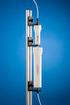 Purification of reaction mixtures using flash chromatography. This technical note details the use of ISOLUTE Flash chromatography columns for the purification of reaction mixtures. What is flash chromatography?
Extraction, Derivatization and Ultra-Sensitive GC/Triple Quadrupole Analysis of Estrone and Estradiol in Human Serum
 Extraction, Derivatization and Ultra-Sensitive GC/Triple Quadrupole Analysis of Estrone and Estradiol in uman Serum Technical verview Clinical Research Authors Anthony Macherone, Ph.D. Agilent Technologies,
DUI in Southern Ohio MATT 2006
 DUI in Southern Ohio MATT 2006 Laureen J. Marinetti, M.S., Ph.D. Chief Toxicologist Montgomery County Coroner s s Office & Miami Valley Regional Crime Lab (MVRCL) Dayton, Ohio Region The MVRCL is a regional
Analytical Test Report
 Analytical Test Report Customer: Address (City, State): Purchase Order: Report Number: Project Number: Date Received: Date of Report: Test Location: Boulder, CO. Assay: Part Number: Amino Acids by HPLC
Experiment 3: Extraction: Separation of an Acidic, a Basic and a Neutral Substance
 1 Experiment 3: Extraction: Separation of an Acidic, a Basic and a Neutral Substance Read pp 142-155, 161-162, Chapter 10 and pp 163-173, Chapter 11, in LTOC. View the videos: 4.2 Extraction (Macroscale);
Thermo Scientific SOLAµ SPE Plates Technical Guide. Consistent excellence. for bioanalysis
 Thermo Scientific SOLAµ SPE Plates Technical Guide Consistent excellence for bioanalysis SOLAµ - delivering reproducible low volume extractions. Everytime! Thermo Scientific SOLAµ plates are designed for
SUCRALOSE. White to off-white, practically odourless crystalline powder
 SUCRALOSE Prepared at the 41st JECFA (1993), published in FNP 52 Add 2 (1993). Metals and arsenic specifications revised at the 63rd JECFA (2004). An ADI of 0-15 mg/kg bw was established at the 37th JECFA
Fast, Reproducible LC-MS/MS Analysis of Dextromethorphan and Dextrorphan
 Fast, Reproducible LC-MS/MS Analysis of and Kimberly Phipps, Thermo Fisher Scientific, Runcorn, Cheshire, UK Application Note 685 Key Words Accucore C18, dextromethorphan, dextrorphan, SOLA CX Abstract
SIMULTANEOUS DETERMINATION OF NALTREXONE AND 6- -NALTREXOL IN SERUM BY HPLC
 SIMULTANEOUS DETERMINATION OF NALTREXONE AND 6- -NALTREXOL IN SERUM BY HPLC Katja SÄRKKÄ, Kari ARINIEMI, Pirjo LILLSUNDE Laboratory of Substance Abuse, National Public Health Institute Manerheimintie,
Daniel M. Mueller, Katharina M. Rentsch Institut für Klinische Chemie, Universitätsspital Zürich, CH-8091 Zürich, Schweiz
 Toxichem Krimtech 211;78(Special Issue):324 Online extraction LC-MS n method for the detection of drugs in urine, serum and heparinized plasma Daniel M. Mueller, Katharina M. Rentsch Institut für Klinische
The Use of Micro Flow LC Coupled to MS/MS in Veterinary Drug Residue Analysis
 The Use of Micro Flow LC Coupled to MS/MS in Veterinary Drug Residue Analysis Stephen Lock AB SCIEX Warrington (UK) Overview A rapid, robust, sensitive and specific LC-MS/MS method has been developed for
SCREENING FOR DRUGS IN SERUM AND URINE BY LC/ESI/CID-MS AND MS/MS WITH LIBRARY SEARCHING *
 SCREENING FOR DRUGS IN SERUM AND URINE BY LC/ESI/CID-MS AND MS/MS WITH LIBRARY SEARCHING * Wolfgang WEINMANN 1, Natalie LEHMANN 1, Michaela RENZ 1, Alexander WIEDEMANN 1, Michal SVOBODA 2 1 Institute of
Overview. Introduction. AB SCIEX MPX -2 High Throughput TripleTOF 4600 LC/MS/MS System
 Investigating the use of the AB SCIEX TripleTOF 4600 LC/MS/MS System for High Throughput Screening of Synthetic Cannabinoids/Metabolites in Human Urine AB SCIEX MPX -2 High Throughput TripleTOF 4600 LC/MS/MS
AppNote 4/2014. Prep-and-Shoot : The Completely Automated Workfl ow for the Hydrolysis and Analysis of Urine Samples by LC/MS/MS.
 AppNote 4/2014 Prep-and-Shoot : The Completely Automated Workfl ow for the Hydrolysis and Analysis of Urine Samples by LC/MS/MS. Oscar G. Cabrices, Fred D. Foster Gerstel, Inc., 701 Digital Dr. Suite J,
SIMULTANEOUS DETERMINATION OF TELMISARTAN AND HYDROCHLOROTHIAZIDE IN TABLET DOSAGE FORM USING REVERSE PHASE HIGH PERFORMANCE LIQUID CHROMATOGRAPHY
 CHAPTER 5 SIMULTANEOUS DETERMINATION OF TELMISARTAN AND HYDROCHLOROTHIAZIDE IN TABLET DOSAGE FORM USING REVERSE PHASE HIGH PERFORMANCE LIQUID CHROMATOGRAPHY CHAPTER 5 Simultaneous determination of Telmisartan
Determination of Tetracycline Antibiotics in Milk Using a Simple Strong Cation-Exchange SPE Cleanup Procedure and LC-MS/MS Analysis
 Determination of Tetracycline Antibiotics in Milk Using a Simple Strong Cation-Exchange SPE Cleanup Procedure and LC-MS/MS Analysis UCT Product Numbers: CSDAU26: 2mg / 6mL SPE cartridge SLDA1ID21-3UM:
SCREENING FOR THE PRESENCE OF PARA-METHYLTHIOAMPHETAMINE IN URINE BY SOME COMMERCIAL IMMUNOASSAYS AND CONFIRMATION BY GC/MS
 SCREENING FOR THE PRESENCE OF PARA-METHYLTHIOAMPHETAMINE IN URINE BY SOME COMMERCIAL IMMUNOASSAYS AND CONFIRMATION BY GC/MS Ingrid J. BOSMAN 1, Douwe DE BOER 2, Robert A. A. MAES 1 1 Department of Human
One Source Toxicology Laboratory, 1213 Genoa Red Bluff, Pasadena, Texas 77504
 Validation of Analysis of Amphetamines, Opiates, Phencyclidine, Cocaine, and Benzoylecgonine in Oral Fluids by Liquid Chromatography Tandem Mass Spectrometry Subbarao V. Kala*, Steve E. Harris, Tom D.
United States Department of Agriculture Food Safety and Inspection Service, Office of Public Health Science
 CLG-MG/CV2.00 Page 1 of 15 Contents A. INTRODUCTION... 2 B. EQUIPMENT... 3 C. REAGENTS AND SOLUTIONS... 4 D. STANDARDS... 5 E. SAMPLE PREPARATION... 6 F. ANALYTICAL PROCEDURE... 6 G. CONFIRMATION... 8
Innovative vs Traditional
 And in the red corner, introducing the challenger NASDAQ April 4 2011 243.47 $ 1.38 $ 0.58 % 0.07 $ 0.02 $ 39.4 % Technology DVD Digital Streamline Instant Play Internet Access Unlimited Selection No Late
Successful Sample Preparation Strategies for LC/MS/MS Analysis of Drugs in Complex Biological Matrices for Forensic Toxicology Applications
 Thank you for joining us! Our session will begin shortly Successful Sample Preparation Strategies for LC/MS/MS Analysis of Drugs in Complex Biological Matrices for Forensic Toxicology Applications Jonathan
Application Note # LCMS-92 Interlaboratory Tests Demonstrate the Robustness and Transferability of the Toxtyper Workflow
 Application Note # LCMS-92 Interlaboratory Tests Demonstrate the Robustness and Transferability of the Toxtyper Workflow Abstract There is high demand in clinical research and forensic toxicology for comprehensive,
AppNote 1/2014. Automated Hydrolysis, DPX Extraction and LC/MS/MS Analysis of Pain Management Drugs from Urine KEYWORDS ABSTRACT
 AppNote 1/2014 Automated Hydrolysis, DPX Extraction and LC/MS/MS Analysis of Pain Management Drugs from Urine Fred D. Foster, John R. Stuff, Edward A. Pfannkoch GERSTEL, Inc., 701 Digital Dr. Suite J,
Tamsulosin Hydrochloride Capsules
 . nal Revision Bulletin Official October 1, 2011 Tamsulosin 1 standard solution, and shake well. Centrifuge at 1500 rpm for 10 min, and use the supernatant, passing it if Tamsulosin Hydrochloride Capsules
AppNote 7/2009. Analysis of Drugs of Abuse using Automated Disposable Pipette Extraction and LC/MS/MS KEYWORDS ABSTRACT
 AppNote 7/2009 Analysis of Drugs of Abuse using Automated Disposable Pipette Extraction and LC/MS/MS Fred D. Foster, John R. Stuff, Edward A. Pfannkoch Gerstel, Inc., 701 Digital Dr. Suite J, Linthicum,
Overview. Purpose. Methods. Results
 A ovel Approach to Quantify Unbound Cisplatin, Carboplatin, and xaliplatin in Human Plasma Ultrafiltrate by Measuring Platinum-DDTC Complex Using LC/M/M Min Meng, Ryan Kuntz, Al Fontanet, and Patrick K.
MultiQuant Software Version 3.0 for Accurate Quantification of Clinical Research and Forensic Samples
 MultiQuant Software Version 3.0 for Accurate Quantification of Clinical Research and Forensic Samples Fast and Efficient Data Review, with Automatic Flagging of Outlier Results Adrian M. Taylor and Michael
Advantages of Polar, Reversed- Phase HPLC Columns for the Analysis of Drug Metabolites
 Advantages of Polar, Reversed- Phase HPLC Columns for the Analysis of Drug Metabolites Carmen T. Santasania and David S. Bell SUPELCO, 595 North Harrison Road, Bellefonte, PA 16823 T404045 GUS Abstract
Intelligent use of Relative Response Factors in Gas Chromatography-Flame Ionisation Detection
 52 May/June 2012 Intelligent use of Relative Response Factors in Gas Chromatography-Flame Ionisation Detection by Karen Rome and Allyson McIntyre, AstraZeneca, Macclesfield, SK10 2NA, UK Quantitative analysis
Overview. Triple quadrupole (MS/MS) systems provide in comparison to single quadrupole (MS) systems: Introduction
 Advantages of Using Triple Quadrupole over Single Quadrupole Mass Spectrometry to Quantify and Identify the Presence of Pesticides in Water and Soil Samples André Schreiber AB SCIEX Concord, Ontario (Canada)
Quantitative analysis of anabolic steroids in control samples from food-producing animals using a column-switching LC-HESI-MS/MS assay
 PO-CON1484E Quantitative analysis of anabolic steroids in control samples from food-producing animals using a column-switching ASMS 014 TP85 David R. Baker 1, John Warrander 1, Neil Loftus 1, Simon Hird
Cliquid Drug Screen & Quant Software for Routine Forensic Toxicology. great interest in forensic, toxicological and clinical research laboratories.
 Application Note Cliquid Drug Screen & Quant Software A Fast and Sensitive LC/MS/MS Method for the Quantitation and Confirmation of 30 Benzodiazepines and Nonbenzodiazepine Hypnotics in Forensic Urine
AMD Analysis & Technology AG
 AMD Analysis & Technology AG Application Note 120419 Author: Karl-Heinz Maurer APCI-MS Trace Analysis of volatile organic compounds in ambient air A) Introduction Trace analysis of volatile organic compounds
CLEAN-UP PROCESS FOR MASS SPECTRAL STUDY OF AMPHETAMINES IN PUTREFIED BODY MATERIALS
 CLEAN-UP PROCESS FOR MASS SPECTRAL STUDY OF AMPHETAMINES IN PUTREFIED BODY MATERIALS Kenji HARA, Seiichi KASHIMURA, Masayuki KASHIWAGI, Tomoko HAMANAKA, Mitsuyoshi KAGEURA Department of Forensic Medicine,
Micromass LCT User s Guide
 Micromass LCT User s Guide 1) Log on to MassLynx with your username & password. 2) After you have logged in, the MassLynx software will automatically run. 3) After MassLynx has come up, open your project
MEPS - Micro Extraction by Packed Sorbent Online SPE for GC and LC sample preparation - Extraction to injection in a single process
 - Micro Extraction by Packed Sorbent Online SPE for GC and LC sample preparation - Extraction to injection in a single process Save Hours in Sample Preparation Reduce the time to prepare and inject samples
LC-MS for Pain Management Support
 LC-MS for Pain Management Support Gwen McMillin, PhD, DABCC(CC,TC) University of Utah ARUP Laboratories Outline Overview of drug testing, as a component of the therapeutic plan, in the management of chronic
Practical Aspects of Drug Testing in Human Hair
 Practical Aspects of Drug Testing in Human Hair Laboratory Perspective James A. Bourland, Ph.D., DABFT FOR INTERNAL USE ONLY. NOT FOR PRINT OR DISTRIBUTION Overview of Collection Process FOR INTERNAL USE
High-Throughput 3-D Chromatography Through Ion Exchange SPE
 High-Throughput 3-D Chromatography Through Ion Exchange SPE Application Note 205 Luke Roenneburg and Alan Hamstra (Gilson, Inc.) Introduction 2-dimensional (2-D) separation is the separation of a sample
LC-MS for Pain Management Support. Gwen McMillin, PhD, DABCC(CC,TC) University of Utah ARUP Laboratories
 LC-MS for Pain Management Support Gwen McMillin, PhD, DABCC(CC,TC) University of Utah ARUP Laboratories Outline Overview of drug testing, as a component of the therapeutic plan, in the management of chronic
Method Development of LC-MS/MS Analysis of Aminoglycoside Drugs: Challenges and Solutions
 Method Development of LC-MS/MS Analysis of Aminoglycoside Drugs: Challenges and Solutions authors Angela (Qi) Shen, Ling Morgan, Marcele L. Barroso, and Xin Zhang; Tandem Labs Tuyen Nguyen; Sepracor Inc.
HEXANES. Insoluble in water, soluble in ether, alcohol, and acetone. Neutral to methyl orange (ph indicator) Not more than 0.
 HEXANES Prepared at the 51st JECFA (1998), published in FNP 52 Add 6 (1998) superseding specifications prepared at the 14th JECFA (1970), published in NMRS 48B (1971) and in FNP 52 (1992). ADI "limited
A Novel Approach to Low Volume Sample Preparation
 A Novel Approach to Low Volume Sample Preparation Tony Edge, Jon Bardsley, Ken Meadows, Luisa Pereira International Symposium on Chromatography Salzburg, Austria September 2014 1 The world leader in serving
Protocol: HPLC (amino acids)
 Page 1 of 6 1. Chemicals Composition M MW gram volume (ml) product code 0-pthaldialdehyde C 8H 6O 2 134.13 Sigma P0657 Perchloric acid HClO 4 3.5 100.46 Dilute 70% stock solution 1:1 with demi to obtain
Preparation of frequently used solutions
 Preparation of frequently used solutions Content 1. Diluting Concentrated Acids (Last Login: 08/08/2009) 2. Indicators (Last Login: 27/07/2009) 3. Standard Buffer Solutions (Last Login: 27/07/2009) 4.
The potential of oral fluid as a specimen in various drug testing programs
 The potential of oral fluid as a specimen in various drug testing programs *Christine Moore, Cynthia Coulter, Katherine Crompton, Warren Rodrigues, Michael Vincent, James Soares Immunalysis Corporation,
Fipronil Analysis By GC/XSD following Post-Extraction Gel Permeation Chromatography Cleanup
 Application Note 25570306 Fipronil Analysis By GC/XSD following Post-Extraction Gel Permeation Chromatography Cleanup Keywords Gel Permeation Chromatography GPC AutoPrep 2000 Pesticides RapidVap N2 System
CORESTA RECOMMENDED METHOD N 72
 CORESTA RECOMMENDED METHOD N 72 DETERMINATION OF TOBACCO-SPECIFIC NITROSAMINES IN SMOKELESS TOBACCO PRODUCTS BY LC-MS/MS (February 216). INTRODUCTION The CORESTA Smokeless Tobacco Sub-Group studied various
Separation by Solvent Extraction
 Experiment 3 Separation by Solvent Extraction Objectives To separate a mixture consisting of a carboxylic acid and a neutral compound by using solvent extraction techniques. Introduction Frequently, organic
LUMEFANTRINE Draft proposal for The International Pharmacopoeia (October 2006)
 October 2006 RESTRICTED LUMEFANTRINE Draft proposal for The International Pharmacopoeia (October 2006) DRAFT FOR DISCUSSION World Health Organization 2006 All rights reserved. This draft is intended for
Electrospray Ion Trap Mass Spectrometry. Introduction
 Electrospray Ion Source Electrospray Ion Trap Mass Spectrometry Introduction The key to using MS for solutions is the ability to transfer your analytes into the vacuum of the mass spectrometer as ionic
MASS SPECTROMETRIC IDENTIFICATION OF SOME SULPHUR CONTAINING PHENALKYLAMINE DESIGNER DRUGS *
 MASS SPECTROMETRIC IDENTIFICATION OF SOME SULPHUR CONTAINING PHENALKYLAMINE DESIGNER DRUGS * Ingrid J. BOSMAN 1, Douwe DE BOER 2, Edwin B. SIDERIUS 1, Lesseps J. A. L. DOS REYS 2, Robert A. A. MAES 1 1
Tests Impacted by 2015 CPT Changes
 Toxicology Changes for 2015 HPV Examples of Toxicology Panels Molecular Pathology, FISH and Anatomic Pathology 1 Toxicology Changes for 2015 80100 Test Code Dos Test Name 2015 2015 Medicare 5229 Drug Screen,
Sample Preparation Using Solid Phase Extraction
 Sample Preparation Using Solid Phase Extraction Dr. Shulamit Levin Based on: Yung-Fong (Henry) Cheng Waters Corporation 34 Maple Street Milford, MA 0757 Present at EAS'98 Workshop Troubleshooting of Sample
ACETALDEHYDE and ISOVALERALDEHYDE (Gas Chromatography)
 ACETA.02-1 ACETALDEHYDE and ISOVALERALDEHYDE (Gas Chromatography) PRINCIPLE Isovaleraldehyde (IVA) and acetaldehyde are released from the syrup with the aid of dilute phosphoric acid and heat. The liberated
Hillsborough Community College - Ybor City Campus 1025C Laboratory Exercise 9: Testing Urine for the Presence of Drugs Introduction
 Hillsborough Community College - Ybor City Campus 1025C Laboratory Exercise 9: Testing Urine for the Presence of Drugs Introduction Drug testing beyond the health care and criminal justice systems has
The basic division explosives for forensic purposes is shown in Fig. 1
 Isolation, concentration and determination of post blast residua by liquid chromatography with DAD detector capillary electrophoresis with DAD detector Firearm fumes (gunshot residua, GSR) - various metallic
Simultaneous Quantitation of 78 Drugs and Metabolites in Urine with a Dilute-And-Shoot LC MS-MS Assay
 Journal of Analytical Toxicology 2015;1 12 doi:10.1093/jat/bkv024 Journal of Analytical Toxicology Advance Access published April 1, 2015 Article Simultaneous Quantitation of 78 Drugs and Metabolites in
Simultaneous qualitative and quantitative analysis using the Agilent 6540 Accurate-Mass Q-TOF
 Simultaneous qualitative and quantitative analysis using the Agilent 654 Accurate-Mass Q-TOF Technical Overview Authors Pat Perkins Anabel Fandino Lester Taylor Agilent Technologies, Inc. Santa Clara,
What Do We Learn about Hepatotoxicity Using Coumarin-Treated Rat Model?
 What Do We Learn about Hepatotoxicity Using Coumarin-Treated Rat Model? authors M. David Ho 1, Bob Xiong 1, S. Stellar 2, J. Proctor 2, J. Silva 2, H.K. Lim 2, Patrick Bennett 1, and Lily Li 1 Tandem Labs,