
Neck and Headache Pain
|
|
|
- Katrina Hood
- 10 years ago
- Views:
Transcription
1 Neck and Headache Pain ICD-9-CM code: cervicocranial syndrome ICF codes: Activities and Participation Domain code: d4158 Maintaining a body position, other specified - specified as: maintaining the head in a flexed position, such as when reading a book; or, maintaining the head in an extended position, such as when looking up at a computer screen or video monitor Body Structure codes: s7103 Joints of head and neck region Body Functions code: b28010 Pain in head and neck Common Historical Findings: Unilateral neck pain with referral to occipital, temporal, parietal, frontal or orbital areas Headache precipitated or aggravated by neck movements or sustained positions Noncontinuous headaches (usually < 1 episode/day; < 2 episodes/week) Common Impairment Findings - Related to the Reported Activity Limitation or Participation Restrictions: Observable postural asymmetry of the head on neck (sidebent or extended) Headache reproduced with provocation of the involved segmental myofascia and/or joints O/C1, C1/C2, or C2/C3 restricted accessory motions with associated myofascial trigger points Physical Examination Procedures: Palpation/Provocation of Suboccipital Myofascia 1

2 O/C1, C1/C2, or C2/C3 accessory motion testing using posterior-to-anterior pressures 0/C1 accessory motion testing using C1 lateral translatoty pressures C1 C2 Rotation ROM testing with the C2 C7 segments in flexion 2

3 Neck and Headache Pain: Description, Etiology, Stages, and Intervention Strategies The below description is consistent with descriptions of clinical patterns associated with the term Cervicogenic Headache. Description: Cervicogenic headache is a headache where the source of the ache is from a structure in the cervical spine, such as a cervical facet, muscle, ligament, or dura. The pain is referred to the occipital, temporal, parietal, frontal, and orbital areas. The characteristics of cervicogenic headache are unilateral dominant side-consistent headache associated with neck pain and aggravated by neck postures or movement, limited range of motion in the cervical spine and joint tenderness in at least one of the upper three cervical joints as detected by manual palpation. The aching is moderate-severe, without throbbing or lancinating pain, usually starting in the neck. The episodes can be of varying duration (few hours to a few weeks). The initial phase of cervicogenic headache is usually frequent and episodic. The occurrence among females is twice that of males. Etiology: The headache is due to a musculoskeletal disorder in the upper cervical spine. Thus, movement stresses of the upper cervical spine are associated with the headache complaint (e.g., headache is worse at the end of a days work at a computer screen or talking on the phone). Acute Stage / Severe Condition: Physical Examinations Findings (Key Impairments) ICF Body Functions code: b SEVERE pain in head and neck joints Abnormal head on neck posture is commonly observed (e.g., the head is held in an excessively extended position or an excessive sidebent position relative to the upper cervical segments) Limited O-C1 and/or C1-C2 and/or C2-C3 segmental mobility Headache aggravated with certain head positions or sustained movements Headaches reproduced with provocation of the involved segment at O/C1, C1/C2, C2/C3 or with provocation of trigger points in the suboccipital myofascial or during slump testing of the dural elements Deep cervical flexor muscle control deficits (i.e., rectus capitus anterior and longus colli) Sub Acute Stage / Moderate Condition: Physical Examinations Findings (Key Impairments) ICF Body Functions code: b MODERAT pain in head and neck joints As above the ability to reproduce the patient s headache via palpatory provocation of the involved joints or myofascial lessens as the mobility of the involved upper cervical segments Settled / Moderate Condition: Physical Examinations Findings (Key Impairments) ICF Body Functions code: b MILD pain in head and neck joints Now when the patient is less acute examine for ergonomic factors, postural habits, muscle flexibility and strength deficits that may be predisposing factors for upper cervical somatic disorders. For example: 3

4 Ergonomic or postural paterns that involve excessive thoracic kyphosis and associated excessive cervical lordosis predisposes the head to be excessively extended on the neck placing the upper cervical extensors on a chronically shortened position thus, precipitating the above listed impairments. Upper quarter muscle imbalances such as tightness of the scapular elevators (i.e., levator scapulae and upper trapezius) muscles and weakness of the scapular adductors/stabilizing (i.e., lower and middle trapezius) muscles Acute stage / Severe Condition Intervention Approaches / Strategies Goals: Reduce the frequency and severity of the headaches Reduce the medication required to manage the symptoms Re-injury Prevention Instruction Avoid positions that reproduce or aggravate the headaches Manual Therapy Soft tissue mobilization to the involved suboccipital myofascial restrictions (performed at an intensity that does not aggravating the patient s condition) Joint mobilization/manipulation to the involved upper cervical facet restrictions (performed at an intensity or velocity that does not aggravating the patient s condition) Note: Performing upper cervical joint mobilization/manipulations with the patients upper cervical spine at end ranges of extension or the end ranges of combined of extension/rotation movements is contraindicated due the potential disaterous effects that these manipulative procedures have been reported to have some individual s vertebral artery. Thus, all upper cervical manipulations are performed with the head and neck in the neutral or flexed position Therapeutic Exercise: Instruct in exercise and functional movements to maintain the improvements in mobility gained with the soft tissue and joint manipulations (Head nodding and retraction/protraction for O-C1 and rotation for C1-C2) Ergnomics Instructions Postural re-education to limit excessive extended head postitions during occupational tasks, recreational activities and other daily activities Sub Acute Stage / Moderate Condition 4

5 Goals: As above Normalize upper cervical segmental mobility Approaches / Strategies listed above focusing on restoring normal, pain free occipital and cervical spine mobility. Therapeutic Exercise Low load endurance exercises to train muscle control of the cervical and scapular region, consists of exercises targeting deep neck flexor muscles and longus capitus and colli, trapezius, and serratus anterior. For example, cervical flexion exercises using a pressure biofeedback unit and isometric exercises using rotatory resistance to train the cocontraction of the neck flexors and extensors Settled Stage / Mild Condition Goals: As above Normalize cervical and upper thoracic flexibility and strength deficits Increase activity tolerance Approaches / Strategies listed above Therapeutic Exercises Stretching exercises to address the patient s specific muscle flexibility deficits Strengthening exercises to address the patient s specific muscle strength deficits Dural mobiliy exercises to address the patient s specific dural mobility deficits Intervention for High Performance/High Demand Functioning in Workers or Athletes Goal: Return to desired occupational or leisure time activities Approaches / Strategies listed above Therapeutic Exercises Maximize muscle performance of the neck, scapulae, shoulder girdle muscles perform the desired occupational or recreational activities. 5

6 Selected References Bansevicius D, Sjaastad O. Cervicogenic headache: The influence of mental load on pain level and EMG of shoulder-neck and facial muscles. Headache. 1996;36: Bovim G, Berg R, Dale LG. Cervicogenic headache: Anesthetic blockades of cervical nerves (C2-C5) and facet joint (C2-C3). Pain. 1992;49: Jull G, Trott P, Potter H, Zito G, Niere K, Shirley D, Emberson J, Marschner I, Richardson C. A randomized controlled trial of exercises and manipulative therapy for cervicogenic headache. Spine. 2002;27: Mulligan BR. Manuel Therapy Nags, Snags, MWMs etc. 4 th ed. Wellington: Plane View Press, 1995 Nilsson N. The prevalence of cervicogenic headache in a random population same of 29-to 59- year-olds. Spine. 1995;20: Petersen S. Articular and Muscular Impairments in Cervicogenic Headache: A Case Report. Journal of Orthopedic Sports Physical Therapy. 2003;33: Sjaastad O, Fredriksen TA, Pfaffenrath V. Cervicogenic headache: Diagnostic criteria. Headache 1998;38:

7 MANUAL EXAMINATION AND TREATMENT OF THE UPPER CERVICAL SPINE Symptoms/Signs of Cerebral Anoxia: Apprehension, anxiety, or panic with cervical movements Vertigo and dizziness Blurred vision Nystagmus Nausea Slowness of Response Manual Examination: If hypermobility is suspected, examine for instability: Sharp-Purser Test Odontoid-Alar Ligament Test Hypermobile accessory movements Central tenderness or pain with central posterior-to-anterior pressures If vascular insufficiency is suspected: Watch for signs of cerebral anoxia Perform vertebral artery tests continually assessment of symptoms/signs of cerebral anoxia Passive Movements: Physiological Movement Testing: Occiput-C1: Occiput FB/BB Occiput SB Occiput Lateral Translatory Movements in FB and BB C1-C2: A/A Rotation in cervical flexion Accessory Movement Testing: Occiput-C1: C1 Anterior Glide C1 Lateral Glide Palpation: Sub-occipital myofascia Manual Treatment Soft Tissue Mobilization: Sub-occipital myofascia STM Contract-Relax Occiput-C1 C1-C2 Passive Joint Mobilization: Occipital Distraction C1 Anterior Glide C1 Lateral Glide C1-C2 Rotation (sitting) Re-Education: Neutral Head/Neck Cueing Neck Flexor Therapeutic Exercises Always remember: While performing all examination and treatment procedures, be alert for signs of cerebral anoxia 7

8 Impairment: Limited C1/C2 Right Rotation C1/C2 Contract/Relax Cues: Fully flex C2 through C7 Adding flexion at the occiput/c1/c2 areas assists in preventing rotation past C2 (i.e., it helps create a firm C1/C2 rotation barrier) Rotate occiput and C1 to the right until the first barrier - be sure to 1) maintain the cervical flexion, and 2) prevent cervical sidebending Look with your eyes to the left Relax Take up the now available right rotation slack passively (or gently look to the right ) - relax - repeat contract/relax procedures 3 to 5 times The following references provides additional information regarding this procedure: John Bourdillon FRCS, EA Day MD, and Mark Bookhout MS, PT: Spinal Manipulation, p , 1992 Philip Greenman DO, FAAO: Principles on Manual Medicine, p. 192,

9 Impairment: Limited C1/C2 Right Rotation C1/C2 Rotation Cues: Stabilize the right lamina of C2 with your left thumb Comfortably hug the patient s head and rotate it (with C1) to the right Tilt the head to the left to allow some slack in the left alar ligament Apply a passive stretch (or, a contract/relax stretch) Be especially tuned into the patient with regards to VBI symptoms or signs while performing this technique The following reference provides additional information regarding a similar procedure: Freddy Kaltenborn PT: The Spine: Basic Evaluation and Mobilization Techniques, p. 279,

10 Impairment: Limited Occiput/C1 flexion Limited Occipital Posterior Glide (or C1 Anterior Glide) on the Left Occipital Posterior Glide Cues: Rest the right middle finger on the left thenar eminence Position the patient (and your hands) so that the left lateral mass of C1 is contacted by the dummy middle finger Apply a posterior glide to the left occipital condyle via a posterior force on the patients left forehead (using flexion of your thorax with your left anterior deltoid/clavipectoral area contacting the patient s left forehead) C1 Anterior Glide 10

11 Impairment: Limited Upper Cervical Right Sidebending Limited C1 Right Lateral Translation C1 Lateral Translation Cue: Contact the left C1 lateral mass with 1) your left index or middle finger, or 2) the radial side of your left index finger MCP area Stabilize the skull with your right hand Apply right lateral translatory oscillations or stretching forces to C1 Be kind and gentle - but effective Don t be in a hurry The following reference provides additional information regarding similar procedures: Freddy Kaltenborn PT: The Spine: Basic Evaluation and Mobilization Techniques, p. 243, 277,

12 Impairment: Limited Occipital Flexion and Right Sidebending Occiput/C1 Contract/Relax (of segmental extensors and left sidebenders) Cue: Nod the occiput to take up the flexion barrier Translate the nodded occiput to the left to first upper cervical barrier not mid cervical barrier Keep the eyebrows parallel to the transverse plane when translating the occiput (to avoid inadvertent left sidebending) Elicited contraction of the segmental extensors ( look to the left ) Manually cue either the anterior aspect of the chin or the left zygoma (with your left forearm) when providing the verbal commands Maintain both the flexion and the left translation barriers during the contraction Relax Take up available slack in both barriers Repeat The following references provides additional information regarding this procedure: John Bourdillon FRCS, EA Day MD, and Mark Bookhout MS, PT: Spinal Manipulation, p , 1992 Philip Greenman DO, FAAO: Principles of Manual Medicine, p. 194,

13 Impairment: Limited Occipital Flexion and Right Sidebending Occipital Distraction in Flexion and Sidebending Cues: Contact the right occipital condyle with the anterior surface of the index finger metacarpal of the right hand As best as possible, align your right forearm parallel to the distraction force direction Hug the right side of patient s head with your left forearm Position the patient at the barriers of both flexion and left translation - as he/she exhales The distraction mobilization or manipulation force primarily comes from your index finger metacarpal using a weight shift from your trunk If you are not moving the patient s feet ( positive toe sign ) you are probably not providing enough traction force to distract the patient s occiput from C1 The following references provides additional information regarding this procedure: John Bourdillon FRCS, EA Day MD, and Mark Bookhout MS, PT: Spinal Manipulation, p , 1992 Philip Greenman DO, FAAO: Principles of Manual Medicine, p. 202,

14 Impairment: Limited Occipital Extension and Right Sidebending Occiput /C1 Contract/Relax (of segmental flexors and left sidebenders) Cues: Extend the head (not the cervical spine) to take up the extension barrier Translate the extended head to the left to the first (upper cervical - not mid cervical) barrier Translate left - not sidebend left Elicit contraction of the segmental flexors ( look down toward your feet ) or sidebenders ( look to the left) Manually cue either under the chin or the left zygoma when providing the verbal commands Maintain both barriers during the contraction Relax - take up slack repeat The following references provides additional information regarding this procedure: John Bourdillon FRCS, EA Day MD, M Bookhout MS, PT: Spinal Manipulation, p. 266, 1992 Philip Greenman DO, FAAO: Principles on Manual Medicine, p , 1996 Occipital Distraction in Extension and Sidebending Cues: Contacts and force application is similar to the occipital distraction in flexion Position the patient at the barriers of occipital extension (not cervical extension) and left translation - as he/she exhales Maintain these barriers apply the distraction mobilizations or manipulation The following references provides additional information regarding this procedure: John Bourdillon FRCS, EA Day MD, M Bookhout MS, PT: Spinal Manipulation, p.268, 1992 Philip Greenman DO, FAAO: Principles of Manual Medicine, p. 201,

Thoracic Spine Mobility Deficits
 Thoracic Spine Mobility Deficits ICD-9-CM: 847.1 thoracic sprain ICF codes: Activities and Participation Domain code: d4105 Bending (Tilting the back downward or to the side, at the torso, such as in bowling
Lumbar Spine Mobility Deficits. 724.2 Lumbago (low back pain, low back syndrome, lumbalgia)
 Lumbar Spine Mobility Deficits ICD-9-CM code: 724.2 Lumbago (low back pain, low back syndrome, lumbalgia) ICF codes: Activities and Participation Domain code: d4105 Bending (Tilting the back downward or
Shoulder and Related Upper Extremity Radiating Pain
 Shoulder and Related Upper Extremity Radiating Pain ICD-9-CM codes: 723.3 Cervical brachial syndrome ICF codes: Activities and Participation Domain codes: d4301 Carrying in the hands (Taking or transporting
Temporo-Mandibular Joint Complex Exercise Suggestions
 Temporo-Mandibular Joint Complex Exercise Suggestions I. Exercise Generalizations: A. Patients with post-traumatic TMJ problems or with recent-onset dysfunction that is largely posture-related will generally
Thoracic Cage Respiratory Mobility Deficits
 Thoracic Cage Respiratory Mobility Deficits ICD-9-CM: 733.6 costochondritis (Tietze's Disease) ICF codes: Activities and Participation Domain code: d498 Mobility, other specified (Expansion of the ribcage
HEADACHES AND THE THIRD OCCIPITAL NERVE
 HEADACHES AND THE THIRD OCCIPITAL NERVE Edward Babigumira M.D. FAAPMR. Interventional Pain Management, Lincoln. B. Pain Clinic, Ltd. Diplomate ABPMR. Board Certified Pain Medicine No disclosures Disclosure
Headaches!!! What can Physical Therapy do??? Paul Wortley PT Rocky Mountain Therapy Services
 Headaches!!! What can Physical Therapy do??? Paul Wortley PT Rocky Mountain Therapy Services Take 2 Aspirin and Call Me in the Morning FACTS During the past year, nearly 90-95% men and women have had a
Standard of Care: Cervical Radiculopathy
 Department of Rehabilitation Services Physical Therapy Diagnosis: Cervical radiculopathy, injury to one or more nerve roots, has multiple presentations. Symptoms may include pain in the cervical spine
Cervicogenic Headaches
 Cervicogenic Headaches Definition/Description Cervicogenic headaches refer to headache type sensations felt in the head and/face that originates from the neck, most commonly the upper cervical zygapophyseal
Headache. Neuromuscular changes in cervicogenic headache and implications for practice. Cervicogenic Headache. Cervicogenic Headache
 Headache Neuromuscular changes in cervicogenic and implications for practice Deborah Falla Headache is a common complaint which only 1% of the population escape in their lifetimes The most common are the
Thoracic Region Pain. ICD-9-CM: 724.4 Thoracic or Lumbosacral neuritis or radiculitis, unspecified
 Thoracic Region Pain ICD-9-CM: 724.4 Thoracic or Lumbosacral neuritis or radiculitis, unspecified ICF codes: Activities and Participation Domain code: d4108 Changing basic body position, other specified
Careful Coding: Headaches
 Dynamic Chiropractic March 26, 2012, Vol. 30, Issue 07 Careful Coding: Headaches By K. Jeffrey Miller, DC, DABCO and Ray Tuck, DC Because s are among the most common reasons for seeking chiropractic care,
by joseph e. muscolino, DO photography by yanik chauvin
 by joseph e. muscolino, DO photography by yanik chauvin body mechanics palpation of the anterior neck ESOUCES For more information go to www.medlineplus.gov and search under anterior neck. The anterior
Cervical Spine Applied Anatomy. Jason Zafereo, PT, OCS, FAAOMPT Clinical Orthopedic Rehabilitation Education
 Cervical Spine Applied Anatomy Jason Zafereo, PT, OCS, FAAOMPT Clinical Orthopedic Rehabilitation Education Objectives Discuss concepts relevant to pathophysiology and differential diagnosis for headache
Examination of the upper cervical spine
 CHAPTER CONTENTS Possible causes of pain and/or limitation of movement 129 Subjective examination 130 Body chart 130 Behaviour of symptoms 131 Special questions 133 History of the present condition (HPC)
SPINE. Postural Malalignments 4/9/2015. Cervical Spine Evaluation. Thoracic Spine Evaluation. Observations. Assess position of head and neck
 SPINE Observations Body type Postural alignments and asymmetries should be observed from all views Assess height differences between anatomical landmarks Figure 25-9 Figure 25-10 Figure 25-11 & 12 Postural
Massage Therapy Practice.com Client Self Care Manual
 Massage Therapy Practice.com Client Self Care Manual Massage Therapy Basics The Muscular Imprint of Tension Muscle Pain and Massage Stages of Recovery From Injury Stretching Basics Hydrotherapy Epsom Salts
Effective Treatments for the Neck
 Effective Treatments for the Neck A manual therapy course to improve your treatment of radicular pain and foraminal impingement syndromes www.advancedmassageeducation.com 1 Effective Treatments for the
*A discrete, hypersensitive nodule within tight band of muscle or fascia that present with classic pattern of pain referral that does not follow
 A patient presents with c/o cervical spine pain and chronic headaches that radiates across the top of his head. He also experiences frequent bouts of nausea, dizziness and indigestion. The patient also
Cervical Fusion Protocol
 REHABILITATION DEPARTMENT Cervical Fusion Protocol The following protocol for physical therapy rehabilitation was designed based on the typical patient seen at the Texas Back Institute for the procedure
Whiplash Associated Disorder
 Whiplash Associated Disorder The pathology Whiplash is a mechanism of injury, consisting of acceleration-deceleration forces to the neck. Mechanism: Hyperflexion/extension injury Stationary vehicle hit
Sternocleidomastoid muscle imbalance in a patient with recurrent headache
 Manual Therapy 11 (2006) 78 82 Case report Sternocleidomastoid muscle imbalance in a patient with recurrent headache Michael T. Cibulka Jefferson County Rehabilitation & Sports Clinic, 1330 YMCA Drive,
Ron Schenk PT, PhD 1
 Ron Schenk PT, PhD 1 Objectives Describe the anatomy of the neck (cervical spine) and low back (lumbar spine) Describe the risk factors associated with neck and low back injury Describe physical therapy
WHIPLASH! Therapeutic Massage by Lucy Lucy Dean, LMT, NMT, MMT. Helpful and effective treatment with Neuromuscular Therapy. What does Whiplash mean?
 WHIPLASH! Helpful and effective treatment with Neuromuscular Therapy Therapeutic Massage by Lucy Lucy Dean, LMT, NMT, MMT What does Whiplash mean? Whiplash is a non-medical term used to describe neck pain
Cervical Exercise: How important is it? What can be done? The Backbone of Spine Treatment. North American Spine Society Public Education Series
 Cervical Exercise: The Backbone of Spine Treatment How important is it? What can be done? North American Spine Society Public Education Series Important: If you have had an accident that started your neck
Rotator Cuff Pathophysiology. treatment program that will effectively treat it. The tricky part about the shoulder is that it is a ball and
 Rotator Cuff Pathophysiology Shoulder injuries occur to most people at least once in their life. This highly mobile and versatile joint is one of the most common reasons people visit their health care
MOVEMENT and MANUAL THERAPY
 YES! MOVEMENT and MANUAL THERAPY ROTATION EXTENSION FLEXION Main Objective * Combining Manual Therapy and Movement can effectively improve your patients quickly and empower the patient with tools for prevention
STRESS. Health & Wellness The Newsletter About Achieving and Maintaining Optimal Well-being UNDERSTANDING AND YOUR BODY. www.neorthopt.
 Health & Wellness The Newsletter About Achieving and Maintaining Optimal Well-being UNDERSTANDING STRESS AND YOUR BODY Life s demands create stress and although some stress may be good, too much can cause
Cervicogenic Headache: A Review of Diagnostic and Treatment Strategies
 Cervicogenic Headache: A Review of Diagnostic and Treatment Strategies 1 Journal of the American Osteopathic Association April 2005, Vol. 105, No. 4 supplement, pp. 16-22 David M. Biondi, DO FROM ABSTRACT:
Neck Pain & Cervicogenic Headache Integrating Research into Practice: San Luis Sports Therapy s Approach to Evidence-Based Practice
 Neck Pain & Cervicogenic Headache Integrating Research into Practice: San Luis Sports Therapy s Approach to Evidence-Based Practice PROBLEM: Neck Pain and Cervicogenic Headache 66% Proportion of individuals
Pilates Based Treatment For Low Back Pain with Contradicting Precautions : A Case Study
 Pilates Based Treatment For Low Back Pain with Contradicting Precautions : A Case Study Kerry Susser, DPT January 27, 2013 Body Arts and Science International Comprehensive Teacher Training Program 2013
Reading, Writing & Posture
 Expert Content body mechanics by Joseph E. Muscolino Healthy posture of the upper body when reading and writing is dependent upon the location and angulation of the surface that we are reading and/or writing
Manual therapy in headache
 Manual therapy in headache 活 水 神 經 內 科 診 所 謝 鴻 偉 物 理 治 療 師 Outline of presentation (1) Definition of CGH and TTH (2) Physical impairments and examinations of CGH and TTH 1.Forward head posture & upper
Tension Type Headaches
 Tension Type Headaches Research Review by : Dr. Ian MacIntyre Physiotherapy for tension-type Headache: A Controlled Study P. Torelli, R. Jenson, J. Olsen: Cephalalgia, 2004, 24, 29-36 Tension-type headache
How to Get and Keep a Healthy Back. Amy Eisenson, B.S. Exercise Physiologist
 How to Get and Keep a Healthy Back Amy Eisenson, B.S. Exercise Physiologist Lesson Objectives Statistics of Back Pain Anatomy of the Spine Causes of Back Pain Four Work Factors Core Muscles Connection
Post-Concussion Syndrome
 Post-Concussion Syndrome Anatomy of the injury: The brain is a soft delicate structure encased in our skull, which protects it from external damage. It is suspended within the skull in a liquid called
Mechanical Diagnosis And Therapy of the Cervical Spine. The McKenzie Method. Allan Besselink, PT, Dip.MDT Smart Sport International Austin, Texas
 Mechanical Diagnosis And Therapy of the Cervical Spine The McKenzie Method Allan Besselink, PT, Dip.MDT Smart Sport International Austin, Texas Background Physical Therapist Queen s s University 1988 McKenzie
Clinical guidance for MRI referral
 MRI for cervical radiculopathy Referral by a medical practitioner (excluding a specialist or consultant physician) for a scan of spine for a patient 16 years or older for suspected: cervical radiculopathy
Movement in the human body occurs at joint
 Biomechanics of The Spine Richard A. Banton, DPT, OCS, CMPT, ATC Movement in the human body occurs at joint surfaces; movement occurs with bones; movement of muscles moves the bones; coordinated movements
Body Mechanics for Mammography Technologists
 Body Mechanics for Mammography Technologists Diane Rinella RT(R)(M)(BD)RDMS(BR)CDT Objectives Recognize causes and risk factors for Musculoskeletal Disorders (MSDs) for mammography technologists Understand
X-Plain Neck Exercises Reference Summary
 X-Plain Neck Exercises Reference Summary Introduction Exercising your neck can make it stronger, more flexible and reduce neck pain that is caused by stress and fatigue. This reference summary describes
The Neck: Whiplash & Central Ligament Sprains. Presented by Dr. Ben Benjamin
 Debilitating Orthopedic Injury Sampler #1 The Neck: Whiplash & Central Ligament Sprains Presented by Dr. Ben Benjamin Instructor: Ben Benjamin, Ph.D. 2 1 Instructor: Ben Benjamin, Ph.D. [email protected]
Pilates for Kyphosis A BASI Pilates program designed to help correct thoracic kyphosis
 Pilates for Kyphosis A BASI Pilates program designed to help correct thoracic kyphosis 1 Lucy Penrose 19/01/2014 Wimbledon UK, April 2013 Abstract Kyphosis refers to an exaggerated curve in the thoracic
Carpal Tunnel Pain. STRETCH YOUR: 1) Wrist Flexors 2) Wrist Extensors 3) Wrist Decompression 4) Neck (see other chapters for more examples)
 Carpal Tunnel Pain STRETCH YOUR: 1) Wrist Flexors 2) Wrist Extensors 3) Wrist Decompression 4) Neck (see other chapters for more examples) wrist flexors wrist extensors carpal tunnel Athletic Edge - www.athleticedge.biz
33 % of whiplash patients develop. headaches originating from the upper. cervical spine
 33 % of whiplash patients develop headaches originating from the upper cervical spine - Dr Nikolai Bogduk Spine, 1995 1 Physical Treatments for Headache: A Structured Review Headache: The Journal of Head
Functional Treatment SAMPLE. Ideas & Strategies. In Adult Hemiplegia. s e c o n d e d i t i o n. By Jan Davis, MS, OTR/L. Video Registration No.
 Functional Treatment Ideas & Strategies In Adult Hemiplegia s e c o n d e d i t i o n By Jan Davis, MS, OTR/L Video Registration No. Table of Contents Introduction.........................................
Whiplash injuries can be visible by functional magnetic resonance imaging. Pain Research and Management Autumn 2006; Vol. 11, No. 3, pp.
 Whiplash injuries can be visible by functional magnetic resonance imaging 1 Bengt H Johansson, MD FROM ABSTRACT: Pain Research and Management Autumn 2006; Vol. 11, No. 3, pp. 197-199 Whiplash trauma can
Oh, 14 C O M M U N I T Y M A G A Z I N E S M A Y / J U N E 2 0 0 8
 14 C O M M U N I T Y M A G A Z I N E S M A Y / J U N E 2 0 0 8 Oh, my aching head NEW DOCTOR TEAM ADDRESSES CHRONIC HEADACHE PROBLEMS SEVERE HEADACHES IN THIS COUNTRY ARE A LEADING CAUSE OF DISRUP- TION
Basic techniques of pulmonary physical therapy (I) 100/04/24
 Basic techniques of pulmonary physical therapy (I) 100/04/24 Evaluation of breathing function Chart review History Chest X ray Blood test Observation/palpation Chest mobility Shape of chest wall Accessory
Manual Therapy for the Upper and Lower Quadrant: What Do I Need to Know? Objectives
 Manual Therapy for the Upper and Lower Quadrant: What Do I Need to Know? Objectives 1. Describe the current best evidence for manual therapy in the management of a variety of disorders. 2. Recognize subgroups
WHIPLASH INJURIES By Prof RP Grabe, Department of Orthopaedics, University of Pretoria
 1 WHIPLASH INJURIES By Prof RP Grabe, Department of Orthopaedics, University of Pretoria In a recent publication in Spine the Quebec task force mentions that very little is available in the literature
PILATES Fatigue Posture and the Medical Technology Field
 PILATES Fatigue Posture and the Medical Technology Field Marybeth Kane May 2014 Course: 2014, Pacific Palisades, CA 1 ABSTRACT A medical laboratory scientist (MLS) (also referred to as a medical technologist
Mechanics of the Human Spine Lifting and Spinal Compression
 Mechanics of the Human Spine Lifting and Spinal Compression Hamill and Knutzen: Chapter 7 Nordin and Frankel: Ch. 10 by Margareta Lindh Hall: Ch. 9 (more muscle anatomy detail than required) Low Back Pain
Integrated Manual Therapy & Orthopedic Massage For Complicated Knee Conditions
 Integrated Manual Therapy & Orthopedic Massage For Complicated Knee Conditions Assessment Protocols Treatment Protocols Treatment Protocols Corrective Exercises Artwork and slides taken from the book Clinical
Low Back: Sacroiliac Dysfunction. Presented by Dr. Ben Benjamin
 Debilitating Orthopedic Injury Sampler #1 Low Back: Sacroiliac Dysfunction Presented by Dr. Ben Benjamin 1 Instructor: Ben Benjamin, Ph.D. 2 Instructor: Ben Benjamin, Ph.D. [email protected] 3 1 Thank
Spine Injury and Back Pain in Sports
 Spine Injury and Back Pain in Sports DAVID W. GRAY, MD 1 Back Pain Increases with Age Girls>Boys in Teenage years Anywhere from 15 to 80% of children and adolescents have back pain depending on the studies
Whiplash Associated Disorder Integrating Research into Practice: San Luis Sports Therapy s Approach to Evidence-Based Practice
 Whiplash Associated Disorder Integrating Research into Practice: San Luis Sports Therapy s Approach to Evidence-Based Practice PROBLEM: WHIPLASH ASSOCIATED DISORDER (WAD) Injury Impact may result in bony
ITEC Level 5 Certificate in Sports Massage Therapy Unit 460 Provide Complex Massage Techniques for Sports Massage
 ITEC Level 5 Certificate in Sports Massage Therapy Unit 460 Provide Complex Massage Techniques for Sports Massage Recommended Learning Hours GLH 85 Credit Value 18 QCF Qualification Reference Number J/506/9016
1 Neck Exercises. In the cervical spine, we are looking to increase range of motion in
 1 Neck Exercises Stretching and Increasing Mobility Below you will find stretching exercises specifically for the neck. If you suffer from a stiff neck or a pinched nerve in the neck, these exercises with
Care and Prevention of Sedentary Workplace Injuries. By: Colin Beattie, BKIN, mpt, cafci Registered physical therapist & medical acupuncturist
 Care and Prevention of Sedentary Workplace Injuries By: Colin Beattie, BKIN, mpt, cafci Registered physical therapist & medical acupuncturist Learning Objectives By the end of this presentation you should
Whiplash Associated Disorder
 Whiplash Associated Disorder Bourassa & Associates Rehabilitation Centre What is Whiplash? Whiplash is a non-medical term used to describe neck pain following hyperflexion or hyperextension of the tissues
Muscle Energy Technique. Applied to the Shoulder
 Muscle Energy Technique Applied to the Shoulder MUSCLE ENERGY Theory Muscle energy technique is a manual therapy procedure which involves the voluntary contraction of a muscle in a precisely controlled
Who are these patients? Neck Pain in Voice Disorders. Etiologies of Cervicalgia. Role of Physical Therapy in Treatment of Voice Disorders
 Role of Physical Therapy in Treatment of Voice Disorders DAVID O. FRANCIS, MD MS VANDERBILT VOICE CENTER NOVEMBER 5, 2011 Singers Who are these patients? Performers Athletes Exercise with weights Heavy
Neck related causes of headache
 Headache THEME Neck related causes of headache CKGROUND Headaches emanating from sources in the cervical spine, so-called cervicogenic headache (CGH), are much more common than is usually thought by practitioners
Whiplash and Whiplash- Associated Disorders
 Whiplash and Whiplash- Associated Disorders North American Spine Society Public Education Series What Is Whiplash? The term whiplash might be confusing because it describes both a mechanism of injury and
UHealth Sports Medicine
 UHealth Sports Medicine Rehabilitation Guidelines for Arthroscopic Rotator Cuff Repair Type 2 Repairs with Bicep Tenodesis (+/- subacromial decompression) The rehabilitation guidelines are presented in
UNDERSTANDING STRESS AND YOUR BODY
 UNDERSTANDING STRESS AND YOUR BODY Life s demands create stress and although some stress may be good, too much can cause health problems. Most people equate stress with high blood pressure, a heart attack
ARTHROSCOPIC ROTATOR CUFF REPAIR PROTOCOL (DR. ROLF)
 ARTHROSCOPIC ROTATOR CUFF REPAIR PROTOCOL (DR. ROLF) Phase I Immediate Post Surgical Phase (Weeks 1-4): Maintain integrity of repair Diminish pain and inflammation Prevent muscular inhibition Independent
Notice of Independent Review Decision DESCRIPTION OF THE SERVICE OR SERVICES IN DISPUTE:
 Notice of Independent Review Decision DATE OF REVIEW: 08/15/08 IRO CASE #: NAME: DESCRIPTION OF THE SERVICE OR SERVICES IN DISPUTE: Determine the appropriateness of the previously denied request for physical
DAMAGING EFFECTS OF FORWARD HEAD POSTURE
 DAMAGING EFFECTS OF FORWARD HEAD POSTURE The effect of posture on health is becoming more evident. Spinal pain, headache, mood, blood pressure, pulse and lung capacity are among the functions most easily
Clarification of Terms
 Shoulder Girdle Clarification of Terms Shoulder girdle = scapula and clavicle Shoulder joint (glenohumeral joint) = scapula and humerus What is the purpose (or function) of the shoulder and entire upper
Return to same game if sx s resolve within 15 minutes. Return to next game if sx s resolve within one week Return to Competition
 Assessment Skills of the Spine on the Field and in the Clinic Ron Burke, MD Cervical Spine Injuries Sprains and strains Stingers Transient quadriparesis Cervical Spine Injuries Result in critical loss
HYPERLORDOSIS & PILATES TREATMENT
 HYPERLORDOSIS & PILATES TREATMENT Grace Tiangco 3/18/15 2012-2013 Abstract Sacramento/Mountain View Lordosis or Hyperlordosis is defined as a postural type in which the natural curves of the spine are
Rehabilitation after shoulder dislocation
 Physiotherapy Department Rehabilitation after shoulder dislocation Information for patients This information leaflet gives you advice on rehabilitation after your shoulder dislocation. It is not a substitute
Head Position and Impact Direction in Whiplash Injuries: Associations with MRI-Verified Lesions of Ligaments and Membranes in the Upper Cervical Spine
 Head Position and Impact Direction in Whiplash Injuries: Associations with MRI-Verified Lesions of Ligaments and Membranes in the Upper Cervical Spine 1 Journal of Neurotrauma Volume 22, Number 11, November
COMMON OVERUSE INJURIES ATTRIBUTED TO CYCLING, AND WAYS TO MINIMIZE THESE INJURIES
 COMMON OVERUSE INJURIES ATTRIBUTED TO CYCLING, AND WAYS TO MINIMIZE THESE INJURIES Listed are a few of the most common overuse injuries associated with cycling long distances. 1. Cervical and upper back
McMaster Spikeyball Therapy Drills
 BODY BLOCKS In sequencing Breathing and Tempo Flexibility / Mobility and Proprioception (feel) Upper body segment Middle body segment Lower body segment Extension / Static Posture Office / Computer Travel
No Equipment Agility/Core/Strength Program for Full Body No Equip Trainer: Rick Coe
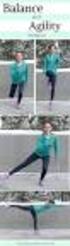 No Equipment Agility/Core/Strength Program for Full Body No Equip Trainer: Rick Coe Introduction Program designed to be performed in a circuit. Perform exercises in sequence without rest 2-3 times. Increase
Cervicothoracic Mobility Exercises
 Cervicothoracic Mobility Exercises Upper Cervical Mobility Exercises... 2 Lower Cervical Mobility Exercises... 3 Cervicothoracic Junction Mobility Exercises... 4 1 st Rib Mobility Exercises... 5 Cervical
Handicap after acute whiplash injury A 1-year prospective study of risk factors
 1 Handicap after acute whiplash injury A 1-year prospective study of risk factors Neurology 2001;56:1637-1643 (June 26, 2001) Helge Kasch, MD, PhD; Flemming W Bach, MD, PhD; Troels S Jensen, MD, PhD From
SHOULDER PULL DOWNS. To learn efficient use of the shoulder blades and arms while maintaining a neutral spine position.
 SHOULDER INTRODUCT ION Welcome to your shoulder exercise program The exercises in the program are designed to improve your shoulder mobility, posture and the control of the muscles in your neck and shoulder
Case Studies Updated 10.24.11
 S O L U T I O N S Case Studies Updated 10.24.11 Hill DT Solutions Cervical Decompression Case Study An 18-year-old male involved in a motor vehicle accident in which his SUV was totaled suffering from
Repetitive Strain Injury (RSI)
 Carpal Tunnel Syndrome and Other Musculoskeletal Problems in the Workplace: What s the Solution? by Richard N. Hinrichs, Ph.D. Dept. of Kinesiology Arizona State University Repetitive Strain Injury (RSI)
C 2 / C 3 N E RVE BLOCKS AND GREATER OCCIPITAL NERVE BLOCK IN CERV I C O G E N I C HEADACHE TREATMENT
 C 2 / C 3 N E RVE BLOCKS AND GREATER OCCIPITAL NERVE BLOCK IN CERV I C O G E N I C HEADACHE TREATMENT N u rten Inan, Aysegul Ceyhan, Levent Inan*, Ozlem Kavaklioglu, Alp Alptekin, Nurten Unal Ministry
DSM Spine+Sport - Mobility
 To set yourself up for success, practice keeping a neutral spine throughout all of these movements. This will ensure the tissue mobilization is being applied to the correct area, and make the techniques
IMPAIRMENT RATING 5 TH EDITION MODULE II
 IMPAIRMENT RATING 5 TH EDITION MODULE II THE SPINE AND ALTERATION OF MOTION SEGMENT INTEGRITY (AOMSI) PRESENTED BY: RONALD J. WELLIKOFF, D.C., FACC, FICC In conjuction with: The chapter on the spine includes
THORACIC OUTLET SYNDROME
 THORACIC OUTLET SYNDROME The Problem The term thoracic outlet syndrome is used to describe a condition of compression of the nerves and/or blood vessels in the region around the neck and collarbone, called
OUTPATIENT PHYSICAL AND OCCUPATIONAL THERAPY PROTOCOL GUIDELINES
 OUTPATIENT PHYSICAL AND OCCUPATIONAL THERAPY PROTOCOL GUIDELINES General Therapy Guidelines 1. Therapy evaluations must be provided by licensed physical and/or occupational therapists. Therapy evaluations
[RESEARCH REPORT] ANTHONY PRIBILA, PT 1 LEE OLSEN, PT, DC 2 JASON W. BECKSTEAD, Ph.D. 3
![[RESEARCH REPORT] ANTHONY PRIBILA, PT 1 LEE OLSEN, PT, DC 2 JASON W. BECKSTEAD, Ph.D. 3](/thumbs/29/13893587.jpg "[RESEARCH REPORT] ANTHONY PRIBILA, PT 1 LEE OLSEN, PT, DC 2 JASON W. BECKSTEAD, Ph.D. 3") [RESEARCH REPORT] ANTHONY PRIBILA, PT 1 LEE OLSEN, PT, DC 2 JASON W. BECKSTEAD, Ph.D. 3 Is Mobilization of the Cervical Spine Effective in Decreasing Symptoms of Cervicogenic Headache? Headaches are some
[RESEARCH REPORT] ANTHONY PRIBILA, PT 1 LEE OLSEN, PT, DC 2 JASON W. BECKSTEAD, Ph.D. 3 Is Mobilization of the Cervical Spine Effective in Decreasing Symptoms of Cervicogenic Headache? Headaches are some
CERVICAL DISC HERNIATION
 CERVICAL DISC HERNIATION Most frequent at C 5/6 level but also occur at C 6 7 & to a lesser extent at C4 5 & other levels In relatively younger persons soft disk protrusion is more common than hard disk
Rehabilitation Documentation and Proper Coding Guidelines
 Rehabilitation Documentation and Proper Coding Guidelines Purpose: 1) Develop a guide for doctors in South Dakota to follow when performing reviews on rehabilitation cases. 2) Provide doctors in South
NDT Treatment Planning Worksheet
 Child s Name: Kalab DOB: 01/01/02 Diagnosis: CP-Right-sided Heimplegia DOE: May 29, 2009 Therapist s Name: Mary Rose Franjoine Discipline: PT Current Participation: Attends his neighborhood school with