
Case 1: Classification of Lower Urinary Tract Symptoms (LUTS) and Urinary Incontinence (UI)
|
|
|
- Violet Greene
- 10 years ago
- Views:
Transcription
1 cme case presentation For more information see below. Case 1: Classification of Lower Urinary Tract Symptoms (LUTS) and Urinary Incontinence (UI) David R. Staskin, MD Associate Professor of Urology Director, Female Urology and Male Voiding Dysfunction St. Elizabeth s Medical Center Tufts University School of Medicine, Boston, MA Disclosure record for David R. Staskin, M.D. Last reviewed/edited this information on January 10, Uroplasty: Consultant or Advisor; American Medical Systems: Consultant or Advisor; Astellas: Consultant or Advisor; Pfizer: Consultant or Advisor; Glaxo: Consultant or Advisor; Allergan: Consultant or Advisor LearNINg Objectives: 1. Discuss screening and identification of LUTS; 2. identify different causes of LUTS; 3. demonstrate an awareness of what can be accomplished in the PCP office in regards to evaluation; 4. specify treatment options for OAB and BPH; and 5. examine when to refer for specialist evaluation Case/Patient #1A: A 62 y/o G4P4 obese female complains of urgency, frequency, and urgency incontinence. She voids 10 times/ day and 2 times/night, accompanied by urgency (compelling need to void) 50% of the time and one or two episodes of urgency incontinence per day. Case/Patient #1B: A 42 y/o G2P2 female weekend athlete in otherwise excellent health complains of urinary loss with effort. She reports bothersome urinary leakage drops to squirt with minimal sensation during a cough, laugh, sneeze, or during physical exertion. She reports no associated urinary urgency, frequency, or nocturia. Case/Patient #1C: A 79 y/o community dwelling female has recently been discharged from the hospital following THR secondary to a fall, during which time she had an indwelling foley catheter. She complained of minimal voiding symptoms prior to admission. Most bothersome is urinary frequency and urinary incontinence with minimal sensation especially at night on the way to the bathroom (bedside commode). She also complains of the sensation of incomplete emptying. Case/Patient #1D: A 67 y/o male complains of nocturia and recent onset of urgency incontinence. On further questioning he admits to an impaired flow and decreased emptying. He has been taking an over-the-counter cold medication for the past week. PhySIcian AccrEDITaTION StaTEmENT The University of North Texas Health Science Center at Fort Worth Office of Professional and Continuing Education is accredited by the American Osteopathic Association to award continuing medical education to physicians. The University of North Texas Health Science Center at Fort Worth Office of Professional and Continuing Education is accredited by the American Council for Continuing Medical Education (ACCME) to provide continuing medical education for physicians. PhySIcian CrEDIT StaTEmENT The University of North Texas Health Science Center has requested that the AOA Council on Continuing Medical Education approve this program for 1 hour of AOA Category 2B CME credits. Approval is currently pending. The University of North Texas Health Science Center at Fort Worth designates this enduring material for a maximum of 1 AMA PRA Category 1 Credit(s). Physicians should claim only the credit commensurate with the extent of their participation in the activity.
2 QUESTION 1: The assessment of urinary incontinence in every patient should include: A. Establish a presumptive or condition specific diagnosis, and exclude underlying organ-specific related or unrelated conditions that would require intervention. B. Assess the level of bother and desire for intervention from information obtained from the patient or caregiver. C. Institute empiric or disease specific primary therapy based on the risk and benefit of the untreated condition, the nature of the intervention and the alternative therapies. D. Prompt the recommendation of additional more complex testing or specialist referral. E. All of the above DIScUSSION of QUESTION ONE The answer is E. Lower Urinary Tract Symptoms (LUTS) cannot be used to make a definitive diagnosis since they may also indicate pathologies other than Lower Urinary Tract Disease (LUTD). LUTS may include Overactive Bladder (OAB) a syndrome which may be associated with urgency incontinence (OAB-wet) or without incontinence (OAB-dry) and should prompt consideration and as appropriate, an evaluation for other similar symptom based pathology. Urinary incontinence can be described by symptoms or storage and emptying function. Incontinence can be qualified by frequency, severity, precipitating factors, social impact, effect on hygiene and quality of life, the measures used to contain the leakage and whether or not the individual seeks or desires help. Urinary incontinence should be categorized by symptoms into urgency incontinence, stress incontinence, or overflow incontinence or mixed (combined) incontinence. Conservative (non-invasive) therapies may then be started based on this classification to treat the most troublesome component, or either component of the incontinence. More sophisticated testing (eg. urodynamics studies) is not required prior to the institution of conservative therapy. A bladder diary is helpful in order to document and communicate the frequency of voids and incontinence episodes experienced by the patient. The AUA symptom score is useful in male patients with LUTS although it does not include a specific question about urinary leakage. Additional information as appropriate may include volume of intake, voided volume, and/or symptoms such as urgency or discomfort. Referral to a specialist is recommended for hematuria (visible or microscopic), urinary tract infection (persistent or recurrent), prolapse (symptomatic or below the introitus), obstruction or retention (symptoms or findings of palpable bladder, hydronephrosis or obstructive renal insufficiency), suspected neurological disease, mass (urethral, bladder or pelvic - benign or malignant), fistula (urinary or bowel), a history of prior pelvic surgery or radiation (incontinence, oncologic). Specific tests (urinalysis, urine culture, post voiding residual urine): It is considered standard to perform a urinalysis either by using a dipstick test or examining the spun sediment. If a dipstick test is used, it is recommended that a multiproperty strip that includes fields for hematuria, glucose, leukocyte esterase and nitrite tests be chosen. Dipstick is not as accurate as urine culture, being specific for infection INITIal ManagemENT of UrINary IncONTINENce in Men History clinical assessment Postmicturition dribble Incontinence on physical activity (usually postprostatectomy) Incontinence with mixed symptoms Urgency/frequency, with or without urgency incontinence General assessment (see relevant chapter) Urinary Symptom Assessment and symptom score (including frequency-volume chart and questionnaire Assess quality of life and desire for treatment Physical examination: abdominal, rectal, sacral, neurological Urinalysis ± urine culture -> if infected, treat and reassess Assessment of pelvic floor muscle function Assess post-void residual urine Complicated incontinence recurrent of total incontinence Incontinence associated with: Pain Hematuria Recurrent infection Prostate Irradiation Radical pelvic surgery Any other abnormality detected e.g. significant post void residual presumed DIagNOSIS StrESS ic incompetence mixed (treat most bothersome symptom first) Urgency detrusor overactivity ManagemENT Urethral milking Pelvic floor muscle contraction DISCUSS treatment options with the patient Lifestyle interventions Pelvic floor muscle training ± feedback Scheduled voiding (bladder training) Incontinence products Antimuscarinics (OAB ±urgency incontinence) and a-adrenergic antagonists (if also bladder outlet obstruction) Failure specialized ManagemENT
3 but not sensitive. Additional tests available on urine dipstick strips, such a protein, bilirubin, ketones and ph, may be helpful in the broader medical management of patients. However, they are not essential in the context of evaluation of the patient with urinary incontinence or lower urinary symptoms. The PVR is the volume of urine remaining in the bladder following a representative void. PVR measurement can be accomplished within a few minutes of voiding either by catheterization or by calculation of bladder volume using a portable ultrasound scanner. An increased PVR alone is not necessarily problem, but if combined with high pressures it can lead to upper tract problems. If related to UTI s, PVR may need to be treated since UTI s may not be eradicated in the presence of an infected residual. A significant PVR also decreases the functional bladder capacity and contributes to urgency/frequency, urge incontinence and nocturia. The AHCPR guidelines state that, in general, a PVR less than 50 ml is considered adequate bladder emptying and over 200 ml is considered inadequate emptying. The PVR that is safe for the institution of anticholinergic agents has also not been established. International Consultation on BPH defined a range of 50 to 100 ml as the lower threshold to define abnormal PVR. Female patients who present with storage specific symptoms, with normal sensation and no complaints of decreased bladder emptying, and no anatomical, neurological, organspecific, or co-morbid risk factors for retention may be assessed for bladder emptying by history and physical examination alone, depending on the potential morbidity of the failure to diagnose and the nature of the intended therapy. A palpable bladder on physical exam is an indication for referral to a specialist. Residual urine determination by bladder scan is preferable to catheterization due to the increased morbidity associated with instrumentation. Due to the increased possibility of bladder outlet obstruction due to prostatic obstruction is increased in the male patient, the threshold for investigating residual urine in the male is significantly lower. A PVR should be performed in patients where decreased bladder emptying is suspected, especially if treatments that decrease bladder contractility or increase outlet resistance are being considered. Staskin D, Kelleher C, et.al. Initial Assessment of Urinary and Faecal Incontinence in Adult Male and Female Patients. Incontinence. 4th International Consultation on Incontinence. eds. Abrams P, Cardozo L, Khoury S, Wein A. Health Publicatons Ltd. Paris pg Recommendations of the International Scientific Committee. 4th International Consultation on Incontinence. eds. Abrams P, Cardozo L, Khoury S, Wein A. Health Publicatons Ltd. Plymouth, pg 1781, Managing Acute and Chronic Urinary Incontinence (AHCPR Publication No ). The Urodynamic Assessment of lower urinary tract symptoms. Benign Prostatic Hyperplasia. Eds. Chatelain C, Denis L, Foo K, et al. J. Health Publication Ltd,. Plymouth, 2001, pp: INITIal ManagemENT of UrINary IncONTINENce in women History clinical assessment Incontinence on physical activity Incontinence with mixed symptoms General assessment (see relevant chapter) Urinary Symptom Assessment (including frequency-volume chart and questionnaire Assess quality of life and desire for treatment Physical examination: abdominal, pelvic and perineal Cough test to demonstrate stress incontinence if appropriate Urinalysis ± urine culture -> if infected, treat and reassess If appropriate Assess estrogen status and treat as appropriate Assess voluntary pelvic floor muscle contraction Assess post-void residual urine Incontinence/ frequency, with urgency Complicated incontinence recurrent incontinence Incontinence associated with: Pain Hematuria Recurrent infection Significant voiding symptoms Pelvic irradiation Radical pelvic surgery Suspected fistula presumed DIagNOSIS StrESS ic incompetence mixed (treat most bothersome symptom first) OAB -with or without Urgency detrusor overactivity Any other abnormality detected e.g. Significant post void residual Significant pelvic organ prolapse Pelvic mass ManagemENT Lifestyle interventions Pelvic floor muscle training for SUI or OAB Bladder retraining for OAB Duloxetine* (SUI) or antimuscarinic (OAB ± urgency incontinence) Other adjuncts, such as electrical stimulation Vaginal devices, urethral inserts * Subject to local regulatory approval (see black box warning) Failure specialized ManagemENT
4 QUESTION 2A: Urinary incontinence (UI) may be the result of an: A. Overactive bladder (urgency urinary incontinence (UUI)) B. Overactive outlet (urinary obstruction overflow incontinence) C. Underactive bladder (urinary retention overflow incontinence) D. Underactive outlet (stress urinary incontinence (SUI)) E. All of the above QUESTION 2B: Match the mostly likely patient to have each condition listed above with the clinical presentation: A. Overactive bladder B. Overactive outlet C. Underactive bladder D. Underactive outlet QUESTION 2C: The most likely patient to have the above signs or symptoms as a primary symptom is: A. Urgency urgency incontinence overactive bladder B. Poor flow obstruction overactive outlet/bph C. Leakage with cough stress incontinence underactive outlet D. Palpable bladder urinary retention underactive bladder DIScUSSION of QUESTION Two The answer to 2A is E. The answer to 2B is: A= 1A; B=1D; C=1C; D=1B. The answer to 2C is: A= 1A; B=1D; C=1B; D=1C. A: Function and activity classification divides the lower urinary tract into its two anatomic areas: the bladder (detrusor) and bladder outlet () during the physiologic functions of storage (filling on the left side of the diagram) and emptying (voiding on the right side of the diagram). The bladder or outlet activity is described as overactive or underactive. (B) In storage the bladder accommodates urine low pressure with competent outlet. In emptying the bladder contracts to completion with unobstructed outlet. B: Patient # 1 has symptoms of urgency incontinence consistent with an overactive bladder (elevated pressure). LUTS associated with detrusor overactivity (uninhibited bladder contractions) are urgency, frequency, nocturia, BlADDEr Outlet BlADDEr Outlet Storage Storage Overactive urgency pressure too high Underactive stress/effort resistance too low Mixed Emptying Emptying Underactive retention pressure too low Overactive obstruction resistance too high and urinary urgency incontinence. Patients may present with overactive bladder dry (without urinary leakage). The treatment for overactive bladder involves behavioral intervention, pelvic floor physiotherapy, and antimuscarinic agents. Patient #2 has symptoms of stress incontinence. The patient looses urine with exertion due to an underactive outlet (inadequate outlet resistance). LUTS associated with poor anatomic support of the anterior vaginal wall and ic mechanism in female patients or trauma to the sphinteric mechanism during prostate surgery in the male are urinary leakage with effort. Treatment for stress incontinence in the female patient is physiotherapy or suspension there are no approved medications. Treatment for the male patient is physiotherapy or an implant for sphinteric compression. Patient #3 has symptoms of urinary retention secondary to an underactive bladder (poor contractility). This type of urinary retention with overflow incontinence may be secondary to bladder overdistention, pharmacological inhibition, or a peripheral neurological lesion. Acute treatment is bladder rest with a foley catheter, discontinuation of anticholinergic medications, and an evaluation for acute/chronic peripheral neuropathy. In more chronic cases self intermittent catheterization may be indicated. Patient #4 has symptoms of overactive outlet (bladder outlet obstruction secondary to BPH exacerbated by an alpha-adrenergic agent). Treatment is relief of the obstruction by pharmacological or surgical means. Stress urinary incontinence (SUI) Underactive Outlet Symptom: the involuntary loss of urine on effort or exertion (lift, strain, cough, sneeze) Activity: underactive outlet Condition: stress incontinence the involuntary loss of urine resulting from an increase in intra-abdominal pressure that overcomes the resistance of the bladder outlet in the absence of a true bladder contraction. The decrease in bladder outlet or urethral resistance may result from poor anatomic support of the bladder neck (urethral hypermobility/sui-a or a loss of urethral function (intrinsic deficiency [ISD] [SUI-ISD]) or commonly a mixture. Etiology: stress urinary incontinence is a condition of the bladder outlet. The most common cause in the female patient is disruption of anatomic supports or innervations to the urethral secondary to childbirth. The most common cause in the male patient is iatrogenic damage to the urinary during prostate surgery. Clinical confusion: the patient describes the symptom of urinary loss with activity but the etiology of involuntary leakage is actually an uninhibited bladder contraction. SUI should have urinary loss synchronous with effort ; similarly, many patients will describe SUI as a sensation, which is confused with urgency ; finally, stress and urgency incontinence may coexist. Urgency urinary incontinence (UUI) Overactive Bladder Symptom: the loss of urine with the sensation of urgency, voiding before the ability to toilet. Idiopathic Detrusor Overactivity, defined as overactivity when there is no clear cause. Neurogenic Detrusor Overactivity is defined as overactivity due to a relevant neurological condition. Neurogenic detrusor overactivity may be associated with decreased or absent sensation. Activity: overactive bladder (OAB wet) detrusor overactivity Condition: UUI the involuntary loss of urine resulting from an increase in bladder pressure secondary to detrusor overactivity (an uninhibited bladder contraction). Etiology: detrusor overactivity is primarily idiopathic. Patients may demonstrate other symptoms associated with urgency (frequency, urgency, nocturia) without urinary loss (OAB dry). Obstruction (overactive outlet) may precipitate overactive bladder and is associated with obstruction secondary to benign prostatic enlargement. Neurogenic bladder is the result of a suprasacral spinal or intracranial neurologic lesion that results in uncontrolled reflex contractions (detrusor hyperreflexia). Clinical confusion: the patient has decreased sensation and loses urine from motor activity of the detrusor without the feeling of urgency. OAB is a syndrome consisting of the symptoms urgency, with or without urgency incontinence, usually with frequency and nocturia, suggestive of bladder overactivity but inclusive of urgency and frequency without incontinence OAB dry (see below) Mixed urinary incontinence (MUI) Overactive Bladder and Underactive Outlet Symptom: mixed symptoms of UUI and SUI, urinary loss with effort and with urgency
5 Activity: OAB wet detrusor overactivity and underactive Condition: a mixture of the conditions described above as SUI and UUI Etiology: a mixture of the conditions noted for UUI and SUI Clinical confusion: urinary loss may be from SUI or UUI but the predominance and bother resulting from one condition or the other may not be discernable from the history and physical examination alone, thus creating difficulty in choosing treatment for the primary symptom. Urgency and frequency without incontinence Overactive Bladder Symptom: urgency and frequency without urinary loss Activity: detrusor overactivity with compensatory activity or no bladder activity or abnormal afferent activity or processing (sensory) Condition: Urgency is the complaint of a sudden compelling desire to pass urine that is difficult to defer and frequency is the complaint by the patient who considers that she voids too often by day or at night (going to bed and arising), whereas nocturia is waking at night one or more times to void preceded by and followed by sleep. Sensory urgency is a term that has been removed from the International Continence Society (ICS) lexicon and was used to describe the sensation of urinary urgency without a detectable rise in bladder pressure. Clinical confusion: the classification of a moderate or strong desire to void without true urgency is unresolved. Sensory disorders of the bladder with frequency and specifically with dysuria should be evaluated as a urinary tract infection. Urgency, frequency and chronic pelvic pain (without incontinence) should be evaluated as chronic pelvic pain syndrome (see below) Overflow incontinence Overactive Outlet and/or Underactive bladder Symptom: the involuntary loss of urine resulting from urinary retention with bladder overdistention. The retention (failure to empty) may result from inadequate bladder contractility or outlet obstruction (or both). Activity: underactive bladder (retention) and/or overactive outlet (obstruction) Condition: Urinary loss occurs when the intravesical pressure overcomes the urethral resistance as a result of bladder contractility and/or increases in intra-abdominal pressure and/or urethral relaxation. Etiology: The most common cause of urinary retention in the male patient is outlet obstruction (overactive outlet secondary to benign prostatic hyperplasia (BPH) causing benign prostatic obstruction (BPO) from benign prostatic enlargement (BPE). The most common cause of retention in the female patient is surgery for incontinence. Poor bladder contractility is associated with peripheral neuropathies (autonomic). Clinical confusion: the symptoms that are described may present as and mimic a mixture of stress (SUI) and urgency (OAB) complaints. Altered bladder sensation and pain Overactive Sensation (Pain) Symptom: frequent voiding with or without pain; conversely, a loss of sensation. Bladder pain syndrome is defined as an unpleasant sensation (pain, pressure, discomfort) perceived to be related to the urinary bladder, associated with lower urinary tract symptom(s) of more than 6 weeks duration, in the absence of infection or other identifiable causes. Activity: no detrusor contraction but an alteration in afferent input or processing. Sensory overactivity may be a function of up-regulation of afferents. Condition: Bladder pain, discomfort, and pressure can be characterized by type, frequency, duration, location, and precipitating and relieving factors. Bladder sensation can be described as increased, normal, reduced, absent, or nonspecific (neurologic). Increased or decreased voiding may be correlated with the sensation. Etiology: Urgency frequency syndrome or chronic cystitis (inflammatory/ interstitial) are associated with sensory overactivity. Decreased afferent activity may result from peripheral autonomic neuropathies. Clinical confusion: Urinary urgency and frequency without incontinence may be a product of abnormal sensation or bladder contractile activity. The source of pelvic pain may not be the lower urinary tract. Interstitial cystitis or chronic urethritis remain diagnoses of exclusion. Functional incontinence (Impairment of Cognition and/or Ambulation) Symptom: the involuntary loss of urine resulting from a deficit in the ability to perform toileting functions secondary to physical or mental limitations Activity: abnormal lower urinary tract function usually coexists with functional issues. Etiology: Conditions which affect cognition or mobility. The patient s primary functional issue may be dementia, delirium, or other forms of altered cognition; physical disability may prevent easy and rapid toilet access. These conditions often exist alone or in combination with lower urinary tract dysfunction Clinical confusion: the underlying pathophysiology of stress, urge, or overflow incontinence may coexist, as well as difficulty in eliciting an accurate history. Staskin D. Classification of Lower Urinary Tract Dysfunction in the Female Patient. Atlas of Bladder Disease. Ed. Staskin D. Springer Science. New York, pp Wein AJ. Pathophysiology and classification. Campbell-Walsh Urology, 9th ed. eds. Wein AJ, Kavoussi LR, Novick AC, et.al., Elsevier Science (Saunders). 2007: Staskin D, Wein AJ. Classification of Lower Urinary Tract Dysfunction in the Female Patient. Textbook of Female Urology and Urogynecology 3rd Edition. Eds. Cardozo L, Staskin D. Informa Healthcare. London pp QUESTION 3: The most useful way to differentiate urgency urinary incontinence (UUI) from stress urinary incontinence (SUI) in a patient with incontinence is: A. History of urinary loss with effort versus urinary loss with urgency B. Assess the urinary flow by observation C. Provocative cough test D. Palpation of the abdomen for bladder distention E. A and C DIScUSSION of QUESTION ThrEE The answer is E. Determining whether urine is involuntarily lost with effort or exertion, or on coughing or sneezing, is commonly used to help identify stress incontinence. For example, a patient can be asked, Do you lose urine during sudden physical exertion, lifting, coughing, or sneezing? To help diagnose urge incontinence, the patient is asked about the association between involuntary urinary leakage and feelings of urinary urgency. An example of such a question is Do you experience such a strong and sudden urge to void that you leak before reaching the toilet? A number of questionnaires exist to help differentiate these conditions in a more standardized way. Urgency incontinence is also more likely to be associated with large volume urine loss, while the volume of urine lost with episodes of stress incontinence tends to be small. However, the amount of urine lost during an incontinence episode of any type can depend on the amount of urine present in the bladder at that time. It is unusual for a male patient to have urinary loss secondary to an underactive ( insufficiency or stress incontinence ) without a prior history of prostatic surgery (radical prostatectomy or surgical treatment for benign enlargement with obstruction). When evaluating a woman with urinary incontinence, a systematic approach that includes a history, physical examination, and stress test increases the likelihood of correctly classifying the type of incontinence (for stress). The most helpful component of the assessment for determining the presence of urge incontinence is a history of urine loss associated with urinary urgency Physical Examination. A physical examination is an important component of the assessment, because it may detect modifiable factors or associated conditions and help determine the type of urinary incontinence. The American College of Obstetricians and Gynecologists practice guidelines (consensus and
6 expert opinion) and suggest that every woman presenting with symptoms of incontinence undergo a general examination during assessment for incontinence that includes a gynecological, an abdominal, a rectal, and a neurological examination. The gynecological examination includes examination of the external genitalia, vagina, and perineum to assess for excoriations, masses, prolapse, and abnormal perineal sensation. Urinary incontinence and pelvic organ prolapse are separate clinical entities that often coexist. Pelvic organ prolapse can obstruct voiding and women may have to reduce their prolapse to void. Women with pelvic organ prolapse and large postvoid residual urine volumes should be evaluated for voiding dysfunction. The rectal examination assesses for fecal impaction and rectal tone. The neurological examination focuses on the sacral nerves and lower body. Pelvic floor muscle strength can be determined by asking the patient to contract their pelvic floor muscles while the examiner performs a digital vaginal examination. Because many women do not know how to consciously contract their pelvic floor muscles, they can be instructed to contract the muscles they would use to keep from passing gas or to stop themselves from voiding. In the male patient examination for bladder distention, a rectal exam, and a focused neurological exam may reveal retention or neuropathy. A history of prostatic surgery is more revealing that a prostate exam, unless the prostate is absent from radical surgery. The loss of urine immediately associated with effort suggests ic incontinence in distinction to a larger volume non-synchronous loss of urine with effort which suggests an unsuppressed bladder contraction (urgency incontinence). Staskin D, Kelleher C, et.al. Initial Assessment of Urinary and Faecal Incontinence in Adult Male and Female Patients. Incontinence. 4th International Consultation on Incontinence. eds. Abrams P, Cardozo L, Khoury S, Wein A. Health Publicatons Ltd. Paris pg QUESTION 4: The most useful way to differentiate disorders of urinary emptying from disorders of urinary storage is: A. Post voiding residual urine measurement B. Urinary flow rate measurement during voiding C. Bladder pressure measurement during filling D. Combined bladder pressure urinary flow rate measurement during emptying DIScUSSION of QUESTION Four The answer is A. A determination of post voiding residual urine identifies the patient who does not emptying his/her bladder completely. A normal ejection fraction of the bladder is greater than 90% (55-70 percent for the heart!). The importance of diagnosing good bladder emptying is that it shifts the diagnostic differential into the etiologies of incontinence associated with poor urinary storage. Of note, some patients may have more than one etiology for their symptoms which can be associated with bladder or outlet dysfunction. For instance, a female patient with mixed symptoms of overactive bladder (urgency incontinence) and underactive outlet (stress incontinence) has more than one dysfunction potentially responsible for urinary loss, but can be treated with anticholinergic medication for the component of overactive bladder if the residual urine as would be expected is low. A male patient with overactive outlet (benign prostatic obstruction) and overactive bladder (urgency, frequency, nocturia) should be treated for significant bladder outlet obstruction if present, which will be reflected in an elevated residual urine, before considering treatment for persistent bladder symptoms. Urodynamic studies (objective laboratory measurements of bladder and outlet function) may employ flow and pressure studies during urethral catheterization to characterize bladder and bladder outlet behaviors. A measurement of urinary flow demonstrating an impaired or intermittent flow may suggest poor emptying but is not as definitive as a post-voiding residual measurement. A pressure-flow study is an excellent assessment for outflow obstruction is a high pressure-low flow dynamic is demonstrated. QUESTION 5: Urinary incontinence (UI) associated with which one of the following neurologic lesions is associated with the greatest potential for concomitant renal damage: A. Cerebrovascular accident B. Normal pressure hydrocephalus C. Parkinson s disease D. C6-7 spinal cord injury E. None of the above DIScUSSION of QUESTION 5 The answer is D. IntrACranIAl Detrusor hyperreflexia Coordinated spinal Detrusor hyperreflexia Uncoordinated PerIPheral Detrusor areflexia Dennervated Suprapontine Infrapontine suprasacral Infrasacral External Pontine micturition center Sympathetic chain T10 L2 Bladder Pelvic floor S2,3,4 Sacral reflex center It is best to approach neural control from the sacral area up to the cortical area. The bladder contracts by reflex after filling under control of the sacral reflex center (SRC) at S2-S4. A peripheral lesion is a non-contractile bladder. If the SRC is intact and there is spinal cord lesion above S2-S4 there will be reflex emptying without cerebral control and with a lack of coordination of the external at the level of the pontine micturition center (PMC). Intracranial (cerebral) lesions precipitate bladder overactivity by failing to inhibit reflex bladder contractions during filling but preserve PMC function and coordination. The lack of coordination during emptying results in chronic obstruction, bladder wall thickening, elevated residual urine and the potential for decreasing upper tract emptying (hydronephrosis). The presence of a lesion above the sympathetic chain outflow predisposes to autonomic dysreflexia (commonly seen in quadraplegics). NOTE: Patients with intracranial lesions will be incontinent with preserved coordination. Quadraplegics with complete lesions are at high risk for both upper tract changes and autonomic dysreflexia. Paraplegics with complete lesions are at high risk, while those with incomplete lesions and sphinter coordination are at a comparative low risk for upper tract disease. Patients with peripheral neuropathy may have a noncontractile bladder and are at risk for retention. Treatment for all groups is based on the principle of low pressure urinary storage (increasing bladder capacity surgically or pharmacologically) and intermittent self catheterization for bladder emptying. In some circumstances (self or provider cath is not available) a suprapubic tube (or urethral cath) or a procedure on the bladder outlet (otomy) is recommended. Staskin D. Classification of Lower Urinary Tract Dysfunction in the Female Patient. Atlas of Bladder Disease. Ed. Staskin D. Springer Science. New York, pp Wein AJ. Pathophysiology and classification. Campbell-Walsh Urology, 9th ed. eds. Wein AJ, Kavoussi LR, Novick AC, et.al., Elsevier Science (Saunders). 2007: Staskin D, Wein AJ. Classification of Lower Urinary Tract Dysfunction in the Female Patient. Textbook of Female Urology and Urogynecology 3rd Edition. Eds. Cardozo L, Staskin D. Informa Healthcare. London pp Supported by an educational grant from Pfizer and Astellas.
7 CME/CECredit Request Form Complete online at ACTIVITY title: Classification of Lower Urinary Tract Symptoms (LUTS) and Urinary Incontinence (UI) dates valid: August 17, 2011 August 17, 2012 credits available: 1 Category 2B, AOA; 1 Category 1 AMA PRA instructions: Please complete this form and return it to the address or fax number below. full name: degree(s): please print clearly Last 4 digits of ssn: (for tracking) mailing address: Phone: fax: or aoa Number: (if applicable) question responses program evaluation Q# Scale: P=Poor F=Fair G=Good VG=Very Good E=Excellent 1 learning objectives p F G VG E 2a 1 Discuss screening and identification of LUTS. 2b 2c 3 2 Identify different causes of LUTS. 3 Demonstrate an awareness of what can be accomplished in the PCP office in regards to evaluation Specify treatment options for OAB and BPH. 5 Examine when to refer for specialist evaluation. content p F G VG E 6 To what extent this activity is fair and balanced. online: mail to: UNThsc/pace Office 3500 Camp Bowie Blvd Fort Worth, TX or fax to: Likelihood that you will implement change in your practice based on information from this activity. 8 Your OVERALL rating of this activity. practice p F G VG E 9 How will you use the information presented to improve the care of your patients? Your certificate will be mailed within three weeks of receipt. signature CME date
Topic review: Clinical presentation and diagnosis of urinary incontinence in the elderly. Prapa Pattrapornpisut 7 June 2012
 1 Topic review: Clinical presentation and diagnosis of urinary incontinence in the elderly Prapa Pattrapornpisut 7 June 2012 2 Urinary incontinence Definition the complaint of any involuntary leakage of
symptoms of Incontinence
 Types, causes and symptoms of Urinary Incontinence Aims and Objectives Aim: To have an understanding of the types and causes of urinary incontinence. Objectives: To be aware of the incidence and prevalence
Urinary Incontinence in Women. Susan Hingle, M.D. Department of Medicine
 Urinary Incontinence in Women Susan Hingle, M.D. Department of Medicine Background Estimated 13 million Americans with urinary incontinence Women are affected twice as frequently as men Only 25% will seek
Lower Urinary Tract Symptoms (LUTS) in Middle-Aged and Elderly Men
 Prostatic Diseases Lower Urinary Tract Symptoms (LUTS) in Middle-Aged and Elderly Men JMAJ 47(12): 543 548, 2004 Tomonori YAMANISHI Associate Professor, Department of Urology, Dokkyo University School
NICE Pathways bring together all NICE guidance, quality standards and other NICE information on a specific topic.
 Initial assessment and investigation of urinary incontinence bring together all NICE guidance, quality standards and other NICE information on a specific topic. are interactive and designed to be used
URINARY INCONTINENCE CASE PRESENTATION #1. Urinary Incontinence - History 2014/10/07. Structure of the Female Lower Urinary Tract
 Bladder pressure 2014/10/07 Structure of the Female Lower Urinary Tract Ureter URINARY INCONTINENCE Clinical Clerkship Lecture Series Outer peritoneal coat Detrusor smooth muscle Mucosa Trigone Proximal
Overactive bladder and urgency incontinence
 Overactive bladder and urgency incontinence As a health care provider you can make a significant difference to the quality of life of patients like these by addressing urinary incontinence, introducing
Normal bladder function requires a coordinated effort between the brain, spinal cord, and the bladder.
 .. Urinary Incontinence Urinary incontinence is not an inevitable part of aging, and it is not a disease. The loss of bladder control - called urinary incontinence - affects between 13 and 17 million adult
Female Urinary Disorders and Pelvic Organ Prolapse
 Female Urinary Disorders and Pelvic Organ Prolapse Richard S. Bercik, M.D. Director, Division of Urogynecology & Reconstruction Pelvic Surgery Department of Obstetrics, Gynecology & Reproductive Sciences
Classification of Mixed Incontinence
 european urology supplements 5 (2006) 837 841 available at www.sciencedirect.com journal homepage: www.europeanurology.com Classification of Mixed Incontinence Christopher Chapple * Sheffield Hallam University,
FEMALE INCONTINENCE REVIEW
 200 S. Wenona Suite 298 Steven L. Jensen, M.D. 5400 Mackinaw, Suite 4302 Bay City, MI 48706 Frank H. Kim, M.D. Saginaw, MI 48604 Telephone (989) 895-2634 Adult & Pediatric Urologists (989) 791-4020 Fax
CARE PROCESS STEP EXPECTATIONS RATIONALE
 URINARY INCONTINENCE CARE PROCESS STEP EXPECTATIONS RATIONALE ASSESSMENT/PROBLEM RECOGNITION 1. Did the staff and physician seek and document risk factors for urinary incontinence and any history of urinary
Adult Urodynamics: American Urological Association (AUA)/Society of Urodynamics, Female Pelvic Medicine & Urogenital Reconstruction (SUFU) Guideline
 Adult Urodynamics: American Urological Association (AUA)/Society of Urodynamics, Female Pelvic Medicine & Urogenital Reconstruction (SUFU) Guideline RECOMMENDATIONS 1 Conditional: Clinicians who are making
Urinary Continence. Second edition FAST FACTS. by Julian Shah and Gary Leach. Anatomy and physiology 7. Investigations and diagnosis 11
 FAST FACTS Urinary Continence Second edition Indispensable Guides to by Julian Shah and Gary Leach Clinical Practice Anatomy and physiology 7 Investigations and diagnosis 11 Detrusor instability 28 Primary
URINARY INCONTINENCE IN WOMEN
 URINARY INCONTINENCE IN WOMEN Definition Urinary incontinence (UI) is defined as involuntary loss of urine that is a social or hygienic problem (International Continence Society, 1973) Magnitude of the
Female Urinary Incontinence
 Female Urinary Incontinence Molly Heublein, MD Assistant Professor Clinical Medicine UCSF Women s Health Primary Care Disclosures I have nothing to disclose. 1 Objectives Review the problem Feel confident
Overactive Bladder (OAB)
 Overactive Bladder (OAB) Overactive bladder is a problem with bladder storage function that causes a sudden urge to urinate. The urge may be difficult to suppress, and overactive bladder can lead to the
Guidelines on Urinary Incontinence
 Guidelines on Urinary Incontinence J. Thüroff (chairman), P. Abrams, K.E. Andersson, W. Artibani, E. Chartier-Kastler, C. Hampel, Ph. van Kerrebroeck European Association of Urology 2007 TABLE OF CONTENTS
Bowel and Bladder Dysfunction in MS. Tracy Walker, WOCN, MSCN, FNP C Nurse Practitioner MS Institute at Shepherd Center. Bladder Dysfunction
 Bowel and Bladder Dysfunction in MS Tracy Walker, WOCN, MSCN, FNP C Nurse Practitioner MS Institute at Shepherd Center Bladder Dysfunction Approximately 75% of people with MS experience bladder problems
Overview of Urinary Incontinence in the Long Term Care Setting
 Overview of Urinary Incontinence in the Long Term Care Setting Management Strategies for the Nursing Assistant Ann M. Spenard RN, C, MSN Courtney Lyder ND, GNP Learning Objectives Describe common types
Urinary Incontinence FAQ Sheet
 Urinary Incontinence FAQ Sheet Are you reluctant to talk to your doctor about your bladder control problem? Don t be. There is help. Loss of bladder control is called urinary incontinence. It can happen
Urinary Incontinence Definitions
 (AADL) Program Urge Stress Overflow Functional Mixed DHIC (Detrussor hyperreflexia with impaired contractility) Reflex Incontinence Leakage of urine (usually larger volumes) because of inability to delay
1 ST JAMAICAN PAEDIATRIC NEPHROLOGY CONFERENCE
 in association with 1 ST JAMAICAN PAEDIATRIC NEPHROLOGY CONFERENCE Jamaica Conference Centre Kingston, Jamaica October 4 th 2014 VOIDING DISORDERS IN CHILDREN Dr. Colin Abel Paediatric Urologist Bustamante
PROCEDURE FOR THE ASSESSMENT OF ADULTS AND CHILDREN WITH BLADDER OR BOWEL DYSFUNCTION
 PROCEDURE FOR THE ASSESSMENT OF ADULTS AND CHILDREN WITH BLADDER OR BOWEL DYSFUNCTION First Issued Issue Version One Purpose of Issue/Description of Change Planned Review Date Procedure for the effective
Urinary Incontinence (Involuntary Loss of Urine) A Patient Guide
 Urinary Incontinence (Involuntary Loss of Urine) A Patient Guide Urinary Incontinence (Urine Loss) This booklet is intended to give you some facts on urinary incontinence - what it is, and is not, and
Bladder Health Promotion
 Bladder Health Promotion Community Awareness Presentation Content contributions provided by the Society of Urologic Nurses (SUNA) National Association for Continence (NAFC) Simon Foundation for Continence
COMMITTEE FOR PROPRIETARY MEDICINAL PRODUCTS (CPMP)
 The European Agency for the Evaluation of Medicinal Products Evaluation of Medicines for Human Use London, 18 December 2002 COMMITTEE FOR PROPRIETARY MEDICINAL PRODUCTS (CPMP) NOTE FOR GUIDANCE ON THE
Gwen Griffith Clinical Nurse Specialist Bolton NHS foundation Trust
 Gwen Griffith Clinical Nurse Specialist Bolton NHS foundation Trust Overview Setting the Scene Beginning of the journey & specialist nurse role Why people with MS experience bladder problems MS and the
Urodynamics in Neuro-Urology
 Urodynamics in Neuro-Urology R Hamid MD (Res), FRCS (Urol) Consultant Urologist London Spinal Injuries Unit, Stanmore & University College London Hospitals Micturition Micturition can be visualized as
Mixed urinary incontinence - sling or not sling
 Mixed urinary incontinence - sling or not sling 吳 銘 斌 Ming-Ping Wu, M.D.,Ph.D. Director, Div. Urogynecology & Pelvic Floor Reconstruction, Chi Mei Foundation Hospital, Tainan, Taiwan Assistant Professor,
Women suffer in silence
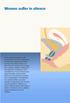 Women suffer in silence Stress urinary incontinence is the involuntary loss of urine resulting from increased intra-abdominal pressure. In people who suffer with this condition, forms of exertion such
Learning Resource Guide. Understanding Incontinence. 2000 Prism Innovations, Inc. All Rights Reserved
 Learning Resource Guide Understanding Incontinence 2000 Prism Innovations, Inc. All Rights Reserved ElderCare Online s Learning Resource Guide Understanding Incontinence Table of Contents Introduction
THE MANAGEMENT OF URINARY INCONTINENCE WITHIN A STROKE UNIT POPULATION REENA DHAMI STROKE CNS EPSOM & ST.HELIER UNIVERSITY HOSPITALS
 THE MANAGEMENT OF URINARY INCONTINENCE WITHIN A STROKE UNIT POPULATION REENA DHAMI STROKE CNS EPSOM & ST.HELIER UNIVERSITY HOSPITALS Definition Urinary Incontinence is AN INABILITY TO HOLD URINE until
Bladder Health Promotion
 Bladder Health Promotion Community Awareness Presentation endorsed by the Society of Urologic Nurses (SUNA) National Association for Continence( NAFC) Simon Foundation for Continence This presentation
Fecal incontinence (Encopresis) It is the fecal incontinence condition observed in children with chronic constipation over 1-2 years.
 WHAT IS DYSFUNCTIONAL URINATION (URINATION FUNCTION DISORDER)? It stands for the urination phase disorders, which appear due to wrongly acquired urination habits during the toilet training of some neurologically
Urinary Incontinence. Causes of Incontinence. What s Happening?
 National Institute on Aging AgePage Urinary Incontinence Sarah loves to spend time with her friends talking about her grandchildren and going to exercise classes with neighbors. But she s started to have
An illustrated guide to the management of incontinence.
 An illustrated guide to the management of incontinence. 1 The problem of incontinence The ACA describes incontinence as an involuntary loss of urine and/or bowel motion. The amount can vary from slight
Incontinence. What is incontinence?
 Incontinence What is incontinence? Broadly speaking, the medical term incontinence refers to any involuntary release of bodily fluids, but many people associate it strongly with the inability to control
Urinary Incontinence. Types
 Urinary Incontinence Leakage of urine is called urinary incontinence. It is a common problem in women. Some women occasionally leak small amounts of urine. At other times, leakage of urine is frequent
1 in 3 women experience Stress Urinary Incontinence.
 A PATIENT S GUIDE 1 in 3 women experience Stress Urinary Incontinence. It s time to talk about SUI Get the facts. This Patient s Guide is intended as a public resource on the issue of Stress Urinary Incontinence
URINARY INCONTINENCE
 URINARY INCONTINENCE What is urinary incontinence? Urinary incontinence is the uncontrollable loss of urine. The amount of urine leaked can vary from only a few drops when you cough or sneeze to entirely
Case Based Urology Learning Program
 Case Based Urology Learning Program Resident s Corner: UROLOGY Case Number 21 CBULP 2011 068 Case Based Urology Learning Program Editor: Associate Editors: Manager: Case Contributors: Steven C. Campbell,
Primary Care Management of Male Lower Urinary Tract Symptoms. Matthew B.K. Shaw Consultant Urological Surgeon
 Primary Care Management of Male Lower Urinary Tract Symptoms Matthew B.K. Shaw Consultant Urological Surgeon NICE LUTS Guidelines Lower Urinary Tract Symptoms (LUTS) in men. NICE Clinical Guideline 97
To decrease and/or prevent the incidence of catheter associated infections and other complications associated with IUC.
 Patient Care Manual Standardized Procedure Number: PC-SP.115 Latest Revision Date: 01/27/2015 Effective Date: 10/10/2011 Standardized Procedure: Urethral Catheter (IUC), Adult, Discontinuance of FUNCTION
Overactive bladder syndrome (OAB)
 Overactive bladder syndrome (OAB) Exceptional healthcare, personally delivered What is OAB? An overactive bladder or OAB is where a person regularly gets a sudden and compelling need or desire to pass
LOSS OF BLADDER CONTROL IS TREATABLE TAKE CONTROL AND RESTORE YOUR LIFESTYLE
 LOSS OF BLADDER CONTROL IS TREATABLE TAKE CONTROL AND RESTORE YOUR LIFESTYLE TALKING ABOUT STRESS INCONTINENCE (SUI) Millions of women suffer from stress incontinence (SUI). This condition results in accidental
A PRINTED copy of this guideline may not be the most recent version. The OFFICIAL version is located on IHNET at the Policies & Procedures Home Page
 A PRINTED copy of this guideline may not be the most recent version. The OFFICIAL version is located on IHNET at the Policies & Procedures Home Page IX0200: Prevention & Control of Catheter Associated
Urinary Incontinence Dr. Leffler
 Urinary Incontinence Dr. Leffler The involuntary loss of urine at socially unacceptable times occurs in both women and men, but more commonly in women. It has multiple, far-reaching effects on daily activities,
Dr Eva Fong. Urologist Auckland
 Dr Eva Fong Urologist Auckland Urinary incontinence: Treatment options GPCME 2013 Eva Fong Urologist Urinary incontinence Is not normal part of aging or childbearing We can make it better Urinary incontinence:
Guidelines on Neurogenic Lower Urinary Tract Dysfunction
 Guidelines on Neurogenic Lower Urinary Tract Dysfunction (Text update March 2009) M. Stöhrer (chairman), B. Blok, D. Castro-Diaz, E. Chartier- Kastler, P. Denys, G. Kramer, J. Pannek, G. del Popolo, P.
Evaluation and Treatment of Urinary Incontinence, Pelvic Organ Prolapse and Faecal Incontinence
 2005 Organised by INTERNATIONAL CONSULTATION ON UROLOGICAL DISEASES (ICUD) INTERNATIONAL CONTINENCE SOCIETY (ICS) INTERNATIONAL SOCIETY OF UROLOGY (SIU) AND THE MAJOR INTERNATIONAL ASSOCIATIONS OF UROLOGY
Bladder and Bowel Assessment Ann Yates Director of Continence Services. 18/07/2008 Cardiff and Vale NHS Trust
 Bladder and Bowel Assessment Ann Yates Director of Continence Services Types of continence problems Bladder Stress incontinence Urgency and urge Incontinence Mixed incontinence Obstructive incontinence
Overactive Bladder (OAB) Content of the lecture
 Overactive bladder (OAB) : Introduction and Medical Management R.J. Opsomer Cliniques St Luc, labo d urodynamique, UCL - Bruxelles Overactive Bladder (OAB) Content of the lecture The syndrome of Overactive
OVERACTIVE BLADDER DIAGNOSIS AND TREATMENT OF OVERACTIVE BLADDER IN ADULTS:
 2014 OVERACTIVE BLADDER DIAGNOSIS AND TREATMENT OF OVERACTIVE BLADDER IN ADULTS: AUA/SUFU Guideline (2012); Amended (2014) For Primary Care Providers OVERACTIVE BLADDER Diagnosis and Treatment of Overactive
Saint Mary s Hospital. Gynaecology Service Warrell Unit. Overactive Bladder. Information for Patients
 Saint Mary s Hospital Gynaecology Service Warrell Unit Overactive Bladder Information for Patients What is Overactive Bladder (OAB)? OAB is a condition that causes you to need to pass urine more often
Improving access and reducing costs of care for overactive bladder through a multidisciplinary delivery model
 Improving access and reducing costs of care for overactive bladder through a multidisciplinary delivery model Trafford Crump, Ph.D. Department of Surgery, University of Calgary Presentation to: Canadian
Regain Control of Your Active Life Treatment Options for Incontinence and Pelvic Organ Prolapse
 Regain Control of Your Active Life Treatment Options for Incontinence and Pelvic Organ Prolapse Nearly one quarter of all women in the United States have some sort of pelvic floor disorder such as urinary
REVIEW ARTICLE. Neurourology and Urodynamics 29:213 240 (2010) Key words: incontinence; LUTS; pelvic organ prolapse. ß 2009 Wiley-Liss, Inc.
 Neurourology and Urodynamics 29:213 240 (2010) REVIEW ARTICLE Fourth International Consultation on Incontinence Recommendations of the International Scientific Committee: Evaluation and Treatment of Urinary
Refer to Coaptite Injectable Implant Instructions for Use provided with product for complete instructions for use.
 Questions for my Doctor Refer to Coaptite Injectable Implant Instructions for Use provided with product for complete instructions for use. INDICATIONS: Coaptite Injectable Implant is indicated for soft
9/24/2015. Incontinence and Prolapse 2015 Primary Care Update CME Symposium. Objectives. Mark Memo, DO, FACS NEO Urology September 25-27
 Incontinence and Prolapse 2015 Primary Care Update CME Symposium Mark Memo, DO, FACS NEO Urology September 25-27 Objectives Incontinence Pelvic Organ Prolapse Vaginal Mesh Litigation 1 Urinary Incontinence
Bladder and Bowel Control
 Bladder and Bowel Control Dr Sue Woodward Lecturer, Florence Nightingale School of Nursing and Midwifery 2 Why do we need to understand anatomy? Normal physiology Normal adult bladder capacity = 450-500mls
STROKE CARE PLAN: BLADDER & BOWEL CONTINENCE
 Urinary incontinence related to loss of ability to identify and respond to need to urinate; involuntary bladder contractions, increased nightly urine production, difficulty communication need to urinate
Primary Care Management Guidelines Female Urinary Incontinence. Overview of Lecture
 Primary Care Management Guidelines Female Urinary Incontinence Professor Don Wilson Department of Women s and Children s Health Dunedin School of Medicine University of Otago GP Teaching for Roy Morris,
Primary Care management of Overactive Bladder (OAB)
 DERBYSHIRE JOINT AREA PRESCRIBING COMMITTEE (JAPC) Primary Care management of Overactive Bladder (OAB) Prescribing Tips All medicines for OAB have similar dose-related efficacy. More than one agent (up
Management of Neurogenic Bladder Disorders
 Management of Neurogenic Bladder Disorders Andrea Staack, MD, PhD Pelvic Reconstructive Surgery, Urinary Incontinence & Female Urology Department of Urology Loma Linda University, CA What will you learn
Urinary Incontinence. Anatomy and Terminology Overview. Moeen Abu-Sitta, MD, FACOG, FACS
 Urinary Incontinence Anatomy and Terminology Overview Moeen Abu-Sitta, MD, FACOG, FACS Purpose Locate and describe the anatomy of the Female Urinary System Define terminology related to Incontinence Describe
EVALUATION OF URINARY INCONTINENCE IN WOMEN
 Urological Neurology Brazilian Journal of Urology Official Journal of the Brazilian Society of Urology Vol. 27 (2): 165-170, March - April, 2001 EVALUATION OF URINARY INCONTINENCE IN WOMEN STEVEN P. PETROU,
A Physical Therapist s Perspective
 You Can Do Something About INCONTINENCE A Physical Therapist s Perspective American Physical Therapy Association 1 You Can Do Something About Urinary Incontinence Incontinence, involuntary loss of bladder
Registered Charity No. 5365
 THE MULTIPLE SCLEROSIS SOCIETY OF IRELAND Dartmouth House, Grand Parade, Dublin 6. Telephone: (01) 269 4599. Fax: (01) 269 3746 MS Helpline: 1850 233 233 E-mail: [email protected] www.ms-society.ie
150640_Brochure_B 4/12/07 2:58 PM Page 2. Patient Information. Freedom From an Enlarged Prostate
 150640_Brochure_B 4/12/07 2:58 PM Page 2 Patient Information Freedom From an Enlarged Prostate 150640_Brochure_B 4/12/07 2:58 PM Page 3 GreenLight Laser Therapy 1 150640_Brochure_B 4/12/07 2:58 PM Page
GLOSSARY of research terms
 GLOSSARY of research terms JLA Urinary Incontinence Working Partnership Workshop to set research priorities in Urinary Incontinence November 2008 Terms in bold are commonly used clinical/research terms.
Urinary Continence Management after a. Stroke. Liz Mackey, CNC Stroke Clinical Coordinator Western Health
 Urinary Continence Management after a Stroke Liz Mackey, CNC Stroke Clinical Coordinator Western Health Royal Women s Hospital Innervation of the Bladder Neuromuscular coordination for control of both
GENUINE STRESS AND URGE INCONTINENCE PROTOCOL
 GENUINE STRESS AND URGE INCONTINENCE PROTOCOL Using the NeuroTrac ETSTM in combination of electrostimulation and EMG Biofeedback in the treatment of female urinary incontinence. Anna Pawlaczyk Specialist
Female Urinary Incontinence
 Female Urinary Incontinence Molly Heublein, MD Assistant Professor Clinical Medicine UCSF Women s Health Primary Care Disclosures I have nothing to disclose. Objectives Which is most true? Review the problem
Bard: Continence Therapy. Stress Urinary Incontinence. Regaining Control. Restoring Your Lifestyle.
 Bard: Continence Therapy Stress Urinary Incontinence Regaining Control. Restoring Your Lifestyle. Stress Urinary Incontinence Becoming knowledgeable about urinary incontinence Uterus Normal Pelvic Anatomy
Urinary incontinence poses major medical
 ONE SIZE DOES NOT FIT ALL: MANAGEMENT OF THE DIFFICULT PATIENT * Karl J. Kreder, Jr, MD ABSTRACT Although the prevalence of urinary incontinence varies greatly depending on the criteria used to define
Canine Urinary Incontinence
 Urinary Incontinence in the Bitch Laurie Edge-Hughes, BScPT, MAnimSt, CAFCI, CCRT Urinary Incontinence = Involuntary leakage of urine during storage Micturation disorders (non-neurologic): 61% = Urethral
PROTOCOL INCONTINENCE, URINARY/FECAL Effective Date: August 4, 2010
 Number: PROT0106 Submitted by: WOC Issuing Department: PATIENT CARE SERVICES Approved By: (Signature on File) Reviewed by: Date: WOC Nursing Service 7/27/10 Med Surg CPT 8/10 Date: 08/2010 Supersedes:
The Well Woman Centre. Adult Urinary Incontinence
 The Well Woman Centre Adult Urinary Incontinence 1 Adult Urinary Incontinence... 3 Stress Incontinence Symptoms... 3 Urge Incontinence Symptoms... 4 Mixed Incontinence Symptoms... 5 Where to Start?...
Enuresis BOWEL AND BLADDER CONTROL. Voiding disorders. Involuntary voiding at an inappropriate time or in a socially unacceptable setting
 Enuresis Why does my child have damp pants? Douglas E. Coplen Involuntary voiding at an inappropriate time or in a socially unacceptable setting Division of Pediatric Urology Washington University School
Nocturnal Enuresis Clinical Management Tool (CMT)
 Nocturnal Enuresis Clinical Management Tool (CMT) This tool and additional educational resources can be found at www.stopbedwetting.org Zinc Code: DN/360/2010/UKe(1)a Date of Preparation of website: August
6/3/2011. High Prevalence and Incidence. Low back pain is 5 th most common reason for all physician office visits in the U.S.
 High Prevalence and Incidence Prevalence 85% of Americans will experience low back pain at some time in their life. Incidence 5% annual Timothy C. Shen, M.D. Physical Medicine and Rehabilitation Sub-specialty
URINARY CATHETER CARE
 URINARY CATHETER CARE INTRODUCTION Urinary catheter care is a very important skill, and it is a skill that many certified nursing assistants (CNAs) must know. Competence at providing urinary catheter care
Spinal Cord and Bladder Management Male: Intermittent Catheter
 Spinal Cord and Bladder Management Male: Intermittent Catheter The 5 parts of the urinary system work together to get rid of waste and make urine. Urine is made in your kidneys and travels down 2 thin
Acute urinary retention evaluated with urodynamic assessment in elder male W23, 16 October 2012 09:00-10:30
 Acute urinary retention evaluated with urodynamic assessment in elder male W23, 16 October 2012 09:00-10:30 Start End Topic Speakers 09:00 09:05 Introduction Jianquan Hou 09:05 09:20 Acute urinary retention
Transobturator tape sling Female sling system
 Transobturator tape sling Female sling system Delivering the best in care UHB is a no smoking Trust To see all of our current patient information leaflets please visit www.uhb.nhs.uk/patient-information-leaflets.htm
Open the Flood Gates Urinary Obstruction and Kidney Stones. Dr. Jeffrey Rosenberg Dr. Emilio Lastarria Dr. Richard Kasulke
 Open the Flood Gates Urinary Obstruction and Kidney Stones Dr. Jeffrey Rosenberg Dr. Emilio Lastarria Dr. Richard Kasulke Nephrology vs. Urology Nephrologist a physician who has been trained in the diagnosis
Urinary Incontinence. Patient Information Sheet
 Urinary Incontinence Patient Information Sheet What is urinary incontinence (UI)? UI happens when you are not able to control when you urinate and you wet yourself. How common is urinary incontinence?