
Remittances - A Bridge between Migration and Development?
|
|
|
- Julie Griffith
- 10 years ago
- Views:
Transcription
1 No.5 September 2006 Remittances - A Bridge between Migration and Development? For decades the migration debate has focused on the impact of immigration on destination countries. Very recently, however, attention has increasingly turned to the situation in the countries of origin, developing countries in particular, with a focus on the interplay between migration and development. Three compensatory mechanisms offer migrants countries of origin a possibility for avoiding the permanent loss of knowledge and qualified labour due to migration (i.e. brain drain) as well as a means for escaping the poverty trap. Firstly, circular migration the practice of migrating back and forth between the countries of origin and destination can create, at a minimum, the potential for increased knowledge exchange, if not gain (brain gain). Secondly, diaspora communities can serve as a conduit for developing trade connections, increasing transfer of capital and exchanging technology. Finally, the steady growth of remittances from migrants to families back home can help to significantly reduce poverty in recipient communities. The goal of this policy brief is the critical examination of remittances as a link between the migration and development debates. It begins with an account of the procedures and motives for such transfers as well as an overview of current trends and figures. It then addresses the importance of remittances with respect to poverty reduction, income distribution, spending habits, education, health, investment and growth as well as the national balance of payments in developing countries. Finally, the conclusion addresses the question of whether migration and the resulting flow of funds could evolve into a springboard for development in these countries. What does the term remittance mean? Remittance refers to the portion of migrant income that, in the form of either funds or goods, flows back into the country of origin, primarily to support families back home. The greater share of these largely monetary flows benefits developing countries. In the last few decades the volume of migrants remittances worldwide has risen steadily (in nominal and relative terms) and currently represents a substantial source of revenue for many poor states. How does the money flow? From the use of banks, credit institutions or money transfer companies like Western Union and MoneyGram to the personal transportation of cash or goods during trips back home, various means exist for transferring remittances to the recipient country. Information concerning cross-border money flows is only available on funds sent through formal channels, as these are the only channels that national banks are able to monitor. Experts estimate that undocumented transactions via informal channels are, in fact, well above officially documented figures. Informal methods of transferring money differ from country to country. In addition to the personal transport of funds, money can be sent through the mail or via a third party. One variant of a transfer system involving third parties is the professionally-run Hawala system in South and Southeast Asian countries. In this system, middlemen, so-called Hawaladars, residing in both source and recipient countries use a code to communicate a sum of money, which is then given to the payee in the country of origin, without the money actually being transferred. Instead of payments being made between both Hawaladars, the account is usually settled through other means of compensation. For migrants and their relatives back home, this method is advantageous for two reasons. First, it allows for an immediate transfer of funds to the home country without having to register the transaction officially. Unregistered channels are often pursued, either because undocumented immigrants generally do not have access to banks, or because many developing countries lack nationwide banking networks, making it difficult to transfer money to outlying areas. The second reason for relying on such an informal channel is the lower cost. Money transfer via Hawala costs the remitter a mere 1 to 2% of the transaction sum, whereas banks charge an average of 7%, and Western Union up to 12%, in the form of commission or fees. The fixed base fee charged by money transfer companies is made even more disadvantageous by the fact that many migrants send money in small monthly instalments, on average US$200, instead of sending a higher amount annually. The unofficial niche markets are comprised of countless independent, small providers and can thereby cover a wide geographical radius. For example, a current study by the International Labour

2 Organisation (ILO) estimates that, in Bangladesh, 40% of all remittances are transferred through Hawala. Why do migrants remit? It is difficult to explain migrants motives for remitting, as few reliable sources of information on these migrants exist. Furthermore, the scope of family support varies greatly according to culture and the economic conditions in source and recipient communities. Though three apparently separate motivating factors can be observed, in reality, these often overlap. The main driving force is often considered to be altruism, in other words, concern on the part of migrants toward family members still in the country of origin. It is still usually the case that only one family member migrates; spouses, children and parents are left behind and rely on the support of this migrant, who assumes the role of provider. Beyond the altruistic care of relatives, self-interest can also be a significant motive to remit. Family may, for example, look after any property the migrant has left behind, compensating them in this way for any remittances. Also, the migrant may hope to become the beneficiary of an inheritance. In addition to these two motives, an implicit agreement can exist between migrants and the relatives they leave behind. Relatives often cover the high cost of moving and settling abroad and are later repaid once the migrant has established himself in the destination country. This arrangement can be considered an informal loan agreement or as a kind of co-insurance. This theory follows the observation that financial assistance increases in cases of economic or natural crises back home. This anti-cyclical behaviour is supported by the findings of a Botswanan study showing that allowances to households with migration connections were considerably higher during periods of drought. Which factors determine the remittance amounts? A strong correlation can be drawn between a migrant s duration of stay abroad and the size of payments. Temporary migrants who leave their families in the country of origin tend to remit the highest sums relative to their incomes. Permanent emigrants, in contrast, generally migrate with their family members; over time, they have less 300 and less contact to remaining relatives at home, which gradually results in reduced remittances. Residency permit status directly influences 250 the amount remitted. A change in status from undocumented to legal often leads to a rise in the 200 value of remittances, due to improved wage levels. However, this increase in remittances declines again as the migrants integrate themselves into the host 150 society. Gender and education level are sometimes 100 considered factors that affect remittance amounts. Women, especially, are attributed with the tendency 50 to provide stronger support to relatives back home. This hypothesis, however, cannot be generalised. A study of Filipino migrant behaviour, for example, 0 drew a contrary conclusion and showed that men remit higher sums, because they are paid better wages. With regard to educational background, it is often assumed that workers with lower qualifications send back a higher percentage of their (lower) incomes. This assumption is due to the fact that, as a rule, less qualified migrants only stay abroad temporarily, leaving their entire families behind to rely on their support (see above). Highly skilled migrants, on the other hand, tend to settle permanently in the host country, along with their dependents (spouses/children). For this reason, they could be expected to remit less. However, the highly skilled may owe greater debts to their families (parents/relatives) on account of higher education costs, which may lead them to repay the debt through higher remittances. Clear remittance patterns based on gender or education level are, therefore, not identifiable, because they vary from case to case and are dependent on the immigration and integration policies of host countries as well as the cultural backgrounds of the migrants and families in question. Figures and trends Along with foreign direct investments 1, remittances represent the most significant flow of capital into developing countries. According to figures recently published by the International Monetary Fund (IMF), remittances totalling US$172 billion flowed into developing countries in 2004, approximately 13% more than the previous year. 2 This dramatic rise can be traced back to a growing number of migrants, an increase in the use of official transfer mechanisms 3 and a weaker dollar. The relative share of remittances in the total capital flows 4 to developing countries has increased steadily in recent years, from around 20% in the 1990s to about 28% in By contrast, direct investments accounted for 41%, portfolio investments for 19% and official development assistance for 12% of capital flows by In Figure 1, the anti-cyclical nature of remittances can be seen as well. While direct and portfolio investments fell dramatically between the end of the 1990s and 2002, because Figure 1: Inflow of Capital to Developing Countries 5 US$ billion Source: IMF 2005 and World Development Indicators 2005 Remittances Direct Investments Portfolio Investments Official Aid Page 2

3 of the financial crisis in Asia (1997/1998) and the September 11th terrorist attacks, remittances increased significantly during that time. In order to comprehend the actual extent of remittances, one must take into account that the balance of payments completely disregards money transferred by informal means. Expert estimates put this cash flow well above that of official channels. Data analysis According to the definition of the International Monetary Fund (IMF), migrants remittances are reported in the balance of payments statistics under three categories: Compensation of Employees, i.e. gross earnings of workers residing abroad for less than 12 months; Workers Remittances, i.e. the value of monetary transfers sent home by workers residing abroad for more than one year; and Migrants Transfers, i.e. the net wealth of migrants who move from one country of employment to another. Many central banks, however, do not follow the IMF s definition and report migrants remittances under other categories as well, most commonly as Other Transfers of Other Sectors. 6 In its report entitled Global Economic Prospects 2006, the World Bank identified a number of countries where migrants remittances fall under this category: Algeria, China, Gambia, Iran, Kenya, Lebanon, Malaysia, Mauritius, Nigeria, Serbia and Montenegro, and Vietnam. 7 Therefore, in the case of these countries, the authors of the World Bank publication added the category Other Transfers of Other Sectors to the Compensation of Employees, Workers Remittances and Migrants Transfers categories in order to estimate the overall size of remittance flows. However, the World Bank estimate does not take into account that a lot of transition countries (e.g. Bulgaria, the Czech Republic, Hungary, Poland, Romania, Russia, Slovakia, Ukraine) and some industrial countries (e.g. Germany 8 and the UK 9 ) also report migrants remittances completely or partly under Other Transfers of Other Sectors. There are several problems linked to estimates of international remittance flows and to comparisons between countries. First of all, estimating migrants remittances as the sum of Compensation of Employees, Workers Remittances and Migrants Transfers definitely underestimates the real flows (see above). However, by adding Other Transfers of Other Sectors, 10 money flows are included that are definitely not linked to workers remittances, e.g. humanitarian aid from NGOs, pension payments, insurance and reinsurance benefits, transfers to and from investment funds or to and from savings accounts held in banks outside the country of residence, and even some transfers from illegal activities. In this policy brief, we define remittance flows as the Compensation of Employees plus an estimated fraction of the total private current transfers (i.e. the sum of Workers Remittances and Other Transfers of Other Sectors). 11 Based on the analysis of the balance of payments statistics of numerous countries, we assume workers remittances to account for 50% of the private current transfers in the case of high-income countries and for 80% of the private current transfers in the case of middle and lowincome countries, which have less liberalised financial markets and thus less in- and outflows of other transfers. Second, some small industrialised countries like Luxembourg and Switzerland have labour markets extending into bordering regions of neighbouring countries. As a result, a considerable part of the work force consists of commuters residing in a neighbouring country. Consequently, these countries report high flows of Compensation of Employees going to other countries. In order to correct for this crossborder commuter effect, we exclude these flows from the calculation of migrants remittances for these two countries. Finally, the total migrants remittances outflows worldwide do not match with the total migrants remittances inflows worldwide. Following the definition described above, in 2004 the total migrants remittances outflows worldwide amounted to US$225.1 billion while the total migrants remittances inflows worldwide amounted to US$278.6 billion. This is manly due to the fact that source countries and destination countries of remittances count private transfers under different categories of their balance of payments (e.g. as a foreign investment outflow in the source country, but as a workers remittance inflow in the destination country). All data on migrants remittances, including those in this policy brief, must be therefore interpreted with caution. Where does the money go? In terms of nominal amounts, China (US$21.4 billion), India (US$20.1 billion) and Mexico (US$15.2 billion) were the main recipients of remittance payments in However, the Philippines (see Box 2), with migrant labourers spread worldwide, also registered a noteworthy sum of US$10.0 billion. Populous India and China have the largest diaspora communities, which are based in numerous countries, whereas emigration from Mexico is mainly directed at the USA. Remittance payments from migrants tend to represent a more significant percentage of the gross domestic product (GDP) in small or low-income national economies. Figure 2: Top 10 Remittance Receiving Countries in 2004 (nominal) China India Mexico Philippines Korea (South) Pakistan Poland Lebanon Morocco Russia Remittances (US$ billions) Source: IMF 2005 and the Central Bank of India Page 3

4 Figure 3: Top 10 Remittance Receiving Countries in 2004 (percentage of GDP) 12 Moldova Tonga Lesotho West Bank and Gaza Bosnia & Herzegovina Lebanon Jamaica Haiti 18.9% 18.4% 21.4% 22.5% 23.7% 26.1% 29.0% 28.7% Opposite the recipients are the remittance source countries, which primarily consist of industrialized nations. 15 With a total remittance outflow of US$43.5 billion in 2004, the USA stands alone as the most significant remittance source country. The majority of immigrants to the US come from Mexico, India and other Southeast Asian countries and the Caribbean. The most significant remittance source countries in Europe are Germany (US$14.6 billion), the UK (US$12.3 billion), France (US$10.6 billion), Italy (US$7.4 billion), Switzerland (US$7.3 billion) and Belgium (US$5.5 billion). Jordan 18.0% Armenia 15.7% Remittanes/GDP (%) Source: IMF 2005, the Central Bank of India and World Development Indicators Altogether, remittances amount to 2.2% of the GDP of all developing countries. The Republic of Moldova, the poorest country in Europe, is the country with the highest inflow of remittances as a percentage of GDP (29.0%). However, according to estimates, due to payments made through informal channels and real assets, the remittances are twice as high as the GDP. A large percentage of the population works abroad 13 due to the precarious economic and political situation in the country. Tonga, a small archipelago country in the South Pacific, is ranked second. More than half of its population lives abroad and 28.7% of its GDP is made up of remittances. 14 In terms of remittances as a percentage of GDP, Lesotho (26.1%) and the Palestinian territories (23.7%) rank third and fourth in the world, respectively. This ranking order is not solely based on the value of remittances; the current economic situation in a given recipient country, as reflected by the GDP, is also a crucial factor. Figure 4: Top 10 Remittance Source Countries Remittances (US$ billion) USA Germany Source: IMF United Kingdom 12.3 Saudi Arabia France Italy 7.4 Swizerland 7.3 Belgium Russia Effect of remittances on poverty, income distribution and growth Unlike public development cooperation and foreign direct investment, remittances have grown steadily in recent decades and today serve as an important source of revenue in countless households throughout the developing world. Does financial support from migrants represent a step toward solving the problem of poverty in developing countries? Or does it simply place these countries in a new kind of dependent relationship? Opinions vary greatly as to how remittances affect the fight against poverty, income distribution, spending habits, education, health, investment and growth as well as the balance of payments in developing countries. This is due, in part, to the lack of accurate data and the variety of research methods used to analyse it. Combating poverty The influence of remittances on individual recipient household incomes can be seen as a positive one, at least in the short term. The principle advantage of remittances is that they are paid directly to individuals and families. Unlike statecontrolled development assistance and direct investments from foreign countries, the money does not flow into companies and other organisations. Rather, it raises available household income, which in turn enables families to meet their own specific needs. It must be emphasised, however, that it is difficult to draw a direct comparison between remittances and the above-mentioned sources of development-related financing: Remittances represent a source of private capital, and it is therefore solely at the discretion of the migrants and their families to decide on the money s use. Mexico s National Population Council (CONAPO) estimates that 1.4 million Mexican households benefited from remittances in For beneficiaries, this financial influx represents, on average, 47% of the family income. Similarly, the Philippines has come to the consensus that households receiving remittances are financially better off, because they average a monthly income that is 45% above the national minimum wage. In addition to increased Japan Page 4

5 Collective remittances An individual migrant s support for his family back home no longer represents the only form of remittance. Monetary flows from immigrant organisations in host countries to communities back home are becoming more commonplace. As connections between internationally scattered diaspora communities increase and their identification with the home country intensifies, support for collective financial strategies increases. In France alone there were 1000 immigrant associations in the year Such associations have financed the improvement and expansion of infrastructure as well as prestigious projects such as the building of mosques in Senegal, Mali and Mauritania. As a result, remittances have benefited communities and the general public, not simply individual households. However, the inflow of money from abroad brings with it the danger of creating additional dependency, as the push for development is not endogenous. As a result, many projects are either not carried through or not maintained following their completion. Having learned from such mishaps, the Mexican province of Zacatecas created a state-run initiative called Tres por uno (Three for One). It attempts to channel remittance funds into productive enterprises. Together with the community, the local and national governments contribute one dollar each for every dollar migrant organisations spend on community projects. The real benefit of this initiative is not simply the mixed financing that results from it, but rather the increasing cooperation between migrant associations (so-called hometown associations) abroad, the community and local government. The co-operation, founded in 1986, has always placed an emphasis on collaboration at the social and political level. They have profited most from the synergies and learning processes that have arisen from meetings between interested parties. Unfortunately, lasting economic growth has not yet been generated, despite the successful realisation of civil works projects. income, remittances also offer beneficiaries a certain amount of security. While foreign direct investments have been especially subject to fluctuation, remittances have served as a stable, steadily increasing financial inflow to developing countries since 1990 (see Figure 1). Due to their consistency even during economic troughs, remittance payments offer recipients an extremely reliable source of income. Anti-cyclical increases are common, i.e. migrants abroad increase the scope of their family support during times of economic crisis. Such behaviour helped buoy the Philippine economy during the Asian financial crisis. It was possible to avoid a recession solely through a surge in remittances, which sustained domestic consumption and helped the country overcome a slump in exports. Following Hurricane Mitch in 1999, El Salvador s government used this behaviour to its advantage, asking its citizens living in the US to increase support to families back home. The immediate increase of available family incomes is a vital means of support, especially for middle- to low-income households. This added income not only increases recipients living standards, it also minimises vulnerability during times of crisis or natural disasters. Income distribution A comparison of data from different case studies does not reveal a consistent pattern concerning the effects of remittances on income distribution; in some cases, it even reveals conflicting results. These variations can be attributed, in part, to traditional patterns of migration. As a rule, individuals from the middle class tend to migrate first, as only they can afford the high costs involved. As soon as migration networks are established, the cost of migrating decreases significantly, making it possible for poorer groups of people to emigrate. It is assumed that remittances reflect this migration trend and, therefore, temporarily increase income disparities in the sending countries. At first, remittances from middle-class migrants increase the level of income in middle-class households, widening the income gap, before poorer households are able to improve their income by sending a family member abroad. Spending habits The improved income situation enjoyed by recipients of remittances also brings with it changes in spending habits. Additional financial resources are used primarily for daily expenditures, home construction, land purchase, medical care and education. A smaller fraction of the money is saved and possibly invested. The majority of funds, however, are used to cover ongoing living expenses. For a long time it was believed that spending on consumption did not generate lasting economic development. Current economic studies now tend to deviate from this line. The increase in household spending is now said to stimulate ongoing demand for consumer goods and services, which, in turn, triggers production and results in the creation of new jobs. This theory has already been supported by economic analysis which shows that increases in spending have a multiplier effect (see below). The second largest expenditure target is home and land ownership. Although this tends to have a positive effect on the construction sector, it may have some negative consequences. In Egypt, for example, the price of land for agricultural purposes increased 600% between 1980 and This increase in demand was due, in part, to remittances. Such growth in demand for non-tradable goods like property and real estate can lead to a rise in inflation. Similarly, negative effects can occur if domestic production cannot keep up with the increased demand. This can result in an increase in imports and/or an appreciation of the exchange rate, impairing domestic production as exports become more expensive on the international market and, as a result, less competitive. However, strong fluctuations of this sort have not been proven empirically. Education and health Many experts see the main value of remittances in improved education and health. A considerable portion of remittance spending goes to educating young relatives back home. A number of studies have already shown significant improvements in the educational level of younger generations. For example, the increased cash flow to the Philippines during the financial crisis in Asia led to a significant increase in school enrolment, a decline in child labour as well as a general increase in spending on education. Estimates for El Salvador indicate Page 5

6 that remittances, as compared to other sources of income, reduce the likelihood that urban children will quit school early by 10%. It is difficult to measure the real effect of increased healthrelated spending. For example, it remains to be seen whether Mexico s migration trends alone are responsible for decreases in child mortality and increased birth weights, or whether this is also due, in part, to other factors. The most important migration-related benefits in the fields of health and education are in addition to increased financial support the heightened awareness and knowledge of these issues that migrants gain by living abroad. Investment Another crucial component of sustainable development is the accumulation of real capital, which requires new investments. In this context, remittances could produce the greatest impulse for the creation of capital and labour market expansion in developing countries if they were used to finance entrepreneurial activities. However, this type of spending tends to occur least often. Studies show that in Mexico, for example, 95% of monetary remittances are spent on consumption and a mere 5 to 8% saved for future investments. Despite this low level of savings, remittances do seem to have a positive effect on the creation of new businesses in Mexico. A study conducted on small businesses in urban areas of Mexico revealed that remittances account for nearly 20% of total capital stocks. However, the relatively widespread criticism that remittances contribute very little to sustaining structural improvements and generating development remains valid. Finding ways to increase the proportion of investment spending is certainly a challenge for the future. At the same time, few migrants seem able to make the career move from worker to entrepreneur. It is up to national governments to create a healthy financial sector and an investment-friendly climate so as to increase personal savings (including from remittances) and investments. Growth Economic theory considers economic growth, i.e. increase in GDP, a basic prerequisite for escaping the poverty trap. To achieve growth, it is not the size of remittance payments that is important but rather as argued above the way in which the additional revenue is put to use. As previously discussed, the effects of savings and investment are greater than that of consumer spending. Nevertheless, consumer spending can also have positive multiplier effects for the economy as a whole. In the case of Mexico, it has been proven that for every dollar entering the country through remittances, the GDP increases by US$2.69 in urban areas and by US$3.17 in rural areas. On the other hand, at the household level, isolated observations reveal that remittances may have a negative effect on growth. For example, Kenyan farmers with additional income from remittances have lower crop yields than those without financial support from abroad. The paradoxical phenomenon can be traced back to a change in incentives. The so-called moral hazard theory supports the notion that families in this situation no longer have an incentive to remain productive themselves, preferring to direct their energies into attracting support from relatives living abroad. Under these conditions, remittances could lead to a decline in economic growth. However, it is doubtful that such behaviour can be attributed to all individuals. In this regard, it is extremely difficult to gather data concerning this phenomenon. Balance of payments Finally, extreme increases in remittance values have a direct effect on a country s balance of payments. Monetary inflows not only fill the coffers of private households but also lead to an increase in the recipient side of the balance of payments. The entry of foreign currency into the country helps both to reduce foreign exchange shortages and to consolidate the balance of payments. Remittances, in contrast to other incoming payments from abroad, are advantageous, because they neither carry interest nor have to be repaid. Targeted emigration policy in the Philippines There are many calls for political strategies to optimise the development potential of remittances. Up to now, only a few countries have developed official strategies pertaining to migration and remittances. The Philippines are among the few countries that, for decades, have managed emigration. Its Overseas Employment Program has fostered and regulated temporary labour migration since In the beginning, many workers were sent on labour contracts to the Middle East on account of the oil boom. The goal was to reduce unemployment in the Philippines and to increase the flow of foreign currency into the country. The current rationale behind the program s continued existence is that it helps combat illegal migration and prostitution, and that it improves working conditions in host countries. According to government figures, more than 7.3 million Filipinos lived abroad in 2004, representing 8% of the country s population. Remittances received through official channels amounted to 5.2% of the GDP in that year. Saudi Arabia and Kuwait remain the major destinations for Filipino emigrants; however, private and governmental organisations place migrant workers in various countries worldwide. Since 1990, the government, under pressure from the population and external organisations, has been working harder to protect the rights and welfare of Philippine workers abroad. In order to protect migrant workers from exploitation, additional preparation courses for migrants were introduced to explain working conditions and migrants legal position in host countries. To encourage increased remittance activity, special identification cards with integrated Visa cards and bank accounts were introduced, making the cost of money transfers more reasonable. Transfer fees amount to less than US$3 and exchange rates are subject to market conditions. Views on Philippine emigration policy are divided. Its means of managing temporary migration are considered exemplary, as no other country has managed to generate such organised and protected migration flows. However, critics note that the stated goal of abolishing irregular emigration has not been met; instead, there seem to be two parallel migration movements. Moreover, the cost of brain drain on Filipino society is significant, and even after nearly three decades of this emigration policy, no lasting change can be observed. Page 6

7 Conclusion and future developments As globalisation advances, it seems likely that migration flows and the resulting monetary flows to migrants countries of origin will continue to increase. This trend should provide an impetus to examine the issue of migrants remittances closely, in order to derive the greatest possible benefits for developing countries. The answers to many questions related to the effect of remittances on development, poverty alleviation, income distribution and economic growth, remain vague and require further exploration. To this end, particular emphasis will likely need to be placed on improving available data, which are currently insufficient. A binding agreement between central banks and the IMF on standardised definitions and methods for compiling data related to the balance of payments would help improve research results. In order to draw conclusions about actual net gains from migration and create meaningful policy recommendations, sound data are required. Efforts should also be made to contain the costs associated with cross-border money transfers. Although the rates have decreased markedly in recent decades due to an increase in the volume of transfers, additional reductions are desirable. Increased competition in the remittance market could put more pressure on prices, which would lower fees and, in turn, strengthen the flow of funds to developing countries. In summarising the current academic discourse, it can be said that additional income from remittances has a positive effect on poverty reduction, consumer spending and investment, in a variety of ways. The effect of remittances on income distribution, however, varies case by case. There is still a consensus that direct investment benefits the economies of developing countries most, because it can generate lasting structural change and economic growth. Nevertheless, the fact that remittances are primarily used to pay for daily living expenses is now being viewed in a more positive light: consumption may generate economic impulses which, in turn, can lead to economic development and enduring structural change. Increasing the use of remittances for savings and investment must be an objective of a broader economic strategy to optimise the investment climate in receiving countries. However, it is impossible to come to a general conclusion about the impact of remittances on developing countries. Remittances play a different role in each country, depending on the given economic situation and the time frame in question. The short-term economic impulses and improvements in household income brought about by remittances do not automatically translate into economic development and a lasting means of alleviating poverty among the general population. For this to happen, long-term structural changes are needed. Is the growing volume of remittances enough to offset the costs of migration, in particular, the loss of highly skilled labour? It is extremely difficult to quantify the amount of development potential lost to a national economy due to brain drain. The more lacking a country is in specialised personnel, the greater the effect. Pessimistic observers do not consider remittances adequate compensation for the loss of human capital, as they do not have the potential to generate as much productivity as the missing workers. Remittances, along with the gains from cyclical migration and diaspora communities certainly help cushion the loss of workers. However, it remains doubtful whether remittances can fully compensate for the loss or offer something of greater value. Footnotes 1 Direct investment is defined as financial involvement on the part of an organisation (or a person) directed at an organisation in another country and intended, depending on the type and extent of support, to have a lasting impact on the business policy of the recipient. According to the IMF definition, lasting impact is usually expected when the support given amounts to at least 10% of the recipient s total capital. If the support represents less than 10%, the term portfolio investment is used. 2 The figures have not been price adjusted. The growth of remittance revenues includes inflation in the remittance source countries (i.e. USA, Saudi Arabia, EU countries, etc.). Changes in currency exchange rates between remittance source countries can also affect remittance revenues. Because all data is represented in US$, the amounts are lower when the dollar is strong and higher during a weak dollar, respectively. They have been expressed in US$ for ease of comparison. 3 This was due to the increased surveillance of unofficial transfers following September 11th, Defined here as the sum of remittances, direct investments, portfolio investments and official development assistance. 5 Data is smoothed by using three-year moving averages. 6 Other Transfers of Other Sectors are the second subcategory of private transfers besides Workers Remittances. 7 See World Bank (2006). 8 The German Federal Bank reports only cash transfers as Workers Remittances. It further supplements these data with estimates on the basis of statistics from the German Federal Employment Agency on the number of employed and unemployed foreign nationals who are subject to social insurance contribution (see IMF 2005). This, however, results in a strong underestimation, because neither migrants who have entered into employment without the full social insurance benefits nor those who were naturalised in Germany are included in the statistics. Migrants remittances transferred by banks and all remittances of naturalised migrants are reported under the category Other Transfers of Other Sectors. 9 In the Balance of Payments Statistics Yearbook neither Workers Remittances nor Other Transfers of Other Sectors are reported for the UK. We estimated the sum of the two by subtracting the General Government transfers from the total Current Transfers. 10 As done by the World Bank (2006) for selected developing countries and by Straubhaar and Vadean (2006) for all developing countries. 11 Migrants Transfers have been disregarded in our calculations, because they are not explicitly reported in the Balance of Payments Statistics Yearbook. However, Migrants transfers currently represent only a very small amount (US$1.5 billion in 2004; source: World Bank) in comparison to the estimated total remittance flows (US$225.1 billion). 12 Dates for the most recent publicly available information are as follows: 2003 for Haiti, 2002 for Tonga and 2001 for the Palestinian territories. 13 The Moldovan Intelligence and Security Service estimates that between 600,000 to one million Moldovan citizens (almost 25% of a population of some 4.4 million) are working abroad. 14 See Small and Dixon (2004). 15 Unlike in the case of developing countries, only the guest workers employee compensation and workers remittances were added. Other private transfers were not credited, since, as a rule, the central banks of industrialized countries add other financial flows to their balance sheets. Page 7

8 Kurzdossier Nr. 5 References and Further Reading International Monetary Funk, IMF (2005). Balance of Payments Statistics Yearbook Washington: IMF. Jandl, M. (2003). Moldova Seeks Stability Amid Mass Emigration. Country Profile. Washington D.C.: Migration Policy Insitute. Organisation for Economic Co-operation and Development, OECD (Hg.) (2005). Migration, Remittances and Development. Paris: OECD. Ratha, D. (2003). Workers Remittances: An Important and Stable Source of External Development Finance. Global Development Finance Washington: World Bank. Small, C. A./Dixon, D. L. (2004). Tonga: Migration and the Homeland. Country Profile. Washington, D.C.: Migration Policy Insitute. Straubhaar, T./Vadean, F. (2006). International Migrant Remittances and their Role in Development. International Migration Outlook: SOPEMI Paris: OECD. World Bank (2005). Global Economic Prospects Economic Implications of Remittances and Migration. Washington: World Bank. Internet Sources Deutsche Gesellschaft für Technische Zusammenarbeit (GTZ) GmbH Central Bank of India International Labour Organisation International Monetary Fund Migration Policy Institute World Bank Additional Information Institute of Development Studies The Authors: Stefanie Hertlein studies Geography, Economic Policy and Ethnology at the University of Freiburg. [email protected] Florin Vadean is a member of the Migration Research Group at the Hamburg Institute of International Economics (HWWI), a Ph.D. candidate in economics at the University of Hamburg and a Research Fellow at the Research on Immigration and Integration in the Metropolis (RIIM), Vancouver, Canada. [email protected] ABOUT FOCUS MIGRATION Publisher: Hamburg Institute of International Economics (HWWI), Neuer Jungfernstieg 21, Hamburg, Tel.: +49 (0) , Fax: +49 (0) , [email protected] In cooperation with: The German Federal Agency for Civic Education (bpb) and Network Migration in Europe e.v. Editorial staff: Jennifer Elrick (head), Tanja El-Cherkeh, Gunnar Geyer, Rainer Münz, Antje Scheidler (Network Migration in Europe e.v.), Jan Schneider (on behalf of the bpb) Focus Migration country profiles and policy briefs are published with the support of the German Federal Agency for Civic Education (bpb). The information contained in these publications does not necessarily reflect the opinions of the bpb and HWWI. Reproduction and citation are authorised, provided the source is acknowledged. Further online resources: Our country profiles and policy briefs are available online at:

Emerging Trends in Migration: Insights From Gallup. For the CSD of the Global Forum on Migration and Development Athens, November 2, 2009
 Emerging Trends in Migration: Insights From Gallup For the CSD of the Global Forum on Migration and Development Athens, November 2, 2009 In today s global environment, leaders need easy access to timely,
1. TRENDS IN INTERNATIONAL MIGRATION
 1. TRENDS IN INTERNATIONAL MIGRATION This chapter provides a brief overview of global and regional patterns and trends in international migration since 199. It also describes selected characteristics of
PORTABILITY OF SOCIAL SECURITY AND HEALTH CARE BENEFITS IN THE UNITED KINGDOM
 PORTABILITY OF SOCIAL SECURITY AND HEALTH CARE BENEFITS IN THE UNITED KINGDOM Johanna Avato Human Development Network Social Protection and Labor The World Bank Background study March 2008 The UK Social
Economic Commentaries
 n Economic Commentaries Sweden has had a substantial surplus on its current account, and thereby also a corresponding financial surplus, for a long time. Nevertheless, Sweden's international wealth has
PORTABILITY OF SOCIAL SECURITY AND HEALTH CARE BENEFITS IN ITALY
 PORTABILITY OF SOCIAL SECURITY AND HEALTH CARE BENEFITS IN ITALY Johanna Avato Human Development Network Social Protection and Labor The World Bank Background study March 2008 The Italian Social Security
We Shall Travel On : Quality of Care, Economic Development, and the International Migration of Long-Term Care Workers
 We Shall Travel On : Quality of Care, Economic Development, and the International Migration of Long-Term Care Workers by Donald L. Redfoot Ari N. Houser AARP Public Policy Institute October 20, 2005 The
Consumer Credit Worldwide at year end 2012
 Consumer Credit Worldwide at year end 2012 Introduction For the fifth consecutive year, Crédit Agricole Consumer Finance has published the Consumer Credit Overview, its yearly report on the international
European Debt Crisis and Impacts on Developing Countries
 July December 2011 SR/GFC/11 9 SESRIC REPORTS ON GLOBAL FINANCIAL CRISIS 9 SESRIC REPORTS ON THE GLOBAL FINANCIAL CRISIS European Debt Crisis and Impacts on Developing Countries STATISTICAL ECONOMIC AND
U.S. Trade Overview, 2013
 U.S. Trade Overview, 213 Stephanie Han & Natalie Soroka Trade and Economic Analysis Industry and Analysis Department of Commerce International Trade Administration October 214 Trade: A Vital Part of the
Insurance Market Outlook
 Munich Re Economic Research May 2014 Premium growth is again slowly gathering momentum After a rather restrained 2013 (according to partly preliminary data), we expect growth in global primary insurance
Facilitating Remittances to Help Families and Small Businesses
 G8 ACTION PLAN: APPLYING THE POWER OF ENTREPRENEURSHIP TO THE ERADICATION OF POVERTY The UN Commission on the Private Sector and Development has stressed that poverty alleviation requires a strong private
Immigration policies: The United States and Canada
 Immigration policies: The United States and Canada Abstract In attracting talented people from around the world, the United States and Canada are exceptional, but for somewhat different reasons. The U.S.
How many students study abroad and where do they go?
 From: Education at a Glance 2012 Highlights Access the complete publication at: http://dx.doi.org/10.1787/eag_highlights-2012-en How many students study abroad and where do they go? Please cite this chapter
IMMIGRATION TO AND EMIGRATION FROM GERMANY IN THE LAST FEW YEARS
 IMMIGRATION TO AND EMIGRATION FROM GERMANY IN THE LAST FEW YEARS Bernd Geiss* Germany, Destination for Migrants Germany is in the middle of Europe and has common borders with nine countries. Therefore,
Human Movements and Immigration (HMI) World Congress, 2-5 September 2004, Barcelona, Spain. Track: Economics and Development
 Human Movements and Immigration (HMI) World Congress, 2-5 September 2004, Barcelona, Spain Track: Economics and Development Dialogue Session on Remittances and Development Title: Connecting People on the
Australia s position in global and bilateral foreign direct investment
 Australia s position in global and bilateral foreign direct investment At the end of 213, Australia was the destination for US$592 billion of global inwards foreign direct investment (FDI), representing
Fewer net errors and omissions, that is a new format of the balance of payments
 Fewer net errors and omissions, that is a new format of the balance of payments The size of net errors and omissions in the balance of payments decreased from 4.4% to 2.3% of GDP. This resulted from data
ENGINEERING LABOUR MARKET
 ENGINEERING LABOUR MARKET in Canada Projections to 2025 JUNE 2015 ENGINEERING LABOUR MARKET in Canada Projections to 2025 Prepared by: MESSAGE FROM THE CHIEF EXECUTIVE OFFICER Dear colleagues: Engineers
41 T Korea, Rep. 52.3. 42 T Netherlands 51.4. 43 T Japan 51.1. 44 E Bulgaria 51.1. 45 T Argentina 50.8. 46 T Czech Republic 50.4. 47 T Greece 50.
 Overall Results Climate Change Performance Index 2012 Table 1 Rank Country Score** Partial Score Tendency Trend Level Policy 1* Rank Country Score** Partial Score Tendency Trend Level Policy 21 - Egypt***
The investment fund statistics
 The investment fund statistics Narodowy Bank Polski (NBP) publishes data reported by investment funds which have been defined in Art. 3 section 1 of the Act of 27 May 2004 on investment funds (Journal
2. UK Government debt and borrowing
 2. UK Government debt and borrowing How well do you understand the current UK debt position and the options open to Government to reduce the deficit? This leaflet gives you a general background to the
The big pay turnaround: Eurozone recovering, emerging markets falter in 2015
 The big pay turnaround: Eurozone recovering, emerging markets falter in 2015 Global salary rises up compared to last year But workers in key emerging markets will experience real wage cuts Increase in
Long-term macroeconomic forecasts Key trends to 2050
 A special report from The Economist Intelligence Unit www.eiu.com Contents Overview 2 Top ten economies in 5 at market exchange rates 3 The rise of Asia continues 4 Global dominance of the top three economies
The Effective Use of Remittances in Promoting Economic Development. by Gloria Moreno-Fontes Chammartin [email protected]
 The Effective Use of Remittances in Promoting Economic Development by Gloria Moreno-Fontes Chammartin [email protected] Positive Effect on the Economies and Development Prospects of Countries of Origin 1.
Sulfuric Acid 2013 World Market Outlook and Forecast up to 2017
 Brochure More information from http://www.researchandmarkets.com/reports/2547547/ Sulfuric Acid 2013 World Market Outlook and Forecast up to 2017 Description: Sulfuric Acid 2013 World Market Outlook and
"BLUE SKY II 2006": WHAT INDICATORS FOR SCIENCE, TECHNOLOGY AND INNOVATION POLICIES IN THE 21 ST CENTURY? Ottawa, 25-27 September 2006
 "BLUE SKY II 2006": WHAT INDICATORS FOR SCIENCE, TECHNOLOGY AND INNOVATION POLICIES IN THE 21 ST CENTURY? Ottawa, 25-27 September 2006 INTERNATIONAL MOBILITY OF DOCTORATE HOLDERS: FIRST RESULTS AND METHODOLOGY
Global Expatriates: Size, Segmentation and Forecast for the Worldwide Market
 Global Expatriates: Size, Segmentation and Forecast for the Worldwide Market Report Prospectus January 2014 Finaccord Ltd., 2014 Web: www.finaccord.com. E-mail: [email protected] 1 Prospectus contents
International Monetary and Financial Committee
 International Monetary and Financial Committee Twenty-Seventh Meeting April 20, 2013 Statement by Koen Geens, Minister of Finance, Ministere des Finances, Belgium On behalf of Armenia, Belgium, Bosnia
Open Doors 2013. Report on International Educational Exchange. Produced by the Institute of International Education. In partnership with the
 Open Doors 2013 Report on International Educational Exchange Produced by the Institute of International Education In partnership with the Bureau of Educational and Cultural Affairs U.S. Department of State
Macroeconomic Influences on U.S. Agricultural Trade
 Macroeconomic Influences on U.S. Agricultural Trade In addition to the influence of shifting patterns of growth in foreign populations and per capita income, cyclical macroeconomic factors associated with
NET INTERNATIONAL MIGRATION
 II. NET INTERNATIONAL MIGRATION A. GLOBAL TRENDS During the period 195-21, the developed regions experienced population gains from positive net international migration while the developing regions were
Development aid in 2015 continues to grow despite costs for in-donor refugees
 OECD Paris, 13 April 2016 Development aid in 2015 continues to grow despite costs for in-donor refugees 2015 Preliminary ODA Figures In 2015, net official development assistance (ODA) flows from member
Errors and omissions in the balance of payments statistics a problem?
 Errors and omissions in the balance of payments statistics a problem? BY GUNNAR BLOMBERG, LARS FORSS AND INGVAR KARLSSON The authors work in the Monetary Policy Department. The balance of payments statistics
Evolution of informal employment in the Dominican Republic
 NOTES O N FORMALIZATION Evolution of informal employment in the Dominican Republic According to official estimates, between 2005 and 2010, informal employment fell from 58,6% to 47,9% as a proportion of
Turkish Arab Economic Forum June 29, 2012. Mehmet Şimşek. Minister of Finance
 Turkish Arab Economic Forum June 29, 2012 Mehmet Şimşek Minister of Finance 1 Outline Turkey: Short Term Outlook Managing a Soft Landing Fallout from the Euro Crisis Turkey & MENA REBALANCING Growing ON
The global financial crisis is already causing a
 Overseas Development Institute Background Note October 008 The global financial crisis and developing countries Which countries are at risk and what can be done? By Dirk Willem te Velde The global financial
TURKISH CONTRACTING IN THE INTERNATIONAL MARKET
 Brief overview TURKISH CONTRACTING IN THE INTERNATIONAL MARKET Construction plays a crucial role in Turkey s economic development, accounting for 5.9% of GDP and employing some 1.8 million people. When
REMITTANCE TRANSFERS TO ARMENIA: PRELIMINARY SURVEY DATA ANALYSIS
 REMITTANCE TRANSFERS TO ARMENIA: PRELIMINARY SURVEY DATA ANALYSIS microreport# 117 SEPTEMBER 2008 This publication was produced for review by the United States Agency for International Development. It
BANK FOR INTERNATIONAL SETTLEMENTS P.O. BOX, 4002 BASLE, SWITZERLAND
 BANK FOR INTERNATIONAL SETTLEMENTS P.O. BOX, 4002 BASLE, SWITZERLAND PRESS RELEASE CENTRAL BANK SURVEY OF FOREIGN EXCHANGE AND DERIVATIVES MARKET ACTIVITY IN APRIL 1998: PRELIMINARY GLOBAL DATA The BIS
RECRUITMENT OF HIGHLY SKILLED LABOUR ABROAD OECD COUNTRIES THE PRACTICE OF SELECTED. DICE Reports
 RECRUITMENT OF HIGHLY SKILLED LABOUR ABROAD THE PRACTICE OF SELECTED OECD COUNTRIES The dynamic development of the information technology industry has led to bottlenecks in the labour market for highly
Millionaire migration in 2015
 Publication date: March 2016 City migration Cities with biggest inflows of millionaires The following cities had the biggest net inflows of millionaires (HNWIs) in 2015. Cities ranked by millionaire inflows,
Overview. Main Findings
 This Report reflects the latest trends observed in the data published in June. Remittance Prices Worldwide is available at http://remittanceprices.worldbank.org Overview The Remittance Prices Worldwide*
Main trends in industry in 2014 and thoughts on future developments. (April 2015)
 Main trends in industry in 2014 and thoughts on future developments (April 2015) Development of the industrial sector in 2014 After two years of recession, industrial production returned to growth in 2014.
In 2012, GNP in constant prices increased by 1.8% compared with 2011.
 8 Economy In 2012, GNP in constant prices increased by 1.8% compared with 2011. The building and construction sector fell by 7.7% in value added terms in 2012 compared to 2011. Manufacturing industry decreased
Introducing Clinical Trials Insurance Services Ltd
 Introducing Clinical Trials Insurance Services Ltd Important Staff Richard Kelly Managing Director Richard joined CTIS in 2006 having previously managed the Pharmaceutical wholesale division at Heath Lambert
IS THE ECONOMIC IMPACT OF INTERNATIONAL MIGRATION MARGINAL IN DEVELOPING COUNTRIES?
 IS THE ECONOMIC IMPACT OF INTERNATIONAL MIGRATION MARGINAL IN DEVELOPING COUNTRIES? Overview Özgür YAVUZER* For many poor people around the world migration is a way of life, and has been for centuries.
Mineral Industry Surveys
 4 Mineral Industry Surveys For information contact: Robert L. Virta, Asbestos Commodity Specialist U.S. Geological Survey 989 National Center Reston, VA 20192 Telephone: 703-648-7726, Fax: (703) 648-7757
Statistics Netherlands. Macroeconomic Imbalances Factsheet
 Macroeconomic Imbalances Factsheet Introduction Since the outbreak of the credit crunch crisis in 2008, and the subsequent European debt crisis, it has become clear that there are large macroeconomic imbalances
TRANSFERS FROM AN OVERSEAS PENSION SCHEME
 PENSIONS PROFILE DECEMBER 2011 TRANSFERS FROM AN OVERSEAS PENSION SCHEME = Summary A simplified guide to the process: 1. Individual requests transfer from their overseas pension scheme to their UK registered
World Manufacturing Production
 Quarterly Report World Manufacturing Production Statistics for Quarter III, 2013 Statistics Unit www.unido.org/statistics Report on world manufacturing production, Quarter III, 2013 UNIDO Statistics presents
Section 2 Evaluation of current account balance fluctuations
 Section 2 Evaluation of current account balance fluctuations Key points 1. The Japanese economy and IS balance trends From a macroeconomic perspective, the current account balance weighs the Japanese economy
EXTERNAL DEBT AND LIABILITIES OF INDUSTRIAL COUNTRIES. Mark Rider. Research Discussion Paper 9405. November 1994. Economic Research Department
 EXTERNAL DEBT AND LIABILITIES OF INDUSTRIAL COUNTRIES Mark Rider Research Discussion Paper 9405 November 1994 Economic Research Department Reserve Bank of Australia I would like to thank Sally Banguis
EUROPEAN. Geographic Trend Report for GMAT Examinees
 2011 EUROPEAN Geographic Trend Report for GMAT Examinees EUROPEAN Geographic Trend Report for GMAT Examinees The European Geographic Trend Report for GMAT Examinees identifies mobility trends among GMAT
Country note China. More than 255 million people in OECD and G20 countries have now attained tertiary education (Table A1.3a).
 Education at a Glance 2011 OECD Indicators DOI: http://dx.doi.org/10.1787/eag-2011-en OECD 2011 Under embargo until 13 September, at 11:00 Paris time Education at a Glance 2011 Country note China Questions
Malta Companies in International Tax Structuring February 2015
 INFORMATION SHEET No. 126 Malta in International Tax Structuring February 2015 Introduction Malta is a reputable EU business and financial centre with an attractive tax regime and sound legislative framework.
THE RETURN OF CAPITAL EXPENDITURE OR CAPEX CYCLE IN MALAYSIA
 PUBLIC BANK BERHAD ECONOMICS DIVISION MENARA PUBLIC BANK 146 JALAN AMPANG 50450 KUALA LUMPUR TEL : 03 2176 6000/666 FAX : 03 2163 9929 Public Bank Economic Review is published bi monthly by Economics Division,
RESOLUTION. (Adopted on Committee Two of CNMUN 2010)
 RESOLUTION (Adopted on Committee Two of CNMUN 2010) Council: UN Human Rights Council Committee Two Topic: the Impact of Financial Crisis on the Universal Realization and Effective Enjoyment of Human Rights
Overview. Main Findings
 This Report reflects the latest trends observed in the data published in March 2014. Remittance Prices Worldwide is available at http://remittanceprices.worldbank.org Overview The Remittance Prices Worldwide*
Appendix 1: Full Country Rankings
 Appendix 1: Full Country Rankings Below please find the complete rankings of all 75 markets considered in the analysis. Rankings are broken into overall rankings and subsector rankings. Overall Renewable
2. New Trend 1: From Fairness to Efficiency
 Hitotsubashi Symposium Fundamental Tax Reforms in Japan In Search of Equity-Efficiency Balance Shigeki Morinobu Professor, Chuo Law School President of Japan Tax Institute 1. Introduction Upon entering
Migration and mobility - A comparative perspective of Russia and Japan
 Migration and mobility - A comparative perspective of Russia and Japan Reiko Hayashi [email protected] National Institute of Population and Social Security Research, Japan < Draft Paper > I. Context
WORLD. Geographic Trend Report for GMAT Examinees
 2011 WORLD Geographic Trend Report for GMAT Examinees WORLD Geographic Trend Report for GMAT Examinees The World Geographic Trend Report for GMAT Examinees identifies mobility trends among GMAT examinees
Migration and Remittances: Top Countries
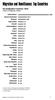 Migration and Remittances: Top Countries Top Immigration Countries a, 010 number of immigrants, millions United States b Russian Federation b Germany b Saudi Arabia b Canada b United Kingdom b Spain b
EMEA BENEFITS BENCHMARKING OFFERING
 EMEA BENEFITS BENCHMARKING OFFERING COVERED COUNTRIES SWEDEN FINLAND NORWAY ESTONIA R U S S I A DENMARK LITHUANIA LATVIA IRELAND PORTUGAL U. K. NETHERLANDS POLAND BELARUS GERMANY BELGIUM CZECH REP. UKRAINE
Further Developments of Hong Kong s Offshore RMB Market: Opportunities and Challenges
 Further Developments of Hong Kong s Offshore RMB Market: Opportunities and Challenges Zhang Ying, Senior Economist In recent years, as the internationalization of the RMB has been steadily carrying out,
The global economy Banco de Portugal Lisbon, 24 September 2013 Mr. Pier Carlo Padoan OECD Deputy Secretary-General and Chief Economist
 The global economy Banco de Portugal Lisbon, 24 September 213 Mr. Pier Carlo Padoan OECD Deputy Secretary-General and Chief Economist Summary of presentation Global economy slowly exiting recession but
Comparative Policy Brief - Size of Irregular Migration
 October 2009 The project aims SIZE AND DEVELOPMENT OF IRREGULAR MIGRATION TO THE EU CLANDESTINO Research Project Counting the Uncountable: Data and Trends across Europe Comparative Policy Brief - Size
DEMOGRAPHICS AND MACROECONOMICS
 1 UNITED KINGDOM DEMOGRAPHICS AND MACROECONOMICS Data from 2008 or latest available year. 1. Ratio of over 65-year-olds the labour force. Source: OECD, various sources. COUNTRY PENSION DESIGN STRUCTURE
2015 Country RepTrak The World s Most Reputable Countries
 2015 Country RepTrak The World s Most Reputable Countries July 2015 The World s View on Countries: An Online Study of the Reputation of 55 Countries RepTrak is a registered trademark of Reputation Institute.
EXECUTIVE SUMMARY 3 INTRODUCTION 4. Drivers of international higher education 4 Report structure 4 METHODOLOGY 6
 Education Intelligence Postgraduate student mobility trends to 2024 October 2014 Contents EXECUTIVE SUMMARY 3 INTRODUCTION 4 Drivers of international higher education 4 Report structure 4 METHODOLOGY 6
CONTENTS: bul BULGARIAN LABOUR MIGRATION, DESK RESEARCH, 2015
 215 2 CONTENTS: 1. METHODOLOGY... 3 a. Survey characteristics... 3 b. Purpose of the study... 3 c. Methodological notes... 3 2. DESK RESEARCH... 4 A. Bulgarian emigration tendencies and destinations...
The International Migrant Stock: A Global View. United Nations Population Division
 The International Migrant Stock: A Global View United Nations Population Division International migration is increasingly recognized as an important issue in the modern world where economic globalization
MALTA TRADING COMPANIES IN MALTA
 MALTA TRADING COMPANIES IN MALTA Trading companies in Malta 1. An effective jurisdiction for international trading operations 410.000 MALTA GMT +1 Located in the heart of the Mediterranean, Malta has always
Kiel. Policy Brief. The Importance of Investment Income and Transfers in the Current Account: A New Look on Imbalances. Rolf J.
 Kiel Policy Brief The Importance of Investment Income and Transfers in the Current Account: A New Look on Imbalances Rolf J. Langhammer No. 48 May 2012 Institut für Weltwirtschaft Kiel Kiel Institute for
Greece Country Profile
 Greece Country Profile EU Tax Centre March 2013 Key factors for efficient cross-border tax planning involving Greece EU Member State Double Tax Treaties With: Albania Estonia Lithuania Serbia Armenia Finland
World Manufacturing Production
 Quarterly Report World Manufacturing Production Statistics for Quarter IV, 2013 Statistics Unit www.unido.org/statistics Report on world manufacturing production, Quarter IV, 2013 UNIDO Statistics presents
Executive summary. Global Wage Report 2014 / 15 Wages and income inequality
 Executive summary Global Wage Report 2014 / 15 Wages and income inequality Global Wage Report 2014/15 Wages and income inequality Executive summary INTERNATIONAL LABOUR OFFICE GENEVA Copyright International
The Macroeconomic Situation and Monetary Policy in Russia. Ladies and Gentlemen,
 The Money and Banking Conference Monetary Policy under Uncertainty Dr. Sergey Ignatiev Chairman of the Bank of Russia (The 4 th of June 2007, Central Bank of Argentina, Buenos Aires) The Macroeconomic
Emerging Markets Value Stock Fund
 SUMMARY PROSPECTUS PRIJX March 1, 2016 T. Rowe Price Emerging Markets Value Stock Fund A fund seeking long-term growth of capital through investments in undervalued stocks of companies in emerging market
International Education Index comparative perspective from 21 countries. Janet Ilieva, PhD EDUCATION INTELLIGENCE
 International Education Index comparative perspective from 21 countries Janet Ilieva, PhD Background Rapid growth in participation in tertiary education across the world, in the number of students pursuing
Energy Briefing: Global Crude Oil Demand & Supply
 Energy Briefing: Global Crude Oil Demand & Supply November 6, 215 Dr. Edward Yardeni 516-972-7683 eyardeni@ Debbie Johnson 48-664-1333 djohnson@ Please visit our sites at www. blog. thinking outside the
List of tables. I. World Trade Developments
 List of tables I. World Trade Developments 1. Overview Table I.1 Growth in the volume of world merchandise exports and production, 2010-2014 39 Table I.2 Growth in the volume of world merchandise trade
BLUM Attorneys at Law
 BLUM Attorneys at Law CORPORATE TAXATION SYSTEM IN SWITZERLAND Outline of Swiss Corporate Tax System Levels of Taxation in Switzerland Resident companies are subject to: federal corporate income tax, and
Consolidated International Banking Statistics in Japan
 Total (Transfer Consolidated cross-border claims in all currencies and local claims in non-local currencies Up to and including one year Maturities Over one year up to two years Over two years Public Sector
Wystąpienie Rzecznika Praw Obywatelskich - Bruksela, 15 września 2008 r.
 1 Wystąpienie Rzecznika Praw Obywatelskich - Bruksela, 15 września 2008 r. Two years ago, during the European Year of Workers Mobility, we realised the unprecedented scale of economic migration today.
Global Education Office University of New Mexico MSC06 3850, Mesa Vista Hall, Rm. 2120 Tel. 505 277 4032, Fax 505 277 1867, geo@unm.
 Global Education Office University of New Mexico MSC06 3850, Mesa Vista Hall, Rm. 220 Tel. 505 277 4032, Fax 505 277 867, [email protected] Report on International Students, Scholars and Study Abroad Programs
The global economy in 2007
 Introduction The global economy in 27 Global output grew 3.8 percent in 27, receding slightly from 4 percent in 26. The downturn was greatest in high-income economies, where growth fell from 3 percent
How To Know How The Falling Oil Price Affects The Global Economy And Inflation
 Effects of the falling oil price on the global economy MONETARY POLICY REPORT FEBRUARY 2015 45 Prices on the world market for oil have fallen rapidly since the summer of 2014. Measured in US dollars, the
Family-sponsored Preferences. as of as of % of Change
 Annual Report of Immigrant Visa Applicants in the Family-sponsored and Employment-based preferences Registered at the National Visa Center as of November 1, 2014 Most prospective immigrant visa applicants
How To Understand Current Account Balance In Armenia
 CURRENT ACCOUNT: THE REGIONAL DEVELOPMENTS AND TRENDS Prepared by Armenuhi Burnazyan and Arevik Aleksanyan In our project we tried to analyze Current Account (CA) balance trends for Armenia, Georgia and
Chapter 4A: World Opinion on Terrorism
 1 Pew Global Attitudes Project, Spring 2007 Now I m going to read you a list of things that may be problems in our country. As I read each one, please tell me if you think it is a very big problem, a moderately
The Return of Saving
 Martin Feldstein the u.s. savings rate and the global economy The savings rate of American households has been declining for more than a decade and recently turned negative. This decrease has dramatically
Empowerment through decent work and social protection floors
 Empowerment through decent work and social protection floors Vinicius Pinheiro Deputy Director, ILO Office for the UN in New York EGM on Policies and Strategies to Promote the Empowerment of People in
A proposal for measures under Norwegian foreign and international development policy to combat the global health workforce crisis
 A proposal for measures under Norwegian foreign and international development policy to combat the global health workforce crisis Report by the workgroup headed by the Ministry of Foreign Affairs, with