
Food Allergy & Intolerance Guidance for the Catering Industry
|
|
|
- Lewis Harrison
- 10 years ago
- Views:
Transcription
1 Food Allergy & Intolerance Guidance for the Catering Industry

2 This booklet has been produced as part of the all island Food Safety Training Programme on Food Allergen Control which is sponsored by safefood Acknowledgements This food allergy resource was produced by safefood in association with Dr. Ian Leitch, Chartered Environmental Health Practitioner with Omagh District Council, Northern Ireland. The participation, support and guidance of Mr. Martin Devine, Mr. Barney Heywood and the officers of the Environmental Health Services in the Republic of Ireland and Northern Ireland are duly acknowledged and greatly appreciated. safefood also recognises the input and participation of third level catering lecturers throughout the island of Ireland. Disclaimer: This guidance is provided in good faith and outlines the general principles of good food allergen management. safefood disclaims any responsibility for any adverse effects resulting from following the information in this publication. safefood does not give any guarantee that following the advice in this publication will prevent an allergic reaction from occurring. The food business should ensure that it complies in full with the legislative requirements for the manufacture, preparation and sale of safe food. Sole responsibility for the safety of supplied food rests with the proprietor.

3 Food Allergy & Intolerance in the Catering Industry In these islands it is estimated that approximately 10 percent of the population suffer from a food allergy or a food intolerance (including coeliac condition), the effects of which range from mild discomfort to life threatening. This booklet and accompanying poster are designed as an educational resource for caterers and serve as a practical guideline for serving customers who may have a food allergy, a food intolerance, coeliac condition or who may wish to avoid a particular food for other reasons. Since all catering staff must receive induction training before they start work for the first time and at regular intervals thereafter, the booklet should be used as part of this training to increase catering staff knowledge and awareness of this issue. The poster is designed as a quick reference source for staff who need to serve an allergic customer or a customer who wants to avoid a food or food ingredient for any other reason. In this context, the booklet and poster will help food businesses meet their legal obligations. It is recommended that a copy of this booklet should be placed in the food safety management file. Please place a copy of the poster at strategic locations such as counter/servery areas, and make all staff members aware of this information and its location.

4 Contents Foreword Disclaimer Contents Introduction 1 Definition 2 Causes 3 Symptoms 3 Avoidance and Treatment 4 Impact on quality of Life 4 Foods that can trigger an allergic reaction 5 Identification of major allergens 6 May contain statements 13 Communication with the customer 14 Food allergens, the Law and Food Safety Management Systems 15 Due Diligence 15 Best practice food allergen management 17 Nominating an Expert 18 Tact and Diplomacy 18 Ingredients 18 Cross contamination 19 Food safety management system 20 Preparing an allergen-free meal 21 Service: Points to remember 21 If the worst does happen 22 Procedure for dealing with a query from your customer 23

5 1 Introduction Since the 1950s, the incidence of allergies in developed countries has shown a steady rise. This is particularly noticeable where food allergy is concerned. For example, peanut allergy the most common food allergy to cause fatal or near fatal reactions has trebled in the last twelve years affecting almost 2% of children at school entry level. In Ireland, it is estimated that up to 3% of the population have a food allergy. Approximately 5% of the adult population are lactose intolerant while approximately 1% have coeliac condition. EU legislation now recognises 14 foods as being responsible for the majority of allergic reactions in Europe. In Ireland, the primary causes of allergic and intolerant reactions to food are peanuts, fish, eggs, tree nuts & seeds, fruits & vegetables, milk and wheat. If you work in the food industry, particularly in the catering sector, you need to know how you can control food allergens on your premises. This can be a matter of life or death. 1

6 Introduction Food Allergy & Intolerance Definition A food allergy is an abnormal, exaggerated reaction (hypersensitivity) of the immune system to certain proteins in food. These proteins are known as allergens. A food intolerance is also an adverse reaction to a protein or non-protein constituent of a food. However, the immune system is not involved. Examples include lactose intolerance due to the absence of the enzyme lactase and migraine induced by red wine. Therefore, while the use of the term allergens to describe the causative agents that can trigger an allergic or intolerant reaction is not technically true, it is frequently used as a collective term in the literature and is used in this context in this document as well.... peanut allergy the most common food allergy to cause fatal or near fatal reactions has trebled in the last twelve years... 2

7 1 an allergy to peanut is the most common food allergy to cause fatal or near fatal reactions Gluten intolerance also called coeliac disease is an auto immune disease where the immune system attacks its own tissues. However, it is not an allergy. The reaction is triggered by gluten which causes the lining of the gut to become damaged. The manufacture of totally gluten-free food is difficult. Consequently, many foods currently on the market that address this particular nutritional requirement, although labelled gluten-free, may actually contain low residual amounts of gluten. A higher standard for gluten-free foods has recently been introduced but it will exist beside the original 1988 standard until 1st January Under the original standard, gluten-free foods must have less than 200 mg/kg (ppm) gluten. Foods manufactured under the 2009 standard can be called (1) gluten-free if they have less that 20 mg/kg gluten or (2) very low gluten if they have less that 100 mg/kg gluten. From 1st January 2012 only the new standard is permitted. Causes It is not clear why someone develops an allergy or intolerance to food. People with conditions like asthma, eczema or hay fever, or families that have these conditions, seem to be more prone to developing allergies in general. Most food allergy fatalities have occurred in people with asthma. The prevalence of food allergies and intolerances, including coeliac condition, seems to vary between different populations and regions indicating a strong genetic influence. Symptoms The most common symptoms of an allergic reaction may include any combination of the following:- Coughing Dry itchy throat and tongue Wheezing and breathlessness Runny nose Itchy eyes Flushing of the skin Nettle rash (hives) anywhere on the body Swelling of lips and throat Changes in heart rate Feeling bloated Abdominal pain, nausea and vomiting People with severe allergies can take a reaction which can be life threatening. This reaction is called anaphylaxis or anaphylactic shock which is characterised by:- a sense of impending doom a dramatic fall in blood pressure (hypotension) a swelling in the throat and mouth 3

8 Introduction Food Allergy & Intolerance chest tightness, breathlessness from severe asthma collapse and unconsciousness Sometimes it is difficult to know if a slight reaction like a rash will proceed to the more serious anaphylactic shock but urgent medical treatment is advised if the customer has difficulty in swallowing or breathing or if there is sudden weakness. Food allergy is the most common cause of anaphylactic shock outside the hospital setting and an allergy to peanut is the most common food allergy to cause fatal or near fatal reactions. Food intolerant reactions tend to be less severe than those experienced during an allergic reaction. Symptoms are usually gastrointestinal, including nausea and diarrhoea, but can also include those more usually associated with a food allergy such as flushing, headache, hives or wheezing. Unlike a food allergic reaction where symptoms begin to manifest immediately, the symptoms of a food intolerant reaction usually take time to develop, although there are exceptions to this. Avoidance and Treatment There are no widely-available medical treatments to prevent someone taking an allergic/intolerant reaction. Treatment is provided after an allergic reaction has taken place either by the patient s use of antihistamines or, if the reaction is severe, by self medication with an adrenaline (epinephrine) auto-injector followed by hospital admission. Autoinjectors are marketed under the Epipen and Anapen brands. A food intolerant reaction usually resolves with time once the offending food is removed from the diet. Avoidance is the key to controlling food allergy and intolerance and those at risk must avoid contact with the foods to which they are allergic/intolerant in any form. Impact on quality of Life The diagnosis of a food allergy or intolerance is very stressful for the person and their immediate family. Many life style changes have to be made, all to ensure that the patient s health is protected. What to eat, where to eat, how to cope at parties or at a new school or when going to college these are all considerations that take on a heightened importance when a family member has a food allergy or intolerance, especially if the allergy is life-threatening. As a caterer, you can help the allergic/intolerant customer by having an understanding of their problem and helping them to choose food that is safe. 4

9 2 Foods that can trigger an allergic reaction A customer can be allergic or intolerant to, and wish to avoid, any food. In the EU, there are 14 major allergens of concern which must be identified on the label when used as a deliberate ingredient in any prepacked food product. The 14 major allergens are detailed below, along with information on foods in which they are commonly found. Of these, the following feature most commonly in causing allergic reactions, groundnuts (peanuts), tree nuts (eg. almonds, walnuts, cashews, Brazils), sesame (eg. seeds, paste and oil), fish, shellfish, dairy products and eggs. In Ireland, certain fruits and vegetables have caused allergic reactions in susceptible individuals but these do not appear on the EU list. This is because the listed allergens are the most prevalent on an EU-wide basis. Note, certain foods such as milk and wheat are associated with both allergy and intolerance. Avoiding foods like peanuts, nuts, seeds, milk and eggs in packets, bottles or in jars is relatively easy. It is more difficult where they could be hidden in a multi-ingredient food. For example, peanut traces can occur in a wide range of foods, cosmetics and even in medicines where the ingredient labelled arachis oil is, in fact, peanut oil. Gluten containing wheat is used in many baked goods and fish protein is a hidden ingredient in Worcester sauce. 5

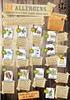
10 Foods that trigger an allergic reaction Identification of major allergens Fortunately, information is available to help caterers identify foods which contain major allergens. EU legislation (Directive 2000/13/EC as amended) requires the labelling of 14 major allergens if they are deliberate ingredients in pre-packed foods that are delivered to the ultimate consumer and supplied to restaurants, hospitals, canteens and other mass caterers. For allergens which are not subject to the allergen labelling requirements, the label should still give an indication if the allergen is present as a deliberate ingredient, eg. kiwi fruit. The 14 major allergens subject to EU labelling requirements are described below. Of these, peanuts, fish, shellfish, egg, tree nuts, milk and gluten are most relevant for the peoples on the island of Ireland:- 6

11 2 Allergen: Peanuts Peanuts can trigger severe reactions including anaphylaxis. Other names for peanuts include groundnuts, earth nuts, goobers, goober peas, ground peas, pindas, monkey nuts and Chinese nuts. Peanut is also used to produce oil and flour. Refined peanut oil is unlikely to cause a reaction but unrefined peanut oils are unsuitable for anyone with a peanut allergy. Found in: Breakfast cereals, cakes, biscuits, pastries, breads, cereal bars, mixed nuts. Chinese, Thai or Indonesian dishes including curries. The ethnic cuisines may also use unrefined peanut oil. Chilli, satay or pesto sauce; lasagne; mixed salads, salad dips and dressings; desserts including ice cream; peanut butter and nut spreads; vegetarian products; confectionery and nougat products; fruit yoghurts; hydrolysed vegetable protein; sausages and stuffing; boullion and Worcester sauce. Allergen: Fish Fish can trigger severe reactions including anaphylaxis. Some people can react to the vapours during the cooking of fish. Some people who are allergic to one species of fish have been advised to avoid all species of fish because the allergic proteins are similar. There is a risk of cross contamination during harvesting and processing. Found in: Anchovies are a common ingredient of sauces like Worcester sauce, Caesar salad, salad dressings and pizza toppings Fish is often used in soups and stocks, pastes, stir-fry mixes and oriental sauces. Surimi is a white fish-based food that mimics more expensive crab, lobster and other crustaceans and shellfish. 7

12 Foods that trigger an allergic reaction Allergen: Shellfish Shellfish can trigger severe reactions including anaphylaxis. People who react to one type of shellfish may react to other types and very sensitive people can react to the vapours during the cooking of shellfish Shellfish includes: Crustaceans eg. crab, lobster, prawn, shrimp, langoustine and crayfish Molluscs eg. mussels, scallops, oysters, clams, snails, periwinkles, whelks, squid and octopus Found in: Shellfish may be served on their own or as a hidden ingredient in dishes like fish pie or seafood chowder. They may be present in soups, stocks and highly processed foods. Allergen: Eggs Allergic reactions to egg and egg products can range from slight to very severe including anaphylaxis. This applies to Eggs from all species including duck, goose, turkey and quail as well as hens. The main proteins causing reactions are in the egg white. Also derived from egg are:- Albumen Lecithin-emulsifier (E322) Lysozyme Egg allergy in children is very common but by the age of three about 50% will have grown out of it. Found in: Eggs are used as ingredients in many foods such as baked goods including bread and cakes, meat products, fresh pasta dishes, sweets and ice creams. Egg also performs specific functions, eg. as binders to stick down the ends of spring rolls, to glaze pastry and to bind the meat in burgers. 8

13 2 Allergen: Tree Nuts Tree nuts can trigger severe reactions including anaphylaxis. Tree nuts include almond, hazelnut, walnut, cashew, pecan nut, Brazil nut, pistachio nut, macadamia nut and the Queensland nut. Unrefined nut oils like sesame and walnut oil are unsuitable for people with a nut allergy. Found in: Breakfast cereals, cakes, biscuits, pastries, breads, cereal bars. Chinese, Thai or Indonesian dishes including curries. The ethnic cuisines may also use unrefined nut oils. Chilli, satay or pesto sauce; lasagne; mixed salads, salad dips and dressings; desserts including ice cream; and nut spreads; vegetarian products; unrefined cooking oils including walnut and hazelnut oils. Marzipan confectionery including praline and nougat products; fruit yoghurts; hydrolysed vegetable protein; sausages and stuffing; bouillon and Worcester sauce. Allergen: Milk People may be allergic or intolerant to milk. Cows milk allergy is normally associated with infants and young children, the majority of whom grow out of it. Allergic reactions to milk and milk products can range from slight to very severe including anaphylaxis. Milk allergic people will need to avoid milk and milk products from cows, sheep, goats and other milk-producing animals. People intolerant to milk are usually intolerant to lactose. They do not have the enzyme lactase in their gut to help them digest lactose. Found in: In addition to milk, the main foods to avoid are dairy products including butter, buttermilk, milk powder, cream, cheese, yoghurt and ice cream. Milk is also found in butterfat, butter oil, Ghee (clarified butter), curds and whey, caesin, sodium and calcium caesinate, fromage frais and crème fraiche. These foods are found on their own or as ingredients in many products. 9

14 Foods that trigger an allergic reaction Allergen: Gluten Gluten-containing cereals (eg. wheat, barley, oats, rye, spelt and kamut). People need to avoid gluten containing cereals either because they are allergic or they are intolerant (Coeliac condition). Found in: Gluten containing cereals are found in breads, cereals, pastry products, pasta, pizza, biscuits and cakes and many bread crumbed or battered products or those dusted with flour before cooking. Wheat can be an ingredient in sauces as a thickener, in stock cubes, gravy granules and spice mixes in sausages and burgers. Allergen: Sesame Sesame can trigger severe reactions including anaphylaxis. Sesame is also used to make pastes and oils. Found in: Sesame seeds are used in bakery products, breads and rolls and may contaminate other bakery products. Sesame paste (Tahini) is used in middle eastern cooking and as an ingredient in humus a chickpea based dip, in Halvah a sweet confection and in a dry condiment called Gomashio. Sesame oils used for cooking or stir-fry may contain unrefined sesame oil and are considered high risk. 10

15 2 Allergen: Celery Celery, including the stalk (stick) and the root (celeriac), celery salt and seeds. People are more likely to be allergic to celeriac than the stalk but both can cause severe reactions. Celery is a common cause of oral allergy syndrome which causes redness, itching and blistering of the mouth, lips, tongue or throat immediately after touching the food. Found in: The sticks are commonly used as a salad vegetable or with a dip. Diced celeriac is also used as a vegetable in mashed form or roast or fried as a chip. Celery salt made from celery seeds is a micro ingredient of many soups, sauces, stocks and tomato based drinks like Bloody Mary. Allergen: Mustard Allergy to mustard is uncommon on this island being more prevalent on mainland Europe. Mustard comes in many forms including sprouted seeds, leaves, flowers, powder/flour and oil. All must be avoided by the allergic consumer. Found in: Sauces, marinades, curries, soups, salad dressings, eg. salad creams and thousand island dressings, and as a condiment on its own. Also used for coatings on meat or fish products. 11

16 Foods that trigger an allergic reaction Allergen: Sulphur Sulphur dioxide (SO2) and Sulphites at concentrations of more than 10 mg/kg or 10 mg/litre expressed as SO. Sulphites include Sodium sulphite, Sodium bisulphite, Potassium bisulphite and Potassium metasulphite (E ). They are used as a preservative in many foods to maintain appearance and extend shelf life. SO2 may trigger asthmatic attacks. Allergen: Lupin Because lupin is botanically related to peanut, it contains similar allergens and can trigger anaphylaxis, so people with peanut/nut allergy should avoid lupin products. Found in: Lupin seeds from lupin flowers may be seen in, or on, speciality breads but are mainly used in the form of flour in pastry products including pies, pizzas, pasta and baked foods with batter eg. waffles and onion rings. Found in: SO2 is commonly found in wine, beer and carbonated soft drinks. It is also added to foods like salads, fruits like pre-packed apricots and preprepared vegetables such as raw potato chips to maintain appearance and freshness. It is used as a preservative in meat products like sausages and beef burgers. 12

17 2 Allergen: Soybeans and soya The soya bean can be ground to produce soya flour and textured vegetable protein and can be fermented to produce bean curd (tofu). Lecithin (E322), which is used as an emulsifier, can be made from unrefined soya oil. Found in: Soya flour is commonly found in baked goods, pastry, pasta dishes, cereals and processed meats. Tofu is made from coagulating soy milk into curd and pressing it into blocks. Textured vegetable protein is a meat substitute and used as a consistency enhancer in meat products. Refined soya oil is used in vegetable oil. May contain statements The EU legislation does not cover allergens accidentally present as a result of cross contamination at some point in the manufacturing process but this hazard has been recognised by many manufacturers who have chosen to highlight the risk in advisory warning statements such as may contain nuts. This information is usually found on food packaging in addition to the ingredients list, but is not required by law. The frequent use of may contain statements has been criticised and the Food Standards Agency (UK) takes the view that these statements should only be used where the likelihood of allergen contamination has been properly assessed and the risk cannot be reduced or eliminated. That said, may contain statements should not be ignored. The caterer has no way of assessing their worth and must therefore err on the side of caution, assume they are credible and make the information available to the customer. 13

18 Foods that trigger an allergic reaction Communication with the customer Communication with the customer is very important. This lets them know that you are aware of the problem of food allergy and intolerance and encourages them to ask questions about the foods you sell. You may want to let the customer know about your policies by:- 1 Appropriate notification advising them to ask staff for further information if they have any dietary concerns 2 Highlighting major allergens on menus/chalk boards/food displays etc. It is important for caterers to realise that customers can be allergic to any food and new allergens are being recognised all the time. Caterers should be aware of the following foods which regularly cause allergic reactions, but not in sufficient numbers to warrant addition to the EU list of 14 allergens:- Fruits such as kiwi and strawberry Tropical fruits such as mango, papaya Other legumes eg. beans and lentils 14

19 3 Food allergens, the Law and Food Safety Management Systems Many people who suffer an adverse reaction to food, including an anaphylactic reaction, do so following consumption of food from a catering business. It is therefore vital that catering staff play their part in protecting the health of their allergic and food-intolerant customers. All catering businesses have a legal requirement to sell safe food. They are required to have in place a food safety management system based on HACCP principles to assess risks and control food safety hazards (Regulation (EC) No. 852/2004). The regulation was transposed into national law in the Republic and Northern Ireland by the following legislation:- ROI: Corrigendum to Regulation (EC) No 852/2004 of the European Parliament and of the Council of 29 April 2004 on the hygiene of foodstuffs. (see also S.I. No. 910 of 2005, S.I. No. 369 of 2006 and S.I. No. 387 of 2006). NI: Food Hygiene Regulations (Northern Ireland) 2006 (SR 2006 No 3). Traditionally, the hazards to be assessed included temperature control of hot and cold foods and cross-contamination of cooked food by raw food. Food allergies and intolerances are emerging risks and, like any other risk, should be considered and handled in the same systematic way. Due Diligence The defence of due diligence is acceptable in both jurisdictions. In Northern Ireland, Regulation 21 of the Food Safety Order NI 1991 introduced the concept of due diligence to food legislation. Where a person was charged with any offence under the Food Safety Order, they could now claim due diligence in respect of their food business if they could prove that they took all reasonable 15

20 Food Allergens the Law and Food Safety Management Systems precautions and exercised all due diligence to avoid committing an offence. A food business may be able to use the defence of due diligence in a food allergy prosecution if it can demonstrate that appropriate food allergy controls were in place and working effectively at the time an adverse event occurred on site.... protecting the health of their allergic and food-intolerant customers... In the Republic of Ireland, Paragraph 5 (3) (a) of European Communities (General Food Law) Regulations 2007 (S.I. No. 747 of 2007) refers to the due diligence defence particularly with respect to the offence of placing unsafe food on the market (in contravention of Article 14 of Regulation (EC) 178/2002). Nutritional Information Typical Composition Per 100g Per 1/4 pizza GDA* when cooked serving Energy 1258kj 1649kj 300kcal 393kcal 2000kcal Protein 11.7g 15.4g 45g Carbohydrate 31.5g 41.3g 230g of which sugars 3.2g 4.2g 90g Total Fat 14.1g 18.5g 70g of which saturates 6.2g 8.1g 20g Fibre 2.2g 2.9g 24g Sodium 0.5g 0.65g 2.4g Salt equivalent 1.3g 1.6g 6g *Based on Guideline Daily Amount for Women INGREDIENTS: WHEAT FLOUR, MOZZARELLA CHEESE (21%) (WITH ADDED STARCH), WATER, PEPPERONI (9%) (PORK, SALT, DEXTROSE, SPICE EXTRACTS, SMOKE FLAVOUR, GARLIC, PAPRIKA, ANTIOXIDANT: SODIUM ASCORBATE, CITRIC ACID, PRESERVATIVE: SODIUM NITRITE), TOMATOES, VEGETABLE OIL, YEAST, SALT, SUGAR, GARLIC PUREE, STARCH, DEXTROSE, OREGANO, BASIL, BLACK PEPPER, FLOUR TREATMENT AGENT: ASCORBIC ACID. ALLERGY ADVICE CONTAINS: WHEAT, GLUTEN, MILK. THIS PRODUCT MAY CONTAIN TRACES OF NUTS. 16

21 4 Best practice food allergen management When a customer explains that they have a food allergy or intolerance and asks if a food is suitable for them, the business must have a system in place to handle their request and give them accurate advice. For that system to be effective, all staff should get basic training in food allergen management before they first start work so they are aware that the request must be taken seriously. Many businesses are routinely controlling the traditional hazards using either their own food safety management system or an off-the-shelf one provided by the Food Safety Authority of Ireland or the Food Standards Agency Northern Ireland. Working in partnership with representatives of the catering industry and Environmental Health Officers, they have developed a guide for caterers entitled, safe catering your guide to making food safely. This joint initiative is intended to ensure consistency in the application of food safety legislation in the catering industry right across the island of Ireland. The guide provides the caterer with practical advice on food allergies, their symptoms, the main foods that can cause reactions and, importantly, information on how to control allergens in a food business. The information in this booklet is meant to supplement this guide. 17
22 Best practice food allergen management Nominating an Expert It is a good idea to nominate a responsible member of staff who will be charged with facilitating all allergy/intolerance related requests and who is trained in the topic. A request should always be passed to the nominated staff member who can then talk to the customer to find out just what foods and ingredients they are trying to avoid. Tact and Diplomacy The staff member needs to deal tactfully with the customer to gain more information and although most allergic customers will welcome an open discussion, some people, particularly teenagers and those with other underlying health problems may be more reticent about discussing their dietary needs in detail, especially in public. Ingredients The nominated staff member needs to find out the ingredients of the food. This can be done by considering how the food was made up. Was it bought in? If so, the label on the ingredients packaging should be examined for allergen information (not forgetting the may contain warnings). If it was bought in and part prepared in house, look at the labelling information and examine recipe information to find out just what the ingredients are. You can make these tasks easier by setting up a system to retain ingredients information with the product, or on computer or in a file. You should also have a copy of all recipes in an easily accessible position. Staff should follow recipes closely and if changes have to be made, the recipes should be updated to include the addition or removal of an allergen. 18
23 Cross contamination The nominated staff member needs to find out the potential for allergen crosscontamination. Again this is assessed by considering how the food was prepared. The following points should be considered as essential in the control of cross contamination and are similar in principle to the practices for preventing contamination of cooked food with raw food. 1 Food to equipment contact Could the food being asked about have been in contact with equipment such as spoons, mixers, etc., without first washing them properly. 2 Food to food contact Could the food being asked about have been in contact with the allergen or food containing the allergen, for example through shared storage or preparation areas? Oil that has already been used to cook other foods should not be used to cook the food in question. For instance, oil used to cook prawns could cause a reaction in someone who is allergic to shellfish. 3 Food to hand contact Could the food being asked about have been in contact with the allergen on someone s unwashed hands by which allergen was transferred from another food? Once you have found the required information (and this should only take a few minutes if you have set up a system) it should then be given to the customer who must make the final decision as to whether or not the food is suitable for them. Remember if you are unsure of any of the ingredients, or if there is any doubt about cross contamination, you must tell the customer. 19
24 5 Food safety management system Food safety management system The key to help you answer customer queries correctly is your food safety management system which should have the following controls in place. Train all staff from day one to make them aware of basic allergen controls and inhouse procedures plus regular refresher courses. Appoint a responsible member of staff to handle all food related queries and ensuring that all staff know who he/she is. Have a fall back position in case that person is absent. Maintain a thorough knowledge of your recipes and ingredients with regular updating. Manage recipe and ingredients information and have it available if requested. Ask suppliers to notify you of any ingredients changes. Check that items delivered match exactly those that were ordered. Store major allergens like nuts, peanuts and seeds separately and in lidded containers that should be marked or colour coded if possible. Alert your staff to cross contamination risks and how to control them. Train all staff how to clean utensils and equipment to avoid cross contamination. Where practicable, ensure the information provided to customers on menus, signage, etc. highlights the presence of food allergens. Encourage the food allergic or intolerant customer to ask about the foods on sale through the use of appropriate signage. 20
25 6 A customer may ask you to prepare a meal free of an allergen The points to remember are:- Make sure worktops and all the equipment used are thoroughly cleaned. This includes chopping boards, knives, mixers, bowls, pots, pans, griddles and utensils. Thorough cleaning can be achieved by the use of detergent and hot water. Where relevant, dismantle equipment to ensure that all allergen residues are removed. Do not use equipment which is encrusted with carbonised food residues eg. woks. Don t cook food in oil that has already been used to cook other foods. Ensure staff wash their hands thoroughly with soap and water before they prepare the meal and avoid touching other foods until they have finished preparing it. Assemble all the ingredients, check the labelling and recipes for the ingredient to be avoided. Control Cross contamination risks (described above). Think about how you control cooked and raw foods same principles apply to the control of allergens. Service: Points to remember Once the special meal has been prepared, it should be kept labelled and protected from contamination. It should be kept separate from other meals until served. The manager or nominated staff member should deliver it, on its own, to the table of the allergic person to ensure that no mistakes are made. 21
26 7 Emergency procedures If the worst does happen If a customer takes an allergic reaction, you should act quickly as follows:- 1 Dial 999 immediately and advise the ambulance service that the person may be taking an anaphylactic (pronounced anna-fill-ak-tic ) reaction and that immediate help is required. 2 Advise them of the location and telephone number of the premises and, where appropriate, of the post code. 3 Someone should go outside to wait for the ambulance to guide them to the premises as quickly as possible. It is useful to keep a copy of this information including premises name, address, postcode and telephone number by the phone and advise staff accordingly. 22
27 8 Procedure for dealing with a query from your customer This should be accessible to all staff The customer wishes to know if a meal or other food is suitable for them. 1 Seek further clarification from the customer Are they allergic or intolerant to that food OR is it for another reason, eg. dietary or religious reasons or simply they may not like the taste. Which specific ingredient(s) do they want to avoid. Don t guess about the ingredients 2 Refer the query to the manager or a senior member of staff:- The designated person to deal with allergy related requests is If unavailable, please contact 3 The person dealing with the query/request will need to find out:- Does the food in question contain the ingredient(s) the customer has asked about. The chef can advise on the ingredients that were already in it or subsequently added to it. Ingredient information should be kept available for the customer if they request this. 4 Where to find ingredients information:- If the product is bought-in and sold in its original package: show the label to the customer. If you use bought-in pre-packed products as ingredients: information will be on the packaging or on the documentation delivered with the food. This can be shown to the customer. If you use fresh ingredients: know these and show the recipe to the customer. 5 If the food contains the ingredient which must be avoided:- Tell the customer. ALWAYS BE TRUTHFUL. Remember, you can always recommend a safe alternative. 23
28 Procedure customer query 6 If the food does not contain the ingredient to be avoided:- Inform the customer. Consider the possibility that it could have been contaminated during the preparation, perhaps by sharing a spoon or knife or cutting board. Again inform the customer. 7 The customer makes the final decision Once the information on the food, its ingredients and the possibility of crosscontamination has been provided, assessed and given to the customer, the customer must make the final decision whether or not to purchase the food. 24
29
30 safefood 7 Eastgate Avenue, Eastgate, Little Island, Co. Cork 7 Ascaill an Gheata Thoir, An toiléan Beag, Co. Chorcaí 7 Aistyett Avenue, Aistyett, Wee Isle, Co. Cork Tel: +353 (0) Fax: +353 (0) [email protected] Web:
RELEVANT HACCP CHARTS: All HACCP Charts
 4.31(a) RELEVANT HACCP CHARTS: All HACCP Charts ALLERGEN MANAGEMENT HOUSE RULES Why is it important to manage allergens? Some people have a sensitivity to certain foods that non-sufferers would find harmless.
Advice for caterers on allergy and intolerance
 Advice for caterers on allergy and intolerance Also see: Allergy UK Deepdene House 30 Bellgrove Road Welling KENT DA16 3PY Tel. 01322 619864 E-mail: [email protected] Website: www.allergyfoundation.com
Food Allergies Policy
 Food Allergies Policy Policy 1. Wadham College is committed to reducing the risk to members of the College community and visitors with regard to the provision of food and the consumption of allergens in
Food Allergies DEFINITIONS: EIGHT MAJOR FOOD ALLERGENS. Definition of a Food Allergy:
 DEFINITIONS: Definition of a Food Allergy: Food Allergies Immune system response to a food that the body mistakenly thinks is harmful. Upon deciding a particular food is harmful, the immune system creates
Catering Guide to Severe Food Allergies
 Catering Guide to Severe Food Allergies Allergic reactions can occasionally be life-threatening and people who know they are at risk must always remain vigilant when food is around. The most common dietary
Food Allergies and Intolerances. Nan Jensen RD, LD/N Pinellas County Extension
 Food Allergies and Intolerances Nan Jensen RD, LD/N Pinellas County Extension Overview of Presentation Statistics What is food allergy? What foods causes allergies? What is a food intolerance? Possible
Peanut and Tree Nut Allergy
 Peanut and Tree Nut Allergy Allergy to peanut and tree nuts is the most common food allergy in adults and children. However, since most children start eating other foods first, allergies to other foods
prepared be allergy aware It s worth the effort
 Be prepared be allergy aware It s worth the effort Food allergy is a growing problem, particularly amongst children, and can have serious ramifications, causing illness, even death. The most severe allergic
If a child or adult needs to avoid cows milk, remember that it may be present in many foods, such as:
 Milk Allergy Cows milk allergy affects around 3 6% of (3 6 in every 100) infants and young children who usually start to have symptoms in their first few months. This causes many health problems and is
Food Allergies and. Food allergies and the immune system. Food allergies and the immune system
 Food Allergies and Intolerances Food allergies and the immune system Food allergies and True allergies involve an adverse reaction/ response by the body s immune system to a usually harmless substance
Allergen information for loose foods
 Sandwich Sandwich Allergen information for loose foods Advice on the new Food Information Regulations for small and medium food businesses Soup Curry and rice Fish and chips Butter Tuna spread Soup Curry
Food Safety Guidance for Farmers Markets
 Food Safety Guidance for Farmers Markets Anyone selling food or drink from a market stall must comply with food hygiene legislation. Foods which are categorised as high risk include cooked meats, fish
THE GLUTEN FREE DIET FOR COELIAC DISEASE AND DERMATITIS HERPETIFORMIS
 THE GLUTEN FREE DIET FOR COELIAC DISEASE AND DERMATITIS HERPETIFORMIS Information Leaflet Your Health. Our Priority. Page 2 of 8 What is Coeliac Disease? Coeliac disease is an autoimmune disease. This
Lesson 3 Managing Food Allergies
 Lesson 3 Managing Food Allergies Lesson at a Glance Time Allowed (1 hour) 5 minutes Introduction to Managing Food Allergies 15 minutes Objective 1: Creating a Food Allergy Policy Topic Activity Materials
MILK ALLERGY 3450 E. Fletcher Ave, Suite 350, Tampa, FL 813 972 3353
 MILK Allergies MILK ALLERGY You may diagnose yourself with a food allergy to milk by eliminating milk from the diet for several weeks. If the symptoms ease, foods may be reintroduced individually on a
Food allergy /anaphylaxis
 Food allergy /anaphylaxis A food allergy or hypersensitivity is an abnormal response to a food that is triggered by the immune system. Allergic reactions are often mild, but can be sometimes very dangerous.
Antioch College Policy on Food Allergies
 Antioch College Policy on Food Allergies Purpose: It is the purpose of this document to inform students and staff the procedures used by the College to identify and provide services for students with allergies
This quick guide provides a summary of food safety and labelling advice for small scale home producers of chutneys, pickles, flavoured oils and jams.
 This quick guide provides a summary of food safety and labelling advice for small scale home producers of chutneys, pickles, flavoured oils and jams. General Food Safety Advice Registration Food business
Reading Food Labels. Nutritional values The ingredients of the item The percentage of the Recommended Daily Intake (RDI) of particular nutrients
 Eating well involves choosing a variety of foods that are low in saturated and trans fats, low in salt and high in dietary fibre. Food labels carry useful information to help you make choices about the
Ember Inns Festive Menu FOH Allergen Guide V1. (Published 09.10.2015) CONCERNED ABOUT ALLERGENS?
 CONCERNED ABOUT ALLERGENS? This guide is provided to enable you to make your own decision on menu choice. We cannot recommend or tell you what is suitable for you to eat. The descriptions on our menus
Food allergy and intolerance
 Food allergy and intolerance Summary A food allergy occurs when the immune system reacts to a harmless food. Food intolerance occurs when the body has a chemical reaction to eating a particular food or
Canada s Food Guide Jeopardy
 Canada s Food Guide Jeopardy Drafted: July 2008 Revised: December 2012 Eating Well with Canada s Food Guide Veg & Fruit Grain Products Milk & Alternatives Meat & Alternatives Physical Activity Miscellaneous
Food allergies and intolerances
 Food allergies and intolerances A food allergy occurs when the body s immune system reacts to certain substances in food called allergens as if they were harmful, by producing antibodies. These can cause
CHILD CARE DIPLOMA. Course Sample
 CHILD CARE DIPLOMA Course Sample Unit CHP2 Providing for children s physical needs inclusive of health and safety The Statutory framework for the EYFS is a requirement for all registered early years providers.
Weaning learning to like new tastes and textures
 Complementary feeding or weaning is introducing solid foods in addition to your baby s milk feeds. Babies develop at different rates so begin when your baby is ready by six months, but not before four
Annual Epinephrine Training Program for Connecticut s Unlicensed School Personnel
 Annual Epinephrine Training Program for Connecticut s Unlicensed School Personnel Developed by the Connecticut State Departments of Education and Public Health in consultation with the Connecticut School
In partnership with. BRC Guidance on Allergen Labelling and the Requirements in Regulation 1169/2011
 In partnership with BRC Guidance on Allergen Labelling and the Requirements in Regulation 1169/2011 introduction Regulation (EU) No. 1169/2011 on the provision of information to consumers (EU FIC) was
Anaphylaxis. Exceptional healthcare, personally delivered
 Anaphylaxis Exceptional healthcare, personally delivered 2 Introduction Anaphylaxis (also known as anaphylactic shock) is a severe, potentially fatal allergic reaction. Anaphylaxis is caused by your body
Food Allergen Management Training
 Food Allergen Management Training Training Overview Food Allergens What they are and what they do? Allergen Management in Manufacture Making food safe for all consumers Training and Education Raising awareness
Anaphylaxis before and after the emergency
 Anaphylaxis before and after the emergency Mike Levin Paediatric Asthma and Allergy Division University of Cape Town Red Cross Hospital [email protected] http://www.scah.uct.ac.za/scah/clinicalservices/medical/allergy
Paediatric Diabetes: Carbohydrate counting
 Department of Nutrition and Dietetics Paediatric Diabetes: Carbohydrate counting Everyone with diabetes need to be careful about the foods they eat to ensure that their blood glucose levels stay as close
Low Fat Diet after Cardiac Surgery With or Without Chyle Leak
 Low Fat Diet after Cardiac Surgery With or Without Chyle Leak What is chyle? Chyle (sounds like kyle) is a milky white fluid that contains protein, fat, cholesterol, lymphocytes, and electrolytes. It is
DIABETES & HEALTHY EATING
 DIABETES & HEALTHY EATING Food gives you the energy you need for healthy living. Your body changes most of the food you eat into a sugar called glucose. (glucose) Insulin helps your cells get the sugar
Anaphylaxis Management. Pic 1 Severe allergic reaction which led to anaphylaxis
 1 Anaphylaxis Management Pic 1 Severe allergic reaction which led to anaphylaxis What is an allergic reaction? 2 An allergy is when someone has a reaction to something (usually a protein) which is either
Oral allergy syndrome
 Oxford University Hospitals NHS Trust Children s Allergy Clinic Oral allergy syndrome Information for parents What is oral allergy syndrome? In the common form, oral allergy syndrome usually causes redness,
Anaphylaxis - severe allergic reaction
 Anaphylaxis - severe allergic reaction Summary Anaphylaxis is the most severe allergic reaction and is a medical emergency. An injection of adrenaline is needed to treat the allergic reaction. The most
Welcome! We give you vegetarian frankfurter sausages, sliced, tofu and fried products.
 Welcome! We give you vegetarian frankfurter sausages, sliced, tofu and fried products. All our products are vegan and have always been known for their reliable quality and exceptional taste. All Polsoja
Guide to. Allergies 020 8742 7042. A guide to allergies
 If you need advice on taking over-the-counter medicines speak to a pharmacist or call the Consumer Health Information Centre s Over-the-Counter Medicines Advice Line on 020 8742 7042. The advice line is
Healthy Eating For Your Kidneys
 Winter 14 Healthy Eating For Your Kidneys (For People Not on Dialysis) BC Provincial Renal Agency If you have kidney disease, you may need to change the food you eat. Changes will depend on your appetite,
Appendix A Food Sources of Vitamins and Minerals
 Appendix A Food Sources of Vitamins and Minerals Appendix A 229 Appendix A Food Sources of Vitamins and Minerals Vitamin A (Retinol) Food Amount IU* Liver 3 oz 45,400 Crab 2 cup,680 Egg medium 590 Fats
Take Away & Delivery Menu
 313-317 King Street, Hammersmith, W6 9NH T: 020 8748 6887 T: 020 8748 4390 www.saigon-saigon.co.uk Delivery available everyday, from 6.30pm - 9.30pm for all orders above 20 We deliver within a 3 mile radius
EMERGENCY TREATMENT OF ANAPHYLAXIS EPINEPHRINE AUTO-INJECTOR
 I. GENERAL GUIDELINES EMERGENCY TREATMENT OF ANAPHYLAXIS EPINEPHRINE AUTO-INJECTOR A. PURPOSE To counteract a severe allergic reaction (anaphylaxis) to a foreign substance as prescribed by the licensed
Food and drink labelling: A tool to encourage healthier eating
 Food and drink labelling: A tool to encourage healthier eating Seeing the energy, fat, sugars and salt in a food at a glance can help patients check and compare similar products and choose those with lower
Healthy Foods for my School
 yum, yum, yum, yum, yum, yum, yum, yum, yum, yum, yum, yum, yum, yum, yum, yum, yum, yum, yum, yum, yum, Healthy Foods for my School Nutrition Standards for Saskatchewan Schools Schools are an ideal place
Why does my child need to follow a milk and dairy free diet?
 Milk and dairy free diet Why does my child need to follow a milk and dairy free diet? Your child has an allergy to milk and dairy products, and their ingredients. An allergic reaction to milk and dairy
Glossary of Terms. Section Glossary. of Terms
 Glossary of Terms Section Glossary of Terms GLOSSARY Acute: Symptoms which can occur suddenly with a short and severe course. Adrenaclick /Generic Adrenaclick : a single use epinephrine auto-injector that
Anaphylaxis: a severe, life threatening allergic reaction usually involving swelling, trouble breathing, and can progress to shock
 Allergy is a condition in which the immune system causes sneezing, itching, rashes, and wheezing, or sometimes even life-threatening allergic reactions. The more you know about allergies, the better prepared
Nutritional Guidelines for Roux-en-Y, Sleeve Gastrectomy and Duodenal Switch. Gastric Restrictive Procedures. Phase III Regular Consistency
 Nutritional Guidelines for Roux-en-Y, Sleeve Gastrectomy and Duodenal Switch Gastric Restrictive Procedures Phase III Regular Consistency The University of Chicago Hospitals Center for the Surgical Treatment
When you have diabetes be careful about what you eat to help you control your blood sugar.
 PART 5 INTRO TO EATING WITH DIABETES When you have diabetes be careful about what you eat to help you control your blood sugar. Foods are in three main groups: Carbohydrates (Carbs) Higher Carbohydrates
1. Deciding on the Food Budget and Which Foods to Spend Most Money on.
 Ideas Meal and planning tips for to fit eating your budget together Here is a plan to help you make the most of your food budget to promote health and well being for you and your family. Try working through
Dinner Ingredient List
 Although Lite n Easy has done all the hard work for you in developing and analysing your meals, you may care to know more about the individual products in your meal plan. The information in this document
User Guide. Standard 1.2.4 Labelling of Ingredients. December 2013. Ingredient Labelling of Foods
 Ingredient Labelling of Foods User Guide to Standard 1.2.4 Labelling of Ingredients December 2013 Ingredient Labelling of Foods Contents Background... 2 Food Standards in Australia and New Zealand... 2
MILK. Amount Type Function PROTEIN 3.5% High Biological Value Growth of new cells & repair of old /damaged cells
 MILK Nutritional Value Amount Type Function PROTEIN 3.5% High Biological Value Growth of new cells & repair of old /damaged cells FAT 4% (whole) Saturated Fat 0.5% (low fat) CARBOHYDRATE 4.5% Sugar in
Low Tyramine Diet. Foods high in tyramine may cause serious effects when combined with certain medications. Patient Education
 Low Tyramine Diet Patient Education diet and nutrition Foods high in tyramine may cause serious effects when combined with certain medications. The foods you eat can alter the way certain medications work
GUIDELINES FOR CONSISTENCY MODIFICATIONS OF FOODS AND LIQUIDS
 GUIDELINES FOR CONSISTENCY MODIFICATIONS OF FOODS AND LIQUIDS 1. Alterations to the consistency of foods and/ or liquids presented to the individual are made in accordance with the recommendation of an
How To Know If An Allergen Is In Food
 Food Allergen Information Sheet A food allergen is defined as product or ingredient containing certain proteins that can potentially cause severe (occasionally fatal) reactions in a food allergic person.
We want you to have the best results possible while doing our detox. If your goal is weight loss, then eating the right foods and exercising
 Detox Menu Guide We want you to have the best results possible while doing our detox. If your goal is weight loss, then eating the right foods and exercising moderately will help boost your results and
Labelling issues relating to fats and oils a global perspective
 Labelling issues relating to fats and oils a global perspective Kath Veal Business Manager Regulatory and Technical Consultancy Services Leatherhead Food International Why is Labelling Information Important?
Get Trained. A Program for School Nurses to Train School Staff in Epinephrine Administration
 A Program for School Nurses to Train School Staff in Epinephrine Administration The Get Trained School Nursing Program was created through an unrestricted grant from Mylan Specialty. The Program is intended
Geneva CUSD 304 Content-Area Curriculum Frameworks Grades 6-12 Family & Consumer Science
 Geneva CUSD 304 Content-Area Curriculum Frameworks Grades 6-12 Family & Consumer Science Mission Statement The relationship between work and family is our unique focus. The mission of Geneva Community
Section I New Policy with copy of updated Epipen Order, and protocol. Section II Anaphylaxis Management Algorithm
 Anaphylaxis Policy Contents Section I New Policy with copy of updated Epipen Order, and protocol Section II Anaphylaxis Management Algorithm Section III Demonstration of Epipen use for all staff members
FULL BREAKFAST CONTINENTAL BREAKFAST
 Start your day the right way with our new Premier Inn Breakfast. Choose as much as you like from our Full and Continental selections. Only 8.99 Make a fresh start with our new and improved Continental
Quick Allergy Entry Guide
 Quick Allergy Entry Guide Easiest and quickest way is to click on Catalog tab, then common medications folder to get a list of common medication allergies ACE inhibitor Search angiotensin (for angiotensin
Understanding the Carbohydrate Portions in Gluten Free Foods 1 Portion/Exchange = 15g
 Understanding the Carbohydrate Portions in luten Free Foods 1 Portion/Exchange = 15g Know your Carbohydrate Foods Dairy Fruit Starchy vegetables Breads, cereals, rice, pasta/noodles, biscuits, flour(s)
(8 years or younger)
 What is iron? Iron deficiency in children (8 years or younger) Iron is a mineral found in food that your body needs. It is bound to hemoglobin, which is an important part of red blood cells. Iron helps
Adapted from the Ministry of Education BCSTA website. Interior Health
 Adapted from the Ministry of Education BCSTA website Interior Health July 2013 WHAT IS AN ALLERGY? Allergies occur when the immune system becomes unusually sensitive and overreacts to common substances
Will the cholesterol in my diet raise my blood cholesterol?
 Healthy eating for your heart What does heart healthy eating mean to me? Heart healthy eating is an important part of a healthy lifestyle. Heart healthy eating, along with regular physical activity and
Healthy Eating for Diabetes
 Healthy Eating for Diabetes What is diabetes and why is it important to manage it? Diabetes occurs when there is too much glucose in the blood. Learning how to manage your diabetes will help you feel better
Food allergen labelling and information requirements under the EU Food Information for Consumers Regulation No. 1169/2011: Technical Guidance
 Food allergen labelling and information requirements under the EU Food Information for Consumers Regulation No. 1169/2011: Technical Guidance March 2015 For all queries about this guidance including if
BROCKTON AREA MULTI-SERVICES, INC. MEDICAL PROCEDURE GUIDE. Date(s) Reviewed/Revised:
 Page 1 of 5 PROCEDURE FOR: MAP-certified staff and RN/LPN MAP-certified staff are to be trained in the use of epinephrine administration via pre-filled autoinjector devices(s) annually. Certified staff
Culinary Arts Level 1 Prep Cook
 Job Ready Assessment Blueprint Culinary Arts Level 1 Prep Cook Test Code: 4236 / Version: 01 Copyright 2012. All Rights Reserved. General Assessment Information Blueprint Contents General Assessment Information
SHOP SMART, STORE SAFE
 SHOP SMART, STORE SAFE Introduction This lesson gives an older adult audience an opportunity to focus on making the most of their food budgets by sharing strategies for healthy shopping on a budget and
Useful Websites for more information. www.eatwell.gov.uk. www.lovefoodhatewaste.com. www.nutrition.org.uk. www.bda.uk.com
 Useful Websites for more information www.eatwell.gov.uk www.lovefoodhatewaste.com www.nutrition.org.uk www.bda.uk.com Community Development Dietitians 2010 This Leaflet has been awarded: Commendation from
Nutrition and Chronic Kidney Disease
 Nutrition and Chronic Kidney Disease I have been told I have early kidney failure. What does this mean? What can I expect? This means that your kidneys are not doing as good a job as they should to help
Exploring sugars in the foods we buy Frequently Asked Questions
 Exploring sugars in the foods we buy Frequently Asked Questions Why all the recent fuss about reducing free sugars? Which foods contribute the most to free sugars intake in the UK? What s the difference
ALLERGEN GUIDE - WHAT CAN I EAT?
 Tuesday, April 19, 2016 Page 1 of 20 I CAN'T EAT CELERY & CELERIAC SO I CAN EAT The ingredients in these products do not contain Celery & Celeriac, but please be aware that we use Celery & Celeriac in
CULINARY ARTS COURSE DESCRIPTIONS. CUA 101 CULINARY PROGRAM FUNDAMENTALS 2 Credit Hours
 CULINARY ARTS COURSE DESCRIPTIONS Beginning Production and Baking Certificate 16 Credits CUA 101 CULINARY PROGRAM FUNDAMENTALS 2 Credit Hours Covers the basic rules of sanitation, food borne illnesses,
Restaurant Rehab: Using the Menu to Make Heart Healthy Choices
 Restaurant Rehab: Using the Menu to Make Heart Healthy Choices It can be hard to find heart healthy restaurant foods. Restaurant foods are often high in calories, fat, cholesterol and sodium. For this
CAPRI MARGARINE. Yeast & Mould (CFU/gram) Coliform (CFU/gram) Aerobic Plate Count (CFU/gram) E.coli (0157/H7) (per gram)
 Product Information AVAILABLE PACK SIZES: CASE- 36/ 454G PALLET CONFIGURATION: 50 units per pallet 10 units per layer - 5 layers PALLET DIMENSIONS: LxHxW: 122 CM x 135 CM x 102 CM 48 IN x 53 IN x 40 IN
FINISHED PRODUCT SPECIFICATION. AB World Foods Contact details. Supplier details
 Lokalizacja: ABF Kod: NTech019-F01 Liczba stron: 1 / 10 1.Product Details FINISHED PRODUCT SPECIFICATION Product code 020294 Product name Reggae Reggae Sauce Brand Levi Roots Product size 1ltr Product
Nonalcoholic Fatty Liver Disease. Dietary and Lifestyle Guidelines
 Nonalcoholic Fatty Liver Disease Dietary and Lifestyle Guidelines Risk factors for NAFLD Typically, but not always seen in patients who are overweight. May have Diabetes and or insulin resistance high
How To Eat Without Getting Sick
 Level 2 Dysphagia Mechanically Altered* This diet consists of foods that are moist, soft-textured and easily formed into a bolus. All foods on Level 1 are. Meats and other select foods may be ground or
ALLERGY AWARENESS POLICY
 ALLERGY AWARENESS POLICY 1. RATIONALE In most schools some children are anaphylactic. St Hilda s is committed to providing a safe and healthy environment for students. We have adopted an allergy awareness
EpiPen Review For Teachers/Staff CONCORD PUBLIC SCHOOLS CONCORD-CARLISLE REGIONAL SCHOOL DISTRICT
 EpiPen Review For Teachers/Staff CONCORD PUBLIC SCHOOLS CONCORD-CARLISLE REGIONAL SCHOOL DISTRICT Objectives: Recognize early signs of an allergic reaction State immediate and safe response Administer
Save Time and Money at the Grocery Store
 Save Time and Money at the Grocery Store Plan a Grocery List Making a list helps you recall items you need and also saves you time. Organize your list according to the layout of the grocery store. For
Standard Food Panel: IgA/IgG/IgE Complete Report
 Standard Food Panel: IgA/IgG/IgE Complete Report 13500 Linden Ave North Seattle, Washington 98133 USA Physician: Patient: Accession #: Age: Sex: Collected: IgA IgG IgE 58 F 2009-04-22 Received: 2009-05-01
food industry guide to Allergen Management and Labelling
 food industry guide to Allergen Management and Labelling 2007 revised edition Contents 1. Introduction 3 1.1 Statutory Requirements 3 1.2 Cross contact allergens 4 2. Food Allergies, Coeliac disease and
LIFE-THREATENING ALLERGIES POLICY
 CODE: C.012 Program LIFE-THREATENING ALLERGIES POLICY CONTENTS 1.0 PRINCIPLES 2.0 POLICY FRAMEWORK 3.0 AUTHORIZATION 1.0 PRINCIPLES 1.1 Halifax Regional School Board will maximize the safety of students
Carbohydrate Counting
 Carbohydrate Counting This booklet is designed to provide information on carbohydrate counting for people managing their diabetes with insulin This booklet was given to you by: Name: Contact Tel No: Introduction