
prepared be allergy aware It s worth the effort
|
|
|
- Marshall Neal
- 9 years ago
- Views:
Transcription
1 Be prepared be allergy aware It s worth the effort

2 Food allergy is a growing problem, particularly amongst children, and can have serious ramifications, causing illness, even death. The most severe allergic reaction is known as anaphylaxis, which can be life threatening. Several studies from around the world indicate that most severe allergic reactions occur when eating away from home. A recent US study* revealed that almost 50 per cent of those reactions happened as a result of food eaten in restaurants or other food service establishments. So it is important that everyone who works in food service is aware of the risks that food allergies pose, and knows their obligations when preparing and serving food to customers with food allergy. Both the customer and the food service business play a role in preventing an allergic incident. The law requires you to provide accurate information when a customer asks about allergens in foods you are serving. With knowledge and organisation, incidents can be avoided. * Source: C Weiss, A Munoz Furlong. Food Protection Trends, Sept KNOW your ingredients?! AVOID cross contamination LISTEN to your customers 2

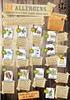
3 Food allergy is a serious issue What can you do? Take customer requests about allergies seriously. Everyone from the manager through to the food preparation and food service staff needs to be aware of the risks food allergies pose, and be clear on how to identify and manage them. What is a food allergy? What foods are most allergenic? A food allergy is an immune system response to a food protein that the body mistakenly believes is harmful. It is not the result of food contaminated by a toxin. There is no cure for a food allergy. Avoidance is the only way to prevent a reaction. Nine foods cause around 90% of food allergic reactions. They are: peanuts, tree nuts (eg almonds, cashews), eggs, milk, fish, crustacean (shellfish eg prawns, lobster), sesame, soy and wheat. Manufacturers must, by law, declare the first eight of these, and their products, in the ingredient lists on labels. A food allergy is not the same as food intolerance. Food intolerance is the inability to properly digest or fully process certain foods. The most common intolerances include lactose, gluten, yeast and sulphite. Wheat and wheat products containing gluten must be declared. Although not legally required, it is also useful to know when gluten-free wheat is present, as it is another common allergen. Most fatal allergic reactions are triggered by peanut. What are the symptoms? The symptoms of a food allergy vary from person to person. A severe allergic reaction can happen very quickly after eating. TREENUT TREENUT MILK TREENUT MILK MILK TREENUT Symptoms can include: hives, swelling of the lips, face and eyes, abdominal pain, vomiting, swelling of the tongue, breathing difficulty, dizziness or collapse. Some symptoms can be fatal. Who is affected? In Australia, one in 10 children** under the age of 5 years and an increasing number of adults have food allergies. Australia has one of the highest allergy rates in the world, and the problem is growing. ** Osborne et al. Prevalence of challenge-proven IgE-mediated food allergy using population-based sampling and predetermined challenge criteria in infants. J Allergy Clin Immunolol 2011; 127:

4 Every staff member contributes to Requirements of the Food Standards Code The eight most common food allergens: peanut tree nut egg milk fish crustacean sesame soy must be declared on food labels of packaged foods. Gluten and sulphites must also be declared on food labels of packaged foods. Consumers have a legal right to receive, on request, written or verbal information on allergen content when buying takeaway foods or eating out. Food businesses breach the code if: accurate information is not on a label or is not given by staff selling unpackaged food made at the premises when a customer asks for it, or an allergen is found in a food that was specifically requested not to contain that allergen. Management Good training and good systems are critical: Develop a process for preparing foods for customers with allergies and ensure it is followed. Train your staff so they understand their obligation to declare certain allergens and other substances in food if the customer asks. Only use ingredients that are clearly and correctly labelled. Ask your suppliers about their allergen management policy and for a Product Information Form (PIF). Establish clear procedures for rework. Consider providing allergen information on your menu to help customers easily determine what foods they should avoid. menu CHEF S SPECIALS Beef Noodle Stir Fry (contains egg, wheat, gluten) Pesto fish kebabs (contains shrimp paste, cashews, traces of peanuts) Walnut chicken salad with honey mustard dressing (contains walnut, milk) 4

5 food safety Food preparation When preparing a meal for someone with an allergy: Advise all kitchen staff that an allergen-free meal is being prepared. Avoid cross contamination at all times from the time the food arrives at the business to when it is served to a customer. Store food safely in clearly labelled containers. Keep surfaces, utensils and hands clean. Do not substitute or add ingredients if you are not sure what the replacement product contains. Check that no high-risk garnishes have been added to the plate. Know your ingredients. Always read the labels. Remember that heating and cooling food does not destroy allergens. Food service When a customer advises that he or she has a food allergy: Provide the customer with the information they need to make an informed choice. Ensure you are very clear on what foods are involved and answer honestly. You cannot guarantee allergen free food, but you can make the food you serve safer. If you are unsure of the customer s question, say so. Never guess it could trigger a life threatening emergency. Write the customer s request clearly on the order docket and also talk to the kitchen staff about it. Take care that no food or liquid spills onto the allergen free meal from another plate. Tell the customer what you have done to reduce the risk of an allergen being present in the food item. It is the customer s responsibility to advise service staff that they have a food allergy. 5

6 Avoid Cross contamination Cross contamination occurs when food containing allergens comes into contact with food that does not. Examples might include: A food handler using the same cutting board to cut a peanut butter sandwich, and then a ham sandwich A baker making muffins that contain eggs, then using the same unwashed mixer to mix a dough without eggs A chef preparing cooked prawns and then cutting lettuce without first washing hands thoroughly What to do if a customer has an allergic reaction Call 000 While waiting for the ambulance to arrive Lay person flat, do not stand or walk. If breathing is difficult allow to sit. Follow customer s Action Plan for Anaphylaxis (if they have one) and administer adrenaline autoinjector (EpiPen or Anapen ) as per instructions on the Action Plan. i 6

7 Allergy awareness is good for business Attending to a customer s allergy requests is not only your legal obligation, it can help build customer loyalty and be good for business. Here are some examples: Good customer experience A customer calls ahead to an Italian restaurant to advise them of his milk allergy. The waitress notes his request, his food allergy and his booking time. She says she will speak with the chef and call him back if there is a problem. When the family arrives at the restaurant, the customer tells the waitress he is the person with the milk allergy. He orders plain steamed vegetables, boiled pasta (without butter) and fish of the day. The waitress discusses the order with the chef and returns with a packet of pasta for the customer to check. He approves the ingredients and asks for the fish to be grilled on a piece of foil to help prevent cross contamination. The waitress tells the man the chef is cooking his food separately with clean utensils including a clean knife and cutting board. She writes MILK ALLERGY on his final order and takes it to the chef. The chef reviews the order, and thinking the meal seems a bit bland, heads to the table to ask the customer if he would like chilli sauce on the side. He accepts the offer. When delivering the meal, the waitress explains what the chef has done to reduce risk. When dessert is offered, the customer is told fruit is the only choice available to him. Bad customer experience A woman with a peanut allergy discovers that a Peking Duck dish she ordered has the meat lying on a bed of peanuts. This is despite being assured by a waiter earlier that the dish was peanut free. After complaining, the meal is taken away and returned. The woman sees no peanuts and starts eating the meal. After a few mouthfuls, a friend suggests she check the bottom of her plate in case the peanuts were simply scraped off. The woman finds peanut crumbs at the base of her meal. Fearing she is about to have an allergic reaction, the woman reaches for her adrenaline autoinjector. 7

8 Allergy aware checklist Here s a handy checklist you can tear out and place on your workplace notice board or laminate for your kitchen: Know your products Only accept correctly labelled foods. Check all ingredients even in sauces, spices, garnish, oils, dressings etc for allergens. Avoid ingredient substitution. Educate your staff Train and test your staff regularly in food safety, hygiene and allergen awareness. Teach staff of their obligation to declare certain allergens. Display allergy aware posters. Ensure good preparation and hygiene practices Always double check the ingredients with the chef. Handle food safely. Start fresh for meals that must be allergen free. Clean and sanitise work surfaces, utensils and other food-contact items between foods. Even trace amounts can be harmful. Store food safely. Have a dedicated area for preparing allergen free meals (be aware that food that is safe for one person with a food allergy may be unsafe for another person with food allergy). Whenever possible, prepare foods for people with food allergy first. 4 Communicate with your customers Take customer requests about allergens seriously. Listen carefully. Give customers accurate information about the content of meals if they ask. Have a specific protocol to follow if a customer says they are allergic. Place the name of known allergens next to menu items. For more detailed information Purchase Anaphylaxis Australia s Food Service Kit and allergy aware posters, available at: NSW Food Authority Anaphylaxis Australia

Catering Guide to Severe Food Allergies
 Catering Guide to Severe Food Allergies Allergic reactions can occasionally be life-threatening and people who know they are at risk must always remain vigilant when food is around. The most common dietary
Advice for caterers on allergy and intolerance
 Advice for caterers on allergy and intolerance Also see: Allergy UK Deepdene House 30 Bellgrove Road Welling KENT DA16 3PY Tel. 01322 619864 E-mail: [email protected] Website: www.allergyfoundation.com
Food Allergies DEFINITIONS: EIGHT MAJOR FOOD ALLERGENS. Definition of a Food Allergy:
 DEFINITIONS: Definition of a Food Allergy: Food Allergies Immune system response to a food that the body mistakenly thinks is harmful. Upon deciding a particular food is harmful, the immune system creates
Lesson 3 Managing Food Allergies
 Lesson 3 Managing Food Allergies Lesson at a Glance Time Allowed (1 hour) 5 minutes Introduction to Managing Food Allergies 15 minutes Objective 1: Creating a Food Allergy Policy Topic Activity Materials
RELEVANT HACCP CHARTS: All HACCP Charts
 4.31(a) RELEVANT HACCP CHARTS: All HACCP Charts ALLERGEN MANAGEMENT HOUSE RULES Why is it important to manage allergens? Some people have a sensitivity to certain foods that non-sufferers would find harmless.
ALLERGY AWARENESS POLICY
 ALLERGY AWARENESS POLICY 1. RATIONALE In most schools some children are anaphylactic. St Hilda s is committed to providing a safe and healthy environment for students. We have adopted an allergy awareness
Food allergy /anaphylaxis
 Food allergy /anaphylaxis A food allergy or hypersensitivity is an abnormal response to a food that is triggered by the immune system. Allergic reactions are often mild, but can be sometimes very dangerous.
Antioch College Policy on Food Allergies
 Antioch College Policy on Food Allergies Purpose: It is the purpose of this document to inform students and staff the procedures used by the College to identify and provide services for students with allergies
Preventing Cross-Contamination
 Preventing Cross-Contamination After completing this chapter, you will be able to identify: Food that may have been contaminated during receiving How to prevent cross-contamination when storing, prepping,
Food Allergen Management Training
 Food Allergen Management Training Training Overview Food Allergens What they are and what they do? Allergen Management in Manufacture Making food safe for all consumers Training and Education Raising awareness
Warroad Public Schools Allergy/Anaphylaxis Management Guidelines
 Warroad Public Schools Allergy/Anaphylaxis Management Guidelines Background Food allergies are on the rise. According to data included in CDC s guidelines, nearly 1 in 5 students (16-18 percent of children)
General food hygiene rules
 General food hygiene rules Why food hygiene is important? Good food hygiene is essential to ensure that the food you and your family eats is safe. Poor hygiene procedures in your home can put you at risk.
R 5331 MANAGEMENT OF LIFE-THREATENING ALLERGIES IN SCHOOLS
 R 5331/page 1 of 8 A. Definitions R 5331 MANAGEMENT OF LIFE-THREATENING ALLERGIES IN SCHOOLS 1. Anaphylaxis - A serious allergic reaction that is rapid in onset and may cause death. Anaphylaxis is a rapid,
Aim To identify the signs and symptoms of anaphylaxis and provide emergency care.
 Community Health Policies, Procedures and Guidelines Procedures Aim To identify the signs and symptoms of anaphylaxis and provide emergency care. Equipment Adrenaline autoinjectors: o EpiPen Jr or Anapen
Food Allergies and. Food allergies and the immune system. Food allergies and the immune system
 Food Allergies and Intolerances Food allergies and the immune system Food allergies and True allergies involve an adverse reaction/ response by the body s immune system to a usually harmless substance
Food Allergies In Our Schools
 Food Allergies In Our Schools Shenae M. Rowe, RDN Registered Dietitian Nutritionist Food & Nutrition Director Warrick County School Corporation Perception by public: 20 25% Reality: Infants/Children: 5.1%
Food Safety Guidance for Farmers Markets
 Food Safety Guidance for Farmers Markets Anyone selling food or drink from a market stall must comply with food hygiene legislation. Foods which are categorised as high risk include cooked meats, fish
Anaphylaxis and Epinephrine Auto-Injector
 Lesson Guide Anaphylaxis and Epinephrine Auto-Injector Lesson Length: 45 minutes Guidance for the Instructor To complete this lesson and meet the lesson objectives, you must: Welcome participants and explain
Anaphylaxis - severe allergic reaction
 Anaphylaxis - severe allergic reaction Summary Anaphylaxis is the most severe allergic reaction and is a medical emergency. An injection of adrenaline is needed to treat the allergic reaction. The most
Food Allergies and Intolerances. Nan Jensen RD, LD/N Pinellas County Extension
 Food Allergies and Intolerances Nan Jensen RD, LD/N Pinellas County Extension Overview of Presentation Statistics What is food allergy? What foods causes allergies? What is a food intolerance? Possible
Managing Food Allergies in Schools. USDA Food and Nutrition Service Agency Samia Hamdan, MPH, RD Julie Skolmowski, MPH, RD Laura Walter, MPH, RD
 Managing Food Allergies in Schools USDA Food and Nutrition Service Agency Samia Hamdan, MPH, RD Julie Skolmowski, MPH, RD Laura Walter, MPH, RD Today s Roadmap Overview of food allergies Accommodating
5420.1-R ALLERGY/ANAPHYLAXIS REGULATION. Definitions. Allergen: A substance that triggers an allergic reaction.
 ALLERGY/ANAPHYLAXIS REGULATION Definitions Allergen: A substance that triggers an allergic reaction. Allergies: An exaggerated response to a substance or condition produced by the release of histamine
Allergen information for loose foods
 Sandwich Sandwich Allergen information for loose foods Advice on the new Food Information Regulations for small and medium food businesses Soup Curry and rice Fish and chips Butter Tuna spread Soup Curry
Advocating for Undesignated Stock Epinephrine in Your School
 TOOLKIT Advocating for Undesignated Stock Epinephrine in Your School Why Undesignated Stock Epinephrine Matters in K 12 Schools Access to epinephrine auto injectors (EAIs) that have not been prescribed
Policy: Anaphylaxis PURPOSE. Rationale. Procedure
 Policy: Rev Oct 14 PURPOSE (PCCC) is committed to the safety, wellbeing and inclusion of all children enrolled in its services. PCCC will ensure all staff involved in the delivery of services to children
This quick guide provides a summary of food safety and labelling advice for small scale home producers of chutneys, pickles, flavoured oils and jams.
 This quick guide provides a summary of food safety and labelling advice for small scale home producers of chutneys, pickles, flavoured oils and jams. General Food Safety Advice Registration Food business
Peanut and Tree Nut Allergy
 Peanut and Tree Nut Allergy Allergy to peanut and tree nuts is the most common food allergy in adults and children. However, since most children start eating other foods first, allergies to other foods
Section I New Policy with copy of updated Epipen Order, and protocol. Section II Anaphylaxis Management Algorithm
 Anaphylaxis Policy Contents Section I New Policy with copy of updated Epipen Order, and protocol Section II Anaphylaxis Management Algorithm Section III Demonstration of Epipen use for all staff members
Food allergy and intolerance
 Food allergy and intolerance Summary A food allergy occurs when the immune system reacts to a harmless food. Food intolerance occurs when the body has a chemical reaction to eating a particular food or
5141.25(a) Students with Special Health Care Needs Food Allergy Management Overview and Rationale
 5141.25(a) Students with Special Health Care Needs Food Allergy Management Overview and Rationale Food allergies are presenting increasing challenges for schools. The life-threatening nature of these allergens
State of Rhode Island and Providence Plantations DEPARTMENT OF EDUCATION Shepard Building 255 Westminster Street Providence, Rhode Island 02903-3400
 8 1 State of Rhode Island and Providence Plantations DEPARTMENT OF EDUCATION Shepard Building 255 Westminster Street Providence, Rhode Island 02903-3400 Peter McWalters Commissioner To: Superintendent,
TITLE II FOOD ALLERGEN LABELING AND CONSUMER PROTECTION
 118 STAT. 905 (T) Section 108(b)(3) of Public Law 90 399 is amended by striking section 201(w) as added by this Act and inserting section 201(v). (6) REGULATIONS. On the date of enactment of this Act,
Weaning learning to like new tastes and textures
 Complementary feeding or weaning is introducing solid foods in addition to your baby s milk feeds. Babies develop at different rates so begin when your baby is ready by six months, but not before four
FOOD POISONING. Information Leaflet. Your Health. Our Priority. Infection Prevention Stepping Hill Hospital
 FOOD POISONING Information Leaflet Your Health. Our Priority. Page 2 of 5 What is Food Poisoning? Food poisoning is an illness that occurs after eating or drinking anything that is contaminated. Usually
Anaphylaxis. Exceptional healthcare, personally delivered
 Anaphylaxis Exceptional healthcare, personally delivered 2 Introduction Anaphylaxis (also known as anaphylactic shock) is a severe, potentially fatal allergic reaction. Anaphylaxis is caused by your body
Get Trained. A Program for School Nurses to Train School Staff in Epinephrine Administration
 A Program for School Nurses to Train School Staff in Epinephrine Administration The Get Trained School Nursing Program was created through an unrestricted grant from Mylan Specialty. The Program is intended
Food Allergies Policy
 Food Allergies Policy Policy 1. Wadham College is committed to reducing the risk to members of the College community and visitors with regard to the provision of food and the consumption of allergens in
ANAPHYLAXIS GUIDELINES FOR EARLY CHILDHOOD EDUCATION AND CARE SERVICES
 August 2014 ANAPHYLAXIS GUIDELINES FOR EARLY CHILDHOOD EDUCATION AND CARE SERVICES NSW DEPARTMENT OF EDUCATION AND COMMUNITIES Foreword These guidelines for early childhood education and care services
Allergy/Anaphylaxis Standard Operating Procedure (S.O.P.) Universal Food Precautions
 Allergy/Anaphylaxis Standard Operating Procedure (S.O.P.) Universal Food Precautions INTRODUCTION Food allergies are a growing food safety and public health concern that affect an estimated 4% 6% of children
Cooking Merit Badge Workbook
 Merit Badge Workbook This workbook can help you but you still need to read the merit badge pamphlet. This Workbook can help you organize your thoughts as you prepare to meet with your merit badge counselor.
Ember Inns Festive Menu FOH Allergen Guide V1. (Published 09.10.2015) CONCERNED ABOUT ALLERGENS?
 CONCERNED ABOUT ALLERGENS? This guide is provided to enable you to make your own decision on menu choice. We cannot recommend or tell you what is suitable for you to eat. The descriptions on our menus
Food Allergen Fundamentals
 Food Allergen Fundamentals Introduction to allergen principles for the food industry January 2016 The Allergen Bureau Ltd ACN 162 786 389 This presentation gives a general overview of food allergens and
Annual Epinephrine Training Program for Connecticut s Unlicensed School Personnel
 Annual Epinephrine Training Program for Connecticut s Unlicensed School Personnel Developed by the Connecticut State Departments of Education and Public Health in consultation with the Connecticut School
Anaphylaxis Management. Pic 1 Severe allergic reaction which led to anaphylaxis
 1 Anaphylaxis Management Pic 1 Severe allergic reaction which led to anaphylaxis What is an allergic reaction? 2 An allergy is when someone has a reaction to something (usually a protein) which is either
Glossary of Terms. Section Glossary. of Terms
 Glossary of Terms Section Glossary of Terms GLOSSARY Acute: Symptoms which can occur suddenly with a short and severe course. Adrenaclick /Generic Adrenaclick : a single use epinephrine auto-injector that
Epinephrine Administration Training for Unlicensed School Personnel
 Epinephrine Administration Training for Unlicensed School Personnel Management of Life-Threatening Allergies in the School Setting Dover and Sherborn Schools EpiPen Administration This program is designed
Why does my child need to follow a milk and dairy free diet?
 Milk and dairy free diet Why does my child need to follow a milk and dairy free diet? Your child has an allergy to milk and dairy products, and their ingredients. An allergic reaction to milk and dairy
Check that you have the correct paper. Please complete the information above. You do not need to use complete sentences for the reading assessment.
 Learner name Learner registration number Learner signature Centre Assessment date Functional Skills English Assessment Reading Level 1 NOCN USE ONLY Question Mark 1 2 3 4 5 6 7 Total Instructions to candidates
On The Border Allergen Information
 On The Border Allergen Information At On the Border, a top priority is always the health and safety of our guests. As part of this ongoing commitment, we provide the most current allergen menu information
How clean is your kitchen?
 Learning Objectives - There can be harmful microbes found on raw food, especially raw meat - The best way to destroy harmful microbes on meat is to cook thoroughly - Always wash your hands after touching
severe allergic reactions
 severe allergic reactions Interim Anaphylaxis Guidelines for Queensland Schools Queensland the Smart State Acknowledgments Education Queensland wishes to thank and acknowledge the contribution of the following
How To Know If An Allergen Is In Food
 Food Allergen Information Sheet A food allergen is defined as product or ingredient containing certain proteins that can potentially cause severe (occasionally fatal) reactions in a food allergic person.
Components of an Effective Allergen Control Plan A FRAMEWORK FOR FOOD PROCESSORS
 Components of an Effective Allergen Control Plan A FRAMEWORK FOR FOOD PROCESSORS An Allergen Control Plan protects consumers and your company. When a food safety issue due to mishandling of allergenic
Animal dander: Such as the hair and secretions of pets like cats and dogs.
 Allergies Allergic disorders are very common in Australia with approximately 4.1 million Australians¹ having at least one allergy. There are many different types of allergies, presenting with a variety
Healthy Foods for my School
 yum, yum, yum, yum, yum, yum, yum, yum, yum, yum, yum, yum, yum, yum, yum, yum, yum, yum, yum, yum, yum, Healthy Foods for my School Nutrition Standards for Saskatchewan Schools Schools are an ideal place
Food Allergies. Food Allergy statistics: True Prevalence of Food Allergy
 Food Allergies Food Allergies Food Allergy statistics: 11 million Americans, including adults 6% of US children 2% of adults have shellfish allergy True Prevalence of Food Allergy Patient/Parent Self Report
Anaphylaxis: a severe, life threatening allergic reaction usually involving swelling, trouble breathing, and can progress to shock
 Allergy is a condition in which the immune system causes sneezing, itching, rashes, and wheezing, or sometimes even life-threatening allergic reactions. The more you know about allergies, the better prepared
NULEAN SCRUMPTIOUS FOOD RECIPES
 NULEAN SCRUMPTIOUS FOOD RECIPES Here are some addition ideas for meals while doing the NuLean Cleanse. A key to choosing foods for this program is to go back to basics. Buy items with the least amount
Anaphylaxis before and after the emergency
 Anaphylaxis before and after the emergency Mike Levin Paediatric Asthma and Allergy Division University of Cape Town Red Cross Hospital [email protected] http://www.scah.uct.ac.za/scah/clinicalservices/medical/allergy
SQFI Guidance RE: 2.8.3 Allergen Cleaning and Sanitation Practices
 1. INTRODUCTION SQFI Guidance The SQF Institute provides updates to expand on the meaning of the SQF Code, and provide further guidance on the important issues addressed in the SQF Code. The management
Wayzata Public Schools Health Office Allergy/Anaphylaxis Management Guidelines
 Wayzata Public Schools Health Office Allergy/Anaphylaxis Management Guidelines Family s Responsibility Prior to the start of school year, notifies school Health Office of the child s allergies. Works with
2016 Bojangles International, LLC
 from fat Saturated Trans BISCUITS Bacon, & Cheese Biscuit 1 460 250 28 12 0 150 38 1270 4 14 2 x x x x Cajun Filet Biscuit 1 570 270 30 10 0 40 54 1310 3 23 3 x x x Cheddar Bo Biscuit 1 363 183 20 10 0
Low Fat Diet after Cardiac Surgery With or Without Chyle Leak
 Low Fat Diet after Cardiac Surgery With or Without Chyle Leak What is chyle? Chyle (sounds like kyle) is a milky white fluid that contains protein, fat, cholesterol, lymphocytes, and electrolytes. It is
DIET AND ECZEMA IN CHILDREN
 DIET AND ECZEMA IN CHILDREN It has been known for many years that what children eat may have an effect on their eczema. There has been an ever-increasing interest in the part that diet plays in the development
See, Think, and Act! Anaphylaxis (Severe Allergies)
 See, Think, and Act! Anaphylaxis (Severe Allergies) California After School Resource Center (CASRC) Administered for the California Department of Education (C.D.E.) Hello. My name is Robyn Sakamoto. Welcome
Recent Developments in GMP s & HACCP
 Recent Developments in GMP s & HACCP Good Manufacturing Practices Modern GMP s (mgmp s) Multiple updates, including: Strengthening ready-to-eat (RTE) controls Chemical Control Program Traceability Recall
Understanding Foodborne Illness (Food Poisoning)
 Understanding Foodborne Illness (Food Poisoning) 9 Costs of Foodborne Illness (Food Poisoning) possible law suits from customers who are ill There have been numerous cases where restaurants have been sued
ABU DHABI FOOD CONTROL AUTHORITY. Food Poisoning. www.facebook.com/adfca1. www.twitter.com/adfca. www.youtube.com/adfcamedia
 Food Poisoning جهاز أبوظبي للرقابة الغذائية ABU DHABI FOOD CONTROL AUTHORITY Food Poisoning www.facebook.com/adfca1 www.twitter.com/adfca www.youtube.com/adfcamedia Creating awareness among the consumers
Welcoming Guests With Food Allergies
 Welcoming Guests With Food Allergies A comprehensive program for training staff to safely prepare and serve food to guests who have food allergies The Food Allergy & Anaphylaxis Network 11781 Lee Jackson
Bringing you the best of the Far East
 Bringing you the best of the Far East Sampans restaurant brings you the very best Pan-Asian cuisine with a collection of dishes to suit all tastes. We also have a great selection of desserts and teas that
ALLERGIC REACTIONS. Mary Horvath RN, CSN. M.Ed. Certified School Nurse Bridge Valley Elementary Doyle Elementary
 ALLERGIC REACTIONS Mary Horvath RN, CSN. M.Ed. Certified School Nurse Bridge Valley Elementary Doyle Elementary STATISTICS Allergic reactions affect up to 15 million people in the United States, including
It is recommended that auto-injector device trainers of each type be available for practice
 NASN Get Trained- PA Edition Script A Program for School Nurses to Train School Staff in Epinephrine Administration The Get Trained School Nursing Program was created through an unrestricted grant from
WEIGHT GAINER S NUTRITION GUIDE
 WEIGHT GAINER S NUTRITION GUIDE Gaining weight takes dedication! You must eat these meals everyday to stay on track. Included in this pack are the meal plan, supplement guide, fast food guide, and NCAA
Managing severe allergies
 Managing severe allergies June 2011 Providing a safe, supportive and nurturing environment is a goal of Chesterfield County Public Schools. This includes preventing and managing severe allergic reactions
Town of Needham Trans Fat Ban
 Town of Needham Trans Fat Ban Presented by: Jen Tuttelman, MS, RD, LDN Tara Gurge, R.S., C.E.H.T., M.S. The Needham Health Department June 5, 2009 9:00-10:00 am Agenda Welcome and Introductions Trans Fat
The symptoms of HIV infection
 2 The symptoms of HIV infection Saleema s story HIV infection and HIV disease The first weeks of HIV infection The quiet stage of HIV infection The beginning of HIV disease Answering Saleema s questions
4. HOUSE RULES TEMPERATURE CONTROL
 4. HOUSE RULES TEMPERATURE CONTROL The House Rules Section contains 9 sub-sections each of which covers a particular subject of food safety management. Every House Rule sub-section begins with guidance
Food Allergy Management Plan
 Food Allergy Management Plan CARE OF THE STUDENT WITH FOOD ALLERGIES AT RISK FOR ANAPHYLAXIS PURPOSE: To provide guidance in managing students with food allergies at risk for anaphylaxis at school. BACKGROUND:
NUTRITION & ALLERGEN INFORMATION
 Total Fat Saturated Fat Trans Fat SIDE Chow Mein 9.4 oz 490 200 22 4 0 0 1060 65 4 8 13 Fried Rice 9.3 oz 470 170 19 3.5 0 150 830 64 3 3 11 Steamed Brown Rice 10.5 oz 420 35 4 1 0 0 15 87 4 1 9 Steamed
Food Poisoning Prevention is Better than Cure
 Food Poisoning Prevention is Better than Cure 2008 24 minutes Teacher Notes: Anthony Evans B. Applied Science (Food Science & Technology) Grad. Dip Ed. (Post Primary) Master of Education (Workplace Education)
Saints Peter and Paul Primary School
 Allergy awareness and administration of Medication POLICY Saints Peter and Paul Catholic School is committed to developing each person in a nurturing community of respect and cooperation, built on faith
Food Allergy & Intolerance Guidance for the Catering Industry
 Food Allergy & Intolerance Guidance for the Catering Industry This booklet has been produced as part of the all island Food Safety Training Programme on Food Allergen Control which is sponsored by safefood
Allergen/Specialty Information
 Allergen/Specialty Information 1. Egg 2. Fish 3. Milk 4. Peanut 5. Shellfish 6. Soy 7. Tree Nuts 8. Wheat/ Gluten 9. Vegetarian 10. Vegan The health and safety of our guests are top priorities at Hacienda
IgE-mediated Food Allergies
 The image part with relationship ID rid13 was not found in the file. IgE-mediated Food Allergies Kirsi M. Järvinen-Seppo, MD, PhD Click to edit Presenter Name Dept. of Medicine, Division of Allergy, Asthma