
NORFOLK MINK PROJECT
|
|
|
- Conrad Russell
- 10 years ago
- Views:
Transcription


1 The number of mink killed this year is likely to be at least as high as in We believe that NORFOLK MINK PROJECT Annual Newsletter 1, January December STATISTICS Total Mink Killed 185 Rafts Deployed* 437 Traps Deployed* *By the end of the year 606 A New Year a Renewed Project This is the first of a new series of annual Newsletters to help keep those involved with the Project up to date with what has happened over the past year. The Project has changed but first, on behalf of the Project, we must say a huge thank you to all those who have been involved with the Mink Project over the years. The Project is only possible because of your commitment and financial support from our partners. The Project Steering Group has a new Chair in myself, also a volunteer. My background is a lifetime working in wildlife management, including 15 years as part of the scientific team behind the eradication of coypus from Britain. As some of you will know, The Norfolk Mink Project started in 2003; primarily to help halt the catastrophic decline in the water vole population caused by introduced American mink (Neovison vison). After an initial focus on the River Wensum, the Project was expanded to the Broads and the River Nar. Now, using the experience gained, the Project has embarked on a new control strategy (it can be found at ). The aim is to reduce mink population densities to very low levels throughout the entire county. Funding for The Project comes from modest contributions from a range of bodies such as Norfolk County Council, the Environment Agency, The Water Management Alliance, the Broads Authority, the SITA Trust (through the levy on landfill) and work in one catchment is currently supported by the EU. The lead partner is currently Norfolk County Council, where the lead officer is Mike Sutton-Croft. Mike is supported by a Steering Group of key partners and wildlife management specialists. The expansion of the Project makes all trapping more effective by reducing immigration from un-trapped areas as well as improving protection for water voles. This is needed as their population has fallen by 90% since the 1970 s and possibly by 20% since Control of mink also provides important protection for vulnerable waterfowl and game interests. The expansion of the Project has meant we need to find new sources of funds and that search is ongoing. I hope you find this Newsletter interesting and my thanks again for all your support. Simon Baker Chair of the Norfolk Mink Project Steering Group

2 NORFOLK MINK PROJECT Annual Newsletter 2013 CATCHMENTS For control purposes, Norfolk has been divided into ten river catchments. Within these, monitoring for mink and trapping is undertaken by volunteers with support from 4 part time co-ordinators Paul Gambling, Stephen Mace, Rory Hart and Penny Hemphill. The Catchments are: PROGRESS: The graph below shows the good progress that has been made in those Catchments where we have been trapping for some years. Mink kills per year fell with a steady trapping effort. 140 Number of mink killed annually, by catchment Wensum Yare Bure Nar Waveney

3 As you can see from the figure below, showing progress over the past 2 years, numbers of mink killed have risen in all catchments between 2012 and However, we have been very successful in maintaining the low population density in the Nar and the Wensum catchments. It is proving more challenging to reduce the population in the more extensive wetlands of the Yare, Bure and Waveney, although numbers are well down on pre trapping levels. We anticipate that our new strategy of developing trapping across the whole county should help reduce immigration from un-trapped into previously trapped areas. To help highlight the relative mink status in each catchment we have introduced a Traffic Light status for catchments. We currently have 4 catchments at red, 3 at amber and 2 at green. We are not yet doing sufficient trapping within the Thet catchment to feel confident that we can assess it properly, although we know of 1 mink killed there in Catchment status is shown at the top of the Catchment Reports that follow. Numbers of mink killed annually, by catchment, since 2012 Waveney Thet Little Ouse Great Ouse Wissey & Cut-Off Channel Nar North Norfolk Rivers Yare Wensum Bure CATCHMENT REPORTS BURE AND YARE Stephen Mace [email protected] MINK KILL & STATUS 2013 Bure 25 Yare 30 Bure There were a total of twenty five mink caught in the Bure catchment in The central

4 and eastern parts of the catchment were the most active with hot spots at Hickling, Martham, Ingham, Catfield and around Salhouse. Perhaps the most notable was Hickling where ten mink were caught within a few weeks. Please keep vigilant, especially anywhere close to the broads, since the habitat is ideal for mink. Also many areas are hard to access, which may result in repopulation that can go unnoticed for a time. North and west of Aylsham could do with a little more coverage, so if you know anyone who might be interested, please contact me. Mink capture at Martham (S Mace) Capture using Mink Police (P Gambling) see Mike Sutton-Croft s end-piece Yare A total of thirty mink were caught in the Yare catchment in 2013, with several sightings helping to pinpoint the populations. The lower Yare has been very quiet compared to the upper Yare, which has seen most of the activity for this catchment. Large numbers of mink were caught from Bawburgh Lakes to Marlingford and a few from Thorpe to Strumpshaw. Fewer mink than before are now upstream at Barford and Colton. We are continuing to expand trapping effort in the upper Yare, with good coverage now established from Cringleford to Barnham Broom. We are looking for people to monitor rafts anywhere upstream from Coston to Shipdham, Wramplingham to Wymondham, and from Loddon to Wymondham so please contact us if you are, or know anyone who might be, interested. The River Tas has seen the very high mink numbers of five years ago drop in 2013 to the point where only one sighting has been reported. This may be linked to the loss of two key monitoring sites but new and existing sites have not yet detected any mink so this appears to be a genuine reduction in numbers. By Stephen Mace NORTH NORFOLK RIVERS Rory Hart [email protected] MINK KILL & STATUS 2013 North Norfolk 4 Rivers in the north of the county, although rather smaller than the major catchments in the county, do support important populations of wildlife that can be threatened by the presence of mink. In January 2013 the rivers that flow through north Norfolk were added to the existing areas where monitoring/trapping was already taking place. Over the year, a network of 20 organisations and land owners have agreed to act as volunteer monitors using 30 sets of equipment supplied by the project. The range of volunteers includes conservation organisations, sporting estates and farmers. A further group of 20 individuals have also been recruited in an information gathering role, whereby they specifically request any mink

5 news from their contacts and report information to me monthly. Volunteers have reported that mink activity in the region was rare but their motivation to support the project has been very high. We have used conventional raft type equipment on larger water bodies but land based tunnel systems have also been deployed where streams are smaller and rafts less appropriate. Monitoring results have very much supported the assumption that mink are infrequent or more probably very localised in the north of the county. No conclusive footprints or sighting of mink have been reported although the habitat does appear highly suitable for American mink so the low abundance is interesting. The importance of game shooting locally and its associated history of predator control may explain why mink populations have not developed as widely as elsewhere. The winter period has been very trying for many of the coastal monitor sites with severe storms changing habitat from fresh to salt water, washing away and smashing equipment. The project is still trying to assess the impact of the severe weather and re-supply materials as necessary. Over the next months the project will hope to develop more information by encouraging deployment of the live catch traps into the monitoring rafts where daily checking routine is achievable and developing links with fishery managers who have a particular interest in looking for mink. Volunteers will also be asked to record the presence or absence of water vole on their sites because the two species rarely co-exist. WENSUM, NAR AND WISSEY Paul Gambling [email protected] MINK KILL & STATUS 2013 Wensum 8 Nar 2 Wissey 26 Support for the project areas on the Wensum and Nar was on hold for a few months at the beginning of 2013, while waiting for further funding. This meant a hiatus in installing new and replacing old rafts and traps but trapping and monitoring continued at lower levels across most of the areas. Severe floods in the winter of resulted in the first significant damage to and loss of rafts since the project began, many of which have now been replaced. Wensum Overall, mink are largely under control on the Wensum but there have been occasional incursions throughout the catchment especially in the Fakenham area, North Elmham, Lyng, Lenwade and there is a regular presence at Costessey. The River Tud appears to be mink free at the moment with no sightings reported in recent years. However, there may be more mink than we are aware of, since monitoring has been much reduced in recent years, largely due to the very low numbers of mink caught and an understandable drop in enthusiasm. There is now little or no monitoring upstream of Sculthorpe, or on the Wendling Beck, Blackwater (Reepham area), Whitewater (Gressenhall). However, given the pattern in other areas it is very likely that a few mink have made it back in and we are looking to recruit anyone in those areas with a renewed interest in monitoring for a year or more using rafts.

6 Nar The upper reaches of the River Nar have been largely mink free now for several years with only very occasional incursions, mainly detected and dealt with around West Acre. It s not clear where these mink are entering the river system given the absence of any detections upstream and downstream, but mink are capable of travelling long distances away from water Wissey The project started in 2012 with a survey of water voles in the River Wissey catchment, in order to establish where water voles were present and in what numbers. Since water voles are highly susceptible to predation by mink, the survey provides a guide both to where mink might be, and to where their numbers are low enough not to impact significantly the numbers of water voles and other vulnerable wildlife. Mink and otter signs were also recorded and showed the presence of mink in several areas where they were not expected. The survey was funded by the EU RINSE project and there is a summary report in Norfolk Bird and Mammal Report A number of people have trapped mink in the past in the Wissey area, though understandably many stopped when the number of mink captures dwindled to near zero. Unfortunately, reports of mink have started to increase again in recent years and the survey suggested widespread mink presence, so catchment-wide mink monitoring and trapping started in Jan 2013, funded by the Environment Agency. Summary of mink presence by local area, from the mouth of the Wissey to its source, since the start of the project: River Wissey: Fordham Fen -suspected. Hilgay - present and being trapped. Wissington - suspected. Stoke Ferry - seen but not caught yet. Whittington - unknown. Northwold & Didlington - one trapped, no recent signs. Mundford - detected in 2012 but not caught. STANTA - present and being trapped. Bodney-Great Cressingham - unknown. South & North Pickenham - not detected. Necton-Holme Hale-Bradenham - thought to be absent but no monitoring yet. Tributaries: Methwold Lode - not detected. Barton Bendish-Boughton - several trapped, no recent signs. River Gadder - thought to be absent currently. Watton Brook: Little Cressingham - unknown. Watton - unknown. Thompson Stream - present and being trapped. Cut-Off Channel: Fordham - present but no trappers. Wretton - unknown as no monitoring yet. Methwold Hythe - present and being trapped. Feltwell - present and being trapped. Fens: Southery - unknown. Methwold Severals & Fens - present and being trapped. Feltwell- Hockwold area - present and being trapped. Mink scat (dropping) by the side of a pond, with an oak leaf for scale.

7 WAVENEY AND LITTLE OUSE Penny Hemphill MINK KILL & STATUS 2013 Waveney 66 Little Ouse 23 Control of mink along most of the River Waveney and the Little Ouse is carried out by the Suffolk Wildlife Trust working in collaboration with the Norfolk Mink Project. As mink are no respecters of county boundaries close co-operation between neighbouring counties is essential. Waveney There are currently 44 trappers using 65 mink rafts and traps along the Waveney. The numbers vary as some trappers leave the project and new trappers join the project during the year. It would appear that upstream of Harleston it is relatively free of mink, with no mink trapped for the last two years. The mink were trapped from Mendham downstream to Oulton Marshes where one trapper caught 17 mink. You will see from the first chart in this newsletter that it seemed we were getting on top of the mink numbers, however in 2012 and 2013 trapping rates increased once more so please keep trapping! Little Ouse Trapping rates along this river has been up and down over the years with an increase in 2013 with 23 mink trapped. There are a total of 14 trappers using 15 rafts some trappers along this river are using their own trapping equipment and supplying us with their results. This river is targeted for an increase in mink control in 2014 especially along the 11km stretch owned by the Forestry Commission. Plans for 2014 Mike Sutton Croft We are planning to further expand our coverage of Norfolk by starting to trap in the Great Ouse Catchment during We are also planning more trapping along the Waveney and Lower Yare, thanks to support from the Waveney, Lower Yare and Lowthingland IDB, which has recently joined those organisations supporting us. The Project is also making use of technology where it can support our work. The coordinators are trialling Mink Police, devices attached to traps that allow them to remotely monitor any captures via a mobile phone. So far they seem a promising addition to our toolkit but, as usual, the challenge will be to find the funds to purchase some units. To help us co-ordinate our data recording more effectively we are developing a Cloud database, with help from EU funding via the RINSE Project (Reducing the Impacts of Nonnative By Penny Species Hemphill in Europe). This will allow our co-ordinators to enter their data remotely and make it easier to analyse. We also hope to set up a Project website over the coming year to help us keep you all better informed on what is going on in the Project and to provide a source of reference material. We are currently looking for a suitable volunteer to help us get it up and running!


8 Whilst we concentrate on Norfolk, we also liaise closely with others working on mink control in the east and are members of the Eastern Region Mink Control Group. This helps us share best practice and, by encouraging control over a wide area, helps reduce immigration from areas outside the county. The map above shows the extent of mink trapping across the Eastern Region and the distribution of trapping in Norfolk before we started our new Strategy. Finally, a sincere thank you from all of us to our funders, supporters and those who carry out the trapping, for enabling us to protect water voles, wildlife and game interests across the county. Mike Sutton-Croft Project Leader, Norfolk Non-Native Species Initiative

River Wensum Restoration Strategy Swanton Morley Restoration Scheme Reach 14a
 River Wensum Restoration Strategy Swanton Morley Restoration Scheme Reach 14a At a glance River restoration benefits: Improved planform, channel cross-section, flow variation and sediment process. Improved
Chapter 3. Alternatives
 Chapter 3. Alternatives 3.1 Introduction Alternatives are different approaches designed to achieve the refuge purpose(s), vision, and the goals identified in the CCP while helping to fulfill the System
London Borough of Merton Local Flood Risk Management Strategy
 Local Flood Risk Management Strategy Summary 2014-2020 Introduction In response to the severe flooding across large parts of England and Wales in summer 2007, the Government has recently enacted the Flood
Aiding the Hydro-scheme development process. Web-links to useful information sources
 Aiding the Hydro-scheme development process. Web-links to useful information sources Web-pages are in bold. These pages aim at providing developers, land-owners, decision makers and advisors with a collation
MINUTES of a Public Meeting to consider Flooding issues in Shaw & Whitley held on Monday 6 th October 2014 at Shaw School Hall, Shaw at 7.
 MINUTES of a Public Meeting to consider Flooding issues in Shaw & Whitley held on Monday 6 th October 2014 at Shaw School Hall, Shaw at 7.00pm Present: Melksham Without Parish Council (MWPC) Cllr Richard
MIRDINEC - Management of the invasive Raccoon Dog (Nyctereutes procyonoides) in the north-european countries LIFE09 NAT/SE/000344
 MIRDINEC - Management of the invasive Raccoon Dog (Nyctereutes procyonoides) in the north-european countries LIFE09 NAT/SE/000344 Project description Environmental issues Beneficiaries Administrative data
FLOOD RISKS IN LONDON
 Environment Committee FLOOD RISKS IN LONDON Summary of findings April 2014 About this summary 2 This is a summary of the findings of the Environment Committee s investigation into flood risk. In January
Multiple Species Conservation Program County of San Diego. A Case Study in Environmental Planning & The Economic Value of Open Space
 Multiple Species Conservation Program County of San Diego A Case Study in Environmental Planning & The Economic Value of Open Space Amy M. Fox Land Use Law Case Study Autumn Semester, 1999 Multiple Species
Innovative Approaches in Flood Damage Reduction
 Innovative Approaches in Flood Damage Reduction Solutions for the Stormwater Management High Level Results 3D geospatial model of storm water management pond (GRCA, 2013) Enhanced understanding of storm
RESTORATION & REVITALIZATION
 RESTORATION & REVITALIZATION Legal preservation has not proved to be sufficient to preserve natural communities. Restoration activities are diverse and includes revitalization of natural communities which
Background Information: The Mamquam River Floodplain Restoration Project
 Background Information: The Mamquam River Floodplain Restoration Project The Mamquam River Floodplain Restoration project is being undertaken in partnership with the Squamish River Watershed Society, Fisheries
2012 Program Report. Agricultural Group Drainage Program
 2012 Program Report Agricultural Group Drainage Program Accomplishments: It was a successful year for the drainage program. We were able to complete two new projects and seven maintenance projects throughout
London Borough of Waltham Forest LOCAL FLOOD RISK MANAGEMENT STRATEGY. Summary Document
 LOCAL FLOOD RISK MANAGEMENT STRATEGY Summary Document October 2013 Local Flood Risk Management Strategy Summary 1 Introduction 2 Partner responsibilities 3 What do we know about flooding in the borough?
ENDANGERED AND THREATENED
 ENDANGERED AND THREATENED Understand how species in the Sonoran Desert Region may become endangered or threatened and what is being done to protect them. ARIZONA SCIENCE STANDARDS SC03-S4C3-03&04, SC08-S1C3-07,
WEED MANAGEMENT PLAN FOR. (NAME of PROPERTY or MANAGED AREA) (TOWN or COUNTY, STATE) (TIME PERIOD; e.g. 1996-2000)
 (WEED MANAGEMENT PLAN OUTLINE FOR PUBLIC LAND MANAGERS) (Note: This outline is a modification of a weed management plan template produced by The Nature Conservancy) WEED MANAGEMENT PLAN FOR (NAME of PROPERTY
Living with Foxes and Skunks Goose Hunting: CWS
 Ministry of Natural Resources and Forestry Living with Foxes and Skunks Goose Hunting: CWS November 19 th, 2015 Town of Tecumseh Kathryn Markham, A/Management Biologist Steven Rowswell, A/Wildlife Technician
SUFFOLK COASTAL DISTRICT COUNCIL DOMESTIC FLOOD PROTECTION POLICY
 SUFFOLK COASTAL DISTRICT COUNCIL DOMESTIC FLOOD PROTECTION POLICY 1. Introduction 1.1 The Council recognises the threat to local communities from flooding following severe weather events and as a result
Town of Richmond Hill Beaver Management Policy Summary
 Town of Richmond Hill Beaver Management Policy Summary Above Left: Tree damage from beaver. Above Right: Beaver dam in stream - notice the water level above and below the dam! Below: Beaver swimming. Town
Different Types of Marine Protected Area
 A protected area is defined by the IUCN as a clearly defined geographical space, recognised, dedicated and managed, through legal or other effective means, to achieve the long-term conservation of nature
WHAT TO DO IN THE EVENT OF AN ESCAPE OF FISH FROM A FISH FARM
 WHAT TO DO IN THE EVENT OF AN ESCAPE OF FISH FROM A FISH FARM Guidance on reporting an escape or suspected escape under Part 4A of the Aquatic Animal Health (Scotland) Regulations 2009 GUIDANCE September
Using Aerial Photography to Measure Habitat Changes. Method
 Then and Now Using Aerial Photography to Measure Habitat Changes Method Subject Areas: environmental education, science, social studies Conceptual Framework Topic References: HIIIB, HIIIB1, HIIIB2, HIIIB3,
ANNUAL REPORT UNALIENATED CROWN LAND ANIMAL PEST CONTROL
 ANNUAL REPORT UNALIENATED CROWN LAND ANIMAL PEST CONTROL Financial Year 2008-2009 Prepared for Land Information New Zealand by Landward Management Ltd PO Box 5627 DUNEDIN June 2009 TABLE OF CONTENTS LIST
Skaguay Reservoir. FISH SURVEY AND MANAGEMENT DATA Greg A. Policky - Aquatic Biologist (Salida) [email protected].
 FISH SURVEY AND MANAGEMENT DATA (Salida) [email protected] / 719-530-5525 General Information: Skaguay Reservoir, a 114 acre impoundment, offers good fishing for rainbow and brown trout with an
Howsham fish passage Consultation document
 Howsham fish passage Consultation document Report ENVIMNE000903 Final version 30 June 2016 We are the Environment Agency. We protect and improve the environment. Acting to reduce the impacts of a changing
1 Introduction. 1.1 Key objective. 1.2 Why the South Esk
 1 Introduction 1.1 Key objective The aim of this study is to identify and assess possible options for improving the quality of the river channel and habitats in the River South Esk catchment whilst helping
Regional Ecologist: Southwest Australia
 Regional Ecologist: Southwest Australia Join Australia s leading non-government conservation science team and use your skills and experience to help save Australia s threatened wildlife The non-profit
U.S. Fish and Wildlife Service will invest $15 million for post-sandy cleanup and marsh restoration on Long Island
 For Immediate Release: Wednesday, November 6, 2013 For further information: Michelle Potter, refuge manager, 631/286-0485 ext. 2112, [email protected] Tom Sturm, public affairs specialist, 413/253-8339,
The River Ribble is one of the longest rivers in the North West of England
 River Ribble The River Ribble is one of the longest rivers in the North West of England Did you know? The tidal limit of the Ribble is 11 miles inland (above Preston); The River Ribble is home to a variety
UNIT FIVE TURTLE CONSERVATION
 UNIT FIVE TURTLE CONSERVATION 101 102 UNIT FIVE: TURTLE CONSERVATION Science Expectations met in this unit: Activity Number: Activity Name Strand 16: Lights, Camera, Grade 7 Interactions Action! Within
Creating the environment for business
 1. Introduction 1.1 Introduction to Water Cycle Strategies (WCS) 1.1.1 Background The water cycle describes the pathways and processes through which water moves through the natural and built environment,
Schools. Service. Ten Questions to Ask your Education. Broadband. Supplier
 Schools Broadband Service Ten Questions to Ask your Education Broadband Supplier The ten questions were compiled by the South East Grid for Learning at www.segfl.org.uk, 2010. All information correct at
9.0 PUBLIC HEALTH (MOSQUITO ABATEMENT)
 9.0 PUBLIC HEALTH (MOSQUITO ABATEMENT) This chapter analyzes the public health effects of the project, particularly with regard to mosquito abatement. The chapter discusses historical and existing efforts
Michigan Wetlands. Department of Environmental Quality
 Department of Environmental Quality Wetlands are a significant component of Michigan s landscape, covering roughly 5.5 million acres, or 15 percent of the land area of the state. This represents about
The Lodes Way. www.nationaltrust.org.uk
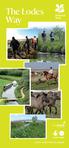 The Lodes Way www.nationaltrust.org.uk The Lodes Way The Lodes Way is a 9 mile cycle way from Wicken passing Anglesey Abbey to Bottisham, which forms part of National Cycle Network route 11 (NCN11). The
Population Ecology. Life History Traits as Evolutionary Adaptations
 Population Ecology An Overview of Population Ecology Population ecology is the study of factors that affect population: Density Growth A population is a group of individuals of a single species that occupy
CHAPTER 2: APPROACH AND METHODS APPROACH
 CHAPTER 2: APPROACH AND METHODS APPROACH Given Hawaii s biological uniqueness on a global scale, the Comprehensive Wildlife Conservation Strategy (CWCS) recognizes the importance of protecting all native
Using the voluntary carbon market to provide funding for natural capital projects in the UK. 6 th October 2015
 Using the voluntary carbon market to provide funding for natural capital projects in the UK 6 th October 2015 The problem we face Natural Capital Stock of natural ecosystems that provides a flow of goods
Restoration Planning and Development of a Restoration Bank
 Restoration Planning and Development of a Restoration Bank Black Creek Pioneer Village, South Theatre 8:30 a.m. to 3:30 p.m. Habitat Restoration and Environmental Monitoring Projects Section Restoration
Digital Communications
 National Assembly for Wales Election Manifesto 2016 Digital Communications Digital growth is key to driving the Welsh economy forward, which is why innovative policies are needed to meet the increasing
For the purposes of this article the Shannon can conveniently be divided into five sections:
 Volume 29 Number 3 Autumn Inland Waterways News Table of Contents Shannon Water Level Management Robert Cullen The water levels along the Shannon River and its lakes are the subject of much discussion,
Addendum D. Nomination of Moody Wash ACEC
 Addendum D Nomination of Moody Wash ACEC Moody Wash ACEC is hereby nominated by Citizens for Dixie s Future to: BLM St. George Field Office 345 East Riverside Drive St. George, UT 84790 Moody Wash is a
London Borough of Croydon Local Flood Risk Management Strategy
 London Borough of Croydon Local Flood Risk Management Strategy Summary 2014-2020 Introduction In response to the severe flooding across large parts of England and Wales in summer 2007, the Government has
Position Statement regarding Offshore Wind Proposals on Lake Huron. Lake Huron Centre for Coastal Conservation
 Position Statement regarding Offshore Wind Proposals on Lake Huron Lake Huron Centre for Coastal Conservation June 2010 Lake Huron Centre for Coastal Conservation (LHCCC) Corporate Position related to:
PROCEDURE. See: Great Lakes Coastal Wetlands (http:// www.miseagrant.umich.edu/wetlands/index.html)
 Activity: Students review a selection of career profiles and play a lively classroom game to find out more about marine and aquatic science professionals. Grade Level: 4-8 Subjects: Science, social studies
US Army Corps of Engineers. New Orleans District 2011 Flood Response
 US Army Corps of Engineers New Orleans District 2011 Flood Response US Army Corps of Engineers BUILDING STRONG BUILDING STRONG 2011 Flood Fight The safety of the public is the Corps number one priority.
The Colorado River Delta
 The Colorado River Delta An Invaluable Resource for People and Wildlife the colorado river delta The Colorado River Delta and its waters support a rich and diverse treasure of plants and animals in an
THE INTRODUCED SACRED IBIS, PREDATOR OF SEABIRDS AND OTHER FRAGILE SPECIES
 THE INTRODUCED SACRED IBIS, PREDATOR OF SEABIRDS AND OTHER FRAGILE SPECIES Pierre Yésou, Dr. Suzanne Bastian, Prof. Philippe Clergeau, Denis Lacourpaille & Sébastien Reeber Sacred Ibis Threskiornis aethiopicus
Section 5: Conserve to Enhance Program Goals What is Conserve to Enhance All About?
 Section 5: Conserve to Enhance Program Goals What is Conserve to Enhance All About? Conserve to Enhance (C2E) was originally conceptualized as an approach to giving the environment a seat at the table
CORPORATE POLICY STATEMENT NO. 12 MANAGEMENT OF PEST ANIMALS
 1. OBJECTIVE CORPORATE POLICY STATEMENT NO. 12 MANAGEMENT OF PEST ANIMALS August 2015 To provide direction and guidance for the management of pest animals on lands and waters managed by the Department
Essential Guide to Strategic Planning
 Essential Guide to Strategic Planning Written and Supported by: Compass Partnership ASSOCIATION OF CHIEF EXECUTIVES OF VOLUNTARY ORGANISATIONS Contents Introduction... 3 Part 1: Essential concepts... 3
All members of the puma species carry their kittens the same way domestic cats do, and they can purr like housecats too.
 Florida Panther In spite of many, many attempts, I have not been able to discover let alone photograph a majestic Florida panther in the wild. The tawny cat is an endangered species. The panthers I have
Internet Grocery Stores What does the future look like? By: Matthew Rousu
 Internet Grocery Stores What does the future look like? By: Matthew Rousu In the past several years, there has been an explosion of Internet companies on the retail market. Internet grocery stores exist,
Rhode Island NRCS received approximately $2.4 million in ARRA funds to implement four floodplain easement projects.
 American Recovery and Reinvestment Act (ARRA) Emergency Watershed Protection Program Floodplain Easements Rhode Island Natural Resources Conservation Service Rhode Island NRCS received approximately $2.4
Deepwater Horizon Oil Spill Phase I Early Restoration Plan and Environmental Assessment
 Deepwater Horizon Oil Spill Phase I Early Restoration Plan and Environmental Assessment Prepared by the Deepwater Horizon Natural Resource Trustees from State of Alabama State of Florida State of Louisiana
PEST CONTROL POLICY AND PLAN
 APPENDIX 12 PEST CONTROL POLICY AND PLAN COOMBE COUNTRY PARK Pest Control Policy and Plan 1 www.coventry.gov.uk/coombe www.coventry.gov.uk/coombe Pest Control Policy and Plan Introduction We have a duty
The Muddy River: A Century of Change
 The Muddy River: A Century of Change Tom Brady, Brookline Conservation Administrator, Tree Warden, Town Arborist 617-730-2088 or [email protected] Muddy River Flood Damage Reduction and Environmental
Subactivity: Habitat Conservation Program Element: National Wetlands Inventory
 HABITAT CONSERVATION FY 29 BUDGET JUSTIFICATION Subactivity: Habitat Conservation Program Element: National Wetlands Inventory National Wetlands Inventory ($) FTE 27 4,7 2 28 Enacted 5,255 2 Fixed Costs
ADDENDUM TO THE DRAFT ECONOMIC IMPACT ANALYSIS OF CRITICAL HABITAT DESIGNATION FOR THE OTAY TARPLANT
 ADDENDUM TO THE DRAFT ECONOMIC IMPACT ANALYSIS OF CRITICAL HABITAT DESIGNATION FOR THE OTAY TARPLANT November 2002 IEc INDUSTRIAL ECONOMICS, INCORPORATED Prepared for: Division of Economics U.S. Fish and
RESTORATION AND ENHANCEMENT OF SOUTHERN CALIFORNIA LAGOONS
 RESTORATION AND ENHANCEMENT OF SOUTHERN CALIFORNIA LAGOONS by Hany Elwany, Ph.D. Scripps Institution of Oceanography Headwaters to Oceans Conference 25 October 2003 CE Ref #03-22 San Diego County Lagoons
INTERVIEW: Mark Parkinson & Tom Hudson of Middleton Advisors on the art of giving good advice
 primeresi.com http://www.primeresi.com/interview-mark-parkinson-and-tom-hudson-of-middleton-advisors/60304/ INTERVIEW: Mark Parkinson & Tom Hudson of Middleton Advisors on the art of giving good advice
Arkansas River Corridor Vision & Master Plan
 A r k a n s a s R I v e r C o r r I d o r P l a n Arkansas River Corridor Vision & Master Plan July 2005 Indian Nations Council of Governments A r k a n s a s R I v e r C o r r I d o r P l a n Partnership
Wildlife Ecologist. Mount Gibson Wildlife Sanctuary
 Wildlife Ecologist Mount Gibson Wildlife Sanctuary Australian Wildlife Conservancy is a non profit organisation dedicated to the conservation of Australia s threatened wildlife and their habitats. AWC
Market Analysis Retail Housing Office [CITY OF BERLIN MARKET ANALYSIS] City of Berlin, Wisconsin
![Market Analysis Retail Housing Office [CITY OF BERLIN MARKET ANALYSIS] City of Berlin, Wisconsin](/thumbs/34/17190064.jpg "Market Analysis Retail Housing Office [CITY OF BERLIN MARKET ANALYSIS] City of Berlin, Wisconsin") 2013 Market Analysis Retail Housing Office [CITY OF BERLIN MARKET ANALYSIS] City of Berlin, Wisconsin Executive Summary Berlin is a community of roughly 5,500 residents, located along the Fox River in
2013 Market Analysis Retail Housing Office [CITY OF BERLIN MARKET ANALYSIS] City of Berlin, Wisconsin Executive Summary Berlin is a community of roughly 5,500 residents, located along the Fox River in
Oxbow Restoration for Fish Habitat and Water Quality
 Oxbow Restoration for Fish Habitat and Water Quality Chris Jones and Aleshia Kenney Iowa Soybean Association U.S. Fish and Wildlife Service ENVIRONMENTAL Programs and Services Partners for Fish and Wildlife
Lower Crooked Creek Watershed Conservation Plan EXECUTIVE SUMMARY
 EXECUTIVE SUMMARY Project Background Located in southwestern Pennsylvania, Crooked Creek is a major tributary of the Allegheny River, entering near Ford City in Armstrong County. It is rich in natural
Protecting Floodplain. While Reducing Flood Losses
 Protecting Floodplain Natural and Beneficial i Functions While Reducing Flood Losses Jon Kusler Association of State Wetland Managers 518 872 1804; [email protected] Report available at: http://aswm.org/pdf_lib/nbf.pdf
Development proposals will require to demonstrate, according to scale, type and location, that they:-
 Appendix 2 : Relevant Development Plan Policies Angus Local Plan Review 2009 Policy S1 : Development Boundaries (a) Within development boundaries proposals for new development on sites not allocated on
Chapter 4: MEASURING PROGRESS
 Chapter 4: MEASURING PROGRESS An indicator is something that helps you understand where you are, which way you are going, and how far you are from where you want to be. An effective indicator alerts you
Urban Waters and River Restoration. Pinja Kasvio, Finnish Environment Institute, SYKE RESTORE North Region Closing Seminar 14.8.
 Urban Waters and River Restoration Pinja Kasvio, Finnish Environment Institute, SYKE RESTORE North Region Closing Seminar 14.8.2013 Urban Waters Hålland, Gässlösa (Sweden) Characteristics of urban areas:
Visitor management strategy
 Visitor management strategy Introduction Protected areas attract people. Sometimes the protected area management is glad about people who are interested in their work and activities, sometimes protected
Customer Guide Helpdesk & Product Support. [Customer Name] www.four.co.uk Page 1 of 13
![Customer Guide Helpdesk & Product Support. [Customer Name] www.four.co.uk Page 1 of 13](/thumbs/24/2759214.jpg "Customer Guide Helpdesk & Product Support. [Customer Name] www.four.co.uk Page 1 of 13") Customer Guide Helpdesk & Product Support [Customer Name] www.four.co.uk Page 1 of 13 Table of Contents HELP DESK AND PRODUCT SUPPORT SUMMARY... 3 1 FOUR HELP DESK STRUCTURE AND CALL ESCALATION... 6 2
Customer Guide Helpdesk & Product Support [Customer Name] www.four.co.uk Page 1 of 13 Table of Contents HELP DESK AND PRODUCT SUPPORT SUMMARY... 3 1 FOUR HELP DESK STRUCTURE AND CALL ESCALATION... 6 2
REFERENCE. All National Grid personnel who plan and perform work involving protected water resources are responsible for:
 EG-30NY ENVIRONMENTAL GUIDANCE PAGE 1 of 9 DATE 10/1/10 EP 3 Natural Resource Protection 1.0 SCOPE AND RESPONSIBILITIES National Grid s New York service territory encompasses thousands of wetlands, lakes,
ECONOMIC ANALYSIS FLOOD DAMAGE REDUCTION. Lower Carmel River Floodplain Restoration and Enhancement Project
 ECONOMIC ANALYSIS FLOOD DAMAGE REDUCTION Lower Carmel River Floodplain Restoration and Enhancement Project I. Description of the Project and its Relationship to Other Projects in the Proposal The Lower
Sample Micro Hydro Initial Report
 Sample Micro Hydro Initial Report Sample Micro Hydro Initial Report Introduction The Hydro Burn at Glen Water was visited by Richard Haworth of Glen Hydro to assess its suitability for a micro hydro installation.
Chapter 2 Spatial Portrait
 15 November 2013 Dear Julie Fylde Local Plan to 2030 Part 1 Preferred Options Thank you for the opportunity to meet with you on 9 October in respect of the above mentioned document. As discussed at the
121 FERC 62,167 UNITED STATES OF AMERICA FEDERAL ENERGY REGULATORY COMMISSION. Public Utility District No. 1 of Project No. 637-044 Chelan County
 121 FERC 62,167 UNITED STATES OF AMERICA FEDERAL ENERGY REGULATORY COMMISSION Public Utility District No. 1 of Project No. 637-044 Chelan County ORDER MODIFYING AND APPROVING LAKE CHELAN FISHERY PLAN,
Henry Van Offelen Natural Resource Scientist MN Center for Environmental Advocacy [email protected]
 Henry Van Offelen Natural Resource Scientist MN Center for Environmental Advocacy [email protected] Wetland study slide Water Quality NRE goals in watershed plans Protect habitat that remains.
Bridge Parish Council Community Emergency Plan
 BRIDGE Parish Council Caring for the village Bridge Parish Council Community Emergency Plan IF YOU ARE IN IMMEDIATE DANGER CALL 999 October 2014 All enquiries relating to this document should be sent to:
Newbiggin House Farm,
 Newbiggin House Farm, Near Waberthwaite Flood Investigation Report 32 Flood Event 30/8/2012 Cumbria County Council Version Undertaken by Reviewed by Approved by Date Preliminary Colin Parkes Anthony Lane
Revising the Nantahala and Pisgah Land Management Plan Preliminary Need to Change the Existing Land Management Plan
 Revising the Nantahala and Pisgah Land Management Plan Preliminary Need to Change the Existing Land Management Plan Throughout the Plan 1. There is a fundamental need for the revised plan to address how
Managing Growth, Risk and the Cloud
 Managing Growth, Risk and the Cloud Executive Summary of Independent Market Research Commissioned by Zenium Data Centers Spring 2015 Foreword Rising data volumes combined with the always on approach to
AN INITIATIVE TO IMPROVE
 L OW E R C A R M E L R I V E R A N D L AG O O N F L O O D P L A I N R E S TO R AT I O N A N D E N H A N C E M E N T P R O J E C T AN INITIATIVE TO IMPROVE FLOOD PROTECTION RESTORE AND PROTECT RIPARIAN