
Gargoyle Security Inc GUARD TV /
|
|
|
- Allan Shields
- 10 years ago
- Views:
Transcription
1 Gargoyle Security Inc GUARD TV / FAQs (Frequently Asked Questions) First time buyers of security systems often ask questions about what they should buy. They ask friends who have systems and salespeople who sell them. Very often, friends don't know whether they have a genuine system or just a collection of parts. But they do know whether the installation was neat. They also know whether their alarm company offers timely, efficient service. Yes, it's OK to disregard comments like "they wouldn't do exactly what I wanted" since these may refer to things that were impractical, illegal or contrary to a life safety code. But do pay attention to comments like "they finished on time and cleaned up as they worked." The following questions and answers will help explain some of the many qualities you should look for in a security system and separate them from the bias of sales people. Should every door and window be protected? Every accessible door and operable window should be protected. All glass windows should be protected with some sort of shock/audio detector. Windows can also be protected using alarm screens instead of contacts and shock/audio detectors. Obviously in a three story residence, the windows on the third floor cannot be opened by normal means; screens, vibration sensors or audio detectors should be sufficient if the windows are kept locked. Rather than contacting these third floor windows, the money could be spent on additional interior protection or other security features like fire detection. However, if you would feel unsafe with these windows uncontacted, contact them. It's your security and your peace of mind. Garage overhead doors are a special case. A lot of people get these doors contacted and then pay extra to have the door bypassed automatically when the garage door opener is used. Since the only way to open these doors is by using the garage door opener, they are paying for the door to be protected and then paying more for it to be unprotected. Don't spend money to protect a door and then spend more to bypass the protection every time the door is used. Spend your money on additional protection or added features. If there is no automatic opener, a contact can be useful protection on a garage door. If there is an automatic opener and you wish to protect a boat or trailer stored in the garage, there are devices designed to attach to the boat or trailer. Should the contacts used on windows be visible or recessed in the frame? This depends on you and your installing company. Does the burglar seeing the switch go elsewhere because he now knows you have more than just a sign and some decals? Can the burglar defeat the contact just because he can see it? Some people cannot tolerate the sight of normal surface mounted contacts or feel unsecure because "the burglar knows what's there." Other people feel secure seeing the switches because "the burglar knows I really do have a system installed by a professional." Surface mounted switches often are easier to install. Although the price for installing recessed switches may be higher with some companies, generally prices run the same for either switch.

2 One hype concerning recessed switches is the size of the switch in a wooden door or wooden door frame. If the switch is recessed in the frame, you cannot see it when the door or window is closed. As long as it fits the frame properly without overlap, it does not matter what the diameter of the switch is. In steel doors and steel door frames, the switches and magnets need to be isolated from the metal so they can work properly. These switches and magnets are usually inserted into a 3/4 inch or larger hole. The larger switches are usually used. However, plastic adapters can be used to hold a smaller switch in the hole. What are EOL resistors and why should I have them? An End-Of-Line resistor supervises the wiring between the alarm panel and the switch. Some panels have a limited number of detection zones and do not require EOL resistors. But if the panel can use EOL resistors to supervise the wiring, the resistors should be used. If more than one detection device is on a single detection circuit, the EOL should be at the last device. When feasible, every alarm detection device should have an EOL resistor at the device. If the EOL resistor is at the burglary contact on a door, the panel sees the wire open when the door is opened and sees the resistor when the door is closed. The thief who shorts wires together hides the EOL resistor from the panel, letting the panel know that something is going on. The thief who cuts the wire causes an open circuit, the same as if he had opened the door. Hold-up alarms and Fire alarms use an "open circuit" detection scheme. The panel normally sees the EOL resistor at the end of the detection circuit. A short on the wire causes an alarm and a break in the wire causes a trouble report. Since normally closed switches can weld due to high voltage like lightning, the normally closed switches used for burglary detection must be checked after severe weather to see that they still work properly. Since devices on a "open circuit" normally cannot weld open, lightning and power surges should not "weld" these switches into an inoperable state. Some security systems even use this high security mode for their burglary devices. Where should EOL resistors be installed? What makes EOL resistors so important is that they can supervise the wires only when they are at the end of the line. When properly placed in the circuit, EOL resistors prevent wire tampering on normal switches. EOL resistors in the control panel are usually ineffective. The usual net effect of putting the EOL resistors in the panel is that the panel acts as if it has no EOL resistors. Even open circuit devices like smoke detectors and hold-up buttons are not properly supervised when the EOL resistor is attached in the panel before the end of the line. Many companies install the EOL resistors in the panel or use panels that do not supervise the wiring. Some alarm manufacturers show the EOL connected at the panel. One alarm company owner, in an attempt to impress us, asked if we knew the difference between End-Of-Line resistors and In-The-Panel resistors. He had been confused by drawings showing improper placement of the EOL resistors. The proper placement of an EOL resistor is at the End-Of-Line, the last switch

3 on the detection circuit. EOL resistors do not belong at the panel. I heard of a "smart switch," a popit switch, or a polling loop switch. What is it? A smart switch does not just cause an open or short on the wire like a typical burglary detection switch. Normal switches can become welded into an inoperable state by high voltage like lightning striking nearby. The smart switch sends information to the panel constantly. If the switch is damaged by some high voltage event, it no longer checks in with the panel and the panel responds appropriately. Usually the panel and smart switch are integrated. The panel "polls" the smart switch and the switch sends an "I am okay" message. The panel then polls the next switch. The cycle continues with the panel constantly asking for and receiving the status of every smart switch. If the panel is armed and the smart switch sends an "I have detected intrusion" signal, the panel responds by setting off the bells or sirens. While the system is armed, if the smart switch does not report in for any reason, the panel responds with an alarm because a switch is "missing." While the panel is disarmed, if the smart switch does not report in for any reason, the panel responds with a trouble report instead of an alarm. Extra smart contacts added to the detection loop without being programmed for the panel, should cause a trouble condition also. Panels that use polling loop switches, popits or smart switches are generally more expandable. The polling loop can listen to many devices, each with a unique name, on the same pair of wires. Panels that use EOL resistors must have a set of terminals at the panel for every pair of wires. Every EOL resistor must have its own pair of wires. The simplification in wiring for smart switches can sometimes cut the costs of wiring for an alarm system significantly. However, the smart panels and smart switches generally are more expensive than standard panels. Smart switches do cost more, but they offer better security than normal switches. Each smart switch has a unique name or address and checks in constantly with the panel. A smart switch damaged by lightning or other high voltage stops communicating to the panel. The alarm panel immediately responds to report the missing point of protection. Should I get a wired system or a wireless system? Many factors affect this choice. The major factor is the construction and decoration of the premises. Can the location be wired and how much labor will be involved in wiring for the alarm? Will wireless devices be able to communicate to the alarm panel? Plaster walls with metal lathe in them can block the wireless signals. Large mirrors, foil wallpaper, metal lockers and other radio systems nearby might prevent a wireless system from working properly. Many new systems integrate wired devices with wireless devices. The main thing to consider is whether the system meets your current needs and whether it can expand to meet your future needs.

4 QUESTIONS ABOUT WIRELESS SYSTEMS How often must the batteries be changed? Typically, alkaline batteries must be changed every year. Newer systems often use lithium batteries that should last 5 years or more. What is the cost to replace the batteries Alkaline batteries can be purchased at any hardware store for a few dollars. Lithium batteries are more expensive and probably must be purchased through the security company, although they are becoming more common. Does a maintenance plan include replacing the batteries? Depending on the cost of the plan, this can be an excellent option or it can be an expensive option. Be sure any contract for a maintenance policy has what it covers in writing. If batteries are not written into the maintenance contract, they are not covered. Are the transmitters supervised? Do they check in so that the panel knows they are working and whether they need a new battery? Portable devices like pendant panic buttons should not be supervised because you often will leave the premises with them for several hours. Since they don't check in, you will have to test them manually every month or so. Smoke detectors and burglary devices should "check in" at least every hour, since these devices never leave the premises. Should I have a light outside to tell me when the system is armed? Should I have a light outside to tell a thief when the system is disarmed? A lot of older systems required the system to be disarmed from outside. The owner of the property needed to know whether the system was armed or disarmed before opening the door. Lights were used to indicate whether the system was on or off. A lot of effort was spent to find a way to let the owner get into a protected property without announcing to anyone outside whether the system was armed or disarmed. The solution to the outside keystation was to program an entry delay for certain detection devices that allowed the customer time to disarm an alarm system from inside the protected area. These newer systems require a code be entered in a keypad after entering the premises. If your system uses such a keypad, we suggest not installing an outdoor "armed" light. Some systems use wireless keys or wireless keypads to disarm the alarm system. These devices may be the only wireless devices on a traditional wired alarm system, or they may be just part of a complete wireless alarm system. More can be read on this topic by following this link to a document on enhanced security. If a wireless key is lost or stolen, service is required to change the "key"

5 immediately. A wireless key disarms the system with one press of a button; the system does not care (or know) who actually pressed the button. Wireless keypads do not require immediate service if they are lost or stolen. Though service would be required to replace or remove the lost wireless keypad, there is no need to race to the system. Knowing the proper code would still be required to disarm a system using a wireless keypad. Bi-directional wireless keypads let you know (after pressing the correct code) whether the system is armed or disarmed. This added security should be considered when deciding whether or not to use a wireless method of arming and disarming the alarm system. I heard that over 98 percent of all alarms that go off are false alarms. If this is true, why should I even bother to have an alarm? On an average day in Sacramento, about 50 to 75 alarms go off and all but about one or two of them are false alarms. Many law enforcement officers report that in their entire career, they have never personally responded to an alarm that turned out to be a real burglary. However, every day there are well over 100 real burglaries reported in Sacramento. That means burglars are not targeting locations that have an alarm. Therefore, having an alarm is obviously a great deterrent and virtually takes your property "off the market" of burglars. Since only about 20 percent of Sacramento residences have alarms, burglars have plenty of other targets. Wouldn't the authorities charge me if they had to respond to a false alarm at my home? There are penalties for false alarms which vary according to the jurisdiction and location. Usually there is no penalty for the first offense. What is most important, however, is that false alarms can be easily avoided. Most false alarms occur at the key pad due to pressing the wrong buttons. Make sure your alarm is easy to use and that you know how to cancel a false alarm immediately by calling your alarm monitoring station. There are usually no penalties or charges if you call right away. Do I need to put an alarm sensor on every exterior door and window? It depends on what you are trying to protect. Are you mainly concerned about protecting your property when you are gone? Or is personal safety while you are home your main concern? Protecting your property can be accomplished with interior motion sensors. You will still need a contact on the main entry/exit doors but if someone comes through the window, a properly positioned motion detector will set off your alarm instantly. One such motion detector can protect many windows and most companies include at least one with their most basic system. On the other hand, the motion detectors must be turned off while you are home. So for personal safety, you probably want to alarm some or all of your windows. A wireless panic button is also a good solution.

6 Wouldn't I also need an outside bell on my home? Outside bells can provide additional peace of mind, but there are also some drawbacks: 1. Outside bells often cause complaints from the neighbours, sometimes resulting in a noise citation. 2. If your bell goes off and neighbours do respond, they could be hurt by an intruder. When the police arrive, they may confuse a neighbour for a burglar. 3. So many bells go off these days, most people tend to ignore them. Also, bells are supposed to be programmed to shut off after 10 to 15 minutes. A great alternative would be a latching strobe, a red or blue light on the front of your house that will begin to flash if your alarm is tripped. It is less expensive than a bell and will continue to flash until you physically turn it off on the control panel. This way, when you come home, you can look at the light and know whether a burglary has happened or not. It also makes the house a little easier for the police to find at night if they are responding to an alarm. So how much can I expect to pay for a good alarm system? If just trying to protect the property, the average systems cost between $400 to $600. It should include all entry doors, as three out of four burglars gain entry that way, and at least two interior motion sensors. If your home has 10 to 15 doors and windows and you need the full perimeter protected for your personal safety, a quality system should cost between $1,000 to $1,500. Monthly monitoring ranges from $20 to $30 per month for either kind of system. What about fire safety? This is a security issue that is too often overlooked. Most homes have smoke detectors installed, but what happens if no one is home when they go off? More importantly, what if you don't wake up because carbon monoxide puts you into a deeper sleep? A simple but priceless solution is to have at least one monitored smoke/heat detector to supplement the others in the house. This way, the fire department will come whether you are able to call them or not. The average response time in Sacramento is two to two and one-half minutes. Property and life can be saved if the fire department is notified in time. What are End of Line Resistors and do I need them? Short answer: End of line resistors (EOLR) are resistors of a specified value that are used to terminate protective loops or zones. The purpose of EOLR's is to allow the control panel to supervise the field wiring for open or short circuit conditions. How the alarm responds to each depends on the panel as well as system zone programming, but generally speaking, an alarm views

7 an open circuit as a fault or alarm condition, and a short circuit as a trouble or alarm condition (if armed). The purpose of EOLR's is to allow the panel to differentiate between the two conditions by looking for a known resistance. EOLR's should be installed at the last device on the loop, electrically speaking, and not inside the control, unless special conditions are met. The benefits of EOLR's on protective zones with all concealed wiring is commonly argued by professional installers, as well as EOLR's installed inside the control unit, negating their effectiveness, as well as disabling the EOLR feature and using NC (normally closed) loops for zone definitions. The use of EOLR's is recommended and is particularly important when the field wiring is subject to damage or compromise. A fire EOLR should always be installed at the last device and never inside the control or across the zone defined as fire, as this is an inherent safety issue. Some equipment supports Double End of Line Resistors (DEOLR) to further differentiate between conditions that may exist on the loop. Want to know more about End Of Line Resistors? FEATURED ARTICLE End Of Line Resistors --- The Basics What are they, and why are they used? Early security systems used simple electrical circuits to monitor the status of doors and windows. The circuit was either closed or open, and therefore returned full voltage or no voltage at all to the control panel; that was all the system wanted or needed to know. Although such circuits are still in use today, the digital age gave manufacturers the opportunity to make systems more secure. A resistor is a small semiconductor which resists the flow of electrical current. The current is permitted to flow, but is reduced by the value of the resistor. If a resistor is connected, in series, with a sensor on an alarm circuit, then the control panel no longer sees full voltage across the circuit, but rather a reduced voltage, when the circuit is closed. Now there are three possible conditions for the control to measure: full open-circuit voltage (if the circuit is open), reduced voltage (if the circuit is closed and secure), and no voltage if the wiring has been compromised. For if the two sides of the circuit are making contact at some point between the control and the resistor, the current has a shortcut back to the control, thus bypassing the resistor. The control will see this no voltage (or very low voltage) as a fault and will alert the user. Where should resistors be placed? The method just described can ONLY work if the resistor is placed at the end of the line. There have been many discussions about placing the resistors at the control panel ("in the can," as the professionals say). Although there may be practical reasons for doing this, it must be understood that placing resistors anywhere other than the end of the line does NOTHING to supervise the wiring, which is the stated reason for using resistors. A resistor can only supervise the wiring between the resistor and the control. Why does the wiring need to be supervised? How can the circuit become shorted?

8 If a potential burglar were to gain access to the zone wiring, the wires could be deliberately shorted, allowing the burglar access to the building at a later time. Also, a nail or screw (for hanging a painting, photo, etc.) could conceivably pierce both the outer and inner insulation of the wires and make contact between the two conductors. While both of these are admittedly unlikely, they are not impossible. If a shorted zone is so unlikely, are resistors really necessary? This question has no simple answer. If it is being asked by a pro installer, there are liability issues to consider, especially if the manufacturer recommends or requires resistors. If a do-it-yourselfer is asking, then no one else can provide a satisfactory answer. A person installing a system in his/her own home must consider the potential risk of compromised wiring and then make an informed decision. Finally, there is also the question of whether a particular system will even allow the elimination of resistors. If it does not, then the only decision would be where to place them. If resistors are required, but wire supervision is deemed unnecessary, they could be placed at the control. Resistors seem like such a sensible idea. Is there any reason NOT to use them, and place them at the end of the line as required? There are a couple of reasons. First, although it is usually quite easy to place a resistor inside a motion detector or glass break sensor, connecting one to a magnetic contact can be a trying experience, especially with recessed contacts. The resistor must be spliced to the wire in some way, and the splice must be pushed back through the hole before the contact is inserted (preferably in such a way that it can be removed if necessary). On a surface mounted contact, the resistor and splice will be visible, and (partly depending upon the installer\'s skill) can be aesthetically obnoxious. Second, in the event that the control panel is replaced at some future date, the resistors will not be the correct value if a different manufacturer\'s equipment is used. There is not even a guarantee that the same manufacturer won\'t change resistor values in the future (although this seldom happens). Removing and replacing all the resistors (especially from recessed contacts) in a system has been shown to cause considerable loss of hair, sleeplessness, and outbursts of foul language. Is there any way to place the resistor inside the can but still supervise the wiring? Yes. By using a four conductor cable for a two wire sensor, the two free conductors can be used to extend the circuit from the sensor location to the can, through the resistor, and back to the sensor. The resistor would actually be at the end of the line, and supervision would be accomplished. Are there any other ways in which resistors are used? Yes. First, fire zones always use resistors, even if the other zones do not. This is because fire sensors are "Normally Open" devices; they only close the circuit when they trip. Therefore, a fire zone in its normal state would appear the same to the system as one where the wire has been cut: namely, open. To prevent this, a resistor is used to close the circuit (with reduced voltage), so that it can be supervised. Second, some manufacturers allow the use of double EOLR\'s. In this case, a second resistor is added across the terminals of the sensor, so that is in parallel with the circuit. If you will recall, a single resistor allows the system to sense if the circuit is secure, open, or shorted. The second resistor adds the capability of differentiating

9 between an open sensor and an open, or broken, circuit. Now, if the sensor opens, the current passes through both the series and parallel resistors. The panel senses the reduced voltage and knows that the sensor is, in fact open. With this configuration, zero voltage can mean only one thing: a broken circuit. This constitutes the maximum supervision of zone wiring. Third, some manufacturers allow the use of "zone doubling," where two zones, each with a different resistor value, are connected in parallel to the same two terminals. Since they are in parallel, the system sees the total of both reduced voltages when both zones are closed. If one opens, that voltage is removed, and because of the different resistors, the system knows which one is open and which remains closed. This effectively doubles the number of zones available on the main board, although it does not change the maximum capacity of the system.

Understanding Alarm Systems
 Understanding Alarm Systems A false alarm occurs when an alarm signal designed to elicit an immediate emergency Law Enforcement, Fire, or Medical response is activated, when in fact no emergency exists.
S I E R R A PRODUCT INFORMATION GUIDE FOR HOME SECURITY. SIERRA Page 1
 S I E R R A PRODUCT INFORMATION GUIDE FOR HOME SECURITY SIERRA Page 1 C O N T E N T S USING YOUR SIERRA SYSTEM: Turning On/Off Home Arming Instant Home Arming Quick Exit Mode Chime Mode SPECIAL FUNCTIONS:
Destiny 4100. Destiny 4100. Owners Manual
 Destiny 4100 Destiny 4100 Owners Manual TABLE OF CONTENTS INTRODUCTION Control Panel...3 Detection Devices...3 Telephone Keypads...3 GLOSSARY... 4-5 LOCAL PHONE ACCESS Using Your Telephones As Keypads...6
Users Guide to Keypad Functions
 Users Guide to Keypad Functions MANUAL NO. 700-175-01J ISSUED JAN 2002 VERSION 1.41 Summary of Operation A rm/ disarm [#] + [USER CODE] Quick Quick Quick Panic Fire Medical Away Arm Stay Arm Stay Arm &
INTRUSION ALARM SYSTEM
 INTRUSION ALARM SYSTEM Case studies reveal most burglars are deterred by the mere presence of an alarm system. Burglars attack unprotected premises considerably more often than ones protected by alarm
securıty HOME home protection 101
 securıty HOME home protection 101 Do I really need a security system? Yes, you do! There is always the sonal electronic sentry, able to see and risk of fire, theft, or home intrusion. hear trouble. It
GC2 Panel User Guide
 GC2 Panel User Guide ENGLISH (International) WIRELESS SECURITY SYSTEM WARNING: OWNER S I NSTRUCTION NOTICE Not to be removed by anyone except occupant THIS PAGE INTENTIONALLY LEFT BLANK CONTENTS System
Using your LED Plus keypad
 Using your LED Plus keypad System 238 System 2316 System 238i System 2316i Part Number 5-051-372-00 Rev B Thank you for purchasing this C&K alarm system Your system is one of the most powerful and advanced
www.ealarm.com.my P/N 5-051-371-00 Rev D
 System 236 System 236i P/N 5-051-371-00 Rev D Thank you for purchasing this C&K alarm system Your system is one of the most powerful and advanced alarm systems on the market today, designed to provide
securıty HOME home protection 101
 securıty HOME home protection 101 Do I really need a security system? Yes, you do! There is always the risk of fire, theft, or home intrusion. Whether at home during the day, asleep at night, or away,
User s Guide. Security Systems D220
 User s Guide Security Systems D220 Table of Contents About This User s Guide... 3 Introduction... 3 Security System Basics... 4 Controlled Points... 5 24-Hour Points... 6 Keypad Keys... 6 Keypad Lights...
HILLS Series LED Code Pad User Manual
 HILLS Series LED Code Pad User Manual Not all features may be available on your system Check with your installer to find out which features are programmed Page 2 TABLE OF CONTENTS Code Pad Diagrams...2
DESTINY OWNER S MANUAL
 DESTINY OWNER S MANUAL DESTINY You have made a wise decision to protect your family and property with the DESTINY Security System. The DESTINY has been designed to provide you with a maximum level of security
Keys to understanding your alarm system
 Keys to understanding your alarm system This section is designed to allow you to familiarize yourself with most of the security system devices that may be installed or proposed to be installed in your
ABB Stotz-Kontakt GmbH ABB safe&smart Project planning of security systems
 ABB Stotz-Kontakt GmbH ABB safe&smart Project planning of security systems Content Introduction Preventing unauthorized access by perimeter surveillance Monitoring unauthorized access by indoor surveillance
HONEYWELL COMMERCIAL FIRE/BURG PANEL UL LISTING REQUIREMENTS (Compiled from VistaFBPT Installation Instructions 800-09617V1 Rev A 11/12)
 HONEYWELL COMMERCIAL FIRE/BURG PANEL UL LISTING REQUIREMENTS (Compiled from VistaFBPT Installation Instructions 800-09617V1 Rev A 11/12) UL864 (Commercial Fire) Compliance General Requirements The VISTA-128FBPT/VISTA250FBPT
SECTION 13850 DETECTION AND ALARM
 SECTION 13850 DETECTION AND ALARM PART 1 GENERAL 1.01 SUMMARY A. Section Includes 1. Control Panel 2 Associated Equipment B. Products Installed But Not Supplied Under This Section 1. Section 16140 - Wiring
ALARM SYSTEM INSTALLATION GUIDE
 ALARM SYSTEM INSTALLATION GUIDE Congratulations on the purchase of your Egardia alarm system. Egardia's website www.egardia.com Customer services Please visit www.egardia.com if you would like further
SECURITY & MONITORING QUICK GUIDE
 SECURITY & MONITORING QUICK GUIDE Now that you have your security system installed, use it regularly. Regular usage will increase your comfort with operating the system and reduce the likelihood of false
tattletale User Guide Consumer unit version 2.48 1 P a g e
 tattletale User Guide Consumer unit version 2.48 1 P a g e Contents Basic 1... 4 Base Unit Features... 4 Initial Setup... 4 Arming... 5 Disarming... 5 Quiet Button... 5 Settings... 5 Settings 2... 6 Quick
HILLS Series LED Code Pad User Manual
 HILLS Series LED Code Pad User Manual Not all features may be available on your system Check with your installer to find out which features are programmed Page 2 TABLE OF CONTENTS Code Pad Diagrams...2
Welcome to Bell Aliant NextGen Home Security
 Quick Start Guide Welcome to Bell Aliant NextGen Home Security Congratulations! Your home is now protected by the most advanced security technology available. This guide is intended to familiarize you
LYNX Touch L7000 Series Security System
 LYNX Touch L7000 Series Security System User Guide 800-16084 12/13 Rev. A LYNX Touch L7000 Series Your Honeywell security system is designed for use with devices manufactured or approved by Honeywell for
National Security Systems Inc (800)457-1999. Security System User's Guide
 National Security Systems Inc (800)457-1999 Security System User's Guide Security System Glossary As security system technology has evolved, a special jargon has developed. Some terms widely used within
Rogers Smart Home Monitoring QUICK START GUIDE ROG_6093_QST_GDE_EN.indd 1 9/22/12 8:29 AM
 Rogers Smart Home Monitoring QUICK START GUIDE STAY CONNECTED TO YOUR HOME AND YOUR FAMILY. This Quick Start Guide is designed to help you get the most out of your new system right away and help ensure
NESS D16. 16 Zone Control Panel and Dialler OWNER S MANUAL
 NESS D16 16 Zone Control Panel and Dialler OWNER S MANUAL REVISION 2, JULY 2001 Ness Security Products Pty Ltd Quality Endorsed Company ISO9001 LIC.No. QEC2074 NSW Head Office only WWW.NESS.COM.AU Australia
LYNX Touch L5210 Series Security System
 LYNX Touch L5210 Series Security System User Guide 800-19975 12/14 Rev. A LYNX Touch L5210 Series Your Honeywell security system is designed for use with devices manufactured or approved by Honeywell for
Welcome to a whole new level of interactive home security
 Welcome to a whole new level of interactive home security User Manual TouchScreen Key Fob Keychain Remote Web Access Mobile Access ReadyHome User Manual Introducing a whole new level of security for the
INSTRUCTION MANUAL PC255O
 INSTRUCTION MANUAL PC255O Canadian Department of Communications Notice NOTICE: The Canadian Department of Communications label identifies certified equipment. This certification means that the equipment
IDS. Users Guide to Keypad Functions S E C U R I T Y MANUAL NO. 700-171-01B ISSUED AUG 2002 VERSION 1.18
 INHEP DIGITAL IDS S E C U R I T Y Users Guide to Keypad Functions MANUAL NO. 700-171-01B ISSUED AUG 2002 VERSION 1.18 Summary of Operation A rm/ disarm [#] + [USER CODE] Quick Quick Quick Away Arm Stay
FA701 Series. User s Guide. K6249-2V2 5/09 Rev. A
 FA701 Series TouchCenter Keypads User s Guide K6249-2V2 5/09 Rev. A Table of Contents ABOUT THE TOUCHCENTER... 5 Introduction... 5 2 The TouchCenter Interface... 5 Navigating through the TouchCenter...
LYNX Touch L5200 Series Security System
 LYNX Touch L5200 Series Security System User Guide 800-16083V1 12/14 Rev. A LYNX Touch L5200 Series Your Honeywell security system is designed for use with devices manufactured or approved by Honeywell
To Real Home Security
 6Steps To Real Home Security Dear Friends, Evergreen Security has been involved in protecting the lives and properties of our neighbors throughout the Northwest since 1978. During that time we are proud
FIRST ALERT INSTRUCTION MANUAL FOR FA 270 KEYPADS SECURITY SYSTEM
 FIRST ALERT INSTRUCTION MANUAL FOR FA 270 KEYPADS SECURITY SYSTEM Page 0 Table of Contents Introduction 1 System Basics.. 1 Burglary Protection.. 1 Fire Protection.. 1 Security Codes. 1 Zones and Partitions
Electronic Security. For Financial Institutions
 A partner you can bank on Our bank was growing. New branches. New card processing center. We wanted to tie access control, alarm monitoring and video surveillance into one system we could monitor from
PhoneWatch Smart Security System User Manual - Domonial
 PW0002 10/13 Customer Support: 1850 753 753 PhoneWatch Ltd., Unit 3/4, Sandyford Park, Burton Hall Rd, Sandyford Industrial Estate, Dublin 18. Email: [email protected] PhoneWatch Smart Security System
616, 626, 636 & 646 Keypads
 616, 626, 636 & 646 Keypads User s Manual TABLE OF CONTENTS 1.0 BASIC OPERATION...2 2.0 ACCESS CODES...4 3.0 ARMING & DISARMING...6 4.0 PANIC ZONES...13 5.0 KEY ACCESS PROGRAMMING.14 6.0 ADDITIONAL FEATURES...15
NetworX Series. NX- 4/8 Code Pad. User Manual (Australian Version)
 NetworX Series NX- 4/8 Code Pad User Manual (Australian Version) Table Of Contents Code Pad Diagram... Inside Front Glossary of Terms...2 Understanding the Code Pad lights...3 Code Pad Tones...4 Fully
VR8. User Guide Intruder Alarm System
 VR8 EN User Guide Intruder Alarm System VR8 User Guide Notices EN 2 Copyright Notice Unless otherwise indicated, this publication is the copyright of Bosch Security Systems Pty Ltd ( Bosch ). All rights
SECURITY SYSTEM NOTES
 SECURITY SYSTEM NOTES Installing/Service Company For Service Call Central Station Duress Code FUNCTION CODES Function Code Controls Function This system is is not partitioned. EMERGENCY ACTIVATION KEYS
GE Concord 4 Quick User Guide
 GE Concord 4 Quick User Guide GE Concord 4 Quick User Guide Page 1 Before Calling Is the keypad beeping? Press *. This will silence the beeping and let you know where the trouble is. Is there a flashing
TABLE OF CONTENTS HOW TO AVOID FALSE ALARMS... 2
 TABLE OF CONTENTS HOW TO AVOID FALSE ALARMS... 2 THE BRINK S HOME SECURITY SYSTEM Equipment in the Standard Systems... 3 Optional Equipment... 4 Optional Features... 5 Description of the Keypad... 6 OPERATING
SECURITY SYSTEM NOTES. Security System Configuration
 Installing / Service Company: For Service Call: SECURITY SYSTEM NOTES Security System Configuration Master Code: Auxiliary Code(s) 2 3 4 5 6 "Quick Arm" Digit: Exit Delay Time Auxiliary Exit Delay Time
SPECIAL CODES AUXILIARY CODES SYSTEM NOTES
 Installing/Service Company Monitoring Center SPECIAL CODES Master Code Duress Code AUXILIARY CODES "Quick Arm" " Chime" 08 02 09 03 10 04 11 05 12 06 13 07 14 SYSTEM NOTES Exit Delay Time Entry Delay Time
DESTINY 1/19/96 # 800-6006A
 DESTINY TABLE OF CONTENTS KEYPAD AND PHONE DIGIT QUICK REFERENCE NOTE: KEYPAD AND PHONE DIGIT QUICK REFERENCE POWER STATUS HOME AWAY MONITOR DESTINY INTRODUCTION CONTROL PANEL DETECTION DEVICES SWITCHES
Home Security. What you absolutely must know before purchasing a security system
 Home Security What you absolutely must know before purchasing a security system 1 As founder and owner of SHIELD Security Systems, I ve answered hundreds, if not thousands, of questions from homeowners
Wireless Alarm System. Window/Door Sensor. User s Manual. Choice ALERT. Control all Sensors & accessories from one location
 45131 Wireless Alarm System Window/Door Sensor User s Manual Choice ALERT Control all Sensors & accessories from one location Table of Contents Important Safeguards 4 Introduction 5 Installation 6 Assigning
CONTENTS QUICK SETUP & INSTALLATION USER MANUAL. SUPA8 Quick Setup & User Manual
 SUPA8 Quick Setup & User Manual QUICK SETUP & INSTALLATION CONTENTS FACTORY DEFAULTS... 1 INSTALLATION OF THE SECURITY SYSTEM... 2 COMMISSIONING THE DIALLER PANEL... 5 ZONE INPUT CONNECTIONS... 7 PANEL
What Should I Expect From My Alarm Monitoring Station?
 What Should I Expect From My Alarm Monitoring Station? When the alarm goes off... What actions will the operators take? When will they dispatch the authorities? What actions do I need to take? Monitoring
LYNX Touch Security System
 LYNX Touch Security System User Guide 1:35 2 PM October 26, 2011 72 Mostly Sunny 68 F F Feels Like 71 Security Messages Automation 5-Day Forecast News Traffic 800-10615 1/12 Rev. A LYNX Touch L5100 Series
GUIDE GETTING STARTED IMPORTANT SUPPORT RESOURCES
 IMPORTANT SUPPORT RESOURCES Subscriber Portal Go to https://portal.coxhomelife.com to log in to your account and manage your system features online. Online Support Go to www.cox.com/homelifesupport to
Alarm User Awareness Class. National Burglar & Fire Alarm Association
 Alarm User Awareness Class 1 What We Will Cover What is an alarm system How alarm systems really work What is a False Alarm Causes & impacts of false alarms How to reduce & eliminate false alarms And more.
Home Security and Control
 Bright House Networks Home Security and Control Product Description Table of Contents Introduction... 3 Understanding Basic Security Terms and Functionality... 4 Security Zones... 4 Arming Modes... 4 Arm
SECURITY SYSTEM NOTES SPECIAL CODES. Security System Configuration
 Installing / Service Company: SECURITY SYSTEM NOTES For Service Call: Master Code SPECIAL CODES Duress Code Security System Configuration Auxiliary Code(s) Quick Arm" Digit: 2 9 3 10 4 11 5 12 6 13 7 14
BE SAFE AND SECURE. Landmark Security... giving you peace of mind.
 BE SAFE AND SECURE We provide both residential and commercial premises with high performance solutions to suit all needs. We have the expertise to offer a wide range of services from an intruder alarm
NetworX NX-6V2. LED Keypad User Manual
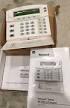 NetworX NX-6V2 LED Keypad User Manual POWER Light is on when AC power is present; flashes to indicate a low battery condition. ARMED Light is on when armed; off when disarmed; flashes to indicate a previous
Ademco Vista-20P/First Alert FA-168C Basic Commands
 Zones 64 total Ademco Vista-20P/First Alert FA-168C Basic Commands Wireless Yes, Zones 09 to 48 + 16 Keyfob Zones (Zones 49 to 64) Batteries Downloadable Partitions 2 12 volt Rechargable inside main Panel,
LYNX Touch Security System
 LYNX Touch Security System User Guide 800-10615V1 12/12 Rev. A LYNX Touch L5100 Series Your Honeywell security system is designed for use with devices manufactured or approved by Honeywell for use with
Feel Secure Your Guide to Home Safety
 Feel Secure Your Guide to Home Safety Master Licences: VIC No. 65201491P WA No. SA36517 SA No. ISL152299 NSW No. 405187443 ACT No. 17501009 QLD No. 3258669 Pic contents Watching over you and your home
Your Ademco. Fir&Burglar Alarm System. LogiCenter INTRODUCTION: 1. _- ALARM DEVICE MANUFACTURING CO.
 Your Ademco LogiCenter Fir&Burglar Alarm System i INTRODUCTION: Your LogiCenter is designed to alert you in the event of either a forced entry into a protected area or signal an alarm if a fire alarm condition
Changes or modifications not expressly approved by Interactive Technologies, Inc. can void the user s authority to operate the equipment.
 0 FCC Notices FCC Part 15 Information to the User Changes or modifications not expressly approved by Interactive Technologies, Inc. can void the user s authority to operate the equipment. FCC Part 15 Class
SECURITY SYSTEM NOTES
 SECURITY SYSTEM NOTES Installing/Service Company For Service Call Central Station Duress Code FUNCTION CODES Function Code Controls Function EMERGENCY ACTIVATION KEYS (check if enabled) Fire Auxiliary
Intruder Alarm Advice for Domestic Properties
 Intruder Alarm Advice for Properties Burglars want easy pickings and will avoid effective security. Government statistics have shown that approximately 60% of burglaries on homes fitted with burglar alarms
GSM ALARM SYSTEM USER MANUAL
 GSM ALARM SYSTEM USER MANUAL 1. Instruction The alarm system is based on GSM network. With a GSM SIM card, it can be used wherever you want and no need to connect any wire, which is convenient and easy
Security System. User's Guide. Keypad
 Security System EN User's Guide Keypad Security System User's Guide This system includes a telephone line seizure feature. The system can be programmed to communicate with a central monitoring station
TABLE OF CONTENTS HOW TO AVOID FALSE ALARMS... 1
 TABLE OF CONTENTS HOW TO AVOID FALSE ALARMS... 1 THE BRINK S HOME SECURITY SYSTEM Equipment in the Standard Systems... 2 Optional Equipment... 3 Description of the Keypad... 5 OPERATING THE BRINK S SYSTEM
about your house How to Lock Out Crime: Home Security Alarms
 about your house CE 66C How to Lock Out Crime: Home Security Alarms If you are like most Canadians, you are concerned about the safety of your home and your community. One particular type of crime that
Wireless Security System
 Wireless Security System 2GIG-CNTRL2 (2GIG-CP2) User s Guide WARNING: Owner s Instruction Notice Not to be removed by anyone except occupant The Go!Control Security System Congratulations on your ownership
Alarm User Awareness Class
 ALARM USER AWARENESS CLASS Presentation: Developed by: National Burglar & Fire Alarm Association (NBFAA) 8300 Colesville Road, Suite 750 Silver Spring, MD 20910 Distributed by : SIAC Security Industry
IDS X-Series User Manual 700-398-01D Issued July 2012
 1 2 Contents 1. Introduction to the IDS X-Series Panels... 7 2. Before Operating Your Alarm System... 7 3. Understanding the Keypad LEDs... 8 3.1 Viewing Data on an LED Keypad... 12 3.1.1 LED Status Indicators...
VISTA-128FBP VISTA-250FBP Commercial Fire and Burglary Partitioned Security Systems with Scheduling
 VISTA-128FBP VISTA-250FBP Commercial Fire and Burglary Partitioned Security Systems with Scheduling User Guide K0377V2 7/09 Rev. C 2 TABLE OF CONTENTS SYSTEM OVERVIEW... 5 General... 5 A Partitioned System...
SECURITY SYSTEM NOTES SPECIAL CODES AUXILIARY ARM / DISARM CODES ENTRY / EXIT DELAY TIMES ZONE DESCRIPTIONS
 SECURITY SYSTEM NOTES Installing/Service Company For Service Call SPECIAL CODES Master Code Duress Code "Quick Arm" Digit "Chime" Digit "Entry-Guard" Digit AUXILIARY ARM / DISARM CODES 02 12 22 03 13 23
Understanding the Code Pad lights...4. Code Pad tones...5. Fully arming the system On MODE...6. Fully arming the system - Quick Arm MODE...
 TABLE OF CONTENTS...Glossary of terms...2...code Pad Diagram...3 Understanding the Code Pad lights...4 Code Pad tones...5 Fully arming the system On MODE...6 Fully arming the system - Quick Arm MODE...6
MONITOR ISM / AFx Multi-Tenant Security System User Guide V1.3
 MONITOR ISM / AFx Multi-Tenant Security System User Guide V.3 Multi-Tenant Security System User Guide Welcome New Users! There are two types of suite security keypads. Follow the instructions in the proceeding
SECURITY SYSTEM NOTES. EMERGENCY ACTIVATION KEYS (check if enabled) PROGRAMMED FUNCTIONS
 SECURITY SYSTEM NOTES Installing/Service Company For Service Call Installation Date / / Central Station Duress Code EMERGENCY ACTIVATION KEYS (check if enabled) Fire Auxiliary Emergency Police PROGRAMMED
NOTE: The home screen always displays the day and month, time, & P1 (Partition 1)
 GE Concord 4 System NOTE: The home screen always displays the day and month, time, & P1 (Partition 1) STAY AWAY DISARM The Asterisk key on your user interface pad is the most commonly used key. This is
Total Protection Alarm System
 www.skylinkhome.com Total Protection Alarm System MODEL: SC-10 101A073-001 AUG, 2005. CUSTOMER SERVICE 17 Sheard Avenue, Brampton, Ontario, Canada L6Y 1J3 Tel : (800) 304-1187 Fax : (800) 286-1320 Email
POWER POWER ABC DEF GHI JKL ABC DEF GHI JKL COMMAND YZ COMMAND POWER ABC DEF GHI JKL COMMAND YZ USER'S GUIDE
 POWER POWER POWER ABC DEF GHI JKL ABC DEF GHI JKL MNO PQR STU VWX MNO PQR STU VWX YZ COMMAND YZ COMMAND ABC DEF GHI JKL MNO PQR STU VWX COMMAND YZ USER'S GUIDE Security Command User's Guide for 9XR Command
D24 ALARM CONTROL PANEL USER S MANUAL REVISION 1.1 A$12.00 INC GST
 D24 ALARM CONTROL PANEL USER S MANUAL REVISION 1.1 A$12.00 INC GST Ness Security Products Pty Ltd Quality Endorsed Company ISO9001 LIC.No. QEC2074 NSW Head Office only WWW.NESS.COM.AU Australia s largest
Understanding Access Control
 Understanding Access Control To understand access control, we must understand the language of the industry. Terms like alarm inputs, relays, timezones, anti-passback, shunt, and access levels are commonly
USER INSTRUCTIONS CONTENTS
 CONTENTS Full Set [1]...2 Part Set [2]...2 Night Set [3]...3 Unsetting...3 Unsetting after or during an alarm...3 Testing the system [5]...3 Isolating zones [6]...4 Reprogramming codes [8]...4 Chime facility
XT30/XT50 U S E R G U I D E
 XT30/XT50 USER GUIDE Silencing an Alarm When the alarm bell or siren is sounding, enter your user code or present your card to a keypad or reader during the Status List display. All/Perimeter or Home/Sleep/Away
Solution Ultima ICP-CC488 Home security you can rely on
 Solution Ultima ICP-CC488 Home security you can rely on Keeping your home and family safe doesn t need to be complicated. That s why we ve made the Ultima security system so easy to use all it takes is
Silencing an Alarm Note: Area Systems What to do when a trouble tone is sounding
 Silencing an Alarm When the alarm bell or siren is sounding, enter your user code or present your card to a keypad or reader during the Status List display. IS THIS A FALSE ALARM? YES NO or CANCEL VERIFY
CM705B - Universal Expander Module CM707B - Plug On Zone Expander Security Systems
 CM705B - Universal Expander Module CM707B - Plug On Zone Expander Security Systems EN Security System CM705B CM705B - Universal Expander Module The CM705B universal expander provides a cost effective way
Wireless Alarm System. Panic Button. User s Manual. Choice ALERT. Control all sensors, accessories and remote transmitters from one location
 Wireless Alarm System Panic Button User s Manual Choice ALERT Control all sensors, accessories and remote transmitters from one location Table of Contents Important Safeguards 4 Introduction 5 Activating
Bright House Networks Home Security and Control. Peace of mind included. QUICK START GUIDE
 Bright House Networks Home Security and Control Peace of mind included. QUICK START GUIDE Your System Components BASIC HOME SECURITY EQUIPMENT INCLUDED IN YOUR WIRELESS PACKAGE Touchscreen Wireless Motion
User s Information Guide R1A
 HSC505-R Home Security Controller - User Manual Release R1a Pi HSC505 and Pi HSC505R Home Security Controller User s Information Guide R1A Page 1 QD Dynamics (Pty) Ltd reserves the right to make changes
Home Alarm System. Product Description
 Home Alarm System The key elements of Zicom's Home Alarm System are the Main Panel, which is the brain of the system and the ialert Station (CMS). The other major components of Home Alarm Systems are as
DENVER PUBLIC SCHOOLS DESIGN AND CONSTRUCTION STANDARDS This Standard is for guidance only. SECTION 17650 SECURITY SYSTEMS
 PART 0 DESIGN STANDARDS 0.01 GENERAL DESIGN GUIDELINES A. Inspections and observations by the Owner do not relieve the A/E of contract responsibilities. B. Chain of command 1. The DPS Project Manager is
Wireless Alarm system s manual
 MOUNTVIEW TECH AUSTRALIA PTY LTD Wireless Alarm system s manual ADS A180 Series ADS Security 1/11/2011 1. Before You Begin For your safety and the safety of others, and to ensure that you get the most
Customer Care (800) 948-7133. Index. Arming Your System...page 1. Chime Feature...page 4. Access Codes...page 4. Setting the Time and Date...
 Index Arming Your System...page 1 Chime Feature...page 4 Access Codes...page 4 Setting the Time and Date...page 5 Adjusting the Keypad Display/Volume...page 6 Panic Alarms...page 7 Testing Your System...page
Control/Communicator Installation Manual
 DAS NETWORX NX-8 Control/Communicator Installation Manual Page General Description... 2 Ordering Information... 2 Option Definitions... 2 Programming the LED Code Pads... 4 Programming the NX-8... 8 Types
3 6HFXULW\6\VWHP 8VHU*XLGH K4333 9/99 AWAY BYPASS STAY ALARM FIRE ARMED OFF AWAY STAY READY MAX TEST BYPASS INSTANT CODE CHIME
 ARMED READY OFF AWAY STAY MAX TEST BYPASS INSTANT CODE CHIME READY ARMED READY NIGHT NO AC PHONE TEST NOT READY CHIME BAT CHECK INSTANT CANCELED OFF AWAY STAY MAX TEST BYPASS INSTANT CODE CHIME READY 3
User Guide for the DS7060 Control/Communicator
 DS7060 User Guide Copyright 1996-97 Detection Systems, Inc. User Guide for the DS7060 Control/Communicator Copyright 1996-97 Detection Systems, Inc. Detection Systems, Inc., 130 Perinton Parkway, Fairport,
How To Protect Yourself With Securtek
 Protect What Matters Most to You For more information please contact our Customer Care Centre at 1-877-777-7590 or visit us online at securtek.com SMS27-06/08/5M Why Choose SecurTek? Providing Peace of
Contents TABLE OF. List of Illustrations... IX. Preface... XV. Chapter 1: How the Burglar Breaks into Your Home... 1
 TABLE OF Contents List of Illustrations................................. IX Preface........................................... XV Why You Should Read This Book Burglars Kill Every Security System Can Be