
Euro Simon Security System
|
|
|
- Felix Gilbert
- 10 years ago
- Views:
Transcription
1 ) *(,QWHUORJL[ EUR Rev B August 2002 ZZZ*(,QWHUORJL[6HFXULW\FRP Part No: Doors & Motion Windows Sensors System Status HOME SECURITY Arm Disarm 1/2 3/4 5/6 7/8 9/0 CODE Chime Doors Motion Time Sensor On Off HOME CONTROL Bypass Lights EMERGENCY FIRE POLICE AUX Test Weekly Euro Simon Security System Installation Instructions

2 Declaration of Conformity Manufacturer s Name & Address: GE Interlogix, Inc North Second Street North St. Paul, MN, USA EU Representative:Interlogix Europe & Africa Excelsiorlaan 28 B-1930 Zaventem Belgium Product Identification Product: Simon 3 Security Panels Model Numbers: IE, IE, IT, IT Brand: GE Interlogix R&TTE Directive See EMC and LVD tests below EMC Directive TUV Product Services & GE Interlogix Reports: CEQP Simon 3 Euro Rev. C EN (1995), EN (1995), EN (1995), EN (1998), EN (2000) LVD Directive GE Interlogix Report: CEQP Simon 3 Euro Rev. C EN 60950: rd edition Means of Conformity We declare under our sole responsibility that this product is in conformity with Directive 1999/5/EC (R&TTE); Directive 73/23/EEC (LVD); and Directive 89/ 336/EEC (EMC) and based on test results using (non)-harmonized standards in accordance with the Directives mentioned. Additional Tests: This equipment has been tested and found to comply with the following standards (which are no longer required for compliance). Tested by Interlogix CTR21 (1998) +EG (1998) TÜV Report: TBR21/110501/01 TBR21 Network Compatibility Declaration We declare under our sole responsibility that this product is designed to work with the networks in the countries marked with a check (9) and may have networking problems with the countries that are not checked. Due to the inherent differences in the individual PSTNs, certain software settings may need to be adjusted on a country to country basis. If it is desired to use this equipment on a network other than the one on which it was originally installed, you should contact your equipment supplier. (Ã) Austria (Ã) Denmark (Ã) Germany (9) Ireland (Ã) Luxembourg (Ã) Poland (Ã) Sweden (Ã) Belgium (Ã) Finland (Ã) Greece (9) Italy (Ã) Netherlands (Ã) Portugal (Ã) Switzerland (Ã) France (Ã) Iceland (Ã) Liechtenstein (Ã) Norway (Ã) Spain (9) United Kingdom Telecom Approval Notice This equipment has been approved in accordance with the Council Decision 98/482/EC for pan-european, single terminal connection to the public switched telephone network (PSTN). However, due to the differences between the individual PSTNs provided in different countries, the approval does not, of itself, give an unconditional assurance of successful operation on every PSTN network termination point. In the event of problems, you should contact your equipment supplier in the first instance. Electrical Requirements This device automatically adjusts to voltages within the range of V 50 Hz. Fuse: T 2A 250 VAC Technical Service and Repair If you experience trouble with this equipment, please contact your installer for service and repair information. Changes or modifications not expressly approved can void the user s authority to operate the equipment. ) *(,QWHUORJL[ *(,QWHUORJL[6LPRQ7RROER[DQG,QWHUURJDWRUDUHWUDGH PDUNVRI*(,QWHUORJL[,QF$OORWKHUWUDGHPDUNVDUHSURSHUWLHVRI WKHLURZQHUV 6HFRQG6WUHHW1RUWK 1RUWK6DLQW3DXO01 3KRQH 86$ &DQDGD 7HFKQLFDO6HUYLFH

3 Contents About This Manual...1 Planning the Installation...1 Panel Inputs/Outputs... 1 Installing the System...1 System Components... 1 Control Panel... 2 System Devices... 2 Planning Sensor Types & Locations...2 Device Locations... 3 Control Panel... 4 Remote Handheld Touchpad... 4 Keychain Touchpad... 4 X-10 Modules... 4 House Code and Unit Numbers... 4 Installing the System...5 Materials Needed... 5 Opening the Panel Cover and Chassis... 5 Mounting the Panel... 6 Connecting Hardwire Devices... 7 AC Terminals... 7 HWIN1, HWIN2, and DCOUT Terminals... 7 Wiring Interior Sirens... 7 Hardwire Interior Siren... 7 Wiring Exterior Sirens... 8 Hardwire Exterior Siren with Supervision... 8 Hardwire Exterior Siren without Supervision... 8 Wiring Hardwire Contacts... 8 Wiring a Phone Line to the Panel... 9 Full Line Seizure... 9 Connecting and Applying Power...11 AC Power Connections...11 Installing X-10 Modules Lamp and Appliance Modules Universal Module Sensor Installation Programming Entering Program Mode Exiting Program Mode Reset Memory to the Factory Defaults Set the Clock Adding (Learning) Sensors Deleting Sensors X-10 Module Operation Numbered Options Option 01: Panel Piezo Beeps Option 02: Panel Voice Option 03: Latchkey Option 04: Primary Phone Number Option 05: Secondary Phone Number Option 06: Downloader Phone Number Euro Simon Security System Contents y

4 Option 07: Account Number Option 08: Phone Lock Option 09: Downloader Code Option 10: Entry Delay Option 11: Exit Delay Option 12: Phone Mod Option 13: Phone Mod Option 14: DTMF Dialing Option 15: No Activity Timeout Option 16: Auto Phone Test Option 17: Dialer Delay Option 18: Alarm Cancel Report...21 Option 19: RF Timeout Option 20: Manual Phone Test Option 21: Opening Reports Option 22: Closing Reports Option 23: Force Armed Report...22 Option 24: AC Power Failure Report Option 25: CPU Low Battery Report Option 26: Fail to Communicate...23 Option 27: Ring/Hang/Ring Option 28: No Delay from Keychain Touchpad Option 29: Panel Piezo Alarms Option 30: Panel Panic Alarms Option 31: Downloader Enable...24 Option 32: 300 Baud Option 33: Audio Verification Option 34: Fail to Open Report Option 35: Fail to Close Report Option 36: Sensor Activated Light Lockout Start Time Option 37: Sensor Activated Light Lockout Stop Time Option 38: Auto Arm Option 39: Siren Timeout Option 40: Trouble Beeps Option 41: Chime Voice Option 42: Speaker Level Option 43: Voice Event Notification Phone Number Option 44: Voice Event Notification Phone Mod Option 45: Sensor Alarm Restoral Report Option 46: Fire Shutdown - 2-Way Option 47: 2-Way Mode Option 48: Panic Talk - 2-Way Option 49: Arming LEDs Shutdown Option 50: RF Jam Detect Option 51: 24 Hour Sensor Tamper Option 52: Unvacated Premises Option 53: Hardwire Siren Supervision Option 54: Access Code Length...29 Option 55: Status Beep Volume Option 56: Call Waiting Option 57: Supervisory/Tamper Report Option 58: Remote Touchpad Arming Option 59: Exit Extension Option 60: Secure Arming Option 61: Demo Mode Option 62: Reserved Option 63: 24 Hour Time Contents y Euro Simon Security System

5 Option 64: No Arm on Panel Low Battery Option 65: No Usage Report Option 66: External Siren Delay Option 67: Quick Exit Option 68: Swinger Shutdown Option 69: SIA Limits Option 70: Line Cut Detection Option 71: Programming Report Option 72: Supervisory Time Option 73: Modem Sensitivity Option 74: Silent Panel Police Panic...34 Option 75: VOX Mic Gain Option 76: VOX Gain Range Option 77: Manual Mic Gain Option 78: VOX Receiver Gain...35 Option 79: Panel Cover Tamper...35 Option 80: Alarm Report Verification Programming System Access Codes Testing the System Control Panel Sensor Testing Improving Sensor/Panel Communication Antenna If a Sensor Fails the Sensor Test Phone Communication Off-Site Phone Operation Central Station Communication Way Voice Operation Voice Event Notification X-10 Operation Manual Lamp Module Control X-10 Siren and Lamp Module Functions Appendix A: Troubleshooting System Status Control Panel Options (Programmable by the homeowner) Sensors X-10 Modules Appendix B: System Configuration Sensor Assignments/Locations Alphabetical Listing of Sensor Names Sensor Group Characteristics Home Control Planning System Access Codes Option Settings Specifications Quick Reference Table... Back Page Contents y Euro Simon Security System

6 About This Manual Planning the Installation This manual provides information for planning, installing, programming, and testing this security system. When necessary, this manual refers you to other documentation included with compatible devices. Planning sheets are included for you to record sensor locations and software programming settings. This section describes system capabilities to help you get familiar with the system. Appendix B provides planning sheets with tables that let you record the hardware and programming configuration of the system. Fill in all necessary information ahead of time to help prepare for system installation. Panel Inputs/Outputs The following describes the panel hardware input/output capabilities. Power: Input for AC power. 2 Siren Outputs/Zone Inputs: Terminals for connecting hardwire sirens or normally closed (NC) loop switch circuits. These terminals cannot provide both functions simultaneously. Phone Line Connection: Lets users access and control their system from a remote phone and allows the panel to communicate with central monitoring station. Installing the System This section describes how to install the system control panel. Before starting the installation, plan your system layout and programming using the worksheets provided in Appendix B. Installing the system consists of the following: Determining Panel and Device Locations Mounting the Panel Connecting Sirens Connecting Normally Closed Loop Switch Circuits Connecting the Phone Line to the Panel Connecting and Applying Power System Components The security system has three types of components: the control panel, devices that report to the panel, and devices that respond to commands from the panel (see Figure 1). 1 Euro Simon Security System

7 2 H A I I * JD A O BB I ) 4 ;.. ) #! +! # % / ' , , - 5 7, - 4 ; 5 7, ) ; 4 - ) ; ; - ' ) 1! # % + - / ' ) 1! # % + - / Keychain Touchpad Door/Window Sensor Motion Sensor, HI 9 M I JE 5 A I HI 5 O I JA 5 J= JK I ; ) H, EI = H 5 ; ) 6 7 5! " # $ % & ' +, - " ) 4, HI 9 M I ) 4 JE 5 A I HI, 15 ) 4! # $ 5 F A? E=, HI JE 6 E A 5 A I H + D E A EC D JI ) 7 : 6 A I J9 A A O BB / - + ; Smoke Sensor % & ' / - + ; Remote Handheld Touchpad : ! #! # X-10 Modules Figure 1. Typical Security System Components Control Panel The control panel is the main processing unit for all system functions. It receives and responds to signals from wireless sensors and wireless touchpads throughout the premises. For monitored systems, the panel can be connected to the premises phone line for central monitoring station reporting. Two panel models are available. One has an on-board 2-way voice microphone, the other does not. The Interrogator 200 Audio Verification Module can be added to either panel. User Interface When the panel cover is closed, the panel buttons operate the security system. The user operates the panel by pressing panel buttons or by using a touchpad. See the User Manual for complete operation instructions. When the panel cover is open, the buttons program the security system. The panel can be programmed on-site by the installer or user, or from off-site using ToolBox software. See the Programming section of this manual for complete on-site programming instructions. See the ToolBox manual and ToolBox on-line help for off-site programming instructions. Panel Tamper If the panel cover is opened while the system is armed, an intrusion alarm occurs. When the system status button is subsequently pressed, the panel voice announces System Access Alarm. System Devices The system can monitor up to 24 sensors and may use any of the following: Door/Window Sensor For intrusion protection, install Door/Window sensors on all ground-floor doors and windows. At a minimum, install them in the following locations: All easily accessible exterior doors and windows. Interior doors leading into the garage. Doors to areas containing valuables such as cabinets and closets. Euro Simon Security System 2

8 Motion Sensor Motion sensors are ideal whenever it is not practical to install door/window sensors on every opening. Identify areas where an intruder is likely to walk through. Large areas in an open floor plan, downstairs family rooms, and hallways are typical locations for indoor motion sensors. For installations with pets, use pet immune motion sensors. Smoke Sensor Smoke sensors provide fire protection by causing an alarm to sound throughout the house. You can add smoke sensors near sleeping areas and on every floor of the house. Avoid areas that could have some smoke or exhaust such as attics, kitchens, above fireplaces, dusty locations, garages, and areas with temperature extremes. In these areas you may want to install Rate-of- Rise sensors to detect extreme temperature changes. See the instructions packaged with the smoke sensor for complete placement information. Keychain Touchpad The Keychain Touchpad lets you turn the system on and off from right outside the home or activate a panic alarm if there is an emergency. If you have X-10 Lamp Modules, you can use keychain touchpads to turn all system controlled lights on and off. Remote Handheld Touchpad The Remote Handheld Touchpad lets you turn the system on and off while in the home, turn system controlled lights on and off (all or individual lights), or activate a panic alarm if there is a non-medical emergency. X-10 Modules Some panel models work with any of the following modules: X-10 Lamp Module X-10 Appliance Module X-10 Powerhorn/Remote Siren Module X-10 Universal Module Planning Sensor Types & Locations The first step to an easy and successful installation is to decide what areas or items to protect, which lights or appliances to operate, and the best location for the panel, touchpad, sensors, and sirens. Metal objects, mirrors, and metallic wallpaper can block signals sent by the wireless sensors. Make sure there are no metal objects in the way when installing the system. Use the planning tables in Appendix B to determine the appropriate Sensor Group for the sensors you will be adding. You ll need to understand the application for each sensor. For example, Keychain Touchpads are typically programmed as sensor group 01 (Portable panic), used to send an intrusion alarm to a central monitoring station. This sensor type is instant intrusion, it does not require restoral or supervisory communication with the panel and it is active in 4 arming levels (disarm, arm doors & windows, arm motion sensors and arm doors/windows and motion sensors). Recommended Sensor Groups Device Recommended Sensor Group Keychain Touchpad 01, 03, 06, 07 Remote Handheld 01, 03, 06, 07 Motion Sensor 17 (intrusion), 25 (chime) Smoke Sensor 26 Exterior Door 10 Interior Door 14 Windows Sensor 13 3 Euro Simon Security System

9 Device Locations Control Panel Locate the panel where alarm sounds can be heard and is easily accessible for operation. Do not install the panel near a window or door where it can be reached easily by an intruder. Remote Handheld Touchpad Locate Remote Handheld Touchpads where they will be convenient and offer quick access to the user. Keychain Touchpad Keychain Touchpads attach to the owner s key ring or can be conveniently carried. X-10 Modules The system can control up to 8 individual unit numbers on Lamp, Appliance, and Universal Modules. All Lamp Modules with the same house code will turn on or flash as a group during an alarm or when operating the Light button on a Keychain Touchpad. The house code instructions that come with the Powerhorn Siren won t work with this panel. Follow the housecode instructions given here. If you are using a Universal Module to operate a device, make sure to assign a unique unit number to this module, choosing from 1-8. House Code and Unit Numbers Each device (lamp, appliance, etc.) controlled by the panel must have an identification setting. The modules use two dials to set identification codes: one with letters A through P and one with numbers 1 through 16. The lettered dial sets the house code, which enables the system to differentiate this home from other homes in the area. Set all modules (except the remote siren) and the panel to the same house code. When unit numbers 9-16 are used for lamp modules, they can only be controlled by an all on or all off command. A lamp will flash to the arming level if its unit number is set to 10. A lamp set to unit number 10 will flash once if the panel is disarmed, twice if doors & windows are armed, etc. The remote siren can be set to any unit number to hear alarm sounds. Set it to unit number 9 to also hear arming level beeps, status beeps, and trouble beeps. Do not use a lamp module to control appliances. Use an appliance module, since the wattage rating on Lamp Modules is less than on Appliance Modules. The numbered dial sets the unit number, which identifies and lets you control a specific device. Each device must have a unique unit number (1-8) to be individually controlled. For example, lights and appliances operated from a Remote Handheld Touchpad or operated by a sensor; or lights programmed to go on during the entry/exit delay or at scheduled times. ¾ To Fill Out the Home Control Planning Table: 1. Set the house code on all modules (except the remote siren) to the same letter. 2. Set the Remote Siren house code to the next alphabetical letter. For example, if you chose house code B in step 1 above, set the remote siren house code to C. 3. Set the module unit numbers. 4. List the location of the lamp or appliance in the Location column of the Home Control Planning Table. 5. Write the location of each module on an adhesive note and label the module. 6. Decide if the device should be activated by sensors, entry/exit delay, time, or a combination. An example of sensor activation is using a motion sensor to turn on a light. Record the information in the appropriate columns. Use the following tables to help plan X-10 module installation. House Code Assignments House Codes A through P Next Higher House Code Results Set all modules to the same house code except the remote sirens. Remote Siren must be set to the next higher alphabetical letter. Euro Simon Security System 4

10 Unit # Result 1-8 Used for sensor-activated, time-activated, and entry/exit delay lights. Sensor-activated lights are enabled and disabled by pressing the Lights Sensor button on the panel. Time-activated lights are enabled and disabled by pressing the Lights Time button on the panel. If using the universal module to operate a device, be sure to assign a unique unit number. The STAR button on the Keychain Touchpad activates the universal module controlled device or turns on special lights if programmed. 9 Used for remote siren or light control. For remote siren use, House Code must be set to next higher number to hear arming level beeps, status beeps, and trouble beeps. For light control, lamp modules with this setting are controlled by an all on or all off command. 10 Used for remote siren or light control. For remote siren use, House Code must be set to next higher number and only alarm sounds occur at this setting. For light control, lamps will flash according to selected arming level and are controlled by an all on or all off command Used for lamp modules and controlled by an all on or all off command. Installing the System This section describes how to open the panel for mounting, mount the panel, connect sirens, hardwire contacts, and the AC power transformer. Materials Needed Pencil Phillips Screwdriver Small Standard Screwdriver Opening the Panel Cover and Chassis Tabs at the top of the panel secure and release the front cover and the chassis. The plastic hinges on the panel bottom allow the cover and chassis to swing down and out of the way (see Figure 2) 5 Euro Simon Security System

11 Press tab with thumb, then swing cover down. Press tab up with screwdriver, then swing chassis down., HI JE 9 M I 5 A I HI 5 J= JK I ; ) H, EI = H 5 O I JA! " # $ % & ' +, - 5 F A? E=, HI JE 6 E A 5 A I H BB D E A EC D JI / - + ; ) 7 : 6 A I J9 A A O Figure 2. Opening the Panel Cover and Chassis Mounting the Panel Mount the panel on a wall as follows: 1. Choose a panel location and run all necessary power, phone, siren, and hardwire contact wires to the location. 2. Hold the panel against the wall and mark the mounting hole locations with a pencil (see Figure 3). Mounting Holes Wire Access Wire Access ) + ) , Figure 3. Mounting Hole/Wire Access Locations Euro Simon Security System 6

12 3. Insert anchors into holes where studs are not present. 4. Feed all wires through wire access areas (see Figure 3). 5. Install all screws and tighten gently. Connecting Hardwire Devices The panel has 5 screw terminals located on the upper-right corner of the circuit board (see Figure 3) for connecting AC power, sirens and/or hardwire detectors. AC Terminals A fused terminal block is used for connecting the panel to a mains supply. The terminal block is pre-wired from the factory to a built-in step-down transformer. These terminals cannot provide both functions simultaneously. The total current available from the DCOUT terminal is 250 ma at up to 50 C. HWIN1, HWIN2, and DCOUT Terminals These terminals are dual purpose and can be used for either siren or hardwire detector connections. Sirens From the factory, these terminals are set up for siren operation with HWIN1 handling interior sirens (status and alarm sounds), HWIN2 handling exterior sirens (alarm sounds only), and DCOUT providing the positive (+) voltage. With Option 53: Hardwire Siren Supervision turned on, sirens connected to HWIN1 and HWIN2 are supervised and require a 4.7k resistor in the circuit. If either of these terminals is not used with Option 53 on, you must connect a 47k resistor between the unused terminal and DCOUT. Hardwire Detectors To set up HWIN1 and/or HWIN2 for hardwire detectors, make the required connections as described under Wiring Hardwire Detectors, then proceed to the Programming section to add (learn) them into panel memory. Wiring Interior Sirens Panel terminal HWIN1 can be used for connecting interior sirens and activates for status and alarm sounds. Interior sirens must always be wired with a resistor in the circuit. For circuit supervision which allows the panel to detect if the siren wire is cut (open), Option 53: Hardwire Siren Supervision must be turned on (see the Programming section). Do not install the resistor at the panel terminals. This does not provide supervision of the wire. If you are only installing an interior siren and Option 53 is on, you must connect a 47k resistor between the HWIN2 and DCOUT terminals. Hardwire Interior Siren Connect a hardwire interior siren to the panel using a 4.7k resistor as shown in Figure 4. The resistor must be connected across the siren wires as close to the siren as possible. ) + ) , SIREN 4.7k Resistor (Locate at siren) Figure 4. Hardwire Interior Siren with Supervision 7 Euro Simon Security System

13 Wiring Exterior Sirens Panel terminal HWIN2 can be used for connecting exterior sirens and activates when intrusion and fire alarms occur. Exterior sirens can be wired with or without a resistor in the circuit for supervision. For circuit supervision which allows the panel to detect if the siren wire is cut (open), Option 53: Hardwire Siren Supervision must be turned on (see the Programming section). Do not install the resistor at the panel terminals. This does not provide supervision of the wire. If you are only installing an interior siren and Option 53 is on, you must connect a 47k resistor between the HWIN2 and DCOUT terminals. Hardwire Exterior Siren with Supervision Connect a hardwire exterior siren to the panel using a 4.7k resistor as shown in Figure 5. The resistor must be connected across the siren wires as close to the siren as possible. ) + ) , SIREN 4.7k Resistor (Locate at siren) Figure 5. Hardwire Exterior Siren with Supervision Hardwire Exterior Siren without Supervision With Option 53 turned off, connect a hardwire exterior siren to the panel without a resistor as shown in Figure 6. ) + ) , SIREN Figure 6. Hardwire Exterior Siren without Supervision Wiring Hardwire Contacts You can connect hardwire reed switches (normally closed loop only) to HWIN1 and/or HWIN2, if either terminal is not being utilized for a hardwire siren.! Caution Connect only normally closed (N/C) reed switches to HWIN1 and/or HWIN2. Other types of hardwire detectors should not be used.! Do not put the panel antenna in the wall for installations that require ante Euro Simon Security System 8

14 Do not install the resistor at the panel terminals. This does not provide supervision of the wire The total resistance of the wire loop must not exceed 3 ohms. This allows you to use up to 61 meters of 2-conductor,.64 mm diameter stranded wire. Connect hardwire reed switches to the panel using a 47k resistor as shown in Figure 7. The resistor must be connected at the last switch in the circuit. ) + ) , k Resistor Figure 7. Connecting Normally Closed Hardwire Reed Switches Wiring a Phone Line to the Panel You can connect a phone line to the panel for systems monitored by a central monitoring station and/or systems that notify users by voice event notification. Basically, there are two methods for connecting the panel to a phone line; full line seizure and no line seizure. Full Line Seizure This method requires that the panel be wired ahead (or in front) of all other phones, answering machines, computers, or any other devices on the phone line. This allows the panel to take over (seize) the phone line, even if another device on the line is in use. An RJ-31X (CA-38A) jack should be installed when wiring for full line seizure. This lets the user quickly and easily disconnect the panel from the phone line in case the panel disables the phone line due to a malfunction. ¾ Full Line Seizure Wiring with an RJ-31X 1. Run a 4-conductor cable from the TELCO block to the RJ-31X (A in Figure 8). 2. Connect the 4-conductor cable wires to the RJ-31X (B in Figure 8). 3. Disconnect the TIP (+) and RING (-) premises phone jack wires from the TELCO block and splice them to the 4-conductor cable Black and White (or Yellow) wires (C in Figure 8). Use weatherproof wire connectors for these splices. 4. Connect the 4-conductor cable Green wire to the TELCO block TIP (+) post and connect the Red wire to the TELCO block RING (-) post (D in Figure 8). 5. Connect the phone cord included with the panel to the RJ-31X and the panel LINE IN jack (E in Figure 8) 9 Euro Simon Security System

15 E ) + ) , BRN GRY Black GRN Green Red B RED White (or Yellow) Brown (T1) Gray (R1) D TIP RING (+) (-) A Green (Tip) Red (Ring) ) + ) , Green Black C Green Red White (or Yellow) Red Premises Phone Jack Wires Figure 8. Full Line Seizure Wiring with RJ-31X Figure 9. Full Line Seizure Wiring without RJ-31X ¾ Full Line Seizure Wiring without RJ-31X 1. Connect the green, red, brown, and gray wires of the 8-conductor phone cord included with the panel as shown in Figure 9. Use weatherproof wire connectors for all splices. 2. Connect the plug end of the phone cord to the panel LINE IN jack If the customer ever adds a phone or other phone device to another phone jack, full line seizure no longer exists. Inform the customer to contact you if they want to add a phone or other device so that you can rewire for full line seizure by adding an RJ-31X. ¾ Full Line Seizure Wiring with 1 Premises Phone If a single phone is all that exists on the premises, full line seizure can be accomplished without an RJ-31X. 1. Disconnect the phone from the premises phone jack and plug it into the panel PHONE jack (A in Figure 10). This jack is disconnected automatically whenever the panel reports. Connect the phone cord included with the panel to the panel LINE IN jack and the premises phone jack (B in Figure 10) Euro Simon Security System 10

16 ) + ) , Figure 10. Full Line Seizure Wiring with 1 Premises Phone Connecting and Applying Power This section describes how to connect and apply AC and backup battery power to the panel. The panel does not have a power switch. A readily accessible power disconnect device must be incorporated in the building installation wiring to comply with safety standards. To avoid Low Battery messages, connect the backup battery before enabling AC power to the panel. AC Power Connections The panel must be wired to an AC mains supply with a voltage range of VAC, 50 Hz. The panel voltage range appears on a label inside the panel (see Figure 11). Electrical codes vary depending on the country and city where the system is installed. It is the installer s responsibility to ensure that the electrical installation is safe and conforms to all applicable codes, laws, and regulations. Only qualified persons should connect the panel to the mains supply and insert the 2 amp fuse. Read all instructions and safety warnings prior to making any connections. A fused spur or other disconnect device must be installed in the building mains wiring in a location near the panel. Wire having a cross sectional area of at least 0.75 mm 2 must be used for connecting to the disconnect device. However, if the wire length between the disconnect device and the building mains is less than 2 m, wire having a cross sectional area of 0.5 mm 2 can be used. Once the panel has been connected to the mains supply, always isolate the supply before opening the panel cover. After opening the panel cover, ensure the mains supply has been isolated by checking the voltage on the mains terminal block inside the panel with a multimeter or neon voltage tester. If the hot and neutral conductors are reversed in the building wiring, the wiring inside the panel would still be live when the disconnect device was open. Powering Up the Panel 1. Turn off/disable the appropriate AC circuit at the mains supply. 2. Connect AC power wiring to the panel as described above and as shown in Figure 11 (A). 3. Install and connect the backup battery (B in Figure 11). 4. Turn on/enable the appropriate AC circuit at the mains supply.! Warning Install/replace only with a Portalac PE6V3.2 rechargable, lead-acid battery. Observe polarity when making battery connections. Reversing the polarity may cause damage to the panel. There is a risk of explosion if the wrong battery type is connected. 11 Euro Simon Security System

17 Red Black B BRN Blue Voltage Requirements Label Here L A N ) + ) +, Figure 11. Connecting and Applying Power Installing X-10 Modules ¾ Lamp and Appliance Modules 1. Set the unit code dial to a unit number different from all other X-10 modules (between 1 and 8). 2. Set the house code for the installation. 3. Plug the module into a wall outlet. 4. Plug the lamp/appliance into the module.! Caution Do not use Lamp Modules on appliances or lamps with 300-watt or larger bulbs! Do not put the panel antenna in the wall for installations that require ante for external antennas Universal Module 1. Set the unit code dial to a unit number different from all other X-10 modules (between 1 and 8). 2. Set the house code for the installation. 3. Set the module switches to momentary and relay only. Euro Simon Security System 12

18 See Light and Appliance Controls to program a Keychain Touchpad to activate a Universal Module controlled device. Programming 4. Connect the module terminals to the desired device terminals. 5. Plug the universal module into a wall outlet. Sensor Installation Program sensors and devices before you install them. Use the following section to program the panel and add the sensors to panel memory. Entering Program Mode There are 2 codes you can use to enter program mode. Utility Access Code 1 (Dealer Code) Depending upon how Option 54 is set, the default utility access code is , 54321, 4321 (factory default), or 321. This code can be used for all programming. Do not remove panel power while in program mode. Programming changes are saved only when exiting program mode (closing the panel cover). Utility Access Code 2 (Installer Code) Depending upon how Option 54 is set, the default access code is , 54321, 4321 (factory default), or 321. This code is limited to changing all but the following: Utility Access Code 1, Options 4, 5, 6, 8, 9, 12, 13, 54, and Open the panel cover. 2. Enter Utility Access Code 1 or 2 using the numbered keys. The panel is now in program mode. Follow the programming arrows on the panel label. The system prompts you through programming steps with beeps and voice messages. ¾ Program the panel in this order: 1. Set the panel clock. 2. Add (learn) sensors. 3. Set House Code and Light & Appliance Controls (Entry/Exit activated lights, Sensor activated lights, Time activated lights). 4. Change numbered Options as needed. Exiting Program Mode Close the cover to exit program mode when you are finished programming.! Caution Do not power down the panel while in program mode or all programming will be lost. The panel stores programmed information only when you exit program mode (close the cover and leave closed for at least 5 seconds. If Option 8: Phone Lock is on, options 04, 05, 06, 08, 09, 12, 13, 54 and Dealer Code will not reset to their defaults. Reset Memory to the Factory Defaults 1. Open the panel cover and enter Utility Access code Unplug the transformer and disconnect the battery. 3. Simultaneously press and hold Cancel, Clock Set, and Minutes Restore power to the panel with either the battery or the transformer while pressing these three buttons. The panel announces Hello. System XX OK. Release the buttons. 5. Connect the remaining power source to the panel. Set the Clock 1. Press Clock Set from the Start Menu. 2. Press the Hours + and keys and listen to the voice prompts. Stop when panel voice announces the correct hour. 3. Press the Minutes + and keys and listen to the voice prompts. Stop when the panel announces the correct minutes. 4. Press Done. The panel announces the set time. 13 Euro Simon Security System

19 Adding (Learning) Sensors These instructions describe how to add sensors, touchpads and other system devices into panel memory. The panel recognizes a sensor when you press a sensor program button, press and release a tamper switch, press a sensor test button, or put a sensor into alarm. The hardwire inputs must have sirens or hardwire sensors with 47k Ohm resistors connected between the DCOUT and HWIN1 or HWIN2 terminals before learning in a sensor. If one of these connections is not made, the panel will learn in a hardwire zone. If you are installing a sensor on a gun case, jewelry box, or similar usage, and the sensor is active in level one, you must sub-disarm to avoid putting the panel into alarm when the sensor and the magnet are separated. The following table, Device Programming, describes the programming button location for each device Device Programming Device Door/Window Sensor Motion Sensor Smoke Sensor Keychain Touchpad Remote Handheld Touchpad Hardwire Sensors Freeze & Water To Program Press button on top of sensor (cover removed) or trip tamper Press button on back of sensor (mounting plate removed) or trip tamper Trip tamper, press test button, remove from base or put sensor in alarm Press and hold Lock & Unlock buttons together Press the EMERGENCY buttons Separate sensor from magnet Trip tamper or press and hold button on top of the sensor (cover removed) until control panel confirms programming. If button is not held down long enough, SYSTEM STATUS reports sensor as open. When adding (learning) sensors, the panel uses an ascending numbering sequence starting with 1. You can override this by entering the desired sensor number using the numbered keys. Use the Table in Appendix B, which was filled out during the system plan Euro Simon Security System 14

20 Version 3 * Press for program information. Add START MENU Delete Cancel Test System should be checked by a qualified technician at least every three years. Unit # * Control Light 0 MAIN MENU Sensor/ Access Option # Code * * Remote Entry/Exit Delay * 1 CONTROL MENU * Sensors Time * 2 - Clock Set 3 Hours + : Hold key or press repeatedly until you hear the desired item Rev A 4 5 Option #1: Panel Beeps Option #2: Panel Voice DONE Option #3: Latchkey Time Option #36: Sensor Activated Light Lockout Start Time Option #37: Sensor Activated Light Lockout Stop Time Option #41: Chime Voice Option #42: Speaker Volume Option #43: Pager Phone Number Option #55: Status Beep Volume Instruction Summary Add Option Add Option # Press and follow voice prompts. See Minutes + Add Access Code Add Access Code DONE Press, then See use red numbers to enter 4-digit code. Set Clock Clock Set Hours Minutes DONE Press See 9 Delete To delete an option or access code Delete press and follow the voice prompting. Cancel If you make a mistake or want to Cancel start over press Sensor or Phone Test Test To select a test, press and follow the voice prompting. For a more specific location name, press Option # for compass directions (north, northeast, east, southeast, south, southwest, west, northwest). If you wish to use a sensor number other than the next one available, use the numbered keys to enter a 2 digit sensor number immediately after entering the sensor type. ¾ To add a hardwire or RF sensor or remote control: 1. Press Add. The panel announces Select from Main Menu. 2. Press Sensor/Remote. The panel announces Press button on sensor. 3. Press the sensor program button or release sensor tamper switch. The panel announces Keychain Remote. Press sensor again for next name or press Done to select. 4. Press Sensor/Remote repeatedly until you hear the name or item you want to use. An alphabetical list of names the panel uses appears in Appendix B. Each name may be used more than once. 5. Press DONE when you hear the desired name. The panel announces Use numbered keys to enter sensor group. 6. Enter the 2-digit sensor group. The panel announces the first available sensor number and sensor group, then prompts you to press DONE to accept. 7. Press DONE. The panel confirms programming by announcing the sensor number, name, and group. ¾ To delete sensors: 1. Press Delete. The panel announces Select from Main Menu. 2. Press Sensor/Remote repeatedly until you hear the name and number you want deleted, then press DONE. The panel announces that the sensor is deleted. X-10 Module Operation Use the following procedure to program X-10 module operations into panel memory. Notice that the Light Control button is used to program all X-10 module operations (light, appliance, and universal). ¾ To program the house code: 1. Press Add. 2. Press Light Control repeatedly until you hear the desired house code letter. 3. Press DONE. 4. Set the HOUSE dial on each lamp, appliance, and universal module, to the same letter. 5. Set the HOUSE dial on powerhorn/remote sirens to the next sequential alphabetical letter. ¾ To add an entry/exit activated module: 1. Press ADD. 2. Press Light Control. 15 Euro Simon Security System

21 3. Press Unit # repeatedly until you hear the unit number that matches the one you chose for the module. 4. Press Entry/Exit Delay. The panel confirms your programming. A Keychain Touchpad button can also be programmed to control a light or appliance module. ¾ To add a sensor-activated module: 1. Press ADD. 2. Press Light Control. 3. Press Unit # repeatedly until you hear the unit number that matches the one you chose for the module. 4. Press Sensors until you hear the sensor you want to control the light. 5. Press DONE. The panel confirms your programming. ¾ To add a time-activated module: 1. Press Add. 2. Press Light Control. 3. Press Unit # until you hear the unit number that matches the one you chose on the module. 4. Press Time. 5. Press Hours and Minutes to set the beginning of the schedule. 6. Press DONE. 7. Press Hours and Minutes to set the end of the schedule. 8. Press DONE. The panel confirms your programming. ¾ To delete an Entry/Exit-activated module: 1. Press Delete. 2. Press Light Control. 3. Press Unit # repeatedly until you hear the unit number you want deleted. 4. Press Entry/Exit Delay, then press DONE. The panel confirms your programming. ¾ To delete a sensor-activated module: 1. Press Delete. 2. Press Light Control. 3. Press Unit # repeatedly until you hear the unit number you want deleted. 4. Press Sensors until you hear the one you want deleted. 5. Press DONE. The panel confirms your programming. ¾ To delete a time-activated module: 1. Press Delete. 2. Press Light Control. 3. Press Unit # repeatedly until you hear the unit number you want deleted. 4. Press DONE. The panel confirms your programming Although the panel voice prompts you through programming, it is not necessary to wait for the complete message before pressing the next button in the programming sequence. Numbered Options Numbered options let you customize system operation according to dealer and user needs. The Numbered Options table in Appendix B lists all system options and their characteristics. Fill in the last column of the table before programming to help speed up the programming process. There are two ways to reach the desired option setting. Press Add or Delete, then press Option # repeatedly until you hear the option you want changed. Or Press Add or Delete, Option #, then enter the option number using the numbered keys. The following instructions use the last method. Euro Simon Security System 16
22 Option 01: Panel Piezo Beeps (Default = On) Determines whether the panel piezo produces beeps based on system activity (on) or is silent (off). The following table describes all possible beeps. Panel Piezo Beeps Activity ARM Doors & Windows ARM Motion Sensors ARM Doors/Windows & Motion Sensors DISARM CHIME DOORS CHIME SPECIAL MOTION Trouble Beeps No Activity Piezo Beep Response Exit Delay 2 beeps sound every 5 seconds and 2 times per second during the last 10 seconds. Silent Exit 2 beeps sound at the beginning of the exit delay and 2 more sound just before the exit delay expires. Entry Delay 2 beeps sound every 5 seconds and 2 times per second during the last 10 seconds. Exit Delay 3 beeps sound every 5 seconds and 3 times per second during the last 10 seconds. Silent Exit 3 beeps sound at the beginning of the exit delay and 3 more sound just before the exit delay expires. Entry Delay 3 beeps sound every 5 seconds and 3 times per second during the last 10 seconds. Exit Delay 4 beeps sound every 5 seconds and 4 times per second during the last 10 seconds. Silent Exit 4 beeps sound at the beginning of the exit delay and 4 more sound just before the exit delay expires. Entry Delay 4 beeps sound every 5 seconds and 4 times per second during the last 10 seconds. 1 beep 2 beeps (when programmed) 3 beeps (when programmed) 6 beeps every minute. Press SYSTEM STATUS to stop beeps for 4 hours. 20 beeps every minute for 5 minutes (when programmed) ¾ To turn on Panel Piezo Beeps, press: Add Option # 01 DONE. ¾ To turn off Panel Piezo Beeps, press: Delete Option # 01 DONE. Option 02: Panel Voice (Default = On) Determines whether the panel announces all status, alarm, and program mode messages (on), or only announces messages for canceled alarms, open sensors (protesting), when SYSTEM STATUS is pressed, or if the panel is in program mode (off). ¾ To turn on Panel Voice, press: Add Option # 02 DONE. ¾ To turn off Panel Voice, press: Delete Option # 02 DONE. Option 03: Latchkey (Default = Off) Determines whether the panel reports a Latchkey alarm if the system is not disarmed at a preset time between midnight and 11:59 P.M. (on), or if the Latchkey feature is disabled (off). 17 Euro Simon Security System
23 The system clock must be set for the Latchkey feature to work. ¾ To set Latchkey, press: Add Option # 03 Hours Minutes DONE. ¾ To turn off Latchkey, press: Delete Option # 03 DONE. Option 04: Primary Phone Number (Default = none) Lets you program up to a 26-digit central monitoring station receiver phone number for monitored systems (on), or delete an existing primary phone number (off). Press Test for each required pause, Add for a *, and Delete for a # (each of which uses one of the 26 available places). Pressing DONE is required if you enter fewer than 26 digits. The phone number is automatically stored without pressing DONE if all 26 places are used. Pressing DONE is required if you enter fewer than 26 digits. The phone number is automatically stored without pressing DONE if all 26 places are used. Pressing DONE is required if you enter fewer than 26 digits. The phone number is automatically stored without pressing DONE if all 26 places are used. The CID format only supports account numbers with letters B through F, or numbers 0 through 9 (or a combination of those letters and numbers). Pressing DONE is required if you enter fewer than 10 characters. The account number is automatically stored without pressing DONE if 11 characters are entered, of which only the first 10 are stored. ¾ To set Primary Phone Number, press: Add Option # 04 Up to 26 digits DONE. ¾ To delete Primary Phone Number, press: Delete Option # 04 DONE. Option 05: Secondary Phone Number (Default = none) Lets you program up to a 26-digit central monitoring station receiver/voice event notification phone number for monitored systems (on), or delete an existing secondary phone number (off). Press Test for each required pause, Add for a *, and Delete for a # (each of which uses one of the 26 available places). ¾ To set Secondary Phone Number, press: Add Option # 05 Up to 26 digits DONE. ¾ To delete Secondary Phone Number, press: Delete Option # 05 DONE. Option 06: Downloader Phone Number (Default = none) Lets you program up to a 26-digit phone number for a computer modem for using ToolBox Downloader (on), or delete an existing phone number (off). Press Test for each required pause, Add for a *, and Delete for a # (each of which uses one of the 26 available places). ¾ To set Downloader Phone Number, press: Add Option # 06 Up to 26 digits DONE. ¾ To delete Downloader Phone Number, press: Delete Option # 06 DONE. Option 07: Account Number (Default = 00000) Lets you program up to a 10-character alphanumeric account number (on) or delete an existing account number (off). To enter letters (A - F only), press 9 then the Minutes + button. The panel announces the letter A. Continue pressing the Minutes + button to progress through the alphabet. ¾ To set Account Number, press: Add Option # 07 Up to 10 characters DONE. ¾ To delete Account Number, press: Delete Option # 07 DONE. Option 08: Phone Lock (Default = off) Prevents resetting of phone/reporting related Options 04, 05, 06, 08, 09, 12, 13, 54 and Utility Access Code 1 when a memory clear is performed (on), or resets these options to their default values when a memory clear is performed (off). ¾ To turn on Phone Lock, press: Add Option # 08 DONE. Euro Simon Security System 18
24 ¾ To turn off Phone Lock, press: Delete Option # 08 DONE. The downloader code should always be changed from the default setting to avoid competitor theft. Option 09: Downloader Code (Default = 12345) Lets you set a unique 5-digit code that is required for initiating ToolBox sessions (on) or sets the code to its default (off). The code must be 5 digits long and can range from to The Downloader Code must match the downloader access code in the ToolBox account to perform ToolBox sessions. ¾ To set Downloader Code, press: Add Option # 09 5-digit code DONE. ¾ To delete Downloader Code (return to default), press: Delete Option # 09 DONE. Option 10: Entry Delay (Default = 030 sec.) Determines how much time the user has to disarm the system after entering the armed premises through a designated delay door, before an alarm occurs. Beeps sound during the entire delay time to remind the user to disarm the system. When turned on, the Entry Delay can be set from seconds ( if SIA Limits Option 69 is on). All entries must be 3 digits. When turned off, the Entry Delay is set to 005 seconds. ¾ To set Entry Delay, press: Add Option # 10 3-digit delay time DONE. ¾ To reset Entry Delay (return to default), press: Delete Option # 10 DONE. Option 11: Exit Delay (Default = 060 sec.) Determines how much time the user has to leave the premises through a designated delay door after arming the system. Beeps sound after arming the system to remind the user to leave the armed premises. If a delay door is opened after the Exit Delay expires, the Entry Delay begins. If the user arms the system with No Delay and opens a delay door after the Exit Delay expires, an alarm occurs. When turned on, the Exit Delay can be set from seconds ( if SIA Limits Option 69 is on). All entries must be 3 digits. When turned off, the Exit Delay is set to 005 seconds. ¾ To set Exit Delay, press: Add Option # 11 3-digit delay time DONE. ¾ To reset Exit Delay (return to default), press: Delete Option # 11 DONE. Option 12: Phone Mod 1 (Default = 0) Determines the primary phone number (Option 4) report content and reporting format. The following table describes the choices. Phone Mod 1 Setting # Content Format 0 All SIA 1 All Contact ID 2 Alarms only SIA 3 Alarms only Contact ID Alarms include: Fire, Intrusion, Emergency, Silent, and Alarm Cancels. 19 Euro Simon Security System
25 Non-alarms include: Latchkey, No Activity, Openings, Closings, Fail to Open, Fail to Close, Force Armed, AC Power Failure, CPU Low Battery, and Trouble Restorals. ¾ To set Phone Mod 1, press: Add Option # 12 0, 1, 2, or 3 DONE. ¾ To reset Phone Mod 1 (return to default), press: Delete Option # 12 DONE. Option 13: Phone Mod 2 (Default = 00) Determines the secondary phone number (Option 5) report content and reporting format. The following table describes the choices. All entries must be 2 digits. ¾ To set Phone Mod 2, press: Add Option # 13 0, 1, 2, or 3 DONE. ¾ To reset Phone Mod 2 (return to default), press: Delete Option # 13 DONE. Option 14: DTMF Dialing (Default = on) Determines whether the panel uses DTMF (on) or pulse (off) for dialing programmed phone numbers. ¾ To turn on DTMF Dialing, press: Add Option # 14 DONE. ¾ To turn off DTMF Dialing, press: Delete Option # 14 DONE. ¾ Option 15: No Activity Time-out (Default = off) Determines whether the panel sends a No Activity report to a central station when the programmed time period elapses (on), or if the feature is disabled (off). No activity means control panel, remote handheld, and keychain touchpad buttons have not be pressed and sensors have not been tripped within a specified period of time (except sensors in group 25). The time-out can be set from hours. All entries must be 2 digits. ¾ To set No Activity Time-out, press: Add Option # DONE. ¾ To turn off No Activity Time-out, press: Delete Option # 15 DONE. Phone Mod 2 Setting # Content Format 00 All SIA 01 All Contact ID 02 Alarms only SIA 03 Alarms only Contact ID 04 Non-Alarms only SIA 05 Non-Alarms only Contact ID 06 Phone 1 failure SIA 07 Phone 1 failure Contact ID 08 Reserved 09 Reserved 10 Alarms only (See Options 43 and 44 for more details.) Voice Event Notification Euro Simon Security System 20
26 Option 16: Auto Phone Test (Default = off) Determines whether the panel automatically performs a periodic phone test (on) or not (off). The test interval can be from days. Entries must be 3 digits. The time of day the panel performs the test is determined by Option 72: Supervisory Time, which must be turned on for this feature to work. ¾ To set Auto Phone Test, press: Add Option # DONE. ¾ To turn off Auto Phone Test, press: Regardless of this option setting, the panel always dials immediately for alarms from sensors in groups 0-8, 26, for alarms triggered by the control panel or remote handheld touchpad emergency buttons, and for programming, AC power failure, and low battery reports. Option 17: Dialer Delay (Default = off) Determines whether the panel delays dialing programmed phone numbers before sending reports (on), or if dialing begins immediately (off). If Option 21: Opening (Disarming) Reports is on, the panel does not delay dialing if the system is disarmed before the delay time expires. The panel dials immediately for both the alarm and opening report. The delay time can be set from seconds (015 to 045 if Option 69: SIA Limits is on). Entries must be 3 digits. ¾ To set Dialer Delay, press: Add Option # DONE. ¾ To turn off Dialer Delay, press: Delete Option # 17 DONE. Option 18: Alarm Cancel Report (Default = 005 minutes) Sets the time frame that determines whether the panel reports an alarm cancel message to the central station. If the system is disarmed from an alarm state within the programmed time, the panel sends an alarm cancel message to the central station. An alarm cancel message is not reported if the system is disarmed after the programmed time expires. The time can be set from minutes. Entries must be 3 digits. When set to 255, the panel always reports alarm cancel messages. Turning off this option disables alarm cancel reporting. ¾ To turn on Alarm Cancel Report, press: Add Option # DONE. ¾ To turn off Alarm Cancel Report, press: Delete Option # 18 DONE. Setting this feature to 2 hours (02) may cause false reports. Option 19: RF Timeout (Default = 12 hours) Determines the time period the panel must receive at least one supervisory signal from learned sensors before identifying a sensor failure and sounding trouble beeps. Any sensor failure is reported immediately and again at the supervisory time (Option 72: Supervisory Time). The timeout can be set from hours. Entries must be 2 digits. ¾ To change RF Timeout, press: Add Option # DONE. ¾ To reset RF Timeout (return to default), press: Delete Option # 19 DONE. Option 20: Manual Phone Test (Default = on) Determines whether the user can perform a manual phone test to verify communication to a central station (on), or not (off). ¾ To turn on Manual Phone Test, press: Add Option # 20 DONE. 21 Euro Simon Security System
27 ¾ To turn off Manual Phone Test, press: Delete Option # 20 DONE. Option 21: Opening Reports (Default = off) Determines whether the panel sends opening reports to a central station whenever the system is disarmed (on), or not (off). ¾ To turn on Opening Reports, press: Add Option # 21 DONE. ¾ To turn off Opening Reports, press: Delete Option # 21 DONE. Option 22: Closing Reports (Default = off) Determines whether the panel sends closing reports to a central station whenever the system is armed (on), or not (off). ¾ To turn on Closing Reports, press: Add Option # 22 DONE. ¾ To turn off Closing Reports, press: Delete Option # 22 DONE. Option 23: Force Armed Report (Default = off) Determines whether the panel sends a force armed report to a central station if the user bypasses protesting sensors (indirect bypass) when arming the system (on), or not (off). ¾ To turn on Force Armed Report, press: Add Option # 23 DONE. ¾ To turn off Force Armed Report, press: Delete Option # 23 DONE. Option 24: AC Power Failure Report (Default = off) Determines whether the panel sends AC power failure reports to a central station after the programmed time expires (on), or not (off). When the panel is without AC power for 30 seconds, the panel LED s turn off. When the panel is without AC power for the programmed time, an AC power failure is reported. The panel reports an AC power restoral when AC power returns to the panel. The time can be set from minutes. Entries must be 3 digits. ¾ To turn on AC Power Failure Report, press: Add Option # DONE. ¾ To turn off AC Power Failure Report, press: Delete Option # 24 DONE. Option 25: CPU Low Battery Report (Default = on) Determines whether the panel sends a low CPU battery report to the central station when the panel backup battery voltage drops below 5.4 volts (on), or not (off). ¾ To turn on CPU Low Battery Report, press: Add Option # 25 DONE. ¾ To turn off CPU Low Battery Report, press: Delete Option # 25 DONE. Euro Simon Security System 22
28 Option 26: Fail to Communicate (Default = on) Determines whether the panel and interior sirens sound trouble beeps if it is unable to successfully send a report to a central station (on), or not (off). ¾ To turn on Fail to Communicate, press: Add Option # 26 DONE. ¾ To turn off Fail to Communicate, press: Delete Option # 26 DONE. Option 27: Ring/Hang/Ring (Default = 1) Determines when the panel answers a remote phone access or Toolbox call. Depending on whether an answering machine exists at the panel location, off-site access to the panel can be done with a series of phone calls or just one. The following table shows the available settings. Ring/Hang/Ring Settings Setting Control Panel answers after: 1 ring/hang/ring or 10 rings 2 ring/hang/ring/hang/ring or 10 rings 3 ring/hang/ring/hang/ring/hang/ring or 10 rings 4 10 rings 5 ring/hang/ring 6 ring/hang/ring/hang/ring 7 ring/hang/ring/hang/ring/hang/ring Off Disabled no remote (off-site) access For off-site access where an answering machine does not exist, the user or ToolBox operator simply calls the panel location once and listens for 10 rings. The panel should answer after the tenth ring. For off-site access where an answering machine exists, the user or ToolBox operator must perform the following steps: 1. Call the panel location. 2. Let the phone ring once, then hang up. 3. Wait at least 10 seconds but not more than 40, then call the panel location again. The panel should answer on the first ring. If set to 1 or 5, perform steps 1-3 once. If set to 2 or 6, perform steps 1-3 twice. If set to 3 or 7, perform steps 1-3 three times. ¾ To turn on Ring/Hang/Ring, press: Add Option # 27 1, 2, 3, 4, 5, 6 or 7 DONE. ¾ To turn off Ring/Hang/Ring (disable remote access), press: Delete Option # 27 DONE. Option 28: No Delay from Keychain Touchpad (Default = off) Determines whether a keychain touchpad arms the system with no delay (on) or not (off). 23 Euro Simon Security System
29 When this feature is on, the system must be disarmed before entering the premises, since it is disabling the Entry Delay. If Option 58: Remote Touchpad Arming is on, keychain touchpads cannot disarm the system and will cause an alarm upon entering. ¾ To turn on No Delay from Keychain Touchpad, press: Add Option # 28 DONE. ¾ To turn off No Delay from Keychain Touchpad, press: Delete Option # 28 DONE. Option 29: Panel Piezo Alarms (Default = on) Determines whether the panel piezo emits alarm sounds (on) or not (off). ¾ To turn on Panel Piezo Alarms, press: Add Option # 29 DONE. ¾ To turn off Panel Piezo Alarms, press: Delete Option # 29 DONE. Option 30: Panel Panic Alarms (Default = on) Determines whether the panel panic buttons (police, auxiliary, and fire) activate alarms when pressed (on), or not (off). ¾ To turn on Panel Panic Alarms, press: Add Option # 30 DONE. ¾ To turn off Panel Panic Alarms, press: Delete Option # 30 DONE. Option 31: Downloader Enable (Default = on) Determines whether the panel can be accessed using ToolBox (on), or not (off). ¾ To turn on Downloader Enable, press: Add Option # 31 DONE. ¾ To turn off Downloader Enable, press: Delete Option # 31 DONE. Option 32: 300 Baud (Default = on) Determines whether the baud rate used by the panel for central station or ToolBox communication is 300 bps (on) or 110 bps (off). ¾ To turn on 300 Baud, press: Add Option # 32 DONE. ¾ To turn off 300 Baud, press: Delete Option # 32 DONE. Panel voice announcements are silenced during audio sessions. If the operator does not terminate the session correctly, panel announcements may not occur for up to 90 seconds after the operator hangs up. If this option is off, Option 47: 2-Way Mode and Option 48: Panic Talk 2-Way will not work. Option 33: Audio Verification (Default = off) Determines whether the system can perform 2-way voice audio sessions with a central station operator (on), or not (off). ¾ To turn on Audio Verification, press: Add Option # 33 DONE. ¾ To turn off Audio Verification, press: Delete Option # 33 DONE. Euro Simon Security System 24
30 System time must be set correctly for this feature to work. System time must be set correctly for this feature to work. System time must be set correctly for this feature to work. Both Options 36 and 37 must have a time programmed for this feature to work correctly. Option 34: Fail to Open Report (Default = off) Determines whether the panel sends a Fail to Open report to a central station if the system has not been disarmed by the programmed time (on), or not (off). ¾ To turn on Fail to Open Report, press: Add Option # 34 Hours Minutes DONE. ¾ To turn off Fail to Open Report, press: Delete Option # 34 DONE. Option 35: Fail to Close Report (Default = off) Determines whether the panel sends a Fail to Close report to a central station if the system has not been armed by the programmed time (on), or not (off). ¾ To turn on Fail to Close Report, press: Add Option # 35 Hours Minutes DONE. ¾ To turn off Fail to Close Report, press: Delete Option # 35 DONE. Option 36: Sensor Activated Light Lockout Start Time (Default = off) Sets the START time that determines when the panel prevents the sensor activated lights feature from turning on sensor activated lights. When a time value is set (on) and the sensor activated lights feature is on, the panel prevents sensor activated lights from turning on between the programmed start time (this option) and the programmed stop time (Option 37). When both Options 36 and 37 are turned off and the sensor activated lights feature is on, sensor activated lights turn on at all times. ¾ To set Sensor Activated Light Lockout Start Time, press: Add Option # 36 Hours Minutes DONE. ¾ To turn off Sensor Activated Light Lockout Start Time, press: Delete Option # 36 DONE. System time must be set correctly for this feature to work. Both Options 36 and 37 must have a time programmed for this feature to work correctly. Option 37: Sensor Activated Light Lockout Stop Time (Default = off) Sets the STOP time that determines when the panel prevents the sensor activated lights feature from turning on sensor activated lights. When a time value is set (on) and the sensor activated lights feature is on, the panel prevents sensor activated lights from turning on between the programmed start time (Option 36) and the programmed stop time (this option). When both Options 36 and 37 are turned off and the sensor activated lights feature is on, sensor activated lights turn on at all times. ¾ To set Sensor Activated Light Lockout Stop Time, press: Add Option # 37 Hours Minutes DONE. ¾ To turn off Sensor Activated Light Lockout Stop Time, press: Delete Option # 37 DONE. Option 38: Auto Arm (Default = off) Determines how long the system protests (announces open/failed sensors) when attempting to arm with open/failed sensors, before bypassing these sensors and automatically arming the rest of the system. The panel protests an arming attempt when it has not received a restore (close) signal from sensors learned into restore-specific sensor groups. Sensors learned into group 26 (Fire) cannot be bypassed. See Sensor Group Characteristics in Appendix B to identify sensor groups with restore signal requirements. 25 Euro Simon Security System
31 This option must be on for Option 52: Unvacated Premises and Option 59: Exit Extension to work correctly. When this option is on, the panel announces all open/failed sensors repeatedly for 4 minutes, then automatically bypasses the open sensors and arms the rest of the system. If a sensor is opened during the exit delay and then left open, the panel will go into alarm after the exit delay has expired. Pressing the ARM Doors & Windows button a second time (before the 4-minute time expires) bypasses all open sensors and arms the rest of the system. Pressing this button a third time eliminates the entry delay. ¾ To turn on Auto Arm, press: Add Option # 38 DONE. When this option is off, the panel announces all open/failed sensors once, then automatically bypasses the open sensors and arms the rest of the system after the Exit Delay has expired. If other sensors are opened during the exit delay, they will also be bypassed if left open. ¾ To turn off Auto Arm, press: Delete Option # 38 DONE. Option 39: Siren Timeout (Default = 4 min.) Determines how long sirens sound alarms if no one is present to disarm the system. The time can be set from minutes. Entries must be 3 digits. When this feature is turned off, sirens sound alarms until the alarm is canceled (system is disarmed). ¾ To set Siren Timeout, press: Add Option # DONE. ¾ To turn off Siren Timeout, press: Delete Option # 39 DONE. Option 40: Trouble Beeps (Default = on) Determines whether the panel, X-10, and hardwire interior sirens sound six beeps every minute when a trouble condition occurs (on) or not (off). The following conditions cause trouble beeps: AC power failure Low CPU battery Sensor failure (supervisory) Sensor trouble (low battery) Fail to communicate No Activity timer has timed out. Trouble beeps continue for 5 minutes and if the panel does not see activity, trouble beeps stop and the panel reports the no activity to the central station. Trouble beeps can be silenced by arming or disarming the system, or by pressing the STATUS button. Trouble beeps resume 4 hours later if the trouble condition is not cleared. ¾ To turn on Trouble Beeps, press: Add Option # 40 DONE. ¾ To turn off Trouble Beeps, press: Delete Option # 40 DONE. Option 41: Chime Voice (Default = off) Determines whether the panel announces the sensor number and name (on) or only sounds beeps (off), when the CHIME Doors or CHIME Special Motion features are on and sensors in groups 10, 13, and 25 are tripped while the system is disarmed. ¾ To turn on Chime Voice, press: Add Option # 41 DONE. ¾ To turn off Chime Voice, press: Delete Option # 41 DONE. Euro Simon Security System 26
32 Option 42: Speaker Level (Default = 8) Sets the volume of voice messages from the panel speaker. The volume can be set from 1 (lowest) to 8 (highest). Turning off this option returns the setting to the default value. ¾ To set Speaker Level, press: Add Option # DONE. ¾ To turn off Speaker Level (return to default), press: Delete Option # 42 DONE. Option 43: Voice Event Notification Phone Number (Default = off) Lets you program up to a 26-digit phone number for voice event notification (on), or delete an existing phone number (off). When programmed, a person at the remote phone location can hear system voice alarm announcements. See the Testing section for more information. Press Test for each required pause, Add for a *, and Delete for a # (each of which uses one of the 26 available places). Pressing DONE is required if you enter fewer than 26 digits. The phone number is automatically stored without pressing DONE if all 26 places are used. ¾ To set Voice Event Notification Phone Number, press: Add Option # 43 Up to 26 digits DONE. ¾ To delete Voice Event Notification Phone Number, press: Delete Option # 43 DONE. Option 44: Voice Event Notification Phone Mod 3 (Default = 09) Determines the report content and reporting format when Option 43: Numeric Pager/Voice Event Notification Phone Number is programmed. The following table describes the choices. All entries must be 2 digits. ¾ To set Voice Event Notification Phone Mod 3, press: Add Option # DONE. Phone Mod 3 Setting # Content Format 08 Latchkey, No Activity, Phone Test, Openings, Closings, Numeric Pager Fail to Open/Close, AC Power Restorals/Failures 09 Same as setting 8 plus Alarms Numeric Pager 10 Alarms only Voice Event Notification ¾ To reset Voice Event Notification Phone Mod 3 (return to default), press: Delete Option # 44 DONE. Option 45: Sensor Alarm Restoral Report (Default = off) Determines whether the panel reports sensor alarm restorals (on), or not (off). The following table describes the possible settings. Sensor Alarm Restoral Settings Setting Off When Restorals are Reported No restoral reporting 1 Immediately after sensor is closed or restored 2 After siren timeout expires 3 When system is disarmed 27 Euro Simon Security System
33 ¾ To turn on Sensor Alarm Restoral Report, press: Add Option # 45 1, 2, or 3 DONE. ¾ To turn off Sensor Alarm Restoral Report, press: Delete Option # 45 DONE. Option 46: Fire Shutdown - 2-Way (Default = off) Determines whether system sirens are silenced during a 2-way audio session (on) or not (off). Beeps sound every 10 seconds while sirens are silenced. ¾ To turn on Fire Shutdown - 2-Way, press: Add Option # 46 DONE. ¾ To turn off Fire Shutdown - 2-Way, press: Delete Option # 46 DONE. Option 47: 2-Way Mode Determines whether the panel hangs up and waits for a callback from the central station operator before starting a 2-way audio session (on), or stays on the line with the central station for an instant audio session. Option 33: Audio Verification must be on for this feature to work. ¾ To turn on 2-Way Mode (callback), press: Add Option # 47 DONE. ¾ To turn off 2-Way Mode (instant), press: Delete Option # 47 DONE. Option 48: Panic Talk - 2-Way (Default = off) Option 33: Audio Verification must be on for this feature to work. Determines whether the central station operator can talk to the user during a silent alarm (on) or just listen in on the premises (off). Silent alarms occur when sensors learned into groups 02 or 03 are tripped, when the Panic Code is entered, or when the panel Police button is pressed and Option 74: Silent Panel Police Panic is turned on. ¾ To turn on Panic Talk - 2-Way, press: Add Option # 48 DONE. ¾ To turn off Panic Talk - 2-Way, press: Delete Option # 48 DONE. Option 49: Arming LEDs Shutdown (Default = off) Determines whether the panel LEDs (buttons) turn off 30 seconds after the last button press (on), or remain on for the entire arming period (off). ¾ To turn on Arming LEDs Shutdown, press: Add Option # 49 DONE. ¾ To turn off Arming LEDs Shutdown, press: Delete Option # 49 DONE. Option 50: RF Jam Detect (Default = off) Determines whether the panel checks for and reports RF interference/jam to the central station (on), or not (off). If this option is on and the panel receives a constant 433 MHz signal, the panel speaker announces Option 50 detected and reports the condition to the central station. If this option is off, the panel does not detect an RF jam. ¾ To turn on Jam Detect, press: Add Option # 50 DONE. ¾ To turn off Jam Detect, press: Euro Simon Security System 28
34 Delete Option # 50 DONE. Option 51: 24 Hour Sensor Tamper (Default = off) Determines whether the system (armed or disarmed) goes into and reports an alarm anytime a sensor tamper switch is tripped (on), or only when the system is armed and a tamper switch of an armed sensor is tripped (off). ¾ To turn on 24 Hour Tamper, press: Add Option # 51 DONE. ¾ To turn off 24 Hour Tamper, press: Delete Option # 51 DONE. Option 52: Unvacated Premises (Default = off) This feature does not work from a keychain touchpad. Option 38: Auto Arm must be on for this feature to work. Determines whether the system automatically arms down to level 2 (ARM Doors & Windows) if the user arms the system to level 4 (ARM Doors & Windows + ARM Motion Sensors) without leaving the premises (on), or remains at the armed level chosen by the user (off). If this option is turned on and the user arms to level 4 (ARM Doors & Windows, + ARM Motion Sensors) but does not exit the premises within the Exit Delay time, the panel automatically changes to arming level 2. ¾ To turn on Unvacated Premises, press: Add Option # 52 DONE. ¾ To turn off Unvacated Premises, press: Delete Option # 52 DONE. Option 53: Hardwire Siren Supervision (Default = off) Determines whether the panel monitors hardwired sirens for open conditions (on), or not (off). If this option is turned on, sirens connected to the panel terminals require an EOL resistor in the wire circuit (see Installing the System for siren supervision wiring). If this option is turned off, EOL resistors are not required whether sirens are connected or not. ¾ To turn on Hardwire Siren Supervision, press: Add Option # 53 DONE. ¾ To turn off Hardwire Siren Supervision, press: Delete Option # 53 DONE. Option 54: Access Code Length (Default = 4) Determines how many digits are in all access codes. Turning on this option lets you set the access code length to 3, 4, 5, or 6 digits. Turning off this option resets the access code length to the default setting, resets Master, Utility 1, and Utility access codes. Read the following before changing this option. This option affects all system access codes (Master, Utility 1, Utility 2, Panic, and User). Changing the access code length changes the Master, Utility 1, and Utility 2 access codes to their respective defaults as described in the following table. Changing the Access Code Length clears/deletes any User Codes that were previously programmed. If the customer wants the Access Code Length changed, it should be set before programming any new (unprogrammed) access codes, whenever possible. 29 Euro Simon Security System
35 ¾ To change Access Code Length, press: Add Option # 54 3, 4, 5, or 6 DONE. ¾ To reset Access Code Length (to default), press: Delete Option # 54 DONE. Option 55: Status Beep Volume (Default = 07) Determines the panel piezo volume level for status sounds such as arming, trouble, and status beeps. The volume can be set from 1 (lowest) to 10 (highest). Turning off this option resets the volume to the default setting. Entries must be 2 digits. ¾ To set Status Beep Volume, press: Add Option # DONE. Access Code Length Defaults Setting Default Code 3 Master 123 Utility Utility Master 1234 Utility Utility Master Utility Utility Master Utility Utility ¾ To reset Status Beep Volume (return to default), press: Delete Option # 55 DONE. Option 56: Call Waiting (Default = off) Lets you program up to a 26-digit number or code that disables call waiting or any other phone service before dialing central station or voice event notification phone numbers (on). When this option is turned off, the panel dials only the central station phone number. Press Test for each required pause, Add for a *, and Delete for a # (each of which uses one of the 26 available places). Pressing DONE is required if you enter fewer than 26 digits. The phone number is automatically stored without pressing DONE if all 26 places are used. This option is typically used only in Europe where a supervisory condition is required to report as a tamper. ¾ To program Call Waiting, press: Add Option # 56 Up to 26 digits DONE. ¾ To delete Call Waiting, press: Delete Option # 56 DONE. Option 57: Supervisory/Tamper Report (Default = off) Determines whether the panel sends supervisory reports to a central station as a tamper (on) or a supervisory (off). ¾ To report supervisories as Tamper Reports, press: Add Option # 57 DONE. ¾ To report supervisories as Supervisory Reports, press: Delete Option # 57 DONE. Euro Simon Security System 30
36 Option 58: Remote Touchpad Arming (Default = off) Determines whether keychain and remote touchpads can disarm the system only during exit and entry delays (on), or arm and disarm the system anytime (off).! Caution If this option and Option 28 (No Delay from Keychain Touchpad) are on, users cannot enter and/or disarm using remote touchpads, without causing an alarm.! ¾ To turn on Remote Touchpad Arming, press: Add Option # 58 DONE. ¾ To turn off Remote Touchpad Arming, press: Delete Option # 58 DONE. Do not put the panel antenna in the wall for installations that require an Option 38 must be ON for exit extension to work. Option 59: Exit Extension (Default = on) Determines whether the panel restarts the exit delay time if the user enters the armed premises during the initial exit delay period (on), or not (off). Turning on this feature allows users to re-enter during the exit delay period, without disarming and then re-arming the system. Turning off this feature requires the user to disarm and re-arm the system. ¾ To turn on Exit Extension, press: Add Option # 59 DONE. ¾ To turn off Exit Extension, press: Delete Option # 59 DONE. Option 60: Secure Arming (Default = off) Determines whether an access code is required when arming the system (on) or not (off). This option does not affect keychain touchpad arm/disarm operation. ¾ To turn on Secure Arming, press: Add Option # 60 DONE. ¾ To turn off Secure Arming, press: Delete Option # 60 DONE. Option 61: Demo Mode (Default = off) Determines whether the panel operates as a demonstration model (on) or a standard panel (off). Turning on this feature disables low battery supervision and allows the microphone to remain on continuously during a 2-way audio session. ¾ To turn on Demo Mode, press: Add Option # 61 DONE. ¾ To turn off Demo Mode, press: Delete Option # 61 DONE. Option 62: Reserved Option 63: 24 Hour Time (Default = off) Determines whether the panel uses a 24-hour clock (on) or 12-hour clock (off). ¾ To turn on 24 Hour Time, press: Add Option # 63 DONE. ¾ To turn off 24 Hour Time, press: 31 Euro Simon Security System
37 Delete Option # 63 DONE. Option 64: No Arm on Panel Low Battery (Default = off) Determines whether the system prevents users from arming if a low CPU battery condition exists (on) or not (off). ¾ To turn on No Arm on Panel Low Battery, press: Add Option # 64 DONE. ¾ To turn off No Arm on Panel Low Battery, press: Delete Option # 64 DONE. Option 65: No Usage Report (Default = off) Determines whether the panel sends a No Usage report to the central station if the user has not operated the system before the programmed time expires (on) or not (off). The timer starts each time the system is disarmed. This is a customer service feature that alerts the central station if a customer is not using their security system. The service provider can then contact the customer to find out why the system is not being used, and help correct any problems for the customer. The time can be set from 001 to 254 days. Entries must be 3 digits. ¾ To turn on No Usage Report, press: Add Option # DONE. ¾ To turn off No Usage Report, press: Delete Option # 65 DONE. Option 66: External Siren Delay (Default = off) Determines whether external siren activation is delayed 30 seconds after an alarm caused by a delayed sensor (on), or if external siren activation is immediate upon alarm activation (off). ¾ To turn on External Siren Delay, press: Add Option # 66 DONE. ¾ To turn off External Siren Delay, press: Delete Option # 66 DONE. Option 67: Quick Exit (Default = off) Determines whether pressing the Disarm button when the system is armed activates the exit delay time to allow exit and re-entry without disarming the system (on) or not (off). This feature is useful if the user wants to step outside briefly and return, such as to get the paper. If the system is armed and the user presses the Disarm button, the panel announces Exit time on and sounds exit delay beeps. This allows a designated entry/exit door to be open for up to 2 minutes without causing an alarm. When the door is closed, the beeps stop and the door is armed again. ¾ To turn on Quick Exit, press: Add Option # 67 DONE. ¾ To turn off Quick Exit, press: Delete Option # 67 DONE. Option 68: Swinger Shutdown (Default = on) Determines whether the panel prevents the same sensor from activating an alarm more than once in a single arming period (on) or not (off). Swinger Shutdown does not affect smoke and fire sensors. ¾ To turn on Swinger Shutdown, press: Add Option # 68 DONE. ¾ To turn off Swinger Shutdown, press: Euro Simon Security System 32
38 Delete Option # 68 DONE. Option 69: SIA Limits (Default = on)* Determines whether Entry, Exit, and Dialer delay times fall within SIA limits (on) or factory ranges (off). The following table shows the available settings when this option is on or off. SIA Limits Affected Option SIA Limits (Option 69 on) Factory Ranges (Option 69 off) Option 10: Entry Delay seconds seconds Option: 11 Exit Delay seconds seconds Option: 17 Dialer Delay seconds seconds If options 10, 11 or 17 are set outside the SIA limits while Option 69 is OFF, turning Option 69 ON will not affect options 10, 11 or 17, until they are manually changed. Important! This option works correctly only if the panel phone line is wired for line seizure! If the panel is wired in parallel with the phone line and this option is on, the panel detects a line cut whenever the phone is in use. ¾ To turn on SIA Limits, press: Add Option # 69 DONE. ¾ To turn off SIA Limits, press: Delete Option # 69 DONE. Option 70: Line Cut Detection (Default = off) Determines whether the panel detects and indicates a phone line failure trouble condition before the programmed time expires (on) or not at all (off). The range is in 5 second increments, with 02 being a 10 second delay and 48 being a 240 second delay. ¾ To turn on Line Cut Detection, press: Add Option # DONE. ¾ To turn off Line Cut Detection, press: Delete Option # 70 DONE. Option 71: Programming Report (Default = off) Determines whether the panel sends a report to the central station anytime the programming mode is entered/exited (on) or not at all (off). The panel sends a report whenever the dealer (Utility 1) or installer (Utility 2) code is used to enter programming mode and another report is sent when the programming session ends (when the cover is closed). ¾ To turn on Programming Report, press: Add Option # 71 DONE. ¾ To turn off Programming Report, press: Delete Option # 71 DONE. Option 72: Supervisory Time (Default = 12:00am) Determines when the panel reports supervisory conditions (sensor failures) and automatic phone tests to the central station. The panel clock must be set to the correct time for this option and Option 16: Auto Phone Test to work correctly. ¾ To set Supervisory Time, press: Add Option # 72 Hours Minutes DONE. ¾ To turn off (disable) Supervisory Time, press: Delete Option # 71 DONE. 33 Euro Simon Security System
39 This feature should be used only if the panel experiences consistent trouble reporting to the central station. Otherwise, leave this option off. Option 73: Modem Sensitivity (Default = off) Determines whether the modem sensitivity is set to normal (off) or high (on). ¾ To turn on Modem Sensitivity, press: Add Option # 73 DONE. ¾ To turn off Modem Sensitivity, press: Delete Option # 73 DONE. Option 74: Silent Panel Police Panic (Default = off) Determines whether pressing the panel police panic button causes an audible (off) or silent (on) alarm. ¾ To turn on Silent Panel Police Panic, press: Add Option # 74 DONE. ¾ To turn off Silent Panel Police Panic, press: Delete Option # 74 DONE. Option 75: VOX Mic Gain (Default = 14) Sets the mic gain (sensitivity) that triggers the voice-activated switching (VOX). Room size, acoustics, and furnishings where the panel or Interrogator 200 are located will influence the setting. The available settings are 01 (low) - 64 (high). Entries must be 2 digits. For panels with a built-in microphone, a setting of 14 is recommended. For systems using the Interrogator 200, a setting of 7 should be used. ¾ To set VOX Mic Gain, press: Add Option # DONE. ¾ To reset Vox Mic Gain (return to default), press: Delete Option # 75 DONE. This option works in conjunction with Option 75: VOX Mic Gain. It is important to follow the setting recommendations as described to achieve acceptable operation. Option 76: VOX Gain Range (Default = 64) Sets the gain range for the voice-activated switching (VOX). The available settings are 01 (low) - 64 (high). Entries must be 2 digits. For best results, this option should be set equal to or greater than Option 75: VOX Mic Gain. For panels with a built-in microphone, this option should be set to the default value. ¾ To set VOX Gain Range, press: Add Option # DONE. ¾ To reset VOX Gain Range (return to default), press: Delete Option # 76 DONE. Option 77: Manual Mic Gain (Default = 64) Determines the gain level (sensitivity) during 2-way audio sessions, when Option 33: Audio Verification is set to 0 or 1 (Speak). Room size, acoustics, and furnishings where the panel or Interrogator 200 are located will influence the setting. The available settings are 01 (low) - 64 (high). Entries must be 2 digits. For panels with a built-in microphone, a setting of 64 is recommended. For systems using the Interrogator 200, a setting of 20 should be used. ¾ To set Manual Mic Gain, press: Add Option # DONE. ¾ To reset Manual Mic Gain (return to default), press: Delete Option # 77 DONE. Euro Simon Security System 34
40 Changing this setting does not affect speaker volume. Option 78: VOX Receiver Gain (Default = 6) Determines the receiver gain level during 2-way audio sessions. If the VOX is switching the speaker on when the central station operator is not talking, lower both this setting and Option 75: VOX Mic Gain setting. If the VOX is not switching the speaker on when the central station operator is talking, raise this setting and lower Option 75: VOX Mic Gain setting. This option can be set from Entries must be 2 digits. ¾ To set VOX Receiver Gain, press: Add Option # DONE. ¾ To reset VOX Receiver Gain (return to default), press: Delete Option # 78 DONE. Option 79: Panel Cover Tamper (Default = off) Determines whether the panel activates a tamper alarm anytime the cover is opened (on), or only when the system is armed (off). To enter program mode when this option is on, you must first enter the Master Access code, then open the cover and enter program mode within 10 seconds. ¾ To turn on Panel Cover Tamper, press: Add Option # 79 DONE. ¾ To turn off Panel Cover Tamper (return to default), press: Delete Option # 79 DONE. Option 80: Alarm Report Verification (Default = off) Determines whether the panel verifies successful alarm reports to the central station with the voice message Phone communication okay (on), or not (off). ¾ To turn on Alarm Report Verification, press: Add Option # 80 DONE. ¾ To turn off Alarm Report Verification (return to default), press: Delete Option # 80 DONE. Programming System Access Codes Utility Access Code 1 (Dealer Code) Depending upon how Option 54 is set, the default utility access code is , 54321, 4321 (factory default), or 321. This code can be used for all programming. Utility Access Code 2 (Installer Code) Depending upon how Option 54 is set, the default access code is , 54321, 4321 (factory default), or 321. This code is limited to changing all but the following: Utility Access Code 1, Options 4, 5, 6, 8, 9, 12, 13, 54, and 69. Master Access Code Depending upon how Option 54 is set, the default Master Access Code is , 12345, 1234 (factory default), or 123. This code is used to: disarm the panel, subdisarm the panel, program light control, set the system clock, program the master code, program access codes 1-5, program the panic code, perform a sensor or phone test, and program options 1, 2, 3, 31, 36, 37, 41, 42, 43, and 55. Access Codes (1-5) The panel can have up to 5 secondary user access codes. These could be used by children, a baby sitter, or a service person to disarm (or arm if Option 60 is on). These codes cannot be used for programming. 35 Euro Simon Security System
41 Panic Code The Panic Code is able to arm, disarm, or subdisarm the panel and send a silent alarm to the Central Station. There will be no indication of an alarm at the panel. ¾ To add a code: 1. Press Add. 2. Press Access Code button. Continue pressing this button until you hear the access code to be changed. 3. Press DONE. 4. Enter the new access code by using the numbered keys. The panel announces the new code. ¾ To delete a code: 1. Press Delete. 2. Press Access Code. Continue pressing this button until you hear the access code to be deleted. 3. Press DONE. The panel announces the code is deleted. Testing the System This section describes how to perform the following test procedures: Control Panel Testing sensors Testing phone communication Testing central station communications Testing the X-10 Lamp Modules You should test the system after installing, after servicing, and after adding or removing devices from the system. Control Panel An access code is required when arming if Option 60: Secure Arming is on. Test the Control Panel by pressing the buttons as described below. ARM Doors & Windows-The panel arms Doors & Windows. Press twice to eliminate the programmed entry delay. The button will blink when No Entry Delay is on. ARM Motion Sensors-The panel will arm Motion Sensors. Press twice to turn Latchkey on. The button blinks when Latchkey is on. DISARM -The panel will prompt you to enter an access code. Enter the appropriate code and the panel will disarm Doors, Windows, and Motion Sensors. Arming Levels Arming Level Description of Level 0 Sub-disarms (Master Access and Panic codes only), and bypasses 24 hour intrusion sensors (Master Access Code only). Fire sensors (group 26) cannot be sub-disarmed. 1 Disarm the system 2 Arm Doors and Windows 3 Arm Motions 4 Arm Doors, Windows, and Motions Two beeps verify that Door/Window sensors are armed. One beep indicates the system is disarmed Three beeps verify that Motion Sensors are armed. Four beeps verify that both Door/Window and Motion sensors are armed. SYSTEM STATUS-Press to determine system status and system time. Euro Simon Security System 36
42 CHIME Doors-Press to enable two beeps that sound from interior sirens, panel siren, and the X-10 powerhorn siren (if set to unit number 9) when a protected door or window learned into sensor group 10 or 13 is opened. If Option 41: Chime Voice is on, the panel speaker also announces the sensor name and number. CHIME Special Motion- Press to enable three beeps that sound from interior sirens, panel siren, and the X-10 powerhorn siren (if set to unit number 9) when a Motion Sensor that is programmed as sensor type 25 is activated. If there are no sensors learned into sensor group 25, this function will not be available. If Option 41: Chime Voice is on, the panel speaker also announces the sensor name and number. LIGHTS Time Activated-Press to enable system controlled lights to turn on/off at a scheduled time. LIGHTS Sensor Activated-Press to enable system controlled lights to turn on for 4 minutes when a specific sensor is tripped. AUX, POLICE, FIRE-Press and hold or press twice quickly to activate a non-medical, police, or fire emergency alarm Sensor Testing While the sensor test is a valuable installation and service tool, it only tests sensor operation for the current conditions. You should perform a sensor test after any change in environment, equipment, or programming. We recommend that you test the sensors after all programming is completed and whenever a sensor-related problem occurs. 1. Place all sensors in their secured (non-alarm) state. 2. Open the panel cover. 3. Enter the appropriate access code. 4. Press Test. The panel responds with Sensor test, press again to change or DONE to select. 5. Press DONE. The panel prompts you to trip each sensor one at a time. You may follow the panel voice prompting or test the sensors in any order. Use the Sensor Tripping Instructions table on the next page. Sensor Tripping Instructions Sensor Door/Window Freeze Water Glass Guard Motion Sensor Rate-of-Rise Heat Detector Shock Smoke Panic Buttons KeyChain Touchpad Remote Handheld Touchpad Open the secured door or window Do This Apply ice to the sensor. Do not allow the sensor to get wet Press a wet rag or wet finger over both of the round, gold-plated terminals on the underside of the sensor Tap the glass 7 to 10 cm from the sensor Avoid the Motion Sensor field of view for 5 minutes, then enter its view Rub your hands together until warm, then place one hand on the detector for 30 seconds Tap the glass twice, away from the sensor. Wait at least 30 seconds before testing again Press and hold the test button until the system sounds transmission beeps Press and hold the appropriate panic button(s) for 3 seconds Press and hold LOCK and UNLOCK simultaneously for 3 seconds Press and hold the 2 EMERGENCY buttons simultaneously for 3 seconds If a sensor does not meet the minimum transmission beep requirements, refer to the If a Sensor Fails the Sensor Test section of this manual 6. Interior sirens and speakers sound transmission beeps and a voice announcement identifies the tripped sensor. Each beep represents one RF packet. Count the number of beeps and refer to the Minimum Beeps table for minimum requirements. After the beeps, the panel announces, Sensor Name is activated, sensor status is XX (XX = number of RF packets). The system will continue to prompt for sensors that have not yet been tested. When all sensors have been tested the panel will announce, Sensor test complete, press DONE. 37 Euro Simon Security System
43 Minimum Beeps Type of Sensor Wireless Intrusion Sensors Wireless Smoke & Heat Sensors Wireless Environmental/Panic Buttons Hardwire Loops Emergency Buttons (Remote Handheld Touchpads only) Number of Beeps 7 8 beeps 7 8 beeps 7 8 beeps 1 beep 7-8 beeps 7. Press DONE. The panel announces, Sensor Test OK. 8. If Cancel or DONE is pressed and the panel has not heard from all sensors, the panel will respond, Sensor test canceled or failure. Improving Sensor/Panel Communication Antenna The panel antenna can be put into the wall to increase the panel RF range.! Caution Do not put the panel antenna in the wall for installations that require antenna tamper for external antennas! If a Sensor Fails the Sensor Test If sirens do not beep when a sensor is tripped, use an RF Sniffer (60-401) test tool to verify that the sensor is transmitting. Constant beeps from the RF Sniffer indicate a runaway (faulty) sensor. Replace the sensor. If possible, locate sensors within 30.5 meters of the panel. While a sensor may have a range of meters or more out in the open, the environment at the installation site can have a significant effect on transmitter range. A change in sensor location may help overcome adverse wireless conditions and can be accomplished by the following: relocate the sensor if necessary, replace the sensor ¾ To relocate a sensor 1. Test the sensor a few centimeters from the original position. 2. Increase the distance from the original position and retest until an acceptable location is found. 3. Mount the sensor in the new location. 4. If no location is acceptable, replace the sensor. ¾ To replace a sensor 1. Test a known good sensor at the same location. 2. If the transmission beeps remain below the minimum level, avoid mounting a sensor at that location. 3. If the known-good sensor functions, contact GE Interlogix for repair or replacement of the problem sensor. Phone Communication Do not put the panel antenna in the wall for installations that require ante Perform a phone test to check the phone communication between the panel and the central station. Euro Simon Security System 38
44 ¾ To perform a phone test or Downloader (DL) phone test 1. Open the panel cover. 2. Enter the appropriate access code. 3. Press Test twice to perform a phone test OR Press Test three times to perform a DL phone test. 4. Press DONE. The panel confirms that a phone test or downloader phone test has begun. When the phone test is complete, the panel announces Phone Test is OK within 3 minutes. If the test is unsuccessful, the SYSTEM STATUS button will light and the panel voice announces Phone communication failure within 10 minutes. If the panel announces Phone communication failure, proceed to the following instructions. ¾ If the phone test fails 1. Check that the panel is connected to the phone jack. 2. Check the phone number programmed into the panel. 3. Perform the phone test again. 4. If the phone test fails again, check the phone connection wiring. Off-Site Phone Operation Test the system from a remote phone using the commands in the following table. Remote Phone Operation System Function Phone Command DISARM * + CODE + 1 ARM Doors/Windows * + CODE + 2 ARM Motion Sensors * + CODE + 3 ARM Doors/Windows with No Entry Delay * + CODE ARM Motion Sensors with Latchkey * + CODE ARM Doors/Windows and Motion Sensors * + CODE ARM Doors/Windows with No Entry Delay and Motion Sensors with Latchkey * + CODE Toggle Lights * + CODE + 0 System Status * + CODE + # + 1 Audio Verification * + CODE X (X = a command from Audio Verification Set) Terminate Session * + CODE + 9 Central Station Communication After performing sensor and phone tests, check that the system is reporting alarms successfully to the central station. ¾ To test communication with the central station: 1. Call the central station and tell the operator that you will be testing the system. 2. Arm the system. 3. Test each of the wireless panic buttons and trip at least one sensor of each type (fire, intrusion, etc.) to verify that the appropriate alarms are working correctly. 39 Euro Simon Security System
45 4. When you finish testing the system, call the central station to verify that the alarms were received. User Codes for Opening and Closing Reports Arm or Disarm from: Reports as User: Panel or Remote Handheld Touchpad 0 Keychain Touchpad 1-24 (sensor number) Master Code 30 Access Codes Panic Code 36 2-Way Voice Operation To initiate an audio session, the central station operator must perform the following steps: 1. After the panel has completed reporting the alarm, pick up the CS phone and press the button to start the audio session. 2. Press 1 or 0 to speak, 2 for VOX operation, and 3 or 6 to listen. 3. Press 99 to terminate the session. Panel voice announcements are silenced during 2-way audio sessions. If the operator does not terminate the session correctly, panel announcements may not occur for up to 90 seconds after the operator hangs up. To conduct an audio session using remote phone access see the Table Phone Commands for Remote Access in the Testing section. Audio Verification Set Phone Button(s) Function 0-1 Speak 2 VOX operation 3 or 6 Listen 7 Extend session for 90 more seconds 88 Terminates session with call back (the panel answers on the first ring if called within 5 minutes) 99 Terminates session with no call back Voice Event Notification Testing this feature requires two people; one at the alarm site and the other at the location the panel is programmed to call (Options 5 and/or 43). The panel only reports alarms when this feature is set up. CAUTION! If the system is monitored by a central station, contact them first before setting off any alarm s to avoid a false dispatch. 1. Contact the central monitoring station (if system is monitored) to inform them you are testing the system and not to dispatch authorities. 2. At the system site, put the system into an alarm condition. 3. At the calling location, pick up the phone after it starts ringing. You should hear the panel voice announce Press star for alarm. Euro Simon Security System 40
46 Important! You must terminate the call by pressing ƒ. Otherwise, the panel may not disconnect from the phone line for up to 2 minutes. 4. Press and the panel voice identifies the alarm. If there is more than one alarm in progress, the panel voice identifies all of them. 5. After listening to the alarm information, press ƒ to terminate the call. X-10 Operation The following sections describe how to test X-10 Lamp, Siren, Appliance, and Universal Module operation. Manual Lamp Module Control Control Panel: Press the Lights On button and the unit # of the lamp module using the numeric buttons to test individual lamp modules 2, 4, 6, and 8. The panel responds with Lights # on/off. Press the Lights On button twice to turn on all lamp modules. Press the Lights Off button twice to turn off all lamp modules. Keychain Touchpad: Press the LIGHT button repeatedly to turn all lights on and off. The panel responds with Lights on/off. Remote Handheld Touchpad: Press the Lights On button and the unit # of the lamp module using the numeric buttons to test individual lamp modules 2, 4, 6, and 8. The panel responds with Lights # on/off. The X-10 Siren must be set to unit #9 to hear emergency alarms. X-10 Siren and Lamp Module Functions All sirens turn off when the system is disarmed or when the siren timeout expires. Siren priority is as follows: 1. Fire (highest priority) 2. Intrusion 3. Emergency If an alarm of greater priority occurs during an alarm of lower priority, the greater priority alarm sirens sound. Fire alarms sound a temporal 3 pattern (0.5 seconds on, 0.5 seconds off for three beeps then 1.5 seconds off). Alarm Siren and X-10 Light Information Fire Intrusion Emergency X-10 Lights Steady Flashing Steady X-10 Siren Steady Steady Alarm beeps Interior & Panel Siren Temporal 3 Steady Fast on/off Exterior Siren Temporal 3 Steady 41 Euro Simon Security System
47 Appendix A: Troubleshooting System Status How to clear SYSTEM STATUS (Alarm Memory) From a disarmed state press SYSTEM STATUS, listen to the status message, then press DIS- ARM. Panel announces Siren 1 failure or Siren 2 failure. Turn option 53 off if a hardwire siren or sensor is not connected. Check for the correct end-of-line resistor in HWIN 1 and 2 circuits. Panel announces Low Battery. Check that panel backup battery is connected. Panel announces Option 50 Detected. Option 50 is RF jam detect. The control panel has detected RF interference. Panel announces that a sensor is open. See Sensors section below. Panel announces System time is not set. Set the system time. Control Panel Panel announces Function not available when Chime Doors is pressed. No sensors are programmed using sensor type 10 or 13. Panel announces Function not available when Chime Special Motion is pressed. No sensors are programmed using sensor type 25. Panel announces Function not available when LIGHTS Time Activated is pressed. No time activated lights have been programmed. Panel announces Function not available when LIGHTS Sensor Activated is pressed. No sensor activated lights have been programmed. Panel announces Invalid. Sensor already programmed as Sensor Name. This sensor is already programmed. Delete sensor if not correctly programmed. Options (Programmable by the homeowner) Panel does not beep. Turn on (add) Option 1. Latchkey does not function. Latchkey time (option 3) is not set. Set Latchkey time. Latchkey is not enabled. Enable Latchkey by pressing ARM Motion Sensors twice. The phone number is not programmed properly. Reprogram the phone number. (options 13 or 43) System Time is not set. Set system time. Sensors A sensor does not work. Make sure the battery is fresh and installed correctly. Check for interference from metal objects. Move or rotate the sensor. Move the sensor to a new location. Door or window is closed, but the panel announces it is open. Be certain the arrow on the magnet and the guide line on the transmitter are aligned and within 1/4 inch of each other. The sensor tamper switch may be open (cover off). Euro Simon Security System 42
48 Motion sensors go off continuously. Be sure the sensor is mounted on a solid surface and the viewing field is free from sources of changing temperature. Motion sensor does not respond to motion. Make sure the sensor battery is fresh and installed correctly. Wait 2 minutes after installing a new battery to test the sensor. Adjust the sensor mounting. Leave the area for 3 minutes, then retest. The environment is too hot or too cold. Outdoor sensors will operate between 32 and 120 F. Dirt or dust may be causing the problem. Wipe the sensor with a clean, damp cloth. X-10 Modules All Lamp Modules or Siren not working. Be sure the panel transformer is plugged into an outlet that is not controlled by a switch. Check that the panel is powered using the line carrier power transformer. House code was programmed incorrectly. One Lamp Module or Siren is not working. Unplug nearby equipment that may be causing interference (light dimmer switches, televisions, appliances with older motors). Check that the switch on the lamp or appliance is turned on and remains on. Make sure the lamp has a working bulb. Make sure the lamp or appliance is plugged into the Lamp/Appliance Module, the Module is plugged into the outlet and the outlet is not controlled by a switch. Make sure the House and Unit Codes are correct. Move the Module to a different outlet that is on the same phase (branch) of the household electrical circuit as the panel. Time or sensor activated light not working. Make sure you have programmed the light to be activated by a timer or sensor. Make sure the system clock is set. Make sure these functions have been enabled by pressing the LIGHTS Time Activated/ Sensor Activated button on the panel. The functions are enabled if the button is lit. Appendix B: System Configuration Sensor Assignments/Locations Sensor No. Device Sensor Group Sensor Name/Location s Euro Simon Security System
49 Sensor Assignments/Locations Sensor No. Device Sensor Group Sensor Name/Location s Alphabetical Listing of Sensor Names Attic, Back Door, Back Window, Basement, Basement Window, Bathroom, Bathroom Window, Bedroom, Bedroom Window, Child s Room, Child s Room Window, Closet, Den, Den Window, Dining Room, Dining Room Window, Downstairs, Downstairs Window, Front Door, Front Window, Garage, Garage Door, Garage Window, Guest Room, Guest Room Window, Hallway, Keychain Remote, Kitchen, Kitchen Window, Laundry Room, Laundry Room Window, Living Room, Living Room Window, Master Bedroom, Master Bedroom Window, Medicine Cabinet, Module, Office, Office Window, Patio Door, Phone Communication Module, Porch, Porch Window, Special Chime, System Panic, Touchpad Remote, Upstairs, Upstairs Window, Utility Room Sensor Group Characteristics Type Name/Application Siren Type Delay Restoral Supervisory Active in Levels 00 Fixed Panic: 24 hour audible fixed emergency button Intrusion I No Yes Portable Panic: 24 hour audible portable emergency buttons Intrusion I No No Fixed Panic: 24 hour silent fixed emergency buttons. Status light will not Silent I No Yes blink. 03 Portable Panic: 24 hour silent portable emergency buttons. Status light will not blink. Silent I No No Fixed auxiliary: 24 hour auxiliary sensor Emergency I No Yes Fixed Auxiliary: 24 hour emergency button. Siren shut off confirms CS report Emergency I No Yes Portable Auxiliary: 24 hour portable auxiliary alert button Emergency I No No Delays: I = Instant Delay (no delay, immediate alarm) S = Standard Delay (alarm sounds after programmed entry delay time) F = Follower Delay (alarm sounds immediately if entry/exit delay is not active, otherwise alarm sounds after programmed entry delay time) Euro Simon Security System 44
50 Type Name/Application Sensor Group Characteristics 07 Portable Auxiliary: 24 hour portable auxiliary button. Siren shut off confirms CS report Siren Type Emergency I No No Special Intrusion: such as gun cabinets and wall safes. Intrusion I Yes Yes Special Intrusion: such as gun cabinets and wall safes. Intrusion S Yes Yes Entry/Exit Delay: Entry/Exit Delay that require a standard delay time. Chime Intrusion S Yes Yes Instant perimeter: Exterior doors and windows. Chime Intrusion I Yes Yes Instant Interior: Interior doors Intrusion F Yes Yes Instant Interior: Interior PIR motion sensors Intrusion F No Yes Instant Interior: Interior doors Intrusion F Yes Yes Instant Interior: PIR motion sensors Intrusion F No Yes Instant Interior Cross Zone: PIR motion sensors Intrusion F No Yes Delayed Interior: interior doors that initiate a delay before going into alarm Intrusion S Yes Yes Delayed Interior: PIR motion sensors that initiate a delay before going into Intrusion S No Yes 34 alarm 21 Local Instant Interior: 24 hour local alarm zone protecting anything that Intrusion I Yes Yes 1234 opens and closes. No Report. 22 Local delayed interior: same as group 21, plus activation initiates a delay Intrusion S Yes Yes 1234 before going into alarm. No report. 23 Local instant Auxiliary: 24 hour local alarm zone protecting anything that Emergency I Yes Yes opens and closes. No report 24 Local Instant Auxiliary: 24 hour local alarm zone protecting anything that Emergency I Yes Yes opens and closes. Sirens shut off at restoral. No report. 25 Local Special Chime: Notify the user when a door is opened. Sounds emit from a local annunciator. Direct Bypass and Unbypass when no Special Motion Chime sensors are in the security system. No report. Three Beeps I No Yes Fire: 24 hour fire, rate-of-rise heat, and smoke sensors. Fire I Yes Yes Lamp control or other customer feature. No report Silent I Yes Yes PIR motion sensor, sound sensor, or pressure mat. No report Silent I No Yes Auxiliary: Freeze Sensors Trouble Beeps I Yes Yes PIR motion sensor or sound sensor. No report Silent I No No Carbon Monoxide Alarm Emergency I Yes Yes Entry/Exit Delay Interior PIR Motion Intrusion S No Yes Special Intrusion: such as gun cabinets and wall safes. Reports as a tamper Intrusion I Yes Yes 1234 if tripped 37 Light Switch Control: X-10 Modules turn either on or off when a door is Silent I No Yes opened. No report. 38 Auxiliary: Water Sensors. Trouble Beeps I Yes Yes Delays: I = Instant Delay (no delay, immediate alarm) S = Standard Delay (alarm sounds after programmed entry delay time) F = Follower Delay (alarm sounds immediately if entry/exit delay is not active, otherwise alarm sounds after programmed entry delay time) Delay Restoral Supervisory Active in Levels 45 Euro Simon Security System
51 Home Control Planning Table Module Activated by Time Activated Unit # Type Location Sensor Entry/Exit Start Time Stop Time Example Lamp Hall lamp Motion Yes 8 p.m. 10:30 p.m System Access Codes The factory default setting is a 4-digit access code, but the default codes will change whenever Option 54 (Access Code Length) is reset. The default for each access code length is listed. System Access Codes Type Default a Installer Settings Utility Access Code , 54321, 4321, or 321 Utility Access Code , 54321, 4321, or 321 Master Access Code , 12345, 1234, or 123 Access Code 1 Access Code 2 Access Code 3 Access Code 4 Access Code 5 Panic Code None None None None None None a. Option Settings Opt. # Function Default Delete Range Who Can Change: 01 Panel Piezo Beeps On Off On/Off U1 U2 M 02 Panel Voice On Off On/Off U1 U2 M 03 Latchkey Option Off Off 12:00 Midnight - U1 U2 M 11:59 PM 04 Primary Phone Number None None 26 digits U1 05 Secondary Phone Number None None 26 digits U1 06 Downloader Phone Number None None 26 digits U1 07 Account Number FFFFFFFFFF U1 U2 Installer Settings Euro Simon Security System 46
52 Opt. # Function Default Delete Range 08 Phone Lock Off Off On/Off U1 09 Downloader Code U1 10 Entry Delay 030 sec 005 sec sec U1 U if Option 69 is added 11 Exit Delay 060 sec 005 sec sec U1 U if Option 69 is added 12 Phone Mod U1 13 Phone Mod U1 14 DTMF On Pulse On/Off U1 U2 15 No Activity Report Off Off hrs U1 U2 16 Auto Phone Test Off Off days U1 U2 17 Dialer Delay Off Off sec U1 U is Option 69 is added 18 Alarm Cancel 005 Off min U1 U2 19 RF Timeout (SUPSYNC) 12 hrs 02 hrs hrs U1 U2 20 Manual Phone Test On Off On/Off U1 U2 21 Opening Reports Off Off On/Off U1 U2 22 Closing Reports Off Off On/Off U1 U2 23 Force Armed Report Off Off On/Off U1 U2 24 AC Power Failure Report Off Off min U1 U2 25 CPU Low Battery Report On Off On/Off U1 U2 26 Fail to Communicate On Off On/Off U1 U2 27 Ring/Hang/Ring 1 Off 1-7 U1 U2 28 No Delay from Key Chain Touchpad Off Off On/Off U1 U2 29 Panel Piezo Alarms On Off On/Off U1 U2 30 Panic Alarms On Off On/Off U1 U2 31 Downloader Enable On Off On/Off U1 U2 M Baud Central Station Communications On 110 Baud On/Off U1 U2 33 Audio Verification Off Off On/Off U1 U2 34 Fail to Open Off Off 12:00 Midnight - U1 U2 11:59 PM 35 Fail to Close Off Off 12:00 Midnight - U1 U2 11:59 PM 36 Sensor Activated Light Lockout Start Time Off Off 12:00 Midnight - U1 U2 M 11:59 PM 37 Sensor Activated Light Lockout Stop Time Off Off 12:00 Midnight - U1 U2 M 11:59 PM 38 Auto Arm Off Off On/Off U1 U2 39 Siren Time Out 04 min Siren never times out minutes/ no time out Who Can Change: U1 U2 40 Trouble Beeps On Off On/Off U1 U2 41 Chime Voice Off Off On/Off U1 U2 M 42 Speaker Level U1 U2 M 43 Voice Event Notification Phone Number Off Off 26 digits U1 U2 M 44 Voice Event Notification Phone Mod U1 U2 45 Sensor Alarm Restoral Off (0) Off (0) 0-3 U1 U2 46 Fire Shutdown - 2-Way Off Off On/Off U1 U2 Installer Settings 47 Euro Simon Security System
53 Opt. # Function Default Delete Range 47 2-Way Mode Off Off On (Callback) U1 U2 Off (Instant) 48 Panic Talk - 2-Way Off Off On/Off U1 U2 49 Arming LEDs Shutdown Off Off On/Off U1 U2 50 RF Jam Detect Off Off On/Off U1 U Hour Sensor Tamper Off Off On/Off U1 U2 52 Unvacated Premises Off Off On/Off U1 U2 53 Hardwire Siren Supervision Off Off On/Off U1 U2 54 Access Code Length U1 55 Status Beep Volume U1 U2 M 56 Call Waiting Off Off 1-26 digits/off U1 U2 57 Supervisory Tamper Report Off Off On/Off U1 U2 58 Remote Touchpad Arming Off Off On/Off U1 U2 59 Exit Extension On Off On/Off U1 U2 60 Secure Arming Off Off On/Off U1 U2 61 Demo Mode Off Off On/Off U1 U2 62 Reserved Hour Clock Off Off On/Off U1 U2 64 No Arm on Panel Low Battery Off Off On/Off U1 U2 65 No Usage Report Off Off 1-254/Off U1 U2 66 External Siren Delay Off Off On/Off U1 U2 67 Quick Exit Off Off On/Off U1 U2 68 Swinger Shutdown On Off On/Off U1 U2 69 SIA Limits On Off On/Off U1 70 Line Cut Detection Off Off ( sec U1 U2 in 5 sec intervals)/off 71 Programming Report Off Off On/Off U1 U2 72 Supervisory Time Midnight Off 12:00 Midnight - 11:59 PM U1 U2 73 Modem Sensitivity Off (normal) 74 Panel Police Panic Audio Off (audible Off Off On (high)/off (normal) On (silent) Off (audible) Who Can Change: U1 U2 U1 U2 75 VOX Mic Gain U1 U2 76 VOX Gain Range U1 U2 77 Manual Mic Gain U1 U2 78 VOX Receiver Gain U1 U2 79 Panel Tamper Alarm Off Off On/Off U1, U2 80 Alarm Report Verification Off Off On/Off U1, U2 Installer Settings Euro Simon Security System 48
54 Specifications Power Requirements: VAC, 50 Hz. Rechargeable Batteries:..Portalac PE6V VDC 3.2 Ah Rechargeable Lead-Acid. The battery will last 60 hours with no AC. Radio Frequency: MHz Nominal Range: meters, open-air receiving range Storage Temperature Range: -34 C to 60 C Operating Temperature Range: 0 C to 50 C Maximum Humidity:...90% relative humidity, noncondensing Auxiliary Power:...Unregulated VDC, power-limited to 250 ma 10 VDC 49 Euro Simon Security System
55 Euro Simon Security System 50
56 Quick Reference Table How to Control Panel Remote Handheld Touchpad Keychain Chain Touchpad Remote Phone Disarm the System (Level 1) Disarm + Access Code Disarm + Access Code Press once Press Press * + * Master + Code Code Subdisarm the System (Level 0) Enter Access Master Code while system is disarmed Enter Access Master Code while system is disarmed Press * + Master Code + 1 Arm Only - Doors & Arm Windows Only Doors (Level Windows 2) Doors & Windows Arm Press once ARM Doors & Windows Press once Press once Press Press * + * Master + Code Code Arm Only Arm Only Motion Sensors (Level Motion 3) Sensors Arm Doors, Arm Doors, Windows & Motion Sensors Windows & (Level Motion 4) Sensors Activate No Entry Delay Activate Latchkey Feature Activate a Panic Alarm Check the System Status Arm Motion Sensors Doors & Motion Windows Sensors Arm Doors & Windows Arm Motion Sensors Arm Police System Status Press once Press each button once Press twice Press twice Press twice Press once ARM Motion Press once Sensors ARM ARM Doors & Motion Windows Sensors Press each button once ARM Doors & Press twice Windows ARM Motion Press twice Sensors Press both Emergency buttons and hold for 3 seconds SYSTEM Press once STATUS Press twice Press once (if programmed) Press 3 times Press both & hold for 3 seconds Press Press * + * Master + Code Code Press Press * + * + Master Code Code Press Press * + * + Master Code Code Press Press * + * Master + Code Code Press Press * + * Master + Code Code + # + + # 1+ 1 Set Doors or Special Set Doors Motion to to Chime Chime Direct Set Special Bypass a Sensor Motion to Chime Turn Time Activated Lights On/Off Turn Sensor Activated Lights On/Off Doors Doors Chime Motion Chime Bypass Special Motion Bypass Chime Time Time Sensor Lights Press either Doors Press once or Motion once Press once to bypass, press again Press toonce unbypass Press once Lights Lights Press once Turn Open On Garage Special Lights Door or Turn On Special Lights Turn All Lights On On Lights Press twice + Unit # Press twice Press once Press once Press Press * + * Master + Code Code Turn All Lights Off Lights Off Press twice Press twice Press once Press Press * + * Master + Code Code
Simon Security System. User Guide. 466-1871-01-EUR Rev A August 2004. Part No: 60-911 ZZZJHVHFXULW\FRP. Motion. Doors & Windows
 ) *(6HFXULW\ 466-1871-01-EUR Rev A August 2004 ZZZJHVHFXULW\FRP Part No: 60-911 Doors & Windows Motion Sensors System Status HOME SECURITY Arm Disarm 1/2 3/4 5/6 7/8 9/0 CODE Chime Doors Motion Time Sensor
Simon Security System Installation Instructions
 Simon Security System Installation Instructions Document No. 466-1574 Rev F Dated February 2003 Table of Contents Simon Basic : 2 Programming Overview 26 Special Installation Requirements 3 Programming
466-1936 Rev E October 2004 ZZZ*(6HFXULW\FRP. Part No: 60-883-95R. CareGard. User Guide
 ) *(6HFXULW\ 466-1936 Rev E October 2004 ZZZ*(6HFXULW\FRP Part No: 60-883-95R CareGard User Guide FCC Notices FCC Part 15 Information to the User Changes or modifications not expressly approved by GE Security
Simon Security System
 Simon Security System Installation Instructions Document No. 466-1303 Revision B, June 3, 1997 Table of Contents Special Installation Requirements 3 Requirements for UL-Listed Installations 3 Canada Listings
Changes or modifications not expressly approved by Interactive Technologies, Inc. can void the user s authority to operate the equipment.
 0 FCC Notices FCC Part 15 Information to the User Changes or modifications not expressly approved by Interactive Technologies, Inc. can void the user s authority to operate the equipment. FCC Part 15 Class
Changes or modifications not expressly approved by Interlogix, Inc. can void the user s authority to operate the equipment.
 9-4 5 ) 7 ) 8 A HI E = @ = JA H 6 D A 2 A =? A A A F A H 1 FCC Notices FCC Part 15 Information to the User Changes or modifications not expressly approved by Interlogix, Inc. can void the user s authority
Simon XT V2 Installation Manual
 GE Security Simon XT V2 Installation Manual P/N 466-2265-01 REV A ISS 24FEB10 Copyright Disclaimer Trademarks and patents 2010 GE Security, Inc. This document may not be copied in whole or in part or otherwise
Dialog Telephone Interface Module Installation Sheet
 Dialog Telephone Interface Module Installation Sheet Description The Dialog Telephone Module (DTIM), model number 60-879- 95R, is a battery operated communication link between the security system control
Simon XT Installation Guide
 Simon XT Installation Guide This is the Installation Guide for the Simon XT control panel (models 600-1054-95R-11 and 600-1054-95R-11-CN). The system can monitor up to 40 sensors including: Door/Window
Security System Owner s Manual
 Security System Owner s Manual Interactive Technologies Inc. 2266 North 2nd Street North St. Paul, MN 55109 FCC Notices FCC Part 15 Information to the User Changes or modifications not expressly approved
GE Concord 4 Quick User Guide
 GE Concord 4 Quick User Guide GE Concord 4 Quick User Guide Page 1 Before Calling Is the keypad beeping? Press *. This will silence the beeping and let you know where the trouble is. Is there a flashing
Simon XT User Manual. 600-1054-95R-11 and 600-1054-95R-11-CN P/N 466-2266-02 REV B ISS 13JAN11
 Simon XT User Manual 600-1054-95R-11 and 600-1054-95R-11-CN P/N 466-2266-02 REV B ISS 13JAN11 Copyright Trademarks and patents Manufacturer FCC compliance Contact information 2011 UTC Fire & Security.
Using your LED Plus keypad
 Using your LED Plus keypad System 238 System 2316 System 238i System 2316i Part Number 5-051-372-00 Rev B Thank you for purchasing this C&K alarm system Your system is one of the most powerful and advanced
Simon XTi Installation Guide
 Simon XTi Installation Guide Content Contact information... 1 Description... 1 Installation... 1 Connecting hardwired devices... 2 Wiring phone lines... 3 Wiring the power transformer... 4 Resetting memory
Simon XTi Quick Operation Guide
 Simon XTi Quick Operation Guide This is the Quick Operation Guide for the Simon XTi system (models 600-1054-95R-12 & 600-1054-95R-12-CN). The Simon XTi provides a graphical user interface for programming
Wireless Home Security System Product Manual (Model #80355)
 Wireless Home Security System Product Manual (Model #80355) Installation Instructions During set-up, if no key is pressed for 15 seconds it will come out of the setup mode and you will have to start over.
Simon XTi Installation Manual
 Simon XTi Installation Manual P/N 466-2451 REV A 15MAR12 Copyright Trademarks and patents Manufacturer FCC compliance Contact information Customer support 2012 UTC Fire & Security. All rights reserved.
CS848E Receiver for 868GEN2 Devices Installation Sheet
 CS848E Receiver for 868GEN2 Devices Installation Sheet EN 1 2 1 3 4 2 3 EN: Installation Sheet Description The CS848E Receiver adds wireless capabilities to the CS line of control panels. The CS848E allows
Document No. 466-1763 Rev. D
 i 1 6-4 ) 6 1 ) + + 4, 7 IA HI/ K E@ A 6 Document No. 466-1763 Rev. D ii Commands at a Glance Disarm the system. Cancel an accidental alarm. Arm to Level 2 HOME. Arm to Level 3 AWAY. Send a police alarm.
Ademco Vista-20P/First Alert FA-168C Basic Commands
 Zones 64 total Ademco Vista-20P/First Alert FA-168C Basic Commands Wireless Yes, Zones 09 to 48 + 16 Keyfob Zones (Zones 49 to 64) Batteries Downloadable Partitions 2 12 volt Rechargable inside main Panel,
Simon XT V2 User Manual
 GE Security Simon XT V2 User Manual P/N 466-2266-01 REV A ISS 24FEB10 Copyright Disclaimer Trademarks and patents 2010 GE Security, Inc. This document may not be copied in whole or in part or otherwise
Simon XTi User Manual
 Simon XTi User Manual Simon XTi P/N 466-2452 REV A 15MAR12 Copyright Trademarks and patents Manufacturer FCC compliance Contact information Customer support 2012 UTC Fire & Security. All rights reserved.
Control/Communicator Installation Manual
 DAS NETWORX NX-8 Control/Communicator Installation Manual Page General Description... 2 Ordering Information... 2 Option Definitions... 2 Programming the LED Code Pads... 4 Programming the NX-8... 8 Types
Simon XT. Installation Manual
 Simon XT Installation Manual Pb g Copyright Disclaimer Trademarks and patents Software license agreement Copyright 2007 GE Security. All rights reserved. This document may not be copied in whole or in
ICP-CC488. Installation Guide ICP-CC488 Control Panel
 ICP-CC488 EN Installation Guide ICP-CC488 Control Panel ICP-CC488 Installation Guide Notices EN 2 Copyright Notice Unless otherwise indicated, this publication is the copyright of Bosch Security Systems,
Emergency Dialer DIAL-ALERT MODEL: AD-105. www.skylinkhome.com
 www.skylinkhome.com Emergency Dialer TM DIAL-ALERT MODEL: AD-105 If you would like to order Skylink s products or have difficulty getting them to work or download information and user manual, please :
Simon XTi Installation Guide
 Simon XTi Installation Guide Content Contact information... 1 Description... 1 Installation... 1 Connecting hardwired devices... 2 Wiring phone lines... 3 Wiring the power transformer... 4 Resetting memory
Concord 4 User Manual
 Concord 4 User Manual P/N 466-2183 REV NOV12 Copyright Disclaimer 2012 UTC Fire & Security Americas Corporation, Inc. Interlogix is part of UTC Climate Controls & Security, a unit of United Technologies
GE Simon XT Quick User Guide
 GE Simon XT Quick User Guide GE Simon XT Quick User Guide Page 1 Before Calling Is the keypad beeping? Press STATUS. This will silence the beeping and let you know where the trouble is. Is there a flashing
GSM ALARM SYSTEM USER MANUAL
 GSM ALARM SYSTEM USER MANUAL 1. Instruction The alarm system is based on GSM network. With a GSM SIM card, it can be used wherever you want and no need to connect any wire, which is convenient and easy
Simon XT Installation Manual
 Simon XT Installation Manual P/N 466-2265 REV G OCT12 Copyright Disclaimer 2012 UTC Fire & Security Americas Corporation, Inc. Interlogix is part of UTC Climate Controls & Security, a unit of United Technologies
466-1821 Rev D March 2004 ZZZ*(6HFXULW\FRP. Part No: 60-874-95R. Allegro. Installation Instructions
 ) (6HFXULW\ 466-1821 Rev D March 2004 ZZZ(6HFXULW\FRP Part No: 60-874-95R Allegro Installation Instructions Notices FCC Part 15 Information to the User Changes or modifications not expressly approved by
tattletale User Guide Consumer unit version 2.48 1 P a g e
 tattletale User Guide Consumer unit version 2.48 1 P a g e Contents Basic 1... 4 Base Unit Features... 4 Initial Setup... 4 Arming... 5 Disarming... 5 Quiet Button... 5 Settings... 5 Settings 2... 6 Quick
User s Information Guide R1A
 HSC505-R Home Security Controller - User Manual Release R1a Pi HSC505 and Pi HSC505R Home Security Controller User s Information Guide R1A Page 1 QD Dynamics (Pty) Ltd reserves the right to make changes
Destiny 4100. Destiny 4100. Owners Manual
 Destiny 4100 Destiny 4100 Owners Manual TABLE OF CONTENTS INTRODUCTION Control Panel...3 Detection Devices...3 Telephone Keypads...3 GLOSSARY... 4-5 LOCAL PHONE ACCESS Using Your Telephones As Keypads...6
Using Your. Security System With Icon Keypad S5020, S5021, S5022
 Using Your Security System With Icon Keypad S5020, S5021, S5022 Contents 1 Overview Your Security System... 1 How Your Security System Works... 2 Your System's Programming... 3 Getting Used to Your System...
ADEMCO LYNXR-I Security Systems
 K14117 3/06 Rev. A ADEMCO LYNXR-I Security Systems Quick Start Guide UL LYNXR-I is not intended for UL985 Household Fire applications unless a 24-hour backup battery (P/N LYNXRCHKIT-HC or LYNXRCHKIT-SHA)
SECTION 13850 DETECTION AND ALARM
 SECTION 13850 DETECTION AND ALARM PART 1 GENERAL 1.01 SUMMARY A. Section Includes 1. Control Panel 2 Associated Equipment B. Products Installed But Not Supplied Under This Section 1. Section 16140 - Wiring
NetworX Series. NX- 4/8 Code Pad. User Manual (Australian Version)
 NetworX Series NX- 4/8 Code Pad User Manual (Australian Version) Table Of Contents Code Pad Diagram... Inside Front Glossary of Terms...2 Understanding the Code Pad lights...3 Code Pad Tones...4 Fully
HILLS Series LED Code Pad User Manual
 HILLS Series LED Code Pad User Manual Not all features may be available on your system Check with your installer to find out which features are programmed Page 2 TABLE OF CONTENTS Code Pad Diagrams...2
WIRELESS ALARM SYSTEM WITH TELEPHONE AUTO DIALER
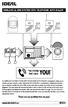 BAT.LOW AC WIRELESS ALARM SYSTEM WITH TELEPHONE AUTO DIALER THE SYSTEM THAT CALLS YOU! Our WIRELESS ALARM SYSTEM WITH TELEPHONE AUTO DIALER is designed to allow you to create your own security system.
466-2183 Rev A March 2005. Security. www.gesecurity.com. Part Numbers: 600-1021-95R 600-1022-95R 600-1040. Concord 4 Series Security Systems
 g GE Security 466-2183 Rev A March 2005 www.gesecurity.com Part Numbers: 600-1021-95R 600-1022-95R 600-1040 Concord 4 Series Security Systems user guide Notices FCC Part 15 Information to the User Changes
466-1822 Rev C February 2003. GE Interlogix. www.ge-interlogix.com. Part No: 60-874-95R. Allegro. User Guide
 g 466-1822 Rev C February 2003 GE Interlogix www.ge-interlogix.com Part No: 60-874-95R Allegro User Guide FCC Notices FCC Part 15 Information to the User Changes or modifications not expressly approved
SECURITY SYSTEM NOTES. EMERGENCY ACTIVATION KEYS (check if enabled) PROGRAMMED FUNCTIONS
 SECURITY SYSTEM NOTES Installing/Service Company For Service Call Installation Date / / Central Station Duress Code EMERGENCY ACTIVATION KEYS (check if enabled) Fire Auxiliary Emergency Police PROGRAMMED
Simon Security System
 ) *(6HFXULW\ 466-1873-01 Rev B July 2004 ZZZJHVHFXULW\FRP Part No: 60-875 60-910 (Not investigated for use by UL) 600-1012 Doors & Windows Motion Sensors System Status H O M E S E C U R I T Y Arm Disarm
AGRI-ALERT 800T / AGRI-ALERT 800 ALARM SYSTEM USER MANUAL
 AGRI-ALERT 800T / AGRI-ALERT 800 ALARM SYSTEM USER MANUAL Manufacturer: Viatron Electronics 3514 1st Street, St-Hubert (Quebec) Canada J3Y 8Y5 WARNING: the warranty can be void if the Agri-Alert 800T or
Customer Care (800) 948-7133. Index. Arming Your System...page 1. Chime Feature...page 4. Access Codes...page 4. Setting the Time and Date...
 Index Arming Your System...page 1 Chime Feature...page 4 Access Codes...page 4 Setting the Time and Date...page 5 Adjusting the Keypad Display/Volume...page 6 Panic Alarms...page 7 Testing Your System...page
How To Control A Car Alarm On A Car With A Remote Control System
 MODEL CA100 REMOTE CONTROL AUTO ALARM SYSTEM INSTALLATION & OPERATION INSTRUCTIONS WIRING DIAGRAM Black Antenna Wire 6 Pin 6 Pin Mini Connector Valet Switch Blue LED Indicator Blue Wire: (-) 200mA Unlock
ICP-CC488 ICP-CC488 EN. Control Panel. User s Guide
 ICP-CC488 EN User s Guide ICP-CC488 Control Panel ICP-CC488 User's Guide Notices EN 2 Copyright Notice Unless otherwise indicated, this publication is the copyright of Bosch Security Systems, Inc. ( Bosch
HONEYWELL COMMERCIAL FIRE/BURG PANEL UL LISTING REQUIREMENTS (Compiled from VistaFBPT Installation Instructions 800-09617V1 Rev A 11/12)
 HONEYWELL COMMERCIAL FIRE/BURG PANEL UL LISTING REQUIREMENTS (Compiled from VistaFBPT Installation Instructions 800-09617V1 Rev A 11/12) UL864 (Commercial Fire) Compliance General Requirements The VISTA-128FBPT/VISTA250FBPT
WIRELESS ALARM SYSTEM WITH TELEPHONE AUTO DIALER
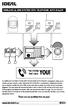 BAT.LOW AC WIRELESS ALARM SYSTEM WITH TELEPHONE AUTO DIALER THE SYSTEM THAT CALLS YOU! Our WIRELESS ALARM SYSTEM WITH TELEPHONE AUTO DIALER is designed to allow you to create your own security system.
Users Guide to Keypad Functions
 Users Guide to Keypad Functions MANUAL NO. 700-175-01J ISSUED JAN 2002 VERSION 1.41 Summary of Operation A rm/ disarm [#] + [USER CODE] Quick Quick Quick Panic Fire Medical Away Arm Stay Arm Stay Arm &
Solution-16 Operators Manual ISSUE 1.60
 Solution-16 Operators Manual ISSUE 1.60 !"#$%&"'()*+ Operators Manual Copyright 2002 by, SYDNEY, AUSTRALIA Document Part Number MA880O DOCUMENT ISSUE 1.60 Printed 22 March 2002 This documentation is provided
TABLE OF CONTENTS HOW TO AVOID FALSE ALARMS... 1
 TABLE OF CONTENTS HOW TO AVOID FALSE ALARMS... 1 THE BRINK S HOME SECURITY SYSTEM Equipment in the Standard Systems... 2 Optional Equipment... 3 Description of the Keypad... 5 OPERATING THE BRINK S SYSTEM
GC2 Panel User Guide
 GC2 Panel User Guide ENGLISH (International) WIRELESS SECURITY SYSTEM WARNING: OWNER S I NSTRUCTION NOTICE Not to be removed by anyone except occupant THIS PAGE INTENTIONALLY LEFT BLANK CONTENTS System
Wireless AUTODIAL GSM SMS Home Alarm Security System 900/ 1800/ 1900Mhz(CK-GSM-9003)
 CN2HK LIMITED Wireless AUTODIAL GSM SMS Home Alarm Security System 900/ 1800/ 1900Mhz(CK-GSM-9003) User Manual Please read this manual before operating this product. After you finish reading this manual,
How To Use An F145C-1 With A Sim Sims 2 (Aq) And A Sims 1 (Aux) (Aipa) (For Aq) (F145C) (Ios) (Power
 First Alert FA145 Installer Notes M. Leuck 1. Programming can only be done by 6139 Alpha keypads, standard 6128 keypad cannot be used to program zones 2. Program new Master Code in section *20 (old version)
Auto Dialer. Manual E-921APQ E-921GPQ
 Troubleshooting: Auto dialer will not arm/disarm Auto dialer will not dial out Unit doesn t respond to a call-back Difficulty in activating room monitor by telephone remote control Make sure that you have
Understanding the Code Pad lights...4. Code Pad tones...5. Fully arming the system On MODE...6. Fully arming the system - Quick Arm MODE...
 TABLE OF CONTENTS...Glossary of terms...2...code Pad Diagram...3 Understanding the Code Pad lights...4 Code Pad tones...5 Fully arming the system On MODE...6 Fully arming the system - Quick Arm MODE...6
AC-115 Compact Networked Single Door Controller. Installation and User Manual
 AC-115 Compact Networked Single Controller Installation and User Manual December 2007 Table of Contents Table of Contents 1. Introduction...5 1.1 Key Features... 6 1.2 Technical Specifications... 7 2.
HILLS Series LED Code Pad User Manual
 HILLS Series LED Code Pad User Manual Not all features may be available on your system Check with your installer to find out which features are programmed Page 2 TABLE OF CONTENTS Code Pad Diagrams...2
Emergency Dialer DIAL-ALERT. English MODEL : AD-433S. www.skylinkhome.com
 www.skylinkhome.com Emergency Dialer English DIAL-ALERT TM MODEL : AD-433S 101A320 JUNE, 2004 CUSTOMER SERVICE 17 Sheard Avenue, Brampton, Ontario, Canada L6Y 1J3 Tel : (800) 304-1187 Fax : (800) 286-1320
INSTALLATION MANUAL PC2525. Version 1.1
 INSTALLATION MANUAL PC2525 Version 1.1 TABLE OF CONTENTS FEATURES 1 SPECIFICATIONS 1 INSTALLATION 2 Mounting the Panel... 2 Mounting the Keypad... 2 Auxiliary Power Connection... 2 Bell/Siren Connection...
CONTENTS QUICK SETUP & INSTALLATION USER MANUAL. SUPA8 Quick Setup & User Manual
 SUPA8 Quick Setup & User Manual QUICK SETUP & INSTALLATION CONTENTS FACTORY DEFAULTS... 1 INSTALLATION OF THE SECURITY SYSTEM... 2 COMMISSIONING THE DIALLER PANEL... 5 ZONE INPUT CONNECTIONS... 7 PANEL
www.ealarm.com.my P/N 5-051-371-00 Rev D
 System 236 System 236i P/N 5-051-371-00 Rev D Thank you for purchasing this C&K alarm system Your system is one of the most powerful and advanced alarm systems on the market today, designed to provide
DESTINY OWNER S MANUAL
 DESTINY OWNER S MANUAL DESTINY You have made a wise decision to protect your family and property with the DESTINY Security System. The DESTINY has been designed to provide you with a maximum level of security
IDS. Users Guide to Keypad Functions S E C U R I T Y MANUAL NO. 700-171-01B ISSUED AUG 2002 VERSION 1.18
 INHEP DIGITAL IDS S E C U R I T Y Users Guide to Keypad Functions MANUAL NO. 700-171-01B ISSUED AUG 2002 VERSION 1.18 Summary of Operation A rm/ disarm [#] + [USER CODE] Quick Quick Quick Away Arm Stay
SECURITY SYSTEM NOTES
 SECURITY SYSTEM NOTES Installing/Service Company For Service Call Central Station Duress Code FUNCTION CODES Function Code Controls Function EMERGENCY ACTIVATION KEYS (check if enabled) Fire Auxiliary
HUNTER-PRO 32 Ver. 3.8 Intruder Alarm System RXN-9/416 User Guide
 HUNTER-PRO 32 Ver. 3.8 Intruder Alarm System RXN-9/416 User Guide PIMA Electronic Systems Ltd. 5 Hatzoref Street, Holon 58856, Israel +972-3-5587722 +972-3-5500442 [email protected] http://www.pima-alarms.com
User Manual GSM Alarm System. www.deltasecurity.cn. All rights reserved by Delta Security Co., Ltd
 User Manual GSM Alarm System All rights reserved by Delta Security Co., Ltd Dear Clients, Thank you for using our GSM Alarm System. We are committed to giving you the best home security available today
DC-8706K Auto Dial Alarm System
 DC-8706K Auto Dial Alarm System User Guide Basic Contents: 1x the host unit; 1x wireless door (window) magnet; 1x wireless infrared detector; 2x remote control; 1x siren; 1x phone core; 1x AC to DC power
SEC-ALARM200 WIRELESS ALARM SYSTEM
 SEC-ALARM200 WIRELESS ALARM SYSTEM - 1 - Safety precautions: CAUTION To reduce risk of electric shock, RISK OF ELECTRIC SHOCK this product should ONLY be DO NOT OPEN opened by an authorized technician
D1260/D1260B. Keypad. National Security Systems Inc (800)457-1999. Owner's Manual
 D1260/D1260B EN Owner's Manual Keypad National Security Systems Inc (800)457-1999 D1260/D1260B Owner's Manual This system includes a telephone line seizure feature. The system may be programmed to communicate
SECURITY AND HOME AUTOMATION OWNER S MANUAL. 466-1040-01-ITI Rev. F (Text)
 SECURITY AND HOME AUTOMATION OWNER S MANUAL 466-1040-01-ITI Rev. F (Text) Contents Welcome.......................... viii Section 1: Working with Your New Security System..................... 1 What You
VR8. User Guide Intruder Alarm System
 VR8 EN User Guide Intruder Alarm System VR8 User Guide Notices EN 2 Copyright Notice Unless otherwise indicated, this publication is the copyright of Bosch Security Systems Pty Ltd ( Bosch ). All rights
Simon XT. User Manual
 Simon XT User Manual g Copyright Disclaimer Trademarks and patents Software license agreement Copyright 2007 GE Security. All rights reserved. This document may not be copied in whole or in part or otherwise
ICP-CC488 ICP-CC488 EN. Control Panel. Quick Reference Guide
 ICP-CC488 EN Quick Reference Guide ICP-CC488 Control Panel ICP-CC488 Quick Reference Guide Notices EN 2 Copyright Notice Unless otherwise indicated, this publication is the copyright of Bosch Security
CAD-05 Kit GSM Auto Dialer. Owner s Manual
 CAD-05 Kit GSM Auto Dialer Owner s Manual CAD-05 Kit Manual.indd 1 Warnings: This device complies with Part 15 of the FCC rules, Operation of this device is subject to the following conditions: 1. This
Wireless Alarm system s manual
 MOUNTVIEW TECH AUSTRALIA PTY LTD Wireless Alarm system s manual ADS A180 Series ADS Security 1/11/2011 1. Before You Begin For your safety and the safety of others, and to ensure that you get the most
Simon Security System. Installation Instructions. 466-1873 Rev F September 2002. Part No: 60-875 60-910 (Not investigated for use by UL)
 ) 466-1873 Rev F September 2002 *(,QWHUORJL[ ZZZ*(,QWHUORJL[6HFXULW\FRP Part No: 60-875 60-910 (Not investigated for use by UL) Doors & Motion Windows Sensors System Status HOME SECURITY Arm Disarm 1/2
FIRST ALERT INSTRUCTION MANUAL FOR FA 270 KEYPADS SECURITY SYSTEM
 FIRST ALERT INSTRUCTION MANUAL FOR FA 270 KEYPADS SECURITY SYSTEM Page 0 Table of Contents Introduction 1 System Basics.. 1 Burglary Protection.. 1 Fire Protection.. 1 Security Codes. 1 Zones and Partitions
TX GSM SMS Auto-dial Alarm System. Installation and User Manual
 TX GSM SMS Auto-dial Alarm System Installation and User Manual Product Features: 1. 16 wireless zones, 3 wired zones alarm system, suitable for small to medium size offices and homes. 2. The system uses
PiSector Home security systems
 PiSector Home security systems User Manual (ALM-S02) Read manual fully before use. PiSector Inc., USA, www.pisector.com Thank you for purchase this alarm system, For proper use and your safety, please
SECURITY SYSTEM NOTES
 SECURITY SYSTEM NOTES Installing/Service Company For Service Call Central Station Duress Code FUNCTION CODES Function Code Controls Function This system is is not partitioned. EMERGENCY ACTIVATION KEYS
CM705B - Universal Expander Module CM707B - Plug On Zone Expander Security Systems
 CM705B - Universal Expander Module CM707B - Plug On Zone Expander Security Systems EN Security System CM705B CM705B - Universal Expander Module The CM705B universal expander provides a cost effective way
Business/Home GSM Alarm System. Installation and User Manual
 Business/Home GSM Alarm System Installation and User Manual Brief Introduction: GSM 900/1800/1900 bands, can be used in most parts of the world Full duplex communication with the host Monitor the scene
TABLE OF CONTENTS HOW TO AVOID FALSE ALARMS... 2
 TABLE OF CONTENTS HOW TO AVOID FALSE ALARMS... 2 THE BRINK S HOME SECURITY SYSTEM Equipment in the Standard Systems... 3 Optional Equipment... 4 Optional Features... 5 Description of the Keypad... 6 OPERATING
NESS D16. 16 Zone Control Panel and Dialler OWNER S MANUAL
 NESS D16 16 Zone Control Panel and Dialler OWNER S MANUAL REVISION 2, JULY 2001 Ness Security Products Pty Ltd Quality Endorsed Company ISO9001 LIC.No. QEC2074 NSW Head Office only WWW.NESS.COM.AU Australia
SECURITY SYSTEM NOTES SPECIAL CODES ENTRY / EXIT DELAY TIMES ARM / DISARM CODES
 SECURITY SYSTEM NOTES Installing/Service Company For Service Call SPECIAL CODES "Chime" Digit 1 "Partial Arm" Digit 2 "Quick Arm" Digit 3 ENTRY / EXIT DELAY TIMES Exit Delay Time Entry Delay Time Secondary
NetworX NX-6V2. LED Keypad User Manual
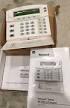 NetworX NX-6V2 LED Keypad User Manual POWER Light is on when AC power is present; flashes to indicate a low battery condition. ARMED Light is on when armed; off when disarmed; flashes to indicate a previous
SPECIAL CODES AUXILIARY CODES SYSTEM NOTES
 Installing/Service Company Monitoring Center SPECIAL CODES Master Code Duress Code AUXILIARY CODES "Quick Arm" " Chime" 08 02 09 03 10 04 11 05 12 06 13 07 14 SYSTEM NOTES Exit Delay Time Entry Delay Time
AUTODIALLER / QUICKDIALLER - SA132
 AUTODIALLER / QUICKDIALLER - SA132 INSTRUCTION LEAFLET ENGLISH www.thermomax-group.com CONTENTS 1 SETUP AT A GLANCE... 2 2 FOREWORD....... 3 3 INSTALLATION...... 4 4 KEYPAD AND INDICATORS...... 5 SETTING
First Alert FA140C/142C Installer Notes M. Leuck
 First Alert FA140C/142C Installer Notes M. Leuck 1. Programming can only be done by 6139 Alpha keypads, standard 6128 keypad cannot be used to program zones 2. Program new Master Code in section *20 (old
Supervised Security System
 Supervised Security System Model SC1200 Owner s Manual Read This First Contents This equipment generates and uses radio frequency energy, and if not installed and used properly, that is, in strict accordance
WIRELESS ALARM KIT INSTRUCTION MANUAL COMPLETE ALARM SYSTEM FOR HOME OR BUSINESS. Model Number: IT214054
 WIRELESS ALARM KIT COMPLETE ALARM SYSTEM FOR HOME OR BUSINESS Model Number: IT214054 INSTRUCTION MANUAL Warranty Details/Support This product is warranted against defects for a period of One year if the
NOTE: The home screen always displays the day and month, time, & P1 (Partition 1)
 GE Concord 4 System NOTE: The home screen always displays the day and month, time, & P1 (Partition 1) STAY AWAY DISARM The Asterisk key on your user interface pad is the most commonly used key. This is
SPECIAL CONTROL BUTTON FUNCTIONS
 Operating Guide 1 2 3 CONTENTS Page No. OPERATING YOUR ALARM 5 General Information 5 Arming the Alarm 5 Disarming the Alarm 6 Arming in Stay Mode 7 Disarming Stay Mode 8 Bypassing Zones 8 Manual Panic,
Simon XT User Manual
 600-1054-95R Simon XT User Manual g Copyright Disclaimer Trademarks and patents Software license agreement Copyright 2007 GE Security. All rights reserved. This document may not be copied in whole or in