
TimeKeeper Documentation for Version 7.1.2
|
|
|
- Martha Carr
- 10 years ago
- Views:
Transcription
1 TimeKeeper Documentation for Version FSMLabs, Inc. Copyright Finite State Machine Labs Inc All rights reserved. December 3, 2015 This document details many TimeKeeper capabilities and best practices, but does not cover all aspects of managing a timing network. FSMLabs has extensive documentation on topics not covered here - and if you find you need more information on any topic, please contact [email protected]. Contents 1 TimeKeeper Technology Introduction 4 2 TimeKeeper Product Line TimeKeeper Client - track PTP, NTP, PPS, GPS NTP Client PTP Client PCIe Card Tracking GPS, PPS Tracking Failover and Sourcecheck TimeKeeper Server NTP Server PTP Grandmaster/Boundary Clock Synchronizing and Serving Time PPS Output Supported Platforms TimeKeeper Grandmaster Velasync Model Pocket Grandmaster

2 3 Installation and Setup Install/Setup - TimeKeeper Client and Server Installation Configuration Updating TimeKeeper license TimeKeeper Grandmaster Setup Shipped Network Configuration Quick-Start TimeKeeper Evaluation Managing the TimeKeeper Service Verify TimeKeeper is Working Audit Trail/Logging Log Formats and Location Log Rotation FINRA OATS Compliance Time Visualization and Mapping Web Management Tools Timing Accuracy Visualization Plotting Results Integration Capabilities and Features SNMP Syslog Windows Event Log Package Management/RPMs Prebuilt RPMs Authentication - Users and Protocols Logging into the Web Interface Admin Web User Readonly Web User Logging in via SSH, Console, Keyboard root Access HTTPS support RADIUS/TACACS+ Support TimeKeeper Grandmaster Features PPS Input GPS Input User Management VLAN and Bonding Support RAID Support Factory Reset Command Line Configuration Save and Restore Configuration TimeKeeper Capabilities 41 2

3 9.1 Separate Major/Minor Time Network Asymmetry Detection Sourcecheck Feature Internal Clock Source TimeKeeper Specifications and Details Configuration Configuration Structure Global Options Per Source Options Per PTP Server Options SNMP/Syslog/ /Event Log Details Tools Included Time Validation and Testing Optimizations and Errata Leap Second Handling TimeKeeper Using External Reference Devices TimeKeeper as an NTP Client/Server TimeKeeper as a PTP Client/Server TimeKeeper Evaluation Limitations Assumptions about time in the past being invalid Holdover Holdover for traditional non-holdover devices Clock adjustment and steering Identifying Inaccurate Sources PTP Sync Rate NTP Query Rate Hardware timestamping network cards Identifying Accuracy Problems Poor NTP implementations Firewalls Timestamping Accuracy Network Card Drivers SuSE Enterprise Linux 11 Notes Bonded Ethernet Red Hat Release Notes TimeKeeper Version 7.1.x TimeKeeper Version 7.0.x TimeKeeper Version 6.3.x TimeKeeper Version 6.2.x TimeKeeper Version 6.1.x TimeKeeper Version 6.0.x TimeKeeper Version 5.1.x

4 14.8 TimeKeeper Version 5.0.x TimeKeeper Version 4.19.x TimeKeeper Version 4.18.x Support 87 1 TimeKeeper Technology Introduction TimeKeeper is a flexible tool to synchronize local system time with many different possible time sources, and also then distribute that very accurate time many different ways to many different clients. It supports: NTP server and client PTP Grandmaster, boundary clock, client SNMP MIB, traps, s, syslog notification of configured events Easy out of the box interoperability with other hardware and software solutions Support for PCI/PCIe GPS/PPS/IRIG hardware High Availability - transparent failover Simple centralized management of timing networks Web-based management, configuration, and visualization Most timing solutions are limited in scope. A device might understand how to use NTP, or PTP, or IRIG, or maybe consume a GPS signal. In some cases, legacy hardware can serve multiple protocols, with accuracy between protocols varying by several orders of magnitude. Timing networks until now have been a fractured and messy place, held together with constant and relentless engineering, often with disastrous consequences for accuracy, reliability, and tracability. TimeKeeper can track (and serve) all of the common timing protocols, but does so in a new way - accurately, regardless of protocol, all in the same system, and all at the same time. TimeKeeper can track a GPS input, dozens of NTP servers, many PTP Grandmasters across domains and interfaces, while at the same time serving both NTP and PTP to thousands of clients. While doing so, it also maps the timing network and collects client timing details, building a consolidated audit trail of time across the network. TimeKeeper automatically leverages local hardware capabilities it can find. While tracking time sources, it will make use of hardware timestamping cards (Solarflare, Mellanox, Intel, Broadcom, etc) if 4

5 they re available. If cards provide oscillators that can be steered, TimeKeeper will automatically and accurately steer them. TimeKeeper is designed to easily manage timing resources for you so that you don t have to invest countless hours building and maintaining a complex network of disparate components. The rest of this document will cover these features in detail. As an introduction, TimeKeeper works with time sources that are specified in the TimeKeeper configuration. These sources may be NTP servers, PTP from a group of Grandmasters, and a local PCIe device with a GPS antenna for example. TimeKeeper will synchronize the local clock to the highest priority source that is configured, and will transparently and automatically fail over and recover from secondary, tertiary, etc. sources as needed. This means TimeKeeper can track PTP by default, and if the PTP signal disappears, it will automatically fail over to an NTP source or whatever is configured. It can also actively compare all of the sources regardless of protocol, to proactively reject invalid time sources, whether it s due to noise, a remote misconfiguration, or a spoof attack (see section 9.3 for details). This document describes how to use all of these features. That tightly synchronized local time can then be distributed easily - whether it s via a PPS line to a client or a 10 gigabit Ethernet connection (the importance of matching line speeds to avoid asymmetries is covered later in this document). TimeKeeper can provide the following outputs, accurate to hundreds of nanoseconds: NTP - yes, accurate to nanoseconds - in contrast to most industry solutions PTP - IEEE 1588 versions 1 and 2, via many domains and interfaces simultaneously TIME (RFC 868) PPS, 10MHz outputs TimeKeeper builds an internal map of the timing network, tracks clients, and can alert on quality issues with sources and clients with standard industry tools. Network asymmetries can be detected out of the box. Timing alerts integrate with off the shelf tools based on , syslog, and SNMP. The TimeKeeper Grandmaster provides an integrated hardware platform to support tens of thousands of clients in modern 10 gigabit network deployments, complete with RAID-enabled storage and redundant power supplies built in. Read on for more details on the how TimeKeeper can support your environment. 2 TimeKeeper Product Line Whether it s deployed as a hardware Grandmaster or a timing client, TimeKeeper provides a built-in web interface that allows users to configure any of the features described in this document. The configuration file can also be modified directly - and in the interest of being concise, examples will be given in the form of configuration file fragments. 5

6 For reference, here is a quick view of the configuration tools also available in the web interface: 2.1 TimeKeeper Client - track PTP, NTP, PPS, GPS... TimeKeeper can track time from just about any type of source. It can track PTP from a Grandmaster on the network, while at the same time tracking NTP from several different stratum servers. Those sources can be cross checked against a local PPS and/or GPS input. This is useful to ensure proper delivery of timing data through the network - enabling the detection of asymmetries, the detection of noisy clocks, faulty hardware, and more, in addition to providing local clock accuracy in the nanosecond range. As mentioned above, TimeKeeper tracks time sources, which are defined in the configuration. We ll cover a few common examples here to show how these sources work, with more specific detail in later chapters. TimeKeeper will automatically make use of any local hardware timestamping capabilities for a more accurate sync if it s supported by the devices present. This allows for hardware timestamped NTP and PTP for a more accurate and stable sync, often in the low hundreds of nanoseconds NTP Client TimeKeeper supports nearly any form of NTP, and can achieve sub-microsecond accuracy with the protocol, which is a surprise to many. (NTP as a protocol is accurate, but many implementations of the 6

7 protocol are poorly done.) Specifically, as a client, TimeKeeper supports NTP versions 1, 2, 3, and 4, and can track NTP from any type of server, with accuracy primarily dependent on the quality of the NTP implementation on the server. (Generally, to achieve accuracy in the range of hundreds of nanoseconds, the NTP server should be running TimeKeeper.) An example of an NTP source, configured in TimeKeeper, is: Listing 1: NTP Client configuration 1 SOURCE0 ( ) { NTPSERVER= hostname ; } This will track NTP from hostname as the primary source of time. There are a number of NTP options that can be enabled, which we ll cover later - however, this is all that is needed to configure TimeKeeper for NTP PTP Client Similar to NTP, TimeKeeper will track IEEE 1588 PTP Grandmasters and boundary clocks from nearly any vendor, whether it s a hardware appliance, a software instance, or a PTP-aware networking component. TimeKeeper supports both PTP version 1 and version 2. Some key features when using TimeKeeper as a PTP client include: Support for the Default, Telecom, and Hybrid PTP profiles Track many Grandmasters via many domains simultaneously for controlled failover in addition to the scope of the PTP BMC algorithm Ability to match network speed properly to avoid silent biases caused by network asymmetries Below is a straightforward example that will listen for PTP domain 0 (the default) using the default profile. This builds on our NTP example and allows for failover to NTP on source 1: Listing 2: PTP Client - Default Profile 1 SOURCE0 ( ) { PTPCLIENTVERSION = 2; } 2 SOURCE1 ( ) { NTPSERVER= hostname ; } PTP is very reliant on multicast traffic, particularly in the default profile. In this mode, time is distributed from the Grandmaster via multicast, and every client that requests information from the Grandmaster communicates via multicast. As you might expect, this is does not always scale well - with thousands 7

8 of nodes, every client seeing every other client s Grandmaster request consumes a lot of network and processor bandwidth. A hybrid mode often makes more sense, where the Grandmaster distributes time via multicast to clients, and the clients that need data (like delay information) from the Grandmaster make direct unicast queries. Configuring TimeKeeper for this is simple - again, let s build on our example, tracking PTP domain 1 from a hybrid-capable Grandmaster, with NTP as a fallback: Listing 3: PTP Client - Hybrid Profile 1 SOURCE0 ( ) { PTPCLIENTVERSION = 2; UNICAST= 1; PTPDOMAIN= 1; } 2 SOURCE1 ( ) { NTPSERVER= hostname ; } We could have also retained our fully multicast source in the list as a secondary or tertiary source also. In the interest of being realistic it s been removed here, since a hybrid PTP source is often used to avoid creating extra multicast traffic. Having a hybrid source and a fully multicast source would work against that goal. Full unicast is also an option - known as the Telecom profile. In this case, the client subscribes to unicast updates from the Grandmaster, and also exchanges all other information from the Grandmaster over a unicast connection. This can be ideal for longer links where multicast traffic is not an option. Building on our previous example, now with our primary source being a fully unicast PTP feed available on PTP domain 2, with fallbacks to a hybrid PTP source and then NTP: Listing 4: PTP Client - Telecom Profile 1 SOURCE0 ( ) { PTPCLIENTVERSION = 2; 2 PTPSERVER=gm_hostname ; 3 PTPDOMAIN= 2; 4 } 5 SOURCE1 ( ) { PTPCLIENTVERSION = 2; UNICAST= 1; PTPDOMAIN= 1; } 6 SOURCE2 ( ) { NTPSERVER= hostname ; } PTP is a fairly complex protocol, and many other options are available to finely tune your deployment. We ll cover other optional capabilities later in this document. TimeKeeper can communicate with just about any PTP Grandmaster, boundary clock, and client on the market. This includes but isn t limited to TimeKeeper Grandmasters, Symmetricom/Microsemi such as the S3XX line (like the S350), SSU2000 models, TPXXXX models (like the TP5000), Spectracom hardware like the SecureSync and Velasync (The Velasync Grandmaster from Spectracom is built with Time- Keeper inside), EndRun, Oscilloquartz, Arista, Cisco, and so on. If you have any specific questions about your hardware, please contact us at [email protected]. 8

9 2.1.3 PCIe Card Tracking A local card can also be used to deliver time to a TimeKeeper client. The specific method will vary by the card s capabilities, but may be a direct GPS feed, an IRIG-B distribution, or a similar protocol. TimeKeeper can generally use the card in any supported mode, allowing the card to be configured as needed. Local system time can be driven based on the card s time, and optionally redistributed as needed, whether that s via one of the card s outputs or with TimeKeeper delivering PTP and NTP on the network. others. Out of the box support is provided for a number of cards from Spectracom, Symmetricom, and In these cases, the card can be configured as needed to select timing inputs, either with vendor supplied tools or the versions provided directly with TimeKeeper. TimeKeeper can then track that card and any other timing source available Spectracom PCIe TSync GPS/IRIG Timecode Processor A driver for the this card is included with the TimeKeeper installation and is loaded automatically when the Spectracom TSync card is selected as a source. You may also load and configure a driver for this device from the vendor. TimeKeeper does not change the reference table stored in the card so the reference table must be set up before starting TimeKeeper. Adding a Spectracom TSync PCIe card to our existing example at the end of the PTP section would look like the following: Listing 5: Spectracom TSync PCIe card 1 SOURCE0 ( ) { PPSDEV= s p e c t r a c o m ; } 2 SOURCE1 ( ) { PTPCLIENTVERSION = 2; 3 PTPSERVER=gm_hostname ; 4 PTPDOMAIN= 2; 5 } 6 SOURCE2 ( ) { PTPCLIENTVERSION = 2; } 7 SOURCE3 ( ) { NTPSERVER= hostname ; } In this case, the local card would be used first, with automatic failover to the PTP profiles and to NTP. Of course, even without failover, TimeKeeper will provide clear per-source timing details allowing you to cross check and alarm based on the behavior of all of your timing sources. When using a PPS input the MAJORTIME option should be used to combine the PPS with time of day information from another source. More details on how to do this can be found in section

10 Symmetricom/Microsemi BC635PCIe/BC637PCIe IRIG, GPS and PPS cards Similarly, a Symmetricom/Microsemi BC635/BC637 PCIe card could be used as a local source. TimeKeeper can use these cards to receive a PPS, GPS or IRIG time references, depending on how the card has been configured. Only one card can be used at a time, and as with the Spectracom card, if only a PPS is delivered, the source should be combined with another source that provides time of day information, detailed in section 9.1. example: Here, we ve configured it to be the last source to be used, if all of the others fail, just as an Listing 6: Symmetricom BC635/BC637 PCIe card 1 SOURCE0 ( ) { PTPCLIENTVERSION = 2; 2 PTPSERVER=gm_hostname ; 3 PTPDOMAIN= 2; 4 } 5 SOURCE1 ( ) { PTPCLIENTVERSION = 2; UNICAST= 1; PTPDOMAIN= 1; } 6 SOURCE2 ( ) { NTPSERVER= hostname ; } 7 SOURCE3 ( ) { PPSDEV= symmetricom ; } EndRun GPS/Network/CDMA time reference device TimeKeeper can use EndRun devices as a time source. The time source device should be configured to produce a NMEA ZDA string on the RS-232 port at 4800 baud. Using the FSMLabs provided cable, connect the BNC connector to the 1 PPS output of the EndRun device and the RS-232 connector to the male DB9 port on the EndRun device labeled Serial Time. You will need a null modem adapter between the supplied cable and the Serial Time port. Below is an example configuration using the reference input connected to the first serial device on the system, where the device is the last priority source in the system. You can also use any other serial port on the system as long as you update PPSDEV to reflect that device. You may not use a USB to RS232 converter for this connection since they introduce a great deal of delay and jitter on the connection which will result in poor accuracy. Listing 7: EndRun Reference Device 1 SOURCE0 ( ) { PTPCLIENTVERSION = 2; 2 PTPSERVER=gm_hostname ; 3 PTPDOMAIN= 2; 4 } 5 SOURCE1 ( ) { PTPCLIENTVERSION = 2; UNICAST= 1; PTPDOMAIN= 1; } 6 SOURCE2 ( ) { NTPSERVER= hostname ; } 10

11 7 SOURCE3 ( ) { PPSDEV=/ dev / t t y S 0 ; } GPS, PPS Tracking One of TimeKeeper s strengths is that it can consume data from the network and a direct GPS or PPS input or output. A sole PPS input can be combined with another source for time of day information (like a NTP or PTP source). Benefits of GPS/PPS inputs include: Highly accurate reference inputs for serving time or providing cross check Low cost - sub-microsecond accuracy possible with just a PPS via a serial input A PPS can be easily pulled into a system, whether it s for an accurate time input or as a cross check for other sources. In some cases it s provided via a PCIe card, described above. It can also be delivered directly to an FSMLabs NetCard device (please see the NetCard documentation for details), or via a serial line input. As with the other scenarios, informing TimeKeeper of a source is simple. If a PPS is brought in on the serial port, TimeKeeper can combine it with another source that delivers time of day information (major time) even if the source of major time is relatively noisy. The result will be a very accurate clock based on the accurate delivery of the second boundary from the PPS. Listing 8: Direct PPS input, combined with NTP 1 SOURCE0 ( ) { 2 PPSDEV=/ dev / t t y S 0 ; 3 MAJORTIME=SOURCE3 ; 4 } 5 SOURCE1 ( ) { PTPCLIENTVERSION = 2; 6 PTPSERVER=gm_hostname ; 7 PTPDOMAIN= 2; 8 } 9 SOURCE2 ( ) { PTPCLIENTVERSION = 2; UNICAST= 1; PTPDOMAIN= 1; } 10 SOURCE3 ( ) { NTPSERVER= hostname ; } Failover and Sourcecheck In all of the above scenarios, TimeKeeper prefers sources in the order defined. Meaning, the system clock will be driven to match source 0 (or the lowest numbered source) as long as that source is delivering timing data. If source 0 stops providing data, TimeKeeper will fail over to source 1, 2, and so on. 11

12 If there s a source failure and TimeKeeper begins using source 1, it will continue to use source 1 until either source 1 fails or source 0 begins responding again. If source 0 returns TimeKeeper will begin tracking it again. All of this occurs regardless of what protocol or source is in use - NTP fails over to PTP, PTP can fail over to PPS, and so on. TimeKeeper can also actively compare each time source, and proactively reject bad sources using the Sourcecheck feature. This feature applies to TimeKeeper clients, servers, and Grandmasters. For details on enabling and using Sourcecheck, please refer to section TimeKeeper Server TimeKeeper builds on its capabilities as a client in order to serve time. As we ve just covered, TimeKeeper tracks a number of sources regardless of protocol, and drives the system clock to match the configured source(s). It will reject sources that disagree in offset, frequency, and so on in order to deliver accurate time to timing clients. As above, all of the capabilities described below can be managed easily with the built-in web interface. The configuration fragments will be used here to keep the descriptions concise. Given time source(s)s to track, TimeKeeper can deliver PTP, NTP and TIME, and more to thousands of clients. Below we ll build on the previous NTP client snippet, so that the below configurations are standalone examples of how to serve time. They will all track an NTP server and redistribute that time as needed NTP Server NTP is a very accurate protocol that is often poorly implemented. Do not believe outlandish claims that NTP cannot achieve accuracy better than a millisecond, it s simply not true. You re most likely to hear this from someone trying to sell you a PTP solution, or someone accustomed to poor NTP implementations. TimeKeeper serving NTP to TimeKeeper clients routinely delivers accuracy much better than a microsecond without complex and expensive investments in specialized protocols and networking hardware. NTP server benefits include: Accuracy in the low hundreds of nanoseconds with off the shelf hardware Management capabilities to record the reported accuracy of NTP clients Stratum capability - put TimeKeeper in front of your existing noisy NTP servers to deliver a smoothed and accurate time for your clients 12

13 Support tens of thousands of clients per second from a single instance Enabling the NTP server is a matter of adding this to the configuration: Listing 9: Serving NTP 1 SOURCE0 ( ) { NTPSERVER= hostname ; } 2 SERVENTP=1 Similarly, TIME (RFC 868) can be enabled with SERVETIME=1. NTP can be restricted to a specific interface if needed in a particular environment PTP Grandmaster/Boundary Clock TimeKeeper can serve IEEE 1588, versions 1 and 2, in a number of ways. Since most users are interested in version 2 the examples will focus on that. It can serve multiple domains via multiple interfaces, allowing traffic to be matched properly with the network. This avoids the introduction of link asymmetries that can cause clients to be unintentionally biased. Some key features of TimeKeeper as a PTP Grandmaster or boundary clock include: Support for the PTP default, telecom, and hybrid profiles Serves via many domains on many interfaces for link redundancy and managed PTP distribution Supports standard and extended management formats to collect client and Grandmaster information in one centralized location Can act solely as a management node on the network, collecting and analyzing timing data of discovered clients and Grandmasters To serve PTP domain 0 (the default, or DFLT when using PTP version 1), just add this to the configuration: Listing 10: Serving NTP, PTP - Domain 0 1 SOURCE0 ( ) { NTPSERVER= hostname ; } 2 SERVENTP=1 3 SERVEPTP0 ( ) { PTPSERVERVERSION= 2; } To also serve PTP domain 1, the configuration would be: 13

14 Listing 11: Serving NTP, PTP - Domain 0 and 2 1 SOURCE0 ( ) { NTPSERVER= hostname ; } 2 SERVENTP=1 3 SERVEPTP0 ( ) { PTPSERVERVERSION= 2; } 4 SERVEPTP1 ( ) { PTPSERVERVERSION= 2; PTPDOMAIN= 2; } In many cases, it s useful to serve PTP via specific interfaces. This ensures, for example, that PTP for a 10 gigabit network is being specifically delivered on a 10 gigabit link. It also provides redundancy and a failover option for clients. Listing 12: Serving NTP, PTP - Domain 0 and 2 on Specific Interfaces 1 SOURCE0 ( ) { NTPSERVER= hostname ; } 2 SERVENTP=1 3 SERVEPTP0 ( ) { PTPSERVERVERSION=2; IFACE= e t h 1 ; } 4 SERVEPTP1 ( ) { PTPSERVERVERSION= 2; PTPDOMAIN= 2; IFACE= e t h 2 ; } As with the client PTP configuration, there are more capabilities than covered here in this introduction. The rest of this document will cover the other options and benefits in more detail Synchronizing and Serving Time It s worth putting together how TimeKeeper can track time from multiple sources and serve it into a single example. Below, TimeKeeper is tracking PTP on domain 0, with a fallback to unicast PTP and then NTP. It will synchronize the local clock to the sources and serve it via PTP (domain 3) and any NTP clients. Listing 13: Track NTP, PTP - and Serve PTP, NTP 1 SOURCE0 ( ) { PTPCLIENTVERSION = 2; PTPDOMAIN= 0; } 2 SOURCE1 ( ) { PTPCLIENTVERSION=2; PTPSERVER= g r a n d m a s t e r ; PTPDOMAIN=1; } 3 SOURCE2 ( ) { NTPSERVER= hostname ; } 4 SERVEPTP0 ( ) { PTPSERVERVERSION= 2; PTPDOMAIN= 3; } 5 SERVENTP=1 In this case, TimeKeeper is acting as a boundary clock for PTP and a stratum server for NTP at the same time. NTP clients can use this server, and PTP clients can communicate with it with the default, hybrid, or telecom profiles. Any TimeKeeper clients could track both NTP and PTP from this system at the same time. 14

15 2.2.4 PPS Output TimeKeeper can also be configured to drive a PPS on the network, to deliver accurate information for downstream clients. Example benefits include: A PPS input to a server can provide an accurate input, creating a low cost and accurate stratum server A single PPS can offer accurate timing to your clients directly Cross check and detect network biases, latency issues, and network asymmetries As an example, TimeKeeper server can receive a PPS driven by a client as a cross check. A TimeKeeper client can can track PTP from a TimeKeeper server, and that client can drive a PPS that is connected back to the server. The server can compare the received PPS from the client to the PTP source in order to confirm any biases or asymmetries in the network between the server and client. Contact [email protected] for more details on configuration and testing scenarios. 2.3 Supported Platforms TimeKeeper currently supports the following Linux distributions: Fedora 15 (and updates) Fedora 18 (and updates) Fedora 19 (and updates) RedHat Enterprise 4 (and updates) (32-bit and 64-bit) RedHat Enterprise 5 (and updates) (32-bit and 64-bit) RedHat Enterprise 6 (and updates) RedHat Enterprise 7 (and updates) CentOS 4 (and updates) CentOS 5 (and updates) (32-bit and 64-bit) CentOS 6 (and updates) CentOS 7 (and updates) SuSE Linux Enterprise 11 (and updates) 15

16 Ubuntu Linux (LTS release) Ubuntu Linux (LTS release) Ubuntu Linux (LTS release) Also, TimeKeeper supports the following Windows versions: Windows 8.1 Windows Server 2012 Windows Server 2008 Windows 7 Please inquire about support for other operating systems and distributions. Support is for 64 bit hosts unless otherwise noted. 2.4 TimeKeeper Grandmaster TimeKeeper is available as a pre-configured and pre-installed Grandmaster appliance. The Grandmaster can take in a GPS signal along with PTP and NTP, and deliver PTP, NTP, and TIME to downstream clients via 5x1 gigabit interfaces, and 2x10 gigabit interfaces. The Grandmaster provides redundant storage (RAID), redundant power supplies, and IPMI to ensure manageable and continued timing delivery in an enterprise environment. SNMP support is provided out of the box, complete with a MIB for TimeKeeper. User authentication can be done with RADIUS or TACACS+. Web configuration is possible over both HTTP and HTTPS. The Grandmaster can also output PPS and 10MHz signals for any clients that need it. PPS input is also an option to allow for cross checks with remote clients. For details on Grandmaster features, please refer to section 8. Datasheets are also available at Velasync Model The TimeKeeper product is also available in an integrated solution from Spectracom. The Velasync product line is a Spectracom Grandmaster product with TimeKeeper inside, providing PTP, NTP, 16

17 and more via multiple 1 gigabit and 10 gigabit interfaces. It also provides redundant storage and redundant power supplies, along with a management interface. Of course, the performance users expect from TimeKeeper is also available in the Velasync, including sub-microsecond accurate NTP. Please check for more details on the Velasync at Pocket Grandmaster The Grandmaster is also available in a smaller form factor to suit some environments. Contact [email protected] for details. 3 Installation and Setup Installation and setup of TimeKeeper is a very simple process: Run the installer with a valid license file in place Edit timekeeper.conf to set the time sources and options Start TimeKeeper Verify that TimeKeeper is working and running properly On both Windows and Linux, the TimeKeeper web interface allows you to manage configuration, verify time sources, and more. 3.1 Install/Setup - TimeKeeper Client and Server Installation TimeKeeper is distributed as a self-extracting executable. This file may be provided to you on DVD, via web download or other method. The example here assumes the file is in the /tmp directory. The installer must be run as the user root since installation requires superuser privileges. Install with the following command: 1 / tmp / t i m e k e e p e r _ i n s t a l l e r Listing 14: Install 17

18 If the installation fails, please with a description of the problem and a copy of the file /tmp/tkinstall.log. Similarly, on Windows, the installer is an executable, and can be run from Explorer or a command window. If needed, the installer will ask for elevated privileges. Make sure you have a valid license file for the installer to use. If this is a new install, place the license file in the same directory as the installer, and name it timekeeper.lic. If there is a TimeKeeper installation with a valid license file in place and no timekeeper.lic file in the same directory as the installer, the installer will retain the existing license Configuration Once the installation is complete you need to edit the file /etc/timekeeper.conf on Linux. On Windows the location will be %ProgramFiles%\timekeeper\timekeeper.conf, usually C:\Program Files\timekeeper\timekeeper.conf. The configuration file contains many examples of configurations and setups that are commented out. Comments in the configuration file begin with a #. They are there as references of common configurations and should be left commented out if you are not using them. The first step is to set at least one source, the SOURCE0 line. You can specify many sources with SOURCE1, SOURCE2 and so on. SOURCE0 is considered a higher priority source than SOURCE1, up 50 sources. Please refer to sections or for NTP and PTP configuration examples, or section if you have a local PCIe card. Section 10.1 contains all available options. To get started, though, all you need is one source - something as simple as this NTP configuration to track: Listing 15: Simple NTP Client 1 SOURCE0 ( ) { NTPSERVER= hostname ; } 3.2 Updating TimeKeeper license To update the TimeKeeper license replace the /opt/timekeeper/release*/timekeeper.lic file with the new license file. To begin using the new license restart TimeKeeper then verify in the Time- Keeper log or via the web GUI to confirm the new license is valid and being used. 18

19 3.3 TimeKeeper Grandmaster Setup Connect a GPS antenna to the BNC GPS connection on the back of the device. The GPS receiver provides 5v DC to the antenna. Connect a network cable to the first RJ45 ethernet port (far left when facing the back of the unit) and navigate with a web browser to You can log in with account admin and password fsmlabs to configure the network ports, TimeKeeper mode and options. Change the admin user s default password immediately for security, please. If this is an upgrade and you have been using previous versions of the grandmaster GUI interface, it is recommended that you force a full page reload (Ctrl-Shift-R on many browsers). This will make sure your browser loads the latest web interface from the grandmaster and provides all of the latest features. To change network interface addresses navigate to the Configuration tab and then Networking subtab, select the options you would like then click Save network changes and then Restart Network to apply the updates. The changes will take a moment to apply after which you can reconnect to the newly configured address. By default (and as shipped) the grandmaster does not enable SSH access. That can be enabled through the web interface, however. Please see below for details on enabling additional access methods. The device will then synchronize with the GPS and once done will answer NTP queries and provide PTPv2 service on the default domain (domain 0) on all network interfaces. The GPS startup process can take up to 15 minutes in some cases. You can monitor progress on initialization via the Status tab in the web GUI. No further configuration of the server should be necessary. Figure 1: TimeKeeper Grandmaster Shipped Network Configuration Each network port is configured with a unique static IP address when shipped. eth0 is configured for , eth1 for and so on. This includes optional 10G SFP+ ports which are eth4 ( ) and eth5 ( ). 19

20 Facing the system from back, the RJ45 network ports from left to right are eth0, eth1, eth2, eth3. The 10G SFP+ ports on the right are (from left to right) eth5, eth4. Note that the ordering of the RJ45 and SFP+ ports are different. Please note, the TimeKeeper Grandmaster does not support having multiple network interfaces on the same subnet or multipath routing. Modifying the server configuration by changing the console ports, otherwise modifying the Linux kernel, BIOS settings, installed devices or installed software applications may cause problems in performance or correctness. This can create support issues beyond FSMLabs support obligations. Please contact before attempting to make any changes to the server software or hardware configuration. 3.4 Quick-Start TimeKeeper Evaluation The easiest way to test/evaluate TimeKeeper is to setup one computer as a server and another as a client, even if you have no existing time sources. If you install TimeKeeper on both systems you can edit timekeeper.conf on the server setup and set: Listing 16: Master 1 SERVENTP=1 2 SOURCE0 ( ) { PPSDEV= s e l f ; } 3 SERVEPTP0 ( ) { PTPSERVERVERSION= 2; } 4 ENABLE_WEB_MANAGEMENT=1 5 WEB_MANAGEMENT_PORT=8080 This will configure TimeKeeper to use the local system clock as a source and provide that time to clients on the network. Then, on the client, edit timekeeper.conf: Listing 17: Client 1 SOURCE0 ( ) { NTPSERVER= I P _ a d d r e s s _ o f _ s e r v e r ; } 2 SOURCE1 ( ) { PTPCLIENTVERSION = 2; } 3 ENABLE_WEB_MANAGEMENT=1 4 WEB_MANAGEMENT_PORT=8080 That will use the server system as a time source, communicating over the network using the NTP protocol. Both the server and the client will start TimeKeeper s internal web service, configured here on port

21 Then run /etc/init.d/timekeeper restart (Linux), or sc start timekeeper (Windows) on both systems and you should have a working setup. Make sure that you have NTP messages allowed through the firewalls on each system. You can then run tkstatus to query the status of TimeKeeper and verify that it is working properly. The web tools will be running on both systems, allowing you to view information about the configuration, timing quality and more with your web browser pointed to each machine on the configured port. You can also review /var/log/timekeeper_0.data and /var/log/timekeeper_1.data for a log of updates. On Windows, the var\log path is in the same location as the TimeKeeper installation. The first column is the time since midnight 1970 January 1st of each update. The 2nd column is the offset from the remote server in seconds. More detailed information about each column is in section Managing the TimeKeeper Service Once installed TimeKeeper can be started during system boot time like any other system service with the ntsysv, update-rc.d or chkconfig commands, or via the TimeKeeper web interface. TimeKeeper is listed as the service timekeeper. By default it is not configured to start on boot and must be manually enabled. When started on Linux, TimeKeeper will stop services that confict with proper operation, most notably ntpd. If ntpd is running when TimeKeeper is started the ntpd service will be shut down. TimeKeeper will not reconfigure the NTP service to not start at system boot. To start TimeKeeper by hand, you can start the TimeKeeper service on Linux with: Listing 18: Startup - Linux 1 bash / e t c / i n i t. d / t i m e k e e p e r s t a r t Similarly, stop, status, or restart can be used in place of start above to stop, get the status of, or restart the TimeKeeper service, respectively. And on Windows TimeKeeper can be started from an elevated command window with: 1 sc s t a r t t i m e k e e p e r Listing 19: Startup - Windows Substituting stop for start will stop the TimeKeeper service. The service can also be managed with the normal Windows Service Manager ( services.msc ). 21
22 3.6 Verify TimeKeeper is Working Within about 60 seconds TimeKeeper should be active and running if the time source is configured properly. You can verify this by running the command tkstatus on Linux. This will report if TimeKeeper is active or not, what the current clock offset is and how old the latest timestamp is along with the same data about all configured sources. Since we enabled the web interface, you can login to TimeKeeper via port 8080 on the systems (default passwords are in section 7.1.1). The Status and Timing Quality tabs on the web interface also provide a clear summary of which source is being used, the current accuracy, and also details on the behavior of the various configured time sources over time. Also, you can refer to the log files directly. /var/log/timekeeper_0.data (again, located under the TimeKeeper installation directory on Windows) is a running list of every update that Time- Keeper receives and how TimeKeeper is adjusting time for source 0. This file contains a line for every update received from the time source. If it is growing then TimeKeeper is receiving time updates. In the file, column 1 is the absolute UTC timestamp from the time source in seconds since midnight January Column 2 is the estimated local time offset as of that update. The second column gives a good indication as to the quality of the sync that TimeKeeper has, and will converge shortly after TimeKeeper starts. For more details on the log file contents, refer to section 4.1. If this file is not being updated, it s likely that firewalls are preventing receipt of network data, or there is some configuration issue reported in /var/log/timekeeper. 4 Audit Trail/Logging TimeKeeper maintains all logging data in clear text formats for easy analysis and management. This includes logging parameters of each configured timing source, client timing quality information, network map data, and so on. 4.1 Log Formats and Location TimeKeeper logs information in multiple files, under /var/log/ on Linux, and %ProgramFiles%\timekeeper\var\log on Windows: timekeeper (timekeeper.log on Windows) 22
23 timekeeper_$source.data timekeeperclients timekeeper is the central log for TimeKeeper - here alarms, general messages, state change information and administrative information will be logged. timekeeper_$source.data, where $SOURCE is the source number, contains sync information about that source over time. All sources have the same log format regardless of source type. Every update that TimeKeeper receives is recorded in this file, one line per update. The log file format is as follows: timekeeper_0.data is a running list of every update that TimeKeeper receives and how TimeKeeper is adjusting time for source 0. It is the best way to see how TimeKeeper is performing. This file contains a line for every update received from the time source. If it is growing then TimeKeeper is receiving time updates. Please refer to section 5 for how to easily visualize this data, via the TimeKeeper web interface or other plotting tools. In most installations, the first two fields - the absolute timestamp and the offset from the time source - are all that is of interest. Once started and running properly this file should be growing as updates are received. Column 1: Absolute timestamp of the update, seconds since midnight January (also known as UNIX time) Column 2: Offset (in seconds) from the remote server or time source Column 3: Raw offset from remote side - pre-smoothing and adjustments Column 4: Internal testing use Column 5: Clock correction factor for the TimeKeeper managed clock Column 6: Used to provide additional data with TimeKeeper GPS devices Column 7: Used to provide additional data with TimeKeeper GPS devices Column 8: A predictive indicator for internal use Column 9: Timestamp type - hardware/software/other timestamp source Column 10: Network delay - meaning depends on type of source 23
24 Column 11: Raw network delay - meaning depends on type of source (for NTP/PTP this is the oneway trip time) Column 12: Time source, PTP, NTP, PPS or other Column 13: Ideal clock correction that if used would have minimized offsets over the previous few minutes Column 14: Model error over the model interval period Column 15: Ideal clock correction from sourcecheck calculations if applicable If this file is not being updated, it s likely that firewalls are preventing receipt of network data, or there is some configuration issue reported in the timekeeper file. timekeeperclients is a directory that contains clock quality information about the client machines that TimeKeeper is either directly serving time to or otherwise able to retrieve information from. The files in this directory contain data in the same format as described above for timekeeper_$source.data. The amount of detail available in each file will vary depending on the client. For some remote client types, the data available is limited. If the client is a TimeKeeper client, the data provided in that file will be more fully populated, giving you a better understanding of timing quality across the network Log Rotation TimeKeeper is provided with a default logrotate recipe that rotates all of the relevant TimeKeeper log files. On Linux this gets installed in /etc/logrotate.d/timekeeper. By default, this will retain 7 days worth of logfiles. If you have specific log storage needs this value can be easily modified directly or via the TimeKeeper web interface. 4.2 FINRA OATS Compliance TimeKeeper s multisource feature allows easy compliance with the FINRA OATS specification. For complete details, refer to the OATS Reporting Technical Specifications. Accuracy to within one second of NIST time is required - but if there is a very precise local time source, it s unlikely that a public NIST server is being used to drive the clock. By pointing to a NIST server as a secondary source, accurate logs can be maintained that provide continuous system time offsets from NIST time. To configure for this scenario, the TimeKeeper configuration should specify a NIST server as a secondary (or even lower priority) time source, as in: 24
25 Listing 20: Multisource OATS configuration 1 SOURCE0 ( ) { PTPCLIENTVERSION = 2; PTPDOMAIN= 8 0; } 2 SOURCE1 ( ) { NTPSERVER= n i s t 1 ny. u s t i m i n g. org ; } In this case, the primary source is a local PTP grandmaster on domain 80. The NIST server nist1-ny is a secondary source that will be tracked and logged in timekeeper_1.data in /var/log. Additional servers can be specified in order to maintain a tracked offset if SOURCE1 goes offline. /var/log/timekeeper_1.data will look approximately like this: Listing 21: Offsets from NIST time As described in section 4.1, the first column is the time reported by the time source (NY NIST in this case). The second column is the local time offset from that sample. These public NTP servers are subject to variations in round trip time across public links, so they will not report a sync as clean as the primary time source in /var/log/timekeeper_0.data. TimeKeeper applies the same smoothing algorithms it would to any time source, though. TimeKeeper constantly steers the clock based on the primary source at every sample, so there is no need to explicitly synchronize the servers by hand at predetermined intervals. When using the multisource option, TimeKeeper will fall back to the NIST server in the above configuration if the primary PTP grandmaster ceases to provide PTP data. This means there is an automatic fallback in place, even though it is for a different protocol. If you would like to failover to a different local source, identify that source as SOURCE1 and move the NIST server to SOURCE2. The /var/log/timekeeper_1.data files maintain a complete history of the local clock offset from NIST time and should be retained with other audit trail data. When referencing a public NTP server, please ensure to comply with that server s usage guidelines. 25
26 5 Time Visualization and Mapping 5.1 Web Management Tools If configured and licensed, TimeKeeper will offer set of management tools via a web server running with TimeKeeper. To enable this feature, the configuration file should include: Listing 22: Enable Web Management 1 ENABLE_WEB_MANAGEMENT=1 2 WEB_MANAGEMENT_PORT=80 If WEB_MANAGEMENT_PORT is not specified in the configuration, but the ENABLE_WEB_MANAGEMENT option is set to 1, TimeKeeper will start the web management tools on port There is also a WEB_MANAGEMENT_IP option that may be specified as follows: Listing 23: Restrict Web Management Tool Access 1 WEB_MANAGEMENT_IP= This will configure the web management tools to only listen on a specific IP address on the server. If web tools are enabled but this option is left unspecified, browsers will be able to connect from any interface. similar to: A web browser pointed to the identified management port (or 8080) will show a front page Refer to section 7 for login details. Chrome and Firefox are recommended. Mobile browsers can be used to connect to the administrative console. Should you have specific browser requirements, contact [email protected]. 26
27 Via this interface, many TimeKeeper features are made visible - configuration, plotting of timing accuracy, tracking of any clients, a map of the timing network, and more Timing Accuracy Visualization The web interface allows you to see how all of your time sources are behaving compared to each other. This includes offset information, one way delay data, and more. The data is shown on the Timing Quality tab, under Live Graphs. The plotted sources and quality will vary by deployment. Here is an example: TimeKeeper also builds a map of the timing network, from your sources to their sources as far as can be reached. It also includes any other clients found on the network, and other time sources even if it s not a configured source on the local host. These maps can be very extensive and in some cases point out issues with the current timing systems in place. Here is a snapshot of a simple map generated with TimeKeeper: 27
28 5.2 Plotting Results Timing data is easily viewed via the web interface built into TimeKeeper, covered in section 5. However, in some cases it s helpful to post process data, either on the host directly or on another machine. A script is provided for this on Linux, and can interactively plot timing data or generate plot images of aspects of timing quality over time. The script is provided here: /opt/timekeeper/release*/plots/plot.sh Also included in that directory are a number of gnuplot scripts to parse TimeKeeper files. plot.sh can use any of these, but offsetplot.in is of the most interest to users (this is the default plot). It shows the clock offset from the source, both the raw input TimeKeeper received, and the smoothed clock presented to the user. Here s an example of how to use the script:./plot.sh This will show an interactive plot of the local system s TimeKeeper data, updating every 5 seconds. Similarly:./plot.sh -l user@host:/var/log/timekeeper_0.data -f 30 28
29 Will plot results of TimeKeeper data from host host, retrieving the data file and updating every 30 seconds. Both of the above commands will generate plots of the clock offset - specifying -p plotfile.in allows you to create a different graph. Another example is:./plot.sh -p clockrateplot.in This will generate a plot of the changes in clock rate on the local machine running TimeKeeper. Running plot.sh -h will print a full list of accepted arguments. The gnuplot scripts can also be customized to display other information as needed. 6 Integration Capabilities and Features TimeKeeper provides several methods of delivering notifications of significant events. They can be delivered via , syslog, SNMP, or a combination of all three. On Windows TimeKeeper sends event information into the Windows Event log. Each event is also logged locally, no matter what delivery options may or may not be set. Below a brief overview is given for each type of delivery mechanism - for specifics on each message type please refer to section SNMP TimeKeeper can generate SNMP traps if configured in /etc/timekeeper.conf on Linux. TimeKeeper uses the program snmptrap from the packet net-utils to send traps. This program is not included with TimeKeeper but is commonly included with Linux distributions. To configure TimeKeeper to generate SNMP traps and deliver them to the host host1 add the following line to the /etc/timekeeper.conf file: SNMPTRAPHOST=host1 host1 may be a hostname or an IPv4 dotted notation address. TimeKeeper supports multiple SNMP trap destinations and they can be listed with: SNMPTRAPHOST=host1,host2,host3 If the parameter SNMPTRAPOID parameter is set in /etc/timekeeper.conf, TimeKeeper will emit all traps to that OID. This is to retain legacy TimeKeeper behavior where all traps were by default 29
30 sent to OID Unless you need all traps sent to one OID, it is recommended you leave SNMPTRAPOID undefined in your configuration. in: By default, TimeKeeper delivers traps according to the provided MIB file, which can be found /opt/timekeeper/management/snmp/timekeeper_mib.txt TimeKeeper Grandmasters also allow users to walk the SNMP tree on the appliance. To enable this feature, click Enable SNMP queries in the web interface, under Configuration, subtab Service & System Management. The SNMP tree can be walked remotely with standard tools - for example, assuming the Grandmaster is at IP : snmpwalk -v2c -c public This may be configured on other TimeKeeper clients, servers, boundary clocks, and so on, but the specific configuration may vary depending on the distribution in use. A recipe that will work on many installations is to add these two lines to your snmpd.conf: view systemview included pass /opt/timekeeper/management/snmp/snmphandler Please contact [email protected] for more details if needed. 6.2 Syslog Events that are sent over or SNMP can also be delivered via syslog. TimeKeeper automatically emits syslog messages, so TimeKeeper clients can be configured to send data to a syslog server just like any other application, using whichever syslog daemon is in use on the client. With TimeKeeper Grandmasters, the ability to configure where syslog data is sent is available in the web GUI. To change the configuration, log into the web interface, navigate to Configuration and then Service & System Management. Under Manage Communication, select Configure Syslog. From this interface, 3 separate syslog servers can be configured. Once applied, the change is immediate and syslog messages will be delivered to those hosts without having to restart the system or TimeKeeper. 30
31 6.3 TimeKeeper can generate s on certain events if configured in /etc/timekeeper.conf with the NOTIFICATION parameter. An example of this is: or, if multiple addresses should receive notification: TimeKeeper uses the mail program to send the notifications. As with the snmptrap application, TimeKeeper does not provide the application but relies on the host configuration and network connectivity to deliver mail. s may be throttled and bundled together using the NOTIFICATION_THROTTLE option, detailed in section Windows Event Log On Windows, TimeKeeper will automatically send information to the Windows Event log. Any event that would be logged via SNMP, , or syslog on Linux will be sent to the event log, so if sync error thresholds are configured and the threshold reached, that event will be logged. The results of these events can be viewed with the normal Event Viewer on Windows. Also, they can be automatically forwarded on via /snmp from the event log as you would normally do on Windows, without requiring extra tools and process. 6.5 Package Management/RPMs To simplify deployment, TimeKeeper comes with several RPM spec files and FSMLabs provides prebuilt RPMs for some platforms. Prebuilt RPMs are provided for download at the same location as the TimeKeeper binary installer. RPMs can also be built for your platform by using these 2 spec files. Depending on the installation, they may be found in /opt/timekeeper/release32 or /opt/timekeeper/release64: 31
32 timekeeper.spec timekeeper-config.spec timekeeper.spec builds the main TimeKeeper RPM package that excludes configuration files. There will only be one timekeeper RPM installed at any one time. FSMLabs provides a prebuilt timekeeper RPM for some distributions. timekeeper-config.spec contains configuration files, such as the site-specific timekeeper.conf file and the TimeKeeper license file. There will only be one timekeeper-config RPM installed at any one time. Some users prefer to use only the timekeeper RPMs and use Puppet or some other configuration management system to manage configuration data - this is fine. FSMLabs does not provide prebuilt versions of the timekeeper-config RPM Prebuilt RPMs FSMLabs also provides prebuilt RPMs of TimeKeeper for various distributions and versions. For more details on getting access to these images, please contact [email protected]. 7 Authentication - Users and Protocols There are several login and authentication protocols supported by TimeKeeper. The web interface, when used on a TimeKeeper client, does not require local accounts on the system. On TimeKeeper Grandmasters, there are local system accounts that can be used for web, SSH and console logins. These accounts can be configured to authenticate with remote tools like RADIUS and TACACS+. This section covers the specifics of each of these types of logins and how they are authenticated. 7.1 Logging into the Web Interface Admin Web User When the web interface is enabled, users can log in with an admin account, with the default password fsmlabs. If the instance of TimeKeeper is not a Grandmaster, this account is internal to Time- Keeper and is not a local system (Windows/Linux) account that can be logged into. On Grandmasters, TimeKeeper has a local system account as of version This means that upgrading a Grandmaster to and above from an earlier release will require web login with the default credentials of admin and fsmlabs now that it is using the local account. The password can be set as before via the GUI, and now also on the command line via SSH or on the console. 32
33 Logging in as admin will allow you to manage all aspects of the system, including visualization, service management, configuration, and other supported options. For a more limited login, refer to the next section on the readonly user. Authentication of the web login is handled based on how the unit is configured. If the instance is not a Grandmaster, authentication is internal to TimeKeeper. If the unit is a Grandmaster, by default authentication and password control is local to the system admin account. If RADIUS or TACACS+ is enabled, authentication is handled by the configured servers. Should authentication via TACACS+ or RADIUS fail (such as during a network outage), the provided password will be tested against the local system account. For admin to be authenticated via RADIUS or TACACS+, the authentication server must have an account named admin with matching credentials. If a TimeKeeper Grandmaster upgrade detects the need for and adds a local system admin account for authentication, it will as a precaution disable ssh access. This prevents unauthorized logins with the default password, until the admin account password can be changed to something unique. SSH access can then be reenabled as before via the web GUI Readonly Web User A more limited user is also available with the readonly account that can be configured by the admin user via the web interface. The readonly user can log in and review TimeKeeper data, but cannot reconfigure or manage the system. If RADIUS or TACACS+ is enabled, any user that can authenticate with the configured server that is not named admin will be logged in as the readonly role with reduced capabilities. By default, the read-only user feature is present but not configured and cannot be used. To configure the readonly user, log in as admin. Select the Configuration tab, then select the Service & System Management subtab. The Set readonly password button will allow you to configure a password for the read-only user, which will be named readonly. 7.2 Logging in via SSH, Console, Keyboard By default the Grandmaster does permit RS232 console login, and keyboard/monitor access for enabled accounts but not SSH access. To enable SSH access login to the web interface as admin, click the Enable SSH button in the Configuration tab, Service & System Management subtab. Once this is enabled, logs can be 33
34 retrieved via SCP, SFTP and similar tools with the loguser user. It is also possible to SSH into the device and run system monitor tools like top, ps and other Linux programs. On a TimeKeeper Grandmaster, users admin, readonly can also be used on the console or via SSH in addition to the loguser user. readonly and loguser accounts must be enabled via the web interface before they can be used. This can be done in the web interface under the Configuration tab, in the Service & System Management section. This will permit RS232 and keyboard/monitor access but not SSH unless SSH access is enabled. All console and SSH logins will authenticate via RADIUS or TACACS+ if the Grandmaster is configured to use those protocols. It is strongly recommended that you change the default password for loguser immediately. The default is: logaccess. This applies even if RADIUS or TACACS+ is in use, as TimeKeeper will still fall back to login against the local account if possible when logging in. The readonly and loguser accounts are intended for easy log collection via SSH, so that logs can be archived as needed for audit trails root Access Standard shell access as root is not normally permitted or recommended. Please do not enable allow root access via the web GUI unless asked to by FSMLabs personnel. 7.3 HTTPS support The web interface on TimeKeeper Grandmasters may be accessed via normal http on a configurable port (see WEB_MANAGEMENT_PORT) or via https on port 443. If web management is enabled on a TimeKeeper Grandmaster, https will be available. If the WEB_MANAGEMENT_IP setting is used to restrict which interfaces respond to web queries, https support will also be limited to that named address. Access over https is achieved with the following example URL: Out of the box, the Grandmaster will use a unique self-signed certificate. This means that browsers may, on initial connection, ask the user to confirm that the certificate is acceptable. This is normal and expected. This warning will only occur when using https, and with most browsers will only need to be viewed once. 34
35 Users can configure https support by logging into the appliance over https. Navigate to the Configuration tab, subtab Service & System Management. Options to Generate HTTPS CSR and Upload HTTPS Certificate will be present. (Note that if the system is not a Grandmaster, or if the login was not done over https, these options will not be available.) Figure 2: HTTPS controls The existing self-signed certificate can be used, or users can provide their own certificate for the appliance. A new signed certificate may be needed to comply with internal policies, or it may just simplify systems management. Whatever the reason, a Certificate Signing Request can be made by clicking on Generate HTTPS CSR. This will prompt the user for the information needed to create a new request for their certificate authority. Enter the information, and wait while the request is generated. Once the request is generated, the dialog will be updated with the CSR data. This can be copied and delivered to the appropriate certificate authority for validation. As part of this process, a new certificate and key will be generated on the appliance. The next time TimeKeeper is restarted, the new key will be used - but this process does not require an immediate restart. (Note that since the appliance has a new certificate, client browsers may present that same initial certificate warning after the next appliance restart.) Once a new certificate has been generated based on the CSR, it can be uploaded with the Upload HTTPS Certificate option on the same tab. This is a file upload dialog that can be used to upload the newly generated certificate. This step will cause TimeKeeper to restart immediately to apply the certificate. 35

36 7.4 RADIUS/TACACS+ Support Figure 3: Generating a CSR TimeKeeper Grandmasters support the use of RADIUS and TACACS+ for login authentication in addition to local accounts. To enable the feature, log into the web interface, and select Configuration, then Service & System Management. The option to enable/disable RADIUS and TACACS+ and to configure both will be visible under Manage Communication if supported. If these controls are not available, an upgrade may be required. Please contact [email protected] for details. By default, RADIUS and TACACS+ support is disabled. To enable it, first use Configure RADIUS or Configure TACACS+ to configure for your authentication servers, and pre-shared keys. A timeout value in seconds indicates how long to attempt to login via that server. If you have previously configured a pre-shared key for a server, it will not be displayed if you reload the dialog, as a security precaution. Once configured, logins on both the web interface, console, and SSH (if enabled) will attempt to authenticate via TACACS+ or RADIUS first, with each configured RADIUS server in turn. If RADIUS or TACACS+ authentication fails, authentication will be attempted using the local account credentials. 36
37 This is very important - local account authentication will be used if RADIUS or TACACS+ authentication fails. This means at a minimum, local passwords must be changed from the default shipping settings. Accounts with local passwords include: loguser - local account, change password with passwd via console, SSH, or web GUI admin - local account, change password with passwd via console, SSH, or web GUI readonly - local account, change password with passwd via console, SSH, or web GUI root - local account, change with passwd via console or SSH If external authorization is required, either TACACS+ or RADIUS can be used, but the Grandmaster will not support both protocols simultaneously. Whether logging in via the console or SSH, either the RADIUS/TACACS+ or local password will allow access, but there must be a local account of that name present to allow either password to succeed - enabling RADIUS/TACACS+ support will not allow any user with a RADIUS/TACACS+ login to authenticate on the console or via SSH. If the user logs into the TimeKeeper web interface with valid RADIUS/TACACS+ information, and there is no local account of that name, the user will be presented with a readonly view, detailed above. No configuration changes are permitted, but the user will be able to view data being collected on the system. 8 TimeKeeper Grandmaster Features Earlier we covered some general concepts and supported options present on TimeKeeper Grandmasters. In this chapter we ll cover these features and their management in detail. 8.1 PPS Input A pulse-per-second input to the Grandmaster can be used as a cross-check to validate the synchronization quality of a client system or as a primary/backup time source for the Grandmaster. To configure this, connect the pulse-per-second signal to a DB9 adapter cable and connect to the DB9 connector on the back of the grandmaster. Then navigate to the Configuration and Management tab, select Add new source then click on PPS/Bus device. From there fill out only the following fields: PPSDEV as /dev/ttys0 and MAJORTIME with SOURCE0. Save that by clicking Add. From there you must click Save TimeKeeper changes and Restart TimeKeeper at which point the Grandmaster will reconfigure and be unavailable for a few minutes. Once the web interface is available again log in and navigate to the 37
38 Timing Quality tab and you can then see new PPS input source being tracked and graphed against the primary time source. 8.2 GPS Input TimeKeeper Grandmasters will operate as stratum servers, boundary clocks, and so on, in addition to distributing time from GPS. In some deployments, a GPS antenna may not be an option, or installation may still be in progress when the appliance is deployed. By default, the primary time source is the GPS input. If the GPS isn t available, TimeKeeper will automatically fail over to any other defined sources - so there s nothing that needs to be done. However, if you d like to make sure the GPS isn t used at all until the installation is complete, the GPS source can be dragged to be the last source option (lowest priority) in the web GUI. Note that the Grandmaster will retain a GPS input, even if the GPS source is deleted entirely. In that case, TimeKeeper will automatically define a GPS source for you, but place it last in the list of sources. 8.3 User Management The primary interface to the grandmaster is via the web-based GUI. It is possible to access via SSH (once enabled), RS232 console, and keyboard/monitor. Some user accounts are disabled by default and must be explicitly enabled via the web GUI in order to be used. These logins may be authenticated with RADIUS/TACACS+. See section 7.4 for details. 8.4 VLAN and Bonding Support VLAN interfaces and bonded interfaces are supported with TimeKeeper. Both are configured as normal for your distribution using the normal Linux tools. (VLAN configuration is also available on the TimeKeeper Grandmaster via the web GUI.) Once the device is present, TimeKeeper can use it just like any other network device. A configuration that tracks PTP on VLAN 36 attached to eth0 would look like this: Listing 24: PTP VLAN configuration 1 SOURCE0 ( ) { 2 PTPCLIENTVERSION=2 3 IFACE= e t h } 38
39 Similarly, a bonded interface can be named also. If the underlying device(s) behind the VLAN or bond support hardware timestamping, TimeKeeper will automatically use it. 8.5 RAID Support High availability storage is provided as an option on the Grandmaster. If present, TimeKeeper will send alarms about disk failure and recovery through the normal configured alerting methods - syslog, , SNMP, detailed in section In the event of a disk failure, the Grandmaster will emit periodic alarms until the failed component is replaced, but will continue operating. Once the failed component is replaced, a reboot is required in order to initiate reconstruction of the RAID array. 8.6 Factory Reset The factory settings for network configuration and time service settings can be restored with a factory reset. To perform the factory reset you must be able to log into the device via RS232 console (using baud, 8n1) or through a connected keyboard/monitor. Log in with the account factoryreset and the password fsmlabs. Once that is done you will be asked to confirm twice that you wish to perform a factory reset, and whether you d like to shut down the unit when the step is complete. Once that is done the settings will be restored and the system will reboot or shutdown as requested. Once booted the system is back to factory original settings. 8.7 Command Line Configuration Some Grandmaster capabilities, like networking options, can be configured from the command line. This allows users to connect to a system via the console remotely and easily configure the system so that it s accessible via the rest of the network. In general, once the network is configured, much of the remaining configuration is done via the web interface, either over http or https. To use the command line interface, login as the admin user, (detailed above and in section 7.1.1), via keyboard/monitor or via the RS232 console. Once logged in, run timekeeper_cli from the shell and follow the prompts. Some of the options offered by the command line interface involve editing files. In those cases, the environment variable EDITOR guides which editor will be used. Editor options include vi (the default) and nano, for example. To use the nano editor, run this command before executing timekeeper_cli: 39
40 1 export EDITOR=nano Listing 25: Set editor preference 8.8 Save and Restore Configuration The TimeKeeper web interface on the Grandmaster can be used to save an existing configuration state as a downloadable file. This file can be used as a backup of the configuration, or a means of deploying the same configuration to multiple Grandmasters easily. The configuration file generated represents the Grandmaster configuration data only, and does not contain binary state, like the installed TimeKeeper version. Please note that the generated file does contain potentially sensitive contents, like hashed system password files, RADIUS and TACACS+ secrets, and so on. Please treat the file with care and properly secure it. To save a Grandmaster configuration, navigate via https to the Configuration tab, and the subtab Service & System Management. The tab on a Grandmaster will look similar to the following: Use the Save GM Config button to download a file with the current configuration data. That same file can be uploaded via the Restore GM config button. 40
41 9 TimeKeeper Capabilities 9.1 Separate Major/Minor Time Some configurations require major time (time of day to within about a second) to be from a low accuracy source, with minor time (fractional seconds) to be from a high precision source. This is useful when an NTP source is available but cannot guarantee accurate time at the microsecond/nanosecond level, and there is a more accurate source that can provide subsecond time (but has no time of day information). TimeKeeper can be configured to combine these sources into one highly accurate local clock as well as act as a time server on the network. Here is an example of how to configure for this scenario: Listing 26: PTP Server Configuration - Major/Minor Time 1 SOURCE0 ( ) { 2 PPSDEV=/ dev / t t y S 1 3 MAJORTIME=SOURCE1 4 } 5 SOURCE1 ( ) { 6 NTPSERVER= hostname 7 } PPSDEV could also be a local bus card, as detailed elsewhere in this document. In this configuration, the primary time source (SOURCE0) is a serial device providing an accurate pulse per second but no time of day information. SOURCE1 is an NTP server with time data accurate to the second. SOURCE0 combines the PPS with the NTP data to provide an accurate primary source. In this configuration, if the PPS is lost, TimeKeeper will fall back to use just the NTP server. (Other sources could be listed inbetween SOURCE0 and SOURCE1 or after SOURCE1 also.) 9.2 Network Asymmetry Detection When properly configured TimeKeeper is able to detect and measure network route asymmetry. To do this one should setup a system as a PTP or NTP client to local grandmaster (via LAN) with GPS (or similar) backed time. This will be SOURCE0 and should have a good quality time sync. At the other end of the network route that you wish to measure you must have another GPS (or similar) PTP or NTP server. To measure this network route for asymmetry you will configure: Listing 27: Asymmetry Detection 1 SOURCE1 ( ) { NTPSERVER= remote_hostname ; ENABLE_DETECT_ASYMMETRY=1; } 41
42 Once TimeKeeper has established a good sync for SOURCE0 you will see messages in timekeeper in /var/log/ showing the average one way time from the remote source to the local system and from the local system to the remote system. 9.3 Sourcecheck Feature Without Sourcecheck, TimeKeeper will allow for automatic failover from higher priority sources to lower priority sources if the higher priority sources stop providing time. This means that if you ve configured SOURCE0 and SOURCE1, TimeKeeper will use SOURCE0 as long as it is providing time. If SOURCE0 provides incorrect time, due to an attack, or bad hardware, or a misconfiguration, TimeKeeper will continue to use it. When configured, alarms will be sent out because SOURCE1 will disagree with SOURCE0, but SOURCE0 will continue to be used. Sourcecheck provides an additional failover model that includes checks on the validity of time and not just whether or not time is being provided. With Sourcecheck enabled, in addition to tracking sources based on the configured priority, TimeKeeper will actively compare each source against the others and proactively reject a source based on its behavior, even if it is continuing to provide data. Source 0 could be rejected for source 1 if source 0 disagrees with sources 1, 2, and 3. This detects and avoids timing issues based on faulty hardware, false leap seconds, misconfigurations, spoof attacks, and so on. To take advantage of Sourcecheck you must have at least two time sources configured. Three or more time sources is preferred since more advanced checks can be performed. More sources is better than fewer. More accurate sources allow for more accurate checks and faster problem detection. For example, even multiple public NTP servers over the internet can be useful for cross-checking a good local GPS clock source. TimeKeeper watches all of the sources for their trending behavior, and reports in the TimeKeeper log file /var/log/timekeeper (Linux), and %ProgramFiles%\timekeeper\var\log\timekeeper.log (Windows) if it detects that a source is out of agreement or behaving erratically. If it is then information about the behavior of the primary and the current source will provide information about how the clock unacceptable. Note that TimeKeeper distrusts all sources in this configuration - if the primary time source is moving in a different direction than the majority of the sources, TimeKeeper will reject the primary source and move to the next highest priority source that is in agreement with the majority and send alerts about the change. Alerts will be sent out based on the configuration - via , SNMP, or syslog. This feature can be used to provide logging data for the behavior of available time sources on the network (including local devices). It can also act as an alarm to detect any freewheeling or compromised time servers. When used with TimeKeeper as a server, it can ensure that clients retain a good quality sync 42
43 regardless of network issues or timing attacks. If a source goes away or acts erratically, TimeKeeper will decide what the next best source is and choose it, without interrupting service to any clients. This feature is enabled in the config option SOURCECHECK, enabled anywhere in the configuration, as in: Listing 28: Sourcecheck configuration 1 SOURCE0 ( ) { NTPSERVER= l o c a l s e r v e r 1 ; } 2 SOURCE1 ( ) { NTPSERVER= l o c a l s e r v e r 2 ; } 3 SOURCE2 ( ) { NTPSERVER= r e m o t e s e r v e r 1 ; } 4 SOURCECHECK=1 9.4 Internal Clock Source TimeKeeper can use the local clock as a source of time. This is normally useful in a master configuration when doing testing and an external time source is not available. This also allows a server to act as a master when it s not necessary to synchronize to an external reference time but just synchronize a number of machines with one another. In this case one system can be setup with the local time as a time reference and provide this time to the rest of the network. To use the local clock as a reference time edit timekeeper.conf and add the lines: Listing 29: Local clock configuration 1 SOURCE0 ( ) { PPSDEV= s e l f ; } 2 SERVENTP=1 Here TimeKeeper will use its internal time as a source and serve that time out to any NTP clients. 10 TimeKeeper Specifications and Details 10.1 Configuration Configuration Structure This section details all of the options supported by TimeKeeper. On Linux, these options are all stored in /etc/timekeeper.conf. On Windows they will be in %ProgramFiles%\timekeeper\timekeeper.conf. 43
44 TimeKeeper s configuration file is made of simple shell statements and functions. Time sources are identified with the syntax: Listing 30: Source syntax 1 SOURCE0 ( ) { 2 # Source c o n f i g u r a t i o n p a r a m e t e r s 3 } The number following the SOURCE function name, 0 here, indicates the priority of the source. PTP servers are identified similarly: Listing 31: PTP server syntax 1 SERVEPTP0 ( ) { 2 # PTP s e r v e r c o n f i g u r a t i o n p a r a m e t e r s 3 } PTP servers are numbered to differentiate between different servers on different domains, interfaces, etc., but are not priority based like the sources are above. Following the shell conventions, capitalization is important, so all functions and variables must be capitalized in order for TimeKeeper to detect them. Individual configuration options relevant to each scenario are discussed below Global Options Below are global settings for TimeKeeper. For settings that take an input of 0 or 1, 0 turns the feature off and 1 turns the feature on. In general, TimeKeeper will apply default values, and there is no need to explicitly configure these settings unless there is a need for a specific feature. SERVENTP - 0 or 1. A value of 1 will cause TimeKeeper to respond to NTP requests on all interfaces. ENABLE_NTP_FOLLOWUP - 0 or 1. A value of 1 will cause the TimeKeeper NTP server (if enabled) to also respond to NTP requests with a followup NTP packet. On TimeKeeper clients, this allows processing of the followup to improve timing accuracy. SERVENTP_IFACE - A string naming the network interface that TimeKeeper should respond to NTP queries on. If TimeKeeper receives a request via that named interface, it will respond, but only on that interface. If the value of this setting is empty or unspecified, TimeKeeper listens and responds on all interfaces. 44
45 LOGDIR - A string naming the directory where TimeKeeper logs will be stored on non-grandmaster Linux hosts, defaults to /var/log. SOURCECHECK - 0 or 1. A value of 1 will enable timing source cross checks described elsewhere in this document. VERBOSE_SERVER - 0 or 1. A value of 1 enables verbose logging of TimeKeeper server actions. VERBOSE_PTP - 0 or 1. A value of 1 enables verbose logging of PTP behavior. VERBOSE_BMC - 0 or 1. A value of 1 enables verbose logging of any BMC algorithm activity when handling PTP data. VERBOSE_NTP - 0 or 1. A value of 1 enables verbose logging of NTP behavior. VERBOSE_MANAGEMENT - 0 or 1. A value of 1 enables verbose logging of management message behavior. VERBOSE_NMEA - 0 or 1. A value of 1 enables verbose logging of NMEA handling. VERBOSE_PPS - 0 or 1. A value of 1 enables verbose logging of PPS-based configurations. VERBOSE_TIMESTAMPS - 0 or 1. A value of 1 enables verbose logging of timestamping activity. VERBOSE_TCPDUMP - 0 or 1. A value of 1 enables tcpdump recording of PTP and NTP, kept alongside other TimeKeeper logs. VERBOSE_SOURCECHECK - 0 or 1. A value of 1 enables verbose logging of Sourcecheck-related activity. SET_TIME_ON_STARTUP - 0 or 1. A value of 1 forcibly sets the time on startup regardless of offset, rather than trying to slew, for a faster sync on startup. A value of 0 will allow the TimeKeeper to slew in as long as the offset is less than +/-5 seconds from the primary time source. LIMITPRECISION - 0 or 1. A value of 1 enables limits the accuracy of TimeKeeper s provided time data to ease integration with legacy systems. CPU - A numeric value indicating the CPU number that TimeKeeper should put all processes and threads on. A value of -1 will prevent TimeKeeper from applying affinities. ENABLE_HWTSTAMPS - 0 or 1. TimeKeeper enables hardware timestamping by default, and in rare cases this triggers issues with buggy drivers and firmware. Setting this value to 0 will prevent TimeKeeper from trying to enable hardware timestamping at all. ENABLE_SFC_UUID_FILTER - 0 or 1. When tracking PTP with a hardware timestamping Solarflare card, a value of 1 will configure the card to only provide hardware timestamps for PTP traffic that matches the UUID of the highest priority PTP source. 45
46 ENABLE_MAP - 0 or 1. A value of 1 enables the collection of information needed to build a map of the timing network. ENABLE_TKGPS_DETAIL - 0 or 1. A value of 1 enables the collection of detailed GPS state with a TimeKeeper GPS device, if present - such as on a TimeKeeper grandmaster. ENABLE_SATELLITEDATA - 0 or 1. A value of 1 enables the collection of detailed GPS satellite angle/strength data if the GPS device supports it. SNMPTRAPHOST - A comma separated list of SNMP servers to send traps to. SNMPTRAPOID - An OID string to use for sending all SNMP trap messages. If left unspecified, TimeKeeper will deliver traps as specified in the TimeKeeper MIB. NOTIFICATION - A comma separated list of addresses to send alerts to. NOTIFICATION_THROTTLE - A numeric value in seconds, to be used with NOTI- FICATION. If set, when an event occurs an initial will be sent. Other s that would be sent between then and the throttle timeout value will be queued. Once the throttle timeout expires, any queued messages will be delivered as a single bundled . SYNC_ERROR_THRESHOLD_THROTTLE - A numeric value in seconds that throttles the rate that TimeKeeper will send alerts about sync error threshold values being exceeded. Default is 5, which will prevent TimeKeeper from sending alerts more often than every 5 seconds. ENABLE_MANAGEMENT_QUERY - 0 or 1. A value of 1 enables the server to query PTP clients for their time sync quality data, which is stored on the server. ENABLE_MANAGEMENT_RESPONSE - 0 or 1. A value of 1 alllows the system to respond to incoming PTP management data requests. ENABLE_WEB_MANAGEMENT - 0 or 1. A value of 1 enables the web management tools on the server. WEB_MANAGEMENT_PORT - A numeric value that indicates what port the web management should run on. If left unspecified, the web management tool will default to port WEB_MANAGEMENT_IP - An IP address that will restrict serving web data to clients accessing the machine via that IP. If left unspecified, the web management tool will listen on all IPs. MANAGEMENT_QUERY_INTERVAL - A numeric value in seconds that indicates how frequently to query PTP clients for their time sync quality data. Defaults to once every 30 seconds. SERVETIME - 0 or 1. A value of 1 will cause TimeKeeper to respond to time requests (RFC 868) on all interfaces. 46
47 AVOID_IFACES - A comma separated list of interface names that TimeKeeper will avoid enabling features on, like timestamping capabilities Per Source Options Examples of sources include an NTP server, a PTP grandmaster, or a local bus card. Each option will have different configuration directives. For NTP-based sources, these options apply: NTPSERVER - The IP address or DNS name of the intended NTP server. NTPSYNCRATE - The rate at which to make NTP requests, X queries every second. NTPSYN- CRATE=0.5 causes TimeKeeper to query the NTP server every 2 seconds. ENABLE_RERESOLVE - 0 or 1. A value of 1 will cause the source to periodically re-resolve the DNS name specified for the NTP source. PTP source options include: PTPCLIENTVERSION - 1 or 2. Most users will want version 2. PTPDOMAIN - The numeric domain that TimeKeeper will watch for PTP data on. UNICAST - 0 or 1. A value of 1 enables unicast delay requests back to the server. PTPSERVER - The IP or DNS name of the unicast PTP server to be used. IFACE - This source should watch the named interface for PTP data, where the interface name corresponds with a Linux network device name. ENABLE_CORRECTION - 0 or 1. A value of 0 means this source will not make use of any transparent clock information provided in the PTP data, otherwise it will apply the correction to the timing data. ALLOW_DROPPED_FOLLOWUP - 0 or 1. A value of 0 means a PTP grandmaster that promises a followup message must deliver one in order for this source to use a given time update. If set to 1, a failed followup delivery won t prevent the sample from being updated. The default (0) is recommended in nearly all deployments, as missing followups indicate a problem with PTP delivery or the grandmaster. Local bus device options include: PPSDEV - The name of the device to be used. Refer to other sections of this document for details in what names can be used. 47
48 TKGPS - 0 or 1. If set to 1, like on a TimeKeeper grandmaster appliance, the PPSDEV device named will be assumed to be a TimeKeeper GPS device. There are some generally applicable configuration options that may apply to any source. Please refer to other sections of this document for specifics on their use: MAJORTIME - This source should get major (non-sub-second) timing data from the named source. Provide the full name of the source that will provide time of day information (as in MAJOR- TIME=SOURCE3 ). SYNCERRORTHRESHOLD - A numeric field. If the source s sync quality exceeds this threshold, send an alarm. (e.g., SYNCERRORTHRESHOLD= sends alarms if the sync quality exceeds +-10us) LOWQUALITY - 0 or 1. A value of 1 means TimeKeeper will treat the source as low quality and apply additional filtering even if it does not meet all the conditions of a low quality time source automatically. When set this will also cause TimeKeeper to prioritize small and smooth adjustments over aggressively tracking the time from this source. CABLEDELAY - A numeric field. This can be used to factor out timing biases induced by long GPS cable runs or other known causes for signal delay. The value here is subtracted from the incoming timing data, so with a long cable run that delays signal by 1 millisecond, use CABLEDELAY=0.001 to make TimeKeeper subtract 1ms to account for it Per PTP Server Options When creating a PTP server, these options may apply: PTPSERVERVERSION - 1 or 2, where most customers will want version 2. PTPSERVERDOMAIN - This indicates which domain the PTP server will broadcast on. PTPSERVERSYNCRATE - The rate at which to broadcast PTP sync messages in seconds. PTPSERVER- SYNCRATE=1 causes TimeKeeper to broadcast a sync every second (a value of 2 will send two sync messages every second). PTPSERVERTTL - A numeric field indicating how long a PTP packet should live when routed. PTPPRIORITY1 and PTPPRIORITY2 - These values are broadcast by the PTP server with announce messages. IFACE - This server should use the named interface for PTP data, where the interface name corresponds with a Linux network device name. 48
49 UNICAST - 0 or 1. If set to 1, the server will provide unicast delay responses, whether the client provided a unicast or a multicast delay request. If unspecified or set to 0, the server will respond with the same type of message as the request (multicast response for a multicast request, unicast response for a unicast request). SYNCERRORTHRESHOLD - A numeric field. If management queries and SNMP traps or alerts are enabled, any clients reporting a sync exceeding this threshold will cause an alarm to be triggered. (e.g., SYNCERRORTHRESHOLD= sends alarms if any client sync quality exceeds +-10us) 10.2 SNMP/Syslog/ /Event Log Details here on Linux: For more details on the SNMP trap/event types referenced below, refer to the MIB provided /opt/timekeeper/management/snmp/timekeeper_mib.txt and here on Windows: %ProgramFiles%\timekeeper\management\snmp\timekeeper_mib.txt Below are the specific messages that TimeKeeper will emit via SNMP, , or syslog. Variable components of each message are replaced with the string VALUE below - depending on the specific value found, the message will vary here. Each trap is followed by a brief explanation of the cause, and are grouped by function. Client sync quality error on PTP server VALUE, client VALUE, source VALUE: absolute value of offset VALUE > VALUE TimeKeeper grandmasters collect client sync accuracy information from clients - and will emit the above trap when one of the clients exceeds the server-specified accuracy threshold. (See the SYNCER- RORTHRESHOLD configuration variable.) Note that as of version 6.3.3, TimeKeeper also notes which client source has exceeded the threshold. Prior versions did not include the, source VALUE portion of the string. variable. These messages can be throttled by setting the SYNC_ERROR_THRESHOLD_THROTTLE 49
50 When configured to send SNMP traps, this event will be delivered using the clientqualitytrap. Unable to get license information for TimeKeeper VALUE, continuing for VALUE seconds. (status VALUE) Warning: TimeKeeper VALUE license pending expiry in VALUE days. TimeKeeper VALUE license expired, in grace period, continuing for VALUE days. Unable to get valid license information, due to expiry or repeated failed checks. TimeKeeper shutting down. TimeKeeper VALUE: Had license status issues, but repeated checks now indicate correct state. Continuing. License problems detected at startup. Please contact The above messages are sent when TimeKeeper needs to alert the user to licensing issues. The first indicates TimeKeeper is unable to contact a license server (if in use) to get license data, and will continue for the specified time. Messages 2 and 3 indicate that either a license is going to expire, or has expired and is in a grace period, so a new license can be put in place before it becomes an issue. Item 4 is sent when a license has failed continuously and TimeKeeper is unable to continue. The fifth message is a clearing trap for the first message. This will only ever occur if TimeKeeper gets its license from a remote site, was unable to reach that site for a period, and then regained connectivity. The last message is only sent on startup if TimeKeeper cannot get an initial license to use. There are no clearing traps for the third and fifth messages. The second and third messages are informational and warning, and are not cleared - they will stop being sent after TimeKeeper is restarted with an updated license. When configured to send SNMP traps, this event will be delivered using the licensestatetrap. Source VALUE: source appears to be valid again - re-enabling Source VALUE declared invalid/insecure Source VALUE declared invalid/insecure because of tickrate Source VALUE declared invalid/insecure because of offset 50
51 Source VALUE declared invalid/insecure because of large time jump Source VALUE: TimeKeeper GPS/Oscillator detected moderate jamming Source VALUE: TimeKeeper GPS/Oscillator detected critical jamming level Source VALUE: TimeKeeper GPS device reports overheating, Temp: VALUEC/VALUEF Source VALUE: TimeKeeper GPS/Oscillator detected VALUE% jamming/noise If TimeKeeper is crosschecking sources with the SOURCECHECK feature, some sources may be found to be invalid and rejected for a time. If a source has been rejected but is now found to be valid again, the first above message will be sent. This is a clearing trap for the remainder of the list. Similarly, TimeKeeper will send traps 2-5 above when a source is rejected. The second trap will be sent in every case, with one of the following traps 3-5 depending on the reason the source is being rejected. The last 4 messages indicate there is an issue with the GPS device provided in TimeKeeper Grandmasters. These messages do not have clearing equivalents. When configured to send SNMP traps, this event will be delivered using the sourcestatetrap. Time source change VALUE -> VALUE Unable to find any valid time source. Previously unable to find any valid time source, now using source VALUE. The first message above will be sent whenever TimeKeeper changes source for any reason - such as when one source stops providing timing data for more than 3 minutes. This will also occur in situations where the source TimeKeeper is tracking changes where it is getting time from, such as when an NTP server switches to another upstream source. The second message will only be sent if TimeKeeper has failed over to the last configured source and even that has stopped responding. At this point TimeKeeper is unable to track any sources and is driving the clock based on its best known clock rate. The third message is a clearing trap for the second - if TimeKeeper previously lost all sources but one was found to be usable again, this message provides notification of the change. When configured to send SNMP traps, this event will be delivered using the changedsourcetrap. 51
52 Sync quality error on source VALUE, absolute value of offset VALUE > VALUE Sync quality restored on source VALUE, absolute value of offset VALUE < VALUE When a client has the SYNCERRORTHRESHOLD configuration option defined on a source, it will emit the first trap above whenever the sync offset exceeds that threshold. When the sync comes back into the SYNCERRORTHRESHOLD range, the second trap above will be sent as a means of clearing state. When configured to send SNMP traps, this event will be delivered using the sourcequalitytrap. Grandmaster unable to collect system chassis version information.* Grandmaster unable to collect system chassis information from pipe.* Grandmaster power supply 1 failure Grandmaster power supply 2 failure Inlet temperature failure The * s above indicates there may be further information provided in the data. These messages are specific to TimeKeeper Grandmasters, and indicate issues with the appliance. Contact [email protected] for assistance. These messages do not have clearing equivalents. Trap. When configured to send SNMP traps, this event will be delivered using the grandmasterfault- Address VALUE specified for WEB_MANAGEMENT_IP but was not matched to a device. Ignoring parameter. On startup, if the WEB_MANAGEMENT_IP parameter is used to limit access to the web tools, TimeKeeper makes sure that matches a configured interface. If it does not, this trap will be sent out and TimeKeeper will allow the web interface to be used on all interfaces so the issue can be resolved. When configured to send SNMP traps, this event will be delivered using the startupfaulttrap. Cannot open socket: VALUE 52
53 Source VALUE: Cannot open socket: VALUE Source VALUE: Unable to prepare server socket descriptors for PTP Unable to prepare server socket descriptors for PTP Invalid MAJORTIME reference specified for source No time sources found. in /etc/timekeeper.conf Make sure at least one time source is declared Invalid CPU value specified: VALUE This is a subset of the number of possible traps, sent on startup if TimeKeeper is unable to prepare internal resources as needed based on the current configuration, or if it s unable to start for other reasons, like an invalid configuration. TimeKeeper will be available for reconfiguration via the web interface (if enabled). TimeKeeper Grandmaster appliances always run the web interface so that reconfiguration is always possible. When configured to send SNMP traps, this event will be delivered using the startupfaulttrap. Regardless of the specific message, a startupfaulttrap indicates TimeKeeper is not operating normally and requires investigation - generally this is due to a misconfiguration. 11 Tools Included TimeKeeper installs with a number of tools, some covered elsewhere in this document. Many visualization capabilities are handled by the provided web interface and plotting tools, covered in section 5. Other helpful tools installed in timekeeper/release{64,32} may include: baddate - This is a (Linux) test utility for moving the time away from the current value. The argument to baddate is a floating point number of seconds to move time either forwards or backwards. This can be used before TimeKeeper starts, in order to move the system time around for testing. timetests.* - These provide system call overhead information for static, dynamic, and 32 bit binaries on a given host. timekeeper_uninstaller, timekeeper_uninstaller.bat - This is an uninstall script to remove a Time- Keeper installation. Use timekeeper_uninstaller.bat on Windows. report_problem.sh and report_problem.bat (also available on Linux as /usr/bin/report_problem.sh) - This script collects system information to be ed in case of a problem. Please provide the 53
54 results of this script with the description of any product issue. Running report_problem.sh -u ( report_problem.bat -u on Windows) will try to automatically upload the generated report to FSMLabs. Both of these scripts can be more easily run from the Support tab on TimeKeeper s web interface. tkstatus.sh (also available as /usr/bin/tkstatus on Linux) - This script on Linux gives a short overview of the current TimeKeeper status, including a license overview, current source accuracy, and the age of any recent updates. stats - This Linux tool summarizes TimeKeeper source files to give offset and frequency data. It can be run as./stats timekeeperdata=/var/log/timekeeper_0.data to provide a summary of the primary source s behavior over time. timekeeper_cli - This is a tool that allows for some command-line based configuration ability on TimeKeeper Grandmasters. 12 Time Validation and Testing Performance will vary based on your network and available hardware. Network load, computer performance, operating systems and BIOS configuration are among the many possible causes of performance differences - for the better or for the worse. FSMLabs does not make any guarantees about timing precision or provide assurances about suitability for purpose. Measure and test in your own environment. There are some very well-tested and common timing validation techniques, and TimeKeeper is built to support all of them. Testing details are beyond the scope of this document, but FSMLabs has a number of test recipes and procedures documented for your use. Please contact [email protected] for details. 13 Optimizations and Errata 13.1 Leap Second Handling TimeKeeper handles leap seconds by slewing in the default mode and will not introduce discontinuities, jumps or pauses in time to correct them. It will smoothly adjust any offset introduced by a leap second to ensure montonically increasing time. Some time keeping methods and time reference sources do pause the clock and TimeKeeper will deal with them gracefully. This will initially show up as about a 1.0 second offset of the time which will be smoothly corrected out over the next three to eight minutes. TimeKeeper does offer a mode to jump the clock or perform a step when the leap second occurs in order to reduce the amount of time needed to correct out the time offset introduced by the leap 54
55 second. This can be enabled by setting STEP_ON_LEAPSECOND=1. When TimeKeeper detects a 1 second offset within a 15 second window of when leap seconds are introduced (either midnight UTC of June 30 or December 31 of a year) it will immediately correct the clock by 1 second. Depending on how leap seconds are propagated within your time environment this may not occur exactly when the leap second occurs. We recommend testing how a leap second is handled in your specific environment by simulating one if very fast correction of a leap second is important to you. Feel free to contact [email protected] if you would like assistance TimeKeeper Using External Reference Devices Please refer to the documentation for your time reference device for specifics on how it handles leap seconds since this will determine how TimeKeeper responds. If a direct GPS or other absolute time source is being used that provides time via a UTC broken down format then normally an additional second will be sent to TimeKeeper as the 23rd hour, 59th minute and 60th second of the day when the leap second happens. This will show up on the server as 1 second after the 23rd hour, 59th minute and 59th second of the day. When the new day starts in the next second - 0th hour, 0th minute and 0th second TimeKeeper will calculate this as the same second as was previously reported by the time source. This will mean TimeKeeper will calculate an error of 1 second at that time. Over the next few seconds TimeKeeper will work to remove that error through slewing. Normally this takes 5 to 10 seconds to do. It should be noted that an offset will be expected when leap seconds are introduced and will take 5 to 10 seconds to eliminate. During the time that this offset is being reduced TimeKeeper will not slow down the clock by more than 25% of its original value TimeKeeper as an NTP Client/Server Most NTP protocol implementations will handle leap seconds by pausing the clock at some point in the last second of the day. TimeKeeper does not do this. Below is an example of querying a typical non-timekeeper NTP server at 0.25 second intervals during a leap second : 5 9 : : 5 9 : : 5 9 : : 5 9 : : 5 9 : : 5 9 : : 5 9 : Listing 32: Response from some non-timekeeper NTP servers 55
56 8 2 3 : 5 9 : : 5 9 : : 5 9 : : 0 0 : : 0 0 : When TimeKeeper is acting as a client to one of these non-timekeeper NTP servers TimeKeeper will slow it s own clock down slightly so that it can match the remote clock that is paused until the 1 second offset that was introduced by the leap second is corrected. This offset removal should take a few seconds. TimeKeeper acting as a NTP server will not set the leap second indicator flag in responses that it sends. It will track the time of any source that it is configured to use and will send that time out to any requesting NTP clients. It will not pause the clock at any point and any offsets introduced by the leap second will be corrected through slewing without introducing pauses or jumps TimeKeeper as a PTP Client/Server TimeKeeper as a PTP client will see a leap second occurs when a PTP Announce message sent by the server shows a change in the UTC offset field. At that point TimeKeeper will begin to correct the offset introduced by the change in TAI to UTC offset values. This occurs whenever the server sends the new UTC offset in an announce message and that can vary depending on the server. This could be quite some time after the actual leap second. TimeKeeper acting as a PTP server will not set the leap second indicator bit in announce messages to clients. When the leap second occurs according to the source feeding the server TimeKeeper will slew to match the source and will provide that time to the client without introducing a discontinuity TimeKeeper Evaluation Limitations Evaluation versions of TimeKeeper may only have a subset of features enabled, and will only operate for a limited amount of time before relinquishing time management back to the host OS. Limitations may include: Number of NTP clients supported Ability to use NTP or PTP to distribute time Ability to sync with non-timekeeper devices Again, these are evaluation limitations only - if they prevent proper testing of TimeKeeper in your environment, please contact [email protected]. 56
57 13.3 Assumptions about time in the past being invalid When receiving time from any time source TimeKeeper will validate that time to make sure that it can be trusted. Once of these checks includes making sure the time is not earlier than the release date of the TimeKeeper version being used. This can catch problems with time sources that are reporting erroneous time but it also means that it is not possible to run simulations with time in the past. If you need to be able to use simulated time that is in the past please contact and we can explain how to configure TimeKeeper to allow that Holdover Some time devices are capable of keeping good time while not actively receiving time updates. This includes the Spectracom TSync GPS/PPS card, Symmetricom BC637 GPS/PPS card and the Time- Keeper GPS/Oscillator. By default TimeKeeper will remain in holdover for 2 hours (7200 seconds) and continue to use the time source even when it reports no GPS/PPS signal. That time limit can be changed with the HOLDOVER_LIMIT=X setting where X is number of seconds. Once that time limit expires Time- Keeper will begin comparing all time sources to determine if the holdover time is out of range with other time sources by using the Sourcecheck TimeKeeper algorithm (even if Sourcecheck is disabled) Holdover for traditional non-holdover devices We recommend adding at least one source - as a source of last resort - as a holdover source. You can configure a source as you would with any other source (GPS, NTP, PTP and so on) with the keyword SYNTONIZEONLY=1 in the definition. This will cause TimeKeeper to use this source for frequency only to maintain a good quality time while adjusting frequency during a holdover period. This will allow Time- Keeper using just a public NTP server over the internet to maintain holdover drift rates in the range that normally requires special hardware such as atomic clocks. Please see the provided timekeeper.conf for examples Clock adjustment and steering TimeKeeper will smoothly adjust the clock to correct offsets in most cases. However, when the offset is greater than 5 seconds TimeKeeper will reset the time to avoid the delay necessary to slew the clock. Once the clock is set in this way it will continue tracking and slewing as necessary to keep the time synchronized. In practice the only time this happens is when TimeKeeper is first started and it begins synchronizing the clock with a remote time source. 57
58 Once TimeKeeper is active, setting the system time is not recommended. TimeKeeper will stop other timing daemons but it is important that other utilities do not also try to steer the clock also. That includes the command line tool date and other system tools that set the time and time synchronization software such as ntpd that use system calls such as settimeofday and adjtime Identifying Inaccurate Sources Accuracy issues may manifest as a noisy primary clock - usually as noise in the smoothed offset plot on the web interface, or in the second column of data in timekeeper_0.data. Comparing the noisy data file to a less noisy one can help identify where the noise is coming from. If your primary source is SOURCE0, and it appears to be smoothly handled in timekeeper_0.data, and SOURCE1 is noisy in the web interface and timekeeper_1.data, you can be fairly certain that either the network or the time server itself in SOURCE1 is noisy. This is worth noting because if the noisy source is your primary and TimeKeeper is chasing that clock, the reported offsets for your secondary and other sources may appear to be noisy also. Put another way, if your SOURCE0 is noisy but SOURCE1 is stable, chasing the noise in SOURCE0 can appear in some situations to also be noise in SOURCE1. Where it s an option, configuring your primary source to be a clean and stable PPS can quickly indicate which sources are actually noisy. When TimeKeeper is not chasing a noisy clock and is instead tracking a stable PPS, much of the noise will be removed, allowing for more accurate measurements. FSMLabs also has documents detailing various test methologies and configurations. For a copy of the test plans, please contact [email protected] PTP Sync Rate A PTP sync message rate of roughly 1 packet/second is a good tradeoff between network traffic and synchronization accuracy. A faster sync rate can reduce the accuracy of the synchronization rather than improve it. Even though TimeKeeper supports a rate of 64 sync messages per second it s not recommended to set the rate that high it since it can reduce the synchronization accuracy a great deal NTP Query Rate By default as an NTP client TimeKeeper will query the server at 1.1 second intervals. Faster and slower query rates are supported but the default rate is generally recommended as it achieves the best performance while using little bandwidth. 58
59 When acting as a NTP client TimeKeeper will wait for many milliseconds for a response. If there is no response from the server in that time the server is assumed to not be responding and no time synchronization will occur during that query of the server. This could be a problem for synchronization of a very slow WAN connection. If your installation requires a very long interval please contact [email protected] for configuration information Hardware timestamping network cards Hardware timestamp support allows TimeKeeper to most accurately measure receipt and transmission of timing data. This is supported automatically if: The network hardware supports timestamping The driver for the network hardware can enable the feature The host distribution supports the calls that enable the feature TimeKeeper finds the reported data to be accurate Hardware timestamping is supported with cards such as (but not limited to): Intel 82576, (also known as I350, I210 cards) Mellanox CX-3 Solarflare cards such as the 6322F, 7122 Broadcom 5719 cards In the case of Red Hat Enterprise Linux 6, upgrade the provided driver with the most recent IGB version available from Intel since the driver shipped with the distribution does not support all cards. Version of the IGB driver or above is recommended. Some version of these drivers do need to be loaded, configured with an IP address to initialize them (with ifconfig), unloaded and then loaded once again for proper behavior when used for hardware timestamp assist Identifying Accuracy Problems Poor NTP implementations Many NTP implementations are of very low quality and are very noisy, even if the network delivering the NTP data is fast and deterministic. In these cases it s recommended that TimeKeeper be configured 59
60 to minimize the effect that these bad NTP servers can have on your network. This can be accomplished in several ways: Replace the NTP server entirely and distribute NTP with TimeKeeper to get accurate timing data to your clients Place a TimeKeeper server between your clients and the existing server, acting as a stratum server. In this configuration, TimeKeeper accepts the noisy NTP and smooths it out in order to serve it directly to clients On the clients, specify LOWQUALITY=1 in the sources that use the noisy NTP server. This way TimeKeeper will perform additional smoothing to the noisy clock to extract more signal Firewalls Although uncommon, occasionally firewalls are used between timing clients and servers. While the clients can still sync through the firewall, generally this reduces the potential accracy of the client greatly Timestamping Accuracy TimeKeeper will accurately serve or consume time on any supported host, but there are some configurations that provide more accurate results. TimeKeeper will enable the highest resolution timestamping it can, and report which features were enabled in /var/log/timekeeper at startup. On windows, this will be logged to %ProgramFiles%\timekeeper\var\log\timekeeper.log. If the host distribution supports the feature, the driver can enable hardware timestamping, and the device supports the feature, timestamping will be done by the card. If the card or the driver can t support the feature, software timestamps will be requested from the network stack, if the host can provide them. Hardware timestamps are the most accurate, followed by software timestamps. TimeKeeper uses this data to factor out propagation delays in incoming time, and also to provide more accurate data when delivering time. It is important to understand TimeKeeper does not need special support for your particular hardware - it will find and use the most accurate timestamping available, automatically, to the best ability of your host distribution, driver, and hardware. If you have any questions about how to make sure you re getting the best performance in your environment, please ask [email protected]. 60
61 Network Card Drivers We strongly recommend upgrading your network driver to the latest available no matter the Linux distribution or version. We have measured significant improvement in time synchronization accuracy when using the latest drivers available. In some cases only the latest drivers will enable hardware timestamps and other features (please see below). At the time of release of this software the latest drivers were available at: For Broadcom NICs: For Intel NICs: SuSE Enterprise Linux 11 Notes The initial release of SuSE 11 provided version k6 of the Intel E1000E driver. This driver version has been shown to have performance issues, and is not recommended. Fortunately, SuSE resolved the issue by updating to the k2 version with SuSE 11 SP1. It is recommended that updates are applied to bring the installation up to at least SP1. If that is not an option, upgrading to version or above of the driver will result in better performance on E1000E hardware Bonded Ethernet Bonding is supported, including the ability to use hardware timestamps with the devices in the bond. However, care should be taken to make sure that the underlying devices are of the same device type so that there s a consistent feature set and performance across the members of the bond Red Hat 4 Some versions of Linux have bugs that reduce the accuracy possible with TimeKeeper in network client mode. The kernel used by RedHat 4 has a network stack race condition that causes unpredictable performance of the network stack timestamping routine that TimeKeeper replaces. As a result TimeKeeper cannot use the network timestamping feature and the accuracy of network time synchronization is reduced slightly (a few microseconds). 61
62 14 Release Notes 14.1 TimeKeeper Version 7.1.x v7.1.2 Fix for possibly NaN results in log files with very high accuracy sources Improvements to self time source for smoother local oscillator tracking Fix for frequency cross-check with sourcecheck feature Fix for TLV length field in some management messages that some PTP clients report as errors Improved holdover accuracy when using NTP/PTP as primary time source Updated TimeKeeper Enterprise Grandmaster/Velasync basepackage to 1.6 (new kernel, new drivers) Increase serving capacity of TimeKeeper Enterprise Grandmaster/Velasync combined with basepackage 1.6 Fix possible livelock when hardware timestamps were explicitly disabled Fix possible reversed polarity on PPS output of FSMLabs NetCard Fix possibility of failed startup due to bad TSC rate Fix a potential case where GPS state could be incorrectly indicated very rarely on Velasync Faster initial sync of holdover oscillator on TimeKeeper Grandmaster/Velasync TimeKeeper can now store logs and data in a configurable location, not just /var/log on Linux Fix Windows documentation install issue Make problem report location more clear for Windows users Avoid case where tkstatus and service timekeeper status did not provide same output Work around PTP unicast lease handling restrictions with some Juniper routers v7.1.1 Improve NTP accuracy Fix possible crash on Windows with certain network devices Web timing graphs visibly disable a source when there s no data for the selected time window Fix WEB_MANAGEMENT_IP bug that caused it to not work properly Fix graphing issue with some NTP servers that reply with spaces in their data Display Hardware Vendor on timing map for PTP nodes 62
63 v7.1.0 Fix to allow disabling hardware timestamps again Add beta MIPS64 support Add Windows support Improvements in accuracy for all sources PTP client/server can now use syncrate up to 128 per second Support hardware timestamping on bonded interfaces GUI performance improvement when many sources are active PTP serving correction to properly advertise when in holdover state. Velasync/TimeKeeper Grandmaster output PPS will now match system time when operating in non-gps mode Updates and Improvements to Timing Map 14.2 TimeKeeper Version 7.0.x v7.0.7 Fix status when tracking a Spectracom TSync card with 0 satellites Disable reverse-path filtering to allow PTP serving on misconfigured networks v7.0.6 Accuracy improvements for NTP/PTP client mode Improve accuracy of NIC oscillator steering v7.0.5 Fix for TimeKeeper segv on startup when initialization fails Add option to steer appliance oscillator from non-gps sources Fix for appliances that could show periodic outages without proper DNS setup Improvements to oscillator steering on Velasync/TimeKeeper Grandmaster Ensure IPMI time is correct on TimeKeeper Grandmaster systems Fix for status tab that could cause it to be blank occasionally Allow IPMI network gateway to be set for TimeKeeper/Velasync appliances Fixes to detect and reject malformed PTP data Documentation updates 63
64 Avoid sending license alarms until they re necessary Detect and reject invalid satellite details when building signal strength map More detailed information when alerting about RAID device failures on TimeKeeper Grandmasters Fix PHC steering in the case where the NIC is steered directly to the upstream source and that source is lost Fix regression in network timing map where nodes may not be connected accurately TimeKeeper Grandmaster allows restoration of original /etc/timekeeper.conf via timekeeper_cli tool v7.0.4 Fix for TAI timescale PTP client leap second bug Handle case where multiple connect/disconnect cycles of antenna can cause unstable GPS frequency Add GPS tab to appliance to display signal strength map and location map Fix problem with RS232 PPS input on 32-bit systems Do not emit traps/alarms when switching sources during startup, only during normal operation Always force timezone to UTC on TimeKeeper Grandmasters for logging consistency Fix for installer for case where an invalid license file is provided Fix web GUI issue when saving recently added options Fix issue where very long SNMP traps/ s/syslog messages could be truncated v7.0.3 Improve accuracy/tracking of low-quality time sources with adaptive smoothing Remove cosmetic problem of message in logs of related to sfc_read_skew Fix regression (from 7.0 release) that meant very low quality sources were not handled as well as they could be Fix for NTP specification ambiguity so root dispersion/delay are handled properly no matter the NTP client/version Accuracy improvements with all source types when system frequency is less stable Fix bug introduced in v7.0.0 for Tsync cards that have no GPS module (only PPS) Make VERBOSE_NTP configurable via the web interface Add ENABLE_SATELLITEDATA option and collect detailed GPS satellite angle/signal data Web interface specifies default PTP priority values in PTP server configuration 64
65 TimeKeeper Grandmaster now reports GPS state on status page even when using another source TimeKeeper Grandmaster provides a simpler GPS source selection TimeKeeper Grandmaster also now allows user to configure gateway and reboot appliance from the command line with timekeeper_cli v7.0.2 Fix chassis state information on Velasync Correction to frequency graph axis label - ticks/second is now properly labeled as PPB change Avoid opening any PHC devices related to an interface named in AVOID_IFACES Disable per-device gateway settings on TimeKeeper Grandmasters, replaced with advanced routing capabilities TimeKeeper Grandmaster supports configuration of policy based routing via timekeeper_cli v7.0.1 Update to 10G grandmaster network drivers to support new hardware More improvements in NTP accuracy when hardware timestamps are available Do not cause unnecessary ioctl messages from Solarflare cards Prevent potential web interface restarts under heavy load Raise process limits on TimeKeeper Grandmaster Control time on Solarflare cards even when Linux API is not available (useful for SolarCapture and PPS output) v7.0.0 Grandmaster configuration of IPMI GATEWAY works correctly now Expand holdover support for devices that can support it (Spectracom TSync and others) tkstatus command does not show PHC/NIC time devices (sources 100+) Fixes for service timekeeper status Greatly reduce overhead of PTP/NTP serving which also increases client capacity of grandmasters Reduced memory footprint Add ability to detect/report asymmetric network links TimeKeeper threads now show their function in certain ps commands rather than timekeeperapp Support for Spectracom SecureSync 65
66 TimeKeeper grandmaster bug fix that could interrupt service for a short time when 0 satellites were visible Fix issue preventing web client graphing involving clients with fully qualified domain names Fixes for non-primary PPS input on some NIC cards When tracking and serving a given PTP domain TimeKeeper will not track itself TimeKeeper install no longer requires kernel module or kernel development package RAID support on TimeKeeper grandmaster - see section 8.5 for details NOTIFICATION_THROTTLE allows for the optional throttling and bundling of message alerts INITIAL_SERVE_ACCURACY optionally prevents serving of time before a named accuracy threshold is met Support for hybrid mode PTP with Grandmasters from Oscilloquartz Ability to save and restore appliance configuration state on TimeKeeper grandmasters timekeeper_cli command line tool to configure some TimeKeeper Grandmaster capabilities from the command line Basepackage upgrade (version 1.3) for TimeKeeper Grandmasters available to address GHOST glibc vulnerability (CVE ) 14.3 TimeKeeper Version 6.3.x v Fix for TAI timescale PTP client leap second bug v Faster leap second correction in some situations v Reduce unneeded logging when not in verbose modes Handle invalid DNS lookups when reresolving hostnames at runtime TimeKeeper init script now checks for both kernel and user components when checking service status v clock_gettime(clock_monotonic) no longer pauses briefly when clock is adjusted (CLOCK_MONOTONI was always monotonic before, however) 66
67 Fix for bug that could allow time on some NICs to oscillate Fix issue preventing web client graphing involving clients with fully qualified domain names Enable VDSO/faster time reads on more Linux v3.13 kernels v Report GPS signal strength in db Hz rather than percentage Improvements to sourcecheck algorithm to detect bad sources more quickly Implement CLOCK_REALTIME_COARSE on systems that support it Prevent incorrect alarms about device state changes with Spectracom Tsync PCIe devices in some configurations Update in-sync status on Solarflare hardware to support Onload-translated hardware timestamps in some configurations v Changes to handle latest RT kernel scheduler changes from RedHat Grandmaster alarms when inlet temperature is out of range (temperature lowered to 95F) Improved accuracy and clock modeling Changes to support Rubidium unit on TimeKeeper grandmasters Changes to assist in factory test/setup of Velasync Improved Solarflare card accuracy Handle some protocol violations that some buggy PTP implementations on cameras have Resolve rare rendering issue with timing graph legend in web GUI Support TACACS+ authentication on TimeKeeper Grandmasters (requires basepackage version 1.2) Ensure configuration is parsed if possible during service stop, so any options that guide shutdown logic are honored Fix for default route detection where needed in environments with tunneling enabled Resolve web GUI issue where raw offset data could be displayed when the user had disabled that metric On Grandmaster, ensure default gateway can just be set in the general network settings in addition to the per-interface settings Basepackage upgrade (version 1.2) for TimeKeeper Grandmasters available to address bash shellshock vulnerabilities (CVE , CVE , CVE , CVE ) 67
68 v Fix grandmaster bug that could cause it to not report a source state change Grandmaster will consider holdover state as a bad state and will fall back to other sources rather than staying in holdover even when TimeKeeper believes holdover is better Improved randomization to avoid delay request congestion when many clients are started at the exact same time When hardware RX timestamps work but not hardware TX timestamps on Solarflare cards use software for all to get better sync Faster sync for major/minor sources Raise threshold for reporting GPS signal interference on grandmaster to avoid false alarms Fix bug that could cause timezone to not update properly Web configuration of IPMI interface added Fix for problem introduced in previous version for Spectracom Tsync driver unload Remove per-device staggering for NIC oscillators - improves SolarCapture compatibility Better support for selecting clients by IP and netmask range in the web GUI Web GUI now displays and sorts clients by DNS name, if known timekeeper-config RPM spec file now solely provides /etc/timekeeper.conf, instead of managing shared ownership with the timekeeper RPM package Updates to resolve /proc filesystem issues with some 3.14-based kernels Prevent some configurations from suppressing SNMP alerts about errors in the timing quality of PTP clients If the TimeKeeper status information reported on the web interface is stale, note that it s dated for the user print_licinfo now reports detail about beta releases at runtime if applicable Timing map in web interface now has controls to handle large maps better Added AVOID_IFACES parameter to avoid enabling features on troublesome NICs Allow broader set of password character ranges in the TimeKeeper GUI Display current network information (such as DHCP address data) for the user in the Time- Keeper GUI v Updates for latest Solarflare driver/firmware PPS support Improved support for Flareon Solarflare cards 68
69 TimeKeeper can collect accuracy, software version and other information from non-timekeeper clients and display them Support for Symmetric active/passive mode to better support Windows 2003 clients Improvements to graphing tools in web interface - better zoom control with sliders, added option to refresh graph immediately Improvements to accuracy/stability of TimeKeeper Grandmaster Prevent kernel module from being deleted while trying to rebuild.ko to match host kernel, in case host does not have build tools Reduced CPU usage across the TimeKeeper application TimeKeeper Grandmaster now uses local system account details for authentication - see section for details Improved graphing when time sources report nonsense values - for easier detection of nonsense Enable hardware timestamping on all packet types with Solarflare Flareon cards, even if no PTP sources or servers are configured Web client interface improved for faster performance, while allowing more clients to be plotted with more intuitive controls Added optional SERVENTP_IFACE parameter, allowing TimeKeeper to only respond to requests seen on the named interface Allow TimeKeeper config RPM to be built as a non-root user v Improvements in data report by report_problem.sh script Fix to unicast PTP implementation that caused clients to not interact with some grandmasters properly Increase PTP log interval value when serving time to handle some PTP clients that report missing announce messages too early (older version of Domain Time II) Improved management/reporting for legacy NTP clients Ability to view logs in web GUI farther in past along with performance improvements Enable VDSO/faster time reads on more Linux v3.10 kernels Update to allow using /dev/ttyusb* as RS232 input device Grandmaster network card firmware changes (for new hardware) Grandmaster GUI support for adding, managing and removing VLAN interfaces v
70 The monolithic timekeeper.spec file has been refactored into 3 separate RPM spec files - see section 6.5 for details Provide prebuilt RPMs for a subset of the supported distributions Provide more information in web status page - last update time, warn if there are no recent updates Work around Linux clock API issue on SLES 11 SP3 kernels During installation, the TimeKeeper service status is no longer disabled, so that during an upgrade any previous configuration is retained v6.3.9 Fixes for PTP BMC - in some circumstances UTC offset and other data would not update from PTP announce messages Improved tracking in environments where negative one way delay times are possible Fixes for some bugs in GCC that can manifest on SLES 11 SP3 kernels as delayed wakeups v6.3.8 Improved Spectracom PCIe device tracking/noise rejection in noisy PCIe environments report_problem.sh now collects satellite data from a local Spectracom TSync PCIe card as part of the system summary Fix memory leak on some new kernels when using PHC devices v6.3.7 Add support for optimized timing calls on 3.5.0/3.5.7 kernels Automatic PTP source recovery when upstream networking hardware loses multicast group membership state Avoid checking for Spectracom TSync driver in configurations that do not require it v6.3.6 Log failures when NTP server hostname resolution fails When ENABLE_RERESOLVE is set continue to run if initial DNS query fails Fix for automatic upgrade version comparisons Updates for latest generation grandmaster hardware system chassis status queries Support hardware timestamping on VLAN interfaces TimeKeeper Grandmaster appliances now support HTTPS v
71 Initial support for RHEL 7 beta Fix to correctly start up and take over timing calls when some processors are offline v6.3.4 Improvements to Time Map for NTPd self-referencing sources Significant improvement in NTP accuracy with hardware timestampping Fix so that kernel module is properly recompiled when Linux kernel changes Improvements to web GUI - make better use of screen real estate and usability/clarity changes Support for RADIUS authentication on the grandmaster appliance Respond to NTP requests on same interface they came in on no matter what routing is - allows multiple interfaces on the same subnet Changes for grandmaster to not read time when reading GPS data - avoids occasional bad timestamps v6.3.3 Syscall performance improvement for systems with high processor counts and unsynchronized oscillators TimeKeeper now provides a walkable SNMP tree and MIB file, along with new separate trap definitions - see section 6 for details Data was added to PTP client quality trap to provide more context - refer to section 10.2 for the specific change v6.3.2 Reduced CPU load on grandmaster with many thousands of clients Grandmaster watchdog will not trigger at low CPU load any longer Faster disciplining of NIC oscillators Do not show internal oscillators/time sources in map (PHC devices) Fix to prevent server disconnection warnings in web GUI when uploading large base package files over slow links PTP Unicast/Telecom profile changes to support some legacy client systems Detect and alert when non-grandmaster licenses are placed on TimeKeeper grandmasters Users can now enable or disable the SNMP service on TimeKeeper grandmasters from the web GUI v
72 Correct rare lost hardware timestamps when changing IP addresses on grandmaster hardware Improvements to client and server unicast PTP to better support more hardware Handle low-rate PTP sources more accurately Improved cable delay configuration/accuracy for TimeKeeper grandmaster Improvements for better short-term stability and also holdover performance on grandmaster hardware Allow setting syslog/rsyslog destination hosts on grandmasters Grandmaster base package update to Linux kernel for newer grandmaster hardware Improved NIC oscillator disciplining Fix poor performance with very low NTP sync rates regression that worked in previous version Add ability to change how long logs are archived on the grandmaster from web GUI Fix for rare and incorrect reporting of No GPS Signal message on grandmasters Report more GPS reception data on grandmasters v6.3.0 Significant improvement to web configuration interface Improve source and client web graphing interface Update time map view to improve performance and make information more clear Do not run sourcecheck on sources that are in very tight sync to remove noise Detect and when possible recover from GPS jamming on TimeKeeper Grandmaster Support for TimeKeeper Pocket Grandmaster hardware Add support for GPIO devices for alternate PPS sources Improved performance when using Solarflare and other hardware timestamp NICs Improved accuracy for PPS output on Solarflare cards 14.4 TimeKeeper Version 6.2.x v Add loguser to Grandmaster to permit accessing logs and monitoring state Use UUID filtering on Solarflare cards to reduce card load for better stability Performance improvements for Solarflare driver with RHEL 6.4, Centos 6.4 and Linux 3.X kernels Fixes to factory reset on grandmaster and improvements in ssh access 72
73 Allow factory reset on grandmaster hardware from console Bug fix for possible hang when stopping TimeKeeper with a high-priority RT task running on RHEL 5.x systems Web GUI has more clean (human readable) status/state information about Spectracom TSync cards Add beta support for Fedora 19 Updates to hardware and software end user license agreement More improvements for faster/more accurate disciplining of all NIC oscillators (more accurate PPS output on Solarflare cards) Remove error message for non-errors when reading second port of Solarflare cards on Centos 6.4 Corrections to documentation v Faster/more accurate disciplining of NIC oscillators (more accurate PPS output on Solarflare cards) Improve accuracy when using low NTP sync rates (long intervals) Fix bug with major/minor time when major time source is very noisy More clear (human readable) status/state information on Status page Add support for Linux 3.9+ kernels If TimeKeeper module fails to load still start timekeeper web so appliance configuration works properly New user command tkstatus that prints status of TimeKeeper Fix bug that could delay unload if user opens /proc/timekeeper_control Do not require /etc/issue to be present during installation Configuration option for server to enable/disable RFC 868 support added to web management interface v If WEB_MANAGEMENT_IP is specified, validate that the named IP is a valid local address. If it is, the web interface will only be accessible via that IP address. If not, TimeKeeper will emit a trap and the web interface will be available on all interfaces so the issue can be resolved. Add option to cause occasional re-resolving host names to switch between NTP servers via round-robin DNS 73
74 Grandmaster self-test displayed on status page Improved logging behavior on grandmaster appliance - means faster log collection for support requests Collect more information when creating problem reports from the web interface Fix when attempting to automatically upload problem report and download it locally Send alert (SNMP, , rsyslog) on some startup errors Intel specific fix: permit mixed-use NTP/PTP without disabling hardware timestamps Resolve raw and CSV file download issue with some versions of Firefox When running the PTP BMC algorithm, prefer sources that specify a lower priority1 and priority2 value in their announce messages v Option to allow missing followup messages to handle some network card bugs Grandmaster appliance improvements for handling greater load and more PPS inputs Fixes for consistent behavior across Linux versions and Linux schedulers resulting in better performance when under heavy load Improved self-test of grandmaster systems on startup Add support for TIME (RFC 868) protocol and millisecond extension Fix for cases where saving and applying network settings on Grandmaster would save settings but not restart networking Only warn about license expiration once per day Fixes for grandmaster chassis temperature/power supply state check v More reliable startup/shutdown when using isolcpus and heavily loaded systems v6.2.9 Processor affinity change for kernel threads - do not default to the last CPU on start. Instead, move directly to the configured processor right away. /etc/init.d/timekeeper init script locking to prevent concurrent execution. v6.2.8 Significantly less memory required for serving NTP now Improved beta support for 3.8 kernels Now all threads (not just performance critical threads) are bound to the configured CPU 74
75 Improved Grandmaster/GPS/oscillator accuracy and holdover Prevent possibility of reporting incomplete chassis status data in Grandmaster web interface v6.2.7 Added additional timing call takeover safety checks - to ensure safe TimeKeeper startup and shutdown for systems under extremely high load Prevent possibility of CLOCK_MONOTONIC backward movement (by 1-2 microseconds) on newer Linux kernels. Other clocks were not at risk of backward movement Documentation updates On TimeKeeper Grandmaster appliances, validate that the web management interface remains on when updating the configuration v6.2.6 Fix management data collection time window problem introduced in v6.2.5 that can cause excessive memory and CPU consumption as well as network traffic. Upgrading from v6.2.5 is strongly recommended and any use of v6.2.5 is discouraged. Detect if a restart of the web tools indicates normal operation or an error, and warn the user if needed Fix potential segfault/crash in TimeKeeper management server v6.2.5 Workaround for hardware timestamp bugs in kernels used on Centos/RHEL 6.4 Change packet size for PTP sync and delay request messages to interoperate with Juniper switches better Pin kernel threads on the CPU number specified in /etc/timekeeper.conf, or use the last CPU if not specified Interoperate with Arista switches better - wait longer (400ms) for followup messages Single, clear trap message if license issues are detected at startup regardless of cause - specifics are provided in log file v6.2.4 Grandmaster appliance requires the user to agree to the EULA on first login Add client-side SNMP clearing traps for when sync error thresholds are restored Update Symmetricom BC635/BC637 driver Improvement to frequency estimator and predictor for better handling of noisy time sources v
76 Beta support for Linux 3.8 kernels, including hardware timestamps Solarflare hardware timestamping has been re-enabled by default since latest Solarflare firmware (v ) fixes PTP stability problems Allow processor frequency up to 5.0GHz Support for transparent clocks (in partnership with Arista) Better sync quality from improved frequency modeling Handle cases where remote PPS-based devices are untrustworthy Added a read-only user capability so non-administrators can use the web console to view data Avoid potential issues with long SNMP trap messages PTP sources can be configured to collect management data Web interface data collection updates for Fedora 18 Expose SYNTONIZEONLY option in web interface Collect more network device data with ethtool on systems with renamed or virtual network interfaces Better drag behavior in Time Map when user is zoomed in v6.2.2 Clearer error message in cases where management tool is not supported Better sync quality due to better noise rejection VERBOSE_NTP option for detailed NTP logging information (client and server) Documentation updates On older hardware and old distributions, accept invalid timestamp data from the network stack until TimeKeeper is active and can offer correct data to callers Do not report license type in /proc/timekeeper output, since authoritative information is available elsewhere Reduce disk usage of bug/error reporting script on grandmaster configurations v6.2.1 Improvements to PTP BMC when using a grandmaster that has multiple servers Performance improvements for PTP management message handling under heavy load Error message added when service is started/stopped as non-root user Performance improvement for clock_gettime(clock_monotonic,...) Fix length field in management GET requests 76
77 Less overhead in management query/response handling Improved performance in socket handling Per-source CABLEDELAY configuration option available Reduce memory load in client browsers when viewing timing network map v6.2.0 Visual representation of timing network in Time Map Improved scaling of time network management and monitoring tools Improved security features and detection of bad/false sources Reduced memory footprint Improved efficiency - able to handle more clients/servers with lower CPU overhead while running NTP queries now originate from port 123 to interact better with some firewalls Increased maximum PTP sync rate Respect rate change requests from NTP servers - slow down query rate when requested Add system (linux) log message tab to web interface for grandmaster Support for Redhat 6.4 beta release Bug fix to implementation of PTP best-master-clock algorithm Add support for Solarflare PPS input Disable HW timestamp on Solarflare cards until updated firmware is available (this worksaround firmware bug) 14.5 TimeKeeper Version 6.1.x v Performance improvement for clock_gettime(clock_monotonic,...) v When displaying grandmaster network interface information, provide the MAC address of each interface if known Prevent case where web client can be provided stale configuration data Avoid locking some web UI elements on Firefox v
78 Workaround hardware bug with UTC update on some GPS PCIe cards Make rate of alerts from sync error threshold errors configurable v Allow hardware timestamp disabling to be controlled just by the configuration file and not dependent on card type v6.1.9 Fix memory leak Fix for disabling hardware timestamps on Solarflare and Broadcom cards v6.1.8 Enable VDSO/faster time reads on Linux v3.2 kernels (Ubuntu 12 for example) Disable VDSO properly on Linux v3.x kernels where appropriate - prevents incorrect timestamps when VDSO is not supported on those kernels v6.1.7 Track Spectratime unit more aggressively during frequency changes v6.1.6 Re-order /proc/timekeeper information so primary source number is always shown Option to upload new licenses and TimeKeeper release via web tool in Grandmaster configuration Always run web tools even if license is expired Fix for selecting a CPU for TimeKeeper to run on that was introduced in Fix for possible loss of management data from clients Fix PTP best-master-clock algorithm implementation in cases where two PTP boundary clocks used the same grandmaster. Previously this caused rapid switching of the client between the two boundary clocks Reduce bandwidth needs when using web management tools, particularly to assist users on slower and remote links Document SYNCERRORTHRESHOLD as it applies to PTP servers in the timekeeper.conf example file v6.1.5 Reduced network I/O when using web management tools, for better performance over slow connections 78
79 Selectively enable management interface on a specific network address for access control Client monitoring offset range graph on web interface is now auto-updating over the last 4 hours of data Add LOWQUALITY flag to improve tracking of low quality sources such as NTPd Fix when NTP server response with KISS field that is unprintable/garbage - safe reporting Unicast delay responses from Grandmaster configuration were not unicast in some cases - fixed Fix bug in Linux kernel for high CPU load that can be caused by hrtimer/futex calls Management improvements for Grandmaster configuration Improvements in security check for bad time, bad frequency, GPS spoof attacks Grandmaster web monitoring/control improvements Windows 7 compatibility improvements Web interface does not even provide high level status information until login succeeds Warn when no time sources are declared Web console breaks configuration options down into sections - sources, servers, and options Provide support for web management tools on more distributions v6.1.4 Prevent potentially doubled text when viewing client data on web management console Force new process session when performing a restart Update web status page more consistently v6.1.3 Resolve transient web management page load problems, also speed up page load Support for hardware timestamps on Broadcom 1G and 10G cards Better performance over noisy WAN links Improved performance/stability of web console Web console client information is updated more frequently (all data from clients displayed), more useful initial page for system status Improved holdover accuracy when no quality sources are available Improved bad/malicious source detection Interoperability problems between PTPv1 and PTPv2 fixed Support for Ubuntu and SuSE 12.1 v
80 More data for smoother client sync quality graphs in the management console Allow web management console to store user preferences regarding plotting Prevent a case where PTP followup messages might be seen but discarded Better time series labelling on source and client graphs Users can now set (and retain) preferred graph scalings to better compare data Installer update - when a license is already present and installed, retain/reuse the license correctly even across partitions v6.1.1 Improved performance of web GUI Improved accuracy for NTP Improved accuracy for pulse-per-second (PPS) sources (including RS232/serial sources) Autodetection of serial port I/O locations Detection of web browsers with incomplete websocket implementations, link to plugin to assist Version number change - do not pad version number with leading 0 s to avoid confusion Trimble GPS source support Improved PTP Telecom Profile unicast client and server robustness Management GUI now provides a log tab with recent timekeeper log data VDSO supported on Fedora 14 Support for emitting syslog events Improved hardware timestamp cross checking More consistent logging format across source and servers No logging option that stops logging timestamps v6.1.0 Faster time reads on RedHat Enterprise 6.x series MRG kernels (3.0.x kernels) Unconditionally create /var/log/timekeeperclients to avoid situations where logrotate did not work properly Added holdover mode that allows TimeKeeper clients to maintain low-drift levels when primary sources are lost that are normally only available to atomic clocks Option to disable/enable hardware timestamps PTP client configuration can auto-configure TTL in some cases if the user forgets to configure it properly 80
81 TimeKeeper RPM.spec file would create automatic dependencies that were incorrect - fixed now Allow users to specify SNMP OID with SNMPTRAPOID Handle occasional errors on hardware timestamp NICs to continue operation On install, if /etc/timekeeper.conf exists, it is left in place, and a reference /etc/timekeeper.conf.stock is installed PTP boundary clocks can now forward on client sync quality information to any upstream TimeKeeper servers Feature additions to management GUI - break client sync summaries down by IP/mask groups, provide static graphs of offsets, display live offset graphs by IP/mask group, add live netdelay graphs, improvements to the other accuracy graphs Do not send SNMP/ sync quality traps on startup - only do so after the sync has crossed into the specified sync error threshold range, to prevent large numbers of traps on startup as the clock slews in Do not send SNMP/ sync quality traps at a rate of more than once every 5 seconds, to avoid trap floods Reduction of overhead when reading the time - time reads are faster now Further protection against applications trying to drive Linux clocks RPM spec file leaves config files in place if they re already installed and modified 14.6 TimeKeeper Version 6.0.x v6.0.3 Workaround for occasional lost PTP followup packets on Intel hardware Reference license/configuration files on Arista switches in persistent storage rather than in /etc/ and /opt/timekeeper More timestamp-related messages now fall under the VERBOSE_TIMESTAMPS config option Detect common failures on some grandmaster appliances and switch to other sources more quickly Faster detection/failover when sourcecheck detects a faulty time source report_problem.sh script now collects timekeeper_management log Check and warn about bad license states once every 2 hours instead of once every 24 to avoid license check issues when bad clocks confuse license state information on short term license files 81
82 Ability to read hardware timestamps from Solarflare cards when Linux itself does not support them (older Linux kernels) Improvements for NTP when used on WAN with slow/erratic network links v6.0.2 Fixes for some Linux distributions in cases where no PTP interface is specified - always select default route now Fixes for rare startup condition while serving that could cause segv Add new configuration option VERBOSE_TIMESTAMPS for explicit timestamp logging activity Make SET_TIME_ON_STARTUP visible to the web management GUI Add new configuration option VERBOSE_TCPDUMP for easy logging of network activity v6.0.1 Fix for updated UTC offset for PTP clients - previously did not properly recognize leap seconds from some PTP grandmasters Support for configuring multiple PTP sources of the same grandmaster and domain Make management query rate configurable - new configuration variable MANAGEMENT_QUERY_INTERVAL Display ideal and current tickrate graphs of sources in the security tab of the management console Additional quality/health/security checks of time sources when sourcecheck is enabled PTP servers can trigger alerts if any of the clients report a sync quality that exceeds SYNCER- RORTHRESHOLD When restarting, remove old TimeKeeper PTP client files after they have been logrotated v6.0.0 Problem/bug reporting tool can optionally upload data automatically Web based GUI for management/monitoring of clients and server Improved holdover stability when no time source is available Ability to reset some GPS cards that do not lock a signal reliably on startup TimeKeeper option to set the time immediately (unconditionally) on startup Enable VDSO/vsyscalls on more CentOS releases PTP management support - PTP server collects/displays performance and statistics of clients Full PTP unicast support (useful for multihop network connections) 82
83 Logs are rotated more frequently by default to reduce disk footprint Correction of PTP UUID put on wire Internal changes to allow operation on networking hardware (switches and routers) Send traps if a specific source s sync is over a configurable threshold Improved accuracy and clock model for PCI bus cards TimeKeeper requires less overhead while running 14.7 TimeKeeper Version 5.1.x v Collect uptime/load average with report_problem.sh Updates for PTPv1 serving on alternate domains report_problem.sh uses a more specific filename based on time Suppress unneeded messages during install v Avoid possible but rare time takeover conflict at service start Support for notification of TimeKeeper events Workaround for problems when other packages consume/delay PTP packets More verbose reporting when necessary tools are not available for install report_problem.sh adds /sbin to the path for data collection Install saves currently installed /etc/timekeeper.conf as /etc/timekeeper.conf.backup v Support for bc7xpcie PTP card Disallow negative round-trip times to reject timestamps that are erroneous because of other applications consuming PTP packets (caused by openonload) v Customer specific features Watchdog TimeKeeper task in-kernel in case user-mode component crashes Allow setting PTP server TTL of multicast packets When starting up with no valid source TimeKeeper watchdog failover thread exited - now it will continue trying 83
84 Documentation updates v Detection of clock-rate ramping to detect thermal events and correct them Sourcecheck feature will cross-check multiple sources and allow detection of bad, invalid or malicious time sources Fixes for installation with sudo (uid, euid updates) New license system - options, features and allowed runtime controlled by a license file rather than timekeeper binary Support for RedHat 6.2 Clock will be set (or stepped ) if time is more than 5 seconds off. Previous threshold was 30 seconds. Greatly improved accuracy/stability. Especially with noisy links (WAN and wireless links) TimeKeeper CPU processing overhead reduced PTP delay request messages are sent for every sync received (additional accuracy improvement) NTP client allows sync rate adjustment Install provides a generated RPM spec file to ease deployments 14.8 TimeKeeper Version 5.0.x v Correct port number in PTP announce messages Only step (or explicitly set) the clock on startup to overcome erratic output from some clock sources when they are reset Enable VDSO/vsyscalls on Fedora Core 15 Faster execution/lower overhead for clock_gettime on some platforms v Faster clock_gettime() on some distributions/kernels (RedHat 5.5 for example) Improved consistency in timetests measurements Enable VDSO/vsyscalls on Ubuntu IEEE 1588 protocol implementation fixes - response with TAI timestamp to TAI grandmaster, control field properly set, port enumeration begins at 1 v
85 Improved accuracy and precision of timetests program to test time read overhead Fix for occasional lost PTP delay request messages v Enable VDSO/vsyscalls on CentOS 5.6 Enable VDSO/vsyscalls on SLES 10 v Enable VDSO/vsyscalls on Fedora 13 v No longer requires a static route for PTP multicast group Fix for multicast PTP grandmaster mode (introduced v5.0.02) v Allow setting unicast/multicast for PTP grandmaster (ptp delay response) and client (ptp delay request) messages Allow setting a CPU mask of CPUs to run TimeKeeper on Allow a larger difference between hardware and software timestamps before discarding hardware timestamps. Necessary for some cards that are slow to transmit. v Fix for logrotate putting empty data at the beginning of log files after rotating them v Configuration file format change Ability to track multiple time sources (up to 50) at a time PTP support for boundary clock mode and best master clock selection PTP Followup messages are sent much sooner (10 s of microseconds) after sync messages now PTP boundary clock functionality added Reduced overhead of timekeeper use processes and kernel processes Better discarding of invalid and stray PTP packets when used in multi-domain PTP networks 14.9 TimeKeeper Version 4.19.x v Improve sync quality with rate change estimation algorithms 85
86 Fix for vdso gettimeofday() call. Previously it could report usec in the tv_usec field which was incorrect. This was due to an error in the normalization function used to correct the tv_sec and tv_usec fields. Only gettimeofday() and only when used with vdso did this behavior show up. Cosmetic fix for startup values in logs for offset. Initial values could be incorrect in first timestamp as reported in log. They were not used for time correction, though. v Fixes for merging major NTP time with a minor source like a PPS, particularly when there are large offsets v Fixes for more than 16 CPUs Correct PTP grandmaster mode 48-bit to 64-bit OUI mapping Fixes for RedHat MRG install v Bug fix for some versions of RedHat Enterprise 5 that caused interval timers - sleep(1), futex() and similar, to pause for too long No longer move IRQs off the last CPU on the system but TimeKeeper does still move itself to the last CPU Fix for utility and test program baddate so that it now works for both positive and negative offsets Allow PTP sync rate between 64/packets per second and 0.5/packets per second on client and server side. Fixes client behavior with higher sync rates and adds ability to configure rate to server. Improvements to the logic used to discard time updates (NTP, PTP or local source) that are believed to be too noisy. TimeKeeper data files will be rotated via logrotate. A default logrotate recipe is installed with the product. plots/plot.sh is provided for easy generation of timing information. Allow PTP domain to be specified on the server side via the PTPDOMAIN configuration option. PPS generation utility provided (ppsgen/ directory) to compare TimeKeeper-managed systems against a reference PPS. Screensaver no longer activates at TimeKeeper service start and stop. 86
87 14.10 TimeKeeper Version 4.18.x v Fix for install problems on some non-bus card hosts v Fixes for TSync bus card. Can now use preloaded/configured driver or internal driver. 15 Support Please note that the FSMLabs license may separately limit the number of instances of Time- Keeper that may be used in server configuration and in client configuration as well as the protocols that are licensed for use. This information is contained in your License Certificate. Contact if you need guidance. For TimeKeeper support, please with a summary of the problem. Also, run report_problem.sh -u, which will collect relevant system information. The -u option will automatically upload the problem report if the network allows - please refer to the script for what to do if a direct upload is not an option. 87
Gigabyte Management Console User s Guide (For ASPEED AST 2400 Chipset)
 Gigabyte Management Console User s Guide (For ASPEED AST 2400 Chipset) Version: 1.4 Table of Contents Using Your Gigabyte Management Console... 3 Gigabyte Management Console Key Features and Functions...
Precision Time Protocol on Linux ~ Introduction to linuxptp
 Precision Time Protocol on Linux ~ Introduction to linuxptp Ken ICHIKAWA FUJITSU LIMITED. LinuxCon Japan 2014 Copyright 2014 FUJITSU LIMITED Agenda Background Overview of Precision Time Protocol (PTP)
Precision Time Protocol (PTP/IEEE-1588)
 White Paper W H I T E P A P E R "Smarter Timing Solutions" Precision Time Protocol (PTP/IEEE-1588) The Precision Time Protocol, as defined in the IEEE-1588 standard, provides a method to precisely synchronize
T200, PTP/IEEE 1588 Grandmaster Clock and
 T200, PTP/IEEE 1588 Grandmaster Clock and NTP Time Server with high accuracy GPS receiver, OCXO or Rubidium oscillator 1 Bd d Armor 22300 LANNION - FRANCE [email protected] 1 HEOL-T200 : PERFORMANCE
The Role of Precise Timing in High-Speed, Low-Latency Trading
 The Role of Precise Timing in High-Speed, Low-Latency Trading The race to zero nanoseconds Whether measuring network latency or comparing real-time trading data from different computers on the planet,
Gigabyte Content Management System Console User s Guide. Version: 0.1
 Gigabyte Content Management System Console User s Guide Version: 0.1 Table of Contents Using Your Gigabyte Content Management System Console... 2 Gigabyte Content Management System Key Features and Functions...
Emerson Smart Firewall
 DeltaV TM Distributed Control System Product Data Sheet Emerson Smart Firewall The Emerson Smart Firewall protects the DeltaV system with an easy to use perimeter defense solution. Purpose built for easy
OnCommand Performance Manager 1.1
 OnCommand Performance Manager 1.1 Installation and Setup Guide For Red Hat Enterprise Linux NetApp, Inc. 495 East Java Drive Sunnyvale, CA 94089 U.S. Telephone: +1 (408) 822-6000 Fax: +1 (408) 822-4501
Deployment Guide: Transparent Mode
 Deployment Guide: Transparent Mode March 15, 2007 Deployment and Task Overview Description Follow the tasks in this guide to deploy the appliance as a transparent-firewall device on your network. This
CYAN SECURE WEB APPLIANCE. User interface manual
 CYAN SECURE WEB APPLIANCE User interface manual Jun. 13, 2008 Applies to: CYAN Secure Web 1.4 and above Contents 1 Log in...3 2 Status...3 2.1 Status / System...3 2.2 Status / Network...4 Status / Network
Preinstallation Requirements Guide
 Preinstallation Requirements Guide Synergy 3.4.9 June 2015 Synergy 2015 TOC 1: Introduction 4 Synergy platform modules 4 Synergy install procedure - your responsibilities 4 Further information about Synergy
XMS Quick Start Guide
 812-0055-002D XMS Quick Start Guide Overview of Quick Start Steps This guide will quickly get you up and running with the Xirrus Management System (XMS). It includes instructions for setting up the XMS
Intelligent Power Protector User manual extension for Microsoft Virtual architectures: Hyper-V 6.0 Manager Hyper-V Server (R1&R2)
 Intelligent Power Protector User manual extension for Microsoft Virtual architectures: Hyper-V 6.0 Manager Hyper-V Server (R1&R2) Hyper-V Manager Hyper-V Server R1, R2 Intelligent Power Protector Main
Symantec Database Security and Audit 3100 Series Appliance. Getting Started Guide
 Symantec Database Security and Audit 3100 Series Appliance Getting Started Guide Symantec Database Security and Audit 3100 Series Getting Started Guide The software described in this book is furnished
NetIQ Sentinel 7.0.1 Quick Start Guide
 NetIQ Sentinel 7.0.1 Quick Start Guide April 2012 Getting Started Use the following information to get Sentinel installed and running quickly. Meeting System Requirements on page 1 Installing Sentinel
McAfee Firewall Enterprise
 Hardware Guide Revision C McAfee Firewall Enterprise S1104, S2008, S3008 The McAfee Firewall Enterprise Hardware Product Guide describes the features and capabilities of appliance models S1104, S2008,
Installing and Using the vnios Trial
 Installing and Using the vnios Trial The vnios Trial is a software package designed for efficient evaluation of the Infoblox vnios appliance platform. Providing the complete suite of DNS, DHCP and IPAM
Domain Time II. Time Synchronization Software Suite Precise Time Synchronization for the Entire Enterprise
 Domain Time II Time Synchronization Software Suite Precise Time Synchronization for the Entire Enterprise Key Features Comprehensive time client, server & management software for precise time synchronization
How to deploy console cable to connect WIAS-3200N and PC, to reset setting or check status via console
 System s web management can also be accesses via WAN port as long as the administrator uses an IP address listed in Management IP Address List setting. If both WAN and LAN ports are unable to reach web
User Manual. Onsight Management Suite Version 5.1. Another Innovation by Librestream
 User Manual Onsight Management Suite Version 5.1 Another Innovation by Librestream Doc #: 400075-06 May 2012 Information in this document is subject to change without notice. Reproduction in any manner
Configuring Windows Server Clusters
 Configuring Windows Server Clusters In Enterprise network, group of servers are often used to provide a common set of services. For example, Different physical computers can be used to answer request directed
VMware vcenter Log Insight Getting Started Guide
 VMware vcenter Log Insight Getting Started Guide vcenter Log Insight 1.5 This document supports the version of each product listed and supports all subsequent versions until the document is replaced by
GPS NTP Time Server for Intranet Networks DIN RAIL Version
 GPS NTP Time Server for Intranet Networks DIN RAIL Version Description: GPS NTP time server is very simple low cost solution for Ethernet / Intranet time synchronization. Each computer or devices with
Ethernet. Customer Provided Equipment Configuring the Ethernet port.
 Installing the RDSP-3000A-NIST Master Clock. Ethernet Connect the RJ-45 connector to a TCP/IP network. Equipment The following equipment comes with the clock system: RDSP-3000A-NIST Master Clock Module.
HOMEROOM SERVER INSTALLATION & NETWORK CONFIGURATION GUIDE
 HOMEROOM SERVER INSTALLATION & NETWORK CONFIGURATION GUIDE Level 1, 61 Davey St Hobart, TAS 7000 T (03) 6165 1555 www.getbusi.com Table of Contents ABOUT THIS MANUAL! 1 SYSTEM REQUIREMENTS! 2 Hardware
Dell UPS Local Node Manager USER'S GUIDE EXTENSION FOR MICROSOFT VIRTUAL ARCHITECTURES Dellups.com
 CHAPTER: Introduction Microsoft virtual architecture: Hyper-V 6.0 Manager Hyper-V Server (R1 & R2) Hyper-V Manager Hyper-V Server R1, Dell UPS Local Node Manager R2 Main Operating System: 2008Enterprise
NMS300 Network Management System
 NMS300 Network Management System User Manual June 2013 202-11289-01 350 East Plumeria Drive San Jose, CA 95134 USA Support Thank you for purchasing this NETGEAR product. After installing your device, locate
Network Management Card. User Manual
 User Manual 1 Contents Contents 2 Chapter 1 Overview 3 1.1 NMC package contents 4 1.2 NMC CD Resources 4 1.3 Features 4 1.4 NMC Applications 5 Chapter 2 NMC parameters setting via serial COM port 6 2.1
Trend Micro Incorporated reserves the right to make changes to this document and to the products described herein without notice.
 Trend Micro Incorporated reserves the right to make changes to this document and to the products described herein without notice. Before installing and using the software, please review the readme files,
emerge 50P emerge 5000P
 emerge 50P emerge 5000P Initial Software Setup Guide May 2013 Linear LLC 1950 Camino Vida Roble Suite 150 Carlsbad, CA 92008 www.linearcorp.com Copyright Linear LLC. All rights reserved. This guide is
IBM Security QRadar SIEM Version 7.2.6. High Availability Guide IBM
 IBM Security QRadar SIEM Version 7.2.6 High Availability Guide IBM Note Before using this information and the product that it supports, read the information in Notices on page 35. Product information This
WhatsUp Gold v16.3 Installation and Configuration Guide
 WhatsUp Gold v16.3 Installation and Configuration Guide Contents Installing and Configuring WhatsUp Gold using WhatsUp Setup Installation Overview... 1 Overview... 1 Security considerations... 2 Standard
Getting Started. Websense V10000 Appliance. v1.1
 Getting Started Websense V10000 Appliance v1.1 1996 2009, Websense, Inc. 10240 Sorrento Valley Rd., San Diego, CA 92121, USA All rights reserved. Published 2009 Revision C Printed in the United States
Managed Appliance Installation Guide
 Managed Appliance Installation Guide Introduction The CrashPlan PROe managed appliance is a fully managed system that requires minimal user maintenance. This guide is intended to assist you in installing,
Choosing the correct Time Synchronization Protocol and incorporating the 1756-TIME module into your Application
 Choosing the correct Time Synchronization Protocol and incorporating the 1756-TIME module into your Application By: Josh Matson Various Time Synchronization Protocols From the earliest days of networked
Kaseya 2. User Guide. for Network Monitor 4.1
 Kaseya 2 Ping Monitor User Guide for Network Monitor 4.1 June 5, 2012 About Kaseya Kaseya is a global provider of IT automation software for IT Solution Providers and Public and Private Sector IT organizations.
PCoIP Infrastructure Deployment Guide. TER0903005 Issue 1
 PCoIP Infrastructure Deployment Guide TER0903005 Issue 1 2 Teradici Corporation #101-4621 Canada Way, Burnaby, BC V5G 4X8 Canada p +1 604 451 5800 f +1 604 451 5818 www.teradici.com The information contained
50-Port 10/100/1000Mbps with 4 Shared SFP. Managed Gigabit Switch WGSW-50040. Quick Installation Guide
 50-Port 10/100/1000Mbps with 4 Shared SFP Managed Gigabit Switch WGSW-50040 Quick Installation Guide Table of Contents 1. Package Content... 3 2. Switch Management... 4 3. Requirements... 5 4. Terminal
Dominion KX II-101-V2
 Dominion KX II-101-V2 Quick Setup Guide Thank you for your purchase of the Dominion KX II-101-V2, the economical, full-featured, single-port digital KVM-over-IP device. For details on using the KX II-101-V2,
Barracuda Link Balancer
 Barracuda Networks Technical Documentation Barracuda Link Balancer Administrator s Guide Version 2.2 RECLAIM YOUR NETWORK Copyright Notice Copyright 2004-2011, Barracuda Networks www.barracuda.com v2.2-110503-01-0503
V Series Rapid Deployment Version 7.5
 V Series Rapid Deployment Version 7.5 Table of Contents Module 1: First Boot Module 2: Configure P1 and N interfaces Module 3: Websense Software installation (Reporting Server) Module 4: Post installation
PATROL Console Server and RTserver Getting Started
 PATROL Console Server and RTserver Getting Started Supporting PATROL Console Server 7.5.00 RTserver 6.6.00 February 14, 2005 Contacting BMC Software You can access the BMC Software website at http://www.bmc.com.
TimePictra Release 10.0
 DATA SHEET Release 100 Next Generation Synchronization System Key Features Web-based multi-tier software architecture Comprehensive FCAPS management functions Software options for advanced FCAPS features
QUICK START GUIDE Cisco M380 and Cisco M680 Content Security Management Appliance
 QUICK START GUIDE Cisco M380 and Cisco M680 Content Security Management Appliance 1 Welcome 2 Before You Begin 3 Document Network Settings 4 Plan the Installation 5 Install the Appliance in a Rack 6 Plug
SSL-VPN 200 Getting Started Guide
 Secure Remote Access Solutions APPLIANCES SonicWALL SSL-VPN Series SSL-VPN 200 Getting Started Guide SonicWALL SSL-VPN 200 Appliance Getting Started Guide Thank you for your purchase of the SonicWALL SSL-VPN
PARALLELS SERVER BARE METAL 5.0 README
 PARALLELS SERVER BARE METAL 5.0 README 1999-2011 Parallels Holdings, Ltd. and its affiliates. All rights reserved. This document provides the first-priority information on the Parallels Server Bare Metal
GS752TP, GS728TP, and GS728TPP Gigabit Smart Switches
 GS752TP, GS728TP, and GS728TPP Gigabit Smart Switches Software Administration Manual December 2013 202-11137-04 350 East Plumeria Drive San Jose, CA 95134 USA Support Thank you for selecting NETGEAR products.
v7.8.2 Release Notes for Websense Content Gateway
 v7.8.2 Release Notes for Websense Content Gateway Topic 60086 Web Security Gateway and Gateway Anywhere 12-Mar-2014 These Release Notes are an introduction to Websense Content Gateway version 7.8.2. New
Domain Time II s management tools enable complete control of your entire network time hierarchy from a single workstation.
 TIMING, TEST & MEASUREMENT Domain Time II Time Synchronization Software Suite Precise Time Synchronization for the Entire Enterprise KEY FEATURES Comprehensive Time Client, Server & Management Software
D-Link Central WiFiManager Configuration Guide
 Table of Contents D-Link Central WiFiManager Configuration Guide Introduction... 3 System Requirements... 3 Access Point Requirement... 3 Latest CWM Modules... 3 Scenario 1 - Basic Setup... 4 1.1. Install
Cisco S380 and Cisco S680 Web Security Appliance
 QUICK START GUIDE Cisco S380 and Cisco S680 Web Security Appliance 1 Welcome 2 Before You Begin 3 Document Network Settings 4 Plan the Installation 5 Install the Appliance in a Rack 6 Plug In the Appliance
QUICK START GUIDE. Cisco S170 Web Security Appliance. Web Security Appliance
 1 0 0 0 1 1 QUICK START GUIDE Web Security Appliance Web Security Appliance Cisco S170 303417 Cisco S170 Web Security Appliance 1 Welcome 2 Before You Begin 3 Document Network Settings 4 Plan the Installation
Ekran System Help File
 Ekran System Help File Table of Contents About... 9 What s New... 10 System Requirements... 11 Updating Ekran to version 4.1... 13 Program Structure... 14 Getting Started... 15 Deployment Process... 15
Extreme Control Center, NAC, and Purview Virtual Appliance Installation Guide
 Extreme Control Center, NAC, and Purview Virtual Appliance Installation Guide 9034968 Published April 2016 Copyright 2016 All rights reserved. Legal Notice Extreme Networks, Inc. reserves the right to
Appliance Administration Guide Base 4.2.x
 Appliance Administration Guide Base 4.2.x 2015 Bomgar Corporation. All rights reserved worldwide. BOMGAR and the BOMGAR logo are trademarks of Bomgar Corporation; other trademarks shown are the property
Computer Time Synchronization
 Michael Lombardi Time and Frequency Division National Institute of Standards and Technology Computer Time Synchronization The personal computer revolution that began in the 1970's created a huge new group
642 523 Securing Networks with PIX and ASA
 642 523 Securing Networks with PIX and ASA Course Number: 642 523 Length: 1 Day(s) Course Overview This course is part of the training for the Cisco Certified Security Professional and the Cisco Firewall
Configuration Manual English version
 Configuration Manual English version Frama F-Link Configuration Manual (EN) All rights reserved. Frama Group. The right to make changes in this Installation Guide is reserved. Frama Ltd also reserves the
ebus Player Quick Start Guide
 ebus Player Quick Start Guide This guide provides you with the information you need to efficiently set up and start using the ebus Player software application to control your GigE Vision or USB3 Vision
Using RADIUS Agent for Transparent User Identification
 Using RADIUS Agent for Transparent User Identification Using RADIUS Agent Web Security Solutions Version 7.7, 7.8 Websense RADIUS Agent works together with the RADIUS server and RADIUS clients in your
How To Install Storegrid Server On Linux On A Microsoft Ubuntu 7.5 (Amd64) Or Ubuntu (Amd86) (Amd77) (Orchestra) (For Ubuntu) (Permanent) (Powerpoint
 StoreGrid Linux Server Installation Guide Before installing StoreGrid as Backup Server (or) Replication Server in your machine, you should install MySQL Server in your machine (or) in any other dedicated
Installing and Configuring vcloud Connector
 Installing and Configuring vcloud Connector vcloud Connector 2.7.0 This document supports the version of each product listed and supports all subsequent versions until the document is replaced by a new
Reboot the ExtraHop System and Test Hardware with the Rescue USB Flash Drive
 Reboot the ExtraHop System and Test Hardware with the Rescue USB Flash Drive This guide explains how to create and use a Rescue USB flash drive to reinstall and recover the ExtraHop system. When booting
OnCommand Unified Manager 6.3
 OnCommand Unified Manager 6.3 Installation and Setup Guide For VMware Virtual Appliances NetApp, Inc. 495 East Java Drive Sunnyvale, CA 94089 U.S. Telephone: +1 (408) 822-6000 Fax: +1 (408) 822-4501 Support
Configure thin client settings locally
 This chapter contains information to help you set up your thin client hardware, look and feel, and system settings using the Control Center. Tip While it is not recommended to use dialog boxes for configuring
The SSL device also supports the 64-bit Internet Explorer with new ActiveX loaders for Assessment, Abolishment, and the Access Client.
 WatchGuard SSL v3.2 Release Notes Supported Devices SSL 100 and 560 WatchGuard SSL OS Build 355419 Revision Date January 28, 2013 Introduction WatchGuard is pleased to announce the release of WatchGuard
DEPLOYMENT GUIDE. This document gives a brief overview of deployment preparation, installation and configuration of a Vectra X-series platform.
 This document gives a brief overview of deployment preparation, installation and configuration of a Vectra X-series platform. Traffic Requirements The Vectra X-series platform detects threats and attacks
SonicOS Enhanced 5.7.0.2 Release Notes
 SonicOS Contents Platform Compatibility... 1 Key Features... 2 Known Issues... 3 Resolved Issues... 4 Upgrading SonicOS Enhanced Image Procedures... 6 Related Technical Documentation... 11 Platform Compatibility
R&S AFQ100A, R&S AFQ100B I/Q Modulation Generator Supplement
 I/Q Modulation Generator Supplement The following description relates to the Operating Manuals, version 03 of R&S AFQ100A, and version 01 of R&S AFQ100B. It encloses the following topics: LXI features,
Barracuda Link Balancer Administrator s Guide
 Barracuda Link Balancer Administrator s Guide Version 1.0 Barracuda Networks Inc. 3175 S. Winchester Blvd. Campbell, CA 95008 http://www.barracuda.com Copyright Notice Copyright 2008, Barracuda Networks
3.1 RS-232/422/485 Pinout:PORT1-4(RJ-45) RJ-45 RS-232 RS-422 RS-485 PIN1 TXD PIN2 RXD PIN3 GND PIN4 PIN5 T+ 485+ PIN6 T- 485- PIN7 R+ PIN8 R-
 MODEL ATC-2004 TCP/IP TO RS-232/422/485 CONVERTER User s Manual 1.1 Introduction The ATC-2004 is a 4 Port RS232/RS485 to TCP/IP converter integrated with a robust system and network management features
Chapter 2 Connecting the FVX538 to the Internet
 Chapter 2 Connecting the FVX538 to the Internet Typically, six steps are required to complete the basic connection of your firewall. Setting up VPN tunnels are covered in Chapter 5, Virtual Private Networking.
이 기기는 업무용 급 으로 전자파적합등록을 한 기기이오니 판매자 또는 사용자는 이점을 주의하시기 바라며 가정 외의 지역에서 사용하는 것을 목적으로 합니다
 020-101186-01 020-101186-01 이 기기는 업무용 급 으로 전자파적합등록을 한 기기이오니 판매자 또는 사용자는 이점을 주의하시기 바라며 가정 외의 지역에서 사용하는 것을 목적으로 합니다 Table of Contents About this Document... 1 Document Conventions... 1 Audience... 1 Related
Kaseya 2. Quick Start Guide. for Network Monitor 4.1
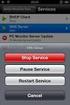 Kaseya 2 VMware Performance Monitor Quick Start Guide for Network Monitor 4.1 June 7, 2012 About Kaseya Kaseya is a global provider of IT automation software for IT Solution Providers and Public and Private
READYNAS INSTANT STORAGE. Quick Installation Guide
 READYNAS INSTANT STORAGE Quick Installation Guide Table of Contents Step 1 Connect to FrontView Setup Wizard 3 Installing RAIDar on Windows 3 Installing RAIDar on Mac OS X 3 Installing RAIDar on Linux
Chapter 8 Router and Network Management
 Chapter 8 Router and Network Management This chapter describes how to use the network management features of your ProSafe Dual WAN Gigabit Firewall with SSL & IPsec VPN. These features can be found by
AlienVault. Unified Security Management (USM) 4.8-5.x Initial Setup Guide
 AlienVault Unified Security Management (USM) 4.8-5.x Initial Setup Guide Contents USM v4.8-5.x Initial Setup Guide Copyright AlienVault, Inc. All rights reserved. The AlienVault Logo, AlienVault, AlienVault
VMware vcenter Log Insight Security Guide
 VMware vcenter Log Insight Security Guide vcenter Log Insight 2.0 This document supports the version of each product listed and supports all subsequent versions until the document is replaced by a new
LifeSize Transit Deployment Guide June 2011
 LifeSize Transit Deployment Guide June 2011 LifeSize Tranist Server LifeSize Transit Client LifeSize Transit Deployment Guide 2 Firewall and NAT Traversal with LifeSize Transit Firewalls and Network Address
Veritas Cluster Server
 APPENDIXE This module provides basic guidelines for the (VCS) configuration in a Subscriber Manager (SM) cluster installation. It assumes basic knowledge of the VCS environment; it does not replace the
Remote Supervisor Adapter II. User s Guide
 Remote Supervisor Adapter II User s Guide Remote Supervisor Adapter II User s Guide Note: Before using this information and the product it supports, read the general information in Appendix B, Notices,
Barracuda Networks Technical Documentation. Barracuda SSL VPN. Administrator s Guide. Version 2.x RECLAIM YOUR NETWORK
 Barracuda Networks Technical Documentation Barracuda SSL VPN Administrator s Guide Version 2.x RECLAIM YOUR NETWORK Copyright Notice Copyright 2004-2011, Barracuda Networks, Inc. www.barracuda.com v20-110511w-02-110915jc
NOC PS manual. Copyright Maxnet 2009 2015 All rights reserved. Page 1/45 NOC-PS Manuel EN version 1.3
 NOC PS manual Copyright Maxnet 2009 2015 All rights reserved Page 1/45 Table of contents Installation...3 System requirements...3 Network setup...5 Installation under Vmware Vsphere...8 Installation under
Dell Fabric Manager Installation Guide 1.0.0
 Dell Fabric Manager Installation Guide 1.0.0 Notes, Cautions, and Warnings NOTE: A NOTE indicates important information that helps you make better use of your computer. CAUTION: A CAUTION indicates either
Kaseya 2. Quick Start Guide. for Network Monitor 4.1
 Kaseya 2 Syslog Monitor Quick Start Guide for Network Monitor 4.1 June 5, 2012 About Kaseya Kaseya is a global provider of IT automation software for IT Solution Providers and Public and Private Sector
F-Secure Messaging Security Gateway. Deployment Guide
 F-Secure Messaging Security Gateway Deployment Guide TOC F-Secure Messaging Security Gateway Contents Chapter 1: Deploying F-Secure Messaging Security Gateway...3 1.1 The typical product deployment model...4
Rally Installation Guide
 Rally Installation Guide Rally On-Premises release 2015.1 [email protected] www.rallydev.com Version 2015.1 Table of Contents Overview... 3 Server requirements... 3 Browser requirements... 3 Access
Note: This case study utilizes Packet Tracer. Please see the Chapter 5 Packet Tracer file located in Supplemental Materials.
 Note: This case study utilizes Packet Tracer. Please see the Chapter 5 Packet Tracer file located in Supplemental Materials. CHAPTER 5 OBJECTIVES Configure a router with an initial configuration. Use the
Virtual Web Appliance Setup Guide
 Virtual Web Appliance Setup Guide 2 Sophos Installing a Virtual Appliance Installing a Virtual Appliance This guide describes the procedures for installing a Virtual Web Appliance. If you are installing
Installation & Configuration Guide
 Installation & Configuration Guide Bluebeam Studio Enterprise ( Software ) 2014 Bluebeam Software, Inc. All Rights Reserved. Patents Pending in the U.S. and/or other countries. Bluebeam and Revu are trademarks
Securely manage data center and network equipment from anywhere in the world.
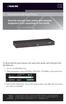 LES1516A LES1532A LES1548A Secure Server with Cisco Pinout Securely manage data center and network equipment from anywhere in the world. To download the user manual, this quick start guide, and software
Honeywell Internet Connection Module
 Honeywell Internet Connection Module Setup Guide Version 1.0 - Page 1 of 18 - ICM Setup Guide Technical Support Setup - Guide Table of Contents Introduction... 3 Network Setup and Configuration... 4 Setting
Testing and Restoring the Nasuni Filer in a Disaster Recovery Scenario
 Testing and Restoring the Nasuni Filer in a Disaster Recovery Scenario Version 7.2 November 2015 Last modified: November 3, 2015 2015 Nasuni Corporation All Rights Reserved Document Information Testing
Installing and Configuring vcenter Multi-Hypervisor Manager
 Installing and Configuring vcenter Multi-Hypervisor Manager vcenter Server 5.1 vcenter Multi-Hypervisor Manager 1.1 This document supports the version of each product listed and supports all subsequent
Installation and configuration guide
 Installation and Configuration Guide Installation and configuration guide Adding X-Username support to Forward and Reverse Proxy TMG Servers Published: December 2010 Applies to: Winfrasoft X-Username for
User s Manual TCP/IP TO RS-232/422/485 CONVERTER. 1.1 Introduction. 1.2 Main features. Dynamic DNS
 MODEL ATC-2000 TCP/IP TO RS-232/422/485 CONVERTER User s Manual 1.1 Introduction The ATC-2000 is a RS232/RS485 to TCP/IP converter integrated with a robust system and network management features designed
Dell SupportAssist Version 2.0 for Dell OpenManage Essentials Quick Start Guide
 Dell SupportAssist Version 2.0 for Dell OpenManage Essentials Quick Start Guide Notes, Cautions, and Warnings NOTE: A NOTE indicates important information that helps you make better use of your computer.
Deploying the BIG-IP LTM system and Microsoft Windows Server 2003 Terminal Services
 Deployment Guide Deploying the BIG-IP System with Microsoft Windows Server 2003 Terminal Services Deploying the BIG-IP LTM system and Microsoft Windows Server 2003 Terminal Services Welcome to the BIG-IP
1 Synchronizing Windows computers
 Technical Note: NTP time servers Synchronizing Windows Computers Purpose: The purpose of this document is to provide detailed information on synchronizing Windows 7, 2008, 2003 and 2000 Stand-Alone PCs
Administering Cisco ISE
 CHAPTER 8 This chapter describes the administrative activities for the Cisco Identity Services Engine (ISE) and how to perform them. The following topics are covered: Logging In, page 8-1 System Time and