
California Governor s Office of Emergency Services And Partner Agencies
|
|
|
- Jewel Boyd
- 10 years ago
- Views:
Transcription
1 California Governor s Office of Emergency Services And Partner Agencies About Cal OES and Partner Agencies Under the authority of the California Emergency Services Act (Government Code Section 8550 et seq.), the Governor s Office of Emergency Services (Cal OES) coordinates all State emergency planning and preparedness, disaster response and recovery, disaster mitigation, and homeland security activities. The agency mission is to protect lives and property, build capabilities, and support our communities for a resilient California. The mission is achieved through effective collaboration in preparing for, protecting against, responding to, recovering from, and mitigating the impacts of all hazards and threats. The Cal OES Earthquake and Tsunami Program consist of six core staff members who are dedicated to serving the public through partnerships with federal, state and local agencies, universities, networks and associations, voluntary organizations and the private sector. The staff is comprised of an earthquake program officer and coordinator, tsunami program officer and coordinator, program manager and an associate program assistant. This core staff leverages the agency s charge to manage an earthquake and tsunami preparedness and response program by effectively cooperating with its network of partner agencies. The Cal OES Earthquake and Tsunami Program is an active participant on boards and committees as well as in professional associations involved with disaster preparedness. Program staff participates in Board of Directors meetings for the Western States Seismic Policy Council (representing the Cal OES Director), the Cascadia Region Earthquake Workgroup, the External Advisory Board of Southern California Earthquake Center, and the External Advisory Board of the Federal Alliance for Safe Homes. In addition to board participation, Program staff has held leadership positions in: the California Tsunami Steering Committee (Chair), the Coordinating Committee of the National Tsunami Hazard Mitigation Program, the California Integrated Seismic Network Steering Committee, and the California Post-Earthquake Clearinghouse Management Committee. Earthquake, Tsunami and Volcano Hazards California sits on the juncture of two major tectonic plates, the North America Plate and the Pacific Plate. The San Andreas fault generally parallels the coast in a southeasterly direction, coming ashore near Eureka, passing west of San Francisco and east of Los Angeles into Mexico. The associated seismic activity contains the potential for more than seventy four percent of the country s overall expected annualized losses (FEMA 3666, 2008). In the past two centuries, earthquakes have claimed the lives of more than 3,000 Californians. Currently, approximately 30 million residents are exposed to significant risk for damaging 2014 earthquakes. In addition, the state attracts 200 million visitors every year, largely to areas at risk for catastrophic earthquake California Governor s Office of Emergency Services Page 1 of 16

2 Of the 58 county operational areas, 20 have exposure to the potential for tsunami damage. This includes 99 coastal cities, three metropolitan areas with major harbor facilities and approximately 376,000 people living in mapped tsunami inundation zones. The population does not include the several million visitors who are attracted to the beach every year. The state s population, infrastructure and economy are also vulnerable to the threats posed by volcanic activity. The United States Geological Survey (USGS) Volcano Observatory suggests there is a high to very high threat potential from seven volcanic fields, centers, chains, craters and calderas. Three more pose a moderate threat potential. Earthquake Activity in 2014 As of this writing the USGS reports that 72 earthquakes of Magnitude 3.5 or greater have occurred in the state since January 1, Twenty-six of those were of M4.0 or greater. Of those, one was in the M5.0 range and two were in the M6.0 range. The Magnitude 5.1 La Habra Earthquake occurred on March 28, 2014 and resulted in damage and emergency responses in Orange and Los Angeles Counties. Local Emergencies were proclaimed, but the losses did not result in a state or federal declaration. A M6.8 earthquake occurred in the ocean 78km WNW of Ferndale, California on March 10, 2014 (Gorda Plate / Triple Junction area). While the temblor was near enough to the coast to be felt by local residents, no significant damage was reported. Most recently and most significantly, the M6.0 Napa Earthquake on August 24, 2014 resulted in one death and caused more than $87 million in public losses. Some reports estimate the total public and private losses to be closer to $1 billion. Local Emergency Proclamations and requests for state assistance were received from Napa and Solano Counties. Governor Brown proclaimed a State of Emergency for the Napa Earthquake on August 24, President Obama declared the Napa Earthquake to be a Major Disaster on September 11, Since 1971 there have been 12 other notable earthquakes that have generated direct losses, deaths and injuries. These include the M6.6 San Fernando earthquake on February 9, 1971, M6.5 Imperial Valley Earthquake on October 15, 1979, M6.5 Coalinga Earthquake on May 2, 1983, M6.0 Whittier Narrows Earthquake on October 1, 1987, M6.9 Loma Prieta Earthquake on October , M7.0 Cape Mendocino Earthquake on April 25, 1992, M7.3 Landers/Big Bear Earthquake on June 28, 1992, M6.7 Northridge Earthquake on January 17, 1994, M7.1 Hector Mine Earthquake on October 16, 1999, M7.1 San Simeon Earthquake on December 22, 2003, M6.5 Eureka/Humboldt Earthquake on January 9, 2010, and M7.2 El Mayor Cucapah Earthquake on April 4, California Governor s Office of Emergency Services Page 2 of 16

3 Exhibit 1: Recent Earthquakes with Direct Losses, Deaths and Injuries California Earthquake Prediction Evaluation Council (CEPEC) California Government Code Section 8657 establishes the California Earthquake Prediction Evaluation Council (CEPEC) to advise the Governor on the existence of earthquake or volcanic prediction having scientific validity. CEPEC was convened twice in 2014 at the request of either the State Geologist or the Cal OES Director. On March 19, 2014, CEPEC was convened to discuss concerns about an apparent increase in earthquake activity throughout the State. Cal OES Director Mark S. Ghilarducci requested that the CEPEC assess the latest seismic activity and its potential impact to the State. Director Ghilarducci said that Governor Brown asked about the number of minor to moderate earthquakes that have occurred over the state in the past week. Recent seismic activity of note through March 19, 2014 included: 3/10: M6.8 77km WNW of Ferndale in the Gorda Plate / Triple Junction area 3/12: M4.4 57km NE Kernville, CA 3/15: M3.9 near Castaic Lake Dam 3/16: M3.5 28km ENE of Pine Valley 3/17: M4.4 near Westwood, CA The CEPEC Members concluded that that neither the M6.8 event off-shore of Ferndale on Monday, March 10, 2014, nor the M4.4 event near Westwood on Monday, March 17, 2014, was outside normal earthquake parameters California Governor s Office of Emergency Services Page 3 of 16

4 On August 24, 2014, CEPEC again met by teleconference to discuss the circumstances of the M6.0 South Napa Earthquake and assess the implications for future damaging earthquakes that may occur in the vicinity. A previous M4.9 event in the same area on September 3, 2000 resulted in no fatalities, 60 injuries, and minimal damage. On March 31, 1898 a M6.4 earthquake occurred on the nearby Rodgers Creek fault several miles to the west. The 1898 quake caused considerable damage to the Navy facilities at Mare Island. The San Francisco City Hall dome was also damaged. CEPEC concluded that numerous aftershocks are typical in the days and weeks following an earthquake of this magnitude. While it is unlikely that any of these aftershocks will be larger than this morning s M6.1, there have been several examples in our past where a M6.0 was a foreshock to a larger event. CEPEC stated that these events remind all Californians to be vigilant in their preparedness for earthquakes. People should be prepared for future aftershocks, which may cause additional damage to existing, damaged buildings. Residents should be prepared to not reenter structures until those structures have been inspected for structural soundness, natural gas leaks and water leaks. Now is a good time for residents to update their earthquake survival kits. California Seismic Safety Commission California Government Code Section provides for an Earthquake Emergency Investigations Account for the Seismic Safety Commission to enable them to investigate damaging earthquakes and fund investigation expenses. The commission also manages California's Earthquake Hazards Reduction Program and is charged to review seismic activities funded by the State as well as earthquake-related legislation. After the Napa Earthquake the Seismic Safety Commission conducted public hearings to assess seismic safety issues and investigate earthquake damage and reconstruction efforts. California Earthquake Clearinghouse The California Earthquake Clearinghouse is a place to coordinate earthquake field investigations and share observations and knowledge among emergency responders and the engineering and scientific communities. In response to the 2014 Napa Earthquake, the California Earthquake Clearinghouse provided a centralized coordination center where engineers, geologists, seismologists, sociologists, economists, and other professionals could coordinate the gathering of information, maximizing the use of its resources and capabilities. Responding engineers, inspectors and subject matter experts provided field observations that added valuable insights for use by officials managing response and recovery operations. As part of the After-Action / Corrective Action analysis, the Clearinghouse identified the need to better coordinate NEHRP funding through state agencies so that operational priorities can be 2014 California Governor s Office of Emergency Services Page 4 of 16

5 centralized through each state. During the Napa event, funding issued directly to consortia members was used to meet consortia priorities, but their priorities were not always aligned closely with state response and recovery objectives Earthquake, Tsunami and Volcano Preparedness Activities In 2014, Cal OES coordinated earthquake, tsunami and volcano preparedness and response efforts with its partner agencies. Cal OES worked closely with the California Geological Survey (CGS), U.S. Geological Survey (USGS), California Seismic Safety Commission, California Earthquake Authority (CEA), Southern California Earthquake Center (SCEC) and Tsunami Research Center at USC, Caltech, University of California at Berkeley, American Red Cross; Earthquake Engineering Research Institute (EERI), Structural Engineers Association of California (SEAOC), local government, private industry, and non-profit entities, and California s Earthquake Country Alliance (ECA). The Southern California Earthquake Center (SCEC) provides earthquake research and education as part of the outreach partnership. SCEC is a partner in UCERF, the California Earthquake Clearinghouse, and serves as the administrative home of Earthquake Country Alliance. Other divisions of Cal OES involved in earthquake and tsunami mitigation and education include Mitigation Planning, Mitigation Grants, and Office of Communications Great California ShakeOut The Great ShakeOut earthquake drills that began in Southern California in 2008 have rapidly grown to be the world s largest preparedness activity. In 2014, a record ten million people and organizations participated in California alone. Cal OES supported the Southern California Earthquake Center (SCEC) at the University of Southern California and the California Earthquake Alliance (CEA) to promote ShakeOut activities to improve ways that people can protect themselves during earthquake events. The recent South Napa Earthquake, the 20th anniversary of the 94 Northridge earthquake, and the 25th anniversary of the 1989 Loma Prieta earthquake are critical reminders that California is Earthquake Country. Notable ShakeOut venues in 2014 included the Biola University and City of La Mirada Earthquake Drill (Southern California), the Loma Prieta 25th Anniversary Symposium and the 2014 Buildings-At-Risk (BAR) Summit. Biola University / City of La Mirada Earthquake Drill The drill was held as part of the ShakeOut events on October 16, 2014 that included a shake trailer simulations, interviews, press conference, and full-scale drill exercise with aftershocks California Governor s Office of Emergency Services Page 5 of 16

6 Loma Prieta 25th Anniversary Symposium The Loma Prieta 25th Anniversary Symposium: Still on Shaky Ground event was held on October 16 to commemorate the 25th anniversary of the 1989 Loma Prieta earthquake and support future resilience action. CalOES personnel served on the planning team as well as presenting and facilitating sessions. The symposium offered Bay Area residents and regional leaders an opportunity to inspire regional action for safer, more resilient communities. During the event, Bay Area leaders, community advocates, and elected officials launched a three-year public policy program designed to spark quick recovery from future disasters and enact placebased action for a safer future in the places we call home Buildings-At-Risk Summit Cal OES supported the 2014 Buildings-At-Risk (BAR) Summit: Strengthening Our Cities, presented by the Structural Engineers Association of Southern California (SEAOSC). The event convened over 300 engineers and other community leaders at The Center at Cathedral Plaza in downtown Los Angeles to talk about how to mitigate losses from a seismic event in Southern California, including potential liability issues and the official process for addressing its older, pre-1980 buildings. Other ShakeOut Activities As part of Cal OES support, staff coordinated with several local governments to promote and participate in ShakeOut events in both Southern and Northern California. Staff also developed copy and voiced a ShakeOut PSA sponsored by the Los Angeles County Professional Employees and coordinated with UC Berkeley to create an Earthquake Early Warning ShakeAlert model for use in a ShakeOut drill at the Loma Prieta 25th Anniversary Symposium. ShakeOut is further supported by the Federal Emergency Management Agency (FEMA), National Science Foundation (NSF), United States Geological Survey (USGS), and other sponsors. Earthquake Country Alliance This year Cal OES continued its support for the Earthquake Country Alliance by participating on several committees to promote earthquake preparedness. Activities included arranging speakers for the Los Angeles County long-term Care Disaster Preparedness Summit, California Science Center media event regarding Volcano hazards in connection with their Pompeii exhibit, and an LA City business hazard mitigation and resiliency workshop. The Earthquake Country Alliance is a public-private partnership of people, organizations, and regional alliances that work together to improve preparedness, mitigation and resiliency. Strategic Partner Organizations include California Governor s Office of Emergency Services, United States Geological Survey, California Earthquake Authority, Southern California Earthquake Center, California Geological Survey, Federal Emergency Management Agency, American Red Cross, State Farm Insurance Company, and many others California Governor s Office of Emergency Services Page 6 of 16

7 California Earthquake Authority The California Earthquake Authority (CEA) is a publicly managed, largely privately funded organization that provides catastrophic residential earthquake insurance and encourages Californians to reduce their risk of earthquake loss. The CEA provides significant in-kind support for ShakeOut and Earthquake Country Alliance, including hundreds of thousands of dollars of earned media donated to ShakeOut. This has provided Cal OES with the ability to leverage federal funds though co-funding of significant projects. Through their partnership with ShakeOut and the Earthquake Country Alliance, the CEA has facilitated the publication of the Staying Safe booklets for public distribution. The CEA also partners with Cal OES to dispense household mitigation grants. The CEA continues to work closely with American Red Cross on the Joined Forces program. The CEA and Red Cross worked together to promote the annual Great California ShakeOut in October. The CEA also continued its support of federal legislation to lower rates and make earthquake insurance more affordable and accessible. California Residential Mitigation Program In 2014, Cal OES continued its coordination with California Earthquake Authority to implement an incentive program to help homeowners seismically retrofit their homes. The resources for this program, called the California Residential Mitigation Program (CRMP), come from the CEA Earthquake Loss Mitigation Fund. By statute, 5% of CEA s insurance premiums are used to support mitigation. The program, called the Bolt + Brace Program, focuses on helping the retrofit of wood-frame family dwellings where those two specific elements are inadequate. The program has been piloted in two California Communities, the Los Angeles neighborhood of Eagle Rock and the Rockridge neighborhood of Oakland. A typical retrofit can cost between $2,000 and $10,000. Earthquake Brace + Bolt will pre-qualify homeowners whose homes meet certain criteria and then select the recipients of the rebate (up to $3,000) using a database which will randomly select participants. The full program is projected to roll out in fall NEHRP State Assistance Fund Administration The loss of NEHRP State Assistance funding continues to inhibit the State s ability to be the leader in earthquake preparedness. Prior to Federal FY2012, Cal OES received and administered federal funding through the National Earthquake Hazards Reduction Program (NEHRP) to support earthquake preparedness in the state. However, beginning with FFY 2012 which dispersed funding in the 2nd quarter of 2013, FEMA no longer allocated NEHRP State Assistance Program funding to the states, but instead, to FEMA's Earthquake Consortia and other cooperative agreement holders. This change in policy impacts California most, since our risk is 2014 California Governor s Office of Emergency Services Page 7 of 16

8 (and funding was) highest among the NEHRP states. Since then, Cal OES has engaged the NEMA Mitigation Committee in support of State NEHRP priorities and management to restore funding administration to high-risk states in order to provide effective, coordinated earthquake preparedness programs. To further the cause, Cal OES has promoted stronger emergency management representation on NEHRP's Advisory Group, which is currently dominated by scientists/engineers. Their priorities are many times different than those of the emergency management community, which affects funding allocation decisions. Cal OES has recommended that FEMA consider involving other parts of their organization - beyond the Mitigation Directorate - in NEHRP in order to balance perspectives when it comes to setting NEHRP priorities. On May 20-23, 2014, Cal OES staff represented California at the annual meeting of State Earthquake Program Managers (EPMs). Loss of state earthquake program functionality (due to loss of state NEHRP funding discretion) was discussed. Input from Alabama, Alaska and the NEMA executive board resulted in State EPMs organizing as a group for year-round coordination, along with the development of a White Paper on NEHRP funding and related issues. In June and July, Cal OES staff worked with CUSEC staff and other National Earthquake Program Managers (NEPM) to create a survey of NEHRP state earthquake programs as support for developing a white paper regarding NEHRP and funding impacts on state earthquake programs. Staff also participated in calls with FEMA and earthquake program managers from all 33 NEHRP states regarding submission of project recommendations for NEHRP 14 and 15. California Integrated Seismic Network (CISN) Cal OES supports the activities of the California Integrated Seismic Network (CISN) Steering Committee and the California Earthquake Early Warning System (CEEWS) Steering Committee in order to provide real-time earthquake monitoring and develop the capability to provide advance notification of seismic events. Prior to 2000, with funding provided by FEMA, Cal OES, and USGS, three seismic monitoring systems operated by CGS, CalTech, UC Berkeley and USGS were integrated into a single seismic system. Under this arrangement, CGS provides scientific products and services about the state's geology, seismology and mineral resources and administers the California Strong Motion Instrumentation Program. UC Berkley conducts research on earthquake processes and earth structures and coordinates the Northern California Seismic Network to provide timely and accurate earthquake information. Cal Tech operates the Seismological Laboratory and coordinates the Southern California Seismic Network and serves as a focal point for earthquake information in Southern California. Other partners include Humboldt State University, which focuses its study on the Cascadia Subduction Zone and serves as a partner of the Redwood Coast Tsunami Work Group, promoting Earthquake and Tsunami education efforts. Cal OES manages the funding contracts with three participating CISN institutions, CGS, UC Berkeley and CalTech. Since 2002, Cal OES has provided funding for the development and 2014 California Governor s Office of Emergency Services Page 8 of 16

9 maintenance of CISN at approximately $2-3 million per year. General Fund cuts in fiscal year 2011/12 reduced support for CISN to $1.7 million. In 2014 Cal OES supported the efforts of the primary CISN partners in hosting the annual CISN Steering Committee meeting. This year s agenda focused on the evolving California Earthquake Early Warning System. The CISN advisory committee will review the CISN Strategic Plan and recommend revisions for the next planning period. California Earthquake Early Warning System (CEEWS) Initiative In 2014, the Cal OES Earthquake and Tsunami Program continued its collaboration with the California State Geologist, the Directors of the Seismological Laboratories at UC Berkeley and Caltech, the California and U.S. Geological Surveys and the California Seismic Safety Commission to promote the development of an Earthquake Early Warning System in California. Timely warnings of an earthquake can provide seconds to minutes before the arrival of damaging shaking. Even a few seconds can allow time to take protective action such as taking cover in safe locations, stopping elevators and opening doors at the nearest floor, or automatically stopping critical processes to mitigate damages or to enhance public safety. Several countries, including Japan and Mexico, have existing earthquake early-warning systems. In Japan, information is transmitted to the public through a variety of mechanisms, including television and radio broadcasts, computer pop-ups featuring real-time maps showing the location of the epicenter and radiating seismic waves and text-style messages accompanied by an audible alert sent to cell phone users. On September 24, 2013, Senate Bill 135, sponsored by Senator Alex Padilla, was signed into law by Governor Brown and codified as Government Code Section Under the law, Cal OES is tasked to develop a comprehensive statewide earthquake early warning system in California through a public-private partnership and identify funding sources, other than the State General Fund, by January 1, The goal for this initiative is to rapidly detect the initiation of an earthquake, estimate the level of ground shaking to be expected, and issue a warning before significant ground shaking arrives. Five objectives are established to meet the goal: 1. Develop an earthquake early warning model that represents a public-private partnership, and a cost effective and reliable system. 2. Formalize an earthquake early warning organization structure that incorporates existing roles and responsibilities, such as the CISN. 3. Establish performance standards and participation criteria for the application and operation of earthquake early warning components. 4. Develop guidelines for the public education about the system. 5. Develop funding options including a distributed funding model California Governor s Office of Emergency Services Page 9 of 16

10 California has the foundation for an early warning system through the California Integrated Seismic Network (CISN) and the USGS ShakeAlert demonstration model. CISN allows for earthquake notification, location, magnitude and intensity of ground shaking in the form of a Shake Map. Using real-time information gathered by a network composed of nearly 1,000 seismic stations in Southern and Northern California, CISN provides real-time information to develop maps and other products to assist emergency managers deploy resources to help protect lives and property in the areas hardest hit and rapidly determine the magnitude of the damage in order to qualify for federal assistance. CISN is a partnership among Cal OES, the California Geological Survey, the United States Geological Survey, the Caltech Seismological Laboratory and Berkeley Seismological Laboratory, with support from several contributing agencies and organizations. The state is collaborating with a number of institutions, along with public agencies and the private sector, to assess current capabilities and resources to implement a system specific to California s unique needs. A series of committees are established to develop the plan. They include: 1. A Steering Committee comprised of public and private stakeholders and subject matter experts to review and provide advice on the progress of the other project committees as they work toward meeting the objectives. The steering committee is comprised of the chairs of the five committees and chaired by an executive level member of Cal OES. 2. A Stakeholder Liaison Group to inform and receive input on the development of the CEEWS external stakeholders and potential users of an earthquake early warning system during CEEWS development. 3. A Model Committee will develop a model that represents a public/private partnership that will operate in a cost effective and reliable manner. The Standards Committee and Model Committee are tasked with developing the system description for earthquake early warning in California. 4. A Standards Committee will ensure that the system operates in a timely, reliable and efficient manner. 5. A Management Committee will formalize an organizational structure that incorporates existing roles and responsibilities for seismic monitoring in California. 6. A Funding Options Committee will identify costs and options for system funding that do not identify the state General Fund as one of those sources. 7. An Education and Training Committee will identify the components of a comprehensive training and education program that addresses the needs of all potential users of an earthquake early warning system. The Model Committee and Standards Committee are currently developing the system description which will outline the features and functions and performance requirements. The Management committee will contribute to the system description by defining how it will be managed and maintained. The Education and Training Committee will provide the outreach requirements California Governor s Office of Emergency Services Page 10 of 16


11 In order to send earthquake early warning before shaking waves arrive will depend on five elements: 1. A network of sensors, which are densely and uniformly spaced, and situated in proximity to earthquake faults. 2. Quick, robust telecommunications from sensors with sustainable 24 hour coverage. 3. Computer algorithms for fast evaluation of seismic activity including location, magnitude, and potential for continued propagation. 4. Quick reliable mass notifications. 5. End user education. A cost estimate for the system will need to consider construction costs for new installations, new or upgraded seismic stations and GPS stations, significant field telemetry upgrades, annual operation and maintenance, staffing costs for implementation and testing, operation and user outreach and continued research and development. Exhibit 2: CEEWS Steering Committee Organization A Project Charter has been developed to serve as a blueprint for developing an implementation plan for a California Earthquake Early Warning System. The charter identifies the project goals and objectives, outlines committee roles and responsibilities and establishes product timelines. The charter was published on February 21, The Steering Committee agreed that a findings and recommendations report would be the appropriate format for summarizing the overall Steering Committee work. The recommendation for development of a technical implementation plan, including assignment to the appropriate agencies, could be included in the Steering Committee report. A draft Findings and 2014 California Governor s Office of Emergency Services Page 11 of 16

12 Recommendations Report will be prepared for presentation to the Steering Committee at the January 2015 meetings. The CEEWS Implementation Plan will describe how the system will be developed, a time frame for implementation, an organization and management structure that clearly defines roles and responsibilities of public and private sector entities, conforms to performance standards that assure timeliness and accuracy of alerts, identifies and addresses user needs for training and education to effectively utilize alerts and provides a feasible and broadly consensual model for funding and maintaining the system. The draft Implementation plan is scheduled for presentation to the CEEWS Steering Committee in September In January 2016, the Steering Committee will convene to consider approving the final implementation plan. Once the implementation plan is approved, each agency with a role in implementing the California Earthquake Early Warning System will develop its own work plans for developing and operating the system. 3rd International Earthquake Early Warning Conference On September 3-5, 2014, Cal OES and partner agencies participated in the 3rd International Earthquake Early Warning Conference, organized and sponsored by UC Berkeley, USGS, CalTech, Moore Foundation and the University of Washington. Cal OES staff moderated a panel on the Public Use of Earthquake Early Warning. The three-day meeting brought together scientists, policy makers, engineers, social scientists, and business representatives from public and private sector institutions to examine the state of the art in earthquake early warning today and to innovate new ways to push the technology forward. Tsunami Preparedness In 2014, the Cal OES Earthquake and Tsunami Program staff continued their coordination with CGS to support communities developing plans and programs to protect the public in the event of a future damaging tsunami. Cal OES and CGS staff has actively coordinated with government agencies and non-governmental organizations to promote an understanding of the tsunami risk in California. This program is made available through funding authorized by Public Law , 33 U.S.C seq.: The Tsunami Warning and Education Act, 2006 (TWEA) and administered through the National Tsunami Hazard Mitigation Program (NTHMP). On March 27, 2014 a new bill, the Tsunami Warning and Education Reauthorization Act of 2014 was introduced in Congress, It reauthorizes the above Tsunami Warning and Education Act with specified appropriations for FY2015-FY2019 and expands the tsunami forecasting and warning program operated by the National Oceanic and Atmospheric Administration (NOAA), through the National Weather Service (NWS). This bill is currently pending in Congress. The tsunami planning scenario is provided by the USGS Science Application For Risk Reduction (SAFRR) Program. The SAFRR Tsunami Scenario is based upon an earthquake offshore from the Alaskan peninsula and that extends to the California coast. This scenario integrates physical 2014 California Governor s Office of Emergency Services Page 12 of 16

13 science, social science and emergency management in creating detailed analysis to support officials and the public in reducing the risk of future tsunamis that will impact California. According to the scenario approximately 750,000 people will need to be evacuated, with 90,000 of those being tourists and visitors. One-third of the boats in California's marinas could be damaged or completely sunk, resulting in $700 million in losses. Tsunami Steering Committee In 2014, Cal OES chaired and facilitated the Tsunami Steering Committee meeting held at San Francisco Airport. Steering Committee members include Cal OES, CGS, NOAA and 20 coastal county jurisdictional representatives. The Steering Committee reviewed a proposed maritime evacuation fathom policy and all California Tsunami Program priorities conducted within the state. Tsunami Inundation Modeling State tsunami modelers have completed all of the required modeling to validate 2nd generation tsunami inundation maps. Modeling and mapping tsunami inundation from a new large Aleutian Islands source developed by the USGS has been compared to the state inundation line. High resolution modeling (10m) in Orange and San Diego counties has been used to verify the inundation maps. TsunamiReady Program In 2014, the Cal OES Earthquake and Tsunami Program coordinated the delivery of Tsunami Signage as part of the TsunamiReady Program. Staff worked with the City of Alameda and Naval Base San Diego (NBSD) to develop their tsunami warning sign implementation plans. Several jurisdictions, including Mendocino County have placed a sign orders to implement their existing sign plan. Tsunami Preparedness Month In 2014, California continued to observe Tsunami Preparedness Week during the fourth week of March. The week is supported nationally by NOAA and is an opportunity for focused outreach and education at the community level. Cal OES facilitated assistance of a number of local activities, including: Proclamations by County Boards of Supervisors High-profile workshop presentations and the San Francisco Exploratorium, Long Beach Aquarium, Burton W. Chase Park Community Center in Los Angeles, and a media event at La Jolla Shores in San Diego. Tsunami Walk evacuation drills in Del Norte, Marin, San Francisco, Los Angeles, Orange, and San Diego Counties Governmental emergency management exercises in San Francisco, Marin, San Mateo, Orange, and Los Angeles Counties Participation in Tsunami Warning Communications Test (Del Norte, and Humboldt Counties) Participation in Required Monthly Test (Monterey, Oxnard, and San Diego NWS Weather Forecast Office areas of responsibility) 2014 California Governor s Office of Emergency Services Page 13 of 16

14 Participation in PACIFEX14 (Marin, San Francisco, and San Mateo Counties) Discussion of development of Tsunami Preparedness Week Website (TsunamiZone.org) During Tsunami week, the program has conducted a Live Code Tsunami Warning Communications Test which tests the operation and performance of the last critical link in the tsunami warning communications system the Emergency Alert System that provides tsunami warnings to the public. This test uses the actual tsunami event codes that are used when a tsunami warning is issued by NOAA, a test few other states conduct due to the perceived risk that residents and visitors may mistake the test for an actual tsunami emergency. California has chosen to conduct this test to ensure that these EAS codes will function properly in an actual tsunami emergency. Tsunami Modeling and Mapping for the Maritime Community In 2014, the state continued its coordination with coastal jurisdictions to: 1) analyze risks to the maritime community 2) provide planning data and assistance for multiple scenarios to the emergency management community, and 3) work to produce probabilistic tsunami hazard analysis maps for the coast of California. Cal OES and CGS staff assisted Base San Diego (NBSD) with incorporating evacuation Playbook, maritime Playbook, and FASTER decision support tools into NBSD operations plan. Staff participated in a Tabletop exercise with naval personnel involving a tsunami scenario. Cal OES and CGS participated with the USGS and the City of Alameda to look at GIS modeling of vulnerability for Playbook phases, pedestrian and vehicular evacuation, and vertical evacuation analysis for Response planning purposes. State will facilitate coordination of project scope and eventual results with city. Cal OES supported several coastal counties by reviewing and providing recommendations for editing tsunami evacuation annexes to their county emergency plans, including San Francisco and Marine counties. Staff worked with San Mateo County to explain the models used to derive the maximum tsunami run-up projections for the Princeton Harbor area. Staff also coordinated with Los Angeles County to provide tsunami evacuation lines for inclusion in the newly adopted Tsunami Annex to the Los Angeles County Response Plan California Governor s Office of Emergency Services Page 14 of 16

15 Exhibit 3: Tsunami Playbooks Provide Decision Makers with Evacuation Alternatives Concerns about Tsunami Warnings via Wireless Emergency Alerts (WEA) NOAA s National Weather Service (NWS) is now able to activate Wireless Emergency Alert (WEA) capable cell phones for the most critical Tsunami Warnings. This will not include Tsunami Information Statements, Advisories, and Watches. This policy has caused concern in the emergency management community who believe the alerts will diminish public safety by taking away local decision authorities to order and manage mass evacuations. Local emergency managers are recommending that NOAA provide local officials with the authority to issue WEA messages so there can be coordinated protective actions taken by the jurisdiction. Ventura County submitted a letter to Cal OES requesting assistance in resolving the WEA message issue. Since then, Ventura County and National Weather Service officials have met to discuss the concerns. NTHMP Annual Meeting Cal OES participated in NTHMP annual meetings held January 27-31, 2014 in Menlo Park. The meeting discussed common issues of coordination among member state and territory partners, including: Tsunami Program Update NOAA Response to National Academy of Sciences Report TsunamiReady Update Evacuation Response Vertical Evacuation Update Marine Guidance Project Update 2014 California Governor s Office of Emergency Services Page 15 of 16

16 NTHMP Member Accomplishments Cal OES participated in the NTHMP Mitigation & Education (MES) and Mapping & Modeling (MMS) Subcommittee Meetings held August 18-22, 2014, in Seattle, Washington. Staff served on the MES and facilitated workshops at the meeting. Staff discussed: How California is using the results of USC modeling work for maritime planning. Plans to create in-harbor hazard maps and guidance on how to use them during event. How modeling results were translated to maps for Tsunami Response Playbooks and dangerous current duration. Offshore safety zones evacuation considerations, including Safe offshore depth : 30 fathoms (180ft). AGU Fall Meeting Cal OES and CGS staffers are preparing to co-sponsor and attend the American Geophysical Union (AGU) meeting on December 15-19, 2014 in San Francisco. Staff coordinated with fellow NTHMP chairs, National Tsunami Warning Center (NTWC) Director, NOAA Alaska Director, and CGS on scheduling panel presentations. Tsunami planners, modelers, and other professionals will present topics including: "Evaluation and Application of Probabilistic Tsunami Hazard Analysis in California" "The FASTER Approach: A New Tool for Calculating Real-Time Tsunami Flood Hazards" "Assessment of Near Shore Hazard due to Tsunami-Induced Currents" "The SAFRR Tsunami Scenario: from publication to implementation" Submitted by: Mark R. Johnson, Branch Chief, and Kevin Miller, Tsunami Program Officer, California Governor s Office of Emergency Services Earthquake and Tsunami Program California Governor s Office of Emergency Services Page 16 of 16

February 28 Earthquake: We got off easy
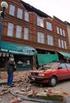 February 28 Earthquake: We got off easy State Geologist John Beaulieu Lucky may not be the first word that comes to mind after an earthquake that injured more than 200 and caused more than $1 billion damage,
Earthquake Early Warning System Notifications: Leveraging the Power of the Commercial Cellular Network
 Earthquake Early Warning System Notifications: Leveraging the Power of the Commercial Cellular Network Panelists: Mark Johnson Branch Chief, Earthquake and Tsunami Program, CalOES Brian Daly Director,
 Testimony of Mr. Robert J. Fenton, Jr. Assistant Administrator for Response, Office of Response and Recovery Federal Emergency Management Agency U.S. Department of Homeland Security Before House Committee
Improved Warnings for Natural Hazards: A Prototype System for Southern California
 Improved Warnings for Natural Hazards: A Prototype System for Southern California Yehuda Bock Research Geodesist Scripps Institution of Oceanography University of California San Diego, La Jolla, Calif.
Department of Commerce National Oceanic & Atmospheric Administration National Weather Service
 Department of Commerce National Oceanic & Atmospheric Administration National Weather Service NATIONAL WEATHER SERVICE WESTERN REGION SUPPLEMENT 17-2003 APPLICABLE TO NWSI 10-701 MARCH 16, 2015 Operations
Tsunami Inundation Maps
 1946 1964 Today Tomorrow Tsunami Inundation Maps For Emergency Response Planning Available at www.tsunami.ca.gov Multi-year project covers all low-lying populated coastal areas 20 counties and over 75
Earthquakes: Risk and Insurance Issues
 Page 1 of 8 HOT TOPICS & INSURANCE ISSUES Earthquakes: Risk and Insurance Issues THE TOPIC JULY 2003 An earthquake is a sudden and rapid shaking of the earth caused by the breaking and shifting of rock
American Society of Civil Engineers
 American Society of Civil Engineers Technical Council on Lifeline Earthquake Engineering Earthquake Investigation Committee Lifelines Water and Wastewater Electric Power and Communication Gas and Liquid
Making Your Great ShakeOut Earthquake Drill Accessible to People With Disabilities. What we will cover today
 Making Your Great ShakeOut Earthquake Drill Accessible to People With Disabilities Pacific ADA Center Webinar October 8, 2015 What we will cover today An overview of Great Shakeout Earthquake Drills: mission,
Earthquakes: Risk & Insurance Issues
 Earthquakes: Risk & Insurance Issues An earthquake is a sudden and rapid shaking of the earth caused by the breaking and shifting of rock beneath the earth s surface. This shaking can sometimes trigger
Initiating the CCSF Lifelines Council. Interdependency Study
 LAURIE JOHNSON CONSULTING Initiating the CCSF Lifelines Council Urban Planning Risk Management Disaster Recovery Interdependency Study Lifelines Council Meeting #7 November 17, 2011 (Source: JIIRC-UBC)
Oregon Pre-Disaster Mitigation Program Plan Update Training Manual
 FEMA Oregon Pre-Disaster Mitigation Program Plan Update Training Manual Prepared by: Oregon Partnership for Disaster Resilience OPDR FEMA OPDR FEMA OPDR 2010, University of Oregon s Community Service Center
CALIFORNIA EARTHQUAKE AUTHORITY [CEA]
![CALIFORNIA EARTHQUAKE AUTHORITY [CEA]](/thumbs/32/15587189.jpg "CALIFORNIA EARTHQUAKE AUTHORITY [CEA]") CALIFORNIA EARTHQUAKE AUTHORITY [CEA] ANNUAL REPORT TO THE LEGISLATURE AND THE CALIFORNIA INSURANCE COMMISSIONER ON CEA PROGRAM OPERATIONS Report for Calendar Year 2014 [Pursuant to California Insurance
CALIFORNIA EARTHQUAKE AUTHORITY [CEA] ANNUAL REPORT TO THE LEGISLATURE AND THE CALIFORNIA INSURANCE COMMISSIONER ON CEA PROGRAM OPERATIONS Report for Calendar Year 2014 [Pursuant to California Insurance
Earthquakes. Earthquakes: Big Ideas. Earthquakes
 Earthquakes Earthquakes: Big Ideas Humans cannot eliminate natural hazards but can engage in activities that reduce their impacts by identifying high-risk locations, improving construction methods, and
THE CALIFORNIA EARTHQUAKE AUTHORITY
 THE CALIFORNIA EARTHQUAKE AUTHORITY October, 2009 OVERVIEW California has a long history of earthquake damage. The great San Francisco earthquake of 1906 and the 1989 Loma Prieta earthquake rank among
Strategic Plan. National Earthquake Hazards Reduction Program
 Strategic Plan for the National Earthquake Hazards Reduction Program Fiscal Years 2009 2013* October 2008 *Plan remains in effect and will be updated in accordance with future NEHRP Reauthorization This
CHAPTER 7. EMERGENCY SERVICES
 CHAPTER 7. EMERGENCY SERVICES Although better forecasts and warning processes have helped save lives by providing more lead time to evacuate, the tremendous growth of development and human population in
Whole Community Concept Integration into National Disaster Preparedness Training Center University of Hawaii
 Whole Community Concept Integration into National Disaster Preparedness Training Center University of Hawaii Established in 2007 under H.R. 1, Implementing Recommendations of the 9/11 Commission Act of
HISTORICAL FLOODS: 1861 1862
 USGS Mission The USGS serves the Nation by providing reliable scientific information to describe and understand the Earth; minimize loss of life and property from natural disasters; manage water, biological,
Property of the California Earthquake Authority (CEA)
 CEA History and Structure Claims Process Napa Earthquake: August 24, 2015 2 3 At request of the insurance industry, earthquake was specifically EXCLUDED from homeowners policy. In exchange, companies selling
Strategic Plan: 2011-2016
 1 California Integrated Seismic Network Strategic Plan: 2011-2016 Caltech CGS CalEMA UC Berkeley USGS, Menlo Park USGS, Pasadena Draft version 06: 11/15/11 Written by: CISN Program Management Group: Egill
Regents Questions: Plate Tectonics
 Earth Science Regents Questions: Plate Tectonics Name: Date: Period: August 2013 Due Date: 17 Compared to the oceanic crust, the continental crust is (1) less dense and more basaltic (3) more dense and
DRAFT TSUNAMI WARNING INFORMATION DISSEMINATION PROTOCOL FOR TRINIDAD AND TOBAGO (CDEMA PARTICIPATING STATE)
 DRAFT TSUNAMI WARNING INFORMATION DISSEMINATION PROTOCOL FOR TRINIDAD AND TOBAGO (CDEMA PARTICIPATING STATE) ODPM 6/3/2011 CONTENTS 1. Acronyms 2. Standard operating procedures A: (SOP A): 3. Standard
(Adopted July 26, 2005 Resolution No. 05-24) Prepared by: Kevin Marstall, PE, Senior Civil Engineer, CRS Coordinator
 On The Floodplain Management Components Of The Association of Bay Area Governments (ABAG) Multi-Jurisdictional Hazard Mitigation Plan Including The Annex to the Plan as the City s Local Hazard Mitigation
KCC Event Brief: 2014 La Habra Earthquake
 KAREN CLARK & COMPANY KCC Event Brief: 2014 La Habra Earthquake June 2014 2 COPLEY PLACE BOSTON, MA 02116 T: 617.423.2800 F: 617.423.2808 Overview On Friday, March 28, 2014 at 9:09pm, a magnitude 5.1 earthquake
Fire Following Earthquake:
 Fire Following Earthquake: Planning, Strategic, and Tactical Considerations Los Angeles County Fire Department Chief Deputy (Acting) David R. Richardson Jr. Fire Following Earthquake: An Overlooked Dilemma
Using GIS for Assessing Earthquake Hazards of San Francisco Bay, California, USA
 Using GIS for Assessing Earthquake Hazards of San Francisco Bay, California, USA Marzieh Zeinali Department of Resource Analysis, Saint Mary s University of Minnesota, Minneapolis, MN 55404 Keywords: San
ENGINEERING-BASED EARTHQUAKE RISK MANAGEMENT
 ENGINEERING-BASED EARTHQUAKE RISK MANAGEMENT MRP Engineering Newsletter February 2012 The world recently experienced several major earthquakes, which caused severe local impacts and major worldwide repercussions.
Part 1 - How Much Danger is Your Home or Business In? Where do you live?
 Earthquake Insurance and San Diego County Residents Part 1 - How much danger is your home in? Where do you live? Part 2 - What do San Diego County residents have to know about Earthquake Insurance Policies,
Magnitude 8.8 OFFSHORE MAULE, CHILE
 A great 8.8-magnitude struck central Chile early Saturday. The quake hit 200 miles (325 kilometers) southwest of the capital Santiago. The epicenter was just 70 miles (115 kilometers) from Concepcion,
The Association of Bay Area Health Officials: Advancing Public Health through Regional Networks
 The Association of Bay Area Health Officials: Advancing Public Health through Regional Networks Adam W Crawley, MPH 1, Wayne T.A. Enanoria, MPH, PhD 1 1 School of Public Health, University of California,
Communications Systems Used in the USA TARNS. Chris Hill, Meteorologist in Charge (ret) National Weather Service Seattle, Washington, USA
 Communications Systems Used in the USA TARNS Chris Hill, Meteorologist in Charge (ret) National Weather Service Seattle, Washington, USA Washington Faces Many Non-Weather Hazards Earthquakes Tsunamis Terrorism
CALIFORNIA EARTHQUAKE AUTHORITY [CEA]
![CALIFORNIA EARTHQUAKE AUTHORITY [CEA]](/thumbs/26/8286642.jpg "CALIFORNIA EARTHQUAKE AUTHORITY [CEA]") CALIFORNIA EARTHQUAKE AUTHORITY [CEA] ANNUAL REPORT TO THE LEGISLATURE AND THE CALIFORNIA INSURANCE COMMISSIONER ON CEA PROGRAM OPERATIONS Report for Calendar Year 2013 [Pursuant to California Insurance
CALIFORNIA EARTHQUAKE AUTHORITY [CEA] ANNUAL REPORT TO THE LEGISLATURE AND THE CALIFORNIA INSURANCE COMMISSIONER ON CEA PROGRAM OPERATIONS Report for Calendar Year 2013 [Pursuant to California Insurance
Draft 8/1/05 SYSTEM First Rev. 8/9/05 2 nd Rev. 8/30/05 EMERGENCY OPERATIONS PLAN
 Draft 8/1/05 SYSTEM First Rev. 8/9/05 2 nd Rev. 8/30/05 EMERGENCY OPERATIONS PLAN I. INTRODUCTION A. PURPOSE - The University of Hawaii System Emergency Operations Plan (EOP) provides procedures for managing
NASCIO 2014 State IT Recognition Awards
 NASCIO 2014 State IT Recognition Awards Project: California Cybersecurity Task Force Category: Cybersecurity Initiatives Project Initiation Date: September, 2012 Project Completion Date: May 2013 Carlos
1-800-927-4357. www.insurance.ca.gov. Earthquake. Insurance. California Department of Insurance
 1-800-927-4357 www.insurance.ca.gov Earthquake Insurance California Department of Insurance Table of Contents Page 2 Before You Buy Earthquake Insurance 4 Basic Earthquake Insurance 6 What Earthquake Insurance
Magnitude 7.2 GUERRERO, MEXICO
 A powerful magnitude-7.2 earthquake shook central and southern Mexico on Friday. The earthquake occurred at a depth of 24 km (15 miles). Its epicenter was in the western state of Guerrero, near the seaside
MONTGOMERY COUNTY, KANSAS EMERGENCY OPERATIONS PLAN. ESF14-Long Term Community Recovery
 MONTGOMERY COUNTY, KANSAS EMERGENCY OPERATIONS PLAN ESF14-Long Term Community Recovery Planning Team Support Agency Coffeyville Public Works Independence Public Works Montgomery County Public Works 1/15/2009
ShakeOut Exercise Manual For Hospitals
 Are You Ready to ShakeOut? Major earthquakes can cause unprecedented catastrophes. With earthquakes as an inevitable part of our future, hospitals should make plans and take actions to ensure that disasters
After the Shaking Stops: A Communitywide Approach to Managing Post-Quake Fires
 After the Shaking Stops: A Communitywide Approach to Managing Post-Quake Fires By Rem Brown, P.E., IBHS Senior Engineering Manager, and Brent Henzi, IBHS Communications Associate Earthquakes are a destructive
Flood Protection Tips
 Flood Protection Tips Information About Floodplains and Flood Prevention What is a floodplain? Floodplains serve many useful purposes, and those that are preserved in their natural or nearly natural state
Disaster Risk Reduction through people centered National Multi-hazard Early Warning System in the context of Maldives
 Disaster Risk Reduction through people centered National Multi-hazard Early Warning System in the context of Maldives Abdul Muhusin, Deputy Director Department of Meteorology, Maldives Fourth Technical
EPA Trends for wastewater Treatment in California - 2011
 EPA S TECHNOLOGY NEEDS FOR THE WATER AND WASTEWATER INDUSTRY Nancy Stoner Acting Assistant Administrator U.S. EPA Office of Water International Emerging Technology Symposium Arlington, VA April 23rd, 2014
Office of Emergency Management: Rebuilding the Organization to Strengthen Oregon s Emergency Management
 Secretary of State Audit Report Kate Brown, Secretary of State Gary Blackmer, Director, Audits Division Office of Emergency Management: Rebuilding the Organization to Strengthen Oregon s Emergency Management
Disaster Preparedness and Safety Element
 Disaster Preparedness and Safety Element Element Objectives The policies and actions of the Disaster Preparation and Safety Element are intended to achieve the following six objectives: 1. Establish and
B E F O R E T H E E M E R G E N C Y
 B E F O R E T H E E M E R G E N C Y RESPONSIBILITY / LIABILITY for Homeland Security / Emergency Management Duty of Care - Counties and Cities ARE responsible for the safety of their citizens. Following
How To Prepare For An Earthquake
 Staying Safe Where the Earth Shakes San Diego County Edition Developed by: Earthquake Country Alliance California Earthquake Authority California Governor s Office of Emergency Services San Diego County
ARkStorm: California s Other Big One!
 ARkStorm: California s Other Big One! Understanding the Impacts of Massive Winter Storms Mark Jackson Meteorologist in Charge NOAA/National Weather Service Los Angeles/Oxnard What is ARkStorm? Emergency-preparedness
Preparation. Preparation. Step 2 Prepare an emergency kit. Step 1 Prepare your emergency plan. Step 4 Tune into warnings
 This emergency toolkit provides you with steps to take before and during emergencies to protect you and your property. The Victoria State Emergency Service (SES) is a volunteer organisation dedicated to
Staying Safe Where the Earth Shakes Statewide Edition
 Staying Safe Where the Earth Shakes Statewide Edition Developed by: Earthquake Country Alliance California Earthquake Authority California Governor s Office of Emergency Services No matter where you live
Mt. San Antonio College Campus Emergency Response and Evacuation Plan
 Mt. San Antonio College Campus Emergency Response and Evacuation Plan The Mt. SAC Board of Trustees is committed to providing a safe and secure campus work and learning environment for students, employees,
Flood Risk Management
 Flood Risk Management Value of Flood Risk Management Every year floods sweep through communities across the United States taking lives, destroying property, shutting down businesses, harming the environment
Flood Risk Management
 Flood Risk Management Value of Flood Risk Management Value to Individuals and Communities Every year floods sweep through communities across the United States taking lives, destroying property, shutting
THE NATIONAL SPACE WEATHER PROGRAM
 1 Office of the Federal Coordinator for Meteorological Services and Supporting Research (OFCM) THE NATIONAL SPACE WEATHER PROGRAM Committee on Solar and Space Physics National Research Council Space Studies
How To Plan For Post Disaster Recovery
 Pre-Disaster Planning for Post-Disaster Recovery NAS Disaster Roundtable October 17, 2007 Laurie A. Johnson, AICP Dr. Robert Olshansky, AICP Agenda California s Experience APA PAS Report and Model Recovery
HAZARDS AND THREATS TSUNAMI HISTORY. History of Tsunamis/High Waves that have Impacted Los Angeles County Operational Area
 HAZARDS AND THREATS TSUNAMI HISTORY History of Tsunamis/High Waves that have Impacted Los Angeles County Operational Area July 10, 1755: An earthquake in Los Angeles triggered two large swells that hit
Citizen Corps Council Registration
 Citizen Corps Council Registration Council Contact Information 1. Council name, area served, Council point of contact name, address, phone number, email Local Sponsoring Organization 2. Sponsoring Organization,
Assembly Select Committee on Local Emergency Preparedness
 Assembly Select Committee on Local Emergency Preparedness Freddie Rodriguez, Chair Earthquakes Going Forward, Lessons Learned from Napa Monday, October 20th at 10:00am State Capitol Room 126 Sacramento,
Peace of mind that no earthquake can shake.
 California Earthquake Authority Your Guide to Earthquake Insurance Peace of mind that no earthquake can shake. Policy information for owners of Homes and Mobilehomes. Five reasons to buy a CEA policy.
Turkey M6.1. Chile M8.8 New Zealand M7.1
 Mexico M7.2 California M6.5 Haiti M7.0 Turkey M6.1 China M6.9 Taiwan M6.4 Japan M7.0 Indonesia M7.7 Solomon Islands M6.0 Chile M8.8 New Zealand M7.1 99% chance of a major earthquake (M6.7) within the next
Technical Implementation Plan for the ShakeAlert Production System An Earthquake Early Warning System for the West Coast of the United States
 Technical Implementation Plan for the ShakeAlert Production System An Earthquake Early Warning System for the West Coast of the United States Open-File Report 2014 1097 U.S. Department of the Interior
Dollars, deaths, and downtime: understand your building's seismic risk and how to evaluate it
 Dollars, deaths, and downtime: understand your building's seismic risk and how to evaluate it SEAOSC Strengthening Our Cities Summit 5 Nov 2015, Los Angeles, CA Keith Porter, PE PhD University of Colorado
Office of Homeland Security
 Office of Homeland Security City Council City Manager OFFICE OF HOMELAND SECURITY Mitigation Program Preparedness Program Recovery Program Response Program Mission Statement To establish and maintain a
TsunamiReady Program Definitions
 TsunamiReady Program Definitions 24-Hour Warning Point (WP): A communication facility at a state or local level, operating 24 hours a day, which has the capability to receive NWS alerts and warnings, plus
Flood insurance why have it? Where can I buy it?
 Flood insurance why have it? Where can I buy it? NOAA/National Weather Service Des Moines, Iowa June 2010 Thank you for your interest in flood insurance. Below are frequently asked questions and answers
District Disaster Risk Management Planning
 District Disaster Risk Management Planning GUIDELINES JULY 2007 National Disaster Management Authority 1. Introduction Notifications for establishment of the District Disaster Management Authorities (DDMAs)
Predicting Coastal Hazards: A Southern California Demonstration
 Predicting Coastal Hazards: A Southern California Demonstration Patrick Barnard United States Geological Survey Coastal and Marine Geology Team Santa Cruz, CA Southern California Multi-hazards Demonstration
Disaster Risk Reduction (DRR)
 Disaster Risk Reduction (DRR) A. Introduction 1. In order to address the impacts of the May 12 Wenchuan Earthquake, the Government of China will implement an effective, comprehensive and sustainable recovery
Federal Emergency Management Agency (FEMA) Preliminary Flood Insurance Rate Maps (FIRMs) and Preliminary Flood Insurance Study (FIS) for New York City
 March 10, 2014 Submitted electronically via http://www.nyc.gov Mayor s Office of Long Term Planning and Sustainability c/o Flood Map Comments 253 Broadway, 10th Floor New York, NY 10007 Federal Emergency