
Earthquakes: Risk & Insurance Issues
|
|
|
- Denis Stevens
- 10 years ago
- Views:
Transcription
1 Earthquakes: Risk & Insurance Issues An earthquake is a sudden and rapid shaking of the earth caused by the breaking and shifting of rock beneath the earth s surface. This shaking can sometimes trigger landslides, avalanches, flash floods, fires and tsunamis. Unlike other natural disasters such as hurricanes, there are no specific seasons for earthquakes. Earthquakes in the United States are not covered under standard homeowners or business insurance policies. Coverage is usually available for earthquake damage in the form of an endorsement to a home or business insurance policy. However, insurers that don t sell earthquake insurance may still be impacted by these catastrophes due to losses from fire following a quake. These losses could involve claims for business interruption and additional living expenses as well. Cars and other vehicles are covered for earthquake damage under the comprehensive part of the auto insurance policy. In the United States about 5,000 quakes strike each year. Since 1900, earthquakes have occurred in 39 states and caused damage in all 50. One of the worst catastrophes in U.S. history, the San Francisco Earthquake of 1906, would have caused insured losses of $96 billion, were the quake to hit under current economic and demographic conditions, according to AIR Worldwide. The Northridge earthquake, which struck Southern California on January 17, 1994, was the most costly quake in U.S. history, causing an estimated $20 billion in total property damage, including $12.5 billion in insured losses. The California Earthquake Authority is one of the world s leading residential earthquake insurers, with 800,000 policies in force and 17 participating insurers. However, only about 12 percent of homeowners in California now buy earthquake coverage. RECENT DEVELOPMENTS 2011 Earthquakes: Natural catastrophes and man made disasters caused economic losses of $350 billion in 2011, according to preliminary estimates released by Swiss Re on December 15. Insured losses were estimated at $108 billion, making it the second costliest year ever after Insured losses for earthquakes, at over $47 billion, are the highest ever recorded. The Japan earthquake cost the insurance industry an estimated $35 billion, a fraction of the total losses, which are now estimated at $210 billion. Economic losses are expected to rise significantly once damage at nuclear facilities and disruption to worldwide supply chains are included. The earthquake that hit New Zealand in February caused economic losses of $15 billion but because of high earthquake insurance penetration the insurance industry will pay most of the losses, about $12 billion.

2 2010 Earthquakes: A report released by the reinsurer Swiss Re in March 2011 found that population growth and rising wealth in seismically active areas is resulting in earthquakes that are more deadly and costly even if no long term trend of increasing global earthquake activity has emerged. In 2010 natural catastrophes and man made disasters cost the global insurance industry $43 billion, with earthquakes accounting for almost a third of these losses. In fact two of the three costliest earthquakes since 1970 occurred in 2010, the one in Chile and the one in New Zealand, see below. Economic losses were $218 billion, according to Swiss Re. According to another reinsurer, Munich Re, worldwide economic losses from natural catastrophes in 2010 were $130 billion. Natural catastrophes cost the global insurance industry about $37 billion. The most deadly catastrophe was by far the 7.0 magnitude earthquake that struck near the capital city of Port au Prince in Haiti on January 12, killing 222,570 people. Munich Re put overall losses at about $8 billion and insured losses at $200 million. Haiti s private insurance market is very small but its government provides a level of insurance coverage to its citizens by being a member of the Caribbean Catastrophe Risk Insurance Facility (CCRIF). CCRIF was created to limit the financial impact of catastrophic hurricanes and earthquakes to Caribbean governments by quickly providing short term liquidity when a policy is triggered. The most expensive natural catastrophe of 2010, ranked by insured losses, was the huge 8.8 magnitude earthquake that struck central Chile north of Concepción, the second largest city in the South American nation, on February 27. Munich Re reports that the quake caused over $8 billion in insured losses and more than $30 billion in total damages. About 520 people were killed by the quake. Though more powerful than the January 2010 Haiti earthquake, the Chile quake was less deadly and destructive as its epicenter was located in a region with relatively low population density and because Chile s history of damaging quakes has led to strict building codes. Other major earthquakes of 2010 include the April 13 magnitude 7.1 earthquake that jolted Qinghai Province in the northwestern region of China, killing an estimated 2,700 people, according to Munich Re, and the September 3 magnitude of 7.1 earthquake that hit off the coast of New Zealand's South Island, causing insured damages of about $3.3 billion. Earthquake Forecasts: In April 2008 experts from the U.S. Geological Survey, USC s Southern California Earthquake Center and the State Geological Survey released an earthquake forecast indicating that a huge quake is far more likely in Southern California than in Northern California in the next 30 years. The report also concluded that the state is virtually certain to be hit by a major earthquake by The researchers found that the chance of a 6.7 magnitude temblor, equal to the 1994 Northridge quake, is 97 percent in Southern California and 93 percent in Northern California. The likelihood of a 7.5 quake, which is 16 times more intense than a 6.7 quake, is 37 percent in Southern California and 15 percent in Northern California. The study used new information about prehistoric earthquakes, locations of faults and their slip rates, and satellite data of the movement of the Earth s crust to calculate the likelihood of earthquakes in the state. Earthquake Coverage: The California Earthquake Authority (CEA) was created in 1996 two years after the devastating Northridge Earthquake caused huge losses for homeowners insurers in the state. Fearing insolvency from another massive earthquake, the vast majority of insurers in the state s homeowners insurance market severely restricted or ceased writing coverage altogether. To ensure the availability of homeowners coverage and end a serious threat to the vitality of the state's housing market, the California Legislature established the CEA as a publicly managed, largely privately funded entity. At its inception the CEA lacked reserves, so the original agreement called for participating companies to cover up to $2.2 billion in claims before the state made $8 billion available in the event of a catastrophic quake. That agreement

3 expired in December In 2007 the current 17 participating companies said they wanted to cut the amount they would have to pay before the CEA s contribution kicks in. Insurers argued that by now the CEA had sufficient reserves to cover even a quake similar to the 1906 San Francisco earthquake, which would generate between $5 billion and $6 billion in claims in today's dollars. The CEA has paid out only $3.6 million in losses since its inception in In September 2007 an agreement was reached, calling for participating insurers to commit $1.3 billion to the fund. In an effort to diversify its risk, in 2011 the CEA began a catastrophe bond program. Through the special purpose reinsurance vehicle, Bermuda based Embarcadero Reinsurance Ltd., the CEA plans to issue relatively small cat bonds, two or three times a year. The first is a three year $150 million bond, which would be triggered by CEA losses exceeding $3.29 billion. It was purchased by 25 investors. In March 2011 Sens. Barbara Boxer and Dianne Feinstein (both D. Calif.) introduced into Congress a bill that would authorize the U.S. Department of the Treasury to guarantee up to $5 billion in bonds to help public entities such as the California Earthquake Authority (CEA) recover from a disaster. Since the sale of bonds would reduce the need for reinsurance, insurance coverage would become more affordable. If the bill were to be enacted, the CEA would be able to lower premiums by one third, CEA officials say, and pay back the debt with moderate adjustments to premiums. According to SNL Financial, direct premiums written for earthquake coverage in California totaled $1.6 billion in 2010, including $602 million for the CEA, the largest provider of earthquake insurance in the state (see Background). The CEA s share of the market was about 37.9 percent. The CEA has some 800,000 policies in force in the state. The average CEA premium for a home with a limit of $400,000 was $800 in Only about 12 percent of Californians now purchase earthquake coverage. Insurance Coverage for Earthquakes in the United States: Standard homeowners, renters and business insurance policies do not cover damage from earthquakes. Coverage is available either in the form of an endorsement or as a separate policy for homeowners, renters and small business owners. Unlike flood insurance, earthquake coverage is available from private insurance companies rather than from the government. In California, homeowners can also get coverage from the California Earthquake Authority (CEA), a privately funded, publicly managed organization. Earthquake insurance provides protection from the shaking and cracking that can destroy buildings and personal possessions. Coverage for other kinds of damage that may result from earthquakes, such as fire and water damage due to burst gas and water pipes, is provided by standard home and business insurance policies in most states. Cars and other vehicles are covered for earthquake damage by comprehensive insurance which also provides protection against flood and hurricane damage as well as theft. Deductibles and Costs: Earthquake insurance carries a deductible, generally in the form of a percentage rather than a dollar amount. Deductibles can range anywhere from 2 percent to 20 percent of the replacement value of the structure. This means that if it cost $100,000 to rebuild a home and there was 2 percent deductible, the consumer would be responsible for the first $2,000 dollars. Insurers in states like Washington, Nevada and Utah, with higher than average risk of earthquakes, often set minimum deductibles at around 10 percent. In most cases, consumers can get higher deductibles to save money on earthquake premiums. The standard CEA policy includes a deductible that is 15 percent of the home s replacement cost. The basic policy covers only the house (other structures such as garages,pools, etc. are not covered). Personal possessions are covered up to $5,000 and loss of use expenses, the additional cost of living elsewhere while home repairs are made, are covered up to $1,500.

4 Recognizing that some people want more comprehensive coverage, the CEA also offers a 10 percent deductible, insurance for other structures, personal items coverage up to $100,000 and $15,000 in loss of use coverage. Premiums vary widely among the 19 rating territories, based on the type of house, its age, the nature of the soil, and proximity to known fault lines. The CEA has reserves of about $9 billion. Premiums also differ widely by location, insurer and the type of structure that is covered. Generally, older buildings cost more to insure than new ones. Wood frame structures generally benefit from lower rates than brick buildings because they tend to withstand quake stresses better. Regions are graded on a scale of 1 to 5 for likelihood of quakes, and this may be reflected in insurance rates offered in those areas. The cost of earthquake insurance is calculated on per $1,000 basis. For instance, a frame house in the Pacific Northwest might cost between one to three dollars per $1,000 worth of coverage, while it may cost less than fifty cents per $1,000 on the East coast. A brick home would cost approximately $3 to $15 dollars per $1,000 in the Pacific Northwest, while it would cost between 60 to 90 cents in New York. Earthquake insurance is available from most insurance companies in most states. California law requires homeowners insurance companies to offer earthquake coverage to their homeowners insurance policyholders. Homeowners can decide to purchase it, purchase a policy from another insurer or decline it altogether. In January 1994 the Northridge earthquake, a magnitude 6.8 quake (see section on Earthquake Measurement), struck Southern California, causing an estimated $12.5 billion in insured losses, according to ISO. The insurance industry ended up paying out more in claims for this quake than it had collected in earthquake premiums over the preceding 30 years. While no insurer became insolvent, some came very close. To recover their financial strength and to be better prepared for the next earthquake, most insurers began to limit their exposure to earthquakes by writing fewer new homeowners insurance policies. In addition, most insurers filed for both rate increases and increases in deductibles from the 10 percent that was current then to 15 percent or higher. This triggered a crisis that by mid 1996 threatened the vitality of the state s housing market and stalled the state s recovery from recession. Earthquake Risk in the Western United States: Although the entire Northwest of the United States is at high risk of earthquakes, nine of the most costly earthquakes in the last century occurred in California. According to the U.S. Geological Survey, there is a 70 percent probability that an earthquake of magnitude 6.7 or larger will strike the San Francisco Bay area over the next 30 years. The San Francisco earthquake in 1906 measured 8.3 on the Richter scale and caused direct quake losses of about $24 million, as well as fire losses of about $500 million, according to the National Geophysical Data Center. Beside the 1994 Northridge quake, large, recent quakes in California include the 7.6 magnitude Landers quake in 1992 that caused $92 million dollars of insured losses, the 6.9 magnitude Eureka quake in 1992 that resulted in $66 million dollars of insured losses, and the 7.0 Loma Prieta quake in 1989 that resulted in more than $7 billion in insured losses, 62 deaths and 3,757 injuries. Earthquake Measurement: The size and magnitude of an earthquake is measured in several different ways. The Richter Scale measures the size of earthquake waves. It was developed by Charles Richter in the 1930s and is a logarithmic measurement of the amount of energy released by an earthquake, see below. The Mercalli Intensity Scale evaluates the intensity of a quake according to observed severity at specific locations. It rates the intensity on a Roman numeral scale that ranges from I to XII. Today, seismologists are using the Moment Magnitude Scale, which measures the size of the earthquake s fault, and how much of the earth slips

5 at the time of the quake. A number of readings are taken, averaged and then adjusted to generate numbers similar to the Richter Scale. This allows the magnitude of earthquakes measured on these new scales to be compared with earthquakes recorded earlier. According to the Moment Magnitude Scale, the severity of an earthquake is categorized as the following: 5.0 Small Moderate Large Major 7.8 Great An increase of one unit of magnitude, for example, from a 4.0 to a 5.0 quake, is a 10 fold increase in wave amplitude on a seismogram, or about a 30 fold increase in energy released. Thus, the difference between a 4.0 and a 6.0 magnitude quake would be a release of energy 900 times (30 times 30) as great as a 4.0 magnitude quake since the magnitude is a logarithmic value. Earthquake Safety/Loss Mitigation: Although earthquakes cannot be prevented, science and engineering provide tools that can be used to reduce their damage. Science can now identify, with considerable accuracy, where earthquakes are likely to occur and what forces they will generate. Engineering can help provide design and construction techniques so that buildings and other structures can survive the tremendous forces of earthquakes. To produce estimates of earthquake loss by geographic area, FEMA uses an earthquake loss estimation methodology called Hazards U.S. (HAZUS), developed in cooperation with the National Institute of Building Sciences. The loss estimation methodology is a software program that uses mathematical formulas and information about building stock, local geology and the location and size of potential earthquakes, economic data, and other information to estimate losses from a potential earthquake. HAZUS is capable of using two separate geographic information systems (MapInfo and ArcView ) to map and display ground shaking, the pattern of building damage, and demographic information about a community. Once the location and size of a hypothetical earthquake is identified, HAZUS will estimate the violence of ground shaking, the number of buildings damaged, the number of casualties, the amount of damage to transportation systems, disruption to the electrical and water utilities, the number of people displaced from their homes, and the estimated cost of repairing projected damage and other effects. For assistance with your personal insurance needs, contact the ProInsurance Team! Jennifer Kyle Personal Insurance Specialist Direct Cell [email protected] Adrianne Peixotto Director of Private Client Group Direct Cell [email protected] 504 Redwood Boulevard, Suite 240 Novato, CA solutions.com

Earthquakes: Risk and Insurance Issues
 Page 1 of 8 HOT TOPICS & INSURANCE ISSUES Earthquakes: Risk and Insurance Issues THE TOPIC JULY 2003 An earthquake is a sudden and rapid shaking of the earth caused by the breaking and shifting of rock
THE CALIFORNIA EARTHQUAKE AUTHORITY
 THE CALIFORNIA EARTHQUAKE AUTHORITY October, 2009 OVERVIEW California has a long history of earthquake damage. The great San Francisco earthquake of 1906 and the 1989 Loma Prieta earthquake rank among
Peace of mind that no earthquake can shake.
 California Earthquake Authority Your Guide to Earthquake Insurance Peace of mind that no earthquake can shake. Policy information for owners of Homes and Mobilehomes. Five reasons to buy a CEA policy.
Home Buyers Insurance Checklist
 Home Buyers Insurance Checklist Shopping for your dream house? There are many considerations when looking at real estate, such as property taxes, school district, available recreational opportunities in
How do scientists measure earthquakes?
 Name: Source: http://www.scholastic.com/browse/article.jsp?id=4892 http://gizmodo.com/5833688/what-do-earthquake-magnitudes-mean http://www.kids-fun-science.com/moment-magnitude-scale.html http://tremor.nmt.edu/faq/how.html
Testimony of Glenn Pomeroy Chief Executive Officer, California Earthquake Authority
 Testimony of Glenn Pomeroy Chief Executive Officer, California Earthquake Authority Before the House Committee on Financial Services Subcommittee on Housing and Community Opportunity Subcommittee on Capital
Earthquake Preparedness Tips & Strategies
 Earthquake Preparedness Tips & Strategies What to Do BEFORE an Earthquake What to Do DURING an Earthquake BE PREPARED! For more information, log onto: www.gema.ga.gov www.ready.ga.gov www.geophysics.eas.gatech.edu
February 28 Earthquake: We got off easy
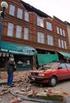 February 28 Earthquake: We got off easy State Geologist John Beaulieu Lucky may not be the first word that comes to mind after an earthquake that injured more than 200 and caused more than $1 billion damage,
Earthquakes. Earthquakes: Big Ideas. Earthquakes
 Earthquakes Earthquakes: Big Ideas Humans cannot eliminate natural hazards but can engage in activities that reduce their impacts by identifying high-risk locations, improving construction methods, and
Turkey M6.1. Chile M8.8 New Zealand M7.1
 Mexico M7.2 California M6.5 Haiti M7.0 Turkey M6.1 China M6.9 Taiwan M6.4 Japan M7.0 Indonesia M7.7 Solomon Islands M6.0 Chile M8.8 New Zealand M7.1 99% chance of a major earthquake (M6.7) within the next
Part 1 - How Much Danger is Your Home or Business In? Where do you live?
 Earthquake Insurance and San Diego County Residents Part 1 - How much danger is your home in? Where do you live? Part 2 - What do San Diego County residents have to know about Earthquake Insurance Policies,
After the Shaking Stops: A Communitywide Approach to Managing Post-Quake Fires
 After the Shaking Stops: A Communitywide Approach to Managing Post-Quake Fires By Rem Brown, P.E., IBHS Senior Engineering Manager, and Brent Henzi, IBHS Communications Associate Earthquakes are a destructive
Lecture 12 Earthquake Magnitude
 Lecture 12 Earthquake Magnitude Locating Earthquakes Last time, we learned that we could obtain a rough estimate of the distance in miles to an earthquake epicenter by multiplying the S - P time interval
Earthquake Hazards and Risks
 Page 1 of 7 EENS 3050 Tulane University Natural Disasters Prof. Stephen A. Nelson Earthquake Hazards and Risks This page last updated on 28-Aug-2013 Earthquake Risk Many seismologists have said that "earthquakes
The Severity of an Earthquake - ---- U.S. Department of the Interior/Geological Survey
 The Severity of an Earthquake - ---- U.S. Department of the Interior/Geological Survey ----~ Earthquakes can be measured in terms of either the effect of the earthquake (intensity) or of the energy released
Mitigation Works. 0 Earthquakes move mountains. But so do imagination and ingenuity when matched with implementation.
 0 Earthquakes move mountains. But so do imagination and ingenuity when matched with implementation. 0 Earthquakes have long been feared as one of nature s most damaging hazards. Earthquakes continue to
Property of the California Earthquake Authority (CEA)
 CEA History and Structure Claims Process Napa Earthquake: August 24, 2015 2 3 At request of the insurance industry, earthquake was specifically EXCLUDED from homeowners policy. In exchange, companies selling
 Testimony of Mr. Robert J. Fenton, Jr. Assistant Administrator for Response, Office of Response and Recovery Federal Emergency Management Agency U.S. Department of Homeland Security Before House Committee
1-800-927-4357. www.insurance.ca.gov. Earthquake. Insurance. California Department of Insurance
 1-800-927-4357 www.insurance.ca.gov Earthquake Insurance California Department of Insurance Table of Contents Page 2 Before You Buy Earthquake Insurance 4 Basic Earthquake Insurance 6 What Earthquake Insurance
Presentations. Session 1. Slide 1. Earthquake Risk Reduction. 1- Concepts & Terminology
 Earthquake Risk Reduction Presentations Session 1 Slide 1 Earthquake Risk Reduction 1- Concepts & Terminology Welcome to the World Bank Institute s (WBI) Distance Learning (DL) course on Earthquake Risk
Natural Disasters & Assessing Hazards and Risk. Natural Hazards and Natural Disasters
 Page 1 of 9 EENS 3050 Tulane University Natural Disasters Prof. Stephen A. Nelson Natural Disasters & Assessing Hazards and Risk This page last updated on 19-Aug-2014 Natural Hazards and Natural Disasters
Storms Assessment LESSON
 LESSON 8 Storms Assessment What will happen to the helix above a hot lamp? TERRY G. McCREA/SMITHSONIAN INSTITUTION INTRODUCTION You have now completed Storms, the first part of Catastrophic Events. After
When you hear fire engines
 2 Chapter Property and Casualty Insurance for Homes and Businesses Reading Prep. Before reading this chapter, College preview the illustrations. and Career Translate the technical Readiness information
Disaster Risk Reduction (DRR)
 Disaster Risk Reduction (DRR) A. Introduction 1. In order to address the impacts of the May 12 Wenchuan Earthquake, the Government of China will implement an effective, comprehensive and sustainable recovery
CCRIF: A Natural Catastrophe Risk Insurance Mechanism for Caribbean Nations
 CCRIF: A Natural Catastrophe Risk Insurance Mechanism for Caribbean Nations Current knowledge, expertise and experience to support the work programme on loss and damage under the Cancún Adaptation Framework
Catastrophe risk and the cost of real estate insurance
 Catastrophe risk and the cost of real estate insurance Catastrophe risk and the cost of real estate insurance Any real estate company that owns property in states exposed to hurricanes or earthquakes is
Business Continuity Planning Overview. Alanna Sumner Senior EHS Consultant
 Business Continuity Planning Overview Alanna Sumner Senior EHS Consultant Objectives Introduction Why is Business Continuity Planning important? BCP Process Cycle BCP Program Overview Successful BCP Programs
Chapter 7 Earthquake Hazards Practice Exam and Study Guide
 Chapter 7 Earthquake Hazards Practice Exam and Study Guide 1. Select from the following list, all of the factors that affect the intensity of ground shaking. a. The magnitude of the earthquake b. Rather
FOURTH GRADE EARTHQUAKES 1 WEEK LESSON PLANS AND ACTIVITIES
 FOURTH GRADE EARTHQUAKES 1 WEEK LESSON PLANS AND ACTIVITIES PLATE TECTONIC CYCLE OVERVIEW OF FOURTH GRADE VOLCANOES WEEK 1. PRE: Comparing different structures of volcanoes. DURING: Modeling three types
Magnitude 8.8 OFFSHORE MAULE, CHILE
 A great 8.8-magnitude struck central Chile early Saturday. The quake hit 200 miles (325 kilometers) southwest of the capital Santiago. The epicenter was just 70 miles (115 kilometers) from Concepcion,
7 Ways You Can Save $ on Your Homeowners Insurance -- And Provide Better Protection for Yourself and the People You Love!
 7 Ways You Can Save $ on Your Homeowners Insurance -- And Provide Better Protection for Yourself and the People You Love! Your home is probably your most valuable asset. It is also a huge risk for you
Chapter 10. Chapter 10 Learning Objectives. Insurance and Risk Management: An Introduction. Property and Motor Vehicle Insurance
 Chapter 10 Property and Motor Vehicle Insurance McGraw-Hill/Irwin Copyright 2012 by The McGraw-Hill Companies, Inc. All rights reserved. 10-1 Chapter 10 Learning Objectives 1. Develop a risk management
The Impact of an Earthquake in Canada
 The Impact of an Earthquake in Canada Serge Corbeil Government Relations Manager Western & Pacific 50 years as national association home, car, business insurance Industry & consumer issues Consumer resource,
CONFERENCE ON CATASTROPHIC RISKS AND INSURANCE 22-23 November 2004 INSURANCE OF ATMOSPHERIC PERILS CHALLENGES AHEAD.
 DIRECTORATE FOR FINANCIAL AND ENTERPRISE AFFAIRS CONFERENCE ON CATASTROPHIC RISKS AND INSURANCE 22-23 November 2004 INSURANCE OF ATMOSPHERIC PERILS CHALLENGES AHEAD Peter Zimmerli (Swiss Re) Background
Earthquake Risk Shakes Mortgage Industry
 Earthquake Risk Shakes Mortgage Industry by Haresh C. Shah and Daniel Rosenbaum THE SEISMIC SHOCK THAT rolled through Northridge, CA, on January 17, 1994, lasted less than half a minute, but the financial
Florida Hurricane Catastrophe Fund. Annual Report of Aggregate Net Probable Maximum Losses, Financing Options, and Potential Assessments
 Florida Hurricane Catastrophe Fund Annual Report of Aggregate Net Probable Maximum Losses, Financing Options, and Potential Assessments Table of Contents Purpose and Scope 3 Introduction 3 Aggregate Net
INSURANCE AND REINSURANCE ISSUES ARISING OUT OF NATURAL CATASTROPHES
 Insurance/ Reinsurance July 2012 INSURANCE AND REINSURANCE ISSUES ARISING OUT OF NATURAL CATASTROPHES This article was previously published in The International Reinsurance Review 2012/13 and is reproduced
Earthquakes: Interesting Facts and F.A.Q.
 Earthquakes: Interesting Facts and F.A.Q. Earthquakes kill approximately 8,000 people each year and have caused an estimated 13 million deaths in the past 4,000 years. The moment magnitude scale (MMS)
The National Flood Insurance Program (NFIP)
 The National Flood Insurance Program (NFIP) Insurance Information Institute 110 William Street New York, NY 10038 (212) 346-5500 www.iii.org October 2005 Robert P. Hartwig, Ph.D., CPCU Senior Vice President
Securitizing Property Catastrophe Risk Sara Borden and Asani Sarkar
 August 1996 Volume 2 Number 9 Securitizing Property Catastrophe Risk Sara Borden and Asani Sarkar The trading of property catastrophe risk using standard financial instruments such as options and bonds
Your Partner in Building Catastrophe and Weather Risk Markets
 Your Partner in Building Catastrophe and Weather Risk Markets Building Resilience to Disasters in Western Balkans and Turkey Natural Catastrophe Risk Exposure Natural Disasters can strike anyone, anywhere
Attachment Probability The attachment probability is the likelihood a cat bond will suffer some losses over the course of a one-year period.
 ILS Glossary Attachment Probability The attachment probability is the likelihood a cat bond will suffer some losses over the course of a one-year period. Basis Risk Basis risk is the difference between
Electromagnetic Pulse: Effects on the U.S. Power Grid
 Executive Summary The nation s power grid is vulnerable to the effects of an electromagnetic pulse (EMP), a sudden burst of electromagnetic radiation resulting from a natural or man-made event. EMP events
Chapter 2 The Insurance Mechanism
 Chapter 2 The Insurance Mechanism Overview Insurance is an important method of transferring pure loss exposures to an entity better positioned to handle these risks. But what is insurance and how does
STATEMENT BEFORE THE COMMITTEE ON SMALL BUSINESS AND ENTREPRENEURSHIP U.S. SENATE WASHINGTON, D.C.
 STATEMENT OF ROY WRIGHT DEPUTY ASSOCIATE ADMINISTRATOR FEDERAL INSURANCE AND MITIGATION ADMINISTRATION FEDERAL EMERGENCY MANAGEMENT AGENCY U.S. DEPARTMENT OF HOMELAND SECURITY BEFORE THE COMMITTEE ON SMALL
YOUR GUIDE TO BUYING THE RIGHT HOMEOWNERS INSURANCE
 YOUR GUIDE TO BUYING THE RIGHT HOMEOWNERS INSURANCE BY: WALTER E. MATTHEWS & ASSOC. INC 1327 FIFTH ST SANDUSKY OH 44870 PHONE 419-627-0899 FAX 419-627-0399 EMAIL: [email protected] WEBSITE: www.waltmatthewsins.com
Climate Change in Mexico implications for the insurance and reinsurance market
 Climate Change in Mexico implications for the insurance and reinsurance market Eberhard Faust Geo Risks Research Munich Reinsurance Company 1980 April 2008: Billion & Ten Billion Dollar Losses The costliest
Terrorism Risk Insurance Extension Act (TRIEA): Revised Federal Participation in Catastrophe Risk
 Terrorism Risk Insurance Extension Act (TRIEA): Revised Federal Participation in Catastrophe Risk By Robert Ball Background Recently foiled terrorist attacks targeting United States interests have rejuvenated
ROOF-GUARD 101. Affordable Roof Protection For Asphalt Shingles. Manufactured By
 ROOF-GUARD 101 Affordable Roof Protection For Asphalt Shingles Manufactured By 1019 SE Holbrook Ct. Port St. Lucie, FL, 34952 Phone: 772-335-8225 [email protected] Enviroseal has been instrumental in
Two dimensions of pure risk
 What is Insurance? Insurance is protection against risks. We face many risks in our lives: Car accident Theft Disability Heart attack Etc. Consumers buy insurance to pay for the costs associated with some
Natural Perils Insurance without Equal. 18 october 2011
 Natural Perils Insurance without Equal 18 october 2011 2 Imprint Recipients: Interested parties within and outside the insurance industry Published by: Swiss Insurance Association SIA Conrad-Ferdinand-Meyer-Strasse
Plotting Earthquakes LESSON
 13 LESSON Plotting Earthquakes INTRODUCTION On September 19, 1985, a strong earthquake occurred in Mexico City. The quake killed more than 9000 people and destroyed thousands of buildings. Two months later,
On Your Home. by John Adams, for Fox5 GOOD DAY ATLANTA
 SPECIAL REPORT: Ways To Save On Your Home Insurance- by John Adams, for Fox5 GOOD DAY ATLANTA 1 12 Ways to Lower Your Homeowners Insurance Costs edited by John Adams The following originally appeared in
Climate Change and Insurance. Challenges and Opportunities
 Climate Change and Insurance Challenges and Opportunities Why do we care? Insurance key to our economy keeps risk within reasonable limits so businesses can invest and grow and so individuals can recover
Allianz Reducing the risks of the poor through microinsurance
 DEDICATED TO MAKING A DIFFERENCE World Business Council for Sustainable Development Case Study 2009 Allianz Reducing the risks of the poor through microinsurance The business case The Allianz Group has
Disaster Recovery Plan (DRP) / Business Continuity Plan (BCP)
 Preface Computer systems are the core tool of today s business and are vital to every business from the smallest to giant organizations. Money transactions, customer service are just simple examples. Despite
Chapter 5: Earthquakes
 Chapter 5: Earthquakes 1. Experiencing an Earthquake firsthand 2. The Science of Ghost Forests and Megaearthquakes 3. Faults, Earthquakes, and Plate Tectonics 4. Seismic Waves and Earthquake Detection
CHAPTER 28 Insurance
 CHAPTER 28 Insurance Chapter Objectives After studying this chapter, you will be able to describe types of automobile insurance coverage. explain the importance of health insurance as a fringe benefit
How to Determine How Much Homeowners Insurance You Need
 How to Determine How Much Homeowners Insurance You Need You need enough insurance to cover the following: 1. The structure of your home. 2. Your personal possessions. 3. The cost of additional living expenses
EARTHQUAKE. Definition of Hazard. History of Hazard as it Affects the City of Kent. Hazard Identification
 EARTHQUAKE Definition of Hazard Earthquakes are defined as the sudden release of energy occurring from the collision or shifting of crustal plates on the earth s surface or from the fracture of stressed
PACIFIC CATASTROPHE RISK ASSESSMENT AND FINANCING INITIATIVE
 PACIFIC CATASTROPHE RISK ASSESSMENT AND FINANCING INITIATIVE NIUE SEPTEMBER 11 COUNTRY RISK PROFILE: NIUE Niue is expected to incur, on average,.9 million USD per year in losses due to earthquakes and
Insurance linked securities Showcasing the convergence of traditional reinsurance with capital markets
 Insurance linked securities Showcasing the convergence of traditional reinsurance with capital markets Mark Baumgartner Partner Audit Deloitte James Dockeray Director Tax Deloitte Jeff Bennett Manager