
CVC = central venous catheter. Insertion and Maintenance
|
|
|
- Poppy Wilcox
- 10 years ago
- Views:
Transcription
1 Central Venous Catheter Insertion and Maintenance A Tutorial on Recommended Practices Introduction Central venous catheters (CVCs) are a commonly used modality throughout the medical center and especially in the intensive care units, serving a vital role in the management of critically ill patients. By definition, these devices involve placement of a large-bore catheter into one of the body s main central veins. Typical sites include the internal jugular, subclavian, and femoral veins. Although indications vary among critically ill patients, these catheters are usually placed for vasopressor and medication administration, large-volume infusions, phlebotomy, or hemodynamic monitoring. Various CVC devices are available, including introducers, multi-lumen catheters, PICC lines, and hemodialysis catheters. Due to their size and location, CVCs confer a much greater risk for bloodstream infection (BSI) than simple peripheral intravenous lines. When a BSI occurs in a critically ill patient, the additional costs and the risk of death can be extraordinary. Abbreviations BSI = bloodstream infection CVC = central venous catheter NNIS = National Nosocomial Infection Surveillance system PICC = peripherally inserted central catheter CDC = Centers for Disease Control and Prevention ICU = intensive care unit HCW = healthcare worker 1

2 Introduction (continued) In most cases, episodes of catheter-related bacteremia cannot be traced back to one specific cause. Rather, these infections are viewed as resulting from the cumulative exposure to a series of known potential risk factors. These risk factors can be categorized according to the two phases of catheter care: insertion and daily management. This tutorial will discuss the most important of these risk factors, with a special emphasis on ways that providers can minimize the risks inherent in the insertion phase. This website is intended for nurses and physicians working in our ICUs. Although individual facilities may differ, the topics outlined in this tutorial are universal and apply to most critical care settings. The guidelines in this tutorial are supported whenever possible by expert recommendations in the published literature. Of course, providers will ultimately need to make treatment decisions based on their own clinical judgment and individual patient characteristics. Rationale The use of CVCs have increased considerably in the ICUs. Approximately 48% of all ICU patients have CVCs at some point during their hospital stay, accounting for over 15 million CVC-days per year in ICUs in the United States. However, CVCs, like any venous catheter, disrupt the integrity of the skin, leading to a portal for pathogen entry and subsequent CVC-related BSI. The burden of CVC-related BSIs in the United States is not small nor insignificant. Approximately 90% of catheter-related BSIs occur with CVCs. The mortality attributable to CVC-related BSI is between 4% and 20%, and an estimated U.S. patients die annually due to BSI. The attributable cost per infection is an estimated $34,508 $56,000, and the annual cost of caring for patients with CVCrelated BSIs ranges from $296 million to $2.3 billion. 2

3 Epidemiology A few organisms are responsible for most cases of CVC-related bacteremia. Most of these organisms reside on the skin surface. Coagulasenegative staphylococcus is the most commonly isolated bacterium; however, several other pathogens are common causes of CVC-related infections. Table 1 outlines the usual microbial causes of CVC-related BSI. Pathogen Coagulase-negative staphylococci Gram-negative rods Enterobacter species Pseudomonas aeruginosa Klebsiella pneumoniae Escherichia coli Staphylococcus aureus Enterococcus Candida species (%) 37 % 14 % 5 % 4 % 3 % 2 % 13 % 13 % 8 % Indications for CVC Placement CVC placement may be required for many reasons, including: 1. Rapid delivery of pharmcotherapeutic drugs or compounds 2. Volume resuscitation 3. Hemodynamic instability/need for monitoring 4. Lack of sustainable peripheral access 5. Dialysis therapy 6. Long-term parenteral nutrition 7. Risk of intraoperative air embolism Placement of a central venous catheter solely for ease of phlebotomy in a patient with adequate peripheral veins is strongly discouraged. 3

4 Teamwork & Quality Improvement Due to the substantial morbidity due to CVC-related BSI, efforts to reduce CVC-related BSI require coordination between all providers on a patient's care team. Accordingly, the physician must inform the patient s nurse at the earliest opportunity whenever CVC insertion is anticipated (i.e. not while draping the patient!). This important step allows the nursing staff to arrange proper coverage, thereby ensuring the nurse s availability during the entire procedure. In general, a dedicated nurse should be at the bedside during every CVC insertion. Physicians should defer elective line insertions until a nurse is available. By having a dedicated team of providers in the room, patient care is improved on several levels. First, the nurse functions as an assistant to the proceduralist who is otherwise unable to touch any object outside the sterile field. In addition, a team approach enhances patient safety. For example, if the nurse notices a break in sterile technique, the physician can be notified and the procedure stopped while the situation is remedied. Although some providers might feel uncomfortable making such suggestions, these types of behaviors improve patient safety and are essential for continuous quality improvement. Obviously, a patient s safety is more important than a provider s autonomy. Teamwork & Quality Improvement (continued) Studies have shown that CVCs inserted by inexperienced providers have higher rates of infectious and mechanical complications. If a proceduralist has placed less than five (5) central lines, a more experienced provider must properly supervise the procedure. The ICU leadership feels that protecting patient safety is the responsibility of all providers on a patient's team. Accordingly, the nursing staff is encouraged to ensure our inexperienced providers follow these standard guidelines 4

5 Hand Washing Good hand hygiene before catheter insertion or maintenance is critical to reduce CVC-related infections. Even if providers wear gloves, studies have consistently shown that hand washing immediately prior to the handling of a line reduces the incidence of infections. Use of a waterless, alcohol-based gel is at least as effective as traditional soap and water. All staff are expected to adhere to good hand hygiene practices both before and after contact with patients and their environment. Fingernails Hand washing is an extremely effective way to prevent nosocomial infections, but fingernails often harbor microorganisms after thorough hand cleansing. Lengthy or artificial fingernails increase this tendency for pathogenic organisms to remain on the hands. For this reason, the Association of Operating Room Nurses has officially banned artificial nails in the operating room. In general, health care providers should avoid wearing artificial nails at work and should keep their nails neatly trimmed. Catheter Insertion Site A catheter in a peripheral vein has a much lower chance of infection than a catheter in a central vein. In fact, the majority of serious catheter-related infections are associated with CVCs, not peripheral lines. A catheter s insertion site directly influences the subsequent risk for catheter-related infection. The density of skin flora at the insertion site is a major risk factor for CVC-related BSI. Certain insertion sites are easier to maintain in a clean and dry manner. Catheters inserted into an internal jugular vein are associated with higher risk for infection than those inserted into a subclavian vein. Recent studies suggest the femoral site is associated with a higher risk for deep venous thrombosis and infection than the other two sites. In general, the subclavian site is the preferred site in order to reduce the risk of infection. However, this recommendation must be balanced against issues such as patient comfort, anatomic deformity, and risk of mechanical complications (e.g., bleeding and pneumothorax). 5

6 Catheter Insertion Site (continued) Studies have shown that the risk of infection or mechanical complications increases with each needle stick. If multiple attempts do not result in successful canalization, providers are encouraged to ask for assistance from a more experienced colleague. In these challenging line placement situations, providers must remain particularly attuned to their patient's level of comfort and anxiety. The use of ultrasound guidance to localize the vein prior to insertion has also been found to reduce the number of needle sticks required for CVC placement. Maximal Barrier Precautions Compared with peripheral venous catheters, CVCs carry a substantially greater risk for infection. Therefore, central lines should always be placed using maximal sterile barrier precautions (persons placing the CVC wear cap, mask, sterile gown, and sterile gloves, while a large sterile drape should cover the patient s head and extends below the patient s waist). The drape should be large enough to reduce the risk of catheter and guidewire contamination. In neonates and young children, the drape should cover the entire body. Studies have consistently shown that the use of maximal barrier precautions reduces the incidence of CVCrelated BSIs when compared against standard precautions (sterile gloves and sterile towels). Of note, maximal barrier precautions are also recommended for any guidewire exchanges. 6

7 Prophylactic Antibiotics During Insertion/Topical Antimicrobial Ointment At present, prophylactic treatment prior to CVC insertion is not recommended. Prophylaxis with intravenous vancomycin or teicoplanin during catheter insertion did not reduce the incidence of CVC-related infections, and indiscriminate use of antimicrobials independently selects for the acquisition of resistant organisms. Several topical ointments have been studied at the catheter insertion site. One randomized study showed that prophylactic povidone-iodine ointment reduces hemodialysis catheter infections. Studies with prophylactic mupirocin have shown that it prevents overall infections, but the ointment ultimately induces mupirocin resistance and damages the integrity of polyurethane catheters. Rates of catheter colonization with Candida also increase after application of an antimicrobial ointment that has no fungicidal activity. Overall, many studies show conflicting results and no strong recommendations exist regarding the use of antimicrobial ointments. If applying one of these ointments to a CVC insertion site, always check for compatibility with the catheter material. Patient Positioning Inexperienced providers occasionally overlook the step of properly positioning the patient. Proper positioning includes ensuring the patient is both comfortable and lying flat (or in slight Trendelenberg). Sedation and analgesia issues should be considered before starting the procedure. Several other steps can also optimize a provider s performance: adjusting the bed height, turning on all the lights, and handing-off pagers. Insertion Site Prep Although povidone-iodine (Betadine) has traditionally been the most widely used antiseptic, 2% aqueous chlorhexidine gluconate is actually superior for reducing CVC-related BSIs. Unless contraindicated, use 2% chlorhexidine for skin antisepsis except in neonates under 30 days of age. In this age group, a lower concentration of chlorhexidine should be used (0.5%). If the patient is allergic to chlorhexidine, use povidone-iodine. Allow the antiseptic to air dry on the site before insertion. If hair must be removed prior to line insertion, clipping is recommended. Shaving is not appropriate because razors cause local skin abrasions that subsequently increase the risk for infection. 7

8 Antibiotic Impregnated Catheters Several studies have demonstrated that using antiseptic/antibiotic impregnated CVCs can significantly reduce BSIs, at least in catheters remaining in place up to 30 days. Although several types are available, the rifampinminocycline and chlorhexidine-silver sulfadiazine impregnated catheters are the most popular. One of these catheters costs approximately three times more than a non-impregnated catheter. In addition, there is still concern that widespread use of these catheters will increase the incidence of rifampin and minocycline resistance among pathogens, especially staphylococci. At this time, experts recommend using antibiotic impregnated catheters ONLY if the infection rate remains high despite adherence to other proven strategies (i.e., education and training, maximal sterile barrier precautions, and 2% chlorhexidine for skin antisepsis). Anchoring Lines Catheters must be properly anchored after insertion. Unfortunately, many providers underestimate the importance of this step. A loosely-anchored catheter slides back and forth, increasing the risk for contamination of the insertion tract. Since skin flora are the most common infecting organisms in CVC-related BSIs, proper anchoring is strongly recommended. Likewise, the contamination shield should always be used on pulmonary artery catheters. Dressing Although transparent (semipermeable) dressings are popular for CVC insertion sites, studies have not demonstrated a clear benefit for transparent dressings versus ordinary sterile gauze. Both dressing types have similar rates of catheter-related BSI, and, therefore, the choice of dressing is simply a matter of personal preference. However, if blood is oozing from the catheter insertion site, absorbent gauze dressing is preferred. In general, gauze dressing should be changed at least every 2 days. Transparent dressings should be changed at least every 7 days. Studies have not shown any benefit from more frequent changes if the dressing is clean and intact. However, a dressing should always be changed if it becomes damp, loosened, or soiled. 8

9 Manipulating & Accessing Lines Excessive manipulation of catheters increases the risk for CVC-related BSI, probably because of the greater risk for a breach in aseptic technique each time the catheter is accessed. Whenever possible, providers should limit the number of times a line is accessed in order to minimize this risk. Performing nonemergent blood draws at scheduled times (regardless of when they are ordered) is one possible strategy to limit catheter manipulation. The multiple demands on critical care providers can contribute to catheterrelated infections. For example, studies have shown that reducing the nurse:patient ratio from 1:1 to 1:2 independently increases the risk for developing a CVC-related BSI. This effect is possibly due to hurried providers bypassing standard precautionary steps. Prior to accessing any line, hands should be washed, gloves should be worn, and the hub should be sterilized with an alcohol swab. Although alcohol possesses antimicrobial properties, the friction from actually wiping a hub is the most important feature of this step. Providers should pay keen attention to the potential for touch contamination when accessing a hub. Catheter Removal & Replacement Since infection risk increases the longer a catheter remains in place, providers must continually evaluate the need for every CVC. Providers should review the need for a CVC on at least a daily basis and remove any unnecessary catheters. If a CVC is no longer required and peripheral access has been established, the CVC should be removed. The insertion site should be palpated daily, with thorough inspection of the site if local tenderness or other signs of a possible infection are noted. If purulence is ever noticed at the insertion site, remove the catheter immediately and place a new catheter at a different site. Placement of a new catheter over a guidewire in the presence of bacteremia is unacceptable, because the infection likely originated from the skin tract between the insertion site and the vein. Removal of a CVC for fever alone is unnecessary. 9

10 Catheter Removal & Replacement (continued) A strategy of replacing catheters at scheduled time intervals does not reduce rates of CVC-related bacteremia. Likewise, routine guidewire exchanges also fail to prevent infections. If no infection is suspected, catheter replacement over a guidewire is an accepted technique for replacing a malfunctioning catheter or exchanging a pulmonary artery catheter for a CVC. Of note, CVC removal exposes patients to risk of air embolus. To minimize this risk, providers should ensure the patient is lying flat (or in slight Trendelenberg) when removing a CVC. Instruct patients to take in a deep breath, and then pull the line when the patient exhales. Apply firm pressure to the site for at least 10 minutes, longer if the patient has an underlying bleeding tendency. Training and Education Studies have shown that provider education and training directly impact the risk for CVC-related infections. Several important points everyone should know: Catheters inserted by inexperienced providers have an increased risk for infection. Catheters maintained by inexperienced providers have an increased risk for infection. Frequent provider education decreases the risk for infection. Standardization of aseptic technique decreases the risk for infection. Specialized Line Teams decrease the risk for infection. 10

11 Surveillance for CVC-Related BSI An important component of prevention of CVC-related BSIs is the accurate identification of all infections using standardized definitions. In most facilities, infection control and infectious diseases staff are responsible for collecting this data. The Centers for Disease Control and Prevention have developed a rigorous definition for CVC-related BSI, which is recommended for all facilities. Use of this standardized definition allows direct comparison to nationwide benchmarks. Laboratory-confirmed CVC-related BSI (must meet at least 1 of the following criteria): Criterion 1: Patient with CVC has a recognized pathogen cultured from 1 or more blood cultures and organism cultured from blood is not related to an infection at another site. (continued on next slide) CDC Definition of CVC-Related BSI (continued): Criterion 2: Patient with CVC has at least one of the following signs or symptoms: fever, chills, or hypotension and at least one of the following: a. Common skin contaminant (e.g., coagulase-negative staphylococci) is cultured from two or more blood cultures drawn on separate occasions b. Common skin contaminant (e.g., coagulase-negative staphylococci) is cultured from at least 1 blood culture from a patient with CVC, and the physician institutes appropriate antimicrobial therapy And signs and symptoms and positive laboratory results are not related to an infection at another site. Criterion 3: Patient 1 year of age with CVC has at least one of the following signs or symptoms: fever, hypothermia, apnea, or bradycardia and at least one of the following: a. Common skin contaminant is cultured from two or more blood cultures drawn on separate occasions b. Common skin contaminant is cultured from at least one blood culture from a patient with an intravascular line, and physician institutes appropriate antimicrobial therapy 11

12 Final Thoughts Some providers view CVC insertion as a doctor phase while daily catheter maintenance is seen as a nursing phase. Unfortunately, this viewpoint challenges the notions of teamwork and shared responsibility that are essential for infection reduction. Furthermore, this erroneous observation simply ignores the overwhelming evidence that all providers have an impact on the many risk factors mentioned above. Knowledge alone is not sufficient for changing behavior you must also take the necessary actions. Please realize that you have a direct impact on infection rates and the quality of medical care in the ICU. If you have any questions about something in the ICU, ask someone. If you have suggestions to improve care in the ICU, speak up. Further Reading 1. National Nosocomial Infections Surveillance (NNIS) System Report, Data Summary from January 1992-June 2001, issued August Am J Infect Control 2001;29(6): Recommended practices. Surgical hand scrubs. AORN Recommended Practices Coordinating Committee. Aorn J 1990;52(4): Berenholtz SM, Pronovost PJ, Lipsett PA,et al. Eliminating catheter-related bloodstream infections in the intensive care unit. Crit Care Med 2004;32(10): Boyce JM, Pittet D. Guideline for Hand Hygiene in Health-Care Settings: recommendations of the Healthcare Infection Control Practices Advisory Committee and the HICPAC/SHEA/APIC/IDSAHand Hygiene Task Force. Infect Control Hosp Epidemiol 2002;23(12 Suppl):S McCarthy MC, Shives JK, Robison RJ, Broadie TA. Prospective evaluation of single and triple lumen catheters in total parenteral nutrition. JPEN J Parenter Enteral Nutr 1987;11(3):

13 Further Reading (continued): 6. Mermel LA. Prevention of intravascular catheter-related infections. Ann Intern Med 2000;132(5): Mermel LA, McCormick RD, Springman SR, Maki DG. The pathogenesis and epidemiology of catheter-related infection with pulmonary artery Swan-Ganz catheters: a prospective study utilizing molecular subtyping. Am J Med 1991;91(3B):197S-205S. 8. O'Grady NP, Alexander M, Dellinger EP, et al. Guidelines for the prevention of intravascular catheter-related infections. Centers for Disease Control and Prevention. MMWR Recomm Rep 2002;51(RR-10): Pittet D, Tarara D, Wenzel RP. Nosocomial bloodstream infection in critically ill patients. Excess length of stay, extra costs, and attributable mortality. Jama 1994;271(20): Raad, II, Hohn DC, Gilbreath BJ, et al. Prevention of central venous catheter-related infections by using maximal sterile barrier precautions during insertion. Infect Control Hosp Epidemiol 1994;15(4 Pt 1): Soufir L, Timsit JF, Mahe C, et al. Attributable morbidity and mortality of catheterrelated septicemia in critically ill patients: a matched, risk-adjusted, cohort study. Infect Control Hosp Epidemiol 1999;20(6): Wall RJ, Ely EW, Elasy TA, et al. Using real time process measurements to reduce catheter related bloodstream infections in the intensive care unit. Qual Saf Health Care 2005; 14:

Components of CVC Care Bundle. selection
 Components of CVC Care Bundle Catheter site selection Site of insertion influences the subsequent risk for CR-BSI and phlebitis The influence of site is related in part to the risk for thrombophlebitis
Policies & Procedures. I.D. Number: 1073
 Policies & Procedures Title:: CENTRAL VENOUS CATHETERS INSERTION ASSISTING I.D. Number: 1073 Authorization [] Pharmacy Nursing Committee [] MAC Motion #: [x] SHR Nursing Practice Committee Source: Nursing
High Impact Intervention Central venous catheter care bundle
 High Impact Intervention Central venous catheter care bundle Aim To reduce the incidence of catheter related bloodstream infection (CRBSI). Introduction The aim of the care bundle, as set out in this high
I. Questions for VAD slide program
 I. Questions for VAD slide program 1. The rate of central line associated blood stream infections (CLABSI) in the adult ICUs in Johns Hopkins Hospital is lower than the national average. 2. The mortality
Central Line-Associated Bloodstream Infection (CLABSI) Prevention. Basics of Infection Prevention 2-Day Mini-Course 2013
 Central Line-Associated Bloodstream Infection (CLABSI) Prevention Basics of Infection Prevention 2-Day Mini-Course 2013 2 Objectives Describe the etiology and epidemiology of central line associated bloodstream
VUMC Guidelines for Management of Indwelling Urinary Catheters. UC Access/ Maintenance
 VUMC Guidelines for Management of Indwelling Urinary Catheters UC Insertion Preparation & Procedure Indications for insertion and continued use of indwelling urinary catheters include: Urinary retention
Are venous catheters safe in terms of blood tream infection? What should I know?
 Are venous catheters safe in terms of blood tream infection? What should I know? DIAGNOSIS, PREVENTION AND TREATMENT OF HAEMODIALYSIS CATHETER-RELATED BLOOD STREAM INFECTIONS (CRBSI): A POSITION STATEMENT
Management of Catheters Infectious Diseases Working Party/Nurses Group
 Management of Catheters Infectious Diseases Working Party/Nurses Group Arno Mank RN PhD, Amsterdam (NL) www.ebmt.org London 09/04/2012 Content Background Management of CVC Types of CVC Care aspect of CVC
Guidelines for the Prevention of Intravascular Catheter-Related Infections
 Morbidity and Mortality Weekly Report Recommendations and Reports August 9, 2002 / Vol. 51 / No. RR-10 Guidelines for the Prevention of Intravascular Catheter-Related Infections Centers for Disease Control
 Translating Evidence to Safer Care Patient Safety Research Introductory Course Session 7 Albert W Wu, MD, MPH Former Senior Adviser, WHO Professor of Health Policy & Management, Johns Hopkins Bloomberg
CENTRAL VENOUS CATHETERIZATION
 DISCLAIMER: These guidelines were prepared by the Department of Surgical Education, Orlando Regional Medical Center. They are intended to serve as a general statement regarding appropriate patient care
Safety FIRST: Infection Prevention Tips
 Reading Hospital Safety FIRST: Infection Prevention Tips Reading Hospital is committed to providing high quality care to our patients. Your healthcare team does many things to help prevent infections.
Peripherally Inserted Central Catheter (PICC) for Outpatient
 Peripherally Inserted Central Catheter (PICC) for Outpatient Introduction A Peripherally Inserted Central Catheter, or PICC line, is a thin, long, soft plastic tube inserted into a vein of the arm. It
PICC & Midline Catheters Patient Information Guide
 PICC & Midline Catheters Patient Information Guide medcompnet.com 1 table of contents Introduction 4 What is a PICC or Midline Catheter? 4 How is the PICC or Midline Catheter Inserted? 6 Catheter Care
BestPractice. Evidence Based Practice Information Sheets for Health Professionals. This Practice Information Sheet Covers The Following Concepts:
 Volume 2, Issue 1, 1998 ISSN 1329-1874 BestPractice Evidence Based Practice Information Sheets for Health Professionals Purpose The purpose of this practice information sheet is to provide summarised best
X-Plain Subclavian Inserted Central Catheter (SICC Line) Reference Summary
 X-Plain Subclavian Inserted Central Catheter (SICC Line) Reference Summary Introduction A Subclavian Inserted Central Catheter, or subclavian line, is a long thin hollow tube inserted in a vein under the
Infection Control Manual. Table of Contents
 Infection Control Manual Policy Name The Prevention of Intravascular Catheter-Related Infections Policy Number IC 0032 Date this Version Effective May 2013 Responsible for Content Hospital Epidemiology
PATIENT GUIDE. Understand and care for your peripherally inserted central venous catheter (PICC). MEDICAL
 PATIENT GUIDE Understand and care for your peripherally inserted central venous catheter (PICC). MEDICAL Introduction The following information is presented as a guideline for your reference. The best
Care of Your Hickman Catheter
 Care of Your Hickman Catheter Johns Hopkins Kimmel Cancer Center, Revised 7/11 Contents What is a Hickman Catheter? Page 3 Does the Catheter Limit My Activities? Page 4 How Do I Care for My Catheter? Page
Catheter-Associated Urinary Tract Infection (CAUTI) Prevention. Basics of Infection Prevention 2 Day Mini-Course 2013
 Catheter-Associated Urinary Tract Infection (CAUTI) Prevention Basics of Infection Prevention 2 Day Mini-Course 2013 2 Objectives Define the scope of healthcare-associated urinary tract infections (UTI)
Peripherally Inserted Central Catheter (PICC)
 Peripherally Inserted Central Catheter (PICC) Disclaimer This is general information developed by The Ottawa Hospital. It is not intended to replace the advice of a qualified healthcare provider. Please
METHICILLIN-RESISTANT STAPHYLOCOCCUS AUREUS (MRSA) COMMUNITY ACQUIRED vs. HEALTHCARE ASSOCIATED
 METHICILLIN-RESISTANT STAPHYLOCOCCUS AUREUS (MRSA) COMMUNITY ACQUIRED vs. HEALTHCARE ASSOCIATED Recently, there have been a number of reports about methicillin-resistant Staph aureus (MRSA) infections
Vaxcel PICCs Valved and Non-Valved. A Patient s Guide
 Vaxcel PICCs Valved and Non-Valved A Patient s Guide Information about your Vaxcel PICC is available by calling the Navilyst Medical Vascular Access Information Line 800.513.6876 Vaxcel Peripherally Inserted
Hemodialysis catheter infection
 Hemodialysis catheter infection Scary facts In 2006, 82% of patients in the United States initiated dialysis via a catheter The overall likelihood of Tunneled cuffed catheters use was 35% greater in 2005
Policies & Procedures. ID Number: 1118
 Policies & Procedures Title: INTRAVENOUS AND/OR PERIPHERAL SALINE LOCK INSERTION AND MAINTENANCE ID Number: 1118 Authorization [X] SHR Nursing Practice Committee Source: Nursing Date Revised: September
INFECTION CONTROL PRECAUTIONS
 INFECTION CONTROL PRECAUTIONS Outline Standard Precautions Droplet Precautions Contact Precautions Airborne Precautions References STANDARD PRECAUTIONS Use Standard Precautions, or the equivalent, for
Managing Your Non-Tunneled (Percutaneous) Catheter: PICC, SICC, and JCC. What is a PICC catheter?
 Managing Your Non-Tunneled The staff of the Procedure, Vascular Access, Conscious Sedation Service has written this information to explain your new PICC (peripherally inserted central catheter), SICC (subclavian
STANDARDS OF PRACTICE. Donald L. Miller, MD, and Naomi P. O Grady, MD
 STANDARDS OF PRACTICE Guidelines for the Prevention of Intravascular Catheter-related Infections: s Relevant to Interventional Radiology for Venous Catheter Placement and Maintenance Donald L. Miller,
To maintain a port of entry to venous flow when all available peripheral ports have failed.
 I. Purpose: To maintain a port of entry to venous flow when all available peripheral ports have failed. II. General Comments: Since its development, these catheters have been used with increasing frequency
ORTHOPAEDIC INFECTION PREVENTION AND CONTROL: AN EMERGING NEW PARADIGM
 ORTHOPAEDIC INFECTION PREVENTION AND CONTROL: AN EMERGING NEW PARADIGM AMERICAN ACADEMY OF ORTHOPAEDIC SURGEONS 77th Annual Meeting March 9-12, 2010 New Orleans, Louisiana COMMITTEE ON PATIENT SAFETY PREPARED
Healthcare workers report that various factors contribute to poor compliance with hand hygiene. These include:
 RISKTOPICS Hand hygiene in the healthcare setting January 2013 Proper hand hygiene is the best way to keep from getting sick and prevent germs from being spread to others. For hospitals, nursing homes
Within the Scope of Practice/Role of APRN RN _ X_LPN CNA
 Wyoming State Board of Nursing 130 Hobbs Avenue, Suite B Cheyenne, WY 82002 Phone (307) 777-7601 Fax (307) 777-3519 E-Mail: [email protected] Home Page: https://nursing-online.state.wy.us/ OPINION:
Patient Information Guide Morpheus CT Peripherally Inserted Central Catheter
 Patient Information Guide Morpheus CT Peripherally Inserted Central Catheter IC 192 Rev C A measure of flexibility and strength. Table of Contents 1. Introduction 2. What is the Morpheus CT PICC? 3. What
PICCs and Midline Catheters
 Patient Education PICCs and Midline Catheters Patient s guide to PICC (peripherally inserted central catheter) and midline catheters What are PICCs and midline catheters used for? Any medicine given over
ZERO By Chris Abe, RN, BSN, CIC, HEM; Jeanne Zack, PhD(c), RN, CIC; Stephen R. Lewis, MD; Tim Vanderveen, PharmD, MS
 ZERO Photos courtesy of Cardinal Health By Chris Abe, RN, BSN, CIC, HEM; Jeanne Zack, PhD(c), RN, CIC; Stephen R. Lewis, MD; Tim Vanderveen, PharmD, MS 14 Patient Safety & Quality Healthcare November/December
Central venous catheters. Care of the site 88 CVP measurement 90 Removal of CVC (non-tunnelled) 93 Care of long-term CVCs 95
 4 Central venous catheters Care of the site 88 CVP measurement 90 Removal of CVC (non-tunnelled) 93 Care of long-term CVCs 95 CARE OF THE SITE Preparation Patient Equipment/Environment Nurse Explain the
b. Povidone Iodine 5% Swabsticks, Single Pack (4 packs) c. Clean gloves
 Program Agenda SUBJECT: Universal Decolonization Protocols for Pre-operative Orthopedic Patients EFFECTIVE DATE: 5/2014 REVISED DATE: I. Policy: The largest fraction of hospital acquired infections (HAIs),
Strategies to Prevent Deadly Central-Line Associated
 SHEA / IDSA Practices and the Arrow Maximal Barrier Kit Strategies to Prevent Deadly Central-Line Associated Bloodstream Infections SHEA Society for Healthcare Epidemiology in America, IDSA Infection Diseases
Addressing the challenge of healthcare associated infections (HCAIs) in Europe
 POSITION PAPER 05 January 2011 Addressing the challenge of healthcare associated infections (HCAIs) in Europe A Call for Action Page 1 of 8 A holistic approach to combating HCAIs in Europe We must rise
Nursing college, Second stage Microbiology Dr.Nada Khazal K. Hendi L14: Hospital acquired infection, nosocomial infection
 L14: Hospital acquired infection, nosocomial infection Definition A hospital acquired infection, also called a nosocomial infection, is an infection that first appears between 48 hours and four days after
Central Venous Catheter (CVC) Sterile Dressing Change - The James
 PATIENT EDUCATION patienteducation.osumc.edu Central Venous Catheter (CVC) Sterile Dressing Change - The James A dressing protects your catheter site and helps reduce the risk of infection. You will need
Care for your child s Central Venous Catheter (CVC)
 Care for your child s Central Venous Catheter (CVC) This booklet is intended for general informational purposes only. You should consult your doctor for medical advice. Please call the clinic or your home
Objective. Suggested Reading: WHO Aide-Memoire: Hand Hygiene How to Hand Rub / How to Hand Wash Poster. Hand out/materials See activities
 Hand Hygiene Objective Objectives Demonstrate correct Hand Hygiene technique Knowledge of multi-faceted plans to improve hand hygiene Understand appropriate Hand Hygiene practices when caring for patient
Advice for those affected by MRSA outside of hospital
 Advice for those affected by MRSA outside of hospital If you have MRSA this leaflet provides information and advice for managing your day-to-day life. 1 About MRSA There are lots of different types or
Care of your central venous catheter A guide for patients and their carers. We care, we discover, we teach
 Care of your central venous catheter A guide for patients and their carers We care, we discover, we teach This booklet contains information about central venous catheters (CVC). These are sometimes called
MISSISSIPPI BOARD OF NURSING IV THERAPY COURSE FOR THE EXPANDED ROLE LICENSED PRACTICAL NURSE COURSE OUTLINE
 THEORY MINIMUM 40 HOURS COURSE OUTLINE UNIT TOPIC HOURS* I LEGAL ASPECTS AND PRACTICE OF IV THERAPY 1 II REVIEW OF ANATOMY AND PHYSIOLOGY 6 III FLUID AND ELECTROLYTE BALANCE 10 IV EQUIPMENT AND PROCEDURES
Page 1 of 10 MC1482 Peripherally-Inserted Central Catheter. Peripherally-Inserted Central Catheter (PICC)
 Page 1 of 10 MC1482 Peripherally-Inserted Central Catheter Peripherally-Inserted Central Catheter (PICC) Page 2 of 10 MC1482 Peripherally-Inserted Central Catheter Introduction A peripherally-inserted
A PRINTED copy of this guideline may not be the most recent version. The OFFICIAL version is located on IHNET at the Policies & Procedures Home Page
 A PRINTED copy of this guideline may not be the most recent version. The OFFICIAL version is located on IHNET at the Policies & Procedures Home Page IX0200: Prevention & Control of Catheter Associated
Clinical Guideline for: Aseptic Technique
 Clinical Guideline for: Technique Summary This guideline provides the principles of, Non Touch, and Clean Techniques to be implemented in the hospital environment. Key Points The essential elements of
CEDARS-SINAI MEDICAL CENTER O.R./ANESTHESIA/SURGERY CENTER SERVICES OPERATING ROOM
 I. Purpose: To provide standardized guidelines for nursing and non-nursing personnel in accordance with roles and responsibilities as outlined in the job descriptions along with the AORN standards of practice.
Tunneled Central Venous Catheter (CVC) Placement
 PATIENT EDUCATION patienteducation.osumc.edu Tunneled Central Venous Catheter (CVC) Placement A tunneled Central Venous Catheter (CVC) is a special type of intravenous (IV) line that is placed into a large
Sterile Dressing Change with Tegaderm CHG for Central Venous Catheter (CVC)
 Sterile Dressing Change with Tegaderm CHG for Central Venous Catheter (CVC) The dressing protects your catheter site. It also helps prevent infection at the site. Keep your dressing clean and dry at all
Intravenous Cannula Site Infection Presenting as Endocarditis A Preventable Complication
 ISSN: 2319-7706 Special Issue-1 (2015) pp. 75-80 http://www.ijcmas.com Case Study Intravenous Cannula Site Infection Presenting as Endocarditis A Preventable Complication Divya Rabindranath 1 *, Rabindranath
2013 Indiana Healthcare Provider and Hospital Administrator Multi-Drug Resistant Organism Survey
 2013 Indiana Healthcare Provider and Hospital Administrator Multi-Drug Resistant Organism Survey Antibiotic resistance is a global issue that has significant impact in the field of infectious diseases.
Site Care of Your Central Venous Catheter Sterile
 Site Care of Your Central Venous Catheter Sterile Dressing Change Sterile Technique The skin surrounding your catheter s exit site must be kept clean, and a new sterile dressing should be applied on a
EAST CAROLINA UNIVERSITY INFECTION CONTROL POLICY. Methicillin-resistant Staph aureus: Management in the Outpatient Setting
 EAST CAROLINA UNIVERSITY INFECTION CONTROL POLICY Methicillin-resistant Staph aureus: Management in the Outpatient Setting Date Originated: Date Reviewed: Date Approved: Page 1 of Approved by: Department
Flushing and Dressing a Peripherally Inserted Central Catheter (PICC Line): a Guide for Nurses
 Flushing and Dressing a Peripherally Inserted Central Catheter (PICC Line): a Guide for Nurses Information for Nurses Introduction This information is for community nursing staffs who have been asked to
Catheter-Associated Urinary Tract Infection (CAUTI) Event
 Catheter-Associated Urinary Tract Infection () Event Introduction: Urinary tract infections (UTIs) are tied with pneumonia as the second most common type of healthcare-associated infection, second only
Massachusetts Department of Developmental Services MRSA, VRE, and C. Diff Management Protocol
 Massachusetts Department of Developmental Services MRSA, VRE, and C. Diff Management Protocol PURPOSE: To provide guidance for personnel in order to prevent the spread of Antibiotic Resistant Microorganisms
Medical Education Policy: Central Venous Catheter (CVC) Placement
 Medical Education Policy: Central Venous Catheter (CVC) Placement Facility: CMC Origin Date: June 2015 Revision Date: Sponsor: GMEC 1. PURPOSE: Carilion Clinic is committed to excellent patient care, with
Understanding your Peripherally Inserted Central Catheter (PICC) Patient Information
 Understanding your Peripherally Inserted Central Catheter (PICC) Patient Information The Purpose of this Information Sheet This information sheet has been written by patients, members of the public and
NURSING PRACTICE & SKILL
 NURSING PRACTICE & SKILL Hand Hygiene: Hand and Arm Drying following Surgical Scrub What is Hand and Arm Drying following Surgical Scrub? Hand hygiene, also known as hand antisepsis, in the healthcare
MRSA. Living with. Acknowledgements. (Methicillin-Resistant Staphylococcus aureus)
 How can I keep myself healthy? Hand washing and use of an alcohol-based hand sanitizer are the primary way to prevent acquiring or transmitting bacteria. If you get a cut or scrape, wash it well with soap
Policy and Procedure Flushing and / or Blood withdrawal Aspiration Procedure For PICC Line and Midline Catheters
 Policy and Procedure Flushing and / or Blood withdrawal Aspiration Procedure For PICC Line and Midline Catheters Purpose: Blood Withdrawal: To obtain blood samples for laboratory evaluation, eliminating
VRE. Living with. Learning how to control the spread of Vancomycin-resistant enterococci (VRE)
 VRE Living with Learning how to control the spread of Vancomycin-resistant enterococci (VRE) CONTENTS IMPORTANT VRE is a serious infection that may become life-threatening if left untreated. If you or
Recommendations for the Safe Use of Handling of Cytotoxic Drugs
 Recommendations for the Safe Use of Handling of Cytotoxic Drugs Introduction Cytotoxic drugs are toxic compounds and are known to have carcinogenic, mutagenic and/or teratogenic potential. With direct
Central Venous Catheter Care For Haemodialysis
 Central Venous Catheter Care For Haemodialysis Information For Parents and Carers Haemodialysis Unit 01 878 4757 Main Hospital Number 01 878 4200 Central Venous Catheters We hope this booklet will help
Guy s, King s and St Thomas Cancer Centre The Cancer Outpatient Clinic Central venous catheter: Peripherally inserted central catheter
 Guy s, King s and St Thomas Cancer Centre The Cancer Outpatient Clinic Central venous catheter: Peripherally inserted central catheter This information leaflet aims to help answer some of the questions
BODY SUBSTANCE ISOLATION (BSI): THE STANDARD OF CARE
 CRAIG HOSPITAL POLICY/PROCEDURE Approved: NPC, IC, MEC, P&P 05/06 Effective Date: 02/88 P&P 06/09 Attachments: Revised Date: 05/03, 04/06 Decision Tree for Isolation Precautions Comments on Specific Diseases
I-140 Venipuncture for Blood Specimen Collection
 I-140 Venipuncture for Blood Specimen Collection Purpose Obtain a blood specimen by venipuncture for laboratory analysis using aseptic technique. Applies To Registered Nurses Licensed Practical/Vocational
3M TM DuraPrep TM Surgical Solution (Iodine Povacrylex [0.7% available iodine] and Isopropyl Alcohol, 74% w/w) Patient Preoperative Skin Preparation
![3M TM DuraPrep TM Surgical Solution (Iodine Povacrylex [0.7% available iodine] and Isopropyl Alcohol, 74% w/w) Patient Preoperative Skin Preparation](/thumbs/29/13403158.jpg "3M TM DuraPrep TM Surgical Solution (Iodine Povacrylex [0.7% available iodine] and Isopropyl Alcohol, 74% w/w) Patient Preoperative Skin Preparation") 3M TM DuraPrep TM Surgical Solution (Iodine Povacrylex [0.7% available iodine] and Isopropyl Alcohol, 74% w/w) Patient Preoperative Skin Preparation Commonly Asked Questions I like the concept of a one-step
3M TM DuraPrep TM Surgical Solution (Iodine Povacrylex [0.7% available iodine] and Isopropyl Alcohol, 74% w/w) Patient Preoperative Skin Preparation Commonly Asked Questions I like the concept of a one-step
HICKMAN Catheter Care with a Needleless Connector
 HICKMAN Catheter Care with a Needleless Connector Table of Contents Part 1 Learning about the HICKMAN Catheter... 2 Part 2 Caring for Your Hickman Catheter... 3 A. Preventing Infection... 3 B. Bathing...
Section 6: Your Hemodialysis Catheter
 Section 6: Your Hemodialysis Catheter What you should know about your dialysis catheter How to change your catheter TEGO connectors Starting dialysis using a catheter End of dialysis using a catheter Changing
Peripherally Inserted Central Catheter (PICC) Patient Instructions
 Patient Care Services 300 Pasteur Drive Stanford, CA 94305 Peripherally Inserted Central Catheter (PICC) Patient Instructions A Peripherally Inserted Central Catheter (PICC) is a soft flexible tube inserted
Central Venous Catheters for Veterinary Technicians
 Central Venous Catheters for Veterinary Technicians Erica Mattox, CVT, VTS (ECC) Central venous catheterization is passing a long catheter into a large vein, such as the jugular or caudal vena cava. This
How can you protect yourself from infections?
 How can you protect yourself from infections? Your Infection Prevention Guide www.esrdncc.org Table of Contents Preventing an infection is an important part of your kidney care...3 Things you can do...4
Criteria to Define CLABSI and SSI
 Criteria to Define CLABSI and SSI Teresa C. Horan, MPH Division of Healthcare Quality Promotion National Center for Emerging and Zoonotic Infectious Diseases Objectives Review BSI and SSI criteria Review
- CDC. Guidelines for infection control in dental health-care settings 2003. MMWR 2003; 52(No. RR- 17):1 66.
 Hand Hygiene Alcohol-Based Hand Rubs Before Surgery Long Fingernails on Health-Care Personnel Artificial Fingernails Fire Safety and Alcohol-Based Hand Rubs OSHA and Alcohol-Based Hand Rubs The Importance
4. Infection control measures
 4. Infection control measures Apart from general hygienic practices and vaccination, staff of institutions should also adopt specific infection control measures against communicable diseases. The measures
Hand Hygiene: Why, How & When?
 Hand Hygiene: Why, How & When? WHY? Thousands of people die every day around the world from infections acquired while receiving health care. Hands are the main pathways of germ transmission during health
Infection Prevention
 Infection Prevention Dear HSS Patient: The Hospital for Special Surgery is committed to patient safety and quality patient care and is proud to have achieved one of the lowest infection rates in New York
What Is. Norovirus? Learning how to control the spread of norovirus. Web Sites
 Web Sites Centers for Disease Control and Prevention (CDC) http://www.cdc.gov/norovirus/index.html Your Local Health Department http://www.azdhs.gov/diro/lhliaison/countymap.htm What Is Ocument dn Norovirus?
All About Your Peripherally Inserted Central Catheter (PICC)
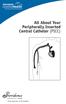 All About Your Peripherally Inserted Central Catheter (PICC) General Information Intravenous (IV) therapy is the delivery of fluid directly into a vein. An intravenous catheter is a hollow tube that is
Catheter Associated Urinary Tract Infection (CAUTI) Prevention. System CAUTI Prevention Team
 Catheter Associated Urinary Tract Infection (CAUTI) Prevention System CAUTI Prevention Team 1 Objectives At the end of this module, the participant will be able to: Identify risk factors for CAUTI Explain
Policy for the Insertion and Management of Central Venous Catheters (CVC s)
 Policy for the Insertion and Management of Central Venous Catheters (CVC s) This APD supersedes PAT/T 23 v.2 Name and title of author/reviewer Louise Lowry, IP&CP- Lead for Invasive Devices Date revised
3/23/12. Learning Objectives. Continuing Education Credit (CE) Arterial Catheter Insertion, Care and Maintenance. Amy Bardin, MS, RRT, VA-BC
 Arterial Catheter Insertion, Care and Maintenance Amy Bardin, MS, RRT, VA-BC 2012 Saxe Healthcare Communications Sponsored by Teleflex Learning Objectives Discuss insertion techniques for arterial catheter
How to Care for your Child s Indwelling Subcutaneous Catheter
 The Emily Center How to Care for your Child s Indwelling Subcutaneous Catheter Procedure/Treatment/Home Care Si usted desea esta información en español, por favor pídasela a su enfermero o doctor. #1054
An Infusion of Quality and Safety STAT!
 Quality is not an act, it is a habit. Aristotle An Infusion of Quality and Safety STAT! Quality is not an act, it is a habit. Mary Kakenmaster MSN, RN, CNE Oakton Community College [email protected]
Emergency Insertion of Temporary Trans-venous Pacing Catheter in ICU
 TARGET AUDIENCE Junior Medical Staff Critical Care Trained ICU Nurses PURPOSE This document is intended as a basic guide to managing patients who require insertion of Temporary Trans-venous Cardiac Pacing
C-Difficile Infection Control and Prevention Strategies
 C-Difficile Infection Control and Prevention Strategies Adrienne Mims, MD MPH VP, Chief Medical Officer [email protected] 1/18/2016 1 Disclosure This educational activity does not have commercial
Kean University BS Degree Program in Athletic Training BLOOD BORN PATHOGENS POLICY
 Kean University BS Degree Program in Athletic Training BLOOD BORN PATHOGENS POLICY Effective September 2, 2014 The following policy will apply to students taking classes and faculty teaching those classes
Black Hills Healthcare System
 Black Hills Healthcare System Methicillin Resistant Staphylococcal Aureus (MRSA) Patient and Family Information What is MRSA? Staphylococcus Aureus, often referred to simply as staph, is a bacteria commonly