
BestPractice. Evidence Based Practice Information Sheets for Health Professionals. This Practice Information Sheet Covers The Following Concepts:
|
|
|
- Cynthia Marshall
- 10 years ago
- Views:
Transcription
1 Volume 2, Issue 1, 1998 ISSN BestPractice Evidence Based Practice Information Sheets for Health Professionals Purpose The purpose of this practice information sheet is to provide summarised best available evidence on the management of peripherally inserted intravscular devices, to reduce the risk of nosocomial infection. Introduction Intravenous devices are a common and important part of hospital practice for the administration of fluid, nutrients, medications, blood products and to monitor the haemodynamic status of a person. The use of intravascular devices can be complicated by a variety of local or systemic infectious events. Catheter related infections, particularly catheter related blood stream infections, are associated with increased morbidity, mortality and prolonged hospitalisation. Peripheral venous catheters have rarely been associated with bloodstream infections (BSI). Phlebitis is the most important complication associated with their use and is largely a physicochemical or mechanical phenomenon rather than infectious. Factors that influence this include; type of infusate, type of catheter material, catheter size, and the patient s own risk for developing phlebitis. When phlebitis does occur there may be an increased risk of developing a local catheter related infection. Management Of Peripheral Intravascular Devices This Practice Information Sheet Covers The Following Concepts: 1. Microbiology & Pathogenesis 2. Strategies For Prevention Of Catheter Related Infection 3.General Recommendations 4. Recommendations For Peripheral Venous Catheters 5. Definitions & Diagnosis Of Catheter Related Infection 1. Microbiology and Pathogenesis There has been a change in the distribution of pathogens reported to cause nosocomial bloodstream infections. Coagulase negative Staphylococci (CNS), the most common being Staphylococcus epidermidis is the most frequently reported pathogen. Factors attributed to this change include increased use of prosthetic and indwelling devices, improved survival in low birth weight neonates and Grading The Evidence Recommendations in this publication are categorised on the basis of the existing scientific data, theoretical rationale, applicability and economic impact. It should be noted that some areas of practice have little research evidence on which to base recommendations. The categories used to grade evidence are as follows: Category IA. Strongly recommended for all hospitals and strongly supported by well designed experimental or epidemiologic studies. Category IB. Strongly recommended for all hospitals and viewed as effective by experts in the field and consensus of HICPAC based on strong rational and suggestive evidence, even though definitive scientific studies may not have been done. Category II. Suggested for implementation in many hospitals. Recommendations may be supported by suggestive clinical or epidemiologic studies, a strong theoretical rational, or definitive studies applicable to some, but not all, hospitals. No Recommendations; unresolved issue. Practices for which insufficient evidence or consensus regarding the efficacy exists. volume 2, issue 1, page 1, 1998

2 increased use of intralipids in these patients as well as the recognition of CNS as true nosocomial pathogens rather than harmless commensals. Other commonly reported organisms that cause nosocomial BSI include Staphylococcus aureus, Enterococci and Candida albicans. The pathogenesis of catheter related infections is complex but most appear to result from skin organisms at the catheter insertion site migrating into the catheter tract, eventually colonising the catheter tip. Contamination of the catheter hub may also be an important contributor to the colonisation of catheter lumens, particularly in long term catheters. Handwashing and aseptic technique are the major prevention strategies for catheter related infections. Paediatric Patients The epidemiology of intravascular device related infections in paediatric patients is less well described than that in adults. There have been few reported trials of intravascular devices in children and most published data are from studies in neonatal or paediatric intensive care units, where infection rates are higher than the general paediatric population. As in adults, peripheral venous catheters in paediatric patients may be complicated by phlebitis, extravasation, and catheter colonisation. Extravasation has been identified as the most frequent complication and risk factors include; a patient age of less than one year, receipt of anticonvulsant drug therapy and duration of catheterisation of less than 72 hours. The rate of colonisation of catheters is variable, but based on a study in a neonatal intensive care unit the risk appears to be lower in those; with a birth weight of 1500 gm. or more, receiving systemic antibiotics and those not on parenteral nutrition. A study of critically ill children suggested the major factor that influenced the risk of colonisation was having the catheter in insitu for longer than 144 hours. Because of the limited research evidence, few recommendations can be made regarding the management of paediatric patients with intravascular devices. 2. Strategies for Prevention of Catheter Related Infection Handwashing and aseptic technique remain the major prevention strategies for catheter-related infections and methods of promoting these should be encouraged. In addition to this, it is important that all intravascular devices are removed as soon as use is no longer clinically indicated. There are other measures that may provide additional protection and these are discussed below. Site of Catheter Insertion Factors that should be assessed when choosing the catheter insertion site include any specific patient factors such as pre-existing catheters or anatomic deformity, the relative risk of mechanical complications and the risk of infection. The location of the peripheral catheter influences the risk of catheter related infection. Catheters inserted in the lower limbs have a greater risk of phlebitis than the upper limbs. The risk of phlebitis also differs between sites in the upper limbs. Adults with catheters inserted in the hand have a lower risk of phlebitis than those inserted in the wrist or upper arm. Type of Catheter Material The majority of peripheral venous catheters are made of Teflon or polyurethane and appear to be associated with fewer infectious complications than catheters made of polyvinyl chloride or polyethylene. As an alternative to synthetic catheters for peripheral venous access steel needles have the same rate of infectious complications, but are more frequently accompanied with the potentially serious complication of infiltration of IV fluids into the subcutaneous tissues, therefore the risks and benefits of using steel needles must be evaluated on an individual patient basis. Midline Catheters Midline catheters are longer peripheral catheters that are inserted via the antecubital fossa but do not enter the central veins. Midline catheters appear to be associated with lower rates of phlebitis and infection than short peripheral catheters and cost less than central venous catheters. Barrier Precautions During Catheter Insertion Good handwashing before and attention to aseptic technique during the insertion of short peripheral venous catheters is a major component in the prevention of intravenous device related infections. Replacement of Intravenous Catheters Routine or scheduled replacement of intravascular catheters has been advocated as a method to prevent phlebitis and catheter-related infections. Studies show an increased incidence of thrombophlebitis and bacterial colonisation of catheters after they have been insitu for more than 72 hours. To reduce this risk, short peripheral catheters are commonly resited at hours. Catheters should be removed; at the first sign of phlebitis, if they have been inserted in emergency situations and when they are no longer needed. There are currently no recommendations for the frequency of replacement of IV catheters in paediatric patients. Replacement of Administration Sets Studies show the optimal time for replacement of intravenous administration sets is 72 hours or more after initiation of use. Other fluids such as blood, blood products and lipid solutions are more likely to support microbial growth and so more frequent set changing may be required. There are no recommendations for the frequency of replacing tubing used for intermittent infusions. Short extension tubing connected to the catheter should be replaced when the catheter is resited. Stopcocks used for injection of medications for IV infusions or collection of blood samples are commonly contaminated by micro-organisms, although their role in catheter devicerelated infections is unclear. It has been suggested that closed needle sampling systems reduce this contamination significantly. volume 2, issue 1, page 2, 1998

3 Replacement Intravenous Fluids In-use contamination of IV fluids (contamination before use) is a rare complication. The rate of extrinsic contamination (contamination introduced during use) is also low, and occurs more commonly with infusions used with CVCs or total parenteral nutrition, than with peripheral venous catheters. The 'hanging time' limit of 24 hours, that is commonly used for intravenous fluids, was introduced following epidemics in the 1970s. Currently there are no recommendations for non-lipid containing fluids. Cutaneous Antiseptics and Antimicrobials Ointments Skin cleansing / antisepsis is regarded as one of the most important measures for preventing catheter related infections, but there are few studies that have examined the efficacy of the different preparations. A sustained release chlorhexidine patch has been introduced, but its efficacy needs to be determined. Tincture of iodine is still used in some centres prior to catheter insertion, but its efficacy in reducing catheter colonisation and infection has not been evaluated thoroughly. It may be effective, like povidone-iodine and alcohol, as a skin preparation before catheter insertion, but should be removed with alcohol prior to insertion of cannula, to reduce the risk of skin irritation. Antimicrobial ointments have been applied to catheter site at insertion and during dressing of catheter site, but the results of these studies are contradictory. In addition to the lack of evidence to support the use of antimicrobial ointments, there is potential for allergic reaction and microbial resistance. Catheter Site Dressing Regimens Transparent dressings have become a popular means of dressing catheter insertion sites, as they secure the device and permit continuous visual inspection. However, the use of transparent dressings remains controversial and is one of the most actively researched areas of catheter site care. Findings from studies comparing gauze dressings with transparent dressings are contradictory. Intravenous Therapy Personnel Some institutions have established infusion therapy teams, because insertion and maintenance of intravascular catheters by inexperienced staff may increase the risk of catheter colonisation and catheter related BSI. Available data suggest that specially trained or designated personnel responsible for insertion and maintenance of intravascular devices provide a service that effectively reduces catheter-related infections and overall costs. In-line Filters While in-line filters may reduce the incidence of infusion-related phlebitis, there is no evidence to suggest they are effective in preventing infections associated with intravascular devices and infusion systems. In-line filters are not recommended for infection control purposes. Prophylactic Antimicrobials The evidence concerning the prophylactic administration of antimicrobials to reduce the incidence of catheter related bloodstream infections is inconclusive. In addition to the lack of evidence to support the use of prophylactic antibiotics there is potential for allergic reaction and microbial resistance. Flush Solutions, Anticoagulants, and Other Intravenous Additives The purpose of flushing catheters is to stop thrombosis rather than infection, but as studies in long term catheters suggest thrombi and fibrin deposits appear to be factors in microbial colonisation, there may be a role for anticoagulants. Studies suggest that saline is as effective as heparin in maintaining catheter patency and reducing phlebitis. Studies have looked at the effectiveness at reducing phlebitis using heparin and hydrocortisone, given alone or together, and of glycerine trinitrate, but no recommendations can be made. In addition to the lack of evidence to support their use, the potential for adverse reactions may outweigh potential benefits. Needleless Intravascular Devices Needleless devices were introduced to reduce the incidence of needle stick injuries in health care workers. The lack of data makes assessment of their potential risk or benefit difficult, and the results of the few available studies are contradictory. Other Issues Nursing experts in Australia, New Zealand and Hong Kong in reviewing this practice information sheet have highlighted other issues associated with the insertion and management of intravascular devices that should be incorporated into nursing practice. The patient has an important role in the decision to insert, and in the location of, intravascular devices and at the very least should be informed about the reasons for insertion. Patients should be encouraged to report any discomfort such as pain, burning, swelling or bleeding. Patient comfort can be maintained during insertion with the use of topical local anaesthetic agents, and by avoiding multiple attempts at cannulation. Accurate documentation and record keeping must be maintained to ensure patient safety, to allow for audits, and to track any outbreaks of infection. This documentation should include, the date and time of insertion, and when tubing, filters and intravenous solutions were replaced. volume 2, issue 1, page 3, 1998

4 3. General Recommendations (adapted from CDC Recommendations for the prevention of nosocomial intravascular device related infections, available via the internet at ) These recommendations are based on research findings and expert opinion. Education And Training Conduct ongoing education and training of health care workers regarding the management of intravascular devices and appropriate infection control measures. (Category IA) Surveillance For Catheter Related Infection Conduct surveillance for intravascular device-related infections to determine rates of infection. Palpate catheter insertion site for tenderness, daily through dressing. Visually inspect catheter site if tenderness has developed at insertion site. If dressing prevents palpation or visualisation of catheter insertion site, remove dressing and visually inspect site at least daily. Replace with new dressing. (Category II) Record the date and time of catheter insertion in an obvious location near catheter insertion site. Do not routinely perform surveillance cultures of patients or devices used for intravascular access. Handwashing Wash hands before and after palpating, inserting, replacing, or dressing any intravascular device. (Category IA) Catheter Insertion Do not routinely use cutdown procedures as a method to insert catheters. (Category IA) Barrier Precautions During Catheter Care Wear non-latex or latex gloves when inserting an intravascular device. Wear non-latex or latex gloves when changing the dressings on intravascular devices. No recommendation for the use of sterile versus non-sterile clean gloves during dressing changes. Replacement Of Intravascular Device Remove any intravascular devices as soon as its use is no longer clinically indicated. (Category IA) Intravenous Injection Ports Clean injection ports with 70% alcohol or povidone-iodine before accessing the system. (Category IA) Preparation And Quality Control Of Intravenous Admixtures Admix all parenteral fluids in the pharmacy in a laminar-flow hood using aseptic technique. Check all containers of parenteral fluid for visible turbidity, leaks, cracks, particulate matter, and the manufacturer s expiration date before use. (Category IA) Use single-dose vials for parenteral additives or medications when possible. (Category II) In-Line Filters Do not use in-line filters routinely for infection control purposes. (Category IA) Intravenous Therapy Personnel Designate trained personnel for the insertion and maintenance of intravascular devices. Needleless Intravascular Devices No recommendation for use, maintenance, or frequency of replacement of needleless IV devices. Prophylactic Antimicrobials Do not administer antimicrobials routinely before insertion or during use of an intravascular device to prevent catheter colonisation or bloodstream infection. volume 2, issue 1, page 4, 1998

5 4. Recommendations For Peripheral Venous Catheters (adapted from CDC Recommendations for the prevention of nosocomial intravascular device related infections, available via the internet at http: // ) These recommendations are based on research findings and expert opinion Selection Of Catheter Select catheters based on the intended purpose and duration of use, known complications and experience at the institution. Use a Teflon catheter, a polyurethane catheter, or a steel needle. Avoid use of steel needles for the administration of fluids and medications that may cause tissue necrosis if extravasation occurs. (Category IA) Consider the use of midline catheters when the duration of IV therapy is expected to exceed 6 days. No recommendation for the use of antimicrobial or antiseptic impregnated peripheral venous catheters. (Unresolved Issue) Selection Of Catheter Site In adults, use an upper extremity site in preference to one on a lower extremity for catheter insertion. Transfer catheter inserted in a lower extremity site to an upper extremity site as soon as the latter is available. (Category IA) In paediatric patients, insert catheters into scalp, hand, or foot site in preference to a leg, arm, or anticubital fossa site. (Category II) Replacement Of Catheter In adults, replace short, peripheral venous catheters, and rotate peripheral venous sites every 48 to 72 hours to minimise the risk of phlebitis. Remove catheters inserted under emergency conditions, where breaks in aseptic technique are likely to have occurred. Insert a new catheter at a different site within 24 hours. In paediatric patients, no recommendation for the frequency of replacement of short peripheral venous catheters or for removal of catheters inserted under emergency conditions where breaks in aseptic technique are likely to have occurred. No recommendation for the frequency of replacement of midline catheters. Remove peripheral venous catheters when the patient has developed signs of phlebitis (ie, warmth, tenderness, erythema, palpable venous cord) at the insertion site. (Category IA) Replacement Of Administration Sets A short extension tubing may be connected to the vascular device and may be considered a portion of the device to facilitate aseptic technique when changing the administration sets. Replace extension tubing when vascular device is replaced. (Category II) Replace IV tubing, including piggyback tubing, no more frequently than at 72 hour intervals, unless clinically indicated. (Category IA) No recommendation for frequency of replacement of IV tubing used for intermittent infusions. Replace tubing used to administer blood and blood products, or lipid emulsions within 24 hours of initiating the infusion. Replacement Of Intravenous Fluids No recommendation for the hang time of IV fluids, including non-lipid-containing parenteral nutrition fluids. (Unresolved Issue) Complete infusions of lipid-containing parenteral nutrition fluids within 24 hours of hanging the fluid. When lipid emulsions are given alone, complete the infusion within 12 hours of hanging the emulsion. Flush Solutions, Anticoagulants, Topical Agents And Other IV Additives Routinely flush peripheral venous cannula bungs with normal saline solution, unless they are used for obtaining blood specimens, in which case a dilute heparin (10 units per ml) flush solution should be used. No recommendation for the routine use of topical venodilators (eg. glyceryl trinitrate) or anti-inflammatory agents (eg. cortisone) near the insertion site of peripheral venous catheters to reduce phlebitis. No recommendation for the routine use of hydrocortisone or heparin in parenteral solutions to reduce phlebitis. Do not routinely apply topical antimicrobial ointment to the insertion site of peripheral venous catheters. Cutaneous Antisepsis Cleanse skin with an appropriate antiseptic, including 70% alcohol, or 10% povidone-iodine, or 2% tincture of iodine, before insertion. Allow antiseptic to remain on insertion site for an appropriate length of time before proceeding. (Category IA) When tincture of iodine is used before catheter insertion, it should be removed with alcohol before insertion of the device. (Category II) Do not palpate the insertion site after the skin has been cleansed with antiseptic. (Category IA) Catheter Site Dressing Regimens Use sterile gauze or transparent dressing to cover the catheter site. (Category IA) Replace catheter site dressing when the device is removed or replaced, or when dressing becomes damp, loosened, or soiled. Change more frequently in diaphoretic patient. Avoid touch contamination of the catheter insertion site when dressing is replaced. (Category IA) volume 2, issue 1, page 5, 1998

6 5. Definitions And Diagnosis Of Catheter Related Infection Establishing a clinical diagnosis of a catheter-related infection, especially catheter-related bloodstream infections (CR-BSI), is often difficult. While definitions have varied between studies, the following summarises the major points of the CDC guideline definitions. Colonisation Growth of an organism from the proximal or distal catheter segment, or the catheter lumen, and the absence of accompanying signs of inflammation at the catheter site. Local Catheter-Related Infection Growth of an organism from the proximal or distal catheter segment, or the catheter lumen, with accompanying signs of inflammation (eg. erythema, warmth, swelling, or tenderness) at the catheter site. In the absence of laboratory confirmation, catheter-related infection may be diagnosed when there is purulent drainage from the skin catheter junction. Catheter-Related Bloodstream Infection The isolation of the same organism from both the catheter segment and the blood in a patient with clinical symptoms of BSI and no other apparent source of infection. Blood specimen for diagnosis should preferably be drawn from a peripheral vein. In the absence of laboratory confirmation of BSI, defervescence (abatement of fever) after removal of an implicated catheter from a patient with a BSI is also considered indirect evidence of CR-BSI. Infusate-Related Bloodstream Infection The isolation of the same organism from both the infusate and separate percutaneous blood cultures with no other identifiable source of infection. Acknowledgement This practice information sheet was developed based on the work of the Hospital Infection Control Practices Advisory Committee (HICPAC), Centers for Disease Control and Prevention, Atlanta, Georgia, USA, and is reproduced with their permission. For further clarification of any recommendation or to view references, the complete guideline is available via the internet at and they have also been published in - CDC.,(1996), Guidelines for prevention of intravascular device-related infections, American Journal of Infection Control, 24(4), pp It should be noted that the CDC information has not been based on a systematic review, but rather an extensive review of the literature and consensus by recognised experts. This publication was produced based on the work of the Centers for Disease Control and Prevention, Atlanta USA, and was developed under the guidance of a review panel of clinical experts. It has been subject to peer review by experts nominated by The Joanna Briggs Institute centres throughout Australia, New Zealand and Hong Kong and was led by Mr David Evans - Coordinator Reviews, The Joanna Briggs Institute For Evidence Based Nursing, Royal Adelaide Hospital, Ms Judith Berry - Nursing Director, Royal Adelaide Hospital and Ms Margaret Cattonar - Nursing Director, Royal Adelaide Hospital. For further information contact: The Joanna Briggs Institute for Evidence Based Nursing, Margaret Graham Building, Royal Adelaide Hospital, North Terrace, South Australia, NHS Centre for Reviews and Dissemination, Subscriptions Department, Pearson Professional, PO Box 77, Fourth Avenue, Harlow CM19 5BQ UK. AHCPR Publications Clearing House, PO Box 8547, Silver Spring, MD USA. Disseminated collaboratively by: THE JOANNA BRIGGS INSTITUTE FOR EVIDENCE BASED NURSING The information contained within Best Practice is based on the best available information as determined by an extensive review of the research literature and expert consensus. Great care is taken to ensure that the content accurately reflects the findings of the information source, however the Joanna Briggs Institute for Evidence Based Nursing and organisations from which information may be derived, cannot be held liable for damages arising from the use of Best Practice. volume 2, issue 1, page 6, 1998

Policies & Procedures. ID Number: 1118
 Policies & Procedures Title: INTRAVENOUS AND/OR PERIPHERAL SALINE LOCK INSERTION AND MAINTENANCE ID Number: 1118 Authorization [X] SHR Nursing Practice Committee Source: Nursing Date Revised: September
Management of Catheters Infectious Diseases Working Party/Nurses Group
 Management of Catheters Infectious Diseases Working Party/Nurses Group Arno Mank RN PhD, Amsterdam (NL) www.ebmt.org London 09/04/2012 Content Background Management of CVC Types of CVC Care aspect of CVC
PICC & Midline Catheters Patient Information Guide
 PICC & Midline Catheters Patient Information Guide medcompnet.com 1 table of contents Introduction 4 What is a PICC or Midline Catheter? 4 How is the PICC or Midline Catheter Inserted? 6 Catheter Care
I-140 Venipuncture for Blood Specimen Collection
 I-140 Venipuncture for Blood Specimen Collection Purpose Obtain a blood specimen by venipuncture for laboratory analysis using aseptic technique. Applies To Registered Nurses Licensed Practical/Vocational
Infection Control Manual. Table of Contents
 Infection Control Manual Policy Name The Prevention of Intravascular Catheter-Related Infections Policy Number IC 0032 Date this Version Effective May 2013 Responsible for Content Hospital Epidemiology
Medications or therapeutic solutions may be injected directly into the bloodstream
 Intravenous Therapy Medications or therapeutic solutions may be injected directly into the bloodstream for immediate circulation and use by the body. State practice acts designate which health care professionals
Managing Your Non-Tunneled (Percutaneous) Catheter: PICC, SICC, and JCC. What is a PICC catheter?
 Managing Your Non-Tunneled The staff of the Procedure, Vascular Access, Conscious Sedation Service has written this information to explain your new PICC (peripherally inserted central catheter), SICC (subclavian
Flushing and Dressing a Peripherally Inserted Central Catheter (PICC Line): a Guide for Nurses
 Flushing and Dressing a Peripherally Inserted Central Catheter (PICC Line): a Guide for Nurses Information for Nurses Introduction This information is for community nursing staffs who have been asked to
Central Line-Associated Bloodstream Infection (CLABSI) Prevention. Basics of Infection Prevention 2-Day Mini-Course 2013
 Central Line-Associated Bloodstream Infection (CLABSI) Prevention Basics of Infection Prevention 2-Day Mini-Course 2013 2 Objectives Describe the etiology and epidemiology of central line associated bloodstream
PATIENT GUIDE. Understand and care for your peripherally inserted central venous catheter (PICC). MEDICAL
 PATIENT GUIDE Understand and care for your peripherally inserted central venous catheter (PICC). MEDICAL Introduction The following information is presented as a guideline for your reference. The best
Policies & Procedures. I.D. Number: 1073
 Policies & Procedures Title:: CENTRAL VENOUS CATHETERS INSERTION ASSISTING I.D. Number: 1073 Authorization [] Pharmacy Nursing Committee [] MAC Motion #: [x] SHR Nursing Practice Committee Source: Nursing
Peripherally Inserted Central Catheter (PICC) for Outpatient
 Peripherally Inserted Central Catheter (PICC) for Outpatient Introduction A Peripherally Inserted Central Catheter, or PICC line, is a thin, long, soft plastic tube inserted into a vein of the arm. It
PERIPHERALLY INSERTED CENTRAL CATHETERS (PICC) Fong So Kwan APN, Haematology unit Medical Department, QMH
 PERIPHERALLY INSERTED CENTRAL CATHETERS (PICC) Fong So Kwan APN, Haematology unit Medical Department, QMH 1 What is a PICC catheter? Primary vascular access device since their introduction in the mid-1970s,
MISSISSIPPI BOARD OF NURSING IV THERAPY COURSE FOR THE EXPANDED ROLE LICENSED PRACTICAL NURSE COURSE OUTLINE
 THEORY MINIMUM 40 HOURS COURSE OUTLINE UNIT TOPIC HOURS* I LEGAL ASPECTS AND PRACTICE OF IV THERAPY 1 II REVIEW OF ANATOMY AND PHYSIOLOGY 6 III FLUID AND ELECTROLYTE BALANCE 10 IV EQUIPMENT AND PROCEDURES
Within the Scope of Practice/Role of APRN RN _ X_LPN CNA
 Wyoming State Board of Nursing 130 Hobbs Avenue, Suite B Cheyenne, WY 82002 Phone (307) 777-7601 Fax (307) 777-3519 E-Mail: [email protected] Home Page: https://nursing-online.state.wy.us/ OPINION:
High Impact Intervention Central venous catheter care bundle
 High Impact Intervention Central venous catheter care bundle Aim To reduce the incidence of catheter related bloodstream infection (CRBSI). Introduction The aim of the care bundle, as set out in this high
MOH NURSING CLINICAL PRACTICE GUIDELINES 1/2002. Prevention of Infections Related to Peripheral Intravenous Devices
 MOH NURSING CLINICAL PRACTICE GUIDELINES 1/2002 Prevention of Infections Related to Peripheral Intravenous Devices May 2002 STATEMENT OF INTENT This set of guidelines aims to serve as a guide for practitioners
Policy and Procedure Flushing and / or Blood withdrawal Aspiration Procedure For PICC Line and Midline Catheters
 Policy and Procedure Flushing and / or Blood withdrawal Aspiration Procedure For PICC Line and Midline Catheters Purpose: Blood Withdrawal: To obtain blood samples for laboratory evaluation, eliminating
Care of Your Hickman Catheter
 Care of Your Hickman Catheter Johns Hopkins Kimmel Cancer Center, Revised 7/11 Contents What is a Hickman Catheter? Page 3 Does the Catheter Limit My Activities? Page 4 How Do I Care for My Catheter? Page
Are venous catheters safe in terms of blood tream infection? What should I know?
 Are venous catheters safe in terms of blood tream infection? What should I know? DIAGNOSIS, PREVENTION AND TREATMENT OF HAEMODIALYSIS CATHETER-RELATED BLOOD STREAM INFECTIONS (CRBSI): A POSITION STATEMENT
X-Plain Subclavian Inserted Central Catheter (SICC Line) Reference Summary
 X-Plain Subclavian Inserted Central Catheter (SICC Line) Reference Summary Introduction A Subclavian Inserted Central Catheter, or subclavian line, is a long thin hollow tube inserted in a vein under the
I. Questions for VAD slide program
 I. Questions for VAD slide program 1. The rate of central line associated blood stream infections (CLABSI) in the adult ICUs in Johns Hopkins Hospital is lower than the national average. 2. The mortality
Vaxcel PICCs Valved and Non-Valved. A Patient s Guide
 Vaxcel PICCs Valved and Non-Valved A Patient s Guide Information about your Vaxcel PICC is available by calling the Navilyst Medical Vascular Access Information Line 800.513.6876 Vaxcel Peripherally Inserted
Intravenous Therapy Principles of Care. Breege Smithers Practice Educator
 Intravenous Therapy Principles of Care Breege Smithers Practice Educator Objectives State indications for intravenous therapy List the advantages and disadvantages of intravenous therapy Identify the principles
Lifecath Midline. A Nurses Guide to Lifecath Midline
 Lifecath Midline A Nurses Guide to Lifecath Midline [email protected] www.vygon.co.uk Lifecath Midline A Nurses Guide to Lifecath Midline This booklet provides guidance in the care and maintenance of Midline
Administration of Medications & Fluids via a Peripheral Intravenous Cannula
 Administration of Medications & Fluids via a Peripheral Intravenous Cannula Clinical S.O.P. No.: 22.0 Compiled by: Approved by: Review date: November 2016 Administration of Medications & Fluids via S.O.P.
A4.7 Management of a totally occluded central catheter and persistent withdrawal occlusion (PWO)
 A4.7 Management of a totally occluded central catheter and persistent withdrawal occlusion (PWO) Types of Catheter Related Thrombotic A catheter-related thrombus may be intraluminal (inside the catheter)
To maintain a port of entry to venous flow when all available peripheral ports have failed.
 I. Purpose: To maintain a port of entry to venous flow when all available peripheral ports have failed. II. General Comments: Since its development, these catheters have been used with increasing frequency
Guy s, King s and St Thomas Cancer Centre The Cancer Outpatient Clinic Central venous catheter: Peripherally inserted central catheter
 Guy s, King s and St Thomas Cancer Centre The Cancer Outpatient Clinic Central venous catheter: Peripherally inserted central catheter This information leaflet aims to help answer some of the questions
PICC and Midline Catheters
 PICC and Midline Catheters Infusion RN s Deb Bucher RN BSN CRNI Dawn Finch RN CRNI Marianne Hansen RN BSN CRNI Karman Youngblood RN BS CRNI Infusion Pharmacist Kathy Cimakasky Pharm D Tamara Migut RPh
Patient Information Guide Morpheus CT Peripherally Inserted Central Catheter
 Patient Information Guide Morpheus CT Peripherally Inserted Central Catheter IC 192 Rev C A measure of flexibility and strength. Table of Contents 1. Introduction 2. What is the Morpheus CT PICC? 3. What
Central venous catheters. Care of the site 88 CVP measurement 90 Removal of CVC (non-tunnelled) 93 Care of long-term CVCs 95
 4 Central venous catheters Care of the site 88 CVP measurement 90 Removal of CVC (non-tunnelled) 93 Care of long-term CVCs 95 CARE OF THE SITE Preparation Patient Equipment/Environment Nurse Explain the
PICCs and Midline Catheters
 Patient Education PICCs and Midline Catheters Patient s guide to PICC (peripherally inserted central catheter) and midline catheters What are PICCs and midline catheters used for? Any medicine given over
PERIPHERAL INTRAVENOUS CATHETER MANAGEMENT Adult & Paed
 Auckland District BOARD Clinical Practice Health Board (Section 1) Manual Overview This Document This document covers recommended best practices relating to the selection, insertion, care and management
INS Position Paper. Recommendations for Frequency of Assessment of the Short Peripheral Catheter Site
 INS Position Paper Recommendations for Frequency of Assessment of the Short Peripheral Catheter Site Background As many organizations choose to follow the Infusion Nurses Society (INS) recommendations
CVC = central venous catheter. Insertion and Maintenance
 Central Venous Catheter Insertion and Maintenance A Tutorial on Recommended Practices Introduction Central venous catheters (CVCs) are a commonly used modality throughout the medical center and especially
PICC Dressing Change
 PICC Dressing Change Gather materials: Non-sterile gloves (one pair) Alcohol pads to remove old dressing (as needed) Sterile dressing change kit:(mask, gloves, 2x2" gauze pads, drape, Steri-Strips, chlorhexidine,
Ward 29 guide to the safe preparation and administration of intravenous (IV) antibiotics at home
 Ward 29 guide to the safe preparation and administration of intravenous (IV) antibiotics at home Contents Page Important contact numbers 1 General information on preparing and administering IV antibiotics
Guidelines for the Prevention of Intravascular Catheter-Related Infections
 Morbidity and Mortality Weekly Report Recommendations and Reports August 9, 2002 / Vol. 51 / No. RR-10 Guidelines for the Prevention of Intravascular Catheter-Related Infections Centers for Disease Control
If viewing a printed copy of this policy, please note it could be expired. Got to www.fairview.org/fhipolicies to view current policies.
 If viewing a printed copy of this policy, please note it could be expired. Got to www.fairview.org/fhipolicies to view current policies. Entity: Fairview Pharmacy Services Department: Fairview Home Infusion
Page 1 of 10 MC1482 Peripherally-Inserted Central Catheter. Peripherally-Inserted Central Catheter (PICC)
 Page 1 of 10 MC1482 Peripherally-Inserted Central Catheter Peripherally-Inserted Central Catheter (PICC) Page 2 of 10 MC1482 Peripherally-Inserted Central Catheter Introduction A peripherally-inserted
02 DEPARTMENT OF PROFESSIONAL AND FINANCIAL REGULATION REGULATIONS RELATING TO ADMINISTRATION OF INTRAVENOUS THERAPY BY LICENSED NURSES
 02 DEPARTMENT OF PROFESSIONAL AND FINANCIAL REGULATION 380 BOARD OF NURSING Chapter 10: REGULATIONS RELATING TO ADMINISTRATION OF INTRAVENOUS THERAPY BY LICENSED NURSES SUMMARY: This chapter identifies
HICKMAN Catheter Care with a Needleless Connector
 HICKMAN Catheter Care with a Needleless Connector Table of Contents Part 1 Learning about the HICKMAN Catheter... 2 Part 2 Caring for Your Hickman Catheter... 3 A. Preventing Infection... 3 B. Bathing...
A. ADMINISTERING SUBCUTANEOUS MEDICATIONS INTERMITTENTLY/CONTINUOUSLY B. (SUBCUTANEOUS INFUSION) HYDRODERMOCLYSIS
 SUBCUTANEOUS THERAPY A. ADMINISTERING SUBCUTANEOUS MEDICATIONS INTERMITTENTLY/CONTINUOUSLY B. (SUBCUTANEOUS INFUSION) HYDRODERMOCLYSIS PARTS I. Purposes II. General Information III. Responsibilities IV.
Care of your peripherally inserted central catheter
 Care of your peripherally inserted central catheter A guide for patients and their carers We care, we discover, we teach Contents What is a PICC?.... 1 How is it put in?.... 1 What are the benefits of
Nursing college, Second stage Microbiology Dr.Nada Khazal K. Hendi L14: Hospital acquired infection, nosocomial infection
 L14: Hospital acquired infection, nosocomial infection Definition A hospital acquired infection, also called a nosocomial infection, is an infection that first appears between 48 hours and four days after
Clinical Guideline for: Aseptic Technique
 Clinical Guideline for: Technique Summary This guideline provides the principles of, Non Touch, and Clean Techniques to be implemented in the hospital environment. Key Points The essential elements of
Peripherally Inserted Central Catheter
 Peripherally Inserted Central Catheter (PICC) by Patricia Griffin Kellicker, BSN En Español (Spanish Version) Definition A peripherally inserted central catheter is a long, thin tube that is inserted through
Understanding your Peripherally Inserted Central Catheter (PICC) Patient Information
 Understanding your Peripherally Inserted Central Catheter (PICC) Patient Information The Purpose of this Information Sheet This information sheet has been written by patients, members of the public and
PROCEDURE FOR SUBCUTANEOUS INSERTION, REMOVAL, MEDICATION ADMINISTRATION AND FLUID ADMINISTRATION FOR COMMUNITY PALLIATIVE CARE PATIENTS
 PROCEDURE FOR SUBCUTANEOUS INSERTION, REMOVAL, MEDICATION ADMINISTRATION AND FLUID ADMINISTRATION FOR COMMUNITY PALLIATIVE CARE PATIENTS Approved: February 2010 Date for review: February 2010 1 PROCEDURE
NURSING PRACTICE & SKILL
 NURSING PRACTICE & SKILL ICD-9 99.29 Author Carita Caple, RN, BSN, MSHS Reviewers Eliza Schub, RN, BSN Sara Richards, MSN, RN Nursing Practice Council Glendale Adventist Medical Center, Glendale, CA Editor
9.Pediatric Procedures
 9.Pediatric Procedures A. Introduction 1. Pediatric blood collection may be by skin puncture or venipuncture. 2. Skill in pediatric phlebotomy is gained by knowledge of special collection equipment, observation
Guardian Pharmacy IV Policy & Procedures TABLE OF CONTENTS
 TABLE OF CONTENTS.Introduction...3 Ordering and Receiving Medications Ordering Medications and Supplies...4 Obtaining Interim Infusion Medication and Supplies...6 STAT Orders...7 Infusion Device/Pump and
POSSIBLE NURSING DIAGNOSIS: Pain Potential for Infection / Infection Fluid volume deficit
 1 Procedure for Subcutaneous Over-the-needle Cannula Insertion, Removal, Medication Administration, and Fluid Administration for the Individual in the Home PURPOSE: To provide medication via the subcutaneous
National Patient Safety Goals Effective January 1, 2015
 National Patient Safety Goals Goal 1 Nursing are enter ccreditation Program Improve the accuracy of patient and resident identification. NPSG.01.01.01 Use at least two patient or resident identifiers when
PAEDIATRIC PERIPHERAL INTRAVENOUS CANNULA CARE
 12.1 PROTOCOL SUBJECT: PAEDIATRIC PERIPHERAL INTRAVENOUS CANNULA CARE DOCUMENT NUMBER: 12.1 DATE DEVELOPED: 11/06 LAST REVISED DATE: NEW PLANNED REVIEW DATE: 11/09 DISTRIBUTION: All Clinical Areas Kaleidoscope
National Patient Safety Goals Effective January 1, 2015
 National Patient Safety Goals Effective January 1, 2015 Goal 1 Improve the accuracy of resident identification. NPSG.01.01.01 Long Term are ccreditation Program Medicare/Medicaid ertification-based Option
Safety FIRST: Infection Prevention Tips
 Reading Hospital Safety FIRST: Infection Prevention Tips Reading Hospital is committed to providing high quality care to our patients. Your healthcare team does many things to help prevent infections.
VUMC Guidelines for Management of Indwelling Urinary Catheters. UC Access/ Maintenance
 VUMC Guidelines for Management of Indwelling Urinary Catheters UC Insertion Preparation & Procedure Indications for insertion and continued use of indwelling urinary catheters include: Urinary retention
Peripherally Inserted Central Catheter (PICC)
 Peripherally Inserted Central Catheter (PICC) Disclaimer This is general information developed by The Ottawa Hospital. It is not intended to replace the advice of a qualified healthcare provider. Please
Care for your child s Central Venous Catheter (CVC)
 Care for your child s Central Venous Catheter (CVC) This booklet is intended for general informational purposes only. You should consult your doctor for medical advice. Please call the clinic or your home
Peripherally Inserted Central Catheter (PICC Line)
 Feedback We appreciate and encourage feedback. If you need advice or are concerned about any aspect of care or treatment please speak to a member of staff or contact the Patient Advice and Liaison Service
Providing optimal care
 Providing optimal care for patients with central catheters By Ann Earhart, MSN, RN, ACNS-BC, CRNI WHEN REGISTERED NURSE Andrea arrives on shift for report, she learns that her patient, a 62-year-old male,
V: Infusion Therapy. Alberta Licensed Practical Nurses Competency Profile 217
 V: Infusion Therapy Alberta Licensed Practical Nurses Competency Profile 217 Competency: V-1 Knowledge of Intravenous Therapy V-1-1 V-1-2 V-1-3 V-1-4 V-1-5 Demonstrate knowledge and ability to apply critical
Location: Clinical Practice Manual
 Subject: Area: Classification: Relevant to: Bladder Management Clinical Practice All Clinical Staff Implementation Date: March 2001 Review Date: March 2004 Responsible for Review: Approved by: Distribution:
Central non-tunneled closed end or valved (i.e., Bard Solo Power PICC) Pediatrics: 1.9 F 0.06 ml 3-3.5 F 0.2-0.5 ml 4 F 0.6 ml
 Second Edition Standardizing Central Venous Catheter Care: Hospital to Home Introduction This is the second edition of the guidelines for out of hospital care of central venous access devices (CVAD). The
SECTION 12.1 URINARY CATHETERS
 SECTION 12.1 URINARY CATHETERS Introduction Summary of Recommendations taken from Guidelines for the Prevention of Catheter-associated Urinary Tract Infection, Published on behalf of SARI by HSE Health
BD Saf-T-Intima. Hidden talents of BD Saf-T-Intima. BD SAF-T-Intima and SUBCUTANEOUS THERAPY REHYDRATION PALLIATIVE CARE. POST OPERATIVe PAIN RELIEF
 Hidden talents of BD Saf-T-Intima BD Saf-T-Intima SUBCUTANEOUS INFUSION REHYDRATION PALLIATIVE CARE BD SAF-T-Intima and SUBCUTANEOUS THERAPY PAEDIATRIC CARE POST OPERATIVe PAIN RELIEF BD Saf-T-Intima First
Aspirating a blood return from a catheter
 Questions have been grouped together based on their content or focus. Aspirating a blood return from a catheter Can we use CVC with no blood return? If a CVAD has no blood return should studies be made
A PROCEDURAL GUIDE TO MIDLINE CATHETER INSERTION
 A PROCEDURAL GUIDE TO MIDLINE CATHETER INSERTION See Also CPG midline catheters for indications, contraindications and post insertion management What is a midline A midline catheter is an 8-12 cm catheter
Paediatric Intensive Care Unit Nursing Procedure: Care of Arterial Lines.
 Paediatric Intensive Care Unit Nursing Procedure: Care of Arterial Lines. Definition: Arterial Line Placement of an indwelling arterial catheter for the purpose of continuous monitoring of intra arterial
Care of your central venous catheter A guide for patients and their carers. We care, we discover, we teach
 Care of your central venous catheter A guide for patients and their carers We care, we discover, we teach This booklet contains information about central venous catheters (CVC). These are sometimes called
Peripherally Inserted Central Catheter (PICC) Patient Instructions
 Patient Care Services 300 Pasteur Drive Stanford, CA 94305 Peripherally Inserted Central Catheter (PICC) Patient Instructions A Peripherally Inserted Central Catheter (PICC) is a soft flexible tube inserted
ADMINISTRATION OF INTRAVENOUS PUSH/DIRECT MEDICATIONS
 SASKATOON DISTRICT HEALTH Department of Nursing Affairs ADMINISTRATION OF INTRAVENOUS PUSH/DIRECT MEDICATIONS SPECIAL NURSING PROCEDURE LEARNING PACKAGE This package provides the basic information necessary
A PRINTED copy of this guideline may not be the most recent version. The OFFICIAL version is located on IHNET at the Policies & Procedures Home Page
 A PRINTED copy of this guideline may not be the most recent version. The OFFICIAL version is located on IHNET at the Policies & Procedures Home Page IX0200: Prevention & Control of Catheter Associated
Bard Access Systems, Inc. How to Care For Your. Nursing Guide
 Bard Access Systems, Inc. How to Care For Your Nursing Guide Table of Contents Introduction 1 Product Description Placement PowerPICC SOLO* Catheter Valve Function Indications for Use Catheter Irrigation
IV 03 CRAIG HOSPITAL POLICY/PROCEDURE
 CRAIG HOSPITAL POLICY/PROCEDURE Approved: NPC, P&P 12/06; P&T 2/07; Effective Date: 10/78 IC, MEC 03/07; NPC, P&P 08/09; MEC 9/09 P&T 12/10; MEC, P&P 01/11, 04/11 Attachments: Revised Date: 12/02, 07/04,
Community Nurse Referral Letter (Hickman Line Care)
 Community Nurse Referral Letter (Hickman Line Care) Name of nurse making the referral: Name Signature.. Date Ward.Tel 0845 1555 000 Ext. Dear Community Nurse The following patient requires care for a Hickman
Long-term urinary catheters: prevention and control of healthcare-associated infections in primary and community care
 Long-term urinary catheters: prevention and control of healthcare-associated infections in primary and community care A NICE pathway brings together all NICE guidance, quality standards and materials to
All About Your Peripherally Inserted Central Catheter (PICC)
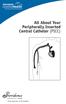 All About Your Peripherally Inserted Central Catheter (PICC) General Information Intravenous (IV) therapy is the delivery of fluid directly into a vein. An intravenous catheter is a hollow tube that is
NORTH WALES CRITICAL CARE NETWORK
 North Wales Critical Care Network Critical Care Nurses Forum ARTERIAL LINE GUIDELINES Version 2 1 Contents Contents Page Chief of Staff for Anaesthetics Critical Care & Pain Management CPG 3 Approval Introduction
Central Venous Catheter Care For Haemodialysis
 Central Venous Catheter Care For Haemodialysis Information For Parents and Carers Haemodialysis Unit 01 878 4757 Main Hospital Number 01 878 4200 Central Venous Catheters We hope this booklet will help
Components of CVC Care Bundle. selection
 Components of CVC Care Bundle Catheter site selection Site of insertion influences the subsequent risk for CR-BSI and phlebitis The influence of site is related in part to the risk for thrombophlebitis
Caring for a Tenckhoff Catheter
 Caring for a Tenckhoff Catheter UHN A Patient s Guide What is a Pleural Effusion? There is a small space between the outside of your lung and the chest wall (ribs). This space is called the pleural space.
Carla Duff, CPNP MSN CCRP Clinical Advanced Registered Nurse Practitioner University of South Florida Division of Allergy, Immunology, and
 Carla Duff, CPNP MSN CCRP Clinical Advanced Registered Nurse Practitioner University of South Florida Division of Allergy, Immunology, and Rheumatology Intravenous Subcutaneous IVIg SCIg What should you
Status: Standard Procedure: specifies the procedures to be followed, only in exceptional circumstances should these not be followed
 Page 1 of 6 Status: Standard Procedure: specifies the procedures to be followed, only in exceptional circumstances should these not be followed Title: Standard Procedure for the Irrigating (flushing) of
Corporate Medical Policy
 Corporate Medical Policy File Name: Origination: Last CAP Review: Next CAP Review: Last Review: infusion_therapy_in_the_home 3/1998 2/2016 2/2017 2/2016 Description of Procedure or Service Home infusion
Antibiotic Prophylaxis for Short-term Catheter Bladder Drainage in adults. A Systematic Review (Cochrane database August 2013)
 Antibiotic Prophylaxis for Short-term Catheter Bladder Drainage in adults A Systematic Review (Cochrane database August 2013) Gail Lusardi, Senior Lecturer Dr Allyson Lipp, Principal Lecturer, Dr Chris
REMOVAL OF A PICC. Possible Cause Nursing Actions Prevention
 REMOVAL OF A PICC PICC lines are removed following a physician order, when therapy is completed or complications such as line sepsis, thrombosis or phlebitis, require removal. The removal of a PICC line
Syringe. Product Usage Information: Precautions:
 Syringe Standard Draw Procedure In-Patient, Automated Retraction Non-Reusable. Prepare and give injection using aseptic technique according to institutional policy.. For injection into patients, continue
Central Venous Lines (CVP)
 2011 Central Venous Lines (CVP) Central Venous Line This pamphlet is about a central venous pressure (CVP) line and why it may be needed. We would like to encourage you to read this pamphlet. The nurses
Central Venous Catheters for Veterinary Technicians
 Central Venous Catheters for Veterinary Technicians Erica Mattox, CVT, VTS (ECC) Central venous catheterization is passing a long catheter into a large vein, such as the jugular or caudal vena cava. This
METHICILLIN-RESISTANT STAPHYLOCOCCUS AUREUS (MRSA) COMMUNITY ACQUIRED vs. HEALTHCARE ASSOCIATED
 METHICILLIN-RESISTANT STAPHYLOCOCCUS AUREUS (MRSA) COMMUNITY ACQUIRED vs. HEALTHCARE ASSOCIATED Recently, there have been a number of reports about methicillin-resistant Staph aureus (MRSA) infections
Recommendations for the Safe Use of Handling of Cytotoxic Drugs
 Recommendations for the Safe Use of Handling of Cytotoxic Drugs Introduction Cytotoxic drugs are toxic compounds and are known to have carcinogenic, mutagenic and/or teratogenic potential. With direct
Catheter Associated Urinary Tract Infection (CAUTI) Prevention. System CAUTI Prevention Team
 Catheter Associated Urinary Tract Infection (CAUTI) Prevention System CAUTI Prevention Team 1 Objectives At the end of this module, the participant will be able to: Identify risk factors for CAUTI Explain
Hemodialysis catheter infection
 Hemodialysis catheter infection Scary facts In 2006, 82% of patients in the United States initiated dialysis via a catheter The overall likelihood of Tunneled cuffed catheters use was 35% greater in 2005
Community Nurse Referral Letter (PICC Care)
 Community Nurse Referral Letter (PICC Care) Name of nurse making the referral: Name Signature.. Date Ward.Tel 0845 1555 000 Ext. Dear Community Nurse The following patient requires care for a PICC (Peripherally
Flushing and Dressing a Peripherally Inserted Central Catheter (PICC Line)
 Flushing and Dressing a Peripherally Inserted Central Catheter (PICC Line) Patient Information Introduction This booklet has been written to provide information to patients with a Peripherally Inserted