
What Is. Norovirus? Learning how to control the spread of norovirus. Web Sites
|
|
|
- Phoebe Matthews
- 10 years ago
- Views:
Transcription
1 Web Sites Centers for Disease Control and Prevention (CDC) Your Local Health Department What Is Ocument dn Norovirus? Acknowledgements Arizona Healthcare Associated Infections (HAI) Program Learning how to control the spread of norovirus This document was developed by the Public Education Subcommittee (PES) of the Arizona Healthcare-Associated Infection (HAI) Advisory Committee. Their work was guided by the best available evidence at the time this document was created. The objectives of the PES are directed at providing access to infection prevention resources for the public. 9

2 IMPORTANT Norovirus is a common cause of vomiting and diarrhea that can become life-threatening in certain situations. If you or someone in your family has been diagnosed with norovirus, there are steps you need to take now to avoid spreading it to your family and friends. Follow the recommendations and practice good hygiene to take care of yourself. Norovirus causes physical discomfort and emotional stress. This booklet tells you how you can manage norovirus infection and keep from spreading it to others. For more information about norovirus infection, please contact your healthcare provider. Things to remember about living with norovirus: 1. Always wash your hands often, especially after using the bathroom and before preparing food. 2. Wear gloves if your hands may come in contact with stool or vomit 3. Drink lots of fluids, ask your pharmacist to assist you in choosing a good one 4. Don t prepare food for others while you are ill and for 3 days after you are better. 5. Stay away from others while you are contagious 6. Frequently clean touched areas of your home. 7. Inform your healthcare providers and facility staff if you are ill with vomiting, diarrhea so they may take the appropriate precautions when caring for you. 8. Talk to your healthcare provider if you have any questions about your illness. Other Resources Shopping List These items can be found at most drug stores or grocery stores: - Disposable gloves - Tissues - Alcohol-based hand sanitizer - Soap - Disinfectant - Bleach - Plastic trash bags i 8

3 How can I prevent the spread of norovirus to others? If you have norovirus, you are contagious. Norovirus can be spread easily to others even for several days after you feel better. You should avoid social settings such as work, school, church and interacting with others while you are contagious. Washing your hands often and thoroughly helps to prevent spread to others. If your child has norovirus symptoms, he/she should not attend childcare or school until no longer contagious. Persons who work in nursing homes, take care of patients, or handle food should stay out of work until at least hours after symptoms end. TABLE OF CONTENTS Learning about norovirus What is norovirus and is it serious?... 1 How can I get norovirus?... 1 Will I always have norovirus?... 2 How contagious am I?... 2 How do I know if I have norovirus?... 2 Treating norovirus How is Norovirus treated?... 3 When should I seek medical care?... 3 What do patients and visitors need to do when they go to a healthcare facility that is having an outbreak of norovirus?... 4 Caring for Yourself What is the proper way to clean surfaces?... 5 How often should I change clothes and bedding?... 5 How often should I clean?... 5 What is good hand hygiene?... 5 Controlling Norovirus How can I prevent spreading norovirus (and other germs) at home?... 6 How can I prevent the spread of norovirus to others?... 7 What about pets and norovirus?... 7 What about Pets and norovirus? No evidence currently exists that shows dogs and cats can spread norovirus to humans. It is always a good idea to wash your hands with soap and water after playing with pets and after picking up after them or cleaning the cat box. Resources Things to remember about living with norovirus... 8 Shopping List... 8 Web Sites... 9 Acknowledgements ii

4 What is norovirus and is it serious? Norovirus are a group of viruses that are the most common cause of gastroenteritis (gas-troh-en-tuh-rahy-tis) in the United States. Gastroenteritis means inflammation of the stomach and intestines. Incorrectly referred to as the stomach flu (not related to the flu at all), typical symptoms include nausea, throwing up diarrhea and stomach cramps. Occasionally, people will also experience mild fever, chills, headache, body aches and feel very tired. Anyone can get norovirus, a common form of viral gastroenteritis. The illness ranges from mild to severe, even life-threatening. Norovirus is very contagious and can be easily spread to other people through direct contact and contact with contaminated surfaces. How can I prevent spreading norovirus (and other germs) at home? Wash your hands often with soap and warm water, especially after using the bathroom, before preparing food and before eating (alcohol based hand sanitizers do NOT work against norovirus). Frequently wash towels used for drying your hands or use disposable towels. Wear disposable gloves if you expect to come into contact with stool or vomit. Wash your hands after removing gloves. Frequently clean areas of your home, such as your bathroom, that may become contaminated with norovirus. The illness begins suddenly with throwing up and/or diarrhea; children usually throw up more often than adults. The illness is unpleasant but doesn t last long. For most people, symptoms last just 24 to 48 hours with no long term health effects due to the illness. The illness can be more severe among the very young, elderly and people with weakened immune systems. More severe forms of the illness are generally related to dehydration (not enough fluids in your body) and rarely deaths have occurred. How can I get norovirus? Norovirus is found in the stool and vomit of people who are infected (ill) with the virus. You can become infected with the virus in the following ways: Direct person-to-person contact such as caring for an ill person, sharing eating utensils or kissing a person who is ill. Touching surfaces or objects that have become contaminated with norovirus and introducing the virus to your mouth. Eating food or drinking liquids that have become contaminated with norovirus. You can get infected if you are near someone sick who is throwing up. Clean and disinfect contaminated surfaces immediately after an episode of illness by using a dilute (1:10) bleach solution. Do not share eating utensils, cups, toothbrushes, towels, or other personal items especially while you are ill and for several days after you feel better. Change and wash linens on a regular basis, or any time they are soiled. Immediately remove and wash clothing and linens that may be contaminated with norovirus after throwing up or having diarrhea. Notify healthcare providers and facility staff if you are ill with vomiting and/or diarrhea. Wash fruits and vegetables and steam oysters and clams before eating them. Persons ill with norovirus symptoms should not prepare food while ill or for 3 days after feeling better. 1 6

5 What is the proper way to clean surfaces? Cleaning with a diluted bleach solution is best for norovirus, follow the directions on the label- generally one part bleach and nine parts water (1:10 solution) made fresh daily. Never mix bleach with other cleaners. Wet the surface well and clean vigorously Allow the surface to air dry Pay special attention to toilet, sink and areas that are touched frequently such as toilet handles, door knobs and light switches. How often should I change clothes and bedding? Change your sheets and towels regularly Change clothes and linens right away if soiled with stool or vomit, follow instructions in the proper way to clean section Change your clothes daily Do not put dirty clothes or clothes you have just worn back in your closet or drawers until they have been washed. How often should I clean? Norovirus can live on surfaces for up to 4 weeks. It is important to clean regularly. For items or surfaces you touch frequently, clean them every day. What is good hand hygiene? Wash your hands for at least 20 seconds with soap and water: After using the toilet or helping someone use the toilet After touching dirty surfaces and handling soiled laundry After handling items soiled by body fluids Before and after preparing meals/snacks Before eating meals Before and after taking or giving medications After caring for a sick person After playing with pets After sneezing, coughing, blowing your nose Anytime hands are visibly dirty Will I always have norovirus? No. Norovirus causes an acute illness that commonly lasts 1 to 2 days for most people, although some people may be ill or feel the effects for up to 6 days. After the period of illness your body gradually gets rid of the entire virus. Norovirus is not known to create a long term carrier state in a person. However, people can become infected or ill from the virus more than once during their life. It does not appear that a person can become immune to norovirus. How contagious am I? Norovirus is very contagious. If you are ill with norovirus, you are contagious and can easily spread it to others. The virus is found in large quantities in the stool and vomit of an infected person. About 5 billion norovirus particles can be contained in 1 gram (about ¼ teaspoon) of stool and the number that can make a person sick is as low as 18. People are most contagious from the beginning of the illness until a couple of days after they feel better. Some people can be contagious longer, perhaps weeks after they feel better. This is because your body is still getting rid of the virus even after you feel better. If you don t wash your hands properly, particularly after using the toilet, things that you use or touch with your hands can give the virus to other people. Remember, if you have norovirus, it is possible to spread it to others even after you are feeling better. Washing your hands properly is the best way to avoid spreading it. How do I know if I have norovirus? If your doctor thinks you may have a norovirus infection, he or she may collect a stool sample from you for testing. If you are in a setting such as a long term care facility or assisted living where others have tested positive for norovirus, you may not need to be tested. If you have similar symptoms, your doctor may diagnose you based on what is going around in the facility. 5 2

6 How is norovirus treated? What do patients and visitors need to do when they go to a healthcare facility that is having an outbreak of norovirus? Norovirus is a viral infection not a bacterial infection and therefore is not treated with antibiotics by your healthcare provider. Currently there is no antiviral medication effective against norovirus and there is no vaccine to prevent infection. Norovirus causes vomiting and diarrhea, those ill with these symptoms should drink plenty of fluids. It is helpful to drink fluids that can replace electrolytes in the body which are lost quickly with vomiting and diarrhea. Electrolytes are an important part of our body s make-up and help our muscles and nerves to work properly. There are many types and brands of electrolyte replacement drinks, from sport type drinks to more complete medical types, ask your pharmacist which electrolyte containing drink would be right for you. Norovirus is usually a brief illness in healthy adults with symptoms lasting just a couple of days. However, among young children and the elderly, dehydration can be a common complication. Dehydration can become severe in these populations and may require hospitalization for treatment with fluids given through their veins (intravenous or IV fluids). When should I seek medical care? If you notice blood in your stool If you are running a high fever If your symptoms last more than 3 days If you feel dizzy or faint more often than usual If you cannot keep any fluids down due to vomiting If you have muscle cramping in your legs/arms If you think you have norovirus, tell staff or your healthcare provider. If you are unable to keep fluids down and feel thirsty, notify staff. Healthcare providers may use special precautions, such as wearing gowns and gloves when caring for you. Visitors should consider avoiding the facility while an outbreak of norovirus is occurring. Patients and visitors should wash their hands often with soap and water after using the bathroom and before eating. As recommended by the Centers for Disease Control and Prevention (CDC), patients with norovirus should stay in their rooms while they are ill, this is to prevent spreading the illness to others. Patients with norovirus should not go to common areas of the facility such as the cafeteria and gift shop. Visitors should stay at home if they are ill, if they have vomiting and /or diarrhea, they should wait until 2 days symptoms free before visiting. Visitors should check in with the nurse s station prior to entering the patient s room, follow the nurse s instructions and always wash their hands before entering the room and before leaving the room. Let staff know if you have any linen or clothes that are soiled and need to be laundered. If you share your room, avoid close contact with your family member/roommate as much as possible to prevent them from getting ill, clean toilet areas with a 10% bleach solution and wash your hands frequently. Once you are feeling better again, and have not had any vomiting or diarrhea for 3 days, you can safely socialize with others. Be sure to shower and wear clean clothes, this will help to protect other patients/residents and visitors. 3 4

VRE. Living with. Learning how to control the spread of Vancomycin-resistant enterococci (VRE)
 VRE Living with Learning how to control the spread of Vancomycin-resistant enterococci (VRE) CONTENTS IMPORTANT VRE is a serious infection that may become life-threatening if left untreated. If you or
Living healthy with MRSA
 Stamford Health System Having MRSA means what? Living healthy with MRSA Discharge information for patients and families WASHING YOUR HANDS IS THE KEY!!! Staph aureus is a bacteria that lives on your skin
Living with MRSA. Things to remember about living with MRSA: This is really serious. I need to do something about this now!
 Things to remember about living with MRSA: 1. Wash your hands often. 2. Take care of yourself: Eat right, exercise, quit smoking, and avoid stress. 3. Take good care of your skin. 4. Keep skin infections
Learning About MRSA. 6 How is MRSA treated? 7 When should I seek medical care?
 IMPORTANT MRSA is a serious infection that can become life-threatening if left untreated. If you or someone in your family has been diagnosed with MRSA, there are steps you need to take now to avoid spreading
Black Hills Healthcare System
 Black Hills Healthcare System Methicillin Resistant Staphylococcal Aureus (MRSA) Patient and Family Information What is MRSA? Staphylococcus Aureus, often referred to simply as staph, is a bacteria commonly
C. difficile Infections
 C. difficile Infections Introduction C. difficile is a type of bacteria that can cause diarrhea and infection of the colon. This bacterium is more likely to infect patients at hospitals and other healthcare
MRSA. Living with. Acknowledgements. (Methicillin-Resistant Staphylococcus aureus)
 How can I keep myself healthy? Hand washing and use of an alcohol-based hand sanitizer are the primary way to prevent acquiring or transmitting bacteria. If you get a cut or scrape, wash it well with soap
Safety FIRST: Infection Prevention Tips
 Reading Hospital Safety FIRST: Infection Prevention Tips Reading Hospital is committed to providing high quality care to our patients. Your healthcare team does many things to help prevent infections.
What is whooping cough. (pertussis)? Information and Prevention. Ocument dn
 What is whooping cough Ocument dn (pertussis)? Information and Prevention IMPORTANT Pertussis (or whooping cough) is a highly contagious infection that can cause uncontrollable, violent coughing. If you
Moving to a hospital or skilled nursing facility
 H Moving to a hospital or skilled nursing facility What to expect when you have MRSA (Methicillin-resistant Staphylococcus aureus) A booklet for patients, residents, family members, and caregivers About
THIS IS AN OFFICIAL NH DHHS HEALTH ALERT
 THIS IS AN OFFICIAL NH DHHS HEALTH ALERT Distributed by the NH Health Alert Network [email protected] December 11, 2014; 1030 EST (10:30 AM EST) NH-HAN 20141211 Start of Norovirus Season in New Hampshire
INFLUENZA (FLU) Flu and You
 Influenza (Flu) What is the flu? The flu is an illness caused by flu viruses. The flu may make people cough and have a sore throat and fever. They may also have a runny or stuffy nose, feel tired, have
How can you protect yourself from infections?
 How can you protect yourself from infections? Your Infection Prevention Guide www.esrdncc.org Table of Contents Preventing an infection is an important part of your kidney care...3 Things you can do...4
Management of Norovirus Infection Outbreaks in Hospitals and Nursing Homes Noroviruses are a group of viruses that cause acute gastroenteritis in
 Management of Norovirus Infection Outbreaks in Hospitals and Nursing Homes Noroviruses are a group of viruses that cause acute gastroenteritis in humans. Norovirus was recently approved as the official
Hygiene and Infection. Control advice in the home
 Introduction The Infection Control Department Mid-Western Regional Hospital, Ennis, wrote this booklet with Clare Primary Community and Continuing Care and C-Diff Patients and Families Group. This booklet
Clean-Up in Aisle 5. Noroviruses are a group of viruses that cause FOOD PROTECTION CONNECTION
 FOOD PROTECTION CONNECTION 1 HOUR SAN Clean-Up in Aisle 5 by Melissa Vaccaro, MS, CHO Noroviruses are a group of viruses that cause acute gastroenteritis in humans. You may hear people refer to this as
Quick Reference H1N1 Flu (swine flu)
 Quick Reference H1N1 Flu (swine flu) The United States declared a public health emergency in response to the recent reports of swine flu. UMR wants to help you understand some important facts about H1N1
READ THIS LEAFLET VERY CAREFULLY, AND KEEP IT IN A SAFE PLACE. FLU IS SPREADING IN IRELAND, AND THIS INFORMATION IS IMPORTANT FOR YOU AND YOUR FAMILY.
 READ THIS LEAFLET VERY CAREFULLY, AND KEEP IT IN A SAFE PLACE. FLU IS SPREADING IN IRELAND, AND THIS INFORMATION IS IMPORTANT FOR YOU AND YOUR FAMILY. Information and medical advice for the public on Pandemic
Key Facts about Influenza (Flu) & Flu Vaccine
 Key Facts about Influenza (Flu) & Flu Vaccine mouths or noses of people who are nearby. Less often, a person might also get flu by touching a surface or object that has flu virus on it and then touching
CYTOTOXIC PRECAUTIONS A GUIDE FOR PATIENTS & FAMILIES
 Perth and Smiths Falls District Hospital Attention: Manager, Quality 60 Cornelia Street, West Smiths Falls, Ontario K7A 2H9 CYTOTOXIC PRECAUTIONS A GUIDE FOR PATIENTS & FAMILIES This guide has been prepared
Advice for Colleges, Universities, and Students about Ebola in West Africa For Colleges and Universities
 Advice for Colleges, Universities, and Students about Ebola in West Africa For Colleges and Universities Advice for Study Abroad, Foreign Exchange, or Other Education-related Travel Is it safe to travel
Communicating BMI Results Administrators, Parents, and Community
 Communicating BMI Results Administrators, Parents, and Community North Andover Public Schools Barbara Hedstrom, RN, MSN, NCSN Cheryl Barczak, RN, MSN Kathy O Neill, RN, BS How We Started We had an early
The effects of a pandemic can be lessened, however, if preparations are made ahead of time.
 PANDEMIC FLU FAMILY GUIDE TO PREPARATIONS A flu pandemic is a global outbreak of influenza that occurs when a new flu virus appears to which people have little or no immunity. Pandemic flu spreads easily
Get the Facts About. Disease
 Get the Facts About TB TUBERCULOSIS Disease What s Inside: 3 PAGE Get the facts, then get the cure 4 PAGE 9 PAGE 12 PAGE Learn how TB is spread Treatment for TB disease Talking to family and friends about
METHICILLIN-RESISTANT STAPHYLOCOCCUS AUREUS (MRSA) COMMUNITY ACQUIRED vs. HEALTHCARE ASSOCIATED
 METHICILLIN-RESISTANT STAPHYLOCOCCUS AUREUS (MRSA) COMMUNITY ACQUIRED vs. HEALTHCARE ASSOCIATED Recently, there have been a number of reports about methicillin-resistant Staph aureus (MRSA) infections
General information and infection prevention and control precautions to prepare for and manage norovirus in care homes
 General information and infection prevention and control precautions to prepare for and manage norovirus in care homes Norovirus season starts every year usually in October. So that everyone is prepared
Environmental Management of Staph and MRSA in Community Settings July 2008
 Page 1 of 7 Environmental Management of Staph and MRSA in Community Settings July 2008 Questions addressed on this page What are Staph and MRSA? How is Staph and MRSA spread? What is the role of the environment
Pandemic Influenza: A Guide for Individuals and Families
 Pandemic Influenza: A Guide for Individuals and Families GET INFORMED. BE PREPARED. This guide is designed to help you understand the threat of a pandemic influenza outbreak in our community. It describes
Influenza and Pandemic Flu Guidelines
 Influenza and Pandemic Flu Guidelines Introduction Pandemic flu is a form of influenza that spreads rapidly to affect most countries and regions around the world. Unlike the 'ordinary' flu that occurs
Cholera Prevention and Control: Introduction and Community Engagement. Module 1
 Cholera Prevention and Control: Introduction and Community Engagement Module 1 Introduction This guide instructs how to prevent cholera illnesses and deaths in your communities. These slides and modules
Childhood Diseases and potential risks during pregnancy: (All information available on the March of Dimes Web Site.) http://www.modimes.
 Childhood Diseases and potential risks during pregnancy: (All information available on the March of Dimes Web Site.) http://www.modimes.org/ Fifth disease (erythema infectiosum) is a common, mild, childhood
Guidelines for Hand Foot and Mouth Disease HFMD
 Guidelines for Hand Foot and Mouth Disease HFMD Hand, foot, and mouth disease, or HFMD, is a contagious illness caused by different viruses. Infants and children younger than 5 years are more likely to
WHEN TO WASH YOUR HANDS
 WHEN TO WASH YOUR HANDS Before eating or preparing food After using the toilet After blowing your nose After handling garbage or trash After touching pets or animals After touching shared objects Before
Norovirus Outbreak Among Residents of an Assisted Living Facility, Houston County, Alabama 2010 (AL1003NRV 35a)
 Norovirus Outbreak Among Residents of an Assisted Living Facility, Houston County, Alabama 2010 (AL1003NRV 35a) Introduction On March 9, 2010, Public Health Area (PHA) 10 surveillance nurse contacted the
Planning for 2009 H1N1 Influenza. A Preparedness Guide for Small Business
 09 Planning for 2009 H1N1 Influenza A Preparedness Guide for Small Business Table of Contents 02 Foreword 03 Introduction 04 How to Write Your Plan 05 Keeping Healthy: 10 Tips for Businesses 06 Keeping
Adapted from a presentation by Sharon Canclini, R.N., MS, FCN Harris College of Nursing and Health Sciences Texas Christian University
 Adapted from a presentation by Sharon Canclini, R.N., MS, FCN Harris College of Nursing and Health Sciences Texas Christian University What is a Pandemic? A pandemic is basically a global epidemic an epidemic
Whooping Cough. The Lungs Whooping cough is an infection of the lungs and breathing tubes, both of which are parts of the respiratory system.
 Whooping Cough Introduction Whooping cough is a serious bacterial infection of the lungs and breathing tubes. It is also called pertussis. About 16 million cases of whooping cough happen worldwide each
CLEAN UP FOR VOMITING & DIARRHEAL EVENT IN RETAIL FOOD FACILITIES
 CLEAN UP FOR VOMITING & DIARRHEAL EVENT IN RETAIL FOOD FACILITIES GENERAL INFORMATION Noroviruses are a group of viruses that cause gastroenteritis [gas-trō-en-ter-ī-tis] in people. Gastroenteritis is
Sanitary Food Preparation & Safe Food Handling
 70 Feeding Infants 10 Sanitary Food Preparation & Safe Food Handling Babies are more susceptible to bacteria than older children, and unsanitary food conditions can cause serious infections. General cleanliness,
UW MEDICINE PATIENT EDUCATION. Xofigo Therapy. For metastatic prostate cancer. What is Xofigo? How does it work?
 UW MEDICINE PATIENT EDUCATION Xofigo Therapy For metastatic prostate cancer This handout explains how the drug Xofigo is used to treat metastatic prostate cancer. What is Xofigo? Xofigo is a radioactive
C. difficile. Answers to frequently asked questions about. at the Jewish General Hospital. www.jgh.ca SIR MORTIMER B. DAVIS JEWISH GENERAL HOSPITAL
 Answers to frequently asked questions about C. difficile at the Jewish General Hospital SIR MORTIMER B. DAVIS JEWISH GENERAL HOSPITAL A McGill University Teaching Hospital www.jgh.ca 1. CLOSTRIDIUM DIFFICILE
Ancillary Staff Training
 Ancillary Staff Training Goals of Infection Prevention Protect the patients Protect the staff Prevent spread of diseases How Does The Virus Spread Between People? Direct contact through broken skin, mouth,
Pandemic influenza. Working from the same page. PART B: Hazard-specific information. consistent messages for CDEM
 Working from the same page consistent messages for CDEM PART B: Hazard-specific information H1N1 influenza virus. Image: Cynthia Goldsmith Pandemic influenza Learn about your community s risks from pandemic
Facts About Hantaviruses
 Facts About Hantaviruses What You Need To Know To Prevent the Disease Hantavirus Pulmonary Syndrome (HPS) DEPARTMENT OF HEALTH AND HUMAN SERVICES Centers for Disease Control and Prevention Facts About
Frequently asked questions about whooping cough (pertussis)
 Frequently asked questions about whooping cough (pertussis) About whooping cough What is whooping cough? Whooping cough is a highly contagious illness caused by bacteria. It mainly affects the respiratory
The Hepatitis B virus (HBV)
 The Hepatitis B virus (HBV) There are 400 million people in the world who live with chronic hepatitis B, including France. Most people don t even know they are infected. But there are several important
Get the Facts About Tuberculosis Disease
 TB Get the Facts About Tuberculosis Disease What s Inside: Read this brochure today to learn how to protect your family and friends from TB. Then share it with people in your life. 2 Contents Get the facts,
PANDEMIC INFLUENZA PLANNING:
 PANDEMIC INFLUENZA PLANNING: A Guide for Individuals and Families Get Informed. Be Prepared. U.S. Department of Health and Human Services January 2006 Pandemics are global in nature, but their impact is
Examples of how germs can get into your body and make you sick:
 Vocabulary words F O R Y O U R H E A L T H Wash Your Hands and Get Rid of Germs Germs are little living things that can be found in food, plants, and animals. They can also be in the soil, in the water,
Workforce Guidelines: H1N1 Influenza and Flu-like Illness
 Workforce Guidelines: H1N1 Influenza and Flu-like Illness This document provides guidance to University supervisors and employees on how to handle H1N1 influenza (swine flu) and flu-like illness in the
Bloodborne Pathogens. San Diego Unified School District Nursing & Wellness Program August 2013
 Bloodborne Pathogens San Diego Unified School District Nursing & Wellness Program August 2013 Why Another In-service?? Cal/OSHA mandates that employees with occupational exposure are informed at the time
Protecting Myself from MRSA By Angela Ulferts RN, BSN
 Protecting Myself from MRSA By Angela Ulferts RN, BSN What is MRSA? MRSA stands for Methicillin-Resistant Staphylococcus Aureus. This is an infection that has been around for some time. But it has always
DO YOU WORK AROUND BLOOD OR BODY FLUIDS? Cal/OSHA s New Rules
 DO YOU WORK AROUND BLOOD OR BODY FLUIDS? Cal/OSHA s New Rules Labor Occupational Health Program University of California, Berkeley 1994 ACKNOWLEDGMENTS This booklet is a publication of the Labor Occupational
Clostridium difficile (C. difficile)
 Clostridium difficile (C. difficile) UHN Information for patients and families Read this resource to learn about: What is C. difficile How people get infected with C. difficile Treatment and medicine How
Norwalk-Like Viruses Decontamination Guidelines for Environmental Services
 Norwalk-Like Viruses Decontamination Guidelines for Environmental Services This document has been developed in accordance with current applicable infection control and regulatory guidelines. It is intended
Advice about MRSA for people not in hospital. If you have MRSA, this leaflet tells you about things you should do in your everyday life.
 Advice about MRSA for people not in hospital If you have MRSA, this leaflet tells you about things you should do in your everyday life. Easy read This booklet is about a germ called MRSA. It is an Easy
After Your Gastrectomy
 After Your Gastrectomy UHN Information for patients and families Read this information to learn: what a gastrectomy is how to care for yourself what problems to look out for who to call if you have any
FOOD POISONING. Information Leaflet. Your Health. Our Priority. Infection Prevention Stepping Hill Hospital
 FOOD POISONING Information Leaflet Your Health. Our Priority. Page 2 of 5 What is Food Poisoning? Food poisoning is an illness that occurs after eating or drinking anything that is contaminated. Usually
Pneumonia. Pneumonia is an infection that makes the tiny air sacs in your lungs inflamed (swollen and sore). They then fill with liquid.
 Pneumonia Pneumonia is an infection that makes the tiny air sacs in your lungs inflamed (swollen and sore). They then fill with liquid. People with mild (not so bad) pneumonia can usually be treated at
Infection control. Self-study course
 Infection control Self-study course Course objectives By the end of this course you will be able to: 1) Define a germ 2) Define the environment that a germ needs to live and grow 3) Explain the chain of
How To Care For A Sick Person
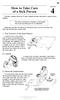 39 How to Take Care of a Sick Person Sickness weakens the body. To gain strength and get well quickly, special care is needed. Medicines are often not necessary. But good care is always important. The
Blood borne Pathogens
 Blood borne Pathogens What Are Blood borne Pathogens? Blood borne pathogens are microorganisms such as viruses or bacteria that are carried in blood and can cause disease in people. Types of Blood borne
High Dose Radioactive Iodine (I-131) Therapy for Treatment of Thyroid Cancer
 12 High Dose Radioactive Iodine (I-131) Therapy for Treatment of Thyroid Cancer Please arrive 15 minutes early to allow for parking and registration. If you have questions or need to cancel your appointment
FOR IMMEDIATE RELEASE Release #2014-04
 FOR IMMEDIATE RELEASE Release #2014-04 CONTACT for this Release: Krista Dommer Office Phone: (209) 468-3571 Email: [email protected] Alvaro Garza, MD, MPH. Public Health Officer MEASLES OUTBREAKS PROMPT
Preparing for the Flu
 Preparing for the Flu (Including 2009 H1N1 Flu) A Communication Toolkit for Institutions of Higher Education Preparing for the Flu: A Communication Toolkit for Institutions of Higher Education The purpose
Good Hygiene Practices - presentation by -
 Good Hygiene Practices - presentation by - National Environment Agency 9 May 2006 Introduction Outline Personal hygiene Environmental hygiene Food hygiene Hygiene Common elements Personal hygiene Environmental
Pertussis Toolkit for Schools
 Pertussis Toolkit for Schools Cerro Gordo County experienced a significant pertussis outbreak in 2012. To lessen the effects of future outbreaks, several community partners worked together to improve our
In-Patient Radioactive Iodine ( 131 I) Treatment
 In-Patient Radioactive Iodine ( 131 I) Treatment Information for patients and families Princess Margaret Read this booklet to learn: what radioactive iodine treatment is what to expect instructions to
Hepatitis A. What I need to know about. National Digestive Diseases Information Clearinghouse NATIONAL INSTITUTES OF HEALTH
 What I need to know about Hepatitis A U.S. Department of Health and Human Services NATIONAL INSTITUTES OF HEALTH National Digestive Diseases Information Clearinghouse What I need to know about Hepatitis
Please, Wash Your Hands! We have a huge in issue in this world today and I don t think it gets addressed as
 Britney Boykin Persuasive Speech Please, Wash Your Hands! We have a huge in issue in this world today and I don t think it gets addressed as much as it should. Since we were little bitty we have been taught
BE SURE. BE SAFE. VACCINATE.
 DON T GET OR GIVE THE FLU THIS YEAR THANK YOU Vaccination is the only protection. www.immunisation.ie BE SURE. BE SAFE. VACCINATE. FLU VACCINE 2013-2014 Healthcare workers prevent the spread of flu and
Tuberculosis and You A Guide to Tuberculosis Treatment and Services
 Tuberculosis and You A Guide to Tuberculosis Treatment and Services Tuberculosis (TB) is a serious disease that can damage the lungs or other parts of the body like the brain, kidneys or spine. There are
EAST CAROLINA UNIVERSITY INFECTION CONTROL POLICY. Methicillin-resistant Staph aureus: Management in the Outpatient Setting
 EAST CAROLINA UNIVERSITY INFECTION CONTROL POLICY Methicillin-resistant Staph aureus: Management in the Outpatient Setting Date Originated: Date Reviewed: Date Approved: Page 1 of Approved by: Department
Infection Control Course
 Infection Control Course Division of Health Service Regulation Division of Public Health Center for Aide Regulation and Education Adult Care Licensure Section (2) Preface (3) Infections In Long Term Care
Worker Health, Hygiene, and Personal Practices. Please pass the apple from the back of the room to the front
 Worker Health, Hygiene, and Personal Practices Please pass the apple from the back of the room to the front Penn State Farm Food Safety Workshop 2011 Would you eat the apple we just passed around? How
Headaches in Children
 Headaches in Children A headache is one of the most common complaints of children and teenagers. Fussiness, crankiness and not being able to sleep may be the only signs of head pain in children who are
Influenza Vaccine Frequently Asked Questions. Influenza Control Program
 Influenza Vaccine Frequently Asked Questions Influenza Control Program Influenza or the flu can be a serious contagious disease, which is spread by droplet transmission through close contact with an infected
JAC-CEN-DEL COMMUNITY SCHOOLS BLOODBORNE PATHOGENS UNIVERSAL PRECAUTIONS A BACK TO SCHOOL TRADITION
 JAC-CEN-DEL COMMUNITY SCHOOLS BLOODBORNE PATHOGENS UNIVERSAL PRECAUTIONS A BACK TO SCHOOL TRADITION UNIVERSAL PRECAUTIONS AGAINST BLOODBORNE PATHOGENS Employees working in a school system are potentially
Acute Care Pediatrics Unit
 Acute Care Pediatrics Unit 3F Peds/5 West Mattel Children s Hospital UCLA 757 Westwood Plaza Los Angeles, CA 90095-7403 3F Peds Main Phone: (310) 267-7320 5W Peds Main Phone: (310) 267-7530 Welcome Welcome
Useful contacts. Call 0800 1 513 513 to hear the latest information on swine flu. England: www.nhs.uk www.direct.gov.uk/swineflu
 Useful contacts Call 0800 1 513 513 to hear the latest information on swine flu. England: www.nhs.uk www.direct.gov.uk/swineflu Scotland: www.nhs24.com Wales: www.nhsdirect.wales.nhs.uk www.wales.gov.uk/health
MRSA Positive. An information guide
 TO PROVIDE THE VERY BEST CARE FOR EACH PATIENT ON EVERY OCCASION MRSA Positive An information guide MRSA Positive What is MRSA? Staphylococcus aureus is a germ often found on the skin and up the nose of
Advice for those affected by MRSA outside of hospital
 Advice for those affected by MRSA outside of hospital If you have MRSA this leaflet provides information and advice for managing your day-to-day life. 1 About MRSA There are lots of different types or
FREQUENTLY ASKED QUESTIONS SWINE FLU
 FREQUENTLY ASKED QUESTIONS SWINE FLU Updated 5/6/09 ER FAQ What is swine flu? Swine flu is common disease of pigs and is caused by the same category of influenza virus (influenza A) that causes flu in
RSV infection. Information about RSV and how you can reduce the risk of your infant developing a severe infection.
 RSV infection Information about RSV and how you can reduce the risk of your infant developing a severe infection. What is RSV? RSV is one of the most common respiratory viruses and is spread easily. By
GENERAL INFORMATION. Hepatitis B Foundation - Korean Chapter Pg. 3 www.hepb.org
 GENERAL INFORMATION What is hepatitis B? Hepatitis B is the world's most common liver infection that can lead to cirrhosis and liver cancer. It is caused by the hepatitis B virus (HBV), which attacks and
Staying on Track with TUBERCULOSIS. Medicine
 Staying on Track with TB TUBERCULOSIS Medicine What s Inside: Read this brochure to learn about TB and what you can do to get healthy. Put it in a familiar place to pull out and read when you have questions.
SCRIPT NUMBER 88 FOOD POISONING (ONE SPEAKER)
 SCRIPT NUMBER 88 FOOD POISONING (ONE SPEAKER) PROGRAM NAME: HEALTH NUGGETS PROGRAM TITLE: FOOD POISONING PROGRAM NUMBER: 88 SUBJECT: CAUSES, DIAGNOSIS, TREATMENT, PREVENTION OF FOOD POISONING KEY WORDS:
You. guide to tuberculosis treatment and services
 Adapted from TB and You: A Guide to Tuberculosis Treatment and Services with permission from Division of Public Health TB Control Program State of North Carolina Department of Health and Human Services
Illinois Long Term Care Facilities and Assisted Living Facilities
 TO: FROM: RE: Illinois Long Term Care Facilities and Assisted Living Facilities Richard Dees, Chief, Bureau of Long Term Care Karen McMahon, Immunization Section Chief Craig Conover, MD, Medical Director,
FOLFOX Chemotherapy. This handout provides information about FOLFOX chemotherapy. It is sometimes called as FLOX chemotherapy.
 FOLFOX Chemotherapy This handout provides information about FOLFOX chemotherapy. It is sometimes called as FLOX chemotherapy. What is chemotherapy? Chemotherapy is a method of treating cancer by using
Employee Health and Personal Hygiene. for CHILD CARE CENTER DIRECTORS
 Employee Health and Personal Hygiene for CHILD CARE CENTER DIRECTORS National Food Service Management Institute The University of Mississippi Building the Future Through Child Nutrition The National Food
Patient Guide to Radioactive Iodine Treatment
 PATIENT EDUCATION patienteducation.osumc.edu Patient Guide to Radioactive Iodine Treatment What is the Thyroid Gland? The thyroid is a small butterfly-shaped gland in the neck. Your thyroid gland makes