
TRAINING MANUAL. For Building Foam Block Structures
|
|
|
- Conrad Barton
- 10 years ago
- Views:
Transcription
1 REDDI-WALL INC. TRAINING MANUAL For Building Foam Block Structures

2 Recommendations to the Code Official This application for permit shall be accompanied by construction documents and adequate engineering details. Projects must be inspected by a registered P.E. Engineer or by a factory trained authorized person certified by Reddi-Wall Inc. A Reddi-Wall inspection form must be submitted to the local code authority. Walls that are required to be waterproofed or damp proofed must be sealed with coating compatible with EPS. Petroleum based products are not compatible with EPS. Adhesives used for interior or exterior finishes are required to be compatible with EPS. Polyurethane glue is recommended. CODE SECTION Surface burning characteristics. This section requires foam plastics and foam plastic cores of manufactured assembles to have a flame spread rating of not more than 75 and a smoke developed rating of not more than 450 when tested in accordance with ASTM E84 in the maximum thickness intended for use. CODE SECTION Unverified Tests. This code section states that foam plastics need not comply with thermal barrier and prescriptive installation requirements when specifically approved, based on diversified tests. UL Flame Spread test June 6, 1990 ASTM E84 Flame Spread 10, Smoke Development of 200. For fire protection, a 15-minute thermo barrier is required in living quarters. Drywall or Dura Bond toppings are acceptable coatings. The R-Value of an empty foam block is R-26. A block filled with concrete can have a R-value up to R-50. The foundation walls or footings shall extend to, or below, the frost line of the site to meet local code requirements. Reinforcement dowels or keyways are required interlock all of the reinforced concrete walls to the footings. The size, spacing, and grade of the dowels are the same as required for vertical reinforcing rebar. First floor framing or bracing must be in place prior to back filling of retaining walls. The basement floor must be poured before the backfill, when it has been set on pea stone footing. All wood sill plates, door, window and opening frames shall be composed of pressure-treated wood. On the interior side of crawl spaces, the EPS material does not require a thermal barrier to separate it from the interior when all of the following conditions exist: 1. Entry is made only for service of utilities. 2. There are no interconnected spaces intended for human occupancy. Yellow and dusty surface oxidation on the EPS (resulting from sun exposure) shall be removed by brushing thoroughly prior to application of adhesives, waterproofing, and damp proofing materials. Page 2 of 2

3 REDDI-WALL INC. Foam Insulated Concrete Wall System INSTALLATION MANUAL CONSTRUCTION DETAILS Manufactured by: Reddi-Wall Inc. Tel: (586) Rochester Road Fax: (586) Oakland, MI Web: Page 3 of 3

4 Table of Contents I. Preparation for building of walls... 7 A. Preliminary instructions... 7 B. Excavation... 7 C. Staking of basement... 8 D. Form footings... 8 E. Installing post pads... 8 F. Placement of concrete in footings... 9 G. Installation of brick ledge... 9 H. Installation of the wall: stacking... 9 II. Methods for stacking walls A. Method 1: stacked to B. Method 2: stacked to full height C. Method 3: panel wall assembly III. Panel Installation A. Installing Panels B. Installing Rods IV. Around windows and doors A. Lintels B. Bays C. Drape and curtain attachment V. Bracing the Walls VI. Preparation for filling the wall VII. Filling the wall VIII. Installation of vertical reinforcement strips IX. Uses of the C-track X. Drywall strips XI. Exterior coatings XII. Interior coatings XIII. Tools Recommended XIV. Accessory items Figure Illustrations Page 4 of 4

5 WARNINGS There are several things that could cause serious problems with the wall system. Listed below are the problems to avoid. 1. Make sure the wall is properly braced. When filled with concrete the wall weighs several tons. If tilted 3 over center it would fall and possibly injure someone very seriously. 2. The wall is designed with a series of round posts and beams. The design is critical to its strength. A.C.I. requires a 6 minimum thickness for this type of wall. Do not insert anything that would distort this shape and cause stress concentration. This is critical in the basement portion. Wood strips may not be added to the basement walls. It is permissible to add wood mounting strips above grade for mounting items. The wood must be wolmanized. 3. Make sure the wall is clear of all trash, snow, or ice. If there is any snow or ice it will cause hollow spots in the wall. This would cause the wall to be structurally unsound. 4. Make sure that the concrete slump is correct. Concrete that is too little slump will bridge off and concrete that is too wet will be too weak. Also wet concrete causes excess stress and causes blowouts. 5. Before pouring, check for proper dimensions at the top of the wall. Also check the wall for level and plumb. 6. Make sure all off bond cuts are secured. This is especially necessary around openings. 7. In cold weather be sure to use a strip of foam and tack it to the top of the wall and also to the top of the brick ledge. If the concrete freezes it will have almost no strength. 8. The steel in the wall must not be placed in such a way as to cause a bridge. The bridge would prevent the concrete from flowing and cause a hollow spot. 9. Make sure all cells are full. It is easy to tell if the cells are full by tapping on them with your hand. A hollow cell is soft and sounds like a drum where a filled wall is very solid and produces a solid sound. To experience this go ahead of the pour and tap the wall then go where the concrete is poured and repeat the procedure. The difference in sound will be very pronounced. American Concrete Institute Page 5 of 5

6 Building Steps Page 6 of 6

7 I. PREPARATION AND BUILDING OF WALLS. A. Preliminary Instructions: Check paperwork. 1. Proper plans. 2. Proper permits. 3. Plot survey by professional. 4. Grade elevations. 5. Basement depth. 6. Locations of easements or restrictions. 7. Building envelope. 8. Utilities: Overhead and Underground. 9. Possible location of old buildings on site. 10. A signed contract with the owner. 11. Proper insurance documents in place for job. 12. Proper site accessibility. 13. Driver or entrance permit 14. Location of possible hazards to equipment or property: a) Septic system. b) Well. c) Gas lines. d) Sewer lines. e) Tanks or other possible hazards. 15. Check site conditions before moving in equipment. 16. Have Miss-Dig stake property. 17. Check for evidence of soil contamination or pollution. 18. Have pre-construction meeting with all parties involved. B. Excavation. 1. Locate surveyor's offset stakes. 2. Paint out area of excavation on soil. 3. Check that excavation area is large enough to accommodate building. 4. Locate hub-mark (benchmark) and determine depth of excavation. 5. Determine types of soil and plan for proper slope from bottom of excavation to top as per OSHA recommendations. 6. Excavate hole to proper depth and slope. 7. Check to see if the water level is below the basement floor grade. If not, the basement floor level elevation may have to be changed. Consult a professional. 8. Pile excavation dirt in areas away from the corners, to allow concrete truck accessibility. 9. Be careful not to bury offset stakes. Page 7 of 7

8 C. Staking of Basement. 1. Stretch a string from opposite offset stakes over the top of the hole, from corner to corner. 2. From the string intersections, drop a plumb bob to determine the corners of the house. 3. Stake the corners with steel pins and mark with ribbons. 4. Place a safety cap over the pins. 5. Measure between all the pins to check for the proper wall length. 6. Measure diagonally across the corners. Use the Pythagorean theorem (A² + B² = C²) to determine if the building is square. D. Form Footings. (Figures 1, 2) 1. Attach a string to a corner pin, and then stretch that string from that corner to each corner pin along the outside perimeter of the building. 2. Check for brick ledge. If a brick ledge is used, it may be necessary to pull the wall in 5". (See Section G) 3. Check the blueprint and determine the width and height of the footing. 4. Subtract 10 from the width of the footing, and divide the remainder by 2. For example, for a 20" footing, minus a 10" wall: 10 2 = 5. This is the distance from the string outward to the face of the footing. The wall is now centered on the footing. 5. Measure from the string to the face of the footing and set the rails. This will establish the outside form. The rails may be either Form-A-Drain (recommended), wood forms, or other forms such as footing forms. 6. Drive stakes outside of form and set the proper footing depth. 7. From inside of form, measure inward the footing width. 8. Set inside form the width of the footing from outside form. 9. Using a laser or transit, determine from the hub mark if the top of the footing is at the proper elevation. Also, level all outside rails to the proper elevation. 10. Using a laser or level off the outside rails, set the inside rails to the proper elevation. 11. For Form-A-Drain, see the attached manufacturer's instructions. 12. Install bleeders in each wall. 2 bleeders are recommended and result in a stronger footing. 13. Secure the forms against movement caused by concrete pressure by using one of the following methods: a) Add stakes to the side of the forms every 2-½ ft. b) Using tie wire, go around the forms in a Figure-8. Then using a nail where the wires cross, twist to tighten the wire. This will secure the wire. (Figure 8) c) Back the forms with pea stone or with Enkadrain and soil. d) Dig in skid pads with flat skid toward the center if required. E. Installing Post Pads. Page 8 of 8

9 1. From the strings set earlier, measure distances to center pads. (See Section D) 2. Check the depth and thickness of the center pads and dig in. 3. Frame the pads or stack stiff concrete. 4. Add rebar as required on print. This is the most important place for rebar because it has the highest load. F. Placement of Concrete in Footings. 1. Install rebar between rails, as required by the print, and secure against movement with wire. In most cases, rebar is not needed in the footings because it is placed in the Reddi-Wall walls. 2. A slump of 4 inches is recommended for the concrete. 3. Start at the corner and fill the footings first. Pads can be filled later. 4. Level to the top of the footing rails as you go. Check the finished level of the concrete with a laser or transit. 5. Add a 3 wide by 2 deep key way. This must be under the center of the wall. It can be dug in with a small shovel. (Figures 1, 2) 6. An alternate method involves the use of #4 rebar inserted in footings every 10 in the center of the wall under 6 round cores of Reddi-Wall. The rebar should be inserted 4 into the footing and 3 above the footing. However, the key way method is preferred. 7. Another method is a #3 rebar bent 180 into a u shape every 20 apart with u extending up 3. (Figure 1) G. Installation of Brick Ledge. 1. In case of a brick ledge a different procedure is used because the roof trusses are designed to set over the brick. 2. The brick ledge extends 5" from the normal wall. 3. All walls must be built to outside of the brick ledge measurements, in order to compensate for the protrusion of the brick ledge 5" out from the regular wall. 4. The brick ledge's outer edge will be 5" larger than the wall itself. Therefore, the wall must be pulled in 5" toward the center. 5. Only measure to the concrete area of the brick ledge, as brick is not stacked over the foam part of the block. For example, suppose a regular basement had an outside dimension of 30' 10". If the same basement had a brick ledge, the distance from the edge of the brick ledge to the edge of the brick ledge would be 30'10", but at the bottom of the wall the distance from corner to corner would be 30' even. H. Installation of the Wall Stacking Method. 1. Concrete in footing does not need to be set before starting the wall, just firm enough to stand on. 2. Walls are started from the corners. 3. Snap a line on the footing from the outside corner to corner. Install C-track along the chalk line with the outside of the C-track on the chalk line. This will hold the wall in place while pouring concrete and is necessary for bracing. If the C- track is not available, 2 x 4's may be nailed to the footing on each side of the wall. Leave the tabs on the bottom of the block. This makes it easy to cut, in case of a footing high spot. (Figures 2, 3) Page 9 of 9

10 4. Start at each corner and work towards the center. This is necessary if the wall is off-bond. The bond cut must be toward the center of the wall and straight up. The length of the bond cut is measured from the long mark on the block and must be the same every time so that the wall dimension does not change. (Figures 3, 9) a) The bond is a multiple of 10 increments. b) An easy way to determine if a wall is on-bond is to use the following formula: convert the length of the wall to inches and divide the figure by 10. If there is no remainder the wall is on-bond. If there is a remainder, the wall is off-bond by the amount of the remainder. In that case, you must cut the wall to fit. This cut should be near the center of the wall. (Figure 5) c) If the block is cut off-bond over 5", it will cause a weakness. In this case, place a 30 horizontal track in the slot provided on each side of the cut and nail a 2 x 4 to the footing. Or, use a C-track under the block on both sides of the cut. (Figure 3) d) After the wall is built, insert a foam gun in the cut and glue the vertical seam shut. 5. After the first row is installed, install the rebar holding the chair in each block and next to each corner. Repeat for every row. 6. Install #3 horizontal rebar in the groove provided in the holding chair. Overlap the rebar at the ends a minimum of 16 diameters or 6. (Figure 6) At the corners, place (butt ends) rebar tight against the block. Rebar must have a bend at the ends and overlap, or bend the rebar 90 around the corner. The bends at the corner must have a tight radius to make sure rerod is in the center of the concrete core at all times. Too large of a radius on the rerod will reduced the compression area of the concrete around the rerod, which could cause the rerod to tear from the concrete when severe forces are applied. (Figure 6) The recommended tensile strength of rebar is 60,000 PSI. 7. Second row: Starting at the corner, overlap the existing corner so as to form a corner lock. It is recommended that this block be cut to 40. Stack toward the center using the procedure described above. 8. Check the wall measurements again. 9. Continue stacking the wall to a convenient height, usually 6 unless scaffolding is used. Stack the wall to full height. The vertical reinforcement track can be installed after the wall is fully stacked or when the wall is at a convenient height. If the vertical reinforcement track is installed before the wall is completely stacked then the block must be slipped over the vertical reinforcement track. (Figure 7) II. METHODS FOR STACKING WALLS. A. Method 1: Wall is stacked to 6'. Repeat steps 4 to 9 of section I.H. 1. Vertical reinforcement tracks are slid into the wall at intervals starting 30" from the outside corner and there after every 60" along the outside. On the inside, the vertical reinforcement tracks are placed in the corner, then at 20" in, and every 20" thereafter. If there is an off-bond splice, place a vertical reinforcement track as close as possible to the cut on each side, inside and outside. Nail a 2 x 4 block on the inside and outside next to the bond cut to prevent blow out. Or, install C-track under cuts. Vertical reinforcement track may be placed closer for drywall or siding. (Figures 3, 7) 2. Use a plastic washer and 2-½" drywall screw, fasten vertical reinforcement track 6" up from the bottom of the block. (Figure 7) 3. Place another screw and washer in the middle of the top block stacked. Page 10 of 10

11 4. Attach either a scaffold or adjustable brace system to the wall with 6" drywall screws attached to vertical reinforcement brace. (Figure 9) 5. Then install walk planks and safety handrail and anchor to the ground. (Figure 9) 6. Continue to stack the wall to the top. Using a foam washer and screw, anchor the top block by placing the screw and washer into the vertical reinforcement track. The screw should be in the middle of the block. 7. Where there is an off-bond cut or splice, anchor across the splice by either screwing a drywall strip in the middle of the splice, or a piece of plywood over the off-bond cut. (Figure 3) 8. Measure along top of wall and make sure the dimensions are correct and that the walls are square by measuring across the corners. Also, use a leveling device to check that the top of the wall is level. 9. Install C-track over joints inside and out. C-track may be shimmed to make the wall level if needed. (Figure 3) B. Method 2: Wall is stacked to full height. 1. The stacker stands on a ladder or scaffold to finish stacking the wall to full height. 2. Vertical reinforcement track are installed after the wall is stacked. 3. Vertical reinforcement track are screwed with 2 ½" drywall screws and special foam anchor washers at the top and bottom of the wall. 4. An angle 2 x 4 cleat is then screwed to the wall at 10' intervals, inside and out. Use this to butt a 2 x 4 against it for bracing. This cleat is used to nail to a 2 x 4 where it meets a joist. (Figure 9) 5. From the cleat, a 2 x 4 brace is installed. At the base of the 2 x 4 a pin is driven into the ground. The 2 x 4 bracing is placed inside and outside the wall, across from each other. This holds the wall from tipping when concrete is installed. 6. When the wall is fully stacked, foam the seams of the top two (2) rows of the block, to prevent it from lifting when pumping in the concrete. (Figure 3) 7. Break off the tabs from the top of the wall. In every ¾" square support hole insert a broken off tab. This will keep the brace supports from getting full of cement. This is necessary especially for use with drywall. The screws would be stopped by concrete and more strips could not be added if needed. Electrical wires can be run in these tracks. (Figure 10) 8. In high walls, 10 or more, bend a #4 rebar 90 and install in each top corner to insure better corner support. The rebar should be 10' long. (Figure 6) C. Method 3: Panel Wall Assembly. Panels are pre-built in sections, complete with rebar, if requested. 1. Dowel or key ways must be installed in the footing under the center of the wall. (Figure 1) 2. The outside of the wall must be chalk lined on the footing. (Figure 2) 3. Install corner panel first. 4. Install horizontal track 30" long in the corner section. Install the horizontal track in every row. (Figure 8) 5. Slide the wall 6" from the corner, leaving room to put your hand between the Page 11 of 11

12 corner and the wall section. 6. Insert #3 rebar by reaching between the wall and the corner. Place the rebar on the chair with at least 3" overlapping over the corner rebar. The rebar may be installed in the panels while they are lying flat, or inserted from the open end of the panel. (Figure 6) 7. Place a horizontal track 30" long in the corner block from the outside. Insert the horizontal track so that it goes into the next perpendicular panel if needed for siding. 8. Slide the wall tight to the corner and screw the horizontal track to the vertical reinforcement track. This will make the 2 walls become Using 1-½" sharp sheet metal screws and washers, attach the horizontal track to the vertical reinforcement track on the corner block assembly. Repeat this operation for all 8 horizontal tracks. 10. Using some driver method, attach the bottom C-track to the concrete. A nail or special screw must be used to keep the wall from moving. If there is a gap at the top or bottom of the wall, attach the closest point where the wall contacts each of them first. 11. If there is still some gap, foam it up, especially if the wall is off-bond 12. To join an off-bond cut wall to an on-bond wall, place a 30" horizontal track across every cut block in the track provided. This is important, because if you do not reinforce these blocks, the wall will blow out. Screw the vertical reinforcement track to the horizontal track on one side. Install the rebar in position. Then slide the walls together and screw to the vertical reinforcement track on the next wall section. Fill any seam with foam glue. (Figure 3) 13. Slide in the corner and repeat the process. The rebar may have to be pulled forward to overlap. Sometimes a separate rebar is installed as a splice joint. 14. On the top row break off the tabs that are above the wall. Notice the ¾" square holes where the vertical reinforcement track go. Take the broken off tabs and use them to plug these holes. This prevents concrete from filling the strips. The holes may later be used for wires, or Greenfield. (Figure 10) 15. Place a C-track over the top of the wall, both inside and outside of the wall. This provides a good place to smooth the concrete against. It also keeps the wall straight, reinforces the panels against movement, and provides for drywall and siding attachment. (Figure 3) III. PANEL INSTALLATION: Many users prefer to buy pre-assembled wall panels. A. Procedure For Installing Panels. 1. The footing must be installed. a) Use key way or u shaped stirrups in it under the center of the wall, or b) A wall with a footing included. 2. The corners must be located and marked on the footing or pinned in the soil. 3. The corner section of the wall is installed first. 4. Then the connecting corner wall section is installed to complete the 90 corner. 5. The horizontal track is installed every 12". (Figure 3) 6. The walls are pressed tightly together. 7. A screw is then installed into the vertical reinforcement track 10" from the Page 12 of 12

13 corner. 8. Then screws and plastic washers are installed into the horizontal and vertical track. B. Installation of Rebar in the Wall. 1. In corners a 90 + hook must be installed. 2. The rebar are slid in from each direction and overlap each other to form an x, which rests into the chairs provided in the block. The rebar should stick out from the end of the panel 6", providing the overlap required for the rebar for the next panel. (Figure 6) 3. Slide a 4' piece of C-track under the last 2' of the wall section. (Figure 3) 4. Set the wall in proper position and nail to footing using concrete nails. 5. Install the next wall section into the groove of the track. Install wall so that there is a 6" gap between walls. A 2 x 4 prop may be needed to hold the wall. 6. Install rebars and make sure they will overlap 6" for #3 rebar, or 16-x diameter. 7. Install a piece of horizontal track into the slots in the block. This will hold the two panels in place and slide together. The panels can then be screwed together through the horizontal track into the vertical track. 8. Setting wall with built-in footings. a) Reddi-Wall walls with footing block may be set directly on either a 6 pea stone base or soil. (1) Level. (2) Check that the corners are square by staking the inside. b) Start at the corner panel. c) Attach the next panel at a 90 angle. d) Attach a 24 C-track under the last 10 of the wall. This will align walls when they are slid together. e) Use a 24 C-track on the top of the wall to hold panels together. f) Next, install H-tracks in the wall and screw them together. (Figure 3) g) Next, install Enkadrain over the outside of the wall, letting it drape over the footing block. Let 6 drape over the pea stone. IV. AROUND WINDOWS AND DOORS. A. Lintels 1. Special care must be taken over the windows and doors where the top loads are to be carried. (Figure 16) 2. For short lintels, 6 or less, a #5 rebar encased in 1-½ inches of concrete on all sides is recommended. The lintel should be 12 in height. (Figures 16, 17, 18, 19) 3. For longer spans we recommend two (2) #5 rebar up to 10 in length. We also recommend a stirrup connecting the upper rebar to the lower rebar, and that sufficient space is left for 1-½ inches of concrete around the rebar. (Figures 17, 18, 19) B. Bays 1. Cut block to required angle. In this case a 45 corner will be used as an Page 13 of 13

14 example. Cut 4 off the inside of a block. Cut 4 off the outside of another block. Place the cut ends of the blocks together. (Figure 10) 2. Bend a series of 30 horizontal track so as to form a 45 angle in the center of the strips. 3. Insert both horizontal tracks into the wall sections. Center the bends in the opening between the wall sections. Slide the walls together. 4. After the walls are slid together, screw the horizontal track to the vertical track. This locks the walls together at 45 corners. 5. The outside angle of the bay is the area of the greatest force and is the area that must be reinforced the most. C. Drape and Curtain Attachment. 1. A wood block is installed in the wall. The surface foam is routered or cut out. A wood block is cut to fit. Foam glue is installed and the wood block is glued in place. (Figure 10) 2. A 2 x 2 is installed into the trapezoid before the wall is filled with concrete. The wood must be wolmanized. No wood is permitted in wall below the first floor because it weakens the structure. (Figure 10) 3. The curtain-mounting block is attached to the vertical track. 4. A hole can be drilled through the foam into the concrete. A tapcon can then be installed. V. BRACING THE WALL. A. The wall core is filled with 6" of concrete weighing several tons. If the wall were to move 3" it would become leveraged over the center, and fall, creating a very dangerous situation. Unexpected events could affect the wall, such as a sudden gust of wind, a bank cave-in, someone falling into it, and many more possibilities. Therefore, it is critical that the wall be braced in such a way that a severe load will not cause the wall to fall. Expect the unexpected, and prepare for it. (Figure 9) 1. We suggest that the wall be braced every 10'. 2. The bracing must be adequate to hold the wall in place under any condition. 3. The wall is usually braced from both sides with 2 x 4's braced against an angle clip, secured to the wall, and pinned to the ground. 4. There are also braces that screw to the vertical reinforcement strips in the wall. They have adjustable turnbuckles and hold the wall in both directions. They are usually placed on the inside of the wall and used to support a raised walkway as well. If several braced walls were to be poured, it would be a good investment to buy such a bracing system. (Figure 10) VI. PREPARATION OF FILLING THE WALL. A. The following items must be checked before pouring the wall. Look into each core from the top and determine the following: 1. There should be no large holes in the wall. If there are any, foam them shut. 2. Off-bond cuts should be secured against blowouts, (areas such as doors and windows, jams, headers, and wall splices). (Figures 3, 11) 3. There should be no snow, ice, or debris in the wall. 4. The wall should be free of debris. Page 14 of 14

15 5. All rebar should be properly placed in the center of the corners and in the center of the chairs. If they are not, take a long rebar from the top and insert it into the cell and move the rebar in place. 6. All bracing must be secure. a) All pins must be secure in the ground and the wall. b) The point of attachment must be secure. c) All necessary guardrails must be in place. 7. Check that the top of the wall has the correct measurements. 8. Make sure the top of the wall is level, trimming off high spots where needed. 9. Individual wall sections must be secured at the top of the wall with a C-track over a splice is recommended. (Figure 3) 10. The top two (2) rows should be foam glued in place to prevent pressure lifting. Applying more short vertical reinforcement track and securing the top three (3) rows could also do this. (Figure 3) 11. Check that all off bond cuts are secure and that rods are in place over doors and windows. (Figures 11, 12) 12. Check that all doors, windows, and beam pockets are in place, and in the proper location. Measure one last time. Check for proper size openings. 13. If the beam pocket falls over a foam core, cut out the foam core from the block under the beam and insert a #5 rebar 3' long over the area where the beam will rest. It may be necessary to protect against blow out. 14. Check for sleeves. See if a well, septic, or electrical sleeve is to be installed. If so, check to see that it is in place. (Figure 11) 15. Provide a way in and out during the pour, such as a temporary stair over the walls. 16. Check to make sure that the site is safe: a) Site should be free of debris that would cause someone to fall. b) Safety hazards should be identified by taping and spray-painting. c) Vertical rebar should not be stacked in such a way that they would spear someone if a person were to fall. 17. Make sure that the bottom of the wall is secured against movement. The wall will shake especially when a large pump truck is used. 18. A safety meeting should be held and all hazards identified. All necessary safety precautions should be discussed. 19. An emergency plan should be discussed in case of injury. Local emergency numbers should be available at the job site. 20. Note the overhead power lines. 21. Proper safety equipment should be worn by the workers: a) Hard hat b) Eye protection c) Safety shoes d) Gloves Page 15 of 15

16 22. If necessary, an inspector should be called to the site. 23. The concrete yard should be scheduled and informed of proper mix and conditions. a) We recommend to use a 3500 psi mix with ½ or smaller diameter stone and 1-2% fly (if available, aids in the flow and inhibits concrete from capitulating water later). It is important to use a small aggregate to avoid bridging off and/or creating hollow spots. Have concrete delivered at a slump of 4, and add water at the site to make a slump of 5 or 6. b) Make sure the site is accessible for the concrete trucks and pump to be used. Make sure all sides of the walls can be reached. B. NOTE: If any of the safety precautions are not adhered to, it could cause an accident, delay, or greatly add to the cost due to having to make corrections later. VII. FILLING THE WALL. A. Starting At The Corners. 1. To check the slump in the wall then, for example, if the wall is 8' high, for example, the concrete at the bottom should flow 8-10 cells out when the wall is filled. An observer should be stationed ahead of the concrete placement. He should watch the flow and see that the small cores are being filled. The person on the ground should watch for concrete spills out from the bottom. He should also watch the gaps between the blocks. Before filling, light can be seen through the gaps. After filling, that light gap is filled with concrete. This assures that all 6" cores are full. The strength is obtained from the 6" cores. We do not depend on the 2 ½" trapezoids for strength in our calculations. The trapezoid is used as a visual reference to ensure that the large cores are full. 2. After the wall is filled, insert the proper size vertical rebar. The rebar are staggered from the inside to the outside of the wall. (Figure 6) The rebar should be 1-2" off the wall. If the rebar stops, do not push because chances are you have hit a core. Therefore, pushing would cause a blow out. Just turn the rod and it will drop past the obstruction. After the rebar is in 95% of the way, lift it up and down 6" three (3) times. This will cause the rebar to be straight up and down. 3. A concrete vibrator should be used to insure that voids in the wall are eliminated. 4. Finish troweling off the top of the wall and install anchor bolts every five feet, starting and ending one foot from the corner. 5. After the wall is filled, check that the wall is straight and level with a string. Adjust braces to straighten the wall. If a high spot exists, cut it off with a keyhole saw and re-trowel. 6. Install water protection. See the Enkadrain Brochure in the rear of the training manual for instructions. 7. Leave the wall braced for 24 hours after the pour. 8. Clean off any spill from the wall. The next day it will come off easily. After a couple days it will not come off. 9. Apply exterior wall coating, if requested. VIII. INSTALLATION OF VERTICAL REINFORCEMENT TRACK. A. The vertical reinforcement track has three sides that are 7/10 long. The closed end of the C-strip faces the nearest butt joint. It should always be installed so that there are two (2) sides parallel to the wall surface. This is necessary for strength to hold the screw. It Page 16 of 16

17 provides two surfaces for the screw to attach. (Figure 7) 1. The vertical reinforcement track also serves a second function. In locations such as between apartment buildings some codes require that the drywall be attached to concrete. In this case, install vertical reinforcement track every 20" apart. Install a drywall screw 2½" long every 2 feet, starting from the bottom and going to the top. When the concrete is installed, the vertical reinforcement track will be secured to the concrete by the screw that is cast into the concrete. Then screw the drywall to the vertical reinforcement every 2 feet, starting from the bottom to the top of the wall. 2. Another function of the vertical reinforcement track is to reinforce the wall and hold it straight and secure. It is recommended that a 1½" plastic washer and a 2½" drywall screw, designed to hold foam, be installed every 3 feet vertically. The vertical reinforcement track should be staggered at a minimum of 30" apart. This will helps to stiffen the wall and allows bracing to be fastened to the wall. 3. Another feature of the vertical reinforcement track is securing. It can be used to fasten drywall and other materials to it. For attachment of cabinets, a #10 or #12 sheet metal screw will hold approximately 280 lbs. 4. The vertical reinforcement track also makes it possible to panelize walls offsite. This makes erecting the walls on site very fast. 5. On the exterior, the vertical reinforcement track can be used to attach furring strips, siding and wood. 6. The vertical reinforcement track keeps the wall from stretching and maintains vertical and horizontal alignment. IX. USES OF THE C-TRACK. A. The C-track is a 2-inch wide base and has two, 1 ½" high sides. It snaps snugly over the edges of the block. On the bottom at the base, it is used to hold the wall in place against movement. As the wall is filled from a high velocity pump, the wall shakes a lot, and would move if not secured. (Figure 7) B. The C-track is usually nailed down to the footing. On walls 10 or higher, C-track can be used to provided added support when concrete is being dropped a great distance. C. Another use of the C-track is for alignment. When used on top of the wall it helps hold the wall straight. D. C-track is also used to cover the tabs from getting concrete on them. This way the tabs are kept clean and the next row can be placed on clean tabs. E. In many parts of the country termite strips are required. The strip is beveled to conform to termite protection requirements. Often another strip of metal is installed under the termite strip to cover the exposed wall. F. The C-track is also left in place to act as a nail strip to secure drywall to. On the outside it can be used to attach items to. G. The C-track is often used to help keep the top of the wall straight. When filled with concrete it provides a smooth surface to screed against. X. HORIZONTAL TRACK. A. The horizontal track has several uses. 1. Used to hold wall panel systems together. 2. Used to tie corners and hold window or door bucks in place. 3. Used to mount drywall to. Page 17 of 17

18 4. Used to reinforce off-bond cuts, by placing across them. (Figure 3) 5. Used to band across corners such as bays and splices. B. It is inserted in the track provided in the block. XI. EXTERIOR COATINGS. A. Recommendations To The Exterior Surface Of The Foam Block. 1. Parge Coat: Make into a thick mix, and apply with a trowel, or spray on with a hopper gun. If the surface is apt to receive physical abuse or wear, it is recommended that a ¼ x ¼ nylon mesh be put on the wall first, and then the coating applied. 2. There are several EIFS (Exterior Insullation and Finish Systems) coatings on the market. 3. Brick: Using a 3" coated spiral nail, insert it through the hole in the brick tab and push through the wall every 2 ft. square before the concrete is installed. The brick tab is then installed between the brick as it is laid up. Thin-set Face Brick: The panels that hold the brick are glued to the wall and are also screwed to the vertical reinforcement track that is in the wall. The bricks are then installed according to the manufacturer's instructions. 4. Cultured Stone: The stone can be applied two ways. a) Expanded wire mesh is installed on the wall. It is nailed to the wall using 3" spiral nails, driven through the foam at an angle pointing down. This is done before the concrete is installed. When the concrete is installed, the nails are cast into place. The cultured stone are then mortared into place. b) The wall is sanded clean. Then a foam glue, usually Polyurethane, is used. The glue is smeared on the stone, using a paddle. The idea is to press it into small crevices for the stone. Then another coat is applied. The stone is now pressed to the foam wall, and slid back and forth ½". It is then held in place with nails around the edges until securely set. 5. Natural Stone: The brick ledge is used to set natural stone on. Brick tabs are installed into the wall before the concrete is poured. 6. Wood-Vinyl Lap Siding: The siding is screwed into the vertical reinforcement track in the wall. The vertical reinforcement tracks are place 20 on center starting 10 in from the corner. Since the strips are steel, it is necessary to use coated metal piercing screws. A piece of aluminum trim shaped around the corner is commonly used to screw into. The aluminum trim is normally fastened to the corner with contact glue. XII. INTERIOR COVERINGS. A. The Interior Can Be Done In Several Ways. 1. Drywall: The drywall can be screwed or glued to the wall. The screws are inserted into the vertical reinforcement track or the horizontal track. The horizontal tracks are installed, as the wall is stacked. 2. Dura Rock Coating: Dura Rock is a quick-setting plaster product. The number on the bag states the drying time in minutes. The wall is swept clean with a hard broom. The Dura Rock is mixed to a thick consistency and then sprayed on with a hopper gun. Color pigment can be added. XIII. TOOLS RECOMMENDED. Page 18 of 18

19 XIV. A. Long handsaw: double cut coarse tooth. B. Drywall keyhole saw. C. Long level. D. String. E. Hammer. F. Laser level or transit. G. Rod cutter and bender. H. Square. I. Electrical drill and screw bits. (We recommend a cordless drill) J. 25-foot tape measure. K. 100-foot tape measure. L. Chalk line. M. First aid kit. ACCESSORY ITEMS. A. 1 concrete nails. B. Bracing. C. Blow out kit. D. 4 bags of concrete. E. Scaffolding planks. F. Safety ribbon. G. Stake caps. H. Anchor pins. I. Vertical brace rods. J. C-track. K. Vertical reinforcement track. L. Horizontal track. Page 19 of 19

20 Figures Page 20 of 20

21 Figure 1 Typical standard footings Figure 2 Anchoring wall over standard footing Figure 3 Off bond cut Figure 4 Off bond cut Figure 5 Typical garage footing detail Figure 6 Re-rod placement Figure 7 Accessory Parts Figure 8 Corner wall panel attachment Figure 9 Wall bracing and scaffolding Figure 10 Curtain and trim attachment Figure 11 Cross section for typical wall Figure 12 Details Figure 13 Reddi-Wall length conversion chart Figure 14 Footing or wall on soil Figure 15 Footing wall on pea stone Figure 16 Lintel Notes Figure 17 Lintel Notes Figure 18 Lintel Notes Figure 19 Lintel Notes Figure 20 Wall load capacity Figure 21 Drywall attachment and termite protection Figure 22 Concrete Filling and Repair Figure 23 Typical Cross Section Figure 24 Hot water floor heating system Figure 25 Electrical details Figure 26 Pilaster details Figure 27 Floor joist details Figure 28 Typical flat roof detail Figure 29 Reinforcement requirements for Reddi-Wall Grid Wall Figure 30 Types of soils and their design properties Page 21 of 21
22 Figure 1: Typical standard footings TYPICAL FOOTING SIDE VIEW FOR ON SITE STACKED WALL # 4 VERTICAL ROD DRILLED OR CAST IN PLACE EVERY 20" 4" NAIL C TRACK USED TO HOLD WALL BOTTOM ALIGNED AKZODRAIN CAN BE USED IN PLACE OF PEA STONE.ITS DRAINAGE CAPACITY EXCEEDS THAT OF 2' OF PEA STONE.. FORM A DRAIN SYSTEM FORM A DRAIN 2" BLEEDER DEEP TRENCH FOOTING SOIL LINE USE WITH PANEL WALLS 1 1/2" FOAM OUTSIDE 3'-6" #4 rods inserted in footing 10" 10" " 8" #3 Rods 2 1/2" 8" 1' 6" 1'-6" 1'-6" #4 rerod every 20" Page 22 of 22
23 Figure 2: Anchoring wall over standard footing chalk line corner pin wall top view side view 2x4 nailed to footing c track nail or c track nailed to footing use either method side view footing top view 2x4 nailed each side Page 23 of 23
24 Figure 3: Off bond cut top view wood strips over or drywall strips in cut out provided in block where an off bond cut requires reinforcement use drywall strips in cavities provided for such or place wood strip over top in area's indicated c track over wall Foam top row to prevent lifting side view H STRIPS screw holding vertical drywall strip to horizontal reinforcement strip c track under wall slide wall together after drywall strips are in both sections of wall and re rods are in place NOTE H strips are also known as drywall strips footing off bond cut In place of c track a 2x4 may be nailed to each side of footing to prevent blowout Bond cuts where additional reinforcement is not required side view top view 10" 10" on bond cut 5" 5" off bond cut 4" 4" off bond cut 3" 3" off bond cut 2" 2" off bond cut 1" 1"off bond cut Bond cuts where additional reinforcement is required side view top view 9" 9"off bond cut 8" 8" off bond cut 7" 7" off bond cut 6" 6" off bond cut alternate method of securing walls use wood strip and screw to vertical track side view break tabs off under c track c track side view wood strip htrack aka drywall strip off bond cut off bond cut Page 24 of 24
25 Figure 4: Standard block details END BLOCK 60" TOP VIEW 10" 10" CORNER BLOCK TOP VIEW BRICK LEDGE SIDE VIEW 17" 12" STRAIGHT BLOCK TOP VIEW 10" brick ledge top view 12" 10" 10" FIG16 SIDE VIEW END BLOCK VERTICAL REINFORCEMENT TRACK CHANNELS 10" 11DEG THESE ARE THE 22.5DEG 33DEG CUT ANGLES FOR ODD 43.6DEG CORNERS. 53.1DEG 61.8DEG THEY ARE MEASURED FROM 70 DEG 10" MARK TO INDIVIDUAL 77 DEG 43.8DEG INCH MARKS ON SIDE OF 90 DEG BLOCK. PICK THE ANGLE OF CORNER YOU WANT AND CUT BOTH BLOCKS IN THE SAME LOCATION AND JOIN. GLUE JOINT USING POLYURETHANE. Page 25 of 25
26 Figure 5: Typical garage footing detail wall concrete treated wood 2500 PSI CONCRETE soil note where there is no lateral differential pressure no rods are required. The bearing strength of the wall is 45 kips per foot 4" concrete heat pipe 4' o.c. 4' " foam crete mix 90% foam 10% concrete 6mil plastic EARTH TOP PLATE DETAIL 2X10"WLOMANIZED TOP PLATE REQUIRED NOTE LEAVE CONCRETE 1/4" DOWN FROM THE TOP OF THE FOAM BLOCK. THIS AREA IS USED DRYWALL AS A SIL SEAL. USE FOAM FOR GLUE off bond cut When hand stacking place off bond cut toward the center of the wall. All off bond cuts should be straight up and down. All off bond cuts should be the same size so that the wall dimension remains constant. Reddi-Wall inc. Engineers of ICF systems Page 26 of 26
27 Figure 6: Re-rod placement Methods of corner reinforcement " " " " 90 degree bend for corners method a VERTICAL ROD PLACEMENT either method of placement is accepted ALTERNATE VERTICAL BARS, 1 BAR ON INNER FACE AND 1 BAR ON OUTER FACE. VERTICAL BAR REQUIREMENTS FOR 8' WALLS OR LESS BELOW GRADE #3 REBARS AS SHOWN FOR 8' TO 10' WALLS BELOW GRADE #4 REBARS AS SHOWN FOR 10' TO 12' WALLS BELOW GRADE # 5 REBARS AS SHOWN. FOR WALLS OVER 12' BELOW GRADE AS PER SPECIAL DESIGN. FOR WALLS ABOVE GRADE PLACE #3 VERTICAL BARS 4' HORIZONTALLY & 40" VERTICALLY ABOVE ALL WINDOWS AND DOORS PLACE RERODS AS SHOWN IN LINTEL CHARTS ABOVE. Place vertical bars in wet concrete immediately after cell is filled with concrete. Even a 10 minute wait in hot Bend ends of rods method b Horizontal rod placement a #3 rod may be placed every 2'. Starting 12" from the bottom and ending with a rod in the top cell as shown. REROD PLACEMENT Caution : rods may hit horizontal rods and bind. Never force the rods just turn them and they will pass by the horizontal rods. After rod is almost bottomed stroke it up and down 3 times. This will assure full rod is fully covered with concrete. minimum overlap for bars = bar thickness x 16 For # 3 rods 6" each way # 4 rods 8" each way # 5 rods 10"each way 12" BRICK LEDGE SIDE VIEW 17" chair placement 1 per block TOP VIEW BRICK LEDGE 12" 3/8" COLD ROLL STEEL 3/8' RODS 10" Page 27 of 27
28 Figure 7: Accessory Parts 3/4" 3/4" vertical track 1" H track 1" 2" C track Standard chair Brick ledge chair Foam fastening screw Brickledge stirrup Bent corner bar Headder stirrup Page 28 of 28
29 Figure 8: Corner wall panel attachment OPTIONAL V TRACK USED FOR ALIGNMENT VERTICAL TRACKS INSTALLED AT FACTORY OR IN FIELD. USED FOR BRACING SUPPORT AND AS A MOUNTING SURFACE. STEP 1 30"DRYWALL STRIP USED TO PIN OUTSIDE CORNER TOGETHER USE ON OUTSIDE ONLY. STEP 2 INSERT DRYWALL STRIP IN TRACK EVERY 12" HORIZONTALLY FINAL INSERT SHEET METAL SCREWS SECURING TRACK TO VERTICAL STRIPS Securing Form A Drain between stakes to prevent distortion INSERT DRYWALL STRIP IN TRACK EVERY 12" HORIZONTALLY Page 29 of 29
30 Figure 9: Wall bracing and scaffolding CAUTION BRACING SPACING EVERY 10' FOR SAFETY. THE WALL FULL OF CONCRETE WEIGHS TONS AND IF IT TIPPED 3" IT WOULD FALL OVER AND COULD CRUSH SOMEONE. WALL BRACING PRIOR TO BACKFILLING WALLS MUST BE BRACED AGAINST MOVEMENT DUE TO SOIL LOADS. THE BRACING MUST REMAIN IN PLACE UNTIL THE FLOOR IS SECURELY ATTACHED. TO THE TREATED WOOD 2X10 TOP PLATE. 2"X 10" 2"X4" 2"X 10" 2X4 SCAFFEL 1-2" WASHER 2X4 FOR NAILING DECK PLANK PLYWOOD 2"X4" ADJUSTABLE BRACE 2"X4" 5"drywall screw 1-2" WASHER FIG30 DRYWALL SCREWS GUARD RAIL stake brece to soil 10' BETWEEN BRACES TYPICAL WALL BRACE GUARD RAIL OVER 6' ABOVE GROUND TOP VIEW OF TYPICAL SCUFFLE BRACING 10' MAX O.C. GUARD RAIL OVER 6' ABOVE GROUND TOP VIEW CAUTION BRACING SPACING EVERY 10' FOR SAFETY. THE WALL FULL OF CONCRETE WEIGHS TONS AND IF IT TIPPED 3" IT WOULD FALL OVER AND COULD CRUSH SOMEONE. Page 30 of 30
31 Figure 10: Curtain and trim attachment break off male tab from here and insert in square holes here in top row only 4" 4" 45 deg corner insert treated 2x2 before pouring as a mounting option. see p7 c.2 curtain mounting pads foam glue screws screw into vertical track for trim with mini drywall screws trim Page 31 of 31
32 Figure 11: Cross section for typical wall CUT AWAY WINDOW DETAIL TOP PLATE 2X10 WOLMANIZED # 5 RE-BAR OVER WINDOWS AND DOORS. LENGTH OF BAR 2X OPENING. IF UNABLE TO GET 2 X OPENING BEND A HOOK ON END OF BAR. PLACE BARS IN CENTER OF CORES IF POSSIBLE BEND HOOK ON ENDS TEMPORARY 2X4 PLATE REMOVE AFTER POUR blow out protection SPIKES DRIVEN IN PRIOR TO CONCRETE POUR WOLMANIZED 2X4 LOWER PLATE WOMANIZED 2X10 VERTICAL BAR SIZE AS SPECIFIED FOR WALL HEIGHT install electrical and sewer pipe before pour Page 32 of 32
33 FIG20 WINDOW OR DOOR DETAIL Figure 12: Details # 5 OR LARGER SEE LINTEL CHART ABOVE WINDOW OR DOOR. EXTEND ROD 40" BEYOND OPENING OR BEND 90 DEGREES IF ROOM WON'T ALLOW FOR ROD EXTENSION. INSTALL # 3 RODS VERTICALLY OVER OPENINGS USE 6" POLE BARN NAIL DRIVEN INTO CORE BEFORE CONCRETE IS ADDED. 2X10 WOLMANIZED WHERE CORES ARE CUT NAIL A PLATE OVER EACH SIDE TO PREVENT A BLOWOUT. 2X10 SIDES AND 2X4 BOTTOM #4 VERTICAL RODS IN CENTER OF CORE NEXT TO EVERY OPENING VERTICALLY. SIDE CUTAWAY VIEW FOAM BLOCK INSERTED INTO WALL BEFORE CONCRETE POUR. WRAP IN CELLOPHANE BEFORE INSERTING. REMOVE AFTER CONCRETE SETS. 1 1/2" FOAM BLOCK CUT 1/2" TALLER THAN INTENDED FLOOR JOIST AND INSERTED INTO WALL PRIOR TO POUR. THIS IS TO PROVIDE A BEAM POCKET. COAT END OF JOIST WITH AUTOMOTIVE UNDERCOATING SHIMS AS NECESSARY install # 4 rebar in wall under beam SIDE VIEW END BLOCK center core removed cut center core out where beam lays over small trapezoid Basement I Beam cut center core out where beam lays over small trapezoid Basement I Beam install # 4 rebar in wall under beam Page 33 of 33
34 Figure 13: Reddi-Wall length conversion chart Cells Length Cells Length Cells Length Cells Length 1 = 10" 26 = 21 8" 51 = 42 6" 76 = 63 4" 2 = 1 8" 27 = 22 6" 52 = 43 4" 77 = 64 2" 3 = 2 6" 28 = 23 4" 53 = 44 2" 78 = 65 0" 4 = 3 4" 29 = 24 2" 54 = 45 0" 79 = 65 10" 5 = 4 2" 30 = 25 0" 55 = 45 10" 80 = 66 8" 6 = 5 0" 31 = 25 10" 56 = 46 8" 81 = 67 6" 7 = 5 10" 32 = 26 8" 57 = 47 6" 82 = 68 4" 8 = 6 8" 33 = 27 6" 58 = 48 4" 83 = 69 2" 9 = 7 6" 34 = 28 4" 59 = 49 2" 84 = 70 0" 10 = 8 4" 35 = 29 2" 60 = 50 0" 85 = 70 10" 11 = 9 2" 36 = 30 0" 61 = 50 10" 86 = 71 8" 12 = 10 0" 37 = 30 10" 62 = 51 8" 87 = 72 6" 13 = 10 10" 38 = 31 8" 63 = 52 6" 88 = 73 4" 14 = 11 8" 39 = 32 6" 64 = 53 4" 89 = 74 2" 15 = 12 6" 40 = 33 4" 65 = 54 2" 90 = 75 0" 16 = 13 4" 41 = 34 2" 66 = 55 0" 91 = 75 10" 17 = 14 2" 42 = 35 0" 67 = 55 10" 92 = 76 8" 18 = 15 0" 43 = 35 10" 68 = 56 8" 93 = 77 6" 19 = 15 10" 44 = 36 8" 69 = 57 6" 94 = 78 4" 20 = 16 8" 45 = 37 6" 70 = 58 4" 95 = 79 2" 21 = 17 6" 46 = 38 4" 71 = 59 2" 96 = 80 0" 22 = 18 4" 47 = 39 2" 72 = 60 0" 97 = 80 10" 23 = 19 2" 48 = 40 0" 73 = 60 10" 98 = 81 8" 24 = 20 0" 49 = 40 10" 74 = 61 8" 99 = 82 6" 25 = 20 10" 50 = 41 8" 75 = 62 6" 100 = 83 4" Page 34 of 34
35 Securing Form A Drain between stakes to prevent distortion Figure 14: Footing or wall on soil note install 6 mil plastic where code calls for waterproofing Enkadrain concrete insulation R 7+ 6 mil plastic virgin earth 4" drain tile Page 35 of 35
36 Figure 15: Footing wall on pea stone 6 MIL PLASTIC 1 1/2 " FOAM SHEET SUMP use 30' pvc 30 to sump. seal with concrete 1' PEA STONE ORIGINAL SOIL sump Page 36 of 36
37 Figure 16: Lintel notes USE # 5 REBAR FOR SPANS UP TO 12' FOR ANY LENGTH OVER 12' USE A # 6 REBAR SPACE BAR 1 1/2" UP FROM BOTTOM AS SHOWN. HOLD SECURELY IN PLACE BY HANGING ON WIRE. VIBRATE CONCRETE IN THIS AREA TO ENSURE COMPLETE ENCASEMENT OF CONCRETE AROUND RE RODS. AFTER CONCRETE IS IN PLACE INSTALL VERTICAL RODS INTO THE CENTER OF EACH CORE. 16 FOOT LINTEL SPAN TOTAL LOAD CAPACITY OR 637LBS/LF 2' 16' #3 STIRRUPS #3 RODS #6. RODS BEND ON ENDS 2X10" WOLMANIZED cut away showing steel 16 FOOT LINTEL SPAN TOTAL LOAD CAPACITY 12" LINTEL 4,450 LB.. OR 278 LB. PER LINEAL FOOT 16' #3 STIRRUPS #3 RODS #6 RODS BEND ON ENDS 2X10" WOLMANIZED 1' cut away showing steel Page 37 of 37
38 Figure 17: Lintel notes 12' LINTEL SPAN TOTAL LOAD CAPASITY 15,300 LB. OR 1275 PER FOOT #3 STIRRUPS #3 RODS #6 RODS BEND ON ENDS 2X10" WOLMANIZED 12' LINTEL SPAN TOTAL LOAD CAPACITY 5,400 LB.. OR 450 LB. PER FOOT #3 STIRRUPS #3 RODS #6 RODS BEND ON ENDS 2X10" WOLMANIZED 12' cut away showing steel Page 38 of 38
39 Figure 18: Lintel notes 8' LINTEL SPAN TOTAL CAPACITY 17,000 OR 2125 LB. PER FOOT 2' #3 STIRRUPS #3 RODS #5 RODS BEND ON ENDS 2X10" WOLMANIZED 8' LINTEL SPAN TOTAL LOAD CAPACITY 6,000 LB. OR 750 LB. PER FOOT 1' #3 STIRRUPS #3 RODS #5 RODS BEND ON ENDS 2X10" WOLMANIZED 8' Page 39 of 39
40 Figure 19: Lintel notes 10' LINTEL SPAN 2' #3 STIRRUPS #3 RODS #5 RODS BEND ON ENDS 2X10" WOLMANIZED 10' 10' LINTEL SPAN TOTAL LOAD CAPACITY 5,500 LB OR 55O LB PER FOOT 1' #3 STIRRUPS #3 RODS #5 RODS BEND ON ENDS 2X10" WOLMANIZED 10' Page 40 of 40
41 Figure 20: Wall load capacity NOTE: This system is designed to be used as a wall and foundation at the same time. The base of the wall has 144 sq. inches of concrete per lineal foot. It also has 56 sq. inches of foam that has a compressive strength of 20 psi or a total bearing capacity of 1120 lb. per foot. The total compressive capacity of the wall at the base is over 400,000 lb. per foot with 3000 psi concrete. The limiting factor for the wall is the bearing capacity of the soil. Typical wall & footing combination pea stone 4" min EnkaDrain secured to wall This system requires no drain tile system. The pea stone acts as the drain tile and footing. Page 41 of 41
42 Figure 21: Drywall attachment and termite protection Termite Protection Required minimum clearance between the ground and any untreated wood in the building are listed below 18" of the floor. Any wood that is at or below the sheeting must be pressure preservative treated wood. Minimum clearance above grade to untreated wood. outside grade to framing 8 inches min. to wood siding 6 inches min. Inside grade (crawl space) to floor joist 18" inches min. to floor Girder 12" inches min. Termite and insect protection top plate. wolmanized 2x10 metal strip with bevel cement or tar to form a tight seal 8"min clearance cement coating soil line nylon EkaDrain outside 2'-6" galvanized track inside minimum inside clearance from wood to grade cement coating soil cover both sides of wall between separate living units DRYWALL ATTACHMENT FOR FIREWALL SITUATIONS TOP VIEW SIDE VIEW 20" 24" VERTICALLY BETWEEN SCREWS THROUGH VERTICAL REINFORCEMENT & ANCHORED INTO CONCRETE VERTICAL DISTANCE BETWEEN DRYWALL ANCHOR SCREWS INTO VERTICAL REINFORCEMENT STRIP 1 hr rated drywall VERTICAL REINFORCEMENT STRIP DRYWALL SCREW 24" HOLDING TO VERTICAL REINFORCEMENT STRIP 24" 20" SCREW IN VERTICAL REINFORCEMENT STRIP ANCHORED IN CONCRETE Page 42 of 42
43 Figure 22: Concrete Filling and Repair Concrete placement in wall vibrator Insert 6" place against the vertical rod.. Concrete fill point 1. Make sure wall is clean inside. 2. Have a forward observer to watch for the proper concrete flow. 3. During extremely cold weather add a 10" strip of foam over wall And a 7" strip over brickledge. 4. Vibrate top 6" of concrete. 5. When installing vertical rods never force rods. If rod hangs up turn rod until it passes restriction. Forcing rod could cause a blow out. 6. To insure that the wall is completely filled check the butt gaps for light. Before the pour, light can be seen through the butt joints. No light should be seen after the pour. By tapping on the wall one can immediately feel a hollow spot. Concrete too stiff Concrete too wet may blow out Ideal Ideal Repair of a void after a pour. area of void Concrete flow Good concrete fill horizontal rebar Concrete flow Ideal angle of flow 45Degrees 1. Cut outside of block away where void exists. You may tap on block to find hollow spot or use an ice pick to determine the edges of hollow spot. Remove foam from between post and beam columns in wall. 2. remove foam from inside of wall as shown. Blow out Repair side view top view end 4. With a hammer and chisel remove loose portions of concrete. 1/2" plywoood 5. Wash out with hose or pressure washer. 6. Use quick Crete 5000 p.s.i. repair concrete. Mix to a tight paste like molding clay. 7. Pack entire cavity full. 8. Replace foam on inside of wall and foam glue section back into place For blow out repair. We have found that a block that is not previously damaged won't break upon filling. Look closely for damaged block. If a blowout does occur just take the broken piece and refit into wall. Then place a piece of plywood over the top and screw to vertical steel track. Leave plywood in place until concrete is cured. Page 43 of 43
44 Figure 23: Typical Cross Section 1/2" PLYWOOD GLUED TO EACH SIDE OF T.G.I. 3"FOAM BLOCK CONTINOUS VENTED '-2" 8" " 2'-6" " " 11" 12'-5" 1"RIGED FOAM VERTICAL SIDING 1"SLOPE 11' " 1/2"hot water coils 20" o.c. 10x2 steel floor joist 16" o.c. L/ gague note 1 1/2" angle screwed into place leave area open for water and electric 11'-9" insulation concrete heat pipe 4' o.c. EARTH 6 mill drain tile plastic Enka Drain sand or foam crete Page 44 of 44
45 Figure 24: Hot water floor heating system COLD WATER INLET ANTI SIPHON VALVE WATER PRESSURE REGULATOR 15# BOILER DRAIN VALVE 24V ELECTRIC ZONE VALVES 24 V. 110V 110V 24 V. 110V FROM HOT WATER ZONES FT 1/2" POLY PIPE PER ZONE THERMOSTATS 24V TRANSFORMER CIRCULATOR PUMP 20'HEAD CAP. 24 V. 110V MANUAL BLEED VALVE 6" WATER EXPANSION TANK AUTOMATIC AIR BLEED VALVE PRESSURE RELIEF VALVE MANUAL GATE VALVES HOT WATER OUT Page 45 of 45
46 Figure 25: Electrical details FOR CONDUIT OF GREEN FIELD CUT A TRENCH USING A HOT KNIFE OR ROUTER. INSTALL TUBING AND GLUE IN PLACE. BOXES CAN BE MOUNTED TO CONCRETE OR FOAM GLUED IN PLACE. drywall CONDUIT MAY ALSO BE INSTALLED IN TRAPEZOID OPENINGS IN BLOCK PRIOR TO POURING OF CONCRETE. top view ELECTRICAL BOXES electrical box electrical conduit 1/2" conduit Standard electric romex wire electrical box For domestic electric romex wire may be placed directly in square holes provided 1/2" drywall is used break off male tab from here and insert in square holes here in top row only This will prevent the holes from filling with concrete, thus preventing installation of future electrical or plumbing lines. Page 46 of 46
47 NAIL Figure 26: Pilaster details ROD SIZE #4 OR GREATER #4 STIRRUPS BEAM TO BE USED TO HOLD BEAMS OR HIGH SOIL LOADS 3'-4" TYPICAL FLOOR ATTACHMENT DETAIL USE LAMB BEAM EQUIVALENT FOR RIM JOIST. CUT 3" CIRCLE EVERY 4' THROUGH FOAM. DRILL 5/8" HOLE IN LAMB BEAM WHERE CENTER OF CIRCLE IN BLOCK IS INSERT J BOLT INSTALL 1 1/2" WASHER AND NUT. SECURE LAMB TO WALL. BRACE IN PLACE. THEN POUR WALL FULL. FLOOR DECK ATTACH STRAP HANGER TO RIM JOIST. THEN INSTALL T.G.I.. OVER END OF T.G.I. GLUE A 1/2" PLYWOOD BLOCK TO LAST 6" OF T.G.I. AS PER MANUFACTURES ROD PLACEMENT INFORMATION WHEN ROD HANGS UP NEVER FORCE IT JUST TURN IT AND THE ROD WILL DROP IN PLACE. AFTER THE ROD IS 90 % INSERTED STROKE IT UP AND DOWN 3-4 TIMES THIS WILL CENTER THE ROD BECAUSE OF THE STONE ROLLING AROUND THE ROD. N2-7 FOOTING REROD WOLMANIZED 2X10" TOP PLATE REQUIRED. PLACE J BOLTS 12" FROM CORNERS AND THEN EVERY 6' PLACE BRICK TIES EVERY 2' SQUARE STARTING FROM BRICK LEDGE. USE 3 1/2" GALVANIZED NAILS TO HOLD BRICK TIES. PLACE NAILS BEFORE POUR OR IMMEDIATELY AFTER. PLASTIC MEMBRANE REQUIRED BEHIND BRICK ON ALL BUILDINGS TO TOP OF RIM JOIST VIBRATION THE PREFERRED METHOD IS TO USE A VIBRATOR IN THE TOP 9" OF THE WALL. PLACE VIBERATOR AGAINST VERTICAL RODS. FOAM FLAME SPREAD RATING 10 SMOKE DENSITY 125 COVER INSIDE OF WALL WITH A 15 MINUTE THERMO BARRIER IN OCCUPIED SPACE. VERTICAL INTERNAL BRACING TRACK USE POLYURETHANE FOR GLUING TO FOAM WALL. AKZO DRAIN 1 1/2" FOAM 6 MILL PLASTIC 4" CONCRETE BASE MATERIAL COMPACTED SAND OR STONE C TRACK USED TO HOLD WALL BOTTOM ALIGNED AKZODRAIN CAN BE USED IN PLACE OF PEA STONE.ITS DRAINAGE CAPACITY EXCEEDS THAT OF 2' OF PEA STONE.. FORM A DRAIN SYSTEM FORM A DRAIN 2" BLEEDER Page 47 of 47
48 Figure 27: Floor joist details 2x4 wall floor joist insulation 3" foam minimum never fiberglass rim plate Page 48 of 48
49 Figure 28: Typical flat roof detail Flashing Fastener Treated 2x10 and Treated 2x6 Tourch Down Roofing 2" Foam Staggered Steel Decking Embedded rebar Bar Joist concrete filled 1x4 Steel Channel cast in concrete welded to bar joist Reddi-Wall I.C.F. Block Pilaster as required overhang details mounted to wall I.C.F.WALL 2X8 1/2" J BOLT GARAGE OVERHANG TRUSS HANGER 2X8 1/2" J BOLT Page 49 of 49
50 Figure 29 : Reinforcement requirements for Reddi-Wall Grid Wall Total Factored Vertical Wall Load (p/f) Required Total Factored Lateral Wind Load or Seismic Force (psf) Reinforcement, (sq. in./ft.) 10 psf 20 psf 30 psf 40 psf 50 psf 60 psf 70 psf A sy A sx A sy A sx A sy A sx A sy A sx A sy A sx A sy A sx A sy A sx A sy A sx A sy A sx A sy A sx A sy A sx A sy A sx A sy A sx A sy A sx A sy A sx A sy A sx A sy A sx A sy A sx A sy A sx A sy A sx A sy A sx Page 50 of 50
51 Figure 30 : Types of soils and their design properties Soil Group Group I Excellent Group II Fair to Good Group III Poor Group IV Unsatisfactory Unified Soil Classification Symbol Soil Description Allowable bearing in pounds per square foot with medium compaction of stiffness GS Well-graded gravels, gravel-sand mixtures, little or no fines GP Poorly graded gravels or gravelsand mixtures, little or no fines SW Well-graded sands or gravelly sands, little or no fines SP Poorly graded sands or gravelly sands, little or no fines GM Silty gravels, gravel-sand-silt mixtures SM Silty sand, sand-clay mixtures GC Clayey gravels, gravel-sandmixtures SC Clayey sands, sand-clay mixture 4000 Inorganic silts and very fine ML sands, rock flour, silty or clayey fine sands or clayey silts with 2000 slight plasticity. CL CH MH OL OH Pt Inorganic clays of low to medium plasticity, gravelly clays, sandy clays, silty clays, lean clays. Inorganic silts and organic silty clays of low plasticity. Inorganic silts, micaceous or diatomaceous fine sandy or silty soils, elastic silts. Organic silts and organic silty clays of low plasticity. Organic clays of medium to high plasticity, organic silts. Peat and other highly organic soils Page 51 of 51
52 QUALITY CONTROL STATEMENT Copy To Be Forwarded To Building Department As Per Q-2000 The following items must be verified before placement of concrete:! Building is properly located as per survey and plot plans.! Banks of hole are safe and of proper slope.! Depth of basement footing is as per approved plan.! Footings are proper size per plat.! Footings are level and square.! Footing has keyway or dowels in place.! Bleeders are in place.! Footings are properly braced.! Concrete is ordered at proper strength.! Pads are in proper location and size! Rerod is located as per print.! A safe location to deliver concrete has been determined. One that will not cave in or cause someone to be in danger.! Protect from frost if it is below freezing temperature. Starting Walls:! Installed a pin in each outside corner location.! Proposed walls are chalk lined along outside of walls.! Installed C-track or 2x4 lengths each side of wall to prevent movement.! Started wall from corner first.! Installed chairs, one chair per block as wall is assembled.! Installed drywall strips as required.! Installed horizontal rerod in center of chair on each row of block.! Ends of rerod are overlapped at least 16 x diameter.! Rerod is bent around corners or installed a hook on ends of rods and overlap, see manual.! Stacked wall to top or installed panels and braced.! Bracing is safe and secure.! Wall is clean inside and the wall is not standing in water.! Horizontal rerod is set in center of chairs.! No snow, ice, or debris is in wall.! Nothing reduces the diameter of concrete in vertical or horizontal 6 cores. * CRITICAL *! Inspected wall for damaged blocks or holes in wall.! Checked windows, doors and beam pockets are in place.! Ordered concrete with a slump of 5 of mix as per manual. Page 52 of 52
53 ! Filled corners of wall first.! Made sure concrete is flowing out from bottom one cell for each foot in height.! Checked top of wall for correct measurements and level.! Installed vertical rods, check for size and placement as per print.! Vibrated from the top of the wall and touch vertical rods with vibrator.! Troweled top of wall.! Installed anchor bolts 12 from the corner and every 5! After wall is filled, rechecked top of wall and level with laser level.! Aligned wall for straight using strings from corners.! As soon as concrete is stiff, nailed EnkaDrain as per manual.! Protected top of wall and brick ledge if below freezing temperatures. I certify that I have inspected or performed the above items as per the manual. Name: Address: City: State: Zip: Phone: ( ) - ( ) - Page 53 of 53
Superform Products Ltd.
 TYPICAL CORNER REINFORCING NOTE : SEE ENGINEERED REBAR SCHEDULES SUPPLIED BY THE MANUFACTURER STEEL REINFORCEMENT WALL CORNER 90 Copyright 2012 Sept. 2012 5.1.1 Rebar Spacing 6" 12" Max. Load LB./FT. 2000
Foundation Experts, LLC Specializes in Foundation Repair and Waterproofing
 1 Most basements show some signs of leaking and cracking. Through the years, problems with water, poor soils, grading, drainage and possible settling affect the integrity of a basement. Being able to recognize
Built to Last. Built for Beauty. Good. Solid. Logix. TM
 Built to Last. Built for Beauty. Good. Solid. Logix. TM Quality, Value and Service Introducing LOGIX Insulated Concrete Forms. Based on the simple concept of interlocking blocks, LOGIX ICF gives you a
March 14, 2007. Installation of Bay, Bow and Garden Windows
 March 14, 2007 Re: Installation of Bay, Bow and Garden Windows Attached are the Atrium Companies, Inc recommendation for the installation of bay, bow and garden windows. These instructions were developed
The minimum reinforcement for the stem wall is the placement of:
 PolySteel creates an ideal insulated stem wall for concrete slabs that can make this part of your project easier and faster, in addition to making your finished project more energy-efficient. Figures 3.20
Chapter 3 Pre-Installation, Foundations and Piers
 Chapter 3 Pre-Installation, Foundations and Piers 3-1 Pre-Installation Establishes the minimum requirements for the siting, design, materials, access, and installation of manufactured dwellings, accessory
NCMA TEK CONCRETE MASONRY FOUNDATION WALL DETAILS. TEK 5-3A Details (2003)
 NCMA TEK National Concrete Masonry Association an information series from the national authority on concrete masonry technology CONCRETE MASONRY FOUNDATION WALL DETAILS TEK 5-3A Details (2003) Keywords:
FORM DESIGN. easy to work with, and generally available.
 Forms play a major role in concrete construction. They give the plastic concrete its shape and hold it until it hardens. Forms protect the concrete, assist in curing it, and support any reinforcing rods
LIFE SCIENCE. Hoop House Construction for New Mexico: 12-ft. x 40-ft. Hoop House BRINGING TO YOUR HOME ECONOMICS COLLEGE OF AGRICULTURE AND
 Hoop House Construction for New Mexico: 12-ft. x 40-ft. Hoop House COLLEGE OF AGRICULTURE AND HOME ECONOMICS BRINGING SCIENCE TO YOUR LIFE Hoop House Construction for New Mexico: 12-ft. x 40-ft. Hoop House
DE Frame with C Series Sidelight
 TOOLS REQUIRED Tape measure 6' magnetic level 3' magnetic level Screw gun with clutch adjusted #2 phillips tip #3 phillips tip Screwdriver (used to adjust frame on will using oval slots) Pry Bar Powder
Installation Instructions For Slider Casement Air Conditioners
 Installation Instructions For Slider Casement Air Conditioners NOTE: These instructions describe installation in a typical wood framed window with a wood SLIDE-BY sash, or installation in a metal CASEMENT
2.18 INTERIOR & EXTERIOR FINISHES 2.18.1 VAPOR & AIR BARRIERS
 2.18 INTERIOR & EXTERIOR FINISHES 2.18.1 VAPOR & AIR BARRIERS The LOGIX wall assembly has no need for an additional vapor barrier, the solid concrete core covered with the low permeance EPS (Type II) foam
Basement Window Installation Guide Hopper and Sliding
 Basement Window Installation Guide Hopper and Sliding americancraftsmanwindows.com Project Requirements: Installation must comply with all applicable building codes. Existing window frame, wall and weatherresistant
Sun Windows General Information Sun New Construction Window Installation Instructions
 Sun Windows General Information Section 1 G F H H H A. Apply Weather Resistive Barrier B. Apply Sill Flashing Tape C. Place Waterproof Sill Shims D. Caulk Back of Nail Fin Sides & Top, Set Window, Fasten
Replacement Window Installation Guide Non-Impact & Impact Resistant Windows without Nailing Fin
 Replacement Window Installation Guide Non-Impact & Impact Resistant Windows without Nailing Fin americancraftsmanwindows.com Project Requirements: Failure to follow these instructions may void product
CITY OF SELMA, TEXAS Inspection Checklist: Commercial
 Rev Y71004 The Permits and Inspections Department welcomes you to the City of Selma. The following information is provided to you as guidance through the inspection process. The City of Selma provides
Chapter 10 - Scaffolding Systems
 Chapter 10 - Scaffolding Systems Contents Chapter 10 - Scaffolding Systems... 10-1 Check and Oil the Pump Jacks... 10-4 Set Pump Jack Brackets... Error! Bookmark not defined. Set Pump Jack Poles... 10-5
PANELIZED HOME INSTALLATION GUIDELINE
 PANELIZED HOME INSTALLATION GUIDELINE A typical home package will be constructed of Snap-N-Lock Insulated Panels clad with steel skins. 4" panels will be used for the walls, and 6" panels for the roof.
Brick Veneer Construction
 Brick Veneer Construction Check list of suggested tools & support items Claw hammer Tape measure 3/4" [19 or 20] Wood chisel Wood or plastic shims Pry bar Utility knife Caulking and caulking gun Power
Electrical for Detached Garages: Updated Feb 19, 2016 for 2015 CE Code in force Jan. 1, 2016. Underground branch circuit feeding a detached garage:
 Electrical for Detached Garages: Updated Feb 19, 2016 for 2015 CE Code in force Jan. 1, 2016 * Garage construction requires permits (electrical, building) * Permits must be applied for at the time. * Dial
Residential Deck Safety, Construction, and Repair
 Juneau Permit Center, 4 th Floor Marine View Center, (907)586-0770 This handout is designed to help you build your deck to comply with the 2006 International Residential Building code as modified by the
Residential Foundations and Basements
 Residential Foundations and Basements Disclaimer All of the following information is based on the 2006 International Residential Code with Kentucky Amendments. As some information is paraphrased, article
Installation Instructions
 READ BEFORE INSTALLING UNIT For Slider Casement Air Conditioners To avoid risk of personal injury, property damage, or product damage due to the weight of this device and sharp edges that may be exposed:
The better way to build TM. Installation Manual. FOUNDATION SIPs & FROST WALLS SIPs
 The better way to build TM Installation Manual FOUNDATION SIPs & FROST WALLS SIPs February 2016 PWF FOUNDATION & FROST WALL SIPs Installation Manual Table of Contents Topics General Requirements...................................
CEILING SYSTEMS. Between us, ideas become reality. Installing. Suspended Ceilings. North America Version
 CEILING SYSTEMS Between us, ideas become reality Installing Suspended Ceilings North America Version 1 Installing Armstrong Suspended Ceilings An Armstrong suspended mineral fiber ceiling is functional,
LAYING BLOCK AND BRICK
 LAYING BLOCK AND BRICK Products highlighted in this section: SAKRETE Type N Mortar Mix SAKRETE Type S Mortar Mix Brick And Block Laying Basics The first step in building a brick or block wall is to construct
6 RETROFITTING POST & PIER HOUSES
 Retrofitting Post & Pier Houses 71 6 RETROFITTING POST & PIER HOUSES by James E. Russell, P.E. 72 Retrofitting Post & Pier Houses Retrofitting Post & Pier Houses 73 RETROFITTING POST AND PIER HOUSES This
Owner's Manual & Assembly Instructions
 Owner's Manual & Assembly Instructions PM01 BASE KIT Model No. FDN1014 717090311 CAUTION: SOME PARTS HAVE SHARP EDGES. CARE MUST BE TAKEN WHEN HANDLING THE VARIOUS PIECES TO AVOID A MISHAP. FOR SAFETY
Protecting Your Home From Hurricane Wind Damage
 T H E W I N D Protecting Your Home From Hurricane Wind Damage During a hurricane, homes may be damaged or destroyed by high winds and high waves. Debris can break windows and doors, allowing high winds
Installation Instructions
 Installation Instructions READ BEFORE INSTALLING UNIT For Low Profile Window Air Conditioner INSTALLATION WARNINGS AND CAUTION Carefully read the installation manual before beginning. Follow each step
Installation Instructions Double-Hung, Single-Hung, Casement, Awning, Sliding, Picture & Shapes Non-Impact & Impact Resistant Nailing Fin Windows
 Installation Instructions Double-Hung, Single-Hung, Casement, Awning, Sliding, Picture & Shapes Non-Impact & Impact Resistant Nailing Fin Windows americancraftsmanwindows.com Project Requirements: Read
Mobile Home Pre-Inspection Checklist
 Mobile Home Pre-Inspection Checklist TWO (2) STEP INSPECTION PROCESS STEP ONE: CALL FOR THE FIRST INSPECTION WHEN THESE ITEMS ARE COMPLETE. 1. Septic tank installed and plumbing complete. (SEE PLUMBING
WINDOW INSTALLATION GUIDE FOR NEW CONSTRUCTION - WOOD FRAMING
 WINDOW INSTALLATION GUIDE FOR NEW CONSTRUCTION - WOOD FRAMING IMPORTANT NOTICES AND INFORMATION Read these instructions in their entirety prior to installing windows. Any local building code requirements
CONCRETE FLOOR SLAB & CASTING BED CONSTRUCTION
 CONCRETE FLOOR SLAB & CASTING BED CONSTRUCTION General 7 www.meadowburke.com 877-518-7665 MB1109 CONCRETE FLOOR SLAB AND CASTING BED CONSTRUCTION Quality Construction Begins at Ground Level Everything
DRAINAGE MATS For Vertical: Flow 15-P For Horizontal: Flow 18-H
 DRAINAGE MATS For Vertical: Flow 15-P For Horizontal: Flow 18-H Soil Drainage Mat with Built-In Protection Layer POLYGUARD DRAINAGE MATS are three-part prefabricated geocomposite drain consisting of a
Walking and Working Surface Checklist:
 Walking and Working Surfaces Purpose: This information is presented to improve the level of safety in our operations, and to inform you that we will comply with the OSHA Standard 29 CFR 1910.23. Responsibility:
5.0 wall ApplicAtions
 5.0 Wall Applications 5.1 Below Grade Walls Properly reinforced Arxx ICFs with a nominal concrete core width of 6 (150 mm) are demonstrably more resistant to lateral earth pressures than 8 (200 mm) plain
Guidelines for Earthquake Bracing of Residential Water Heaters
 Guidelines for Earthquake Bracing of Residential Water Heaters Department of General Services Division of the State Architect 1102 Q Street, Suite 5100 Sacramento, CA 95814 Phone: (916) 324-7099 Fax: (916)
PUMP JACK SYSTEM AND ACCESSORIES
 Pump Jack Model # 2200 A low cost, easy to operate, safe, portable scaffolding built of rugged steel. It's perfect for shingling, siding, sheathing, insulating, painting, building, roofing, home repair
POST AND FRAME STRUCTURES (Pole Barns)
 POST AND FRAME STRUCTURES (Pole Barns) Post and frame structures. The following requirements serve as minimum standards for post and frame structures within all of the following structural limitations:
4. ANCHOR BOLTS AND STRAPS a. ½" anchor bolts shall be embedded 7" into concrete a maximum of 6' on center and 12" from corners and ends of plates.
 GENERAL CODE REQUIREMENTS (BASEMENTS) 1. FOOTINGS a. Footings shall be below frost line depth (42"). b. For an 8" foundation wall, footings shall be no less than 8" deep and 16" wide. c. Steel reinforcement
RESIDENTIAL FOUNDATION GUIDELINE Johnson County, KS
 RESIDENTIAL FOUNDATION GUIDELINE Johnson County, KS Johnson County Building Officials Association January 2008 Residential Foundation Guideline Foundation designs for one-and two-family dwellings may use
Best Barns USA Assembly Book
 Best Barns USA Assembly Book Revised November 27, 2013 the Easton - R 12'x 20' Manufactured by Reynolds Building Systems, Inc. 205 Arlington Drive Greenville, PA 16125 724-646-3775 This manual is copyrighted.
Laying the First Course. 1. Excavate the site and construct the footing.
 Use QUIKRETE Mortar Mix or Mason Mix lay up a concrete block wall as shown. QUIKRETE Mortar Mix or Mason Mix Concrete block Mason's line Line blocks 4' level brick trowel Jointer Mason's hammer Stiff brush
Uncovered Decks & Porches
 Uncovered Decks & Porches Building Guides for Homeowners Why Do I need a Permit? D I D Y O U K N O W? As owner-builder you are the responsible party of record on such a permit. If your work is being performed
How to secure your property after a disaster
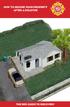 How to secure your property after a disaster The Red Guide to Recovery HOuse secured properly Board-Up of Windows, Doors and Roof Hole. Lot secured with Perimeter Fencing. Fires, floods, tornadoes, hurricanes,
Window Installation Instructions
 Caution The correct installation methods of windows in full frame or insert applications is critical towards achieving the tested performance of the window and longterm enjoyment and energy savings for
INSTALLATION OF A BAY WINDOW
 INSTALLATION OF A BAY WINDOW Installation of a Bay Window These instructions relate to the replacement of an existing bay window or replacement of a straight window with a new bay window, in an opening
necessary for years of satisfactory service. SmartBlock insulating form concrete walls share the
 Chapter 7 PLUMBING AND ELECTRICAL 7.1 Introduction to Plumbing and Electrical Consideration of support services such as plumbing and electrical systems from the preliminary schematics phase through final
City of Tucson and Pima County Arizona Building Code Appendix Chapter 72 Straw-Bale Structures
 City of Tucson and Pima County Arizona Building Code Appendix Chapter 72 Straw-Bale Structures SECTION 7201 - PURPOSE The purpose of this appendix chapter is to establish minimum prescriptive standards
Residential Decks. Planning and Development Services Department
 Building Safety Division 8500 Santa Fe Drive Overland Park, KS 66212 (913) 895-6225 Fax (913) 895-5016 Email: [email protected] Planning and Development Services Department Residential Decks
Engineered Wood Foundations
 Engineered Wood Foundations Emeraldfoundations.com 1 EWF Planning and Installation manual This manual will serve as a guide to planning and installing an Emerald Foundation system. This system is comprised
8/18/14. Introduction to. Framing. Terminology and Concepts
 8/18/14 Introduction to Framing Terminology and Concepts Terminology: Framing Level Two points on exactly the same horizontal plane. Square Intersecting lines or faces that form an exact 90 angle. Plumb
INSTALLATION INSTRUCTIONS for Vinyl Windows with Integral Nailing Fin (JII001)
 Thank you for selecting JELD-WEN products. Attached are JELD-WEN s recommended installation instructions for Vinyl windows with an integral nailing fin. While the use of these installation instructions
Installation Instructions
 READ BEFORE INSTALLING UNIT For Through-the-Wall Air Conditioners To avoid risk of personal injury, property damage, or product damage due to the weight of this device and sharp edges that may be exposed:
Chapter 36 - STRAW BALE CONSTRUCTION SECTION 3601 - PURPOSE. SECTION 3602 - SCOPE. SECTION 3603 - DEFINITIONS.
 Austin City Code - Volume II TITLE 25 LAND DEVELOPMENT\CHAPTER 25-12 TECHNICAL CODES\ARTICLE 1: UNIFORM BUILDING CODE\25-12-3 LOCAL AMENDMENTS TO THE BUILDING CODE Chapter 36 - STRAW BALE CONSTRUCTION
COMMONLY USED RESIDENTIAL BUILDING CODES
 COMMONLY USED RESIDENTIAL BUILDING CODES INTERNATIONAL RESIDENTIAL CODE (2009) form revised 5/10 FOUNDATION 1. DESIGN OF FORMWORK. Section 1906.1 IBC 2009, Section R404.1.2.3.6 IRC 2009, ACI 318 Section
MGB Chrome Bumper Conversion
 MGB Chrome Bumper Conversion Installation Instructions For 1974 1/2-1980 MGB This kit requires cutting, welding, and painting. Professional installation recommended. Note: Every MGB body is slightly different
How to Install UnderDeck The Original.
 How to Install UnderDeck The Original. TOOLS: Chalk Line Caulk Gun Garden hose or water bucket Gloves Hammer or Screw Gun Power Mitre Saw with OSB Blade Pencil Pliers Safety Glasses Straight Edge / Carpenter
If stepping is required, step at 180mm as seen in this picture.
 Cast Foundations to standard building regulations requirements. Foundations must be cast completely level, 600mm wide by 230mm deep for single storey, double storey is not allowed by NHBRC. If stepping
Guidelines for Earthquake Bracing Residential Water Heaters
 Guidelines for Earthquake Bracing Residential Water Heaters Department of General Services Division of the State Architect In accordance with the Health and Safety Code Section 19215, the Division of the
8' W x 8' H or 10' H Peak Style Shelter Assembly Instructions
 ' W x ' H or ' H Peak Style Shelter Assembly Instructions Description ' x ' x ' Peak Style Shelter - Gray ' x ' x ' Peak Style Shelter - Gray Recommended Tools Please read instructions COMPLETELY before
After reading this lesson you will be able to: 12.3 IMPORTANCE OF ROOF 12.4 TYPES OF ROOF IN A HOUSE
 86 :: Certificate in Construction Supervision (CIVIL) 12 ROOF 12.1 INTRODUCTION The structure provided to cover the house surface (floor) is known as roof. For different situation and requirement, it is
Lighthouse Engineering, L.L.C.
 Registered Engineering Firm (F: 9334) Phone: 214-577-1077 Fax: 214-224-0549 Website: www.lighthouseeng.com Email: [email protected] Thursday, September 04, 2014 TO: Our Client RE: Initial Engineering
How To Repair A House
 Assessing Structural Damages Please note-this presentation is only intended to be used as a basic educational tool and is by no means all encompassing. Each property should be treated on a case by case
SECTION 15076 CEMENT-MORTAR LINED AND COATED STEEL PIPE
 SECTION 15076 CEMENT-MORTAR LINED AND COATED (CML&C) STEEL PIPE PART 1 GENERAL 1.01 DESCRIPTION This section designates the requirements for steel pipe fabrication, test in shop, installation of steel
RESIDENTIAL ROOFING & RE-ROOFING, ROOF VENTILATION AND ROOF SHEATHING REQUIREMENTS MICHIGAN RESIDENTIAL CODE 2000
 RESIDENTIAL ROOFING & RE-ROOFING, ROOF VENTILATION AND ROOF SHEATHING REQUIREMENTS MICHIGAN RESIDENTIAL CODE 2000 SECTION R905 REQUIREMENTS FOR ROOF COVERINGS R905.1 Roof covering application. Roof coverings
TECHNICAL SPECIFICATION SERIES 8000 PRECAST CONCRETE
 TECHNICAL SPECIFICATION SERIES 8000 PRECAST CONCRETE TECHNICAL SPECIFICATION PART 8000 - PRECAST CONCRETE TABLE OF CONTENTS Item Number Page 8100 PRECAST CONCRETE CONSTRUCTION - GENERAL 8-3 8101 General
first look at GigaCrete s revolutionary new New Construction GigaHouse GigaHouse Utilizing GigaPanel
 first look at GigaCrete s revolutionary new New Construction GigaHouse GigaHouse Utilizing GigaPanel What is GigaCrete GigaCrete is a family of products based on low carbon footprint Green ceramic binders
Mark Cramer Inspection Services, Inc.
 Mark Cramer Inspection Services, Inc. 492 Twentieth Avenue, Indian Rocks Beach, FL 34635-2970 (727) 595-4211 Fax (727) 596-7583 Certified Member #12085 American Society of Home Inspectors Construction
Chapter. Restoration of Damaged Structures
 5 Chapter Restoration of Damaged Structures Bringing back a damaged structure to its pre-earthquake state and original strength is called restoration. This is the first step of building rehabilitation.
Elevating Your House. Introduction CHAPTER 5
 CHAPTER 5 Elevating Your House Introduction One of the most common retrofitting methods is elevating a house to a required or desired Flood Protection Elevation (FPE). When a house is properly elevated,
SUPER SHED. Indoor shelter for your outdoor tools.
 SUPER SHED Indoor shelter for your outdoor tools. Not everyone needs a garden shed. But, if you've no more space on your garage wall for that new leaf rake, if you can't find your potting trowel because
GYPSUM AREA SEPARATION FIREWALLS GA-620-2011
 GYPSUM AREA SEPARATION FIREWALLS GA-620-2011 GA-620-2011 Copyright 2011 Gypsum Association All rights reserved. Printed in U.S.A. Characteristics, properties, or performance of materials or systems herein
Packaged Terminal Air Conditioner Wall Sleeve Installation
 Installation & Maintenance Data IM 1196 Group: PTAC Part Number: 910141799 Date: October 2013 Packaged Terminal Air Conditioner Installation x 42" PGAN with Top-Mounted Hydronic Heat Note: Installation
2. This is a close up of a typical area where the rocker is rusted out leaving holes under where the rocker moulding would be..
 ROCKER PANELS 55,56,57 CHEVY REPLACEMENT Do not throw away any pieces when you first remove them. There are many supports that are not reproduced and will need to be used again. When disassembling try
INSTALLATION INSTRUCTIONS for Bifold Doors (JII103)
 Thank you for selecting JELD-WEN products. Attached are JELD-WEN s recommended installation instructions for premium composite, hollow and solid core molded Bifold Doors. Bifolds are designed for fast
Installation & Technical Guide
 Of the very few negative responses that I have received regarding this product, the one that I find most humorous is this one: Contractors are too rough on the product. I don t think this can stand up
Installation Guide. Bath and Wall Surrounds SERIES 7104 1021861-2-B
 Installation Guide and Wall Surrounds SERIES 7104 1021861-2-B Thank You For Choosing Sterling We appreciate your commitment to Sterling value. Please take a few minutes to review this manual before you
NRDCA 400 GUIDELINE FOR FIELD APPLICATION of LIGHTWEIGHT INSULATING CONCRETE REROOFING/RECOVER SYSTEMS
 NRDCA 400 GUIDELINE FOR FIELD APPLICATION of LIGHTWEIGHT INSULATING CONCRETE REROOFING/RECOVER SYSTEMS The (NRDCA) has prepared this document to provide customers and installers information that the industry
Owner's Manual & Assembly Instructions
 Owner's Manual & Assembly Instructions BO01 PATIO COVER/CARPORT Model No. PC1010 Attached 705220511 Missing Parts, Questions on Assembly? Call: 1-800-851-1085 or [email protected] Do not return to
CAER Construction and Environmental Resource
 CAER Construction and Environmental Resource OLD COLONY HABITAT FOR HUMANITY WORK CREW SAFETY: Construction Safety Policy INTRODUCTION Safety is everybody's concern and is always an important consideration
SITE SPECIFIC FALL PROTECTION PLAN
 1 THIS PLAN IS SPECIFIC TO: PROJECT & ADDRESS 1.1 THIS PLAN IS SPECIFIC TO THE FOLLOWING AREA(S) ON SITE: Parkade level: Typical level: Other: Between G/L: 1.2 THIS PLAN IS APPLICABLE TO THE FOLLOWING
HURRICANE MITIGATION RETROFITS FOR EXISTING SITE-BUILT SINGLE FAMILY RESIDENTIAL STRUCTURES
 HURRICANE MITIGATION RETROFITS FOR EXISTING SITE-BUILT SINGLE FAMILY RESIDENTIAL STRUCTURES 101 Retrofits Required. Pursuant to Section 553.844 553.884, Florida Statutes, strengthening of existing site-built,
EMPLOYEE FALL PROTECTION
 EMPLOYEE FALL PROTECTION You can fall from any height and be seriously injured or killed. In the construction industry, as well as any other industry, when falls from heights happen, they are usually very
NEW ELECTRICAL SUBSTATION Building 300 SECTION 07 53 23 ETHYLENE-PROPYLENE-DIENE-MONOMER ROOFING WORK
 ETHYLENE-PROPYLENE-DIENE-MONOMER ROOFING WORK PART 1 GENERAL 1.1 REFERENCES The publications listed below form a part of this specification to the extent referenced. The publications are referred to within
INSTALLATION INSTRUCTIONS IMPERVIA (Vent and Fixed) AWNING, CASEMENT, and LARGE AWNING WINDOW WITH FINS
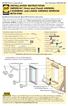 2009 Pella Corporation INSTALLATION INSTRUCTIONS IMPERVIA (Vent and Fixed) AWNING, CASEMENT, and LARGE AWNING WINDOW WITH FINS Part Number: 80WH0100 Installation Instructions for Typical Wood Frame Construction.
WHI 90-Minute Rated Veneered Door Frame Installation Instructions
 No. 940-03-10 INSTALLATION INSTRUCTIONS 90 MINUTE RATED VENEERED DOOR FRAME DOOR REQUIREMENTS: Consult the door manufacturer to make sure that the doors are qualified for the hardware to be installed,
Basement & Foundation Damage
 Basement & Foundation Damage Please note-this presentation is only intended to be used as a basic educational tool and is by no means all encompassing. Each property should be treated on a case by case
Policy on Water Heater Installations Policy No. UPC 510-1-94 Effective: September 1, 1995 Revised: February 10, 1996
 CITY OF SAN JOSE BUILDING DIVISION POLICY Policy on Water Heater Installations Policy No. UPC 510-1-94 Effective: September 1, 1995 Revised: February 10, 1996 All new and replacement water heaters installed
CONSTRUCTION SAFETY. NOTE: Barriers, guards, and warning signs are required to ensure safety against existing hazards.
 CONSTRUCTION SAFETY Introduction The following sections provide general guidelines and procedures for construction safety. This chapter covers the following topics: TOPIC PAGE General Construction Guidelines
GENERAL RUBBER LINING PRINCIPLES
 GENERAL RUBBER LINING PRINCIPLES I. METAL PREREQUISITES Metal to be lined should meet the requirements as stated in section 8 Metal Fabrication and section 12 Blasting and Cementing Procedures. The surface
Owner's Manual & Assembly Instructions
 Owner's Manual & Assembly Instructions BL01 PATIO COVER/CARPORT Model No. PC1020 Attached 705120511 Missing Parts, Questions on Assembly? Call: 1-800-851-1085 or [email protected] Do not return to
Ceiling Mounted Folding Attic Ladders Installation Instructions
 Ceiling Mounted Folding Attic Ladders Installation Instructions WARNING Before you start installing your new Louisville Ceiling Mounted Folding Attic Ladder, you must read and understand the following:
STEADYfast Stabilizer Installation Notes Fifth Wheel and Travel Trailers 11/23/13
 STEADYfast Stabilizer Installation Notes Fifth Wheel and Travel Trailers 11/23/13 (See Supplemental Instructions for trailers with heavy duty round footplates and/or Power Leveling Systems) PHONE SUPPORT
STANDARD REQUIREMENTS FOR BONDING OR MECHANICAL ATTACHMENT OF INSULATION PANELS AND MECHANICAL ATTACHMENT OF ANCHOR AND/OR BASE SHEETS TO SUBSTRATES
 ROOFING APPLICATION STANDARD (RAS) No. 117 STANDARD REQUIREMENTS FOR BONDING OR MECHANICAL ATTACHMENT OF INSULATION PANELS AND MECHANICAL ATTACHMENT OF ANCHOR AND/OR BASE SHEETS TO SUBSTRATES Scope 1.1.
INSTALLATION INSTRUCTIONS for Premium Pocket Windows (JII022) IMPoRtaNt INFoRMatIoN & glossary. safety & HaNdlINg
 Thank you for selecting JeLd-weN products. Attached are JeLd-weN s recommended installation instructions for pocket (replacement) double-hung, casement, awning, picture or transom windows, designed to
Elo Touch Solutions Wall-mounting Kit for the 5501L IDS Touchmonitors
 Installation Manual Elo Touch Solutions Wall-mounting Kit for the 5501L IDS Touchmonitors SW602206 Rev B Table of Contents Chapter 1: Safety Warning... 3 Chapter 2: Kit Contents... 4 Included in Kit...
HfHMD uses LP SmartSide siding and trim.
 HfHMD uses LP SmartSide siding and trim. These products are: More durable than cement fiber board. Much more volunteer-friendly to install. When installed correctly, have a 5/50- year pro-rated warranty.
SAMPLE INSTRUCTIONS. Best Barns USA Assembly Book. the Denver. 12'x 12' or 12'x16' Revised November 29, 2010
 Best Barns USA Assembly Book Revised November 29, 2010 SAMPLE INSTRUCTIONS the Denver 12'x 12' or 12'x16' Manufactured by Reynolds Building Systems, Inc. 205 Arlington Drive Greenville, PA 16125 724-646-3775