
Geographic Information Systems
|
|
|
- Marjorie Norris
- 10 years ago
- Views:
Transcription
1 Jan Coyne, William C. Bell, Mary Maureen Brown, Chad Rupert, and James Nolan Geographic Information Systems A geographic information system (GIS) combines database management and analysis functions with computer-aided mapping. It adds a visual and locational dimension to municipal management and decision making. Since much of the data municipalities manage is land based, a GIS can help managers and decision makers manage municipal affairs more effectively. With the correct data, a GIS allows users to ask questions such as the following: What is at this location? Where are the underground utilities located? Where should new infrastructure such as fire hydrants be located? What is the address of this parcel? What is the average income in the municipality? What areas of the municipality are suitable/unsuitable to build on? What is the pattern of land-use change? What is the best route for service-delivery vehicles (emergency or general)? This chapter provides an overview of GIS technology and discusses the issues involved and the potential for GIS to help municipal governments make better decisions. GIS technology is widely used in local

2 2 Geographic Information Systems government, either as an in-house service or as a service provided by other public-sector organizations or private firms. GIS technology is also used by businesses, nonprofit organizations, and community groups. Whether or not a municipality uses a GIS, chances are that municipal decision makers will encounter the products of GIS technology. Implementing and managing a GIS requires a level of funding that may seem unwarranted without some knowledge of why the funding is necessary and what the benefit is to the municipality. Knowing the limitations and capabilities of GIS technology allows municipal decision makers to use it economically and effectively. WHAT IS A GIS? A GIS is a system of hardware, software, geographic data, and experienced personnel whose purposes is to support the capture, management, manipulation, analysis, modeling, and display of spatially referenced data for solving complex planning and management problems. In other words, it is a computer system that is used for collecting and analyzing data that can be mapped, and it displays the resulting information as a map or series of maps. Spatially referenced means that the data displayed on the computer screen are tied to a real-world location; that is, the latitude and longitude of a feature on the ground (such as an intersection) would be automatically reflected on the onscreen map. Spatial Data Types of spatially referenced data that a municipality would use include the following: Jurisdictional boundaries county and city limits special services districts census divisions property boundaries electoral districts parks

3 Geographic Information Systems 3 Physical features roads utility lines and other features buildings land use (residential vs. industrial, for example) The spatial data are linked to attribute data in a database. Attribute data refer to additional information about a feature such as the name and length of a road, the size and pressure capacity of a water line, and the owner and value of a parcel. One way municipal information is organized in a GIS is by layers of spatial features with their attributes (Figure 1). These layers can then be presented singly or overlaid with other features, depending on what information is being sought. For example, the roads, land-use, and facilities layers can be overlaid to see where the best location for a new fire station might be. It is this ability to integrate disparate types of data and display the relationships between and among them that makes a GIS powerful. Data that are useful to a municipality can take significant amounts of time and money to acquire. Although free digital data are available from both state and federal governments, the usefulness of such data for local governments may be limited due to lack of scale or spatial accuracy. The GIS user must be aware of differences in spatial accuracy in order to determine whether or to what degree the results of analysis should be trusted. For example, FEMA flood data that are used in conjunction with parcel data, which have a much higher degree of spatial accuracy, should be interpreted cautiously. Related Technologies A GIS can be developed as a general-purpose tool or for a narrowly defined set of functions. For example, a land information system (LIS) focuses on the mapping and analysis of land and property records. Transportation management uses a specialized set of analysis tools supplied by developers of GIS technology for transportation. Other automated mapping systems were developed for specific fields that are now incorporating GIS functions. These include computer-aided drafting (CAD), widely used in industrial design and architecture;

4 4 Geographic Information Systems automated mapping/facilities mapping (AM/FM), used to manage utilities; and global positioning system (GPS). The latter system, GPS, includes receivers and satellites that can pinpoint locations on the earth. It is used in the computerized navigational systems found on boats and in some automobiles. Surveyors use GPS to help them make more accurate surveys. It is one way to collect sufficiently detailed data for a municipality or to check the accuracy of data acquired in other ways. Figure 1. Map Overlay Potential of a GIS MAP LAYERS ASSOCIATED DATA Zoning Layer Utilities Layer Topographic Layer R-1 R- 2 R-15 No Size Year Mat. Depth Press. Ins. by Ins. no. Parcel Layer 12 Planimetric (or base) Layer State Plane Reference Grid No Owner Address L.B. P. Land value Bldg. value Prop. code Bldg. code Zoning Stories Garage Area Frontage Last sold Geodetic Survey Control Layer

5 Geographic Information Systems 5 Remote sensing is the acquisition of data from satellites or airplanes using infrared sensors, radar, Light Detection and Ranging (LiDAR), 1 cameras, or other sensors. Once adjusted, images can be used for interpreting land-use patterns over wide areas or for updating and checking the accuracy of other map layers, such as land cover or land use. GPS, remote sensing, and air photography are technologies that enable municipalities to create sufficiently detailed and accurate data for the scale of a municipal-level GIS. The expense of acquiring the imagery or hiring a surveyor is part of the reason why data acquisition can be one of the more costly aspects of GIS implementation, usually second only to the salaries of GIS personnel. LOCAL GOVERNMENT APPLICATIONS The strength of a GIS lies in its ability to combine both visualization and analytical functions. The combination of maps and graphics with a relational database is a powerful tool for managing information. A GIS can integrate diverse sources of information that create patterns and relationships that might otherwise be missed. Patterns of population growth, road networks, waterways, or vegetation distribution can be compared with one another. Hypothetical scenarios, such as how the landscape would look with different levels of population growth or different land-use policies, also can be seen. An individual attribute can be viewed in multiple ways: with more or with less detail, alone or with other attributes, or in its current, past, or possible future state. For example, data can be classified or abstracted before being displayed to show an average or number of entities above or below a certain threshold. Initially, GIS technology was predominantly used to automate manual tasks already being performed in local governments, such as mapping and information management. Current systems allow more complex analyses of data, including three-dimensional visualization of landscapes and forecasting. Researchers and practitioners are also investigating ways to incorporate GIS technology into the public participation process so that citizens and decision makers can benefit from the technology throughout all phases of planning and policy creation. GIS technology can be applied to the following functions of a municipal government, among others: public works water works

6 6 Geographic Information Systems elections police tax assessment solid waste management planning and zoning natural resources emergency services management parks and recreation transportation planning In addition, the availability of a GIS can directly affect citizen participation, particularly with regard to taxation issues: A GIS can be used to analyze the relationship between tax revenues drawn from different neighborhoods or areas and the expenditures being made in those areas. Citizens can use the GIS to learn how taxes drawn from their neighborhood are budgeted for different functions. As recent surveys suggest, citizens are more likely to approve of needed taxations when they know that their dollars are being spent on specific services especially services that might benefit their neighborhood or themselves individually. 2 Data can be analyzed in order to reveal patterns or trends that need to be addressed or to assess the impact of a municipal policy. For example, where and when certain types of crime occurs may be associated with land use (does it occur in residential or business areas? does it occur at the same general time? is it concentrated in one area or widely dispersed?), proximity to transportation, population characteristics, and other information that law enforcement agencies can use in deciding how to focus their efforts. Such data may suggest other solutions, such as installing streetlights in dark areas or providing crime prevention education for citizens.

7 Geographic Information Systems 7 A GIS can be used to help decide which of a number of possible changes might be the best one(s) to implement. For example, population growth trends can be modeled in terms of land-use or zoning regulations to see how each might affect the municipality in terms of infrastructure requirements. Regulations can be changed, land-use or zoning types can be shifted, and the effects can be assessed to help evaluate whether current regulations will be viable in the future. BENEFITS AND COSTS OF IMPLEMENTING GIS TECHNOLOGY Cost savings can be very difficult to quantify. For example, cost savings were realized when local governments converted from paper-based systems to computer-based systems, but just how much was saved? The use of GIS technology in small jurisdictions has become commonplace only in the last two decades. Larger local governments, such as those in major urban areas, were early adopters of the technology and have been the focus of studies of the effectiveness and costs and benefits of using GIS technology. The results of these initial studies were based on the early use of GIS technology to automate tasks, which was considered a beneficial function. The studies indicate that there is not necessarily an immediate return on investment; jurisdictions generally began seeing cost decreases and efficiencies in three to five years. Other benefits of GIS technology adoption include eliminating duplication (i.e., one database can serve multiple users, and therefore fewer opportunities exist for the introduction of human error) and improving data management, information processing, access to information, analysis and problem-solving capabilities, and the quality of decisions because they are backed by sufficient data. Greater efficiencies in answering citizen inquiries through GIS can result in savings for a local government. Continued software innovations, such as advancements in GPS technology and reduced costs of aerial photography, have resulted in lower data-acquisition costs. This greater access to data has made it possible for even the smallest jurisdiction to develop a GIS. In the past decade, there has been a surge in the development of GIS Web sites, where citizens can view tax records to verify the correctness of information used in the assessment process or determine if they are being treated fairly compared with other taxpayers. Besides tax parcel information, these Web sites often host GIS data related to zoning, road networks, aerial photography, rivers and streams, and a variety of other features. They allow the general public to answer their own questions without assistance from government employees.

8 8 Geographic Information Systems Aside from the fact that improvements may not be apparent for years, part of the difficulty in measuring the benefit of a GIS is that much of it is not quantifiable. It is hard to separate the effects of the system from the effects of its environment. Local governments benefit from GIS and other technology when the implementation of it is well researched and planned. The purpose of the system needs to be clear, and those responsible for managing it need to be trained in its use. The jurisdictions that have been disappointed in their return on GIS investment have generally not done enough groundwork to understand all of the costs involved, or they have not received the appropriate level of employee training to properly use and maintain their system. Local governments, regional commissions, and local authorities are permitted to charge fees for providing information from or access to their GIS. Fees must be based on the development costs of creating or maintaining the GIS and may include cost to the municipality... of time, equipment, and personnel in the creation, purchase, development, production, or update of the geographic information system. The code also authorizes local governments to contract with private firms to provide GIS information to the public. 3 The costs of adopting a GIS vary with how much is required of the system, whether new people need to be hired, and, if so, how many. Expenditures for GIS software range from applications having little or no cost to applications costing tens of thousands of dollars that run on computers ranging from inexpensive desktop PCs to massive networked servers. Other than ongoing salary costs, initial database development is usually the most costly aspect of GIS implementation both in terms of funding and time, and it varies with the amount and detail of data needed. Regular hardware, software, and database upgrades need to be considered in the long-term budget for a system. Municipalities change, as do the data about them, and the uses of the GIS will change as well. Personnel training is often neglected when considering costs. Initial training and periodic updates are necessary in order for the system to be fully utilized. There is no point in paying for functions that the staff is not aware of or able to use properly. Implementation The first step in considering adoption of a GIS is to decide what kinds of analysis a municipality wants to perform and what information it wants to obtain from the analysis. The next step is to conduct a cost-benefit analysis and feasibility study. These studies should address more than just technical issues, since organizational and policy issues play a role in

9 Geographic Information Systems 9 implementation. Employee receptivity to technology and ability to adapt to new technology, how effectively potential users of the system communicate, and users conception about what is wanted and needed in the system all affect how much a GIS costs and how long it takes to implement. All potential users of the system should be consulted at this stage to make sure that all data needs or requirements are taken into account. Once the decision to adopt a GIS is made, the municipality needs to decide how to organize it. There are a number of organizational models of GIS implementation: single department, multidepartment, or multiagency. Single Department Model In the single department approach, the GIS is developed in a single department of the government and used only for the applications of that department. This approach is common. For example, the municipal planning department may develop a GIS to manage land records information. As other departments learn about the system, they may request GIS services from that department. Multidepartment Model In this model, various departments share costs and responsibilities. Cost sharing among the departments funds database development and updating. Sometimes this model evolves from the single department model as requests for service impede the use of the system for its original purpose. There are a couple of approaches to the multidepartment model. One department may be chosen as the lead department and be responsible for housing the GIS and providing the services to other departments. The other approach is to create a GIS department to manage the system. Both approaches have advantages and disadvantages. Having a lead department with its own priorities may affect how service is provided to other departments, and a centralized GIS department may not be able to respond to the specialized needs of individual municipal departments. Multiagency Model The multiagency model shares costs and responsibilities between several levels of local government or between a number of partners governmental or nongovernmental. Typical agreements involve utilities such as gas, power, cable, and telephone companies that share the cost of data development with municipalities and exchange information such as underground structures data with them. If there is sufficient interest on behalf of the partners, this approach is the most economical option.

10 10 Geographic Information Systems However, with this model, it generally takes much longer to get projects under way because of the need to conduct joint discussions on cost sharing and to consider different kinds of data, different levels of accuracy, and the different viewpoints and politics of the various agencies. Nevertheless, the greater variety of data provided by multiple partners yields better benefits at lower costs (Figure 2). Figure 2. Multiagency GIS Law Enforcement Gas Company Public Works Bus System Telephone Company Power Company Water Dept. GIS Coordinating Unit E911 Planning Dept. Elections Assessment Dept. Data Once the approach to implementation has been decided, data issues need to be addressed. Data maintenance and sharing agreements among partners need to be created unless a single department is implementing the system. Database standards need to be agreed upon. Standards should include the following: naming and definition conventions (so that each named type of road, for instance, means only that type of road and all road names are entered in the same format)

11 Geographic Information Systems 11 mapping standards (coordinate system, scale, and symbols used to represent objects, line colors and widths, etc.) data documentation (information about the data such as source, coordinate system, scale, extent, and date of compilation) access privileges (who gets to do what with the data, software, and hardware) liability for inaccurate data quality assurance (who is responsible for data updates and accuracy checks and how often they occur) data backup and recovery procedures Policies created by the municipality based on database standards that have been agreed to and developed with all users of the system will streamline later steps in the implementation process. Before data are collected, a data model and database design should be decided upon. Users needs and expectations should be clearly defined at this stage. Database design affects how data should be collected and what kinds of analysis can be performed. It can also affect the software and hardware used. What kind of data are collected and how they are collected will depend on the preceding steps. As mentioned earlier, a basic set of data layers is available at no cost from state and federal sources. The Georgia GIS Data Clearinghouse makes Georgia data available over the Internet. County and municipal boundaries, roads, hydrology, elevation, and other data are provided by the U.S. Geological Survey, the U.S. Bureau of the Census, the Georgia Department of Transportation, and the Georgia Department of Natural Resources, among others. Other data will have to be acquired by manually digitizing or scanning paper maps or by using GPS data or aerial photography. The method used will depend on the types of data available, the equipment and personnel available, the accuracy required, and the cost. Different applications of GIS technology require different levels of accuracy. Engineering applications, such as utility or infrastructure management, generally require more accurate data than do planning applications. Regardless of the approach pursued in GIS implementation, an experienced consultant is generally required because of the highly technical nature of a GIS project. In addition, a GIS manager position should be established to ensure that the system continues to meet the evolving needs of the municipality.

12 12 Geographic Information Systems Available Resources The Regional Commissions (RCs) provide GIS services to member local governments, especially for comprehensive planning. Georgia colleges and universities provide GIS education. Some provide GIS services, including implementation planning and database development. Information Technology Outreach Services ( uga.edu/itos) is a University of Georgia unit that assists local governments with GIS technology (i.e., data development; training on the use, maintenance, and integration of GIS data with existing databases; and system implementation). The Urban and Regional Information Systems Association (URISA) is an organization of professionals using information technology and spatial information in planning, public works, and other governmental areas. URISA provides educational and other resources. NOTES 1. LIDAR is a remote sensing technology. Pulses of light are emitted from a laser source, and high-speed counters record the time it takes for the light signal to bounce off a surface and return to its source location. These recorded data can be used to model changes in elevation along the earth s surface and for a number of topography-related applications. 2. John O Looney, Beyond Maps (Redlands, CA: ESRI Press, 2000), Official Code of Georgia Annotated (O.C.G.A.)

GEOGRAPHIC INFORMATION SYSTEMS
 GEOGRAPHIC INFORMATION SYSTEMS WHAT IS A GEOGRAPHIC INFORMATION SYSTEM? A geographic information system (GIS) is a computer-based tool for mapping and analyzing spatial data. GIS technology integrates
University of Arizona THE CAMPUS SPATIAL DATA INITIATIVE
 University of Arizona THE CAMPUS SPATIAL DATA INITIATIVE Presentation Review 1. Background on Campus Mapping and Spatial Data 2. The Campus Spatial Data Users Research / Teaching / Outreach Administration
Utah State General Records Retention Schedule SCHEDULE 1 GEOSPATIAL DATA SETS
 Utah State General Records Retention Schedule SCHEDULE 1 BIOTA RECORDS (Item 1-26) These are geospatial records that depict wildlife use areas in the state of Utah as determined by wildlife biologists
Natural Resource-Based Planning*
 Natural Resource-Based Planning* Planning, when done well, is among the most powerful tools available to communities. A solid plan, based on good natural resource information, guides rational land-use
AUTOMATION OF FLOOD HAZARD MAPPING BY THE FEDERAL EMERGENCY MANAGEMENT AGENCY ABSTRACT INTRODUCTION
 AUTOMATION OF FLOOD HAZARD MAPPING BY THE FEDERAL EMERGENCY MANAGEMENT AGENCY Daniel M. Cotter Federal Emergency Management Agency Federal Insurance Administration Office of Risk Assessment 500 C Street,
CITY OF SUFFOLK, VIRGINIA GIS DATA DISTRIBUTION AND PRICING POLICY
 CITY OF SUFFOLK, VIRGINIA GIS DATA DISTRIBUTION AND PRICING POLICY 1 The City of Suffolk has invested a large amount of effort into the development of a Citywide Geographic Information System (GIS). The
Introduction to GIS (Basics, Data, Analysis) & Case Studies. 13 th May 2004. Content. What is GIS?
 Introduction to GIS (Basics, Data, Analysis) & Case Studies 13 th May 2004 Content Introduction to GIS Data concepts Data input Analysis Applications selected examples What is GIS? Geographic Information
Technology Trends In Geoinformation
 Technology Trends In Geoinformation Dato Prof. Sr Dr. Abdul Kadir Bin Taib Department of Survey and Mapping Malaysia (JUPEM) Email: [email protected] www.jupem.gov.my NGIS 2008 3 rd. National GIS Conference
Pima Regional Remote Sensing Program
 Pima Regional Remote Sensing Program Activity Orthophoto GIS Mapping and Analysis Implementing Agency Pima Association of Governments (Tucson, Arizona area Metropolitan Planning Organization) Summary Through
Assessment has always been about maps, parcels, Assessment Powered by Enterprise GIS in the Los Angeles County Assessor s Office.
 Assessment Powered by Enterprise GIS in the Los Angeles County Assessor s Office Mark Greninger (oblique images courtesy of Pictometry) The statements made or opinions expressed by authors in Fair & Equitable
STATE OF NEVADA Department of Administration Division of Human Resource Management CLASS SPECIFICATION
 STATE OF NEVADA Department of Administration Division of Human Resource Management CLASS SPECIFICATION TITLE PHOTOGRAMMETRIST/CARTOGRAPHER V 39 6.102 PHOTOGRAMMETRIST/CARTOGRAPHER II 33 6.110 PHOTOGRAMMETRIST/CARTOGRAPHER
WHAT IS GIS - AN INRODUCTION
 WHAT IS GIS - AN INRODUCTION GIS DEFINITION GIS is an acronym for: Geographic Information Systems Geographic This term is used because GIS tend to deal primarily with geographic or spatial features. Information
GEOGRAPHIC INFORMATION SYSTEMS (GIS): THE BEDROCK OF NG9-1-1
 GEOGRAPHIC INFORMATION SYSTEMS (GIS): THE BEDROCK OF NG9-1-1 THE TIME IS NOW FOR PSAPS AND REGIONAL AGENCIES TO TAKE ADVANTAGE OF THE ACCURATE GEOSPATIAL DATABASES THAT WILL BE KEY TO NEXT GENERATION EMERGENCY
The Use of Geographic Information Systems in Risk Assessment
 The Use of Geographic Information Systems in Risk Assessment With Specific Focus on the RiVAMP Methodology Presented by Nadine Brown August 27, 2012 Climate Studies Group Mona Climate Change Workshop Presentation
PUBLIC SAFETY. Industry Solutions Harness the Power of GIS for Public Safety
 PUBLIC SAFETY Industry Solutions Harness the Power of GIS for Public Safety Esri has thousands of customers worldwide who are using the transforming power of GIS technology to respond to disasters and
The Status of Geospatial Information Management in China
 The Status of Geospatial Information Management in China Submitted by the National Administration of Surveying, Mapping and Geoinformation of China 1. Administration System The National Administration
Compiled from ESRI s Web site: http://www.esri.com. 1. What Is a GIS?
 Compiled from ESRI s Web site: http://www.esri.com 1. What Is a GIS? A geographic information system (GIS) is a computer-based tool for mapping and analysing things that exist and events that happen on
LIDAR and Digital Elevation Data
 LIDAR and Digital Elevation Data Light Detection and Ranging (LIDAR) is being used by the North Carolina Floodplain Mapping Program to generate digital elevation data. These highly accurate topographic
GIS for Transportation Infrastructure Management
 GIS for Transportation Infrastructure GIS for Transportation Infrastructure Being able to visualize your assets and the surrounding environment when you build, upgrade, or repair transportation infrastructure
Building & Developing the Environmental
 Building & Developing the Environmental Web Explorer for Riyadh City Authors: Engineer Yousef Bin Othman Al-Fariheedi Manager of Environmental Data Unit Environmental Management and Protection Department
Printer-friendly version (HTML) (PDF)
 Skip Navigation Links Latest Numbers U.S. Department of Labor Bureau of Labor Statistics Occupational Outlook Handbook www.bls.gov Search the Handbook BLS Home OOH Home Frequently Asked Questions A-Z Index
{ { { Meeting Date 08/03/10. City of Largo Agenda Item 24. Leland Dicus, P.E., City Engineer
 City of Largo Agenda Item 24 Form Revision Date: 10/19/09: Meeting Date 08/03/10 Presenter: Leland Dicus, P.E., City Engineer Department: CD Community Development TITLE: GIS PROGRAM UPDATE The implementation
Guidance for Flood Risk Analysis and Mapping. Changes Since Last FIRM
 Guidance for Flood Risk Analysis and Mapping Changes Since Last FIRM May 2014 This guidance document supports effective and efficient implementation of flood risk analysis and mapping standards codified
A GIS helps you answer questions and solve problems by looking at your data in a way that is quickly understood and easily shared.
 A Geographic Information System (GIS) integrates hardware, software, and data for capturing, managing, analyzing, and displaying all forms of geographically referenced information. GIS allows us to view,
GIS: Geographic Information Systems A short introduction
 GIS: Geographic Information Systems A short introduction Outline The Center for Digital Scholarship What is GIS? Data types GIS software and analysis Campus GIS resources Center for Digital Scholarship
SESSION 8: GEOGRAPHIC INFORMATION SYSTEMS AND MAP PROJECTIONS
 SESSION 8: GEOGRAPHIC INFORMATION SYSTEMS AND MAP PROJECTIONS KEY CONCEPTS: In this session we will look at: Geographic information systems and Map projections. Content that needs to be covered for examination
Standard on Digital Cadastral Maps and Parcel Identifiers
 Standard on Digital Cadastral Maps and Parcel Identifiers APPROVED JULY 2003 INTERNATIONAL ASSOCIATION OF ASSESSING OFFICERS 1. Scope This standard provides recommendations on the development and maintenance
Digital Cadastral Maps in Land Information Systems
 LIBER QUARTERLY, ISSN 1435-5205 LIBER 1999. All rights reserved K.G. Saur, Munich. Printed in Germany Digital Cadastral Maps in Land Information Systems by PIOTR CICHOCINSKI ABSTRACT This paper presents
MAPPING MINNEAPOLIS URBAN TREE CANOPY. Why is Tree Canopy Important? Project Background. Mapping Minneapolis Urban Tree Canopy.
 MAPPING MINNEAPOLIS URBAN TREE CANOPY Why is Tree Canopy Important? Trees are an important component of urban environments. In addition to their aesthetic value, trees have significant economic and environmental
GIS. Digital Humanities Boot Camp Series
 GIS Digital Humanities Boot Camp Series GIS Fundamentals GIS Fundamentals Definition of GIS A geographic information system (GIS) is used to describe and characterize spatial data for the purpose of visualizing
Earth Data Science in The Era of Big Data and Compute
 Earth Data Science in The Era of Big Data and Compute E. Lynn Usery U.S. Geological Survey [email protected] http://cegis.usgs.gov U.S. Department of the Interior U.S. Geological Survey Board on Earth Sciences
How To Manage Assets With Geospatially Enabled Asset Management
 Point of view Geospatially enhanced asset management: Everything in its place "Geospatially enabled asset management uses the power of location not only to properly value and utilize assets, but also as
Qatar National Geospatial Infrastructure
 Qatar National Geospatial Infrastructure Since 1990 up to 2030 and beyond Mohammad Abd El-Wahab Hamouda GIS Consultant & Chairman of GIS Coordinators Group The Center for GIS Ministry of Municipality and
16 URBAN VISUALIZATION MODELLING
 16 URBAN VISUALIZATION MODELLING The Planning and Economic Development Committee recommends the adoption of the recommendation contained in the following report August 23, 2006, from the Commissioner of
APLS 2011. GIS Data: Classification, Potential Misuse, and Practical Limitations
 APLS 2011 GIS Data: Classification, Potential Misuse, and Practical Limitations GIS Data: Classification, Potential Misuse, and Practical Limitations Goals & Objectives Develop an easy to use geospatial
INDIVIDUAL COURSE DETAILS
 INDIVIDUAL COURSE DETAILS A. Name of Institution NATIONAL INSTITUTE OF TECHNICAL TEACHERS TRAINING AND RESEARCH TARAMANI CHENNAI 600 113 [An Autonomous Institute under Ministry of Human Resource Development,
TOWN OF WESTON,CT REQUEST FOR PROPOSALS. For. Parcel Mapping & Web-Based GIS Application
 TOWN OF WESTON,CT I. INTRODUCTION REQUEST FOR PROPOSALS For Parcel Mapping & Web-Based GIS Application The Town of Weston, Connecticut (the "Town") seeks proposals from interested GIS consultants for the
NASA DEVELOP s 3-D Visualizations and Remote Sensing Applications. NASA DEVELOP, a student-led project headquartered at NASA Langley, allows
 Abstract NASA DEVELOP, a student-led project headquartered at NASA Langley, allows students to demonstrate remote-sensing techniques that are used to create visualizations, which aid communities in solving
Alison Hayes November 30, 2005 NRS 509. Crime Mapping OVERVIEW
 Alison Hayes November 30, 2005 NRS 509 Crime Mapping OVERVIEW Geographic data has been important to law enforcement since the beginning of local policing in the nineteenth century. The New York City Police
SERVICES THAT MAY ONLY BE PERFORMED BY A NEW JERSEY PROFESSIONAL LAND SURVEYOR
 SERVICES THAT MAY ONLY BE PERFORMED BY A NEW JERSEY PROFESSIONAL LAND SURVEYOR 1. ANY MAP OR PLAN THAT SHOWS: Property Lines. NJSA 45:8-28(e), NJAC 13:40-1.3, 13:40-5.1 Locations of Existing Buildings
Chapter Contents Page No
 Chapter Contents Page No Preface Acknowledgement 1 Basics of Remote Sensing 1 1.1. Introduction 1 1.2. Definition of Remote Sensing 1 1.3. Principles of Remote Sensing 1 1.4. Various Stages in Remote Sensing
Constructing an EA-level Database. for the Census
 Constructing an EA-level Database for the Census Amor Laaribi UN-GGIM Secretariat UN Statistics Division New York 1 Overview Stages in the Geographic Database Development Sources of geographic information
GIS Solutions for FTTx Design. David Nelson, GISP
 GIS Solutions for FTTx Design David Nelson, GISP Telecom GIS Manager, Black & Veatch Agenda Intro to GIS Telecom GIS Vision GIS Strategy Project Execution Mobile Online Services Dashboards Client Deliverables
My City Houston Map Viewer, Version 2 Web Site
 My City Houston Map Viewer, Version 2 Web Site http://mycity.houstontx.gov/mycity2 GIS Helpline 832.393.6555 Developed and hosted by Enterprise GIS, Houston Information Technology Services, COH Using the
North Dakota GIS Program Report To Governor Jack Dalrymple. July 1, 2011 June 30, 2012
 North Dakota GIS Program Report To Governor Jack Dalrymple July 1, 2011 June 30, 2012 Executive Order 2001-06: The committee shall issue a report to the Governor's office at the end of each fiscal year,
GIS for Economics & Business A modernized approach to Attract & Retain Business
 GIS for Economics & Business A modernized approach to Attract & Retain Business Mai Hoa Esri Vietnam Esri LEADER LOCATION ANALYTICS Strong and Growing..Serving Our Users A Global Company 130+ Countries
Wildfires pose an on-going. Integrating LiDAR with Wildfire Risk Analysis for Electric Utilities. By Jason Amadori & David Buckley
 Figure 1. Vegetation Encroachments Highlighted in Blue and Orange in Classified LiDAR Point Cloud Integrating LiDAR with Wildfire Risk Analysis for Electric Utilities Wildfires pose an on-going hazard
Geocoding in Law Enforcement Final Report
 Geocoding in Law Enforcement Final Report Geocoding in Law Enforcement Final Report Prepared by: The Crime Mapping Laboratory Police Foundation August 2000 Report to the Office of Community Oriented Policing
Application of Google Earth for flood disaster monitoring in 3D-GIS
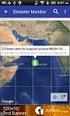 Disaster Management and Human Health Risk II 271 Application of Google Earth for flood disaster monitoring in 3D-GIS M. Mori & Y. L. Chan Department of Information and Computer Science, Kinki University,
ESRI Business Analyst for Telecommunications
 ESRI Business Analyst for Telecommunications GIS Market Analysis Package Drive Business Results with ESRI Business Analyst ESRI Business Analyst helps you Analyze your competition: Track customer churn.
GIS for Real-Time Crime Centers. An Esri White Paper June 2013
 An Esri White Paper June 2013 Copyright 2013 Esri All rights reserved. Printed in the United States of America. The information contained in this document is the exclusive property of Esri. This work is
Cartographic and Geospatial Materials
 LIBRARY OF CONGRESS COLLECTIONS POLICY STATEMENTS ±² Collections Policy Statement Index Cartographic and Geospatial Materials This document consolidates and replaces the former Maps, Atlases, and Remote
URISA ESIG Application
 RECOVER Rehabilitation Capability Convergence for Ecosystem Recovery An Automated Burned Area Emergency Response Decision Support System for Postfire Rehabilitation Management Application contents: A.
Spatial Distribution of Precision Farming Technologies in Tennessee. Burton C. English Roland K. Roberts David E. Sleigh
 Spatial Distribution of Precision Farming Technologies in Tennessee Burton C. English Roland K. Roberts David E. Sleigh Research Report 00-08 February 2000 Department of Agricultural Economics and Rural
STATE OF ALASKA DEPARTMENT OF NATURAL RESOURCES DIVISION OF MINING, LAND AND WATER. GENERAL SURVEY INSTRUCTIONS EASEMENTS Authority 11 AAC 53
 STATE OF ALASKA DEPARTMENT OF NATURAL RESOURCES DIVISION OF MINING, LAND AND WATER GENERAL SURVEY INSTRUCTIONS EASEMENTS Authority 11 AAC 53 These instructions define the survey and platting criteria unique
Mount Laurel Township MUA Hydrant Maintenance Program. Using ArcPad to Track Hydrant Flow Testing and Flushing procedures
 Mount Laurel Township MUA Hydrant Maintenance Program Using ArcPad to Track Hydrant Flow Testing and Flushing procedures What is the Mount Laurel MUA? The Mount Laurel Township, Municipal Utilities Authority
AERIAL PHOTOGRAPHS. For a map of this information, in paper or digital format, contact the Tompkins County Planning Department.
 AERIAL PHOTOGRAPHS What are Aerial Photographs? Aerial photographs are images of the land taken from an airplane and printed on 9 x9 photographic paper. Why are Aerial Photographs Important? Aerial photographs
REGIONAL SEDIMENT MANAGEMENT: A GIS APPROACH TO SPATIAL DATA ANALYSIS. Lynn Copeland Hardegree, Jennifer M. Wozencraft 1, Rose Dopsovic 2 INTRODUCTION
 REGIONAL SEDIMENT MANAGEMENT: A GIS APPROACH TO SPATIAL DATA ANALYSIS Lynn Copeland Hardegree, Jennifer M. Wozencraft 1, Rose Dopsovic 2 ABSTRACT: Regional sediment management (RSM) requires the capability
GIS Initiative: Developing an atmospheric data model for GIS. Olga Wilhelmi (ESIG), Jennifer Boehnert (RAP/ESIG) and Terri Betancourt (RAP)
 GIS Initiative: Developing an atmospheric data model for GIS Olga Wilhelmi (ESIG), Jennifer Boehnert (RAP/ESIG) and Terri Betancourt (RAP) Unidata seminar August 30, 2004 Presentation Outline Overview
DEVELOPING AN INUNDATION MAP STANDARD FOR THE U.S. ARMY CORPS OF ENGINEERS
 DEVELOPING AN INUNDATION MAP STANDARD FOR THE U.S. ARMY CORPS OF ENGINEERS Will Breitkreutz, Geographer, U.S. Army Corps of Engineers Kansas City District, Kansas City, Missouri, [email protected]
An Esri White Paper May 2012 ArcGIS for Emergency Management
 An Esri White Paper May 2012 ArcGIS for Emergency Management Esri, 380 New York St., Redlands, CA 92373-8100 USA TEL 909-793-2853 FAX 909-793-5953 E-MAIL [email protected] WEB esri.com Copyright 2012 Esri
Asset Management-Roads / Highways Integrated Road Asset Management System-IRAMS. Abhay Kimmatkar Jt. Managing Director
 Asset Management-Roads / Highways Integrated Road Asset Management System-IRAMS Abhay Kimmatkar Jt. Managing Director CORPORATE OFFICE Nagpur GIS CENTERS Nagpur Mumbai Hyderabad Lucknow DOMESTIC OFFICES
Assessing the implementation of Rawalpindi s Guided Development Plan through GIS and Remote Sensing Muhammad Adeel
 Assessing the implementation of Rawalpindi s Guided Development Plan through GIS and Remote Sensing Muhammad Adeel (Lecturer Muhammad Adeel, Institute of Geographical Information Systems, NUST, H-12 Islamabad,
Updation of Cadastral Maps Using High Resolution Remotely Sensed Data
 International Journal of Engineering and Advanced Technology (IJEAT) Updation of Cadastral Maps Using High Resolution Remotely Sensed Data V. V.Govind Kumar, K. Venkata Reddy, Deva Pratap Abstract:A cadastral
GIS MAPPING FOR IRRIGATION DISTRICT RAPID APPRAISALS Daniel J. Howes 1, Charles M. Burt 2, Stuart W. Styles 3 ABSTRACT
 GIS MAPPING FOR IRRIGATION DISTRICT RAPID APPRAISALS Daniel J. Howes 1, Charles M. Burt 2, Stuart W. Styles 3 ABSTRACT Geographic information system (GIS) mapping is slowly becoming commonplace in irrigation
GEOGRAPHIC INFORMATION SYSTEMS
 GIS GEOGRAPHIC INFORMATION SYSTEMS FOR CADASTRAL MAPPING Chapter 6 2015 Cadastral Mapping Manual 6-0 GIS - GEOGRAPHIC INFORMATION SYSTEMS What is GIS For a long time people have sketched, drawn and studied
Data Visualization Techniques and Practices Introduction to GIS Technology
 Data Visualization Techniques and Practices Introduction to GIS Technology Michael Greene Advanced Analytics & Modeling, Deloitte Consulting LLP March 16 th, 2010 Antitrust Notice The Casualty Actuarial
Institute of Natural Resources Departament of General Geology and Land use planning Work with a MAPS
 Institute of Natural Resources Departament of General Geology and Land use planning Work with a MAPS Lecturers: Berchuk V.Y. Gutareva N.Y. Contents: 1. Qgis; 2. General information; 3. Qgis desktop; 4.
Wildland Fire. GIS Solutions for Wildland Fire Suppression
 Wildland Fire GIS Solutions for Wildland Fire Suppression Applying GIS Technology to Wildland Fire Fire Decision Support Tools When it comes to wildfire protection local, state, and federal agencies must
About As. In a team with the best. ESRI Bulgaria is the exclusive distributor of Esri Inc. for Bulgaria. Esri Inc.
 About As ESRI Bulgaria is an IT company, leader in the field of Geographic Information Systems (GIS) on the Bulgarian market. Offering the most advanced high-tech products, solutions and services, ESRI
Subdivision Mapping: Making the Pieces Fit David P. Thaler, GIS Analyst A geographit White Paper, June 2009
 Subdivision Mapping: Making the Pieces Fit P David P. Thaler, GIS Analyst A geographit White Paper, June 2009 1525 Oregon Pike, Suite 202 Lancaster, PA USA 17601-7300 Phone: 717-399-7007 Fax: 717-399-7015
Texas Develops Online Geospatial Data Repository to Support Emergency Management
 Bing Maps for Enterprise Microsoft Customer Solution Case Study Texas Develops Online Geospatial Data Repository to Support Emergency Management Overview Country or Region: United States Industry: Government
Since early 1994, The Northern Sacramento Valley Sustainable Landscapes
 Using Population Distribution Forecasts and GIS Technology to Assess Potential Hardwood Loss in the Northern Sacramento Valley 1 Charles W. Nelson 2 Mark Radabaugh 3 Abstract: Since its inception, The
The following was presented at DMT 14 (June 1-4, 2014, Newark, DE).
 DMT 2014 The following was presented at DMT 14 (June 1-4, 2014, Newark, DE). The contents are provisional and will be superseded by a paper in the DMT 14 Proceedings. See also presentations and Proceedings
What is GIS. What is GIS? University of Tsukuba. What do you image of GIS? Copyright(C) ESRI Japan Corporation. All rights reserved.
 What is GIS University of Tsukuba Graduate School of Life and Environmental Science April 21 st, 2011 What is GIS? What do you image of GIS? Gas Insulated Switch Groupe Interventional Speciale Geographic
Geographic Information System Product Distribution Policies. Preface
 Support Services Department Information Technologies Division Geographic Information System Product Distribution Policies Preface 1. Purpose Geographic Information System (GIS) Product Distribution Policies
TOPOGRAPHICAL SURVEY REPORT - PART OF L.R No. 7413/11 Done on February 2015 at International Union for Conservation of Nature (IUCN) Eastern African
 TOPOGRAPHICAL SURVEY REPORT - PART OF L.R No. 7413/11 Done on February 2015 at International Union for Conservation of Nature (IUCN) Eastern African Regional Office 01 CHAPTER ONE Checklist Page 2 of 8
Understanding Raster Data
 Introduction The following document is intended to provide a basic understanding of raster data. Raster data layers (commonly referred to as grids) are the essential data layers used in all tools developed