
BACHELOR OF BUSINESS ADMINISTRATION (BBA)
|
|
|
- Wilfred Cameron
- 10 years ago
- Views:
Transcription
1 ORDINANCES AND OUTLINES OF TESTS, SYLLABI AND COURSES OF READING FOR BACHELOR OF BUSINESS ADMINISTRATION (BBA) PART-I (SEMESTER I AND II)

2 SCHEME OF BBA THREE YEAR COURSE For all the courses the basic minimum input shall be hours. For theory courses, the teacher shall allocate one-third of the total number of hours for the exposure building of the students through case studies, presentations, minor projects etc, which should be related to the course of study. BBA FIRST YEAR BBA FIRST SEMESTER MARKS BBA-101 Communication Skills in Punjabi/ 100 Elementary Punjabi BBA-102 Business Economics-I 100 BBA-103 Business Mathematics 100 BBA-104 Business Organization and 100 Management Principles-I BBA-105 Workshop on Computer Applications 50 BBA-106 Seminar 50 BBA SECOND SEMESTER MARKS BBA-201 Communication Skills in Punjabi/ 100 Elementary Punjabi BBA-202 Communication Skills in English 100 BBA-203 Business Economics-II 100 BBA-204 Business Statistics 100 BBA-205 Business Organization and 100 Management Principles-II BBA-206 Workshop on Internet & E-Commerce 50 BBA-207 Seminar 50 BBA-208 Viva-Voce 50

3 B.B.A Part I FIRST SEMESTER BBA-101: COMMUNICATION SKILLS IN PUNJABI /ELEMENTARY PUNJABI Time Allowed: 3 Hrs. Max Marks: 100 Instructions for Paper-setters/Examiners Theory: 60 Internal Assessment: 40 The question paper covering the entire course shall be divided into three sections as follows: Section-A It will consist of four essay type questions set by the examiner from Part-I and the candidate Section-B It will consist of four essay type questions set by the examiner from Part-II and the candidate Section- C It will consist of ten short answer questions. All questions are compulsory. Each question shall carry two marks; total weight of the

4 Course Input: gzikph bkiwh (w[zybk frnkb) Gkr gfjbk 2014^15, 2015^16 ns/ 2016^17 ;?PB bjh ;w?;no gfjbk e[b L 100 ftp/ ftu'a gk; j'd bjh L 35 nzdo{bh w[bked L 25 nzdo{bh w[bked ftu'a gk; j'd bjh L 09 pkjoh gqhfynk L 75 pkjoh gqhfynk ftu'a gk; j'd bjh L 26 ;wk L 3 xzn/ (nfxnkgb 6 ghohnv gqsh j sk) f;b/p; s/ gkm^g[;sek Gkr^T (1) r[ow[yh todwkbk s/ b/yd^gqpzx (T) nzyo f;zfynk L soshptko s/ G[bkt/ nzyo. (n) nzyo pdso L nzyo o{g s/ b/yd d/ fb:w. 10 (2) r[ow[yh nzyo s/ gzikph X[BhnK dk gqpzx (T) ;to s/ ftnzib L torheob d/ f;xks s/ T[ukoB. (n) ;to ;{ue nzyok s/ X[BhnK dh gskd s/ tos'a. (J) ftnzib ;{ue nzyok s/ X[BhnK dh gskd s/ tos'a. (;) brk^wksok dh gskd s/ tos'a. (j) brkyok dh gskd. 10 Gkr^n (1) fbgh d/ nzyok dh tos'a d/ fb:w (T) g{o/ s/ nzx/ nzyok dh gskd s/ tos'a. (n) ;to ;{ue nzyok dh gskd s/ tos'a. (J) ;to tkjek dh gskd s/ tos'a. (;) wksok s/ ;to tkjek dh ;KMh tos'a. (j) wksok dh ftnzib ;{uek Bkb tos'a. 10 (2) gzikph Ppdktbh Bkb ikd^gskd (T) frdsh (n) j s/ d/ fdb (J) wjhfbnk d/ BK (;) ozrk d/ BK (j) cbk^;pihnk d/ BK (e) gp{^gzshnk d/ BK (y) gzikph fopsk^bksk gqpzx dh Ppdktbh (r) xo/b{ t;sk dh Ppdktbh 15 Gkr^J ;ko/ f;b/p; s/ nkxkfos nkpi?efnt NkJhg gqpb. 30%1&30 tzv s/ g/go ;?~No bjhf jdkfjsk 1H ftfdnkoeh gfjbh tko r[ow[yh fbgh f;zy oj/ jb. j' ;edk j? ftfdnkoeh gzikph GkPk s'h nbikd j'd. ;', gqpbk d/ gzxo ftfdnkoehnk dh ;hwk B{z fxnkb ftu ozy e/ fbpfus ehsk ikt/. 2H ;ko/ GkrK ftu'a gqpb g[zs/ ikd. 3H ;ob s/ ;gpn gqpb g[zs/ ikd. 4H todkswe gqpb Bk g[zs/ ikd. 5H ftfdnkoeh B{z fbgh dk p'x eotkt[d bjh X[BhnK, fbgh fuzbqk dh gskd ns/ tos'a ;pzxh ;zy/g gqpb g[zs/ ikd. b'v nb[;ko ftfdnkoehnk B{z S'N ik u'd d/dh bkiwh j?. 6H gzikph Ppdktbh d/ ;ko/ GkrK ftu'a gqpb g[zs/ ikd. b'v nb[;ko u'd ns/ S'N fdzsh ikt/.

5 phhphhj/h$phh;hhj/h$phhghhjhh Gkr gfjbk (;w?;no) (gzikph bkiwh) 2014^15, 2015^16 ns/ 2016^17 ;?PB bjh ;w?;no gfjbk e[b L 100 ftp/ ftu'a gk; j'd bjh L 35 nzdo{bh w[bked L 25 nzdo{bh w[bked ftu'a gk; j'd bjh L 09 pkjoh gqhfynk L 75 pkjoh gqhfynk ftu'a gk; j'd bjh L 26 ;wk L 3 xzn/ (nfxnkgb 6 ghohnv gqsh j sk) f;b/p; s/ gkm^g[;sek Gkr^T jkdh (Bktb) i;tzs f;zx eztb Gkr^n (1) fbpzx oubk L ;wkfie, tksktod ns/ ;fgnkuko ftp/ Bkb ;pzfxs. (2) ftnkeod L (i) gzikph X[Bh^ftT[As, ;to, ftnzib, T[ukoB nzr, T[ukoB ;EkB s/ T[ukoB ftxh nb[;ko X[BhnK dk torheod. (ii) Ppd Pq/DhnK ns/ o{gksob L BKt, gvbkt, ftp/pd, fefonk, fefonk ftp/pd, ;zpzxe, :'ie, gqpb ;{ue Ppd. Gkr^J Gkr T ns/ Gkr^n d/ ftneod tkb/ Gkr ftu'a ;zy/t T[~soK tkb/ gqpb. ^tzv ns/ g/go ;?~No bjh fjdkfjsk 1H f;b/p; d/ ;kok GkrK ftu'a gqpb g[zs/ ikdr/. 2H g/go B{z fszb GkrK T, n ns/ J ftu tzfvnk ikt/rk. 3H Gkr T ftu'al (i) Bktb dk ftpk$;ko$eekbe$b/ye dk :'rdkb ik Bktb ebk. (fszb ftu'a fje) 12 (ii) gkso fusob (gzi ftu'a d') 2%6&12 4H Gkr n 1H fe;/ ftp/ *s/ fbpzx fbyd bjh fejk ikt/rk. (fszb ftu'a fje) 09 2H d/ d'tk GkrK ftu'a fje^fje gqpb g[zfsnk ikt/rk ns/ ftfdnkoeh B/ d'tk ftu'a fje gqpb eobk j't/rk. 12 5H Gkr J jkdh (Bktb) ns/ ftnkeod tkb/ Gkr ftu'a ;zy/g T[~soK tkb/ 15 (gkm g[;se jkdh ftu'a 7 ns/ ftneod ftu'a 8) gqpb g[zs/ ikdr/. ftfdnkoeh B/ ;ko/ gqpbk d/ ;zy/g T[~so d/d/ j'dr/. jo/e gqpb d/ 2 j'dr/. ;jkfje gkm^;wzroh 1H joehos f;zx, GkPk ftfrnkb ns/ gzikph GkPk, pkjoh gpfbpoi, fdzbh, H pbd/t f;zx uhwk, gzikph GkPk ftfrnkb ns/ ftneob (sebheh Ppdktbh dk ftpk e'p), gzikph :{Bhtof;Nh, gfnnkbk, H p{nk f;zx pokv, gzikph ftnkeob L f;xks s/ ftjko u/sbk gqekpb, bn[fxnkdk, H gq/w gqekp f;zx, f;xkse GkPk ftfrnkb, wdkb gpfbpoi, gfnnkbk, H gq/w gqekp f;zx, gzikph GkPk dk ;q's s/ pdsoi, gzikph :{Bhtof;Nh, gfnnkbk, H gq/w gqekp f;zx, o{g ftfrnkb, wdkb gpfbpoi, gfnnkbk, H i'frzdo f;zx g[nko ns/ j'o, gzikph GkPk dk ftnkeob, (1,11 ns/ 111), gzikph GkPk nekdwh, ibzxo. 8H ;[yftzdo f;zx ;zxk, gzikph GkPk ftfrnkb, gzikph GkPk nekdwh, ibzxo, H y'i gfsqek (rbg ftp/p ), gzikph :{Bhtof;Nh, gfnnkbk 10H vkh r[ogkb f;zx ;zx{, gzikph Bktb dk fjfsjk;, gzikph nekdwh, fdzbh.

6 BBA-102: BUSINESS ECONOMICS-I Time Allowed: 3 Hrs. Max Marks: 100 Instructions for Paper-setters/Examiners Theory: 60 Internal Assessment: 40 The question paper covering the entire course shall be divided into three sections as follows: Section-A It will consist of four essay type questions set by the examiner from Part-I and the candidate Section-B It will consist of four essay type questions set by the examiner from Part-II and the candidate Section- C It will consist of ten short answer questions. All questions are compulsory. Each question shall carry two marks; total weight of the Course Input: Part-I Nature and Scope of Economics; Consumer s Behavior; Utility Approach: Brief Outline of Law of Diminishing Marginal Utility and Law of Equi-Marginal Utility; Indifference Curve Approach: Consumer Equilibrium; Income. Price and Substitution Effect. Revealed Preference Theory; Meaning of Demand and Its Types; Law of Demand; Derivation of Law of Demand. Elasticity of Demand: its measurement: Price, Income and Cross Elasticities of Demand. Theory of Production Law of Variable Proportion: Total; Average and Marginal. Physical Product; Production Possibility Curve, Marginal Rate of Technical Substitution; Returns to Scale. Theory of Cost : Part-II Short and Long Period Costs, Concepts of Total Cost, Marginal and Average Cost. Concept of Revenue: Total Revenue; Average Revenue; Relationship between Average and

7 Marginal Revenue and Elasticity of Demand: Break Even Analysis and Profit Forecasting in Short Run. Equilibrium of Firm and Industry: Perfect Competition; Assumptions; Price Determination; Monopoly; Concept; Assumption; Price Determination; Monopoly Power, Control and Regulation; Discriminating Monopoly. Recommended Readings: Koutosoyianni s : Modern Micro Economics Ahuja, H.L. : Advanced Economic Theory Stonies and Hague : A Textbook of Economic Theory

8 BBA-103: BUSINESS MATHEMATICS Time Allowed: 3 Hrs. Max Marks: 100 Instructions for Paper-setters/Examiners Theory: 60 Internal Assessment: 40 The question paper covering the entire course shall be divided into three sections as follows: Section-A It will consist of four essay type questions (two numerical and two theoretical) set by the examiner from Part-I and the candidate shall be required to attempt two. Each question shall carry ten marks; total weight of the Section-B It will consist of four essay type questions (two numerical and two theoretical) set by the examiner from Part-I and the candidate shall be required to attempt two. Each question shall carry ten marks; total weight of the Section- C It will consist of ten short answer questions. All questions are compulsory. Each question shall carry two marks; total weight of the Course Input : Part-I Functions: Introduction, Characteristics of a Function, Linear Function, Exponential Function, Logarithmic Function. Matrices: Introduction, Types of Matrices, Operations on Matrices, Transpose and Inverse of a Matrix. Solutions of a System of Linear Equations: Cramer s Rule and Matrix Inverse Method. Differentiation: Concept of Limit, Simple Derivatives Excluding Trigonometric Functions; Partial Differentiation, Homogenous Functions. Euler s Theorem, Applications of Differentiation in Business. Maxima and Minima of up to Two Independent Variables. Part-II Linear Programming: Graphic and Simplex Methods; Transportation Problem : Methods and Tests; Assignment Problem and Game Theory. Recommended Readings: 1. Ajay Goel and Alka Goel : Mathematics and Statistics (Taxmann s) 2. Qazi Zameeruddin, et al. : Business Mathematics ( Vikas) 3. G.S. Monga : Mathematics for Management and Economics (Vikas) 4. Tara Yamane : Mathematics for Economists (Prentice-Hall) 5. Render and Stair : Quantitative Analysis for Management

9 BBA-104: BUSINESS ORGANIZATION AND MANAGEMENT PRINCIPLES -I Time Allowed: 3 Hrs. Max Marks: 100 Instructions for Paper-setters/Examiners Theory: 60 Internal Assessment: 40 The question paper covering the entire course shall be divided into three sections as follows: Section-A It will consist of four essay type questions set by the examiner from Part-I and the candidate Section-B It will consist of four essay type questions set by the examiner from Part-II and the candidate Section- C It will consist of ten short answer questions. All questions are compulsory. Each question shall carry two marks; total weight of the Course Input : Part-I Nature and Scope of Business. Forms of Business Organizations: Sole Trading Concerns, Partnership,Joint Stock Company, Co-operative Societies. Formation of a Company, Government and Business, Public Enterprise, Small Business, Business Ethics,Social Responsibility of Business. Part-II Management: Meaning Scope and Importance, Functions of Management. Planning: Definition, Levels of Planning, Steps Involved in Planning. Organization Structure: Formal and Informal Organization Structure. Managerial Control and Techniques. Management by objective (MBO). Span of Control. Delegation of Authority: Principles, Process and problems. Delegation Vs Decentralization. Morale meaning and importance. Recommended readings: Robbins Fred Luthans :Organisation Behaviour (Prentice Hall) :Organisation Behavior(Mc.Graw Hill)

10 L.M Prasad Gupta Joshi R.N. Gupta Koontz And Weihrich P.C Tulsian C.B Gupta :Organisation Behavior(Sultan Chand and sons) :Organisation Behavior(Kalyani) :Business Organisation and Management(S.Chand) :Essentials Of Management (Tata Mc Graw Hill) : Business organisation and Management : Modern Business organisation and Management(Sultan Chand and Sons)

11 BBA-105: BUSINESS WORKSHOP ON COMPUTER APPLICATIONS IN Internal Evaluation: 50 Marks Introduction to Computer: Definition of Computer, Features of Modern Computer, Classification of Computers on the Basis of Generation, Capacity, Purpose. Overview of Processing Units. Internal & External Memory Storage: RAM, ROM, PROM, EPROM. Commony Used Input/ Output/ Memory Storage Devices: Punched Card, VDU, CRT. Difference between Hardware and Software. Types of Software System. Software and Application Software, Interpreter. Operating System Concepts: Definitions, Concept of OS, Introduction to Windows (Overview of working of windows, Manipulation of Icons using mouse. Menus and opening different applications simultaneously).basic Commands of Windows : Creating, Moving, Renaming, Deleting files/ folders. MS-Word: Overview, Creating, Saving, Opening, Importing, Exporting and Inserting Files. Formatting Pages, Paragraphs and Sections. Indents and Outdants. Creating Lists and Numbering. Heading Styles, Fonts and Size Editing, Positioning and Viewing Text. Finding and Replacing Text, Inserting Page Breaks, Page Numbers, Book Marks, Symbols and Date. Tabs and Tables, Headers, Footers and Printings. MS-Excel: Worksheet Overview. Entering Information. Creating Worksheet. Opening and Saving Workbook. Formatting Numbers and Texts. Protecting Cells. Printing Operations and Graphs. MS-PowerPoint: Presentation Basics, Menus and Toolbars. Opening and Saving and Exiting Presentation. Creating the Presentation using Auto Content Wizard. Creating Design Template on Blank Presentation. Slides Sorter View. Inserting Slides from Other Presentation. Inserting Pictures & Graphics. Slide Show, Printing Slides. Practical: MS-Word, MS-Excel, MS-PowerPoint. Recommended Readings: 1. V. Rajaraman: Understanding Computers 2. Peter Norton: Introduction to Computers 3. Sanjay Saxena: A First Course in Computers 4. B.Ram: Computer Fundamentals 5. Alexis Leon and Matheus Leon: Introduction to Computers with MS-Office 2000

12 BBA 106- SEMINAR Internal Evaluation: 50 Marks The students shall be allotted topics pertaining to the area of General, Social, Economic and Business Awareness focusing on the current national as well as international trends and developments. Each student is required to submit a write up on the allotted topic to the teacher concerned and is further required to make a presentation.

13 B.B.A Part I SECOND SEMESTER BBA-201: COMMUNICATION SKILLS IN PUNJABI /ELEMENTARY PUNJABI Time Allowed: 3 Hrs. Max Marks: 100 Instructions for Paper-setters/Examiners Theory: 60 Internal Assessment: 40 The question paper covering the entire course shall be divided into three sections as follows: Section-A It will consist of four essay type questions set by the examiner from Part-I and the candidate Section-B It will consist of four essay type questions set by the examiner from Part-II and the candidate Section- C It will consist of ten short answer questions. All questions are compulsory. Each question shall carry two marks; total weight of the

14 Course Input: gzikph bkiwh (w[zybk frnkb) Gkr gfjbk 2014^15, 2015^16 ns/ 2016^17 ;?PB bjh ;w?;no d{ik e[b L 100 ftp/ ftu gk; j'd bjh L 35 nzdo{bh w[bked L 25 nzdo{bh w[bked ftu'a gk; j'd bjh L 09 pkjoh gqhfynk L 75 pkjoh gqhfynk ftu'a gk; j'd bjh L 26 ;wk L 3 xzn/ (nfxnkgb 6 ghohnv gqsh j sk) f;b/p s/ gkm^g[;sek Gkr^T (1) Ppd gqpzx L Ppd i'vk dh tos'a (T) d' nzyoh PpdK d/ Ppd^i'V (n) fszb nzyoh PpdK d/ Ppd^i'V (J) pj[ nzyoh PpdK d/ Ppd^i'V 15 (2) PpdK dhnk Pq/DhnK s/ ftneobe tork dh gskd (T) PpdK dhnk Pq/DhnK dk f;xks, gskd s/ tos'a (BKt, gvbkt, ftp/pd, fefonk, fefonk ftp/pd nkfd) (n) ftnkeobe toerk dh gskd s/ tos'a (fbzr, tub, g[oy, ekb nkfd) 10 Gkr^n (1) Ppd pdsok s/ ftnkeobe fjekjhnk dk f;xks s/ tos'a (T) gzikph Ppd pdsok dk f;xks s/ tos'a (nr/so, fgs/so, ;wk;, d[jo[esh) (n) ftnkeobe fjekjhnk dk f;xks, gskd s/ tos'a (tkezp, T[g^tke s/ tke) 10 (tkezp, T[g^tke s/ tke) (J) PpdK dk ftnkeobe w/bl f;xks s/ ftjko 10 (2) ftpokw fuzbqk dh gskd s/ tos'a. 10 Gkr^J ;ko/ f;b/p; *s/ nkxkfos nkpi?efnt NkJhg gqpb. 30%1&30 tzv s/ g/go ;?~No bjh fjdkfjsk 1H ftfdnkoeh gfjbh tko r[ow[yh fbgh f;zy oj/ jb. j' ;edk j? ftfdnkoeh gzikph GkPk s'a nbikd j'd. ;', gqpbk d/ gzxo ftfdnkoehnk dh ;hwk B{z fxnkb ftu ozy e/ fbpfus ehsk ikt/. 2H ;ko/ GkrK ftu'a gqpb g[zs/ ikd. 3H ;ob s/ ;gpn gqpb g[zs/ ikd. 4H todkswe gqpb Bk g[zs/ ikd. 5H ftfdnkoeh ftnkeob dh w[zybh ikdekoh ;pzxh ;zy/g gqpb g[zs/ ikd. b'v nb[;ko ftfdnkoeh B{z S'N ik u'd d/dh bkiwh j?. ;jkfje gkm ;wzroh 1H ;fsbkw f;zx ;zx{, nku gzikph f;zfyhj/, gpbhe/pb fpt{o', gzikph :{Bhtof;Nh, gfnnkbk, 2011 (fjzdh s'a gzikph f;zyd bjh) 2H ;fsbkw f;zx ;zx{, r[ow[h f;zy', gpbhe/pb fpt{o', gzikph :{Bhtof;Nh, gfnnkbk, 2011 (nzrq/ih s'a gzikph f;zyd bjh) 3H ;hsk okw pkjoh, gzikph f;zfyhj/, gpbhe/pb fpt{o', gzikph :{Bhtof;Nh, gfnnkbk, 2002 (fjzdh) 4H okiftzdo f;zx, gzikph frnkb ;hhvhh (ezfgt{no n?gbhe/pb N{^boB n?av Nhu gzikph), gpbhe/pb fpt{o', gzikph :{Bhtof;Nh, gfnnkbk 2011H

15 5. Hardev Bahri, Teach Yourself Punjabi, Publication Bureau, Punjabi University, Patiala, Henry A. Gleason and Harjeet Singh Gill, A Start in Punjabi, Publication Bureau, Punjabi University, Patiala, Ujjal Singh Bahri and Paramjit Singh Walia, Introductory Punjabi, Publication Bureau, Punjabi University, Patiala, 2003.

16 phhphhj/h$phh;hhj/h$phhghhjhh Gkr gfjbk (;w?;no) (gzikph bkiwh) 2014^15, 2015^16 ns/ 2016^17 ;?PB bjh ;w?;no d{ik e[b L 100 ftp/ ftu'a gk; j'd bjh L 35 nzdo{bh w[bked L 25 nzdo{bh w[bked ftu'a gk; j'd bjh L 09 pkjoh gqhfynk L 75 pkjoh gqhfynk ftu'a gk; j'd bjh L 26 ;wk L 3 xzn/ (nfxnkgb 6 ghohnv gqsh j sk) f;b/p; s/ gkm^g[;sek Gkr^T u'dt/a gzikph fbpzx, ;zgkh vkh i'frzdo f;zx g[nko, vka gowihs f;zx f;zx{, gzikph :{Bhtof;Nh gfnnkbk. Gkr^n (1) tgkoe gzso (2) ftnkeod (i) Ppd pdso ns/ Ppd oubk L gfogkpk, w[zyb/ ;zebg, w{b o{g, nr/so, gs/so ftg[sgs o{g ns/ o{gksoh o{g. (ii) GkPk tzbrhnk L GkPk dk Ne;kbh o{g, GkPk ns/ T[g^GkPk dk nzso ns/ nzso ns/ nzso ;zpzx, gzikph T[g^GkPktK s/ gskd^fuzbq. Gkr^J T[go'es f;b/p; *s/ nxkfos ;zy/g T[~soK tkb/ gqpb. ^tzv ns/ g/go ;?~No bjh fjdkfjsk 1H f;b/p; d/ ;kok GkrK ftu'a gqpb g[zs/ ikdr/. 2H g/go B{z fszb GkrK T, n ns/ J ftu tzfvnk ikt/rk. 3H Gkr T ftu'al (i) fe;/ fje dk ftpk$;ko$b/yek d/ :'rdkb ik fbpzx ebk pko/ gqpb. (fszb ftu'a fje) 12 (ii) fbpzxk ftub/ ftukok ;pzxh S'N/ T[~soK tkb/ gqpb. (gzi ftu'a d') 2%6&12 4H Gkr n 1H fe;/ ftp/ *s/ gzso fbyd bjh fejk ikt/rk. (fszb ftu'a fje) 09 2H d/ d'tk GkrK ftu'a fje^fje gqpb g[zfsnk ikt/rk ns/ ftfdnkoeh B/ d'tk ftu'a fje gqpb eobk j't/rk. 12 5H Gkr^J jkdh (Bktb) ns/ ftnkeod ns/ Gkr ftu'a ;zy/g T[~soK tkb/ 15 (gkm g[;se jkdh ftu'a 7 ns/ ftneod ftu'a 8) gqpb g[zs/ ikdr/. ftfdnkoeh B/ ;ko/ gqpbk d/ ;zy/g T[~so d/d/ j'dr/. jo/e gqpb d/ 2 j'dr/. 15%2&30 ;jkfje gkm^;wzroh 1H joehos f;zx, GkPk ftfrnkb ns/ gzikph GkPk, pkjoh gpfbpoi, fdzbh, H pbd/t f;zx uhwk, gzikph GkPk ftfrnkb ns/ ftneob (sebheh Ppdktbh dk ftpk e'p), gzikph :{Bhtof;Nh, gfnnkbk, H p{nk f;zx pokv, gzikph ftnkeob L f;xks s/ ftjko u/sbk gqekpb, bn[fxnkdk, H gq/w gqekp f;zx, f;xkse GkPk ftfrnkb, wdkb gpfbpoi, gfnnkbk, H gq/w gqekp f;zx, gzikph GkPk dk ;q's s/ pdsoi, gzikph :{Bhtof;Nh, gfnnkbk, H gqw gqekp f;zx, o{g ftfrnkb, wdkb gpfbpoi, gfnnkbk, H i'frzdo f;zx g[nko ns/ j'o, gzikph GkPk dk ftnkeob, (1,11 ns/ 111), gzikph GkPk nekdwh, ibzxo. 8H ;[yftzdo f;zx ;zxk, gzikph GkPk ftfrnkb, gzikph GkPk nekdwh, ibzxo, H y'i gfsqek (fbpzx ), gzikph :{Bhtof;Nh, gfnnkbk

17 BBA-202: COMMUNICATION SKILLS IN ENGLISH Time Allowed: 3 Hrs. Max Marks: 100 Instructions for Paper-setters/Examiners Theory: 60 Internal Assessment: 40 The question paper covering the entire course shall be divided into three sections as follows: Section-A It will consist of four essay type questions set by the examiner from Part-I and the candidate Section-B It will consist of four essay type questions set by the examiner from Part-II and the candidate Section- C It will consist of ten short answer questions. All questions are compulsory. Each question shall carry two marks; total weight of the Course Input: Part-I Imaginative Use of Parts of Speech. How to Plan Paragraph Writing. How to Change Direct into Indirect Speech and Vice Versa. Sentence Connectors and Cohesion. Substitution and Ellipsis. Sentence variation and Rewriting of Sentences. Imaginative Features. Idioms and Phrases. Letter writing Précis and Comprehension, Paraphrasing and Expansion, Descriptive writing, Report writing, Script writing for Announcement, Comparing etc. Part-II Language and Society, Style and Registers. Language and Communication Fundamentals of Broadcasting. Radio as a Communication of Broadcasting. Radio as a Communication of Broadcasting TV Network in India and Education TV- Current Affairs and General Knowledge. For Practical: There shall be two tutorial periods per periods for the students to face the camera, gestures, speech, facial expression, lip and eye movement, voice training and training in

18 techniques of broadcasting, etc. for all these purposes there should be organization of quiz competition, debates and other competitions, etc. Recommended Readings: 1. N, Krishnaswamy; Modern English(Macmillan-India) 2. R.O. Neil: English in Situations (OUP) 3. Ed Viola Huggins: What to say when (BBC London) 4. Geoffrey Boughton: Success with English: The Penguin Course: Course Book-I 5. Slexander Baird: Success with English: The Penguin Course, A first reader. 6. S.P. Jain: The Art of Broadcasting. 7. Corl Warren: Radio News Writing.

19 BBA-203: BUSINESS ECONOMICS-II Time Allowed : 3 Hrs. Max Marks: 100 Instructions for Paper-setters/Examiners Theory : 60 Internal Assessment : 40 The question paper covering the entire course shall be divided into three sections as follows : Section-A It will consist of four essay type questions set by the examiner from Part-I and the candidate Section-B It will consist of four essay type questions set by the examiner from Part-II and the candidate Section- C It will consist of ten short answer questions. All questions are compulsory. Each question shall carry two marks; total weight of the COURSE INPUT: PART I Monopolistic Competition: Concept, Assumptions, Price Determination; Selling Cost, Excess capacity. Difference between Monopolistic Competition and Imperfect Competition; introduction to the Concept of Duopoly and Oligopoly. Pricing of Factors: Marginal Productivity theory of distribution; Theories of Wages and Interest; Modern theory of Distribution. Rent : Ricardian and Modern Theory; Profit : Dynamic Theory: Risk theory; Uncertainty theory. Part II Business Concepts: Micro Vs Macro Economics. Variables: Real and Nominal; Induced and Autonomous, Ex-ante and Ex-post, National Income: Definition and Importance of National Income. Gross and Net National Product, Gross and Net Domestic Product; Personal Income and Disposable Income. Measurement of National Income: Income, Output and Expenditure Method Problems in Measurement of National Income.

20 Classical theory of Employment, Say s law of market and Keynesian Theory of Employment, Inflation. Consumption Function: Saving and Investment Function. Multiplier: Static and Dynamic Analysis. Multiplier-Accelerator Interaction. Recommended Readings: Ackley, G Ahuja, H.L Koutsoyianni Stonnies & Hague : Macroeconomic Theory, Macmillan, New York : Advanced Economic Theory : Modern Micro Economics : A Textbook of Economic Theory.

21 BBA-204: BUSINESS STATISTICS Time Allowed: 3 Hrs. Max Marks: 100 Instructions for Paper-setters/Examiners Theory: 60 Internal Assessment: 40 The question paper covering the entire course shall be divided into three sections as follows: Section-A It will consist of four essay type questions (two numerical and two theoretical) set by the examiner from Part-I and the candidate shall be required to attempt two. Each question shall carry ten marks; total weight of the Section-B It will consist of four essay type questions (two numerical and two theoretical) set by the examiner from Part-I and the candidate shall be required to attempt two. Each question shall carry ten marks; total weight of the Section- C It will consist of ten short answer questions. All questions are compulsory. Each question shall carry two marks; total weight of the COURSE INPUT: PART I Statistics: Introduction, Importance and Scope of Statistics Measure of Central Tendency: Mean, Median, Mode and Quartiles Measures of Dispersion: Range, Quartile Deviation, Mean Deviation and Standard Deviation Correlation Analysis: Introduction, Types of Correlation, Measurement of Correlation: Karl Pearson s Coefficient of Correlation, Spearman s Rank Correlation. PART II Regression Analysis: Introduction, Utility, Method of Least Squares, Coefficient of Regression, Standard Error of Estimate, Coefficient of Determination. Time Series and Forecasting: Introduction, Components of Time Series Analysis, Measurement of Secular Trend and Measurement of Seasonal Variations, Measurement of Cyclical Variations.
22 Index Numbers: Introduction, Price Index Numbers, Quantity Index Numbers, Choice of Base for Computing Index Numbers. Interpolation and Extrapolation: Introduction, Utility, Assumptions, Methods of Interpolation, Extrapolation (formulae used). Recommended Readings: 1. Elhance, Veena Elhance and B.M Aggarwal: Fundamentals of Statistics (Kitab Mahal) 2. C.B Gupta : An introduction to Statistical Methods (Vikas) 3. R.S Bhardwaj : Business Statistics (Excel Books) 4. Ajay Goel and Alka Goel : Mathematics and Statistics (Taxmann s )
23 BBA-205: BUSINESS ORGANIZATION AND MANAGEMENT PRINCIPLES-II Time Allowed : 3 Hrs. Max Marks: 100 Instructions for Paper-setters/Examiners Theory : 60 Internal Assessment : 40 The question paper covering the entire course shall be divided into three sections as follows : Section-A It will consist of four essay type questions set by the examiner from Part-I and the candidate Section-B It will consist of four essay type questions set by the examiner from Part-II and the candidate Section- C It will consist of ten short answer questions. All questions are compulsory. Each question shall carry two marks; total weight of the Course Input: Part-I Evolution Of Management Thought, School Of Management Thought. Frederick Taylor And Scientific Management. Henry Fayol And Principles Of Management. Emergence Of Behavioural Sciences, (Hawthorne Experiments & Chester Barnard), Elton Mayo, Maslow And Hierarchy Of Needs, Contribution Of Mc Gregor, Human Factors In Management & Motivation, Leadership: Nature and Styles. Developing Quality and Techniques of Leadership. Communication Process. Part II Organizational Behavior: Concept, Scope, Significance, OB Model, Historical Perspective of OB, Evolution of OB, Emerging Trends and Future Prospects. Individual Behavior: Conceptual Framework for Understanding the Individual Behavior as an input output system, Biological Foundations of Behavior, Sensation Cognitive Process Beliefs. Values: Importance, Sources of Value System, Type of Values. Group: Definition, Classification, Why do people join Group, Usefulness of Groups in Organizations, Nature and Significance of Informal Groups. Group Dynamics: Methods of Group Analysis, Group Behavior Model, Contingency Variables that effect Group Behavior, Group Cohesiveness. Group Decision Making: Nature, Process, Styles, How do Groups make Decisions, Advantages & Disadvantages, Strategies of Improving Group Decisions.
24 Recommended Readings: Robbin: Organisation Behaviour (Prentice - Hall) Fred Luthans: Organisation Behaviour (Mcgraw - Hill)Sons) Gupta-Joshi: Organisation Behaviour (Kalyani) R.N. Gupta: Business Organization And Management (S.Chand) Gupta- Sharma: Principles And Practice Of Management (Kalyani) Koontz & Weihrich: Business Organization And Management (Pearson Education) C.B. Gupta: Modern Business Organisation And Management (Sultan Chand &Sons)
25 BBA- 206: WORKSHOPS ON INTERNET AND E-COMMERCE Internal Evaluation 50 marks Introduction to Electronic Commerce Define Electronic Commerce, Brief History of Electronic Commerce, Forces Fueling Electronic Commerce-Electronic Forces, Marketing and Customer Interaction Forces. Technology and Digital Convergence, Implications of Various Forces, Types of Electronic Commerce. Inter-Organizational Electronic Commerce, Intra-organizational Electronic Commerce, Consumer to Business Electronic Commerce, Intermediaries and Electronic Commerce. World Wide Web Brief History of Web; What exactly is the Web? Why is the Web such a hit? The Web and Ease of use, The Web and Ease of Publishing, The Web as New Distribution Channel, The web and Network Centric Computing, The web and New Intra Business Applications. The Web and Electronic Commerce. Firewalls and Transaction Security Firewalls and Network Security Types of Firewalls, Firewall Security Policies, Emerging Firewall Management Issues. Electronic Payment System Electronic Payment Technology, Online Shopping, Limitations of Traditional Payment Instruments, Electronic or Digital Cash- Properties of Electronic Cash, Digital Cash in Action, Electronic Cheques- Benefits and Electronic Cheques, Electronic Cheques in Action, Online Credit Card Based System, Secure Electronic Transaction (SET), Other Emerging Financial Instruments-Debit Cards at Point of Sale. (POS), Debit Cards and Electronic Transfer Benefit, Smart Cards, Consumer's Legal and Business Issues.
26 BBA-207: SEMINAR Internal Evaluation: 50 Marks The students shall be allotted topics pertaining to the area of General, Social, Economic and business awareness focusing on the current national as well as international trends and developments. Each student is required to submit a write up on the allotted topic to the teacher concerned and is further required to make a presentation.
27 BBA-208: VIVA VOCE External Evaluation: 100 Marks Every student will have to appear for comprehensive viva at the end of the year. This VIVA VOCE examination is based on the full course; each student is required to face a board composed of one external examiner, one internal examiner and the principal / Director of the college or his nominee.
FIVE YEAR DUAL DEGREE COURSE IN MASTER OF COMPUTER APPLICATIONS (M.C.A.)
 ORDINANCES AND OUTLINES OF TESTS, SYLLABI AND COURSES OF READING FOR FIVE YEAR DUAL DEGREE COURSE IN MASTER OF COMPUTER APPLICATIONS (M.C.A.) (SEMESTER SYSTEM) PART-I, (Semester Ist & 2nd) 2014-15 & 2015-16
LIST OF SUBJECTS MBA (EXECUTIVE) SEM.I 2015 1. Fundamental of Management 2. Organizational Behaviour 3. Accounting for Managers 4.
 LIST OF SUBJECTS MBA (EXECUTIVE) SEM.I 2015 1. Fundamental of Management 2. Organizational Behaviour 3. Accounting for Managers 4. Statistics for Management 5. Business Communication 6. Managerial Economics
SRI VIVEKANANDA WOMENS DEGREE COLLEGE Ngo Colony, Opp. Old Sivalayam, Kadapa. (Affiliated to Y.V. University)
 BBM. I YEAR BBM 102: PRINCIPLES OF MANAGEMENT UNIT 1 Management: concepts, Importance, Functions- classical, Neo-classical and Modern-Approaches- Role of Manager, Levels of Management. Planning: Nature,
LIST OF SUBJECTS MBA (EXECUTIVE) SEM.I 2011-13 1. Fundamental of Management 2. Organizational Behaviour 3. Accounting for Managers 4.
 LIST OF SUBJECTS MBA (EXECUTIVE) SEM.I 2011-13 1. Fundamental of Management 2. Organizational Behaviour 3. Accounting for Managers 4. Statistics for Management 5. Business Communication 6. Managerial Economics
B.A. PART-II: Psychology (According to Rusa Guidelines) Session 2015-16 2016-17, 2017-18 Examinations. nzdo{bh gqhfynk 20 nze
 B.A. PART-II: Psychology (According to Rusa Guidelines) Session 2015-16 2016-17, 2017-18 Examinations ph J/ Gkr d{ik (;w?;no III ns/ IV ) bjh g/gok d/ nzek dh tzv dk t/otk ;w?;no III e[b nze =100 (fet[oh
B.A. PART-I: Psychology (According to Rusa Guidelines) Session 2014-15, 2015-16, 2016-17 Examinations
 B.A. PART-I: Psychology (According to Rusa Guidelines) ph J/ Gkr gfjbk (;w?;no I ns/ II ) bjh g/gok d/ nzek dh tzv dk t/otk ;w?;no I e[b nze =100 (fet[oh nze =70, gq?enheb nze = 30) nzek dh tzv L pkjoh
The Institute of Cost Accountants of India
 The Institute of Cost ccountants of India ( Statutory Body under an ct of Parliament) www.icmai.in Foundation Course_Syllabus 2016 Structure & Contents Suggestions are invited within 20th July,2015 at
Overview... 2. Accounting for Business (MCD1010)... 3. Introductory Mathematics for Business (MCD1550)... 4. Introductory Economics (MCD1690)...
 Unit Guide Diploma of Business Contents Overview... 2 Accounting for Business (MCD1010)... 3 Introductory Mathematics for Business (MCD1550)... 4 Introductory Economics (MCD1690)... 5 Introduction to Management
Diploma of Business Unit Guide 2015
 Unit Guide 2015 OVERVIEW... 2 ACCOUNTING FOR BUSINESS (MCD1010)... 3 INTRODUCTORY MATHEMATICS FOR BUSINESS (MCD1550)... 4 INTRODUCTORY ECONOMICS (MCD1690)... 5 INTRODUCTION TO MANAGEMENT (MCD1020)... 6
101 Management Practices & Organizational Behavior
 MBA Part I (Semester-I) 1 101 Management Practices & Organizational Behavior The overall objective of this course is to familiarize the students with management concepts and behavioral processes in the
Ordinances and Outlines of Tests, Syllabi and Courses of Reading For Bachelor of Accounting & Finance Part-I (Semester I & II)
 Ordinances and Outlines of Tests, Syllabi and Courses of Reading For Bachelor of Accounting & Finance Part-I (Semester I & II) 2013-14, 2014-15 and 2015-16 ftfdnkoehnk bjh Io{oh jdkfjsk 1 fje nekdfwe ;kb
Detailed Syllabus of POST GRADUATE DIPLOMA IN BUSINESS MANAGEMENT (SEMESTER SYSTEM)
 Detailed Syllabus of POST GRADUATE DIPLOMA IN BUSINESS MANAGEMENT (SEMESTER SYSTEM) 1 COURSE TITLE: POST GRADUATE DIPLOMA IN BUSINESS MANAGEMENT DURATION : 1 YEAR (Semester System) TOTAL DIPLOMA MARKS
How To Learn Economics In India
 B.A. PROGRAMME DISCIPLINE COURSE ECONOMICS COURSE CONTENTS (Effective from the Academic Year 2011-2012 onwards) DEPARTMENT OF ECONOMICS UNIVERSITY OF DELHI DELHI 1 Syllabus for B.A. Programme - Economics
Curriculum and Contents: Diplom-Program in Business Administration (Year 1 and Year 2)
 Business School DeAN S OFFICE INTERNATIONAL RELATIONS L 5, 5 68131 Mannheim Germany Phone +49 (0) 6 21 1 81-1474 Fax +49 (0) 6 21 1 81-1471 [email protected] www.bwl.uni-mannheim.de Curriculum
PUNJABI UNIVERISTY PATIALA
 FACULTY OF SOCIAL SCIENCES SYLLABUS FOR BA (HONOURS) SOCIAL SCIENCES (Semester I - VI) (Session 2013-14, 2014-2015 and 2015-16 SCHOOL OF SOCIAL SCIENCES PUNJABI UNIVERISTY PATIALA ORDINANCES AND OUTLINES
M.Com Course. Nagpur
 M.Com Course of Rashtrasant Tukdoji Maharaj Nagpur University Nagpur Semester Pattern 2012-13 (Accounts & Statistics Board) Submitted by Dr. Dilip Gotmare (Chairman) M.Com First semester Advanced Financial
03 The full syllabus. 03 The full syllabus continued. For more information visit www.cimaglobal.com PAPER C03 FUNDAMENTALS OF BUSINESS MATHEMATICS
 0 The full syllabus 0 The full syllabus continued PAPER C0 FUNDAMENTALS OF BUSINESS MATHEMATICS Syllabus overview This paper primarily deals with the tools and techniques to understand the mathematics
Certificate Program in Health Care Management
 An Institution of National Importance Established by The BANARAS HINDU UNIVERSITY ACT XVI of 1915 Course Structure of Certificate Program in Health Care Management Under Career Oriented Courses of UNIVERSITY
Diploma in Business Management
 Diploma in Business Management 11101 Managerial Economics COURSE CONTENTS: SEM :- 1 Subject matter of Managerial Economics, nature of economic theory assumption and scope, importance of the study for a
Centre for Economic and Social Studies
 1. The following is the structure of question paper for Commerce: _ Managerial Economics, Accounting Type of Question Marketing, Management & Finance Marks Business Environment (a) Short Answer Type 5
Scheme of B.A. (Economics Hons.) Semester System
 Scheme of B.A. (Economics Hons.) Semester System B.A.Part-1 Semester-1 Nomenclature Paper-101 Micro Economics -I Paper-102 Macro Economics -I Semester-2 Paper-203 Micro Economics -II Paper-204 Macro Economics
BSSC-3101 Functional English I BSSC-3103 Islamic Studies/Pak Studies BSSC-3103 Pakistan Studies BSSE-3102 Introduction to Psychology
 Course Description BSSC-3101 Functional English I This course provides the students Language skills for effective communication, organizational communication, the writing process, designing business documents,
Preface of Excel Guide
 Preface of Excel Guide The use of spreadsheets in a course designed primarily for business and social science majors can enhance the understanding of the underlying mathematical concepts. In addition,
BMS - 301 : OPERATING SYSTEM & APPLICATION SOFTWARE
 BMS - 301 : OPERATING SYSTEM & APPLICATION SOFTWARE COURSE OBJECTIVES This paper would make students learn about the latest version MS Windows operating system. The application software covered under this
ECONOMIC THEORY AND OPERATIONS ANALYSIS
 WILLIAM J. BAUMOL Professor of Economics Princeton University ECONOMIC THEORY AND OPERATIONS ANALYSIS Second Edition Prentice-Hall, I Inc. Engkwood Cliffs, New Jersey CONTENTS PART 7 ANALYTIC TOOLS OF
Market is a network of dealings between buyers and sellers.
 Market is a network of dealings between buyers and sellers. Market is the characteristic phenomenon of economic life and the constitution of markets and market prices is the central problem of Economics.
Managerial Economics. 1 is the application of Economic theory to managerial practice.
 Managerial Economics 1 is the application of Economic theory to managerial practice. 1. Economic Management 2. Managerial Economics 3. Economic Practice 4. Managerial Theory 2 Managerial Economics relates
Doctor of Philosophy in Economics (English Program) Curriculum 2006
 Doctor of Philosophy in Economics (English Program) Curriculum 2006 1. Program Title Doctor of Philosophy Program in Economics (English Program) 2. Degree Title Doctor of Philosophy (Economics) Ph.D. (Economics)
Syllabus Scheme. (1 st & 2 nd Semester) For. Post Graduate Diploma in Business Management (PGDBM) Implemented From Aug.
 Punjab Technical University Jalandhar Syllabus Scheme (1 st & 2 nd Semester) For Post Graduate Diploma in Business Management (PGDBM) Implemented From Aug. 2005 and onward PGDBM Syllabus (August 2005)
MATH BOOK OF PROBLEMS SERIES. New from Pearson Custom Publishing!
 MATH BOOK OF PROBLEMS SERIES New from Pearson Custom Publishing! The Math Book of Problems Series is a database of math problems for the following courses: Pre-algebra Algebra Pre-calculus Calculus Statistics
Unit 4: 15 Progression : Definition of A.P. & G.P., To find Tn & Sn, Simple practical commercial problems.
 Solapur University, Solapur. Semester Pattern Syllsbus B.Com Part I Business Mathematics (w. e. f. June 2010) Semester I Periods Unit 1: 15 Determinant & Matrices : Definition of second & Third order Determinant,
ECONOMIC QUESTIONS FOR THE MASTER'S EXAM
 ECONOMIC QUESTIONS FOR THE MASTER'S EXAM Introduction 1. What is economics? Discuss the purpose and method of work of economists. Consider observation, induction, deduction and scientific criticism. 2.
Post Graduate Diploma in Human Resource and Management
 Post Graduate Diploma in Human Resource and Management Rationale The role of Human Resource has changed greatly since medieval times when the major motivational factions were basic human necessities and
MANAGEMENT STUDIES (MBA) DETAILED SYLLABUS FOR PART A & B PART A GENERAL PAPER ON TEACHING AND RESEARCH APTITUDE
 MANAGEMENT STUDIES (MBA) DETAILED SYLLABUS FOR PART A & B PART A GENERAL PAPER ON TEACHING AND RESEARCH APTITUDE PART-B I - Managerial Economics Nature and scope of Managerial Economics. Importance of
GENERAL MBA/EMBA SYLLABUS - CORE COURSES DESCRIPTIONS PART I
 GENERAL MBA/EMBA SYLLABUS - CORE COURSES DESCRIPTIONS Your LMS is the main source of learning, and will provide more guidance to the content of this syllabus. So you are advised to pay close attention
MADRAS CHRISTIAN COLLEGE (AUTONOMOUS) DEPARTMENT OF SOCIAL WORK (SFS) TAMBARAM CHENNAI 59 PHONE : 22396324
 MADRAS CHRISTIAN COLLEGE (AUTONOMOUS) DEPARTMENT OF SOCIAL WORK (SFS) TAMBARAM CHENNAI 59 PHONE : 22396324 DEPARTMENT OF SOCIAL WORK SELF FINANCED STREAM MADRAS CHRISTIAN COLLEGE (AUTONOMOUS) Course Structure
GURU NANAK DEV UNIVERSITY AMRITSAR
 Faculty of Economics & Business Syllabus For Post Graduate Diploma in Business Management (P.G.D.B.M.) Examination: 2013 GURU NANAK DEV UNIVERSITY AMRITSAR Note: (i) Copy rights are reserved. Nobody is
B.Com (Pass Course) Scheme of Examinations & Syllabi w.e.f session 2014-15
 B.Com (Pass Course) Scheme of Examinations & Syllabi w.e.f session 2014-15 B.Com-I (Ist Semester) S.No. Name of the paper Theory Internal Total Time Marks Assessment Marks 1.01 Financial Accounting-I 80
M.A. PUBLIC ADMINISTRATION
 M.A. PUBLIC ADMINISTRATION FIRST YEAR PAPERS Subject Max. Marks Exam Hrs 1 Organizational Behavior 100 3 2 Administrative Theories 100 3 3 Principles of Organization and Management 100 3 4 Administrative
Bachelor's Degree in Business Administration and Master's Degree course description
 Bachelor's Degree in Business Administration and Master's Degree course description Bachelor's Degree in Business Administration Department s Compulsory Requirements Course Description (402102) Principles
Correlation key concepts:
 CORRELATION Correlation key concepts: Types of correlation Methods of studying correlation a) Scatter diagram b) Karl pearson s coefficient of correlation c) Spearman s Rank correlation coefficient d)
DEM PRINCIPLES OF EVENT MANAGEMENT EM 011 Unit I. EVENT PLANNING & TEAM MANAGEMENT Unit I
 EVENT MANAGEMENT COURSES SYLLABUS > DEM > PGDEM > B.EM. > M.EM. Aims To give formal instructions and training to students to be future managers of the Event Industry. So that, they technical proficiency
VIVEKANANDA GLOBAL UNIVERSITY
 VIVEKANANDA GLOBAL UNIVERSITY III & IV Semesters Scheme & Syllabus For BACHELOR OF BUSINESS ADMINISTRATION (BBA) 2014-2017 The Bachelor of Business Administration (BBA) is a 6 semester program. The following
All these models were characterized by constant returns to scale technologies and perfectly competitive markets.
 Economies of scale and international trade In the models discussed so far, differences in prices across countries (the source of gains from trade) were attributed to differences in resources/technology.
Learner Guide. Cambridge IGCSE Economics
 Learner Guide Cambridge IGCSE Economics 0455 Cambridge International Examinations retains the copyright on all its publications. Registered Centres are permitted to copy material from this booklet for
Principles of Economics
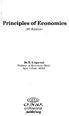 Principles of Economics (8 th Edition) Dr. H. S. Agarwal Professor of Economics (Retd.) Agra College, AGRA professional publishing Contents JSASIC CONCEPTS^ 1. The Scope and Nature of Economics 1-31 Introduction;
Degree of Master of Philosophy (M.Phil) Regulations Full-Time
 1. Eligibility Degree of Master of Philosophy (M.Phil) Regulations Full-Time Candidates who have qualified for post graduate degree of this University or any other Universities recognized by the Syndicate
SAMPLE PAPER II ECONOMICS Class - XII BLUE PRINT
 SAMPLE PAPER II ECONOMICS Class - XII Maximum Marks 100 Time : 3 hrs. BLUE PRINT Sl. No. Form of Very Short Short Answer Long Answer Total Questions (1 Mark) (3, 4 Marks) (6 Marks) Content Unit 1 Unit
Paper 7 Management Accounting
 Technician Level Paper 7 Management Accounting Extended Syllabus INTRODUCTION Extended Syllabuses are part of a comprehensive package of support materials offered by SIAT. This package includes past question
WASSCE / WAEC ECONOMICS SYLLABUS
 WASSCE / WAEC ECONOMICS SYLLABUS WWW.LARNEDU.COM Visit www.larnedu.com for WASSCE / WAEC syllabus on different subjects and more great stuff to help you ace the WASSCE in flying colours. PREAMBLE This
SCHEME AND SYLLABUSES FOR VARIOUS JOB ORIENTED COURSES AT BA LEVEL. B.A. (MARKETING) Job. Oriented Courses Scheme of. Examinations
 SCHEME AND SYLLABUSES FOR VARIOUS JOB ORIENTED COURSES AT BA LEVEL B.A. (MARKETING) Job Oriented Courses Scheme of Examinations A student opting for B.A. (Marketing) will be required to study four papers
Lecture 3: The Theory of the Banking Firm and Banking Competition
 Lecture 3: The Theory of the Banking Firm and Banking Competition This lecture focuses on the industrial organisation approach to the economics of banking, which considers how banks as firms react optimally
business statistics using Excel OXFORD UNIVERSITY PRESS Glyn Davis & Branko Pecar
 business statistics using Excel Glyn Davis & Branko Pecar OXFORD UNIVERSITY PRESS Detailed contents Introduction to Microsoft Excel 2003 Overview Learning Objectives 1.1 Introduction to Microsoft Excel
INDUSTRIAL ECONOMICS COMPONENT: THE INTERACTIVE TEXTBOOK
 UNIT EC407, LEVEL 2 INDUSTRIAL ECONOMICS COMPONENT: THE INTERACTIVE TEXTBOOK Semester 1 1998/99 Lecturer: K. Hinde Room: 427 Northumberland Building Tel: 0191 2273936 email: [email protected] Web Page:
COURSE : C.BMS.1.01 PRINCIPLES OF MANAGEMENT I. [10 lectures]
![COURSE : C.BMS.1.01 PRINCIPLES OF MANAGEMENT I. [10 lectures]](/thumbs/40/20740092.jpg "COURSE : C.BMS.1.01 PRINCIPLES OF MANAGEMENT I. [10 lectures]") COURSE : C.BMS.1.01 PRINCIPLES OF MANAGEMENT I To provide fundamental knowledge and exposure to the concepts, theories and practices in the field of management. ] UNIT 1. Management- concept,nature,process
COURSE : C.BMS.1.01 PRINCIPLES OF MANAGEMENT I To provide fundamental knowledge and exposure to the concepts, theories and practices in the field of management. ] UNIT 1. Management- concept,nature,process
Excel Guide for Finite Mathematics and Applied Calculus
 Excel Guide for Finite Mathematics and Applied Calculus Revathi Narasimhan Kean University A technology guide to accompany Mathematical Applications, 6 th Edition Applied Calculus, 2 nd Edition Calculus:
DEPARTMENT OF ECONOMICS SCHOOL OF HUMANITIES AND SOCIAL SCIENCES. Undergraduate Prospectus Bachelor of Science in Economics
 DEPARTMENT OF ECONOMICS SCHOOL OF HUMANITIES AND SOCIAL SCIENCES Undergraduate Prospectus Bachelor of Science in Economics 1 CONTACT INFORMATION: Department of Economics, School of Humanities and Social
BBA 2 nd Year Human Resource Management Paper 2.4
 Human Resource Management Paper 2.4 OBJECTIVES: To understand various facets of HRM and to create an understanding of the various policies and practices of HRM. To comprehend the emerging trends in HRM.
1 Define Management. Explain Mintzberg Managerial Roles. 12M
 Question Paper Code :GMB11T01 MANAGEMENT AND ORGANIZATIONAL BEHAVI0R 1 Define Management. Explain Mintzberg Managerial Roles. 2 Define Social Responsibility. Explain the Arguments for and against Social
GURU NANAK DEV UNIVERSITY AMRITSAR
 Faculty of Economics & Business Syllabus For Post Graduate Diploma in Marketing Management (P.G.D.M.M.) (SEMESTER I & II) Session: 2013-14 GURU NANAK DEV UNIVERSITY AMRITSAR Note: (i) Copy rights are reserved.
Profit maximization in different market structures
 Profit maximization in different market structures In the cappuccino problem as well in your team project, demand is clearly downward sloping if the store wants to sell more drink, it has to lower the
SAURASHTRA UNIVERSITY MASTER OF PHILOSOPHY IN ACCONTING & FINANCE (UNDER THE FACULTY OF COMMERCE)
 SAURASHTRA UNIVERSITY MASTER OF PHILOSOPHY IN ACCONTING & FINANCE (UNDER THE FACULTY OF COMMERCE) O.M.PHIL.(COM.A & F) : 1 1. The Master of Philosophy in ACCONTING & FINANCE Degree shall be considered
Executive Master's in Business Administration Program
 Executive Master's in Business Administration Program College of Business Administration 1. Introduction \ Program Mission: The UOS EMBA program has been designed to deliver high quality management education
IT3404: Business Management
 IT3404: Business Management (Optional) INTRODUCTION This course on Business Management is one of the five courses designed for Semester 3 of Bachelor of Information Technology Degree program. It starts
DE 4267 DISTANCE EDUCATION M.B.A (LM) DEGREE EXAMINATION, MAY 2012. First Semester MANAGEMENT CONCEPT. (2011 Academic Year Onwards)
 DE 467 11 DISTANCE EDUCATION M.B.A (LM) DEGREE EXAMINATION, MAY 01. First Semester MANAGEMENT CONCEPT (011 Academic Year Onwards) Time : Three hours Maximum : 100 marks SECTION A (5 8 = 40 marks) Answer
0 100 200 300 Real income (Y)
 Lecture 11-1 6.1 The open economy, the multiplier, and the IS curve Assume that the economy is either closed (no foreign trade) or open. Assume that the exchange rates are either fixed or flexible. Assume
Lecture 12-1. Interest Rates. 1. RBA Objectives and Instruments
 Lecture 12-1 Interest Rates 1. RBA Objectives and Instruments The Reserve Bank of Australia has several objectives, including the stability of the currency, the maintenance of full employment. These two
THE SOCIETY OF BUSINESS PRACTITIONERS
 THE SOCIETY OF BUSINESS PRACTITIONERS CERTIIFIICATE IIN BUSINESS ADMIINIISTRATI ION This is an introductory course to the fundamental principles of business studies. Students who have the necessary GCE
Management and Cast Accaunting
 COLIN DRURY Management and Cast Accaunting Second edition CHAPMAN AND HALL University and Professional Division LONDON. NEW YORK. TOKYO. MELBOURNE. MADRAS Contents Preface XVI Part I: Introduction to Management
Thinkwell s Homeschool Economics Course Lesson Plan: 36 weeks
 Thinkwell s Homeschool Economics Course Lesson Plan: 36 weeks Welcome to Thinkwell s Homeschool Economics! We re thrilled that you ve decided to make us part of your homeschool curriculum. This lesson
Week 7 - Game Theory and Industrial Organisation
 Week 7 - Game Theory and Industrial Organisation The Cournot and Bertrand models are the two basic templates for models of oligopoly; industry structures with a small number of firms. There are a number
Finance and Economics Course Descriptions
 Finance and Economics Course Descriptions Finance Course Descriptions FIN 250 Financial Management This course addresses the theory and practice of financial management and the role of the Financial Manager.
DESKTOP PRODUCTIVITY SOFTWARE
 USING WINDOWS 8 UNIT 1: INTRODUCTION TO COMPUTERS Topic A: Overview of computers Topic B: How computers work Topic C: Starting the computer UNIT 2: INPUT DEVICES Topic A: Mouse and keyboard basics Topic
SYLLABUS FOR BASIC COMPUTER COURSE (BCC)
 SYLLABUS FOR BASIC COMPUTER COURSE (BCC) OBJECTIVE: The course is designed to aim at imparting a basic level appreciation programme for the common man. After completing the course the incumbent is able
Diablo Valley College Catalog 2014-2015
 Mathematics MATH Michael Norris, Interim Dean Math and Computer Science Division Math Building, Room 267 Possible career opportunities Mathematicians work in a variety of fields, among them statistics,
SAS Part-I EXAM: (REVISED SYLLABUS) (EFFECTIVE FROM 01/2010 SESSION)
 (A) SAS Part-I EXAM: (REVISED SYLLABUS) (EFFECTIVE FROM 01/2010 SESSION) PAPER-I WORKS & STORES ACCOUNTS MAX.MARKS 100 1. Classification/Codification as per Chart of Accounts under Commercial Accounting
MASTER COURSE OUTLINE
 A. BUSA 1065 Microcomputer Applications B. COURSE DESCRIPTION: MASTER COURSE OUTLINE This course provides a basic understanding of computer history, concepts, and microcomputer applications using IBM or
SYLLABUS FOR 100 HRS. INFORMATION TECHNOLOGY TRAINING PROGRAMME
 SYLLABUS FOR 100 HRS. INFORMATION TECHNOLOGY TRAINING PROGRAMME SL. NO. TOPIC DURATION 1. Computer Fundamentals 1 hrs. 2. Operating Systems 6 hrs. 3. MS-Word 6 hrs. 4. MS-Excel 15 hrs. 5. MS-PowerPoint
TRADE WITH SCALE ECONOMIES AND IMPERFECT COMPETITION (CONT'D)
 ECO 352 Spring 2010 No. 14 Mar. 25 OLIGOPOLY TRADE WITH SCALE ECONOMIES AND IMPERFECT COMPETITION (CONT'D) Example using numbers from Precept Week 7 slides, pp. 2, 3. Ingredients: Industry with inverse
Micro teaching origin, need, procedure, cycle of operation and uses - Communication
 B.Ed OPTIONAL COURSE COMPUTER SCIENCE - I OBJECTIVES At the end of the course, the student - teachers will be able to acquire knowledge on historical evolution of computer and its hardware, software components.
Subject CT7 Business Economics Core Technical Syllabus
 Subject CT7 Business Economics Core Technical Syllabus for the 2016 exams 1 June 2015 Aim The aim of the Business Economics subject is to introduce students to the core economic principles and how these
Part I C- Elective Paper Paper VII EDUCATIONAL TECHNOLOGY COURSE OUTLINE Course Code: 908.12 Contact Hours: 108 Max. Weight : 32
 182 Part I C- Elective Paper Paper VII EDUCATIONAL TECHNOLOGY COURSE OUTLINE Course Code: 908.12 Contact Hours: 108 Max. Weight : 32 Duration of Exam: 3 hrs. No. of credits : 4 Course Objectives To enable
A Primer on Forecasting Business Performance
 A Primer on Forecasting Business Performance There are two common approaches to forecasting: qualitative and quantitative. Qualitative forecasting methods are important when historical data is not available.
430 Statistics and Financial Mathematics for Business
 Prescription: 430 Statistics and Financial Mathematics for Business Elective prescription Level 4 Credit 20 Version 2 Aim Students will be able to summarise, analyse, interpret and present data, make predictions
POST GRADUATE DIPLOMA IN BUSINESS MANAGEMENT (PGDBM) PROGRAMME GUIDE
 POST GRADUATE DIPLOMA IN BUSINESS MANAGEMENT (PGDBM) PROGRAMME GUIDE INDEX INTRODUCTION 3 PROGRAMME CODE 3 PROGRAMME DURATION 3 MEDIUM OF INSTRUCTION 3 SCHEME OF THE PROGRAMME 4 SYLLABUS OF PROGRAMME 5-14
CORRELATED TO THE SOUTH CAROLINA COLLEGE AND CAREER-READY FOUNDATIONS IN ALGEBRA
 We Can Early Learning Curriculum PreK Grades 8 12 INSIDE ALGEBRA, GRADES 8 12 CORRELATED TO THE SOUTH CAROLINA COLLEGE AND CAREER-READY FOUNDATIONS IN ALGEBRA April 2016 www.voyagersopris.com Mathematical
Sample Question Paper (Set-2) Economics (030) Class XII (2015-16) Section A: Microeconomics
 Sample Question Paper (Set-2) Economics (030) Class XII (2015-16) Time : 3 Hours Maximum Marks : 100 Instructions: 1. All questions in both sections are compulsory. However, there is internal choice in
Using Excel for Handling, Graphing, and Analyzing Scientific Data:
 Using Excel for Handling, Graphing, and Analyzing Scientific Data: A Resource for Science and Mathematics Students Scott A. Sinex Barbara A. Gage Department of Physical Sciences and Engineering Prince
Tutorial Segmentation and Classification
 MARKETING ENGINEERING FOR EXCEL TUTORIAL VERSION 1.0.8 Tutorial Segmentation and Classification Marketing Engineering for Excel is a Microsoft Excel add-in. The software runs from within Microsoft Excel
M.A. PSYCHOLOGY FIRST YEAR COURSES (MAPC) Assignments For July 2015 and January 2016 Sessions
 MPC M.A. PSYCHOLOGY FIRST YEAR COURSES (MAPC) Assignments For July 2015 and January 2016 Sessions Discipline of Psychology School of Social Sciences Indira Gandhi National Open University Maidan Garhi,
Econ Wizard User s Manual
 1 Econ Wizard User s Manual Kevin Binns Matt Friedrichsen Purpose: This program is intended to be used by students enrolled in introductory economics classes. The program is meant to help these students
COURSE OUTLINE COMPUTER INFORMATION SYSTEMS 1A. PREREQUISITE: None. Concurrent enrollment in CIS-96 or CIS-97 is recommended.
 Degree Credit _X Non Credit Nondegree Credit Comm Service COURSE OUTLINE COMPUTER INFORMATION SYSTEMS 1A COURSE DESCRIPTION 3 Units 1A Introduction to Computer Information Systems PREREQUISITE: None. Concurrent
THE INSTITUTE OF BANKERS IN MALAWI
 THE INSTITUTE OF BANKERS IN MALAWI CERTIFICATE IN BANKING SYLLABUS COURSES 1. Business Accounting 2. Customer service 3. Fundamentals of Business Statistics 4. Introduction to Banking 5. Introduction to
Demand Forecasting When a product is produced for a market, the demand occurs in the future. The production planning cannot be accomplished unless
 Demand Forecasting When a product is produced for a market, the demand occurs in the future. The production planning cannot be accomplished unless the volume of the demand known. The success of the business
Maple Quick Start. Introduction. Talking to Maple. Using [ENTER] 3 (2.1)
![Maple Quick Start. Introduction. Talking to Maple. Using [ENTER] 3 (2.1)](/thumbs/19/376447.jpg "Maple Quick Start. Introduction. Talking to Maple. Using [ENTER] 3 (2.1)") Introduction Maple Quick Start In this introductory course, you will become familiar with and comfortable in the Maple environment. You will learn how to use context menus, task assistants, and palettes
Introduction Maple Quick Start In this introductory course, you will become familiar with and comfortable in the Maple environment. You will learn how to use context menus, task assistants, and palettes
Ifo Institute for Economic Research at the University of Munich. 6. The New Keynesian Model
 6. The New Keynesian Model 1 6.1 The Baseline Model 2 Basic Concepts of the New Keynesian Model Markets are imperfect: Price and wage adjustments: contract duration, adjustment costs, imperfect expectations
BANGLADESH INSTITUTE OF MANAGEMENT 4 Sobhanbag, Mirpur Road, Dhaka-1207 POST-GRADUATE DIPLOMA IN HUMAN RESOURCE MANAGEMENT SYLLABUS FOR PART-I
 BANGLADESH INSTITUTE OF MANAGEMENT POST-GRADUATE DIPLOMA IN HUMAN RESOURCE MANAGEMENT SYLLABUS FOR PART-I Evaluation Criteria : Class Attendance : 10% Class Test : 20% Final Examination : 70% Name of Subjects
University of Macau Undergraduate Electromechanical Engineering Program
 University of Macau Undergraduate Electromechanical Engineering Program Coordinating Unit: Supporting Unit(s): Department of Mathematics, Faculty of Science and Technology Nil Course Code: MATH201 Year
or, put slightly differently, the profit maximizing condition is for marginal revenue to equal marginal cost:
 Chapter 9 Lecture Notes 1 Economics 35: Intermediate Microeconomics Notes and Sample Questions Chapter 9: Profit Maximization Profit Maximization The basic assumption here is that firms are profit maximizing.
CONTENTS MODULE 1: INDUSTRY OVERVIEW 4 MODULE 2: ETHICS AND REGULATION 6 MODULE 3: INPUTS AND TOOLS 8 MODULE 4: INVESTMENT INSTRUMENTS 12
 SYLLABUS OVERVIEW 1 CONTENTS MODULE 1: INDUSTRY OVERVIEW 4 CHAPTER 1 The Investment Industry: A Top-Down View MODULE 2: ETHICS AND REGULATION 6 CHAPTER 2 CHAPTER 3 Ethics and Investment Professionalism