
LEED 521: Energy Modeling for LEED
|
|
|
- Kevin Shaw
- 9 years ago
- Views:
Transcription

1 LEED 521: Energy Modeling for LEED Using equest Christian E. Stalberg, Principal Natural Intelligence, LLC A F F I L I A T E
2 LEED 521 Information Transfer Goals section one: Introduction to LEED Energy Modeling section two: Complying With LEED/ASHRAE Requirements section three: Building Energy Modeling
3 LEED 521 Objectives Understand Building Energy Modeling and Its Role in LEED Understand ASHRAE 90.1 Appendix G for EAp2 & EAc1 Model a simple building using equest software Generate Reports from software for EAc1 Complete LEED Online EAc1 template
4 section one Introduction to LEED Energy Modeling EAp2 - Minimum Energy Performance Option 1: Whole Building Energy Simulation & EAc1 - Optimize Energy Performance Option 1: Whole Building Energy Simulation Christian E. Stalberg, Principal Natural Intelligence, LLC
5 United States Green Building Council (USGBC) Leadership in Energy & Environmental Design (LEED) Whole Building Energy Simulation


6 Whole Building Energy Simulation LEED EAp2 & EAc1: Option 1 LEADERSHIP in ENERGY and ENVIRONMENTAL DESIGN A point-based rating system that evaluates environmental performance from a whole building perspective USGBC.com USGBC.com
7 Whole Building Energy Simulation LEED EAp2 & EAc1: Option 1 EA Prerequisite 2: Minimum Energy Performance Intent To establish the minimum level of energy efficiency for the proposed building and systems to reduce environmental and economic impacts associated with excessive energy use.
8 Whole Building Energy Simulation LEED EAp2 & EAc1: Option 1 EA Credit 1: Optimize Energy Performance Intent To achieve increasing levels of energy performance beyond the prerequisite standard to reduce environmental and economic impacts associated with excessive energy use.
9 Whole Building Energy Simulation LEED EAp2 & EAc1: Option 1 ASHRAE Appendix G Performance Rating Method Comply with mandatory provisions of ASHRAE Energy Standard Determine energy savings using an energy model (Use Appendix G of ASHRAE ) Additional requirements per UGSBC Reference Guide

10 Whole Building Energy Simulation LEED EAp2 & EAc1: Option 1
11 Whole Building Energy Simulation LEED EAp2 & EAc1: Option 1 Setpoint / Setback Temperatures Wall, Window area (Geometry) Solar Radiation Building Envelope Degree Hour Outside Temperatures Fresh air intake Lighting, equipment Wall, Window, Door (Material Properties) Chiller Specs Lighting HVAC Systems Service Hot Water Receptacle, Process Loads ALL L YEAR ( hou urs) Energy Consumption (kwh) Energy Peak Loads (kw) Occupancy, Schedule of operation Exterior Lighting




12 Whole Building Energy Simulation LEED EAp2 & EAc1: Option 1 PROPOSED CURRENT DESIGN SPECIFICATION ARCHITECT S & M.E.P. SPECIFICATIONS
13 Whole Building Energy Simulation LEED EAp2 & EAc1: Option 1 PROPOSED CURRENT DESIGN SPECIFICATION ARCHITECT S & M.E.P. SPECIFICATIONS Building Envelope Wall / Internal Partitions (UFactor) Windows (UFactor, SHGC, Tvis, Shading Coefficient) Roof (UFactor, Reflectance) Floor (UFactor) Heating, Ventilating & Air-Conditioning Ventilation type (mechanical) Heating & Cooling (type, schedule, energy source) Service Water Heating Type, Operation schedule Other Equipment Equipment Power Density / Receptacle Loads Activity Schedule Schedule - hours, days (holidays) Lighting Control (auto), Lighting energy (LPD) Operation schedule, Luminaire type, Radiant Fraction Task / display light (gain, operation schedule)


14 PROPOSED Whole Building Energy Simulation LEED EAp2 & EAc1: Option 1 CURRENT DESIGN SPECIFICATION BASELINE INPUTS FROM ASHRAE Appendix G PERFORMANCE RATING METHOD (PRM)
15 Whole Building Energy Simulation LEED EAp2 & EAc1: Option 1 PROPOSED CURRENT DESIGN SPECIFICATION BASELINE INPUTS FROM ASHRAE MODEL REQUIREMENTS Baseline should be independent of its orientation Baseline is rotated FOUR times (0d, 90d, 180d, 270d) and average value is computed: ENERGY (kwh) PEAK (kw) COST ($/yr) 0d Rotation 90d Rotation.
16 Whole Building Energy Simulation LEED EAp2 & EAc1: Option 1 PROPOSED CURRENT DESIGN SPECIFICATION BASELINE INPUTS FROM ASHRAE BUILDING ENVELOPE REQUIREMENTS


17 Whole Building Energy Simulation LEED EAp2 & EAc1: Option 1 PROPOSED CURRENT DESIGN SPECIFICATION BASELINE INPUTS FROM ASHRAE BUILDING ENVELOPE REQUIREMENTS - SHADING Baseline should be independent d of shades (techniques by which h the building can be shaded) d) Proposed Baseline
18 Whole Building Energy Simulation LEED EAp2 & EAc1: Option 1 PROPOSED CURRENT DESIGN SPECIFICATION BASELINE INPUTS FROM ASHRAE HVAC REQUIREMENTS





19 Whole Building Energy Simulation LEED EAp2 & EAc1: Option 1 PROPOSED CURRENT DESIGN SPECIFICATION BASELINE INPUTS FROM ASHRAE HVAC REQUIREMENTS (contd.) Zoning based on HVAC systems design
20 Whole Building Energy Simulation LEED EAp2 & EAc1: Option 1 PROPOSED CURRENT DESIGN SPECIFICATION BASELINE INPUTS FROM ASHRAE LIGHTING (INTERIOR) ( ) REQUIREMENTS
21 Whole Building Energy Simulation LEED EAp2 & EAc1: Option 1 PROPOSED CURRENT DESIGN SPECIFICATION BASELINE INPUTS FROM ASHRAE LIGHTING (EXTERIOR) ( ) REQUIREMENTS
22 Whole Building Energy Simulation LEED EAp2 & EAc1: Option 1 PROPOSED CURRENT DESIGN SPECIFICATION BASELINE INPUTS FROM ASHRAE SERVICE WATER HEATING REQUIREMENTS
23 Whole Building Energy Simulation LEED EAp2 & EAc1: Option 1 PROPOSED CURRENT DESIGN SPECIFICATION BASELINE INPUTS FROM ASHRAE RECEPTACLE & PROCESS LOADS

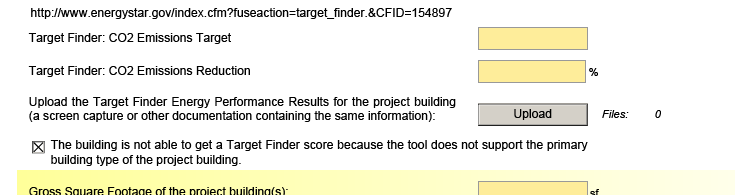

24 Whole Building Energy Simulation LEED EAp2 & EAc1: Option 1 PROPOSED CURRENT DESIGN SPECIFICATION BASELINE INPUTS FROM ASHRAE ENERGY COST SAVINGS ($) MAJOR RENOVATIONS = 5% NEW CONSTRUCTION = 10% EAp2: Minimum Energy Performance Required to obtain 2 points
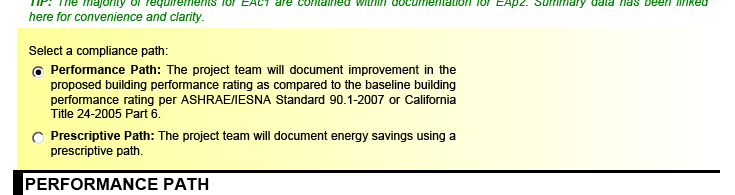

25 Whole Building Energy Simulation LEED EAp2 & EAc1: Option 1 PROPOSED CURRENT DESIGN SPECIFICATION BASELINE INPUTS FROM ASHRAE ENERGY COST SAVINGS ($) MAJOR RENOVATIONS = 8-44% NEW CONSTRUCTION = 12-48% EAc1: Optimize Energy Performance 1-19 points
26 Whole Building Energy Simulation What are the building blocks?


27 Whole Building Energy Simulation THE BUILDING BLOCKS 1 Weather Data
28 Whole Building Energy Simulation THE BUILDING BLOCKS 2 Building Data
29 Whole Building Energy Simulation THE BUILDING BLOCKS 3 Systems Data
30 Whole Building Energy Simulation THE BUILDING BLOCKS 4 Plant Data
31 Whole Building Energy Simulation THE BUILDING BLOCKS 5 Economic Data
32 section two Complying py with Requirements ASHRAE Appendix G Performance Rating Method Christian E. Stalberg, Principal Natural Intelligence, LLC
33 Complying py With Requirements ASHRAE Appendix G Performance Rating Method
34 Complying With Requirements ASHRAE Appendix G ASHRAE / IESNA Energy standard for buildings EXCEPT low-rise residential Purpose Establishes minimum requirements for energy-efficient design of buildings, EXCEPTlow-rise residential buildings. Does NOT apply to single-family il houses, multi-family il structures t of 3 or fewer above grade, manufactured houses (mobile & modular homes) or buildings that do not use either electricity or fossil fuel. Performance Rating Method (Appendix G) Provides a method for demonstrating performance beyond ASHRAE / IESNA standards. In all cases, the mandatory provisions must still be met!
35 Complying With Requirements ASHRAE Appendix G What are we calculating? Annual energy cost of BASELINE & PROPOSED building for comparison Proposed building should meet all Mandatory Provisions!! In order to compare (baseline vs. proposed), p - Use same computer simulation programs - Use same climate data - Use same purchased energy rates - Use same schedules of operation (except for energy efficiency features) Percentage Improvement: (Baseline rating Proposed rating) (Baseline rating)
36 Complying With Requirements ASHRAE Appendix G What to model? Major Components of ASHRAE Building Envelope Heating, Ventilating and Air Conditioning Service Water Heating Power Lighting Other Equipment Examples of Specific Inputs in the Model include HVAC systems (fans, pumps, exhaust, etc) Office equipment (computers, etc) Elevators, Escalators Process Energy (Kitchen Cooking & Refrigeration) Laundry washing & drying (usually in Receptacles) Lighting energy requirement (internal & external) Process Lighting (medical equipment, etc)
37 Complying With Requirements ASHRAE Appendix G What to model? Baseline & Proposed Model Compliance for Space Use Classification Schedule of Operation Occupancy Orientation Building Envelope Lighting Systems HVAC Systems Service Hot Water Systems Energy Rates
38 Complying With Requirements ASHRAE Appendix G Space Use Classification Building Area Types ASHRAE 90.1 Space Use Classification Automotive facility Convention center Courthouse Dining: bar lounge/leisure Dining: cafeteria/fast food Dining: family Dormitory Exercise center Gymnasium Health-care clinic Hospital Hotel Library Manufacturing facility Motel Motion picture theater Multifamily Museum Office Parking garage Penitentiary Performing arts theater Police/fire station Post office Religious building Retail School/university Sports arena Town hall Transportation Warehouse Workshop

39 Complying With Requirements ASHRAE Appendix G Schedule of Operation Baseline Proposed Operating Hours Schedules should be capable of modeling, Occupancy Lighting Power Misc Equipment Power Thermostat Setpoints HVAC System Operation Use accurate schedule (from client) Alternatively, use California Nonresidential ACM Approval Manual or ASHRAE Table G-E through G-N.

40 Complying With Requirements ASHRAE Appendix G Schedule of Operation Baseline Proposed Operating Hours For proposed, NON-STANDARD Schedules possible, Lighting Controls Natural Ventilation Demand Control Ventilation Etc But, need to provide extensive documentation!!! ti
41 Complying With Requirements ASHRAE Appendix G Schedule of Operation Occupancy Source: California Nonresidential Alternative Calculation Method (ACM) Manual
42 Complying With Requirements ASHRAE Appendix G Schedule of Operation Occupancy Source: California Nonresidential Alternative Calculation Method (ACM) Manual
43 Complying With Requirements ASHRAE Appendix G Schedule of Operation Occupancy Source: California Nonresidential Alternative Calculation Method (ACM) Manual
44 Complying With Requirements ASHRAE Appendix G Occupancy Density Baseline Same as proposed design. Proposed Use occupancy information from project information Use actual occupancy information (fromclient) Use ASHRAE Table G B (Still not available? then try California Title 24 / California Nonresidential ACM Approval Manual; Table N2 2 & N2 3: Occupancy Assumptions)
45 Complying With Requirements ASHRAE Appendix G Occupancy
46 Complying With Requirements ASHRAE Appendix G Occupancy
47 Orientation Complying With Requirements ASHRAE Appendix G Baseline Proposed Rotations 0d Rotation (Actual Orientation) 90d Rotation. 180d Rotation. 270d Rotation. AVERAGE RESULTS No Self Shading for baseline building!


48 Complying With Requirements ASHRAE Appendix G Building Envelope Baseline Proposed Exceptions Un insulated assemblies (Less than 5% need not be modeled) Surface angles (orientation & tilt)
49 Complying With Requirements ASHRAE Appendix G Building Envelope Proposed Exterior roof surfaces may be modeled with reflectance 0.45if the reflectance of the proposed design roof is greater than 0.70 and its emittance is greater than All other roof surfaces will be modeled with a reflectance of Manually operated shading devices such as blinds and shades will not be modeled. Automatically controlled fenestration shades or blinds may be modeled, however permanent shading devices such as fins, overhangs, and light shelves may be modeled.
50 Complying With Requirements ASHRAE Appendix G Building Envelope Non Residential Residential Semi Heated
51 Complying With Requirements ASHRAE Appendix G Building Envelope Non Residential Residential Semi Heated
52 Complying With Requirements ASHRAE Appendix G Building Envelope Non Residential Residential Semi Heated Skylight yg area equal to proposed p or 5% of gross roof area (whichever is smaller).
53 Complying With Requirements ASHRAE Appendix G Building Envelope Baseline Proposed Fenestration Maximum 40% (distributed on each face)


54 Complying With Requirements ASHRAE Appendix G Building Envelope Baseline Proposed Shading Projections Fins, overhangs & light shelves may be modeled Proposed Baseline

55 Complying With Requirements ASHRAE Appendix G Thermal Blocks HVAC Zones Designed When zones already designed (physically determined by HVAC system) they may be combined into thermal blocks. Thermal Block Similar loads, systems combined into a single block for modeling purposes HVAC zones to Thermal Blocks (Conditions; all should be met) 1. Same space use classification (load & schedule) 2. For exterior, glazing should be in same orientation (within 45 deg) 3. All HVAC zones in a thermal block must be served by same HVAC system or same kind of HVAC system Thermal Zoning
56 Complying With Requirements ASHRAE Appendix G Thermal Blocks HVAC Zones Not Designed When zones and systems not yet designed, thermal blocks shall be defined based on similar internal load densities, occupancy, lighting, and thermal and space temperature schedules. Other criteria are specified in p Table G3.1.8

57 Complying With Requirements ASHRAE Appendix G Lighting Systems Baseline Proposed Interior Lighting Power Allowance Cl Calculation lti Choose: Building Area Method or Space by Space Method
58 Complying With Requirements ASHRAE Appendix G Lighting Systems Interior Lighting Power Allowance Cl Calculation lti

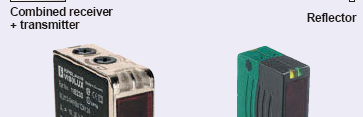

59 Complying With Requirements ASHRAE Appendix G Lighting Systems Baseline Proposed Interior Lighting Power Automatic ti Lighting Controls Beam Detectors Passive (IR) Detectors
60 Complying With Requirements ASHRAE Appendix G Lighting Systems Interior Lighting Power Automatic ti Lighting Controls
61 Complying With Requirements ASHRAE Appendix G HVAC Systems Baseline Proposed Cooling & Heating System If no cooling system is specified in proposed, include similar to baseline If no heating system is specified in proposed, include electric heating
62 Complying With Requirements ASHRAE Appendix G HVAC Systems Baseline Proposed HVAC System Type Based on building type (usage), area & heating fuel source
63 Complying With Requirements ASHRAE Appendix G HVAC Systems HVAC System Type PTAC Packaged Terminal A/C PTHP Packaged Terminal Heat Pump PSZ-AC Packaged Single Zone A/C PSZ-HP Packaged Terminal Heat Pump VAV Variable Air Volume PFP Parallel Fan Powered
64 Complying With Requirements ASHRAE Appendix G HVAC Systems HVAC System Type
65 Complying With Requirements ASHRAE Appendix G HVAC Systems HVAC System Type (Combined Chart)
66 Complying With Requirements ASHRAE Appendix G HVAC Systems HVAC System Type Thermal Blocks For systems 1,2,3 & 4 Each Thermal Block shall be modeled with its own HVAC system For systems 5,6,7 & 8 Each floor shall be modeled with a separate HVAC system. Floors with identical thermal blocks can be grouped together.
67 Complying With Requirements ASHRAE Appendix G HVAC Systems Baseline Proposed HVAC System Type Unmet thours Oversize Ratios Heating 25% Cooling 15% Unmet Hours Total 300 hrs Difference 50 hrs Outdoor Ventilation Rates Outdoor Ventilation Rates Same (Proposed & Baseline)
68 Complying With Requirements ASHRAE Appendix G HVAC Systems HVAC System Type Outdoor Ventilation Rt Rates Minimum Ventilation Per ASHRAE (People, area, space type)

69 Complying With Requirements ASHRAE Appendix G HVAC Systems Baseline Proposed Fans
70 Complying With Requirements ASHRAE Appendix G HVAC Systems Baseline Proposed Fans Fan System Operation Supply & return fans Operate continuously whenever spaces are OCCUPIED, and shall be cycled to meet heating & cooling loads during UNOCCUPIED hours. Supply, return and/or exhaust fans will remain ON (at all times) in spaces that have health & safety mandated minimum ventilation.
71 Complying With Requirements ASHRAE Appendix G HVAC Systems Baseline Proposed Fans DesignSupply Airflow Rates for baseline building: Option 1: Supply Air to Room Air Temperature Difference of 20 degrees F Option 2: Required Ventilation Air Option 3: Makeup Air Whichever is greater!
72 Complying With Requirements ASHRAE Appendix G HVAC Systems Baseline Proposed Fans
73 Complying With Requirements ASHRAE Appendix G HVAC Systems Fan Motor Efficiency next thp
74 Complying With Requirements HVAC Systems ASHRAE Appendix G Baseline Proposed Economizers & Energy Recovery Exhaust Air Energy Recovery (Mandatory) 5000 CFM (Supply) AND =>70% Outdoor Air (Supply) ERV with 50% recovery effectiveness

75 Complying With Requirements ASHRAE Appendix G HVAC Systems Baseline Proposed Chillers For Systems 7 & 8, Electric chillers (baseline) Table G (type & numbers) Chilled water design Chilled water design 44 deg F 56 deg F
76 Complying With Requirements ASHRAE Appendix G HVAC Systems Demand Control Ventilation Minimum outdoor air ventilation rates shall be the same for the proposed and baseline building designs Exception Ventilation Controls for High Occupancy Areas: Demand Control Ventilation (DCV) modulate the amount of outdoor air supplied to a space as a function of the number of people present. - Standard requires DCV for all ventilation systems with design outdoor air capacities >3000 CFM serving occupancy density > 100 people / 1000 sf - DCV is activated based on CO2 levels - CO2 sensors located within occupied zone (or return air)
77 Complying With Requirements ASHRAE Appendix G Process Energy Process loads must be identical. Minimum 25% of baseline building energy cost.




78 Complying With Requirements ASHRAE Appendix G Process Energy Table G-B For EPD (Receptacle load)
79 Complying With Requirements ASHRAE Appendix G Process Energy
80 Complying With Requirements ASHRAE Appendix G Service Hot Water System Baseline Proposed Same energy source. P f i d Performance required (baseline) is available in


81 Complying With Requirements ASHRAE Appendix G Energy Rates Baseline Proposed Same rates for both baseline & proposed building. Local utility or Energy Information Administration rates
82 section three Building Energy Modeling Process Oriented Approach to Energy Modeling Christian E. Stalberg, Principal Natural Intelligence, LLC
83 Building Energy Modeling How is it done? Creating a Baseline model reflecting a minimally code compliant building Copying the baseline model then making modifications to the building including, but not limited to, one or more of the following: HVAC Glazing Exterior shading Daylighting Comparing the performance of the modified building to the baseline building, i.e. energy usage and costs.
84 Building Energy Modeling Typical Inputs: Building site data (weather data; orientation; adjacent structure shadows, etc.) Building envelope data (heat transfer surfaces e.g. walls, floors, roofs, windows, window shades & overhangs) Building operations and scheduling (occupancy, thermostat setpoints, daylighting photosensors, HVAC schedules) Internal loads (e.g. body heat, lights, equipment) HVAC equipment & performance Utility rates (electric/gas, peak/off-peak) Economic parameters (life-cycle costing, interest rates)
85 Building Energy Modeling Typical Outputs: Summary of annual projected utility costs and savings Performance graphs (e.g., monthly energy use for gas and electric, monthly facility peak kw, etc.) in comparison to the baseline Input parameter information (e.g., internal load specifications, building envelope characteristics, HVAC system definitions, etc.) Assumptions of building characteristics (e.g., schedules, HVAC set points, etc.) Notations of changes from previous models (e.g., changes made between baseline and modeling iterations) Interpretation of results Software input and output files (electronic)
86 Building Energy Modeling
87 Building Energy Modeling equest Modeling Software Structuret equest contains multiple user interfaces (3) that correspond to the design process Schematic Design wizard Design Development wizard Detailed Interface All of these interfaces produce an input text file containing Building Description Language (BDL) DOE2.2 2 uses this file for the building energy calculations You can work directly in the BDL file ( fourth user interface) BDL is located in equest/project/projectname/projectname.inp ( the inp file )
88 Building Energy Modeling equest User Interfaces & Workflow Schematic Design wizard good for preliminary analyses. Has default values and built-in workflow. Limitation: can only create one building shell Design Development wizard can create multiple shells for a single building. Also has default values and built-in workflow. Detailed Interface allows for greatest flexibility and while it has default values, there is no workflow. NOTE: A shell is any area of a building that shares the same or a similar footprint, HVAC zoning, ceiling height, envelope construction type or HVAC services.
89 Building Energy Modeling Important equest Rule Once you ve used a user interface to make a change in the model, you cannot return to a more simple user interface without over-writing those changes, e.g. going from Schematic wizard to Design Development wizard and back. In other words, you can go from a simple to more complex interface, but not backwards without losing changes.
90 Building Energy Modeling equest Model Input Data Collection
91 Building Energy Modeling equest Model Input Data Collection (contd.)


92 Building Energy Modeling equest Simulation Summary Report
93 Building Energy Modeling equest Simulation Summary Report (contd.)
94 Building Energy Modeling Detailed equest/doe-2 (SIM) Reports
95 Building Energy Modeling Detailed equest/doe-2 (SIM) Reports (contd.)
96 Building Energy Modeling Detailed equest/doe-2 (SIM) Reports (contd.)


97 Building Energy Modeling LEED 3.0 Excel Spreadsheet


98 Building Energy Modeling LEED 3.0 Excel Spreadsheet
99 Building Energy Modeling LEED 3.0 Excel Spreadsheet
100 Building Energy Modeling LEED 3.0 Excel Spreadsheet
101 Building Energy Modeling equest Design Development Wizard Tour Find the equest Introductory Tutorial included in your equest version 3.64 install at ~\equest 3-64 Data\Tutorials\All\Introductory Tutorial Go to page 83 of 145 Follow along with the instructor




102 Building Energy Modeling equest Design Development Wizard Exercise Load into equest 7 th & Lane Sample Project (file folder distributed prior to class) Go to page 191 of 602 in the equest Training Workbook and perform the exercise. Enter inputs identified by red font, otherwise accept defaults.
103 Building Energy Modeling LEED NC Exercise Now we take the completed 7 th & Lane model and turn it into a baseline building per LEED (instructor led exercise).


104 Building Energy Modeling equest LEED Compliance Analysis
105 Building Energy Modeling Contact information Christian Stalberg Tel Sustainable Performance Institute
IES <Virtual Environment> training. Trainee notes. ASHRAE 90.1 Appendix G - PRM Navigator. Version 6.4.0.7
 IES training Trainee notes ASHRAE 90.1 Appendix G - PRM Navigator Version 6.4.0.7 Introduction These training notes are to be used in conjunction with your ASHRAE 90.1 Appendix G
Building Performance Evaluation Guide Version 1.7
 Building Performance Evaluation Guide Version 1.7 Prepared by Center for Energy and Environment January 2014 Minnesota Sustainable Building 2030: Building Performance Evaluation Guide p 1 1. Schematic
Vectren Commercial/Industrial New Construction Incentive Application
 Vectren Commercial/Industrial New Construction Application Completing and submitting this application is the first step to apply for incentives through Vectren s Commercial/Industrial New Construction
Energy Savings Modeling and Inspection Guidelines for Commercial Building Federal Tax Deductions
 National Renewable Energy Laboratory Innovation for Our Energy Future A national laboratory of the U.S. Department of Energy Office of Energy Efficiency & Renewable Energy Energy Savings Modeling and Inspection
Energy Efficiency Analysis for a Multi-Story Commercial Office Building. (LG Multi V III Heat Recovery VRF System)
 Energy Efficiency Analysis for a Multi-Story Commercial Office Building (LG Multi V III Heat Recovery VRF System) Commercial Air-Conditioning Engineering Study VRF-ES-BK-011-US 011L18 Executive Summary
This notice sets forth interim guidance, pending the issuance of regulations,
 Part III - Administrative, Procedural, and Miscellaneous Deduction for Energy Efficient Commercial Buildings Notice 2006-52 SECTION 1. PURPOSE This notice sets forth interim guidance, pending the issuance
Energy Efficiency Analysis for a Multi-Story Commercial Office Building. (LG Multi V Water II Heat Recovery VRF System)
 Energy Efficiency Analysis for a Multi-Story Commercial Office Building (LG Multi V Water II Heat VRF System) Commercial Air-Conditioning Engineering Study VRF-ES-BL-001-US 011M05 Executive Summary Contents
2009 Seattle Energy Code Impacts: See below for a recap of Changes in Envelope performance from 2006 to 2009
 2009 Seattle Energy Code Impacts: Building Envelope Impacts: Below is a Summary of Changes that impact building envelope construction planned for 624 Yale. There are several modifications are required
EnergyPro Building Energy Analysis. Assisted Living Building
 EnergyPro Building Energy Analysis Assisted Living Building EnergyPro Building Energy Analysis for an assisted living building Project Scope The purpose of the EnergyPro energy model was to evaluate the
HOW TO CONDUCT ENERGY SAVINGS ANALYSIS IN A FACILITY VALUE ENGINEERING STUDY
 HOW TO CONDUCT ENERGY SAVINGS ANALYSIS IN A FACILITY VALUE ENGINEERING STUDY Benson Kwong, CVS, PE, CEM, LEED AP, CCE envergie consulting, LLC Biography Benson Kwong is an independent consultant providing
HOURLY ANALYSIS PROGRAM QUICK REFERENCE GUIDE
 HOURLY ANALYSIS PROGRAM QUICK REFERENCE GUIDE COPYRIGHT 1998-2015 CARRIER CORPORATION [This page has been left blank intentionally] HAP Quick Reference Guide Software Systems Network Carrier Corporation
CITY PLAN REVIEW AND INSPECTION. Lisa Fleming Brown, CPM
 CITY PLAN REVIEW AND INSPECTION Lisa Fleming Brown, CPM Houston Commercial Energy Conservation Code (2011) A choice of 2009 IECC or ASHRAE 90.1-2007 with amendments. Effective September 2, 2011. Complete
Case Studies: Infrared Heating in Industrial Applications
 Case Studies: Infrared Heating in Industrial Applications Chao Chen, Puget Sound Energy ABSTRACT Puget Sound Energy (PSE) is a utility which serves more than one million electric customers and over 700,000
Certificate of Compliance ENV-1-C and Envelope Component Method ENV-2-C
 Certificate of Compliance ENV-1-C and Envelope Component Method ENV-2-C Forms Quality You Can Trust Since 1886... From North America s Largest Roofing Manufacturer CERTIFICATE OF COMPLIANCE (Part 1 of
Section 2: Estimating Energy Savings and Incentives
 Section 2: Estimating Energy Savings and Incentives 2.1 Estimating Energy Savings and Incentives... 2 2.2 Customized Measures - Estimation Software... 2 2.2.1 AC&R I - High Efficiency Chiller... 3 2.2.2
Building Energy Analysis Report
 Building Energy Analysis Report Report Generated by Efilm, an EnergyPlus based program. Date: 6/8/2012 Project Information Title: Building Filmed in 2012 Address: City/State/Zip: New York, NY 10001 Analyst
Subtropical Cities September 2006. Design for Energy Efficiency in Commercial Buildings in Queensland
 Subtropical Cities September 2006 Design for Energy Efficiency in Commercial Buildings in Queensland Contents Typical Building Constraints & Requirements Understanding Energy Consumption in Buildings HVAC
Energy Savings in High-Rise Buildings Using High-Reflective Coatings
 Energy Savings in High-Rise Buildings Using High-Reflective Coatings Executive Summary: Nevertheless, the simulation analyses showed that when designing a building for low energy consumption, even in cold
SPECIAL ISSUE: NATIONAL SCIENCE FOUNDATION WORKSHOP
 research journal 2013 / VOL 05.01 www.perkinswill.com SPECIAL ISSUE: NATIONAL SCIENCE FOUNDATION WORKSHOP ARCHITECTURE AND ENGINEERING OF SUSTAINABLE BUILDINGS Current Trends in Low-Energy HVAC Design
Energy Use in Residential Housing: A Comparison of Insulating Concrete Form and Wood Frame Walls
 PCA R&D Serial No. 415 Energy Use in Residential Housing: A Comparison of Insulating Concrete Form and Wood Frame Walls by John Gajda and Martha VanGeem 000 Portland Cement Association KEYWORDS Concrete,
General Lighting Recommendations
 Design Guidelines for Energy Efficient Lighting Systems Thank you for your interest in energy efficiency! According to the US Department of Energy, 51% of the energy used in commercial buildings is consumed
COMPARATIVE LIFE-CYCLE ANALYSIS OF ENERGY-EFFICIENCY MEASURES AT TVA S CHATTANOOGA OFFICE COMPLEX: PHASE II RESULTS & FINAL DESIGN
 COMPARATIVE LIFE-CYCLE ANALYSIS OF ENERGY-EFFICIENCY MEASURES AT TVA S CHATTANOOGA OFFICE COMPLEX: PHASE II RESULTS & FINAL DESIGN Umesh Atre Innovative Design Inc 850 W Morgan St Raleigh, NC 27603 [email protected]
ANSI/ASHRAE Standard 140-2004 Building Thermal Envelope and Fabric Load Tests
 ANSI/ASHRAE Standard 140-2004 Building Thermal Envelope and Fabric Load Tests DesignBuilder Version 1.2.0 (incorporating EnergyPlus version 1.3.0) - June 2006 1.0 Purpose The ANSI/ASHRAE Standard 140-2004
3-D Modeller Rendered Visualisations
 Recognised energy Dynamic Simulation Modelling (DSM) software DesignBuilder is a user interface to the EnergyPlus DSM. EnergyPlus builds on the most popular features and capabilities of BLAST and DOE-2
Advanced Energy Design Guide LEED Strategies for Schools. and High Performance Buildings
 Advanced Energy Design Guide LEED Strategies for Schools and High Performance Buildings Today s Presenters Stephen Koontz, LEED AP Energy Services Leader Tampa Bay Trane Allen Irvine General Sales Manager
Residential HVAC Load Sizing Training October 14, 2015. David Kaiser Green Code Plan Reviewer
 Residential HVAC Load Sizing Training October 14, 2015 David Kaiser Green Code Plan Reviewer DCRA - Green Building Division Regulations of green codes including: Green Building Act Green Construction Code
Protocol for the Certification of Energy Simulation Software: Second edition, September 2011
 Copyright Agrément South Africa, September 2011 The master copy of this document appears on the website: http://www.agrement.co.za SANS 10400: The application of the National Building Regulations: Protocol
CHAPTER 3. BUILDING THERMAL LOAD ESTIMATION
 CHAPTER 3. BUILDING THERMAL LOAD ESTIMATION 3.1 Purpose of Thermal Load Estimation 3.2 Heating Load versus Cooling Load 3.3 Critical Conditions for Design 3.4 Manual versus Computer Calculations 3.5 Heating
AIA Chicago 2030 Working Group 2012 Case Studies
 AIA Chicago 2030 Working Group 2012 Case Studies The following case studies are compiled from top performing projects as identified through data shared by participating Chicago offices. These are projects
equest Introductory Tutorial equest Introductory Tutorial, version 3.64
 equest Introductory Tutorial equest Introductory Tutorial, version 3.64 JAMES J. HIRSCH & ASSOCIATES December 2010 James J. Hirsch & Associates 12185 Presilla Road. Camarillo, CA 93012-9243 Phone 805.553.9000
Greenhouse Gas Implications of HVAC Upgrades in Multi-Unit Residential Buildings
 Greenhouse Gas Implications of HVAC Upgrades in Multi-Unit Residential Buildings J A NUARY 2015 INTRODUCTION This Research Report explores best practices and approaches for reducing greenhouse gas (GHG)
Energy Efficiency HOSPITALITY. www.energia.ie
 Energy Efficiency HOSPITALITY www.energia.ie Your chance to reduce your business energy usage by as much as 20%! 20% is a significant figure and reducing your energy bill by this amount could make a real
LOW-RISE RESIDENTIAL BUILDINGS ADDITIONS AND ALTERATIONS IN EXISTING LOW-RISE RESIDENTIAL BUILDINGS
 SUBCHAPTER 9 LOW-RISE RESIDENTIAL BUILDINGS ADDITIONS AND ALTERATIONS IN EXISTING LOW-RISE RESIDENTIAL BUILDINGS SECTION 150.2 ENERGY EFFICIENCY STANDARDS FOR ADDITIONS AND ALTERATIONS IN EXISTING BUILDINGS
equest Introductory Tutorial equest Introductory Tutorial, version 3.63
 equest Introductory Tutorial equest Introductory Tutorial, version 3.63 JAMES J. HIRSCH & ASSOCIATES April 2009 James J. Hirsch & Associates 12185 Presilla Road. Camarillo, CA 93012-9243 Phone 805.553.9000
PENNSYLVANIA GREEN ENERGY LOAN FUND
 PENNSYLVANIA GREEN ENERGY LOAN FUND Procedures Manual for Quantifying Energy Savings A. Introduction A building project applying for a GELF energy loan must demonstrate that it will result in a 25% reduction
Building Energy Modelling. prescriptive
 Building Energy Modelling prescriptive An alternative to Design for SANS 10400-XA Contents Complying with the new building energy standard - SANS 10400-XA 3 Compliance options Two rational design routes
AIRCONDITIONING Cooling Loads Calculations
 Calculations -1- AIRCONDITIONING Cooling s Calculations Employer : 4M SA Project Location : ASHRAE Office Room : Example from ASHRAE 2013 Handbook - Fundamentals : Chapter 18, Single Room Example (p. 18.37)
Diego Ibarra Christoph Reinhart Harvard Graduate School of Design
 Building Performance Simulation for Designers - Energy DesignBuilder // EnergyPlus Tutorial #2 Load Schedules GEOMETRY LOADS RESULTS Diego Ibarra Christoph Reinhart Harvard Graduate School of Design OVERVIEW
Presentation Outline. Common Terms / Concepts HVAC Building Blocks. Links. Plant Level Building Blocks. Air Distribution Building Blocks
 Presentation Outline Common Terms / Concepts HVAC Building Blocks Plant Level Building Blocks Description / Application Data Green opportunities Selection Criteria Air Distribution Building Blocks same
2013 BUILDING ENERGY EFFICIENCY STANDARDS
 2013 BUILDING ENERGY EFFICIENCY STANDARDS Title 24, Part 6, and Associated Administrative Regulations in Part 1 CALIFORNIA ENERGY COMMISSION Edmund G. Brown Jr., Governor MAY 2012 CEC 400 2012 004 CMF
Energy Efficiency: Integrated Design and HVAC Systems HEALTHCARE - TOP 5 GREEN BUILDING STRATEGIES
 EPA Publication 909-F-07-001 What? Energy use in healthcare facilities is higher than nearly all other building types. With rising energy costs and climate change concerns energy efficiency is financially
Building Energy Codes 101 October 23, 2013. Matthew Giudice Building Policy Associate Midwest Energy Efficiency Alliance
 Building Energy Codes 101 October 23, 2013 Matthew Giudice Building Policy Associate Midwest Energy Efficiency Alliance OVERVIEW 1. Introduction 2. Energy Code Development 3. Adoption Process 4. Elements
IES <Virtual Environment> Tutorial. Apache Sim (Version 6.0)
 IES Tutorial Apache Sim (Version 6.0) Introduction This tutorial will begin by showing you how to use the Building Template Manager (BTM) to create thermal and construction data for
PROTOCOL FOR BUILDING ENERGY ANALYSIS SOFTWARE For Class 3, 5, 6, 7, 8 and 9 buildings
 PROTOCOL FOR BUILDING ENERGY ANALYSIS SOFTWARE For Class 3, 5, 6, 7, 8 and 9 buildings Version 2006.1 AUSTRALIAN BUILDING CODES BOARD JANUARY 2006 TABLE OF CONTENTS Foreword 1. Scope 2. Purpose and context
DEVELOPMENT OF AN OPEN SOURCE HOURLY BUILDING ENERGY MODELING SOFTWARE TOOL
 DEVELOPMENT OF AN OPEN SOURCE HOURLY BUILDING ENERGY MODELING SOFTWARE TOOL Brittany Hanam, MASc, EIT RDH Building Engineering Ltd. Vancouver, BC John Straube, PhD, P.Eng. Building Engineering Group, Civil
What triggers the Energy Code (Title 24, part 6)?
 Title 24 Standards Essentials What triggers the Energy Code (Title 24, part 6)? Jon McHugh McHugh Energy Consultants Inc. April 2014 This program is funded by California utility customers under the auspices
Los Angeles Mission College Facilities Master Plan Draft Program Environmental Impact Report 3.5 ENERGY CONSERVATION AND SUSTAINABILITY.
 3.5 ENERGY CONSERVATION AND SUSTAINABILITY As a result of the analysis undertaken in the Initial Study 1 for the Los Angeles Mission College Facilities Master Plan, the LACCD determined that the proposed
Table 1: Prescriptive Envelope Requirements: Residential WOOD FRAME WALL R-VALUE MASS WALL R-VALUE CEILING R-VALUE
 June 24, 2011 North Carolina Has a New Energy Conservation Code! By R. Christopher Mathis Executive Summary On Friday, June 24, 2011, Governor Beverly Perdue signed SB 708 into law and, with it, approved
Comparison of 2006 IECC and 2009 IECC Commercial Energy Code Requirements for Kansas City, MO
 PNNL-20263 Prepared for the U.S. Department of Energy under Contract DE-AC05-76RL01830 Comparison of 2006 IECC and 2009 IECC Commercial Energy Code Requirements for Kansas City, MO Y Huang K Gowri March
ENERGY MODELING: A GUIDE FOR THE BUILDING PROFESSIONAL
 Prepared for: Colorado Governor s Energy Office ENERGY MODELING: A GUIDE FOR THE BUILDING PROFESSIONAL Prepared by: M.E. GROUP and Hutton Architecture Studio Date: May 2011 www.rechargecolorado.com ENERGY
The ASHRAE HQ Building Can the energy efficiency of the different mechanical systems really be compared? RESIDENTIAL LIGHT COMMERCIAL COMMERCIAL
 The ASHRAE HQ Building Can the energy efficiency of the different mechanical systems really be compared? RESIDENTIAL LIGHT COMMERCIAL COMMERCIAL Technical Article April 2013 The ASHRAE HQ Building Can
Protocol for the Certification of Energy Simulation Software: First edition, December 2009
 Copyright Agrément South Africa, December 2009 The master copy of this document appears on the website: http://www.agrement.co.za Protocol for the Certification of Energy Simulation Software: First edition,
CHAPTER 4 LOAD CALCULATIONS 4.1 CONTEXT
 CHAPTER 4 LOAD CALCULATIONS 4.1 CONTEXT The accurate calculation of heating and cooling loads is essential to provide a sound bridge between fundamental building design decisions and an operating building.
THE NATIONAL BUILDING REGULATIONS PART XA: ENERGY EFFICIENCY. Presentation by Peter Henshall-Howard: HEAD: BUILDING DEVELOPMENT MANAGEMENT.
 THE NATIONAL BUILDING REGULATIONS PART XA: ENERGY EFFICIENCY. Presentation by Peter Henshall-Howard: HEAD: BUILDING DEVELOPMENT MANAGEMENT. A Diagrammatic representation of the relationship between the
Energy Savings with Window Retrofits
 Center for Energy and Environment Energy Savings with Window Retrofits Presentation to Energy Design Conference & Expo Duluth, MN February 25, 2014 Agenda v Background v Introduction: What are window retrofits?
ENERGY EFFICIENCY PLAN REVIEW CHECKLIST
 GEORGE CHAVEZ, City Building Official DAVID YELTON, Building Inspection Manager NESTOR OTAZU, Community Preservation Manager BUILDING & SAFETY DIVISION 455 North Rexford Drive, 1 st Floor Beverly Hills,
Energy Efficient HVAC-system and Building Design
 Energy Efficient HVAC-system and Building Design Maija Virta 1, Harri Itkonen 1, Panu Mustakallio 1, Risto Kosonen 1 1 Halton Oy, Finland Corresponding email: [email protected] SUMMARY This paper
Climate and Energy Responsive Housing in Continental Climates. The Suitability of Passive Houses for Iran's Dry and Cold Climate. Farshad Nasrollahi
 Climate and Energy Responsive Housing in Continental Climates The Suitability of Passive Houses for Iran's Dry and Cold Climate Farshad Nasrollahi Table of Contents Abstract German Abstract Introduction
Residential HVAC System Sizing
 Residential HVAC System Sizing William P. Goss University of Massachusetts, Amherst, Massachusetts, USA Corresponding email: [email protected] SUMMARY Heating, ventilating and air-conditioning (HVAC)
Red River College MECB 101 School of Construction and Engineering Technologies Manitoba Energy Code for Buildings 101 (MECB 101)
 Manitoba Energy Code for Buildings 101 (MECB 101) The National Research Council of Canada (NRC) has issued the National Energy Code for Buildings (NECB) in 2011. The main objective of NECB 2011 was to
HVACPowDen.xls An Easy-to-Use Tool for Recognizing Energy Efficient Buildings and HVAC Systems
 HVACPowDen.xls An Easy-to-Use Tool for Recognizing Energy Efficient Buildings and HVAC Systems Fundamental Principles of Environmentally Responsible, Energy Efficient Buildings 1. Energy efficiency is
IECC Compliance Guide for Homes in Virginia
 IECC Compliance Guide for Homes in Virginia Amended Version of 2012 International Energy Conservation Code July 14, 2014 Climate Zone Since the entire state of Virginia falls in the IECC Climate Zone 4,
CHAPTER 4 VENTILATION
 CHAPTER 4 VENTILATION SECTION 401 GENERAL 401.1 Scope. This chapter, in conjunction with the building code, shall govern the ventilation of spaces within a building intended to be occupied. Mechanical
Components HVAC General Standards HVAC Guidelines HVAC System Selection Life Cycle Cost Analysis
 Components HVAC General System Selection Life Cycle Cost Analysis Outdoor Air Design Values Indoor Air Design Values Outdoor Air Ventilation Welding Ventilation Temperature Control Systems Ductwork HVAC
Non-Residential Energy Code Comparison
 Non-Residential Energy Code Comparison National and Regional Codes David Baylon Mike Kennedy Compared Commercial Codes Oregon 2004 Washington 2003 Washington Proposed 2004 Seattle 2002 IECC 2003 ASHRAE
AIR CONDITIONING EFFICIENCY F8 Energy eco-efficiency opportunities in Queensland Foundries
 AIR CONDITIONING EFFICIENCY F8 Energy eco-efficiency opportunities in Queensland Foundries Hot tips and cool ideas to save energy and money! Air conditioning units or systems are often used by foundries
MECHANICAL PROJECT PROPOSAL
 PSUAE MECHANICAL PROJECT PROPOSAL REDESIGN PROJECT Nicholas B Scheib 2010 M e c h a n i c a l O p t i o n - IP Table of Contents Executive Summary... 2 Project Summary... 3 Existing Mechanical System Summary...
Fan Applications & System Guide
 Fan Applications & System Guide Airflow for general ventilation can be calculated by; Area Method Air Change Method Occupancy Method Ventilation Calculation Methods Area Method Derives the ventilation
Energy Efficiency in Buildings
 Energy Efficiency in Buildings Supplemental Guide to SANS 10400-XA & SANS 204 V. 3.0 Registered to: The Drawing Studio Image: digitalart / FreeDigitalPhotos.net Report Date: 26 August 2014 Practice Name:
BUILDING SAFETY UNIT
 POLICY Page 1 of 5 SUBMITTAL REQUIREMENTS FOR ONE AND TWO FAMILY DWELLINGS, ADDITIONS AND RENOVATIONS All submittals shall be site specific and designed to the provisions of the 2012 International Residential
2009 IECC Update. Scope. Content. International Energy Conservation Code
 2009 IECC Update International Energy Conservation Code Scope The code applies to both residential and commercial buildings. In the code, the United States is divided into eight climate zones which are
ALBUQUERQUE PUBLIC SCHOOLS Facility Design & Construction / Maintenance & Operations
 ALBUQUERQUE PUBLIC SCHOOLS Facility Design & Construction / Maintenance & Operations MECHANICAL SYSTEMS DESIGN STANDARDS Appendix A RECOMMENDED HVAC SYSTEMS BY TYPE OF SPACE Matt Higgins Valentin Lucero
Corporate Energy Conservation & Demand Management Plan (CECDMP) 2014-2019
 Corporate Energy Conservation & Demand Management Plan (CECDMP) 2014-2019 Table of Contents Our Commitment to Energy Conservation...1 1.0 Introduction...2 2.0 Energy Supply in Ontario...3 2.1 Energy Supply
Building Energy Systems. - HVAC: Heating, Distribution -
 * Some of the images used in these slides are taken from the internet for instructional purposes only Building Energy Systems - HVAC: Heating, Distribution - Bryan Eisenhower Associate Director Center
Getting Started with Web Service Tools for Whole Building Analysis
 Autodesk Ecotect Analysis 2010 Getting Started with Web Service Tools for Whole Building Analysis Customers who add subscription to their Autodesk Ecotect Analysis license can access 1 whole building energy,
APPENDIX C - Florida Energy Code Standard Reference Design Auto-Generation Tests
 REM/Rate v15 Review 9/22/14 Purpose This document includes the results of limited testing and verification of the REM/Rate v15.0 software submitted as a simulation tool for demonstrating compliance with
UNIVERSITY OF MISSOURI 23 0000 - Heating Ventilating and Air-Conditioning (HVAC) March 2015.01
 GENERAL: This section provides general standards for overall sizing and design of Heating, Ventilating, and Air Conditioning (HVAC) systems. Other sections contain specific standards for each system per
TABLE 9.6.1 Lighting Power Densities Using the Space-by-Space Method(continued) TABLE 9.6.1 Lighting Power Densities Using the Space-by-Space Method
 TABLE 9.6.1 Lighting Densities Using the -by- Method Atrium Common Types a First 40 ft in height Height above 40 ft Audience/Seating Area Permanent 0.03 per ft (height) 0.02 per ft (height) For auditorium
White Paper Nest Learning Thermostat Efficiency Simulation for France. Nest Labs September 2014
 White Paper Nest Learning Thermostat Efficiency Simulation for France Nest Labs September 2014 Introduction This white paper gives an overview of potential energy savings using the Nest Learning Thermostat
EFA PSBP. Natural Ventilation Strategy. Introduction. 1.1 Relevant legislation. 1.1.1 The Building Regulations 2010
 EFA PSBP Natural Ventilation Strategy Introduction The Baseline Designs Project will provide scheme design details for a number of Primary and Secondary School Exemplars. For the purposes of setting a
Creating Efficient HVAC Systems
 Creating Efficient HVAC Systems Heating and Cooling Fundamentals for Commercial Buildings Heating, ventilating, and air conditioning (HVAC) systems account for nearly half of the energy used in a typical
A User Guide to isbem
 3/12/10 User Guide isbem An Interface for SBEM (Simplified Building Energy Model) Part of the National Calculation Methodology : SBEM for assessing the Energy Performance of Buildings A User Guide to isbem
Using Time-of-Day Scheduling To Save Energy
 The following article was published in ASHRAE Journal, May 29. Copyright 29 American Society of Heating, Refrigerating and Air-Conditioning Engineers, Inc. It is presented for educational purposes only.
Diego Ibarra Christoph Reinhart Harvard Graduate School of Design
 Building Performance Simulation for Designers - Energy DesignBuilder // EnergyPlus Tutorial #3 Construction Assemblies, Load Reduction & Shading GEOMETRY LOADS RESULTS Diego Ibarra Christoph Reinhart Harvard
HVAC Systems: Overview
 HVAC Systems: Overview Michael J. Brandemuehl, Ph.D, P.E. University of Colorado Boulder, CO, USA Overview System Description Secondary HVAC Systems Air distribution Room diffusers and air terminals Duct
Measurement & Verification Plan
 Measurement & Verification Plan University of Florida UF-# Project Name City, Florida Insert Project Rendering/Photo Here Prepared By: University of Florida Department of Facilities, Planning & construction
Comparing Energy Savings of Different VAV Systems
 Comparing Energy Savings of Different VAV Systems Prepared By: Martyn Dodd [email protected] EnergySoft LLC 1025 5th Street, Suite A Novato, CA 94945 415-897-6400 www.energysoft.com Last Modified: March
APPENDIX C FORMS 2010 FLORIDA BUILDING CODE ENERGY CONSERVATION C.1
 APPENDIX C FORMS 2010 FLORIDA BUILDING CODE ENERGY CONSERVATION C.1 ENERGY PERFORMANCE LEVEL (EPL) DISPLAY CARD ESTIMATED ENERGY PERFORMANCE INDEX* = The lower the Energy Performance Index, the more efficient