
A WELCOME FROM SUPERINTENDENT DR. TIM MARKLEY. Dear Students,
|
|
|
- Bertram Edward Daniel
- 10 years ago
- Views:
Transcription
1 TABLE OF CONTENTS A WELCOME FROM SUPERINTENDENT DR. TIM MARKLEY... 2 NORTH CAROLINA STATE BOARD OF EDUCATION MISSION AND GOALS... 3 NEW HANOVER COUNTY SCHOOLS MISSION STATEMENT... 3 GENERAL CURRICULUM... 3 SPECIAL PROGRAMS AND COURSES... 3 ADVANCEMENT VIA INDIVIDUAL DETERMINATION (AVID)... 3 ENGLISH AS A SECOND LANGUAGE PROGRAM (ESL)... 4 ADVANCED PLACEMENT PROGRAM (AP)... 4 NORTH CAROLINA VIRTUAL PUBLIC SCHOOL (NCVPS)... 4 NOVANET... 4 THE LYCEUM ACADEMY... 4 ADVANCED STUDY - UNIVERSITY OF NORTH CAROLINA WILMINGTON... 5 LEARN AND EARN ONLINE... 5 CAPE FEAR COMMUNITY COLLEGE DUAL ENROLLMENT... 5 HUSKINS... 5 ISAAC BEAR EARLY COLLEGE HIGH SCHOOL... 5 WILMINGTON EARLY COLLEGE HIGH SCHOOL... 6 MOSLEY PERFORMANCE LEARNING CENTER HIGH SCHOOL... 6 COURSE ENROLLMENT PROCESS... 6 TESTING... 7 PROMOTION REQUIREMENTS... 7 GRADUATION REQUIREMENTS... 7 GUIDELINES FOR ESTABLISHING RANK... 9 NORTH CAROLINA ACADEMIC SCHOLARS PROGRAM - GRADES NC FUTURE-READY CORE COURSE OF STUDY NC OCCUPATIONALCOURSE OF STUDY COLLEGE ADMISSIONS REQUIREMENTS ARTS EDUCATION VISUAL ARTS DANCE MUSIC BAND ORCHESTRA VOCAL MUSIC THEATRE ARTS CAREER TECHNICAL EDUCATION CAREER CLUSTERS TECHNOLOGY EDUCATION TRADES AND INDUSTRIAL EDUCATION BUSINESS EDUCATION MARKETING EDUCATION HEALTH SCIENCE FAMILY AND CONSUMER SCIENCE ENGLISH ENGLISH AS A SECOND LANGUAGE HEALTHFUL LIVING EDUCATION JUNIOR RESERVE OFFICERS TRAINING CORPS (JROTC) MATHEMATICS SCIENCE SOCIAL STUDIES WORLD LANGUAGES SPECIAL EDUCATION AND RELATED SERVICES OCCUPATIONAL COURSE OF STUDY Appendix Huskins and Learn and Earn Course Offerings for New Hanover County Schools Quick Reference Course Listing... 83
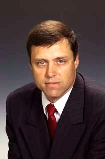
2 A WELCOME FROM SUPERINTENDENT DR. TIM MARKLEY Dear Students, On behalf of New Hanover County Schools, I would like to welcome everyone to the Career Advisement Program scheduling process. If you are a rising 9 th grade student, let me give you a special welcome into high school. You are getting ready to embark on one of the most important, challenging, and memorable experiences of your entire life. No matter your grade level, NHCS will be there to assist and guide you throughout your high school journey. As we all know, our technological world has become a global village. As a result, we have all been given opportunities that we could not have imagined even fifteen years ago. The global village effect, however, has also increased competition; we are no longer just competing and working with other Americans. In order to experience all this world has to offer, it is essential you acquire a first-rate education. As the world has gotten more educationally diverse, NHCS has strived to grow in this same direction. We are proud of all of our high schools and their dedication to ensuring each student a global education: Ashley, Hoggard, Laney, New Hanover, Mosley Performance Learning Center, Isaac Bear Early College High School, and Wilmington Early College High School. At each of these schools, you will find dedicated 21 st Century professionals who are there to help you obtain a high quality, relevant education. To help guide you through these important high school years, NHCS has created a Curriculum Bulletin course guide. Inside this bulletin, you will find information on course offerings and descriptions, state and local educational requirements, course enrollment directions, and information on various cutting-edge programs. The course scheduling process is very important for every student. With that in mind, let me encourage you to seek guidance as your prepare to select your courses. Your teachers, principals, counselors, and parents want to see you have the best high school experience you can have. Take advantage of their knowledge and wisdom. Finally, I ask you to challenge yourself! That is the only way to grow and develop into your full potential. Strive to excel so you can have an expanded list of opportunities as graduation nears. We wish each and every one of you a terrific end to this school year and a wonderful beginning in Sincerely, Dr. Tim Markley 2

3 NORTH CAROLINA STATE BOARD OF EDUCATION MISSION AND GOALS The guiding mission of the North Carolina State Board of Education is that every public school student graduate from high school, globally competitive for work and postsecondary education and prepared for life in the 21st century. The goals are as follows: Goal 1: NC public schools will produce globally competitive students. Goal 2: NC public schools will be led by 21 st century professionals. Goal 3: NC public school students will be healthy and responsible. Goal 4: Leadership will guide innovation in NC public schools. Goal 5: NC public schools will be governed and supported by 21 st century systems. NEW HANOVER COUNTY SCHOOLS MISSION STATEMENTError! Bookmark not defined. The mission of New Hanover County Schools, in collaboration with our parents and community, is to provide children an excellent education in a healthy and safe learning environment where they are prepared with the critical skills to reach their full potential in a 21 st century global society. GENERAL CURRICULUM New Hanover County Schools offers curriculum that is comprehensive and flexible, providing a wide variety of course offerings and special programs. This curriculum allows each student to complete a high school program designed around the student s needs and interests. Every effort is made to offer all courses at each high school within constraints imposed by enrollment and personnel. Elective offerings may vary at each high school. In addition to regularly scheduled courses, students meeting the admission criteria may take courses at the University of North Carolina Wilmington or Cape Fear Community College. Huskins classes, taught by Cape Fear Community College instructors, may also be arranged through the high schools. Each high school offers a full continuum of services to students receiving special education and related services. For students with disabilities, these services are specified through an Individualized Education Plan (IEP) or an Individualized Accommodation Plan (IAP) designed to meet individual student needs. Every school has a system of intervention, evaluation, and service delivery that provides access to these services. Students and parents can obtain more information about special education services from the Special Education and Related Services department chairperson at each school. Academically or Intellectually Gifted (AIG) services are offered through enrollment in rigorous honors and Advanced Placement courses at each school. SPECIAL PROGRAMS AND COURSES ADVANCEMENT VIA INDIVIDUAL DETERMINATION (AVID) Advancement Via Individual Determination (AVID) is designed to restructure the teaching methods of a school and to open access to the curricula that will ensure four-year college eligibility to students especially to students in the middle who are capable of completing the college/university course of study. To qualify for AVID, students should have a GPA between , no attendance or discipline issues, the desire to go to college, and the willingness to work hard. In this four-year program, grade-level classes meet all year to provide academic support for student success. Each AVID class receives instruction in college-entry skills, participates in tutor-led study groups, and engages in motivational activities. The AVID program stresses the importance of higher-order thinking skills, notebook organization, Cornell notes, study skills, the writing process, goal setting, critical reading, and the college admissions process. The student must meet the parameters of acceptance designated by the AVID program and must continue to meet those parameters in order to remain in the program. See a school counselor or AVID coordinator for details. Additional information is available at 3

4 ENGLISH AS A SECOND LANGUAGE PROGRAM (ESL) English as a Second Language (ESL) classes or services are offered to students whose first language is a language other than English and whose academic English is not yet fluent. ESL classes provide a content-based, academic context that supports the development of the English speaking, listening, reading, and writing skills necessary for academic success. ADVANCED PLACEMENT PROGRAM (AP) The Advanced Placement (AP) program offers college level courses and exams for secondary students in the areas of English, mathematics, social studies, and science. Select second languages and arts classes may also be offered. In May, students are encouraged to demonstrate their proficiencies on the appropriate Advanced Placement examinations. In this manner students may possibly earn university course exemption and/or credit. These exams are scheduled, designed, and graded by the College Board. Students pay the examination fee charged by the College Board for each test by the last week in March. Requests for fee reductions should be directed to the individual school. Students provide their own transportation if testing occurs off campus. Students applying for placement in AP courses need to talk with their parents, teachers, and counselors. Additional information can be found at NORTH CAROLINA VIRTUAL PUBLIC SCHOOL (NCVPS) North Carolina Virtual Public School (NCVPS) provides free online high school courses to public school students throughout North Carolina. Students may access virtual learning courses from anywhere at anytime. Grades earned through NCVPS become part of a student s academic record as the student works toward graduation goals. Registration must occur at each school through the distance learning advisor. Additional information can be found at NOVANET NovaNET provides a multi-faceted, computer-based instructional program consisting of both online activities and offline assignments. Prior approval is required before a student can enroll in NovaNET courses. Note: Any student enrolled in a class in which an End-of-Course test is required must take the End-of-Course state exam. THE LYCEUM ACADEMY The Lyceum Academy of New Hanover High School is open to all juniors and seniors in New Hanover County. This two-year program offers an uninterrupted, four-hour time block incorporating alternative educational experiences where connections are made between traditional subjects to demonstrate real-world relevance. A team of eight teachers instructs and guides students through the academy, which consists of approximately 200 students (100 in each grade level). Classes in Lyceum are from 7:30 AM until 11:40 AM on traditional school days; afterwards students are released to take electives. Real-world relevance is reinforced through local and national field experiences. These hands-on experiences clarify the curriculum by enhancing its relevance to students lives. Field experiences also help develop group skills through team building activities such as retreats, seminars, and social interactions. No students are excluded due to financial issues. Students elect to participate and are accepted through an application and interview process which begins in January during their sophomore year. The application, a list of required course prerequisites, and additional information is available at 4
5 ADVANCED STUDY - UNIVERSITY OF NORTH CAROLINA WILMINGTON New Hanover County Schools and the University of North Carolina Wilmington (UNCW) have a cooperative agreement to allow students to take courses at the university if they are concurrently enrolled in at least two high school courses. Advanced study courses taken at UNC Wilmington must be courses not offered on the high school campus. Each three-hour course taken at UNCW will receive one unit of high school credit. Summer courses do not qualify for high school credit. Course selections should be discussed with a counselor and then approved by the principal. An application is required and students are responsible for tuition, fees, books, and transportation. It is understood that the transfer of college credit for the course(s) will be dependent upon the decision of the university. Additional information can be found at LEARN AND EARN ONLINE Online college credit courses are available to high school students through an initiative called Learn and Earn Online. Qualified students can access a variety of courses free of charge and earn high school and college credit for completed courses. Courses are offered during the regular school day in the fall and spring semesters through UNCG ischool and the community colleges. To enroll in the online courses, students need to consult the distance learning advisor or school counselor. Additional information is available at CAPE FEAR COMMUNITY COLLEGE DUAL ENROLLMENT New Hanover County Schools and Cape Fear Community College (CFCC) have a cooperative agreement to allow students to enroll in college transfer, vocational, and technical courses for high school elective and community college credit. To take part in this program, students must be concurrently enrolled in at least two high school courses and be at least sixteen years of age. This excludes developmental and Adult High School courses. Courses taken at CFCC must not be offered at the high school and must be approved by the principal. Each threehour course taken at CFCC will receive one unit of high school credit. Students are responsible for providing their own transportation. See a counselor for more details. Additional information is available at HUSKINS Huskins classes are college classes designated primarily for high school students. Huskins classes may be offered at the high school to students who are juniors or seniors. Students must be at least sixteen years old to access these classes at either of the Cape Fear Community College (CFCC) campuses. Students are enrolled on a space-available basis. Students are required to take a placement test. Minimal cut scores for each college course will vary. Official high school transcripts that post SAT/ACT scores are also acceptable to use for placement purposes. High school principals must verify that students are making satisfactory progress towards graduation. Students must meet all college requirements for each class taken before the class begins. Prerequisites for each course are listed with the course descriptions in the Cape Fear Community College Catalog available at Information on specific courses offered to NHCS students can be found on page 82 of this guide. Tuition is free for fall and spring semesters; however, students taking a Huskins class that meets at a CFCC campus are required to pay student activity fees and a security/parking fee which are due at the beginning of the semester. Transportation to CFCC is also the student s responsibility as is the purchase of additional supplies. Huskins classes are not offered in the summer. See your school Huskins coordinator for additional information and a Huskins program application. ISAAC BEAR EARLY COLLEGE HIGH SCHOOL Located on the campus of the University of North Carolina Wilmington, Isaac Bear Early College High School is an innovative school that integrates English, social studies, math, and science in an exploration of real-world topics and problems. Isaac Bear High School provides rising ninth grade students with an opportunity to accelerate their high school experience and to earn college credit. Students are challenged to solve problems in an engaging and relevant curriculum. Students elect to participate and are accepted through an application and interview process. See a school counselor for details. Additional information is available at 5
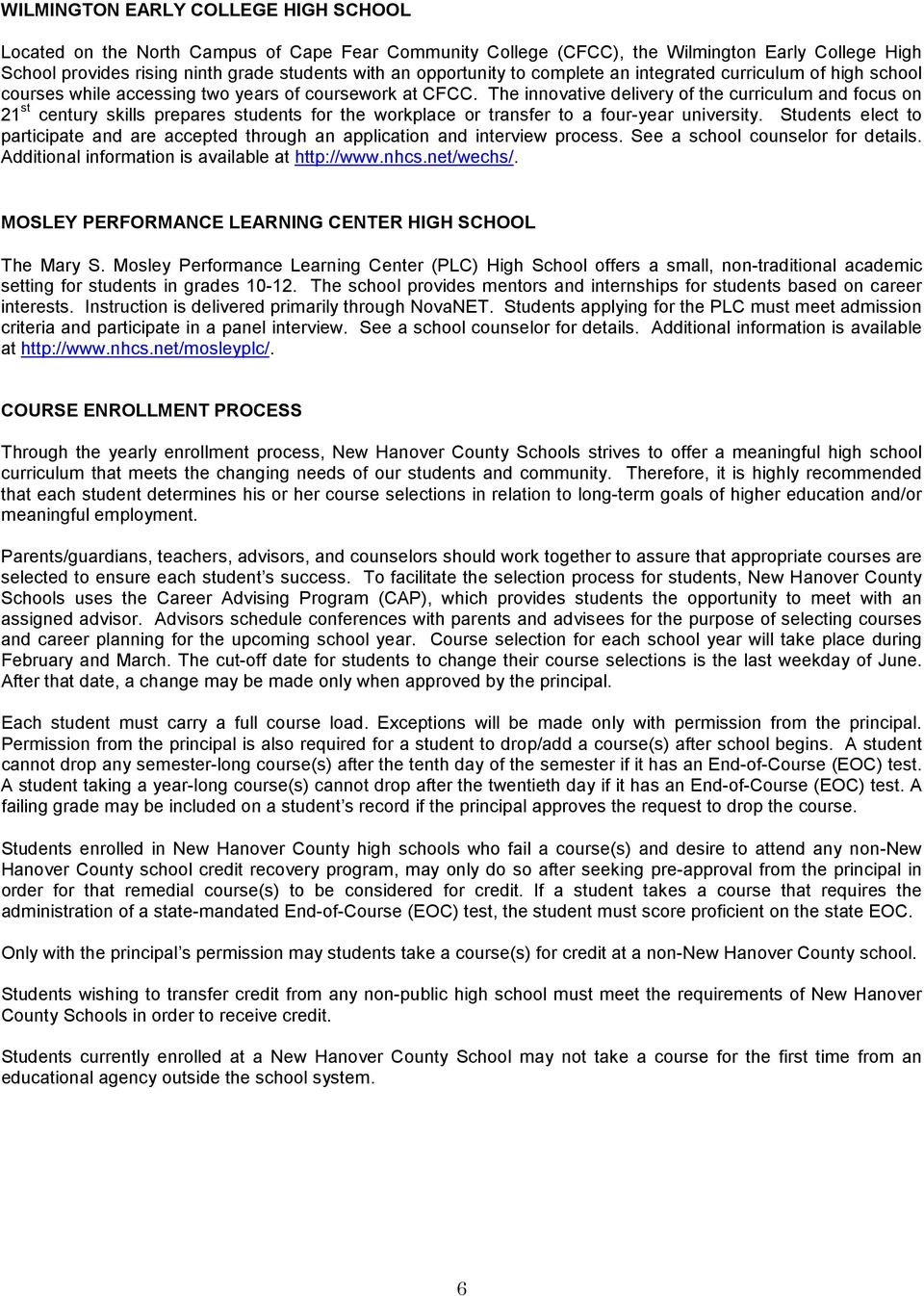
6 WILMINGTON EARLY COLLEGE HIGH SCHOOL Located on the North Campus of Cape Fear Community College (CFCC), the Wilmington Early College High School provides rising ninth grade students with an opportunity to complete an integrated curriculum of high school courses while accessing two years of coursework at CFCC. The innovative delivery of the curriculum and focus on 21 st century skills prepares students for the workplace or transfer to a four-year university. Students elect to participate and are accepted through an application and interview process. See a school counselor for details. Additional information is available at MOSLEY PERFORMANCE LEARNING CENTER HIGH SCHOOL The Mary S. Mosley Performance Learning Center (PLC) High School offers a small, non-traditional academic setting for students in grades The school provides mentors and internships for students based on career interests. Instruction is delivered primarily through NovaNET. Students applying for the PLC must meet admission criteria and participate in a panel interview. See a school counselor for details. Additional information is available at COURSE ENROLLMENT PROCESS Through the yearly enrollment process, New Hanover County Schools strives to offer a meaningful high school curriculum that meets the changing needs of our students and community. Therefore, it is highly recommended that each student determines his or her course selections in relation to long-term goals of higher education and/or meaningful employment. Parents/guardians, teachers, advisors, and counselors should work together to assure that appropriate courses are selected to ensure each student s success. To facilitate the selection process for students, New Hanover County Schools uses the Career Advising Program (CAP), which provides students the opportunity to meet with an assigned advisor. Advisors schedule conferences with parents and advisees for the purpose of selecting courses and career planning for the upcoming school year. Course selection for each school year will take place during February and March. The cut-off date for students to change their course selections is the last weekday of June. After that date, a change may be made only when approved by the principal. Each student must carry a full course load. Exceptions will be made only with permission from the principal. Permission from the principal is also required for a student to drop/add a course(s) after school begins. A student cannot drop any semester-long course(s) after the tenth day of the semester if it has an End-of-Course (EOC) test. A student taking a year-long course(s) cannot drop after the twentieth day if it has an End-of-Course (EOC) test. A failing grade may be included on a student s record if the principal approves the request to drop the course. Students enrolled in New Hanover County high schools who fail a course(s) and desire to attend any non-new Hanover County school credit recovery program, may only do so after seeking pre-approval from the principal in order for that remedial course(s) to be considered for credit. If a student takes a course that requires the administration of a state-mandated End-of-Course (EOC) test, the student must score proficient on the state EOC. Only with the principal s permission may students take a course(s) for credit at a non-new Hanover County school. Students wishing to transfer credit from any non-public high school must meet the requirements of New Hanover County Schools in order to receive credit. Students currently enrolled at a New Hanover County School may not take a course for the first time from an educational agency outside the school system. 6
7 TESTING END-OF-COURSE (EOC) TESTS End-of-Course tests are given for the following courses: Algebra I U.S. History Algebra II Biology Physical Science Civics and Economics English I Each EOC counts twenty-five percent of a student s final grade. Note: Students may not be exempted from any state required End-of-Course test. CAREER TECHNICAL EDUCATION END-OF-COURSE ASSESSMENT All students who follow the Standard Course of Study for a Career Technical Education course must take a state End-of-Course post assessment. The post assessment will count twenty-five percent of the student s final grade in the course. PROMOTION REQUIREMENTS Students must have the following credits for grade-to-grade promotion: 9 th to 10 th grade 6 credits* 10 th to 11 th grade 12 credits 11 th to 12 th grade 20 credits *Of these six (6) credits required for promotion to 10 th grade, one (1) credit must be English I and one (1) credit must be Algebra I. Note: Transfer students will have their course credits evaluated at each school. GRADUATION REQUIREMENTS To graduate from New Hanover County Schools, a student must complete the following requirements: Course Credits For graduation each student must complete the appropriate number of courses listed below. English 4 Physical Ed/Health 1 Math 4 a Electives 13 Science 3 b Social Studies 3 c a b c One unit must be Algebra I. One unit must be Earth and Environmental Science; one unit must be Biology; one unit must be a physical science. The physical sciences include Physical Science, Chemistry, or Physics. One unit must be World History; one unit must be Civics & Economics; one unit must be US History. 7

8 2. Required Graduation Course of Study To graduate, students must meet the requirements of the Future Ready Core Course of Study. See the chart on page 12 for details. The Occupational Course of Study is available for certain students with disabilities who have an Individualized Education Plan (IEP). Completion of 300 hours of school-based training, 240 hours of community-based training, and 360 hours of paid employment is required. See the chart on page 13 for details. 3. North Carolina High School Exit Standards Required End-of-Course Tests Students must score at proficiency level III or above on the following End-of-Course tests in order to graduate: English I Civics & Economics Algebra I U.S. History Biology Students who do not demonstrate proficiency (level III or higher) will be given the opportunity for one re-test for each End-of-Course test. Students scoring a Level II on an End-of-Course test are required by state law to re-test. Parents of students scoring a Level I may request a re-test for their child. Students who pass the course but fail to demonstrate proficiency on the End-of-Course test after the re-test will have their course portfolios reviewed by an internal review committee. The portfolio committee may consist of teachers, principals, central office staff, exceptional children specialists, and/or teachers of students who are Limited English Proficient. The committee will make a recommendation on whether the student will retake the class or be given credit for meeting the exit standard for the course. The principal will review the recommendation by the committee and make the final determination regarding the completion of the exit standard for the course. Note: Students in the Occupational Course of Study are exempted from these exit standards as they are required to meet their own set of rigorous exit standards. 4. Required Graduation Project In addition to scoring proficient (level III or above) on the five required End-of-Course tests, students must successfully complete the Graduation Project. The Graduation Project is a semester-long project offered within the student s English IV course. It is designed to engage students in self-directed learning, which promotes the transition from the school to the real world. The project requires students to synthesize prior learning, engage in dialogue with the community, and foster creativity leading to a deeper understanding of individual talents and abilities. Critical thinking, independent and cooperative learning, research skills, and written/oral communication skills are emphasized. The Graduation Project requires successful completion of the following four components: an eight-to-ten page research paper written on a topic of the student s own choosing a physical product involving a minimum of fifteen hours of work outside the classroom a portfolio documenting the student s development of the research paper and physical product an eight-to-ten minute oral presentation before a three-to-five member panel of community and school judges Note: Transfer students may be given credit for passing the exit standard for each of the five End-of-Course tests based on their comparable coursework at other schools at the discretion of the principal. Graduation Project requirements for late transfers (second semester seniors) may be modified. 8

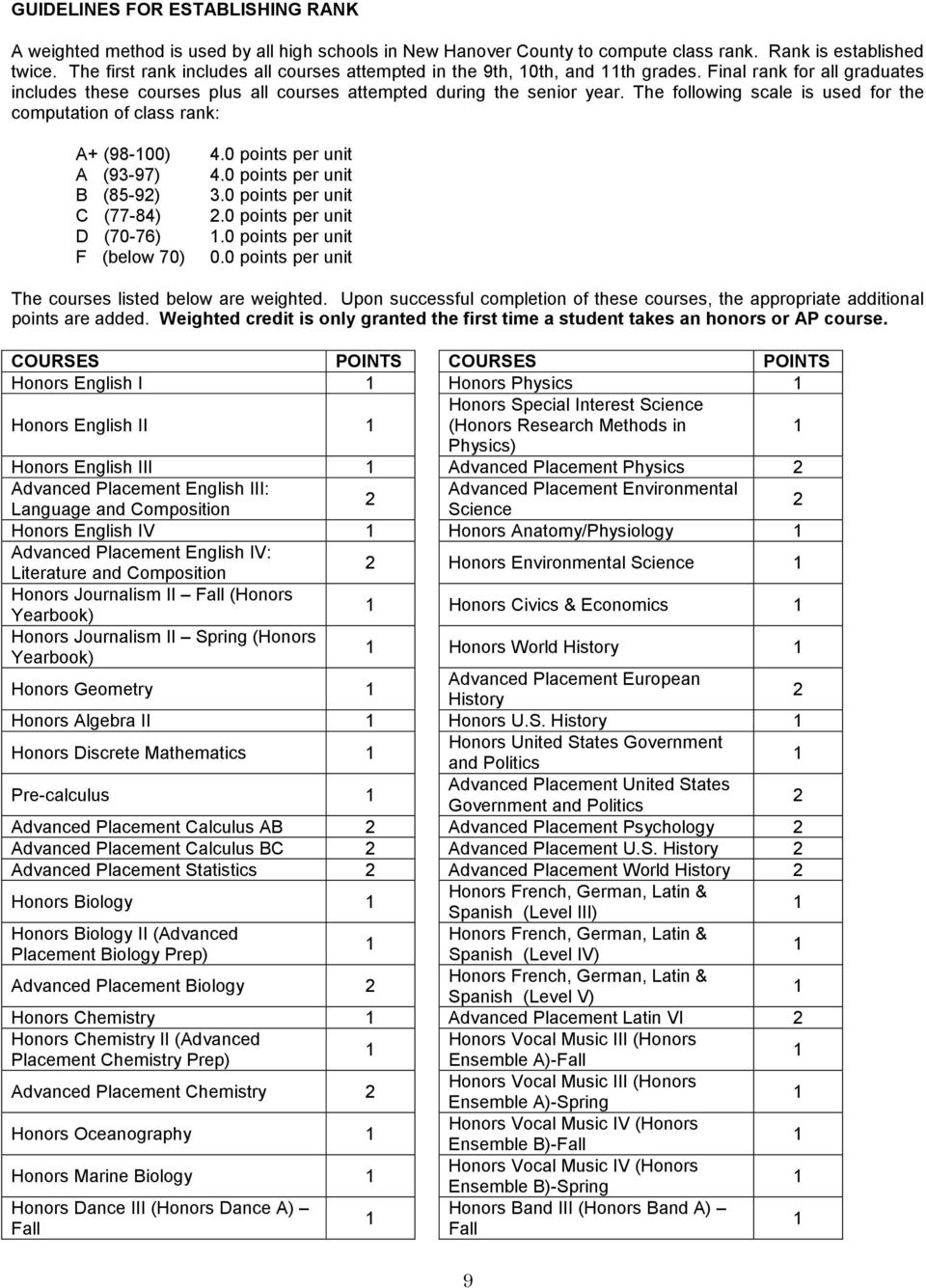
9 GUIDELINES FOR ESTABLISHING RANK A weighted method is used by all high schools in New Hanover County to compute class rank. Rank is established twice. The first rank includes all courses attempted in the 9th, 10th, and 11th grades. Final rank for all graduates includes these courses plus all courses attempted during the senior year. The following scale is used for the computation of class rank: A+ (98-100) 4.0 points per unit A (93-97) 4.0 points per unit B (85-92) 3.0 points per unit C (77-84) 2.0 points per unit D (70-76) 1.0 points per unit F (below 70) 0.0 points per unit The courses listed below are weighted. Upon successful completion of these courses, the appropriate additional points are added. Weighted credit is only granted the first time a student takes an honors or AP course. COURSES POINTS COURSES POINTS Honors English I 1 Honors Physics 1 Honors English II 1 Honors Special Interest Science (Honors Research Methods in 1 Physics) Honors English III 1 Advanced Placement Physics 2 Advanced Placement English III: Advanced Placement Environmental 2 Language and Composition Science 2 Honors English IV 1 Honors Anatomy/Physiology 1 Advanced Placement English IV: Literature and Composition 2 Honors Environmental Science 1 Honors Journalism II Fall (Honors Yearbook) 1 Honors Civics & Economics 1 Honors Journalism II Spring (Honors Yearbook) 1 Honors World History 1 Honors Geometry 1 Advanced Placement European History 2 Honors Algebra II 1 Honors U.S. History 1 Honors Discrete Mathematics 1 Honors United States Government and Politics 1 Pre-calculus 1 Advanced Placement United States Government and Politics 2 Advanced Placement Calculus AB 2 Advanced Placement Psychology 2 Advanced Placement Calculus BC 2 Advanced Placement U.S. History 2 Advanced Placement Statistics 2 Advanced Placement World History 2 Honors Biology 1 Honors French, German, Latin & Spanish (Level III) 1 Honors Biology II (Advanced Honors French, German, Latin & 1 Placement Biology Prep) Spanish (Level IV) 1 Advanced Placement Biology 2 Honors French, German, Latin & Spanish (Level V) 1 Honors Chemistry 1 Advanced Placement Latin VI 2 Honors Chemistry II (Advanced Honors Vocal Music III (Honors 1 Placement Chemistry Prep) Ensemble A)-Fall 1 Advanced Placement Chemistry 2 Honors Vocal Music III (Honors Ensemble A)-Spring 1 Honors Oceanography 1 Honors Vocal Music IV (Honors Ensemble B)-Fall 1 Honors Marine Biology 1 Honors Vocal Music IV (Honors Ensemble B)-Spring 1 Honors Dance III (Honors Dance A) Honors Band III (Honors Band A) 1 Fall Fall 1 9
10 COURSES POINTS COURSES POINTS Honors Dance III (Honors Dance A)- Honors Band III (Honors Band A)- 1 Spring Spring 1 Honors Dance IV (Honors Dance B)- Honors Band IV (Honors Band B)- 1 Fall Fall 1 Honors Dance IV (Honors Dance B)- Honors Band IV (Honors Band B)- 1 Spring Spring 1 Honors Visual Arts III (Honors Studio Honors Orchestra III (Honors 1 A)-Fall Orchestra A)-Fall 1 Honors Visual Arts III (Honors Studio Honors Orchestra III (Honors 1 A)-Spring Orchestra A)-Spring 1 Honors Visual Arts IV (Honors Studio Honors Orchestra IV (Honors 1 B)-Fall Orchestra B)-Fall 1 Honors Visual Arts IV (Honors Studio Honors Orchestra IV (Honors 1 B)-Spring Orchestra B)-Spring 1 Advance Placement Studio Art 2 Honors Army JROTC IV 1 Honors Theatre Arts III (Honors Theatre Arts A)-Fall 1 Honors Navy JROTC IV 1 Honors Theatre Arts III (Honors Theatre Arts A)-Spring 1 Honors Air Force JROTC IV 1 Honors Theatre Arts IV (Honors Theatre Arts B)-Fall 1 Honors e-commerce 1 Honors Theatre Arts IV (Honors Theatre Arts B)-Spring 1 Honors Early Childhood Education II 1 Honors Drafting - Engineering II 1 Honors Computer Engineering Technology II 1 Honors Drafting - Engineering III 1 Honors Network Engineering Technology II Cisco 1 Honors Drafting Architectural II 1 Honors Network Engineering Technology III Cisco 1 Honors Drafting Architectural III 1 Honors Scientific & Technical Visualization II 1 Courses approved under the Comprehensive Articulation Agreement for Transfer Courses and taken at any accredited college or university will receive weighted points according to the following: 100 and 200 level courses will receive one weighted point per three-hour course. 300 or higher level courses will receive two weighted points per three-hour course. Note: If a course previously taken and passed is repeated for enrichment, both grades are used in the computation of grade point average and rank. Unit credit is granted both times. However, only one unit credit for that course can be counted in meeting graduation credit requirements. 10

11 NORTH CAROLINA ACADEMIC SCHOLARS PROGRAM - GRADES 9-11 Students who complete the State Board of Education requirements for a well-balanced, challenging high school program will be named North Carolina Academic Scholars, receive special recognition and a seal on their diploma. In order for students entering high school under the Future-Ready Core curriculum (beginning with the freshmen class of ) to become a North Carolina Academic Scholar, a student must achieve a minimum, unweighted cumulative grade point average of 3.5 through the first semester of his/her senior year and complete the course of study found below. In addition to the course of study, students must complete two credits of higherlevel courses (honors or AP) taken during the junior and/or senior years and completion of the North Carolina Graduation Project. CREDITS Courses 4 English I, II, III, IV and the North Carolina Graduation Project (completed in English IV) Mathematics (Algebra I, Geometry, Algebra II, and a higher level math course with Algebra II as 4 prerequisite OR Integrated Mathematics I, II, III, and a higher level mathematics course with Integrated Mathematics III as prerequisite) 3 Science (an Earth/Environmental Science course, Biology, and a Physics or Chemistry course) 3 Social Studies (World History, Civics & Economics, and US History) 2 Languages other than English (two credits of the same language) 1 Healthful Living Electives - Two (2) elective credits in a second language is required for admission into the UNC System. Four (4) elective credits constituting a concentration is recommended but not required from one of the 6 following areas: Career and Technical Education (CTE), JROTC, Arts Education, Second Languages, any other subject area. 2 Two Higher-Level Courses (Honors or AP) 11

12 NC FUTURE-READY CORE COURSE OF STUDY CONTENT AREA English Mathematics FUTURE-READY CORE 4 Credits I, II, III, IV 4 Credits (Algebra I, Geometry, Algebra II) OR (Integrated Math I, II, III) 4th Math course should be aligned with the student s post high school plans. At the request of a parent and with counseling provided by the school, a student may be able to opt out of this math sequence. He/she would be required to pass Algebra I and Geometry or Integrated Math I and II and two other application-based math courses. Science Social Studies Second Language Health and Physical Education Electives 3 Credits Earth/Environmental Science, Biology, a physical science course 3 Credits World History, Civics & Economics, US History Not required for graduation. Required to meet minimum application requirements for UNC system schools. 1 Credit Health/Physical Education 6 Credits required 2 Elective credits of any combination from either: - Career and Technical Education (CTE) - Arts Education - (Dance, Music, Theatre Arts, Visual Arts) - Second Languages 4 Elective credits strongly recommended (four course concentration) from one of the following: - Career and Technical Education (CTE) - JROTC - Arts Education (Dance, Music, Theatre Arts, Visual Arts) - Any other subject area Additional New Hanover County Schools Requirements Total 7 credits (Students select additional courses from the curriculum bulletin) 28 Credits 12

13 NC OCCUPATIONALCOURSE OF STUDY CONTENT AREA English Mathematics Science Social Studies Second Language Computer Skills Health and Physical Education Electives or other requirements* Career Technical JROTC Arts Education (Dance, Music, Theatre Arts, Visual Arts) Additional New Hanover County Schools Requirements Total NC OCCUPATIONAL COURSE OF STUDY REQUIREMENTS Selected IEP students excluded from EOC Proficiency Level requirements 4 Credits Occupational English I, II, III, IV 3 Credits Occupational Introduction to Mathematics I, Occupational Algebra I, Occupational Financial Management 2 Credits Occupational Applied Science, Occupational Biology 2 Credits Social Studies I (Government/ US History) Social Studies II (Self-Advocacy/ Problem Solving) Not required Computer proficiency as specified in IEP 1 Credit Health/Physical Education 6 Credits: Occupational Preparation: Occupational Preparation I, II, III, IV** Elective credits/completion of IEP objectives/career Portfolio required 4 Credits Career/ Technical Education electives Recommended: At least one credit in an arts discipline. 6 credits (Students select additional courses from the curriculum bulletin) 28 Credits * Examples of electives include JROTC and other courses that are of interest to the student. **Completion of 300 hours of school-based training, 240 hours of community-based training, and 360 hours of paid employment. 13

14 COLLEGE ADMISSIONS REQUIREMENTS Students planning to attend college after graduation from high school should consult school counselors, current college catalogs (many are available online), and college admission officials concerning requirements for admission. Students completing the Future Ready Core Course of Study, along with two courses in the same foreign language, will meet the minimum entrance requirements of the following University of North Carolina System Schools: Appalachian State University - East Carolina University - Elizabeth City State University - Fayetteville State University - North Carolina Agricultural and Technical State University - North Carolina Central University - North Carolina School of the Arts - North Carolina State University - University of North Carolina Asheville - University of North Carolina Chapel Hill - University of North Carolina Charlotte - University of North Carolina Greensboro - University of North Carolina Pembroke - University of North Carolina Wilmington - Western Carolina University - Winston-Salem State University - The requirements for admission to UNC System schools do not apply to the community colleges in North Carolina. Community colleges have their own admission requirements. Many have agreements with universities to allow students to transfer from a two-year to a four-year program. 14

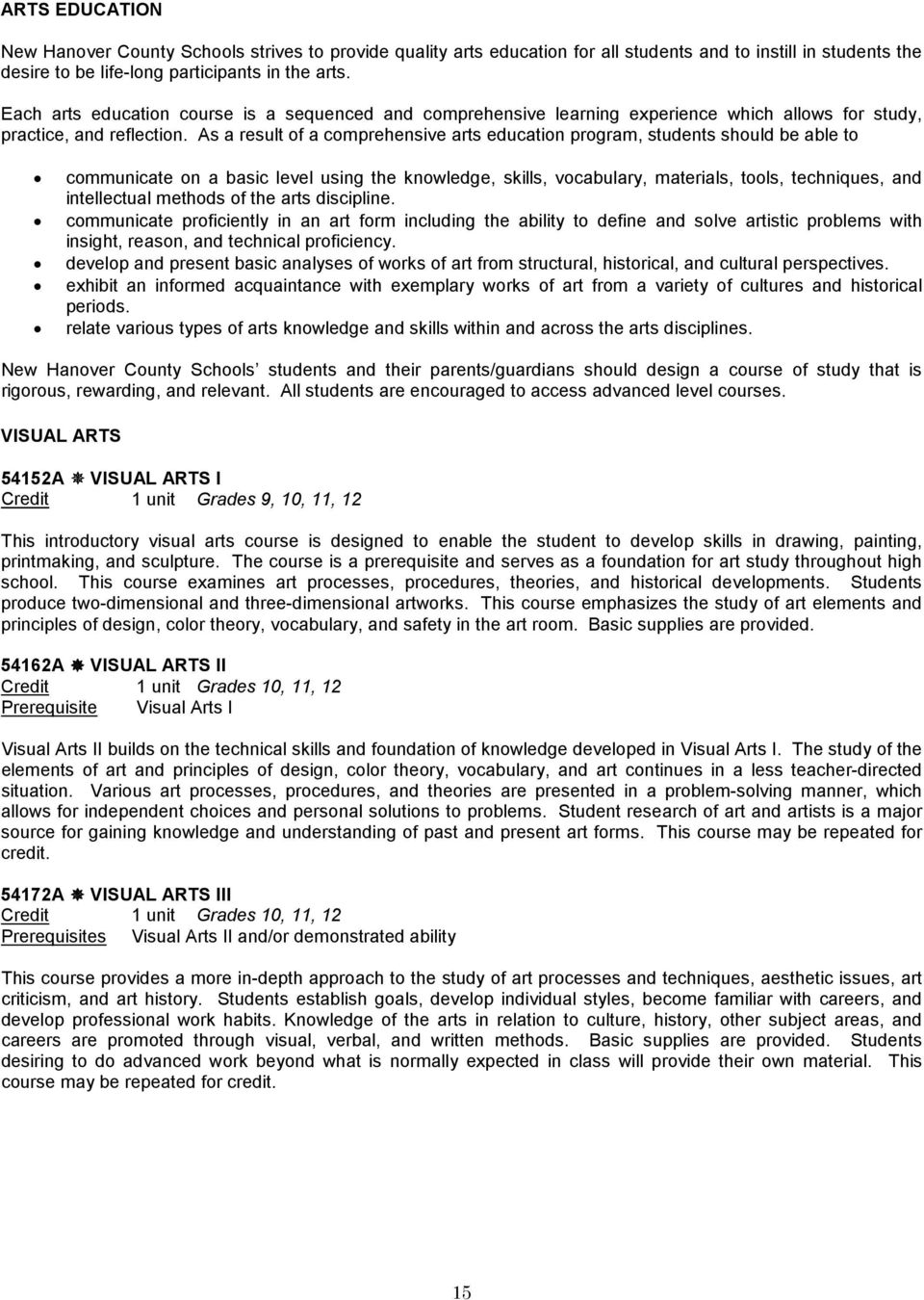
15 ARTS EDUCATION New Hanover County Schools strives to provide quality arts education for all students and to instill in students the desire to be life-long participants in the arts. Each arts education course is a sequenced and comprehensive learning experience which allows for study, practice, and reflection. As a result of a comprehensive arts education program, students should be able to communicate on a basic level using the knowledge, skills, vocabulary, materials, tools, techniques, and intellectual methods of the arts discipline. communicate proficiently in an art form including the ability to define and solve artistic problems with insight, reason, and technical proficiency. develop and present basic analyses of works of art from structural, historical, and cultural perspectives. exhibit an informed acquaintance with exemplary works of art from a variety of cultures and historical periods. relate various types of arts knowledge and skills within and across the arts disciplines. New Hanover County Schools students and their parents/guardians should design a course of study that is rigorous, rewarding, and relevant. All students are encouraged to access advanced level courses. VISUAL ARTS 54152A VISUAL ARTS I Grades 9, 10, 11, 12 This introductory visual arts course is designed to enable the student to develop skills in drawing, painting, printmaking, and sculpture. The course is a prerequisite and serves as a foundation for art study throughout high school. This course examines art processes, procedures, theories, and historical developments. Students produce two-dimensional and three-dimensional artworks. This course emphasizes the study of art elements and principles of design, color theory, vocabulary, and safety in the art room. Basic supplies are provided A VISUAL ARTS II Grades 10, 11, 12 Prerequisite Visual Arts I Visual Arts II builds on the technical skills and foundation of knowledge developed in Visual Arts I. The study of the elements of art and principles of design, color theory, vocabulary, and art continues in a less teacher-directed situation. Various art processes, procedures, and theories are presented in a problem-solving manner, which allows for independent choices and personal solutions to problems. Student research of art and artists is a major source for gaining knowledge and understanding of past and present art forms. This course may be repeated for credit A VISUAL ARTS III Grades 10, 11, 12 Prerequisites Visual Arts II and/or demonstrated ability This course provides a more in-depth approach to the study of art processes and techniques, aesthetic issues, art criticism, and art history. Students establish goals, develop individual styles, become familiar with careers, and develop professional work habits. Knowledge of the arts in relation to culture, history, other subject areas, and careers are promoted through visual, verbal, and written methods. Basic supplies are provided. Students desiring to do advanced work beyond what is normally expected in class will provide their own material. This course may be repeated for credit. 15
16 54175A HONORS VISUAL ARTS III (Honors Studio Art A) - FALL 54175B HONORS VISUAL ARTS III (Honors Studio Art A) - SPRING Grades 11, 12 Prerequisites Visual Arts I, II, and/or demonstrated ability Note: Honors Visual Arts III (Honors Studio Art A-Fall) or Honors Visual Arts III (Honors Studio Art A-Spring) may be taken for one unit of credit or both courses may be taken for two units of credit. Honors Visual Arts III (Honors Studio Art A) is an advanced level course which addresses the competency goals and objectives of the North Carolina Standard Course of Study, as well as their extensions in the Arts Education Honors Course Standards. This course is an individualized and activity-based curriculum requiring learning experiences that are often exploratory, experiential, and/or open-ended. Work is often generated through, and resulting from, a studio and/or seminar approach. Students are required to take significant responsibility for their study and production of art. Focus areas for this course include research, analysis, reflection, application, and production of art. Basic materials are provided. Students desiring to do work beyond what is normally expected in class will provide their own materials A VISUAL ARTS IV Grades 11, 12 Prerequisites Visual Arts I, II, III, and/or demonstrated ability Students in Visual Arts IV develop, clarify, and apply their philosophy of art through in-depth and independent explorations with media, techniques, processes, and aesthetics. Students develop and refine their personal art forms as well as develop their understanding of the art work of others through critiques and the study of art history. Basic supplies are provided. Students desiring to do advanced work beyond what is normally expected in class will provide their own materials. This course may be repeated for credit A HONORS VISUAL ARTS IV (Honors Studio Art B) - FALL 54185B HONORS VISUAL ARTS IV (Honors Studio Art B) - SPRING Grade 12 Prerequisites Honors Visual Arts III (Honors Studio A) and/or demonstrated ability Note: Honors Visual Arts IV (Honors Studio B Fall) or Honors Visual Arts IV (Honors Studio B Spring) may be taken for one unit of credit or both courses may be taken for two units of credit. Students in this advanced level course follow the goals and objectives of the North Carolina Standard Course of Study as well as their extensions in the Arts Education Honors Course Standards. This most advanced level course requires additional in-depth knowledge of art processes, history, and media, including the use of technology to study, learn, and, when applicable, to produce art. Higher expectations for the quality of work generated as well as the thought and creative processes demonstrated are required. Students strive to exhibit fluency of ideas and products and understand the basic rationale and psychology behind the creative process. As a result, students become initiators of learning and demonstrate mastery of skills and processes with a completed portfolio. Basic supplies are provided. Students desiring to do work beyond what is normally expected in class will provide their own materials A CERAMICS Grades 10, 11, 12 Prerequisite Visual Arts I Ceramics is an introduction to the art of working with clay. This course includes hand-building techniques (coil, slab, and pinch methods), surface treatments, glazing, and introduction to the potter's wheel. Students research the cultural and historical perspectives of this medium. Art history, criticism, and aesthetics are experienced through visual, verbal, and written means. Basic supplies are provided. This course may be repeated for credit. 16

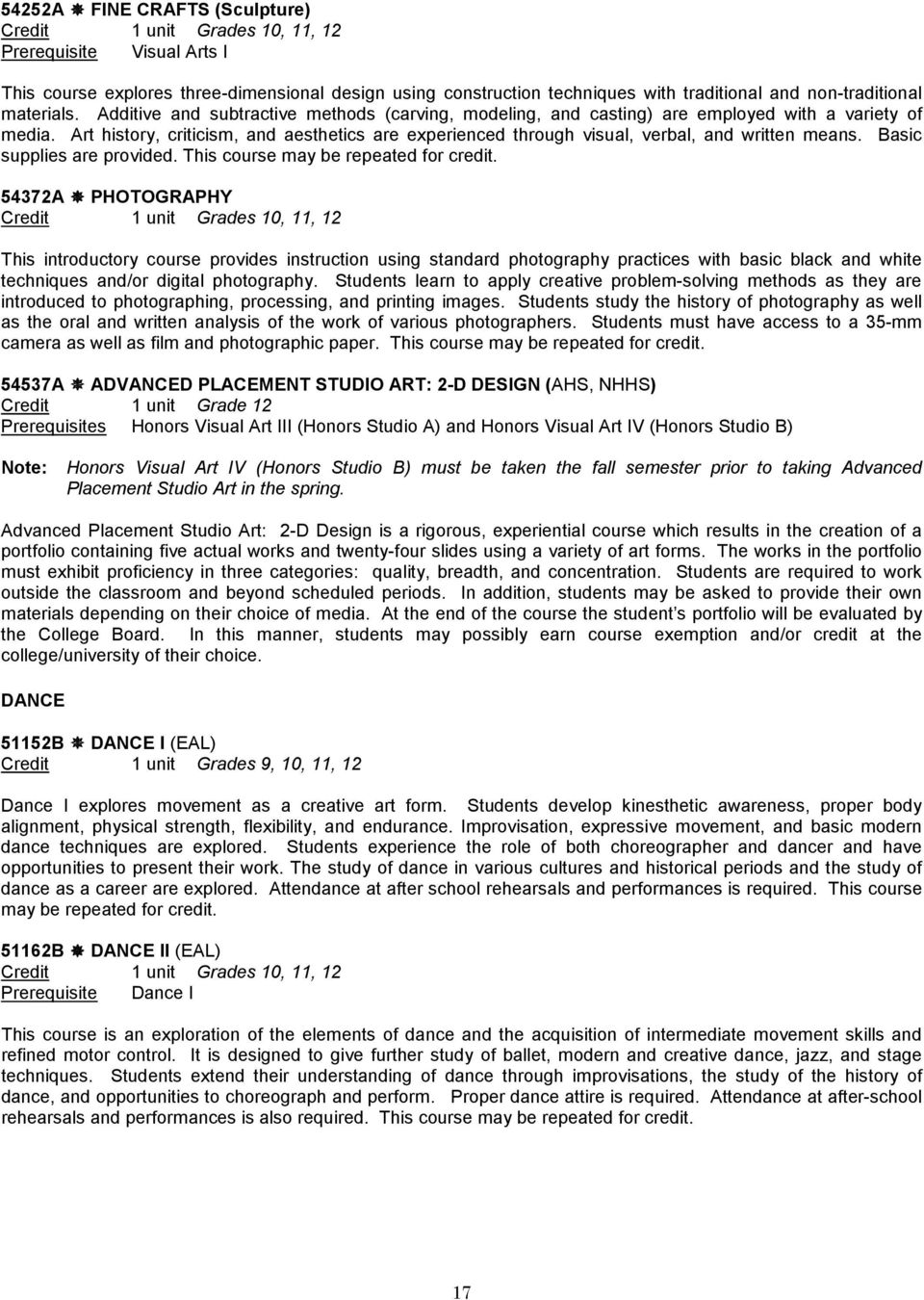
17 54252A FINE CRAFTS (Sculpture) Grades 10, 11, 12 Prerequisite Visual Arts I This course explores three-dimensional design using construction techniques with traditional and non-traditional materials. Additive and subtractive methods (carving, modeling, and casting) are employed with a variety of media. Art history, criticism, and aesthetics are experienced through visual, verbal, and written means. Basic supplies are provided. This course may be repeated for credit A PHOTOGRAPHY Grades 10, 11, 12 This introductory course provides instruction using standard photography practices with basic black and white techniques and/or digital photography. Students learn to apply creative problem-solving methods as they are introduced to photographing, processing, and printing images. Students study the history of photography as well as the oral and written analysis of the work of various photographers. Students must have access to a 35-mm camera as well as film and photographic paper. This course may be repeated for credit A ADVANCED PLACEMENT STUDIO ART: 2-D DESIGN (AHS, NHHS) Grade 12 Prerequisites Honors Visual Art III (Honors Studio A) and Honors Visual Art IV (Honors Studio B) Note: Honors Visual Art IV (Honors Studio B) must be taken the fall semester prior to taking Advanced Placement Studio Art in the spring. Advanced Placement Studio Art: 2-D Design is a rigorous, experiential course which results in the creation of a portfolio containing five actual works and twenty-four slides using a variety of art forms. The works in the portfolio must exhibit proficiency in three categories: quality, breadth, and concentration. Students are required to work outside the classroom and beyond scheduled periods. In addition, students may be asked to provide their own materials depending on their choice of media. At the end of the course the student s portfolio will be evaluated by the College Board. In this manner, students may possibly earn course exemption and/or credit at the college/university of their choice. DANCE 51152B DANCE I (EAL) Grades 9, 10, 11, 12 Dance I explores movement as a creative art form. Students develop kinesthetic awareness, proper body alignment, physical strength, flexibility, and endurance. Improvisation, expressive movement, and basic modern dance techniques are explored. Students experience the role of both choreographer and dancer and have opportunities to present their work. The study of dance in various cultures and historical periods and the study of dance as a career are explored. Attendance at after school rehearsals and performances is required. This course may be repeated for credit B DANCE II (EAL) Grades 10, 11, 12 Prerequisite Dance I This course is an exploration of the elements of dance and the acquisition of intermediate movement skills and refined motor control. It is designed to give further study of ballet, modern and creative dance, jazz, and stage techniques. Students extend their understanding of dance through improvisations, the study of the history of dance, and opportunities to choreograph and perform. Proper dance attire is required. Attendance at after-school rehearsals and performances is also required. This course may be repeated for credit. 17
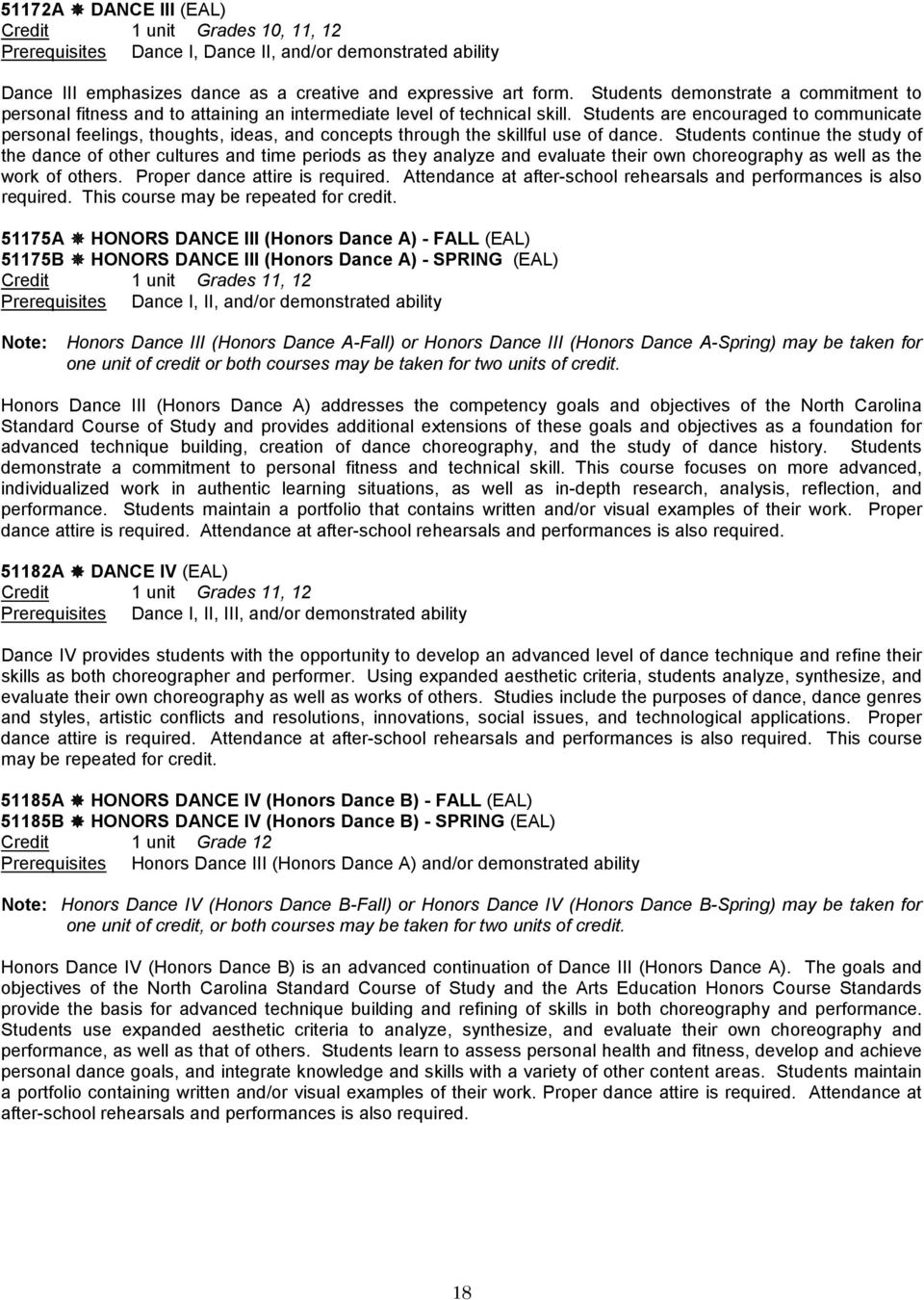
18 51172A DANCE III (EAL) Grades 10, 11, 12 Prerequisites Dance I, Dance II, and/or demonstrated ability Dance III emphasizes dance as a creative and expressive art form. Students demonstrate a commitment to personal fitness and to attaining an intermediate level of technical skill. Students are encouraged to communicate personal feelings, thoughts, ideas, and concepts through the skillful use of dance. Students continue the study of the dance of other cultures and time periods as they analyze and evaluate their own choreography as well as the work of others. Proper dance attire is required. Attendance at after-school rehearsals and performances is also required. This course may be repeated for credit A HONORS DANCE III (Honors Dance A) - FALL (EAL) 51175B HONORS DANCE III (Honors Dance A) - SPRING (EAL) Grades 11, 12 Prerequisites Dance I, II, and/or demonstrated ability Note: Honors Dance III (Honors Dance A-Fall) or Honors Dance III (Honors Dance A-Spring) may be taken for one unit of credit or both courses may be taken for two units of credit. Honors Dance III (Honors Dance A) addresses the competency goals and objectives of the North Carolina Standard Course of Study and provides additional extensions of these goals and objectives as a foundation for advanced technique building, creation of dance choreography, and the study of dance history. Students demonstrate a commitment to personal fitness and technical skill. This course focuses on more advanced, individualized work in authentic learning situations, as well as in-depth research, analysis, reflection, and performance. Students maintain a portfolio that contains written and/or visual examples of their work. Proper dance attire is required. Attendance at after-school rehearsals and performances is also required A DANCE IV (EAL) Grades 11, 12 Prerequisites Dance I, II, III, and/or demonstrated ability Dance IV provides students with the opportunity to develop an advanced level of dance technique and refine their skills as both choreographer and performer. Using expanded aesthetic criteria, students analyze, synthesize, and evaluate their own choreography as well as works of others. Studies include the purposes of dance, dance genres and styles, artistic conflicts and resolutions, innovations, social issues, and technological applications. Proper dance attire is required. Attendance at after-school rehearsals and performances is also required. This course may be repeated for credit A HONORS DANCE IV (Honors Dance B) - FALL (EAL) 51185B HONORS DANCE IV (Honors Dance B) - SPRING (EAL) Grade 12 Prerequisites Honors Dance III (Honors Dance A) and/or demonstrated ability Note: Honors Dance IV (Honors Dance B-Fall) or Honors Dance IV (Honors Dance B-Spring) may be taken for one unit of credit, or both courses may be taken for two units of credit. Honors Dance IV (Honors Dance B) is an advanced continuation of Dance III (Honors Dance A). The goals and objectives of the North Carolina Standard Course of Study and the Arts Education Honors Course Standards provide the basis for advanced technique building and refining of skills in both choreography and performance. Students use expanded aesthetic criteria to analyze, synthesize, and evaluate their own choreography and performance, as well as that of others. Students learn to assess personal health and fitness, develop and achieve personal dance goals, and integrate knowledge and skills with a variety of other content areas. Students maintain a portfolio containing written and/or visual examples of their work. Proper dance attire is required. Attendance at after-school rehearsals and performances is also required. 18
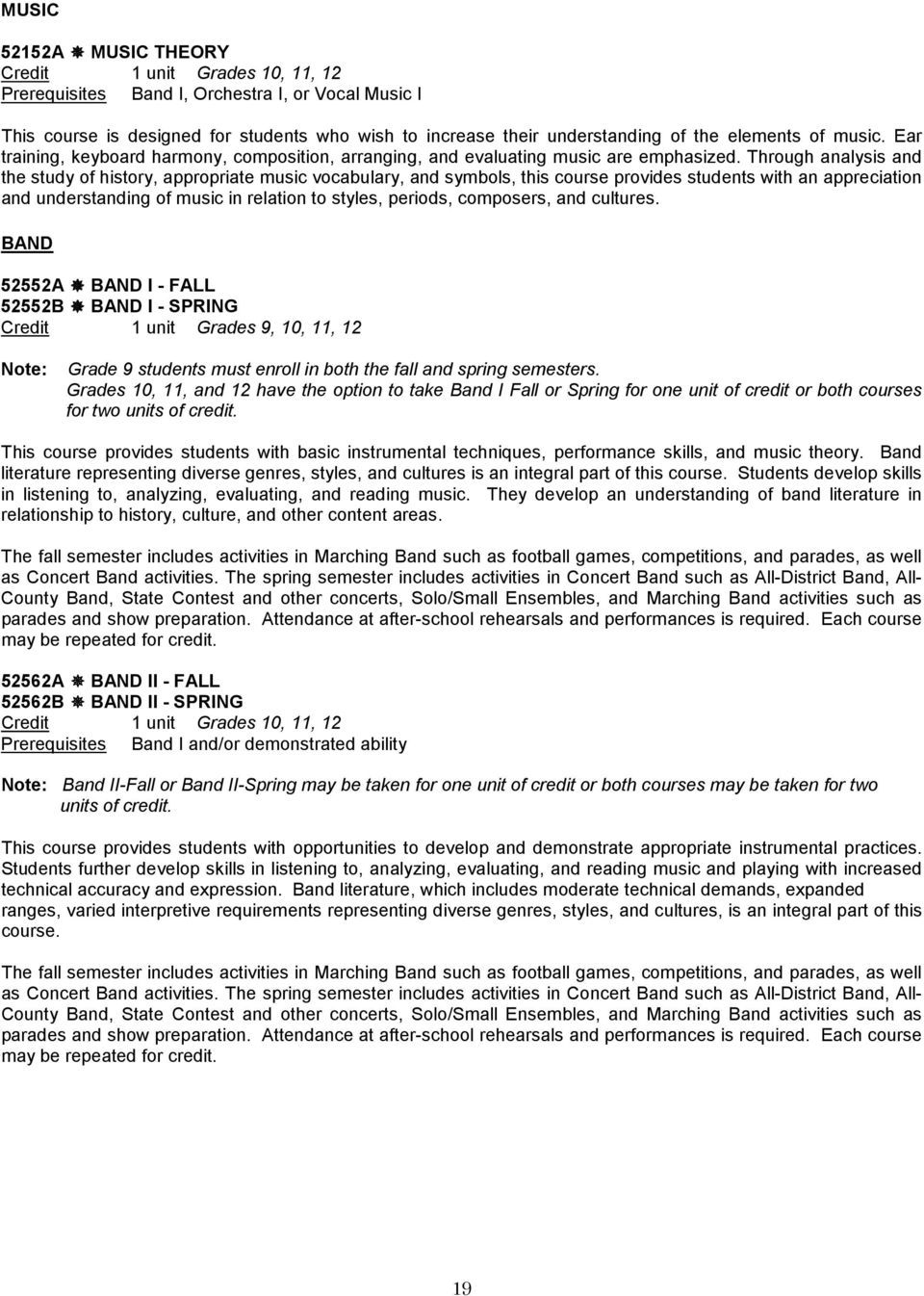
19 MUSIC 52152A MUSIC THEORY Grades 10, 11, 12 Prerequisites Band I, Orchestra I, or Vocal Music I This course is designed for students who wish to increase their understanding of the elements of music. Ear training, keyboard harmony, composition, arranging, and evaluating music are emphasized. Through analysis and the study of history, appropriate music vocabulary, and symbols, this course provides students with an appreciation and understanding of music in relation to styles, periods, composers, and cultures. BAND 52552A BAND I - FALL 52552B BAND I - SPRING Grades 9, 10, 11, 12 Note: Grade 9 students must enroll in both the fall and spring semesters. Grades 10, 11, and 12 have the option to take Band I Fall or Spring for one unit of credit or both courses for two units of credit. This course provides students with basic instrumental techniques, performance skills, and music theory. Band literature representing diverse genres, styles, and cultures is an integral part of this course. Students develop skills in listening to, analyzing, evaluating, and reading music. They develop an understanding of band literature in relationship to history, culture, and other content areas. The fall semester includes activities in Marching Band such as football games, competitions, and parades, as well as Concert Band activities. The spring semester includes activities in Concert Band such as All-District Band, All- County Band, State Contest and other concerts, Solo/Small Ensembles, and Marching Band activities such as parades and show preparation. Attendance at after-school rehearsals and performances is required. Each course may be repeated for credit A BAND II - FALL 52562B BAND II - SPRING Grades 10, 11, 12 Prerequisites Band I and/or demonstrated ability Note: Band II-Fall or Band II-Spring may be taken for one unit of credit or both courses may be taken for two units of credit. This course provides students with opportunities to develop and demonstrate appropriate instrumental practices. Students further develop skills in listening to, analyzing, evaluating, and reading music and playing with increased technical accuracy and expression. Band literature, which includes moderate technical demands, expanded ranges, varied interpretive requirements representing diverse genres, styles, and cultures, is an integral part of this course. The fall semester includes activities in Marching Band such as football games, competitions, and parades, as well as Concert Band activities. The spring semester includes activities in Concert Band such as All-District Band, All- County Band, State Contest and other concerts, Solo/Small Ensembles, and Marching Band activities such as parades and show preparation. Attendance at after-school rehearsals and performances is required. Each course may be repeated for credit. 19
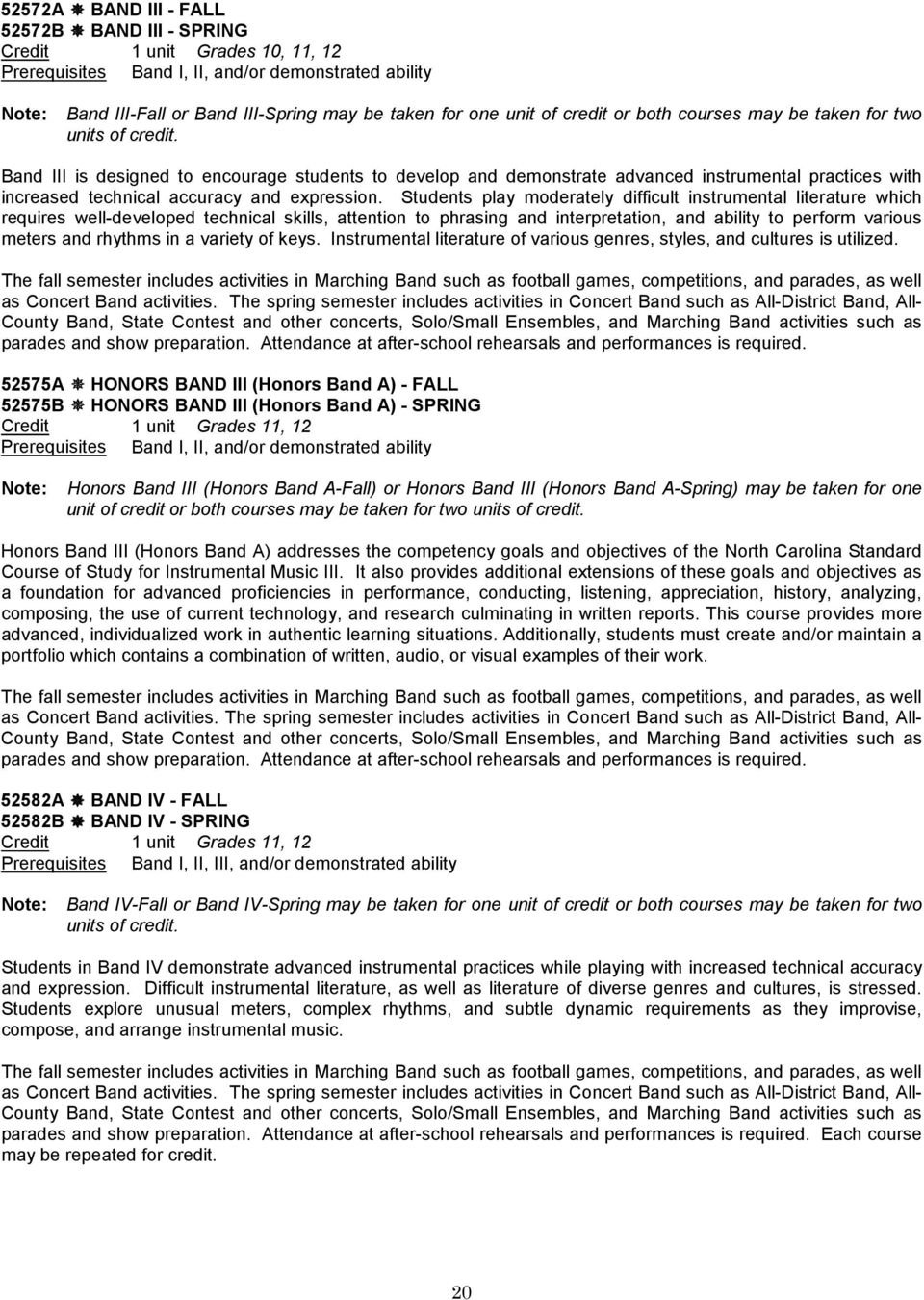
20 52572A BAND III - FALL 52572B BAND III - SPRING Grades 10, 11, 12 Prerequisites Band I, II, and/or demonstrated ability Note: Band III-Fall or Band III-Spring may be taken for one unit of credit or both courses may be taken for two units of credit. Band III is designed to encourage students to develop and demonstrate advanced instrumental practices with increased technical accuracy and expression. Students play moderately difficult instrumental literature which requires well-developed technical skills, attention to phrasing and interpretation, and ability to perform various meters and rhythms in a variety of keys. Instrumental literature of various genres, styles, and cultures is utilized. The fall semester includes activities in Marching Band such as football games, competitions, and parades, as well as Concert Band activities. The spring semester includes activities in Concert Band such as All-District Band, All- County Band, State Contest and other concerts, Solo/Small Ensembles, and Marching Band activities such as parades and show preparation. Attendance at after-school rehearsals and performances is required A HONORS BAND III (Honors Band A) - FALL 52575B HONORS BAND III (Honors Band A) - SPRING Grades 11, 12 Prerequisites Band I, II, and/or demonstrated ability Note: Honors Band III (Honors Band A-Fall) or Honors Band III (Honors Band A-Spring) may be taken for one unit of credit or both courses may be taken for two units of credit. Honors Band III (Honors Band A) addresses the competency goals and objectives of the North Carolina Standard Course of Study for Instrumental Music III. It also provides additional extensions of these goals and objectives as a foundation for advanced proficiencies in performance, conducting, listening, appreciation, history, analyzing, composing, the use of current technology, and research culminating in written reports. This course provides more advanced, individualized work in authentic learning situations. Additionally, students must create and/or maintain a portfolio which contains a combination of written, audio, or visual examples of their work. The fall semester includes activities in Marching Band such as football games, competitions, and parades, as well as Concert Band activities. The spring semester includes activities in Concert Band such as All-District Band, All- County Band, State Contest and other concerts, Solo/Small Ensembles, and Marching Band activities such as parades and show preparation. Attendance at after-school rehearsals and performances is required A BAND IV - FALL 52582B BAND IV - SPRING Grades 11, 12 Prerequisites Band I, II, III, and/or demonstrated ability Note: Band IV-Fall or Band IV-Spring may be taken for one unit of credit or both courses may be taken for two units of credit. Students in Band IV demonstrate advanced instrumental practices while playing with increased technical accuracy and expression. Difficult instrumental literature, as well as literature of diverse genres and cultures, is stressed. Students explore unusual meters, complex rhythms, and subtle dynamic requirements as they improvise, compose, and arrange instrumental music. The fall semester includes activities in Marching Band such as football games, competitions, and parades, as well as Concert Band activities. The spring semester includes activities in Concert Band such as All-District Band, All- County Band, State Contest and other concerts, Solo/Small Ensembles, and Marching Band activities such as parades and show preparation. Attendance at after-school rehearsals and performances is required. Each course may be repeated for credit. 20
21 52585A HONORS BAND IV (Honors Band B) - FALL 52585B HONORS BAND IV (Honors Band B) - SPRING Grades 11, 12 Prerequisites Honors Band III (Honors Band A) and/or demonstrated ability Note: Honors Band IV (Honors Band B-Fall) or Honors Band IV (Honors Band B-Spring) may be taken for one unit of credit or both courses may be taken for two units of credit. This course is the highest level of the band music program and is intended to provide more advanced, individualized work in authentic learning situations. Band IV (Honors Band B) addresses the competency goals and objectives of the North Carolina Standard Course of Study for Instrumental Music IV and provides a means for the student s personal, musical, social, and emotional expression. This course provides a foundation for advanced proficiencies in music performance, conducting, listening, appreciation, history, analyzing, composing, the use of current technology, and research culminating in written reports. Additionally, students must create and/or maintain a portfolio that contains a combination of written, audio, or visual examples of their work. The fall semester includes activities in Marching Band such as football games, competitions, and parades, as well as Concert Band activities. The spring semester includes activities in Concert Band such as All-District Band, All-County Band, State Contest and other concerts, Solo/Small Ensembles, and Marching Band activities such as parades and show preparation. Attendance at after-school rehearsals and performances is required A JAZZ ENSEMBLE Grades 9, 10, 11, 12 Prerequisite Demonstrated ability This course offers instruction in and experience with various dance band styles, popular instrumental music styles, and jazz styles and techniques. This course includes the study of improvisation and the reading of popular music and jazz rhythms. Attendance at after-school rehearsals and performances is required. This course may be repeated for credit. ORCHESTRA 52402A ORCHESTRA I - FALL 52402B ORCHESTRA I - SPRING Grades 9, 10, 11, 12 Note: Orchestra I-Fall or Orchestra I-Spring may be taken for one unit of credit or both courses may be taken for two units of credit. This course provides students with basic instrumental techniques, performance skills, and music theory. Orchestra literature representing diverse genres, styles, and cultures is an integral part of this course. Students develop skills in listening to, analyzing, evaluating, and reading music. They also develop an understanding of orchestra literature in relationship to history, culture, and other content areas. Proper concert attire is required. Attendance at afterschool rehearsals and performances is required. Each course may be repeated for credit A ORCHESTRA II - FALL 52412B ORCHESTRA II - SPRING Grades 10, 11, 12 Prerequisites Orchestra I and/or demonstrated ability Note: Orchestra II-Fall or Orchestra II-Spring may be taken for one unit of credit or both courses may be taken for two units of credit. This course provides students with opportunities to develop and demonstrate appropriate instrumental practices. Students further develop skills in listening to, analyzing, evaluating, and reading and playing music with increased technical accuracy and expression. Orchestral literature, which includes moderate technical demands, expanded ranges, varied interpretive requirements representing diverse genres, styles, and cultures, is an integral part of this course. Proper concert attire is required. Attendance at after-school rehearsals and performances is required. Each course may be repeated for credit. 21
22 52422A ORCHESTRA III - FALL 52422B ORCHESTRA III - SPRING Grades 10, 11, 12 Prerequisites Orchestra I, II, and/or demonstrated ability Note: Orchestra III-Fall or Orchestra III-Spring may be taken for one unit of credit or both courses may be taken for two units of credit. Orchestra III is designed to encourage students to develop and demonstrate advanced instrumental practices with increased technical accuracy and expression. Students play moderately difficult instrumental literature which requires well-developed technical skills, attention to phrasing and interpretation, and ability to perform various meters and rhythms in a variety of keys. Instrumental literature of various genres, styles, and cultures is utilized. Proper concert attire is required. Attendance at after-school rehearsals and performances is required. Each course may be repeated for credit A HONORS ORCHESTRA III (Honors Orchestra A) - FALL 52425B HONORS ORCHESTRA III (Honors Orchestra A) - SPRING Grades 11, 12 Prerequisites Orchestra I, II, and/or demonstrated ability Note: Honors Orchestra III (Honors Orchestra A-Fall) or Honors Orchestra III (Honors Orchestra A-Spring) may be taken for one unit of credit, or both courses may be taken for two units of credit. Honors Orchestra III (Honors Orchestra A) addresses the competency goals and objectives of the North Carolina Standard Course of Study for Instrumental Music III. It also provides additional extensions of these goals and objectives as a foundation for advanced proficiencies in performance, conducting, listening, appreciation, history, analyzing, composing, the use of current technology, and research culminating in written reports. This course provides more advanced, individualized work in authentic learning situations. Additionally, students must create and/or maintain a portfolio which contains a combination of written, audio, or visual examples of their work. Proper concert attire is required. Attendance at after-school rehearsals and performances is required A ORCHESTRA IV - FALL 52432B ORCHESTRA IV - SPRING Grades 11, 12 Prerequisites Orchestra I, II, III, and/or demonstrated ability Note: Orchestra IV-Fall or Orchestra IV-Spring may be taken for one unit of credit, or both courses may be taken for two units of credit. Students in Orchestra IV demonstrate advanced instrumental practices while playing with increased technical accuracy and expression. Difficult instrumental literature, as well as literature of diverse genres and cultures, is stressed. Students explore unusual meters, complex rhythms, and subtle dynamic requirements as they improvise, compose, and arrange instrumental music. Proper concert attire is required. Attendance at afterschool rehearsals and performances is required. Each course may be repeated for credit A HONORS ORCHESTRA IV (Honors Orchestra B) - FALL 52435B HONORS ORCHESTRA IV (Honors Orchestra B) - SPRING Grades 11, 12 Prerequisites Honors Orchestra III (Honors Orchestra A) and/or demonstrated ability Note: Honors Orchestra IV (Honors Orchestra B-Fall) or Honors Orchestra IV (Honors Orchestra B-Spring) may be taken for one unit of credit or both courses may be taken for two units of credit. This course is the highest level of the orchestra music program and is intended to provide more advanced, individualized work in authentic learning situations. Honors Orchestra IV (Honors Orchestra B) addresses the competency goals and objectives of the North Carolina Standard Course of Study for Instrumental Music IV and provides a means for the student s personal, musical, social, and emotional expression. This course provides a foundation for advanced proficiencies in music performance, conducting, listening, appreciation, history, analyzing, composing, the use of current technology, and research culminating in written reports. Additionally, students must create and/or maintain a portfolio that contains a combination of written, audio, or visual examples of their work. Proper concert attire is required. Attendance at after-school rehearsals and performances is also required. 22
23 VOCAL MUSIC 52302A VOCAL MUSIC I - FALL 52302B VOCAL MUSIC I - SPRING Grades 9, 10, 11, 12 This course provides students with basic vocal techniques, performance skills, and music theory. Choral literature representing diverse genres, styles, and cultures is an integral part of this course. Students develop skills in listening to, analyzing, evaluating, and reading music. They also develop an understanding of choral literature in relation to history, culture, and other content areas. Proper concert attire is required. Attendance at after-school rehearsals and performances is also required. Each course may be repeated for credit A VOCAL MUSIC II - FALL 52312B VOCAL MUSIC II - SPRING Grades 10, 11, 12 Prerequisites Vocal Music I and/or demonstrated ability Note: Vocal Music II-Fall or Vocal Music II-Spring may be taken for one unit of credit or both courses may be taken for two units of credit. This course provides students with opportunities to develop and demonstrate appropriate vocal practices and refine the use of the voice. Students listen to, analyze, evaluate, and read music. They sing with increased technical accuracy and expression. Choral literature, which includes moderate technical demands, expanded ranges, varied interpretive requirements representing diverse genres, styles, and cultures, is an integral part of this course. Proper concert attire is required. Attendance at after-school rehearsals and performances is also required. Each course may be repeated for credit A VOCAL MUSIC III - FALL 52322B VOCAL MUSIC III - SPRING Grades 10, 11, 12 Prerequisites Vocal Music I, II, and/or demonstrated ability Vocal Music III is designed to help students develop and demonstrate advanced vocal practices and refine the use of the voice as an instrument. Increased technical accuracy, sight-reading skills, and ear-training skills are stressed. Students are required to sing moderately difficult vocal literature with various meters and rhythms in a variety of keys. Vocal literature of various genres, styles, and cultures is utilized. Students improvise, compose, arrange, analyze, evaluate, and perform music. Proper concert attire is required. Attendance at after-school rehearsals and performances is also required. Each course may be repeated for credit A HONORS VOCAL MUSIC III (Honors Vocal Ensemble A) - FALL 52325B HONORS VOCAL MUSIC III (Honors Vocal Ensemble A) - SPRING Grades 11, 12 Prerequisites Vocal Music I, II, and/or demonstrated ability Note: Honors Vocal Music III (Honors Vocal Ensemble A-Fall) or Honors Vocal Music III (Honors Vocal Ensemble A-Spring) may be taken for one unit of credit or both courses may be taken for two units of credit. Honors Vocal Music III (Honors Vocal Ensemble A) addresses the competency goals and objectives of the North Carolina Standard Course of Study for Vocal Music III and provides more advanced, individualized work in authentic learning situations. The course provides opportunities for students to develop and demonstrate advanced vocal practices and refine the use of the voice as an instrument. Honors Vocal Music III (Honors Vocal Ensemble A) follows the Arts Education Honors Course Standards and provides a foundation for advanced proficiencies in performance, conducting, listening, analyzing, composing, and written research. Students must create and/or maintain a portfolio that contains a combination of written, audio, or visual examples of their work. Proper concert attire is required. Attendance at after-school rehearsals and performances is also required. 23
24 52332A VOCAL MUSIC IV - FALL 52332B VOCAL MUSIC IV - SPRING Grades 11, 12 Prerequisites Vocal Music I, II, III, and/or demonstrated ability Note: Vocal Music IV-Fall or Vocal Music IV-Spring may be taken for one unit of credit or both courses may be taken for two units of credit. In addition to challenging students with difficult vocal literature with unusual meters, complex rhythms, and subtle dynamic requirements, Vocal Music IV offers students opportunities to read and sing traditional and non-traditional music. Students further develop skills in listening to, analyzing, and evaluating music experiences. Students demonstrate advanced vocal practices and refine the use of the voice as an instrument while singing with increased accuracy and expression. Proper concert attire is required. Attendance at after-school rehearsals and performances is also required. Each course may be repeated for credit A HONORS VOCAL MUSIC IV (Honors Vocal Ensemble B) - FALL 52335B HONORS VOCAL MUSIC IV (Honors Vocal Ensemble B) - SPRING Grades 11, 12 Prerequisites Honors Vocal Music III (Honors Vocal Ensemble A) and/or demonstrated ability Note: Honors Vocal Music IV (Honors Vocal Ensemble B-Fall) or Honors Vocal Music IV (Honors Vocal Ensemble B-Spring) may be taken for one unit of credit or both courses may be taken for two units of credit. This course is the highest level of the vocal music program and is intended to provide more advanced, individualized work in authentic learning situations. Honors Vocal Music IV (Honors Vocal Ensemble B) addresses the competency goals and objectives of the North Carolina Standard Course of Study for Vocal Music IV and provides a means for the student s personal, musical, social, and emotional expression. Students sing difficult vocal literature and refine the use of the voice as an instrument. This course provides a foundation for advanced proficiencies in music performance, conducting, listening, analyzing, composing, and written research. Additionally, students must create and/or maintain a portfolio that contains a combination of written, audio, or visual examples of their work. Proper concert attire is required. Attendance at after-school rehearsals and performances is also required. THEATRE ARTS 53152A THEATRE ARTS I Grades 9, 10, 11, 12 Theatre Arts I is designed for the beginning theatre arts student. This course promotes learning the essential vocabulary and processes of theatre. It includes personal development, structure of plays, varieties of plays, evaluation, improvisation, pantomime, voice and diction, and acting. In addition, students learn about and reflect upon aspects of theatre through history and different cultures, as well as the various forms of theatre and theatrerelated media. This course also assists students in developing a sense of creativity and spontaneity. Attendance at after-school rehearsals and all performances is required. This course may be repeated for credit A THEATRE ARTS II Grades 10, 11, 12 Prerequisite Theatre Arts I Theatre Arts II is designed for students who wish to continue their exploration of theatre arts. It is a more detailed study of theatre vocabulary, reading, and writing of theatre literature, acting, and technical theatre. The acting experience in Theatre Arts II furthers the exploration of the concepts of self, body and voice, improvisation, and acting techniques. In addition, students begin to analyze and critique student-generated work, as well as that created throughout history and various cultures. Attendance at after-school rehearsals and all performances is required. This course may be repeated for credit. 24
25 53172A THEATRE ARTS III Grades 10, 11, 12 Prerequisites Theatre Arts I, Theatre Arts II, and/or demonstrated ability Theatre Arts III is designed for students who wish to continue to study and develop their knowledge of theatre arts on a more challenging level. This is a one-act play course designed for mature theatre arts students. Acting experience continues and refines the exploration of the concepts of self, body and voice, improvisation, and acting techniques. Theatre study at this level places a greater emphasis on the execution of skills, analysis and critiquing of student work, and research of theatre literature and styles from theatre history. Attendance at after-school rehearsals and all performances is required. This course may be repeated for credit A HONORS THEATRE ARTS III (Honors Theatre Arts A) - FALL 53175B HONORS THEATRE ARTS III (Honors Theatre Arts A) - SPRING Grades 10, 11, 12 Prerequisites Theatre Arts I, II, III, and/or demonstrated ability Note: Honors Theatre Arts III (Honors Theatre Arts A-Fall) or Honors Theatre Arts III (Honors Theatre Arts A- Spring) may be taken for one unit of credit or both courses may be taken for two units of credit. Honors Theatre Arts III (Honors Theatre Arts A) is an advanced course offering study and work often generated through and resulting from seminar or ensemble. This course follows the North Carolina Standard Course of Study for Theatre Arts and the Arts Education Honors Course Standards in order to provide a foundation for exploratory, experiential and/or open-ended experiences. Students are involved in a wide variety of activities including historical research for productions, script writing through improvisation, directing, designing, conceptualizing, and realizing informal and formal productions. Independent work in this course develops commitment and helps students form aesthetic judgments and refine artistic choices. Full-length and one-act plays are produced. Attendance at after-school rehearsals and all performances is required A THEATRE ARTS IV Grades 11, 12 Prerequisites Theatre Arts I, II, III, and/or demonstrated ability Through more independent study and increased production responsibilities, Theatre Arts IV involves the expertise acquired in previous theatre arts studies. Analysis of theatre processes, self-motivation, personal discipline, and more demanding projects in directing, design, and writing are emphasized. The acting experience in Theatre Arts IV concludes the exploration of the concepts of self, body and voice, improvisation, and acting techniques. Attendance at after-school rehearsals and all performances is required. This course may be repeated for credit A HONORS THEATRE ARTS IV (Honors Theatre Arts B) - FALL 53185B HONORS THEATRE ARTS IV (Honors Theatre Arts B) - SPRING Grades 11, 12 Prerequisites Honors Theatre Arts III (Honors Theatre Arts A) and/or demonstrated ability Note: Honors Theatre Arts IV (Honors Theatre Arts B-Fall) or Honors Theatre Arts IV (Honors Theatre Arts B- Spring) may be taken for one unit of credit or both courses may be taken for two units of credit. Honors Theatre Arts IV (Honors Theatre Arts B) is an advanced level course which concentrates on in-depth research, analysis, reflection, application, production, and performance. This course follows the North Carolina Standard Course of Study for Theatre Arts and the Arts Education Honors Course Standards. Students become initiators of learning and demonstrate leadership and expertise in theatre arts. Attendance at after-school rehearsals and all performances is required A TECHNICAL THEATRE I Grades 10, 11, 12 This course is designed to teach students to understand and demonstrate a working knowledge of how the various areas of technical theatre operate and support performances. After extensive research, students create props and costumes and work with makeup, lights, and sound using available resources. Students gain experience in generating publicity for productions. Attendance at after-school rehearsals and all performances is required. This course may be repeated for credit. 25
26 53262A TECHNICAL THEATRE II Grades 11, 12 Prerequisite Technical Theatre I This course is designed for the student who has significant experience in technical theatre work and who can assume major production responsibilities. The student is expected to take a leadership role in the technical aspects of productions including scenery, costumes, makeup, lighting, sound, and props. Attendance at afterschool rehearsals and all performances is required. This course may be repeated for credit. 26
27 CAREER TECHNICAL EDUCATION The mission of Career-Technical Education is to help empower students for effective participation in an international economy as world-class workers and citizens. The Career and Technical Education Curriculum promotes best practices, integration of language arts, math and technology. These requirements encourage students to complete a concentration in an area of special interest such as Career and Technical Education (CTE) by earning at least four credits in one of the thirteen career clusters, including one course at the advanced level. CAREER CLUSTERS Career Clusters are groupings of 13 occupations based on common knowledge and skills. This classification system can be used as a guidance and planning tool for students. Career Clusters are highly recommended by the state, but they are not required for graduation. Foundational Courses - provide core content for a cluster. Enhancement enrich the foundational courses for a cluster. To earn a concentration for graduation and CTE federal reporting purposes: The student must take at least four technical credits from among the courses listed in the Career Cluster one of which must be at an advanced level identified by an asterisk (*) At least three of the technical credits must come from among the Foundational courses The fourth technical credit can be either a Foundational or Enhancement course Enhancement courses can be from any program area identified in the Career Cluster Agriculture, Food and Natural Resources Cluster Foundational Courses Courses that provide core content for a cluster. (Minimum of three one must be starred) Agricultural Education 6841 Horticulture I 6842 Horticulture II Turf Grass* 6882 Horticulture II Landscape Construction* Family and Consumer Science Education 7045 Foods I The production, processing, marketing, distribution, financing, and development of agricultural commodities and resources including food, fiber, and other plant and animal products/resources. Enhancement Courses Courses that enhance the foundational courses for a cluster Principles of Business & Finance 6215 Business Law 6411A Microsoft IT Academy - Word, PowerPoint, and Publisher 6411B Microsoft IT Academy - Excel and Access 6514 Digital Communications Systems 7086 Personal Finance 7200 Biomedical Technology 6615 Small Business Entrepreneurship 6621 Marketing 7511 Automotive Service Technology I 7512 Automotive Service Technology II 7513 Automotive Service Technology III **Huskin/Gateway classes offered upon availability 27
28 Architecture and Construction Careers in designing, planning, managing, building and maintaining the built environment Foundational Courses Courses that provide core content for a cluster. (Minimum of three one must be starred) Family and Consumer Sciences Education 7055 Housing and Interiors I Trade and Industrial Education 7721 Construction Technology I 7722 Construction Technology II * 7741 Electrical Trades I 7742 Electrical Trades II * 7921 Drafting I 7962 Honors Drafting Architectural II * 7963 Honors Drafting Architectural III Enhancement Courses Courses that enhance the foundational courses for a cluster Principles of Business & Finance 6215 Business Law 6411A Microsoft IT Academy - Word, PowerPoint, and Publisher 6411B Microsoft IT Academy - Excel and Access 6514 Digital Communications Systems 7086 Personal Finance 6615 Small Business Entrepreneurship 8110 Fundamentals of Technology 8141 Structural Systems **Huskin./Gateway classes offered upon availability Arts, Audio/Video Technology and Communications Foundational Courses Courses that provide core content for a cluster. (Minimum of three one must be starred) Family and Consumer Sciences Education 7035 Apparel Development I 7036 Apparel Development II * Trade and Industrial Education 7921 Drafting I 8006 Scientific & Technical Visualizations I 8007 Scientific & Technical Visualizations II* 7911 Print Graphics I 7912 Print Graphics II* 7935 Digital Media I 7936 Digital Media II* Designing, producing, exhibiting, performing, writing, and publishing multimedia content including visual and performing arts and design, journalism, and entertainment services. Enhancement Courses Courses that enhance the foundational courses for a cluster Principles of Business & Finance 6215 Business Law 6411A Microsoft IT Academy Word, Power- Point and Publisher 6411B Microsoft IT Academy - Excel and Access 6514 Digital Communications Systems 7055 Housing & Interiors I 7086 Personal Finance 6615 Small Business Entrepreneurship 8110 Fundamentals of Technology 8141 Structural Systems **Huskin/Gateway classes offered upon availability 28
29 Business Management and Administration Foundational Courses Courses that provide core content for a cluster. (Minimum of three one must be starred) Business and Information Technology Education 6200 Principles of Business & Finance 6215 Business Law 6311 Accounting I 6411A Microsoft IT Academy Word, PowerPoint and Publisher 6411B Microsoft IT Academy Excel and Access 6412 Multimedia & Webpage Design* 6514 Digital Communications Systems 6615 Small Business Entrepreneurship* Business Management and Administration careers encompass planning, organizing, directing and evaluating business functions essential to efficient and productive business operations. Business Management and Administration career opportunities are available in every sector of the economy. Enhancement Courses Courses that enhance the foundational courses for a cluster Honors ecommerce 7086 Personal Finance 7980 Networking I 7935 Digital Media I 7991 Computer Engineering Technology I **Huskin/Gateway classes offered upon availability Finance Foundational Courses Courses that provide core content for a cluster. (Minimum of three one must be starred) 6200 Principles of Business & Finance 6215 Business Law 6311 Accounting I 6312 Accounting II* 6415 Honors e-commerce I 6615 Small Business Entrepreneurship* 7086 Personal Finance Planning, services for financial and investment planning, banking, insurance, and business financial management. Enhancement Courses Courses that enhance the foundational courses for a cluster. 6411A Microsoft IT Academy Word, Power- Point and Publisher 6411B Microsoft IT Academy - Excel and Access 6412 Multimedia & Webpage Design 6514 Digital Communication Systems 6621 Marketing 7086 Personal Finance **Huskin/Gateway classes offered upon availability 29
30 Health Science Foundational Courses Courses that provide core content for a cluster. (Minimum of three one must be starred) Health Occupations 7200 Biomedical Technology 7210 Health Team Relations 7211 Health Sciences I xxxx Health Sciences II * XXXX Nursing Fundamentals Planning, managing, and providing therapeutic services, diagnostic services, health informatics, support services, and biotechnology research and development. Enhancement Courses Courses that enhance the foundational courses for a cluster Principles of Business & Finance 6215 Business Law 6311 Accounting I 6411A Microsoft IT Academy Word, Power- Point and Publisher 6411B Microsoft IT Academy - Excel and Access 7045 Foods I 7086 Personal Finance 6615 Small Business Entrepreneurship 8006 Scientific & Technical Visualization I **Huskin/Gateway classes offered upon availability Hospitality and Tourism Foundational Courses Courses that provide core content for a cluster. (Minimum of three one must be starred) Family and Consumer Sciences 7045 Foods I 7121 Culinary Arts & Hospitality I 7122 Culinary Arts & Hospitality II* Marketing Education 6621 Marketing 6645 Travel/Tourism & Recreation Marketing * 6670 Sports & Entertainment Marketing I 6671 Sports & Entertainment Marketing II * Hospitality & Tourism encompasses the management, marketing and operations of restaurants and other foodservices, lodging, attractions, recreation events and travel related services. Enhancement Courses Courses that enhance the foundational courses for a cluster Principles of Business & Finance 6215 Business Law 6311 Accounting I 6411A Microsoft IT Academy Word, Power- Point and Publisher 6411B Microsoft IT Academy - Excel and Access 6514 Digital Communications System 7086 Personal Finance 6615 Small Business Entrepreneurship 8006 Scientific & Technical Visualization I **Huskin/Gateway classes offered upon availability 30
31 Human Services Foundational Courses Courses that provide core content for a cluster. (Minimum of three one must be starred) Family and Consumer Sciences Education 7065 Parenting and Child Development 7086 Personal Finance 7111 Early Childhood Education I 7112 Honors Early Childhood Education II* Preparing individuals for employment in career pathways that relate to families and human needs. Enhancement Courses Courses that enhance the foundational courses for a cluster Principles of Business & Finance 6215 Business Law 6411A Microsoft IT Academy Word, Power- Point and Publisher 6411B Microsoft IT Academy -Excel and Access 6514 Digital Communications Systems 7210 Health Team Relations 6615 Small Business Entrepreneurship **Huskin/Gateway classes offered upon availability Information Technology Foundational Courses Courses that provide core content for a cluster. (Minimum of three one must be starred) Business and Information Technology 6415 Honors ecommerce I 6514 Digital Communication Systems Trade and Industrial Education 7980 Networking I 7981 Honors Networking Engineering II Cisco 7991 Computer Engineering Technology I 7992 Honors Computer Engineering Technology II* Building Linkages in IT Occupations Framework: For Entry Level, Technical, and Professional Careers Related to the Design, Development, Support and Management of Hardware, Software, Multimedia, and Systems Integration Services. Enhancement Courses Courses that enhance the foundational courses for a cluster Principles of Business & Finance 6412 Multimedia and Webpage Design 7086 Personal Finance 6615 Small Business Entrepreneurship 8110 Fundamentals of Technology 8125 Communication Systems 7921 Drafting I 7935 Digital Media I **Huskin/Gateway classes offered upon availability 31
32 Manufacturing Foundational Courses Courses that provide core content for a cluster. (Minimum of three one must be starred) Trade and Industrial Education 7631 Electrical Trades 7742 Electrical Trades II * 7921 Drafting I Planning, managing and performing the processing of materials into intermediate or final products and related professional and technical support activities such as production planning and control, maintenance and manufacturing/process engineering. Enhancement Courses Courses that enhance the foundational courses for a cluster. 6411A Microsoft IT Academy Word, Power- Point and Publisher 6411B Microsoft IT Academy -Excel and Access 6415 Honors ecommerce I 6514 Digital Communications System 7086 Personal Finance 6615 Small Business Entrepreneurship 6621 Marketing 8110 Fundamentals of Technology **Huskin/Gateway classes offered upon availability Marketing Foundational Courses Courses that provide core content for a cluster. (Minimum of three one must be starred) Marketing Education 6615 Small Business Entrepreneurship* 6621 Marketing 6645 Travel/Tourism and Recreation 6670 Sports and Entertainment Marketing I 6671 Sports and Entertainment Marketing II * Planning, managing, and performing marketing activities to reach organizational objectives. Enhancement Courses Courses that enhance the foundational courses for a cluster Principles of Business and Finance 6215 Business Law 6311 Accounting I 6411A Microsoft IT Academy Word, Power- Point and Publisher 6411B Microsoft IT Academy - Excel and Access 6415 Honors ecommerce I 6514 Digital Communications System 7935 Digital Media I **Huskin/Gateway classes offered upon availability 32
33 Science, Technology, Engineering and Mathematics Foundational Courses Courses that provide core content for a cluster. (Minimum of three one must be starred) Technology Education 7901 Scientific and Technical Visualization I 7902 Honors Scientific and Technical Visualization II* 8110 Fundamentals of Technology 8125 Communications Systems * 8126 Transportation Systems* 8141 Structural Systems* Planning, managing, and providing scientific research and professional and technical services including laboratory and: testing services, and research and development services. Enhancement Courses Courses that enhance the foundational courses for a cluster. 6411A Microsoft IT Academy Word, Power- Point and Publisher 6411B Microsoft IT Academy -Excel and Access 6514 Digital Communications Systems 7935 Digital Media I **Huskin/Gateway classes offered upon availability Trade and Industrial Education 7921 Drafting I 7972 Honors Drafting Engineering II* 7973 Honors Drafting Engineering III 7980 Networking I 7981 Honors Networking Engineering II Cisco 7991 Computer Engineering Technology 7992 Honors Computer Engineering Technology II* Transportation Foundational Courses Courses that provide core content for a cluster. (Minimum of three one must be starred) Trade and Industrial Education 7511 Automotive Service Technology I 7512 Automotive Service Technology II* 7513 Automotive Service Technology III Planning, management, and movement of people, materials, and goods by road, pipeline, air, rail and water and related professional and technical support services such as transportation infrastructure planning and management. Enhancement Courses Courses that enhance the foundational courses for a cluster Principles of Business and Finance 6215 Business Law 6311 Accounting I 6411A Microsoft IT Academy Word, Power- Point and Publisher 6411B Microsoft IT Academy -Excel and Access 6514 Digital Communications Systems 7086 Personal Finance 8110 Fundamentals of Technology 8126 Transportation Systems* **Huskin/Gateway classes offered upon availability 33
34 TECHNOLOGY EDUCATION 81102A FUNDAMENTALS OF TECHNOLOGY Grade 9 This course provides hands-on experiences in principles and processes essential for the technology systems courses and develops a foundation for students interested in any technical field of study. The course activities are structured to integrate academic skills. Emphasis is placed on problem solving, design, technical communication, modeling, testing, evaluation, and implications of technology A STRUCTURAL SYSTEMS Grades 10, 11 Prerequisite Fundamentals of Technology This course provides a general introduction to technical construction. The course provides a working understanding of the key elements associated with designing, planning, and constructing an on-site structure. Activities include computer-aided design and construction of houses, bridges, and experimental structures. Through hands-on activities, students will apply mathematical and scientific principles related to construction. Written and oral communications skills are reinforced. Personal abilities, special interests, and career possibilities in construction systems are identified A TRANSPORTATION SYSTEMS (AHS, JTH, NHHS) Grades 10, 11 Prerequisite Fundamentals of Technology This course provides a general introduction to the various transportation systems. Land, sea, air, and space transportation systems are examined, and illustrative examples are discussed. Hands-on activities will focus on technical problem solving and creative abilities in designing, planning, and testing ways of moving goods and people. Students develop model vehicles and test them through class competition. Computers are used for flight and driving simulation. Mathematics and scientific principles related to transportation are integrated into the course. Written and oral communication skills are reinforced. Personal abilities, special interests, and career opportunities in transportation systems are identified A COMMUNICATION SYSTEMS Grades 10, 11 Prerequisite Fundamentals of Technology This course provides a general introduction to technical communication systems in industry. The course identifies visual, graphic, video, and computer communication. Emphasis is placed on computer communication through the use of desktop publishing, computer animation, and telecommunication. Mathematics and scientific principles related to communications are used in the electronic and laser activities. Written and oral communication skills are reinforced. Personal abilities, special interests, and career possibilities in communication systems are identified A SCIENTIFIC & TECHNICAL VISUALIZATION I (AHS) Grades 10, 11, 12 This course introduces students to the use of complex graphic tools. Emphasis is placed on the use of these tools to better understand technical, mathematical, and scientific concepts. Visualization activities include graphics of mathematical models, molecular structures, topographical maps, stratospheric and climate models, and statistical analysis. Computer, communication, mathematics, and scientific concepts are reinforced in this course. 34
35 80075A HONORS SCIENTIFIC & TECHNICAL VISUALIZATION II (AHS) Grades 11, 12 Prerequisite Scientific & Technical Visualization I This course is designed for students who have demonstrated an advanced level of interest and achievement in Technology Education. This course provides students with advanced skills in the use of complex visualization tools for the study of math and/or sciences concepts. Students design and develop increasingly complex data and concept driven visualization models. Focusing on scientific and technical concepts, students learn how to communicate and analyze phenomena using statistical graphic and conceptual visualization computer applications. Communication, computer, technical, mathematics, and science skills are reinforced in this course. The course provides the opportunity for advanced work, rigorous academic study, practical application, and transfer of knowledge and skills A1 INTRODUCTION TO GAME ART AND DESIGN I (AHS) Grades 10, 11, 12 Prerequisite Scientific and Technical Visualization I This course is an introduction to the basics of gaming design. Popular game culture, game elements, social game interaction, and game theory are explored. Game design success is evaluated based on industry play test procedures. Visual design fundamentals in game design are applied using 3D modeling software. Students produce and evaluate 2D games using existing game theory and design standards A2 ADVANCED GAME ART AND DESIGN II (AHS) Grades 10, 11, 12 Prerequisites Scientific and Technical Visualization I and Introduction to Game Art and Design I This is an advanced gaming course. Students apply advanced visual design techniques using 3D modeling for scene creation, 3D character modeling, and 3D animation techniques. Students analyze advanced game design principles with sound, action/interaction, and video editing. Using 3D game engines, students create new strategies and plans for new game designs. Electronic portfolios are used to compile and organize student game creations. XXXX TECHNOLOGY EDUCATION (NHHS) This course introduces students to the nature and core concepts of technology, the elements and principles of design, basic engineering concepts, problem solving, teaming, and the development of physical and virtual models. Students conduct research and develop technical presentations and reports. Work based learning strategies appropriate for this course include job shadowing and field trips. This course and TSA technical and leadership activates develop skills essential for students interested in technical or engineering career fields. TRADES AND INDUSTRIAL EDUCATION 79212A DRAFTING I Grades 10, 11, 12 Prerequisite Geometry This course is an introduction to the nature of drafting and employment opportunities in drafting. It includes basic familiarization with the terms and tools of the drafting trade, sketching, practice in geometric construction, orthographic projections, dimensioning, 3-D modeling, and Computer Aided Drafting (CAD). At least 60% of class time is devoted to actual student work on the drafting table and/or a CAD system A HONORS DRAFTING-ARCHITECTURAL II Grades 11, 12 Prerequisite Drafting I This course focuses on the principles, concepts, and use of complex graphic tools used in the field of architecture, structural systems, and construction trades. Emphasis is placed on the use of CAD tools in the creation of floor plans, wall sections, and elevation drawings. Mathematics, science, and visual design concepts are reinforced. The course provides the opportunity for advanced work, rigorous academic study, practical application, and transfer of knowledge and skills. 35
36 79725A HONORS DRAFTING-ENGINEERING II Grades 11, 12 Prerequisite Drafting I This course focuses on engineering graphics related subjects introducing the student to symbol libraries, industry standards, and sectioning techniques. Topics include coordinate systems, principles of machine processes and gearing, and the construction of 3-D wire frame models using CAD. Mathematics, science, and mechanical engineering concepts involving the working principles and design of cams and gears are reinforced. The course provides the opportunity for advanced work, rigorous academic study, practical application, and transfer of knowledge and skills A HONORS DRAFTING-ARCHITECTURAL III Grade 12 Prerequisites Geometry, Drafting I, and Honors Drafting-Architectural II This course introduces students to advanced architectural design concepts. Emphasis is placed on the use of CAD tools in the design and execution of site and foundation plans as well as topographical information and detail drawings of stairs and wall sections. Teaming and problem-solving skills are reinforced. The course provides the opportunity for advanced work, rigorous academic study, practical application, and transfer of knowledge and skills A HONORS DRAFTING-ENGINEERING III Grades 12 Prerequisites Geometry, Drafting I, and Honors Drafting-Engineering II This course introduces the student to advanced engineering concepts. Using CAD tools, topics studied include descriptive geometry, geometric tolerance, and advanced engineering design concepts such as surface and solid modeling. Science and mathematic concepts are reinforced. The course provides the opportunity for advanced work, rigorous academic study, practical application, and transfer of knowledge and skills A ELECTRICAL TRADES I (EAL) Grades 10, 11 This course introduces residential wiring, electrical installation, and service. Topics include basic electricity, electrical construction codes and practices, the National Electrical Code, the use of test equipment, and electrical hand and power tools. Skills in safety, mathematics, leadership, and problem solving are reinforced in this course. Job shadowing is an appropriate work-based learning strategy for this course. Hands-on work experiences and leadership activities provide many opportunities to enhance classroom instruction and career development. At the completion of this course, there is the opportunity to participate in an electrical apprenticeship program. Students completing this course will be registered with the National Center for Construction Education and Research (NCCER), a national registry A ELECTRICAL TRADES II- FALL (EAL) 77422B ELECTRICAL TRADES II- SPRING (EAL) Credit 2 units Grades 11, 12 Prerequisites Electrical Trades I and Geometry Note: Student must enroll in both courses to receive credit. This course provides advanced instruction in residential wiring and an introduction to electrical theory including AC and DC circuits. Emphasis is placed on test equipment, electrical color, conduit bending and installation, electrical measurements, use of polyphase current, specialty tools, transformers, generators, and advanced study of the National Electrical Code. Skills in safety, leadership, reading, mathematics, and problem solving are reinforced in this course. At the completion of this course, there is the opportunity to participate in an electrical apprenticeship program. Students completing both courses are eligible to be registered with the National Center for Construction Education and Research (NCCER), a national registry. 36
37 79352A DIGITAL MEDIA I (EAL, JTH, NHHS) Grades 10, 11, 12 This course provides a broad-based foundation in the digital media field. An emphasis is placed on the fundamental concepts of audio and video design, various digital media technologies, non-linear editing, product development and design, and career development. Communication, mathematical, and critical thinking skills are strengthened throughout the course. Work-based learning strategies appropriate for this course are field trips and job shadowing. Local projects and SkillsUSA leadership activities, conferences, and competitions provide opportunities for the application of instructional competencies A DIGITAL MEDIA II (EAL, JTH, NHHS) Grades 11, 12 Prerequisite Digital Media I Note: Some after-school hours may be required to videotape school events and to participate with New Hanover County Schools TV (NHCS-TV) on Time Warner Cable Channel 5, The Learning Network. This course provides students with more advanced knowledge in the digital and interactive media industry. Emphasis is placed on advanced audio and video non-linear editing techniques for the media; and commercial and emerging, web-based interactive media. Project planning, design and development prepare students for entry into various IT and communication industries. Work-based strategies appropriate for this course are cooperative education and apprenticeship. Hands-on work experiences and SkillsUSA leadership activities provide many opportunities to enhance classroom instruction and career development A COMPUTER ENGINEERING TECHNOLOGY I Grades 10, 11, 12 This course introduces the essential hardware competencies for an entry-level personal computer (PC) service technician. This course focuses on the CompTIA A+ Core Hardware exam objectives. Students demonstrate basic knowledge of installing, configuring, upgrading, troubleshooting, and repairing microcomputer systems. A work-based strategy appropriate for this course is job shadowing. For optimum A+ credential preparation it is recommended that students take this course and Computer Engineering Technology II in the same school year A HONORS COMPUTER ENGINEERING TECHNOLOGY II Grades 11, 12 Prerequisite Computer Engineering Technology I Note: Work-based strategies appropriate for this course include job shadowing, internships, cooperative education, and apprenticeship programs. See course instructor for details. Computer Engineering Technology II (CET II) offers advanced hands-on training and theory to enhance skills introduced in CET I. The course provides essential operating system competencies for an entry-level personal computer (PC) service technician. This course focuses on the Comp TIA A+ Operating System Technologies exam objectives. Students demonstrate knowledge of installing, configuring, upgrading, troubleshooting, and repairing operating systems. The course provides the opportunity for advanced work, rigorous academic study, practical application, and transfer of knowledge and skills A NETWORKING I Grades 10, 11 Prerequisite Computer Engineering Technology I This course provides a broad-based foundation in the engineering and administration of computer network systems. Emphasis is on personal computer/network hardware and operating systems, architecture, protocols, design and security, and career development. Communication, mathematical, and critical-thinking skills are strengthened throughout the course. Work-based learning strategies appropriate for this course are field trips and job shadowing. Simulations, projects, teamwork, and leadership provide opportunities for application of instructional competencies. This curriculum is provided by the Cisco Networking Academy. It is recommended that students enroll in this course and Networking Engineering Technology II in the same school year. 37
38 79815A HONORS NETWORK ENGINEERING TECHNOLOGY II-CISCO Grades 11, 12 Prerequisite Networking I This course introduces the fundamental principles of networks and their operation from an industry vendor s perception. Emphasis is placed on the hands-on-skills needed to design, set-up, maintain networks, install cabling, and configure vendor-specific routers and switches. Technical writing and binary mathematical skills are also emphasized. The expectation of this course sequence is for students to be better prepared for the appropriate industry-credentialing exam, Certified Cisco Network Administrator. (CCNA) It is designed for students with advanced problem-solving and analytical skills, such as degree candidates in engineering, math, or science, or for working professionals who would like to advance their careers or gain certification. The curriculum is provided by the Cisco Network Academy A HONORS NETWORK ENGINEERING TECHNOLOGY III-CISCO Grade 12 Prerequisites Networking I and Network Engineering Technology II-Cisco Through hands-on experiences, this course introduces the concepts of wide area networks, advanced router configurations, switched networks, VLANS, and simple vendor-specific network management protocols. Presentation and communication skills needed by a network engineer are emphasized. The expectation of this course sequence is for students to be better prepared for the appropriate industry-credentialing exam. (CCNA) It is designed for students with advanced problem-solving and analytical skills, such as degree candidates in engineering, math, or science, or for working professionals who would like to advance their careers or gain certification. The curriculum is provided by the Cisco Network Academy. Work-based strategies appropriate for this course are job shadowing, internships, cooperative education, and apprenticeship programs A AUTOMOTIVE SERVICE TECHNOLOGY I (Taught at NHHS but available to other high school students) Grades 10, 11 This is an introductory course related to job opportunities and service in the automotive repair industry. Specific training is given in computer lab experiences on automotive electronics and auto engine identification. This training is combined with emphasis on measuring, troubleshooting, brake repair, preventive maintenance, and engine theory. Additional instruction is given in work safety and leadership development. At least 50% of class time is devoted to hands-on experiences with hand tools and automotive components A AUTOMOTIVE SERVICE TECHNOLOGY II- FALL 75122B AUTOMOTIVE SERVICE TECHNOLOGY II- SPRING (Taught at NHHS but available to other high school students) Credit 2 units Grades 11, 12 Prerequisite Automotive Service Technology I Notes: Student must enroll in both courses to receive credit. Automotive Service Technology programs in North Carolina are National Automotive Technician Education Foundation (NATEF) certified. Automotive Service Excellence (ASE) areas of brakes and electrical/electronics are taught in this course. The Level II course helps prepare students for the Automotive Service Excellence (ASE) technician certification. Work-based learning experience strategies appropriate for this course are field trips, job shadowing, internships and apprenticeship programs. At least 75% of class time is devoted to hands-on experiences. 38
39 75132A AUTOMOTIVE SERVICE TECHNOLOGY III-FALL 75132B AUTOMOTIVE SERVICE TECHNOLOGY III-SPRING Credit 2 units Grade 12 Prerequisites Automotive Service Technology 1 and Automotive Service Technology II Note: Student must enroll in both courses to receive credit. Automotive Service Technology III emphasizes advanced brakes and advanced electrical/electronic systems. This course further prepares students for ASE (Automotive Service Excellence) certification. Employability skills, leadership, safety, problem solving, and planning are reinforced in this course. Worked-based learning opportunities appropriate for this course include internships and apprenticeships with local automotive employers. At least 75% of class time is devoted to hands-on experiences A PRINTING GRAPHICS I (Taught at NHHS and EAL but available to other high school students) Grades 10, 11 Prerequisite Microsoft IT Academy Word, PowerPoint, and Publisher This course introduces graphic communications and digital imaging technology with emphasis on printing production and computer applications. Topics include safety, layout, design, digital imaging, electronic pre-press, Computer to Plate (CTP) technology, duplicator operations, finishing, binding, and basic silkscreen printing. Thinking skills, science, math, leadership, visual art, and working in a lab environment are reinforced in this course. At least 50% of class time is devoted to hands-on experiences A PRINTING GRAPHICS II-FALL 79122B PRINTING GRAPHICS II-SPRING (Taught at NHHS and EAL but available to other high school students) Credit 2 units Grades 11, 12 Prerequisite Printing Graphics I Note: Student must enroll in both courses to receive credit. This course covers the entire printing graphics process from design stage to printing and binding. A strong emphasis is placed on working within a team setting. An environment of job readiness and skill development is reinforced with production schedules and independent lab assignments. PhotoShop, Illustrator, In-Design, Freehand, and PageMaker are used daily. Topics include advanced safety, production planning layout, design, electronic imaging, digital prepress, Computer to Plate (CTP) multicolor, and duplication operations. Binding, finishing, silkscreen printing, and flexography are also integrated in the printing experience. At least 75% of class time is devoted to hands-on experiences A CONSTRUCTION TECHNOLOGY I (EAL, JTH, NHHS) Grades 10, 11 This course provides a basic introduction to construction work and the technical aspects of carpentry. Topics include safety, measurement, and the identification, selection, and use of tools, equipment, lumber, materials, and fasteners. Basic skills, leadership, career development, thinking and reasoning skills, mathematics, and principles of technology are reinforced. Job shadowing is an appropriate work-based learning strategy for this course. Handson work experiences and SkillsUSA leadership activities provide many opportunities to enhance classroom instruction and career development. Successful completion of Algebra I is a highly recommended prerequisite to ensure success. Students will have the opportunity to earn a national NCCER CREDENTIAL which is based on industry standards. NCCER stands for the National Center for Construction Education & Research. 39
40 77222A CONSTRUCTION TECHNOLOGY II-FALL (EAL, JTH, NHHS) 77222B CONSTRUCTION TECHNOLOGY II-SPRING Credit 2 units Grades 11, 12 Prerequisite Construction Technology I Note: Student must enroll in both courses to receive credit. This course covers in depth advanced technical aspects of carpentry with emphasis on development of skills introduced in level I. Topics include floor systems, wall and ceiling framing, roof framing, roofing applications, introductions to concrete, reinforcing materials and forms, windows and exterior doors, basic stair layout, thermal and moisture protection, exterior finishing, cold formed steel framing and drywall installations. Skills in measurement, leadership, safety, mathematics, and problem solving are also reinforced in this course. Workbased learning strategies appropriate for this course are cooperative education and apprenticeships. Hands-on work experiences and SkillsUSA leadership activities provide many opportunities to enhance classroom instruction and career development. Successful completion of Geometry is a recommended prerequisite. Students will have the opportunity to earn a national NCCER (National Center for Construction Education & Research) credential based on industry standards A HORTICULTURE I (JTH) Grades 9, 10, 11 This course provides instruction on the broad field of horticulture with emphasis on the scientific and technical knowledge for a career in horticulture. Topics in this course include plant growth and development, plant nutrition, media selection, basic plant identification, pest management, chemical disposal, customer relations, career opportunities, and leadership development. Skills in biology, chemistry, and algebra are reinforced in this course A HORTICULTURE II-LANDSCAPING (JTH) Grades 11, 12 Prerequisite Horticulture I This course provides hands-on instruction and emphasizes safety skills needed by landscape technicians in the field. This course is based on the North Carolina Landscape Contractor s Association skill standards for a certified landscape technician. Students are instructed in interpreting landscape designs, identifying plants, and planting/maintaining trees, shrubs, and turf. Landscape construction is emphasized in the areas of grading and drainage, irrigation, paver installation, and the use/maintenance of landscape equipment. Students gain an understanding of careers and the employable skills needed to enter the landscape industry. Work-based learning strategies appropriate for this course include internships and apprenticeship programs with certified landscape technicians A HORTICULTURE II-TURF GRASS (JTH) Grades 11, 12 Prerequisites Horticulture I, Horticulture II-Landscape Construction This course is designed to introduce students to the fundamentals of plant science and soils as related to the turf grass industry. Hands-on instruction is provided on specific areas including environmental issues, turf grass maintenance, landscape basics, lawn care and turf production, sports turf and turf irrigation, turf equipment and maintenance, golf course management, and public relations. Instruction on leadership skills and employable skills are incorporated. Students have an opportunity to access internships and apprenticeship programs through this course. BUSINESS EDUCATION 62002A PRINCIPLES OF BUSINESS AND FINANCE Grades 10, 11, 12 This course introduces students to topics related to business, finance, management, and marketing to cover business in the global economy, functions of business organization and management, marketing basics, and significance of business financial and risk management. Appropriate work-based learning strategies are job shadowing, field trips, and service learning. Participation in DECA and FBLA leadership activities, conferences, competitions, and meetings in addition to projects, simulations and teamwork provides the opportunity for application of instructional competencies. 40
41 62152A BUSINESS LAW Grades 11, 12 This course is designed to acquaint students with the basic legal principles common to business activities including origin and development of law, business relationships, business organizations, and contracts. This course emphasizes the nature of business and how it is used rather than the technical details A DIGITAL COMMUNICATION SYSTEMS Grades 9, 10, 11, 12 This course is designed to teach basic digital input skills. It includes keying using the touch method, speech recognition, and use of hand-held devices. Emphasis is on the daily use and operation of commonly used digital communication devices for business correspondence. Students format, compose, and proofread A ACCOUNTING I Credit l unit Grades 10, 11, 12 Note: On-the-job training (OJT) opportunities available through this course are cooperative education and apprenticeship programs. An application is required to participate in OJT. See a business education teacher for details. This course introduces students to topics related to business, finance, management, and marketing to cover business in the global economy, functions of business organization and management, marketing basics, and significance of business financial and risk management. Appropriate work-based learning strategies are job shadowing, field trips, and service learning. Participation in DECA and FBLA leadership activities, conferences, competitions, and meetings in addition to projects, simulations and teamwork provides the opportunity for application of instructional competencies A ACCOUNTING II Credit l unit Grades 11, 12 Prerequisite Computerized Accounting I Note: On-the-job training (OJT) opportunities available through this course are cooperative education and apprenticeship programs. An application is required to participate in OJT. See a business education teacher for details. This course is designed to provide the student with an opportunity to develop in-depth knowledge of accounting procedures and techniques utilized in solving business problems and making financial decisions. Emphasis includes departmental accounting; corporate accounting cost accounting and inventory control systems; managerial accounting and budgeting, and further enhancement of accounting sills. Mathematics skills and critical thinking are reinforced. Work-based learning strategies appropriate to this curse are school-based enterprises, internships, and cooperative education. Simulations, projects, teamwork, and FBLA leadership activities, meetings, conferences, and competitions provide opportunities for application of instructional competencies A BUSINESS PERSONAL FINANCE Grades 11, 12 Personal Finance prepares students to understand economic activities and challenges of individuals and families, the role of lifestyle goals in education and career choices, procedures in a successful job search, financial forms used in independent living, and shopping options and practices for meeting consumer needs. The course also prepares students to understand consumer rights, responsibilities, and information, protect personal and family resources, and apply procedures for managing personal finances. Appropriate work-based learning strategies include career shadowing and service learning. Related activities in FBLA provide the opportunity for students to apply personal financial planning skills in authentic settings. 41
42 64112A MICROSOFT IT ACADEMY WORD, POWERPOINT AND PUBLISHER Grades 9, 10, 11, 12 Prerequisite Digital Communication Systems Students in Microsoft IT Academies benefit from world-class Microsoft curriculum and cutting-edge software tools to tackle real-world challenges in the classroom environment. The first part of the class is a supplemental section where students will learn to create, edit, organize and share a virtual notebook. In the second part, students will learn to use the newest version of Microsoft Word interface, commands and features to create, enhance, customize and share documents as well as create complex documents and publish them. In the third part, students will learn to use the newest version of Microsoft PowerPoint interface, commands, and features to create, enhance, customize and deliver presentations. In the last part, students will learn to use the basic features of the newest version of Microsoft Publisher to create, customize and publish a publication. Work-based learning strategies appropriate to this course are school-based enterprises, internships, and cooperative education. Simulations, projects, teamwork, and FBLA leadership activities, meetings, conferences, and competitions provide opportunities for application of instructional competencies B MICROSOFT IT ACADEMY EXCEL AND ACCESS Grades 9, 10, 11, 12 Prerequisite Microsoft It Academy Word, Powerpoint And Publisher Students in Microsoft IT Academies benefit from world-class Microsoft curriculum and cutting-edge software tools to tackle real-world challenges in the classroom environment. The first part of the class is designed to help you use the newest version of Microsoft Excel interface, commands, and features to present, analyze and manipulate various types of data. Students will learn to manage workbooks as well as how to manage, manipulate and format data. In the second part of the class students will learn how to create and work with a database and its objects by using the new and improved features in newest version of Microsoft Access. Students will learn how to create, modify, and locate information as well as how to create programmable elements and share and distribute database information. Work-based learning strategies appropriate to this course are school-based enterprises, internships, and cooperative education. Simulations, projects, teamwork, and FBLA leadership activities, meetings, conferences, and competitions provide opportunities for application of instructional competencies A MULTIMEDIA AND WEBPAGE DESIGN (formerly called COMPUTER APPLICATIONS II) Grades 10, 11, 12 Prerequisite This revised course focuses on desktop publishing, graphic image design, computer animation, virtual reality, multimedia production, and webpage design. Communication skills and critical thinking are reinforced through software applications. Work-based learning strategies appropriate for this course are service learning, field trips, and job shadowing. Simulations, projects, teamwork, and FBLA leadership activities, meetings, conferences, and competitions provide opportunities for application of instructional competencies A HONORS e-commerce I Grades 11, 12 Prerequisite Multimedia and Webpage Design Note: This is an online course. Students are expected to log in and work on the weekly course lessons, read the announcements, , and participate in the online discussion board every school day. This is an advanced web-based course designed to help students master skills in the design and creation of complex web sites for conducting business electronically. Emphasis is on skill development in advanced web page construction and entrepreneurial applications of conducting business electronically including economic, social, legal, and ethical issues related to electronic business transactions. Students will plan, design, create, publish, maintain, and promote an electronic business website. Communication and critical thinking skills are reinforced through software applications and online research projects. 42
43 65972A BUSINESS COOPERATIVE PROGRAM (OJT) FALL 65972B BUSINESS COOPERATIVE PROGRAM (OJT) SPRING Grades 11, 12 Prerequisites Completion or currently enrolled in Computerized Accounting I or II, Computer Applications II, Business Management and Applications, and Honors e-commerce I Note: Student must enroll in both courses to receive credit. This course offers on-the-job training (OJT) opportunities to help further develop the business education skills in a chosen business education career pathway. On-the-job training is based on the student s and employer s written agreement and training plan. An application is required. See a business education teacher for additional information. MARKETING EDUCATION 66212A MARKETING Grades 10, 11, 12 Note: Two units of credit will be given when combined with work experience at an approved workstation (application required for on-the-job-training). Students must satisfactorily complete the classroom portion of marketing and 460 work hours during the school year in order to receive credit for on-the-job-training (OJT). Through the use of various alternative avenues of learning, students develop basic knowledge, skill, and attitude competencies that prepare them to enter the field of marketing either immediately upon graduation from high school or upon completion of a program of study beyond the high school level. Instructional areas include the functions of marketing, sales, promotion, buying operations, management, product and service technology, and the social skills related to success in marketing A SMALL BUSINESS/ENTREPRENEURSHIP- ME Grades 11, 12 Prerequisites Two Career-Technical Education credits in the same career pathway Note: Two units of credit will be given when combined with work experience at an approved workstation (application required for on-the-job-training). Students must satisfactorily complete the related classroom work and the on-the-job training (OJT) in order to receive credit. This course is designed for students who plan to form, manage, and/or operate a business enterprise. It is especially appropriate for students who have technical training in any career-technical area. Topics include general overview of the nature of business ownership, development of a business plan, decisions on locating a business, and legal issues of business ownership. Emphasis will also be placed on business regulations, financial management and record keeping, marketing management, marketing research, product planning, pricing, purchasing, inventory control, selling techniques, personnel policies and training, human relations, community relations, and business productions. On-the-job training placements will be management trainee and midmanagement positions A TRAVEL/TOURISM & RECREATION Grades 11, 12 Note: Two units of credit will be given when combined with work experience at an approved workstation (application required for on-the-job-training). Students must satisfactorily complete the related classroom work and the onthe-job training (OJT) in order to receive credit. This course is designed for students with a career objective in tourism and/or hospitality. Projects, simulations, internships, and co-op experiences are utilized to expand practical applications. Basic course content includes an overview of the hospitality/tourism industry, customer relations, travel destinations, tourism promotion, economics and tourism, and career opportunities in the hospitality/tourism business. Special emphasis is given to merchandising, sales, and communications skills unique to the area in which the course is being taught. 43
44 66702A SPORTS AND ENTERTAINMENT MARKETING I Grades 11, 12 This course is designed for students interested in sports, entertainment, and event marketing. Emphasis is placed on the following principles as they apply to the industry: branding, licensing and naming rights, business foundations, concessions and on-site merchandising, economic foundations, promotions, safety and security, and human relations. Skills in communications, human relations, psychology, and mathematics are reinforced in this course A SPORTS & ENTERTAINMENT MARKETING II Grades 11, 12 Prerequisites Sports & Entertainment Marketing I This course is designed for students interested in an advanced study of sports, entertainment, and event marketing. Emphasis is placed on the following principles as they apply to the industry: business management, career development options, client relations, ethics, events management, facilities management, legal issues and contracts, promotion, and sponsorships. Marketing simulations, projects, and team-oriented activities provide many opportunities for application of instructional competencies. Skills in communication, human relations, mathematics, psychology, and technical writing are reinforced in this course A MARKETING PERSONAL FINANCE Grades 11, 12 Personal Finance prepares students to understand economic activities and challenges of individuals and families, the role of lifestyle goals in education and career choices, procedures in a successful job search, financial forms used in independent living, and shopping options and practices for meeting consumer needs. The course also prepares students to understand consumer rights, responsibilities, and information, protect personal and family resources, and apply procedures for managing personal finances. Appropriate work-based learning strategies include career shadowing and service learning. Related activities in DECA provide the opportunity for students to apply personal financial planning skills in authentic settings A MARKETING COOPERATIVE PROGRAM (OJT) FALL 66976B MARKETING COOPERATIVE PROGRAM (OJT) SPRING Grades 10, 11, 12 Prerequisite Students must be enrolled in a marketing education course (marketing, small business entrepreneurship, hospitality and tourism, or sports and entertainment marketing) in order to signup for OJT. Note: Student must enroll in both courses to receive credit. This course offers on-the-job training (OJT) opportunities to help further develop the marketing education skills in a chosen marketing education career pathway. On-the-job training is based on the student s and employer s written agreement and training plan. See a marketing education teacher for additional information. 44
45 HEALTH SCIENCE 72112A HEALTH SCIENCES I Grades 10 or 11 This course is focuses on the National Healthcare Foundation Standards and Accountability Criteria. Topics include human anatomy, physiology and pathophysiology, communication, medical terminology and math. Students will learn abut healthcare careers within the context of human body systems. Projects, teamwork, demonstrations, and HOSA competitive events serve as instructional strategies that reinforce the curriculum content. Language arts, mathematics, and communications are reinforced in this course. HOSA activities support networking with healthcare professionals though volunteerism. xxxxa HEALTH SCIENCES II Credit 1units Grade 10 or 11 Prerequisite Health Sciences I This course is focuses on the National Healthcare Foundation Standards and Accountability Criteria, and the National Health Science Career Cluster Model pathways. The course is designed to help students expand their understanding of financing and trends of health care agencies, fundamentals of wellness, legal and ethical issues, concepts of teamwork, and effective communication. Students will learn healthcare skills related to the Health Science Career Cluster pathways. American Heart Association guidelines will be used for CPR and first aid training. Language arts, mathematics, and communications are reinforced in this course. HOSA activities support networking with healthcare professionals through volunteerism. XXXXX NURSING FUNDAMENTALS - FALL XXXXX NURSING FUNDAMENTALS SPRING Credit 2 units Grade 12 Prerequisite Health Sciences I and II Note: Maximum Enrollment 10 Students must enroll in both courses to receive credit. This course is designed for students who are interested in medical careers where personal care and basic nursing care skills are used. Healthcare skills, language arts, mathematics, and communications are reinforced in this course. This course is an enhancement of the North Carolina Division of Health Service Regulation Nurse Aide I curriculum. Students who successfully completer the course will be prepared to take the National Nurse Aide Assessment Program (NNAAP) competency exam for Certified Nurse Aide I. A clinical internship in a long-term care facility is required. HOSA activities support networking with healthcare agencies and professionalism through the development of clinical expertise and volunteerism. FAMILY AND CONSUMER SCIENCE 70652A PARENTING AND CHILD DEVELOPMENT Grade 12 This course introduces students to responsible nurturing and basic applications of child development theory. Emphasis is on responsibilities of parents, readiness for parenting, and the influence parents have on children while providing care and guidance. Skills in planning, communication, resource management, and problem solving are reinforced. Work-based learning strategies appropriate for this course include field trips and service learning. FCCLA leadership activities provide the opportunity to apply instructional competencies and workplace readiness skills to authentic experiences. The focus is on children from infancy to age six. This course does not have a prerequisite, nor does it serve as a prerequisite for any course. It is recommended as excellent preparation for the study of Early Childhood Education I and II. 45
46 70862A FAMILY AND CONSUMER SCIENCE PERSONAL FINANCE Grades 11, 12 Personal Finance prepares students to understand economic activities and challenges of individuals and families, the role of lifestyle goals in education and career choices, procedures in a successful job search, financial forms used in independent living, and shopping options and practices for meeting consumer needs. The course also prepares students to understand consumer rights, responsibilities, and information, protect personal and family resources, and apply procedures for managing personal finances. Appropriate work-based learning strategies include career shadowing and service learning. Related activities in FCCLA provide the opportunity for students to apply personal financial planning skills in authentic settings A FOODS I Grades 9, 10, 11, 12 This course examines the nutritional needs of the individual. Emphasis is placed on the relationship of diet to health, kitchen and meal management, food preparation and sustainability for a global society, and time and resource management. Skills in science, reading, and mathematics literacy are reinforced in this course. Workbased learning strategies appropriate for this course include field trips, job shadowing, and service learning. FCCLA leadership activities provide the opportunity to apply instructional competencies and workplace readiness skills to authentic experiences A APPAREL DEVELOPMENT I (AHS, JTH, NHHS) Grades 9, 10, 11, 12 This course examines clothing production in the areas of preparation for clothing construction, basic clothing construction techniques, consumer decisions, textiles, historical perspectives and design, and career opportunities. Emphasis is placed on students applying these construction and design skills to apparel and home interior products. Skills in art, communication, mathematics, science, and technology are reinforced in this course A APPAREL DEVELOPMENT II (AHS, JTH, NHHS) Grades 11, 12 Prerequisite Apparel Development I or Housing and Interiors I This course focuses on advanced clothing and housing apparel development. The use of fibers and fabrics is combined with design and construction techniques to develop and produce a clothing or housing apparel product. A simulated business apparel enterprise allows students to apply instructional strategies and workplace readiness skills to an authentic experience and to develop a portfolio. Skills in science, mathematics, management, communication, and teamwork are reinforced in this course A HOUSING AND INTERIORS I (AHS, JTH, NHHS) Grades 9, 10, 11, 12 This course examines housing and interior decisions that individuals and families make based on their needs, the environment, and technology. Emphasis is placed on selecting goods and services and creating functional and pleasing living environments based on sound financial decisions and design principles. Skills in mathematics, technology, and art are reinforced in this course A EARLY CHILDHOOD EDUCATION I FALL 71112B EARLY CHILDHOOD EDUCATION I SPRING Credit 2 units Grades 10, 11 Note: Student must enroll in both courses to receive credit. This course provides classroom instruction in the profession of caring for pre-school children. It offers laboratory experience for one-third of the time in a variety of childcare centers. Students learn to conduct activities that promote social, mental, and physical development of children. They also learn to help children care for themselves. Attention is focused on developing skills necessary for working with preschool children. Emphasis is placed on the responsibilities of childcare providers. Early Childhood Education interns come into contact with children on a regular basis. Therefore, it is required that all students have a criminal background check and a current tuberculosis screening before beginning their Early Childhood internships. 46
47 71125A HONORS EARLY CHILDHOOD EDUCATION II FALL 71125B HONORS EARLY CHILDHOOD EDUCATION II SPRING Credit 2 units Grades 11, 12 Prerequisite Early Childhood Education I Note: Student must enroll in both courses to receive credit. Early Childhood Education II is the second course in a two-course, four-credit sequence designed to prepare students to work with young children in early education and child care settings. The focus is on children from infancy to age twelve. Major areas of study include personal and professional growth, observation and teaching methods, guidance techniques, health and safety policies and procedures, child development from birth to age twelve, developmentally appropriate activities and programs, history of the early childhood field, and opportunities in early childhood education. This is a two-credit course with work-based learning comprising 50 percent of instructional time. Because they intern in early childhood centers that must meet North Carolina Child Care General Statute , Section 8, students must be sixteen years of age prior to October 1 in order to enroll in this course. In addition to the internship, other work-based learning strategies appropriate for this course include service learning, field trips, and job shadowing. FCCLA leadership activities provide additional opportunities to apply instructional competencies to authentic field experiences. Early Childhood Education I is the prerequisite for this course A CULINARY ARTS & HOSPITALITY I FALL 71212B CULINARY ARTS & HOPSITALITY I SPRING Credit 2 units Grades 10, 11 Note: Student must enroll in both courses to receive credit. This course is for students interested in learning food preparation skills for earning a living. Students will learn basic food production, management, and service activities in the front and back of the restaurant. Topics will include catering, table service, food safety, and sanitation. Students will also learn the legal aspects of employment in a variety of employment opportunities. Students will participate in hands-on activities in a variety of food service establishments through an internship program. Students are responsible for acquiring inoculations and drug screening required for participation at internship sites A CULINARY ARTS & HOPSITALITY II FALL 71222B CULINARY ARTS & HOSPITATLITY II SPRING Credit 2 units Grades 11, 12 Prerequisite Culinary Arts & Hospitality I Note: Student must enroll in both courses to receive credit. This course provides advanced experience in the food service industry. Emphasis is placed on menu planning, improving management skills including food purchasing, preparing food in quantity, serving food to the public, and guest relations. Emphasis is given to owning and operating various types of food service establishments. Students will participate in production work experiences and internships. Students are responsible for acquiring inoculations and drug screening required for participation at internship sites. 47
48 ENGLISH The English curriculum consists of a required English course at each grade level. The primary purpose of these courses is to assist students in developing the skills needed for communicating effectively. In all types of communication expressive, informational, argumentative, critical, literary and in language usage, students use the strands of oral language, written language, and media and technology as they become more self-directed learners, more collaborative workers, and more complex thinkers. New Hanover County students and their parents/guardians should design a course of study that is challenging, rewarding, and relevant. All students are encouraged to access advanced level courses. Students who choose to explore literature more widely and deeply may choose to take honors English courses which are offered at each grade level. Honors courses require more challenging student involvement, greater responsibility, and more reflective learning. English Requirements In order to meet the four required units of English, students must take one course of English from each grade level course offering below Grade 9 Grade 10 English I English II Honors English I Honors English II Grade 11 Grade 12 English III English IV Honors English III Honors English IV In addition to the required units, students may select English electives as described in the curriculum bulletin; however, they do not satisfy the four English units required for graduation A ENGLISH I Note: Students who do not pass the End-of-Course test by the first re-test will have their course portfolios reviewed by an external evaluation committee Students in English I study communication in speaking and listening, reading and writing, and other media and technology. This course emphasizes communicating for purposes of personal expression, which includes personal responses, anecdotes, memoirs, autobiographies, diaries, friendly letters, and monologues. This course also provides a foundation for literary analysis through the study of literary concepts, elements, genres, and terms. Sentence and paragraph development, vocabulary, reading skills, and use of grammatical conventions are also the focus of instruction A HONORS ENGLISH I Note: Students who do not pass the End-of-Course test by the first re-test will have their course portfolios reviewed by an external evaluation committee. Honors English I provides opportunities for a student to go beyond the English I requirements. Students explore the ways that audience, purpose, and context shape oral communication, written communication, and media and technology. While emphasis is placed on personal expression, students engage in meaningful communication for expressive, informational/expository, argumentative, critical analysis, and literary purposes. They explore literature more widely and deeply, including more challenging print and non-print texts. The honors English I course fosters intellectual curiosity by encouraging students to generate thought-provoking questions and topics and to research diverse sources. Honors English I requires students to work as self-directed and reflective learners, both independently and in groups as leaders and collaborators. Higher-level thinking skills are emphasized through interdisciplinary and critical perspectives as reflected in the quality of student performance in oral language, written language, and other media/technology. 48
49 10222A ENGLISH II Prerequisite 1 unit of English Students in English II continue to study communication in speaking and listening, reading and writing, and other media and technology. This course emphasizes explanation through research and communication. Texts include definitions, instructions, histories, directions, business letters, and reports. English II students learn about both classical and contemporary world literature (excluding British and U.S. authors). Students are expected to refine their editing skills and to apply conventions of grammar and language usage to expressive, informational/expository, critical, argumentative, and literary types of writing although emphasis is placed on informational contexts, particularly on definition and cause and effect writing A HONORS ENGLISH II Prerequisite 1 unit of English Honors English II provides opportunities for a student to go beyond the English II requirements. Students read, discuss, and write about both classical and contemporary world literature (excluding British and U.S. authors) through which they identify cultural significance. They examine pieces of world literature in a cultural context to appreciate the diversity and complexity of world issues and to connect global issues to their own experience. They investigate informational communication through planning, designing, and self-monitoring as they create a variety of texts. They explore literature more widely and deeply, including more challenging print and non-print texts. The honors English II course fosters intellectual curiosity by encouraging students to generate thought-provoking questions and topics and to research diverse sources. Honors English II requires students to work as self-directed and reflective learners, both independently and in groups as leaders and collaborators. Higher-level thinking skills are emphasized through interdisciplinary and critical perspectives as reflected in the quality of student performance in oral language, written language, and other media/technology A ENGLISH III Prerequisites 2 units of English Students in English III focus on critical analysis of U.S. literature as it reflects social perspective and historical significance by continuing to use language for expressive, informational/expository, argumentative, critical, and literary purposes. They create products and presentations which maintain standard conventions of written, oral language, and media/technology as they research the diversity of the American experience and relate the experiences of others to their own, examine relationships between past and present, and build increasing sophistication in defining issues and using argument effectively A HONORS ENGLISH III Prerequisites 2 units of English Honors English III provides opportunities for a student to go beyond the English III requirements. Students focus on critical analysis of American literature more widely and deeply using more challenging print and non-print texts that reflect social perspective and historical significance. This honors English III course fosters intellectual curiosity by encouraging students to generate thought-provoking questions and topics and to research diverse sources. Honors English III requires students to work as self-directive and reflective learners, both independently and in groups as leaders and collaborators. Higher-level thinking skills are emphasized through interdisciplinary and critical perspectives as reflected in the quality of student performance in oral language, written language, and other media/technology. 49
50 10337A AP ENGLISH III: LANGUAGE AND COMPOSITION Prerequisites 3 units of English (1 of which must be Honors English III) Students in Advanced Placement English III: Language/Composition become skilled readers of prose written in a variety of periods, disciplines, and rhetorical contexts and skilled writers who compose for a variety of purposes. Both their writing and reading make students aware of the interactions among a writer s purposes, audience expectations, and subjects as well as the way generic conventions and the resources of language contribute to effectiveness in writing. This course is intended to provide the equivalent in content and difficulty of a college-level introductory English course. In May, students may opt to take an AP examination to validate their academic experience and to receive college credit as determined by individual institutions of higher education. The AP English examination is designed, administered, and graded by the College Board A ENGLISH IV Prerequisites 3 units of English Note: Completion of a Graduation Project is required for graduation. Students in English IV integrate all the language arts skills gained throughout their education. The curriculum both affirms these skills and equips the students to be life-long learners. Students continue to explore expressive, informational/expository, argumentative, critical analysis, and literary contexts with a focus on British Literature. The emphasis in English IV is on argumentation by developing a position of advocacy through reading, writing, speaking, listening, and using media/technology. Planning, designing, and self-monitoring are used to create a Graduation Project A HONORS ENGLISH IV Prerequisites 3 units of English Note: Completion of a Graduation Project is required for graduation. Honors English IV provides opportunities for a student to go beyond the English IV requirements. Students explore British literature more widely and deeply using more challenging and/or complete print and non-print text. This honors English IV course fosters intellectual curiosity by encouraging students to generate thought-provoking questions and topics and to research diverse sources. Honors English IV requires students to work as selfdirective and reflective learners, both independently and in groups as leaders and collaborators. Higher-level thinking skills are emphasized through interdisciplinary and critical perspectives as reflected in the quality of student performance in oral language, written language, and other media/technology. The emphasis in English IV is on argumentation by developing a position of advocacy through reading, writing, speaking, listening, and using media/technology. Planning, designing, and self-monitoring are used to create a Graduation Project A AP ENGLISH IV: LITERATURE AND COMPOSITION Prerequisites 4 units of English (1 of which must be Honors English IV) Students in AP English IV: Literature/Composition engage in the careful reading and critical analysis of imaginative literature. Through the close reading of selected texts, students deepen their understanding of the ways writers use language to provide both meaning and pleasure for their readers. As they read, students consider a work s structure, style, and themes as well as such smaller-scale elements as the use of figurative language, imagery, symbolism, and tone. This course is intended to provide the equivalent in content and difficulty of a college-level introductory English course. In May, students may opt to take an AP examination to validate their academic experience and to receive college credit as determined by individual institutions of higher education. The AP English examination is designed, administered, and graded by the College Board. 50
51 10252A SPECIAL INTEREST ENGLISH (Composition: Creative Writing) (AHS, NHHS, WECHS) Credit Prerequisite 1 unit English I This course develops skills required in analyzing and creating imaginative prose, poetry, drama, and short stories utilizing observation, past experience, and sensory perception. Through the completion of varied writings, the student perfects the writing process from pre-writing to presentation E SPECIAL INTEREST ENGLISH (Focus 9: Reading Comprehension and Grammar) (AHS, NHHS) Students in Focus 9 will learn the parts of speech and how they are used in sentences. Students will improve their writing at the sentence level, phrase level, and word level. Through reading and responding to high interest and relevant non-fiction, students will strengthen their reading skills by learning and applying reading strategies F SPECIAL INTEREST ENGLISH (Focus 10: Reading Comprehension and Grammar) (AHS, NHHS)) Students in Focus 10 learn skills to improve their writing at the sentence level, phrase level, and at the word level. Students will learn how to write a literary analysis essay, personal essay, and report. Having successfully learned sentence and paragraph construction through fundamental sentence diagramming, students will apply this knowledge to writing A SPECIAL INTEREST ENGLISH (Newspaper) FALL 10292B SPECIAL INTEREST ENGLISH (Newspaper) SPRING Credit Prerequisite 1 unit English I This course consists of the publication of an online school newspaper. Class members are editors, reporters, photographers, and business managers of the staff. They plan, develop, and edit the publication. This course may be repeated for credit A JOURNALISM I (Yearbook) FALL 10312B JOURNALISM I (Yearbook) SPRING Note: Journalism I (fall) and Journalism I (spring) may be taken for one unit of credit or both courses may be taken for two units of credit. Students compose and publish the yearbook. Dummy designs, layouts, picture schedules, proofreading, selling ads, and all other details involved in publishing the complete volume are the basis of study. This course may be repeated for credit A HONORS JOURNALISM II (Honors Yearbook) FALL 10325B HONORS JOURNALISM II (Honors Yearbook) SPRING Note: Honors Journalism II (fall) and Honors Journalism II (spring) may be taken for one unit of credit or both courses may be taken for two units of credit. This junior and senior level course requires students to work independently and complete advanced assignments. This course requires students to assume leadership roles and exhibit managerial skills. 51
52 95152A LIBRARY/MEDIA ASSISTANCE (Library Skills I) Prerequisite Media Specialist s approval This is a semester elective course designed for students with library/media interests. Emphasis is given to the acquisition of organizational skills, problem solving, and utilization of all forms of media. Special emphasis is placed on the use of computers for media tasks, the use of instructional software, and the use of the internet as a resource. Instruction will be both formal and informal. Students will demonstrate a working knowledge of all library/media skills taught B LIBRARY/MEDIA ASSISTANCE (Library Skills II) Prerequisite Media Specialist s approval This course addresses advanced library/media skills. Emphasis is placed on research, expanded use of instructional software, and advanced use of technology. This course may be repeated for credit. ENGLISH AS A SECOND LANGUAGE 10382A ESL I Grades 9, 10, 11, 12 This course is for students whose first language is a language other than English and who are in need of beginning English language skills in speaking, listening, reading, and writing. Areas of study include academic, contentintegrated language patterns used in context. Time is designated daily for cross-curricular resource support. This course may be repeated for credit B ESL II Grades 9, 10, 11, 12 This course is for students whose first language is a language other than English and who are in need of English language skills in speaking, listening, reading, and writing at an intermediate level. Areas of study include academic, content-integrated vocabulary development, and language structure used in context. Time is designated daily for cross-curricular resource support. This course may be repeated for credit C ESL III Grades 9, 10, 11, 12 This course is for students whose first language is a language other than English and who are in need of refining their English language skills at an advanced level. Areas of study include developing academic oral communication, and building academic writing skills in contextual applications. Time is designated daily for crosscurricular resource support. This course may be repeated for credit. 52
53 HEALTHFUL LIVING EDUCATION The purpose of New Hanover County Schools Healthful Living Education Program is to educate and involve students in a program promoting healthy lifestyles. Students apply skills that foster self-esteem, behavior management, and communication. The program focuses on the following topics to reduce incidences of high-risk behaviors: the nature of health, health risks, and health education stress management substance abuse nutrition and weight management self-protection relationships personal fitness recreational dance lifetime sports STUDENTS MAY ENROLL IN ONLY ONE PHYSICAL EDUCATION COURSE PER SEMESTER 90112A HEALTH AND PHYSICAL EDUCATION Note: This course is required for graduation. This course is made up of two nine-week segments nine weeks of health and nine-weeks of physical education. The health segment is comprised of building self-esteem, making responsible decisions, and relating these skills to key issues of a healthy lifestyle. The physical education component emphasizes flexibility, cardiovascular conditioning, and a variety of activities B HEALTH AND PHYSICAL EDUCATION Note: This course is designed for students whose IEP requires adapted physical education for graduation. Adapted Physical Education is an individualized course for students who, by a physician s recommendation or Individualized Education Plan committee recommendation, require specially- designed physical education. Modified activities from the regular physical education program are provided to meet the needs of students. This course may be repeated for credit A PHYSICAL EDUCATION ELECTIVE (Beginning Tennis Fall) Tennis covers fundamental skills, rules, scoring, etiquette, strategy, court positioning, equipment selection, and game play. Special emphasis is placed on flexibility and cardiovascular training B PHYSICAL EDUCATION ELECTIVE (Intermediate Tennis Spring Only) Prerequisite Beginning Tennis This course is designed for students wanting to improve their fundamental skills, learn more about singles and doubles game play, and practice tournament sportsmanship in actual game situations. Special emphasis is placed on lifetime fitness. This course may be repeated for credit C PHYSICAL EDUCATION ELECTIVE (Personal Fitness) Personal fitness addresses a variety of topics related to health and physical fitness. Students learn how to assess their own health and fitness level. Based on that knowledge they are able to design their own personal fitness program using a wide range of fitness and wellness activities. This course may be repeated for credit D PHYSICAL EDUCATION ELECTIVE (Team Sports) 53
54 Credit 1 unit Students learn the history, basic skills, and rules associated with many traditional sports such as basketball, soccer, softball, volleyball, and non-traditional sports such as cricket, team handball, floor hockey, lacrosse, and ultimate Frisbee. Special emphasis is placed on lifetime fitness. This course may be repeated for credit E PHYSICAL EDUCATION ELECTIVE (Lifetime Sports) Students learn basic sports skills and rules associated with the following sports: badminton, bowling, table tennis, golf, tennis, and jogging. Special emphasis is placed on physical conditioning. This course may be repeated for credit F PHYSICAL EDUCATION ELECTIVE (Body Conditioning and Weight Training) FALL 90152G PHYSICAL EDUCATION ELECTIVE (Body Conditioning and Weight Training) SPRING Body conditioning and weight training is designed for students who are seriously interested in strenuous physical activity. The primary focus of this course is weight training. Cardiovascular fitness and flexibility exercises are also incorporated. This course may be repeated for credit H PHYSICAL EDUCATION ELECTIVE (Aerobic Fitness and Body Conditioning) FALL) 90152I PHYSICAL EDUCATION ELECTIVE (Aerobic Fitness and Body Conditioning) SPRING) Aerobic fitness and body conditioning is designed to enhance the development of muscle tone/strength, flexibility, and cardiovascular endurance. Course activities include static stretching, general calisthenics, and aerobic activities. A special emphasis is placed on fitness awareness and personal goal accomplishments. Aerobic activities include jogging, rope jumping, and aerobic dance. This course may be repeated for credit. 54
55 JUNIOR RESERVE OFFICERS TRAINING CORPS (JROTC) Note: JROTC cannot be used as a substitute for the health and physical education requirement for graduation. ARMY (NHHS) The high school Army Junior Reserve Officers Training Corps (AJROTC) program is designed to teach high school students the value of citizenship, leadership, service to the community, personal responsibility, and a sense of accomplishment, while instilling in them self-esteem, teamwork, and self-discipline. AJROTC helps motivate high school students to become better citizens and to prepare students for leadership roles in the school and community. The program promotes graduation and the desire for higher education or military service. AJROTC includes academic work, drills, ceremonies, and physical fitness. Enrollment is open to all students that are physically able to participate in the school s physical education program. Students enrolled in AJROTC incur no military obligation and all uniforms are provided free of charge. Upon graduation, students may also be considered for advanced rank and additional benefits if enlisting in the U.S. Armed Forces. ROTC scholarships from all uniformed services are available for qualified graduates of the program. The Army JROTC program also includes the Washington, DC field trip, the annual military ball, participation in local parades, the junior varsity and varsity pellet rifle and drill teams, JROTC Field Day, award ceremonies, and participation in numerous color guard and honor guard ceremonies. The program is designed to allow freshmen and first year students the opportunity to participate in all JROTC activities. Participation does not interfere with other academic programs (such as AVID or Lyceum), sports, band, and or other extracurricular activities. All students are encouraged to enroll in JROTC I (AR 1) for the fall semester and JROTC I (AR 2) for the spring semester so they may take advantage of all the opportunities provided by this program AR1 JROTC I Grade 9 or students not previously enrolled in JROTC Prerequisite Meet the enrollment requirements above. The course is designed to introduce students to Army JROTC. It provides a basic knowledge of leadership, wellness, fitness, first aid, geography, earth science, citizenship, foundations of success and basic individual military skills (drill and ceremony and map reading). Students are required to create personal portfolios, which will be updated throughout their enrollment in JROTC. Students will be taught how to care for and wear the uniform and will have the opportunity to participate in individual drill. Students may elect to become members of the junior varsity drill and pellet rifle teams and letter in these sports AR2 JROTC I Grades 9, 10, 11, 12 Prerequisite Completion of JROTC I (AR 1) This course provides practical application of basic individual skills developed during the JROTC (AR 1) course. It reinforces instruction received in leadership, wellness, fitness, first aid, geography, earth science, citizenship, and basic military skills (drill and map reading). This course also introduces history of the U.S. Army and the chain of command. Students have the opportunity to compete as members of squad level drill and rifle teams and first year color guards. Students may elect to become members of the varsity drill and pellet rifle teams AR3 JROTC II Grades 10, 11, and 12 Prerequisite Completion of JROTC I (AR 2) This course is designed to train cadets to be effective squad leaders. Subjects taught include duties and responsibilities of a squad leader and the proper procedures to lead an armed and unarmed squad and intermediate level color guard. The course also provides intermediate leadership theory and application, foundations of success, wellness, fitness, first aid, geography, earth science, citizenship, American history, and military skills. 55
56 95022AR4 JROTC II Grades 10, 11, and 12 Prerequisite Completion of JROTC II (AR 3) This course provides practical application of squad leader skills developed during AJROTC II (AR 2). Cadets will be the primary trainers for their squads and will be required to lead their squads during armed and unarmed drill and intermediate color guard competitions. This course also provides practical application at the squad level through case studies of intermediate leadership theory and application, foundations of success, wellness, fitness, first aid, geography, earth science, citizenship, and American history AR5 JROTC III Grades 10, 11, and 12 Prerequisite Completion of JROTC II (AR 4) This course is designed to train cadets to be effective platoon sergeants and platoon leaders. Subjects taught include duties and responsibilities of a platoon sergeant and a platoon leader and the proper procedures to lead an armed and unarmed platoon and a primary color guard. This course provides working knowledge of ethical reasoning and instruction in leadership and problem solving skills at the platoon level, advanced oral and written communication skills, training methods used to teach basic military subjects, technology advancements, and how leaders, acting as role models, promote wellness and fitness AR6 JROTC III Grades 10, 11, and 12 Prerequisite Completion of AJROTC III (AR 5) This course provides practical application of platoon sergeant and platoon leader skills developed during AJROTC III (AR 4). Cadets will be the primary trainers for their platoons and be required to lead during armed and unarmed drill and primary color guard competitions. This course also provides practical application at the platoon level of previous ethical reasoning and problem solving, communication, training methods, technology, wellness, and fitness instruction AR7 JROTC IV Grades 10, 11, and 12 Prerequisite Completion of JROTC III (AR 6) This course is designed to train cadets to be effective company and battalion level leaders. This includes duties and responsibilities of company/battalion leaders and the proper procedures to lead a primary color guard and to conduct company/battalion level formations and ceremonies. This course is also designed to provide working knowledge of ethical reasoning and application of leadership and problem solving skills at the company/battalion level. The course also includes instruction in advanced oral and written communication skills, training methods used to teach basic military subjects, technology, and how leaders, acting as role models, promote wellness and fitness AR8 JROTC IV Grades 10, 11, and 12 Prerequisite Completion of JROTC IV (AR 7) This course provides practical application of company/battalion level leaders skills developed during AJROTC 4A. Cadets will be the primary trainers for their companies/battalion and will be required to command their companies and battalions during armed and unarmed drill, primary color guard competitions and company/battalion formations and ceremonies. This course also provides practical application at the company/battalion level of previous ethical reasoning and decision-making, communication skills, training methods, military history, and wellness and fitness instruction. 56
57 95045AR HONORS JROTC LEADERSHIP LAB Grades 10, 11, 12 Prerequisite Permission of Senior Army Instructor The AJROTC Honors Leadership lab provides selected cadets the opportunity to enhance their instructor skills by participating as peer instructors, drill leaders, and battalion staff officers. Cadets will be taught proper methods of instruction and then serve as cadet instructors both in the classroom and in drill field environments. Assigned battalion staff officers will receive instruction in battalion staff duties and responsibilities and be given the opportunity to apply these skills on a daily basis in preparation for the annual formal inspection. Cadets will create and brief the battalion command during the formal inspection. Cadets are expected to participate and be leaders in extracurricular activities (drill, rifle, and color guard teams) and receive grades for this participation. Cadets will receive weighted credit for each unit completed. This course will enable cadets to be more competitive for colleges, military academies, appointments, and JROTC scholarships. This course may be repeated for credit. NAVY (AHS, JTH) The Naval Junior Reserve Officer Training Corps (NJROTC) has the following six basic objectives: develop informed and responsible citizens; strengthen positive character traits; help form good habits of self-discipline; promote an understanding of the basic elements and requirements for national security; develop respect for an understanding of the need for constituted authority in a democratic society; and develop skills needed to lead others in a positive and team focused manner toward common goals. The NJROTC courses include academic work, drill and ceremonies, physical fitness, marksmanship, and leadership training. Enrollment is open to all students that are physically able to participate in the school s physical education program. NJROTC cadet uniforms, insignia, and awards are furnished at no cost to the student. The NJROTC program includes trips to military facilities and ships, the military ball, annual honors ceremony, and opportunities to compete on several varsity lettering teams, which include armed and unarmed drill, Color Guard, marksmanship, sailing, orienteering, track and field, and sword team. Students enrolled in the NJROTC program are under no obligation to any military service; however, NJROTC cadets do have an added advantage when competing for college ROTC scholarships or appointments to military service academies. Upon high school graduation, cadets who obtain at least two course credits may also be considered for advanced rank and benefits if enlisting in the U.S. Navy or one of the other uniformed services NA1 JROTC I Grades 9, 10, 11, 12 Prerequisite Meet the basic enrollment requirements above Naval Science I (NA1) is the basic introductory course that includes studies in naval customs and courtesies, naval ranks and insignia, leadership and followership, basic navigation, knots, and deck equipment NA2 JROTC I Grades 9, 10, 11, 12 Prerequisite Completion of NAJROTC I (NA 1) Naval Science I (NA2) is an in-depth study of the foundations of our government including the Declaration of Independence, the Constitution, and the development of our national defense. The mission of Navy Ships and Naval Aviation are also studied NA3 JROTC II Grades 10, 11, 12 Prerequisite Completion of NAJROTC I (NA2) Naval Science II (NA3) is a study in Naval History from early Western Civilization to the present. 57
58 95022NA4 JROTC II Grades 10, 11, 12 Prerequisite Completion of NAJROTC II (NA3) Naval Science II (NA4) is a study of Nautical Science, including oceanography, meteorology, astronomy, and physical science NA5 JROTC III Grades 10, 11, 12 Prerequisite Completion of NAJROTC II (NA 4) Naval Science III (NA5) is a study of Naval knowledge and includes studies in national security, naval operations, military law, and international law and the sea NA6 JROTC III Grades 10, 11, 12 Prerequisite Completion of NAJROTC III (NA 5) Naval Science III (NA6) is a class in Naval skills and includes studies in ship construction, damage control, shipboard organization, basic seamanship, marine navigation, and naval weapons and aircraft NA7 JROTC IV Grades 10, 11, 12 Prerequisite Completion of NAJROTC III (NA 6) Naval Science IV (NA7) includes studies in the fundamentals of leadership, group dynamics, theory of motivation and positive leadership techniques NA8 JROTC IV Grades 10, 11, 12 Prerequisite Completion of NAJROTC IV (NA 7) Naval Science IV (NA8) is a study of the responsibilities and qualities of leadership and achieving effective communication NA HONORS JROTC Grades 10, 11, 12 Prerequisite Permission of Senior Naval Instructor Cadets enrolled in the Honors Naval Science course will be assigned to key leadership positions in the unit. Management and leadership styles will be researched, studied, and applied to the daily administration of the NJROTC program. Cadets in this class will serve as mentors for underclassmen. Students will plan, organize, staff, and lead the activities of junior cadets. They will train, screen, and recommend for additional responsibility those members assigned to them. The class will develop a Plan of Action and Milestones for various projects, including drill and field meets, community service projects, annual orientation tour, military ball, etc. This course may be repeated for credit. 58
59 AIR FORCE (EAL) The Air Force Junior Reserve Officers Training Corps (AFJROTC) program is developed to enable students to achieve the following objectives: broad-based knowledge of the aerospace age; an appreciation of the basic elements and requirements for national security; respect for and an understanding of the need for constituted authority in a democratic society; patriotism and an understanding of the student s personal obligation to contribute toward national security; habits of orderliness and precision; a high degree of personal honor, self-reliance, and leadership; knowledge of fundamental aerospace doctrine; a knowledge of and an appreciation for the traditions of the U.S. Air Force; and an interest in a career in the military. AFJROTC courses are open to all male and female students that are physically able to participate in the school s physical education program. Courses include classroom academics, leadership, discipline, citizenship, management, and drill. Cadets in AFJROTC incur no military commitment. Cadet uniforms, insignia, and awards are provided at no cost to the student. Visits to military installations are planned for the cadets each year. One visit may include a flight on a military aircraft. Other features of the program include the annual formal military ball, the military dining in/out, and the midyear and end-of-year awards/honors nights. Students and parents should understand that some after-school activities such as awards ceremonies require mandatory attendance. The opportunity to win a varsity letter as a member of the Drill Team/Color Guard is available. Members completing the AFJROTC program may become eligible for a scholarship or admission to a military academy. Upon graduation, cadets may also be considered for advanced rank and benefits if enlisting in the U.S. armed services AF JROTC I Grades 9, 10, 11, 12 Prerequisite Meet the enrollment requirements above. Note: This course may only be repeated once for credit with instructor approval. Journey into Aviation History This course includes an overview of the development of aerospace activities, familiarization with aircraft from Greek mythology, the preparations for the first flight in powered aircraft, World War I, and World War II. This course also provides an overview of the aerospace activities and familiarization with aircraft usage during the conflicts in Korea, Vietnam, Cuba, and the Persian Gulf. Current events impacting aviation history are reviewed AF JROTC II Grades 9, 10, 11, 12 Prerequisite Meet the enrollment requirements above. Note: This course may only be repeated once for credit with instructor approval. Science of Flight This is a science course designed to acquaint the student with the aerospace environment, the human requirements of flight, principles of aircraft flight, and principles of navigation. This course begins with a discussion of the atmosphere and weather. After developing an understanding of the environment, the effect of the environment on flight is introduced. Discussions include the forces of lift, drag, thrust, and weight. Students also learn basic navigation, including map reading, course plotting, and the effects of wind. They also study the human requirements of flight, which focuses on human physiology, including the human circulatory system, the effects of acceleration and deceleration, and protective equipment AF JROTC III Grades 10, 11, 12 Prerequisite Meet the enrollment requirements above. Note: This course may only be repeated once for credit with instructor approval. An Introduction to Astronomy explores the history of astronomy from prehistoric times to the present. The sun, earth, and moon system is emphasized. Study includes the solar system, the physical features of the earth and its interior, and the moon and its effect on tides. Other topics include Isaac Newton and the birth of astrophysics. 59
60 95042AF JROTC IV Grades 11, 12 Prerequisites Must have successfully completed JROTC I, JROTC II, and JROTC III, received instructor approval, and completed an individual drill evaluation. Note: This course may only be repeated once for credit with instructor approval. Management of the Cadet Corps includes study of The Principles of Management, the primary course curriculum for this level of cadet. The student s communication, leadership, and management skills are fine tuned. Specific emphasis is placed on public speaking and demonstration of leadership in drill and ceremonies. The course includes competition with other JROTC units from throughout the southeastern United States in precision drill with and without weapons, color guard (four and five persons), manual of arms, and exhibition drill. Students earn special awards, decorations, and recognition to include a Varsity letter for outstanding participation AF HONORS JROTC IV Grades 11, 12 Prerequisites Must have successfully completed JROTC I, JROTC II, and JROTC III, received instructor approval, and completed an individual drill evaluation. Note: This course may only be repeated once for credit with instructor approval. Management of the Cadet Corps includes study of The Principles of Management, the primary course curriculum for this level of cadet. The student is assigned a leadership position with the Corps of Cadet and applies leadership techniques in staff meeting preparation, presentation, and flight management. The student instructs basic drill, implements military leadership, and conducts school and community ceremonies employing finely tuned communication skills to influence individual and group behavior using leadership theory. The course includes competition with other JROTC units from throughout the southeastern United States in precision drill with and without weapons, color guard (four and five persons), manual of arms, and exhibition drill. Students earn special awards, decorations, and recognition to include a Varsity letter for outstanding participation. 60
61 MATHEMATICS The Mathematics Standard Course of Study provides students with strong mathematical problem-solving and reasoning abilities. a firm grounding in essential mathematical concepts and skills, including computation and estimation. connections within mathematics and with other disciplines. the ability to use appropriate tools including technology to solve mathematical problems. the ability to communicate understanding of mathematics effectively. The competency goals and objectives of the Mathematics Standard Course of Study are organized into the following four strands for grades 9-12: number and operations, measurement and geometry, data analysis and probability, and algebra A INTRODUCTORY MATHEMATICS Note: This course provides elective credit only and does not fulfill a graduation requirement for mathematics. The curriculum includes study skills and problem-solving techniques, simplifying numerical expressions, integer operations, number theory, graphs, the concept of variable, the concept of equation and inequality, pattern recognition, proportional reasoning, measurement and geometry, and rational and irrational numbers A ALGEBRA I Note: Students who do not demonstrate proficiency (level III) on the End-of-Course test by the first re-test will have their course portfolios reviewed by an external evaluation committee. The Algebra I curriculum includes operations with polynomials and matrices, creation and application of linear functions and relations, algebraic representations of geometric relationships, and an introduction to nonlinear functions. Students describe and translate among graphic, algebraic, numeric, tabular, and verbal representations of relations and use those representations to solve problems A APPLIED MATHEMATICS I Prerequisite Algebra I Applied Mathematics I provides learners an opportunity to apply mathematical concepts and skills from earlier high school mathematics courses in practical situations while focusing on learning skills associated with information and communication technology A APPLIED MATHEMATICS II Prerequisite Algebra I Applied Mathematics II provides learners an opportunity to apply mathematical concepts and skills from earlier high school mathematics courses to financial situations while using learning skills associated with information and communication technology A FOUNDATIONS OF GEOMETRY Prerequisite Algebra I Note: This course provides elective credit only and does not fulfill a graduation requirement for mathematics. The Foundations of Geometry curriculum continues a student s study of algebraic and geometric concepts, building upon those learned in middle school. Concepts included in this curriculum are analysis of geometric properties of shapes in the Cartesian coordinate plane, using formulas to solve problems involving surface area and volume, inferring and generating conjectures in order to validate geometric relationships, and using geometric models to solve probability problems. 61
62 20302A GEOMETRY Prerequisite Algebra I Geometry continues a student s study of geometric concepts building upon middle school topics. Students move from an inductive approach to deductive methods of proof in their study of two-and three-dimensional geometric figures. Students perform operations with real numbers to solve problems, use geometric and algebraic properties of figures to solve problems and to write proofs, and transform geometric figures in the coordinate plane algebraically. Reasoning skills are emphasized as students broaden their use of the coordinate plane A HONORS GEOMETRY Prerequisite Algebra I Honors geometry demands a more challenging approach to the student s study of geometric concepts. Students rely primarily on deductive methods of proof in their study of two-and three-dimensional geometric figures. In addition to the topics covered in geometry, students create direct (two-column, flow, and paragraph) and indirect proofs by applying properties, definitions, and theorems among angles, lines, and two-dimensional figures. Reasoning skills are emphasized as students broaden their use of the coordinate plane A ALGEBRA II Prerequisites Algebra I and Geometry Algebra II continues a student s study of advanced algebraic concepts including functions, polynomials, rational expressions, systems of functions, inequalities, and matrices. Students describe and translate among graphic, algebraic, numeric, tabular, and verbal representations of relations and use those representations to solve problems. Emphasis is placed on practical applications and modeling. A state End-of-Course test is administered at the end of the semester A HONORS ALGEBRA II Prerequisites Algebra I and Geometry Honors Algebra II continues a student s study of advanced algebraic concepts including functions, polynomials, rational expressions, systems of functions and inequalities, and matrices. In addition to the topics covered in Algebra II, students use polynomial equations (third degree and higher) to model and solve problems; identify, compare, and construct conic sections; and have opportunities to explore increasingly complex applications, modeling, and algebraic proofs. A state End-of-Course test is administered at the end of the semester A ADVANCED FUNCTIONS AND MODELING Prerequisite Algebra II Advanced functions and modeling continues a student s study of advanced algebraic concepts, emphasizing probability with data analysis and the study of algebraic concepts with a limited amount of trigonometry. This application-centered course includes relevant topics such as recreation, work, and consumer issues, public policy, and scientific investigations A DISCRETE MATHEMATICS Prerequisite Algebra II Discrete mathematics extends a student s application of matrix arithmetic, probability with data analysis, modeling, and solving problems concerning fair outcomes. Students are introduced to the mathematics of networks, social choice, and decision making. 62
63 20505A HONORS DISCRETE MATHEMATICS Prerequisite Algebra II Honors discrete mathematics extends a student s application of matrix arithmetic, probability with data analysis, modeling, and solving problems concerning fair outcomes. Students are introduced to the mathematics of networks, social choice, and decision making. In addition to topics covered in discrete mathematics, in-depth investigations of municipal, state, and national elections and legislative and congressional apportionment are conducted A PRE-CALCULUS Credit 1 Unit Prerequisite Honors Algebra II, Honors Discrete Math, Discrete Math, or Advanced Functions and Modeling Pre-calculus provides students an honors-level study of trigonometry, advanced functions, analytic geometry, and data analysis in preparation for calculus. Applications and modeling are included throughout the course A ADVANCED PLACEMENT CALCULUS AB Prerequisite Pre-calculus Advanced Placement Calculus AB covers topics in analytic geometry and functions, limits, continuity, derivatives and their applications, and anti-derivatives and integrals and their applications. In May, students may opt to take an AP examination to validate their academic experience and to receive college credit as determined by individual institutions of higher education. The AP Calculus AB examination is designed, administered, and graded by the College Board A ADVANCED PLACEMENT CALCULUS BC Prerequisite AP Calculus AB Advanced Placement Calculus BC covers all of the topics in Advanced Placement Calculus AB plus parametric, vector, and polar functions, Euler s Method, L Hopital s Rule, integration by parts and by partial fractions, improper integrals, logistic differential equations, polynomial approximations, and series. In May, students may opt to take an AP examination to validate their academic experience and to receive college credit as determined by individual institutions of higher education. The AP Calculus BC examination is designed, administered, and graded by the College Board A ADVANCED PLACEMENT STATISTICS Prerequisite Honors Algebra II, Advanced Functions and Modeling, Discrete, Honors Discrete, or Pre-calculus The topics for Advanced Placement Statistics are divided into four major themes: explorative analysis, planning a study, probability, and statistical inference. In May, students may opt to take an AP examination to validate their academic experience and to receive college credit as determined by individual institutions of higher education. The AP statistics examination is designed, administered, and graded by the College Board. 63
64 SCIENCE The Science Standard Course of Study was designed to provide learning opportunities for all students to become scientifically literate. Scientific literacy implies a knowledge and understanding of the scientific concepts and processes needed for personal decision-making, participation in civic affairs, and economic productivity. A scientifically literate person has substantial scientific inquiry skills, which enable one to continue to learn and think logically. Scientific literacy is essential for today s students to become productive members of a global society in the 21 st century. With these skills, students can better: find and determine answers to questions derived from everyday experiences describe, explain and predict natural phenomena identify scientific issues underlying national and local decisions pose explanations based on evidence derived from individual investigations discern the validity of science-related topics in the media The high school Science Standard Course of Study includes four strands that provide the context for teaching the goals and objectives. They are nature of science, science as inquiry, science and technology, and science in social and personal perspectives A EARTH/ENVIRONMENTAL Grade 9 Earth Environmental Science introduces the student to the function and the impact of human interactions on the earth s geological and environmental systems. Through lab experiences, students analyze and examine scientific evidence about issues relevant to the earth. Emphasis is placed on problem solving and reliance on evidence to promote learning in an investigative-based, issue-oriented science course. Topics covered include matter, energy, plate tectonics, origin and evolution of the earth and solar system, environmental awareness, materials availability, and the cycles that circulate energy and material through the earth system A BIOLOGY Prerequisite Earth/Environmental Science Note: Students who do not demonstrate proficiency (level III) on the End-of-Course test by the first re-test will have their course portfolios reviewed by an external evaluation committee. This course provides opportunities for students to gain an understanding of the fundamental principles related to living things. The major objective is to introduce students to the living world as well as its interactions with the nonliving world. Important topics include the physical, chemical, and cellular basis of life; continuity of life (genetics); the changes in organisms over time (biological evolution); unity and diversity of life (the five kingdoms); ecological relationships among organisms (ecology); and organism behavior A HONORS BIOLOGY Prerequisite Earth/Environmental Science Note: Students who do not demonstrate proficiency (level III) on the End-of-Course test by the first re-test will have their course portfolios reviewed by an external evaluation committee. Honors biology is designed to give the student a more challenging and in-depth experience of the North Carolina Standard Course of Study in biology. In honors biology, students are expected to work independently on a variety of assignments and accept greater responsibility for their learning. In addition to the Standard Course of Study goals and objectives, students are expected to design and carry out several independent investigations of biological questions, read and report on recent research in biology, and demonstrate a more in-depth conceptual understanding of all biology objectives. 64
65 30102A PHYSICAL SCIENCE Prerequisite Earth/Environmental Science Physical science introduces chemistry and physics and provides an understanding of the interactions of matter and energy. Through lab experiences, students collect and mathematically analyze data involving the classes of matter, chemical equations, Newton s Laws, thermodynamics, light, electricity, nuclear energy, and scientific technology. A state End-of-Course test is administered at the end of the course A CHEMISTRY Prerequisite Biology Corequisite Algebra II Chemistry encourages students to continue their investigation of the structure of matter along with chemical reactions and the conservation of energy in these reactions. The course focuses on basic chemical concepts and incorporates activities that promote investigations to reinforce the concepts. Topics covered include a detailed study of matter and its changes, atomic theory, bonding, formula writing, general and acid/base reactions, gas behavior, solutions, heat, and nuclear chemistry A HONORS CHEMISTRY Prerequisite Honors Biology Corequisite Honors Algebra II Honors chemistry is an accelerated comprehensive laboratory course designed to give students a more conceptual and in-depth understanding of the concepts in the North Carolina Standard Course of Study in chemistry. In honors chemistry students are expected to work independently on a variety of assignments and accept greater responsibility for their learning. The course includes the additional honors objectives and an in-depth study of enrichment topics. Students design and complete at least one in-depth independent study of chemistry-directed questions. Strong mathematical connections are integrated and include operating with algebraic expressions to solve problems using direct, inverse, combined, and joint variation; using logarithms and exponents to solve problems; and describing graphically, algebraically, and verbally real-world phenomena as functions A PHYSICS Prerequisites Biology Physics uses the language of mathematics to describe natural phenomena. Inquiry is applied to the study of matter and energy. The following topics are explored: motion, forces, heat, waves, optics, electricity, and magnetism A HONORS PHYSICS Prerequisite Honors Biology Honors physics uses the North Carolina Standard Course of Study for physics as a foundation for more challenging and rigorous study that broadens the student s view of the larger physics community including current research. Substantial class time is devoted to student-directed exploration and experimentation. In honors physics, students are expected to work independently on a variety of assignments and accept greater responsibility for their learning. The course includes an in-depth study of enrichment topics. Strong mathematical connections are integrated and include operating with algebraic expressions to solve trigonometric functions; using exponents to solve problems; and describing graphically, algebraically, and verbally real-world phenomena as functions A HONORS PHYSICS II (AP Physics Prep) Prerequisite Honors Physics or Honors Chemistry This course prepares students for advanced placement physics and covers both classical and modern physics. The basic mathematical concepts are introduced in connection with physical concepts such as acceleration and work. Other topics include mechanics, motion, waves, and optics. 65
66 30637A ADVANCED PLACEMENT PHYSICS B Prerequisite Honors Physics II (AP Physics Prep) Advanced Placement Physics B is designed to be equivalent to an introductory college-level physics course. Advanced Placement Physics B provides instruction in each of the following five content areas: Newtonian mechanics, fluid mechanics and thermal physics, electricity and magnetism, waves and optics, and atomic and nuclear physics. In May, students may opt to take an AP examination to validate their academic experience and to receive college credit as determined by individual institutions of higher education. The AP Physics examination is designed, administered, and graded by the College Board A ADVANCED PLACEMENT PHYSICS C: MECHANICS Corequisite AP Calculus Advanced Placement Physics C: Mechanics forms the first part of the college sequence that serves as the foundation in physics for students majoring in the physical sciences or engineering. The course provides instruction in each of the following six content areas: kinematics; Newton s laws of motion; work, energy, and power; systems of particles and linear momentum; circular motion and rotation; and oscillations and gravitation. Methods of calculus are used wherever appropriate in formulating physical principles and in applying them to physical problems. In May, students may opt to take an AP examination to validate their academic experience and to receive college credit as determined by individual institutions of higher education B ADVANCED PLACEMENT PHYSICS C: ELECTRICITY AND MAGNETISM Corequisite AP Calculus Advanced Placement Physics C: Electricity and Magnetism provides instruction in each of the following five content areas: electrostatics; conductors, capacitors, and dielectrics ;electric circuits; magnetic fields; and electromagnetism. In May, students may opt to take an AP examination to validate their academic experience and to receive college credit as determined by individual institutions of higher education. The AP Physics examination is designed, administered, and graded by the College Board A HONORS BIOLOGY II (AP Biology Prep) Prerequisites Honors Biology, Honors Chemistry This course prepares the student for advanced placement biology and covers biochemistry, cell structure and function, metabolism, cellular respiration, photosynthesis, cell division, genetics, and evolution A ADVANCED PLACEMENT BIOLOGY Prerequisite Honors Biology II (AP Biology Prep) Advanced placement biology is designed to be equivalent to an introductory college-level biology course. It covers the diversity of organisms, structures and functions of plants and animals, and ecology. In May, students may opt to take an AP examination to validate their academic experience and to receive college credit as determined by individual institutions of higher education. The AP biology examination is designed, administered, and graded by the College Board A SPECIAL INTEREST SCIENCE (HONORS BIOTECHNOLOGY) (JTH) Prerequisite Biology, Chemistry This course includes an in depth investigation of the scientific method, biochemistry, and biotechnology as it relates to our natural world in the 21 st century. Numerous laboratory exercises are included. Techniques of biochemistry and ethical issues related to current DNA technology provide the main focus of the curriculum. 66
67 30515A HONORS CHEMISTRY II (AP Chemistry Prep) Prerequisites Honors Chemistry and Honors Algebra II This course prepares the student for Advanced Placement Chemistry and covers atomic theory, stoichiometry, reaction types, gases, thermochemistry, periodicity, bonding, and solutions. There will be a strong emphasis on the mathematical treatment of matter and its reactions A ADVANCED PLACEMENT CHEMISTRY Credit: 1 unit Prerequisite: Honors Chemistry II (AP Chemistry Prep) Advanced placement chemistry is designed to be equivalent to an introductory college-level chemistry course that has a strong emphasis on laboratory work. It follows the same format as honors chemistry II and covers kinetics, equilibrium and its applications, acid-base theory, reaction spontaneity, and electrochemistry. In May, students may opt to take an AP examination to validate their academic experience and to receive college credit as determined by individual institutions of higher education. The AP chemistry examination is designed, administered, and graded by the College Board A ADVANCED PLACEMENT ENVIRONMENTAL SCIENCE Prerequisites Earth/Environmental Science, Biology and a physical science Advanced placement environmental science is designed to be equivalent to an introductory college-level environmental science course. This integrated course includes the study of biology, geology, geography, physics, and chemistry. In May, students may opt to take an AP examination to validate their academic experience and to receive college credit as determined by individual institutions of higher education. The AP physics examination is designed, administered, and graded by the College Board A OCEANOGRAPHY Prerequisites Earth/Environmental Science, Biology and a physical science Oceanography examines all physical aspects of the marine environment including winds, waves, currents, chemical oceanography, and geologic features under the sea. Fieldwork, dissections and laboratory analyses are integral parts of this course. Students interested in learning about ocean life should take marine biology A HONORS OCEANOGRAPHY Prerequisites Earth/Environmental Science, Biology and a physical science Honors oceanography examines all physical aspects of the marine environment including winds, waves, currents, chemical oceanography, and geologic features under the sea. Fieldwork, dissections and laboratory analyses are integral parts of this course. Students interested in learning about ocean life should take marine biology. Independent learning and student projects are part of the course A HONORS MARINE SCIENCE Prerequisites Earth/Environmental Science, Biology and a physical science Honors marine biology focuses on the life in our oceans. Topics include anatomy and physiology of marine organisms, behavior relationships, marine fisheries, habitat analysis, aquarium care and maintenance, oceanographic careers, and explorations in marine technology. Dissections and field trips are an integral part of the course. 67
68 30232A ANATOMY AND PHYSIOLOGY Prerequisites Earth/Environmental Science, Biology and a physical science Anatomy and physiology is designed to explore the structure and function of human organ systems. Topics covered include the identification of body parts, the function of the organs and systems, and the diseases and malfunctions of organs and organ systems. Laboratory exercises are an integral part of this course. This course is highly recommended for students wanting to pursue a career in a medical field A HONORS ANATOMY AND PHYSIOLOGY Prerequisites Earth/Environmental Science, Biology and Chemistry Honors anatomy and physiology is designed to explore the structure and function of human organ systems. Topics covered include the identification of body parts, the function of the organs and systems, and the diseases and malfunctions of organs and organ systems. Laboratory exercises are an integral part of this course. In honors anatomy and physiology students are expected to work independently on a variety of assignments and accept greater responsibility for their learning. This course is highly recommended for students wanting to pursue a career in a medical field A ASTRONOMY Prerequisites Earth/Environmental Science, Biology and a physical science Students study topics relating to stars, planets, galaxies, and other natural phenomena that make up the vast universe in which we live. The course covers the pure science of astronomy and expands on exploration and technologies of space science as well A NC WILDLIFE Prerequisites Earth/Environmental Science, Biology and a physical science This course is designed to acquaint students with NC animals. Topics covered include feeding methods, survival techniques, social behavior, mating habits, population distribution, and laws governing hunting and fishing A HONORS ENVIRONMENTAL SCIENCE (NHHS- Lyceum Only) Credit 1 Unit Prerequisites Biology and a physical science Honors environmental science brings together concepts and data from the natural and social sciences to provide a foundation for understanding the causes and effects of current environmental problems. The course consists of a variety of experiences including field exercises and evaluation of case studies. Topics include biological communities, biomes, ecology, population dynamics, human populations, environmental resource economics, environmental health and toxicology, food, hunger and nutrition, soil resources, pest control, biological resources, land use, air resources, atmospheric physics, weather, climate, water resources, energy, wastes, and sustainable cities. 68
69 SOCIAL STUDIES The social studies curriculum provides students with learning experiences that enable them to gain the knowledge and skills necessary for becoming effective participants in a democratic society. Courses at the high school level include the disciplines of history, political science, economics, geography, and psychology. Through social studies courses, students gain an understanding of democratic ideals and the benefits of the free enterprise system; an appreciation of the contributions of different races, religions, and cultures to the American way of life; and a respect for the rights and values of others A WORLD HISTORY Grade 9 Note: World History should be taken prior to Civics & Economics or United States History. World history is a survey course that gives students the opportunity to explore recurring themes of human experience common to civilizations around the globe from ancient to contemporary times. World history examines the world chronologically and thematically, focusing on the historical development of phenomena, the rise and fall of civilizations and their unique contributions to humanity, and the universal elements these civilizations have in common throughout time. The application of the themes of geography and an analysis of the cultural traits of civilizations help students understand how people shape their world and how their world shapes them. Students broaden their historical perspectives as they explore ways societies have dealt with continuity and change, exemplified by issues such as war and peace, internal stability and strife, and the development of institutions. World history provides the foundation that enables students to acquire this knowledge that is used in the study of civics and economics and United States history A HONORS WORLD HISTORY Grade 9 Note: World History should be taken prior to Civics & Economics or United States History. In addition to the content described in world history, this course requires students to take a greater responsibility for their learning by participating in problem-seeking and problem-solving, critical analysis and application, and reflective thinking. This course emphasizes argumentative writing and presentations to reflect higher-order thinking skills required to defend ideas generated through the study of content B ADVANCED PLACEMENT WORLD HISTORY (AHS, NHHS) Grades 9, 10, 11, 12 Prerequisite World History or Honors World History The Advanced Placement world history course focuses on information from ancient times to present day and stresses critical thinking and development of an informed written argument. Students analyze primary and secondary sources to acquire a greater understanding of the development of global processes change, continuity, and impact on world structures. In May, students may opt to take an AP examination to validate their academic experience and to receive college credit as determined by individual institutions of higher education. The AP world history examination is designed, administered, and graded by the College Board A CIVICS & ECONOMICS Grade 10 Prerequisite World History/Honors World History Note: Students who do not pass the End-of-Course test by the second re-test will have their course portfolios reviewed by an external evaluation committee. Through the study of civics & economics, students examine political, governmental, and legal topics that engage them in examining the legal and political systems of our society and its basic economic institutions. This course begins with the historical foundations of civil, political, and economic activism that created our nation, state, and local government. Knowledge gained from civics and economics empowers students to become politically and economically active and responsible citizens of the global society. Furthermore, this course serves as a foundation for United States history. 69
70 40525A HONORS CIVICS & ECONOMICS Grade 10 Prerequisite World History/Honors World History Note: Students who do not pass the End-of-Course test by the second re-test will have their course portfolios reviewed by an external evaluation committee. Honors civics & economics covers the material delivered in a standard civics & economics course with greater complexity, novelty, and acceleration. Honors students learn to express and defend their ideas while attaining the distance necessary to accept constructive criticism. Opportunities are provided for students to facilitate their own learning as they become reflective thinkers and writers A UNITED STATES HISTORY Grade 11 Prerequisites World History/Honors World History and Civics & Economics/Honors Civics & Economics Note: Students who do not pass the End-of-Course test by the second re-test will have their course portfolios reviewed by an external evaluation committee. The study of United States history is designed as a survey course and a continuation of the civics & economics curriculum. This course begins with the national period and the administration of George Washington and continues to the present, emphasizing the economic, social, and political developments of the nation. The focus of this course provides students with a framework for studying political, social, economic, and cultural issues, and for analyzing the impact these issues have on American society. This course goes beyond memorization of isolated facts to the development of higher-level thinking skills, encouraging students to make historical assessments and evaluations A HONORS UNITED STATES HISTORY Grade 11 Prerequisites World History/Honors World History and Civics & Economics/Honors Civics & Economics Note: Students who do not pass the End-of-Course test by the second re-test will have their course portfolios reviewed by an external evaluation committee. Honors United States history covers the material delivered in a standard United States history course with greater complexity, novelty, and acceleration. This course provides the opportunity for advanced work, rigorous academic study, and the practical application of major ideas and concepts found throughout the standard course of study A ADVANCED PLACEMENT UNITED STATES HISTORY Grades 11, 12 Prerequisites Honors United States History and Civics & Economics/Honors Civics & Economics Advanced Placement United States history covers the entire spectrum of US history from the arrival of Native Americans to the present. It is designed to provide students with the analytical skills necessary to deal critically with the topics and issues in United States history. Students analyze historical materials, generate their own ideas, and evaluate those of others. The AP United States history course develops the skills necessary to arrive at conclusions, make informed judgments, and clearly present evidence in a persuasive essay format. In May, students may opt to take an AP examination to validate their academic experience and to receive college credit as determined by individual institutions of higher education. The AP United States history examination is designed, administered, and graded by the College Board. 70
71 40237A ADVANCED PLACEMENT EUROPEAN HISTORY Prerequisite World History or Honors World History The AP European history course consists of an in-depth analysis of European civilization from the late Middle Ages to the present. The course covers economic, social, cultural, intellectual, political, and diplomatic themes in European history. Coursework consists of class discussions, research reports, independent studies, and seminars. Students are expected to develop analytical thinking and persuasive writing skills in dealing with historical evidence and interpretation. In May, students may opt to take an AP examination to validate their academic experience and to receive college credit as determined by individual institutions of higher education. The AP European history examination is designed, administered, and graded by the College Board A ADVANCED PLACEMENT GOVERNMENT AND POLITICS: UNITED STATES (Advanced Placement United States Government and Politics) (NHHS, JTH, EAL) Grade 12 Prerequisites World History, Civics and Economics, and United States History Advanced Placement American Government provides students with an intellectual foundation for observing, analyzing, and understanding national politics in the United States. Using primary and secondary source documents, students examine and evaluate the institutions of American government, political parties and elections, mass media, political behavior, public policies, and the development of individual rights and liberties and their impact on citizens. In May, students may opt to take an AP examination to validate their academic experience and to receive college credit as determined by individual institutions of higher education. The AP American Government examination is designed, administered, and graded by the College Board A PSYCHOLOGY Grades 10, 11, 12 Psychology engages students in the understanding, articulation, and dissemination of psychology as a science. This course focuses on the scientific study of human development, learning, motivation, and personality. It emphasizes the empirical examination of behavior and mental processes; and it infuses perspectives fostering students growth, development, and understanding of cultural diversity. Students of psychology acquire information from a variety of sources, use information as they make decisions and evaluations, and solve problems. The study of psychology enables students to recognize and cope with uncertainty and ambiguity in human behavior A ADVANCED PLACEMENT PSYCHOLOGY (EAL) Grades 11, 12 Prerequisite Psychology Advanced Placement psychology is designed to introduce students to the systematic and scientific study of human and animal development, behavior, learning, motivation, and personality. Students are exposed to the psychological facts, principles, and phenomena associated with psychology. They also learn about the ethics and methods psychologists use in their science and practice. The study of psychology also enables students to recognize and cope with uncertainty and ambiguity in human behavior. In May, students may opt to take an AP examination to validate their academic experience and to receive college credit as determined by individual institutions of higher education. The AP psychology examination is designed, administered, and graded by the College Board A CONTEMPORARY LAW AND JUSTICE Contemporary law and justice is a practical study in the legal, judicial, law enforcement, and correctional systems of the United States. Students focus on the laws and procedures derived from legal principles, civic participation, and the utilization of state and local resources. Relevant examples of civil and criminal laws, law-enforcement methods, court procedures, and corrective justice are examined. This course allows students to personally acquire information through direct observation of local courts and law enforcement practices, interviews with local and state officials, and visits to correctional facilities on a non-threatening basis. 71
72 40412A CURRENT AFFAIRS AND ISSUES Current affairs and issues focuses on controversial and challenging topics facing the leaders and citizens of the world. Students utilize various social studies methodologies from geography, sociology, anthropology, psychology, political science, and economics to practice critical thinking and facilitate the use of many perspectives needed to address complex problems or questions A AFRICAN AMERICAN STUDIES Grades 10, 11, 12 This course traces the roles of African Americans in the history of the United States by discussing and analyzing their contributions to history, literature, and culture B LEADERSHIP (JTH) Prerequisite Participation in student government The leadership discovery class is designed to teach leadership skills that are life skills: self-awareness, organization, time management, goal setting, individual and group decision making, and communication skills including written and verbal presentations. Toleration and conflict management skills are also taught and practiced. Student Council projects are planned, created, and carried out A TEACHER CADET I (AHS, EAL) Prerequisite 3.0 or higher GPA, three teacher recommendations, and a written essay The Teacher Cadet Class is designed for high school juniors/seniors who are interested in the field of education and have followed the college preparatory curriculum. The curriculum is divided into four units: The Learner, The School, The Teacher and Teaching, Culminating Activities. The course teaches students about different personality styles, learning styles, and human development (physical, social, and moral) A HONORS TEACHER CADET I (AHS, EAL) Prerequisite 3.0 or higher GPA, three teacher recommendations, and a written essay In addition to the Teacher Cadet I curriculum, Honors Teacher Cadet students will: Comprehend and express reflections on and reactions to educational history and law, education in the media, psychology of human development as it relates to appropriate, effective instructional practice and personal experience. Create, implement, and evaluate effective instructional plans which address cross-curricular and multi-cultural concerns and a variety of learning styles and abilities. Create, implement, and evaluate classroom management plans. Participate in and express reflections and reactions to observations in classrooms from pre-school to secondary levels. Participate in and express reflections and reactions to field experience activity in one classroom as an abbreviated college practicum experience. Use knowledge of language and standard grammatical conventions. Develop and maintain a comprehensive semester portfolio of all experiences and reflections A TEACHER CADET II (AHS, EAL) Prerequisite Teacher Cadet I The Teacher Cadet Class is designed for high school juniors/seniors who are interested in the field of education and have followed the college preparatory curriculum. The curriculum is divided into four units: The Learner, The School, The Teacher and Teaching, Culminating Activities. The course teaches students about different personality styles, learning styles, and human development (physical, social, and moral). 72
73 95135A HONORS TEACHER CADET II (AHS, EAL) Prerequisite Teacher Cadet I In addition to the Teacher Cadet I curriculum, Honors Teacher Cadet students will: Comprehend and express reflections on and reactions to educational history and law, education in the media, psychology of human development as it relates to appropriate, effective instructional practice and personal experience. Create, implement, and evaluate effective instructional plans which address cross-curricular and multi-cultural concerns and a variety of learning styles and abilities. Create, implement, and evaluate classroom management plans. Participate in and express reflections and reactions to observations in classrooms from pre-school to secondary levels. Participate in and express reflections and reactions to field experience activity in one classroom as an abbreviated college practicum experience. Use knowledge of language and standard grammatical conventions. Develop and maintain a comprehensive semester portfolio of all experiences and reflections. 73
74 WORLD LANGUAGES The ability to communicate with others is central to human nature. Throughout the ages, humans have been able to share information, interests, needs, and values over time and space and, thus, have influenced others by their actions and their words. In recent years, existing and emerging technologies have brought the world closer and have erased many of the existing borders. As boundaries between countries are being dissolved, the need for foreign language instruction has become a necessary component for linking with the rest of the world and for producing an enlightened citizenship able to function in today s ever-shrinking world. In addition to the need for communication within a global world, the study of a foreign language is needed to ensure economic competitiveness, to maintain national security, and to teach tolerance and respect for others inside and outside of the United States. Finally, research has shown that learning a foreign language can lead to higher scores on standardized tests (reading, math, SAT), greater cognitive development in the areas of mental flexibility, creativity, divergent thinking and higher-order thinking skills, a broader English vocabulary, a better understanding of one s own language and culture, and enhanced career opportunities A SPANISH I Spanish I provides an introduction to the study of the Spanish language and culture. Emphasis is placed on the development of listening, speaking, reading, and writing skills and the application of the language to real-life situations A SPANISH II Grades 10, 11, 12 Prerequisite Spanish I Spanish II provides students with opportunities to continue the development of listening, speaking, reading, and writing skills. Students participate in simple oral conversational situations using past and present tense. They create compositions which narrate, describe, compare, and summarize familiar topics from the Spanish culture. Focus is placed on understanding main ideas A HONORS SPANISH III Grades 10, 11, 12 Prerequisite Spanish II Honors Spanish III provides students with additional opportunities to expand their listening, speaking, reading, and writing skills using short literary texts, authentic materials, and media on relevant topics. Students identify main idea(s) and significant details in discussions, presentations, and written texts within a cultural context. In addition, they are introduced to Spanish literature through the study of some of the best-known authors of Spain and Latin America A HONORS SPANISH IV Grades 11, 12 Prerequisite Spanish III Honors Spanish IV is intended for students who have chosen to further develop their proficiency in Spanish listening, speaking, reading, and writing skills with some emphasis on literature, cultural topics, and current events. Students who enroll should have reasonable proficiency in all skills of the Spanish language A HONORS SPANISH V Grades 11, 12 Prerequisite Spanish IV Emphasis is placed on Spanish literature, art, history, culture, and current events with oral and written discussion. Students continue the study of advanced grammar and advanced vocabulary. Oral conversation is stressed with the aid of native speakers, when possible. 74
75 14012A SPANISH I for NATIVE SPEAKERS (NHHS) Grades 9, 10, 11, 12 Note: Placement in this course requires consultation with school administrators, ESL staff, and parents. This course is designed specifically for native/heritage speakers of Spanish who already have some oral language proficiency. The purpose of this course is to enable students whose heritage language is Spanish to develop, maintain, and enhance proficiency in Spanish by providing them the opportunity to listen, speak, read, and write in a variety of contexts and for a variety of audiences including the family, school, and the immediate community. The course encourages students to explore Hispanic cultures in order to gain a better understanding of their native language A SPANISH II FOR NATIVE SPEAKERS (NHHS) Grades 10, 11, 12 Prerequisite Spanish I for Native Speakers or placement This course is designed specifically for native or heritage speakers of Spanish to continue to develop, maintain, and enhance proficiency in oral and written Spanish. Advanced grammar concepts are reviewed as students explore topics of importance to heritage speakers in the United States and North Carolina A FRENCH I French I provides an introduction to the study of the French language and culture. Emphasis is placed on the development of listening, speaking, reading, and writing skills and the application of the language to real-life situations A FRENCH II Grades 10, 11, 12 Prerequisite French I French II provides students with opportunities to continue the development of listening, speaking, reading, and writing skills. Students participate in simple oral conversational situations using past and present tense. They create compositions which narrate, describe, compare, and summarize familiar topics from the French culture. Focus is placed on understanding main ideas A HONORS FRENCH III Grades 10, 11, 12 Prerequisite French II Honors French III provides students with additional opportunities to expand their listening, speaking, reading, and writing skills using short literary texts, authentic materials, and media on relevant topics. Students identify main idea(s) and significant details in discussions, presentations, and written texts within a cultural context. In addition, they are introduced to French literature through the study of some of the country s best known authors A HONORS FRENCH IV Grades 11, 12 Prerequisite French III Honors French IV is intended for students who have chosen to further develop their proficiency in French listening, speaking, reading, and writing skills with some emphasis on literature, cultural topics, and current events. Students who enroll should have reasonable proficiency in all skills of the French language A HONORS FRENCH V Grades 11, 12 Prerequisite French IV Emphasis is placed on reading, oral, and written discussion in French of topics related to Francophone life, culture, history, art, and music. Grammar topics are taught as needed. 75
76 10602A GERMAN I (JTH) German I provides an introduction to the study of the German language and culture. Emphasis is placed on the development of listening, speaking, reading, and writing skills and the application of the language to real-life situations A GERMAN II (JTH) Grades 10, 11, 12 Prerequisite German I German II provides students with opportunities to continue the development of listening, speaking, reading, and writing skills. Students participate in simple oral conversational situations using past and present tense. They create compositions which narrate, describe, compare, and summarize familiar topics from the German culture. Focus is placed on understanding main ideas A HONORS GERMAN III (JTH) Grades 10, 11, 12 Prerequisite German II Honors German III provides students with additional opportunities to expand their listening, speaking, reading, and writing skills using short literary texts, authentic materials, and media on relevant topics. Students identify main idea(s) and significant details in discussions, presentations, and written texts within a cultural context. In addition, they are introduced to German literature through the study of some of the country s best known authors A HONORS GERMAN IV (JTH) Grades 11, 12 Prerequisite German III Honors Germany IV is intended for students who have chosen to further develop their proficiency in German listening, speaking, reading, and writing skills with some emphasis on literature, cultural topics, and current events. Students who enroll should have reasonable proficiency in all skills of the German language A HONORS GERMAN V (JTH) Grades 11, 12 Prerequisite German IV Emphasis is placed on German literature, art, history, culture, and current events with oral and written discussion. Students continue the study of advanced grammar and advanced vocabulary. Oral conversation is stressed with the aid of native speakers, when possible A LATIN I Latin I is an introduction to the study of the Latin language and Greco-Roman culture. It encourages students to learn basic functions of the language, become familiar with some elements of its culture including ancient history and classical mythology, and increase their understanding of English. Emphasis is placed on the development of skills in reading and comprehension of adapted Latin texts A LATIN II Grades 9, 10, 11, 12 Prerequisite Latin I This course continues the study of the Latin language and Greco-Roman culture. Students learn increasingly complex functions of the language, continue cultural studies including history and mythology, and increase their understanding of English via derivatives and grammar analysis. Emphasis is placed on the development of skills in reading and comprehension of adapted Latin texts. 76
77 10825A HONORS LATIN III Grades 10, 11, 12 Prerequisite Latin II This course focuses on the completion of Latin grammar introduction and the transition from adapted text to authentic Latin literature, prose, and/or poetry. Students continue to refine their knowledge and understanding of the Greco-Roman world and their own culture by examining the interrelationship of these societies A HONORS LATIN IV Grades 11, 12 Prerequisite Latin III A major focus of Latin IV is on the reading of authentic Latin texts with grammar, history, and mythology discussed in context of the readings. Emphasis is placed on figures of speech, analysis, and essay writing. There is more indepth study of the Greco-Roman culture and its influence throughout the world, as well as the student s own culture. Students are able to connect the Latin language to other disciplines and compare it to their own language A HONORS LATIN V Grades 11, 12 Prerequisite Latin IV A major focus of Latin V is on the reading of authentic Latin texts with grammar, history, and mythology discussed in context of the readings. Emphasis is placed on figures of speech, analysis, and essay writing A ADVANCED PLACEMENT LATIN VI Grades 11, 12 Prerequisite Latin III or above This course emphasizes the skills required for the students to successfully read, translate, analyze, and interpret authentic Latin within the context of the cultural, historical, and political aspects of the literature. In May, students may opt to take an AP examination to validate their academic experience and to receive college credit as determined by individual institutions of higher education. The AP Latin examination is designed, administered, and graded by the College Board A OTHER FOREIGN LANGUAGE I (Ancient Greek I) (JTH, EAL) Grades 9, 10, 11, 12 Students are introduced to the ancient Greek alphabet and pronunciation. Emphasis is on acquisition of vocabulary and grammar skills in order to facilitate reading of Greek passages. Students also study Greek culture and history A OTHER FOREIGN LANGUAGE II (Ancient Greek II) (JTH, EAL) Grades 10, 11, 12 Prerequisite Ancient Greek I Students will continue to read passages in Greek as they build their vocabularies and increase their knowledge of advanced grammar. Students will continue to study Greek culture and history. 77
78 SPECIAL EDUCATION AND RELATED SERVICES These courses are offered as specially-designed instruction to meet the individual needs of students receiving Special Education and Related Services. Enrollment in each course requires department chairperson approval. In order to receive course credits for graduation with a diploma, students must take courses that follow the Standard Course of Study and take the appropriate End of Course tests. Some courses of study require successful completion of Algebra I unless the student s individualized education program identifies the student as learning disabled in the area of mathematics and states that this learning disability will prevent the student from mastering Algebra I (G.S.115c-81b). Graduation with a diploma or with a certificate of completion is addressed through each student s Individualized Education Program (IEP). All students with special needs are educated to the maximum extent possible in age-appropriate settings with their peers. This includes curricular as well as non-academic and co-curricular activities available at each high school. The extent of participation is determined through the IEP process. Students and parents can obtain more information about all Special Education and Related Services from the department chairperson. Transition services are defined as a coordinated set of activities designed with a results-oriented process that promotes smooth movement from school to adult services. Transition planning begins prior to entering high school and outlines how a student with special needs should prepare for work, post-secondary education, residential independence, and community living. Opportunities are provided for career planning, vocational training, life skills, and contact with adult service programs before leaving high school. Transition services are defined for each student through the IEP process. Note: The North Carolina State Board of Education requirement that mandates End-of-Course tests count 25% of a student s final grade has been waived for OCS English I, OCS Algebra I, and OCS Biology. Students enrolled in the Occupational Course of Study are required to take the EOC exams in English I, Algebra I and Biology for school accountability purposes. In accordance with NHC School Board Policy 7440 and North Carolina Board of Education Policy GCS-N-004, students completing the rigorous OCS exit standards as described on Page 11 of this Curriculum Bulletin may be awarded a diploma A INDIVIDUALIZED CURRICULUM (previously called Strategies for Success) Grades 9, 10, 11, 12 Prerequisite IEP and Approval of Department Chairperson This course is available to students with Individualized Education Programs (IEPs) who are pursuing one of the North Carolina Courses of Study. In order to meet students individual needs as identified in their IEP Present Levels of Educational Performance, the course includes the following modules: Autism Language Arts Math Occupational Career Lab Self-Advocacy Social Skills Study Skills Modules may be offered separately or in combination. The course can be repeated for credit during fall and spring semesters of Grades 9, 10, 11 and
79 OCCUPATIONAL COURSE OF STUDY 92400A OCCUPATIONAL PREPARATION I Prerequisites IEP and Occupational Course of Study Selection by Student and Family This course is designed to introduce students to the fundamental attitudes, behaviors, and habits needed to obtain and maintain employment in their career choice and make advancements. Students will participate in school-based learning activities including work ethic development, job-seeking skills, decision-making skills, and self-management. Students will be involved in on-campus vocational training activities such as school factories, work-based enterprises, hands-on vocational training in Career Technical Education courses, and operation of small businesses. Formal career planning and development of knowledge regarding transition planning begins in this course and continues throughout the strand of Occupational Preparation courses A OCCUPATIONAL PREPARATION II Prerequisite Occupational Preparation I This course emphasizes the development of skills generic to all career majors: resource management, communication, interpersonal relationship skills, technology, stamina, endurance, safety, mobility skills, motor skills, teamwork, sensory skills, problem solving, cultural diversity, information acquisition/management, and selfmanagement. This course content is focused on providing students with a repertoire of basic skills that will serve as a foundation for future career application. Students will expand their school-based learning activities to include on-campus jobs and begin some work-based learning activities. Job-seeking skills will also continue to be refined B OCCUPATIONAL PREPARATION IIB Prerequisite Must be taken in conjunction with Occupational Preparation II 92420A OCCUPATIONAL PREPARATION III Prerequisites Occupational Preparation I, II, IIB This course is designed to allow students to continue the development and begin the application of skills learned in Occupational Preparation I and II. Work-based learning activities are provided including community-based training, job shadowing, job sampling, internships, situational assessment, cooperative education, and apprenticeships. These work-based activities allow students to apply employability skills to competitive employment settings and demonstrate the effectiveness of their work personality. Multiple opportunities for leadership development and self-determination are provided B OCCUPATIONAL PREPARATION IIIB Prerequisite Must be taken in conjunction with Occupational Preparation III 92430A OCCPATIONAL PREPARATION IV Prerequisites Occupational Preparation I, II, IIB, III, IIIB This course gives students the opportunity to synthesize all the skills acquired in previous Occupational Preparation courses and determine their applicability to their personal career choice. This course will allow students to solve work-related problems experienced in competitive employment, practice self-advocacy, and master the theoretical and practical aspects of their career choice. Students will complete the 360 hours of integrated competitive employment in a community setting required for successful completion of the Occupational Course of Study. Students will also develop a job placement portfolio that provides an educational and vocational record of their high school experience. 79
80 92100A OCCUPATIONAL ENGLISH I Prerequisites IEP and Occupational Course of Study Selection by Student and Family Students in Occupational English I will examine the ways that audience and purpose shape oral communication, written communication, media and technology. Using guided written and oral language that include grammatical conventions, they will engage in communication for personal expression by completing written products that demonstrate expository, argumentative and literary communication competencies. All OCS students must have an English I EOC test score or valid reason code by the end of tenth grade. Occupational Course of Study student scores on the end of course exams are not mandated to count as 25% of their final grade, and will not impact the students eligibility for graduation A OCCUPATIONAL ENGLISH II Prerequisite Occupational English I Students in OCS English II will read and write about world literature, will be able to identify the cultural significance of various texts and will demonstrate the ability to connect global ideas to their personal experiences. With an emphasis on the explanatory context, they will develop the language competencies necessary for personal information gathering, critical analysis, and literary development as it applies to real life situations. All OCS students must have an English I EOC test score or valid reason code by the end of tenth grade. All students in grades 9 and 10 that are enrolled in English II will be required to have an English I EOC score on file. Additionally, all OCS grade 10 students will take the Grade 10 Writing Exam A OCCUPATIONAL ENGLISH III Prerequisites Occupational English I and II Students in OCS English III will analyze US literary and informational texts for social and historical significance and will gain the information and skills necessary to competently navigate the work force, post secondary educational opportunities and adult living situations. They will apply reading and comprehension strategies and strengthen the use of the problem solving process to aid in personal decision making. Written products reflecting the outcome of their choices will be guided and developed through the use of technology A OCCUPATIONAL ENGLISH IV Prerequisites Occupational English I, II, and III Students in OCS English IV will integrate all the language arts skills gained throughout their education. They will continue to analyze current events, written texts or personal life situations, and develop and construct written products from their own viewpoint. These completed products will emphasize the ability to evaluate cause and effect and the ability to apply their skills in the adult domains of employment, post secondary education and independent living. They will evaluate their personal communication skills, in a variety of settings, with multiple audiences A OCCUPATIONAL INTRODUCTION TO MATHEMATICS I Prerequisites IEP and Occupational Course of Study Selection by Student and Family Students in OCS Introduction to Mathematics I will understand rational numbers, patterns and relationships, and data in terms of graphical displays. They will solve problems by using mathematical operations, applying ratios and proportions, and using time and measurement skills. Additionally, they will use the properties of two and three dimensional figures as well as algebraic properties to solve problems in real world contexts. 80
81 92210A OCCUPATIONAL ALGEBRA I (formerly known as OCS mathematics II) Prerequisite Intro to Mathematics I The students in OCS Algebra I will use ratios, rates, and properties of exponents to simplify and solve problems. They will select strategies and execute a variety of operations to solve algebraic problems. Through analysis of patterns and data, they will learn to solve real-world challenges useful in everyday life. All OCS students must have an Algebra I test score or valid reason code by the end of grade 10. Occupational Course of Study student scores on the end of course exams are not mandated to count as 25% of their final grade, and will not impact the students eligibility for graduation A OCCUPATIONAL FINANCIAL MANAGEMENT Prerequisites OCS Intro to Mathematics I and OCS Algebra I The students in OCS Financial Management will understand and apply personal financial management skills through the analysis of wages, taxes, use of credit, and insurance. They will apply their math skills to consumer spending and develop manageable personal budgets and financial capability A OCCUPATIONAL APPLIED SCIENCE Grade 9 Prerequisites IEP and Occupational Course of Study Selection by Student and Family The students in OCS Applied Science will be provided opportunities to engage in hands-on activities enabling them to understand force and motion, energy, electricity, properties of matter and how we as humans impact our environment. They will demonstrate an understanding of the major systems of the human body, how to maintain health, and what to do when medical intervention is necessary A OCCUPATIONAL BIOLOGY Grade 11 Prerequisites IEP and Occupational Course of Study Selection by Student and Family Students in OCS Biology will use basic hands-on scientific inquiry, experimentation and technology to develop real world problem solving skills. They will understand cells and their structure, molecules, and the interdependence of organisms within our environment. They will also study how humans impact their environment and how they can improve it. Additionally, students will develop a basic understanding of DNA, factors that can influence it, and its role in a variety of theories and classification systems. All OCS students must have a Biology EOC test score or valid reason code by the end of grade 11. Occupational Course of Study student scores on the end of course exams are not mandated to count as 25% of their final grade, and will not impact the students eligibility for graduation A OCCUPATIONAL SOCIAL STUDIES I Grade 10 Prerequisites IEP and Occupational Course of Study Selection by Student and Family This course is designed to provide students with a basic knowledge of government and US History A OCCUPATIONAL SOCIAL STUDIES II Grade 12 Prerequisites OCS Social Studies I, IEP, and Occupational Course of Study Selection by Student and Family This course is course is designed to provide students with problem-solving and self-advocacy skills. 81
82 Appendix Huskins and Learn and Earn Course Offerings for New Hanover County Schools Huskins courses are college courses offered primarily to high school students. Learn and Earn Online courses are designated online college courses that are offered to high school students. Students who are at least 16 years old and are approved by their principals may be eligible to enroll in other courses found in CFCC s regular schedule of classes through the Concurrent Enrollment program. Please see a school counselor for more information. Course Number and Title Location Program Course Type CFCC Downtown Huskins AUB 111: Painting and Refinishing I Campus Career/Technical Skills CFCC Downtown Huskins AUB 112: Painting and Refinishing II Campus Career/Technical Skills CIS 110: Intro to Computers Online Class Learn and Earn College Transfer CJC 111: Intro to Criminal Justice Online Class Ashley HS Learn and Earn Huskins College Transfer Hoggard HS CJC 112: Criminology Hoggard HS Huskins Career/Technical Skills CJC 113: Juvenile Justice Hoggard HS Huskins Career/Technical Skills Online Class Learn and Earn CJC 121: Law Enforcement Operations Hoggard Huskins College Transfer CJC 141: Corrections Online Class Learn and Earn Hoggard HS Huskins College Transfer CJC 213: Substance Abuse Hoggard HS Huskins Career/Technical Skills CJC 221: Investigative Principles Online Class Learn and Earn Hoggard HS Huskins Career/Technical Skills COS 111: Cosmetology Concepts CFCC North Campus Huskins Career/Technical Skills COS 112: Salon I CFCC North Campus Huskins Career/Technical Skills MAT 171: Precalculus Algebra Online Class Learn and Earn College Transfer MAT 171ª: Precalculus Algebra Lab Online Class Learn and Earn College Transfer MAT 172: Precalculus Trigonometry Online Class Learn and Earn College Transfer MAT 172A: Precalculus Trigonometry Lab Online Class Learn and Earn College Transfer HOR 112: Landscape Design I Hoggard HS Huskins College Transfer WLD 110: Cutting Process CFCC North Campus Huskins College Transfer WLD 112: Basic Welding Processes CFCC North Campus Huskins Career/Technical Skills 82
83 Quick Reference Course Listing VISUAL ART NC WISE COURSE CREDIT Page # 54152A Visual Arts I A Visual Arts II A Visual Arts III A Visual Arts III (Honors 1 16 Studio A) Fall 54175B Visual Arts III (Honors 1 16 Studio A) Spring 54182A Visual Arts IV A Visual Arts IV (Honors 1 16 Studio B) Fall 54185B Visual Arts IV (Honors 1 16 Studio B) Spring 54292A Ceramics A Fine Arts (sculpture) A Photography A AP Studio Art (AHS, NHHS) 1 17 DANCE NC WISE COURSE CREDIT Page # 51152B Dance I (Laney) B Dance II (Laney) A Dance III (Laney) A Dance III (Honors 1 18 Dance A) Fall (Laney) 51175B Dance III (Honors 1 18 Dance A) Spring (Laney) 51182A Dance IV (Laney) A Dance IV (Honors 1 18 Dance B) Fall (Laney) 51185B Dance IV (Honors Dance B) Spring (Laney) 1 18 MUSIC NC WISE COURSE CREDIT Page # 52152A Music Theory 1 19 BAND NC WISE COURSE CREDIT Page # 52552A Band I Fall B Band I Spring A Band II Fall B Band II Spring A Band III Fall B Band III Spring A Band III (Honors Band 1 20 A) Fall 52575B Band III (Honors Band 1 20 A) Spring 52582A Band IV Fall B Band IV Spring A Band IV (Honors Band 1 21 B) Fall 52585B Band IV (Honors Band 1 21 B) Spring 52652A Jazz Ensemble 1 21 ORCHESTRA NC WISE COURSE CREDIT Page # 52402A Orchestra I Fall B Orchestra I Spring A Orchestra II Fall B Orchestra II Spring A Orchestra III Fall B Orchestra III Spring A Orchestra III (Honors 1 22 Orchestra A) Fall 52425B Orchestra III (Honors 1 22 Orchestra A) Spring 52432A Orchestra IV Fall B Orchestra IV Spring A Orchestra IV (Honors 1 22 Orchestra B) Fall 52435B Orchestra IV (Honors Orchestra B) Spring 1 22 VOCAL MUSIC NC WISE COURSE CREDIT Page # 52302A Vocal Music I Fall B Vocal Music I Spring A Vocal Music II Fall B Vocal Music II 1 23 Spring 52322A Vocal Music III Fall B Vocal Music III 1 23 Spring 52325A Vocal Music III 1 23 (Honors Vocal Ensemble A) Fall 52325B Vocal Music III 1 23 (Honors Vocal Ensemble A) Spring 52332A Vocal Music IV Fall B Vocal Music IV 1 24 Spring 52335A Vocal Music IV 1 24 (Honors Vocal Ensemble B) Fall 52335B Vocal Music IV (Honors Vocal Ensemble B) Spring 1 24 THEATRE ARTS NC WISE COURSE CREDIT Page # 53152A Theatre Arts I A Theatre Arts II A Theatre Arts III A Theatre Arts III 1 25 (Honors Theatre Arts A) Fall 53175B Theatre Arts III 1 25 (Honors Theatre Arts A) Spring 53182A Theatre Arts IV A Theatre Arts IV (Honors Theatre Arts B) Fall
84 THEATERE ARTS CONTINUED 53185B Theatre Arts IV (Honors 1 25 Theatre Arts B) Spring 53252A Technical Theatre I A Technical Theatre II 1 26 TECHNOLOGY EDUCATION NC WISE COURSE CREDIT Page # 81102A Fundamentals of 1 34 Technology 81412A Structural Systems A Transportation Systems A Communication 1 34 Systems 80062A Scientific & Technical 1 34 Visualization I 80075A Honors Scientific & 1 35 Technical Visualization II 80092A1 Introduction to Game 1 35 Art & Design I (AHS) 80092A2 Advanced Game Art & 1 35 Design II (AHS) Xxxx Technology Education 1 35 TRADES AND INDUSTRIAL EDUCATION NC WISE COURSE CREDIT Page # 79212A Drafting I A Honors Drafting Architectural II 79725A Honors Drafting Engineering II 79635A Honors Drafting Architectural III 79735A Honors Drafting Engineering III 77412A Electrical Trades I 1 36 (Laney) 77422A Electrical Trades II 0 36 Fall (Laney) 77422B Electrical Trades II 2 36 Spring (Laney) 79352A Digital Media A Digital Media II A Computer Engineering 1 37 Technology I 79925A Honors Computer 1 37 Engineering Technology II 79802A Networking I A Honors Network 1 38 Engineering Technology II-CISCO 79825A Honors Network 1 38 Engineering Technology III-CISCO 75112A Automotive Service 1 38 Technology I 75122A Automotive Service 0 38 Technology II Fall 75122B Automotive Service 2 38 Technology II Spring 75132A Automotive Service Technology III Fall 0 39 TRADES AND INDUSTRIAL EDUCATION CONTINUED 75132B Automotive Service 2 39 Technology III Spring 79112A Printing Graphics I A Printing Graphics II 0 39 Fall 79122B Printing Graphics II 2 39 Spring 77212A Construction 1 39 Technology I (EAL, JTH, NHHS) 77222A Construction 0 40 Technology II Fall (EAL, JTH, NHHS) 77222B Construction 2 40 Technology II Spring 68412A Horticulture Trade I 1 40 (JTH) 68822A Horticulture II 1 40 Landscaping (JTH) 68432B Horticulture II Turf Grass (JTH) 1 40 BUSINESS EDUCATION NC WISE COURSE CREDIT Page # 62002A Principles of Business 1 40 and Finance 62152A Business Law A Digital Communication 1 41 Systems 63112A Accounting I A Accounting II A Microsoft Academy 1 42 Word, PowerPoint, and Publisher 64112B Microsoft Academy 1 42 Excel and Access 70862A Business Personal 1 41 Finance 64122A Multimedia and 1 42 Webpage Design 64155A Honors e-commerce I A Business Cooperative 0 43 Program Fall 65972B Business Cooperative Program Spring 1 43 MARKETING EDUCATION NC WISE COURSE CREDIT Page # 66212A Marketing A Small Business 1 43 /Entrepreneurship-ME 66452A Travel/Tourism & 1 43 Recreation 66702A Sports & Entertainment 1 44 Marketing I 66710A Sports & Entertainment 1 44 Marketing II 70862A Marketing Personal 1 44 Finance 66976A Marketing Cooperative 0 44 Education (OJT) Fall 66976B Marketing Cooperative Education (OJT)- Spring
85 HEALTH SCIENCE NC WISE COURSE CREDIT Page # 72002A Biomedical Technology A Health Team Relations (NHHS) 1 44 HEALTH SCIENCE CONTINUED 72112A Health Sciences I 1 45 xxxxa Health Sciences II 1 45 XXXX Nursing Fundamentals 0 45 Fall XXXX Nursing Fundamentals Spring 2 45 FAMILY & CONSUMER SCIENCE NC WISE COURSE CREDIT Page # 70652A Parenting and Child 1 45 Development 70862A Family and Consumer 1 46 Science Personal Finance 70452A Foods I A Apparel Development I A Apparel Development II A Housing & Interiors I A Early Childhood 0 46 Education I Fall 71112B Early Childhood Education I Spring 2 46 FAMILY & CONSUMER SCIENCES CONTINUED 71125A Honors Early Childhood 0 47 Education II Fall 71125B Honors Early Childhood 2 47 Education II Spring 71212A Culinary Arts & 0 47 Hospitality I Fall 71212B Culinary Arts & 2 47 Hospitality I Spring 71222A Culinary Arts & 0 47 Hospitality II Fall 71222B Culinary Arts & Hospitality II Spring 2 47 ENGLISH NC WISE COURSE CREDIT Page # 10212A English I A Honors English I A English II A Honors English II A English III A Honors English III A Advanced Placement 1 50 Language & Composition 10242A English IV A Honors English IV A AP Literature & 1 50 Composition 10252A Creative Writing E Focus 9: Reading Comprehension and Grammar 1 51 ENGLISH CONTINUED 10281F Focus 10: Reading 1 51 Comprehension and Grammar 10292A Newspaper Fall B Newspaper - Spring A Yearbook Fall B Yearbook Spring A Honors Yearbook II 1 51 Fall 10325B Honors Yearbook II 1 51 Spring 95152A Library Skills I B Library Skills II 1 52 ENGLISH AS A SECOND LANGUAGE NC WISE COURSE CREDIT Page # 10382A ESL I B ESL II C ESL III 1 52 HEALTHFUL LIVING EDUCATION NC COURSE CREDIT Page # WISE 90112A Health and Physical 1 53 Education 90112B Adapted Health and 1 53 Physical Education 90152A Beginning Tennis Fall 1 53 only 90152B Intermediate Tennis 1 53 Spring only 90152C Personal Fitness D Team Sports E Lifetime Sports F Body Conditioning & 1 54 Weight Training Fall 90152G Body Conditioning & 1 54 Weight Training Spring 90152H Aerobic Fitness & Body 1 54 Conditioning Fall 90152I Aerobic Fitness & Body Conditioning Spring 1 54 ARMY JROTC (New Hanover High) NC WISE COURSE CREDIT Page # 95012AR1 JROTC I AR2 JROTC I AR3 JROTC II AR4 JROTC II AR5 JROTC III AR6 JROTC III AR7 JROTC IV AR8 JROTC IV AR Honors JROTC Leadership Lab 1 57 NAVY JROTC (Hoggard & Ashley) NC WISE COURSE CREDIT Page # 95012NA1 JROTC I NA2 JROTC I NA3 JROTC II NA4 JROTC II NA5 JROTC III
86 NAVY JROTC Continued 95032NA6 JROTC III NA7 JROTC IV NA8 JROTC IV NA Honors JROTC 1 58 Air Force JROTC (Laney High School) NC WISE COURSE CREDIT Page # 95012AF JROTC I AF JROTC II AF JROTC III AF JROTC IV AF Honors JROTC IV 1 61 MATHEMATICS NC WISE COURSE CREDIT Page # 20202A Introductory 1 61 Mathematics 20232A Algebra I A Applied Mathematics I A Applied Mathematics II A Foundations of 1 61 Geometry 20302A Geometry A Honors Geometry A Algebra II A Honors Algebra II A Advanced Functions 1 62 and Modeling 20502A Discrete Mathematics A Honors Discrete 1 63 Mathematics 20705A Pre-Calculus A Advanced Placement 1 63 Calculus AB 20777A Advanced Placement 1 63 Calculus BC 20667A Advanced Placement Statistics 1 63 SCIENCE NC WISE COURSE CREDIT Page # 30382A Earth/Environmental A Biology A Honors Biology A Physical Science A Chemistry A Honors Chemistry A Physics A Honors Physics A Honors Physics (AP 1 65 Physics Prep) 30215A Honors Biology II (AP 1 66 Biology Prep) 30805A Honors Biotechnology A Advanced Placement 1 66 Biology 30515A Honors Chemistry II 1 67 (AP Chemistry Prep) 30517A Advanced Placement Chemistry 1 67 SCIENCE Continued 30637A Advanced Placement 1 66 Physics B 30647A Advanced Placement 1 66 Physics C: Mechanics 30647B Advanced Placement 1 66 Physics C: Electricity and Magnetism 30427A Advanced Placement 1 67 Environmental Science 30452A Oceanography A Honors Oceanography A Honors Marine Science A Anatomy & Physiology A Honors Anatomy and 1 68 Physiology 30702A Astronomy A NC Wildlife A Honors Environmental Science (NHHS Lyceum) 1 68 SOCIAL STUDIES NC WISE COURSE CREDIT 40242A World History A Honors World History B AP World History (AHS 1 69 and NHHS) 40522A Civics and Economics A Honors Civics and 1 70 Economics 40212A US History A Honors US History A Advanced Placement 1 70 US History 40237A Advanced Placement 1 71 European History 40047A Advanced Placement 1 71 Government and Politics 40802A Psychology A Advance Placement 1 71 Psychology (Laney) 40442A Contemporary Law and 1 71 Justice 40412A Current Affairs and 1 72 Issues 40112A African American 1 72 Studies 95202B Leadership (Hoggard) 1 72 TEACHER CADET NC WISE COURSE CREDIT 95122A Teacher Cadet I 1 72 (Ashley and Laney) 95125A Honors Teacher Cadet I 1 72 (Ashley and Laney) 95132A Teacher Cadet II A Honors Teacher Cadet II
87 WORLD LANGUAGE NC WISE COURSE CREDIT Page # 10512A Spanish I A Spanish II A Honors Spanish III A Honors Spanish IV A Honors Spanish V A Spanish for Native 1 75 Speakers I (NHHS) 14022A Spanish for Native 1 75 Speakers II (NHHS) 10412A French I A French II A Honors French III A Honors French IV A Honors French V A German I A German II A Honors German III A Honors German IV A Honors German V A Latin I A Latin II A Honors Latin III A Honors Latin IV A Honors Latin V A AP Latin VI A Ancient Greek I 1 77 (Laney and Hoggard) 10962A Ancient Greek II (Laney and Hoggard) 1 77 SPECIAL ED. & RELEATED SERVS. CONTINUED 92100A Occupational English I A Occupational English II A Occupational English III A Occupational English IV A Occupational Intro Mathematics I 92210A Occupational Algebra I A Occupational Financial 1 81 Management 92310A Occupational Applied 1 81 Science 92320A Occupational Biology A Occupational Social 1 81 Studies I 92460A Occupational Social Studies II 1 81 SPECIAL EDUCATION AND RELATED SERVICES NC WISE COURSE CREDIT Page # 00010A Individualized 1 78 Curriculum 92400A Occupational 1 79 Preparation I 92410A Occupational 1 79 Preparation II 92410B Occupational 1 79 Preparation II B 92420A Occupational 1 79 Preparation III 92420B Occupational 1 79 Preparation III B 92430A Occupational Preparation IV
High School Registration Graduation Requirements
 High School Registration Graduation Requirements Beginning with the class of 2013, students will complete the Future-Ready course of study. These courses are designed so that all students graduate prepared
Looking Forward. High School Registration for 8th graders
 Looking Forward High School Registration for 8th graders Website https://sites.google.com/a/gaston.k12.nc. us/high-school-curriculum-guide/ Course of Study Students follow the Future Ready Course of Study
High School Graduation Requirements
 High School Graduation From the time students enter kindergarten, they are preparing for high school graduation. To make sure students stay on track for a high school diploma, please remember that every
GRADUATION REQUIREMENTS
 GRADUATION REQUIREMENTS The Virginia Board of Education of the Commonwealth of Virginia establishes graduation requirements for all Virginia public schools. The Board of Education of the Chesapeake Public
2015-2016 Articulation Manual
 2015-2016 Articulation Manual Ringling College of Art and Design For more information please visit: www.ringling.edu Mission Ringling College of Art and Design recognizes that artists and designers play
Future-Ready Core Course and Credit Requirements Checklist*
 Future-Ready Core Course and Credit Requirements Checklist* For Ninth Graders Entering in 2012-13 and Later Math I Geometry Math II I Math III** I and II AP *** additional social studies course*** () REQUIREMENTS
South Brunswick High School PATHWAYS TO GRADUATION. Understanding Option II: A Guide for Students and Parents
 South Brunswick High School PATHWAYS TO GRADUATION Understanding Option II: A Guide for Students and Parents Table of Contents Graduation Requirements. Page 2 Options. Page 2 Option II: Course Registration.
Chapter 117. Texas Essential Knowledge and Skills for Fine Arts. Subchapter C. High School, Adopted 2013
 High School, Adopted 2013 117.C. Chapter 117. Texas Essential Knowledge and Skills for Fine Arts Subchapter C. High School, Adopted 2013 Statutory Authority: The provisions of this Subchapter C issued
Engaging Families: Answering K-12 Family Questions About College To Career Readiness
 Engaging Families: Answering K-12 Family Questions About College To Career Readiness AUGUST 12, 2015 1 Key Topic Endorsements/ New Grad Plans/ 2015 Legislative Update Career Exploration Advanced Academics
E.A. Laney AIG STEM - Medical/ Biomedical Academy
 Appendix I Item: E.A. Laney AIG STEM - Medical/ Biomedical Academy Dept.: Instructional Services Background/Historical Context: Laney High School s signature program planning started last school year (2012-2013).
Moore County Schools. High School Program of Studies 2016-2017
 Moore County Schools High School Program of Studies 2016-2017 (Updated 2/18/2016) Dear Students, Statement from the Superintendent The High School Program of Studies contains information to aid you in
House Bill 5 and High School Graduation Requirements
 House Bill 5 and High School Graduation Requirements Foundation High School Program HB 5 gives the SBOE decision-making authority in a number of areas related to the new high school graduation requirements.
WWHS Visual Arts Program Tips
 WWHS Visual Arts Program Tips Visualize a school that has a passion for the arts and the academics and you will see Walt Whitman HS. We offer a wide range of visual art experiences and the Art Department
CMCSS Academic Catalog 2012-2013 Table of Contents
 CMCSS Academic Catalog 2012-2013 Table of Contents Planning for High School and Future Careers Introduction..ii EXPLORE, PLAN, ACT Readiness Benchmark Scores.......ii Graduation Requirements.....iii Focused
COURSE SELECTION PROCESS
 COURSE SELECTION PROCESS Franklin Central High School Our vision is to have the most sought after graduates by colleges, universities, and the world of work! Diploma Options Class of 2016+ Core 40 Requirements
INDIANA S NEW HIGH SCHOOL COURSE AND CREDIT REQUIREMENTS
 Updated 6/15/06 Indiana State Board of Education FREQUENTLY ASKED QUESTIONS REGARDING INDIANA S NEW HIGH SCHOOL COURSE AND CREDIT REQUIREMENTS June 2006 TABLE OF CONTENTS General Information and Brief
OFFERINGS GUIDE HIGH SCHOOL COURSE SPOTSYLVANIA COUNTY PUBLIC SCHOOLS CHANCELLOR HIGH 2014-2015 COURTLAND HIGH MASSAPONAX HIGH RIVERBEND HIGH
 SPOTSYLVANIA COUNTY PUBLIC SCHOOLS HIGH SCHOOL COURSE 2014-2015 OFFERINGS GUIDE CHANCELLOR HIGH COURTLAND HIGH MASSAPONAX HIGH RIVERBEND HIGH SPOTSYLVANIA HIGH CAREER & TECH CENTER WWW.SPOTSYLVANIA.K12.VA.US
TENNESSEE STATE BOARD OF EDUCATION
 TENNESSEE STATE BOARD OF EDUCATION HIGH SCHOOL POLICY 2.103 ELEMENTS OF SCHOOL-WIDE REFORM The following policy will be effective beginning with the ninth grade class entering high school during the 2009-2010
Coastal Carolina University Catalog 2004/2005 ADMISSIONS
 ADMISSIONS 25 ADMISSION INFORMATION The Office of Admissions is committed to marketing the University and attracting students who seek to attend a comprehensive liberal arts institution. As a team, we
EDEN PRAIRIE HIGH SCHOOL REGISTRATION GUIDE. 2015-2016 School Year
 EDEN PRAIRIE HIGH SCHOOL REGISTRATION GUIDE 2015-2016 School Year INTRODUCTION This registration packet and the annual Course Offerings Guide have been prepared to assist students with making important
5542 COURSES FOR CREDIT 5542
 5542 COURSES FOR CREDIT 5542 In Policy 5540, Graduation Requirements, the Board has established requirements for graduation and the granting of diplomas. In order for a course to be considered a credit
Godley High School Class of 2019 Course Selection Guide
 Godley High School Class of 09 Course Selection Guide 0-06 Plan for the future because that s where you are going to spend the rest of your life. ~Mark Twain~ TO THE STUDENTS Students: This Course Catalog
TABLE OF CONTENTS DEPARTMENT COURSES:
 TABLE OF CONTENTS Mission Statement of Educational Apostolate 02 Beckman System Exit Standards 03 Semester Hour Credit 04 Graduation Requirements 04 Graduation Ceremony Participation 04 Postsecondary Requirements
Miami-Dade County Public Schools
 Please note that the information included in this document may be revised, pending legislative changes resulting from the 2016 legislative session. The changes would be in effect for the 2016-2017 school
New Hampshire Department of Education Special Education Program Approval and Improvement Process
 New Hampshire Department of Education Special Education Program Approval and Improvement Process The mission of NHDOE Special Education Program Approval is to improve education results for all learners.
QUESTIONS AND ANSWERS MassCore Updated October 16, 2015
 GENERAL QUESTIONS 1. What is? is a recommended, rigorous course of study based on standards in Massachusetts s curriculum frameworks that aligns high school coursework with college and career expectations.
BARBARA R. ALLEN, Dean
 1 THE COLLEGE OF GENERAL STUDIES BARBARA R. ALLEN, Dean THE COLLEGE of GENERAL STUDIES offers a baccalaureate and associate degree in General Studies for students who desire a plan of study not found in
ARTS, INFORMATION AND COMMUNICATIONS CAREER LEARNING AREA
 ARTS, INFORMATION AND COMMUNICATIONS CAREER LEARNING AREA Overview The Performing Arts cluster skill sets are designed to prepare our students for entrance into performance or music education degrees.
LOS ANGELES UNIFIED SCHOOL DISTRICT Policy Bulletin
 TITLE: NUMBER: ISSUER: Graduation Requirements for the Graduating Classes of 2014 and 2015 BUL-5186.0 DATE: February 11, 2011 Judy Elliott, Chief Academic Officer Office of Curriculum, Instruction, and
THE MISSION OF CHESAPEAKE PUBLIC SCHOOLS TABLE OF CONTENTS
 The most current revisions to this publication may be located on the Chesapeake Public Schools website www.cpschools.com. The copy may be found under the handbook/guidelines tab. THE MISSION OF CHESAPEAKE
NORTH CAROLINA STATE BOARD OF EDUCATION Policy Manual
 NORTH CAROLINA STATE BOARD OF EDUCATION Policy Manual Policy Identification Priority: Globally Competitive Students Category: Course for Credit Policy ID Number: GCS-M-001 Policy Title: Policy defining
Minimum College Admission Standards (Revised 09/2014) College Academic Distribution Requirements
 English Distribution Requirements (CADR) Meeting the CADRs, if taken in high school Meeting the CADRs through college coursework College Academic Distribution Requirements (CADRs) coursework NOTE: Previous
Class of 2016. Finding Success at Hellgate
 Class of 2016 Finding Success at Hellgate Learning Goals Understand graduation requirements and number of credits needed Learn about classes offered through Hellgate Learn about Q (formerly Zangle) Understand
DISTRICT ADMINISTRATIVE RULE
 DISTRICT ADMINISTRATIVE RULE IHF-R Graduation Requirements 7/3/14 The District complies with all State Board Rules and policies regarding graduation requirements, credit transfers, and awarding of credits
EDEN PRAIRIE HIGH SCHOOL REGISTRATION GUIDE for the 2013-2014 School Year
 EDEN PRAIRIE HIGH SCHOOL REGISTRATION GUIDE for the 2013-2014 School Year Class of 2015/2016/2017 INTRODUCTION This registration packet and the annual Course Offerings Guide have been prepared to assist
Apex Friendship High School
 Apex Friendship High School Program Planning Guide 2015 2016 Principal Matt Wight http://apexfriendship.weebly.com/ Table of Contents Apex Friendship 2015-2016 Registration Timeline... 4 Graduation Requirements...
Virtual School Option TWO RIVERS VIRTUAL SCHOOL HANDBOOK
 Virtual School Option TWO RIVERS VIRTUAL SCHOOL HANDBOOK 2014-2015 Overview The Two Rivers Virtual School Option was implemented in the 2011-2012 school year for students in grades 9-12. Providing students
VAPA (Visual Arts) VISUAL ARTS
 VISUAL ARTS VAPA (Visual Arts) ART 1-2 This course will introduce the student to the various ways of producing artistic pieces in the areas of drawing, design, color, painting, three-dimensional, and printmaking.
THE SCHOOL BOARD OF MIAMI-DADE COUNTY, FLORIDA
 Miami-Dade County Public Schools CURRICULUM BULLETIN 2013-2014 THE SCHOOL BOARD OF MIAMI-DADE COUNTY, FLORIDA Ms. Perla Tabares Hantman, Chair Dr. Martin Karp, Vice Chair Dr. Dorothy Bendross-Mindingall
Arts High & Arts Middle School Programs
 MIDDLESEX COUNTY 2014-2015 Class Catalogue & Applications Arts High & Arts Middle School Programs The Award-Winning Arts Education Programs for Gifted and Talented Students Open to Public, Private & Home
Michigan Merit Curriculum High School Graduation Requirements
 Michigan Merit Curriculum High School Graduation Requirements 45 Understanding Michigan s graduation requirements will enable you to help your child obtain a high school diploma and ultimately succeed
Campuses shall follow the current NCA Higher Learning Commission guidelines in awarding prior learning credit.
 Student Policy - Credit for Military Training State Board Policy: Institutions may allow students to earn course credits without enrolling in the course offering by evaluating their competency with locally
Review your plan of study each year after adjusting to the current course schedule.
 Develop a Four-Year Plan of Study Your School Counselor will help you plan your four years of high school in such a manner that your course selections will meet graduation requirements and help you in
2015-2016 NATICK HIGH SCHOOL COURSE SEQUENCES. WELLNESS DEPARTMENT Grade 9 Grade 10 Grade 11 Grade 12 Physical Education 24
 Freshman Fitness 14 2015-2016 NATICK HIGH SCHOOL COURSE SEQUENCES WELLNESS DEPARTMENT Physical Education 24 Health 31 Awake Personal Fitness 14 Group Fitness 34 Recreational Activities for Life 34 Team
TEJEDA MIDDLE SCHOOL 7 TH GRADE COURSE DESCRIPTIONS 2015-2016
 TEJEDA MIDDLE SCHOOL 7 TH GRADE COURSE DESCRIPTIONS 2015-2016 CAREER & TECHNOLOGY 3017 Principles of Information Technology Students develop computer literacy skills to adapt to emerging technologies used
R470, General Education, Common Course Numbering, Lower-Division Pre- Major Requirements, Transfer of Credits, and Credit by Examination
 R470, General Education, Common Course Numbering, Lower-Division Pre- Major Requirements, Transfer of Credits, and Credit by Examination R470-1. Purpose: To assure reciprocity and consistency in the structure
FAIRFIELD HIGH SCHOOL ACADEMIC HANDBOOK
 FAIRFIELD HIGH SCHOOL ACADEMIC HANDBOOK It is the policy of Fairfield High School not to discriminate on the basis of race, color, national origin, sex, age, or handicap in all courses and programs as
POLICY 8030 GRADUATION REQUIREMENTS. I. Policy Statement
 GRADUATION REQUIREMENTS BOARD OF EDUCATION Effective: July 1, 2014 I. Policy Statement The Board of Education is committed to ensuring that each student in the Howard County Public School System meets
Graduation & Promotion
 NOTICE OF Graduation & Promotion Hampton City Schools School Year 2015-2016 REQUIREMENTS Updated August 2015 Penny W. Petersen Director of School Counseling One Franklin Street Hampton, Virginia 23669
CONCURRENT ENROLLMENT LOS ANGELES COMMUNITY COLLEGE DISTRICT ARTICULATION AGREEMENT
 CONCURRENT ENROLLMENT LOS ANGELES COMMUNITY COLLEGE DISTRICT ARTICULATION AGREEMENT *Course titles and descriptions may vary among campuses. The community college course must align with the high school
Arts High & Arts Middle School Programs
 MIDDLESEX COUNTY 2015-2016 Class Catalogue & Applications Arts High & Arts Middle School Programs The Award-Winning Arts Education Programs for Gifted and Talented Students Open to Public, Private & Home
OFFERINGS GUIDE HIGH SCHOOL COURSE SPOTSYLVANIA COUNTY PUBLIC SCHOOLS CHANCELLOR HIGH 2015-2016 COURTLAND HIGH MASSAPONAX HIGH RIVERBEND HIGH
 SPOTSYLVANIA COUNTY PUBLIC SCHOOLS HIGH SCHOOL COURSE 2015-2016 OFFERINGS GUIDE CHANCELLOR HIGH COURTLAND HIGH MASSAPONAX HIGH RIVERBEND HIGH SPOTSYLVANIA HIGH CAREER & TECH CENTER WWW.SPOTSYLVANIA.K12.VA.US
FULTON COUNTY BOARD OF EDUCATION
 FULTON COUNTY BOARD OF EDUCATION Alpharetta High School 3595 Webb Bridge Road, Alpharetta, GA 30005 Phone: 470-254-7640 FAX: 470-254-7653 http://school.fultonschools.org/hs/alpharetta Home of the Raiders
Within the context of this policy, the following definitions apply:
 GRADUATION REQUIREMENTS BOARD OF EDUCATION Effective: July 1, 2015 I. Policy Statement The Board of Education is committed to ensuring that each student in the Howard County Public School System (HCPSS)
Welcome to the Sioux Falls School District High Schools!
 Welcome to the Sioux Falls School District High Schools! Dear Students, We welcome you and your parents/guardians to the Sioux Falls School District High Schools. We believe that high school can be full
Shelby County Board of Education GRADUATION REQUIREMENTS
 Shelby County Board of Education GRADUATION REQUIREMENTS 5004 Issued Date: 08/26/10 Revised: 05/28/13 Effective: 07/01/13 I. PURPOSE To identify requirements for graduation for Shelby County Schools. II.
Corrections - 3130 Art and Design GSU Online and PDF Catalogue Art and Design Section Page: 1
 Page: 1 3130 Art and Design Programs Offered: 1. Bachelor of Arts in Art o Concentration in Studio o Concentration in Art History 2. Bachelor of Fine Arts in Art Education 3. Bachelor of Fine Arts in Studio
Diploma Requirements Procedure (up to the Class of 2016) Hoover City Schools September 2013
 Note: These requirements apply to students who enrolled in the ninth (9 th ) grade before the 2013-14 school year. Graduation Credential Options The following sections describe the various options for
Gainesville High School Options and Opportunities College Credit Now Dual Enrollment
 Gainesville High School Options and Opportunities College Credit Now Dual Enrollment 2014-2015 College Credit Now Advanced Placement Courses Gainesville High School Dual Academic Course Credit ACCEL University
BERKMAR HIGH SCHOOL. Freshmen Elective Choices
 BERKMAR HIGH SCHOOL Freshmen Elective Choices 2011-2012 TABLE OF CONTENTS HEALTH & PHYSICAL EDUCATION 2 Introduction to Health 2 Intro to Lifetime Fitness LANGUAGES 3 French 3 Latin 3 Spanish 3 Spanish
SECONDARY CHESAPEAKE PUBLIC SCHOOLS CATALOG A STUDENT HANDBOOK & COURSE OF STUDY GUIDE. Secondary Student Catalog 1
 CHESAPEAKE PUBLIC SCHOOLS A STUDENT HANDBOOK & COURSE OF STUDY GUIDE SECONDARY CATALOG 2013 REVISED 2/2013 Secondary Student Catalog 1 Secondary Student Catalog 2 The most current revisions to this publication
R470, General Education, Common Course Numbering, Lower-Division Pre- Major Requirements, Transfer of Credits, and Credit by Examination
 R470, General Education, Common Course Numbering, Lower-Division Pre- Major Requirements, Transfer of Credits, and Credit by Examination R470-1. Purpose: To assure reciprocity and consistency in the structure
Michigan Merit Curriculum
 Michigan Merit Curriculum East Grand Rapids Public Schools Educating and inspiring each student to navigate successfully in a global community East Grand Rapids Public Schools 2915 Hall Street SE Grand
New. High School Graduation. Michigan s. Requirements
 Michigan s New High School Graduation Requirements a guide for parents of 7th and 8th grade students. Monroe County Intermediate School District 1101 South Raisinville Road Monroe, MI 48161 www.misd.k12.mi.us
C E. 21 st Century Model High Schools That Work. An Enhanced HSTW Design for Implementing the West Virginia Framework for High Performing High Schools
 21 st Century Model High Schools That Work An Enhanced HSTW Design for Implementing the West Virginia Framework for High Performing High Schools C E 21 st Century High Schools That Work (HSTW)is an effort-based
High School Guide and Course Catalog 2015-2016
 High School Guide and Course Catalog 2015-2016 WASC Accredited Independent Study/Personalized Learning Concurrent College Enrollment College Readiness Online Courses Extensive Vendor Options New Day Academy
Section 4 GRADUATION AND DEGREE REqUIREMENTS
 Section 4 GRADUATION and DEGREE Requirements 42 Catalog Rights marin.edu Catalog Rights The catalog sets forth graduation requirements for achieving an associate degree, and these requirements may change
South Lakes High School Ninth Grade Electives
 South Lakes High School Ninth Grade Electives BUSINESS & INFORMATION TECHNOLOGY ACCOUNTING (632000) Accounting is the language of business and beneficial for any student planning on studying business in
High School. Program Planning Guide
 High School Program Planning Guide 2015 2016 Table of Contents General Information... 5 Graduation Requirements... 5 Scheduling High School Courses for Middle School Students... 9 High School Courses for
Michigan s High School Graduation requirements Guide for Parents
 D i c k i n s o n - I r o n I n t e r m e d i a t e S c h o o l D i s t r i c t Michigan s High School Graduation requirements Guide for Parents Important Notice Information is subject to change. For the
Art Advanced Placement Studio Art Ceramics 1, 2 & 3 Design 1, 2 & 3 Drawing and Painting 1, 2, 3, & 4 Glass Art 1, 2 & 3 History of Art
 Art Advanced Placement Studio Art Ceramics 1, 2 & 3 Design 1, 2 & 3 Drawing and Painting 1, 2, 3, & 4 Glass Art 1, 2 & 3 History of Art IGSS Art: History, Theory and Practice Photography 1, 2, 3 & 4 Sculpture
GLOUCESTER ONLINE ACADEMY OF LEARNING (GOAL)
 GLOUCESTER ONLINE ACADEMY OF LEARNING (GOAL) Gloucester County Public Schools STUDENT HANDBOOK Page 1 Table of Contents Welcome Letter...3 Site Information...4 Admission and Enrollment...5 Mission, Model,
How To Get A College Degree In North Carolina
 HIGH SCHOOL OPTIONS FAQ s High School Options - Quick Glance: pg 1 International Baccalaureate Program: pg 2 Health Sciences Academy: pg 3 Phoenix STEM Academy: pg 4 Rockingham Early College High: pg 5
High School Course Description and Registration Handbook 2014-2015
 High School Course Description and Registration Handbook 2014-2015 Havelock High School New Bern High School West Craven High School Craven County Schools Today s Learners Tomorrow s Leaders. Our Vision
The BCHS Advanced Academics Options. For current 10 th graders as they prepare to select courses for 2016-2017
 The BCHS Advanced Academics Options For current 10 th graders as they prepare to select courses for 2016-2017 Why: Why Are You Here and What Is Our Objective Today? You are selected to be here because
T.C. WILLIAMS HIGH SCHOOL SCHOOL COUNSELOR S HANDBOOK 2011-2012 FULFILL THE PROMISE.
 T.C. WILLIAMS HIGH SCHOOL SCHOOL COUNSELOR S HANDBOOK 2011-2012 FULFILL THE PROMISE. T.C. Williams High School 3330 King Street Alexandria, VA 22302-3099 (703) 824-6800 Non-Discrimination Compliance The
Graduation Requirements
 Graduation Requirements PROGRAMS OF INSTRUCTION The Lone Star College System offers courses and programs to suit the needs of individual students. In keeping with the mission of a community college, the
CONTENTS NORTH CAROLINA CAREER CLUSTERS...29 NORTH CAROLINA CAREER CLUSTERS...36
 CONTENTS MESSAGE FROM DISTRICT ADMINISTRATION...4 MESSAGE TO STUDENTS AND PARENTS...5 GLOSSARY...6 HOW TO USE THIS GUIDE...8 QUICK REFERENCE TIPS...9 ATTENDANCE...9 EXAMS...9 MAKEUP POLICY...9 THE N.C.
Course Selection for 2016-17
 Course Selection for 2016-17 You can access Course Planner through the district website www.slcs.us select South Lyon East High School. The link Career Cruising/Course Planner is under Career Cruising
Graduation Toolkit. Texas Education Agency. Foundation High School Program. Information for Planning Your High School Years & Beyond
 Texas Education Agency Graduation Toolkit Information for Planning Your High School Years & Beyond including information about the new Foundation High School Program Overview Benefits Choices Checklists
GRADUATION REQUIREMENTS FOR THE ALABAMA OCCUPATIONAL DIPLOMA
 GRADUATION REQUIREMENTS FOR THE ALABAMA OCCUPATIONAL DIPLOMA This diploma is available for student with disabilities as defined by the Individuals with Disabilities Education Act (Public Law 101-576).
10 Different State Diploma Structures from Across the Country. October 28, 2014
 10 Different State Diploma Structures from Across the Country October 28, 2014 Guiding Questions How do other states compare on issues of rigor, complexity of course requirements, and college and career
The Ohio Core. Purpose of the Ohio Core The stated purposes of the Ohio Core are:
 Purpose of the Ohio Core The stated purposes of the Ohio Core are: The Ohio Core To establish the Ohio Core as the standard expectation for all students graduating from high school; To prepare Ohioans
Colorado s Postsecondary and Workforce Readiness (PWR) High School Diploma Endorsement Criteria
 Colorado s Postsecondary and Workforce Readiness (PWR) High School Diploma Endorsement Criteria THE FOUR READINESS INDICATORS HIGH SCHOOL STUDENTS NEED TO MEET IN ORDER TO EARN A HIGH SCHOOL DIPLOMA ENDORSEMENT
Credit Programs and Awards
 Credit Programs and Awards The college offers programs of instruction designed to meet a variety of educational and vocational needs of students. Students who wish to earn a baccalaureate degree may complete
Lenoir County Public Schools
 Lenoir County Public Schools Connecting Your Child to a Prosperous Future Student Guide for Course Selection Grades 9 12 2014 2015 Board of Education Jonathon L. Sargeant, Chairperson Bruce Hill, Vice
Graduation Plans Students who entered 9 th grade before the 2014-2015 school year
 Graduation Plans Students who entered 9 th grade before the 2014-2015 school year All students should plan to graduate on the Recommended or Distinguished Achievement Program. Students should take rigorous
8 TH GRADE PARENT COLLEGE INFORMATION PROGRAM
 8 TH GRADE PARENT COLLEGE INFORMATION PROGRAM Amy Skinner, MJHS Counselor Pam Tackett, MHS Counselor, Grades 9-10 Amanda Leszczuk, MHS Counselor, Grades 11 12 LEARNING TARGETS 1. Familiarize yourself with
High School Graduation Requirements
 High School Graduation Requirements Procedure No. 2410A A student graduating from a Longview high school shall receive a diploma indicating essential skills competency and exit outcomes proficiency. In
The information in this guide has been compiled based on what last year s class said they needed. This guide is also based on lessons they learned
 The information in this guide has been compiled based on what last year s class said they needed. This guide is also based on lessons they learned from their freshman year and captures their advice to
v. 2014 w/out cert info KY Valid Course List
 KY Valid Course List Kentucky Uniform Academic Course Codes 704 KAR 3:540 states the following: Section 1. (1) Local districts and schools shall use uniform academic course codes, listed and described
Oh, that explains it. Michigan Merit Curriculum High School Graduation Requirements
 Oh, that explains it Michigan Merit Curriculum High School Graduation Requirements November 2006 Table of Contents Introduction... 1 Overview... 2 Non-Public and Home School Requirements... 4 Earning Credit...
Graduation Toolkit. Graduation Program - Overview. Distinguished Level of Achievement - Benefits. Texas High School Diploma - Steps
 Texas Education Agency Graduation Toolkit Graduation Program - Overview Distinguished Level of Achievement - Benefits Texas High School Diploma - Steps Endorsements - Choices Graduation Program - Checklists
t^iqebo=`eofpqf^k=^`^abjv=
 t^iqebo=`eofpqf^k=^`^abjv= FOUR YEAR CURRICULUM REQUIREMENTS AND ELECTIVES - 2015-2016 Revised 3/11/15 The following requirements have been adopted in order to ensure that our students are prepared for