
GLOBAL HISTORY AND GEOGRAPHY
|
|
|
- Helena Amy Page
- 9 years ago
- Views:
Transcription
1 The University of the State of New York REGENTS HIGH SCHOOL EXAMINATION GLOBAL HISTORY AND GEOGRAPHY Wednesday, August 16, :30 to 3:30 p.m., only Student Name School Name Print your name and the name of your school on the lines above. Then turn to the last page of this booklet, which is the answer sheet for Part I. Fold the last page along the perforations and, slowly and carefully, tear off the answer sheet. Then fill in the heading of your answer sheet. Now print your name and the name of your school in the heading of each page of your essay booklet. This examination has three parts. You are to answer all questions in all parts. Use black or dark-blue ink to write your answers. Part I contains 50 multiple-choice questions. Record your answers to these questions on the separate answer sheet. Part II contains one thematic essay question. Write your answer to this question in the essay booklet, beginning on page 1. Be sure to read the rubric (scoring criteria) for the essay before you begin to answer the essay question. Part III is based on several documents: Part III A contains the documents. Each document is followed by one or more questions. In the test booklet, write your answer to each question on the lines following that question. Be sure to enter your name and the name of your school on the first page of this section. Part III B contains one essay question based on the documents. Write your answer to this question in the essay booklet, beginning on page 7. Be sure to read the rubric (scoring criteria) for the essay before you begin to answer the essay question. When you have completed the examination, you must sign the statement printed on the Part I answer sheet, indicating that you had no unlawful knowledge of the questions or answers prior to the examination and that you have neither given nor received assistance in answering any of the questions during the examination. Your answer sheet cannot be accepted if you fail to sign this declaration. DO NOT OPEN THIS EXAMINATION BOOKLET UNTIL THE SIGNAL IS GIVEN.
2 Part I Answer all questions in this part. Directions (1 50): For each statement or question, write on the separate answer sheet the number of the word or expression that, of those given, best completes the statement or answers the question. 1 Which geographic factor was most important to the development of the early river valley civilizations? 1 fertile soils 3 vast deserts 2 high mountains 4 smooth coastlines 2 The Church of the Holy Sepulchre, the Dome of the Rock, and the Western (Wailing) Wall are religious sites in Jerusalem. These sites symbolize the 1 Roman domination of the Mediterranean region in the 1st century 2 cultural diversity of the Middle East 3 limited architectural skills of builders in the Middle East 4 geographic isolation of the city 3 Which values are most closely associated with the fundamental principles of Buddhism? 1 competition and financial success 2 maintaining the caste system and providing education for all people 3 practicing nonviolence and giving up worldly desires 4 self-determination and democracy 4 A major goal of the Christian Church during the Crusades ( ) was to 1 establish Christianity in western Europe 2 capture the Holy Land from Islamic rulers 3 unite warring Arab peoples 4 strengthen English dominance in the Arab world 5 An important contribution of the Byzantine Empire to Russia is the establishment in Russia of 1 Orthodox Christianity 2 representative democracy 3 a free-market economy 4 a jury system Global Hist. & Geo. Aug. 00 [2] Base your answer to question 6 on the passage below and on your knowledge of social studies. The Kingdom of Mali (c. 1300) Ibn Battuta The [people] possess some admirable qualities. They are seldom unjust, and have a greater abhorrence [hatred] of injustice than any other people. There is complete security in their country. Neither traveler nor inhabitant in it has anything to fear from robbers or men of violence. 6 Which point of view about the culture of Mali does Ibn Battuta express in this passage? 1 It was considered more primitive than those of the rest of the world. 2 It was heavily influenced by European culture. 3 It was centered around peace and justice. 4 It was generally concerned with establishing democratic principles. 7 Martin Luther s posting of the Ninety-Five Theses is considered by many to be a turning point in history because 1 the Pope s right to sell indulgences was strengthened 2 Luther soon became the leader of Germany 3 the power of the Roman Catholic Church was lessened and royal power grew 4 the Roman Catholic Church unified the German states 8 In the 1600 s, the interest of Europeans in Africa was based mainly on Europe s need to 1 market its surplus agricultural products 2 obtain workers for its colonies in the Americas 3 establish collective security arrangements 4 settle its surplus population on new lands
3 Base your answers to questions 9 and 10 on the map below and on your knowledge of social studies. 9 What is the best conclusion based on the information provided by the map? 1 Islam has become the dominant religion in many diverse cultures over time. 2 Islam was very slow to expand from its original development in Persia. 3 Islam spread to regions that had cultures similar to those of Arabia. 4 Islam s influence is rapidly decreasing in the modern world. 10 According to the map, by A.D. 750 Islam had spread from 1 Mecca to Asia Minor 2 Cairo to Tours 3 Senegal to India 4 the Indus River to Spain Base your answers to questions 11 and 12 on the excerpt below and on your knowledge of social studies....the person of the King is sacred, and to attack him in any way is an attack on religion itself. Kings represent the divine majesty and have been appointed by Him to carry out His purposes. Serving God and respecting kings are bound together. Bishop Jacques Bossuet 11 This statement describes the philosophy that existed during the 1 Enlightenment 2 Age of Absolutism 3 Renaissance 4 Industrial Revolution 12 Which person would most agree with this statement? 1 John Locke 3 Elizabeth II 2 Karl Marx 4 Louis XIV Global Hist. & Geo. Aug. 00 [3] [OVER]
4 Base your answer to question 13 on the time line below and on your knowledge of social studies. 13 Which conclusion about this period can be drawn from the time line? 1 Many areas of the world were governed by totalitarian rule. 2 Much of Central and South America came under the rule of Cortez by A.D The rule of China was unchanged during the entire period. 4 European nations controlled most of the world between A.D and In Spain, an effect of the Inquisition during the 16th century was to 1 prevent the introduction of Protestant religions 2 reintroduce Moorish culture to the Iberian Peninsula 3 encourage the development of the Industrial Revolution 4 implement the ideas of the Renaissance in major cities 15 Suleiman held complete religious and political power. Charles I stormed the English Parliament. Peter the Great expanded serfdom in Russia. The actions of these leaders reflect the concept of 1 scientific theory 3 mercantilism 2 natural rights 4 absolutism 16 Europeans sought new markets for their goods. Many Europeans migrated to the cities in search of jobs. European middle class gained political power. What was the major cause of these changes in Europe? 1 Industrial Revolution 3 Congress of Vienna 2 rise of feudalism 4 French Revolution 17 Simón Bolívar, José de San Martín, and Toussaint l Ouverture are important in Latin American history because they were (1) 20th-century caudillos (2) leaders of liberation movements (3) members of the Organization of American States (OAS) (4) winners of the Nobel Peace Prize 18 An analysis of the Russo-Japanese War and the Boer War shows that one reason nations go to war is to 1 assist oppressed people 2 spread religious beliefs 3 satisfy imperialist goals 4 honor provisions of a treaty 19 What did Karl Marx and Friedrich Engels believe would be the result when communism finally emerged as the dominant political and economic system? 1 Only two classes would exist in society. 2 All the evils of industrial society would disappear. 3 The Soviet Union would become the world s only superpower. 4 Citizens would own their individual homes and farms. Global Hist. & Geo. Aug. 00 [4]
5 Base your answers to questions 20 and 21 on the chart below and on your knowledge of social studies. TRIPLE ALLIANCE TRIPLE ENTENTE 1902 Italy 1882 Britain 1907 Japan Germany 1879 Austria Hungary Romania Serbia Alliances Ententes France Russia Italy 1902 Japan 1907,1910 Japan 1907 Balkan League Peace of Bucharest Coalition of Which statement best expresses the main idea of the chart? 1 Many nations favor triangular foreign policy relationships. 2 Throughout the 20th century, Great Britain, Italy, and Russia have been allies. 3 Foreign affairs are often based on a balance of power. 4 Alliances are stronger than ententes. 21 The Triple Alliance and the Triple Entente were established in the decades just 1 before the Congress of Vienna 2 before World War I 3 after the Treaty of Versailles 4 after the formation of the United Nations 22 Which statement best expresses the motive for 19th-century European imperialism? 1 Living space was needed for the excess population in western Europe. 2 European leaders believed imperialism was an effective method of reducing the number of wars. 3 European nations would benefit from some aspects of the conquered nation s culture. 4 Imperialism would benefit the economies of the colonial powers. 23 In the 1920 s and 1930 s, the rise of totalitarian governments in Germany, Italy, and Spain was largely the result of 1 the success of the Communists in establishing a command economy in the Soviet Union 2 severe economic and social problems that arose in Europe after World War I 3 the active support of the United States 4 movements demanding the return of the old monarchies 24 The borders that were established for many African nations during the late 1800 s were based primarily on 1 natural geographic barriers 2 easy access to natural resources 3 territorial claims of colonial rulers 4 cultural differences between ethnic groups 25 Which statement best describes a relationship between World War I and the Bolshevik Revolution? 1 World War I created conditions in Russia that helped trigger a revolution. 2 World War I postponed the revolution in Russia by restoring confidence in the Czar. 3 Opposing Russian forces cooperated to fight the foreign invaders. 4 World War I gave the Czar s army the needed experience to suppress the revolution. Global Hist. & Geo. Aug. 00 [5] [OVER]
6 26 The major impact of the Treaty of Versailles on Germany was that the treaty led to 1 an era of peace and international good will in Germany 2 a stable Germany that was both democratic and strong 3 an increase in Germany s desire to regain its power and prestige 4 a leadership position for Germany in the League of Nations 27 During the mid-1930 s, which characteristic was common to Fascist Italy, Nazi Germany, and Communist Russia? 1 government ownership of the means of production and distribution 2 one-party system that denied basic human rights 3 encouragement of individual freedom of expression in the arts 4 emphasis on consumer goods rather than on weapons 28 It has impoverished the dumb millions by a system of progressive exploitation.... It has reduced us politically to serfdom. It has sapped the foundation of our culture... and degraded us spiritually. Mohandas K. Gandhi, 1930 In the statement, the It referred to by Gandhi is 1 British imperialism in India 2 India s involvement in World War II 3 the exploitation of the proletariat by the bourgeoisie 4 the British endorsement of apartheid in South Africa 29 (William) Hague and his supporters are skeptical of further integration into the European Union, saying it undermines British sovereignty, and fear that the single currency scheduled to go into effect in 1999 would increase European influence in Britain. In this news report, William Hague seems to support the concept of 1 westernization 3 oligarchy 2 nationalism 4 liberalism 30 Since the creation of the Organization of Petroleum Exporting Countries (OPEC), member nations have joined together to 1 determine the supply of oil on the world market 2 establish a policy of independence in trade 3 maintain a low price of oil per barrel 4 isolate themselves from the rest of the world 31 To maintain its economic position, Japan has often limited the number of cars or the quantity of farm products that the United States can sell in Japan. Japan has imposed these limits to develop 1 an equality-of-trade position 2 a favorable balance of trade 3 a more open market 4 a belief system 32 A main goal of the European Union (European Economic Community) in the 1990 s has been to strengthen European 1 isolationism 3 interdependence 2 socialism 4 colonization 33 A sense of national unity has been difficult to maintain in India because of 1 its reliance on foreign aid 2 the emergence of a mixed economic system 3 the continuing influence of militarism 4 the desire of religious groups for greater autonomy 34 What would a study of the recent civil wars in Cambodia, Bosnia-Herzegovina, and Rwanda show about these conflicts? 1 Ethnic conflict was not a factor in the late 20th century. 2 The United Nations was successful in resolving these disputes. 3 Genocide was used as a political and military tactic. 4 Civilians were not affected by these disputes. Global Hist. & Geo. Aug. 00 [6]
7 Base your answer to question 35 on the cartoon below and on your knowledge of social studies. 35 What is the main idea of the cartoon? 1 The majority of people in China do not support the recent changes. 2 China is improving its record on human rights. 3 Economic freedom in China has not led to political reforms and freedom. 4 China s system of criminal justice is based on Western traditions and laws. 36 A negative impact of the use of modern technology is that 1 levels of air and water pollution often increase 2 economic opportunities are frequently limited 3 contacts with other cultures decrease 4 international trade is limited 37 In Latin America, the deforestation of the Amazon rain forest has led to 1 the maintenance of a traditional way of life 2 the discovery of new medicines 3 overpopulation in rural regions 4 environmental dangers 38 In recent years, companies from industrialized nations have been building production facilities in Latin American nations. This economic change is mostly due to the region s 1 favorable climate 2 supply of inexpensive labor 3 capital resources 4 political stability 39 The statements below refer to changes in Afghanistan in the 1990 s. The Taliban controls the government. Women must clothe themselves from head to toe. Men are required to grow beards. Girls are not allowed to attend school. These changes in Afghanistan have resulted from a movement toward 1 Marxist ideology 2 liberation theology 3 constitutional reforms 4 Islamic fundamentalism 40 A similarity of the goals of Nelson Mandela and Mohandas Gandhi is that both leaders wanted to 1 secure political power for the majority of the people 2 encourage a greater degree of industrialization 3 improve the economy by expanding governmental control 4 gain independence from the Soviet Union Global Hist. & Geo. Aug. 00 [7] [OVER]
8 Base your answer to question 41 on the cartoon below and on your knowledge of social studies. 41 What is the main idea of this cartoon about Cuba? 1 The people have rebelled against their unpopular Communist leader. 2 Fidel Castro s strong Communist leadership has assured the prosperity of the Cubans. 3 Castro is struggling to maintain a Communist state. 4 Castro s regime is being destroyed by the policies of the United States. Base your answers to questions 42 and 43 on the graph below and on your knowledge of social studies. 600,000 BALANCE OF TRADE, 1990 Millions of Dollars 500, , , ,000 Imports Exports 100,000 0 China India Soviet Union United States Brazil Japan Italy Turkey Source: Department of International Economic and Social Affairs, United Nations, According to the graph, which of these nations had a favorable balance of trade in 1990? 1 India 3 United States 2 Soviet Union 4 China 43 According to the graph, which nation has the largest trade imbalance? 1 India 3 Brazil 2 United States 4 Japan Global Hist. & Geo. Aug. 00 [8]
9 Base your answer to question 44 on the graph below and on your knowledge of social studies World Population Data Sheet 44 What does the graph predict about world population? 1 China s population will double before Europe s population will remain relatively stable between 1996 and India s population will triple between 1996 and Africa s population will decrease by Global Hist. & Geo. Aug. 00 [9] [OVER]
10 Base your answer to question 45 on the maps below and on your knowledge of social studies. 45 The political changes between the 1910 s and the 1980 s were most directly a result of the 1 increase in oil production to meet increased world demand 2 increased role of the Palestine Liberation Organization in the region 3 pressure applied by Zionists for the recognition of Israel as an independent nation 4 effect of nationalist movements after World War I and World War II 46 Throughout much of history, both China and Japan held a common view that other nations were 1 valued sources of worthwhile knowledge 2 envoys of an advanced civilization 3 barbarians not worthy of their attention 4 sources of cheap labor and goods 47 The economic policy of mercantilism first developed during the 1 Age of Exploration 3 Cold War 2 Enlightenment 4 Green Revolution 48 Which factor was common to the societies in ancient Athens (6th 5th centuries B.C.) and in Renaissance Italy (A.D. 1400)? 1 Leaders were elected by a parliament. 2 Humanism was the central philosophy. 3 Civil liberties were given to all inhabitants. 4 Rich landowners had little power. 49 Historians are interested in studying Maya ruins in Mexico, the haiku poetry of Japan, and the music of Chopin because such cultural and intellectual developments 1 reflect the values of that society 2 illustrate the economic status of individuals in that society 3 help to explain the role of geography in that society 4 reveal the political structure of that society 50 A similarity of the rule of the ancient Mongols and the ancient Greeks is that both 1 protected the human rights of the peoples they controlled 2 destroyed the civilizations they defeated 3 remained isolated and peaceful for centuries 4 established vast empires and spread their cultures to the people they conquered Global Hist. & Geo. Aug. 00 [10]
11 Answers to the essay questions are to be written in the separate essay booklet. In developing your answers to Parts II and III, be sure to keep these general definitions in mind: (a) discuss means to make observations about something using facts, reasoning, and argument; to present in some detail (b) explain means to make plain or understandable; to give reasons for or causes of; to show the logical development or relationships of (c) evaluate means to examine and judge the significance, worth, or condition of; to determine the value of (d) analyze means to determine the nature and relationship of the component elements Part II THEMATIC ESSAY QUESTION Directions: Write a well-organized essay that includes an introduction, several paragraphs addressing the task below, and a conclusion. Theme: Science and Technology Task: Science and technology have played a critical role in altering the course of human history. Identify two scientific or technological advances that had a major impact on global history Explain the relationship between the scientific or technological advance and a specific historic event or period in history Analyze how these advances changed the course of history You may use any scientific or technological advance from your study of global history. Some suggestions you might wish to consider include development of agriculture, irrigation systems, the astrolabe, the printing press, the telescope, nuclear power, steam power, and the microscope. You are not limited to these suggestions. NOTE: The rubric (scoring criteria) for this essay appears on the next page. Global Hist. & Geo. Aug. 00 [11] [OVER]
12 THEMATIC ESSAY GENERIC SCORING RUBRIC Score of 5: Shows a thorough understanding of the theme or problem Addresses all aspects of the task Shows an ability to analyze, evaluate, compare and/or contrast issues and events Richly supports the theme or problem with relevant facts, examples, and details Is a well-developed essay, consistently demonstrating a logical and clear plan of organization Introduces the theme or problem by establishing a framework that is beyond a simple restatement of the task and concludes with a summation of the theme or problem Score of 4: Shows a good understanding of the theme or problem Addresses all aspects of the task Shows an ability to analyze, evaluate, compare and/or contrast issues and events Includes relevant facts, examples, and details, but may not support all aspects of the theme or problem evenly Is a well-developed essay, demonstrating a logical and clear plan of organization Introduces the theme or problem by establishing a framework that is beyond a simple restatement of the task and concludes with a summation of the theme or problem Score of 3: Shows a satisfactory understanding of the theme or problem Addresses most aspects of the task or addresses all aspects in a limited way Shows an ability to analyze or evaluate issues and events, but not in any depth Includes some facts, examples, and details Is a satisfactorily developed essay, demonstrating a general plan of organization Introduces the theme or problem by repeating the task and concludes by repeating the theme or problem Score of 2: Shows limited understanding of the theme or problem Attempts to address the task Develops a faulty analysis or evaluation of issues and events Includes few facts, examples, and details, and may include information that contains inaccuracies Is a poorly organized essay, lacking focus Fails to introduce or summarize the theme or problem Score of 1: Shows very limited understanding of the theme or problem Lacks an analysis or evaluation of the issues and events Includes little or no accurate or relevant facts, examples, or details Attempts to complete the task, but demonstrates a major weakness in organization Fails to introduce or summarize the theme or problem Score of 0: Fails to address the task, is illegible, or is a blank paper Global Hist. & Geo. Aug. 00 [12]
13 NAME SCHOOL Part III DOCUMENT-BASED QUESTION This question is based on the accompanying documents (1 7). This question is designed to test your ability to work with historical documents. Some of these documents have been edited for the purposes of this question. As you analyze the documents, take into account both the source of each document and any point of view that may be presented in the document. Historical Context: Throughout history, children have frequently suffered from human rights abuses. Some people believe that significant progress has been made toward eliminating these abuses. Task: Using information from the documents and your knowledge of global history, answer the questions that follow each document in Part A. Your answers to the questions will help you write the Part B essay in which you will be asked to: Identify and explain two specific human rights abuses that children have suffered Discuss two attempts that have been made to eliminate human rights abuses against children Evaluate the extent to which progress has been made in eliminating human rights abuses against children NOTE: The rubric (scoring criteria) for this essay appears on the next page. Global Hist. & Geo. Aug. 00 [13] [OVER]
14 DOCUMENT-BASED QUESTION GENERIC SCORING RUBRIC Score of 5: Thoroughly addresses all aspects of the Task by accurately analyzing and interpreting at least four documents Incorporates information from the documents in the body of the essay Incorporates relevant outside information Richly supports the theme or problem with relevant facts, examples, and details Is a well-developed essay, consistently demonstrating a logical and clear plan of organization Introduces the theme or problem by establishing a framework that is beyond a simple restatement of the Task or Historical Context and concludes with a summation of the theme or problem Score of 4: Addresses all aspects of the Task by accurately analyzing and interpreting at least four documents Incorporates information from the documents in the body of the essay Incorporates relevant outside information Includes relevant facts, examples, and details, but discussion may be more descriptive than analytical Is a well-developed essay, demonstrating a logical and clear plan of organization Introduces the theme or problem by establishing a framework that is beyond a simple restatement of the Task or Historical Context and concludes with a summation of the theme or problem Score of 3: Addresses most aspects of the Task or addresses all aspects of the Task in a limited way, using some of the documents Incorporates some information from the documents in the body of the essay Incorporates limited or no relevant outside information Includes some facts, examples, and details, but discussion is more descriptive than analytical Is a satisfactorily developed essay, demonstrating a general plan of organization Introduces the theme or problem by repeating the Task or Historical Context and concludes by simply repeating the theme or problem Score of 2: Attempts to address some aspects of the Task, making limited use of the documents Presents no relevant outside information Includes few facts, examples, and details; discussion restates contents of the documents Is a poorly organized essay, lacking focus Fails to introduce or summarize the theme or problem Score of 1: Shows limited understanding of the Task with vague, unclear references to the documents Presents no relevant outside information Includes little or no accurate or relevant facts, details, or examples Attempts to complete the Task, but demonstrates a major weakness in organization Fails to introduce or summarize the theme or problem Score of 0: Fails to address the Task, is illegible, or is a blank paper Global Hist. & Geo. Aug. 00 [14]
15 Part A Short-Answer Questions Directions: Analyze the documents and answer the short-answer questions that follow each document in the space provided. Document 1 The rights of children and adolescents is another progress deriving its legitimacy from the 1948 declaration [of human rights]. Children do have rights rights to survival, rights to health and rights to health care. One hundred and ninety-one countries have ratified the Convention on the Rights of the Child. But much needs to be achieved. UNICEF [United Nations International Children s Emergency Fund]... is making a renewed call on Member States to live up to their commitments. It is a timely reminder that WHO [World Health Organization] fully supports. Every day 3000 children die from malaria. Malaria spreads and kills where the right of individuals to a healthy environment is not fulfilled. We are mobilizing against the deadly spread of malaria the single biggest killer in sub-saharan Africa. Through Roll Back Malaria, WHO calls for action with UNICEF, the World Bank, and UNDP [United Nations Development Program] as well as a number of other partners. G. H. Brundtland, 50th Anniversary of the Universal Declaration of Human Rights 1 According to this document, what are the human rights of children? [1] Score Global Hist. & Geo. Aug. 00 [15] [OVER]
16 Document 2 Child labor is a... problem throughout the world, especially in developing countries. Africa and Asia together account for over 90 percent of total child employment.... Children work for a variety of reasons, the most important being poverty and the... pressure upon them to escape from this plight. Though children are not well paid, they still serve as major contributors to family income in developing countries. Schooling problems also contribute to child labor, whether it be the inaccessibility of schools or the lack of quality education which spurs parents to enter their children in more profitable pursuits.... Working children are the objects of extreme exploitation in terms of toiling [working] for long hours for minimal pay. Their work conditions are especially severe, often not providing... proper physical and mental development.... However, there are problems with the... solution of immediately abolishing child labor to prevent such abuse. First, there is no international agreement defining child labor, making it hard to isolate cases of abuse, let alone abolish them. Second, many children may have to work in order to attend school so abolishing child labor may only hinder their education.... The state could help make it worthwhile for a child to attend school, whether it be by providing students with nutritional supplements or increasing the quality and usefulness of obtaining an education. There must be an economic change in the condition of a struggling family to free a child from the responsibility of working. Family subsidies can help provide this support. Siddigi and Patrinos, Child Labor: Issues, Causes and Intervention 2a What issue related to children is the focus of this passage? [1] Score b What are two reasons this issue continues to be a problem in many developing nations? [2] (1) (2) Score c What are two reasons this issue is not easy to resolve? [2] (1) (2) Score Global Hist. & Geo. Aug 00 [16]
17 Document 3 Peter Fischel described everyday life for the children of Terezin concentration camp. His story, along with the poetry, prose, and artwork of other children, was published in I Never Saw Another Butterfly. We got used to standing in line at seven o clock in the morning, at twelve noon, and again at seven o clock in the evening. We stood in a long queue [line] with a plate in our hand, into which they ladled a little warmed up water with a salty or a coffee flavor. Or else they gave us a few potatoes. We got used to sleeping without a bed, to saluting every uniform, not to walk on the sidewalks and then again to walk on the sidewalks. We got used to undeserved slaps, blows, and executions. We got accustomed to seeing people die in their own excrement, to seeing piled up coffins full of corpses, to seeing the sick amid dirt and filth and to seeing helpless doctors. We got used to it from time to time, one thousand unhappy souls would come here, and that from time to time, another thousand unhappy souls would go away. 3 What human rights violations against children does Peter Fischel describe in his writing on life in a concentration camp? [1] Document 4 Score This is Maria s story describing her life in Guatemala. Only thirteen years old, Maria works at Sung Sil S.A., a... machine shop... which is located in a recently constructed factory park ten miles outside Guatemala City. Maria lives with her brothers, her parents, and her grandmother in a two-room shack on a dirt road near the modern factory. She does not attend school and cannot read. But Maria can sew for eleven hours a day, six days a week she sews. When management requires, she works until 3:00 a.m. and then rises four hours later to begin again. 4 How are Maria s human rights being violated in present-day Guatemala? [1] Score Global Hist. & Geo. Aug. 00 [17] [OVER]
18 Document 5 Tunisia: High-level support for child rights Tunisia is determined to continue its efforts to create a civil society which accords to the child a privileged place based on tolerance, solidarity and moderation, said the Minister of Youth and Childhood of Tunisia, Abderrahim Zouari, to the Committee on the Rights of the Child on June 1, 1995,... With the personal involvement of President Ben Ali and several high-level ministers, Tunisia has demonstrated its commitment to children through a series of initiatives undertaken since ratifying the Convention on the Rights of the Child in Education Changes were made to child-related legislation even before ratification of the Convention. Education laws were passed in 1991, for example, mandating education for all 6- to 16-year-olds and penalizing parents who do not send their children to school. The basic education curriculum was reviewed to include in all textbooks values of tolerance, conflict resolution, love for peace, responsibility and solidarity. A new system of teacher training has recently been set up. Students are now encouraged to speak out and express their views freely through dialogue, thus becoming partners in the learning process. As a result of the new system, physical punishment in school appears to be declining. Juvenile Justice The juvenile justice structure has been reorganized and the range of physical punishments allowable for minors has been limited. UNICEF, First Call for Children 5 Identify two changes that have been made in the educational system of Tunisia to improve the welfare of children. [2] (1) (2) Score Global Hist. & Geo. Aug. 00 [18]
19 Document 6 Vietnam: Honoring Child Rights Vietnam signed the Convention on the Rights of the Child [on] 26 January This commitment to honor children s rights has continued in the post-ratification era.... Vietnam upholds human development as key to... social and economic development.... Under the 1992 Constitution, children s rights to protection, care and education are considered fundamental.... Juvenile Justice A review of judicial processes for juveniles was conducted with support from the Committee for the Protection and Care of Children (CPCC), the Ministry of Justice, Swedish Save the Children and UNICEF. The review resulted in [the] amendment of all legal documents related to juvenile justice and triggered discussions about establishing a juvenile court. In 1995, with support from Swedish Save the Children and UNICEF, 150 judges, correctional officers, social workers and law enforcement officials were trained on the practical application of the Convention with children in conflict with the law.... Education Child-centered approaches are promoted in primary schools. As part of the Government s effort to achieve universal primary education among ethnic minorities, UNICEF supported the development of training modules for pre-service and inservice training for teachers in ethnic minority schools.... The 1992 Constitution... states that children enjoy protection, care and education by the family, State and society and prohibits discrimination against children.... UNICEF, First Call for Children 6 Identify two specific actions taken by the government of Vietnam to address the rights of children. [2] (1) (2) Score Global Hist. & Geo. Aug. 00 [19] [OVER]
20 Document 7 Indonesia Integrates Child Rights Into Development Programs Increasing Budget Allocations for Children Despite falling oil prices and cuts in the development budget in the 1980 s, the Government has maintained improvements in health services and, with ratification of the Convention, continues to give high priority to children s health. National immunization weeks (budgeted at $24 million) are currently underway, and health centers and mobile health posts now cover all 68,000 villages in the country.... Strengthening Child-Related Legislation The Government is working to strengthen existing legislation in support of children s health, education and social welfare, including the 1948/1951 child labor laws and the 1979 child welfare law. UNICEF, First Call for Children 7 Identify two specific examples of how Indonesia has attempted to protect the rights of children. [2] (1) (2) Score Global Hist. & Geo. Aug. 00 [20]
21 Part B Essay Directions: Write a well-organized essay that includes an introduction, several paragraphs, and a conclusion. Use evidence from at least four documents to support your response. Include additional related information. Historical Context: Throughout history, children have frequently suffered from human rights abuses. Some people believe that significant progress has been made toward eliminating these abuses. Task: Using information from the documents and your knowledge of global history, write an essay in which you: Identify and explain two specific human rights abuses that children have suffered Discuss two attempts that have been made to eliminate human rights abuses against children Evaluate the extent to which progress has been made in eliminating human rights abuses against children Global Hist. & Geo. Aug. 00 [21]
22
23 Tear Here The University of the State of New York REGENTS HIGH SCHOOL EXAMINATION GLOBAL HISTORY AND GEOGRAPHY Wednesday, August 16, :30 to 3:30 p.m., only ANSWER SHEET Male Student Sex: Female Teacher School Write your answers for Part I on this answer sheet, write your answers to Part III A in the test booklet, and write your answers for Parts II and III B in the separate essay booklet. Part I Part I Score Part III A Score FOR TEACHER USE ONLY Total Part I and III A Score Part II Essay Score Part III B Essay Score Total Essay Score Final Score (obtained from conversion chart) Tear Here No. Right The declaration below should be signed when you have completed the examination. I do hereby affirm, at the close of this examination, that I had no unlawful knowledge of the questions or answers prior to the examination and that I have neither given nor received assistance in answering any of the questions during the examination. Signature
24 Global Hist. & Geo. Aug. 00 [24] Tear Here Tear Here
World History Course Summary Department: Social Studies. Semester 1
 World History Course Summary Department: Social Studies All World History courses (Honors or otherwise) utilize the same targets and indicators for student performance. However, students enrolled in Honors
Advanced Placement (AP ) Social Studies Courses
 Advanced Placement (AP ) Social Studies Courses The AP social studies courses are intended to provide a rigorous college level introduction to the social sciences for high school students. While no official
Unit 01 - Study Questions 1. In what ways did geography and climate affect the development of human society? 2. What were the economic and social
 Unit 01 - Study Questions 1. In what ways did geography and climate affect the development of human society? 2. What were the economic and social results of the agricultural revolution? 3. What are the
Ninth Grade History & Social Science World History I
 SEPTEMBER WHI.1 Historical Research and Geographical Analysis *(ongoing throughout year) identify, analyze, and interpret primary and secondary sources use maps, globes, artifacts, pictures identify major
SUGGESTED UNIT OUTLINES FOR SOCIAL STUDIES GLES
 NINTH-TENTH GRADES SUGGESTED UNIT OUTLINES In ninth and tenth grade, students apply their deeper understanding of social studies concepts on a global scale. The recommended context in the ninth and tenth
Hobbes, Locke, Montesquieu, and Rousseau on Government
 CONSTITUTIONAL RIGHTS FOUNDATION Bill of Rights in Action 20:2 Hobbes, Locke, Montesquieu, and Rousseau on Government Starting in the 1600s, European philosophers began debating the question of who should
Kansas Board of Regents Precollege Curriculum Courses Approved for University Admissions
 Kansas Board of Regents Precollege Curriculum Courses Approved for University Admissions Original Publication April 6, 2011 Revision Dates June 13, 2011 May 23, 2012 Kansas Board of Regents Precollege
Here is the list of history courses with cross listings and how they fit in each of the sections of the History Major.
 Here is the list of history courses with cross listings and how they fit in each of the sections of the History Major. Note: if you take a History course that is cross listed and you take it under the
World History: Essential Questions
 World History: Essential Questions Content Standard 1.0: Culture encompasses similarities and differences among people including their beliefs, knowledge, changes, values, and traditions. Students will
6 th Grade Vocabulary-ALL CAMPUSES
 6 th Grade Vocabulary-ALL CAMPUSES 6.1 History. The student understands that historical events influence contemporary events. (B) analyze the historical background of the United States to evaluate relationships
History. Programme of study for key stage 3 and attainment target (This is an extract from The National Curriculum 2007)
 History Programme of study for key stage 3 and attainment target (This is an extract from The National Curriculum 2007) Crown copyright 2007 Qualifications and Curriculum Authority 2007 Curriculum aims
history (his) History
 history (his) Mark R. Correll, Chair Mark T. Edwards David Rawson Charles E. White The fundamental purpose of the department of history, politics, and geography is to aid the student in gaining an understanding
Chapter 22: World War I. Four most powerful European nations in the early 1900s were Great Britain, France, Germany, Russia.
 Chapter 22: World War I The Beginnings of World War I World War I was fought from 1914-1918. United States entered World War I in 1917. The Origins of Europe s Great War Nationalism Four most powerful
Late Medieval Period (WHI.12)
 Name Late Medieval Period (WHI.12) Label on Map: England, France, Spain, Russia, Holly Roman Empire, Paris, Rome, Mediterranean Sea, English Channel, Atlantic Ocean Term: Nation-state Describe: Draw: 1
North Carolina Essential Standards Seventh Grade Social Studies
 North Carolina s Focus: Time Period: World Geography, History and Culture: Patterns of Continuity and Change The Great Global Convergence (1400-1800) to the Present - Represents the last five Eras of the
Note Taking Study Guide THE BYZANTINE EMPIRE
 SECTION 1 Note Taking Study Guide THE BYZANTINE EMPIRE Focus Question: What made the Byzantine empire rich and successful for so long, and why did it finally crumble? As you read this section in your textbook,
AP EUROPEAN HISTORY 2012 SCORING GUIDELINES
 AP EUROPEAN HISTORY 2012 SCORING GUIDELINES Question 4 Analyze various ways in which government policies during the Revolutionary and Napoleonic era contributed to a greater sense of French national identity
CHAPTER 13: International Law, Norms, and Human Rights
 CHAPTER 13: International Law, Norms, and Human Rights MULTIPLE CHOICE 1. Why did the former Secretary General of the United Nations, Kofi Annan, state that the US invasion of Iraq in 2003 was illegal?
Degree Type Bachelor of Arts (BA) Degree Title History
 Degree Type Bachelor of Arts (BA) Degree Title History As an integral part of a liberal arts education, history courses introduce students to different historical eras, diverse cultures, famous and ordinary
Send all inquiries to: Glencoe/McGraw-Hill 8787 Orion Place Columbus, Ohio 43240-4027 ISBN 0-07-824996-1. Printed in the United States of America
 Copyright by The McGraw-Hill Companies, Inc. All rights reserved. Permission is granted to reproduce the material contained herein on the condition that such material be reproduced only for classroom use;
SOCIAL STUDIES TEST for e-lessons day 2
 SOCIAL STUDIES TEST for e-lessons day 2 Name Directions: Use your own piece of paper as your answer document. Do not print off the test. You will need to only turn in your answer document. 29. The Cold
Academic Standards for Civics and Government
 Academic Standards for June 1, 2009 FINAL Elementary Standards Grades 3-8 Pennsylvania Department of Education These standards are offered as a voluntary resource for Pennsylvania s schools and await action
How To Study Political Science At Pcj.Edu
 Political Science Courses-1 American Politics POL 110/American Government Examines the strengths and weaknesses, problems and promise of representative democracy in the United States. Surveys the relationships
MT. DIABLO UNIFIED SCHOOL DISTRICT COURSE OF STUDY
 COURSE TITLE: AP EUROPEAN HISTORY COURSE NUMBER: 3510 DEPARTMENT: History and Social Science GRADE LEVEL(S): 10-12 CREDITS PER SEMESTER: 5 credits LENGTH OF COURSE: One Year REQUIRED OR ELECTIVE: Elective-designed
Global History and Geography Regents Review Booklet. Spring 2009
 Global History and Geography Regents Review Booklet Spring 2009 Instructions to the Students: Practice for the Global History & Geography Regents Course by working through the 10 days of activities and
Human Heritage A World History 2006
 Academic Content Standards Social Studies Minnesota Arizona Human Heritage A World History 2006 STANDARDS Strand 2: World History Concept 1: Research Skills for History PO 1. Construct charts, graphs,
Tennessee Curriculum Standards for High School World History Correlations to Wright Group/McGraw-Hill s World History
 Tennessee Curriculum Standards for High School World History Correlations to Wright Group/McGraw-Hill s World History Course Description: In World History High School, students study the history of humankind
Geneva CUSD 304 Content-Area Curriculum Frameworks Grades 6-12 Social Studies
 Geneva CUSD 304 Content-Area Curriculum Frameworks Grades 6-12 Social Studies Mission Statement It is our belief that Social Studies education is ultimately to prepare students to assume the responsibilities
Note Taking Study Guide PHILOSOPHY IN THE AGE OF REASON
 SECTION 1 Note Taking Study Guide PHILOSOPHY IN THE AGE OF REASON Focus Question: What effects did Enlightenment philosophers have on government and society? As you read this section in your textbook,
Effects of the Enlightenment Grade Nine
 History Ohio Standards Connection: Benchmark A Explain connections between the ideas of the Enlightenment and changes in the relationships between citizens and their governments. Indicator 1 Explain how
SOCIAL STUDIES UNIT OUTLINES FIFTH GRADE
 SOCIAL STUDIES UNIT OUTLINES FIFTH GRADE In fifth grade, students use their understanding of social studies concepts and cause-and-effect relationships to study the development of the United States up
cold war Short Answer
 cold war Short Answer 1. Recognize Ideologies The banner carried by these East German demonstrators in the autumn of 1989 reads, Improve Politics--only with new Government. Explain the meaning of this
North Carolina Essential Standards Third grade Social Studies
 North Carolina s Third grade Social Studies In third grade, students draw upon knowledge learned in previous grades to develop more sophisticated understandings of how communities may be linked to form
Studies of Religion I
 2001 HIGHER SCHOOL CERTIFICATE EXAMINATION Studies of Religion I Total marks 0 General Instructions Reading time minutes Working time 1 1 2 hours Write using black or blue pen Write your Centre Number
GRADE 7 SOCIAL STUDIES. History
 GRADE 7 SOCIAL STUDIES History Standard 1 Historical Thinking Skills Students use information and concepts to interpret, analyze, and draw conclusions about United States history from 1763 1877. 7.1.1
AFRICAN KINGDOMS. Ghana. Around AD 800 the rulers of many farming villages united to create the kingdom of Ghana.
 AFRICAN KINGDOMS In Africa, towns soon became part of an important trade network. Gold and salt were the most important products traded. People needed salt in their diets to prevent dehydration. There
IMPACT OF THE CRUSADES DBQ
 IMPACT OF THE CRUSADES DBQ This task is based on the accompanying documents. Some of these documents have been edited for the purpose of this task. This task is designed to test your ability to work with
Mirror for Humanity by Kottack Quiz #10 C. Milner-Rose
 Mirror for Humanity by Kottack Quiz #10 C. Milner-Rose Chapter 10: The World System and Colonialism Multiple Choice Questions 1. What fueled the European Age of Discovery? A. A desire to save the souls
Although the dominant military confrontations of the 20 th century were centered on the
 To what extent were the policies of the United States responsible for the outbreak and development of the Cold War between 1945 and 1949? Although the dominant military confrontations of the 20 th century
World History Middle Ages Test
 World History Middle Ages Test 1. Europe became a feudal society because a. Europeans needed to defend themselves against constant raids and invasions. b. overpopulation required that a more efficient
World History 2007-2008
 Brief Description of Course World History 2007-2008 The AP program was started in 1955 by the College Board to construct standard achievement exams that would allow highly motivated high school students
Chapter 8 C E N T R A L A M E R I C A A N D T H E C A R I B B E A N
 Chapter 8 C E N T R A L A M E R I C A A N D T H E C A R I B B E A N Dictator A ruler who has complete power over the government Communist In a communist economy the government owns all large businesses
Ch.1. Name: Class: Date: Matching
 Name: Class: Date: Ch.1 Matching Match each item with the correct statement below. a. technology e. democracy b. diffusion f. extended family c. exports g. interdependence d. climate 1. goods sent to markets
2015.16 Seventh Grade, Social Studies, Quarter 1
 2015.16 Seventh Grade, Social Studies, Quarter 1 The Fall and Legacy of Rome and the Early Modern World Civilizations of Africa, China, and the Islamic World: Students analyze the legacy of the Roman Empire
Table of Contents Part One: Social Studies Curriculum Chapter I: Social Studies Essay Questions and Prewriting Activities
 Table of Contents Part One: Social Studies Curriculum Chapter I: Social Studies Essay Questions and Prewriting Activities 1. How the United States Became a World Power 1 2. Immigration 5 3. The Role of
UNIVERSAL ADULT FRANCHISE AND THE METHODS OF REPRESENTATION
 17 UNIVERSAL ADULT FRANCHISE AND THE METHODS OF REPRESENTATION I n an earlier lesson, you have studied that the opening words of the Preamble to the Indian Constitution are: We, the people of India. What
Dear Colleague, Please feel free to call us (646-366-9666 ext. 27 or 13) or email us ([email protected]) with any questions.
 Dear Colleague, The Gilder Lehrman Institute of American History and the Civil War Round Table of New York are pleased to announce our annual Civil War Essay Contest for high school (grades 9 12) and middle
THE FOREIGN POLICY OF MEXICO. Andres Manuel Lopez Obrador President For a Stronger and Better Mexico
 THE FOREIGN POLICY OF MEXICO Andres Manuel Lopez Obrador President For a Stronger and Better Mexico Lopez Obrador believes in the principles of self-determination, cooperation and international peace for
The History Major Beginning Fall 2010
 The History Major Beginning Fall 2010 SUMMARY: Core Curriculum: 43 hours History Major: 42 hours total, consisting of: Required History Courses: 12 hours History Electives: 30 hours Minor: 18 hours General
Unit 4 Lesson 8 The Qin and Han Dynasties
 Unit 4 Lesson 8 The Qin and Han Dynasties Directions Read the False statements below. Replace each underlined word with one from the word bank that makes each sentence True. Word Bank Ying Zheng army copper
GLOBAL REGENTS REVIEW PACKET 6 - PAGE 1 of 22. The BYZANTINE EMPIRE (divided into 3 parts) PART 1: The BYZANTINE EMPIRE - INFLUENCE ON RUSSIA
 GLOBAL REGENTS REVIEW PACKET 6 - PAGE 1 of 22 The BYZANTINE EMPIRE (divided into 3 parts) PART 1: The BYZANTINE EMPIRE - INFLUENCE ON RUSSIA (The Byzantine Empire influenced the development of early [Kievian]
Test Creation Assignment: The Industrial Revolution
 Test Creation Assignment: The Industrial Revolution Course Overview: This test on the Industrial Revolution is designed for a freshman World History and Geography II course. The course covers the time
Rise of the Roman Republic Timeline
 Rise of the Roman Republic Timeline 509 BCE: Tarquin the Proud, the last king of Rome, was overthrown by a group of patricians upset over his abuse of power. The Roman Republic was proclaimed. 494 BCE:
A CHARTER OF EUROPEAN IDENTITY. Foreword
 A CHARTER OF EUROPEAN IDENTITY 28 October 1995 Foreword In a speech to the European Parliament on March 8th, 1994, the poet Václav Havel, President of the Czech Republic, indicated the need for a Charter
Political Science. 222 2014-2016 Haigazian University
 Political Science Coordinator: Maximilian Felsch, Ph.D. The Faculty of Social and Behavioral Sciences offers the Bachelor of Arts (B.A.) degree in Political Science. On completion of the degree in Political
AP EUROPEAN HISTORY 2014 SCORING GUIDELINES
 AP EUROPEAN HISTORY 2014 SCORING GUIDELINES Question 3 Analyze the similarities in the methods that various absolute monarchs used in the 1600s and 1700s to consolidate and increase their power. 9 8 Points
History (Specification B)
 General Certificate of Secondary Education Specimen for June 2015 examinations History (Specification B) Unit 2 Twentieth Century Depth Studies Specimen for June 2015 examinations 91452 For this paper
CONSTITUTION OF THE REPUBLIC OF SENEGAL Adopted on 7 January 2001
 CONSTITUTION OF THE REPUBLIC OF SENEGAL Adopted on 7 January 2001 The sovereign people of Senegal, PREAMBLE Deeply attached to their fundamental cultural values which constitute the cement of national
Sample Test: Colonialism and Foundations of America. Use the following map and your knowledge of Social Studies to answer question 1.
 Sample Test: Colonialism and Foundations of America Use the following map and your knowledge of Social Studies to answer question 1. 1. What key activity does this map depict? A Middle Passage B Trans-Saharan
: INTRODUCTION TO EUROPEAN HISTORY
 Course Title Course Code : INTRODUCTION TO EUROPEAN HISTORY : HST114 Recommended Study Year* : Year 1 No. of Credits/Term : 3 Mode of Tuition Class Contact Hours Category in Major Prog. Prerequisites Co-requisites
HONORS U. S. HISTORY II World War I - DBQ DUE December 13, 2013
 HONORS U. S. HISTORY II World War I - DBQ DUE December 13, 2013 TASK: Assess AT LEAST TWO of the causes for the United States entry into the conflict of World War I. How did the United States contribute
Lesson # Overview Title /Standards. Big Question for lesson (from teaching thesis) Specific lesson Objectives (transfer from above).
 Lesson # Overview Title /Standards Big Question for lesson (from teaching thesis) Specific lesson Objectives (transfer from above). Content focused/action verbs Assessment of Objective(s) (you do not need
Adopted by the Security Council at its 4761st meeting, on 22 May 2003
 United Nations S/RES/1483 (2003) Security Council Distr.: General 22 May 2003 Resolution 1483 (2003) Adopted by the Security Council at its 4761st meeting, on 22 May 2003 The Security Council, Recalling
C H A R T E R O F V A L U E S OF C I T I Z E N S H I P AND I N T E G R A T I O N
 C H A R T E R O F V A L U E S OF C I T I Z E N S H I P AND I N T E G R A T I O N SCIENTIFIC COUNCIL - MINISTRY OF INTERIOR OFFICIAL TRANSLATION ITALY AS A COMMUNITY OF PERSONS AND VALUES Italy is one of
Pacemaker World Geography and Cultures. correlated to. Florida Sunshine State Standards Social Studies Grades 6-8
 Pacemaker World Geography and Cultures correlated to Florida Sunshine State Standards Social Studies Grades 6-8 Pacemaker World Geography and Cultures Pearson Learning Group correlated to Sunshine State
The Xenophile Historian
 The Xenophile Historian Map Gallery Map 1: The spread of civilization in thousand-year steps. The purple areas became civilized by 3000 B.C. Civilization spread to the green areas by 2000 B.C., yellow
This activity will work best with children in kindergarten through fourth grade.
 ACTIVITY SUMMARY Reading Guide, page 1 of 3 During this activity, you and your child will actively read Martin s Big Words, using the suggested reading strategies. WHY Through this activity, your child
Essential Question: What was the impact of European imperialism in Africa and India?
 Essential Question: What was the impact of European imperialism in Africa and India? Unit X Quiz 2 1. When did the Suez Canal open? 2. Why was it initially difficult for European powers to control their
Cold War Lesson Plan. Central Historical Question: Who was primarily responsible for the Cold War: The United States or the Soviet Union?
 Lesson Plan Central Historical Question: Who was primarily responsible for the : The United States or the Soviet Union? Materials: PowerPoint Copies of Timeline Copies of Documents A-D Copies of Guiding
Declaration of Independence Lesson Plan. Central Historical Question: Why did the Founders write the Declaration of Independence?
 Lesson Plan Central Historical Question: Why did the Founders write the? Materials: Copies of Two Historians Interpretations Copies of Declaration Preamble worksheet Copies of Declaration of Independece
Political Science/Public Administration
 166 College of Arts and Sciences Political Science/Public Administration James B. Hogan, PhD, Chair Objectives Politics is essential to the human condition. It is expressed in patterns of influence among
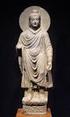
3. The Buddha followed some Hindu ideas and changed others, but he did not consider himself to be a god.
 True / False Indicate whether the statement is true or false. 1. Like the ancient Greeks, Indian astronomers proposed the theory that the Earth was round and revolved around the sun. 2. During his time
Adopted by the Security Council at its 5916th meeting, on 19 June 2008
 United Nations S/RES/1820 (2008) Security Council Distr.: General 19 June 2008 Resolution 1820 (2008) Adopted by the Security Council at its 5916th meeting, on 19 June 2008 The Security Council, Reaffirming
Table of Contents. Part One: Social Studies Curriculum
 Table of Contents Part One: Social Studies Curriculum Chapter I: Social Studies Essay Questions and Prewriting Activities 1. Western Political Thought 1 2. The Age of Revolution 6 3. The Age of Napoleon
BACHELOR OF HUMAN SCIENCES IN HISTORY AND CIVILIZATION COURSE SYNOPSES
 BACHELOR OF HUMAN SCIENCES IN HISTORY AND CIVILIZATION COURSE SYNOPSES Introduction to History and Civilization Course Code HIST 1000 This course introduces students to basic concepts and approaches in
To What Extent is The Cold War a Result of Two Conflicting Ideologies?
 Rahaf Alwattar Daniela Morales Kiley Smith Madison So To What Extent is The Cold War a Result of Two Conflicting Ideologies? The Cold War was an unceasing state of political and military tensions between
HISTORY. History A.A. for Transfer Degree
 Area: Behavioral & Social Sciences Dean: Carlos Reyes Phone: (916) 484-8283 Counseling: (916) 484-8572 Degree: A.A. for Transfer - History The study of history equips the student with cultural literacy
Muhammad Became the Prophet of Islam monotheistic, hajj, The Five Pillars of Islam include all of the following except
 World History Chapter 11 The Muslim World (622 1650) Session 1 Rise of Islam How did Muhammad become the prophet of Islam? What are the teachings of Islam? How did Islam help shape the way of life of its
DBQ 13: Start of the Cold War
 Name Date DBQ 13: Start of the Cold War (Adapted from Document-Based Assessment for Global History, Walch Education) Historical Context: Between 1945 and 1950, the wartime alliance between the United States
The Rise and Spread of Islam Study Guide
 The Rise and Spread of Islam Study Guide Terms: Bedouins: Nomadic people of Arabia who eventually became Islamic. Ka aba: Place believed where Abraham had worshipped. When Mohammed prayed there with the
List A: Economics course options (all students must take at least 1 course from this list)
 MASTERS PROGRAM IN INTERNATIONAL AND AREA STUDIES SUGGESTED COURSES Note that the below are suggested courses. For other possible courses, please check with the Graduate Assistant and the Chair of the
Silver School of Social Work
 Silver School of Social Work UNDSW US 67 Social Justice and Peacemaking (4 CLI UG.1444, Lyrics on Lockdown (4 S99.2111, Ending Poverty: Models for Social Change and Social Action (4 TBD, Tweeting for the
COURSE SYLLABUS. Contact information: [email protected], 3rd period conference
 AP European History INSTRUCTOR: Michael Withers 2015-2016 SCHOOL YEAR COURSE SYLLABUS COURSE INFORMATION This is an accelerated elective course covering the history of Europe from the Renaissance to the
Unit 9 Lesson 5 Popes, Kings and Challenges to the Church
 Unit 9 Lesson 5 Popes, Kings and Challenges to the Church Lesson 5 Popes, Kings and Challenges to the Church Directions Read each False statement below. Replace each underlined word with one from the word
Advocate for Women s Rights Using International Law
 300 Appendix A Advocate for Women s Rights Using International Law The United Nations (UN) brings together almost every government in the world to discuss issues, resolve conflicts, and make treaties affecting
LEAGUE OF WOMEN VOTERS: OBJECTIVES
 Labor but were upset at the class divisions it encouraged between workers and bosses. That set people apart instead of bringing them together as citizens. They saw Labor as a selfish party, caring for
Why did the US want to claim small islands in the Pacific Ocean such as Midway Island and Wake Island?
 US History & Government Imperialism Why did the US create an empire in the late 19 th Century? Social: Economic: Political: Religious: Military: China Why did the US want to claim small islands in the
Chapter 12 The South Section Notes Video Maps History Close-up Images Quick Facts
 Chapter 12 The South Section Notes Growth of the Cotton Industry Free Southern Society The Slave System History Close-up Southern Plantation Quick Facts Chapter 12 Visual Summary Video Regional Economies
Course Description BA Program Political Science Department
 Course Description BA Program Political Science Department Principles of Political Science 2308101 This course discuss the different definitions of the political science, also it discuss the different
Course Title: AP European History Board Approval Date: 12/14/13 Credit / Hours: 1.5 credit
 Course Title: AP European History Board Approval Date: 12/14/13 Credit / Hours: 1.5 credit Course Description: The Advanced Placement course in European History is designed to give students a rigorous
Sixth Grade Unit 2 Europe Today
 The following instructional plan is part of a GaDOE collection of Unit Frameworks, Performance Tasks, examples of Student Work, and Teacher Commentary for the Sixth Grade Social Studies Course. Sixth Grade
World Population Growth
 3 World Population Growth Why is world population growing faster than ever before? Population dynamics are one of the key factors to consider when thinking about development. In the past years the world
2. Each of the above reasons helped to cause the creation of alliances throughout Europe. How? How do new alliances encourage tension?
 APEH Topic 10 Webquest Points Possible: 200 pts World War I Webquest Part I - M.A.I.N. Causes Name 1. Identify militarism, Imperialism, and Nationalism. Then, explain how each force creates tension in
CERTIFICATION EXAMINATIONS FOR OKLAHOMA EDUCATORS (CEOE )
 CERTIFICATION EXAMINATIONS FOR OKLAHOMA EDUCATORS (CEOE ) FIELD 74: OKLAHOMA GENERAL EDUCATION TEST (OGET ) Subarea Range of Competencies I. Critical Thinking Skills: Reading and Communications 01 05 II.
The Role of Government
 The Role of Government Imagine for a moment living under a government that possessed unlimited and undefined powers, such as Communist China or Nazi Germany. What rights do you have now that you think
CHINA OVERVIEW: A BRIEF HISTORY OF CHINESE DYNASTIES. Student Handouts, Inc.
 CHINA OVERVIEW: A BRIEF HISTORY OF CHINESE DYNASTIES Student Handouts, Inc. GEOGRAPHY OF CHINA Larger than the United States Climate varies North Temperate and cold South Subtropical Erosion Floods and
HUMAN RIGHTS AND IMMIGRATION. Socials 11 Exam Review: Presentation 7
 HUMAN RIGHTS AND IMMIGRATION Socials 11 Exam Review: Presentation 7 HUMAN RIGHTS IN CANADA Human Rights haven t always been acknowledged in Canada Canada did not formally list rights of citizens until
North Carolina Essential Standards Social Studies - World History Course
 North Carolina s Social Studies - World History Course The World History course will address six (6) periods in the study of World History, with a key focus of study from the mid 15 th century to present.
World History Unit 4 Empires and Kingdoms: Growth and Expansion
 The following instructional plan is part of a GaDOE collection of Unit Frameworks, Performance Tasks, examples of Student Work, and Teacher Commentary for the World History Course. World History Unit 4