
Light Pollution: Lighting our Path or Leaving Us in the Dark?
|
|
|
- David Norman
- 9 years ago
- Views:
Transcription
1 INTRODUCTION Light Pollution: Lighting our Path or Leaving Us in the Dark? This lesson will explore the concept of light pollution and its implications for modern society. Students will read an article about light pollution and then conduct their own research before writing a persuasive letter on whether or not light pollution legislation should be implemented in their town. LESSON OVERVIEW Grade Level & Subject: Grades 9-8: Science, English, Social Science Length: Two class periods, or one class period with homework Objectives: After completing this lesson, students will be able to: Understand the concept of light pollution Understand the causes and effects of light pollution Understand the ways in which light pollution can be prevented or curtailed National Standards Addressed 1 : Content Standard: NS PERSONAL AND SOCIAL PERSPECTIVES As a result of activities in grades 5-8, all students should develop understanding of: Personal health Populations, resources, and environments Natural hazards Risks and benefits Science and technology in society Content Standard: NL-ENG.K-12.1 READING FOR PERSPECTIVE Students read a wide range of print and nonprint texts to build an understanding of texts, of themselves, and of the cultures of the United States and the world; to acquire new information; to respond to the needs and demands of society and the workplace; and for personal fulfillment. Among these texts are fiction and nonfiction, classic and contemporary works. Content Standard: NL-ENG.K-12.8 DEVELOPING RESEARCH SKILLS Students conduct research on issues and interests by generating ideas and questions, and by posing problems. They gather, evaluate, and synthesize data from a variety of sources (e.g., print and nonprint texts, artifacts, people) to communicate their discoveries in ways that suit their purpose and audience 1 Education World (2008). U.S. National Education Standards. Retrieved March 25, 2009, from

2 Content Standard: NL-ENG.K APPLYING LANGUAGE SKILLS Students use spoken, written, and visual language to accomplish their own purposes (e.g., for learning, enjoyment, persuasion, and the exchange of information). Content Standard: NSS-C ROLES OF THE CITIZEN What are the Roles of the Citizen in American Democracy? What is citizenship? What are the rights of citizens? What are the responsibilities of citizens? What civic dispositions or traits of private and public character are important to the preservation and improvement of American constitutional democracy? How can citizens take part in civic life? Materials Needed: Reproducible #1- Our Vanishing Night Reproducible #2- Is Nighttime Lighting Leaving Us in the Dark? Access to a computer w/ internet access or other research tools Assessment: Students will be assessed through the following activities: Participation in class reading and discussion Completion of Reproducible #2: Is Nighttime Lighting Leaving Us in the Dark? LESSON BACKGROUND Relevant Vocabulary: Light Pollution: excessive and obtrusive artificial light with adverse effects. Sky Glow: A type of light pollution where light is seen as a dome glowing over cities. Light Trespass: When unwanted light enters someone s property from somewhere else. Light Clutter: Excessive grouping of lights in one area. Glare: Excessive contrast between light and dark areas. Information 2 : The way we see the night today is vastly different than the way people saw the night just a couple of centuries ago. When most of us look out our windows at night we see the soft glow of street lamps and porch lights. What most of us don t see is the bright twinkle of stars and planets. Light pollution is when large amounts of light hinder sky visibility and create adverse affects to those living around it. Light pollution is especially common in urban areas, where buildings are close together and lights are often left on all night long. This causes a waste of energy that could be saved by turning off the lights. Light pollution has negative impacts on wildlife, astronomers, and people. All the extra light can cause confusion in animal migratory and mating patterns, which in turn causes problems within the 2 Frequently Asked Questions International Dark Sky Association. Retrieved March 25, 2009 from

3 entire ecosystem. Light pollution can also be confusing to nocturnal animals and those that rely on natural light for communication such as fireflies. Astronomers feel the effects of light pollution as well, as it keeps them from having a clear view of the sky, and can prevent their instruments from working properly. Light pollution also means that it is harder for people to stargaze and enjoy nature because the lights are so bright. When it comes to health effects, studies have shown that light pollution negatively affects humans natural sleep pattern, and that an increase of exposure to artificial light can lead to an increased chance of cancer. Resources: International Dark Sky Associations Frequently Asked Questions: National Geographic Photo Gallery of Light Pollution: Example of how light pollution affects a local town in Michigan: LESSON STEPS Warm-up: Imagining the 1800s 1. To get your students thinking about light pollution, have them close their eyes and picture what it was like to live in a city in the early 1800s. Prompt them by reading this paragraph and asking them to put themselves in the situation: You are walking down a cobbled stone street late at night, and are determined to make it home as fast as possible. The only light you have to see by is the burning of your lantern and the lanterns of the few others who pass you. You must watch carefully where you are walking, and keep an eye out for any thieves who could materialize out of the darkness between the buildings. It is a clear summer night, and glancing up at the sky you can see numerous of the constellations that your grandfather had once pointed out to you when you were a child. The moon is also shining brightly, and you are silently grateful for that, as it pours more light onto the dark streets. As you reach home, not a single light shines from the windows, as your family has all gone to bed for the night. You open up the door and walk into pitch darkness, placing your hand out for the familiar feeling of the wall, as you slowly maneuver your way through the kitchen to retrieve a candle from the table. Your eyes have just adjusted to the darkness of the house as you light the candle with nearby matches and pull out a piece of parchment and quill pen from the desk in the front parlor. You start a letter to your brother-in-law about a recent business deal gone sour, hurrying to finish before the candle burns down to a mere puddle of wax. When you are finished, you take the candle with you as you climb the stairs and extinguish the flame as you crawl into bed. As you close your eyes to fall asleep you prepare yourself for waking early the next morning - after all, to wake any later than the rising of the sun would be a waste of precious daylight hours.

4 2. Ask students to compare the life of the person in the story to their own life. You may consider having students jot down a quick scenario or journal entry. Have them share their reactions with the class. Activity One: Reading about Light Pollutions 1. Pass out Reproducible #1- Our Vanishing Night Article to students. Briefly explain what light pollution is and why it is a topic of discussion. (Light pollution is excessive or obtrusive artificial lighting that has adverse affects on the species and places that surround it. It has a negative impacts on animal migration and mating patterns, is harmful to human health, reduces visibility of the sky, and wastes energy.) 2. Have students read the article either by themselves or by taking turns. 3. When students are finished, talk about the article and what it discussed. Some questions to consider are: a) What were the main points of the article? b) What was the author s viewpoint on light pollution? c) Did you agree/disagree with this article? d) Do you have any questions after reading this article? Activity Two: The Pros and Cons of Lights at Night 1. Give students some time to research light pollution on their own. Have them use part 1 of Reproducible #2- Is Nighttime Lighting Leaving Us in the Dark? to keep track of the pros and cons of nighttime lights. Activity Three: Making an Argument 1. Either in a second class period or for homework, have students complete part 2 of Reproducible #2- Is Nighttime Lighting Leaving Us in the Dark? where they will write a persuasive letter to the editor on light pollution. Have them use what they learned in activities 1 and 2 to support their argument. Wrap Up: Discuss the Options 1. Lead a discussion with students on whether they chose to support the nighttime lighting ban or not. What evidence led to their decision? What aspects of the issue did they find the most important? Did anyone come up with alternatives or compromises to try? Extension: Mapping the Night Sky Have your students keep a sky journal for a month and record what they observe in the sky every night. Also have them record the weather for that day and any other information that they think might affect visibility. At the end of the month, have students analyze their journals to see if they notice any patterns or correlations. CONCLUSION In this lesson students learned about light pollution and the pros and cons of nighttime lighting. Through research and critical thinking they were able to make a decision on which side they supported, and write a persuasive letter in response.

5 National Geographic Published: November 2008 Our Vanishing Night Most city skies have become virtually empty of stars. By Verlyn Klinkenborg If humans were truly at home under the light of the moon and stars, we would go in darkness happily, the midnight world as visible to us as it is to the vast number of nocturnal species on this planet. Instead, we are diurnal creatures, with eyes adapted to living in the sun's light. This is a basic evolutionary fact, even though most of us don't think of ourselves as diurnal beings any more than we think of ourselves as primates or mammals or Earthlings. Yet it's the only way to explain what we've done to the night: We've engineered it to receive us by filling it with light. This kind of engineering is no different than damming a river. Its benefits come with consequences called light pollution whose effects scientists are only now beginning to study. Light pollution is largely the result of bad lighting design, which allows artificial light to shine outward and upward into the sky, where it's not wanted, instead of focusing it downward, where it is. Ill-designed lighting washes out the darkness of night and radically alters the light levels and light rhythms to which many forms of life, including ourselves, have adapted. Wherever human light spills into the natural world, some aspect of life migration, reproduction, feeding is affected. For most of human history, the phrase "light pollution" would have made no sense. Imagine walking toward London on a moonlit night around 1800, when it was Earth's most populous city. Nearly a million people lived there, making do, as they always had, with candles and rushlights and torches and lanterns. Only a few houses were lit by gas, and there would be no public gaslights in the streets or squares for another seven years. From a few miles away, you would have been as likely to smell London as to see its dim collective glow. Now most of humanity lives under intersecting domes of reflected, refracted light, of scattering rays from overlit cities and suburbs, from light-flooded highways and factories. Nearly all of nighttime Europe is a nebula of light, as is most of the United States and all of Japan. In the south Atlantic the glow from a single fishing fleet squid fishermen luring their prey with metal halide lamps can be seen from space, burning brighter, in fact, than Buenos Aires or Rio de Janeiro. In most cities the sky looks as though it has been emptied of stars, leaving behind a vacant haze that mirrors our fear of the dark and resembles the urban glow of dystopian science fiction. We've grown so used to this pervasive orange haze that the original glory of an unlit night dark enough for the planet Venus to throw shadows on Earth is wholly beyond our experience, beyond memory almost. And yet above the city's pale ceiling lies the rest of the universe, utterly undiminished by the light we waste a bright shoal of stars and planets and galaxies, shining in seemingly infinite darkness. We've lit up the night as if it were an unoccupied country, when nothing could be further from the truth. Among mammals alone, the number of nocturnal species is astonishing. Light is a powerful biological force, and on many species it acts as a magnet, a process being studied by researchers such

6 as Travis Longcore and Catherine Rich, co-founders of the Los Angeles-based Urban Wildlands Group. The effect is so powerful that scientists speak of songbirds and seabirds being "captured" by searchlights on land or by the light from gas flares on marine oil platforms, circling and circling in the thousands until they drop. Migrating at night, birds are apt to collide with brightly lit tall buildings; immature birds on their first journey suffer disproportionately. Insects, of course, cluster around streetlights, and feeding at those insect clusters is now ingrained in the lives of many bat species. In some Swiss valleys the European lesser horseshoe bat began to vanish after streetlights were installed, perhaps because those valleys were suddenly filled with lightfeeding pipistrelle bats. Other nocturnal mammals including desert rodents, fruit bats, opossums, and badgers forage more cautiously under the permanent full moon of light pollution because they've become easier targets for predators. Some birds blackbirds and nightingales, among others sing at unnatural hours in the presence of artificial light. Scientists have determined that long artificial days and artificially short nights induce early breeding in a wide range of birds. And because a longer day allows for longer feeding, it can also affect migration schedules. One population of Bewick's swans wintering in England put on fat more rapidly than usual, priming them to begin their Siberian migration early. The problem, of course, is that migration, like most other aspects of bird behavior, is a precisely timed biological behavior. Leaving early may mean arriving too soon for nesting conditions to be right. Nesting sea turtles, which show a natural predisposition for dark beaches, find fewer and fewer of them to nest on. Their hatchlings, which gravitate toward the brighter, more reflective sea horizon, find themselves confused by artificial lighting behind the beach. In Florida alone, hatchling losses number in the hundreds of thousands every year. Frogs and toads living near brightly lit highways suffer nocturnal light levels that are as much as a million times brighter than normal, throwing nearly every aspect of their behavior out of joint, including their nighttime breeding choruses. Of all the pollutions we face, light pollution is perhaps the most easily remedied. Simple changes in lighting design and installation yield immediate changes in the amount of light spilled into the atmosphere and, often, immediate energy savings. It was once thought that light pollution only affected astronomers, who need to see the night sky in all its glorious clarity. And, in fact, some of the earliest civic efforts to control light pollution in Flagstaff, Arizona, half a century ago were made to protect the view from Lowell Observatory, which sits high above that city. Flagstaff has tightened its regulations since then, and in 2001 it was declared the first International Dark Sky City. By now the effort to control light pollution has spread around the globe. More and more cities and even entire countries, such as the Czech Republic, have committed themselves to reducing unwanted glare. Unlike astronomers, most of us may not need an undiminished view of the night sky for our work, but like most other creatures we do need darkness. Darkness is as essential to our biological welfare, to our internal clockwork, as light itself. The regular oscillation of waking and sleep in our lives one of our circadian rhythms is nothing less than a biological expression of the regular oscillation of light on Earth. So fundamental are these rhythms to our being that altering them is like altering gravity.

7 For the past century or so, we've been performing an open-ended experiment on ourselves, extending the day, shortening the night, and short-circuiting the human body's sensitive response to light. The consequences of our bright new world are more readily perceptible in less adaptable creatures living in the peripheral glow of our prosperity. But for humans, too, light pollution may take a biological toll. At least one new study has suggested a direct correlation between higher rates of breast cancer in women and the nighttime brightness of their neighborhoods. In the end, humans are no less trapped by light pollution than the frogs in a pond near a brightly lit highway. Living in a glare of our own making, we have cut ourselves off from our evolutionary and cultural patrimony the light of the stars and the rhythms of day and night. In a very real sense, light pollution causes us to lose sight of our true place in the universe, to forget the scale of our being, which is best measured against the dimensions of a deep night with the Milky Way the edge of our galaxy arching overhead National Geographic Society. All rights reserved. Retrieved March 25, 2009 from

8 Is Nighttime Lighting Leaving Us in the Dark? Part 1: Now that you ve learned a little more about light pollution, consider the pros and cons of nighttime lighting. What are some of the rewards of brighter nights? What are the risks? Complete the chart below. Rewards of Artificial Nighttime Lighting Risks of Artificial Nighttime Lighting

9 Part 2: Imagine that your city council is considering a ban on outdoor nighttime lighting in residential areas. Your local newspaper recently ran an article detailing the proposed ban. Write a letter to the editor expressing your opinion on the ban. Should the city council approve the ban? Why or why not? Are there any alternatives to a complete ban on outdoor nighttime lighting? Use the pros and cons you came up with in Part 1 to support your argument. Please start by brainstorming your ideas on this piece of paper.

PUSD High Frequency Word List
 PUSD High Frequency Word List For Reading and Spelling Grades K-5 High Frequency or instant words are important because: 1. You can t read a sentence or a paragraph without knowing at least the most common.
God, the Great Creator
 Pre-Session Warm Up God, the Great Creator (Genesis 1: 2:3) Today we re going to start a new series of lessons all about God s attributes. An attribute is a character trait or quality about someone. For
Fry Phrases Set 1. TeacherHelpForParents.com help for all areas of your child s education
 Set 1 The people Write it down By the water Who will make it? You and I What will they do? He called me. We had their dog. What did they say? When would you go? No way A number of people One or two How
Science Benchmark: 06 : 01 Standard 01: THE MYSTICAL MOON axis of rotation,
 Science Benchmark: 06 : 01 The appearance of the lighted portion of the moon changes in a predictable cycle as a result of the relative positions of Earth, the moon, and the sun. Standard 01: Students
SECRET LOVE. Wonderful Illusion
 SECRET LOVE Wonderful Illusion Waiting for the moment to be right All I m asking for is a ray of light Wait and see Somewhere down the road You never know I don t wanna say goodbye It s hard to leave this
Phases of the Moon. Preliminaries:
 Phases of the Moon Sometimes when we look at the Moon in the sky we see a small crescent. At other times it appears as a full circle. Sometimes it appears in the daylight against a bright blue background.
FIRST GRADE 1 WEEK LESSON PLANS AND ACTIVITIES
 FIRST GRADE 1 WEEK LESSON PLANS AND ACTIVITIES UNIVERSE CYCLE OVERVIEW OF FIRST GRADE UNIVERSE WEEK 1. PRE: Describing the Universe. LAB: Comparing and contrasting bodies that reflect light. POST: Exploring
ACTIVITY. pbsparents.com/catinthehat/
 Overview The Cat in the Hat Knows a Lot About That! Have you ever noticed how your child explores the world by using all of his senses? You can help him think more about how he sees, hears, smells, feels,
God is Eternal Lesson 1
 Preschool Curriculum (4K / 5K) August 15 th & 16 th, 2009 God is Eternal Lesson 1 Divine Attribute: Heart Response: God is Eternal Be Amazed Memory Verse: Jesus Christ is the same yesterday, today and
4THE UNIVERSITY OF THE STATE OF NEW YORK
 4THE UNIVERSITY OF THE STATE OF NEW YORK GRADE 4 ELEMENTARY-LEVEL SCIENCE TEST WRITTEN TEST JUNE 6, 2011 Student Name School Name Print your name and the name of your school on the lines above. The test
The Earth, Sun, and Moon
 reflect The Sun and Moon are Earth s constant companions. We bask in the Sun s heat and light. It provides Earth s energy, and life could not exist without it. We rely on the Moon to light dark nights.
ENDANGERED AND THREATENED
 ENDANGERED AND THREATENED Understand how species in the Sonoran Desert Region may become endangered or threatened and what is being done to protect them. ARIZONA SCIENCE STANDARDS SC03-S4C3-03&04, SC08-S1C3-07,
Christmas Theme: The Light of the World
 Christmas Theme: The Light of the World (NOTE: Some of the activities in this lesson are also used in Jesus, Our Lord: Lesson 2 Jesus is the Light. ) OVERVIEW Key Point: Jesus is the Light who Guides Repeat
Good Night Baby. Good night baby I hope you have sweet dreams We ve turned the page on this day And now it s time to sleep
 Good Night Baby Good night baby I hope you have sweet dreams We ve turned the page on this day And now it s time to sleep Good night baby It s faster than it seems I used to be the baby And my mom sang
Hydroelectric Dam Debate Ashley Schopieray
 Hydroelectric Dam Debate Ashley Schopieray INTRODUCTION In this lesson, students will take on the role of a U.S. senator who has to decide whether or not to support a proposal to build hydroelectric dams
EDMONDS COMMUNITY COLLEGE ASTRONOMY 100 Winter Quarter 2007 Sample Test # 1
 Instructor: L. M. Khandro EDMONDS COMMUNITY COLLEGE ASTRONOMY 100 Winter Quarter 2007 Sample Test # 1 1. An arc second is a measure of a. time interval between oscillations of a standard clock b. time
About This Lesson: Figurative Language and Imagery
 About This Lesson: Figurative Language and Imagery Common Core State Standards Grade 6 Grade 7 Grade 8 RL 4 Determine the meaning of words and phrases as they are used in a text, including figurative and
NATIONAL CURRICULUM LINKS
 Special Places Key Stage 1 < < Special Places SUMMARY OF ACTIVITY Based around a Native American theme whereby pupils spend time in the outdoors on their own, but with each pupil supported by their own
Beginning of the Universe Classwork 6 th Grade PSI Science
 Beginning of the Universe Classwork Name: 6 th Grade PSI Science 1 4 2 5 6 3 7 Down: 1. Edwin discovered that galaxies are spreading apart. 2. This theory explains how the Universe was flattened. 3. All
Elementary School Sea Turtle Lesson Plan Developed by Cathy Payne
 Elementary School Sea Turtle Lesson Plan Developed by Cathy Payne Background: Elementary school-aged children are very drawn to stories, both fiction and nonfiction, about sea turtles, but there are limited
Writing Topics WRITING TOPICS
 Writing Topics Topics in the following list may appear in your actual test. You should become familiar with this list before you take the computer-based TOEFL test. Remember that when you take the test
Point of View, Perspective, Audience, and Voice
 Lesson Da 2 Day 1 Point of View, Perspective, Audience, and Voice A story can be told from more than one point of view. If a story is written by someone who is a character in the story, then it is said
GRAVITY CONCEPTS. Gravity is the universal force of attraction between all matter
 IT S UNIVERSAL GRAVITY CONCEPTS Gravity is the universal force of attraction between all matter Weight is a measure of the gravitational force pulling objects toward Earth Objects seem weightless when
The Sun and the Stars
 www.k5learning.com Objective Concepts (gravity, climate, solar system, hydrogen, helium, elements, core, ultraviolet rays, cluster, galaxy, Milky Way Galaxy); Sight words (surface, middle, dangerous, causes,
Galaxy Classification and Evolution
 name Galaxy Classification and Evolution Galaxy Morphologies In order to study galaxies and their evolution in the universe, it is necessary to categorize them by some method. A classification scheme generally
The Big Bang A Community in the Classroom Presentation for Grade 5
 The Big Bang A Community in the Classroom Presentation for Grade 5 Richard Cupp Engineer STANARDS CONNECTION Grade 5 Physical Science: Elements and their combinations account for all the varied types of
Astrology: Fact or Fiction? 50-60 minutes, for 9th-12th grades
 Astrology: Fact or Fiction? 50-60 minutes, for 9th-12th grades Notice This lesson plan was created by Digitalis Education Solutions (DigitalisEducation.com) and is provided free of charge as a public service
A long time ago, people looked
 Supercool Space Tools! By Linda Hermans-Killam A long time ago, people looked into the dark night sky and wondered about the stars, meteors, comets and planets they saw. The only tools they had to study
Look at Our Galaxy. by Eve Beck. Space and Technology. Scott Foresman Reading Street 2.1.2
 Suggested levels for Guided Reading, DRA, Lexile, and Reading Recovery are provided in the Pearson Scott Foresman Leveling Guide. Space and Technology Look at Our Galaxy Genre Expository nonfiction Comprehension
THEME: God wants us to walk as children of light.
 Devotion NT330 CHILDREN S DEVOTIONS FOR THE WEEK OF: LESSON TITLE: Children of Light THEME: God wants us to walk as children of light. SCRIPTURE: Ephesians 5:1-18 Dear Parents Welcome to Bible Time for
INDEPENDENT PROJECT: The Spring Night Sky
 INDEPENDENT PROJECT: The Spring Night Sky Your Name: What is the difference between observing and looking? As John Rummel said to the Madison Astronomical Society, January 11, 2002: Looking implies a passive
Adapted from Stone Girl Bone Girl by Laurence Anholt, Francis Lincoln Children s Book
 1. Mary Anning Adapted from Stone Girl Bone Girl by Laurence Anholt, Francis Lincoln Children s Book This is the true story of Mary Anning, who lived 200 years ago. Mary was born in 1799 and was one of
Plato THE ALLEGORY OF THE CAVE. Republic, VII 514 a, 2 to 517 a, 7. Translation by Thomas Sheehan
 Plato THE ALLEGORY OF THE CAVE Republic, VII 514 a, 2 to 517 a, 7 Translation by Thomas Sheehan THE ALLEGORY OF THE CAVE SOCRATES: Next, said I [= Socrates], compare our nature in respect of education
The Truth about Plastic Bags By Simone Smith
 1 The Truth about Plastic Bags By Simone Smith INTRODUCTION: This lesson will inform students about the scope of the worldwide plastic bag problem, and provide them with ways to reduce plastic bag generation
Little Mermaid. The. The Little Mermaid. by Hans Christian Andersen. Name:
 The Little Mermaid Name: Hans Christian Andersen was a famous Danish writer of children s stories and fairy tales. He wrote The Little Mermaid in 1837. It s the story of a young mermaid who is the youngest
CONTENTS PAGE: 1. EU-UNAWE Mission Statement 3 2. CAPS Life Skills Programme of Assessment 4 5-6
 CONTENTS PAGE: 1. EU-UNAWE Mission Statement 3 2. CAPS Life Skills Programme of Assessment 4 5-6 3. Core Knowledge & Content - CAPS Curriculum Life Skills Foundation Phase 4. Learning Outcomes & Definition
The Water Cycle Now You See It, Now You Don t
 The Water Cycle Now You See It, Now You Don t Unit: Salinity Patterns & the Water Cycle l Grade Level: Elementary l Time Required: Introduction - 30 min. - Activity as groups 45min Wrap Up 20 min l Content
Stow Lighting Advisory Subcommittee Terminology Guide
 Stow Lighting Advisory Subcommittee Terminology Guide Stow Lighting Advisory Subcommittee Terminology Guide Page 1 of 9 Revision Date Description 1.0 5 Feb 2003 Beginning of first draft. 1.1 5 Mar 2003
What does compassion look like?
 Lesson One: What does compassion look like? Learning Objectives: Students will: Demonstrate an understanding of the concept compassion. Identify elements of compassion shown in various images. Begin to
Grade Level Expectations for the Sunshine State Standards
 for the Sunshine State Standards FLORIDA DEPARTMENT OF EDUCATION http://www.myfloridaeducation.com/ The seventh grade student: The Nature of Matter uses a variety of measurements to describe the physical
GETTING STARTED IN STAR GAZING. The fact you are here in this introductory session says you have an interest in the hobby of
 GETTING STARTED IN STAR GAZING by Nelson Tilden Sun City Oro Valley Astronomy Club The fact you are here in this introductory session says you have an interest in the hobby of astronomy, but please note
Lesson 6: Fisheries Management in the Open Ocean. Open Ocean
 !!! Open Ocean Concepts How does fishing equipment affect the amount of fish and bycatch caught in a fishery? How can we change the way we fish to use the ocean better? Standards Addressed HCPS 5. & 5.2
Climate Change: A Local Focus on a Global Issue Newfoundland and Labrador Curriculum Links 2010-2011
 Climate Change: A Local Focus on a Global Issue Newfoundland and Labrador Curriculum Links 2010-2011 HEALTH Kindergarten: Grade 1: Grade 2: Know that litter can spoil the environment. Grade 3: Grade 4:
The Celestial Sphere. Questions for Today. The Celestial Sphere 1/18/10
 Lecture 3: Constellations and the Distances to the Stars Astro 2010 Prof. Tom Megeath Questions for Today How do the stars move in the sky? What causes the phases of the moon? What causes the seasons?
Silent, Nighttime Hunters By Guy Belleranti
 By Guy Belleranti Owls are raptors, or birds of prey. They are carnivores who quickly and silently swoop down on their prey from above. Most raptors such as eagles, hawks and falcons are day hunters. They
CHRISTIAN STEWARDSHIP FOR YOUNG PEOPLE Curriculum Outline. Lesson 1 Lesson 2 Lesson 3 Lesson 4 The Beginning Elias Helps a A Poor Jars of Oil
 CHRISTIAN STEWARDSHIP FOR YOUNG PEOPLE Curriculum Outline Session Title* Scripture Reference** Learning Objective*** Bible Verse To Remember Activities Lesson 1 Lesson 2 Lesson 3 Lesson 4 The Beginning
S OAPY MOVED RESTLESSLY ON HIS SEAT
 T h e C o p a n d t h e A n t h e m p The Cop and the Anthem S OAPY MOVED RESTLESSLY ON HIS SEAT in Madison Square. There are certain signs to show that winter is coming. Birds begin to fly south. Women
LIGHT SECTION 6-REFRACTION-BENDING LIGHT From Hands on Science by Linda Poore, 2003.
 LIGHT SECTION 6-REFRACTION-BENDING LIGHT From Hands on Science by Linda Poore, 2003. STANDARDS: Students know an object is seen when light traveling from an object enters our eye. Students will differentiate
Meet the Nonfiction Main Idea Challenge
 Meet the Nonfiction Main Idea Challenge What s the challenge? Students often give the topic or a fact as the main idea when they have read nonfiction. What students need to do to meet the MAIN IDEA requirement
Read the Directions sheets for specific instructions.
 Read the Directions sheets for specific instructions. SUMMARY Parent Guide During this activity, your child will create a piece of mail and you and your child will visit a post office in your neighborhood.
Tha h nk n sg s iving g Praye y r
 Thanksgiving Prayer The People Today we have gathered and we see that the cycles of life continue. We have been given the duty to live in balance and harmony with each other and all living things. So now,
Healthy Earth, Sick Earth
 Healthy Earth, Sick Earth Ashley Schopieray INTRODUCTION This lesson uses the book Planet Earth Gets Well by Madeline Kaplan to introduce students to concepts related to climate change and properly caring
KINDERGARTEN PHYSICS
 KINDERGARTEN PHYSICS 3 WEEKS LESSON PLANS AND ACTIVITIES APPLIED SCIENCE OVERVIEW OF KINDERGARTEN SCIENCE AND MATH WEEK 1. PRE: Describing and comparing nests, birds, and eggs. LAB: Describing different
Who Glows there? Bioluminescence of Fireflies, Mushrooms, and Jellyfish
 Who Glows there? Bioluminescence of Fireflies, Mushrooms, and Jellyfish Glenna Smith Anthony Todd Background: Most people think of fireflies when it comes to bioluminescent or glowin-the-dark organisms,
Exploring Space. The activities in this book provide young scientists with practice in the skills of: observation prediction critical thinking
 Exploring Space This science resource book suggests ways that you can build on your students previous experiences with objects in the sky and understandings about space to develop new concepts. The activities
Using sentence fragments
 Lesson 8 Descriptive Essays Description is not a distinct mode of writing, like expository, narrative, and persuasive, but the ability to write descriptively is essential to a host of writing genres. Many
Kino, Juana and Coyotito
 1 Kino, Juana and Coyotito K ino woke up early in the morning. The stars were still shining in the sky. The cockerels were beginning to crow 1 and the pigs were looking for something to eat. Outside the
Lesson Plan. Skills: Describe, model Knowledge: position, size, motion, earth, moon, sun, day, night, solar eclipse, lunar eclipse, phases, moon
 Gallmeyer 1 Lesson Plan Lesson: Rotation of the Earth Length: 45 minutes Age or Grade Level Intended: 4 th Academic Standard(s): Science: Earth and Space: 6.2.1 Describe and model how the position, size
Unit 1.7: Earth and Space Science The Structure of the Cosmos
 Lesson Summary: This week students will search for evidence provided in passages that lend support about the structure and organization of the Cosmos. Then students will summarize a passage. Materials
Light of the World: Salt of the Earth
 Light of the World: Salt of the Earth Teacher Pep Talk: Jesus said You are the light of the world. That seems to be an exciting reality and a daunting challenge, all at the same time. It also raises several
englishforeveryone.org Name Date
 englishforeveryone.org Name Date Advanced Critical Reading - Hubble 5 10 15 20 25 30 35 40 The 32,000 word novella The Time Machine by H.G. Wells, published in 1895, is generally credited with popularizing
Objective: God has a Plan! Bible Memory Verse: Jeremiah 29:11 For I know the plans I have for you, declares the Lord, plans THEME OVERVIEW
 Miraculous Catches of Fish Scripture: Luke 5:1-11; John 21:1-6 Objective: God has a Plan! Bible Memory Verse: Jeremiah 29:11 For I know the plans I have for you, declares the Lord, plans to prosper you
5- Minute Refresher: Daily Observable Patterns in the Sky
 5- Minute Refresher: Daily Observable Patterns in the Sky Key Ideas Daily Observable Patterns in the Sky include the occurrence of day and night, the appearance of the moon, the location of shadows and
California Treasures High-Frequency Words Scope and Sequence K-3
 California Treasures High-Frequency Words Scope and Sequence K-3 Words were selected using the following established frequency lists: (1) Dolch 220 (2) Fry 100 (3) American Heritage Top 150 Words in English
Climate Discovery Teacher s Guide
 Climate Discovery eacher s Guide Sunspots and Climate Unit:Little Ice Age Lesson: 7 Materials & Preparation ime: Preparation: 10 min eaching: 60 min Materials for the eacher: Overhead projector ransparencies
1 JUDEO CHRISTIAN ORIGIN STORY 920L
 1 JUDEO CHRISTIAN ORIGIN STORY 920L JUDEO- CHRISTIAN GENESIS Compiled by Cynthia Stokes Brown This story comes from the first book of the Old Testament, the sacred source book of both Judaism and Christianity.
What activities do you think an organism would use bioluminescence for?
 Relationships for Survival: The Role of Bioluminescence overview In these activities, students will focus on ecological relationships and investigate the many ways that species might interact using bioluminescence.
5 th -6 th : Electronic Jeopardy
 Objectives: The students will learn the lifecycle of electronic devices, the environmental impacts of new age electronic waste (e-waste), and the disposal options at the end of an electronics' useful life.
A guide to living with Urban Coyotes
 A guide to living with Urban Coyotes Living with coyotes ThinkStock Coyotes are found throughout Florida. This adaptable animal belongs to the dog family and resembles a small German shepherd. In Florida,
Produced by Billy Hix and Terry Sue Fanning. As part of the TeachSpace Program. For more ideas and an image of the current phase of the moon, visit:
 The Moon Phase Book Produced by Billy Hix and Terry Sue Fanning As part of the TeachSpace Program For more ideas and an image of the current phase of the moon, visit: www.teachspace.us Printing Date: 10/29/2010
Volcanoes and More: A Visit to Two National Parks in Hawaii
 VOA Special English is a daily news and information service for English learners. Read the story and then do the activities at the end. MP3s of stories can be found at voaspecialenglish.com Volcanoes and
A Breath of Poor Air: Inspecting Indoor Air Quality in the Classroom Ashley Schopieray
 INTRODUCTION A Breath of Poor Air: Inspecting Indoor Air Quality in the Classroom Ashley Schopieray In this lesson students will learn about IAQ (indoor air quality) and the substances that could be polluting
Astrock, t he A stronomical Clock
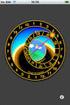 Astrock, t he A stronomical Clock The astronomical clock is unlike any other clock. At first glance you ll find it has similar functions of a standard clock, however the astronomical clock can offer much
Tips for Selecting Your First Telescope
 Tips for Selecting Your First Telescope Selecting your first telescope can be a daunting task. There are so many to choose from. This guide will give you some important facts that you will find useful
EXTERNAL AND INTERNAL STIMULI
 reflect Think for a moment about activities that require balance. Riding a bicycle and walking across a balance beam require great balance. So do most daily activities like bending over to pick up a book
Shadows, Angles, and the Seasons
 Shadows, Angles, and the Seasons If it's cold in winter, why is Earth closer to the Sun? This activity shows the relationship between Earth-Sun positions and the seasons. From The WSU Fairmount Center
Wild About... Frogs and Frogspawn
 a Wild About... Rutland County Council Nature notes Frogs belong to a group of animals called amphibians, which also includes newts and toads. Amphibians live both on land and in water. Water is needed
Second Grade Science Curriculum
 Second Grade Science Curriculum Approved July 12, 2004 The Georgia Performance Standards are designed to provide students with the knowledge and skills for proficiency in science at the second grade level.
Animals of the Desert
 Animals of the Desert (NatureScope Discovering Deserts page 26-27) Third Grade Core: Standard 2 Objective 2 Describe the interactions between living and nonliving things in a small environment. Teach a
Earth, Moon, and Sun Inquiry Template Eclipses
 One Stop Shop For Educators The following instructional plan is part of a GaDOE collection of Unit Frameworks, Performance Tasks, examples of Student Work, and Teacher Commentary. Many more GaDOE approved
Potty Training. When are children ready to potty train?
 Potty Training It can be messy! There will be accidents! Potty training is an important milestone for your child, but learning to gain control of the bowel and bladder can be a complicated process and
GCSE BITESIZE Examinations
 GCSE BITESIZE Examinations General Certificate of Secondary Education AQA SCIENCE A BLY1B Unit Biology B1b (Evolution and Environment) AQA BIOLOGY Unit Biology B1b (Evolution and Environment) FOUNDATION
Tectonic plates have different boundaries.
 KEY CONCEPT Plates move apart. BEFORE, you learned The continents join and break apart The sea floor provides evidence that tectonic plates move The theory of plate tectonics helps explain how the plates
Solar Matters II Teacher Page
 Solar Matters II Teacher Page Sun Misconceptions Student Objective understands why some common phrases about the Sun are incorrect can describe how the Earth s rotation affects how we perceive the Sun
Wetlands by Leslie Cargile
 Name: by Leslie Cargile What do the bogs in Ireland, the marshes in South Carolina, and the swamps of Louisiana have in common? If you said they re all wetlands, you d be right! are any land that is flooded
LITTLE RED RIDING-HOOD
 LITTLE RED RIDING-HOOD Little Red Riding-Hood Mother Bird Wolf CAST OF CHARACTERS SETTINGS Little Red Riding-Hood s Home The Wood Grandmother s House Mr. Miller Grandmother Wood Choppers Scene I. At Red
ENGLISH. Lightphoria 10,000LUX Energy Light Lamp SP9982 version 2.4
 ENGLISH Lightphoria 10,000LUX Energy Light Lamp SP9982 version 2.4 1 Light and your body Light means life. Many of the processes of life are influenced by light and its intensity. As many of you may experience
Species-of-the-Week. Blanding s Turtle (Emydoidea blandingii) Species of Special Concern in Michigan
 Species-of-the-Week Blanding s Turtle (Emydoidea blandingii) Habitat Productive & clean shallow water (soft substrates) = ponds, marshes, swamps, bogs, wet prairies, slow rivers Spring & summer = terrestrial
Size and Scale of the Universe
 Size and Scale of the Universe (Teacher Guide) Overview: The Universe is very, very big. But just how big it is and how we fit into the grand scheme can be quite difficult for a person to grasp. The distances
Level E Placement Worksheet & Student Passage. Level 1 Placement Worksheet & Student Passage. Level 2 Placement Worksheet & Student Passage
 Placement Guide This guide will help you choose the right One Minute Reader level for your child. The ideal level is neither too easy nor too difficult. It should challenge the student without being frustrating.
GOD S BIG STORY Week 1: Creation God Saw That It Was Good 1. LEADER PREPARATION
 This includes: 1. Leader Preparation 2. Lesson Guide GOD S BIG STORY Week 1: Creation God Saw That It Was Good 1. LEADER PREPARATION LESSON OVERVIEW Exploring the first two chapters of Genesis provides
Lesson Title: Constructing a Dichotomous Key and Exploring Its Relationship to Evolutionary Patterns
 Lesson Title: Constructing a Dichotomous Key and Exploring Its Relationship to Evolutionary Patterns NSF GK-12 Fellow: Tommy Detmer Grade Level: 4 th and 5 th grade Type of Lesson: STEM Objectives: The
Owls. Choose words from the list at the end of the page to fill in the blank spaces.
 Owls Choose words from the list at the end of the page to fill in the blank spaces. Owls are _ of prey. A bird of prey is one that catches its food in its Owls hunt for their at night. A bird that hunts
In this project, you will be observing at least three objects with a telescope or binoculars, and drawing what you see.
 Telescopic Observations Materials: Paper, pencil, camera, Telescope or Binoculars In this project, you will be observing at least three objects with a telescope or binoculars, and drawing what you see.
Cycles in the Sky. Teacher Guide: Cycles in the Sky Page 1 of 8 2008 Discovery Communications, LLC
 Cycles in the Sky What is a Fun damental? Each Fun damental is designed to introduce your younger students to some of the basic ideas about one particular area of science. The activities in the Fun damental
Animals that move slowly, animals that move quickly
 Unit Three Time 74 Animals that move slowly, animals that move quickly Unit 3: Time Image courtesy of: Microsoft clipart Focus: Animals that move slowly and quickly linked with time Whole class activity
Mission To Mars! A dialogue activity for upper KS2
 Mission To Mars! A dialogue activity for upper KS2 Teacher s Sheet Mission to Mars: Dialogue activity for upper KS2 Part One: As a class or in groups. pupils read the Fact or Fiction cards. On each card
National Aeronautics and Space Administration. Teacher s. Science Background. GalaxY Q&As
 National Aeronautics and Space Administration Science Background Teacher s GalaxY Q&As 1. What is a galaxy? A galaxy is an enormous collection of a few million to several trillion stars, gas, and dust
Worksheet A Environmental Problems
 Worksheet A Environmental Problems Vocabulary Can you talk about Environmental issues in English? With a partner, try to explain the terms in the diagram below. Why are the words divided into two groups