
2 Electrical Nerve. Stimulation. Ban C.H. Tsui Introduction
|
|
|
- Penelope Hunt
- 9 years ago
- Views:
Transcription
1 2 Electrical Nerve Stimulation Ban C.H. Tsui 2.1. Introduction Electrophysiology Characteristics of Electrical Impulses Polarity of Stimulating and Returning Electrodes Distance Current Relationship Current Density of Electrodes and Injectates Useful Features of Equipment Variables Constant Current Output and Display Variable Pulse Width and Frequency Specialized Polarity Electrodes Disconnection and Malfunction Indicators Other Accessories Practical Considerations Documentation Population Considerations Does Neurostimulation Make a Difference: Can It Be Replaced by Ultrasound? Introduction Electrical nerve stimulation is widely used for nerve localization during peripheral nerve blockade. An accurate constant current stimulator is necessary for reliable results. Electrical impulses excite nerves by inducing a fl ow of ions through the neuronal cell membrane, with subsequent action potential generation. The nerve membrane depolarization results in either muscle contraction or paresthesia, depending on the type of stimulated nerve fi ber (motor or sensory), which is consistent with the nerve s distribution. The general procedure for nerve stimulation with peripheral nerve blocks is as follows: The stimulating needle is connected to the cathode. After the skin is disinfected, the needle is advanced towards the nerve with the stimulator at a relatively high current intensity (1 2 ma) and with a pulse width of 100 to 200 µs. 9

2 Atlas of Ultrasound and Nerve Stimulation-Guided Regional Anesthesia This higher current amplitude is necessary to stimulate the nerve at some distance from the needle (once twitches are seen, the needle is likely 1 2 cm away). Care should be exercised to avoid discomfort to the patient. The current intensity is then decreased as the needle approaches the nerve and the muscle twitch increases; the current at lowest twitch response (i.e., threshold current) is then recorded (usually at ma). Attempting to observe a twitch at lower intensities (< ma) may result in inadvertent intraneural injection and is not necessary to increase success. Perineural catheters generally require more intense stimulation, especially if normal saline is used for space expansion; the ionic conductance will disperse the electrical stimulus. Once the acceptable threshold current is reached, aspiration for potential intravascular placement is performed. With a negative aspiration a test injection of local anesthetic or normal saline (1 2 ml) is performed. The muscle twitch should diminish following the test injection (Raj test). The mechanism of the Raj test was previously thought to be due to displacement of the nerve by the injectate, thereby making the minimal current insuffi cient to stimulate the nerve. This interpretation resulted in faulty positioning of catheters following advancement. A recent interpretation of the Raj test suggests that ionic solutions infl uence the response to nerve stimulation. The use of nonconducting solutions (e.g., dextrose 5% in water) for testing needle/catheter placement, which maintain the motor response, may prevent the unnecessary and faulty advancement of needles/catheters due to current leakage. With pure sensory nerves, the response will be a radiation of paresthesias with each pulse along the distribution of the nerve. Additionally, the pulse width used for nerve localization should be somewhat higher (300 µs 1 ms). Recent applications of electrical stimulation include percutaneous electrode guidance, epidural catheter placement guidance, and peripheral catheter placement for continuous peripheral nerve block. Sections 2.2 and 2.3 in this chapter do not imply that the mechanisms of nerve stimulation are completely understood, and it is likely that some concepts may vary with current literature. In addition, the newly expanded application of electrical stimulation within the epidural space is addressed at length in Chapters 18 and Electrophysiology The characteristics of the electrical impulse will determine its ability to stimulate a nerve, and the quality of stimulation will be affected by the polarity and type of electrode, the needle nerve distance, and by potential interactions at the tissue needle interface Characteristics of Electrical Impulses Theoretically, a painless motor response can be produced using a low current with a short pulse width, as motor nerves are the main effectors. Conversely, the higher the current, the less preferential the stimulation is for motor nerves. Recent literature suggests other factors may also contribute to pain during peripheral nerve block, including withdrawal and repositioning of needles and strength of muscle contraction Current Intensity and Duration With applications of square current pulses, the total charge (Q) applied to a nerve equals the product of the current intensity (I) and the duration (t): Q = I t 10

3 Electrical Nerve Stimulation Figure 2.1. Stimulation curve plotting current intensity and pulse duration. (Reprinted from Reg Anesth; 10; Pither CE, Raj PP, Ford DJ. The use of peripheral nerve stimulators for regional anesthesia: A review of experimental characteristics, technique, and clinical implications; 49 58;10:1985. With permission from the American Society of Regional Anesthesia and Pain Medicine). Figure 2.2. Preferential cathodal stimulation. (Reprinted from Reg Anesth; 10; Pither CE, Raj PP, Ford DJ. The use of peripheral nerve stimulators for regional anesthesia: A review of experimental characteristics, technique, and clinical implications; 49 58;10:1985. With permission from the American Society of Regional Anesthesia and Pain Medicine). The typical stimulation, or excitability, curve that is produced when plotting intensity versus duration results from the relationship: I = Ir(1 + C/t) (Figure 2.1). Ir is the rheobase: the minimum current intensity for nerve depolarization using a long pulse width. C is the chronaxie: the pulse duration at an intensity twice the rheobase. This variable differentiates the stimulation threshold for various nerve fi bers (i.e., larger Aα motor fi bers have shorter chronaxie and are the easiest to stimulate). The pulse width can be varied to target different fi ber types (large Aα = µs, smaller Aδ = 150 µs, C sensory = 400 µs) Rate of Current Change Regardless of stimulus intensity, a rate of current change that is too low will reduce nerve excitability. Long subthreshold intensity or slowly increasing rates will inactivate sodium conductance and prevent depolarization; this is termed accommodation Polarity of Stimulating and Returning Electrodes Direct electrical current fl owing through two electrodes on a given nerve will stimulate the nerve at the cathode (negative electrode) and resist excitation at the anode (positive electrode). Negative current from the cathode reduces voltage outside the neuronal cell membrane, causing depolarization and an action potential; the anode injects positive current outside the membrane, leading to hyperpolarization. Preferential cathodal stimulation (Figure 2.2) refers to the signifi cantly reduced (one third to one quarter) current that is required to elicit a motor response when the cathode is used as the stimulating electrode. The cathode is usually attached to the stimulating needle/catheter; the anode to the patient s skin as a returning electrode. When using a constant current output nerve stimulator, the distance between the anode and cathode is not of particular importance, as previously thought. 11

4 Atlas of Ultrasound and Nerve Stimulation-Guided Regional Anesthesia Distance Current Relationship Generally, as the distance increases between the nerve and the stimulating electrode, a higher stimulus current is required. Because the current varies with the inverse of the square of the distance, a much larger stimulating current will be required as one moves away from the nerve (Figure 2.3). A shorter pulse width requires more current to stimulate the nerves at greater distances, but is a better discriminator of nerve needle distance (Figure 2.4). Coulomb s law describes the relationship between distance and current intensity: I = k(i/r 2 ). I = current required; k = constant; i = minimal current; r = distance from nerve. Initially, 1 to 2 ma (pulse width µs) is used to elicit a response superfi cially, with the accurate placement from needle advancement indicated by an 0.2 to 0.5 ma response. The potential for intraneural injection is increased as the current approaches 0.2 ma (the author now uses 0.4 ma as a limit) responses, as the electrode may be too close to the nerve. Percutaneous electrode guidance designates the optimal point on the skin for needle insertion in a simple, reliable, and noninvasive manner. Commercially available surface electrodes with 0.5 cm diameters (Figure 2.5) connect to the negative electrode of the nerve stimulator. Smaller electrodes result in greater current applied to the skin and, therefore, more tissue is affected, which may be uncomfortable for the patient. The initial current used is generally 5 ma with a 200-µs pulse width, and the current is reduced to a minimal response as with the usual technique (2 8 ma currents have been used for the more superfi cial location of peripheral nerves). With the introduction of ultrasound, the use of this method for guiding needle insertion is diminishing. Figure 2.3. Distance current curve. Noninsulated needles require more current than insulated needles at the same distance from the nerve and have less discrimination of distances as the needle approaches the nerve. The current threshold is minimal (0.5 ma) for insulated needles when the needle is on the nerve. (Reprinted with permission from Reg Anesth; 9; Pither CE, Ford DJ, Raj PP. Peripheral nerve stimulation with insulated and uninsulated needles: efficacy and characteristics; 42; With permission from the American Society of Regional Anesthesia and Pain Medicine). Figure 2.4. Current intensity at different pulse widths. A shorter pulse width requires more current with greater nerve needle distances, but is a good discriminator. (Reprinted from Reg Anesth; 9; Ford DJ, Pither CE, Raj PP. Electrical characteristics of peripheral nerve stimulators: implications for nerve localization; 73 77; With permission from the American Society of Regional Anesthesia and Pain Medicine). 12

5 Electrical Nerve Stimulation Figure 2.5. Surface electrodes for percutaneous electrode guidance. The large diameter (0.5 cm) electrodes attach to the negative electrode of the nerve stimulator Current Density of Electrodes and Injectates At the needle tip, the conductive area for current fl ow will modify the current density and response threshold. Small conductive areas will condense the current and reduce the threshold current for motor responses. The needle/catheter tissue interface can affect the density as the area of conductance can change with changing injectates (e.g., ion conductance variation) or tissue composition. The needle is an extension of the stimulating electrode. Conducting and nonconducting solutions vary signifi cantly in their effect on the current at the needle/catheter tip Electrodes Types of electrodes include insulated and noninsulated needles and stimulating catheters. Insulated needles have nonconducting shafts (e.g., Tefl on) that direct the current density to a sphere around the uncoated needle tip (i.e., small conducting area allowing low threshold current stimulation). The threshold current is minimal when the needle tip contacts the nerve and is approximately 0.5 to 0.7 ma with a pulse width of 100 µs when nerves are 2 to 5 mm away. Stimulating catheters are similar to insulated needles, except for the requirement of a much higher threshold current with the use of saline for determining correct placement and/or dilating the perineural space. Noninsulated needles are bare metal and transmit current throughout their entire shaft; the current density at the tip is therefore much lower than with insulated needles. Often more than 1 ma is required for nerve stimulation with noninsulated needles Injectates During nerve stimulation, the traditional test (Raj test) used for nerve localization includes a test injection of local anesthetic or normal saline, which abolishes the muscle twitch response. This effect was previously thought to result from the force of the fl uid causing nerve displacement away from the needle tip. It is now known to be due to the conduction properties of these solutions (Figure 2.6). The use of nonelectrolyte/nonconducting injectates, for example, dextrose 5% in water (D5W), reduces the conductive area and increases the current density at the needle tip with resulting maintenance or augmentation of the motor response at a low current (<0.5 ma). Electrical resistance will also change upon injection of different injectates. The lack of such a change may serve as a warning sign of intravascular placement. Clearly, nerve stimulation is sensitive to changes at the tissue needle/catheter interface. In a physiological context, the electrical fi eld surrounding the needle tip and the 13

6 Atlas of Ultrasound and Nerve Stimulation-Guided Regional Anesthesia Figure 2.6. Conductive properties of electrodes and injectates. Insulated needles have a small conducting area, allowing low threshold current stimulation, while noninsulated needles transmit current through their entire length and have a lower current density at the tip. Conducting solutions (e.g., saline or local anesthetic) increase the conductive area at the needle tip and increase the threshold current requirement, whereas nonconducting (nonelectrolyte) solutions (e.g., D5W) reduce the conductive area at the tip and increase the current density. The motor response from nerve stimulation after D5W injection remains the same (or is augmented) to that during needle/catheter placement. (Reprinted from Reg Anesth Pain Med; 29; Tsui BC, Wagner A, Finucane B. Electrophysiologic effect of injectants on peripheral nerve stimulation; ; With permission from the American Society of Regional Anesthesia and Pain Medicine). 14

7 Electrical Nerve Stimulation conductive area generated by the needle tip are non-uniform, which occasionally leads to unstable electrical stimulation responses. During advancement of the stimulating catheter, it may be benefi cial to use nonconducting solutions for dilating the perineural space, as this may reduce the current leakage and promote continued motor response during advancement as long as the catheter tip stays in close proximity to the nerve Useful Features of Equipment Variables There are many different makes and models of nerve stimulators on the market and anesthesiologists should familiarize themselves with the equipment available in their own institution Constant Current Output and Display Most modern nerve stimulators are now produced to utilize constant current (Figure 2.7), rather than the traditional voltage systems; this allows the current to remain the same regardless of resistance variation. Most machines can be adjustable in frequency, pulse width, and current strength (milliamperes). Clear digital displays (monitors) show the current delivered to the patient and the target current setting. Some stimulators have low (<6 ma) and high (<80 ma) output ranges for increased accuracy during localization of peripheral nerves and monitoring neuromuscular blockade, respectively. Note that the amplitude of currents required for epidural stimulation are much higher (1 17 ma) than the low output range of some peripheral nerve stimulators, therefore, most stimulators used solely for peripheral nerve blockade will not be suitable for this neuraxial application. Figure 2.7. Many constant current nerve stimulators are on the market and will vary in their current output ranges. 15

8 Atlas of Ultrasound and Nerve Stimulation-Guided Regional Anesthesia Variable Pulse Width and Frequency Pulse width (i.e., duration of pulse) determines the amount of charge delivered and enables selective stimulation of different nerve fi bers (Figure 2.1). For instance, sensory fi bers are more effectively stimulated with longer pulse widths (400 µs) than motor nerves ( µs). Some devices allow width ranges from 50 µs to 1 ms for high variation and selectivity depending on the specifi c nerve block location. A recent study (Urmey and Grossi, 2006) suggests that utilizing pulse width variation (rather than constant width as commonly practiced) through sequential electric nerve stimuli (SENS) can increase sensitivity without compromising specifi city of nerve location (see Figure 2.4, which illustrates the ratio of stimulus to pulse width at different needle nerve distances). By programming a nerve stimulator to deliver a repeating series of alternating sequential pulses of 0.1, 0.3, and 1 ms at 1/3-second period intervals between pulses, with usual current adjustments, the following results: At a greater distance from the nerve, only higher durations (e.g., 0.3 and 1 ms) would stimulate the target nerve and result in 1 or 2 motor responses per second. Three twitches at 0.5 ma or less indicates that three pulses were delivered successsfully for motor responses and signifi ed the conventional endpoint for nerve location. However, this technique may increase the incidence of paresthesias due to the use of long pulse widths. The frequency of stimulation will affect the advancement rate of the needle, as slow stimulation frequencies may cause the target nerve to be missed due to inappropriate timing. Optimal pulse frequency variation is 0.5 to 4 Hz (number of stimuli per second), with most operators using 2 Hz Specialized Polarity Electrodes A specialized male connector designed to fi t in the female conducting portion of the stimulating needle is a newer and common feature of nerve stimulators. Figure 2.8. Foot pedal or hand-held remote control adjusters of current output. 16

9 Electrical Nerve Stimulation Disconnection and Malfunction Indicators Indicators displaying the status of battery power as well as those warning of incomplete circuitry or pulse delivery failure are essential components of the machinery Other Accessories Foot pedal or small hand-held remote control adjustors of current output (Figure 2.8). Probes (commercially available) for the performance of surface nerve mapping during percutaneous electrode guidance procedures (Figure 2.5) Practical Considerations Documentation Documentation of the procedure and performance of the peripheral nerve block is very important for patient care and quality assurance, as well as for research and medicolegal purposes. A useful, standardized, procedure note form has recently been developed and can easily be adapted to regional anesthesia procedures Population Considerations Elderly, obese, and diabetic patients may have structural changes in nerves such that higher initial current thresholds may be required Does Neurostimulation Make a Difference: Can It Be Replaced by Ultrasound? In terms of success and safety, no clear evidence exists in the literature to support nerve stimulation as a superior approach over other traditional techniques. Some small studies have found it to be better than radiographic confi rmation (obturator), and paresthesia (sciatic, axillary) and transarterial (axillary) approaches, while some have shown inferiority compared to techniques such as ultrasound (axillary, 3-in-1 femoral blocks). Nerve stimulation is appreciated for its objectivity and the fact that there is no need for patient reporting of paresthesias. However, it is still a variable and blind technique. One of the major concerns with nerve stimulation is illustrated by one study which found that up to 70% of patients had no motor response with stimulating currents of up to 1 ma despite patients experiencing paresthesias with positive verifi cation of nerve proximity with ultrasound. This is partly due to interferences at the needle tissue interface, as occurs with the presence of interstitial fl uid or blood in the tissue. This may be resolved by using the recently introduced method utilizing nonconducting solutions (D5W; see Suggested Reading and References for this chapter). Studies using combined ultrasound and nerve stimulation guidance in peripheral nerve blockade have failed to demonstrate the value or added benefi t of nerve stimulation to success. These studies have not been large enough to determine the safety of using ultrasound exclusively. Comparative studies between nerve stimulation and ultrasound have shown that ultrasound may be more benefi cial during peripheral nerve blocks (e.g., 3-in-1 femoral blocks). Nevertheless, the studies have been small and variable in their power to provide best evidence. The main advantage of percutaneous electrode guidance to estimate the initial needle puncture site has been largely replaced by ultrasound imaging techniques. 17

10 Atlas of Ultrasound and Nerve Stimulation-Guided Regional Anesthesia The inclusion of nerve stimulation during regional anesthesia procedures may be particularly helpful during training of ultrasound guidance in peripheral and neuraxial block techniques, the latter where ultrasound imaging is only able to provide indirect confi rmation of needle and catheter placement (i.e., secondary to local anesthetic injection). Suggested Reading and References Baranoswski AP, Pither CE. A comparison of three methods of axillary brachial plexus anaesthesia. Anaesthesia 1990;45: Bosenberg AT, Raw R, Boezaart AP. Surface mapping of peripheral nerves in children with a nerve stimulator. Paediatr Anaesth 2002;12: Bouaziz H, Narchi P, Mercier FJ, et al. Comparison between conventional axillary block and a new approach at the midhumeral level. Anesth Analg 1997;84: Capdevila X, Lopez S, Bernard N, et al. Percutaneous electrode guidance using the insulated needle for prelocation of peripheral nerves during axillary plexus blocks. Reg Anesth Pain Med 2004;29: Chan VW, Perlas A, McCartney CJ, Brull R, Xu D, Abbas S. Ultrasound guidance improves success rate of axillary brachial plexus block. Can J Anesth 2007;54: Ganta R, Cajee RA, Henthorn RW. Use of transcutaneous nerve stimulation to assist interscalene block. Anesth Analg 1993;76: Goldberg ME, Gregg C, Larijani GE, et al. A comparison of three methods of axillary approach to brachial plexus blockade for upper extremity surgery. Anesthesiology 1987;66: Guyton AC, Hall JE. Membrane potentials and action potentials. In: Textbook of medical physiology, 9th ed. Philadelphia: Saunders 1996: Hadzic A, Vloka JD, Claudio RE, et al. Electrical nerve localization: effects of cutaneous electrode placement and duration of the stimulus on motor response. Anesthesiology 2004;100: Kimura J. Facts, fallacies, and fancies of nerve stimulation techniques. In: Kimura J, ed. Electrodiagnosis in diseases of nerve and muscle: principles and practice. Philidelphia: F.A. Davis Company 1989: Magora F, Rozin R, Ben-Menachem Y, Magora A. Obturator nerve block: an evaluation of technique. Br J Anaesth 1969;41: Marhofer P, Schrogendorfer K, Koinig H, et al. Ultrasonographic guidance improves sensory block and onset time of three-in-one blocks. Anesth Analg 1997;85: Pither CE, Raj PP, Ford DJ. The use of peripheral nerve stimulators for regional anaesthesia: a review of experimental characteristics, technique, and clinical applications. Reg Anesth 1985;10: Raj PP, Rosenblatt R, Montgomery SJ. Use of the nerve stimulator for peripheral blocks. Reg Anesth 1980;5: Shannon J, Lang SA, Yip RW, Gerard M. Lateral femoral cutaneous nerve block revisited. A nerve stimulator technique. Reg Anesth 1995;20: Sia S, Bartoli M, Lepri A, Marchini O, Ponsecchi P. Multiple-injection axillary brachial plexus block: a comparison of two methods of nerve localization-nerve stimulation versus paresthesia. Anesth Analg 2000;91: Tsui BC, Wagner A, Finucane B. Electrophysiologic effect of injectates on peripheral nerve stimulation. Reg Anesth Pain Med 2004;29: Tsui BCH, Hopkins D. Electrical nerve stimulation for regional anesthesia. In: Boezaart AP, ed. Anesthesia and orthopaedic surgery. New York: McGraw-Hill; 2006, pp Tsui BCH, Kropelin B, Ganapathy S, Finucane B. Dextrose 5% in water: fluid medium for maintaining electrical stimulation of peripheral nerves during stimulating catheter placement. Acta Anaesthesiol Scand 2005;49: Urmey WF, Grossi P. Percutaneous electrode guidance: a noninvasive technique for prelocation of peripheral nerves to facilitate peripheral plexus or nerve block. Reg Anesth Pain Med 2002;27: Urmey WF, Grossi P. Use of sequential electrical nerve stimulation (SENS) for location of the sciatic nerve and lumbar plexus. Reg Anesth Pain Med 2006;31: Urmey WF, Stanton J. Inability to consistently elicit a motor response following sensory paresthesia during interscalene block. Anesthesiology 2002;96: Williams R, Saha B. Ultrasound placement of needle in three-in-one nerve block. Emerg Med J 2006;23:

11

Femoral Nerve Block/3-in-1 Nerve Block
 Femoral Nerve Block/3-in-1 Nerve Block Femoral and/or 3-in-1 nerve blocks are used for surgical procedures on the front portion of the thigh down to the knee and postoperative analgesia. Both blocks are
INTRODUCTION BY ANDRÉ P BOEZAART MD, PHD
 BY ANDRÉ P BOEZAART MD, PHD Author Affiliation: Department of Anesthesia, University of Iowa, Iowa City, IA INTRODUCTION Due to the multiplicity and divergence of the nerve supply to the joints of the
Ankle Block. Indications The ankle block is suitable for the following: Orthopedic and podiatry surgical procedures of the distal foot.
 Ankle Block The ankle block is a common peripheral nerve block. It is useful for procedures of the foot and toes, as long as a tourniquet is not required above the ankle. It is a safe and effective technique.
Laboratory Guide. Anatomy and Physiology
 Laboratory Guide Anatomy and Physiology TBME04, Fall 2010 Name: Passed: Last updated 2010-08-13 Department of Biomedical Engineering Linköpings Universitet Introduction This laboratory session is intended
ULTRASOUND GUIDED FEMORAL NERVE BLOCK ANAESTHESIA TUTORIAL OF THE WEEK 284
 ULTRASOUND GUIDED FEMORAL NERVE BLOCK ANAESTHESIA TUTORIAL OF THE WEEK 284 15 TH APRIL 2013 Dr Suresh Kumar Jeyaraj, Specialty Doctor Dr Tim Pepall, Consultant Anaesthetist Frimley Park Hospital NHS foundation
Activity 5: The Action Potential: Measuring Its Absolute and Relative Refractory Periods. 250 20 Yes. 125 20 Yes. 60 20 No. 60 25 No.
 3: Neurophysiology of Nerve Impulses (Part 2) Activity 5: The Action Potential: Measuring Its Absolute and Relative Refractory Periods Interval between stimuli Stimulus voltage (mv) Second action potential?
Resting membrane potential ~ -70mV - Membrane is polarized
 Resting membrane potential ~ -70mV - Membrane is polarized (ie) Electrical charge on the outside of the membrane is positive while the electrical charge on the inside of the membrane is negative Changes
Interscalene Block. Nancy A. Brown, MD
 Interscalene Block Nancy A. Brown, MD What is an Interscalene Block? An Interscalene block is a form of regional anesthesia used in conjunction with general anesthesia for surgeries of the shoulder and
Dual Guidance. A Multimodal Approach to Nerve Location. Ralf Gebhard M.D., Admir Hadzic M.D., Ph.D., William Urmey M.D.
 Dual Guidance A Multimodal Approach to Nerve Location Ralf Gebhard M.D., Admir Hadzic M.D., Ph.D., William Urmey M.D. Published by B. Braun Melsungen AG Dual Guidance A Multimodal Approach to Nerve Location
GE Healthcare. Quick Guide PDF PROOF. Neuromuscular Transmission (NMT)
 GE Healthcare Quick Guide Neuromuscular Transmission (NMT) WHAT is Neuromuscular Transmission (NMT)? Neuromuscular Transmission (NMT) is the transfer of an impulse between a nerve and a muscle in the neuromuscular
REVIEW SHEET EXERCISE 3 Neurophysiology of Nerve Impulses Name Lab Time/Date. The Resting Membrane Potential
 REVIEW SHEET EXERCISE 3 Neurophysiology of Nerve Impulses Name Lab Time/Date ACTIVITY 1 The Resting Membrane Potential 1. Explain why increasing extracellular K + reduces the net diffusion of K + out of
The Action Potential Graphics are used with permission of: adam.com (http://www.adam.com/) Benjamin Cummings Publishing Co (http://www.awl.
 The Action Potential Graphics are used with permission of: adam.com (http://www.adam.com/) Benjamin Cummings Publishing Co (http://www.awl.com/bc) ** If this is not printed in color, it is suggested you
EXCITABILITY & ACTION POTENTIALS page 1
 page 1 INTRODUCTION A. Excitable Tissue: able to generate Action Potentials (APs) (e.g. neurons, muscle cells) B. Neurons (nerve cells) a. components 1) soma (cell body): metabolic center (vital, always
Aetna Nerve Conduction Study Policy
 Aetna Nerve Conduction Study Policy Policy Aetna considers nerve conduction velocity (NCV) studies medically necessary when both of the following criteria are met: 1. Member has any of the following indications:
MULTIPLE CHOICE. Choose the one alternative that best completes the statement or answers the question.
 Chapter 2 The Neural Impulse Name Period Date MULTIPLE CHOICE. Choose the one alternative that best completes the statement or answers the question. 1) The cell body is enclosed by the. A) cell membrane
Neurostimulation: Orthopaedic Institute of Ohio 801 Medical Drive Lima, Ohio 45804 419-222-6622
 801 Medical Drive Lima, Ohio 45804 419-222-6622 Neurostimulation is the stimulation of the spinal cord by tiny electrical impulses. An implanted lead (a flexible insulated wire), which is powered by an
Your anaesthetist may suggest that you have a spinal or epidural injection. These
 Risks associated with your anaesthetic Section 11: Nerve damage associated with a spinal or epidural injection Your anaesthetist may suggest that you have a spinal or epidural injection. These injections
Nerves and Nerve Impulse
 Nerves and Nerve Impulse Terms Absolute refractory period: Period following stimulation during which no additional action potential can be evoked. Acetylcholine: Chemical transmitter substance released
Common Regional Nerve Blocks Quick Guide developed by UWHC Acute Pain Service Jan 2011
 Common Regional Nerve Blocks Quick Guide developed by UWHC Acute Pain Service Jan 2011 A single shot nerve block is the injection of local anesthetic to block a specific nerve distribution. It can be placed
Transcutaneous Electrical Nerve Stimulation Device LUMI-TENS
 Transcutaneous Electrical Nerve Stimulation Device LUMI-TENS Operation Manual Read Before Using LUMI-TENS-INS-LAB-RevA08 TABLE OF CONTENTS INTRODUCTION TO TENS INDICATIONS AND CONTRAINDICATIONS WARNINGS
Regional Anesthesia Fellowship at Wake Forest University
 Regional Anesthesia Fellowship at Wake Forest University Fellowship Director: Douglas Jaffe, DO Assistant Professor and Member - Section of Regional Anesthesia & Acute Pain Management (RAAPM) Department
Action Potentials I Generation. Reading: BCP Chapter 4
 Action Potentials I Generation Reading: BCP Chapter 4 Action Potentials Action potentials (AP s) aka Spikes (because of how they look in an electrical recording of Vm over time). Discharges (descriptive
Assessment of spinal anaesthetic block
 Assessment of spinal anaesthetic block Dr Graham Hocking Consultant in Anaesthesia and Pain Medicine John Radcliffe Hospital Oxford UK Email: [email protected] Spinal anaesthesia has the advantage
Spinal Anesthesia. Contraindications Please review Chapter 2 for contraindications.
 Spinal Anesthesia Spinal anesthesia involves the use of small amounts of local anesthetic injected into the subarachnoid space to produce a reversible loss of sensation and motor function. The anesthesia
EXHIBIT C BOSTON SCIENTIFIC PRODUCTS AVAILABLE FOR NIH BRAIN INITIATIVE Page 1 of 9
 Page 1 of 9 NOTE: All systems and products should be considered as investigational-use only in the context of the NIH BRAIN Initiative. VERCISE DEEP BRAIN STIMULATION SYSTEM Description: 16-channel rechargeable
Anatomical Consideration and Brachial Plexus Anesthesia. Anatomy
 Brachial Plexus Anesthesia There are four approaches to the brachial plexus. These include the interscalene, supraclavicular, infraclavicular, and axillary approach. For the purposes of this lecture we
Thoracic Epidural Catheterization Using Ultrasound in Obese Patients for Bariatric Surgery
 IBIMA Publishing Journal of Research in Obesity http://www.ibimapublishing.com/journals/obes/obes.html Vol. 2014 (2014), Article ID 538833, 6 pages DOI: 10.5171/2014.538833 Research Article Thoracic Epidural
Lab 1: Simulation of Resting Membrane Potential and Action Potential
 Lab 1: Simulation of Resting Membrane Potential and Action Potential Overview The aim of the present laboratory exercise is to simulate how changes in the ion concentration or ionic conductance can change
Feasibility of an Infraclavicular Block With a Reduced Volume of Lidocaine With Sonographic Guidance
 Technical Advance Feasibility of an Infraclavicular Block With a Reduced Volume of Lidocaine With Sonographic Guidance NavParkash S. Sandhu, MD, Charanjeet S. Bahniwal, MD, Levon M. Capan, MD Objective.
Transcutaneous Electrical Nerve Stimulation Device. Operation Manual Read Before Using
 Transcutaneous Electrical Nerve Stimulation Device Operation Manual Read Before Using TABLE OF CONTENTS INTRODUCTION TO TENS INDICATIONS AND CONTRAINDICATIONS WARNINGS PRECAUTIONS/ADVERSE REACTIONS ABOUT
Electrodiagnostic Testing
 Electrodiagnostic Testing Electromyogram and Nerve Conduction Study North American Spine Society Public Education Series What Is Electrodiagnostic Testing? The term electrodiagnostic testing covers a
PICC- Peripherally Inserted Central Catheter PROCEDURAL CONSENT FORM. A. Interpreter / cultural needs. B. Procedure. C. Risks of the procedure
 DO NOT WRITE IN THIS BINDING MARGIN v3.00-03/2011 SW9266 Facility: PICC- Peripherally Inserted Central Catheter A. Interpreter / cultural needs An Interpreter Service is required? Yes No If Yes, is a qualified
Local Anesthetics Used for Spinal Anesthesia
 Local Anesthetics Used for Spinal Anesthesia Several local anesthetics are used for spinal anesthesia. These include procaine, lidocaine, tetracaine, levobupivacaine, and bupivacaine. Local anesthetics
30. BASIC PEDIATRIC REGIONAL ANESTHESIA
 30. BASIC PEDIATRIC REGIONAL ANESTHESIA INTRODUCTION Military anesthesia providers often encounter pediatric patients while delivering medical care in the field. The application of regional anesthesia
Liau DW : Injuries and Liability Related to Peripheral Catheters: A Closed Claims Analysis. ASA Newsletter 70(6): 11-13 & 16, 2006.
 Citation Liau DW : Injuries and Liability Related to Peripheral Catheters: A Closed Claims Analysis. ASA Newsletter 70(6): 11-13 & 16, 2006. Full Text An anesthesiologist inserted a 14-gauge peripheral
Intra-neural injections during performance of PNB s
 Intra-neural injections during performance of PNB s Zbigniew Koscielniak-Nielsen, MD, PhD, FRCA. Case reports Controversies Human studies Animal studies Pathophysiology Morbidity studies Conclusions ESRA
Biology Slide 1 of 38
 Biology 1 of 38 2 of 38 35-2 The Nervous System What are the functions of the nervous system? 3 of 38 35-2 The Nervous System 1. Nervous system: a. controls and coordinates functions throughout the body
TENS PROTOCOL Dr. Deirdre M. Walsh D. Phil, B. Physio, PgCUT, MISCP, MCSP
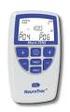 TENS PROTOCOL Dr. Deirdre M. Walsh D. Phil, B. Physio, PgCUT, MISCP, MCSP INTRODUCTION This protocol aims to provide an overview of Transcutaneous Electrical Nerve Stimulation (TENS), the choice of stimulation
Origin of Electrical Membrane Potential
 Origin of Electrical Membrane Potential parti This book is about the physiological characteristics of nerve and muscle cells. As we shall see, the ability of these cells to generate and conduct electricity
Fundamentals of Electromyography. Amanda Peltier, MD MS Department of Neurology
 Fundamentals of Electromyography Amanda Peltier, MD MS Department of Neurology Importance of EMG Studies Diagnosis Localization Assist in further testing (i.e. identify potential biopsy sites) Prognosis
ELECTRODIAGNOSTIC MEDICINE
 ELECTRODIAGNOSTIC MEDICINE OBJECTIVES BEGINNER Patient Care Perform a comprehensive electrodiagnostic evaluation of each patient and to provide a concise diagnosis and plan for further treatment Describe
ELECTROCARDIOGRAPHY (I) THE GENESIS OF THE ELECTROCARDIOGRAM
 ELECTROCARDIOGRAPHY (I) THE GENESIS OF THE ELECTROCARDIOGRAM Scridon Alina, Șerban Răzvan Constantin 1. Definition The electrocardiogram (abbreviated ECG or EKG) represents the graphic recording of electrical
LUMBAR PARAVERTEBRAL (PSOAS COMPARTMENT) BLOCK BY ANDRÉ P BOEZAART MD, PHD
 BY ANDRÉ P BOEZAART MD, PHD Author Affiliation: Department of Anesthesia, University of Iowa, Iowa City, IA INTRODUCTION When evaluating the efficacy of centrally performed nerve blocks one must think
Pacers use a 5-letter code: first 3 letters most important
 PACEMAKERS 2 Pacemakers: Nomenclature Pacers use a 5-letter code: first 3 letters most important t First Letter: Chamber Paced A= Atrium V= Ventricle D= Dual (A+V) 2nd Letter: Chamber Sensed A= Atrium
Bier Block (Intravenous Regional Anesthesia)
 Bier Block (Intravenous Regional Anesthesia) History August Bier introduced this block in 1908. Early methods included the use of two separate tourniquets and procaine was the local anesthetic of choice.
Comparison of the effects between clonidine and epinephrine added with bupivacine in brachial plexus block.
 IOSR Journal of Dental and Medical Sciences (IOSR-JDMS) e-issn: 2279-0853, p-issn: 2279-0861.Volume 13, Issue 11 Ver. I (Nov. 2014), PP 54-58 Comparison of the effects between clonidine and epinephrine
TRANSPORT OF DANGEROUS GOODS
 Recommendations on the TRANSPORT OF DANGEROUS GOODS Manual of Tests and Criteria Fifth revised edition Amendment 1 UNITED NATIONS SECTION 38 38.3 Amend to read as follows: "38.3 Lithium metal and lithium
Intraosseous Vascular Access and Lidocaine
 Intraosseous Vascular Access and Lidocaine Intraosseous (IO) needles provide access to the medullary cavity of a bone. It is a technique primarily used in emergency situations to administer fluid and medication
A Practical Guide to Dielectric Testing
 Chroma Systems Solutions, Inc. A Practical Guide to Dielectric Testing 19032 Series Electrical Safety Analyzer & 19050 Series Hipot Tester AC/DC/IR/SCAN Keywords: Dielectric tests, insulation resistance
TOTAL HIP REPLACEMENT FOR A LIFETIME: THE CEMENTLESS METAL ON METAL RECONSTRUCTION
 Richard A. Sweet, M.D. Louisville Orthopaedic Clinic Louisville, KY TOTAL HIP REPLACEMENT FOR A LIFETIME: THE CEMENTLESS METAL ON METAL RECONSTRUCTION INTRODUCTION Total hip replacement surgery (THR) has
Role of Electrodiagnostic Tests in Neuromuscular Disease
 Role of Electrodiagnostic Tests in Neuromuscular Disease Electrodiagnostic tests Electroencephalogram (EEG) Electromyography (NCV, EMG) Cerebral evoked potentials (CEP) Motor evoked potentials (MEP) Electronystagmogram
Pulse Output. Michael K. Laudon
 11 Pulse Output Michael K. Laudon The function of the output circuit is to deliver periodic voltage pulses to the heart muscle. High standards of quality and durability are required for the design and
IV Contrast Extravasation PQI Project Feed-Back Document from the Society of Abdominal Radiology & American College of Radiology
 IV Contrast Extravasation PQI Project Feed-Back Document from the Society of Abdominal Radiology & American College of Radiology This performance feedback document and the accompanying spreadsheet include
Revisiting the anatomy of the ilio-inguinal / iliohypogastric nerve block
 Original article Revisiting the anatomy of the ilio-inguinal / iliohypogastric nerve block Albert-Neels van Schoor 1, Marius C Bosman 1, Adrian T Bosenberg 2, 1 Department of Anatomy, School of Medicine,
PRACTICE GUIDELINE TITLE: INTRAVENOUS LINE INSERTION: PERIPHERAL AND CENTRAL
 PRACTICE GUIDELINE Effective Date: 9-17-04 Manual Reference: Deaconess Trauma Services TITLE: INTRAVENOUS LINE INSERTION: PERIPHERAL AND CENTRAL PURPOSE: To outline the indications and options for intravenous
The Detection of Neural Fatigue during intensive conditioning for football: The Potential of Transcranial Magnetic Stimulation
 The Detection of Neural Fatigue during intensive conditioning for football: The Potential of Transcranial Magnetic Stimulation Carl Wells PhD Sport Science Lead, Perform, National Football Centre, St.
Epidurals for pain relief after surgery
 Epidurals for pain relief after surgery This information leaflet is for anyone who may benefit from an epidural for pain relief after surgery. We hope it will help you to ask questions and direct you to
Bi 360: Midterm Review
 Bi 360: Midterm Review Basic Neurobiology 1) Many axons are surrounded by a fatty insulating sheath called myelin, which is interrupted at regular intervals at the Nodes of Ranvier, where the action potential
Top-up for Cesarean section. Dr. Moira Baeriswyl, Prof. Christian Kern
 Top-up for Cesarean section Dr. Moira Baeriswyl, Prof. Christian Kern In which situations? 2 What exactly is a Top-up? 3 C-section, NOW!! Emergency C-section requires a rapid onset of sustained analgesia
User Manual Table of Contents. Instructions for Using the LaserTouchOne Charging the Unit... 5 Holding the Device... 5 Treatment Steps...
 User Manual User Manual Table of Contents Introduction The LaserTouchOne... 3 Device Features and Controls (Photo of device)... 4 Product Contents... 4 Laser Safety... 4 Electrical Safety... 5 Instructions
CHAPTER XV PDL 101 HUMAN ANATOMY & PHYSIOLOGY. Ms. K. GOWRI. M.Pharm., Lecturer.
 CHAPTER XV PDL 101 HUMAN ANATOMY & PHYSIOLOGY Ms. K. GOWRI. M.Pharm., Lecturer. Types of Muscle Tissue Classified by location, appearance, and by the type of nervous system control or innervation. Skeletal
Various Technics of Liquids and Solids Level Measurements. (Part 3)
 (Part 3) In part one of this series of articles, level measurement using a floating system was discusses and the instruments were recommended for each application. In the second part of these articles,
CHAPTER THREE COMMON DESCRIPTIVE STATISTICS COMMON DESCRIPTIVE STATISTICS / 13
 COMMON DESCRIPTIVE STATISTICS / 13 CHAPTER THREE COMMON DESCRIPTIVE STATISTICS The analysis of data begins with descriptive statistics such as the mean, median, mode, range, standard deviation, variance,
CHAPTER 6 INSTRUMENTATION AND MEASUREMENTS 6.1 MEASUREMENTS
 CHAPTER 6 INSTRUMENTATION AND MEASUREMENTS 6.1 MEASUREMENTS Atmospheric electricity is a field that is very easy to get into because it does not require a large capital investment for measuring equipment.
Slide 1. Slide 2. Slide 3. Cable Properties. Passive flow of current. Voltage Decreases With Distance
 Slide 1 Properties of the nerve, axon, cell body and dendrite affect the distance and speed of membrane potential Passive conduction properties = cable properties Signal becomes reduced over distance depending
A PATIENT S GUIDE TO ABLATION THERAPY
 A PATIENT S GUIDE TO ABLATION THERAPY THE DIVISION OF VASCULAR/INTERVENTIONAL RADIOLOGY THE ROBERT WOOD JOHNSON UNIVERSITY HOSPITAL Treatment options for patients with cancer continue to expand, providing
INTERSCALENE BLOCK AND OTHER ARTICLES ON ANESTHESIA FOR ARTHROSCOPIC SURGERY NOT QUALIFYING AS EVIDENCE
 INTERSCALENE BLOCK AND OTHER ARTICLES ON ANESTHESIA FOR ARTHROSCOPIC SURGERY NOT QUALIFYING AS EVIDENCE Hughes MS, Matava MJ, et al. Interscalene Brachial Plexus Block for Arthroscopic Shoulder Surgery.
Voltage Detection and Indication by Electric Field Measurement
 Voltage Detection and Indication by Electric Field Measurement William McNulty, P.E. Technical Director Voltage Detection and Indication by Electric Field Measurement William McNulty, P.E. HD Electric
Placement of Epidural Catheter for Pain Management Shane Bateman DVM, DVSc, DACVECC
 Placement of Epidural Catheter for Pain Management Shane Bateman DVM, DVSc, DACVECC Indications: Patients with severe abdominal or pelvic origin pain that is poorly responsive to other analgesic modalities.
Module 13 : Measurements on Fiber Optic Systems
 Module 13 : Measurements on Fiber Optic Systems Lecture : Measurements on Fiber Optic Systems Objectives In this lecture you will learn the following Measurements on Fiber Optic Systems Attenuation (Loss)
Student Academic Learning Services Page 1 of 8 Nervous System Quiz
 Student Academic Learning Services Page 1 of 8 Nervous System Quiz 1. The term central nervous system refers to the: A) autonomic and peripheral nervous systems B) brain, spinal cord, and cranial nerves
A new instrument for Deep Brain Stimulation surgery
 A new instrument for Deep Brain Stimulation surgery ir. Marc Janssens PhD-student prof. dr. ir. M. Steinbuch TU/e CST Deep Brain Stimulation 2 54 11 54 Pulse generator: Voltage: 0 10.5 V ; 2 250 Hz Current:
Brain Maps The Sensory Homunculus
 Brain Maps The Sensory Homunculus Our brains are maps. This mapping results from the way connections in the brain are ordered and arranged. The ordering of neural pathways between different parts of the
Significant nerve damage is uncommonly associated with a general anaesthetic
 Risks associated with your anaesthetic Section 10: Nerve damage associated with an operation under general anaesthetic Section 10: Significant nerve damage is uncommonly associated with a general anaesthetic
Chapter 7: The Nervous System
 Chapter 7: The Nervous System Objectives Discuss the general organization of the nervous system Describe the structure & function of a nerve Draw and label the pathways involved in a withdraw reflex Define
UN Manual of Tests and Criteria, Sub-section 38.3, Amendments to the 5 th edition, effective 2014 January 1 st
 1 UN Manual of Tests and Criteria, Sub-section 38.3, Amendments to the 5 th edition, effective 2014 January 1 st 38.3 Lithium metal and lithium ion batteries 38.3.1 Purpose This section presents the procedures
Second Quarterly Progress Report NO1-DC-6-2111 The Neurophysiological Effects of Simulated Auditory Prosthesis Stimulation
 Second Quarterly Progress Report NO1-DC-6-2111 The Neurophysiological Effects of Simulated Auditory Prosthesis Stimulation J.T. Rubinstein, A.J. Matsuoka, P.J. Abbas, and C.A. Miller Department of Otolaryngology
ELECTROMYOGRAPHY (EMG), NEEDLE, NERVE CONDUCTION STUDIES (NCS) AND QUANTITATIVE SENSORY TESTING (QST)
 AND QUANTITATIVE SENSORY TESTING (QST) Coverage for services, procedures, medical devices and drugs are dependent upon benefit eligibility as outlined in the member's specific benefit plan. This Medical
A.V.R. R250. Installation and maintenance R250 0V E+ E- VOLT STAB FREQ. & L.A.M. CONFIG. 50Hz. 47.5Hz. 57Hz LAM 1 13% 2 25% OFF LAM OFF 9
 110 0V E+ E- VOLT STAB KNEE 47.5Hz OFF 9 SPECIAL 8 KNEE 65Hz 7 OFF KNEE 6 57Hz OFF 7 8 50Hz o 9 0 5 6 1 2 3 4 OFF 1 13% 2 25% 3 OFF 4 13% 5 25% 60Hz FREQ. & L.A.M. CONFIG. This manual concerns the alternator
Sign up to receive ATOTW weekly - email [email protected]
 LUMBAR PLEXUS BLOCK LANDMARK TECHNIQUE (PSOAS COMPARTMENT BLOCK) ANAESTHESIA TUTORIAL OF THE WEEK 263 18 TH JUNE 2012 Katie Patton 1 and Paul Warman 2 1. Torbay Hospital, Torquay 2. Leeds General Infirmary,
Current Probes. User Manual
 Current Probes User Manual ETS-Lindgren L.P. reserves the right to make changes to any product described herein in order to improve function, design, or for any other reason. Nothing contained herein shall
TRANSVERSUS ABDOMINIS PLANE (TAP) BLOCK
 THE JOURNAL OF NEW YORK SCHOOL M a y 2 0 0 9 V o l u m e OF REGIONAL ANESTHESIA 1 2 TRANSVERSUS ABDOMINIS PLANE (TAP) BLOCK By Karim Mukhtar, MB BCh, MSc, FRCA Royal Liverpool and Broadgreen University
Using the frog sciatic nerve
 PRO Lesson A03 COMPOUND ACTION POTENTIAL: NERVE CONDUCTION Using the frog sciatic nerve Developed in conjunction with Department of Biology, University of Northern Iowa, Cedar Falls 10.23.2015 This PRO
ELECTRIC FIELD LINES AND EQUIPOTENTIAL SURFACES
 ELECTRIC FIELD LINES AND EQUIPOTENTIAL SURFACES The purpose of this lab session is to experimentally investigate the relation between electric field lines of force and equipotential surfaces in two dimensions.
Muscle Fibres. Anatomy and Physiology Advanced Diploma Course Sample Pages Page 1
 Muscle Fibres Muscles are composed of thousands of individual muscle fibres, which are held together by connective tissue. However, muscle fibres may differ in physiological makeup. Anatomy and Physiology
 Epimed Would Like To Congratulate The 20th Annual Budapest Conference The New Shape of Pain Relief SmalleST. ThiNNeST. CoNTouRed design. Precision Novi is the world s smallest, thinnest 16 contact primary
An abdominal ultrasound produces a picture of the organs and other structures in the upper abdomen.
 Scan for mobile link. Ultrasound - Abdomen Ultrasound imaging of the abdomen uses sound waves to produce pictures of the structures within the upper abdomen. It is used to help diagnose pain or distention
Through-mask Electro-etching for Fabrication of Metal Bipolar Plate Gas Flow Field Channels
 991 Downloaded 23 Dec 21 to 24.16.113.125. Redistribution subject to ECS license or copyright; see http://www.ecsdl.org/terms_use.jsp ECS Transactions, 33 (1) 991-16 (21) 1.1149/1.3484593 The Electrochemical
The Impact of Regional Anesthesia on Perioperative Outcomes By Dr. David Nelson
 The Impact of Regional Anesthesia on Perioperative Outcomes By Dr. David Nelson As a private practice anesthesiologist, I am often asked: What are the potential benefits of regional anesthesia (RA)? My
FDA Guidelines for Magnetic Resonance Equipment Safety
 FDA Guidelines for Magnetic Resonance Equipment Safety Loren A. Zaremba, Ph.D. Center for Devices and Radiological Health Food and Drug Administration Outline I. Introduction II. Static Magnetic Field
Ultrasound Dose Calculations
 Ultrasound Dose Calculations One of the advantages of ultrasound therapy remains the reasonably broad range of trails from which effective treatment doses can be established. In principle, there is no
Pain Relief during Labour and Delivery: What Are My Options?
 Pain Relief during Labour and Delivery: What Are My Options? To help you prepare for the birth of your baby, this booklet answers some of the questions you may have about pain relief options. You should
Procedure -8. Intraosseous Infusion Adult and Pediatric EZIO. Page 1 of 7 APPROVED:
 Page 1 of 7 Intraosseous Infusion Adult and Pediatric APPROVED: EMS Medical Director EMS Administrator 1. Goals/Introduction: 1.1 Intraosseous (IO) infusion provides an effective alternative means of providing
Sonographically Guided Ilioinguinal Nerve Block
 Technical Advance Sonographically Guided Ilioinguinal Nerve Block Michael Gofeld, MD, Monique Christakis, MD, FRCPC Objective. The aim of this study was to describe a sonographically guided ilioinguinal
Digital Energy ITI. Instrument Transformer Basic Technical Information and Application
 g Digital Energy ITI Instrument Transformer Basic Technical Information and Application Table of Contents DEFINITIONS AND FUNCTIONS CONSTRUCTION FEATURES MAGNETIC CIRCUITS RATING AND RATIO CURRENT TRANSFORMER
DISCHARGE CRITERIA FOR PHASE I & II- POST ANESTHESIA CARE
 REFERENCES: The Joint Commission Accreditation Manual for Hospitals American Society of Post Anesthesia Nurses: Standards of Post Anesthesia Nursing Practice (1991, 2002). RELATED DOCUMENTS: SHC Administrative