
XIV Commercial Maintenance Procedures 303
|
|
|
- Amelia Dorsey
- 9 years ago
- Views:
Transcription
1 XIV Commercial Maintenance Procedures 303

2 XVI. Commercial Maintenance Procedures Following the recommended maintenance program is the key to a long, attractive life for commercial resilient flooring. Regular and well planned maintenance programs can reduce wear and ultimately increase the service life of the floor covering. Walk-off mats, sweeping, mopping, polishing and buffing protect more than just the floor they protect the building owner s investment as well. General Maintenance Information Grit Control Controlling grit and soil is crucial to prolonging the attractive appearance of any floor. Grit or soil is any material including dirt, stones, sand and clay that is deposited onto the floor by normal commercial traffic. The best way to control grit is by using appropriate walk-off mats. Recommended mats have a high-friction, open surface designed to knock grit particles from the bottoms of shoes and then trap the particles. Mats should be used at every entrance, inside and outside, should be at least as wide as the doorway and 8 to 12 long. Also, be sure to select a mat with a backing that won t stain the floor. Don t forget that the mats need to be cleaned regularly. They should be vacuumed, shaken and/or hosed off frequently. Fine dust particles will still find their way into the interior, despite existence of the recommended walk-off mats. Regular vacuuming, sweeping and dust-mopping will help control this type of grit. For the most cost-effective method of controlling fine dust-like grit, dust with a treated non-oily mop. Cleaning The Floor Cleaning a floor can range from a simple damp mopping to a complete stripping. Damp mopping/spot-mopping is appropriate for cleaning up dust, spills and other easy-to-remove soil. The detergent solution should be changed frequently to eliminate redepositing of dirt on the floor. Done regularly, this procedure can minimize the need for more time-consuming maintenance procedures. When faced with heavily embedded soil, scrubbing is the recommended solution. This option requires application of a neutral cleaning solution, such as properly diluted Armstrong S-485 Commercial Floor Cleaner, followed by scrubbing and rinsing of the floor. The scrubbing procedure can be performed with pads, scrub brushes, a single-disc floor machine, a wet-vac helpful for removing dirty cleaning solutions and rinse water or an automatic floor machine (using 3M red, blue or green pads or equal). When working with linoleum, all maintenance solutions must be 10 ph or less. The automatic floor machine is a favorable choice for especially large areas because it applies the detergent solution, scrubs the floor and takes up the dirty solution in a single operation. Automatic floor machines are available in various sizes and can be fitted with the appropriate pad or brush. The single-disc machine, on the other hand, requires separate equipment for each of the scrubbing/rinsing steps. 304 Chapter XIV Commercial Maintenance Procedures

3 Polishing The Floor There are three reasons for polishing a floor: 1. Protection 2. Appearance 3. Ease of maintenance NOTE: If a sealer is recommended or required, it must be applied before the polish. (See Sealing The Floor Section below.) NOTE: Do not apply more than four coats of sealer and/or polish in a 24 hr. period. The best polish for protecting and enhancing many commercial resilient floors is a high-quality commercial floor polish with a percent of solids level usually between 16% and 22%, such as Armstrong S-480 Commercial Floor Polish. Designed for durability and resistance to detergent solutions (except stripping solutions), S-480 offers a broad-spectrum response to a variety of maintenance procedures and equipment. Static Dissipative Tile requires the use of Armstrong S-392 SDT Polish. Allow adequate drying time after each coat. Maintaining an acceptable gloss level is done by buffing, spray buffing or burnishing. Unless otherwise stated, do not buff, spray buff or burnish a floor with less than 3 to 5 coats of polish. Without the mandatory 3 to 5 coats of polish, the pad or brush may make contact with the actual flooring surface, most likely marring the flooring material with burn marks and swirls. Supplementary coats of polish should be applied as appearance and gloss level dictate. To maintain optimal appearance in high-traffic and high soil areas (such as lobbies, chairslide areas in cafeterias, elevators, supermarket checkout lanes, etc.), polish may need to be applied more frequently to maintain the minimum protective layer. Sealing The Floor Generally, sealing a floor is optional. Sealers are usually used on older floors to improve maintenance characteristics and on floors where additional stain resistance is desired. However, if the polish manufacturer recommends the use of a sealer, that recommendation should be followed. Generally two coats of a sealer are sufficient to provide the desired protection. Sealers by themselves are generally not recommended as a walking surface. They must be top coated with a floor polish. Resilient flooring sealers are generally applied by the same techniques used when applying floor polishes. Armstrong S-495 Commercial Floor Sealer is designed to provide a proper base for S-480 Commercial Floor Polish, as well as offer the added benefit of increased stain resistance. Allow adequate drying time after each coat. Stripping The Floor Stripping is the process of removing all dirt and old polish from the floor. Use a strong, highly alkaline detergent solution, such as properly diluted Armstrong S-490 Commercial Floor Stripper. Stripping should be done at 300 rpm or less with a 3M blue or green pad or equivalent, or a scrub brush. The use of more aggressive pads or brushes can cause permanent damage to the floor. Remove the dirty solution with a wet-vac or mop, and rinse the floor thoroughly. This process should be Chapter XIV Commercial Maintenance Procedures 305

4 repeated until all old polish is removed. Do not perform dry stripping of any resilient floor. Do not use Armstrong S-490 Commercial Floor Stripper on linoleum. When working with linoleum, all maintenance solutions must be 10 ph or less. There are also mop-on/mop-off stripping solutions which do not require machine scrubbing. The use of mop-on/mop-off, no-scrub and/or no-rinse strippers is not recommended on tile floors that are less than two years old, because they may affect the adhesive bond. The use of these highly solvenated or highly concentrated strippers can also be detrimental to linoleum and other specialty flooring products. Always refer to flooring manufacturer s recommendations. Stripping is the most labor intensive and, therefore, the most expensive floor maintenance procedure. It should not be done more often than is absolutely necessary. A well-trained maintenance staff using quality equipment and maintenance products on a regular schedule can significantly reduce the need for stripping. 306 Chapter XIV Commercial Maintenance Procedures

5 Commercial Floor Care Products Chart Because of the heritage of the Armstrong brand, users of our Commercial Floor Care products know that the quality they expect is built into the Armstrong line of products. Armstrong Commercial Floor Care products have been specially formulated through research and development to work not only with Armstrong flooring structures and coatings, but with many other types of flooring as well. Because of their versatility, the need for multiple maintenance products is eliminated. This translates into important savings either time or dollar savings, or both. Type & Dilution Percent Product Description Range Sizes Spread Rate Cautions* of Solids S-401 Neutral cleaner up to 64:1 1 gallon N/A Eye and N/A S-485 (ph 8.5 undiluted) 5 gallon skin irritant S-403 Acrylic emulsion polish N/A 1 gallon Eye and 18% S-480 (ph 8.65) 5 gallon sq.ft./gal./coat skin irritant S-402 Alkaline polish stripper 3:1 1 gallon N/A May cause N/A S-490 (ph 12.5 undiluted) 5 gallon severe eye or Do not use on linoleum. skin burns; harmful if swallowed S-495 Acrylic stain-resistant N/A 1 gallon Eye and 16% sealer (ph 7.8) 5 gallon sq.ft./gal./coat skin irritant S-392 Static dissipative polish N/A 1 gallon Eye and 20% (ph 8.8) sq.ft./gal./coat skin irritant *Refer to Material Safety Data Sheet for cautions and warnings. Floor Care Fundamentals Adherence to these fundamentals will assure a longer, more attractive life for the floor: n Vinyl flooring, like other types of smooth floors, can become slippery when wet. Allow time for floor to dry after washing. Immediately wipe up wet areas from spills, foreign substances, or wet feet. n A successful maintenance program consists of thorough dirt and grit control, prompt removal of spills and stains, and protection of the floor surface as required. n Walk-off mats, sweeping, mopping and vacuuming all help in the control of loose dirt and grit. Damp mopping, spot-cleaning and washing will remove most spills and stains, the fine dirt, assorted spills and wet footprints that sweeping misses and dust-mopping doesn t control. n Use walk-off mats that are as wide as the entrance and approximately 8 to 12 long to trap dirt and moisture before feet reach the resilient floor. n To prevent excess moisture from interfering with the adhesive bond and/or seam treatments, do not wet wash, machine scrub, or strip the floor for at least four days after installation. Please refer to initial maintenance for each product. n Do not flood the floor with rinsing, scrubbing, or stripping solutions. Chapter XIV Commercial Maintenance Procedures 307

6 n High-quality name brand maintenance products such as Armstrong Commercial Floor Care products should be used to ensure consistency of performance. Carefully follow manufacturer s directions for each product. n The improper use and/or dilution of disinfectant cleaners can produce discoloration of any surface. n The use of aggressive strippers such as mop-on/mop-off, no-scrub and/or norinse strippers is not recommended on tile floors that are less than two years old, because they may affect the adhesive bond. The use of these highly solvated or highly concentrated strippers can also be detrimental to linoleum and other specialty flooring products. n When working with linoleum, all maintenance solutions must be 10 ph or less. n Do not use Brown or Black pads, or equivalent brushes, on any Armstrong resilient floors. Their use can cause permanent damage to the floor. 308 Chapter XIV Commercial Maintenance Procedures

7 Commercial Resilient Maintenance Information Chart Maintenance Options Product Factory Finish Polish Spray Buff Dry Buff Pads or Brushes Linoleum with NATURCote MARMORETTE COLORETTE LINORETTE Urethane 3 3 Either GRANETTE Linoleum with Acrylic UNI WALTON LINODUR Acrylic 3 Either BioBased Tile MIGRATIONS Acrylic 3 Either Luxury Vinyl Tile NATURAL CREATIONS Urethane 3 3 Brushes recommended Heterogeneous PERSPECTIVES TIMBERLINE TRANSLATIONS Urethane 3 3 Brushes recommended COMMISSION Plus Homogeneous MEDINTECH, ROYAL Urethane Either Inlaid MEDINTECH Tandem POSSIBILITIES Urethane Either Connection CORLON Vinyl Composition Tile ARTEFFECTS Companion Square Stonetex MultiColor Acrylic 3 Either Imperial Texture Feature Tile Specialty Flooring SAFEGUARD SAFEGUARD Spa None NOTE 1 Brushes recommended EXCELON Safety Zone Acrylic 3 Brushes recommended EXCELON SDT (Static Dissipative Tile) Acrylic 3 NOTE 2 Either Rubber Tile None 3 Brushes recommended See individual product pages for specific maintenance recommendations. NOTE 1: Because SAFEGUARD and SAFEGUARD Spa are designed for slip retardance, floor polish is not recommended. Most floor polishes will adversely affect their slip-retardant properties. These products can be maintained using traditional dry mopping, wet mopping and scrubbing procedures. They should not be buffed or burnished. NOTE 2: Use only Armstrong S-392 SDT Polish. Using other polishes or sealers may interfere with the electrical properties and/or appearance of this flooring. Chapter XIV Commercial Maintenance Procedures 309

8 Maintenance Recommendations by Product The following are general guidelines for maintaining Armstrong commercial flooring products. They are based on general experience using established methods and cleaning materials. It is important that these guidelines are read carefully as many of the products offer the end user maintenance options. Ultimately the local site conditions will determine what specific maintenance procedures and frequencies are needed. It is the responsibility of the maintenance provider to establish the maintenance program(s) that meet the demands of the space(s) and needs of the facility. All resilient floor coverings require maintenance. How frequently the floors must be maintained depends largely on the factors described below. Following regular and well-planned maintenance programs protects the floor by reducing wear, preserves the floor s attractive appearance and ultimately increases its service life. How to Determine Your Maintenance Program Before a maintenance program can be established, there are a number of factors which must be considered in order to determine the most appropriate, costeffective methods to use. It is critical that the maintenance methods for each floor and area be chosen only after careful evaluation and regard to the following: n What resources, equipment, chemicals, personnel and time are available to the maintenance provider? Are well-trained maintenance personnel available? Are the appropriate equipment and chemicals available? n What are the end user s expectations? What is considered an acceptable appearance? What is the desired floor finish (high or low luster)? n What is the location of the flooring within the building? Entryways, lobbies and pivot-point areas may require more protection and more frequent cleaning than lower traffic areas in other parts or upper levels of the building. n What is the volume and type of traffic and the type and amount of soil likely to be found at the location? For instance, traffic types and volumes in entryways and corridors will vary greatly from those found at nurse s stations or in examination rooms. Dirt and grit carried in from outside can differ significantly from the soils and chemical spills found in a laboratory or emergency room. n Are there special traffic or footwear situations? Areas subjected to frequent rolling loads provide a different environment than a children s play area or corridor in an elementary school. n What is the color of the flooring? Color and pattern can have a significant impact on a floor s appearance and when properly chosen, may help mask soiling and staining. Midtones are better choices than light or dark colors. Busier/high contrast patterns will hide better than solid/monolithic ones. 310 Chapter XIV Commercial Maintenance Procedures

9 Linoleum Sheet with NATURCote MARMORETTE GRANETTE COLORETTE LINORETTE UNIWALTON Armstrong linoleum sheet products are manufactured with NATURCote, a protective, high performance urethane finish that provides improved maintenance characteristics and maintenance options for the end-user. For Best Results n Wipe a narrow band of a protective finish on heat welded seams. When using one of the No Polish Options, it may be necessary to periodically recoat the welded seam. n Maintenance solutions used on linoleum should not exceed a ph of 10 because linoleum is made primarily of natural raw materials (linseed oil, cork, jute and natural resins). The use of highly alkaline or solvenated solutions or abrasive materials may damage linoleum. Do not use Armstrong S-490 Commercial Floor Stripper on linoleum. n When performing wet maintenance always use proper signage and prohibit traffic until the floor is completely dry. n Do not wet wash, machine scrub, or strip the floor for at least four days after installation. This is to prevent excess moisture from interfering with the adhesive bond and/or seam treatments. n Do not use excessive amounts of liquid during maintenance. n Do not use brown or black pads, equivalent brushes or stiff-bristled, highly abrasive brushes on Armstrong resilient flooring. n If it becomes necessary to move any heavy fixtures or appliances over the flooring on casters or dollies, the flooring should be protected with 1/4" or thicker plywood, hardboard or other underlayment panels. If other on-site work is continuing, consider using a protective covering such as plain, undyed kraft paper to guard against damage to the new floor. A. Initial Maintenance and Preparation for Commercial Traffic 1. Sweep, dust mop or vacuum the floor thoroughly to remove all loose dust, dirt, grit and debris. 2. Remove any dried adhesive residue with a clean, white cloth dampened with mineral spirits, carefully following warnings on the container. 3. Damp mop the floor with a properly diluted neutral (ph 6 to 8) detergent solution such as Armstrong S-485 Commercial Floor Cleaner. 4. If necessary machine scrub the floor with a properly diluted neutral detergent solution such as Armstrong S-485 Commercial Floor Cleaner and the appropriate scrubbing pad (red for light scrub, blue/green for a deep scrub) or equivalent brushes. NOTE: If the floor will be maintained with the Polish Option, the floor must be scrubbed with a floor machine fitted with a green scrubbing pad (3M green or equal). 5. Thoroughly rinse the entire floor with fresh, clean water. Remove rinse water and allow it to dry completely. Chapter XIV Commercial Maintenance Procedures 311

10 Having completed Steps 1-5 above, choose a maintenance option based on your evaluation of the factors listed under How to Determine Your Maintenance Program (See page 310) and proceed as directed below. 6. Maintenance options: n Polish Option - apply 3 to 5 coats of high-quality commercial floor polish such as Armstrong S-480 Commercial Floor Polish. In areas where the flooring will be exposed to heavy traffic and/or staining agents, the application of a stain resistant sealer such as Armstrong S-495 Commercial Floor Sealer, prior to the application of polish, is recommended. n Spray Buff Option spray buff the floor using a spray buff solution and the appropriate pad. B. Daily / Regular Maintenance 1. Sweep, dust mop or vacuum the floor daily to remove dust, dirt, grit and debris that can damage the floor and become ground into the surface. 2. Spot mop as needed. Any spills should be cleaned up immediately. 3. Damp mopping of the floor should be performed on a regular or daily basis depending upon traffic and soil levels in the space. Use a properly diluted neutral detergent solution such as Armstrong S-485 Commercial Floor Cleaner. C. Periodic Maintenance 1. When needed, machine scrub the floor with a properly diluted neutral detergent solution such as Armstrong S-485 Commercial Floor Cleaner and the appropriate scrubbing pad (red for light scrub, blue/green for a deep scrub) or equivalent brushes. 2. Thoroughly rinse the entire floor with fresh, clean water. Remove rinse water and allow it to dry completely. 3. Based on the selected maintenance option in Section A above, do one of the following: n If maintaining with the Polish Option and a sufficient base (3 to 5 coats) of polish remains, buff, spray-buff or burnish to restore gloss. If needed, additional coats of floor polish may be applied at this time n If maintaining with the Spray Buffing Option, spray buff using a rotary machine (175 to 600 rpm) with the appropriate pad and spray buff solution. This may be followed by dry buffing with a white pad. D. Restorative Maintenance Stripping Use only stripping chemicals designed for use on linoleum (10 ph or less). Do not use Armstrong S-490 Commercial Floor Stripper on linoleum. 1. Mix stripping solution to the appropriate dilution, depending on floor finish build-up. Blockade areas to be stripped. Apply liberal amounts of solution uniformly on floor with mop. Let stripping solution soak for the appropriate amount of time recommended by the stripper manufacturer. Keep areas to be stripped wet. 312 Chapter XIV Commercial Maintenance Procedures

11 2. Machine scrub the floor (300 rpm or less) with a scrubbing pad (3M blue or equal) or equivalent scrub brush to break up the polish film. Do not allow stripping solution to dry on the floor. 3. Remove dirty stripping solution with a wet vacuum or mop. TIP: Drizzling fresh clean rinse water onto the dirty stripping solution will assist with more thorough removal. 4. Thoroughly rinse the entire floor with fresh, clean water. Remove rinse water and allow it to dry completely. 5. Based on the selected maintenance option in Section A above, do one of the following: n If maintaining with the Polish Option apply 3 to 5 coats of high-quality commercial floor polish such as Armstrong S-480 Commercial Floor Polish. n If maintaining with the Spray Buffing Option, spray buff using a rotary machine (175 to 600 rpm) with the appropriate pad and spray buff solution. This may be followed by dry buffing with a white pad. Linoleum color change Drying room yellowing sometimes referred to as seasoning bloom, drying room film or stove yellowing is a natural phenomenon that occurs during the manufacturing process of all linoleum. As linoleum cures in the drying room, a yellowish cast may develop on the surface due to the oxidation of the linseed oil. This is not a product defect. Any change in the product s appearance because of this yellow cast is temporary and disappears after exposure to either natural or artificial light. The time required for the yellow cast to disappear ranges from a few hours to several weeks depending on the type and intensity of the light source. Typically, the yellow cast disap pears more quickly with exposure to natural light. The application of floor finishes will not interfere with the dissipation of the yellow cast. Disappearance of the yellow cast will not occur on areas not exposed to light. Chapter XIV Commercial Maintenance Procedures 313

12 Linoleum Sheet with Acrylic Finish UNI WALTON LINODUR Because Linoleum is made primarily of natural raw materials (linseed oil, cork, jute and natural resins), the use of excessive amounts of liquid during maintenance procedures should be avoided. In addition, any maintenance solutions must be 10 ph or less. The use of highly alkaline or solvated (over 10 ph) solutions or abrasive materials may damage the linoleum. In areas where the linoleum will be exposed to heavy traffic and/or staining agents, the application of a stain-resistant sealer is highly recommended. The use of walk-off mats at all entrances is also highly recommended. A. Initial Maintenance Immediately After Installation 1. Sweep, dust mop or vacuum the floor thoroughly to remove all loose dust and dirt. 2. Remove any dried adhesive residue with a clean white cloth dampened with mineral spirits, carefully following warnings on container. 3. Damp mop the floor with a properly diluted neutral detergent solution such as Armstrong S-485 Commercial Floor Cleaner, while carefully scrubbing black marks and excessive soil. NOTE: Do not wet wash, machine scrub, or strip the floor for at least four days after installation. This is to prevent excess moisture from interfering with the adhesive bond and/or seam treatments. 4. Apply two coats of a high-quality commercial floor polish such as Armstrong S-480 Commercial Floor Polish. The use of a high-quality stain-resistant sealer such as Armstrong S-495 Commercial Floor Sealer beneath the polish should be considered in areas of high traffic, high soil load and areas where staining potential is high. NOTE: It is important to protect the floor during the installation and construction phase. If other on-site work is continuing, consider using a protective covering such as plain, undyed kraft paper to guard against damage to the new floor. When moving heavy fixtures or appliances over the flooring on casters or dollies, the flooring should be protected with 1/4ʺ or thicker plywood, hardboard or other underlayment panels. Preparation for Commercial Traffic 1. Scrub the floor with a properly diluted neutral detergent solution such as Armstrong S-485 Commercial Floor Cleaner sing a single-disc floor machine (300 rpm or less) equipped with and a scrubbing pad (3M blue/green or equal), or equivalent brushes. If the floor is badly soiled and/or scratched, strip it using the same procedure but substituting a stripping solution with a ph of 10 or less. DO NOT use Armstrong S-490 Commercial Floor Stripper. 2. Thoroughly rinse the entire floor with fresh, clean water and allow it to dry completely. 3. Apply 3 to 5 coats of high-quality commercial floor polish such as Armstrong S-480 Commercial Floor Polish. The use of a linoleum-safe stain-resistant sealer should be considered in areas of high traffic, soil load and staining potential. 314 Chapter XIV Commercial Maintenance Procedures

13 B. Daily/Regular Maintenance 1. Sweep, dust mop or vacuum and clean walk-off mats frequently. 2. Damp mop using a neutral detergent solution such as Armstrong S-485 Commercial Floor Cleaner at 3 to 4 ounces per gallon. C. Periodic Maintenance 1. When needed, scrub the floor with a properly diluted neutral detergent solution such as Armstrong S-485 Commercial Floor Cleaner using a single disc (300 rpm or less) or automatic floor machine and the appropriate scrubbing pad (red for light scrub, blue/green for a deep scrub) or equivalent brushes. 2. Thoroughly rinse with clean water and allow to dry. 3. If there is sufficient (3 to 5 coats) polish remaining on the floor, buff, spray buff or burnish to restore gloss. 4. If needed, additional coats of floor polish may be applied at this time. NOTE: Do not use brown or black pads, or equivalent brushes on any Armstrong resilient floors. Their use could result in permanent damage to the floor. D. Restorative Maintenance Stripping NOTE: Stripping is the process of removing existing layers of sealer and finish and should only be performed when routine daily/periodic procedures are no longer effective. The use of high-quality maintenance products such as Armstrong commercial floor care products and adherence to a well-planned maintenance program will greatly reduce the need for stripping. Use only stripping chemicals designed for use on linoleum (10 ph or less). 1. Scrub the floor with a properly diluted stripping solution such as Armstrong S-490 Commercial Floor Stripper using a single-disc floor machine (300 rpm or less) equipped with a scrubbing pad (3M blue/green or equal) or equivalent scrub brush. 2. Remove dirty stripping solution with a wet vacuum or mop. 3. Thoroughly rinse the entire floor with fresh, clean water and allow it to dry completely. 4. Apply 3 to 5 coats of high-quality commercial floor polish such as Armstrong S-480 Commercial Floor Polish. The use of a linoleum-safe stain-resistant sealer beneath the polish should be considered in areas of high traffic, soil load and staining potential. E. Linoleum Color Change Drying room yellowing sometimes referred to as seasoning bloom, drying room film or stove yellowing is a natural phenomenon that occurs during the manufacturing process of all linoleum. As linoleum cures in the drying room, a yellowish cast may develop on the surface due to the oxidation of the linseed oil. This is not a product defect. Any change in the product s appearance because of this yellow cast is temporary and disappears after exposure to either natural or artificial light. The time required for the yellow cast to disappear ranges from a few hours to several weeks depending on the type and intensity of the light source. Typically, the yellow cast disappears more quickly with exposure to natural light. The application of floor finishes will not interfere with the dissipation of the yellow cast. Disappearance of the yellow cast will not occur on areas not exposed to light. Chapter XIV Commercial Maintenance Procedures 315

14 BioBased Tile MIGRATIONS Armstrong commercial BioBased Tile is coated with the Fast Start Factory Finish. Fortunately, the Fast Start Factory Finish makes initial maintenance quick and easy and does not require removal after installation. It is compatible with commercial floor polishes such as Armstrong S-480 Commercial Floor Polish and reduces the need to strip the tile. BioBased Tile requires polishing for protection, ease of maintenance and an attractive overall appearance. A. Initial Maintenance Immediately After Installation 1. Sweep, dust mop or vacuum the floor thoroughly to remove all loose dust and dirt. 2. Remove any dried adhesive residue with a clean white cloth dampened with mineral spirits, carefully following warnings on container. 3. Damp mop the floor with a properly diluted neutral detergent solution such as Armstrong S-485 Commercial Floor Cleaner. NOTE: Do not wet wash, machine scrub, or strip the floor for at least four days after installation. This is to prevent excess moisture from interfering with the adhesive bond and/or seam treatments. 4. Apply two coats of a high-quality commercial floor polish such as Armstrong S-480 Commercial Floor Polish. The use of a high-quality stain-resistant sealer such as Armstrong S-495 Commercial Floor Sealer beneath the polish should be considered in areas of high traffic, high soil load and areas where staining potential is high. NOTE: It is important to protect the floor during the installation and construction phase. If other on-site work is continuing, consider using a protective covering such as plain, undyed kraft paper to guard against damage to the new floor. When moving heavy fixtures or appliances over the flooring on casters or dollies, the flooring should be protected with 1/4ʺ or thicker plywood, hardboard or other underlayment panels. Preparation for Commercial Traffic 1. Scrub the floor with a properly diluted neutral detergent solution such as Armstrong S-485 Commercial Floor Cleaner using an automatic or single-disc floor machine (300 rpm or less) equipped with a scrubbing pad (3M blue/ green or equal), or equivalent brushes. If the floor is badly soiled and/or scratched, strip it using the same procedure but substituting a stripping solution such as Armstrong S-490 Commercial Floor Stripper. NOTE: The use of aggressive strippers such as mop-on/mop-off, no-scrub and no-rinse strippers is not recommended on tile floors less than two years old because they may affect the adhesive bond. NOTE: Do not use brown or black pads, or equivalent brushes on any Armstrong resilient floors. Their use could result in permanent damage to the floor. 2. Thoroughly rinse the entire floor with fresh, clean water and allow it to dry completely. 316 Chapter XIV Commercial Maintenance Procedures

15 3. Apply 3 to 5 coats of high-quality commercial floor polish such as Armstrong S-480 Commercial Floor Polish. The use of a high-quality stain-resistant sealer such as Armstrong S-495 Commercial Floor Sealer should be considered in areas of high traffic, soil load and staining potential. B. Daily/Regular Maintenance 1. Sweep, dust mop or vacuum daily to remove dirt, grit and soil that can damage the floor and become ground into the surface. Use walk-off mats that are as wide as the doorway and long enough to trap dirt and moisture before traffic reaches the resilient floor. Remember to clean walk-off mats regularly. 2. Spills should be cleaned up immediately. 3. Damp mopping of the floor should be performed on a regular or daily basis depending upon traffic and soil levels in the building. Use a properly diluted neutral detergent solution such as Armstrong S-485 Commercial Floor Cleaner. C. Periodic Maintenance 1. When needed, scrub the floor with a properly diluted neutral detergent solution such as Armstrong S-485 Commercial Floor Cleaner using a single disc (300 rpm or less) or automatic floor machine and the appropriate scrubbing pad (red for light scrub, blue/green for a deep scrub) or equivalent brushes. 2. Thoroughly rinse the entire floor with fresh, clean water and allow to dry completely. 3. If there is sufficient (3 to 5 coats) polish remaining on the floor, buff, spray buff or burnish to restore gloss. 4. If needed, additional coats of floor polish may be applied at this time. D. Restorative Maintenance Stripping NOTE: Stripping is the process of removing existing layers of sealer and finish and should only be performed when routine daily/periodic procedures are no longer effective. The use of high-quality maintenance products such as Armstrong commercial floor care products and adherence to a well-planned maintenance program will greatly reduce the need for stripping. NOTE: The use of aggressive strippers such as mop-on/mop-off, no-scrub and no-rinse strippers is not recommended on tile floors less than two years old because they may affect the adhesive bond. 1. Scrub the floor with a properly diluted stripping solution such as Armstrong S-490 Commercial Floor Stripper using a single-disc floor machine (300 rpm or less) equipped with a scrubbing pad (3M blue/green or equal) or equivalent scrub brush. 2. Remove dirty stripping solution with a wet vacuum or mop. 3. Thoroughly rinse the entire floor with fresh, clean water and allow it to dry completely 4. Apply 3 to 5 coats of high-quality commercial floor polish such as Armstrong S-480 Commercial Floor Polish. The use of a high-quality stain-resistant sealer such as Armstrong S-495 Commercial Floor Sealer should be considered in areas of high traffic, soil load and staining potential. Chapter XIV Commercial Maintenance Procedures 317

16 Luxury Solid Vinyl NATURAL CREATIONS: ALL COLLECTIONS NATURAL CREATIONS tile are manufactured with a protective urethane finish that provides improved maintenance characteristics and maintenance options for the end-user. A. Initial Maintenance and Preparation for Commercial Traffic 1. Sweep, dust mop or vacuum thoroughly to remove all loose dust and dirt. 2. Remove any dried adhesive residue with a clean, white cloth dampened with mineral spirits, carefully following warnings on the container. 3. If necessary, the floor may be damp mopped with a dilute neutral (ph 6 to 8) detergent solution such as Armstrong S-485 Commercial Floor Cleaner. NOTE: Do not wet wash, machine scrub, or strip the floor for at least four days after installation. This is to prevent excess moisture from interfering with the adhesive bond and/or seam treatments. NOTE: Do not use brown or black pads, or equivalent brushes on any Armstrong resilient floors. Their use could result in permanent damage to the floor. 4. Scrub the floor with a properly diluted neutral detergent solution such as Armstrong S-485 Commercial Floor Cleaner using an automatic or single-disc floor machine (300 rpm or less) equipped with non-abrasive scrub brushes. Floor maintenance pads (3M red or equal) can also be used, but may be unable to reach into some heavily textured surfaces to remove dirt particles and residue. 5. If using a single disc floor machine, remove dirty cleaning solution with a wet vacuum or mop. 6. Thoroughly rinse the entire floor with fresh, clean water and allow it to dry completely. NOTE: It is important to protect the floor during the installation and construction phase. If other on-site work is continuing, consider using a protective covering such as plain, undyed kraft paper to guard against damage to the new floor. When moving heavy fixtures or appliances over the flooring on casters or dollies, the flooring should be protected with 1/4ʺ or thicker plywood, hardboard or other underlayment panels. B. Maintenance Options Having completed Steps 1 6 above, choose a maintenance option based on your evaluation of the factors listed under How to Determine Your Maintenance Program (See page 310) and proceed as directed below. These products may be maintained by either of the following Options: Polish Option Apply 3 to 5 coats of a high-quality commercial floor polish such as Armstrong S-480 Commercial Floor Polish. The use of a high-quality stain-resistant sealer such as Armstrong S-495 Commercial Floor Sealer beneath the polish should be considered in areas of high traffic, high soil load, and areas where staining 318 Chapter XIV Commercial Maintenance Procedures

17 potential is high. Follow manufacturer s recommended drying time between applications. Do not allow traffic on the floor for the length of time specified by the polish manufacturer. Spray Buff Option Spray buff using a rotary machine (175 to 600 rpm) with the appropriate pad or brush and spray buff solution. NOTE: Do not dry buff or burnish the unpolished surface of NATURAL CREATIONS. Floors which are to be dry buffed or high-speed burnished should have a sufficient base of polish (5 to7 coats). Floors must also be clean and dry before burnishing. Any residual soil on the floor before burnishing will be ground into the finish resulting in discoloration. C. Daily/Regular Maintenance All Options 1. Sweep, dust mop or vacuum daily to remove dirt, grit and soil that can damage the floor and become ground into the surface. Use walk-off mats that are as wide as the doorway and long enough to trap dirt and moisture before traffic reaches the resilient floor. Remember to clean walk-off mats regularly. 2. Spills should be cleaned up immediately. 3. Damp mopping of the floor should be performed on a regular or daily basis depending upon traffic and soil levels in the building. Use a properly diluted neutral detergent solution such as Armstrong S-485 Commercial Floor Cleaner. D. Periodic Maintenance All Options 1. When needed, scrub with a single disc (300 rpm or less) or automatic floor machine equipped with non-abrasive scrub brushes. The appropriate floor maintenance pad (3M red or equal for light scrub or 3M blue or equal for deep scrub) can also be used, but may be unable to reach into some heavily textured surfaces to remove dirt particles and residue. 2. If using a single disc floor machine, remove dirty cleaning solution with a wet vacuum or mop. 3. Thoroughly rinse the entire floor with fresh, clean water and allow it to dry completely. 4. If maintaining with the Polish Option and a sufficient base (3 to 5 coats) of polish remains, buff, spray buff or burnish to repair scratches in the surface and restore gloss. If needed, additional coats of floor polish may be applied at this time. 5. If maintaining with the Spray Buff Option, spray buff using a rotary machine (175 to 600 rpm) with the appropriate pad and spray buff solution. E. Restorative Maintenance Stripping NOTE: Stripping is the process of removing existing layers of sealer and finish and should only be performed when routine daily/periodic procedures are no longer effective. Stripping is used primarily with the Polish Option of maintenance. When using the Spray Buff Option stripping may become necessary with the long-term build-up of spray buff solution (polish). The use of high-quality maintenance products such as Armstrong commercial floor care products and adherence to a well-planned maintenance program will greatly reduce the need for stripping. Chapter XIV Commercial Maintenance Procedures 319

18 NOTE: The use of aggressive strippers such as mop-on/mop-off, no-scrub and no-rinse strippers is not recommended on tile floors less than two years old because they may affect the adhesive bond. 1. Scrub the floor with a properly diluted stripping solution such as Armstrong S-490 Commercial Floor Stripper using a single-disc floor machine (300 rpm or less) equipped with a scrubbing brush. 2. Remove dirty stripping solution with a wet vacuum or mop. 3. Thoroughly rinse the entire floor with fresh, clean water and allow it to dry completely. 4. Based on the selected maintenance option, apply sealer/floor polish or spray buff as appropriate and described above under Maintenance Options. 320 Chapter XIV Commercial Maintenance Procedures

19 Heterogeneous Sheet and Tile TRANSLATIONS PERSPECTIVES (SHEET AND TILE) TIMBERLINE TRANSLATIONS, PERSPECTIVES and TIMBERLINE are manufactured with a protective urethane finish that provides improved maintenance characteristics and maintenance options for the end-user. NO POLISH, NO BUFFING MAINTENANCE SYSTEM A. Initial Maintenance and Preparation for Commercial Traffic 1. Sweep, dust mop or vacuum the floor thoroughly to remove all loose dust, dirt, grit and debris. 2. Remove any dried adhesive residue with a clean, white cloth dampened with mineral spirits, carefully following warnings on the container. 3. Damp mop the floor with a properly diluted neutral (ph 6 to 8) detergent solution such as Armstrong S-485 Commercial Floor Cleaner. 4. If necessary scrub the floor using a rotary machine or auto scrubber with a properly diluted neutral detergent solution such as Armstrong S-485 Commercial Floor Cleaner and the appropriate scrubbing pad (red for light scrub, blue/green for a deep scrub) or equivalent brushes. Thoroughly rinse the entire floor with fresh, clean water. Remove rinse water and allow it to dry completely. B. On-going - Daily / Regular Maintenance 1. Sweep, dust mop or vacuum the floor daily to remove dust, dirt, grit and debris that can damage the floor and become ground into the surface. 2. Spot mop as needed. Any spills should be cleaned up immediately. 3. Damp mopping of the floor should be performed on a regular or daily basis depending upon traffic and soil levels in the space. Use a properly diluted neutral detergent solution such as Armstrong S-485 Commercial Floor Cleaner. 4. When needed, machine scrub the floor with a properly diluted neutral detergent solution such as Armstrong S-485 Commercial Floor Cleaner and the appropriate scrubbing pad (red for light scrub, blue/green for a deep scrub) or equivalent brushes. Thoroughly rinse the entire floor with fresh, clean water. Remove rinse water and allow it to dry completely. For Best Results n When performing wet maintenance always use proper signage and prohibit traffic until the floor is completely dry. n Do not wet wash, machine scrub, or strip the floor for at least four days after installation. This is to prevent excess moisture from interfering with the adhesive bond. n The use of aggressive strippers such as mop-on/mop-off, no-scrub and norinse strippers is not recommended on PERSPECTIVES tile floors less than two years old because they may affect the adhesive bond. Chapter XIV Commercial Maintenance Procedures 321

20 n n n n Do not dry buff or burnish the unpolished surface. Floors which are to be drying buffed or high-speed burnished should have a sufficient base of polish (5-7 coats). Floors must also be clean and dry before burnishing. Any residual soil on the floor before burnishing will be ground into the finish resulting in discoloration. Do not use excessive amounts of liquid during maintenance. Do not use brown or black pads, equivalent brushes or stiff-bristled, highly abrasive brushes on Armstrong resilient flooring. It is important to protect the floor during the installation and construction phase. If other on-site work is continuing, consider using a protective covering such as plain, undyed Kraft paper to guard against damage to the new floor. When moving heavy fixtures or appliances over the flooring on casters or dollies, the flooring should be protected with 1/4ʺ or thicker plywood, hardboard or other underlayment panels. ALTERNATIVE MAINTENANCE OPTIONS Recognizing that some end users may prefer other maintenance options these products may also be maintained using floor polish (finish) or with spray buffing as described below. A. Polish Option n After completing Steps 1 and 2 above under Initial Maintenance, scrub the floor using a rotary machine or auto scrubber with a properly diluted neutral detergent solution such as Armstrong S-485 Commercial Floor Cleaner and a red scrubbing pad or equivalent brush. This will promote polish adhesion. n Apply 3 to 5 coats of high-quality commercial floor polish such as Armstrong S-480 Commercial Floor Polish. n Additional coats of floor polish may also be applied as part of On-going maintenance (see Section B. On-going - Daily/Regular Maintenance above). Additional coats of polish should only be applied after scrubbing. B. Spray Buff Option n After completing the necessary steps under Initial Maintenance, spray buff the floor using a spray buff solution and the appropriate pad or brush. n Spray buffing may also be used as part of On-going maintenance (see Section B. On-going - Daily/Regular Maintenance above), but should only be conducted after scrubbing. NOTE: For the above two options, at some point it may become necessary to remove polish build-up by stripping the floor. The use of high-quality maintenance products such as Armstrong commercial floor care products and adherence to a well-planned maintenance program will greatly reduce the need for stripping. Should stripping become necessary, follow the procedures outlined below. 322 Chapter XIV Commercial Maintenance Procedures

21 C. Restorative Maintenance Stripping NOTE: The use of aggressive strippers such as mop-on/mop-off, no-scrub and no-rinse strippers is not recommended on PERSPECTIVES tile floors less than two years old because they may affect the adhesive bond. 1. Mix stripping solution to the appropriate dilution, depending on floor finish build-up. Blockade areas to be stripped. Apply liberal amounts of solution uniformly on floor with mop. Let stripping solution soak for the appropriate amount of time recommended by the stripper manufacturer. Keep areas to be stripped wet. 2. Machine scrub the floor (300 rpm or less) with a scrubbing pad (3M blue or equal) or equivalent scrub brush to break up the polish film. Do not allow stripping solution to dry on the floor. 3. Remove dirty stripping solution with a wet vacuum or mop. TIP: Drizzling fresh clean rinse water onto the dirty stripping solution will assist with more thorough removal. 4. Thoroughly rinse the entire floor with fresh, clean water. Remove rinse water and allow it to dry completely. 5. Based on the selected maintenance option above, do one of the following: n If maintaining with the Polish Option apply 3 to 5 coats of high-quality commercial floor polish such as Armstrong S-480 Commercial Floor Polish. n If maintaining with the Spray Buffing Option, spray buff using a rotary machine (175 to 600 rpm) with the appropriate pad and spray buff solution. Chapter XIV Commercial Maintenance Procedures 323
22 Heterogeneous Sheet TIMBERLINE TRANSLATIONS TIMBERLINE and TRANSLATIONS are manufactured with a protective urethane finish that provides improved maintenance characteristics and maintenance options for the end-user. A. Initial Maintenance and Preparation for Commercial Traffic 1. Sweep, dust mop or vacuum the floor thoroughly to remove all loose dust and dirt. 2. Remove any dried adhesive residue with a clean, white cloth dampened with mineral spirits, carefully following warnings on the container. 3. If necessary, the floor may be damp mopped with a properly diluted neutral (ph 6 to 8) detergent solution such as Armstrong S-485 Commercial Floor Cleaner. NOTE: Do not wet wash, machine scrub, or strip the floor for at least four days after installation. This is to prevent excess moisture from interfering with the adhesive bond and/or seam treatments. NOTE: Do not use brown or black pads, or equivalent brushes on any Armstrong resilient floors. Their use could result in permanent damage to the floor. 4. Scrub the floor with a properly diluted neutral detergent solution such as Armstrong S-485 Commercial Floor Cleaner using an automatic or single-disc floor machine (300 rpm or less) equipped with non-abrasive scrub brushes. Floor maintenance pads (3M red or equal) can also be used, but may be unable to reach into some heavily textured surfaces to remove dirt particles and residue. 5. If using a single disc floor machine, remove dirty cleaning solution with a wet vacuum or mop. 6. Thoroughly rinse the entire floor with fresh, clean water and allow it to dry completely. NOTE: It is important to protect the floor during the installation and construction phase. If other on-site work is continuing, consider using a protective covering such as plain, undyed kraft paper to guard against damage to the new floor. When moving heavy fixtures or appliances over the flooring on casters or dollies, the flooring should be protected with 1/4ʺ or thicker plywood, hardboard or other underlayment panels. B. Maintenance Options Having completed Steps 1 6, choose a maintenance option based on your evaluation of the factors listed under How to Determine Your Maintenance Program (See page 310) and proceed as directed below. These products may be maintained by either of the following options: Polish Option Apply 3 to 5 coats of a high-quality commercial floor polish such as Armstrong S-480 Commercial Floor Polish. The use of a high-quality stain-resistant sealer 324 Chapter XIV Commercial Maintenance Procedures
23 such as Armstrong S-495 Commercial Floor Sealer beneath the polish should be considered in areas of high traffic, high soil load, and areas where staining potential is high. Follow manufacturer s recommended drying time between applications. Do not allow traffic on the floor for the length of time specified by the polish manufacturer. Spray Buff Option Spray buff using a rotary machine (175 to 600 rpm) with the appropriate pad or brush and spray buff solution. NOTE: Do not dry buff or burnish the unpolished surface of TIMBERLINE and TRANSLATIONS. Floors which are to be dry buffed or high-speed burnished should have a sufficient base of polish (5 to 7 coats). Floors must also be clean and dry before burnishing. Any residual soil on the floor before burnishing will be ground into the finish resulting in discoloration. C. Daily/Regular Maintenance All Options 1. Sweep, dust mop or vacuum daily to remove dirt, grit and soil that can damage the floor and become ground into the surface. Use walk-off mats that are as wide as the doorway and long enough to trap dirt and moisture before traffic reaches the resilient floor. Remember to clean walk-off mats regularly. 2. Spills should be cleaned up immediately. 3. Damp mopping of the floor should be performed on a regular or daily basis depending upon traffic and soil levels in the building. Use a properly diluted neutral detergent solution such as Armstrong S-485 Commercial Floor Cleaner. D. Periodic Maintenance All Options 1. When needed, scrub with a single disc (300 rpm or less) or automatic floor machine equipped with non-abrasive scrub brushes. The appropriate floor maintenance pad (3M red or equal for light scrub or 3M blue or equal for deep scrub) can also be used, but may be unable to reach into some heavily textured surfaces to remove dirt particles and residue. NOTE: Do not use brown or black pads, or equivalent brushes on any Armstrong resilient floors. Their use could result in permanent damage to the floor. 2. If using a single disc floor machine, remove dirty cleaning solution with a wet vacuum or mop. 3. Thoroughly rinse the entire floor with fresh, clean water and allow it to dry completely. 4. If maintaining with the Polish Option and a sufficient base (3 to 5 coats) of polish remains, buff, spray-buff or burnish to restore gloss. If needed, additional coats of floor polish may be applied at this time. 5. If using the Spray Buff Option, spray buff with the appropriate speed machine and appropriate spray buffing pad or brush. E. Restorative Maintenance Stripping NOTE: Stripping is the process of removing existing layers of sealer and finish and should only be performed when routine daily/periodic procedures are no longer effective. Stripping is used primarily with the Polish Option of Chapter XIV Commercial Maintenance Procedures 325
24 maintenance. When using the Spray Buff Option stripping may become necessary with the long-term build-up of spray buff solution (polish). Use of high quality maintenance products such as Armstrong commercial floor care products and adherence to a well-planned maintenance program will greatly reduce the need for stripping. 1. Scrub the floor with a properly diluted stripping solution such as Armstrong S-490 Commercial Floor Stripper using a single-disc floor machine (300 rpm or less) equipped with scrubbing pads or brushes. 2. Remove dirty stripping solution with a wet vacuum or mop. 3. Thoroughly rinse the entire floor with fresh, clean water and allow it to dry completely. 4. Based on the selected maintenance option, apply sealer/floor polish or spray buff as appropriate and described above under Maintenance Options. 326 Chapter XIV Commercial Maintenance Procedures
25 Heterogeneous Sheet COMMISSION PLUS COMMISSION Plus is designed to be maintained by traditional residential and light-commercial resilient flooring maintenance options. The residential and commercial maintenance procedures are listed below. Select the maintenance procedure for your installation only after careful consideration as to its residential or light commercial end-use application. Following are some examples of end-use applications and their recommended maintenance procedures. Market Military Housing & Assisted Living Hospitality Light Commercial Application Kitchens Bathrooms Residence Rooms Activity Rooms Group Dining Areas Corridors Guest Rooms Guest Bathrooms Dr./Dentist Office Beauty Salon/ Barber Shop Daycare Areas RESIDENTIAL MAINTENANCE PROCEDURES Take a few moments to review some very important information that will help assure a longer, more attractive life for your floor. DO n Wipe up spills as soon as possible. Remove dried spills with Armstrong New Beginning Resilient Deep Cleaning Floor Stripper on a clean white cloth. n Wash your floor occasionally with Armstrong Once n Done Resilient & Ceramic Floor Cleaner or an equivalent no-rinse floor cleaner. n Use Armstrong New Beginning Resilient Deep Cleaning Floor Stripper for heavy-duty cleaning. n Use Armstrong Shinekeeper Resilient Floor Finish to return your floor s original shine if it begins to dull over time. DON T n Use detergents, abrasive cleaners or mop and shine products they may leave a dull film on your floor. n Use paste wax or solvent-based polishes. n Use a beater bar when vacuuming because it can visibly damage the floor surface. n Use highly abrasive scrubbing tools. Chapter XIV Commercial Maintenance Procedures 327
26 PROACTIVE PROTECTION FOR YOUR FLOOR n When moving appliances or heavy furniture, lay a plywood panel on your floor and walk the item across it. This protects your floor from scuffing and tears. n Use floor protectors, such as Armstrong Floor Protectors, on furniture to reduce indentation. As a general rule of thumb, the heavier the item, the wider the floor protector needed. n Be careful with rolling casters. They can damage the floor. Therefore, we do not recommend them. If you choose to use them, the double wheel types are the best option. n Place a walk-off mat at outside entrances to reduce the amount of dirt brought into your home. We do not recommend the use of rubber- or latex-backed mats because the chemical (antioxidant) used to keep the backing from becoming brittle can permanently stain your floor. We suggest a nonstaining vinyl-backed mat or a woven rug that is colorfast. Most of these products are identified colorfast by the manufacturer. All Armstrong floor care products have been specifically developed to care for Armstrong floors. You may purchase Armstrong floor care products at your local flooring retailer. A. Initial Maintenance 1. For 8 hours after seam application, protect the sealed seams on your flooring. This will ensure the proper seam bond. If your seams are disturbed before they re dry, permanent damage may result. 2. Sweep or vacuum thoroughly to remove all loose dust and dirt. 3. Remove any dried adhesive residue with a clean white cloth dampened with mineral spirits, carefully following warnings on container. 4. Damp mop with a properly diluted detergent solution such as Armstrong Once n Done Resilient & Ceramic Floor Cleaner. 5. NOTE: Do not wash, scrub or strip the floor for at least four days after installation. This prevents excess moisture from interfering with the adhesive bond and/or seam treatments. B. Continuing Regular Maintenance 1. Sweep or vacuum frequently to remove loose dirt. When vacuuming, use a non-powered wand attachment to avoid damaging the floor s surface. 2. Wash the floor regularly with properly diluted Armstrong Once n Done Resilient & Ceramic Floor Cleaner. 3. Use Armstrong New Beginning Resilient Deep Cleaning Floor Stripper for ground-in dirt. 4. Use Armstrong Shinekeeper Resilient Floor Finish to restore a like-new appearance if the floor is dulled from soap-based detergents, abrasive cleaners or mop and shine products. LIGHT COMMERCIAL MAINTENANCE PROCEDURES A. Initial Maintenance 1. Sweep, dust mop or vacuum thoroughly to remove all loose dust and dirt. 2. Remove any dried adhesive residue with a clean white cloth dampened with mineral spirits, carefully following warnings on the container. 328 Chapter XIV Commercial Maintenance Procedures
27 3. If necessary, the floor may be damp mopped with a very dilute neutral (ph 6 to 8) detergent solution such as Armstrong S-485 Commercial Floor Cleaner, carefully scrubbing black marks and excessive soil. NOTE: Do not wet wash, machine scrub, or strip the floor for at least four days after installation. This is to prevent excess moisture from interfering with the adhesive bond and/or seam treatments. NOTE: Do not use brown or black pads, or equivalent brushes on any Armstrong resilient floors. Their use could result in permanent damage to the floor. 4. If choosing to maintain the floor with polish, apply two coats of a high-quality commercial floor polish such as Armstrong S-480 Commercial Floor Polish. The use of a high-quality stain-resistant sealer such as Armstrong S-495 Commercial Floor Sealer beneath the polish should be considered in areas of high traffic, high soil load and areas where staining potential is high. NOTE: It is important to protect the floor during the installation and construction phase. If other on-site work is continuing, consider using a protective covering such as plain, undyed kraft paper to guard against damage to the new floor. When moving heavy fixtures or appliances over the flooring on casters or dollies, the flooring should be protected with 1/4ʺ or thicker plywood, hardboard or other underlayment panels. Preparation for Light Commercial Traffic 1. Scrub the floor with a properly neutral detergent solution such as Armstrong S-485 Commercial Floor Cleaner using an automatic or single-disc floor machine (300 rpm or less) equipped with a non-abrasive scrub brush. Floor machine pads are unable to reach into the textured surface to remove dirt particles and residue. Never use highly abrasive brushes or pads. Permanent abrasive damage can result. 2. Remove dirty cleaning solution with a wet vacuum or mop. 3. Thoroughly rinse with clean water and allow to dry. 4. If choosing to maintain the floor with polish, apply two additional coats of a high-quality commercial floor polish such as Armstrong S-480 Commercial Floor Polish. If the floor was stripped, apply 4-5 coats of polish. B. Maintenance Options Having completed Steps 1 3 above under Preparation for Commercial Traffic, choose a maintenance option(s), based on your evaluation of the factors listed under How to Determine Your Maintenance Program (See page 310) and proceed as directed below.these products may be maintained by either of the following Options: Polish Option Apply 3 to 5 coats of high-quality commercial floor polish such as Armstrong S-480 Commercial Floor Polish. The use of a high-quality stain-resistant sealer such as Armstrong S-495 Commercial Floor Sealer beneath the polish should be considered in areas of high traffic, high soil load and areas where staining potential is high. Follow manufacturer s recommended drying time between applications. Do not allow traffic on the floor for the length of time specified by the polish manufacturer. Chapter XIV Commercial Maintenance Procedures 329
28 Spray Buff Option Spray buff using a rotary machine (175 to 600 rpm) equipped with a white buffing pad and the appropriate spray-buff solution. NOTE: Do not dry buff or burnish the unpolished surface of COMMISSION Plus. Floors which are to be dry buffed or high-speed burnished should have a sufficient base of polish (5 to 7 coats). Floors must also be clean and dry before burnishing. Any residual soil on the floor before burnishing will be ground into the finish resulting in discoloration. C. Daily/Regular Maintenance 1. Sweep, dust mop or vacuum daily to remove dirt, grit and soil that can damage the floor and become ground into the surface. Use walk-off mats that are as wide as the doorway and long enough to trap dirt and moisture before traffic reaches the resilient floor. Remember to clean walk-off mats regularly. 2. Spills should be cleaned up immediately. 3. Damp mopping of the floor should be performed on a regular or daily basis depending upon traffic and soil levels in the building. Use a properly diluted neutral detergent solution such as Armstrong S-485 Commercial Floor Cleaner. D. Periodic Maintenance 1. When needed, scrub the floor with a properly diluted neutral detergent solution such as Armstrong S-485 Commercial Floor Cleaner using an automatic or single-disc floor machine (300 rpm or less) equipped with a non-abrasive scrub brush. The appropriate floor maintenance pad (3M red or equal for light scrub or 3M blue or equal for deep scrub) can also be used, but may be unable to reach into some heavily textured surfaces to remove dirt particles and residue. 2. After scrubbing, the floor may be buffed with the appropriate speed machine and appropriate pad or brush and spray-buff solution. If using the Polish Option additional floor polish may be applied at this time. E. Restorative Maintenance Stripping NOTE: Stripping is the process of removing existing layers of sealer and finish and should only be performed when routine daily/periodic procedures are no longer effective. Stripping is used primarily with the Polish Option of maintenance. When using the Spray-buffing Option stripping may be necessary with the long-term build-up of spray-buff solution (polish). The use of high-quality maintenance products such as Armstrong commercial floor care products and adherence to a well-planned maintenance program will greatly reduce the need for stripping. 1. Scrub the floor with a properly diluted stripping solution such as Armstrong S-490 Commercial Floor Stripper using a single-disc floor machine (300 rpm or less) equipped with a scrubbing brush. 2. Remove dirty stripping solution with a wet vacuum or mop. 3. Thoroughly rinse the entire floor with fresh, clean water and allow it to dry completely. 4. Based on the selected maintenance option, apply floor polish or spray-buff as appropriate and described above under Maintenance Options. 330 Chapter XIV Commercial Maintenance Procedures
29 Homogeneous & Inlaid Sheet MEDINTECH ROYAL SOLID (CANADIAN EXCLUSIVE) MEDINTECH TANDEM POSSIBILITIES PETIT POINT CONNECTION CORLON MEDINTECH, ROYAL, SOLID, MEDINTECH Tandem, POSSIBILITIES Petit Point and Connection CORLON are manufactured with a protective urethane finish that provides improved maintenance characteristics and maintenance options for the end-user. A. Initial Maintenance and Preparation for Commercial Traffic 1. Sweep, dust mop or vacuum the floor thoroughly to remove all loose dust and dirt. 2. Remove any dried adhesive residue with a clean, white cloth dampened with mineral spirits, carefully following warnings on the container. 3. If necessary, the floor may be damp mopped with a dilute neutral (ph 6 to 8) detergent solution such as Armstrong S-485 Commercial Floor Cleaner. NOTE: Do not wet wash, machine scrub, or strip the floor for at least four days after installation. This is to prevent excess moisture from interfering with the adhesive bond and/or seam treatments. NOTE: Do not use brown or black pads, or equivalent brushes on any Armstrong resilient floors. Their use could result in permanent damage to the floor. 4. Scrub the floor with a properly diluted neutral detergent solution such as Armstrong S-485 Commercial Floor Cleaner using an automatic or single-disc floor machine (300 rpm or less) equipped with a scrubbing pad (3M red or equal for light scrub or 3M blue or equal for deep scrub) or equivalent scrub brush. 5. If using a single disc floor machine, remove dirty cleaning solution with a wet vacuum or mop. 6. Thoroughly rinse the entire floor with fresh, clean water and allow it to dry completely. NOTE: It is important to protect the floor during the installation and construction phase. If other on-site work is continuing, consider using a protective covering such as plain, undyed kraft paper to guard against damage to the new floor. When moving heavy fixtures or appliances over the flooring on casters or dollies, the flooring should be protected with 1/4ʺ or thicker plywood, hardboard or other underlayment panels. B. Maintenance Options Having completed Steps 1 6 above, choose a maintenance option based on your evaluation of the factors listed under How to Determine Your Maintenance Program (See page 310) and proceed as directed below. These products may be maintained by any of the following options: Chapter XIV Commercial Maintenance Procedures 331
30 Polish Option Apply 3 to 5 coats of a high-quality commercial floor polish such as Armstrong S-480 Commercial Floor Polish. The use of a high-quality stain-resistant sealer such as Armstrong S-495 Commercial Floor Sealer beneath the polish should be considered in areas of high traffic, high soil load, and areas where staining potential is high. Follow manufacturer s recommended drying time between applications. Do not allow traffic on the floor for the length of time specified by the polish manufacturer. Spray Buff Option Spray buff using a rotary machine (175 to 600 rpm) with the appropriate pad or brush and spray buff solution. Dry Buff Option Dry buff (maximum 1500 rpm) with the appropriate pad until the desired luster is achieved. If a higher gloss is desired the application of a suitable floor finish is recommended. C. Daily/Regular Maintenance All Options 1. Sweep, dust mop or vacuum daily to remove dirt, grit and soil that can damage the floor and become ground into the surface. Use walk-off mats that are as wide as the doorway and long enough to trap dirt and moisture before traffic reaches the resilient floor. Remember to clean walk-off mats regularly. 2. Spills should be cleaned up immediately. 3. Damp mopping of the floor should be performed on a regular or daily basis depending upon traffic and soil levels in the building. Use a properly diluted neutral detergent solution such as Armstrong S-485 Commercial Floor Cleaner. D. Periodic Maintenance All Options 1. When needed, scrub the floor with a properly diluted neutral detergent solution such as Armstrong S-485 Commercial Floor Cleaner using a single disc (300 rpm or less) or automatic floor machine and the appropriate scrubbing pad (red for light scrub, blue/green for a deep scrub) or equivalent brushes. 2. If using a single disc floor machine, remove dirty cleaning solution with a wet vacuum or mop. 3. Thoroughly rinse the entire floor with fresh, clean water and allow it to dry completely. 4. If maintaining with the Polish Option and a sufficient base (3 to 5 coats) of polish remains, buff, spray-buff or burnish to restore gloss. If needed, additional coats of floor polish may be applied at this time. 5. If using the Spray Buff Option, spray buff with the appropriate speed machine and appropriate spray buffing pad or brush. 6. If using the Dry Buff Option, dry buff (maximum 1500 rpm) with the appropriate pad until the desired luster is achieved. 332 Chapter XIV Commercial Maintenance Procedures
31 E. Restorative Maintenance Stripping NOTE: Stripping is the process of removing existing layers of sealer and finish and should only be performed when routine daily/periodic procedures are no longer effective. Stripping is used primarily with the Polish Option of maintenance. When using the Spray Buff Option stripping may become necessary with the long-term build-up of spray buff solution (polish). Use of high quality maintenance products such as Armstrong commercial floor care products and adherence to a well-planned maintenance program will greatly reduce the need for stripping. 1. Scrub the floor with a properly diluted stripping solution such as Armstrong S-490 Commercial Floor Stripper using a single-disc floor machine (300 rpm or less) equipped with scrubbing pads or brushes. 2. Remove dirty stripping solution with a wet vacuum or mop. 3. Thoroughly rinse the entire floor with fresh, clean water and allow it to dry completely. 4. Based on the selected maintenance option, apply sealer/floor polish spray buff or dry buff as appropriate and described above under Maintenance Options. Chapter XIV Commercial Maintenance Procedures 333
32 Vinyl Composition Tile ARTEFFECTS EXCELON: STONETEX COMPANION SQUARE FEATURE TILE/STRIPS STANDARD EXCELON: MULTICOLOR IMPERIAL TEXTURE IMPERIAL TEXTURE CLASSICS RAVE Armstrong commercial vinyl composition tile is coated with the Fast Start Factory Finish. Fortunately, the Fast Start Factory Finish makes initial maintenance quick and easy and does not require removal after installation. It is compatible with commercial floor polishes such as Armstrong S-480 Commercial Floor Polish and reduces the need to strip the tile. Vinyl composition tile requires polishing for protection, ease of maintenance and an attractive overall appearance. STONETEX: Although Stonetex presents a monolithic or solid-colored image, the speckled pattern enables it to look better longer than Feature Tile or other nonpatterned vinyl composition tile. Stonetex may require more frequent maintenance than a typical vinyl composition tile with a more prominent pattern. FEATURE TILE: Feature Tile, like solid-colored floors of any composition, shows scratches and soiling more readily than patterned materials. They have been designed for use as decorative bands, borders and spot accent colors in combination with other Armstrong 1/8 Standard EXCELON and EXCELON Tile. Feature Tile is not suitable for use as an overall floor color and is not recommended or guaranteed for this use. When first installed, the plain-colored surface may reveal a light dusty or powdery film and some directional surface markings. These are common to the production of this type of product, but the markings will be eliminated with regular cleaning and polishing, and they will not affect the performance of the floor. A. Initial Maintenance Immediately After Installation 1. Sweep, dust mop or vacuum the floor thoroughly to remove all loose dust and dirt. 2. Remove any dried adhesive residue with a clean white cloth dampened with mineral spirits, carefully following warnings on container. 3. Damp mop the floor with a properly diluted neutral detergent solution such as Armstrong S-485 Commercial Floor Cleaner. NOTE: Do not wet wash, machine scrub, or strip the floor for at least four days after installation. This is to prevent excess moisture from interfering with the adhesive bond and/or seam treatments. 4. Apply two coats of a high-quality commercial floor polish such as Armstrong S-480 Commercial Floor Polish. The use of a high-quality stain-resistant sealer such as Armstrong S-495 Commercial Floor Sealer beneath the polish should be considered in areas of high traffic, high soil load and areas where staining potential is high. 334 Chapter XIV Commercial Maintenance Procedures
33 NOTE: It is important to protect the floor during the installation and construction phase. If other on-site work is continuing, consider using a protective covering such as plain, undyed kraft paper to guard against damage to the new floor. When moving heavy fixtures or appliances over the flooring on casters or dollies, the flooring should be protected with 1/4ʺ or thicker plywood, hardboard or other underlayment panels. Preparation for Commercial Traffic Scrub the floor with a properly diluted neutral detergent solution such as Armstrong S-485 Commercial Floor Cleaner and a scrubbing pad (3M blue/green or equal), or equivalent brushes. If the floor is badly soiled and/or scratched, strip it using the same procedure but substituting a stripping solution such as Armstrong S-490 Commercial Floor Stripper. NOTE: The use of aggressive strippers such as mop-on/mop-off, no-scrub and no-rinse strippers is not recommended on tile floors less than two years old because they may affect the adhesive bond. NOTE: Do not use brown or black pads, or equivalent brushes on any Armstrong resilient floors. Their use could result in permanent damage to the floor. 1. Thoroughly rinse the entire floor with fresh, clean water and allow it to dry completely. 2. Apply 3 to 5 coats of high-quality commercial floor polish such as Armstrong S-480 Commercial Floor Polish. The use of a high-quality stain-resistant sealer such as Armstrong S-495 Commercial Floor Sealer should be considered in areas of high traffic, soil load and staining potential. B. Daily/Regular Maintenance 1. Sweep, dust mop or vacuum daily to remove dirt, grit and soil that can damage the floor and become ground into the surface. Use walk-off mats that are as wide as the doorway and long enough to trap dirt and moisture before traffic reaches the resilient floor. Remember to clean walk-off mats regularly. 2. Damp mopping of the floor should be performed on a regular or daily basis depending upon traffic and soil levels in the building. Use a properly diluted neutral detergent solution such as Armstrong S-485 Commercial Floor Cleaner. C. Periodic Maintenance 1. When needed, scrub the floor with a properly diluted neutral detergent solution such as Armstrong S-485 Commercial Floor Cleaner using a single disc (300 rpm or less) or automatic floor machine and the appropriate scrubbing pad (red for light scrub, blue/green for a deep scrub) or equivalent brushes. 2. If using a single disc floor machine, remove dirty cleaning solution with a wet vacuum or mop. 3. Thoroughly rinse the entire floor with fresh, clean water and allow it to dry completely. 4. If there is sufficient (3 to 5 coats) polish remaining on the floor, buff, spray buff or burnish to restore gloss. Chapter XIV Commercial Maintenance Procedures 335
34 5. If needed, additional coats of floor polish may be applied at this time. D. Restorative Maintenance Stripping NOTE: Stripping is the process of removing existing layers of sealer and finish and should only be performed when routine daily/periodic procedures are no longer effective. The use of high-quality maintenance products such as Armstrong commercial floor care products and adherence to a well-planned maintenance program will greatly reduce the need for stripping. NOTE: The use of aggressive strippers such as mop-on/mop-off, no-scrub and no-rinse strippers is not recommended on tile floors less than two years old because they may affect the adhesive bond. 1. Scrub the floor with a properly diluted stripping solution such as Armstrong S-490 Commercial Floor Stripper using a single-disc floor machine (300 rpm or less) equipped with a scrubbing pad (3M blue/green or equal) or equivalent scrub brush. 2. Remove dirty stripping solution with a wet vacuum or mop. 3. Thoroughly rinse the entire floor with fresh, clean water and allow it to dry completely. 4. Apply 3 to 5 coats of high-quality commercial floor polish such as Armstrong S-480 Commercial Floor Polish. The use of a high-quality stain-resistant sealer such as Armstrong S-495 Commercial Floor Sealer should be considered in areas of high traffic, soil load and staining potential. 336 Chapter XIV Commercial Maintenance Procedures
35 Slip-Retardant Sheet SAFEGUARD SAFEGUARD SPA Because SAFEGUARD and SAFEGUARD Spa are designed for slip retardance, floor polish is not recommended. Most floor polishes will adversely affect the slipretardant properties of these floors. They should not be buffed or burnished. A. Initial Maintenance Immediately After Installation 1. Sweep, dust mop or vacuum the floor thoroughly to remove all loose dust and dirt. 2. Remove any dried adhesive residue with a clean white cloth dampened with mineral spirits, carefully following warnings on the container. 3. Damp mop the floor with a properly diluted neutral detergent solution such as Armstrong S-485 Commercial Floor Cleaner. NOTE: Do not wet wash, machine scrub or strip the floor for at least four days after installation. This prevents excess moisture from interfering with the seam treatments and adhesive bond. NOTE: It is important to protect the floor during the installation and construction phase. If other on-site work is continuing, consider using a protective covering such as plain, undyed kraft paper to guard against damage to the new floor. When moving heavy fixtures or appliances over the flooring on casters or dollies, the flooring should be protected with 1/4ʺ or thicker plywood, hardboard or other underlayment panels. Preparation for Commercial Traffic 1. Scrub the floor with a properly diluted neutral detergent solution such as Armstrong S-485 Commercial Floor Cleaner and a scrubbing brush. Floor machine pads are unable to reach into the textured surface to remove dirt particles and residues. Do not use stiff-bristled, highly abrasive brushes. Their use could damage the floor. 2. Remove dirty stripping solution with a wet vacuum or mop. 3. Thoroughly rinse the entire floor with fresh, clean water and allow it to dry completely. 4. Do not use floor polish to increase the gloss of this floor. Applying polish will adversely affect its slip-retardant characteristics. B. Daily/Regular Maintenance 1. Sweep, dust mop or vacuum daily to remove dirt, grit and soil that can damage the floor and become ground into the surface. Use walk-off mats that are as wide as the doorway and long enough to trap dirt and moisture before traffic reaches the resilient floor. Remember to clean walk-off mats regularly. Chapter XIV Commercial Maintenance Procedures 337
36 2. Damp mopping of the floor should be performed on a regular or daily basis depending upon traffic and soil levels in the building. Use a properly diluted neutral detergent solution such as Armstrong S-485 Commercial Floor Cleaner. C. Periodic Maintenance 1. When needed, scrub the floor with a properly diluted neutral detergent solution such as Armstrong S-485 Commercial Floor Cleaner using a single disc (300 rpm or less) or automatic floor machine and the appropriate scrubbing brush. 2. Remove dirty stripping solution with a wet vacuum or mop. 3. Thoroughly rinse the entire floor with fresh, clean water and allow it to dry completely. D. Restorative Maintenance Stripping NOTE: Stripping is the process of removing existing layers of sealer and finish and should only be performed when routine daily/periodic procedures are no longer effective. The use of high-quality maintenance products such as Armstrong commercial floor care products and adherence to a well-planned maintenance program will greatly reduce the need for stripping. Since floor polish is not to be used on SAFEGUARD and SAFEGUARD Spa, stripping will not be required. 338 Chapter XIV Commercial Maintenance Procedures
37 Slip-Retardant Tile EXCELON SAFETY ZONE In order to achieve slip-retardance, SAFETY ZONE flooring employs an embossed surface embedded with grit. This uniquely textured surface requires that close attention be paid to maintenance. Fortunately, the Fast Start Factory Finish makes initial maintenance quick and easy and does not require removal after installation. The ability to use conventional commercial floor polishes helps to minimize the added complication of cleaning an embossed surface. Do not use too much floor polish because it will reduce the slip retardant characteristics of the tile s surface. As a guideline, maintaining 4 to 5 coats at all times should be sufficient. A. Initial Maintenance Immediately After Installation 1. Sweep, dust mop or vacuum the floor thoroughly to remove all loose dust and dirt. 2. Remove any dried adhesive residue with a clean, white cloth dampened with mineral spirits, carefully following warnings on the container. 3. Damp mop the floor with a properly diluted neutral detergent solution such as Armstrong S-485 Commercial Floor Cleaner. NOTE: Do not wet wash, machine scrub, or strip the floor for at least four days after installation. This is to prevent excess moisture from interfering with the adhesive bond and/or seam treatments. NOTE: Do not use brown or black pads, or equivalent brushes on any Armstrong resilient floors. Their use could result in permanent damage to the floor. 4. Apply two coats of a high-quality commercial floor polish such as Armstrong S-480 Commercial Floor Polish. The use of a high-quality stain-resistant sealer such as Armstrong S-495 Commercial Floor Sealer beneath the polish should be considered in areas of high traffic, high soil load, and areas where staining potential is high. NOTE: It is important to protect the floor during the installation and construction phase. If other on-site work is continuing, consider using a protective covering such as plain, undyed kraft paper to guard against damage to the new floor. When moving heavy fixtures or appliances over the flooring on casters or dollies, the flooring should be protected with 1/4ʺ or thicker plywood, hardboard or other underlayment panels. Preparation for Commercial Traffic 1. Scrub the floor with a neutral detergent solution such as Armstrong S-485 Commercial Floor Cleaner and a scrubbing brush. Floor machine pads are unable to reach into the textured surface to remove dirt particles and residues. Do not use stiff-bristled, highly abrasive brushes. They may damage the floor. If the floor is badly soiled and/or scratched, strip it using the same procedure but substituting a stripping solution such as Armstrong S-490 Commercial Floor Stripper. Chapter XIV Commercial Maintenance Procedures 339
38 2. Remove dirty stripping solution with a wet vacuum or mop. NOTE: The use of aggressive strippers such as mop-on/mop-off, no-scrub and no-rinse strippers is not recommended on tile floors less than two years old because they may affect the adhesive bond. 3. Thoroughly rinse the entire floor with fresh, clean water and allow it to dry completely. 4. Apply 2 to 3 coats of high-quality commercial polish, such as Armstrong S-480 Commercial Floor Polish. Another excellent choice for protection and ease of maintenance, if the floor has been stripped, is to use two coats of a stainresistant sealer, such as Armstrong S-495 Commercial Floor Sealer followed by 2 to 3 coats of high quality commercial polish, such as Armstrong S-480 Commercial Floor Polish. B. Daily/Regular Maintenance 1. Sweep, dust mop or vacuum daily to remove dirt, grit and soil that can damage the floor and become ground into the surface. Use walk-off mats that are as wide as the doorway and long enough to trap dirt and moisture before traffic reaches the resilient floor. Remember to clean walk-off mats regularly. 2. Spills should be cleaned up immediately. 3. Damp mopping of the floor should be performed on a regular or daily basis depending upon traffic and soil levels in the building. Use a properly diluted neutral detergent solution such as Armstrong S-485 Commercial Floor Cleaner. C. Periodic Maintenance 1. When needed, scrub with a single disc (300 rpm or less) or automatic floor machine equipped with non-abrasive scrub brushes. 2. If using a single disc floor machine, remove dirty cleaning solution with a wet vacuum or mop. 3. Thoroughly rinse the entire floor with fresh, clean water and allow it to dry completely. 4. If needed, additional coats of floor polish may be applied at this time. D. Restorative Maintenance Stripping NOTE: Stripping is the process of removing existing layers of sealer and finish and should only be performed when routine daily/periodic procedures are no longer effective. The use of high-quality maintenance products such as Armstrong commercial floor care products and adherence to a well-planned maintenance program will greatly reduce the need for stripping. NOTE: The use of aggressive strippers such as mop-on/mop-off, no-scrub and no-rinse strippers is not recommended on tile floors less than two years old because they may affect the adhesive bond. 1. Scrub the floor with a properly diluted stripping solution such as Armstrong S-490 Commercial Floor Stripper using a single-disc or automatic floor machine (300 rpm or less) equipped with a scrubbing brush. 340 Chapter XIV Commercial Maintenance Procedures
39 2. If using a single disc floor machine, remove dirty cleaning solution with a wet vacuum. 3. Thoroughly rinse the entire floor with fresh, clean water and allow it to dry completely. 4. Apply 4 to 5 coats of high-quality commercial floor polish, such as Armstrong S-480 Commercial Floor Polish. The use of a high-quality stain-resistant sealer such as Armstrong S-495 Commercial Floor Sealer should be considered in areas of high traffic, soil load and staining potential. STOP Chapter XIV Commercial Maintenance Procedures 341
40 Static Dissipative Tile EXCELON SDT Excessive and/or prolonged exposure to surface water may interfere with the bond of SDT to the subfloor. If a surface spill does occur, it must be contained and removed immediately. Polishing will give the floor a protective coating which can be periodically refurbished or removed when necessary. USE ONLY ARMSTRONG S-392 STATIC DISSIPATIVE POLISH. Using other polishes or sealers may interfere with the electrical properties and/or the appearance of this flooring. If electrical certification of an installation is required, do not perform any maintenance procedures or connect the grounding strips until after the certification has been completed. A. Initial Maintenance Immediately After Installation 1. Sweep, dust mop or vacuum thoroughly to remove all loose dust and dirt. 2. Remove any dried adhesive residue with a clean white cloth dampened with mineral spirits, carefully following warnings on the container. 3. Damp mop the floor with a properly diluted neutral detergent solution such as Armstrong S-485 Commercial Floor Cleaner. NOTE: Do not wet wash, machine scrub, or strip the floor for at least four days after installation. This is to prevent excess moisture from interfering with the adhesive bond and/or seam treatments. NOTE: Do not strip the floor within the first 30 days after installation. Mopon/mop-off, no-scrub and no-rinse strippers should not be used on Static Dissipative Tile as they may affect the product s electrical performance. 4. Apply a minimum of three coats of Armstrong S-392 SDT Floor Polish. NOTE: It is important to protect the floor during the installation and construction phase. If other on-site work is continuing, consider using a protective covering such as plain, undyed kraft paper to guard against damage to the new floor. When moving heavy fixtures or appliances over the flooring on casters or dollies, the flooring should be protected with 1/4ʺ or thicker plywood, hardboard or other underlayment panels Preparation for Commercial Traffic 1. Scrub the floor with a neutral detergent solution such as Armstrong S-485 Commercial Floor Cleaner at 4 to 6 ounces per gallon and a scrubbing pad (3M blue/green or equal) or equivalent brush. If the floor is badly soiled and/ or scratched, strip it using the same procedure but substituting a stripping solution such as Armstrong S-490 Commercial Floor Stripper. Stripping should not be performed within the first 30 days after installation. In areas where machine scrubbing/stripping is not allowed, manual procedures (such as mop on, agitate, remove) may be used to maintain this floor. 2. Thoroughly rinse the entire floor with fresh, clean water and allow it to dry completely. 3. Apply 3 to 5 coats of Armstrong S-392 SDT Floor Polish. Allow at least 60 minutes drying time between applications. Do not allow traffic on the 342 Chapter XIV Commercial Maintenance Procedures
41 floor for 6 to 8 hours after final coat of polish (overnight if possible). Do not perform any additional wet maintenance procedures until last coat of polish has cured a minimum of 72 hours. B. Daily/Regular Maintenance 1. Sweep, dust mop or vacuum daily to remove dirt, grit and soil that can damage the floor and become ground into the surface. Use walk-off mats that are as wide as the doorway and long enough to trap dirt and moisture before traffic reaches the resilient floor. Remember to clean walk-off mats regularly. 2. Damp mopping of the floor should be performed on a regular or daily basis depending upon traffic and soil levels in the building. Use a properly diluted neutral detergent solution such as Armstrong S-485 Commercial Floor Cleaner. C. Periodic Maintenance 1. When needed, scrub the floor with a properly diluted neutral detergent solution such as Armstrong S-485 Commercial Floor Cleaner using a single disc (300 rpm or less) or automatic floor machine and the appropriate scrubbing pad (red for light scrub, blue/green for a deep scrub) or equivalent brushes. 2. Thoroughly rinse the entire floor with fresh, clean water and allow it to dry completely. 3. Spray buff the floor to restore gloss and peak electrical performance. Spray a diluted solution of S-392 (one part S-392 to two parts water) onto the floor. Before the liquid can dry, buff it with a floor machine capable of 170 to 1100 rpm, equipped with a buffing pad or brush (3M white pad or equal, or equivalent brush). Heavy-traffic areas may require extra coats of S-392 (at full strength) on a more frequent basis. D. Restorative Maintenance Stripping NOTE: Stripping is the process of removing existing layers of sealer and finish and should only be performed when routine daily/periodic procedures are no longer effective or the electrical performance of the flooring has degraded. The use of high-quality maintenance products such as Armstrong commercial floor care products and adherence to a well-planned maintenance program will greatly reduce the need for stripping. NOTE: Do not strip the floor within the first 30 days after installation. Noscrub and/or no-rinse strippers should not be used on Static Dissipative Tile as they may affect the product s electrical performance. 1. Scrub the floor with a properly diluted stripping solution such as Armstrong S-490 Commercial Floor Stripper using a single-disc floor machine (300 rpm or less) equipped with a scrubbing pad (3M blue/ green or equal) or equivalent scrub brush. 2. Remove dirty stripping solution with a wet vacuum or mop. 3. Thoroughly rinse the entire floor with fresh, clean water and allow it to dry completely. 4. Apply 3 to 5 coats of Armstrong S-392 SDT Floor Polish. Allow at least 60 minutes drying time between applications. Do not allow traffic on the floor for 6 to 8 hours after final coat of polish (overnight if possible). Do not perform any additional wet maintenance procedures until last coat of polish has cured a minimum of 72 hours. Chapter XIV Commercial Maintenance Procedures 343
42 Installation Accessories RUBBER TILE TREADS Well-planned maintenance programs consist of thorough dirt and grit control, removal of spills and stains and protection of the surface. Walk-off mats, sweeping, mopping and vacuuming all help in the control of loose dirt and grit. Damp mopping, spot cleaning and washing will remove most spills, soils and stains. The use of acrylic floor finishes is NOT recommended for Armstrong rubber tile and treads. Instead, a cleaning and maintenance emulsion which contains a small amount of synthetic wax or wax-like additive is applied to maintain or restore normal luster. The formulations of these Armstrong products contain self-releasing waxes that will migrate to the surface and help produce a natural luster. Regular adherence to maintenance programs will minimize maintenance costs and assure a longer, more attractive life for the floor. CAUTION: 1. Do not wet wash, machine scrub or strip the floor for at least the first four days after installation. This is to prevent excess moisture from interfering with the adhesive cure and bond. 2. Do not use strong solvent-containing cleaners or other harsh chemicals such as turpentine or acetone. 3. Do not use stripping solutions like those commonly used on vinyl floor coverings. 4. Do not use black, brown, blue/green, red or beige maintenance pads, or other types of abrasive pads such as steel wool. 5. Do not use cleaning or polishing machines that exceed 350 rpm. A. Initial Maintenance Immediately After Installation The removal of any adhesive on the face of the tile should be completed by the flooring contractor while the adhesive is fresh. If adhesive residue is still uncured or soft, remove with mineral spirits or warm water and a soft, clean cloth. If adhesive residue has been allowed to cure removal will be very difficult. The following steps may be helpful: n Apply mineral spirits with a clean cloth. n Allow to stand for five minutes. n Gently chip off residue with a wooden or plastic spatula. Do not use steel wool or other types of abrasive pads or cleaners. n Wipe dry and repeat if necessary. Some dullness in the product s finish may result but will disappear with normal maintenance. 1. Sweep or dust mop thoroughly to remove all loose dirt, grit and soil. 2. Remove any ground-in soil and any residual manufacturing mold release agent by applying a properly diluted neutral (ph of 7 to 8) cleaning solution such as Taski Profi, JohnsonDiversey JShop or equivalent. (Do not flood the floor.) 344 Chapter XIV Commercial Maintenance Procedures
43 3. Allow the solution to stand for 5 to 10 minutes. DO NOT ALLOW THE SOLUTION TO DRY. Then scrub as follows: Small installations Use a deck brush Large installations Use a single or double brush floor scrubbing machine or automatic scrubber ( rpm) equipped with a 22-gauge flagged nylon bristle brush or other suitable scrubbing brush. 4. Remove cleaning solution with a mop or wet vacuum. 5. Rinse with clean, cold water to remove residual spots or streaks. 6. When dry (2 to 3 hours), for added luster the floor may be buffed with a floor machine (speed not to exceed 350 rpm) using a polishing brush suitable for use on rubber flooring. Do not heel the machine. During the product s break-in period (30 days immediately following installation) it will undergo a maturing process whereby the natural, emerging waxes will begin and continue to migrate to the surface. It takes about a month for these waxes to migrate enough to attain a satisfactory luster. Special care should be taken to not over clean or use harsh detergents (high ph), which may reduce the emergence of the natural waxes. During this break-in period the normal luster may not be reached. The floor may have a tendency to track and require additional maintenance. To help utilize the built in waxes and provide a bright appearance, Armstrong recommends the use of a combination cleaner and maintainer such as Taski WiWax, Johnson Diversey Revive or equivalent during this break-in period. After the floor has been thoroughly cleaned using the neutral ph detergent, a diluted solution of the combination cleaner and maintainer applied to the floor will enhance the appearance and make subsequent cleanings easier. See directions below under Preparation for Commercial Traffic for details. Preparation for Commercial Traffic 1. Sweep or vacuum thoroughly. 2. Apply Taski WiWax, JohnsonDiversey Revive or equivalent as directed on the label. 3. Allow the solution to stand or soak for 5 to 10 minutes, agitate with the mop or scrub as needed, then remove the excess solution with a mop. DO NOT RINSE. 4. Let the floor dry completely. 5. When dry, the surface may be buffed to a uniform luster with a rotary floor machine (rpm not to exceed 350 rpm) using a polishing brush recommended for use on rubber flooring. The additives in the Taski WiWax, Johnson Diversey Revive or equivalent will help in providing surface protection and gloss until the self-contained wax reemerges. Chapter XIV Commercial Maintenance Procedures 345
44 B. Continuing Regular Maintenance 1. Sweep or dust mop daily to remove dirt, grit and soil that can damage the floor and become ground into the surface. Use walk-off mats that are as wide as the doorway and long enough to trap dirt and moisture before traffic reaches the resilient floor. Remember to clean walk-off mats regularly. 2. As needed, using a properly diluted, neutral detergent solution as listed above, agitate or scrub as required using a mop, deck brush or single-disc machine/automatic scrubber equipped with a 22-gauge flagged nylon bristle brush or other suitable scrubbing brush. 3. Rinse with clean water and allow to dry. 4. When dry, the floor may be buffed to a uniform luster with a small rotary floor machine (rpm not to exceed 350) and a polishing brush suitable for use on rubber flooring. Small areas may be buffed with a clean towel, by hand, or with the towel wrapped around a broom. NOTE: To maintain the desired gloss, the application of Taski WiWax, JohnsonDiversey Revive or equivalent as directed in Preparation for Commercial Traffic (above) may be used as needed or desired. This should only be done on floors that have been properly cleaned. For additional information or questions contact Armstrong at: ARMSTRONG ( ). 346 Chapter XIV Commercial Maintenance Procedures
45 Problem: Causes: Solutions: Streaks in Polish Common Problems, Causes & Solutions 1. Too much or too little floor polish applied in one coat. 2. Dirty mop used to apply polish. 3. Soiled floor. 4. Inadequate drying time; polish recoated too quickly. 5. Alkaline residue on floor. 6. Polish frozen. 7. Polish contaminated. Leftover finish poured back into container or saved from previous use. 1. Carefully follow manufacturer s directions. 2. Clean mops or applicators frequently; use only mops dedicated to polishing and polish application. 3. Thoroughly clean and rinse floor before applying finish. 4. Follow manufacturer s recommendations for drying time and allow more time during high humidity. 5. Rinse floor thoroughly with clear water after scrubbing or stripping. 6. Strip and rinse thoroughly; reapply polish. 7. Do not proceed with finishing. Replace polish. Polish is Tacky Slippery Floors 1. Inadequate drying time. 2. Polish recoated too quickly. 3. Too much chemical was used. 1. Silicone based products (stainless steel cleaners, furniture polishes, glass cleaners, lubricants, vinyl cleaners) and disinfectant products getting on floor due to aerosol over-spray or accidental spills. 2. Improper dilution of cleaner or disinfectant. 3. Improperly treated dust mops being used, usually oil treated. 4. Ice melting compounds on floor. 5. Dirt and grit on floor. 1. Allow floor to dry completely before opening to traffic. Follow manufacturer s recommendations for drying time and allow more time during high humidity. 2. Follow manufacturer s recommendations for drying time and allow more time during high humidity. 3. Follow manufacturer s recommendations for proper dilution. 1. Spray cleaners on rag or applicator prior to use to reduce the chance of over-spray hitting the floor. To remove over-spray, scrub floor thoroughly. If still slippery, strip area and repolish. 2. Follow manufacturer s recommendation for proper dilution. Use chemical dispensers if available. 3. Use only recommended dust mops or refer to label directions when treating dust mops. 4. Clean contaminated floor thoroughly with clean water or cleaner to remove film (normally at entrances and at the end of runners). Use mats and runners, and clean them occasionally. Control amount of ice melting chemicals used. 5. Use entrance mats and increase dust mop frequency. Swirl Marks in Polish 1. Inadequate drying time. 2. Polish soft due to moisture from below. 3. Improper floor pad selection. 4. Polish not dry before buffing/burnishing. Chapter XIV Commercial Maintenance Procedures 1. Follow manufacturer s recommendations for drying time and allow more time during high humidity. 2. Address moisture issue; choose a harder or moisture resistant polish. 3. Follow pad and/or polish manufacturer s recommendations. 4. Allow proper drying time before buffing/ burnishing. 347
46 Problem: Causes: Solutions: Rapid Black Marking Floor Polish Powdering or Failing To Adhere to Floor Common Problems, Causes & Solutions 1. Little or no protective polish; polish and/or cleaner too high in ph; polish and/or cleaner too aggressive. 2. Floor polish is too soft. 1. Old floor polish/finish not completely removed (incompatibility of coatings). 2. Stripping solutions dried and/or not thoroughly rinsed after stripping. 3. Dirty mop used to apply polish. 4. Polish applied before floor or previous coat dried (finish not sticking to floor). 5. Surface of polish force-dried. 6. Inadequate grit and soil control (no walk-off mats). 7. Mismatched polish and machine speed. 8. Floor pad too abrasive. 9. Room temperature too hot or too cold or humidity too high or too low. 10. Excessive alkaline moisture permeating through tile from subfloor. 11. Frozen polish (may bead up on floor during application). 12. Polish contaminated. Leftover polish poured back into container or saved from previous use. 1. Strip and rinse thoroughly; apply and maintain the minimum 3 to 5 coats of the recommended polish. 2. Switch to a more scuff-resistant polish such as Armstrong S-480 Commercial Floor Polish. 1. Strip and rinse thoroughly; reapply polish. 2. Strip and rinse thoroughly; reapply polish. 3. Clean mops or applicators frequently; use only mops dedicated to polish application. 4. Follow manufacturer s recommendations for drying time and allow more time during high humidity. 5. Strip and rinse thoroughly; reapply polish, allowing adequate drying time for each coat. Never direct fans at floor finish during drying process. If fans are used, aim upward for air circulation. 6. Install walk-off mats; clean walk-off mats; sweep and vacuum frequently. 7. Switch to recommended polish, buffing pad and machine speed. 8. Follow polish and/or flooring manufacturer s recommendations. 9. For optimal results, maintain room temperature between 60 and 90 F (16 and 32 C) and humidity between 40% and 80% RH. 10. Investigate and solve moisture problems. 11. Do not proceed with polishing. Replace polish. 12. Do not proceed with polishing. Replace polish. 348 Chapter XIV Commercial Maintenance Procedures
47 Problem: Causes: Solutions: Poor Gloss Common Problems, Causes & Solutions 1. Insufficient coats of polish applied. 2. Polish applied too thinly or too heavily. 3. Polish recoated too quickly. 4. Wrong scrubbing pads used (usually too aggressive). 5. Excessive amount of sand and grit on floor. 6. Improper cleaner dilutions. 7. Dirty equipment used. 1. Apply additional coats of polish. 2. Follow manufacturer s recommendations for application. 3. Follow manufacturer s recommendations for drying time and allow more time during high humidity. 4. Use approved pads and follow polish and/or flooring manufacturer s recommendations. 5. Use entrance mats and runners of sufficient length and width. Increase dust mop frequency. 6. Follow manufacturer s recommendation for proper dilution. 7. Always use clean equipment and mops. Scuffing and Scratching of Polish/Finish 1. Wrong scrubbing pads used. 2. Excessive dirt and grit on floor. 3. Not scrubbing often enough. 4. Floor polish not resistant to scuffs and scratches. 1. Follow flooring and/or pad manufacturer s recommendations. 2. Use entrance mats, increase dust mopping frequency, and dust mop thoroughly before cleaning. 3. Adjust cleaning frequency accordingly. 4. Use a high-quality floor polish as recommended by polish manufacturer. Furniture Sticking 1. Furniture placed too soon after polishing. 2. Furniture left in place while polish is applied. 3. Polish not properly cured/dried. 1. Follow manufacturer s recommendations for drying time and allow more time during high humidity 2. To release stuck furniture, tap the legs near the floor, hitting firmly in a horizontal direction. Be sure to protect legs to avoid scratching or marring. Do not attempt to lift furniture straight up before loosening. 3. Allow floor to dry completely before applying additional coats. Chapter XIV Commercial Maintenance Procedures 349
48 Resistance to Staining & Reagents RESILIENT UNI-WALTON and LINODUR LINOLEUM with NATURCote - MARMORETTE, LINORETTE, GRANETTE, COLORETTE TIMBERLINE, TRANSLATIONS and PERSPECTIVES COMMISSION Plus MEDINTECH, MEDINTECH Tandem, ROYAL POSSIBILITIES Petit Point Connection CORLON NATURAL CREATIONS MIGRATIONS IMPERIAL VCT EXCELON, Standard EXCELON, RAVE, ARTEFFECTS SAFEGUARD SAFEGUARD Spa SAFETY ZONE General Laboratory RUBBER TILE Stains and Reagents SDT Organic Solvents Acetone 0,D ,D ,Bl 0,S,D 0 0 0,S,D 0 0, S, D Chloroform 0,D 0 0 0,D 0,D ,Bl 0,S,D 0,Bl 0 0,S,D 0,D 0, S, D Ethyl Acetate 0,D ,D ,Bl 0,S,D 0 1,R 0,S,D 0 0, S, D Ethyl (Denatured) Alcohol 0,D ,D ,D Ethyl Ether 0,D ,D ,D Ethylene Glycol (Antifreeze) Formaldehyde 10% Gasoline ,D 0 Isopropyl Alcohol 0,D ,D ,D Kerosene ,Bl Methylene Chloride 0,D ,D ,Bl 0,S,D 0,Bl 2 0,S,D 0,D 0,S, D Methyl ethyl ketone (M.E.K.) 0,D 0,D 0 0 0,D ,Bl 0,S,D 0 0 0,S,D 0,D 0,S, D Mineral Spirits Perchloroethylene ,Bl 0,D 0 0 0, S 0,D 0,D Toluene ,D ,Bl 0,S,D 0 0 0, S 0,D 0,S, D Trichloroethylene ,D ,Bl 0,S,D 0 0 0, S 0,D 0,S, D Turpentine ,D ,D ,D 0 Xylene ,D ,Bl 0,S,D 0 0 0, S 0,D 0,S, D Alkali (Bases) Ammonium Hydroxide 30% ,D Potassium Hydroxide 15% 3 0,D 0,D ,D 0 0 1,D ,D 3 Sodium Hydroxide 50% 1 0,D 0,D ,D Acids Acetic Acid 28% ,D 0,Bl ,D 0,D Acetic Acid Glacial 0,D 0 0 0,D 0,D ,D 1,D ,D 0 Hydrochloric 38% 0,D 0 0 0,D 0,D ,D 0,Bl ,D 0 Lactic Acid 10% 0,D ,D ,Bl 0,Bl,R ,D 0,R Nitric Acid 15% ,D ,Bl ,D 0,D,R Phosphoric Acid 85% ,D 0,D 0,D 0 0 1,Bl 0,Bl,R 0 0,D 0,D 1,D 0,Bl,R Sulfuric Acid 40% ,D 0 0,Bl 0 0 1,Bl 0,Bl,R 0 0 0,D 1,D 0,Bl,r Sulfuric Acid 10% ,Bl 0,Bl,R 0 0 0,D 0,D 0,D Salt Solutions Calcium Chloride Sat d Copper Sulfate 10% Ferric Chloride 10% Silver Nitrate 1% Medical Stains & Reagents Aniline Blue 2.5% Auramine Rhodamine Basic Fuchsin Betadine Skin Cleanser Betadine Solution 10% Bromcresol Green Carbol Fuchsin Eosin 1% Gentian Violet 2% Glutaraldehyde Iodine Tincture Iodine Gram Stain Iodoform 1% Lugol s Solution Merthiolate Tincture Methylene Blue Picric Acid 1% Potassium Permanganate 0.5% Tincture of Benzoin 3,R 3,R 3,R 3,R 3,R 3,R 3,R 3,R 2,R 3,R 2 2 3,R 3,R 3,R Urea Solution Wright s Blood Stain Embalming Chemicals Pretresol Pre-injection ,D 0,D D 0,D Kelcavex Cavity ,D ,D 0,D D 0,D Kelspecial Arterial ,D 0,D D 0 Presinol Arterial ,D D 2 Disinfectants and Cleaners Clorox 1,Bl ,Bl ,D Comet Bathroom Cleaner ,D 0,D ,D 0 Hydrogen Peroxide ,D ,D 0 Lysol Liquid Disinfectant ,D 0,D ,D Chapter XIV Commercial Maintenance Procedures
49 UNI-WALTON and LINODUR LINOLEUM with NATURCote - MARMORETTE, LINORETTE, GRANETTE, COLORETTE TIMBERLINE, TRANSLATIONS and PERSPECTIVES COMMISSION Plus MEDINTECH, MEDINTECH Tandem, ROYAL POSSIBILITIES Petit Point Connection CORLON NATURAL CREATIONS MIGRATIONS IMPERIAL VCT EXCELON, Standard EXCELON, RAVE, ARTEFFECTS SAFEGUARD SAFEGUARD Spa SAFETY ZONE General Laboratory RUBBER TILE Stains and Reagents SDT Food Service Catsup ,D 0 Coffee Hot Black Cola Drink French Dressing ,D 0 Mustard Red Food Color Red Wine Soy Sauce Spaghetti Sauce Tea Hot Black ,D 0 Tomato Paste ,D 0 Office Ball Pen Ink Carbon Paper Smudge Fountain Pen Ink 0,D Lead Pencil Permanent Black Marker Photo Copy Toner (Powder) Red Crayon Red Tempura Paint 0,D Oils Beef Tallow Hot ,D 0 0 0,D 0 Canola Oil ,D 0 Cottonseed Oil ,D 0 Brake Fluid 0,D ,D 0,D ,D 0 Dextron Transmission Fluid ,D 0 Mineral Oil ,D 0 Olive Oil ,D 0 SAE #10 Oil ,D 0 30 wt. Non-Detergent Oil ,D 0 Used Motor Oil ,D 1 Miscellaneous Asphalt Driveway Sealer 3,R 3,R 3,R 3,R 3,R 3,R 3,R 3,R ,R 0 3,R Blue Chalk Black Rit Dye Eye Shadow 0,D Hair Color Lipstick 2 0 2,R Perfume ,D ,Bl Red Candle Wax 3,R 2,R 2,R 2,R 3,R 3,R 2.R 2,R 1 2,R 1 1 3,R 2,R 3,R Red Nail Polish 3,R 3,R 3,R 3,R 3,R 3,R 3,R 3,R 3,R 3,R 3,R 3,R 3,R 3,R 3,R Shoe Polish Liquid Brown Shoe Polish Paste Brown 3,R 2,R 1,R 2,R 3,R 3,R 3,R 3,R 3 3,R 3 3 3,R 2 3,R Samples were tested as manufactured (no additional surface treatments). All samples were exposed to reagents for four hours (uncovered), then cleaned with a neutral commercial cleaner and cotton cloth. A key for interpreting results is found below. It is important to note that in some cases, residual stain, residues and surface dulling may be further reduced or eliminated with different or more aggressive cleaning procedures and/or cleaning agents than the common method used for this multi-product comparison. For further details on appropriate cleaning methods and care for specific products, please consult the care and maintenance guidelines for the specific product at or contact Armstrong at , press 2,3, and 3 at the prompt. 0 No Stain 3 Severe BI Bleaching 1 Slight S Softening R Reagent left a residue 2 Moderate D Dulling Betadine is a registered trademark of Purdue Products, L.P.; Kelspecial is a registered trademark of Kelco Supply Company Clorox is a registered trademark of The Clorox Company; Comet is a registered trademark of The Comet Products Corporation Lysol is a registered trademark of Linden Corporation Chapter XIV Commercial Maintenance Procedures 351
50 Equipment Automatic floor machine A self-contained, single- or multiple-disc floor machine that dispenses cleaning solution, scrubs the floor, and takes up the spent solution in a single operation, leaving the floor clean and dry. Available in a variety of sizes, automatic floor machines can be equipped with either brushes or pads. High-speed buffer A floor machine designed for buffing and spray-buffing at speeds of 300 to 1100 rpm. (For machines in the 1100 to 2000 plus rpm range, see Ultra high-speed buffer.) Floor machine A single-disc machine that can be equipped with either pads or brushes. It can be used for scrubbing, buffing and stripping. Ultra high-speed buffer Usually a single-disc buffer that operates in the 1100 to 2000 plus rpm range. It allows for quick buffing and burnishing, thus reducing labor costs. It should be operated only by properly trained maintenance personnel. It is to be used only on precleaned floors with enough polish (3 to 5 coats) to prevent the pad or brush from coming in contact with the actual flooring surface. Wet-vac A vacuum cleaner that picks up aqueous solutions. It s particularly useful when scrubbing or stripping a floor. Walk-off mat A sheet of material placed at building entrances to remove gritty soil from the soles of shoes. Good mats should also trap soil so it does not get picked up by subsequent traffic. As a general rule, mats should be as wide as the doorway and ideally 8 to 12 long. Floor machine pad A nonwoven nylon, polyester, or natural fiber disc up to 1ʺ thick. Each disc has various types and sizes of intertwined fibers, some of which may have grit particles bound to the fiber surface. Coarseness of the pad determines its use: least coarse for buffing, with increasing coarseness for scrubbing and stripping. Pads are colorcoded to designate their coarseness and use. Lighter-color pads tend to be less abrasive, with darker-color pads being the most abrasive. Pad manufacturers generally follow these guidelines: n Natural fiber burnishing n White polishing n Beige buffing n Red spray-buffing and light scrubbing n Blue medium abrasive n Green medium abrasive scrubbing and stripping n Brown extremely abrasive n Black extremely abrasive) ARMSTRONG DOES NOT RECOMMEND THE USE OF BROWN OR BLACK PADS ON ANY OF OUR RESILIENT FLOORS. Floor machine brush A circular brush with bristles of varying stiffness and abrasiveness, depending on whether it s to be used for scrubbing, buffing or stripping. Bristles are made of natural or synthetic fibers or grit-impregnated nylon. Always follow flooring manufacturer s guidelines for choosing the floor machine brush with the appropriate stiffness and abrasiveness. Equipment photography supplied courtesy of FLO-PAC Corporation, Minuteman International, Inc., 3M, The Kent Company, Castex Incorporated and Windsor Industries, Inc. 352 Chapter XIV Commercial Maintenance Procedures
51 Commercial Maintenance Glossary Procedures and Terms Buffable Capable of improvements in gloss and/or overall appearance of a polish film by a mechanical action. Buffable floor polish A floor polish with properties which respond to buffing to maintain and /or enhance appearance. Buffing and burnishing Buffing and burnishing are two processes which make the floor polish smooth and glossy. To reach the desired result, the proper combination of pad/brush, machine speed and polish must be attained. There must be enough polish (3 to 5 coats) to prevent the pad or brush from making contact with the flooring surface. Always follow flooring manufacturer s recommendations for pads/brushes, polishes and when selecting the rpm of buffing machines. Cleaning Removal of minor marks, dust, grit and other extraneous materials from a surface. Damp mopping This procedure involves the removal of fine dust, grit and spills from the floor surface with a mop dampened with a neutral detergent solution. Performed daily, this procedure helps to control grit and can reduce time and money spent on more intensive maintenance procedures. Detergent resistance The degree to which a polish film exhibits no apparent deterioration when spot-mopped or cleaned with a nonabrasive, nonalkaline detergent solution. Drag Physical resistance to the spreading of a polish. Leveling The ability of a freshly spread aqueous polish to dry to a uniform and streakfree appearance. Neutral cleaner A mild (ph of 6 to 8) detergent that does not contain any strongly alkaline materials, and is designed to remove soil, not floor polish. Chapter XIV Commercial Maintenance Procedures 353
52 No-wax commercial maintenance The no-wax process involves buffing the surface of the floor to temperatures almost to the melting point. As the vinyl softens, small surface scratches and irregularities are smoothed, restoring the surface to a shiny appearance. But softening allows detergent residue and dirt particles to become embedded in the surface. With time, following a no-wax method may leave the floor discolored in such a way that it can t be restored. Polish A temporary coating that enhances the appearance and protects the substrate to which it is applied. Polishing The application of a temporary coating that protects the floor from wear, abrasion, soiling and discoloration, while smoothing the surface and significantly improving gloss. Polishes are easily removed and replaced or refurbished. Powdering Partial or total disintegration of the polish film, resulting in a fine, light-colored material. Recoatability The application characteristics of a polish and the appearance of the film after successive coatings to a surface. Scrubbing Washing a floor by wetting it with detergent solution, then using a moderately abrasive nonwoven pad or appropriate brush, either by hand or attached to a low-speed floor machine, to vigorously agitate the wet surface. This procedure is used when a floor is heavily soiled, and less-aggressive cleaning methods have been unsuccessful. Always rinse thoroughly after scrubbing. Scuff Disfigurement of polish film resulting from an abrading or scraping action which is usually repairable without recoating. Sealer Acrylic coating used on floors to help smooth out the surface prior to the application of floor polish. Some sealers also provide stain resistance. Sealing The application of a semi-permanent coating to the surface of a floor to act as a base for floor polish and/or to increase stain resistance. Sealers are much more difficult to remove than polishes. Self-polishing floor polish A floor polish that dries to a shine. Also known as dry bright polish. 354 Chapter XIV Commercial Maintenance Procedures
53 Spot-mopping Damp mopping isolated spots and spills. Spray-buffing The application and buffing of a dilute floor polish or a specially formulated spray-buffing compound. This procedure is especially useful in high-traffic areas. The liquid is sprayed on the floor and then immediately buffed with a floor machine until dry. This helps reduce the need for stripping by protecting the base coat of polish. To prevent pad or brush contact with the flooring material, spray-buff only on clean floors with sufficient (3 to 5 coats) polish. Stripping The removal of old floor polish, using a strong, and usually very alkaline, detergent and scrubbing procedures. Stripping is done to small segments of the floor at a time, with each segment being thoroughly rinsed before moving to the next segment. Stripping (and the necessary reapplication of polish) is a very aggressive floor maintenance procedure and should be done only when absolutely necessary. Washing The floor cleaning method utilizing a detergent solution to wet the floor. While wet, a mildly abrasive tool, such as a cotton mop or a sponge, is used to agitate the surface. If required, rinse the floor thoroughly after washing it. Chapter XIV Commercial Maintenance Procedures 355
54 Maintenance Program Diary Floor manufacturer and pattern? Floor color or special features? (dark color, slip-retardant texture, custom insets, etc.) Desired gloss level? (matte, high gloss, etc.) Recommended pad or brush? Where is floor installed? What type of traffic? Amount of traffic? Special traffic considerations? (hospital gurneys, spiked shoes, etc.) Special soil considerations? (sand, clay, etc.) Available maintenance equipment? Frequency of maintenance? FLOORS 356 Chapter XIV Commercial Maintenance Procedures
MAINTENANCE RECOMMENDATIONS AND PROCEDURES Commercial Resilient Hardwood Laminate
 MAINTENANCE RECOMMENDATIONS AND PROCEDURES Commercial Resilient Hardwood Laminate Table of Contents Section Page General Maintenance Information for Resilient Flooring 3 Floor Care...3 Commercial Floor
Amtico and Spacia Commercial Maintenance Guidelines
 Amtico and Spacia Commercial Maintenance Guidelines Amtico flooring along with all types of floor coverings require appropriate cleaning and maintenance in order to provide long term durability, safety
Cleaning guide for senior living facilities
 Cleaning guide for senior living facilities Altro s recommended cleaning and maintenance guidelines for senior living facilities. Introduction Most senior living facilities require commercial cleaning
Vinyl Composition Tile Installation System
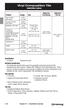 Vinyl Composition Tile Installation System Product Gauge Size Vinyl No-Wax (Dry Back) Urethane No-Wax (Dry Back) 0.045" (1.1 mm) 0.080" (2.0 mm) IMPERIAL TEXTURE 0.094" (2.4 mm) STONETEX ChromaSpin COMPANION
A Guide to Wood Floor Care
 A Guide to Wood Floor Care A basic guide to the care and maintenance of wood, cork and wood composite flooring RRP 9.99 Bill Tansley February 2004 A Guide to Wood Floor Care A basic guide to the care and
Armstrong Do-It-Yourself Tile Installation System
 Armstrong Do-It-Yourself Tile Installation System What tools will I need to install my tile floor? You'll need just the basics: - floor tile (make sure you have enough tile to finish the job) - adhesive
Installation System. Existing Resilient Sheet Floors
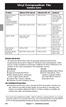 Vinyl Composition Tile Installation System Product Adhesive/Full Spread Adhesive/Tile-On Comment Imperial Texture MultiColor RAVE Stonetex Companion Square Feature Tile/Strips ARTEFFECTS SAFETY ZONE Vinyl
PRODUCT CARE MANUAL. 14401 E 33 rd Place Suite A Aurora Colorado - 80011 (p) 303.373.1846 (f) 303.373.1334 www.irgcolorado.com
 PRODUCT CARE MANUAL Thank you for purchasing your floor covering products from Interior Resource Group! In this manual you will find basic product care suggestions and recommendations for the material
Floor Pads, Hand Pads, Scrubbing Sponges and Sanding Screens
 Floor Pads, Hand Pads, Scrubbing Sponges and Sanding Screens Introducing Premium Floor Maintenance Pads from 3M and Triple S 3M and Triple S have teamed up to provide the best of 3M and Scotch-Brite branded
The Art of Floor Care - Guidance Notes -
 LEADING THE WAY IN CLEANING SUPPLIES The Art of Floor Care - Guidance Notes - Cambridge Trade Centre: Unit 3, Orwell Furlong Cowley Road Cambridge CB4 0WY Tel: 01223 520575 Fax: 01223 520175 Peterborough
Selecting Vinyl Flooring
 extension.usu.edu Smart Shopping for Home Furnishings Selecting Vinyl Flooring Dr. Leona Hawks Home Furnishings & Housing Specialist 1987 HI 03 Shopping for vinyl? There are many different varieties of
Slips, Trips and Falls Safety Meeting Handout
 Slips, Trips and Falls Safety Meeting Handout The procedures and products used to clean and maintain floor surfaces are sometimes a direct cause of many "slip and fall" accidents. Maintenance staff may
Commercial/Residential Linoleum Sheet Installation System
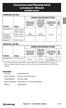 Commercial/Residential Linoleum Sheet Installation System COMMERCIAL USE ONLY Product MARMORETTE GRANETTE COLORETTE UNI WALTON LINORETTE Gauge 0.080" (2.0 mm) 0.100" (2.5 mm) 0.125" (3.2 mm) 0.100" (2.5
Care and Maintenance for Wood Flooring
 Care and Maintenance for Wood Flooring The finishing technology used for Tarkett wood floorings makes them the best choice for easy maintenance. To preserve all the beauty of your Tarkett wood flooring,
CARPET CARE PROGRAM. Dustbane Products Limited
 CARPET CARE PROGRAM Dustbane Products Limited Sick Building Syndrome Carpets and Mats play a major role with respect to indoor air quality and have come under increased attack for contributing to Sick
Consistent. Performance. Long Lasting Shine. 3M Floor Pads
 Consistent Performance Long Lasting Shine Remove deep scuff marks 7 times faster* Nearly 40% more aggressive floor stripping* 25% better cut on Schiefer test* 50% better burnishing durability* *Based 3M
Importance of chemical ph to carpet fiber...1. The major types of carpet fiber...3. Indoor air quality... 5. Preventive maintenance...
 Carpet care program Table of contents Importance of chemical ph to carpet fiber......1 The major types of carpet fiber...3 Indoor air quality... 5 Preventive maintenance...6 Carpet cleaning methods......10
Maintenance and Cleaning Tips MULTICO
 Maintenance and Cleaning Tips MULTICO Dear Carpet Layer, Dear Customer, 1.0 Preliminary Remarks You have made an excellent choice. tretford Multico meets highest standards. The use of solution-dyed polyamide
CLEANING MANUAL. Warranty updated on 4/21/11. Supersedes all previous versions. Check website for updates.
 CLEANING MANUAL Warranty updated on 4/21/11. Supersedes all previous versions. Check website for updates. TABLE OF CONTENTS MAINTENANCE 3-5 Floor Protection 3 Assignment of Cleaning & Maintenance 3 ECORE
Columbia flooring will resist fading from exposure to sunlight or artificial light.
 LIMITED LIFETIME WARRANTY AND MAINTENANCE FOR RESIDENTIAL USE Columbia is so confident in the design and durability of our Columbia flooring products and accessories, that we back them with a Limited Lifetime
CAREPLUS CARE AND MAINTENANCE GUIDELINE Page 1 of 5
 CAREPLUS CARE AND MAINTENANCE GUIDELINE Page 1 of 5 PROACTIVE CLEANING TO MAINTAIN CAREPLUS CARPET Without regular removal, dirt and soil accumulates to grind and permanently damage fibres, so carpets
ESD Long Life PU Systems. ESD Floor protection by Dr. Schutz
 ESD Long Life PU Systems ESD Floor protection by Dr. Schutz BEFORE BEFORE Deep scratch marks are visible Marking tape residuals are difficult to remove The surface looks dull and discolored Even regular
WOOD FLOORING MAINTENANCE MANUAL
 10026 Talley Lane, Houston, TX 77041 Phone: 713-939-0157 Fax: 713-939-9621 WOOD FLOORING MAINTENANCE MANUAL REMEMBER: Your wood floor is new and is still acclimating to its new environment; HVAC controls
RESIDENTIAL HARDWOOD WARRANTIES
 RESIDENTIAL HARDWOOD WARRANTIES Limited Warranties for Prefinished Solid and Engineered Hardwood Floors Manufacturing Defects Century Flooring* ("Century") hereby warrants to the original buyer ("Buyer"),
Heavy traffic areas which begin to show soiling can be cleaned without cleaning the entire carpet by using:
 CLEANING CAUTION: Carpets with jute backing should not be overwet as it may cause the carpet to shrink. Low moisture methods such as Host and Whittaker have proven to be successful. Heavy traffic areas
Hillyard. sports floor layout and lining guide
 Hillyard sports floor layout and lining guide TABLE OF CONTENTS Recommended Maintenance Programs for Wood Gym Floors Preparing New Wood Gym Floors Page 2-6 Preventative Maintenance Page 7 Outline for Preparing
WATER AND WOOD DON T MIX KEEPING YOUR TRIÂNGULO HARDWOOD FLOOR BEAUTIFUL SCRATCHES, INDENTATIONS AND GOUGES
 WATER AND WOOD DON T MIX Using any of the following items to maintain your wood floor will void all manufacturer warranties! Water Oil Soap Vinegar, Ammonia Household Detergent Wax Furniture Polish Dust
Congratulations! Quality products for quality floors
 Congratulations! By choosing Mirage hardwood flooring, you have made the best decision for your home. Thanks to Mirage s unparalleled quality, unique finishing process and your proper care, the beauty
Matrix Polished Concrete & Terrazzo System
 Polished Concrete & Terrazzo System Maintains and restores gloss on existing polished concrete, terrazzo or marble floor surfaces Before After Polished Concrete & Terrazzo System Easy - Uses the same techniques
Preventing Slips and Falls Through Effective Floor Care
 Preventing Slips and Falls Through Effective Floor Care Introduction The procedures and products used to clean and maintain floor surfaces are sometimes a direct cause of many slip and fall accidents.
HARDWOOD WARRANTIES Limited Warranty for Prefinished Solid, Engineered, and Longstrip Floors Manufacturing Defects Finish Warranty
 HARDWOOD WARRANTIES Limited Warranty for Prefinished Solid, Engineered, and Longstrip Floors Manufacturing Defects Mohawk* ("Mohawk") hereby warrants to the original buyer ("Buyer"), the goods to be free
A Revolution in Floor Restoration Technology
 A Revolution in Floor Restoration Technology Diamabrush Restoration System A revolutionary floor restoration technology using standard floor machines or auto-scrubbers for the following tasks: Concrete
SECTION 03 35 43. Formatted Specification for the ULTRAFLOR DIAMATIC Topical Polished Concrete System DRAFT
 SECTION 03 35 43 Formatted Specification for the ULTRAFLOR DIAMATIC Topical Polished Concrete System PART I GENERAL 1.01 SUMMARY A. This is the recommended specification for ULTRAFLOR DIAMATIC Topical
www.maplefloor.org INDUSTRY RECOMMENDATIONS for Sanding, Sealing Court Lining, Finishing & Resurfacing of Maple Gym Floors
 www.maplefloor.org www.maplefloor.org INDUSTRY RECOMMENDATIONS for Sanding, Sealing Court Lining, Finishing & Resurfacing of Maple Gym Floors Introduction These recommendations are general in nature and
SCHWARTZ WATER-BASE WOOD FLOOR SEALER AND WATER-BASE PREMIIUM WOOD FLOOR FINISH
 !! SCHWARTZ WATER-BASE WOOD FLOOR SEALER AND WATER-BASE PREMIIUM WOOD FLOOR FINISH A Complete Guide for Preparation, Application, Curing and Maintenance for use with Schwartz H 2 O Water-base Floor Finish
SECTION 03 35 43 POLISHED CONCRETE FINISHING
 SECTION 03 35 43 POLISHED CONCRETE FINISHING PART 1 - GENERAL 1.01 SUMMARY A. Provide polished concrete finishing system where indicated on drawings, complete. This section includes the following: 1. Concrete
VC 104+ Rigid Grade / Rigid Grade Imagine VC 104 Rigid Grade Commercial Customised
 Page 1 of 6 instructions VC 104+ Rigid Grade / VC 104+ Rigid Grade Imagine / (for the rest of this document referred to as VC 104) can be applied to new and used trucks and trailers with painted rigid
Cosmetic and Exterior Trim. Exterior Plastic, Rubber and Trim
 Cosmetic and Exterior Trim Exterior Plastic, Rubber and Trim More maligned than exterior metals, more abused than automotive glass, more rejected than your ride s rubber; this is the story of exterior
10 Ways to Prolong the Life of your Carpet
 10 Ways to Prolong the Life of your Carpet Clean Carpet Lasts Longer Your carpets represent a sizable investment. It would make sense to take measures that would extend their life. Today's carpet is designed
Wood Floor Maintenance
 Wood Floor Maintenance We change the face of hard wood-flooring. Wir verändern die Welt der Holzfußböden. Transformamos el mundo de los suelos de madera. for oiled surfaces WOCA Wood is a natural product.
DESSO CARPET TILES / BROADLOOM CLEANING AND MAINTENANCE
 DESSO CARPET TILES / BROADLOOM CLEANING AND MAINTENANCE 1. PRIOR TO INSTALLATION 1.1 Anti-Soil Treatment An anti-soil treatment is a protective soil resistant treatment added to fibre or yarn at the time
The length of this warranty varies by product. Please see product sample or your retailer for duration of this warranty on specific products.
 RESIDENTIAL ENGINEERED HARDWOOD LIMITED WARRANTY Limited Warranties for Q Wood Brand Locking Engineered Hardwood Floors with Opulux Performance Enhanced Finish Manufacturing Defects Q Wood by Quick Step
CLEANING GUIDE. www.danfloor.co.uk
 CLEANING GUIDE www.danfloor.co.uk A CAREFULLY EXECUTED MAINTENANCE PROGRAMME This maintenance guide has been developed to help the planning and implementation of an effective carpet care programme. It
Tractor Painting Tips
 Keeping your tractor or equipment well kept & free from rust & corrosion will extend the life of your investment & help retain its value for a longer period of time. It can be difficult, in many cases,
Hardwood Maintenance. WORKBOOK and TIPS of the TRADE. 800.441.1934 www.basiccoatings.com
 Professional Hardwood Maintenance WORKBOOK and TIPS of the TRADE 1 Table of Contents Wood Flooring Knowledge...3 System Descriptions... 4 Option 1 - Intensive Cleaning... 5 Option 2 - Clean and Refinish...
Minor Cracks in Horizontal Surfaces
 Cracks, chips and broken or flaking areas in concrete are not only unsightly, they can lead to further deterioration of the surface. The result is a costly replacement project as opposed to a simple repair.
Stone Developments. Caring for Irish Blue Limestone Products. Irish Blue Limestone Maintenance Guide
 Stone Developments Irish Blue Limestone Maintenance Guide Caring for Irish Blue Limestone Products As an naturally occurring material, blue limestone is ideally suited to withstand environmental stresses,
Table of Contents Markers...1
 Table of Contents Markers...1 Introduction...1 Color Surge Paper...2 Color Surge\Neon Explosion/Glow Board/Color Wave Markers...3 Dry Erase Markers...9 Erasable Markers...15 Ice Markers...23 Markers...34
SECTION 03 35 43 - POLISHED CONCRETE FINISHING. InovaCrete Polished Concrete Floor Finish (GUIDE SPEC)
 SECTION 03 35 43 - POLISHED CONCRETE FINISHING InovaCrete Polished Concrete Floor Finish (GUIDE SPEC) PART 1 GENERAL 1.01 SUMMARY This Section includes information about: A. Polished concrete finish in
A. Work on this project shall consist of, but is not limited to, the following:
 PART 1 - GENERAL CLEANING AND RESTORATION OF SECTION 05900-1 1.1 SUMMARY A. Work on this project shall consist of, but is not limited to, the following: 1. Clean and treat all exposed anodized architectural
How To Warranty Shawfloors
 HARD SURFACE WARRANTIES, CARE & MAINTENANCE LAMINATE shawfloors.com 1 CONTENTS LAMINATE Care & Maintenance 3 Warranty 4 Shaw represents a promise of outstanding performance, unique styling and overall
Carpet Tile Installation Guidelines
 NOTICE FAILURE TO FOLLOW THESE GUIDELINES CAN RESULT IN VOIDING THE CARPET WARRANTY. Installation Guidelines The following instructions should be reviewed prior to installation. Shaw Industries will not
Amorim Rubber Flooring Specifications
 Amorim Rubber Flooring Specifications Test Method Amorim Typical Value Durometer, Shore A, points of hardness ASTM D2240-97 60 Density, lbs/ft 3 ASTM D297-93 Part A, Section 16.3 64 Compressibility @ 100
Total Floor Care System
 Total Floor Care System The Definition of Clean Capture Dealer Training Information What is Capture? Capture is made up of thousands of tiny particles that look and act like sponges. How Does Capture Work?
Care and Warranty Guide
 Care and Warranty Guide Keeping Your Olive Wood Floor Beautiful for Generations C a r i ng Fo r Yo u r T u s c a n y Olive Wo o d Fl o o r Tuscany Olive Wood flooring can last for generations with minimal
A maintenance program using. ResisTech 5 & ResisTech HWE. Carpet Cleaning Treatment can. help carpets look cleaner longer.
 A maintenance program using ResisTech 5 & ResisTech HWE Carpet Cleaning Treatment can help carpets look cleaner longer. Carpet Maintenance may not be the first thing on your mind when purchasing commercial
Maintenance Guide. for your Mercier prefinished floor. 1-866-448-1785 www.mercierwoodflooring.com PRINTED IN CANADA SP-CAREGUBIL 10-12
 PRINTED IN CANADA SP-CAREGUBIL 10-12 Maintenance Guide for your Mercier prefinished floor 1-866-448-1785 www.mercierwoodflooring.com For lasting satisfaction You have chosen the best prefinished flooring
Matte Finish Paint Owner s Guide. Matte Finish Paint Owner s Guide. Matte Finish Paint Owner s Guide 3. NP150-V2013 (Rev 06/11/12) Printing xx/xx/12
 Matte Finish Paint Owner s Guide Matte Finish Paint Owner s Guide NP150-V2013 (Rev 06/11/12) Printing xx/xx/12 Matte Finish Paint Owner s Guide 3 TABLE OF CONTENTS Special Care Needed Introduction and
Summit Racing Equipment s Paint and Auto Refinishing System was developed specifically for the home enthusiast and small shop owner wanting a
 Summit Racing Equipment s Paint and Auto Refinishing System was developed specifically for the home enthusiast and small shop owner wanting a professional-looking paint job for hundreds of dollars less
FeRFA GUIDE TO CLEANING RESIN FLOORS
 FeRFA GUIDE TO CLEANING RESIN FLOORS www.ferfa.org.uk 1 CONTENTS 1. INTRODUCTION...3 2. CLEANING...3 2.1 General cleaning...3 3. TYPICAL CLEANING METHODS...4 3.1 Scrubbing Manual - Mechanical...4 3.2 Mop
Solvent Cementing Instructions For Plastic Pipe & Fittings
 Solvent Cementing Instructions For Plastic Pipe & Fittings Description Solvent cementing is the process of fusing plastic pipe and fittings by the use of an adhesive containing a suitable active solvent
BENTLEY ELEMENTS COLLECTION LVT
 This document refers to the following products: Product Size Installation direction Seams treatment Elements Tiles See specifications 90 None Elements Planks See specifications Stair Step None Note: This
ARMSTRONG RESIDENTIAL VINYL TILE FLOORING WARRANTY: Professionally Installed & Do It Yourself (DIY)
 ARMSTRONG RESIDENTIAL VINYL TILE FLOORING WARRANTY: Professionally Installed & Do It Yourself (DIY) THE ARMSTRONG LIFETIME LIMITED RESIDENTIAL WARRANTY FOR: Abingdon Adiamo Clear Creek Caliber Granville
Your simple guide to. French polishing
 Your simple guide to French polishing Manufacturer of quality finishes With over 100 years experience of treating wood Liberon s heritage lies in the manufacture and development of traditional finishes
Attractive Durable Easy to maintain
 Attractive Durable Easy to maintain...the ultimate, sustainable flooring solution The variety of remedial materials available to coat, repair and re-surface underperforming concrete is proof conventional
TECHNICAL DATA RS-6100. European Clear EZ. 5751 N. Webster Street Dayton, OH 45414-0802 Phone 937-890-6547 Toll Free 800-257-6547 Fax 937-890-6320
 RS-6100 TECHNICAL DATA European Clear EZ DESCRIPTION: RS-6100 European Clear EZ is formulated with premium European resins. It is ideal for excellent color matching on white, light colors and metallics
ECOfit Interlocking Tile
 ECOfit Interlocking Tile INSTALLATION AND MAINTENANCE MANUAL Manufactured in the U.S.A. by: Revised 09/04/2014 Supersedes all previous versions. Check website for updates. 877-258-0843 www.ecorecommercialflooring.com
Profiles for floors of same height Cerfix Projoint
 PROFILPAS S.P.A. VIA EINSTEIN, 38 35010 CADONEGHE (PADOVA) ITALY TEL. +39 (0)49 8878411 +39 (0)49 8878412 FAX. +39 (0)49-706692 EMAIL: [email protected] s for floors of same height Cerfix Projoint Application
Keeping your Carpet Beautiful
 Keeping your Carpet Beautiful Shedding Most carpets retain some loose fibers after they are installed. These fibers often appear as balls of fluff on the surface of your carpet or in your vaccum cleaner.
All Purpose Cleaner. Carpet Care. Specialty Cleaner
 3 9 All Purpose Cleaner Carpet Care Specialty Cleaner The Clean Carpet manual will guide you through proven procedures to ensure you get the job done right. In addition to initial training, the laminated
HARDWOOD FLOORS. VACUUM : Canister vacuums with special bare floor attachments are the surest way to get rid of all the dirt and dust.
 HARDWOOD FLOORS SWEEP : Brooms with fine, exploded ends trap dust and grit effectively. VACUUM : Canister vacuums with special bare floor attachments are the surest way to get rid of all the dirt and dust.
Clean with Twister. The eco way to a perfect result
 Twister Handbook Clean with Twister The eco way to a perfect result Content 1. What is Twister 4 2. How does Twister work 5 3. Same routines - better result 6 4. One pad for all types of floors 7 5. Twister
SC2000 CEMENT BONDING PROCEDURES
 Pg.1 SC2000 CEMENT BONDING PROCEDURES Widely recognized as the world s finest cold vulcanizing cement REMA SC2000 is the solution to your industrial bonding problems. By using REMA UTR20 hardener with
Installation and maintenance instructions warranty policy
 Installation and maintenance instructions warranty policy 1 General guidelines For the best appearance and longest service life of Podium tiles, the subfloor should be as smooth and flat as possible. The
Section 03 35 43 Polished Concrete Finishing. Vexcon
 SS 120 1-13 Section 03 35 43 Polished Concrete Finishing Specifier Note: This product guide specification is written according to the Construction Specifications Institute (CSI) 3-part format. This section
White rust on galvanized and galvanized pre-painted steel. Technical Information
 Technical Information White rust on galvanised steel Prevention It is easier to prevent white rust than to cure it! Reasonable precautions to protect steel during both transport and storage can considerably
Asbestos WHAT TO DO? Studies of people who were exposed to high levels of asbestos in factories and shipyards, are at increased risk of:
 Asbestos WHAT TO DO? What Is Asbestos? Asbestos is mineral fiber. It can be positively identified only with a special type of microscope. There are several types of asbestos fibers. In the past, asbestos
SEE HOW TO MAKE LIME PLASTER WHY USE LIME? PATTI STOUTER, BUILD SIMPLE INC. FEBRUARY 2013
 SEE HOW TO MAKE LIME PLASTER PATTI STOUTER, BUILD SIMPLE INC. FEBRUARY 2013 WHY USE LIME? Lime plaster forms a light, clean, and durable surface that is resistant to weather and mold. A thin layer attaches
EXCLUSIONS CARPET WARRANTY AND CARPET CHARACTERISTIC EXCLUSIONS
 EXCLUSIONS CARPET WARRANTY AND CARPET CHARACTERISTIC EXCLUSIONS UNLESS THE WARRANTY FOR YOUR KARASTAN PRODUCT LISTED IN THIS WARRANTY BROCHURE SPECIFICALLY AND EXPRESSLY COVERS ANY ITEM LISTED BELOW, ALL
Specialty Textile Group, Inc. Care & Cleaning Guide for Carpets made of NuSilk TM & NuCashmere TM luxury fibers
 Specialty Textile Group, Inc. Care & Cleaning Guide for Carpets made of NuSilk TM & NuCashmere TM luxury fibers January 1, 2014 301 Brickyard Road Dalton, GA 30721 Ph: 706-529-3601 Fx: 706-529-3602 [email protected]
Acrylic Walls Installation Instructions
 Acrylic Walls Installation Instructions IMPORTANT Please read carefully the following instructions before installing your shower acrylic walls. If you have any questions on this shower acrylic walls installation
GENERAL CARPET CARE MAINTENANCE - VACUUMING
 GENERAL CARPET CARE MAINTENANCE - VACUUMING FELTEX CARPETS, EXPERIENCE WHEN CARRYING OUT VACUUMING TRIALS OVER A PERIOD OF YEARS, SUPPORTS THE RECOMMENDATIONS OF CONSUMER MAGAZINES THAT UPRIGHT VACUUM
Polishes. Compounds, & Buffing Pads
 Polishes Compounds, & Buffing Pads Table of Contents Section Page Compounds, Polishes & Buffing Pads...5-19 Accessories...5 Headlight Lens Restoration...6 Rubbing Compounds...7-9 Polishes...9-12 Buffing
Superior Polished Concrete Floors
 12465 County Rd 5240 Rolla, MO 65401 Office: (573) 341-8016 Fax: (573) 341-8308 www.spconline.biz [email protected] Superior Polished Concrete Floors If your company is interested we would be more than
INDUSTRIAL FLOORING INSTALLATION CHALLENGES. James C. Ziegler, ArmorSeal Product Manager Sherwin Williams Cincinnati, Ohio, USA
 INDUSTRIAL FLOORING INSTALLATION CHALLENGES James C. Ziegler, ArmorSeal Product Manager Sherwin Williams Cincinnati, Ohio, USA Abstract: Specifier's and contractors not only need to properly evaluate the
ATS-SOI-5910 Page: 1 of 7. Approval Block. Prepared by: Signature Date. Evan Parnell 04 AUG 2014. Reviewed by: Signature Date. Brian Flynn 04 AUG 2014
 ATS-SOI-5910 Page: 1 of 7 Approval Block Prepared by: Signature Date Evan Parnell 04 AUG 2014 Reviewed by: Signature Date Brian Flynn 04 AUG 2014 Approved by: Signature Date Kristal Jewell 04 AUG 2014
ARMSTRONG RESIDENTIAL VINYL TILE FLOORING WARRANTY: Professionally Installed & Do It Yourself (DIY) Menards Products
 ARMSTRONG RESIDENTIAL VINYL TILE FLOORING WARRANTY: Professionally Installed & Do It Yourself (DIY) Menards Products THE ARMSTRONG LIFETIME LIMITED RESIDENTIAL WARRANTY FOR: Abingdon Adiamo Clear Creek
Guide to Care and Maintenance
 Village of Mount Prospect Guide to Care and Maintenance of Your Apartment Sponsored ed by: y: Village of Mount Prospect Envir nvironmental Health Division with the assistance of The Concerened ened Owners
Training Course Catalog
 Saint-Gobain Abrasives Inc. Automotive Aftermarket Training Course Catalog Version 4.1 2/10/14 Presented by: Craig Chaffee, Manager of Training AA Training Course Catalog Automotive Refinishing Training
Wood Floor Care. Method Bulletin 1420. Hi-Trac Pro-Floor Extreme
 Wood Floor Care Method Bulletin 1420 A complete guide for preparation, application and recommended maintenance for use with Multi-Clean coatings on wood sports fl oors Hi-Trac Pro-Floor Extreme 2014 Multi-Clean
LAMINATE LAMINATE FLOOR CARE AND MAINTENANCE. Routine Maintenance. Minor Repair Instructions: Glueless Laminate Board Replacement Repairs
 LAMINATE FLOOR CARE AND MAINTENANCE Routine Maintenance 1. Use a damp cloth to blot up spills as soon as they happen. Never allow liquids to stand on your floor. 2. For tough spots, such as oil, paint,
Kennesaw State University. Health Sciences Building. Green Cleaning Manual
 Kennesaw State University Health Sciences Building Green Cleaning Manual 2010 TABLE OF CONTENTS PURPOSE 1 CLEANING POLICIES 1 Dusting and Dust Mopping 1 Carpet Care General Maintenance.. 1 Carpet Care
Acrylic Enamel Topcoat
 Acrylic Enamel Topcoat ACRYL-GLO TECHNICAL DATA SHEET The ACRYL-GLO single-stage acrylic enamel paint system provides a durable finish that is easy to apply and suitable for both commercial and passenger
1. (1) Random Orbital Sander 2. (1) Angle Polisher, (Rated at approx. 2500 RPM), with 4.75 inch diameter hook backup
 HEAVY DAMAGE REMOVAL KIT FINISHING PROCEDURES A. REQUIRED LEVEL OF SKILL: For use on non-pressurized aircraft: No specific training is required. For use on pressurized aircraft: Use should be restricted
CLEANING INSTRUCTIONS No. 02
 CLEANING INSTRUCTIONS No. 02 for loop and loop/pile carpeting made of spun yarn (rolls and tiles) e.g.: Perlon Brüssel, Perlon Rips, Perlon Rips BLOX Perlon Rips LCS Line / Plain / Point, Perlon Rips Fusion,
SAFEGUARDING YOUR EMPLOYEES AND CUSTOMERS: MITIGATING SLIP AND FALL RISKS
 SAFEGUARDING YOUR EMPLOYEES AND CUSTOMERS: MITIGATING SLIP AND FALL RISKS The Problem Have you ever slipped, tripped or fallen? Perhaps you have watched a television show where a slip, trip and fall was
Fiberglass-Reinforced Sheet Flooring Installation System
 Fiberglass-Reinforced Sheet Flooring Installation System Product Adhesive Comments Residential Use Only CushionStep Value Good Better Best FlexStep Duality Premium Premium Plus Modified loose lay method